EP1140924B1 - Piperazine derivatives - Google Patents
Piperazine derivatives Download PDFInfo
- Publication number
- EP1140924B1 EP1140924B1 EP99959751A EP99959751A EP1140924B1 EP 1140924 B1 EP1140924 B1 EP 1140924B1 EP 99959751 A EP99959751 A EP 99959751A EP 99959751 A EP99959751 A EP 99959751A EP 1140924 B1 EP1140924 B1 EP 1140924B1
- Authority
- EP
- European Patent Office
- Prior art keywords
- trifluoromethyl
- nmr
- mass
- piperazine
- apci
- Prior art date
- Legal status (The legal status is an assumption and is not a legal conclusion. Google has not performed a legal analysis and makes no representation as to the accuracy of the status listed.)
- Expired - Lifetime
Links
- 150000004885 piperazines Chemical class 0.000 title abstract description 9
- 229940066771 systemic antihistamines piperazine derivative Drugs 0.000 title abstract description 9
- 238000002360 preparation method Methods 0.000 claims abstract description 199
- 150000003839 salts Chemical class 0.000 claims abstract description 31
- 208000037265 diseases, disorders, signs and symptoms Diseases 0.000 claims abstract description 18
- 201000010099 disease Diseases 0.000 claims abstract description 11
- 238000000034 method Methods 0.000 claims abstract description 10
- 102000003141 Tachykinin Human genes 0.000 claims abstract description 9
- 108060008037 tachykinin Proteins 0.000 claims abstract description 9
- 230000001404 mediated effect Effects 0.000 claims abstract description 6
- 239000008194 pharmaceutical composition Substances 0.000 claims abstract description 4
- -1 nitro, amino Chemical group 0.000 claims description 216
- 150000001875 compounds Chemical class 0.000 claims description 157
- 125000001997 phenyl group Chemical group [H]C1=C([H])C([H])=C(*)C([H])=C1[H] 0.000 claims description 52
- 125000004178 (C1-C4) alkyl group Chemical group 0.000 claims description 35
- 125000004169 (C1-C6) alkyl group Chemical group 0.000 claims description 28
- GLUUGHFHXGJENI-UHFFFAOYSA-N Piperazine Chemical compound C1CNCCN1 GLUUGHFHXGJENI-UHFFFAOYSA-N 0.000 claims description 28
- 125000003236 benzoyl group Chemical group [H]C1=C([H])C([H])=C(C([H])=C1[H])C(*)=O 0.000 claims description 22
- 125000001495 ethyl group Chemical group [H]C([H])([H])C([H])([H])* 0.000 claims description 19
- 125000002887 hydroxy group Chemical group [H]O* 0.000 claims description 14
- 125000002924 primary amino group Chemical group [H]N([H])* 0.000 claims description 14
- 150000002367 halogens Chemical class 0.000 claims description 12
- 229910052736 halogen Inorganic materials 0.000 claims description 11
- 125000004390 alkyl sulfonyl group Chemical group 0.000 claims description 9
- 125000001424 substituent group Chemical group 0.000 claims description 9
- 125000000229 (C1-C4)alkoxy group Chemical group 0.000 claims description 8
- 239000004305 biphenyl Substances 0.000 claims description 8
- 229910052739 hydrogen Inorganic materials 0.000 claims description 8
- 235000010290 biphenyl Nutrition 0.000 claims description 7
- 125000006267 biphenyl group Chemical group 0.000 claims description 7
- ZUOUZKKEUPVFJK-UHFFFAOYSA-N phenylbenzene Natural products C1=CC=CC=C1C1=CC=CC=C1 ZUOUZKKEUPVFJK-UHFFFAOYSA-N 0.000 claims description 7
- 125000004890 (C1-C6) alkylamino group Chemical group 0.000 claims description 6
- 125000002947 alkylene group Chemical group 0.000 claims description 6
- 125000005530 alkylenedioxy group Chemical group 0.000 claims description 6
- 125000004397 aminosulfonyl group Chemical group NS(=O)(=O)* 0.000 claims description 6
- 239000001257 hydrogen Substances 0.000 claims description 6
- 125000002757 morpholinyl group Chemical group 0.000 claims description 6
- 125000004076 pyridyl group Chemical group 0.000 claims description 5
- 125000000719 pyrrolidinyl group Chemical group 0.000 claims description 5
- 125000000168 pyrrolyl group Chemical group 0.000 claims description 5
- 125000004191 (C1-C6) alkoxy group Chemical group 0.000 claims description 4
- 239000003814 drug Substances 0.000 claims description 4
- 239000004480 active ingredient Substances 0.000 claims description 3
- 125000004454 (C1-C6) alkoxycarbonyl group Chemical group 0.000 claims description 2
- 125000004750 (C1-C6) alkylaminosulfonyl group Chemical group 0.000 claims description 2
- 125000003161 (C1-C6) alkylene group Chemical group 0.000 claims description 2
- 125000004739 (C1-C6) alkylsulfonyl group Chemical group 0.000 claims description 2
- NNAZEENRXAJSML-RPBOFIJWSA-N [3,5-bis(trifluoromethyl)phenyl]-[(2r)-2-[(3-hydroxy-4-methylphenyl)methyl]-4-[2-[(2s)-2-(methoxymethyl)morpholin-4-yl]ethyl]piperazin-1-yl]methanone Chemical compound C1CO[C@H](COC)CN1CCN1C[C@@H](CC=2C=C(O)C(C)=CC=2)N(C(=O)C=2C=C(C=C(C=2)C(F)(F)F)C(F)(F)F)CC1 NNAZEENRXAJSML-RPBOFIJWSA-N 0.000 claims description 2
- 239000003937 drug carrier Substances 0.000 claims description 2
- 239000002462 tachykinin receptor antagonist Substances 0.000 claims description 2
- SMZGQFXTFYYTPM-IEGUWTFLSA-N [3,5-bis(trifluoromethyl)phenyl]-[(2r)-2-[(4-chloro-3-hydroxyphenyl)methyl]-4-[2-[(2r,6s)-2,6-dimethylmorpholin-4-yl]ethyl]piperazin-1-yl]methanone Chemical compound C1[C@@H](C)O[C@@H](C)CN1CCN1C[C@@H](CC=2C=C(O)C(Cl)=CC=2)N(C(=O)C=2C=C(C=C(C=2)C(F)(F)F)C(F)(F)F)CC1 SMZGQFXTFYYTPM-IEGUWTFLSA-N 0.000 claims 2
- BYAMHYALDVZUTI-PKTZIBPZSA-N [3,5-bis(trifluoromethyl)phenyl]-[(2r)-2-[(4-chloro-3-hydroxyphenyl)methyl]-4-[2-[(2s)-2-(methoxymethyl)morpholin-4-yl]ethyl]piperazin-1-yl]methanone Chemical compound C1CO[C@H](COC)CN1CCN1C[C@@H](CC=2C=C(O)C(Cl)=CC=2)N(C(=O)C=2C=C(C=C(C=2)C(F)(F)F)C(F)(F)F)CC1 BYAMHYALDVZUTI-PKTZIBPZSA-N 0.000 claims 2
- VHOPRGQLJGEFHN-WUBHUQEYSA-N [3,5-bis(trifluoromethyl)phenyl]-[2-[(3-hydroxy-4-methylphenyl)methyl]-4-[2-[(3r)-3-(methoxymethyl)morpholin-4-yl]ethyl]piperazin-1-yl]methanone Chemical compound COC[C@@H]1COCCN1CCN1CC(CC=2C=C(O)C(C)=CC=2)N(C(=O)C=2C=C(C=C(C=2)C(F)(F)F)C(F)(F)F)CC1 VHOPRGQLJGEFHN-WUBHUQEYSA-N 0.000 claims 2
- ACWNSBRXFYQRNY-WPUZRXDDSA-N [3,5-bis(trifluoromethyl)phenyl]-[4-[2-[(2r,6s)-2,6-dimethylmorpholin-4-yl]ethyl]-2-[(3-hydroxy-4-methylphenyl)methyl]piperazin-1-yl]methanone Chemical compound C1[C@@H](C)O[C@@H](C)CN1CCN1CC(CC=2C=C(O)C(C)=CC=2)N(C(=O)C=2C=C(C=C(C=2)C(F)(F)F)C(F)(F)F)CC1 ACWNSBRXFYQRNY-WPUZRXDDSA-N 0.000 claims 2
- 125000004435 hydrogen atom Chemical group [H]* 0.000 claims 2
- 125000006700 (C1-C6) alkylthio group Chemical group 0.000 claims 1
- NNAZEENRXAJSML-BBMPLOMVSA-N [3,5-bis(trifluoromethyl)phenyl]-[2-[(3-hydroxy-4-methylphenyl)methyl]-4-[2-[(2s)-2-(methoxymethyl)morpholin-4-yl]ethyl]piperazin-1-yl]methanone Chemical compound C1CO[C@H](COC)CN1CCN1CC(CC=2C=C(O)C(C)=CC=2)N(C(=O)C=2C=C(C=C(C=2)C(F)(F)F)C(F)(F)F)CC1 NNAZEENRXAJSML-BBMPLOMVSA-N 0.000 claims 1
- 238000004519 manufacturing process Methods 0.000 claims 1
- 230000002265 prevention Effects 0.000 claims 1
- 241001465754 Metazoa Species 0.000 abstract description 5
- OKKJLVBELUTLKV-UHFFFAOYSA-N Methanol Chemical compound OC OKKJLVBELUTLKV-UHFFFAOYSA-N 0.000 description 561
- IAZDPXIOMUYVGZ-WFGJKAKNSA-N Dimethyl sulfoxide Chemical compound [2H]C([2H])([2H])S(=O)C([2H])([2H])[2H] IAZDPXIOMUYVGZ-WFGJKAKNSA-N 0.000 description 446
- HEDRZPFGACZZDS-MICDWDOJSA-N Trichloro(2H)methane Chemical compound [2H]C(Cl)(Cl)Cl HEDRZPFGACZZDS-MICDWDOJSA-N 0.000 description 312
- XEKOWRVHYACXOJ-UHFFFAOYSA-N Ethyl acetate Chemical compound CCOC(C)=O XEKOWRVHYACXOJ-UHFFFAOYSA-N 0.000 description 255
- YMWUJEATGCHHMB-UHFFFAOYSA-N Dichloromethane Chemical compound ClCCl YMWUJEATGCHHMB-UHFFFAOYSA-N 0.000 description 216
- 239000000203 mixture Substances 0.000 description 187
- 239000000243 solution Substances 0.000 description 145
- CSNNHWWHGAXBCP-UHFFFAOYSA-L Magnesium sulfate Chemical compound [Mg+2].[O-][S+2]([O-])([O-])[O-] CSNNHWWHGAXBCP-UHFFFAOYSA-L 0.000 description 92
- VLKZOEOYAKHREP-UHFFFAOYSA-N n-Hexane Chemical compound CCCCCC VLKZOEOYAKHREP-UHFFFAOYSA-N 0.000 description 87
- 125000000217 alkyl group Chemical group 0.000 description 85
- XLYOFNOQVPJJNP-UHFFFAOYSA-N water Substances O XLYOFNOQVPJJNP-UHFFFAOYSA-N 0.000 description 70
- ZMXDDKWLCZADIW-UHFFFAOYSA-N N,N-Dimethylformamide Chemical compound CN(C)C=O ZMXDDKWLCZADIW-UHFFFAOYSA-N 0.000 description 69
- VYPSYNLAJGMNEJ-UHFFFAOYSA-N Silicium dioxide Chemical compound O=[Si]=O VYPSYNLAJGMNEJ-UHFFFAOYSA-N 0.000 description 63
- HEMHJVSKTPXQMS-UHFFFAOYSA-M Sodium hydroxide Chemical compound [OH-].[Na+] HEMHJVSKTPXQMS-UHFFFAOYSA-M 0.000 description 63
- WYURNTSHIVDZCO-UHFFFAOYSA-N Tetrahydrofuran Chemical compound C1CCOC1 WYURNTSHIVDZCO-UHFFFAOYSA-N 0.000 description 62
- 239000000741 silica gel Substances 0.000 description 57
- 229910002027 silica gel Inorganic materials 0.000 description 57
- 239000003921 oil Substances 0.000 description 56
- 235000019198 oils Nutrition 0.000 description 56
- 238000004440 column chromatography Methods 0.000 description 55
- YXFVVABEGXRONW-UHFFFAOYSA-N Toluene Chemical compound CC1=CC=CC=C1 YXFVVABEGXRONW-UHFFFAOYSA-N 0.000 description 48
- 229910052943 magnesium sulfate Inorganic materials 0.000 description 46
- 235000019341 magnesium sulphate Nutrition 0.000 description 46
- VEXZGXHMUGYJMC-UHFFFAOYSA-N Hydrochloric acid Chemical compound Cl VEXZGXHMUGYJMC-UHFFFAOYSA-N 0.000 description 45
- 239000012044 organic layer Substances 0.000 description 45
- ZMANZCXQSJIPKH-UHFFFAOYSA-N Triethylamine Chemical class CCN(CC)CC ZMANZCXQSJIPKH-UHFFFAOYSA-N 0.000 description 43
- 239000012267 brine Substances 0.000 description 43
- HPALAKNZSZLMCH-UHFFFAOYSA-M sodium;chloride;hydrate Chemical compound O.[Na+].[Cl-] HPALAKNZSZLMCH-UHFFFAOYSA-M 0.000 description 43
- 239000012046 mixed solvent Substances 0.000 description 33
- 238000001914 filtration Methods 0.000 description 31
- YLQBMQCUIZJEEH-UHFFFAOYSA-N tetrahydrofuran Natural products C=1C=COC=1 YLQBMQCUIZJEEH-UHFFFAOYSA-N 0.000 description 31
- 239000000843 powder Substances 0.000 description 29
- UIIMBOGNXHQVGW-UHFFFAOYSA-M Sodium bicarbonate Chemical class [Na+].OC([O-])=O UIIMBOGNXHQVGW-UHFFFAOYSA-M 0.000 description 28
- 238000003756 stirring Methods 0.000 description 27
- 239000011541 reaction mixture Substances 0.000 description 26
- 239000011734 sodium Substances 0.000 description 25
- 125000003545 alkoxy group Chemical group 0.000 description 24
- 238000001816 cooling Methods 0.000 description 24
- 125000005843 halogen group Chemical group 0.000 description 24
- 239000000706 filtrate Substances 0.000 description 23
- BWHMMNNQKKPAPP-UHFFFAOYSA-L potassium carbonate Chemical compound [K+].[K+].[O-]C([O-])=O BWHMMNNQKKPAPP-UHFFFAOYSA-L 0.000 description 22
- 239000000284 extract Substances 0.000 description 21
- 239000012299 nitrogen atmosphere Substances 0.000 description 21
- JGFZNNIVVJXRND-UHFFFAOYSA-N N,N-Diisopropylethylamine (DIPEA) Chemical compound CCN(C(C)C)C(C)C JGFZNNIVVJXRND-UHFFFAOYSA-N 0.000 description 20
- PMZURENOXWZQFD-UHFFFAOYSA-L Sodium Sulfate Chemical compound [Na+].[Na+].[O-]S([O-])(=O)=O PMZURENOXWZQFD-UHFFFAOYSA-L 0.000 description 20
- 229910052938 sodium sulfate Inorganic materials 0.000 description 20
- 235000011152 sodium sulphate Nutrition 0.000 description 20
- ZAFNJMIOTHYJRJ-UHFFFAOYSA-N Diisopropyl ether Chemical compound CC(C)OC(C)C ZAFNJMIOTHYJRJ-UHFFFAOYSA-N 0.000 description 18
- 238000010992 reflux Methods 0.000 description 18
- LFQSCWFLJHTTHZ-UHFFFAOYSA-N Ethanol Chemical compound CCO LFQSCWFLJHTTHZ-UHFFFAOYSA-N 0.000 description 16
- 239000000725 suspension Substances 0.000 description 15
- 239000003480 eluent Substances 0.000 description 14
- 230000008485 antagonism Effects 0.000 description 13
- 239000002244 precipitate Substances 0.000 description 13
- 239000007787 solid Substances 0.000 description 13
- CSCPPACGZOOCGX-UHFFFAOYSA-N Acetone Chemical compound CC(C)=O CSCPPACGZOOCGX-UHFFFAOYSA-N 0.000 description 12
- 125000003282 alkyl amino group Chemical group 0.000 description 12
- 229920006395 saturated elastomer Polymers 0.000 description 12
- 229910000030 sodium bicarbonate Inorganic materials 0.000 description 12
- 235000017557 sodium bicarbonate Nutrition 0.000 description 12
- RTZKZFJDLAIYFH-UHFFFAOYSA-N Diethyl ether Chemical compound CCOCC RTZKZFJDLAIYFH-UHFFFAOYSA-N 0.000 description 11
- 238000006243 chemical reaction Methods 0.000 description 11
- 229910000027 potassium carbonate Inorganic materials 0.000 description 11
- 238000012360 testing method Methods 0.000 description 11
- 206010047700 Vomiting Diseases 0.000 description 10
- CVVIJWRCGSYCMB-UHFFFAOYSA-N hydron;piperazine;dichloride Chemical compound Cl.Cl.C1CNCCN1 CVVIJWRCGSYCMB-UHFFFAOYSA-N 0.000 description 10
- 239000010410 layer Substances 0.000 description 10
- 239000006188 syrup Substances 0.000 description 10
- 235000020357 syrup Nutrition 0.000 description 10
- FYSNRJHAOHDILO-UHFFFAOYSA-N thionyl chloride Chemical compound ClS(Cl)=O FYSNRJHAOHDILO-UHFFFAOYSA-N 0.000 description 10
- 238000005406 washing Methods 0.000 description 10
- QTBSBXVTEAMEQO-UHFFFAOYSA-N Acetic acid Chemical compound CC(O)=O QTBSBXVTEAMEQO-UHFFFAOYSA-N 0.000 description 9
- NLKNQRATVPKPDG-UHFFFAOYSA-M potassium iodide Chemical compound [K+].[I-] NLKNQRATVPKPDG-UHFFFAOYSA-M 0.000 description 9
- VHYFNPMBLIVWCW-UHFFFAOYSA-N 4-Dimethylaminopyridine Chemical compound CN(C)C1=CC=NC=C1 VHYFNPMBLIVWCW-UHFFFAOYSA-N 0.000 description 8
- 125000004448 alkyl carbonyl group Chemical group 0.000 description 8
- 239000007864 aqueous solution Substances 0.000 description 8
- 125000001797 benzyl group Chemical group [H]C1=C([H])C([H])=C(C([H])=C1[H])C([H])([H])* 0.000 description 8
- 239000013078 crystal Substances 0.000 description 8
- MVEAAGBEUOMFRX-UHFFFAOYSA-N ethyl acetate;hydrochloride Chemical compound Cl.CCOC(C)=O MVEAAGBEUOMFRX-UHFFFAOYSA-N 0.000 description 8
- 239000005457 ice water Substances 0.000 description 8
- 125000004573 morpholin-4-yl group Chemical group N1(CCOCC1)* 0.000 description 8
- RIOQSEWOXXDEQQ-UHFFFAOYSA-N triphenylphosphine Chemical compound C1=CC=CC=C1P(C=1C=CC=CC=1)C1=CC=CC=C1 RIOQSEWOXXDEQQ-UHFFFAOYSA-N 0.000 description 8
- KFZMGEQAYNKOFK-UHFFFAOYSA-N Isopropanol Chemical group CC(C)O KFZMGEQAYNKOFK-UHFFFAOYSA-N 0.000 description 7
- 208000002193 Pain Diseases 0.000 description 7
- 125000004471 alkyl aminosulfonyl group Chemical group 0.000 description 7
- 239000002585 base Substances 0.000 description 7
- 208000035475 disorder Diseases 0.000 description 7
- 239000002198 insoluble material Substances 0.000 description 7
- 239000012280 lithium aluminium hydride Substances 0.000 description 7
- 125000002496 methyl group Chemical group [H]C([H])([H])* 0.000 description 7
- 239000002904 solvent Substances 0.000 description 7
- WEVYAHXRMPXWCK-UHFFFAOYSA-N Acetonitrile Chemical compound CC#N WEVYAHXRMPXWCK-UHFFFAOYSA-N 0.000 description 6
- IAZDPXIOMUYVGZ-UHFFFAOYSA-N Dimethylsulphoxide Chemical compound CS(C)=O IAZDPXIOMUYVGZ-UHFFFAOYSA-N 0.000 description 6
- KDLHZDBZIXYQEI-UHFFFAOYSA-N Palladium Chemical compound [Pd] KDLHZDBZIXYQEI-UHFFFAOYSA-N 0.000 description 6
- JUJWROOIHBZHMG-UHFFFAOYSA-N Pyridine Chemical compound C1=CC=NC=C1 JUJWROOIHBZHMG-UHFFFAOYSA-N 0.000 description 6
- KEAYESYHFKHZAL-UHFFFAOYSA-N Sodium Chemical compound [Na] KEAYESYHFKHZAL-UHFFFAOYSA-N 0.000 description 6
- QAOWNCQODCNURD-UHFFFAOYSA-N Sulfuric acid Chemical compound OS(O)(=O)=O QAOWNCQODCNURD-UHFFFAOYSA-N 0.000 description 6
- WGQKYBSKWIADBV-UHFFFAOYSA-N benzylamine Chemical compound NCC1=CC=CC=C1 WGQKYBSKWIADBV-UHFFFAOYSA-N 0.000 description 6
- ILAHWRKJUDSMFH-UHFFFAOYSA-N boron tribromide Chemical compound BrB(Br)Br ILAHWRKJUDSMFH-UHFFFAOYSA-N 0.000 description 6
- 125000000956 methoxy group Chemical group [H]C([H])([H])O* 0.000 description 6
- 239000012312 sodium hydride Substances 0.000 description 6
- 229910000104 sodium hydride Inorganic materials 0.000 description 6
- DYHSDKLCOJIUFX-UHFFFAOYSA-N tert-butoxycarbonyl anhydride Chemical compound CC(C)(C)OC(=O)OC(=O)OC(C)(C)C DYHSDKLCOJIUFX-UHFFFAOYSA-N 0.000 description 6
- QDZOEBFLNHCSSF-PFFBOGFISA-N (2S)-2-[[(2R)-2-[[(2S)-1-[(2S)-6-amino-2-[[(2S)-1-[(2R)-2-amino-5-carbamimidamidopentanoyl]pyrrolidine-2-carbonyl]amino]hexanoyl]pyrrolidine-2-carbonyl]amino]-3-(1H-indol-3-yl)propanoyl]amino]-N-[(2R)-1-[[(2S)-1-[[(2R)-1-[[(2S)-1-[[(2S)-1-amino-4-methyl-1-oxopentan-2-yl]amino]-4-methyl-1-oxopentan-2-yl]amino]-3-(1H-indol-3-yl)-1-oxopropan-2-yl]amino]-1-oxo-3-phenylpropan-2-yl]amino]-3-(1H-indol-3-yl)-1-oxopropan-2-yl]pentanediamide Chemical compound C([C@@H](C(=O)N[C@H](CC=1C2=CC=CC=C2NC=1)C(=O)N[C@@H](CC(C)C)C(=O)N[C@@H](CC(C)C)C(N)=O)NC(=O)[C@@H](CC=1C2=CC=CC=C2NC=1)NC(=O)[C@H](CCC(N)=O)NC(=O)[C@@H](CC=1C2=CC=CC=C2NC=1)NC(=O)[C@H]1N(CCC1)C(=O)[C@H](CCCCN)NC(=O)[C@H]1N(CCC1)C(=O)[C@H](N)CCCNC(N)=N)C1=CC=CC=C1 QDZOEBFLNHCSSF-PFFBOGFISA-N 0.000 description 5
- RYHBNJHYFVUHQT-UHFFFAOYSA-N 1,4-Dioxane Chemical compound C1COCCO1 RYHBNJHYFVUHQT-UHFFFAOYSA-N 0.000 description 5
- NLXLAEXVIDQMFP-UHFFFAOYSA-N Ammonia chloride Chemical compound [NH4+].[Cl-] NLXLAEXVIDQMFP-UHFFFAOYSA-N 0.000 description 5
- 102100024304 Protachykinin-1 Human genes 0.000 description 5
- FAPWRFPIFSIZLT-UHFFFAOYSA-M Sodium chloride Chemical compound [Na+].[Cl-] FAPWRFPIFSIZLT-UHFFFAOYSA-M 0.000 description 5
- 101800003906 Substance P Proteins 0.000 description 5
- 239000003054 catalyst Substances 0.000 description 5
- 239000010779 crude oil Substances 0.000 description 5
- 230000036407 pain Effects 0.000 description 5
- OJVAMHKKJGICOG-UHFFFAOYSA-N 2,5-hexanedione Chemical compound CC(=O)CCC(C)=O OJVAMHKKJGICOG-UHFFFAOYSA-N 0.000 description 4
- QKNYBSVHEMOAJP-UHFFFAOYSA-N 2-amino-2-(hydroxymethyl)propane-1,3-diol;hydron;chloride Chemical compound Cl.OCC(N)(CO)CO QKNYBSVHEMOAJP-UHFFFAOYSA-N 0.000 description 4
- WAKMMQSMEDJRRI-UHFFFAOYSA-N 3,5-bis(trifluoromethyl)benzoyl chloride Chemical compound FC(F)(F)C1=CC(C(Cl)=O)=CC(C(F)(F)F)=C1 WAKMMQSMEDJRRI-UHFFFAOYSA-N 0.000 description 4
- ZAMOUSCENKQFHK-UHFFFAOYSA-N Chlorine atom Chemical compound [Cl] ZAMOUSCENKQFHK-UHFFFAOYSA-N 0.000 description 4
- UFHFLCQGNIYNRP-UHFFFAOYSA-N Hydrogen Chemical compound [H][H] UFHFLCQGNIYNRP-UHFFFAOYSA-N 0.000 description 4
- TWRXJAOTZQYOKJ-UHFFFAOYSA-L Magnesium chloride Chemical compound [Mg+2].[Cl-].[Cl-] TWRXJAOTZQYOKJ-UHFFFAOYSA-L 0.000 description 4
- IMNFDUFMRHMDMM-UHFFFAOYSA-N N-Heptane Chemical compound CCCCCCC IMNFDUFMRHMDMM-UHFFFAOYSA-N 0.000 description 4
- 102000046798 Neurokinin B Human genes 0.000 description 4
- NHXYSAFTNPANFK-HDMCBQFHSA-N Neurokinin B Chemical compound C([C@@H](C(=O)N[C@H](C(=O)NCC(=O)N[C@@H](CC(C)C)C(=O)N[C@@H](CCSC)C(N)=O)C(C)C)NC(=O)[C@H](CC=1C=CC=CC=1)NC(=O)[C@H](CC(O)=O)NC(=O)[C@H](CC=1N=CNC=1)NC(=O)[C@H](CCSC)NC(=O)[C@@H](N)CC(O)=O)C1=CC=CC=C1 NHXYSAFTNPANFK-HDMCBQFHSA-N 0.000 description 4
- 101800002813 Neurokinin-B Proteins 0.000 description 4
- DKGAVHZHDRPRBM-UHFFFAOYSA-N Tert-Butanol Chemical compound CC(C)(C)O DKGAVHZHDRPRBM-UHFFFAOYSA-N 0.000 description 4
- 239000002253 acid Substances 0.000 description 4
- 125000004453 alkoxycarbonyl group Chemical group 0.000 description 4
- 125000004414 alkyl thio group Chemical group 0.000 description 4
- 206010006451 bronchitis Diseases 0.000 description 4
- 239000000872 buffer Substances 0.000 description 4
- 229910052799 carbon Inorganic materials 0.000 description 4
- 150000001721 carbon Chemical group 0.000 description 4
- 239000000460 chlorine Substances 0.000 description 4
- 229910052801 chlorine Inorganic materials 0.000 description 4
- 239000012230 colorless oil Substances 0.000 description 4
- 238000001704 evaporation Methods 0.000 description 4
- 230000008020 evaporation Effects 0.000 description 4
- VKYKSIONXSXAKP-UHFFFAOYSA-N hexamethylenetetramine Chemical compound C1N(C2)CN3CN1CN2C3 VKYKSIONXSXAKP-UHFFFAOYSA-N 0.000 description 4
- UKVIEHSSVKSQBA-UHFFFAOYSA-N methane;palladium Chemical compound C.[Pd] UKVIEHSSVKSQBA-UHFFFAOYSA-N 0.000 description 4
- 239000002480 mineral oil Substances 0.000 description 4
- 235000010446 mineral oil Nutrition 0.000 description 4
- KJIFKLIQANRMOU-UHFFFAOYSA-N oxidanium;4-methylbenzenesulfonate Chemical compound O.CC1=CC=C(S(O)(=O)=O)C=C1 KJIFKLIQANRMOU-UHFFFAOYSA-N 0.000 description 4
- 230000000144 pharmacologic effect Effects 0.000 description 4
- 239000000047 product Substances 0.000 description 4
- 239000012279 sodium borohydride Substances 0.000 description 4
- 229910000033 sodium borohydride Inorganic materials 0.000 description 4
- FPGGTKZVZWFYPV-UHFFFAOYSA-M tetrabutylammonium fluoride Chemical compound [F-].CCCC[N+](CCCC)(CCCC)CCCC FPGGTKZVZWFYPV-UHFFFAOYSA-M 0.000 description 4
- 125000002023 trifluoromethyl group Chemical group FC(F)(F)* 0.000 description 4
- LSOUOKNCNWPAJB-SBSPUUFOSA-N (2r)-2-amino-3-(3-methoxy-4-methylphenyl)propanoic acid;hydrochloride Chemical compound Cl.COC1=CC(C[C@@H](N)C(O)=O)=CC=C1C LSOUOKNCNWPAJB-SBSPUUFOSA-N 0.000 description 3
- LKMJVFRMDSNFRT-SCSAIBSYSA-N (2s)-2-(methoxymethyl)oxirane Chemical compound COC[C@@H]1CO1 LKMJVFRMDSNFRT-SCSAIBSYSA-N 0.000 description 3
- WSLDOOZREJYCGB-UHFFFAOYSA-N 1,2-Dichloroethane Chemical compound ClCCCl WSLDOOZREJYCGB-UHFFFAOYSA-N 0.000 description 3
- OISVCGZHLKNMSJ-UHFFFAOYSA-N 2,6-dimethylpyridine Chemical compound CC1=CC=CC(C)=N1 OISVCGZHLKNMSJ-UHFFFAOYSA-N 0.000 description 3
- HBMINIVKUUVKEB-UHFFFAOYSA-N 3-methoxy-4-(trifluoromethyl)benzoic acid Chemical compound COC1=CC(C(O)=O)=CC=C1C(F)(F)F HBMINIVKUUVKEB-UHFFFAOYSA-N 0.000 description 3
- 241000282472 Canis lupus familiaris Species 0.000 description 3
- AFVFQIVMOAPDHO-UHFFFAOYSA-N Methanesulfonic acid Chemical compound CS(O)(=O)=O AFVFQIVMOAPDHO-UHFFFAOYSA-N 0.000 description 3
- HEAUFJZALFKPBA-YRVBCFNBSA-N Neurokinin A Chemical compound C([C@@H](C(=O)N[C@H](C(=O)NCC(=O)N[C@@H](CC(C)C)C(=O)N[C@@H](CCSC)C(N)=O)C(C)C)NC(=O)[C@H](CO)NC(=O)[C@H](CC(O)=O)NC(=O)[C@@H](NC(=O)[C@H](CCCCN)NC(=O)[C@@H](N)CC=1NC=NC=1)C(C)O)C1=CC=CC=C1 HEAUFJZALFKPBA-YRVBCFNBSA-N 0.000 description 3
- 101800000399 Neurokinin A Proteins 0.000 description 3
- 102400000097 Neurokinin A Human genes 0.000 description 3
- 206010036618 Premenstrual syndrome Diseases 0.000 description 3
- RWRDLPDLKQPQOW-UHFFFAOYSA-N Pyrrolidine Chemical compound C1CCNC1 RWRDLPDLKQPQOW-UHFFFAOYSA-N 0.000 description 3
- VCFAFKOKTUHMMF-FJEGXLQFSA-N [3,5-bis(trifluoromethyl)phenyl]-[(2r)-2-[(3-hydroxy-4-methylphenyl)methyl]-4-[2-[(2s)-2-(methoxymethyl)morpholin-4-yl]ethyl]piperazin-1-yl]methanone;dihydrochloride Chemical compound Cl.Cl.C1CO[C@H](COC)CN1CCN1C[C@@H](CC=2C=C(O)C(C)=CC=2)N(C(=O)C=2C=C(C=C(C=2)C(F)(F)F)C(F)(F)F)CC1 VCFAFKOKTUHMMF-FJEGXLQFSA-N 0.000 description 3
- 125000005278 alkyl sulfonyloxy group Chemical group 0.000 description 3
- 208000006673 asthma Diseases 0.000 description 3
- FFBHFFJDDLITSX-UHFFFAOYSA-N benzyl N-[2-hydroxy-4-(3-oxomorpholin-4-yl)phenyl]carbamate Chemical compound OC1=C(NC(=O)OCC2=CC=CC=C2)C=CC(=C1)N1CCOCC1=O FFBHFFJDDLITSX-UHFFFAOYSA-N 0.000 description 3
- 210000003169 central nervous system Anatomy 0.000 description 3
- 239000006260 foam Substances 0.000 description 3
- 125000001841 imino group Chemical group [H]N=* 0.000 description 3
- 208000027866 inflammatory disease Diseases 0.000 description 3
- 125000001436 propyl group Chemical group [H]C([*])([H])C([H])([H])C([H])([H])[H] 0.000 description 3
- UMJSCPRVCHMLSP-UHFFFAOYSA-N pyridine Natural products COC1=CC=CN=C1 UMJSCPRVCHMLSP-UHFFFAOYSA-N 0.000 description 3
- 239000011780 sodium chloride Substances 0.000 description 3
- 239000000126 substance Substances 0.000 description 3
- RUPAXCPQAAOIPB-UHFFFAOYSA-N tert-butyl formate Chemical compound CC(C)(C)OC=O RUPAXCPQAAOIPB-UHFFFAOYSA-N 0.000 description 3
- BCNZYOJHNLTNEZ-UHFFFAOYSA-N tert-butyldimethylsilyl chloride Chemical compound CC(C)(C)[Si](C)(C)Cl BCNZYOJHNLTNEZ-UHFFFAOYSA-N 0.000 description 3
- 230000008673 vomiting Effects 0.000 description 3
- LFFJPBPEDQPUBT-LLVKDONJSA-N (2r)-2-acetamido-3-(3-methoxy-4-methylphenyl)propanoic acid Chemical compound COC1=CC(C[C@@H](NC(C)=O)C(O)=O)=CC=C1C LFFJPBPEDQPUBT-LLVKDONJSA-N 0.000 description 2
- UNETXNZYVGKTSS-OGFXRTJISA-N (2r)-2-amino-3-(4-hydroxy-3-methoxyphenyl)propanoic acid;hydrochloride Chemical compound Cl.COC1=CC(C[C@@H](N)C(O)=O)=CC=C1O UNETXNZYVGKTSS-OGFXRTJISA-N 0.000 description 2
- DVQDNEXWFJBUAV-SNVBAGLBSA-N (2r)-3-(4-hydroxy-3-methoxyphenyl)-2-[(2-methylpropan-2-yl)oxycarbonylamino]propanoic acid Chemical compound COC1=CC(C[C@@H](NC(=O)OC(C)(C)C)C(O)=O)=CC=C1O DVQDNEXWFJBUAV-SNVBAGLBSA-N 0.000 description 2
- NKYDGSQKHJIVNM-DDWIOCJRSA-N (2r)-4-(2-chloroethyl)-2-(methoxymethyl)morpholine;hydrochloride Chemical compound Cl.COC[C@H]1CN(CCCl)CCO1 NKYDGSQKHJIVNM-DDWIOCJRSA-N 0.000 description 2
- OLKQLZNNOVFTTK-JSGCOSHPSA-N (2s)-1-[benzyl-[(2s)-1-chloropropan-2-yl]amino]-3-methoxypropan-2-ol Chemical compound COC[C@@H](O)CN([C@@H](C)CCl)CC1=CC=CC=C1 OLKQLZNNOVFTTK-JSGCOSHPSA-N 0.000 description 2
- QXUFZRYINGFCTH-JSGCOSHPSA-N (2s)-1-[benzyl-[(2s)-1-hydroxypropan-2-yl]amino]-3-methoxypropan-2-ol Chemical compound COC[C@@H](O)CN([C@@H](C)CO)CC1=CC=CC=C1 QXUFZRYINGFCTH-JSGCOSHPSA-N 0.000 description 2
- JFFZSSBAYSDJHZ-GJZGRUSLSA-N (2s)-1-[benzyl-[(2s)-2-hydroxy-3-methoxypropyl]amino]-3-methoxypropan-2-ol Chemical compound COC[C@@H](O)CN(C[C@H](O)COC)CC1=CC=CC=C1 JFFZSSBAYSDJHZ-GJZGRUSLSA-N 0.000 description 2
- IYHGJTYADQDZTC-JSGCOSHPSA-N (2s,5s)-4-benzyl-2-(methoxymethyl)-5-methylmorpholine Chemical compound C[C@H]1CO[C@H](COC)CN1CC1=CC=CC=C1 IYHGJTYADQDZTC-JSGCOSHPSA-N 0.000 description 2
- SHVDSQSUDVJXEY-UHFFFAOYSA-N (3-methoxy-4-methylphenyl)methanol Chemical compound COC1=CC(CO)=CC=C1C SHVDSQSUDVJXEY-UHFFFAOYSA-N 0.000 description 2
- WUDFDTSGFKYWOQ-SFHVURJKSA-N (3r)-1-benzyl-3-(3-methoxy-4-methylphenyl)piperazine Chemical compound C1=C(C)C(OC)=CC([C@H]2NCCN(CC=3C=CC=CC=3)C2)=C1 WUDFDTSGFKYWOQ-SFHVURJKSA-N 0.000 description 2
- RRNVYHOKSMAMOB-OAHLLOKOSA-N (3r)-1-benzyl-3-[(4-hydroxy-3-methoxyphenyl)methyl]piperazine-2,5-dione Chemical compound C1=C(O)C(OC)=CC(C[C@@H]2C(N(CC=3C=CC=CC=3)CC(=O)N2)=O)=C1 RRNVYHOKSMAMOB-OAHLLOKOSA-N 0.000 description 2
- DVIKQFPAPLAYDZ-GOSISDBHSA-N (3r)-1-benzyl-3-[(4-methoxyphenyl)methyl]piperazine Chemical compound C1=CC(OC)=CC=C1C[C@H]1NCCN(CC=2C=CC=CC=2)C1 DVIKQFPAPLAYDZ-GOSISDBHSA-N 0.000 description 2
- SYCPRQRNFXTPLB-QGZVFWFLSA-N (3r)-1-benzyl-3-[(4-methoxyphenyl)methyl]piperazine-2,5-dione Chemical compound C1=CC(OC)=CC=C1C[C@@H]1C(=O)N(CC=2C=CC=CC=2)CC(=O)N1 SYCPRQRNFXTPLB-QGZVFWFLSA-N 0.000 description 2
- FDJQYYPGRISUNG-DDWIOCJRSA-N (3r)-4-(2-chloroethyl)-3-(methoxymethyl)morpholine;hydrochloride Chemical compound Cl.COC[C@@H]1COCCN1CCCl FDJQYYPGRISUNG-DDWIOCJRSA-N 0.000 description 2
- BBOKUEBNNJFDMI-OLZOCXBDSA-N (3r,5s)-1-benzyl-5-(2-hydroxypropan-2-yl)pyrrolidin-3-ol Chemical compound CC(C)(O)[C@@H]1C[C@@H](O)CN1CC1=CC=CC=C1 BBOKUEBNNJFDMI-OLZOCXBDSA-N 0.000 description 2
- ULNDTGZJRKQCQY-UHFFFAOYSA-N (4-fluoro-3-methylphenyl)methanol Chemical compound CC1=CC(CO)=CC=C1F ULNDTGZJRKQCQY-UHFFFAOYSA-N 0.000 description 2
- 125000004769 (C1-C4) alkylsulfonyl group Chemical group 0.000 description 2
- LVEYOSJUKRVCCF-UHFFFAOYSA-N 1,3-bis(diphenylphosphino)propane Chemical compound C=1C=CC=CC=1P(C=1C=CC=CC=1)CCCP(C=1C=CC=CC=1)C1=CC=CC=C1 LVEYOSJUKRVCCF-UHFFFAOYSA-N 0.000 description 2
- CBBKKVPJPRZOCM-UHFFFAOYSA-N 1,4-diacetylpiperazine-2,5-dione Chemical compound CC(=O)N1CC(=O)N(C(C)=O)CC1=O CBBKKVPJPRZOCM-UHFFFAOYSA-N 0.000 description 2
- WORJRXHJTUTINR-UHFFFAOYSA-N 1,4-dioxane;hydron;chloride Chemical compound Cl.C1COCCO1 WORJRXHJTUTINR-UHFFFAOYSA-N 0.000 description 2
- BIAAQBNMRITRDV-UHFFFAOYSA-N 1-(chloromethoxy)-2-methoxyethane Chemical compound COCCOCCl BIAAQBNMRITRDV-UHFFFAOYSA-N 0.000 description 2
- ASOKPJOREAFHNY-UHFFFAOYSA-N 1-Hydroxybenzotriazole Chemical compound C1=CC=C2N(O)N=NC2=C1 ASOKPJOREAFHNY-UHFFFAOYSA-N 0.000 description 2
- XIKUSVMRXONUTR-UHFFFAOYSA-N 1-acetyl-3-[[3-methoxy-4-(trifluoromethyl)phenyl]methylidene]piperazine-2,5-dione Chemical compound C1=C(C(F)(F)F)C(OC)=CC(C=C2C(N(C(C)=O)CC(=O)N2)=O)=C1 XIKUSVMRXONUTR-UHFFFAOYSA-N 0.000 description 2
- BDERNNFJNOPAEC-UHFFFAOYSA-N 1-propanol Substances CCCO BDERNNFJNOPAEC-UHFFFAOYSA-N 0.000 description 2
- DFOOPVDVQVQWPH-UHFFFAOYSA-N 2-(6,7-dihydro-4h-thieno[3,2-c]pyridin-5-yl)ethanol Chemical compound C1N(CCO)CCC2=C1C=CS2 DFOOPVDVQVQWPH-UHFFFAOYSA-N 0.000 description 2
- COMXZAIDKIXIKT-UHFFFAOYSA-N 2-(benzylamino)ethyl hydrogen sulfate Chemical compound OS(=O)(=O)OCCNCC1=CC=CC=C1 COMXZAIDKIXIKT-UHFFFAOYSA-N 0.000 description 2
- GACMLLBMVJSGNX-MRVPVSSYSA-N 2-[(3r)-3-(methoxymethyl)morpholin-4-yl]ethanol Chemical compound COC[C@@H]1COCCN1CCO GACMLLBMVJSGNX-MRVPVSSYSA-N 0.000 description 2
- SXKDVQNWLCBWFQ-UHFFFAOYSA-N 2-[3-iodo-5-(trifluoromethyl)phenyl]-4,4-dimethyl-5h-1,3-oxazole Chemical compound CC1(C)COC(C=2C=C(C=C(I)C=2)C(F)(F)F)=N1 SXKDVQNWLCBWFQ-UHFFFAOYSA-N 0.000 description 2
- DVIIHOHCAXUYIK-UHFFFAOYSA-N 2-[[3-(2-methoxyethoxymethoxy)-4-methylphenyl]methyl]piperazine Chemical compound C1=C(C)C(OCOCCOC)=CC(CC2NCCNC2)=C1 DVIIHOHCAXUYIK-UHFFFAOYSA-N 0.000 description 2
- AUXSTESFLLRNSN-UHFFFAOYSA-N 2-[[3-methoxy-4-(trifluoromethyl)phenyl]methyl]piperazine;dihydrobromide Chemical compound Br.Br.C1=C(C(F)(F)F)C(OC)=CC(CC2NCCNC2)=C1 AUXSTESFLLRNSN-UHFFFAOYSA-N 0.000 description 2
- LFFJPBPEDQPUBT-UHFFFAOYSA-N 2-acetamido-3-(3-methoxy-4-methylphenyl)propanoic acid Chemical compound COC1=CC(CC(NC(C)=O)C(O)=O)=CC=C1C LFFJPBPEDQPUBT-UHFFFAOYSA-N 0.000 description 2
- LDLCZOVUSADOIV-UHFFFAOYSA-N 2-bromoethanol Chemical compound OCCBr LDLCZOVUSADOIV-UHFFFAOYSA-N 0.000 description 2
- BHXPDKSPUVVMFC-UHFFFAOYSA-N 2-methoxyethoxymethyl 3-(2-methoxyethoxymethoxy)-4-methylbenzoate Chemical compound COCCOCOC(=O)C1=CC=C(C)C(OCOCCOC)=C1 BHXPDKSPUVVMFC-UHFFFAOYSA-N 0.000 description 2
- QOEMYRWTGONNAC-UHFFFAOYSA-N 3-(2-methoxyethoxymethoxy)-4-methylbenzaldehyde Chemical compound COCCOCOC1=CC(C=O)=CC=C1C QOEMYRWTGONNAC-UHFFFAOYSA-N 0.000 description 2
- FPQQSJJWHUJYPU-UHFFFAOYSA-N 3-(dimethylamino)propyliminomethylidene-ethylazanium;chloride Chemical compound Cl.CCN=C=NCCCN(C)C FPQQSJJWHUJYPU-UHFFFAOYSA-N 0.000 description 2
- PJBBEZUMBZIOLR-UHFFFAOYSA-N 3-[[3-methoxy-4-(trifluoromethyl)phenyl]methyl]piperazine-2,5-dione Chemical compound C1=C(C(F)(F)F)C(OC)=CC(CC2C(NCC(=O)N2)=O)=C1 PJBBEZUMBZIOLR-UHFFFAOYSA-N 0.000 description 2
- CWBQFMSCOCJRDV-UHFFFAOYSA-N 3-chlorosulfonyl-5-(trifluoromethyl)benzoic acid Chemical compound OC(=O)C1=CC(C(F)(F)F)=CC(S(Cl)(=O)=O)=C1 CWBQFMSCOCJRDV-UHFFFAOYSA-N 0.000 description 2
- ZQLCWPXBHUALQC-UHFFFAOYSA-N 3-hydroxy-4-methylbenzoic acid Chemical compound CC1=CC=C(C(O)=O)C=C1O ZQLCWPXBHUALQC-UHFFFAOYSA-N 0.000 description 2
- XIRCMFYUQKUYJZ-UHFFFAOYSA-N 3-methoxy-4-(trifluoromethyl)benzaldehyde Chemical compound COC1=CC(C=O)=CC=C1C(F)(F)F XIRCMFYUQKUYJZ-UHFFFAOYSA-N 0.000 description 2
- RAEAVXRWTCNJOT-UHFFFAOYSA-N 3-sulfamoyl-5-(trifluoromethyl)benzoic acid Chemical compound NS(=O)(=O)C1=CC(C(O)=O)=CC(C(F)(F)F)=C1 RAEAVXRWTCNJOT-UHFFFAOYSA-N 0.000 description 2
- IYMWSCKEAMAMIU-UHFFFAOYSA-N 4,4-dimethyl-2-[3-pyridin-4-yl-5-(trifluoromethyl)phenyl]-5h-1,3-oxazole Chemical compound CC1(C)COC(C=2C=C(C=C(C=2)C=2C=CN=CC=2)C(F)(F)F)=N1 IYMWSCKEAMAMIU-UHFFFAOYSA-N 0.000 description 2
- IZSJEIXMICBILL-UHFFFAOYSA-N 4-(chloromethyl)-2-methoxy-1-methylbenzene Chemical compound COC1=CC(CCl)=CC=C1C IZSJEIXMICBILL-UHFFFAOYSA-N 0.000 description 2
- RDWBLKPHDOBXIQ-MRXNPFEDSA-N 5-[[(2r)-4-benzylpiperazin-2-yl]methyl]-2-chlorophenol Chemical compound C1=C(Cl)C(O)=CC(C[C@H]2NCCN(CC=3C=CC=CC=3)C2)=C1 RDWBLKPHDOBXIQ-MRXNPFEDSA-N 0.000 description 2
- YUXVMDPXIFUWLT-GOSISDBHSA-N 5-[[(2r)-4-benzylpiperazin-2-yl]methyl]-2-methylphenol Chemical compound C1=C(O)C(C)=CC=C1C[C@H]1NCCN(CC=2C=CC=CC=2)C1 YUXVMDPXIFUWLT-GOSISDBHSA-N 0.000 description 2
- ZCYVEMRRCGMTRW-UHFFFAOYSA-N 7553-56-2 Chemical compound [I] ZCYVEMRRCGMTRW-UHFFFAOYSA-N 0.000 description 2
- 208000006096 Attention Deficit Disorder with Hyperactivity Diseases 0.000 description 2
- 208000008035 Back Pain Diseases 0.000 description 2
- WKBOTKDWSSQWDR-UHFFFAOYSA-N Bromine atom Chemical compound [Br] WKBOTKDWSSQWDR-UHFFFAOYSA-N 0.000 description 2
- OKTJSMMVPCPJKN-UHFFFAOYSA-N Carbon Chemical compound [C] OKTJSMMVPCPJKN-UHFFFAOYSA-N 0.000 description 2
- UGFAIRIUMAVXCW-UHFFFAOYSA-N Carbon monoxide Chemical compound [O+]#[C-] UGFAIRIUMAVXCW-UHFFFAOYSA-N 0.000 description 2
- HEDRZPFGACZZDS-UHFFFAOYSA-N Chloroform Chemical compound ClC(Cl)Cl HEDRZPFGACZZDS-UHFFFAOYSA-N 0.000 description 2
- 206010010741 Conjunctivitis Diseases 0.000 description 2
- 206010010744 Conjunctivitis allergic Diseases 0.000 description 2
- 201000004624 Dermatitis Diseases 0.000 description 2
- 206010012438 Dermatitis atopic Diseases 0.000 description 2
- 206010012442 Dermatitis contact Diseases 0.000 description 2
- OKKJLVBELUTLKV-MZCSYVLQSA-N Deuterated methanol Chemical compound [2H]OC([2H])([2H])[2H] OKKJLVBELUTLKV-MZCSYVLQSA-N 0.000 description 2
- XTHFKEDIFFGKHM-UHFFFAOYSA-N Dimethoxyethane Chemical compound COCCOC XTHFKEDIFFGKHM-UHFFFAOYSA-N 0.000 description 2
- KCXVZYZYPLLWCC-UHFFFAOYSA-N EDTA Chemical compound OC(=O)CN(CC(O)=O)CCN(CC(O)=O)CC(O)=O KCXVZYZYPLLWCC-UHFFFAOYSA-N 0.000 description 2
- PXGOKWXKJXAPGV-UHFFFAOYSA-N Fluorine Chemical compound FF PXGOKWXKJXAPGV-UHFFFAOYSA-N 0.000 description 2
- 206010019233 Headaches Diseases 0.000 description 2
- CPELXLSAUQHCOX-UHFFFAOYSA-N Hydrogen bromide Chemical compound Br CPELXLSAUQHCOX-UHFFFAOYSA-N 0.000 description 2
- 229910021380 Manganese Chloride Inorganic materials 0.000 description 2
- GLFNIEUTAYBVOC-UHFFFAOYSA-L Manganese chloride Chemical compound Cl[Mn]Cl GLFNIEUTAYBVOC-UHFFFAOYSA-L 0.000 description 2
- 206010026749 Mania Diseases 0.000 description 2
- 239000012359 Methanesulfonyl chloride Substances 0.000 description 2
- 208000019695 Migraine disease Diseases 0.000 description 2
- MZRVEZGGRBJDDB-UHFFFAOYSA-N N-Butyllithium Chemical compound [Li]CCCC MZRVEZGGRBJDDB-UHFFFAOYSA-N 0.000 description 2
- 206010030113 Oedema Diseases 0.000 description 2
- KWYUFKZDYYNOTN-UHFFFAOYSA-M Potassium hydroxide Chemical compound [OH-].[K+] KWYUFKZDYYNOTN-UHFFFAOYSA-M 0.000 description 2
- 206010036790 Productive cough Diseases 0.000 description 2
- 206010038776 Retching Diseases 0.000 description 2
- 206010041067 Small cell lung cancer Diseases 0.000 description 2
- CDBYLPFSWZWCQE-UHFFFAOYSA-L Sodium Carbonate Chemical compound [Na+].[Na+].[O-]C([O-])=O CDBYLPFSWZWCQE-UHFFFAOYSA-L 0.000 description 2
- WQDUMFSSJAZKTM-UHFFFAOYSA-N Sodium methoxide Chemical compound [Na+].[O-]C WQDUMFSSJAZKTM-UHFFFAOYSA-N 0.000 description 2
- DTQVDTLACAAQTR-UHFFFAOYSA-N Trifluoroacetic acid Chemical compound OC(=O)C(F)(F)F DTQVDTLACAAQTR-UHFFFAOYSA-N 0.000 description 2
- 208000024780 Urticaria Diseases 0.000 description 2
- 235000010724 Wisteria floribunda Nutrition 0.000 description 2
- GCNDNZFQCWMBKP-RPBOFIJWSA-N [(2r)-2-[(3-amino-4-methylphenyl)methyl]-4-[2-[(2s)-2-(methoxymethyl)morpholin-4-yl]ethyl]piperazin-1-yl]-[3,5-bis(trifluoromethyl)phenyl]methanone Chemical compound C1CO[C@H](COC)CN1CCN1C[C@@H](CC=2C=C(N)C(C)=CC=2)N(C(=O)C=2C=C(C=C(C=2)C(F)(F)F)C(F)(F)F)CC1 GCNDNZFQCWMBKP-RPBOFIJWSA-N 0.000 description 2
- VSGPXPQDSHKMMU-AARKOHAPSA-N [(2r)-2-[[3-(benzhydrylideneamino)-4-methylphenyl]methyl]-4-[2-[(2s)-2-(methoxymethyl)morpholin-4-yl]ethyl]piperazin-1-yl]-[3,5-bis(trifluoromethyl)phenyl]methanone Chemical compound C1CO[C@H](COC)CN1CCN1C[C@@H](CC=2C=C(C(C)=CC=2)N=C(C=2C=CC=CC=2)C=2C=CC=CC=2)N(C(=O)C=2C=C(C=C(C=2)C(F)(F)F)C(F)(F)F)CC1 VSGPXPQDSHKMMU-AARKOHAPSA-N 0.000 description 2
- QUAOHURKQYZQKY-XMMPIXPASA-N [(2r)-4-benzyl-2-[(3-hydroxy-4-methylphenyl)methyl]piperazin-1-yl]-[3,5-bis(trifluoromethyl)phenyl]methanone Chemical compound C1=C(O)C(C)=CC=C1C[C@H]1N(C(=O)C=2C=C(C=C(C=2)C(F)(F)F)C(F)(F)F)CCN(CC=2C=CC=CC=2)C1 QUAOHURKQYZQKY-XMMPIXPASA-N 0.000 description 2
- VGCZPRDNAZUDHT-RUZDIDTESA-N [(2r)-4-benzyl-2-[(3-methoxy-4-methylphenyl)methyl]piperazin-1-yl]-[3,5-bis(trifluoromethyl)phenyl]methanone Chemical compound C1=C(C)C(OC)=CC(C[C@H]2N(CCN(CC=3C=CC=CC=3)C2)C(=O)C=2C=C(C=C(C=2)C(F)(F)F)C(F)(F)F)=C1 VGCZPRDNAZUDHT-RUZDIDTESA-N 0.000 description 2
- LTEIFAKGOVAPSJ-HSZRJFAPSA-N [(2r)-4-benzyl-2-[(4-chloro-3-methoxyphenyl)methyl]piperazin-1-yl]-[3,5-bis(trifluoromethyl)phenyl]methanone Chemical compound C1=C(Cl)C(OC)=CC(C[C@H]2N(CCN(CC=3C=CC=CC=3)C2)C(=O)C=2C=C(C=C(C=2)C(F)(F)F)C(F)(F)F)=C1 LTEIFAKGOVAPSJ-HSZRJFAPSA-N 0.000 description 2
- KOYBHOJLRQGHRI-HSZRJFAPSA-N [(2r)-4-benzyl-2-[(4-hydroxy-3-methoxyphenyl)methyl]piperazin-1-yl]-[3,5-bis(trifluoromethyl)phenyl]methanone Chemical compound C1=C(O)C(OC)=CC(C[C@H]2N(CCN(CC=3C=CC=CC=3)C2)C(=O)C=2C=C(C=C(C=2)C(F)(F)F)C(F)(F)F)=C1 KOYBHOJLRQGHRI-HSZRJFAPSA-N 0.000 description 2
- BSGONIQPYCHDDS-XMMPIXPASA-N [(2r)-4-benzyl-2-[(4-methoxyphenyl)methyl]piperazin-1-yl]-[3,5-bis(trifluoromethyl)phenyl]methanone Chemical compound C1=CC(OC)=CC=C1C[C@H]1N(C(=O)C=2C=C(C=C(C=2)C(F)(F)F)C(F)(F)F)CCN(CC=2C=CC=CC=2)C1 BSGONIQPYCHDDS-XMMPIXPASA-N 0.000 description 2
- HDTRRHYRPRDQSI-MUUNZHRXSA-N [(2r)-4-benzyl-2-[[3-(2-methoxyethoxymethoxy)-4-methylphenyl]methyl]piperazin-1-yl]-[3,5-bis(trifluoromethyl)phenyl]methanone Chemical compound C1=C(C)C(OCOCCOC)=CC(C[C@H]2N(CCN(CC=3C=CC=CC=3)C2)C(=O)C=2C=C(C=C(C=2)C(F)(F)F)C(F)(F)F)=C1 HDTRRHYRPRDQSI-MUUNZHRXSA-N 0.000 description 2
- YMTHMDBBWRQHMB-KGLIPLIRSA-N [(3r,5s)-1-benzyl-5-(2-hydroxypropan-2-yl)pyrrolidin-3-yl] methanesulfonate Chemical compound CC(C)(O)[C@@H]1C[C@@H](OS(C)(=O)=O)CN1CC1=CC=CC=C1 YMTHMDBBWRQHMB-KGLIPLIRSA-N 0.000 description 2
- PTDXFARRWCGNNZ-IHLOFXLRSA-N [3,5-bis(trifluoromethyl)phenyl]-[(2r)-2-[[3-[tert-butyl(dimethyl)silyl]oxy-4-(2-hydroxypropan-2-yl)phenyl]methyl]-4-[2-[(2s)-2-(methoxymethyl)morpholin-4-yl]ethyl]piperazin-1-yl]methanone Chemical compound C1CO[C@H](COC)CN1CCN1C[C@@H](CC=2C=C(O[Si](C)(C)C(C)(C)C)C(=CC=2)C(C)(C)O)N(C(=O)C=2C=C(C=C(C=2)C(F)(F)F)C(F)(F)F)CC1 PTDXFARRWCGNNZ-IHLOFXLRSA-N 0.000 description 2
- CONAPJQNFRAVEP-AMAPPZPBSA-N [3,5-bis(trifluoromethyl)phenyl]-[(2r)-2-[[3-[tert-butyl(diphenyl)silyl]oxy-4-methylphenyl]methyl]-4-[2-[(2s)-2-(methoxymethyl)morpholin-4-yl]ethyl]piperazin-1-yl]methanone Chemical compound C1CO[C@H](COC)CN1CCN1C[C@@H](CC=2C=C(O[Si](C=3C=CC=CC=3)(C=3C=CC=CC=3)C(C)(C)C)C(C)=CC=2)N(C(=O)C=2C=C(C=C(C=2)C(F)(F)F)C(F)(F)F)CC1 CONAPJQNFRAVEP-AMAPPZPBSA-N 0.000 description 2
- HBSKXQIEBCJWET-QGZVFWFLSA-N [3,5-bis(trifluoromethyl)phenyl]-[(2r)-2-[[4-(trifluoromethyl)phenyl]methyl]piperazin-1-yl]methanone Chemical compound C1=CC(C(F)(F)F)=CC=C1C[C@H]1N(C(=O)C=2C=C(C=C(C=2)C(F)(F)F)C(F)(F)F)CCNC1 HBSKXQIEBCJWET-QGZVFWFLSA-N 0.000 description 2
- CGLFSVVGFAWPGE-FSRHSHDFSA-N [3,5-bis(trifluoromethyl)phenyl]-[(2r)-4-(2-chloroethyl)-2-[[4-(trifluoromethyl)phenyl]methyl]piperazin-1-yl]methanone;hydrochloride Chemical compound Cl.C1=CC(C(F)(F)F)=CC=C1C[C@H]1N(C(=O)C=2C=C(C=C(C=2)C(F)(F)F)C(F)(F)F)CCN(CCCl)C1 CGLFSVVGFAWPGE-FSRHSHDFSA-N 0.000 description 2
- YEWQCCLZCOIMRR-YPJJGMIRSA-N [3,5-bis(trifluoromethyl)phenyl]-[2-[[3-(2-methoxyethoxymethoxy)-4-methylphenyl]methyl]-4-[2-[(3r)-3-(methoxymethyl)morpholin-4-yl]ethyl]piperazin-1-yl]methanone Chemical compound C1=C(C)C(OCOCCOC)=CC(CC2N(CCN(CCN3[C@@H](COCC3)COC)C2)C(=O)C=2C=C(C=C(C=2)C(F)(F)F)C(F)(F)F)=C1 YEWQCCLZCOIMRR-YPJJGMIRSA-N 0.000 description 2
- CUNVSNFKPDLPOI-UHFFFAOYSA-N [3,5-bis(trifluoromethyl)phenyl]-[2-[[3-(2-methoxyethoxymethoxy)-4-methylphenyl]methyl]piperazin-1-yl]methanone Chemical compound C1=C(C)C(OCOCCOC)=CC(CC2N(CCNC2)C(=O)C=2C=C(C=C(C=2)C(F)(F)F)C(F)(F)F)=C1 CUNVSNFKPDLPOI-UHFFFAOYSA-N 0.000 description 2
- PWKVYKAEEYEXBG-IHLOFXLRSA-N [3-(2,5-dimethylpyrrol-1-yl)sulfonyl-5-(trifluoromethyl)phenyl]-[(2r)-2-[(3-hydroxy-4-methylphenyl)methyl]-4-[2-[(2s)-2-(methoxymethyl)morpholin-4-yl]ethyl]piperazin-1-yl]methanone Chemical compound C1CO[C@H](COC)CN1CCN1C[C@@H](CC=2C=C(O)C(C)=CC=2)N(C(=O)C=2C=C(C=C(C=2)C(F)(F)F)S(=O)(=O)N2C(=CC=C2C)C)CC1 PWKVYKAEEYEXBG-IHLOFXLRSA-N 0.000 description 2
- LYJKLDYUDDPCBW-UHFFFAOYSA-N [3-(4,4-dimethyl-5h-1,3-oxazol-2-yl)-5-(trifluoromethyl)phenoxy]boronic acid Chemical compound CC1(C)COC(C=2C=C(C=C(OB(O)O)C=2)C(F)(F)F)=N1 LYJKLDYUDDPCBW-UHFFFAOYSA-N 0.000 description 2
- FDHOOADZOZVXIV-HSZRJFAPSA-N [4-[[(2r)-4-benzyl-1-[3,5-bis(trifluoromethyl)benzoyl]piperazin-2-yl]methyl]-2-methoxyphenyl] trifluoromethanesulfonate Chemical compound C1=C(OS(=O)(=O)C(F)(F)F)C(OC)=CC(C[C@H]2N(CCN(CC=3C=CC=CC=3)C2)C(=O)C=2C=C(C=C(C=2)C(F)(F)F)C(F)(F)F)=C1 FDHOOADZOZVXIV-HSZRJFAPSA-N 0.000 description 2
- XCJGDGYMNKODIB-RPBOFIJWSA-N [5-[[(2r)-1-[3,5-bis(trifluoromethyl)benzoyl]-4-[2-[(2s)-2-(methoxymethyl)morpholin-4-yl]ethyl]piperazin-2-yl]methyl]-2-methylphenyl] trifluoromethanesulfonate Chemical compound C1CO[C@H](COC)CN1CCN1C[C@@H](CC=2C=C(OS(=O)(=O)C(F)(F)F)C(C)=CC=2)N(C(=O)C=2C=C(C=C(C=2)C(F)(F)F)C(F)(F)F)CC1 XCJGDGYMNKODIB-RPBOFIJWSA-N 0.000 description 2
- WKTUXPMLSDRYBZ-OAQYLSRUSA-N [5-[[(2r)-4-benzylpiperazin-2-yl]methyl]-2-chlorophenoxy]-tert-butyl-dimethylsilane Chemical compound C1=C(Cl)C(O[Si](C)(C)C(C)(C)C)=CC(C[C@H]2NCCN(CC=3C=CC=CC=3)C2)=C1 WKTUXPMLSDRYBZ-OAQYLSRUSA-N 0.000 description 2
- 230000002378 acidificating effect Effects 0.000 description 2
- 230000001154 acute effect Effects 0.000 description 2
- 229910052783 alkali metal Inorganic materials 0.000 description 2
- 208000002205 allergic conjunctivitis Diseases 0.000 description 2
- 235000019270 ammonium chloride Nutrition 0.000 description 2
- 230000033115 angiogenesis Effects 0.000 description 2
- 239000000164 antipsychotic agent Substances 0.000 description 2
- 239000012298 atmosphere Substances 0.000 description 2
- 201000008937 atopic dermatitis Diseases 0.000 description 2
- HUMNYLRZRPPJDN-UHFFFAOYSA-N benzaldehyde Chemical compound O=CC1=CC=CC=C1 HUMNYLRZRPPJDN-UHFFFAOYSA-N 0.000 description 2
- WPYMKLBDIGXBTP-UHFFFAOYSA-N benzoic acid Chemical compound OC(=O)C1=CC=CC=C1 WPYMKLBDIGXBTP-UHFFFAOYSA-N 0.000 description 2
- PKYZFDNCGALHNB-QGZVFWFLSA-N benzyl (2r)-3-(4-hydroxy-3-methoxyphenyl)-2-[(2-methylpropan-2-yl)oxycarbonylamino]propanoate Chemical compound C1=C(O)C(OC)=CC(C[C@@H](NC(=O)OC(C)(C)C)C(=O)OCC=2C=CC=CC=2)=C1 PKYZFDNCGALHNB-QGZVFWFLSA-N 0.000 description 2
- YMGAONROJXFBSJ-HHHXNRCGSA-N benzyl 2-[benzyl-[(2r)-3-(4-methoxyphenyl)-2-[(2-methylpropan-2-yl)oxycarbonylamino]propanoyl]amino]acetate Chemical compound C1=CC(OC)=CC=C1C[C@@H](NC(=O)OC(C)(C)C)C(=O)N(CC=1C=CC=CC=1)CC(=O)OCC1=CC=CC=C1 YMGAONROJXFBSJ-HHHXNRCGSA-N 0.000 description 2
- BHMQGEGIJBLARG-UHFFFAOYSA-N benzyl 4-[3,5-bis(trifluoromethyl)benzoyl]-3-[[3-(2-methoxyethoxymethoxy)-4-methylphenyl]methyl]piperazine-1-carboxylate Chemical compound C1=C(C)C(OCOCCOC)=CC(CC2N(CCN(C2)C(=O)OCC=2C=CC=CC=2)C(=O)C=2C=C(C=C(C=2)C(F)(F)F)C(F)(F)F)=C1 BHMQGEGIJBLARG-UHFFFAOYSA-N 0.000 description 2
- 230000027455 binding Effects 0.000 description 2
- 210000004556 brain Anatomy 0.000 description 2
- GDTBXPJZTBHREO-UHFFFAOYSA-N bromine Substances BrBr GDTBXPJZTBHREO-UHFFFAOYSA-N 0.000 description 2
- 229910052794 bromium Inorganic materials 0.000 description 2
- 229910002091 carbon monoxide Inorganic materials 0.000 description 2
- 210000000170 cell membrane Anatomy 0.000 description 2
- 210000004978 chinese hamster ovary cell Anatomy 0.000 description 2
- GFHNAMRJFCEERV-UHFFFAOYSA-L cobalt chloride hexahydrate Chemical compound O.O.O.O.O.O.[Cl-].[Cl-].[Co+2] GFHNAMRJFCEERV-UHFFFAOYSA-L 0.000 description 2
- 208000010247 contact dermatitis Diseases 0.000 description 2
- 239000012043 crude product Substances 0.000 description 2
- 230000003111 delayed effect Effects 0.000 description 2
- YTCXNRXJFZEEKL-UHFFFAOYSA-N diethyl 2-acetamido-2-[(3-methoxy-4-methylphenyl)methyl]propanedioate Chemical compound CCOC(=O)C(C(=O)OCC)(NC(C)=O)CC1=CC=C(C)C(OC)=C1 YTCXNRXJFZEEKL-UHFFFAOYSA-N 0.000 description 2
- FAMRKDQNMBBFBR-BQYQJAHWSA-N diethyl azodicarboxylate Substances CCOC(=O)\N=N\C(=O)OCC FAMRKDQNMBBFBR-BQYQJAHWSA-N 0.000 description 2
- XBDQKXXYIPTUBI-UHFFFAOYSA-N dimethylselenoniopropionate Natural products CCC(O)=O XBDQKXXYIPTUBI-UHFFFAOYSA-N 0.000 description 2
- 230000000694 effects Effects 0.000 description 2
- FCZCIXQGZOUIDN-UHFFFAOYSA-N ethyl 2-diethoxyphosphinothioyloxyacetate Chemical compound CCOC(=O)COP(=S)(OCC)OCC FCZCIXQGZOUIDN-UHFFFAOYSA-N 0.000 description 2
- FAMRKDQNMBBFBR-UHFFFAOYSA-N ethyl n-ethoxycarbonyliminocarbamate Chemical compound CCOC(=O)N=NC(=O)OCC FAMRKDQNMBBFBR-UHFFFAOYSA-N 0.000 description 2
- 229910052731 fluorine Inorganic materials 0.000 description 2
- 239000011737 fluorine Substances 0.000 description 2
- 231100000869 headache Toxicity 0.000 description 2
- 239000004312 hexamethylene tetramine Substances 0.000 description 2
- 235000010299 hexamethylene tetramine Nutrition 0.000 description 2
- IKDUDTNKRLTJSI-UHFFFAOYSA-N hydrazine hydrate Chemical compound O.NN IKDUDTNKRLTJSI-UHFFFAOYSA-N 0.000 description 2
- 230000005764 inhibitory process Effects 0.000 description 2
- 238000010253 intravenous injection Methods 0.000 description 2
- 239000011630 iodine Substances 0.000 description 2
- 229910052740 iodine Inorganic materials 0.000 description 2
- INQOMBQAUSQDDS-UHFFFAOYSA-N iodomethane Chemical compound IC INQOMBQAUSQDDS-UHFFFAOYSA-N 0.000 description 2
- 238000006317 isomerization reaction Methods 0.000 description 2
- 125000001449 isopropyl group Chemical group [H]C([H])([H])C([H])(*)C([H])([H])[H] 0.000 description 2
- 239000007788 liquid Substances 0.000 description 2
- 229910001629 magnesium chloride Inorganic materials 0.000 description 2
- 239000011565 manganese chloride Substances 0.000 description 2
- NUJOXMJBOLGQSY-UHFFFAOYSA-N manganese dioxide Chemical compound O=[Mn]=O NUJOXMJBOLGQSY-UHFFFAOYSA-N 0.000 description 2
- 239000012528 membrane Substances 0.000 description 2
- QARBMVPHQWIHKH-UHFFFAOYSA-N methanesulfonyl chloride Chemical compound CS(Cl)(=O)=O QARBMVPHQWIHKH-UHFFFAOYSA-N 0.000 description 2
- MKFRFWVUYNCUHM-LLVKDONJSA-N methyl (2r)-2-[(2-chloroacetyl)amino]-3-(3-methoxy-4-methylphenyl)propanoate Chemical compound ClCC(=O)N[C@@H](C(=O)OC)CC1=CC=C(C)C(OC)=C1 MKFRFWVUYNCUHM-LLVKDONJSA-N 0.000 description 2
- WLXXXXIAHGFQHN-GOSISDBHSA-N methyl (2r)-2-[[2-(benzylamino)acetyl]amino]-3-(3-methoxy-4-methylphenyl)propanoate Chemical compound C([C@H](C(=O)OC)NC(=O)CNCC=1C=CC=CC=1)C1=CC=C(C)C(OC)=C1 WLXXXXIAHGFQHN-GOSISDBHSA-N 0.000 description 2
- LLXIHMVHRUCZPY-HNCPQSOCSA-N methyl (2r)-2-amino-3-(3-methoxy-4-methylphenyl)propanoate;hydrochloride Chemical compound Cl.COC(=O)[C@H](N)CC1=CC=C(C)C(OC)=C1 LLXIHMVHRUCZPY-HNCPQSOCSA-N 0.000 description 2
- 125000000250 methylamino group Chemical group [H]N(*)C([H])([H])[H] 0.000 description 2
- 125000000325 methylidene group Chemical group [H]C([H])=* 0.000 description 2
- 206010027599 migraine Diseases 0.000 description 2
- BQJCRHHNABKAKU-KBQPJGBKSA-N morphine Chemical compound O([C@H]1[C@H](C=C[C@H]23)O)C4=C5[C@@]12CCN(C)[C@@H]3CC5=CC=C4O BQJCRHHNABKAKU-KBQPJGBKSA-N 0.000 description 2
- DBRGOKNEJPTUES-UHFFFAOYSA-N n,3-dimethoxy-n-methyl-4-(trifluoromethyl)benzamide Chemical compound CON(C)C(=O)C1=CC=C(C(F)(F)F)C(OC)=C1 DBRGOKNEJPTUES-UHFFFAOYSA-N 0.000 description 2
- SKVPLNAQGKJWST-UHFFFAOYSA-N n-(1-hydroxy-2-methylpropan-2-yl)-3-iodo-5-(trifluoromethyl)benzamide Chemical compound OCC(C)(C)NC(=O)C1=CC(I)=CC(C(F)(F)F)=C1 SKVPLNAQGKJWST-UHFFFAOYSA-N 0.000 description 2
- KUUBUBHASMKSHG-RPBOFIJWSA-N n-[5-[[(2r)-1-[3,5-bis(trifluoromethyl)benzoyl]-4-[2-[(2s)-2-(methoxymethyl)morpholin-4-yl]ethyl]piperazin-2-yl]methyl]-2-methylphenyl]-2,2,2-trifluoroacetamide Chemical compound C1CO[C@H](COC)CN1CCN1C[C@@H](CC=2C=C(NC(=O)C(F)(F)F)C(C)=CC=2)N(C(=O)C=2C=C(C=C(C=2)C(F)(F)F)C(F)(F)F)CC1 KUUBUBHASMKSHG-RPBOFIJWSA-N 0.000 description 2
- XITQUSLLOSKDTB-UHFFFAOYSA-N nitrofen Chemical compound C1=CC([N+](=O)[O-])=CC=C1OC1=CC=C(Cl)C=C1Cl XITQUSLLOSKDTB-UHFFFAOYSA-N 0.000 description 2
- 229910052757 nitrogen Inorganic materials 0.000 description 2
- 201000008482 osteoarthritis Diseases 0.000 description 2
- CTSLXHKWHWQRSH-UHFFFAOYSA-N oxalyl chloride Chemical compound ClC(=O)C(Cl)=O CTSLXHKWHWQRSH-UHFFFAOYSA-N 0.000 description 2
- 229910052763 palladium Inorganic materials 0.000 description 2
- YJVFFLUZDVXJQI-UHFFFAOYSA-L palladium(ii) acetate Chemical compound [Pd+2].CC([O-])=O.CC([O-])=O YJVFFLUZDVXJQI-UHFFFAOYSA-L 0.000 description 2
- NFHFRUOZVGFOOS-UHFFFAOYSA-N palladium;triphenylphosphane Chemical compound [Pd].C1=CC=CC=C1P(C=1C=CC=CC=1)C1=CC=CC=C1.C1=CC=CC=C1P(C=1C=CC=CC=1)C1=CC=CC=C1.C1=CC=CC=C1P(C=1C=CC=CC=1)C1=CC=CC=C1.C1=CC=CC=C1P(C=1C=CC=CC=1)C1=CC=CC=C1 NFHFRUOZVGFOOS-UHFFFAOYSA-N 0.000 description 2
- 239000008188 pellet Substances 0.000 description 2
- 239000000825 pharmaceutical preparation Substances 0.000 description 2
- AUYNWRLEXAPZAJ-UHFFFAOYSA-N piperazine;trihydrochloride Chemical compound Cl.Cl.Cl.C1CNCCN1 AUYNWRLEXAPZAJ-UHFFFAOYSA-N 0.000 description 2
- LPNYRYFBWFDTMA-UHFFFAOYSA-N potassium tert-butoxide Chemical compound [K+].CC(C)(C)[O-] LPNYRYFBWFDTMA-UHFFFAOYSA-N 0.000 description 2
- 238000000746 purification Methods 0.000 description 2
- 230000008707 rearrangement Effects 0.000 description 2
- 238000001525 receptor binding assay Methods 0.000 description 2
- 102000005962 receptors Human genes 0.000 description 2
- 108020003175 receptors Proteins 0.000 description 2
- 208000023504 respiratory system disease Diseases 0.000 description 2
- 206010039073 rheumatoid arthritis Diseases 0.000 description 2
- 206010039083 rhinitis Diseases 0.000 description 2
- 238000010898 silica gel chromatography Methods 0.000 description 2
- 208000017520 skin disease Diseases 0.000 description 2
- 208000000587 small cell lung carcinoma Diseases 0.000 description 2
- 239000012258 stirred mixture Substances 0.000 description 2
- 208000011580 syndromic disease Diseases 0.000 description 2
- WDSVIRKLXNHXRK-CQSZACIVSA-N tert-butyl (2r)-2-[(3-hydroxy-4-methylphenyl)methyl]piperazine-1-carboxylate Chemical compound C1=C(O)C(C)=CC=C1C[C@H]1N(C(=O)OC(C)(C)C)CCNC1 WDSVIRKLXNHXRK-CQSZACIVSA-N 0.000 description 2
- PDMJXWWPNZEHHU-GPOMZPHUSA-N tert-butyl (2r)-2-[[3-[tert-butyl(diphenyl)silyl]oxy-4-methylphenyl]methyl]-4-[2-[(2s)-2-(methoxymethyl)morpholin-4-yl]ethyl]piperazine-1-carboxylate Chemical compound C1CO[C@H](COC)CN1CCN1C[C@@H](CC=2C=C(O[Si](C=3C=CC=CC=3)(C=3C=CC=CC=3)C(C)(C)C)C(C)=CC=2)N(C(=O)OC(C)(C)C)CC1 PDMJXWWPNZEHHU-GPOMZPHUSA-N 0.000 description 2
- RWXDXEKLKOGXBB-ZWXJPIIXSA-N tert-butyl-[5-[[(2r)-4-[2-[(2s)-2-(methoxymethyl)morpholin-4-yl]ethyl]piperazin-2-yl]methyl]-2-methylphenoxy]-diphenylsilane Chemical compound C1CO[C@H](COC)CN1CCN1C[C@@H](CC=2C=C(O[Si](C=3C=CC=CC=3)(C=3C=CC=CC=3)C(C)(C)C)C(C)=CC=2)NCC1 RWXDXEKLKOGXBB-ZWXJPIIXSA-N 0.000 description 2
- 238000010998 test method Methods 0.000 description 2
- HJUGFYREWKUQJT-UHFFFAOYSA-N tetrabromomethane Chemical compound BrC(Br)(Br)Br HJUGFYREWKUQJT-UHFFFAOYSA-N 0.000 description 2
- JOXIMZWYDAKGHI-UHFFFAOYSA-N toluene-4-sulfonic acid Chemical compound CC1=CC=C(S(O)(=O)=O)C=C1 JOXIMZWYDAKGHI-UHFFFAOYSA-N 0.000 description 2
- 208000004371 toothache Diseases 0.000 description 2
- VZCYOOQTPOCHFL-UHFFFAOYSA-N trans-butenedioic acid Natural products OC(=O)C=CC(O)=O VZCYOOQTPOCHFL-UHFFFAOYSA-N 0.000 description 2
- QAEDZJGFFMLHHQ-UHFFFAOYSA-N trifluoroacetic anhydride Chemical compound FC(F)(F)C(=O)OC(=O)C(F)(F)F QAEDZJGFFMLHHQ-UHFFFAOYSA-N 0.000 description 2
- 201000005539 vernal conjunctivitis Diseases 0.000 description 2
- RZVIPPXHGAYPKR-IBTYICNHSA-N (1r,4s)-3,3-dimethyl-2-oxa-5-azabicyclo[2.2.1]heptane;hydrochloride Chemical compound Cl.C1N[C@]2([H])C(C)(C)O[C@]1([H])C2 RZVIPPXHGAYPKR-IBTYICNHSA-N 0.000 description 1
- RQTRNSPKHAOTAI-WLYNEOFISA-N (1r,4s)-5-(2-chloroethyl)-3,3-dimethyl-2-oxa-5-azabicyclo[2.2.1]heptane;hydrochloride Chemical compound Cl.C1N(CCCl)[C@]2([H])C(C)(C)O[C@]1([H])C2 RQTRNSPKHAOTAI-WLYNEOFISA-N 0.000 description 1
- ROAZKFGPUKYAJD-SECBINFHSA-N (2r)-2-(n-acetyl-3-methoxy-4-methylanilino)propanoic acid Chemical compound COC1=CC(N([C@H](C)C(O)=O)C(C)=O)=CC=C1C ROAZKFGPUKYAJD-SECBINFHSA-N 0.000 description 1
- SPVDQWMZORVWCR-SNVBAGLBSA-N (2r)-2-acetamido-3-(3,4-difluorophenyl)propanoic acid Chemical compound CC(=O)N[C@@H](C(O)=O)CC1=CC=C(F)C(F)=C1 SPVDQWMZORVWCR-SNVBAGLBSA-N 0.000 description 1
- ZESFXISPNRSGJG-LLVKDONJSA-N (2r)-2-acetamido-3-(3-fluoro-4-methylphenyl)propanoic acid Chemical compound CC(=O)N[C@@H](C(O)=O)CC1=CC=C(C)C(F)=C1 ZESFXISPNRSGJG-LLVKDONJSA-N 0.000 description 1
- BSBSQQSKEYKHHH-MRXNPFEDSA-N (2r)-2-acetamido-3-(3-methoxy-4-phenylmethoxyphenyl)propanoic acid Chemical compound COC1=CC(C[C@@H](NC(C)=O)C(O)=O)=CC=C1OCC1=CC=CC=C1 BSBSQQSKEYKHHH-MRXNPFEDSA-N 0.000 description 1
- LZFFBRICOLUEGM-SNVBAGLBSA-N (2r)-2-acetamido-3-(4-chloro-3-methoxyphenyl)propanoic acid Chemical compound COC1=CC(C[C@@H](NC(C)=O)C(O)=O)=CC=C1Cl LZFFBRICOLUEGM-SNVBAGLBSA-N 0.000 description 1
- PRIFQNDGZWJPEU-SNVBAGLBSA-N (2r)-2-acetamido-3-(4-fluoro-3-methoxyphenyl)propanoic acid Chemical compound COC1=CC(C[C@@H](NC(C)=O)C(O)=O)=CC=C1F PRIFQNDGZWJPEU-SNVBAGLBSA-N 0.000 description 1
- PCRMCGLHKCUNPH-LLVKDONJSA-N (2r)-2-acetamido-3-(4-fluoro-3-methylphenyl)propanoic acid Chemical compound CC(=O)N[C@@H](C(O)=O)CC1=CC=C(F)C(C)=C1 PCRMCGLHKCUNPH-LLVKDONJSA-N 0.000 description 1
- PFPJFYBBCXTMKV-SNVBAGLBSA-N (2r)-2-acetamido-3-[3-methoxy-4-(trifluoromethyl)phenyl]propanoic acid Chemical compound COC1=CC(C[C@@H](NC(C)=O)C(O)=O)=CC=C1C(F)(F)F PFPJFYBBCXTMKV-SNVBAGLBSA-N 0.000 description 1
- AXXFQTAOMTYAOZ-SBSPUUFOSA-N (2r)-2-amino-3-(3-fluoro-4-methylphenyl)propanoic acid;hydrochloride Chemical compound Cl.CC1=CC=C(C[C@@H](N)C(O)=O)C=C1F AXXFQTAOMTYAOZ-SBSPUUFOSA-N 0.000 description 1
- LLQQSNVZYQSARI-DDWIOCJRSA-N (2r)-2-amino-3-(4-chloro-3-methoxyphenyl)propanoic acid;hydrochloride Chemical compound Cl.COC1=CC(C[C@@H](N)C(O)=O)=CC=C1Cl LLQQSNVZYQSARI-DDWIOCJRSA-N 0.000 description 1
- DMPGNSSIQBZQRY-DDWIOCJRSA-N (2r)-2-amino-3-(4-fluoro-3-methoxyphenyl)propanoic acid;hydrochloride Chemical compound Cl.COC1=CC(C[C@@H](N)C(O)=O)=CC=C1F DMPGNSSIQBZQRY-DDWIOCJRSA-N 0.000 description 1
- DLBWFICBUDAUNN-SBSPUUFOSA-N (2r)-2-amino-3-(4-fluoro-3-methylphenyl)propanoic acid;hydrochloride Chemical compound Cl.CC1=CC(C[C@@H](N)C(O)=O)=CC=C1F DLBWFICBUDAUNN-SBSPUUFOSA-N 0.000 description 1
- HWMIJUIEHJGJCJ-DDWIOCJRSA-N (2r)-2-amino-3-[3-methoxy-4-(trifluoromethyl)phenyl]propanoic acid;hydrochloride Chemical compound Cl.COC1=CC(C[C@@H](N)C(O)=O)=CC=C1C(F)(F)F HWMIJUIEHJGJCJ-DDWIOCJRSA-N 0.000 description 1
- SLWWWZWJISHVOU-GFCCVEGCSA-N (2r)-3-(4-methoxyphenyl)-2-[(2-methylpropan-2-yl)oxycarbonylamino]propanoic acid Chemical compound COC1=CC=C(C[C@@H](NC(=O)OC(C)(C)C)C(O)=O)C=C1 SLWWWZWJISHVOU-GFCCVEGCSA-N 0.000 description 1
- LAFRDEYXXQKGNO-GASCZTMLSA-N (2r,6s)-4-benzyl-2,6-bis(methoxymethyl)morpholine Chemical compound C1[C@@H](COC)O[C@@H](COC)CN1CC1=CC=CC=C1 LAFRDEYXXQKGNO-GASCZTMLSA-N 0.000 description 1
- YMMRHIBVMDSAON-AWEZNQCLSA-N (2s)-1-[benzyl-(1-chloro-2-methylpropan-2-yl)amino]-3-methoxypropan-2-ol Chemical compound COC[C@@H](O)CN(C(C)(C)CCl)CC1=CC=CC=C1 YMMRHIBVMDSAON-AWEZNQCLSA-N 0.000 description 1
- PJXWCRXOPLGFLX-VIFPVBQESA-N (2s)-2-(benzylamino)propan-1-ol Chemical compound OC[C@H](C)NCC1=CC=CC=C1 PJXWCRXOPLGFLX-VIFPVBQESA-N 0.000 description 1
- DFKIXFHIWAJNIJ-FJXQXJEOSA-N (2s)-2-(methoxymethyl)-5,5-dimethylmorpholine;hydrochloride Chemical compound Cl.COC[C@@H]1CNC(C)(C)CO1 DFKIXFHIWAJNIJ-FJXQXJEOSA-N 0.000 description 1
- NBPHWKGEMABLPV-RGMNGODLSA-N (2s)-2-(methoxymethyl)morpholine;hydrochloride Chemical compound Cl.COC[C@@H]1CNCCO1 NBPHWKGEMABLPV-RGMNGODLSA-N 0.000 description 1
- MRXDGVXSWIXTQL-HYHFHBMOSA-N (2s)-2-[[(1s)-1-(2-amino-1,4,5,6-tetrahydropyrimidin-6-yl)-2-[[(2s)-4-methyl-1-oxo-1-[[(2s)-1-oxo-3-phenylpropan-2-yl]amino]pentan-2-yl]amino]-2-oxoethyl]carbamoylamino]-3-phenylpropanoic acid Chemical compound C([C@H](NC(=O)N[C@H](C(=O)N[C@@H](CC(C)C)C(=O)N[C@@H](CC=1C=CC=CC=1)C=O)C1NC(N)=NCC1)C(O)=O)C1=CC=CC=C1 MRXDGVXSWIXTQL-HYHFHBMOSA-N 0.000 description 1
- MMUHXTJPAYCEPE-FVGYRXGTSA-N (2s)-4-(2-chloroethyl)-2-(methoxymethyl)-5,5-dimethylmorpholine;hydrochloride Chemical compound Cl.COC[C@@H]1CN(CCCl)C(C)(C)CO1 MMUHXTJPAYCEPE-FVGYRXGTSA-N 0.000 description 1
- NKYDGSQKHJIVNM-QRPNPIFTSA-N (2s)-4-(2-chloroethyl)-2-(methoxymethyl)morpholine;hydrochloride Chemical compound Cl.COC[C@@H]1CN(CCCl)CCO1 NKYDGSQKHJIVNM-QRPNPIFTSA-N 0.000 description 1
- YUWMPSNUXUOFTM-FVGYRXGTSA-N (2s)-4-(3-chloropropyl)-2-(methoxymethyl)morpholine;hydrochloride Chemical compound Cl.COC[C@@H]1CN(CCCCl)CCO1 YUWMPSNUXUOFTM-FVGYRXGTSA-N 0.000 description 1
- HAFZUECCZTZVDT-PPHPATTJSA-N (2s)-4-(4-chlorobut-2-ynyl)-2-(methoxymethyl)morpholine;hydrochloride Chemical compound Cl.COC[C@@H]1CN(CC#CCCl)CCO1 HAFZUECCZTZVDT-PPHPATTJSA-N 0.000 description 1
- IHYNLJHPLBPWIZ-AWEZNQCLSA-N (2s)-4-benzyl-2-(methoxymethyl)-5,5-dimethylmorpholine Chemical compound CC1(C)CO[C@H](COC)CN1CC1=CC=CC=C1 IHYNLJHPLBPWIZ-AWEZNQCLSA-N 0.000 description 1
- BUTFYVBVKJQVRO-OULXEKPRSA-N (2s,4r)-1-(2-chloroethyl)-4-methoxy-2-(methoxymethyl)pyrrolidine;hydrochloride Chemical compound Cl.COC[C@@H]1C[C@@H](OC)CN1CCCl BUTFYVBVKJQVRO-OULXEKPRSA-N 0.000 description 1
- POYFTDZVVNNYIC-UONOGXRCSA-N (2s,4r)-1-benzyl-4-methoxy-2-(methoxymethyl)pyrrolidine Chemical compound COC[C@@H]1C[C@@H](OC)CN1CC1=CC=CC=C1 POYFTDZVVNNYIC-UONOGXRCSA-N 0.000 description 1
- GHHHHCJLOIQEPN-LEUCUCNGSA-N (2s,5s)-2-(methoxymethyl)-5-methylmorpholine;hydrochloride Chemical compound Cl.COC[C@@H]1CN[C@@H](C)CO1 GHHHHCJLOIQEPN-LEUCUCNGSA-N 0.000 description 1
- FOSFNXUXPDQPGS-OZZZDHQUSA-N (2s,5s)-4-(2-chloroethyl)-2-(methoxymethyl)-5-methylmorpholine;hydrochloride Chemical compound Cl.COC[C@@H]1CN(CCCl)[C@@H](C)CO1 FOSFNXUXPDQPGS-OZZZDHQUSA-N 0.000 description 1
- UUVJAGTYIVYFOS-UHFFFAOYSA-N (3-fluoro-4-methylphenyl)methanol Chemical compound CC1=CC=C(CO)C=C1F UUVJAGTYIVYFOS-UHFFFAOYSA-N 0.000 description 1
- VHGNAJNXBLYGDX-GOSISDBHSA-N (3r)-1-benzyl-3-(3-methoxy-4-methylphenyl)piperazine-2,5-dione Chemical compound C1=C(C)C(OC)=CC([C@@H]2C(N(CC=3C=CC=CC=3)CC(=O)N2)=O)=C1 VHGNAJNXBLYGDX-GOSISDBHSA-N 0.000 description 1
- CWXIOMYOPZUMBG-MRXNPFEDSA-N (3r)-1-benzyl-3-[(3,4-difluorophenyl)methyl]piperazine-2,5-dione Chemical compound C1=C(F)C(F)=CC=C1C[C@@H]1C(=O)N(CC=2C=CC=CC=2)CC(=O)N1 CWXIOMYOPZUMBG-MRXNPFEDSA-N 0.000 description 1
- KEXFVLCZIGNORT-QGZVFWFLSA-N (3r)-1-benzyl-3-[(3-methoxy-4-methylphenyl)methyl]piperazine-2,5-dione Chemical compound C1=C(C)C(OC)=CC(C[C@@H]2C(N(CC=3C=CC=CC=3)CC(=O)N2)=O)=C1 KEXFVLCZIGNORT-QGZVFWFLSA-N 0.000 description 1
- GMYMVBRVMGWBJQ-MRXNPFEDSA-N (3r)-1-benzyl-3-[(4-chloro-3-methoxyphenyl)methyl]piperazine-2,5-dione Chemical compound C1=C(Cl)C(OC)=CC(C[C@@H]2C(N(CC=3C=CC=CC=3)CC(=O)N2)=O)=C1 GMYMVBRVMGWBJQ-MRXNPFEDSA-N 0.000 description 1
- WESDLMOQMKUGIZ-ZEECNFPPSA-N (3r)-1-benzyl-3-[(4-chloro-3-methoxyphenyl)methyl]piperazine;dihydrochloride Chemical compound Cl.Cl.C1=C(Cl)C(OC)=CC(C[C@H]2NCCN(CC=3C=CC=CC=3)C2)=C1 WESDLMOQMKUGIZ-ZEECNFPPSA-N 0.000 description 1
- DJDAALJJZDBWMM-GOSISDBHSA-N (3r)-1-benzyl-3-[(4-chlorophenyl)methyl]piperazine Chemical compound C1=CC(Cl)=CC=C1C[C@H]1NCCN(CC=2C=CC=CC=2)C1 DJDAALJJZDBWMM-GOSISDBHSA-N 0.000 description 1
- FTAQNOKSBGMHFC-MRXNPFEDSA-N (3r)-1-benzyl-3-[(4-chlorophenyl)methyl]piperazine-2,5-dione Chemical compound C1=CC(Cl)=CC=C1C[C@@H]1C(=O)N(CC=2C=CC=CC=2)CC(=O)N1 FTAQNOKSBGMHFC-MRXNPFEDSA-N 0.000 description 1
- CLWLWXAIAQYJIH-MRXNPFEDSA-N (3r)-1-benzyl-3-[(4-fluoro-3-methoxyphenyl)methyl]piperazine-2,5-dione Chemical compound C1=C(F)C(OC)=CC(C[C@@H]2C(N(CC=3C=CC=CC=3)CC(=O)N2)=O)=C1 CLWLWXAIAQYJIH-MRXNPFEDSA-N 0.000 description 1
- HKAGTQZZIRHABS-GOSISDBHSA-N (3r)-1-benzyl-3-[(4-fluoro-3-methylphenyl)methyl]piperazine Chemical compound C1=C(F)C(C)=CC(C[C@H]2NCCN(CC=3C=CC=CC=3)C2)=C1 HKAGTQZZIRHABS-GOSISDBHSA-N 0.000 description 1
- WJYQNRDEKLBEKD-GOSISDBHSA-N (3r)-1-benzyl-3-[(4-fluorophenyl)methyl]piperazine Chemical compound C1=CC(F)=CC=C1C[C@H]1NCCN(CC=2C=CC=CC=2)C1 WJYQNRDEKLBEKD-GOSISDBHSA-N 0.000 description 1
- FCHUSYQUAOBWEQ-MRXNPFEDSA-N (3r)-1-benzyl-3-[(4-fluorophenyl)methyl]piperazine-2,5-dione Chemical compound C1=CC(F)=CC=C1C[C@@H]1C(=O)N(CC=2C=CC=CC=2)CC(=O)N1 FCHUSYQUAOBWEQ-MRXNPFEDSA-N 0.000 description 1
- TZIXGUOVIRLWMM-VTBWFHPJSA-N (3r)-1-benzyl-3-[(5-fluoro-5-methylcyclohexa-1,3-dien-1-yl)methyl]piperazine-2,5-dione Chemical compound C1=CC(C)(F)CC(C[C@@H]2C(N(CC=3C=CC=CC=3)CC(=O)N2)=O)=C1 TZIXGUOVIRLWMM-VTBWFHPJSA-N 0.000 description 1
- IJETZCRUAMNKOC-MRXNPFEDSA-N (3r)-1-benzyl-3-[[3-methoxy-4-(trifluoromethyl)phenyl]methyl]piperazine-2,5-dione Chemical compound C1=C(C(F)(F)F)C(OC)=CC(C[C@@H]2C(N(CC=3C=CC=CC=3)CC(=O)N2)=O)=C1 IJETZCRUAMNKOC-MRXNPFEDSA-N 0.000 description 1
- UXAURCUWTRDQPC-GOSISDBHSA-N (3r)-1-benzyl-3-[[4-(trifluoromethyl)phenyl]methyl]piperazine Chemical compound C1=CC(C(F)(F)F)=CC=C1C[C@H]1NCCN(CC=2C=CC=CC=2)C1 UXAURCUWTRDQPC-GOSISDBHSA-N 0.000 description 1
- AWNAPMOZDYEZFK-MRXNPFEDSA-N (3r)-1-benzyl-3-[[4-(trifluoromethyl)phenyl]methyl]piperazine-2,5-dione Chemical compound C1=CC(C(F)(F)F)=CC=C1C[C@@H]1C(=O)N(CC=2C=CC=CC=2)CC(=O)N1 AWNAPMOZDYEZFK-MRXNPFEDSA-N 0.000 description 1
- CIRLRQQDDNOLRW-JPKZNVRTSA-N (3r)-1-benzyl-3-[[4-(trifluoromethyl)phenyl]methyl]piperazine;dihydrochloride Chemical compound Cl.Cl.C1=CC(C(F)(F)F)=CC=C1C[C@H]1NCCN(CC=2C=CC=CC=2)C1 CIRLRQQDDNOLRW-JPKZNVRTSA-N 0.000 description 1
- ROHMLTGBCWLCIW-FYZOBXCZSA-N (3r)-3-(methoxymethyl)morpholine;hydrochloride Chemical compound Cl.COC[C@@H]1COCCN1 ROHMLTGBCWLCIW-FYZOBXCZSA-N 0.000 description 1
- JSZNWUQCOLGFNL-NWDGAFQWSA-N (3r,5s)-1-benzyl-5-(hydroxymethyl)pyrrolidin-3-ol Chemical compound OC[C@@H]1C[C@@H](O)CN1CC1=CC=CC=C1 JSZNWUQCOLGFNL-NWDGAFQWSA-N 0.000 description 1
- KKXSPFHVCSQYAP-WSZWBAFRSA-N (3s,4s)-1-(2-bromoethyl)-3,4-dimethoxypyrrolidine;hydrochloride Chemical compound Cl.CO[C@H]1CN(CCBr)C[C@@H]1OC KKXSPFHVCSQYAP-WSZWBAFRSA-N 0.000 description 1
- XHADJZKQYPPMFA-GEMLJDPKSA-N (3s,4s)-3,4-dimethoxypyrrolidine;hydrochloride Chemical compound Cl.CO[C@H]1CNC[C@@H]1OC XHADJZKQYPPMFA-GEMLJDPKSA-N 0.000 description 1
- WWYOWRITJYFWIF-WSZWBAFRSA-N (3s,5s)-4-(2-chloroethyl)-3,5-dimethylmorpholine;hydrochloride Chemical compound Cl.C[C@H]1COC[C@H](C)N1CCCl WWYOWRITJYFWIF-WSZWBAFRSA-N 0.000 description 1
- FZEDGSMVRLKUOQ-UHFFFAOYSA-N (4-fluoro-3-methoxyphenyl)methanol Chemical compound COC1=CC(CO)=CC=C1F FZEDGSMVRLKUOQ-UHFFFAOYSA-N 0.000 description 1
- BKMMTJMQCTUHRP-VKHMYHEASA-N (S)-2-aminopropan-1-ol Chemical compound C[C@H](N)CO BKMMTJMQCTUHRP-VKHMYHEASA-N 0.000 description 1
- MASDFXZJIDNRTR-UHFFFAOYSA-N 1,3-bis(trimethylsilyl)urea Chemical compound C[Si](C)(C)NC(=O)N[Si](C)(C)C MASDFXZJIDNRTR-UHFFFAOYSA-N 0.000 description 1
- YHHYZTMRUQAVOB-UHFFFAOYSA-N 1-(2-chloroethyl)-4,4-difluoropiperidine;hydrochloride Chemical compound Cl.FC1(F)CCN(CCCl)CC1 YHHYZTMRUQAVOB-UHFFFAOYSA-N 0.000 description 1
- YUBSGIIQOKZGBU-FBMPGHKGSA-N 1-[[5-[[(2r)-1-[3,5-bis(trifluoromethyl)benzoyl]-4-[2-[(2s)-2-(methoxymethyl)morpholin-4-yl]ethyl]piperazin-2-yl]methyl]-2-methylanilino]methyl]-5-hydroxypyrrolidin-2-one Chemical compound C1CO[C@H](COC)CN1CCN1C[C@@H](CC=2C=C(NCN3C(CCC3O)=O)C(C)=CC=2)N(C(=O)C=2C=C(C=C(C=2)C(F)(F)F)C(F)(F)F)CC1 YUBSGIIQOKZGBU-FBMPGHKGSA-N 0.000 description 1
- RFJHOEDIJWDFBA-IZLXSDGUSA-N 1-[[5-[[(2r)-1-[3,5-bis(trifluoromethyl)benzoyl]-4-[2-[(2s)-2-(methoxymethyl)morpholin-4-yl]ethyl]piperazin-2-yl]methyl]-2-methylanilino]methyl]pyrrolidine-2,5-dione Chemical compound C1CO[C@H](COC)CN1CCN1C[C@@H](CC=2C=C(NCN3C(CCC3=O)=O)C(C)=CC=2)N(C(=O)C=2C=C(C=C(C=2)C(F)(F)F)C(F)(F)F)CC1 RFJHOEDIJWDFBA-IZLXSDGUSA-N 0.000 description 1
- VHGNZYBMWLTFAN-UHFFFAOYSA-N 1-acetyl-3-[3-(2-methoxyethoxymethoxy)-4-methylphenyl]-6-methylidenepiperazine-2,5-dione Chemical compound C1=C(C)C(OCOCCOC)=CC(C2C(N(C(C)=O)C(=C)C(=O)N2)=O)=C1 VHGNZYBMWLTFAN-UHFFFAOYSA-N 0.000 description 1
- FWIGXCRQFXIHPG-UHFFFAOYSA-N 1-acetyl-3-[[3-(2-methoxyethoxymethoxy)-4-methylphenyl]methylidene]piperazine-2,5-dione Chemical compound C1=C(C)C(OCOCCOC)=CC(C=C2C(N(C(C)=O)CC(=O)N2)=O)=C1 FWIGXCRQFXIHPG-UHFFFAOYSA-N 0.000 description 1
- 125000001462 1-pyrrolyl group Chemical group [*]N1C([H])=C([H])C([H])=C1[H] 0.000 description 1
- JDIWXZAFVHTGBQ-UHFFFAOYSA-N 1h-pyrrolo[3,2-b]pyridine-3-carbaldehyde Chemical compound C1=CN=C2C(C=O)=CNC2=C1 JDIWXZAFVHTGBQ-UHFFFAOYSA-N 0.000 description 1
- WXUDQHMDVSNQHD-UHFFFAOYSA-N 2,2-bis(methoxymethyl)morpholine;hydrochloride Chemical compound Cl.COCC1(COC)CNCCO1 WXUDQHMDVSNQHD-UHFFFAOYSA-N 0.000 description 1
- LUURZVFHPJJUDL-UHFFFAOYSA-N 2,2-bis(methoxymethyl)oxirane Chemical compound COCC1(COC)CO1 LUURZVFHPJJUDL-UHFFFAOYSA-N 0.000 description 1
- GFISDBXSWQMOND-UHFFFAOYSA-N 2,5-dimethoxyoxolane Chemical compound COC1CCC(OC)O1 GFISDBXSWQMOND-UHFFFAOYSA-N 0.000 description 1
- 229940077476 2,5-piperazinedione Drugs 0.000 description 1
- RCXHBDYSIIVSHV-UHFFFAOYSA-N 2-(2,2-dimethylmorpholin-4-yl)ethanol Chemical compound CC1(C)CN(CCO)CCO1 RCXHBDYSIIVSHV-UHFFFAOYSA-N 0.000 description 1
- VUMHIAQKLKFTIB-UHFFFAOYSA-N 2-(2,3-dihydropyrido[3,2-b][1,4]oxazin-4-yl)acetaldehyde Chemical compound C1=CN=C2N(CC=O)CCOC2=C1 VUMHIAQKLKFTIB-UHFFFAOYSA-N 0.000 description 1
- FIOGEOHNBIXNID-UHFFFAOYSA-N 2-(4,4-difluoropiperidin-1-yl)ethanol Chemical compound OCCN1CCC(F)(F)CC1 FIOGEOHNBIXNID-UHFFFAOYSA-N 0.000 description 1
- JIDHEIXSIHNMCG-UHFFFAOYSA-N 2-(benzylamino)-2-methylpropan-1-ol Chemical compound OCC(C)(C)NCC1=CC=CC=C1 JIDHEIXSIHNMCG-UHFFFAOYSA-N 0.000 description 1
- XNIOWJUQPMKCIJ-UHFFFAOYSA-N 2-(benzylamino)ethanol Chemical compound OCCNCC1=CC=CC=C1 XNIOWJUQPMKCIJ-UHFFFAOYSA-N 0.000 description 1
- IKZOMJGRWIOEDP-UHFFFAOYSA-N 2-(chloromethyl)-1,3-dioxolane Chemical compound ClCC1OCCO1 IKZOMJGRWIOEDP-UHFFFAOYSA-N 0.000 description 1
- BUBCTQUSVSOPTB-UHFFFAOYSA-N 2-(n-acetyl-3,4-difluoroanilino)propanoic acid Chemical compound OC(=O)C(C)N(C(C)=O)C1=CC=C(F)C(F)=C1 BUBCTQUSVSOPTB-UHFFFAOYSA-N 0.000 description 1
- UGDWAWQUUWATPJ-SFYZADRCSA-N 2-[(1r,4s)-3,3-dimethyl-2-oxa-5-azabicyclo[2.2.1]heptan-5-yl]ethanol Chemical compound C1N(CCO)[C@]2([H])C(C)(C)O[C@]1([H])C2 UGDWAWQUUWATPJ-SFYZADRCSA-N 0.000 description 1
- VAFPVCCEXLHAGE-OCAPTIKFSA-N 2-[(2r,6s)-2,6-dimethylmorpholin-4-yl]ethanol Chemical compound C[C@H]1CN(CCO)C[C@@H](C)O1 VAFPVCCEXLHAGE-OCAPTIKFSA-N 0.000 description 1
- MDBHOLVVGYYARV-VIFPVBQESA-N 2-[(2s)-2-(methoxymethyl)-5,5-dimethylmorpholin-4-yl]ethanol Chemical compound COC[C@@H]1CN(CCO)C(C)(C)CO1 MDBHOLVVGYYARV-VIFPVBQESA-N 0.000 description 1
- AWHNICGXZQEQQO-QMMMGPOBSA-N 2-[(2s)-2-(methoxymethyl)morpholin-4-yl]ethanol Chemical compound COC[C@@H]1CN(CCO)CCO1 AWHNICGXZQEQQO-QMMMGPOBSA-N 0.000 description 1
- AYLWBYXATIOJAW-DTWKUNHWSA-N 2-[(2s,4r)-4-methoxy-2-(methoxymethyl)pyrrolidin-1-yl]ethanol Chemical compound COC[C@@H]1C[C@@H](OC)CN1CCO AYLWBYXATIOJAW-DTWKUNHWSA-N 0.000 description 1
- IEBHREKWZAMUHS-IUCAKERBSA-N 2-[(2s,5s)-2-(methoxymethyl)-5-methylmorpholin-4-yl]ethanol Chemical compound COC[C@@H]1CN(CCO)[C@@H](C)CO1 IEBHREKWZAMUHS-IUCAKERBSA-N 0.000 description 1
- ZESFXISPNRSGJG-UHFFFAOYSA-N 2-acetamido-3-(3-fluoro-4-methylphenyl)propanoic acid Chemical compound CC(=O)NC(C(O)=O)CC1=CC=C(C)C(F)=C1 ZESFXISPNRSGJG-UHFFFAOYSA-N 0.000 description 1
- LZFFBRICOLUEGM-UHFFFAOYSA-N 2-acetamido-3-(4-chloro-3-methoxyphenyl)propanoic acid Chemical compound COC1=CC(CC(NC(C)=O)C(O)=O)=CC=C1Cl LZFFBRICOLUEGM-UHFFFAOYSA-N 0.000 description 1
- PRIFQNDGZWJPEU-UHFFFAOYSA-N 2-acetamido-3-(4-fluoro-3-methoxyphenyl)propanoic acid Chemical compound COC1=CC(CC(NC(C)=O)C(O)=O)=CC=C1F PRIFQNDGZWJPEU-UHFFFAOYSA-N 0.000 description 1
- PCRMCGLHKCUNPH-UHFFFAOYSA-N 2-acetamido-3-(4-fluoro-3-methylphenyl)propanoic acid Chemical compound CC(=O)NC(C(O)=O)CC1=CC=C(F)C(C)=C1 PCRMCGLHKCUNPH-UHFFFAOYSA-N 0.000 description 1
- PFPJFYBBCXTMKV-UHFFFAOYSA-N 2-acetamido-3-[3-methoxy-4-(trifluoromethyl)phenyl]propanoic acid Chemical compound COC1=CC(CC(NC(C)=O)C(O)=O)=CC=C1C(F)(F)F PFPJFYBBCXTMKV-UHFFFAOYSA-N 0.000 description 1
- OQUXDKMVCGSMPI-UHFFFAOYSA-N 2-acetamido-3-ethoxy-3-oxopropanoic acid Chemical compound CCOC(=O)C(C(O)=O)NC(C)=O OQUXDKMVCGSMPI-UHFFFAOYSA-N 0.000 description 1
- 229940058020 2-amino-2-methyl-1-propanol Drugs 0.000 description 1
- ABFPKTQEQNICFT-UHFFFAOYSA-M 2-chloro-1-methylpyridin-1-ium;iodide Chemical compound [I-].C[N+]1=CC=CC=C1Cl ABFPKTQEQNICFT-UHFFFAOYSA-M 0.000 description 1
- XWKFPIODWVPXLX-UHFFFAOYSA-N 2-methyl-5-methylpyridine Natural products CC1=CC=C(C)N=C1 XWKFPIODWVPXLX-UHFFFAOYSA-N 0.000 description 1
- LBLYYCQCTBFVLH-UHFFFAOYSA-M 2-methylbenzenesulfonate Chemical compound CC1=CC=CC=C1S([O-])(=O)=O LBLYYCQCTBFVLH-UHFFFAOYSA-M 0.000 description 1
- BSKHPKMHTQYZBB-UHFFFAOYSA-N 2-methylpyridine Chemical class CC1=CC=CC=N1 BSKHPKMHTQYZBB-UHFFFAOYSA-N 0.000 description 1
- QQVXDMFULJVZLA-UHFFFAOYSA-N 3,4-dihydro-2h-pyrido[3,2-b][1,4]oxazine Chemical compound C1=CN=C2NCCOC2=C1 QQVXDMFULJVZLA-UHFFFAOYSA-N 0.000 description 1
- HVFQJWGYVXKLTE-UHFFFAOYSA-M 3,5-bis(trifluoromethyl)benzoate Chemical compound [O-]C(=O)C1=CC(C(F)(F)F)=CC(C(F)(F)F)=C1 HVFQJWGYVXKLTE-UHFFFAOYSA-M 0.000 description 1
- HVFQJWGYVXKLTE-UHFFFAOYSA-N 3,5-bis(trifluoromethyl)benzoic acid Chemical compound OC(=O)C1=CC(C(F)(F)F)=CC(C(F)(F)F)=C1 HVFQJWGYVXKLTE-UHFFFAOYSA-N 0.000 description 1
- ROCCZNFKAAANKT-UHFFFAOYSA-N 3-(2,5-dimethylpyrrol-1-yl)sulfonyl-5-(trifluoromethyl)benzoic acid Chemical compound CC1=CC=C(C)N1S(=O)(=O)C1=CC(C(O)=O)=CC(C(F)(F)F)=C1 ROCCZNFKAAANKT-UHFFFAOYSA-N 0.000 description 1
- YMXMRKSILPJOGQ-UHFFFAOYSA-N 3-(methylsulfamoyl)-5-(trifluoromethyl)benzoic acid Chemical compound CNS(=O)(=O)C1=CC(C(O)=O)=CC(C(F)(F)F)=C1 YMXMRKSILPJOGQ-UHFFFAOYSA-N 0.000 description 1
- HTFIQHSQRZPJMH-JQJBDSOESA-N 3-[(2r)-2-[(3-hydroxy-4-methylphenyl)methyl]-4-[2-[(2s)-2-(methoxymethyl)morpholin-4-yl]ethyl]piperazine-1-carbonyl]-n,n-dimethyl-5-(trifluoromethyl)benzenesulfonamide;dihydrochloride Chemical compound Cl.Cl.C1CO[C@H](COC)CN1CCN1C[C@@H](CC=2C=C(O)C(C)=CC=2)N(C(=O)C=2C=C(C=C(C=2)C(F)(F)F)S(=O)(=O)N(C)C)CC1 HTFIQHSQRZPJMH-JQJBDSOESA-N 0.000 description 1
- WUTPFROUHJBZJG-FJEGXLQFSA-N 3-[(2r)-2-[(3-hydroxy-4-methylphenyl)methyl]-4-[2-[(2s)-2-(methoxymethyl)morpholin-4-yl]ethyl]piperazine-1-carbonyl]-n-methyl-5-(trifluoromethyl)benzenesulfonamide;dihydrochloride Chemical compound Cl.Cl.FC(F)(F)C1=CC(S(=O)(=O)NC)=CC(C(=O)N2[C@@H](CN(CCN3C[C@@H](COC)OCC3)CC2)CC=2C=C(O)C(C)=CC=2)=C1 WUTPFROUHJBZJG-FJEGXLQFSA-N 0.000 description 1
- XSGYHZCIAVPDAI-PKENUSFYSA-N 3-[(2r)-2-[(4-chlorophenyl)methyl]-4-[2-[(2r,6s)-2,6-dimethylmorpholin-4-yl]ethyl]piperazine-1-carbonyl]-n,n-dimethyl-5-(trifluoromethyl)benzenesulfonamide;dihydrochloride Chemical compound Cl.Cl.C1[C@@H](C)O[C@@H](C)CN1CCN1C[C@@H](CC=2C=CC(Cl)=CC=2)N(C(=O)C=2C=C(C=C(C=2)C(F)(F)F)S(=O)(=O)N(C)C)CC1 XSGYHZCIAVPDAI-PKENUSFYSA-N 0.000 description 1
- YYHSLVXPIJICDA-RGULYWFUSA-N 3-[(2r)-2-[[3-[tert-butyl(diphenyl)silyl]oxy-4-methylphenyl]methyl]-4-[2-[(2s)-2-(methoxymethyl)morpholin-4-yl]ethyl]piperazine-1-carbonyl]-n,n-dimethyl-5-(trifluoromethyl)benzenesulfonamide Chemical compound C1CO[C@H](COC)CN1CCN1C[C@@H](CC=2C=C(O[Si](C=3C=CC=CC=3)(C=3C=CC=CC=3)C(C)(C)C)C(C)=CC=2)N(C(=O)C=2C=C(C=C(C=2)C(F)(F)F)S(=O)(=O)N(C)C)CC1 YYHSLVXPIJICDA-RGULYWFUSA-N 0.000 description 1
- BRGWWMVARGMKQH-AMAPPZPBSA-N 3-[(2r)-2-[[3-[tert-butyl(diphenyl)silyl]oxy-4-methylphenyl]methyl]-4-[2-[(2s)-2-(methoxymethyl)morpholin-4-yl]ethyl]piperazine-1-carbonyl]-n-methyl-5-(trifluoromethyl)benzenesulfonamide Chemical compound FC(F)(F)C1=CC(S(=O)(=O)NC)=CC(C(=O)N2[C@@H](CN(CCN3C[C@@H](COC)OCC3)CC2)CC=2C=C(O[Si](C=3C=CC=CC=3)(C=3C=CC=CC=3)C(C)(C)C)C(C)=CC=2)=C1 BRGWWMVARGMKQH-AMAPPZPBSA-N 0.000 description 1
- UZICOTYLEFLXGF-RUZDIDTESA-N 3-[(2r)-4-benzyl-2-[[4-(trifluoromethyl)phenyl]methyl]piperazine-1-carbonyl]-n,n-dimethyl-5-(trifluoromethyl)benzenesulfonamide Chemical compound FC(F)(F)C1=CC(S(=O)(=O)N(C)C)=CC(C(=O)N2[C@@H](CN(CC=3C=CC=CC=3)CC2)CC=2C=CC(=CC=2)C(F)(F)F)=C1 UZICOTYLEFLXGF-RUZDIDTESA-N 0.000 description 1
- IUQMGWNMEVXRJC-UHFFFAOYSA-N 3-[[3-(2-methoxyethoxymethoxy)-4-methylphenyl]methyl]piperazine-2,5-dione Chemical compound C1=C(C)C(OCOCCOC)=CC(CC2C(NCC(=O)N2)=O)=C1 IUQMGWNMEVXRJC-UHFFFAOYSA-N 0.000 description 1
- WBTHOSZMTIPJLR-UHFFFAOYSA-N 3-amino-5-(trifluoromethyl)benzoic acid Chemical compound NC1=CC(C(O)=O)=CC(C(F)(F)F)=C1 WBTHOSZMTIPJLR-UHFFFAOYSA-N 0.000 description 1
- FWPBWDMKQQRHHZ-UHFFFAOYSA-N 3-benzyl-8-oxa-3-azabicyclo[3.2.1]octane Chemical compound C1C(O2)CCC2CN1CC1=CC=CC=C1 FWPBWDMKQQRHHZ-UHFFFAOYSA-N 0.000 description 1
- HRIHSNPFVGMAKX-UHFFFAOYSA-N 3-fluoro-4-(trifluoromethyl)benzoic acid Chemical compound OC(=O)C1=CC=C(C(F)(F)F)C(F)=C1 HRIHSNPFVGMAKX-UHFFFAOYSA-N 0.000 description 1
- WKBZOFRUGGDTEU-UHFFFAOYSA-N 3-iodo-5-(trifluoromethyl)benzoic acid Chemical compound OC(=O)C1=CC(I)=CC(C(F)(F)F)=C1 WKBZOFRUGGDTEU-UHFFFAOYSA-N 0.000 description 1
- CEAVPXDEPGAVDA-UHFFFAOYSA-N 3-methoxy-4-methylbenzoic acid Chemical compound COC1=CC(C(O)=O)=CC=C1C CEAVPXDEPGAVDA-UHFFFAOYSA-N 0.000 description 1
- VAQSHRZOMRFBCX-UHFFFAOYSA-N 3-methoxy-5-(trifluoromethyl)benzoic acid Chemical compound COC1=CC(C(O)=O)=CC(C(F)(F)F)=C1 VAQSHRZOMRFBCX-UHFFFAOYSA-N 0.000 description 1
- QNYAPFLJAHROHV-UHFFFAOYSA-N 3-morpholin-4-ylsulfonyl-5-(trifluoromethyl)benzoic acid Chemical compound OC(=O)C1=CC(C(F)(F)F)=CC(S(=O)(=O)N2CCOCC2)=C1 QNYAPFLJAHROHV-UHFFFAOYSA-N 0.000 description 1
- POVQJRBWQYLTBX-UHFFFAOYSA-N 3-pyridin-4-yl-5-(trifluoromethyl)benzoic acid;hydrochloride Chemical compound Cl.FC(F)(F)C1=CC(C(=O)O)=CC(C=2C=CN=CC=2)=C1 POVQJRBWQYLTBX-UHFFFAOYSA-N 0.000 description 1
- JSZZBOWCXZQSMO-UHFFFAOYSA-N 3-pyrrol-1-yl-5-(trifluoromethyl)benzoic acid Chemical compound FC(F)(F)C1=CC(C(=O)O)=CC(N2C=CC=C2)=C1 JSZZBOWCXZQSMO-UHFFFAOYSA-N 0.000 description 1
- GXMQVAXKLCFKCD-UHFFFAOYSA-N 3-pyrrolidin-1-ylsulfonyl-5-(trifluoromethyl)benzoic acid Chemical compound OC(=O)C1=CC(C(F)(F)F)=CC(S(=O)(=O)N2CCCC2)=C1 GXMQVAXKLCFKCD-UHFFFAOYSA-N 0.000 description 1
- OGUWOLDNYOTRBO-UHFFFAOYSA-N 4,5,6,7-tetrahydrothieno[3,2-c]pyridine Chemical compound C1NCCC2=C1C=CS2 OGUWOLDNYOTRBO-UHFFFAOYSA-N 0.000 description 1
- AQAGZEBUFZCMSW-UHFFFAOYSA-N 4-(1,3-dioxolan-2-ylmethyl)-2,3-dihydropyrido[3,2-b][1,4]oxazine Chemical compound C1COC2=CC=CN=C2N1CC1OCCO1 AQAGZEBUFZCMSW-UHFFFAOYSA-N 0.000 description 1
- PWIKPHUWKWOZJR-UHFFFAOYSA-N 4-(2-chloroethyl)-2,2-dimethylmorpholine;hydrochloride Chemical compound Cl.CC1(C)CN(CCCl)CCO1 PWIKPHUWKWOZJR-UHFFFAOYSA-N 0.000 description 1
- ZZGGOSDHWXCOCA-UHFFFAOYSA-N 4-(bromomethyl)-1-fluoro-2-methylbenzene Chemical compound CC1=CC(CBr)=CC=C1F ZZGGOSDHWXCOCA-UHFFFAOYSA-N 0.000 description 1
- YCMHNQSQSFDIQQ-UHFFFAOYSA-N 4-(chloromethyl)-1-fluoro-2-methoxybenzene Chemical compound COC1=CC(CCl)=CC=C1F YCMHNQSQSFDIQQ-UHFFFAOYSA-N 0.000 description 1
- OMOBDLDRCGEQCY-UHFFFAOYSA-N 4-(chloromethyl)-2-methoxy-1-(trifluoromethyl)benzene Chemical compound COC1=CC(CCl)=CC=C1C(F)(F)F OMOBDLDRCGEQCY-UHFFFAOYSA-N 0.000 description 1
- FZRUTYKICOPZTA-UHFFFAOYSA-N 4-benzyl-2,2-bis(methoxymethyl)morpholine Chemical compound C1COC(COC)(COC)CN1CC1=CC=CC=C1 FZRUTYKICOPZTA-UHFFFAOYSA-N 0.000 description 1
- VXKYOKPNAXNAFU-UHFFFAOYSA-N 4-bromo-1-fluoro-2-methylbenzene Chemical compound CC1=CC(Br)=CC=C1F VXKYOKPNAXNAFU-UHFFFAOYSA-N 0.000 description 1
- MPZMVUQGXAOJIK-UHFFFAOYSA-N 4-bromopyridine;hydron;chloride Chemical compound Cl.BrC1=CC=NC=C1 MPZMVUQGXAOJIK-UHFFFAOYSA-N 0.000 description 1
- NALVGTOMKSKFFV-UHFFFAOYSA-N 4-fluoro-3-methoxybenzaldehyde Chemical compound COC1=CC(C=O)=CC=C1F NALVGTOMKSKFFV-UHFFFAOYSA-N 0.000 description 1
- NRFKZFFVTGGEQF-UHFFFAOYSA-N 4-fluoro-3-methylbenzaldehyde Chemical compound CC1=CC(C=O)=CC=C1F NRFKZFFVTGGEQF-UHFFFAOYSA-N 0.000 description 1
- 125000001255 4-fluorophenyl group Chemical group [H]C1=C([H])C(*)=C([H])C([H])=C1F 0.000 description 1
- 125000004172 4-methoxyphenyl group Chemical group [H]C1=C([H])C(OC([H])([H])[H])=C([H])C([H])=C1* 0.000 description 1
- 125000000339 4-pyridyl group Chemical group N1=C([H])C([H])=C([*])C([H])=C1[H] 0.000 description 1
- JWQBTLCWCLSITI-UHFFFAOYSA-N 5-(2-chloroethyl)-6,7-dihydro-4h-thieno[3,2-c]pyridine;hydrochloride Chemical compound Cl.C1N(CCCl)CCC2=C1C=CS2 JWQBTLCWCLSITI-UHFFFAOYSA-N 0.000 description 1
- XADOTNAXKKFKDY-UHFFFAOYSA-N 8-oxa-3-azabicyclo[3.2.1]octane;hydrochloride Chemical compound Cl.C1NCC2CCC1O2 XADOTNAXKKFKDY-UHFFFAOYSA-N 0.000 description 1
- 206010065040 AIDS dementia complex Diseases 0.000 description 1
- QTBSBXVTEAMEQO-UHFFFAOYSA-M Acetate Chemical compound CC([O-])=O QTBSBXVTEAMEQO-UHFFFAOYSA-M 0.000 description 1
- 206010001488 Aggression Diseases 0.000 description 1
- 208000007848 Alcoholism Diseases 0.000 description 1
- 208000024827 Alzheimer disease Diseases 0.000 description 1
- VHUUQVKOLVNVRT-UHFFFAOYSA-N Ammonium hydroxide Chemical compound [NH4+].[OH-] VHUUQVKOLVNVRT-UHFFFAOYSA-N 0.000 description 1
- 206010002383 Angina Pectoris Diseases 0.000 description 1
- 208000019901 Anxiety disease Diseases 0.000 description 1
- 239000004475 Arginine Substances 0.000 description 1
- 108010001478 Bacitracin Proteins 0.000 description 1
- 241000894006 Bacteria Species 0.000 description 1
- 239000005711 Benzoic acid Substances 0.000 description 1
- ZOXJGFHDIHLPTG-UHFFFAOYSA-N Boron Chemical compound [B] ZOXJGFHDIHLPTG-UHFFFAOYSA-N 0.000 description 1
- 206010006458 Bronchitis chronic Diseases 0.000 description 1
- 0 CC(CN(*)C*(*)C1)CN1C(C)=C Chemical compound CC(CN(*)C*(*)C1)CN1C(C)=C 0.000 description 1
- 206010007270 Carcinoid syndrome Diseases 0.000 description 1
- VGCXGMAHQTYDJK-UHFFFAOYSA-N Chloroacetyl chloride Chemical compound ClCC(Cl)=O VGCXGMAHQTYDJK-UHFFFAOYSA-N 0.000 description 1
- 208000006545 Chronic Obstructive Pulmonary Disease Diseases 0.000 description 1
- OLVPQBGMUGIKIW-UHFFFAOYSA-N Chymostatin Natural products C=1C=CC=CC=1CC(C=O)NC(=O)C(C(C)CC)NC(=O)C(C1NC(N)=NCC1)NC(=O)NC(C(O)=O)CC1=CC=CC=C1 OLVPQBGMUGIKIW-UHFFFAOYSA-N 0.000 description 1
- LYOMCXVTHXBWQZ-HAWRTJCJSA-N Cl.Cl.Cl.C1=C(F)C(OC)=CC(C[C@H]2N(CCN(CCN3C[C@@H](C)O[C@@H](C)C3)C2)C(=O)C=2C=C(C=C(C=2)C=2C=CN=CC=2)C(F)(F)F)=C1 Chemical compound Cl.Cl.Cl.C1=C(F)C(OC)=CC(C[C@H]2N(CCN(CCN3C[C@@H](C)O[C@@H](C)C3)C2)C(=O)C=2C=C(C=C(C=2)C=2C=CN=CC=2)C(F)(F)F)=C1 LYOMCXVTHXBWQZ-HAWRTJCJSA-N 0.000 description 1
- HFQCIFVODCPZKH-XTSVWGCISA-N Cl.Cl.Cl.C1=C(F)C(OC)=CC(C[C@H]2NCCN(CCN3C[C@@H](C)O[C@@H](C)C3)C2)=C1 Chemical compound Cl.Cl.Cl.C1=C(F)C(OC)=CC(C[C@H]2NCCN(CCN3C[C@@H](C)O[C@@H](C)C3)C2)=C1 HFQCIFVODCPZKH-XTSVWGCISA-N 0.000 description 1
- ACLDSQNZDQQRTK-VXDVKOCASA-N Cl.Cl.Cl.C1CO[C@H](COC)CN1CCN1C[C@@H](CC=2C=C(C(C)=CC=2)N2CCCC2)N(C(=O)C=2C=C(C=C(C=2)C(F)(F)F)C(F)(F)F)CC1 Chemical compound Cl.Cl.Cl.C1CO[C@H](COC)CN1CCN1C[C@@H](CC=2C=C(C(C)=CC=2)N2CCCC2)N(C(=O)C=2C=C(C=C(C=2)C(F)(F)F)C(F)(F)F)CC1 ACLDSQNZDQQRTK-VXDVKOCASA-N 0.000 description 1
- FFUVLOWRECGNFT-VXDVKOCASA-N Cl.Cl.Cl.C1CO[C@H](COC)CN1CCN1C[C@@H](CC=2C=C(C(C)=CC=2)N2CCOCC2)N(C(=O)C=2C=C(C=C(C=2)C(F)(F)F)C(F)(F)F)CC1 Chemical compound Cl.Cl.Cl.C1CO[C@H](COC)CN1CCN1C[C@@H](CC=2C=C(C(C)=CC=2)N2CCOCC2)N(C(=O)C=2C=C(C=C(C=2)C(F)(F)F)C(F)(F)F)CC1 FFUVLOWRECGNFT-VXDVKOCASA-N 0.000 description 1
- AWCOSJPPQVHXCE-ZFIUDZBFSA-N Cl.Cl.Cl.C1CO[C@H](COC)CN1CCN1C[C@@H](CC=2C=C(N)C(C)=CC=2)N(C(=O)C=2C=C(C=C(C=2)C(F)(F)F)C(F)(F)F)CC1 Chemical compound Cl.Cl.Cl.C1CO[C@H](COC)CN1CCN1C[C@@H](CC=2C=C(N)C(C)=CC=2)N(C(=O)C=2C=C(C=C(C=2)C(F)(F)F)C(F)(F)F)CC1 AWCOSJPPQVHXCE-ZFIUDZBFSA-N 0.000 description 1
- TXTRICNWORHOAI-KYJVEZMTSA-N Cl.Cl.Cl.C1CO[C@H](COC)CN1CCN1C[C@@H](CC=2C=C(O)C(C)=CC=2)N(C(=O)C=2C=C(C=C(C=2)C=2C=CN=CC=2)C(F)(F)F)CC1 Chemical compound Cl.Cl.Cl.C1CO[C@H](COC)CN1CCN1C[C@@H](CC=2C=C(O)C(C)=CC=2)N(C(=O)C=2C=C(C=C(C=2)C=2C=CN=CC=2)C(F)(F)F)CC1 TXTRICNWORHOAI-KYJVEZMTSA-N 0.000 description 1
- CSRFPSLORYAVET-LEEPVOCISA-N Cl.Cl.Cl.C1CO[C@H](COC)CN1CCN1C[C@@H](CC=2C=C(O)C(Cl)=CC=2)NCC1 Chemical compound Cl.Cl.Cl.C1CO[C@H](COC)CN1CCN1C[C@@H](CC=2C=C(O)C(Cl)=CC=2)NCC1 CSRFPSLORYAVET-LEEPVOCISA-N 0.000 description 1
- OCWJFUQUMSNWCU-VXDVKOCASA-N Cl.Cl.Cl.C1CO[C@H](COC)CN1CCN1C[C@@H](CC=2C=C(OC)C(F)=CC=2)N(C(=O)C=2C=C(C=C(C=2)C=2C=CN=CC=2)C(F)(F)F)CC1 Chemical compound Cl.Cl.Cl.C1CO[C@H](COC)CN1CCN1C[C@@H](CC=2C=C(OC)C(F)=CC=2)N(C(=O)C=2C=C(C=C(C=2)C=2C=CN=CC=2)C(F)(F)F)CC1 OCWJFUQUMSNWCU-VXDVKOCASA-N 0.000 description 1
- XGWYFWDKYDLKKD-WOOBXXRVSA-N Cl.Cl.Cl.C1CO[C@H](COC)CN1CCN1C[C@@H](CC=2C=C(OC)C(F)=CC=2)NCC1 Chemical compound Cl.Cl.Cl.C1CO[C@H](COC)CN1CCN1C[C@@H](CC=2C=C(OC)C(F)=CC=2)NCC1 XGWYFWDKYDLKKD-WOOBXXRVSA-N 0.000 description 1
- SKMAKPREKACRBS-HYEHIYQISA-N Cl.Cl.Cl.C1CO[C@H](COC)CN1CCN1C[C@@H](CC=2C=CC(=CC=2)C(F)(F)F)NCC1 Chemical compound Cl.Cl.Cl.C1CO[C@H](COC)CN1CCN1C[C@@H](CC=2C=CC(=CC=2)C(F)(F)F)NCC1 SKMAKPREKACRBS-HYEHIYQISA-N 0.000 description 1
- TXHUSMKEUGVOIW-KYJVEZMTSA-N Cl.Cl.Cl.C1CO[C@H](COC)CN1CCN1C[C@@H](CC=2C=CC(Cl)=CC=2)N(C(=O)C=2C=C(C=C(C=2)C=2C=CN=CC=2)C(F)(F)F)CC1 Chemical compound Cl.Cl.Cl.C1CO[C@H](COC)CN1CCN1C[C@@H](CC=2C=CC(Cl)=CC=2)N(C(=O)C=2C=C(C=C(C=2)C=2C=CN=CC=2)C(F)(F)F)CC1 TXHUSMKEUGVOIW-KYJVEZMTSA-N 0.000 description 1
- HTDYWSHBIQNWED-AMHPYMOHSA-N Cl.Cl.Cl.C1[C@@H](C)O[C@@H](C)CN1CCN1C[C@@H](CC=2C=CC(=CC=2)C(F)(F)F)NCC1 Chemical compound Cl.Cl.Cl.C1[C@@H](C)O[C@@H](C)CN1CCN1C[C@@H](CC=2C=CC(=CC=2)C(F)(F)F)NCC1 HTDYWSHBIQNWED-AMHPYMOHSA-N 0.000 description 1
- KKIATMZGCMOYDO-HEURWLSNSA-N Cl.Cl.Cl.C1[C@@H](C)O[C@@H](C)CN1CCN1C[C@@H](CC=2C=CC(Cl)=CC=2)N(C(=O)C=2C=C(C=C(C=2)C2=CNC=C2)C(F)(F)F)CC1 Chemical compound Cl.Cl.Cl.C1[C@@H](C)O[C@@H](C)CN1CCN1C[C@@H](CC=2C=CC(Cl)=CC=2)N(C(=O)C=2C=C(C=C(C=2)C2=CNC=C2)C(F)(F)F)CC1 KKIATMZGCMOYDO-HEURWLSNSA-N 0.000 description 1
- YGYQJIZAVGEZAU-AMHPYMOHSA-N Cl.Cl.Cl.C1[C@@H](C)O[C@@H](C)CN1CCN1C[C@@H](CC=2C=CC(Cl)=CC=2)NCC1 Chemical compound Cl.Cl.Cl.C1[C@@H](C)O[C@@H](C)CN1CCN1C[C@@H](CC=2C=CC(Cl)=CC=2)NCC1 YGYQJIZAVGEZAU-AMHPYMOHSA-N 0.000 description 1
- CXLKGMLLWBRENO-HYPLIVHBSA-N Cl.Cl.Cl.COC[C@@H]1CN(CCN2CCN[C@H](Cc3ccc(C)c(O[Si](c4ccccc4)(c4ccccc4)C(C)(C)C)c3)C2)CCO1 Chemical compound Cl.Cl.Cl.COC[C@@H]1CN(CCN2CCN[C@H](Cc3ccc(C)c(O[Si](c4ccccc4)(c4ccccc4)C(C)(C)C)c3)C2)CCO1 CXLKGMLLWBRENO-HYPLIVHBSA-N 0.000 description 1
- YULHSLWKGQYZJT-MXFMKSRJSA-N Cl.Cl.Cl.Cl.C1=C(F)C(OC)=CC(C[C@H]2NCCN(CCN3CC4=CC=CN=C4CC3)C2)=C1 Chemical compound Cl.Cl.Cl.Cl.C1=C(F)C(OC)=CC(C[C@H]2NCCN(CCN3CC4=CC=CN=C4CC3)C2)=C1 YULHSLWKGQYZJT-MXFMKSRJSA-N 0.000 description 1
- PNCGWRCKLXYUTF-YFDXKITBSA-N Cl.Cl.Cl.Cl.C1=CC(Cl)=CC=C1C[C@H]1NCCN(CCN2CC3=CC=CN=C3CC2)C1 Chemical compound Cl.Cl.Cl.Cl.C1=CC(Cl)=CC=C1C[C@H]1NCCN(CCN2CC3=CC=CN=C3CC2)C1 PNCGWRCKLXYUTF-YFDXKITBSA-N 0.000 description 1
- 208000006561 Cluster Headache Diseases 0.000 description 1
- 206010009900 Colitis ulcerative Diseases 0.000 description 1
- 208000027932 Collagen disease Diseases 0.000 description 1
- 208000013586 Complex regional pain syndrome type 1 Diseases 0.000 description 1
- 206010011224 Cough Diseases 0.000 description 1
- 208000011231 Crohn disease Diseases 0.000 description 1
- 201000003883 Cystic fibrosis Diseases 0.000 description 1
- 206010012289 Dementia Diseases 0.000 description 1
- 208000016192 Demyelinating disease Diseases 0.000 description 1
- 206010012335 Dependence Diseases 0.000 description 1
- 206010012559 Developmental delay Diseases 0.000 description 1
- 208000032131 Diabetic Neuropathies Diseases 0.000 description 1
- XBPCUCUWBYBCDP-UHFFFAOYSA-N Dicyclohexylamine Chemical class C1CCCCC1NC1CCCCC1 XBPCUCUWBYBCDP-UHFFFAOYSA-N 0.000 description 1
- 201000010374 Down Syndrome Diseases 0.000 description 1
- 206010014561 Emphysema Diseases 0.000 description 1
- IAYPIBMASNFSPL-UHFFFAOYSA-N Ethylene oxide Chemical compound C1CO1 IAYPIBMASNFSPL-UHFFFAOYSA-N 0.000 description 1
- 208000001640 Fibromyalgia Diseases 0.000 description 1
- KRHYYFGTRYWZRS-UHFFFAOYSA-M Fluoride anion Chemical compound [F-] KRHYYFGTRYWZRS-UHFFFAOYSA-M 0.000 description 1
- 208000004262 Food Hypersensitivity Diseases 0.000 description 1
- 206010016946 Food allergy Diseases 0.000 description 1
- BDAGIHXWWSANSR-UHFFFAOYSA-M Formate Chemical compound [O-]C=O BDAGIHXWWSANSR-UHFFFAOYSA-M 0.000 description 1
- 208000018522 Gastrointestinal disease Diseases 0.000 description 1
- 208000010412 Glaucoma Diseases 0.000 description 1
- WHUUTDBJXJRKMK-UHFFFAOYSA-N Glutamic acid Natural products OC(=O)C(N)CCC(O)=O WHUUTDBJXJRKMK-UHFFFAOYSA-N 0.000 description 1
- 206010019280 Heart failures Diseases 0.000 description 1
- 241000590002 Helicobacter pylori Species 0.000 description 1
- 208000007514 Herpes zoster Diseases 0.000 description 1
- 208000023105 Huntington disease Diseases 0.000 description 1
- 208000031226 Hyperlipidaemia Diseases 0.000 description 1
- 206010020751 Hypersensitivity Diseases 0.000 description 1
- 206010020772 Hypertension Diseases 0.000 description 1
- 206010020853 Hypertonic bladder Diseases 0.000 description 1
- 206010021030 Hypomania Diseases 0.000 description 1
- MFESCIUQSIBMSM-UHFFFAOYSA-N I-BCP Chemical compound ClCCCBr MFESCIUQSIBMSM-UHFFFAOYSA-N 0.000 description 1
- ODKSFYDXXFIFQN-BYPYZUCNSA-P L-argininium(2+) Chemical compound NC(=[NH2+])NCCC[C@H]([NH3+])C(O)=O ODKSFYDXXFIFQN-BYPYZUCNSA-P 0.000 description 1
- CKLJMWTZIZZHCS-REOHCLBHSA-N L-aspartic acid Chemical compound OC(=O)[C@@H](N)CC(O)=O CKLJMWTZIZZHCS-REOHCLBHSA-N 0.000 description 1
- WHUUTDBJXJRKMK-VKHMYHEASA-N L-glutamic acid Chemical compound OC(=O)[C@@H](N)CCC(O)=O WHUUTDBJXJRKMK-VKHMYHEASA-N 0.000 description 1
- FEWJPZIEWOKRBE-JCYAYHJZSA-L L-tartrate(2-) Chemical compound [O-]C(=O)[C@H](O)[C@@H](O)C([O-])=O FEWJPZIEWOKRBE-JCYAYHJZSA-L 0.000 description 1
- GDBQQVLCIARPGH-UHFFFAOYSA-N Leupeptin Natural products CC(C)CC(NC(C)=O)C(=O)NC(CC(C)C)C(=O)NC(C=O)CCCN=C(N)N GDBQQVLCIARPGH-UHFFFAOYSA-N 0.000 description 1
- FYYHWMGAXLPEAU-UHFFFAOYSA-N Magnesium Chemical compound [Mg] FYYHWMGAXLPEAU-UHFFFAOYSA-N 0.000 description 1
- RJUFJBKOKNCXHH-UHFFFAOYSA-N Methyl propionate Chemical compound CCC(=O)OC RJUFJBKOKNCXHH-UHFFFAOYSA-N 0.000 description 1
- 208000019022 Mood disease Diseases 0.000 description 1
- 229910002651 NO3 Inorganic materials 0.000 description 1
- 206010028813 Nausea Diseases 0.000 description 1
- 208000005890 Neuroma Diseases 0.000 description 1
- NHNBFGGVMKEFGY-UHFFFAOYSA-N Nitrate Chemical compound [O-][N+]([O-])=O NHNBFGGVMKEFGY-UHFFFAOYSA-N 0.000 description 1
- 235000019502 Orange oil Nutrition 0.000 description 1
- 229910019142 PO4 Inorganic materials 0.000 description 1
- 208000018737 Parkinson disease Diseases 0.000 description 1
- 201000005702 Pertussis Diseases 0.000 description 1
- 201000007100 Pharyngitis Diseases 0.000 description 1
- YGYAWVDWMABLBF-UHFFFAOYSA-N Phosgene Chemical compound ClC(Cl)=O YGYAWVDWMABLBF-UHFFFAOYSA-N 0.000 description 1
- 206010036018 Pollakiuria Diseases 0.000 description 1
- 229920002873 Polyethylenimine Polymers 0.000 description 1
- 208000002158 Proliferative Vitreoretinopathy Diseases 0.000 description 1
- 208000003251 Pruritus Diseases 0.000 description 1
- 201000004681 Psoriasis Diseases 0.000 description 1
- 208000012545 Psychophysiologic disease Diseases 0.000 description 1
- 241000700159 Rattus Species 0.000 description 1
- 208000003782 Raynaud disease Diseases 0.000 description 1
- 208000012322 Raynaud phenomenon Diseases 0.000 description 1
- 201000001947 Reflex Sympathetic Dystrophy Diseases 0.000 description 1
- 206010038934 Retinopathy proliferative Diseases 0.000 description 1
- 208000025747 Rheumatic disease Diseases 0.000 description 1
- 206010039710 Scleroderma Diseases 0.000 description 1
- 206010041415 Spastic paralysis Diseases 0.000 description 1
- 229930006000 Sucrose Natural products 0.000 description 1
- CZMRCDWAGMRECN-UGDNZRGBSA-N Sucrose Chemical compound O[C@H]1[C@H](O)[C@@H](CO)O[C@@]1(CO)O[C@@H]1[C@H](O)[C@@H](O)[C@H](O)[C@@H](CO)O1 CZMRCDWAGMRECN-UGDNZRGBSA-N 0.000 description 1
- QAOWNCQODCNURD-UHFFFAOYSA-L Sulfate Chemical compound [O-]S([O-])(=O)=O QAOWNCQODCNURD-UHFFFAOYSA-L 0.000 description 1
- 206010042496 Sunburn Diseases 0.000 description 1
- 208000007536 Thrombosis Diseases 0.000 description 1
- 241000159243 Toxicodendron radicans Species 0.000 description 1
- DTQVDTLACAAQTR-UHFFFAOYSA-M Trifluoroacetate Chemical compound [O-]C(=O)C(F)(F)F DTQVDTLACAAQTR-UHFFFAOYSA-M 0.000 description 1
- 206010044688 Trisomy 21 Diseases 0.000 description 1
- 208000025865 Ulcer Diseases 0.000 description 1
- 201000006704 Ulcerative Colitis Diseases 0.000 description 1
- 108010046334 Urease Proteins 0.000 description 1
- 206010046543 Urinary incontinence Diseases 0.000 description 1
- 206010046851 Uveitis Diseases 0.000 description 1
- 208000003827 Vulvar Vestibulitis Diseases 0.000 description 1
- 208000027418 Wounds and injury Diseases 0.000 description 1
- AQSXQKIRSAKBRR-QGZVFWFLSA-N [(2r)-2-(1h-indol-3-ylmethyl)piperazin-1-yl]-[3-methoxy-5-(trifluoromethyl)phenyl]methanone Chemical compound FC(F)(F)C1=CC(OC)=CC(C(=O)N2[C@@H](CNCC2)CC=2C3=CC=CC=C3NC=2)=C1 AQSXQKIRSAKBRR-QGZVFWFLSA-N 0.000 description 1
- AQMYOIHVLAATIK-JQJBDSOESA-N [(2r)-2-[(3-hydroxy-4-methylphenyl)methyl]-4-[2-[(2s)-2-(methoxymethyl)morpholin-4-yl]ethyl]piperazin-1-yl]-[3-(methylamino)-5-(trifluoromethyl)phenyl]methanone;dihydrochloride Chemical compound Cl.Cl.FC(F)(F)C1=CC(NC)=CC(C(=O)N2[C@@H](CN(CCN3C[C@@H](COC)OCC3)CC2)CC=2C=C(O)C(C)=CC=2)=C1 AQMYOIHVLAATIK-JQJBDSOESA-N 0.000 description 1
- JDHMVTUEJCHORJ-FJEGXLQFSA-N [(2r)-2-[(3-hydroxy-4-methylphenyl)methyl]-4-[2-[(2s)-2-(methoxymethyl)morpholin-4-yl]ethyl]piperazin-1-yl]-[3-methylsulfanyl-5-(trifluoromethyl)phenyl]methanone;dihydrochloride Chemical compound Cl.Cl.C1CO[C@H](COC)CN1CCN1C[C@@H](CC=2C=C(O)C(C)=CC=2)N(C(=O)C=2C=C(C=C(SC)C=2)C(F)(F)F)CC1 JDHMVTUEJCHORJ-FJEGXLQFSA-N 0.000 description 1
- FIQVBTYWDGZEIJ-FJEGXLQFSA-N [(2r)-2-[(3-hydroxy-4-methylphenyl)methyl]-4-[2-[(2s)-2-(methoxymethyl)morpholin-4-yl]ethyl]piperazin-1-yl]-[3-methylsulfonyl-5-(trifluoromethyl)phenyl]methanone;dihydrochloride Chemical compound Cl.Cl.C1CO[C@H](COC)CN1CCN1C[C@@H](CC=2C=C(O)C(C)=CC=2)N(C(=O)C=2C=C(C=C(C=2)C(F)(F)F)S(C)(=O)=O)CC1 FIQVBTYWDGZEIJ-FJEGXLQFSA-N 0.000 description 1
- IUIFGHYCXDZBBZ-IMCKJZAHSA-N [(2r)-2-[(3-hydroxy-4-methylphenyl)methyl]-4-[2-[(2s)-2-(methoxymethyl)morpholin-4-yl]ethyl]piperazin-1-yl]-[3-morpholin-4-ylsulfonyl-5-(trifluoromethyl)phenyl]methanone;dihydrochloride Chemical compound Cl.Cl.C1CO[C@H](COC)CN1CCN1C[C@@H](CC=2C=C(O)C(C)=CC=2)N(C(=O)C=2C=C(C=C(C=2)C(F)(F)F)S(=O)(=O)N2CCOCC2)CC1 IUIFGHYCXDZBBZ-IMCKJZAHSA-N 0.000 description 1
- UXGLSVYVNLMJLI-FJEGXLQFSA-N [(2r)-2-[(3-hydroxy-4-methylphenyl)methyl]-4-[2-[(2s)-2-(methoxymethyl)morpholin-4-yl]ethyl]piperazin-1-yl]-[3-nitro-5-(trifluoromethyl)phenyl]methanone;dihydrochloride Chemical compound Cl.Cl.C1CO[C@H](COC)CN1CCN1C[C@@H](CC=2C=C(O)C(C)=CC=2)N(C(=O)C=2C=C(C=C(C=2)[N+]([O-])=O)C(F)(F)F)CC1 UXGLSVYVNLMJLI-FJEGXLQFSA-N 0.000 description 1
- DSDNWLVTYXEGHI-WIFSAEPPSA-N [(2r)-2-[(3-hydroxy-4-methylphenyl)methyl]-4-[2-[(2s)-2-(methoxymethyl)morpholin-4-yl]ethyl]piperazin-1-yl]-[3-pyrrol-1-yl-5-(trifluoromethyl)phenyl]methanone;dihydrochloride Chemical compound Cl.Cl.C1CO[C@H](COC)CN1CCN1C[C@@H](CC=2C=C(O)C(C)=CC=2)N(C(=O)C=2C=C(C=C(C=2)N2C=CC=C2)C(F)(F)F)CC1 DSDNWLVTYXEGHI-WIFSAEPPSA-N 0.000 description 1
- NSVXWNOBWKDGPV-IMCKJZAHSA-N [(2r)-2-[(3-hydroxy-4-methylphenyl)methyl]-4-[2-[(2s)-2-(methoxymethyl)morpholin-4-yl]ethyl]piperazin-1-yl]-[3-pyrrolidin-1-ylsulfonyl-5-(trifluoromethyl)phenyl]methanone;dihydrochloride Chemical compound Cl.Cl.C1CO[C@H](COC)CN1CCN1C[C@@H](CC=2C=C(O)C(C)=CC=2)N(C(=O)C=2C=C(C=C(C=2)C(F)(F)F)S(=O)(=O)N2CCCC2)CC1 NSVXWNOBWKDGPV-IMCKJZAHSA-N 0.000 description 1
- RFAMJXQVAYMFQM-RJLASSNKSA-N [(2r)-2-[(4-chloro-3-hydroxyphenyl)methyl]-4-[2-[(2r,6s)-2,6-dimethylmorpholin-4-yl]ethyl]piperazin-1-yl]-[3-chloro-5-(trifluoromethyl)phenyl]methanone;dihydrochloride Chemical compound Cl.Cl.C1[C@@H](C)O[C@@H](C)CN1CCN1C[C@@H](CC=2C=C(O)C(Cl)=CC=2)N(C(=O)C=2C=C(C=C(Cl)C=2)C(F)(F)F)CC1 RFAMJXQVAYMFQM-RJLASSNKSA-N 0.000 description 1
- IXNBLGFEOVIYKP-LQERSSQRSA-N [(2r)-2-[(4-chloro-3-hydroxyphenyl)methyl]-4-[2-[(2r,6s)-2,6-dimethylmorpholin-4-yl]ethyl]piperazin-1-yl]-[3-methylsulfanyl-5-(trifluoromethyl)phenyl]methanone;dihydrochloride Chemical compound Cl.Cl.FC(F)(F)C1=CC(SC)=CC(C(=O)N2[C@@H](CN(CCN3C[C@@H](C)O[C@@H](C)C3)CC2)CC=2C=C(O)C(Cl)=CC=2)=C1 IXNBLGFEOVIYKP-LQERSSQRSA-N 0.000 description 1
- NNGIUOFHRYMYEJ-NREMKMRBSA-N [(2r)-2-[(4-chloro-3-hydroxyphenyl)methyl]-4-[2-[(2s)-2-(methoxymethyl)morpholin-4-yl]ethyl]piperazin-1-yl]-[3-fluoro-5-(trifluoromethyl)phenyl]methanone;dihydrochloride Chemical compound Cl.Cl.C1CO[C@H](COC)CN1CCN1C[C@@H](CC=2C=C(O)C(Cl)=CC=2)N(C(=O)C=2C=C(C=C(F)C=2)C(F)(F)F)CC1 NNGIUOFHRYMYEJ-NREMKMRBSA-N 0.000 description 1
- BEMJODVFPUOMJG-SYTOWBIOSA-N [(2r)-2-[(4-chloro-3-hydroxyphenyl)methyl]-4-[2-[(2s)-2-(methoxymethyl)morpholin-4-yl]ethyl]piperazin-1-yl]-[3-methoxy-5-(trifluoromethyl)phenyl]methanone;dihydrochloride Chemical compound Cl.Cl.C1CO[C@H](COC)CN1CCN1C[C@@H](CC=2C=C(O)C(Cl)=CC=2)N(C(=O)C=2C=C(C=C(OC)C=2)C(F)(F)F)CC1 BEMJODVFPUOMJG-SYTOWBIOSA-N 0.000 description 1
- XZMACFLAEUUALK-NREMKMRBSA-N [(2r)-2-[(4-chloro-3-hydroxyphenyl)methyl]-4-[2-[(2s)-2-(methoxymethyl)morpholin-4-yl]ethyl]piperazin-1-yl]-[3-methylsulfanyl-5-(trifluoromethyl)phenyl]methanone;dihydrochloride Chemical compound Cl.Cl.C1CO[C@H](COC)CN1CCN1C[C@@H](CC=2C=C(O)C(Cl)=CC=2)N(C(=O)C=2C=C(C=C(SC)C=2)C(F)(F)F)CC1 XZMACFLAEUUALK-NREMKMRBSA-N 0.000 description 1
- UOQPYFKVSLCFIY-OAHLLOKOSA-N [(2r)-2-[(4-chloro-3-hydroxyphenyl)methyl]piperazin-1-yl]-[3-methoxy-5-(trifluoromethyl)phenyl]methanone Chemical compound FC(F)(F)C1=CC(OC)=CC(C(=O)N2[C@@H](CNCC2)CC=2C=C(O)C(Cl)=CC=2)=C1 UOQPYFKVSLCFIY-OAHLLOKOSA-N 0.000 description 1
- NSIZYWHITTXPIY-NHIVJZGZSA-N [(2r)-2-[(4-chlorophenyl)methyl]-4-[2-[(2r,6s)-2,6-dimethylmorpholin-4-yl]ethyl]piperazin-1-yl]-(3,5-dichlorophenyl)methanone;dihydrochloride Chemical compound Cl.Cl.C1[C@@H](C)O[C@@H](C)CN1CCN1C[C@@H](CC=2C=CC(Cl)=CC=2)N(C(=O)C=2C=C(Cl)C=C(Cl)C=2)CC1 NSIZYWHITTXPIY-NHIVJZGZSA-N 0.000 description 1
- UKLGEXUQESAIRM-MIKFTUPVSA-N [(2r)-2-[(4-chlorophenyl)methyl]-4-[2-[(2r,6s)-2,6-dimethylmorpholin-4-yl]ethyl]piperazin-1-yl]-[3-(dimethylamino)-5-(trifluoromethyl)phenyl]methanone;dihydrochloride Chemical compound Cl.Cl.C1[C@@H](C)O[C@@H](C)CN1CCN1C[C@@H](CC=2C=CC(Cl)=CC=2)N(C(=O)C=2C=C(C=C(C=2)N(C)C)C(F)(F)F)CC1 UKLGEXUQESAIRM-MIKFTUPVSA-N 0.000 description 1
- IPANIHOIPVWKHU-QCZLUMJTSA-N [(2r)-2-[(4-chlorophenyl)methyl]-4-[2-[(2r,6s)-2,6-dimethylmorpholin-4-yl]ethyl]piperazin-1-yl]-[3-(methylamino)-5-(trifluoromethyl)phenyl]methanone;dihydrochloride Chemical compound Cl.Cl.FC(F)(F)C1=CC(NC)=CC(C(=O)N2[C@@H](CN(CCN3C[C@@H](C)O[C@@H](C)C3)CC2)CC=2C=CC(Cl)=CC=2)=C1 IPANIHOIPVWKHU-QCZLUMJTSA-N 0.000 description 1
- RTKWFYICKZGWRN-NHIVJZGZSA-N [(2r)-2-[(4-chlorophenyl)methyl]-4-[2-[(2r,6s)-2,6-dimethylmorpholin-4-yl]ethyl]piperazin-1-yl]-[3-chloro-5-(trifluoromethyl)phenyl]methanone;dihydrochloride Chemical compound Cl.Cl.C1[C@@H](C)O[C@@H](C)CN1CCN1C[C@@H](CC=2C=CC(Cl)=CC=2)N(C(=O)C=2C=C(C=C(Cl)C=2)C(F)(F)F)CC1 RTKWFYICKZGWRN-NHIVJZGZSA-N 0.000 description 1
- LOAMKOZMSMAQEZ-NHIVJZGZSA-N [(2r)-2-[(4-chlorophenyl)methyl]-4-[2-[(2r,6s)-2,6-dimethylmorpholin-4-yl]ethyl]piperazin-1-yl]-[3-fluoro-5-(trifluoromethyl)phenyl]methanone;dihydrochloride Chemical compound Cl.Cl.C1[C@@H](C)O[C@@H](C)CN1CCN1C[C@@H](CC=2C=CC(Cl)=CC=2)N(C(=O)C=2C=C(C=C(F)C=2)C(F)(F)F)CC1 LOAMKOZMSMAQEZ-NHIVJZGZSA-N 0.000 description 1
- XJDNEFRVTSIYLW-KVVSHQCNSA-N [(2r)-2-[(4-chlorophenyl)methyl]-4-[2-[(2r,6s)-2,6-dimethylmorpholin-4-yl]ethyl]piperazin-1-yl]-[3-methoxy-5-(trifluoromethyl)phenyl]methanone;dihydrochloride Chemical compound Cl.Cl.FC(F)(F)C1=CC(OC)=CC(C(=O)N2[C@@H](CN(CCN3C[C@@H](C)O[C@@H](C)C3)CC2)CC=2C=CC(Cl)=CC=2)=C1 XJDNEFRVTSIYLW-KVVSHQCNSA-N 0.000 description 1
- MLSLYXXTAMAYIA-KVVSHQCNSA-N [(2r)-2-[(4-chlorophenyl)methyl]-4-[2-[(2r,6s)-2,6-dimethylmorpholin-4-yl]ethyl]piperazin-1-yl]-[3-methylsulfanyl-5-(trifluoromethyl)phenyl]methanone;dihydrochloride Chemical compound Cl.Cl.FC(F)(F)C1=CC(SC)=CC(C(=O)N2[C@@H](CN(CCN3C[C@@H](C)O[C@@H](C)C3)CC2)CC=2C=CC(Cl)=CC=2)=C1 MLSLYXXTAMAYIA-KVVSHQCNSA-N 0.000 description 1
- JJJZRRDIMLSLGI-KVVSHQCNSA-N [(2r)-2-[(4-chlorophenyl)methyl]-4-[2-[(2r,6s)-2,6-dimethylmorpholin-4-yl]ethyl]piperazin-1-yl]-[3-methylsulfonyl-5-(trifluoromethyl)phenyl]methanone;dihydrochloride Chemical compound Cl.Cl.C1[C@@H](C)O[C@@H](C)CN1CCN1C[C@@H](CC=2C=CC(Cl)=CC=2)N(C(=O)C=2C=C(C=C(C=2)C(F)(F)F)S(C)(=O)=O)CC1 JJJZRRDIMLSLGI-KVVSHQCNSA-N 0.000 description 1
- ACISYKBHSWHLJL-NHIVJZGZSA-N [(2r)-2-[(4-chlorophenyl)methyl]-4-[2-[(2r,6s)-2,6-dimethylmorpholin-4-yl]ethyl]piperazin-1-yl]-[3-nitro-5-(trifluoromethyl)phenyl]methanone;dihydrochloride Chemical compound Cl.Cl.C1[C@@H](C)O[C@@H](C)CN1CCN1C[C@@H](CC=2C=CC(Cl)=CC=2)N(C(=O)C=2C=C(C=C(C=2)[N+]([O-])=O)C(F)(F)F)CC1 ACISYKBHSWHLJL-NHIVJZGZSA-N 0.000 description 1
- LRSSOBYFZSNBFB-FJEGXLQFSA-N [(2r)-2-[(4-chlorophenyl)methyl]-4-[2-[(2s)-2-(methoxymethyl)morpholin-4-yl]ethyl]piperazin-1-yl]-[3-chloro-5-(trifluoromethyl)phenyl]methanone;dihydrochloride Chemical compound Cl.Cl.C1CO[C@H](COC)CN1CCN1C[C@@H](CC=2C=CC(Cl)=CC=2)N(C(=O)C=2C=C(C=C(Cl)C=2)C(F)(F)F)CC1 LRSSOBYFZSNBFB-FJEGXLQFSA-N 0.000 description 1
- OBJVSSCOCNTLQF-IMCKJZAHSA-N [(2r)-2-[(4-chlorophenyl)methyl]-4-[2-[(2s)-2-(methoxymethyl)morpholin-4-yl]ethyl]piperazin-1-yl]-[3-cyclopentylsulfonyl-5-(trifluoromethyl)phenyl]methanone;dihydrochloride Chemical compound Cl.Cl.C1CO[C@H](COC)CN1CCN1C[C@@H](CC=2C=CC(Cl)=CC=2)N(C(=O)C=2C=C(C=C(C=2)C(F)(F)F)S(=O)(=O)C2CCCC2)CC1 OBJVSSCOCNTLQF-IMCKJZAHSA-N 0.000 description 1
- SHYNWZBUKSXJKE-FJEGXLQFSA-N [(2r)-2-[(4-chlorophenyl)methyl]-4-[2-[(2s)-2-(methoxymethyl)morpholin-4-yl]ethyl]piperazin-1-yl]-[3-fluoro-5-(trifluoromethyl)phenyl]methanone;dihydrochloride Chemical compound Cl.Cl.C1CO[C@H](COC)CN1CCN1C[C@@H](CC=2C=CC(Cl)=CC=2)N(C(=O)C=2C=C(C=C(F)C=2)C(F)(F)F)CC1 SHYNWZBUKSXJKE-FJEGXLQFSA-N 0.000 description 1
- OFULVCOAHFKPGE-RUOOAJOPSA-N [(2r)-2-[(4-chlorophenyl)methyl]-4-[2-[(2s)-2-(methoxymethyl)morpholin-4-yl]ethyl]piperazin-1-yl]-[3-methoxy-5-(trifluoromethyl)phenyl]methanone;dihydrochloride Chemical compound Cl.Cl.C1CO[C@H](COC)CN1CCN1C[C@@H](CC=2C=CC(Cl)=CC=2)N(C(=O)C=2C=C(C=C(OC)C=2)C(F)(F)F)CC1 OFULVCOAHFKPGE-RUOOAJOPSA-N 0.000 description 1
- HYZJCTGJJKCDPP-JQJBDSOESA-N [(2r)-2-[(4-chlorophenyl)methyl]-4-[2-[(2s)-2-(methoxymethyl)morpholin-4-yl]ethyl]piperazin-1-yl]-[3-methyl-5-(trifluoromethyl)phenyl]methanone;dihydrochloride Chemical compound Cl.Cl.C1CO[C@H](COC)CN1CCN1C[C@@H](CC=2C=CC(Cl)=CC=2)N(C(=O)C=2C=C(C=C(C)C=2)C(F)(F)F)CC1 HYZJCTGJJKCDPP-JQJBDSOESA-N 0.000 description 1
- MIEZGVAHYVAVIW-FJEGXLQFSA-N [(2r)-2-[(4-chlorophenyl)methyl]-4-[2-[(2s)-2-(methoxymethyl)morpholin-4-yl]ethyl]piperazin-1-yl]-[3-methylsulfanyl-5-(trifluoromethyl)phenyl]methanone;dihydrochloride Chemical compound Cl.Cl.C1CO[C@H](COC)CN1CCN1C[C@@H](CC=2C=CC(Cl)=CC=2)N(C(=O)C=2C=C(C=C(SC)C=2)C(F)(F)F)CC1 MIEZGVAHYVAVIW-FJEGXLQFSA-N 0.000 description 1
- HXENNYBPSMFZLG-PKENUSFYSA-N [(2r)-2-[(4-chlorophenyl)methyl]-4-[2-[(2s,6r)-2,6-dimethylmorpholin-4-yl]ethyl]piperazin-1-yl]-[3-methyl-5-(trifluoromethyl)phenyl]methanone;dihydrochloride Chemical compound Cl.Cl.C1[C@@H](C)O[C@@H](C)CN1CCN1C[C@@H](CC=2C=CC(Cl)=CC=2)N(C(=O)C=2C=C(C=C(C)C=2)C(F)(F)F)CC1 HXENNYBPSMFZLG-PKENUSFYSA-N 0.000 description 1
- MEFSJZVREKDGNZ-IUQSEZCCSA-N [(2r)-2-[(4-chlorophenyl)methyl]-4-[2-[(2s,6r)-2,6-dimethylmorpholin-4-yl]ethyl]piperazin-1-yl]-[3-pyrrol-1-yl-5-(trifluoromethyl)phenyl]methanone;dihydrochloride Chemical compound Cl.Cl.C1[C@@H](C)O[C@@H](C)CN1CCN1C[C@@H](CC=2C=CC(Cl)=CC=2)N(C(=O)C=2C=C(C=C(C=2)N2C=CC=C2)C(F)(F)F)CC1 MEFSJZVREKDGNZ-IUQSEZCCSA-N 0.000 description 1
- CDFXZBNIQPLGSD-UNTBIKODSA-N [(2r)-2-[(4-chlorophenyl)methyl]piperazin-1-yl]-[3-methoxy-5-(trifluoromethyl)phenyl]methanone;hydrochloride Chemical compound Cl.FC(F)(F)C1=CC(OC)=CC(C(=O)N2[C@@H](CNCC2)CC=2C=CC(Cl)=CC=2)=C1 CDFXZBNIQPLGSD-UNTBIKODSA-N 0.000 description 1
- LXWCJKAFFAQSGL-WCJQCITJSA-N [(2r)-2-[(4-fluoro-3-methoxyphenyl)methyl]-4-[2-[(2s)-2-(methoxymethyl)morpholin-4-yl]ethyl]piperazin-1-yl]-[3-fluoro-5-(trifluoromethyl)phenyl]methanone;dihydrochloride Chemical compound Cl.Cl.C1CO[C@H](COC)CN1CCN1C[C@@H](CC=2C=C(OC)C(F)=CC=2)N(C(=O)C=2C=C(C=C(F)C=2)C(F)(F)F)CC1 LXWCJKAFFAQSGL-WCJQCITJSA-N 0.000 description 1
- LXJAHTYMNKQQJX-XGPROSGXSA-N [(2r)-2-[(4-fluoro-3-methoxyphenyl)methyl]-4-[2-[(2s)-2-(methoxymethyl)morpholin-4-yl]ethyl]piperazin-1-yl]-[3-methoxy-5-(trifluoromethyl)phenyl]methanone;dihydrochloride Chemical compound Cl.Cl.C1CO[C@H](COC)CN1CCN1C[C@@H](CC=2C=C(OC)C(F)=CC=2)N(C(=O)C=2C=C(C=C(OC)C=2)C(F)(F)F)CC1 LXJAHTYMNKQQJX-XGPROSGXSA-N 0.000 description 1
- SCXMOJRLLMFTDT-PKLMIRHRSA-N [(2r)-2-[(4-fluoro-3-methoxyphenyl)methyl]piperazin-1-yl]-[3-methoxy-5-(trifluoromethyl)phenyl]methanone;hydrochloride Chemical compound Cl.FC(F)(F)C1=CC(OC)=CC(C(=O)N2[C@@H](CNCC2)CC=2C=C(OC)C(F)=CC=2)=C1 SCXMOJRLLMFTDT-PKLMIRHRSA-N 0.000 description 1
- CYWBVOMPMYGAHC-UNTBIKODSA-N [(2r)-2-[(4-fluorophenyl)methyl]piperazin-1-yl]-[3-methoxy-5-(trifluoromethyl)phenyl]methanone;hydrochloride Chemical compound Cl.FC(F)(F)C1=CC(OC)=CC(C(=O)N2[C@@H](CNCC2)CC=2C=CC(F)=CC=2)=C1 CYWBVOMPMYGAHC-UNTBIKODSA-N 0.000 description 1
- FZHLKRSRZNHHIT-AWVRMFGXSA-N [(2r)-2-[[3-[tert-butyl(dimethyl)silyl]oxy-4-chlorophenyl]methyl]-4-[2-[(2r,6s)-2,6-dimethylmorpholin-4-yl]ethyl]piperazin-1-yl]-[3-chloro-5-(trifluoromethyl)phenyl]methanone Chemical compound C1[C@@H](C)O[C@@H](C)CN1CCN1C[C@@H](CC=2C=C(O[Si](C)(C)C(C)(C)C)C(Cl)=CC=2)N(C(=O)C=2C=C(C=C(Cl)C=2)C(F)(F)F)CC1 FZHLKRSRZNHHIT-AWVRMFGXSA-N 0.000 description 1
- AXKKHCFNGAXESG-BEYSDYMESA-N [(2r)-2-[[3-[tert-butyl(dimethyl)silyl]oxy-4-chlorophenyl]methyl]-4-[2-[(2r,6s)-2,6-dimethylmorpholin-4-yl]ethyl]piperazin-1-yl]-[3-methyl-5-(trifluoromethyl)phenyl]methanethione Chemical compound C1[C@@H](C)O[C@@H](C)CN1CCN1C[C@@H](CC=2C=C(O[Si](C)(C)C(C)(C)C)C(Cl)=CC=2)N(C(=S)C=2C=C(C=C(C)C=2)C(F)(F)F)CC1 AXKKHCFNGAXESG-BEYSDYMESA-N 0.000 description 1
- KJJLUOJEPIYPMO-HXUWFJFHSA-N [(2r)-2-[[3-[tert-butyl(dimethyl)silyl]oxy-4-chlorophenyl]methyl]piperazin-1-yl]-[3-chloro-5-(trifluoromethyl)phenyl]methanone Chemical compound C1=C(Cl)C(O[Si](C)(C)C(C)(C)C)=CC(C[C@H]2N(CCNC2)C(=O)C=2C=C(C=C(Cl)C=2)C(F)(F)F)=C1 KJJLUOJEPIYPMO-HXUWFJFHSA-N 0.000 description 1
- CVQOEZQTFGAEOO-HXUWFJFHSA-N [(2r)-2-[[3-[tert-butyl(dimethyl)silyl]oxy-4-chlorophenyl]methyl]piperazin-1-yl]-[3-methylsulfanyl-5-(trifluoromethyl)phenyl]methanone Chemical compound FC(F)(F)C1=CC(SC)=CC(C(=O)N2[C@@H](CNCC2)CC=2C=C(O[Si](C)(C)C(C)(C)C)C(Cl)=CC=2)=C1 CVQOEZQTFGAEOO-HXUWFJFHSA-N 0.000 description 1
- LEXJLWJQKVMMPL-QAZBPYKKSA-N [(2r)-2-[[3-[tert-butyl(diphenyl)silyl]oxy-4-methylphenyl]methyl]-4-[2-[(2s)-2-(methoxymethyl)morpholin-4-yl]ethyl]piperazin-1-yl]-[3-(2,5-dimethylpyrrol-1-yl)sulfonyl-5-(trifluoromethyl)phenyl]methanone Chemical compound C1CO[C@H](COC)CN1CCN1C[C@@H](CC=2C=C(O[Si](C=3C=CC=CC=3)(C=3C=CC=CC=3)C(C)(C)C)C(C)=CC=2)N(C(=O)C=2C=C(C=C(C=2)C(F)(F)F)S(=O)(=O)N2C(=CC=C2C)C)CC1 LEXJLWJQKVMMPL-QAZBPYKKSA-N 0.000 description 1
- DKYFMLKVURVIGC-PVXQIPPMSA-N [(2r)-2-[[3-[tert-butyl(diphenyl)silyl]oxy-4-methylphenyl]methyl]-4-[2-[(2s)-2-(methoxymethyl)morpholin-4-yl]ethyl]piperazin-1-yl]-[3-(dimethylamino)-5-(trifluoromethyl)phenyl]methanone Chemical compound C1CO[C@H](COC)CN1CCN1C[C@@H](CC=2C=C(O[Si](C=3C=CC=CC=3)(C=3C=CC=CC=3)C(C)(C)C)C(C)=CC=2)N(C(=O)C=2C=C(C=C(C=2)N(C)C)C(F)(F)F)CC1 DKYFMLKVURVIGC-PVXQIPPMSA-N 0.000 description 1
- ODMQQCOLZDYESW-RGULYWFUSA-N [(2r)-2-[[3-[tert-butyl(diphenyl)silyl]oxy-4-methylphenyl]methyl]-4-[2-[(2s)-2-(methoxymethyl)morpholin-4-yl]ethyl]piperazin-1-yl]-[3-(methylamino)-5-(trifluoromethyl)phenyl]methanone Chemical compound FC(F)(F)C1=CC(NC)=CC(C(=O)N2[C@@H](CN(CCN3C[C@@H](COC)OCC3)CC2)CC=2C=C(O[Si](C=3C=CC=CC=3)(C=3C=CC=CC=3)C(C)(C)C)C(C)=CC=2)=C1 ODMQQCOLZDYESW-RGULYWFUSA-N 0.000 description 1
- NGSSGIZCCGZRMH-IGHJDKERSA-N [(2r)-2-[[3-[tert-butyl(diphenyl)silyl]oxy-4-methylphenyl]methyl]-4-[2-[(2s)-2-(methoxymethyl)morpholin-4-yl]ethyl]piperazin-1-yl]-[3-methoxy-5-(trifluoromethyl)phenyl]methanone Chemical compound C1CO[C@H](COC)CN1CCN1C[C@@H](CC=2C=C(O[Si](C=3C=CC=CC=3)(C=3C=CC=CC=3)C(C)(C)C)C(C)=CC=2)N(C(=O)C=2C=C(C=C(OC)C=2)C(F)(F)F)CC1 NGSSGIZCCGZRMH-IGHJDKERSA-N 0.000 description 1
- YYTSJBHNXYHLSD-AMAPPZPBSA-N [(2r)-2-[[3-[tert-butyl(diphenyl)silyl]oxy-4-methylphenyl]methyl]-4-[2-[(2s)-2-(methoxymethyl)morpholin-4-yl]ethyl]piperazin-1-yl]-[3-methylsulfanyl-5-(trifluoromethyl)phenyl]methanone Chemical compound C1CO[C@H](COC)CN1CCN1C[C@@H](CC=2C=C(O[Si](C=3C=CC=CC=3)(C=3C=CC=CC=3)C(C)(C)C)C(C)=CC=2)N(C(=O)C=2C=C(C=C(SC)C=2)C(F)(F)F)CC1 YYTSJBHNXYHLSD-AMAPPZPBSA-N 0.000 description 1
- XASOEJUZDWOASB-AMAPPZPBSA-N [(2r)-2-[[3-[tert-butyl(diphenyl)silyl]oxy-4-methylphenyl]methyl]-4-[2-[(2s)-2-(methoxymethyl)morpholin-4-yl]ethyl]piperazin-1-yl]-[3-methylsulfonyl-5-(trifluoromethyl)phenyl]methanone Chemical compound C1CO[C@H](COC)CN1CCN1C[C@@H](CC=2C=C(O[Si](C=3C=CC=CC=3)(C=3C=CC=CC=3)C(C)(C)C)C(C)=CC=2)N(C(=O)C=2C=C(C=C(C=2)C(F)(F)F)S(C)(=O)=O)CC1 XASOEJUZDWOASB-AMAPPZPBSA-N 0.000 description 1
- RYJTWTWKROYFNW-ZFESHMOZSA-N [(2r)-2-[[3-[tert-butyl(diphenyl)silyl]oxy-4-methylphenyl]methyl]-4-[2-[(2s)-2-(methoxymethyl)morpholin-4-yl]ethyl]piperazin-1-yl]-[3-morpholin-4-ylsulfonyl-5-(trifluoromethyl)phenyl]methanone Chemical compound C1CO[C@H](COC)CN1CCN1C[C@@H](CC=2C=C(O[Si](C=3C=CC=CC=3)(C=3C=CC=CC=3)C(C)(C)C)C(C)=CC=2)N(C(=O)C=2C=C(C=C(C=2)C(F)(F)F)S(=O)(=O)N2CCOCC2)CC1 RYJTWTWKROYFNW-ZFESHMOZSA-N 0.000 description 1
- QVYORCVLNKZUGU-AMAPPZPBSA-N [(2r)-2-[[3-[tert-butyl(diphenyl)silyl]oxy-4-methylphenyl]methyl]-4-[2-[(2s)-2-(methoxymethyl)morpholin-4-yl]ethyl]piperazin-1-yl]-[3-nitro-5-(trifluoromethyl)phenyl]methanone Chemical compound C1CO[C@H](COC)CN1CCN1C[C@@H](CC=2C=C(O[Si](C=3C=CC=CC=3)(C=3C=CC=CC=3)C(C)(C)C)C(C)=CC=2)N(C(=O)C=2C=C(C=C(C=2)[N+]([O-])=O)C(F)(F)F)CC1 QVYORCVLNKZUGU-AMAPPZPBSA-N 0.000 description 1
- RCLAQDCGPCBHAA-QAZBPYKKSA-N [(2r)-2-[[3-[tert-butyl(diphenyl)silyl]oxy-4-methylphenyl]methyl]-4-[2-[(2s)-2-(methoxymethyl)morpholin-4-yl]ethyl]piperazin-1-yl]-[3-pyridin-4-yl-5-(trifluoromethyl)phenyl]methanone Chemical compound C1CO[C@H](COC)CN1CCN1C[C@@H](CC=2C=C(O[Si](C=3C=CC=CC=3)(C=3C=CC=CC=3)C(C)(C)C)C(C)=CC=2)N(C(=O)C=2C=C(C=C(C=2)C=2C=CN=CC=2)C(F)(F)F)CC1 RCLAQDCGPCBHAA-QAZBPYKKSA-N 0.000 description 1
- IFGHQAUHYRUENS-HLFYWILQSA-N [(2r)-2-[[3-[tert-butyl(diphenyl)silyl]oxy-4-methylphenyl]methyl]-4-[2-[(2s)-2-(methoxymethyl)morpholin-4-yl]ethyl]piperazin-1-yl]-[3-pyrrol-1-yl-5-(trifluoromethyl)phenyl]methanone Chemical compound C1CO[C@H](COC)CN1CCN1C[C@@H](CC=2C=C(O[Si](C=3C=CC=CC=3)(C=3C=CC=CC=3)C(C)(C)C)C(C)=CC=2)N(C(=O)C=2C=C(C=C(C=2)N2C=CC=C2)C(F)(F)F)CC1 IFGHQAUHYRUENS-HLFYWILQSA-N 0.000 description 1
- NEZJUFHVQFEBBV-ZFESHMOZSA-N [(2r)-2-[[3-[tert-butyl(diphenyl)silyl]oxy-4-methylphenyl]methyl]-4-[2-[(2s)-2-(methoxymethyl)morpholin-4-yl]ethyl]piperazin-1-yl]-[3-pyrrolidin-1-ylsulfonyl-5-(trifluoromethyl)phenyl]methanone Chemical compound C1CO[C@H](COC)CN1CCN1C[C@@H](CC=2C=C(O[Si](C=3C=CC=CC=3)(C=3C=CC=CC=3)C(C)(C)C)C(C)=CC=2)N(C(=O)C=2C=C(C=C(C=2)C(F)(F)F)S(=O)(=O)N2CCCC2)CC1 NEZJUFHVQFEBBV-ZFESHMOZSA-N 0.000 description 1
- FIYKMQAWXGFSQG-NELVGGRXSA-N [(2r)-4-[2-[(2r,6s)-2,6-bis(hydroxymethyl)piperidin-1-yl]ethyl]-2-[[4-(trifluoromethyl)phenyl]methyl]piperazin-1-yl]-[3,5-bis(trifluoromethyl)phenyl]methanone;dihydrochloride Chemical compound Cl.Cl.OC[C@H]1CCC[C@@H](CO)N1CCN1C[C@@H](CC=2C=CC(=CC=2)C(F)(F)F)N(C(=O)C=2C=C(C=C(C=2)C(F)(F)F)C(F)(F)F)CC1 FIYKMQAWXGFSQG-NELVGGRXSA-N 0.000 description 1
- NAHFDGXBRNDRHN-MBLUMGMJSA-N [(2r)-4-[2-[(2r,6s)-2,6-bis(methoxymethyl)piperidin-1-yl]ethyl]-2-[[4-(trifluoromethyl)phenyl]methyl]piperazin-1-yl]-[3,5-bis(trifluoromethyl)phenyl]methanone;dihydrochloride Chemical compound Cl.Cl.COC[C@H]1CCC[C@@H](COC)N1CCN1C[C@@H](CC=2C=CC(=CC=2)C(F)(F)F)N(C(=O)C=2C=C(C=C(C=2)C(F)(F)F)C(F)(F)F)CC1 NAHFDGXBRNDRHN-MBLUMGMJSA-N 0.000 description 1
- QBJCZHDMJBVAFZ-LOYCMTEASA-N [(2r)-4-[2-[(2r,6s)-2,6-dimethylmorpholin-4-yl]ethyl]-2-[(4-fluoro-3-methoxyphenyl)methyl]piperazin-1-yl]-[3-methoxy-5-(trifluoromethyl)phenyl]methanone;dihydrochloride Chemical compound Cl.Cl.FC(F)(F)C1=CC(OC)=CC(C(=O)N2[C@@H](CN(CCN3C[C@@H](C)O[C@@H](C)C3)CC2)CC=2C=C(OC)C(F)=CC=2)=C1 QBJCZHDMJBVAFZ-LOYCMTEASA-N 0.000 description 1
- NVBAMSVPFHFHGK-LOYCMTEASA-N [(2r)-4-[2-[(2r,6s)-2,6-dimethylmorpholin-4-yl]ethyl]-2-[(4-fluoro-3-methoxyphenyl)methyl]piperazin-1-yl]-[3-methylsulfanyl-5-(trifluoromethyl)phenyl]methanone;dihydrochloride Chemical compound Cl.Cl.C1=C(F)C(OC)=CC(C[C@H]2N(CCN(CCN3C[C@@H](C)O[C@@H](C)C3)C2)C(=O)C=2C=C(C=C(SC)C=2)C(F)(F)F)=C1 NVBAMSVPFHFHGK-LOYCMTEASA-N 0.000 description 1
- ZNLBXCBDSQYVDX-KVVSHQCNSA-N [(2r)-4-[2-[(2r,6s)-2,6-dimethylmorpholin-4-yl]ethyl]-2-[(4-fluorophenyl)methyl]piperazin-1-yl]-[3-methoxy-5-(trifluoromethyl)phenyl]methanone;dihydrochloride Chemical compound Cl.Cl.FC(F)(F)C1=CC(OC)=CC(C(=O)N2[C@@H](CN(CCN3C[C@@H](C)O[C@@H](C)C3)CC2)CC=2C=CC(F)=CC=2)=C1 ZNLBXCBDSQYVDX-KVVSHQCNSA-N 0.000 description 1
- LXCBXVQZXYQIEK-LOYCMTEASA-N [(2r)-4-[2-[(2r,6s)-2,6-dimethylmorpholin-4-yl]ethyl]-2-[[3-methoxy-4-(trifluoromethyl)phenyl]methyl]piperazin-1-yl]-[3-methoxy-5-(trifluoromethyl)phenyl]methanone;dihydrochloride Chemical compound Cl.Cl.FC(F)(F)C1=CC(OC)=CC(C(=O)N2[C@@H](CN(CCN3C[C@@H](C)O[C@@H](C)C3)CC2)CC=2C=C(OC)C(=CC=2)C(F)(F)F)=C1 LXCBXVQZXYQIEK-LOYCMTEASA-N 0.000 description 1
- JVHAUUCTRMSZLS-KVVSHQCNSA-N [(2r)-4-[2-[(2r,6s)-2,6-dimethylmorpholin-4-yl]ethyl]-2-[[4-(trifluoromethyl)phenyl]methyl]piperazin-1-yl]-[3-methoxy-5-(trifluoromethyl)phenyl]methanone;dihydrochloride Chemical compound Cl.Cl.FC(F)(F)C1=CC(OC)=CC(C(=O)N2[C@@H](CN(CCN3C[C@@H](C)O[C@@H](C)C3)CC2)CC=2C=CC(=CC=2)C(F)(F)F)=C1 JVHAUUCTRMSZLS-KVVSHQCNSA-N 0.000 description 1
- UQTVRTRAZDTHIL-KVVSHQCNSA-N [(2r)-4-[2-[(2r,6s)-2,6-dimethylmorpholin-4-yl]ethyl]-2-[[4-(trifluoromethyl)phenyl]methyl]piperazin-1-yl]-[3-methylsulfanyl-5-(trifluoromethyl)phenyl]methanone;dihydrochloride Chemical compound Cl.Cl.FC(F)(F)C1=CC(SC)=CC(C(=O)N2[C@@H](CN(CCN3C[C@@H](C)O[C@@H](C)C3)CC2)CC=2C=CC(=CC=2)C(F)(F)F)=C1 UQTVRTRAZDTHIL-KVVSHQCNSA-N 0.000 description 1
- PXZJVYVBCHJQAM-KVVSHQCNSA-N [(2r)-4-[2-[(2r,6s)-2,6-dimethylmorpholin-4-yl]ethyl]-2-[[4-(trifluoromethyl)phenyl]methyl]piperazin-1-yl]-[3-methylsulfonyl-5-(trifluoromethyl)phenyl]methanone;dihydrochloride Chemical compound Cl.Cl.C1[C@@H](C)O[C@@H](C)CN1CCN1C[C@@H](CC=2C=CC(=CC=2)C(F)(F)F)N(C(=O)C=2C=C(C=C(C=2)C(F)(F)F)S(C)(=O)=O)CC1 PXZJVYVBCHJQAM-KVVSHQCNSA-N 0.000 description 1
- QYLCJIQNOOYPBI-XGPROSGXSA-N [(2r)-4-[2-[(2s)-2-(methoxymethyl)morpholin-4-yl]ethyl]-2-[[3-methoxy-4-(trifluoromethyl)phenyl]methyl]piperazin-1-yl]-[3-methoxy-5-(trifluoromethyl)phenyl]methanone;dihydrochloride Chemical compound Cl.Cl.C1CO[C@H](COC)CN1CCN1C[C@@H](CC=2C=C(OC)C(=CC=2)C(F)(F)F)N(C(=O)C=2C=C(C=C(OC)C=2)C(F)(F)F)CC1 QYLCJIQNOOYPBI-XGPROSGXSA-N 0.000 description 1
- FJPKBKIMQPFBOE-RUOOAJOPSA-N [(2r)-4-[2-[(2s)-2-(methoxymethyl)morpholin-4-yl]ethyl]-2-[[4-(trifluoromethyl)phenyl]methyl]piperazin-1-yl]-[3-methoxy-5-(trifluoromethyl)phenyl]methanone;dihydrochloride Chemical compound Cl.Cl.C1CO[C@H](COC)CN1CCN1C[C@@H](CC=2C=CC(=CC=2)C(F)(F)F)N(C(=O)C=2C=C(C=C(OC)C=2)C(F)(F)F)CC1 FJPKBKIMQPFBOE-RUOOAJOPSA-N 0.000 description 1
- YWTIQIGNNYQVPX-FJEGXLQFSA-N [(2r)-4-[2-[(2s)-2-(methoxymethyl)morpholin-4-yl]ethyl]-2-[[4-(trifluoromethyl)phenyl]methyl]piperazin-1-yl]-[3-methylsulfanyl-5-(trifluoromethyl)phenyl]methanone;dihydrochloride Chemical compound Cl.Cl.C1CO[C@H](COC)CN1CCN1C[C@@H](CC=2C=CC(=CC=2)C(F)(F)F)N(C(=O)C=2C=C(C=C(SC)C=2)C(F)(F)F)CC1 YWTIQIGNNYQVPX-FJEGXLQFSA-N 0.000 description 1
- LYVOKZNZBKPBHN-BJCBGUNBSA-N [(2r)-4-[2-[(2s,6r)-2,6-bis(hydroxymethyl)piperidin-1-yl]ethyl]-2-[(4-fluoro-3-methoxyphenyl)methyl]piperazin-1-yl]-[3,5-bis(trifluoromethyl)phenyl]methanone;dihydrochloride Chemical compound Cl.Cl.C1=C(F)C(OC)=CC(C[C@H]2N(CCN(CCN3[C@@H](CCC[C@@H]3CO)CO)C2)C(=O)C=2C=C(C=C(C=2)C(F)(F)F)C(F)(F)F)=C1 LYVOKZNZBKPBHN-BJCBGUNBSA-N 0.000 description 1
- HGEVTNIOCOHTAR-ZRTVKXBHSA-N [(2r)-4-[2-[(2s,6r)-2,6-bis(methoxymethyl)morpholin-4-yl]ethyl]-2-[[4-(trifluoromethyl)phenyl]methyl]piperazin-1-yl]-[3,5-bis(trifluoromethyl)phenyl]methanone;dihydrochloride Chemical compound Cl.Cl.C1[C@@H](COC)O[C@@H](COC)CN1CCN1C[C@@H](CC=2C=CC(=CC=2)C(F)(F)F)N(C(=O)C=2C=C(C=C(C=2)C(F)(F)F)C(F)(F)F)CC1 HGEVTNIOCOHTAR-ZRTVKXBHSA-N 0.000 description 1
- OESGTJZAJRIJKC-UQQVGQOHSA-N [(2r)-4-[2-[(3s,5r)-3,5-bis(methoxymethyl)piperidin-1-yl]ethyl]-2-[(4-fluoro-3-methoxyphenyl)methyl]piperazin-1-yl]-[3,5-bis(trifluoromethyl)phenyl]methanone;dihydrochloride Chemical compound Cl.Cl.C1[C@@H](COC)C[C@@H](COC)CN1CCN1C[C@@H](CC=2C=C(OC)C(F)=CC=2)N(C(=O)C=2C=C(C=C(C=2)C(F)(F)F)C(F)(F)F)CC1 OESGTJZAJRIJKC-UQQVGQOHSA-N 0.000 description 1
- VUACAVIUOSVNGW-NNIXSHOCSA-N [(2r)-4-[2-[(3s,5r)-3,5-bis(methoxymethyl)piperidin-1-yl]ethyl]-2-[[4-(trifluoromethyl)phenyl]methyl]piperazin-1-yl]-[3,5-bis(trifluoromethyl)phenyl]methanone;dihydrochloride Chemical compound Cl.Cl.C1[C@@H](COC)C[C@@H](COC)CN1CCN1C[C@@H](CC=2C=CC(=CC=2)C(F)(F)F)N(C(=O)C=2C=C(C=C(C=2)C(F)(F)F)C(F)(F)F)CC1 VUACAVIUOSVNGW-NNIXSHOCSA-N 0.000 description 1
- ROGLVLVZVRGCEZ-FBHGDYMESA-N [(2r)-4-[2-[2,2-bis(methoxymethyl)morpholin-4-yl]ethyl]-2-[[4-(trifluoromethyl)phenyl]methyl]piperazin-1-yl]-[3,5-bis(trifluoromethyl)phenyl]methanone;dihydrochloride Chemical compound Cl.Cl.C1COC(COC)(COC)CN1CCN1C[C@@H](CC=2C=CC(=CC=2)C(F)(F)F)N(C(=O)C=2C=C(C=C(C=2)C(F)(F)F)C(F)(F)F)CC1 ROGLVLVZVRGCEZ-FBHGDYMESA-N 0.000 description 1
- AHCYSXAJXWPCOY-XMMPIXPASA-N [(2r)-4-benzyl-2-(1h-indol-3-ylmethyl)piperazin-1-yl]-[3-methoxy-5-(trifluoromethyl)phenyl]methanone Chemical compound FC(F)(F)C1=CC(OC)=CC(C(=O)N2[C@@H](CN(CC=3C=CC=CC=3)CC2)CC=2C3=CC=CC=C3NC=2)=C1 AHCYSXAJXWPCOY-XMMPIXPASA-N 0.000 description 1
- ZOOGVQDXYQSPKU-JOCHJYFZSA-N [(2r)-4-benzyl-2-[(3,4-difluorophenyl)methyl]piperazin-1-yl]-[3,5-bis(trifluoromethyl)phenyl]methanone Chemical compound C1=C(F)C(F)=CC=C1C[C@H]1N(C(=O)C=2C=C(C=C(C=2)C(F)(F)F)C(F)(F)F)CCN(CC=2C=CC=CC=2)C1 ZOOGVQDXYQSPKU-JOCHJYFZSA-N 0.000 description 1
- MQQRLMMNMCDIAN-XMMPIXPASA-N [(2r)-4-benzyl-2-[(4-chlorophenyl)methyl]piperazin-1-yl]-[3,5-bis(trifluoromethyl)phenyl]methanone Chemical compound FC(F)(F)C1=CC(C(F)(F)F)=CC(C(=O)N2[C@@H](CN(CC=3C=CC=CC=3)CC2)CC=2C=CC(Cl)=CC=2)=C1 MQQRLMMNMCDIAN-XMMPIXPASA-N 0.000 description 1
- VLXZDUBNKHHZAJ-XMMPIXPASA-N [(2r)-4-benzyl-2-[(4-chlorophenyl)methyl]piperazin-1-yl]-[3-methoxy-5-(trifluoromethyl)phenyl]methanone Chemical compound FC(F)(F)C1=CC(OC)=CC(C(=O)N2[C@@H](CN(CC=3C=CC=CC=3)CC2)CC=2C=CC(Cl)=CC=2)=C1 VLXZDUBNKHHZAJ-XMMPIXPASA-N 0.000 description 1
- KOSKLUDLQOGTDZ-XMMPIXPASA-N [(2r)-4-benzyl-2-[(4-fluoro-3-methylphenyl)methyl]piperazin-1-yl]-[3,5-bis(trifluoromethyl)phenyl]methanone Chemical compound C1=C(F)C(C)=CC(C[C@H]2N(CCN(CC=3C=CC=CC=3)C2)C(=O)C=2C=C(C=C(C=2)C(F)(F)F)C(F)(F)F)=C1 KOSKLUDLQOGTDZ-XMMPIXPASA-N 0.000 description 1
- YZBQIRVMQKHHIG-XMMPIXPASA-N [(2r)-4-benzyl-2-[(4-fluorophenyl)methyl]piperazin-1-yl]-[3-methoxy-5-(trifluoromethyl)phenyl]methanone Chemical compound FC(F)(F)C1=CC(OC)=CC(C(=O)N2[C@@H](CN(CC=3C=CC=CC=3)CC2)CC=2C=CC(F)=CC=2)=C1 YZBQIRVMQKHHIG-XMMPIXPASA-N 0.000 description 1
- XTASGKALTKWOLE-RMVMEJTISA-N [(2r)-4-benzyl-2-[(5-fluoro-5-methylcyclohexa-1,3-dien-1-yl)methyl]piperazin-1-yl]-[3,5-bis(trifluoromethyl)phenyl]methanone Chemical compound C1=CC(C)(F)CC(C[C@H]2N(CCN(CC=3C=CC=CC=3)C2)C(=O)C=2C=C(C=C(C=2)C(F)(F)F)C(F)(F)F)=C1 XTASGKALTKWOLE-RMVMEJTISA-N 0.000 description 1
- RRKAPXIXUKJSFS-HHHXNRCGSA-N [(2r)-4-benzyl-2-[[3-[tert-butyl(dimethyl)silyl]oxy-4-chlorophenyl]methyl]piperazin-1-yl]-[3,5-bis(trifluoromethyl)phenyl]methanone Chemical compound C1=C(Cl)C(O[Si](C)(C)C(C)(C)C)=CC(C[C@H]2N(CCN(CC=3C=CC=CC=3)C2)C(=O)C=2C=C(C=C(C=2)C(F)(F)F)C(F)(F)F)=C1 RRKAPXIXUKJSFS-HHHXNRCGSA-N 0.000 description 1
- PLQAFMXWTZJBEO-HHHXNRCGSA-N [(2r)-4-benzyl-2-[[3-[tert-butyl(dimethyl)silyl]oxy-4-chlorophenyl]methyl]piperazin-1-yl]-[3-chloro-5-(trifluoromethyl)phenyl]methanone Chemical compound C1=C(Cl)C(O[Si](C)(C)C(C)(C)C)=CC(C[C@H]2N(CCN(CC=3C=CC=CC=3)C2)C(=O)C=2C=C(C=C(Cl)C=2)C(F)(F)F)=C1 PLQAFMXWTZJBEO-HHHXNRCGSA-N 0.000 description 1
- XFORMAOYFVYUCR-HHHXNRCGSA-N [(2r)-4-benzyl-2-[[3-[tert-butyl(dimethyl)silyl]oxy-4-chlorophenyl]methyl]piperazin-1-yl]-[3-methoxy-5-(trifluoromethyl)phenyl]methanone Chemical compound FC(F)(F)C1=CC(OC)=CC(C(=O)N2[C@@H](CN(CC=3C=CC=CC=3)CC2)CC=2C=C(O[Si](C)(C)C(C)(C)C)C(Cl)=CC=2)=C1 XFORMAOYFVYUCR-HHHXNRCGSA-N 0.000 description 1
- GZIYNWQZJHVOAJ-HHHXNRCGSA-N [(2r)-4-benzyl-2-[[3-[tert-butyl(dimethyl)silyl]oxy-4-chlorophenyl]methyl]piperazin-1-yl]-[3-methylsulfanyl-5-(trifluoromethyl)phenyl]methanone Chemical compound FC(F)(F)C1=CC(SC)=CC(C(=O)N2[C@@H](CN(CC=3C=CC=CC=3)CC2)CC=2C=C(O[Si](C)(C)C(C)(C)C)C(Cl)=CC=2)=C1 GZIYNWQZJHVOAJ-HHHXNRCGSA-N 0.000 description 1
- MVUNINJRIKFLKD-GDLZYMKVSA-N [(2r)-4-benzyl-2-[[3-[tert-butyl(dimethyl)silyl]oxy-4-methylphenyl]methyl]piperazin-1-yl]-[3-methoxy-5-(trifluoromethyl)phenyl]methanone Chemical compound FC(F)(F)C1=CC(OC)=CC(C(=O)N2[C@@H](CN(CC=3C=CC=CC=3)CC2)CC=2C=C(O[Si](C)(C)C(C)(C)C)C(C)=CC=2)=C1 MVUNINJRIKFLKD-GDLZYMKVSA-N 0.000 description 1
- NBTGFSGOYUJQDW-HSZRJFAPSA-N [(2r)-4-benzyl-2-[[3-methoxy-4-(trifluoromethyl)phenyl]methyl]piperazin-1-yl]-[3-methoxy-5-(trifluoromethyl)phenyl]methanone Chemical compound FC(F)(F)C1=CC(OC)=CC(C(=O)N2[C@@H](CN(CC=3C=CC=CC=3)CC2)CC=2C=C(OC)C(=CC=2)C(F)(F)F)=C1 NBTGFSGOYUJQDW-HSZRJFAPSA-N 0.000 description 1
- IMOUXHWQXXLAQU-XMMPIXPASA-N [(2r)-4-benzyl-2-[[4-(trifluoromethyl)phenyl]methyl]piperazin-1-yl]-[3-methoxy-5-(trifluoromethyl)phenyl]methanone Chemical compound FC(F)(F)C1=CC(OC)=CC(C(=O)N2[C@@H](CN(CC=3C=CC=CC=3)CC2)CC=2C=CC(=CC=2)C(F)(F)F)=C1 IMOUXHWQXXLAQU-XMMPIXPASA-N 0.000 description 1
- UZMMFOHZNFBEBF-XMMPIXPASA-N [(2r)-4-benzyl-2-[[4-(trifluoromethyl)phenyl]methyl]piperazin-1-yl]-[3-methylsulfonyl-5-(trifluoromethyl)phenyl]methanone Chemical compound FC(F)(F)C1=CC(S(=O)(=O)C)=CC(C(=O)N2[C@@H](CN(CC=3C=CC=CC=3)CC2)CC=2C=CC(=CC=2)C(F)(F)F)=C1 UZMMFOHZNFBEBF-XMMPIXPASA-N 0.000 description 1
- WQHVCRZNMWTIIW-QGZVFWFLSA-N [(2r)-4-benzylpiperazin-2-yl]-[3-methoxy-4-(trifluoromethyl)phenyl]methanone Chemical compound C1=C(C(F)(F)F)C(OC)=CC(C(=O)[C@@H]2NCCN(CC=3C=CC=CC=3)C2)=C1 WQHVCRZNMWTIIW-QGZVFWFLSA-N 0.000 description 1
- HVVNJUAVDAZWCB-YFKPBYRVSA-N [(2s)-pyrrolidin-2-yl]methanol Chemical compound OC[C@@H]1CCCN1 HVVNJUAVDAZWCB-YFKPBYRVSA-N 0.000 description 1
- OMXOZUIQUFQSCC-RJLASSNKSA-N [3,5-bis(trifluoromethyl)phenyl]-[(2r)-2-[(3,4-difluorophenyl)methyl]-4-[2-[(2r,6s)-2,6-dimethylmorpholin-4-yl]ethyl]piperazin-1-yl]methanone;dihydrochloride Chemical compound Cl.Cl.C1[C@@H](C)O[C@@H](C)CN1CCN1C[C@@H](CC=2C=C(F)C(F)=CC=2)N(C(=O)C=2C=C(C=C(C=2)C(F)(F)F)C(F)(F)F)CC1 OMXOZUIQUFQSCC-RJLASSNKSA-N 0.000 description 1
- GVVXDEMIDBPENR-NREMKMRBSA-N [3,5-bis(trifluoromethyl)phenyl]-[(2r)-2-[(3,4-difluorophenyl)methyl]-4-[2-[(2s)-2-(methoxymethyl)morpholin-4-yl]ethyl]piperazin-1-yl]methanone;dihydrochloride Chemical compound Cl.Cl.C1CO[C@H](COC)CN1CCN1C[C@@H](CC=2C=C(F)C(F)=CC=2)N(C(=O)C=2C=C(C=C(C=2)C(F)(F)F)C(F)(F)F)CC1 GVVXDEMIDBPENR-NREMKMRBSA-N 0.000 description 1
- AYGWYBZQOJQVIT-XFULWGLBSA-N [3,5-bis(trifluoromethyl)phenyl]-[(2r)-2-[(3,4-difluorophenyl)methyl]piperazin-1-yl]methanone;hydrochloride Chemical compound Cl.C1=C(F)C(F)=CC=C1C[C@H]1N(C(=O)C=2C=C(C=C(C=2)C(F)(F)F)C(F)(F)F)CCNC1 AYGWYBZQOJQVIT-XFULWGLBSA-N 0.000 description 1
- WBIOYLFUUSVCAG-FJEGXLQFSA-N [3,5-bis(trifluoromethyl)phenyl]-[(2r)-2-[(3-fluoro-4-methylphenyl)methyl]-4-[2-[(2s)-2-(methoxymethyl)morpholin-4-yl]ethyl]piperazin-1-yl]methanone;dihydrochloride Chemical compound Cl.Cl.C1CO[C@H](COC)CN1CCN1C[C@@H](CC=2C=C(F)C(C)=CC=2)N(C(=O)C=2C=C(C=C(C=2)C(F)(F)F)C(F)(F)F)CC1 WBIOYLFUUSVCAG-FJEGXLQFSA-N 0.000 description 1
- DSOKWDHQTNJTTM-QGZVFWFLSA-N [3,5-bis(trifluoromethyl)phenyl]-[(2r)-2-[(3-fluoro-4-methylphenyl)methyl]piperazin-1-yl]methanone Chemical compound C1=C(F)C(C)=CC=C1C[C@H]1N(C(=O)C=2C=C(C=C(C=2)C(F)(F)F)C(F)(F)F)CCNC1 DSOKWDHQTNJTTM-QGZVFWFLSA-N 0.000 description 1
- VCFAFKOKTUHMMF-LBDKHHEASA-N [3,5-bis(trifluoromethyl)phenyl]-[(2r)-2-[(3-hydroxy-4-methylphenyl)methyl]-4-[2-[(2r)-2-(methoxymethyl)morpholin-4-yl]ethyl]piperazin-1-yl]methanone;dihydrochloride Chemical compound Cl.Cl.C1CO[C@@H](COC)CN1CCN1C[C@@H](CC=2C=C(O)C(C)=CC=2)N(C(=O)C=2C=C(C=C(C=2)C(F)(F)F)C(F)(F)F)CC1 VCFAFKOKTUHMMF-LBDKHHEASA-N 0.000 description 1
- NTVQYLKCZZAVBC-JQJBDSOESA-N [3,5-bis(trifluoromethyl)phenyl]-[(2r)-2-[(3-hydroxy-4-methylphenyl)methyl]-4-[3-[(2s)-2-(methoxymethyl)morpholin-4-yl]propyl]piperazin-1-yl]methanone;dihydrochloride Chemical compound Cl.Cl.C1CO[C@H](COC)CN1CCCN1C[C@@H](CC=2C=C(O)C(C)=CC=2)N(C(=O)C=2C=C(C=C(C=2)C(F)(F)F)C(F)(F)F)CC1 NTVQYLKCZZAVBC-JQJBDSOESA-N 0.000 description 1
- KAANCHNZQJRBAH-JQJBDSOESA-N [3,5-bis(trifluoromethyl)phenyl]-[(2r)-2-[(3-hydroxy-4-propan-2-ylphenyl)methyl]-4-[2-[(2s)-2-(methoxymethyl)morpholin-4-yl]ethyl]piperazin-1-yl]methanone;dihydrochloride Chemical compound Cl.Cl.C1CO[C@H](COC)CN1CCN1C[C@@H](CC=2C=C(O)C(C(C)C)=CC=2)N(C(=O)C=2C=C(C=C(C=2)C(F)(F)F)C(F)(F)F)CC1 KAANCHNZQJRBAH-JQJBDSOESA-N 0.000 description 1
- UURPHLITCQLUSN-TVLOEWINSA-N [3,5-bis(trifluoromethyl)phenyl]-[(2r)-2-[(4-chloro-3-hydroxyphenyl)methyl]-4-[2-[(2r)-2-(methoxymethyl)morpholin-4-yl]ethyl]piperazin-1-yl]methanone;dihydrochloride Chemical compound Cl.Cl.C1CO[C@@H](COC)CN1CCN1C[C@@H](CC=2C=C(O)C(Cl)=CC=2)N(C(=O)C=2C=C(C=C(C=2)C(F)(F)F)C(F)(F)F)CC1 UURPHLITCQLUSN-TVLOEWINSA-N 0.000 description 1
- SNVPKJPLJHZOIH-RJLASSNKSA-N [3,5-bis(trifluoromethyl)phenyl]-[(2r)-2-[(4-chloro-3-hydroxyphenyl)methyl]-4-[2-[(2r,6s)-2,6-dimethylmorpholin-4-yl]ethyl]piperazin-1-yl]methanone;dihydrochloride Chemical compound Cl.Cl.C1[C@@H](C)O[C@@H](C)CN1CCN1C[C@@H](CC=2C=C(O)C(Cl)=CC=2)N(C(=O)C=2C=C(C=C(C=2)C(F)(F)F)C(F)(F)F)CC1 SNVPKJPLJHZOIH-RJLASSNKSA-N 0.000 description 1
- UURPHLITCQLUSN-NREMKMRBSA-N [3,5-bis(trifluoromethyl)phenyl]-[(2r)-2-[(4-chloro-3-hydroxyphenyl)methyl]-4-[2-[(2s)-2-(methoxymethyl)morpholin-4-yl]ethyl]piperazin-1-yl]methanone;dihydrochloride Chemical compound Cl.Cl.C1CO[C@H](COC)CN1CCN1C[C@@H](CC=2C=C(O)C(Cl)=CC=2)N(C(=O)C=2C=C(C=C(C=2)C(F)(F)F)C(F)(F)F)CC1 UURPHLITCQLUSN-NREMKMRBSA-N 0.000 description 1
- FILHKGXWGJLWFJ-OAHLLOKOSA-N [3,5-bis(trifluoromethyl)phenyl]-[(2r)-2-[(4-chloro-3-hydroxyphenyl)methyl]piperazin-1-yl]methanone Chemical compound C1=C(Cl)C(O)=CC(C[C@H]2N(CCNC2)C(=O)C=2C=C(C=C(C=2)C(F)(F)F)C(F)(F)F)=C1 FILHKGXWGJLWFJ-OAHLLOKOSA-N 0.000 description 1
- MJZLSIFPKGTQFH-PKLMIRHRSA-N [3,5-bis(trifluoromethyl)phenyl]-[(2r)-2-[(4-chloro-3-methoxyphenyl)methyl]piperazin-1-yl]methanone;hydrochloride Chemical compound Cl.C1=C(Cl)C(OC)=CC(C[C@H]2N(CCNC2)C(=O)C=2C=C(C=C(C=2)C(F)(F)F)C(F)(F)F)=C1 MJZLSIFPKGTQFH-PKLMIRHRSA-N 0.000 description 1
- WOBKSBDFXQMYSF-NHIVJZGZSA-N [3,5-bis(trifluoromethyl)phenyl]-[(2r)-2-[(4-chlorophenyl)methyl]-4-[2-[(2r,6s)-2,6-dimethylmorpholin-4-yl]ethyl]piperazin-1-yl]methanone;dihydrochloride Chemical compound Cl.Cl.C1[C@@H](C)O[C@@H](C)CN1CCN1C[C@@H](CC=2C=CC(Cl)=CC=2)N(C(=O)C=2C=C(C=C(C=2)C(F)(F)F)C(F)(F)F)CC1 WOBKSBDFXQMYSF-NHIVJZGZSA-N 0.000 description 1
- BBTKNTFWBVGAHT-FJEGXLQFSA-N [3,5-bis(trifluoromethyl)phenyl]-[(2r)-2-[(4-chlorophenyl)methyl]-4-[2-[(2s)-2-(methoxymethyl)morpholin-4-yl]ethyl]piperazin-1-yl]methanone;dihydrochloride Chemical compound Cl.Cl.C1CO[C@H](COC)CN1CCN1C[C@@H](CC=2C=CC(Cl)=CC=2)N(C(=O)C=2C=C(C=C(C=2)C(F)(F)F)C(F)(F)F)CC1 BBTKNTFWBVGAHT-FJEGXLQFSA-N 0.000 description 1
- DRGVCHMDRQXDKQ-UNTBIKODSA-N [3,5-bis(trifluoromethyl)phenyl]-[(2r)-2-[(4-chlorophenyl)methyl]piperazin-1-yl]methanone;hydrochloride Chemical compound Cl.FC(F)(F)C1=CC(C(F)(F)F)=CC(C(=O)N2[C@@H](CNCC2)CC=2C=CC(Cl)=CC=2)=C1 DRGVCHMDRQXDKQ-UNTBIKODSA-N 0.000 description 1
- AIVBTCRHMOBJCI-NREMKMRBSA-N [3,5-bis(trifluoromethyl)phenyl]-[(2r)-2-[(4-fluoro-3-hydroxyphenyl)methyl]-4-[2-[(2s)-2-(methoxymethyl)morpholin-4-yl]ethyl]piperazin-1-yl]methanone;dihydrochloride Chemical compound Cl.Cl.C1CO[C@H](COC)CN1CCN1C[C@@H](CC=2C=C(O)C(F)=CC=2)N(C(=O)C=2C=C(C=C(C=2)C(F)(F)F)C(F)(F)F)CC1 AIVBTCRHMOBJCI-NREMKMRBSA-N 0.000 description 1
- JEPNNKWIWBLTPZ-OAHLLOKOSA-N [3,5-bis(trifluoromethyl)phenyl]-[(2r)-2-[(4-fluoro-3-hydroxyphenyl)methyl]piperazin-1-yl]methanone Chemical compound C1=C(F)C(O)=CC(C[C@H]2N(CCNC2)C(=O)C=2C=C(C=C(C=2)C(F)(F)F)C(F)(F)F)=C1 JEPNNKWIWBLTPZ-OAHLLOKOSA-N 0.000 description 1
- IKJMPVJHJIRKAW-GOSISDBHSA-N [3,5-bis(trifluoromethyl)phenyl]-[(2r)-2-[(4-fluoro-3-methoxyphenyl)methyl]-4-(2-hydroxyethyl)piperazin-1-yl]methanone Chemical compound C1=C(F)C(OC)=CC(C[C@H]2N(CCN(CCO)C2)C(=O)C=2C=C(C=C(C=2)C(F)(F)F)C(F)(F)F)=C1 IKJMPVJHJIRKAW-GOSISDBHSA-N 0.000 description 1
- VXHXMAOOKIYQEV-NILKIKDOSA-N [3,5-bis(trifluoromethyl)phenyl]-[(2r)-2-[(4-fluoro-3-methoxyphenyl)methyl]-4-[2-[(2r)-2-(methoxymethyl)morpholin-4-yl]ethyl]piperazin-1-yl]methanone;dihydrochloride Chemical compound Cl.Cl.C1CO[C@@H](COC)CN1CCN1C[C@@H](CC=2C=C(OC)C(F)=CC=2)N(C(=O)C=2C=C(C=C(C=2)C(F)(F)F)C(F)(F)F)CC1 VXHXMAOOKIYQEV-NILKIKDOSA-N 0.000 description 1
- LVLCYOQMIKLDQG-GIQPFHSMSA-N [3,5-bis(trifluoromethyl)phenyl]-[(2r)-2-[(4-fluoro-3-methoxyphenyl)methyl]-4-[2-[(2s)-2-(hydroxymethyl)pyrrolidin-1-yl]ethyl]piperazin-1-yl]methanone;dihydrochloride Chemical compound Cl.Cl.C1=C(F)C(OC)=CC(C[C@H]2N(CCN(CCN3[C@@H](CCC3)CO)C2)C(=O)C=2C=C(C=C(C=2)C(F)(F)F)C(F)(F)F)=C1 LVLCYOQMIKLDQG-GIQPFHSMSA-N 0.000 description 1
- PYVGLIMUUBRSLS-MRXNPFEDSA-N [3,5-bis(trifluoromethyl)phenyl]-[(2r)-2-[(4-fluoro-3-methoxyphenyl)methyl]piperazin-1-yl]methanone Chemical compound C1=C(F)C(OC)=CC(C[C@H]2N(CCNC2)C(=O)C=2C=C(C=C(C=2)C(F)(F)F)C(F)(F)F)=C1 PYVGLIMUUBRSLS-MRXNPFEDSA-N 0.000 description 1
- QJTKHPDTESNEDH-PKLMIRHRSA-N [3,5-bis(trifluoromethyl)phenyl]-[(2r)-2-[(4-fluoro-3-methoxyphenyl)methyl]piperazin-1-yl]methanone;hydrochloride Chemical compound Cl.C1=C(F)C(OC)=CC(C[C@H]2N(CCNC2)C(=O)C=2C=C(C=C(C=2)C(F)(F)F)C(F)(F)F)=C1 QJTKHPDTESNEDH-PKLMIRHRSA-N 0.000 description 1
- YNYQOJXZEIYJCA-FJEGXLQFSA-N [3,5-bis(trifluoromethyl)phenyl]-[(2r)-2-[(4-fluoro-3-methylphenyl)methyl]-4-[2-[(2s)-2-(methoxymethyl)morpholin-4-yl]ethyl]piperazin-1-yl]methanone;dihydrochloride Chemical compound Cl.Cl.C1CO[C@H](COC)CN1CCN1C[C@@H](CC=2C=C(C)C(F)=CC=2)N(C(=O)C=2C=C(C=C(C=2)C(F)(F)F)C(F)(F)F)CC1 YNYQOJXZEIYJCA-FJEGXLQFSA-N 0.000 description 1
- JTEDYVGKOPLVQC-QGZVFWFLSA-N [3,5-bis(trifluoromethyl)phenyl]-[(2r)-2-[(4-fluoro-3-methylphenyl)methyl]piperazin-1-yl]methanone Chemical compound C1=C(F)C(C)=CC(C[C@H]2N(CCNC2)C(=O)C=2C=C(C=C(C=2)C(F)(F)F)C(F)(F)F)=C1 JTEDYVGKOPLVQC-QGZVFWFLSA-N 0.000 description 1
- CWTVSUNXFGWUPV-FJEGXLQFSA-N [3,5-bis(trifluoromethyl)phenyl]-[(2r)-2-[(4-fluorophenyl)methyl]-4-[2-[(2s)-2-(methoxymethyl)morpholin-4-yl]ethyl]piperazin-1-yl]methanone;dihydrochloride Chemical compound Cl.Cl.C1CO[C@H](COC)CN1CCN1C[C@@H](CC=2C=CC(F)=CC=2)N(C(=O)C=2C=C(C=C(C=2)C(F)(F)F)C(F)(F)F)CC1 CWTVSUNXFGWUPV-FJEGXLQFSA-N 0.000 description 1
- SIBPXRAJEVGPKK-QGZVFWFLSA-N [3,5-bis(trifluoromethyl)phenyl]-[(2r)-2-[(4-methoxyphenyl)methyl]piperazin-1-yl]methanone Chemical compound C1=CC(OC)=CC=C1C[C@H]1N(C(=O)C=2C=C(C=C(C=2)C(F)(F)F)C(F)(F)F)CCNC1 SIBPXRAJEVGPKK-QGZVFWFLSA-N 0.000 description 1
- CUNVSNFKPDLPOI-OAQYLSRUSA-N [3,5-bis(trifluoromethyl)phenyl]-[(2r)-2-[[3-(2-methoxyethoxymethoxy)-4-methylphenyl]methyl]piperazin-1-yl]methanone Chemical compound C1=C(C)C(OCOCCOC)=CC(C[C@H]2N(CCNC2)C(=O)C=2C=C(C=C(C=2)C(F)(F)F)C(F)(F)F)=C1 CUNVSNFKPDLPOI-OAQYLSRUSA-N 0.000 description 1
- IRCUAXKSKCCRGA-HXUWFJFHSA-N [3,5-bis(trifluoromethyl)phenyl]-[(2r)-2-[[3-[tert-butyl(dimethyl)silyl]oxy-4-chlorophenyl]methyl]piperazin-1-yl]methanone Chemical compound C1=C(Cl)C(O[Si](C)(C)C(C)(C)C)=CC(C[C@H]2N(CCNC2)C(=O)C=2C=C(C=C(C=2)C(F)(F)F)C(F)(F)F)=C1 IRCUAXKSKCCRGA-HXUWFJFHSA-N 0.000 description 1
- WMUFOJKFNQVGOY-MRXNPFEDSA-N [3,5-bis(trifluoromethyl)phenyl]-[(2r)-2-[[3-methoxy-4-(trifluoromethyl)phenyl]methyl]piperazin-1-yl]methanone Chemical compound C1=C(C(F)(F)F)C(OC)=CC(C[C@H]2N(CCNC2)C(=O)C=2C=C(C=C(C=2)C(F)(F)F)C(F)(F)F)=C1 WMUFOJKFNQVGOY-MRXNPFEDSA-N 0.000 description 1
- DYMJCZSNYVZWSU-GMUIIQOCSA-N [3,5-bis(trifluoromethyl)phenyl]-[(2r)-4-(2-chloroethyl)-2-[(4-fluoro-3-methoxyphenyl)methyl]piperazin-1-yl]methanone;hydrochloride Chemical compound Cl.C1=C(F)C(OC)=CC(C[C@H]2N(CCN(CCCl)C2)C(=O)C=2C=C(C=C(C=2)C(F)(F)F)C(F)(F)F)=C1 DYMJCZSNYVZWSU-GMUIIQOCSA-N 0.000 description 1
- UHYFKWXKKLWDHD-LJQANCHMSA-N [3,5-bis(trifluoromethyl)phenyl]-[(2r)-4-(2-hydroxyethyl)-2-[[4-(trifluoromethyl)phenyl]methyl]piperazin-1-yl]methanone Chemical compound C([C@H]1N(CCN(C1)CCO)C(=O)C=1C=C(C=C(C=1)C(F)(F)F)C(F)(F)F)C1=CC=C(C(F)(F)F)C=C1 UHYFKWXKKLWDHD-LJQANCHMSA-N 0.000 description 1
- OONOUPWMLXNQAQ-MQWQBNKOSA-N [3,5-bis(trifluoromethyl)phenyl]-[(2r)-4-[2-(2,2-dimethylmorpholin-4-yl)ethyl]-2-[(4-fluoro-3-methoxyphenyl)methyl]piperazin-1-yl]methanone;dihydrochloride Chemical compound Cl.Cl.C1=C(F)C(OC)=CC(C[C@H]2N(CCN(CCN3CC(C)(C)OCC3)C2)C(=O)C=2C=C(C=C(C=2)C(F)(F)F)C(F)(F)F)=C1 OONOUPWMLXNQAQ-MQWQBNKOSA-N 0.000 description 1
- AJGGBCPMFYJZEY-LBDKHHEASA-N [3,5-bis(trifluoromethyl)phenyl]-[(2r)-4-[2-[(2r)-2-(methoxymethyl)morpholin-4-yl]ethyl]-2-[[4-(trifluoromethyl)phenyl]methyl]piperazin-1-yl]methanone;dihydrochloride Chemical compound Cl.Cl.C1CO[C@@H](COC)CN1CCN1C[C@@H](CC=2C=CC(=CC=2)C(F)(F)F)N(C(=O)C=2C=C(C=C(C=2)C(F)(F)F)C(F)(F)F)CC1 AJGGBCPMFYJZEY-LBDKHHEASA-N 0.000 description 1
- MYVYBCVDTKZGTD-RJLASSNKSA-N [3,5-bis(trifluoromethyl)phenyl]-[(2r)-4-[2-[(2r,6s)-2,6-dimethylmorpholin-4-yl]ethyl]-2-[(4-fluoro-3-hydroxyphenyl)methyl]piperazin-1-yl]methanone;dihydrochloride Chemical compound Cl.Cl.C1[C@@H](C)O[C@@H](C)CN1CCN1C[C@@H](CC=2C=C(O)C(F)=CC=2)N(C(=O)C=2C=C(C=C(C=2)C(F)(F)F)C(F)(F)F)CC1 MYVYBCVDTKZGTD-RJLASSNKSA-N 0.000 description 1
- KAMPAPJJBPYATE-FXZXHBGSSA-N [3,5-bis(trifluoromethyl)phenyl]-[(2r)-4-[2-[(2r,6s)-2,6-dimethylmorpholin-4-yl]ethyl]-2-[(4-fluoro-3-methoxyphenyl)methyl]piperazin-1-yl]methanone;dihydrochloride Chemical compound Cl.Cl.C1=C(F)C(OC)=CC(C[C@H]2N(CCN(CCN3C[C@@H](C)O[C@@H](C)C3)C2)C(=O)C=2C=C(C=C(C=2)C(F)(F)F)C(F)(F)F)=C1 KAMPAPJJBPYATE-FXZXHBGSSA-N 0.000 description 1
- IPXHYGVCGPGRGX-NHIVJZGZSA-N [3,5-bis(trifluoromethyl)phenyl]-[(2r)-4-[2-[(2r,6s)-2,6-dimethylmorpholin-4-yl]ethyl]-2-[(4-fluorophenyl)methyl]piperazin-1-yl]methanone;dihydrochloride Chemical compound Cl.Cl.C1[C@@H](C)O[C@@H](C)CN1CCN1C[C@@H](CC=2C=CC(F)=CC=2)N(C(=O)C=2C=C(C=C(C=2)C(F)(F)F)C(F)(F)F)CC1 IPXHYGVCGPGRGX-NHIVJZGZSA-N 0.000 description 1
- CVFRCONFSWNYJO-FXZXHBGSSA-N [3,5-bis(trifluoromethyl)phenyl]-[(2r)-4-[2-[(2r,6s)-2,6-dimethylmorpholin-4-yl]ethyl]-2-[[3-methoxy-4-(trifluoromethyl)phenyl]methyl]piperazin-1-yl]methanone;dihydrochloride Chemical compound Cl.Cl.C1=C(C(F)(F)F)C(OC)=CC(C[C@H]2N(CCN(CCN3C[C@@H](C)O[C@@H](C)C3)C2)C(=O)C=2C=C(C=C(C=2)C(F)(F)F)C(F)(F)F)=C1 CVFRCONFSWNYJO-FXZXHBGSSA-N 0.000 description 1
- UTZIBXPWWZKTSS-NHIVJZGZSA-N [3,5-bis(trifluoromethyl)phenyl]-[(2r)-4-[2-[(2r,6s)-2,6-dimethylmorpholin-4-yl]ethyl]-2-[[4-(trifluoromethyl)phenyl]methyl]piperazin-1-yl]methanone;dihydrochloride Chemical compound Cl.Cl.C1[C@@H](C)O[C@@H](C)CN1CCN1C[C@@H](CC=2C=CC(=CC=2)C(F)(F)F)N(C(=O)C=2C=C(C=C(C=2)C(F)(F)F)C(F)(F)F)CC1 UTZIBXPWWZKTSS-NHIVJZGZSA-N 0.000 description 1
- SCTOIJLHHKDJEG-MOTLJVIHSA-N [3,5-bis(trifluoromethyl)phenyl]-[(2r)-4-[2-[(2s)-2-(hydroxymethyl)pyrrolidin-1-yl]ethyl]-2-[[4-(trifluoromethyl)phenyl]methyl]piperazin-1-yl]methanone;dihydrochloride Chemical compound Cl.Cl.OC[C@@H]1CCCN1CCN1C[C@@H](CC=2C=CC(=CC=2)C(F)(F)F)N(C(=O)C=2C=C(C=C(C=2)C(F)(F)F)C(F)(F)F)CC1 SCTOIJLHHKDJEG-MOTLJVIHSA-N 0.000 description 1
- UWODZSREONZHTL-WIFSAEPPSA-N [3,5-bis(trifluoromethyl)phenyl]-[(2r)-4-[2-[(2s)-2-(methoxymethyl)morpholin-4-yl]ethyl]-2-(naphthalen-2-ylmethyl)piperazin-1-yl]methanone;dihydrochloride Chemical compound Cl.Cl.C1CO[C@H](COC)CN1CCN1C[C@@H](CC=2C=C3C=CC=CC3=CC=2)N(C(=O)C=2C=C(C=C(C=2)C(F)(F)F)C(F)(F)F)CC1 UWODZSREONZHTL-WIFSAEPPSA-N 0.000 description 1
- RUTHOMZGOBOMKE-RUOOAJOPSA-N [3,5-bis(trifluoromethyl)phenyl]-[(2r)-4-[2-[(2s)-2-(methoxymethyl)morpholin-4-yl]ethyl]-2-[(4-methoxyphenyl)methyl]piperazin-1-yl]methanone;dihydrochloride Chemical compound Cl.Cl.C1CO[C@H](COC)CN1CCN1C[C@@H](CC=2C=CC(OC)=CC=2)N(C(=O)C=2C=C(C=C(C=2)C(F)(F)F)C(F)(F)F)CC1 RUTHOMZGOBOMKE-RUOOAJOPSA-N 0.000 description 1
- AJGGBCPMFYJZEY-FJEGXLQFSA-N [3,5-bis(trifluoromethyl)phenyl]-[(2r)-4-[2-[(2s)-2-(methoxymethyl)morpholin-4-yl]ethyl]-2-[[4-(trifluoromethyl)phenyl]methyl]piperazin-1-yl]methanone;dihydrochloride Chemical compound Cl.Cl.C1CO[C@H](COC)CN1CCN1C[C@@H](CC=2C=CC(=CC=2)C(F)(F)F)N(C(=O)C=2C=C(C=C(C=2)C(F)(F)F)C(F)(F)F)CC1 AJGGBCPMFYJZEY-FJEGXLQFSA-N 0.000 description 1
- XJYSNFWGZDEYFG-FTJBHMTQSA-N [3,5-bis(trifluoromethyl)phenyl]-[(2r)-4-[2-[(2s)-2-(methoxymethyl)morpholin-4-yl]ethyl]-2-[[4-methyl-3-(methylamino)phenyl]methyl]piperazin-1-yl]methanone Chemical compound C1=C(C)C(NC)=CC(C[C@H]2N(CCN(CCN3C[C@@H](COC)OCC3)C2)C(=O)C=2C=C(C=C(C=2)C(F)(F)F)C(F)(F)F)=C1 XJYSNFWGZDEYFG-FTJBHMTQSA-N 0.000 description 1
- IHRDYSONXKRXEG-KVVSHQCNSA-N [3,5-bis(trifluoromethyl)phenyl]-[(2r)-4-[2-[(3r,5s)-3,5-dimethylmorpholin-4-yl]ethyl]-2-[(3-hydroxy-4-methylphenyl)methyl]piperazin-1-yl]methanone;dihydrochloride Chemical compound Cl.Cl.C[C@H]1COC[C@@H](C)N1CCN1C[C@@H](CC=2C=C(O)C(C)=CC=2)N(C(=O)C=2C=C(C=C(C=2)C(F)(F)F)C(F)(F)F)CC1 IHRDYSONXKRXEG-KVVSHQCNSA-N 0.000 description 1
- ZONQGWIXELOYEM-UAABGXCFSA-N [3,5-bis(trifluoromethyl)phenyl]-[(2r)-4-[2-[(3s,5r)-3,5-dimethylmorpholin-4-yl]ethyl]-2-[[3-(2-methoxyethoxymethoxy)-4-methylphenyl]methyl]piperazin-1-yl]methanone Chemical compound C1=C(C)C(OCOCCOC)=CC(C[C@H]2N(CCN(CCN3[C@@H](COC[C@@H]3C)C)C2)C(=O)C=2C=C(C=C(C=2)C(F)(F)F)C(F)(F)F)=C1 ZONQGWIXELOYEM-UAABGXCFSA-N 0.000 description 1
- IHRDYSONXKRXEG-BSNHZMMNSA-N [3,5-bis(trifluoromethyl)phenyl]-[(2r)-4-[2-[(3s,5s)-3,5-dimethylmorpholin-4-yl]ethyl]-2-[(3-hydroxy-4-methylphenyl)methyl]piperazin-1-yl]methanone;dihydrochloride Chemical compound Cl.Cl.C[C@H]1COC[C@H](C)N1CCN1C[C@@H](CC=2C=C(O)C(C)=CC=2)N(C(=O)C=2C=C(C=C(C=2)C(F)(F)F)C(F)(F)F)CC1 IHRDYSONXKRXEG-BSNHZMMNSA-N 0.000 description 1
- ZONQGWIXELOYEM-NDIVSWGXSA-N [3,5-bis(trifluoromethyl)phenyl]-[(2r)-4-[2-[(3s,5s)-3,5-dimethylmorpholin-4-yl]ethyl]-2-[[3-(2-methoxyethoxymethoxy)-4-methylphenyl]methyl]piperazin-1-yl]methanone Chemical compound C1=C(C)C(OCOCCOC)=CC(C[C@H]2N(CCN(CCN3[C@H](COC[C@@H]3C)C)C2)C(=O)C=2C=C(C=C(C=2)C(F)(F)F)C(F)(F)F)=C1 ZONQGWIXELOYEM-NDIVSWGXSA-N 0.000 description 1
- VCFAFKOKTUHMMF-DNLGFQPESA-N [3,5-bis(trifluoromethyl)phenyl]-[2-[(3-hydroxy-4-methylphenyl)methyl]-4-[2-[(2s)-2-(methoxymethyl)morpholin-4-yl]ethyl]piperazin-1-yl]methanone;dihydrochloride Chemical compound Cl.Cl.C1CO[C@H](COC)CN1CCN1CC(CC=2C=C(O)C(C)=CC=2)N(C(=O)C=2C=C(C=C(C=2)C(F)(F)F)C(F)(F)F)CC1 VCFAFKOKTUHMMF-DNLGFQPESA-N 0.000 description 1
- QPDXTAJOBPYIHD-MSLBUKCTSA-N [3,5-bis(trifluoromethyl)phenyl]-[2-[(3-hydroxy-4-methylphenyl)methyl]-4-[2-[(2s,5s)-2-(methoxymethyl)-5-methylmorpholin-4-yl]ethyl]piperazin-1-yl]methanone;dihydrochloride Chemical compound Cl.Cl.C[C@H]1CO[C@H](COC)CN1CCN1CC(CC=2C=C(O)C(C)=CC=2)N(C(=O)C=2C=C(C=C(C=2)C(F)(F)F)C(F)(F)F)CC1 QPDXTAJOBPYIHD-MSLBUKCTSA-N 0.000 description 1
- BJHWLKXRWVXBPY-RBQCWOAJSA-N [3,5-bis(trifluoromethyl)phenyl]-[2-[(3-hydroxy-4-methylphenyl)methyl]-4-[2-[(3r)-3-(methoxymethyl)morpholin-4-yl]ethyl]piperazin-1-yl]methanone;dihydrochloride Chemical compound Cl.Cl.COC[C@@H]1COCCN1CCN1CC(CC=2C=C(O)C(C)=CC=2)N(C(=O)C=2C=C(C=C(C=2)C(F)(F)F)C(F)(F)F)CC1 BJHWLKXRWVXBPY-RBQCWOAJSA-N 0.000 description 1
- IXVZYDGOKOVQQP-FEHQCLMJSA-N [3,5-bis(trifluoromethyl)phenyl]-[2-[[3-(2-methoxyethoxymethoxy)-4-methylphenyl]methyl]-4-[2-[(2s,5s)-2-(methoxymethyl)-5-methylmorpholin-4-yl]ethyl]piperazin-1-yl]methanone Chemical compound C1=C(C)C(OCOCCOC)=CC(CC2N(CCN(CCN3[C@H](CO[C@H](COC)C3)C)C2)C(=O)C=2C=C(C=C(C=2)C(F)(F)F)C(F)(F)F)=C1 IXVZYDGOKOVQQP-FEHQCLMJSA-N 0.000 description 1
- YMWRLLYKVLOWMW-ABGFFBKXSA-N [3,5-bis(trifluoromethyl)phenyl]-[4-[2-[(2s)-2-(methoxymethyl)morpholin-4-yl]ethyl]-2-[[3-methoxy-4-(trifluoromethyl)phenyl]methyl]piperazin-1-yl]methanone;dihydrochloride Chemical compound Cl.Cl.C1CO[C@H](COC)CN1CCN1CC(CC=2C=C(OC)C(=CC=2)C(F)(F)F)N(C(=O)C=2C=C(C=C(C=2)C(F)(F)F)C(F)(F)F)CC1 YMWRLLYKVLOWMW-ABGFFBKXSA-N 0.000 description 1
- QVLASAQLTXRBSS-SMPWNBCASA-N [3,5-bis(trifluoromethyl)phenyl]-[4-[2-[(2s,6r)-2,6-dimethylmorpholin-4-yl]ethyl]-2-[(3-hydroxy-4-methylphenyl)methyl]piperazin-1-yl]methanone;dihydrochloride Chemical compound Cl.Cl.C1[C@@H](C)O[C@@H](C)CN1CCN1CC(CC=2C=C(O)C(C)=CC=2)N(C(=O)C=2C=C(C=C(C=2)C(F)(F)F)C(F)(F)F)CC1 QVLASAQLTXRBSS-SMPWNBCASA-N 0.000 description 1
- YVUIBUXEWKMCFB-PFYMKENHSA-N [3,5-bis(trifluoromethyl)phenyl]-[4-[2-[(2s,6r)-2,6-dimethylmorpholin-4-yl]ethyl]-2-[[3-(2-methoxyethoxymethoxy)-4-methylphenyl]methyl]piperazin-1-yl]methanone Chemical compound C1=C(C)C(OCOCCOC)=CC(CC2N(CCN(CCN3C[C@@H](C)O[C@@H](C)C3)C2)C(=O)C=2C=C(C=C(C=2)C(F)(F)F)C(F)(F)F)=C1 YVUIBUXEWKMCFB-PFYMKENHSA-N 0.000 description 1
- XYIPFHSXRKDJQM-IBUTWNQASA-N [3-(dimethylamino)-5-(trifluoromethyl)phenyl]-[(2r)-2-[(3-hydroxy-4-methylphenyl)methyl]-4-[2-[(2s)-2-(methoxymethyl)morpholin-4-yl]ethyl]piperazin-1-yl]methanone;dihydrochloride Chemical compound Cl.Cl.C1CO[C@H](COC)CN1CCN1C[C@@H](CC=2C=C(O)C(C)=CC=2)N(C(=O)C=2C=C(C=C(C=2)N(C)C)C(F)(F)F)CC1 XYIPFHSXRKDJQM-IBUTWNQASA-N 0.000 description 1
- ALDCFGCYXPLGAW-WCJQCITJSA-N [3-chloro-5-(trifluoromethyl)phenyl]-[(2r)-2-[(4-fluoro-3-methoxyphenyl)methyl]-4-[2-[(2s)-2-(methoxymethyl)morpholin-4-yl]ethyl]piperazin-1-yl]methanone;dihydrochloride Chemical compound Cl.Cl.C1CO[C@H](COC)CN1CCN1C[C@@H](CC=2C=C(OC)C(F)=CC=2)N(C(=O)C=2C=C(C=C(Cl)C=2)C(F)(F)F)CC1 ALDCFGCYXPLGAW-WCJQCITJSA-N 0.000 description 1
- CAAHVPFLDHGSKS-FJEGXLQFSA-N [3-chloro-5-(trifluoromethyl)phenyl]-[(2r)-4-[2-[(2s)-2-(methoxymethyl)morpholin-4-yl]ethyl]-2-[[4-(trifluoromethyl)phenyl]methyl]piperazin-1-yl]methanone;dihydrochloride Chemical compound Cl.Cl.C1CO[C@H](COC)CN1CCN1C[C@@H](CC=2C=CC(=CC=2)C(F)(F)F)N(C(=O)C=2C=C(C=C(Cl)C=2)C(F)(F)F)CC1 CAAHVPFLDHGSKS-FJEGXLQFSA-N 0.000 description 1
- OBONLMYSEFNLQI-FJEGXLQFSA-N [3-fluoro-5-(trifluoromethyl)phenyl]-[(2r)-4-[2-[(2s)-2-(methoxymethyl)morpholin-4-yl]ethyl]-2-[[4-(trifluoromethyl)phenyl]methyl]piperazin-1-yl]methanone;dihydrochloride Chemical compound Cl.Cl.C1CO[C@H](COC)CN1CCN1C[C@@H](CC=2C=CC(=CC=2)C(F)(F)F)N(C(=O)C=2C=C(C=C(F)C=2)C(F)(F)F)CC1 OBONLMYSEFNLQI-FJEGXLQFSA-N 0.000 description 1
- KGRHSPHJFOSYLA-UHFFFAOYSA-N [3-methoxy-4-(trifluoromethyl)phenyl]methanol Chemical compound COC1=CC(CO)=CC=C1C(F)(F)F KGRHSPHJFOSYLA-UHFFFAOYSA-N 0.000 description 1
- CLZKSLHNMCZTQS-OAQYLSRUSA-N [3-methoxy-5-(trifluoromethyl)phenyl]-[(2r)-2-(naphthalen-2-ylmethyl)piperazin-1-yl]methanone Chemical compound FC(F)(F)C1=CC(OC)=CC(C(=O)N2[C@@H](CNCC2)CC=2C=C3C=CC=CC3=CC=2)=C1 CLZKSLHNMCZTQS-OAQYLSRUSA-N 0.000 description 1
- MAUOZROWRFRSII-MRXNPFEDSA-N [3-methoxy-5-(trifluoromethyl)phenyl]-[(2r)-2-[[3-methoxy-4-(trifluoromethyl)phenyl]methyl]piperazin-1-yl]methanone Chemical compound FC(F)(F)C1=CC(OC)=CC(C(=O)N2[C@@H](CNCC2)CC=2C=C(OC)C(=CC=2)C(F)(F)F)=C1 MAUOZROWRFRSII-MRXNPFEDSA-N 0.000 description 1
- FIGJUZMWFCRAQK-QGZVFWFLSA-N [3-methoxy-5-(trifluoromethyl)phenyl]-[(2r)-2-[[4-(trifluoromethyl)phenyl]methyl]piperazin-1-yl]methanone Chemical compound FC(F)(F)C1=CC(OC)=CC(C(=O)N2[C@@H](CNCC2)CC=2C=CC(=CC=2)C(F)(F)F)=C1 FIGJUZMWFCRAQK-QGZVFWFLSA-N 0.000 description 1
- PCPUXKLRHLITHS-UNTBIKODSA-N [3-methylsulfonyl-5-(trifluoromethyl)phenyl]-[(2r)-2-[[4-(trifluoromethyl)phenyl]methyl]piperazin-1-yl]methanone;hydrochloride Chemical compound Cl.FC(F)(F)C1=CC(S(=O)(=O)C)=CC(C(=O)N2[C@@H](CNCC2)CC=2C=CC(=CC=2)C(F)(F)F)=C1 PCPUXKLRHLITHS-UNTBIKODSA-N 0.000 description 1
- AZMXLICPEDMDGL-UHFFFAOYSA-N [5-(hydroxymethyl)oxolan-2-yl]methanol;4-methylbenzenesulfonic acid Chemical compound OCC1CCC(CO)O1.CC1=CC=C(S(O)(=O)=O)C=C1.CC1=CC=C(S(O)(=O)=O)C=C1 AZMXLICPEDMDGL-UHFFFAOYSA-N 0.000 description 1
- VYUMITLMUZJRSG-HSZRJFAPSA-N [5-[[(2r)-4-benzylpiperazin-2-yl]methyl]-2-methylphenoxy]-tert-butyl-dimethylsilane Chemical compound C1=C(O[Si](C)(C)C(C)(C)C)C(C)=CC=C1C[C@H]1NCCN(CC=2C=CC=CC=2)C1 VYUMITLMUZJRSG-HSZRJFAPSA-N 0.000 description 1
- JLCHNBRGUPQWKF-UHFFFAOYSA-J [OH-].[C+4].[OH-].[OH-].[OH-] Chemical compound [OH-].[C+4].[OH-].[OH-].[OH-] JLCHNBRGUPQWKF-UHFFFAOYSA-J 0.000 description 1
- 239000000654 additive Substances 0.000 description 1
- 230000002411 adverse Effects 0.000 description 1
- 239000000443 aerosol Substances 0.000 description 1
- 201000007930 alcohol dependence Diseases 0.000 description 1
- 150000001299 aldehydes Chemical class 0.000 description 1
- 229910000288 alkali metal carbonate Inorganic materials 0.000 description 1
- 150000008041 alkali metal carbonates Chemical class 0.000 description 1
- 229910052784 alkaline earth metal Inorganic materials 0.000 description 1
- 150000003973 alkyl amines Chemical class 0.000 description 1
- 208000026935 allergic disease Diseases 0.000 description 1
- 229940024606 amino acid Drugs 0.000 description 1
- 235000001014 amino acid Nutrition 0.000 description 1
- 150000001413 amino acids Chemical class 0.000 description 1
- CBTVGIZVANVGBH-UHFFFAOYSA-N aminomethyl propanol Chemical compound CC(C)(N)CO CBTVGIZVANVGBH-UHFFFAOYSA-N 0.000 description 1
- VZTDIZULWFCMLS-UHFFFAOYSA-N ammonium formate Chemical compound [NH4+].[O-]C=O VZTDIZULWFCMLS-UHFFFAOYSA-N 0.000 description 1
- 150000003863 ammonium salts Chemical class 0.000 description 1
- 206010002026 amyotrophic lateral sclerosis Diseases 0.000 description 1
- 150000008064 anhydrides Chemical class 0.000 description 1
- 239000005557 antagonist Substances 0.000 description 1
- 230000000454 anti-cipatory effect Effects 0.000 description 1
- 239000002246 antineoplastic agent Substances 0.000 description 1
- 210000000709 aorta Anatomy 0.000 description 1
- VMWNQDUVQKEIOC-CYBMUJFWSA-N apomorphine Chemical compound C([C@H]1N(C)CC2)C3=CC=C(O)C(O)=C3C3=C1C2=CC=C3 VMWNQDUVQKEIOC-CYBMUJFWSA-N 0.000 description 1
- 229960004046 apomorphine Drugs 0.000 description 1
- ODKSFYDXXFIFQN-UHFFFAOYSA-N arginine Natural products OC(=O)C(N)CCCNC(N)=N ODKSFYDXXFIFQN-UHFFFAOYSA-N 0.000 description 1
- 235000009697 arginine Nutrition 0.000 description 1
- 125000004104 aryloxy group Chemical group 0.000 description 1
- 235000003704 aspartic acid Nutrition 0.000 description 1
- 229960003071 bacitracin Drugs 0.000 description 1
- 229930184125 bacitracin Natural products 0.000 description 1
- CLKOFPXJLQSYAH-ABRJDSQDSA-N bacitracin A Chemical compound C1SC([C@@H](N)[C@@H](C)CC)=N[C@@H]1C(=O)N[C@@H](CC(C)C)C(=O)N[C@H](CCC(O)=O)C(=O)N[C@@H]([C@@H](C)CC)C(=O)N[C@@H]1C(=O)N[C@H](CCCN)C(=O)N[C@@H]([C@@H](C)CC)C(=O)N[C@H](CC=2C=CC=CC=2)C(=O)N[C@@H](CC=2N=CNC=2)C(=O)N[C@H](CC(O)=O)C(=O)N[C@@H](CC(N)=O)C(=O)NCCCC1 CLKOFPXJLQSYAH-ABRJDSQDSA-N 0.000 description 1
- JUHORIMYRDESRB-UHFFFAOYSA-N benzathine Chemical class C=1C=CC=CC=1CNCCNCC1=CC=CC=C1 JUHORIMYRDESRB-UHFFFAOYSA-N 0.000 description 1
- SRSXLGNVWSONIS-UHFFFAOYSA-M benzenesulfonate Chemical compound [O-]S(=O)(=O)C1=CC=CC=C1 SRSXLGNVWSONIS-UHFFFAOYSA-M 0.000 description 1
- 229940077388 benzenesulfonate Drugs 0.000 description 1
- 235000010233 benzoic acid Nutrition 0.000 description 1
- PGDUYSQAEIDMDJ-OAHLLOKOSA-N benzyl (2r)-2-[(2-chloroacetyl)amino]-3-(4-hydroxy-3-methoxyphenyl)propanoate Chemical compound C1=C(O)C(OC)=CC(C[C@@H](NC(=O)CCl)C(=O)OCC=2C=CC=CC=2)=C1 PGDUYSQAEIDMDJ-OAHLLOKOSA-N 0.000 description 1
- HAYYLOHOHLMFOI-JOCHJYFZSA-N benzyl (2r)-2-[[2-(benzylamino)acetyl]amino]-3-(4-hydroxy-3-methoxyphenyl)propanoate Chemical compound C1=C(O)C(OC)=CC(C[C@@H](NC(=O)CNCC=2C=CC=CC=2)C(=O)OCC=2C=CC=CC=2)=C1 HAYYLOHOHLMFOI-JOCHJYFZSA-N 0.000 description 1
- GOOLLOIBZFIWPG-PFEQFJNWSA-N benzyl (2r)-2-amino-3-(4-hydroxy-3-methoxyphenyl)propanoate;hydrochloride Chemical compound Cl.C1=C(O)C(OC)=CC(C[C@@H](N)C(=O)OCC=2C=CC=CC=2)=C1 GOOLLOIBZFIWPG-PFEQFJNWSA-N 0.000 description 1
- QKKVSNPCKVXIHX-UHFFFAOYSA-N benzyl 2-(benzylamino)acetate;hydrochloride Chemical compound Cl.C=1C=CC=CC=1COC(=O)CNCC1=CC=CC=C1 QKKVSNPCKVXIHX-UHFFFAOYSA-N 0.000 description 1
- AGEZXYOZHKGVCM-UHFFFAOYSA-N benzyl bromide Chemical compound BrCC1=CC=CC=C1 AGEZXYOZHKGVCM-UHFFFAOYSA-N 0.000 description 1
- HSDAJNMJOMSNEV-UHFFFAOYSA-N benzyl chloroformate Chemical compound ClC(=O)OCC1=CC=CC=C1 HSDAJNMJOMSNEV-UHFFFAOYSA-N 0.000 description 1
- OQFSQFPPLPISGP-UHFFFAOYSA-N beta-carboxyaspartic acid Natural products OC(=O)C(N)C(C(O)=O)C(O)=O OQFSQFPPLPISGP-UHFFFAOYSA-N 0.000 description 1
- MUALRAIOVNYAIW-UHFFFAOYSA-N binap Chemical group C1=CC=CC=C1P(C=1C(=C2C=CC=CC2=CC=1)C=1C2=CC=CC=C2C=CC=1P(C=1C=CC=CC=1)C=1C=CC=CC=1)C1=CC=CC=C1 MUALRAIOVNYAIW-UHFFFAOYSA-N 0.000 description 1
- SIOVKLKJSOKLIF-UHFFFAOYSA-N bis(trimethylsilyl)acetamide Chemical compound C[Si](C)(C)OC(C)=N[Si](C)(C)C SIOVKLKJSOKLIF-UHFFFAOYSA-N 0.000 description 1
- 229910052796 boron Inorganic materials 0.000 description 1
- UWTDFICHZKXYAC-UHFFFAOYSA-N boron;oxolane Chemical compound [B].C1CCOC1 UWTDFICHZKXYAC-UHFFFAOYSA-N 0.000 description 1
- 201000009267 bronchiectasis Diseases 0.000 description 1
- 230000005587 bubbling Effects 0.000 description 1
- 125000000484 butyl group Chemical group [H]C([*])([H])C([H])([H])C([H])([H])C([H])([H])[H] 0.000 description 1
- FJDQFPXHSGXQBY-UHFFFAOYSA-L caesium carbonate Chemical compound [Cs+].[Cs+].[O-]C([O-])=O FJDQFPXHSGXQBY-UHFFFAOYSA-L 0.000 description 1
- 229910000024 caesium carbonate Inorganic materials 0.000 description 1
- 159000000007 calcium salts Chemical class 0.000 description 1
- 239000002775 capsule Substances 0.000 description 1
- RBHJBMIOOPYDBQ-UHFFFAOYSA-N carbon dioxide;propan-2-one Chemical compound O=C=O.CC(C)=O RBHJBMIOOPYDBQ-UHFFFAOYSA-N 0.000 description 1
- 229950005499 carbon tetrachloride Drugs 0.000 description 1
- 150000001728 carbonyl compounds Chemical class 0.000 description 1
- 230000003197 catalytic effect Effects 0.000 description 1
- 210000004027 cell Anatomy 0.000 description 1
- 238000005119 centrifugation Methods 0.000 description 1
- QOPVNWQGBQYBBP-UHFFFAOYSA-N chloroethyl chloroformate Chemical compound CC(Cl)OC(Cl)=O QOPVNWQGBQYBBP-UHFFFAOYSA-N 0.000 description 1
- 208000007451 chronic bronchitis Diseases 0.000 description 1
- 230000001684 chronic effect Effects 0.000 description 1
- 108010086192 chymostatin Proteins 0.000 description 1
- 208000018912 cluster headache syndrome Diseases 0.000 description 1
- 239000006071 cream Substances 0.000 description 1
- 201000003146 cystitis Diseases 0.000 description 1
- 230000006378 damage Effects 0.000 description 1
- 238000010908 decantation Methods 0.000 description 1
- NBPUERUTJVIYGH-UHFFFAOYSA-N diethyl 2-acetamido-2-[(3,4-difluorophenyl)methyl]propanedioate Chemical compound CCOC(=O)C(C(=O)OCC)(NC(C)=O)CC1=CC=C(F)C(F)=C1 NBPUERUTJVIYGH-UHFFFAOYSA-N 0.000 description 1
- ACWWWVIIAZBDIP-UHFFFAOYSA-N diethyl 2-acetamido-2-[(3-fluoro-4-methylphenyl)methyl]propanedioate Chemical compound CCOC(=O)C(C(=O)OCC)(NC(C)=O)CC1=CC=C(C)C(F)=C1 ACWWWVIIAZBDIP-UHFFFAOYSA-N 0.000 description 1
- LGEBYQHMDUHRDV-UHFFFAOYSA-N diethyl 2-acetamido-2-[(3-methoxy-4-phenylmethoxyphenyl)methyl]propanedioate Chemical compound COC1=CC(CC(C(=O)OCC)(NC(C)=O)C(=O)OCC)=CC=C1OCC1=CC=CC=C1 LGEBYQHMDUHRDV-UHFFFAOYSA-N 0.000 description 1
- KNITWGMHAZNUHR-UHFFFAOYSA-N diethyl 2-acetamido-2-[(4-chloro-3-methoxyphenyl)methyl]propanedioate Chemical compound CCOC(=O)C(C(=O)OCC)(NC(C)=O)CC1=CC=C(Cl)C(OC)=C1 KNITWGMHAZNUHR-UHFFFAOYSA-N 0.000 description 1
- SXAJIPSZGNHKNM-UHFFFAOYSA-N diethyl 2-acetamido-2-[(4-fluoro-3-methoxyphenyl)methyl]propanedioate Chemical compound CCOC(=O)C(C(=O)OCC)(NC(C)=O)CC1=CC=C(F)C(OC)=C1 SXAJIPSZGNHKNM-UHFFFAOYSA-N 0.000 description 1
- LWRWLHINVDWWDM-UHFFFAOYSA-N diethyl 2-acetamido-2-[(4-fluoro-3-methylphenyl)methyl]propanedioate Chemical compound CCOC(=O)C(C(=O)OCC)(NC(C)=O)CC1=CC=C(F)C(C)=C1 LWRWLHINVDWWDM-UHFFFAOYSA-N 0.000 description 1
- CKGZZTNLXLVXIT-UHFFFAOYSA-N diethyl 2-acetamido-2-[[3-methoxy-4-(trifluoromethyl)phenyl]methyl]propanedioate Chemical compound CCOC(=O)C(C(=O)OCC)(NC(C)=O)CC1=CC=C(C(F)(F)F)C(OC)=C1 CKGZZTNLXLVXIT-UHFFFAOYSA-N 0.000 description 1
- 125000004177 diethyl group Chemical group [H]C([H])([H])C([H])([H])* 0.000 description 1
- 206010062952 diffuse panbronchiolitis Diseases 0.000 description 1
- SBZXBUIDTXKZTM-UHFFFAOYSA-N diglyme Chemical compound COCCOCCOC SBZXBUIDTXKZTM-UHFFFAOYSA-N 0.000 description 1
- 125000006263 dimethyl aminosulfonyl group Chemical group [H]C([H])([H])N(C([H])([H])[H])S(*)(=O)=O 0.000 description 1
- 125000002147 dimethylamino group Chemical group [H]C([H])([H])N(*)C([H])([H])[H] 0.000 description 1
- SXZIXHOMFPUIRK-UHFFFAOYSA-N diphenylmethanimine Chemical compound C=1C=CC=CC=1C(=N)C1=CC=CC=C1 SXZIXHOMFPUIRK-UHFFFAOYSA-N 0.000 description 1
- 239000006185 dispersion Substances 0.000 description 1
- 239000012153 distilled water Substances 0.000 description 1
- 239000008298 dragée Substances 0.000 description 1
- 229940079593 drug Drugs 0.000 description 1
- 238000000921 elemental analysis Methods 0.000 description 1
- 239000002895 emetic Substances 0.000 description 1
- 239000003995 emulsifying agent Substances 0.000 description 1
- 239000000839 emulsion Substances 0.000 description 1
- 150000002081 enamines Chemical class 0.000 description 1
- 230000002327 eosinophilic effect Effects 0.000 description 1
- 206010015037 epilepsy Diseases 0.000 description 1
- RIFGWPKJUGCATF-UHFFFAOYSA-N ethyl chloroformate Chemical compound CCOC(Cl)=O RIFGWPKJUGCATF-UHFFFAOYSA-N 0.000 description 1
- 238000011156 evaluation Methods 0.000 description 1
- 238000002474 experimental method Methods 0.000 description 1
- 238000000605 extraction Methods 0.000 description 1
- 239000003889 eye drop Substances 0.000 description 1
- 229940012356 eye drops Drugs 0.000 description 1
- 208000006275 fascioliasis Diseases 0.000 description 1
- 238000003818 flash chromatography Methods 0.000 description 1
- 235000020932 food allergy Nutrition 0.000 description 1
- WBJINCZRORDGAQ-UHFFFAOYSA-N formic acid ethyl ester Natural products CCOC=O WBJINCZRORDGAQ-UHFFFAOYSA-N 0.000 description 1
- VZCYOOQTPOCHFL-OWOJBTEDSA-L fumarate(2-) Chemical compound [O-]C(=O)\C=C\C([O-])=O VZCYOOQTPOCHFL-OWOJBTEDSA-L 0.000 description 1
- 239000000499 gel Substances 0.000 description 1
- 235000013922 glutamic acid Nutrition 0.000 description 1
- 239000004220 glutamic acid Substances 0.000 description 1
- 239000008187 granular material Substances 0.000 description 1
- 238000001631 haemodialysis Methods 0.000 description 1
- 125000005059 halophenyl group Chemical group 0.000 description 1
- 238000010438 heat treatment Methods 0.000 description 1
- 229940037467 helicobacter pylori Drugs 0.000 description 1
- 230000000322 hemodialysis Effects 0.000 description 1
- 208000006454 hepatitis Diseases 0.000 description 1
- 231100000283 hepatitis Toxicity 0.000 description 1
- 125000004051 hexyl group Chemical group [H]C([H])([H])C([H])([H])C([H])([H])C([H])([H])C([H])([H])C([H])([H])* 0.000 description 1
- 238000004128 high performance liquid chromatography Methods 0.000 description 1
- IXCSERBJSXMMFS-UHFFFAOYSA-N hydrogen chloride Substances Cl.Cl IXCSERBJSXMMFS-UHFFFAOYSA-N 0.000 description 1
- 229910000041 hydrogen chloride Inorganic materials 0.000 description 1
- XMBWDFGMSWQBCA-UHFFFAOYSA-N hydrogen iodide Chemical compound I XMBWDFGMSWQBCA-UHFFFAOYSA-N 0.000 description 1
- 238000007327 hydrogenolysis reaction Methods 0.000 description 1
- USZLCYNVCCDPLQ-UHFFFAOYSA-N hydron;n-methoxymethanamine;chloride Chemical compound Cl.CNOC USZLCYNVCCDPLQ-UHFFFAOYSA-N 0.000 description 1
- 125000004029 hydroxymethyl group Chemical group [H]OC([H])([H])* 0.000 description 1
- 208000013403 hyperactivity Diseases 0.000 description 1
- 230000009610 hypersensitivity Effects 0.000 description 1
- 238000011534 incubation Methods 0.000 description 1
- 230000002757 inflammatory effect Effects 0.000 description 1
- 238000002347 injection Methods 0.000 description 1
- 239000007924 injection Substances 0.000 description 1
- 208000014674 injury Diseases 0.000 description 1
- 150000007529 inorganic bases Chemical class 0.000 description 1
- 229910003480 inorganic solid Inorganic materials 0.000 description 1
- 208000028774 intestinal disease Diseases 0.000 description 1
- 238000007918 intramuscular administration Methods 0.000 description 1
- 238000001990 intravenous administration Methods 0.000 description 1
- PNDPGZBMCMUPRI-UHFFFAOYSA-N iodine Chemical compound II PNDPGZBMCMUPRI-UHFFFAOYSA-N 0.000 description 1
- 201000004614 iritis Diseases 0.000 description 1
- 208000002551 irritable bowel syndrome Diseases 0.000 description 1
- 125000000959 isobutyl group Chemical group [H]C([H])([H])C([H])(C([H])([H])[H])C([H])([H])* 0.000 description 1
- 230000007803 itching Effects 0.000 description 1
- 150000002576 ketones Chemical class 0.000 description 1
- JNODQFNWMXFMEV-UHFFFAOYSA-N latrepirdine Chemical compound C1N(C)CCC2=C1C1=CC(C)=CC=C1N2CCC1=CC=C(C)N=C1 JNODQFNWMXFMEV-UHFFFAOYSA-N 0.000 description 1
- GDBQQVLCIARPGH-ULQDDVLXSA-N leupeptin Chemical compound CC(C)C[C@H](NC(C)=O)C(=O)N[C@@H](CC(C)C)C(=O)N[C@H](C=O)CCCN=C(N)N GDBQQVLCIARPGH-ULQDDVLXSA-N 0.000 description 1
- 108010052968 leupeptin Proteins 0.000 description 1
- 201000011486 lichen planus Diseases 0.000 description 1
- 239000006210 lotion Substances 0.000 description 1
- 230000029849 luteinization Effects 0.000 description 1
- 239000011777 magnesium Substances 0.000 description 1
- 229910052749 magnesium Inorganic materials 0.000 description 1
- 159000000003 magnesium salts Chemical class 0.000 description 1
- NXPHGHWWQRMDIA-UHFFFAOYSA-M magnesium;carbanide;bromide Chemical compound [CH3-].[Mg+2].[Br-] NXPHGHWWQRMDIA-UHFFFAOYSA-M 0.000 description 1
- VXWPONVCMVLXBW-UHFFFAOYSA-M magnesium;carbanide;iodide Chemical compound [CH3-].[Mg+2].[I-] VXWPONVCMVLXBW-UHFFFAOYSA-M 0.000 description 1
- VZCYOOQTPOCHFL-UPHRSURJSA-N maleic acid Chemical compound OC(=O)\C=C/C(O)=O VZCYOOQTPOCHFL-UPHRSURJSA-N 0.000 description 1
- 229910052751 metal Inorganic materials 0.000 description 1
- 239000002184 metal Substances 0.000 description 1
- 229940098779 methanesulfonic acid Drugs 0.000 description 1
- 125000001160 methoxycarbonyl group Chemical group [H]C([H])([H])OC(*)=O 0.000 description 1
- 125000004184 methoxymethyl group Chemical group [H]C([H])([H])OC([H])([H])* 0.000 description 1
- MFAXJXXNQXBBOB-FYZOBXCZSA-N methyl (2r)-2-(3,4-difluoroanilino)propanoate;hydrochloride Chemical compound Cl.COC(=O)[C@@H](C)NC1=CC=C(F)C(F)=C1 MFAXJXXNQXBBOB-FYZOBXCZSA-N 0.000 description 1
- ANWHVMVVLQTXSO-SNVBAGLBSA-N methyl (2r)-2-[(2-chloroacetyl)amino]-3-(3,4-difluorophenyl)propanoate Chemical compound ClCC(=O)N[C@@H](C(=O)OC)CC1=CC=C(F)C(F)=C1 ANWHVMVVLQTXSO-SNVBAGLBSA-N 0.000 description 1
- SXVKJNSNGTYMBA-LLVKDONJSA-N methyl (2r)-2-[(2-chloroacetyl)amino]-3-(3-fluoro-4-methylphenyl)propanoate Chemical compound ClCC(=O)N[C@@H](C(=O)OC)CC1=CC=C(C)C(F)=C1 SXVKJNSNGTYMBA-LLVKDONJSA-N 0.000 description 1
- GIVVOVIDWREMTE-SNVBAGLBSA-N methyl (2r)-2-[(2-chloroacetyl)amino]-3-(4-chloro-3-methoxyphenyl)propanoate Chemical compound ClCC(=O)N[C@@H](C(=O)OC)CC1=CC=C(Cl)C(OC)=C1 GIVVOVIDWREMTE-SNVBAGLBSA-N 0.000 description 1
- LEWMBTAMFWRION-SNVBAGLBSA-N methyl (2r)-2-[(2-chloroacetyl)amino]-3-(4-chlorophenyl)propanoate Chemical compound ClCC(=O)N[C@@H](C(=O)OC)CC1=CC=C(Cl)C=C1 LEWMBTAMFWRION-SNVBAGLBSA-N 0.000 description 1
- KFVDYJVUUMCPDW-SNVBAGLBSA-N methyl (2r)-2-[(2-chloroacetyl)amino]-3-(4-fluoro-3-methoxyphenyl)propanoate Chemical compound ClCC(=O)N[C@@H](C(=O)OC)CC1=CC=C(F)C(OC)=C1 KFVDYJVUUMCPDW-SNVBAGLBSA-N 0.000 description 1
- YEPSVXJVHFAZIU-LLVKDONJSA-N methyl (2r)-2-[(2-chloroacetyl)amino]-3-(4-fluoro-3-methylphenyl)propanoate Chemical compound ClCC(=O)N[C@@H](C(=O)OC)CC1=CC=C(F)C(C)=C1 YEPSVXJVHFAZIU-LLVKDONJSA-N 0.000 description 1
- XEYOFOOCFPJUKS-SNVBAGLBSA-N methyl (2r)-2-[(2-chloroacetyl)amino]-3-(4-fluorophenyl)propanoate Chemical compound ClCC(=O)N[C@@H](C(=O)OC)CC1=CC=C(F)C=C1 XEYOFOOCFPJUKS-SNVBAGLBSA-N 0.000 description 1
- VQUFNTBGGZWTRA-SNVBAGLBSA-N methyl (2r)-2-[(2-chloroacetyl)amino]-3-[4-(trifluoromethyl)phenyl]propanoate Chemical compound ClCC(=O)N[C@@H](C(=O)OC)CC1=CC=C(C(F)(F)F)C=C1 VQUFNTBGGZWTRA-SNVBAGLBSA-N 0.000 description 1
- HQODNKVTBHIEMM-QGZVFWFLSA-N methyl (2r)-2-[[2-(benzylamino)acetyl]amino]-3-(4-fluorophenyl)propanoate Chemical compound C([C@H](C(=O)OC)NC(=O)CNCC=1C=CC=CC=1)C1=CC=C(F)C=C1 HQODNKVTBHIEMM-QGZVFWFLSA-N 0.000 description 1
- YRWOKMPWSATUGI-HNCPQSOCSA-N methyl (2r)-2-amino-3-(3-fluoro-4-methylphenyl)propanoate;hydrochloride Chemical compound Cl.COC(=O)[C@H](N)CC1=CC=C(C)C(F)=C1 YRWOKMPWSATUGI-HNCPQSOCSA-N 0.000 description 1
- XIDBKWJAWGNVIN-SBSPUUFOSA-N methyl (2r)-2-amino-3-(4-chloro-3-methoxyphenyl)propanoate;hydrochloride Chemical compound Cl.COC(=O)[C@H](N)CC1=CC=C(Cl)C(OC)=C1 XIDBKWJAWGNVIN-SBSPUUFOSA-N 0.000 description 1
- GCBCWTWQAFLKJG-SBSPUUFOSA-N methyl (2r)-2-amino-3-(4-chlorophenyl)propanoate;hydrochloride Chemical compound Cl.COC(=O)[C@H](N)CC1=CC=C(Cl)C=C1 GCBCWTWQAFLKJG-SBSPUUFOSA-N 0.000 description 1
- IWZDAFVKJDPNJP-SBSPUUFOSA-N methyl (2r)-2-amino-3-(4-fluoro-3-methoxyphenyl)propanoate;hydrochloride Chemical compound Cl.COC(=O)[C@H](N)CC1=CC=C(F)C(OC)=C1 IWZDAFVKJDPNJP-SBSPUUFOSA-N 0.000 description 1
- YIGQQBLHNUXVRG-HNCPQSOCSA-N methyl (2r)-2-amino-3-(4-fluoro-3-methylphenyl)propanoate;hydrochloride Chemical compound Cl.COC(=O)[C@H](N)CC1=CC=C(F)C(C)=C1 YIGQQBLHNUXVRG-HNCPQSOCSA-N 0.000 description 1
- BLZOADKJPQWUBT-SBSPUUFOSA-N methyl (2r)-2-amino-3-[3-methoxy-4-(trifluoromethyl)phenyl]propanoate;hydrochloride Chemical compound Cl.COC(=O)[C@H](N)CC1=CC=C(C(F)(F)F)C(OC)=C1 BLZOADKJPQWUBT-SBSPUUFOSA-N 0.000 description 1
- HGUZJZSDJWQRSI-SBSPUUFOSA-N methyl (2r)-2-amino-3-[4-(trifluoromethyl)phenyl]propanoate;hydrochloride Chemical compound Cl.COC(=O)[C@H](N)CC1=CC=C(C(F)(F)F)C=C1 HGUZJZSDJWQRSI-SBSPUUFOSA-N 0.000 description 1
- FHEHCZJLZDLUAW-UHFFFAOYSA-N methyl 2-amino-3-(4-fluorophenyl)propanoate;hydrochloride Chemical compound Cl.COC(=O)C(N)CC1=CC=C(F)C=C1 FHEHCZJLZDLUAW-UHFFFAOYSA-N 0.000 description 1
- SZNJBUWRIRJQAS-WDYNHAJCSA-N methyl 4-[[(2r)-1-[3,5-bis(trifluoromethyl)benzoyl]-4-[2-[(2s)-2-(methoxymethyl)morpholin-4-yl]ethyl]piperazin-2-yl]methyl]-2-[tert-butyl(dimethyl)silyl]oxybenzoate Chemical compound C1CO[C@H](COC)CN1CCN1C[C@@H](CC=2C=C(O[Si](C)(C)C(C)(C)C)C(C(=O)OC)=CC=2)N(C(=O)C=2C=C(C=C(C=2)C(F)(F)F)C(F)(F)F)CC1 SZNJBUWRIRJQAS-WDYNHAJCSA-N 0.000 description 1
- NUKRVRWQJLZOOS-OAQYLSRUSA-N methyl 4-[[(2r)-1-[3,5-bis(trifluoromethyl)benzoyl]piperazin-2-yl]methyl]-2-[tert-butyl(dimethyl)silyl]oxybenzoate Chemical compound C1=C(O[Si](C)(C)C(C)(C)C)C(C(=O)OC)=CC=C1C[C@H]1N(C(=O)C=2C=C(C=C(C=2)C(F)(F)F)C(F)(F)F)CCNC1 NUKRVRWQJLZOOS-OAQYLSRUSA-N 0.000 description 1
- DJLCYBKUPQKAES-MRXNPFEDSA-N methyl 4-[[(2r)-1-[3,5-bis(trifluoromethyl)benzoyl]piperazin-2-yl]methyl]-2-hydroxybenzoate Chemical compound C1=C(O)C(C(=O)OC)=CC=C1C[C@H]1N(C(=O)C=2C=C(C=C(C=2)C(F)(F)F)C(F)(F)F)CCNC1 DJLCYBKUPQKAES-MRXNPFEDSA-N 0.000 description 1
- YSYZEBFQVFLGPJ-HSZRJFAPSA-N methyl 4-[[(2r)-4-benzyl-1-[3,5-bis(trifluoromethyl)benzoyl]piperazin-2-yl]methyl]-2-hydroxybenzoate Chemical compound C1=C(O)C(C(=O)OC)=CC=C1C[C@H]1N(C(=O)C=2C=C(C=C(C=2)C(F)(F)F)C(F)(F)F)CCN(CC=2C=CC=CC=2)C1 YSYZEBFQVFLGPJ-HSZRJFAPSA-N 0.000 description 1
- WZETWSZDAFUUFB-GJFSDDNBSA-N methyl 4-[[(2r)-4-benzyl-1-[3,5-bis(trifluoromethyl)benzoyl]piperazin-2-yl]methyl]-2-methoxybenzoate;hydrochloride Chemical compound Cl.C1=C(OC)C(C(=O)OC)=CC=C1C[C@H]1N(C(=O)C=2C=C(C=C(C=2)C(F)(F)F)C(F)(F)F)CCN(CC=2C=CC=CC=2)C1 WZETWSZDAFUUFB-GJFSDDNBSA-N 0.000 description 1
- 125000006261 methyl amino sulfonyl group Chemical group [H]N(C([H])([H])[H])S(*)(=O)=O 0.000 description 1
- 125000002816 methylsulfanyl group Chemical group [H]C([H])([H])S[*] 0.000 description 1
- 125000004170 methylsulfonyl group Chemical group [H]C([H])([H])S(*)(=O)=O 0.000 description 1
- 239000011259 mixed solution Substances 0.000 description 1
- 229960005181 morphine Drugs 0.000 description 1
- 201000006417 multiple sclerosis Diseases 0.000 description 1
- ZONTWBYATMRAHQ-UHFFFAOYSA-N n,n-dimethyl-1h-pyrrolo[3,2-b]pyridin-3-amine Chemical compound C1=CN=C2C(N(C)C)=CNC2=C1 ZONTWBYATMRAHQ-UHFFFAOYSA-N 0.000 description 1
- MZQKWZAFEJGXRO-FTJBHMTQSA-N n-[5-[[(2r)-1-[3,5-bis(trifluoromethyl)benzoyl]-4-[2-[(2s)-2-(methoxymethyl)morpholin-4-yl]ethyl]piperazin-2-yl]methyl]-2-methylphenyl]-2,2,2-trifluoro-n-methylacetamide Chemical compound C1CO[C@H](COC)CN1CCN1C[C@@H](CC=2C=C(C(C)=CC=2)N(C)C(=O)C(F)(F)F)N(C(=O)C=2C=C(C=C(C=2)C(F)(F)F)C(F)(F)F)CC1 MZQKWZAFEJGXRO-FTJBHMTQSA-N 0.000 description 1
- LWFWUJCJKPUZLV-UHFFFAOYSA-N n-trimethylsilylacetamide Chemical compound CC(=O)N[Si](C)(C)C LWFWUJCJKPUZLV-UHFFFAOYSA-N 0.000 description 1
- 230000008693 nausea Effects 0.000 description 1
- 208000021971 neovascular inflammatory vitreoretinopathy Diseases 0.000 description 1
- 201000008383 nephritis Diseases 0.000 description 1
- 208000004296 neuralgia Diseases 0.000 description 1
- 239000002742 neurokinin 1 receptor antagonist Substances 0.000 description 1
- 239000002746 neurokinin 2 receptor antagonist Substances 0.000 description 1
- 231100000252 nontoxic Toxicity 0.000 description 1
- 230000003000 nontoxic effect Effects 0.000 description 1
- 239000012053 oil suspension Substances 0.000 description 1
- 239000002674 ointment Substances 0.000 description 1
- 239000010502 orange oil Substances 0.000 description 1
- 150000007530 organic bases Chemical class 0.000 description 1
- 239000012074 organic phase Substances 0.000 description 1
- 239000003960 organic solvent Substances 0.000 description 1
- 125000001181 organosilyl group Chemical group [SiH3]* 0.000 description 1
- 125000003854 p-chlorophenyl group Chemical group [H]C1=C([H])C(*)=C([H])C([H])=C1Cl 0.000 description 1
- NXJCBFBQEVOTOW-UHFFFAOYSA-L palladium(2+);dihydroxide Chemical compound O[Pd]O NXJCBFBQEVOTOW-UHFFFAOYSA-L 0.000 description 1
- QNGNSVIICDLXHT-UHFFFAOYSA-N para-ethylbenzaldehyde Natural products CCC1=CC=C(C=O)C=C1 QNGNSVIICDLXHT-UHFFFAOYSA-N 0.000 description 1
- 125000001147 pentyl group Chemical group C(CCCC)* 0.000 description 1
- 239000000546 pharmaceutical excipient Substances 0.000 description 1
- NBIIXXVUZAFLBC-UHFFFAOYSA-K phosphate Chemical compound [O-]P([O-])([O-])=O NBIIXXVUZAFLBC-UHFFFAOYSA-K 0.000 description 1
- 239000010452 phosphate Substances 0.000 description 1
- FAIAAWCVCHQXDN-UHFFFAOYSA-N phosphorus trichloride Chemical compound ClP(Cl)Cl FAIAAWCVCHQXDN-UHFFFAOYSA-N 0.000 description 1
- NMEDDPXMECRPET-UHFFFAOYSA-N piperazine tetrahydrochloride Chemical compound Cl.Cl.Cl.Cl.C1CNCCN1 NMEDDPXMECRPET-UHFFFAOYSA-N 0.000 description 1
- BXRNXXXXHLBUKK-UHFFFAOYSA-N piperazine-2,5-dione Chemical compound O=C1CNC(=O)CN1 BXRNXXXXHLBUKK-UHFFFAOYSA-N 0.000 description 1
- 230000002980 postoperative effect Effects 0.000 description 1
- XAEFZNCEHLXOMS-UHFFFAOYSA-M potassium benzoate Chemical compound [K+].[O-]C(=O)C1=CC=CC=C1 XAEFZNCEHLXOMS-UHFFFAOYSA-M 0.000 description 1
- 230000006785 proliferative vitreoretinopathy Effects 0.000 description 1
- 235000019260 propionic acid Nutrition 0.000 description 1
- 208000020016 psychiatric disease Diseases 0.000 description 1
- 208000008128 pulmonary tuberculosis Diseases 0.000 description 1
- 125000003226 pyrazolyl group Chemical group 0.000 description 1
- 150000003222 pyridines Chemical class 0.000 description 1
- 125000002112 pyrrolidino group Chemical group [*]N1C([H])([H])C([H])([H])C([H])([H])C1([H])[H] 0.000 description 1
- IUVKMZGDUIUOCP-BTNSXGMBSA-N quinbolone Chemical compound O([C@H]1CC[C@H]2[C@H]3[C@@H]([C@]4(C=CC(=O)C=C4CC3)C)CC[C@@]21C)C1=CCCC1 IUVKMZGDUIUOCP-BTNSXGMBSA-N 0.000 description 1
- 230000004044 response Effects 0.000 description 1
- 201000000980 schizophrenia Diseases 0.000 description 1
- 208000000649 small cell carcinoma Diseases 0.000 description 1
- 229910000029 sodium carbonate Inorganic materials 0.000 description 1
- QDRKDTQENPPHOJ-UHFFFAOYSA-N sodium ethoxide Chemical compound [Na+].CC[O-] QDRKDTQENPPHOJ-UHFFFAOYSA-N 0.000 description 1
- 159000000000 sodium salts Chemical class 0.000 description 1
- AKHNMLFCWUSKQB-UHFFFAOYSA-L sodium thiosulfate Chemical compound [Na+].[Na+].[O-]S([O-])(=O)=S AKHNMLFCWUSKQB-UHFFFAOYSA-L 0.000 description 1
- 235000019345 sodium thiosulphate Nutrition 0.000 description 1
- 239000012321 sodium triacetoxyborohydride Substances 0.000 description 1
- 230000000392 somatic effect Effects 0.000 description 1
- 230000009870 specific binding Effects 0.000 description 1
- 239000003381 stabilizer Substances 0.000 description 1
- 239000007858 starting material Substances 0.000 description 1
- 238000007920 subcutaneous administration Methods 0.000 description 1
- 239000003890 substance P antagonist Substances 0.000 description 1
- 239000005720 sucrose Substances 0.000 description 1
- 239000006228 supernatant Substances 0.000 description 1
- 239000000829 suppository Substances 0.000 description 1
- 230000001629 suppression Effects 0.000 description 1
- 208000024891 symptom Diseases 0.000 description 1
- 239000003826 tablet Substances 0.000 description 1
- 229940095064 tartrate Drugs 0.000 description 1
- FDEGULDBKQIASV-UXHICEINSA-N tert-butyl (2r)-2-[(4-chloro-3-hydroxyphenyl)methyl]-4-[2-[(2s)-2-(methoxymethyl)morpholin-4-yl]ethyl]piperazine-1-carboxylate Chemical compound C1CO[C@H](COC)CN1CCN1C[C@@H](CC=2C=C(O)C(Cl)=CC=2)N(C(=O)OC(C)(C)C)CC1 FDEGULDBKQIASV-UXHICEINSA-N 0.000 description 1
- OREVCKUNOAILDW-HSZRJFAPSA-N tert-butyl (2r)-2-[(4-chlorophenyl)methyl]-4-[2-(7,8-dihydro-5h-1,6-naphthyridin-6-yl)ethyl]piperazine-1-carboxylate Chemical compound C([C@@H]1CN(CCN2CC3=CC=CN=C3CC2)CCN1C(=O)OC(C)(C)C)C1=CC=C(Cl)C=C1 OREVCKUNOAILDW-HSZRJFAPSA-N 0.000 description 1
- LAGUQBUNELCAOA-XQBPLPMBSA-N tert-butyl (2r)-2-[(4-chlorophenyl)methyl]-4-[2-[(2r,6s)-2,6-dimethylmorpholin-4-yl]ethyl]piperazine-1-carboxylate Chemical compound C1[C@@H](C)O[C@@H](C)CN1CCN1C[C@@H](CC=2C=CC(Cl)=CC=2)N(C(=O)OC(C)(C)C)CC1 LAGUQBUNELCAOA-XQBPLPMBSA-N 0.000 description 1
- ZDDFJXPOPQRIOR-CQSZACIVSA-N tert-butyl (2r)-2-[(4-chlorophenyl)methyl]piperazine-1-carboxylate Chemical compound CC(C)(C)OC(=O)N1CCNC[C@H]1CC1=CC=C(Cl)C=C1 ZDDFJXPOPQRIOR-CQSZACIVSA-N 0.000 description 1
- VFOOCKCGLUVINY-RTWAWAEBSA-N tert-butyl (2r)-2-[(4-fluoro-3-methoxyphenyl)methyl]-4-[2-[(2s)-2-(methoxymethyl)morpholin-4-yl]ethyl]piperazine-1-carboxylate Chemical compound C1CO[C@H](COC)CN1CCN1C[C@@H](CC=2C=C(OC)C(F)=CC=2)N(C(=O)OC(C)(C)C)CC1 VFOOCKCGLUVINY-RTWAWAEBSA-N 0.000 description 1
- WJQBWVZDDBXFCC-CYBMUJFWSA-N tert-butyl (2r)-2-[(4-fluoro-3-methoxyphenyl)methyl]piperazine-1-carboxylate Chemical compound C1=C(F)C(OC)=CC(C[C@H]2N(CCNC2)C(=O)OC(C)(C)C)=C1 WJQBWVZDDBXFCC-CYBMUJFWSA-N 0.000 description 1
- GUZBJCSAXDFWFS-QGZVFWFLSA-N tert-butyl (2r)-2-[[3-[tert-butyl(dimethyl)silyl]oxy-4-chlorophenyl]methyl]piperazine-1-carboxylate Chemical compound CC(C)(C)OC(=O)N1CCNC[C@H]1CC1=CC=C(Cl)C(O[Si](C)(C)C(C)(C)C)=C1 GUZBJCSAXDFWFS-QGZVFWFLSA-N 0.000 description 1
- CEZRRGSIXNEFPI-CQSZACIVSA-N tert-butyl (2r)-2-[[4-(trifluoromethyl)phenyl]methyl]piperazine-1-carboxylate Chemical compound CC(C)(C)OC(=O)N1CCNC[C@H]1CC1=CC=C(C(F)(F)F)C=C1 CEZRRGSIXNEFPI-CQSZACIVSA-N 0.000 description 1
- JIAZYJWMXUUMAH-JOCHJYFZSA-N tert-butyl (2r)-4-[2-(7,8-dihydro-5h-1,6-naphthyridin-6-yl)ethyl]-2-[(4-fluoro-3-methoxyphenyl)methyl]piperazine-1-carboxylate Chemical compound C1=C(F)C(OC)=CC(C[C@H]2N(CCN(CCN3CC4=CC=CN=C4CC3)C2)C(=O)OC(C)(C)C)=C1 JIAZYJWMXUUMAH-JOCHJYFZSA-N 0.000 description 1
- NOYACIBJSQYXBW-SVFBPWRDSA-N tert-butyl (2r)-4-[2-[(2r,6s)-2,6-dimethylmorpholin-4-yl]ethyl]-2-[(4-fluoro-3-methoxyphenyl)methyl]piperazine-1-carboxylate Chemical compound C1=C(F)C(OC)=CC(C[C@H]2N(CCN(CCN3C[C@@H](C)O[C@@H](C)C3)C2)C(=O)OC(C)(C)C)=C1 NOYACIBJSQYXBW-SVFBPWRDSA-N 0.000 description 1
- COEXIFSBJLXFPQ-XQBPLPMBSA-N tert-butyl (2r)-4-[2-[(2r,6s)-2,6-dimethylmorpholin-4-yl]ethyl]-2-[[4-(trifluoromethyl)phenyl]methyl]piperazine-1-carboxylate Chemical compound C1[C@@H](C)O[C@@H](C)CN1CCN1C[C@@H](CC=2C=CC(=CC=2)C(F)(F)F)N(C(=O)OC(C)(C)C)CC1 COEXIFSBJLXFPQ-XQBPLPMBSA-N 0.000 description 1
- TXUZKLUSBSSPQU-YADHBBJMSA-N tert-butyl (2r)-4-[2-[(2s)-2-(methoxymethyl)morpholin-4-yl]ethyl]-2-[[4-(trifluoromethyl)phenyl]methyl]piperazine-1-carboxylate Chemical compound C1CO[C@H](COC)CN1CCN1C[C@@H](CC=2C=CC(=CC=2)C(F)(F)F)N(C(=O)OC(C)(C)C)CC1 TXUZKLUSBSSPQU-YADHBBJMSA-N 0.000 description 1
- WGTNYDLPLRSOSY-OAQYLSRUSA-N tert-butyl (2r)-4-benzyl-2-[(3-hydroxy-4-methylphenyl)methyl]piperazine-1-carboxylate Chemical compound C1=C(O)C(C)=CC=C1C[C@H]1N(C(=O)OC(C)(C)C)CCN(CC=2C=CC=CC=2)C1 WGTNYDLPLRSOSY-OAQYLSRUSA-N 0.000 description 1
- CYSODROAAQRHIB-OAQYLSRUSA-N tert-butyl (2r)-4-benzyl-2-[(4-chlorophenyl)methyl]piperazine-1-carboxylate Chemical compound CC(C)(C)OC(=O)N([C@@H](C1)CC=2C=CC(Cl)=CC=2)CCN1CC1=CC=CC=C1 CYSODROAAQRHIB-OAQYLSRUSA-N 0.000 description 1
- PYABYHFSFWMGHG-HXUWFJFHSA-N tert-butyl (2r)-4-benzyl-2-[(4-fluoro-3-methoxyphenyl)methyl]piperazine-1-carboxylate Chemical compound C1=C(F)C(OC)=CC(C[C@H]2N(CCN(CC=3C=CC=CC=3)C2)C(=O)OC(C)(C)C)=C1 PYABYHFSFWMGHG-HXUWFJFHSA-N 0.000 description 1
- LRZKYADJUSPGIP-XMMPIXPASA-N tert-butyl (2r)-4-benzyl-2-[[3-[tert-butyl(dimethyl)silyl]oxy-4-chlorophenyl]methyl]piperazine-1-carboxylate Chemical compound CC(C)(C)OC(=O)N([C@@H](C1)CC=2C=C(O[Si](C)(C)C(C)(C)C)C(Cl)=CC=2)CCN1CC1=CC=CC=C1 LRZKYADJUSPGIP-XMMPIXPASA-N 0.000 description 1
- BUKXROULMXBTRC-OAQYLSRUSA-N tert-butyl (2r)-4-benzyl-2-[[4-(trifluoromethyl)phenyl]methyl]piperazine-1-carboxylate Chemical compound CC(C)(C)OC(=O)N([C@@H](C1)CC=2C=CC(=CC=2)C(F)(F)F)CCN1CC1=CC=CC=C1 BUKXROULMXBTRC-OAQYLSRUSA-N 0.000 description 1
- MAXQBMZDVBHSLW-BQBZGAKWSA-N tert-butyl (3s,4s)-3,4-dihydroxypyrrolidine-1-carboxylate Chemical compound CC(C)(C)OC(=O)N1C[C@H](O)[C@@H](O)C1 MAXQBMZDVBHSLW-BQBZGAKWSA-N 0.000 description 1
- ZXITZSJZHVBMJL-IUCAKERBSA-N tert-butyl (3s,4s)-3,4-dimethoxypyrrolidine-1-carboxylate Chemical compound CO[C@H]1CN(C(=O)OC(C)(C)C)C[C@@H]1OC ZXITZSJZHVBMJL-IUCAKERBSA-N 0.000 description 1
- MHYGQXWCZAYSLJ-UHFFFAOYSA-N tert-butyl-chloro-diphenylsilane Chemical compound C=1C=CC=CC=1[Si](Cl)(C(C)(C)C)C1=CC=CC=C1 MHYGQXWCZAYSLJ-UHFFFAOYSA-N 0.000 description 1
- VZGDMQKNWNREIO-UHFFFAOYSA-N tetrachloromethane Chemical compound ClC(Cl)(Cl)Cl VZGDMQKNWNREIO-UHFFFAOYSA-N 0.000 description 1
- 230000001225 therapeutic effect Effects 0.000 description 1
- 230000000699 topical effect Effects 0.000 description 1
- GKASDNZWUGIAMG-UHFFFAOYSA-N triethyl orthoformate Chemical compound CCOC(OCC)OCC GKASDNZWUGIAMG-UHFFFAOYSA-N 0.000 description 1
- WJKHJLXJJJATHN-UHFFFAOYSA-N triflic anhydride Chemical compound FC(F)(F)S(=O)(=O)OS(=O)(=O)C(F)(F)F WJKHJLXJJJATHN-UHFFFAOYSA-N 0.000 description 1
- WTVXIBRMWGUIMI-UHFFFAOYSA-N trifluoro($l^{1}-oxidanylsulfonyl)methane Chemical group [O]S(=O)(=O)C(F)(F)F WTVXIBRMWGUIMI-UHFFFAOYSA-N 0.000 description 1
- GETQZCLCWQTVFV-UHFFFAOYSA-N trimethylamine Chemical class CN(C)C GETQZCLCWQTVFV-UHFFFAOYSA-N 0.000 description 1
- NHDIQVFFNDKAQU-UHFFFAOYSA-N tripropan-2-yl borate Chemical compound CC(C)OB(OC(C)C)OC(C)C NHDIQVFFNDKAQU-UHFFFAOYSA-N 0.000 description 1
- 231100000397 ulcer Toxicity 0.000 description 1
- 210000004916 vomit Anatomy 0.000 description 1
- 239000011534 wash buffer Substances 0.000 description 1
- 238000009736 wetting Methods 0.000 description 1
- 239000000080 wetting agent Substances 0.000 description 1
- 238000010626 work up procedure Methods 0.000 description 1
Classifications
-
- C—CHEMISTRY; METALLURGY
- C07—ORGANIC CHEMISTRY
- C07D—HETEROCYCLIC COMPOUNDS
- C07D401/00—Heterocyclic compounds containing two or more hetero rings, having nitrogen atoms as the only ring hetero atoms, at least one ring being a six-membered ring with only one nitrogen atom
- C07D401/02—Heterocyclic compounds containing two or more hetero rings, having nitrogen atoms as the only ring hetero atoms, at least one ring being a six-membered ring with only one nitrogen atom containing two hetero rings
- C07D401/06—Heterocyclic compounds containing two or more hetero rings, having nitrogen atoms as the only ring hetero atoms, at least one ring being a six-membered ring with only one nitrogen atom containing two hetero rings linked by a carbon chain containing only aliphatic carbon atoms
-
- A—HUMAN NECESSITIES
- A61—MEDICAL OR VETERINARY SCIENCE; HYGIENE
- A61P—SPECIFIC THERAPEUTIC ACTIVITY OF CHEMICAL COMPOUNDS OR MEDICINAL PREPARATIONS
- A61P1/00—Drugs for disorders of the alimentary tract or the digestive system
- A61P1/02—Stomatological preparations, e.g. drugs for caries, aphtae, periodontitis
-
- A—HUMAN NECESSITIES
- A61—MEDICAL OR VETERINARY SCIENCE; HYGIENE
- A61P—SPECIFIC THERAPEUTIC ACTIVITY OF CHEMICAL COMPOUNDS OR MEDICINAL PREPARATIONS
- A61P11/00—Drugs for disorders of the respiratory system
-
- A—HUMAN NECESSITIES
- A61—MEDICAL OR VETERINARY SCIENCE; HYGIENE
- A61P—SPECIFIC THERAPEUTIC ACTIVITY OF CHEMICAL COMPOUNDS OR MEDICINAL PREPARATIONS
- A61P11/00—Drugs for disorders of the respiratory system
- A61P11/02—Nasal agents, e.g. decongestants
-
- A—HUMAN NECESSITIES
- A61—MEDICAL OR VETERINARY SCIENCE; HYGIENE
- A61P—SPECIFIC THERAPEUTIC ACTIVITY OF CHEMICAL COMPOUNDS OR MEDICINAL PREPARATIONS
- A61P11/00—Drugs for disorders of the respiratory system
- A61P11/04—Drugs for disorders of the respiratory system for throat disorders
-
- A—HUMAN NECESSITIES
- A61—MEDICAL OR VETERINARY SCIENCE; HYGIENE
- A61P—SPECIFIC THERAPEUTIC ACTIVITY OF CHEMICAL COMPOUNDS OR MEDICINAL PREPARATIONS
- A61P11/00—Drugs for disorders of the respiratory system
- A61P11/06—Antiasthmatics
-
- A—HUMAN NECESSITIES
- A61—MEDICAL OR VETERINARY SCIENCE; HYGIENE
- A61P—SPECIFIC THERAPEUTIC ACTIVITY OF CHEMICAL COMPOUNDS OR MEDICINAL PREPARATIONS
- A61P11/00—Drugs for disorders of the respiratory system
- A61P11/10—Expectorants
-
- A—HUMAN NECESSITIES
- A61—MEDICAL OR VETERINARY SCIENCE; HYGIENE
- A61P—SPECIFIC THERAPEUTIC ACTIVITY OF CHEMICAL COMPOUNDS OR MEDICINAL PREPARATIONS
- A61P11/00—Drugs for disorders of the respiratory system
- A61P11/14—Antitussive agents
-
- A—HUMAN NECESSITIES
- A61—MEDICAL OR VETERINARY SCIENCE; HYGIENE
- A61P—SPECIFIC THERAPEUTIC ACTIVITY OF CHEMICAL COMPOUNDS OR MEDICINAL PREPARATIONS
- A61P17/00—Drugs for dermatological disorders
-
- A—HUMAN NECESSITIES
- A61—MEDICAL OR VETERINARY SCIENCE; HYGIENE
- A61P—SPECIFIC THERAPEUTIC ACTIVITY OF CHEMICAL COMPOUNDS OR MEDICINAL PREPARATIONS
- A61P19/00—Drugs for skeletal disorders
- A61P19/02—Drugs for skeletal disorders for joint disorders, e.g. arthritis, arthrosis
-
- A—HUMAN NECESSITIES
- A61—MEDICAL OR VETERINARY SCIENCE; HYGIENE
- A61P—SPECIFIC THERAPEUTIC ACTIVITY OF CHEMICAL COMPOUNDS OR MEDICINAL PREPARATIONS
- A61P25/00—Drugs for disorders of the nervous system
- A61P25/04—Centrally acting analgesics, e.g. opioids
-
- A—HUMAN NECESSITIES
- A61—MEDICAL OR VETERINARY SCIENCE; HYGIENE
- A61P—SPECIFIC THERAPEUTIC ACTIVITY OF CHEMICAL COMPOUNDS OR MEDICINAL PREPARATIONS
- A61P25/00—Drugs for disorders of the nervous system
- A61P25/06—Antimigraine agents
-
- A—HUMAN NECESSITIES
- A61—MEDICAL OR VETERINARY SCIENCE; HYGIENE
- A61P—SPECIFIC THERAPEUTIC ACTIVITY OF CHEMICAL COMPOUNDS OR MEDICINAL PREPARATIONS
- A61P27/00—Drugs for disorders of the senses
-
- A—HUMAN NECESSITIES
- A61—MEDICAL OR VETERINARY SCIENCE; HYGIENE
- A61P—SPECIFIC THERAPEUTIC ACTIVITY OF CHEMICAL COMPOUNDS OR MEDICINAL PREPARATIONS
- A61P27/00—Drugs for disorders of the senses
- A61P27/02—Ophthalmic agents
-
- A—HUMAN NECESSITIES
- A61—MEDICAL OR VETERINARY SCIENCE; HYGIENE
- A61P—SPECIFIC THERAPEUTIC ACTIVITY OF CHEMICAL COMPOUNDS OR MEDICINAL PREPARATIONS
- A61P29/00—Non-central analgesic, antipyretic or antiinflammatory agents, e.g. antirheumatic agents; Non-steroidal antiinflammatory drugs [NSAID]
-
- A—HUMAN NECESSITIES
- A61—MEDICAL OR VETERINARY SCIENCE; HYGIENE
- A61P—SPECIFIC THERAPEUTIC ACTIVITY OF CHEMICAL COMPOUNDS OR MEDICINAL PREPARATIONS
- A61P3/00—Drugs for disorders of the metabolism
-
- A—HUMAN NECESSITIES
- A61—MEDICAL OR VETERINARY SCIENCE; HYGIENE
- A61P—SPECIFIC THERAPEUTIC ACTIVITY OF CHEMICAL COMPOUNDS OR MEDICINAL PREPARATIONS
- A61P37/00—Drugs for immunological or allergic disorders
-
- A—HUMAN NECESSITIES
- A61—MEDICAL OR VETERINARY SCIENCE; HYGIENE
- A61P—SPECIFIC THERAPEUTIC ACTIVITY OF CHEMICAL COMPOUNDS OR MEDICINAL PREPARATIONS
- A61P37/00—Drugs for immunological or allergic disorders
- A61P37/08—Antiallergic agents
-
- A—HUMAN NECESSITIES
- A61—MEDICAL OR VETERINARY SCIENCE; HYGIENE
- A61P—SPECIFIC THERAPEUTIC ACTIVITY OF CHEMICAL COMPOUNDS OR MEDICINAL PREPARATIONS
- A61P43/00—Drugs for specific purposes, not provided for in groups A61P1/00-A61P41/00
-
- C—CHEMISTRY; METALLURGY
- C07—ORGANIC CHEMISTRY
- C07D—HETEROCYCLIC COMPOUNDS
- C07D241/00—Heterocyclic compounds containing 1,4-diazine or hydrogenated 1,4-diazine rings
- C07D241/02—Heterocyclic compounds containing 1,4-diazine or hydrogenated 1,4-diazine rings not condensed with other rings
- C07D241/04—Heterocyclic compounds containing 1,4-diazine or hydrogenated 1,4-diazine rings not condensed with other rings having no double bonds between ring members or between ring members and non-ring members
-
- C—CHEMISTRY; METALLURGY
- C07—ORGANIC CHEMISTRY
- C07D—HETEROCYCLIC COMPOUNDS
- C07D401/00—Heterocyclic compounds containing two or more hetero rings, having nitrogen atoms as the only ring hetero atoms, at least one ring being a six-membered ring with only one nitrogen atom
- C07D401/14—Heterocyclic compounds containing two or more hetero rings, having nitrogen atoms as the only ring hetero atoms, at least one ring being a six-membered ring with only one nitrogen atom containing three or more hetero rings
-
- C—CHEMISTRY; METALLURGY
- C07—ORGANIC CHEMISTRY
- C07D—HETEROCYCLIC COMPOUNDS
- C07D403/00—Heterocyclic compounds containing two or more hetero rings, having nitrogen atoms as the only ring hetero atoms, not provided for by group C07D401/00
- C07D403/02—Heterocyclic compounds containing two or more hetero rings, having nitrogen atoms as the only ring hetero atoms, not provided for by group C07D401/00 containing two hetero rings
- C07D403/06—Heterocyclic compounds containing two or more hetero rings, having nitrogen atoms as the only ring hetero atoms, not provided for by group C07D401/00 containing two hetero rings linked by a carbon chain containing only aliphatic carbon atoms
-
- C—CHEMISTRY; METALLURGY
- C07—ORGANIC CHEMISTRY
- C07D—HETEROCYCLIC COMPOUNDS
- C07D403/00—Heterocyclic compounds containing two or more hetero rings, having nitrogen atoms as the only ring hetero atoms, not provided for by group C07D401/00
- C07D403/14—Heterocyclic compounds containing two or more hetero rings, having nitrogen atoms as the only ring hetero atoms, not provided for by group C07D401/00 containing three or more hetero rings
-
- C—CHEMISTRY; METALLURGY
- C07—ORGANIC CHEMISTRY
- C07D—HETEROCYCLIC COMPOUNDS
- C07D413/00—Heterocyclic compounds containing two or more hetero rings, at least one ring having nitrogen and oxygen atoms as the only ring hetero atoms
- C07D413/02—Heterocyclic compounds containing two or more hetero rings, at least one ring having nitrogen and oxygen atoms as the only ring hetero atoms containing two hetero rings
- C07D413/06—Heterocyclic compounds containing two or more hetero rings, at least one ring having nitrogen and oxygen atoms as the only ring hetero atoms containing two hetero rings linked by a carbon chain containing only aliphatic carbon atoms
-
- C—CHEMISTRY; METALLURGY
- C07—ORGANIC CHEMISTRY
- C07D—HETEROCYCLIC COMPOUNDS
- C07D413/00—Heterocyclic compounds containing two or more hetero rings, at least one ring having nitrogen and oxygen atoms as the only ring hetero atoms
- C07D413/14—Heterocyclic compounds containing two or more hetero rings, at least one ring having nitrogen and oxygen atoms as the only ring hetero atoms containing three or more hetero rings
-
- C—CHEMISTRY; METALLURGY
- C07—ORGANIC CHEMISTRY
- C07D—HETEROCYCLIC COMPOUNDS
- C07D417/00—Heterocyclic compounds containing two or more hetero rings, at least one ring having nitrogen and sulfur atoms as the only ring hetero atoms, not provided for by group C07D415/00
- C07D417/02—Heterocyclic compounds containing two or more hetero rings, at least one ring having nitrogen and sulfur atoms as the only ring hetero atoms, not provided for by group C07D415/00 containing two hetero rings
- C07D417/06—Heterocyclic compounds containing two or more hetero rings, at least one ring having nitrogen and sulfur atoms as the only ring hetero atoms, not provided for by group C07D415/00 containing two hetero rings linked by a carbon chain containing only aliphatic carbon atoms
-
- C—CHEMISTRY; METALLURGY
- C07—ORGANIC CHEMISTRY
- C07D—HETEROCYCLIC COMPOUNDS
- C07D471/00—Heterocyclic compounds containing nitrogen atoms as the only ring hetero atoms in the condensed system, at least one ring being a six-membered ring with one nitrogen atom, not provided for by groups C07D451/00 - C07D463/00
- C07D471/02—Heterocyclic compounds containing nitrogen atoms as the only ring hetero atoms in the condensed system, at least one ring being a six-membered ring with one nitrogen atom, not provided for by groups C07D451/00 - C07D463/00 in which the condensed system contains two hetero rings
- C07D471/04—Ortho-condensed systems
-
- C—CHEMISTRY; METALLURGY
- C07—ORGANIC CHEMISTRY
- C07D—HETEROCYCLIC COMPOUNDS
- C07D491/00—Heterocyclic compounds containing in the condensed ring system both one or more rings having oxygen atoms as the only ring hetero atoms and one or more rings having nitrogen atoms as the only ring hetero atoms, not provided for by groups C07D451/00 - C07D459/00, C07D463/00, C07D477/00 or C07D489/00
- C07D491/02—Heterocyclic compounds containing in the condensed ring system both one or more rings having oxygen atoms as the only ring hetero atoms and one or more rings having nitrogen atoms as the only ring hetero atoms, not provided for by groups C07D451/00 - C07D459/00, C07D463/00, C07D477/00 or C07D489/00 in which the condensed system contains two hetero rings
- C07D491/08—Bridged systems
-
- C—CHEMISTRY; METALLURGY
- C07—ORGANIC CHEMISTRY
- C07D—HETEROCYCLIC COMPOUNDS
- C07D495/00—Heterocyclic compounds containing in the condensed system at least one hetero ring having sulfur atoms as the only ring hetero atoms
- C07D495/02—Heterocyclic compounds containing in the condensed system at least one hetero ring having sulfur atoms as the only ring hetero atoms in which the condensed system contains two hetero rings
- C07D495/04—Ortho-condensed systems
-
- C—CHEMISTRY; METALLURGY
- C07—ORGANIC CHEMISTRY
- C07D—HETEROCYCLIC COMPOUNDS
- C07D498/00—Heterocyclic compounds containing in the condensed system at least one hetero ring having nitrogen and oxygen atoms as the only ring hetero atoms
- C07D498/02—Heterocyclic compounds containing in the condensed system at least one hetero ring having nitrogen and oxygen atoms as the only ring hetero atoms in which the condensed system contains two hetero rings
- C07D498/04—Ortho-condensed systems
-
- C—CHEMISTRY; METALLURGY
- C07—ORGANIC CHEMISTRY
- C07D—HETEROCYCLIC COMPOUNDS
- C07D498/00—Heterocyclic compounds containing in the condensed system at least one hetero ring having nitrogen and oxygen atoms as the only ring hetero atoms
- C07D498/02—Heterocyclic compounds containing in the condensed system at least one hetero ring having nitrogen and oxygen atoms as the only ring hetero atoms in which the condensed system contains two hetero rings
- C07D498/08—Bridged systems
-
- C—CHEMISTRY; METALLURGY
- C07—ORGANIC CHEMISTRY
- C07F—ACYCLIC, CARBOCYCLIC OR HETEROCYCLIC COMPOUNDS CONTAINING ELEMENTS OTHER THAN CARBON, HYDROGEN, HALOGEN, OXYGEN, NITROGEN, SULFUR, SELENIUM OR TELLURIUM
- C07F7/00—Compounds containing elements of Groups 4 or 14 of the Periodic Table
- C07F7/02—Silicon compounds
- C07F7/08—Compounds having one or more C—Si linkages
- C07F7/18—Compounds having one or more C—Si linkages as well as one or more C—O—Si linkages
- C07F7/1804—Compounds having Si-O-C linkages
Definitions
- the present invention relates to new piperazine derivatives and a salt thereof.
- new piperazine derivatives and a salt thereof which have pharmacological activities such as Tachykinin antagonism, especially Substance P antagonism, Neurokinin A antagonism, Neurokinin B antagonism, and the like, to a process for preparation thereof, to a pharmaceutical composition comprising the same, and to a use of the same as a medicament.
- one object of the present invention is to provide new and useful piperazine derivatives and a salt thereof which have pharmacological activities such as Tachykinin antagonism, especially Substance P antagonism, Neurokinin A antagonism, Neurokinin B antagonism, and the like.
- Another object of the present invention is to provide a process for the preparation of said piperazine derivatives and a salt thereof.
- a further object of the present invention is to provide a pharmaceutical composition comprising, as an active ingredient, said piperazine derivatives and a pharmaceutically acceptable salt thereof.
- Still further object of the present invention is to provide a use of said piperazine derivatives or a pharmaceutically acceptable salt thereof as Tachykinin antagonist, especially Substance P antagonist, Neurokinin A antagonist or Neurokinin B antagonist, useful for treating or preventing Tachykinin-mediated diseases, for example, respiratory diseases such as asthma, bronchitis, rhinitis, couph, expectoration, and the like; ophthalmic diseases such as conjunctivitis, vernal conjunctivitis, and the like; cutaneous diseases such as contact dermatitis, atopic dermatitis, urticaria, and other eczematoid dermatitis, and the like; inflammatory diseases such as rheumatoid arthritis, osteoarthritis, and the like; pains or aches (e.g., migraine, headache, toothache, cancerous pain, back pain, etc.); and the like in human being or animals.
- respiratory diseases such as asthma, bronchitis, rhinitis, couph,
- the object compound of the present invention can be represented by the following general formula (I): wherein
- the object compound (I) may include one or more stereoisomers due to asymmetric carbon atom(s) and double bond, and all of such isomers and a mixture.thereof are included within the scope of the present invention.
- isomerization or rearrangement of the object compound (I) may occur due to the effect of the light, acid, base or the like, and the compound obtained as the result of said isomerization or rearrangement is also included within the scope of the present invention.
- the object compound (I) or a salt thereof can be prepared by a process which is illustrated in the following scheme.
- W 1 is a leaving group
- Suitable salts of the starting and object compounds are conventional non-toxic and pharmaceutically acceptable salt and include an acid addition salt such as an organic acid salt (e.g. acetate, trifluoroacetate, fumarate, maleate, tartrate, methanesulfonate, benzenesulfonate, formate, toluenesulfonate, etc.), an inorganic acid salt (e.g. hydrochloride, hydrobromide, hydroiodide, sulfate, nitrate, phosphate, etc.), or a salt with an amino acid (e.g. arginine, aspartic acid, glutamic acid, etc.), or a metal salt such as an alkali metal salt (e.g.
- an organic acid salt e.g. acetate, trifluoroacetate, fumarate, maleate, tartrate, methanesulfonate, benzenesulfonate, formate, toluenesulfonate, etc
- an alkaline earth metal salt e.g. calcium salt, magnesium salt, etc.
- an ammonium salt e.g. sodium salt, potassium salt, etc.
- an organic base salt e.g. trimethylamine salt, triethylamine salt, pyridine salt, picoline salt, dicyclohexylamine salt, N,N'-dibenzylethylenediamine salt, etc.
- an organic base salt e.g. trimethylamine salt, triethylamine salt, pyridine salt, picoline salt, dicyclohexylamine salt, N,N'-dibenzylethylenediamine salt, etc.
- lower is intended to mean 1 to 6, preferably 1 to 4, carbon atom(s), unless otherwise indicated.
- Suitable "lower alkylene” may include straight or branched one having 1 to 6, preferably 1 to 4, carbon atom(s), such as methylene, ethylene, trimethylene, propylene, tetramethylene, methylmethylene, methyltrimethylene, hexamethylene, and the like, in which the preferred one is methylene, ethylene, trimethylene or methylmethylene.
- Suitable "halogen” and “halogen” moiety in the terms “mono(or di or tri)halo(lower)alkyl", “mono(or di or tri)halo(C 1 -C 4 )alkyl”, etc. may include fluorine, chlorine, bromine and iodine.
- Suitable "lower alkyl” and “lower alkyl” moiety in the terms "hydroxy(lower)alky", “pyrazolyl(lower)alkyl”, etc. may include straight or branched one having 1 to 6 carbon atom(s), such as methyl, ethyl, propyl, isopropyl, butyl, isobutyl, pentyl, hexyl and the like, in which the preferred one is C 1 -C 4 alkyl and the most preferred one is methyl, ethyl or propyl.
- Suitable "lower alkoxy” and “lower alkoxy” moiety in the terms “lower alkoxy(lower)alkylmorpholinyl(lower)alkyl", “lower alkoxy(lower)alkylmorpholinylcarbonyl(lower)alkyl”, etc. may include methoxy, ethoxy, propoxy, isopropoxy, butoxy, isobutoxy, t-butoxy, pentyloxy, t-pentyloxy, hexyloxy and the like, in which the preferred one is C 1 -C 4 alkoxy and the most preferred one is methoxy.
- Suitable “leaving group” may include lower alkoxy (e.g. methoxy, ethoxy, propoxy, isopropoxy, butoxy, isobutoxy, t-butoxy, pentoxy, etc.), aryloxy (e.g., phenoxy, naphthoxy, etc.), an acid residue or the like.
- lower alkoxy e.g. methoxy, ethoxy, propoxy, isopropoxy, butoxy, isobutoxy, t-butoxy, pentoxy, etc.
- aryloxy e.g., phenoxy, naphthoxy, etc.
- Suitable "acid residue” may be halogen (e.g., chlorine, bromine, iodine, etc.), sulfonyloxy (e.g., methanesulfonyloxy, phenylsulfonyloxy, mesitylenesulfonyloxy, toluenesulfonyloxy, etc.) or the like.
- halogen e.g., chlorine, bromine, iodine, etc.
- sulfonyloxy e.g., methanesulfonyloxy, phenylsulfonyloxy, mesitylenesulfonyloxy, toluenesulfonyloxy, etc.
- Preferred embodiments of the object compound (I) are as follows:
- More preferred embodiments of the object compound (I) are as follows:
- the object compound (I) or a salt thereof can be prepared by reacting the compound (II) or its reactive derivative at the imino group or a salt thereof with the compound (III) or a salt thereof.
- Suitable reactive derivative at the imino group of the compound (II) may include Schiff's base type imino or its tautomeric enamine type isomer formed by the reaction of the compound (II) with a carbonyl compound such as aldehyde, ketone or the like; a silyl derivative formed by the reaction of the compound (II) with a silyl compound such as bis(trimethylsilyl)acetamide, mono (trimethylsilyl) acetamide, bis(trimethylsilyl)urea or the like; a derivative formed by reaction of the compound (II) with phosphorus trichloride or phosgene and the like.
- the reaction is usually carried out in a conventional solvent such as water, alcohol [e.g. methanol, ethanol, etc.], acetone, dioxane, acetonitrile, chloroform, methylene chloride, ethylene chloride, tetrahydrofuran, ethyl acetate, N,N-dimethylformamide, pyridine or any other organic solvent which does not adversely influence the reaction.
- a conventional solvent such as water, alcohol [e.g. methanol, ethanol, etc.], acetone, dioxane, acetonitrile, chloroform, methylene chloride, ethylene chloride, tetrahydrofuran, ethyl acetate, N,N-dimethylformamide, pyridine or any other organic solvent which does not adversely influence the reaction.
- a conventional solvent such as water, alcohol [e.g. methanol, ethanol, etc.], acetone, dioxane, acetonitrile,
- the reaction may also be carried out in the presence of an inorganic or organic base such as alkali metal carbonate (e.g. potassium carbonate, etc.), alkali metal bicarbonate, tri (lower) alkylamine, pyridine, N-(lower) alkyl-morpholine, N,N-di (lower) alkylethylamine (e.g. N,N-diisopropylethylamine, etc.), N,N-di (lower) alkylbenzylamine, or the like.
- alkali metal carbonate e.g. potassium carbonate, etc.
- alkali metal bicarbonate alkali metal bicarbonate
- tri (lower) alkylamine e.g. potassium carbonate, etc.
- tri (lower) alkylamine e.g. potassium carbonate, etc.
- tri (lower) alkylamine e.g. potassium carbonate, etc.
- tri (lower) alkylamine e.g.
- the reaction temperature is not critical, and the reaction is usually carried out under cooling to heating.
- the object compound (I) and a pharmaceutically acceptable salt thereof have pharmacological activities such as Tachykinin antagonism, especially Substance P antagonism, Neurokinin A antagonism or Neurokinin B antagonism, and therefore are useful for treating or preventing Tachykinin-mediated diseases, particularly Substance P-mediated diseases, for example, respiratory diseases such as asthma, bronchitis (e.g.
- ophthalmic diseases such as conjunctivitis, vernal conjunctivitis, and the like
- cutaneous diseases such as contact dermatitis, atopic dermatitis, urticaria, and other eczematoid dermatitis, and the like
- inflammatory diseases such as rheumatoid arthritis, osteoarthritis, and the like
- pains or aches e.g. migraine, headache, cluster headache, toothache, cancerous pain, back pain, neuralgia, etc.
- the object compound (I) and a pharmaceutically acceptable salt thereof of the present invention are useful for treating or preventing ophthalmic diseases such as glaucoma, uveitis, and the like; gastrointestinal diseases such as ulcer, ulcerative colitis, irritable bowel syndrome, food allergy, and the like; inflammatory diseases such as nephritis, and the like; circulatory diseases such as hypertension, angina pectoris, cardiac failure, thrombosis, Raynaud's disease, and the like; epilepsy; spastic paralysis; pollakiuria; cystitis; bladder detrusor hyperreflexia; urinary incontinence; Parkinson diseases; dementia; AIDS related dementia; Alzheimer's diseases; Down's syndrome; Huntington's chorea; carcinoid syndrome; disorders related to immune enhancement or suppression; disorders caused by Helicobacter pylori or another spiral urease-positive gram-negative bacterium; sunburn; angiogenesis or diseases caused by angiogenesis; and the like.
- the object compound (I) and a pharmaceutically acceptable salt thereof of the present invention are useful for treating or preventing chronic obstructive pulmonary diseases, particularly chronic pulmonary emphysema; blinkis; proliferative vitreoretinopathy; psoriasis; inflammatory intestinal diseases, particularly Crohn's diseases; hepatitis; superficial pain on congelation, burn, herpes zoster or diabetic neuropathy; telalgia attended to hyperlipidemia; postoperative neuroma, particularly of mastectomy; vulvar vestibulitis; hemodialysis-associated itching; lichen planus; laryngopharyngitis; bronchiectasis; coniosis; whooping cough; pulmonary tuberculosis; cystic fibrosis; emesis (e.g., nausea, retching, vomiting, acute emesis, delayed emesis, anticipatory emesis, past operative nausea and vomiting (PONV), acute
- object compound (I) and a pharmaceutically acceptable salt thereof of the present invention are Central Nervous System (CNS) penetrant.
- CNS Central Nervous System
- the compound (I) and a pharmaceutically acceptable salt thereof of the present invention can be used in a form of pharmaceutical preparation containing one of said compound, as an active ingredient, in admixture with a pharmaceutically acceptable carrier such as an organic or inorganic solid or liquid excipient suitable for oral, parenteral, external including topical, enternal, intravenous, intramuscular, inhalant, nasal, intraarticular, intraspinal, transtracheal or transocular administration.
- a pharmaceutically acceptable carrier such as an organic or inorganic solid or liquid excipient suitable for oral, parenteral, external including topical, enternal, intravenous, intramuscular, inhalant, nasal, intraarticular, intraspinal, transtracheal or transocular administration.
- the pharmaceutical preparations may be solid, semi-solid or solutions such as capsules, tablets, pellets, dragees, powders, granules, suppositories, ointments, creams, lotions, inhalants, injections, cataplasms, gels, tapes, eye drops, solution, syrups, aerosols, suspension, emulsion, or the like.
- auxiliary substances stabilizing agents, wetting or emulsifying agents, buffers and other commonly used additives.
- an average single dose of about 0.1 mg, 1 mg, 10 mg, 50 mg, 100 mg, 250 mg, 500 mg and 1000 mg of the compound (I) may be effective for treating Tachykinin-mediated diseases such as asthma and the like.
- amounts between 0.1 mg/body and about 1,000 mg/body may be administered per day.
- KINEMATICA Polytoron
- CHO cells permanently expressing h-NK 1 receptors were harvested and homogenized with a Dounce homogenizer at 4°C in a buffer (0.25 M sucrose, 25 mM Tris-HCl (pH 7.4), 10 mM MgCl 2 , 1 mM EDTA, 5 ⁇ g/ml p-APMSF).
- the homogenate was centrifuged (500 x g, 10 min), and the pellet was resuspended in the same buffer, homogenized, and centrifuged. The two supernatants were combined and centrifuged (100,000 x g, 1 hour).
- the crude cell membranes thus isolated were resuspended in a buffer (25 mM Tris-HCl (pH 7.4), 10 mM MgCl 2' 1 mM EDTA, 5 ⁇ g/ml p-APMSF) and stored at -80° until use.
- a buffer 25 mM Tris-HCl (pH 7.4), 10 mM MgCl 2' 1 mM EDTA, 5 ⁇ g/ml p-APMSF
- Cell membranes (6 ⁇ g/ml) were incubated with 125 I-BH-Substance P (0.1 nM) with or without the extracted compounds in 0.25 ml of a medium (50 mM Tris-HCl (ph 7.4), 5 mM MnCl 2 , 20 ⁇ g/ml chymostatin, 40 ⁇ g/ml bacitracin, 4 ⁇ g/ml leupeptin, 5 ⁇ g/ml p-APMSF, 200 ⁇ g/ml BSA) at 22°C for 90 min.
- a medium 50 mM Tris-HCl (ph 7.4), 5 mM MnCl 2 , 20 ⁇ g/ml chymostatin, 40 ⁇ g/ml bacitracin, 4 ⁇ g/ml leupeptin, 5 ⁇ g/ml p-APMSF, 200 ⁇ g/ml BSA
- the contents were quickly filtered through a Blue Mat 11740 filter (pretreated with 0.1% polyethylenimine for 3 hours prior to use) by using SKATRON Cell Harvester.
- the filter was then washed with a washing buffer (50 mM Tris-HCl (pH 7.4), 5 mM MnCl 2 ).
- the radioactivity was counted by using an auto gamma counter (Packard RIASTAR 5420A). All data presented are specific binding defined as that displaceable by 3 ⁇ M unlabeled Substance P.
- Test Compounds showed more than 80% inhibition rate of 125 I-BH-Substance P binding to h-NK 1 receptors at the dose of 1 mg/kg.
- Test Compounds The object compounds of the Examples 4-(1), 4-(2)
- Test Compound showed 100% inhibition rate of emesis in the dog at the dose of 0.32 mg/kg.
- Test compound The object compound of the Example 4-(1)
- Lithium aluminum hydride (0.35 g) was added by small portions over 12 minutes to an ice-cooled solution of (2-methoxyethoxy)methyl 3-[(2-methoxyethoxy)methoxy]-4-methylbenzoate (3.5 g) in tetrahydrofuran (20 ml) below 5°C under nitrogen atmosphere. After the mixture was stirred at the same temperature for 30 minutes, 2N sodium hydroxide (0.5 ml) was added to the mixture. After the mixture was stirred for 30 minutes, the insoluble materials were removed by filtration and washed with tetrahydrofuran. The filtrate and the washing were combined, and evaporated under reduced pressure.
- Lithium aluminum hydride (0.62 mg) was added to an ice-cooled solution of 3-[3-[(2-methoxyethoxy)methoxy]-4-methyl]-benzyl-2,5-piperazinedione (1.7 g) in tetrahydrofuran (17 ml) below 5°C under nitrogen atmosphere. The mixture was stirred under reflux for 3.5 hours. After the mixture was cooled below 5°C, 2N sodium hydroxide was added to the mixture. After the mixture was stirred for 30 minutes at the same temperature, the insoluble materials were removed by filtration and washed with tetrahydrofuran. The filtrate and the washing were combined and evaporated under reduced pressure.
- Triphenylphosphine (10.09 g) was added to a solution of (2S)-2-[N-benzyl-N-[(2S)-2-hydroxy-3-methoxypropyl]amino]-1-propanol (8.86 g) in tetrachloromethane (4.06 ml) at room temperature. After being stirred at room temperature for 2 days, the solution was concentrated under reduced pressure. The residue was triturated with diisopropyl ether (200 ml) three times, and the soluble portions were separated by decantation and evaporated under reduced pressure. The residue was purified by column chromatography on silica gel using mixed solvents of dichloromethane and methanol (40:1).
- N-Acetyl-3-methoxy-4-methyl-DL-phenylalanine (7.28 g) was dissolved into a mixture of water (36.5 ml) and 1N sodium hydroxide solution (29 ml).
- Cobalt(II) chloride hexahydrate (36.5 mg) and acylase (Acylase Amano, 365 mg) were added to the solution and the mixture was stirred at 37°C for 15.5 hours with controlling the pH of the reaction mixture to 7.5 with 1N sodium hydroxide solution.
- Potassium carbonate (1.70 g) was added by small portions with ice-cooling to a mixture of 3-methoxy-4-methyl-D-phenylalanine methyl ester hydrochloride (1.60 g) in mixed solvents of dichloromethane (7 ml) and water (9 ml). Chloroacetyl chloride (0.66 ml) was added to the mixture below 5°C over 15 minutes and then the whole was stirred for 30 minutes.
- Benzylamine (1.65 g) and potassium carbonate (1,28 g) were added successively to a solution of (2R)-2-[N-(chloroacetyl)amino]-3-(3-methoxy-4-methylphenyl)propionic acid methyl ester (1.85 g) in N,N-dimethylformamide (15 ml) at 20°C. After being stirred at 35°C for 1.5 hours, the mixture was poured into a mixture of ice-water (20 ml) and dichloromethane (20 ml).
- Lithium aluminum hydride (0.378 g) was added to an ice-cooled suspension of (3R)-1-benzyl-3-(3-methoxy-4-methylphenyl)-2,5-piperazinedione (1.35 g) in tetrahydrofuran (22 ml) below 5°C under nitrogen atmosphere. The mixture was stirred under reflux for 3 hours. After the mixture was cooled below 5°C, 2N sodium hydroxide was added to the mixture. After the mixture was stirred for 30 minutes, the insoluble materials were removed by filtration and washed with tetrahydrofuran.
- Example 3 The following compounds were obtained according to a similar manner to that of Example 1 and then a similar manner to that of Example 3.
- N-acetyl-3-methoxy-4-methyl-DL-phenylalanine (7.58 g) as a viscous oil.
- IR Neat
- ethyl acetate washed with brine, dried over sodium sulfate and evaporated under reduced pressure to give N-acetyl-3-methoxy-4-methyl-DL-phenylalanine (7.58 g) as a viscous oil.
- Lithium aluminum hydride (4.53 g) was added by small portions to an ice-cooled solution of 3-methoxy-4-(trifluoromethyl)benzoic acid (23.3 g) in tetrahydrofuran (400 ml) under nitrogen atmosphere, and the mixture was stirred at room temperature for 2 hours. After being cooled with ice, 2N sodium hydroxide (2 ml) was added to the mixture under nitrogen atmosphere. The resulting precipitates were filtered off and washed with tetrahydrofuran, and the filtrate and washings were combined and evaporated under reduced pressure to give a crude oil.
- Carbon tetrabromide (3.08 g) was added portionwisely to a solution of 4-fluoro-3-methylbenzylalcohol (1.3 g) and triphenylphosphine (2.9 g) in methylene chloride (50 ml) and the mixture was stirred for 1 hour. The solution was washed successively with saturated aqueous sodium hydrogen carbonate solution and brine, dried over sodium sulfate, and evaporated in vacuo. The residue was triturated with hexane and the resulting precipitate was removed by filtration.
- (2R)-1-[3,5-Bis(trifluoromethyl)benzoyl]-2-(3-hydroxy-4-methylbenzyl) -4-[2- [(2S) -2-(methoxymethyl)morpholino]-ethyl]piperazine dihydrochloride (0.50 g) was partitioned between ethyl acetate and saturated aqueous sodium hydrogen carbonate solution, and the organic layer was separated, washed with brine, dried over magnesium sulfate, and evaporated in vacuo to give (2R)-1-[3,5-bis(trifluoro-methyl)benzoyl]-2-(3-hydroxy-4-methylbenzyl)-4-[2-[(2S) -2-(methoxymethyl)morpholino]ethyl]piperazine (0.437 mg).
- N,O-Dimethylhydroxylamine hydrochloride (5.37 g) was added to a mixture of 3-methoxy-4-(trifluoromethyl)benzoic acid (11.0 g), 1-hydroxybenzotriazole (6.76 g), 1-(3-dimethylaminopropyl)-3-ethylcarbodiimide hydrochloride (9.59 g) and N,N-diisopropylethylamine (9.6 ml) in dichloromethane (200 ml), and the whole was stirred at room temperature for 18 hours. Saturated aqueous sodium hydrogen carbonate solution was added to the mixture and the organic layer was separated, dried over magnesium sulfate, and evaporated in vacuo.
- Methylmagnesium bromide (0.93 M in tetrahydrofuran, 120 ml) was added to a solution of N-benzyl-trans-4-hydroxy-L-proline methyl ester (5.0 g) in tetrahydrofuran (50 ml) with dry ice acetone bath cooling under nitrogen atmosphere and the whole was stirred for 30 minutes. Saturated ammonium chloride aqueous solution was added to the mixture.and the organic layer was separated, washed with brine, dried over sodium sulfate, and evaporated in vacuo to give (2S,4R)-1-benzyl-2-(1-hydroxy-1-methylethyl)-4-hydroxypyrrolidine (5.0 g) as an oil.
- Benzyl bromide (2.34 ml, 19.8 ml) was added to a solution of N-tert-butyloxycarbonyl-4-hydroxy-3-methoxy-D-phenylalanine (3.44 g) and N,N-diisopropylethylamine (3.85 ml) in N,N-dimethylformamide (20 ml). After being stirred at room temperature for 6 hours, the reaction mixture was diluted with water and extracted with ethyl acetate. The organic layer was separated, dried over magnesium sulfate and evaporated under reduced pressure.
- Lithium aluminum hydride (614 mg) was added to a suspension of (3R)-1-benzyl-3-(4-hydroxy-3-methoxybenzyl)piperazine-2,5-dione (1.1 g) in tetrahydrofuran (40 ml) at room temperature. After being stirred under reflux for 5 hours, the reaction mixture was treated with 2N sodium hydroxide (5 ml) under nitrogen atmosphere. The whole mixture was diluted with water (40 ml) and thereto 3,5-bis(trifluoromethyl)benzoyl chloride (1.6 ml) was added dropwise under ice-cooling. After being stirred for 30 minutes, the resulting mixture was extracted with ethyl acetate.
- Trifluoromethane sulfonic acid anhydride (5.25 ml) was added dropwise over 30 minutes to an ice-cooled solution of (2R)-4-benzyl-1-[3,5-bis(trifluoromethyl)benzoyl]-2-(4-hydroxy-3-methoxybenzyl)piperazine (14.3 g) and 4-(dimethylamino)pyridine (0.47 g) and 2,6-lutidine (3.6 ml) in dichloromethane (150 ml) below 10°C. After being stirred at the same temperature for 2 hours, the reaction mixture was poured into water.
- Carbon monoxide was introduced by bubbling to a mixture of trifluoromethanesulfonic acid 4-[[(2R)-1-[3,5-bis(trifluoromethyl)benzoyl]-4-benzylpiperazin-2-yl]methyl]-2-methoxyphenyl ester (15.0 g), palladium acetate (150 mg), 1,3-bis(diphenylphosphino)propane (275 mg) and triethylamine (4.28 ml) in a mixed solvent of methanol (30 ml) and N,N-dimethylformamide (75 ml) at room temperature for 1 hour. The mixture was warmed to 70°C and stirred under carbon monoxide atmosphere for 3 hours.
- the resulting mixture was filtered through Celite® and the residue was washed with ethyl acetate. The filtrate and washings were combined and evaporated under reduced pressure. The residue was dissolved into ethyl acetate and the solution was washed with water and brine successively, dried over magnesium sulfate, and evaporated under reduced pressure. The residue was purified by column chromatography on silica gel using a mixed solvent of toluene and hexane as eluent.
- tert-Butyldimethylsilyl chloride (2.34 g) was added to a solution of 9-[[(2R)-1-[3,5-bis(trifluoromethyl)benzoyl]-piperazin-2-yl]methyl]-2-hydroxybenzoic acid methyl ester (2.56 g), 4-(dimethylamino)pyridine (126 mg) and triethylamine (2.51 ml) in dichloromethane (50 ml) at room temperature. After stirring at room temperature for 15 hours, additional triethylamine (2.51 ml) and tert-butyldimethylsilyl chloride (2.34 g) were added and the whole mixture was stirred for further 1 day.
- Methanesulfonyl chloride (0.115 ml) was added to an ice-cooled solution of (2R)-1-[3,5-bis(trifluoromethyl)benzoyl]-2-[3-(tert-butyldimethylsilyloxy)-4-(1-hydroxy-1-methylethyl)benzyl]-4-[2-[(2S)-2-(methoxymethyl)morpholino]-ethyl]piperazine (0.76 g) and triethylamine (0.35 ml) in dichloromethane (9 ml). After being stirred at the same temperature for 2 hours, the mixture was washed with water.
- the organic layer was separated, washed with brine, dried over magnesium sulfate and evaporated under reduced pressure to give a mixture of the mesylated and unmesylated compound.
- the mixture was dissolved into methanol without further purification and the solution was hydrogenated over 20% palladium hydroxide-charcoal (0.1 g) at room temperature at 3 atmosphere for 5 hours.
- the reaction mixture was filtered through Celite® and washed with methanol. The filtrate and washing were combined and evaporated under reduced pressure.
- the resulting syrup was dissolved in tetrahydrofuran (6.5 ml) and thereto tetrabutylammonium fluoride (1M solution of tetrahydrofuran, 0.1 ml) was added below 10°C.
Landscapes
- Chemical & Material Sciences (AREA)
- Organic Chemistry (AREA)
- Health & Medical Sciences (AREA)
- Veterinary Medicine (AREA)
- Animal Behavior & Ethology (AREA)
- Public Health (AREA)
- Chemical Kinetics & Catalysis (AREA)
- General Chemical & Material Sciences (AREA)
- Medicinal Chemistry (AREA)
- Nuclear Medicine, Radiotherapy & Molecular Imaging (AREA)
- General Health & Medical Sciences (AREA)
- Pharmacology & Pharmacy (AREA)
- Life Sciences & Earth Sciences (AREA)
- Engineering & Computer Science (AREA)
- Bioinformatics & Cheminformatics (AREA)
- Pulmonology (AREA)
- Pain & Pain Management (AREA)
- Immunology (AREA)
- Neurosurgery (AREA)
- Rheumatology (AREA)
- Biomedical Technology (AREA)
- Otolaryngology (AREA)
- Neurology (AREA)
- Orthopedic Medicine & Surgery (AREA)
- Obesity (AREA)
- Hematology (AREA)
- Dermatology (AREA)
- Diabetes (AREA)
- Physical Education & Sports Medicine (AREA)
- Ophthalmology & Optometry (AREA)
- Pharmaceuticals Containing Other Organic And Inorganic Compounds (AREA)
- Nitrogen Condensed Heterocyclic Rings (AREA)
- Plural Heterocyclic Compounds (AREA)
- Heterocyclic Carbon Compounds Containing A Hetero Ring Having Oxygen Or Sulfur (AREA)
- Nitrogen And Oxygen Or Sulfur-Condensed Heterocyclic Ring Systems (AREA)
Abstract
Description
- The present invention relates to new piperazine derivatives and a salt thereof.
- More particularly, it relates to new piperazine derivatives and a salt thereof which have pharmacological activities such as Tachykinin antagonism, especially Substance P antagonism, Neurokinin A antagonism, Neurokinin B antagonism, and the like, to a process for preparation thereof, to a pharmaceutical composition comprising the same, and to a use of the same as a medicament.
- Accordingly, one object of the present invention is to provide new and useful piperazine derivatives and a salt thereof which have pharmacological activities such as Tachykinin antagonism, especially Substance P antagonism, Neurokinin A antagonism, Neurokinin B antagonism, and the like.
- Another object of the present invention is to provide a process for the preparation of said piperazine derivatives and a salt thereof.
- A further object of the present invention is to provide a pharmaceutical composition comprising, as an active ingredient, said piperazine derivatives and a pharmaceutically acceptable salt thereof.
- Still further object of the present invention is to provide a use of said piperazine derivatives or a pharmaceutically acceptable salt thereof as Tachykinin antagonist, especially Substance P antagonist, Neurokinin A antagonist or Neurokinin B antagonist, useful for treating or preventing Tachykinin-mediated diseases, for example, respiratory diseases such as asthma, bronchitis, rhinitis, couph, expectoration, and the like; ophthalmic diseases such as conjunctivitis, vernal conjunctivitis, and the like; cutaneous diseases such as contact dermatitis, atopic dermatitis, urticaria, and other eczematoid dermatitis, and the like; inflammatory diseases such as rheumatoid arthritis, osteoarthritis, and the like; pains or aches (e.g., migraine, headache, toothache, cancerous pain, back pain, etc.); and the like in human being or animals.
- Some piperazine derivatives having pharmaceutical activities such as Tachykinin antagonism have been known as described in WO 97/22597 A1 and WO 98/57954 A1.
- The object compound of the present invention can be represented by the following general formula (I):

- Y
- is (C1-C6) alkylene;
- R1
- is phenyl which is substituted with 1 or 2 some or different substituent(s) selected from the group consisting of halogen, (C1-C6) alkyl, (C1-C6) alkoxy, mono(or di or tri)halo (C1-C6) alkyl, nitro, amino, (C1-C6) alkylamino, di (C1-C6) alkylamino, (C1-C6) olkylthio, (C1-C6) alkylsulfonyl, cyclo (C3-C6) alkylsulfonyl, aminosulfonyl, (C1-C6) alkylaminosulfonyl, di (C1-C6) alkylominosulfonyl, pyrrolidinylsulfonyl, morpholinylsulfonyl, pyrrolylsulfonyl, pyridylsulfonyl, pyrrolyl and pyridyl ;
- R2
- is phenyl which is substituted with 1 or 2 same or different substituents selected from the group consisting of (C1-C6) alkyl, mono(or di or tri)halo (C1-C6) alkyl, mono(or di or tri)halo (C1-C6) alkylsulfonyloxy, halogen, (C1-C6) alkylenedioxy, (C1-C6) alkoxy, (C1-C6) alkoxycarbonyl, (C1-C6) alkoxy (C1-C6) alkoxy (C1-C6) alkoxy, hydroxy, diphenyl (C1-C6) alkylsilyloxy, tri (C1-C6) alkylsilyloxy, hydroxy (C1-C6) alkyl, cyano, amino, [mono(or di or tri)halo (C1-C6) alkylcarbonyl]amino, (C1-C6) alkylamino, N-((C1-C6) alkyl)-[mono(or di or tri)halo (C1-C6) alkylcarbonyl]amino, pyrrolidinyl and morpholinyl which may be substituted with (C1-C6) alkoxy (C1-C6) alkyl or (C1-C6) alkyl;
- R3
- is hydrogen; and
- R4
- is (2,6-dimethylmorpholino) (C1-C6) alkyl;
(3,3-dimethylmorpholino) (C1-C6) alkyl;
(cis-3,5-dimethylmorpholino) (C1-C6) alkyl;
([3S,5S]-3,5-dimethylmorpholino) (C1-C6) alkyl;
((3S,5R)-3,5-dimethylmorpholino) (C1-C6) alkyl;
(2-methoxymethylmorpholino) (C1-C6) alkyl;
(3-methoxymethylmorpholino) (C1-C6) alkyl;
(2-methoxymethyl-5-methylmorpholino) (C1-C6) alkyl;
(2-methoxymethyl-5,5-dimethylmorpholino) (C1-C6) alkyl;
(3,5-dimethoxymethylmorpholino) (C1-C6) alkyl; or
(2,3-dimethoxymethylmorpholino) (C1-C6) alkyl, - It is to be noted that the object compound (I) may include one or more stereoisomers due to asymmetric carbon atom(s) and double bond, and all of such isomers and a mixture.thereof are included within the scope of the present invention.
- It is further to be noted that isomerization or rearrangement of the object compound (I) may occur due to the effect of the light, acid, base or the like, and the compound obtained as the result of said isomerization or rearrangement is also included within the scope of the present invention.
- It is also to be noted that the solvating form of the compound (I) (e.g. hydrate, etc.) and any form of the crystal of the compound (I) are included within the scope of the present invention.
- According to the present invention, the object compound (I) or a salt thereof can be prepared by a process which is illustrated in the following scheme.
-

Y, R1, R2, R3 and R4 are each as defined above,
W1 is a leaving group. - As to the starting compounds (II) and (III), some of them are novel and can be prepared by the procedures described in the Preparations and Examples mentioned later or similar manners thereto.
- Suitable salts of the starting and object compounds are conventional non-toxic and pharmaceutically acceptable salt and include an acid addition salt such as an organic acid salt (e.g. acetate, trifluoroacetate, fumarate, maleate, tartrate, methanesulfonate, benzenesulfonate, formate, toluenesulfonate, etc.), an inorganic acid salt (e.g. hydrochloride, hydrobromide, hydroiodide, sulfate, nitrate, phosphate, etc.), or a salt with an amino acid (e.g. arginine, aspartic acid, glutamic acid, etc.), or a metal salt such as an alkali metal salt (e.g. sodium salt, potassium salt, etc.) and an alkaline earth metal salt (e.g. calcium salt, magnesium salt, etc.), an ammonium salt, an organic base salt (e.g. trimethylamine salt, triethylamine salt, pyridine salt, picoline salt, dicyclohexylamine salt, N,N'-dibenzylethylenediamine salt, etc.), or the like.
- In the above and subsequent descriptions of the present specification, suitable examples and illustrations of the various definitions which the present invention intends to include within the scope thereof are explained in detail as follows.
- The term "lower" is intended to mean 1 to 6, preferably 1 to 4, carbon atom(s), unless otherwise indicated.
- Suitable "lower alkylene" may include straight or branched one having 1 to 6, preferably 1 to 4, carbon atom(s), such as methylene, ethylene, trimethylene, propylene, tetramethylene, methylmethylene, methyltrimethylene, hexamethylene, and the like, in which the preferred one is methylene, ethylene, trimethylene or methylmethylene.
- Suitable "halogen" and "halogen" moiety in the terms "mono(or di or tri)halo(lower)alkyl", "mono(or di or tri)halo(C1-C4)alkyl", etc. may include fluorine, chlorine, bromine and iodine.
- Suitable "lower alkyl" and "lower alkyl" moiety in the terms "hydroxy(lower)alky", "pyrazolyl(lower)alkyl", etc. may include straight or branched one having 1 to 6 carbon atom(s), such as methyl, ethyl, propyl, isopropyl, butyl, isobutyl, pentyl, hexyl and the like, in which the preferred one is C1-C4 alkyl and the most preferred one is methyl, ethyl or propyl.
- Suitable "lower alkoxy" and "lower alkoxy" moiety in the terms "lower alkoxy(lower)alkylmorpholinyl(lower)alkyl", "lower alkoxy(lower)alkylmorpholinylcarbonyl(lower)alkyl", etc. may include methoxy, ethoxy, propoxy, isopropoxy, butoxy, isobutoxy, t-butoxy, pentyloxy, t-pentyloxy, hexyloxy and the like, in which the preferred one is C1-C4 alkoxy and the most preferred one is methoxy.
- Suitable "leaving group" may include lower alkoxy (e.g. methoxy, ethoxy, propoxy, isopropoxy, butoxy, isobutoxy, t-butoxy, pentoxy, etc.), aryloxy (e.g., phenoxy, naphthoxy, etc.), an acid residue or the like.
- Suitable "acid residue" may be halogen (e.g., chlorine, bromine, iodine, etc.), sulfonyloxy (e.g., methanesulfonyloxy, phenylsulfonyloxy, mesitylenesulfonyloxy, toluenesulfonyloxy, etc.) or the like.
- Preferred embodiments of the object compound (I) are as follows:
- Y
- is lower alkylene (more preferably C1-C4 alkylene, most preferably methylene);
- R1
- is phenyl which is substituted with 1 or 2 same or different substituent(s) selected from the group consisting of halogen (more preferably fluorine or chlorine), lower alkyl (more preferably C1-C4 alkyl, most preferably methyl), lower alkoxy (more preferably C1-C4 alkoxy, most preferably methoxy), mono(or di or tri) halo (lower) alkyl (more preferably trihalo(lower)alkyl, most preferably trifluoromethyl), nitro, amino, lower alkylamino (more preferably C1-C4 alkylamino, most preferably methylamino), di(lower)alkylamino (more preferably di(C1-C4)alkylamino, most preferably dimethylamino), lower alkylthio (more preferably C1-C4 alkylthio, most preferably methylthio), lower alkylsulfonyl (more preferably C1-C4 alkylsulfonyl, most preferably methanesulfonyl), cyclo(lower)alkylsulfonyl (more preferably cyclo (C3-C6)alkylsulfonyl, most preferably cyclopentylsulfonyl), aminosulfonyl, lower alkylaminosulfonyl (more preferably C1-C4 alkylaminosulfonyl, most preferably methylaminosulfonyl), di(lower)alkylaminosulfonyl (more preferably di(C1-C4)alkylaminosulfonyl, most preferably dimethylaminosulfonyl), pyrrolidinylsulfonyl (more preferably pyrrolidinosulfonyl), morpholinylsulfonyl (more preferably morpholinosulfonyl), pyrrolylsulfonyl (more preferably 1-pyrrolylsulfonyl), pyridylsulfonyl (more preferably 4-pyridylsulfonyl), pyrrolyl (more preferably 1-pyrrolyl) and pyridyl (more preferably 4-pyridyl);
- R2
- is phenyl which is substituted with 1 or 2 same or different substituent(s) selected from the group consisting of lower alkyl (more preferably C1-C4 alkyl, most preferably methyl or isopropyl), mono(or di or tri)halo(lower)alkyl (more preferably mono(or di or tri)halo(C1-C4)alkyl, most preferably trifluoromethyl), mono(or di or tri)halo(lower)alkylsulfonyloxy (more preferably mono(or di or tri)halo(C1-C4)alkylsulfonyl, most preferably trifluoromethylsulfonyloxy), halogen (more preferably chlorine or fluoride), lower alkylenedioxy (more preferably C1-C4 alkylenedioxy, most preferably methylenedioxy or ethylenedioxy), lower alkoxy (more preferably C1-C4 alkoxy, most preferably methoxy), lower alkoxycarbonyl (more preferably C1-C4 alkoxycarbonyl, most preferably methoxycarbonyl), lower alkoxy(lower)alkoxy(lower)alkoxy (more preferably C1-C4 alkoxy(C1-C4)alkoxy(C1-C4)alkoxy, most preferably (2-methoxyethoxy)methoxy), hydroxy, diphenyl(lower)alkylsilyloxy (more preferably diphenyl(C1-C4)alkylsilyloxy, most preferably diphenyl(tert-butyl)silyloxy), tri(lower)alkylsilyloxy (more preferably tri(C1-C4)alkylsilyloxy, most preferably dimethyl(tert-butyl)silyloxy), hydroxy(lower)alkyl (more preferably hydroxy(C1-C4)alkyl, most preferably hydroxymethyl or 1-hydroxy-1-methylethyl), cyano, amino, [mono(or di or tri)halo(lower)alkylcarbonyl]amino (more preferably [mono(or di or tri)halo(C1-C4)alkylcarbonyl]amino, most preferably (trifluoromethylcarbonyl)amino), lower alkylamino (more preferably C1-C4 alkylamino, methylamino), N-(lower alkyl)-[mono(or di or tri)halo(lower)alkylcarbonyl]amino (more preferably N-(C1-C4 alkyl)-[mono(or di or tri)halo(C1-C4)alkylcarbonyl]amino, most preferably N-methyl-(trifluoromethylcarbonyl)amino), pyrrolidinyl (more preferably pyrrolidino) and morpholinyl (more preferably morpholino) which may be substituted with lower alkoxy(lower)alkyl (more preferably C1-C4 alkoxy(C1-C4)alkyl, most preferably methoxymethyl) or lower alkyl (more preferably C1-C4 alkyl, most preferably methyl);
- R3
- is hydrogen; and
- R4
- is (2,6-dimethylmorpholino)(lower)alkyl (more preferably (2,6-dimethylmorpholino)(C1-C4)alkyl, most preferably 2-(2,6-dimethylmorpholino)ethyl);
(3,3-dimethylmorpholino) (lower) alkyl (more preferably (3,3-dimethylmorpholino)(C1-C4)alkyl, most preferably 2-(3,3-dimethylmorpholino)ethyl);
(cis-3, 5-dimethylmorpholino) (lower) alkyl (more preferably (cis-3,5-dimethylmorpholino)(C1-C4)alkyl, most preferably 2-(cis-3,5-dimethylmorpholino)ethyl):
((3S, 5S)-3, 5-dimethylmorpholino) (lower) alkyl (more preferably ((3S,5S)-3,5-dimethylmorpholino)(C1-C4)alkyl, most preferably 2-((3S,5S)-3,5-dimethylmorpholino)-ethyl);
((3S, 5R)-3,5-dimethylmorpholino) (lower) alkyl (more preferably ((3S, 5R)-3,S-dimethylmorpholino) (C1-C4) alkyl, most preferably 2-((3S,5R)-3,5-dimethylmorpholino)ethyl);
(2-methoxymethylmorpholino) (lower) alkyl (more preferably (2-methoxymethylmorpholino)(C1-C4)alkyl, most preferably 3-(2-methoxymethylmorpholino)propyl or
2-(2-methoxymethylmorpholino)ethyl);
(3-methoxymethylmorpholino) (lower) alkyl (more preferably (3-methoxymethylmorpholino) (C1-C4)alkyl, most preferably 2-(3-methoxymethylmorpholino)ethyl);
(2-methoxymethyl-5-methylmorpholino)(lower)alkyl (more preferably (2-methoxymethyl-5-methylmorpholino)(C1-C4)alkyl, most preferably 2-(2-methoxymethyl-5-methylmorpholino)ethyl);
(2-methoxymethyl-5,5-dimethylmorpholino)(lower)alkyl (more preferably (2-methoxymethyl-5,5-dimethylmorpholino)(C1-C4)alkyl, most preferably 2-(2-methoxymethyl-5,5-dimethylmorpholino)ethyl);
(3,5-dimethoxymethylmorpholino)(lower)alkyl (more preferably (3,5-dimethoxymethylmorpholino) (C1-C4)alkyl, most preferably 2-(3,5-dimethoxymethylmorpholino)ethyl);
(2,3-dimethoxymethylmorpholino)(lower)alkyl (more preferably (2,3-dimethoxymethylmorpholino)(C1-C4)alkyl, most preferably 2-(2,3-dimethoxymethylmorpholino)ethyl); - More preferred embodiments of the object compound (I) are as follows:
- Y
- is lower alkylene (more preferably C1-C4 alkylene, most preferably methylene);
- R1
- is phenyl which is substituted with 1 or 2 same or different substituent(s) selected from the group consisting of halogen, lower alkyl, lower alkoxy, mono (or di or tri)halo(lower)alkyl, nitro, amino, lower alkylamino, di(lower)alkylamino, lower alkylthio, lower alkylsulfonyl, cyclo(lower)alkylsulfonyl, aminosulfonyl, lower alkylaminosulfonyl, di(lower alkyl)aminosulfonyl, pyrrolidinylsulfonyl, morpholinylsulfonyl, pyrrolylsulfonyl, pyridylsulfonyl, pyrrolyl and pyridyl [more preferably dihalophenyl,
bis (trihalo (lower) alkyl)phenyl,
(trihalo(lower)alkyl) (halo)phenyl,
(trihalo (lower)alkyl) (lower) alkyl)phenyl,
(trihalo (lower) alkyl) ((lower) alkoxy)phenyl,
(trihalo(lower)alkyl) (nitro)phenyl,
(trihalo(lower)alkyl)(lower alkylamino)phenyl,
(trihalo(lower)alkyl)(di(lower)alkylamino)phenyl,
(trihalo (lower) alkyl) ((lower) alkylthio) phenyl;
(trihalo (lower) alkyl) ((lower) alkylsulfonyl) phenyl,
(trihalo (lower) alkyl) (cyclo (lower) alkylsulfonyl) phenyl,
(trihalo(lower)alkyl)(aminosulfonyl)phenyl,
(trihalo(lower)alkyl)(lower alkylaminosulfonyl)phenyl,
(trihalo(lower)alkyl) (di(lower)alkylaminosulfonyl)phenyl, (trihalo (lower) alkyl) (pyrrolidinylsulfonyl)phenyl, (trihalo(lower)alkyl) (morpholinylsufonyl)phenyl,
(trihalo(lower)alkyl)(pyridylsulfonyl)phenyl, (trihalo(lower)alkyl)(pyrrolyl)phenyl or (trihalo(lower)alkyl)(pyridyl)phenyl, most preferably 3,5-dichlorophenyl, 3,5-bis(trifluoromethyl)phenyl, 3-fluoro-5-trifluoromethylphenyl, 3-chloro-5-trifluoromethylphenyl, 3-methyl-5-trifluoromethylphenyl, 3-methoxy-5-trifluoromethylphenyl, 3-nitro-5-trifluoromethylphenyl, 3-methylamino-5-trifluoromethylphenyl, 3-dimethylamino-5-trifluoromethylphenyl, 3-methylthio-5-trifluoromethylphenyl, 3-methanesulfonyl-5-trifluoromethylphenyl, 3-cyclopentylsulfonyl-5-trifluoromethylphenyl, 3-aminosulfonyl-5-trifluoromethylphenyl, 3-methylaminosulfonyl-5-trifluoromethylphenyl, 3-dimethylaminosulfonyl-5-trifluoromethylphenyl, 3-pyrrolidinosulfonyl-5-trifluoromethylphenyl, 3-morpholinosulfonyl-5-trifluoromethylphenyl, 3-(4-pyridyl)sulfonyl-5-trifluoromethylphenyl, 3-(1-pyrrolyl)-5-trifluoromethylphenyl or 3-(4-pyridyl)-5-trifluoromethylphenyl]; - R2
- is phenyl which is substituted with 1 or 2 same or different substituent(s) selected from the group consisting of lower alkyl, mono(or di or tri)halo(lower)alkyl, mono (or di or tri)halo(lower)alkylsulfonyloxy, halogen, lower alkylenedioxy, lower alkoxy, lower alkoxycarbonyl, lower alkoxy(lower) alkoxy (lower) alkoxy, hydroxy, diphenyl (lower) alkylsilyloxy, tri (lower) alkylsilyloxy, hydroxy(lower)alkyl, cyano, amino, [mono(or di or tri)halo(lower)alkylcarbonyl]amino, lower alkylamino, N(lower alkyl)-[mono(or di or tri)halo(lower)alkylcarbonyl]amino, pyrrolidinyl and morpholinyl which may be substituted with lower alkoxy(lower)alkyl or lower alkyl [more preferably ((lower)alkylenedioxy)phenyl, (lower alkoxy)phenyl, halophenyl, dihalophenyl, (trihalo (lower) alkyl) phenyl, (trihalo (lower) alkyl) (lower alkyl)phenyl, (halo) (lower alkyl)phenyl, (halo) (lower alkoxy) phenyl, (halo) (hydroxy)phenyl, (halo) (diphenyl(lower)alkylsilyloxy)phenyl, (trihalo(lower)alkyl) (hydroxy)phenyl, (hydroxy(lower)alkyl)(hydroxy)phenyl, (cyano) (hydroxy)phenyl, (dihalo(lower)alkyl)(hydroxy)phenyl, (lower alkyl)(amino)phenyl, (lower alkyl) (lower alkylamino)phenyl, (lower alkyl)(mono(or di or tri)halo(lower)alkylsulfonyloxy)phenyl, (lower alkyl)[[mono(or di or tri)halo(lower)alkylcarbonyl]amino]phenyl, (lower alkyl)[N-(lower alkyl)-[mono(or di or tri)halo(lower)alkylcarbonyl]amino]phenyl, (lower alkyl)(diphenyl(lower)alkylsilyloxy)phenyl, (lower alkyl) (lower alkoxy(lower)alkoxy(lower)alkoxy)phenyl, (lower alkyl) (tri (lower) alkylsilyloxy) phenyl, (lower alkoxycarbonyl) (tri (lower) alkylsilyloxy)phenyl, (hydroxy(lower)alkyl)(tri(lower)alkylsilyloxy)phenyl, (lower alkyl)(hydroxy)phenyl, (lower alkyl)(pyrrolidinyl)phenyl, (lower alkyl)(morpholinyl)phenyl, (lower alkyl)(lower alkoxy(lower)alkylmorpholinyl)phenyl or (lower alkyl)(lower alkyl)morpholinyl)phenyl, most preferably 1,4-benzodioxan-6-yl, 4-methoxyphenyl, 4-fluorophenyl, 4-chlorophenyl, 3,4-difluorophenyl, 4-(trifluoromethyl)- phenyl, 3-methoxy-4-trifluoromethylphenyl, 4-fluoro-3-methylphenyl, 4-fluoro-3-methoxy-phenyl, 3-fluoro-4-methylphenyl, 4-fluoro-3-hydroxyphenyl, 4-chloro-3-methoxyphenyl, 4-chloro-3-(dimethyl(tert-butyl)silyloxy)phenyl, 4-chloro-3-hydroxy-phenyl, 3-hydroxy-4-(trifluoromethyl)phenyl, 3-hydroxy-4-(hydroxymethyl)phenyl, 3-hydroxy-4-methylphenyl, 3-hydroxy-4-(1-hydroxy-1-methylethyl)phenyl, 4-cyano-3-hydroxyphenyl, 3-hydroxy-4-(difluoromethyl)phenyl, 3-hydroxy-4-isopropylphenyl, 3-amino-4-methylphenyl, 4-methyl-3-methylaminophenyl, 4-methyl-3-(trifluoromethylsulfonyloxy)phenyl, 4-methyl-3-[(trifluoromethylcarbonyl)amino]phenyl, 4-methyl-3-[N-methyl-(trifluoromethylcarbonyl)amino]phenyl, 3-diphenyl(tert-butyl)silyloxy-4-methylphenyl, 4-methyl-3-[(2-methoxyethoxy)methoxy]phenyl, 3-dimethyl(tert-butyl)silyloxy-4-methylphenyl, 3-dimethyl(tert-butyl)silyloxy-4-methoxycarbonylphenyl, 3-dimethyl(tert-butyl)silyloxy-4-(1-hydroxy-1-methylethyl)phenyl, 4-methyl-3-pyrrolidinophenyl or 4-methyl-3-morpholinophenyl];
- R3
- is hydrogen; and
- R4
- is (2, 6-dimethylmorpholino) (lower) alkyl (more preferably (2,6-dimethylmorpholino)(C1-C4)alkyl, most preferably 2-(2,6-dimethylmorpholino)ethyl);
(3,3-dimethylmorpholino)(lower)alkyl (more preferably (3,3-dimethylmorpholino)(C1-C4)alkyl, most preferably 2-(3,3-dimethylmorpholino)ethyl);
(cis-3,5-dimethylmorpholino)(lower)alkyl (more preferably (cis-3,5-dimethylmorpholino)(C1-C4)alkyl, most preferably 2-(cis-3,5-dimethylmorpholino)ethyl);
((3S,5S)-3,5-dimethylmorpholino)(lower)alkyl (more preferably ( (3S, 5S) -3, 5-dimethylmorpholino) (C1-C4) alkyl, most preferably 2-((3S,5S)-3,5-dimethylmorpholino)ethyl);
((3S, 5R)-3, 5-dimethylmorpholino) (lower) alkyl (more preferably ((3S, SR) -3,5-dimethylmorpholino) (C1-C4) alkyl, most preferably 2-((3S.5R)-3,5-dimethylmorpholino)ethyl) ;
(2-methoxymethylmorpholino)(lower)alkyl (more preferably (2-methoxymethylmorpholino) (C1-C4)alkyl, most preferably 3-(2-methoxymethylmorpholino)propyl or
2-(2-methoxymethylmorpholino)ethyl);
(3-methoxymethylmorpholino) (lower) alkyl (more preferably (3-methoxymethylmorpholino) (C1-C4)alkyl, most preferably 2-(3-methoxymethylmorpholino)ethyl);
(2-methoxymethyl-5-methylmorpholino) (lower) alkyl (more preferably (2-methoxymethyl-5-methylmorpholino)(C1-C4)-alkyl, most preferably 2-(2-methoxymethyl-5-methylmorpholino)ethyl);
(2-methoxymethyl-5, 5-dimethylmorpholino) (lower) alkyl (more preferably (2-methoxymethyl-5,5-dimethylmorpholino) (C1-C4) alkyl, most preferably 2-(2-methoxymethyl-5,5-dimethylmorpholino)ethyl);
(3,5-dimethoxymethylmorpholino)(lower)alkyl (more preferably (3,5-dimethoxymethylmorpholino)(C1-C4)alkyl, most preferably 2-(3,5-dimethoxyrnethylmorpholino)ethyl);
(2,3-dimethoxymethylmorpholino)(lower)alkyl (more preferably (2,3-dimethoxymethylmorpholino)(C1-C4)alkyl, most preferably 2-(2,3-dimethoxymethylmorpholino)ethyl); - The Process 1 for preparing the object compound (I) of the present invention is explained in detail in the following.
- The object compound (I) or a salt thereof can be prepared by reacting the compound (II) or its reactive derivative at the imino group or a salt thereof with the compound (III) or a salt thereof.
- Suitable reactive derivative at the imino group of the compound (II) may include Schiff's base type imino or its tautomeric enamine type isomer formed by the reaction of the compound (II) with a carbonyl compound such as aldehyde, ketone or the like; a silyl derivative formed by the reaction of the compound (II) with a silyl compound such as bis(trimethylsilyl)acetamide, mono (trimethylsilyl) acetamide, bis(trimethylsilyl)urea or the like; a derivative formed by reaction of the compound (II) with phosphorus trichloride or phosgene and the like.
- The reaction is usually carried out in a conventional solvent such as water, alcohol [e.g. methanol, ethanol, etc.], acetone, dioxane, acetonitrile, chloroform, methylene chloride, ethylene chloride, tetrahydrofuran, ethyl acetate, N,N-dimethylformamide, pyridine or any other organic solvent which does not adversely influence the reaction. These conventional solvents may also be used in a mixture, with water.
- The reaction may also be carried out in the presence of an inorganic or organic base such as alkali metal carbonate (e.g. potassium carbonate, etc.), alkali metal bicarbonate, tri (lower) alkylamine, pyridine, N-(lower) alkyl-morpholine, N,N-di (lower) alkylethylamine (e.g. N,N-diisopropylethylamine, etc.), N,N-di (lower) alkylbenzylamine, or the like.
- The reaction temperature is not critical, and the reaction is usually carried out under cooling to heating.
- The object compound (I) and a pharmaceutically acceptable salt thereof have pharmacological activities such as Tachykinin antagonism, especially Substance P antagonism, Neurokinin A antagonism or Neurokinin B antagonism, and therefore are useful for treating or preventing Tachykinin-mediated diseases, particularly Substance P-mediated diseases, for example, respiratory diseases such as asthma, bronchitis (e.g. chronic bronchitis, acute bronchitis and diffuse panbronchiolitis, etc.), rhinitis, cough, expectoration, and the like;
ophthalmic diseases such as conjunctivitis, vernal conjunctivitis, and the like;
cutaneous diseases such as contact dermatitis, atopic dermatitis, urticaria, and other eczematoid dermatitis, and the like; inflammatory diseases such as rheumatoid arthritis, osteoarthritis, and the like;
pains or aches (e.g. migraine, headache, cluster headache, toothache, cancerous pain, back pain, neuralgia, etc.); and the like. - Further, it is expected that the object compound (I) and a pharmaceutically acceptable salt thereof of the present invention are useful for treating or preventing ophthalmic diseases such as glaucoma, uveitis, and the like; gastrointestinal diseases such as ulcer, ulcerative colitis, irritable bowel syndrome, food allergy, and the like; inflammatory diseases such as nephritis, and the like; circulatory diseases such as hypertension, angina pectoris, cardiac failure, thrombosis, Raynaud's disease, and the like; epilepsy; spastic paralysis; pollakiuria; cystitis; bladder detrusor hyperreflexia; urinary incontinence; Parkinson diseases; dementia; AIDS related dementia; Alzheimer's diseases; Down's syndrome; Huntington's chorea; carcinoid syndrome; disorders related to immune enhancement or suppression; disorders caused by Helicobacter pylori or another spiral urease-positive gram-negative bacterium; sunburn; angiogenesis or diseases caused by angiogenesis; and the like.
- It is furthermore expected that the object compound (I) and a pharmaceutically acceptable salt thereof of the present invention are useful for treating or preventing chronic obstructive pulmonary diseases, particularly chronic pulmonary emphysema; iritis; proliferative vitreoretinopathy; psoriasis; inflammatory intestinal diseases, particularly Crohn's diseases; hepatitis; superficial pain on congelation, burn, herpes zoster or diabetic neuropathy; telalgia attended to hyperlipidemia; postoperative neuroma, particularly of mastectomy; vulvar vestibulitis; hemodialysis-associated itching; lichen planus; laryngopharyngitis; bronchiectasis; coniosis; whooping cough; pulmonary tuberculosis; cystic fibrosis; emesis (e.g., nausea, retching, vomiting, acute emesis, delayed emesis, anticipatory emesis, past operative nausea and vomiting (PONV), acute and/or delayed emesis induced by drugs such as cancer chemotherapeutic agents, etc.); mental diseases, particularly anxiety disorders, stress-related disorders, affective disorders, psychological development disorders and schizophrenia; demyelinating diseases such as multiple sclerosis and amyotrophic lateral sclerosis; attenuation of morphine withdrawal; oedema, such as oedema caused by thermal injury; small cell carcinomas, particularly small cell lung cancer (SCLC); hypersensitivity disorders such as poison ivy; fibrosing and collagen diseases such as scleroderma and eosinophilic fascioliasis; reflex sympathetic dystrophy such as shoulder/hand syndrome; addiction disorders such as alcoholism; stress related somatic disorders; rheumatic diseases such as fibrositis; aggressive behaviour, optionally taking an antipsychotic agent together; mania or hypomania, optionally taking an antipsychotic agent together; symptoms associated with Premenstrual Syndrome (PMS) (PMS is also now referred to as Late Luteal Phase Syndrome (LLS); psychosomatic disorders; psychoimmunologic disorders; attention deficit disorders (ADD) with or without hyperactivity; and the like.
- Furthermore, the object compound (I) and a pharmaceutically acceptable salt thereof of the present invention are Central Nervous System (CNS) penetrant.
- For therapeutic purpose, the compound (I) and a pharmaceutically acceptable salt thereof of the present invention can be used in a form of pharmaceutical preparation containing one of said compound, as an active ingredient, in admixture with a pharmaceutically acceptable carrier such as an organic or inorganic solid or liquid excipient suitable for oral, parenteral, external including topical, enternal, intravenous, intramuscular, inhalant, nasal, intraarticular, intraspinal, transtracheal or transocular administration.
- The pharmaceutical preparations may be solid, semi-solid or solutions such as capsules, tablets, pellets, dragees, powders, granules, suppositories, ointments, creams, lotions, inhalants, injections, cataplasms, gels, tapes, eye drops, solution, syrups, aerosols, suspension, emulsion, or the like. If desired, there may be included in these preparations, auxiliary substances, stabilizing agents, wetting or emulsifying agents, buffers and other commonly used additives.
- While the dosage of the compound (I) will vary depending upon the age and condition of a patient, an average single dose of about 0.1 mg, 1 mg, 10 mg, 50 mg, 100 mg, 250 mg, 500 mg and 1000 mg of the compound (I) may be effective for treating Tachykinin-mediated diseases such as asthma and the like. In general, amounts between 0.1 mg/body and about 1,000 mg/body may be administered per day.
- In order to show the utility of the object compound (I) and a pharmaceutically acceptable salt thereof, the pharmacological test data of some representative compounds of the present invention is shown in the following.
- Male SD rats were given an i.v. injection of a solution containing a test compound (1 mg/kg). 5 Min later the animals were anesthetized by ether, bled and perfused through the aorta asscendens with 20 ml of saline. The brain was rapidly removed, weighed and homogenized in 4 vol. ice-cold distilled water by using Polytoron (KINEMATICA). To extract the test compound, 500 µl of the homogenate, 100 µl of methanol, 500 µl of 0.1 N NaOH and 4 ml of ethyl acetate were mixed by shaking for 10 min at room temperature. The organic phase (2.5 ml) was recovered by centrifugation at 3,000 rpm for 10 min, dried and dissolved in dimethyl sulfoxide.
- CHO cells permanently expressing h-NK1 receptors were harvested and homogenized with a Dounce homogenizer at 4°C in a buffer (0.25 M sucrose, 25 mM Tris-HCl (pH 7.4), 10 mM MgCl2, 1 mM EDTA, 5 µg/ml p-APMSF). The homogenate was centrifuged (500 x g, 10 min), and the pellet was resuspended in the same buffer, homogenized, and centrifuged. The two supernatants were combined and centrifuged (100,000 x g, 1 hour). The crude cell membranes thus isolated were resuspended in a buffer (25 mM Tris-HCl (pH 7.4), 10 mM MgCl2' 1 mM EDTA, 5 µg/ml p-APMSF) and stored at -80° until use.
- Cell membranes (6 µg/ml) were incubated with 125I-BH-Substance P (0.1 nM) with or without the extracted compounds in 0.25 ml of a medium (50 mM Tris-HCl (ph 7.4), 5 mM MnCl2, 20 µg/ml chymostatin, 40 µg/ml bacitracin, 4 µg/ml leupeptin, 5 µg/ml p-APMSF, 200 µg/ml BSA) at 22°C for 90 min. At the end of the incubation period, the contents were quickly filtered through a Blue Mat 11740 filter (pretreated with 0.1% polyethylenimine for 3 hours prior to use) by using SKATRON Cell Harvester. The filter was then washed with a washing buffer (50 mM Tris-HCl (pH 7.4), 5 mM MnCl2). The radioactivity was counted by using an auto gamma counter (Packard RIASTAR 5420A). All data presented are specific binding defined as that displaceable by 3 µM unlabeled Substance P.
- All of the following Test Compounds showed more than 80% inhibition rate of 125I-BH-Substance P binding to h-NK1 receptors at the dose of 1 mg/kg.
- Individually housed adult female dogs (8 to 15 kg) were given an i.v. injection of a solution containing a test compound. 5 Min later the emetic responses (retching and vomiting) were induced by administration of subcutaneous apomorphine (0.1 mg/0.5 ml/kg) and observed for the next 60 min. The timing and number of retches and vomits observed were recorded for each animal. An individual animal was tested with at least 10 days between experiments.
- The following Test Compound showed 100% inhibition rate of emesis in the dog at the dose of 0.32 mg/kg.
- The following Preparations and Examples are given for the purpose of illustrating this invention.
- (2-Methoxyethoxy)methyl chloride (4.87 ml) was added to a solution of 3-hydroxy-4-methylbenzoic acid (2.16 g) and N,N-diisopropylethylamine (9.2 ml) in 1,2-dichloroethane (40 ml) at room temperature. The mixture was stirred under reflux for 24 hours. After removal of the solvent by evaporation, the residue was partitioned between aqueous diluted hydrochloric acid solution and ethyl acetate. The organic layer was separated and washed with brine, dried over magnesium sulfate and evaporated under reduced pressure. The crude oil was purified by column chromatography on silica gel using mixed solvents of hexane and ethyl acetate (3:1). The fractions containing the objective compound were collected and evaporated under reduced pressure to give (2-methoxyethoxy)methyl 3-[(2-methoxyethoxy)methoxy]-4-methylbenzoate (9.82 g) as an oil.
IR (Neat): 1725, 1595 cm-1
NMR (CDCl3, δ): 2.29 (3H, s), 3.37 (3H, s), 3.39 (3H, s), 3.54-3.90 (8H, m), 5.35 (2H, s), 5.60 (2H, s), 7.21 (1H, d, J=8.0Hz), 7.65 (1H, dd, J=1.6 and 8.0Hz), 7.74 (1H, d, J=1.4Hz)
MASS (API-ES): 351 (M+Na)+ - Lithium aluminum hydride (0.35 g) was added by small portions over 12 minutes to an ice-cooled solution of (2-methoxyethoxy)methyl 3-[(2-methoxyethoxy)methoxy]-4-methylbenzoate (3.5 g) in tetrahydrofuran (20 ml) below 5°C under nitrogen atmosphere. After the mixture was stirred at the same temperature for 30 minutes, 2N sodium hydroxide (0.5 ml) was added to the mixture. After the mixture was stirred for 30 minutes, the insoluble materials were removed by filtration and washed with tetrahydrofuran. The filtrate and the washing were combined, and evaporated under reduced pressure. The residue was dissolved into ethyl acetate, and manganese(IV) oxide (3.5 g) was added to the solution. After being stirred under reflux for 2 hours, the reaction mixture was filtered through Celite® and the insoluble mass was washed with ethyl acetate. The filtrate and the washing were combined and evaporated under reduced pressure. The resulting residue was purified by column chromatography on silica gel using mixed solvents of hexane and ethyl acetate (10:1). The fractions containing the objective compound were collected and evaporated under reduced pressure to give 3-[(2-methoxyethoxy)methoxy]-4-methylbenzaldehyde (1.7 g) as an oil.
IR (Neat): 1687, 1407 cm-1
NMR (CDCl3, δ): 2.31 (3H, s), 3.38 (3H, s), 3.55-3.60 (2H, m), 3.82-3.87 (2H, m), 5.37 (2H, s), 7.30 (1H, d, J=7.7Hz), 7.44 (1H, dd, J=1.4 and 7.7Hz), 7.58 (1H, d, J=1.4Hz), 9.92 (1H, s)
MASS (API-ES): 279 (M+Na+MeOH)+, 247 (M+Na)+ - To a stirred mixture of 3-[(2-methoxyethoxy)methoxy]-4-methylbenzaldehyde (1.70 g) and 1,4-diacetyl-2,5-piperazinedione (1.6 g) in a mixture of N,N-dimethylformamide (17 ml) and tert-butanol (17 ml) was added potassium tert-butoxide (900 mg) at 5°C. The mixture was stirred for 24 hours at room temperature and then poured into water (300 ml). The aqueous mixture was adjusted to pH 4-5 with aqueous diluted hydrochloric acid solution and extracted with ethyl acetate. The extract was washed with brine, dried over sodium sulfate and evaporated under reduced pressure. The resulting residue was purified by column chromatography on silica gel using mixed solvents of toluene and ethyl acetate (3:1). The fractions containing the objective compound were collected and evaporated under reduced pressure to give 1-acetyl-3-[3-[(2-methoxyethoxy)methoxy]-4-methylphenyl]-methylene-2,5-piperazinedione (2.05 g) as a powder.
IR (KBr): 3208, 1700, 1627, 1598, 1455, 1375 cm-1
NMR (CDCl3' δ): 2.26 (3H, s), 2.65 (3H, s), 3.27 (3H, s), 3.58-3.62 (2H, m), 3.81-3.86 (2H, m), 4.49 (2H, s), 5.32 (2H, s), 6.94 (1H, dd, J=1.5 and 7.8Hz), 7.15 (1H, d, J=7.8Hz), 7.23 (1H, d, J=1.5Hz), 7.27 (1H, s), 8.34 <1H, br s)
MASS (API-ES): 417 (M+MeOH+Na)+ - A solution of 1-acetyl-3-[[3-[(2-methoxyethoxy)methoxy]-4-methylphenyl]methylene]-2,5-piperazinedione (2.0 g) in tetrahydrofuran (20 ml) was hydrogenated over 10% palladium-carbon (50% wet, 0.2 g) at room temperature under atmospheric pressure for 3 hours. After removal of the catalyst by filtration, the filtrate was concentrated under reduced pressure. The resulting residue was dissolved into tetrahydrofuran (30 ml) and thereto was added hydrazine monohydride (1.5 ml). After being stirred for 1 hour at room temperature, the mixture was concentrated under reduced pressure. The residue was triturated with isopropyl alcohol and the resulting solid was collected by filtration to give 3-[3-[(2-methoxyethoxy)methoxy)-4-methylbenzyl]-2,5-piperazinedione (1.75 g).
IR (KBr): 3183, 3060, 1675, 1454 cm-1
NMR (CDCl3, δ): 2.21 (3H, s), 2.95-4.00 (8H, m), 3.36 (3H, s), 4.20-4.27 (1H, m), 5.19 (1H, d, J=7.0Hz), 5.38 (1H, d, J=7.0Hz), 6.50 (1H, br s), 6.72 (1H, br s), 6.75 (1H, dd, J=1.4 and 7.9Hz), 6.97 (1H, d, J=1.4Hz), 7.08 (1H, d, J=7.9Hz)
MASS (APCI): 323 (M+H)+, 247, 235 - Lithium aluminum hydride (0.62 mg) was added to an ice-cooled solution of 3-[3-[(2-methoxyethoxy)methoxy]-4-methyl]-benzyl-2,5-piperazinedione (1.7 g) in tetrahydrofuran (17 ml) below 5°C under nitrogen atmosphere. The mixture was stirred under reflux for 3.5 hours. After the mixture was cooled below 5°C, 2N sodium hydroxide was added to the mixture. After the mixture was stirred for 30 minutes at the same temperature, the insoluble materials were removed by filtration and washed with tetrahydrofuran. The filtrate and the washing were combined and evaporated under reduced pressure. The residue was dissolved into ethyl acetate, and the solution was dried over sodium sulfate and evaporated under reduced pressure to give 2-[3-[(2-methoxyethoxy)-methoxy]-4-methylbenzyl]piperazine (1.27 g) as an oil.
- A solution of benzyloxycarbonyl chloride (0.75 g) in dichloromethane (1 ml) was added dropwise over 5 minutes to an ice-cooled solution of 2-[3-[(2-methoxyethoxy)methoxy]-4-methylbenzyl]piperazine (1.27 g) obtained by above procedure and triethylamine (2.2 ml) in dichloromethane (10 ml) below 5°C. After the mixture was stirred for 30 minutes at the same temperature, a solution of 3,5-bis(trifluoromethyl)-benzoyl chloride (0.93 ml) in dichloromethane (1.0 ml) was added dropwise to the mixture over 10 minutes below 5°C. After being stirred for 30 minutes at the same temperature, the reaction mixture was washed with brine, dried over magnesium sulfate and evaporated under reduced pressure. The residue was purified by column chromatography on silica gel using mixed solvents of toluene and ethyl acetate (5:1). The fractions containing the objective compound were collected and evaporated under reduced pressure to give 1-[3,5-bis(trifluoromethyl)benzoyl]-4-(benzyloxycarbonyl)-2-[3-[(2-methoxyethoxy)methoxy]-4-methylbenzyl]piperazine (1.61 g) as an oil.
IR (Neat): 2879, 1700, 1645 cm-1
NMR (CDCl3, δ) : 2.19 (3H, s), 3.35 (3H, s), 2.40-5.40 (17H, m), 6.40-8.10 (10H, m), 7.82 (1H, br s)
MASS (APCI): 669 (M+H)+ - A solution of 1-[3,5-bis(trifluoromethyl)benzoyl]-4-(benzyloxycarbonyl)-2-[3-[(2-methoxyethoxy)methoxy]-4-methylbenzyl]piperazine (1.6 g) in methanol (20 ml) was hydrogenated over 10% palladium-carbon (50% wet, 0.2 g) at room temperature under atmospheric pressure for 4 hours. After removal of the catalyst by filtration, the filtrate was concentrated under reduced pressure. The residue was purified by column chromatography on silica gel using mixed solvents of dichloromethane and methanol (40:1). The fractions containing the objective compound were collected and evaporated under reduced pressure to give 1-[3,5-bis(trifluoromethyl)benzoyl]-2-[3-[(2-methoxyethoxy)methoxy]-4-methylbenzyl]piperazine (0.89 g) as an oil.
IR (Neat): 1732, 1714, 1705, 1647, 1431 cm-1
NMR (CDCl3, δ) : 2.20 (3H, s), 2.50-5.20 (16H, m), 3.00 (3H, s), 6.40-7.40 (5H, m), 7.80 (1H, s)
MASS (API-ES): 557 (M+Na)+, 535 (M+H)+ - To a mixed solution of (3R)-3-(methoxymethyl)morpholine hydrochloride (4.71 g) and triethylamine (4.11 ml) in methanol (110 ml) was added 5.8M ethylene oxide (22 ml) in toluene solution at room temperature. After the reaction mixture was stirred at the same temperature for two days, it was evaporated under reduced pressure. The residue was purified by column chromatography on silica gel using mixed solvents of dichloromethane and methanol (20:1). The fractions containing the objective compound were collected and evaporated under reduced pressure to give 2-[(3R)-3-methoxymethylmorpholino]ethanol (4.67 g) as an oil.
IR (Neat): 3433, 2860, 1454, 1119, 1055 cm-1
NMR (CDCl3, δ): 2.38-3.05 (5H, m), 3.33 (3H, s), 3.40-3.80. (8H, m)
MASS (APCI) : 176 (M+H)+ - The following compounds were obtained according to a similar manner to that of Preparation 8.
- (1) 2-[cis-2,6-Dimethylmorpholino]ethanol
IR (Neat): 3431, 3402, 1456, 1373, 1325, 1146 cm-1
NMR (CDCl3, δ): 1.17 (6H, d, J=6.3Hz), 1.84 (2H, dd, J=10.2 and 11.4Hz), 2.52 (2H, t, J=5.5Hz), 2.71-2.78 (2H, m), 3.65 (2H, t, J=5.6Hz), 3.49-3.76 (2H, m)
MASS (APCI): 160 (M+H)+ - (2) 2-[(2S,5S)-2-Methoxymethyl-5-methylmorpholino]ethanol
IR (Neat): 3433, 3400, 1456, 1379, 1327, 1086, 1051 cm-1
NMR (CDCl3, δ): 1.19 (3H, d, J=6.3Hz), 1.88 (1H, d, J=10.8Hz), 1.96 (1H, t, J=10.5Hz), 2.54 (2H, t, J=5.5Hz), 2.72-2.83 (2H, m), 3.38 (3H, s), 3.36-3.45 (2H, m), 3.63 (2H, t, J=5.2Hz) , 3.60-3.90 (2H, m)
MASS (APCI): 190 (M+H)+ - (3) 2-[(2S)-2-(Methoxymethyl)morpholino]ethanol
IR (Neat): 3435, 1456, 1354, 1302 cm-1
NMR (CDCl3, δ): 2.06 (1H, t, J=10.7Hz), 2.27 (1H, td, J=10.7 and 3.3Hz), 2.53-2.58 (2H, m), 2.68-2.84 (2H, m), 3.38 (3H, s), 3.38-3.44 (2H, m), 3.61-3.75 (4H, m), 3.89-3.98 (1H, m)
MASS (API-ES) : 176 (M+H)+, 198 (M+Na)+ - To an ice-cooled solution of 2-[(3R)-3-methoxymethylmorpholino]ethanol (505 mg) in toluene (2.5 ml) was added dropwise a solution of thionyl chloride (429 mg) in toluene (1.5 ml) below 5°C under nitrogen atmosphere. The mixture was stirred at 70°C for 1.5 hours. After the mixture was cooled at room temperature, ethyl acetate was added to the mixture, and resulting suspension was evaporated under reduced pressure. Diisopropyl ether was added to the residue, and after the mixture was stirred at room temperature for 15 minutes, the resulting precipitates were collected by filtration, washed with diisopropyl ether and dried at 40°C under reduced pressure to give (3R)-4-(2-chloroethyl)-3-(methoxymethyl)morpholine hydrochloride (620 mg) as a light yellowish powder.
mp: 162-163°C
IR (KBr): 2945, 1140, 1109, 1084 cm-1
NMR (DMSO-d6, δ): 3.31 (3H, s), 3.10-4.10 (13H, m)
MASS (APCI): 194 (M+H)+ (free) - The following compounds were obtained according to a similar manner to that of Preparation 9.
- (1) cis-2,6-Dimethyl-4-(2-chloroethyl)morpholine hydrochloride
IR (KBr) : 1513, 1458, 1394, 1336, 1143 cm-1
NMR (DMSO-d6, δ) : 1.12 (6H, d, J=6.3Hz) , 2.60-2.80 (2H, m), 3.44-3.50 (4H, m), 3.95-4.10 (4H, m)
MASS (APCI): 178 (M+H)+ (free) - (2) (2S,5S)-4-(2-Chloroethyl)-2-methoxymethyl-5-methylmorpholine hydrochloride
IR (KBr): 2613, 1456, 1390, 1124, 1082 cm-1
NMR (DMSO-d6, δ) : 1.13 (3H, d, J=6.3Hz), 2.50-3.00 (3H, m), 3.27 (3H, s), 3.34-3.51 (7H, m), 4.03-4.10 (4H, m)
MASS (APCI): 208 (M+H)+ (free) - (3) (2S)-4-(2-Chloroethyl)-2-(methoxymethyl)morpholine hydrochloride
NMR (DMSO-d6, δ) : 3.00 (2H, m), 3.27 (3H, s), 3.47 (4H, m), 3.75-4.12 (7H, m), 11.91 (1H, m)
MASS (APCI) : 194 (M+H)+ (free) - Sodium triacetoxyborohydride (36.7 g) was added portionwisely to a mixture of (2S)-2-amino-1-propanol (10.0 g) and benzaldehyde (13.53 ml) in a mixture of dichloromethane (140 ml) and acetic acid (8.38 ml) at 0°C and the whole was stirred at room temperature overnight. The mixture was washed successively with 2N sodium hydroxide and brine, and dried over sodium sulfate. The solution was evaporated under reduced pressure and the resulting residue was purified by column chromatography on silica gel using a mixed solvent of dichloromethane and methanol (30:1). The fractions containing the objective compound were collected and evaporated under reduced pressure to give (2S)-2-benzylamino-1-propanol (15.96 g).
IR (KBr) : 2843, 1496, 1454, 1377, 1340, 1065 cm-1
NMR (CDCl3' δ): 1.10 (3H, d, J=6.4Hz), 2.77-2.93 (1H, m), 3.28 (1H, dd, J=10.6 and 6.9Hz), 3.61 (1H, dd, J=10.6 and 4.0Hz), 3.75, 3.87 (2H, ABq, J=13Hz), 7.21-7.34 (5H, m)
MASS (API-ES): 166 (M+H)+ - (s)-(+)-Methyl glycidyl ether (8.25 ml) was added dropwise to a solution of (2S)-2-benzylamina-1-propanol (7.6 g) in methanol (7.6 ml) at room temperature. After being stirred at 40-50° for 24 hours, the solution was concentrated under reduced pressure. The residue was purified by column chromatography on silica gel using mixed solvents of dichloromethane and methanol (30:1). The fractions containing the objective compound were collected and evaporated under reduced pressure to give (2S)-2 -[N-benzyl-N-[(2S)-2-hydroxy-3-methoxypropyl]amino]-1-propanol (10.4 g) as an oil.
IR (Neat): 3400, 2929, 1452, 1414, 1373, 1329 cm-1
NMR (CDCl3, δ): 0.96 (3H, d, J=6.7Hz) , 2.50-2.60 (1H, m), 2.57 (1H, dd, J=13.4 and 6.2Hz), 2.67 (1H, dd, J=13.4 and 6.5Hz), 2.95-3.10 (1H, m), 3.21-3.52 (4H, m), 3.30 (3H, s), 3.49 (1H, d, J=13.6Hz), 3.71-3.75 (1H, m), 3.83 (1H, d, J=13.6Hz), 7.21-7.37 (5H, m)
MASS (APCI): 254 (M+H)+ - Triphenylphosphine (10.09 g) was added to a solution of (2S)-2-[N-benzyl-N-[(2S)-2-hydroxy-3-methoxypropyl]amino]-1-propanol (8.86 g) in tetrachloromethane (4.06 ml) at room temperature. After being stirred at room temperature for 2 days, the solution was concentrated under reduced pressure. The residue was triturated with diisopropyl ether (200 ml) three times, and the soluble portions were separated by decantation and evaporated under reduced pressure. The residue was purified by column chromatography on silica gel using mixed solvents of dichloromethane and methanol (40:1). The fractions containing the objective compound were collected and evaporated under reduced pressure to give (2S) - 1-[N-benzyl-N-[(1S)-2-chloro-1-methylethyl]amino]-3-methoxy-2-propanol (4.90 g) as an oil.
IR (Neat): 3463, 1452, 1362 cm-1
NMR (CDCl3, δ) : 1.43 (3H, d, J=6.6Hz), 2.53-2.82 (4H, m), 3.30-3.39 (2H, m) , 3.36 (3H, s), 3.59 (1H, d, J=13.6Hz), 3.83 (1H, d, J=13.6Hz), 3.79-3.87 (1H, m), 4.01-4.09 (1H, m), 7.21-7.33 (5H, m)
MASS (APCI): 272 (M+H)+ - A solution of (2S)-1-[N-benzyl-N-[(1S)-2-chloro-1 - methylethyl]amino]-3-methoxy-2-propanol (1.90 g) in N,N-dimethylformamide (10 ml) was added to an ice-cooled suspension of sodium hydride (0.45 g, 60% in mineral oil) in N,N-dimethylformamide (10 ml) at 0°C. After being stirred for 1 hour at the same temperature, the mixture was poured into ice-water and extracted with ethyl acetate. The extract was washed with brine, dried over magnesium sulfate and evaporated under reduced pressure. The residue was purified by column chromatography on silica gel using mixed solvents of hexane and ethyl acetate (10:1). The fractions containing the objective compound were collected and evaporated under reduced pressure to give (2S,5S)-4-benzyl-2-methoxymethyl-5-methylmorpholine (0.86 g) as an oil.
IR (Neat): 2875, 1452, 1362, 1325, 1130, 1082 cm-1
NMR (CDCl3, δ) : 1.15 (3H, d, J=6.3Hz), 1 .73-1.93 (2H, m), 2.68-2.77 (2H, m), 3.35 (3H, s), 3. 49 (2H, s), 3.31-3.49 (2H, m), 3.68-3.81 (2H, m), 7.25-7.32 (5H, m)
MASS (APCI) : 236 (M+H)+ - A solution of (2S,5S)-4-benzyl-2-methoxymethyl-5-methylmorpholine (0.86 g) in a mixture of concentrated hydrochloric acid (0.31 ml) and methanol (8.6 ml) was hydrogenated over 10% palladium-carbon (50% wet, 0.2 g) at room temperature under atmospheric pressure for 3 hours. After removal of the catalyst by filtration through Celite®, the filtrate was concentrated under reduced pressure to give (2S,5S)-2-methoxymethyl-5-methylmorpholine hydrochloride (0.71 g) as an oil.
IR (Neat) : 3433, 3402, 2939, 1597, 1456, 1392, 1331, 1107 cm-1
NMR (DMSO-d6, δ): 1.12 (3H, d, J=6.3Hz), 2.49-2.75 (2H, m), 3.13-3.19 (2H, m), 3.27 (3H, s), 3.38 (2H, d, J=4.8Hz), 3.80-4.00 (2H, m)
MASS (APCI): 146 (M+H)+ (free) - N-Acetyl-3-methoxy-4-methyl-DL-phenylalanine (7.28 g) was dissolved into a mixture of water (36.5 ml) and 1N sodium hydroxide solution (29 ml). Cobalt(II) chloride hexahydrate (36.5 mg) and acylase (Acylase Amano, 365 mg) were added to the solution and the mixture was stirred at 37°C for 15.5 hours with controlling the pH of the reaction mixture to 7.5 with 1N sodium hydroxide solution. The insoluble material was removed by filtration and the pH of the filtrate was made to 3 with 6N hydrochloric acid, extracted with ethyl acetate, washed with water, dried over sodium sulfate, and evaporated in vacuo to give crude N-acetyl-3-methoxy-4-methyl-D-phenylalanine (3.17 g). The crude product was again subjected to the acylase reaction (cobalt(II) chloride hexahydrate 15.2 mg, acylase 152 mg, 37°C, pH 7.5, 20 hours) to give pure N-acetyl-3-methoxy-4-methyl-D-phenylalanine (2.70 g) as a viscous oil.

IR (Neat): 3350, 1740, 1725 cm-1
NMR (CDCl3' δ): 1.99 (3H, s), 2.17 (3H, s), 3.00-3.30 (2H, m), 3.78 (3H, s), 4.75-9.90 (1H, m), 6.00-7.10 (3H, m), 6.36 (2H, br s)
MASS (APCI): 252 (M+H)+ - A mixture of N-acetyl-3-methoxy-4-methylphenyl-D-alanine (2.55 g) in a mixture of 6N hydrochloric acid (25.5 ml) and toluene (18 ml) was stirred under reflux for 4 hours. After being cooled to room temperature, the aqueous layer was separated and the organic layer was washed with water (10 ml) twice. The aqueous layer and the washings were combined and evaporated under reduced pressure. The resulting crystals were collected by filtration and washed with ice-water to give 3-methoxy-4-methyl-D-phenylalanine hydrochloride (1.35 g) as colorless crystals. The filtrate was evaporated under reduced pressure to give crude 3-methoxy-4-methyl-D-phenylalanine hydrochloride (0.6 g).
mp: 207-211°C
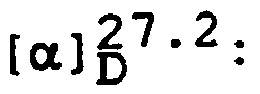
IR (KBr): 1735, 1610, 1508 cm-1
NMR (D2O, δ): 2.18 (3H, s), 3.17 (1H, dd, J=7.6 and 14.6Hz), 3.32 (1H, dd, J=6.0 and 14 .6Hz) , 3.85 (3H, s), 4.27 (1H, dd, J=6.0 and 7.0Hz), 6.85 (1H, d, J=7.3Hz), 6.91 (1H, s), 7.21 (1H, d, J=8.0Hz)
MASS (APCI): 210 (M+H)+ (free) - Thionyl chloride (0.7 ml) was added dropwise to a solution of 3-methoxy-4-methyl-D-phenylalanine hydrochloride (1.75 g) in methanol (8 ml) over 10 minutes at room temperature. The whole was stirred at 40-50°C for 2 hours and then an additional thionyl chloride (0.7 ml) was added to the mixture. The whole mixture was stirred for further 1 hour and evaporated under reduced pressure. The resulting solid was triturated with diisopropyl ether and collected by filtration to give colorless crystals of 3-methoxy-4-methyl-D-phenylalanine methyl ester hydrochloride (1.70 g).
mp: 196-197°C

IR (Nujol): 3400, 1741, 1583, 1465, 1446, 1249 cm-1
NMR (D2O, δ): 2.19 (3H, s), 3.21 (1H, dd, J=7.4 and 14.5Hz), 3.32 (1H, dd, J=6.0 and 14.5Hz), 3.85 (6H, s), 4.43 (1H, dd, J=6.0 and 7.4Hz), 6.82 (1H, dd, J=1.4 and 7.6Hz), 6.87 (1H, d, J=1.4Hz), 7.22 (1H, d, J=7.6Hz)
MASS (APCI) : 224 (M+H)+ (free), 207, 164 - Potassium carbonate (1.70 g) was added by small portions with ice-cooling to a mixture of 3-methoxy-4-methyl-D-phenylalanine methyl ester hydrochloride (1.60 g) in mixed solvents of dichloromethane (7 ml) and water (9 ml). Chloroacetyl chloride (0.66 ml) was added to the mixture below 5°C over 15 minutes and then the whole was stirred for 30 minutes. The organic layer was separated, washed with brine, dried over magnesium sulfate and evaporated under reduced pressure to give an oil of (2R)-2-[N-(chloroacetyl)-amino]-3-(3-methoxy-4-methylphenyl)propionic acid methyl ester.
IR (Neat): 3305, 1737, 1643, 1583 cm-1 - Benzylamine (1.65 g) and potassium carbonate (1,28 g) were added successively to a solution of (2R)-2-[N-(chloroacetyl)amino]-3-(3-methoxy-4-methylphenyl)propionic acid methyl ester (1.85 g) in N,N-dimethylformamide (15 ml) at 20°C. After being stirred at 35°C for 1.5 hours, the mixture was poured into a mixture of ice-water (20 ml) and dichloromethane (20 ml). After the mixture was adjusted to pH 9 with diluted aqueous hydrochloric acid under stirring, the organic layer was separated, washed with brine (20 ml), dried over magnesium sulfate and evaporated under reduced pressure to give an oil of (2R)-2-[N-(benzylaminoacetyl)-amino]-3-(3-methoxy-4-methylphenyl)propionic acid methyl ester. A solution of (2R)-2-[N-(benzylaminoacetyl)amino]-3-(3-methoxy-4-methylphenyl)propionic acid methyl ester obtained by above procedure and acetic acid (0.18 ml) in isopropyl alcohol (10 ml) was stirred for 12 hours under reflux.
- After the mixture was cooled.to room temperature, isopropyl ether was added to the mixture. The resulting precipitates were collected by filtration and washed with isopropyl ether to give colorless crystals of (3R)-1-benzyl-3-(3-methoxy-4-methylbenzyl)piperazine-2,5-dione (1.45 g). mp: 205-209°C

IR (KBr): 3237, 1677, 1656, 1465, 1446, 1442 cm-1
NMR (DMSO-d6, δ): 2.08 (3H, s), 2.76 (1H, d, J=17.2Hz), 2.87 (1H, dd, J=4.8 and 13.4Hz), 3.11 (1H, dd, J=4.8 and 13.4Hz), 3.46 (1H, d, J=17.2Hz), 3.69 (3H, s), 4.25 (1H, d, J=14.6Hz), 4.20-4.30 (1H, m), 4.52 (1H, d, J=14.6Hz), 6.54 (1H, dd, J=1.4 and 7.4Hz), 6.69 (1H, d, J=1.4Hz), 6.87 (1H, d, J=7.4Hz), 7.04-7.11 (2H, m), 7.24-7.30 (3H, m), 8.33 (1H, d, J=2.2Hz)
MASS (APCI): 339 (M+H)+ - Lithium aluminum hydride (0.378 g) was added to an ice-cooled suspension of (3R)-1-benzyl-3-(3-methoxy-4-methylphenyl)-2,5-piperazinedione (1.35 g) in tetrahydrofuran (22 ml) below 5°C under nitrogen atmosphere. The mixture was stirred under reflux for 3 hours. After the mixture was cooled below 5°C, 2N sodium hydroxide was added to the mixture. After the mixture was stirred for 30 minutes, the insoluble materials were removed by filtration and washed with tetrahydrofuran. The filtrate and the washing were combined and evaporated under reduced pressure to give (3R)-1-benzyl-3-(3-methoxy-4-methylphenyl)piperazine as an oil. A solution of 3,5-bis(trifluoromethyl)benzoyl chloride (0.80 ml) in dichloromethane (1 ml) was added dropwise over 5 minutes to an ice-cooled solution of (3R)-1-benzyl-3-(3-methoxy-4-methylphenyl)piperazine obtained by above procedure and triethylamine (0.84 ml) in dichloromethane (10 ml) below 5°C. After being stirred for 30 minutes at the same temperature, the reaction mixture was washed with brine, dried over magnesium sulfate and evaporated under reduced pressure. The residue was purified by column chromatography on silica gel using mixed solvents of hexane and ethyl acetate (4:1). The fractions containing the objective compound were collected and evaporated under reduced pressure to give (2R)-4-benzyl-1-[3,5-bis(trifluoromethyl)benzoyl]-2-(3-methoxy-4-methylbenzyl)piperazine (1.92 g) as an oil.
IR (Neat): 2950, 2850, 1640, 1590, 1515 cm-1
NMR (CDCl3, δ): 2.16 (3H, s), 2.00-5.20 (14H, m), 6.25-6.32 (1H, m), 6.70-6.90 (2H, m), 7.20-7.44 (7H, m), 7.80 (1H, br s)
MASS (APCI): 551 (M+H)+, 573 (M+Na)+ - A solution of boron tribromide in dichloromethane (1M solution, 3.7 ml) was added dropwise over 20 minutes to an ice-cooled solution of (2R)-4-benzyl-1-[3,5-bis(trifluoromethyl)benzoyl]-2-(3-methoxy-4-methylbenzyl)-piperazine (0.68 g) in dichloromethane (5 ml). After being stirred at the same temperature for 2 hours, followed by further stirring at room temperature for 12 hours, the mixture was poured into aqueous saturated sodium hydrogen carbonate solution. The organic layer was separated, dried over magnesium sulfate and evaporated under reduced pressure. The residue was purified by column chromatography on silica gel using mixed solvents of hexane and ethyl acetate (4:1). The fractions containing the objective compound were collected and evaporated under reduced pressure to give (2R)-4-benzyl-1-[3,5-bis(trifluoromethyl)benzoyl]-2-(3-hydroxy-4-methylbenzyl)piperazine (0.56 g) as a red foam.
IR (Neat) : 1630, 1430 cm-1
NMR (CDCl3, δ): 2.00-5.20 (14H, m), 5.61 (1H, br s), 6.20-6.25 (1H, m), 6.60-7.70 (2H, m), 7.20-7.60 (7H, m), 7.80-7.85 (1H, m)
MASS (API-ES) : 519 (M-H2O+H)+, 537 (M+H)+, 559 (M+Na)+ - Sodium hydride (60% in mineral oil, 18 mg) was added by small portions to an ice-cooled solution of (2R)-4-benzyl-1-[3,5-bis(trifluoromethyl)benzoyl]-2-(3-hydroxy-4-methylbenzyl)piperazine (0.20 g) in N,N-dimethylformamide (2 ml) below 5°C under nitrogen atmosphere. After the mixture was stirred for 5 minutes, (2-methoxyethoxy)methyl chloride (0.064 ml) was added to the mixture. The whole was stirred at room temperature for 2.5 hours, and thereto water was added. The whole was extracted with ethyl acetate. The extract was dried over magnesium sulfate and evaporated under reduced pressure. The residue was purified by column chromatography on silica gel using mixed solvents of hexane and ethyl acetate (7:3). The fractions containing the objective compound were collected and evaporated under reduced pressure to give (2R)-4-benzyl-1-[3,5-bis(trifluoromethyl)benzoyl]-2-[3-[(2-methoxyethoxy)methoxy]-4-methylbenzyl]piperazine (0.21 g) as an oil.
IR (Neat): 2950, 1645, 1435 cm-1
NMR (CDCl3, δ): 2.19 (3H, s), 3.34 (3H, s), 2.00-5.20 (17H, m), 6.60-7.40 (10H, m), 7.70-7.80 (1H, m)
MASS (API-ES) : 625 (M+H)+, 647 (M+Na)+ - A mixture of (2R)-4-benzyl-1-[3,5-bis(trifluoromethyl)-benzoyl]-2-[3-[(2-methoxyethoxy)methoxy]-4-methylbenzyl]-piperazine (0.38 g) in methanol (6 ml) was hydrogenated over 20% palladium hydroxide-carbon (0.06 g) at room temperature under atmospheric pressure for 8 hours. After removal of the catalyst by filtration through Celite®, the filtrate was concentrated under reduced pressure. The residue was purified by column chromatography on silica gel using mixed solvents of dichloromethane and methanol (30:1). The fractions containing the objective compound were collected and evaporated under reduced pressure to give (2R)-1-[3,5-bis(trifluoromethyl)benzoyl]-2-[3-[(2-methoxyethoxy)methoxy]-4-methylbenzyl]piperazine (0.32 g) as an oil.
IR (KBr) : 3000-2700, 1629, 1513, 1444 cm-1
NMR (CDCl3, δ): 2.20 (3H, s), 2.50-5.30 (16H, m), 3.36 (3H, s), 6.40-7.50 (5H, m), 7.80 (1H, s)
MASS (API-ES) : 535 (M+H)+, 557 (M+Na)+ - To a solution of 1-[3,5-bis(trifluoromethyl)benzoyl]-2-[3-[(2-methoxyethoxy)methoxy]-4-methylbenzyl]piperazine (440 mg) in N,N-dimethylformamide (2.2 ml) were added (3R)-4-(2-chloroethyl)-3-(methoxymethyl)morpholine hydrochloride (289 mg), potassium carbonate (434 mg) and potassium iodide (149 mg) at room temperature. The whole was stirred at 73°C for 2 hours. After being cooled to room temperature, the mixture was poured into ice-water and the aqueous mixture was made alkaline with saturated aqueous sodium hydrogen carbonate solution. The resulting mixture was extracted with ethyl acetate. The extract was washed with brine, dried over sodium sulfate and evaporated under reduced pressure. The residue was purified by column chromatography on silica gel using mixed solvents of dichloromethane and methanol (40:1). The fractions containing the objective compound were collected and evaporated under reduced pressure to give 1-[3,5-bis(trifluoromethyl)benzoyl]-2-[3-[(2-methoxyethoxy)-methoxy]-4-methylbenzyl]-4-[2-[(3R)-3-methoxymethylmorpholino]ethyl]piperazine (450 mg) as a light yellowish oil.
IR (Neat): 2879, 1639, 1437, 1281, 1136, 1009 cm-1
NMR (CDCl3, δ): 2.20 (3H, s), 1.95-5.40 (34H, m), 6.40-8.10 (6H, m)
MASS (APCI) : 692 (M+H)+ - The following compounds were obtained according to a similar manner to that of Example 1.
- (1) 1-[3,5-Bis(trifluoromethyl)benzoyl]-4-[2-(cis-2,6-dimethylmorpholino)ethyl]-2-[3-[(2-methoxyethoxy)-methoxy]-4-methylbenzyl]piperazine
IR (Neat): 1680, 1643, 1508, 1435 cm-1
NMR (CDCl3, δ): 1.17 (6H, d, J=6.3Hz), 1.78 (2H, t, J=10.8Hz), 2.20 (3H, br s), 2.20-5.30 (23H, m), 3.36 (3H, s), 6.42-8.02 (6H, m)
MASS (APCI): 676 (M+H)+ - (2) 1-[3,5-Bis(trifluoromethyl)benzoyl]-2-[3-[(2-methoxyethoxy)methoxy]-4-methylbenzyl]-4-[2-[(2S,5S)-2-methoxymethyl-5-methylmorpholino]ethyl]piperazine
IR (Neat): 2933, 2881, 1643, 1439, 1281, 1086, 1012 cm-1
NMR (CDCl3, δ): 1.18 (3H, d, J=6.2Hz), 1.78-1.96 (2H, m), 2.20 (3H, br s), 2.20-5.30 (25H, m), 3.37 (3H, s), 3.36 (3H, s), 6.66-7.80 (6H, m)
MASS (API-ES): 706.3 (M+H)+, 728 . 3 (M+Na)+ - 1-[3,5-Bis(trifluoromethyl)benzoyl]-2-[3-[(2-methoxyethoxy)methoxy]-4-methylbenzyl]-4-[2-[(3R)-3-(methoxymethyl)morpholino]ethyl]piperazine (430 mg) was dissolved in methanol (10 ml) at room temperature, and methanesulfonic acid (0.215 ml) was added to the solution. After being stirred at the same temperature for 18 hours, the reaction mixture was concentrated until one third of original volume under reduced pressure, and poured into iced water. The aqueous mixture was made alkaline with 15% aqueous sodium hydroxide solution, and the resulting mixture was extracted with ethyl acetate. The extract was washed with brine, dried over sodium sulfate and evaporated under reduced pressure. The residue was purified by column chromatography on silica gel using mixed solvents of dichloromethane and methanol (30:1). The fractions containing the objective compound were collected and evaporated under reduced pressure, and the residue was treated with 4N hydrogen chloride in ethyl acetate solution to give 1-[3,5-bis(trifluoromethyl)benzoyl]-2-[3-hydroxy-4-methylbenzyl]-4-[2-[(3R)-3-(methoxymethyl)-morpholino]ethyl]piperazine dihydrochloride (280 mg) as a colorless powder.
mp: 167-172°C

IR (KBr): 3400, 1645, 1429, 1282, 1184, 1138 cm-1
NMR (DMSO-d6, δ): 2.08 (3H, s), 2.60-5.10 (25H, m), 6.18-7.10 (3H, m), 7.36-8.22 (3H, m), 9.25 (1H, br)
MASS (APCI): 604 (M+H)+ (free) - The following compounds were obtained according to a similar manner to that of Example 3.
- (1) 1-[3,5-Bis(trifluoromethyl)benzoyl]-4-[2-(cis-2,6-dimethylmorpholino)ethyl]-2-(3-hydroxy-4-methylbenzyl)piperazine dihydrochloride
mp: 188-200°C

IR (KBr): 3402, 1643, 1516, 1429 cm-1
NMR (DMSO-d6, δ): 1.15 (6H, d, J=6.0Hz), 2.08 (3H, br s), 2.00 -5.10 (19H, m), 6.19-8.21 (6H, m)
MASS (APCI): 588 (M+H)+ (free) - (2) 1-[3,5-Bis(trifluoromethyl)benzoyl]-2-(3-hydroxy-4-methylbenzyl)-4-[2-[(2S,5S)-2-methoxymethyl-5-methylmorpholino]ethyl]piperazine dihydrochloride
mp: 214-218°C

IR (KBr): 3433, 3398, 1645, 1516, 1429, 1371, 1281, 1182, 1140 cm-1
NMR (DMSO-d6, δ): 1.16 (3H, d, J=6.0Hz), 2.08 (3H, br s), 2.50-5.10 (21H, m), 3.27 (3H, s), 6.20-8.20 (6H, m), 9.00-9.20 (1H, m)
MASS (APCI): 618 (M+H)+ (free) - The following compounds were obtained according to a similar manner to that of Example 1 and then a similar manner to that of Example 3.
- (1) (2R)-1-[3,5-Bis(trifluoromethyl)benzoyl]-4-[2-[(2S)-2-(methoxymethyl)morpholino]ethyl]-2-(3-hydroxy-4-methylbenzyl)piperazine dihydrochloride
mp: 207-210°C

IR (KBr): 3300, 3000, 2700, 1644, 1428 cm-1
NMR (DMSO-d6, δ): 2.18 (3H, s), 2.20-5.20 (22H, m), 6.10-8.20 (6H, m), 9.00-9.40 (1H, br s), 11.00-12.00 (2H, m)
MASS (APCI): 604 (M+H)+ (free) - (2) 1-[3,5-Bis(trifluoromethyl)benzoyl]-4-[2-[(2S)-2-(methoxymethyl)morpholino]ethyl]-2-(3-hydroxy-4-methylbenzyl)piperazine dihydrochloride
IR (KBr) : 1645, 1516, 1458, 1425, 1369 cm-1
NMR (DMSO-d6, δ): 2.08 (3H, br s), 3.28 (3H, br s), 2.40-5.10 (22H, m), 6.19-8.22 (6H, m)
MASS (APCI): 604 (M+H)+ (free) - A solution of 3-methoxy-p-toluic acid (45.32 g) in tetrahydrofuran (280 ml) was added to a suspension of sodium borohydride (9.29 g) in tetrahydrofuran (45 ml) with ice bath cooling under nitrogen atmosphere. After 10 minutes stirring, boron trifuluoride diethyl etherate (41.5 ml) was added to the mixture at 3 to 15°C and the whole was stirred at room temperature overnight. Water (210 ml) and diisopropyl ether (60 ml) were added to the mixture. The organic layer was separated and the aqueous layer was extracted with diisopropyl ether (100 ml). The combined organic layer was washed successively with 1N sodium hydroxide solution and brine, dried over sodium sulfate, and evaporated in vacuo to give 3-methoxy-4-methylbenzylalcohol (41.63 g) as an oil.
IR (Neat): 3330, 1615, 1590, 1510, 1465, 1418, 1255 cm-1
NMR (CDCl3, δ): 1.70 (1H, br s), 2.21 (3H, s), 3.84 (3H, s), 4.65 (2H, s), 6.80-7.16 (3H, m) - A mixture of 3-methoxy-4-methylbenzylalcohol (41.61 g), conc. hydrochloric acid (125 ml) and toluene (83 ml) was stirred at 90°C for 1 hour. After cooling, ice-water (125 ml) and diisopropyl ether (80 ml) were added to the mixture, and the organic layer was separated, and the aqueous layer was extracted with diisopropyl ether (160 ml). The combined organic layer was washed with saturated sodium hydrogen carbonate solution and brine, dried over sodium sulfate, and evaporated in vacuo to give 3-methoxy-4-methylbenzyl chloride (46.35 g) as an oil.
IR (Neat): 1615, 1590, 1510, 1470, 1415, 1255 cm-1
NMR (CDCl3' δ) : 2.21 (3H, s), 3.85 (3H, s), 4.57 (2H, s), 6.82-7.15 (3H, m) - 3-Methoxy-4-methylbenzyl chloride (46.35 g) and ethyl acetamidomalonate (71.16 g) were added successively into a solution of sodium ethoxide (24.34 g) in ethanol (230 ml). The mixture was stirred under reflux for 2 hours, poured into ice-water (690 ml) and the pH of the mixture was adjusted to 7 with 6N hydrochloric acid. The resulting precipitates were collected by filtration, washed with aqueous ethanol (3:1, 100 ml) and dried to give crude 2-acetylamino-2-(3-methoxy-4-methylbenzyl)malonic acid diethyl ester (85.03 g). A suspension of the crude product (80.66 g) in heptane (400 ml) was stirred at 50°C for 1 hour and cooled to room temperature. The resulting precipitates were collected by filtration, washed with heptane, and dried to give pure product (74.57 g) as a colorless crystals.
mp: 123-125°C
IR (KBr): 3251, 1747, 1643, 1518, 1267, 1213, 1190, 1051 cm-1
NMR (CDCl3, δ) : 1.30 (6H, t, J=7.1Hz), 2.03 (3H, s), 2.16 (3H, s), 3.61 (2H, s), 3.76 (3H, s), 4.28 (4H, q, J=7.1Hz), 6.44-7.06 (4H, m) - A mixture of 2-acetylamino-2-(3-methoxy-4-methylbenzyl)-malonic acid diethyl ester (10.0 g), potassium hydroxide solution (1.88 g) in water (25 ml) and ethanol (25 ml) were stirred under reflux for 1 hour. Another potassium hydroxide solution (1.88 g) in water (10 ml) was added to the mixture and the whole was stirred under reflux for 2 hours. After being cooled to room temperature, the reaction mixture was concentrated under reduced pressure. Water (50 ml) and ethyl acetate (50 ml) were added to the resulting aqueous solution. The aqueous layer was separated and was adjusted to pH 1.5 with 6N hydrochloric acid. The solution was extracted with ethyl acetate, washed with brine, dried over sodium sulfate and evaporated under reduced pressure to give N-acetyl-3-methoxy-4-methyl-DL-phenylalanine (7.58 g) as a viscous oil.
IR (Neat): 3350, 1740, 1725 cm-1
NMR (CDCl3, δ): 1.99 (3H, s), 2.17 (3H, s), 3.00-3.30 (2H, m), 3.78 (3H, s), 4.75-4.90 (1H, m), 6.00-7.10 (3H, m), 6.37 (2H, br s) - The following compounds were obtained according to a similar manner to that of Preparation 27.
- (1) 2-Acetylamino-2-(4-chloro-3-methoxybenzyl)malonic acid diethyl ester
mp: 122-123°C
IR (KBr): 3247, 2977, 1749, 1643, 1523, 1309, 1205 cm-1
NMR (CDCl3, δ) : 1.30 (6H, t, J=7.1Hz), 2.03 (3H, s), 3.64 (2H, s), 3.83 (3H, s), 4.16-4.35 (4H, m), 6.53 (1H, dd, J=2.0 and 8.0Hz), 6.56 (1H, d, J=2.0Hz), 6.56 (1H, s), 7.23 (1H, d, J=8.0Hz)
MASS (APCI): 372 (M+H)+, 330, 282 - (2) 2-Acetylamino-2-(4-fluoro-3-methoxybenzyl)malonic acid diethyl ester
mp: 128-131°C
IR (KBr): 2981, 1747, 1641, 1520, 1269, 1211 cm-1
NMR (CDCl3, δ): 1.30 (6H, t, J=7.1Hz), 2.04 (3H, s), 3.62 (2H, s), 3.82 (3H, s), 4.27 (4H, q, J=7.1Hz), 6.48-7.09 (4H, m)
MASS (APCI): 356 (M+H)+ - (3) 2-Acetylamino-2-(3,4-difluorobenzyl)malonic acid diethyl ester
IR (Nujol): 3259, 1749, 1645, 1518, 1317, 1277, 1205, 1051, 1016 cm-1
NMR (DMSO-d6, δ): 1.16 (6H, t, J=7.1Hz), 1.91 (3H, s), 3.42 (2H, s), 4.15 (4H, q, J=7.1Hz), 6.76-7.45 (3H, m), 8.19 (1H, s)
MASS (APCI): 344 (M+H)+, 302 - (4) 2-Acetylamino-2-[3-methoxy-4- (trifluoromethyl) benzyl] - malonic acid diethyl ester
mp: 119-120°C
IR (KBr): 3500-3150, 2700-2300, 1637, 1631, 1461, 1348, 1238, 1172 cm-1
NMR (CDCl3, δ): 1.31 (6H, t, J=7.2Hz), 2.04 (3H, s), 3.70 (2H, s), 3.84 (3H, s), 4.21-4.36 (4H, m), 6.57-6.64 (2H, m), 7.44 (1H, d, J=8.2Hz)
MASS (APCI): 406 (M+H)+, 316 - (5) 2-Acetylamino-2-(4-fluoro-3-methylbenzyl)malonic acid diethyl ester
IR (Neat): 3250, 1740, 1640, 1510, 1460, 1370, 1270, 1210, 1185 cm-1
NMR (CDCl3, δ): 1.30 (6H, t, J=7.1Hz), 2.03 (3H, s), 2.22 (3H, s), 3.58 (2H, s), 4.27 (4H, q, J=7.1Hz), 6.53 (1H, s), 6.70-6.95 (3H, m)
MASS (APCI): 340 (M+H)+ - The following compounds were obtained according to a similar manner to that of Preparation 28.
- (1) N-Acetyl-4-chloro-3-methoxy-DL-phenylalanine
mp: 177-179°C
IR (KBr): 3351, 3200-2500, 1735, 1629, 1548 cm-1
MASS (APCI): 272 (M+H)+, 230 - (2) N-Acetyl-4-fluoro-3-methoxy-DL-phenylalanine
mp: 150-152°C
IR (KBr): 3340, 2947, 1718, 1603, 1514, 1259, 1215 cm-1
NMR (DMSO-d6, δ): 1.79 (3H, s), 2.74-3.07 (2H, m), 3.81 (3H, s), 4.41 (1H, m), 6.77 (1H, m), 7.01-7.14 (2H, m), 8.17 (1H, d, J=8.1Hz), 12.68 (1H, br)
MASS (APCI): 256 (M+H)+ - (3) N-Acetyl-3,4-difluorophenyl-DL-alanine
IR (KBr): 3360, 1710, 1615, 1550, 1530 cm-1
NMR (DMS06, δ): 1.78 (3H, s), 2.50-2.88 (2H, m), 4.35-4.47 (1H, m), 7.07-7.41 (3H, m), 8.19 (1H, d, J=8.2Hz)
MASS (APCI): 244 (M+H)+, 202 - (4) N-Acetyl-3-methoxy-4-trifluoromethyl-DL-phenylalanine mp: 156-160°C
IR (KBr): 3326, 3200-2300, 1716, 1621, 1552, 1459 cm-1 NMR (DMSO-d6, δ) : 1.80 (3H, s), 2.85-3.50 (2H, m), 3.87 (3H, s), 4.23-4.54 (1H, m), 6.94 (1H, d, J=8.0Hz), 7.13 (1H, s), 7.52 (1H, d, J=8.0Hz), 8.23 (1H, d, J=8.1Hz 12.82 (1H, br s)
MASS (APCI): 306 (M+H)+ (free) - (5) N-Acetyl-4-fluoro-3-methyl-DL-phenylalanine
IR (Neat): 3350, 1720, 1600, 1540, 1500, 1345 cm-1
NMR (DMSO-d6, δ): 1.78 (3H, s), 2.20 (3H, s), 2.71-3.03 (2H, m), 4.31-4.42 (1H, m), 6.97-8.19 (3H, m), 12.68 (1H, br s)
MASS (APCI): 240 (M+H)+ - (6) N-Acetyl-3-fluoro-4-methyl-DL-phenylalanine
IR (Neat): 3300, 1740, 1720, 1600, 1540 cm-1 - The following compounds were obtained according to a similar manner to that of Preparation 16.
- (1) N-Acetyl-4-chloro-3-methoxy-D-phenylalanine
mp: 116-117°C

IR (KBr): 3500-3150, 2700-2300, 1733, 1623 cm-1
MASS (APCI) : 272 (M+H)+, 230 - (2) N-Acetyl-4-fluoro-3-methoxy-D-phenylalanine
IR (Neat): 3330, 2940, 1728, 1618, 1518, 1275, 1223 cm-1
NMR (DMSO-d6, δ): 1.79 (3H, s), 2.70-3.10 (2H, m), 3.81 (3H, s), 4.40 (1H, m), 6.78 (1H, m), 7.01-7.14 (2H, m), 8.18 (1H, d, J=8.1Hz), 12.63 (1H, br)
MASS (APCI): 256 (M+H)+ - (3) N-Acetyl-3,4-difluoro-D-phenylalanine
IR (KBr): 3395, 1720, 1615, 1545, 1515 cm-1 - (4) N-Acetyl-3-methoxy-4-trifluoromethyl-D-phenylalanine
mp: 156-160°C
IR (KBr): 3326, 3200-2300, 1716, 1621, 1552, 1459 cm-1 NMR (DMSO-d6, δ): 1.80 (3H, s), 2.85-3.50 (2H, m), 3.87 (3H, s), 4.23-4.54 (1H, m), 6.94 (1H, d, J=8.0Hz), 7.13 (1H, s), 7.52 (1H, d, J=8.0Hz), 8.23 (1H, d, J=8.1Hz), 12.82 (1H, br s)
MASS (APCI): 306 (M+H)+ (free) - (5) N-Acetyl-4-fluoro-3-methyl-D-phenylalanine

IR (Nujol): 3400, 1715, 1605, 1530, 1500, 1450, 1240, 1200, 1120 cm-1
NMR (DMSO-d6, δ): 1.78 (3H, s), 2.20 (3H, s), 2.71-3.03 (2H, m), 4.31-4.42 (1H, m), 6.97-8.19 (3H, m), 12.68 (1H, br s)
MASS (APCI): 240 (M+H)+ - (6) N-Acetyl-3-fluoro-4-methyl-D-phenylalanine

IR (Nujol): 3300, 1705, 1600, 1560 cm-1 - The following compounds were obtained according to a similar manner to that of Preparation 17.
- (1) 4-Chloro-3-methoxy-D-phenylalanine hydrochloride
mp: 218-222°C

IR (KHr): 3500-3150, 2700-2300, 1739, 1589, 1488 cm-1
NMR (D2O, δ): 3.19 (1H, dd, J=7.5 and 14.5Hz), 3.33 (1H, dd, J=5.7 and 14.5Hz), 3.91 (3H, s), 4.28 (1H, dd, J=5.7 and 7.5Hz), 6.89 (1H, dd, J=1.8 and 8.1Hz), 7.03 (1H, d, J=1.8Hz), 7.42 (1H, d, J=8.1Hz)
MASS (APCI): 230 (M+H)+ - (2) 4-Fluoro-3-methoxy-D-phenylalanine hydrochloride
mp: 210-220°C (decomp.)
IR (KBr): 1738, 1606, 1520, 1487, 1462, 1417, 1274, 1223, 1209, 1157, 1128 cm-1
NMR (DMSO-d6, δ) : 3.13 (2H, m), 3.83 (3H, s), 4.00-4.40 (1H, m), 6.70-6.90 (1H, m), 7.00-7.30 (2H, m)
MASS (APCI): 214 (M+H)+ (free) - (3) 3-Methoxy-4-trifluoromethyl-D-phenylalanine hydrochloride
mp: 156-160°C
IR (KBr): 3326, 3200-2300, 1716, 1621, 1552, 1459 cm-1
NMR (D2O, δ): 3.19 (1H, dd, J=7.5 and 14.4Hz), 3.33 (1H, dd, J=5.7 and 14.4Hz), 3.86 (3H, s), 4.20-4.26 (1H, m), 6.97 (1H, d, J=8.0Hz), 7.07 (1H, s), 7.58 (1H, d, J=8.0Hz)
MASS (APCI): 264 (M+H)+ (free) - (4) 4-Fluoro-3-methyl-D-phenylalanine hydrochloride
IR (Nujol) : 1735, 1485, 1460, 1375, 1210 cm-1
MASS (APCI): 198 (M+H)+ (free) - (5) 3-Fluoro-4-methyl-D-phenylalanine hydrochloride
IR (Nujol): 1730, 1480, 1555, 1250, 1220, 1200 cm-1 - The following compounds were obtained according to a similar manner to that of Preparation 18.
- (1) 4-Chloro-3-methoxy-D-phenylalanine methyl ester hydrochloride
mp: 165-168°C
IR (KBr): 3200-2500, 1745, 1583, 1494 cm-1
NMR (D2O, δ): 3.22 (1H, dd, J=7.5 and 14.5Hz), 3.35 (1H, dd, J=6.8 and 14.5Hz), 3.85 (3H, s), 3.92 (3H, s), 4.44 (1H, dd, J=6.8 and 7.5Hz), 6.89 (1H, dd, J=1.9 and 8.1Hz), 7.02 (1H, d, J=1.9Hz), 7.44 (1H, d, J=8.1Hz)
MASS (APCI): 244 (M+H)+ - (2) 4-Fluoro-3-methoxy-D-phenylalanine methyl ester hydrochloride
mp: 172-173°C
IR (KBr): 1745, 1610, 1581, 1518, 1452, 1398, 1294, 1273, 1242, 1215, 1163, 1120, 1061, 1028 cm-1
NMR (DMSO-d6, δ): 3.13 (2H, d, J=6.3Hz), 3.71 (3H, s), 3.83 (3H, s), 4.31 (1H, t, J=6.3Hz), 6.70-6.90 (1H, m), 7.00-7.30 (2H, m)
MASS (APCI): 228 (M+H)+ (free) - (3) 3-Methoxy-4-trifluoromethyl-D-phenylalanine methyl ester hydrochloride
mp: 158-165°C
IR (KBr) : 3326, 3200-2300, 1739, 1617, 1504, 1328 cm-1
NMR (D2O, δ): 3.29 (1H, dd, J=7.5 and 14.4Hz), 3.42 (1H, dd, J=5.7 and 14.4Hz), 3.85 (3H, s), 3.90 (3H, s), 4.46-4.55 (1H, m), 7.00 (1H, d, J=8.0Hz), 7.12 (1H, s), 7.65 (1H, d, J=8.0Hz)
MASS (APCI): 277 (M+H)+ (free) - (4) 4-Fluoro-3-methyl-D-phenylalanine methyl ester hydrochloride
IR (Nujol): 3200, 1740, 1490, 1450, 1240 cm-1
NMR (DMSO-d6, δ): 2.22 (3H, s), 3.00-3.17 (2H, m), 3.68 (3H, s), 4.21-4.28 (1H, m), 7.07-7.18 (3H, m), 8.67 (3H, s)
MASS (APCI): 212 (M+H)+ (free) - (5) 3-Fluoro-4-methyl-D-phenylalanine methyl ester hydrochloride
IR (Nujol): 1740, 1580, 1510, 1450 cm-1
NMR (DMSO-d6, δ): 2.21 (3H, s), 3.13 (2H, d, J=6.0Hz), 3.69 (3H, s), 4.29 (1H, t, J=6.0Hz), 6.95-7.28 (3H, m), 8.70 (3H, s)
MASS (APCI): 212 (M+H)+ (free) - (6) 4-Fluoro-D-phenylalanine methyl ester hydrochloride
mp: 197.3-197.8°C
IR (KBr): 2989, 2956, 2910, 1745, 1741, 1504, 1490, 1450, 1240, 825 cm-1
NMR (DMSO-d6, δ): 3.10 (1H, dd, J=7.0 and 14.0Hz), 3.18 (1H, dd, J=6.4 and 14.0Hz), 3.67 (3H, s), 4.26 (1H, dd, J=6.4 and 7.0Hz), 7.11-7.33 (4H, m), 8.67 (3H, br s)
MASS: 198 (M+H)+ (free) - (7) 4-Chloro-D-phenylalanine methyl ester hydrochloride
mp: 210-211°C
IR (KBr) : 1743, 1707, 1693, 1645, 1547, 1541, 1514, 1495, 1454, 1240, 1186, 1147, 1126, 1099, 1061, 1024 cm-1
NMR (DMSO-d6, δ): 3.00-3.30 (2H, m), 3.68 (3H, s), 4.28 (1H, t, J=6.5Hz), 7.28 (2H, d, J=8.4Hz), 7.40 (2H, d, J=8.4Hz)
MASS (APCI): 214 (M+H)+ (free) - (8) 4-Trifluoromethyl-D-phenylalanine methyl ester hydrochloride
mp: 198-199°C
IR (KBr): 3199, 2864, 1741 cm-1
NMR (DMSO-d6, δ): 3.10-3.30 (2H, m), 3.69 (3H, s), 4.35 (1H, t, J=6.4Hz), 7.51 (2H, d, J=8.1Hz), 7.71 (2H, d, J=8.1Hz)
MASS (APCI): 248 (M+H)+ (free) - The following compounds were obtained according to a similar manner to that of Preparation 19.
- (1) (2R)-2-(2-Chloroacetylamino)-3-(4-chloro-3-methoxyphenyl)propionic acid methyl ester
mp: 68-69°C
IR (KBr): 3303, 2954, 1739, 1654, 1538 cm-1
NMR (CDCl3' δ): 3.13 (2H, d, J=6.0Hz), 3.75 (3H, s), 3.88 (3H, s), 4.05 (2H, s), 4.84-4.93 (1H, m), 6.65 (1H, dd, J=1.8 and 8.1Hz), 6.67 (1H, d, J=1.8Hz), 7.28 (1H, d, J=8.1Hz)
MASS (APCI): 320 (M+H)+, 288, 260 - (2) (2R)-2-(2-Chloroacetylamino)-3-(4-fluoro-3-methoxyphenyl)propionic acid methyl ester
mp: 86-87°C
IR (KBr): 1726, 1687, 1649, 1614, 1550, 1518, 1454, 1423, 1419, 1362, 1331, 1273, 1227, 1213, 1186 cm-1
NMR (CDCl3, δ): 3.12 (2H, d, J=5.8Hz), 3.75 (3H, s), 3.87 (3H, s), 4.05 (2H, s), 4.87 (1H, dt, J=8.0 and 5.8Hz), 6.40-7.20 (3H, m)
MASS (APCI) : 304 (M+H)+ - (3) (2R)-2-(2-Chloroacetylamino)-3-(3,4-difluorophenyl)-propionic acid methyl ester
IR (Neat): 3305, 1470, 1675, 1660, 1515 cm-1
NMR (DMSO-d6, δ): 2.87-3.11 (2H, m), 3.63 (2H, s), 4.03 (3H, s), 4.48-4.57 (1H, m), 7.03-7.41 (3H, m), 8.68 (1H, d, J=7 . 8Hz)
MASS (APCI): 292 (M+H)+ - (4) (2R)-2-(2-Chloroacetylamino)-3-[3-methoxy-9-(trifluoromethyl)phenyl]propionic acid methyl ester
mp: 108-109°C
IR (KBr): 3315, 2965, 1751, 1648, 1536, 1459, 1421 cm-1
NMR (CDCl3; δ): 3.10-3.29 (2H, m), 3.76 (3H, s), 3.89 (3H, s), 4.05 (2H, s), 4.87-4.97 (1H, m), 6.73-6.77 (2H, m), 7.00-7.05 (1H, m), 7.75 (1H, d, J=8.3Hz)
MASS (APCI): 354 (M+H)+ 312 - (5) (2R)-2-(2-Chloroacetylamino)-3-(4-fluoro-3-methylphenyl)propionic acid methyl ester
IR (Nujol): 3300, 1730, 1540, 1500, 1450 cm-1
NMR (DMSO-d6, δ): 2.19 (3H, s), 2.82-3.06 (2H, m), 3.62 (3H, s), 4.06 (2H, s), 4.32-4.53 (1H, m), 6.97-7.13 (3H, m), 8.66 (1H, d, J=7.8Hz)
MASS (APCI): 288 (M+H)+ - (6) (2R)-2-(2-Chloroacetylamino)-3-(3-fluoro-4-methylphenyl)propionic acid methyl ester
IR (Nujol): 3300, 1740, 1660, 1540, 1450, 1360 cm-1
NMR (DMSO-d6, δ): 2.19 (3H, s), 2.85-3.10 (2H, m), 3.63 (3H, s), 4.06 (2H, s), 4.45-4.56 (1H, m), 6.92-7.22 (3H, m), 8.68 (1H, d, J=7.8Hz)
MASS (APCI): 288 (M+H)+ - (7) (2R)-2-(2-Chloroacetylamino)-3-(4-fluorophenyl)-propionic acid methyl ester
IR (KBr): 3330, 1735, 1646, 1538, 1509, 1448, 1367, 1226, 1151 cm-1
NMR (CDCl3, δ) : 3.09 (1H, dd, J=5. 8 and 14.0Hz), 3.16 (1H, dd, J=5.8 and 14.0Hz), 3.74 (3H, s), 4.03 (2H, s), 4.85 (1H, ddd, J=5.8, 5.8 and 7.9Hz), 6.95-7.12 (5H, m)
MASS: 274 (M+H)+ - (8) (2R)-2-(2-Chloroacetylamino)-3-(4-chlorophenyl)-propionic acid methyl ester
mp: 87-88°C
IR (KBr): 1738, 1662, 1537, 1495, 1491, 1446, 1408, 1363, 1265, 1209, 1119, 1090, 1036, 1016 cm-1
NMR (CDCl3, δ) : 2.90-3.30 (3H, m), 3.75 (3H, s), 4.03 (2H, s), 4.70-5.00 (1H, m), 7.05 (2H, d, J=8.0Hz), 7.28 (2H, d, J=8.0Hz)
MASS (APCI): 290 (M+H)+ - (9) (2R)-2-(2-Chloroacetylamino)-3-[4-(trifluoromethyl)-phenyl]propionic acid methyl ester
mp: 83-84°C
IR (KBr): 3294, 1741, 1655, 1547 cm-1
NMR (DMSO-d6, δ): 3.12-3.32 (2H, m), 3.76 (3H, s), 4.04 (2H, s), 4.86-4.96 (1H, m), 7.25 (2H, d, J=8.1Hz), 7.57 (2H, d, J=8.1Hz)
MASS (APCI): 324 (M+H)+ - The following compounds were obtained according to a similar manner to that of Preparation 20.
- (1) (3R)-1-Benzyl-3-(4-chloro-3-methoxybenzyl)piperazine-2,5-dione
mp: 149-150°C

IR (KBr) : 3253, 1658, 1461 cm-1
NMR (DMSO-d6, δ): 2.94 (1H, dd, J=4.7 and 13.4Hz), 2.96 (1H, d, J=17.4Hz) , 3.14 (1H, dd, J=4.5 and 13.4Hz), 3.56 (1H, d, J=17.4Hz) , 3.76 (3H, s), 4.21 (1H, d, J=14.6Hz), 4.30-4.35 (1H, m), 4.61 (1H, d, J=14.6Hz), 6.66 (1H, dd, J=1.8 and 8.0Hz), 6.91 (1H, d, J=1.8Hz) , 7.04-7.11 (2H, m), 7.17 (1H, d, J=8.0Hz), 7.26-7.33 (3H, m), 8.38 (1H, br s)
MASS (APCI): 359 (M+H)+ - (2) (3R)-1-Benzyl-3-(4-fluoro-3-methoxybenzyl)piperazine-2,5-dione
mp: 177-179°C
IR (KBr) : 3240, 1658, 1516, 1464 cm-1
NMR (CDCl3, δ) : 3.00-3.30 (3H, m), 3.61 (1H, d, J=17.7Hz), 3.84 (3H, s), 4.20-4.60 (3H, m), 6.29 (1H, br s), 6.60-7.50 (8H, m)
MASS (APCI) : 343 (M+H)+ - (3) (3R)-1-Benzyl-3-(3,4-difluorobenzyl)piperazine-2,5-dione
IR (KBr): 3313, 3255, 1650, 1515, 1465, 1275 cm-1
NMR (DMSO-d6, δ) : 2.90-4.70 (7H, m), 6.94-7.32 (8H, m), 8.35 (1H, s)
MASS (APCI): 331 (M+H)+ - (4) (3R)-1-Benzyl-3-[3-methoxy-4-(trifluoromethyl)benzyl]-piperazine-2,5-dione
IR (KBr) : 3315, 1751, 1648, 1536, 1459, 1421 cm-1
NMR (DMSO-d6, δ): 2.89-3.25 (2H, m), 3.19 (1H, d, J=17.5Hz), 3.62 (1H, d, J=17.5Hz), 3.77 (3H, s), 4.15 (1H, d, J=14.5Hz), 4.30-4.35 (1H, m), 4.68 (1H, d, J=14.5Hz), 6.80 (1H, d, J=8.0Hz), 7.00-7.41 (7H, m), 8.41 (1H, br s)
MASS (APCI): 393 (M+H)+, 351 - (5) (3R)-1-Henzyl-3-(4-fluoro-3-methylbenzyl)piperazine-2,5-dione

IR (Nujol): 3250, 3225, 1650, 1430, 1320, 1250 cm-1
NMR (DMSO-d6, δ): 2.13 (3H, s), 2.81-4.65 (7H, m), 6.83-7.34 (8H, m), 8.33 (1H, s)
MASS (APCI): 327 (M+H)+ - (6) (3R)-1-Benzyl-3-(3-fluoro-3-methylbenzyl)piperazine-2,5-dione

IR (Nujol): 3250, 1680, 1640, 1460, 1320 cm-1
NMR (DMSO-d6, δ): 2.17 (3H, s), 2.84-4.69 (7H, m), 6.80-7.34 (8H, m), 8.35 (1H, s)
MASS (APCI): 327 (M+H)+ - (7) (2R)-2-[N-(Benzylaminoacetyl)amino]-3-(4-fluorophenyl)-propionic acid methyl ester
MASS: 345 (M+H)+ - (8) (3R)-1-Benzyl-3-(4-fluorobenzyl)piperazine-2,5-dione
mp: 190.1-190.8°C
IR (KBr): 1671, 1656, 1509, 1448, 1334, 1162 cm-1
NMR (CDCl3, δ): 3.08 (1H, d, J=4.4 and 14.0Hz), 3.19 (1H, d, J=5.9 and 14.0Hz), 3.05 (1H, d, J=17.7Hz), 3.56 (1H, d, J=17.7Hz) , 4.33 (1H, m), 4.41 (1H, d, J=14.3Hz), 4.54 (1H, d, J=14.3Hz), 6.38-7.35 (10H, m)
MASS: 313 (M+H)+ - (9) (3R)-1-Benzyl-3-(4-chlorobenzyl)piperazine-2,5-dione
mp: 181-182°C
IR (KBr): 1678, 1649, 1564, 1550, 1516, 1489, 1462, 1433, 1408, 1325, 1273, 1178, 1112, 1090, 1063 cm-1
NMR (CDC13, δ): 2.80-3.30 (3H, m), 3.57 (1H, d, J=17.6Hz) , 4 .20-4. 90 (2H, m) ) , 4.60 (1H, d, J=14.3Hz), 6.80-7.50 (9H, m)
MASS (APCI): 329 (M+H)+ - (10) (3R)-1-Benzyl-3-[4-(trifluoromethyl)benzyl]piperazine-2,5-dione
mp: 180-181°C
IR (KBr): 3257, 1678, 1651 cm-1
NMR (DMSO-d6, δ): 2.86 (1H, d, J=17.3Hz), 3.00 (1H, dd, J=4.8 and 13.5Hz), 3.25 (1H, d, J=4.5 and 13.5Hz), 3.59 (1H, d, J=17.3Hz), 4.08 (1H, d, J=14.3Hz), 4.30-4.40 (1H, m), 4.73 (1H, d, J=14.3Hz), 7.05-7.32 (7H, m), 7.47 (2H, d, J=8.2Hz)
MASS (APCI): 363 (M+H)+ - The following compounds were obtained according to a similar manner to that of Preparation 21.
- (1) (2R)-4-Benzyl-1-[3,5-bis(trifluoromethyl)benzoyl]-2-(4-chloro-3-methoxybenzyl)piperazine
IR (Neat): 1643, 1517 cm-1
NMR (CDCl3, δ): 2.00-5.20 (14H, m), 6.20-8.00 (11H, m)
MASS (APCI): 571 (M+H)+ - (2) (2R)-1-[3,5-Bis(trifluoromethyl)benzoyl]-2-(3,4-difluorobenzyl)-4-benzylpiperazine
IR (Neat): 1645, 1515, 1435, 1280, 1180, 1140 cm-1
NMR (DMSO-d6, δ): 2.06-4.82 (11H, m), 6.61-8.19 (11H, m)
MASS (APCI) : 543 (M+H)+ - A solution of (2R)-4-benzyl-1-[3,5-bis(trifluoromethyl)-benzoyl]-2-(4-chloro-3-methoxybenzyl)piperazine (2.23 g) and 1-chloroethyl chloroformate (0.61 ml) in 1,2-dichloroethane (10 ml) was stirred under reflux for 15 hours. After cooling, the reaction mixture was concentrated under reduced pressure. The resulting syrup was dissolved into methanol (10 ml) and the solution was stirred under reflux for 2 hours. After cooling, the reaction mixture was concentrated under reduced pressure and the resulting powder was collected by filtration to give a yellow powder of (2R)-1-[3,5-bis(trifluoromethyl)benzoyl]-2-(4-chloro-3-methoxybenzyl)piperazine hydrochloride (2.00 g).
mp: 70-71°C
MASS (APCI): 481 (M+H)+ - A solution of boron tribromide in dichloromethane (1M solution, 6.0 ml) was added dropwise over 20 minutes to an ice-cooled solution of (2R)-1-[3,5-bis(trifluoromethyl)-penzoyl]-2-(4-chloro-3-methoxybenzyl)piperazine hydrochloride (0.98 g) in dichloromethane (5 ml). After being stirred at the same temperature for 2 hours, followed by at room temperature for 12 hours, an additional solution of boron tribromide in dichloromethane (1M solution, 4.0 ml) was added, and the whole was stirred at room temperature for further 4 hours. The resulting mixture was poured into aqueous saturated sodium hydrogen carbonate solution and the whole was stirred for 1 hour. The organic layer was separated, dried over magnesium sulfate and evaporated under reduced pressure. The residue was purified by column chromatography on silica gel using a mixed solvent of dichloromethane and methanol (20:1). The fractions containing the objective compound were collected and evaporated under reduced pressure to give (2R)-1-[3,5-bis-(trifluoromethyl)benzoyl]-2-(4-chloro-3-hydroxybenzyl)-piperazine (0.67 g) as a foam.
IR (Neat): 3400-3000, 1635 cm-1
NMR (DMSO-d6, δ): 2.60-4.80 (10H, m), 6.28-7.20 (3H, m), 7.41 (1H, s), 7.75 (1H, s), 8.14 (1H, d, J=8.2Hz), 10.00 (1H, br s)
MASS (APCI): 467 (M+H)+ - The following compounds were obtained according to a similar manner to that of Preparation 38.
- (1) (2R)-4-Benzyl-2-(4-chloro-3-hydroxybenzyl)piperazine mp: 65-68°C
IR (KBr): 2939, 2813, 1444, 1429, 1294, 1236, 1136, 1047 cm-1
NMR (DMSO-d6, δ) : 1.60-4.00 (11H, m), 6.60 (1H, dd, J=1.6 and 8.0Hz), 6.78 (1H, d, J=1.6Hz), 7.16-7.40 (6H, m) - (2) (2R)-1-[3,5-Bis(trifluoromethyl)benzoyl]-2-(4-fluoro-3-hydroxybenzyl)piperazine
mp: 82-86°C
IR (KBr): 3282, 1637, 1282, 1182, 1136 cm-1
NMR (CDCl3, δ): 2.20-5.20 (10H, m), 6.10-8.10 (6H, m)
MASS (APCI): 451 (M+H)+ - (3) (3R)-1-Benzyl-3-(3-hydroxy-4-methylbenzyl)piperazine
IR (KBr): 1649, 1516 cm-1
NMR (CDCl3, δ): 1.95-2.20 (2H, m), 2.20 (3H, s), 2.57-3.06 (7H, m), 3.51 (1H, d, J=13.1Hz), 3.52 (1H, d, J=13.1Hz), 6.60 (1H, d, J=7.4Hz), 6.61 (1H, s), 7.03 (1H, d, J=7.4Hz), 7.20-7.35 (5H, m)
MASS (APCI): 297 (M+H)+ - To a solution of (2R)-2-(4-chloro-3-hydroxybenzyl)-4-benzylpiperazine (3.78 g) and triethylamine (5.71 ml) in dichloromethane was added 4-dimethylaminopyridine (0.29 g) and tert-butyldimethylsilyl chloride (5.30 g) successively with ice bath cooling under nitrogen atmosphere. After stirring overnight at room temperature, water (50 ml) was added to the mixture and the organic layer was separated, washed with brine, dried over sodium sulfate, and evaporated in vacuo. The residue was purified by column chromatography on silica gel with a mixture of dichloromethane and methanol (10:1) as eluent to give (2R)-4-benzyl-2-[4-chloro-3-(tert-butyldimethylsilyloxy)benzyl]piperazine (4.11 g) as an oil.
IR (Neat): 1600, 1575, 1485, 1420, 1295, 1250, 1170, 1140 cm-1
NMR (CDCl3, δ) : 0.15 (6H, s), 0.96 (9H, s), 1.80 (1H, t, J=10.0Hz), 1.94-2.98 (8H, m), 3.40 (1H, d, J=13.0Hz), 3.48 (1H, d, J=13.0Hz), 6.60-7.34 (8H, m)
MASS (APCI): 431 (M+H)+, 397 - 1-[3-(Dimethylamino)propyl]-3-ethylcarbodiimide hydrochloride (1.93 g) was added to a mixture of (2R)-4-benzyl-2-[4-chloro-3-(tert-butyldimethylsilyloxy)benzyl]-piperazine (2.90 g) and 3-methoxy-5-(trifluoromethyl)benzoic acid (1.48 g), 1-hydroxybenzotriazole (1.14 g) in dichloromethane (18 ml) at room temperature. After being stirred for 6 hours at the same temperature, the reaction mixture was poured into a mixed solvent of water (25 ml) and dichloromethane (15 ml). The aqueous layer was adjusted to pH 9 with aqueous sodium hydrogen carbonate solution. The organic layer was separated, washed with brine, dried over sodium sulfate, and concentrated under reduced pressure. The resulting residue was purified by column chromatography on silica gel (52 g) using a mixed solvent of hexane and ethyl acetate (2:1). The fractions containing the objective compound was collected and evaporated under reduced pressure to give a syrup of (2R)-1-[3-methoxy-5-(trifluoromethyl)-benzoyl]-2-[4-chloro-3-(tert-butyldimethylsilyloxy)benzyl]-4-benzylpiperazine (3.3 g).
IR (Neat): 2937, 1639, 1603, 1421, 1250, 1173, 1132, 847 cm-1
NMR (CDCl3, δ): 0.13 (6H, s), 1.00 (9H, s), 1.60-5.10 (11H, m), 3.81 (3H, s), 6.30-8.20 (11H, m)
MASS (APCI): 633 (M)+ - The following compounds were obtained according to a similar manner to that of Preparation 37.
- (1) (2R)-1-[3-Methoxy-5-(trifluoromethyl)benzoyl]-2-(4-chloro-3-hydroxybenzyl)piperazine
mp: 154-157°C
IR (KBr): 3265, 2956, 1624, 1427, 1173, 1128 cm-1
NMR (DMSO-d6, δ): 2.20-4.90 (10H, m), 3.82 (3H, s), 6.20-7.30 (6H, m), 10.02 (1H, br)
MASS (APCI): 429 (M+H)+ - (2) (2R)-1-[3-Trifluoromethyl-5-(methylthio)benzoyl]-2-[4-chloro-3-(tert-butyldimethylsilyloxy)benzyl]piperazine
IR (Neat): 1645, 1630, 1420, 1170, 1130 cm-1
NMR (CDCl3, δ): 0.18 (6H, s), 1.02 (9H, s), 2.48 (3H, s), 2.60-5.10 (10H, m), 6.28-8.26 (6H, m)
MASS (APCI): 559 (M+H)+ - (3) (2R)-1-[3,5-Bis(trifluoromethyl)benzoyl]-2-[4-fluoro-3-methoxybenzyl]piperazine hydrochloride
mp: 127-134°C
IR (KBr): 2970, 2947, 1645, 1520, 1281, 1184, 1136 cm-1
NMR (DMSO-d6, δ): 2.60-5.20 (12H, m), 6.50-8.30 (6H, m), 9.60 (2H, br)
MASS (APCI): 465 (M+H)+ (free) - (4) (2R)-2-(4-Fluoro-3-methoxybenzyl)-1-[3-methoxy-5-(trifluoromethyl)benzoyl]piperazine hydrochloride
IR (KBr): 1643, 1606, 1518, 1464, 1423, 1377, 1350, 1321, 1242, 1215, 1173, 1126, 1053, 1038 cm-1
NMR (DMSO-d6, δ): 2.30-5.30 (16H, m), 6.30-7.50 (6H, m)
MASS (APCI): 427 (M+H)+ (free) - (5) (2R)-1-[3,5-Bis(trifluoromethyl)benzoyl]-2-(3,4-difluorobenzyl)piperazine hydrochloride
IR (KBr): 3435, 2940, 2800, 1645, 1520, 1435, 1365, 1280, 1185, 1135 cm-1
NMR (DMSO-d6, δ): 2.50-5.17 (9H, m), 6.60-8.45 (6H, m), 9.63 (2H, br s)
MASS (APCI): 453 (M+H)+ (free) - (6) (2R)-1-[3,5-Bis(trifluoromethyl)benzoyl]-2-[3-methoxy-4-(trifluoromethyl)benzyl]piperazine
IR (Neat): 2952, 1639, 1623, 1461, 1423, 1124 cm-1
NMR (CDCl3, δ): 2.60-5.20 (13H, m), 6.40-8.00 (6H, m)
MASS (APCI): 515 (M+H)+ - (7) (2R)-1-[3-Methoxy-5-(trifluoromethyl)benzoyl]-2-[3-methoxy-4-(trifluoromethyl)benzyl]piperazine
IR (Neat): 2950, 1637, 1461, 1423, 1317 cm-1
NMR (CDCl3, δ): 2.60-5.20 (15H, m), 6.60-7.60 (6H, m)
MASS (APCI): 477 (M+H)+ - (8) (2R)-1-[3,5-Bis(trifluoromethyl)benzoyl]-2-(4-fluoro-3-methylbenzyl)piperazine
IR (Neat): 3350, 1640, 1500, 1430, 1380, 1350, 1275 cm-1
NMR (DMSO-d6, δ): 2.00-4.84 (12H, m), 6.69-8.34 (7H, m)
MASS (APCI): 449 (M+H)+ - (9) (2R)-1-[3,5-Bis(trifluoromethyl)benzoyl]-2-(3-fluoro-4-methylbenzyl)piperazine
IR (Neat): 3300, 1625, 1425, 1275, 1120 cm-1
NMR (DMSO-d6, δ) : 2.18 (3H, s), 2.40-4.86 (9H, m), 6.62-8.20 (6H, m)
MASS (APCI): 449 (M+H)+ - (10) (2R)-2-(4-Fluorobenzyl)-1-[3-methoxy-5-(trifluoromethyl)benzoyl]piperazine hydrochloride
mp: 78.8-80.3°C
IR (KBr) : 1513, 1423, 1349, 1172, 1126, 1054 cm-1
NMR (DMSO-d6, δ) : 2.50-5.03 (9H, m), 3.82 (3H, s), 6.94-7.25 (8H, m), 9.56 (1H, br s)
MASS (APCI): 397 (M+H)+ (free) - (11) (2R)-1-[3,5-Bis(trifluoromethyl)benzoyl]-2-(4-chlorobenzyl)piperazine hydrochloride
mp: 240-260°C
IR (Neat): 1658, 1496, 1437, 1387, 1362, 1331, 1282, 1186, 1132, 1101, 1059, 1018 cm-1
NMR (CDCl3' δ): 2.00-5.30 (9H, m), 6.70-8.50 (7H, m)
MASS (APCI): 451 (M+H)+ (free) - (12) (2R)-2-(4-Chlorobenzyl)-1-[3-methoxy-5-(trifluoromethyl)benzoyl]piperazine hydrochloride
IR (KBr) : 1643, 1605, 1489, 1464, 1423, 1377, 1350, 1319, 1271, 1242, 1175, 1128, 1097, 1053 cm-1
NMR (DMSO-d6, δ): 2.00-5.40 (13H, m), 6.20-8.20 (7H, m)
MASS (APCI): 413 (M+H)+ (free) - (13) (2R)-1-(3,5-Bis(trifluoromethyl)benzoyl)-2-[4-(trifluoromethyl)benzyl]piperazine
NMR (CDCl3, δ): 2.30-5.30 (9H, m), 7.26-7.88 (7H, m)
MASS (APCI): 485 (M+H)+ - (14) (2R)-1-[3-Methoxy-5-(trifluoromethyl)benzoyl]-2-[4-(trifluoromethyl)benzyl]piperazine
IR (Neat): 2951, 1632, 1608 cm-1
NMR (CDCl3, δ): 2.70-5.10 (9H, m), 3.80 (3H, s), 6.72-7.87 (7H, m)
MASS (APCI): 447 (M+H)+ - (15) (2R)-1-[3-Methoxy-5-(trifluoromethyl)benzoyl]-2-(2-naphthylmethyl)piperazine

IR (Neat): 3740, 1630 cm-1
NMR (CDCl3, δ): 2.5-5.4 (9H, m), 3.55 (3H, s)., 6.51 (1H, br s), 6.87 (1H, br s), 7.06 (1H, br s), 6.8-7.9 (7H, m)
MASS (APCI) : 429 (M+H) + - (16) (2R)-2-[(1H-Indol-3-yl)methyl]-1-[3-methoxy-5-(trifluoromethyl)benzoyl]piperazine
IR (Neat): 3280, 1620, 1459, 1427 cm-1
NMR (CDCl3, δ): 2.60-3.00 (10H, m), 3.74 (3H, s), 6.70-7.40 (8H, m), 8.25-8.52 (1H, m)
MASS (APCI) : 418 (M+H)+ - (17) (2R)-1-tert-Butoxycarbonyl-2-(3-hydroxy-4-methylbenzyl)piperazine
IR (KBr): 1674 cm-1
NMR (CDCl3, δ): 1.37 (9H, s), 2.20 (3H, s), 2.72-3.15 (8H, m), 3.90-3.93 (1H, m), 4.16 (1H, br s), 6.62 (1H, s), 6.68 (1H, d, J=7.6Hz), 7.02 (1H, d, J=7.6Hz)
MASS (APCI): 207 (M+H-Boc)+ - (18) (2R)-1-(tert-Butoxycarbonyl)-2-(4-chlorobenzyl)-piperazine

IR (Neat): 3340, 2980, 2870, 2830, 1690, 1410, 1370 cm-1
NMR (CDCl3, δ): 1.36 (9H, s), 2.6-3.2 (7H, m), 3.90 (1H, br), 4.18 (1H, br s), 7.15 (2H, d, J=8.4Hz), 7.25 (2H, d, J=8.4Hz)
MASS (APCI): 311 (M+H)+ - The following compounds were obtained according to a similar manner to that of Preparation 41.
- (1) (2R)-1-[3-Trifluoromethyl-5-(methylthio)benzoyl]-2-[4-chloro-3-(tert-butyldimethylsilyloxy)benzyl]-4-benzylpiperazine
IR (Neat): 1645, 1490, 1420, 1300, 1170, 1130 cm-1.
NMR (CDCl3, δ): 0.15 (6H, s), 1.00 (9H, s), 1.95-5.02 (11H, m), 2.48 (3H, s), 6.20-8.25 (11H, m)
MASS (APCI): 649 (M+H)+, 615 - (2) (2R)-4-Henzyl-2-(4-fluoro-3-methoxybenzyl)-1-[3-methoxy-5-(trifluoromethyl)benzoyl]piperazine
IR (Neat): 1738, 1643, 1628, 1616, 1604, 1516, 1464, 1454, 1417, 1371, 1342, 1273, 1099, 1055 cm-1
NMR (CDCl3, δ): 0.60-5.20 (17H, m), 6.00-7.50 (11H, m)
MASS (APCI): 517 (M+H)+ - (3) (2R)-4-Benzyl-1-[3-methoxy-5-(trifluoromethyl)benzoyl]-2-[3-methoxy-4-(trifluoromethyl)benzyl]piperazine
IR (Neat): 2811, 1643, 1280, 1180, 1137 cm-1
NMR (CDCl3, δ) : 2.20-5.20 (17H, m), 6.40-7.50 (11H, m)
MASS (APCI): 567 (M+H)+ - (4) (2R)-4-Benzyl-2-(4-fluorobenzyl)-1-[3-methoxy-5-(trifluoromethyl)benzoyl]piperazine
IR (Neat): 1639, 1509, 1460, 1423, 1344, 1128, 1010 cm-1
NMR (CDCl3, δ): 2.07 (1H, br), 2.73-4.91 (8H, m), 6.57-7.53 (12H, m)
MASS: 487 (M+H)+ - (5) (2R)-4-Benzyl-1-[3,5-bis(trifluoromethyl)benzoyl]-2-(4-chlorobenzyl)piperazine
IR (Neat): 1738, 1676, 1647, 1628, 1618, 1498, 1454, 1417, 1387, 1273, 1084, 1068 cm-1
NMR (CDCl3, δ) : 0.60-5.20 (11H, m), 6.90-8.70 (12H, m)
MASS (APCI) : 541 (M+H)+ - (6) (2R)-4-Benzyl-2-(4-chlorobenzyl)-1-[3-methoxy-5-(trifluoromethyl)benzoyl]piperazine
IR (Neat): 1707, 1678, 1643, 1630, 1618, 1604, 1516, 1496, 1489, 1477, 1454, 1417, 1392, 1375, 1342, 1317 cm-1
NMR (CDCl3, δ): 0.60-5.20 (14H, m), 6.40-8.20 (12H, m)
MASS (APCI): 503 (M+H)+ - (7) (2R)-4-Henzyl-1-[3,5-bis(trifluoromethyl)benzoyl]-2-[4-(trifluoromethyl)benzyl]piperazine
IR (Neat): 2950, 2800, 1765, 1740, 1640 cm-1
NMR (DMSO-d6, δ): 1.70-4.30 (11H, m), 7.13 (1H, d, J=7.8Hz), 7.20-7.70 (10H, m), 8.13 (1H, d, J=7.8Hz)
MASS (APCI) : 575 (M+H)+ - (8) (2R)-4-Benzyl-1-[3-methoxy-5-(trifluoromethyl)benzoyl]-2-[4-(trifluoromethyl)benzyl]piperazine
IR (Neat): 2945, 2812, 1643 cm-1
NMR (CDCl3, δ): 2.04-5.10 (11H, m), 3.81 (3H, s), 6.73-7.93 (12H, m)
MASS (APCI): 537 (M+H)+ - (9) (2R)-4-Henzyl-1-[3-methoxy-5-(trifluoromethyl)benzoyl]-2-(2-naphthylmethyl)piperazine

IR (Neat): 3740, 1640 cm-1
NMR (CDCl3' δ): 1.9-2.4 (2H, m), 2.6-4.0 (11H, m), 4.4-5.2 (1H, m), 6.4-7.9 (15H, m)
MASS (APCI): 519 (M+H)+ - (10) (2R)-4-Benzyl-2-[(1H-indol-3-yl)methyl]-1-[3-methoxy-5-(trifluoromethyl)benzoyl]piperazine
IR (Neat): 3280, 1620, 1459 cm-1
NMR (CDCl3, δ): 2.00-5.20 (14H, m), 6.60-7.60 (13H, m), 7.90 (1H, br s)
MASS (APCI) : 508 (M+H)+ - To a solution of 4-fluoro-3-methoxybenzaldehyde (5 g) in methanol (25 ml) was added dropwise sodium borohydride (368 mg) in 0.1N sodium hydroxide aqueous solution (5 ml) in water bath and the whole was stirred for 1 hour. After the mixture was evaporated under reduced pressure, ethyl acetate and water were added thereto. The organic layer was separated and the water layer was further extracted with ethyl acetate. The combined organic layer was dried over magnesium sulfate and concentrated in vacuo to give 4-fluoro-3-methoxybenzyl-alcohol (5.22 g) as an oil.
IR (Neat): 1610, 1516, 1462, 1417, 1315, 1277, 1149, 1115, 1032 cm-1
NMR (CDCl3, δ): 1.75 (1H, br s), 3.90 (3H, s), 4.64 (2H, s), 6.70-7.20 (3H, m) - The following compounds were obtained according to a similar manner to that of Preparation 26.
- (1) 4-Fluoro-3-methoxybenzyl chloride
IR (Neat): 1608, 1516, 1462, 1417, 1325, 1284, 1271, 1219, 1155, 1119, 1032 cm-1
NMR (CDCl3, δ): 3.91 (3H, s), 4.55 (2H, s), 6.70-7.20 (3H, m) - (2) 3-Methoxy-4-(trifluoromethyl)benzyl chloride
IR (Neat): 1606, 1459, 1272, 1174 cm-1
NMR (CDCl3, δ): 3.91 (3H, s), 4.73 (2H, s), 6.95 (1H, dd, J=0.6 and 8.0Hz), 7.04 (1H, d, J=0.6Hz), 7.53 (1H, d, J=8.0Hz) - The following compound was obtained according to a similar manner to that of Preparation 24.
(2R)-1-[3,5-Bis(trifluoromethyl)benzoyl]-2-(4-fluoro-3-methoxybenzyl)piperazine
IR (Neat): 1641, 1633, 1626, 1514, 1475, 1462, 1452, 1446, 1435, 1423, 1417, 1385, 1340, 1336, 1273, 1095, 1063, 1045 cm-1
NMR (CDCl3, δ): 0.60-5.40 (12H, m), 6.20-8.60 (6H, m)
MASS (APCI): 465 (M+H)+ - The following compound was obtained according to a similar manner to that of Preparation 17 followed by a similar manner to that of Preparation 18.
3,4-Difluorophenyl-D-alanine methyl ester hydrochloride
IR (KBr) : 3400, 1735, 1610, 1235 cm-1
NMR (DMSO-d6, δ) : 3.16 (2H, d, J=6.6Hz), 3.70 (3H, s), 4.33 (1H, t, J=6.6Hz), 7.05-7.52 (3H, m), 8.65 (3H, s)
MASS (APCI): 216 (M+H)+ (free) - 28% Sodium methoxide in methanol (50 ml) was added to a solution of 3-fluoro-4-(trifluoromethyl)benzoic acid (20.8 g) in dimethylsulfoxide (200 ml). The mixture was stirred at 90°C for 3.5 hours. After cooling at room temperature, the resulting mixture was poured into ice-water (1.5 l) and made acidic with diluted hydrochloric acid. After being stirred for 30 minutes, the resulting precipitates were collected by filtration and air-dried to give a colorless powder of 3-methoxy-4-(trifluoromethyl)benzoic acid (22.95 g).
mp: 203-204°C
IR (KBr): 3500-3150, 2700-2300, 1637, 1606, 1459, 1272, 1174 cm-1
NMR (DMSO-d6, δ): 3.95 (3H, s), 7.61-7.77 (3H, m), 13.45 (1H, s) - Lithium aluminum hydride (4.53 g) was added by small portions to an ice-cooled solution of 3-methoxy-4-(trifluoromethyl)benzoic acid (23.3 g) in tetrahydrofuran (400 ml) under nitrogen atmosphere, and the mixture was stirred at room temperature for 2 hours. After being cooled with ice, 2N sodium hydroxide (2 ml) was added to the mixture under nitrogen atmosphere. The resulting precipitates were filtered off and washed with tetrahydrofuran, and the filtrate and washings were combined and evaporated under reduced pressure to give a crude oil. The oil was purified by column chromatography on silica gel using a mixture of dichloromethane and methanol (40:1) to give 3-methoxy-4-(trifluoromethyl)benzyl alcohol (20 g) as a colorless oil.
IR (Neat): 3500-3150, 2700-2300, 1637, 1606, 1459, 1272, 1174 cm-1
NMR (CDCl3, δ): 2.01 (1H, t, J=4.6Hz), 3.88 (3H, s), 4.72 (2H, d, J=4.6Hz), 6.95 (1H, dd, J=0.4 and 8.0Hz), 7.04 (1H, d, J=0.4Hz) 7.52 (1H, d, J=8.0Hz) - A solution of 5-bromo-2-fluorotoluene (6 g) in ethyl ether (10 ml) and a catalytic amount of iodine were added to a suspension of magnesium (960 mg) in ethyl ether (10 ml) under nitrogen atmosphere and the whole was refluxed for 30 minutes. After cooling, a solution of ethyl orthoformate (5.4 g) in ethyl ether (20 ml) was added to the mixture and the whole was stirred overnight. Sulfuric acid (10%, 20 ml) was added to the mixture and the organic layer was separated, washed with brine, dried over sodium sulfate, and evaporated. The residue was purified by column chromatography on silica gel with a mixture of hexane and ethyl acetate (10:1) as eluent to give 4-fluoro-3-methylbenzaldehyde as an oil.
IR (Neat): 1695, 1590, 1495, 1280, 1245, 1110 cm-1
NMR (CDCl3' δ): 2.36 (3H, s), 7.10-7.84 (3H, m), 9.93 (1H, s) - The obtained compound was dissolved in a mixture of methanol and tetrahydrofuran and sodium borohydride was added to the solution. After 1 hour of stirring, the solvent was removed and water was added to the residue. The mixture was made acidic with 10% sulfuric acid, extracted with ethyl acetate, washed with brine, dried over sodium sulfate, and evaporated in vacuo to give 4-fluoro-3-methylbenzylalcohol (1.33 g) as an oil.
IR (Neat): 3300, 1500, 1250 cm-1
NMR (CDCl3, δ) : 2.28 (3H, s), 4.62 (2H, s), 6.93-7.26 (3H, m) - Carbon tetrabromide (3.08 g) was added portionwisely to a solution of 4-fluoro-3-methylbenzylalcohol (1.3 g) and triphenylphosphine (2.9 g) in methylene chloride (50 ml) and the mixture was stirred for 1 hour. The solution was washed successively with saturated aqueous sodium hydrogen carbonate solution and brine, dried over sodium sulfate, and evaporated in vacuo. The residue was triturated with hexane and the resulting precipitate was removed by filtration. The filtrate was evaporated in vacuo and the residue was purified by column chromatography on silica gel with hexane as eluent to give 4-fluoro-3-methylbenzylbromide (1.28 g) as an oil.
IR (Neat): 1500, 1250, 1200 cm-1
NMR (CDCl3, δ): 2.26 (3H, s), 4.45 (2H, s), 6.91-7.26 (3H, m) - The following compound was obtained according to a similar manner to that of Preparation 50.
3-Fluoro-4-methylbenzylalcohol
IR (Neat): 3350, 1580, 1510, 1420, 1250 cm-1 - The following compound was obtained by a similar manner to that of Preparation 51 followed by a similar manner to that of Preparation 27.
2-Acetylamino-2-(3-fluoro-4-methylbenzyl)malonic acid diethyl ester
IR (Nujol): 3250, 1740, 1630, 1510, 1360 cm-1
NMR (DMSO-d6, δ) : 1.20 (6H, t, J=7.0Hz), 1.94 (3H, s), 2.19 (3H, s), 3.40 (2H, s), 4.10 (4H, q, J=7.0Hz), 6.67-7.23 (3H, m), 8.13 (1H, s)
MASS (APCI): 340 (M+H)+ - The following compounds were obtained according to a similar manner to that of the first half of Preparation 21.
- (1) (2R)-4-Benzyl-2-[4-chloro-3-methoxybenzyl]piperazine dihydrochloride
mp: 225-230°C (decomp.)
IR (KBr): 3398, 1460, 1419, 1246, 1030 cm-1
NMR (DMSO-d6, δ) : 2.80-4.60 (11H, m), 3.87 (3H, s), 6.86 (1H, d, J=8.1Hz), 7.10 (1H, s), 7.30-7.60 (6H, m), 9.20-10.80 (3H, br)
MASS (APCI) : 331 (M+H)+ (free) - (2) (3R)-1-Henzyl-3-(4-fluoro-3-methoxybenzyl)piperazine
IR (Neat): 1666, 1608, 1516, 1456, 1419, 1321, 1275, 1217, 1151, 1126, 1034 cm-1
NMR (CDCl3, δ) : 0.60-3.20 (9H, m), 3.58 (2H, s), 3.86 (3H, s), 6.50-7.10 (3H, m), 7.10-7.60 (5H, m)
MASS (APCI): 315 (M+H)+ - (3) (2R)-4-Benzyl-2-[3-methoxy-4-(trifluoromethyl)benzoyl]-piperazine
IR (Neat): 2938, 2809, 1614, 1583, 1506, 1459, 1421 cm-1
NMR (CDCl3, δ): 1.84-2.16 (2H, m), 2.50-3.01 (7H, m), 3.51 (2H, s), 3.88 (3H, s), 6.83-6.85 (2H, m), 7.25-7.33 (6H, m), 7.47 (1H, d, J=8.2Hz)
MASS (APCI): 365 (M+H)+ - (4) (2R)-4-Benzyl-2-(4-fluoro-3-methylbenzyl)piperazine
IR (Neat): 1500, 1450, 1320, 1245, 1205, 1120 cm-1
NMR (DMSO-d6, δ): 1.60-3.52 (14H, m), 6.95-7.40 (8H, m)
MASS (APCI): 299 (M+H)+ - (5) (2R)-4-Henzyl-2-(3-fluoro-4-methylbenzyl)piperazine
IR (Neat): 1575, 1510, 1450, 1320, 1250, 1130, 1110 cm-1 - (6) (2R)-4-Benzyl-2-(4-fluorobenzyl)piperazine
IR (Neat): 2937, 2807, 1508, 1450, 1326, 1135, 827, 742 cm-1
NMR (CDCl3, δ) : 1.87 (1H, t, J=10.4Hz), 2.14 (1H, dt, J=3.8 and 11.0Hz), 2.35-2.94 (7H, m), 3.47 (1H, d, J=13.0Hz), 3.53 (1H, d, J=13.0Hz), 6.92-7.32 (9H, m)
MASS (APCI) : 285 (M+H)+ - (7) (3R)-1-Benzyl-3-(4-chlorobenzyl)piperazine
IR (Neat): 1670, 1491, 1450, 1406, 1360, 1329, 1136, 1093, 1036, 1022 cm-1
NMR (CDCl3, δ): 1.70-3.80 (11H, m), 7.12 (2H, d, J=8. 4Hz) . 7.20-7.60 (7H, m)
MASS (APCI): 301 (M+H)+ - (8) (3R)-1-Benzyl-3-[4-(trifluoromethyl)benzyl]piperazine
IR (Neat): 2939, 2810, 1676, 1618 cm-1
NMR (CDCl3' δ): 1.89 (1H, t, J=10.5Hz), 2.09 (1H, dt, J=3.9 and 11.0Hz), 2.55-3.04 (7H, m), 3.49 (1H, d, J=13.0Hz), 3.52 (1H, d, J=13.0Hz), 7.25-7.32 (7H, m), 7.55 (2H, d, J=8.1Hz)
MASS (APCI): 335 (M+H)+ - (9) (3R)-1-Benzyl-3-[4-(trifluoromethyl)benzyl]piperazine dihydrochloride
mp: 212-225°C
IR (KBr): 3398, 2673, 1458, 1331 cm-1
NMR (DMSO-d6, δ): 3.00-4.50 (11H, m), 7.43-7.76 (9H, m)
MASS (APCI): 335 (M+H)+ (free) - The following compounds were obtained according to a similar manner to that of the latter half of Preparation 21.
- (1) (2R)-4-Henzyl-1-[3,5-bis(trifluoromethyl)benzoyl]-2-(4-fluoro-3-methoxybenzyl)piperazine
IR (Neat): 1736, 1643, 1616, 1516, 1462, 1454, 1435, 1425, 1377, 1273, 1103, 1065, 1038 cm-1
NMR (CDCl3, δ): 0.60-5.20 (14H, m), 6.20-8.60 (11H, m)
MASS (APCI): 555 (M+H)+ - (2) (2R)-4-Henzyl-1-[3,5-bis(trifluoromethyl)benzoyl]-2-[3-methoxy-4-(trifluoromethyl)benzyl]piperazine
IR (Neat): 1643, 1280, 1180, 1137 cm-1
NMR (CDCl3' δ) : 2.20-5.20 (14H, m), 6.40-8.00 (11H, m)
MASS (APCI): 605 (M+H)+ - (3) (2R)-1-[3,5-Bis(trifluoromethyl)benzoyl]-2-(4-fluoro-3-methylbenzyl)-4-benzylpiperazine
IR (Neat): 1640, 1500, 1430, 1380, 1350, 1275, 1130 cm-1
NMR (DMSO-d6, δ) : 2.00-4.83 (14H, m), 6. 60-8.21 (11H, m)
MASS (APCI): 539 (M+H)+ - (4) (2R)-1-[3,5-Bis(trifluoromethyl)benzoyl]-2-(3-fluoro-3-methylbenzyl)-4-benzylpiperazine
IR (Neat): 1640, 1430, 1280, 1170, 1130 cm-1
NMR (DMSO-d6, δ) : 2.00-4.90 (11H, m), 2. 16 (3H, s), 6.53-8.24 (11H, m)
MASS (APCI): 539 (M+H)+ - The following compounds were obtained according to a similar manner to that of Example 1 using N,N-diisopropylethylamine instead of potassium carbonate as a base.
- (1) (2R)-1-[3,5-Bis(trifluoromethyl)benzoyl]-2-(4-chloro-3-hydroxybenzyl)-4-[2-[(2S)-2-(methoxymethyl)morpholino]-ethyl]piperazine dihydrochloride
mp: 160-169°C

IR (KBr): 3500-3150, 2700-2300, 1644, 1423, 1282 cm-1
NMR (DMSO-d6, δ): 2.60-5.00 (25H, m), 6.30-7.25 (3H, m), 7.43 (1H, s), 7. 79 (1H, s), 8.17-8.22 (1H, m), 10.13 (1H, br s), 11.00-12.00 (2H, m)
MASS (APCI): 624 (M+H)+ (free) - (2) (2R)-1-[3,5-Bis(trifluoromethyl)benzoyl]-2-(4-fluoro-3-methoxybenzyl)-4-(2-[(2S)-2-(methoxymethyl)morpholino]-ethyl]piperazine dihydrochloride mp: 180-190°C

IR (KBr): 1676, 1645, 1547, 1516, 1464, 1427, 1392, 1387, 1367, 1321, 1282, 1217, 1184, 1136, 1034 cm-1
NMR (DMSO-d6, δ): 2.00-5.40 (28H, m), 6.30-8.30 (6H, m)
MASS (APCI): 622 (M+H)+ (free) - (3) (2R)-1-[3,5-Bis(trifluoromethyl)benzoyl]-2-[4-(trifluoromethyl)benzyl]-4-[2-[(2S)-2-(methoxymethyl)-morpholino]ethyl]piperazine dihydrochloride
mp: 146-159°C

IR (KBr): 3435, 2656, 2598, 2467, 1647, 1429, 1329, 1282, 1180, 1132, 1068 cm-1
NMR (DMSO-d6, δ): 2.66-5.32 (27H, m), 7.10-8.30 (7H, m)
MASS (APCI): 642 (M+H)+ (free) - (4) (2R)-1-[3,5-Bis(trifluoromethyl)benzoyl]-2-[4-chloro-3-hydroxybenzyl]-4-[2-(cis-2,6-dimethylmorpholino)ethyl]-piperazine dihydrochloride
mp: 172-175°C

IR (KBr): 3431, 2999, 1647, 1429, 1281, 1182, 1140 cm-1
NMR (DMSO-d6, δ) : 1.15 (6H, d, J=6.1Hz) , 2.60-5.20 (19H, m), 6.32-7.28 (3H, m), 7.42-8.24 (3H, m), 10.12 (1H, br)
MASS (APCI): 608 (M)+ (free) - (5) (2R)-1-[3-Methoxy-5-(trifluoromethyl)benzoyl]-2-[4-chloro-3-hydroxybenzyl]-4-[2-[(2S)-2-(methoxymethyl)-morpholino]ethyl]piperazine dihydrochloride mp: 160-168°C

IR (KBr): 3431, 2586, 1641, 1606, 1462, 1425, 1174, 1130 cm-1
NMR (DMSO-d6, δ): 2.60-5.20 (25H, m), 3.82 (3H, s), 6.32-7.31 (6H, m), 10.11 (1H, br)
MASS (APCI): 586 (M)+ (free) - (6) (2R)-1-[3-Methoxy-S-(trifluoromethyl)benzoyl]-2-(4-chloro-3-hydroxybenzyl)-4-[2-(cis-2,6-dimethylmorpholino)ethyl]piperazine dihydrochloride
mp: 177-182°C

IR (KBr) : 3425, 2613, 1641, 1606, 1462, 1425, 1174, 1132 cm-1
NMR (DMSO-d6, δ) : 1.15 (6H, d, J=5.8Hz), 2.60-5.20 (19H, m), 3.82 (3H, s), 6.31-7.32 (6H, m), 9.90 (1H, br)
MASS (APCI) : 570 (M)+ (free) - (7) (2R)-1-[3,5-Bis(trifluorornethyl)benzoyl]-2-(4-chloro-3-methoxybenzyl)-4-[2-[(2S)-2-(methoxymethyl)morpholino]-ethylipiperazine dihydrochloride
mp: 145-199°C

IR (KBr): 3500-3150, 2700-2300, 1644, 1423, 1282 cm-1
NMR (DMSO-d6, δ): 2.60-5.00 (28H, m), 6.53-7.39 (3H, m), 7.45 (1H, s), 7.73 (1H, s), 8.19 (1H, m)
MASS (APCI): 638 (M+H)+ (free) - (8) (2R)-1-(3-Trifluoromethyl-5-methylthiobenzoyl)-2-(4-chloro-3-tert-butyldimethylsilyloxybenzyl)-4-[2-(cis-2,6-dimethylmorpholino)ethyl]piperazine
IR (Neat) : 1680, 1630, 1490, 1420, 1130, 1085 cm-1
NMR (CDCl3, δ): 0.18 (6H, s), 1.01 (9H, s), 1.15 (6H, d, J=6.3Hz), 1.75 (2H, t, J=10.6Hz), 2.08-5.10 (20H, m), 6.30-8.08 (6H, m)
MASS (API-ES): 700 (M+) - (9) (2R)-1-[3,5-Bis(trifluoromethyl)benzoyl]-2-(4-fluoro-3-methoxybenzyl)-4-[2-(cis-2,6-dimethylmorpholino)ethyl]-piperazine dihydrochloride
mp: 205.0-208.0°C

IR (KBr): 3500-3150, 2700-2300, 1644, 1617, 1517, 1463, 1427, 1278, 1133 cm-1
NMR (DMSO-d6, δ): 2.60-5.20 (28H, m), 6.60-8.40 (6H, m)
MASS (APCI): 606 (M+H)+ (free) - (10) (2R)-2-(4-Fluoro-3-methoxybenzyl)-4-[2-[(2S)-2-(methoxymethyl)morpholino]ethyl]-1-[3-methoxy-5-(trifluoromethyl)benzoyl]piperazine dihydrochloride
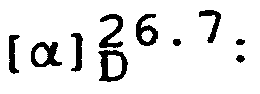
IR (KBr): 1643, 1635, 1618, 1606, 1518, 1462, 1419, 1273, 1169, 1132, 1103, 1041 cm-1
NMR (DMSO-d6, δ): 0.70-5.40 (31H, m), 6.30-7.50 (6H, m)
MASS (APCI) : 584 (M+H) + (free) - (11) (2R)-4-[2-(cis-2,6-Dimethylmorpholino)ethyl]-2-(4-fluoro-3-methoxybenzyl)-1-[3-methoxy-5-(trifluoromethyl)benzoyl]piperazine dihydrochloride

IR (KBr): 1645, 1612, 1516, 1464, 1423, 1398, 1352, 1315, 1275, 1213, 1173, 1130, 1092, 1055, 1036 cm-1
NMR (DMSO-d6, δ): 0.80-5.30 (31H, m), 6.30-7.50 (6H, m)
MASS (APCI): 568 (M+H)+ (free) - (12) (2R)-1-[3,5-Bis(trifluoromethyl)benzoyl]-2-(4-fluoro-3-hydroxybenzyl)-4-[2-[(2S)-2-(methoxymethyl)morpholino]-ethyl]piperazine dihydrochloride
mp: 156-168°C

IR (KBr): 3458, 1647, 1518, 1433, 1282, 1184, 1140 cm-1
NMR (DMSO-d6, δ): 2.60-5.20 (25H, m), 6.30-7.20 (3H, m), 7.43-8.23 (3H, m), 9.77 (1H, br)
MASS (APCI): 608 (M+H)+ (free) - (13) (2R) -1- [3, 5-Bis (trifluoromethyl)benzoyl]-2- (4-fluoro-3-hydroxybenzyl)-4-[2-(cis-2,6-dimethylmorpholino)ethyl]-piperazine dihydrochloride
mp: 170-195°C

IR (KBr): 3500-3150, 2700-2300, 1644, 1519, 1434, 1371, 1282, 1184 cm-1
NMR (DMSO-d6, δ): 0.80-5.20. (25H, m), 6.60-8.20 (7H, m), 11.40-11.80 (2H, br)
MASS (APCI): 592 (M+H)+ (free) - (14) (2R)-1-[3,5-Bis(trifluoromethyl)benzoyl]-2-(3,4-difluorobenzyl)-4-[2-[(2S)-2-(methoxymethyl)morpholino]-ethyl]piperazine dihydrochloride
mp: 196-198°C

IR (KBr): 3365, 2590, 2475, 1645, 1520, 1440, 1280 cm-1
NMR (DMSO-d6, δ): 2.73-5.07 (22H, m), 3.27 (3H, s), 6.88-8.21 (6H, m)
MASS (APCI): 610 (M+H)+ (free) - (15) (2R)-1-[3,5-Bis (trifluoromethyl)benzoyl]-2-(3, 4-difluorobenzyl)-4-[2-(cis-2,6-dimethylmorpholino)ethyl]-piperazine dihydrochloride
mp: 223-228°C

IR (KBr): 3435, 3390, 2600, 2495, 1650, 1520, 1435, 1280 cm-1
NMR (DMSO-d6, δ): 1.45 (6H, d, J=6.0Hz), 2.60-5.20 (19H, m), 6.80-8.28 (6H, m)
MASS (APCI): 594 (M+H)+ (free) - (16) (2R)-1-[3,5-Bis(trifluoromethyl)benzoyl]-2-[3-methoxy-4-(trifluoromethyl)benzyl]-4-[2-(cis-2,6-dimethylmorpholino)ethyl]piperazine dihydrochloride
mp: 160.0-170.0°C

IR (KBr) : 3500-3150, 2700-2300, 1648, 1623, 1587, 1511, 1463, 1280, 1132 cm-1
NMR (DMSO-d6, δ): 2.60-5.20 (28H, m) , 6.40-8.20 (6H, m)
MASS (APCI): 656 (M+H)+ (free) - (17) (2R)-1-[3-Methoxy-5-(trifluoromethyl)benzoyl]-2-[3-methoxy-4-(trifluoromethyl)benzyl]-4-[2-[(2S)-2-(methoxymethyl)morpholino]ethyl]piperazine dihydrochloride
mp: 135-140°C

IR (KBr) : 3500-3150, 2700-2300, 1644, 1623, 1463, 1423, 1.321, 1128, 1045 cm-1
NMR (DMSO-d6, δ): 2.80-5.20 (31H, m), 6.60-8.20 (6H, m), 10.60-12.20 (2H, br)
MASS (APCI): 634 (M+H)+ (free) - (18) (2R)-1-[3-Methoxy-5-(trifluoromethyl)benzoyl]-2-[3-methoxy-4-(trifluoromethyl)benzyl]-4-[2-(cis-2,6-dimethylmorpholino)ethyl]piperazine dihydrochloride
mp: 125-135°C

IR (KBr): 3500-3150, 2700-2300, 1644, 1623, 1511, 1463, 1423, 1351, 1274, 1128 cm-1
NMR (DMSO-d6, δ): 2.60-5.20 (31H, m), 6.50-8.20 (6H, m), 11.20-11.80 (2H, br)
MASS (APCI): 618 (M+H)+ (free) - (19) (2R)-1-[3,5-Bis (trifluoromethyl)benzoyl]-2-(3-fluoro-4-methylbenzyl)-4-[2-[(2S)-2-(methoxymethyl)morpholino]-ethyl]piperazine dihydrochloride
mp: 148-160°C

IR (KBr) : 3435, 2661, 2593, 2465, 1645, 1514, 1429, 1363, 1324, 1282, 1184, 1140 cm-1
NMR (DMSO-d6, δ): 2.20 (3H, s), 2.64-5.28 (25H, m), 6.62-8.28 (6H, m)
MASS (APCI): 606 (M+H)+ (free) - (20) (2R)-1-[3,5-Bis(trifluoromethyl)benzoyl]-2-(4-fluoro-3-methylbenzyl)-4-[2-[(2S)-2-(methoxymethyl)morpholino]-ethyl]piperazine dihydrochloride
mp: 151-156°C

IR (KBr) : 3435, 2941, 1647, 1510, 1281, 1184, 1138 cm-1
NMR (DMSO-d6, δ) : 2.10-2.21 (3H, m), 2.65-5.25 (25H, m), 6.70-8.30 (6H, m)
MASS (APCI): 606 (M+H)+ (free) - (21) (2R)-1-[3,5-Bis(trifluoromethyl)benzoyl]-4-[2-(cis-2,6-dimethylmorpholino)ethyl]-2-[4-(trifluoromethyl)benzyl]-piperazine dihydrochloride
mp: 148-159°C

IR (KBr): 3437, 1645, 1516, 1427 cm-1
NMR (DMSO-d6, δ): 1.15 (6H, d, J=6.1Hz), 6.60-5.30 (19H, m), 7.25-8.19 (7H, m)
MASS (APCI): 626 (M+H)+ (free) - (22) (2R)-4-[2-[(2S) -2- (Methoxymethyl)morpholino]ethyl]-1-[3-methoxy-5-(trifluoromethyl)benzoyl]-2-[4-(trifluoromethyl)benzyl]piperazine dihydrochloride
mp: 126-155°C

IR (KBr) : 3460, 1645, 1464 cm-1
NMR (DMSO-d6, δ) : 2.80-5.30 (25H, m), 3.82 (3H, s), 6.31-7.80 (7H, m)
MASS (APCI): 604 (M+H)+ (free) - (23) (2R)-4-[2-(cis-2,6-Dimethylmorpholino)ethyl]-1-[3-methoxy-5-(trifluoromethyl)benzoyl]-2-[4-(trifluoromethyl)benzyl]piperazine dihydrochloride
mp: 139-151°C

IR (KBr) : 3435, 1645, 1464, 1423 cm-1
NMR (DMSO-d6, δ) : 1.15 (6H, d, J=6.1Hz), 2.60-5.30 (19H, m), 3.82 (3H, s), 6.30-7.80 (7H, m)
MASS (APCI): 588 (M+H)+ (free) - (24) (2R)-1-[3,5-Bis(trifluoromethyl)benzoyl]-2-(4-chlorobenzyl) -4- [2-[(2S)-2- (methoxymethyl)morpholino]-ethyl]piperazine dihydrochloride
mp: 90-120°C

IR (KBr) : 1707, 1693, 1676, 1645, 1547, 1539, 1516, 1498, 1489, 1477, 1464, 1454, 1427, 1392, 1387, 1367, 1281, 1182, 1138, 1101 cm-1
NMR (DMSO-d6, δ): 2.00-5.40 (25H, m), 6.80-8.40 (7H, m)
MASS (APCI): 608 (M+H)+ (free) - (25) (2R)-1-[3, 5-Bis (trifluoromethyl) benzoyl]-4-[2-(cis-2,6-dimethylmorpholino)ethyl]-2-(4-chlorobenzyl)-piperazine dihydrochloride
mp: 150-175°C (decomp.)

IR (KBr): 1693, 1687, 1645, 1514, 1508, 1498, 1489, 1464, 1454, 1429, 1329, 1281, 1182, 1142, 1099, 1038 cm-1
NMR (DMSO-d6, δ): 1.15 (6H, d, J=6.1Hz), 1.80-5.40 (19H, m), 6.80-8.30 (7H, m)
MASS (APCI): 592 (M+H)+ (free) - (26) (2R)-2-(4-Chlorobenzyl)-4-[2-[(2S)-2-(methoxymethyl)-morpholino]ethyl]-1-[3-methoxy-5-(trifluoromethyl)-benzoyl]piperazine dihydrochloride
mp: 70-90°C

IR (KBr) : 1643, 1606, 1514, 1508, 1496, 1423, 1387, 1350, 1315, 1271, 1242, 1174, 1130, 1097, 1051 cm-1
NMR (DMSO-d6, δ): 2.50-5.40 (28H, m), 6.30-7.60 (7H, m)
MASS (APCI) : 570 (M+H)+ (free) - (27) (2R)-2-(4-Chlorobenzyl)-4-[2-(cis-2,6-dimethylmorpholino)ethyl]-1-[3-methoxy-5-(trifluoromethyl)benzoyl]piperazine dihydrochloride
mp: 90-120°C

IR (KBr): 1676, 1645, 1606, 1516, 1498, 1464, 1423, 1387, 1381, 1377, 1350, 1317, 1271, 1242, 1209, 1174, 1130, 1095, 1051 cm-1
NMR (DMSO-d6, δ) : 1.15 (6H, d, J=6.1Hz) , 2.40-5.40 (22H, m), 6.30-7.60 (7H, m)
MASS (APCI): 554 (M+H)+ (free) - (28) (2R)-1-[3,5-Bis(trifluoromethyl)benzoyl]-4-[2-(cis-2,6-dimethylmorpholino)ethyl]-2-(4-fluorobenzyl)piperazine dihydrochloride
mp: 89.0-110.2°C

IR (KBr): 1644, 1513, 1282, 1182, 1137 cm-1
NMR (DMSO-d6, δ) : 1.13 (6H, d, J=6.05Hz), 2.73-4.55 (19H, m), 7.00-8.17 (7H, m)
MASS : 576 (M+H)+ (free) - (29)(2R)-2-(4-Fluorobenzyl)-4-[2-[(2S)-2-(methoxymethyl)-morpholino]ethyl]-1-[3-methoxy-5-(trifluoromethyl)-benzoyl]piperazine dihydrochloride
mp: 109.5-119.2°C

IR (KHr): 1643, 1513, 1463, 1423, 1172, 1130, 1101 cm-1
NMR (DMSO-d6, δ) : 2.73-4.10 (24H, m), 3.26 (3H, s), 3.87 (3H, s), 6.45-7.41 (7H, m)
MASS : 554 (M+H)+ (free) - (30) (2R) -4- [2-(cis-2,6-Dimethylmorpholino)ethyl] -2- (4-fluorobenzyl)-1- [3-methoxy-5- (trifluoromethyl) benzoyl] - piperazine dihydrochloride
mp: 70.3-85.2°C

IR (KBr) : 1645, 1513, 1463, 1923,- 1174, 1130 cm-1
NMR (DMSO-d6, δ): 1.03 and 1.14 (6H, d, J=6.1Hz), 2.89-5.10 (19H, m), 3.83 (3H, s), 6.46-7.40 (7H, m)
MASS : 538 (M+H)+ (free) - (31) (2R)-1-[3,5-Bis(trifluoromethyl)benzoyl]-2-[3-[(2-methoxyethoxy)methoxy]-4-methylbenzyl]-4-(2-[(2R)-2-(methoxymethyl)morpholino]ethyl]piperazine
IR (Neat): 1643, 1508, 1435, 1381, 1354, 1331, 1279, . 1130, 1101, 1012 cm-1
NMR (CDCl3, δ): 1.90-5.60 (37H, m), 6.20-8.20 (6H, m)
MASS (APCI): 692 (M+H)+ - (32) (2R)-1-[3,5-Bis(trifluoromethyl)benzoyl]-4-[2-[(3S,5S)-3,5-dimethylmorpholino]ethyl]-2-[3-[(2-methoxyethoxy)-methoxy]-4-methylbenzyl]piperazine
IR (Neat): 1643, 1583, 1508, 1435, 1379, 1356, 1329, 1279, 1132, 1099, 1012 cm-1
NMR (CDCl3, δ): 1.01 (6H, d, J=6.4Hz), 1.90-5.50 (31H, m), 6.20-8.20 (6H, m)
MASS (APCI): 676 (M+H)+ - (33) (2R)-1-[3,5-Bis(trifluoromethyl)benzoyl]-4-[2-(cis-3,5-dimethylmorpholino)ethyl]-2-[3-[(2-methoxyethoxy)-methoxy]-4-methylbenzyl]piperazine
IR (Neat): 1643, 1583, 1508, 1452, 1435, 1406, 1379, 1356, 1325, 1277, 1099, 1012 cm-1
NMR (CDCl3, δ): 0.51-5.70 (37H, m), 6.10-8.20 (6H, m)
MASS (APCI): 676 (M+H)+ - (34) (2R)-1-[3,5-Bis(trifluoromethyl)benzoyl]-2-[3-[(2-methoxyethoxy)methoxy]-9-methylbenzyl)-4-[3-[(2S)-2-(methoxymethyl)morpholino]propyl]piperazine
IR (Neat): 1643, 1583, 1508, 1437, 1406, 1379, 1354, 1331, 1279, 1097, 1014 cm-1
NMR (CDCl3, δ) : 1.60-5.40 (39H, m), 6.30-7.90 (6H, m)
MASS (APCI) : 706.3 (M+H)+, 728.3 (M+Na)+ - The following compounds were obtained according to a similar manner to that of Example 1.
- (1) (2R)-1-[3,5-Bis(trifluoromethyl)benzoyl]-2-[4-fluorobenzyl]-4-[2-[(2S)-2-(methoxymethyl)morpholino]-ethyl]piperazine dihydrochloride
mp: 129-133°C

IR (KBr): 1645, 1516, 1281, 1182, 1138 cm-1
NMR (DMSO-d6, δ) : 2.70-5.20 (25H, m), 7.00-8.22 (7H, m)
MASS (APCI): 592 (M+H)+ (free) - (2) (2R)-1-[3,5-Bis(trifluoromethyl)benzoyl]-2-(2-naphthylmethyl)-4-[2-[(2S)-2-(methoxymethyl)morpholino]-ethyl]piperazine dihydrochloride
mp: 145-148°C

IR (KBr): 1645, 1429, 1281, 1182, 1134 cm-1
NMR (DMSO-d6, δ) : 2.80-5.90 (25H, m), 7.05-8.20 (10H, m)
MASS (APCI): 624 (M+H)+ (free) - To a solution of (2R)-1-[3,5-bis(trifluoromethyl)-benzoyl]-2-(3-tert-butyldiphenylsilyloxy-4-methylbenzyl)-4-[2-[(2S)-2-(methoxymethyl)morpholino]ethyl]piperazine (651.9 mg) in tetrahydrofuran (6.5 ml) was added tetrabutylammonium fluoride (1M solution in tetrahydrofuran, 0.85 ml) at 5°C. After stirring at room temperature, the mixture was evaporated and purified with column chromatography (silica gel, 65 ml, methanol:dichloromethane = 3:97) to give an oil (381.5 mg). The solution of the oil in methanol (3 ml) was added 2.17M hydrogen chloride in methanol (1.43 ml), and the mixture was concentrated to give (2R)-1-[3,5-bis(trifluoromethyl)benzoyl]-2-(3-hydroxy-4-methylbenzyl)-4-[2-[(2S)-2-(methoxymethyl)morpholino]ethyl]piperazine dihydrochloride as a solid. The solid was recrystallized with a mixture of acetone (4.55 ml) and water (13.9 µl) at room temperature and then 0°C and dried under reduced pressure at 45°C to give pure product (393.9 mg) as a powder.
mp: 206-224.5°C
IR (KBr) : 1635 cm-1
NMR (D2O, δ): 2.16 (3H, s), 2.60-5.30 (22H, m), 3.40 (3H, s), 6.30-8.10 (6H, m)
MASS (APCI) : 604 (M+H)+ (free) - The following compounds were obtained according to a similar manner to that of Example 8.
- (1) (2R)-2-(3-Hydroxy-4-methylbenzyl)-4-[2-[(2S)-2-(methoxymethyl)morpholino]ethyl]-1-[3-nitro-5-(trifluoromethyl)benzoyl]piperazine dihydrochloride
mp: 181-185°C

IR (KBr) : 1641 cm-1
NMR (DMSO-d6, δ) : 2.08 (3H, s), 2.80-5.10 (25H, m), 6.18-8.55 (6H, m)
MASS (APCI): 581 (M+H)+ (free) - (2) (2R)-1-[3-Dimethylamino-5-(trifluoromethyl)benzoyl]-2-(3-hydroxy-4-methylbenzyl)-4-[2-[(2S)-2-(methoxymethyl)morpholino]ethyl]piperazine dihydrochloride
mp: 182-186°C

IR (KBr): 1643 cm-1
NMR (DMSO-d6 δ): 2.06 (3H, s), 2.94 (6H, br s), 2.70-5.20 (25H, m), 6.24-7.00 (6H, m)
MASS (APCI) : 579 (M+H)+ (free) - (3) (2R)-2-(3-Hydroxy-4-methylbenzyl)-4-[2-[(2S)-2-(methoxymethyl)morpholino]ethyl]-1-[3-methylamino-5-(trifluoromethyl)benzoyl]piperazine dihydrochloride
mp: 159-170°C

IR (KBr): 3433, 3400, 1643 cm-1
NMR (DMSO-d6, δ) : 2.06 (3H, s), 2.68 (3H, br s), 2.80-5.10 (25H, m), 6.10-7.00 (6H, m)
MASS (APCI): 565.37 (M+H)+ (free) - (4) (2R)-2-(3-Hydroxy-4-methylbenzyl)-4-[2-[(2S)-2-(methoxymethyl)morpholino]ethyl]-1-[3-(pyrrol-1-yl)-5-(trifluoromethyl)benzoyl]piperazine dihydrochloride
mp: 159-170°C

IR (KBr): 3433, 3400, 1636, 1494 cm-1
NMR (DMSO-d6, δ): 2.05 (3H, s), 2.80-5.10 (25H, m), 6.10-8.02 (10H, m)
MASS (APCI): 601.4 (M+H)+ (free) - (5) (2R)-2-(3-Hydroxy-4-methylbenzyl)-4-[2- [(2S)-2-(methoxymethyl)morpholino]ethyl-1-[3-methoxy-5-(trifluoromethyl)benzoyl]piperazine dihydrochloride
mp: 160-169°C

IR (KBr): 3430, 3400, 1643, 1461 cm-1
NMR (DMSO-d6, δ) : 2.07 (3H, s), 3.27 (3H, s), 3.93 (3H, br s), 2.40-4.10 (22H, m), 6.10-7.40 (6H, m)
MASS (APCI): 566 (M+H)+ (free) - (6) (2R)-2-(3-Hydroxy-4-methylbenzyl)-4-[2-[(2S)-2-(methoxymethyl)morpholino]ethyl]-1-[3-methylthio-5-(trifluoromethyl)benzoyl]piperazine dihydrochloride
mp: 154-168°C

IR (KBr): 3431, 3400, 1639 cm-1
NMR (DMSO-d6, δ): 2.09 (3H, s), 3.27 (3H, s) , 2.40-5.10 (25H, m), 6.17-7.60 (6H, m)
MASS (APCI): 582 (M+H)+ (free) - (7) (2R)-2-(3-Hydroxy-4-methylbenzyl)-4-[2-[(2S)-2-(methoxymethyl)morpholino]ethyl]-1-[3-methylsulfonyl-5-(trifluoromethyl)benzoyl]piperazine dihydrochloride
mp: 173.5-178.0°C

IR (KBr): 3437, 3402, 1645 cm-1
NMR (DMSO-d6, δ): 2.08 (3H, s), 3.27 (3H, s), 3.37 (3H, s), 2.20-5.10 (22H, m), 6.21-8.31 (6H, m)
MASS (APCI) : 614 (M+H)+ (free) - (8) (2R)-1-[3-Dimethylsulfamoyl-5-(trifluoromethyl)benzoyl]-2-(3-hydroxy-4-methylbenzyl)-4-[2-[(2S)-2-(methoxymethyl)morpholino]ethyl]piperazine dihydrochloride
mp: 153.5-160°C

IR (KBr): 3400, 1643, 1516 cm-1
NMR (DMSO-d6, δ): 2.07 (3H, s), 2.66 (6H, s), 2.40-5.20 (25H, m), 6.18-8.01 (6H, m)
MASS (APCI): 643.36 (M+H)+ (free) - (9) (2R)-2-(3-Hydroxy-4-methylbenzyl)-4-[2-[(2S)-2-(methoxymethyl)morpholino]ethyl]-1-[3-methylsulfamoyl-5-(trifluoromethyl)benzoyl]piperazine dihydrochloride mp: 120-187°C

IR (KBr) : 1643 cm-1
NMR (DMSO-d6, δ): 2.07 (3H, s), 2. 60-5.10 (28H, m), 6.17-8.10 (6H, m)
MASS (APCI) : 629 (M+H)+ (free) - (10) (2R)-2-(3-Hydroxy-4-methylbenzyl)-4-[2-[(2S)-2-(methoxymethyl)morpholino]ethyl]-1-[3-(1-pyrrolidinylsulfonyl)-5-(trifluoromethyl)benzoyl]-piperazine dihydrochloride
mp: 125-177°C
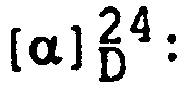
IR (KBr): 1645 cm-1
NMR (DMSO-d6, δ): 1.60-1.76 (4H, m), 2.07 (3H, s), 2.49-5.20 (29H, m), 6.20-8.02 (6H, m)
MASS (APCI): 669 (M+H)+ (free) - (11) (2R)-2- (3-Hydroxy-4-methylbenzyl) -4- [2- [(2S) -2-(methoxymethyl)morpholino]ethyl]-1-[3-(morpholinosulfonyl)-5-(trifluoromethyl)benzoyl]-piperazine dihydrochloride
mp: 130-175°C

IR (KBr): 1645 cm-1
NMR (DMSO-d6, δ): 2.08 (3H, s), 2.60-5.10 (33H, m), 6.20-8.01 (6H, m)
MASS (APCI): 685 (M+H)+ (free) - (12) (2R)-2-(3-Hydroxy-4-methylbenzyl)-4-[2-[(2S)-2-(methoxymethyl)morpholino]ethyl]-1-[3-(4-pyridyl)-5-(trifluoromethyl)benzoyl]piperazine trihydrochloride
mp: 169-173°C
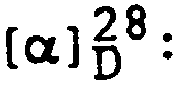
IR (KBr): 1635 cm-1
NMR (DMSO-d6, δ): 1.91-2.04 (3H, m), 2.84-5.20 (25H, m), 6.17-8.37 (8H, m) , 8.96 (2H, d, J=5.9Hz)
MASS (APCI) : 613 (M+H)+ (free) - (13) (2R)-1-[3-Trifluoromethyl-5-(methylthio)benzoyl]-2-(4-chloro-3-hydroxybenzyl)-4-[2-(cis-2,6-dimethylmorpholino)ethyl]piperazine dihydrochloride
mp: 162-178°C

IR (KBr): 3400, 2665, 2600, 2488, 1643, 1425, 1331, 1311, 1174, 1130, 1043 cm-1
NMR (DMSO-d6-D2O, δ): 1.17 (6H, d, J=6.2Hz) , 2.40-5.20 (21H, m), 6.26-7.70 (6H, m)
MASS (APCI): 586 (M+H)+ (free), 552 - (14) (2R)-1-[3-(2,5-Dimethylpyrrol-1-ylsulfonyl)-5-(trifluoromethyl)benzoyl]-2-(3-hydroxy-4-methylbenzyl)-4-[2-[(2S)-2-(methoxymethyl)morpholino]ethyl]piperazine
IR (KBr) : 1637 cm-1
NMR (DMSO-d6, δ) : 2.05 (3H, s), 2.30 (6H, s), 1.78-4.80 (25H, m), 6.05 (2H, s), 6.00-9.17 (6H, m)
MASS (APCI) : 693 (M+H)+ - The following compounds were obtained according to a similar manner to that of Example 3.
- (1) (2R)-1-[3,5-Bis(trifluoromethyl)benzoyl]-2-(3-hydroxy-4-methylbenzyl)-4-[2-[(2R)-2-(methoxymethyl)-morpholino]ethyl]piperazine dihydrochloride
mp: 225-235°C

IR (KBr) : 1645, 1516, 1454, 1425, 1365, 1321, 1281, 1190, 1134, 1001 cm-1
NMR (DMSO-d6, δ) : 2.08 (3H, s), 2.50-5.20 (25H, m), 6.00-8.30 (6H, m)
MASS (APCI): 604 (M+H)+ (free) - (2) (2R)-1-[3,5-Bis(trifluoromethyl)benzoyl]-4-[2-[(3S,5S)-3,5-dimethylmorpholino]ethyl]-2-(3-hydroxy-4-methylbenzyl)piperazine dihydrochloride
mp: 240-250°C

IR (KBr) : 1645, 1516, 1454, 1427, 1387, 1365, 1327, 1281, 1184, 1136, 1041 cm-1
NMR (DMSO-d6, δ): 1.00-1.60 (6H, m), 2.08 (3H, s), 2.30-5.20 (19H, m), 6.10-8.30 (6H, m)
MASS (APCI): 588 (M+H)+ (free) - (3) (2R)-1-[3,5-Bis(trifluoromethyl)benzoyl]-4-[2-(cis-3,5-dimethylmorpholino)ethyl]-2-(3-hydroxy-4-methylbenzyl)piperazine dihydrochloride
mp: 210-220°C

IR (KBr): 1676, 1643, 1533, 1516, 1454, 1425, 1387, 1367, 1327, 1281, 1236, 1182, 1134, 1057 cm-1
NMR (DMSO-d6, δ): 0.80-5.30 (28H, m), 6.10-8.40 (6H, m)
MASS (APCI): 588 (M+H)+ (free) - (4) (2R)-1-[3,5-Bis(trifluoromethyl)benzoyl]-2-(3-hydroxy-4-methylbenzyl)-4-[3-[(2S)-2-(methoxymethyl)-morpholino]propyl]piperazine dihydrochloride
mp: 150-170°C

IR (KBr) : 1678, 1655, 1649, 1531, 1514, 1454, 1446, 1429, 1392, 1387, 1365, 1327, 1321, 1282, 1186, 1136 cm-1
NMR (DMSO-d6, δ) : 1.60-5.30 (30H, m), 5.90-8.50 (6H, m)
MASS (APCI): 618 (M+H)+ (free) - The following compounds were obtained according to a similar manner to that of Preparation 41.
- (1) (2R)-1-[3,5-Bis(trifluoromethyl)benzoyl]-2-(3-tert-butyldiphenylsilyloxy-4-methylbenzyl)-4-[2-[(2S)-2-(methoxymethyl)morpholino]ethyl]piperazine
NMR (CDCl3, δ): 1.09 (9H, s), 1.89-4.90 (22H, m), 2. 35 (3H, s), 3.38 (3H, s). 6.10-7.92 (16H, m)
MASS (ESO+) : 892. 4 (M+H)+ - (2) (2R)-2-(3-tert-Butyldiphenylsilyloxy-4-methylbenzyl)-4-[2-[(2S)-2-(methoxymethyl)morpholino]ethyl]-1-[3-nitro-5-(trifluoromethyl)benzoyl]piperazine
IR (Neat): 1641 cm-1
NMR (CDCl3, δ) : 1.09 (9H, s), 2.37 (3H, s), 1.89-4.80 (22H, m), 3.35 (3H, s), 6.00-8.40 (16H, m)
MASS (ESI+) : 819.3 (M+H)+ - (3) (2R)-2-(3-tert-Butyldiphenylsilyloxy-4-methylbenzyl)-1-[3-dimethylamino-5-(trifluoromethyl)benzoyl]-4-[2-[(2S)-2-(methoxymethyl)morpholino]ethyl]piperazine
IR (KBr) : 1641, 1608 cm-1
NMR (CDCl3, δ) : 1.50 (9H, s), 2.25 (3H, br s), 2.95 (6H, br s), 3.35 (3H, s), 1.80-4.80 (22H, m), 6.05-7.80 (16H, m)
MASS (ESI+) : 817.4 (M+H)+ - (4) (2R)-2-(3-tert-Butyldiphenylsilyloxy-4-methylbenzyl)-4-[2-[(2S)-2-(methoxymethyl)morpholino]ethyl]-1-[3-methylamino-5-(trifluoromethyl)benzoyl]piperazine
IR (KBr): 1614 cm-1
NMR (DMSO-d6, δ): 1.03 (9H, s), 1.70-4.80 (28H, m), 2.26 (3H, br s), 6.00-7.70 (16H, m)
MASS (ESI+): 803.4 (M+H)+, 825.3 (M+Na)+ - (5) (2R)-2-(3-tert-Butyldiphenylsilyloxy-4-methylbenzyl)-4-[2-[(2S)-2-(methoxymethyl)morpholino]ethyl]-1-[3-(1-pyrrolyl)-5-(trifluoromethyl)benzoyl]piperazine
IR (KBr): 1643 cm-1
NMR (DMSO-d6, δ): 1.00-1.04 (9H, m), 1.70-4.80 (28H, m), 6.00-8.00 (20H, m)
MASS (ESI+) : 839.4 (M+H)+, 861.4 (M+Na)+ - (6) (2R)-2-(3-tert-Butyldiphenylsilyloxy-4-methylbenzyl)-4-[2-[(2S)-2-(methoxymethyl)morpholino]ethyl]-1-[3-methoxy-5-(trifluoromethyl)benzoyl]piperazine
IR (KBr): 2939, 1643, 1512, 1462, 1423 cm-1
NMR (DMSO-d6, δ): 1.04 (9H, s), 2.22 (3H, s), 1.71-4.60 (28H, m), 5.99-7.75 (16H, m)
MASS (ESI+): 804.4 (M+H)+, 826.3 (M+Na)+ - (7) (2R)-2-(3-tert-Butyldiphenylsilyloxy-4-methylbenzyl)-4-[2-[(2S)-2-(methoxymethyl)morpholino]ethyl]-1-[3-methylthio-5-(trifluoromethyl)benzoyl]piperazine
IR (KBr): 2933, 1641, 1510, 1421 cm-1
NMR (DMSO-d6, δ): 1.04 (9H, s), 2.29 (3H, s), 3.18 (3H, s), 1.70-4.70 (25H, m), 6.00-7.80 (16H, m)
MASS (ESI+) : 820.3 (M+H)+, 842.3 (M+Na)+ - (8) (2R)-2-(3-tert-Butyldiphenylsilyloxy-4-methylbenzyl)-4-[2-[(2S)-2-(methoxymethyl)morpholino]ethyl]-1-[3-methylsulfonyl-5-(trifluoromethyl)benzoyl]piperazine
IR (KBr): 1643 cm-1
NMR (CDCl300, δ): 1.03 (9H, br s), 1.72-4.60 (28H, m), 2.28 (3H, br s), 6.02-8.28 (16H, m)
MASS (ESI+): 852.3 (M+H)+. 874.3 (M+Na)+ - (9) (2R)-2-(3-tert-Butyldiphenylsilyloxy-4-methylbenzyl)-1-[3-dimethylsulfamoyl-5-(trifluoromethyl)benzoyl]-4-[2-[(2S)-2-(methoxymethyl)morpholino]ethyl]piperazine
IR (KBr): 1639 cm-1
NMR (DMSO-d6, δ) : 1.04 (9H, s), 1.71-4.70 (31H, m), 2.28 (3H, br s), 6.04-8.00 (16H, m)
MASS (ESI+): 881.4 (M+H)+, 904.3 (M+Na)+ - (10) (2R)-2-(3-tert-Butyldiphenylsilyloxy-4-methylbenzyl)-4-[2-[(2S)-2-(methoxymethyl)morpholino]ethyl]-1-[3-methylsulfamoyl-5-(trifluoromethyl)benzoyl]piperazine
IR (KBr) : 1643 cm-1
NMR (DMSO-d6, δ): 1.04-1.05 (9H, m), 1.70-4.60 (28H, m), 2.28 (3H, br s), 6.03-8.07 (16H, m)
MASS (ESI+) : 867.3 (M+H)+ - (11) (2R)-2-(3-tert-Butyldiphenylsilyloxy-4-methylbenzyl)-4-[2-[(2S)-2-(methoxymethyl)morpholino]ethyl]-1-[3-(pyrrolidinosulfonyl)-5-(trifluoromethyl)benzoyl]-piperazine
IR (KBr): 1643 cm-1
NMR (CDCl3, δ): 1.09 (9H, s), 1.75-1.82 (4H, m), 2.35 (3H, s), 2.05-4.80 (29H, m), 6.00-8.65 (16H, m)
MASS (ESI+): 907 (M+H) + - (12) (2R)-2-(3-tert-Butyldiphenylsilyloxy-4-methylbenzyl)-4-[2-[(2S)-2-(methoxymethyl)morpholino]ethyl]-1-[3-(morpholinosulfonyl)-5-(trifluoromethyl)benzoyl]-piperazine
IR (KBr): 1645 cm-1
NMR (CDCl3, δ): 1.09 (9H, s), 2.35 (3H, s), 2.46-4.80 (33H, m), 6.00-8.56 (16H, m)
MASS (ESI+): 923.4 (M+H)+ - (13) (2R)-2-(3-tert-Butyldiphenylsilyloxy-4-methylbenzyl)-4-[2-[(2S)-2-(methoxymethyl)morpholino]ethyl]-1-[3-(4-pyridyl)-5-(trifluoromethyl)benzoyl]piperazine
IR (KBr): 1645 cm-1
NMR (CDCl3, δ): 0.99-1.02 (9H, m), 1.80-4.80 (28H, m), 6.00-8.16 (18H, m), 8.70 (2H, d, J=5.6Hz)
MASS (ESI+): 851.4 (M+H)+, 873.3 (M+Na)+ - (14) (2R)-2-(4-Chlorobenzyl)-4-[2-(cis-2,6-dimethylmorpholino)ethyl]-1-[3-nitro-5-(trifluoromethyl)benzoyl]piperazine dihydrochloride
mp: 133.3-136.2°C

IR (KBr): 1645, 1547, 1327, 1182, 1143 cm-1
NMR (DMSO-d6, δ): 1.02 and 1.14 (6H, d, J=6.2Hz), 2.71-4.53 (19H, m), 6.95-8.52 (7H, m)
MASS: 569 (M+) (free) - (15) (2R)-2-(4-Chlorobenzyl)-4-[2-(cis-2,6-dimethylmorpholino)ethyl]-1-[3-methylamino-5-(trifluoromethyl)benzoyl]piperazine dihydrochloride
mp: 245.6-248.7°C

IR (KBr): 1612, 1494, 1427, 1182, 1143, 1095 cm-1
NMR (DMSO-d6, δ): 1.15 (6H, d, J=6.0Hz), 2.68 (3H, s), 3.20-4.30 (19H, m), 6.14-7.47 (7H, m)
MASS: 553 (M+) (free) - (16) (2R)-2-(4-Chlorobenzyl)-1-[3-dimethylamino-5-(trifluoromethyl)benzoyl]-4-[2-(cis-2,6-dimethylmorpholino)ethyl]piperazine dihydrochloride
mp: 148.2-153.3°C

IR (KBr): 1645, 1464, 1425, 1182, 1138 cm-1
NMR (DMSO-d6, δ) : 1.15 (6H, d, J=6.0Hz), 2.94 (6H, s), 3.40-4.20 (19H, m), 6.20-7.38 (7H, m)
MASS: 567 (M+) (free) - (17) (2R)-2-(4-Chlorobenzyl)-4-[2-(cis-2,6-dimethylmorpholino)ethyl]-1-[3-methylthio-5-(trifluoromethyl)benzoyl]piperazine dihydrochloride
mp: 138.4-142.5°C

IR (KBr): 1643, 1417, 1330, 1176, 1128, 1099 cm-1
NMR (DMSO-d6, δ): 1.02 and 1.15 (6H, d, J=6.2Hz), 2.54 (3H, s), 2.71-3.99 (19H, m), 6.69-7.91 (7H, m)
MASS: 570 (M+) (free) - (18) (2R) -2- (4-Chlorobenzyl) -4- [2- (cis-2, 6-dimethylmorpholino)ethyl]-1-[3-methanesulfonyl-5-(trifluoromethyl)benzoyl]piperazine dihydrochloride
mp: 138.4-142.5°C

IR (KBr): 1645, 1462, 1423, 1328, 1303, 1182, 1144 cm-1
NMR (DMSO-d6, δ) : 1.16 (6H, d, J=6.1Hz) , 2.55-4.05 (19H, m), 3.38 (3H, s), 6.98-8.32 (7H, m)
MASS: 602 (M+) (free) - (19) (2R)-2-(4-Chlorobenzyl)-4-[2-(cis-2,6-dimethylmorpholino)ethyl]-1-[3-dimethylaminosulfonyl-5-(trifluoromethyl)benzoyl]piperazine dihydrochloride
mp: 209.6-213.7°C
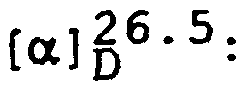
IR (KBr): 1645, 1461, 1423, 1344, 1173, 1146, 1103 cm-1
NMR (DMSO-d6, δ): 1.17 (6H, d, J=6.0Hz), 2.66 (6H, s), 3.00-4.46 (19H, m), 7.03-8.00 (7H, m)
MASS: 631 (M+) (free) - (20) (2R)-2-(4-Chlorobenzyl)-4-[2-(cis-2,6-dimethylmorpholino)ethyl]-1-[3-(1-pyrrolyl)-5-(trifluoromethyl)benzoyl]piperazine dihydrochloride
mp: 152.7-157.9°C

IR (KBr): 1345, 1496, 1178, 1130 cm-1
NMR (DMSO-d6, δ): 1.15 (6H, d, J=5.9Hz), 2.70-4.20 (19H, m), 6.34 (2H, s), 6.96-7.91 (9H, m)
MASS: 589 (M+) (free) - (21) (2R)-2-(4-Chlorobenzyl)-4- [2- (cis-2, 6-dimethylmorpholino)ethyl]-1-[3-(4-pyrrolyl)-5-(trifluoromethyl)benzoyl]piperazine trihydrochloride
mp: 287.7-289.1°C

IR (KBr): 1641, 1635, 1427, 1270, 1178, 1130 cm-1
NMR (DMSO-d6, δ) : 1.08 (6H, d, J=6.OHz) , 2.73-5.15 (19H, m), 6.94-8.97 (11H, m)
MASS: 601 (M+) (free) - (22) (2R)-2-(4-Chlorobenzyl)-1-[3-chloro-5-(trifluoromethyl)benzoyl]-4-[2-(cis-2,6-dimethylmorpholino)ethyl]piperazine dihydrochloride
mp: 136.4-141.0°C

IR (KBr) : 1644, 1417, 1326, 1178, 1135, 1095 cm-1
NMR (DMSO-d6, δ): 1.02 and 1.15 (6H, d, J=6.1Hz), 2.60-4.12 (19H, m), 6.93-7.96 (7H, m)
MASS: 560 (M+H)+ (free) - (23) (2R)-2-(4-Chlorobenzyl)-4-[2-(cis-2,6-dimethylmorpholino)ethyl]-1-[3-fluoro-5-(trifluoromethyl)benzoyl]piperazine dihydrochloride
mp: 80.1-82.5°C

IR (KBr): 1645, 1427, 1344, 1178, 1136, 1091 cm-1
NMR (DMSO-d6, δ): 1.16 (6H, d, J=6 .1Hz) , 2.60-4.53 (19H, m), 6.78-7.78 (7H, m)
MASS: 542 (M+) (free) - (24) (2R)-2-(4-Chlorobenzyl)-4-[2-(cis-2,6-dimethylmorpholino)ethyl]-1-[3-methyl-5-(trifluoromethyl)benzoyl]piperazine dihydrochloride
mp: 82-3-88.2°C

IR (KBr): 1643, 1635, 1925, 11,79, 1128 cm-1
NMR (DMSO-d6, δ): 1.15 (6H, d, J=6.1Hz) 2.32-4.10 (22H, m), 6.68-7.57 (7H, m)
MASS: 539 (M+H)+ (free) - (25) (2R)-2-(4-Chlorobenzyl)-1-(3,5-dichlorobenzoyl)-4-[2-(cis-2,6-dimethylmorpholino)ethyl]piperazine dihydrochloride
mp: 140.1-143.8°C

IR (KBr): 1643, 1452, 1446, 1409, 1330, 1277, 1092, 1036 cm-1
NMR (DMSO-d6, δ) : 1.15 (6H, d, J=6.2Hz), 2.72-4.15 (19H, m), 6.56-7.64 (7H, m)
MASS: 524 (M+) (free) - (26) (2R)-2(3-tert-Butyldiphenylsilyloxy-4-methylbenzyl)-1-[3-(2,5-dimethylpyrrol-1-ylsulfonyl)-5-(trifluoromethyl)benzoyl] -4-[2-[(2S)-2-(methoxymethyl)-morpholino]ethyl]piperazine
IR (KBr): 1643 cm-1
NMR (DMSO-d6, δ): 1.04 (9H, s), 2.30 (6H, br s), 2.30 (3H, br s), 1.91-4.60 (25H, m), 6.05 (2H, s), 6.60-7.98 (16H, m)
MASS (ESI+): 931.3 (M+H)+ - To a stirred suspension of 2-[3-methoxy-4-(trifluoromethyl)benzyl]piperazine dihydrobromide (109 mg), potassium iodide (109 mg) and N,N-diisopropylethylamine (0.26 ml) in N,N-dimethylformamide (4 ml) was added (2R)-4-(2-chloroethyl)-2-(methoxymethyl)morpholine hydrochloride (29 mg) at 5°C under nitrogen atmosphere and the mixture was gradually warmed to room temperature overnight. To the above stirred suspension was added 3,5-bis(trifluoromethyl)-benzoyl chloride (118 mg) at 5°C and the mixture was stirred for 1 hour at the same temperature. The mixture was extracted with ethyl acetate and the extract was washed with water, and dried over magnesium sulfate. The usual work up followed by flash chromatography on silica gel with a mixture of dichloromethane and methanol (60:1) gave the product, which was dissolved in ethyl acetate and treated with 4N hydrogen chloride in ethyl acetate to give 1-[3,5-bis(trifluoromethyl)benzoyl]-2-[3-methoxy-4-(trifluoromethyl)benzyl]-4-[2-[(2S)-2-(methoxymethyl)-morpholino]ethyl]piperazine dihydrochloride (22 mg) as a powder.
NMR (DMSO-d6, δ) : 2.80-5.20 (28H, m), 6.60-8.50 (8H, m)
MASS (APCI): 672 (M+H)+ (free) - (2R)-1-[3,5-Bis(trifluoromethyl)benzoyl]-2-(3-hydroxy-4-methylbenzyl) -4-[2- [(2S) -2-(methoxymethyl)morpholino]-ethyl]piperazine dihydrochloride (0.50 g) was partitioned between ethyl acetate and saturated aqueous sodium hydrogen carbonate solution, and the organic layer was separated, washed with brine, dried over magnesium sulfate, and evaporated in vacuo to give (2R)-1-[3,5-bis(trifluoro-methyl)benzoyl]-2-(3-hydroxy-4-methylbenzyl)-4-[2-[(2S) -2-(methoxymethyl)morpholino]ethyl]piperazine (0.437 mg). A solution of the obtained compound in methylene chloride was added 4-(dimethylamino)pyridine (9 mg) and trifuric anhydride (0.22 ml) successively with ice-bath cooling under nitrogen atmosphere. After stirring for 1 hour, saturated aqueous sodium hydrogen carbonate solution was added to the mixture, and the organic layer was separated and the aqueous layer was extracted with methylene chloride. The combined organic layer was washed with brine, dried over magnesium sulfate and silica gel (1.1 g), and evaporated in vacuo to give (2R)-1-[3,5-bis(trifluoromethyl)benzoyl]-2-(4-methyl-3-trifluoromethanesulfonyloxybenzyl)-4-[2-[(2S)-2-(methoxymethyl)morpholino]ethyl]piperazine (358 mg) as an oil.
IR (Neat): 1645, 1425, 1280, 1210, 1135 cm-1
NMR (CDCl30, δ) : 1.90-5.14 (28H, m), 6.60-8.20 (6H, m)
MASS (APCI): 736 (M+H)+ - A mixture of (2R)-1-[3,5-bis(trifluoromethyl)benzoyl]-2-(4-methyl-3-trifluoromethanesulfonyloxybenzyl)-4-[2-[(2S)-2-(methoxymethyl)morpholino]ethyl]piperazine (0.10 g), benzophenone imine (30.5 mg), cesium carbonate (62 mg), palladium acetate (3 mg), and 2,2'-bis(diphenylphosphino)-1,1'-binaphthyl (12.7 mg) in toluene was stirred at 80°C under nitrogen atmosphere for 22 hours. After cooling, water and ethyl acetate were added to the mixture and the organic layer was separated, washed with brine, dried over sodium sulfate, and evaporated in vacuo. The residue was purified by column chromatography on silica gel (NH-DM1020, Fuji Silysia Chemical Ltd.) with a mixture of hexane and ethyl acetate (3:1) as eluent to give (2R)-1-[3,5-bis(trifluorometh yl)benzoyl]-2-[3-(diphenylmethyleneamino)-4-methylbenzyl]-4-[2-[(2S)-2-(methoxymethyl)morpholino]ethyl]piperazine (75 mg) as an oil.

IR (Neat): 2620, 1625, 1435 cm-1
NMR (CDCl3' δ): 1.86-4.84 (28H, m), 6.00-7.95 (16H, m)
MASS (APCI): 767 (M+H) + - A solution of (2R)-1-[3,5-bis(trifluoromethyl)benzoyl]-2-[3-(diphenylmethyleneamino)-4-methylbenzyl]-4-[2-[(2S)-2-(methoxymethyl)morpholino]ethyl]piperazine (65 mg) in methanol was subjected to hydrogenolysis (3 atm hydrogen pressure) using 10% palladium on carbon (6 mg, 50% wet) at 50°C for 16 hours. After cooling, the mixture was filtered and the filtrate was evaporated in vacuo. Ethyl acetate and water were added to the residue and the organic layer was separated, dried over magnesium sulfate, and evaporated in vacuo. The residue was purified by column chromatography on silica gel (NH-DM1020, Fuji Silysis Chemical Ltd.) with a mixture of hexane and ethyl acetate (1:1) as eluent to give (2R)-1-[3,5-bis(trifluoromethyl)benzoyl]-2-(3-amino-4-methylbenzyl)-4-[2-[(2S)-2-(methoxymethyl)morpholino]ethyl]-piperazine (18 mg). To a solution of the obtained compound in methanol was added 4N hydrogen chloride in ethyl acetate (0.05 ml) and the mixture was evaporated in vacuo to give (2R)-1-[3,5-bis(trifluoromethyl)benzoyl]-2-(3-amino-4-methylbenzyl)-4-[2-[(2S)-2-(methoxymethyl)morpholino]ethyl] - piperazine trihydrochloride (20 mg).
mp: 180-186°C

IR (KBr) : 3435, 2600, 1645, 1514, 1454, 1429, 1365, 1282, 1182, 1105 cm-1
NMR (D2O, δ): 2.20-5.35 (28H, m), 6.80-8.30 (6H, m)
MASS (APCI): 604 (M+H)+ (free) - A solution of (2R)-1-[3,5-bis (trifluoromethyl)benzoyl]-2-[4-methyl-3-[((2,5-dioxopyrrolidino)methyl]amino]benzyl]-4-[2-[(2S)-2-(methoxymethyl)morpholino)ethyl]piperazine (0.14 g) in dimethylsulfoxide (0.42 ml) was added sodium borohydride (10 mg) and the whole was stirred at 80°C for 15 hours. After cooling, water and ethyl acetate were added to the mixture. The organic layer was separated, washed with brine, dried over sodium sulfate and evaporated in vacuo. The residue was purified by column chromatography on silica gel with a mixture of methylene chloride and methanol (30:1 to 10:1) as eluent to give (2R)-1-[3,5-bis(trifluoromethyl)-benzoyl]-2-[4-methyl-3-(methylamino) benzyl]-4-[2-[(2S)-2-(methoxymethyl)morpholino]ethyl]piperazine (37 mg) and (2R)-1-[3,5-bis(trifluoromethyl)benzoyl]-2-[4-methyl-3-[[(5-hydroxy-2-oxopyrrolidino)methyl]amino]benzyl]-4-[2-[(2S)-2-(methoxymethyl)morpholino]ethyl]piperazine (45 mg), respectively. Each compound was converted to its trihydrochloride in a conventional manner.
- (2R)-1-[3,5-Bis(trifluoroinethyl)benzoyl]-2-[9-methyl-3-(methylamino)benzyl]-4-[2-[(2S)-2-(methoxymethyl)-morpholino]ethyl]piperazine trihydrochloride
mp: 156-163°C

IR (KBr): 3425, 2669, 2605, 2451, 1647, 1.516, 1462, 1429, 1281, 1134, 1105 cm-1
NMR (D2O, δ) : 2.05-5.57 (31H, m) , 6.74-8.25 (6H, m)
MASS (APCI) : 617 (M+H)+ (free), 581 - The following compounds were obtained according to a similar manner to that of Preparation 55A.
- (1) (2R)-1-[3,5-Bis (trifluoromethyl)benzoyl]-2- (4-methyl-3-pyrrolidinobenzyl)-4-[2-[(2S)-2-(methoxymethyl)-morpholino]ethyl]piperazine trihydrochloride
mp: 160-165°C

IR (KBr): 3438, 2665, 2586, 2482, 1645, 1516, 1454, 1429, 1282, 1182, 1138, 1105 cm-1
NMR (D2O, δ) : 2.05-5.50 (36H, m), 6.74-8.30 (6H, m)
MASS (APCI): 657 (M+H)+ (free), 588 - (2) (2R)-1-[3,5-Bis(trifluoromethyl)benzoyl]-2-(4-methyl-3-morpholinobenzyl)-4-[2-[(2S)-2-(methoxymethyl)-morpholino]ethyl]piperazine trihydrochloride
mp: 150-170°C

IR (KBr): 3437, 2667, 2576, 2457, 1645, 1514, 1454, 1429, 1282, 1182, 1136 cm-1
NMR (D2O, δ) : 2.15-5.50 (36H, m), 6.74-8.30 (6H, m)
MASS (APCI): 673 (M+H)+ (free), 588 - To a solution of (2R)-1-[3,5-bis(trifluoromethyl)-benzoyl]-2-(3-amino-4-methylbenzyl)-4-[2-[(2S)-2-(methoxymethyl)morpholino]ethyl]piperazine (132 mg) in methylene chloride was added 4-(dimethylamino)pyridine (2 mg) and trifluoroacetic anhydride (0.05 ml) successively and the mixture was stirred at room temperature overnight. The mixture was evaporated in vacuo and to the residue was added ethyl acetate and water. The organic layer was separated, washed with brine, dried over magnesium sulfate, and evaporated in vacuo. The residue was purified by column chromatography on silica gel with a mixture of methylene chloride and methanol (25:1) as eluent to give (2R)-1-[3,5-bis(trifluoromethyl)benzoyl]-2-[4-methyl-3-(trifluoroacetylamino)benzyl]-4-[2-((2S)-2-(methoxymethyl)-morpholino]ethyl]piperazine (134 mg).
MASS (APCI): 699 (M+H)+ - To a solution of (2R)-1-[3,5-bis(trifluoromethyl)-benzoyl]-2-[4-methyl-3-(trifluoroacetylamino)benzyl]-4-[2-[(2S)-2- (methoxymethyl)morpholino]ethyl]piperazine (131 mg) in tetrahydrofuran (2 ml) was added sodium hydride (10 mg) and the resulting mixture was stirred for 20 minutes. Methyl iodide (28 mg) was added to the mixture and the whole was stirred at room temperature overnight. Brine was added to the mixture and the organic layer was separated, dried over magnesium sulfate, and evaporated in vacuo. The residue was purified by HPLC to give (2R)-1-[3,5-bis(trifluoromethyl)benzoyl]-2-[4-methyl-3-(N-methyl-N-trifluoroacetylamino)benzyl]-4-[2-[(2S)-2-(methoxymethyl)-morpholino]ethyl]piperazine (31 mg) as an oil. The obtained compound was converted to its dihydrochloride in a conventional manner.

IR (KBr): 3425, 1695, 1647, 1282, 1207, 1180, 1140, 1101 cm-1
NMR (DMSO-d6. δ): 1.95-5.32 (31H, m), 6.75-8.34 (6H, m)
MASS (APCI) : 713 (M+H)+ (free) - A suspension of (2R)-1-[3-(2,5-dimethylpyrrol-1-ylsulfonyl)-5-(trifluoromethyl)benzoyl]-2-(3-hydroxy-4-methylbenzyl)-4-[2-[(2S)-2-(methoxymethyl)morpholino]ethyl]-piperazine (160.6 mg) in 6N hydrochloric acid (10 ml) was stirred at 70°C for 2 hours. The mixture was poured into saturated aqueous sodium hydrogen carbonate solution (150 ml) and extracted with ethyl acetate (50 ml x 3). The combined extracts were washed with brine, dried over magnesium sulfate, and evaporated under reduced pressure to give an oil (163.4 mg). The oil was dissolved in ethyl acetate (1.6 ml), then 4N hydrogen chloride in ethyl acetate (0.17 ml) and hexane (50 ml) was added successively to the solution at room temperature. The resulting powder was collected by filtration and dried under reduced pressure to give (2R)-2-(3-hydroxy-4-methylbenzyl)-4-[2-[(2S)-2-(methoxymethyl)-morpholino]ethyl)-1-[3-sulfamoyl-5-(trifluoromethyl)benzoyl]-piperazine dihydrochloride (149.3 g) as a powder.
mp: 166-206°C

IR (KBr) : 3431, 3402, 1641 cm-1
NMR (DMSO-d6, δ): 2.08 (3H, s), 2.60-5.20 (25H, m), 6.18-9. 20 (6H, m)
MASS (APCI): 615 (M+H)+ (free) - To a solution of (3R)-1-benzyl-3-(3-hydroxy-4-methylbenzyl)piperazine (840 mg) in a mixture of 1,4-dioxane (7.5 ml), water (5 ml), and 1N hydrochloric acid (2.8 ml) was added successively a solution of di-tert-butyl dicarbonate (740 mg) in 1,4-dioxane (2.5 ml) and 2N sodium hydroxide solution (1.9 ml) at 0°C. After stirring at 0°C for 1 hour, a solution of di-tert-butyl dicarbonate (123 mg) in 1,4-dioxane was added to the solution, and stirred at 0°C for 2 hours. The mixture was adjusted to pH 7 - 8 by 1N hydrochloric acid (0.99 ml) and extracted with dichloromethane (X 3). The combined extracts were washed with brine, dried over magnesium sulfate, and evaporated under reduced pressure to give an oil (1.74 g), which was purified with column chromatography (silica gel, 50 ml, ethyl acetate:hexane (1:5 - 1:4)) to give (2R)-4-benzyl-1-tert-butoxycarbonyl-2-(3-hydroxy-4-methylbenzyl)piperazine (1.08 g) as a foam.
IR (Neat): 1664 cm-1
NMR (CDCl3' δ): 1.40 (9H, s), 1.92 (1H, dd, J=3.8 and 11.4Hz), 2.15 (3H, s), 2.05-2.20 (1H, m), 2.64-3.10 (4H, m), 3.19 (1H, dt, J=3.5 and 12.6Hz), 3.25 (1H, d, J=12.8Hz), 3.59 (1H, d, J=12.8Hz), 3.80-4.15 (2H, m). 4.77 (1H, br s), 6.15 (1H, br s), 6.55 (1H, d, J=7.5Hz), 6.91 (1H, d, J=7.5Hz), 7.26-7.37 (5H, m)
MASS (APCI): 397 (M+H)+ - To a solution of (2R)-1-tert-butoxycarbonyl-2-(3-hydroxy-4-methylbenzyl)piperazine (7.73 g) and 4-dimethylaminopyridine (620 mg) in dichloromethane (90 ml) was added successively triethylamine (15.82 ml) and tert-butyldiphenylsilyl chloride (26.24 ml) at room temperature. After stirring under reflux for 27.5 hours, water (200 ml) was added to the mixture, and the mixture was extracted with dichloromethane (100 ml, 50 ml x 2). The combined organic extracts were washed successively with water and brine, dried over magnesium sulfate, and evaporated under reduced pressure to give crude oil. The oil was purified with column chromatography (silica gel, 500 ml, methanol:dichloromethane = 5:95) to give (2R)-1-tert-butoxycarbonyl-2-(3-tert-butyldiphenylsilyloxy-9-methylbenzyl)piperazine (12.07 g) as a solid.
mp: 64.5-65.5°C
IR (KBr): 2962, 2933, 1693 cm-1
NMR (CDCl3, δ): 1.07-1.09 (9H, m), 1.26-1.50 (9H, m), 2.00-3.80 (9H, m), 2.36 (3H, s), 6.13-6.20 (1H, m), 6.67 (1H, d, J=7.6Hz), 7.03 (1H, d, J=7.6Hz), 7.26-7.34 (6H, m), 7.65-7.73 (4H, m)
MASS (APCI): 545 (M+H)+ - The following compounds were obtained by a similar manner to that of Example 1 using N,N-diisopropylethylamine instead of potassium carbonate as a base.
- (1) (2R)-1-tert-Butoxycarbonyl-2-(3-tert-butyldiphenylsilyloxy-4-methylbenzyl)-4-[2-((2S)-2-methoxymethylmorpholino)ethyl]piperazine
IR (Neat): 1695 cm-1
NMR (CDCl3, δ) : 1.10 (9H, s), 1.21 (9H, s), 1.60-3.00 (17H, m), 2.34 (3H, s), 3.37 (3H, s), 3.37-4.00 (5H, m), 6.23 (1H, s), 6.64 (1H, d, J=7.6Hz), 7.38 (1H, d, J=7.6Hz), 7.34-7.42 (6H, m), 7.66-7.73 (4H, m)
MASS (ESI): 702.5 (M+H)+ - (2) (2R)-1-(tert-Butoxycarbonyl)-2-(4-chlorobenzyl)-4-[2-(cis-2,6-dimethylmorpholino)ethyl]piperazine
IR (Neat): 1693, 1410, 1367, 1087 cm-1
NMR (CDCl3, δ) : 1.16 (6H, d, J=6.3Hz), 1.38 (9H, s), 1.76 (1H, t, J=11.0Hz), 2.03 (2H, m), 2.51 (4H, m), 2.60-3.20 (8H, m), 3.50-4.15 (4H, m), 7.12-7.27 (4H, m)
MASS: 452 (M+) - (3) (2R)-1-(tert-Butoxycarbonyl)-2-(4-chlorobenzyl)-4-[2-(5, 6,7, 8-tetrahydro-1, 6-naphthyridin-6-yl) ethyl]-piperazine

IR (Neat): 2970, 2930, 2810, 1690, 1580 cm-1
NMR (CDCl3, δ): 1.39 (9H, s), 1.9-2.2 (2H, m), 2.4-3.3 (13H, m), 3.67 (2H, s), 3.8-4.3 (2H, m), 7.07 (1H, dd, J=4.7 and 7.6Hz), 7.13 (2H, d, J=8.4Hz), 7.22 (2H, d, J=8.4Hz), 7.33 (1H, d, J=7.6Hz), 8.40 (1H, d, J=4.7Hz)
MASS (APCI) : 471 (M+H)+ - To a solution of (2R)-1-tert-butoxycarbonyl-2-(3-tert-butyldiphenylsilyloxy-4-methylbenzyl)-4-[2-[(2S)-2-methoxymethylmorpholino]ethyl]piperazine (13.43 g) in dichloromethane (67.0 ml) was added trifluoroacetic acid (67.0 ml) at 0°C. After stirring at room temperature for 30 minutes, the mixture was concentrated and was added dropwise saturated aqueous sodium hydrogen carbonate solution. After stirring at room temperature for 30 minutes, the mixture was extracted with dichloromethane (100 ml x 1, 50 ml x 2). The combined extracts were dried over magnesium sulfate and evaporated under reduced pressure to give (2R)-2-(3-tert-butyldiphenylsilyloxy-4-methylbenzyl)-4-[2-[(2S)-2-methoxymethylmorpholino]ethyl]piperazine (11.63 g) as a brown oil.
IR (Neat): 1676, 1614, 1579 cm-1
NMR (CDCl3, δ): 1.10 (9H, s), 1.60-2.80 (17H, m), 2.36 (3H, s), 3.37 (3H, s), 3.37-3.41 (2H, m), 3.60-3.95 (3H, m), 6.22 (1H, d, J=1.4Hz), 6.60 (1H, dd, J=1.4 and 7.6Hz), 7.06 (1H, d, J=7.6Hz), 7.31-7.42 (6H, m), 7.68-7.73 (4H, m)
MASS (APCI) : 602 (M+H)+ - To a solution of (2R)-2-(3-tert-butyldiphenylsilyloxy-4-methylbenzyl)-4-[2-[(2S)-2-(methoxymethyl)morpholino]ethyl]-piperazine (9.38 g) in ethyl acetate (40 ml) was added 4N hydrogen chloride in ethyl acetate (11.7 ml) at 0°C and then added dropwise hexane (200 ml). After stirring at room temperature for 2 hours, the mixture was cooled at 0°C. The resulting precipitates were collected by filtration, washed with hexane, and dried under reduced pressure to give (2R)-2-(3-tert-butyldiphenylsilyloxy-4-methylbenzyl)-4-[2-[(2S)-2-(methoxymethyl)morpholino]ethyl]piperazine trihydrochloride (10.75 g) as a powder.
mp: 173-185°C
IR (KBr): 3398, 2935, 1647, 1510 cm-1
NMR (DMSO-d6, δ): 1.07 (9H, s), 2.31 (3H, s), 1.80-4.30 (25H, m), 6.15 (1H, br s), 6.70 (1H, d, J=7.7Hz), 7.17 (1H, d, J=7.7Hz), 7.42-7.50 (6H, m), 7.65-7.70 (4H, m)
NMR (D2O, δ) : 1.03 (9H, s), 2.27 (3H, s), 2.90-4.20 (22H, m), 3.39 (3H, s), 6.32 (1H, s), 6.80-6.87 (1H, m), 7.19 (1H, d, J=7.8Hz), 7.37-7.76 (10H, m)
MASS (APCI): 602 (M+H)+ (free) - N,O-Dimethylhydroxylamine hydrochloride (5.37 g) was added to a mixture of 3-methoxy-4-(trifluoromethyl)benzoic acid (11.0 g), 1-hydroxybenzotriazole (6.76 g), 1-(3-dimethylaminopropyl)-3-ethylcarbodiimide hydrochloride (9.59 g) and N,N-diisopropylethylamine (9.6 ml) in dichloromethane (200 ml), and the whole was stirred at room temperature for 18 hours. Saturated aqueous sodium hydrogen carbonate solution was added to the mixture and the organic layer was separated, dried over magnesium sulfate, and evaporated in vacuo. The residue was purified by column chromatography on silica gel with 25% of ethyl acetate in hexane as an eluent to give 3-methoxy-N-methoxy-N-methyl-4-(trifluoromethyl)-benzamide (12.0 g) as a colorless oil.
NMR (CDCl3, δ): 3.38 (3H, s), 3.56 (3H, s), 3.94 (3H, s), 7.28 (2H, m), 7.60 (1H, d, J=8.3Hz)
MASS (APCI): 264 (M+H)+ - To a stirred solution of 3-methoxy-N-methoxy-N-methyl-4-(trifluoromethyl)benzamide (2.63 g) in dry tetrahydrofuran (26 ml) was added lithium aluminum hydride (380 mg) at -40°C under nitrogen atmosphere. After 1 hour of stirring at 5°C, 2N sodium hydroxide was added to the mixture. The insoluble materials were removed by filtration through Celite® and washed with ethyl acetate. The filtrate and washing were combined and evaporated under reduced pressure to give crude 3-methoxy-4-(trifluoromethyl)benzaldehyde as a colorless oil. To a stirred mixture of crude 3-methoxy-4-(trifluoromethyl)-benzaldehyde and 1,4-diacetylpiperazine-2,5-dione (1.98 g) in a mixture of N,N-dimethylformamide (10 ml) and tert-butanol (10 ml) was added potassium tert-butoxide (1.12 g) at 5°C. The mixture was stirred for 18 hours at room temperature. Water (30 ml) and ethyl acetate (100 ml) were added to the mixture and the organic layer was separated, and the aqueous layer was extracted with ethyl acetate. The combined extract was washed with water, dried over magnesium sulfate, and evaporated in vacuo. The residue was purified by column chromatography on silica gel with 50% of ethyl acetate in hexane as an eluent to give 1-acetyl-3-[[3-methoxy-4-(trifluoromethyl)phenyl]methylene]piperazine-2,5-dione (2.11 g) as a powder.
NMR (DMSO-d6, δ) : 3.33 (3H, s), 3.90 (3H, s), 4.37 (2H, s), 6.98 (1H, s), 7.26 (1H, d, J=8.1Hz), 7.38 (1H, s), 7.63 (1H, d, J=8.1Hz), 10.55 (1H, s)
MASS (APCI): 343 (M+H)+ - A solution of 1-acetyl-3-[[3-methoxy-4-(trifluoromethyl)phenyl]methylene]piperazine-2,5-dione (1.8 g) in tetrahydrofuran (50 ml) was hydrogenated over 10% palladium-carbon (50% wet, 180 mg) for 5 hours at atmospheric pressure. After removal of the catalyst by filtration, the filtrate was added hydrazine monohydrate (395 mg). The mixture was stirred for 1.5 hours at room temperature and concentrated under reduced pressure. The residue was triturated with isopropyl ether (12 ml) and the precipitates were collected by filtration, and washed with isopropyl ether to give 3-[3-methoxy-4-(trifluoromethyl)benzyl]piperazine-2,5-dione (1.29 g) as a powder.
NMR (DMSO-d6, δ): 2.94-3.19 (3H, m), 3.51 (1H, m), 3.84 (3H, s), 4.15 (1H, m), 6.90 (1H, d, J=7.9Hz), 7.08 (1H, s), 7.52 (1H, d, J=7.9Hz), 7.99 (1H, m), 8.20 (1H, m)
MASS (APCI): 303 (M+H)+ - To a stirred suspension of 3-[3-methoxy-4-(trifluoromethyl)benzyl]piperazine-2,5-dione (1.2 g) in tetrahydrofuran (100 ml) was added borane-tetrahydrofuran complex (1M in tetrahydrofuran, 39.7 ml) by syringe under nitrogen atmosphere at room temperature and the mixture was heated under reflux for 18 hours. After cooling, the reaction mixture was filtered, and the filtrate was slowly added 12% hydrogen bromide in acetic acid (16 ml). To the mixture was added isopropyl ether (300 ml) and the whole was stirred for 1 hour at 5°C. The resulting precipitates were collected by filtration and dried under reduced pressure to give 2-[3-methoxy-4-(trifluoromethyl)benzyl]piperazine dihydrobromide (1.73 mg) as a powder.
NMR (DMSO-d6, δ): 2.70-3.90 (9H, m), 3.92 (3H, s), 6.50 (1H, m), 7.03 (1H, d, J=7.9Hz), 7.25 (1H, s), 7.62 (1H, d, J=7.9Hz), 8.10 (1H, br s), 9.07 (2H, br s)
MASS (APCI): 275 (M+H)+ (free) - The following compound was obtained according to a similar manner to that of Preparation 56.
(2R)-4-Benzyl-1-(tert-butoxycarbonyl)-2-(4-chlorobenzyl)piperazine
mp: 139-140°C

IR (KBr): 3740, 2970, 2810, 1700, 1650 cm-1
NMR (CDCl3, δ): 1.38 (9H, s), 1.9-2.2 (2H, m), 2.58 (1H, d, J=11.5Hz), 2.7-3.3 (4H, m), 3.32 (1H, d, J=12.9Hz) . 3.56 (1H, d, J=12.9Hz), 3.7-4.3 (2H, m), 6.93 (2H, d, J=8.2Hz), 7.12 (2H, d, J=8.2Hz), 7.33 (5H, s)
MASS (APCI): 401 (M+H)+ - The following compounds were obtained according to a similar manner to that of Preparation 59.
- (1) (2R)-2-(4-Chlorobenzyl)-4-[2-(cis-2,6-dimethylmorpholino)ethyl]piperazine trihydrochloride
IR (KBr): 1645, 1454, 1425, 1120, 1086 cm-1
NMR (DMSO-d6, δ): 1.11 (6H, d, J=6.2Hz), 2.59-4.60 (19H, m), 7.34 (2H, d, J=8.5Hz), 7.44 (2H, d, J=8.5Hz), 9.47-10.0 (1H, br), 9.50 (0.5H, br), 10.5 (0.5H, br)
MASS: 352 (M+) - (2) (2R)-2-(4-Chlorobenzyl)-4-[2-(5,6,7,8-tetrahydro-1,6-naphthyridin-6-yl)ethyl]piperazine tetrahydrochloride

IR (KBr): 3400, 1640, 1630, 1550, 1520 cm-1
NMR (DMSO-d6, δ): 2.8-6.2 (16H, m), 4.53 (2H, s), 7.34 (2H, d, J=8Hz), 7.43 (2H, d, J=8Hz), 7.80 (1H, dd, J=5 and 8Hz), 8.23 (1H, d, J=8Hz), 8.75 (1H, d, J=5Hz) , 9.7-10.0 (1H, br), 10.1-10.3 (1H, br)
MASS (APCI): 371 (M+H)+ - To a 3-chlorosulfonyl-5-(trifluoromethyl)benzoic acid (0.4 g) was added 28% ammonia aqueous solution (5.0 ml) at 0°C. The mixture was stirred at 0°C, and then allowed to stand at room temperature overnight. The mixture was concentrated to dryness, and then 1N hydrochloric acid (5 ml) was added to the mixture, and stirred at 0°C for 30 minutes. The resulted powder was collected by filtration and dried under reduced pressure to give 3-sulfamoyl-5-(trifluoromethyl)benzoic acid (299.4 mg) as a pale yellow powder.
mp: 244-246°C
IR (KBr): 1713 cm-1
NMR (DMSO-d6, δ): 7.73 (2H, s), 8.34 (1H, s), 8.37 (1H, s), 8.62 (1H, s)
MASS (ESI-): 268.1 (M-H) - To a solution of 3-sulfamoyl-5-(trifluoromethyl)benzoic acid (200 mg) and 2,5-hexanedione (0.26 ml) in toluene (1 ml) was added p-toluenesulfonic acid monohydrate (28 mg), and the mixture was stirred under reflux with Dean-Stark Trap for 24 hours. Then 2,5-hexanedione (0.26 ml) and p-toluenesulfonic acid monohydrate (30 mg) was added to the mixture, and the mixture was stirred under the same condition for 24 hours. The mixture was evaporated and purified with column chromatography (silica gel, 50 ml, methanol:dichloromethane (5:95 - 20:80)) to give 3-[(2,5-dimethylpyrrol-1-yl)-sulfonyl]-5-(trifluoromethyl)benzoic acid (280 mg) as a crude solid. The solid was dissolved in a mixture of 1N sodium hydroxide aqueous solution (10 ml) and water (20 ml) , and then adjusted to pH 1 - 2 with 1N hydrochloric acid (20 ml). The resulting powder was collected by filtration and dried under reduced pressure to give pure product (191.1 mg).
mp: 150-153°C
IR (KBr) : 1701 cm-1
NMR (DMSO-d6, δ): 2.33 (6H, s), 6.07 (2H, s), 8.13 (1H, s), 8.23 (1H, s), 8.46 (1H, s)
MASS (APCI): 348 (M+H)+ - A solution of a mixture of 3-chlorosulfonyl-5-trifluoromethylbenzoic acid (0.5 g) and pyrrolidine (0.72 ml) in dichloromethane (5 ml) was stirred at room temperature overnight. After evaporation to dryness, water (50 ml) was added to the residue and adjusted to pH 1.0 by 1N hydrochloric acid. The resulting precipitates were collected by filtration, and dried under reduced pressure at 45°C to give 3-(pyrrolidinosulfonyl)-5-(trifluoromethyl)benzoic acid (0.514 g) as a powder.
mp: 198-199°C
IR (KBr): 1697 cm-1
NMR (DMSO-d6, δ): 1.64-1.77 (4H, m), 3.18-3.29 (4H, m), 8.28 (1H, s), 8.45 (1H, s), 8.46 (1H, s)
MASS (APCI): 324 (M+H)+ - The following compounds were obtained according to a similar manner to that of Preparation 69.
- (1) 3-(Morpholinosulfonyl)-5-(trifluoromethyl)benzoic acid mp: 210-213°C
IR (KBr) : 1707 cm-1
NMR (DMSO-d6, δ) : 2.96-3.01 (4H, m), 3.62-3.67 (4H, m), 8.22 (1H, s), 8.41 (1H, s), 8.48 (1H, s)
MASS (ESI-) : 338.1 (M-H) - (2) 3-Methylsulfamoyl-5-(trifluoromethyl)benzoic acid
mp: 194-197°C
IR (KBr) : 1705 cm-1
NMR (DMSO-d6, δ) : 2.46 (3H, s), 7.84-7.94 (1H, m), 8.28 (1H, s), 8.41 (1H, s), 8.55 (1H, s)
NMR (CD3OD, δ) : 2.57 (3H, s), 8.29 (1H, s), 8.48 (1H, s), 8.65 (1H, s)
MASS (ESI-) : 282 (M-H) - (3) 3-Dimethylsulfamoyl-5-(trifluromethyl)benzoic acid
mp: 145-155°C
IR (KBr): 1705 cm-1
NMR (DMSO-d6, δ) : 2.70 (6H, s), 8.24 (1H, s), 8.42 (1H, s), 8.46 (1H, s) - A solution of 3-amino-5-(trifluoromethyl)benzoic acid (2.0 g) and 2,5-dimethoxytetrahydrofuran (1.52 ml) in a mixture of acetic acid (10 ml) and 1,4-dioxane (10 ml) was stirred at 100°C for 2 hours. After cooling to room temperature, the mixture was concentrated and purified with column chromatography (silica gel, 50 ml, methanol:dichloromethane = 10:90) to give crude solid. The solid was recrystallized from ethyl acetate (5.0 ml) and hexane (200 ml) to give 3-(pyrrol-1-yl)-5-(trifluoromethyl)-benzoic acid (1.72 g) as a powder.
mp: 191-192.5°C
IR (KBr) : 1705, 1614, 1496 cm-1
NMR (CDCl3, δ) : 6.43 (2H, s), 7.19 (2H, s), 7.87 (1H, s), 8.22 (1H, s), 8.31 (1H, s)
MASS (ESI-) : 254 (M-H), 509.1 (2M-1) - To a solution of 3-iodo-5-(trifluoromethyl)benzoic acid (2.32 g) and triethylamine (1.13 ml) in dichloromethane (20 ml) was added dropwise a solution of ethyl chloroformate (1.4 ml) in dichloromethane (2.0 ml) over 10 minutes at -30°C, and the mixture was stirred at -30°C for 1 hour. 2-Amino-2-methyl-1-propanol was added dropwise to the mixture over 5 minutes at -30°C, and the mixture was stirred at -30°C for 30 minutes and then at room temperature for 1 hour. The mixture was quenched with aqueous ammonium chloride solution at 0°C, and extracted with dichloromethane (X2). The combined organic extracts were washed successively with saturated aqueous sodium hydrogen carbonate solution, 1N hydrochloric acid and brine, and then dried over magnesium sulfate, evaporated, and purified with column chromatography (silica gel, ethyl acetate:hexane = 20:80) to give N-(2-hydroxy-1,1-dimethylethyl)-3-iodo-5-(trifluoromethyl)benzamide (2.10 g) as an oil.
IR (Neat): 3400, 1640, 1550 cm-1
NMR (CDCl3, δ) : 1.44 (6H, s) , 3.69 (2H, d, J=5.9Hz) , 4.02 (1H, t, J=5.9Hz), 7.93 (1H, d, J=0.6Hz), 8.05 (1H, d, J=0.6Hz), 8.22 (1H, s)
NMR (DMSO-d6, δ) : 3.33 (6H, s), 3.53 (2H, d, J=5.7Hz), 4.81 (1H, t, J=5.7Hz), 8.12 (1H, s), 8.22 (1H, s), 8.45 (1H, s)
MASS (ESI+) : 410 .1 (M+Na)+ - To N-(2-hydroxy-1,1-dimethylethyl)-3-iodo-5-(trifluromethyl)benzamide (2.11 g) was added thionyl chloride (1.29 ml), and the mixture was stirred at room temperature for 4 hours. The mixture was concentrated under reduced pressure, quenched with saturated aqueous sodium hydrogen carbonate solution, and extracted with ethyl acetate (X2). The combined extracts were dried over magnesium sulfate, evaporated, and purified with column chromatography (silica gel, ethyl acetate:hexane = 2.5:97.5) to give 2-[3-iodo-5-(trifluoromethyl)phenyl]-4,4-dimethyl-4,5-dihydrooxazole (1.66 g) as a solid.
mp: 73-74.5°C
IR (KBr): 2968, 1645, 1566 cm-1
NMR (CDCl3, δ) : 1.39 (6H, s), 4.14 (2H, s), 8.03 (1H, d, J=0.7Hz), 8.16 (1H, d, J=0.7Hz), 8.48 (1H, s)
MASS (APCI): 370 (M+H)+ - To a solution of 2-[3-iodo-5-(trifluromethyl)phenyl]-4,4-dimethyl-4,5-dihydrooxazole (2.11 g) and triisopropyl borate (1.26 g) in tetrahydrofuran (21 ml) was added dropwise butyllithium (1.6 M in hexane) at -70°C. After stirring for 4 hours, the mixture was quenched with 2N hydrochloric acid and extracted with ethyl acetate. The combined extracts were washed with brine, dried over magnesium sulfate, and evaporated in vacuo to give 3-(4,4-dimethyl-4,5-dihydrooxazol-2-yl)-5-(trifluoromethyl)phenylboroic acid (1.65 g) as a yellow oil. This oil was used immediately in the next reaction without further purification because of its instability.
- To a suspension of 3-(4,4-dimethyl-4,5-dihydrooxazol-2-yl)-5-(trifluoromethyl)phenylboroic acid (0.58 g) and 4-bromopyridine hydrochloride (0.39 g) in a mixture of sodium carbonate aqueous solution (2M, 6 ml) and 1,2-dimethoxyethane (4 ml) was added tetrakis(triphenylphosphine)palladium (0.116 g) under nitrogen atmosphere. After stirring at 80°C for 12 hours, the mixture was quenched with water and extracted with ethyl acetate twice. The combined extracts were dried over magnesium sulfate, evaporated, and purified with column chromatography (silica gel, ethyl acetate:hexane = 1:3 - 2:1 - 1:2) to give 4-[3-(4,4-dimethyl-4,5-dihydrooxazol-2-yl)-5-(trifluoromethyl)phenyl]pyridine (0.61 g) as a syrup.
IR (KBr): 2972, 1651, 1597, 1446 cm-1
NMR (CDCl3' δ): 1.42 (6H, s), 4.14 (2H, s), 7.57 (2H, d, J=6.2Hz), 7.96 (1H, s), 8.28 (1H, s), 8.40 (1H, s), 8.72 (2H, d, J=6.2Hz)
MASS (ESI+) : 321. 1 (M+H)+ - A mixture of 4-[3-(4,4-dimethyl-4,5-dihydrooxazol-2-yl)-5-(trifluoromethyl)phenyl]pyridine.(0.60 g) and 6N hydrochloric acid (6 ml) was stirred at 90°C for 5 hours. After cooling to room temperature, the mixture was concentrated. Small amount of water was added to the residue and the appeared crystals were gathered by filtration and dried under reduced pressure to give 5-(4-pyridinyl)-3-(trifluoromethyl)benzoic acid hydrochloride (0.33 g) as a powder. The second crystals were obtained from mother liquid similarly (0.1 g).
mp: - 230°C
IR (KBr): 2534, 1703, 1641, 1608, 1514 cm-1
NMR (DMSO-d6, δ): 8.36 (1H, s), 8.50 (2H, d, J=6.7Hz), 8.60 (1H, s), 8.69 (1H, s), 9.01 (2H, d, J=6.7Hz)
MASS (ESI+): 268.2 (M+H)+ - The following compound was obtained according to a similar manner to that of Preparation 11.
2-Benzylamino-2-methyl-1-propanol
NMR (CDCl3, δ): 1.14 (6H, s), 3.34 (2H, s), 3.67 (2H, s), 7.20-7.34 (5H, m)
MASS (APCI): 180 (M+H)+ - The following compound was obtained according to a similar manner to that of Preparation 12.
2-Methyl-[2-[N-benzyl-N-[(2S)-2-hydroxy-3-methoxypropyl]amino]-1-propanol
IR (Neat): 3400, 2973, 2881, 1643, 1454 cm-1
NMR (CDCl3, δ): 1.03 (3H, s), 1.13 (3H, s), 2.49 (1H, dd, J=3.5 and 14.0Hz), 2.79 (1H, dd, J=9.2 and 14.OHz), 3.28 (3H, s), 2.92-3.32 (3H, m), 3.38-3.48 (1H, m), 3.48-3.61 (2H, m), 4.02 (1H, d, J=15.3Hz), 7.17-7.41 (5H, m)
MASS (APCI) : 268 (M+H) + - The following compounds were obtained according to a similar manner to that of Preparation 13.
- (1) (2S)-1-[N-Benzyl-N-(2-chloro-1,1-dimethylethyl)amino]-3-methoxy-2-propanol
IR (Neat): 2933, 1645, 1456 cm-1
NMR (CDCl3, δ: 1.08-1.53 (6H, m), 2.46-4.10 (9H, m), 3.34 (3H, s), 7.23-7.40 (5H, m)
MASS (APCI): 286 (M+H)+ - (2) (1R,4S)-3,3-Dimethyl-5-(2-chloroethyl)-2-oxa-5-azabicyclo[2.2.1]heptane hydrochloride
IR (KBr): 2945, 2603, 1514, 1462 cm-1
NMR (DMSO-d6, δ): 1.16 (3H, s), 1.45 (3H, s), 2.20-2.40 (2H, m), 3.21 (1H, d, J=11.9Hz), 3.40-3.80 (3H, m), 3.90-4.15 (2H, m), 4.31 (1H, s), 4.56 (1H, s)
MASS (APCI) : 190 (M+H)+ (free) - The following compound was obtained according to a similar manner to that of Preparation 14.
(2S)-4-Benzyl-5,5-dimethyl-2-(methoxymethyl)morpholine
NMR (CDCl3, δ): 1.10 (3H, s), 1.12 (3H, s), 2.21 (1H, dd, J=10.5 and 11.7Hz), 2.37 (1H, dd, J=3.0 and 11.7Hz), 3.00 (1H, d, J=13.8Hz), 3.32 (3H, s), 3.24-3.56 (4H, m), 3.61-3.71 (1H, m), 4.02 (1H, d, J=13.8Hz), 7.20-7.36 (5H, m)
MASS (APCI) : 250 (M+H)+ - The following compounds were obtained according to a similar manner to that of Preparation 15.
- (1) (2S)-5,5-Dimethyl-2-(methoxymethyl)morpholine hydrochloride
IR (Neat): 3398, 2947, 1458, 1390 cm-1
NMR (CDCl3, δ): 1.26 (3H, s), 1.33 (3H, s), 2.90-3.00 (2H, m), 3.27 (3H, s), 3.35-3.50 (2H, m), 3.99-3.64 (2H, m), 3.82-3.94 (1H, m)
MASS (APCI): 1.60 (M+H)+ (free) - (2) (1R,4S)-3,3-Dimethyl-2-oxa-5-azabicyclo[2.2.1]heptane hydrochloride
mp: 237-238°C
IR (KBr): 2895, 2727, 1587, 1464 cm-1
NMR (DMSO-d6, δ): 1.11 (3H, s), 1.31 (3H, s), 1.92 (1H, d, J=11.3Hz), 2.28 (1H, d, J=11.3Hz), 3.00-3.15 (2H, m), 4.08 (1H, s), 4.53 (1H, s)
MASS (APCI): 128 (M+H)+ (free) - The following compounds were obtained according to a similar manner to that of Preparation 7.
- (1) (2S)-5,5-Dimethyl-4-(2-hydroxyethyl)-2-(methoxymethyl)-morpholine
IR (KBr): 3433, 2970, 2875, 1458, 1365 cm-1
NMR (CDCl3, δ): 0.98 (3H, s), 1.06 (3H, s), 2.12 (1H, ddd, J=2.2, 3.2 and 12.9Hz), 2.31 (1H, dd, J=10.8 and 11.8Hz), 2.63 (1H, dd, J=2.8 and 11.8Hz), 2.96 (1H, ddd, J=5.3, 10.7 and 12.9Hz), 3.39 (3H, s), 3.33-3.60 (6H, m), 3.60-3.80 (1H, m)
MASS (APCI): 204 (M+H)+ - (2) (1R,4S)-3,3-Dimethyl-5-(2-hydroxyethyl)-2-oxa-5-azabicyclo[2.2.1]heptane
IR (KBr): 3433, 2978, 1460 cm-1
NMR (CDCl3, δ): 1.13 (3H, s), 1.34 (3H, s), 1.63 (1H, dd, J=1.7 and 10.2Hz), 1.99 (1H, ddd, J=1.1, 1.1 and 10.2Hz), 2.32 (1H, dd, J=1.7 and 10.4Hz), 2.52 (1H, ddd, J=4.1, 5.4 and 12.3Hz), 2.85 (1H, ddd, J=4.8, 6.8 and 12.3Hz), 2.98 (1H, br s), 3.00 (1H, d, J=10.4Hz), 3.40-3.75 (2H, m), 4.38 (1H, br s)
MASS (APCI): 172 (M+H)+ - (3) 4,4-Difluoro-1-(2-hydroxyethyl)piperidine
NMR (CDC13, δ): 1.85-2.05 (5H, m), 2.55-2.65 (6H, m), 3 . 62 (2H, t, J=5.3Hz)
MASS (APCI): 166 (M+H)+ - Methylmagnesium bromide (0.93 M in tetrahydrofuran, 120 ml) was added to a solution of N-benzyl-trans-4-hydroxy-L-proline methyl ester (5.0 g) in tetrahydrofuran (50 ml) with dry ice acetone bath cooling under nitrogen atmosphere and the whole was stirred for 30 minutes. Saturated ammonium chloride aqueous solution was added to the mixture.and the organic layer was separated, washed with brine, dried over sodium sulfate, and evaporated in vacuo to give (2S,4R)-1-benzyl-2-(1-hydroxy-1-methylethyl)-4-hydroxypyrrolidine (5.0 g) as an oil.
IR (Neat): 3400, 1455, 1370, 1120 cm-1
NMR (CDCl3-D2O, δ): 1.15 (3H, s), 1.30 (3H, s), 1.80-2.02 (2H, m), 2.52-2.66 (1H, m), 3.02 (1H, dd, J=11.9 and 3.8Hz), 3.15 (1H, d, J=8.0Hz), 3.92 (1H, d, J=13.6Hz), 4.17 (1H, d, J=13.6Hz), 4.32-4.45 (1H, m), 7.15-7.44 (5H, m)
MASS (APCI): 236 (M+H)+ - To a solution of triethylamine (4.32 ml) and (2S,4R)-1-benzyl-2-(1-hydroxy-1-methylethyl)-4-hydroxypyrrolidine (4.87 g) in dichloromethane (50 ml) was added methanesulfonyl chloride (2.4 ml) at 0°C. After stirring at room temperature for 4 hours, the mixture was quenched with water and extracted with ethyl acetate (X2). The combined extracts were washed with brine, dried over magnesium sulfate, evaporated under reduced pressure, and purified with column chromatography (silica gel, 500 ml, methanol:dichloromethane = 4:96) to give (2S,4R)-1-benzyl-2-(1-hydroxy-1-methylethyl)-4-(methanesulfonyloxy)pyrrolidine (3.34 g) as a pale yellow solid.
IR (Neat): 3431, 3402, 1647, 1458 cm-1
NMR (CDCl3, δ): 1.15 (3H, s), 1.32 (3H, s), 2.04-2.35 (2H, m), 2.93-3.21 (3H, m), 3.02 (3H, s), 3.89 (1H, d, J=13.9Hz), 4.13 (1H, d, J=13.9Hz), 5.14 (1H, br s), 7.23-7.35 (5H, m)
MASS (APCI): 314 (M+H)+ - To a solution of (2S,4R)-1-benzyl-2-(1-hydroxy-1-methylethyl)-4-(methanesulfonyloxy)pyrrolidine (3.65 g) in N,N-dimethylformamide (36 ml) was added sodium hydride (1.12 g, 60% in mineral oil) at 0°C. The mixture was stirred at room temperature for 2.5 hours and allowed to stand overnight. The mixture was quenched with methanol (20 ml), then stirred for 30 minutes, and evaporated. The residue was added water (300 ml) and extracted with ethyl acetate (100 ml x 3). The combined extracts were washed successively with water and brine. The organic layer was dried over magnesium sulfate, evaporated, and purified with column chromatography (silica gel, 125 ml, ethyl acetate:hexane = 5:95 - 20:80) to give (1R,4S)-2-benzyl-3,3-dimethyl-2-oxa-5-azabicyclo[2.2.1]-heptane (2.32 g) as a colorless oil.
IR (Neat): 2978, 1676, 1647 cm-1
NMR (CDCl3, δ): 1.08 (3H, s), 1.40 (3H, s), 1.73 (1H, dd, J=1.9 and 10.1Hz), 1.92 (1H, ddd, J=1.1, 1.1 and 10.1Hz), 2.30 (1H, dd, J=1.6 and 10.5Hz), 2.92 (1H, br s), 2.98 (1H, d, J=10.5Hz), 3.62 (1H, d, J=13.6Hz), 3.77 (1H, d, J=13.6Hz), 4.36 (1H, br s), 7.19-7.42 (5H, m)
MASS (APCI): 218 (M+H)+ - The following compound was obtained according to a similar manner to that of Example 1.
(2S,SS)-4-(4-Chloro-2-butynyl)-2-methoxymethyl-5-methylmorpholine
IR (Neat): 2877, 1454, 1381, 1327 cm-1
NMR (CDCl3, δ): 1.20 (3H, d, J=6.3Hz), 1.94-2.14 (2H, m), 2.69-2.79 (2H, m), 3.35 (2H, t, J=2.0Hz), 3.38 (3H, s), 3.38-3.51 (2H, m), 3.68-3.81 (2H, m), 4.17 (2H, t, J=2.0Hz)
MASS (APCI): 232 (M+H)+ - To a solution of 3,4-dihydro-2H-pyrido[3,2-b]-1,4-oxazine (0.4 g) in N,N-dimethylformamide (5 ml) was added sodium hydride (60% oil suspension; 0.24 g) in portions. After a few minutes, a solution of 2-chloromethyl-1,3-dioxolane (0.43 g) in N,N-dimethylformamide (2 ml) was added dropwise to the mixture. After stirring for 2 hours, the mixture was poured into a mixed solvent of water and ethyl acetate. The organic layer was separated, washed with water twice, dried over magnesium sulfate and concentrated under reduced pressure. The residue was purified by column chromatography on silica gel using a mixed solvent of ethyl acetate and hexane (1:1) as an eluent to give 3,4-dihydro-4-[(1,3-dioxolan-2-yl)methyl]-2H-pyrido[3,2-b]-1,4-oxazine (0.28 g) as an oil.
NMR (CDCl3, δ): 3.30-4.40 (10H, m), 5.10 (1H, t, J=4.4Hz), 6.49 (1H, dd, J=4.9 and 7.6Hz), 6.91 (1H, dd, J=1.5 and 7.6Hz), 7.73 (1H, dd, J=1.5 and 4.9Hz) MASS (APCI): 223 (M+H)+ - A solution of 3,9-dihydro-4-[(1,3-dioxolan-2-yl)methyl]-2H-pyrido[3.2-b]-1,4-oxazine (0.13 g) in acetone (10 ml) and water (1 ml) was heated under reflux in the presence of p-toluenesulfonic acid (2.24 g) for 3 days. The mixture was concentrated in vacuo and the residue was poured into aqueous saturated sodium hydrogen carbonate solution. The water layer was extracted with ethyl acetate three times and the combined organic layers were dried over magnesium sulfate and concentrated in vacuo. The residue was purified by column chromatography on silica gel using a mixed solvent of methanol and dichloromethane (1:10) as an eluent. The fractions containing the objective compound were collected and evaporated under reduced pressure to give 2-[3,4-dihydro-2H-pyrido[3,2-b]-1,4-oxazin-4-yl]acetaldehyde (0.09 g) as an oil.
NMR (CDCl3, δ): 3.56 (2H, t, J=4.5Hz), 4.00-4.40 (4H, m), 6.57 (1H, dd, J=5.5 and 8Hz), 6.97 (1H, dd, J=1.4 and 8.0Hz), 7.69 (1H, dd, J=1.4 and 5.5Hz), 9.73 (1H, s)
MASS (APCI): 179 (M+H)+ - A mixture of 4,5,6,7-tetrahydrothieno[3,2-c]pyridine (0.86 g), 2-bromoethanol (0.66 g), potassium carbonate (2.58 g) and potassium iodide (3.10 g) in N,N-dimethylformamide (20 ml) was stirred at 70°C for 2 hours. After cooling, ethyl acetate and water were added thereto. The organic layer was separated, washed with water twice, dried over magnesium sulfate and evaporated under reduced pressure. The residue was purified by column chromatography on silica gel using a mixed solvent of methanol and dichloromethane (1:10) as an eluent. The fractions containing the objective compound were collected and evaporated under reduced pressure to give 5-(2-hydroxyethyl)-4,5,6,7-tetrahydrothieno[3,2-c]pyridine (0.53 g) as an oil.
IR (Neat): 1664, 1456, 1441, 1406, 1360, 1327, 1111, 1065, 1043 cm-1
NMR (DMSO-d6, δ) : 2.60-3.10 (6H, m), 3.50-3.90 (4H, m), 6.74 (1H, d, J=5.1Hz), 7.10 (1H. d, J=5.1Hz)
MASS (APCI) : 184 (M+H) + - To a solution of 5-(2-hydroxyethyl)-4,5,6,7-tetrahydrothieno[3,2-c]pyridine (0.49 g) in dichloromethane (20 ml) was added dropwise thionyl chloride (0.39 ml). The mixture was stirred at 40°C for 1.5 hours. After the mixture was evaporated under reduced pressure, the residue was triturated with diisopropyl ether. The resulting powder was collected by filtration, washed with diisopropyl ether and dried in vacuo to give 5-(2-chloroethyl)-4,5,6,7-tetrahydrothieno[3,2-c]pyridine hydrochloride (0.44 g).
mp: 205-215°C
IR (KBr) : 2667, 2576, 2544, 2467, 2397, 1693, 1645, 1547, 1539, 1516, 1452, 1437, 1184, 1155, 1086, 10 6 6 cm-1
NMR (DMSO-d6, δ): 2.80-4.80 (10H, m), 6.91 (1H, d, J=5.2Hz), 7.49 (1H, d, J=5.2Hz)
MASS (ESI) : 202.2 (M+H)+ (free) - The following compounds were obtained according to a similar manner to that of Preparation 90.
- (1) 1-(2-Chloroethyl)-4,4-difluoropiperidine hydrochloride mp: 158-159°C
IR (KBr): 2700-2300, 1477, 1388 cm-1
NMR (DMSQ-d6, δ): 2.20-2.60 (4H, m), 3.00 (4H, m), 3.55 (2H, t, J=7.0Hz), 4.07 (2H, t, J=7.0Hz) - (2) (2S)-4-(2-Chloroethyl)-5,5-dimethyl-2-(methoxymethyl)-morpholine hydrochloride
IR (KBr): 1562, 1558, 1547, 1539, 1516, 1498, 1464, 1456, 1198, 1180, 1126, 1105, 1041 cm-1
NMR (DMSO-d6, δ) : 1.41 (3H, s), 1.54 (3H, s), 2.60-4.70 (14H, m)
MASS (APCI): 222 (M+H)+ (free) - The following compounds were obtained by a similar manner to that of Preparation 7 followed by a similar manner to that of Preparation 90.
- (1) (3S,5S)-4-(2-Chloroethyl)-3,5-dimethylmorpholine hydrochloride
mp: 190-195°C (decomp.)
IR (KBr): 1516, 1454, 1398, 1371, 1342, 1250, 1205, 1153, 1132, 1103, 1074, 1024 cm-1
NMR (DMSO-d6, δ): 0.90-1.50 (6H, m), 3.00-4.50 (10H, m)
MASS (APCI): 178 (M+H)+ (free) - (2) cis-4-(2-Chloroethyl)-3,5-dimethylmorpholine hydrochloride
mp: 70-80°C (decomp.)
IR (KBr): 2559, 2478, 2407, 1477, 1466, 1454, 1429, 1390, 1146, 1120, 1074, 1030 cm-1
NMR (DMSO-d6, δ): 1.27 (6H, d, J=6.1Hz), 3.20-4.40 (10H, m), 11.58 (1H, br s)
MASS (APCI): 178 (M+H)+ (free) - (3) (2R)-4-(2-Chloroethyl)-2-(methoxymethyl)morpholine hydrochloride
mp: 150-155°C (decomp.)

IR (KBr) : 2673, 2590, 2476, 1516, 1477, 1454, 1400, 1201, 1132, 1107, 1084 cm-1
NMR (DMSO-d6, δ): 2.80-3.20 (2H, m), 3.28 (3H, s), 3.30-4.40 (11H, m)
MASS (APCI): 194 (M+H)+ (free) - A mixture of (2S)-2-(methoxymethyl)morpholine hydrochloride (0.5 g), 1-bromo-3-chloropropane (1.47 ml) and potassium carbonate (2.06 g) in N,N-dimethylformamide (6 ml) was stirred at room temperature for 1 hour. After ethyl acetate and water were added to the mixture, the organic layer was separated, washed with water twice, dried over magnesium sulfate and evaporated under reduced pressure. The residue was purified by column chromatography on silica gel using ethyl acetate as an eluent. The fractions containing the objective compound were collected and evaporated under reduced pressure. The resulting oil was treated with 4N hydrogen chloride in ethyl acetate to give (2S)-4-(3-chloropropyl)-2-(methoxymethyl)morpholine hydrochloride (0.44 g).
mp: 165-170°C (decomp.)
IR (KBr): 1547, 1539, 1516, 1454, 1192, 1142, 1111, 1092, 1066 cm-1
NMR (DMSO-d6, δ): 2.10-2.40 (2H, m), 2.70-4.20 (16H, m), 11.53 (1H, br s)
MASS (APCI): 208 (M+H)+ (free) - The following compounds were obtained according to a similar manner to that of Preparation 93.
- (1) (2S)-4-[(E)-4-Chloro-2-butynyl]-2-(methoxymethyl)-morpholine hydrochloride
IR (Neat): 1722, 1450, 1400, 1360, 1286, 1255, 1201, 1136, 1090, 1030 cm-1
NMR (DMSO-d6, δ): 2.60-3.60 (10H, m), 3.60-4.20 (4H, m), 4.28 (2H, d, J=5.9Hz), 5.80-6.30 (2H, m), 11.87 (1H, br s)
MASS (APCI): 220 (M+H)+ (free) - (2) (2S)-4-[4-Chloro-2-butynyl]-2-(methoxymethyl)-morpholine hydrochloride
mp: 70-75°C (decomp.)
IR (KBr): 1516, 1464, 1454, 1427, 1398, 1273, 1194, 1136, 1086, 1032 cm-1
NMR (DMSO-d6, δ): 2.60-4.80 (16H, m)
MASS (APCI): 218 (M+H)+ (free) - The following compound was obtained according to a similar manner to that of Preparation 27.
2-Acetylamino-2-(4-benzyloxy-3-methoxybenzyl)malonic acid diethyl ester
mp: 105-106°C
IR (KBr): 3224, 2977, 1752, 1635, 1519, 1301, 1236 cm-1
NMR (CDCl3, δ): 1.29 (6H, t, J=7.2Hz), 2.02 (3H, s), 3.58 (2H, s), 3.82 (3H, s), 4.12-4.32 (4H, m), 5.11 (2H, s), 6.48 (1H, dd, J=2.0 and 8.1Hz), 6.55 (1H, d, J=2.0Hz) , 6.56 (1H, s), 6.76 (1H, d, J=8.1Hz), 7.29-7.40 (5H, m)
MASS (APCI): 444 (M+H)+, 402, 354 - The following compound was obtained according to a similar manner to that of Preparation 28.
(D,L)-N-Acetyl-4-benzyloxy-3-methoxy-DL-phenylalanine
mp: 125.0-130.0°C
IR (KBr) : 3316, 3200-2500, 1714, 1652, 1544 cm-1
NMR (DMSO-d6, δ): 1.79 (3H, s), 2.76 (1H, dd, J=9.6 and 13.7Hz), 2.96 (1H, dd, J=4.8 and 13.7Hz), 3.74 (3H, s), 4.35-4.37 (1H, m), 5.02 (2H, s), 6.71 (1H, dd, J=1.8 and 8.2Hz), 6.86 (1H, d, J=1.8Hz), 6.92 (1H, d, J=8.2Hz), 7.31-7.45 (5H, m), 8.15 (1H, d, J=8.0Hz), 12.63 (1H, br s)
MASS (APCI): 344 (M+H)+, 302 - (D)-N-Acetyl-4-benzyloxy-3-methoxy-D-phenylalanine

mp: 148.0-149.0°C
IR (KBr) : 3324, 3200-2700, 1741, 1616, 1550, 1513, 1398 cm-1
NMR (DMSO-d6, δ): 1.79 (3H, s), 2.76 (1H, dd, J=9.2 and 13.9Hz), 2.97 (1H, dd, J=4.8 and 13.9Hz), 3.74 (3H, s), 4.31-4.42 (1H, m), 5.02 (2H, s), 6.71 (1H, dd, J=1.8 and 8.2Hz), 6.86 (1H, d, J=1.8Hz), 6.92 (1H, d, J=8.2Hz), 7.28-7.45 (5H, m), 8.14 (1H, d, J=8.2Hz), 12.85 (1H, br s)
MASS (APCI): 344 (M+H)+, 372 - The following compound was obtained according to a similar manner to that of Preparation 17.
4-Hydroxy-3-methoxy-D-phenylalanine hydrochloride
mp: 188-200°C
IR (KBr): 3500-3150, 2700-2300, 1739, 1589, 1488 cm-1
NMR (D2O, δ): 3.13 (1H, dd, J=7.6 and 14.6Hz), 3.28 (1H, dd, J=5.8 and 14.6Hz), 3.85 (3H, s), 4.28 (1H, dd, J=5.8 and 7.6Hz), 6.77-6.95 (3H, m)
MASS (APCI): 212 (M+H)+, (free) - Di-tert-butyl dicarbonate (2.55 g) was added to a solution of 4-hydroxy-3-methoxy-D-phenylalanine hydrochloride (2.2 g) and triethylamine (2.9 ml) in a mixture of acetone (25 ml) and water (25 ml). After being stirred at room temperature for 5 hours, the reaction mixture was diluted with water and extracted with ethyl acetate. The organic layer was separated, dried over magnesium sulfate and evaporated under reduced pressure to give N-tert-butyloxycarbonyl-4-hydroxy-3-methoxy-D-phenylalanine (2.6 g) as an oil.
NMR (CDCl3, δ): 1.42 (9H, s), 2.82-3.20 (2H, m), 3.83 (3H, s), 4.20-5.50 (2H, m), 6.56-6.68 (2H, m), 6.83 (1H, d, J=8.5Hz), 7.23 (1H, s)
MASS (APCI): 212 (M+H-Boc)+, 195 - Benzyl bromide (2.34 ml, 19.8 ml) was added to a solution of N-tert-butyloxycarbonyl-4-hydroxy-3-methoxy-D-phenylalanine (3.44 g) and N,N-diisopropylethylamine (3.85 ml) in N,N-dimethylformamide (20 ml). After being stirred at room temperature for 6 hours, the reaction mixture was diluted with water and extracted with ethyl acetate. The organic layer was separated, dried over magnesium sulfate and evaporated under reduced pressure. The residue was purified by column chromatography on silica gel using a mixture of hexane and ethyl acetate (4:1) to give (2R)-2-(tert-butyloxycarbonylamino)-3-(4-hydroxy-3-methoxyphenyl)propionic acid benzyl ester (2.98 g) as colorless powders.
IR (KBr): 3438, 3378, 2700-2300, 1725, 1683, 1521, 1488 cm-1
NMR (CDCl3, δ): 1.41 (9H, s), 3.03 (2H, d, J=5.8Hz), 3.76 (3H, s), 4.45-4.55 (1H, m), 4.95-5.05 (1H, m), 5.09 (1H, d, J=12.5Hz), 5.18 (1H, d, J=12.5Hz), 5.53 (1H, s), 6.56-6.68 (2H, m), 6.76 (1H, d, J=8.0Hz), 7.25-7.36 (5H, m)
MASS (APCI): 302 (M+H-Boc)+ - 4N Hydrogen chloride in 1,4-dioxane solution (9 ml) was added to an ice-cooled solution of (2R)-2-(tert-butyloxycarbonylamino)-3-(4-hydroxy-3-methoxyphenyl)propionic acid benzyl ester (2.90 g) in dichloromethane (29 ml). After being stirred at the same temperature for 2 hours, the mixture was concentrated under reduced pressure to give (2R)-2-amino-3-(4-hydroxy-3-methoxyphenyl)propionic acid benzyl ester hydrochloride (2.8 g) as an oil.
NMR (DMSO-d6, δ): 3.00-3.10 (2H, m), 3.70 (3H, s), 4.31 (1H, t, J=6.2Hz), 5.18 (2H, s), 6.54 (1H, dd, J=1.7 and 8.0Hz), 6.68 (1H, d, J=8.0Hz), 6.81 (1H, d, J=1.7Hz), 7.29-7.39 (5H, m), 8.57 (3H, br s), 8.97 (1H, s)
MASS (APCI) : 301 (M+H)+ (free) - The following compound was obtained according to a similar manner to that of Preparation 19.
(2R)-2-[N-(Chloroacetyl)amino]-3-(4-hydroxy-3-methoxyphenyl)propionic acid benzyl ester - The following compound was obtained according to a similar manner to that of the first half of Preparation 20.
(2R)-2-[N-[(Benzylamino)acetyl]amino]-3-(4-hydroxy-3-methoxyphenyl)propionic acid benzyl ester - The following compound was obtained according to a similar manner to that of the second half of Preparation 20.
(3R)-1-Benzyl-3-(4-hydroxy-3-methoxybenzyl)piperazine-2,5-dione

mp: 225.0-226.0°C
IR (KBr) : 3335, 1677, 1515, 1463, 1276, 1185 cm-1
NMR (DMSO-d6, δ) : 2.73 (1H, d, J=17.2Hz), 2.78 (1H, dd, J=4.6 and 13.6Hz), 3.04 (1H, dd, J=4.6 and 13.6Hz), 3.42 (1H, d, J=17.2Hz), 3.66 (3H, s), 4.28 (1H, m), 4.27 (1H, d, J=14.6Hz), 4.47 (1H, d, J=14.6Hz), 6.43 (1H, dd, J=1.8 and 8.0Hz), 6.54 (1H, d, J=8.0Hz), 6.67 (1H, d, J=1.8Hz), 7.05-7.31 (5H m), 8.31 (1H, br s), 8.84 (1H, s)
MASS (APCI): 341 (M+H)+ - Lithium aluminum hydride (614 mg) was added to a suspension of (3R)-1-benzyl-3-(4-hydroxy-3-methoxybenzyl)piperazine-2,5-dione (1.1 g) in tetrahydrofuran (40 ml) at room temperature. After being stirred under reflux for 5 hours, the reaction mixture was treated with 2N sodium hydroxide (5 ml) under nitrogen atmosphere. The whole mixture was diluted with water (40 ml) and thereto 3,5-bis(trifluoromethyl)benzoyl chloride (1.6 ml) was added dropwise under ice-cooling. After being stirred for 30 minutes, the resulting mixture was extracted with ethyl acetate. The organic layer was separated, dried over magnesium sulfate and evaporated under reduced pressure. The residue was purified by column chromatography on silica gel using a mixture of hexane and ethyl acetate (4:1) to give the objective (2R)-4-benzyl-1-[3,5-bis(trifluoromethyl)benzoyl]-2-(4-hydroxy-3-methoxybenzyl)piperazine and its 3,5-bis(trifluoromethyl)benzoate, which was converted to the objective compound by treatment with a mixture of 1N sodium hydroxide and methanol.
NMR (CDCl3, δ): 2.20-4.55 (14H, m), 6.20-7.90 (12H, m)
MASS (APCI): 553 (M+H)+ - Trifluoromethane sulfonic acid anhydride (5.25 ml) was added dropwise over 30 minutes to an ice-cooled solution of (2R)-4-benzyl-1-[3,5-bis(trifluoromethyl)benzoyl]-2-(4-hydroxy-3-methoxybenzyl)piperazine (14.3 g) and 4-(dimethylamino)pyridine (0.47 g) and 2,6-lutidine (3.6 ml) in dichloromethane (150 ml) below 10°C. After being stirred at the same temperature for 2 hours, the reaction mixture was poured into water. The pH of the whole mixture was adjusted to 7 with diluted hydrochloric acid and the organic layer was separated, dried over magnesium sulfate and evaporated under reduced pressure. The residue was purified by column chromatography on silica gel using a mixture of toluene and ethyl acetate (100:1-5:1) to give the objective trifluoromethanesulfonic acid 4-[[(2R)-I-[3,5-bis(trifluoromethyl)benzoyl]-4-benzylpiperazin-2-yl]methyl]-2-methoxyphenyl ester as an oil.
- Carbon monoxide was introduced by bubbling to a mixture of trifluoromethanesulfonic acid 4-[[(2R)-1-[3,5-bis(trifluoromethyl)benzoyl]-4-benzylpiperazin-2-yl]methyl]-2-methoxyphenyl ester (15.0 g), palladium acetate (150 mg), 1,3-bis(diphenylphosphino)propane (275 mg) and triethylamine (4.28 ml) in a mixed solvent of methanol (30 ml) and N,N-dimethylformamide (75 ml) at room temperature for 1 hour. The mixture was warmed to 70°C and stirred under carbon monoxide atmosphere for 3 hours. The resulting mixture was filtered through Celite® and the residue was washed with ethyl acetate. The filtrate and washings were combined and evaporated under reduced pressure. The residue was dissolved into ethyl acetate and the solution was washed with water and brine successively, dried over magnesium sulfate, and evaporated under reduced pressure. The residue was purified by column chromatography on silica gel using a mixed solvent of toluene and hexane as eluent. The fractions containing the objective compound was collected and evaporated under reduced pressure to give a syrup, which was treated with 4N hydrogen chloride in ethyl acetate to give a powder of 4-[[(2R)-1-[3,5-bis(trifluoromethyl)benzoyl]-4-benzylpiperazin-2-yl]methyl]-2-methoxybenzoic acid methyl ester hydrochloride (7.71 g).
mp: 100-102°C
IR (KBr) : 3335, 1720, 1648, 1614, 1459, 1427, 1185 cm-1
NMR (DMSO-d6, δ): 2.95-5.20 (11H, m), 3.41 (3H, s), 3.75 (3H, s), 6.40-8.25 (11H, m), 11.50-11.80 (1H, m)
MASS (API-ES): 617 (M+Na, free)+, 595 (M+H, free)+ - The following compound was obtained according to a similar manner to that of Preparation 22.
4-[[(2R)-1-[3,5-Bis(trifluoromethyl)benzoyl]-4-benzylpiperazin-2-yl]methyl]-2-hydroxybenzoic acid methyl ester
IR (Neat): 1677, 1643, 1438, 1280 cm-1
NMR (CDCl3' δ): 2.00-5.10 (11H, m), 3.93 (3H, s), 6.20-7.90 (11H, m), 10.71 (1H, br s)
MASS (API-ES): 603 (M+Na)+, 581 (M+H)+ - tert-Butyldimethylsilyl chloride (2.34 g) was added to a solution of 9-[[(2R)-1-[3,5-bis(trifluoromethyl)benzoyl]-piperazin-2-yl]methyl]-2-hydroxybenzoic acid methyl ester (2.56 g), 4-(dimethylamino)pyridine (126 mg) and triethylamine (2.51 ml) in dichloromethane (50 ml) at room temperature. After stirring at room temperature for 15 hours, additional triethylamine (2.51 ml) and tert-butyldimethylsilyl chloride (2.34 g) were added and the whole mixture was stirred for further 1 day. Water (200 ml) was added to the mixture, and the resulting mixture was extracted with dichloromethane. The organic extracts were washed with water and brine successively, dried over magnesium sulfate, and evaporated under reduced pressure to give crude oil. The oil was purified by column chromatography on silica gel using a mixed solvent of dichloromethane and methanol to give 4-([(2R)-1-[3,5-bis(trifluoromethyl)benzoyl]piperazin-2-yl]-methyl]-2-(tert-butyldimethylsilyloxy)benzoic acid methyl ester (1.72 g).
IR (Neat): 2955, 1727, 1639, 1436, 1280 cm-1
NMR (CDCl3, δ): 0.10-0.30 (6H, m), 1.00 (9H, s), 2.80-5.10 (9H, m), 3.85 (3H, s), 6.30-7.90 (6H, m)
MASS (APCI): 605 (M+H)+, 573, 491 - To a solution of (2R)-2-tert-butoxycarbonylamino-3-(4-methoxyphenyl)propionic acid (5.14 g) in dichloromethane (50 ml) was added triethylamine (8.49 ml), N-benzylglycine benzyl ester hydrochloride (5.08 g), and 2-chloro-1-methylpyridinium iodide (4.89 g) under ice-bath cooling. After being stirred at room temperature 90 minutes, the reaction mixture was concentrated under reduced pressure, and ethyl acetate (50 ml) and water (50 ml) were added to the residue with stirring, adjusted pH 1 with diluted hydrochloric acid. The organic layer was separated, washed with brine, dried over magnesium sulfate, and concentrated under reduced pressure. The resulting residue was purified by column chromatography on silica gel (100 g) using a mixed solvent of toluene and ethyl acetate (10:1). The fractions containing the objective compound were collected and evaporated under reduced pressure to give N-benzyl-N-(benzyloxycarbonylmethyl)-(2R)-2-(tert-butoxycarbonylamino)-3-(4-methoxyphenyl)propionamide (8.57 g) as a syrup.

IR (Neat): 3300, 1740, 1700, 1650, 1240 cm-1
NMR (DMSO-d6, δ) : 1.27 and 1.31 (9H, s, s), 2.76 (2H, m), 3.69 and 3.70 (3H, s, s), 3.95-4.90 (5H, m), 5.13 (2H, m), 6.70-7.36 (15H, m)
MASS (APCI): 533 (M+H)+ - 4N Hydrogen chloride in 1,4-dioxane solution (48 ml) was added dropwise to a solution of N-benzyl-N-benzyloxycarbonylmethyl-(2R)-2-(tert-butoxycarbonylamino)-3-(4-methoxyphenyl)propionamide (8.48 g) in dichloromethane (48 ml) under ice-bath cooling. After being stirred for 2 hours at the same temperature, the reaction mixture was concentrated under reduced pressure. The residue was added to aqueous sodium bicarbonate solution (50 ml) and dichloromethane (50 ml), and the organic layer was separated, washed with brine, dried over sodium sulfate, and evaporated under reduced pressure to give a powder of (3R)-1-benzyl-3-(4-methoxybenzyl)piperazine-2,5-dione (3.65 g).

IR (Nujol): 3250, 1680, 1640, 1245 cm-1
NMR (DMSO-d6, δ) : 2.60 (1H, d, J=17Hz), 2.80 (1H, dd, J=4.7 and 14Hz), 3.09 (1H, dd, J=3.8 and 14Hz), 3.46 (1H, d, J=17Hz), 3.67 (3H, s), 4.11 (1H, d, J=14Hz), 4.22 (1H, br), 4.65 (1H, d, J=14Hz), 6.63 (2H, d, J=8.7Hz), 6.93 (2H, d, J=8.7Hz), 7.10-7.40 (5H, m), 8.30 (1H, br)
MASS (APCI): 325 (M+H)+ - Under nitrogen atmosphere, to a suspension of lithium aluminum hydride (0.85 g) in tetrahydrofuran (65 ml) was added (3R)-1-benzyl-3-(4-methoxybenzyl)piperazine-2,5-dione (3.65 g) portionwise under ice-bath cooling. The reaction mixture was refluxed with stirring for one hour. After cooling, it was quenched by sequential addition of water (0.85 ml), 15% aqueous sodium hydroxide (0.85 ml), and water (2.5 ml) and the whole was stirred at room temperature for 30 minutes. The resulting insoluble material was removed by filtration, and the filtrate was added to a mixture of ethyl acetate (50 ml) and brine (70 ml). The organic layer was separated, dried over magnesium sulfate, and concentrated under reduced pressure to give (2R)-2-(4-methoxybenzyl)-4-benzylpiperazine (3.51 g) as a syrup.
IR (Neat): 3250, 1240 cm-1
NMR (DMSO-d6, δ): 1.60-2.00 (4H, m), 2.40-2.90 (5H, m), 3.30-3.50 (2H, m), 3.70 (3H, s), 6.81 (2H, d, J=8.6Hz), 7.07 (2H, d, J=8.6Hz), 7.15-7.40 (6H, m)
MASS (APCI): 297 (M+H)+ - To a solution of 3,5-bis(trifluoromethyl)benzoic acid (3.04 g) and pyridine (0.030 ml) in tetrahydrofuran (9 ml) was added dropwise oxalyl chloride (1.80 g) over 5 minutes, and the reaction mixture was heated at 55°C with stirring for one hour. After cooling, the solution was added dropwise to a solution of (2R)-2-(4-methoxybenzyl)-4-benzylpiperazine (3.47 g) and triethylamine (3.55 g) in dichloromethane (35 ml) below 5°C over 30 minutes under nitrogen atmosphere. The reaction mixture was stirred at room temperature for one hour, and concentrated under reduced pressure. To the residue were added ethyl acetate (40 ml) and water (20 ml) with stirring. The organic layer was separated, washed with brine, and dried over magnesium sulfate. After removal of the solvent by evaporation, the resulting residue was purified by column chromatography on silica gel (70 g) using a mixed solvent of toluene and ethyl acetate (5:1). The fractions containing the objective compound were collected and evaporated under reduced pressure to give (2R)-1-[3,5-bis(trifluoromethyl)benzoyl]-2-(4-methoxybenzyl)-4-benzylpiperazine (5.03 g) as syrup.
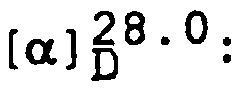
IR (Neat): 1740, 1640, 1270 cm-1
NMR (DMSO-d6, δ): 1.70-2.40 (3H, m), 2.60-3.80 (11H, m), 6.60-7.60 (10H, m), 7.65-8.55 (2H, m)
MASS (APCI): 537 (M+H)+ - To a solution of (2R)-1-[3,5-bis(trifluoromethyl)-benzoyl]-2-(4-methoxybenzyl)-4-benzylpiperazine (4.90 g) in ethanol (50 ml) were added water (5 ml), ammonium formate (1.44 g), and 10% palladium on activated carbon [50% wet] (0.49 g) under nitrogen atmosphere. The reaction mixture was heated at 60°C with stirring for 2 hours. Insoluble material was removed by filtration, and the filtrate was concentrated under reduced pressure. Ethyl acetate (40 ml) and water (40 ml) were added to the residue, and the organic layer was separated, washed with brine, and dried over magnesium sulfate. After removal of the solvent by evaporation, the resulting residue was purified by column chromatography on silica gel (70 g) using a mixed solvent of ethyl acetate and methanol (10:1). The fractions containing the objective compound were collected and evaporated under reduced pressure to give (2R)-1-[3,5-bis(trifluoromethyl)benzoyl]-2-(4-methoxybenzyl)piperazine (3.18 g) as syrup.
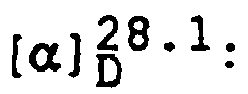
IR (Neat): 3300, 1630, 1280 cm-1
NMR (DMSO-d6, δ): 2.40-3.55 (9H, m), 3.72 (3H, s), 6.70-8.45 (7H, m)
MASS (APCI): 447 (M+H)+ - The following compounds were obtained according to a similar manner to that of Preparation 56.
- (1) (2R)-4-Benzyl-1-(tert-butoxycarbonyl)-2-[4-(trifluoromethyl)benzyl]piperazine
NMR (CDCl3, δ): 1.36 (9H, s), 1.98 (1H, dd, J=11.5 and 3.7Hz), 2.10 (1H, td, J=12.0 and 3.4Hz), 2.58 (1H, d, J=11.5Hz), 2.83-3.13 (3H, m) , 3.20 (1H, td, J=12.8 and 3.4Hz), 3.26 (1H, d, J=12.8Hz), 3.58 (1H, d, J=12.8Hz), 3.80-4.30 (2H, m), 7.12 (2H, d, J=7.7Hz), 7.26-7.42 (7H, m)
MASS (APCI): 435 (M+H)+ - (2) (2R)-4-Benzyl-2-(4-fluoro-3-methoxybenzyl)-1-(tert-butoxycarbonyl)piperazine
IR (Neat): 1516, 1458, 1400, 1327, 1275, 1217, 1169 cm-1
NMR (CDCl3, δ): 1.39 (9H, s), 1.95-2.13 (2H, m), 2.60-3.24 (5H, m), 3.32-3.57 (2H, m), 3.79 (3H, s), 3.90-4.14 (2H, m), 6.52-7.35 (8H, m)
MASS (APCI): 415 (M+H)+ - (3) (2R)-4-Benzyl-1-(tert-butoxycarbonyl)-2-[4-chloro-3-(tert-butyldimethylsilyloxy)benzyl]piperazine IR (Neat): 1695, 1480, 1415, 1250, 1170 cm-1
- (4) (3S,4S)-1-(tert-Butoxycarbonyl)pyrrolidine-3,4-diol
mp: 156-158°C
IR (KBr): 3398, 3334, 1662, 1431, 1174, 1122, 1082, 985 cm-1
NMR (DMSO-d6, δ): 1.42 (9H, s), 3.10 (2H, br d, J=11.3Hz), 3.25-3.44 (2H, m), 3.86 (2H, br s), 5.05 (2H, d, J=3.2Hz)
MASS (ES+) : 429.3 (2M+Na)+, 226.2 (M+Na)+ (free) - The following compounds were obtained according to a similar manner to that of Preparation 37.
- (1) 4-[[(2R)-1-[3,5-Bis(trifluoromethyl)benzoyl]piperazin-2 - yl]methyl]-2-hydroxybenzoic acid methyl ester
IR (Neat): 3083, 1677, 1639, 1438, 1280 cm-1 - (2) (2R)-1-[3,5-Bis(trifluoromethyl)benzoyl]-2-[3-(tert-butyldimethylsilyloxy)-4-chlorobenzyl]piperazine
mp: 95-97°C
IR (KBr): 1954, 1628, 1481, 1437 cm-1
NMR (CDCl3, δ) : 0.17 (3H, s), 0.20 (3H, s), 1.01 (9H, s), 2.50-5.10 (9H, m), 6.30-7.70 (5H, m), 7.87 (1H, s)
MASS (APCI): 581 (M+H)+ - (3) (2R)-2-[3-(tert-Butyldimethylsilyloxy)-4-chlorobenzyl]-1-[3-chloro-5-(trifluoromethyl)benzoyl]piperazine
IR (Neat): 2954, 2933, 1635, 1483, 1419 cm-1
NMR (CDCl3, δ) : 0.18 (3H, s), 0.21 (3H, s), 1.02 (9H, s), 2.50-5.20 (9H, m), 6.20-7.70 (6H, m)
MASS (APCI) : 547 (M+H)+ - (4) (2R)-1-(tert-Butoxycarbonyl)-2-[4-chloro-3-(tert-butyldimethylsilyloxy)benzyl]piperazine
NMR (DMSO-d6, δ) : 0.99 (9H, s), 1.24 (9H, s), 2.15 (6H, s), 2.20-4.10 (9H, m), 6.78-7.33 (3H, m) - The following compounds were obtained according to a similar manner to that of Preparation 24.
- (1) (2R)-1-(tert-Butoxycarbonyl)-2-(4-(trifluoromethyl)-benzyl)piperazine
mp: 61-62°C
IR (KBr): 2981, 2952, 1682, 1417, 1330 cm-1
NMR (CDCl3, δ): 1.33 (9H, s), 2.67-4.40 (9H, m), 7.35 (2H, d, J=8.0Hz), 7.54 (2H, d, J=8.0Hz)
MASS (ESI): 345.3 (M+H)+, 289.2 (M-Bu)+ - (2) (2R)-2-(4-Fluoro-3-methoxybenzyl)-1-(tert-butoxycarbonyl)piperazine
IR (Neat): 1689, 1515, 1414, 1273, 1165, 1115 cm-1
NMR (CDCl3, δ): 1.38 (9H, s), 2.70-3.14 (8H, m), 3.87 (3H, s), 3.88-4.18 (2H, m), 6.74-7.26 (3H, m)
MASS (APCI): 225 (M-Boc+1)+, 269 (M-tBu+1)+ - (3) (2R)-1-[3-(Dimethylsulfamoyl)-5-(trifluoromethyl)-benzoyl]-2-[4-(trifluorornethyl)benzyl]piperazine
IR (KBr): 2956, 1639, 1462, 1423, 1329 cm-1
NMR (CDCl3, δ): 2.60-5.20 (9H, m), 2.72 (6H, s), 7.00-7.60 (5H, m), 7.67 (1H, s), 8.00 (1H, s)
MASS (APCI): 524 (M+H)+ - (4) (2R)-1-[3-Methylsulfonyl-5-(trifluoromethyl)benzoyl]-2-[4-(trifluoromethyl)benzyl]piperazine hydrochloride
mp: 94.5-101°C
IR (KBr): 3433, 1645 cm-1
NMR (DMSO-d6, δ): 2.80-5.30 (12H; m), 7.00-8.31 (7H, m)
MASS (APCI): 495 (M+H)+ (free) - (5) (2R)-2-(3-tert-Hutyldimethylsilyloxy-4-methylbenzyl)-1-[3-methoxy-5-(trifluoromethyl)benzoyl]piperazine
IR (KBr): 2956, 2935, 1641, 1606 cm-1
NMR (CDCl3, δ): 0.14, 0.17 (6H, s), 0.99 (9H, s), 2.15 (3H, s), 2.50-5.20 (9H, m), 3.81 (3H, s), 6.75-7.13 (6H, m)
MASS (APCI): 523 (M+H)+ - The following compounds were obtained according to a similar manner to that of Example 1 using N,N-diisopropylethylamine instead of potassium carbonate as a base.
- (1) (2R)-1-(tert-Butoxycarbonyl)-4-[2-(5,6,7,8-tetrahydro-1,6-naphthyridin-6-yl)ethyl]-2-[9-(trifluoromethyl)-benzyl]piperazine
IR (KBr): 2974, 2935, 2814, 1693 cm-1
NMR (CDCl3, δ): 1.35 (9H, s), 2.04-2.17 (2H, m), 2.50-4.30 (17H, m), 7.07 (1H, dd, J=4.8 and 7.6Hz), 7.27-7.34 (3H, m), 7.50 (2H, d, J=8.0Hz), 8.40 (1H, d, J=4.8Hz)
MASS (APCI): 505 (M+H)+ - (2) (2R)-1-(tert-Butoxycarbonyl)-4-[2-(cis-2,6-dimethylmorpholino)ethyl]-2-[4-(trifluoromethyl)benzyl]-piperazine
IR (Neat): 2974, 1693, 1680 cm-1
NMR (CDCl3, δ): 1.19, 1.20 (6H, d, J=6.2Hz), 1.32 (9H, s), 2.02-2.21 (4H, m), 2.71-3.31 (11H, m), 3.90-4.50 (4H, m), 7.34 (2H, d, J=7.9Hz), 7.54 (2H, d, J=7.9Hz)
MASS (APCI): 486 (M+H)+ - (3) (2R)-1-(tert-Butoxycarbonyl)-4-[2-[(2S)-2-(methoxymethyl)morpholino]ethyl]-2-[4-(trifluoromethyl)-benzyl]piperazine
IR (Neat): 3438, 2816, 1691 cm-1
NMR (CDCl3, δ): 1.33 (9H, s), 2.02-4.30 (22H, m), 3.37 (3H, s), 7.35 (2H, d, J=8.0Hz), 7.54 (2H, d, J=8.0Hz)
MASS (APCI): 502 (M+H)+ - (4) (2R)-2-(4-Fluoro-3-methoxybenzyl)-1-(tert-butoxycarbonyl)-4-[2-(cis-2,6-dimethylmorpholino)ethyl]-piperazine
IR (Neat): 1515, 1458, 1414, 1367, 1323, 1115, 1086 cm-1
NMR (CDCl3, δ): 1.14 (6H, d, J=1.2Hz), 1.40 (9H, s), 1.70-2.10 (4H, m), 2.36-3.20 (12H, m), 3.61-4.18 (3H, m), 3.88 (3H, s), 6.74-7.02 (3H, m)
MASS (APCI): 466 (M+H)+ - (5) (2R)-2-(4-Fluoro-3-methoxybenzyl)-1-(tert-butoxycarbonyl)-4-[2-[(2S)-2-(methoxymethyl)morpholino]-ethyl]piperazine
IR (Neat): 1516, 1456, 1414, 1273, 1165, 1111, 1036 cm-1
NMR (CDC13, δ): 1.40 (9H, s), 1.90-4.25 (22H, m), 3.38 (3H, s), 3.87 (3H, s), 6.69-7.27 (3H, m)
MASS: 482 (M+H)+ - (6) (2R)-2-(4-Fluoro-3-methoxybenzyl)-1-(tert-butoxycarbonyl)-4-[2-(5,6,7,8-tetrahydro-1,6-naphthyridin-6-yl)ethyl]piperazine
NMR (DMSO-d6, δ) : 1.40 (9H, s), 1.99-2.15 (2H, m), 2.51-3.18 (14H, m), 3.67-4.18 (3H, m), 3.86 (3H, s), 6.73-8.40 (6H, m)
MASS: 485 (M+H)+ - (7) (2R)-1-(tert-Butoxycarbonyl)-2-(4-chloro-3-hydroxybenzyl)-4-[2-[(2S)-2-(methoxymethyl)morpholino]-ethyl]piperazine
- The following compounds were obtained according to a similar manner to that of Preparation 41.
- (1) (2R)-4-Benzyl-1-[3-(dimethylsulfamoyl)-5-(trifluoromethyl)benzoyl]-2-[4-(trifluoromethyl)benzyl]piperazine
IR (Neat): 1645, 1456, 1419, 1319 cm-1
NMR (CDCl3' δ): 2.00-2.40 (2H, m), 2.70-5.10 (9H, m), 2.73 (6H, s), 6.90-7.60 (10H, m), 7.73 (1H, s), 8.01 (1H, s)
MASS (APCI): 614 (M+H)+ - (2) (2R)-4-Benzyl-1-[3-methylsulfonyl-5-(trifluoromethyl)benzoyl]-2-[4-(trifluoromethyl)benzyl]piperazine
NMR (CDCl3, δ): 2.00-2.40 (2H, m), 2.70-3.71 (8H, m), 3.06 (3H, s), 4.50-5.10 (1H, m), 6.80-7.60 (10H, m), 7.86 (1H, s), 8.19 (1H, s)
MASS (APCI): 585 (M+H)+ - (3) (2R)-1-[3,5-Bis(trifluoromethyl)benzoyl]-4-benzyl-2-[3-(tert-butyldimethylsilyloxy)-4-chlorobenzyl]piperazine
IR (Neat): 2935, 2860, 2812, 1645, 1483, 1423 cm-1
NMR (CDCl3, δ): 0.10-0.30 (6H, br), 1.00 (9H, s), 1.80-5.10 (11H, m), 6.20-8.00 (10H, m), 7.87 (1H, s)
MASS (APCI): 671 (M+H)+ - (4) (2R)-4-Benzyl-2-[3-(tert-butyldimethylsilyloxy)-4-chlorobenzyl]-1-[3-chloro-5-(trifluoromethyl)benzoyl]-piperazine
IR (Neat): 2935, 1641, 1483, 1417 cm-1
NMR (CDCl3, δ): 0.10-0.30 (6H, br), 1.01 (9H, s), 1.80-5.00 (11H, m), 6.20-7.70 (10H, m), 7.59 (1H, s)
MASS (APCI) : 637 (M+H)+ - (5) (2R)-4-Benzyl-2-[3-(tert-butyldimethylsilyloxy)-4-methylbenzyl]-1-[3-methoxy-5-(trifluoromethyl)benzoyl]-piperazine
IR (KBr): 1643, 1464, 1421, 1267 cm-1
NMR (CDCl3, δ) : 0.09 (6H, br s), 0.98 (9H, s), 2.04-2.21 (2H, m), 2.14 (3H, s), 2.60-5.10 (12H, m), 6.24-7.36 (11H, m)
MASS (APCI) : 613 (M+H)+ - The following compounds were obtained according to a similar manner to that of Preparation 59.
- (1) (2R)-4- [2- (5, 6, 7, 8-Tetrahydro-1, 6-naphthyridin-6-yl)-ethyl]-2-.[4-(trifluoromethyl)benzyl]piperazine tetrahydrochloride
NMR (DMSO-d6, δ) : 3.03-4.00 (19H, m), 7.57 (2H, d, J=8.1Hz) , 7.75 (2H, d, J=8.1Hz), 7.85 (1H, dd, J=7.7 and 5.6Hz), 8.29 (1H, d, J=7.7Hz), 8.78 (1H, d, J=5.6Hz)
MASS (APCI): 405 (M+H)+ (free) - (2) (2R)-4-[2-(cis-2,6-Dimethylmorpholino)ethyl]-2-[4-(trifluoromethyl)benzyl]piperazine trihydrochloride
mp: >250°C
IR (KBr): 2563, 2426, 1456, 1327 cm-1
NMR (CDCl3, δ): 1.11 (6H, d, J=6.2Hz), 2.59-4.50 (19H, m), 7.56 (2H, d, J=8.1Hz), 7.75 (2H, d, J=8.1Hz)
MASS (APCI): 386 (M+H)+ (free) - (3) (2R)-4-[2-[(2S)-2-(Methoxymethyl)morpholino]ethyl]-2-[4-(trifluoromethyl)benzyl]piperazine trihydrochloride
mp: 80-95°C
IR (KBr): 1695, 1516 cm-1
NMR (DMSO-d6, δ): 2.80-4.60 (25H, m), 7.56 (2H, d, J=8.1Hz), 7.75 (2H, d, J=8.1Hz)
MASS (APCI): 402 (M+H)+ (free) - (4) (2R)-2-(4-Fluoro-3-methoxybenzyl)-4-[2-(cis-2,6-dimethylmorpholino)ethyl]piperazine trihydrochloride
IR (KBr): 1610, 1517, 1452, 1425, 1367, 1326, 1274 cm-1
NMR (DMSO-d6, δ): 1.11 (6H, d, J=6.0Hz), 2.49-4.40 (21H, m), 3.86 (3H, s), 6.87-7.24 (3H, m), 9.55-10.06 (2H, m)
MASS: 366 (M+H)+ (free) - (5) (2R)-2-(4-Fluoro-3-methoxybenzyl)-4-[2-[(2S)-2-(methoxymethyl)morpholino]ethyl]piperazine trihydrochloride
IR (KBr): 3465, 3435, 3400, 1615, 1515, 1455, 1270, 1235 cm-1
NMR (DMSO-d6, δ): 2.65-4.20 (22H, m), 3.27 (3H, s), 3.86 (3H, s), 6.82-7.23 (3H, m)
MASS (APCI) : 382 (M+H)+ (free) - (6) (2R)-2-(4-Fluoro-3-methoxybenzyl)-4- [2- (5, 6, 7, 8-tetrahydro-1,6-naphthyridin-6-yl)ethyl]piperazine tetrahydrochloride
IR (KHr) : 1515, 1464, 1269, 1153, 1095 cm-1
NMR (CDC13, δ): 2.60-4.50 (22H, m), 3.84 (3H, s), 6.85-10.0 (8H, m)
MASS: 385 (M+H)+ (free) - (7) (2R)-2-(4-Chloro-3-hydroxybenzyl)-4-[2-[(2S)-2-(methoxymethyl)morpholino]ethyl]piperazine trihydrochloride
IR (KBr): 1645, 1450, 1425, 1370, 1236, 1140 cm-1
NMR (DMSO-d6, δ) : 2. 69-4.50 (22H, m), 3.27 (3H, s), 6.71-7.32 (3H, s)
MASS (APCI): 384 (M+H)+ (free) - (8) (3S,4S)-3,4-Dimethoxypyrrolidine hydrochloride
mp: 168°C
IR (KBr): 3464, 2900-2350, 1198, 1109, 1065, 1024 cm-1
NMR (DMSO-d6, δ): 3.05-3.35 (4H, m), 3.31 (6H, s), 4.00 (2H, d, J=3.5Hz), 9.67 (2H, br s)
MASS (APCI): 132 (M+H)+ (free) - 2-Bromoethanol (310 mg) was added to a solution of (2R)-1-[3,5-bis(trifluoromethyl)benzoyl]-2-[4-(trifluoromethyl)-benzyl]piperazine (1 g) in acetonitrile (10 ml). The reaction mixture was stirred at 70°C for 19 hours. The mixture was filtered, and the residue on filter was washed with dichloromethane twice. The filtrate and combined washings were concentrated in vacuo. The residue was purified by silica gel column chromatography eluted with methanol in dichloromethane (2% then 5%) to give (2R)-1-[3,5-bis(trifluoromethyl)benzoyl]-4-(2-hydroxyethyl)-2-[4-(trifluoromethyl)benzyl]piperazine (927 mg) as an amorphous powder.
IR (Neat): 3462, 3435, 2949, 2817, 1637, 1439 cm-1
NMR (CDCl3, δ): 2.1-5.2 (14H, m), 6.9-8.0 (7H, m)
MASS (APCI): 529 (M+H)+ - The following compound was obtained according to a similar manner to that of Preparation 121.
(2R)-1-[3,5-Bis(trifluoromethyl)benzoyl]-2-(4-fluoro-3-methoxybenzyl)-4-(2-hydroxyethyl)piperazine
IR (Neat): 2945, 2817, 1639, 1518, 1442 cm-1
NMR (CDCl3, δ): 2.20-5.10 (13H, m), 4.52 (3H, s), 6.30-7.89 (6H, m)
MASS (APCI) : 509 (M+H)+ - The following compounds were obtained according to a similar manner to that of Preparation 9.
- (1) (2R)-1-[3,5-Bis(trifluoromethyl)benzoyl]-4-(2-chloroethyl)-2-[4-(trifluoromethyl)benzyl]piperazine hydrochloride
IR (KBr) : 3437, 3429, 2561, 1649, 1427 cm-1
NMR (DMSO-d6, δ): 2.20-5.40 (13H, m), 7.10-8.30 (7H, m)
MASS (APCI): 547 (M+H)+ (free) - (2) (2R)-1-[3,5-Bis(trifluoromethyl)benzoyl]-4-(2-chloroethyl)-2-(4-fluoro-3-methoxybenzyl)piperazine hydrochloride
mp: 75-79°C
IR (KBr): 1647, 1518, 1427 cm-1
NMR (DMSO-d6, δ): 2.75-5.20 (13H, m), 4.49 (3H, s), 6.50-8.23 (6H, m)
MASS (APCI): 527 (M+H)+ (free) - The following compound was obtained according to a similar manner to that of Preparation 57.
(2R)-4-Benzyl-2-[3-(tert-butyldimethylsilyloxy)-4-methylbenzyl]piperazine
IR (Neat): 2952, 2933, 2856, 1504 cm-1
NMR (DMSO-d6, δ): 0.21 (6H, s), 1.02 (9H, s), 1.66-2.00 (2H, m), 2.13 (3H, s), 2.49-2.85 (4H, m), 3.37-3.41 (5H, m), 6.63 (1H, s), 6.69 (1H, d, J=7.6Hz), 7.05 (1H, d, J=7.6Hz), 7.25-7.40 (5H, m)
MASS (ESI+): 411.4 (M+H)+ - A solution of (2S,4R)-1-benzyl-4-hydroxy-2-(hydroxymethyl)pyrrolidine (1.49 g) in N,N-dimethylformamide (10 ml) was added to a suspension of sodium hydride (60% dispersion in mineral oil, 689 mg) in N,N-dimethylformamide (5 ml) dropwise at ambient temperature. The reaction mixture was stirred at the same temperature for 1 hour. To the reaction mixture was added methyl iodide (2.55 g) in N,N-dimethylformamide (3 ml) dropwise. After stirring at ambient temperature for 2 hours, the reaction mixture was poured into ice water, and the whole was extracted with ethyl acetate twice. The combined organic layer was washed successively with a mixture of saturated aqueous sodium bicarbonate solution and 5% aqueous sodium thiosulfate solution, and saturated aqueous sodium chloride solution, dried over magnesium sulfate, and concentrated in vacuo. The residue was purified by silica gel column chromatography eluted with methanol in dichloromethane 1% then 2% to give (2S,4R)-1-benzyl-4-methoxy-2-(methoxymethyl)pyrrolidine (1.07 g) as an oil.
IR (Neat): 2877, 2817, 1452 cm-1
NMR (CDCl3, δ): 1.79-2.02 (2H, m), 2.26 (1H, dd, J=9.9 and 5.6Hz), 2.88-3.01 (1H, m), 3.19-3.49 (4H, m), 3.25 (3H, s), 3.35 (3H, s), 3.86 (1H, m), 4.10 (1H, d, J=13.1Hz), 7.20-7.33 (5H, m)
MASS (APCI): 236 (M+H)+ - The following compounds were obtained according to a similar manner to that of Preparation 15.
- (1) (2S,9R)-4-Methoxy-2-(methoxymethyl)pyrrolidine
IR (Neat): 3342, 2881, 1668, 1444 cm-1
NMR (CDCl3' δ): 1.55 (1H, m), 1.93 (1H, dd, J=13.6 and 7.1Hz), 2.88-3.09 (2H, m), 3.24-3.52 (3H, m), 3.29 (3H, s), 3.36 (3H, s), 3.89 (1H, m)
MASS (APCI) : 146 (M+H)+ - (2) (3S,4S)-Pyrrolidine-3,9-diol hydrochloride
mp: 69-73°C
IR (KBr): 3400, 1622, 1442, 1238, 1109, 1030, 989 cm-1
NMR (DMSO-d6-D2O, δ): 3.05 (2H, d, J=12.1Hz), 3.28 (2H, dd, J=12.1 and 3.2Hz), 4.10 (2H, d, J=3.2Hz)
MASS (APCI): 104 (M+H)+ (free) - (3) cis-2,6-Dimethoxymethylpiperidine hydrochloride
mp: 200-202°C
IR (KBr): 3402, 2941, 2821, 2735, 1645, 1516, 1456 cm-1
NMR (DMSO-d6, δ): 1.30-1.90 (6H, m), 3.10-3.40 (2H, m), 3.30 (6H, s), 3.54 (4H, d, J=5.3Hz)
MASS (APCI): 1.74 (M+H)+ (free) - (4) cis-3,5-Dimethoxymethylpiperidine hydrochloride
mp: 220-222°C
IR (KBr): 2939, 2806, 2783, 1460, 1392 cm-1
NMR (DMSO-d6, δ): 0.99 (1H, q, J=12.4Hz), 1.69 (1H, m), 1.90-2.25 (2H, m), 2.50 (2H, t, J=12.3Hz), 3.10-3.40 (6H, m), 3.23 (6H, s)
MASS (APCI): 174 (M+H)+ (free) - (5) cis-2,6-Dimethoxymethylmorpholine hydrochloride
IR (Neat): 2935, 2819, 1595, 1513, 1456 cm-1
NMR (CDCl3, δ): 2. 73 (2H, t, J=12.0Hz) , 3.18 (2H, d, J=12.0Hz), 3.35 (6H, s), 3.35-3.46 (4H, m), 3.92-4.05 (2H, m)
MASS (APCI) : 176 (M+H)+ (free) - (6) 2,2-Dimethoxymethylmorpholine hydrochloride
IR (Neat): 2935, 2522, 1594, 1454 cm-1
NMR (CDCl3, δ) : 2.92-3.00 (4H, m), 3.29 (6H, s), 3.46 (2H, d, J=10.2Hz), 3.51 (2H, d, J=10.2Hz), 3.81-3.86 (2H, m)
MASS (APCI): 176 (M+H)+ (free) - (7) 8-Oxa-3-azabicyclo[3.2.1]octane hydrochloride
mp: 205-207.5°C
IR (KBr): 2920, 2792, 1591, 1442 cm-1
NMR (DMSO-d6, δ): 1.85-2.18 (4H, m), 2.97-3.08 (4H, m), 4.39-4.90 (2H, m)
MASS (APCI) : 114 (M+H)+ (free) - The following compounds were obtained according to a similar manner to that of Preparation 89.
- (1) (2S,4R)-1-(2-Hydroxyethyl)-4-methoxy-2-(methoxymethyl)-pyrrolidine
IR (Neat): 3400, 2881, 1660, 1458, 1379 cm-1
NMR (CDCl3' δ): 1.77 (1H, m), 2.00 (1H, m), 2.45 (1H, dd, J=10.4, 4.5Hz), 2.62 (1H, dt, J=12.7., 3.7Hz), 2.95-3.11 (2H, m), 3.29-3.45 (3H, m), 3.30 (3H, s), 3.36 (3H, s), 3.50-3.70 (2H, m), 3.90 (1H, m)
MASS (APCI): 190 (M+H)+ - (2) 2,2-Dimethyl-4-(2-hydroxyethyl)morpholine
IR (Neat): 2972, 2941, 1458, 1387 cm-1
NMR (CDCl3, δ): 1.26 (6H, s), 2.31 (2H, s), 2.45-2.54 (4H, m), 3.63 (2H, t, J=5.1Hz), 3.77 (2H, t, J=5.1Hz)
MASS (APCI): 160 (M+H)+ - (3) (3S,4S)-1-(2-Bromoethyl)-3,4-dimethoxypyrrolidine hydrochloride
- The following compounds were obtained according to a similar manner to that of Preparation 90.
- (1) (2S,4R)-1-(2-Chloroethyl)-4-methoxy-2-(methoxymethyl)-pyrrolidine hydrochloride
IR (Neat): 3400, 2939, 1645, 1450 cm-1
NMR (DMSO-d6, δ): 1.80 (1H, m), 2.23 (1H, m), 3.26 (3H, s), 3.32 (3H, s), 3.20-4.20 (10H, m)
MASS (APCI) : 208 (M+H)+ (free) - (2) 2,2-Dimethyl-4-(2-chloroethyl)morpholine hydrochloride
mp: 180-185°C
IR (KBr): 2978, 2677, 2630, 2584, 1456 cm-1
NMR (DMSO-d6, δ): 1.18 (3H, s), 1.44 (3H, s), 2.80-3.10 (2H, m), 3.30-3.91 (6H, m), 4.10 (2H, t, J=6.9Hz)
MASS (APCI): 178 (M+H)+ (free) - (3) (3S,4S)-1-(2-Chloroethyl)-3,9-dimethoxypyrrolidine hydrochloride
IR (Neat): 3400, 2563, 2440, 1637, 1460, 1113 cm-1
NMR (DMSO-d6, δ): 3.20-3.86 (6H, m), 3.32 (6H, s), 3.92-4.16 (4H, m), 11.44 (1H, s)
MASS (APCI) : 194 (M+H)+ (free) - A solution of 3-dimethylamino-1H-pyrrolo[3,2-b]pyridine (1.53 g) and hexamethylenetetramine (1.22 g) in 6.68 g of 66% propionic acid was added dropwise to a refluxing solution of 2.44 g of hexamethylenetetramine in 8.92 g of the same solvent. The addition was carried out over a period of one hour and the solution was refluxed 3.5 hours more. The solution was concentrated in vacuo and thereto water (30 ml), ethyl acetate (25 ml), and tetrahydrofuran (20 ml) were added. The organic layer was separated, dried over sodium sulfate, and concentrated under reduced pressure. The resulting residue was purified by column chromatography on silica gel (12 g) using a mixed solvent of dichloromethane and methanol (15:1). The fractions containing the objective compound were collected and evaporated under reduced pressure to give a powder of 3-formyl-1H-pyrrolo[3,2-b]pyridine (0.45 g) .
mp: 230°C (decomp.)
IR (KBr): 2744, 1658, 1466, 1408, 1142, 1113, 777 cm-1
NMR (DMSO-d6, δ) : 7.27 (1H, dd, J=4.6 and 8.3Hz), 7.92 (1H, d, J=8.3Hz), 8.44 (1H, s), 8.50 (1H, d, J=4.6Hz), 10.19 (1H, s), 12.38 (1H, s)
MASS (APCI): 147 (M+H)+ - The following compounds were obtained according to a similar manner to that of Preparation 125.
- (1) (3S,4S)-1-(tert-Butoxycarbonyl)-3,4-dimethoxypyrrolidine
IR (Neat): 1690, 1410, 1365, 1165, 1100 cm-1
NMR (CDCl3, δ): 1.45 (9H, s), 3.37 (6H, s), 3.30-3.56 (4H, m), 3.72-3.85 (2H, m)
MASS (APCI): 132 (M-Boc+H)+ - (2) cis-2,6-Dimethoxymethyl-1-benzylpiperidine
IR (Neat): 2924, 2883, 1489, 1450 cm-1
NMR (CDCl3, δ): 1.30-1.85 (6H, m), 2.68-2.78 (2H, m), 3.13 (6H, s), 3.18 (2H, dd, J=9.6, 6.2Hz), 3.35 (2H, dd, J=9.6, 4.4Hz), 3.84 (2H, s), 7,17-7.42 (5H, m)
MASS (APCI): 264 (M+H)+ - (3) cis-3,5-Dimethoxymethyl-1-benzylpiperidine
IR (Neat): 2920, 2829, 1454, 1389 cm-1
NMR (CDCl3' δ): 0.68 (1H, q, J=12.2Hz), 1.61 (2H, t, J=11.1Hz), 1.78 (1H, m), 1.85-2.20 (2H, m), 2.90-3.05 (2H, m), 3.19 (4H, d, J=6.2Hz), 3.29 (6H, s), 3.52 (2H, s), 7.20-7.32 (5H, m)
MASS (APCI): 264 (M+H)+ - A solution of (S)-methyl glycidyl ether (10 g) and benzylamine (3.62 g) in methanol (50 ml) was stirred at 55°C for 2 hours. To the mixture was added (S)-methyl glycidyl ether (1 g), and the mixture was stirred at 55°C for 2 hours, and then evaporated under reduced pressure. Toluene was added to the residue and evaporated under reduced pressure to give (2S)-1-[N-benzyl-N-[(2S)-2-hydroxy-3-methoxypropyl]amino]-3-methoxypropan-2-ol (8.84 g) as a pale yellow oil.
IR (Neat): 3430, 3402, 2889, 1454 cm-1
NMR (CDCl3, δ) : 2.52-2.70 (4H, m), 3.34 (6H, s), 3.26-3.44 (4H, m), 3.61 (1H, d, J=13.7Hz), 3.81-3.92 (2H, m), 3.84 (1H, d, J=13.7Hz), 7.20-7.33 (5H, m)
MASS (APCI): 284 (M+H)+ - A mixture of triphenylphosphine (10.2 g), diethyl azodicarboxylate (6.12 ml), and (2S)-1-[N-benzyl-N-[(2S)-2-hydroxy-3-methoxypropyl]amino]-3-methoxypropan-2-ol (7.34 g) in tetrahydrofuran (70 ml) was stirred at 0°C for 5 hours. To the mixture was added successively triphenylphosphine (2.04 g) and diethyl azodicarboxylate (1.2 ml), and the mixture was stirred at 0°C for 3 hours. The mixture was poured into water and extracted with dichloromethane (x3). The combined extracts were washed with brine, dried over sodium sulfate, and evaporated. Isopropyl ether (50 ml) was added to the residue and stirred at room temperature for 30 minutes. The insoluble precipitate was filtered off, and the solution was evaporated and purified twice with column chromatography (1st: silica gel 800 ml, ethyl acetate:isopropyl ether = 2:8 - 3:7) (2nd: silica gel 300 ml, ethyl acetate:isopropyl ether = 3:97 - 10.90) to give 4-benzyl-cis-2,6-dimethoxymethylmorpholine (2.65 g) as an oil.
IR (Neat): 2883, 1514, 1458, 1099 cm-1
NMR (CDCl3, δ): 1.93 (2H, t, J=11.0Hz), 2.77 (2H, d, J=11.0Hz), 3.34 (6H, s), 3.36-3.50 (4H, m), 3.51 (2H, s), 3.75-3.87 (2H, m), 7.25-7. 32 (5H, m)
MASS (APCI): 266 (M+H)+ - To a solution of N-benzylethanolamine (302 g) in a mixture of water (8.92 ml) and toluene (1510 ml) and diglyme (151 ml) was added dropwise sulfuric acid (128 ml) over 30 minutes, and the mixture was stirred under reflux for 6 hours. After cooled to room temperature, to the mixture was added methanol (300 ml), and then the mixture was stirred for 1 hour. The precipitate was filtered and washed with methanol (300 ml x 4), and dried to give 2-(N-benzylamino)ethyl hydrogen sulfate (352.6 g) as a white powder.
MASS (APCI): 232 (M+H)+Elemental Analysis Calcd. for C9H13N1O4S: Calcd. C: 46.74%, H: 5.67%, N: 6.06% Found. C: 46.42%, H: 5.63%, N: 5.93% - To a solution of 2-(N-benzylamino)ethyl hydrogen sulfate (28 g) in a mixture of water (36.3 ml) and 40% sodium hydroxide aqueous solution (12.1 ml) was added 2,2-bis(methoxymethyl)oxirane (16.0 g) at room temperature over 30 minutes. After stirring at room temperature for 87 hours, 40% sodium hydroxide aqueous solution (73 ml) was added dropwise to the mixture over 20 minutes. The mixture was stirred at room temperature for 1 hour and at 40°C for 20 hours, and extracted with ethyl acetate (100 ml x 3). The organic layer was extracted with 1N hydrochloric acid (x 6). The combined extracts were neutralized with sodium hydroxide, and then added sodium chloride, and extracted with ethyl acetate (100 ml x 3). The combined extracts were washed with brine, dried over magnesium sulfate, and evaporated under reduced pressure to give 4-benzyl-2,2-dimethoxymethylmorpholine (31.79 g) as an orange oil.
IR (Neat): 2922, 2877, 2812, 1454 cm-1
NMR (CDCl3, δ): 2.38-2.44 (4H, m), 3.27-3.45 (4H, m), 3.37 (6H, s), 3.65 (2H, d, J=9.6Hz), 3.77-3.84 (2H, m), 7.20-7.34 (5H, m)
MASS (APCI): 266 (M+H)+ - A mixture of 2,5-bis(hydroxymethyl)tetrahydrofuran bis(p-toluenesulfonate) (10 g) and benzylamine (9.7 g) was stirred at 70°C for 24 hours. To the mixture was added a solution of sodium hydroxide (1.85 g) in methanol (30 ml). After stirring at room temperature for 30 minutes, the mixture was filtered. The filtrate was evaporated, added dichloromethane, and filtered. The filtrate was evaporated under reduced pressure, and purified with column chromatography (silica gel, 250 ml, ethyl acetate:hexane = 1:4) to give 3-benzyl-8-oxa-3-azabicyclo[3.2.1]octane (4.05 g) as an oil.
IR (Neat): 2951, 2800, 1452 cm-1
NMR (CDCl3, δ): 1.78-2.07 (4H, m), 2.33 (2H, dd, J=11.1 and 1.8Hz), 2.54 (2H, br d, J=11.1Hz), 3.45 (2H, s), 4.25-4.28 (2H, m), 7.18-7.34 (5H, m)
MASS (APCI): 204 (M+H)+ -
- (1) (2R)-1-[3,5-Bis(trifluorornethyl)benzoyl]-4-[2-(2,2-dimethylmorpholino)ethyl]-2-[4-(trifluoromethyl)benzyl]-piperazine dihydrochloride

mp: 215-231°C
IR (KBr): 3438, 1645, 1329, 1281 cm-1
NMR (DMSO-d6, δ) : 1.25, 1.33 (6H, s), 2.60-5.30 (19H, m), 7.21-8.19 (7H, m)
MASS (APCI): 626 (M+H)+ (free) - (2) (2R)-1-[3,5-Bis(trifluoromethyl)benzoy]-4-[2-[(2S,5S)-2-methoxymethyl-5-methylmorpholino]ethyl]-2-[4-(trifluoromethyl)benzyl]piperazine dihydrochloride

mp: 142-182°C
IR (KBr): 1647, 1281 cm-1
NMR (DMSO-d6, δ): 1.16 (3H, d, J=6.2Hz) , 2.70-5.30 (24H, m), 7.21-8.19 (7H, m)
MASS (APCI): 656 (M+H)+ (free) - (3) (2R)-1-[3,5-Bis(trifluoromethyl)benzoyl]-4-[2-(cis-2,6-dimethoxymethylmorpholino)ethyl]-2-[4-(trifluoromethyl)-benzyl]piperazine dihydrochloride

mp: 130-138°C
IR (KBr): 3437, 1647, 1427, 1329, 1282 cm-1
NMR (DMSO-d6, δ): 2.80-5.30 (29H, m), 7.21-8.18 (7H, m)
MASS (APCI): 686 (M+H)+ (free) - (4) (2R)-1-[3,5-Bis(trifluoromethyl)benzoyl]-4-[2-(2,2-dimethoxymethylmorpholino)ethyl]-2-[4-(trifluoromethyl)-benzyl]piperazine dihydrochloride

mp: 123-149°C
IR (KBr): 3435, 1647 cm-1
NMR (DMSO-d6, δ): 2.70-5.30 (29H, m), 7.21-8.19 (7H, m)
MASS (APCI): 686 (M+H)+ (free) - (5) (2R)-1-[3,5-Bis(trifluoromethyl)benzoyl]-4-[2-(2,2-dimethylmorpholino)ethyl]-2-(4-fluoro-3-methoxybenzyl)piperazine dihydrochloride
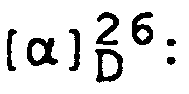
mp: 152-162 °C
IR (KBr) : 3438, 1645, 1516, 1282 cm-1
NMR (DMSO-d6, δ): 1.30 (6H, br s), 2.60-5.30 (22H, m), 6.40-8.20 (6H, m)
MASS (APCI): 606 (M+H)+ (free) - (6) (2R)-1-[3,5-Bis (trifluoromethyl)benzoyl]-9-[2-[(2S, 5S)-2-methoxymethyl-5-methylmorpholino]ethyl]-2-(4-fluoro-3-methoxybenzyl)piperazine dihydrochloride

mp: 190-169°C
IR (KBr) : 3437, 1645, 1282 cm-1
NMR (DMSO-d6, δ) : 1.16 (3H, d, J=6.1Hz), 2.70-5.30 (27H, m), 6.50-8.20 (6H, m)
MASS (APCI): 636 (M+H)+ (free) - (7) (2R)-1-[3,5-Bis(trifluoromethyl)benzoyl]]-4-[2-(cis-2,6-dimethoxymethylmorpholino)ethyl]-2-(4-fluoro-3-methoxybenzyl)piperazine dihydrochloride

mp: 148-156°C
IR (KBr): 1645, 1516, 1281 cm-1
NMR (DMSO-d6, δ): 2.60-5.20 (32H, m), 6.40-8.20 (6H, m)
MASS (APCI): 666 (M+H)+ (free) - The following compounds were obtained according to a similar manner to that of Example 1 using N,N-diisopropylethylamine instead of potassium carbonate as a base.
- (1) 4-([(2R)-1-[3,5-Bis(trifluoromethyl)benzoyl]-4-(2-[(2S)-2-(methoxymethyl)morpholino]ethyl]piperazin-2-yl]-methyl]-2-(tert-butyldimethylsilyloxy)benzoic acid methyl ester
IR (Neat): 1677, 1643, 1438, 1280 cm-1
NMR (CDCl3, δ): 0.10-0.30 (6H, m), 0.99 (9H, s), 2.00-5.10 (22H, m), 3.38 (3H, s), 3.87 (3H, s), 6.30-7.90 (6H, m)
MASS (APCI): 784 (M+Na)+, 763 (M+H)+ - (2) (2R)-1-[3,5-Bis(trifluoromethyl)benzoyl]-2-(4-methoxybenzyl)-4-[2-[(2S)-2-(methoxymethyl)morpholino]-ethyl]piperazine dihydrochloride

mp: 146-149°C
IR (KBr) : 1645, 1282, 1182, 1136 cm-1
NMR (DMSO-d6, δ) : 2.60-5.20 (28H, m), 6.75-6.90 (4H, m), 7.29-8.21 (3H, m)
MASS (APCI): 604 (M+H)+ (free) - (3) (2R)-1-[3,5-Bis(trifluoromethyl)benzoyl]-4-[2-[(2R)-2-(methoxymethyl)morpholino]ethyl]-2-[4-(trifluoromethyl)-benzyl]piperazine dihydrochloride

mp: 188-194°C
IR (KBr): 3438, 1645, 1516, 1464, 1456 cm-1
NMR (DMSO-d6, δ): 2.50-5.30 (22H, m), 3.27 (3H, s), 7.10-8.30 (7H, m)
MASS (API-ES positive): 642 (M+H)+ (free) - (4) (2R)-1-(3,5-Bis(trifluoromethyl)benzoyl)-2-(4-fluoro-3-methoxybenzyl)-4-[2-[(2R)-2-(methoxymethyl)morpholino]-ethyl]piperazine dihydrochloride

mp: 139-148°C
IR (KBr) : 3438, 1644, 1516, 1464, 1427 cm-1
NMR (DMSO-d6, δ): 2.60-5.30 (25H, m), 3.27 (3H, s), 6.40-8.30 (6H, m)
MASS (APCI): 622 (M+H)+ (free) - (5) (2R)-1-[3,5-Bis(trifluoromethyl)benzoyl]-2-(4-chloro-3-hydroxybenzyl)-4-[2-[(2R)-2-(methoxymethyl)morpholino] -ethyl]piperazine dihydrochloride

mp: 204-214°C
IR (KBr): 1645, 1539, 1516 cm-1
NMR (DMSO-d6, δ) : 2.50-5.20 (22H, m), 3.27 (3H, s), 6.30-8.30 (6H, m), 9.90-10.30 (1H, br)
MASS (API-ES positive): 624 (M+H)+ (free) - (6) (2R)-2-[3-(tert-Butyldimethylsilyloxy)-4-chlorobenzyl]-1-[3-chloro-5-(trifluoromethyl)benzoyl]-4-[2-(cis-2,6-dimethylmorpholino)ethyl]piperazine
IR (Neat): 2935, 1641, 1417 cm-1
NMR (CDCl3, δ) : 0 . 18 (6H, br s), 1.02 (9H, s), 1.16 (6H, d, J=6.3Hz), 1.76 (2H, t, J=10.7Hz), 2.00-5.10 (17H, m), 6.30-7.50 (5H, m), 7.61 (1H, s)
MASS (APCI) : 688 (M+H)+ - The following compound was obtained by reacting (2R)-4-(2-chloroethyl)-1-[3,5-bis(trifluoromethyl)benzoyl]-2-[4-(trifluoromethyl)benzyl]piperazine hydrochloride with (2S)-2-(hydroxymethyl)pyrrolidine with a reaction condition similar to that of Example 1 using N,N-diisopropylethylamine instead of potassium carbonate as a base.
(2R)-1-[3,5-Bis(trifluoromethyl)benzoyl]-4-[2-[(2S)-2-(hydroxymethyl)pyrrolidino]ethyl]-2-[4-(trifluoromethyl)-benzyl]piperazine dihydrochloride

mp: 221-224°C
IR (KBr) : 1643, 1516, 1427 cm-1
NMR (DMSO-d6, δ): 1.65-2.30 (4H, m), 2.60-5.40 (19H, m), 7.10-8.30 (7H, m)
MASS (APCI): 612 (M+H)+ (free) - The following compounds were obtained according to a similar manner to that of Preparation 136.
- (1) (2R)-1-[3, 5-Bis (trifluoromethyl) benzoyl]-4-[2-(cis-2, 6-dihydroxymethylpiperidino)ethyl]-2-[4-(trifluoromethyl)-benzyl]piperazine dihydrochloride

mp: 164-167°C
IR (KBr): 3396, 3369, 1645, 1516, 1427 cm-1
NMR (DMSO-d6, δ) : 1.30-2.10 (6H, m), 2.40-5.60 (21H, m), 7.00-8.30 (7H, m)
MASS (APCI): 656 (M+H)+ (free) - (2) (2R)-1-[3,5-Bis (trifluoromethyl)benzoyl] -4- [2- (cis-2, 6-dimethoxymethylpiperidino)ethyl]-2-[4-(trifluoromethyl)-benzyl]piperazine dihydrochloride

mp: 147-151°C
IR (KBr): 1645, 1516, 1454, 1427 cm-1
NMR (DMSO-d6, δ): 1.40-2.00 (6H, m), 2.80-5.30 (25H, m), 7.10-8.40 (7H, m)
MASS (APCI): 684 (M+H)+ (free) - (3) (2R)-1-[3,5-Bis(trifluoromethyl)benzoyl]-4-[2-(cis-3,5-dimethoxymethylpiperidino)ethyl]-2-[4-(trifluoromethyl)-benzyl]piperazine dihydrochloride
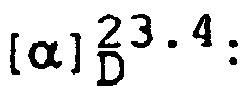
mp: 157-160°C
IR (KBr): 3438, 1647, 1464, 1427 cm-1
NMR (DMSO-d6, δ): 1.05 (1H, q, J=12.4Hz), 1.70 (1H, m), 2.10-5.40 (23H, m), 3.24 (6H, s), 7.10-8.30 (7H, m)
MASS (APCI): 684 (M+H)+ (free) - (4) (2R)-1-[3,5-Bis(trifluoromethyl)benzoyl]-4-[2-[(3S,4S)-3,9-dihydroxypyrrolidinolethyl]-2-[4-(trifluoromethyl)-benzyl]piperazine dihydrochloride

mp: 154-159°C
IR (KBr): 3398, 3369, 1645, 1427 cm-1
NMR (DMSO-d6, δ): 2.20-5.40 (21H, m), 7.1-8.3 (7H, m)
MASS (APCI): 614 (M+H)+ (free) - (5) (2R) -1-[3,5-Bis(trifluoromethyl)benzoyl]-2- (4-fluoro-3-methoxybenzyl)-4-[2-[(2S)-2-(hydroxymethyl)pyrrolidino]-ethyl]piperazine dihydrochloride

mp: 198-201°C
IR (KBr): 1645, 1516, 1464, 1425 cm-1
NMR (DMSO-d6, δ) : 1.60-5.40 (23H, m), 3.59 (3H, s), 6.40-8.30 (6H, m)
MASS (APCI): 592 (M+H)+ (free) - (6) (2R)-1-[3,5-Bis(trifluoromethyl)benzoyl]-4-[2-(cis-2, 6-dihydroxymethylpiperidino)ethyl]-2-(4-fluoro-3-methoxybenzyl)piperazine dihydrochloride
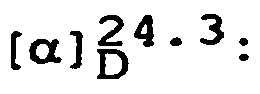
mp: 159-161°C
IR (KBr): 3367, 1645, 1516, 1464, 1427 cm-1
NMR (DMSO-d6, δ): 1.40-2.00 (6H, m), 2.60-5.30 (24H, m), 6.40-8.30 (6H, m)
MASS (APCI): 636 (M+H)+ (free) - (7) (2R)-1-[3,5-Bis(trifluoromethyl)benzoyl]-4-[2-(cis-3,5-dimethoxymethylpiperidino)ethyl]-2-(4-fluoro-3-methoxybenzyl)piperazine dihydrochloride

mp: 150-156°C
IR (KBr): 3438, 2939, 1645, 1518, 1464, 1427 cm-1
NMR (DMSO-d6, δ): 1.05 (1H, q, J=12.3Hz), 1.70 (1H, m), 2.10-5.30 (26H, m), 3.24 (6H, s), 6.40-8.30 (6H, m)
MASS (APCI): 664 (M+H)+ (free) - The following compounds were obtained according to a similar manner to that of Example 8.
- (1) (2R)-2-(4-Chloro-3-hydroxybenzyl)-1-[3-chloro-5-(trifluoromethyl)benzoyl]-4-[2-(cis-2,6-dimethylmorpholino)ethyl]piperazine dihydrochloride

mp: 196-199°C
IR (KBr): 3398, 1643, 1514, 1456, 1425 cm-1
NMR (DMSO-d6, δ): 1.15 (6H, d, J=6.1Hz), 2.60-5.20 (19H, m), 6.30-8.10 (6H, m), 10.08 (1H, br s)
MASS (APCI): 574 (M+H)+ (free) - The following compounds were obtained according to a similar manner to that of Preparation 137.
- (1) (2R) -2- (4-Chlorobenzyl) -4- [2- [(2S) -2- (methoxymethyl)-morpholino]ethyl]-1-[3-(4-pyridyl)-5-(trifluoromethyl)-benzoyl]piperazine trihydrochloride

IR (KHr) : 1645, 1510, 1460, 1425, 1270, 1240, 1175, 1135 cm-1
NMR (DMSO-d6, δ) : 2.62-5.15 (22H, m), 3.28 (3H, s), 6.16-9.01 (11H, m)
MASS (APCI) : 617 (M)+ (free) - (2) (2R)-2-(4-Chlorobenzyl)-4-[2-[(2S)-2-(methoxymethyl)-morpholino]ethyl]-1-[3-methyl-5-(trifluoromethyl)-benzoyl]piperazine dihydrochloride

mp: 148-151°C
IR (KBr) : 1645, 1510, 1465, 1425, 1270, 1230 cm-1
NMR (DMSO-d6, δ): 2.33 (3H, s), 3.28 (3H, s), 2.66-5.24 (22H, m), 6.16-7.70 (7H, m)
MASS (APCI): 554 (M)+ (free) - (3) (2R)-2-(4-Chlorobenzyl)-1-[3-cyclopentylsulfonyl-5-(trifluoromethyl)benzoyl]-4-[2-[(2S)-2-(methoxymethyl)-morpholino]ethyl]piperazine dihydrochloride

mp: >230°C
IR (KBr): 1650, 1465, 1425, 1335, 1305, 1235, 1135 cm-1
NMR (DMSO-d6, δ) : 1.45-1.93 (9H, m), 2.80-5.20 (22H, m), 3.27 (3H, s), 6.14-8.30 (7H, m)
MASS (APCI) : 672 (M)+ (free) - (4) (2R)-2-(4-Chlorobenzyl)-4-[2-[(2S)-2-(methoxymethyl)-morpholino]ethyl]-1-[3-methylthio-5-(trifluoromethyl)-benzoyl]piperazine dihydrochloride

mp: 140-196°C
IR (KBr): 1625, 1415, 1320, 1270, 1225, 1175 cm-1
NMR (DMSO-d6, δ) : 2.54 (3H, s), 2.66-5.20 (22H, m), 3.27 (3H, s), 6.66-7.64 (7H, m)
MASS (APCI) : 586 (M)+ (free) - (5) (2R)-2-(4-Chlorobenzyl)-1-[3-chloro-5-(trifluoromethyl)-benzoyl]-4-[2-[(2S)-2-(methoxymethyl)morpholino]ethyl]-piperazine dihydrochloride

mp: 148-153°C
IR (KBr) : 1645, 1460, 1420, 1315, 1270, 1230, 1175 cm-1
NMR (DMSO-d6, δ): 2.66-5.20 (22H, m), 3.28 (3H, s), 6.02-8.00 (7H, m)
MASS (APCI): 574 (M)+ (free) - (6) (2R)-2-(4-Chlorobenzyl)-1-[3-fluoro-5-(trifluoromethyl)-benzoyl]-4-[2-[(2S)-2-(methoxymethyl)morpholino]ethyl]-piperazine dihydrochloride

mp: 199-204°C
IR (KBr) : 1645, 1425, 1235, 1175, 1135 cm-1
NMR (DMSO-d6, δ) : 2.70-5.16 (22H, m), 3.28 (3H, s), 6.16-7.90 (7H, m)
MASS (APCI) : 558 (M)+ (free) - (7) (2R)-1-[3-Methylthio-5-(trifluoromethyl)benzoyl]-2-[4-(trifluoromethyl)benzyl]-4-[2-[(2S)-2-(methoxymethyl)-morpholino]ethyl]piperazine dihydrochloride

mp: 153-170°C
IR (KBr): 3433, 1645 cm-1
NMR (DMSO-d6, δ): 2.54 (3H, s), 2.70-5.30 (25H, m), 6.50-7.80 (7H, m)
MASS (APCI): 620 (M+H)+ (free) - (8) (2R)-1-[3-Chloro-5-(trifluoromethyl)benzoyl]-2-[4-(trifluoromethyl)benzyl]-4-[2-[(2S)-2-(methoxymethyl)-morpholino]ethyl]piperazine dihydrochloride

mp: 168-173°C
IR (KBr): 3433, 1647 cm-1
NMR (DMSO-d6, δ): 2.80-5.30 (25H, m), 6.87-8.00 (7H, m)
MASS (APCI) : 608 (M+H)+ (free) - (9) (2R)-1-[3-Fluoro-5-(trifluoromethyl)benzoyl]-4-[2-[(2S)-2-(methoxymethyl)morpholino]ethyl]-2-[4-(trifluoromethyl)benzyl]piperazine dihydrochloride
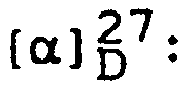
mp: 173-176°C
IR (KBr): 1647 cm-1
NMR (DMSO-d6, δ) : 2.80-5.30 (25H, m), 6.70-7.90 (7H, m)
MASS (APCI): 592 (M+H)+ (free) - (10) (2R)-4-[2-[(2S)-2-(Methoxymethyl)morpholino]ethyl]-1-[3-(9-pyridyl)-5-(trifluoromethyl)benzoyl]-2-[4-(trifluoromethyl)benzyl]piperazine trihydrochloride

mp: 81-91°C
IR (KBr) : 3435, 1643 cm-1
NMR (DMSO-d6, δ) : 2.80-5.30 (25H, m), 6.88-8.98 (11H, m)
MASS (APCI) : 651 (M+H)+ (free) - (11) (2R) -4-[2- (cis-2, 6-Dimethylmorpholino) ethyl] -1- [3-methylthio-5-(trifluoromethyl)benzoyl]-2-[4-(trifluoromethyl)benzyl]piperazine dihydrochloride

mp: 154-156°C
IR (KBr) : 3435, 1647 cm-1
NMR (DMSO-d6, δ): 1.15 (6H, d, J=6.1Hz), 2.54 (3H, s), 2.60-5.30 (19H, m), 6.50-7.70 (7H, m)
MASS (APCI): 604 (M+H) + (free) - (12) (2R)-4-[2-(cis-2,6-Dimethylmorpholino)ethyl]-1-[3-methylsulfonyl-5-(trifluoromethyl)benzoyl]-2-[4-(trifluoromethyl)benzyl]piperazine dihydrochloride

mp: 188-195°C
IR (KBr): 1647 cm-1
NMR (DMSO-d6, δ): 1.15 (6H, d, J=6.1Hz) 2.60-5.30 (22H, m), 7.00-8.32 (7H, m)
MASS (APCI) : 636 (M+H)+ (free) - (13) (2R)-4-[2-(cis-2,6-Dimethylmorpholino)ethyl]-1-[3-(4-pyridyl)-5-(trifluoromethyl)benzoyl]-2-[4-(trifluoromethyl)benzyllpiperazine trihydrochloride

mp: 135-145°C
IR (KBr): 3433, 3402, 1641 cm-1
NMR (DMSO-d6, δ): 1.15 (6H, d, J=6.2Hz), 2.60-5.30 (19H, m), 6.80-9.02 (11H, m)
MASS (APCI) : 635 (M+H) + (free) - (14) (2R)-2-(4-Fluoro-3-methoxybenzyl)-4-[2-(cis-2,6-dimethylmorpholino)ethyl]-1-[3-methylthio-5-(trifluoromethyl)benzoyl]piperazine dihydrochloride

mp: 62.5-82.4°C
IR (KBr): 1645, 1518, 1421, 1176, 1126 cm-1
NMR (DMSO-d6, δ) (6H. d, J=6.1Hz), 2.60-4.20 (27H, m) , 6.50-7.56 (6H, m)
MASS: 584 (M+H)+ (free) - (15) (2R)-2-(4-Fluoro-3-methoxybenzyl)-4-[2-(cis-2,6-dimethylmorpholino)ethyl]-1-[3-(4-pyridyl)-5-(trifluoromethyl)benzoyl]piperazine trihydrochloride

mp: 137.6-142.5°C
IR (KBr): 1641, 1515, 1425, 1270, 1176, 1145, 1132 cm-1
NMR (DMSO-d6, δ) : 1.14 (6H, d, J=6.0Hz), 2.60-4.20 (25H, m), 6.52-8.90 (10H, m)
MASS (APCI) : 615 (M+H)+ (free) - (16) (2R)-2-(4-Fluoro-3-methoxybenzyl)-4- [2- [(2S)-2-(methoxymethyl)morpholino]ethyl]-1-[3-(4-pyridyl)-5-(trifluoromethyl)benzoyl]piperazine trihydrochloride

IR (KBr): 1645, 1515, 1425, 1270, 1235 cm-1
NMR (DMSO-d6, δ) : 2.66-5.24 (25H, m), 3.27 (3H, s), 6.45-8.93 (10H, m)
MASS (APCI) : 631 (M+H)+ (free) - (17) (2R)-1-[3-Chloro-5-(trifluoromethyl)benzoyl]-2-(4-fluoro-3-methoxybenzyl)-4-[2-[(2S)-2-(methoxymethyl)-morpholino]ethyl]piperazine dihydrochloride

mp: 139-142°C
IR (KBr): 1645, 1515, 1460, 1420, 1315, 1270, 1230 cm-1
NMR (DMSO-d6, δ): 2.72-5.21 (22H, m), 3.29 (3H, s), 3.44. (3H, s), 6.17-8.00 (6H, m)
MASS (APCI): 588 (M)+ (free) - (18) (2R)-2-(4-Fluoro-3-methoxybenzyl)-4-[2-[(2S) -2-(methoxymethyl)morpholino]ethyl]-1-[3-methylthio-5-(trifluoromethyl)denzoyl]piperazine dihydrochloride

mp: 132-135°C
IR (KBr) : 1645, 1515, 1460, 1420, 1315, 1270, 1230, 1130 cm-1
NMR (DMSO-d6, δ): 2.54 (3H, s), 2.73-5.27 (22H, m), 3.28 (3H, s), 3.41 (3H, s), 6.15-7.83 (6H, m)
MASS (APCI): 600 (M+H)+ (free) - (19) (2R)-2-(4-Fluoro-3-methoxybenzyl)-1-[3-fluoro-5-(trifluoromethyl) benzoyl]-4-[2-[(2S)-2-(methoxymethyl)-morpholino]ethyl]piperazine dihydrochloride
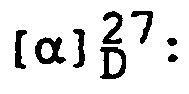
IR (KBr): 1640, 1515, 1465, 1425, 1345, 1275, 1230, 1135 cm-1
NMR (DMSO-d6, δ): 2.76-5.20 (22H, m), 3.29 (3H, s), 3.42 (3H, s), 6.16-7.86 (6H, m)
MASS (APCI): 572 (M+H)+ (free) - The following compounds were obtained according to a similar manner to that of the second half of Preparation 21.
- (1) (2R)-2-(4-Chloro-3-hydroxybenzyl)-1-[3-chloro-5-(trifluoromethyl)benzoy]-4-[2-[(2S)-2-(methoxymethyl)-morpholino]ethyl]piperazine dihydrochloride

IR (KBr): 1645, 1510, 1425, 1235, 1175 cm-1
NMR (DMSO-d6, δ) : 2.55-5.10 (22H, m), 3.27 (3H, s), 6.31-8.03 (6H, m), 10.07 (1H, br s)
MASS (APCI): 590 (M)+ (free) - (2) (2R)-2- (4-Chloro-3-hydroxybenzyl) -4- [2- [(2S) -2-(methoxymethyl)morpholino] ethyl]-1-[3-methylthio-5-(trifluoromethyl)benzoyl]piperazine dihydrochloride

mp: 169-174°C
IR (KBr) : 3475, 3420, 1640, 1425, 1320, 1270, 1230, 1135 cm-1
NMR (DMSO-d6, δ) : 2.54 (3H, s), 2.56-5.10 (22H, m), 3.27 (3H, s), 6.29-7.69 (6H, m), 10.10 (1H, br s)
MASS (APCI): 602 (M)+ (free) - (3) (2R)-2-(4-Chloro-3-hydroxybenzyl)-1-[3-fluoro-5-(trifluoromethyl)benzoyl]-4-[2-[(2S)-2-(methoxymethyl)-morpholino]ethyl]piperazine dihydrochloride

mp: 176-178°C
IR (KBr): 1645, 1510, 1460, 1425, 1235, 1175 cm-1
NMR (DMSO-d6, δ): 2.52-4.98 (22H, m), 3.28 (3H, s), 6.34-7.77 (7H, m)
MASS (APCI): 574 (M)+ (free) - 1M Methylmagnesium iodide in diethyl ether solution (3.15 ml) was added to a solution of 4-[[(2R)-1-[3,5-bis(trifluoromethyl)benzoyl]-4-[2-[(2S)-2-(methoxymethyl)-morpholino]ethyl]piperazin-2-yl]methyl]-2-(tert-butyldimethylsilyloxy)benzoic acid methyl ester (0.8 g) in toluene (8 ml). After being stirred at 45°C for 4 hours, the mixture was quenched with saturated aqueous ammonium chloride solution and the whole was extracted with ethyl acetate. The organic layer was separated, washed with water and brine successively, dried over magnesium sulfate, and evaporated under reduced pressure to give crude oil. The oil was purified by column chromatography on silica gel using a mixed solvent of dichloromethane and methanol (40:1) to give (2R)-1-[3,5-bis(trifluoromethyl)benzoyl]-2-[3-(tert-butyldimethyl-silyloxy)-4-(1-hydroxy-1-methylethyl)benzyl]-4-[2-[(2S)-2-(methoxymethyl)morpholino]ethyl]piperazine (0.333 g)
IR (Neat): 1643, 1438, 1280 cm-1
NMR (CDCl3, δ): 0.10-0.50 (6H, m), 1.03 (9H, s), 1.58 (6H, s), 2.00-5.10 (22H, m), 3.38 (3H, s), 6.30-7.90 (6H, m)
MASS (API-ES): 784 (M+Na)+, 763 (M+H)+ - Methanesulfonyl chloride (0.115 ml) was added to an ice-cooled solution of (2R)-1-[3,5-bis(trifluoromethyl)benzoyl]-2-[3-(tert-butyldimethylsilyloxy)-4-(1-hydroxy-1-methylethyl)benzyl]-4-[2-[(2S)-2-(methoxymethyl)morpholino]-ethyl]piperazine (0.76 g) and triethylamine (0.35 ml) in dichloromethane (9 ml). After being stirred at the same temperature for 2 hours, the mixture was washed with water. The organic layer was separated, washed with brine, dried over magnesium sulfate and evaporated under reduced pressure to give a mixture of the mesylated and unmesylated compound. The mixture was dissolved into methanol without further purification and the solution was hydrogenated over 20% palladium hydroxide-charcoal (0.1 g) at room temperature at 3 atmosphere for 5 hours. The reaction mixture was filtered through Celite® and washed with methanol. The filtrate and washing were combined and evaporated under reduced pressure. The resulting syrup was dissolved in tetrahydrofuran (6.5 ml) and thereto tetrabutylammonium fluoride (1M solution of tetrahydrofuran, 0.1 ml) was added below 10°C. After stirring at room temperature, the mixture was evaporated under reduced pressure and the residue was purified by column chromatography using a mixed solvent of dichloromethane and methanol (40:1) to give an oil. The oil was treated with 4N hydrogen chloride in ethyl acetate to give a powder of (2R)-1-[3,5-bis(trifluoromethyl)benzoyl]-2-[3-hydroxy-4-(1-methylethyl)benzyl]-4-[2-[(2S)-2-(methoxymethyl)morpholino]-ethyl]piperazine dihydrochloride (150 mg).

mp: 218-228°C
IR (KBr): 3500-3150, 2700-2300, 1644, 1498, 1461, 1282, 1174 cm-1
NMR (DMSO-d6, δ): 1.00-1.30 (6H m), 2.60-5.10 (26H, m), 6.20-8.20 (6H, m), 9.22 (1H, br s)
MASS (APCI) : 632 (M+H)+ (free)
Claims (12)
- A compound of the formula
 Y is (C1-C6) alkylene;R1 is phenyl which is substituted with 1 or 2 same or different substituent(s) selected from the group consisting of halogen, (C1-C6) alkyl, (C1-C6) alkoxy, mono(or di or tri)halo (C1-C6) alkyl, nitro, amino, (C1-C6) alkylamino, di (C1-C6) alkylamino, (C1-C6) alkylthio, (C1-C6) alkylsulfonyl, cyclo (C3-C6) alkylsulfonyl, aminosulfonyl, (C1-C6) alkylaminosulfonyl, di (C1-C6) alkylominosulfonyl, pyrrolidinylsulfonyl, morpholinylsulfonyl, pyrrolylsulfonyl, pyridylsulfonyl, pyrrolyl and pyridyl ;R2 is phenyl which is substituted with 1 or 2 same or different substituents selected from the group consisting of (C1-C6) alkyl, mono(or di or tri)halo (C1-C6) alkyl, mono(or di or tri)halo (C1-C6) alkylsulfonyloxy, halogen, (C1-C6) alkylenedioxy, (C1-C6) alkoxy, (C1-C6) alkoxycarbonyl, (C1-C6) alkoxy (C1-C6) alkoxy (C1-C6) alkoxy, hydroxy, diphenyl (C1-C6) alkylsilyloxy, tri (C1-C6) alkylsilyloxy, hydroxy (C1-C6) alkyl, cyano, amino, [mono(or di or tri)halo (C1-C6) alkylcarbonyl]amino, (C1-C6) alkylamino, N-((C1-C6) alkyl)-[mono(or di or tri)halo (C1-C6) alkylcarbonyl]amino, pyrrolidinyl and morpholinyl which may be substituted with (C1-C6) alkoxy (C1-C6) alkyl or (C1-C6) alkyl;R3 is hydrogen; andR4 is (2,6-dimethylmorpholino) (C1-C6) alkyl;and a salt thereof.
(3,3-dimethylmorpholino) (C1-C6) alkyl;
(cis-3,5-dimethylmorpholino) (C1-C6) alkyl;
((3S,5S)-3,5-dimethylmorpholino) (C1-C6) alkyl;
((3S,5R)-3,5-dimethylmorpholino) (C1-C6) alkyl;
(2-methoxymethylmorpholino) (C1-C6) alkyl;
(3-methoxymethylmorpholino) (C1-C6) alkyl;
(2-methoxymethyl-5-methylmorpholino) (C1-C6) alkyl;
(2-methoxymethyl-5,5-dimethylmorpholino) (C1-C6) alkyl;
(3,5-dimethoxymethylmorpholino) (C1-C6) alkyl; or
(2,3-dimethoxymethylmorpholino) (C1-C6) alkyl, - The compound of Claim 1, in whichY is C1-C4 alkylene;R1 is bis [mono (or di or tri) halo (C1-C4) alkyl]phenyl;R2 is phenyl which is substituted with 1 or 2 same or different substituents selected from the group consisting of C1-C4 alkyl, mono (or di or tri) halo (C1-C4) alkyl, halogen, C1-C4 alkoxy and hydroxy;R3 is hydrogen; andR4 is (2,6-dimethylmorpholino) (C1-C4) alkyl;
(2-methoxymethylmorpholino) (C1-C4) alkyl;
(3-methoxymethylmorpholino) (C1-C4) alkyl; or
(2-methoxymethyl-5-methylmorpholino) (C1-C4) alkyl. - A compound of claim 2, which is selected from the group consisting of(1) 1-[3,5-Bis(trifluoromethyl)benzoyl]-2-(3-hydroxy-4-methylbenzyl)-4-[2-[(3R)-3-(methoxymethyl)morpholino]ethyl]piperazine,(2) 1-[3,5-Bis(trifluoromethyl)benzoyl]-4-[2-(cis-2,6-dimethylmorpholino)ethyl]-2-(3-hydroxy-4-methylbenzyl)piperazine,(3) 1-[3,5-Bis(trifluoromethyl)benzoyl]-2-(3-hydroxy-4-methytbenzyl)-4-[2-[(2S.5S)-2-methoxymethyl-5-methylmorpholino]ethyl]piperazine,(4) 1- [3,5-Bis(trifluoromethyl)benzoyl]-4-[2-[(2S)-2-(methoxymethyl)morpholino]ethyl]-2-(3-hydroxy-4-methylbenzyl)piperazine,(5) (2R)-1-[3,5-Bis(trifluoromethyl)benzoyl]-4-[2-[(2S)-2-(methoxymethyl)-morpholino]ethyl]-2-(3-hydroxy-4-methylbenzyl)piperazine,(6) (2R)-1-[3,5-Bis(trifluoromethyl)benzoyl]-2-(4-chloro-3-hydroxybenzyl)-4-[2-[(2S)-2-(methoxymethyl)morpholino]-ethyl]piperazine,(7) (2R)-1-[3,5-Bis(trifluoromethyl)benzoyl]-2-[4-chloro-3-hydroxybenzyl]-4-[2-(cis-2,6-dimethylmorpholino)ethyl]-piperazine,or a pharmaceutically acceptable salt thereof.
- A process for the preparation of the compounds of any of claims 1 to 3 or a salt thereof, which comprises.
(1) reacting a compound of the formula (II)
W1-R4 (III)
wherein R4 is as defined in Claim 1 and
W, is a leaving group,
or a salt thereof to give a compound of the formula (I) :
or a salt thereof. - A pharmaceutical composition which comprises, as an active ingredient, a compound of any of claims 1 to 3 or a pharmaceutically acceptable salt thereof in admixture with pharmaceutically acceptable carriers.
- A compound of any of claims 1 to 3 for use as a medicament.
- A method for the manufacture of a medicament comprising a compound of any of claims 1 to 3 or a pharmaceutically acceptable salt thereof for the treatment or prevention of tachykinin-mediated diseases.
- A compound of any of claims 1 to 3 for use as tachykinin antagonist.
- A compound of claim 2, which is
1-[3,5-Bis(trifluoromethyl)benzoyl]-2-[3-hydroxy-4-methylbenzyl]-4-[2-[(3R)-3-(methoxymethyl)morpholino]ethyl]piperazine. - A compound of claim 2, which is
1-[3,5-Bis(trifluoromethyl)benzoyl]-4-[2-(cis-2,6-dimethylmorpholino)ethyl]-2-(3-hydroxy-4-methylbenzyl)piperazine. - A compound of claim 2, which is
(2R)-1-[3,5-Bis(trifluoromethyl)benzoyl]-2-(4-chloro-3-hydroxybenzyl)-4-[2-[(2S)-2-(methoxymethyl)morpholino]ethyl]piperazine. - A compound of claim 2, which is (2R)-1-[3,5-Bis(trifluoromethyl)benzoyl]-2-[4-chloro-3-hydroxybenzyl]-4-[2-(cis-2,6-dimethylmorpholino)ethyl]-piperazine.
Applications Claiming Priority (5)
| Application Number | Priority Date | Filing Date | Title |
|---|---|---|---|
| AUPP770698 | 1998-12-14 | ||
| AUPP7706A AUPP770698A0 (en) | 1998-12-14 | 1998-12-14 | Piperazine derivatives |
| AUPQ3568A AUPQ356899A0 (en) | 1999-10-21 | 1999-10-21 | Piperazine derivatives |
| AUPP356898 | 1999-10-21 | ||
| PCT/JP1999/006943 WO2000035915A1 (en) | 1998-12-14 | 1999-12-10 | Piperazine derivatives |
Publications (2)
| Publication Number | Publication Date |
|---|---|
| EP1140924A1 EP1140924A1 (en) | 2001-10-10 |
| EP1140924B1 true EP1140924B1 (en) | 2006-03-22 |
Family
ID=25645943
Family Applications (1)
| Application Number | Title | Priority Date | Filing Date |
|---|---|---|---|
| EP99959751A Expired - Lifetime EP1140924B1 (en) | 1998-12-14 | 1999-12-10 | Piperazine derivatives |
Country Status (20)
| Country | Link |
|---|---|
| US (2) | US7166598B2 (en) |
| EP (1) | EP1140924B1 (en) |
| JP (2) | JP3454427B2 (en) |
| KR (1) | KR20010086104A (en) |
| CN (1) | CN1152877C (en) |
| AR (1) | AR021662A1 (en) |
| AT (1) | ATE321042T1 (en) |
| AU (2) | AU768652B2 (en) |
| BR (1) | BR9917047A (en) |
| CA (1) | CA2354875A1 (en) |
| CZ (1) | CZ20012130A3 (en) |
| DE (1) | DE69930543T2 (en) |
| ES (1) | ES2257089T3 (en) |
| HK (1) | HK1043998B (en) |
| HU (1) | HUP0203651A2 (en) |
| IL (1) | IL143577A0 (en) |
| PT (1) | PT1140924E (en) |
| TR (1) | TR200101649T2 (en) |
| TW (1) | TW509688B (en) |
| WO (1) | WO2000035915A1 (en) |
Families Citing this family (20)
| Publication number | Priority date | Publication date | Assignee | Title |
|---|---|---|---|---|
| BR9917047A (en) * | 1998-12-14 | 2002-07-30 | Fujisawa Pharmaceutical Co | Piperazine compound, method for preparing it, pharmaceutical composition containing it and its use |
| GB9923748D0 (en) * | 1999-10-07 | 1999-12-08 | Glaxo Group Ltd | Chemical compounds |
| TW591025B (en) * | 2000-06-13 | 2004-06-11 | Fujisawa Pharmaceutical Co | Production of the piperazine derivative |
| IT1317049B1 (en) * | 2000-06-23 | 2003-05-26 | Sigma Tau Ind Farmaceuti | USEFUL COMPOUNDS FOR THE PREPARATION OF MEDICATIONS FOR PHOSPHODIESTERASE INHIBITING ACTIVITIES IV. |
| US6974818B2 (en) * | 2002-03-01 | 2005-12-13 | Euro-Celtique S.A. | 1,2,5-thiadiazol-3-YL-piperazine therapeutic agents useful for treating pain |
| UA77515C2 (en) | 2002-04-04 | 2006-12-15 | Diazabicyclo alkane derivatives possessing neuroldnin-nk1 receptor antagonistic activity | |
| US7776535B2 (en) | 2006-02-06 | 2010-08-17 | Franklin And Marshall College | Site-specific incorporation of fluorinated amino acids into proteins |
| WO2011051478A1 (en) | 2009-10-30 | 2011-05-05 | Domain Therapeutics | Novel oxime derivatives and their use as allosteric modulators of metabotropic glutamate receptors |
| PT3252057T (en) | 2009-12-04 | 2024-06-04 | Sunovion Pharmaceuticals Inc | Multicyclic compounds and methods of use thereof |
| EP2653464B1 (en) | 2012-04-20 | 2017-09-27 | Rohm and Haas Company | Benzylamine hydrophobe |
| HK1226392A1 (en) * | 2013-12-19 | 2017-09-29 | 阿彻丹尼尔斯米德兰德公司 | Sulfonates of furan-2,5-dimethanol and (tetrahydrofuran-2,5-diyl)dimethanol and derivatives thereof |
| MX2019000982A (en) | 2016-07-29 | 2019-07-04 | Sunovion Pharmaceuticals Inc | COMPOUNDS AND COMPOSITIONS AND USES THEREOF. |
| EA201990400A1 (en) | 2016-07-29 | 2019-07-31 | Суновион Фармасьютикалз, Инк. | COMPOUNDS AND COMPOSITIONS AND THEIR APPLICATION |
| CN116808023A (en) | 2017-02-16 | 2023-09-29 | 桑诺维恩药品公司 | Method for treating schizophrenia |
| JP7191085B2 (en) | 2017-08-02 | 2022-12-16 | サノビオン ファーマシューティカルズ インク | Isochroman compounds and uses thereof |
| MX2020008537A (en) | 2018-02-16 | 2021-01-08 | Sunovion Pharmaceuticals Inc | SALTS, CRYSTALLINE FORMS AND METHODS OF PRODUCTION THEREOF. |
| WO2020092996A1 (en) * | 2018-11-02 | 2020-05-07 | Texas Tech University System | Novel selective kappa opioid receptor antagonists and methods related thereto for treatment of addiction and neuropathic pain |
| CN113784755B (en) | 2019-03-14 | 2024-05-10 | 赛诺维信制药公司 | Salts of isochroman-based compounds, crystalline forms thereof, methods of preparation, therapeutic uses and pharmaceutical compositions |
| WO2021087268A1 (en) * | 2019-10-30 | 2021-05-06 | Texas Tech University System | Novel selective kappa opioid receptor antagonists and methods related thereto for treatment of addiction and neuropathic pain |
| CA3180115A1 (en) | 2020-04-14 | 2021-10-21 | Sunovion Pharmaceuticals Inc. | (s)-(4,5-dihydro-7h-thieno[2,3-c]pyran-7-yl)-n-methylmethanamine for treating neurological and psychiatric disorders |
Family Cites Families (7)
| Publication number | Priority date | Publication date | Assignee | Title |
|---|---|---|---|---|
| IL111730A (en) * | 1993-11-29 | 1998-12-06 | Fujisawa Pharmaceutical Co | Piperazine derivatives processes for the preparation thereof and pharmaceutical compositions containing the same |
| US5541054B1 (en) * | 1995-04-20 | 1998-11-17 | Imation Corp | Spectral sensitizing dyes for photothermographic elements |
| BR9610277A (en) * | 1995-08-31 | 1999-07-06 | Schering Corp | Piperazine derivatives as neurowuinin antagonists |
| DE69621831T2 (en) * | 1995-12-18 | 2003-01-02 | Fujisawa Pharmaceutical Co., Ltd. | PIPERAZINE DERIVATIVES AS TACHYKININ ANTAGONISTS |
| AU743723B2 (en) * | 1997-06-17 | 2002-01-31 | Astellas Pharma Inc. | Aroyl-piperazine derivatives, their preparation and their use as tachykinin antagonists |
| AUPO735997A0 (en) | 1997-06-17 | 1997-07-10 | Fujisawa Pharmaceutical Co., Ltd. | Piperazine derivatives |
| BR9917047A (en) * | 1998-12-14 | 2002-07-30 | Fujisawa Pharmaceutical Co | Piperazine compound, method for preparing it, pharmaceutical composition containing it and its use |
-
1999
- 1999-12-10 BR BR9917047-7A patent/BR9917047A/en not_active Application Discontinuation
- 1999-12-10 ES ES99959751T patent/ES2257089T3/en not_active Expired - Lifetime
- 1999-12-10 AT AT99959751T patent/ATE321042T1/en not_active IP Right Cessation
- 1999-12-10 KR KR1020017007333A patent/KR20010086104A/en not_active Abandoned
- 1999-12-10 DE DE69930543T patent/DE69930543T2/en not_active Expired - Fee Related
- 1999-12-10 JP JP2000588175A patent/JP3454427B2/en not_active Expired - Fee Related
- 1999-12-10 CA CA002354875A patent/CA2354875A1/en not_active Abandoned
- 1999-12-10 EP EP99959751A patent/EP1140924B1/en not_active Expired - Lifetime
- 1999-12-10 IL IL14357799A patent/IL143577A0/en unknown
- 1999-12-10 CZ CZ20012130A patent/CZ20012130A3/en unknown
- 1999-12-10 PT PT99959751T patent/PT1140924E/en unknown
- 1999-12-10 CN CNB998161322A patent/CN1152877C/en not_active Expired - Fee Related
- 1999-12-10 WO PCT/JP1999/006943 patent/WO2000035915A1/en not_active Ceased
- 1999-12-10 TR TR2001/01649T patent/TR200101649T2/en unknown
- 1999-12-10 HU HU0203651A patent/HUP0203651A2/en unknown
- 1999-12-10 HK HK02105609.0A patent/HK1043998B/en not_active IP Right Cessation
- 1999-12-10 AU AU16837/00A patent/AU768652B2/en not_active Ceased
- 1999-12-14 AR ARP990106361A patent/AR021662A1/en unknown
- 1999-12-14 TW TW088121878A patent/TW509688B/en not_active IP Right Cessation
-
2003
- 2003-01-31 JP JP2003023481A patent/JP2003238563A/en not_active Withdrawn
-
2004
- 2004-03-16 AU AU2004201111A patent/AU2004201111A1/en not_active Abandoned
- 2004-10-20 US US10/968,473 patent/US7166598B2/en not_active Expired - Fee Related
-
2006
- 2006-11-21 US US11/562,149 patent/US20070123532A1/en not_active Abandoned
Also Published As
| Publication number | Publication date |
|---|---|
| ATE321042T1 (en) | 2006-04-15 |
| TR200101649T2 (en) | 2001-10-22 |
| DE69930543T2 (en) | 2006-11-09 |
| JP3454427B2 (en) | 2003-10-06 |
| PT1140924E (en) | 2006-08-31 |
| CA2354875A1 (en) | 2000-06-22 |
| KR20010086104A (en) | 2001-09-07 |
| HUP0203651A2 (en) | 2003-02-28 |
| AU2004201111A1 (en) | 2004-04-22 |
| US20060014948A1 (en) | 2006-01-19 |
| AU1683700A (en) | 2000-07-03 |
| CZ20012130A3 (en) | 2001-10-17 |
| AU768652B2 (en) | 2003-12-18 |
| US7166598B2 (en) | 2007-01-23 |
| DE69930543D1 (en) | 2006-05-11 |
| HK1043998B (en) | 2005-03-18 |
| HK1043998A1 (en) | 2002-10-04 |
| ES2257089T3 (en) | 2006-07-16 |
| AR021662A1 (en) | 2002-07-31 |
| US20070123532A1 (en) | 2007-05-31 |
| CN1334812A (en) | 2002-02-06 |
| BR9917047A (en) | 2002-07-30 |
| JP2002532499A (en) | 2002-10-02 |
| WO2000035915A1 (en) | 2000-06-22 |
| EP1140924A1 (en) | 2001-10-10 |
| JP2003238563A (en) | 2003-08-27 |
| TW509688B (en) | 2002-11-11 |
| IL143577A0 (en) | 2002-04-21 |
| CN1152877C (en) | 2004-06-09 |
Similar Documents
| Publication | Publication Date | Title |
|---|---|---|
| ES2257089T3 (en) | PIPERAZINE DERIVATIVES | |
| CN102573471B (en) | Novel pyrrolidine derived beta 3 adrenergic receptor agonists | |
| US6087357A (en) | Piperazine derivatives as tachykinin antagonists | |
| KR101341792B1 (en) | Azetidine as MEB inhibitor for the treatment of proliferative diseases | |
| RU2258702C2 (en) | Derivatives of aroylpiperazine, method for their preparing, pharmaceutical composition based on thereof and method for treatment | |
| EP0655442A1 (en) | Piperazine derivatives as Tachykinin antagonists | |
| WO2024259171A9 (en) | Keap1 inhibitors and uses thereof | |
| US20050171350A1 (en) | Benzhydryl derivatives | |
| US20040220403A1 (en) | 1-(2-Methoxybenzyl)-3-benzhydrylpiperazines as tachykinin anatgonists | |
| RU2258068C2 (en) | Derivatives of piperazine, method for their preparing, pharmaceutical composition and method for vomiting inhibition | |
| MXPA01006018A (en) | Piperazine derivatives | |
| US20190031599A1 (en) | Indane derivatives as mglur7 modulators | |
| US20090181942A1 (en) | Tricyclic compounds | |
| HK40062310A (en) | 4,4a,5,7,8,8a-hexapyrido[4,3-b][1,4]oxazin-3-one compounds as magl inhibitors | |
| AU2002361503A1 (en) | Benzhydryl derivatives |
Legal Events
| Date | Code | Title | Description |
|---|---|---|---|
| PUAI | Public reference made under article 153(3) epc to a published international application that has entered the european phase |
Free format text: ORIGINAL CODE: 0009012 |
|
| 17P | Request for examination filed |
Effective date: 20010611 |
|
| AK | Designated contracting states |
Kind code of ref document: A1 Designated state(s): AT BE CH CY DE DK ES FI FR GB GR IE IT LI LU MC NL PT SE |
|
| AX | Request for extension of the european patent |
Free format text: AL;LT;LV;MK;RO;SI |
|
| 17Q | First examination report despatched |
Effective date: 20021203 |
|
| GRAP | Despatch of communication of intention to grant a patent |
Free format text: ORIGINAL CODE: EPIDOSNIGR1 |
|
| RAP1 | Party data changed (applicant data changed or rights of an application transferred) |
Owner name: ASTELLAS PHARMA INC. |
|
| GRAS | Grant fee paid |
Free format text: ORIGINAL CODE: EPIDOSNIGR3 |
|
| GRAA | (expected) grant |
Free format text: ORIGINAL CODE: 0009210 |
|
| AK | Designated contracting states |
Kind code of ref document: B1 Designated state(s): AT BE CH CY DE DK ES FI FR GB GR IE IT LI LU MC NL PT SE |
|
| REG | Reference to a national code |
Ref country code: GB Ref legal event code: FG4D |
|
| REG | Reference to a national code |
Ref country code: CH Ref legal event code: EP |
|
| REG | Reference to a national code |
Ref country code: IE Ref legal event code: FG4D |
|
| REF | Corresponds to: |
Ref document number: 69930543 Country of ref document: DE Date of ref document: 20060511 Kind code of ref document: P |
|
| REG | Reference to a national code |
Ref country code: CH Ref legal event code: NV Representative=s name: A. BRAUN, BRAUN, HERITIER, ESCHMANN AG PATENTANWAE |
|
| PG25 | Lapsed in a contracting state [announced via postgrant information from national office to epo] |
Ref country code: DK Free format text: LAPSE BECAUSE OF FAILURE TO SUBMIT A TRANSLATION OF THE DESCRIPTION OR TO PAY THE FEE WITHIN THE PRESCRIBED TIME-LIMIT Effective date: 20060622 |
|
| REG | Reference to a national code |
Ref country code: SE Ref legal event code: TRGR |
|
| REG | Reference to a national code |
Ref country code: ES Ref legal event code: FG2A Ref document number: 2257089 Country of ref document: ES Kind code of ref document: T3 |
|
| REG | Reference to a national code |
Ref country code: GR Ref legal event code: EP Ref document number: 20060401969 Country of ref document: GR |
|
| REG | Reference to a national code |
Ref country code: PT Ref legal event code: SC4A Effective date: 20060616 |
|
| ET | Fr: translation filed | ||
| PGFP | Annual fee paid to national office [announced via postgrant information from national office to epo] |
Ref country code: GR Payment date: 20061121 Year of fee payment: 8 |
|
| PGFP | Annual fee paid to national office [announced via postgrant information from national office to epo] |
Ref country code: SE Payment date: 20061206 Year of fee payment: 8 |
|
| PG25 | Lapsed in a contracting state [announced via postgrant information from national office to epo] |
Ref country code: IE Free format text: LAPSE BECAUSE OF NON-PAYMENT OF DUE FEES Effective date: 20061211 |
|
| PGFP | Annual fee paid to national office [announced via postgrant information from national office to epo] |
Ref country code: PT Payment date: 20061211 Year of fee payment: 8 |
|
| PGFP | Annual fee paid to national office [announced via postgrant information from national office to epo] |
Ref country code: CH Payment date: 20061213 Year of fee payment: 8 Ref country code: AT Payment date: 20061213 Year of fee payment: 8 |
|
| PG25 | Lapsed in a contracting state [announced via postgrant information from national office to epo] |
Ref country code: MC Free format text: LAPSE BECAUSE OF NON-PAYMENT OF DUE FEES Effective date: 20061231 |
|
| PGFP | Annual fee paid to national office [announced via postgrant information from national office to epo] |
Ref country code: BE Payment date: 20070227 Year of fee payment: 8 |
|
| PLBE | No opposition filed within time limit |
Free format text: ORIGINAL CODE: 0009261 |
|
| STAA | Information on the status of an ep patent application or granted ep patent |
Free format text: STATUS: NO OPPOSITION FILED WITHIN TIME LIMIT |
|
| 26N | No opposition filed |
Effective date: 20061227 |
|
| PGFP | Annual fee paid to national office [announced via postgrant information from national office to epo] |
Ref country code: NL Payment date: 20071216 Year of fee payment: 9 Ref country code: ES Payment date: 20071226 Year of fee payment: 9 |
|
| PGFP | Annual fee paid to national office [announced via postgrant information from national office to epo] |
Ref country code: IT Payment date: 20071221 Year of fee payment: 9 |
|
| PGFP | Annual fee paid to national office [announced via postgrant information from national office to epo] |
Ref country code: GB Payment date: 20071205 Year of fee payment: 9 Ref country code: FR Payment date: 20071210 Year of fee payment: 9 |
|
| PGFP | Annual fee paid to national office [announced via postgrant information from national office to epo] |
Ref country code: DE Payment date: 20071206 Year of fee payment: 9 |
|
| REG | Reference to a national code |
Ref country code: CH Ref legal event code: PFA Owner name: ASTELLAS PHARMA INC. Free format text: ASTELLAS PHARMA INC.#3-11, NIHONBASHI-HONCHO 2-CHOME,#CHUO-KU, TOKYO (JP) -TRANSFER TO- ASTELLAS PHARMA INC.#3-11, NIHONBASHI-HONCHO 2-CHOME,#CHUO-KU, TOKYO (JP) Ref country code: PT Ref legal event code: MM4A Free format text: LAPSE DUE TO NON-PAYMENT OF FEES Effective date: 20080611 |
|
| BERE | Be: lapsed |
Owner name: *ASTELLAS PHARMA INC. Effective date: 20071231 |
|
| PG25 | Lapsed in a contracting state [announced via postgrant information from national office to epo] |
Ref country code: FI Free format text: LAPSE BECAUSE OF FAILURE TO SUBMIT A TRANSLATION OF THE DESCRIPTION OR TO PAY THE FEE WITHIN THE PRESCRIBED TIME-LIMIT Effective date: 20060322 |
|
| PG25 | Lapsed in a contracting state [announced via postgrant information from national office to epo] |
Ref country code: LU Free format text: LAPSE BECAUSE OF NON-PAYMENT OF DUE FEES Effective date: 20061210 |
|
| REG | Reference to a national code |
Ref country code: CH Ref legal event code: PL |
|
| EUG | Se: european patent has lapsed | ||
| PG25 | Lapsed in a contracting state [announced via postgrant information from national office to epo] |
Ref country code: AT Free format text: LAPSE BECAUSE OF NON-PAYMENT OF DUE FEES Effective date: 20071210 |
|
| PG25 | Lapsed in a contracting state [announced via postgrant information from national office to epo] |
Ref country code: BE Free format text: LAPSE BECAUSE OF NON-PAYMENT OF DUE FEES Effective date: 20071231 Ref country code: PT Free format text: LAPSE BECAUSE OF NON-PAYMENT OF DUE FEES Effective date: 20080611 |
|
| PG25 | Lapsed in a contracting state [announced via postgrant information from national office to epo] |
Ref country code: SE Free format text: LAPSE BECAUSE OF NON-PAYMENT OF DUE FEES Effective date: 20071211 Ref country code: LI Free format text: LAPSE BECAUSE OF NON-PAYMENT OF DUE FEES Effective date: 20071231 Ref country code: GR Free format text: LAPSE BECAUSE OF NON-PAYMENT OF DUE FEES Effective date: 20060623 Ref country code: CH Free format text: LAPSE BECAUSE OF NON-PAYMENT OF DUE FEES Effective date: 20071231 |
|
| PG25 | Lapsed in a contracting state [announced via postgrant information from national office to epo] |
Ref country code: CY Free format text: LAPSE BECAUSE OF FAILURE TO SUBMIT A TRANSLATION OF THE DESCRIPTION OR TO PAY THE FEE WITHIN THE PRESCRIBED TIME-LIMIT Effective date: 20060322 |
|
| GBPC | Gb: european patent ceased through non-payment of renewal fee |
Effective date: 20081210 |
|
| NLV4 | Nl: lapsed or anulled due to non-payment of the annual fee |
Effective date: 20090701 |
|
| REG | Reference to a national code |
Ref country code: FR Ref legal event code: ST Effective date: 20090831 |
|
| PG25 | Lapsed in a contracting state [announced via postgrant information from national office to epo] |
Ref country code: DE Free format text: LAPSE BECAUSE OF NON-PAYMENT OF DUE FEES Effective date: 20090701 |
|
| PG25 | Lapsed in a contracting state [announced via postgrant information from national office to epo] |
Ref country code: NL Free format text: LAPSE BECAUSE OF NON-PAYMENT OF DUE FEES Effective date: 20090701 Ref country code: GB Free format text: LAPSE BECAUSE OF NON-PAYMENT OF DUE FEES Effective date: 20081210 |
|
| REG | Reference to a national code |
Ref country code: ES Ref legal event code: FD2A Effective date: 20081211 |
|
| PG25 | Lapsed in a contracting state [announced via postgrant information from national office to epo] |
Ref country code: FR Free format text: LAPSE BECAUSE OF NON-PAYMENT OF DUE FEES Effective date: 20081231 Ref country code: ES Free format text: LAPSE BECAUSE OF NON-PAYMENT OF DUE FEES Effective date: 20081211 |
|
| PG25 | Lapsed in a contracting state [announced via postgrant information from national office to epo] |
Ref country code: IT Free format text: LAPSE BECAUSE OF NON-PAYMENT OF DUE FEES Effective date: 20081210 |