EP1139272A2 - Method and apparatus for identification of documents, and computer product - Google Patents
Method and apparatus for identification of documents, and computer product Download PDFInfo
- Publication number
- EP1139272A2 EP1139272A2 EP01302487A EP01302487A EP1139272A2 EP 1139272 A2 EP1139272 A2 EP 1139272A2 EP 01302487 A EP01302487 A EP 01302487A EP 01302487 A EP01302487 A EP 01302487A EP 1139272 A2 EP1139272 A2 EP 1139272A2
- Authority
- EP
- European Patent Office
- Prior art keywords
- feature quantity
- document
- image data
- image
- input image
- Prior art date
- Legal status (The legal status is an assumption and is not a legal conclusion. Google has not performed a legal analysis and makes no representation as to the accuracy of the status listed.)
- Withdrawn
Links
Images


Classifications
-
- G—PHYSICS
- G06—COMPUTING OR CALCULATING; COUNTING
- G06V—IMAGE OR VIDEO RECOGNITION OR UNDERSTANDING
- G06V30/00—Character recognition; Recognising digital ink; Document-oriented image-based pattern recognition
- G06V30/40—Document-oriented image-based pattern recognition
- G06V30/41—Analysis of document content
- G06V30/412—Layout analysis of documents structured with printed lines or input boxes, e.g. business forms or tables
Definitions
- the present invention relates to a technology for comparing feature quantities of image data of a target document with feature quantities of image data of reference images stored beforehand to thereby identify the target document. More particularly, this invention relates to a technology which can prevent miss-identification due to variation in the image, thereby enabling accurate identification of various documents, when documents are identified by using a ruled line which is an intrinsic feature of documents.
- a identification code or identification mark is printed beforehand at a predetermined position in each document. This identification code or identification mark is confirmed to thereby identify the type of the document. However, since the rule for adding the identification code or identification mark is not always agreed upon between companies, it may happen that the document cannot be identified accurately with only this identification code or identification mark.
- a technique for discriminating various documents without depending on the identification code or identification mark is also know.
- Japanese Unexamined Patent Publication No. Hei 4-268685 there is disclosed a method of discriminating the type of the document in which segments in the horizontal and vertical directions of ruled lines are extracted from input document image data and divided into a plurality of areas, and the data is subjected to vector patterning, using the direction, length and position of the segment extracted for each area to thereby be compared and verified with a feature vector in a standard pattern.
- the segment when the segment is extracted and designated as a feature quantity as in the related art, the segment may be broken off due to the quality of the image, for example, due to the property of the scanner, rotation correction or the like. Therefore, if the distance between segments is below a certain threshold, it is necessary to perform interpolation processing or the like for connecting two segments.
- the distance between these two segments changes based on the quality the image.
- the distance between segments is close to the threshold value, there is a possibility in the interpolation processing that a different operation is performed at the time of extracting the feature quantity of the reference image and at the time of identification processing, thereby causing a problem in that documents cannot be identified accurately.
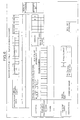
- each rectangular frame of a postal code block in the address box in the document shown in Fig. 6 may be understood as two straight lines in the horizontal direction, to perform an operation different from that of at the time of registration (connection processing may be performed or not) , and hence a change in the feature quantity is large, and the performance is unstable.
- the document identification apparatus for discriminating various documents by comparing a feature quantity of image data of an input image of a document with a feature quantity of image data of at least one reference image stored beforehand, the document identification apparatus comprises a calculation unit which calculates a black pixel ratio, which black pixel ratio is a ratio of black pixels existing in a predetermined number of continuous pixels in horizontal or vertical direction from a specific pixel in the image data of the input image or the reference image; and an extraction unit which divides the image data into a plurality of blocks, and separately adds the black pixel ratios corresponding to every pixel located in every block to extract a feature quantity of the image data.
- the document identification method for discriminating various documents by comparing a feature quantity of image data of an input image of a document with a feature quantity of image data of at least one reference image stored beforehand, the document identification method comprises a calculation step of calculating a black pixel ratio, which black pixel ratio is a ratio of black pixels existing in a predetermined number of continuous pixels in horizontal or vertical direction from a specific pixel in the image data of the input image or the reference image; and an extraction step of dividing the image data into a plurality of blocks, and separately adding the black pixel ratios corresponding to every pixel located in every block to extract a feature quantity of the image data.
- the black pixel ratio showing the ratio of black pixels existing in a predetermined number of pixel rows respectively linked together horizontally or vertically is calculated, for each pixel, from each pixel of image data of the input image or the reference image, the image data is divided into a plurality of blocks, and the black pixel ratio in each pixel located in a block is added for each divided block, to extract a feature quantity of the image data. Therefore, even if variable factors such as a change in information of a ruled line in the input image or handwritten characters are included, a stable feature quantity can be obtained, and hence there is such an effect that a document identification apparatus that can identify the type of the document accurately can be obtained.
- the computer readable recording medium stores a computer program that includes instructions which when executed on a computer realizes the document identification method.
- FIG. 1 is a functional block diagram showing the construction of a document identification apparatus used in an embodiment of the present invention.
- a document identification apparatus 10 shown in this figure is an apparatus for discriminating the type of the document, by registering a feature quantity of a reference image as a dictionary beforehand, and after inputting an image of a document to be identified, extracting a feature quantity of this input image and comparing it with the dictionary.
- the feature quantity used in this document identification apparatus 10 is black pixel ratio, considering a ruled line constituting the essential contents of the document printed beforehand on the document.
- This apparatus 10 does not perform the segment interpolation processing. The reason behind is that, if such the segment interpolation processing is performed, the accuracy in identification decreases.
- the black pixel ratio means a ratio of a black pixel included in a pixel row within a predetermined section in the horizontal or vertical direction from a target pixel, and is a value obtained for each pixel of the image data.
- the type of the document cannot be identified only by the black pixel ratio considering the ruled line.
- the type of the document cannot be identified when the ruled lines are almost the same and only the characters printed thereon are different.
- this document identification apparatus 10 performs detailed identification by utilizing the image data itself (character or the like) in a specific area.
- this document identification apparatus 10 comprises an image input section 101, a ruled line feature extraction section 102, a dictionary creating section 103, a ruled line feature dictionary 104, a specific area dictionary 105, a ruled line feature verification section 106, a details judgment section 107 and an output section 108.
- the ruled line feature extraction section 102 corresponds to the calculation unit and the extraction unit
- the ruled line feature dictionary 104 corresponds to the memory
- the ruled line feature verification section 106 and the details judgment section 107 correspond to the identification unit.
- the image input section 101 is a scanner for optically inputting the image data of the document, and outputs the input image data to the ruled line feature extraction section 102.
- This image input section 101 outputs a binary image, in which the white pixel has the pixel value of "0", and the black pixel has a pixel value of "1", to the ruled line feature extraction section 102.
- the ruled line feature extraction section 102 is a processing section for extracting a ruled line feature (feature quantity) from the binary image data received from the image input section 101. Specifically, when a reference image is input, the ruled line feature and the image data are output to the dictionary creating section 103, and when an image to be identified is input, the ruled line feature and the image data are output to the ruled line feature verification section 106.
- registration of the reference image or identification of the input image is performed by using a changeover switch (not shown).
- the dictionary creating section 103 is a processing section for performing creation or addition of a dictionary based on the information, when the ruled line feature of the reference image and the image data are received from the ruled line feature extraction section 102. Specifically, the dictionary creating section 103 associates the ruled line feature with the type of the document and registers these in the ruled line feature dictionary 104, and associates the image data of a part of the document (specific area) with the type of the document and registers these in the specific area dictionary 105.
- the ruled line feature dictionary 104 is a dictionary which stores the ruled line feature associated with each type of the document
- the specific area dictionary 105 is a dictionary which stores the image data of a specific area associated with each type of the document. This specific area dictionary 105 can store the character contents included in the image data in a specific area as text data for each type of the document. At this time, the image data itself is not stored.
- the ruled line feature verification section 106 is a processing section for verifying the ruled line feature (feature quantity) of image data of the document to be identified with the ruled line feature (feature quantity) of each reference image stored in the ruled line feature dictionary 104, and selecting a plurality of candidates based on a distance between the image data to be identified and the reference image, to output the candidates together with the image data to the details judgment section 107.
- a method widely used in the conventional character recognition or the like can be applied, and for example, identification can be performed based on, for example, the Euclidean distance.
- the details judgment section 107 is a processing section for judging in detail which one of the plurality of candidates received from the ruled line feature verification section 106 is closest to the input image. Specifically, the details judgment section 107 cuts out image data of a specific area from the image data of the document to be identified received from the ruled line feature verification section 106, and verifies the image data with the image data registered in the specific area dictionary 105.
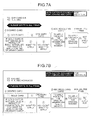
- Fig. 7A and Fig. 7B when the ruled lines in two documents are identical, since the type of the document cannot be judged only by the ruled line feature, characters (character string or logo featuring the document, such as a document title or company name) included in each specific area of the input image and the reference image are cut out and compared.
- characters character string or logo featuring the document, such as a document title or company name
- characters character string featuring the document, such as a document title or company name
- characters character string featuring the document, such as a document title or company name
- the output section 108 is a processing section for outputting the judgment result received from the details judgment section 107. As this judgment result, a registration document closest to the document to be identified can be output, however, a plurality of candidates may be sequenced and output.
- FIG. 2 is a diagram for explaining the concept of a processing for extracting a feature of a ruled line by a ruled line feature extraction section 102 shown in Fig. 1.
- the sections 2 and 3 in the horizontal direction, and the sections in the vertical direction shown in Fig. 2B are similarly calculated.
- the document image is divided into M x N blocks, and the black pixel ratio in each pixel in the block is added to obtain the ruled line feature.
- the number of dimensions of such ruled line feature becomes M ⁇ N ⁇ 2 (horizontal and vertical) ⁇ K dimension.
- variable factors such as noise, handwritten characters and the like can be omitted. It is because handwritten characters and noise are aggregate of short segments compared to the ruled line, and the black pixel ratio in the section becomes also small.
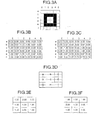
- Fig. 3A to Fig. 3F are diagrams showing extracted examples of the ruled line feature by the ruled line feature extraction section 102 shown in Fig. 1.
- a ruled line feature shown in Fig. 3E can be obtained.
- a black pixel ratio in each pixel in the vertical direction shown in Fig. 3C is added for each block, a ruled line feature shown in Fig. 3F can be obtained.
- the black pixel ratio and the ruled line feature are made to be a feature quantity, and hence a processing for interpolating a break in the ruled line segment is not required. Moreover, even if the ruled line segment is interrupted due to a processing of a rotation correction or the like, the feature quantity can be stably acquired.
- ruled line feature having various length can be faithfully obtained.
- a processing for thickening the ruled line before feature extraction may be performed with respect to the input image, to thereby suppress a variation due to a rotation.
- various processing for increasing the recognition rate which is widely known in character recognition, such as gradation processing, a feature quantity strong against misalignment may be obtained.
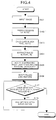
- FIG. 4 is a flowchart showing this procedure when a document is registered as a dictionary as a comparison object at the time of discriminating various documents.
- step S401 when a document is registered as a dictionary as a comparison object at the time of discriminating various documents, at first, an image of the document is taken in from the image input section 101 (step S401), and image preprocessing is performed according to need (step S402).
- this preprocessing does not include an interpolation processing of a segment.
- the ruled line feature extraction section 102 calculates the black pixel ratio in the horizontal and vertical directions with respect to a section specified beforehand (step S403), and this black pixel ratio is added for each block to extract the ruled line feature (step S404).
- the dictionary creating section 103 registers the ruled line feature extracted by the ruled line feature extraction section 102 in the ruled line feature dictionary 104 (step S405), and thereafter, confirms if identification is possible or not, by verifying this ruled line feature with the ruled line feature registered in past in the ruled line feature dictionary 104 (steps S406 to S407).
- step S407 a processing for additionally registering the specific area information (image data in a specific area) in the specific area dictionary 105 is repeated (step S408), and at the time when identification becomes possible (YES in step S407), the processing is completed.
- a character string (text data) in a specific area (character string such as the title or company name) having a feature in each document and its position are registered beforehand.
- the ruled line feature and image data of each document are registered as a dictionary in the ruled line feature dictionary 104 and the specific area dictionary 105, respectively, prior to identification of various documents.
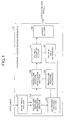
- FIG. 5 is a flowchart showing a procedure in a document identification processing by the document identification apparatus shown in Fig. 1.
- step S501 an image of the document is taken in from the image input section 101 (step S501), and image preprocessing is performed according to need (step S502).
- this preprocessing does not include an interpolation processing of a segment.
- the ruled line feature extraction section 102 calculates the black pixel ratio in the horizontal and vertical directions with respect to a section specified beforehand (step S503), and this black pixel ratio is added for each block to extract the ruled line feature (step S504).
- the ruled line feature verification section 106 verifies the ruled line feature extracted by the ruled line feature extraction section 102 with the ruled line feature registered in the ruled line feature dictionary 104 (step S505), to check if the distance value is within a predetermined threshold value or not, and according to the order of distance, candidates of documents are sorted out in order of the shortest distance.
- step S506 details judgment is performed by the details judgment section 107 (step S506), to output the judgment result (step S507), and if the distance value is not within a predetermined threshold value, the judgment result is directly output via the details judgment section 107 (step S507).
- identification of various documents utilizing the ruled line feature and the image data in the specific area based on the ruled line feature dictionary 104 and the specific area dictionary 105 can be performed.
- a character string cut out from a specific area may be subjected to character recognition, and compared with text data to thereby perform identification.
- a computer program that includes instructions which when executed on a computer realizes the document identification method described above is in a computer readable recording medium.
- the computer readable may be a floppy disk, a CD-ROM, or a hard disk.
- the program may be downloaded, when required, from a server.
- the ruled line feature extraction section 102 determines ablackpixel ratio of a document to be identified, as well as adding the black pixel ratio for each block to extract a ruled line feature.
- the ruled line feature verification section 106 verifies the ruled line feature with a ruled line feature already registered in the ruled line feature dictionary 104 to thereby identify the document. If identification is not possible with this procedure, the details judgment section 107 verifies the image data in a specific area with the image data (characters or the like) registered in the specific area dictionary 105. As a result, even if variable factors such as a change in ruled line information of the input image or handwritten characters are included, a stable feature quantity can be obtained, thereby the type of the document can be accurately identified.
- As the section length for example, 1 cm, 2 cm, 4 cm, 8 cm may be used.
- the computer readable recording medium stores a computer program that includes instructions which when executed on a computer realizes the document identification method. Therefore, the document identification method according to the present invention can be easily and automatically realized using the computer.
Landscapes
- Engineering & Computer Science (AREA)
- Computer Vision & Pattern Recognition (AREA)
- Artificial Intelligence (AREA)
- Physics & Mathematics (AREA)
- General Physics & Mathematics (AREA)
- Multimedia (AREA)
- Theoretical Computer Science (AREA)
- Character Input (AREA)
- Image Analysis (AREA)
- Information Retrieval, Db Structures And Fs Structures Therefor (AREA)
- Image Processing (AREA)
- Character Discrimination (AREA)
Abstract
Description
Claims (12)
- A document identification apparatus for discriminating various documents by comparing a feature quantity of image data of an input image of a document with a feature quantity of image data of at least one reference image stored beforehand, the document identification apparatus comprising:a calculation unit (102) which calculates a black pixel ratio, which black pixel ratio is a ratio of black pixels existing in a predetermined number of continuous pixels in horizontal or vertical direction from a specific pixel in the image data of the input image or the reference image; andan extraction unit (102) which divides the image data into a plurality of blocks, and separately adds the black pixel ratios corresponding to every pixel located in every block to extract a feature quantity of the image data.
- The document identification apparatus according to claim 1, further comprising:a memory (104) which stores a feature quantity corresponding to the reference image extracted by the extraction unit; andan identification unit (107) which discriminates the document, when the feature quantity corresponding to the input image has been extracted by the extraction unit (102), by comparing a feature quantity corresponding to the input image with a feature quantity corresponding to the reference image stored in the memory (104).
- The document identification apparatus according to claim 2, wherein the identification unit (107) includes,a candidate acquisition unit which acquires a plurality of document candidates according to a similarity between the feature quantity of the reference image stored in the memory (104) and the feature quantity corresponding to the input image; anda specification unit which specifies a reference image corresponding to the input image, based on the image data of the reference image in each document candidate acquired by the candidate acquisition means and the image data of the input image.
- A document identification method of discriminating various documents by comparing a feature quantity of image data of an input image of a document with a feature quantity of image data of at least one reference image stored beforehand, the document identification method comprising:a calculation step of calculating a black pixel ratio, which black pixel ratio is a ratio of black pixels existing in a predetermined number of continuous pixels in horizontal or vertical direction from a specific pixel in the image data of the input image or the reference image; andan extraction step of dividing the image data into a plurality of blocks, and separately adding the black pixel ratios corresponding to every pixel located in every block to extract a feature quantity of the image data.
- The document identification method according to claim 4, further comprising:a storage step of storing a feature quantity corresponding to the reference image extracted by the extraction step in a memory (104); andan identification step of discriminating the document, when the feature quantity corresponding to the input image has been extracted in the extraction step, by comparing a feature quantity corresponding to the input image with a feature quantity corresponding to the reference image stored in the memory (104).
- The document identification method according to claim 5, wherein the identification step includes,a candidate acquisition step of acquiring a plurality of document candidates according to a similarity between the feature quantity of the reference image stored in the memory (104) and the feature quantity corresponding to the input image; anda specification step of specifying a reference image corresponding to the input image, based on the image data of the reference image in each document candidate acquired in the candidate acquisition step and the image data of the input image.
- A computer readable recording medium which stores a computer program which contains instructions which when executed on a computer realizes a document identification method of discriminating various documents by comparing a feature quantity of image data of an input image of a document with a feature quantity of image data of at least one reference image stored beforehand, the document identification method comprising:a calculation step of calculating a black pixel ratio, which black pixel ratio is a ratio of black pixels existing in a predetermined number of continuous pixels in horizontal or vertical direction from a specific pixel in the image data of the input image or the reference image; andan extraction step of dividing the image data into a plurality of blocks, and separately adding the black pixel ratios corresponding to every pixel located in every block to extract a feature quantity of the image data.
- A computer readable recording medium according to claim 7, further comprising:a storage step of storing a feature quantity corresponding to the reference image extracted by the extraction step in a memory; andan identification step of discriminating the document, when the feature quantity corresponding to the input image has been extracted in the extraction step, by comparing a feature quantity corresponding to the input image with a feature quantity corresponding to the reference image stored in the memory.
- A computer readable recording medium according to claim 7, wherein the identification step includes,a candidate acquisition step of acquiring a plurality of document candidates according to a similarity between the feature quantity of the reference image stored in the memory and the feature quantity corresponding to the input image; anda specification step of specifying a reference image corresponding to the input image, based on the image data of the reference image in each document candidate acquired in the candidate acquisition step and the image data of the input image.
- A computer program which contains instructions which when executed on a computer realizes a document identification method of discriminating various documents by comparing a feature quantity of image data of an input image of a document with a feature quantity of image data of at least one reference image stored beforehand, the document identification method comprising:a calculation step of calculating a black pixel ratio, which black pixel ratio is a ratio of black pixels existing in a predetermined number of continuous pixels in horizontal or vertical direction from a specific pixel in the image data of the input image or the reference image; andan extraction step of dividing the image data into a plurality of blocks, and separately adding the black pixel ratios corresponding to every pixel located in every block to extract a feature quantity of the image data.
- A computer program according to claim 10, further comprising:a storage step of storing a feature quantity corresponding to the reference image extracted by the extraction step in a memory; andan identification step of discriminating the document, when the feature quantity corresponding to the input image has been extracted in the extraction step, by comparing a feature quantity corresponding to the input image with a feature quantity corresponding to the reference image stored in the memory.
- A computer program according to claim 10, wherein the identification step includes,a candidate acquisition step of acquiring a plurality of document candidates according to a similarity between the feature quantity of the reference image stored in the memory and the feature quantity corresponding to the input image; anda specification step of specifying a reference image corresponding to the input image, based on the image data of the reference image in each document candidate acquired in the candidate acquisition step and the image data of the input image.
Applications Claiming Priority (2)
| Application Number | Priority Date | Filing Date | Title |
|---|---|---|---|
| JP2000095514A JP3842006B2 (en) | 2000-03-30 | 2000-03-30 | Form classification device, form classification method, and computer-readable recording medium storing a program for causing a computer to execute these methods |
| JP2000095514 | 2000-03-30 |
Publications (2)
| Publication Number | Publication Date |
|---|---|
| EP1139272A2 true EP1139272A2 (en) | 2001-10-04 |
| EP1139272A3 EP1139272A3 (en) | 2005-01-12 |
Family
ID=18610410
Family Applications (1)
| Application Number | Title | Priority Date | Filing Date |
|---|---|---|---|
| EP01302487A Withdrawn EP1139272A3 (en) | 2000-03-30 | 2001-03-19 | Method and apparatus for identification of documents, and computer product |
Country Status (6)
| Country | Link |
|---|---|
| US (1) | US6813381B2 (en) |
| EP (1) | EP1139272A3 (en) |
| JP (1) | JP3842006B2 (en) |
| CN (1) | CN1162803C (en) |
| CA (1) | CA2341108A1 (en) |
| TW (1) | TW504656B (en) |
Cited By (1)
| Publication number | Priority date | Publication date | Assignee | Title |
|---|---|---|---|---|
| CN100365663C (en) * | 2004-11-19 | 2008-01-30 | 夏普株式会社 | Image processing device, image scanner and image recording device |
Families Citing this family (56)
| Publication number | Priority date | Publication date | Assignee | Title |
|---|---|---|---|---|
| JP3925112B2 (en) * | 2001-06-20 | 2007-06-06 | 富士ゼロックス株式会社 | Image processing device |
| US20040030780A1 (en) * | 2002-08-08 | 2004-02-12 | International Business Machines Corporation | Automatic search responsive to an invalid request |
| JP4420443B2 (en) * | 2004-03-19 | 2010-02-24 | キヤノン株式会社 | Form recognition apparatus, control method therefor, and program |
| US7207004B1 (en) * | 2004-07-23 | 2007-04-17 | Harrity Paul A | Correction of misspelled words |
| US9373029B2 (en) * | 2007-07-11 | 2016-06-21 | Ricoh Co., Ltd. | Invisible junction feature recognition for document security or annotation |
| US8510283B2 (en) | 2006-07-31 | 2013-08-13 | Ricoh Co., Ltd. | Automatic adaption of an image recognition system to image capture devices |
| US9384619B2 (en) | 2006-07-31 | 2016-07-05 | Ricoh Co., Ltd. | Searching media content for objects specified using identifiers |
| US8156427B2 (en) | 2005-08-23 | 2012-04-10 | Ricoh Co. Ltd. | User interface for mixed media reality |
| US9405751B2 (en) | 2005-08-23 | 2016-08-02 | Ricoh Co., Ltd. | Database for mixed media document system |
| US7702673B2 (en) | 2004-10-01 | 2010-04-20 | Ricoh Co., Ltd. | System and methods for creation and use of a mixed media environment |
| US8369655B2 (en) | 2006-07-31 | 2013-02-05 | Ricoh Co., Ltd. | Mixed media reality recognition using multiple specialized indexes |
| US8825682B2 (en) | 2006-07-31 | 2014-09-02 | Ricoh Co., Ltd. | Architecture for mixed media reality retrieval of locations and registration of images |
| US8600989B2 (en) | 2004-10-01 | 2013-12-03 | Ricoh Co., Ltd. | Method and system for image matching in a mixed media environment |
| US8838591B2 (en) | 2005-08-23 | 2014-09-16 | Ricoh Co., Ltd. | Embedding hot spots in electronic documents |
| US8195659B2 (en) | 2005-08-23 | 2012-06-05 | Ricoh Co. Ltd. | Integration and use of mixed media documents |
| US9171202B2 (en) | 2005-08-23 | 2015-10-27 | Ricoh Co., Ltd. | Data organization and access for mixed media document system |
| US9530050B1 (en) | 2007-07-11 | 2016-12-27 | Ricoh Co., Ltd. | Document annotation sharing |
| US8856108B2 (en) | 2006-07-31 | 2014-10-07 | Ricoh Co., Ltd. | Combining results of image retrieval processes |
| US8949287B2 (en) | 2005-08-23 | 2015-02-03 | Ricoh Co., Ltd. | Embedding hot spots in imaged documents |
| US8332401B2 (en) | 2004-10-01 | 2012-12-11 | Ricoh Co., Ltd | Method and system for position-based image matching in a mixed media environment |
| US8335789B2 (en) | 2004-10-01 | 2012-12-18 | Ricoh Co., Ltd. | Method and system for document fingerprint matching in a mixed media environment |
| US7970171B2 (en) | 2007-01-18 | 2011-06-28 | Ricoh Co., Ltd. | Synthetic image and video generation from ground truth data |
| US8276088B2 (en) | 2007-07-11 | 2012-09-25 | Ricoh Co., Ltd. | User interface for three-dimensional navigation |
| US8156115B1 (en) | 2007-07-11 | 2012-04-10 | Ricoh Co. Ltd. | Document-based networking with mixed media reality |
| US8184155B2 (en) | 2007-07-11 | 2012-05-22 | Ricoh Co. Ltd. | Recognition and tracking using invisible junctions |
| US8176054B2 (en) | 2007-07-12 | 2012-05-08 | Ricoh Co. Ltd | Retrieving electronic documents by converting them to synthetic text |
| US8385589B2 (en) | 2008-05-15 | 2013-02-26 | Berna Erol | Web-based content detection in images, extraction and recognition |
| US8868555B2 (en) | 2006-07-31 | 2014-10-21 | Ricoh Co., Ltd. | Computation of a recongnizability score (quality predictor) for image retrieval |
| US8521737B2 (en) | 2004-10-01 | 2013-08-27 | Ricoh Co., Ltd. | Method and system for multi-tier image matching in a mixed media environment |
| US8156116B2 (en) | 2006-07-31 | 2012-04-10 | Ricoh Co., Ltd | Dynamic presentation of targeted information in a mixed media reality recognition system |
| US20060167929A1 (en) * | 2005-01-25 | 2006-07-27 | Amit Chakraborty | Method for optimizing archival of XML documents |
| US8676810B2 (en) | 2006-07-31 | 2014-03-18 | Ricoh Co., Ltd. | Multiple index mixed media reality recognition using unequal priority indexes |
| US8201076B2 (en) | 2006-07-31 | 2012-06-12 | Ricoh Co., Ltd. | Capturing symbolic information from documents upon printing |
| US9176984B2 (en) | 2006-07-31 | 2015-11-03 | Ricoh Co., Ltd | Mixed media reality retrieval of differentially-weighted links |
| US9063952B2 (en) | 2006-07-31 | 2015-06-23 | Ricoh Co., Ltd. | Mixed media reality recognition with image tracking |
| US8489987B2 (en) | 2006-07-31 | 2013-07-16 | Ricoh Co., Ltd. | Monitoring and analyzing creation and usage of visual content using image and hotspot interaction |
| US9020966B2 (en) | 2006-07-31 | 2015-04-28 | Ricoh Co., Ltd. | Client device for interacting with a mixed media reality recognition system |
| JP4791295B2 (en) * | 2006-08-31 | 2011-10-12 | 富士通株式会社 | Ruled line extraction program, ruled line extraction device, ruled line extraction method |
| US20100100813A1 (en) * | 2008-10-20 | 2010-04-22 | Kabushiki Kaisha Toshiba | Document processing apparatus and document processing method |
| JP5361524B2 (en) * | 2009-05-11 | 2013-12-04 | キヤノン株式会社 | Pattern recognition system and pattern recognition method |
| US8385660B2 (en) | 2009-06-24 | 2013-02-26 | Ricoh Co., Ltd. | Mixed media reality indexing and retrieval for repeated content |
| JP4940270B2 (en) * | 2009-07-06 | 2012-05-30 | シャープ株式会社 | Image forming apparatus |
| US8363947B2 (en) * | 2010-07-31 | 2013-01-29 | International Business Machines Corporation | Handwritten character recognition based on frequency variations in characters |
| US9360959B2 (en) | 2010-10-12 | 2016-06-07 | Tactonic Technologies, Llc | Fusing depth and pressure imaging to provide object identification for multi-touch surfaces |
| US9058331B2 (en) | 2011-07-27 | 2015-06-16 | Ricoh Co., Ltd. | Generating a conversation in a social network based on visual search results |
| US8489585B2 (en) * | 2011-12-20 | 2013-07-16 | Xerox Corporation | Efficient document processing system and method |
| JP5862396B2 (en) * | 2012-03-22 | 2016-02-16 | 富士ゼロックス株式会社 | Form discrimination device and program |
| JP6459812B2 (en) * | 2015-07-10 | 2019-01-30 | 富士ゼロックス株式会社 | Information processing apparatus and information processing program |
| US10372981B1 (en) * | 2015-09-23 | 2019-08-06 | Evernote Corporation | Fast identification of text intensive pages from photographs |
| CN105184946B (en) * | 2015-10-20 | 2017-10-20 | 山大鲁能信息科技有限公司 | A kind of electronic ballot box for preventing ballot paper from accumulating and its method of work |
| JP2017090974A (en) * | 2015-11-02 | 2017-05-25 | 富士ゼロックス株式会社 | Image processing device and program |
| US11275933B2 (en) * | 2018-08-24 | 2022-03-15 | Genpact Luxembourg S.Á R.L | Systems and methods for segmentation of report corpus using visual signatures |
| JP7468004B2 (en) * | 2020-03-11 | 2024-04-16 | 富士フイルムビジネスイノベーション株式会社 | Document processing device and program |
| JP2021152696A (en) * | 2020-03-24 | 2021-09-30 | 富士フイルムビジネスイノベーション株式会社 | Information processor and program |
| US11409981B1 (en) * | 2021-03-31 | 2022-08-09 | Intuit, Inc. | Document classification using signal processing |
| JP7638187B2 (en) | 2021-09-24 | 2025-03-03 | 株式会社日立情報通信エンジニアリング | How to identify computer and document types |
Family Cites Families (9)
| Publication number | Priority date | Publication date | Assignee | Title |
|---|---|---|---|---|
| JP3096481B2 (en) | 1991-02-22 | 2000-10-10 | グローリー工業株式会社 | How to determine the type of form |
| GB2272594A (en) * | 1992-11-04 | 1994-05-18 | Ibm | Determining the type of document image |
| JPH0721310A (en) * | 1993-06-30 | 1995-01-24 | Matsushita Electric Ind Co Ltd | Document recognition device |
| US5521991A (en) * | 1993-10-29 | 1996-05-28 | International Business Machines Corporation | Method and system for fast forms recognition of document form images |
| US6226402B1 (en) * | 1996-12-20 | 2001-05-01 | Fujitsu Limited | Ruled line extracting apparatus for extracting ruled line from normal document image and method thereof |
| US6327387B1 (en) * | 1996-12-27 | 2001-12-04 | Fujitsu Limited | Apparatus and method for extracting management information from image |
| JP3369088B2 (en) | 1997-11-21 | 2003-01-20 | 富士通株式会社 | Paper discrimination device |
| JP4235286B2 (en) * | 1998-09-11 | 2009-03-11 | キヤノン株式会社 | Table recognition method and apparatus |
| JP3204245B2 (en) * | 1999-04-27 | 2001-09-04 | インターナショナル・ビジネス・マシーンズ・コーポレーション | Ruled line removal method and apparatus |
-
2000
- 2000-03-30 JP JP2000095514A patent/JP3842006B2/en not_active Expired - Fee Related
-
2001
- 2001-03-09 TW TW090105576A patent/TW504656B/en not_active IP Right Cessation
- 2001-03-14 CN CNB011114630A patent/CN1162803C/en not_active Expired - Fee Related
- 2001-03-16 CA CA002341108A patent/CA2341108A1/en not_active Abandoned
- 2001-03-19 EP EP01302487A patent/EP1139272A3/en not_active Withdrawn
- 2001-03-19 US US09/810,709 patent/US6813381B2/en not_active Expired - Fee Related
Cited By (1)
| Publication number | Priority date | Publication date | Assignee | Title |
|---|---|---|---|---|
| CN100365663C (en) * | 2004-11-19 | 2008-01-30 | 夏普株式会社 | Image processing device, image scanner and image recording device |
Also Published As
| Publication number | Publication date |
|---|---|
| JP3842006B2 (en) | 2006-11-08 |
| TW504656B (en) | 2002-10-01 |
| CN1162803C (en) | 2004-08-18 |
| CN1315715A (en) | 2001-10-03 |
| CA2341108A1 (en) | 2001-09-30 |
| US20020018071A1 (en) | 2002-02-14 |
| US6813381B2 (en) | 2004-11-02 |
| JP2001283152A (en) | 2001-10-12 |
| EP1139272A3 (en) | 2005-01-12 |
Similar Documents
| Publication | Publication Date | Title |
|---|---|---|
| US6813381B2 (en) | Method and apparatus for identification of documents, and computer product | |
| JP3996579B2 (en) | Form processing system for identifying active areas of machine-readable forms | |
| JP5500480B2 (en) | Form recognition device and form recognition method | |
| EP1999688B1 (en) | Converting digital images containing text to token-based files for rendering | |
| EP1231558A2 (en) | A printing control interface system and method with handwriting discrimination capability | |
| JP4539756B2 (en) | Image processing apparatus and image processing program | |
| US6937762B2 (en) | Image processing device and program product | |
| EP0241259A2 (en) | Optical character recognition by detecting geographical features | |
| US20020051574A1 (en) | Character recognition method, program and recording medium | |
| CN111898402A (en) | Intelligent typesetting system | |
| US7149352B2 (en) | Image processing device, program product and system | |
| US7680329B2 (en) | Character recognition apparatus and character recognition method | |
| US7142733B1 (en) | Document processing method, recording medium recording document processing program and document processing device | |
| CN102682308B (en) | Imaging processing method and device | |
| JP2001022883A (en) | Character recognition system and recording medium for realizing functions of the character recognition system | |
| US11710331B2 (en) | Systems and methods for separating ligature characters in digitized document images | |
| JPH07230525A (en) | Ruled line recognition method and table processing method | |
| JP3946043B2 (en) | Form identification device and identification method | |
| JP3020662B2 (en) | Character line segmentation device and character recognition device | |
| JP2558668B2 (en) | Character pattern extraction method | |
| JP3998439B2 (en) | Image processing apparatus, image processing method, and program causing computer to execute these methods | |
| CN115131806B (en) | Method and system for identifying OCR (optical character recognition) image information of various certificates based on deep learning | |
| JPH0916713A (en) | Image area division method | |
| JP5146199B2 (en) | Difference extraction apparatus and difference extraction program | |
| JP4418823B2 (en) | Form identification device and identification method thereof |
Legal Events
| Date | Code | Title | Description |
|---|---|---|---|
| PUAI | Public reference made under article 153(3) epc to a published international application that has entered the european phase |
Free format text: ORIGINAL CODE: 0009012 |
|
| AK | Designated contracting states |
Kind code of ref document: A2 Designated state(s): AT BE CH CY DE DK ES FI FR GB GR IE IT LI LU MC NL PT SE TR |
|
| AX | Request for extension of the european patent |
Free format text: AL;LT;LV;MK;RO;SI |
|
| PUAL | Search report despatched |
Free format text: ORIGINAL CODE: 0009013 |
|
| AK | Designated contracting states |
Kind code of ref document: A3 Designated state(s): AT BE CH CY DE DK ES FI FR GB GR IE IT LI LU MC NL PT SE TR |
|
| AX | Request for extension of the european patent |
Extension state: AL LT LV MK RO SI |
|
| 17P | Request for examination filed |
Effective date: 20050125 |
|
| GRAP | Despatch of communication of intention to grant a patent |
Free format text: ORIGINAL CODE: EPIDOSNIGR1 |
|
| AKX | Designation fees paid |
Designated state(s): DE FR GB IT |
|
| STAA | Information on the status of an ep patent application or granted ep patent |
Free format text: STATUS: THE APPLICATION IS DEEMED TO BE WITHDRAWN |
|
| 18D | Application deemed to be withdrawn |
Effective date: 20051005 |