EP1139235A2 - Distributed data processing system and method of processing data in distributed data processing system - Google Patents
Distributed data processing system and method of processing data in distributed data processing system Download PDFInfo
- Publication number
- EP1139235A2 EP1139235A2 EP01107910A EP01107910A EP1139235A2 EP 1139235 A2 EP1139235 A2 EP 1139235A2 EP 01107910 A EP01107910 A EP 01107910A EP 01107910 A EP01107910 A EP 01107910A EP 1139235 A2 EP1139235 A2 EP 1139235A2
- Authority
- EP
- European Patent Office
- Prior art keywords
- database
- server
- backup
- data
- servers
- Prior art date
- Legal status (The legal status is an assumption and is not a legal conclusion. Google has not performed a legal analysis and makes no representation as to the accuracy of the status listed.)
- Granted
Links
Images



Classifications
-
- H—ELECTRICITY
- H04—ELECTRIC COMMUNICATION TECHNIQUE
- H04L—TRANSMISSION OF DIGITAL INFORMATION, e.g. TELEGRAPHIC COMMUNICATION
- H04L67/00—Network arrangements or protocols for supporting network services or applications
- H04L67/01—Protocols
- H04L67/10—Protocols in which an application is distributed across nodes in the network
- H04L67/1095—Replication or mirroring of data, e.g. scheduling or transport for data synchronisation between network nodes
-
- G—PHYSICS
- G06—COMPUTING OR CALCULATING; COUNTING
- G06F—ELECTRIC DIGITAL DATA PROCESSING
- G06F16/00—Information retrieval; Database structures therefor; File system structures therefor
- G06F16/20—Information retrieval; Database structures therefor; File system structures therefor of structured data, e.g. relational data
- G06F16/27—Replication, distribution or synchronisation of data between databases or within a distributed database system; Distributed database system architectures therefor
-
- G—PHYSICS
- G06—COMPUTING OR CALCULATING; COUNTING
- G06F—ELECTRIC DIGITAL DATA PROCESSING
- G06F16/00—Information retrieval; Database structures therefor; File system structures therefor
- G06F16/20—Information retrieval; Database structures therefor; File system structures therefor of structured data, e.g. relational data
- G06F16/27—Replication, distribution or synchronisation of data between databases or within a distributed database system; Distributed database system architectures therefor
- G06F16/275—Synchronous replication
-
- H—ELECTRICITY
- H04—ELECTRIC COMMUNICATION TECHNIQUE
- H04L—TRANSMISSION OF DIGITAL INFORMATION, e.g. TELEGRAPHIC COMMUNICATION
- H04L67/00—Network arrangements or protocols for supporting network services or applications
- H04L67/50—Network services
- H04L67/53—Network services using third party service providers
-
- H—ELECTRICITY
- H04—ELECTRIC COMMUNICATION TECHNIQUE
- H04L—TRANSMISSION OF DIGITAL INFORMATION, e.g. TELEGRAPHIC COMMUNICATION
- H04L67/00—Network arrangements or protocols for supporting network services or applications
- H04L67/01—Protocols
Definitions
- the present invention relates to a distributed data processing system comprising a plurality of servers and a plurality of clients connected to the servers for performing a distributed data processing process on an object to be controlled, and a method of processing data in such a distributed data processing system.
- the duplex system is made up of an active system and a backup system, and in the event of a failure of the active system, the active system switches to the backup system to give continued services to customers.
- each of the active system and the backup system has a database of data to be processed by the system and information required by the system for processing the data.
- data of the database of the active system is updated as a result of its data processing operation, corresponding data of the database of the backup system is also updated, so that the databases of the active and backup systems will contain the same data at all times.
- the backup system is merely kept in a standby mode and does not perform any data processing operation.
- the active system simply needs to send an instruction to write updated data in the database to the backup system. As a consequence, it is not necessary to perform a conflict control process for accessing the database.
- Smaller-size systems such as in-house information processing systems usually do not incorporate the above fully duplex principles because available resources are limited and should effectively be utilized. Such systems are often constructed such that while in operation the backup system performs another process different from the task that the active system processes.
- Recent computers are becoming smaller in size and better in capability, and incorporate high-speed processors and large-capacity main memories and hard disks at lower costs.
- many in-house information processing systems comprise a plurality of servers and a plurality of clients connected to the servers for performing distributed processing of data for the servers.
- some proposed database backup functions keep the same data in the databases of the servers and recover files in the database of a server that suffers a fault, using the data in the database of another server (see Japanese laid-open patent publication No. 7-114495, and Japanese laid-open patent publication No. 5-265829).
- data to be backed up are collected in an archive file, so that they can be backed up in a shortened period of time (see Japanese laid-open patent publication No. 11-53240).
- FIG. 6 of the accompanying drawings shows a process of recovering the database of a server, which has been broken or otherwise failed, using the database of another server that is operating normally.
- a distributed data processing system shown in FIG. 6 has a plurality of servers 1, 2 and clients 3, 4 which are connected to each other by communication cables 5 such as of a LAN.
- the servers 1, 2 have respective database memories 6, 7 which stores respective databases.
- the servers 1, 2 are constructed to process processing requests from the clients 3, 4 in a distributed manner.
- the servers 1, 2 and the clients 3, 4 have respective server applications 1b, 2b and user applications 3a, 4a that have been accumulated depending on tasks to be processed by the distributed data processing system.
- the user applications 3a, 4a perform given processing sequences.
- the servers 1, 2 For updating data in the databases of the servers 1, 2 based on processing requests from the clients 3, 4, the servers 1, 2 communicate with each other with replication processors 1a, 2a and reflect updated data in their databases in the each other's databases, thus equalizing the data in their databases.
- the database of one of the servers 1, 2, e.g., the server 2 suffers a fault and the data stored in the database are broken for some reason, then the data in the faulty database are recovered using the data in the database of the server 1 which is normal.
- the processing operation of the clients 3, 4 is stopped, and the data in the database memory 6 is stored into a backup data memory 6a using the export function of a backup processor 8a of the normal server 1. Then, the data in the backup data memory 6a is imported to the database memory 7 using the import function of a backup processor 9a of the server 2, thus allowing the database memory 7 to reflect the database data updated after the database has suffered the fault until the system shutdown. Thereafter, the distributed data processing system resumes its operation.
- the export and import functions perform the following processing: According to the export function, the data in the database are divided into information about table definition, information about data, information about index definition, information about trigger definition, and information about matching limitation, and these items of information are stored in the backup data memories 6a, 7a.
- the above data processing is carried out in order to minimize the amount of data handled, so that the backup data memories 6a, 7a have a sufficient storage capacity available for storing the above information.
- the import function the database is reconstructed from the divided data.
- Databases in production systems contain a large amount of data for an achievement table, etc., and user applications in such production systems need to retrieve data quickly from the table from many viewpoints. Therefore, a plurality of definitions are given for both the number of indexes and the number of fields used. Accordingly, a long import processing time is required. Systems which are required to process databases from various viewpoints, other than production systems, also require a long time for import processing.
- process control machine equipment control
- production management for production lines in factories that need to operate 24 hours a day, if a system downtime required to recover a database from a fault is unduly long, then it will greatly affect the production efficiency.
- the conventional cluster system is applied to function faults at higher levels such as hardware and OS levels, but not to function faults at lower levels such as database levels.
- the conventional cluster system needs a certain period of time to check the statuses of the servers and effect server switching upon a fault.
- the conventional cluster system is disadvantageous in that its cost increases due to the allocation of a plurality of communication addresses shared by the servers.
- the conventional cluster system is incorporated in a production system which is an OLTP (On-Line Transaction Processing) system that performs data processing such as updating, insertion, deletion in the databases, then the overall system is shut off during a server switching. Since the system automatically recovers from the shutdown when the OLTP (On-Line Transaction Processing) system.
- OLTP On-Line Transaction Processing
- each of the clients needs some means for recognizing a fault.
- the cluster system uses a plurality of shared communication addresses, all the communication addresses are taken over by a normally operating server upon the occurrence of a fault.
- Another object of the present invention is to provide a distributed data processing system which comprises a plurality of servers and a plurality of clients connected to the servers, the distributed data processing system being capable of, in the event of a fault of any of the servers, quickly switching a client connected to the faulty server to a fault-free server under the client management and continuing a processing sequence, and a method of processing data in such a distributed data processing system.
- Still another object of the present invention is to provide a distributed data processing system which comprises a plurality of servers and a plurality of clients connected to the servers, the distributed data processing system being capable of quickly recovering a database without a system shutdown over a long period of time in the event of a fault of any of the servers, and a method of processing data in such a distributed data processing system.
- FIG. 1 shows in block form a distributed data processing system 10 according to the present invention.
- the distributed data processing system 10 comprises a plurality of servers 12, 14 and a plurality of clients 20, 22, 24, 26, 30, 32 which are connected to each other by communication cables 16 such as of a LAN.
- the server 12 and the clients 20, 22, 24, 26, for example, carry out the processing of a process control system of a production line, e.g., the processing of a control process for controlling a production machine for manufacturing photographic films, and the server 14 and the clients 30, 32 carry out the processing of a production management system for managing production plans, raw materials, and inventories.
- a process control system of a production line e.g., the processing of a control process for controlling a production machine for manufacturing photographic films
- the server 14 and the clients 30, 32 carry out the processing of a production management system for managing production plans, raw materials, and inventories.
- the server 12 which is a server for carrying out the processing of a process control system, basically comprises a database memory 122 for storing data such as production instruction information, manufacturing history information, etc., to be described later on, sent and received between the clients 20, 22, 24, 26, a backup processor 123 for backing up the data in the database memory 122 on-line at certain time intervals and storing the backed-up data in a backup database memory 124, an archive data generator 125 for generating archive data based on updating information of the database stored in the database memory 122 and updated by the clients 20, 22, 24, 26 and storing the archive data in an archive data memory 126, a replication trigger generator 132 for generating a data replication trigger based on a database updating process carried out by the clients 20, 22, 24, 26, an updating information transfer unit 130 for transferring the updating information of the database to the other server 14 based on the data replication trigger, and a database updating processor 128 for updating the data in the database memory 122 based on a request for updating the database.
- a database memory 122 for storing data
- the archive data generator 125 serves to generate archive data according to new updating information after the database in the database memory 122 is backed up in the backup data memory 124.
- the archive data stored in the archive data memory 126 before the database in the database memory 122 starts to be backed up is discarded.
- the database in the database memory 122 may be backed up in the backup data memory 124 at any desired time intervals set by the operator. For example, the database in the database memory 122 may be backed up in the backup data memory 124 periodically at intervals of a day, i.e., 24 hours. All the archive data after a backup process starts until a next backup process starts is stored in the archive data memory 126.
- the updating information transfer unit 130 transfers the updating information at certain time intervals set by the system administrator.
- the server 14 which is a server for carrying out the processing of a production management system, has a database memory 142 for storing data of production plans, raw materials, and inventories generated between the clients 30, 32.
- the server 14 also has a backup processor 143, a backup data memory 144, an archive data generator 145, an archive data memory 146, a database updating processor 148, an updating information transfer unit 150, and a replication trigger generator 152, which are identical to those of the server 12.
- the clients 20, 22, 24, 26 have respective user applications 220, 222, 224, 226 which, based on production instruction information from the server 12, control a cutting machine 40, a winding machine 42, an encasing machine 46, and a packaging machine 50, respectively, and transmits manufacturing history information collected from these machines to the server 12.
- the clients 30, 32 have respective user applications 230, 232 for performing tasks including production plans, raw material purchase management processes, and product inventory management processes between themselves and the server 14.
- the cutting machine 40 that is controlled by the client 20 cuts off a master roll of a photographic film material to a certain width to produce a slit roll.
- the winding machine 42 controlled by the client 22 winds the slit roll supplied from the cutting machine 40 into a cartridge case that is molded and assembled by a molding and assembling machine 44.
- the encasing machine 46 controlled by the client 24 encases a film cartridge with a small box supplied from a small box supply apparatus 48.
- the packaging machine 50 controlled by the client 26 packages the film cartridge encased in the small box with a cardboard box supplied from a cardboard box supply apparatus 52.
- Each of the servers 12, 14 and the clients 20, 22, 24, 26, 30, 32 has a hardware arrangement comprising a processor, a main memory, a hard disk, a network interface, etc. as with a general personal computer.
- the machines and the user applications described above are operated under the control of operating systems that are installed in the servers 12, 14 and the clients 20, 22, 24, 26, 30, 32.
- a normal mode of operation of the distributed data processing system 10 will be described below with reference to FIG. 2.
- the client 20 receives individual production instruction information from the server 12 and displays the received individual production instruction information on a display monitor screen.
- the other clients 22, 24, 26 operate in the same manner as the client 20.
- the individual production instruction information is generated by the clients 30, 32 connected to the server 14, and transmitted from the server 14 to the server 12.
- Information collected from the clients 20, 22, 24, 26 by the server 12 is transmitted from the server 12 to the server 14.
- the individual production instruction information that is transmitted from the server 12 to the client 20 includes the production lot number of a master roll of a photographic film material that matches the type of products indicated by production plan data.
- a master roller having the same production log number is supplied from among master rolls stored in a storage chamber to the cutting machine 40 by a self-powered carriage or the like.
- the client 20 sends operating conditions such as slitting conditions, e.g., the speed at which the master roll is to be fed and the inspecting conditions for a surface inspection device in the cutting machine 40, to the cutting machine 40. Based on the operating conditions supplied from the client 20, the cutting machine 40 cuts off the master roll to a certain width, thereby producing a slit roll.
- slitting conditions e.g., the speed at which the master roll is to be fed and the inspecting conditions for a surface inspection device in the cutting machine 40
- a plurality of slit rolls are produced from the single master roll.
- a label bearing a printed bar code indicative of an emulsion number, a master roll production lot number, and a slit roll number is produced each time a slit roll is completed, and produced labels are applied to the respective slit rolls.
- the bar codes are read by a bar-code reader, which enter bar code data into the client 20.
- the slit roll is supplied to the winding machine 42 controlled by the client 22, and placed in a cartridge case.
- the individual production instruction information that is transmitted from the database memory 122 of the server 12 includes the emulsion number, the master roll production lot number, and the slit roll number of the slit roll that is used.
- the winding machine 42 removes the slit roll that is indicated by the individual production instruction information from a storage chamber, and sets the slit roll in place.
- the winding machine 42 reads the bar code applied to the slit roll set in place and confirms whether the bar code corresponds to the indicated slit roll.
- the winding machine 42 also sends information of how much the preceding slit roll has been consumed to the server 12 via the client 22.
- the client 22 then operates the winding machine 42 according to the conditions indicated by the individual production instruction information from the server 12.
- the winding machine 42 has a perforator and a side printer.
- the perforator forms perforations in the slit roll according to an indicated format.
- the side printer records a latent image of production information on the slit roll.
- the production information includes a film ID number, frame numbers, an abbreviated product name, a manufacturer's name, etc. recorded in the form of a bar code.
- the film ID number is saved together with the order number of production plan data in the server 14, and also transmitted to the server 12 and written in the production instruction information that is transmitted to the client 22 which controls the winding machine 42.
- the film ID number is fed back together with the other side print information to the client 22, which confirms whether the supplied film ID number is the same as the film ID number indicated by the individual production instruction information or not.
- the client 22 transmits the other information obtained so far, i.e., the emulsion number, the master roll production lot number, and the slit roll number is, in association with the film ID number, to the server 12.
- the transmitted information is saved in the server 12 and also transmitted to the server 14.
- the cutting machine 42 also has a cutter and a winder. After the side printer has printed the necessary information, the cutter cuts off an elongate photographic film unwound from the slit roll into a length corresponding to the number of exposure frames, thus producing a photographic film strip.
- the cutter operates under manufacturing conditions included in the individual production instruction information sent via the server 12 to the client 22.
- the photographic film strip is then fed to the winder which is also supplied with a tray of cartridge cases that have been molded and assembled by the molding and assembling machine 44 from a stacking station.
- the tray has a tray ID number, which is read and supplied via the client 22 to the server 12.
- the server 12 stores cartridge ID numbers and manufacturing history information of the cartridge cases on the tray, in association with the tray ID number. Therefore, the server 12 can confirm, based on the stored information, the range of cartridge ID numbers to which the cartridge cases supplied to the winding machine 42 belong, the order number based on which the cartridge cases have been manufactured, and the production lot numbers of parts which the cartridge cases are assembled of.
- the cartridge ID numbers are read from bar codes on labels applied the cartridge cases, and immediately entered into the client 22.
- the cartridge case in the bar-code reading position is a cartridge case to be combined with the photographic film strip that is to be printed next by the side printer. Therefore, the client 22 confirms the cartridge ID number immediately before the side printer prints information on the photographic film strip.
- the cartridge ID number thus read is transmitted to the server 12, which compares the cartridge ID number with a film ID number to be allotted to the photographic film strip by the side printer. Since the server 12 holds film ID numbers and cartridge ID numbers assigned to products to be manufactured when the production plan data is generated, the server 12 is capable of determining whether the cartridge ID number of the cartridge case supplied to the winder is appropriate or not.
- the trailing end of the photographic film strip engages a spool in the cartridge case, and then the spool is rotated to wind the photographic film strip into the cartridge case. Thereafter, a light shielding lid of the cartridge case is closed, completing a photographic film cartridge as a product.
- the manufacturing history information of the photographic film strip including the emulsion number, the master roll production lot number, and the slit roll number-is already known, the manufacturing history information of the cartridge case and the photographic film strip is saved, as production management information in association with the cartridge ID number or the film ID number, via the server 12 into the server 14.
- a certain number of photographic film cartridges thus produced are placed on a tray, and stored in a stacking station.
- the tray ID number of the tray is read and transmitted to the client 22, which associates the tray ID number with the ID numbers of the photographic film cartridges on the tray, i.e., the cartridge ID numbers or the film ID numbers, information as to usage and lack of the ID numbers of the photographic film cartridges, and manufacturing history information, and feeds back the associated information to the server 12.
- the server 12 transmits the associated information to the server 14.
- the information that represents the ID numbers of the photographic film cartridges stored in the stacking station, the types of the products, and the manufacturing histories of the photographic film strips and the cartridge cases, can be recognized in association with the tray ID number.
- the client 24 controls the encasing machine 46 and the small box supply apparatus 48.
- a photographic film cartridge is supplied from the winding machine 42 to the encasing machine 46 in which the photographic film cartridge is placed in a film case and then stored in a small box.
- the production instruction information from the server 12 indicates the production lot number to which the film case that is used belongs.
- the production log number of the film case that is used is sent via the client 24 to the server 12.
- the small box bears an indication and a bar code which indicate the type of the product.
- the bar cord indicating the type of the product is printed when the small box is produced.
- a bar code indicating a packing material ID number of the small box is printed when the small box is supplied from the small box supply apparatus 48 to the encasing machine 46.
- the packing material ID number to be printed is determined by the server 14 at the time the production plan is generated. As with the side printing of the film ID number, the packing material ID number is printed after it is confirmed that the cartridge ID number of the photographic film cartridge to be packed and the packing material ID number transmitted as the production instruction information agree with each other.
- the photographic film cartridge packed in the small box is then delivered to the packaging machine 50 that is controlled by the client 26.
- the packaging machine 50 is supplied with a packaging cardboard box from the cardboard box supply apparatus 52, and packages 1000 photographic film cartridges, for example, in the cardboard box.
- the packaging machine 50 has a packaging unit which prints a package ID number as a bar code on the cardboard box at the time the photographic film cartridges or products are packaged in the cardboard box.
- the package ID number is determined by the server 14, as with the packing material ID number.
- One package ID number is assigned to 1000 products to be packaged in the cardboard box with respect to the range of used packing material ID numbers printed by the encasing machine 46.
- the association between the package ID number and the 1000 products is saved in the server 14. Therefore, when the package ID number is read from the cardboard box, it is possible to recognize the range of used packing material ID numbers of the products packaged in the cardboard box.
- the clients 30, 32 perform tasks including production plans, raw material purchase management processes, and product inventory management processes between themselves and the server 14.
- the clients 30, 32 are operated by the operator in a production management department to transmit the production instruction information to the server 12 and generate production management data from the manufacturing history data of the products that have been collected and transmitted by the server 12.
- a distributed data processing process based on a system configuration of the clients 20, 30 shown in FIG. 3 will be described below. Since the clients 22, 24, 26, 32 have the same system configuration, a distributed data processing process based thereon will not be described below.
- the client 20 has a process control module 20a for controlling the cutting machine 40, a connection destination server information parameter 20b (connection information manager), and a connection destination server checking module 20c (connection information changer).
- the client 30 also has a process control module 30a for controlling the production management, a connection destination server information parameter 30b (connection information manager), and a connection destination server checking module 30c (connection information changer).
- the servers 12, 14 have respective operation state information tables 122a, 142a.
- connection destination server information parameter 20b of the client 20 represents the server 12 as a default setting, with the server 14 indicated as a backup server.
- connection destination server information parameter 30b of the client 30 represents the server 14 as a default setting, with the server 12 indicated as a backup server.
- connection destination server checking module 20c of the client 20 checks the server represented by the connection destination server information parameter 20b, i.e., the server 12 initially indicated as a default setting. Specifically, the connection destination server checking module 20c confirms the operation state information table 122a of the server 12 indicated as a default setting, and establishes a connection if the server 12 is in normal operation.
- the client 30 operates in the same manner.
- connection destination server checking module 20c confirms the operation state information table 142a of the server indicated as a backup server, i.e., the server 14, and establishes a connection if the server 14 is in normal operation. If both the servers 12, 14 are not in normal operation, then a connection error is displayed, and the distributed data processing system 10 is shut off.
- connection destination server checking module 20c When a connection is established, the connection destination server checking module 20c indicates connection port information to the process control module 20a. Subsequently, the connection destination server checking module 20c periodically polls the operation state information table 122a, and if the connection destination server stops its operation, then the application of the client 20, i.e., the process control module 20a, is automatically stopped.
- the client 30 also operates in the same manner.
- the client 20 or 30 which has been connected to the shut-off server is automatically stopped. For example, if the server 12 is shut off due to a fault, then the operator operates the client 20 that has been shut off to activate connection destination management software (not shown) to change a connection destination from the server 12, which has been established as a default setting by the connection destination server information parameter 20b, to the server 14, which has been established as a backup server.
- connection destination management software not shown
- connection destination management software of the client 20 is configured to appoint the server 12 as a server to be connected in a normal situation and the server 14 as a server to be connected upon fault.
- the connection destination server checking module 20c refers to the operation state information table 142a of the server 14, and establishes a connection to the server 14.
- the database memory 122 of the server 12 and the database memory 142 of the server 14 stores the same data, as described later on, and hence the process control processing can continuously been performed even though the client 20 is connected to the server 14. This holds true when the server 14 stops its operation due to a failure. Consequently, the film manufacturing process is continued without fail even if either one of the servers 12, 14 suffers a fault.
- a backup process in the normal operation of the distributed data processing system 10 will be described below with reference to FIGS. 1, 4, and 5.
- the database updating processor 128 of the server 12 receives an SQL (Structured Query Language) indicative of updating information generated upon the updating request in step S1. Then, the database updating processor 128 determines whether the received SQL is an updating SQL for updating the database of the its own database memory 122 or a propagating SQL for updating the database of the its own database memory 124 of the other server 14 in step S2.
- SQL Structured Query Language
- the database updating processor 128 inserts data into, changes data in, or deletes data from, the database stored in the database memory 122 according to the instruction of the SQL in step S3, and instructs the replication trigger generator 132 to generate a replication trigger.
- the instructed replication trigger generator 132 generates a replication trigger to replicate the database in step S4.
- the replication trigger generator 132 converts the updating SQL into a propagating SQL, and supplies the propagating SQL to the updating information transfer unit 130 in step S5.
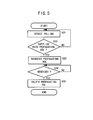
- the updating information transfer unit 130 performs a polling process at certain time intervals in step S21. If the updating information transfer unit 130 is supplied with the propagating SQL from the replication trigger generator 132 in step S22, then the updating information transfer unit 130 transfers the propagating SQL to the database updating processor 148 of the server 14 in step S23. If the updating information transfer unit 130 receives an acknowledgement signal acknowledging the propagating SQL from the database updating processor 148 in step S24, then the updating information transfer unit 130 deletes its own propagating SQL in step S25.
- the database updating processor 148 determines whether the SQL received in step S1 is an updating SQL generated by clients 30, 32 or a propagating SQL transferred from the other server 12 in step S2.
- the database updating processor 148 determines whether the updating information of the propagating SQL represents a data insertion or not in step S6, whether the updating information of the propagating SQL represents a data change or not in step S7, and whether the updating information of the propagating SQL represents a data deletion or not in step S8.
- the database updating processor 148 also determines whether the changing information has data or not in steps S9, S10, S11. If the changing information has no data, then the transferring process is judged as suffering a fault, and an error is processed in step S12.
- the database in the database memory 142 is updated in step S3.
- the database updating processor 148 issues a replication trigger generation inhibiting instruction to the replication trigger generator 152.
- the replication trigger generation inhibiting instruction inhibits updating information based on the propagating SQL from being transferred from the updating information transfer unit 150 to the server 12.
- the databases stored in the respective database memories 122, 142 of the servers 12, 14 are maintained as an identical database, though asynchronously.
- a conflict of data may be anticipated.
- such conflict of data can be prevented since a function of the production management system and a function of the process control system are clearly distinguished in normal operation based on each database to be connected. That is, each SQL for inserting, updating, or deleting data generated by a client connected to the database is not processed against the same record that a propagating SQL for inserting, updating, or deleting data is processed against.
- the backup processors 123, 143 of the servers 12, 14 copy the databases stored in the respective database memories 122, 142 to the backup data memories 124, 144 at certain intervals, e.g., intervals of a day, i.e., 24 hours, while in operation, generating backup data for the database memories 122, 142.
- Different processes are available for backing up the backup data for the database memories 122, 142.
- Such backup processes include, for example, a full backup process for backing up all the data in the database memories 122, 142 once, a differential backup process for backing up only files with data updated or only data generated after the preceding full backup cycle, and an incremental backup process for backing up only files with data updated or only data generated after the preceding full backup cycle or the preceding differential backup cycle.
- the backup data for the database memories 122, 142 are generated according to either one of these available different backup processes.
- the archive data generators 125, 145 discard the data in the archive data memories 126, 146 which have accumulated the updating information of the databases so far. Thereafter, the archive data generators 125, 145 start recording newly updated data in the database memories 122, 142 as archive data in the archive data memories 126, 146.
- the backing up of the databases in the backup data memories 124, 144 is carried out using a file copy function of the servers 12, 14 at the OS level.
- the file copy function copies the databases as they are, and takes a short time to back up the databases though it needs a large hard disk resource.
- the file copy function needs only 60 minutes, one-tenth of the 600 minutes, to back up the same database.
- backup data are generated while the servers 12, 14 are operating, and new updating information for the database memories 122, 142 after the backup data have started to be generated is recorded in the archive data memories 126, 146.
- the database memories 122, 142 can be backed up efficiently in a short period of time. If a fault such as a database data breakdown, as described below, occurs, then the database data can quickly be recovered using the backup data and the archive data.
- the clients 30, 32 connected to the server 14 have its connection destination changed to the server 12, and the distributed data processing system 10 is operated with the server 12 alone.
- the production process can thus be continued without a system shutdown.
- the hardware arrangement of the faulty server 14 is restored.
- the hard disk of the database memory 142 for example, is replaced with a new one.
- the data in the backup data memory 124 is restored on the database memory 142 by way of file copying.
- a replication of the database in the database memory 122 at the time the database memory 122 is backed up is constructed in the database memory 142.
- archive data after the start of the backup process in the operation is recorded in the archive data memory 126.
- the operation to restore the data in the backup data memory 124 on the database memory 142 is carried out using the file copy function. Therefore, the databases including settings in the database memories 122, 142 are made fully identical to each other and stored in hard disk drives of the same name. In order to take over the processing of the client connected to one of the servers which suffers a fault, it is necessary to use a different global name for access from an external source.
- the clients 30, 32 are connected again to the server 14, and the servers 12, 14 are activated again to resume operation of the entire distributed data processing system 10.
- the distributed data processing system 10 is fully out of operation only while the archive data except the backup data is being applied to the database. If the time interval to back up the archive data during operation is set to one day, then the amount of the archive data is equal to at most the amount of database data updated in one day. The time required to restore the database from the achieve data ranges from several minutes to several tens of minutes. Therefore, the period of time in which the distributed data processing system 10 is shut off may also be reduced to the time ranging from several minutes to several tens of minutes. The system downtime is thus made much shorter than the time, i.e., about 8 hours, required to recover the database according to the conventional export and import functions.
Landscapes
- Engineering & Computer Science (AREA)
- Theoretical Computer Science (AREA)
- Databases & Information Systems (AREA)
- Signal Processing (AREA)
- Computer Networks & Wireless Communication (AREA)
- Data Mining & Analysis (AREA)
- General Physics & Mathematics (AREA)
- General Engineering & Computer Science (AREA)
- Physics & Mathematics (AREA)
- Computing Systems (AREA)
- Information Retrieval, Db Structures And Fs Structures Therefor (AREA)
- Multi Processors (AREA)
- Computer And Data Communications (AREA)
- Hardware Redundancy (AREA)
Abstract
Description
Claims (12)
- A distributed data processing system comprising a plurality of servers (12, 14) and a plurality of clients (20, 22, 24, 26, 30, 32) connected to the servers for performing a distributed data processing process on an object to be controlled,each of said servers comprising:a database memory (122, 142) for storing a database which is updated by the distributed data processing process performed by said clients;a replication trigger generator (132, 152) for generating a replication trigger based on the updating of said database by the distributed data processing process performed by said clients;an updating information transfer unit (130, 150) for transferring updating information of said database to another one of the servers based on said replication trigger; anda database updating processor (128, 148) for updating said database based on the updating information transferred from the other server.
- A distributed data processing system according to claim 1, wherein each of said clients comprises:a connection information manager (20b, 30b) for managing connection information of a connection destination server to which the clients are connected; anda connection information changer (20c, 30c) for changing the connection information of the connection destination server;the arrangement being such that if any of said servers suffers a fault, said connection information is changed by said connection information changer, and the distributed data processing process performed by the clients connected to the server which suffers the fault is continued under the management of another normal one of the servers to which said connection information is changed.
- A distributed data processing system according to claim 1, further comprising:a backup processor (123, 143) for performing backup process at predetermined time intervals while said database is in operation;a backup data memory (124, 144) for storing backup data produced by the backup process performed while said database is in operation;an archive data generator (125, 145) for generating archive data based on the updating information of the database which is generated after the backup process performed while said database is in operation has started; andan archive data memory (126, 146) for storing the archive data;the arrangement being such that said database is recovered based on said backup data and said archive data.
- A distributed data processing system according to claim 2, further comprising:a backup processor (123, 143) for performing backup process at predetermined time intervals while said database is in operation;a backup data memory (124, 144) for storing backup data produced by the backup process performed while said database is in operation;an archive data generator (125, 145) for generating archive data based on the updating information of the database which is generated after the backup process performed while said database is in operation has started; andan archive data memory (126, 146) for storing the archive data;the arrangement being such that said database is recovered based on said backup data and said archive data.
- A distributed data processing system according to claim 1, wherein said servers comprise:a server (14) for managing one of the clients which is of a production management system which is of the object to be controlled; anda server (12) for managing one of the clients which is of a process control system which is of the object to be controlled.
- A distributed data processing system according to claim 5, wherein each of said servers has independent settings of distributed data processing so that said database can be independently processed in inserting, updating, or deleting data.
- A method of processing data in a distributed data processing system having a plurality of servers and a plurality of clients connected to the servers for performing a distributed data processing process on an object to be con-trolled, comprising the steps of:updating a database according to the distributed data processing process performed by said clients;generating a replication trigger based on the updating of said database by the distributed data processing process performed by said clients;transferring updating information of said database to another one of the servers based on said replication trigger; andupdating said database based on the updating information transferred from the other server.
- A method according to claim 7, further comprising the steps of:if any of said servers suffers a fault, changing a connection destination of the clients connected to the server which suffers the fault to another normal one of the servers; andcontinuing the distributed data processing process performed by the clients connected to the server under the management of the other normal server.
- A method according to claim 8, further comprising the step of activating again said server suffering the fault to resume normal operation after completion of a restoring process, said step of activating again said server comprising the steps of:shutting off all the clients connected to said server;setting again information of the connection destination of the clients;connecting the clients to said server according to the set information; andresuming the distributed data processing process in a normal connection state.
- A method according to claim 7, further comprising the steps of:performing a backup process at predetermined time intervals while said database is in operation and saving backup data produced by the backup process performed;generating and saving archive data based on the updating information of the database which is generated after the backup process performed while said database is in operation has started; andif one of said servers suffers a fault, copying said backup data of another normal one of the servers, and recovering the database from said archive data of the other normal server.
- A method according to claim 10, further comprising the step of:
copying said backup data while the clients are being continuously operated by said other normal server. - A method according to claim 8, further comprising the steps of:performing a backup process at predetermined time intervals while said database is in operation and saving backup data produced by the backup process performed;generating and saving archive data based on the updating information of the database which is generated after the backup process performed while said database is in operation has started; andif one of said servers suffers a fault, copying said backup data of another normal one of the servers, and recovering the database from said archive data of the other normal server.
Applications Claiming Priority (6)
| Application Number | Priority Date | Filing Date | Title |
|---|---|---|---|
| JP2000091826 | 2000-03-29 | ||
| JP2000091826 | 2000-03-29 | ||
| JP2000093256A JP2001282762A (en) | 2000-03-30 | 2000-03-30 | Device and method for backing up data in distributed processing system |
| JP2000093256 | 2000-03-30 | ||
| JP2001057120A JP2001344141A (en) | 2000-03-29 | 2001-03-01 | Distributed processing system provided with data backup function and its processing method |
| JP2001057120 | 2001-03-01 |
Publications (3)
| Publication Number | Publication Date |
|---|---|
| EP1139235A2 true EP1139235A2 (en) | 2001-10-04 |
| EP1139235A3 EP1139235A3 (en) | 2003-01-22 |
| EP1139235B1 EP1139235B1 (en) | 2006-05-24 |
Family
ID=27342864
Family Applications (1)
| Application Number | Title | Priority Date | Filing Date |
|---|---|---|---|
| EP01107910A Expired - Lifetime EP1139235B1 (en) | 2000-03-29 | 2001-03-28 | Distributed data processing system and method of processing data in distributed data processing system |
Country Status (5)
| Country | Link |
|---|---|
| US (1) | US20010027453A1 (en) |
| EP (1) | EP1139235B1 (en) |
| CN (1) | CN1251087C (en) |
| AT (1) | ATE327539T1 (en) |
| DE (1) | DE60119822T8 (en) |
Cited By (2)
| Publication number | Priority date | Publication date | Assignee | Title |
|---|---|---|---|---|
| GB2390711A (en) * | 2002-07-08 | 2004-01-14 | Via Tech Inc | Version management system applies update when first and second servers are connected |
| US7051053B2 (en) * | 2002-09-30 | 2006-05-23 | Dinesh Sinha | Method of lazily replicating files and monitoring log in backup file system |
Families Citing this family (32)
| Publication number | Priority date | Publication date | Assignee | Title |
|---|---|---|---|---|
| US20030088659A1 (en) * | 2001-11-08 | 2003-05-08 | Susarla Hanumantha Rao | System and method for distributed state management |
| US7130905B2 (en) * | 2002-01-10 | 2006-10-31 | Sun Microsystems, Inc. | System and method for coordinating access to data for a distributed application |
| US20030154202A1 (en) * | 2002-02-12 | 2003-08-14 | Darpan Dinker | Distributed data system with process co-location and out -of -process communication |
| US7370329B2 (en) | 2002-03-01 | 2008-05-06 | Sun Microsystems, Inc. | System and method for state saves in a distributed data system |
| US7320035B2 (en) | 2002-03-01 | 2008-01-15 | Sun Microsystems, Inc. | Object mutation determination for incremental state saves |
| US7139925B2 (en) * | 2002-04-29 | 2006-11-21 | Sun Microsystems, Inc. | System and method for dynamic cluster adjustment to node failures in a distributed data system |
| US7206836B2 (en) * | 2002-09-23 | 2007-04-17 | Sun Microsystems, Inc. | System and method for reforming a distributed data system cluster after temporary node failures or restarts |
| US7239605B2 (en) * | 2002-09-23 | 2007-07-03 | Sun Microsystems, Inc. | Item and method for performing a cluster topology self-healing process in a distributed data system cluster |
| US8005979B2 (en) * | 2002-10-28 | 2011-08-23 | Oracle America, Inc. | System and method for uniquely identifying processes and entities in clusters |
| US8001142B2 (en) * | 2003-04-02 | 2011-08-16 | Oracle America, Inc. | Distributed data system with incremental data updates |
| US7178065B2 (en) * | 2003-04-02 | 2007-02-13 | Sun Microsystems, Inc. | System and method for measuring performance with distributed agents |
| US7281050B2 (en) * | 2003-04-08 | 2007-10-09 | Sun Microsystems, Inc. | Distributed token manager with transactional properties |
| JP2004318730A (en) * | 2003-04-18 | 2004-11-11 | Konica Minolta Photo Imaging Inc | System and program for producing photograph |
| JP3910997B2 (en) * | 2003-07-02 | 2007-04-25 | 聰 山竹 | Image database system |
| CN100547583C (en) * | 2003-08-14 | 2009-10-07 | 甲骨文国际公司 | Automatic and dynamic provisioning methods for databases |
| US8341120B2 (en) * | 2003-09-05 | 2012-12-25 | Oracle International Corporation | Apparatus and methods for transferring database objects into and out of database systems |
| US20050163462A1 (en) * | 2004-01-28 | 2005-07-28 | Pratt Buell A. | Motion picture asset archive having reduced physical volume and method |
| WO2006006202A1 (en) * | 2004-07-07 | 2006-01-19 | Satoshi Yamatake | Image database system |
| DE102004044987A1 (en) * | 2004-09-16 | 2006-03-30 | Siemens Ag | A method, computer program with program code means and computer program product for monitoring a system state of a distributed component system, in particular a distributed component network, a distributed component network |
| US8539496B1 (en) * | 2005-12-12 | 2013-09-17 | At&T Intellectual Property Ii, L.P. | Method and apparatus for configuring network systems implementing diverse platforms to perform business tasks |
| JP5201133B2 (en) * | 2007-04-09 | 2013-06-05 | 富士通株式会社 | Redundant system, system control method and system control program |
| US8352450B1 (en) | 2007-04-19 | 2013-01-08 | Owl Computing Technologies, Inc. | Database update through a one-way data link |
| WO2008136107A1 (en) * | 2007-04-25 | 2008-11-13 | Fujitsu Limited | Switching processing method |
| CA2617119A1 (en) * | 2008-01-08 | 2009-07-08 | Pci Geomatics Enterprises Inc. | Service oriented architecture for earth observation image processing |
| US10585766B2 (en) * | 2011-06-06 | 2020-03-10 | Microsoft Technology Licensing, Llc | Automatic configuration of a recovery service |
| CN102236764B (en) * | 2011-06-30 | 2013-10-30 | 北京邮电大学 | Method and monitoring system for Android system to defend against desktop information attack |
| US10331695B1 (en) * | 2013-11-25 | 2019-06-25 | Amazon Technologies, Inc. | Replication coordination service for data transfers between distributed databases |
| US9575987B2 (en) | 2014-06-23 | 2017-02-21 | Owl Computing Technologies, Inc. | System and method for providing assured database updates via a one-way data link |
| US10926507B2 (en) * | 2014-06-27 | 2021-02-23 | Pregis Intellipack Llc | Protective packaging machines demonstrative content |
| CN106649415B (en) * | 2015-11-03 | 2019-12-20 | 广州市动景计算机科技有限公司 | Client data checking and updating method and device |
| US10227171B2 (en) | 2015-12-23 | 2019-03-12 | Pregis Intellipack Llc | Object recognition for protective packaging control |
| CN105760425B (en) * | 2016-01-17 | 2018-12-04 | 曲阜师范大学 | A kind of ontology data storage method |
Family Cites Families (11)
| Publication number | Priority date | Publication date | Assignee | Title |
|---|---|---|---|---|
| US5347463A (en) * | 1990-07-03 | 1994-09-13 | Honda Giken Kogyo Kabushiki Kaisha | System and method for line production management |
| JP3213766B2 (en) * | 1992-03-16 | 2001-10-02 | 株式会社日立製作所 | Replicate file update system |
| US5758067A (en) * | 1995-04-21 | 1998-05-26 | Hewlett-Packard Co. | Automated tape backup system and method |
| US5781910A (en) * | 1996-09-13 | 1998-07-14 | Stratus Computer, Inc. | Preforming concurrent transactions in a replicated database environment |
| JP4077907B2 (en) * | 1997-08-04 | 2008-04-23 | 富士通株式会社 | Computer data backup device, data backup method, and computer-readable recording medium recording data backup program |
| US6202070B1 (en) * | 1997-12-31 | 2001-03-13 | Compaq Computer Corporation | Computer manufacturing system architecture with enhanced software distribution functions |
| JP3971012B2 (en) * | 1998-02-18 | 2007-09-05 | 富士通株式会社 | Location registration method for mobile radio communication system |
| US6564216B2 (en) * | 1998-10-29 | 2003-05-13 | Nortel Networks Limited | Server manager |
| US6367029B1 (en) * | 1998-11-03 | 2002-04-02 | Sun Microsystems, Inc. | File server system tolerant to software and hardware failures |
| US6751674B1 (en) * | 1999-07-26 | 2004-06-15 | Microsoft Corporation | Method and system for replication in a hybrid network |
| US6658589B1 (en) * | 1999-12-20 | 2003-12-02 | Emc Corporation | System and method for backup a parallel server data storage system |
-
2001
- 2001-03-28 EP EP01107910A patent/EP1139235B1/en not_active Expired - Lifetime
- 2001-03-28 AT AT01107910T patent/ATE327539T1/en not_active IP Right Cessation
- 2001-03-28 DE DE60119822T patent/DE60119822T8/en active Active
- 2001-03-29 CN CNB011097442A patent/CN1251087C/en not_active Expired - Fee Related
- 2001-03-29 US US09/819,612 patent/US20010027453A1/en not_active Abandoned
Cited By (3)
| Publication number | Priority date | Publication date | Assignee | Title |
|---|---|---|---|---|
| GB2390711A (en) * | 2002-07-08 | 2004-01-14 | Via Tech Inc | Version management system applies update when first and second servers are connected |
| GB2390711B (en) * | 2002-07-08 | 2006-01-04 | Via Tech Inc | System and method for distributed concurrent version management |
| US7051053B2 (en) * | 2002-09-30 | 2006-05-23 | Dinesh Sinha | Method of lazily replicating files and monitoring log in backup file system |
Also Published As
| Publication number | Publication date |
|---|---|
| ATE327539T1 (en) | 2006-06-15 |
| EP1139235A3 (en) | 2003-01-22 |
| DE60119822D1 (en) | 2006-06-29 |
| DE60119822T2 (en) | 2006-11-16 |
| DE60119822T8 (en) | 2007-05-31 |
| CN1320862A (en) | 2001-11-07 |
| US20010027453A1 (en) | 2001-10-04 |
| EP1139235B1 (en) | 2006-05-24 |
| CN1251087C (en) | 2006-04-12 |
Similar Documents
| Publication | Publication Date | Title |
|---|---|---|
| EP1139235A2 (en) | Distributed data processing system and method of processing data in distributed data processing system | |
| US7415586B2 (en) | Data backup method and system | |
| US7802126B2 (en) | Data center virtual tape off-site disaster recovery planning and implementation system | |
| US20220012135A1 (en) | Indexing backup data generated in backup operations | |
| US5608865A (en) | Stand-in Computer file server providing fast recovery from computer file server failures | |
| US5832518A (en) | Log file optimization in a client/server computering system | |
| US6658589B1 (en) | System and method for backup a parallel server data storage system | |
| US6697960B1 (en) | Method and system for recovering data to maintain business continuity | |
| US20050188248A1 (en) | Scalable storage architecture | |
| US20050182888A1 (en) | Disk array apparatus and disk array apparatus control method | |
| EP0226734A2 (en) | Method and apparatus for managing obsolescence of data objects | |
| WO2007095456A2 (en) | Continuous data protection of block-level volumes | |
| AU2001268262A1 (en) | Data storage system and process | |
| CN100524235C (en) | Recovery operations in storage networks | |
| JP2001344141A (en) | Distributed processing system provided with data backup function and its processing method | |
| US20040139129A1 (en) | Migrating a database | |
| US7567993B2 (en) | Method and system for creating and using removable disk based copies of backup data | |
| JP2001282762A (en) | Device and method for backing up data in distributed processing system | |
| US20050097288A1 (en) | System and method for monitoring and non-disruptive backup of data in a solid state disk system | |
| CN106445746A (en) | Method and device for disaster recovery backup facing emergency replacement | |
| JP3082706B2 (en) | Alarm history management method for transmission equipment monitoring and control system | |
| EP1056011A2 (en) | Method and system for recovering data | |
| WO2011046551A1 (en) | Content storage management | |
| US20050021882A1 (en) | External storage device for storing update history | |
| JPH08212094A (en) | Power system information Wide area network system |
Legal Events
| Date | Code | Title | Description |
|---|---|---|---|
| PUAI | Public reference made under article 153(3) epc to a published international application that has entered the european phase |
Free format text: ORIGINAL CODE: 0009012 |
|
| AK | Designated contracting states |
Kind code of ref document: A2 Designated state(s): AT BE CH CY DE DK ES FI FR GB GR IE IT LI LU MC NL PT SE TR |
|
| AX | Request for extension of the european patent |
Free format text: AL;LT;LV;MK;RO;SI |
|
| PUAL | Search report despatched |
Free format text: ORIGINAL CODE: 0009013 |
|
| AK | Designated contracting states |
Kind code of ref document: A3 Designated state(s): AT BE CH CY DE DK ES FI FR GB GR IE IT LI LU MC NL PT SE TR |
|
| AX | Request for extension of the european patent |
Free format text: AL;LT;LV;MK;RO;SI |
|
| RIC1 | Information provided on ipc code assigned before grant |
Free format text: 7G 06F 17/30 A, 7H 04L 29/06 B, 7G 06F 11/14 B |
|
| 17P | Request for examination filed |
Effective date: 20030103 |
|
| 17Q | First examination report despatched |
Effective date: 20030424 |
|
| AKX | Designation fees paid |
Designated state(s): AT BE CH CY DE DK ES FI FR GB GR IE IT LI LU MC NL PT SE TR |
|
| GRAP | Despatch of communication of intention to grant a patent |
Free format text: ORIGINAL CODE: EPIDOSNIGR1 |
|
| GRAS | Grant fee paid |
Free format text: ORIGINAL CODE: EPIDOSNIGR3 |
|
| GRAA | (expected) grant |
Free format text: ORIGINAL CODE: 0009210 |
|
| AK | Designated contracting states |
Kind code of ref document: B1 Designated state(s): AT BE CH CY DE DK ES FI FR GB GR IE IT LI LU MC NL PT SE TR |
|
| PG25 | Lapsed in a contracting state [announced via postgrant information from national office to epo] |
Ref country code: IT Free format text: LAPSE BECAUSE OF FAILURE TO SUBMIT A TRANSLATION OF THE DESCRIPTION OR TO PAY THE FEE WITHIN THE PRESCRIBED TIME-LIMIT;WARNING: LAPSES OF ITALIAN PATENTS WITH EFFECTIVE DATE BEFORE 2007 MAY HAVE OCCURRED AT ANY TIME BEFORE 2007. THE CORRECT EFFECTIVE DATE MAY BE DIFFERENT FROM THE ONE RECORDED. Effective date: 20060524 Ref country code: NL Free format text: LAPSE BECAUSE OF FAILURE TO SUBMIT A TRANSLATION OF THE DESCRIPTION OR TO PAY THE FEE WITHIN THE PRESCRIBED TIME-LIMIT Effective date: 20060524 Ref country code: LI Free format text: LAPSE BECAUSE OF FAILURE TO SUBMIT A TRANSLATION OF THE DESCRIPTION OR TO PAY THE FEE WITHIN THE PRESCRIBED TIME-LIMIT Effective date: 20060524 Ref country code: BE Free format text: LAPSE BECAUSE OF FAILURE TO SUBMIT A TRANSLATION OF THE DESCRIPTION OR TO PAY THE FEE WITHIN THE PRESCRIBED TIME-LIMIT Effective date: 20060524 Ref country code: CH Free format text: LAPSE BECAUSE OF FAILURE TO SUBMIT A TRANSLATION OF THE DESCRIPTION OR TO PAY THE FEE WITHIN THE PRESCRIBED TIME-LIMIT Effective date: 20060524 Ref country code: FI Free format text: LAPSE BECAUSE OF FAILURE TO SUBMIT A TRANSLATION OF THE DESCRIPTION OR TO PAY THE FEE WITHIN THE PRESCRIBED TIME-LIMIT Effective date: 20060524 Ref country code: AT Free format text: LAPSE BECAUSE OF FAILURE TO SUBMIT A TRANSLATION OF THE DESCRIPTION OR TO PAY THE FEE WITHIN THE PRESCRIBED TIME-LIMIT Effective date: 20060524 |
|
| REG | Reference to a national code |
Ref country code: GB Ref legal event code: FG4D |
|
| REG | Reference to a national code |
Ref country code: CH Ref legal event code: EP |
|
| REG | Reference to a national code |
Ref country code: IE Ref legal event code: FG4D |
|
| REF | Corresponds to: |
Ref document number: 60119822 Country of ref document: DE Date of ref document: 20060629 Kind code of ref document: P |
|
| PG25 | Lapsed in a contracting state [announced via postgrant information from national office to epo] |
Ref country code: SE Free format text: LAPSE BECAUSE OF FAILURE TO SUBMIT A TRANSLATION OF THE DESCRIPTION OR TO PAY THE FEE WITHIN THE PRESCRIBED TIME-LIMIT Effective date: 20060824 Ref country code: DK Free format text: LAPSE BECAUSE OF FAILURE TO SUBMIT A TRANSLATION OF THE DESCRIPTION OR TO PAY THE FEE WITHIN THE PRESCRIBED TIME-LIMIT Effective date: 20060824 |
|
| PG25 | Lapsed in a contracting state [announced via postgrant information from national office to epo] |
Ref country code: ES Free format text: LAPSE BECAUSE OF FAILURE TO SUBMIT A TRANSLATION OF THE DESCRIPTION OR TO PAY THE FEE WITHIN THE PRESCRIBED TIME-LIMIT Effective date: 20060904 |
|
| PG25 | Lapsed in a contracting state [announced via postgrant information from national office to epo] |
Ref country code: PT Free format text: LAPSE BECAUSE OF FAILURE TO SUBMIT A TRANSLATION OF THE DESCRIPTION OR TO PAY THE FEE WITHIN THE PRESCRIBED TIME-LIMIT Effective date: 20061024 |
|
| NLV1 | Nl: lapsed or annulled due to failure to fulfill the requirements of art. 29p and 29m of the patents act | ||
| REG | Reference to a national code |
Ref country code: CH Ref legal event code: PL |
|
| ET | Fr: translation filed | ||
| RAP2 | Party data changed (patent owner data changed or rights of a patent transferred) |
Owner name: FUJIFILM CORPORATION |
|
| PLBE | No opposition filed within time limit |
Free format text: ORIGINAL CODE: 0009261 |
|
| STAA | Information on the status of an ep patent application or granted ep patent |
Free format text: STATUS: NO OPPOSITION FILED WITHIN TIME LIMIT |
|
| 26N | No opposition filed |
Effective date: 20070227 |
|
| REG | Reference to a national code |
Ref country code: FR Ref legal event code: TP Ref country code: FR Ref legal event code: CD |
|
| PG25 | Lapsed in a contracting state [announced via postgrant information from national office to epo] |
Ref country code: IE Free format text: LAPSE BECAUSE OF NON-PAYMENT OF DUE FEES Effective date: 20070328 Ref country code: MC Free format text: LAPSE BECAUSE OF NON-PAYMENT OF DUE FEES Effective date: 20070331 |
|
| PG25 | Lapsed in a contracting state [announced via postgrant information from national office to epo] |
Ref country code: GR Free format text: LAPSE BECAUSE OF FAILURE TO SUBMIT A TRANSLATION OF THE DESCRIPTION OR TO PAY THE FEE WITHIN THE PRESCRIBED TIME-LIMIT Effective date: 20060825 |
|
| PG25 | Lapsed in a contracting state [announced via postgrant information from national office to epo] |
Ref country code: CY Free format text: LAPSE BECAUSE OF FAILURE TO SUBMIT A TRANSLATION OF THE DESCRIPTION OR TO PAY THE FEE WITHIN THE PRESCRIBED TIME-LIMIT Effective date: 20060524 Ref country code: LU Free format text: LAPSE BECAUSE OF NON-PAYMENT OF DUE FEES Effective date: 20070328 |
|
| PG25 | Lapsed in a contracting state [announced via postgrant information from national office to epo] |
Ref country code: TR Free format text: LAPSE BECAUSE OF FAILURE TO SUBMIT A TRANSLATION OF THE DESCRIPTION OR TO PAY THE FEE WITHIN THE PRESCRIBED TIME-LIMIT Effective date: 20060524 |
|
| PGFP | Annual fee paid to national office [announced via postgrant information from national office to epo] |
Ref country code: FR Payment date: 20110317 Year of fee payment: 11 |
|
| PGFP | Annual fee paid to national office [announced via postgrant information from national office to epo] |
Ref country code: DE Payment date: 20110302 Year of fee payment: 11 Ref country code: GB Payment date: 20110323 Year of fee payment: 11 |
|
| GBPC | Gb: european patent ceased through non-payment of renewal fee |
Effective date: 20120328 |
|
| REG | Reference to a national code |
Ref country code: FR Ref legal event code: ST Effective date: 20121130 |
|
| REG | Reference to a national code |
Ref country code: DE Ref legal event code: R119 Ref document number: 60119822 Country of ref document: DE Effective date: 20121002 |
|
| PG25 | Lapsed in a contracting state [announced via postgrant information from national office to epo] |
Ref country code: FR Free format text: LAPSE BECAUSE OF NON-PAYMENT OF DUE FEES Effective date: 20120402 Ref country code: GB Free format text: LAPSE BECAUSE OF NON-PAYMENT OF DUE FEES Effective date: 20120328 |
|
| PG25 | Lapsed in a contracting state [announced via postgrant information from national office to epo] |
Ref country code: DE Free format text: LAPSE BECAUSE OF NON-PAYMENT OF DUE FEES Effective date: 20121002 |