EP1138751A2 - Method of manufacturing oxygenated fuel - Google Patents
Method of manufacturing oxygenated fuel Download PDFInfo
- Publication number
- EP1138751A2 EP1138751A2 EP01106036A EP01106036A EP1138751A2 EP 1138751 A2 EP1138751 A2 EP 1138751A2 EP 01106036 A EP01106036 A EP 01106036A EP 01106036 A EP01106036 A EP 01106036A EP 1138751 A2 EP1138751 A2 EP 1138751A2
- Authority
- EP
- European Patent Office
- Prior art keywords
- olefin
- oxygenated fuel
- manufacturing
- cobalt
- oxo process
- Prior art date
- Legal status (The legal status is an assumption and is not a legal conclusion. Google has not performed a legal analysis and makes no representation as to the accuracy of the status listed.)
- Granted
Links
Images


Classifications
-
- C—CHEMISTRY; METALLURGY
- C10—PETROLEUM, GAS OR COKE INDUSTRIES; TECHNICAL GASES CONTAINING CARBON MONOXIDE; FUELS; LUBRICANTS; PEAT
- C10L—FUELS NOT OTHERWISE PROVIDED FOR; NATURAL GAS; SYNTHETIC NATURAL GAS OBTAINED BY PROCESSES NOT COVERED BY SUBCLASSES C10G OR C10K; LIQUIFIED PETROLEUM GAS; USE OF ADDITIVES TO FUELS OR FIRES; FIRE-LIGHTERS
- C10L1/00—Liquid carbonaceous fuels
- C10L1/02—Liquid carbonaceous fuels essentially based on components consisting of carbon, hydrogen, and oxygen only
- C10L1/026—Liquid carbonaceous fuels essentially based on components consisting of carbon, hydrogen, and oxygen only for compression ignition
-
- C—CHEMISTRY; METALLURGY
- C10—PETROLEUM, GAS OR COKE INDUSTRIES; TECHNICAL GASES CONTAINING CARBON MONOXIDE; FUELS; LUBRICANTS; PEAT
- C10L—FUELS NOT OTHERWISE PROVIDED FOR; NATURAL GAS; SYNTHETIC NATURAL GAS OBTAINED BY PROCESSES NOT COVERED BY SUBCLASSES C10G OR C10K; LIQUIFIED PETROLEUM GAS; USE OF ADDITIVES TO FUELS OR FIRES; FIRE-LIGHTERS
- C10L1/00—Liquid carbonaceous fuels
- C10L1/02—Liquid carbonaceous fuels essentially based on components consisting of carbon, hydrogen, and oxygen only
Definitions
- This invention relates to improvement of a method of manufacturing oxygenated fuel to be used for diesel engines etc.
- hydrocarbons that are obtained from a synthesis gas (mixture of hydrogen and carbon monoxide) through Fischer-Tropsch process (hereinafter abbreviated as "FT process"), whose main component is paraffin, are separated into a light fraction and a heavy fraction.
- FT process Fischer-Tropsch process
- the heavy fraction is subjected to isomerization treatment while the light fraction is not subjected to the aforementioned treatment.
- a catalyst to be used in the Fischer-Tropsch process a catalyst formed from silica SiO 2 , alumina Al 2 O 3 , or the like impregnated with cobalt is in use.
- the light fraction is directly mixed as it is with the heavy fraction that has been subjected to the isomerization treatment. Because the light fraction has a high ratio of olefin, when it is used in diesel fuel, it results in a large generation of soot when the diesel fuel is combusted.
- an object of the invention to provide a method of manufacturing an oxygenated fuel that excels in lubricity, oxidation stability, and has a high cetane number and that can suppress the generation of soot.
- the invention provides a method of manufacturing an oxygenated fuel wherein, by reacting an olefin with the synthesis gas using a solid catalyst to induce an oxo process, oxygenates are synthesized.
- the olefin may be obtained from the synthesis gas through the Fischer-Tropsch reaction.
- the oxygenated fuel manufactured in this way contains mainly oxygenates such as alcohol and aldehyde the oxygenated fuel has excellent lubricity and oxidization stability and has a high cetane number as well as the capability to suppress the generation of soot effectively when the oxygenated fuel is combusted.
- Fischer-Tropsch process a synthetic method for manufacturing an oxygenated fuel using a mixed gas of carbon monoxide (CO) and hydrogen (H 2 ) of a predetermined proportion as a raw material with a metal catalyst such as cobalt (Co), iron (Fe), and ruthenium (Ru).
- a metal catalyst such as cobalt (Co), iron (Fe), and ruthenium (Ru).
- Oxo process a method for synthesizing an aldehyde whose number of carbons is larger than that of an olefin by one by adding carbon monoxide and hydrogen to the olefin and catalyzing these by a catalytic action of an oxo catalyst.
- Complex a compound comprising a central atom or a central ion of a metal or an atomic analog of a metal to which monodentate ligands or multidentate ligands which are negative, neutral, or positive are coordinated.
- Light fraction a frction whose volatility is high among components of a mixed liquid.
- Precursor a substance in a previous stage from which a product can be obtained by a chemical reaction.
- Conversion a ratio expressed in percent figures of a raw material consumed in a chemical reaction process under a certain condition to an initial number of moles of the raw material.
- Selectivity a degree indicating how much selective progress a target main reaction makes in a reaction.
- the selectivity is a ratio of the number of moles that was converted into an object product to the number of total moles that has reacted in the reaction, expressed in percent figures.
- Yield in a chemical process where a raw material is converted into an object material, a ratio of the number of moles of the object material actually generated to the number of moles of the object material to be generated theoretically.
- Olefin aliphatic unsaturated hydrocarbon having one double bond, whose general formula is expressed by C n H 2n .
- ⁇ -olefin olefin that has a double bond at the end.
- Light chain a chain compound that has a carbon chain comprising carbons connected to one other in a straight chain shape without branching.
- Branched a chain compound such that a molecule has a side chain with respect to the main chain.
- Olefins especially ⁇ -olefins, are easy to convert into oxygenates through the oxo process.
- an ⁇ -olefin serving as raw material for example, one that is obtained from a petroleum refining process can be used.
- a main component of light naphtha that is generated in a Fischer-Tropsch (hereinafter, abbreviated as "FT") process is an ⁇ -olefin, this component can also be used.
- the FT process reaction is conducted, for example, by using an FT synthetic catalyst that is formed by impregnating silica with one of cobalt (Co), iron (Fe), ruthenium (Ru), etc. and contacting the catalyst with the synthesis gas (mixture of hydrogen (H 2 ) and carbon monoxide (CO)).
- FT synthetic catalyst that is formed by impregnating silica with one of cobalt (Co), iron (Fe), ruthenium (Ru), etc. and contacting the catalyst with the synthesis gas (mixture of hydrogen (H 2 ) and carbon monoxide (CO)).
- the aforementioned oxo process is conducted by reacting the olefin with the synthesis gas using a solid catalyst.
- a solid catalyst for this reaction a cobalt catalyst, for example, that is formed by impregnating silica, activated carbon, or the like with cobalt is used.
- alcohol such as methanol is used instead of hydrogen.
- an alcohol such as methanol is used along with hydrogen.
- the FT process in the case where the FT process is employed as a supply source of an ⁇ -olefin, it is desirable that the FT process as a preliminary step and the oxo process as a later step are conducted under nearly equal pressure conditions, respectively.
- a conventionally used catalyst uses complex of cobalt (Co), complex of rhodium (Rh), or the like so the reaction needs to be conducted under high pressure in order to protect this catalyst metal by surrounding it with CO etc.
- the oxo process is conducted using a solid catalyst that is suspended and dispersed in the solvent, and consequently the reaction can take place at a pressure lower than that in the conventional case where a complex catalyst is used. Accordingly, a pressurizing mechanism such as a compressor becomes unnecessary.
- a pressurizing mechanism such as a compressor becomes unnecessary.
- the oxygenates synthesized as described above can be used for an oxygenated fuel for diesel engines etc.
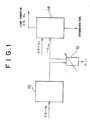
- FIG. 1 shows an example configuration of a method of manufacturing an oxygenated fuel in the case where the Fischer-Tropsch process is employed as a supply source of the olefin.
- a first reaction vessel 10 an FT catalyst that is formed by impregnating silica with cobalt (Co), iron (Fe), ruthenium (Ru), etc. is contained and the synthesis gas (mixture of carbon monoxide and hydrogen) is supplied thereinto.
- the FT process is conducted at a temperature of approximately 230 to 280°C and at a pressure of approximately 30 to 40 atms to synthesize hydrocarbons containing a large amount of olefin.
- the hydrocarbons synthesized in the first reaction vessel 10 are supplied to a heat exchanger 12, where the hydrocarbons are separated into the heavy fraction consisting of compounds for each of which the number of carbons is larger than 10 and the light fraction consisting of compounds for each of which the number of carbons is equal to or less than 10.
- the heavy fraction is used for fuel oil etc.
- the light fraction is supplied to a second reaction vessel 14, where the oxo reaction takes place with respect to the olefin of which the number of carbon is equal to or less than 10. That is, in the second reaction vessel 14, the cobalt catalyst etc., namely the solid catalyst described above, that is formed by impregnating silica with cobalt is contained, and the synthesis gas (mixture of hydrogen and carbon monoxide) is supplied thereinto in addition to the light fraction supplied from the heat exchanger 12. In this way, the oxo process is conducted in the second reaction vessel 14 according to the aforementioned reaction formula.
- the olefin of which the number of carbons is equal to or less than 10 that is included in the light fraction supplied from the heat exchanger 12 is converted into oxygenates such as alcohol and aldehyde. Since such oxygenates has a high boiling point, it is taken out of a liquid phase part in the second reaction vessel 14 to be used as oxygenated fuel. Unreacted synthesis gas, light paraffin, etc. are also extracted from a gaseous phase part in the second reaction vessel 14.
- alcohol of C3 through C10 and fatty acid esters of C3 through C10 which are target oxygenates are synthesized.
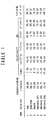
- TABLE 1 shows a comparison of the reaction activity of various cobalt catalysts that are formed by impregnating silica gel with cobalt.
- the figures shown are the weight percent (wt%) of metal cobalt impregnated into silica gel and letters N and A indicate that the cobalt salt serving as a precursor to impregnate cobalt into the silica gel is nitrate and acetate, respectively. Moreover, “/" indicates that the precursor shown on the left side of the symbol and the precursor shown on the right side of the symbol have been sequentially impregnated in that order with the left first and then the right into the silica gel. Moreover, "+” indicates that precursors linked together by this symbol have been impregnated into the silica gel simultaneously.
- the metal to be impregnated into silica gel is not limited to cobalt.
- Noble metals such as platinum (Pt), palladium (Pd), ruthenium (Ru), were also used. These are denoted by Pt (platinum), Pd (palladium), and Ru (ruthenium), respectively.
- reaction conditions at that time were as follows: the aforementioned catalyst was 0.1 gram; 1-hexene as a raw material was 3.34 grams; reaction temperature was 130°C; reaction time was 2 hours; reaction pressure was 50 atms; and supplied synthesis gas consisted of carbon monoxide, hydrogen, and argon with a composition of CO:H 2 :Ar at a ratio of 45.8:50.85:3.35.
- TABLE 1 shows the conversion of 1-hexene that is the raw material when the oxo process was conducted under the aforementioned conditions.
- Table 1 also shows the selectivity of isomers and the selectivity of aldehyde (represented by “al”) and alcohol (represented by “ol") that are oxygenates. Note that since 1-hexene is used as a raw material, the aldehyde and the alcohol that are formed by the oxo process have 7 carbons (C7) with an additional notation of "iso” for iso and "1" for normal, "1” indicating a position an aldehyde or an alcohol enters. Furthermore, the selectivity and the yield of the sum total of the aldehyde (al) and the alcohol (ol) are also shown.
- the Run Number 1 is the cobalt catalyst used for the FT reaction shown in FIG. 1. If the same catalyst can be used both in the FT reaction and in the oxo reaction, simplification of the production process can be accomplished. However, the conversion of 1-hexene remains as low as 38.86%. In contrast to this, in the example of Run Number 2 where impregnation of 20 wt% cobalt into the silica gel was conducted two times and a total of 40 wt% cobalt was impregnated, the conversion of 1-hexene was 98.91% and both the selectivity and the yield of the sum total ("al"+"ol") reached almost 90%. From the results, it was found that when the quantity of cobalt that is impregnated into the silica gel is increased, catalytic activity is enhanced.
- TABLE 2 shows a comparison of the reaction activity for cases where the oxo process was conducted in various solvents.
- THF shown in TABLE 2 refers to tetrahydrofuran, which is also called oxolane.
- the oxo process be conducted in an alcohol solvent of either methanol or ethanol.
- TABLE 3 shows a comparison of the reaction activity when active carbon (AC) was used as a catalyst support instead of silica gel and the amount of cobalt impregnation was varied.
- reaction conditions were as follows: the reaction temperature was 130°C; the reaction pressure was 50 atms; the reaction time was 2 hours; and the composition was CO:H 2 :Ar at a ratio of 45.8:50.85:3.35.
- the active carbon used as the support was active carbon from KANTO KAGAKU.
- TABLE 4 shows a comparison of influence of the reaction temperature as an operational factor of the oxo process.
- the cobalt catalyst of Run Number 1 of TABLE 1 was used to conduct the reaction under the following conditions: the reaction pressure was 50 atms ; the reaction time was 2 hours ; and the composition was CO:H 2 :Ar at a ratio of 45.8:50.85:3.35.
- TABLE 5 shows a comparison of influence of the reaction pressure that is another operational factor.
- the cobalt catalyst of Run Number 1 of TABLE 1 was used to conduct the reaction under the following conditions: the reaction time was 2 hours; and the composition was CO:H 2 :Ar at a ratio of 45.8:50.85:3.35.
- both the conversion of 1-hexene and the yield of the sum total of the aldehyde and the alcohol increase as the reaction pressure increases.
- the pressures in the respective reactions be nearly equal to each other. It is therefore preferable to set the reaction pressures to a maximum of approximately 40 atms. Even at a pressure of this level it is rather difficult to obtain straight chain compounds, but the yield of the iso is thought to be sufficient for practical purposes.
- the oxygenates synthesized according to the invention are for fuel applications, it is not essential that the oxygenates are always straight chain compounds and the reaction need not be conducted at a high pressure which may require a costly production facility.
- the oxygenates can be synthesized by means of the oxo process where an olefin is reacted with a synthesis gas using a solid catalyst, so that a fuel which has a high cetane number, excels in lubricity and oxidization stability, and produces less soot can be manufactured.
- the Fischer-Tropsch reaction can be employed as a supply source of the olefin, and at the same time the oxo process can be conducted under a pressure condition almost equal to that of Fischer-Tropsch reaction, thus making the efficient manufacturing of oxygenated fuel possible.
- reaction activity can be enhanced by adding a small quantity of a noble metal such as palladium as the solid catalyst other than just cobalt.
- reaction activity of the oxo process can be further enhanced by using an alcohol solvent as the solvent.
- a Fischer-Tropsch reaction (10) is conducted using a synthesis gas of carbon monoxide and hydrogen as a raw material to synthesize hydrocarbons containing a large amount of olefin. These hydrocarbons are separated into a light fraction and a heavy fraction by means of a heat exchanger (12) and an oxo process (14) is conducted with respect to the olefin contained in the light fraction with a cobalt catalyst.
- a heat exchanger (12) and an oxo process (14) is conducted with respect to the olefin contained in the light fraction with a cobalt catalyst.
- an oxygenated fuel containing alcohol, aldehyde, etc. is manufactured.
- the oxygenated fuel made by such a manufacturing method is excellent in lubricity and oxidation stability, has a high cetane number, and is also capable of suppressing generation of soot when the oxygenated fuel is combusted.
Landscapes
- Chemical & Material Sciences (AREA)
- Oil, Petroleum & Natural Gas (AREA)
- Engineering & Computer Science (AREA)
- Chemical Kinetics & Catalysis (AREA)
- General Chemical & Material Sciences (AREA)
- Organic Chemistry (AREA)
- Organic Low-Molecular-Weight Compounds And Preparation Thereof (AREA)
- Liquid Carbonaceous Fuels (AREA)
- Low-Molecular Organic Synthesis Reactions Using Catalysts (AREA)
- Production Of Liquid Hydrocarbon Mixture For Refining Petroleum (AREA)
- Catalysts (AREA)
Abstract
Description
(1-1) R - CH = CH2 + CO + H2 → R - CHCH3
-CHO (branched)
→ R - CH2CH2CHO (straight chain)
(1-2) R - CH = CH2 + CO + 2H2 → R - CH2CH2CH2OH
(1-3) R - CH = CH2 + CO + CH3OH → R - CH2CH2CH2OCOCH3
Claims (11)
- A method of manufacturing an oxygenated fuel by reacting a synthesis gas with an olefin, characterized in that
oxygenates are synthesized by reacting said synthesis gas with said olefin to induce an oxo process (14) by means of catalytic action of a solid catalyst. - A method of manufacturing an oxygenated fuel according to claim 1, wherein
said olefin is obtained from said synthesis gas through a Fischer-Tropsch reaction (10). - A method of manufacturing an oxygenated fuel according to claim 2, wherein
said oxo process (14) is conducted under a pressure condition substantially equal to that of said Fischer-Tropsch reaction (10). - A method of manufacturing an oxygenated fuel according to any one of claims 1 through 3, wherein
the pressure condition of said oxo process (14) is 30 to 40 atms. - A method of manufacturing an oxygenated fuel according to any one of claims 1 through 4, wherein
a temperature condition of said oxo process (14) is 110 to 140°C. - A method of manufacturing an oxygenated fuel according to any one of claims 1 through 5, wherein
said oxo process (14) is conducted with respect to an olefin whose number of carbons is equal to or less than 10. - A method of manufacturing an oxygenated fuel according to any one of claims 1 through 6, wherein
said solid catalyst is a cobalt catalyst that is formed by impregnating silica with cobalt. - A method of manufacturing an oxygenated fuel according to claim 7, wherein
a noble metal is further added to said cobalt catalyst. - A method of manufacturing an oxygenated fuel according to any one of claims 1 through 8, wherein
said oxo process (14) is conducted in an alcohol solvent. - A method of manufacturing an oxygenated fuel by reacting a synthesis gas with an olefin, characterized in thatoxygenates are synthesized by reacting said synthesis gas with said olefin to induce an oxo process (14) by means of catalytic action of a solid catalyst,that said solid catalyst is a cobalt catalyst that is formed by impregnating silica with cobalt,that said oxo process (14) is a process that is conducted with respect to an olefin whose number of carbons is equal to or less than 10, andthat said oxo process (14) is conducted in an alcohol solvent.
- A method of manufacturing an oxygenated fuel by reacting a synthesis gas with an olefin, characterized in thatoxygenates are synthesized by reacting said synthesis gas with said olefin to induce an oxo process (14) by means of catalytic action of a solid catalyst,that said solid catalyst is a cobalt catalyst that is formed by impregnating silica with cobalt,that said oxo process (14) is a process that is conducted with respect to an olefin whose number of carbons is equal to or less than 10,that said oxo process (14) is conducted in an alcoholic solvent, andthat a pressure condition of said oxo process (14) is 30 to 40 atms.
Applications Claiming Priority (2)
| Application Number | Priority Date | Filing Date | Title |
|---|---|---|---|
| JP2000086770A JP3662165B2 (en) | 2000-03-27 | 2000-03-27 | Method for producing oxygen-containing fuel |
| JP2000086770 | 2000-03-27 |
Publications (3)
| Publication Number | Publication Date |
|---|---|
| EP1138751A2 true EP1138751A2 (en) | 2001-10-04 |
| EP1138751A3 EP1138751A3 (en) | 2002-12-18 |
| EP1138751B1 EP1138751B1 (en) | 2006-10-04 |
Family
ID=18602883
Family Applications (1)
| Application Number | Title | Priority Date | Filing Date |
|---|---|---|---|
| EP01106036A Expired - Lifetime EP1138751B1 (en) | 2000-03-27 | 2001-03-12 | Method of manufacturing oxygenated fuel |
Country Status (4)
| Country | Link |
|---|---|
| US (1) | US6660889B2 (en) |
| EP (1) | EP1138751B1 (en) |
| JP (1) | JP3662165B2 (en) |
| DE (1) | DE60123504T2 (en) |
Cited By (2)
| Publication number | Priority date | Publication date | Assignee | Title |
|---|---|---|---|---|
| US7402187B2 (en) | 2002-10-09 | 2008-07-22 | Chevron U.S.A. Inc. | Recovery of alcohols from Fischer-Tropsch naphtha and distillate fuels containing the same |
| EP3424895A1 (en) * | 2017-07-06 | 2019-01-09 | Rheinisch-Westfälische Technische Hochschule (RWTH) Aachen | Method for making a fuel for combustion engines |
Families Citing this family (2)
| Publication number | Priority date | Publication date | Assignee | Title |
|---|---|---|---|---|
| US7709541B2 (en) * | 2006-07-14 | 2010-05-04 | Headwaters Technology Innovation, Llc | Fischer-Tropsch catalysts incorporating promoter for increasing yields of C5+ hydrocarbons and methods for making and using same |
| CN103270005B (en) | 2010-12-21 | 2016-01-06 | 陶氏环球技术有限责任公司 | The synthetic gas strengthened is to the conversion of propylene |
Family Cites Families (12)
| Publication number | Priority date | Publication date | Assignee | Title |
|---|---|---|---|---|
| US2327066A (en) | 1938-09-19 | 1943-08-17 | Roelen Otto | Production of oxygenated carbon compounds |
| GB637389A (en) * | 1946-10-25 | 1950-05-17 | Standard Oil Dev Co | Oxo synthesis process |
| US2609382A (en) | 1948-12-31 | 1952-09-02 | Phillips Petroleum Co | Production of hydrocarbon synthesis gas |
| GB659712A (en) * | 1949-10-21 | 1951-10-24 | Standard Oil Dev Co | Synthesis of oxygenated organic compounds |
| NL98500C (en) * | 1956-01-11 | |||
| US3989759A (en) * | 1970-07-01 | 1976-11-02 | Atlantic Richfield Company | Hydroformylation process over catalyst having silica alumina support with separate alumina phase and noble metal and cobalt or nickel |
| US4518714A (en) * | 1983-05-27 | 1985-05-21 | Eastman Kodak Company | Process for the selective production of olefins from synthesis gas |
| HUP9900184A3 (en) | 1995-06-29 | 2000-01-28 | Sasol Tech Pty Ltd | Process for producing oxygenated products and reaction products made by these processes |
| US6296757B1 (en) | 1995-10-17 | 2001-10-02 | Exxon Research And Engineering Company | Synthetic diesel fuel and process for its production |
| US5689031A (en) | 1995-10-17 | 1997-11-18 | Exxon Research & Engineering Company | Synthetic diesel fuel and process for its production |
| JP4166322B2 (en) | 1998-04-17 | 2008-10-15 | 株式会社ジョモテクニカルリサーチセンター | Method for producing diesel fuel |
| US6277895B1 (en) * | 1999-09-21 | 2001-08-21 | Hydrocarbon Technologies, Inc. | Skeletal iron catalyst having improved attrition resistance and product selectivity in slurry-phase synthesis processes |
-
2000
- 2000-03-27 JP JP2000086770A patent/JP3662165B2/en not_active Expired - Fee Related
-
2001
- 2001-03-12 US US09/802,969 patent/US6660889B2/en not_active Expired - Fee Related
- 2001-03-12 EP EP01106036A patent/EP1138751B1/en not_active Expired - Lifetime
- 2001-03-12 DE DE60123504T patent/DE60123504T2/en not_active Expired - Lifetime
Cited By (3)
| Publication number | Priority date | Publication date | Assignee | Title |
|---|---|---|---|---|
| US7402187B2 (en) | 2002-10-09 | 2008-07-22 | Chevron U.S.A. Inc. | Recovery of alcohols from Fischer-Tropsch naphtha and distillate fuels containing the same |
| EP3424895A1 (en) * | 2017-07-06 | 2019-01-09 | Rheinisch-Westfälische Technische Hochschule (RWTH) Aachen | Method for making a fuel for combustion engines |
| WO2019020229A1 (en) * | 2017-07-06 | 2019-01-31 | Rheinisch-Westfälische Technische Hochschule (Rwth) Aachen | METHOD FOR PRODUCING A FUEL FOR INTERNAL COMBUSTION ENGINES |
Also Published As
| Publication number | Publication date |
|---|---|
| US6660889B2 (en) | 2003-12-09 |
| US20010023553A1 (en) | 2001-09-27 |
| EP1138751A3 (en) | 2002-12-18 |
| EP1138751B1 (en) | 2006-10-04 |
| DE60123504D1 (en) | 2006-11-16 |
| DE60123504T2 (en) | 2007-05-03 |
| JP3662165B2 (en) | 2005-06-22 |
| JP2001271075A (en) | 2001-10-02 |
Similar Documents
| Publication | Publication Date | Title |
|---|---|---|
| Schulz | Major and minor reactions in Fischer–Tropsch synthesis on cobalt catalysts | |
| AU712270B2 (en) | Process for producing oxygenated products | |
| US4594468A (en) | Process for the preparation of middle distillates from syngas | |
| US7771702B2 (en) | Sulfur-tolerant catalysts and related precursors and processes | |
| Hayashi et al. | Catalytic properties of Fe/SiO2 catalysts prepared using microemulsion for CO hydrogenation | |
| CN110215919A (en) | A kind of high-dispersion loading type catalyst and its preparation method and application | |
| JP2534036B2 (en) | Hydrocarbon manufacturing method | |
| CA2584478A1 (en) | Use of nanostructured metal catalysts for the production of syngas and hydrogen-rich gaseous mixtures | |
| US20090012323A1 (en) | Production of detergent range alcohols | |
| Naranov | Sustainable production of chemicals via hydrotreating of CO2 and biomass derived molecules using heterogeneous noble metal oxide catalysts | |
| JP2009195815A (en) | Catalyst for liquefied petroleum gas production and method for manufacturing liquefied petroleum gas using the same | |
| JP2002537275A (en) | Method for preparing hydrocarbons from carbon monoxide and hydrogen | |
| US6660889B2 (en) | Method of manufacturing oxygenated fuel | |
| KR100998083B1 (en) | Process for preparing liquid hydrocarbon compounds by slurry reaction for Fischer-Tropsch synthesis | |
| US20100227232A1 (en) | Initiating a Reaction Between Hydrogen Peroxide and an Organic Compound | |
| WO2009104742A1 (en) | Liquefied petroleum gas production catalyst, and method for production of liquefied petroleum gas using the catalyst | |
| JP2007245138A (en) | Methanol synthesis catalyst, method for producing the catalyst, and method for producing methanol | |
| EP0022358A1 (en) | Process for producing oxygen-containing hydrocarbon compounds | |
| Knifton | Ruthenium Melt Catalysis | |
| CN101208285B (en) | Production of detergent range alcohols | |
| JP2006143752A (en) | Manufacturing method of liquefied petroleum gas mainly composed of propane or butane | |
| US4983638A (en) | Catalyst and method for producing lower aliphatic alcohols | |
| JPH0618793B2 (en) | Hydrocarbon production method | |
| KR102896887B1 (en) | Catalyst for Hydrocarbon Reforming | |
| Mandal et al. | Recent Advancement of 3d Metal-Catalyzed Ethanol Upgradation via the Guerbet Reaction |
Legal Events
| Date | Code | Title | Description |
|---|---|---|---|
| PUAI | Public reference made under article 153(3) epc to a published international application that has entered the european phase |
Free format text: ORIGINAL CODE: 0009012 |
|
| 17P | Request for examination filed |
Effective date: 20010312 |
|
| AK | Designated contracting states |
Kind code of ref document: A2 Designated state(s): AT BE CH CY DE DK ES FI FR GB GR IE IT LI LU MC NL PT SE TR |
|
| AX | Request for extension of the european patent |
Free format text: AL;LT;LV;MK;RO;SI |
|
| PUAL | Search report despatched |
Free format text: ORIGINAL CODE: 0009013 |
|
| AK | Designated contracting states |
Kind code of ref document: A3 Designated state(s): AT BE CH CY DE DK ES FI FR GB GR IE IT LI LU MC NL PT SE TR |
|
| AX | Request for extension of the european patent |
Free format text: AL;LT;LV;MK;RO;SI |
|
| 17Q | First examination report despatched |
Effective date: 20030328 |
|
| AKX | Designation fees paid |
Designated state(s): DE GB NL |
|
| GRAP | Despatch of communication of intention to grant a patent |
Free format text: ORIGINAL CODE: EPIDOSNIGR1 |
|
| GRAS | Grant fee paid |
Free format text: ORIGINAL CODE: EPIDOSNIGR3 |
|
| GRAA | (expected) grant |
Free format text: ORIGINAL CODE: 0009210 |
|
| AK | Designated contracting states |
Kind code of ref document: B1 Designated state(s): DE GB NL |
|
| REG | Reference to a national code |
Ref country code: GB Ref legal event code: FG4D |
|
| REF | Corresponds to: |
Ref document number: 60123504 Country of ref document: DE Date of ref document: 20061116 Kind code of ref document: P |
|
| PLBE | No opposition filed within time limit |
Free format text: ORIGINAL CODE: 0009261 |
|
| STAA | Information on the status of an ep patent application or granted ep patent |
Free format text: STATUS: NO OPPOSITION FILED WITHIN TIME LIMIT |
|
| 26N | No opposition filed |
Effective date: 20070705 |
|
| REG | Reference to a national code |
Ref country code: GB Ref legal event code: 746 Effective date: 20090616 |
|
| PGFP | Annual fee paid to national office [announced via postgrant information from national office to epo] |
Ref country code: NL Payment date: 20140208 Year of fee payment: 14 |
|
| PGFP | Annual fee paid to national office [announced via postgrant information from national office to epo] |
Ref country code: GB Payment date: 20140312 Year of fee payment: 14 |
|
| PGFP | Annual fee paid to national office [announced via postgrant information from national office to epo] |
Ref country code: DE Payment date: 20140417 Year of fee payment: 14 |
|
| REG | Reference to a national code |
Ref country code: DE Ref legal event code: R119 Ref document number: 60123504 Country of ref document: DE |
|
| GBPC | Gb: european patent ceased through non-payment of renewal fee |
Effective date: 20150312 |
|
| REG | Reference to a national code |
Ref country code: NL Ref legal event code: MM Effective date: 20150401 |
|
| PG25 | Lapsed in a contracting state [announced via postgrant information from national office to epo] |
Ref country code: GB Free format text: LAPSE BECAUSE OF NON-PAYMENT OF DUE FEES Effective date: 20150312 Ref country code: DE Free format text: LAPSE BECAUSE OF NON-PAYMENT OF DUE FEES Effective date: 20151001 |
|
| PG25 | Lapsed in a contracting state [announced via postgrant information from national office to epo] |
Ref country code: NL Free format text: LAPSE BECAUSE OF NON-PAYMENT OF DUE FEES Effective date: 20150401 |