EP1138433A1 - A product disassembling and assembling system and a method of disassembling and assembling the product - Google Patents
A product disassembling and assembling system and a method of disassembling and assembling the product Download PDFInfo
- Publication number
- EP1138433A1 EP1138433A1 EP01302963A EP01302963A EP1138433A1 EP 1138433 A1 EP1138433 A1 EP 1138433A1 EP 01302963 A EP01302963 A EP 01302963A EP 01302963 A EP01302963 A EP 01302963A EP 1138433 A1 EP1138433 A1 EP 1138433A1
- Authority
- EP
- European Patent Office
- Prior art keywords
- product
- disassembling
- parts
- assembling
- main body
- Prior art date
- Legal status (The legal status is an assumption and is not a legal conclusion. Google has not performed a legal analysis and makes no representation as to the accuracy of the status listed.)
- Granted
Links
Images



Classifications
-
- B—PERFORMING OPERATIONS; TRANSPORTING
- B23—MACHINE TOOLS; METAL-WORKING NOT OTHERWISE PROVIDED FOR
- B23P—METAL-WORKING NOT OTHERWISE PROVIDED FOR; COMBINED OPERATIONS; UNIVERSAL MACHINE TOOLS
- B23P21/00—Machines for assembling a multiplicity of different parts to compose units, with or without preceding or subsequent working of such parts, e.g. with program control
- B23P21/004—Machines for assembling a multiplicity of different parts to compose units, with or without preceding or subsequent working of such parts, e.g. with program control the units passing two or more work-stations whilst being composed
-
- B—PERFORMING OPERATIONS; TRANSPORTING
- B41—PRINTING; LINING MACHINES; TYPEWRITERS; STAMPS
- B41J—TYPEWRITERS; SELECTIVE PRINTING MECHANISMS, i.e. MECHANISMS PRINTING OTHERWISE THAN FROM A FORME; CORRECTION OF TYPOGRAPHICAL ERRORS
- B41J2/00—Typewriters or selective printing mechanisms characterised by the printing or marking process for which they are designed
- B41J2/005—Typewriters or selective printing mechanisms characterised by the printing or marking process for which they are designed characterised by bringing liquid or particles selectively into contact with a printing material
- B41J2/01—Ink jet
- B41J2/17—Ink jet characterised by ink handling
- B41J2/175—Ink supply systems ; Circuit parts therefor
- B41J2/17503—Ink cartridges
-
- Y—GENERAL TAGGING OF NEW TECHNOLOGICAL DEVELOPMENTS; GENERAL TAGGING OF CROSS-SECTIONAL TECHNOLOGIES SPANNING OVER SEVERAL SECTIONS OF THE IPC; TECHNICAL SUBJECTS COVERED BY FORMER USPC CROSS-REFERENCE ART COLLECTIONS [XRACs] AND DIGESTS
- Y10—TECHNICAL SUBJECTS COVERED BY FORMER USPC
- Y10T—TECHNICAL SUBJECTS COVERED BY FORMER US CLASSIFICATION
- Y10T29/00—Metal working
- Y10T29/49—Method of mechanical manufacture
-
- Y—GENERAL TAGGING OF NEW TECHNOLOGICAL DEVELOPMENTS; GENERAL TAGGING OF CROSS-SECTIONAL TECHNOLOGIES SPANNING OVER SEVERAL SECTIONS OF THE IPC; TECHNICAL SUBJECTS COVERED BY FORMER USPC CROSS-REFERENCE ART COLLECTIONS [XRACs] AND DIGESTS
- Y10—TECHNICAL SUBJECTS COVERED BY FORMER USPC
- Y10T—TECHNICAL SUBJECTS COVERED BY FORMER US CLASSIFICATION
- Y10T29/00—Metal working
- Y10T29/49—Method of mechanical manufacture
- Y10T29/49815—Disassembling
-
- Y—GENERAL TAGGING OF NEW TECHNOLOGICAL DEVELOPMENTS; GENERAL TAGGING OF CROSS-SECTIONAL TECHNOLOGIES SPANNING OVER SEVERAL SECTIONS OF THE IPC; TECHNICAL SUBJECTS COVERED BY FORMER USPC CROSS-REFERENCE ART COLLECTIONS [XRACs] AND DIGESTS
- Y10—TECHNICAL SUBJECTS COVERED BY FORMER USPC
- Y10T—TECHNICAL SUBJECTS COVERED BY FORMER US CLASSIFICATION
- Y10T29/00—Metal working
- Y10T29/49—Method of mechanical manufacture
- Y10T29/49815—Disassembling
- Y10T29/49819—Disassembling with conveying of work or disassembled work part
-
- Y—GENERAL TAGGING OF NEW TECHNOLOGICAL DEVELOPMENTS; GENERAL TAGGING OF CROSS-SECTIONAL TECHNOLOGIES SPANNING OVER SEVERAL SECTIONS OF THE IPC; TECHNICAL SUBJECTS COVERED BY FORMER USPC CROSS-REFERENCE ART COLLECTIONS [XRACs] AND DIGESTS
- Y10—TECHNICAL SUBJECTS COVERED BY FORMER USPC
- Y10T—TECHNICAL SUBJECTS COVERED BY FORMER US CLASSIFICATION
- Y10T29/00—Metal working
- Y10T29/53—Means to assemble or disassemble
-
- Y—GENERAL TAGGING OF NEW TECHNOLOGICAL DEVELOPMENTS; GENERAL TAGGING OF CROSS-SECTIONAL TECHNOLOGIES SPANNING OVER SEVERAL SECTIONS OF THE IPC; TECHNICAL SUBJECTS COVERED BY FORMER USPC CROSS-REFERENCE ART COLLECTIONS [XRACs] AND DIGESTS
- Y10—TECHNICAL SUBJECTS COVERED BY FORMER USPC
- Y10T—TECHNICAL SUBJECTS COVERED BY FORMER US CLASSIFICATION
- Y10T29/00—Metal working
- Y10T29/53—Means to assemble or disassemble
- Y10T29/53004—Means to assemble or disassemble with means to regulate operation by use of templet, tape, card or other replaceable information supply
-
- Y—GENERAL TAGGING OF NEW TECHNOLOGICAL DEVELOPMENTS; GENERAL TAGGING OF CROSS-SECTIONAL TECHNOLOGIES SPANNING OVER SEVERAL SECTIONS OF THE IPC; TECHNICAL SUBJECTS COVERED BY FORMER USPC CROSS-REFERENCE ART COLLECTIONS [XRACs] AND DIGESTS
- Y10—TECHNICAL SUBJECTS COVERED BY FORMER USPC
- Y10T—TECHNICAL SUBJECTS COVERED BY FORMER US CLASSIFICATION
- Y10T29/00—Metal working
- Y10T29/53—Means to assemble or disassemble
- Y10T29/53022—Means to assemble or disassemble with means to test work or product
Definitions
- the present invention relates to a product disassembling and assembling system and a method of disassembling and assembling the product.
- a re-manufactured machine is effectively utilized, and it is proposed that, as a device for enlarging the recycling, the quality of the re-manufactured machine is guaranteed to the same extent as that of the newly-made machine and the re-manufactured machine is put on the market.
- the used product withdrawn from the market is disassembled and the parts of the product thus disassembled are cleaned, reproduced, repaired, and checked. Only the parts passing the check standard are put on the production line and used in the re-manufactured machine together with newly-made parts.
- the quality of the re-manufactured machine is guaranteed as the same quality as a newly-manufactured machine.
- the valuation in the market for the re-manufactured machine is improved. Therefore, it can be expected that the product recycling; is enlarged and therefore that largely contributes to energy saving.
- the system includes a disassembling line for disassembling the main body of the used product and taking out the used parts from the used product, and an assembling line for assembling the new product, a first conveying device for supplying the used parts taken out on the disassembling line to the assembling line, a storage section for storing the new parts, a second conveying device for supplying the new parts from the storage section to the assembling line, and a control device for performing the control operation so as to supply the necessary amount of the new parts from the storage section to the assembling line in accordance with the assembling amount of the new product on the assembling line and the supplying amount of the used parts from the disassembling line.
- the disassembled parts can be re-used effectively.
- the system functions as an automatic assembling/disassembling system capable of flexibly coping with being applied to both of the assembling work and the disassembling work without changing the direction of the manufacturing line.
- the system further judges whether the works to be practiced is the assembling works or the disassembling works from the parts conveyed to the automatic machine. In accordance with the result of the above judgement, the system performs the automatic assembling of the parts and the automatic checking of the product, or performs the automatic disassembling of the parts and the automatic checking of the same parts.
- the works thus discriminated are selectively practiced in order to discriminate the parts which can be used again.
- the withdrawal and re-utilization (re-using) of the product may tend to become the responsibility of the manufacturer.
- 100% of the used product is withdrawn, disassembled, and re-used, the quantity of the products may become very large (countless).
- a large economic burden (load) occurs for the new facility investment.
- the withdrawal amount of the used product largely depends on the economic situation at present and the market tendency.
- the working situation of the aforementioned disassembling special line also largely varies. Therefore, the working may become non-effective.
- the economic burden and the cost increase of the re-manufactured machine cannot be avoided, in addition to the economic burden. Consequently, there is a risk that the enlargement of the recycling and the energy saving are largely damaged, or hindered.
- the present invention has been made in view of the above-discussed and other problems, and to solve the above-mentioned defects and troublesome matters of the background arts.
- the present invention aims at providing an improved new product disassembling and assembling system and method.
- the invention aims to make the entire system compact and reduce the manufacturing cost.
- the invention aims at further easily realizing the cost reduction of manufacturing the product.
- a first aspect of the present invention relates to a product disassembling and assembling system including: a producing facility for producing the product; and a processing facility for performing the process of disassembling the used product and offering the units or parts used for producing said product, in which the units or parts after being processed can be provided for producing said product.
- the product disassembling and assembling system further comprises a process facility commonly used for practicing both mutually reversible works between the respective product producing steps and the respective process disassembling steps or the same sort of work.
- the process facility performs said mutually reversible work or same sort of work, thereby the facility performs the mutually reversible operation or same sort operation.
- a mutually reversible work between the first process of the producing the product and the second process of disassembling the used product into units and parts is an operation that is carried out in one order in the process of producing the product and the reverse order in the process of disassembling the used products into units and parts.
- the same sort work between the first process of producing the product and the second process of disassembling the used product into the units and parts is an operation that is carried out in one order in the first process of producing the product and in the same order in the second process of disassembling the used product into units and parts.
- the mutually reversible operation is one which is carried out in a first direction in the facility in the first process and in the reverse direction in the second process.
- the same sort of operation is one which is carried out in first direction in the facility in the first process and in the same direction in the second process.
- the product disassembling and assembling system in connection with the first aspect, at least one sort among the commonly used facilities is used, which is controlled by a computer.
- the product disassembling and assembling system further includes a changing-over device for changing over the program employed in the computer and the data employed in the program in the case of performing the production.
- a plurality of sorts of commonly used facility are used which are controlled by the computer.
- the changing-over device is capable of performing in a system step the changing-over operation of the plurality of commonly-used facilities.
- one sort among the commonly-used facilities is a main body assembling and disassembling system commonly used in a process of performing the production of assembling the units or parts constructing the product main body and in another process of disassembling the used product into the units or parts.
- one sort among said commonly-used facilities is a unit assembling and disassembling facility commonly used in a process of assembling the parts constructing the product main body and thereby producing the product main body and the units constructing the product main body, and in another process of disassembling the units constructing the used product or the product main body into the parts.
- one sort among the commonly-used facilities is a unit storage chamber commonly used in a process of temporarily preserving the newly-made units constructing the product main body employed for the production and in another process of temporarily preserving the units after disassembling.
- one sort among the commonly-used facilities is a parts storage chamber commonly used in a process of temporarily preserving the newly-made parts constructing the product main body or the units constructing the product main body employed for the production and in another process of temporarily preserving the parts after disassembling.
- one sort among the commonly-used facilities is a unit storage chamber commonly used in a process of temporarily preserving the newly-made units constructing the product main body employed for the production and in another process of temporarily preserving the units after disassembling; and another sort of the commonly-used facilities is a conveying device commonly used in a process of conveying the units from the main body assembling and disassembling facility to the unit storage chamber and in other process of conveying the units from the unit storage chamber to the main body assembling and disassembling facility.
- one sort among the commonly-used facilities is a parts storage chamber commonly used in a process of temporarily preserving the newly-made parts constructing the product main body or the units constructing the product main body employed for the production and in another process of temporarily preserving the parts after disassembling; and another sort of said commonly-used facilities is a conveying device commonly used in a process of conveying the parts from the unit assembling and disassembling facility to the parts storage chamber and in other process of conveying the parts from the parts storage chamber to the unit assembling and disassembling facility.
- one sort of the commonly-used facilities is a main body checking facility commonly used in a process of checking the product main body after producing and in other process of checking the used product main body.
- one sort of the commonly-used facilities is a unit checking facility commonly used in a process of checking the newly-made units constructing the product main body employed for the production and in other process of checking the disassembled units.
- one sort of the commonly-used facilities is a party checking facility commonly used in a process of checking the parts constructing the product main body or the units constructing the product main body employed for said production and in other process of checking the assembled parts.
- Thirteenth through twenty-fourth aspects of the present invention respectively relate to the method of disassembling and assembling the product corresponding to the first through twelfth aspects. The descriptions of the methods are omitted here.
- the facilities are jointly used for the reversible operation and the same-sort operation.
- Those jointly-used facilities carry out the reversible work and the same-sort work. Therefore, the same-sort plural facilities can be necessitated, the entire structure of the system can be made compact, and the reduction of the product manufacturing cost can be easily realized.
- the second aspect of the invention can change over the program and the data employed in the program and use the facility controlled by the computer for both purposes only after such the changing-over, in the product disassembling/ assembling system. Consequently, the reduction of the product manufacturing cost can be easily realized.
- the third aspect can use a plurality of facilities controlled by the computer in a gross, the reduction of the product manufacturing cost can be further easily realized.
- the fourth aspect performs reversibly the assembling work of the units or the parts and the disassembling work of the units or the parts by use of the same facility, the reduction of the product manufacturing cost can be easily realized.
- the fifth aspect perform:> reversibly the assembling and disassembling work of the product main body or the units by use of the same facility, the reduction of the product manufacturing cost can be further easily realized.
- the sixth aspect performs the work of temporarily storing the newly-made units and the work of temporarily storing the units after being disassembled which are same sorts of work by use of the same storage warehouse, the reduction of the product manufacturing cost can be further easily realized.
- the seventh aspect performs the work of temporarily storing the newly-made parts and the work of temporarily storing the parts after being disassembled which are same sorts of work by use of the same storage warehouse, the reduction of the product manufacturing cost can be also easily realized.
- the eighth and ninth aspects respectively perform the same-sort conveying work with the same conveying device, the reduction of the product manufacturing cost can be easily realized. Since the tenth, eleventh, and twelfth aspects respectively perform the same-sort checking work with the same checking facility, the reduction of the product manufacturing cost can be easily realized.
- the thirteenth aspect jointly uses the same facility for performing the reversible work or the same-sort work between the work of producing the products and the work of performing the process of disassembling the used product and offering the unit or the parts to be used for producing the product.
- the facility capable of mutually performing the reversible operation or the same-sort operation the facility carries out the reversible work or the same-sort work.
- the similar plural facilities are not necessitated and to be made compact. Consequently, the reduction of the product manufacturing cost can be easily realized.
- the fourteenth aspect can use the facility controlled by the computer for both purposes only by changing over the program and the data employed in the program, the reduction of the product manufacturing cost can be easily realized.
- the fifteenth aspect can use the facility controlled by the computer in a single step, the reduction of the product manufacturing cost can also be easily realized.
- the eighteenth and nineteenth aspects perform the work of temporarily storing the newly-made units or parts and the work of temporarily storing the units or parts after being disassembled which are of the same-sort by use of the same storage warehouse, the reduction of the product manufacturing cost can be easily realized.
- the twentieth and twenty-first aspects perform the same-sort assembling works by use of the same conveying device, the reduction of the product manufacturing cost can be easily realized.
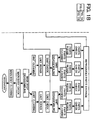
- Fig. 1 is a process flow diagram illustrating a product disassembling and assembling system which is the embodiment of the present invention.
- the product relating to the present embodiment of the invention is, for instance, a copying machine and a printer, etc.
- the assembling of the image forming apparatus product such as the copying machine and the printer, etc. is roughly classified into the two assembling steps; the unit assembling step comprising the operation of previously assembling the plural parts such as lens, mirror, roller, bearing, motor, and PCB (printed circuit board) per each function and per each unit, and the main-body assembling step comprising the operation of assembling the plural units in the main body frame.
- the parts of the product manufactured by the product disassembling and assembling system are made (parts-making).
- the parts thus made are checked (parts-check).
- the new parts after checking are stored (new-parts-storage).
- a used of the same type product is withdrawn from the market place (withdrawal).
- the main body of the product is cleaned ( main body cleaning).
- the cleaned product is checked (main body check).
- the main body of the product after checking is disassembled into the units (main body disassembling).
- the respective units after disassembling are cleaned (unit cleaning).
- the cleaned units are repaired (unit repair).
- the repaired units are checked (unit check).
- a part of the units after checking is stored as it is (reproduced unit storage).
- the other part is further disassembled into parts (unit disassembling).
- the parts after disassembling are cleaned (parts cleaning).
- the cleaned parts are repaired (parts repair).
- the repaired parts are checked (parts check).
- the checked parts are stored (reproduced parts storage).
- the new parts thus stored and the used old parts thus stored are assembled as the unit for the new product (assembling of the unit).
- the unit thus assembled is checked (unit check).
- the checked unit is stored (new unit storage).
- Both of the new unit made from the new parts or the parts of the used old product stored as mentioned before and the used old unit stored also as mentioned before are assembled as the new product main body (main body assembling)
- the product main body thus assembled is checked (main body check).
- the checked product is shipped out (shipment).
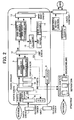
- Fig. 2 is the entire flow diagram illustrating the disassembling/assembling system 1 of the product which is the embodiment of the present invention.
- Figs. 3 through 5 are concept diagrams illustrating the entire works line of the disassembling/assembling system 1.
- the diagrams are divided into three figures: Fig. 3, Fig. 4, and Fig. 5 for convenience.
- Numbers 1 and 2 in circles represent where the respective lines are connected to each other.
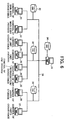
- Figure 6 is a block diagram demonstrating the network constructing the entire control system of the disassembling/assembling system 1 for the product which is the embodiment of the present invention.
- the unmanned conveying vehicle (AGV) 5 performs the conveyance of the various sorts of works to the respective portions (sections).
- the main body disassembling process of disassembling the main body O of the used product and taking out the used units OU is performed on the working line 2.
- the unit disassembling process of disassembling the used units OU and taking out the used parts OP is performed on the working line 3.
- the main body assembling process of assembling the new product main body N is performed also on the working line 2.
- the unit assembling process of assembling the new unit NU is performed also on the working line 3.
- the works of conveying the product main body O used in the main body disassembling process and in the main body assembling process on the working line 2 is performed by a conveying device 19 such as the conveyor, etc.
- a conveying device 4 such as the conveyor, etc.
- the robots 20, 20, ..., controlled by the main body process control computer 22 On the working line 2, there are arranged in a row the robots 20, 20, ..., controlled by the main body process control computer 22.
- the robots 20 are arranged in a row along the conveying device 19 for conveying in a direction the product main body N being assembled.
- the robots 35, 35, ..., controlled by the main body process control computer 22 arranged in a row along the conveying device 4 for conveying in a direction the unit NU being assembled.
- the new parts NP and the used parts OP required in the unit assembling process are stored in the parts storage warehouse or parts stock 6.
- the delivering and the receiving of the parts NP and OP between the parts storage warehouse or parts stock 6 and the unmanned conveying vehicle 5 are performed by a stocker 7.
- the new unit NU and the used unit OU required in the product main body assembling process are stored in the unit storage warehouse or unit stock 8.
- the delivering and the receiving of the units NU and OU between the unit storage warehouse 8 and the unmanned conveying vehicle 5 is performed by another stocker 9.
- the new parts checking process for performing the quality check of the new parts NP to be supplied for the unit assembling process is performed by the parts check facility 11 employed for the predetermined parts checking.
- the new unit checking process for performing the quality check of the new unit NU to be supplied for assembling the product main body N is performed by the unit check facility 12 employed for the predetermined unit checking.
- the final checking process for performing the final check for the product main body N after assembling the product main body N is performed by the main body check facility 13 employed for the predetermined main body checking.
- the used parts checking process for performing the quality check of the used parts OP in order to reuse the used parts OP is also performed by the parts check facility 11.
- the reproduced unit checking process for performing the quality check of the used unit OU is also performed by the unit check facility 12.
- the withdrawn product checking process for performing the quality check of the withdrawn used product main body O is also performed by the main body checking facility 13.
- the main body cleaning process for cleaning and removing the dirt attached to and polluting the main part of the product at the times of using, transporting, and storing the used product main body is performed by the main body cleaning facility 14.
- the unit cleaning process for cleaning and removing the dirt attached to the used units OU is performed by the predetermined unit cleaning facility 15.
- the parts cleaning process for cleaning and removing the dirt attached to the used parts OP is performed by the predetermined parts cleaning facility 16.
- the unit repairing process for restoring the function of the used unit OU in the used product main body, the function of which is deteriorated at the time of using is performed by the unit repair facility 17.
- the parts repairing process for restoring the function of the used parts OP in the used product main body, the function of which is deteriorated at the time of using is performed by part repair by the repairing facility 18.
- the main body assembling and disassembling process performed on the working line 2 and the unit assembling and disassembling processes performed on the working line 3 are the reversible works to each other.
- the new checking process and the final checking process both performed by the main body check facility 13, the new unit checking process and the reproduced unit checking process both performed by the unit check facility 12, the new parts checking process and the used parts checking process both performed by the parts check facility 11, the temporary storage of the parts NP and that of the parts OP performed by the parts storage warehouse, and the temporary storage of the unit NU and that of the unit OU are the same sorts of works as each other.
- the withdrawal of the used product is performed by the sales company, the withdrawal center, etc., and the waste not capable of being used again occurring at the time of checking the parts or disassembling the unit is treated in the recycling center.
- the control system for controlling the entire operation of the system 1 for disassembling and assembling the product is described hereinafter in detail.
- the main body conveying vehicle controlling computer 21 performs the control operation of the unmanned conveying vehicle 5 when the product main bodies O and N
- the main body process controlling computer 22 performs the control operation of the working line 2 for assembling and disassembling the product main bodies O and N.
- the unit reproduction and conveyance controlling computer 23 performs the control of the unmanned conveying vehicle 5 when the various sorts of works are automatically conveyed by the unmanned conveying vehicle 5.
- the unit conveyance controlling computer 24 performs the control of the unmanned conveying vehicle 5, when the delivering and receiving works for the units OU and NU are performed by the unmanned conveying vehicle 5 between the unit storage warehouse 8 and the working line 3.
- the storage controlling computer 25 controls the storage of the units OU and NU of the product.
- the unit process controlling computer 26 performs the control of the working line 3 for assembling and disassembling works of the product units OU and NU.
- the parts storage controlling computer 27 performs the control of the storage of the parts OP and NP.
- the parts conveyance controlling computer 28 performs the control of the unmanned conveying vehicle 5 at the time of automatically conveying the newly made and delivered new parts NP or the cleaned, repaired, and checked old used parts OP by the unmanned conveying vehicle 5.
- the host computer 29 totally controls all of the respective computers 21 through 28.
- the host computer 29 and the respective computers 21 through 28 are connected to each other with the floor LAN 30.
- the various sorts of data required for performing the series of works in order to assemble and disassemble the product main bodies O and N by use of the main body conveyance controlling computer 21 and the main body process controlling computer 22 are stored in the data base 31.
- the various sorts of data required for performing the series of works in order to assemble and disassemble the units OU and NU by use of the unit storage controlling computer 23 and the unit conveyance controlling computer 24, the unit storage controlling computer 25, and the unit process controlling computer 26 are stored in the data base 32.
- the various sorts of data required for performing the control of the parts OP and NP storage and the conveyance thereof are stored in the database 33.
- the various sorts of data for controlling the entire works performed by the system 1 disassembling and assembling the product are stored in the data base 34.
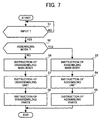
- Fig. 7 is a flow chart illustrating the treatment performed by the host computer 29.
- the assembling mode for performing the works of assembling the main body of the product O by use of the above facility and the disassembling mode for performing the works of disassembling the main body of the product O by use of the above facility can be selectively practiced.
- the selection of the assembling mode and the disassembling mode is performed by the predetermined operation of the host computer 29.
- the host computer 29 realizes the changing-over device.
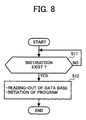
- the selection of the assembling mode or the disassembling mode is inputted (Step S1, Y)
- the selection on whether the mode is the assembling mode or the disassembling mode is judged (Step S2).
- the sorts (models) of the product main body N, the number of the manufactured products, or the other various matters can be additionally set.
- the product disassembling and assembling system 1 is set such that the works for assembling the product main body N can be practiced. Namely, in accordance with the production plan stored in the data base 34, the practice of the works of assembling the product main body N is instructed to the main body conveyance controlling computer 21 and the main body process controlling computer 22 (Step S3). Furthermore, in accordance with the production plan, the practice of the works of assembling the unit NU is instructed to the unit reproduction and conveyance controlling computer 23, the unit conveyance controlling computer 24, the unit storage controlling computer 25, and the unit process controlling computer 26 (Step S4). Furthermore, in accordance with the production plan, the practice of the works of preparing the parts NP and OP is instructed to the parts conveyance controlling computer 27 and the parts storage controlling computer 28 (Step S5).
- the product disassembling and assembling system 1 is set such that the series of works for disassembling the main body of the product O can be practiced. Namely, in accordance with the reproduction plan stored in the data base 34, the practice of the works of assembling the unit OU is instructed to the main body conveyance controlling computer 21, and the main body process controlling computer 22 (Step S6). Furthermore, in accordance with the production plan, the practice of the works of disassembling the unit OU is instructed to the unit reproduction and conveyance controlling computer 23, the unit conveyance controlling computer 24, the unit storage controlling computer 25, and the unit process controlling computer 26 (Step S7). Furthermore, in accordance with the production plan, the practice of the works of purchasing and storing the parts NP and OP is instructed to the parts conveyance controlling computer 27 and the parts storage controlling computer 28 (Step S8).
- the information regarding the various models of the product capable of manufacturing in the present system 1 (model information), the information regarding the respective units OU and NU required for assembling the respective models (units information per models), the information regarding the concrete procedure of assembling the product main body N by use of the respective units OU and NU (main body assembling procedure), the information regarding the storage of the respective units OU and NU in the unit storage warehouse 8 (unit storage information), the information regarding the conveyance path of the unmanned conveying vehicle 5 for conveying the units OU and NU prepared in the unit storage warehouse 8 to the working line 2 (unit conveyance path information), the information regarding the conveyance path of the unmanned conveying vehicle 5 for conveying the product main body N assembled in the working line 2 (main body conveyance path information), the information regarding the quality required for performing the check of the assembled main body N with the checking device prepared in the main body check facility 13 (main body check and quality information) are respectively stored in the data base 31.
- the main body process controlling computer 22 reads out the necessary information such as the model information, machine model unit information, the main body assembling procedure, the main body check quality information, etc. from the data base 31, and the one used in the case of manufacturing the product main body N is raised up (initiated) with the program for controlling the not-shown checking apparatus prepared in the robots 20, 20, Vietnamese, the conveying apparatus 19, and the main body check facility 13 (Step S12).
- the main body conveyance controlling computer 21 reads out the necessary information such as the unit conveying path information, and the main body check quality information from the data base 31 and raises up (initiates) the program for controlling the respective unmanned conveying vehicles 5, 5, Vietnamese (Step S12).
- the information of the various product models which can be disassembled in the present system 1 (models information), the information of the respective units OU after being disassembled per model of the product (product model unit), the information of the concrete procedure of disassembling the product main body N into the respective units OU (main body disassembling procedure), the information of the respective units OU and NU storage in the unit storing warehouse 8 (unit storage information), the information of the conveying path of the unmanned conveying vehicle 5 for conveying the disassembled unit OU to the unit storage warehouse 8, etc.
- unit conveying path information (unit conveying path information), the information of the conveying path of the unmanned conveying vehicle 5 for conveying the product main body O to be disassembled from the main body check facility 13 to the working line 2 (main body conveying path information), and the information of the quality required for checking the product main body O by use of the checking device prepared in the main body check facility 13 (main body checking quality information) are respectively stored in the data base 31.
- the main body process controlling computer 22 reads out the necessary information such as the model information, the machine model unit information, the main body assembling procedure, the main body check quality information, etc. from the data base 31, and the one used in the case of manufacturing the product main body O is raised up (initiated) with the program for controlling the not-shown checking apparatus prepared in the robots 20, 20, Vietnamese, the conveying apparatus 19, and the main body check facility 13 (Step S12).
- the main body conveyance controlling computer 21 reads out the necessary information such as the unit conveying path information, and the main body check quality information from the data base 31 and raises up (initiates) the one employed in the case of disassembling the product main body O with the program for controlling the respective unmanned conveying vehicles 5, 5, Vietnamese (Step S12).
- the host computer 29 performs the process of Fig. 7. Thereafter, the unit reproduction and conveyance controlling computer 23, the unit conveyance controlling computer 24, the unit storage controlling computer 25, and the unit process controlling computer 26 perform the respective processings. The operations performed by those computers are respectively described hereinafter.
- the information regarding the units OU and NU of the various models of the product capable of being manufactured in the present system 1 (model information), the information regarding the respective parts OP and NP required for assembling the unit NU of the respective models (units information per models), the information regarding the concrete procedure of assembling the respective units NU by use of the respective parts OP and NP (unit assembling procedure), the information regarding the storage of the respective parts OP and NP in the parts storage warehouse 6 (parts storage information), the information regarding the conveyance path of the unmanned conveying vehicle 5 for conveying the parts OP and NP prepared in the parts storage warehouse 6 to the working line 3 by use of the unmanned vehicle 5 and for conveying the unit NU after manufacturing to the unit check facility 12 (unit conveying path information), and the information regarding the quality required for performing the check of the unit NU after assembling by use of the unit check facility 12 (unit checking quality information), are respectively stored in the data base 32.
- the unit process controlling computer 26 reads out the necessary information such as the model (sort) information, the model unit information, the unit assembling procedure information, and the unit checking quality information, etc. from the data base 32.
- the one employed for manufacturing the unit NU with the program for controlling the checking device not shown prepared in the robots 35, 35, ., the conveying device 4, and the unit check facility 12 is raised up initiated (Step S12).
- the unit conveyance controlling computer 24 reads out the necessary information such as the unit conveying path information from the data base 32 and the program for controlling the respective unmanned conveying vehicles 5, 5, Vietnamese employed in the case of manufacturing the unit NU (Step S12).
- Step S11 when the detailed setting information such as the instruction (command) for practicing the assembling mode and the sort of the product main body N to be manufactured is received from the host computer 29 (Step S11), the unit reproduction conveyance controlling computer 23 reads out the necessary information such as the unit conveying path information from the data base 32, and the read-out information is employed in the case of manufacturing the unit NU.
- the program for controlling the respective unmanned conveying vehicles 5, 5, Vietnamese is initiated (Step S12).
- Step S11 when the detailed setting information such as the instruction (command) of practicing the assembling mode and the sort of the product main body N to be manufactured is received from the host computer 29 (Step S11), the unit storage controlling computer 25 reads out the parts storage information from the data base 32, and the control program for controlling the unit storage warehouse 8 is initiated (step 12)
- the works of assembling the unit NU for the product of the predetermined model can be performed on the working line 3.
- the host computer 29 performs the processings of Fig. 7, and thereafter, the unit reproduction and conveyance controlling computer 23, the unit conveyance controlling computer 24, the unit storage controlling computer 25, and the unit process controlling computer 26 perform the respective processing. The operations thereof are described hereinafter.
- the information regarding the various models unit OU of the product capable of being disassembled in the present system 1 (Model Information), the information regarding the respective parts OP after disassembling the unit NU for the respective models (models unit information), the information regarding the concrete procedure of disassembling the respective units OU into the respective parts OP (unit disassembling procedure), the information regarding the storage of the respective parts OP and NP in the parts storage warehouse 6 (parts storage information), the information regarding the path of the unmanned conveying vehicle 5 for conveying the disassembled unit OU to the unit check facility 12 or the parts storage warehouse 6 (unit conveying path information), the information regarding the quality required for performing the check of the disassembled unit OU by use of the checking device prepared in the unit check facility 12 (unit checking quality information) are respectively stored.
- Model Information The information regarding the various models unit OU of the product capable of being disassembled in the present system 1
- models unit information the information regarding the respective parts OP after disassembling the unit NU for the respective models
- the unit process controlling computer 26 reads out the necessary information such as the model (sort) information, the model unit information, the unit assembling procedure information, and the unit checking quality information, etc. from the data base 32.
- the one employed for disassembling the unit OU with the program for controlling the checking device not shown prepared in the robots 35, 35, ., the conveying device 4, and the unit check facility 12 is raised up initiated (Step S12).
- the unit conveyance controlling computer 24 reads out the necessary information such as the unit conveying path information from the data base 32, and the program for controlling the unmanned conveying vehicles 5, 5, Vietnamese, employed in the case of disassembling the unit NU is initiated (Step S12).
- the unit reproduction and conveyance controlling computer 23 reads out the necessary information such as the unit conveying path information from the data base 32, and the program for controlling the unmanned conveying vehicles 5, 5, Vietnamese employed in the case of disassembling the unit NU is initiated (Step S12).
- Step S11 when the detailed setting information such as the instruction of practicing the assembling mode and the sort of the product main body N to be manufactured is received from the host computer 29 (Step S11), the unit storage controlling computer 25 reads out the parts storage information from the data base 32, and the control program of controlling the parts storage warehouse 6 is initiated (Step S12).
- the host computer 29 performs the processing of Fig. 7, and thereafter the parts storage controlling computer 28 and the parts conveyance controlling computer 27 perform the respective processing. The operations thereof are described hereinafter.
- the information regarding the parts NP and OP constructing the respective units NU and OU of the respective models of the product main body N (models parts information), the information regarding the control of the storage of the parts NP and OP in the parts storage warehouse 6 (parts storage information), the information regarding the path of the unmanned conveying vehicle 5 for conveying the parts NP and OP existing in the parts storing warehouse 6 and the parts NP onto the working line 3, etc. are stored in the data base 33.
- the parts storage controlling computer 28 reads out the information of the model parts and the information of the parts storage and initiate the control program for controlling the parts storage warehouse 6 (Step S12).
- Step S11 when the detailed setting information such as the instruction for practicing the assembling mode and the sort (model) of the product main body N to be manufactured is received from the host computer 29 (Step S11), the necessary information such as the parts conveying path information is read out from the data base 33, and the program for controlling the respective unmanned conveying vehicles 5, 5, Vietnamese, employed in the case of conveying the parts NP and OP (Step S12).
- the host computer 29 performs the processing of Fig. 7, and thereafter the parts storage controlling computer 28 and the parts conveyance controlling computer 27 perform the respective processing. The operations thereof are described hereinafter.
- the information regarding the parts NP and OP constructing the respective units NU and OU of the respective models of the product main body N (models parts information), the information regarding the control of the storage of the parts NP and OP in the parts storage warehouse 6 (parts storage information), and the information of the path for the unmanned conveying vehicle 5 conveying the parts NP and OP after being assembled in the working line 3 into the parts storage warehouse 6 (parts conveying path information), etc. are stored in the data base 33.
- the parts storage controlling computer 28 reads out the model parts information and the parts storage information and initiates the control program for controlling the parts storage warehouse 6 (Step S12).
- Step S11 when the detailed setting information such as the instruction for practicing the disassembling mode and the sort of the product main body N to be manufactured is received from the host computer 29 (Step S11), the necessary information such as the parts conveying path information is read out from the data base 33, and the program for controlling the respective unmanned conveying vehicles 5, 5, —, employed in the case of conveying the parts NP and OP after being disassembled on the working line 3 into the parts storage warehouse 6 (Step S12).
- the units NU and OU are automatically assembled in order on the main body frame by the co-operation of the robot 20 and the conveying device 19 with the assembling mode of the apparatus main body N.
- the assembling is done by use of the fastening member such as screws, snap fits, etc.
- the fastened state of the used apparatus main body O by use of the screws and the snap fits, etc. is released in the reverse order to that of the assembling mode.
- the used unit OU is taken out from the main body and put on the unmanned conveying vehicle 5 serving as the conveying device.
- the conveying device 19 conveys the main body frame in the positive (normal) direction of assembling in order the units NU and OU onto the main body frame, in the assembling mode.
- the device 19 conveys the used apparatus main body O in the reverse direction to that of the assembling mode, in the disassembling mode.
- the conveying device 19 uses the conveying conveyor.
- the flatcar or the unmanned conveying car (AGV) can be used instead of the conveyor.
- the apparatus main body N When the apparatus main body N is assembled on the working line 2 which is the main body assembling/disassembling facility, the units NU and OU of the necessary number stored in the unit storage warehouse 8 are moved onto the working line 2, as occasion demands.
- the apparatus main body O When the apparatus main body O is disassembled on the working line 2, the used unit OU is automatically disassembled and taken out by the co-operation of the robot 20 and the conveying device 19 and is conveyed to the cleaning facility 15, the repairing facility 17, the unit check facility 12, the working line 3, and the unit storage warehouse 8.
- the parts OP and NP are automatically assembled in order on the unit frame, in the assembling mode, by the co-operation of the robot 35 and the conveying device 4.
- the assembling is done by use of the fastening member such as screws, snap fits, etc.
- the disassembling mode the fastened state of the unit OU by use of the screws and the snap fits, etc. is released in the reverse order to that of the assembling mode.
- the used parts OP is taken out in order from the unit OU and put on the unmanned conveying vehicle 5 serving as the conveying device.
- the conveying device 4 conveys in order the parts OP and NP in the positive (normal) direction of assembling them onto the unit frame.
- the conveying device 4 conveys the used unit OU in the reverse direction to that of the assembling mode.
- the conveying conveyor is used as the conveying device 4.
- the flatcar or the unmanned conveying car (AGV) can be used instead of the conveyor.
- the unmanned conveying vehicle 5 conveys the parts OP and NP of necessary number previously stored in the parts storage warehouse 6 onto the working line, as occasion demands.
- the disassembling mode the used parts OP taken out on the working line 3 are conveyed to the respective facilities of the subsequent processes; the cleaning facility 15, the repairing facility 17, the unit check facility 12, and the parts storage warehouse 6.
- the product main body N after manufacturing is the re-produced machine assembled by use of the units OU and the parts OP, in order to guarantee the same quality as that of the newly-produced machine, after performing the reproducing treatment of the used product withdrawn from the market place; such as disassembling, cleaning, and repairing, etc., the product is finally checked.
- Both of the units OU and the parts OP are thrown into the conventional production line and employed in the machine to be reproduced.
- the data name of the apparatus, model, manufacturing number, installment time, installment environment, usage frequency (number of the copied sheets), trouble career, parts exchanging, the actual usage results (records) accumulated during the time period when the product main body O is used; such as name of the apparatus, model, manufacturing number, installment time, installment environment, usage frequency (number of the copied sheets), trouble career, and parts exchanging career, etc. are utilized, and the checking and judgement on whether the product should be used again is performed.
- the main body check facility 13 performs the final checking; the image checking of the product, and the electric check, etc. after assembling the main body N.
- the checking item, device, and the facility can be made common.
- the checking item, device, and the facility in the process of checking the unit property and the unit function of a respective new unit NU to be supplied for assembling the main body N and the process of checking the unit property and the unit function on whether a unit OU can be used again after disassembling and taking out of the used product main body O and performing the reproduction treatments such as the cleaning and the repairment of the taken-out used unit OU, the checking item, device, and the facility can be made common.
- the unit check facility 12 commonly utilizes the check item, the device, or the apparatus, in a process of performing the check of the unit property and the unit function of respective new units to be supplied for assembling the main body N, and in another process of performing the check of the unit property and the unit function on whether the used unit OU can be re-used after performing the reproducing treatment, such as the cleaning, repairing, etc., of the used unit OU obtained by disassembling the used product main body O and taking out the used unit OU therefrom.
- the reproducing treatment such as the cleaning, repairing, etc.
- the parts check facility 11 causes the checking item, device, and facility to be used commonly, in the process of performing the mechanical check of the outer appearance, shape, and size, etc. of a new part NP and the other check of the electrical characteristic and the optical characteristic for the new parts NP newly processed and manufactured in order to supply them for assembling the unit NU, and in the process of disassembling the used unit OU and performing the mechanical check of the outer appearance, shape, and size, etc. on whether the parts OP can be re-used after performing the reproducing treatment such as the cleaning and repairment, etc., of the used parts taken out therefrom.
- the new parts NP for assembling the new product main body N are manufactured and conveyed to the parts check facility 11.
- the quality of the new parts is checked by the parts check facility 11. Thereafter, the checked parts are conveyed into the parts storage warehouse 6 and stored therein temporarily.
- the used product main body O, and the reproducing treatment of the taken-out used parts OP such as cleaning and repairing, etc. is performed. Thereafter, the reproduced parts check on whether the parts OP can be re-used is performed by the parts check facility 11. Thereafter, as in the case of the new parts NP, the respective sorts of parts are conveyed to the parts storage warehouse 6 and temporarily stored therein.
- the used parts OP withdrawn from the market place and treated with the reproducing process are checked in the same manner as that of the new parts NP and thereby the quality can be assured. Therefore, in the parts storage warehouse 6, it is not necessary to attempt to distinguish the new parts NP from the reproduced parts OP and store them in the warehouse 6.
- the common storage warehouse can be used. It is desirable to use shelf, rack, flatcar, automatic warehouse, etc.
- the unit NU for assembling the new product main body N is assembled in order on the working line 3. The quality thereof is checked by the unit check facility 12. Thereafter, the respective sorts of unit are conveyed to the unit storage warehouse 8 and temporarily stored therein. On the other hand, the used product main body O is disassembled and the used unit OU taken out therefrom is treated with the reproducing process of cleaning and repairing, etc. Thereafter, as in the case of the new unit NU, the unit OU is conveyed to the unit storage warehouse 8 and temporarily stored therein.
- the used units OU withdrawn from the market place and treated with the reproducing process are checked in the same manner as that of the new unit NU and thereby the quality can be assured. Therefore, in the unit storage warehouse 8, it is not necessary to attempt to distinguish new units NU from reproduced units OU and store them in the warehouse 6.
- the common storage warehouse can be used. It is desirable to use shelf, rack, flatcar, automatic warehouse, etc.
- the used facilities 3 which are, in the embodiment, the working lines 2 and 3, the check facilities 11, 12, and 13, and the storage warehouses 6 and 8 are jointly used, regarding the reversible works such as the assembling of the product main body N and the disassembling of the product main body O, and the assembling of the unit NU and the disassembling of the unit OU; the checking works of the product main bodies N and O, the units NU and OU, and the parts NP and OP; and the same-sort temporary storing works of the units NU and OU and the parts NP and OP.
- Those jointly-used facilities mutually perform reversible operations or same-sort operations. Consequently, that results in making the installation of a plurality of similar facilities unnecessary. Furthermore, it is possible to simply realize the compact structure of the entire system and the reduction
- the host computer 29 controls, in a single step, the usage of the program and the various-sorts of data employed in those facilities, the reduction of the product manufacturing cost can be easily realized.
Landscapes
- Engineering & Computer Science (AREA)
- Mechanical Engineering (AREA)
- Automatic Assembly (AREA)
- Management, Administration, Business Operations System, And Electronic Commerce (AREA)
Abstract
Description
- The present invention relates to a product disassembling and assembling system and a method of disassembling and assembling the product.
- In the recent years, the tackling of environmental maintenance has become an urgent business for enterprises. In a specific product such as a copying machine, printer, etc., various sorts of recycling usage have been developed, from the viewpoint of resource saving and effective resource utilization.
- Furthermore, there exists a re-manufactured machine as one form (configuration) of the re-utilization of a used product. That is a so-called "second-hand" machine made by the minimum-necessary parts replacement and repairment by performing the outside-view cleaning and partial disassembling. Compared with the newly-made product, the guarantee of the quality is vague. Therefore, the valuation in the market is low and the cost merit is small.
- In such a situation, a re-manufactured machine is effectively utilized, and it is proposed that, as a device for enlarging the recycling, the quality of the re-manufactured machine is guaranteed to the same extent as that of the newly-made machine and the re-manufactured machine is put on the market. In other words, the used product withdrawn from the market is disassembled and the parts of the product thus disassembled are cleaned, reproduced, repaired, and checked. Only the parts passing the check standard are put on the production line and used in the re-manufactured machine together with newly-made parts. As the result, the quality of the re-manufactured machine is guaranteed as the same quality as a newly-manufactured machine. In addition, the valuation in the market for the re-manufactured machine is improved. Therefore, it can be expected that the product recycling; is enlarged and therefore that largely contributes to energy saving.
- In order to produce such a re-manufactured machine, according to the technology disclosed in the published specification of Japanese Laid-open Patent Publication No. 11-239926, it has been already proposed to provide a high-quality and reasonable product recycling system for the disassembling production processes. The system includes a disassembling line for disassembling the main body of the used product and taking out the used parts from the used product, and an assembling line for assembling the new product, a first conveying device for supplying the used parts taken out on the disassembling line to the assembling line, a storage section for storing the new parts, a second conveying device for supplying the new parts from the storage section to the assembling line, and a control device for performing the control operation so as to supply the necessary amount of the new parts from the storage section to the assembling line in accordance with the assembling amount of the new product on the assembling line and the supplying amount of the used parts from the disassembling line.
- According to the technology disclosed in the published specification of Japanese Laid-open Patent Publication No. 11-291135, in a system of automatically assembling and disassembling a product by use of an automatic machine for automatically performing many operations, the disassembled parts can be re-used effectively. The system functions as an automatic assembling/disassembling system capable of flexibly coping with being applied to both of the assembling work and the disassembling work without changing the direction of the manufacturing line. The system further judges whether the works to be practiced is the assembling works or the disassembling works from the parts conveyed to the automatic machine. In accordance with the result of the above judgement, the system performs the automatic assembling of the parts and the automatic checking of the product, or performs the automatic disassembling of the parts and the automatic checking of the same parts. The works thus discriminated are selectively practiced in order to discriminate the parts which can be used again.
- However, according to the technology disclosed in the published specification of Japanese Laid-open Patent Publication No. 11-239926, it is necessary to prepare, respectively, the disassembling line for disassembling the used product and taking out the used parts at the same time and the assembling line for assembling the new product, for the respective special usage. To state concretely, the throwing-in robot, the conveying device, the disassembling robot, the checking device, and the accommodating device are necessary in the disassembling line, while the throwing-in robot, the conveying device, the disassembling robot, the checking device, and the accommodating device (groups of the same devices) are also necessary in the assembling line.
- Furthermore, in the technology disclosed in the published specification of Japanese Laid-open Patent Publication No. 11-291135, in general, if the procedure of assembling the product is parts a, parts b, parts c, the procedure of disassembling the product is the reversed order, namely, parts c, parts b, parts a on almost all occasions. Therefore, the work of assembling the parts a, and the work of disassembling the parts c have to be performed in the same working section, and the toolings for assembling/disassembling may become inevitably complicated. Furthermore, since the assembling line and disassembling line are judged on the lines after conveying the parts, it is necessary to always prepare the parts supplying device for assembling the parts and the parts withdrawing device after disassembling the product. The line structure may become very complicated. The lowering of the respective operation ratio cannot be avoided.
- On the other hand, in the future, the withdrawal and re-utilization (re-using) of the product may tend to become the responsibility of the manufacturer. When 100% of the used product is withdrawn, disassembled, and re-used, the quantity of the products may become very large (countless). According to the aforementioned background art, it is estimated that the very large specialized factory is required for disassembling the used product. Therefore, a large economic burden (load) occurs for the new facility investment. The withdrawal amount of the used product largely depends on the economic situation at present and the market tendency. When the withdrawal amount largely varies, the working situation of the aforementioned disassembling special line also largely varies. Therefore, the working may become non-effective. The economic burden and the cost increase of the re-manufactured machine cannot be avoided, in addition to the economic burden. Consequently, there is a risk that the enlargement of the recycling and the energy saving are largely damaged, or hindered.
- Heretofore, the background arts regarding the product disassembling and assembling system and the method of disassembling and assembling the product have been described. However, according to such the background arts, there exists no advantageous functional effect for improving such a product disassembling and assembling system and method.
- The present invention has been made in view of the above-discussed and other problems, and to solve the above-mentioned defects and troublesome matters of the background arts.
- To state in more detail, in consideration of the aforementioned problems of the background arts, the present invention aims at providing an improved new product disassembling and assembling system and method. The invention aims to make the entire system compact and reduce the manufacturing cost. The invention aims at further easily realizing the cost reduction of manufacturing the product.
- A more complete appreciation of the invention and many of the attendant advantages thereof will be readily obtained as the same becomes better understood by reference to the following detailed description when considered in connection with the accompanying drawings, wherein:
- Fig. 1 is a process flow diagram of the product disassembling and assembling system which is an embodiment of the present invention;
- Fig. 2 is an overall flow diagram of the product disassembling and assembling system;
- Fig. 3 is a concept diagram illustrating the entire works line;
- Fig. 4 is another concept diagram illustrating the entire works line;
- Fig. 5 is still another concept diagram illustrating the entire works line;
- Fig. 6 is a block diagram of the network constructing the entire control system of the product disassembling and assembling system;
- Fig. 7 is a flow chart illustrating the process of the host computer constructing the control system; and
- Fig. 8 is a flow chart illustrating the process of the respective computers constructing the control system.
-
- In describing the preferred embodiment of the present invention illustrated in the accompanying drawings, specific terminology is employed for the sake of clarity. However, the present invention is not intended to be limited to the specific terminology so selected and it is to be understood that each specific element includes all technical equivalents which operate in a similar manner.
- Referring now to the drawings, in which like reference numerals designate identical or corresponding parts throughout the several views, and more particularly to Figs. 1 through 8, a product disassembling and assembling system and a method of disassembling and assembling the product are described in detail, hereinafter.
- A first aspect of the present invention relates to a product disassembling and assembling system including: a producing facility for producing the product; and a processing facility for performing the process of disassembling the used product and offering the units or parts used for producing said product, in which the units or parts after being processed can be provided for producing said product. The product disassembling and assembling system further comprises a process facility commonly used for practicing both mutually reversible works between the respective product producing steps and the respective process disassembling steps or the same sort of work. The process facility performs said mutually reversible work or same sort of work, thereby the facility performs the mutually reversible operation or same sort operation.
- A mutually reversible work between the first process of the producing the product and the second process of disassembling the used product into units and parts is an operation that is carried out in one order in the process of producing the product and the reverse order in the process of disassembling the used products into units and parts.
- The same sort work between the first process of producing the product and the second process of disassembling the used product into the units and parts is an operation that is carried out in one order in the first process of producing the product and in the same order in the second process of disassembling the used product into units and parts.
- The mutually reversible operation is one which is carried out in a first direction in the facility in the first process and in the reverse direction in the second process.
- The same sort of operation is one which is carried out in first direction in the facility in the first process and in the same direction in the second process.
- In the second aspect of the present invention relating to the product disassembling and assembling system in connection with the first aspect, at least one sort among the commonly used facilities is used, which is controlled by a computer. The product disassembling and assembling system further includes a changing-over device for changing over the program employed in the computer and the data employed in the program in the case of performing the production.
- In the third aspect of the present invention relating to the product disassembling and assembling system in connection with the second aspect, a plurality of sorts of commonly used facility are used which are controlled by the computer. The changing-over device is capable of performing in a system step the changing-over operation of the plurality of commonly-used facilities.
- In the fourth aspect of the present invention relating to the product disassembling and assembling system in connection with one of the first through third aspects, one sort among the commonly-used facilities is a main body assembling and disassembling system commonly used in a process of performing the production of assembling the units or parts constructing the product main body and in another process of disassembling the used product into the units or parts.
- In the fifth aspect of the present invention relating to the product disassembling and assembling system in connection with one of the first through fourth aspects, one sort among said commonly-used facilities is a unit assembling and disassembling facility commonly used in a process of assembling the parts constructing the product main body and thereby producing the product main body and the units constructing the product main body, and in another process of disassembling the units constructing the used product or the product main body into the parts.
- In the sixth aspect of the present invention relating to the product disassembling and assembling system in connection with one of the first through fifth aspects, one sort among the commonly-used facilities is a unit storage chamber commonly used in a process of temporarily preserving the newly-made units constructing the product main body employed for the production and in another process of temporarily preserving the units after disassembling.
- In the seventh aspect of the present invention relating to the product disassembling and assembling system in connection with one of the first through sixth aspects, one sort among the commonly-used facilities is a parts storage chamber commonly used in a process of temporarily preserving the newly-made parts constructing the product main body or the units constructing the product main body employed for the production and in another process of temporarily preserving the parts after disassembling.
- In the eighth aspect of the present invention relating to the product disassembling and assembling system in connection with the fourth aspect, one sort among the commonly-used facilities is a unit storage chamber commonly used in a process of temporarily preserving the newly-made units constructing the product main body employed for the production and in another process of temporarily preserving the units after disassembling; and another sort of the commonly-used facilities is a conveying device commonly used in a process of conveying the units from the main body assembling and disassembling facility to the unit storage chamber and in other process of conveying the units from the unit storage chamber to the main body assembling and disassembling facility.
- In the ninth aspect of the present invention relating to the product disassembling and assembling system in connection with the fifth aspect, one sort among the commonly-used facilities is a parts storage chamber commonly used in a process of temporarily preserving the newly-made parts constructing the product main body or the units constructing the product main body employed for the production and in another process of temporarily preserving the parts after disassembling; and another sort of said commonly-used facilities is a conveying device commonly used in a process of conveying the parts from the unit assembling and disassembling facility to the parts storage chamber and in other process of conveying the parts from the parts storage chamber to the unit assembling and disassembling facility.
- In the tenth aspect of the present invention relating to the product disassembling and assembling system in connection with one of the first through ninth aspects, one sort of the commonly-used facilities is a main body checking facility commonly used in a process of checking the product main body after producing and in other process of checking the used product main body.
- In the eleventh aspect of the present invention relating to the product disassembling and assembling system in connection with one of the first through tenth aspects, one sort of the commonly-used facilities is a unit checking facility commonly used in a process of checking the newly-made units constructing the product main body employed for the production and in other process of checking the disassembled units.
- In the twelfth aspect of the present invention relating to the product disassembling and assembling system in connection with one of the first through eleventh aspects, one sort of the commonly-used facilities is a party checking facility commonly used in a process of checking the parts constructing the product main body or the units constructing the product main body employed for said production and in other process of checking the assembled parts.
- Thirteenth through twenty-fourth aspects of the present invention respectively relate to the method of disassembling and assembling the product corresponding to the first through twelfth aspects. The descriptions of the methods are omitted here.
- In the first aspect of the invention, between the work of producing the product and the work of performing the process of disassembling the used product and offering the units and the parts employed for producing the product, the facilities are jointly used for the reversible operation and the same-sort operation. Those jointly-used facilities carry out the reversible work and the same-sort work. Therefore, the same-sort plural facilities can be necessitated, the entire structure of the system can be made compact, and the reduction of the product manufacturing cost can be easily realized.
- The second aspect of the invention can change over the program and the data employed in the program and use the facility controlled by the computer for both purposes only after such the changing-over, in the product disassembling/ assembling system. Consequently, the reduction of the product manufacturing cost can be easily realized.
- Since the third aspect can use a plurality of facilities controlled by the computer in a gross, the reduction of the product manufacturing cost can be further easily realized.
- Since the fourth aspect performs reversibly the assembling work of the units or the parts and the disassembling work of the units or the parts by use of the same facility, the reduction of the product manufacturing cost can be easily realized. Since the fifth aspect perform:> reversibly the assembling and disassembling work of the product main body or the units by use of the same facility, the reduction of the product manufacturing cost can be further easily realized.
- Since the sixth aspect performs the work of temporarily storing the newly-made units and the work of temporarily storing the units after being disassembled which are same sorts of work by use of the same storage warehouse, the reduction of the product manufacturing cost can be further easily realized. Since the seventh aspect performs the work of temporarily storing the newly-made parts and the work of temporarily storing the parts after being disassembled which are same sorts of work by use of the same storage warehouse, the reduction of the product manufacturing cost can be also easily realized.
- Since the eighth and ninth aspects respectively perform the same-sort conveying work with the same conveying device, the reduction of the product manufacturing cost can be easily realized.
Since the tenth, eleventh, and twelfth aspects respectively perform the same-sort checking work with the same checking facility, the reduction of the product manufacturing cost can be easily realized. - Since the thirteenth aspect jointly uses the same facility for performing the reversible work or the same-sort work between the work of producing the products and the work of performing the process of disassembling the used product and offering the unit or the parts to be used for producing the product. By utilizing the facility capable of mutually performing the reversible operation or the same-sort operation, the facility carries out the reversible work or the same-sort work. Thereby, the similar plural facilities are not necessitated and to be made compact. Consequently, the reduction of the product manufacturing cost can be easily realized.
Since the fourteenth aspect can use the facility controlled by the computer for both purposes only by changing over the program and the data employed in the program, the reduction of the product manufacturing cost can be easily realized. - Since the fifteenth aspect can use the facility controlled by the computer in a single step, the reduction of the product manufacturing cost can also be easily realized.
- Since the sixteenth and the seventeenth aspects reversibly perform the works of assembling the unit or the parts and the works of disassembling the used product into the units or the parts by use of the same facility, the reduction of the product manufacturing cost can be easily realized.
- Since the eighteenth and nineteenth aspects perform the work of temporarily storing the newly-made units or parts and the work of temporarily storing the units or parts after being disassembled which are of the same-sort by use of the same storage warehouse, the reduction of the product manufacturing cost can be easily realized.
Since the twentieth and twenty-first aspects perform the same-sort assembling works by use of the same conveying device, the reduction of the product manufacturing cost can be easily realized. - Since the twenty-second, twenty-third, and twenty-fourth aspects perform the same-sort checking work by use of the same checking facility, the reduction of the product manufacturing cost can be easily realized.
- An embodiment of the present invention is described hereinafter, referring to the accompanying drawings.
- Fig. 1 is a process flow diagram illustrating a product disassembling and assembling system which is the embodiment of the present invention.
- The product relating to the present embodiment of the invention is, for instance, a copying machine and a printer, etc. The assembling of the image forming apparatus product such as the copying machine and the printer, etc. is roughly classified into the two assembling steps; the unit assembling step comprising the operation of previously assembling the plural parts such as lens, mirror, roller, bearing, motor, and PCB (printed circuit board) per each function and per each unit, and the main-body assembling step comprising the operation of assembling the plural units in the main body frame.
- As shown in Fig. 1, the parts of the product manufactured by the product disassembling and assembling system are made (parts-making). The parts thus made are checked (parts-check). The new parts after checking are stored (new-parts-storage).
- On the other hand, a used of the same type product is withdrawn from the market place (withdrawal). The main body of the product is cleaned ( main body cleaning). The cleaned product is checked (main body check). The main body of the product after checking is disassembled into the units (main body disassembling). The respective units after disassembling are cleaned (unit cleaning). The cleaned units are repaired (unit repair). The repaired units are checked (unit check). A part of the units after checking is stored as it is (reproduced unit storage). The other part is further disassembled into parts (unit disassembling). The parts after disassembling are cleaned (parts cleaning). The cleaned parts are repaired (parts repair). The repaired parts are checked (parts check). The checked parts are stored (reproduced parts storage).
- The new parts thus stored and the used old parts thus stored are assembled as the unit for the new product (assembling of the unit). The unit thus assembled is checked (unit check). The checked unit is stored (new unit storage).
- Both of the new unit made from the new parts or the parts of the used old product stored as mentioned before and the used old unit stored also as mentioned before are assembled as the new product main body (main body assembling) The product main body thus assembled is checked (main body check). The checked product is shipped out (shipment).
- Fig. 2 is the entire flow diagram illustrating the disassembling/
assembling system 1 of the product which is the embodiment of the present invention. Figs. 3 through 5 are concept diagrams illustrating the entire works line of the disassembling/assembling system 1. The diagrams are divided into three figures: Fig. 3, Fig. 4, and Fig. 5 for convenience. In the respective figures,Numbers assembling system 1 for the product which is the embodiment of the present invention.
As shown in Figs. 2 through 5, the unmanned conveying vehicle (AGV) 5 performs the conveyance of the various sorts of works to the respective portions (sections). The main body disassembling process of disassembling the main body O of the used product and taking out the used units OU is performed on the workingline 2. The unit disassembling process of disassembling the used units OU and taking out the used parts OP is performed on the workingline 3. The main body assembling process of assembling the new product main body N is performed also on the workingline 2. The unit assembling process of assembling the new unit NU is performed also on the workingline 3. - The works of conveying the product main body O used in the main body disassembling process and in the main body assembling process on the working
line 2 is performed by a conveyingdevice 19 such as the conveyor, etc. On the other hand, the work of conveying the units OU used in the unit disassembling process and in the unit assembling process on the workingline 3 is performed by a conveyingdevice 4, such as the conveyor, etc. - On the working
line 2, there are arranged in a row therobots process control computer 22. Therobots 20 are arranged in a row along the conveyingdevice 19 for conveying in a direction the product main body N being assembled. On the other hand, on the workingline 3, there are arranged in a row therobots process control computer 22, arranged in a row along the conveyingdevice 4 for conveying in a direction the unit NU being assembled. - The new parts NP and the used parts OP required in the unit assembling process are stored in the parts storage warehouse or
parts stock 6. The delivering and the receiving of the parts NP and OP between the parts storage warehouse orparts stock 6 and the unmanned conveyingvehicle 5 are performed by astocker 7. The new unit NU and the used unit OU required in the product main body assembling process are stored in the unit storage warehouse orunit stock 8. The delivering and the receiving of the units NU and OU between theunit storage warehouse 8 and the unmanned conveyingvehicle 5 is performed by anotherstocker 9. - The new parts checking process for performing the quality check of the new parts NP to be supplied for the unit assembling process is performed by the parts check
facility 11 employed for the predetermined parts checking. The new unit checking process for performing the quality check of the new unit NU to be supplied for assembling the product main body N is performed by theunit check facility 12 employed for the predetermined unit checking. The final checking process for performing the final check for the product main body N after assembling the product main body N is performed by the mainbody check facility 13 employed for the predetermined main body checking. Furthermore, the used parts checking process for performing the quality check of the used parts OP in order to reuse the used parts OP is also performed by the parts checkfacility 11. The reproduced unit checking process for performing the quality check of the used unit OU is also performed by theunit check facility 12. The withdrawn product checking process for performing the quality check of the withdrawn used product main body O is also performed by the mainbody checking facility 13. - The main body cleaning process for cleaning and removing the dirt attached to and polluting the main part of the product at the times of using, transporting, and storing the used product main body is performed by the main
body cleaning facility 14. The unit cleaning process for cleaning and removing the dirt attached to the used units OU is performed by the predeterminedunit cleaning facility 15. The parts cleaning process for cleaning and removing the dirt attached to the used parts OP is performed by the predeterminedparts cleaning facility 16. - The unit repairing process for restoring the function of the used unit OU in the used product main body, the function of which is deteriorated at the time of using is performed by the
unit repair facility 17. The parts repairing process for restoring the function of the used parts OP in the used product main body, the function of which is deteriorated at the time of using is performed by part repair by the repairingfacility 18. - The main body assembling and disassembling process performed on the working
line 2 and the unit assembling and disassembling processes performed on the workingline 3 are the reversible works to each other. The new checking process and the final checking process both performed by the mainbody check facility 13, the new unit checking process and the reproduced unit checking process both performed by theunit check facility 12, the new parts checking process and the used parts checking process both performed by the parts checkfacility 11, the temporary storage of the parts NP and that of the parts OP performed by the parts storage warehouse, and the temporary storage of the unit NU and that of the unit OU are the same sorts of works as each other. - Moreover, as shown in Fig. 2, the withdrawal of the used product is performed by the sales company, the withdrawal center, etc., and the waste not capable of being used again occurring at the time of checking the parts or disassembling the unit is treated in the recycling center.
- Referring to the Figs. 3 through 6, the control system for controlling the entire operation of the
system 1 for disassembling and assembling the product is described hereinafter in detail. At the time of assembling and disassembling the product main body O and the product main body N, the main body conveyingvehicle controlling computer 21 performs the control operation of the unmanned conveyingvehicle 5 when the product main bodies O and N, and the main bodyprocess controlling computer 22 performs the control operation of the workingline 2 for assembling and disassembling the product main bodies O and N. - In the works at the time of assembling and disassembling the units OU and NU in the product, when the series of works are performed for reproducing the used unit OU, the unit reproduction and
conveyance controlling computer 23 performs the control of the unmanned conveyingvehicle 5 when the various sorts of works are automatically conveyed by the unmanned conveyingvehicle 5. The unitconveyance controlling computer 24 performs the control of the unmanned conveyingvehicle 5, when the delivering and receiving works for the units OU and NU are performed by the unmanned conveyingvehicle 5 between theunit storage warehouse 8 and the workingline 3. Thestorage controlling computer 25 controls the storage of the units OU and NU of the product. The unitprocess controlling computer 26 performs the control of the workingline 3 for assembling and disassembling works of the product units OU and NU. - Furthermore, in the works of assembling and disassembling the parts OP and NP, the parts
storage controlling computer 27 performs the control of the storage of the parts OP and NP. The parts conveyance controllingcomputer 28 performs the control of the unmanned conveyingvehicle 5 at the time of automatically conveying the newly made and delivered new parts NP or the cleaned, repaired, and checked old used parts OP by the unmanned conveyingvehicle 5. - The
host computer 29 totally controls all of therespective computers 21 through 28. Thehost computer 29 and therespective computers 21 through 28 are connected to each other with thefloor LAN 30. - The various sorts of data required for performing the series of works in order to assemble and disassemble the product main bodies O and N by use of the main body
conveyance controlling computer 21 and the main bodyprocess controlling computer 22 are stored in thedata base 31. The various sorts of data required for performing the series of works in order to assemble and disassemble the units OU and NU by use of the unitstorage controlling computer 23 and the unitconveyance controlling computer 24, the unitstorage controlling computer 25, and the unitprocess controlling computer 26 are stored in the data base 32. The various sorts of data required for performing the control of the parts OP and NP storage and the conveyance thereof are stored in thedatabase 33. The various sorts of data for controlling the entire works performed by thesystem 1 disassembling and assembling the product are stored in thedata base 34. - Next, the works performed by the
system 1 for disassembling and assembling the product is described hereinafter. - Fig. 7 is a flow chart illustrating the treatment performed by the
host computer 29. In the product disassembling and assemblingsystem 1, the assembling mode for performing the works of assembling the main body of the product O by use of the above facility and the disassembling mode for performing the works of disassembling the main body of the product O by use of the above facility can be selectively practiced. The selection of the assembling mode and the disassembling mode is performed by the predetermined operation of thehost computer 29. - As shown in Fig. 7, the
host computer 29 realizes the changing-over device. When the selection of the assembling mode or the disassembling mode is inputted (Step S1, Y), the selection on whether the mode is the assembling mode or the disassembling mode is judged (Step S2). Furthermore, when the selection of the assembling mode or the disassembling mode is inputted, the sorts (models) of the product main body N, the number of the manufactured products, or the other various matters can be additionally set. - When the assembling mode is selected (Step S2, Y), the product disassembling and assembling
system 1 is set such that the works for assembling the product main body N can be practiced. Namely, in accordance with the production plan stored in thedata base 34, the practice of the works of assembling the product main body N is instructed to the main bodyconveyance controlling computer 21 and the main body process controlling computer 22 (Step S3). Furthermore, in accordance with the production plan, the practice of the works of assembling the unit NU is instructed to the unit reproduction andconveyance controlling computer 23, the unitconveyance controlling computer 24, the unitstorage controlling computer 25, and the unit process controlling computer 26 (Step S4). Furthermore, in accordance with the production plan, the practice of the works of preparing the parts NP and OP is instructed to the parts conveyance controllingcomputer 27 and the parts storage controlling computer 28 (Step S5). - When the disassembling mode is selected (Step S2, N), the product disassembling and assembling
system 1 is set such that the series of works for disassembling the main body of the product O can be practiced. Namely, in accordance with the reproduction plan stored in thedata base 34, the practice of the works of assembling the unit OU is instructed to the main bodyconveyance controlling computer 21, and the main body process controlling computer 22 (Step S6). Furthermore, in accordance with the production plan, the practice of the works of disassembling the unit OU is instructed to the unit reproduction andconveyance controlling computer 23, the unitconveyance controlling computer 24, the unitstorage controlling computer 25, and the unit process controlling computer 26 (Step S7). Furthermore, in accordance with the production plan, the practice of the works of purchasing and storing the parts NP and OP is instructed to the parts conveyance controllingcomputer 27 and the parts storage controlling computer 28 (Step S8). - Next, the processings are performed by the
host computer 29 shown in Fig. 7, and thereafter therespective computers 21 through 27 perform the processing. The operation thereof is described hereinafter. - At first, the processing performed by the main body
conveyance controlling computer 21 and the main bodyprocess controlling computer 22 in the assembling mode is described hereinafter. - The information regarding the various models of the product capable of manufacturing in the present system 1 (model information), the information regarding the respective units OU and NU required for assembling the respective models (units information per models), the information regarding the concrete procedure of assembling the product main body N by use of the respective units OU and NU (main body assembling procedure), the information regarding the storage of the respective units OU and NU in the unit storage warehouse 8 (unit storage information), the information regarding the conveyance path of the unmanned conveying
vehicle 5 for conveying the units OU and NU prepared in theunit storage warehouse 8 to the working line 2 (unit conveyance path information), the information regarding the conveyance path of the unmanned conveyingvehicle 5 for conveying the product main body N assembled in the working line 2 (main body conveyance path information), the information regarding the quality required for performing the check of the assembled main body N with the checking device prepared in the main body check facility 13 (main body check and quality information) are respectively stored in thedata base 31. - As shown in Fig. 8, when the detailed setting information such as the instruction (command) of practicing the assembling mode and the sort of the product main body N to be manufactured is received from the host computer 29 (Step S11), the main body
process controlling computer 22 reads out the necessary information such as the model information, machine model unit information, the main body assembling procedure, the main body check quality information, etc. from thedata base 31, and the one used in the case of manufacturing the product main body N is raised up (initiated) with the program for controlling the not-shown checking apparatus prepared in therobots apparatus 19, and the main body check facility 13 (Step S12). - Furthermore, as shown in Fig. 8, when the detailed setting information such as the instruction of practicing the assembling mode and the sort of the product main body N to be manufactured is received from the host computer 29 (Step S11), the main body
conveyance controlling computer 21 reads out the necessary information such as the unit conveying path information, and the main body check quality information from thedata base 31 and raises up (initiates) the program for controlling the respective unmanned conveyingvehicles - According to the above-mentioned procedures, it is possible to do the works of assembling the product main body N of the predetermined model.
- Next, the processes performed by the main body
conveyance controlling computer 21 and the main bodyprocess controlling computer 22 in the disassembling mode are described. - The information of the various product models which can be disassembled in the present system 1 (models information), the information of the respective units OU after being disassembled per model of the product (product model unit), the information of the concrete procedure of disassembling the product main body N into the respective units OU (main body disassembling procedure), the information of the respective units OU and NU storage in the unit storing warehouse 8 (unit storage information), the information of the conveying path of the unmanned conveying
vehicle 5 for conveying the disassembled unit OU to theunit storage warehouse 8, etc. (unit conveying path information), the information of the conveying path of the unmanned conveyingvehicle 5 for conveying the product main body O to be disassembled from the mainbody check facility 13 to the working line 2 (main body conveying path information), and the information of the quality required for checking the product main body O by use of the checking device prepared in the main body check facility 13 (main body checking quality information) are respectively stored in thedata base 31. - As shown in Fig. 8, when the detailed setting information such as the instruction (command) for practicing the assembling mode and the sort of the product main body N to be manufactured is received from the host computer 29 (Step S11), the main body
process controlling computer 22 reads out the necessary information such as the model information, the machine model unit information, the main body assembling procedure, the main body check quality information, etc. from thedata base 31, and the one used in the case of manufacturing the product main body O is raised up (initiated) with the program for controlling the not-shown checking apparatus prepared in therobots apparatus 19, and the main body check facility 13 (Step S12). - Furthermore, as shown in Fig. 8, when the detailed setting information such as the instruction of practicing the assembling mode and the sort of the product main body N to be manufactured is received from the host computer 29 (Step S11), the main body
conveyance controlling computer 21 reads out the necessary information such as the unit conveying path information, and the main body check quality information from thedata base 31 and raises up (initiates) the one employed in the case of disassembling the product main body O with the program for controlling the respective unmanned conveyingvehicles - According to the above-mentioned procedures, it is possible to do the works of assembling the product main body O of the predetermined model.
- Next, the
host computer 29 performs the process of Fig. 7. Thereafter, the unit reproduction andconveyance controlling computer 23, the unitconveyance controlling computer 24, the unitstorage controlling computer 25, and the unitprocess controlling computer 26 perform the respective processings. The operations performed by those computers are respectively described hereinafter. - The information regarding the units OU and NU of the various models of the product capable of being manufactured in the present system 1 (model information), the information regarding the respective parts OP and NP required for assembling the unit NU of the respective models (units information per models), the information regarding the concrete procedure of assembling the respective units NU by use of the respective parts OP and NP (unit assembling procedure), the information regarding the storage of the respective parts OP and NP in the parts storage warehouse 6 (parts storage information), the information regarding the conveyance path of the unmanned conveying
vehicle 5 for conveying the parts OP and NP prepared in theparts storage warehouse 6 to the workingline 3 by use of theunmanned vehicle 5 and for conveying the unit NU after manufacturing to the unit check facility 12 (unit conveying path information), and the information regarding the quality required for performing the check of the unit NU after assembling by use of the unit check facility 12 (unit checking quality information), are respectively stored in the data base 32. - As shown in Fig. 8, when the detailed setting information such as the instruction (command) for practicing the assembling mode and the sort of the product main body N to be manufactured is received from the host computer 29 (Step S11), the unit
process controlling computer 26 reads out the necessary information such as the model (sort) information, the model unit information, the unit assembling procedure information, and the unit checking quality information, etc. from the data base 32. The one employed for manufacturing the unit NU with the program for controlling the checking device not shown prepared in therobots device 4, and theunit check facility 12 is raised up initiated (Step S12). - Furthermore, as shown in Fig. 8, when the detailed setting information such as the instruction for practicing the assembling mode and the sort of the product main body N to be manufactured is received from the host computer 29 (Step S11), the unit
conveyance controlling computer 24 reads out the necessary information such as the unit conveying path information from the data base 32 and the program for controlling the respective unmanned conveyingvehicles - As shown in Fig. 8, when the detailed setting information such as the instruction (command) for practicing the assembling mode and the sort of the product main body N to be manufactured is received from the host computer 29 (Step S11), the unit reproduction
conveyance controlling computer 23 reads out the necessary information such as the unit conveying path information from the data base 32, and the read-out information is employed in the case of manufacturing the unit NU. At this time, the program for controlling the respective unmanned conveyingvehicles - As shown in Fig. 8, when the detailed setting information such as the instruction (command) of practicing the assembling mode and the sort of the product main body N to be manufactured is received from the host computer 29 (Step S11), the unit
storage controlling computer 25 reads out the parts storage information from the data base 32, and the control program for controlling theunit storage warehouse 8 is initiated (step 12) - According to the procedure mentioned heretofore, the works of assembling the unit NU for the product of the predetermined model can be performed on the working
line 3. - Next, the
host computer 29 performs the processings of Fig. 7, and thereafter, the unit reproduction andconveyance controlling computer 23, the unitconveyance controlling computer 24, the unitstorage controlling computer 25, and the unitprocess controlling computer 26 perform the respective processing. The operations thereof are described hereinafter. - The information regarding the various models unit OU of the product capable of being disassembled in the present system 1 (Model Information), the information regarding the respective parts OP after disassembling the unit NU for the respective models (models unit information), the information regarding the concrete procedure of disassembling the respective units OU into the respective parts OP (unit disassembling procedure), the information regarding the storage of the respective parts OP and NP in the parts storage warehouse 6 (parts storage information), the information regarding the path of the unmanned conveying
vehicle 5 for conveying the disassembled unit OU to theunit check facility 12 or the parts storage warehouse 6 (unit conveying path information), the information regarding the quality required for performing the check of the disassembled unit OU by use of the checking device prepared in the unit check facility 12 (unit checking quality information) are respectively stored. - Furthermore, as shown in Fig. 8, when the detailed setting information such as the instruction for practicing the assembling mode and the sort of the product main body N to be manufactured is received from the host computer 29 (Step S11), the unit
process controlling computer 26 reads out the necessary information such as the model (sort) information, the model unit information, the unit assembling procedure information, and the unit checking quality information, etc. from the data base 32. The one employed for disassembling the unit OU with the program for controlling the checking device not shown prepared in therobots device 4, and theunit check facility 12 is raised up initiated (Step S12). - Furthermore, as shown in Fig. 8, when the detailed setting information such as the instruction for practicing the assembling mode and the sort of the product main body N to be manufactured is received from the host computer 29 (Step S11), the unit
conveyance controlling computer 24 reads out the necessary information such as the unit conveying path information from the data base 32, and the program for controlling the unmanned conveyingvehicles - Furthermore, as shown in Fig. 8, when the detailed setting information such as the instruction of practicing the assembling mode and the sort of the product main body N to be manufactured is received from the host computer 29 (Step S11), the unit reproduction and
conveyance controlling computer 23 reads out the necessary information such as the unit conveying path information from the data base 32, and the program for controlling the unmanned conveyingvehicles - Furthermore, as shown in Fig. 8, when the detailed setting information such as the instruction of practicing the assembling mode and the sort of the product main body N to be manufactured is received from the host computer 29 (Step S11), the unit
storage controlling computer 25 reads out the parts storage information from the data base 32, and the control program of controlling theparts storage warehouse 6 is initiated (Step S12). - In accordance with the above-mentioned procedure, it is possible to do the works of disassembling the unit NU for the product of the predetermined model.
- Next, the
host computer 29 performs the processing of Fig. 7, and thereafter the partsstorage controlling computer 28 and the parts conveyance controllingcomputer 27 perform the respective processing. The operations thereof are described hereinafter. - The information regarding the parts NP and OP constructing the respective units NU and OU of the respective models of the product main body N (models parts information), the information regarding the control of the storage of the parts NP and OP in the parts storage warehouse 6 (parts storage information), the information regarding the path of the unmanned conveying
vehicle 5 for conveying the parts NP and OP existing in theparts storing warehouse 6 and the parts NP onto the workingline 3, etc. are stored in thedata base 33. - As shown in Fig. 8, when the detailed setting information such as the instruction for practicing the assembling mode and the sort (model) of the product main body N to be manufactured is received from the host computer 29 (Step S11), the parts
storage controlling computer 28 reads out the information of the model parts and the information of the parts storage and initiate the control program for controlling the parts storage warehouse 6 (Step S12). - Furthermore, as shown in Fig. 8, when the detailed setting information such as the instruction for practicing the assembling mode and the sort (model) of the product main body N to be manufactured is received from the host computer 29 (Step S11), the necessary information such as the parts conveying path information is read out from the
data base 33, and the program for controlling the respective unmanned conveyingvehicles - In accordance with the above-mentioned procedure, the works of conveying the parts NP and OP for the product of the predetermined model.
- Next, the
host computer 29 performs the processing of Fig. 7, and thereafter the partsstorage controlling computer 28 and the parts conveyance controllingcomputer 27 perform the respective processing. The operations thereof are described hereinafter. - The information regarding the parts NP and OP constructing the respective units NU and OU of the respective models of the product main body N (models parts information), the information regarding the control of the storage of the parts NP and OP in the parts storage warehouse 6 (parts storage information), and the information of the path for the unmanned conveying
vehicle 5 conveying the parts NP and OP after being assembled in the workingline 3 into the parts storage warehouse 6 (parts conveying path information), etc. are stored in thedata base 33. - As shown in Fig. 8, when the detailed setting information such as the instruction for practicing the disassembling mode and the sort of the product main body N to be manufactured is received from the host computer 29 (Step S11), the parts
storage controlling computer 28 reads out the model parts information and the parts storage information and initiates the control program for controlling the parts storage warehouse 6 (Step S12). - Furthermore, as shown in Fig. 8, when the detailed setting information such as the instruction for practicing the disassembling mode and the sort of the product main body N to be manufactured is received from the host computer 29 (Step S11), the necessary information such as the parts conveying path information is read out from the
data base 33, and the program for controlling the respective unmanned conveyingvehicles line 3 into the parts storage warehouse 6 (Step S12). - In accordance with the above-mentioned procedure, the works of conveying the parts OP for the product of the predetermined model can be done.
- By performing the processing of Fig. 7 and Fig. 8 as described heretofore, the works mentioned below can be done in the
present system 1. - At first, on the working
line 2, in accordance with the production plan and the reproduction plan both stored in thedata base 34, the units NU and OU are automatically assembled in order on the main body frame by the co-operation of therobot 20 and the conveyingdevice 19 with the assembling mode of the apparatus main body N. The assembling is done by use of the fastening member such as screws, snap fits, etc. Furthermore, in the disassembling mode, the fastened state of the used apparatus main body O by use of the screws and the snap fits, etc. is released in the reverse order to that of the assembling mode. The used unit OU is taken out from the main body and put on the unmanned conveyingvehicle 5 serving as the conveying device. - The conveying
device 19 conveys the main body frame in the positive (normal) direction of assembling in order the units NU and OU onto the main body frame, in the assembling mode. On the other hand, thedevice 19 conveys the used apparatus main body O in the reverse direction to that of the assembling mode, in the disassembling mode. Generally, the conveyingdevice 19 uses the conveying conveyor. However, the flatcar or the unmanned conveying car (AGV) can be used instead of the conveyor. - When the apparatus main body N is assembled on the working
line 2 which is the main body assembling/disassembling facility, the units NU and OU of the necessary number stored in theunit storage warehouse 8 are moved onto the workingline 2, as occasion demands. When the apparatus main body O is disassembled on the workingline 2, the used unit OU is automatically disassembled and taken out by the co-operation of therobot 20 and the conveyingdevice 19 and is conveyed to thecleaning facility 15, the repairingfacility 17, theunit check facility 12, the workingline 3, and theunit storage warehouse 8. - On the working
line 3 which is the unit assembling/ disassembling facility, the parts OP and NP are automatically assembled in order on the unit frame, in the assembling mode, by the co-operation of therobot 35 and the conveyingdevice 4. The assembling is done by use of the fastening member such as screws, snap fits, etc. On the other hand, in the disassembling mode, the fastened state of the unit OU by use of the screws and the snap fits, etc. is released in the reverse order to that of the assembling mode. The used parts OP is taken out in order from the unit OU and put on the unmanned conveyingvehicle 5 serving as the conveying device. - In the assembling mode, the conveying
device 4 conveys in order the parts OP and NP in the positive (normal) direction of assembling them onto the unit frame. On the other hand, in the disassembling mode, the conveyingdevice 4 conveys the used unit OU in the reverse direction to that of the assembling mode. Generally, the conveying conveyor is used as the conveyingdevice 4. However, the flatcar or the unmanned conveying car (AGV) can be used instead of the conveyor. - In the assembling mode, the unmanned conveying
vehicle 5 conveys the parts OP and NP of necessary number previously stored in theparts storage warehouse 6 onto the working line, as occasion demands. In the disassembling mode, the used parts OP taken out on the workingline 3 are conveyed to the respective facilities of the subsequent processes; thecleaning facility 15, the repairingfacility 17, theunit check facility 12, and theparts storage warehouse 6. - Even though the product main body N after manufacturing is the re-produced machine assembled by use of the units OU and the parts OP, in order to guarantee the same quality as that of the newly-produced machine, after performing the reproducing treatment of the used product withdrawn from the market place; such as disassembling, cleaning, and repairing, etc., the product is finally checked. Both of the units OU and the parts OP are thrown into the conventional production line and employed in the machine to be reproduced.
- Mainly, regarding the check for assembling the new product main body and the check for disassembling the withdrawn used product main body O reusing the unit OU and the parts OP, in the part level, the unit level, and the main body level, almost all of the check items, devices and facilities etc can be mode common. Furthermore, as to the withdrawn and used product, the usage career per product differs from each other by other matter of course. In the aforementioned check in the disassembling mode, the data; name of the apparatus, model, manufacturing number, installment time, installment environment, usage frequency (number of the copied sheets), trouble career, parts exchanging, the actual usage results (records) accumulated during the time period when the product main body O is used; such as name of the apparatus, model, manufacturing number, installment time, installment environment, usage frequency (number of the copied sheets), trouble career, and parts exchanging career, etc. are utilized, and the checking and judgement on whether the product should be used again is performed.
- To state more concretely, the main
body check facility 13 performs the final checking; the image checking of the product, and the electric check, etc. after assembling the main body N. In the process of performing the quality assurance of the product and the process of checking whether the product can be used again after cleaning the withdrawn used product main body O, the checking item, device, and the facility can be made common. - Regarding the
unit check facility 12, in the process of checking the unit property and the unit function of a respective new unit NU to be supplied for assembling the main body N and the process of checking the unit property and the unit function on whether a unit OU can be used again after disassembling and taking out of the used product main body O and performing the reproduction treatments such as the cleaning and the repairment of the taken-out used unit OU, the checking item, device, and the facility can be made common. To state more definitely in other words, theunit check facility 12 commonly utilizes the check item, the device, or the apparatus, in a process of performing the check of the unit property and the unit function of respective new units to be supplied for assembling the main body N, and in another process of performing the check of the unit property and the unit function on whether the used unit OU can be re-used after performing the reproducing treatment, such as the cleaning, repairing, etc., of the used unit OU obtained by disassembling the used product main body O and taking out the used unit OU therefrom. - The parts check
facility 11 causes the checking item, device, and facility to be used commonly, in the process of performing the mechanical check of the outer appearance, shape, and size, etc. of a new part NP and the other check of the electrical characteristic and the optical characteristic for the new parts NP newly processed and manufactured in order to supply them for assembling the unit NU, and in the process of disassembling the used unit OU and performing the mechanical check of the outer appearance, shape, and size, etc. on whether the parts OP can be re-used after performing the reproducing treatment such as the cleaning and repairment, etc., of the used parts taken out therefrom. - The new parts NP for assembling the new product main body N are manufactured and conveyed to the parts check
facility 11. The quality of the new parts is checked by the parts checkfacility 11. Thereafter, the checked parts are conveyed into theparts storage warehouse 6 and stored therein temporarily. On the other hand, the used product main body O, and the reproducing treatment of the taken-out used parts OP such as cleaning and repairing, etc. is performed. Thereafter, the reproduced parts check on whether the parts OP can be re-used is performed by the parts checkfacility 11. Thereafter, as in the case of the new parts NP, the respective sorts of parts are conveyed to theparts storage warehouse 6 and temporarily stored therein. As mentioned before, in order to assure the same quality as that of the newly-made machine even though the product is the re-manufactured machine, the used parts OP withdrawn from the market place and treated with the reproducing process are checked in the same manner as that of the new parts NP and thereby the quality can be assured. Therefore, in theparts storage warehouse 6, it is not necessary to attempt to distinguish the new parts NP from the reproduced parts OP and store them in thewarehouse 6. The common storage warehouse can be used. It is desirable to use shelf, rack, flatcar, automatic warehouse, etc. - The unit NU for assembling the new product main body N is assembled in order on the working
line 3. The quality thereof is checked by theunit check facility 12. Thereafter, the respective sorts of unit are conveyed to theunit storage warehouse 8 and temporarily stored therein. On the other hand, the used product main body O is disassembled and the used unit OU taken out therefrom is treated with the reproducing process of cleaning and repairing, etc. Thereafter, as in the case of the new unit NU, the unit OU is conveyed to theunit storage warehouse 8 and temporarily stored therein. As mentioned before, in order to assure the same quality as that of the newly-made machine even though the product is the re-manufactured machine, the used units OU withdrawn from the market place and treated with the reproducing process are checked in the same manner as that of the new unit NU and thereby the quality can be assured. Therefore, in theunit storage warehouse 8, it is not necessary to attempt to distinguish new units NU from reproduced units OU and store them in thewarehouse 6. The common storage warehouse can be used. It is desirable to use shelf, rack, flatcar, automatic warehouse, etc. - According to the
aforementioned system 1 of disassembling and assembling the product, between the works of producing the new product main body N and the works of disassembling the used product main body O and performing the process of offering the unit OU or the parts OP both used for producing the product, the usedfacilities 3 which are, in the embodiment, the workinglines check facilities storage warehouses - Furthermore, since the
host computer 29 controls, in a single step, the usage of the program and the various-sorts of data employed in those facilities, the reduction of the product manufacturing cost can be easily realized. - The preferred embodiment of the present invention and the advantageous functional effects thereof over the background arts have been described heretofore. However, numerous additional modifications and variations of the present invention are possible in light of the above teachings. It is therefore to be understood that, within the scope of the appended claims, the present invention may be practiced otherwise than as specifically described herein.
- This application claims benefit of priority under 35 U.S.C. §120 to Japanese Patent Application No. JPAP2000-092387 filed in the Japanese Patent Office on March 29, 2000, the entire contents of which are incorporated herein by reference.
Claims (24)
- A product disassembling and assembling system comprising:a production facility for performing a first process of producing a product; anda first processing facility for performing a second process of disassembling a used product into units and parts and offering the units and parts thus disassembled for producing the product,wherein said product disassembling and assembling system further comprises a second processing facility adapted to be commonly used for practicing both mutually reversible work and same-sort work between said first process of producing the product and said second process of disassembling the used product into the units and parts wherein said second processing facility is configured to perform the reversible work and the same-sort work by practicing a reversible operation and a same-sort operation.
- The product disassembling and assembling system as defined in claim 1,comprising at least one sort of commonly used facility which is configured to be controlled by a computer, andwherein said product disassembling and assembling system further comprises a changing-over device for changing over the program employed in said computer and the data employed in said program in order to perform said first process of producing the product, or to perform said second process of disassembling the used product into units and parts and offering the units and parts thus disassembled for producing the product.
- The product disassembling and assembling system as defined in claim 2, comprising a said plurality of sorts of commonly used facility, which are configured to be controlled by said computer, and
wherein said changing-over device is capable of performing, in a single system, said changing-over operation of said plurality commonly-used facilities. - The product disassembling and assembling system as defined in any one of claims 1 through 3,
wherein one sort of commonly-used facility is a main body assembling and disassembling facility commonly used in a process of performing the production by assembling the units and parts constructing the product main body and in another process of disassembling said used product into the units and parts. - The product disassembling and assembling system as defined in any one of claims 1 through 4,
wherein one sort of commonly-used facility is a unit assembling and disassembling facility commonly used in a process of assembling the parts constructing the product main body and thereby producing the product main body and the unit constructing the product main body and in another process of disassembling the unit constructing the used product or the product main body into parts. - The product disassembling and assembling system as defined in any one of claims 1 through 5,
wherein one sort of commonly-used facility is a unit storage warehouse commonly used in a process of temporarily preserving the newly-made units constructing the product main body employed for the production and in another process of temporarily preserving the units after disassembling. - The product disassembling and assembling system as defined in any one of claims 1 through 6,
wherein one sort of commonly-used facility is a parts storage warehouse commonly used in a process of temporarily preserving the newly-made parts constructing the product main body or the units constructing the product main body employed for the production and in another process of temporarily preserving said parts after disassembling. - The product disassembling and assembling system as defined in claim 4,wherein one sort of commonly-used facility is a unit storage warehouse commonly used in a process of temporarily preserving the newly-made units constructing the product main body employed for the production and in another process of temporarily preserving the unit after disassembling; andwherein another sort of said commonly-used facility is a conveying device commonly used in a process of conveying the units from said main body assembling and disassembling facility to said unit storage warehouse and in another process of conveying the units from said unit storage warehouse to said main body assembling and disassembling facility.
- The product disassembling and assembling system as defined in claim 5,wherein one sort of commonly-used facility is a parts storage warehouse commonly used in a process of temporarily preserving the newly-made parts constructing the product main body and the units constructing the product main body employed for the production and in another process of temporarily preserving the parts after disassembling; andwherein another sort of commonly-used facility is a conveying device commonly used in a process of conveying the parts from said unit assembling and disassembling facility to said parts storage warehouse and in another process of conveying the parts from said parts storage warehouse to said unit assembling and disassembling facility.
- The product disassembling and assembling system as defined in any one of claims 1 through 9,
wherein one sort of commonly-used facility is a main body checking facility commonly used in a process of checking the product main body after the production and in another process of checking the used product main body. - The product disassembling and assembling system as defined in any one of claims 1 through 10,
wherein one sort of commonly-used facility is a unit checking facility commonly used in a process of checking the newly-made unit constructing the product main body employed for the production and in another process of checking the disassembled unit. - The product disassembling and assembling system as defined in any one of claims 1 through 11,
wherein one sort of commonly-used facility is a parts checking facility commonly used in a process of checking the newly-made parts constructing the product main body and the unit constructing the product main body both employed for the production and in another process of checking the parts after assembling. - A method of disassembling and assembling a product comprising the steps of:performing a first process of producing the product by use of a production facility;performing a second process of disassembling the used product into units and parts by use of a first processing facility; andoffering the units and parts thus disassembled for producing the product,wherein a second processing facility is commonly used for practicing both of mutually reversible work and same-sort works between said first process of producing the product and said second process of disassembling the used product into the unit and parts, and wherein said second processing facility performs the reversible work and the same-sort work by practicing a reversible operation and a same-sort operation.
- The method of disassembling and assembling a product as defined in claim 13,comprising using at least one sort of said commonly used facility is controlled by a computer; andwherein said method of disassembling and assembling a product further comprises the step of changing over the program employed in said computer and the data employed in said program for performing the production process and for performing the disassembling process.
- The method of disassembling and assembling a product as defined in claim 14,comprising using a plurality of sorts of commonly used facility which are controlled by said computer; andwherein said changing-over step is capable of performing, in a single system, the changing-over operation of said plurality commonly-used facilities.
- The method of disassembling and assembling a product as defined in any one of claims 13 through 15,
wherein one sort of commonly-used facility is a main body assembling and disassembling facility commonly used in a process of assembling the units and parts constructing the product main body and in another process of disassembling said used product into the units or parts. - The method of disassembling and assembling a product as defined in any one of claims 13 through 16,
wherein one sort of commonly-used facility is a unit assembling and disassembling facility commonly used in a process of assembling the product main body or the unit constructing the product main body and in another process of disassembling the units constructing the used product or the product main body into parts. - The method of disassembling and assembling a product as defined in any one of claims 13 through 17,
wherein one sort of commonly-used facility is a unit storage warehouse commonly used in a process of temporarily preserving newly-made units for constructing the product main body employed for the production and in another process of temporarily preserving the units after disassembling. - The method of disassembling and assembling a system as defined in any one of claims 13 through 18,
wherein one sort of commonly-used facility is a parts storage warehouse commonly used in a process of temporarily preserving the newly-made parts constructing the product main body or the unit constructing the product main body employed for the production and in another process of temporarily preserving the parts after disassembling. - The method of disassembling and assembling a product as defined in claim 17,wherein one sort of commonly-used facility is a unit storage warehouse commonly used in a process of temporarily preserving the newly-made units constructing said product main body employed for the production and in another process of temporarily preserving said units after disassembling; andwherein another sort of commonly-used facility is a conveying device commonly used in a process of conveying units from said main body assembling and disassembling facility to said unit storage warehouse and in another process of conveying units from said unit storage warehouse to said main body assembling and disassembling facility.
- The method of disassembling and assembling a product as defined in claim 18,wherein one sort of commonly-used facility is a parts storage warehouse commonly used in a process of temporarily preserving the newly-made parts constructing the product main body or the units constructing the product main body employed for the production and in another process of temporarily preserving said parts after disassembling; andwherein another sort of commonly-used facility is a conveying device commonly used in a process of conveying the parts from the said unit assembling and disassembling facility to said parts storage warehouse and in another process of conveying the parts from said parts storage warehouse to said unit assembling and disassembling facility.
- The method of disassembling and assembling a product as defined in any one of claims 13 through 21,
wherein one sort of commonly-used facility is a main body checking facility commonly used in a process of checking the product main body after the production and in another process of checking the used product main body. - The method of disassembling and assembling a product as defined in any one of claims 13 through 22,
wherein one sort of commonly-used facility is a unit checking facility commonly used in a process of checking the newly-made unit constructing the product main body employed for the production and in another process of checking the unit after disassembling. - The method of disassembling and assembling system as defined in any one of claims 13 through 23,
wherein one sort of said commonly-used facilities is a parts checking facility commonly used in a process of checking the newly-made parts constructing the product main body and the units constructing the product main body employed for the production and in another process of checking said parts after assembling.
Applications Claiming Priority (2)
| Application Number | Priority Date | Filing Date | Title |
|---|---|---|---|
| JP2000092387 | 2000-03-29 | ||
| JP2000092387A JP2001277055A (en) | 2000-03-29 | 2000-03-29 | Product disassembly / assembly system and method |
Publications (2)
| Publication Number | Publication Date |
|---|---|
| EP1138433A1 true EP1138433A1 (en) | 2001-10-04 |
| EP1138433B1 EP1138433B1 (en) | 2004-09-01 |
Family
ID=18607731
Family Applications (1)
| Application Number | Title | Priority Date | Filing Date |
|---|---|---|---|
| EP01302963A Expired - Lifetime EP1138433B1 (en) | 2000-03-29 | 2001-03-29 | A product disassembling and assembling system and a method of disassembling and assembling the product |
Country Status (5)
| Country | Link |
|---|---|
| US (2) | US6722010B2 (en) |
| EP (1) | EP1138433B1 (en) |
| JP (1) | JP2001277055A (en) |
| DE (1) | DE60105215T2 (en) |
| ES (1) | ES2227070T3 (en) |
Families Citing this family (16)
| Publication number | Priority date | Publication date | Assignee | Title |
|---|---|---|---|---|
| JP3613516B2 (en) * | 2000-08-28 | 2005-01-26 | 本田技研工業株式会社 | Dismantling management system and dismantling management method for managing the number of recycling of resin parts of products |
| US20020174093A1 (en) * | 2001-05-17 | 2002-11-21 | Fabio Casati | Method of identifying and analyzing business processes from workflow audit logs |
| US7215930B2 (en) * | 2003-03-06 | 2007-05-08 | Qualcomm, Incorporated | Method and apparatus for providing uplink signal-to-noise ratio (SNR) estimation in a wireless communication |
| JP4329393B2 (en) * | 2003-04-28 | 2009-09-09 | 株式会社日立製作所 | Inventory control system and method |
| US20060010172A1 (en) * | 2004-07-07 | 2006-01-12 | Irene Grigoriadis | System and method for generating text |
| US10169737B2 (en) * | 2008-05-30 | 2019-01-01 | International Business Machines Corporation | Converting assets for reuse during manufacturing |
| JP5409469B2 (en) * | 2010-03-24 | 2014-02-05 | 本田技研工業株式会社 | Self-diagnosis device and self-diagnosis method for driving simulator |
| JP5748452B2 (en) * | 2010-11-15 | 2015-07-15 | キヤノン株式会社 | Parts assembly system |
| US9629566B2 (en) | 2011-03-11 | 2017-04-25 | Spacelabs Healthcare Llc | Methods and systems to determine multi-parameter managed alarm hierarchy during patient monitoring |
| KR20150020315A (en) * | 2012-05-15 | 2015-02-25 | 스페이스랩스 헬스케어, 엘엘씨 | Integrated manufacturing and test process platform |
| US10987026B2 (en) | 2013-05-30 | 2021-04-27 | Spacelabs Healthcare Llc | Capnography module with automatic switching between mainstream and sidestream monitoring |
| JP7437660B2 (en) | 2019-04-24 | 2024-02-26 | パナソニックIpマネジメント株式会社 | Integrated navigation system and work instruction method |
| US12102416B2 (en) | 2019-06-26 | 2024-10-01 | Spacelabs Healthcare L.L.C. | Using data from a body worn sensor to modify monitored physiological data |
| CN115271568B (en) * | 2022-09-30 | 2023-01-20 | 暨南大学 | Bilateral dismantling line design method based on reinforcement learning-population evolution hybrid algorithm |
| CN116985146B (en) * | 2023-09-27 | 2024-02-02 | 武汉理工大学 | Robot parallel disassembly planning method for retired electronic products |
| CN118038189B (en) * | 2024-04-01 | 2024-09-10 | 佛山市顺德鑫还宝资源利用有限公司 | Electronic product disassembly quality evaluation system based on machine vision |
Citations (5)
| Publication number | Priority date | Publication date | Assignee | Title |
|---|---|---|---|---|
| EP0596509A1 (en) * | 1992-11-04 | 1994-05-11 | Fuji Photo Film Co., Ltd. | Method and apparatus for disassembling and reassembling an article |
| JPH09300144A (en) * | 1996-05-09 | 1997-11-25 | Ricoh Co Ltd | Automatic product assembly / disassembly method and system |
| JPH11239926A (en) * | 1997-12-22 | 1999-09-07 | Canon Inc | Part reuse system and product and disassembly method facilitating disassembly |
| JPH11291135A (en) * | 1998-04-10 | 1999-10-26 | Ricoh Co Ltd | Automatic product assembly and disassembly system |
| JPH11320296A (en) * | 1998-05-06 | 1999-11-24 | Canon Inc | Product decomposition method and decomposition system |
-
2000
- 2000-03-29 JP JP2000092387A patent/JP2001277055A/en active Pending
-
2001
- 2001-03-29 EP EP01302963A patent/EP1138433B1/en not_active Expired - Lifetime
- 2001-03-29 US US09/819,892 patent/US6722010B2/en not_active Expired - Fee Related
- 2001-03-29 DE DE60105215T patent/DE60105215T2/en not_active Expired - Lifetime
- 2001-03-29 ES ES01302963T patent/ES2227070T3/en not_active Expired - Lifetime
-
2004
- 2004-02-24 US US10/784,188 patent/US7055232B2/en not_active Expired - Lifetime
Patent Citations (5)
| Publication number | Priority date | Publication date | Assignee | Title |
|---|---|---|---|---|
| EP0596509A1 (en) * | 1992-11-04 | 1994-05-11 | Fuji Photo Film Co., Ltd. | Method and apparatus for disassembling and reassembling an article |
| JPH09300144A (en) * | 1996-05-09 | 1997-11-25 | Ricoh Co Ltd | Automatic product assembly / disassembly method and system |
| JPH11239926A (en) * | 1997-12-22 | 1999-09-07 | Canon Inc | Part reuse system and product and disassembly method facilitating disassembly |
| JPH11291135A (en) * | 1998-04-10 | 1999-10-26 | Ricoh Co Ltd | Automatic product assembly and disassembly system |
| JPH11320296A (en) * | 1998-05-06 | 1999-11-24 | Canon Inc | Product decomposition method and decomposition system |
Non-Patent Citations (4)
| Title |
|---|
| PATENT ABSTRACTS OF JAPAN vol. 1998, no. 03 27 February 1998 (1998-02-27) * |
| PATENT ABSTRACTS OF JAPAN vol. 1999, no. 14 22 December 1999 (1999-12-22) * |
| PATENT ABSTRACTS OF JAPAN vol. 2000, no. 01 31 January 2000 (2000-01-31) * |
| PATENT ABSTRACTS OF JAPAN vol. 2000, no. 02 29 February 2000 (2000-02-29) * |
Also Published As
| Publication number | Publication date |
|---|---|
| US6722010B2 (en) | 2004-04-20 |
| EP1138433B1 (en) | 2004-09-01 |
| JP2001277055A (en) | 2001-10-09 |
| US20010047578A1 (en) | 2001-12-06 |
| ES2227070T3 (en) | 2005-04-01 |
| US20040158970A1 (en) | 2004-08-19 |
| US7055232B2 (en) | 2006-06-06 |
| DE60105215D1 (en) | 2004-10-07 |
| DE60105215T2 (en) | 2005-09-08 |
Similar Documents
| Publication | Publication Date | Title |
|---|---|---|
| EP1138433B1 (en) | A product disassembling and assembling system and a method of disassembling and assembling the product | |
| DE19964586B4 (en) | Manufacturing system and method for assembling computer systems in an order-based manufacturing environment and computer system | |
| Chen et al. | The impact of flexible manufacturing systems on productivity and quality | |
| US6801821B2 (en) | Assembly line control system | |
| WO1992005012A1 (en) | Method and system of production control | |
| JPH06139251A (en) | Mixed assembly line system | |
| JPH06143103A (en) | Mixed production system and pallet used therefor | |
| US7712654B2 (en) | Goods supply system | |
| Barkai | Vehicle diagnostics-are you ready for the challenge? | |
| JP3043455B2 (en) | Production process management system | |
| Fry et al. | FMS implementation procedure: a case study | |
| JP2865507B2 (en) | Mixed flow production system and operating method thereof | |
| JP2574170B2 (en) | production management system | |
| JPH04199305A (en) | production management system | |
| Johnston | JIT: maximizing its success potential | |
| JPH04133105A (en) | Production instructing system | |
| JP3498976B2 (en) | Electronic component mounting machine | |
| Sutton | Manufacturing the Allison World Transmission | |
| JPH0228806A (en) | production control equipment | |
| JPS62222903A (en) | Automatic stock control method | |
| Azim | Using simulation to design a lean material delivery system in an automotive body shop | |
| JPH0265933A (en) | Work result display device | |
| Kim | Feasibiltiy, planning, and justification of FMS: a case study | |
| Norbom | A System To Achieve Inventory Economies In american Repetit | |
| Ricard | The principles of just-in-time |
Legal Events
| Date | Code | Title | Description |
|---|---|---|---|
| PUAI | Public reference made under article 153(3) epc to a published international application that has entered the european phase |
Free format text: ORIGINAL CODE: 0009012 |
|
| 17P | Request for examination filed |
Effective date: 20010419 |
|
| AK | Designated contracting states |
Kind code of ref document: A1 Designated state(s): DE ES FR GB IT NL Kind code of ref document: A1 Designated state(s): AT BE CH CY DE DK ES FI FR GB GR IE IT LI LU MC NL PT SE TR |
|
| AX | Request for extension of the european patent |
Free format text: AL;LT;LV;MK;RO;SI |
|
| AKX | Designation fees paid |
Free format text: DE ES FR GB IT NL |
|
| 17Q | First examination report despatched |
Effective date: 20021212 |
|
| RAP1 | Party data changed (applicant data changed or rights of an application transferred) |
Owner name: RICOH COMPANY LTD. |
|
| GRAP | Despatch of communication of intention to grant a patent |
Free format text: ORIGINAL CODE: EPIDOSNIGR1 |
|
| GRAS | Grant fee paid |
Free format text: ORIGINAL CODE: EPIDOSNIGR3 |
|
| GRAA | (expected) grant |
Free format text: ORIGINAL CODE: 0009210 |
|
| AK | Designated contracting states |
Kind code of ref document: B1 Designated state(s): DE ES FR GB IT NL |
|
| REG | Reference to a national code |
Ref country code: GB Ref legal event code: FG4D |
|
| REF | Corresponds to: |
Ref document number: 60105215 Country of ref document: DE Date of ref document: 20041007 Kind code of ref document: P |
|
| REG | Reference to a national code |
Ref country code: ES Ref legal event code: FG2A Ref document number: 2227070 Country of ref document: ES Kind code of ref document: T3 |
|
| PLBE | No opposition filed within time limit |
Free format text: ORIGINAL CODE: 0009261 |
|
| STAA | Information on the status of an ep patent application or granted ep patent |
Free format text: STATUS: NO OPPOSITION FILED WITHIN TIME LIMIT |
|
| ET | Fr: translation filed | ||
| 26N | No opposition filed |
Effective date: 20050602 |
|
| PGFP | Annual fee paid to national office [announced via postgrant information from national office to epo] |
Ref country code: NL Payment date: 20090315 Year of fee payment: 9 |
|
| REG | Reference to a national code |
Ref country code: NL Ref legal event code: V1 Effective date: 20101001 |
|
| PG25 | Lapsed in a contracting state [announced via postgrant information from national office to epo] |
Ref country code: NL Free format text: LAPSE BECAUSE OF NON-PAYMENT OF DUE FEES Effective date: 20101001 |
|
| REG | Reference to a national code |
Ref country code: FR Ref legal event code: PLFP Year of fee payment: 15 |
|
| PGFP | Annual fee paid to national office [announced via postgrant information from national office to epo] |
Ref country code: DE Payment date: 20150320 Year of fee payment: 15 Ref country code: ES Payment date: 20150317 Year of fee payment: 15 |
|
| PGFP | Annual fee paid to national office [announced via postgrant information from national office to epo] |
Ref country code: GB Payment date: 20150319 Year of fee payment: 15 Ref country code: FR Payment date: 20150319 Year of fee payment: 15 |
|
| PGFP | Annual fee paid to national office [announced via postgrant information from national office to epo] |
Ref country code: IT Payment date: 20150331 Year of fee payment: 15 |
|
| REG | Reference to a national code |
Ref country code: DE Ref legal event code: R119 Ref document number: 60105215 Country of ref document: DE |
|
| GBPC | Gb: european patent ceased through non-payment of renewal fee |
Effective date: 20160329 |
|
| REG | Reference to a national code |
Ref country code: FR Ref legal event code: ST Effective date: 20161130 |
|
| PG25 | Lapsed in a contracting state [announced via postgrant information from national office to epo] |
Ref country code: FR Free format text: LAPSE BECAUSE OF NON-PAYMENT OF DUE FEES Effective date: 20160331 Ref country code: DE Free format text: LAPSE BECAUSE OF NON-PAYMENT OF DUE FEES Effective date: 20161001 Ref country code: GB Free format text: LAPSE BECAUSE OF NON-PAYMENT OF DUE FEES Effective date: 20160329 |
|
| PG25 | Lapsed in a contracting state [announced via postgrant information from national office to epo] |
Ref country code: IT Free format text: LAPSE BECAUSE OF NON-PAYMENT OF DUE FEES Effective date: 20160329 |
|
| REG | Reference to a national code |
Ref country code: ES Ref legal event code: FD2A Effective date: 20170428 |
|
| PG25 | Lapsed in a contracting state [announced via postgrant information from national office to epo] |
Ref country code: ES Free format text: LAPSE BECAUSE OF NON-PAYMENT OF DUE FEES Effective date: 20160330 |