EP1137933B1 - Separation of photosensitizer isomers and stereoisomers by laser-induced fluorescence capillary electrophoresis - Google Patents
Separation of photosensitizer isomers and stereoisomers by laser-induced fluorescence capillary electrophoresis Download PDFInfo
- Publication number
- EP1137933B1 EP1137933B1 EP99965213.4A EP99965213A EP1137933B1 EP 1137933 B1 EP1137933 B1 EP 1137933B1 EP 99965213 A EP99965213 A EP 99965213A EP 1137933 B1 EP1137933 B1 EP 1137933B1
- Authority
- EP
- European Patent Office
- Prior art keywords
- bpd
- separation
- capillary
- enantiomers
- stereoisomers
- Prior art date
- Legal status (The legal status is an assumption and is not a legal conclusion. Google has not performed a legal analysis and makes no representation as to the accuracy of the status listed.)
- Expired - Lifetime
Links
- 238000000926 separation method Methods 0.000 title claims description 107
- 238000005251 capillar electrophoresis Methods 0.000 title claims description 50
- 238000001499 laser induced fluorescence spectroscopy Methods 0.000 title claims description 9
- 239000003504 photosensitizing agent Substances 0.000 title description 16
- WEVYAHXRMPXWCK-UHFFFAOYSA-N Acetonitrile Chemical compound CC#N WEVYAHXRMPXWCK-UHFFFAOYSA-N 0.000 claims description 93
- 238000000034 method Methods 0.000 claims description 50
- BTBUEUYNUDRHOZ-UHFFFAOYSA-N Borate Chemical group [O-]B([O-])[O-] BTBUEUYNUDRHOZ-UHFFFAOYSA-N 0.000 claims description 40
- NRHMKIHPTBHXPF-TUJRSCDTSA-M sodium cholate Chemical group [Na+].C([C@H]1C[C@H]2O)[C@H](O)CC[C@]1(C)[C@@H]1[C@@H]2[C@@H]2CC[C@H]([C@@H](CCC([O-])=O)C)[C@@]2(C)[C@@H](O)C1 NRHMKIHPTBHXPF-TUJRSCDTSA-M 0.000 claims description 22
- ZMXDDKWLCZADIW-UHFFFAOYSA-N N,N-Dimethylformamide Chemical compound CN(C)C=O ZMXDDKWLCZADIW-UHFFFAOYSA-N 0.000 claims description 18
- 150000001875 compounds Chemical class 0.000 claims description 17
- BHQCQFFYRZLCQQ-OELDTZBJSA-N cholic acid Chemical group C([C@H]1C[C@H]2O)[C@H](O)CC[C@]1(C)[C@@H]1[C@@H]2[C@@H]2CC[C@H]([C@@H](CCC(O)=O)C)[C@@]2(C)[C@@H](O)C1 BHQCQFFYRZLCQQ-OELDTZBJSA-N 0.000 claims description 14
- MHIITNFQDPFSES-UHFFFAOYSA-N 25,26,27,28-tetrazahexacyclo[16.6.1.13,6.18,11.113,16.019,24]octacosa-1(25),2,4,6,8(27),9,11,13,15,17,19,21,23-tridecaene Chemical class N1C(C=C2C3=CC=CC=C3C(C=C3NC(=C4)C=C3)=N2)=CC=C1C=C1C=CC4=N1 MHIITNFQDPFSES-UHFFFAOYSA-N 0.000 claims description 12
- 239000003960 organic solvent Substances 0.000 claims description 12
- KFZMGEQAYNKOFK-UHFFFAOYSA-N Isopropanol Chemical compound CC(C)O KFZMGEQAYNKOFK-UHFFFAOYSA-N 0.000 claims description 10
- 239000003833 bile salt Substances 0.000 claims description 9
- 239000007853 buffer solution Substances 0.000 claims description 6
- 239000000203 mixture Substances 0.000 claims description 6
- 238000010828 elution Methods 0.000 claims description 2
- HBAQYPYDRFILMT-UHFFFAOYSA-N 8-[3-(1-cyclopropylpyrazol-4-yl)-1H-pyrazolo[4,3-d]pyrimidin-5-yl]-3-methyl-3,8-diazabicyclo[3.2.1]octan-2-one Chemical class C1(CC1)N1N=CC(=C1)C1=NNC2=C1N=C(N=C2)N1C2C(N(CC1CC2)C)=O HBAQYPYDRFILMT-UHFFFAOYSA-N 0.000 description 73
- 208000030963 borderline personality disease Diseases 0.000 description 73
- 206010006475 bronchopulmonary dysplasia Diseases 0.000 description 73
- IAZDPXIOMUYVGZ-UHFFFAOYSA-N Dimethylsulphoxide Chemical compound CS(C)=O IAZDPXIOMUYVGZ-UHFFFAOYSA-N 0.000 description 20
- 239000000523 sample Substances 0.000 description 17
- 239000000872 buffer Substances 0.000 description 15
- 238000004458 analytical method Methods 0.000 description 13
- 230000037230 mobility Effects 0.000 description 13
- 229940099352 cholate Drugs 0.000 description 12
- 239000003792 electrolyte Substances 0.000 description 12
- 238000004128 high performance liquid chromatography Methods 0.000 description 12
- 230000005012 migration Effects 0.000 description 12
- 238000013508 migration Methods 0.000 description 12
- 238000005070 sampling Methods 0.000 description 12
- 238000001514 detection method Methods 0.000 description 11
- 230000015572 biosynthetic process Effects 0.000 description 10
- 150000004032 porphyrins Chemical class 0.000 description 10
- XLYOFNOQVPJJNP-UHFFFAOYSA-N water Chemical compound O XLYOFNOQVPJJNP-UHFFFAOYSA-N 0.000 description 10
- OKKJLVBELUTLKV-UHFFFAOYSA-N Methanol Chemical compound OC OKKJLVBELUTLKV-UHFFFAOYSA-N 0.000 description 9
- HEMHJVSKTPXQMS-UHFFFAOYSA-M Sodium hydroxide Chemical compound [OH-].[Na+] HEMHJVSKTPXQMS-UHFFFAOYSA-M 0.000 description 9
- KRKNYBCHXYNGOX-UHFFFAOYSA-N citric acid Chemical compound OC(=O)CC(O)(C(O)=O)CC(O)=O KRKNYBCHXYNGOX-UHFFFAOYSA-N 0.000 description 9
- 238000005370 electroosmosis Methods 0.000 description 9
- 239000000243 solution Substances 0.000 description 9
- DBMJMQXJHONAFJ-UHFFFAOYSA-M Sodium laurylsulphate Chemical compound [Na+].CCCCCCCCCCCCOS([O-])(=O)=O DBMJMQXJHONAFJ-UHFFFAOYSA-M 0.000 description 8
- 239000000654 additive Substances 0.000 description 8
- 229920000858 Cyclodextrin Polymers 0.000 description 7
- 238000002347 injection Methods 0.000 description 7
- 239000007924 injection Substances 0.000 description 7
- PUUBADHCONCMPA-USOGPTGWSA-N 3-[(21S,22S)-11-ethyl-16-(1-hexoxyethyl)-4-hydroxy-12,17,21,26-tetramethyl-7,23,24,25-tetrazahexacyclo[18.2.1.15,8.110,13.115,18.02,6]hexacosa-1,4,6,8(26),9,11,13(25),14,16,18(24),19-undecaen-22-yl]propanoic acid Chemical compound CCCCCCOC(C)C1=C(C2=NC1=CC3=NC(=CC4=C(C5=C(CC(=C6[C@H]([C@@H](C(=C2)N6)C)CCC(=O)O)C5=N4)O)C)C(=C3C)CC)C PUUBADHCONCMPA-USOGPTGWSA-N 0.000 description 6
- 229940093761 bile salts Drugs 0.000 description 6
- 238000010668 complexation reaction Methods 0.000 description 6
- 230000007423 decrease Effects 0.000 description 6
- 230000000694 effects Effects 0.000 description 6
- 238000010438 heat treatment Methods 0.000 description 6
- VLKZOEOYAKHREP-UHFFFAOYSA-N n-Hexane Chemical group CCCCCC VLKZOEOYAKHREP-UHFFFAOYSA-N 0.000 description 6
- 230000035945 sensitivity Effects 0.000 description 6
- 239000000126 substance Chemical group 0.000 description 6
- 239000002253 acid Substances 0.000 description 5
- 230000003247 decreasing effect Effects 0.000 description 5
- 229940079593 drug Drugs 0.000 description 5
- 239000003814 drug Substances 0.000 description 5
- 238000002428 photodynamic therapy Methods 0.000 description 5
- -1 porphyrin enantiomers Chemical class 0.000 description 5
- BDERNNFJNOPAEC-UHFFFAOYSA-N propan-1-ol Chemical compound CCCO BDERNNFJNOPAEC-UHFFFAOYSA-N 0.000 description 5
- 239000012146 running buffer Substances 0.000 description 5
- 239000011734 sodium Substances 0.000 description 5
- 159000000000 sodium salts Chemical class 0.000 description 5
- 239000011550 stock solution Substances 0.000 description 5
- LFQSCWFLJHTTHZ-UHFFFAOYSA-N Ethanol Chemical compound CCO LFQSCWFLJHTTHZ-UHFFFAOYSA-N 0.000 description 4
- 239000001116 FEMA 4028 Substances 0.000 description 4
- ATJFFYVFTNAWJD-UHFFFAOYSA-N Tin Chemical compound [Sn] ATJFFYVFTNAWJD-UHFFFAOYSA-N 0.000 description 4
- 239000012491 analyte Substances 0.000 description 4
- WHGYBXFWUBPSRW-FOUAGVGXSA-N beta-cyclodextrin Chemical compound OC[C@H]([C@H]([C@@H]([C@H]1O)O)O[C@H]2O[C@@H]([C@@H](O[C@H]3O[C@H](CO)[C@H]([C@@H]([C@H]3O)O)O[C@H]3O[C@H](CO)[C@H]([C@@H]([C@H]3O)O)O[C@H]3O[C@H](CO)[C@H]([C@@H]([C@H]3O)O)O[C@H]3O[C@H](CO)[C@H]([C@@H]([C@H]3O)O)O3)[C@H](O)[C@H]2O)CO)O[C@@H]1O[C@H]1[C@H](O)[C@@H](O)[C@@H]3O[C@@H]1CO WHGYBXFWUBPSRW-FOUAGVGXSA-N 0.000 description 4
- 229960004853 betadex Drugs 0.000 description 4
- 239000012888 bovine serum Substances 0.000 description 4
- 230000003139 buffering effect Effects 0.000 description 4
- 230000003750 conditioning effect Effects 0.000 description 4
- ISVXIZFUEUVXPG-UHFFFAOYSA-N etiopurpurin Chemical compound CC1C2(CC)C(C(=O)OCC)=CC(C3=NC(C(=C3C)CC)=C3)=C2N=C1C=C(N1)C(CC)=C(C)C1=CC1=C(CC)C(C)=C3N1 ISVXIZFUEUVXPG-UHFFFAOYSA-N 0.000 description 4
- GDSRMADSINPKSL-HSEONFRVSA-N gamma-cyclodextrin Chemical compound OC[C@H]([C@H]([C@@H]([C@H]1O)O)O[C@H]2O[C@@H]([C@@H](O[C@H]3O[C@H](CO)[C@H]([C@@H]([C@H]3O)O)O[C@H]3O[C@H](CO)[C@H]([C@@H]([C@H]3O)O)O[C@H]3O[C@H](CO)[C@H]([C@@H]([C@H]3O)O)O[C@H]3O[C@H](CO)[C@H]([C@@H]([C@H]3O)O)O[C@H]3O[C@H](CO)[C@H]([C@@H]([C@H]3O)O)O3)[C@H](O)[C@H]2O)CO)O[C@@H]1O[C@H]1[C@H](O)[C@@H](O)[C@@H]3O[C@@H]1CO GDSRMADSINPKSL-HSEONFRVSA-N 0.000 description 4
- 230000002209 hydrophobic effect Effects 0.000 description 4
- 230000003993 interaction Effects 0.000 description 4
- 229960004592 isopropanol Drugs 0.000 description 4
- IEQIEDJGQAUEQZ-UHFFFAOYSA-N phthalocyanine Chemical compound N1C(N=C2C3=CC=CC=C3C(N=C3C4=CC=CC=C4C(=N4)N3)=N2)=C(C=CC=C2)C2=C1N=C1C2=CC=CC=C2C4=N1 IEQIEDJGQAUEQZ-UHFFFAOYSA-N 0.000 description 4
- NGFMICBWJRZIBI-UJPOAAIJSA-N salicin Chemical compound O[C@@H]1[C@@H](O)[C@H](O)[C@@H](CO)O[C@H]1OC1=CC=CC=C1CO NGFMICBWJRZIBI-UJPOAAIJSA-N 0.000 description 4
- 238000001179 sorption measurement Methods 0.000 description 4
- USFZMSVCRYTOJT-UHFFFAOYSA-N Ammonium acetate Chemical compound N.CC(O)=O USFZMSVCRYTOJT-UHFFFAOYSA-N 0.000 description 3
- 239000005695 Ammonium acetate Substances 0.000 description 3
- 239000008001 CAPS buffer Substances 0.000 description 3
- HJYYPODYNSCCOU-ZDHWWVNNSA-N Rifamycin SV Natural products COC1C=COC2(C)Oc3c(C)c(O)c4c(O)c(NC(=O)C(=C/C=C/C(C)C(O)C(C)C(O)C(C)C(OC(=O)C)C1C)C)cc(O)c4c3C2=O HJYYPODYNSCCOU-ZDHWWVNNSA-N 0.000 description 3
- NGFMICBWJRZIBI-JZRPKSSGSA-N Salicin Natural products O([C@H]1[C@H](O)[C@@H](O)[C@@H](O)[C@H](CO)O1)c1c(CO)cccc1 NGFMICBWJRZIBI-JZRPKSSGSA-N 0.000 description 3
- VYPSYNLAJGMNEJ-UHFFFAOYSA-N Silicium dioxide Chemical compound O=[Si]=O VYPSYNLAJGMNEJ-UHFFFAOYSA-N 0.000 description 3
- 238000004220 aggregation Methods 0.000 description 3
- NGFMICBWJRZIBI-UHFFFAOYSA-N alpha-salicin Natural products OC1C(O)C(O)C(CO)OC1OC1=CC=CC=C1CO NGFMICBWJRZIBI-UHFFFAOYSA-N 0.000 description 3
- 235000019257 ammonium acetate Nutrition 0.000 description 3
- 229940043376 ammonium acetate Drugs 0.000 description 3
- 238000011088 calibration curve Methods 0.000 description 3
- 150000004035 chlorins Chemical class 0.000 description 3
- 239000011248 coating agent Substances 0.000 description 3
- 238000000576 coating method Methods 0.000 description 3
- 238000009792 diffusion process Methods 0.000 description 3
- 125000001495 ethyl group Chemical group [H]C([H])([H])C([H])([H])* 0.000 description 3
- 239000000284 extract Substances 0.000 description 3
- 230000007062 hydrolysis Effects 0.000 description 3
- 238000006460 hydrolysis reaction Methods 0.000 description 3
- 239000000463 material Substances 0.000 description 3
- 239000011159 matrix material Substances 0.000 description 3
- 238000002360 preparation method Methods 0.000 description 3
- IUVKMZGDUIUOCP-BTNSXGMBSA-N quinbolone Chemical group O([C@H]1CC[C@H]2[C@H]3[C@@H]([C@]4(C=CC(=O)C=C4CC3)C)CC[C@@]21C)C1=CCCC1 IUVKMZGDUIUOCP-BTNSXGMBSA-N 0.000 description 3
- HJYYPODYNSCCOU-ODRIEIDWSA-N rifamycin SV Chemical compound OC1=C(C(O)=C2C)C3=C(O)C=C1NC(=O)\C(C)=C/C=C/[C@H](C)[C@H](O)[C@@H](C)[C@@H](O)[C@@H](C)[C@H](OC(C)=O)[C@H](C)[C@@H](OC)\C=C\O[C@@]1(C)OC2=C3C1=O HJYYPODYNSCCOU-ODRIEIDWSA-N 0.000 description 3
- 229940109171 rifamycin sv Drugs 0.000 description 3
- 229940120668 salicin Drugs 0.000 description 3
- 229910052708 sodium Inorganic materials 0.000 description 3
- 239000002904 solvent Substances 0.000 description 3
- AWDRATDZQPNJFN-VAYUFCLWSA-N taurodeoxycholic acid Chemical compound C([C@H]1CC2)[C@H](O)CC[C@]1(C)[C@@H]1[C@@H]2[C@@H]2CC[C@H]([C@@H](CCC(=O)NCCS(O)(=O)=O)C)[C@@]2(C)[C@@H](O)C1 AWDRATDZQPNJFN-VAYUFCLWSA-N 0.000 description 3
- 210000001519 tissue Anatomy 0.000 description 3
- ZQFGRJWRSLZCSQ-ZSFNYQMMSA-N verteporfin Chemical compound C=1C([C@@]2([C@H](C(=O)OC)C(=CC=C22)C(=O)OC)C)=NC2=CC(C(=C2C=C)C)=NC2=CC(C(=C2CCC(O)=O)C)=NC2=CC2=NC=1C(C)=C2CCC(=O)OC ZQFGRJWRSLZCSQ-ZSFNYQMMSA-N 0.000 description 3
- 229960003895 verteporfin Drugs 0.000 description 3
- AXNVHPCVMSNXNP-IVKVKCDBSA-N (2s,3s,4s,5r,6r)-6-[[(3s,4s,4ar,6ar,6bs,8r,8ar,9r,10r,12as,14ar,14br)-9-acetyloxy-8-hydroxy-4,8a-bis(hydroxymethyl)-4,6a,6b,11,11,14b-hexamethyl-10-[(e)-2-methylbut-2-enoyl]oxy-1,2,3,4a,5,6,7,8,9,10,12,12a,14,14a-tetradecahydropicen-3-yl]oxy]-4-hydroxy-3, Chemical compound O([C@@H]1[C@H](O[C@H]([C@@H]([C@H]1O)O[C@H]1[C@@H]([C@@H](O)[C@H](O)[C@@H](CO)O1)O)O[C@H]1CC[C@]2(C)[C@H]3CC=C4[C@@]([C@@]3(CC[C@H]2[C@]1(CO)C)C)(C)C[C@@H](O)[C@@]1(CO)[C@@H](OC(C)=O)[C@@H](C(C[C@H]14)(C)C)OC(=O)C(/C)=C/C)C(O)=O)[C@@H]1O[C@H](CO)[C@@H](O)[C@H](O)[C@H]1O AXNVHPCVMSNXNP-IVKVKCDBSA-N 0.000 description 2
- QGKBSGBYSPTPKJ-UZMKXNTCSA-N 2,6-di-o-methyl-β-cyclodextrin Chemical compound COC[C@H]([C@H]([C@@H]([C@H]1OC)O)O[C@H]2O[C@@H]([C@@H](O[C@H]3O[C@H](COC)[C@H]([C@@H]([C@H]3OC)O)O[C@H]3O[C@H](COC)[C@H]([C@@H]([C@H]3OC)O)O[C@H]3O[C@H](COC)[C@H]([C@@H]([C@H]3OC)O)O[C@H]3O[C@H](COC)[C@H]([C@@H]([C@H]3OC)O)O3)[C@H](O)[C@H]2OC)COC)O[C@@H]1O[C@H]1[C@H](O)[C@@H](OC)[C@@H]3O[C@@H]1COC QGKBSGBYSPTPKJ-UZMKXNTCSA-N 0.000 description 2
- CSCPPACGZOOCGX-UHFFFAOYSA-N Acetone Chemical compound CC(C)=O CSCPPACGZOOCGX-UHFFFAOYSA-N 0.000 description 2
- AXNVHPCVMSNXNP-GKTCLTPXSA-N Aescin Natural products O=C(O[C@H]1[C@@H](OC(=O)C)[C@]2(CO)[C@@H](O)C[C@@]3(C)[C@@]4(C)[C@@H]([C@]5(C)[C@H]([C@](CO)(C)[C@@H](O[C@@H]6[C@@H](O[C@H]7[C@@H](O)[C@@H](O)[C@H](O)[C@@H](CO)O7)[C@@H](O)[C@H](O[C@H]7[C@H](O)[C@@H](O)[C@H](O)[C@H](CO)O7)[C@@H](C(=O)O)O6)CC5)CC4)CC=C3[C@@H]2CC1(C)C)/C(=C/C)/C AXNVHPCVMSNXNP-GKTCLTPXSA-N 0.000 description 2
- IJGRMHOSHXDMSA-UHFFFAOYSA-N Atomic nitrogen Chemical compound N#N IJGRMHOSHXDMSA-UHFFFAOYSA-N 0.000 description 2
- PJWWRFATQTVXHA-UHFFFAOYSA-N Cyclohexylaminopropanesulfonic acid Chemical compound OS(=O)(=O)CCCNC1CCCCC1 PJWWRFATQTVXHA-UHFFFAOYSA-N 0.000 description 2
- MYMOFIZGZYHOMD-UHFFFAOYSA-N Dioxygen Chemical compound O=O MYMOFIZGZYHOMD-UHFFFAOYSA-N 0.000 description 2
- VEXZGXHMUGYJMC-UHFFFAOYSA-N Hydrochloric acid Chemical compound Cl VEXZGXHMUGYJMC-UHFFFAOYSA-N 0.000 description 2
- DGAQECJNVWCQMB-PUAWFVPOSA-M Ilexoside XXIX Chemical compound C[C@@H]1CC[C@@]2(CC[C@@]3(C(=CC[C@H]4[C@]3(CC[C@@H]5[C@@]4(CC[C@@H](C5(C)C)OS(=O)(=O)[O-])C)C)[C@@H]2[C@]1(C)O)C)C(=O)O[C@H]6[C@@H]([C@H]([C@@H]([C@H](O6)CO)O)O)O.[Na+] DGAQECJNVWCQMB-PUAWFVPOSA-M 0.000 description 2
- 206010028980 Neoplasm Diseases 0.000 description 2
- 230000010748 Photoabsorption Effects 0.000 description 2
- FAPWRFPIFSIZLT-UHFFFAOYSA-M Sodium chloride Chemical compound [Na+].[Cl-] FAPWRFPIFSIZLT-UHFFFAOYSA-M 0.000 description 2
- 230000000996 additive effect Effects 0.000 description 2
- 230000002776 aggregation Effects 0.000 description 2
- 235000011175 beta-cyclodextrine Nutrition 0.000 description 2
- 229940093314 beta-escin Drugs 0.000 description 2
- AXNVHPCVMSNXNP-BEJCRFBNSA-N beta-escin Natural products CC=C(/C)C(=O)O[C@H]1[C@H](OC(=O)C)[C@]2(CO)[C@H](O)C[C@@]3(C)C(=CC[C@@H]4[C@@]5(C)CC[C@H](O[C@H]6O[C@@H]([C@H](O[C@H]7O[C@H](CO)[C@@H](O)[C@H](O)[C@H]7O)[C@H](O)[C@@H]6O[C@@H]8O[C@H](CO)[C@@H](O)[C@H](O)[C@H]8O)C(=O)O)[C@](C)(CO)[C@@H]5CC[C@@]34C)[C@@H]2CC1(C)C AXNVHPCVMSNXNP-BEJCRFBNSA-N 0.000 description 2
- 229930002875 chlorophyll Natural products 0.000 description 2
- 235000019804 chlorophyll Nutrition 0.000 description 2
- 239000001752 chlorophylls and chlorophyllins Substances 0.000 description 2
- XBDQKXXYIPTUBI-UHFFFAOYSA-N dimethylselenoniopropionate Natural products CCC(O)=O XBDQKXXYIPTUBI-UHFFFAOYSA-N 0.000 description 2
- 238000001704 evaporation Methods 0.000 description 2
- 230000005284 excitation Effects 0.000 description 2
- 238000001917 fluorescence detection Methods 0.000 description 2
- 238000002189 fluorescence spectrum Methods 0.000 description 2
- 229940080345 gamma-cyclodextrin Drugs 0.000 description 2
- 230000006872 improvement Effects 0.000 description 2
- 239000012535 impurity Substances 0.000 description 2
- 238000012417 linear regression Methods 0.000 description 2
- 210000001853 liver microsome Anatomy 0.000 description 2
- 230000001404 mediated effect Effects 0.000 description 2
- 239000002207 metabolite Substances 0.000 description 2
- 239000000178 monomer Substances 0.000 description 2
- SYSQUGFVNFXIIT-UHFFFAOYSA-N n-[4-(1,3-benzoxazol-2-yl)phenyl]-4-nitrobenzenesulfonamide Chemical class C1=CC([N+](=O)[O-])=CC=C1S(=O)(=O)NC1=CC=C(C=2OC3=CC=CC=C3N=2)C=C1 SYSQUGFVNFXIIT-UHFFFAOYSA-N 0.000 description 2
- 238000001556 precipitation Methods 0.000 description 2
- 108090000623 proteins and genes Proteins 0.000 description 2
- 102000004169 proteins and genes Human genes 0.000 description 2
- 238000000746 purification Methods 0.000 description 2
- 238000010791 quenching Methods 0.000 description 2
- 238000011084 recovery Methods 0.000 description 2
- 238000011160 research Methods 0.000 description 2
- 150000003839 salts Chemical class 0.000 description 2
- FHHPUSMSKHSNKW-SMOYURAASA-M sodium deoxycholate Chemical compound [Na+].C([C@H]1CC2)[C@H](O)CC[C@]1(C)[C@@H]1[C@@H]2[C@@H]2CC[C@H]([C@@H](CCC([O-])=O)C)[C@@]2(C)[C@@H](O)C1 FHHPUSMSKHSNKW-SMOYURAASA-M 0.000 description 2
- JAJWGJBVLPIOOH-XVEATTITSA-M sodium;2-[[(4r)-4-[(3r,7r,8r,9s,10s,12s,13r,14s,17r)-3,7,12-trihydroxy-10,13-dimethyl-2,3,4,5,6,7,8,9,11,12,14,15,16,17-tetradecahydro-1h-cyclopenta[a]phenanthren-17-yl]pentanoyl]amino]ethanesulfonate Chemical compound [Na+].C([C@H]1O)C2C[C@H](O)CC[C@]2(C)[C@@H]2[C@@H]1[C@@H]1CC[C@H]([C@@H](CCC(=O)NCCS([O-])(=O)=O)C)[C@@]1(C)[C@@H](O)C2 JAJWGJBVLPIOOH-XVEATTITSA-M 0.000 description 2
- 239000006228 supernatant Substances 0.000 description 2
- 230000001225 therapeutic effect Effects 0.000 description 2
- 238000002371 ultraviolet--visible spectrum Methods 0.000 description 2
- 239000003643 water by type Substances 0.000 description 2
- UWCWUCKPEYNDNV-LBPRGKRZSA-N 2,6-dimethyl-n-[[(2s)-pyrrolidin-2-yl]methyl]aniline Chemical compound CC1=CC=CC(C)=C1NC[C@H]1NCCC1 UWCWUCKPEYNDNV-LBPRGKRZSA-N 0.000 description 1
- IEQAICDLOKRSRL-UHFFFAOYSA-N 2-[2-[2-[2-[2-[2-[2-[2-[2-[2-[2-[2-[2-[2-[2-[2-[2-[2-[2-[2-[2-[2-(2-dodecoxyethoxy)ethoxy]ethoxy]ethoxy]ethoxy]ethoxy]ethoxy]ethoxy]ethoxy]ethoxy]ethoxy]ethoxy]ethoxy]ethoxy]ethoxy]ethoxy]ethoxy]ethoxy]ethoxy]ethoxy]ethoxy]ethoxy]ethanol Chemical compound CCCCCCCCCCCCOCCOCCOCCOCCOCCOCCOCCOCCOCCOCCOCCOCCOCCOCCOCCOCCOCCOCCOCCOCCOCCOCCOCCO IEQAICDLOKRSRL-UHFFFAOYSA-N 0.000 description 1
- QGZKDVFQNNGYKY-UHFFFAOYSA-O Ammonium Chemical compound [NH4+] QGZKDVFQNNGYKY-UHFFFAOYSA-O 0.000 description 1
- 108091003079 Bovine Serum Albumin Proteins 0.000 description 1
- KSFOVUSSGSKXFI-GAQDCDSVSA-N CC1=C/2NC(\C=C3/N=C(/C=C4\N\C(=C/C5=N/C(=C\2)/C(C=C)=C5C)C(C=C)=C4C)C(C)=C3CCC(O)=O)=C1CCC(O)=O Chemical compound CC1=C/2NC(\C=C3/N=C(/C=C4\N\C(=C/C5=N/C(=C\2)/C(C=C)=C5C)C(C=C)=C4C)C(C)=C3CCC(O)=O)=C1CCC(O)=O KSFOVUSSGSKXFI-GAQDCDSVSA-N 0.000 description 1
- 101100068867 Caenorhabditis elegans glc-1 gene Proteins 0.000 description 1
- LZZYPRNAOMGNLH-UHFFFAOYSA-M Cetrimonium bromide Chemical compound [Br-].CCCCCCCCCCCCCCCC[N+](C)(C)C LZZYPRNAOMGNLH-UHFFFAOYSA-M 0.000 description 1
- 238000005698 Diels-Alder reaction Methods 0.000 description 1
- SNRUBQQJIBEYMU-UHFFFAOYSA-N Dodecane Natural products CCCCCCCCCCCC SNRUBQQJIBEYMU-UHFFFAOYSA-N 0.000 description 1
- ILRKKHJEINIICQ-OOFFSTKBSA-N Monoammonium glycyrrhizinate Chemical compound N.O([C@@H]1[C@@H](O)[C@H](O)[C@H](O[C@@H]1O[C@H]1CC[C@]2(C)[C@H]3C(=O)C=C4[C@@H]5C[C@](C)(CC[C@@]5(CC[C@@]4(C)[C@]3(C)CC[C@H]2C1(C)C)C)C(O)=O)C(O)=O)[C@@H]1O[C@H](C(O)=O)[C@@H](O)[C@H](O)[C@H]1O ILRKKHJEINIICQ-OOFFSTKBSA-N 0.000 description 1
- 229910004835 Na2B4O7 Inorganic materials 0.000 description 1
- 206010034972 Photosensitivity reaction Diseases 0.000 description 1
- 239000004642 Polyimide Substances 0.000 description 1
- QAOWNCQODCNURD-UHFFFAOYSA-L Sulfate Chemical compound [O-]S([O-])(=O)=O QAOWNCQODCNURD-UHFFFAOYSA-L 0.000 description 1
- 238000002679 ablation Methods 0.000 description 1
- 238000010521 absorption reaction Methods 0.000 description 1
- 238000000862 absorption spectrum Methods 0.000 description 1
- 230000002378 acidificating effect Effects 0.000 description 1
- 230000009471 action Effects 0.000 description 1
- 230000006978 adaptation Effects 0.000 description 1
- 230000002411 adverse Effects 0.000 description 1
- 206010064930 age-related macular degeneration Diseases 0.000 description 1
- 239000003443 antiviral agent Substances 0.000 description 1
- 239000012736 aqueous medium Substances 0.000 description 1
- 239000007864 aqueous solution Substances 0.000 description 1
- 239000002585 base Substances 0.000 description 1
- 230000009286 beneficial effect Effects 0.000 description 1
- 230000008033 biological extinction Effects 0.000 description 1
- 239000012472 biological sample Substances 0.000 description 1
- 239000010836 blood and blood product Substances 0.000 description 1
- 210000001185 bone marrow Anatomy 0.000 description 1
- 229910021538 borax Inorganic materials 0.000 description 1
- 229940098773 bovine serum albumin Drugs 0.000 description 1
- 125000002843 carboxylic acid group Chemical group 0.000 description 1
- 210000004027 cell Anatomy 0.000 description 1
- 230000030833 cell death Effects 0.000 description 1
- 238000006243 chemical reaction Methods 0.000 description 1
- 239000003795 chemical substances by application Substances 0.000 description 1
- 238000004296 chiral HPLC Methods 0.000 description 1
- 238000004587 chromatography analysis Methods 0.000 description 1
- 239000012141 concentrate Substances 0.000 description 1
- 238000011109 contamination Methods 0.000 description 1
- 150000003983 crown ethers Chemical class 0.000 description 1
- 229940097362 cyclodextrins Drugs 0.000 description 1
- 238000013480 data collection Methods 0.000 description 1
- 230000009849 deactivation Effects 0.000 description 1
- 238000000354 decomposition reaction Methods 0.000 description 1
- 238000005202 decontamination Methods 0.000 description 1
- 230000003588 decontaminative effect Effects 0.000 description 1
- 229940009976 deoxycholate Drugs 0.000 description 1
- KXGVEGMKQFWNSR-LLQZFEROSA-N deoxycholic acid Chemical compound C([C@H]1CC2)[C@H](O)CC[C@]1(C)[C@@H]1[C@@H]2[C@@H]2CC[C@H]([C@@H](CCC(O)=O)C)[C@@]2(C)[C@@H](O)C1 KXGVEGMKQFWNSR-LLQZFEROSA-N 0.000 description 1
- 230000006866 deterioration Effects 0.000 description 1
- HPNMFZURTQLUMO-UHFFFAOYSA-N diethylamine Chemical compound CCNCC HPNMFZURTQLUMO-UHFFFAOYSA-N 0.000 description 1
- 239000000539 dimer Substances 0.000 description 1
- VHILMKFSCRWWIJ-UHFFFAOYSA-N dimethyl acetylenedicarboxylate Chemical compound COC(=O)C#CC(=O)OC VHILMKFSCRWWIJ-UHFFFAOYSA-N 0.000 description 1
- UQGFMSUEHSUPRD-UHFFFAOYSA-N disodium;3,7-dioxido-2,4,6,8,9-pentaoxa-1,3,5,7-tetraborabicyclo[3.3.1]nonane Chemical compound [Na+].[Na+].O1B([O-])OB2OB([O-])OB1O2 UQGFMSUEHSUPRD-UHFFFAOYSA-N 0.000 description 1
- 239000006185 dispersion Substances 0.000 description 1
- 239000012153 distilled water Substances 0.000 description 1
- 238000009826 distribution Methods 0.000 description 1
- 230000005684 electric field Effects 0.000 description 1
- 238000001962 electrophoresis Methods 0.000 description 1
- 239000012147 electrophoresis running buffer Substances 0.000 description 1
- 238000000295 emission spectrum Methods 0.000 description 1
- 238000005516 engineering process Methods 0.000 description 1
- 230000008020 evaporation Effects 0.000 description 1
- 238000002474 experimental method Methods 0.000 description 1
- 238000000605 extraction Methods 0.000 description 1
- 238000001914 filtration Methods 0.000 description 1
- 238000009472 formulation Methods 0.000 description 1
- 239000012458 free base Substances 0.000 description 1
- 239000005350 fused silica glass Substances 0.000 description 1
- 230000036541 health Effects 0.000 description 1
- 230000036571 hydration Effects 0.000 description 1
- 238000006703 hydration reaction Methods 0.000 description 1
- 238000011835 investigation Methods 0.000 description 1
- 239000002563 ionic surfactant Substances 0.000 description 1
- 238000002955 isolation Methods 0.000 description 1
- 230000003902 lesion Effects 0.000 description 1
- 208000032839 leukemia Diseases 0.000 description 1
- 238000004020 luminiscence type Methods 0.000 description 1
- 208000002780 macular degeneration Diseases 0.000 description 1
- 230000004060 metabolic process Effects 0.000 description 1
- 229910052751 metal Inorganic materials 0.000 description 1
- 239000002184 metal Substances 0.000 description 1
- 125000002496 methyl group Chemical group [H]C([H])([H])* 0.000 description 1
- 239000000693 micelle Substances 0.000 description 1
- 210000001589 microsome Anatomy 0.000 description 1
- 238000012986 modification Methods 0.000 description 1
- 230000004048 modification Effects 0.000 description 1
- 150000004682 monohydrates Chemical class 0.000 description 1
- UXOUKMQIEVGVLY-UHFFFAOYSA-N morin Natural products OC1=CC(O)=CC(C2=C(C(=O)C3=C(O)C=C(O)C=C3O2)O)=C1 UXOUKMQIEVGVLY-UHFFFAOYSA-N 0.000 description 1
- 230000007935 neutral effect Effects 0.000 description 1
- 229910052757 nitrogen Inorganic materials 0.000 description 1
- 229920001542 oligosaccharide Polymers 0.000 description 1
- 150000002482 oligosaccharides Chemical class 0.000 description 1
- 238000005457 optimization Methods 0.000 description 1
- 230000000144 pharmacologic effect Effects 0.000 description 1
- 230000000886 photobiology Effects 0.000 description 1
- 229940109328 photofrin Drugs 0.000 description 1
- 208000007578 phototoxic dermatitis Diseases 0.000 description 1
- 231100000018 phototoxicity Toxicity 0.000 description 1
- 230000001766 physiological effect Effects 0.000 description 1
- 229920001721 polyimide Polymers 0.000 description 1
- 239000011148 porous material Substances 0.000 description 1
- 239000002244 precipitate Substances 0.000 description 1
- 230000008569 process Effects 0.000 description 1
- 238000012545 processing Methods 0.000 description 1
- 235000019260 propionic acid Nutrition 0.000 description 1
- 229950003776 protoporphyrin Drugs 0.000 description 1
- 238000005086 pumping Methods 0.000 description 1
- 238000010926 purge Methods 0.000 description 1
- 238000006862 quantum yield reaction Methods 0.000 description 1
- 230000000171 quenching effect Effects 0.000 description 1
- 210000002966 serum Anatomy 0.000 description 1
- 125000005372 silanol group Chemical group 0.000 description 1
- 239000000377 silicon dioxide Substances 0.000 description 1
- 229940083542 sodium Drugs 0.000 description 1
- 239000011780 sodium chloride Substances 0.000 description 1
- 239000004328 sodium tetraborate Substances 0.000 description 1
- 235000010339 sodium tetraborate Nutrition 0.000 description 1
- 230000003381 solubilizing effect Effects 0.000 description 1
- 238000007614 solvation Methods 0.000 description 1
- 238000001228 spectrum Methods 0.000 description 1
- 238000012421 spiking Methods 0.000 description 1
- 239000012086 standard solution Substances 0.000 description 1
- 238000003756 stirring Methods 0.000 description 1
- 230000001629 suppression Effects 0.000 description 1
- 239000004094 surface-active agent Substances 0.000 description 1
- 230000002195 synergetic effect Effects 0.000 description 1
- 238000003786 synthesis reaction Methods 0.000 description 1
- WBWWGRHZICKQGZ-HZAMXZRMSA-N taurocholic acid Chemical compound C([C@H]1C[C@H]2O)[C@H](O)CC[C@]1(C)[C@@H]1[C@@H]2[C@@H]2CC[C@H]([C@@H](CCC(=O)NCCS(O)(=O)=O)C)[C@@]2(C)[C@@H](O)C1 WBWWGRHZICKQGZ-HZAMXZRMSA-N 0.000 description 1
- 238000012360 testing method Methods 0.000 description 1
- 230000002110 toxicologic effect Effects 0.000 description 1
- 231100000027 toxicology Toxicity 0.000 description 1
- ODLHGICHYURWBS-LKONHMLTSA-N trappsol cyclo Chemical compound CC(O)COC[C@H]([C@H]([C@@H]([C@H]1O)O)O[C@H]2O[C@@H]([C@@H](O[C@H]3O[C@H](COCC(C)O)[C@H]([C@@H]([C@H]3O)O)O[C@H]3O[C@H](COCC(C)O)[C@H]([C@@H]([C@H]3O)O)O[C@H]3O[C@H](COCC(C)O)[C@H]([C@@H]([C@H]3O)O)O[C@H]3O[C@H](COCC(C)O)[C@H]([C@@H]([C@H]3O)O)O3)[C@H](O)[C@H]2O)COCC(O)C)O[C@@H]1O[C@H]1[C@H](O)[C@@H](O)[C@@H]3O[C@@H]1COCC(C)O ODLHGICHYURWBS-LKONHMLTSA-N 0.000 description 1
- 239000013638 trimer Substances 0.000 description 1
- 210000004881 tumor cell Anatomy 0.000 description 1
- 238000000825 ultraviolet detection Methods 0.000 description 1
Images







Classifications
-
- G—PHYSICS
- G01—MEASURING; TESTING
- G01N—INVESTIGATING OR ANALYSING MATERIALS BY DETERMINING THEIR CHEMICAL OR PHYSICAL PROPERTIES
- G01N27/00—Investigating or analysing materials by the use of electric, electrochemical, or magnetic means
- G01N27/26—Investigating or analysing materials by the use of electric, electrochemical, or magnetic means by investigating electrochemical variables; by using electrolysis or electrophoresis
- G01N27/416—Systems
- G01N27/447—Systems using electrophoresis
- G01N27/44704—Details; Accessories
- G01N27/44747—Composition of gel or of carrier mixture
Definitions
- the invention relates to the use of capillary electrophoresis separation, as well as laser-induced fluorescence to aid in detection, of isomers and stereoisomers of photosensitizer molecules.
- these separation methods permit all four enantiomers of BPD-MA and the two of BPD-DA to be completely separated with baseline separation with high resolution and efficiency.
- the use of laser-induced fluorescence detection greatly improves the analytical sensitivity and selectivity of CE of BPDs.
- the invention is well suited as a rapid and reliable method for the separation of BPD monoacid and diacid enantiomers in a preparative or analytical application. Of particular utility is the potential for use as an analytical method with clinical samples.
- Photodynamic therapy is based on the observation that some photosensitizers accumulate somewhat selectivity in tumor tissue where they can be activated by light at wavelengths in the visible region.
- the photosensitizers absorb photons of visible light and use the absorbed energy to generate singlet oxygen, which is considered responsible for most of the damage leading to tumor cell death and tumor ablation (Delaney et al. (1988)).
- a number of photosensitizers are currently under investigation including chlorins, purpurins, phthalocyanines, and benzoporphyrin derivatives, especially benzoporphyrin derivative monoacid ring A (BPD-MA) (also known as verteporfin; Sternberg et al. (1996)).
- BPD-MA is a novel second-generation photosensitizer for PDT which exhibits lower skin phototoxicity than Photofrin (Richter et al. (1987)) which has already been approved by Health Boards around the world.
- BPD-MA has been shown to be effective for the treatment of cutaneous lesions; as a promising agent for bone marrow purging and for the treatment of leukemia (Jamieson et al. (1990)), as an antiviral agent for decontamination of blood and blood products (Neyndorff et al. (1990)) and most recently for the treatment of age related macular degeneration of the eye (Miller et al. (1993)).
- stereoisomers are isomers that are alike with respect to which atoms are bonded to which other atoms but differ in the way in which the atoms are oriented in space.
- Enantiomers are stereoisomers that are mirror images of each other.
- Diastereoisomers are stereoisomers that are not mirror images of each other.
- HPLC high-performance liquid chromatography
- Chan et al. (1993) discloses capillary electrophoresis analysis of polyhaematoporphyrin.
- Wu et al. (1994) discloses separation of porphyrins and porphyrin isomers in capillary elecrtrophoresis using mixed ionic surfactant - bovine serum albumin buffer systems
- the present invention relates to a new CE method for the separation of isomers, stereoisomers and regioisomers of such photosensitizers.
- the invention is directed to the use of capillary electrophoresis (CE) methods for the rapid and reliable separation of stereoisomers of BPDs, which can then be used in photodynamic therapy (PDT).
- CE capillary electrophoresis
- PDT photodynamic therapy
- laser-induced fluorescence mediated detection is used in combination with CE methods to improve the sensitivity and selectivity in the separation of stereoisomers of BPDs.
- the methods of the invention can be used to completely separate with baseline separation enantiomers of BPDs (as presented in U. S. Patent 5,171,749 ) as well as the derivatives of these compounds, especially the four enantiomers of BPD-monoacid (BPD-MA) and the two of BPD-diacid (BPD-DA), with high resolution and efficiency.
- BPDs for separation are EA6 (as set forth in related application 08/852,494 , which is hereby incorporated by reference as if fully set forth) and B3 (as set forth in related application 09/265,245 ).
- the separation methods are applicable to other photosensitizers, including, but not limited to, chlorins, purpurins, such as tin ethyl etiopurpurin, pthalocyanines, such as pthalocyanine tetrasulfonate, pheophorbides, such as pyropheophorbides (HPPH), chlorophylls, benzoporphyrins, porphyrins and metalloporphyrins.
- chlorins purpurins, such as tin ethyl etiopurpurin
- pthalocyanines such as pthalocyanine tetrasulfonate
- pheophorbides such as pyrophe
- the invention is also directed to methods of separating isomers, regioisomers and/or stereoisomers as a preparative or analytical application.
- the preparative or analytical applications of the invention include automated versions of the instant CE methods as well as versions utilizing a smaller sample size over traditional HPLC separation methods.
- the instant methods for the analysis of clinical samples of material containing BPDs.
- the invention includes the use of borate as a buffering system and a chiral selector, such as cholate, for the separation of BPDs.
- Borate and cholate can dynamically interact and complex with the BPD enantiomers and influence their electrophoretic properties and migration behavior.
- Particularly preferred conditions in such separations include the use of a capillary of 50 ⁇ m inner diameter and a 37 cm length (30 cm to detector), a field strength of +20 KV, a separation temperature of 20°C, a pH of 9.2, a borate concentration of 300 mM, 25 mM sodium cholate as a chiral selector, and 10% acetonitrile.
- a preferred baseline separation time is within 20 minutes.
- the methods may be used to separate the stereoisomers of different compounds, the regioisomers of a given compound, as well as the enantiomers of a given compound.
- Described herein are methods of using capillary electrophoresis (CE) to separate isomers, regioisomers and/or stereoisomers of photosensitizer molecules, including separating with baseline separation, defined as no detectable overlap between the compounds being separated during elution.
- Preferred methods include using laser-induced fluorescence to improve detection and hence separation of the stereoisomers. These methods are of great utility in isolating BPD enantiomers while also offering greater flexibility for automation and use of smaller sample size over other separation methods. The most preferred use of the instant methods is for the isolation of the enantiomers of BPD-MA and BPD-DA.
- the separation methods are applicable to other photosensitizers, including, but not limited to, chlorins, purpurins, such as tin ethyl etiopurpurin, pthalocyanines, such as pthalocyanine tetrasulfonate, pheophorbides, such as pyropheophorbides (HPPH), chlorophylls, benzoporphyrins, porphyrins and metalloporphyrins.
- chlorins purpurins, such as tin ethyl etiopurpurin
- pthalocyanines such as pthalocyanine tetrasulfonate
- pheophorbides such as pyropheophorbides (HPPH)
- chlorophylls such as pyropheophorbides (HPPH)
- benzoporphyrins such as pyropheophorbides (HPPH)
- porphyrins such
- Preferred embodiments of the invention includes the use of borate as a buffering system and cholate as a chiral selector.
- BPD-MA chlorin-like photosensitizer
- Ia , Ib chlorin-like photosensitizer
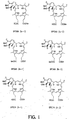
- Each regioisomer consists of a pair of enantiomers ( Ia-1, Ia-2; Ib-1 , Ib-2 ) as shown in Figure 1 .
- the principal metabolite is the diacid which consists of two enantiomers ( II-1, II-2 ). Tissue distribution studies and efficacy of the regioisomers have been reported (Richter (1991); Woodburn (1992); and Richter et al. (1988)).
- BPD-DA is composed of two enantiomers ( Figure 1 ).
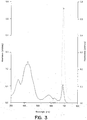
- the compounds have the same chromophore and identical absorption spectra ( Figure 3a ) with a characteristic major broad peak in the Soret region (420 nm) and several other peaks at longer wavelengths.
- the free base porphyrin pyrroles can be protonated to yield the PH 3 + or PH 4 2+ forms.
- the free bases are neutral, and only the side chain propionic acid residues are protonated.
- propionic acid side chains can be ionized to give a P - for BPD-MA or P 2- for BPD-DA. The charges on these compounds play an important role in their separation by capillary electrophoresis.
- Initial CE parameters to consider include capillary inner diameter and length as well as separation voltage.
- a +10 KV electrokinetic injection of about 2.0 s was applied, although a range of about +10 to about +25 KV may be used in longer or shorter time intervals.
- the BPD enantiomers enter the capillary by both migration and by the pumping action of the EOF. Additionally, electrokinetic injection helps concentrate the samples by a "stacking" phenomenon. This injection method is especially beneficial for biological matrices or clinical samples which usually contain large amounts of sodium chloride.
- Small inner diameter capillaries can more readily dissipate the joule heating and lower the electric current to result in better separation efficiency.
- a capillary of about 50 ⁇ m inner diameter is preferred for BPD enantiomers, although inner diameters ranging from about 40 to about 75 ⁇ m may also be used.
- Small inner diameters often leads to strong inner capillary wall adsorption along with increased clogging. The detection sensitivity also decreases with a shorter detection window. Proper conditioning of the capillary and filtration of the running buffer are necessary normal steps before each run.
- the separation time of the six BPD enantiomers was about 45 min using a capillary of about 57 cm but with a capillary length of about 27 cm, the migration time decreased to about 5 min. As such, a range of lengths from about 27 to about 57 cm may be used.
- the separation efficiency also decreased since the BPD enantiomers migrated very rapidly past the detection window and did not have sufficient time to separate.
- a good separation of BPD compounds with an acceptable time profile was obtained using a preferred capillary of about 37 cm in length.
- the electroosmotic flow and electrophoretic migration velocity are directly proportional to the field strength applied across the capillary.
- High field strengths lead to shorter migration times, and a range of about +10 to +25 KV may be used.
- Three field strengths were compared for the separation of the BPD enantiomers. At about +15 KV, BPD peaks 2 and 3 (the peaks are defined in Figure 4 ) were overlapping after about 25 min. This may have been due to diffusion. By increasing the voltage to about +20 KV, all six BPD enantiomers were baseline separated within about 15 min. When the separation voltage was increased to about +25 KV, the migration time became shorter but high current and joule heating caused sample plug diffusion and peaks 2 and 3 once again overlapped.
- joule heating caused a temperature increase in the inner capillary which resulted in a signal decrease as the BPD fluorescence quantum yields decreased.
- a field strength of about +20 KV is preferred to give complete baseline separation for all six enantiomers.
- Another parameter in CE is temperature. Elevated or reduced separation temperatures can alter running buffer viscosity, electroosmotic flow and analysis time; analyte chemical equilibrium and kinetics in the separation process can also be affected. A range from about 10 to about 35°C may be used. When the temperature was increased from about 25°C to about 35°C, migration time became shorter due to a decrease in the running buffer viscosity which consequently caused the EOF to decrease. At about 35°C, peaks 2 and 3 once again overlapped as a consequence of joule heating which caused non-uniform temperature gradients, local changes in viscosity and density, and gave rise to zone deformation and subsequent zone broadening.
- the P/ACE 5500 has a thermostat system range from 5 to 50°C, although at about 15°C, the separation showed significant improvement, and it took about 15 minutes to reach equilibrium. A temperature of about 20°C is preferred as the separation temperature.
- Buffer type, concentration, ionic strength, and pH are all parameters to consider, and a variety of buffers may be used.
- Buffer solutions of pH 11.04, 100 mM 3-(cyclohexylamino)-1-propanesulfonic acid (CAPS); pH 6.76, 30 mM ammonium acetate; pH 2.76, 50 mM citric acid; and pH 9.2, 100 mM borate were tested as electrolytes.
- the BPD enantiomers were very easily hydrolyzed at high pH using the CAPS buffer ( ⁇ pH >11); high concentrations of ammonium acetate buffer usually caused bubbles in the capillary which led to current breaks.
- the side chain propionic acid of BPD enantiomers begin to deprotonate when the pH of borate buffer was above about 3.5. As such, pH's above about 3.5 are preferred in the CE methods of the invention. In accordance with the present invention the pH range is from 9.2 to 9.6.
- BPD-MA enantiomers have one ionisable carboxylic acid group, and BPD-DA has two acidic groups. This charge difference makes BPD-MA and BPD-DA readily separated by CE.
- differences in pH also alter the dynamic complexation of the BPD enantiomers with chiral selector additives, changing their mobility differences.
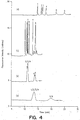
- Figure 4 shows that only BPD-MA and BPD-DA were separated at pH 8.05.
- the BPD-DA and BPD-MA enantiomers were separated to some extent at pH 8.6, and complete separation was achieved at pH 9.2.
- the BPD enantiomers were further distinguished, but their signals decreased due to the higher ionic strength, which adversely influenced fluorescence.
- emigration times also increased due to the high ionic strength which inhibits the EOF.
- borate ionic strength results from the current increase and excessive joule heating in the capillary.
- Positive attributes of increasing ionic strength include decreased adsorption of BPD enantiomers on the capillary wall and a suppression of electrophoretic dispersion. It also reduces the EOF and makes the analytes migrate slower to provide better separation.
- Higher ionic strength also increased the dynamic complexation of borate with the BPD enantiomers and influenced the separation resolution.
- the ionic strength range is from 200 to 360 mM borate. Most preferred is an ionic strength of 300 mM. At high borate concentrations (above about 360 mM), the buffer solubility and stability deteriorated which caused current breaks and capillary clogging.
- Formation constants, free electrophoretic and complexation mobilities with borate and cholate were determined based on dynamic complexation capillary electrophoresis theory (Peng et al. (1997)).
- the formation constants for dynamic complexation of BPD enantiomers with borate are given in Table 1.
- Formation constants (K) are in the range of about 11.51 to about 12.51, with little difference between enantiomers showing weak interactions in each case.
- the enantiomeric mobility difference ( ⁇ ) is proportional to the difference in the two enantiomeric formation constants ( ⁇ K) and the chiral additive concentration.
- BPD-MA Ia-2 K about 11.90
- BPD-MA Ib-1 K about 11.91
- increasing the borate concentration from about 40 mM to about 360 mM makes ⁇ increase about 9 times and resolution of the two regioisomers increases dramatically.
- the complexes move slower than uncomplexed enantiomers.
- the free state mobility BPD-MA Ia-1 is about -1.95 x 10 -5 cm 2 V -1 s -1 while its complex mobility is about -2.94 x 10 -5 cm 2 V -1 s -1 .
- BPD-MA Ia-1 when BPD-MA Ia-1 interacts with borate, the complex a has bigger ratio of charge to size (q/r, where q denotes charge and r denotes radius). Due to this size increase, BPD-MA Ia-1 becomes more negatively charged when complexed with borate. This leads to longer separation times. All of the other BPD enantiomers behave in a similar manner as BPD-MA Ia-1 .
- BPD-MA ( Ia-1 ) -19.53 ⁇ 0.64 -29.39 ⁇ 1.01 11.51 ⁇ 1.68 0.9970 -17.41 ⁇ 0.57 -33-55 ⁇ 1.28 28.50 ⁇ 3.50 0.9848 BPDMA ( Ia-2 ) -21.15 ⁇ 0.61 -31.21 ⁇ 1.00 11.90 ⁇ 1.71 0.9970 -17.41 ⁇ 0.50 -33.55 ⁇ 1.38 30.54 ⁇ 4.07 0.9801 BPDMA ( Ib-1 ) -20.36 ⁇ 0.52 -30.33 ⁇ 1.03 11.91 ⁇ 1.78 0.9968 -17.41 ⁇ 0.45 -33.29 ⁇ 1.28 30.90 ⁇ 3.90 0.9815 BPDMA ( Ib-2 )
- Separation of the enantiomers by CE also involves a choice of chiral selectors (additives). These form diastereoisomeric pairs in a dynamic equilibrium complexation process which, if sufficiently distinct electrophoretically, allow for chiral separation.
- chiral selectors for use in CE such as metal complexes, micellar systems, micromulsions, crown ethers, cyclodextrins, oligosaccharides and proteins are known in the art (Aveline et al. (1995)).
- bile salts are biological surfactants and form small or primary aggregates of 3 to 14 monomers.
- aggregates form a type of "inverse micelle” having a negatively charged core and a hydrophobic uncharged surface, which is opposite to that exhibited for sodium dodecyl sulfate (SDS).
- SDS sodium dodecyl sulfate
- the amphiphilic nature of bile salts provides both hydrophobic and polar (or electrostatic) sites.
- the non-polar faces of the monomers aid in solubilizing hydrophobic compounds, and the structurally rigid chiral bile salts selectively interact with BPD enantiomers.
- cholate, taurocholate, deoxycholate and taurodeoxycholate were further tested as chiral selectors. Small changes in their chemical structures ( Figure 2 ) had a significantly impact on the recognition of BPD enantiomers, but all four may be used in the methods of the invention.
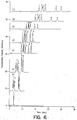
- Sodium cholate had the best separating ability ( Figure 6 ) and is the most preferred chiral selector, although other salts of cholate may also be used.
- a range of bile salt concentrations ranging from about 10 to about 35 mM may be used.
- Increasing the sodium cholate concentration from 0 mM to about 10 mM allowed for the separation of BPD-MA and BPD-DA with only partial separation of their enantiomers.
- the two BPD-DA enantiomers gave complete baseline separation within approximately 11 min, while the BPD-MA enantiomers showed four peaks, two of them overlapping.
- a preferred sodium cholate concentration for the separation is about 25 mM, although a range from about 15 to about 30 mM. When the sodium cholate concentration was greater than about 30 mM, all peaks were shifted to longer analysis times with deterioration in resolution ( Figure 6 ).
- the formation constants (K) of sodium cholate with the BPD enantiomers were determined to be about 28.5, 30.54, 30.90, 36.53, 49.04, 48.42 (Table 1). Differences in the formation constants makes the separation of all six enantiomers possible, and optimization of the cholate concentration allows for optimal separation.
- the complex mobilities of the enantiomers with cholate have more negative values than the corresponding enantiomers in their free uncomplexed state (Table 1).
- Organic solvents can also alter the polarity and viscosity of a buffer electrolyte, resulting in changes to both the electrophoretic mobility and EOF.
- Organic solvents are also widely used as a solubilizing agent for analytes which are poorly soluble in aqueous solution, for increasing solvation of solutes, and for modifying the affinities of hydrophobic solutes.
- BPD derivatives undergo self-aggregation in aqueous media, but this can be prevented by adding organic solvent (Aveline (1995)).
- the organic solvent used in the present invention is selected from the group consisting of DMF, isopropanol and acetonitrile.
- High sensitivity laser-induced fluorescence greatly improves the sensitivity and selectivity of BPD stereoisomer separation by CE.
- the smaller inner diameter capillary of about 50 nm resulted in a decrease of analytical signal it also prevents temperature increases due to high currents.
- the excessive joule heating observed with a 75 nm inner diameter capillary lowers the quantum efficiency of fluorescence due to the increased frequency of collisions at elevated temperature and deactivation by external conversion.
- the addition of acetonitrile also prevents BPD aggregation and self-quenching and self-adsorption, which otherwise results in an unusual analytical signal.
- a wavelength bandpass filter at 690 ⁇ 5 nm may also be used to remove the background noise and other interference.
- the multiple absorption bands of the BPD derivatives permits the use of a 488 nm laser for excitation. Most matrix (or otherwise contaminating) compounds in clinical samples do not absorb at about 488 nm, nor fluorescence at 690 nm. Matrix influence also can be prevented, to some extent, by using the electrokinetic injection mode.
- a calibration curve facilitates CE separation.
- Calibration graphs for concentrations of 5.0 x 10 -5 M to 5.0 x 10 -2 M BPD were used for the analysis of BPD enantiomers in field samples. Samples were injected in triplicate, and average peak areas, instead of peak heights, were used to construct the calibration curves.
- the correlation coefficients (r 2 ) from a least-squares linear regression analysis of the BPD enantiomers ranged from 0.9814 to 0.9997 and are listed in Table 3.
- the limits of detection were from 2.06 x 10 -6 to 3.25 x 10 -6 M for the BPD enantiomers with a signal-to-noise ratio of 2:1 at a detection wavelength of 694 nm.
- N/m is in the range of 46100 to 115400 in CE. This may be considered as satisfactory, especially compared with chiral HPLC analysis where N/m is no more than 1650.
- FIGs 10 through 15 illustrate how the CE separation conditions can be adapted to separate isomers, enantiomers, diastereoisomers and regioisomers of a variety of photosensitizers.
- the conditions used for the separations are given in the Brief Description of the Drawings.
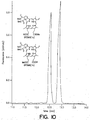
- the separation of BPD-MA regioisomers is shown in Figure 10
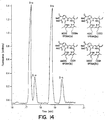
- the separation of regioisomers from a mixture of BPD-MA and BPD-Mae is shown in Figure 14
- the separation of phthalocyanine tetrasulfonate Isomers is shown in Figure 15 (not an example of the presently claimed invention).
- the multi-peak profile in Figure 15 may be a result of contamination of the phthalocyanine sample with trisulfonated material.
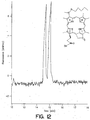
- the separation of the HPPH (2-(1-hexyloxyethyl)-2-devinylpyrophoride-a) diastereoisomers is shown in Figure 12 (not an example of the presently claimed invention).
- the separation of enantiomers of tin etiopurpurin is shown in Figure 13 (not an example of the presently claimed invention).
- the fact that the fluorescence profile does not show equal amounts of each enantiomer is probably a result of differential quenching by the interaction of the enantiomers with the chiral agent used to facilitate the separation.
- the separation of enantiomers of diethylglycol diester BPD is shown in Figure 11 . It is likely that some of the separations shown could be further improved by titrating each element of the system (ionic strength, buffer type, chiral selector, etc.), as was done for BPD-MA and BPD-DA herein.
- the methods of the instant invention may be used to separate regioisomers and stereoisomers of BPDs and other photosensitizers. Such separation techniques may be used to prepare specific stereoisomers, regioisomers or enantiomers for use in research, testing, or therapeutic applications. Alternatively, the methods may be used in analytical applications to identify particular stereoisomers from mixtures or complex samples. These analytical applications include the use of the instant invention to quantify the amounts of particular stereoisomers in a given sample. These applications can be used in studies of photosensitizer delivery and metabolism in clinical samples of various tissues over time. As such, they are of great potential value in medical and therapeutic applications.
- One analytical application is extraction of BPD from bovine serum.
- the recovery using acetonitrile (x 3) in CE is about 91.2%.
- Initial purification of the extracts such as with a Waters Sep-Pak cartridge, removes most of the matrix components (such as proteins, salts, etc.). After concentration, the samples can be directly injected for CE analysis.
- the evaporation step is necessary for sample preparation, since this allows for precipitation and removal of additional impurities.
- the main disadvantage of the sample preparation using a Sep-pack cartridge is the partial hydrolysis to BPD-DA enantiomers if the pH is not well controlled (pH must be maintained between 6.0 and 8.0).
- An alternative method was developed by replacing the Sep-Pak cartridge with a 0.22 ⁇ m solvent filter.
- a standard solution of liposomally formulated drug (verteporfin, BPD-MA) can be readily separated. Based on these techniques, the metabolites of liposomal formulated BPD-MA incubated with liver microsomes of rat, dog and human were successfully separated ( Figure 9 ).
- dimension were typically 50 ⁇ m i.d., 355 ⁇ m o.d. and 37 cm total length (30 cm to detector).
- the new capillary was treated with 1.0 M NaOH for 15 min followed by a 15 min rinse with deionized distilled water and equilibrated with the electrophoresis running buffer overnight before use. Data collection, processing and analysis were performed using the P/ACE TM Station software package (Beckman).
- An AMINCO-Bowman series 2 luminescence spectrometer SLM-AMINCO, Urbana, IL
- a 8452A diode array spectrophotometer Hewlett Packard
- a 600E multisolvent delivery HPLC system with 991 photodiode array detector (division of Millipore, USA) were also used.
- Sep-Pak Cartridges were purchased from Waters (Milford, Massachusetts, USA).
- a GLC-1 General Laboratory Centrifuge and Microfuge E TM (Beckman) and a Millex ® -GV Filter Unit, 0.22 ⁇ m pore size (Millipore) were also employed.
- BPD-MA and BPD-DA ( Figure 1 ) were synthesized from the Diels-Alder adducts of protoporphyrin and dimethyl acetylene dicarboxylate (Richter et al. (1987)). The time of hydrolysis of the propionic dimethylesters with 25% hydrochloric acid dictates the final ratio between mono- and di-acids that are formed. The separation of the diacids from the monoacid analogues is achieved by chromatography (Richter et al. (1990). Solutions of BPD-MA and BPD-DA were prepared in dimethyl sulfoxide (DMSO) at a concentration of 10 mg mL -1 . The stock solutions were stored frozen below 0°C in the dark. Immediately before use, a fraction of the stock solution was diluted with DMSO to a concentration of 2.0x10 -2 mg mL -1 .
- DMSO dimethyl sulfoxide
- Hydroxypropal- ⁇ -cyclodextrin HP- ⁇ -CD
- DM- ⁇ -CD heptakis(2,6-di-O-methyl)- ⁇ -cyclodextrin
- ⁇ -CD ⁇ -cyclodextrin
- ⁇ -CD ⁇ -cyclodextrin
- SDS sodium dodecyl sulfate
- Taurocholic acid, sodium salt hydrate, (+)-rutin hydrate, deoxycholic acid, sodium salt, monohydrate, glycyrrhizic acid, monoammonium salt hydrate, salicin and Brij 35 were obtained from Aldrich Chem. Co, Milw, WI.
- Cholic acid, sodium salt, taurodeoxycholic acid, sodium salt, ⁇ -escin and rifamycin SV, sodium salt were purchased from Sigma (St. Louis, MO, USA).
- the buffer stock solutions were pH 11.04, 100 mM 3-[cyclohexylamino]- n -propanesulfonic acid (CAPS); pH 9.2, 100 mM Na 2 B 4 O 7 •10H 2 O(Borax); pH 6.8, 100 mM ammonium acetate and pH 2.8, 100 mM citric acid (Sigma, St. Louis, MO, USA). These were diluted to the appropriate concentration before use.
- BPD-MA Liposomally formulated benzoporphyrin derivative monoacid ring A
- QLT PhotoTherapeutics Inc. Vancouver, Canada.
- Bovine serum and extracts from microsomes were liposomally formulated BPD-MA incubated with rat, dog and human and were provided by Dr. Julia Levy, Department of Microbiology, University of British Columbia, Vancouver, Canada.
- the BPD-MA stock solution (1 mL, 0.1 mg mL -1 ) was added to bovine serum (1.0 mL) or an acetone blank (1 mL), stirred well, and then acetonitrile (1.0 mL) was added. The mixture was stirred well and centrifuged (5 min at 2000 rpm). The supernatant was collected and the serum was re-suspended and washed twice in acetonitrile. The combined supernatants were filtered using a 0.22 ⁇ m filter. Recovery was determined using fluorescence detection. After evaporating the extracts to around 0.5 mL, the final volume was brought to 5.0 mL with water.
- the solution was then put into a Sep-Pak cartridge and washed with water.
- the Sep-Pak cartridge was rinsed with acetonitrile (5 x 1 mL).
- the eluates were evaporated, DMSO (200 ⁇ l) was added and the solution stirred and filtered using a 0.22 ⁇ m filter.
- the sample was then ready for CE separation.
- the instrument was programmed to rinse the capillary at high pressure with 0.2 M NaOH for 5 min, pure water for 5 min. and then the separation buffer for 3 min. Samples were then introduced by a +10 KV electrokinetic injection for 2.0 sec. The separation was conducted in a constant-voltage mode by applying +20 KV across the ends of the capillary with normal polarity.
- the laser excitation wavelength was 488 nm and the fluorescence detection was monitored at 694 nm (10 nm, 1.0 inch band bass filter).
- the detector cell window was made by removing the polyimide coating on the capillary.
- the temperature of the capillary was held at 20°C. Data was collected at 5 Hz. Between runs, the capillary was cleaned and equilibrated with successive 5 min rinses of 1.0 M NaOH and pure water.
- the Sep-Pack was eluted with methanol (5 x 1.0 mL). The elutes were combined and evaporated under a nitrogen stream and the precipitate was dissolved in DMSO (5.0 mL), filtered using a 0.22 ⁇ m filter, and stored in the dark at 4°C. All references cited hereinabove and below are hereby incorporated by reference in their entireties, whether previously specifically incorporated or not.
Landscapes
- Chemical & Material Sciences (AREA)
- Health & Medical Sciences (AREA)
- Life Sciences & Earth Sciences (AREA)
- Molecular Biology (AREA)
- Analytical Chemistry (AREA)
- Chemical Kinetics & Catalysis (AREA)
- Electrochemistry (AREA)
- Physics & Mathematics (AREA)
- Dispersion Chemistry (AREA)
- Biochemistry (AREA)
- General Health & Medical Sciences (AREA)
- General Physics & Mathematics (AREA)
- Immunology (AREA)
- Pathology (AREA)
- Pharmaceuticals Containing Other Organic And Inorganic Compounds (AREA)
- Investigating Or Analysing Materials By The Use Of Chemical Reactions (AREA)
- Investigating Or Analysing Biological Materials (AREA)
Description
- The invention relates to the use of capillary electrophoresis separation, as well as laser-induced fluorescence to aid in detection, of isomers and stereoisomers of photosensitizer molecules. For example, these separation methods permit all four enantiomers of BPD-MA and the two of BPD-DA to be completely separated with baseline separation with high resolution and efficiency. The use of laser-induced fluorescence detection greatly improves the analytical sensitivity and selectivity of CE of BPDs. The invention is well suited as a rapid and reliable method for the separation of BPD monoacid and diacid enantiomers in a preparative or analytical application. Of particular utility is the potential for use as an analytical method with clinical samples.
- Photodynamic therapy (PDT) is based on the observation that some photosensitizers accumulate somewhat selectivity in tumor tissue where they can be activated by light at wavelengths in the visible region. The photosensitizers absorb photons of visible light and use the absorbed energy to generate singlet oxygen, which is considered responsible for most of the damage leading to tumor cell death and tumor ablation (Delaney et al. (1988)). A number of photosensitizers are currently under investigation including chlorins, purpurins, phthalocyanines, and benzoporphyrin derivatives, especially benzoporphyrin derivative monoacid ring A (BPD-MA) (also known as verteporfin; Sternberg et al. (1996)).
- BPD-MA is a novel second-generation photosensitizer for PDT which exhibits lower skin phototoxicity than Photofrin (Richter et al. (1987)) which has already been approved by Health Boards around the world. BPD-MA has been shown to be effective for the treatment of cutaneous lesions; as a promising agent for bone marrow purging and for the treatment of leukemia (Jamieson et al. (1990)), as an antiviral agent for decontamination of blood and blood products (Neyndorff et al. (1990)) and most recently for the treatment of age related macular degeneration of the eye (Miller et al. (1993)).
- The importance of determining the isomeric, stereoisomeric and chiral forms of chemical compounds, especially those of pharmaceutical importance, cannot be overemphasized. While isomers are different molecules with the same molecular formula, stereoisomers are isomers that are alike with respect to which atoms are bonded to which other atoms but differ in the way in which the atoms are oriented in space. Enantiomers are stereoisomers that are mirror images of each other. Diastereoisomers are stereoisomers that are not mirror images of each other. A regioisomer as used herein-denotes isomers that are identical except for the positions of two or more atoms or chemical moieties.
- Nearly 60% of the most frequently prescribed drugs in the United States possess one or more asymmetric centers in the drug molecule. The physiological effects of enantiomers of these racemic drugs have not always been examined. To ensure the safety and efficacy of currently used and newly developed drugs, it is important to isolate the enantiomers and to examine each one separately. Accurate assessment of enantiomeric purity of substances is critical to investigate their toxicological and pharmacological effects and to study pharmacokinetic profiles.
- Traditionally, high-performance liquid chromatography (HPLC) has been the most commonly used method for the separation of porphyrins (Lim et al. (19888)), metalloporphyrins (Wan et al. (1994); Ho et al. (1994); Sato et al. (1994); and Beukeveld et al. (1994)), porphyrin dimers and trimers (Owens et al. (1996)), porphyrin isomers (Richter et al. (1992) and Udagawa et al. (1982)), and some porphyrin enantiomers (Kimmett et al. (1992) and Walker et al. (1988)). The large number of biological samples that need to be assayed during a typical pharmacokinetic study and the labor-intensive procedures in these HPLC techniques, required alternative methodologies for this kind of separation. Capillary electrophoresis (CE) is not new (Hjerten et al. (1967) and Jorgenson et al. (1981)) and there have been numerous subsequent studies (Wallingford and Ewing (1988); Pietta et al. (1994); Morin et al. (1993); Honda et al. (1990); Honda et al. (1989); and Hoffstetter-Kuhn et al. (1991)). The good reproducibility, sensitivity, rapidity, ease of automation and small sample requirements of CE have made it a promising bioanalytical technique (Kuhn et al. (1993)) for the separation of porphyrins and their analogues (Kuhn et al. (1993); Yao et al. (1996); Weinberger et al. (1990); Liu et al. (1995); Bowser (1996); and Bowser et al. (1997)). It has been especially useful in the separation of porphyrins because porphyrin fluorescence permits detection at low concentration.
- Chan et al. (1993) discloses capillary electrophoresis analysis of polyhaematoporphyrin. Wu et al. (1994) discloses separation of porphyrins and porphyrin isomers in capillary elecrtrophoresis using mixed ionic surfactant - bovine serum albumin buffer systems
- Given the importance of BPDs in PDT and the desire to prepare specific stereoisomers for pharmaceutical, research and commercial/industrial applications, the present invention relates to a new CE method for the separation of isomers, stereoisomers and regioisomers of such photosensitizers.
- The invention is directed to the use of capillary electrophoresis (CE) methods for the rapid and reliable separation of stereoisomers of BPDs, which can then be used in photodynamic therapy (PDT). In particular, laser-induced fluorescence mediated detection is used in combination with CE methods to improve the sensitivity and selectivity in the separation of stereoisomers of BPDs. Additionally, the methods of the invention can be used to completely separate with baseline separation enantiomers of BPDs (as presented in
U. S. Patent 5,171,749 ) as well as the derivatives of these compounds, especially the four enantiomers of BPD-monoacid (BPD-MA) and the two of BPD-diacid (BPD-DA), with high resolution and efficiency. Additional BPDs for separation are EA6 (as set forth in related application08/852,494 09/265,245 - The invention is also directed to methods of separating isomers, regioisomers and/or stereoisomers as a preparative or analytical application. Because of superiority over known HPLC methods, the preparative or analytical applications of the invention include automated versions of the instant CE methods as well as versions utilizing a smaller sample size over traditional HPLC separation methods. Of particular preference is the use of the instant methods for the analysis of clinical samples of material containing BPDs.
- Additionally, the invention includes the use of borate as a buffering system and a chiral selector, such as cholate, for the separation of
BPDs. Borate and cholate can dynamically interact and
complex with the BPD enantiomers and influence their electrophoretic properties and migration behavior. Particularly preferred conditions in such separations include the use of a capillary of 50 µm inner diameter and a 37 cm length (30 cm to detector), a field strength of +20 KV, a separation temperature of 20°C, a pH of 9.2, a borate concentration of 300 mM, 25 mM sodium cholate as a chiral selector, and 10% acetonitrile. A preferred baseline separation time is within 20 minutes. - Moreover, and beyond complete separation of enantiomers, the methods may be used to separate the stereoisomers of different compounds, the regioisomers of a given compound, as well as the enantiomers of a given compound.
- The present invention will be more clearly understood by referring to the following drawings:
-
Fig. 1 Structures of the stereoisomers of BPD-MA and BPD-DA
Benzoporphyrin derivative monoacids (BPD-MA, Ia-1, Ia-2, Ib-1, Ib-2) and benzoporphyrin derivative diacid (BPD-DA, II-1, II-2). I and II designate BPD monoacid and diacid, respectively; a and b represent regioisomers; and 1 and 2 represent enantiomers. -
Fig. 2 Structures of chiral additives
Hydroxypropal-β-cyclodextrin (III, n=2, R1=R2=H, R3=hydroxypropyl); heptakis (2,6-di-O-methyl)-β-cyclodextrin (III, n=2, R1=R3=methyl R3=H); β-cyclodextrin (III, n=2, R1=R2=R3=H); γ-cyclodextrin (III, n=3, R1=R2=R3=H); cholic acid, sodium salt (IV, R1=R2=R3=OH, R4=ONa); deoxycholic acid, sodium salt (IV, R1=R3=OH, R2=H, R4=ONa); taurocholic acid, sodium salt (IV, R1=R2=R3=OH, R4=NH(CH2)SO3Na); taurodeoxycholic acid, sodium salt (IV, R1=R3=OH, R2=H, R4=NH(CH2)2SO3Na); β-exin (V); salicin (VI); rifamycin SV, sodium salt (VII); (+)-rutin hydrate (VIII); glycyrrizic acid (IX). -
Fig. 3 UV-Vis and Fluorescence spectra of BPD-MA and BPD-DA- a. UV-vis spectra, 1.0x10⁻³ mg ml-1 BPD-MA. b. Fluorescence emission spectra, BPD-MA 1.25x10⁻⁴ mg ml-1 at pH 9.2, 300 mM borate, 25 mM Cholate and 10% acetonitrile solution. BPD-DA exhibits similar spectra.
-
Fig. 4 Effect of buffer pH on BPD-MA and BPD-DA separation- a. pH 8.05, b. pH 8.60, c. pH 9.2, d. pH 9.60. 300 mM borate and 25 mM sodium cholate and 10% acetonitrile. BPD-DA 2.5x10⁻² mg ml-1, respectively. Em. 694 nm/Ex. 488 nm.
Data 5 Hz. +20KV, 37 cm, 20 °C, electrokinetic sampling 2.0 s. Identification of peaks: 1, Ia-1; 2, Ib-1 3, Ia-2; 4, Ib-2; 5, II-1; 6, II-2.
- a. pH 8.05, b. pH 8.60, c. pH 9.2, d. pH 9.60. 300 mM borate and 25 mM sodium cholate and 10% acetonitrile. BPD-DA 2.5x10⁻² mg ml-1, respectively. Em. 694 nm/Ex. 488 nm.
-
Fig. 5 Effect of electrolyte concentration on BPD-MA and BPD-DA separation- a. 40 mM. b. 80 mM, c. 120 mM. d. 160 mM, e. 200 mM, f. 240 mM, g. 280 mM, h. 300 mM, i. 320 mM, j. 360 mM. borate (pH 9.2). Each contained 25 mM sodium cholate and 10% acetonitrile. BPD-DA 2.5x10⁻² mg ml-1, respectively. Em. 694 nm/Ex. 488 nm.
Data 5 Hz. +20 KV, 37 cm, 20°C, electrokinetic sampling 2.0 s. Identification of peaks is the same as inFigure 4 .
- a. 40 mM. b. 80 mM, c. 120 mM. d. 160 mM, e. 200 mM, f. 240 mM, g. 280 mM, h. 300 mM, i. 320 mM, j. 360 mM. borate (pH 9.2). Each contained 25 mM sodium cholate and 10% acetonitrile. BPD-DA 2.5x10⁻² mg ml-1, respectively. Em. 694 nm/Ex. 488 nm.
-
Fig. 6 Effect of sodium cholate on BPD-MA and BPD-DA separation- a. 0 mM, b. 10 mM, c. 15 mM, d. 20 mM, e. 25 mM, f. 30 mM, g. 35 mM, h. 40 mM sodium cholate, pH 9.2, 300 mM borate and 10% acetonitrile. BPD-DA 2.5x10⁻² mg ml-1, respectively. Em. 694nm/Ex. 488 nm.
Data 5 Hz. +20KV, 37 cm, 20°C, electrokinetic sampling 2.0 s. Identification of peaks is the same as inFigure 4 .
- a. 0 mM, b. 10 mM, c. 15 mM, d. 20 mM, e. 25 mM, f. 30 mM, g. 35 mM, h. 40 mM sodium cholate, pH 9.2, 300 mM borate and 10% acetonitrile. BPD-DA 2.5x10⁻² mg ml-1, respectively. Em. 694nm/Ex. 488 nm.
-
Fig. 7 Effect of acetonitrile- a. 0%, b. 5%, c. 10%, d. 15%, e. 20% acetonitrile, pH 9.2, 300 mM borate and 25 mM sodium cholate. BPD-DA 2.5x10⁻² mg ml-1, respectively. Em. 694 nm/Ex. 488 nm.
Data 5 Hz. +20 KV, 37 cm, 20°C, electrokinetic sampling 2.0 s. Identification of peaks is the same as inFigure 4 .
- a. 0%, b. 5%, c. 10%, d. 15%, e. 20% acetonitrile, pH 9.2, 300 mM borate and 25 mM sodium cholate. BPD-DA 2.5x10⁻² mg ml-1, respectively. Em. 694 nm/Ex. 488 nm.
-
Fig. 8 Separation of BPD enantiomers by HPLC and CE- HPLC: a. BPD-MA/BPD-DA b. BPD-DA, c-BPD-MA. Elute is hexane: ethanol (80:20) containing 0.3% TTA. 0.7 ml min-1 flow.
Injection volume 50 µl of 0.1 mg ml-1 of BPD-MA and BPD-DA. Detection at 420 nm. 1, Ia-2, 2, Ib-2, 3, Ia-1, 4, Ib-1, 5, II-2, 6, II-1. - CE: d. pH 9.2, 300 mM borate and 25 mM sodium cholate. BPD-MA/BPD-DA 2.5x10⁻² mg ml-1, respectively. Em. 694 nm/Ex. 488 nm.
Data 5 Hz. +20 KV, 37 cm, 20°C, electrokinetic sampling 2.0 s. Identification of peaks is the same as inFigure 4 .
- HPLC: a. BPD-MA/BPD-DA b. BPD-DA, c-BPD-MA. Elute is hexane: ethanol (80:20) containing 0.3% TTA. 0.7 ml min-1 flow.
-
Fig. 9 Electrophoregram of BPD enantiomers
Liposomally formulated BPD-MA incubated with (a) dog, (b) human, and (c) rat liver microsomes for 120 min were used as samples. Identification of peaks is the same as inFigure 4 . pH 9.2, 300 mM borate and 25 mM sodium cholate. Em. 694nm/Ex. 488 nm.Data 5 Hz. +20KV, 37 cm, 20°C, electrokinetic sampling 2.0 s. -
Fig. 10 Chiral Separation of Benzoporphyrin Derivative Mono-Acid (BPD-MA) Regioisomers- Electrolyte: pH 9.2, 280 mM borate and 30% acetonitrile and 7 mM Sodium Dodecyl
- Sulfate (SDS); Sample: BPD-
MA 25 ng ml-1, +20KV, 37 cm capillary length, 20°C. Pressure sampling 3.0s (20 psi). Em. 694 nm/Ex. 442nm.Data 5 Hz.
-
Fig. 11 Chiral Separation of Diethlglycol Diester Benzoporphyrin Derivative (DEG-BPD, or EA6) Enantiomers- Electrolyte: pH 9.2, 80 mM borate and 30% acetonitrile and 150mM sodium cholate.
- Sample: DEG-BPD 0.01 mg ml-1, +25 KV, 37 cm capillary length, 20°C. Pressure sampling 3.0s (20 psi). Em. 694 nm/Ex. 442nm.
Data 5 Hz.
-
Fig 12 Separation of 2-(1-hexyloxyethyl)-2-devinylpyropheophorbide-a (HPPH) Diastereoisomers (not according to the invention)- Electrolyte: pH.9.2, 240 mM borate and 30% acetonitrile + 1.5mM SDS. Sample:
- HPPH 0.01 mg ml-1. +20 KV, 37 cm capillary length, at 20°C. Electrokinetic sampling 2.0s (+10 KV). Em. 694nm/Ex. 488 nm.
Data 5 Hz.
-
Fig. 13 Chiral Separation of Tin Etiopurpurin Enantiomers (not according to the invention)- Electrolyte: pH 9.2, 160 mM borate and 10% acetonitrile with 5 mM sodium cholate and 15mM cetyltrimethylammonium bromide. Sample: 0.01 mg ml-1 tin etiopurpurin. -25KV, 37 cm capillary length. 20°C, Pressure sampling 3.0s (20 psi). Em. 694 nm/Ex.442 nm.
Data 5 Hz.
- Electrolyte: pH 9.2, 160 mM borate and 10% acetonitrile with 5 mM sodium cholate and 15mM cetyltrimethylammonium bromide. Sample: 0.01 mg ml-1 tin etiopurpurin. -25KV, 37 cm capillary length. 20°C, Pressure sampling 3.0s (20 psi). Em. 694 nm/Ex.442 nm.
-
Fig. 14 Separation of Benzoporphyrin Derivative Mono-Acid and Mono-Acid Ethyl (BPD-MA and BPD-MAe) Regioisomers- Electrolyte: pH 9.2, 240 mM borate and 30% acetonitrile and 10 mM SDS. Samples: 75 ng ml-1 BPD-MA + 25 ng ml-1 BPD-MAe. +20KV, 37 cm capillary length, 20°C. Pressure sampling 3.0s (20 psi). Em. 694 nm/Ex. 442nm.
Data 5 Hz.
- Electrolyte: pH 9.2, 240 mM borate and 30% acetonitrile and 10 mM SDS. Samples: 75 ng ml-1 BPD-MA + 25 ng ml-1 BPD-MAe. +20KV, 37 cm capillary length, 20°C. Pressure sampling 3.0s (20 psi). Em. 694 nm/Ex. 442nm.
-
Fig. 15 Separation of Phthalocyanine Tetrasulfonate Isomers (not according to the invention)- Electrolyte: pH 9.2, 120 mM borate with 50% acetonitrile and 10mM SDS. Sample: 2.5 mg ml-1 phthalocyanine tetrasulfonate. +20 KV, 37 cm capillary length, 20°C. Pressure sampling 3.0s (20 psi). UV detection at 214 nm.
Data 5 Hz. Peaks 1-8 denote isomers.
- Electrolyte: pH 9.2, 120 mM borate with 50% acetonitrile and 10mM SDS. Sample: 2.5 mg ml-1 phthalocyanine tetrasulfonate. +20 KV, 37 cm capillary length, 20°C. Pressure sampling 3.0s (20 psi). UV detection at 214 nm.
- Described herein are methods of using capillary electrophoresis (CE) to separate isomers, regioisomers and/or stereoisomers of photosensitizer molecules, including separating with baseline separation, defined as no detectable overlap between the compounds being separated during elution. Preferred methods include using laser-induced fluorescence to improve detection and hence separation of the stereoisomers. These methods are of great utility in isolating BPD enantiomers while also offering greater flexibility for automation and use of smaller sample size over other separation methods. The most preferred use of the instant methods is for the isolation of the enantiomers of BPD-MA and BPD-DA. In addition to the BPDs, the separation methods are applicable to other photosensitizers, including, but not limited to, chlorins, purpurins, such as tin ethyl etiopurpurin, pthalocyanines, such as pthalocyanine tetrasulfonate, pheophorbides, such as pyropheophorbides (HPPH), chlorophylls, benzoporphyrins, porphyrins and metalloporphyrins.
- Other photosensitizers to which the methods may be applied are found in the above referenced article by Robert W. Redmond et al. (1999).
- Preferred embodiments of the invention includes the use of borate as a buffering system and cholate as a chiral selector.
- It is possible for methods to be used under conditions where the separation is sufficient to separate
different compounds, to separate the regioisomers of a given compound, or to separate the enantiomers of a given compound. When the compounds to be separated do not have chiral centers, however, the inclusion of a chiral selector, such as cholate is not required. - The separation methods of the invention are particularly useful for chlorin-like photosensitizer, such as BPD-MA. As used in the clinic, BPD-MA consists of an equal mixture of the two regioisomers (Ia, Ib). Each regioisomer consists of a pair of enantiomers (Ia-1, Ia-2; Ib-1, Ib-2) as shown in
Figure 1 . The principal metabolite is the diacid which consists of two enantiomers (II-1, II-2). Tissue distribution studies and efficacy of the regioisomers have been reported (Richter (1991); Woodburn (1992); and Richter et al. (1988)). BPD-DA is composed of two enantiomers (Figure 1 ). - The compounds have the same chromophore and identical absorption spectra (
Figure 3a ) with a characteristic major broad peak in the Soret region (420 nm) and several other peaks at longer wavelengths. The most interesting long wavelength peak, in terms of applications in PDT, is the peak at 688 nm (in organic solvents). Extinction coefficients were determined at 430 nm in a buffer solution of 300 mM borate containing 10% acetonitrile and 25 mM sodium cholate pH 9.2 and found to be 61,000 M-1cm-1 and 75,200 M-1cm-1 for BPD-MA and BPD-DA, respectively. An emission spectrum is also shown inFigure 3b with a characteristic emission at about 692 nm, near red (Q-band), with a Stokes shift of ∼ 4 nm for fluorescence. Given the above, there are no apparent mechanistic difference in photo absorption, and hence BPD mediated damage, between the various stereoisomers of each BPD compound. As such, there is no gain in photo absorption by use of any particular BPD enantiomer. - At low pH the free base porphyrin pyrroles can be protonated to yield the PH3 + or PH4 2+ forms. At pH greater than about 3.0, the free bases are neutral, and only the side chain propionic acid residues are protonated. At higher pH, propionic acid side chains can be ionized to give a P- for BPD-MA or P2- for BPD-DA. The charges on these compounds play an important role in their separation by capillary electrophoresis.
- Separation by capillary electrophoresis is based on differential mobilities. Experimental parameters which affect mobility include capillary inner diameter and length, separation voltage, temperature, buffer type and concentration, pH, ionic strength, chiral selector type and concentration, organic solvent type and amount in the electrolyte. Additionally, the size, net charge and the interaction of the analytes with additives affect mobility in capillary electrophoresis. Size and charge of the analytes are related to their molecular mass, structure and the degree of hydration and ionization. The involvement of and interaction between these various parameters are known to the skilled artisan and can be routinely evaluated and optimized. Thus, the selection of appropriate diameters, lengths, voltages, temperatures, buffer types and concentration, pH, ionic strength, chiral selector type and concentration, organic solvent and amount, and other parameters can be selected without undue experimentation
- Initial CE parameters to consider include capillary inner diameter and length as well as separation voltage. In evaluating CE for the BPD enantiomers, a +10 KV electrokinetic injection of about 2.0 s was applied, although a range of about +10 to about +25 KV may be used in longer or shorter time intervals. The BPD enantiomers enter the capillary by both migration and by the pumping action of the EOF. Additionally, electrokinetic injection helps concentrate the samples by a "stacking" phenomenon. This injection method is especially beneficial for biological matrices or clinical samples which usually contain large amounts of sodium chloride.
- Small inner diameter capillaries can more readily dissipate the joule heating and lower the electric current to result in better separation efficiency. A capillary of about 50 µm inner diameter is preferred for BPD enantiomers, although inner diameters ranging from about 40 to about 75 µm may also be used. Small inner diameters often leads to strong inner capillary wall adsorption along with increased clogging. The detection sensitivity also decreases with a shorter detection window. Proper conditioning of the capillary and filtration of the running buffer are necessary normal steps before each run.
- In order to apply very high electric fields and to decrease the analyte migration time, an appropriate capillary length is necessary. The separation time of the six BPD enantiomers was about 45 min using a capillary of about 57 cm but with a capillary length of about 27 cm, the migration time decreased to about 5 min. As such, a range of lengths from about 27 to about 57 cm may be used. The separation efficiency also decreased since the BPD enantiomers migrated very rapidly past the detection window and did not have sufficient time to separate. A good separation of BPD compounds with an acceptable time profile was obtained using a preferred capillary of about 37 cm in length.
- The electroosmotic flow and electrophoretic migration velocity are directly proportional to the field strength applied across the capillary. High field strengths lead to shorter migration times, and a range of about +10 to +25 KV may be used. Three field strengths were compared for the separation of the BPD enantiomers. At about +15 KV,
BPD peaks 2 and 3 (the peaks are defined inFigure 4 ) were overlapping after about 25 min. This may have been due to diffusion. By increasing the voltage to about +20 KV, all six BPD enantiomers were baseline separated within about 15 min. When the separation voltage was increased to about +25 KV, the migration time became shorter but high current and joule heating caused sample plug diffusion andpeaks - Another parameter in CE is temperature. Elevated or reduced separation temperatures can alter running buffer viscosity, electroosmotic flow and analysis time; analyte chemical equilibrium and kinetics in the separation process can also be affected. A range from about 10 to about 35°C may be used. When the temperature was increased from about 25°C to about 35°C, migration time became shorter due to a decrease in the running buffer viscosity which consequently caused the EOF to decrease. At about 35°C, peaks 2 and 3 once again overlapped as a consequence of joule heating which caused non-uniform temperature gradients, local changes in viscosity and density, and gave rise to zone deformation and subsequent zone broadening. The P/ACE 5500 has a thermostat system range from 5 to 50°C, although at about 15°C, the separation showed significant improvement, and it took about 15 minutes to reach equilibrium. A temperature of about 20°C is preferred as the separation temperature.
- Separation by CE is also affected by the buffering system used. Buffer type, concentration, ionic strength, and pH are all parameters to consider, and a variety of buffers may be used. Buffer solutions of pH 11.04, 100 mM 3-(cyclohexylamino)-1-propanesulfonic acid (CAPS); pH 6.76, 30 mM ammonium acetate; pH 2.76, 50 mM citric acid; and pH 9.2, 100 mM borate were tested as electrolytes. The BPD enantiomers were very easily hydrolyzed at high pH using the CAPS buffer (∼ pH >11); high concentrations of ammonium acetate buffer usually caused bubbles in the capillary which led to current breaks. This was followed by either separation shut down or excess spiking and signal noise. In citric acid buffer the BPD enantiomers were protonated at the propionic side chain, defeating separation based on the deprotonated state. Since the effective charge(s) are the same for BPD-DA and BPD-MA, the electrophoretic mobility difference is normally very small. Also, at high pH, the EOF was very small and this caused the migration time to become overly long. The result was very poor signal separation due to extensive diffusion.
- With borate buffer at about pH 9.2, however, the BPD-DA and BPD-MA enantiomers were completely separated. This, in combination with the ability of borate to form a very stable buffer solution with high buffering capacity and its ability to be used in very high concentrations, made it the choice for use as buffer system in the instant separation methods. Borate has also been used in other separation systems (Consden et al. (1952); Boeseken (1949); and Landers et al. (1992)). Moreover, studies have shown that BPD-MA decomposed less than 1% in one hour at pH 9.2. Therefore, decomposition (principally hydrolysis) can be ignored within the approximately 15 min analysis time of capillary electrophoresis in borate.
- The side chain propionic acid of BPD enantiomers begin to deprotonate when the pH of borate buffer was above about 3.5. As such, pH's above about 3.5 are preferred in the CE methods of the invention. In accordance with the present invention the pH range is from 9.2 to 9.6. BPD-MA enantiomers have one ionisable carboxylic acid group, and BPD-DA has two acidic groups. This charge difference makes BPD-MA and BPD-DA readily separated by CE. In addition to the BPD-MA and BPD-DA separation, differences in pH also alter the dynamic complexation of the BPD enantiomers with chiral selector additives, changing their mobility differences.
Figure 4 shows that only BPD-MA and BPD-DA were separated at pH 8.05. The BPD-DA and BPD-MA enantiomers were separated to some extent at pH 8.6, and complete separation was achieved at pH 9.2. By increasing the pH to 9.6, the BPD enantiomers were further distinguished, but their signals decreased due to the higher ionic strength, which adversely influenced fluorescence. Furthermore, emigration times also increased due to the high ionic strength which inhibits the EOF. - The effects of borate ionic strength are shown in
Figure 5 . One disadvantage of increasing ionic strength results from the current increase and excessive joule heating in the capillary. Positive attributes of increasing ionic strength include decreased adsorption of BPD enantiomers on the capillary wall and a suppression of electrophoretic dispersion. It also reduces the EOF and makes the analytes migrate slower to provide better separation. Higher ionic strength also increased the dynamic complexation of borate with the BPD enantiomers and influenced the separation
resolution. In accordance with the present invention the ionic strength range is from 200 to 360 mM borate. Most preferred is an ionic strength of 300 mM. At high
borate concentrations (above about 360 mM), the buffer solubility and stability deteriorated which caused current breaks and capillary clogging. - Formation constants, free electrophoretic and complexation mobilities with borate and cholate were determined based on dynamic complexation capillary electrophoresis theory (Peng et al. (1997)). The formation constants for dynamic complexation of BPD enantiomers with borate are given in Table 1. Formation constants (K) are in the range of about 11.51 to about 12.51, with little difference between enantiomers showing weak interactions in each case. Based on the equation proposed by Goodall's group (Penn et al. (1994)), the enantiomeric mobility difference (Δµ) is proportional to the difference in the two enantiomeric formation constants (ΔK) and the chiral additive concentration. Although ΔK for BPD-MA Ia-2 (K about 11.90) and BPD-MA Ib-1 (K about 11.91) is only 0.01, increasing the borate concentration from about 40 mM to about 360 mM, makes Δµ increase about 9 times and resolution of the two regioisomers increases dramatically. It may also be possible that when borate interacts with BPD enantiomers, the complexes move slower than uncomplexed enantiomers. For example, the free state mobility BPD-MA Ia-1 is about -1.95 x 10⁻⁵ cm2V-1s-1 while its complex mobility is about -2.94 x 10⁻⁵ cm2V-1s-1. This means that when BPD-MA Ia-1 interacts with borate, the complex a has bigger ratio of charge to size (q/r, where q denotes charge and r denotes radius). Due to this size increase, BPD-MA Ia-1 becomes more negatively charged when complexed with borate. This leads to longer separation times. All of the other BPD enantiomers behave in a similar manner as BPD-MA Ia-1.
Table 1: Formation constant determinations for the BPD enantiomers with borate and cholate Borate cholate µep,A a µep,Ac b Kc R2d µep,A a µep,Ac b Kc R2d BPD-MA (Ia-1) -19.53±0.64 -29.39±1.01 11.51±1.68 0.9970 -17.41±0.57 -33-55±1.28 28.50±3.50 0.9848 BPDMA (Ia-2) -21.15±0.61 -31.21±1.00 11.90±1.71 0.9970 -17.41±0.50 -33.55±1.38 30.54±4.07 0.9801 BPDMA (Ib-1) -20.36±0.52 -30.33±1.03 11.91±1.78 0.9968 -17.41±0.45 -33.29±1.28 30.90±3.90 0.9815 BPDMA (Ib-2) -22.127±0.49 -32.38±0.99 12.27±1.76 0.9969 -17.41±0.38 -33.45±1.41 36.53±4.45 0.9768 BPDDA (II-1) -22.83±0.54 -33.19±1:08 12.48±1.90 0.9965 -17.41±0.41 -30.75±0.53 49.04±3.73 0.9853 BPDDA (II-2) -25.80±0.53 -36.41±1.07 12.51±1.85 0.9966 -17.41±0.36 -31.15±0.62 48.42±.4.14 0.9828 a. The electrophoretic mobility of analyte in free form (x10-6 cm2v-1s-1
b. The electrophoretic mobility of complex when analyte forms a complex with additive (x10-6 cm2v-1s-1).
c. The formation constant was calculated according to the methods described in Peng et al. (1997).
d. The correlation coefficients (r2) of the least-squares linear regression analysis of BPD enantiomers formation constant. - Separation of the enantiomers by CE also involves a choice of chiral selectors (additives). These form diastereoisomeric pairs in a dynamic equilibrium complexation process which, if sufficiently distinct electrophoretically, allow for chiral separation. A wide range of chiral selectors for use in CE, such as metal complexes, micellar systems, micromulsions, crown ethers, cyclodextrins, oligosaccharides and proteins are known in the art (Aveline et al. (1995)).
- For BPD stereoisomers, different additives (shown in
Figure 2 ) HP-P-CD, DM-β-CD, β-CD, and γ-CD, bile salts, β-escin, salicin, sodium rifamycin SV, (+)-rutin hydrate and ammonium glycyrrhizic have been tested as chiral selectors. The present invention uses bile salts as chiral selectors. Bile salts are biological surfactants and form small or primary aggregates of 3 to 14 monomers. These aggregates form a type of "inverse micelle" having a negatively charged core and a hydrophobic uncharged surface, which is opposite to that exhibited for sodium dodecyl sulfate (SDS). The amphiphilic nature of bile salts provides both hydrophobic and polar (or electrostatic) sites. The non-polar faces of the monomers aid in solubilizing hydrophobic compounds, and the structurally rigid chiral bile salts selectively interact with BPD enantiomers. - Four sodium bile salts: cholate, taurocholate, deoxycholate and taurodeoxycholate were further tested as chiral selectors. Small changes in their chemical structures (
Figure 2 ) had a significantly impact on the recognition of BPD enantiomers, but all four may be used in the methods of the invention. Sodium cholate had the best separating ability (Figure 6 ) and is the most preferred chiral selector, although other salts of cholate may also be used. Moreover, a range of bile salt concentrations, ranging from about 10 to about 35 mM may be used. Increasing the sodium cholate concentration from 0 mM to about 10 mM allowed for the separation of BPD-MA and BPD-DA with only partial separation of their enantiomers. By increasing the sodium cholate concentrations to about 15 and then about 20 mM, the two BPD-DA enantiomers gave complete baseline separation within approximately 11 min, while the BPD-MA enantiomers showed four peaks, two of them overlapping. By further increasing the sodium cholate concentration to about 25 and about 30 mM, complete baseline separation of both the four BPD-MA and the two BPD-DA enantiomers was observed. A preferred sodium cholate concentration for the separation is about 25 mM, although a range from about 15 to about 30 mM. When the sodium cholate concentration was greater than about 30 mM, all peaks were shifted to longer analysis times with deterioration in resolution (Figure 6 ). - The formation constants (K) of sodium cholate with the BPD enantiomers were determined to be about 28.5, 30.54, 30.90, 36.53, 49.04, 48.42 (Table 1). Differences in the formation constants makes the separation of all six enantiomers possible, and optimization of the cholate concentration allows for optimal separation. The complex mobilities of the enantiomers with cholate have more negative values than the corresponding enantiomers in their free uncomplexed state (Table 1).
- Organic solvents can also alter the polarity and viscosity of a buffer electrolyte, resulting in changes to both the electrophoretic mobility and EOF. Organic solvents are also widely used as a solubilizing agent for analytes which are poorly soluble in aqueous solution, for increasing solvation of solutes, and for modifying the affinities of hydrophobic solutes. BPD derivatives undergo self-aggregation in aqueous media, but this can be prevented by adding organic solvent (Aveline (1995)). The organic solvent used in the present invention is selected from the group consisting of DMF, isopropanol and acetonitrile. The effects of acetonitrile, dimethyl formamide (DMF), methanol, dimethyl sulfoxide (DMSO), n-propanol and isopropanol were evaluated. It was found that the BPD enantiomers can be baseline separated upon the addition of DMF, isopropanol or acetonitrile. All tested organic solvents exhibited synergetic effects which improved the separation.
Figure 7 shows the results of changing acetonitrile concentration in the running buffer. Acetonitrile in amounts from about 10 to about 15% are preferred to enhance separation (Figure 7 ). Without the addition of acetonitrile or another organic solvent, aggregation prevents separation. When acetonitrile was above about 20%, the running buffer electrolyte became unstable, with both borate and sodium cholate precipitation leading to capillary clogging. - Reproducibility in CE is highly desirable for efficient separation. Thus proper capillary conditioning methods and analytical procedures are important to maintain a reproducible capillary surface and to obtain reproducible separations. Conditioning refreshes the surface, deprotonates the silanol groups, and removes absorbed impurities. BPD enantiomers exhibit strong adsorption on silica. A sufficiently long rinse time prevents the capillary inner wall from building a contact coating. Too short a rinse time results in the contact coating reducing EOF. This results in longer sample migration times, and causes band broadening and tailing, thus impairing separation. The example section below sets forth a preferred conditioning method, which performed well as shown in Table 2, with relative standard deviation (RSD) only between 2.90% to 4.64%. The contribution of the charged BPD enantiomers to the overall ionic strength of the run electrolyte and the amount of DMSO in the sample can be ignored because of their very low concentrations.
Table 2: Results from linearity studies Analytes Equationa Range (mg ml-1) R2 RSD%b DLc (x10-6M) BPDMA (Ia-1) Y=103.46X + 0.20 5x10⁻²-5x10⁻⁵ 0.9973 4.64 3.25 BPDMA (Ia-2) Y=99.827X + 0.24 5x10⁻²-5X10⁻⁵ 0.9986 4.09 2.85 BPDMA (Ib-1) Y=89.027X + 0.19 5x20-2-5x10⁻⁵ 0.9990 3.67 2.56 BPDMA (Ib-2) Y=117.32X + 0.25 5x10⁻²-5x10⁻⁵ 0.9997 3.12 2.18 BPDDA (II-1) Y=491.68X + 1.17 5x10⁻²-5x10⁻⁵ 0.9914 3.32 2.36 BPDDA (II-2) Y=532.57X + 1.37 5x10⁻²-5x10⁻⁵ 0.9910 2.90 2.06 a. Calibration curve equation for BPD-MA enantiomers.
b. Means of ten determinations each, with 95% confidence limits.
c. Detection of limits is the concentration of analytes that give a signal equal to twice the peak-to-peak noise level of the analytes. - High sensitivity laser-induced fluorescence greatly improves the sensitivity and selectivity of BPD stereoisomer separation by CE. Although the smaller inner diameter capillary of about 50 nm resulted in a decrease of analytical signal it also prevents temperature increases due to high currents. The excessive joule heating observed with a 75 nm inner diameter capillary lowers the quantum efficiency of fluorescence due to the increased frequency of collisions at elevated temperature and deactivation by external conversion. The addition of acetonitrile also prevents BPD aggregation and self-quenching and self-adsorption, which otherwise results in an unusual analytical signal.
- A wavelength bandpass filter at 690 ± 5 nm may also be used to remove the background noise and other interference. The multiple absorption bands of the BPD derivatives permits the use of a 488 nm laser for excitation. Most matrix (or otherwise contaminating) compounds in clinical samples do not absorb at about 488 nm, nor fluorescence at 690 nm. Matrix influence also can be prevented, to some extent, by using the electrokinetic injection mode.
- A calibration curve facilitates CE separation. Calibration graphs for concentrations of 5.0 x 10⁻⁵ M to 5.0 x 10⁻² M BPD were used for the analysis of BPD enantiomers in field samples. Samples were injected in triplicate, and average peak areas, instead of peak heights, were used to construct the calibration curves. The correlation coefficients (r2) from a least-squares linear regression analysis of the BPD enantiomers ranged from 0.9814 to 0.9997 and are listed in Table 3. The limits of detection were from 2.06 x 10⁻⁶ to 3.25 x 10⁻⁶ M for the BPD enantiomers with a signal-to-noise ratio of 2:1 at a detection wavelength of 694 nm. The same day relative standard deviations were from 2.90% to 4.64% (n=10).
- A comparison of HPLC and CE for the separation of BPD stereoisomers demonstrates a significant superiority in CE. With HPLC, the optimal conditions were found to be hexane:ethanol (80:20, 1% diethylamine), 0.7 mL min-1 flow rate and 50 µl of a 0.1 mg mL-1 BPD solution. Using a Chiral Pak AD column, BPD-MA(I), BPD-MA(II) and BPD-DA enantiomers were separated (
Figure 8 ). When BPD-MA and BPD-DA were mixed and injected. BPD-MA (I) and BPD-MA (II) completely overlapped and BPD-DA partly overlapped with BPD-MA (I, II). The peak shapes were distorted by tailing, and the analytical migration time was as long as 35 min. In comparison to the separation electrophoragram of the BPD enantiomers performed by CE (Figure 8 ), the CE method made a significantly improvement in resolution. The analytical time was shortened to 13 min. with completely baseline separation of all the BPD enantiomers and sharp peaks were observed without tailing. The resolution and number of theoretical plates (N) per meter of capillary are listed in Table 3. N/m is in the range of 46100 to 115400 in CE. This may be considered as satisfactory, especially compared with chiral HPLC analysis where N/m is no more than 1650.Table 3: Comparison of the Separation of BPD enantiomers by HPLC and CE CE HPLC ta (min) Nb (x104) Rsf ta(min) Nb (x102) Rsf BPDMA (Ia-1) 9.38 9.96 8.20c 12.31 11.40 3.72c BPDMA (Ib-1) 9.95 4.82 2.92d 12.70 6.43 1.79d BPDMA (Ia-2) 10.17 10.41 --- 24.05 16.52 --- BPDMA (Ib-2) 10.64 4.61 --- 27.64 5.46 --- BPDDA (I-1) 11.79 11.54 4.17e 11.70 7.49 3.05c BPDDA (II-2) 12.61 10.48 --- 21.69 8.60 --- a. Migration time.
b. The number of theoretical plates. N=5.54(t/w1/2 )2
c. The resolution of peaks BPD-MA (Ia-1) and BPD-MA (Ia-2)
d. The resolution of peaks BPD-MA (Ib-1) and BPD-MA (Ib-2)
e. The resolution of peaks BPD-DA (II-1) and BPD-DA (II-2)
f. The resolution of two peaks, Rs=2(t2-t1)/(w2+w1) -
Figures 10 through 15 illustrate how the CE separation conditions can be adapted to separate isomers, enantiomers, diastereoisomers and regioisomers of a variety of photosensitizers. The conditions used for the separations are given in the Brief Description of the Drawings. The separation of BPD-MA regioisomers is shown inFigure 10 , the separation of regioisomers from a mixture of BPD-MA and BPD-Mae is shown inFigure 14 , and the separation of phthalocyanine tetrasulfonate Isomers is shown inFigure 15 (not an example of the presently claimed invention). The multi-peak profile inFigure 15 may be a result of contamination of the phthalocyanine sample with trisulfonated material. - The separation of the HPPH (2-(1-hexyloxyethyl)-2-devinylpyrophoride-a) diastereoisomers is shown in
Figure 12 (not an example of the presently claimed invention). The separation of enantiomers of tin etiopurpurin is shown inFigure 13 (not an example of the presently claimed invention). The fact that the
fluorescence profile does not show equal amounts of each enantiomer is probably a result of differential quenching by the interaction of the enantiomers with the chiral agent used to facilitate the separation. The separation of enantiomers of diethylglycol diester BPD is shown inFigure 11 . It is likely that some of the separations shown could be further improved by titrating each element of the system (ionic strength, buffer type, chiral selector, etc.), as was done for BPD-MA and BPD-DA herein. - The methods of the instant invention may be used to separate regioisomers and stereoisomers of BPDs and other photosensitizers. Such separation techniques may be used to prepare specific stereoisomers, regioisomers or enantiomers for use in research, testing, or therapeutic applications. Alternatively, the methods may be used in analytical applications to identify particular stereoisomers from mixtures or complex samples. These analytical applications include the use of the instant invention to quantify the amounts of particular stereoisomers in a given sample. These applications can be used in studies of photosensitizer delivery and metabolism in clinical samples of various tissues over time. As such, they are of great potential value in medical and therapeutic applications.
- One analytical application is extraction of BPD from bovine serum. The recovery using acetonitrile (x 3) in CE is about 91.2%. Initial purification of the extracts, such as with a Waters Sep-Pak cartridge, removes most of the matrix components (such as proteins, salts, etc.). After concentration, the samples can be directly injected for CE analysis. The evaporation step is necessary for sample preparation, since this allows for precipitation and removal of additional impurities. The main disadvantage of the sample preparation using a Sep-pack cartridge is the partial hydrolysis to BPD-DA enantiomers if the pH is not well controlled (pH must be maintained between 6.0 and 8.0). An alternative method was developed by replacing the Sep-Pak cartridge with a 0.22 µm solvent filter. A standard solution of liposomally formulated drug (verteporfin, BPD-MA) can be readily separated. Based on these techniques, the metabolites of liposomal formulated BPD-MA incubated with liver microsomes of rat, dog and human were successfully separated (
Figure 9 ). - The following examples are intended to illustrate but not to limit the invention.
- All experiments were performed using a Beckman P/ACE 5500 system consisting of an autosampler, a vacuum injection system, a thermostated capillary compartment (5-50°C) and a UV-Vis detector, Diode Array Detector (DAD) or Laser Induced Fluorescence (LIF) detector with a 3 mW Argon Laser module (488 nm) (Beckman Instruments Inc., Mississauga, Ontario) and a band pass filter 690 ± 5 nm (i.d. 1 inch, ORIEL). Uncoated fused silica capillary columns were obtained from Polymicro Technologies (Phoenix, AZ). Unless otherwise specified, dimension were typically 50 µm i.d., 355 µm o.d. and 37 cm total length (30 cm to detector). The new capillary was treated with 1.0 M NaOH for 15 min followed by a 15 min rinse with deionized distilled water and equilibrated with the electrophoresis running buffer overnight before use. Data collection, processing and analysis were performed using the P/ACE™ Station software package (Beckman).
- An AMINCO-
Bowman series 2 luminescence spectrometer (SLM-AMINCO, Urbana, IL), a 8452A diode array spectrophotometer (Hewlett Packard), a 600E multisolvent delivery HPLC system with 991 photodiode array detector (division of Millipore, USA) were also used. Sep-Pak Cartridges were purchased from Waters (Milford, Massachusetts, USA). A GLC-1 General Laboratory Centrifuge and Microfuge E™ (Beckman) and a Millex®-GV Filter Unit, 0.22 µm pore size (Millipore) were also employed. - BPD-MA and BPD-DA (
Figure 1 ) were synthesized from the Diels-Alder adducts of protoporphyrin and dimethyl acetylene dicarboxylate (Richter et al. (1987)). The time of hydrolysis of the propionic dimethylesters with 25% hydrochloric acid dictates the final ratio between mono- and di-acids that are formed. The separation of the diacids from the monoacid analogues is achieved by chromatography (Richter et al. (1990). Solutions of BPD-MA and BPD-DA were prepared in dimethyl sulfoxide (DMSO) at a concentration of 10 mg mL-1. The stock solutions were stored frozen below 0°C in the dark. Immediately before use, a fraction of the stock solution was diluted with DMSO to a concentration of 2.0x10⁻² mg mL-1. - Hydroxypropal-β-cyclodextrin (HP-β-CD), heptakis(2,6-di-O-methyl)-β-cyclodextrin (DM-β-CD), β-cyclodextrin (β-CD), and γ-cyclodextrin (γ-CD) were from Beckman Inc, Mississauga, Ontario and sodium dodecyl sulfate (SDS) from Fisher Inc. The structures of the chiral additives are shown in
Figure 2 . Taurocholic acid, sodium salt hydrate, (+)-rutin hydrate, deoxycholic acid, sodium salt, monohydrate, glycyrrhizic acid, monoammonium salt hydrate, salicin andBrij 35 were obtained from Aldrich Chem. Co, Milw, WI. Cholic acid, sodium salt, taurodeoxycholic acid, sodium salt, β-escin and rifamycin SV, sodium salt were purchased from Sigma (St. Louis, MO, USA). The buffer stock solutions were pH 11.04, 100 mM 3-[cyclohexylamino]-n-propanesulfonic acid (CAPS); pH 9.2, 100 mM Na2B4O7•10H2O(Borax); pH 6.8, 100 mM ammonium acetate and pH 2.8, 100 mM citric acid (Sigma, St. Louis, MO, USA). These were diluted to the appropriate concentration before use. - All solution were filtered through a 0.22 µm filter prior to use. Water was distilled and deionized with a NANO pure II ultra water system(Barnstead/Themolyne, Dubuque, IA, USA), DMSO, acetonitrile, 1-propanol, iso-propanol and methanol were HPLC grade (Fisher Scientific) and all other chemicals were of analytical grade and used without further purification.
- Liposomally formulated benzoporphyrin derivative monoacid ring A (BPD-MA, Verteporfin) was provided by QLT PhotoTherapeutics Inc., Vancouver, Canada. Bovine serum and extracts from microsomes were liposomally formulated BPD-MA incubated with rat, dog and human and were provided by Dr. Julia Levy, Department of Microbiology, University of British Columbia, Vancouver, Canada.
- The BPD-MA stock solution (1 mL, 0.1 mg mL-1) was added to bovine serum (1.0 mL) or an acetone blank (1 mL), stirred well, and then acetonitrile (1.0 mL) was added. The mixture was stirred well and centrifuged (5 min at 2000 rpm). The supernatant was collected and the serum was re-suspended and washed twice in acetonitrile. The combined supernatants were filtered using a 0.22 µm filter. Recovery was determined using fluorescence detection. After evaporating the extracts to around 0.5 mL, the final volume was brought to 5.0 mL with water. The solution was then put into a Sep-Pak cartridge and washed with water. The Sep-Pak cartridge was rinsed with acetonitrile (5 x 1 mL). The eluates were evaporated, DMSO (200 µl) was added and the solution stirred and filtered using a 0.22 µm filter. The sample was then ready for CE separation.
- The instrument was programmed to rinse the capillary at high pressure with 0.2 M NaOH for 5 min, pure water for 5 min. and then the separation buffer for 3 min. Samples were then introduced by a +10 KV electrokinetic injection for 2.0 sec. The separation was conducted in a constant-voltage mode by applying +20 KV across the ends of the capillary with normal polarity. The laser excitation wavelength was 488 nm and the fluorescence detection was monitored at 694 nm (10 nm, 1.0 inch band bass filter). The detector cell window was made by removing the polyimide coating on the capillary. The temperature of the capillary was held at 20°C. Data was collected at 5 Hz. Between runs, the capillary was cleaned and equilibrated with successive 5 min rinses of 1.0 M NaOH and pure water.
- Into a 25 mL bottle containing liposomally formulated BPD-MA (25 mg) was added 12.5 mL of H2O. After stirring, it was stored in the dark (below 0°C) until use. A sample of this stock solution (5.0 µl) was added to DMSO (950 µl). The solution was stirred well and centrifuged for 5 minutes and filtered using a 0.22 µm solvent filter and then stored in the dark (4°C) until use. 12.5 µl of this solution (2.0 mg mL-1) was added to 25% acetonitrile/water and stirred well. The solution was then transferred into Sep-Pak cartridge and rinsed with 25% acetonitrile/water three times. The Sep-Pack was eluted with methanol (5 x 1.0 mL). The elutes were combined and evaporated under a nitrogen stream and the precipitate was dissolved in DMSO (5.0 mL), filtered using a 0.22 µm filter, and stored in the dark at 4°C. All references cited hereinabove and below are hereby incorporated by reference in their entireties, whether previously specifically incorporated or not.
- Having now fully described this invention, it will be appreciated by those skilled in the art that the same can be performed within a wide range of equivalent parameters, concentrations, and conditions without departing from the spirit and scope of the invention and without undue experimentation.
- While this invention has been described in connection with specific embodiments thereof, it will be understood that it is capable of further modifications. This application is intended to cover any variations, uses, or adaptations of the invention following, in general, the principles of the invention and including such departures from the present disclosure as come within known or customary practice within the art to which the invention pertains and as may be applied to the essential features hereinbefore set forth as follows in the scope of the appended claims.
-
- Peng, X.; Bowser, M. T.; Britz-Mckibbin, P.; Bebault, G. M.; Morris, J. R.; Chen, D. D. Y. .
- Delaney, T. F.; Glatstein, .
- Sternberg, E. D.; Dolphin, D. .
- Richter, A. M.; Kelly, B.; Chow, J.; Liu, D. J.; Towers, G. H. N.; Dolphin, D.; Levy, J. G. J. Natl. Can. Inst. 1987, 79, 1327.
- Jamieson, C. H. M.; McDonald, W. N.; Levy, J. G. Leuk. Res. 1990, 14, 209-219.
- Neyndorff, H. D.; Bartel, D. L.; Tufaro, F.; Levy, J. G. .
- Miller, H.; Miller, B. Aich Opthalomol. 1993, 111, 885.
- Richter, A. M.; Waterfield, E.; Jian, A. K.; Allison, B.; Sternberg, E. D.; Dolphin, D.; Levy, J. G. Br. J. cancer 1991, 63, 87-93.
- Woodburn, K. W.; Stylli, S.; Hill, J. S.; Kaye, A. H.; Reiss , J. A.; Phillips, D. R. Br. J. V Cancer 1992, 65, 321-328.
- Richter, A. M.; Sternberg, E. D.; Waterfield, E.; Dolphin, D.; Levy, J. G. , Boston, MA 1988.
- Lim, C. K.; Li, F. M.; Peters, T. J. Journal of Chromatography 1988, 429, 123-53.
- Wan, J. R.; Gouterman, M.; Green, E.; Khalil, G. J Liquid Chromatogr. 1994, 17, 2045-2056.
- Ho, J. W.; Candy, L. Y. F. J Liquid Chromatogr. 1994, 17, 549-558.
- Sato, H.; Ido, K. L.; Kimura, K. Clin. Chem. 1994, 40, 1239-1244.
- Beukeveld, G. J. J.; Meerman, L.; Huizenga, J. R.; Venekamp-Hoolsema, E. E. A.; Gips, C. H.; Wolthers, B. G. European J. Clin. Chem. & Clin. Biochem. 1994, 32, 153-159.
- Owens, J. W.; Robins, M.; Robinson, R.; Smith, R. J. Chromatogr. B 1996, 682, 327-336.
- Richter, A. M.; Jain, A. K.; Canaan, A. J.; Waterfield, E.; Sternberg, E. D.; Levy, J. G. Biochemical Pharmacology 1992, 43, 2349-58.
- Udagawa, M.; Hayashi, Y.; Hirayama, C. Journal of Chromatography 1982, 233, 338-42.
- Kimmett, S. M.; Whitney, R. A.; Marks, G. S. Molecular Pharmacology 1992, 42, 307-10.
- Walker, C. J.; Mansfield, K. E.; Rezzano, I. N.; Hanamoto, C. M.; Smith, K. M.; Castelfranco, P. A. Biochemical Journal 1988, 255, 685-92.
- Hjerten, S. Chromatogr. Rev. 1967, 9, 122-219.
- Jorgenson, J. W.; Lukacs, K. D. Clin Chem 1981, 27, 1551-3.
- Kuhn, R.; Hoffstetter-Kuhn, S. Capillary Electrophoresis Principles and Practice; Springer-Verlag Berlin Heidelberg: Berlin, 1993.
- Yao, Y. J.; Li, S. F. Y. Journal of Liquid Chromatography & .
- Weinberger, R.; Sapp, E.; Moring, S. J Chromatogr 1990, 516, 271-85.
- Liu, X. H.; Xu, Y.; Ip, M. P. C. Analytical Chemistry 1995, 67, 3211-3218.
- Bowser, M. T.; Sternberg, E. D.; Chen, D. D. Y. Analytical Biochemistry 1996, 241, 143-150.
- Bowser, M. T.; Sternberg, E. D.; Chen, D. D. Y. .
- Richter, A. M.; Cerruti-sola, S.; Sternberg, E. D.; Dolphin, D.; Levy, J. G. J. Photochem. Photobiol. 1990, 5, 231.
- Wallingford, R. A.; Ewing, A. G. J. Chromatogr. 1988, 441, 299-309.
- Pietta, P.; Mauri, P.; Bruno, A.; Gardana, .
- Morin, P.; Dreux, M.; Andre, P. J. Chromatogr. 1993, 628, 161-169.
- Honda, S.; Makino, A.; Suzuki, S.; Kakehi, K. Anal. Biochem. 1990, 191, 228-234.
- Honda, S.; Iwase, S.; Makino, A.; Fujiwara, S. Anal. Biochem. 1989, 176, 72-77.
- Hoffstetter-Kuhn, S.; Paulus, A.; Gassmann, E.; Widmer, H. M. Anal. Chem. 1991, 63, 1541-1547.
- Consden, R.; S., W. M. Nature 1952, 169, 783.
- Boeseken, J. Adv. Carbohydr. Chem. 1949, 4, 189.
- Landers, J.P.; Oda, R.P.; Schuchard, M.D. Anal. Chem. 1992, 64, 2846-2851.
- Penn, S.G.; Bergstrorn, E.T.; Goodall, D.M. Anal Chem 1994, 66, 2866-73.
- Aveline, B.M.; Hasan, T.; Redmond, R. W. J. Photochem, Photobiol. . Chan, E.N.L.; Goodall, D.M. J. Chromatogr. 1993, 636, 171-178. Wu, N.; Barker, G.E.; Huie, C.W. J. Chromatogr. 1994, 659, 435-442.
Claims (14)
- A method of separating stereoisomers of benzoporphyrin derivatives (BPDs) with a capillary electrophoresis system, which method comprises:selecting the capillary inner diameter, capillary length, field strength, separation temperature, pH, buffer system, ionic strength, chiral selector, and organic solvent of a capillary electrophoresis system to result in separation of BPD stereoisomers,injecting a sample containing said BPD stereoisomers into said capillary electrophoresis system, andseparating said stereoisomers,wherein said pH is from 9.2 to 9.6,wherein said buffer system is borate,wherein said ionic strength is from 200 to 360 mM borate,wherein said chiral selector is a bile salt,wherein said organic solvent is selected from the group consisting of dimethylformamide (DMF), isopropanol or acetonitrile, andwherein said separating results in baseline separation, such that there is no detectable overlap between the compounds being separated during elution.
- The method of claim 1 wherein said capillary electrophoresis system further comprises a laser-induced fluorescence detection system.
- The method of claim 1 wherein said BPDs are selected from benzoporphyrin derivative monoacid (BPD-MA), benzoporphyrin derivative diacid (BPD-DA), and mixtures thereof.
- The method of claims 1, 2 or 3 wherein said capillary inner diameter is about 50 µm.
- The method of claims 1, 2 or 3 wherein said capillary length is from 27 to 57 cm.
- The method of claim 5 wherein said capillary length is 37 cm.
- The method of claims 1, 2 or 3 wherein said field strength is from +10 to +25 KV.
- The method of claim 7 wherein said field strength is +20 KV.
- The method of claims 1, 2 or 3 wherein said separation temperature is from 10 to 35°C.
- The method of claim 9 wherein said separation temperature is 20°C.
- The method of claim 1, 2 or 3 wherein said ionic strength is 300 mM borate.
- The method of claim 1, 2 or 3 wherein said bile salt is a cholate salt.
- The method of claim 12 wherein said cholate salt is sodium cholate.
- The method of claim 1, 2 or 3 wherein said organic solvent is acetonitrile.
Applications Claiming Priority (5)
| Application Number | Priority Date | Filing Date | Title |
|---|---|---|---|
| US11195598P | 1998-12-11 | 1998-12-11 | |
| US111955P | 1998-12-11 | ||
| US321893 | 1999-05-28 | ||
| US09/321,893 US6331235B1 (en) | 1998-12-11 | 1999-05-28 | Chiral separation of benzoporphyrin derivative mono-and di-acids by laser-induced fluorescence capillary electrophoresis |
| PCT/US1999/029352 WO2000034763A2 (en) | 1998-12-11 | 1999-12-10 | Separation of photosensitizer isomers and stereoisomers by laser-induced fluorescence capillary electrophoresis |
Publications (2)
| Publication Number | Publication Date |
|---|---|
| EP1137933A2 EP1137933A2 (en) | 2001-10-04 |
| EP1137933B1 true EP1137933B1 (en) | 2017-08-16 |
Family
ID=26809414
Family Applications (1)
| Application Number | Title | Priority Date | Filing Date |
|---|---|---|---|
| EP99965213.4A Expired - Lifetime EP1137933B1 (en) | 1998-12-11 | 1999-12-10 | Separation of photosensitizer isomers and stereoisomers by laser-induced fluorescence capillary electrophoresis |
Country Status (6)
| Country | Link |
|---|---|
| US (2) | US6331235B1 (en) |
| EP (1) | EP1137933B1 (en) |
| JP (1) | JP4616994B2 (en) |
| AU (1) | AU3117900A (en) |
| CA (1) | CA2353827C (en) |
| WO (1) | WO2000034763A2 (en) |
Families Citing this family (12)
| Publication number | Priority date | Publication date | Assignee | Title |
|---|---|---|---|---|
| US6331235B1 (en) * | 1998-12-11 | 2001-12-18 | The University Of British Columbia | Chiral separation of benzoporphyrin derivative mono-and di-acids by laser-induced fluorescence capillary electrophoresis |
| AU1810101A (en) * | 1999-11-30 | 2001-06-12 | Electric Power Research Institute, Inc. | Capillary electrophoresis probes and method |
| DE10042451A1 (en) * | 2000-08-29 | 2002-03-14 | Studiengesellschaft Kohle Mbh | High-throughput method for determining the enantiomeric unit of chiral compounds |
| US6984395B2 (en) * | 2001-04-11 | 2006-01-10 | Qlt, Inc. | Drug delivery system for hydrophobic drugs |
| JP4800922B2 (en) * | 2003-01-24 | 2011-10-26 | ザ リサーチ ファウンデイション オブ ステイト ユニバーシティー オブ ニューヨーク | Ceramic-based nanoparticles for encapsulating therapeutic agents for photodynamic therapy and methods of use thereof |
| US7718046B2 (en) * | 2004-06-10 | 2010-05-18 | The United States Of America, As Represented By The Secretary Of Commerce, The National Institute Of Standards & Technology | Micellar gradient focusing |
| GB0424294D0 (en) * | 2004-11-03 | 2004-12-01 | Elam T Ltd | Buffer layer |
| JP5378725B2 (en) * | 2008-07-31 | 2013-12-25 | 株式会社ケミクレア | Photosensitizer and photoelectric conversion element |
| CN101726529B (en) * | 2009-12-07 | 2013-04-17 | 浙江工业大学 | Novel method for splitting 2,4,5-dichlorprop enantiomers by capillary electrophoresis apparatus |
| US10352898B2 (en) * | 2014-02-26 | 2019-07-16 | University Of Central Florida Research Foundaing, Inc. | Capillary ionic transistor |
| US10353780B1 (en) | 2015-03-31 | 2019-07-16 | EMC IP Holding Company LLC | Incremental backup in a distributed block storage environment |
| US9998537B1 (en) * | 2015-03-31 | 2018-06-12 | EMC IP Holding Company LLC | Host-side tracking of data block changes for incremental backup |
Family Cites Families (10)
| Publication number | Priority date | Publication date | Assignee | Title |
|---|---|---|---|---|
| US4675300A (en) * | 1985-09-18 | 1987-06-23 | The Board Of Trustees Of The Leland Stanford Junior University | Laser-excitation fluorescence detection electrokinetic separation |
| US5171749A (en) | 1987-01-20 | 1992-12-15 | University Of British Columbia | Wavelength-specific cytotoxic agents |
| JP3046369B2 (en) * | 1990-03-15 | 2000-05-29 | エーザイ株式会社 | Optical isomer separating agent |
| DE4136462A1 (en) * | 1991-11-01 | 1993-05-06 | Schurig, Volker, Prof. Dr., 7400 Tuebingen, De | METHOD FOR ENANTIOMER SEPARATION ON CHIRAL-MODIFIED SEPARATION SURFACES BY ELECTROMIGRATION IN CAPILLARY PILLARS |
| FR2684998B1 (en) * | 1991-12-11 | 1994-10-28 | Sebia Sa | METHOD FOR SEPARATING LP (A) BY ELECTROPHORESIS, GELS FOR IMPLEMENTING THIS METHOD, AND APPLICATION TO THE IN VITRO DETERMINATION OF THE ATHEROGENIC RISK LINKED TO THE PRESENCE OF LP (A). |
| US5626757A (en) * | 1994-02-22 | 1997-05-06 | Advanced Separation Technologies Inc. | Macrocyclic antibiotics as separation agents |
| JPH09236581A (en) * | 1996-03-01 | 1997-09-09 | Dai Ichi Seiyaku Co Ltd | Optical splitting agent |
| US5834503A (en) * | 1996-06-14 | 1998-11-10 | Qlt Phototherapeutics, Inc. | Methods to treat arterial plaque |
| NZ338031A (en) * | 1997-05-07 | 2001-04-27 | Qlt Phototherapeutics Inc | Ethylene glycol esters of monohydrobenzoporphyrin derivatives as photoactive agents and their use in conducting photodynamic diagnosis |
| US6331235B1 (en) * | 1998-12-11 | 2001-12-18 | The University Of British Columbia | Chiral separation of benzoporphyrin derivative mono-and di-acids by laser-induced fluorescence capillary electrophoresis |
-
1999
- 1999-05-28 US US09/321,893 patent/US6331235B1/en not_active Expired - Lifetime
- 1999-12-10 AU AU31179/00A patent/AU3117900A/en not_active Abandoned
- 1999-12-10 CA CA002353827A patent/CA2353827C/en not_active Expired - Lifetime
- 1999-12-10 JP JP2000587170A patent/JP4616994B2/en not_active Expired - Lifetime
- 1999-12-10 WO PCT/US1999/029352 patent/WO2000034763A2/en not_active Ceased
- 1999-12-10 EP EP99965213.4A patent/EP1137933B1/en not_active Expired - Lifetime
-
2001
- 2001-12-17 US US10/026,980 patent/US6878253B2/en not_active Expired - Lifetime
Non-Patent Citations (1)
| Title |
|---|
| None * |
Also Published As
| Publication number | Publication date |
|---|---|
| US6331235B1 (en) | 2001-12-18 |
| EP1137933A2 (en) | 2001-10-04 |
| WO2000034763A2 (en) | 2000-06-15 |
| CA2353827A1 (en) | 2000-06-15 |
| US6878253B2 (en) | 2005-04-12 |
| US20020079221A1 (en) | 2002-06-27 |
| JP4616994B2 (en) | 2011-01-19 |
| AU3117900A (en) | 2000-06-26 |
| JP2002532682A (en) | 2002-10-02 |
| CA2353827C (en) | 2007-06-26 |
| WO2000034763A3 (en) | 2000-10-12 |
Similar Documents
| Publication | Publication Date | Title |
|---|---|---|
| CA2353827C (en) | Separation of photosensitizer isomers and stereoisomers by laser-induced fluorescence capillary electrophoresis | |
| Kumar et al. | Groove binding of a styrylcyanine dye to the DNA double helix: the salt effect | |
| Giuffrida et al. | Recent advances in chiral separation of amino acids using capillary electromigration techniques | |
| Riekkola | Recent advances in nonaqueous capillary electrophoresis | |
| Silva | MEKC: An update focusing on practical aspects | |
| Weinberger et al. | Capillary electrophoresis of urinary porphyrins with absorbance and fluorescence detection | |
| Lu et al. | Determination of chiral pharmaceutical compounds, terbutaline, ketamine and propranolol, by on-line capillary electrophoresis–electrospray ionization mass spectrometry | |
| JP2002139475A (en) | Method and apparatus for fluorescence detection and electrokinetic separation | |
| EP0744614A2 (en) | Isoelectric point markers for isoelectric focusing with fluorescence detection | |
| Csík et al. | Glycosylated derivatives of tetraphenyl porphyrin: photophysical characterization, self-aggregation and membrane binding | |
| Valle et al. | Understanding chiral molecular micellar separations using steady-state fluorescence anisotropy, capillary electrophoresis, and NMR | |
| Peng et al. | Chiral separation of benzoporphyrin derivative mono‐and diacids by laser induced fluorescence‐capillary electrophoresis | |
| Ali et al. | Applications of electrophoresis for small enantiomeric drugs in real‐world samples: Recent trends and future perspectives | |
| Lin et al. | Combined chiral crown ether and β-cyclodextrin for the separation of o-, m-, and p-fluoro-D, L-phenylalanine by capillary gel electrophoresis | |
| Pierre et al. | Cyclodextrins as enantioselective mobile phase modifiers for chiral capillary electrophoresis Effects of pH and cyclodextrin concentration | |
| Demianová et al. | Nonaqueous capillary electrophoretic separation of polyphenolic compounds in wine using coated capillaries at high pH in methanol | |
| Lin et al. | Comparison between micellar electrokinetic chromatography and HPLC for the determination of Betamethasone Dipropionate, Clotrimazole and their related substances | |
| Benton et al. | Liquid chromatography and mass spectrometry of haem biosynthetic intermediates: a review | |
| Melanson et al. | Enhanced detection of porphyrins by capillary electrophoresis‐laser induced fluorescence | |
| EP1947453B1 (en) | Method for analyzing protein | |
| KR20240067829A (en) | Amyloid-β-specific fluorescent probe compound | |
| Liu et al. | Chiral separation of highly negatively charged enantiomers by capillary electrophoresis | |
| Grodner et al. | Determination of the stereoisomers in aqueous medium and serum and validation studies of racemic aminoalkanol derivatives of 1, 7‐dimethyl‐8, 9‐diphenyl‐4‐azatricyclo [5.2. 1.02, 6] dec‐8‐ene‐3, 5, 10‐trione, potential new anticancer drugs, by capillary electrophoresis | |
| Hinsmann et al. | Separation and on-line distinction of enantiomers: A non-aqueous capillary electrophoresis Fourier transform infrared spectroscopy study | |
| Deyl et al. | Porphyrin based affinity interactions: Analytical applications with special reference to open tubular capillary electrochromatography |
Legal Events
| Date | Code | Title | Description |
|---|---|---|---|
| PUAI | Public reference made under article 153(3) epc to a published international application that has entered the european phase |
Free format text: ORIGINAL CODE: 0009012 |
|
| 17P | Request for examination filed |
Effective date: 20010608 |
|
| AK | Designated contracting states |
Kind code of ref document: A2 Designated state(s): AT BE CH CY DE DK ES FI FR GB GR IE IT LI LU MC NL PT SE |
|
| AX | Request for extension of the european patent |
Free format text: AL;LT;LV;MK;RO;SI |
|
| RIN1 | Information on inventor provided before grant (corrected) |
Inventor name: STERNBERT, ETHAN, D. C/O QLT INC. Inventor name: PENG, XUEJUN Inventor name: DOLPHIN, DAVID |
|
| RIN1 | Information on inventor provided before grant (corrected) |
Inventor name: STERNBERG, ETHAN, D. C/O QLT INC. Inventor name: PENG, XUEJUN Inventor name: DOLPHIN, DAVID |
|
| 17Q | First examination report despatched |
Effective date: 20071105 |
|
| APBK | Appeal reference recorded |
Free format text: ORIGINAL CODE: EPIDOSNREFNE |
|
| APBN | Date of receipt of notice of appeal recorded |
Free format text: ORIGINAL CODE: EPIDOSNNOA2E |
|
| APBR | Date of receipt of statement of grounds of appeal recorded |
Free format text: ORIGINAL CODE: EPIDOSNNOA3E |
|
| APAF | Appeal reference modified |
Free format text: ORIGINAL CODE: EPIDOSCREFNE |
|
| APBT | Appeal procedure closed |
Free format text: ORIGINAL CODE: EPIDOSNNOA9E |
|
| GRAP | Despatch of communication of intention to grant a patent |
Free format text: ORIGINAL CODE: EPIDOSNIGR1 |
|
| RIN1 | Information on inventor provided before grant (corrected) |
Inventor name: DOLPHIN, DAVID Inventor name: PENG, XUEJUN Inventor name: STERNBERG, ETHAN, D. |
|
| INTG | Intention to grant announced |
Effective date: 20170227 |
|
| GRAS | Grant fee paid |
Free format text: ORIGINAL CODE: EPIDOSNIGR3 |
|
| GRAA | (expected) grant |
Free format text: ORIGINAL CODE: 0009210 |
|
| AK | Designated contracting states |
Kind code of ref document: B1 Designated state(s): AT BE CH CY DE DK ES FI FR GB GR IE IT LI LU MC NL PT SE |
|
| REG | Reference to a national code |
Ref country code: GB Ref legal event code: FG4D |
|
| REG | Reference to a national code |
Ref country code: CH Ref legal event code: EP |
|
| REG | Reference to a national code |
Ref country code: IE Ref legal event code: FG4D |
|
| REG | Reference to a national code |
Ref country code: AT Ref legal event code: REF Ref document number: 919546 Country of ref document: AT Kind code of ref document: T Effective date: 20170915 |
|
| REG | Reference to a national code |
Ref country code: DE Ref legal event code: R096 Ref document number: 69945786 Country of ref document: DE |
|
| REG | Reference to a national code |
Ref country code: FR Ref legal event code: PLFP Year of fee payment: 19 |
|
| REG | Reference to a national code |
Ref country code: NL Ref legal event code: MP Effective date: 20170816 |
|
| REG | Reference to a national code |
Ref country code: AT Ref legal event code: MK05 Ref document number: 919546 Country of ref document: AT Kind code of ref document: T Effective date: 20170816 |
|
| PG25 | Lapsed in a contracting state [announced via postgrant information from national office to epo] |
Ref country code: AT Free format text: LAPSE BECAUSE OF FAILURE TO SUBMIT A TRANSLATION OF THE DESCRIPTION OR TO PAY THE FEE WITHIN THE PRESCRIBED TIME-LIMIT Effective date: 20170816 Ref country code: NL Free format text: LAPSE BECAUSE OF FAILURE TO SUBMIT A TRANSLATION OF THE DESCRIPTION OR TO PAY THE FEE WITHIN THE PRESCRIBED TIME-LIMIT Effective date: 20170816 Ref country code: FI Free format text: LAPSE BECAUSE OF FAILURE TO SUBMIT A TRANSLATION OF THE DESCRIPTION OR TO PAY THE FEE WITHIN THE PRESCRIBED TIME-LIMIT Effective date: 20170816 Ref country code: SE Free format text: LAPSE BECAUSE OF FAILURE TO SUBMIT A TRANSLATION OF THE DESCRIPTION OR TO PAY THE FEE WITHIN THE PRESCRIBED TIME-LIMIT Effective date: 20170816 |
|
| PG25 | Lapsed in a contracting state [announced via postgrant information from national office to epo] |
Ref country code: GR Free format text: LAPSE BECAUSE OF FAILURE TO SUBMIT A TRANSLATION OF THE DESCRIPTION OR TO PAY THE FEE WITHIN THE PRESCRIBED TIME-LIMIT Effective date: 20171117 Ref country code: ES Free format text: LAPSE BECAUSE OF FAILURE TO SUBMIT A TRANSLATION OF THE DESCRIPTION OR TO PAY THE FEE WITHIN THE PRESCRIBED TIME-LIMIT Effective date: 20170816 |
|
| PG25 | Lapsed in a contracting state [announced via postgrant information from national office to epo] |
Ref country code: DK Free format text: LAPSE BECAUSE OF FAILURE TO SUBMIT A TRANSLATION OF THE DESCRIPTION OR TO PAY THE FEE WITHIN THE PRESCRIBED TIME-LIMIT Effective date: 20170816 |
|
| REG | Reference to a national code |
Ref country code: DE Ref legal event code: R097 Ref document number: 69945786 Country of ref document: DE |
|
| PLBE | No opposition filed within time limit |
Free format text: ORIGINAL CODE: 0009261 |
|
| STAA | Information on the status of an ep patent application or granted ep patent |
Free format text: STATUS: NO OPPOSITION FILED WITHIN TIME LIMIT |
|
| 26N | No opposition filed |
Effective date: 20180517 |
|
| REG | Reference to a national code |
Ref country code: CH Ref legal event code: PL |
|
| REG | Reference to a national code |
Ref country code: IE Ref legal event code: MM4A |
|
| PG25 | Lapsed in a contracting state [announced via postgrant information from national office to epo] |
Ref country code: LU Free format text: LAPSE BECAUSE OF NON-PAYMENT OF DUE FEES Effective date: 20171210 |
|
| REG | Reference to a national code |
Ref country code: BE Ref legal event code: MM Effective date: 20171231 |
|
| PG25 | Lapsed in a contracting state [announced via postgrant information from national office to epo] |
Ref country code: IE Free format text: LAPSE BECAUSE OF NON-PAYMENT OF DUE FEES Effective date: 20171210 Ref country code: IT Free format text: LAPSE BECAUSE OF NON-PAYMENT OF DUE FEES Effective date: 20171210 |
|
| PG25 | Lapsed in a contracting state [announced via postgrant information from national office to epo] |
Ref country code: BE Free format text: LAPSE BECAUSE OF NON-PAYMENT OF DUE FEES Effective date: 20171231 Ref country code: CH Free format text: LAPSE BECAUSE OF NON-PAYMENT OF DUE FEES Effective date: 20171231 Ref country code: LI Free format text: LAPSE BECAUSE OF NON-PAYMENT OF DUE FEES Effective date: 20171231 |
|
| PGFP | Annual fee paid to national office [announced via postgrant information from national office to epo] |
Ref country code: DE Payment date: 20181114 Year of fee payment: 20 |
|
| PGFP | Annual fee paid to national office [announced via postgrant information from national office to epo] |
Ref country code: FR Payment date: 20181119 Year of fee payment: 20 Ref country code: GB Payment date: 20181129 Year of fee payment: 20 |
|
| PG25 | Lapsed in a contracting state [announced via postgrant information from national office to epo] |
Ref country code: MC Free format text: LAPSE BECAUSE OF FAILURE TO SUBMIT A TRANSLATION OF THE DESCRIPTION OR TO PAY THE FEE WITHIN THE PRESCRIBED TIME-LIMIT Effective date: 20170816 |
|
| PG25 | Lapsed in a contracting state [announced via postgrant information from national office to epo] |
Ref country code: CY Free format text: LAPSE BECAUSE OF NON-PAYMENT OF DUE FEES Effective date: 20170816 |
|
| REG | Reference to a national code |
Ref country code: DE Ref legal event code: R071 Ref document number: 69945786 Country of ref document: DE |
|
| REG | Reference to a national code |
Ref country code: GB Ref legal event code: PE20 Expiry date: 20191209 |
|
| PG25 | Lapsed in a contracting state [announced via postgrant information from national office to epo] |
Ref country code: GB Free format text: LAPSE BECAUSE OF EXPIRATION OF PROTECTION Effective date: 20191209 |
|
| PG25 | Lapsed in a contracting state [announced via postgrant information from national office to epo] |
Ref country code: PT Free format text: LAPSE BECAUSE OF FAILURE TO SUBMIT A TRANSLATION OF THE DESCRIPTION OR TO PAY THE FEE WITHIN THE PRESCRIBED TIME-LIMIT Effective date: 20170816 |