EP1137791B1 - Regulatory sequences of the mouse villin gene - use in transgenesis - Google Patents
Regulatory sequences of the mouse villin gene - use in transgenesis Download PDFInfo
- Publication number
- EP1137791B1 EP1137791B1 EP99963487A EP99963487A EP1137791B1 EP 1137791 B1 EP1137791 B1 EP 1137791B1 EP 99963487 A EP99963487 A EP 99963487A EP 99963487 A EP99963487 A EP 99963487A EP 1137791 B1 EP1137791 B1 EP 1137791B1
- Authority
- EP
- European Patent Office
- Prior art keywords
- nucleotide sequence
- gene
- villin
- recombinant
- expression
- Prior art date
- Legal status (The legal status is an assumption and is not a legal conclusion. Google has not performed a legal analysis and makes no representation as to the accuracy of the status listed.)
- Expired - Lifetime
Links
- 230000001105 regulatory effect Effects 0.000 title claims description 50
- 101100209911 Mus musculus Vil1 gene Proteins 0.000 title description 43
- 230000014509 gene expression Effects 0.000 claims description 96
- 108090000195 villin Proteins 0.000 claims description 96
- 239000002773 nucleotide Substances 0.000 claims description 86
- 125000003729 nucleotide group Chemical group 0.000 claims description 84
- 210000004027 cell Anatomy 0.000 claims description 77
- 241001529936 Murinae Species 0.000 claims description 43
- 239000012634 fragment Substances 0.000 claims description 42
- 238000011830 transgenic mouse model Methods 0.000 claims description 36
- 206010020751 Hypersensitivity Diseases 0.000 claims description 35
- 241000699660 Mus musculus Species 0.000 claims description 35
- 210000002919 epithelial cell Anatomy 0.000 claims description 33
- 210000003734 kidney Anatomy 0.000 claims description 33
- 230000035897 transcription Effects 0.000 claims description 33
- 238000013518 transcription Methods 0.000 claims description 33
- 108700009124 Transcription Initiation Site Proteins 0.000 claims description 32
- 108700019146 Transgenes Proteins 0.000 claims description 32
- 230000000694 effects Effects 0.000 claims description 32
- 210000000936 intestine Anatomy 0.000 claims description 32
- 238000011144 upstream manufacturing Methods 0.000 claims description 32
- 241001465754 Metazoa Species 0.000 claims description 23
- 230000014621 translational initiation Effects 0.000 claims description 19
- 241000699670 Mus sp. Species 0.000 claims description 15
- 241000699666 Mus <mouse, genus> Species 0.000 claims description 14
- 230000009261 transgenic effect Effects 0.000 claims description 12
- 210000000130 stem cell Anatomy 0.000 claims description 11
- 238000000034 method Methods 0.000 claims description 10
- 238000002360 preparation method Methods 0.000 claims description 10
- 108700020796 Oncogene Proteins 0.000 claims description 9
- 210000000512 proximal kidney tubule Anatomy 0.000 claims description 9
- 210000001035 gastrointestinal tract Anatomy 0.000 claims description 8
- 239000011543 agarose gel Substances 0.000 claims description 7
- 235000013601 eggs Nutrition 0.000 claims description 6
- 230000008569 process Effects 0.000 claims description 6
- 238000011161 development Methods 0.000 claims description 4
- 108090000765 processed proteins & peptides Proteins 0.000 claims description 4
- 241000251468 Actinopterygii Species 0.000 claims description 3
- 241000255581 Drosophila <fruit fly, genus> Species 0.000 claims description 3
- 108060003951 Immunoglobulin Proteins 0.000 claims description 3
- 102000044209 Tumor Suppressor Genes Human genes 0.000 claims description 3
- 108700025716 Tumor Suppressor Genes Proteins 0.000 claims description 3
- 241000251539 Vertebrata <Metazoa> Species 0.000 claims description 3
- 102000018358 immunoglobulin Human genes 0.000 claims description 3
- 230000001939 inductive effect Effects 0.000 claims description 3
- 229920001184 polypeptide Polymers 0.000 claims description 3
- 102000004196 processed proteins & peptides Human genes 0.000 claims description 3
- 230000000717 retained effect Effects 0.000 claims description 3
- 230000001225 therapeutic effect Effects 0.000 claims description 2
- 241000244206 Nematoda Species 0.000 claims 1
- 108010005774 beta-Galactosidase Proteins 0.000 description 41
- 210000001519 tissue Anatomy 0.000 description 38
- 102000005936 beta-Galactosidase Human genes 0.000 description 34
- 108090000623 proteins and genes Proteins 0.000 description 32
- 108020004414 DNA Proteins 0.000 description 31
- 239000013612 plasmid Substances 0.000 description 28
- 108091034117 Oligonucleotide Proteins 0.000 description 27
- 230000000968 intestinal effect Effects 0.000 description 25
- 108700008625 Reporter Genes Proteins 0.000 description 22
- 108091081024 Start codon Proteins 0.000 description 20
- 210000000813 small intestine Anatomy 0.000 description 20
- 210000001072 colon Anatomy 0.000 description 17
- 239000000523 sample Substances 0.000 description 14
- 108010053770 Deoxyribonucleases Proteins 0.000 description 13
- 102000016911 Deoxyribonucleases Human genes 0.000 description 13
- 108091028043 Nucleic acid sequence Proteins 0.000 description 13
- 239000000047 product Substances 0.000 description 12
- 210000004347 intestinal mucosa Anatomy 0.000 description 11
- 108091032973 (ribonucleotides)n+m Proteins 0.000 description 10
- 238000004458 analytical method Methods 0.000 description 10
- 210000004940 nucleus Anatomy 0.000 description 10
- 239000013598 vector Substances 0.000 description 10
- 238000003556 assay Methods 0.000 description 9
- 239000002299 complementary DNA Substances 0.000 description 9
- 238000003752 polymerase chain reaction Methods 0.000 description 9
- 210000000952 spleen Anatomy 0.000 description 9
- 108091033380 Coding strand Proteins 0.000 description 8
- 238000003146 transient transfection Methods 0.000 description 8
- 230000000875 corresponding effect Effects 0.000 description 7
- 210000004185 liver Anatomy 0.000 description 7
- 108020004999 messenger RNA Proteins 0.000 description 7
- 230000001575 pathological effect Effects 0.000 description 7
- 230000001737 promoting effect Effects 0.000 description 7
- 101710113436 GTPase KRas Proteins 0.000 description 6
- 230000029087 digestion Effects 0.000 description 6
- 238000003757 reverse transcription PCR Methods 0.000 description 6
- 238000010186 staining Methods 0.000 description 6
- 102000007260 Deoxyribonuclease I Human genes 0.000 description 5
- 108010008532 Deoxyribonuclease I Proteins 0.000 description 5
- 230000037430 deletion Effects 0.000 description 5
- 238000012217 deletion Methods 0.000 description 5
- 210000000981 epithelium Anatomy 0.000 description 5
- 108091022862 fatty acid binding Proteins 0.000 description 5
- 230000008685 targeting Effects 0.000 description 5
- 230000002103 transcriptional effect Effects 0.000 description 5
- 238000001890 transfection Methods 0.000 description 5
- 108091062157 Cis-regulatory element Proteins 0.000 description 4
- 108020004705 Codon Proteins 0.000 description 4
- 102000030914 Fatty Acid-Binding Human genes 0.000 description 4
- 102000043276 Oncogene Human genes 0.000 description 4
- 102000006290 Transcription Factor TFIID Human genes 0.000 description 4
- 108010083268 Transcription Factor TFIID Proteins 0.000 description 4
- 238000005516 engineering process Methods 0.000 description 4
- 239000000499 gel Substances 0.000 description 4
- 238000001727 in vivo Methods 0.000 description 4
- 101150066555 lacZ gene Proteins 0.000 description 4
- QKNYBSVHEMOAJP-UHFFFAOYSA-N 2-amino-2-(hydroxymethyl)propane-1,3-diol;hydron;chloride Chemical compound Cl.OCC(N)(CO)CO QKNYBSVHEMOAJP-UHFFFAOYSA-N 0.000 description 3
- 108020005029 5' Flanking Region Proteins 0.000 description 3
- OPIFSICVWOWJMJ-AEOCFKNESA-N 5-bromo-4-chloro-3-indolyl beta-D-galactoside Chemical compound O[C@@H]1[C@@H](O)[C@@H](O)[C@@H](CO)O[C@H]1OC1=CNC2=CC=C(Br)C(Cl)=C12 OPIFSICVWOWJMJ-AEOCFKNESA-N 0.000 description 3
- 108010077544 Chromatin Proteins 0.000 description 3
- KCXVZYZYPLLWCC-UHFFFAOYSA-N EDTA Chemical compound OC(=O)CN(CC(O)=O)CCN(CC(O)=O)CC(O)=O KCXVZYZYPLLWCC-UHFFFAOYSA-N 0.000 description 3
- 101150024311 FABP2 gene Proteins 0.000 description 3
- 108060001084 Luciferase Proteins 0.000 description 3
- OIRDTQYFTABQOQ-KQYNXXCUSA-N adenosine Chemical compound C1=NC=2C(N)=NC=NC=2N1[C@@H]1O[C@H](CO)[C@@H](O)[C@H]1O OIRDTQYFTABQOQ-KQYNXXCUSA-N 0.000 description 3
- 230000003321 amplification Effects 0.000 description 3
- 239000000427 antigen Substances 0.000 description 3
- 108091007433 antigens Proteins 0.000 description 3
- 102000036639 antigens Human genes 0.000 description 3
- 230000001413 cellular effect Effects 0.000 description 3
- 210000003483 chromatin Anatomy 0.000 description 3
- 238000010367 cloning Methods 0.000 description 3
- 230000000295 complement effect Effects 0.000 description 3
- 238000001514 detection method Methods 0.000 description 3
- 230000018109 developmental process Effects 0.000 description 3
- 238000010586 diagram Methods 0.000 description 3
- 238000002474 experimental method Methods 0.000 description 3
- 239000000284 extract Substances 0.000 description 3
- 230000006698 induction Effects 0.000 description 3
- 238000003199 nucleic acid amplification method Methods 0.000 description 3
- 230000002062 proliferating effect Effects 0.000 description 3
- 238000012360 testing method Methods 0.000 description 3
- 241000271566 Aves Species 0.000 description 2
- 241000282465 Canis Species 0.000 description 2
- HEDRZPFGACZZDS-UHFFFAOYSA-N Chloroform Chemical compound ClC(Cl)Cl HEDRZPFGACZZDS-UHFFFAOYSA-N 0.000 description 2
- 206010009944 Colon cancer Diseases 0.000 description 2
- 239000006144 Dulbecco’s modified Eagle's medium Substances 0.000 description 2
- LFQSCWFLJHTTHZ-UHFFFAOYSA-N Ethanol Chemical compound CCO LFQSCWFLJHTTHZ-UHFFFAOYSA-N 0.000 description 2
- 241000287828 Gallus gallus Species 0.000 description 2
- 102100034343 Integrase Human genes 0.000 description 2
- ZDXPYRJPNDTMRX-VKHMYHEASA-N L-glutamine Chemical compound OC(=O)[C@@H](N)CCC(N)=O ZDXPYRJPNDTMRX-VKHMYHEASA-N 0.000 description 2
- 229930182816 L-glutamine Natural products 0.000 description 2
- 239000005089 Luciferase Substances 0.000 description 2
- 241000829100 Macaca mulatta polyomavirus 1 Species 0.000 description 2
- TWRXJAOTZQYOKJ-UHFFFAOYSA-L Magnesium chloride Chemical compound [Mg+2].[Cl-].[Cl-] TWRXJAOTZQYOKJ-UHFFFAOYSA-L 0.000 description 2
- 241000713869 Moloney murine leukemia virus Species 0.000 description 2
- 206010028980 Neoplasm Diseases 0.000 description 2
- 108010077850 Nuclear Localization Signals Proteins 0.000 description 2
- 239000004677 Nylon Substances 0.000 description 2
- 108020005187 Oligonucleotide Probes Proteins 0.000 description 2
- 238000002944 PCR assay Methods 0.000 description 2
- 238000002123 RNA extraction Methods 0.000 description 2
- 108010092799 RNA-directed DNA polymerase Proteins 0.000 description 2
- 102000040945 Transcription factor Human genes 0.000 description 2
- 108091023040 Transcription factor Proteins 0.000 description 2
- JLCPHMBAVCMARE-UHFFFAOYSA-N [3-[[3-[[3-[[3-[[3-[[3-[[3-[[3-[[3-[[3-[[3-[[5-(2-amino-6-oxo-1H-purin-9-yl)-3-[[3-[[3-[[3-[[3-[[3-[[5-(2-amino-6-oxo-1H-purin-9-yl)-3-[[5-(2-amino-6-oxo-1H-purin-9-yl)-3-hydroxyoxolan-2-yl]methoxy-hydroxyphosphoryl]oxyoxolan-2-yl]methoxy-hydroxyphosphoryl]oxy-5-(5-methyl-2,4-dioxopyrimidin-1-yl)oxolan-2-yl]methoxy-hydroxyphosphoryl]oxy-5-(6-aminopurin-9-yl)oxolan-2-yl]methoxy-hydroxyphosphoryl]oxy-5-(6-aminopurin-9-yl)oxolan-2-yl]methoxy-hydroxyphosphoryl]oxy-5-(6-aminopurin-9-yl)oxolan-2-yl]methoxy-hydroxyphosphoryl]oxy-5-(6-aminopurin-9-yl)oxolan-2-yl]methoxy-hydroxyphosphoryl]oxyoxolan-2-yl]methoxy-hydroxyphosphoryl]oxy-5-(5-methyl-2,4-dioxopyrimidin-1-yl)oxolan-2-yl]methoxy-hydroxyphosphoryl]oxy-5-(4-amino-2-oxopyrimidin-1-yl)oxolan-2-yl]methoxy-hydroxyphosphoryl]oxy-5-(5-methyl-2,4-dioxopyrimidin-1-yl)oxolan-2-yl]methoxy-hydroxyphosphoryl]oxy-5-(5-methyl-2,4-dioxopyrimidin-1-yl)oxolan-2-yl]methoxy-hydroxyphosphoryl]oxy-5-(6-aminopurin-9-yl)oxolan-2-yl]methoxy-hydroxyphosphoryl]oxy-5-(6-aminopurin-9-yl)oxolan-2-yl]methoxy-hydroxyphosphoryl]oxy-5-(4-amino-2-oxopyrimidin-1-yl)oxolan-2-yl]methoxy-hydroxyphosphoryl]oxy-5-(4-amino-2-oxopyrimidin-1-yl)oxolan-2-yl]methoxy-hydroxyphosphoryl]oxy-5-(4-amino-2-oxopyrimidin-1-yl)oxolan-2-yl]methoxy-hydroxyphosphoryl]oxy-5-(6-aminopurin-9-yl)oxolan-2-yl]methoxy-hydroxyphosphoryl]oxy-5-(4-amino-2-oxopyrimidin-1-yl)oxolan-2-yl]methyl [5-(6-aminopurin-9-yl)-2-(hydroxymethyl)oxolan-3-yl] hydrogen phosphate Polymers Cc1cn(C2CC(OP(O)(=O)OCC3OC(CC3OP(O)(=O)OCC3OC(CC3O)n3cnc4c3nc(N)[nH]c4=O)n3cnc4c3nc(N)[nH]c4=O)C(COP(O)(=O)OC3CC(OC3COP(O)(=O)OC3CC(OC3COP(O)(=O)OC3CC(OC3COP(O)(=O)OC3CC(OC3COP(O)(=O)OC3CC(OC3COP(O)(=O)OC3CC(OC3COP(O)(=O)OC3CC(OC3COP(O)(=O)OC3CC(OC3COP(O)(=O)OC3CC(OC3COP(O)(=O)OC3CC(OC3COP(O)(=O)OC3CC(OC3COP(O)(=O)OC3CC(OC3COP(O)(=O)OC3CC(OC3COP(O)(=O)OC3CC(OC3COP(O)(=O)OC3CC(OC3COP(O)(=O)OC3CC(OC3COP(O)(=O)OC3CC(OC3CO)n3cnc4c(N)ncnc34)n3ccc(N)nc3=O)n3cnc4c(N)ncnc34)n3ccc(N)nc3=O)n3ccc(N)nc3=O)n3ccc(N)nc3=O)n3cnc4c(N)ncnc34)n3cnc4c(N)ncnc34)n3cc(C)c(=O)[nH]c3=O)n3cc(C)c(=O)[nH]c3=O)n3ccc(N)nc3=O)n3cc(C)c(=O)[nH]c3=O)n3cnc4c3nc(N)[nH]c4=O)n3cnc4c(N)ncnc34)n3cnc4c(N)ncnc34)n3cnc4c(N)ncnc34)n3cnc4c(N)ncnc34)O2)c(=O)[nH]c1=O JLCPHMBAVCMARE-UHFFFAOYSA-N 0.000 description 2
- RJURFGZVJUQBHK-UHFFFAOYSA-N actinomycin D Natural products CC1OC(=O)C(C(C)C)N(C)C(=O)CN(C)C(=O)C2CCCN2C(=O)C(C(C)C)NC(=O)C1NC(=O)C1=C(N)C(=O)C(C)=C2OC(C(C)=CC=C3C(=O)NC4C(=O)NC(C(N5CCCC5C(=O)N(C)CC(=O)N(C)C(C(C)C)C(=O)OC4C)=O)C(C)C)=C3N=C21 RJURFGZVJUQBHK-UHFFFAOYSA-N 0.000 description 2
- 238000010171 animal model Methods 0.000 description 2
- 230000008033 biological extinction Effects 0.000 description 2
- 230000033228 biological regulation Effects 0.000 description 2
- 231100000504 carcinogenesis Toxicity 0.000 description 2
- 238000004113 cell culture Methods 0.000 description 2
- 238000006243 chemical reaction Methods 0.000 description 2
- 239000003153 chemical reaction reagent Substances 0.000 description 2
- 230000000112 colonic effect Effects 0.000 description 2
- 230000001276 controlling effect Effects 0.000 description 2
- 210000004748 cultured cell Anatomy 0.000 description 2
- 230000001419 dependent effect Effects 0.000 description 2
- LOKCTEFSRHRXRJ-UHFFFAOYSA-I dipotassium trisodium dihydrogen phosphate hydrogen phosphate dichloride Chemical compound P(=O)(O)(O)[O-].[K+].P(=O)(O)([O-])[O-].[Na+].[Na+].[Cl-].[K+].[Cl-].[Na+] LOKCTEFSRHRXRJ-UHFFFAOYSA-I 0.000 description 2
- VHJLVAABSRFDPM-QWWZWVQMSA-N dithiothreitol Chemical compound SC[C@@H](O)[C@H](O)CS VHJLVAABSRFDPM-QWWZWVQMSA-N 0.000 description 2
- 230000004064 dysfunction Effects 0.000 description 2
- 238000001962 electrophoresis Methods 0.000 description 2
- 239000003623 enhancer Substances 0.000 description 2
- 210000001842 enterocyte Anatomy 0.000 description 2
- ZMMJGEGLRURXTF-UHFFFAOYSA-N ethidium bromide Chemical compound [Br-].C12=CC(N)=CC=C2C2=CC=C(N)C=C2[N+](CC)=C1C1=CC=CC=C1 ZMMJGEGLRURXTF-UHFFFAOYSA-N 0.000 description 2
- 229960005542 ethidium bromide Drugs 0.000 description 2
- 230000012010 growth Effects 0.000 description 2
- 230000006801 homologous recombination Effects 0.000 description 2
- 238000002744 homologous recombination Methods 0.000 description 2
- 230000001965 increasing effect Effects 0.000 description 2
- 230000010354 integration Effects 0.000 description 2
- QWTDNUCVQCZILF-UHFFFAOYSA-N isopentane Chemical compound CCC(C)C QWTDNUCVQCZILF-UHFFFAOYSA-N 0.000 description 2
- 210000003292 kidney cell Anatomy 0.000 description 2
- 210000002429 large intestine Anatomy 0.000 description 2
- 238000003670 luciferase enzyme activity assay Methods 0.000 description 2
- 239000003550 marker Substances 0.000 description 2
- 239000012528 membrane Substances 0.000 description 2
- 150000007523 nucleic acids Chemical group 0.000 description 2
- 230000030648 nucleus localization Effects 0.000 description 2
- 229920001778 nylon Polymers 0.000 description 2
- 239000002751 oligonucleotide probe Substances 0.000 description 2
- 230000008520 organization Effects 0.000 description 2
- 210000003134 paneth cell Anatomy 0.000 description 2
- 230000036961 partial effect Effects 0.000 description 2
- 239000002953 phosphate buffered saline Substances 0.000 description 2
- 239000013641 positive control Substances 0.000 description 2
- 238000001556 precipitation Methods 0.000 description 2
- 108700042226 ras Genes Proteins 0.000 description 2
- 108091008146 restriction endonucleases Proteins 0.000 description 2
- 238000012163 sequencing technique Methods 0.000 description 2
- 239000012679 serum free medium Substances 0.000 description 2
- 239000000243 solution Substances 0.000 description 2
- 230000002123 temporal effect Effects 0.000 description 2
- 230000005026 transcription initiation Effects 0.000 description 2
- 238000012250 transgenic expression Methods 0.000 description 2
- 238000013519 translation Methods 0.000 description 2
- 210000005239 tubule Anatomy 0.000 description 2
- XLYOFNOQVPJJNP-UHFFFAOYSA-N water Chemical compound O XLYOFNOQVPJJNP-UHFFFAOYSA-N 0.000 description 2
- SGKRLCUYIXIAHR-AKNGSSGZSA-N (4s,4ar,5s,5ar,6r,12ar)-4-(dimethylamino)-1,5,10,11,12a-pentahydroxy-6-methyl-3,12-dioxo-4a,5,5a,6-tetrahydro-4h-tetracene-2-carboxamide Chemical compound C1=CC=C2[C@H](C)[C@@H]([C@H](O)[C@@H]3[C@](C(O)=C(C(N)=O)C(=O)[C@H]3N(C)C)(O)C3=O)C3=C(O)C2=C1O SGKRLCUYIXIAHR-AKNGSSGZSA-N 0.000 description 1
- 101710169336 5'-deoxyadenosine deaminase Proteins 0.000 description 1
- 108700042778 Antimicrobial Peptides Proteins 0.000 description 1
- 102000044503 Antimicrobial Peptides Human genes 0.000 description 1
- 108091003079 Bovine Serum Albumin Proteins 0.000 description 1
- 239000002126 C01EB10 - Adenosine Substances 0.000 description 1
- 208000005623 Carcinogenesis Diseases 0.000 description 1
- 201000009030 Carcinoma Diseases 0.000 description 1
- 108020004635 Complementary DNA Proteins 0.000 description 1
- 108091035707 Consensus sequence Proteins 0.000 description 1
- 238000001712 DNA sequencing Methods 0.000 description 1
- 102000004163 DNA-directed RNA polymerases Human genes 0.000 description 1
- 108090000626 DNA-directed RNA polymerases Proteins 0.000 description 1
- 108010092160 Dactinomycin Proteins 0.000 description 1
- 108010054576 Deoxyribonuclease EcoRI Proteins 0.000 description 1
- 101100364969 Dictyostelium discoideum scai gene Proteins 0.000 description 1
- 102100021238 Dynamin-2 Human genes 0.000 description 1
- 102000004190 Enzymes Human genes 0.000 description 1
- 108090000790 Enzymes Proteins 0.000 description 1
- 241000588724 Escherichia coli Species 0.000 description 1
- 102000010834 Extracellular Matrix Proteins Human genes 0.000 description 1
- 108010037362 Extracellular Matrix Proteins Proteins 0.000 description 1
- 102000001390 Fructose-Bisphosphate Aldolase Human genes 0.000 description 1
- 108010068561 Fructose-Bisphosphate Aldolase Proteins 0.000 description 1
- 108010093031 Galactosidases Proteins 0.000 description 1
- 108700028146 Genetic Enhancer Elements Proteins 0.000 description 1
- 101000817607 Homo sapiens Dynamin-2 Proteins 0.000 description 1
- 101710128836 Large T antigen Proteins 0.000 description 1
- 241000124008 Mammalia Species 0.000 description 1
- 206010068052 Mosaicism Diseases 0.000 description 1
- 101100364971 Mus musculus Scai gene Proteins 0.000 description 1
- 241000341511 Nematodes Species 0.000 description 1
- 229930040373 Paraformaldehyde Natural products 0.000 description 1
- 208000016012 Phenotypic abnormality Diseases 0.000 description 1
- 108700020978 Proto-Oncogene Proteins 0.000 description 1
- 102000052575 Proto-Oncogene Human genes 0.000 description 1
- 108020005067 RNA Splice Sites Proteins 0.000 description 1
- 241000714474 Rous sarcoma virus Species 0.000 description 1
- 101000965899 Simian virus 40 Large T antigen Proteins 0.000 description 1
- VMHLLURERBWHNL-UHFFFAOYSA-M Sodium acetate Chemical compound [Na+].CC([O-])=O VMHLLURERBWHNL-UHFFFAOYSA-M 0.000 description 1
- FAPWRFPIFSIZLT-UHFFFAOYSA-M Sodium chloride Chemical compound [Na+].[Cl-] FAPWRFPIFSIZLT-UHFFFAOYSA-M 0.000 description 1
- 238000002105 Southern blotting Methods 0.000 description 1
- 101150063730 TFIID gene Proteins 0.000 description 1
- 239000004098 Tetracycline Substances 0.000 description 1
- 108700029229 Transcriptional Regulatory Elements Proteins 0.000 description 1
- 239000007983 Tris buffer Substances 0.000 description 1
- HMNZFMSWFCAGGW-XPWSMXQVSA-N [3-[hydroxy(2-hydroxyethoxy)phosphoryl]oxy-2-[(e)-octadec-9-enoyl]oxypropyl] (e)-octadec-9-enoate Chemical compound CCCCCCCC\C=C\CCCCCCCC(=O)OCC(COP(O)(=O)OCCO)OC(=O)CCCCCCC\C=C\CCCCCCCC HMNZFMSWFCAGGW-XPWSMXQVSA-N 0.000 description 1
- 238000010521 absorption reaction Methods 0.000 description 1
- RJURFGZVJUQBHK-IIXSONLDSA-N actinomycin D Chemical compound C[C@H]1OC(=O)[C@H](C(C)C)N(C)C(=O)CN(C)C(=O)[C@@H]2CCCN2C(=O)[C@@H](C(C)C)NC(=O)[C@H]1NC(=O)C1=C(N)C(=O)C(C)=C2OC(C(C)=CC=C3C(=O)N[C@@H]4C(=O)N[C@@H](C(N5CCC[C@H]5C(=O)N(C)CC(=O)N(C)[C@@H](C(C)C)C(=O)O[C@@H]4C)=O)C(C)C)=C3N=C21 RJURFGZVJUQBHK-IIXSONLDSA-N 0.000 description 1
- 230000004913 activation Effects 0.000 description 1
- 229960005305 adenosine Drugs 0.000 description 1
- 208000026935 allergic disease Diseases 0.000 description 1
- 235000001014 amino acid Nutrition 0.000 description 1
- 150000001413 amino acids Chemical class 0.000 description 1
- 230000000692 anti-sense effect Effects 0.000 description 1
- 230000001640 apoptogenic effect Effects 0.000 description 1
- 230000001580 bacterial effect Effects 0.000 description 1
- 230000008901 benefit Effects 0.000 description 1
- WQZGKKKJIJFFOK-FPRJBGLDSA-N beta-D-galactose Chemical compound OC[C@H]1O[C@@H](O)[C@H](O)[C@@H](O)[C@H]1O WQZGKKKJIJFFOK-FPRJBGLDSA-N 0.000 description 1
- 210000004556 brain Anatomy 0.000 description 1
- 239000001506 calcium phosphate Substances 0.000 description 1
- 229910000389 calcium phosphate Inorganic materials 0.000 description 1
- 235000011010 calcium phosphates Nutrition 0.000 description 1
- 230000036952 cancer formation Effects 0.000 description 1
- 238000012512 characterization method Methods 0.000 description 1
- 239000007795 chemical reaction product Substances 0.000 description 1
- 239000003795 chemical substances by application Substances 0.000 description 1
- 230000002759 chromosomal effect Effects 0.000 description 1
- 230000004732 colorectal carcinogenesis Effects 0.000 description 1
- 150000001875 compounds Chemical class 0.000 description 1
- 238000010276 construction Methods 0.000 description 1
- 230000002596 correlated effect Effects 0.000 description 1
- 229960000640 dactinomycin Drugs 0.000 description 1
- 230000003247 decreasing effect Effects 0.000 description 1
- 230000007812 deficiency Effects 0.000 description 1
- 238000013461 design Methods 0.000 description 1
- 230000004069 differentiation Effects 0.000 description 1
- 230000001079 digestive effect Effects 0.000 description 1
- AFABGHUZZDYHJO-UHFFFAOYSA-N dimethyl butane Natural products CCCC(C)C AFABGHUZZDYHJO-UHFFFAOYSA-N 0.000 description 1
- 210000004921 distal colon Anatomy 0.000 description 1
- 239000012153 distilled water Substances 0.000 description 1
- 238000009826 distribution Methods 0.000 description 1
- 229960003722 doxycycline Drugs 0.000 description 1
- 210000001198 duodenum Anatomy 0.000 description 1
- 238000004520 electroporation Methods 0.000 description 1
- 238000010828 elution Methods 0.000 description 1
- 230000013020 embryo development Effects 0.000 description 1
- 210000003158 enteroendocrine cell Anatomy 0.000 description 1
- 210000002744 extracellular matrix Anatomy 0.000 description 1
- 238000000605 extraction Methods 0.000 description 1
- 239000012894 fetal calf serum Substances 0.000 description 1
- 230000001605 fetal effect Effects 0.000 description 1
- 230000002068 genetic effect Effects 0.000 description 1
- 239000001963 growth medium Substances 0.000 description 1
- 210000002216 heart Anatomy 0.000 description 1
- 230000002440 hepatic effect Effects 0.000 description 1
- 210000003405 ileum Anatomy 0.000 description 1
- 238000010166 immunofluorescence Methods 0.000 description 1
- 238000010185 immunofluorescence analysis Methods 0.000 description 1
- 229940072221 immunoglobulins Drugs 0.000 description 1
- 238000011534 incubation Methods 0.000 description 1
- 239000003112 inhibitor Substances 0.000 description 1
- 210000002490 intestinal epithelial cell Anatomy 0.000 description 1
- 210000001630 jejunum Anatomy 0.000 description 1
- 210000001985 kidney epithelial cell Anatomy 0.000 description 1
- 238000002372 labelling Methods 0.000 description 1
- 239000002502 liposome Substances 0.000 description 1
- 239000007788 liquid Substances 0.000 description 1
- 210000005228 liver tissue Anatomy 0.000 description 1
- 210000004072 lung Anatomy 0.000 description 1
- 229910001629 magnesium chloride Inorganic materials 0.000 description 1
- 230000003211 malignant effect Effects 0.000 description 1
- 238000004519 manufacturing process Methods 0.000 description 1
- 238000013507 mapping Methods 0.000 description 1
- 230000007246 mechanism Effects 0.000 description 1
- 230000001404 mediated effect Effects 0.000 description 1
- 210000000110 microvilli Anatomy 0.000 description 1
- 230000004048 modification Effects 0.000 description 1
- 238000012986 modification Methods 0.000 description 1
- 230000009456 molecular mechanism Effects 0.000 description 1
- 238000010172 mouse model Methods 0.000 description 1
- 210000003097 mucus Anatomy 0.000 description 1
- 210000002894 multi-fate stem cell Anatomy 0.000 description 1
- 210000003205 muscle Anatomy 0.000 description 1
- 230000035772 mutation Effects 0.000 description 1
- 230000009826 neoplastic cell growth Effects 0.000 description 1
- 230000010309 neoplastic transformation Effects 0.000 description 1
- 229920002866 paraformaldehyde Polymers 0.000 description 1
- 230000037361 pathway Effects 0.000 description 1
- 238000002205 phenol-chloroform extraction Methods 0.000 description 1
- 229920002401 polyacrylamide Polymers 0.000 description 1
- 230000008488 polyadenylation Effects 0.000 description 1
- -1 potassium ferricyanide Chemical compound 0.000 description 1
- 239000000276 potassium ferrocyanide Substances 0.000 description 1
- 230000002265 prevention Effects 0.000 description 1
- 210000005238 principal cell Anatomy 0.000 description 1
- 230000001681 protective effect Effects 0.000 description 1
- 235000018102 proteins Nutrition 0.000 description 1
- 102000004169 proteins and genes Human genes 0.000 description 1
- 230000008707 rearrangement Effects 0.000 description 1
- 230000002829 reductive effect Effects 0.000 description 1
- 230000014493 regulation of gene expression Effects 0.000 description 1
- 210000005084 renal tissue Anatomy 0.000 description 1
- 238000010839 reverse transcription Methods 0.000 description 1
- 230000003248 secreting effect Effects 0.000 description 1
- 210000002966 serum Anatomy 0.000 description 1
- 239000001632 sodium acetate Substances 0.000 description 1
- 235000017281 sodium acetate Nutrition 0.000 description 1
- 239000001509 sodium citrate Substances 0.000 description 1
- NLJMYIDDQXHKNR-UHFFFAOYSA-K sodium citrate Chemical compound O.O.[Na+].[Na+].[Na+].[O-]C(=O)CC(O)(CC([O-])=O)C([O-])=O NLJMYIDDQXHKNR-UHFFFAOYSA-K 0.000 description 1
- 239000012192 staining solution Substances 0.000 description 1
- 210000002784 stomach Anatomy 0.000 description 1
- 229960002180 tetracycline Drugs 0.000 description 1
- 229930101283 tetracycline Natural products 0.000 description 1
- 235000019364 tetracycline Nutrition 0.000 description 1
- 150000003522 tetracyclines Chemical class 0.000 description 1
- XOGGUFAVLNCTRS-UHFFFAOYSA-N tetrapotassium;iron(2+);hexacyanide Chemical compound [K+].[K+].[K+].[K+].[Fe+2].N#[C-].N#[C-].N#[C-].N#[C-].N#[C-].N#[C-] XOGGUFAVLNCTRS-UHFFFAOYSA-N 0.000 description 1
- 210000001541 thymus gland Anatomy 0.000 description 1
- 238000012546 transfer Methods 0.000 description 1
- 238000012301 transgenic model Methods 0.000 description 1
- 230000010474 transient expression Effects 0.000 description 1
- QORWJWZARLRLPR-UHFFFAOYSA-H tricalcium bis(phosphate) Chemical compound [Ca+2].[Ca+2].[Ca+2].[O-]P([O-])([O-])=O.[O-]P([O-])([O-])=O QORWJWZARLRLPR-UHFFFAOYSA-H 0.000 description 1
- 239000001226 triphosphate Substances 0.000 description 1
- 235000011178 triphosphate Nutrition 0.000 description 1
- 125000002264 triphosphate group Chemical class [H]OP(=O)(O[H])OP(=O)(O[H])OP(=O)(O[H])O* 0.000 description 1
- LENZDBCJOHFCAS-UHFFFAOYSA-N tris Chemical compound OCC(N)(CO)CO LENZDBCJOHFCAS-UHFFFAOYSA-N 0.000 description 1
- 231100000588 tumorigenic Toxicity 0.000 description 1
- 230000000381 tumorigenic effect Effects 0.000 description 1
- 108700026220 vif Genes Proteins 0.000 description 1
Images





Definitions
- the invention relates to regulatory sequences of the mouse villin gene that efficiently drive transgenic expression in immature and differentiated epithelial cells of the intestine and uro-genital tracts.
- Villin is a cytoskeletal protein which is mainly produced in epithelial cells that develop a brush-border responsible for absorption as in the digestive apparatus (epithelial cells of the large and small intestine) and in the urogenital tract (epithelial cells of the kidney proximal tubules). Because it is expressed in the proliferative stem cells of the intestinal crypts (16,17), it is believed to be an early marker for commited intestinal cells. The multiple levels of regulation control villin gene activity during mouse embryogenesis (18-20) and account for the strict pattern of tissue-specific expression observed in adults. Moreover, the expression of the villin gene in intestinal epithelial cells is conspicuously maintained in their remaining carcinomas (21-24).
- villin The specific expression pattern of villin suggests that it is an appropriate candidate for the characterization of regulatory sequences that could allow targeting of heterologous genes into a selected population of cells in the mouse digestive tract.
- the invention therefore provides new regulatory sequences encompassing cis-acting elements involved in the regulation of the transcription and of the expression of the murine villin gene.
- the invention also relates to recombinant constructs comprising said regulatory sequences, for the control of the targeted expression of determined nucleic acid sequences so-called (heterologous sequences or also transgenes), in cells or tissues originating from the intestinal mucosa.
- a further object of the invention is to provide cells, tissues or organisms including animals, expressing said determined nucleic acid sequences in a targeted manner.
- Transgenic mice are routinely used to study the molecular and cellular basis of normal and pathological states in intestinal mucosa (1-5).
- the major limitation regarding the targeting of exogenous transgenes in this tissue is that the epithelium of the mouse intestinal mucosa is renewed every 2-5 days (6-8).
- the epithelial cells arise from multipotent stem cells functionally anchored at the base (more precisely in the lower third) of the epihelium's proliferative compartment, the crypts of Lieberkühn. These crypts display a monoclonal organization since they are each derived from a single progenitor cell (9). Descendants of stem cells multiply in the middle portion of each crypt (10), and gradually differentiate into four principal cell types.
- absorptive enterocytes In the small intestine, absorptive enterocytes (constituting >80% of the epithelial cells), mucus-producing globlet cells and enteroendocrine cells migrate upward from the crypts to the apex of surrounding villi (whose colonic counterparts are hexagonal shaped cuffs) (11), where they become apoptotic and are exfoliated into the gut lumen (12). In contrast, antimicrobial peptides-secreting Paneth cells migrate to the bottom of the crypts, where they reside for about 20 days (13).
- a 2 kb 5'-flanking region has been found to contain sufficient regulatory elements to promote tissue-specific expression of a reporter gene in intestinal and renal cell lines (26). In transgenic mice, this regulatory region is able to drive the expression of the human Ha-ras oncogene in the tissues in which the endogenous gene is actively transcribed. However low levels of expression were observed that did not trigger malignant tissue appearance into the gut of these animals.
- the invention provides new means for the targeted expression of heterologous sequences in cells originating from intestinal and/or urogenital tracts.
- the invention encompasses but is not limited to nucleotide sequences that should overcome at least in part, some of the deficiencies of the previously described gene constructs prepared with regulatory sequences of the human villin gene : especially having recourse to regulatory elements promoting the expression of the murine villin gene, the inventors have designed new DNA constructs that may improve the efficiency of the targeted expression of heterologous genes in transgenic animals, with respect to the results obtained when said heterologous genes are placed under the control of the human villin regulatory elements contained in the above disclosed 2 kb sequence.
- the inventors have analysed an extended genomic region of the mouse villin gene with the goal of mapping elements localized at the 5' and/or 3' ends and possibly involved in promoting high levels of targeted expression of heterologous sequences in epithelial stem or differentiated cells, specifically originating from the intestinal mucosa.
- the inventors have identified a transcriptional regulatory region that enables efficient targeted tissue-specific or cell-specific expression, reproducing the expression pattern of the endogenous villin gene in mice, including expression in the crypt stem cells of the colon and in differencitated cells.
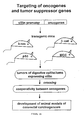
- the identified villin regulatory region provides a molecular tool for the establishment of new cell lines, including new immortalized cell lines, particularly epithelial cell lines originating from intestinal tissue. It also provides means appropriate for the preparation of transgenic organisms, especially transgenic animals, including transgenic mice, enabling the targeted expression of determined nucleotide sequences.
- the invention therefore discloses appropriate tools for the study of pathological states related to a dysfunction of gene expression pattern or for the treatment or prevention of said pathological states, for example to enable targeted expression of a gene acting as repairer gene in order to compensate for the dysfunction of an endogenous gene, or to add a novel function in cells or to suppress a determined function or state, or its consequences.
- pathological states can benefit from the establishment of transgenic model animals wherein induction of a pathological state is obtained in relation with the targeted expression of genes. It also relates to the study of rescue of pathological states.
- the invention thus relates to a nucleotide sequence derived from the 5' sequence of the murine villin gene, having a size of 9 kb on an agarose gel, or a fragment thereof, comprising nucleotide elements having a cis-regulatory activity that promotes the transcription of the murine villin gene.
- nucleotide sequence designates any type of nucleotide sequence, especially DNA, whatever its origin, including genomic, cloned, amplified, recombinant or synthetic sequences.
- nucleotide sequence derived from the murine villin gene nevertheless encompasses sequences obtained without having direct recourse to the native isolated gene.
- structural and/or functional characterizing features of the nucleotide sequence may correspond to their native counterpart in the murine villin gene or may be modified as a result of mutation, deletion, truncation, or addition of nucleotides or nucleotide fragments provided its function of promoting the transcription and/or expression of the villin gene is not substantially affected.
- the sizes of the nucleotide sequences which are indicated in the present patent application may vary: indeed, the indicated sizes correspond to the size deduced from the band visualized on an agarose gel, in conditions corresponding to those given in the examples.
- a nucleotide sequence of the invention is a sequence having a cis-regulatory activity that promotes the transcription of the murine-villin gene thus enabling the transcription ending in the production of mRNA and subsequent expression of villin protein, in intestine epithelial cells. Conditions appropriate to test said regulatory activity are described in the examples.
- Clones obtained from a genomic library can indeed be used to isolate the nucleotide sequences of the invention, provided said clones contain sequences comprising a fragment having a size of at least 9 kb upstream from the translation initiation codon. Said fragment can be obtained from one clone or from overlapping genomic sequences contained in several clones.
- Probes derived from the cDNA of the villin gene can be used to identify appropriate clones in a genomic library of murine genes. Especially, such probes can be designed aground the translation intiation codon and have advantageously at least 100 nucleotides, including sequences having 200 to 500 nucleotides, or more.
- Such probes can also be designed starting from the sequence SEQ ID NO: 1 and can be synthesized or obtained by amplification. They can be derived from the 5' sequence upstream of the translation initiation codon.
- the invention relates to various nucleotide sequences derived from said 9 kb sequence having retained the transcription initiation site of the murine villin gene. Especially, the invention relates to:
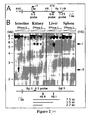
- the DNAsel hypersensitive sites can be mapped on a genomic DNA corresponding to the mouse villin gene with the probes described on figure 2 .
- the transcription regulatory activity of the murine villin gene is cited as a reference for the identification of nucleotide sequences encompassed within the scope of the invention.
- the invention furthermore relates to a nucleotide sequence which is derived from said 9 kb sequence of the murine villin gene having retained the transcription initiation site of the murine villin gene and which enables the transcription of a heterologous sequence, with respect to this gene.
- Variant nucleotide sequences can be obtained from other animals of the Vertebrates or Invertebrates groups, especially from mammals, or from birds especially chicken or from fishes. Referring to Invertebrates nucleotide sequences can be otained from Drosophila or from C. elegans.
- genes can therefore be used to promote the targeted transcription and expression of genes (or more generally any nucleotide sequence of interest) in epithelial cells of the intestinal or uro-genital tracts, either in stem cells or in differentiated cells.
- the invention thus relates to a recombinant nucleotide sequence which comprises a first nucleotide sequence as defined in the claims and a second nucleotide sequence for which a tissue specific targeted expression in epithelial intestine cells is sought.
- the second nucleotide sequence is a sequence encoding a determined polypeptide, protein or peptide, all designated hereafter by the term "polypeptide”.
- the second nucleotide sequence may also be a sequence of therapeutic interest such as tumor suppressor gene, a functional inhibitor of a gene, an antisense sequence an oncogene, an immortilizing gene, a normal gene for the loss of a function, or more generally any sequence the targeted expression of which in epithelial cells of intestinal origin may present an interest, for instance in processes for preventing, controlling or curing pathological states including those states related to the development of tumors.
- a sequence of therapeutic interest such as tumor suppressor gene, a functional inhibitor of a gene, an antisense sequence an oncogene, an immortilizing gene, a normal gene for the loss of a function, or more generally any sequence the targeted expression of which in epithelial cells of intestinal origin may present an interest, for instance in processes for preventing, controlling or curing pathological states including those states related to the development of tumors.
- the second nucleotide sequence codes for an antigen or an immunoglobulin or for fragments thereof, including variable chains or immunoglobulins.
- the second nucleotide sequence is an oncogene.
- a recombinant sequence of the invention comprising an oncogene may be used for studies relating to carcinogenesis especially in animal models expressing said recombinant sequence.
- the second nucleotide sequence which is placed under the control of the regulatory sequences of murine villin gene is further placed under the control of an inducible system, for example the Tetracycline/Doxycycline mediated temporal control of gene expression in transgenic mice ( Kistner A. et al, 1996, PNAS, 93, 10933-10938 ).
- the invention also concerns vectors containing the nucleotide sequences of the invention especially plasmids or cosmids, appropriate for the transfer and/or expression of these sequences in cells or transgenic animals.
- the invention also concerns recombinant epithelial cells comprising a recombinant sequence as described above.
- epithelial cells encompass stem cells, especially crypt stem cells of the intestinal mucosa, or differenciated cells, especially commited intestinal cells.
- the invention further relates to an epithelial cell originating from the kidney proximal tubules recombined with the nucleotide sequences of the invention.
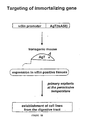
- the epithelial cells of the invention can be immortalized cells, especially as a result of the expression of an immortalizing gene (e.g., AgT (tsA58)) the expression of which is drived and targeted by the regulatory nucleotide sequence of the invention.
- an immortalizing gene e.g., AgT (tsA58)
- the administration of the recombinant nucleotide sequence of the invention may be made by the available techniques including ex vivo or in vivo administration processes, especially by electroporation, calcium phosphate precipitation, liposomes...
- the invention also concerns transgenic animals obtained by transgenesis of recombinant nucleotide sequences of the invention.
- transgenic animals encompass animals from the Vertebrates or Invertebrates groups and are especially birds for instance chicken or fishes or non-human mammals, more particularly mice.
- Invertebrates like Drosophila or Nematodes, like C. elegans can also be used for the preparation of transgenic animals expressing recombinant sequences of the invention under the control of regulatory sequences derived from their endogenous villin genes.
- Appropriate processes for the preparation of the transgenic animals expressing in a targeted tissue specific way, recombinant nucleotide sequences, are disclosed in the following examples.
- Such a process for the preparation of transgenic mice advantageously comprises the steps of:
- mice capable of expressing the sequences of the invention with mice expressing different sequences (e.g. sequences encoding inducible systems) in order to obtain double recombinant mice.
- sequences e.g. sequences encoding inducible systems
- a large genomic region of the mouse villin gene has been analyzed.
- a 9 kb regulatory region of the mouse villin gene (harbouring 3.5 kb upstream the transcription start site and 5.5 kb of the first intron) was able to promote transcription of the Lac Z reporter gene in small and large intestines of transgenic mice, in a transmissible manner, and thus efficiently directed subsequent ⁇ -gatactosidase expression in epithelial cells along the entire crypt-villus axis.
- the transgene was also expressed in the epithelial cells of the proximal tubules but is likely sensitive to the site of integration.
- the 9 kb genomic region contains the necessary cis-acting elements to recapitulate the tissue-specific expression pattern of the endogenous villin gene.
- these regulatory sequences can be used to target heterologous genes in immature and differentiated epithelial cells of the small and/or large intestinal mucosa.
- Human colon carcinoma CaCo2 cells were cultured at 37°C, 10% in CO2, in Dulbecco modified Eagle medium supplemented with 10% fetal serum, 1X nonessential aminoacids and 5 mM L-glutamine.
- Pig Kidney proximal tubules derived-LLCPKI cells and canine kidney distal tubules derived-MDCK cells were cultured at 37°C, 10% CO2, in Dulbecco modified Eagle medium supplemented with 10% fetal calf serum and 5 mM L-glutamine.
- Cells cultures approximately 50% confluent in 60 mm-dishes containing serum-free medium, wre cotransfected using 15 ⁇ l of Lipofectin reagent (Life Technologies, Inc.) with 5 ⁇ g of each ⁇ -galactosidase reporter plasmid construct and 5 ⁇ g of the control plasmid, pRSVLuc, which contains the luciferase gene under the control of the Rous sarcoma virus promoter.
- the serum-free medium was changed to growth culture medium 6 h after transfection, and cells were harvested 48 h later.
- RNA NOW reagent Biogentex
- 2 ng of 32 P-labeled oligonucleotide probe (5'-GAGTGGTGATGTTGAGAGAGCCT-3') complementary to nucleotides +81 to +103 of the murine villin cDNA (GenBank Accession No. M98454) was hybridized with 30 ⁇ g of total RNA at 60°C (0.25 M KCI, 10 mM Tris-HCl, pH 7.5, 1 mM EDTA) for 90 min.
- the full-length extension product (105 nucleotides) was obtained by comparison with the length of the comigrating sequencing reaction products.
- a primer extension control experiment was performed on the same total RNA preparation, using a 32 P-labelled oligonucleotide probe (5'-CATAGTTCTCGTTCCGGT-3') complementary to nucleotides +63 to +80 of the mouse intestinal fatty acid binding protein (I-FABP) cDNA and generating a 81-nucleotide extension product (27).
- Tissues from 30 mice were used per assay of intestine, kidney, liver and spleen. Nuclei preparation and DNase I digestion were performed as described (28) with minor modifications. Nuclei were digested without or with 20 to 160 units of DNase I (DPRF Worthington) for 10 min at 0°C. Genomic DNA was purified by three rounds of (1:1) phenol-chloroform extraction followed by chloroform extraction and precipitation with ethanol. 10 ⁇ g of each sample was digested overnight with restriction enzyme ( Bam HI or Bgl II).
- restriction enzyme Bam HI or Bgl II
- the DNA fragments were separated by electrophoresis on a 0.8% agarose gel in TAE (40 mM Tris (pH 7.2), 20 mM sodium acetate, 1 mM EDTA), transferred onto a charged nylon membrane (Hybond-N + , Amersham), and hybridized at 65°C overnight with a random-primed (rediprime, Amersham) 32 P-labeled probe.
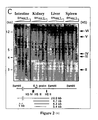
- the probe, the Bgl II- Pst I probe (0.5 kb) (as indicated in Fig. 2 ) was used to map the DNase 1-hypersensitive sites in the BamHI, BglII fragments.
- the filter was washed using (1X SSC (0.15 M NaCL, 15mM sodium citrate, pH 7.0), 0.1 % SDS, 55°C) and exposed to film overnight at -70°C with an intensifying screen.
- 3B was prepared by ligating a Bam HI fragment of 5.1 kb (1.8 kb upstream from the ATG translation initiation codon of the mouse villin gene, subcloned 5' to the nuclear localization signal-galactosidase gene-SV40 polyadenylation site, using a polymerase chain reaction (PCR) strategy) at the Bam HI site in a plasmid containing the 3.7 kb region of the mouse villin gene (immediately 5' to the 1.8 kb region described above).
- PCR polymerase chain reaction
- the pA1 and pA2 constructs have resulted from several steps based on the Bst EII sites present in the 3.7 kb region described above and in a plasmid containing the 3.5 kb region of the mouse villin gene (immediately 5' to the 3.7 kb region).
- the pC1 and pC2 constructs were derived from the pA1 and pA2 plasmids cut with Apa I and re-ligated, respectively.
- a Bgl II fragment (480 bp) from the 3.5 kb region described above was excised and cloned into the Kpn I site of the pC 1 plasmid.
- the pA3, pB3 and pC3 constructs correspond to the pA1, pB1 and pC1 deleted from the intron 1 ( Fig. 3B ).
- the pA3 and the pC3 constructs were derived from the pB3 plasmid by ligating an ApaI fragment (3.1 kb) and a Bg /II fragment (480 bp) from the 3.5 kb region described above, at the Apa I site in the pB3 plasmid respectively. Subcloning steps were confirmed by DNA sequencing.
- transgenes digested with Xho I- Not I, purified by gel elution and Elutip Columns (Schleiche & Schuell). The linear fragments were supended in 10 mM Tris-HCl, pH 7.4, 0.2 mM EDTA and were injected into the pronuclei of the fertilized eggs of the B6/D2 mice.
- Mice carrying transgenes were first identified by PCR of genomic DNA isolated from a short segment of tail to confirm the presence of the galactosidase gene and then analyzed by Southern blotting to determine the copy number of the integrated transgene. Each founder animal harbored one copy of the transgene per genome.
- Small intestine, colon, kidney, stomach, liver, heart, lung, thymus, brain, spleen and muscle were dissected from transgenic mice, cut in small pieces, quickly frozen in liquid nitrogen-cooled isopentane either prepared for total RNA extraction or embedded in Tissue-Tek O.C.T. Compound (Sakura Finetek) blocks to perform cryosections.
- 1X First Strand Buffer Life Technologies, Inc
- 2 ⁇ l of the resulting cDNAs were amplified by PCR reaction in 50 ⁇ l for 40 cycles. Each cycle consisted of 60 sec at 94°C, 60 sec at 51°C (for transgene and villin) and 57°C (for TFIID), and 30 sec at 72°C.
- transgene primers 5'-CAACTTCCTAAGATCTCC-3' coding strand and 5'-ATTCAGGCTGCGCAACTGTT-3' non-coding strand were used, generating a 250 bp product.
- RNA was isolated from intestine and analysed by primer extension assay using an oligonucleotide complementary to the mouse villin cDNA downstream of the ATG translational start site. The efficiency of the reaction was confirmed by primer extension of the mouse intestinal fatty acid binding protein (I-FABP) gene (fabpi) from the same RNA preparation (27). Analysis of the fabpi extension product on a sequencing gel by comparison with a sequence ladder ( Fig. 1A ) revealed a strong signal band of a size of 81 bp as expected.
- I-FABP mouse intestinal fatty acid binding protein
- the extension product of villin was 105 pb indicating that the transcriptional start site (an adenosine residue subsequently designed as nucleotide +1) was 57 nucleotides upstream of the translation initiation codon of the murine villin cDNA ( Fig. 1B ).
- Comparison of the genomic sequence encompassing 9 kb upstream from the ATG initiation codon with the cDNA sequence, position of splice site consensus sequences in the 9 kb genomic sequence ( Fig. 1B ) and determination of the transcription start site reveal that the mouse villin gene has one transcription start site which is separated from the ATG iniation codon by a 5.5 kb intronic region ( Fig. 1C ).
- the Dnase I-digested DNA was restricted by BlgII and hybridized with a 0.5 kb probe homologous to the 5' of the 7.5 kb BlgII fragment ( Fig. 2B ).
- Two sets of Dnase I incubation-related fragments were detected, migrating at 5.5 and 2,7 kb, and corresponding to hypersensitive sites designated as HS I (located at approximately +5.5 kb downstream from the transcription start (+1) site, just upstream the ATG initiation codon) and HS II (located at approximately +3 kb downstream from the (+1) site), respectively.
- HS I was observed in nuclei isolated from intestine, kidney and liver, whereas HS II was only present in intestinal tissue.
- the hypersensitive site HS V and HS VI were only present in liver tissue (in which villin is weakly expressed) and were located far upstream from the transcription start site in regions (i) which have not been subcloned and (ii) which could-belong to an adjacent gene; for these reasons, these hepatic-specific hypersensitives sites were not analyzed further.
- BglII digestion no specific hypersensitive sites were detected in nuclei isolated from spleen.
- HS I to HS IV DNase I-hypersensitives sites
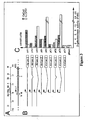
- segments containing the DNase I-hypersensitives sites were subcloned upstream of a promoterless Lac Z plasmid (coding for the bacterial ⁇ -galactosidase gene with a nuclear localization signal sequence) ( Fig. 3B ).
- the resulting recombinant plasmids were tested by transient transfection assays in cultures cell lines.
- the construct pA1 contained all the subcloned regions dowstream from the ATG initiation codon, encompassing the four DNase I-hypersensitive sites (HS I to HS IV) described above and the 5.5 kb intronic sequence, intron 1. Plasmids pA2 and- pA3 were identical to pA1 except for the presence of intestine-specific hypersensitive site HS II and intron 1, respectively. Plasmid pB1 and plasmid pC1 were similar to plasmid pA1, but lacked the regions extending from -480 bp to -3.5kb and -100 bp to -3.5 kb according to the transcription start site, respectively.
- Plasmid pC2 was identical to pA2, but lacked the region extending from -100 bp to -3.5 kb. Plasmids pB3 and pC3 were identical to pB1 and pC1 except for the presence of intron 1, respectively.
- the plasmid pD1 was identical to pA1 except for the presence of the transcription start site and the region extending upstream from this site.
- the plasmid pBasic which does not contain a promoter or enhancer, and a pControl plasmid which possesses the SV40 promoter, were also tested in each experiment.
- Transient transfections were performed in the human colon enterocyte-like CaCo2 cell line and the pig kidney proximal tubules-derived LLCPK1 cell line which express villin, and in kidney epithelial cells in which no villin expression is detected, MDCK (a canine kidney distal tubules-derived cell line). Transcription from the villin promoter was measured by assaying ⁇ -galactosidase activity in extracts made from the transfected cells, and the results were expressed as - fold induction over that of the promoterless vector, pBasic ( Fig. 3C ).
- the construct pA 1 expressed the ⁇ -galactosidase gene at the highest level in CaCo2 cells (8-fold over pBasic) as compared with LLCPK1 cells (1.5-fold over pBasic) suggesting that the four DNase I-hypersensitives sites together with the first intron are necessary to promote efficiently transcription in cells of intestinal origin.
- Deletion of the fragment containing the intestinal-specific hypersensitive site HS II (pA2) dramatically decreased ⁇ -galactosidase expression in CaCo2 cells (2-fold over pBasic) to about 25% of that of pA1, demonstrating that a major element which confers intestinal activity was confined within this fragment.
- the villin promoter-related constructs were transfected in MDCK cells, which do not express villin. After transfection, these cells showed only base-line levels of ⁇ -galactosidase activity when compared to pBasic-related activity (data not shown), demonstrating that the villin regulatory sequences were unable to promote efficient transcription in nonexpressing villin cells, and that consequently the expression of the reporter gene in CaCo2 and LLCPK1 cells is specifically dependent upon these regulatory sequences.
- mice Analysis of transgenes expression in mice :
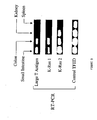
- the construct pA1 was then prepare, after excision of the plasmid sequence, and injected into fertilized eggs. Five founder animals which contained the pA1 construct as a transgene- were obtained. The founder mice were analysed for mRNA reporter gene expression in several adult tissues by reverse-transcription PCR (RT-PCR) analysis. From the same cDNA samples, products encoding ⁇ -galactosidase, villin and TFIID were analyzed.
- the PCR assays enabled only the detection of spliced transcribed mRNA, excluding that from genomic DNA itself, by means of an exon-connection strategy by combination of a 5' PCR primer from within the mouse villin promoter sequence just upstream of the splice donor site, and the 3' primers from within the ⁇ -galactosidase gene or the villin gene. For each founder, no reporter gene expression was detected in the tissues in which villin mRNAs were not detected using the PCR assay ( Fig. 4 ).
- the reporter gene transcription was detected along the cephalocaudal axis of the gut (duodenum, jejunum, ileum, proximal and distal colon) following the intestine-specific expression of the villin gene ( Fig. 4 ).
- the transgene was only transcribed in one founder of five animals obtained ( Fig. 4 ).
- TFIID mRNA was present in all samples from tissues in which the reporter gene expression could not be detected ( Fig. 4 ), confirming the quality of RNA from these tissues.
- cryostat sections of small intestine, colon and kidney were prepared and subsequently stained for ⁇ -galactosidase enzyme activity. Immunofluorescence analysis of ⁇ -galactosidase expression was also performed on the same sections and similar results were obtained with the two procedures. Sections of small intestine, colon and kidney from non-transgenic animals exhibited no detectable ⁇ -galactosidase activity. For four of five transgenic mice, a heterologous pattern of expression in small intestine and colon was observed in this assay. This heterogeneity was due to mosaicism since we examined founder animals.
- the expression was confined to the nucleus of the epithelial cells, as expected because the ⁇ -galactosidase gene contains a nuclear localization sequence signal ( FIG. 5 ).
- the staining was detected by a stronger signal in the villi migrating cells when compared with the crypts cells, of both small intestine ( Fig. 5A ) and colon ( Fig. 5C ) epithelium, thus confirming that the -3.5 to +5.5 kb region of the mouse villin gene is able to recapitulate precisely the cellular pattern of expression, along the crypt-villus differentiation axis, of the endogenous villin gene (17).
- a continuous labelling of all cells of the crypt Fig.
- the founder animals were able to transmit the transgene to their offspring with a similar pattern of ⁇ -galactosidase expression.
- plasmids pA3, pB3 and pC3 were used to generate transgenic mice, because these constructs display efficient levels of ⁇ -galactosidase activity in intestine-derived CaCo2 cells.
- the presence of the transgene assessed by ⁇ -galactosidase staining and immunofluorescence procedures was observed in three of the four independent lines of pA3 transgenic mice generated.
- the key cis-acting elements of the villin gene required for intestinal and/or kidney-related expression of transgene(s) in transgenic mice are not located only within the region encompassing -480 bp upstream from the transcription start site, as observed in the cultured epithelial cells.
- mouse reporter gene expression was restricted to epithelial cells of the proximal tubules recapitulating the villin expression pattern in this tissue.
- transcriptional mechanisms specifying gene expression to intestine and kidney tissues are in the -3.5 to +5.5 kb region of the mouse villin gene, and that those related to kidney may be sensitive to positional effects.
- the transgene expression is dependent on site of chromosomal integration, and can be influenced by regulatory regions in the vicinity, presumably acting on chromatin conformation (33).
- the extinction of the reporter gene expression in the kidney might be due to strong positional effects, as reported above, whereas the extinction related to the colon might be due to the absence of regulatory elements of the intron 1, such as the intestine-specific DNase I-hypersensitive site HS II.
- distinct and separable regulatory elements in the mouse villin gene may direct transgene expression along the cephalocaudal axis of the gut: the regulatory elements required for transgene expression in the small intestine might be localized in the 3.5 kb region (i.e. the HS IV site) upstream from the transcription start site, whereas those necessary for the colonic expression might be localized in the first intron (i.e. the HS II site).
- the inability of shorter regulatory sequences of the mouse villin gene to direct correct expression of the reporter gene in the whole intestine of transgenic mice might also be explained by spatial rearrangement of chromatine structure due to the lack of the entire first intron.
- results described here are pronounced of those of the adenosine deaminase gene (34) and the aldolase Bgene (35) in which elements located in the first intron could be required for transgene expression in vivo, because they may contain cis-acting tissue-specific enhancer elements and/or elements involved in promoting decondensation of the chromatin structure, allowing the accessibiliy for transcription factors and RNA polymerase.
- mice Previous studies carried out in transgenic mice to map transcriptional regulatory elements responsible for intestinal expression have been performed using cis-acting - sequences of genes expressed in villus associated-enterocytes of small intestine (4, 5, 38-40). In some of these cases, precocious activation in the crypts in combination with extended expression in the colon occurs in an inappropriate manner.
- the 9kb regulatory region of the mouse villin gene represents the only characterized cis-acting sequences reported today that allow the expression of a heterologous gene in small intestine and colon epithelial cells of transgenic mice reproducing with great fidelity the tissue-specific and cell-specific pattern of expression when compared with that of the endogenous gene itself.
- the mice lines that drive a transgenic expression exclusively restricted to the intestinal mucosa could already be studied after selection of those which will not display expression into the kidney because of the positional effects.
- mice following the villin restricted-pattern of expression, and particularly in the crypts stem cells enables to the development of targeted genes in animal models.
- Experimental mouse models reproducing several steps of human colorectal carcinogenesis (a possible genetic pathway has been proposed by Fearon and Vogelstein (41)) could for instance be obtained by efficiently targeting the associated oncogenes or mutated tumor suppressor genes to colonocytes using the villin regulatory region.
- Another use could lie in the establishment of new cell lines derived from the digestive tract by targeting a thermosensitive SV40 T antigen to the crypts resident-progenitors of intestinal cells, as used in other systems (42-44).
- the vector p2kb/lacZ was constructed like the plasmids illustrated on figure 3 except that a 2kb fragment containing the 3' portion of the 9kb villin gene beginning at the BamH1 site (located at nucleotide 7076) and ending at the ATG corresponding to the Ncol site, was used for the association to LacZ.
- CTAGGCGGCCGC ⁇ p2kb/LacZ Spe/Not .
- the NcoI site at the ATG from the villin gene was converted to AatII in the vector containing 2kb 3' of the regulatory sequences of the villin gene by using hybridized oligonucleotides (5' CATGACGTCGGACTTGC and 3' GGCCGCAAGTCCGACGT).
- a fragment AfIII-NotI comprising the 3' end of the regulatory sequence of the villin gene and the AatII site, was then introduced in the vector p9kb/LacZ digested by AfIII and Not I, thereby replacing the LacZ portion.
- the plasmid p(murine villin 9kb) AatII is thus obtained.
- the p(murine villin 9kb) AatII is digested by AatII and NotI.
- the transgene was exised by KpnI and NotI.
- the 5' region of the T/t tsA58 gene ( Jat, P.S. and P.A. Sharp. 1989. Cell lines established by a temperature-sensitive simian virus 40 large T-antigen are growth restricted at the non permissive temperature. Mol Cell. Biol. 9. 1672-1681 ) was amplified by PCR using Oligonucleotides (5' GGGTACCATGGATAAAGTTTTAAACAGAGAG and 3' GGAATTCGGCGCCGCAGTAGCAATCAACCC) creating a KpnI-NcoI site at the 5' end and a EcoRI-NarI site at the 3'end. The EcoRI/KpnI fragment was introduced into Bluescript ks ( ⁇ pks T/t 5').
- This plasmid was then digested by NarI/Smal, insert the 3' fragment of T/t tsA58, also used as template for PCR digested ClaI/Klenow/TaqI ( ⁇ pKS T/t tsA58).
- a NotI site was introduced into the vector p2kb/lacZ described above using a linker
- the transgene was exised by KpnI and NotI.
Landscapes
- Micro-Organisms Or Cultivation Processes Thereof (AREA)
Description
- The invention relates to regulatory sequences of the mouse villin gene that efficiently drive transgenic expression in immature and differentiated epithelial cells of the intestine and uro-genital tracts.
- Villin is a cytoskeletal protein which is mainly produced in epithelial cells that develop a brush-border responsible for absorption as in the digestive apparatus (epithelial cells of the large and small intestine) and in the urogenital tract (epithelial cells of the kidney proximal tubules). Because it is expressed in the proliferative stem cells of the intestinal crypts (16,17), it is believed to be an early marker for commited intestinal cells. The multiple levels of regulation control villin gene activity during mouse embryogenesis (18-20) and account for the strict pattern of tissue-specific expression observed in adults. Moreover, the expression of the villin gene in intestinal epithelial cells is conspicuously maintained in their correspondant carcinomas (21-24).
- The specific expression pattern of villin suggests that it is an appropriate candidate for the characterization of regulatory sequences that could allow targeting of heterologous genes into a selected population of cells in the mouse digestive tract.
- In order to design new constructs and systems enabling the targeted expression of genes in epithelial cells of intestinal or urogenital tracts, the inventors have investigated the underlying molecular mechanisms and particularly those responsible for the restricted tissue specificity of the expression of villin.
- The invention therefore provides new regulatory sequences encompassing cis-acting elements involved in the regulation of the transcription and of the expression of the murine villin gene.
- The invention also relates to recombinant constructs comprising said regulatory sequences, for the control of the targeted expression of determined nucleic acid sequences so-called (heterologous sequences or also transgenes), in cells or tissues originating from the intestinal mucosa.
- A further object of the invention is to provide cells, tissues or organisms including animals, expressing said determined nucleic acid sequences in a targeted manner.
- Transgenic mice are routinely used to study the molecular and cellular basis of normal and pathological states in intestinal mucosa (1-5). The major limitation regarding the targeting of exogenous transgenes in this tissue, is that the epithelium of the mouse intestinal mucosa is renewed every 2-5 days (6-8). The epithelial cells arise from multipotent stem cells functionally anchored at the base (more precisely in the lower third) of the epihelium's proliferative compartment, the crypts of Lieberkühn. These crypts display a monoclonal organization since they are each derived from a single progenitor cell (9). Descendants of stem cells multiply in the middle portion of each crypt (10), and gradually differentiate into four principal cell types. In the small intestine, absorptive enterocytes (constituting >80% of the epithelial cells), mucus-producing globlet cells and enteroendocrine cells migrate upward from the crypts to the apex of surrounding villi (whose colonic counterparts are hexagonal shaped cuffs) (11), where they become apoptotic and are exfoliated into the gut lumen (12). In contrast, antimicrobial peptides-secreting Paneth cells migrate to the bottom of the crypts, where they reside for about 20 days (13).
- Given the remarkable protective effect of this epithelium, it is not unexpected that most previous studies aiming to induce neoplastic transformation in intestinal mucosa of transgenic mice have failed (14, 15). In these prior reports, the use of promoter sequences which direct oncogenes in non proliferating enterocytes located in the upper third of crypts produce only minor phenotypic abnormalities without tumorigenic consequences in the gut epithelium, suggesting that the residence time of these villus-associated cells may not be sufficient for the oncogenes to exert their effects. Furthemore this suggests that transgenic mouse models of neoplasia may require an efficient targeting of oncogenes in crypts stem cells or their immediate descendants.
- With this goal in mind, the human villin gene has been isolated and characterized (25).
- A 2 kb 5'-flanking region has been found to contain sufficient regulatory elements to promote tissue-specific expression of a reporter gene in intestinal and renal cell lines (26). In transgenic mice, this regulatory region is able to drive the expression of the human Ha-ras oncogene in the tissues in which the endogenous gene is actively transcribed. However low levels of expression were observed that did not trigger malignant tissue appearance into the gut of these animals.
- The invention provides new means for the targeted expression of heterologous sequences in cells originating from intestinal and/or urogenital tracts. Advantageously, the invention encompasses but is not limited to nucleotide sequences that should overcome at least in part, some of the deficiencies of the previously described gene constructs prepared with regulatory sequences of the human villin gene : especially having recourse to regulatory elements promoting the expression of the murine villin gene, the inventors have designed new DNA constructs that may improve the efficiency of the targeted expression of heterologous genes in transgenic animals, with respect to the results obtained when said heterologous genes are placed under the control of the human villin regulatory elements contained in the above disclosed 2 kb sequence.
- The inventors have analysed an extended genomic region of the mouse villin gene with the goal of mapping elements localized at the 5' and/or 3' ends and possibly involved in promoting high levels of targeted expression of heterologous sequences in epithelial stem or differentiated cells, specifically originating from the intestinal mucosa.
- As a result, the inventors have identified a transcriptional regulatory region that enables efficient targeted tissue-specific or cell-specific expression, reproducing the expression pattern of the endogenous villin gene in mice, including expression in the crypt stem cells of the colon and in differencitated cells.
- In accordance with the invention the identified villin regulatory region provides a molecular tool for the establishment of new cell lines, including new immortalized cell lines, particularly epithelial cell lines originating from intestinal tissue. It also provides means appropriate for the preparation of transgenic organisms, especially transgenic animals, including transgenic mice, enabling the targeted expression of determined nucleotide sequences.
- The invention therefore discloses appropriate tools for the study of pathological states related to a dysfunction of gene expression pattern or for the treatment or prevention of said pathological states, for example to enable targeted expression of a gene acting as repairer gene in order to compensate for the dysfunction of an endogenous gene, or to add a novel function in cells or to suppress a determined function or state, or its consequences.
- The study of pathological states can benefit from the establishment of transgenic model animals wherein induction of a pathological state is obtained in relation with the targeted expression of genes. It also relates to the study of rescue of pathological states.
- The invention thus relates to a nucleotide sequence derived from the 5' sequence of the murine villin gene, having a size of 9 kb on an agarose gel, or a fragment thereof, comprising nucleotide elements having a cis-regulatory activity that promotes the transcription of the murine villin gene.
- In accordance with the invention, the expression "nucleotide sequence" designates any type of nucleotide sequence, especially DNA, whatever its origin, including genomic, cloned, amplified, recombinant or synthetic sequences.
- The term "derived from" characterizes the fact that the sequence is defined with reference to the isolated endogenous sequence of the murine villin gene. Said nucleotide sequence derived from the murine villin gene nevertheless encompasses sequences obtained without having direct recourse to the native isolated gene. Furthermore, the structural and/or functional characterizing features of the nucleotide sequence may correspond to their native counterpart in the murine villin gene or may be modified as a result of mutation, deletion, truncation, or addition of nucleotides or nucleotide fragments provided its function of promoting the transcription and/or expression of the villin gene is not substantially affected.
- The sizes of the nucleotide sequences which are indicated in the present patent application may vary: indeed, the indicated sizes correspond to the size deduced from the band visualized on an agarose gel, in conditions corresponding to those given in the examples.
- Especially, a variation of the actual size of within the range of 20% to 5% especially around 15 or 10 % of the sequence, is encompassed within the given size indication.
- A nucleotide sequence of the invention is a sequence having a cis-regulatory activity that promotes the transcription of the murine-villin gene thus enabling the transcription ending in the production of mRNA and subsequent expression of villin protein, in intestine epithelial cells. Conditions appropriate to test said regulatory activity are described in the examples.
- Where necessary, access to the genomic DNA of the murine villin gene is enabled through various available libraries. Clones obtained from a genomic library can indeed be used to isolate the nucleotide sequences of the invention, provided said clones contain sequences comprising a fragment having a size of at least 9 kb upstream from the translation initiation codon. Said fragment can be obtained from one clone or from overlapping genomic sequences contained in several clones. Probes derived from the cDNA of the villin gene can be used to identify appropriate clones in a genomic library of murine genes. Especially, such probes can be designed aground the translation intiation codon and have advantageously at least 100 nucleotides, including sequences having 200 to 500 nucleotides, or more.
- Such probes can also be designed starting from the sequence SEQ ID NO: 1 and can be synthesized or obtained by amplification. They can be derived from the 5' sequence upstream of the translation initiation codon.
- According to specific embodiments, the invention relates to various nucleotide sequences derived from said 9 kb sequence having retained the transcription initiation site of the murine villin gene. Especially, the invention relates to:
- a nucleotide sequence which is the sequence extending 5.5 kb downstream and 3.5 kb upstream from the transcription initiation site of the murine villin gene;
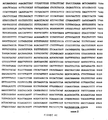
- a nucleotide sequence which is identified as SEQ ID NO: 1 and which is represented on
Figure 6 ; - a nucleotide sequence which comprises or which is the nucleotide fragment extending from the HS I to the HS IV Dnase 1-hypersensitive sites;
- The DNAsel hypersensitive sites can be mapped on a genomic DNA corresponding to the mouse villin gene with the probes described on
figure 2 . - a sequence which comprises or which is the nucleotide fragment extending from the HS IV Dnasel-hypersensitive site to the translation initiation codon of the murine villin gene;
- a sequence which comprises or which is the nucleotide fragment extending from the nucleotide at around position -100 upstream from the transcription initiation site, to the translation initiation codon;
- a sequence which comprises or which is the nucleotide fragment extending 3.5 kb upstream from the transcription initiation site to the transcription initiation site and further comprises the translation initiation codon, and possibly the sequence of
exon 1 and the sequence ofexon 2 starting 5' from the ATG codon; - a sequence which comprises or which is the nucleotide fragment extending from around the nucleotide at position -480 from the transcription initiation sequence, to the translation initiation codon;
- a sequence which comprises or which is the sequence extending 3.5 kb upstream from the transcription initiation site to the translation initiation codon, provided the region corresponding to
intron 1, located between said sites is deleted, or deleted in part; - a sequence which comprises or which is derived from the nucleotide sequence of the murine villin gene having a size of 9 kb on an agarose gel and extending 3.5 kb upstream from the transcription initiation site and 5.5 kb downstream from said site, or a fragment thereof, said nucleotide sequence or fragment thereof having a regulatory activity on the transcription of the murine villin gene and/or on the level of expression of the murine villin gene in intestine cells and/or in transgenic mice.
- The transcription regulatory activity of the murine villin gene is cited as a reference for the identification of nucleotide sequences encompassed within the scope of the invention. The invention furthermore relates to a nucleotide sequence which is derived from said 9 kb sequence of the murine villin gene having retained the transcription initiation site of the murine villin gene and which enables the transcription of a heterologous sequence, with respect to this gene.
- Variant nucleotide sequences can be obtained from other animals of the Vertebrates or Invertebrates groups, especially from mammals, or from birds especially chicken or from fishes. Referring to Invertebrates nucleotide sequences can be otained from Drosophila or from C. elegans.
- Although the above defined sequences have been shown as being able to promote efficient transcription and expression of heterologous sequences in epithelial cells of intestinal origin or in transgenic mice, their structural variations may affect the efficiency of their regulatory activity, either with respect to the tissue - or cell-specificity of this activity, or with respect to the expression level observed.
- They can therefore be used to promote the targeted transcription and expression of genes (or more generally any nucleotide sequence of interest) in epithelial cells of the intestinal or uro-genital tracts, either in stem cells or in differentiated cells.
- The invention thus relates to a recombinant nucleotide sequence which comprises a first nucleotide sequence as defined in the claims and a second nucleotide sequence for which a tissue specific targeted expression in epithelial intestine cells is sought.
- In a particular embodiment of the invention, the second nucleotide sequence is a sequence encoding a determined polypeptide, protein or peptide, all designated hereafter by the term "polypeptide".
- The second nucleotide sequence may also be a sequence of therapeutic interest such as tumor suppressor gene, a functional inhibitor of a gene, an antisense sequence an oncogene, an immortilizing gene, a normal gene for the restauration of a function, or more generally any sequence the targeted expression of which in epithelial cells of intestinal origin may present an interest, for instance in processes for preventing, controlling or curing pathological states including those states related to the development of tumors.
- In a particular embodiment of the invention, the second nucleotide sequence codes for an antigen or an immunoglobulin or for fragments thereof, including variable chains or immunoglobulins.
- In another embodiment of the invention, the second nucleotide sequence is an oncogene.
- A recombinant sequence of the invention comprising an oncogene may be used for studies relating to carcinogenesis especially in animal models expressing said recombinant sequence.
- According to a specific embodiment of the invention the second nucleotide sequence which is placed under the control of the regulatory sequences of murine villin gene, is further placed under the control of an inducible system, for example the Tetracycline/Doxycycline mediated temporal control of gene expression in transgenic mice (Kistner A. et al, 1996, PNAS, 93, 10933-10938).
- The invention also concerns vectors containing the nucleotide sequences of the invention especially plasmids or cosmids, appropriate for the transfer and/or expression of these sequences in cells or transgenic animals.
- The invention also concerns recombinant epithelial cells comprising a recombinant sequence as described above.
- These epithelial cells encompass stem cells, especially crypt stem cells of the intestinal mucosa, or differenciated cells, especially commited intestinal cells.
- The invention further relates to an epithelial cell originating from the kidney proximal tubules recombined with the nucleotide sequences of the invention.
- The epithelial cells of the invention can be immortalized cells, especially as a result of the expression of an immortalizing gene (e.g., AgT (tsA58)) the expression of which is drived and targeted by the regulatory nucleotide sequence of the invention.
- The administration of the recombinant nucleotide sequence of the invention may be made by the available techniques including ex vivo or in vivo administration processes, especially by electroporation, calcium phosphate precipitation, liposomes...
- The invention also concerns transgenic animals obtained by transgenesis of recombinant nucleotide sequences of the invention.
- These transgenic animals encompass animals from the Vertebrates or Invertebrates groups and are especially birds for instance chicken or fishes or non-human mammals, more particularly mice. Invertebrates like Drosophila or Nematodes, like C. elegans can also be used for the preparation of transgenic animals expressing recombinant sequences of the invention under the control of regulatory sequences derived from their endogenous villin genes. Appropriate processes for the preparation of the transgenic animals expressing in a targeted tissue specific way, recombinant nucleotide sequences, are disclosed in the following examples.
- Such a process for the preparation of transgenic mice, advantageously comprises the steps of:
- administration of a transgene into the pronuclei of fertilized eggs of mice,
- enabling the development of the recombined eggs to recover transgenic mice (founders) and verifying the presence of the transgene,
- if appropriate crossing the founders with non transgenic mice.
- Further steps, including crossing between mice capable of expressing the sequences of the invention with mice expressing different sequences (e.g. sequences encoding inducible systems) in order to obtain double recombinant mice.
-
-
Figure 1 :
Determination of the transcription start site of the mouse villin gene by primer extension. A, primer extension analysis was performed with mouse intestinal total RNA (30 µg) and with either the end-labeled villin oligonucleotide (generating a 105-nuleotides extension product) or the end-labeled mouse intestinal fatty acid binding protein gene (Fabpi) oligonucleotide used as a positive control (generating a 81-nucleotides extension product). The size of the fragments obtained by primer extension is shown at the left. The unrelated sequence ladder that was run in the same gel is used as a size marker. B, nucleotide sequence between the transcription start site (the bold adenosine designated as +1) and the initiation codon (the bold underlined ATG codon) of the mouse villin cDNA. Each of the splice junctions present in the intron 1 (indicated below) conforms to the consensus splice donor (the italique GT nucleotides) and acceptor (the italique AG nucleotides) patterns, described by Breathnach and Chambon (30). C, schematic representation of the organization of the 5' -flanking region of the murine villin gene. The open box represents the untranslated exon and the shadowed box represents the first coding exon. The size of the exon and the intron is indicated. -
Figure 2 :
DNase I-hypersensitivity in the mouse villin gene. A, a partial restriction map diagram of the mouse villin gene regions subcloned (-3.5 to +9.9 kb in respect to the transcription start site, indicated by an arrowhead). BamH1 (B), Bg/II (Bg), Eco RI (E), Hind III (H) restriction sites, ATG initiation codon and the probes used to map the hypersensitives sites (0.5, 0.8 and 1.25 kb) are shown. B and C, intestine, kidney, liver and spleen nuclei were digested with increasing amounts of DNase I at 0 °C for 10 min (0, 20, 40, 80, 160 units). 10 µg of purified genomic DNA was digested with Bg/II (panel B), and BamHI (panel C), electrophoresed and transferred to a nylon membrane. Hypersensitives sites were revealed by probing with a 32P-labelled fragment of 0.5 kb. Positions of coelectrophoresed molecular weight markers are indicated at the left, and the hypersensitive bands are marked by arrows at the right. The maps represented below show the position of restriction sites, the deduced DNase I-hypersensitive sites (indicated by arrows) and the 0.5 kb probe used. -
Figure 3 :
Transient transfection analysis of the mouse villin promoter. A, above a partial restriction map diagram of the mouse villin gene from 9 kb with respect to the translation initiation codon. ApaI (A), BamH1 (B), Bg/II (Bg), BstEII (Bs), DrdI (D), NcoI (N) and XbaI (X) restriction sites are shown. The schematic representation below shows the location of the four hypersensitive sites (I-IV) as well as the 5.5 kb intron (represented by a cross-hatched rectangle) separating the transcription start site (indicated by an arrowhead) and the translation initiation codon. B, diagrams of the various constructs generated by deletion. Different portions of the 5'-flanking region of the mouse villin gene were fused with the E. coli β-galactosidase gene containing the nuclear localization signal (nls). C, β-galactosidase activities resulting from transient transfections into CaCo2 colon cells (shadowed bars) or LLCPK kidney cells (open bars) with the reporter constructs generated (represented in panel B). Basal activity resulting from the promoterless pBasic plasmid was set arbitrarily at 1.Values indicate the average of at least three independent transfections. -
Figure 4 :
Expression pattern of the transgene. Transgene (β-Gal) specific-transcripts were detected by reverse transcription-PCR in a ethidium bromide containing agarose gel. Above each lane, the different tissues tested and the controls, (+) : kidney mRNA from a mouse in which the β-galactosidase was inserted at the villin locus (32), and (-) : distilled H2O as a template. RT-PCR were also performed on mRNAs of the endogenous villin gene and the ubiquitous TFIID gene. -
Figure 5 :
β-galactosidase activity in sections of small intestine and colon from transgenic mice. Tissues were removed from transgenic mice, fixed, and stained for β-galactosidase activity with X-Gal as described. β-galactosidase activity was observed in the epithelial cells, both immature and differentiated, along the crypt-villus axis in the small intestine (panel A). Note that the differentiated cells exhibited a strong signal as did the villus-associated cells and the Paneth cells (arrows) localized to the bottom of the crypt (panel B). The epithelial cells of the colon were also stained (panel C), particularly all the cells in the crypt (panel D). Bars, 100 µm (panels A and C), 40 µm (panels B and D). -
Figure 6 :
Sequence of the genomic DNA of the murine villin gene comprising cis-acting elements capable to promote the transcription of the murine villin gene in intestinal mucosa and kidney proximal tubules. The sequence comprises the transcription initiation site at position 3442 followed by the sequence ofexon 1 containing 46 pb, the translation initiation codon at position 8993, the sequence ofintron 1 extending from nucleotide 3488 to nucleotide 8981. -
Figure 7 :
Targeted expression, of the β-galactosidase protein using regulatory sequences of the mouse villin gene. The data have been obtained by transgenesis. -
Figure 8 :
Protocols for the preparation of transgenic mice expressing determined nucleotide sequences under the control of the murine villin gene regulatory sequences. -
Figure 9 :
Transgene expression in different Founders, of the large T antigen and K-Ras antigen. - A large genomic region of the mouse villin gene has been analyzed. A 9 kb regulatory region of the mouse villin gene (harbouring 3.5 kb upstream the transcription start site and 5.5 kb of the first intron) was able to promote transcription of the Lac Z reporter gene in small and large intestines of transgenic mice, in a transmissible manner, and thus efficiently directed subsequent β-gatactosidase expression in epithelial cells along the entire crypt-villus axis. In the kidney, the transgene was also expressed in the epithelial cells of the proximal tubules but is likely sensitive to the site of integration. A construct lacking the first intron restricted β-galactosidase expression to the small intestine. Thus, the 9 kb genomic region contains the necessary cis-acting elements to recapitulate the tissue-specific expression pattern of the endogenous villin gene. Hence, these regulatory sequences can be used to target heterologous genes in immature and differentiated epithelial cells of the small and/or large intestinal mucosa.
- Here we report the analysis of tissue-specific expression of the mouse villin gene using : (i) DNase 1-hypersensitive sites assays, (ii) transient-transfection assays and (iii) transgenic mice. -
- Human colon carcinoma CaCo2 cells were cultured at 37°C, 10% in CO2, in Dulbecco modified Eagle medium supplemented with 10% fetal serum, 1X nonessential aminoacids and 5 mM L-glutamine. Pig Kidney proximal tubules derived-LLCPKI cells and canine kidney distal tubules derived-MDCK cells were cultured at 37°C, 10% CO2, in Dulbecco modified Eagle medium supplemented with 10% fetal calf serum and 5 mM L-glutamine. Cells cultures, approximately 50% confluent in 60 mm-dishes containing serum-free medium, wre cotransfected using 15 µl of Lipofectin reagent (Life Technologies, Inc.) with 5 µg of each β-galactosidase reporter plasmid construct and 5 µg of the control plasmid, pRSVLuc, which contains the luciferase gene under the control of the Rous sarcoma virus promoter. The serum-free medium was changed to growth culture medium 6 h after transfection, and cells were harvested 48 h later. Cell extracts were assayed by chemiluminescent detection of both β-galactosidase (Galacto-Light, Tropix, Inc.) and luciferase (Luciferase Assay Kit, Tropix, Inc.) activities using a luminometer (Berthold). β-galactosidase activity (light units) was corrected for variations in transfection efficiencies as determined by luciferase activity. The volume of cell extracts used in the β-galactosidase and luciferase assays wre adjusted such taht the enzyme activity was always within the linear range of the assay. All transfections were repeated at least three times. Results are expressed as -fold induction over that of the vector without promoter, pBasic.
- Total RNA was isolated from mouse intestine with RNA NOW reagent (Biogentex) under the conditions suggested by the supplier. For primer extension assay, 2 ng of 32P-labeled oligonucleotide probe (5'-GAGTGGTGATGTTGAGAGAGCCT-3') complementary to nucleotides +81 to +103 of the murine villin cDNA (GenBank Accession No. M98454) was hybridized with 30 µg of total RNA at 60°C (0.25 M KCI, 10 mM Tris-HCl, pH 7.5, 1 mM EDTA) for 90 min. Transcription with 5 U/µl of Moloney murine leukemia virus reverse transcriptase (Life Technologies, Inc.) was carried out at 37°C for 90 min in a 300 µl of a solution containing 75 mM KCI, 3 mM MgCl2, 50 mM Tris-HCl (pH 8.3), 10 mM dithiothreitol, 0.75 mM deoxynucleoside triphosophates, 75 µg/ml actinomycin D and 0.3 U/µl RNasin. The primer extension products were separated by electrophoresis in denaturing 8% polyacrylamide gels. The full-length extension product (105 nucleotides) was obtained by comparison with the length of the comigrating sequencing reaction products. A primer extension control experiment was performed on the same total RNA preparation, using a 32P-labelled oligonucleotide probe (5'-CATAGTTCTCGTTCCGGT-3') complementary to nucleotides +63 to +80 of the mouse intestinal fatty acid binding protein (I-FABP) cDNA and generating a 81-nucleotide extension product (27).
- Tissues from 30 mice were used per assay of intestine, kidney, liver and spleen. Nuclei preparation and DNase I digestion were performed as described (28) with minor modifications. Nuclei were digested without or with 20 to 160 units of DNase I (DPRF Worthington) for 10 min at 0°C. Genomic DNA was purified by three rounds of (1:1) phenol-chloroform extraction followed by chloroform extraction and precipitation with ethanol. 10 µg of each sample was digested overnight with restriction enzyme (BamHI or BglII). The DNA fragments were separated by electrophoresis on a 0.8% agarose gel in TAE (40 mM Tris (pH 7.2), 20 mM sodium acetate, 1 mM EDTA), transferred onto a charged nylon membrane (Hybond-N+, Amersham), and hybridized at 65°C overnight with a random-primed (rediprime, Amersham) 32P-labeled probe. The probe, the BglII-PstI probe (0.5 kb) (as indicated in
Fig. 2 ) was used to map the DNase 1-hypersensitive sites in the BamHI, BglII fragments. The filter was washed using (1X SSC (0.15 M NaCL, 15mM sodium citrate, pH 7.0), 0.1 % SDS, 55°C) and exposed to film overnight at -70°C with an intensifying screen. - All constructs described were subcloned into the pBluescript II KS vector (Stratagene) with fragments isolated from a λDASHII phage containing a 16.3 kb region (9 kb upstream and 7.3 kb downstream from the translation initiation codon) of the mouse villin gene (29). The pD1 construct (as described in the
Fig. 3B ) was prepared by ligating a BamHI fragment of 5.1 kb (1.8 kb upstream from the ATG translation initiation codon of the mouse villin gene, subcloned 5' to the nuclear localization signal-galactosidase gene-SV40 polyadenylation site, using a polymerase chain reaction (PCR) strategy) at the BamHI site in a plasmid containing the 3.7 kb region of the mouse villin gene (immediately 5' to the 1.8 kb region described above). The pA1 and pA2 (containing an internal 1 kb deletion) constructs have resulted from several steps based on the BstEII sites present in the 3.7 kb region described above and in a plasmid containing the 3.5 kb region of the mouse villin gene (immediately 5' to the 3.7 kb region). The pC1 and pC2 constructs were derived from the pA1 and pA2 plasmids cut with ApaI and re-ligated, respectively. To generate the pB1 construct, a BglII fragment (480 bp) from the 3.5 kb region described above was excised and cloned into the KpnI site of thepC 1 plasmid. The pA3, pB3 and pC3 constructs correspond to the pA1, pB1 and pC1 deleted from the intron 1 (Fig. 3B ). The sequence between the transcription initiation start site and the translation initiation codon, excluding theintron 1, was deduced from that of the murine villin cDNA (GenBank Accession No. M98454) and was introduced into the BglII-NcoI sites of the pC1 construct by using a dimerized oligodimer made of a coding-strand oligonucleotide (5'-GATCTCCCAGGTGGTGGCTGCCTCTTCCAGACAGGCTCGTCCAC-3') and a non coding-strand oligonucleotide (5'-CATGGTGGACGAGCCTGTCTGGAAGAGGCAGCCACCACCTGGGA-3'), resulting in the pB3 construct. The pA3 and the pC3 constructs were derived from the pB3 plasmid by ligating an ApaI fragment (3.1 kb) and a Bg/II fragment (480 bp) from the 3.5 kb region described above, at the ApaI site in the pB3 plasmid respectively. Subcloning steps were confirmed by DNA sequencing. - The transgenes digested with XhoI-NotI, purified by gel elution and Elutip Columns (Schleiche & Schuell). The linear fragments were supended in 10 mM Tris-HCl, pH 7.4, 0.2 mM EDTA and were injected into the pronuclei of the fertilized eggs of the B6/D2 mice. Mice carrying transgenes (founders) were first identified by PCR of genomic DNA isolated from a short segment of tail to confirm the presence of the galactosidase gene and then analyzed by Southern blotting to determine the copy number of the integrated transgene. Each founder animal harbored one copy of the transgene per genome. Small intestine, colon, kidney, stomach, liver, heart, lung, thymus, brain, spleen and muscle were dissected from transgenic mice, cut in small pieces, quickly frozen in liquid nitrogen-cooled isopentane either prepared for total RNA extraction or embedded in Tissue-Tek O.C.T. Compound (Sakura Finetek) blocks to perform cryosections.
- Total RNA was isolated from mouse tissues described above, with SV Total RNA Isolation System (Promega) under the conditions suggested by the supplier. 20 ng of pd(N)6 random primer (Pharmacia) were hybridized with 2 µg of total RNA at 70°C for 10 min in distilled water. Reverse transcription with 200 U of Moloney murine leukemia virus reverse transcriptase (SuperScript II, Life Technologies, Inc.) was carried out at 37°C for 90 min in a 20 µl solution of 1X First Strand Buffer (Life Technologies, Inc), 10 mM dithiothreitol, 0.5 mM deoxynucleoside triphosphates and 0.4 U/µl RNasin. 2 µl of the resulting cDNAs, were amplified by PCR reaction in 50 µl for 40 cycles. Each cycle consisted of 60 sec at 94°C, 60 sec at 51°C (for transgene and villin) and 57°C (for TFIID), and 30 sec at 72°C. For the transgene primers, 5'-CAACTTCCTAAGATCTCC-3' coding strand and 5'-ATTCAGGCTGCGCAACTGTT-3' non-coding strand were used, generating a 250 bp product. For villin amplification 5'-CAACTTCCTAAGATCTCC-3' coding strand primer and 5'-GCAACAGTCGCTGGACATCACAGG-3' non-coding strand primers were used, generating a 473 bp product; for TFIID amplification 5'-CCACGGACAACTGCGTTGAT-3' coding strand primer and 5'-GGCTCATAGCTACTGAACTG-3' non-coding strand primer were used, generating a 220 bp product. In all cases, one-fifth of the PCR product was run on an ethidium bromide containing agarose gel.
- Cryosections (5 µm) from the tissues described above wre then dried overnight at room temperature, fixed with 3% paraformaldehyde for 5 min, washed in phosphate buffered saline and incubated in a staining solution that contained 0.4 mg of 5-bromo-4-chloro-3-indolyl-β-D-galactopyranoside (X-Gal) per ml, 4 mM potassium ferricyanide, 4 mM potassium ferrocyanide, 2 mM MgCl, at 37°C for 8 h. After staining, the sections were again washed in phosphate buffered saline, mounted and examined histologically to detect the expression of exogenous β-galactosidase.
- To determine the transcriptional start site of the mouse villin gene, total RNA was isolated from intestine and analysed by primer extension assay using an oligonucleotide complementary to the mouse villin cDNA downstream of the ATG translational start site. The efficiency of the reaction was confirmed by primer extension of the mouse intestinal fatty acid binding protein (I-FABP) gene (fabpi) from the same RNA preparation (27). Analysis of the fabpi extension product on a sequencing gel by comparison with a sequence ladder (
Fig. 1A ) revealed a strong signal band of a size of 81 bp as expected. The extension product of villin was 105 pb indicating that the transcriptional start site (an adenosine residue subsequently designed as nucleotide +1) was 57 nucleotides upstream of the translation initiation codon of the murine villin cDNA (Fig. 1B ). Comparison of the genomic sequence encompassing 9 kb upstream from the ATG initiation codon with the cDNA sequence, position of splice site consensus sequences in the 9 kb genomic sequence (Fig. 1B ) and determination of the transcription start site reveal that the mouse villin gene has one transcription start site which is separated from the ATG iniation codon by a 5.5 kb intronic region (Fig. 1C ). - To characterize the key regulatory regions involved in the specific control of villin expression, we have mapped the DNase I-hypersensitive sites (31) in the mouse villin gene (along a region extending 9 kb upstream and 4.4 kb downstream from the translation initiation codon, as represented in
Fig. 2A ). The chromatin form of the mouse villin gene in different tissues (intestine, kidney, liver and spleen) was submitted to limited DNase I digestion and subsequently digested with the appropriate restriction enzymes. Accordingly, nuclei were isolated from intestine, kidney, liver and spleen. The Dnase I-digested DNA was restricted by BlgII and hybridized with a 0.5 kb probe homologous to the 5' of the 7.5 kb BlgII fragment (Fig. 2B ). Two sets of Dnase I incubation-related fragments were detected, migrating at 5.5 and 2,7 kb, and corresponding to hypersensitive sites designated as HS I (located at approximately +5.5 kb downstream from the transcription start (+1) site, just upstream the ATG initiation codon) and HS II (located at approximately +3 kb downstream from the (+1) site), respectively. HS I was observed in nuclei isolated from intestine, kidney and liver, whereas HS II was only present in intestinal tissue. No specific hypersensitive sites were detected in nucleic isolated from spleen. The presence and location of these hypersensitives sites were detected in nuclei isolated from spleen. The presence and location of these hypersensitives bands were confirmed by stripping and rehybridizing the same blot with the 0.8 kb probe (Fig. 2A ) homologous to the other end of the 7.5 kb BglII fragment (data not shown). Using BamHI digestion and the 0.5 kb probe (Fig. 2C ), five sets of DNase I-treated nuclei-related fragments were detected, migrating at 3.4, 4.3, 4.7 and approximately 10 and 15 kb, corresponding to the hypersensitive sites HS II (previously identified and consequently confirmed), HS III (located at approximately -0.5 kb upstream from the (+1) site), HS IV (located at approximately -1 kb upstream the (+1) site), HS V (located at approximately -10 kb upstream from the (+1) site) and HS VI (located at approximately -15 kb upstream from the (+1) site), respectively. HS III was observed in nuclei isolated from both intestine and kidney, whereas HS IV was only present in intestinal tissue as HS II. The hypersensitive site HS V and HS VI were only present in liver tissue (in which villin is weakly expressed) and were located far upstream from the transcription start site in regions (i) which have not been subcloned and (ii) which could-belong to an adjacent gene; for these reasons, these hepatic-specific hypersensitives sites were not analyzed further. As for BglII digestion, no specific hypersensitive sites were detected in nuclei isolated from spleen. Using other independent restriction digestions (EcoRI and Hindus) and the 0.5, 0.8 and 1.25 kb probes (Fig. 2A ) to map the locations of the hypersensitive sites, similar results were obtained (data not shown). - In conclusion, four major distinct DNase I-hypersensitives sites (HS I to HS IV) were shown to be present in the region extending from -1 kb to +5.5 kb in respect to the transcription start site (
Fig. 3A ) of the mouse villin gene. These sites were detected in intestine (HS I to HS IV), kidney (HS I and HS III) and liver (HS I), tissues in which villin is expressed, but they were not found in spleen, a tissue that does not produce villin. These findings correlate with the tissue-specific control of villin gene expression, and suggest that the putative critical regulatory elements lie within these regions. HS II and HS IV were only detected in intestine and are probably associated with tissue-specific transcription factors binding sites involved in the positive control of villin gene intestinal expression. - To test the effects of the segments containing the DNase I-hypersensitives sites (
Fig. 3A ) on transcriptional activity and to define more precisely the element(s) controlling villin gene expression in the intestine, segments were subcloned upstream of a promoterless Lac Z plasmid (coding for the bacterial β-galactosidase gene with a nuclear localization signal sequence) (Fig. 3B ). The resulting recombinant plasmids were tested by transient transfection assays in cultures cell lines. The construct pA1 contained all the subcloned regions dowstream from the ATG initiation codon, encompassing the four DNase I-hypersensitive sites (HS I to HS IV) described above and the 5.5 kb intronic sequence,intron 1. Plasmids pA2 and- pA3 were identical to pA1 except for the presence of intestine-specific hypersensitive site HS II andintron 1, respectively. Plasmid pB1 and plasmid pC1 were similar to plasmid pA1, but lacked the regions extending from -480 bp to -3.5kb and -100 bp to -3.5 kb according to the transcription start site, respectively. Plasmid pC2 was identical to pA2, but lacked the region extending from -100 bp to -3.5 kb. Plasmids pB3 and pC3 were identical to pB1 and pC1 except for the presence ofintron 1, respectively. The plasmid pD1 was identical to pA1 except for the presence of the transcription start site and the region extending upstream from this site. The plasmid pBasic, which does not contain a promoter or enhancer, and a pControl plasmid which possesses the SV40 promoter, were also tested in each experiment. Transient transfections were performed in the human colon enterocyte-like CaCo2 cell line and the pig kidney proximal tubules-derived LLCPK1 cell line which express villin, and in kidney epithelial cells in which no villin expression is detected, MDCK (a canine kidney distal tubules-derived cell line). Transcription from the villin promoter was measured by assaying β-galactosidase activity in extracts made from the transfected cells, and the results were expressed as - fold induction over that of the promoterless vector, pBasic (Fig. 3C ). High levels of β-galactosidase activity in the pControl transfected cell lines (CaCo2 cells, 50-fold over that of pBasic; LLCPK1 cells, 98-fold) demonstrated the presence of efficient general transcription/translation machineries in these cells. Very low levels of β-galactosidase activity inpD 1 both transfected cells compared to pBasic transfected cells showed that the transcription start site was necessary for an efficient specific transcription of the reporter gene and that nonspecific transcription was not initiated elsewhere in the villin regulatory sequences. Theconstruct pA 1 expressed the β-galactosidase gene at the highest level in CaCo2 cells (8-fold over pBasic) as compared with LLCPK1 cells (1.5-fold over pBasic) suggesting that the four DNase I-hypersensitives sites together with the first intron are necessary to promote efficiently transcription in cells of intestinal origin. Deletion of the fragment containing the intestinal-specific hypersensitive site HS II (pA2) dramatically decreased β-galactosidase expression in CaCo2 cells (2-fold over pBasic) to about 25% of that of pA1, demonstrating that a major element which confers intestinal activity was confined within this fragment. Similar results were obtained when the region upstream from the transcription start site (encompassing HS III and HS IV) was almost wholly deleted with or without HS II (pC1 and pC2, respectively). The deletion of the intronic region alone (pA3), or in combination with deleted sequences upstream from the transcription start site (pB3 and pC3 extends only from -480 and - 100 bp, respectively), affected to a lesser extent β-galactosidase expression in the same intestinal cells (5.5-fold over pBasic), with a decrease to only about 65% of that pA1, demonstrating that the regulatory elements which lay within 100 bp were sufficient to promote transcription in cultured cells. However the level of β-galactosidase activity increased strongly when the plasmids pA3, pB3 and pC3 were transfected in LLCPK1 cells (10, 44, and 45-fold over pBasic, respectively) showing that the absence of the first intron, in combination with the lack of intestine-specific HS IV, was able to promote transcription in a kidney cell line. This would suggest that negative elements which confer repression in kidney transcription are confined in these elements. - To test specificity, the villin promoter-related constructs were transfected in MDCK cells, which do not express villin. After transfection, these cells showed only base-line levels of β-galactosidase activity when compared to pBasic-related activity (data not shown), demonstrating that the villin regulatory sequences were unable to promote efficient transcription in nonexpressing villin cells, and that consequently the expression of the reporter gene in CaCo2 and LLCPK1 cells is specifically dependent upon these regulatory sequences. Taken together, these results from transient transfection of cultured cells demonstrate that (i) the mouse villin genomic sequence, extending from - 3.5 to +5.5 kb, directs specifically an efficient level expression of the β-galactosidase reporter gene in intestine-derived cells, (ii) this level is dramaticaly reduced when the intronic intestine-specific hypersensitive site HS II or the region upstream from the (+1) site is deleted, (iii) lack of the entire first intron seems to partially restore the intestine-related ability in promoting transcription, and (iv) lack of the entire first intron in combination with intestine-specific hypersensitive site HS IV is correlated with a strong increase of ability in promoting transcription in kidney-derived cells.
- Since the -3.5 to +5.5 kb region of the mouse villin contained the enterocyte-like-specific promoter/enhancer activity in transient-transfection assays, we examined the ability of this region to drive intestine-specific expression of the β-galactosidase reporter gene in transgenic mice. The construct pA1 was then prepare, after excision of the plasmid sequence, and injected into fertilized eggs. Five founder animals which contained the pA1 construct as a transgene- were obtained. The founder mice were analysed for mRNA reporter gene expression in several adult tissues by reverse-transcription PCR (RT-PCR) analysis. From the same cDNA samples, products encoding β-galactosidase, villin and TFIID were analyzed. The PCR assays enabled only the detection of spliced transcribed mRNA, excluding that from genomic DNA itself, by means of an exon-connection strategy by combination of a 5' PCR primer from within the mouse villin promoter sequence just upstream of the splice donor site, and the 3' primers from within the β-galactosidase gene or the villin gene. For each founder, no reporter gene expression was detected in the tissues in which villin mRNAs were not detected using the PCR assay (
Fig. 4 ). For all founder mice, the reporter gene transcription was detected along the cephalocaudal axis of the gut (duodenum, jejunum, ileum, proximal and distal colon) following the intestine-specific expression of the villin gene (Fig. 4 ). In the kidney, the transgene was only transcribed in one founder of five animals obtained (Fig. 4 ). TFIID mRNA was present in all samples from tissues in which the reporter gene expression could not be detected (Fig. 4 ), confirming the quality of RNA from these tissues. - To examine the precise cellular distribution of transgene expression within the tissues, cryostat sections of small intestine, colon and kidney were prepared and subsequently stained for β-galactosidase enzyme activity. Immunofluorescence analysis of β-galactosidase expression was also performed on the same sections and similar results were obtained with the two procedures. Sections of small intestine, colon and kidney from non-transgenic animals exhibited no detectable β-galactosidase activity. For four of five transgenic mice, a heterologous pattern of expression in small intestine and colon was observed in this assay. This heterogeneity was due to mosaicism since we examined founder animals. The expression was confined to the nucleus of the epithelial cells, as expected because the β-galactosidase gene contains a nuclear localization sequence signal (
Fig. 5 ). The staining was detected by a stronger signal in the villi migrating cells when compared with the crypts cells, of both small intestine (Fig. 5A ) and colon (Fig. 5C ) epithelium, thus confirming that the -3.5 to +5.5 kb region of the mouse villin gene is able to recapitulate precisely the cellular pattern of expression, along the crypt-villus differentiation axis, of the endogenous villin gene (17). A continuous labelling of all cells of the crypt (Fig. 5B and D ) was observed, suggesting the expression of the transgene in the stem cells (10). It is noted worthy that the intensity of the β-galactosidase staining was similar to that of intestinal sections from chimeric animals 0which possess a β-galactosidase gene integrated at the villin locus by homologous recombination procedure (32), indicating that the -3.5 to +5.5 kb region of the mouse villin gene was able to promote intestinal transcription as efficiently as the mouse villin gene itself. In the kidney of the founder mouse in which the transgene was detected by RT-PCR, the staining was only observed in the epithelial cells of the proximal tubules where the villin gene is expressed. The founder animals were able to transmit the transgene to their offspring with a similar pattern of β-galactosidase expression. In our attempt to direct an efficient expression of the reporter gene in the intestinal epithelium with shorter regulatory sequences, plasmids pA3, pB3 and pC3 were used to generate transgenic mice, because these constructs display efficient levels of β-galactosidase activity in intestine-derived CaCo2 cells. The presence of the transgene assessed by β-galactosidase staining and immunofluorescence procedures was observed in three of the four independent lines of pA3 transgenic mice generated. These three lines expressed the reporter gene only in the small intestine (in both the immature and differentiated epithelial cells along the crypt/villus axis), and all three lines failed to express the transgene in the other tissues tested, particularly note worthy is the lack of expression in the colon and the kidney (data not shown). These results demonstrate that (i) the 3.5 kb regulatory region upstream the transcription start site of the mouse villin gene is necessary and sufficient to sustain expression strictly in small intestine of transgenic mice, (ii) the first intron of the mouse villin gene is required for colon and kidney expression in transgenic mice. Concerning the pB3 and pC3 transgenic mice, no transgene expression was observed in all tissues examined, including small intestine, colon and kidney. Thus, the key cis-acting elements of the villin gene required for intestinal and/or kidney-related expression of transgene(s) in transgenic mice are not located only within the region encompassing -480 bp upstream from the transcription start site, as observed in the cultured epithelial cells. - In this report, we demonstrate that cis-acting sequences located within a 9kb region (-3.5 to +5.5 kb from the start site of transcription) of the mouse villin gene are sufficient to direct both correct tissue-specific and high expression level of the β-galactosidase reporter gene in transgenic mice, when compared with the endogenous gene (19). Reporter gene expression is detected in the whole intestinal tube and appropriately restricted to epithelial cells along the crypt-villus axis of both small intestine and colon. In addition, these regulatory elements can maintain a gradient of β-galactosidase gene expression from the crypts of Lieberkühn to tips of villi that precisely reproduce the gradient exhibited by the murine villin gene (17). Similarities between transgene and endogenous gene expression were also noticed as judged by a comparison with the staining intensity of β-galactosidase activity in intestinal sections from our transgenic mice and mice in which the reporter gene has been inserted at the natural villin locus by homologous recombination (32).
- In the kidney, for only one animal of five analyzed, mouse reporter gene expression was restricted to epithelial cells of the proximal tubules recapitulating the villin expression pattern in this tissue. This suggests that transcriptional mechanisms specifying gene expression to intestine and kidney tissues are in the -3.5 to +5.5 kb region of the mouse villin gene, and that those related to kidney may be sensitive to positional effects. Indeed it is known that the transgene expression is dependent on site of chromosomal integration, and can be influenced by regulatory regions in the vicinity, presumably acting on chromatin conformation (33). The construct lacking entirely the first intron of 5.5 kb, but which harboures 3.5 kb 5' to the start site of transcription of the mouse villin gene, placed in front of the j3-galacosidase gene, restricts the in vivo expression of the reporter gene only into the epithelial cells along the crypt-villus axis of the small intestine. The extinction of the reporter gene expression in the kidney might be due to strong positional effects, as reported above, whereas the extinction related to the colon might be due to the absence of regulatory elements of the
intron 1, such as the intestine-specific DNase I-hypersensitive site HS II. Constructs harbouring only the first 480 bp and 100 bp 5' to the start site of transcription, in combination with the lack of the first intron, placed in front of the β-galacosidase gene, both failed to drive intestine-specific and kidney-specific expression of β-galactosidase, suggesting that the intestine-specific DNase I-hypersensitive site HS IV localized just upstream from the 480 bp might play an important role in promoting reporter gene expression into the epithelial cells of the small intestine. Thus, distinct and separable regulatory elements in the mouse villin gene may direct transgene expression along the cephalocaudal axis of the gut: the regulatory elements required for transgene expression in the small intestine might be localized in the 3.5 kb region (i.e. the HS IV site) upstream from the transcription start site, whereas those necessary for the colonic expression might be localized in the first intron (i.e. the HS II site). The inability of shorter regulatory sequences of the mouse villin gene to direct correct expression of the reporter gene in the whole intestine of transgenic mice might also be explained by spatial rearrangement of chromatine structure due to the lack of the entire first intron. In fact, the results described here are reminiscent of those of the adenosine deaminase gene (34) and the aldolase Bgene (35) in which elements located in the first intron could be required for transgene expression in vivo, because they may contain cis-acting tissue-specific enhancer elements and/or elements involved in promoting decondensation of the chromatin structure, allowing the accessibiliy for transcription factors and RNA polymerase. - To explain the discrepancy seen in the ability of the mouse villin gene regulatory elements to promote transcription of the reporter gene in cell cultures versus transgenic animals, we may argue that the regulation of gene expression in the intestinal epithelium occurs as cells differentiate and migrate along the crypt-villus axis. This process depends on the contacts that these cells maintain with others neighboring cells on the one hand, and with the extracellular matrix on the other hand (36). Thus, an ex vivo system as the intestine-derived CaCo2 cell line used in the study, is limited by its weak ability in recapitulating the temporal and spatial complexities of this epithelium and emphasizes the importance to use in vivo models to define a function for specific regulatory sequences (37, 38).
- Previous studies carried out in transgenic mice to map transcriptional regulatory elements responsible for intestinal expression have been performed using cis-acting - sequences of genes expressed in villus associated-enterocytes of small intestine (4, 5, 38-40). In some of these cases, precocious activation in the crypts in combination with extended expression in the colon occurs in an inappropriate manner. Thus, to our knowledge, the 9kb regulatory region of the mouse villin gene represents the only characterized cis-acting sequences reported today that allow the expression of a heterologous gene in small intestine and colon epithelial cells of transgenic mice reproducing with great fidelity the tissue-specific and cell-specific pattern of expression when compared with that of the endogenous gene itself. In addition, the mice lines that drive a transgenic expression exclusively restricted to the intestinal mucosa could already be studied after selection of those which will not display expression into the kidney because of the positional effects.
- The ability to target genes of interest in transgenic mice following the villin restricted-pattern of expression, and particularly in the crypts stem cells enables to the development of targeted genes in animal models. Experimental mouse models reproducing several steps of human colorectal carcinogenesis (a possible genetic pathway has been proposed by Fearon and Vogelstein (41)) could for instance be obtained by efficiently targeting the associated oncogenes or mutated tumor suppressor genes to colonocytes using the villin regulatory region. Another use could lie in the establishment of new cell lines derived from the digestive tract by targeting a thermosensitive SV40 T antigen to the crypts resident-progenitors of intestinal cells, as used in other systems (42-44).
- Several of these applications are illustrated in the proposed protocols disclosed on
Figure 8 . - The vector p2kb/lacZ was constructed like the plasmids illustrated on
figure 3 except that a 2kb fragment containing the 3' portion of the 9kb villin gene beginning at the BamH1 site (located at nucleotide 7076) and ending at the ATG corresponding to the Ncol site, was used for the association to LacZ. - CTAGGCGGCCGC (→p2kb/LacZ Spe/Not). Digestion by NcoI, NotI eliminated the LacZ gene. The NcoI site at the ATG from the villin gene was converted to AatII in the vector containing 2kb 3' of the regulatory sequences of the villin gene by using hybridized oligonucleotides (5' CATGACGTCGGACTTGC and 3' GGCCGCAAGTCCGACGT). A fragment AfIII-NotI comprising the 3' end of the regulatory sequence of the villin gene and the AatII site,was then introduced in the vector p9kb/LacZ digested by AfIII and Not I, thereby replacing the LacZ portion. The plasmid p(murine villin 9kb) AatII is thus obtained.
- The p(murine villin 9kb) AatII is digested by AatII and NotI.
- The K-ras mutated in Val 12 (Mc Coy M et al (1984) Human colon carcinoma Ki-ras2 oncogene and its corresponding proto-oncogene, Mol. Cell. Biol. 4, 1577-1582) was amplified by PCR using an sens oligonucleotide K-ras containing a ScaI site (TGCAAAAGTACTGAATATAAACTTGTG) and an antisens K-ras containing a NotI site (ATTTGCGGCCGCTTTACATAATTACACACT).
- AatII to prepare the p(murine villin 9kb AatII/K-ras (val12).
- For transgenesis, the transgene was exised by KpnI and NotI.
- The 5' region of the T/t tsA58 gene (Jat, P.S. and P.A. Sharp. 1989. Cell lines established by a temperature-sensitive simian virus 40 large T-antigen are growth restricted at the non permissive temperature. Mol Cell. Biol. 9. 1672-1681) was amplified by PCR using Oligonucleotides (5' GGGTACCATGGATAAAGTTTTAAACAGAGAG and 3' GGAATTCGGCGCCGCAGTAGCAATCAACCC) creating a KpnI-NcoI site at the 5' end and a EcoRI-NarI site at the 3'end. The EcoRI/KpnI fragment was introduced into Bluescript ks (→pks T/t 5'). This plasmid was then digested by NarI/Smal, insert the 3' fragment of T/t tsA58, also used as template for PCR digested ClaI/Klenow/TaqI (→ pKS T/t tsA58).
- A NotI site was introduced into the vector p2kb/lacZ described above using a linker
- SpeI→NotI: CTAGGCGGCCGC (→p2kb/LacZ Spe/Not). The T/t tsA58 digested by NcoI/NotI was introduced in the p2kb/ LacZ Spe/Not replacing the LacZ portion.
- Cloning 2kb/T/t tsA58 AfIII/NotI into p9kb/LacZ
(→p(murine villin 9kb) T/t tsA58) - For transgenesis, the transgene was exised by KpnI and NotI.
-
- 1. Sweetser, D. A., Hauft, S. M., Hoppe, P. C., Birkenmeier, E. H. and Gordon, J. I. (1988) Proc. Natl. Acad Sci. USA 85, 9611-9615
- 2. Cohn, S. M., Simon, T. C., Roth, K. A., Birkenmeier, E. H. and Gordon, J. I. (1992) J. Cell Biol. 119,27-44
- 3. Hermiston, M. L., Green, R. P. and Gordon, J. 1. (1993) Proc. Natl. Acad Sci. USA 90, 8866-8870
- 4. Markowitz, A. J., Wu, G. D., Birkenmeier, E. H. and Traber, P. G. (1993) Am. J Physiol. 265, G526-G539
- 5. Crossman, M. W., Hauft, S. M. and Gordon, J. I. (1994) J. Cell Biol. 126, 1547-1564
- 6. Cheng, H. and Leblond, C. P. (1974) Am. J. Anat. 141, 461-479
- 7. Wright, N. A. and Irwin, M. (1982) Cell Tiss. Kinet. 15, 595-609
- 8. Gordon, J. I. and Hermiston, M. L. (1994) Curr. Opin. Cell Biol. 6, 795-803
- 9. Ponder, B. A., Schmidt, G. H., Wilkinson, M. M., Wood, M. J., Monk, M. and Reid, A. (1985) Nature (London) 313, 689-691
- 10. Potten, C. S. and Loeffler, M. (1990) Development (Cambridge, U.K.) 110, 1001- 1020
- 11. Schmidt, G. H., Wilkinson, M. M. and Ponder, B. A. (1985) Cell 40, 425-429.
- 12. Hall, P. A., Coates, P. J., Ansari, B. and Hopwood, D. (1994) J Cell Sci. 107, 3569-3577
- 13. Bry, L., Falk, P., Huttner, K., Ouellette, A., Midtvedt, T. and Gordon, J. I. (1994) Proc. Natl. Acad. Sci. USA 91, 10335-10339
- 14. Hauft, S. M., Kim, S. H., Schmidt, G. H., Pease, S., Rees, S., Harris, S., Roth, K. A., Randall Hansbrough, J., Cohn, S. M., Ahnen, D. J., Wright, N. A., Goodlad, R. A. and Gordon, J. I. (1992) J Cell Biol. 117, 825-839
- 15. Kim, S. H., Roth, K. A., Moser, A. R. and Gordon, J. I. (1993) J Cell Biol. 123, 877-893
- 16. Robine, S., Huet, C., Moll, R., Sahuquillo-Merino, C., Coudrier, E., Zweibaum, A. and Louvard, D. (1985) Proc. Acad Natl. Sci. USA 82, 8488-8492
- 17. Boller, K., Arpin, M., Pringault, E., Mangeat, P. and Reggio, H. (1988) Differentiation 39, 51-57
- 18. Maunoury, R., Robine, S., Pringault, E., Huet, C., Guenet, J. L., Gaillard, J. A. and Louvard, D. (1988) EMBOJ. 7, 3321-3329
- 19. Maunoury, R., Robine, S., Pringault, E., Leonard, N., Gaillard, J. A. and Louvard, D. (1992) Development (Cambridge, U.K) 115, 717-728
- 20. Ezzell, R. M., Chafel, M. M. and Matsudaira, P. T. (1989) Development (Cambridge, U.K.) 106, 407-419
- 21. Carboni, J. M., Howe, C. L., West, A. B., Barwick, K. W., Mooseker, M. S. and Morrow, J. S. (1987) Am. J. Pathol. 129, 589-600
- 22. Moll, R., Robine, S., Dudouet, B. and Louvard, D. (1987) Virchows Arch. 54, 155- 169
- 23. West, A. B., Isaac, C. A., Carboni, J. M., Morrow, J. S., Mooseker, M. S. and Barwick, K. W. (1988) Gastroenterology 94, 343-352
- 24. Bacchi, C. E. and Gown, A. M. (1991) Lab. Invest. 64, 418-424
- 25. Pringault, E., Robine, S. and Louvard, D. (1991) Proc. Natl. Acad. Sci. USA 88, 10811-10815
- 26. Robine, S., Sahuquillo-Merino, C., Louvard, D. and Pringault, E. (1993) J. Biol. Chem. 268, 11426-11434
- 27. Green, R. P., Cohn, S. M., Sacchettini, J. C., Jackson, K. E. and Gordon, J. I. (1992) DNA Cell Biol. 11, 31-41
- 28. Perret, C., L'Horset, F. and Thomasset, M. (1991) Gene 108, 227-235
- 29. Cohen-Tannoudji, M., Robine, S., Choulika, A., Pinto, D., El Marjou, F., Babinet, C., Louvard, D. and Jaisser, F. (1998) Mol. Cell. Biol. 18, 1444-1448
- 30. Breathnach, R. and Chambon, P. (1981) Annu. Rev. Biochem. 50, 349-83.
- 31. Becker, P. B. (1994) BioEssays 16, 541-547
- 32. Robine, S., Jaisser, F. and Louvard, D. (1997) Am. J Physiol. 273, G759-G762
- 33. Cui, C., Wani, M. A., Wight, D., Kopchick, J. and Stambrook, P. J. (1994) Transgenic Res. 3, 182-194
- 34. Aronow, B. J., Silbiger, R. N., Dusing, M. R., Stock, J. L., Yager, K. L., Potter, S. S., Hutton, J. J. and Wiginton, D. A. (1992) Mol. Cell. Biol. 12,4170-4185
- 35. Sabourin, J. C., Kern, A. S., Gregori, C., Porteu, A., Cywiner, C., Chatelet, F. P., Kahn, A. and Pichard, A. L. (1996) J. Biol. Chem. 271, 3469-3473
- 36. Hermiston, M. L. and Gordon, J. I. (1995) J. Cell Biol. 129, 489-506
- 37. Rottman, J. N. and Gordon, J. 1. (1993) J. Biol. Chem. 268, 11994-12002
- 38. Bisaha, J. G., Simon, T. C., Gordon, J. I. and Breslow, J. L. (1995) J. Biol. Chem. 270, 19979-19988
- 39. Simon, T. C., Roberts, L. J. and Gordon, J. I. (1995) Proc. Natl. Acad Sci. USA 92, 8685-8689
- 40. Simon, T. C., Cho, A., Tso, P. and Gordon, J. I. (1997) J. Biol. Chem. 272, 10652-10663
- 41. Fearon, E. R. and Vogelstein, B. (1990) Cell 61, 759-767
- 42. Efrat, S., Linde, S., Kofod, H., Spector, D., Delannoy, M., Grant, S., Hanahan, D. and Baekkeskov, S. (1988) Proc. Natl. Acad. Sci. USA 85, 9037-9041
- 43. Hanahan, D. (1988) Ann. Rev. Genet. 22, 479-519
- 44. Cartier, N., Lacave, R., Vallet, V., Hagege, J., Hellio, R., Robine, S., Pringault, E., Cluzeaud, F., Briand, P. and Kahn, A. (1993)J. Cell Sci. 104, 695-704.
-
- <110> CENTRE NATIONAL DE LA RECHERCHE SCIENTIFIQUE INSTITUT CURIE
- <120> REGULATORY SEQUENCES OF THE MOUSE VILLIN GENE - USE IN TRANSGENESIS.
- <130> 4121A _AD
- <140>
PCT/EP 99/09782
<141> 1999-12-09 - <150>
PCT/EP 98/08009
<151> 1998-12-09 - <160> 20
- <170> PatentIn Ver. 2.1
- <210> 1
<211> 8995
<212> DNA
<213> mouse - <220>
<221> intron
<222> (3489)..(8981) - <220>
<221> exon
<222> (3443)..(3487)
<223>exon 1 - <400> 1


- <210> 2
<211> 23
<212> DNA
<213> Artificial Sequence - <220>
<223> Description of Artificial Sequence: oligonucleotide - <400> 2
gagtggtgat gttgagagag cct 23 - <210> 3
<211> 18
<212> DNA
<213> Artificial Sequence - <220>
<223> Description of Artificial Sequence: oligonucleotide - <400> 3
catagttctc gttccggt 18 - <210> 4
<211> 44
<212> DNA
<213> Artificial Sequence - <220>
<223> Description of Artificial Sequence: oligonucleotide - <400> 4
gatctcccag gtggtggctg cctcttccag acaggctcgt ccac 44 - <210> 5
<211> 44
<212> DNA
<213> Artificial Sequence - <220>
- <223> Description of Artificial Sequence: oligonucleotide
- <400> 5
catggtggac gagcctgtct ggaagaggca gccaccacct ggga 44 - <210> 6
<211> 18
<212> DNA
<213> Artificial Sequence - <220>
<223> Description of Artificial Sequence: oligonucleotide - <400> 6
caacttccta agatctcc 18 - <210> 7
<211> 20
<212> DNA
<213> Artificial Sequence - <220>
<223> Description of Artificial Sequence: oligonucleotide - <400> 7
attcaggctg cgcaactgtt 20 - <210> 8
<211> 24
<212> DNA
<213> Artificial Sequence - <220>
<223> Description of Artificial Sequence: oligonucleotide - <400> 8
gcaacagtcg ctggacatca cagg 24 - <210> 9
<211> 20
<212> DNA
<213> Artificial Sequence - <220>
<223> Description of Artificial Sequence: oligonucleotide - <400> 9
ccacggacaa ctgcgttgat 20 - <210> 10
<211> 20
<212> DNA
<213> Artificial Sequence - <220>
<223> Description of Artificial Sequence: oligonucleotide - <400> 10
ggctcatagc tactgaactg 20 - <210> 11
<211> 31
<212> DNA
<213> Artificial Sequence - <220>
<223> Description of Artificial Sequence: oligonucleotide - <400> 11
ccacaacttc ctaagatctc ccaggtggtg g 31 - <210> 12
<211> 31
<212> DNA
<213> Artificial Sequence - <220>
<223> Description of Artificial Sequence: oligonucleotide - <400> 12
ctgcctcttc cagacaggct cgtccaccat g 31 - <210> 13
<211> 12
<212> DNA
<213> Artificial Sequence - <220>
<223> Description of Artificial Sequence: oligonucleotide - <400> 13
ctaggcggcc gc 12 - <210> 14
<211> 17
<212> DNA
<213> Artificial Sequence - <220>
<223> Description of Artificial Sequence: oligonucleotide - <400> 14
catgacgtcg gacttgc 17 - <210> 15
<211> 17
<212> DNA
<213> Artificial Sequence - <220>
<223> Description of Artificial Sequence: oligonucleotide - <400> 15
ggccgcaagt ccgacgt 17 - <210> 16
<211> 27
<212> DNA
<213> Artificial Sequence - <220>
<223> Description of Artificial Sequence: oligonucleotide - <400> 16
tgcaaaagta ctgaatataa acttgtg 27 - <210> 17
<211> 30
<212> DNA
<213> Artificial Sequence - <220>
<223> Description of Artificial Sequence: oligonucleotide - <400> 17
atttgcggcc gctttacata attacacact 30 - <210> 18
<211> 31
<212> DNA
<213> Artificial Sequence - <220>
<223> Description of Artificial Sequence: oligonucleotide - <400> 18
gggtaccatg gataaagttt taaacagaga g 31 - <210> 19
<211> 30
<212> DNA
<213> Artificial Sequence - <220>
<223> Description of Artificial Sequence: oligonucleotide - <400> 19
ggaattcggc gccgcagtag caatcaaccc 30 - <210> 20
<211> 12
<212> DNA
<213> Artificial Sequence - <220>
<223> Description of Artificial Sequence: oligonucleotide - <400> 20
ctaggcggcc gc 12
Claims (28)
- Nucleotide sequence derived from the 5' sequence of the murine villin gene, having a size of 9 kb on an agarose gel, and comprising SEQ ID NO: 1, or a fragment thereof, comprising the nucleotides elements having a cis-regulatory activity that promotes the transcription of the murine villin gene, and having retained the transcription initiation site of the murine villin gene.
- Nucleotide sequence according to Claim 1, which is the sequence extending 3.5 kb upstream and 5.5 kb downstream from the transcription initiation site of the murine villin gene.
- Nucleotide sequence according to claim 1 which is the sequence identified as Seq ID NO: 1.
- Nucleotide sequence according to anyone of claims 1 to 3, which comprises the nucleotide fragment extending from the HS I to the HS IV Dnase I-hypersensitive sites.
- Nucleotide sequence according to anyone of claims 1 to 4, comprising the nucleotide fragment extending from the HS IV Dnase-hypersensitive site to the translation initiation site of the murine villin gene.
- Nucleotide sequence according to claim 1, which comprises the nucleotide fragment extending from the nucleotide at around position -100 upstream from the transcription initiation site, to the translation initiation site.
- Nucleotide sequence according to claim 1, which comprises the nucleotide fragment extending from around the nucleotide at position -480 from the transcription initiation site, to the translation initiation site.
- Nucleotide sequence according to claim 1, which is the sequence extending 3.5 kb upstream from the transcription initiation site to the translation initiation site, provided the region corresponding to intron 1, located between said sites is deleted, or deleted in part.
- Nucleotide sequence according to anyone of claims 1 to 7, which comprises nucleotide regions having a regulatory activity affecting the level of expression of the murine villin gene.
- Nucleotide sequence according to claim 1, which has a regulatory activity on the level of expression of the murine villin gene in intestine cells and/or in transgenic mice.
- Recombinant nucleotide sequence comprising a first nucleotide sequence according to anyone of claims 1 to 10 and a second nucleotide sequence for which a tissue specific targeted expression in epithelial intestine cells is sought.
- Recombinant nucleotide sequence according to claim 11, wherein the second nucleotide sequence is a sequence encoding a determined polypeptide.
- Recombinant nucleotide sequence according to anyone of claims 11 to 12, wherein the second nucleotide sequence is a sequence of therapeutic interest.
- Recombinant nucleotide sequence according to anyone of claims 11 to 13, wherein the second nucleotide sequence is an oncogene.
- Recombinant nucleotide sequence according to claim 11, wherein the second nucleotide sequence is a tumor suppressor gene.
- Recombinant nucleotide sequence according to claim 11, wherein the second nucleotide sequence encodes an immunoglobulin or a fragment thereof, especially a variable fragment thereof
- Recombinant nucleotide sequence according to anyone of claims 11 to 16 which further comprises a third nucleotide sequence consisting of a reporter sequence under the control of said first nucleotide sequence.
- Recombinant nucleotide sequence according to anyone of claims 11 to 17 wherein the second nucleotide sequence is placed under the control of an inducible system.
- Recombinant cell comprising a recombinant sequence according to anyone of claims 11 to 18.
- Recombinant cell according to claim 19, which is an epithelial cell originating from the intestinal tract.
- Recombinant cell according to claim 20, which is a epithelial stem cell.
- Recombinant cell according to claim 20, which is a differentiated cell.
- Recombinant cell according to claim 19, which is an epithelial cell originating from the kidney proximal tubules.
- Recombinant epithelial cell according to anyone of claims 20 to 23 which is immortalized.
- Trangenic non-human animal expressing a recombinant nucleotide sequence according to anyone of claims 11 to 18.
- Transgenic animal according to claim 25 which is a Vertebrate especially a non human mammal, a bird or a fish or which is an Invertebrate especially Drosophila or a Nematode like C. elegans.
- Transgenic animal according to claim 26 which is a mouse.
- Process for the preparation of transgenic mice comprising the steps of:- administration of a recombinant nucleotide sequence according to any one of claims 11-18 into the pronuclei of fertilized eggs of mice,- enabling the development of the recombined eggs to recover transgenic mice (founders) and verifying the presence of the transgene,- if appropriate crossing the founders with non transgenic mice.
Priority Applications (1)
| Application Number | Priority Date | Filing Date | Title |
|---|---|---|---|
| EP99963487A EP1137791B1 (en) | 1998-12-09 | 1999-12-09 | Regulatory sequences of the mouse villin gene - use in transgenesis |
Applications Claiming Priority (4)
| Application Number | Priority Date | Filing Date | Title |
|---|---|---|---|
| WOPCT/EP98/08009 | 1998-12-09 | ||
| PCT/EP1998/008009 WO2000034492A1 (en) | 1998-12-09 | 1998-12-09 | Regulatory sequences of the mouse villin gene - use in transgenesis |
| PCT/EP1999/009782 WO2000034493A2 (en) | 1998-12-09 | 1999-12-09 | Regulatory sequences of the mouse villin gene - use in transgenesis |
| EP99963487A EP1137791B1 (en) | 1998-12-09 | 1999-12-09 | Regulatory sequences of the mouse villin gene - use in transgenesis |
Related Child Applications (1)
| Application Number | Title | Priority Date | Filing Date |
|---|---|---|---|
| EP06023613 Division | 2006-11-14 |
Publications (2)
| Publication Number | Publication Date |
|---|---|
| EP1137791A2 EP1137791A2 (en) | 2001-10-04 |
| EP1137791B1 true EP1137791B1 (en) | 2009-03-18 |
Family
ID=26070337
Family Applications (1)
| Application Number | Title | Priority Date | Filing Date |
|---|---|---|---|
| EP99963487A Expired - Lifetime EP1137791B1 (en) | 1998-12-09 | 1999-12-09 | Regulatory sequences of the mouse villin gene - use in transgenesis |
Country Status (1)
| Country | Link |
|---|---|
| EP (1) | EP1137791B1 (en) |
-
1999
- 1999-12-09 EP EP99963487A patent/EP1137791B1/en not_active Expired - Lifetime
Non-Patent Citations (1)
| Title |
|---|
| None * |
Also Published As
| Publication number | Publication date |
|---|---|
| EP1137791A2 (en) | 2001-10-04 |
Similar Documents
| Publication | Publication Date | Title |
|---|---|---|
| Pinto et al. | Regulatory sequences of the mouse villin gene that efficiently drive transgenic expression in immature and differentiated epithelial cells of small and large intestines | |
| Mismer et al. | Analysis of the promoter of the ninaE opsin gene in Drosophila melanogaster | |
| Harats et al. | Targeting gene expression to the vascular wall in transgenic mice using the murine preproendothelin-1 promoter. | |
| Sorger et al. | Cloning and expression of a gene encoding hsc73, the major hsp70‐like protein in unstressed rat cells. | |
| Ray et al. | Transcriptional regulation of a mouse Clara cell-specific protein (mCC10) gene by the NKx transcription factor family members thyroid transcription factor 1 and cardiac muscle-specific homeobox protein (CSX) | |
| Herring et al. | Telokin expression is mediated by a smooth muscle cell-specific promoter | |
| Ruepp et al. | Characterization of the osmotic response element of the human aldose reductase gene promoter. | |
| Martin et al. | Regulatory elements involved in the tissue-specific expression of the yellow gene of Drosophila | |
| Duncan et al. | Developmental regulation of the chicken βB1-crystallin promoter in transgenic mice | |
| Yano et al. | Role of the liver-enriched transcription factor DBP in expression of the cytochrome P450 CYP2C6 gene | |
| US6080550A (en) | Isolation and characterization of Agouti: a diabetes/obesity related gene | |
| Tolosano et al. | Specific expression in brain and liver driven by the hemopexin promoter in transgenic mice | |
| Furutama et al. | Functional expression of the type 1 inositol 1, 4, 5‐trisphosphate receptor promoter‐lacZ fusion genes in transgenic mice | |
| Sumi‐Ichinose et al. | Analysis of the Alternative Promoters that Regulate Tissue‐Specific Expression of Human Aromatic l‐Amino Acid Decarboxylase | |
| Hannan et al. | An engineered PGK promoter and lac operator-repressor system for the regulation of gene expression in mammalian cells | |
| US7067648B2 (en) | Regulatory sequences of the mouse villin gene—use in transgenesis | |
| de Mena et al. | Structure and regulated expression of the δ-aminolevulinate synthase gene from Drosophila melanogaster | |
| US5502176A (en) | Myeloid cell specific promoter | |
| Sands et al. | Cytoplasmic β‐actin promoter produces germ cell and preimplantation embryonic transgene expression | |
| EP1137791A2 (en) | Regulatory sequences of the mouse villin gene - use in transgenesis | |
| Bouhassira et al. | Properties of the mouse α‐globin HS‐26: Relationship to HS‐40, the major enhancer of human α‐globin gene expression | |
| Buono et al. | Cis‐acting elements in the promoter region of the human aldolase C gene | |
| Meijerink et al. | Gastric chief cell‐specific transcription of the pepsinogen A gene | |
| CA2360103A1 (en) | Non-human transgenic animal whose germ cells and somatic cells contain a knockout mutation in dna encoding orphan nuclear receptor erralpha | |
| JP2004500879A (en) | Renal regulatory elements and methods of their use |
Legal Events
| Date | Code | Title | Description |
|---|---|---|---|
| PUAI | Public reference made under article 153(3) epc to a published international application that has entered the european phase |
Free format text: ORIGINAL CODE: 0009012 |
|
| 17P | Request for examination filed |
Effective date: 20010618 |
|
| AK | Designated contracting states |
Kind code of ref document: A2 Designated state(s): AT BE CH CY DE DK ES FI FR GB GR IE IT LI LU MC NL PT SE |
|
| AX | Request for extension of the european patent |
Free format text: AL;LT;LV;MK;RO;SI |
|
| RIN1 | Information on inventor provided before grant (corrected) |
Inventor name: NIEWOEHNER, JENS Inventor name: LOUVARD, DANIEL Inventor name: JAISSER, FREDERIC Inventor name: ROBINE, SYLVIE Inventor name: PINTO, DANIEL |
|
| 17Q | First examination report despatched |
Effective date: 20030626 |
|
| GRAP | Despatch of communication of intention to grant a patent |
Free format text: ORIGINAL CODE: EPIDOSNIGR1 |
|
| RAP1 | Party data changed (applicant data changed or rights of an application transferred) |
Owner name: INSTITUT CURIE Owner name: CENTRE NATIONAL DE LA RECHERCHE SCIENTIFIQUE |
|
| GRAS | Grant fee paid |
Free format text: ORIGINAL CODE: EPIDOSNIGR3 |
|
| GRAA | (expected) grant |
Free format text: ORIGINAL CODE: 0009210 |
|
| AK | Designated contracting states |
Kind code of ref document: B1 Designated state(s): AT BE CH CY DE DK ES FI FR GB GR IE IT LI LU MC NL PT SE |
|
| REG | Reference to a national code |
Ref country code: GB Ref legal event code: FG4D |
|
| REG | Reference to a national code |
Ref country code: CH Ref legal event code: EP |
|
| REG | Reference to a national code |
Ref country code: IE Ref legal event code: FG4D |
|
| REF | Corresponds to: |
Ref document number: 69940610 Country of ref document: DE Date of ref document: 20090430 Kind code of ref document: P |
|
| PG25 | Lapsed in a contracting state [announced via postgrant information from national office to epo] |
Ref country code: NL Free format text: LAPSE BECAUSE OF FAILURE TO SUBMIT A TRANSLATION OF THE DESCRIPTION OR TO PAY THE FEE WITHIN THE PRESCRIBED TIME-LIMIT Effective date: 20090318 Ref country code: FI Free format text: LAPSE BECAUSE OF FAILURE TO SUBMIT A TRANSLATION OF THE DESCRIPTION OR TO PAY THE FEE WITHIN THE PRESCRIBED TIME-LIMIT Effective date: 20090318 |
|
| PG25 | Lapsed in a contracting state [announced via postgrant information from national office to epo] |
Ref country code: SE Free format text: LAPSE BECAUSE OF FAILURE TO SUBMIT A TRANSLATION OF THE DESCRIPTION OR TO PAY THE FEE WITHIN THE PRESCRIBED TIME-LIMIT Effective date: 20090618 Ref country code: AT Free format text: LAPSE BECAUSE OF FAILURE TO SUBMIT A TRANSLATION OF THE DESCRIPTION OR TO PAY THE FEE WITHIN THE PRESCRIBED TIME-LIMIT Effective date: 20090318 |
|
| NLV1 | Nl: lapsed or annulled due to failure to fulfill the requirements of art. 29p and 29m of the patents act | ||
| PG25 | Lapsed in a contracting state [announced via postgrant information from national office to epo] |
Ref country code: BE Free format text: LAPSE BECAUSE OF FAILURE TO SUBMIT A TRANSLATION OF THE DESCRIPTION OR TO PAY THE FEE WITHIN THE PRESCRIBED TIME-LIMIT Effective date: 20090318 |
|
| PG25 | Lapsed in a contracting state [announced via postgrant information from national office to epo] |
Ref country code: PT Free format text: LAPSE BECAUSE OF FAILURE TO SUBMIT A TRANSLATION OF THE DESCRIPTION OR TO PAY THE FEE WITHIN THE PRESCRIBED TIME-LIMIT Effective date: 20090826 Ref country code: ES Free format text: LAPSE BECAUSE OF FAILURE TO SUBMIT A TRANSLATION OF THE DESCRIPTION OR TO PAY THE FEE WITHIN THE PRESCRIBED TIME-LIMIT Effective date: 20090629 |
|
| PLBE | No opposition filed within time limit |
Free format text: ORIGINAL CODE: 0009261 |
|
| STAA | Information on the status of an ep patent application or granted ep patent |
Free format text: STATUS: NO OPPOSITION FILED WITHIN TIME LIMIT |
|
| PG25 | Lapsed in a contracting state [announced via postgrant information from national office to epo] |
Ref country code: DK Free format text: LAPSE BECAUSE OF FAILURE TO SUBMIT A TRANSLATION OF THE DESCRIPTION OR TO PAY THE FEE WITHIN THE PRESCRIBED TIME-LIMIT Effective date: 20090318 |
|
| 26N | No opposition filed |
Effective date: 20091221 |
|
| PG25 | Lapsed in a contracting state [announced via postgrant information from national office to epo] |
Ref country code: MC Free format text: LAPSE BECAUSE OF NON-PAYMENT OF DUE FEES Effective date: 20100701 |
|
| REG | Reference to a national code |
Ref country code: CH Ref legal event code: PL |
|
| REG | Reference to a national code |
Ref country code: IE Ref legal event code: MM4A |
|
| PG25 | Lapsed in a contracting state [announced via postgrant information from national office to epo] |
Ref country code: LI Free format text: LAPSE BECAUSE OF NON-PAYMENT OF DUE FEES Effective date: 20091231 Ref country code: IE Free format text: LAPSE BECAUSE OF NON-PAYMENT OF DUE FEES Effective date: 20091209 Ref country code: GR Free format text: LAPSE BECAUSE OF FAILURE TO SUBMIT A TRANSLATION OF THE DESCRIPTION OR TO PAY THE FEE WITHIN THE PRESCRIBED TIME-LIMIT Effective date: 20090619 Ref country code: CH Free format text: LAPSE BECAUSE OF NON-PAYMENT OF DUE FEES Effective date: 20091231 |
|
| PG25 | Lapsed in a contracting state [announced via postgrant information from national office to epo] |
Ref country code: IT Free format text: LAPSE BECAUSE OF FAILURE TO SUBMIT A TRANSLATION OF THE DESCRIPTION OR TO PAY THE FEE WITHIN THE PRESCRIBED TIME-LIMIT Effective date: 20090318 |
|
| PG25 | Lapsed in a contracting state [announced via postgrant information from national office to epo] |
Ref country code: LU Free format text: LAPSE BECAUSE OF NON-PAYMENT OF DUE FEES Effective date: 20091209 |
|
| PG25 | Lapsed in a contracting state [announced via postgrant information from national office to epo] |
Ref country code: CY Free format text: LAPSE BECAUSE OF FAILURE TO SUBMIT A TRANSLATION OF THE DESCRIPTION OR TO PAY THE FEE WITHIN THE PRESCRIBED TIME-LIMIT Effective date: 20090318 |
|
| REG | Reference to a national code |
Ref country code: FR Ref legal event code: PLFP Year of fee payment: 17 |
|
| REG | Reference to a national code |
Ref country code: FR Ref legal event code: PLFP Year of fee payment: 18 |
|
| REG | Reference to a national code |
Ref country code: FR Ref legal event code: PLFP Year of fee payment: 19 |
|
| PGFP | Annual fee paid to national office [announced via postgrant information from national office to epo] |
Ref country code: DE Payment date: 20181211 Year of fee payment: 20 |
|
| PGFP | Annual fee paid to national office [announced via postgrant information from national office to epo] |
Ref country code: GB Payment date: 20181218 Year of fee payment: 20 Ref country code: FR Payment date: 20181231 Year of fee payment: 20 |
|
| REG | Reference to a national code |
Ref country code: DE Ref legal event code: R071 Ref document number: 69940610 Country of ref document: DE |
|
| REG | Reference to a national code |
Ref country code: GB Ref legal event code: PE20 Expiry date: 20191208 |
|
| PG25 | Lapsed in a contracting state [announced via postgrant information from national office to epo] |
Ref country code: GB Free format text: LAPSE BECAUSE OF EXPIRATION OF PROTECTION Effective date: 20191208 |