EP1137228A2 - Link state routing techniques - Google Patents
Link state routing techniques Download PDFInfo
- Publication number
- EP1137228A2 EP1137228A2 EP01107411A EP01107411A EP1137228A2 EP 1137228 A2 EP1137228 A2 EP 1137228A2 EP 01107411 A EP01107411 A EP 01107411A EP 01107411 A EP01107411 A EP 01107411A EP 1137228 A2 EP1137228 A2 EP 1137228A2
- Authority
- EP
- European Patent Office
- Prior art keywords
- path
- precalculated
- link
- resource information
- memory
- Prior art date
- Legal status (The legal status is an assumption and is not a legal conclusion. Google has not performed a legal analysis and makes no representation as to the accuracy of the status listed.)
- Withdrawn
Links
- 238000000034 method Methods 0.000 title claims description 14
- 230000000903 blocking effect Effects 0.000 claims abstract description 56
- 238000004891 communication Methods 0.000 claims abstract description 52
- 241001522296 Erithacus rubecula Species 0.000 claims description 12
- 238000004364 calculation method Methods 0.000 abstract description 11
- 230000003247 decreasing effect Effects 0.000 abstract description 7
- 238000010586 diagram Methods 0.000 description 24
- 230000001771 impaired effect Effects 0.000 description 13
- 235000008694 Humulus lupulus Nutrition 0.000 description 11
- 238000013459 approach Methods 0.000 description 5
- 239000000654 additive Substances 0.000 description 2
- 230000000996 additive effect Effects 0.000 description 2
- 230000006866 deterioration Effects 0.000 description 2
- 230000014509 gene expression Effects 0.000 description 2
- 230000002776 aggregation Effects 0.000 description 1
- 238000004220 aggregation Methods 0.000 description 1
- 230000005540 biological transmission Effects 0.000 description 1
- 230000007423 decrease Effects 0.000 description 1
- 230000001934 delay Effects 0.000 description 1
- 230000001419 dependent effect Effects 0.000 description 1
- 238000013461 design Methods 0.000 description 1
- 238000013507 mapping Methods 0.000 description 1
- 238000012545 processing Methods 0.000 description 1
- 238000011084 recovery Methods 0.000 description 1
Images






Classifications
-
- H—ELECTRICITY
- H04—ELECTRIC COMMUNICATION TECHNIQUE
- H04L—TRANSMISSION OF DIGITAL INFORMATION, e.g. TELEGRAPHIC COMMUNICATION
- H04L45/00—Routing or path finding of packets in data switching networks
-
- H—ELECTRICITY
- H04—ELECTRIC COMMUNICATION TECHNIQUE
- H04L—TRANSMISSION OF DIGITAL INFORMATION, e.g. TELEGRAPHIC COMMUNICATION
- H04L45/00—Routing or path finding of packets in data switching networks
- H04L45/302—Route determination based on requested QoS
-
- H—ELECTRICITY
- H04—ELECTRIC COMMUNICATION TECHNIQUE
- H04L—TRANSMISSION OF DIGITAL INFORMATION, e.g. TELEGRAPHIC COMMUNICATION
- H04L12/00—Data switching networks
- H04L12/54—Store-and-forward switching systems
- H04L12/56—Packet switching systems
- H04L12/5601—Transfer mode dependent, e.g. ATM
- H04L2012/5619—Network Node Interface, e.g. tandem connections, transit switching
- H04L2012/562—Routing
Definitions
- the present invention relates to link state routing techniques in a network which is structured into single-level ormulti-level hierarchy, and in particular to a link state routing device and method for determining an optimal path using topology information and quality-of-service (QoS) information of the entire network, which are obtained by exchanging route information including link or nodal topology information and QoS information between single peer group nodes or hierarchical peer group nodes in the network.
- QoS quality-of-service
- the QoS routing algorithm includes a precalculated path approach and an on-demand calculated path approach.
- the precalculated path approach is performed to search a precalculated path resource information memory for a candidate path satisfying the QoS requirement of the connection setup request. If such a candidate path is found, then the connection is set up. Contrarily, when not found, the connection setup request is supplied to the on-demand calculated path approach.
- the on-demand calculated path approach calculates a path satisfying the QoS requirement of the connection setup request based on link resource information stored in a link resource information memory. When such a path is found, then the connection is set up. Contrarily, when not found, the connection setup request is finally rejected.
- the link resource information memory stores link resource information such as available bandwidth and delay for each link.
- link resource information memory stores link resource information such as available bandwidth and delay for each link.
- a border communication device In the case of a large hierarchical network, a border communication device is needed to exchange summarized link resource information between different-level nodes. Such a border communication device for link state routing has been proposed by Korkmaz et al. "Source-Oriented Topology Aggregation with Multiple QoS parameters in Hierarchical ATM Networks" (IEEE/IFIP IWQoS'99, pp.137-146, June 1999).
- such a border communication device is provided with a summarized information computation means.
- the summarized information computation means summarizes network status of nodes in its own level while referring to the updated contents of the link resource information memory.
- the summarized information is sent to another level of the hierarchy.
- Japanese Patent No. 2723097 discloses a QoS routing device capable of selecting a path satisfying all the QoS requirements of a connection setup request.
- Japanese Patent Application Unexamined Publication No. 11-252106 discloses a connection path changing device capable of re-establishing a connection so as to get around a designated node after connection establishment.
- Japanese Patent Application Unexamined Publication No. 10-164074 discloses an ATM network system capable of searching for a connection path satisfying QoS when routing in the network and also reducing the load of connection setup.
- Japanese Patent Application Unexamined Publication No. 10-135980 discloses a connection setup device avoiding causing an established connection to degrade the quality thereof and allowing rapid recovery of the connection.
- Japanese Patent Application Unexamined Publication No. 10-154979 discloses a point-to-multipoint connection method for setting up a point-to-multipoint call by selecting an economical connection path in a broad-band communications network.
- a combination of path precalculation and dynamic route search employed in the conventional link-state routing devices as described above has disadvantages that there is often the case where a precalculated path satisfying the connection quality requirement is not found. The reason is that only a single precalculated path is used for each destination, resulting in a few candidate paths. This increases the number of times a path is dynamically calculated and thereby increases the load.
- calculation of summarized information needs the high computing power because it is necessary to search the entire network of its own and repeatedly perform calculation with accuracy.
- the summarized information is sent to another level of the hierarchy every time when the network status of its own is updated. Therefore, the amount of packet data is increased, which may cause network congestion.
- An object of the present invention is to provide a link state routing communication device allowing path precalculation satisfying the required quality of a connection and reducing the call blocking probability.
- Another object of the present invention is to provide a link state routing communication device allowing summarized information to be calculated at high speed and with reduced computation load.
- Still another object of the present invention is to provide a link state routing communication device allowing the reduced amount of summarized information sent to the network.
- a link state routing device of a node in a network composed of a plurality of nodes and links includes: a first memory for storing link resource information for each link in the network, wherein the link resource information is updated as occasion arises; a path calculator for calculating a plurality of precalculated paths for each destination based on link resource information stored in the first memory, independently of occurrence of a connection request; a second memory for storing the precalculated paths for each destination and path resource information for each precalculated path; and a path selector for selecting a precalculated path from the precalculated paths stored in the second memory when a connection request occurs, wherein the precalculated path is selected so as to satisfy quality requirement of the connection request.
- the path selector may include: a precalculated path searcher for searching the second memory for a precalculated path candidate satisfying quality requirement of the connection request; and a feasibility checker for checking whether the precalculated path candidate is a feasible path, by referring to link resource information stored in the first memory, wherein, when the precalculated path candidate is an infeasible path, the precalculated path searcher searches the second memory for another precalculated path candidate.
- the path selector may further include: an on-demand path searcher for searching the first memory for a path candidate satisfying quality requirement of the connection request received, wherein, when a precalculated path candidate satisfying quality requirement of the connection request received is not found, the on-demand path searcher is activated.
- the link state routing device may further include: an updater for updating path resource information of a precalculated path stored in the second memory when link resource information of a link included in the precalculated path is updated.
- a link state routing device of a node in a network composed of a plurality of nodes and links includes: a first memory for storing link resource information for each link in the network, wherein the link resource information is updated as occasion arises; a path calculator for calculating a plurality of precalculated paths for each destination based on link resource information stored in the first memory, independently of occurrence of a connection request; a second memory for storing the precalculated paths for each destination and path resource information for each precalculated path; a path selector for selecting a precalculated path from the precalculated paths stored in the second memory when a connection request occurs, wherein the precal culated path is selected so as to satisfy quality requirement of the connection request; a connection setup attempter for attempting connection setup of the precalculated path; a first counter for counting number of path selection occurrences in the path selector; a second counter for counting number of path blocking occurrences in the connection setup attermpter; a
- the path selector may include: a precalculated path searcher for searching the second memory for a precalculated path candidate satisfying quality requirement of the connection request; and a feasibility checker for checking whether the precalculated path candidate is a feasible path, by referring to link resource information stored in the first memory, wherein, when the precalculated path candidate is an infeasible path, the precalculated path searcher searches the second memory for another precalculated path candidate.
- a link state routing device of a node in a network composed of a plurality of nodes and links includes: a first memory for storing link resource information for each link in the network, wherein the link resource information is updated as occasion arises; a path calculator for calculating a plurality of precalculated paths for each destination based on link resource information stored in the first memory, independently of occurrence of a connection request; a second memory for storing the precalculated paths for each destination and path resource information for each precalculated path; a path selector for selecting a precalculated path from the precalculated paths stored in the second memory when a connection request occurs, wherein the precal culated path is selected so as to satisfy quality requirement of the connection request; an updater for updating path resource information of a precalculated path stored in the second memory when link resource information of a link included in the precalculatedpath is updated; and a controller controlling the path calculator such that, when the updated link resource information of the link is
- a communication device of a border node for link state routing in hierarchical networks includes: a first memory for storing link resource information for each link in the network, wherein the link resource information is updated as occasion arises; a path calculator for calculating a plurality of precalculated paths for each destination based on link resource information stored in the first memory, independently of occurrence of a connection request; a second memory for storing the precalculated paths for each destination and path resource information for each precalculated path; and a summarized information calculator for calculating summarized information from the precalculated paths for each destination and path resource information for each precalculated path.
- the summarized information calculator may include: an update link detector for detecting a precalculated path including an updated link, wherein the summarized information calculator recalculates only summarized information of a precalculated path including the updated link.
- a communication device of a border node for link state routing in hierarchical networks includes: a first memory for storing link resource information for each link in the network, wherein the link resource information is updated as occasion arises; a summarized information calculator for calculating summarized information based on the link resource information for each link stored in the first memory; a change rate calculator for calculating a change rate between new link resource information currently received from another node and the link resource information stored in the first memory, that was previously sent to a different-level node; and a summarized information transmitter for transmitting the summarized information to a different-level node when a calculated change rate is greater than a predetermined threshold.
- a path satisfying a connection request can be selected from a plurality of precalculated paths which are stored for each destination. Therefore, a high-speed connection setup can be achieved without re-calculating a path when a connection request occurs.
- precalculated paths reflect the latest link resource information using the feasibility check section or precalculated path update section, a blocking probability of connection setup using precalculated paths can be decreased.
- summarized information is calculated based on precalculated paths and therefore high-speed summarized information calculation is allowed, resulting in reduced computation load.
- link state routing communication devices and link state routing border communication devices will be described in detail.
- a link state routing communication device is designed to be used in a single peer group.
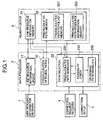
- the link state routing communication device is provided with a link resource information receiver 1, a data processor 2, a memory deice 3, a connection request receiver 4, and a connection setup section 5.
- the link resource information receiver 1 receives link resource information from another communication device and outputs it to the data processor 2.
- the connection request receiver 4 receives a connection request including the destination and required connection quality of a call from a user and outputs it to the data processor 2.
- the data processor 2 performs a link state routing operation using the memory device 3 when receiving a connection request from the connection request receiver 4.
- the connection setup section 5 sets up a connection to the destination of the received connection request under control of the data processor 2.
- the data processor 2 is a program-controlled processor on which the following sections are implemented: link resource information update section 21, plural-path precalculation section 22, and a path searcher 23 including precalculated path searcher 231, on-demand path searcher 232; and feasibility check section 233.
- the memory device 3 includes link resource information memory 31 and precalculated path memory 32 including precalculated path topology memory 321 and precalculated path resource information memory 322.
- the link resource information memory 31 stores link resource information received from another communication device in the network.
- Link resource information may be available bandwidth and delay information on a link.
- the precalculated path topology memory 321 stores as path topology a collection of node and links on a precalculated path to a destination.
- the precalculated path resource information memory 322 stores path resource information corresponding to each path topology stored in the precalculated path topology memory 321. Taking an available bandwidth on a path as an example of path resource, the path resource information indicates a minimum available bandwidth among the links on the path.
- the path resource information stored in the precalculated path resource information memory 322 is updated when the link resource information stored in the link resource information memory 31 is updated. Alternatively, it is periodically updated independently of the link resource information stored in the link resource information memory 31.
- the link resource information update section 21 updates the link resource information stored in the link resource information memory 31 when a change of corresponding link resource information is detected by comparing the received link resource information from the link resource information receiver 1 with the stored link resource information in the link resource information memory 31.
- the plural-path precalculation section 22 calculates a plurality of paths from its own device to the destination of the received connection request before accepting the connection request.
- the precalculation is performed using the link resource information stored in the link resource information memory 31.
- the path topology information and the resource information of each of the precalculated paths are registered into the precalculated path topology memory 321 and the precalculated path resource information memory 322, respectively. Since a plurality of precalculated paths are registered, it is possible to rapidly find an optimal precalculated path satisfying QoS requirements of the received connection request, resulting in the decreased number of times a path is dynamically re-calculated.
- the precalculated path searcher 23 when receiving a connection request, searches the precalculated path resource information memory 322 for a precalculated path candidate satisfying the QoS requirements using the destination and the connection quality of the received connection request as a search key.
- the feasibility check section 233 checks whether each link on the found precalculated path satisfies the required connection quality by referring to the stored link resource information in the link resource information memory 31. As described before, the precalculated paths stored in the precalculated path memory 32 do not always reflect the latest link resource status. Therefore, if only the precalculated paths stored in the precalculated path memory 32 are used to set up a connection, a call blocking probability becomes high. According to the first embodiment, the feasibility check section 233 is used to determine whether each line on the found precalculated path satisfies the required connection quality, resulting in substantially reduced call blocking probability.
- the on-demand path searcher 232 calculates a path satisfying the required connection quality of the received connection request based on the link resource information stored in the link resource information memory 31.
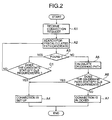
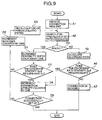
- the precalculated path searcher 231 searches the precalculated path topology memory 321 for a precalculated path to the destination of the received connection request. Thereafter, the precalculated path searcher 231 searches the precalculated path resource information memory 322 for a precalculated path candidate satisfying the required connection quality using the destination and the connection quality of the received connection request as a search key (step A2).
- the on-demand path searcher 232 calculates an on-demand path satisfying the required connection quality of the received connection request based on the link resource information stored in the link resource information memory 31 (step A5).
- the on-demand path is found (YES at step A6), it is output to the connection setup section 5 and the connection is set up (step A4).
- the connection is blocked (step A7).
- the feasibility check section 233 checks whether each link on the found path candidate satisfies the required connection quality by referring to the stored link resource information in the link resource information memory 31 (step C1). When the found path candidate satisfies the required connection quality (YES at step C1), it is output to the connection setup section 5 and the connection is set up (step A4). When the found path candidate does not satisfy the required connection quality (NO at step C1), control goes back to the step A2 so as to select another precalculated path candidate.
- a single peer group consists of five nodes 501-505 (see Fig. 3A) and four precalculated paths 521-524 from the node 501 to the node 503 are considered (see Figs. 3B-3E).
- the link resource information memory 31 of the node 501 stores a link resource information table 511 as shown in Fig. 3F and the precalculated path memory 32 thereof stores a precalculated path information table 531 as shown in Fig. 3G.
- a link a-b for example, has a delay of 3msec and an available bandwidth (BW) of 30Mbps.
- a precalculated path a-b-c for example, has a delay of 7 msec and an available bandwidth of 80 Mbps.
- the plural-path precalculation section 22 periodically updates the precalculated path information table 531 by referring to the link resource information table 511.
- the precalculated path searcher 231 searches the precalculated path information table 531 for a precalculated path satisfying the connection request. In this case, the precalculated path searcher 231 finds the precalculated path 521, that is, a-b-c, having 80Mbps and 7msec-delay (see Fig. 3G).
- the contents of the precalculated path information table 531 are updated at regular intervals. Therefore, when the precalculated path searcher 231 accesses the precalculated path information table 531, there is a possibility that the precalculated path information has not reflected the latest network status. To avoid this, the feasibility check section 233 checks whether each line on the precalculated path 521 satisfies the required connection quality.
- the precalculated path 521 consists of two links a-b and b-c as shown in Fig. 3B.
- the link a-b has 30 Mbps, which does not satisfy the required bandwidth of 50 Mbps (NO at step Cl of Fig. 2).
- the feasibility check section 233 instructs the precalculated path searcher 231 to select another precalculated path candidate.
- the precalculated path searcher 231 selects as a next candidate the precalculated path 522: a-c.
- the feasibility check section 233 determines that the precal culated path 522 is feasible. Then, the precalculated path 522 is output to the connection setup section 5 and the connection following the precalculated path 522 is set up.
- the plural-path precalculation section 22 registers a plurality of precalculated paths in the precalculated path memory 32. Therefore, it is possible to rapidly find an optimal precalculated path satisfying QoS requirements of the received connection request with higher probability, resulting in the decreased number of times a path is dynamically re-calculated and thereby reduced computation load on the communication device.
- the feasibility check section 233 uses the latest link resource information table to determine whether each line on the found precalculated path satisfies the required connection quality. Therefore, a probability of successfully setting up a connection becomes higher, resulting in reduced call blocking probability.
- a link state routing communication device is designed to be used in a single peer group.
- the link state routing communication device is provided with a link resource information receiver 1, a data processor 10, a memory deice 11, a connection request receiver 4, and a connection setup section 5, wherein circuit blocks similar to those previously described with reference to Fig. 1 are denoted by the same reference numerals and the descriptions thereof will be omitted hereinafter.
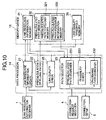
- the data processor 10 is a program-controlled processor on which the following sections are implemented: link resource information update section 21; plural-path precalculation section 22; path searcher 24 including precalculated path searcher 231 and on-demand path searcher 232; and precalculated path resource information searcher 25.
- the memory device 11 includes link resource information memory 31 and precalculated path memory 33 including precalculated path topology memory 321, precalculated path resource information memory 322, and link-path correspondence table 323.
- the link-path correspondence table 323 indicates which of precalculated paths each link is included in.
- the precalculated path resource information searcher 25 receives update link information from the link resource information update section 21 and uses the update link information as a search key to search the link-path correspondence table 323 for a corresponding precalculated path. Thereafter, the precalculated path resource information searcher 25 searches the link resource information memory 31 for link resource information of the corresponding precalculated path and, if found, then updates the path resource information stored in the precalculated path resource information memory 322. Accordingly, the link resource information is updated and, at the same time, the path resource information of the corresponding precalculated path is also updated.
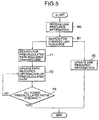
- the link resource information update section21 when receiving link resource information from another node (step B0), the link resource information update section21 identifies a link on which a change of resource information occurs (step B1) and updates corresponding link resource information stored in the link resource information memory 31 (step B2).
- the precalculated path resource information searcher 25 uses the changed link information as a search key to search the link-path correspondence table 323 for a corresponding precalculated path (step F1). Thereafter, the precalculated path resource information searcher 25 searches the link resource information memory 31 for resource information of the corresponding precalculated path and updates the path resource information stored in the precalculated path resource information memory 322 (step F2). The step F2 is repeatedly performed until path resource information of all precalculated paths including the updated link have been updated (step F3).
- the precalculated path memory 33 stores a precalculated path information table 541 which includes precalculated path topology information, precalculated path resource information, and link-path correspondence information.
- precalculated path information including the link a-c is shown in Fig. 6A.
- the precalculated path resource information searcher 25 updates the precalculated path information table 541 to a table 542 as shown in Fig. 6C.
- the delay time of the link a-c increases from 3 msec to 5 msec by 2 msec. Since delay or jitter is an additive parameter, the precalculated path resource information searcher 25 increases all delays of precalculated paths associated with the changed link a-c across the board by 2 msec (see "delay" column of the table 542 as shown in Fig. 6C).
- the available bandwidth of the link a-c decreases from 60 Mbps to 40 Mbps. Since a bandwidth is a non-additive parameter, only available bandwidths of precalculated paths greater than 40Mbps in the table 541 are uniformly decreased to 40 Mbps (see "BW" column of the table 542 as shown in Fig. 6C). In other words, the available bandwidth of a precalculated path is determined by the minimum bandwidth among the links included in the precalculated path. Therefore, in Fig. 6C, only the precalculated path a-c-e is not changed in available bandwidth because the original available bandwidth is 30 Mbps that is smaller than 40 Mbps.
- precalculated path selection can be performed based on the latest path resource information without the feasibility check section that is needed in the first embodiment, resulting in reduced load of computation and decreased call blocking probability.
- the plural-path precalculation section 22 may perform precalculation based on link-inherent parameters that are independent of link resource information, such as Administrative Weight and propagation delay.
- link-inherent parameters that are independent of link resource information, such as Administrative Weight and propagation delay.
- the plural-path precalculation section 22 may perform precalculation plural times based on a single parameter. For example, for a destination, a path having minimum number of hops, a path having maximum available bandwidth, and a path having minimum delay time are previously calculated and stored. In this case, a path precalculation means that was designed for a conventional communication device can be also used in the present invention, resulting in reduced time required for design.
- the plural-path precalculation section 22 may perform precalculation based on an integrated parameter having a plurality of parameters including available bandwidth and delay integrated in certain proportions.
- an integrated parameter may be obtained by adding 1000/delay [msec] to available bandwidth[Mbps].
- precalculation only once precalculated paths reflecting a plurality of parameters can be obtained, resulting in reduced computation load.
- How to select a path to be used for connection setup affects efficient use of network resources. For example, among paths all satisfying the same quality requirement, one having smaller number of hops is selected to suppress resource consumption of a link, achieving efficient network utilization.
- precalculated paths are previously sorted according to a certain integrated parameter.
- the precalculated path searcher 231 sequentially checks the sorted precalculated paths to find a precal culated path candidate satisfying the connection request.
- the searching order of the precalculated paths 521-524 is as follows: 521, 522, 524, and 523.
- the respective integrated parameter values of the precalculated paths 521-524 are 222, 393, 530, and 216. Therefore, if these integrated parameters are sorted in descending order, then the searching order of the precalculated paths 521-524 is as follows : 523, 522, 521, and 524.
- a precalculated path candidate to be used for connection setup may be selected in a weighted round robin fashion using an integrated parameter as a weight.
- a precalculated path candidate satisfying the connection request is selected from the previously sorted precalculated paths as described before, the leading one in the previously sorted precalculated paths is used for connection setup with high probability, resulting in uneven using frequency.
- using frequency is uniformly distributed among precalculated paths using the same integrated parameter.
- a precalculated path candidate to be used for connection setup may be selected in a hierarchically weighted round robin fashion.
- Fig. 7 nine precalculated paths a to i to the same destination, each satisfying connection quality requirements, are shown as an example.
- a first group of precalculated paths a, b, and c needs three hops to the destination
- a second group of precalculated paths d, e, and f needs four hops to the destination
- a third group of precalculated paths g, h, and i needs five hops to the destination.
- the available bandwidth of each precalculated path is currently determined as shown in "available BW" column of Fig. 7.
- the number of hops is used as the first weight in the hierarchically weighted round robin and the available bandwidth is used as the second weight.
- group selection is performed according to the first weight (number of hops).
- the first, second, and third groups are selected in proportions of 3:4:5 each corresponding to the numbers of hops thereof, respectively.
- path selection is performed according to the second weight (available bandwidth). For example, in the case of the first group (three hops) being selected, the precalculated paths a, b, and c are selected in proportions of 100:50:10 each corresponding to the available bandwidths thereof, respectively.
- the first weight (number of hops) is not used to perform the round robin selection but to just sort the precalculated paths.
- a precalculated path having the smaller number of hops can be always selected.
- a link state routing communication device is designed to be used in a single peer group.
- the link state routing communication device is provided with a link resource information receiver 1, a data processor 12, a memory deice 13, a connection request receiver 4, and a connection setup section 5, wherein circuit blocks similar to those previously described with reference to Fig. 1 are denoted by the same reference numerals and the descriptions thereof will be omitted hereinafter.
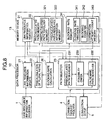
- the data processor 12 is a program-controlled processor on which the following sections are implemented: link resource information update section 21; plural-path precalculation section 22; path searcher 23 including precalculated path searcher 231, on-demand path searcher 232, and feasibility check section231; and blocking rate calculation section 26.
- the memory device 13 includes link resource information memory 31, precalculated path memory 32 including precalculated path topology memory 321 and precalculated path resource information memory 322, and blocking rate memory 34 including blocking rate threshold memory 341, blocking counter 342, and connection attempt counter 343.
- a blocking rate means at least one of link blocking rate and path blocking rate.
- a link/path blocking rate is defined as ⁇ / ⁇ , where ⁇ is the number of times a link/path is calculated as a connection candidate and ⁇ is the number of times the link/path does not satisfy connection quality requirements.
- the blocking rate threshold memory 341 stores a threshold of link/path blocking rate, which indicates the limit of performance deterioration.
- the blocking counter 342 counts the number of times a link/path has been blocked.
- the connection attempt count memory 343 stores a feasibility counter for counting the number of times the feasibility check has been performed for a link/path and/or a connection attempt counter for counting the number of times the connection setup operation has been performed.
- the blocking rate calculation section 26 calculates a link/path blocking rate by dividing the link/path blocking count stored in the blocking counter 342 by the connection attempt count stored in the connection attempt count memory 343. Then the blocking rate calculation section 26 compares the calculated link/path blocking rate with the threshold stored in the blocking rate threshold memory 341 to determine whether the link/path has been impaired. More specifically, when the calculated link/path blocking rate is greater than the blocking rate threshold, it is determined that the communication quality of the link/path is impaired, and then the plural-path precalculation section 22 performs recalculation of precalculated paths exclusive of the impaired link/path.
- the feasibility check section 233 checks whether each link/path on the found path candidate satisfies the required connection quality by referring to the stored link resource information in the link resource information memory 31 (step C1).
- the blocking counter 343 for the link/path is incremented by one (step D2). Thereafter, the blocking rate calculation section 26 calculates a link/path blocking rate of the link/path at the time when the feasibility check is performed. When the calculated link/path blocking rate is greater than the blocking rate threshold, it is determined that the quality of the link/path is impaired, and then the plural-path precalculation section 22 performs recalculation of precalculated paths exclusive of the impaired link/path and updates the precalculated path information stored in the precalculated path memory 32 (step D3).
- the found path candidate or the on-demand path is output to the connection setup section 5 and thereby the connection attempt counter is incremented by one (step D4).
- the connection setup section 5 attempts the connection setup based on the found path candidate. At this time, if a link does not satisfy the required connection quality (NO at step D5), the blocking counter 343 for the link/path is incremented by one (step D2).
- T is obtained by linear interpolation from R and S.
- the link blocking rate for each link is calculated and thereby performance deterioration of a precalculated path can be detected. Therefore, it is possible to determine which portion is impaired and re-calculate precalculated paths exclusive of the impaired portion, resulting in selecting a precalculated path providing a lower blocking rate.
- a link state routing communication device is designed to be used in a single peer group.
- the link state routing communication device is provided with a link resource information receiver 1, a data processor 14, a memory deice 15, a connection request receiver 4, and a connection setup section 5, wherein circuit blocks similar to those previously described with reference to Fig. 1 are denoted by the same reference numerals and the descriptions thereof will be omitted hereinafter.
- the data processor 14 is a program-controlled processor on which the following sections are implemented: link resource information update section 21; plural-path precalculation section 22; path searcher 23 including precalculated path searcher 231, on-demand path searcher 232, and feasibility check section 231; and link quality check section 28.
- the memory device 15 includes link resource information memory 31, precalculated path memory 32 including precalculated path topology memory 321 and precalculated path resource information memory 322, and link quality threshold memory 35.
- the link quality threshold memory 35 stores a link quality threshold indicating the permissible lowest quality for communication.
- the link quality check section 28 compares updated link resource information received from the link resource information update section 21 with the link quality threshold stored in the link quality threshold memory 35 to determine whether the changed link satisfies the permissible lowest quality. If there is a link that is lower than the permissible lowest quality, the plural-path precalculation section 22 performs recalculation of precalculated paths exclusive of the impaired link.
- the link resource information update section21 identifies a link on which a change of resource information occurs and the updated link resource information is output to the link quality check section 28 (step B1).
- the link quality check section 28 compares the updated link resource information with the link quality threshold stored in the link quality threshold memory 35 (step E1).
- the plural-path precalculation section 22 performs recalculation of precalculated paths exclusive of the impaired link (step E2).
- the fourth embodiment it is possible to detect an impaired link based on the ling resource information received from the link resource information receiver 1. Therefore, when such an impaired link has been detected, precalculated paths exclusive of the impaired portion can be re-calculated, resulting in selecting a precalculated path providing a lower blocking rate.
- a border communication device for link state routing according to a fifth embodiment of the present invention is designed to be used in a multi-level hierarchical network.
- circuit blocks similar to those previously described with reference to Figs. 1 and 4 are denoted by the same reference numerals and the details will be omitted.
- the border communication device is provided with a link resource information receiver 1, a data processor 16, a memory deice 17, and a summarized information transmitter 8.
- the link resource information receiver 1 receives link resource information from another communication device and outputs it to the data processor 16.
- the data processor 16 performs a link state routing operation using the memory device 17.
- the summarized information transmitter 8 transmits summarized information to different-level node under control of the data processor 16.
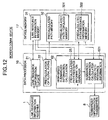
- the data processor 16 is a program-controlled processor on which the following sections are implemented: link resource information update section 21, plural-path precalculation section 22, and high-speed summarized information calculation section 62 including precalculated path resource information searcher 25 (see Fig. 4) and summarized information calculator 621.
- the memory device 17 includes link resource information memory 31 and precalculated path memory 32 including precalculated path topology memory 321 and precalculated path resource information memory 322.
- the summarized information calculator 621 searches the precalculated path topology memory 321 and the link resource information memory 31 for path resource information and calculates summarized information from the found path resource information.
- the summarized information is supplied to the summarized information transmitter 8.
- the high-speed summarized information calculator 62 can calculate the summarized information based on the precalculated path information at high speed.
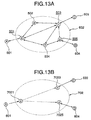
- a hierarchical network is composed of four levels 601, 602, 603, and 604.
- a peer group of the level 602 consists of five nodes 501-505, in which nodes 501, 503, and 505 are border nodes connected to different levels 601, 603, and 604, respectively.
- the link resource information of the level 602 is summarized to produce summarized information 702, which is sent from the border node 501 to the different level 601.
- the summarized information 702 is obtained by mapping the information of the level 602 into a network where the border nodes 503 and 505 are directly connected to the border node 501 through two summarized links. Accordingly, only the link state information of the two summarized links is sent from the border node 501 to the level 601. If such summarized information is not used, it is necessary to send link state information representing a total of seven links to the level 601.
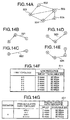
- a peer group of the level 602 consists of five nodes 501-505 (see Fig. 14A) and four precalculated paths 521-524 from the border node 501 to the border node 503 are considered (see Figs. 14B-14E).
- a link resource information table 511 as shown in Fig. 14F represents the link resource information of the level 602 and a precalculated path information table 531 as shown in Fig. 14G represents the precalculated paths 521-524 from the border node 501 to the border node 503.
- a link a-b for example, has a delay of 3 msec and an available bandwidth (BW) of 30 Mbps.
- a precalculated path a-b-c for example, has a delay of 7 msec and an available bandwidth of 80 Mbps.
- Fig. 15 shows a summarized information table 591, which is obtained from the precalculated path information table 531 and represents a summarized link from the border node 7021 to the border node 7023 as shown in Fig. 13B.
- the precalculated path resource information searcher 25 searches the link resource information table 511 for resource information of the precalculated paths 521-524 to produce the precalculated path information table 531.
- the summarized information calculator 621 searches the precalculated path information table 531 for precalculated path information appropriate to summarized link information between the border nodes 501 and 503.
- the policy best value (delay: 2msec and available bandwidth: 80Mbps) is selected as summarized link resource information (see the table 591 of Fig. 15).
- the policy worst value (delay: 7msec and available bandwidth: 30Mbps) is selected as summarized link resource information (see the table 591 of Fig. 15).
- the summarized information calculator 621 can determine other summarized link state information (here, between the border nodes 501 and 505).
- a border communication device is provided with a precalculated path memory 33 including a link-path correspondence table 323 as shown in Fig. 4, in place of the precalculated path memory 32 of Fig. 12.
- the link-path correspondence table 323 indicates which of precalculated paths each link is included in.
- the precalculated path resource information searcher 25 receives update link information from the link resource information update section 21 and uses the update link information as a search key to search the link-path correspondence table 323 for a corresponding precalculated path. Thereafter, the precalculated path resource information searcher 25 searches the link resource information memory 31 for link resource information of the corresponding precalculated path and, if found, then updates the path resource information stored in the precalculated path resource information memory 322. Accordingly, the link resource information is updated and, at the same time, the path resource information of the corresponding precalculated path is also updated. In other words, when the link resource information is updated, only the path resource information of the corresponding precalculated path is re-calculated, resulting in reduced number of computation times and thereby decreased computation load.
- a border communication device for link state routing according to a seventh embodiment of the present invention is designed to be used in a multi-level hierarchical network.
- circuit blocks similar to those previously described with reference to Fig. 1 are denoted by the same reference numerals and the details will be omitted.
- the border communication device is provided with a link resource information receiver 1, a data processor 18, a memory deice 19, and a summarized information transmitter 8.
- the link resource information receiver 1 receives link resource information from another communication device and outputs it to the data processor 18.
- the data processor 18 performs a link state routing operation using the memory device 19.
- the summarized information transmitter 8 transmits summarized information to different-level node under control of the data processor 18.
- the data processor 18 is a program-controlled processor on which the following sections are implemented: link resource information update section 21; summarized information calculation section 61; change rate detector 63; and change rate comparator 64.
- the memory device 19 includes link resource information memory 31, summarized information memory 36, and change rate threshold memory 37.
- the summarized information memory 36 stores summarized information that was previously sent to a different-level node.
- the change rate threshold memory 37 stores a change rate threshold which is used to determine whether summarized information should be sent to a different-level node.
- the change rate detector 63 compares new summarized information received from the summarized information calculator 61 with the stored summarized information that was previously sent to a different-level node to produce a change rate of summarized information.
- the new summarized information and the calculated change rate are output to the change rate comparator 64.
- the change rate comparator 64 compares the calculated change rate with the change rate threshold stored in the change rate threshold memory 37 to determine whether old summarized information should be replaced with the new summarized information. More specifically, when the calculated change rate is greater than the change rate threshold, the change rate comparator 64 updates the stored summarized information of the summarized information memory 36 into the new summarized information and outputs the new summarized information to the summarized information transmitter 8.
- the summarized information calculator 61 calculates new summarized information obtained by summarizing network status of nodes in its own level while referring to the contents of the link resource information memory 31 (step G1).
- the new summarized information is output to the change rate detector 63.
- the change rate detector 63 compares the new summarized information with the previously summarized information stored in the summarized information memory 36 to produce a change rate of summarized information (step G2).
- the calculated change rate is output to the change rate comparator 64.
- the change rate comparator 64 compares the calculated change rate with the change rate threshold stored in the change rate threshold memory 37 (step G3). When the calculated change rate is equal to or greater than the change rate threshold (YES at step G3), it is determined that a large amount of change occurs . In this case, the change rate comparator 64 updates the stored summarized information in the summarized information memory 36 into the new summarized information (step G4) and outputs the new summarized information to the summarized information transmitter 8 (step G5).
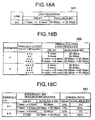
- Fig. 18A shows a table 581 containing link resource information of the link a-e in the level 602 as shown in Fig. 13A.
- Fig. 18B shows a table 582 containing information of precalculated paths: first precalculated path from node 501 to node 503; and second precalculated path from node 501 to node 505. Such information of precalculated paths is used to calculate summarized information of the level 602.
- Fig. 18C shows a table 583 containing summarized information of the level 602 that is calculated from the table 582.
- the delay time of the link a-e is changed from 1msec to 3msec and the available bandwidth thereof is changed from 50Mbps to 20Mbps.
- the summarized information calculator 61 first updates precalculated path resource information as shown in the table 582 of Fig. 18B. Thereafter, the summarized information calculator 61 changes summarized information based on the updated precalculated path resource information as shown in the table 583 of Fig. 18C.
- the change rate detector 63 calculates a change rate of summarized information.
- / R last the following expression is used to calculate a change rate of summarized information:
- a change rate of entire summarized information can be obtained, for example, by summing change rates of all summarized links included therein.
- a change rate of a summarized link can be obtained, for example, by summing change rates of resource information of respective links to be summarized.
- a change rate is calculated by comparing calculated summarized information with the stored summarized information that was previously sent to the different-level node. Only if a large amount of change occurs, that is, the calculated change rate is greater than the threshold, the summarized information is sent to a different-level node, resulting in reduced amount of summarized information transferred in the network.
Landscapes
- Engineering & Computer Science (AREA)
- Computer Networks & Wireless Communication (AREA)
- Signal Processing (AREA)
- Data Exchanges In Wide-Area Networks (AREA)
Abstract
Description
Claims (24)
- A link state routing device of a node in a network composed of a plurality of nodes and links, comprising:a first memory (31) for storing link resource information for each link in the network, wherein the link resource information is updated as occasion arises;
characterized by:a path calculator (22) for calculating a plurality of precalculated paths for each destination based on link resource information stored in the first memory, independently of occurrence of a connection request;a second memory (32, 33) for storing the precalculated paths for each destination and path resource information for each precalculated path; anda path selector (23, 24) for selecting a precalculated path from the precalculated paths stored in the second memory when a connection request occurs, wherein the precalculated path is selected so as to satisfy quality requirement of the connection request. - The link state routing device according to claim 1, further comprising:
an updater (25, 323) for updating path resource information of a precalculated path stored in the second memory when link resource information of a link included in the precalculated path is updated. - The device according to claim 1 or 2, wherein the path calculator calculates a plurality of precalculated paths for each destination based on a link-inherent parameter that is independent of link resource information.
- The device according to claim 1, 2 or 3, wherein the path calculator calculates a precalculated path based on a single parameter a plurality of times to produce a plurality of precalculated paths for each destination.
- The device according to claim 1, 2, 3 or 4, wherein the path calculator calculates a plurality of precalculated paths for each destination based on an integrated parameter having a plurality of parameters integrated therein.
- The link state routing device according to claim 5, wherein the path selector sorts the precalculated paths stored in the second memory according to the integrated parameter to search the second memory for a precalculated path satisfying the quality requirement of the connection request.
- The link state routing device according to claim 6, wherein the path selector searches the second memory for a precalculated path satisfying the quality requirement of the connection request in a round robin fashion weighted by the integrated parameter.
- The link state routing device according to claim 7, wherein the path selector searches the second memory for a precalculated path satisfying the quality requirement of the connection request in a round robin fashion hierarchically weighted by the integrated parameter.
- A link state routing device of a node in a network composed of a plurality of nodes and links, comprising:a first memory (31) for storing link resource information for each link in the network, wherein the link resource information is updated as occasion arises;
characterized by:a path calculator (22) for calculating a plurality of precalculated paths for each destination based on link resource information stored in the first memory, independently of occurrence of a connection request;a second memory (32) for storing the precalculated paths for each destination and path resource information for each precalculated path;a path selector (23) for selecting a precalculated path from the precalculated paths stored in the second memory when a connection request occurs, wherein the precalculated path is selected so as to satisfy quality requirement of the connection request;a connection setup attempter (5) for attempting connection setup of the precalculated path;a first counter (343) for counting number of path selection occurrences in the path selector;a second counter (342) for counting number of path blocking occurrences in the connection setup attermpter;a blocking rate calculator (26) for calculating a blocking rate based on the number of path selection occurrences and the path blocking occurrences; anda controller controlling the path calculator such that, when the blocking rate is not smaller than a predetermined threshold, the path calculator recalculates a plurality of precalculated paths for each destination based on link resource information stored in the first memory. - The device according to any one of claims 1 to 9, wherein the path selector comprises:a precalculated path searcher (231) for searching the second memory for a precalculated path candidate satisfying quality requirement of the connection request; anda feasibility checker (233) for checking whether the precalculated path candidate is a feasible path, by referring to link resource information stored in the first memory,wherein, when the precalculated path candidate is an infeasible path, the precalculated path searcher searches the second memory for another precalculated path candidate.
- The link state routing device according to claim 10, wherein the blocking rate calculator calculates a blocking rate based on the number of feasibility check occurrences and the path blocking occurrences.
- A link state routing device of a node in a network composed of a plurality of nodes and links, comprising:a first memory for storing link resource information for each link in the network, wherein the link resource information is updated as occasion arises;a path calculator for calculating a plurality of precalculated paths for each destination based on link resource information stored in the first memory, independently of occurrence of a connection request;a second memory for storing the precalculated paths for each destination and path resource information for each precalculated path;a path selector for selecting a precalculated path from the precalculated paths stored in the second memory when a connection request occurs, wherein the precalculated path is selected so as to satisfy quality requirement of the connection request;an updater for updating path resource information of a precalculated path stored in the second memory when link resource information of a link included in the precalculated path is updated; anda controller controlling the path calculator such that, when the updated link resource information of the link is not smaller than a predetermined link quality threshold, the path calculator recalculates a plurality of precalculated paths for each destination exclusive of the updated link resource information of the link.
- The device according to any one of claims 1 to 12, wherein the path selector further comprises:an on-demand path searcher for searching the first memory for a path candidate satisfying quality requirement of the connection request received,wherein, when a precalculated path candidate satisfying quality requirement of the connection request received is not found, the on-demand path searcher is activated.
- A communication device of a border node for link state routing in hierarchical networks, comprising:a first memory (31) for storing link resource information for each link in the network, wherein the link resource information is updated as occasion arises;
characterized by:a path calculator (22) for calculating a plurality of precalculated paths for each destination based on link resource information stored in the first memory, independently of occurrence of a connection request;a second memory (32) for storing the precalculated paths for each destination and path resource information for each precalculated path; anda summarized information calculator (62) for calculating summarized information from the precalculated paths for each destination and path resource information for each precalculated path. - The communication device according to claim 14, wherein the summarized information calculator comprises:an update link detector for detecting a precal culated path including an updated link,wherein the summarized information calculator recalculates only summarized information of a precalculated path including the updated link.
- A communication device of a border node for link state routing in hierarchical networks, comprising:a first memory (31) for storing link resource information for each link in the network, wherein the link resource information is updated as occasion arises;a summarized information calculator (61) for calculating summarized information based on the link resource information for each link stored in the first memory;
characterized by:a change rate calculator (63) for calculating a change rate between new link resource information currently received from another node and the link resource information stored in the first memory, that was previously sent to a different-level node; anda summarized information transmitter for transmitting the summarized information to a different-level node when a calculated change rate is greater than a predetermined threshold (37, 64, 8). - A communication method in a link state routing device of a node in a network composed of a plurality of nodes and links, comprising the steps of:a) storing link resource information for each link in the network in a firs memory, wherein the link resource information is updated as occasion arises;b) calculating a plurality of precalculated paths for each destination based on link resource information stored in the first memory, independently of occurrence of a connection request;c) storing the precalculated paths for each destination and path resource information for each precalculated path in a second memory; andd) selecting a precalculated path from the precalculated paths stored in the second memory when a connection request occurs, wherein the precalculated path is selected so as to satisfy quality requirement of the connection request.
- The method according to claim 17, further comprising the step of:
updating path resource information of a precalculated path stored in the second memory when link resource information of a link included in the precalculated path is updated. - A communication method in a link state routing device of a node in a network composed of a plurality of nodes and links, comprising the steps of:a) storing link resource information for each link in the network in a first memory, wherein the link resource information is updated as occasion arises;b) calculating a plurality of precalculated paths for each destination based on link resource information stored in the first memory, independently of occurrence of a connection request;c) storing the precalculated paths for each destination and path resource information for each precalculated path in a second memory;d) selecting a precalculated path from the precalculated paths stored in the second memory when a connection request occurs, wherein the precalculated path is selected so as to satisfy quality requirement of the connection request;e) attempting connection setup of the precalculated path;f) counting number of path selection occurrences in the path selector;g) counting number of path blocking occurrences in the step (e);h) calculating a blocking rate based on the number of path selection occurrences and the path blocking occurrences; andi) when the blocking rate is not smaller than a predetermined threshold, recalculating a plurality of precalculated paths for each destination based on link resource information stored in the first memory.
- The method according to claim 17, 18 or 19, wherein the step (d) comprises the steps of:wherein, when the precalculated path candidate is an infeasible path, the second memory is searched for another precalculated path candidate.searching the second memory for a precalculated path candidate satisfying quality requirement of the connection request; andchecking whether the precalculated path candidate is a feasible path, by referring to link resource information stored in the first memory,
- A communication method in a link state routing device of a node in a network composed of a plurality of nodes and links, comprising the steps of:a) storing link resource information for each link in the network in a first memory, wherein the link resource information is updated as occasion arises;b) calculating a plurality of precalculated paths for each destination based on link resource information stored in the first memory, independently of occurrence of a connection request;c) storing the precalculated paths for each destination and path resource information for each precalculated path in a second memory;d) selecting a precalculated path from the precalculated paths stored in the second memory when a connection request occurs, wherein the precalculated path is selected so as to satisfy quality requirement of the connection request;e) updating path resource information of a precalculated path stored in the second memory when link resource information of a link included in the precalculated path is updated; andf) when the updated link resource information of the link is not smaller than a predetermined link quality threshold, recalculating a plurality of precalculated paths for each destination exclusive of the updated link resource information of the link.
- A communication method of a border node for link state routing in hierarchical networks, comprising the steps of:a) storing link resource information for each link in the network in a first memory, wherein the link resource information is updated as occasion arises;b) calculating a plurality of precalculated paths for each destination based on link resource information stored in the first memory, independently of occurrence of a connection request;c) storing the precalculated paths for each destination and path resource information for each precalculated path in a second memory; andd) calculating summarized information from the precalculated paths for each destination and path resource information for each precalculated path.
- The communication method according to claim 22, wherein the step d) comprises the step of:detecting a precalculated path including an updated link,recalculating only summarized information of a precalculated path including the updated link.
- A communication method of a border node for link state routing in hierarchical networks, comprising the steps of:storing link resource information for each link in the network in a first memory, wherein the link resource information is updated as occasion arises;calculating summarized information based on the link resource information for each link stored in the first memory;calculating a change rate between new link resource information currently received from another node and the link resource information stored in the first memory, that was previously sent to a different-level node; andtransmitting the summarized information to a different-level node when a calculated change rate is greater than a predetermined threshold.
Applications Claiming Priority (2)
| Application Number | Priority Date | Filing Date | Title |
|---|---|---|---|
| JP2000083558A JP3575381B2 (en) | 2000-03-24 | 2000-03-24 | Link state routing communication device and link state routing communication method |
| JP2000083558 | 2000-03-24 |
Publications (2)
| Publication Number | Publication Date |
|---|---|
| EP1137228A2 true EP1137228A2 (en) | 2001-09-26 |
| EP1137228A3 EP1137228A3 (en) | 2004-10-27 |
Family
ID=18600175
Family Applications (1)
| Application Number | Title | Priority Date | Filing Date |
|---|---|---|---|
| EP20010107411 Withdrawn EP1137228A3 (en) | 2000-03-24 | 2001-03-26 | Link state routing techniques |
Country Status (4)
| Country | Link |
|---|---|
| US (2) | US7047316B2 (en) |
| EP (1) | EP1137228A3 (en) |
| JP (1) | JP3575381B2 (en) |
| CA (1) | CA2342097A1 (en) |
Cited By (9)
| Publication number | Priority date | Publication date | Assignee | Title |
|---|---|---|---|---|
| EP1411687A2 (en) | 2002-10-07 | 2004-04-21 | Nippon Telegraph and Telephone Corporation | Layered network node |
| CN101043236B (en) * | 2006-05-10 | 2010-05-12 | 华为技术有限公司 | Method for controlling transmission power of mesh network node and mesh network node |
| CN101841883B (en) * | 2006-05-10 | 2011-11-09 | 华为技术有限公司 | Method and device for controlling transmission power of mesh network nodes |
| CN101646229B (en) * | 2008-08-04 | 2012-02-29 | 中兴通讯股份有限公司 | Method for acquiring transmission power control command, acquisition preprocessing method, and mobile terminal |
| WO2012064423A1 (en) * | 2010-11-12 | 2012-05-18 | Alcatel Lucent | Lookahead computation of routing information |
| CN101583161B (en) * | 2009-05-26 | 2013-02-13 | 北京邮电大学 | Cooperative node unit selection method and device |
| CN101690325B (en) * | 2007-06-19 | 2013-11-20 | 高通股份有限公司 | Toggle delivery of commands |
| WO2014052035A1 (en) * | 2012-09-26 | 2014-04-03 | Alcatel Lucent | Securing software defined networks via flow deflection |
| EP2458796A4 (en) * | 2009-08-25 | 2015-07-01 | Zte Corp | METHOD AND PATH COMPUTING ELEMENT FOR IMPROVING SERVICE RECOVERY SPEED IN A TRANSMISSION NETWORK |
Families Citing this family (57)
| Publication number | Priority date | Publication date | Assignee | Title |
|---|---|---|---|---|
| GB2386032B (en) * | 2002-03-01 | 2005-08-24 | Parc Technologies Ltd | Method of estimating traffic data |
| US7764617B2 (en) * | 2002-04-29 | 2010-07-27 | Harris Corporation | Mobile ad-hoc network and methods for performing functions therein based upon weighted quality of service metrics |
| US7471680B1 (en) * | 2002-06-24 | 2008-12-30 | Cisco Technology, Inc. | Method to enhance routing control in PNNI networks |
| US7263069B2 (en) * | 2002-07-03 | 2007-08-28 | Verizon Business Global Llc | Arrangement for evaluating network capacity, network utilization, and network efficiency in a communications network |
| CN1685742A (en) * | 2002-07-26 | 2005-10-19 | 西门子公司 | Provide network elements in communication systems |
| US7894354B2 (en) * | 2002-10-04 | 2011-02-22 | Jds Uniphase Corporation | System and method to monitor RTP streams using RTCP SR/RR packet information |
| DE60303763T2 (en) * | 2002-12-11 | 2006-08-17 | Nippon Telegraph And Telephone Corp. | Method and device for calculating multicast routes |
| US7382731B1 (en) * | 2003-03-05 | 2008-06-03 | Cisco Technology, Inc. | Method and apparatus for updating probabilistic network routing information |
| KR100769493B1 (en) * | 2003-03-13 | 2007-10-24 | 인터디지탈 테크날러지 코포레이션 | Wireless communication method and system for assigning multi-paths to rake receiver fingers |
| US7921447B1 (en) * | 2003-03-14 | 2011-04-05 | Thomson Licensing | Enhanced television metadata processor for efficient broadcast operations |
| US7403939B1 (en) * | 2003-05-30 | 2008-07-22 | Aol Llc | Resolving queries based on automatic determination of requestor geographic location |
| US20050008014A1 (en) * | 2003-07-07 | 2005-01-13 | Debasis Mitra | Techniques for network traffic engineering |
| US7336617B1 (en) * | 2003-08-01 | 2008-02-26 | Verizon Laboratories Inc. | Bit-field-encoded resource record for determining a transmission path in a communications network |
| US8018953B1 (en) | 2003-08-20 | 2011-09-13 | Cisco Technology, Inc. | Adaptive, deterministic ant routing approach for updating network routing information |
| AU2003304680A1 (en) * | 2003-11-24 | 2005-06-08 | Zte Corporation | A method device and system of realizing qos (quality of service) guarantee in mpls network |
| JP4396859B2 (en) * | 2004-01-09 | 2010-01-13 | 日本電気株式会社 | Load balancing method, node and control program |
| US7804789B2 (en) | 2004-03-18 | 2010-09-28 | Tekelec | Methods, systems, and computer program products for organizing, managing, and selectively distributing routing information in a signaling message routing node |
| US7583593B2 (en) * | 2004-12-01 | 2009-09-01 | Cisco Technology, Inc. | System and methods for detecting network failure |
| JP4726498B2 (en) * | 2005-01-14 | 2011-07-20 | 富士通株式会社 | Information processing method and router |
| US7990888B2 (en) * | 2005-03-04 | 2011-08-02 | Cisco Technology, Inc. | System and methods for network reachability detection |
| US20060215577A1 (en) * | 2005-03-22 | 2006-09-28 | Guichard James N | System and methods for identifying network path performance |
| JP2007013684A (en) * | 2005-06-30 | 2007-01-18 | Toshiba Corp | COMMUNICATION SYSTEM, SERVER DEVICE, AND DATA TERMINAL DEVICE |
| JP4550705B2 (en) * | 2005-09-22 | 2010-09-22 | 株式会社東芝 | Server device |
| US7983174B1 (en) | 2005-12-19 | 2011-07-19 | Cisco Technology, Inc. | Method and apparatus for diagnosing a fault in a network path |
| US7912934B1 (en) | 2006-01-09 | 2011-03-22 | Cisco Technology, Inc. | Methods and apparatus for scheduling network probes |
| US8218445B2 (en) * | 2006-06-02 | 2012-07-10 | Ciena Corporation | Smart ethernet edge networking system |
| US7826349B2 (en) * | 2006-05-30 | 2010-11-02 | Intel Corporation | Connection management mechanism |
| US8223655B2 (en) * | 2006-08-22 | 2012-07-17 | Embarq Holdings Company, Llc | System and method for provisioning resources of a packet network based on collected network performance information |
| WO2008025925A1 (en) * | 2006-08-30 | 2008-03-06 | France Telecom | Method of routing data in a network comprising nodes organized in groups |
| CA2623805A1 (en) * | 2007-03-02 | 2008-09-02 | Robert A. Hubbs | Quality of service based preemptive routing |
| US7827306B2 (en) * | 2007-06-28 | 2010-11-02 | Verizon Patent And Licensing Inc. | Methods and computer program products for route determination |
| US8111627B2 (en) * | 2007-06-29 | 2012-02-07 | Cisco Technology, Inc. | Discovering configured tunnels between nodes on a path in a data communications network |
| US9043451B2 (en) | 2007-07-31 | 2015-05-26 | Tekelec, Inc. | Methods, systems, and computer readable media for managing the flow of signaling traffic entering a signaling system 7 (SS7) based network |
| JP4840334B2 (en) * | 2007-11-14 | 2011-12-21 | ブラザー工業株式会社 | Terminal apparatus, communication system, program, and method |
| ATE498950T1 (en) * | 2007-12-14 | 2011-03-15 | Sony Corp | RADIATION CONTROL ALGORITHM FOR NLOS WIRELESS SYSTEMS WITH PREDEFINED PARAMETERS |
| US8411584B1 (en) * | 2008-03-31 | 2013-04-02 | Olympus Corporation | Wireless resource allocation system and method |
| US8355344B1 (en) * | 2008-07-23 | 2013-01-15 | Sprint Communications Company L.P. | Storage area network edge-core interswitch link optimization |
| JP4649516B2 (en) * | 2009-01-30 | 2011-03-09 | 株式会社東芝 | Telephone exchange apparatus and host name information allocation method used in the telephone exchange apparatus |
| US8374502B2 (en) * | 2009-02-27 | 2013-02-12 | Futurewei Technologies, Inc. | Open shortest path first extensions in support of wavelength switched optical networks |
| US8346079B2 (en) * | 2009-02-27 | 2013-01-01 | Futurewei Technologies, Inc. | Path computation element protocol (PCEP) operations to support wavelength switched optical network routing, wavelength assignment, and impairment validation |
| US8804520B2 (en) * | 2009-04-30 | 2014-08-12 | Telefonaktiebolaget L M Ericsson (Publ) | Core network node selection in a mobile communication network |
| US8315519B2 (en) * | 2009-06-03 | 2012-11-20 | Nec Laboratories America, Inc. | Systems and methods for transmitting signals in communication networks |
| US8537677B2 (en) * | 2009-10-13 | 2013-09-17 | Hewlett-Packard Development Company, L.P. | Incremental adaptive packet routing in a multi-dimensional network |
| US9059914B2 (en) * | 2009-12-11 | 2015-06-16 | Nec Corporation | Usable bandwidth measurement method, usable bandwidth measurement system, terminal device, and computer-readable recording medium |
| US8532110B2 (en) | 2010-02-12 | 2013-09-10 | Tekelec, Inc. | Methods, systems, and computer readable media for diameter protocol harmonization |
| JP5716587B2 (en) * | 2011-07-19 | 2015-05-13 | 富士通株式会社 | Route determination device, route determination method, management program, and management device |
| US8805382B2 (en) * | 2012-07-23 | 2014-08-12 | At&T Intellectual Property I, L.P. | System and method for quality of service in a wireless network environment |
| JP5929682B2 (en) * | 2012-10-09 | 2016-06-08 | 富士通株式会社 | Network design apparatus, network design method, network design program |
| US9906439B2 (en) * | 2013-11-01 | 2018-02-27 | Futurewei Technologies, Inc. | Ad-hoc on-demand routing through central control |
| CN104811392B (en) * | 2014-01-26 | 2018-04-17 | 国际商业机器公司 | For handling the method and system of the resource access request in network |
| WO2015120912A1 (en) * | 2014-02-17 | 2015-08-20 | Telefonaktiebolaget L M Ericsson (Publ) | A method and apparatus for allocating physical resources to a summarized resource |
| US9436391B1 (en) * | 2014-03-28 | 2016-09-06 | Formation Data Systems, Inc. | Efficient scalable I/O scheduling |
| JP6148641B2 (en) * | 2014-05-30 | 2017-06-14 | 日本電信電話株式会社 | Terminal accommodation routing device, operation method of terminal accommodation routing device, and communication system |
| JP7099537B2 (en) * | 2018-09-28 | 2022-07-12 | 日本電気株式会社 | Communication equipment, communication methods and programs |
| US11546413B2 (en) * | 2019-12-31 | 2023-01-03 | Oracle International Corporation | System and method for identifying capabilities and limitations of an orchestration based application integration |
| US11570084B2 (en) * | 2021-05-30 | 2023-01-31 | Fujitsu Limited | Path routing with delay constraints |
| CN118170326B (en) * | 2024-05-13 | 2024-08-09 | 中移(苏州)软件技术有限公司 | Storage route determining method, device, electronic equipment, storage medium and product |
Family Cites Families (15)
| Publication number | Priority date | Publication date | Assignee | Title |
|---|---|---|---|---|
| JPH05130144A (en) | 1991-10-31 | 1993-05-25 | Fujitsu Ltd | Dynamic routing system |
| JP3132996B2 (en) | 1995-03-02 | 2001-02-05 | 三菱電機株式会社 | Network route setting method and network route setting device |
| JP2723084B2 (en) | 1995-07-19 | 1998-03-09 | 日本電気株式会社 | Link state routing device |
| JP2723097B2 (en) | 1995-12-04 | 1998-03-09 | 日本電気株式会社 | QOS routing device |
| US5845091A (en) * | 1996-02-15 | 1998-12-01 | Bay Networks, Inc. | Forwarding of internetwork packets to a destination network via a selected one of a plurality of paths |
| JP2964957B2 (en) | 1996-08-15 | 1999-10-18 | 日本電気株式会社 | High-speed routing control method |
| JP2993444B2 (en) | 1996-10-25 | 1999-12-20 | 日本電気株式会社 | Connection setting and recovery method in ATM network |
| JPH10154979A (en) | 1996-11-21 | 1998-06-09 | Nippon Telegr & Teleph Corp <Ntt> | Point-to-multipoint connection method and broadband communication device |
| JPH10164074A (en) | 1996-11-27 | 1998-06-19 | Toshiba Corp | ATM switch and ATM network system |
| JP3063721B2 (en) * | 1997-04-30 | 2000-07-12 | 日本電気株式会社 | Topology information exchange device and machine-readable recording medium recording program |
| JP3665460B2 (en) * | 1997-12-05 | 2005-06-29 | 富士通株式会社 | Route selection system, method, and recording medium by response time tuning of distributed autonomous cooperation type |
| JP3120770B2 (en) | 1998-03-04 | 2000-12-25 | 日本電気株式会社 | Connection route changing device, its changing method, node and connection route changing system |
| US6633544B1 (en) * | 1998-06-24 | 2003-10-14 | At&T Corp. | Efficient precomputation of quality-of-service routes |
| US6687229B1 (en) * | 1998-11-06 | 2004-02-03 | Lucent Technologies Inc | Quality of service based path selection for connection-oriented networks |
| JP2000174755A (en) | 1998-12-02 | 2000-06-23 | Fujitsu Ltd | Route selection method |
-
2000
- 2000-03-24 JP JP2000083558A patent/JP3575381B2/en not_active Expired - Fee Related
-
2001
- 2001-03-23 US US09/814,854 patent/US7047316B2/en not_active Expired - Fee Related
- 2001-03-23 CA CA002342097A patent/CA2342097A1/en not_active Abandoned
- 2001-03-26 EP EP20010107411 patent/EP1137228A3/en not_active Withdrawn
-
2005
- 2005-12-15 US US11/300,414 patent/US7765321B2/en not_active Expired - Fee Related
Cited By (18)
| Publication number | Priority date | Publication date | Assignee | Title |
|---|---|---|---|---|
| EP1411687A2 (en) | 2002-10-07 | 2004-04-21 | Nippon Telegraph and Telephone Corporation | Layered network node |
| EP1411687A3 (en) * | 2002-10-07 | 2009-11-11 | Nippon Telegraph and Telephone Corporation | Layered network node |
| EP2242219A1 (en) | 2002-10-07 | 2010-10-20 | Nippon Telegraph And Telephone Corporation | Layered network node, network incorporating the same, node, and layered network |
| EP2242218A1 (en) | 2002-10-07 | 2010-10-20 | Nippon Telegraph And Telephone Corporation | Layered network node, network incorporating the same, node, and layered network |
| EP2242217A1 (en) | 2002-10-07 | 2010-10-20 | Nippon Telegraph And Telephone Corporation | Layered network node, network incorporating the same, node, and layered network |
| CN101043236B (en) * | 2006-05-10 | 2010-05-12 | 华为技术有限公司 | Method for controlling transmission power of mesh network node and mesh network node |
| CN101841883B (en) * | 2006-05-10 | 2011-11-09 | 华为技术有限公司 | Method and device for controlling transmission power of mesh network nodes |
| CN103607739A (en) * | 2007-06-19 | 2014-02-26 | 高通股份有限公司 | Delivery of handover command |
| CN101690325B (en) * | 2007-06-19 | 2013-11-20 | 高通股份有限公司 | Toggle delivery of commands |
| US9992712B2 (en) | 2007-06-19 | 2018-06-05 | Qualcomm Incorporated | Delivery of handover command |
| CN103607739B (en) * | 2007-06-19 | 2018-08-21 | 高通股份有限公司 | The delivering of switching command |
| CN101646229B (en) * | 2008-08-04 | 2012-02-29 | 中兴通讯股份有限公司 | Method for acquiring transmission power control command, acquisition preprocessing method, and mobile terminal |
| CN101583161B (en) * | 2009-05-26 | 2013-02-13 | 北京邮电大学 | Cooperative node unit selection method and device |
| EP2458796A4 (en) * | 2009-08-25 | 2015-07-01 | Zte Corp | METHOD AND PATH COMPUTING ELEMENT FOR IMPROVING SERVICE RECOVERY SPEED IN A TRANSMISSION NETWORK |
| WO2012064423A1 (en) * | 2010-11-12 | 2012-05-18 | Alcatel Lucent | Lookahead computation of routing information |
| US8516152B2 (en) | 2010-11-12 | 2013-08-20 | Alcatel Lucent | Lookahead computation of routing information |
| WO2014052035A1 (en) * | 2012-09-26 | 2014-04-03 | Alcatel Lucent | Securing software defined networks via flow deflection |
| US9306840B2 (en) | 2012-09-26 | 2016-04-05 | Alcatel Lucent | Securing software defined networks via flow deflection |
Also Published As
| Publication number | Publication date |
|---|---|
| EP1137228A3 (en) | 2004-10-27 |
| CA2342097A1 (en) | 2001-09-24 |
| US20010029543A1 (en) | 2001-10-11 |
| US7047316B2 (en) | 2006-05-16 |
| JP2001274826A (en) | 2001-10-05 |
| JP3575381B2 (en) | 2004-10-13 |
| US20060155873A1 (en) | 2006-07-13 |
| US7765321B2 (en) | 2010-07-27 |
Similar Documents
| Publication | Publication Date | Title |
|---|---|---|
| US7765321B2 (en) | Link state routing techniques | |
| US6804199B1 (en) | Communications network system and method for routing based on disjoint pairs of paths | |
| EP0653135B1 (en) | System and method for call-by-call source routing with rule-based fallbacks | |
| JP2648579B2 (en) | Method and network node for determining optimal route | |
| US6084858A (en) | Distribution of communication load over multiple paths based upon link utilization | |
| US7539210B2 (en) | Dynamic routing in packet-switching multi-layer communications networks | |
| US6038212A (en) | Method and system for optimizing the connection set up time in high speed communication networks for recovering from network failure | |
| JPH1070571A (en) | Optimum path decision method | |
| US6934249B1 (en) | Method and system for minimizing the connection set up time in high speed packet switching networks | |
| JP2723097B2 (en) | QOS routing device | |
| JPH0936893A (en) | Route determination method | |
| EP1303944A2 (en) | Multi-path dynamic routing algorithm | |
| CN113098789A (en) | SDN-based data center network multipath dynamic load balancing method | |
| CN111245722A (en) | SDN data center network flow forwarding method based on genetic algorithm | |
| Oida et al. | An agent-based routing system for QoS guarantees | |
| EP1294146A2 (en) | Intelligent routing for effective utilization of network signaling resources | |
| CN113242176A (en) | End-to-end multi-path rapid calculation method and device | |
| Cohen et al. | A fuzzy-based path ordering algorithm for QoS routing in non-deterministic communication networks | |
| Alameri et al. | Fuzzy logic-based congestion control in AODV mesh networks | |
| US7532584B2 (en) | Implementation of constraints to ensure deadlock avoidance in networks | |
| Beaubrun et al. | A routing algorithm for distributed communication networks | |
| Lee et al. | Rule-based call-by-call source routing for integrated communication networks | |
| Bahk et al. | Congestion control based dynamic routing in ATM networks | |
| Burns et al. | Path selection and bandwidth allocation in MPLS networks: a nonlinear programming approach | |
| JP2004266863A (en) | Communication apparatus for link state routing and communication method for link state routing |
Legal Events
| Date | Code | Title | Description |
|---|---|---|---|
| PUAI | Public reference made under article 153(3) epc to a published international application that has entered the european phase |
Free format text: ORIGINAL CODE: 0009012 |
|
| AK | Designated contracting states |
Kind code of ref document: A2 Designated state(s): AT BE CH CY DE DK ES FI FR GB GR IE IT LI LU MC NL PT SE TR |
|
| AX | Request for extension of the european patent |
Free format text: AL;LT;LV;MK;RO;SI |
|
| PUAL | Search report despatched |
Free format text: ORIGINAL CODE: 0009013 |
|
| AK | Designated contracting states |
Kind code of ref document: A3 Designated state(s): AT BE CH CY DE DK ES FI FR GB GR IE IT LI LU MC NL PT SE TR |
|
| AX | Request for extension of the european patent |
Extension state: AL LT LV MK RO SI |
|
| 17P | Request for examination filed |
Effective date: 20040924 |
|
| 17Q | First examination report despatched |
Effective date: 20041202 |
|
| AKX | Designation fees paid |
Designated state(s): DE FR GB IT |
|
| 17Q | First examination report despatched |
Effective date: 20041202 |
|
| STAA | Information on the status of an ep patent application or granted ep patent |
Free format text: STATUS: THE APPLICATION IS DEEMED TO BE WITHDRAWN |
|
| 18D | Application deemed to be withdrawn |
Effective date: 20070810 |