EP1136475A1 - Piperidine and piperazine compounds for use in the treatment of Alzheimer - Google Patents
Piperidine and piperazine compounds for use in the treatment of Alzheimer Download PDFInfo
- Publication number
- EP1136475A1 EP1136475A1 EP01105498A EP01105498A EP1136475A1 EP 1136475 A1 EP1136475 A1 EP 1136475A1 EP 01105498 A EP01105498 A EP 01105498A EP 01105498 A EP01105498 A EP 01105498A EP 1136475 A1 EP1136475 A1 EP 1136475A1
- Authority
- EP
- European Patent Office
- Prior art keywords
- formula
- defined above
- symbols
- acid
- alkyl
- Prior art date
- Legal status (The legal status is an assumption and is not a legal conclusion. Google has not performed a legal analysis and makes no representation as to the accuracy of the status listed.)
- Granted
Links
- 0 *CCS(c1c(*)c(*)c(*)c(*)c1)(=O)=O Chemical compound *CCS(c1c(*)c(*)c(*)c(*)c1)(=O)=O 0.000 description 8
Classifications
-
- C—CHEMISTRY; METALLURGY
- C07—ORGANIC CHEMISTRY
- C07D—HETEROCYCLIC COMPOUNDS
- C07D211/00—Heterocyclic compounds containing hydrogenated pyridine rings, not condensed with other rings
- C07D211/02—Preparation by ring-closure or hydrogenation
-
- C—CHEMISTRY; METALLURGY
- C07—ORGANIC CHEMISTRY
- C07D—HETEROCYCLIC COMPOUNDS
- C07D211/00—Heterocyclic compounds containing hydrogenated pyridine rings, not condensed with other rings
- C07D211/04—Heterocyclic compounds containing hydrogenated pyridine rings, not condensed with other rings with only hydrogen or carbon atoms directly attached to the ring nitrogen atom
- C07D211/06—Heterocyclic compounds containing hydrogenated pyridine rings, not condensed with other rings with only hydrogen or carbon atoms directly attached to the ring nitrogen atom having no double bonds between ring members or between ring members and non-ring members
- C07D211/36—Heterocyclic compounds containing hydrogenated pyridine rings, not condensed with other rings with only hydrogen or carbon atoms directly attached to the ring nitrogen atom having no double bonds between ring members or between ring members and non-ring members with hetero atoms or with carbon atoms having three bonds to hetero atoms with at the most one bond to halogen, e.g. ester or nitrile radicals, directly attached to ring carbon atoms
- C07D211/40—Oxygen atoms
- C07D211/42—Oxygen atoms attached in position 3 or 5
-
- A—HUMAN NECESSITIES
- A61—MEDICAL OR VETERINARY SCIENCE; HYGIENE
- A61P—SPECIFIC THERAPEUTIC ACTIVITY OF CHEMICAL COMPOUNDS OR MEDICINAL PREPARATIONS
- A61P25/00—Drugs for disorders of the nervous system
- A61P25/04—Centrally acting analgesics, e.g. opioids
-
- A—HUMAN NECESSITIES
- A61—MEDICAL OR VETERINARY SCIENCE; HYGIENE
- A61P—SPECIFIC THERAPEUTIC ACTIVITY OF CHEMICAL COMPOUNDS OR MEDICINAL PREPARATIONS
- A61P25/00—Drugs for disorders of the nervous system
- A61P25/14—Drugs for disorders of the nervous system for treating abnormal movements, e.g. chorea, dyskinesia
-
- A—HUMAN NECESSITIES
- A61—MEDICAL OR VETERINARY SCIENCE; HYGIENE
- A61P—SPECIFIC THERAPEUTIC ACTIVITY OF CHEMICAL COMPOUNDS OR MEDICINAL PREPARATIONS
- A61P25/00—Drugs for disorders of the nervous system
- A61P25/14—Drugs for disorders of the nervous system for treating abnormal movements, e.g. chorea, dyskinesia
- A61P25/16—Anti-Parkinson drugs
-
- A—HUMAN NECESSITIES
- A61—MEDICAL OR VETERINARY SCIENCE; HYGIENE
- A61P—SPECIFIC THERAPEUTIC ACTIVITY OF CHEMICAL COMPOUNDS OR MEDICINAL PREPARATIONS
- A61P25/00—Drugs for disorders of the nervous system
- A61P25/18—Antipsychotics, i.e. neuroleptics; Drugs for mania or schizophrenia
-
- A—HUMAN NECESSITIES
- A61—MEDICAL OR VETERINARY SCIENCE; HYGIENE
- A61P—SPECIFIC THERAPEUTIC ACTIVITY OF CHEMICAL COMPOUNDS OR MEDICINAL PREPARATIONS
- A61P25/00—Drugs for disorders of the nervous system
- A61P25/24—Antidepressants
-
- A—HUMAN NECESSITIES
- A61—MEDICAL OR VETERINARY SCIENCE; HYGIENE
- A61P—SPECIFIC THERAPEUTIC ACTIVITY OF CHEMICAL COMPOUNDS OR MEDICINAL PREPARATIONS
- A61P25/00—Drugs for disorders of the nervous system
- A61P25/28—Drugs for disorders of the nervous system for treating neurodegenerative disorders of the central nervous system, e.g. nootropic agents, cognition enhancers, drugs for treating Alzheimer's disease or other forms of dementia
-
- A—HUMAN NECESSITIES
- A61—MEDICAL OR VETERINARY SCIENCE; HYGIENE
- A61P—SPECIFIC THERAPEUTIC ACTIVITY OF CHEMICAL COMPOUNDS OR MEDICINAL PREPARATIONS
- A61P43/00—Drugs for specific purposes, not provided for in groups A61P1/00-A61P41/00
-
- C—CHEMISTRY; METALLURGY
- C07—ORGANIC CHEMISTRY
- C07D—HETEROCYCLIC COMPOUNDS
- C07D211/00—Heterocyclic compounds containing hydrogenated pyridine rings, not condensed with other rings
- C07D211/04—Heterocyclic compounds containing hydrogenated pyridine rings, not condensed with other rings with only hydrogen or carbon atoms directly attached to the ring nitrogen atom
- C07D211/68—Heterocyclic compounds containing hydrogenated pyridine rings, not condensed with other rings with only hydrogen or carbon atoms directly attached to the ring nitrogen atom having one double bond between ring members or between a ring member and a non-ring member
- C07D211/72—Heterocyclic compounds containing hydrogenated pyridine rings, not condensed with other rings with only hydrogen or carbon atoms directly attached to the ring nitrogen atom having one double bond between ring members or between a ring member and a non-ring member with hetero atoms or with carbon atoms having three bonds to hetero atoms, with at the most one bond to halogen, directly attached to ring carbon atoms
- C07D211/74—Oxygen atoms
Definitions
- the present invention relates to a process for the preparation of compounds of the general formulae wherein
- the present invention is concerned with a process for the preparation of compounds of general formula I-a.
- the compounds of formulae I-a and I-b are NMDA (N-methyl-D-aspartate)-receptor-subtype selective blockers, which have a key function in modulating neuronal activity and plasticity which makes them key players in mediating processes underlying development of CNS including learning and memory formation and function.
- NMDA N-methyl-D-aspartate
- NMDA receptors are composed of members from two subunit families, namely NR-1 (8 different splice variants) and NR-2 (A to D) originating from different genes. Members from the two subunit families show a distinct distribution in different brain areas. Heteromeric combinations of NR-1 members with different NR-2 subunits result in NMDA receptors, displaying different pharmacological properties.
- NMDA receptor subtype specific blockers Possible therapeutic indications for DV /24.01.01 NMDA receptor subtype specific blockers include acute forms of neurodegeneration caused, e.g., by stroke or brain trauma; chronic forms of neurodegeneration such as Alzheimer's disease, Parkinson's disease, Huntington's disease or ALS (amyotrophic lateral sclerosis); neurodegeneration associated with bacterial or viral infections, diseases such as schizophrenia, anxiety and depression and acute/chronic pain.
- Step 5 asymmetric hydrogenation
- step 6 deprotection of the ring nitrogen
- the new process involves several key steps such as new methods for the preparation of the intermediates of formula II and of formula III, especially by a new approach for the enantioselective preparation of the intermediate of formula III, i.e. of the intermediates of formulae wherein the symbols are as defined above.
- the invention relates to a new process for the preparation of intermediates of formula (II) which are conventionally prepared starting from substituted thiophenol (8) and 2-bromoethanol and subsequent transformation with SOCl 2 to obtain the highly mutagenic and unstable substituted (2-chloroethylsulfanyl)-benzene.
- the new and enhanced process for the preparation of intermediates of formula (II) avoids the presence of said highly mutagenic and unstable compound: wherein X is a leaving group, preferably a halogen, and R 1 -R 4 are as defined above.
- the invention is thus concerned with a new process for the preparation of chiral compounds of formula I-a and I-b , respectively, which comprises:
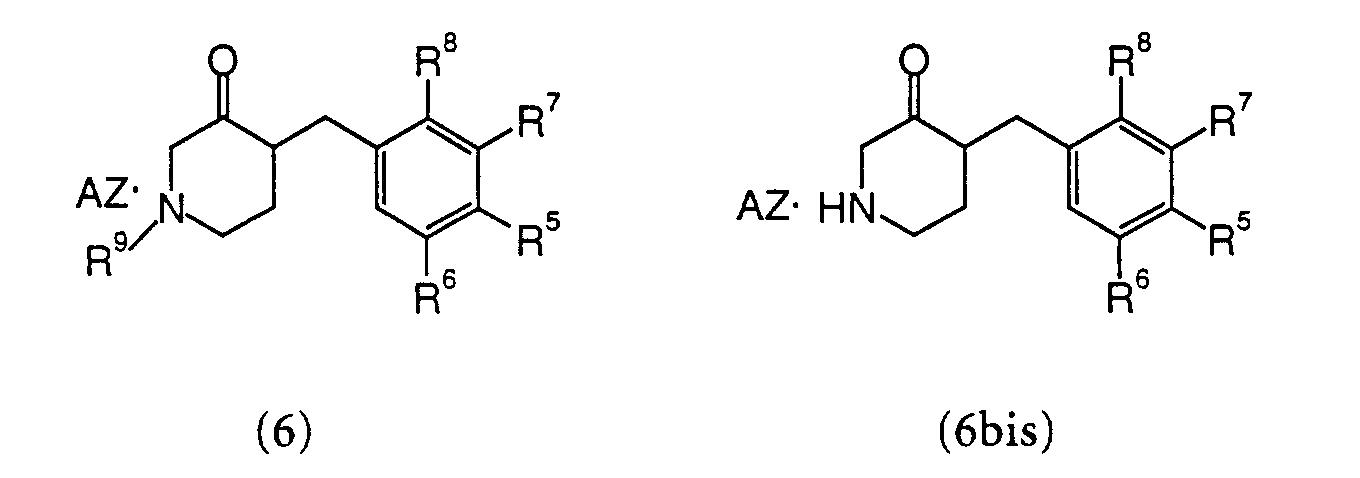
- the salt of the piperidine derivative of formula (6) is stable and can be hydrogenated in high optical and chemical yields by the process according to the invention.
- the hydrogenation may also be performed with the salt of the unprotected piperidine derivative of formula (6bis).
- the asymmetric hydrogenation is carried out in presence of a ruthenium phosphine complex represented by the formula Ru(E) 2 (L)(A) wherein
- Complexes of type IV can be specifically prepared, isolated and characterized in analogy to the methods described in Angew. Chem. Int. Ed. 1998, 37, 1703-1707 and in the references cited therein, or can be prepared “in situ” from components as described in. above mentioned reference, and be employed without intermediate isolation in the catalytic asymmetric hydrogenation.
- the amount of chiral diphosphine ligand (L) used in the reaction can vary from 0.5 to 2.5 equivalents relative to ruthenium, preferably from 0.8 to 1.2 equivalents.
- Analogously the amount of chiral diamine can vary from 0.5 to 2.5 equivalents based on the amount of the ruthenium-complex, preferably 1 to 2 equivalents.
- Suitable chiral diphosphine ligands are known in the art. Such ligands are for example atropisomeric biphenyl-phosphine or binaphthyl-phosphine derivatives. Further ligands which may be useful in the present hydrogenation are 1,2-bis(2,5-dimethylphospholano)benzene as described in USP 5,171,892; 1-[2-(diphenylphosphino)-ferrocenyl]ethyl-di-tert.-butyl-phosphine as described in EP 0 564 406; 1-[2-(di-(4-trifluoromethyl)phenyl)-phosphino)ferrocenyl]ethyl-di-phenyl-phosphine as in EP 0 646 590; 4,12-bis(diphenylphosphino)-[2.2]paracyclophane (Tetrahedron Letters 1998, 39, 4441-4444); 4,4'-
- diphosphine ligands are known in the art and can be prepared for example as described in EP 0 398 132 and WO-92/16535 (MeOBIPHEP; 3,5-iPr-MeOBIPHEP), in EP 0 104 375 (BIPHEMP) and in EP 0 580 331 (BINAP).
- chiral diamines are propane- and butanediamines.
- An especially preferred chiral diamine is DPEN (V), (R,R) or (S,S)-1,2-diphenylethylenediamine.
- the chiral diamines are commercially available or can be prepared according to known methods.
- the hydrogenation is preferably carried out in an organic solvent which is inert under the reaction conditions.
- organic solvent which is inert under the reaction conditions.
- solvents there can be mentioned, in particular, lower alcohols such as e.g. methanol, ethanol or isopropanol, trifluoroethanol or mixtures of such alcohols with halogenated hydrocarbons such as methylene chloride, chloroform, hexafluorobenzene and the like or with ethers such as diethyl ether, tetrahydrofuran or dioxane.
- Preferred solvent for the reaction are lower alcohols, especially preferred is isopropanol.
- the reaction is carried out at a concentration of about 1 to 50%, ideally about 5 to 30%.
- the substrate-to-catalyst molar ratio (S/C ratio) is 10-1'000'000, preferably 100-800'000.
- the hydrogenation is carried out at a pressure of 10 5 -10 8 Pa, ideally at a pressure of about 10 5 to 10 7 Pa and at a temperature of about 0°C to about 50°C, ideally at 20°C to 40°C.
- the amount of base present in the reaction is 1.0 - 0.001, preferably 0.05 - 0.2 mol equivalents with respect to the substrate in addition to 1 mol equivalent of base which is necessary to neutralize the acid salt of the substrate of formula (6) or (6bis), respectively.
- Preferred bases used in the asymmetric hydrogenation are for example inorganic or organic bases.
- Preferred inorganic bases are alkali or alkaline earth metal hydroxides, carbonates, hydrogenocarbonates, alcoholates or silanolates such as for example LiOH, LiOCH 3 , LiOC 2 H 5 , LiOCH(CH 3 ) 2 , LiOC(CH 3 ) 3 , NaOH, NaOCH 3 , NaOC 2 H 5 , NaOCH(CH 3 ) 2 , NaOC(CH 3 ) 3 , KOH, KOCH 3 , KOC 2 H 5 , KOCH(CH 3 ) 2 , KOC(CH 3 ) 3 , KOSi(CH 3 ) 3 , or Cs 2 CO 3 preferred inorganic bases are alcoholates, especially KOC(CH 3 ) 3 .
- Preferred organic bases are tertiary amines such as triethylamine, ethyl-diisopropylamine, tripropyl
- step 5 The asymmetric hydrogenation of step 5 can be carried out either batchwise or in a continuous manner.
- Step 6 deprotection of the compound of formula ( 7a ) or the isomer ( 7b ) under standard conditions depending on the N protecting group , for example by hydrogenation of the N-benzylated compound in presence of Pd/C to form the unprotected amine III-a and III-b, respectively.
- Step 6* refers to the deprotection of the compound of formula ( 6 ) in analogy to step 6 , to compound ( 6bis ) which is then subsequently submitted to the asymmetric hydrogenation (step 5* discussed above).
- Step 7 treating the sulfone intermediate of formula II with a base to form the corresponding vinyl sulfone derivative which is subsequently reacted with the piperidine derivative of formula III-a or III-b to the desired product of formula I-a or I-b , respectively.
- the reaction is carried out in presence of bases such as triethylamine in solvents such as CH 2 Cl 2 .
- pharmaceutically acceptable acid addition salts embraces salts with inorganic and organic acids, such as hydrochloric acid, nitric acid, sulfuric acid, lactic acid, phosphoric acid, citric acid, formic acid, fumaric acid, maleic acid, acetic acid, succinic acid, tartaric acid, methane-sulfonic acid, p-toluenesulfonic acid and the like.
- alkyl refers to both straight and branched chain saturated hydrocarbon groups having 1 to 10 carbon atoms; whereas the term “lower alkyl” refers to both straight and branched chain saturated hydrocarbon groups having 1 to 5 carbon atoms, for example, methyl, ethyl, n-propyl, isopropyl, tert.-butyl and the like.
- lower-alkyl-sulfonylamido refers to sulfonamido groups substituted with "lower alkyl” groups as defined above.
- cycloalkyl refers to a cyclic hydrocarbon group having 3 to 7 carbon atoms. Such groups are for example cyclopropyl, cyclobutyl, cyclopentyl, cyclohexyl, cycloheptyl and the like.
- phenyl refers to unsubstituted phenyl or mono, di-or trisubstituted phenyl groups with substituents such as lower alkyl, alkoxy groups or halogenated alkyl such as trifluoromethyl, pentafluoroethyl, or substituted with halogen, hydroxy, amino, dialkylamino or acetamido, or substituted with phenyl or trialkylsilyl and the like.
- heterocyclic ring refers to 5 or 6-membered rings containing one or two hetero atoms chosen from O, S and N.
- heterocyclic rings are furane, thiophene, pyrrole, pyridine and pyrimidine.
- the heterocyclic rings may be unsubstituted or substituted with substituents as defined for "substituted phenyl”.
- leaving group refers to conventionally used easily substituted functional groups such as halogen, e.g. chlorine, bromine or iodine, or organic acid residues such as sulfonic acid derivatives, e.g. p-toluene sulfonate, brosylate, methylsulfonate, triflate (trifluoromethylsulfonate) and the like.
- halogen e.g. chlorine, bromine or iodine
- organic acid residues such as sulfonic acid derivatives, e.g. p-toluene sulfonate, brosylate, methylsulfonate, triflate (trifluoromethylsulfonate) and the like.
- Nucleophilic substitution of the leaving groups are carried out by methods known in the art , e.g. in inert organic solvents under basic conditions.
- “Inert organic solvents” refers to polar solvents such as dimethylformamide (DMF), dimethylacetamide (DMA), dimethylsulfoxide (DMSO), or to alcohols such as methanol, ethanol or isopropanol, or to cyclic ethers such as dioxane or tetrahydrofurane (THF), or to halogenated hydrocarbons such as dichloromethane, or to aromatic hydrocarbons such as toluene, or to nitrites, such as acetonitrile, or to mixtures of the named solvents.
- polar solvents such as dimethylformamide (DMF), dimethylacetamide (DMA), dimethylsulfoxide (DMSO), or to alcohols such as methanol, ethanol or isopropanol, or to cyclic ethers such as
- bases are used inorganic or organic bases.
- Preferred inorganic bases are alkali or alkaline earth metal hydroxides, carbonates, hydrogenocarbonates, alcoholates or silanolates.
- Preferred organic bases are tertiary amines such as triethylamine, ethyl-diisopropylamine, tripropylamine and the like.
- amino protecting group refers in the scope of the present invention to groups such as those employed in peptide chemistry for example to benzyl, tert.-butoxy-carbonyl, allyloxy carbonyl and the like; to a substituted alkoxycarbonyl group such as trichloroethoxycarbonyl etc.; to an optionally substituted aralkyloxycarbonyl group, for example, p-nitrobenzyloxycarbonyl or benzyloxycarbonyl; to an aralkyl group such as trityl or benzhydryl; to an alkanoyl group such as formyl or acetyl; to a halogen-alkanoyl group such as chloroacetyl, bromoacetyl, iodoacetyl or trifluoroacetyl; or to a silyl protective group such as the trimethylsilyl group.
- Especially preferred amino protecting are benzyl, tert.-butoxycarbonyl (BOC) and benzyloxycarbonyl (Z).
- BOC tert.-butoxycarbonyl
- Z benzyloxycarbonyl
- carboxylic acid protecting group refers in the scope of the present invention to protecting groups conventionally used to replace the acidic proton of a carboxylic acid. Examples of such groups are described in Greene, T., Protective Groups in Organic Synthesis, Chapter 5, pp. 152-192 (John Wiley and Sons, Inc. 1981).
- these examples include methoxymethyl, methylthiomethyl, 2,2,2-trichloroethyl, 2-haloethyl, 2-(trimethylsilyl)ethyl, methyl, ethyl, isopropyl, tert.-butyl, allyl, benzyl, triphenylmethyl (trityl), benzhydryl, p-nitrobenzyl, p-methoxybenzyl, trimethylsilyl, triethylsilyl, tert.-butyldimethylsilyl, i-propyl-dimethylsilyl.
- benzhydryl tert.-butyl
- p-nitrobenzyl p-methoxybenzyl
- allyl Especially preferred carboxylic protecting groups are methyl, ethyl, tert. butyl or benzyl.
- Suitable protecting groups and methods for their cleavage will be familiar to any person skilled in the art, although of course there can be used only those protecting groups which can be cleaved off by methods under the conditions of which other structural elements in the compounds are not affected.
- oxygen acid or complex acid signifies in the scope of the present invention acids from the group H 2 SO 4 , HClO 4 , HBrO 4 , HIO 4 , HNO 3 , H 3 PO 4 , CF 3 SO 3 H or C 6 H 5 SO 3 H as well as halogen complexes with the elements boron, phosphorus, arsenic, antimony or bismuth.
- HClO 4 , CF 3 SO 3 H, HPF 6 , HBF 4 , HB(Ph) 4 , HB(3,5-(CF 3 ) 2 -C 6 H 3 ) 4 , HSbF 6 and HAsF 6 are preferred representatives with HSbF 6 and HBF 4 being most preferred.
- the reaction mixture from Example 5.1 was treated with 300 ml ethyl acetate, 170 ml water, 50 ml 5% aqueous NH 4 Cl solution and solid NaCl to saturate the aqueous phase. After phase separation, the aqueous phase was extracted twice with 200 ml ethyl acetate and the organic phases were washed twice with 150 ml brine. The combined organic phase was dried over Na 2 SO 4 , the solvent evaporated under reduced pressure to yield 35.6 g crude material as light-yellow crystals. This material was dissolved in 400 ml ethanol, treated at room temperature with 6.7 g (6.3 mmol) Pd/C 10% and stirred under H 2 at 55°C for 2 h.
- the reaction mixture from Example 5.1 was treated with 10 ml 5% aqueous NH 4 Cl solution and concentrated under reduced pressure to a total volume of 50 ml.
- This residue was treated with 50 ml water, 16 g NaCl, 50 ml 5% aqueous NH 4 Cl solution and extracted twice with 100 ml ethyl acetate.
- the organic phases were washed twice with 100 ml brine, the combined organic phase was dried over Na 2 SO 4 and the solvent evaporated under reduced pressure.
- the residue was dissolved in 105 ml ethanol, treated at room temperature with 1.8 g (1.7 mmol) Pd/C 10% and stirred under H 2 at 55°C for 2.5 h.
- Table 6 have been carried out in analogy to Example 12.1 in a 35 ml autoclave on a 0.34 g scale at a substrate-to-catalyst ratio of 300 (Exp. No. 12.2.1- 12.2.4) or in a 185 ml autoclave on a 9 g scale at a substrate-to-catalyst ratio of 50'000 (Exper. No. 12.2.5 - 12.2.7) using various chiral diphosphines with S-configuration. exp. No.
- Various parameters have been changed. exp. no. Changed parameter Value %Conv.
Landscapes
- Health & Medical Sciences (AREA)
- Organic Chemistry (AREA)
- Chemical & Material Sciences (AREA)
- Bioinformatics & Cheminformatics (AREA)
- Engineering & Computer Science (AREA)
- Neurosurgery (AREA)
- Neurology (AREA)
- Biomedical Technology (AREA)
- General Health & Medical Sciences (AREA)
- Chemical Kinetics & Catalysis (AREA)
- Life Sciences & Earth Sciences (AREA)
- Animal Behavior & Ethology (AREA)
- Nuclear Medicine, Radiotherapy & Molecular Imaging (AREA)
- Public Health (AREA)
- Veterinary Medicine (AREA)
- Medicinal Chemistry (AREA)
- General Chemical & Material Sciences (AREA)
- Pharmacology & Pharmacy (AREA)
- Psychiatry (AREA)
- Psychology (AREA)
- Pain & Pain Management (AREA)
- Hospice & Palliative Care (AREA)
- Hydrogenated Pyridines (AREA)
- Pharmaceuticals Containing Other Organic And Inorganic Compounds (AREA)
- Organic Low-Molecular-Weight Compounds And Preparation Thereof (AREA)
- Low-Molecular Organic Synthesis Reactions Using Catalysts (AREA)
- Plural Heterocyclic Compounds (AREA)
Abstract

- R1- R4
- are, independently from each other, hydrogen, halogen, hydroxy, amino, nitro, lower-alkyl-sulfonylamido, or acetamido;
- R5-R8
- are, independently from each other hydrogen, lower-alkyl, halogen, trifluoromethyl or lower-alkoxy;
Description
- The present invention relates to a process for the preparation of compounds of the general formulaewherein

- R1-R4
- are, independently from each other, hydrogen, halogen, hydroxy, amino, nitro, lower-alkyl-sulfonylamido, or acetamido;
- R5-R8
- are, independently from each other hydrogen, lower-alkyl, halogen, trifluoromethyl or lower-alkoxy;
- Particularly, the present invention is concerned with a process for the preparation of compounds of general formula I-a.
- The compounds of formulae I-a and I-b are NMDA (N-methyl-D-aspartate)-receptor-subtype selective blockers, which have a key function in modulating neuronal activity and plasticity which makes them key players in mediating processes underlying development of CNS including learning and memory formation and function.
- Under pathological conditions of acute and chronic forms of neurodegeneration overactivation of NMDA receptors is a key event for triggering neuronal cell death. NMDA receptors are composed of members from two subunit families, namely NR-1 (8 different splice variants) and NR-2 (A to D) originating from different genes. Members from the two subunit families show a distinct distribution in different brain areas. Heteromeric combinations of NR-1 members with different NR-2 subunits result in NMDA receptors, displaying different pharmacological properties. Possible therapeutic indications for DV /24.01.01 NMDA receptor subtype specific blockers include acute forms of neurodegeneration caused, e.g., by stroke or brain trauma; chronic forms of neurodegeneration such as Alzheimer's disease, Parkinson's disease, Huntington's disease or ALS (amyotrophic lateral sclerosis); neurodegeneration associated with bacterial or viral infections, diseases such as schizophrenia, anxiety and depression and acute/chronic pain.
- The compounds of formula I and their pharmaceutically acceptable salts can be prepared by methods known in the art, e.g. in WO 95/25721, for example by processes described below, which comprises
- a) reacting a compound of formula
with a compound of formula
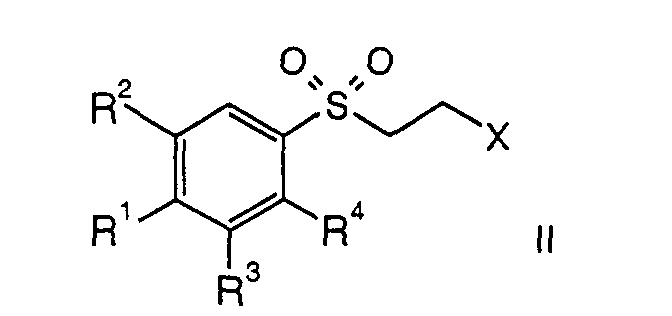 to a compound of formula
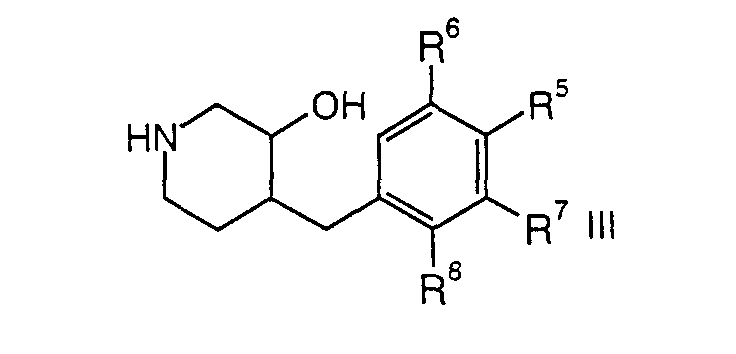 wherein the substituents are as defined above and X signifies a leaving group, and, if desired,
- b) converting the compound of formula I obtained into a pharmaceutically acceptable acid addition salt, and, if desired,
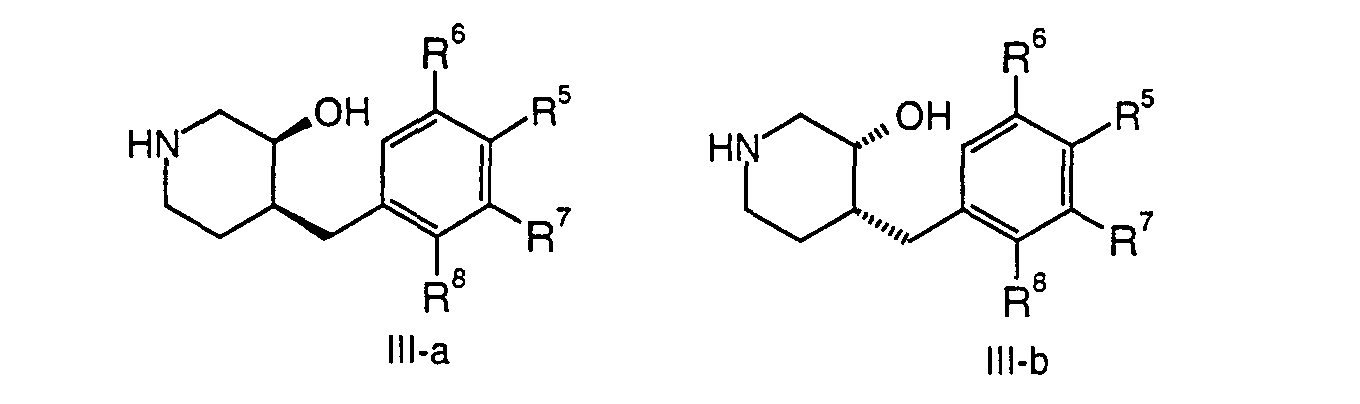
- c) converting a racemic mixture at the stage of formula III or at the stage of formula
I into enantiomeric compounds III-a, III-b
or I-a, I-b respectively, thus obtaining optically pure compounds. However, the above processes usually lead to yields of 10% or less of the desired compound due to the poor efficiency of the methods employed, i.e. resolution by crystallization of diasteromeric salts.
-
- It has now been found that the compounds of formula I-a and I-b can be prepared more effectively and with considerably higher yield if manufactured according to the reaction scheme depicted below:wherein
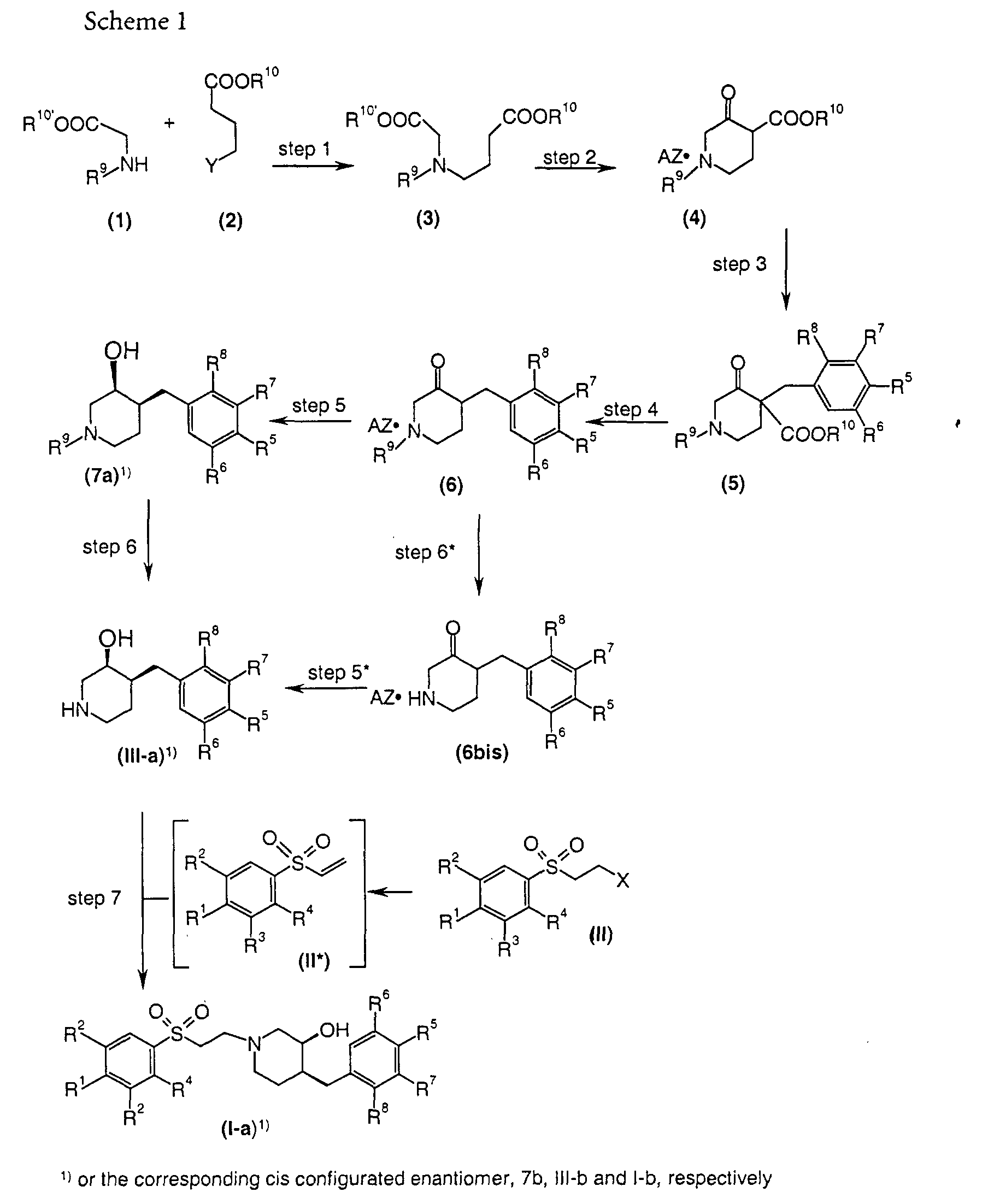
- R1-R8
- are as defined above;
- R9
- is an amino protecting group, preferably benzyl;
- R10 and R10'
- are independently a carboxylic acid protecting group;
- Y and X
- represent independently a leaving group; and
- AZ
- signifies a mineral acid from the group of HBF4, H2SO4, HPF6, HBr, HI, HCI, HSbF6 or HClO4, or a strong organic acid from the group of C1-8-alkylSO3H, picric acid, formic acid, a lower alkylcarboxylic acid such as e.g. acetic acid, propionic acid or trifluoroacetic acid, or a dicarboxylic acid, such as e.g. oxalic acid, succinic acid, maleic acid, tartaric acid or phthalic acid.
- Step 5 (asymmetric hydrogenation) and step 6 (deprotection of the ring nitrogen) can be inverted (Step 6* and step 5*).
- The new process involves several key steps such as new methods for the preparation of the intermediates of formula IIand of formula III, especially by a new approach for the enantioselective preparation of the intermediate of formula III, i.e. of the intermediates of formulae
 wherein the symbols are as defined above.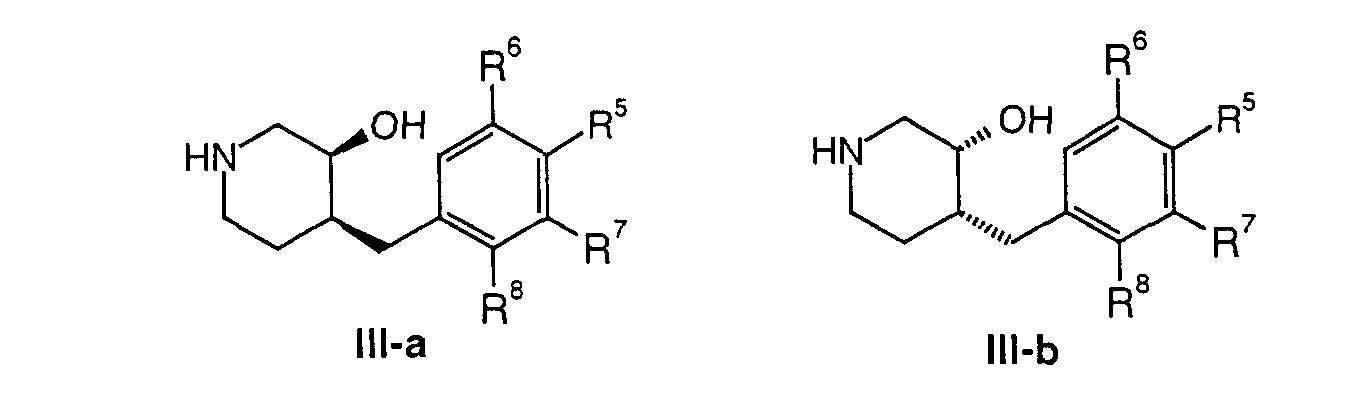
- The new process for the preparation of the intermediate III-a and III-b involves two key reactions:
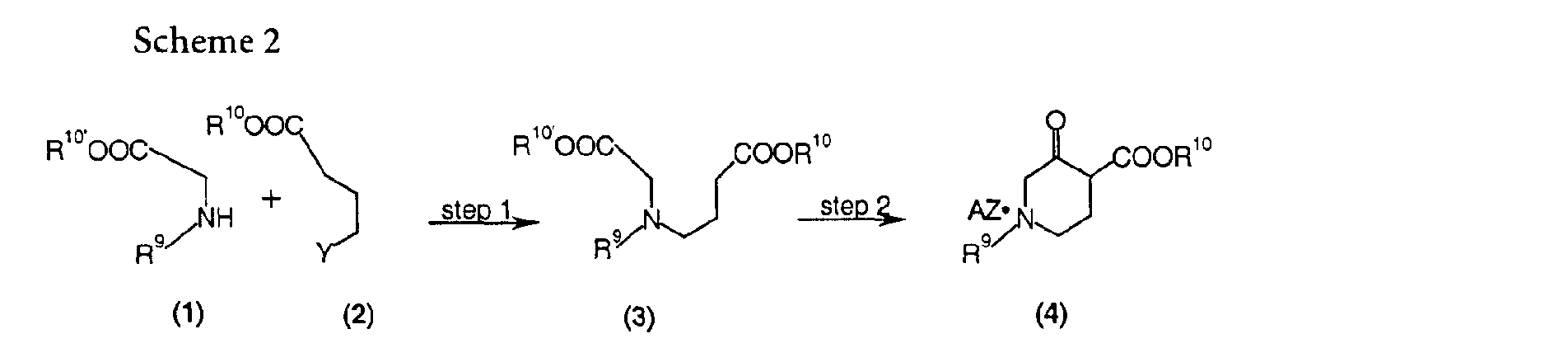
- a) A new process for the preparation of the compound of formula (4) or of a salt
thereof starting with a protected glycin (1) and a butyric acid derivative (2). The new
process is considerably shorter and gives much higher yields than the conventionally used
processes described in Helv. Chim. Acta, 1954, 20, 178; J. Am. Chem. Soc., 1948, 71, 896 or
in J. Chem. Soc. Perkin Trans. 1, 1998, 3673.
wherein
- Y
- signifies a leaving group;
- R10 and R10'
- signify independently a carboxylic acid protecting group;
- R9
- signifies an amino protecting group, preferably benzyl; and
- AZ
- is as defined above.
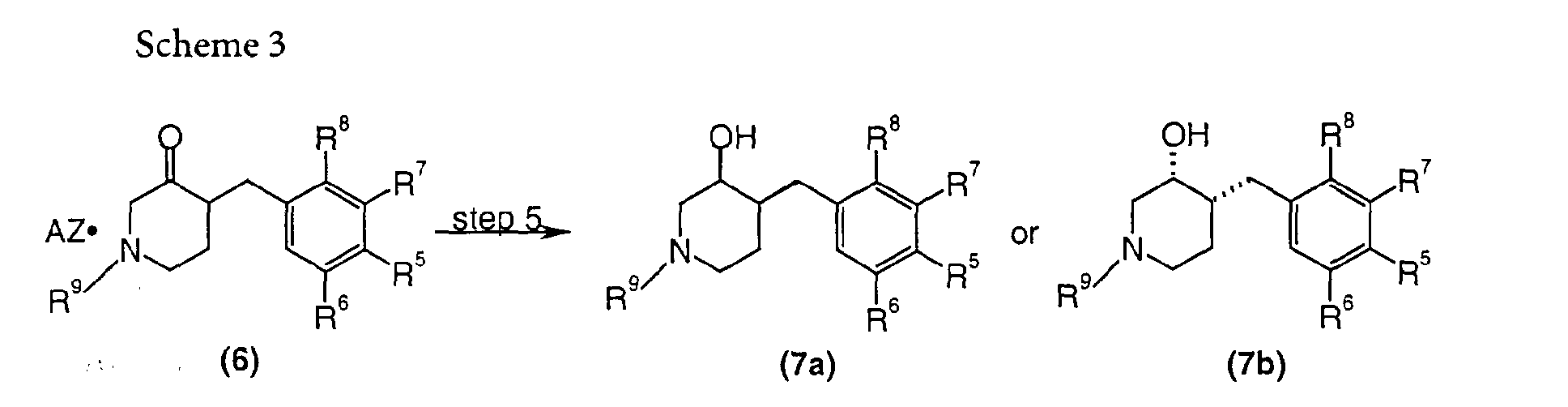
- b) Both the free base of formula (6 and 6bis) and its salts can be submitted to the
asymmetric hydrogenation reaction, which proceeds with concomitant dynamic-kinetic
resolution. However, due to the limited stability of the free base, according to the invention
a salt thereof is preferentially submitted to the asymmetric hydrogenation reaction in the
presence of a homogeneous chiral catalyst, a chiral diamine and an organic or an inorganic
base (step 5 and step 5*, respectively).
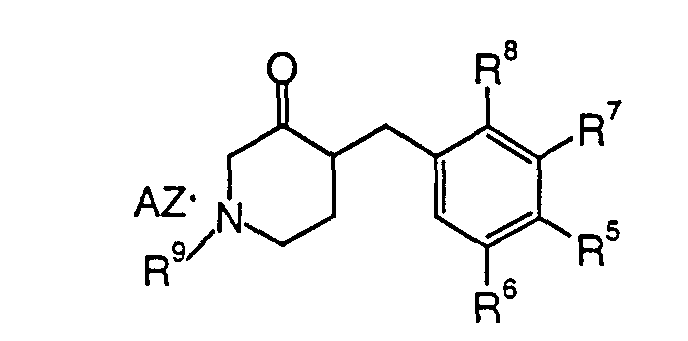
wherein R9 is an amino protecting group, preferably benzyl, AZ and R5 - R8 are as defined above. The amino protecting group R9 may be removed in step 6* before submitting the unprotected compound of formula (6bis) to the asymmetric hydrogenation (step 5*):
 wherein AZ and R5 - R8 are as defined above.
-
- Furthermore, the invention relates to a new process for the preparation of intermediates of formula (II) which are conventionally prepared starting from substituted thiophenol (8) and 2-bromoethanol and subsequent transformation with SOCl2 to obtain the highly mutagenic and unstable substituted (2-chloroethylsulfanyl)-benzene. The new and enhanced process for the preparation of intermediates of formula (II) avoids the presence of said highly mutagenic and unstable compound:wherein X is a leaving group, preferably a halogen, and R1-R4 are as defined above.

- The invention is thus concerned with a new process for the preparation of chiral compounds of formula I-a and I-b, respectively, which comprises:
- Step 1, reacting a protected amino acid ester (1) with a 4-substituted butyric acid derivative (2) in the presence of a base to form an N-protected alkyloxycarbonylmethyl-amino-butyric acid derivative (3); preferred bases for the present reaction are organic bases such as triethylamine, ethyl-diisopropylamine, or inorganic bases such as K2CO3 or Na2CO3. The reaction is carried out in an inert polar solvent preferably in dimethylformamide (DMF), dioxane or acetonitrile. The reaction is carried out at a temperature between 0°C and 120°C, preferably at a temperature between 40°C and 80°C.
- Step 2, cyclising the protected alkoxycarbonylmethyl amino butyric acid derivative (3) in a Dieckmann condensation to yield protected alkyl 3-oxo-piperidine carboxylate (4) which is isolated as a salt from a mineral acid or a strong organic acid, preferably as the hydrochloride salt. The reaction is preferably carried out in an apolar aromatic solvent such as toluene at a temperature of about 40°C to about 120°C, preferably at a temperature of about 85°C.
- Step 3, benzylating the protected alkyl 3-oxo-piperidine carboxylate (4) salt. This reaction is well known in the art and can be carried out for example in the presence of a base and an appropriate solvent, such as for example with potassium-tert.-butoxyde in tetrahydrofuran (THF), with NaH in THF, NaOC2H5 in ethanol, K2CO3 in THF or in dimethylformamide (DMF).
- Step 4, decarboxylation of the benzylated N-protected alkyl 3-oxo-piperidine carboxylate (5). The decarboxylation reaction is carried out by methods known in the art, for example by heating in the presence of a strong acid such hydrochloric acid, sulfuric acid and the like. The resulting salt is identified by formula (6) or (6bis).
- Step 5 and 5*, asymmetric hydrogenation of the salt of formula (6) or (6bis) in presence of a ruthenium complex with a chiral diphosphine ligand, a chiral diamine and an organic or an inorganic base.
- Typical of Steps 5 and 5* is the fact that the substrates (6) and (6bis) are racemic compounds which contain weakly acidic protons on the chiral carbon atoms. During the asymmetric hydrogenation the chiral catalyst converts at first only one enantiomer of (6) or (6bis). In the mean time, due to the configurational lability of the chiral center, the other enantiomer is racemized in situ by the base. Since the desired enantiomer of (6) and (6bis) to be hydrogenated is generated continuously from the undesired one, finally 100% yield of the single desired enantiomer of the products (7a) or (III-a) can be obtained.
-
- It has been found that the salt of the piperidine derivative of formula (6) is stable and can be hydrogenated in high optical and chemical yields by the process according to the invention. The hydrogenation may also be performed with the salt of the unprotected piperidine derivative of formula (6bis).
- The asymmetric hydrogenation is carried out in presence of a ruthenium phosphine complex represented by the formula
- E
- is a halogen atom;
- L
- is a chiral diphosphine ligand; and
- A
- is a chiral diamine.
- Complexes of type IV can be specifically prepared, isolated and characterized in analogy to the methods described in Angew. Chem. Int. Ed. 1998, 37, 1703-1707 and in the references cited therein, or can be prepared "in situ" from components as described in. above mentioned reference, and be employed without intermediate isolation in the catalytic asymmetric hydrogenation. When the complexes of type IV are prepared "in situ", the amount of chiral diphosphine ligand (L) used in the reaction can vary from 0.5 to 2.5 equivalents relative to ruthenium, preferably from 0.8 to 1.2 equivalents. Analogously the amount of chiral diamine can vary from 0.5 to 2.5 equivalents based on the amount of the ruthenium-complex, preferably 1 to 2 equivalents.
- Suitable chiral diphosphine ligands are known in the art. Such ligands are for example atropisomeric biphenyl-phosphine or binaphthyl-phosphine derivatives. Further ligands which may be useful in the present hydrogenation are 1,2-bis(2,5-dimethylphospholano)benzene as described in USP 5,171,892; 1-[2-(diphenylphosphino)-ferrocenyl]ethyl-di-tert.-butyl-phosphine as described in EP 0 564 406; 1-[2-(di-(4-trifluoromethyl)phenyl)-phosphino)ferrocenyl]ethyl-di-phenyl-phosphine as in EP 0 646 590; 4,12-bis(diphenylphosphino)-[2.2]paracyclophane (Tetrahedron Letters 1998, 39, 4441-4444); 4,4'-Bisdiphenylphosphine-2,2',5,5'-tetramethyl-3,3'-dithiophene (WO 96/01831); 2,2'-Bis-(diphenylphosphinyl)-3,3'-dibenzo[b]thiophene (WO 96/01831); (2R,2'R)-Bis(diphenylphosphino)-(1R,1'R)-dicyclopentane and enantiomer (WO 97/47633); 1,2-Bis{(1R,2R,4R,5R)-2,5-bis-isopropyl-8-phenylphosphabicyclo[2.2.1]-heptyl}benzene and enantiomer (WO 97/47633); 2,2',3,3'-Tetraphenyl-4,4',5,5'-tetramethyl-6,6'-bis-phosphanorborna-2,5-dienyl (Chem Eur Journal 1997, 3, 1365-1369); (αR-αR')-2,2'-Bis(α-N,N-dimethylaminopropyl)-(S,S)-1,1'-bis(diphenylphosphino)-ferrocene and enantiomer (Tetrahedron: Asymmetry 1999, 10, 375-384); and ((5,6),(5',6')-Bis(methylenedioxy)biphenyl-2,2'-diyl)bis(diphenylphosphine) (EP 850945).
- Preferably chiral diphosphine ligands of the formulae depicted below are usedwherein

- R11 and R12
- are independently from each other alkyl, cycloalkyl, optionally substituted phenyl or a heterocyclic ring.
- Preferred residue R11 and R12 are

- Especially preferred chiral diphosphine ligands are


- Above-mentioned diphosphine ligands are known in the art and can be prepared for example as described in EP 0 398 132 and WO-92/16535 (MeOBIPHEP; 3,5-iPr-MeOBIPHEP), in EP 0 104 375 (BIPHEMP) and in EP 0 580 331 (BINAP).
- In order to obtain high yields of the cis-configurated product of formula III-a and III-b, respectively, in high optical purity it is essential that the reaction is carried out in the presence of a chiral diamine which is in "unlike" configuration to the chiral complex, i.e. it is important that the diphosphine is (S) and the diamine is (R,R) or that the diphosphine is (R) and the diamine is (S,S). The reaction is carried out in presence of chiral diamines as depicted below:
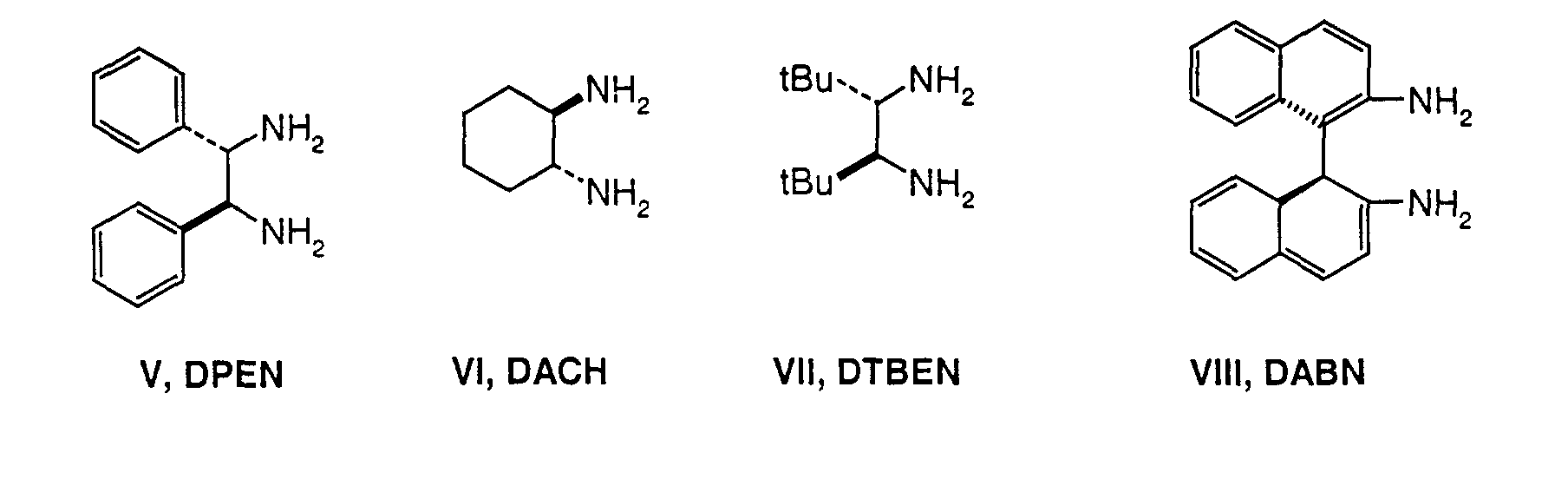
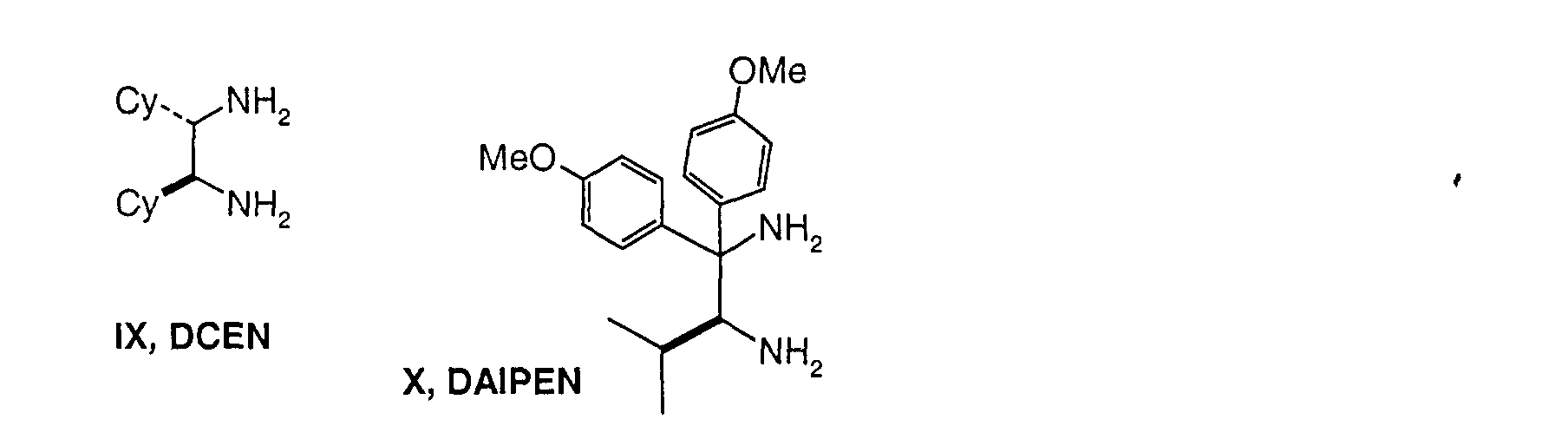
- Further suitable chiral diamines are propane- and butanediamines. An especially preferred chiral diamine is DPEN (V), (R,R) or (S,S)-1,2-diphenylethylenediamine. The chiral diamines are commercially available or can be prepared according to known methods.
- The hydrogenation is preferably carried out in an organic solvent which is inert under the reaction conditions. As such solvents there can be mentioned, in particular, lower alcohols such as e.g. methanol, ethanol or isopropanol, trifluoroethanol or mixtures of such alcohols with halogenated hydrocarbons such as methylene chloride, chloroform, hexafluorobenzene and the like or with ethers such as diethyl ether, tetrahydrofuran or dioxane. Preferred solvent for the reaction are lower alcohols, especially preferred is isopropanol. The reaction is carried out at a concentration of about 1 to 50%, ideally about 5 to 30%.
- The substrate-to-catalyst molar ratio (S/C ratio) is 10-1'000'000, preferably 100-800'000. The hydrogenation is carried out at a pressure of 105 -108 Pa, ideally at a pressure of about 105 to 107 Pa and at a temperature of about 0°C to about 50°C, ideally at 20°C to 40°C.
- The amount of base present in the reaction is 1.0 - 0.001, preferably 0.05 - 0.2 mol equivalents with respect to the substrate in addition to 1 mol equivalent of base which is necessary to neutralize the acid salt of the substrate of formula (6) or (6bis), respectively.
- Preferred bases used in the asymmetric hydrogenation are for example inorganic or organic bases. Preferred inorganic bases are alkali or alkaline earth metal hydroxides, carbonates, hydrogenocarbonates, alcoholates or silanolates such as for example LiOH, LiOCH3, LiOC2H5, LiOCH(CH3)2, LiOC(CH3)3, NaOH, NaOCH3, NaOC2H5, NaOCH(CH3)2, NaOC(CH3)3, KOH, KOCH3, KOC2H5, KOCH(CH3)2, KOC(CH3)3, KOSi(CH3)3, or Cs2CO3 preferred inorganic bases are alcoholates, especially KOC(CH3)3. Preferred organic bases are tertiary amines such as triethylamine, ethyl-diisopropylamine, tripropylamine and the like.
- The asymmetric hydrogenation of step 5 can be carried out either batchwise or in a continuous manner.
- Step 6, deprotection of the compound of formula (7a) or the isomer (7b) under standard conditions depending on the N protecting group , for example by hydrogenation of the N-benzylated compound in presence of Pd/C to form the unprotected amine III-a and III-b, respectively.
- Step 6*, refers to the deprotection of the compound of formula (6) in analogy to step 6, to compound (6bis) which is then subsequently submitted to the asymmetric hydrogenation (step 5* discussed above).
- Step 7, treating the sulfone intermediate of formula II with a base to form the corresponding vinyl sulfone derivative which is subsequently reacted with the piperidine derivative of formula III-a or III-b to the desired product of formula I-a or I-b, respectively. The reaction is carried out in presence of bases such as triethylamine in solvents such as CH2Cl2.
- As already mentioned previously sulfones of formula II are usually prepared by halogenation of the hydroxy thioether of formula (9) to form the highly toxic and unstable chlorothioether which is then subsequently oxidized to form the intermediate of formula II. The invention now provides a new process to produce this intermediate of formula II, see Scheme 4 which avoids the formation of highly toxic intermediates. The process according to the invention consists of the following steps:
- step a), a substituted thiophenyl derivative (8) is deprotonated in presence of a strong inorganic or organic base and subsequently reacted with 2-haloethanol to form the thioether of formula (9);
- step b), oxidation of the thioether (9) in presence of an oxidative agent such as 3-chloroperbenzoic acid (MCPBA), H2O2/AcOH, KMnO4, tBuOOH, NMO/Os04, or oxone® to yield the corresponding sulfone of formula (10); and
- step c), replacement of the hydroxy group of the sulfone derivative by a halogen atom e.g. with SOX'2, wherein X' is halogen, e.g. chlorine, bromine or iodine in the presence of pyridinie in dichloromethane.
-
- The term "pharmaceutically acceptable acid addition salts" embraces salts with inorganic and organic acids, such as hydrochloric acid, nitric acid, sulfuric acid, lactic acid, phosphoric acid, citric acid, formic acid, fumaric acid, maleic acid, acetic acid, succinic acid, tartaric acid, methane-sulfonic acid, p-toluenesulfonic acid and the like.
- As used herein, the term " alkyl" refers to both straight and branched chain saturated hydrocarbon groups having 1 to 10 carbon atoms; whereas the term "lower alkyl" refers to both straight and branched chain saturated hydrocarbon groups having 1 to 5 carbon atoms, for example, methyl, ethyl, n-propyl, isopropyl, tert.-butyl and the like.
- The term "lower-alkyl-sulfonylamido" refers to sulfonamido groups substituted with "lower alkyl" groups as defined above.
- The term "cycloalkyl" refers to a cyclic hydrocarbon group having 3 to 7 carbon atoms. Such groups are for example cyclopropyl, cyclobutyl, cyclopentyl, cyclohexyl, cycloheptyl and the like.
- The term "optionally substituted phenyl" refers to unsubstituted phenyl or mono, di-or trisubstituted phenyl groups with substituents such as lower alkyl, alkoxy groups or halogenated alkyl such as trifluoromethyl, pentafluoroethyl, or substituted with halogen, hydroxy, amino, dialkylamino or acetamido, or substituted with phenyl or trialkylsilyl and the like.
- As used herein "heterocyclic ring" refers to 5 or 6-membered rings containing one or two hetero atoms chosen from O, S and N. Examples of preferred heterocyclic rings are furane, thiophene, pyrrole, pyridine and pyrimidine. The heterocyclic rings may be unsubstituted or substituted with substituents as defined for "substituted phenyl".
- As used herein the term "leaving group" refers to conventionally used easily substituted functional groups such as halogen, e.g. chlorine, bromine or iodine, or organic acid residues such as sulfonic acid derivatives, e.g. p-toluene sulfonate, brosylate, methylsulfonate, triflate (trifluoromethylsulfonate) and the like.
- Nucleophilic substitution of the leaving groups (steps 1 and 7) are carried out by methods known in the art , e.g. in inert organic solvents under basic conditions. "Inert organic solvents" refers to polar solvents such as dimethylformamide (DMF), dimethylacetamide (DMA), dimethylsulfoxide (DMSO), or to alcohols such as methanol, ethanol or isopropanol, or to cyclic ethers such as dioxane or tetrahydrofurane (THF), or to halogenated hydrocarbons such as dichloromethane, or to aromatic hydrocarbons such as toluene, or to nitrites, such as acetonitrile, or to mixtures of the named solvents. As bases are used inorganic or organic bases. Preferred inorganic bases are alkali or alkaline earth metal hydroxides, carbonates, hydrogenocarbonates, alcoholates or silanolates. Preferred organic bases are tertiary amines such as triethylamine, ethyl-diisopropylamine, tripropylamine and the like.
- The term "amino protecting group" refers in the scope of the present invention to groups such as those employed in peptide chemistry for example to benzyl, tert.-butoxy-carbonyl, allyloxy carbonyl and the like; to a substituted alkoxycarbonyl group such as trichloroethoxycarbonyl etc.; to an optionally substituted aralkyloxycarbonyl group, for example, p-nitrobenzyloxycarbonyl or benzyloxycarbonyl; to an aralkyl group such as trityl or benzhydryl; to an alkanoyl group such as formyl or acetyl; to a halogen-alkanoyl group such as chloroacetyl, bromoacetyl, iodoacetyl or trifluoroacetyl; or to a silyl protective group such as the trimethylsilyl group. Especially preferred amino protecting are benzyl, tert.-butoxycarbonyl (BOC) and benzyloxycarbonyl (Z). For the hydrogenation step (step 5) to be highly enantioselective it is essential that the protected nitrogen is basic, therefore benzyl is an especially preferred protecting group.
- The term "carboxylic acid protecting group" refers in the scope of the present invention to protecting groups conventionally used to replace the acidic proton of a carboxylic acid. Examples of such groups are described in Greene, T., Protective Groups in Organic Synthesis, Chapter 5, pp. 152-192 (John Wiley and Sons, Inc. 1981). Preferably these examples include methoxymethyl, methylthiomethyl, 2,2,2-trichloroethyl, 2-haloethyl, 2-(trimethylsilyl)ethyl, methyl, ethyl, isopropyl, tert.-butyl, allyl, benzyl, triphenylmethyl (trityl), benzhydryl, p-nitrobenzyl, p-methoxybenzyl, trimethylsilyl, triethylsilyl, tert.-butyldimethylsilyl, i-propyl-dimethylsilyl. Preferred are benzhydryl, tert.-butyl, p-nitrobenzyl, p-methoxybenzyl and allyl. Especially preferred carboxylic protecting groups are methyl, ethyl, tert. butyl or benzyl.
- Suitable protecting groups and methods for their cleavage will be familiar to any person skilled in the art, although of course there can be used only those protecting groups which can be cleaved off by methods under the conditions of which other structural elements in the compounds are not affected.
- The term "oxygen acid or complex acid" signifies in the scope of the present invention acids from the group H2SO4, HClO4, HBrO4, HIO4, HNO3, H3PO4, CF3SO3H or C6H5SO3H as well as halogen complexes with the elements boron, phosphorus, arsenic, antimony or bismuth. HClO4, CF3SO3H, HPF6, HBF4, HB(Ph)4, HB(3,5-(CF3)2-C6H3)4, HSbF6 and HAsF6 are preferred representatives with HSbF6 and HBF4 being most preferred.
- The following abbreviations are used in the description of the examples:
- MeOBIPHEP:
- (6,6'-Dimethoxybiphenyl-2,2'-diyl)bis(diphenylphosphine)
- BIPHEMP:
- (6,6'-Dimethylbiphenyl-2,2'-diyl)bis(diphenylphosphine)
- BINAP:
- [(1,1'-Binaphthyl)-2,2'-diyl]bis(diphenylphosphine)
- mTol-MeOBIPHEP:
- (6,6'-Dimethoxybiphenyl-2,2'-diyl)bis[bis(m-tolyl)-phosphine]
- (3,5-Xyl)-MeOBIPHEP:
- (6,6'-Dimethoxybiphenyl-2,2'-diyl)bis [bis(3,5-dimethylphenyl)phosphine]
- (3,5-Et)-MeOBIPHEP:
- (6,6'-Dimethoxybiphenyl-2,2'-diyl)bis[bis(3,5-diethylphenyl)phosphine]
- (3,5-iPr)-MeOBIPHEP:
- (6,6'-Dimethoxybiphenyl-2,2'-diyl)bis[bis(3,5-diisopropylphenyl)phosphine]
- (3,5-CF3)-MeOBIPHEP:
- (6,6'-Dimethoxybiphenyl-2,2'-diyl)bis[bis(3,5-bis(trifluoromethyl)phenyl)phosphine]
- (3,5-iPr,4-MeO)-MeOBIPHEP:
- (6,6'-Dimethoxybiphenyl-2,2'-diyl)bis[bis(3,5-diisopropyl-4-methoxyphenyl)phosphine]
- (3,5-Me,4-MeO)-MeOBIPHEP:
- (6,6'-Dimethoxybiphenyl-2,2'-diyl)bis[bis(3,5-dimethyl-4-methoxy-phenyl)phosphine]
- (3,5-tBu)-MeOBIPHEP:
- (6,6'-Dimethoxybiphenyl-2,2'-diyl)bis[bis(3,5-tert. butylphenyl)phosphine]
- (3,5-TMS)-MeOBIPHEP:
- (6,6'-Dimethoxybiphenyl-2,2'-diyl)bis[bis(3,5-trimethylsilylphenyl)phosphine]
- COD
- 1,5-cyclooctadiene
- DPEN:
- 1,2-Diphenylethylenediamine
- DACH:
- trans-1,2-Diaminocyclohexane
- DTBEN:
- 1,2-Di-tert.-butylethylenediamine
- DABN:
- 2,2'-Diamino-1,1'-binaphthalene
- DCEN
- 1,2-Dicyclohexane-ethylendiamine
- DAIPEN
- 1,1-Di-(p-methoxyphenyl)-2-isopropylethylenediamine
- S/C:
- substrate-to-catalyst molar ratio
- S/base:
- substrate-to-base molar ratio
- The examples below will further illustrate the present invention:
-
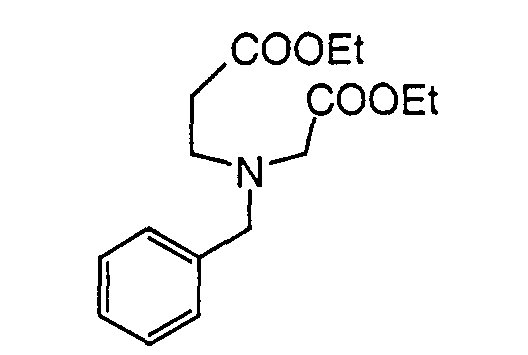
- A solution of 4.9 ml (25.8 mmol) N-benzylglycine ethyl ester and 7.7 ml (51.7 mmol) ethyl-4-bromobutyrate in 40 ml dimethylformamide (DMF) was treated at room temperature with 9.0 ml (64.3 mmol) triethylamine. The reaction mixture was heated to 65°C and stirred for 23 h, subsequently cooled to room temperature and DMF was evaporated. The residue was treated with 100 ml water and 100 ml ethyl acetate. The phases were separated after extraction, the organic phase washed twice with total 100 ml water and the combined organic phase dried over Na2SO4. The solvent was removed under reduced pressure and the residue purified by chromatography over silica gel (hexane: ethyl acetate = 9:1) to yield 7.1 g (88.8%) product as yellow oil.
MS (ISP): 308 (100, [M + H]+) - To a solution of 2.571 (17.25 mol) ethyl-4-bromobutyrate in 10 1 dioxane was added at 100°C 1.72 kg (8.54 mol) N-benzylglycine ethyl ester. The reaction mixture was treated under reflux dropwise over a period of 6 h with 3.10 1 (22.24 mol) triethylamine and subsequently stirred under reflux for 16 h. The suspension was cooled to 50°C and treated with 10 1 toluene, stirred at 0°C for 1 h and afterwards filtered. The filtrate was concentrated to yield 3.08 kg crude product.
-
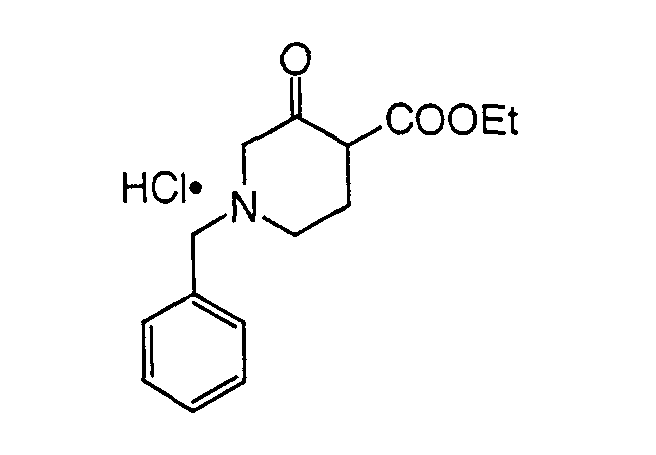
- A solution of 2.8 g (9.1 mmol) 4-(benzyl-ethoxycarbonylmethyl-amino)-butyric acid ethyl ester in 18 ml toluene was treated at room temperature with 980.0 mg (13.7 mmol) sodium ethoxide. The reaction mixture was heated to 85°C and stirred for 3.5 h. After cooling to room temperature the reaction mixture was poured onto 50 ml ice-water, treated with 50 ml toluene and subsequently extracted. The aqueous phase was extracted with total 100 ml ethyl acetate, the organic phase washed twice with total 100 ml water and the combined organic phase dried over Na2SO4. The solvent was removed under reduced pressure to yield 2.2 g crude product. This crude product was treated with 3.7 ml of a solution of HCl in methyl alcohol 20%-weight and subsequently the solvent was removed under reduced pressure to yield 2.4 g crude product as white crystals. The crystals were dissolved under reflux in 30 ml isopropanol and the solution cooled to room temperature and stirred at this temperature for 2 h. The formed crystals were separated on a filter funnel and washed with 3 ml isopropanol (4°C) and dried to yield 1.8 g (67.5%) product as white crystals.
MS (ISP): 262 (100, [M + H]+). - A solution of 2.02 kg (5.60 mol) crude 4-(benzyl-ethoxycarbonylmethyl-amino)-butyric acid ethyl ester from Example 1.2. in 101 toluene was treated at room temperature with 0.79 kg (11.03 mol) sodium ethoxide (exothermic). The reaction mixture was heated to 85°C and stirred for 3.5 h. The so formed suspension was cooled to room temperature and treated with 5 1 toluene and 0.5 kg dicalite speedex. After neutralization by slowly addition of 0.7 1 acetic acid the suspension was filtered. The filtrate was concentrated to a volume of 91 and treated with 1.41 (6.86 mol) HCl in ethanol (4.9 M). After formation of crystals the ethanol was exchanged under reduced pressure by addition of 8 1 toluene. The so formed suspension was treated with 5 1 toluene, stirred at 0°C for 16 h and subsequently filtered. The crystals were dried to yield 1.62 kg (94%) product.
-

- A mixture of 38.3 g (341.0 mmol) potassium tert.-butoxide and 625 ml absolute tetrahydrofuran was stirred at room temperature for 0.5 h. The resulting milky solution was cooled to 0°C and then 50.0 g (168.0 mmol) ethyl N-benzyl-3-oxo-4-piperidine carboxylate hydrochloride were added via a powder dropping funnel. The temperature was kept below 5°C. The mixture was warmed up to room temperature and further stirred for 1 h resulting in a yellow solution. After cooling to 0°C, a solution of 30.2 g (176.0 mmol) benzyl bromide in 20.0 ml of absolute tetrahydrofuran was dropwise added in 0.5 h. A maximum temperature of 2°C was observed. The reaction mixture was warmed to room temperature and stirred for 4 h. The reaction solution was cooled to 0°C and 200 ml saturated ammonium chloride solution was slowly added. After extraction and phase, separation, the aqueous phase was extracted twice with 100 ml of ethyl acetate. The combined organic phase were washed twice with 100 ml of saturated sodium chloride solution, dried over Na2SO4, the solvent evaporated under reduced pressure and the residue dried to yield 58.3 g (99.3%) crude product.
MS (ISP): 352 (100, [M + H]+), 174 (15). -

- A solution of 118.0 g (336 mmol) crude rac-1,4-dibenzyl-3-oxo-piperidine-4-carboxylic acid ethyl ester in 118.0 ml of absolute ethanol was cooled to 0°C and subsequent 405 ml (4.9 mol) 37% hydrochloric acid was cautiously added. The reaction temperature was kept below 7°C. Finally the mixture was heated under reflux for 19 h. To the dark brown solution were added some crystals of rac-1,4-dibenzyl-3-oxo-piperidine hydrochloride, then the mixture was allowed to cooled to room temperature and further stirred for 2 h. The resulting crystals, after recuperation on a Buchner funnel and washing twice with 60 ml of deionized water, were dried to yield 102.2 g crude product. Then 400 ml of ethyl acetate was added to the crude product and the mixture refluxed for 2 h and cooled afterwards to room temperature. The resulting beige suspension was filtered, the crystals were washed twice with 50 ml of ethyl acetate and dried to yield 82.2 g (78 % over two steps) product.
MS (ISP): 280 (100, [M + H]+), 262 (9).
M.p. 202 - 203°C. -

- In the glove box (O2 content < = 2 ppm) a 20 ml measuring flask was charged with 14.03 mg of [RuCl2((S)-3,5-Xyl-MeOBIPHEP)((R,R)-DPEN)] (0.050 mmol) and filled to the graduation mark with 20 ml of isopropanol. The clear yellow catalyst solution was stirred with a magnetic stirring bar for 20 min at room temperature. The Ru-complex had been prepared by reaction of (S)-3,5-Xyl-MeOBIPHEP, [RuCl2(COD)]n and (R,R)-DPEN in analogy to Angew. Chem. Int. Ed. 1998, 37,1703-1707. In the glove box a glass flask was charged with 41.06 g (0.130 mol) of 1,4-dibenzyl-piperidin-3-one hydrochloride, 205 ml of isopropanol and 17.51 g (0.156 mol) of potassium tert.-butylate. The resulting suspension was stirred for 10 min and transferred into a 380 ml stirred stainless steel autoclave followed by 4.0 ml of catalyst solution, S/C= 50'000. The autoclave was then sealed and connected to a hydrogenation line. The hydrogenation was carried out while stirring at room temperature at a total pressure of 4x10⁶ Pa. After 3 h the hydrogenation mixture (a yellow suspension) was removed from the autoclave. A sample thereof was filtered, evaporated to dryness and analyzed as follows:
- a) A 25-mg sample was dissolved in 0.8 ml of pyridine and silylated with 0.2 ml of commercial N,O-bis-(trimethylsilyl)-acetamide (BSA)+5% trimethylchlorosilane (TMS)-solution. Gas chromatographic analysis on a Permaphase PVMS/54 column showed complete conversion and a cis/trans ratio of 99:1. Retention times: 10.65 min (trans-1,4-dibenzyl-piperidin-3-ol), 10.80 min (cis-1,4-dibenzyl-piperidin-3-ol), 11.15 min (rac-1,4-dibenzyl-piperidin-3-one).
- b) ca. 0.6 ml sample of reaction mixture was taken up in water/ethyl acetate mixture and treated with a 5% ammonium chloride solution. The organic phase was dried (Na2SO4). HPLC analysis of an aliquot containing ca. 5-10 mg of product confirmed that the cis/trans-ratio was 99:1 and showed the enantiomeric purity (ee) of (S,S)- cis-1,4-dibenzyl-piperidin-3-ol to be 91%. Column: 2 x Chiralpak AS, (250 x 4.6 mm), Daicel Chemicals Industries, Cat. No. 20025; Mobile phase: 1% (v/v) ethanol in n-hexane; flow 1.2 ml/min; pressure 6x10⁵ Pa. The following retention times were observed: 11.2 min cis-(R,R)-product; 12.5 min cis-(S,S)-product; 17.5 and 19.5 min starting material (two enantiomers), 17.5 and 19.5 min trans-product (two enantiomers).
-
- In the glove box (O2 content < = 2 ppm) a 100 ml measuring flask was charged with 68.3 mg of [RuCl2((S)-3,5-Xyl-MeOBIPHEP)((R,R)-DPEN)] (0.0633 mmol) and filled to the graduation mark with isopropanol. The clear yellow catalyst solution was stirred with a magnetic stirring bar for 20 min at room temperature and then transferred into a catalyst addition device. A 12-L Hastelloy C4 stirred autoclave was charged with 1.00 kg (3.17,mol) of rac-1,4-dibenzyl-piperidin-3-one hydrochloride, 5 1 of isopropanol and 426.36 g (3.8 mol) of potassium tert.-butylate and sealed, S/C= 50'000. The autoclave was then sealed, the atmosphere was exchanged with argon and finally the autoclave was connected to a hydrogenation line. The hydrogenation was carried out while stirring at room temperature at a total pressure of 4x10⁶ Pa. After 4 h the hydrogenation mixture (a yellow suspension) was removed from the autoclave. A sample thereof was filtered, evaporated to dryness and analyzed as described in Example 5.1: complete conversion, cis/trans product 99.1:0.6, 91% ee (cis-product with (S,S)-configuration).
- The experiments in Table 1 have been carried out in analogy to Example 5.1 using various chiral diphosphines with S-configuration.a)
exp. no. (S)-Diphosphines S/C S/base %Conv./h cis/trans% %ee 5.3 MeOBIPHEP 500 1.25 100/2.5 98/2 76 5.4 BIPHEMP 100 5 100/2.5 99/1 75 5.5 BINAP 100 5 100/2.5 98/1 74 5.6 (3,5-iPr)-MeOBIPHEP 2000 5 100/2 99/1 96 5.7 (3,5-CF3)-MeOBIPHEP 1000 2.5 100/3 99/1 90 5.8 (3,5-Et)-MeOBIPHEP 2000 5 100/3 99/1 95 5.9 (mTol)-MeOBIPHEP 1000 2.5 100/3 99/1 82 5.10 (3,5-TMS)-MeOBIPHEP 2000 5 27/3 83/17 71 5.11 (3,5-iPr,4-MeO)-MeOBIPHEP 1000 2.5 58/3 89/11 40 5.12 (3,5-tBu)-MeOBIPHEP 1000 2.5 100/21 88/12 36 - The experiments in Table 2 have been carried out under following conditions: 185-ml autoclave, 1.3 g scale, c = 5% in isopropanol, 20°C, 4x10⁶ Pa hydrogen. The ruthenium catalyst has been prepared in the glove box by stirring the complex [RuCl2((S)-(3,5-Xyl)-MeOBIPHEP)(DMF)n] with 1 molar equiv. of chiral diamine at room temperature for 1 h.
Exp. No. Chiral diamine S/C S/base %Conv./h cis/trans % %ee 5.13 (R,R)-DPEN 1000 2.5 100/4 99/1 90 5.14 (R,R)-DTBEN 100 0.25 100/4 99/1 73 5.15 (R,R)-DACH 1000 2.5 100/3 99/1 87 - The experiments in Table 3 have been carried out in analogy to Example 5.1 using various conditions. Catalyst: [RuCl2((S)-3,5-Xyl-MeOBIPHEP)((R,R)-DPEN)], base : KOtBu, S/base = 5 c), 185 ml autoclave, 9.5 g scale.
Exp. No. P (Pa) S/C Conc. (%) %Conv./h cis/trans % %ee 5.16 5x10⁵ 2000 10 100/22 99/1 88 5.17 8x10⁶ 2000 10 100/2 99/1 91 5.18 4x10⁶ 2000 20 100/2 99/1 91 5.19 4x10⁶ 2000 30 100/5 99/1 90 5.20 2x10⁷ 800'000 20 100/4 99/1 89 5.21 4x10⁶ 400'000 20 98/4 99/1 90 5.22 4x10⁶ 800'000 20 99/20 99/1 87 - In a manner analogous to Example 5.1,41.06 g of rac-1,4-dibenzyl-piperidin-3-one hydrochloride was asymmetrically hydrogenated in the presence of 1.4 mg of [RuCl2((S)-3,5-iPr-MeOBIPHEP)((R,R)-DPEN)], S/C= 100'000 for 16 hours to afford after work-up (S,S)- cis-1,4-dibenzyl-piperidin-3-ol of 97% ee.
- In a manner analogous to Example 5.23, but at a temperature of 30°C, 41.06 g of rac- 1,4-dibenzyl-piperidin-3-one hydrochloride was asymmetrically hydrogenated in the presence of 3.0 mg of [RuCl2((S)-3,5-iPr-MeOBIPHEP)((R,R)-DPEN)], S/C= 50'000, to afford after work-up (S,S)- cis-1,4-dibenzyl-piperidin-3-ol of 96% ee.
- The experiments in Table 4 have been carried out under the following conditions: 30 ml autoclave, 0.45 g of rac-1,4-dibenzyl-piperidin-3-one, c = 10% in isopropanol, 20°C, 4x10⁶ Pa hydrogen. Catalyst: [RuCl2((S)-3,5-iPr-MeOBIPHEP)((R,R)-DPEN)], S/C= 300, S/base = 5 (in addition to 1 molar equivalent for the neutralization of the hydrochloride).
Exp. No. Base %Conv./h Cis/trans % % ee 5.25 NaOC(CH3)3 100/16 99/1 95 5.26 KOSi(CH3)3 100/18 >99/1 76 5.27 KOCH3 100/18 >99/1 91 5.28 Cs2CO3 95/18 99/1 87 - The experiments in Table 5 have been carried out under the following conditions: 185-ml autoclave, 9.5 g scale, mixture of isopropanol (23 ml) and a co-solvent (23 ml), 20°C, 4x10⁶ Pa hydrogen. Catalyst: [RuCl2((S)-3,5-iPr-MeOBIPHEP)((R,R)-DPEN)], S/C= 50'000, S/ KOC(CH3)3 = 5 (in addition to 1 molar equivalent for the neutralization of the hydrochloride).
Exp. No. Co-solvent %Conv./h Cis/trans % % ee 5.29 Toluene 74/20 86/14 90 5.30 CH3CO2Et 87/20 98/2 97 5.31 CH2Cl2 100/20 98/2 95 5.32 THF 89/20 86/14 93 - The reaction mixture from Example 5.1 was treated with 300 ml ethyl acetate, 170 ml water, 50 ml 5% aqueous NH4Cl solution and solid NaCl to saturate the aqueous phase. After phase separation, the aqueous phase was extracted twice with 200 ml ethyl acetate and the organic phases were washed twice with 150 ml brine. The combined organic phase was dried over Na2SO4, the solvent evaporated under reduced pressure to yield 35.6 g crude material as light-yellow crystals. This material was dissolved in 400 ml ethanol, treated at room temperature with 6.7 g (6.3 mmol) Pd/C 10% and stirred under H2 at 55°C for 2 h. Subsequent filtration and evaporation of the solvent yielded 25.3 g crude product as amorphous material. This crude product was dissolved at 100°C in 100 ml toluene, cooled to 65°C and treated with 125 ml hexane. The so formed suspension was cooled to 35°C and treated again with 125 ml hexane. The suspension was stirred for 48 h at 0°C and filtered afterwards to yield 10.0 g (ee = 99.8%) product as white crystals. The mother liquor (13.9 g) was dissolved at 90°C in 45 ml toluene treated at 55°C with 55 ml hexane, cooled to 45°C and added again 55 ml hexane. The suspension was stirred 16 h at room temperature and 3 h at 0°C, filtered to yield 9.7 g (ee = 99.9%) product as white crystals. (Overall yield 81.5%)
MS (EI): 191 (100, [M]), 118 (76), 91 (44), 30 (100).
M.p. 91.5-92.5°C. - The reaction mixture from Example 5.1 was treated with 10 ml 5% aqueous NH4Cl solution and concentrated under reduced pressure to a total volume of 50 ml. This residue was treated with 50 ml water, 16 g NaCl, 50 ml 5% aqueous NH4Cl solution and extracted twice with 100 ml ethyl acetate. The organic phases were washed twice with 100 ml brine, the combined organic phase was dried over Na2SO4 and the solvent evaporated under reduced pressure. The residue was dissolved in 105 ml ethanol, treated at room temperature with 1.8 g (1.7 mmol) Pd/C 10% and stirred under H2 at 55°C for 2.5 h. Subsequent filtration and evaporation of the solvent yielded 6.2 g crude product as yellow oil. The crude product was dissolved in 180 ml methanol and treated at 65°C with a solution of 6.2 g (15.73 mmol) of (+)-di-O,O'-p-tolyl-D-tartaric acid in 25 ml methanol. The suspension was cooled to room temperature, stirred 48 h at this temperature, cooled to 0°C and stirred for 2 h. The suspension was filtered to yield 9.2 g (ee = 98.9%) salt as white crystals. 9,09 g of this product was dissolved in 460 ml methanol, stirred 1 h under reflux, cooled slowly to room temperature and stirred for 16 h at room temperature The suspension was cooled to 0°C, treated with 460 ml diethyl ether and stirred for 3 h. The suspension was filtered to yield 8.65 g (72.5 %) salt. 4.02 g of this salt was dissolved in 40 ml CH2Cl2 and treated with 20 ml aqueous NaOH 1N. After extraction and phase separation, the aqueous phase was extracted twice with 20 ml CH2Cl2 and the combined organic phase dried over Na2SO4. The solvent was removed under reduced pressure to yield 2.0 g (100%, ee = 99.6%) product. Overall yield was 72.5%.
-
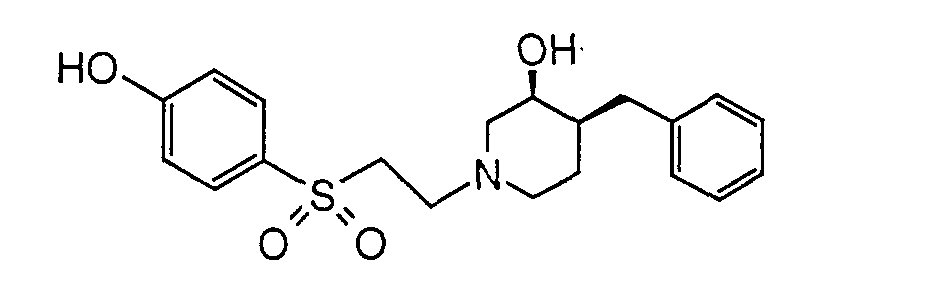
- A solution of 5.5 g (24.4 mmol) 4-(2-chloro-ethane-sulfonyl)-phenol in 50 ml CH2Cl2 was treated at 37°C with 3.7 ml (26.4 mmol) triethylamine and stirred for 3.25 h. Afterwards a solution of 4.5 g (22.0 mmol) (3S, 4S)-4-benzyl-piperidin-3-ol in 40 ml CH2Cl2 was added over a time period of 15 min. The reaction mixture was stirred at 37°C for 3 h, cooled to room temperature treated with 80 ml water and solid NaCl. After extraction and phase separation the water phases were extracted 3 times with 70 ml CH2Cl2. The combined organic phase was dried over Na2SO4, concentrated to a volume of 70 ml, treated with 75 ml toluene and concentrated to a volume of ca. 100 ml. After 3 d at 0°C the suspension was concentrated to 50 ml and filtered to yield 9.2 g crude product as white crystals. Chromatographic purification on SiO2 (CH2Cl2/tert.-butylmethyl ether (tBME)= 19/1) yielded 7.2 g(87.1%)product as white powder.
MS (ISP): 398 (8, [M + Na]+), 376 (100, [M + H]+), 358 (12).
M.p. 155.5-156.2°C. - As in example 7.1. but instead of chromatographic purification, the crude product is purified by crystallization (dissolving in methanol, afterwards exchange methanol by toluene).
-

- A solution of 5.0 g (35.7 mmol) 4-mercaptophenol in 50 ml methyl alcohol was treated at -5°C dropwise over a period of 30 min with 39.2 ml (39.2 mmol) aqueous NaOH IN and stirred 1h at -5°C. Afterwards a solution of 5.2 ml (39.2 mmol) 2-bromo ethanol in 16.5 ml methyl alcohol was added at -5°C dropwise over a period of 15 min. The reaction mixture was stirred for 21 h at room temperature, concentrated and the residue treated with 10 ml water and 30 ml tBME. After extraction and phase separation, the organic phase was washed with 20 ml saturated NaHCO3 and 20 ml brine. The combined organic phases were dried over Na2SO4 and the solvent was removed under reduced pressure to yield 6.03 g crude product. The crude product was dissolved in 18 ml tBME at 40°C and subsequently treated dropwise with 25 ml hexane. The so formed suspension was stirred 16 h at room temperature and 1 h at 4°C. The crystals were separated on a filter funnel and washed with 5 ml hexane (4°C) to yield 4.8 g (77.7 %) product as white crystals.
MS (ISN): 229 (100, [M + OAc]-), 169 (29, [M - H]-).
M.p.: 71.5-72.0°C -
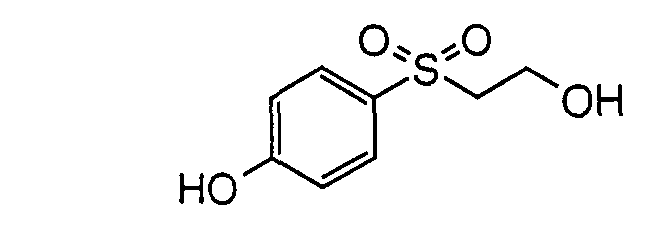
- A solution of 5.0 g (28.5 mmol) 4-(2-hydroxy-ethylsulfanyl)-phenol in 25 ml methyl alcohol was treated at 10°C in parts over 20 min with 26.3 g (42.8 mmol) oxone® . The suspension was stirred at room temperature (exothermic reaction) for 2 h, filtrated and the filtrate treated with 1 ml aqueous sodium hydrogen sulfite solution (38-40%). The pH of the reaction mixture was adjusted to 7 with 2 ml aqueous NaOH (28%), the suspension filtrated and the filtrate evaporated. The residue was treated with 20 ml toluene and subsequent the solvent evaporated. This procedure was repeated two times to yield 6.81 g crude product as white crystals.
MS (EI): 202 (9, [M]), 174 (13), 157 (30), 109 (32), 94 (100)
M.p.: 125.9-127.6°C. -
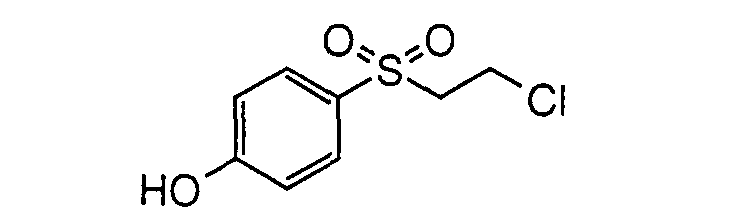
- A solution of 6.81 g crude 4-(2-hydroxy-ethansulfonyl)-phenol in 35 ml CH2Cl2 was treated at room temperature with 5.3 ml (65.9 mmol) pyridine. To the reaction mixture was added at 0°C dropwise over 15 min a solution of 4.2 ml (57.1 mmol) thionyl chloride in 10 ml CH2Cl2. After 65 h at room temperature the reaction mixture was treated with 35 ml brine, extracted and the organic phases were washed twice with total 100 ml aqueous half saturated NaCl solution. The combined organic phases were dried over Na2SO4 and the solvent was removed under reduced pressure to yield 6.77 g crude product. The crude product was dissolved in 2.5 ml CH2Cl2 and 25 ml toluene, stirred 24 h at 50°C, 24 h at room temperature and 48 h at 0°C. The so formed suspension was filtered to yield 5.44 g (86.5% over 2 steps) product as white crystals.
MS (EI): 220 (17, [M]), 157 (100), 109 (18), 94 (17), 93 (60), 65 (41).
M.p.: 72.5-73.5°C. -
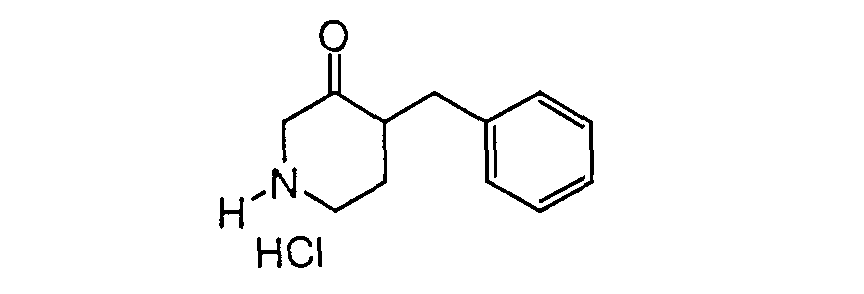
- A suspension consisting of 50.0 g of rac-1,4-dibenzyl-3-oxo-piperidine hydrochloride (0.158 mol), 0.501 of water and 10.0 g of 5% palladium on charcoal (Pd/C) was stirred under a hydrogen atmosphere until 3.5 1 of gas had been consumed (1 h). Then the Pd/C was filtered off and rinsed with water, the filtrate was evaporated and the residue taken up in isopropanol. The crystallization started spontaneously and was completed at 5°C over night. The precipitate was filtered off, the filter cake was rinsed with cold isopropanol and dried to constant weight (0.2 mbar, room temperature, 2 h) to afford 30 g of rac-4-benzyl-pyperidine-3-one hydrochloride as light yellow crystals.
Elemental analysis: C H N Cl (%) 63.86 7.15 6.212 15.71 (calc) 63.91 7.21 6.25 15.59 (found) -

- In the glove box (O2 content < = 2 ppm) a 20 ml measuring flask was charged with 7.82 mg of [RuCl2((S)-(3,5-iPr)-MeOBIPHEP)((R,R)-DPEN)] (0.0060 mmol) and filled to the graduation mark with 20 ml of isopropanol. The clear yellow catalyst solution was stirred with a magnetic stirring bar for 20 min at room temperature. In the glove box a glass flask was charged with 40.63 g (0.180 mol) of rac-4-benzyl-pyperidine-3-one hydrochloride, 187 ml of isopropanol and 24.24 g (0.216 mol) of potassium tert.-butylate. The resulting suspension was stirred for 15 min and transferred into a 380 ml stirred stainless steel autoclave followed by the catalyst solution, S/C= 30'000. The autoclave was then sealed and connected to a hydrogenation line. The hydrogenation was carried out while stirring at room temperature at a total pressure of 4x10⁶ Pa. After 22 h the hydrogenation mixture (a yellow suspension) was removed from the autoclave and filtered. To the orange filtrate were added 2.07 ml of acetic acid and 3.44 g of active charcoal (CPL). The suspension was stirred under argon for 1 h at room temperature and filtered. The yellow filtrate was evaporated to dryness at 42°C and 1 mbar. The yellow solid residue was taken up in 600 ml of tert.butyl methylether and extracted in 270 ml of IN HCl (0.27 mol). The acidic aqueous phase washed with 300 ml of tert.butyl methylether and finally treated with 46.3 ml of 28% NaOH solution (0.324 mol), so that the pH was 11. The aqueous phase was extracted with a total of 11 tert.butyl methylether and the ether phase extracted with 0.60 1 of brine, dried on sodium sulfate and finally evaporated to dryness at 42°C and 1 mbar. The residue was taken up in 100 ml of toluene and again evaporated to dryness to give 34.69 g of crude (S,S)-cis-4-benzyl-3-hydroxy-piperidine with 96.8% ee and a cis/trans-ratio of 98.6 : 1.4. Crystallization of the crude product from 120 ml of toluene and 300 ml of hexane at 0°C afforded after filtration and drying at 40°C/l mbar 19.35 g of (S,S)-cis-4-benzyl-3-hydroxy-piperidine as off-white crystals with a m.p. of 86-88°C.
- The samples were analyzed as follows:
A 20 mg sample was transformed into its trifluoroacetate by treatment with trifluoroacetic anhydride in pyridine and analyzed by gas chromatography on a chiral column (BGB-174, commercially available from BGB Analytic AG, Laufrainweg 139, CH-4469 Anwil, 15 m x 0.25 mm, 100° - 220°C, programmed with 2°C/min). Retention times: 35.19 min (R,R)-cis-4-benzyl-3-hydroxy-piperidine, 35.78 min (S,S)-cis-4-benzyl-3-hydroxy-piperidine, 37.87 and 39.20 min trans-4-benzyl-3-hydroxy-piperidine. - The examples of Table 6 have been carried out in analogy to Example 12.1 in a 35 ml autoclave on a 0.34 g scale at a substrate-to-catalyst ratio of 300 (Exp. No. 12.2.1- 12.2.4) or in a 185 ml autoclave on a 9 g scale at a substrate-to-catalyst ratio of 50'000 (Exper. No. 12.2.5 - 12.2.7) using various chiral diphosphines with S-configuration.
exp. No. (S)-Diphosphines S/base %Conv./h cis/trans% %ee 12.2.1 MeOBIPHEP 5 100/16 97/3 66 12.2.2 (3,5-Xyl)-MeOBIPHEP 5 100/16 94/6 70 12.2.3 (3,5-Xyl)-MeOBIPHEP 5 100/16 97/3 83 12.2.4 (3,5-tBu)-MeOBIPHEP 5 99/16 97/3 87 12.2.5 (3,5-iPr)-MeOBIPHEP 5 99/4 98/2 97 12.2.6 (3,5-Et)-MeOBIPHEP 5 99/20 99/1 95 12.2.7 (3,5-Xyl)-MeOBIPHEP 5 99/4 98/2 92 - The examples of Table 7 have been carried out in analogy to Example 12.1 in a 185 ml autoclave on a 9 g scale at 20°C, under 40 bar of hydrogen pressure, at a 20% concentration, for 20 h, with S/base = 5 (base was KOtBu) and a S/C= 50'000 using [RuCl2((S)-(3,5-iPr)-MeOBIPHEP)((R,R)-DPEN)] as the catalyst. Various parameters have been changed.
exp. no. Changed parameter Value %Conv. cis/trans % %ee 12.3.1 S/C 200'000 95 95/5 95 12.3.2 Temperature 80°C 100 73/27 43 12.3.3 H2 Pressure 20x106 bar 99 98/2 97 12.3.4 S/base 50 99 99/1 97 12.3.5 Addition of H2O 0.05 mol 94 98/2 96 12.3.6 Concentration 10.6% 100 98/2 97 12.3.7 Diphosphine Diamine (S)-(3,5-Xyl)-MeOBIPHEP (S)-DAIPEN 99 94/6 95 12.3.8 Diphosphine Diamine (R)-(3,5-Xyl)-MeOBIPHEP (S)-DAIPEN 99 96/4 95
Claims (14)
- Method for the preparation of compounds of formulaewherein
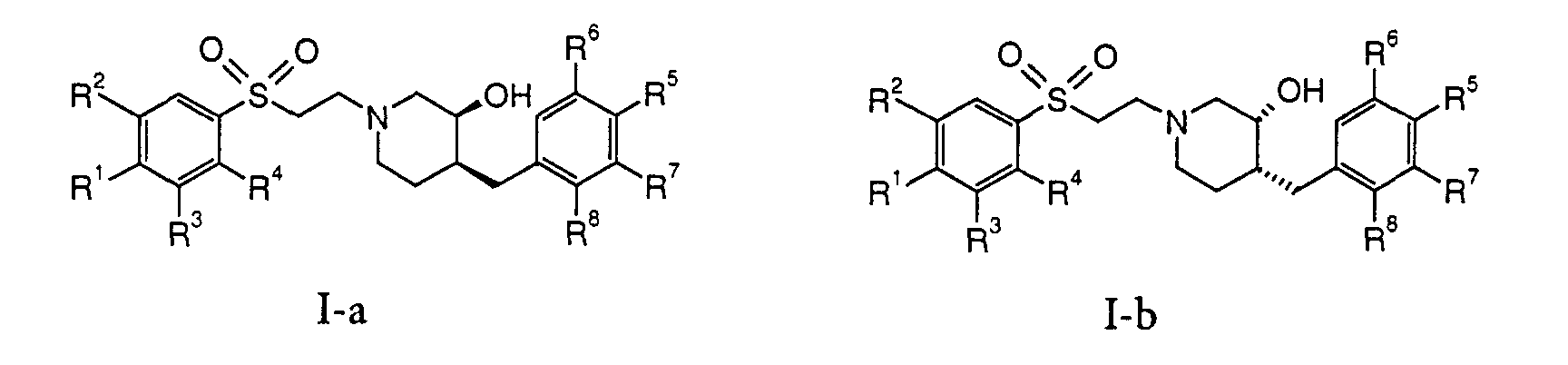
- R1-R4
- are, independently from each other, hydrogen, halogen, hydroxy, amino, nitro, lower-alkyl-sulfonylamido, or acetamido;
- R5-R8
- are, independently from each, other hydrogen, lower-alkyl, halogen, trifluoromethyl or lower-alkoxy;
a) reacting a protected amino acid ester (1)with a 4-substituted butyric acid derivative (2)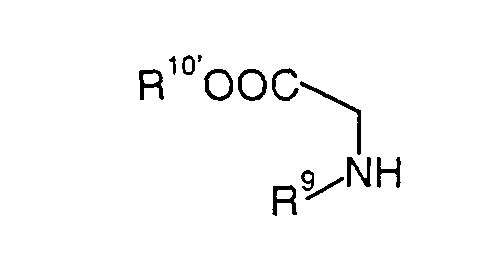 wherein
- R9
- is an amino protecting group, preferably benzyl;
- R10 and R10'
- are independently a carboxylic acid protecting group; and
- Y
- represents a leaving group;
b) cyclising the protected alkoxycarbonylmethyl amino butyric acid derivative (3)wherein the symbols are as defined above; c) benzylating the protected alkyl 3-oxo-piperidine carboxylate (4) saltwherein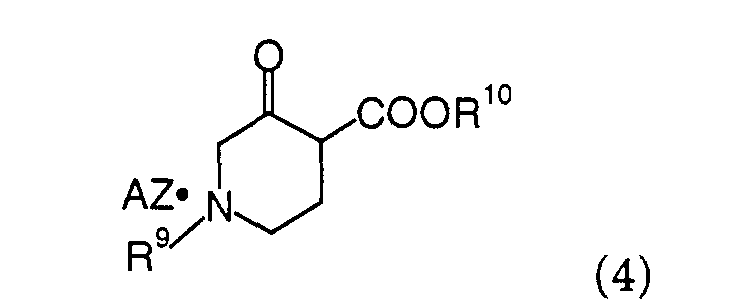
- AZ
- signifies a mineral acid or a strong organic acid;
d) decarboxylating the benzylated protected alkyl 3-oxo-piperidine carboxylate (5)wherein the symbols are as defined above;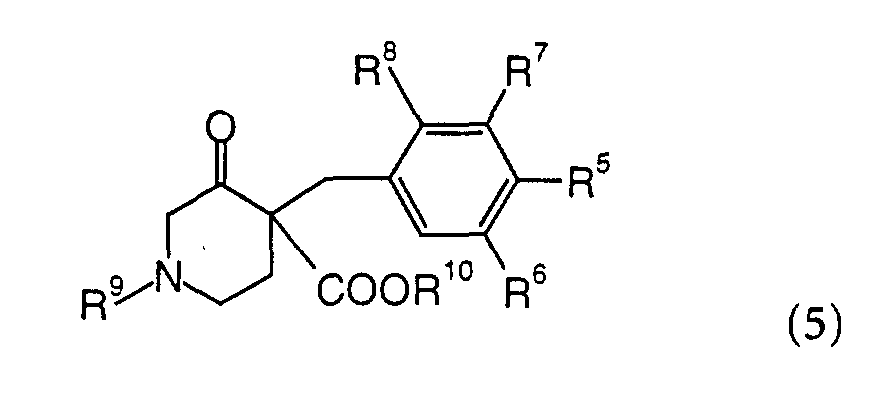
in presence of a strong acid;e) asymmetrically hydrogenating the salt of formula (6)wherein R9 is an amino protecting group;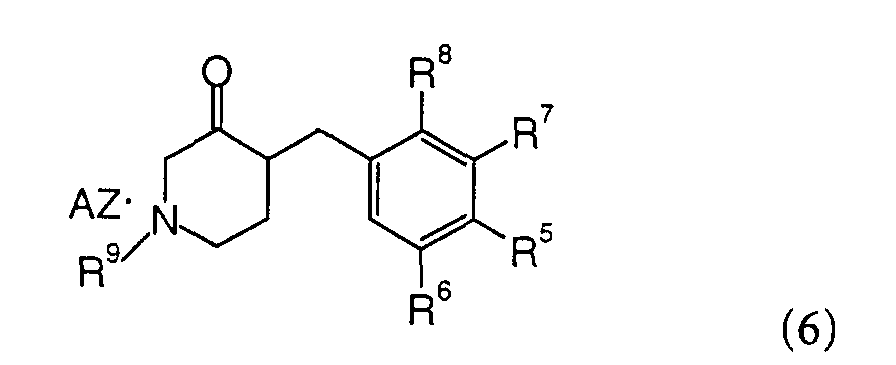
in presence of a ruthenium complex with a chiral diphosphine ligand, a chiral diamine and a organic or an inorganic base;f) deprotecting the compound of formula (7a) or (7b)wherein the symbols are as defined above;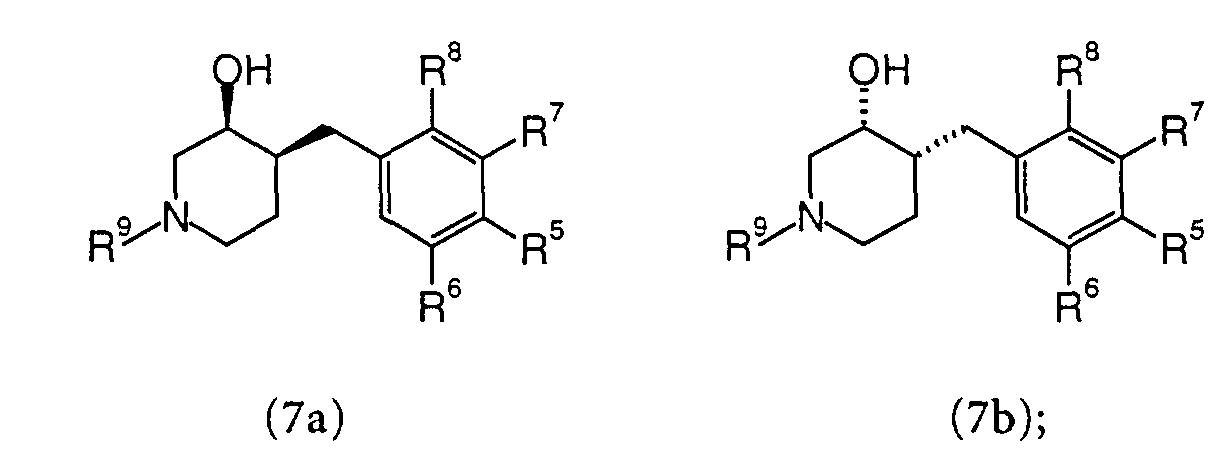
or in the alternativeg) deprotecting the compound of formula (6); andh) asymmetrically hydrogenating the salt of formula (6bis)and subsequently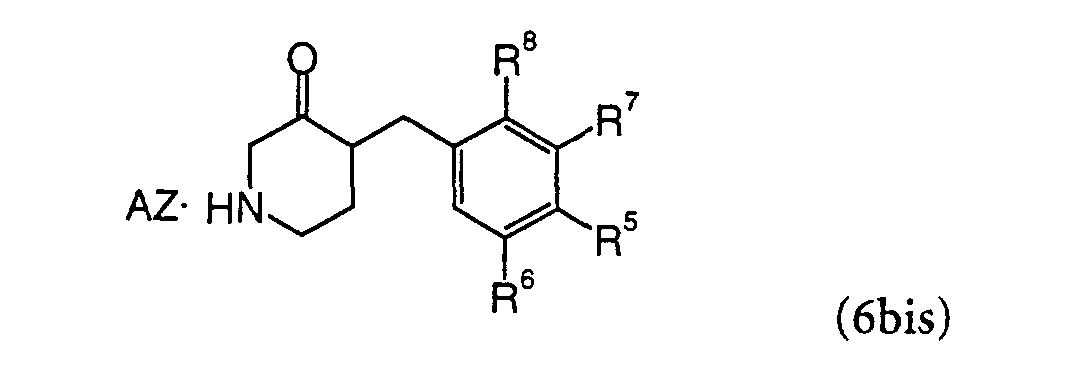 i) reacting the piperidine derivative of formula III-a or III-bwherein the symbols are as defined above;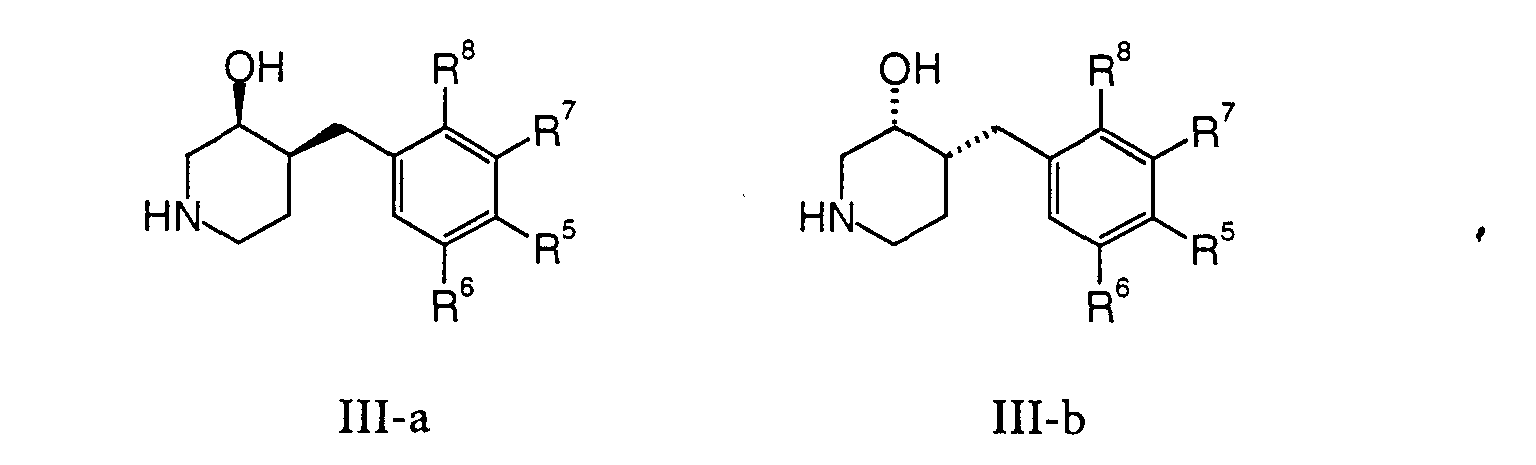
with the sulfone derivative of formula IIwherein
- R1-R4
- are as defined above; and
- X
- is a leaving group;
in the presence of a base to form the desired compound of formula I-a or I-b.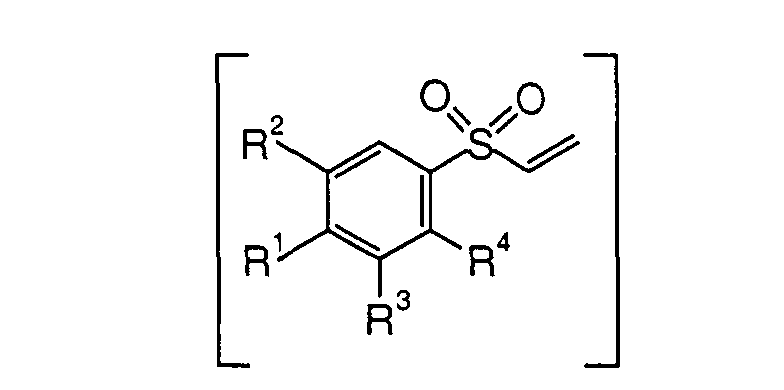
- The method according to claim 1 wherein the compounds of general formula I-a are prepared.
- A method for the preparation of compounds of formulawherein
- R1- R4
- are, independently from each other, hydrogen, halogen, hydroxy, amino, nitro, lower-alkyl-sulfonylamido, or acetamido;
- R5-R8
- are, independently from each other, hydrogen, lower-alkyl, halogen, trifluoromethyl or lower-alkoxy;
- R9
- is an amino protecting group;
- AZ
- signifies a mineral acid or a strong organic acid;
a) reacting a protected amino acid ester (1)with a 4-substituted butyric acid derivative (2) wherein
- R9
- is an amino protecting group, preferably benzyl;
- R10 and R10'
- are independently a carboxylic acid protecting group; and
- Y
- represents a leaving group;
b) cyclising the protected alkoxycarbonylmethyl amino butyric acid derivative (3)wherein the symbols are as defined above;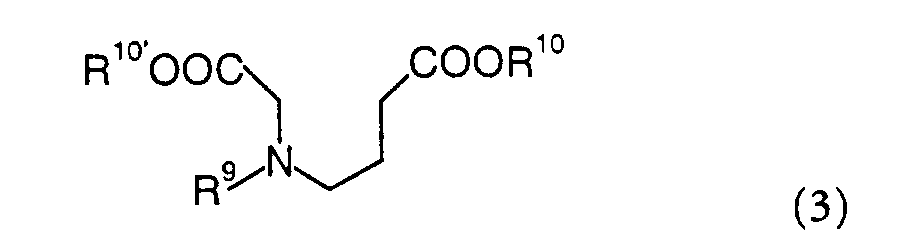 c) benzylating the protected alkyl 3-oxo-piperidine carboxylate (4) saltwherein
- AZ
- signifies a mineral acid or a strong organic acid;
d) decarboxylating the benzylated protected alkyl 3-oxo-piperidine carboxylate (5)wherein the symbols are as defined above;
in presence of a strong acid;e) if desired, deprotecting compound of formula (6) to obtain compound of formula (6bis). - A process for the preparation of compounds of formulawherein the symbols are as defined in claim 2;

which process comprisesa) asymmetrically hydrogenating the salt of formula (6)wherein symbols are as defined above;
in presence of a ruthenium complex with a chiral diphosphine ligand, a chiral diamine and an organic or an inorganic base; andb) subsequently deprotecting the compound of formula (7a) or (7b)wherein the symbols are as defined above;
or in the alternativea) deprotecting the compound of formula (6) to form a compound of formula (6bis)wherein symbols are as defined above;
andb) subsequently asymmetrically hydrogenating the salt of formula (6bis) in presence of a ruthenium complex with a chiral diphosphine ligand, a chiral diamine and an organic or an inorganic base. - A process according to claim 4, wherein the asymmetric hydrogenation is characterized in that the ruthenium complex is a complex of formula
- E
- is a halogen atom;
- L
- is a chiral diphosphine ligand; and
- A
- is a chiral diamine.
wherein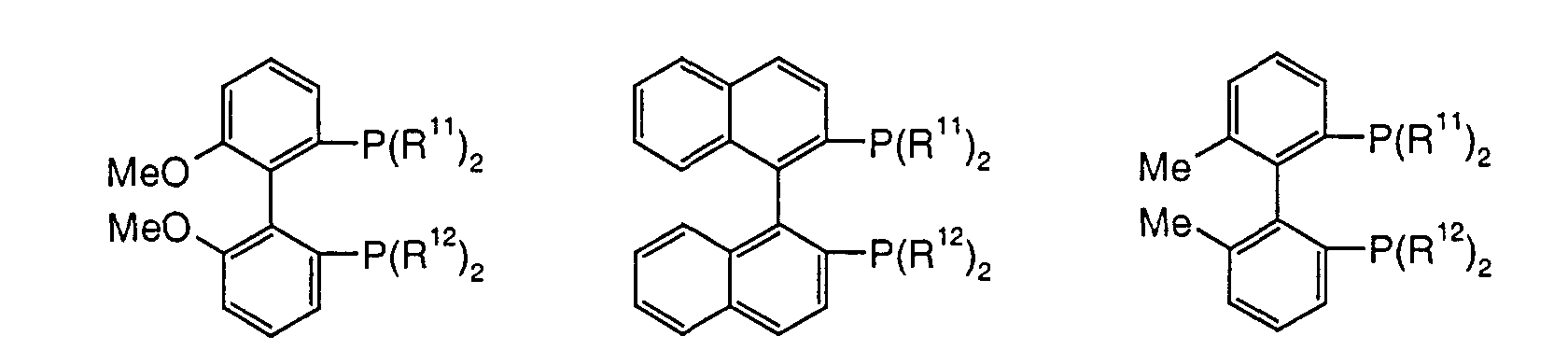
R11 and R12 are independently from each other alkyl, cycloalkyl, optionally substituted phenyl or a heterocyclic ring;
and the chiral diamine are compounds of formulae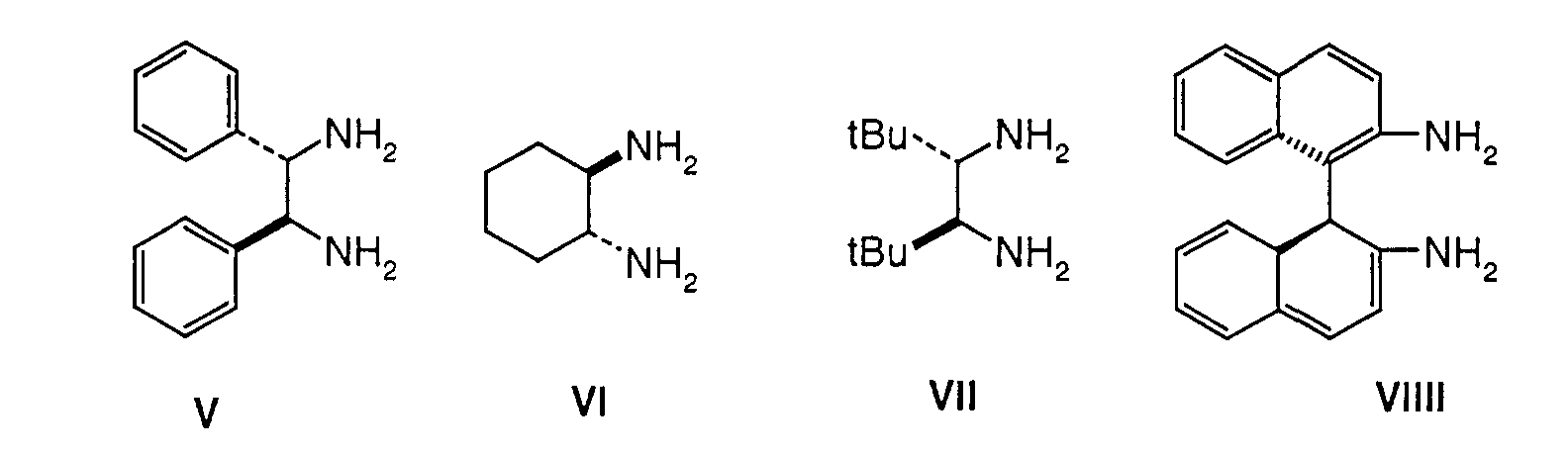 wherein tBu signifies tert.-butyl, Me is methyl and Cy stands for cyclohexane.
- Process according to claim 5, wherein R11 and R12 are independently from each otherwherein iPr is iso-propyl and tBu is tert.-butyl.

- A process according to claim 5 or 6, characterized in that the chiral diamine is a compound of formula V.
- A process according to anyone of claims 5 to 7, wherein the configuration of the chiral diamine is "unlike" to the chiral complex, i.e. the chiral diphosphine ligand is (S) and the diamine is (R,R) or that the diphosphine is (R) and the diamine is (S,S).
- A process according to anyone of claims 5 to 7, wherein the amount of chiral diamine used in the reaction is 0.5 to 2.5 equivalents based on the Ru-complex.
- A process according to any one of claims 4 to 9 wherein the base is present in the amount of 1.0 - 0.001 mol equivalents, preferably 0.05 - 0.2 mol equivalents with respect to the substrate in addition to 1 mol equivalent for the neutralization of the acid salt of the substrate (6 or 6bis, respectively).
- A process according to any one of claims 4 to 10 wherein the base is potassium tert.-butylate.
- A process according to claim 1, for the preparation of compounds of formulaewherein

- R1- R4
- are, independently from each other, hydrogen, halogen, hydroxy, amino, nitro, lower-alkyl-sulfonylamido, or acetamido;
- R5-R8
- are, independently from each, other hydrogen, lower-alkyl, halogen, trifluoromethyl or lower-alkoxy;
a) deprotonating a substituted thiophenol derivative of formula (8)wherein the symbols are as defined above;
in presence of a strong inorganic or organic base and subsequently reacting it with 2-haloethanol;b) oxidating the thioether of formula (9)wherein the symbols are as defined above;
in presence of an oxidative agent;c) replacing the hydroxy group of the sulfone derivative of formula (10)wherein the symbols are as defined above;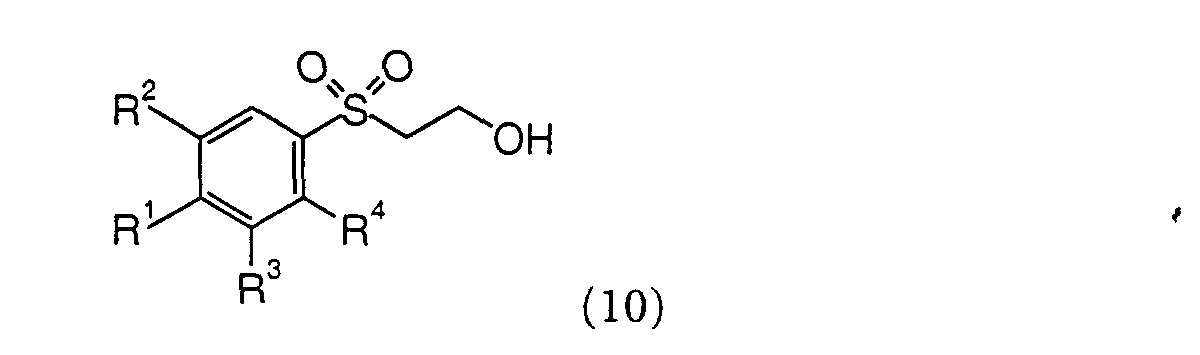
by a halogen atom in the presence of pyridine in dichloromethane; andd) treating the sulfone derivative of formula IIwherein
- R1-R4
- are as defined above; and
- X'
- is halogen;
which is then reacted with the piperidine derivative of formula wherein the symbols are as defined above;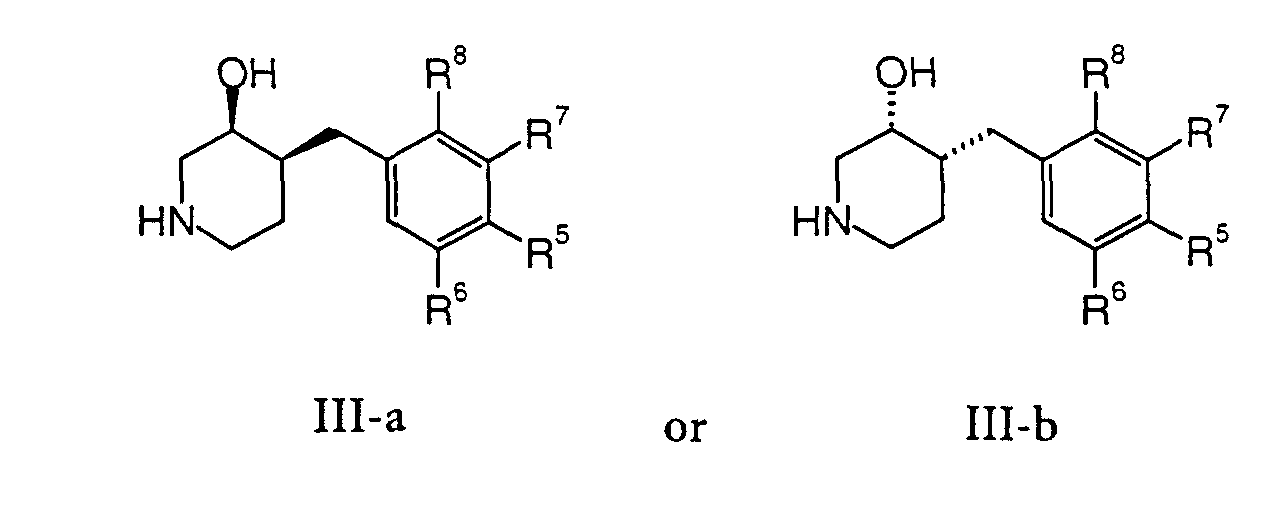
in presence of a base. - A process according to claim 1 for the preparation of compounds of formulawherein

- R1-R4
- are, independently from each other, hydrogen, halogen, hydroxy, amino, nitro, lower-alkyl-sulfonylamido, or acetamido; and
- X'
- is halogen;
a) deprotonating a substituted thiophenol derivative of formula (8)wherein the symbols are as defined above;
in presence of a strong inorganic or organic base and subsequently reacting it with 2-haloethanol;b) oxidating the thioether of formula (9)wherein the symbols are as defined above;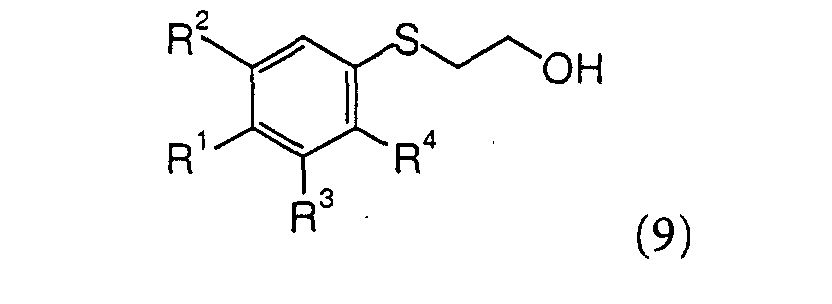
in presence of an oxidative agent;c) replacing the hydroxy group of the sulfone derivative of formula (10)wherein the symbols are as defined above;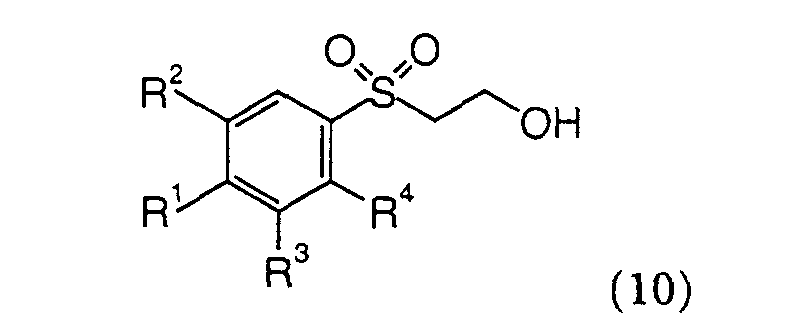
by a halogen atom in the presence of pyridine in dichloromethane. - Compounds of formula (6)wherein the symbols are as defined in claim 1.
Priority Applications (2)
| Application Number | Priority Date | Filing Date | Title |
|---|---|---|---|
| EP01105498A EP1136475B1 (en) | 2000-03-22 | 2001-03-15 | Piperidine and piperazine compounds for use in the treatment of Alzheimer |
| DK01105498T DK1136475T3 (en) | 2000-03-22 | 2001-03-15 | Piperidine and piperazine derivatives for use in the treatment of Alzheimer's |
Applications Claiming Priority (3)
| Application Number | Priority Date | Filing Date | Title |
|---|---|---|---|
| EP00106210 | 2000-03-22 | ||
| EP00106210 | 2000-03-22 | ||
| EP01105498A EP1136475B1 (en) | 2000-03-22 | 2001-03-15 | Piperidine and piperazine compounds for use in the treatment of Alzheimer |
Publications (2)
| Publication Number | Publication Date |
|---|---|
| EP1136475A1 true EP1136475A1 (en) | 2001-09-26 |
| EP1136475B1 EP1136475B1 (en) | 2004-08-18 |
Family
ID=8168189
Family Applications (1)
| Application Number | Title | Priority Date | Filing Date |
|---|---|---|---|
| EP01105498A Expired - Lifetime EP1136475B1 (en) | 2000-03-22 | 2001-03-15 | Piperidine and piperazine compounds for use in the treatment of Alzheimer |
Country Status (12)
| Country | Link |
|---|---|
| US (1) | US6605723B2 (en) |
| EP (1) | EP1136475B1 (en) |
| JP (1) | JP3598277B2 (en) |
| KR (1) | KR100378331B1 (en) |
| CN (1) | CN1218941C (en) |
| AT (1) | ATE273953T1 (en) |
| CA (1) | CA2341010C (en) |
| DE (1) | DE60104923T2 (en) |
| DK (1) | DK1136475T3 (en) |
| ES (1) | ES2225330T3 (en) |
| JO (1) | JO2275B1 (en) |
| MX (1) | MXPA01002945A (en) |
Cited By (1)
| Publication number | Priority date | Publication date | Assignee | Title |
|---|---|---|---|---|
| WO2003070717A1 (en) * | 2002-02-21 | 2003-08-28 | Novartis Ag | Process for the manufacture of hmg-coa reductase inhibitory mevalonic acid derivatives |
Families Citing this family (8)
| Publication number | Priority date | Publication date | Assignee | Title |
|---|---|---|---|---|
| US7569691B2 (en) * | 2005-04-20 | 2009-08-04 | Shin-Etsu Chemical Co., Ltd. | Protected piperazino group-bearing organoxysilane compound and making method |
| WO2009031526A1 (en) | 2007-09-06 | 2009-03-12 | National University Corporation Hokkaido University | Process for production of optically active 3-quinuclidinol derivative |
| JP5276093B2 (en) * | 2008-04-07 | 2013-08-28 | 日本曹達株式会社 | Method for producing optically active amino alcohol compound |
| CN102126995A (en) * | 2010-12-14 | 2011-07-20 | 台州市华南医化有限公司 | Improved preparation process of phenyl vinyl sulfone |
| CN102617451B (en) * | 2012-02-22 | 2014-01-22 | 华东理工大学 | Pipradrol derivatives with pesticidal activity as well as preparation and application thereof |
| CN110240561B (en) * | 2018-03-07 | 2020-08-04 | 新发药业有限公司 | Low-cost preparation method of 3-hydroxypyridine |
| CN110734393B (en) * | 2019-11-11 | 2022-02-25 | 南京恒远科技开发有限公司 | Preparation method of N-benzyl-3-oxopiperidine-4-carboxylic acid ethyl ester hydrochloride |
| CN119039289A (en) * | 2024-07-30 | 2024-11-29 | 安庆多辉生物科技有限公司 | Novel intermediate for synthesis of adaGesibirica and preparation method thereof |
Citations (2)
| Publication number | Priority date | Publication date | Assignee | Title |
|---|---|---|---|---|
| WO1995025721A1 (en) * | 1994-03-24 | 1995-09-28 | Schering Aktiengesellschaft | New 1,4-disubstituted piperidine derivatives useful as medicaments acting on the glutamate receptor |
| WO2000075109A1 (en) * | 1999-06-08 | 2000-12-14 | F. Hoffmann-La Roche Ag | Ethanesulfonyl-piperidine derivatives |
Family Cites Families (2)
| Publication number | Priority date | Publication date | Assignee | Title |
|---|---|---|---|---|
| CA2164685C (en) | 1994-12-07 | 2005-03-08 | Takeshi Ohkuma | Method for producing an alcohol |
| JP4144814B2 (en) | 1997-09-05 | 2008-09-03 | 長谷川香料株式会社 | Method for producing optically active alcohol compound |
-
2001
- 2001-03-15 ES ES01105498T patent/ES2225330T3/en not_active Expired - Lifetime
- 2001-03-15 DE DE60104923T patent/DE60104923T2/en not_active Expired - Lifetime
- 2001-03-15 AT AT01105498T patent/ATE273953T1/en active
- 2001-03-15 EP EP01105498A patent/EP1136475B1/en not_active Expired - Lifetime
- 2001-03-15 DK DK01105498T patent/DK1136475T3/en active
- 2001-03-15 US US09/809,691 patent/US6605723B2/en not_active Expired - Fee Related
- 2001-03-19 CA CA002341010A patent/CA2341010C/en not_active Expired - Fee Related
- 2001-03-19 JO JO200133A patent/JO2275B1/en active
- 2001-03-20 MX MXPA01002945A patent/MXPA01002945A/en unknown
- 2001-03-20 KR KR10-2001-0014265A patent/KR100378331B1/en not_active Expired - Fee Related
- 2001-03-22 JP JP2001082991A patent/JP3598277B2/en not_active Expired - Fee Related
- 2001-03-22 CN CNB011118776A patent/CN1218941C/en not_active Expired - Fee Related
Patent Citations (2)
| Publication number | Priority date | Publication date | Assignee | Title |
|---|---|---|---|---|
| WO1995025721A1 (en) * | 1994-03-24 | 1995-09-28 | Schering Aktiengesellschaft | New 1,4-disubstituted piperidine derivatives useful as medicaments acting on the glutamate receptor |
| WO2000075109A1 (en) * | 1999-06-08 | 2000-12-14 | F. Hoffmann-La Roche Ag | Ethanesulfonyl-piperidine derivatives |
Non-Patent Citations (2)
| Title |
|---|
| ISELIN, B.M.; HOFFMANN, K.: "Über Alkylenimin-Derivate", HELV. CHIM. ACTA, vol. 37, no. 20, 1954, pages 178 - 184, XP002169380 * |
| MCELVAIN, S.M.; VOZZA, J.F.: "Piperidine Derivatives. XX. The Preparation and Reactions of 1-Methyl-3-piperidone", J. AM. CHEM. SOC., vol. 71, 1948, pages 896 - 900, XP002169381 * |
Cited By (2)
| Publication number | Priority date | Publication date | Assignee | Title |
|---|---|---|---|---|
| WO2003070717A1 (en) * | 2002-02-21 | 2003-08-28 | Novartis Ag | Process for the manufacture of hmg-coa reductase inhibitory mevalonic acid derivatives |
| US7208623B2 (en) | 2002-02-21 | 2007-04-24 | Novartis Ag | Process for the manufacture of HMG-CoA reductase inhibitory mevalonic acid derivatives |
Also Published As
| Publication number | Publication date |
|---|---|
| JP3598277B2 (en) | 2004-12-08 |
| CN1218941C (en) | 2005-09-14 |
| JP2001270865A (en) | 2001-10-02 |
| DE60104923D1 (en) | 2004-09-23 |
| CA2341010A1 (en) | 2001-09-22 |
| KR100378331B1 (en) | 2003-05-09 |
| EP1136475B1 (en) | 2004-08-18 |
| CN1315319A (en) | 2001-10-03 |
| MXPA01002945A (en) | 2002-08-06 |
| DE60104923T2 (en) | 2005-08-25 |
| DK1136475T3 (en) | 2004-12-27 |
| US6605723B2 (en) | 2003-08-12 |
| CA2341010C (en) | 2009-09-08 |
| ATE273953T1 (en) | 2004-09-15 |
| JO2275B1 (en) | 2005-04-07 |
| KR20010100822A (en) | 2001-11-14 |
| ES2225330T3 (en) | 2005-03-16 |
| US20010037026A1 (en) | 2001-11-01 |
Similar Documents
| Publication | Publication Date | Title |
|---|---|---|
| AU2019346118B2 (en) | Manufacture of compounds and compositions for inhibiting the activity of SHP2 | |
| CZ283680B6 (en) | Novel azaheterocyclylmethyl-chromans, process of their preparation, their use and pharmaceutical composition containing thereof | |
| EP4516776A1 (en) | Process for unprotected asymmetric preparation of nicotine | |
| KR101124098B1 (en) | Process for preparing 2-oxo-1-pyrrolidine derivatives | |
| EP1136475B1 (en) | Piperidine and piperazine compounds for use in the treatment of Alzheimer | |
| WO2008012268A1 (en) | Process for the preparation of levetiracetam | |
| DD264920A5 (en) | PROCESS FOR THE PRODUCTION OF (+) - BIOTIN | |
| EP0553778B1 (en) | Asymmetric hydrogenation | |
| EP2399912B1 (en) | An exo-selective synthesis of himbacine analogs | |
| EP0389425B1 (en) | Benzotiopyranyl amines | |
| EP1153023B1 (en) | Process for the production of paroxetine | |
| WO2024017221A1 (en) | SYNTHESIS METHOD FOR α-AZIDO KETONE CONTAINING TERTIARY STEREOCENTER | |
| US6277997B1 (en) | Process for the preparation of chiral lactones | |
| CN101151256B (en) | Process for production of dibenzoxepin derivative | |
| CN117186100B (en) | A method for preparing a vinylcyclopropane nucleoside analog | |
| RU2797951C2 (en) | Production of compounds and compositions for suppression of shp2 activity | |
| JP2004513085A (en) | Double bond hydrogenation method | |
| KR102088972B1 (en) | Benzosulfamidate-fused-isoindoline compounds and method for the stereoselective preparation thereof | |
| US7015320B2 (en) | Process for the manufacture of optically active 3-substituted lactams by asymmetric hydrogenation of 3-alkylidenelactams | |
| WO2003024981A2 (en) | Method for the production of optically-active compounds containing hydroxy groups | |
| CN117186101A (en) | Preparation method of monohydroxymethylcyclopropane nucleoside analogues | |
| JP2006248952A (en) | Production method of ketone | |
| WO2022006780A1 (en) | Manufacture of compounds and compositions for inhibiting activity of shp2 | |
| EP1644311A2 (en) | Enantioselective synthesis of enantiomerically enriched compounds | |
| KR20030032009A (en) | Process for the hydrogenation of c-c double bonds |
Legal Events
| Date | Code | Title | Description |
|---|---|---|---|
| PUAI | Public reference made under article 153(3) epc to a published international application that has entered the european phase |
Free format text: ORIGINAL CODE: 0009012 |
|
| AK | Designated contracting states |
Kind code of ref document: A1 Designated state(s): AT BE CH CY DE DK ES FI FR GB GR IE IT LI LU MC NL PT SE TR |
|
| AX | Request for extension of the european patent |
Free format text: AL;LT;LV;MK;RO;SI |
|
| 17P | Request for examination filed |
Effective date: 20020326 |
|
| AKX | Designation fees paid |
Free format text: AT BE CH CY DE DK ES FI FR GB GR IE IT LI LU MC NL PT SE TR |
|
| 17Q | First examination report despatched |
Effective date: 20030917 |
|
| GRAP | Despatch of communication of intention to grant a patent |
Free format text: ORIGINAL CODE: EPIDOSNIGR1 |
|
| GRAS | Grant fee paid |
Free format text: ORIGINAL CODE: EPIDOSNIGR3 |
|
| GRAA | (expected) grant |
Free format text: ORIGINAL CODE: 0009210 |
|
| AK | Designated contracting states |
Kind code of ref document: B1 Designated state(s): AT BE CH CY DE DK ES FI FR GB GR IE IT LI LU MC NL PT SE TR |
|
| PG25 | Lapsed in a contracting state [announced via postgrant information from national office to epo] |
Ref country code: FI Free format text: LAPSE BECAUSE OF FAILURE TO SUBMIT A TRANSLATION OF THE DESCRIPTION OR TO PAY THE FEE WITHIN THE PRESCRIBED TIME-LIMIT Effective date: 20040818 Ref country code: TR Free format text: LAPSE BECAUSE OF FAILURE TO SUBMIT A TRANSLATION OF THE DESCRIPTION OR TO PAY THE FEE WITHIN THE PRESCRIBED TIME-LIMIT Effective date: 20040818 |
|
| REG | Reference to a national code |
Ref country code: GB Ref legal event code: FG4D |
|
| REG | Reference to a national code |
Ref country code: CH Ref legal event code: EP |
|
| REG | Reference to a national code |
Ref country code: IE Ref legal event code: FG4D |
|
| REF | Corresponds to: |
Ref document number: 60104923 Country of ref document: DE Date of ref document: 20040923 Kind code of ref document: P |
|
| PG25 | Lapsed in a contracting state [announced via postgrant information from national office to epo] |
Ref country code: GR Free format text: LAPSE BECAUSE OF FAILURE TO SUBMIT A TRANSLATION OF THE DESCRIPTION OR TO PAY THE FEE WITHIN THE PRESCRIBED TIME-LIMIT Effective date: 20041118 Ref country code: SE Free format text: LAPSE BECAUSE OF FAILURE TO SUBMIT A TRANSLATION OF THE DESCRIPTION OR TO PAY THE FEE WITHIN THE PRESCRIBED TIME-LIMIT Effective date: 20041118 |
|
| PG25 | Lapsed in a contracting state [announced via postgrant information from national office to epo] |
Ref country code: LU Free format text: LAPSE BECAUSE OF NON-PAYMENT OF DUE FEES Effective date: 20050315 Ref country code: CY Free format text: LAPSE BECAUSE OF FAILURE TO SUBMIT A TRANSLATION OF THE DESCRIPTION OR TO PAY THE FEE WITHIN THE PRESCRIBED TIME-LIMIT Effective date: 20050315 |
|
| REG | Reference to a national code |
Ref country code: ES Ref legal event code: FG2A Ref document number: 2225330 Country of ref document: ES Kind code of ref document: T3 |
|
| PG25 | Lapsed in a contracting state [announced via postgrant information from national office to epo] |
Ref country code: MC Free format text: LAPSE BECAUSE OF NON-PAYMENT OF DUE FEES Effective date: 20050331 |
|
| ET | Fr: translation filed | ||
| PLBE | No opposition filed within time limit |
Free format text: ORIGINAL CODE: 0009261 |
|
| STAA | Information on the status of an ep patent application or granted ep patent |
Free format text: STATUS: NO OPPOSITION FILED WITHIN TIME LIMIT |
|
| 26N | No opposition filed |
Effective date: 20050519 |
|
| PG25 | Lapsed in a contracting state [announced via postgrant information from national office to epo] |
Ref country code: PT Free format text: LAPSE BECAUSE OF NON-PAYMENT OF DUE FEES Effective date: 20050118 |
|
| REG | Reference to a national code |
Ref country code: CH Ref legal event code: PUE Owner name: EVOTEC INTERNATIONAL GMBH, DE Free format text: FORMER OWNER: F. HOFFMANN-LA ROCHE AG, CH Ref country code: CH Ref legal event code: NV Representative=s name: E. BLUM AND CO. AG PATENT- UND MARKENANWAELTE , CH |
|
| REG | Reference to a national code |
Ref country code: DE Ref legal event code: R082 Ref document number: 60104923 Country of ref document: DE Representative=s name: LEDERER & KELLER, DE |
|
| REG | Reference to a national code |
Ref country code: NL Ref legal event code: SD Effective date: 20130808 |
|
| REG | Reference to a national code |
Ref country code: AT Ref legal event code: PC Ref document number: 273953 Country of ref document: AT Kind code of ref document: T Owner name: EVOTEC INTERNATIONAL GMBH, DE Effective date: 20130807 |
|
| REG | Reference to a national code |
Ref country code: DE Ref legal event code: R082 Ref document number: 60104923 Country of ref document: DE Representative=s name: LEDERER & KELLER PATENTANWAELTE PARTNERSCHAFT , DE Effective date: 20130730 Ref country code: DE Ref legal event code: R082 Ref document number: 60104923 Country of ref document: DE Representative=s name: LEDERER & KELLER, DE Effective date: 20130730 Ref country code: DE Ref legal event code: R081 Ref document number: 60104923 Country of ref document: DE Owner name: EVOTEC INTERNATIONAL GMBH, DE Free format text: FORMER OWNER: F. HOFFMANN-LA ROCHE AG, 4070 BASEL, CH Effective date: 20130730 |
|
| REG | Reference to a national code |
Ref country code: ES Ref legal event code: PC2A Owner name: EVOTEC INTERNATIONAL GMBH Effective date: 20130924 |
|
| REG | Reference to a national code |
Ref country code: GB Ref legal event code: 732E Free format text: REGISTERED BETWEEN 20131017 AND 20131023 |
|
| PGFP | Annual fee paid to national office [announced via postgrant information from national office to epo] |
Ref country code: CH Payment date: 20140127 Year of fee payment: 14 Ref country code: DE Payment date: 20140331 Year of fee payment: 14 Ref country code: IE Payment date: 20140226 Year of fee payment: 14 Ref country code: DK Payment date: 20140225 Year of fee payment: 14 |
|
| PGFP | Annual fee paid to national office [announced via postgrant information from national office to epo] |
Ref country code: ES Payment date: 20140313 Year of fee payment: 14 Ref country code: IT Payment date: 20140318 Year of fee payment: 14 Ref country code: FR Payment date: 20140225 Year of fee payment: 14 Ref country code: AT Payment date: 20140226 Year of fee payment: 14 |
|
| PGFP | Annual fee paid to national office [announced via postgrant information from national office to epo] |
Ref country code: GB Payment date: 20140225 Year of fee payment: 14 |
|
| PGFP | Annual fee paid to national office [announced via postgrant information from national office to epo] |
Ref country code: BE Payment date: 20140324 Year of fee payment: 14 |
|
| PGFP | Annual fee paid to national office [announced via postgrant information from national office to epo] |
Ref country code: NL Payment date: 20140311 Year of fee payment: 14 |
|
| REG | Reference to a national code |
Ref country code: DE Ref legal event code: R119 Ref document number: 60104923 Country of ref document: DE |
|
| REG | Reference to a national code |
Ref country code: DK Ref legal event code: EBP Effective date: 20150331 |
|
| REG | Reference to a national code |
Ref country code: CH Ref legal event code: PL |
|
| REG | Reference to a national code |
Ref country code: AT Ref legal event code: MM01 Ref document number: 273953 Country of ref document: AT Kind code of ref document: T Effective date: 20150315 |
|
| GBPC | Gb: european patent ceased through non-payment of renewal fee |
Effective date: 20150315 |
|
| REG | Reference to a national code |
Ref country code: NL Ref legal event code: MM Effective date: 20150401 |
|
| PG25 | Lapsed in a contracting state [announced via postgrant information from national office to epo] |
Ref country code: IT Free format text: LAPSE BECAUSE OF NON-PAYMENT OF DUE FEES Effective date: 20150315 |
|
| REG | Reference to a national code |
Ref country code: FR Ref legal event code: ST Effective date: 20151130 |
|
| REG | Reference to a national code |
Ref country code: IE Ref legal event code: MM4A |
|
| PG25 | Lapsed in a contracting state [announced via postgrant information from national office to epo] |
Ref country code: GB Free format text: LAPSE BECAUSE OF NON-PAYMENT OF DUE FEES Effective date: 20150315 Ref country code: IE Free format text: LAPSE BECAUSE OF NON-PAYMENT OF DUE FEES Effective date: 20150315 Ref country code: DE Free format text: LAPSE BECAUSE OF NON-PAYMENT OF DUE FEES Effective date: 20151001 Ref country code: CH Free format text: LAPSE BECAUSE OF NON-PAYMENT OF DUE FEES Effective date: 20150331 Ref country code: LI Free format text: LAPSE BECAUSE OF NON-PAYMENT OF DUE FEES Effective date: 20150331 |
|
| PG25 | Lapsed in a contracting state [announced via postgrant information from national office to epo] |
Ref country code: FR Free format text: LAPSE BECAUSE OF NON-PAYMENT OF DUE FEES Effective date: 20150331 Ref country code: AT Free format text: LAPSE BECAUSE OF NON-PAYMENT OF DUE FEES Effective date: 20150315 |
|
| REG | Reference to a national code |
Ref country code: ES Ref legal event code: FD2A Effective date: 20160427 |
|
| PG25 | Lapsed in a contracting state [announced via postgrant information from national office to epo] |
Ref country code: DK Free format text: LAPSE BECAUSE OF NON-PAYMENT OF DUE FEES Effective date: 20150331 |
|
| PG25 | Lapsed in a contracting state [announced via postgrant information from national office to epo] |
Ref country code: ES Free format text: LAPSE BECAUSE OF NON-PAYMENT OF DUE FEES Effective date: 20150316 |
|
| PG25 | Lapsed in a contracting state [announced via postgrant information from national office to epo] |
Ref country code: NL Free format text: LAPSE BECAUSE OF NON-PAYMENT OF DUE FEES Effective date: 20150401 |
|
| PG25 | Lapsed in a contracting state [announced via postgrant information from national office to epo] |
Ref country code: BE Free format text: LAPSE BECAUSE OF NON-PAYMENT OF DUE FEES Effective date: 20150331 |