EP1135503B1 - Drug targets in candida albicans - Google Patents
Drug targets in candida albicans Download PDFInfo
- Publication number
- EP1135503B1 EP1135503B1 EP99966952A EP99966952A EP1135503B1 EP 1135503 B1 EP1135503 B1 EP 1135503B1 EP 99966952 A EP99966952 A EP 99966952A EP 99966952 A EP99966952 A EP 99966952A EP 1135503 B1 EP1135503 B1 EP 1135503B1
- Authority
- EP
- European Patent Office
- Prior art keywords
- nucleic acid
- candida albicans
- growth
- acid molecule
- polypeptide
- Prior art date
- Legal status (The legal status is an assumption and is not a legal conclusion. Google has not performed a legal analysis and makes no representation as to the accuracy of the status listed.)
- Expired - Lifetime
Links
- 241000222122 Candida albicans Species 0.000 title claims abstract description 64
- 229940095731 candida albicans Drugs 0.000 title claims abstract description 55
- 239000003596 drug target Substances 0.000 title abstract description 5
- 150000007523 nucleic acids Chemical group 0.000 claims abstract description 57
- 229920001184 polypeptide Polymers 0.000 claims abstract description 46
- 108090000765 processed proteins & peptides Proteins 0.000 claims abstract description 46
- 102000004196 processed proteins & peptides Human genes 0.000 claims abstract description 46
- 230000012010 growth Effects 0.000 claims abstract description 41
- 238000000034 method Methods 0.000 claims abstract description 32
- 240000004808 Saccharomyces cerevisiae Species 0.000 claims abstract description 25
- 150000001875 compounds Chemical class 0.000 claims abstract description 22
- 208000015181 infectious disease Diseases 0.000 claims abstract description 5
- 102000039446 nucleic acids Human genes 0.000 claims description 40
- 108020004707 nucleic acids Proteins 0.000 claims description 40
- 230000000692 anti-sense effect Effects 0.000 claims description 23
- 125000003729 nucleotide group Chemical group 0.000 claims description 22
- 239000002773 nucleotide Substances 0.000 claims description 21
- 239000002299 complementary DNA Substances 0.000 claims description 20
- 230000014509 gene expression Effects 0.000 claims description 15
- 230000004083 survival effect Effects 0.000 claims description 12
- 239000003814 drug Substances 0.000 claims description 11
- 108020004999 messenger RNA Proteins 0.000 claims description 10
- 241000222120 Candida <Saccharomycetales> Species 0.000 claims description 8
- 208000037265 diseases, disorders, signs and symptoms Diseases 0.000 claims description 8
- 230000000694 effects Effects 0.000 claims description 8
- 150000001413 amino acids Chemical class 0.000 claims description 7
- 239000013604 expression vector Substances 0.000 claims description 7
- 239000000546 pharmaceutical excipient Substances 0.000 claims description 7
- 238000002360 preparation method Methods 0.000 claims description 7
- 230000009471 action Effects 0.000 claims description 6
- 201000010099 disease Diseases 0.000 claims description 6
- 239000003085 diluting agent Substances 0.000 claims description 5
- 239000003937 drug carrier Substances 0.000 claims description 5
- 230000035772 mutation Effects 0.000 claims description 5
- 230000001939 inductive effect Effects 0.000 claims description 4
- 239000008194 pharmaceutical composition Substances 0.000 claims description 4
- 238000012544 monitoring process Methods 0.000 claims description 3
- 230000002018 overexpression Effects 0.000 claims description 3
- 230000009452 underexpressoin Effects 0.000 claims description 3
- 230000001580 bacterial effect Effects 0.000 claims description 2
- 230000034373 developmental growth involved in morphogenesis Effects 0.000 claims description 2
- 230000037353 metabolic pathway Effects 0.000 claims description 2
- 230000037361 pathway Effects 0.000 claims description 2
- 108020004511 Recombinant DNA Proteins 0.000 claims 5
- 108090000623 proteins and genes Proteins 0.000 abstract description 50
- 239000012634 fragment Substances 0.000 abstract description 31
- 230000000843 anti-fungal effect Effects 0.000 abstract description 2
- 230000032823 cell division Effects 0.000 abstract description 2
- 230000002538 fungal effect Effects 0.000 abstract description 2
- 108020004414 DNA Proteins 0.000 description 51
- 239000013598 vector Substances 0.000 description 33
- 102000004169 proteins and genes Human genes 0.000 description 28
- 210000004027 cell Anatomy 0.000 description 27
- 235000014680 Saccharomyces cerevisiae Nutrition 0.000 description 22
- 108091028043 Nucleic acid sequence Proteins 0.000 description 21
- 239000013612 plasmid Substances 0.000 description 18
- 239000000523 sample Substances 0.000 description 14
- 108020005544 Antisense RNA Proteins 0.000 description 10
- 239000003184 complementary RNA Substances 0.000 description 10
- 230000027455 binding Effects 0.000 description 8
- 238000006243 chemical reaction Methods 0.000 description 8
- 229930182830 galactose Natural products 0.000 description 8
- 230000001771 impaired effect Effects 0.000 description 8
- 238000012360 testing method Methods 0.000 description 8
- 238000013518 transcription Methods 0.000 description 8
- 230000035897 transcription Effects 0.000 description 8
- OWEGMIWEEQEYGQ-UHFFFAOYSA-N 100676-05-9 Natural products OC1C(O)C(O)C(CO)OC1OCC1C(O)C(O)C(O)C(OC2C(OC(O)C(O)C2O)CO)O1 OWEGMIWEEQEYGQ-UHFFFAOYSA-N 0.000 description 7
- GUBGYTABKSRVRQ-PICCSMPSSA-N Maltose Natural products O[C@@H]1[C@@H](O)[C@H](O)[C@@H](CO)O[C@@H]1O[C@@H]1[C@@H](CO)OC(O)[C@H](O)[C@H]1O GUBGYTABKSRVRQ-PICCSMPSSA-N 0.000 description 7
- 239000000203 mixture Substances 0.000 description 7
- 150000003839 salts Chemical class 0.000 description 7
- 238000013519 translation Methods 0.000 description 7
- 230000014616 translation Effects 0.000 description 7
- LFQSCWFLJHTTHZ-UHFFFAOYSA-N Ethanol Chemical compound CCO LFQSCWFLJHTTHZ-UHFFFAOYSA-N 0.000 description 6
- PEDCQBHIVMGVHV-UHFFFAOYSA-N Glycerine Chemical compound OCC(O)CO PEDCQBHIVMGVHV-UHFFFAOYSA-N 0.000 description 6
- 108091034117 Oligonucleotide Proteins 0.000 description 6
- FAPWRFPIFSIZLT-UHFFFAOYSA-M Sodium chloride Chemical compound [Na+].[Cl-] FAPWRFPIFSIZLT-UHFFFAOYSA-M 0.000 description 6
- 238000009396 hybridization Methods 0.000 description 6
- 239000000047 product Substances 0.000 description 6
- 102000004190 Enzymes Human genes 0.000 description 5
- 108090000790 Enzymes Proteins 0.000 description 5
- 102100039556 Galectin-4 Human genes 0.000 description 5
- WQZGKKKJIJFFOK-GASJEMHNSA-N Glucose Natural products OC[C@H]1OC(O)[C@H](O)[C@@H](O)[C@@H]1O WQZGKKKJIJFFOK-GASJEMHNSA-N 0.000 description 5
- 101000608765 Homo sapiens Galectin-4 Proteins 0.000 description 5
- 239000011543 agarose gel Substances 0.000 description 5
- 238000004458 analytical method Methods 0.000 description 5
- 239000000499 gel Substances 0.000 description 5
- 239000008103 glucose Substances 0.000 description 5
- 108091032973 (ribonucleotides)n+m Proteins 0.000 description 4
- 206010007134 Candida infections Diseases 0.000 description 4
- HEDRZPFGACZZDS-UHFFFAOYSA-N Chloroform Chemical compound ClC(Cl)Cl HEDRZPFGACZZDS-UHFFFAOYSA-N 0.000 description 4
- 108020004705 Codon Proteins 0.000 description 4
- 230000004568 DNA-binding Effects 0.000 description 4
- 241000588724 Escherichia coli Species 0.000 description 4
- ZHNUHDYFZUAESO-UHFFFAOYSA-N Formamide Chemical compound NC=O ZHNUHDYFZUAESO-UHFFFAOYSA-N 0.000 description 4
- 101150094690 GAL1 gene Proteins 0.000 description 4
- 102100028501 Galanin peptides Human genes 0.000 description 4
- 101100121078 Homo sapiens GAL gene Proteins 0.000 description 4
- ISWSIDIOOBJBQZ-UHFFFAOYSA-N Phenol Chemical compound OC1=CC=CC=C1 ISWSIDIOOBJBQZ-UHFFFAOYSA-N 0.000 description 4
- 208000037065 Subacute sclerosing leukoencephalitis Diseases 0.000 description 4
- 206010042297 Subacute sclerosing panencephalitis Diseases 0.000 description 4
- 108091023040 Transcription factor Proteins 0.000 description 4
- 102000040945 Transcription factor Human genes 0.000 description 4
- 238000003556 assay Methods 0.000 description 4
- 230000000295 complement effect Effects 0.000 description 4
- 238000001914 filtration Methods 0.000 description 4
- 230000006698 induction Effects 0.000 description 4
- 239000003112 inhibitor Substances 0.000 description 4
- 230000010354 integration Effects 0.000 description 4
- 238000004519 manufacturing process Methods 0.000 description 4
- 239000011541 reaction mixture Substances 0.000 description 4
- 238000012163 sequencing technique Methods 0.000 description 4
- 239000000243 solution Substances 0.000 description 4
- 230000009466 transformation Effects 0.000 description 4
- 108700028369 Alleles Proteins 0.000 description 3
- IAZDPXIOMUYVGZ-UHFFFAOYSA-N Dimethylsulphoxide Chemical compound CS(C)=O IAZDPXIOMUYVGZ-UHFFFAOYSA-N 0.000 description 3
- 108700039887 Essential Genes Proteins 0.000 description 3
- 238000010222 PCR analysis Methods 0.000 description 3
- 108700008625 Reporter Genes Proteins 0.000 description 3
- 241000235347 Schizosaccharomyces pombe Species 0.000 description 3
- JLCPHMBAVCMARE-UHFFFAOYSA-N [3-[[3-[[3-[[3-[[3-[[3-[[3-[[3-[[3-[[3-[[3-[[5-(2-amino-6-oxo-1H-purin-9-yl)-3-[[3-[[3-[[3-[[3-[[3-[[5-(2-amino-6-oxo-1H-purin-9-yl)-3-[[5-(2-amino-6-oxo-1H-purin-9-yl)-3-hydroxyoxolan-2-yl]methoxy-hydroxyphosphoryl]oxyoxolan-2-yl]methoxy-hydroxyphosphoryl]oxy-5-(5-methyl-2,4-dioxopyrimidin-1-yl)oxolan-2-yl]methoxy-hydroxyphosphoryl]oxy-5-(6-aminopurin-9-yl)oxolan-2-yl]methoxy-hydroxyphosphoryl]oxy-5-(6-aminopurin-9-yl)oxolan-2-yl]methoxy-hydroxyphosphoryl]oxy-5-(6-aminopurin-9-yl)oxolan-2-yl]methoxy-hydroxyphosphoryl]oxy-5-(6-aminopurin-9-yl)oxolan-2-yl]methoxy-hydroxyphosphoryl]oxyoxolan-2-yl]methoxy-hydroxyphosphoryl]oxy-5-(5-methyl-2,4-dioxopyrimidin-1-yl)oxolan-2-yl]methoxy-hydroxyphosphoryl]oxy-5-(4-amino-2-oxopyrimidin-1-yl)oxolan-2-yl]methoxy-hydroxyphosphoryl]oxy-5-(5-methyl-2,4-dioxopyrimidin-1-yl)oxolan-2-yl]methoxy-hydroxyphosphoryl]oxy-5-(5-methyl-2,4-dioxopyrimidin-1-yl)oxolan-2-yl]methoxy-hydroxyphosphoryl]oxy-5-(6-aminopurin-9-yl)oxolan-2-yl]methoxy-hydroxyphosphoryl]oxy-5-(6-aminopurin-9-yl)oxolan-2-yl]methoxy-hydroxyphosphoryl]oxy-5-(4-amino-2-oxopyrimidin-1-yl)oxolan-2-yl]methoxy-hydroxyphosphoryl]oxy-5-(4-amino-2-oxopyrimidin-1-yl)oxolan-2-yl]methoxy-hydroxyphosphoryl]oxy-5-(4-amino-2-oxopyrimidin-1-yl)oxolan-2-yl]methoxy-hydroxyphosphoryl]oxy-5-(6-aminopurin-9-yl)oxolan-2-yl]methoxy-hydroxyphosphoryl]oxy-5-(4-amino-2-oxopyrimidin-1-yl)oxolan-2-yl]methyl [5-(6-aminopurin-9-yl)-2-(hydroxymethyl)oxolan-3-yl] hydrogen phosphate Polymers Cc1cn(C2CC(OP(O)(=O)OCC3OC(CC3OP(O)(=O)OCC3OC(CC3O)n3cnc4c3nc(N)[nH]c4=O)n3cnc4c3nc(N)[nH]c4=O)C(COP(O)(=O)OC3CC(OC3COP(O)(=O)OC3CC(OC3COP(O)(=O)OC3CC(OC3COP(O)(=O)OC3CC(OC3COP(O)(=O)OC3CC(OC3COP(O)(=O)OC3CC(OC3COP(O)(=O)OC3CC(OC3COP(O)(=O)OC3CC(OC3COP(O)(=O)OC3CC(OC3COP(O)(=O)OC3CC(OC3COP(O)(=O)OC3CC(OC3COP(O)(=O)OC3CC(OC3COP(O)(=O)OC3CC(OC3COP(O)(=O)OC3CC(OC3COP(O)(=O)OC3CC(OC3COP(O)(=O)OC3CC(OC3COP(O)(=O)OC3CC(OC3CO)n3cnc4c(N)ncnc34)n3ccc(N)nc3=O)n3cnc4c(N)ncnc34)n3ccc(N)nc3=O)n3ccc(N)nc3=O)n3ccc(N)nc3=O)n3cnc4c(N)ncnc34)n3cnc4c(N)ncnc34)n3cc(C)c(=O)[nH]c3=O)n3cc(C)c(=O)[nH]c3=O)n3ccc(N)nc3=O)n3cc(C)c(=O)[nH]c3=O)n3cnc4c3nc(N)[nH]c4=O)n3cnc4c(N)ncnc34)n3cnc4c(N)ncnc34)n3cnc4c(N)ncnc34)n3cnc4c(N)ncnc34)O2)c(=O)[nH]c1=O JLCPHMBAVCMARE-UHFFFAOYSA-N 0.000 description 3
- 230000003213 activating effect Effects 0.000 description 3
- 238000013459 approach Methods 0.000 description 3
- 230000015572 biosynthetic process Effects 0.000 description 3
- 238000010367 cloning Methods 0.000 description 3
- 230000007423 decrease Effects 0.000 description 3
- 229920002521 macromolecule Polymers 0.000 description 3
- 239000003550 marker Substances 0.000 description 3
- 230000004060 metabolic process Effects 0.000 description 3
- 239000008188 pellet Substances 0.000 description 3
- 108091033319 polynucleotide Proteins 0.000 description 3
- 102000040430 polynucleotide Human genes 0.000 description 3
- 230000008569 process Effects 0.000 description 3
- 230000001105 regulatory effect Effects 0.000 description 3
- 238000011160 research Methods 0.000 description 3
- 238000012216 screening Methods 0.000 description 3
- 239000011780 sodium chloride Substances 0.000 description 3
- XLYOFNOQVPJJNP-UHFFFAOYSA-N water Chemical compound O XLYOFNOQVPJJNP-UHFFFAOYSA-N 0.000 description 3
- YBJHBAHKTGYVGT-ZKWXMUAHSA-N (+)-Biotin Chemical compound N1C(=O)N[C@@H]2[C@H](CCCCC(=O)O)SC[C@@H]21 YBJHBAHKTGYVGT-ZKWXMUAHSA-N 0.000 description 2
- KDCGOANMDULRCW-UHFFFAOYSA-N 7H-purine Chemical compound N1=CNC2=NC=NC2=C1 KDCGOANMDULRCW-UHFFFAOYSA-N 0.000 description 2
- IJGRMHOSHXDMSA-UHFFFAOYSA-N Atomic nitrogen Chemical compound N#N IJGRMHOSHXDMSA-UHFFFAOYSA-N 0.000 description 2
- 102000004163 DNA-directed RNA polymerases Human genes 0.000 description 2
- 108090000626 DNA-directed RNA polymerases Proteins 0.000 description 2
- KCXVZYZYPLLWCC-UHFFFAOYSA-N EDTA Chemical compound OC(=O)CN(CC(O)=O)CCN(CC(O)=O)CC(O)=O KCXVZYZYPLLWCC-UHFFFAOYSA-N 0.000 description 2
- 101000876529 Homo sapiens DNA excision repair protein ERCC-1 Proteins 0.000 description 2
- 101000962438 Homo sapiens Protein MAL2 Proteins 0.000 description 2
- 101000777277 Homo sapiens Serine/threonine-protein kinase Chk2 Proteins 0.000 description 2
- TWRXJAOTZQYOKJ-UHFFFAOYSA-L Magnesium chloride Chemical compound [Mg+2].[Cl-].[Cl-] TWRXJAOTZQYOKJ-UHFFFAOYSA-L 0.000 description 2
- 208000001388 Opportunistic Infections Diseases 0.000 description 2
- 101100389071 Planobispora rosea tuf gene Proteins 0.000 description 2
- 102100039191 Protein MAL2 Human genes 0.000 description 2
- 101100403805 Rattus norvegicus Tmem35a gene Proteins 0.000 description 2
- 101100247297 Saccharomyces cerevisiae (strain ATCC 204508 / S288c) RAP1 gene Proteins 0.000 description 2
- 238000012300 Sequence Analysis Methods 0.000 description 2
- 102100031075 Serine/threonine-protein kinase Chk2 Human genes 0.000 description 2
- VMHLLURERBWHNL-UHFFFAOYSA-M Sodium acetate Chemical compound [Na+].CC([O-])=O VMHLLURERBWHNL-UHFFFAOYSA-M 0.000 description 2
- DBMJMQXJHONAFJ-UHFFFAOYSA-M Sodium laurylsulphate Chemical compound [Na+].CCCCCCCCCCCCOS([O-])(=O)=O DBMJMQXJHONAFJ-UHFFFAOYSA-M 0.000 description 2
- 108091081024 Start codon Proteins 0.000 description 2
- DRTQHJPVMGBUCF-XVFCMESISA-N Uridine Chemical compound O[C@@H]1[C@H](O)[C@@H](CO)O[C@H]1N1C(=O)NC(=O)C=C1 DRTQHJPVMGBUCF-XVFCMESISA-N 0.000 description 2
- 239000002253 acid Substances 0.000 description 2
- 102000023732 binding proteins Human genes 0.000 description 2
- 108091008324 binding proteins Proteins 0.000 description 2
- 239000000872 buffer Substances 0.000 description 2
- 230000001413 cellular effect Effects 0.000 description 2
- 238000010276 construction Methods 0.000 description 2
- 238000004925 denaturation Methods 0.000 description 2
- 230000036425 denaturation Effects 0.000 description 2
- 238000011161 development Methods 0.000 description 2
- 230000018109 developmental process Effects 0.000 description 2
- 208000035475 disorder Diseases 0.000 description 2
- 229940079593 drug Drugs 0.000 description 2
- 238000004520 electroporation Methods 0.000 description 2
- 238000005516 engineering process Methods 0.000 description 2
- 238000000605 extraction Methods 0.000 description 2
- 230000037433 frameshift Effects 0.000 description 2
- 230000004927 fusion Effects 0.000 description 2
- 238000001727 in vivo Methods 0.000 description 2
- 230000005764 inhibitory process Effects 0.000 description 2
- XIXADJRWDQXREU-UHFFFAOYSA-M lithium acetate Chemical compound [Li+].CC([O-])=O XIXADJRWDQXREU-UHFFFAOYSA-M 0.000 description 2
- 238000005259 measurement Methods 0.000 description 2
- 230000007246 mechanism Effects 0.000 description 2
- 230000010534 mechanism of action Effects 0.000 description 2
- 230000001404 mediated effect Effects 0.000 description 2
- 230000003287 optical effect Effects 0.000 description 2
- 230000008488 polyadenylation Effects 0.000 description 2
- 239000002157 polynucleotide Substances 0.000 description 2
- 230000003389 potentiating effect Effects 0.000 description 2
- 238000000746 purification Methods 0.000 description 2
- 230000009467 reduction Effects 0.000 description 2
- 230000010076 replication Effects 0.000 description 2
- 108091008146 restriction endonucleases Proteins 0.000 description 2
- 108091092562 ribozyme Proteins 0.000 description 2
- 239000007787 solid Substances 0.000 description 2
- 241000894007 species Species 0.000 description 2
- 239000008223 sterile water Substances 0.000 description 2
- 239000013589 supplement Substances 0.000 description 2
- 101150071165 tuf1 gene Proteins 0.000 description 2
- 210000005253 yeast cell Anatomy 0.000 description 2
- 208000030507 AIDS Diseases 0.000 description 1
- 241000282996 Alces Species 0.000 description 1
- 229930183010 Amphotericin Natural products 0.000 description 1
- QGGFZZLFKABGNL-UHFFFAOYSA-N Amphotericin A Natural products OC1C(N)C(O)C(C)OC1OC1C=CC=CC=CC=CCCC=CC=CC(C)C(O)C(C)C(C)OC(=O)CC(O)CC(O)CCC(O)C(O)CC(O)CC(O)(CC(O)C2C(O)=O)OC2C1 QGGFZZLFKABGNL-UHFFFAOYSA-N 0.000 description 1
- 108020004491 Antisense DNA Proteins 0.000 description 1
- 102100026189 Beta-galactosidase Human genes 0.000 description 1
- 108090000994 Catalytic RNA Proteins 0.000 description 1
- 102000053642 Catalytic RNA Human genes 0.000 description 1
- 108091026890 Coding region Proteins 0.000 description 1
- 102000012410 DNA Ligases Human genes 0.000 description 1
- 108010061982 DNA Ligases Proteins 0.000 description 1
- 102100035186 DNA excision repair protein ERCC-1 Human genes 0.000 description 1
- 230000033616 DNA repair Effects 0.000 description 1
- 108010014303 DNA-directed DNA polymerase Proteins 0.000 description 1
- 102000016928 DNA-directed DNA polymerase Human genes 0.000 description 1
- 238000009007 Diagnostic Kit Methods 0.000 description 1
- 206010017533 Fungal infection Diseases 0.000 description 1
- 241000233866 Fungi Species 0.000 description 1
- 230000010190 G1 phase Effects 0.000 description 1
- 108700039691 Genetic Promoter Regions Proteins 0.000 description 1
- 241000713772 Human immunodeficiency virus 1 Species 0.000 description 1
- 241000243251 Hydra Species 0.000 description 1
- 206010061598 Immunodeficiency Diseases 0.000 description 1
- 102100034343 Integrase Human genes 0.000 description 1
- 229910009891 LiAc Inorganic materials 0.000 description 1
- 241001465754 Metazoa Species 0.000 description 1
- 101000708578 Milk vetch dwarf virus (isolate N) Para-Rep C3 Proteins 0.000 description 1
- 208000031888 Mycoses Diseases 0.000 description 1
- 102100037214 Orotidine 5'-phosphate decarboxylase Human genes 0.000 description 1
- 108010055012 Orotidine-5'-phosphate decarboxylase Proteins 0.000 description 1
- 241000235648 Pichia Species 0.000 description 1
- CZPWVGJYEJSRLH-UHFFFAOYSA-N Pyrimidine Chemical compound C1=CN=CN=C1 CZPWVGJYEJSRLH-UHFFFAOYSA-N 0.000 description 1
- 102000017143 RNA Polymerase I Human genes 0.000 description 1
- 108010013845 RNA Polymerase I Proteins 0.000 description 1
- 102000009572 RNA Polymerase II Human genes 0.000 description 1
- 108010009460 RNA Polymerase II Proteins 0.000 description 1
- 108010092799 RNA-directed DNA polymerase Proteins 0.000 description 1
- 101150053429 RNA14 gene Proteins 0.000 description 1
- 101100031809 Schizosaccharomyces pombe (strain 972 / ATCC 24843) ade6 gene Proteins 0.000 description 1
- 239000012506 Sephacryl® Substances 0.000 description 1
- 229920005654 Sephadex Polymers 0.000 description 1
- 239000012507 Sephadex™ Substances 0.000 description 1
- 108010006785 Taq Polymerase Proteins 0.000 description 1
- 108020005038 Terminator Codon Proteins 0.000 description 1
- 241000251539 Vertebrata <Metazoa> Species 0.000 description 1
- 241000700605 Viruses Species 0.000 description 1
- 150000007513 acids Chemical class 0.000 description 1
- 239000012190 activator Substances 0.000 description 1
- 101150099776 ade6 gene Proteins 0.000 description 1
- 230000032683 aging Effects 0.000 description 1
- 125000003275 alpha amino acid group Chemical group 0.000 description 1
- 125000000539 amino acid group Chemical group 0.000 description 1
- 229940009444 amphotericin Drugs 0.000 description 1
- APKFDSVGJQXUKY-INPOYWNPSA-N amphotericin B Chemical compound O[C@H]1[C@@H](N)[C@H](O)[C@@H](C)O[C@H]1O[C@H]1/C=C/C=C/C=C/C=C/C=C/C=C/C=C/[C@H](C)[C@@H](O)[C@@H](C)[C@H](C)OC(=O)C[C@H](O)C[C@H](O)CC[C@@H](O)[C@H](O)C[C@H](O)C[C@](O)(C[C@H](O)[C@H]2C(O)=O)O[C@H]2C1 APKFDSVGJQXUKY-INPOYWNPSA-N 0.000 description 1
- AVKUERGKIZMTKX-NJBDSQKTSA-N ampicillin Chemical compound C1([C@@H](N)C(=O)N[C@H]2[C@H]3SC([C@@H](N3C2=O)C(O)=O)(C)C)=CC=CC=C1 AVKUERGKIZMTKX-NJBDSQKTSA-N 0.000 description 1
- 229960000723 ampicillin Drugs 0.000 description 1
- 230000003321 amplification Effects 0.000 description 1
- 239000003816 antisense DNA Substances 0.000 description 1
- 238000002869 basic local alignment search tool Methods 0.000 description 1
- 108010005774 beta-Galactosidase Proteins 0.000 description 1
- DRTQHJPVMGBUCF-PSQAKQOGSA-N beta-L-uridine Natural products O[C@H]1[C@@H](O)[C@H](CO)O[C@@H]1N1C(=O)NC(=O)C=C1 DRTQHJPVMGBUCF-PSQAKQOGSA-N 0.000 description 1
- 230000033228 biological regulation Effects 0.000 description 1
- 239000012472 biological sample Substances 0.000 description 1
- 229960002685 biotin Drugs 0.000 description 1
- 235000020958 biotin Nutrition 0.000 description 1
- 239000011616 biotin Substances 0.000 description 1
- 239000000969 carrier Substances 0.000 description 1
- 230000022131 cell cycle Effects 0.000 description 1
- 230000025084 cell cycle arrest Effects 0.000 description 1
- 239000007795 chemical reaction product Substances 0.000 description 1
- 239000003153 chemical reaction reagent Substances 0.000 description 1
- YTRQFSDWAXHJCC-UHFFFAOYSA-N chloroform;phenol Chemical compound ClC(Cl)Cl.OC1=CC=CC=C1 YTRQFSDWAXHJCC-UHFFFAOYSA-N 0.000 description 1
- 210000000349 chromosome Anatomy 0.000 description 1
- 230000000052 comparative effect Effects 0.000 description 1
- 238000013480 data collection Methods 0.000 description 1
- 230000007812 deficiency Effects 0.000 description 1
- 230000002950 deficient Effects 0.000 description 1
- 230000003111 delayed effect Effects 0.000 description 1
- 238000012217 deletion Methods 0.000 description 1
- 230000037430 deletion Effects 0.000 description 1
- 230000001419 dependent effect Effects 0.000 description 1
- 230000029087 digestion Effects 0.000 description 1
- BNIILDVGGAEEIG-UHFFFAOYSA-L disodium hydrogen phosphate Chemical compound [Na+].[Na+].OP([O-])([O-])=O BNIILDVGGAEEIG-UHFFFAOYSA-L 0.000 description 1
- 229910000397 disodium phosphate Inorganic materials 0.000 description 1
- 238000010828 elution Methods 0.000 description 1
- ZMMJGEGLRURXTF-UHFFFAOYSA-N ethidium bromide Chemical compound [Br-].C12=CC(N)=CC=C2C2=CC=C(N)C=C2[N+](CC)=C1C1=CC=CC=C1 ZMMJGEGLRURXTF-UHFFFAOYSA-N 0.000 description 1
- 230000001747 exhibiting effect Effects 0.000 description 1
- 239000007850 fluorescent dye Substances 0.000 description 1
- 238000005194 fractionation Methods 0.000 description 1
- 238000013467 fragmentation Methods 0.000 description 1
- 238000006062 fragmentation reaction Methods 0.000 description 1
- 244000053095 fungal pathogen Species 0.000 description 1
- 238000001502 gel electrophoresis Methods 0.000 description 1
- 230000002068 genetic effect Effects 0.000 description 1
- 230000009643 growth defect Effects 0.000 description 1
- 238000013537 high throughput screening Methods 0.000 description 1
- 230000006801 homologous recombination Effects 0.000 description 1
- 238000002744 homologous recombination Methods 0.000 description 1
- 102000044968 human ERCC1 Human genes 0.000 description 1
- 239000001257 hydrogen Substances 0.000 description 1
- 229910052739 hydrogen Inorganic materials 0.000 description 1
- 230000001976 improved effect Effects 0.000 description 1
- 238000000126 in silico method Methods 0.000 description 1
- 238000011065 in-situ storage Methods 0.000 description 1
- 238000010348 incorporation Methods 0.000 description 1
- 230000036512 infertility Effects 0.000 description 1
- 230000002401 inhibitory effect Effects 0.000 description 1
- 230000003993 interaction Effects 0.000 description 1
- 238000007852 inverse PCR Methods 0.000 description 1
- 238000002955 isolation Methods 0.000 description 1
- QRXWMOHMRWLFEY-UHFFFAOYSA-N isoniazide Chemical compound NNC(=O)C1=CC=NC=C1 QRXWMOHMRWLFEY-UHFFFAOYSA-N 0.000 description 1
- 150000002611 lead compounds Chemical class 0.000 description 1
- 239000012160 loading buffer Substances 0.000 description 1
- 229910001629 magnesium chloride Inorganic materials 0.000 description 1
- 239000000463 material Substances 0.000 description 1
- 239000011159 matrix material Substances 0.000 description 1
- 238000002844 melting Methods 0.000 description 1
- 230000008018 melting Effects 0.000 description 1
- 230000000813 microbial effect Effects 0.000 description 1
- 230000004048 modification Effects 0.000 description 1
- 238000012986 modification Methods 0.000 description 1
- 238000010369 molecular cloning Methods 0.000 description 1
- 229930014626 natural product Natural products 0.000 description 1
- 229910052757 nitrogen Inorganic materials 0.000 description 1
- 231100000252 nontoxic Toxicity 0.000 description 1
- 230000003000 nontoxic effect Effects 0.000 description 1
- 238000003199 nucleic acid amplification method Methods 0.000 description 1
- 238000007899 nucleic acid hybridization Methods 0.000 description 1
- 229940046166 oligodeoxynucleotide Drugs 0.000 description 1
- 238000002966 oligonucleotide array Methods 0.000 description 1
- 230000036961 partial effect Effects 0.000 description 1
- 244000052769 pathogen Species 0.000 description 1
- 230000001717 pathogenic effect Effects 0.000 description 1
- 239000002504 physiological saline solution Substances 0.000 description 1
- 238000003752 polymerase chain reaction Methods 0.000 description 1
- 239000013641 positive control Substances 0.000 description 1
- 230000029279 positive regulation of transcription, DNA-dependent Effects 0.000 description 1
- 238000001556 precipitation Methods 0.000 description 1
- 230000002035 prolonged effect Effects 0.000 description 1
- 230000004850 protein–protein interaction Effects 0.000 description 1
- 238000003753 real-time PCR Methods 0.000 description 1
- 230000002829 reductive effect Effects 0.000 description 1
- 230000004044 response Effects 0.000 description 1
- 230000035945 sensitivity Effects 0.000 description 1
- 210000002966 serum Anatomy 0.000 description 1
- 239000013605 shuttle vector Substances 0.000 description 1
- 239000011734 sodium Substances 0.000 description 1
- 239000001509 sodium citrate Substances 0.000 description 1
- NLJMYIDDQXHKNR-UHFFFAOYSA-K sodium citrate Chemical compound O.O.[Na+].[Na+].[Na+].[O-]C(=O)CC(O)(CC([O-])=O)C([O-])=O NLJMYIDDQXHKNR-UHFFFAOYSA-K 0.000 description 1
- 239000007909 solid dosage form Substances 0.000 description 1
- 239000007858 starting material Substances 0.000 description 1
- 230000003068 static effect Effects 0.000 description 1
- 239000000126 substance Substances 0.000 description 1
- 238000006467 substitution reaction Methods 0.000 description 1
- 230000001629 suppression Effects 0.000 description 1
- 239000000725 suspension Substances 0.000 description 1
- 230000002459 sustained effect Effects 0.000 description 1
- 208000024891 symptom Diseases 0.000 description 1
- 238000003786 synthesis reaction Methods 0.000 description 1
- 230000001225 therapeutic effect Effects 0.000 description 1
- 210000001519 tissue Anatomy 0.000 description 1
- 238000004448 titration Methods 0.000 description 1
- 230000001988 toxicity Effects 0.000 description 1
- 231100000419 toxicity Toxicity 0.000 description 1
- 230000005026 transcription initiation Effects 0.000 description 1
- 108091006106 transcriptional activators Proteins 0.000 description 1
- 238000012546 transfer Methods 0.000 description 1
- 230000014621 translational initiation Effects 0.000 description 1
- 238000010396 two-hybrid screening Methods 0.000 description 1
- 238000011144 upstream manufacturing Methods 0.000 description 1
- DRTQHJPVMGBUCF-UHFFFAOYSA-N uracil arabinoside Natural products OC1C(O)C(CO)OC1N1C(=O)NC(=O)C=C1 DRTQHJPVMGBUCF-UHFFFAOYSA-N 0.000 description 1
- 229940045145 uridine Drugs 0.000 description 1
- 239000003981 vehicle Substances 0.000 description 1
- 208000010484 vulvovaginitis Diseases 0.000 description 1
Images














Classifications
-
- C—CHEMISTRY; METALLURGY
- C07—ORGANIC CHEMISTRY
- C07K—PEPTIDES
- C07K14/00—Peptides having more than 20 amino acids; Gastrins; Somatostatins; Melanotropins; Derivatives thereof
- C07K14/37—Peptides having more than 20 amino acids; Gastrins; Somatostatins; Melanotropins; Derivatives thereof from fungi
- C07K14/39—Peptides having more than 20 amino acids; Gastrins; Somatostatins; Melanotropins; Derivatives thereof from fungi from yeasts
- C07K14/40—Peptides having more than 20 amino acids; Gastrins; Somatostatins; Melanotropins; Derivatives thereof from fungi from yeasts from Candida
-
- A—HUMAN NECESSITIES
- A61—MEDICAL OR VETERINARY SCIENCE; HYGIENE
- A61P—SPECIFIC THERAPEUTIC ACTIVITY OF CHEMICAL COMPOUNDS OR MEDICINAL PREPARATIONS
- A61P15/00—Drugs for genital or sexual disorders; Contraceptives
- A61P15/02—Drugs for genital or sexual disorders; Contraceptives for disorders of the vagina
-
- A—HUMAN NECESSITIES
- A61—MEDICAL OR VETERINARY SCIENCE; HYGIENE
- A61P—SPECIFIC THERAPEUTIC ACTIVITY OF CHEMICAL COMPOUNDS OR MEDICINAL PREPARATIONS
- A61P31/00—Antiinfectives, i.e. antibiotics, antiseptics, chemotherapeutics
- A61P31/10—Antimycotics
-
- A—HUMAN NECESSITIES
- A61—MEDICAL OR VETERINARY SCIENCE; HYGIENE
- A61K—PREPARATIONS FOR MEDICAL, DENTAL OR TOILETRY PURPOSES
- A61K38/00—Medicinal preparations containing peptides
Definitions
- the present invention is concerned with the identification of a gene from Candida albicans which is critical for growth and cell division and which gene may be used as a selective drug target to treat Candida albicans associated infections.
- a nucleic acid sequence from Candida albicans is also provided and which encodes the polypeptide which is critical for growth of Candida albicans .
- Candida species are among the most commonly identified fungal pathogens associated with such opportunistic infections, with Candida albicans being the most common species.
- Such fungal infections are thus problematical in, for example, AIDS populations in addition to normal healthy women where Candida albicans yeasts represent the most common cause of vulvovaginitis.
- the present inventors have now identified a nucleic acid sequence from Candida albicans which encodes a polypeptide which is critical for its survival and growth.
- This sequence represents a novel target which can be incorporated into an assay to selectively identify compounds capable of inhibiting expression of such polypeptides and their potential use in alleviating diseases or conditions associated with Candida albicans infection.
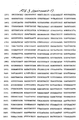
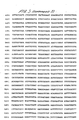
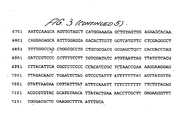
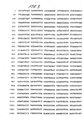
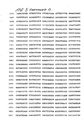
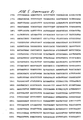
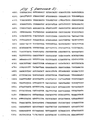
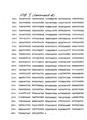
- nucleic acid molecule encoding a polypeptide which is critical for survival and growth of the yeast Candida albicans and which nucleic acid molecule comprises the sequences of nucleotides illustrated Sequence ID Nos. 1.
- Letters utilised in the sequence according to the invention which are not recognisable as letters of the genetic code signify a position in the nucleic acid sequence where one or more of bases A, G, C or T can occupy the nucleotide position.
- Representative letters used to identify the range of bases which can be used are as follows:
- the nucleic acid may comprise a mRNA molecule or alternatively a DNA and preferably a cDNA molecule.
- nucleic acid molecule capable of hybridising to the nucleic acid molecules illustrated in Figure 1 under high stringency conditions and which conditions are generally known to those of skill in the art.
- Stringency of hybridisation refers to conditions under which polynucleic acids are stable.
- the stability of hybrids is reflected in the melting temperature (Tm) of the hybrids.
- Tm can be approximated by the formula: 81.5 ⁇ °C + 16.6 ( log 10 ⁇ Na + + 0.41 ( % G & C ) - 600 ⁇ L / L wherein L is the length of the hybrids in nucleotides.
- Tm decreases approximately by 1-1.5°C with every 1% decrease in sequence homology.
- stringency refers to the hybridisation conditions wherein a single-stranded nucleic acid joins with a complementary strand when the purine or pyramidine bases therein pair with their corresponding base by hydrogen bonding. High stringency conditions favour homologous base pairing whereas low stringency conditions disfavour non-homologous base pairing.
- Low stringency conditions comprise, for example, a temperature of about 37°C or less, a formamide concentration of less than about 50%, and a moderate to low salt (SSC) concentration; or, alternatively, a temperature of about 50°C or less, and a moderate to high salt (SSPE) concentration, for example 1M NaCl.
- SSC moderate to low salt
- SSPE moderate to high salt
- High stringency conditions comprise, for example, a temperature of about 42°C or less, a formamide concentration of less than about 20%, and a low salt (SSC) concentration; or, alternatively, a temperature of about 65°C, or less, and a low salt (SSPE) concentration.
- high stringency conditions comprise hybridization in 0.5 M NaHPO 4 , 7% sodium dodecyl sulfate (SDS), 1 mM EDTA at 65°C (Ausubel, F.M. et al. Current Protocols in Molecular Biology , Vol. I, 1989; Green Inc. New York, at 2.10.3).
- SSC comprises a hybridization and wash solution.
- a stock 20X SSC solution contains 3M sodium chloride, 0.3M sodium citrate, pH 7.0.
- SSPE comprises a hybridization and wash solution.
- a 1X SSPE solution contains 180 mM NaCl, 9mM Na 2 HPO 4 and 1 mM EDTA, pH 7.4.
- nucleic acid capable of hybridising to nucleic acid molecules according to the invention will generally be at least 70%, preferably at least 80 or 90% and more preferably at least 95% homologous to the nucleotide sequences illustrated in Figure 1
- DNA molecules according to the invention may, advantageously, be included in a suitable expression vector to express polypeptides encoded therefrom in a suitable host which are critical for growth and survival of Candida albicans .
- An expression vector according to the invention includes a vector having a nucleic acid according to the invention operably linked to regulatory sequences, such as promoter regions, that are capable of effecting expression of said DNA fragments.
- operably linked refers to a juxtaposition wherein the components described are in a relationship permitting them to function in their intended manner.
- Such vectors may be transformed into a suitable host cell to provide for expression of a polypeptide according to the invention.
- the invention provides a process for preparing polypeptides according to the invention which comprises cultivating a host cell, transformed, transfected or infected with an expression vector as described above under conditions to provide for expression by the vector of a coding sequence encoding the polypeptides, and recovering the expressed polypeptides.
- the vectors may be, for example, plasmid, virus or phage vectors provided with an origin of replication, optionally a promoter for the expression of said nucleotide and optionally a regulator of the promoter.
- the vectors may contain one or more selectable markers, such as, for example, ampicillin resistance.
- a bacterial expression vector may include a promoter such as the lac promoter and for translation initiation the Shine-Dalgarno sequence and the start codon AUG.
- a eukaryotic expression vector may include a heterologous or homologous promoter for RNA polymerase II, a downstream polyadenylation signal, the start codon AUG, and a termination codon for detachment of the ribosome.
- Such vectors may be obtained commercially or assembled from the sequences described by methods well known in the art.
- Polynucleotides according to the invention may be inserted into the vectors described in an antisense orientation in order to provide for the production of antisense RNA.
- Antisense RNA or other antisense nucleic acids may be produced by synthetic means.
- nucleic acid sequence also includes the complementary sequence to any single stranded sequence given regarding base variations.
- the present invention also comprises within its scope proteins or polypeptides expressed by the nucleic acid molecules according to the invention or a functional equivalent, derivative or bioprecursor thereof.
- Nucleic acid sequences of at least approximately 10 contiguous nucleotides of a nucleic acid according to the invention and preferably from 10 to approximately 120 nucleotides, and nucleotide acid sequences are provided from 10 to 50 nucleotides may, advantageously be used as probes or primers to initiate replication, or the like.
- Such nucleic acid sequences may be produced according to techniques well known in the art, such as by recombinant or synthetic means. They may also be used in diagnostic kits or the like for detecting the presence of a nucleic acid according to the invention. These tests generally comprise contacting the probe with the sample under hybridising conditions and detecting for the presence of any duplex or triplex formation between the probe and any nucleic acid in the sample.
- probes may be anchored to a solid support. Preferably, they are present on an array so that multiple probes can simultaneously hybridize to a single biological sample.
- the probes can be spotted onto the array or synthesized in situ on the array. See Lockhart et al., Nature Biotechnology, Vol. 14, December 1996, "Expression monitoring by hybridization to high-density oligonucleotide arrays.”
- a single array can contain more than up to more than a million different probes in discrete locations.
- the nucleic acid sequences, according to the invention may be produced using such recombinant or synthetic means, such as for example using PCR cloning mechanisms which generally involve making a pair of primers, which may be between approximately 10 to 120 nucleotides to a region of the gene which is desired to be cloned, bringing the primers into contact with mRNA, cDNA, or genomic DNA from a cell, performing a polymerase chain reaction under conditions which bring about amplification of the desired region, isolated the amplified region or fragment and recovering the amplified DNA.
- PCR cloning mechanisms which generally involve making a pair of primers, which may be between approximately 10 to 120 nucleotides to a region of the gene which is desired to be cloned, bringing the primers into contact with mRNA, cDNA, or genomic DNA from a cell, performing a polymerase chain reaction under conditions which bring about amplification of the desired region, isolated the amplified region or fragment and recovering the amplified DNA.
- the nucleic acids or oligonucleotides according to the invention may carry a revealing label.
- Suitable labels include radioisotopes such as 32 P or 39 S, enzyme labels or other protein labels such as biotin or fluorescent markers. Such labels may be added to the nucleic acids or oligonucleotides of the invention and may be detected using known techniques per se.
- polypeptide or protein according to the invention includes all possible amino acid variants encoded by the nucleic acid molecule according to the invention including a polypeptide encoded by said molecule and having conservative amino acid changes.
- Polypeptides according to the invention further include variants of such sequences, including naturally occurring allelic variants which are substantially homologous to said polypeptides.
- substantial homology is regarded as a sequence which has at least 70%, preferably 80 or 90% amino acid homology with the polypeptides encoded by the nucleic acid molecules according to the invention.
- Nucleotide sequences according to the invention are particularly advantageous as selective therapeutic targets for treating Candida albicans associated infections.
- an antisense nucleic acid capable of binding to the nucleic acid sequence illustrated in Figure 1 may be used to selectively inhibit expression of the corresponding polypeptides, leading to impaired growth of the Candida albicans with reductions of associated illnesses or diseases.
- the nucleic acid molecule or the polypeptide according to the invention may be used as a medicament, or in the preparation of a medicament, for treating diseases or conditions associated with Candida albicans infection.
- nucleic acid molecule or the polypeptide according to the invention may be provided in a pharmaceutical composition together with a pharmaceutically acceptable carrier, diluent or excipient therefor.
- Antisense technology can be used to control gene expression through triple-helix formation of antisense DNA or RNA, both of which methods are based on binding of a polynucleotide to DNA or RNA.
- a DNA oligonucleotide is designed to be complementary to a region of the gene involved in transcription (triple-helix - see Lee et al. Nucl. Acids Res., 6:3073 (1979); Cooney et al., Science, 241:456 (1988); and Dervan et al., Science, 251: 1360 (1991), thereby preventing transcription and the production of the corresponding protein.
- the antisense RNA oligonucleotide hybridises to the mRNA in vivo and blocks translation of an mRNA molecule into the corresponding protein (antisense - Okano, J. Neurochem., 56:560 (1991); Oligodeoxynucleotides as Antisense Inhibitors of Gene Expression, CRC Press, Boca Raton, FL (1988)).
- Antibodies to the protein or polypeptide of the present invention may, advantageously, be prepared by techniques which are known in the art.
- polyclonal antibodies may be prepared by inoculating a host animal, such as a mouse, with the polypeptide according to the invention or an epitope thereof and recovering immune serum.
- Monoclonal antibodies may be prepared according to known techniques such as described by Kohler R. and Milstein C., Nature (1975) 256, 495-497.
- Antibodies may also be used in a method of detecting for the presence of a polypeptide according to the invention, which method comprises reacting the antibody with a sample and identifying any protein bound to said antibody.
- a kit may also be provided for performing said method which comprises an antibody according to the invention and means for reacting the antibody with said sample.
- Proteins which interact with the polypeptide of the invention may be identified by investigating protein-protein interactions using the two-hybrid vector system first proposed by Chien et al . (1991).
- This technique is based on functional reconstitution in vivo of a transcription factor which activates a reporter gene. More particularly the technique comprises providing an appropriate host cell with a DNA construct comprising a reporter gene under the control of a promoter regulated by a transcription factor having a DNA binding domain and an activating domain, expressing in the host cell a first hybrid DNA sequence encoding a first fusion of a fragment or all of a nucleic acid sequence according to the invention and either said DNA binding domain or said activating domain of the transcription factor, expressing in the host at least one second hybrid DNA sequence, such as a library or the like, encoding putative binding proteins to be investigated together with the DNA binding or activating domain of the transcription factor which is not incorporated in the first fusion; detecting any binding of the proteins to be investigated with a protein according to the invention by detecting for the presence of any reporter gene product in the host cell; optionally isolating second hybrid DNA sequences encoding the binding protein.
- GAL4 is a transcriptional activator of galactose metabolism in yeast and has a separate domain for binding to activators upstream of the galactose metabolising genes as well as a protein binding domain.
- Nucleotide vectors may be constructed, one of which comprises the nucleotide residues encoding the DNA binding domain of GAL4. These binding domain residues may be fused to a known protein encoding sequence, such as for example the nucleic acids according to the invention.
- the other vector comprises the residues encoding the protein binding domain of GAL4. These residues are fused to residues encoding a test protein.
- any interaction between polypeptides encoded by the nucleic acid according to the invention and the protein to be tested leads to transcriptional activation of a reporter molecule in a GAL4 transcription deficient yeast cell into which the vectors have been transformed.
- a reporter molecule such as ⁇ -galactosidase is activated upon restoration of transcription of the yeast galactose metabolism genes.
- a further aspect of the invention provides a method of identifying compounds which selectively inhibit or interfere with the expression, the functionality of polypeptides expressed from the nucleotides sequences illustrated in Figure 1 or the metabolic pathways in which these polypeptides are involved and which are critical for growth and survival of Candida albicans, which method comprises (a) contacting a compound to be tested with one or more Candida albicans cells having a mutation in a nucleic acid molecule according to the invention which mutation results in overexpression or underexpression of said polypeptides in addition to one or more wild type Candida cells, (b) monitoring the growth and/or activity of said mutated cell compared to said wild type wherein differential growth or activity of said one or more mutated Candida cells provides an indication of selective action of said compound on said polypeptide or another polypeptide in the same or a parallel pathway.
- Compounds identifiable or identified using the method according to the invention may advantageously be used as a medicament, or in the preparation of a medicament to treat diseases or conditions associated with Candida albicans infection. These compounds may also advantageously be included in a pharmaceutical composition together with a pharmaceutically acceptable carrier, diluent or excipient therefor.
- a further aspect of the invention provides a method of identifying DNA sequences from a cell or organism which DNA encodes polypeptides which are critical for growth or survival, which method comprises (a) preparing a cDNA or genomic library from said cell or organism in a suitable expression vector which vector is such that it can either integrate into the genome in said cell or that it permits transcription of antisense RNA from the nucleotide sequences in said cDNA or genomic library, (b) selecting transformants exhibiting impaired growth and determining the nucleotide sequence of the cDNA or genomic sequence from the library included in the vector from said transformant.
- the cell or organism may be any yeast or filamentous fungus, such as, for example, Saccharomyces cerevisiae, Schizosaccharomyces pombe or Candida albicans .
- a further aspect of the invention provides a pharmaceutical composition
- a pharmaceutical composition comprising a nucleic acid molecule or a polypeptide according to the invention together with a pharmaceutically acceptable carrier, diluent or excipient therefor.
- compositions include a pharmaceutically acceptable vehicle or diluent or excipient, such as for example, a physiological saline solution.
- a pharmaceutically acceptable vehicle or diluent or excipient such as for example, a physiological saline solution.
- Other pharmaceutically acceptable carriers including other non-toxic salts, sterile water or the like may also be used.
- a suitable buffer may also be present allowing the compositions to be lyophilized and stored in sterile conditions prior to reconstitution by the addition of sterile water for subsequent administration.
- Incorporation of the polypeptides of the invention into a solid or semisolid biologically compatible matrix may be carried out which can be implanted into tissues requiring treatment.
- the carrier can also contain other pharmaceutically acceptable excipients for modifying other conditions such as pH, osmolarity, viscosity, sterility, lipophilicity, solubility or the like. Pharmaceutically acceptable excipients which permit sustained or delayed release following administration may also be included.
- polypeptide or the nucleic acid molecule according to the invention may be administered orally. In this embodiment they may be encapsulated and combined with suitable carriers in solid dosage forms which would be well known to those skilled in the art.
- the specific dosage regime may be calculated according to the body surface area of the patient or the volume of body space to be occupied, dependent upon the particular route of administration to be used.
- the amount of the composition actually administered will, however, be determined by a medical practitioner, based on the circumstances pertaining to the disorder to be treated, such as the severity of the symptoms, the composition to be administered, the age, weight, and response of the individual patient and the chosen route of administration.
- the principle of the approach is based on the fact that when a particular C . albicans mRNA is inhibited by producing the complementary anti-sense RNA, the corresponding protein will decrease. If this protein is critical for growth or survival, the cell producing the anti-sense RNA will grow more slowly or will die.
- Anti-sense RNA is endogenously produced from an integrative or episomal plasmid with an inducible promoter; induction of the promoter leads to the production of an RNA encoded by the insert of the plasmid.
- This insert will differ from one plasmid to another in the library.
- the inserts will be derived from genomic DNA fragments or from cDNA to cover-to the extent possible- the entire genome.
- the vector is a proprietary vector allowing integration by homologous recombination at either the homologous insert or promoter sequence in the Candida genome.
- transformants are screened for impaired growth after promoter (& thus anti-sense) induction in the presence of lithium acetate. Lithium acetate prolongs the G1 phase and thus allows anti-sense to act during a prolonged period of time during the cell cycle.
- Transformants which show impaired growth in both induced and non-induced media, thus showing a growth defect due to integrative disruption, are selected as well.
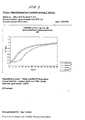
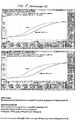
- Transformants showing impaired growth are supposed to contain plasmids which produce anti-sense RNA to mRNAs critical for growth or survival. Growth is monitored by measuring growth-curves over a period of time in a device (Bioscreen Analyzer, Labsystems) which allows simultaneous measurement of growth-curves of 200 transformants.
- genomic DNA is isolated, cut with an enzyme which cuts only once into the library vector (and estimated approx. every 4096 bp in the genome) and religated.
- PCR with primers flanking the insert will yield (partial) genomic or cDNA inserts as PCR fragments which can directly be sequenced.
- This PCR analysis (on ligation reaction) will also show us how many integrations occurred.
- the ligation reaction is transformed to E. coli and PCR analysis is performed on colonies or on plasmid DNA derived thereof.
- This method is employed for a genome-wide search for novel C. albicans genes which are important for growth or survival.
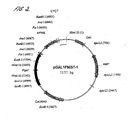
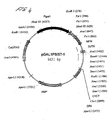
- the backbone of the pGAL1PNiST-1 vector (integrative anti-sense SfiI-NotI vector) is pGEM11Zf(+) (Promega Inc.).
- the CaMAL2 Eco RI/ Sal I promoter fragment from pDBV50 (D.H. Brown et al . 1996) was ligated into Eco RI/ Sal I-opened pGEM11Zf(+) resulting in the intermediate construct pGEMMAL2P-1.
- Msc I/CIP the CaURA3 selection marker was cloned as a Eco 47III/ Xmn I fragment derived from pRM2.
- the resulting pGEMMAL2P-2 vector was Not I/ Hin dIII opened in order to accept the NotI-stuffer-SfiI cassette from pPCK1NiSCYCT-1 ( Eag I/ Hin dIII fragment): pMAL2PNiST-1.
- the plasmid pGALlPNiST-1 was constructed by exchanging the Sal I/ Ecl 136II MAL2 promoter in pMAL2PNiST-1 by the Xho I/ Sma I GAL1 promoter fragment derived from pRM2GAL1P.
- the vector pGALlPSiST-1 was created for cloning the small genomic DNA fragments (flanked by SfiI sites) behind the GAL1 promoter.
- the only difference with pGAL1PNiST-1 is that the hIFN ⁇ (stuffer fragment) insert fragment in pGAL1PSiST-1 is flanked by two SfiI sites in stead of a SfiI and a NotI site as in pGAL1PNiST-1.
- plasmid YCp50 cerevisiae shuttle vector derived from the plasmid YCp50, which is deposited in the ATCC collection (number 37419; Thrash et al ., 1985); an Eco RI- Hind III fragment, containing the gene hIFN ⁇ , which is flanked by two SfiI sites, was inserted in YCp50, creating YCp50S-S), resulting into plasmid pMAL2PSiST-1.
- the MAL 2 promoter from pMAL2PSiST-1 was further replaced by the GAL 1 promoter from pGAL1PNiST-1 (via a Xho I- FSP I digest), creating the vector pGAL1PSiST-1.
- Genomic DNA of Candida albicans B2630 was isolated following a modified protocol of Blin and Stafford (1976). The quality of the isolated genomic DNA was checked by gel electrophoresis. Undigested DNA was located on the gel above the marker band of 26,282 bp. A little smear, caused by fragmentation of the DNA, was present. To obtain enrichment for genomic DNA fragments of the desired size, the genomic DNA was partially digested. Several restriction enzymes ( Alu I, Hae III and Rsa I; all creating blunt ends) were tried out. The appropriate digest conditions have been determined by titration of the enzyme.
- Enrichment of small DNA fragments was obtained with 70 units of AluI on 10 ⁇ g of genomic DNA for 20 min. T4 DNA polymerase (Boehringer) and dNTPs (Boehringer) were added to polish the DNA ends. After extraction with phenolchloroform the digest was size-fractionated on an agarose gel. The genomic DNA fragments with a length of 500 to 1,250 bp were eluted from the gel by centrifugal filtration (Zhu et al ., 1985). Sfi I adaptors (5' GTTGGCCTTTT) or (5' AGGCCAAC) were attached to the DNA ends (blunt) to facilitate cloning of the fragments into the vector.
- a 8-mer and 11-mer oligonucleotide (comprising the SfiI site) were kinatesed and annealed. After ligation of these adaptors to the DNA fragments a second size-fractionation was performed on an agarose gel. The DNA fragments of 400 to 1150 bp were eluted from the gel by centrifugal filtration.
- the small genomic DNA fragments were cloned after the GAL1 promoter in the vector pGALlPSIST-1.
- Qiagen-purified pGALlPSiST-1 plasmid DNA was digested with SfiI and the largest vector fragment eluted from the gel by centrifugal filtration (Zhu et al ., 1985). Ligation with a control DNA fragment, flanked by SfiI sites, was performed as a control. The ligation mix was electroporated to MC1061 E. coli cells. Plasmid DNA of 24 clones was analyzed. In all cases the control fragment was inserted in the pGAL1PSiST-1 vector fragment.
- genomic DNA fragments (450 ng) were ligated into the pGALlPSiST-1 vector (20 ng). After electroporation at 2500V, 40 ⁇ F circa 400,000 clones were obtained. These clones were pooled into three groups and stored as glycerol slants. Also Qiagen-purified DNA was prepared from these clones. A clone analysis showed an average insert length of 600 bp and a percentage of 91 for clones with an insert. The size of the library corresponds to 5 times the diploid genome. The genomic DNA inserts are sense or anti-sense orientated in the vector.
- First strand cDNA is synthesised with the Superscript Reverse Transcriptase (BRL) and with an oligo dT-NotI Primer adapter. After second strand synthesis, cDNA is polished with Klenow enzyme and purified over a Sephacryl S-400 spun column. Phosphorylated Sfi I adapters are then ligated to the cDNA, followed by digestion with the Not I restriction enzyme. The Sfi I/ Not I cDNA is then purified and sized on a Biogel column A150M.
- BRL Superscript Reverse Transcriptase
- the host strain used for transformation is a C. albicans ura3 mutant, CAI-4, which contains a deletion in orotidine-5'-phosphate decarboxylase and was obtained from William Fonzi, Georgetown University (Fonzi and Irwin).
- CAI-4 was transformed with the above described cDNA library or genomic library using the Pichia spheroplast module (Invitrogen). Resulting transformants were plated on minimal medium supplemented with glucose (SD, 0.67% or 1.34% Yeast Nitrogen base w/o amino acids + 2% glucose) plates and incubated for 2-3 days at 30°C.
- Starter cultures were set up by inoculating each colony in 1 ml SD medium and incubating overnight at 30°C and 300 rpm. Cell densities were determined using a Coulter counter (Coulter Z1; Coulter electronics limited).-250.000 cells/ml were inoculated in 1 ml SD medium and cultures were incubated for 24 hours at 30°C and 300 rpm. Cultures were washed in minimal medium without glucose (S) and the pellet resuspended in 650 ⁇ l S medium. 8 ⁇ l of this culture is used for inoculating 400 ⁇ l cultures in a Honeywell-100 plate (Bioscreen analyzer; Labsystems).
- Each transformant was grown during three days in S medium containing LiAc; pH 6.0, with 2% glucose/2% maltose or 2% galactose/2% maltose respectively while shaking every 3 minutes for 20 seconds. Optical densities were measured every hour during three consecutive days and growth curves were generated (Bioscreen analyzer; Labsystems).
- Putatively interesting transformants are grown in 1.5 ml SD overnight and genomic DNA is isolated using the Nucleon MI Yeast kit (Clontech). Concentration of genomic DNA is estimated by analyzing a sample on an agarose gel.
- genomic DNA 20 ng is digested for three hours with an enzyme that cuts uniquely in the library vector (SacI for the genomic library; PstI for the cDNA library) and treated with RNAse. Samples are phenol/chloroform extracted and precipitated using NaOAc/ethanol.
- the resulting pellet is resuspended in 500 ⁇ l ligation mixture (1 x ligation buffer and 4 units of T4 DNA ligase; both from Boehringer) and incubated overnight at 16°C.
- Inverse PCR is performed on 1 ⁇ l of the precipitated ligation reaction using library vector specific primers (oligo23 5' TGC-AGC-TCG-ACC-TCG-ACT-G 3' and oligo25 5' GCG-TGA-ATG-TAA-GCG-TGA-C 3' for the genomic library; 3pGALNistPCR primer :5'TGAGCAGCTCGCCGTCGCGC 3' and 5pGALNistPCR primer: 5'GAGTTATACCCTGCAGCTCGAC 3' for the cDNA library; both from Eurogentec) for 30 cycles each consisting of (a) 1 min at 95 °C, (b) 1 min at 57 °C, and (c) 3 min at 72 °C.
- library vector specific primers oligo23 5' TGC-AGC-TCG-ACC-TCG-ACT-G 3' and oligo25 5' GCG-TGA-ATG-TAA-GCG-TGA-C 3' for the genomic library
- PCR purification kit Qiagen
- the amount of PCR product (expressed in ng) used in the sequencing reaction is calculated as the length of the PCR product in basepairs divided by 10.
- Sequencing reactions were performed using the ABI Prism BigDye Terminator Cycle Sequencing Ready Reaction Kit according to the instructions of the manufacturer (PE Applied Biosystems, Foster City, CA) except for the following modifications.
- reaction volume was reduced to 15 ⁇ l. Reaction volume of individual reagents were changed accordingly. 6.0 ⁇ l Terminator Ready Reaction Mix was replaced by a mixture of 3.0 ⁇ l Terminator Ready Reaction Mix + 3.0 ⁇ l Half Term (GENPAK Limited, Brighton, UK). After cycle sequencing, reaction mixtures were purified over Sephadex G50 columns prepared on Multiscreen HV opaque microtiter plates (Millipore, Molsheim, Fr) and were dried in a speedVac. Reaction products were resuspended in 3 ⁇ l loading buffer.
- Nucleotide sequences were imported in the VectorNTI software package (InforMax Inc, North Bethesda, MD, USA), and the vector and insert regions of the sequences were identified. Sequence similarity searches against public and commercial sequence databases were performed with the BLAST software package (Altschul et al., 1990) version 1.4. Both the original nucleotide sequence and the six-frame conceptual translations of the insert region were used as query sequences.
- the used public databases were the EMBL nucleotide sequence database (Stoesser et al., 1998), the SWISS-PROT protein sequence database and its supplement TrEMBL (Bairoch and Apweiler, 1998), and the ALCES Candida albicans sequence database (Stanford University, University of Minnesota).
- the commercial sequence databases used were the LifeSeq® human and PathoSeq ⁇ microbial genomic databases (Incyte Pharmaceuticals Inc., Palo Alto, CA, USA), and the GENESEQ patent sequence database (Derwent, London, UK).
- Three major results were obtained on the basis of the sequence similarity searches: function, novelty, and specificity.
- a putative function was deduced on the basis of the similarity with sequences with a known function, the novelty was based on the absence or presence of the sequences in public databases, and the specificity was based on the similarity with vertebrate homologues.
- Blastx of the nucleic acid sequences against the appropriate protein databases Swiss-Prot for clones of which the complete sequence is present in the public domain, and paorfp (PathoSeq TM ) for clones of which the complete sequences is not present in the public domain.
- the protein to which the translated nucleic acid sequence corresponds to is used as a starting point.
- the differences between this protein and our translated nucleic acid sequences are marked with a double line and annotated above the protein sequence. The following symbols are used:
- Mutant yeast strains for example, have shown that some steps of translation are sensitive to the stoichiometry of macromolecules involved. (Sandbaken et al . 1996). Such strains are more sensitive to compounds which specifically perturb translation (by acting on a component that participates in translation) but are equally sensitive to compounds with other mechanisms of action.
- This method thus not only provides a means to identify whether a test compound perturbs a certain process but also an indication of the site at which it exerts its effect.
- the component which is present in altered form or amount in a cell whose growth is affected by a test compound is potentially the site of action of the test compound.
- the assay to be set up involves measurement of growth of an isogenic strain which has been modified only in a certain specific allele, relative to a wild type (WT) C . albicans strain, in the presence of R-compounds.
- Strains can be ones in which the expression of a specific essential protein is impaired upon induction of anti-sense or strains which carry disruptions in an essential gene.
- An in silico approach to finding novel essential genes in C. albicans will be performed. A number of essential genes identified in this way will be disrupted (in one allele) and the resulting strains can be used for comparative growth screening.
- 35 ⁇ l minimal medium (S medium + 2% galactose + 2% maltose) is transferred in a transparent flat-bottomed 96 well plate using an automated pipetting system (Multidrop, Labsystems).
- a 96-channel pipettor (Hydra, Robbins Scientific) transfers 2.5 ⁇ l of R-compound at 10 -3 M in DMSO from a stock plate into the assay plate.
- the selected C. albicans strains (mutant and parent (CAI-4) strain) are stored as glycerol stocks (15%) at -70°C.
- the strains are streaked out on selective plates (SD medium) and incubated for two days at 30°C.
- the parent strain CAI-4, the medium is always supplemented with 20 ⁇ g/ml uridine.
- a single colony is scooped up and resuspended in 1 ml minimal medium (S medium + 2% galactose + 2% maltose). Cells are incubated at 30°C for 8 hours while shaking at 250 rpm.
- a 10 ml culture is inoculated at 250.000 cells/ml.
- Cultures are incubated at 30°C for 24 hours while shaking at 250 rpm. Cells are counted in Coulter counter and the final culture (S medium + 2% galactose + 2% maltose) is inoculated at 20.000 to 50.000 cells/ml. Cultures are grown at 30°C while shaking at 250 rpm until a final OD of 0.24 (+/- 0.04) 600nM is reached.
- MW96 plates 200 ⁇ l of this yeast suspension is added to all wells of MW96 plates containing R-compounds in a 450 (or 250) ⁇ l total volume. MW96 plates are incubated (static) at 30°C for 48 hours.
- Test growth is expressed as a percentage of positive control growth for both mutant (x) and wild type (y) strains. The ratio (x/y) of these derived variables is calculated.
Landscapes
- Health & Medical Sciences (AREA)
- Life Sciences & Earth Sciences (AREA)
- Chemical & Material Sciences (AREA)
- Organic Chemistry (AREA)
- Mycology (AREA)
- General Health & Medical Sciences (AREA)
- Medicinal Chemistry (AREA)
- Biophysics (AREA)
- Veterinary Medicine (AREA)
- Pharmacology & Pharmacy (AREA)
- Genetics & Genomics (AREA)
- Animal Behavior & Ethology (AREA)
- Nuclear Medicine, Radiotherapy & Molecular Imaging (AREA)
- Public Health (AREA)
- Biochemistry (AREA)
- Microbiology (AREA)
- General Chemical & Material Sciences (AREA)
- Gastroenterology & Hepatology (AREA)
- Molecular Biology (AREA)
- Chemical Kinetics & Catalysis (AREA)
- Proteomics, Peptides & Aminoacids (AREA)
- Endocrinology (AREA)
- Gynecology & Obstetrics (AREA)
- Engineering & Computer Science (AREA)
- Bioinformatics & Cheminformatics (AREA)
- Communicable Diseases (AREA)
- Reproductive Health (AREA)
- Oncology (AREA)
- Micro-Organisms Or Cultivation Processes Thereof (AREA)
- Measuring Or Testing Involving Enzymes Or Micro-Organisms (AREA)
- Medicines That Contain Protein Lipid Enzymes And Other Medicines (AREA)
- Peptides Or Proteins (AREA)
- Pharmaceuticals Containing Other Organic And Inorganic Compounds (AREA)
- Investigating Or Analysing Biological Materials (AREA)
Abstract
Description
- The present invention is concerned with the identification of a gene from Candida albicans which is critical for growth and cell division and which gene may be used as a selective drug target to treat Candida albicans associated infections. A nucleic acid sequence from Candida albicans is also provided and which encodes the polypeptide which is critical for growth of Candida albicans.
- Opportunistic infections in immunocompromised hosts represent an increasingly common cause of mortality and morbidity. Candida species are among the most commonly identified fungal pathogens associated with such opportunistic infections, with Candida albicans being the most common species. Such fungal infections are thus problematical in, for example, AIDS populations in addition to normal healthy women where Candida albicans yeasts represent the most common cause of vulvovaginitis.
- Although compounds do exist for treating such disorders, such as, amphotericin, these drugs are generally limited in their treatment because of their toxicity and side effects. Therefore, there exists a need for new compounds which may be used to treat Candida associated infections in addition to compounds which are selective in their action against Candida albicans.
- Classical approaches for identifying anti-fungal compounds have relied almost exclusively on inhibition of fungal or yeast growth as an endpoint. Libraries of natural products, semi-synthetic, or synthetic chemicals are screened for their ability to kill or arrest growth of the target pathogen or a related nonpathogenic model organism. These tests are cumbersome and provide no information about a compound's mechanism of action. The promising lead compounds that emerge from such screens must then be tested for possible host-toxicity and detailed mechanism of action studies must subsequently be conducted to identify the affected molecular target.
- The present inventors have now identified a nucleic acid sequence from Candida albicans which encodes a polypeptide which is critical for its survival and growth. This sequence represents a novel target which can be incorporated into an assay to selectively identify compounds capable of inhibiting expression of such polypeptides and their potential use in alleviating diseases or conditions associated with Candida albicans infection.
- Therefore, according to a first aspect of the invention there is provided a nucleic acid molecule encoding a polypeptide which is critical for survival and growth of the yeast Candida albicans and which nucleic acid molecule comprises the sequences of nucleotides illustrated Sequence ID Nos. 1.
- Whilst the molecules defined herein have been established as being critical for growth and metabolism of Candida albicans, for some of the molecules no apparent functionality has been assigned by virtue of the fact that no functionally related sequences in other prokaryotic or eukaryotic organism can be found in respective databases. Thus, advantageously these sequences may be species specific in which case they may be used be used as selective targets for treatment of diseases mediated by Candida Albicans infection.
- Letters utilised in the sequence according to the invention which are not recognisable as letters of the genetic code signify a position in the nucleic acid sequence where one or more of bases A, G, C or T can occupy the nucleotide position. Representative letters used to identify the range of bases which can be used are as follows:
- M:
- A or C
- R:
- A or G
- W:
- A or T
- S:
- C or G
- Y:
- C or T
- K:
- G or T
- V:
- A or C or G
- H:
- A or C or T
- D:
- A or G or T
- B:
- C or G or T
- N:
- G or A or T or C
- In one embodiment of each of the above identified aspects of the invention the nucleic acid may comprise a mRNA molecule or alternatively a DNA and preferably a cDNA molecule.
- Also provided by the present invention is a nucleic acid molecule capable of hybridising to the nucleic acid molecules illustrated in Figure 1 under high stringency conditions and which conditions are generally known to those of skill in the art.
- Stringency of hybridisation as used herein refers to conditions under which polynucleic acids are stable. The stability of hybrids is reflected in the melting temperature (Tm) of the hybrids. Tm can be approximated by the formula:

wherein L is the length of the hybrids in nucleotides. Tm decreases approximately by 1-1.5°C with every 1% decrease in sequence homology. - The term "stringency" refers to the hybridisation conditions wherein a single-stranded nucleic acid joins with a complementary strand when the purine or pyramidine bases therein pair with their corresponding base by hydrogen bonding. High stringency conditions favour homologous base pairing whereas low stringency conditions disfavour non-homologous base pairing.
- "Low stringency" conditions comprise, for example, a temperature of about 37°C or less, a formamide concentration of less than about 50%, and a moderate to low salt (SSC) concentration; or, alternatively, a temperature of about 50°C or less, and a moderate to high salt (SSPE) concentration, for example 1M NaCl.
- "High stringency" conditions comprise, for example, a temperature of about 42°C or less, a formamide concentration of less than about 20%, and a low salt (SSC) concentration; or, alternatively, a temperature of about 65°C, or less, and a low salt (SSPE) concentration. For example, high stringency conditions comprise hybridization in 0.5 M NaHPO4, 7% sodium dodecyl sulfate (SDS), 1 mM EDTA at 65°C (Ausubel, F.M. et al. Current Protocols in Molecular Biology, Vol. I, 1989; Green Inc. New York, at 2.10.3).
- "SSC" comprises a hybridization and wash solution. A stock 20X SSC solution contains 3M sodium chloride, 0.3M sodium citrate, pH 7.0.
- "SSPE" comprises a hybridization and wash solution. A 1X SSPE solution contains 180 mM NaCl, 9mM Na2HPO4 and 1 mM EDTA, pH 7.4.
- The nucleic acid capable of hybridising to nucleic acid molecules according to the invention will generally be at least 70%, preferably at least 80 or 90% and more preferably at least 95% homologous to the nucleotide sequences illustrated in Figure 1
- The DNA molecules according to the invention may, advantageously, be included in a suitable expression vector to express polypeptides encoded therefrom in a suitable host which are critical for growth and survival of Candida albicans.
- An expression vector according to the invention includes a vector having a nucleic acid according to the invention operably linked to regulatory sequences, such as promoter regions, that are capable of effecting expression of said DNA fragments. The term "operably linked" refers to a juxtaposition wherein the components described are in a relationship permitting them to function in their intended manner. Such vectors may be transformed into a suitable host cell to provide for expression of a polypeptide according to the invention. Thus, in a further aspect, the invention provides a process for preparing polypeptides according to the invention which comprises cultivating a host cell, transformed, transfected or infected with an expression vector as described above under conditions to provide for expression by the vector of a coding sequence encoding the polypeptides, and recovering the expressed polypeptides.
- The vectors may be, for example, plasmid, virus or phage vectors provided with an origin of replication, optionally a promoter for the expression of said nucleotide and optionally a regulator of the promoter. The vectors may contain one or more selectable markers, such as, for example, ampicillin resistance.
- Regulatory elements required for expression include promoter sequences to bind RNA polymerase and transcription initiation sequences for ribosome binding. For example, a bacterial expression vector may include a promoter such as the lac promoter and for translation initiation the Shine-Dalgarno sequence and the start codon AUG. Similarly, a eukaryotic expression vector may include a heterologous or homologous promoter for RNA polymerase II, a downstream polyadenylation signal, the start codon AUG, and a termination codon for detachment of the ribosome. Such vectors may be obtained commercially or assembled from the sequences described by methods well known in the art.
- Polynucleotides according to the invention may be inserted into the vectors described in an antisense orientation in order to provide for the production of antisense RNA. Antisense RNA or other antisense nucleic acids may be produced by synthetic means.
- In accordance with the present invention, a defined nucleic acid includes not only the identical nucleic acid but also any minor base variations including in particular, substitutions in bases which result in a synonymous codon (a different codon specifying the same amino acid residue) due to the degenerate code. The term "nucleic acid sequence" also includes the complementary sequence to any single stranded sequence given regarding base variations.
- The present invention also comprises within its scope proteins or polypeptides expressed by the nucleic acid molecules according to the invention or a functional equivalent, derivative or bioprecursor thereof.
- Nucleic acid sequences of at least approximately 10 contiguous nucleotides of a nucleic acid according to the invention and preferably from 10 to approximately 120 nucleotides, and nucleotide acid sequences are provided from 10 to 50 nucleotides may, advantageously be used as probes or primers to initiate replication, or the like. Such nucleic acid sequences may be produced according to techniques well known in the art, such as by recombinant or synthetic means. They may also be used in diagnostic kits or the like for detecting the presence of a nucleic acid according to the invention. These tests generally comprise contacting the probe with the sample under hybridising conditions and detecting for the presence of any duplex or triplex formation between the probe and any nucleic acid in the sample.
- These probes may be anchored to a solid support. Preferably, they are present on an array so that multiple probes can simultaneously hybridize to a single biological sample. The probes can be spotted onto the array or synthesized in situ on the array. See Lockhart et al., Nature Biotechnology, Vol. 14, December 1996, "Expression monitoring by hybridization to high-density oligonucleotide arrays." A single array can contain more than up to more than a million different probes in discrete locations.
- Advantageously, the nucleic acid sequences, according to the invention may be produced using such recombinant or synthetic means, such as for example using PCR cloning mechanisms which generally involve making a pair of primers, which may be between approximately 10 to 120 nucleotides to a region of the gene which is desired to be cloned, bringing the primers into contact with mRNA, cDNA, or genomic DNA from a cell, performing a polymerase chain reaction under conditions which bring about amplification of the desired region, isolated the amplified region or fragment and recovering the amplified DNA. Generally, such techniques as defined herein are well known in the art, such as described in Sambrook et al (Molecular Cloning: a Laboratory Manual, 1989).
- The nucleic acids or oligonucleotides according to the invention may carry a revealing label. Suitable labels include radioisotopes such as 32P or 39S, enzyme labels or other protein labels such as biotin or fluorescent markers. Such labels may be added to the nucleic acids or oligonucleotides of the invention and may be detected using known techniques per se.
- The polypeptide or protein according to the invention includes all possible amino acid variants encoded by the nucleic acid molecule according to the invention including a polypeptide encoded by said molecule and having conservative amino acid changes. Polypeptides according to the invention further include variants of such sequences, including naturally occurring allelic variants which are substantially homologous to said polypeptides. In this context, substantial homology is regarded as a sequence which has at least 70%, preferably 80 or 90% amino acid homology with the polypeptides encoded by the nucleic acid molecules according to the invention.
- Nucleotide sequences according to the invention are particularly advantageous as selective therapeutic targets for treating Candida albicans associated infections. For example, an antisense nucleic acid capable of binding to the nucleic acid sequence illustrated in Figure 1 may be used to selectively inhibit expression of the corresponding polypeptides, leading to impaired growth of the Candida albicans with reductions of associated illnesses or diseases.
- The nucleic acid molecule or the polypeptide according to the invention may be used as a medicament, or in the preparation of a medicament, for treating diseases or conditions associated with Candida albicans infection.
- Advantageously, the nucleic acid molecule or the polypeptide according to the invention may be provided in a pharmaceutical composition together with a pharmaceutically acceptable carrier, diluent or excipient therefor.
- Antisense technology can be used to control gene expression through triple-helix formation of antisense DNA or RNA, both of which methods are based on binding of a polynucleotide to DNA or RNA. A DNA oligonucleotide is designed to be complementary to a region of the gene involved in transcription (triple-helix - see Lee et al. Nucl. Acids Res., 6:3073 (1979); Cooney et al., Science, 241:456 (1988); and Dervan et al., Science, 251: 1360 (1991), thereby preventing transcription and the production of the corresponding protein. The antisense RNA oligonucleotide hybridises to the mRNA in vivo and blocks translation of an mRNA molecule into the corresponding protein (antisense - Okano, J. Neurochem., 56:560 (1991); Oligodeoxynucleotides as Antisense Inhibitors of Gene Expression, CRC Press, Boca Raton, FL (1988)).
- Antibodies to the protein or polypeptide of the present invention may, advantageously, be prepared by techniques which are known in the art. For example, polyclonal antibodies may be prepared by inoculating a host animal, such as a mouse, with the polypeptide according to the invention or an epitope thereof and recovering immune serum. Monoclonal antibodies may be prepared according to known techniques such as described by Kohler R. and Milstein C., Nature (1975) 256, 495-497.
- Antibodies may also be used in a method of detecting for the presence of a polypeptide according to the invention, which method comprises reacting the antibody with a sample and identifying any protein bound to said antibody. A kit may also be provided for performing said method which comprises an antibody according to the invention and means for reacting the antibody with said sample.
- Proteins which interact with the polypeptide of the invention may be identified by investigating protein-protein interactions using the two-hybrid vector system first proposed by Chien et al. (1991).
- This technique is based on functional reconstitution in vivo of a transcription factor which activates a reporter gene. More particularly the technique comprises providing an appropriate host cell with a DNA construct comprising a reporter gene under the control of a promoter regulated by a transcription factor having a DNA binding domain and an activating domain, expressing in the host cell a first hybrid DNA sequence encoding a first fusion of a fragment or all of a nucleic acid sequence according to the invention and either said DNA binding domain or said activating domain of the transcription factor, expressing in the host at least one second hybrid DNA sequence, such as a library or the like, encoding putative binding proteins to be investigated together with the DNA binding or activating domain of the transcription factor which is not incorporated in the first fusion; detecting any binding of the proteins to be investigated with a protein according to the invention by detecting for the presence of any reporter gene product in the host cell; optionally isolating second hybrid DNA sequences encoding the binding protein.
- An example of such a technique utilises the GAL4 protein in yeast. GAL4 is a transcriptional activator of galactose metabolism in yeast and has a separate domain for binding to activators upstream of the galactose metabolising genes as well as a protein binding domain. Nucleotide vectors may be constructed, one of which comprises the nucleotide residues encoding the DNA binding domain of GAL4. These binding domain residues may be fused to a known protein encoding sequence, such as for example the nucleic acids according to the invention. The other vector comprises the residues encoding the protein binding domain of GAL4. These residues are fused to residues encoding a test protein. Any interaction between polypeptides encoded by the nucleic acid according to the invention and the protein to be tested leads to transcriptional activation of a reporter molecule in a GAL4 transcription deficient yeast cell into which the vectors have been transformed. Preferably, a reporter molecule such as β-galactosidase is activated upon restoration of transcription of the yeast galactose metabolism genes.
- Further provided by the present invention is one
- A further aspect of the invention provides a method of identifying compounds which selectively inhibit or interfere with the expression, the functionality of polypeptides expressed from the nucleotides sequences illustrated in Figure 1 or the metabolic pathways in which these polypeptides are involved and which are critical for growth and survival of Candida albicans, which method comprises (a) contacting a compound to be tested with one or more Candida albicans cells having a mutation in a nucleic acid molecule according to the invention which mutation results in overexpression or underexpression of said polypeptides in addition to one or more wild type Candida cells, (b) monitoring the growth and/or activity of said mutated cell compared to said wild type wherein differential growth or activity of said one or more mutated Candida cells provides an indication of selective action of said compound on said polypeptide or another polypeptide in the same or a parallel pathway.
- Compounds identifiable or identified using the method according to the invention, may advantageously be used as a medicament, or in the preparation of a medicament to treat diseases or conditions associated with Candida albicans infection. These compounds may also advantageously be included in a pharmaceutical composition together with a pharmaceutically acceptable carrier, diluent or excipient therefor.
- A further aspect of the invention provides a method of identifying DNA sequences from a cell or organism which DNA encodes polypeptides which are critical for growth or survival, which method comprises (a) preparing a cDNA or genomic library from said cell or organism in a suitable expression vector which vector is such that it can either integrate into the genome in said cell or that it permits transcription of antisense RNA from the nucleotide sequences in said cDNA or genomic library, (b) selecting transformants exhibiting impaired growth and determining the nucleotide sequence of the cDNA or genomic sequence from the library included in the vector from said transformant. Preferably, the cell or organism may be any yeast or filamentous fungus, such as, for example, Saccharomyces cerevisiae, Schizosaccharomyces pombe or Candida albicans.
- A further aspect of the invention provides a pharmaceutical composition comprising a nucleic acid molecule or a polypeptide according to the invention together with a pharmaceutically acceptable carrier, diluent or excipient therefor.
- Preferred compositions include a pharmaceutically acceptable vehicle or diluent or excipient, such as for example, a physiological saline solution. Other pharmaceutically acceptable carriers including other non-toxic salts, sterile water or the like may also be used. A suitable buffer may also be present allowing the compositions to be lyophilized and stored in sterile conditions prior to reconstitution by the addition of sterile water for subsequent administration. Incorporation of the polypeptides of the invention into a solid or semisolid biologically compatible matrix may be carried out which can be implanted into tissues requiring treatment.
- The carrier can also contain other pharmaceutically acceptable excipients for modifying other conditions such as pH, osmolarity, viscosity, sterility, lipophilicity, solubility or the like. Pharmaceutically acceptable excipients which permit sustained or delayed release following administration may also be included.
- The polypeptide or the nucleic acid molecule according to the invention may be administered orally. In this embodiment they may be encapsulated and combined with suitable carriers in solid dosage forms which would be well known to those skilled in the art.
- As would be well known to those of skill in the art, the specific dosage regime may be calculated according to the body surface area of the patient or the volume of body space to be occupied, dependent upon the particular route of administration to be used. The amount of the composition actually administered will, however, be determined by a medical practitioner, based on the circumstances pertaining to the disorder to be treated, such as the severity of the symptoms, the composition to be administered, the age, weight, and response of the individual patient and the chosen route of administration.
- The present invention may be more clearly understood with reference to the accompanying example, which is purely exemplary, with reference to the accompanying drawings, wherein
- Figure 1
- nucleotide sequence isolated from Candida albicans and which has an identified function based on sequence homology with proteins from other organisms and which sequence is not present in the public domain.
- Figure 2 :
- is a diagrammatic representation of plasmid pGALlPNiST-1.
- Figure 3 :
- is a nucleotide sequence of plasmid pGALlPNiST-1 of Figure 10.
- Figure 4 :
- is a diagrammatic representation of plasmid pGAL1PSiST-1.
- Figure 5 :
- is a nucleotide sequence of plasmid pGAL1PSiST-1 of Figure 12.
- Figure 6 :
- are amino acid sequences of the appropriately corresponding DNA sequences illustrated in Figure 1 with reference to Table 1.
- Figures 7 and 8
- are growth curves of Candida albicans strains showing antisense induced reduction in growth.
- Figures 9 to 12:
- are growth curves of Candida albicans strains including knock-outs in the relevant gene identified.
- The principle of the approach is based on the fact that when a particular C. albicans mRNA is inhibited by producing the complementary anti-sense RNA, the corresponding protein will decrease. If this protein is critical for growth or survival, the cell producing the anti-sense RNA will grow more slowly or will die.
- Since anti-sense inhibition occurs at mRNA level, the gene copy number is irrelevant, thus allowing applications of the strategy even in diploid organisms.
- Anti-sense RNA is endogenously produced from an integrative or episomal plasmid with an inducible promoter; induction of the promoter leads to the production of an RNA encoded by the insert of the plasmid. This insert will differ from one plasmid to another in the library. The inserts will be derived from genomic DNA fragments or from cDNA to cover-to the extent possible- the entire genome.
- The vector is a proprietary vector allowing integration by homologous recombination at either the homologous insert or promoter sequence in the Candida genome. After introducing plasmids from cDNA or genomic libraries into C. albicans, transformants are screened for impaired growth after promoter (& thus anti-sense) induction in the presence of lithium acetate. Lithium acetate prolongs the G1 phase and thus allows anti-sense to act during a prolonged period of time during the cell cycle. Transformants which show impaired growth in both induced and non-induced media, thus showing a growth defect due to integrative disruption, are selected as well.
- Transformants showing impaired growth are supposed to contain plasmids which produce anti-sense RNA to mRNAs critical for growth or survival. Growth is monitored by measuring growth-curves over a period of time in a device (Bioscreen Analyzer, Labsystems) which allows simultaneous measurement of growth-curves of 200 transformants.
- Subsequently plasmids can be recovered from the transformants and the sequence of their inserts determined, thus revealing which mRNA they inhibit. In order to be able to recover the genomic or cDNA insert which has integrated into the Candida genome, genomic DNA is isolated, cut with an enzyme which cuts only once into the library vector (and estimated approx. every 4096 bp in the genome) and religated. PCR with primers flanking the insert will yield (partial) genomic or cDNA inserts as PCR fragments which can directly be sequenced. This PCR analysis (on ligation reaction) will also show us how many integrations occurred. Alternatively the ligation reaction is transformed to E. coli and PCR analysis is performed on colonies or on plasmid DNA derived thereof.
- This method is employed for a genome-wide search for novel C. albicans genes which are important for growth or survival.
- The backbone of the pGAL1PNiST-1 vector (integrative anti-sense SfiI-NotI vector) is pGEM11Zf(+) (Promega Inc.). First, the CaMAL2 EcoRI/SalI promoter fragment from pDBV50 (D.H. Brown et al. 1996) was ligated into EcoRI/SalI-opened pGEM11Zf(+) resulting in the intermediate construct pGEMMAL2P-1. Into the latter (MscI/CIP) the CaURA3 selection marker was cloned as a Eco47III/XmnI fragment derived from pRM2. The resulting pGEMMAL2P-2 vector was NotI/HindIII opened in order to accept the NotI-stuffer-SfiI cassette from pPCK1NiSCYCT-1 (EagI/HindIII fragment): pMAL2PNiST-1. Finally, the plasmid pGALlPNiST-1 was constructed by exchanging the SalI/Ecl136II MAL2 promoter in pMAL2PNiST-1 by the XhoI/SmaI GAL1 promoter fragment derived from pRM2GAL1P.
- The vector pGALlPSiST-1 was created for cloning the small genomic DNA fragments (flanked by SfiI sites) behind the GAL1 promoter. The only difference with pGAL1PNiST-1 is that the hIFNβ (stuffer fragment) insert fragment in pGAL1PSiST-1 is flanked by two SfiI sites in stead of a SfiI and a NotI site as in pGAL1PNiST-1. To construct pGAL1PSiST-1 the EcoRI-HindIII fragment, containing hIFNβ flanked_by a SfiI and a NotI site, of pMAL2pHiET-3 (unpublished) was exchanged by the EcoRI-HindIII fragment, containing hIFNβ flanked by two SfiI sites, from YCp50S-S (an E. coli / S. cerevisiae shuttle vector derived from the plasmid YCp50, which is deposited in the ATCC collection (number 37419; Thrash et al., 1985); an EcoRI-HindIII fragment, containing the gene hIFNβ, which is flanked by two SfiI sites, was inserted in YCp50, creating YCp50S-S), resulting into plasmid pMAL2PSiST-1. The MAL2 promoter from pMAL2PSiST-1 (by a NaeI-balI digest) was further replaced by the GAL1 promoter from pGAL1PNiST-1 (via a XhoI-FSPI digest), creating the vector pGAL1PSiST-1.
- A Candida albicans genomic DNA library with small DNA fragments (400 to 1,000 bp) was prepared. Genomic DNA of Candida albicans B2630 was isolated following a modified protocol of Blin and Stafford (1976). The quality of the isolated genomic DNA was checked by gel electrophoresis. Undigested DNA was located on the gel above the marker band of 26,282 bp. A little smear, caused by fragmentation of the DNA, was present. To obtain enrichment for genomic DNA fragments of the desired size, the genomic DNA was partially digested. Several restriction enzymes (AluI, HaeIII and RsaI; all creating blunt ends) were tried out. The appropriate digest conditions have been determined by titration of the enzyme. Enrichment of small DNA fragments was obtained with 70 units of AluI on 10 µg of genomic DNA for 20 min. T4 DNA polymerase (Boehringer) and dNTPs (Boehringer) were added to polish the DNA ends. After extraction with phenolchloroform the digest was size-fractionated on an agarose gel. The genomic DNA fragments with a length of 500 to 1,250 bp were eluted from the gel by centrifugal filtration (Zhu et al., 1985). SfiI adaptors (5' GTTGGCCTTTT) or (5' AGGCCAAC) were attached to the DNA ends (blunt) to facilitate cloning of the fragments into the vector. Therefore; a 8-mer and 11-mer oligonucleotide (comprising the SfiI site) were kinatesed and annealed. After ligation of these adaptors to the DNA fragments a second size-fractionation was performed on an agarose gel. The DNA fragments of 400 to 1150 bp were eluted from the gel by centrifugal filtration.
- The small genomic DNA fragments were cloned after the GAL1 promoter in the vector pGALlPSIST-1. Qiagen-purified pGALlPSiST-1 plasmid DNA was digested with SfiI and the largest vector fragment eluted from the gel by centrifugal filtration (Zhu et al., 1985). Ligation with a control DNA fragment, flanked by SfiI sites, was performed as a control. The ligation mix was electroporated to MC1061 E. coli cells. Plasmid DNA of 24 clones was analyzed. In all cases the control fragment was inserted in the pGAL1PSiST-1 vector fragment.
- All genomic DNA fragments (450 ng) were ligated into the pGALlPSiST-1 vector (20 ng). After electroporation at 2500V, 40µF circa 400,000 clones were obtained. These clones were pooled into three groups and stored as glycerol slants. Also Qiagen-purified DNA was prepared from these clones. A clone analysis showed an average insert length of 600 bp and a percentage of 91 for clones with an insert. The size of the library corresponds to 5 times the diploid genome. The genomic DNA inserts are sense or anti-sense orientated in the vector.
- Total RNA was extracted from Candida albicans B2630 grown on respectively minimal (SD) and rich (YPD) medium as described by Chirgwin et al. in Sambrook et al 1996. mRNA was prepared from total RNA using the Invitrogen Fast Track procedure.
- First strand cDNA is synthesised with the Superscript Reverse Transcriptase (BRL) and with an oligo dT-NotI Primer adapter. After second strand synthesis, cDNA is polished with Klenow enzyme and purified over a Sephacryl S-400 spun column.
Phosphorylated SfiI adapters are then ligated to the cDNA, followed by digestion with the NotI restriction enzyme. The SfiI/NotI cDNA is then purified and sized on a Biogel column A150M. - First fraction contains approximately 38,720 clones by transformation, the second fraction only 1540 clones. Clone analysis:
- Fr. I: 22/24 inserts, 16 3 1000 bp, 4 3 2000 bp, average size: 1500 bp.
- Fr. II: 9/12 inserts, 3 3 1000 bp, average size: 960 bp cDNA was ligated in a NotI/SfiI opened pGAL1PNiST-1 vector (anti-sense)
- The host strain used for transformation is a C. albicans ura3 mutant, CAI-4, which contains a deletion in orotidine-5'-phosphate decarboxylase and was obtained from William Fonzi, Georgetown University (Fonzi and Irwin). CAI-4 was transformed with the above described cDNA library or genomic library using the Pichia spheroplast module (Invitrogen). Resulting transformants were plated on minimal medium supplemented with glucose (SD, 0.67% or 1.34% Yeast Nitrogen base w/o amino acids + 2% glucose) plates and incubated for 2-3 days at 30°C.
- Starter cultures were set up by inoculating each colony in 1 ml SD medium and incubating overnight at 30°C and 300 rpm. Cell densities were determined using a Coulter counter (Coulter Z1; Coulter electronics limited).-250.000 cells/ml were inoculated in 1 ml SD medium and cultures were incubated for 24 hours at 30°C and 300 rpm. Cultures were washed in minimal medium without glucose (S) and the pellet resuspended in 650 µl S medium. 8 µl of this culture is used for inoculating 400 µl cultures in a Honeywell-100 plate (Bioscreen analyzer; Labsystems). Each transformant was grown during three days in S medium containing LiAc; pH 6.0, with 2% glucose/2% maltose or 2% galactose/2% maltose respectively while shaking every 3 minutes for 20 seconds. Optical densities were measured every hour during three consecutive days and growth curves were generated (Bioscreen analyzer; Labsystems).
- Growth curves of transformants grown in respectively anti-sense non-inducing (glucose/maltose) and inducing (galactose/maltose) medium are compared and those transformants showing impaired growth upon anti-sense induction are selected for further analysis. Transformants showing impaired growth by virtue of integration into a critical gene are also selected.
- Putatively interesting transformants are grown in 1.5 ml SD overnight and genomic DNA is isolated using the Nucleon MI Yeast kit (Clontech). Concentration of genomic DNA is estimated by analyzing a sample on an agarose gel.
- 20 ng of genomic DNA is digested for three hours with an enzyme that cuts uniquely in the library vector (SacI for the genomic library; PstI for the cDNA library) and treated with RNAse. Samples are phenol/chloroform extracted and precipitated using NaOAc/ethanol.
- The resulting pellet is resuspended in 500 µl ligation mixture (1 x ligation buffer and 4 units of T4 DNA ligase; both from Boehringer) and incubated overnight at 16°C.
- After denaturation (20 min 65°C), purification (phenol/chloroform extraction) and precipitation (NaOAc/ethanol) the pellet is resuspended in 10 µl MilliQ (Millipore) water.
- Inverse PCR is performed on 1 µl of the precipitated ligation reaction using library vector specific primers (oligo23 5' TGC-AGC-TCG-ACC-TCG-ACT-G 3' and oligo25 5' GCG-TGA-ATG-TAA-GCG-TGA-C 3' for the genomic library; 3pGALNistPCR primer :5'TGAGCAGCTCGCCGTCGCGC 3' and 5pGALNistPCR primer: 5'GAGTTATACCCTGCAGCTCGAC 3' for the cDNA library; both from Eurogentec) for 30 cycles each consisting of (a) 1 min at 95 °C, (b) 1 min at 57 °C, and (c) 3 min at 72 °C. In the reaction mixture 2.5 units of Taq polymerase (Boehringer) with TaqStart antibody (Clontech) (1:1) were used, and the final concentrations were 0.2 µM of each primer, 3 mM MgCl2 (Perkin Elmer Cetus) and 200 µM dNTPs (Perkin Elmer Cetus). PCR was performed in a Robocycler (Stratagene).
- Resulting PCR products were purified using PCR purification kit (Qiagen) and were quantified by comparison of band intensity on EtBr stained agarose gel with the intensity of DNA marker bands. The amount of PCR product (expressed in ng) used in the sequencing reaction is calculated as the length of the PCR product in basepairs divided by 10. Sequencing reactions were performed using the ABI Prism BigDye Terminator Cycle Sequencing Ready Reaction Kit according to the instructions of the manufacturer (PE Applied Biosystems, Foster City, CA) except for the following modifications.
- The total reaction volume was reduced to 15 µl. Reaction volume of individual reagents were changed accordingly. 6.0 µl Terminator Ready Reaction Mix was replaced by a mixture of 3.0 µl Terminator Ready Reaction Mix + 3.0 µl Half Term (GENPAK Limited, Brighton, UK). After cycle sequencing, reaction mixtures were purified over Sephadex G50 columns prepared on Multiscreen HV opaque microtiter plates (Millipore, Molsheim, Fr) and were dried in a speedVac. Reaction products were resuspended in 3 µl loading buffer. Following denaturation for 2 min at 95°C, 1 µl of sample was applied on a 5% Long Ranger Gel (36 cm well-to-read) prepared from Singel Packs according to the supplier's instructions (FMC BioProducts, Rockland, ME). Samples were run for 7 hours 2X run on a ABI 377XL DNA sequencer. Data collection version 2.0 and Sequence analysis version 3.0 (for basecalling) software packages are from PE Applied Biosystems. Resulting sequence text files were copied onto a server for further analysis.
- Nucleotide sequences were imported in the VectorNTI software package (InforMax Inc, North Bethesda, MD, USA), and the vector and insert regions of the sequences were identified. Sequence similarity searches against public and commercial sequence databases were performed with the BLAST software package (Altschul et al., 1990) version 1.4. Both the original nucleotide sequence and the six-frame conceptual translations of the insert region were used as query sequences. The used public databases were the EMBL nucleotide sequence database (Stoesser et al., 1998), the SWISS-PROT protein sequence database and its supplement TrEMBL (Bairoch and Apweiler, 1998), and the ALCES Candida albicans sequence database (Stanford University, University of Minnesota). The commercial sequence databases used were the LifeSeq® human and PathoSeqÔ microbial genomic databases (Incyte Pharmaceuticals Inc., Palo Alto, CA, USA), and the GENESEQ patent sequence database (Derwent, London, UK). Three major results were obtained on the basis of the sequence similarity searches: function, novelty, and specificity. A putative function was deduced on the basis of the similarity with sequences with a known function, the novelty was based on the absence or presence of the sequences in public databases, and the specificity was based on the similarity with vertebrate homologues.
- Blastx of the nucleic acid sequences against the appropriate protein databases: Swiss-Prot for clones of which the complete sequence is present in the public domain, and paorfp (PathoSeq™) for clones of which the complete sequences is not present in the public domain.
- The protein to which the translated nucleic acid sequence corresponds to is used as a starting point. The differences between this protein and our translated nucleic acid sequences are marked with a double line and annotated above the protein sequence. The following symbols are used:
- a one-letter amino acid code or the ambiguity code X is used if our translated nucleic acid sequence has another amino acid on a certain position,
- the stop codon sign * is used if our translated nucleic-acid sequence has a stop codon on a certain position,
- The letters fs (frame shift) are used if a frame shift occurs in our translated nucleic acid sequence, and another reading frame is used,
- the words ambiguity or ambiguities are used if a part of our translated nucleic acid sequence is present in the proteins, but not visible in the alignments of the blast results,
- The phrase "missing sequence" is used if the translated nucleic acid sequence does not comprise that part of the protein.
- Blastx: compares the six-frame conceptual translation products of a nucleotide query sequence (both strands) against a protein sequence database.
- To verify that the growth effect was due to the interference with the identified gene and to support the specificity of the antisense effect, single allele knock-outs were made in the identified genes (Figures 28 to 31) using the URA-blaster method (Fonzi and Irwin 1993).
- The method proposed is based on observations (Sandbaken et al., 1990; Hinnebusch and Liebman 1991; Ribogene PCT WO 95/11969, 1995) suggesting that underexpression or overexpression of any component of a process (e.g. translation) could lead to altered sensitivity to an inhibitor of a relevant step in that process. Such an inhibitor should be more potent against a cell limited by a deficiency in the macromolecule catalyzing that step and/or less potent against a cell containing an excess of that macromolecule, as compared to the wild type (WT) cell.
- Mutant yeast strains, for example, have shown that some steps of translation are sensitive to the stoichiometry of macromolecules involved. (Sandbaken et al. 1996). Such strains are more sensitive to compounds which specifically perturb translation (by acting on a component that participates in translation) but are equally sensitive to compounds with other mechanisms of action.
- This method thus not only provides a means to identify whether a test compound perturbs a certain process but also an indication of the site at which it exerts its effect. The component which is present in altered form or amount in a cell whose growth is affected by a test compound is potentially the site of action of the test compound.
- The assay to be set up involves measurement of growth of an isogenic strain which has been modified only in a certain specific allele, relative to a wild type (WT) C. albicans strain, in the presence of R-compounds. Strains can be ones in which the expression of a specific essential protein is impaired upon induction of anti-sense or strains which carry disruptions in an essential gene. An in silico approach to finding novel essential genes in C. albicans will be performed. A number of essential genes identified in this way will be disrupted (in one allele) and the resulting strains can be used for comparative growth screening.
- 35 µl minimal medium (S medium + 2% galactose + 2% maltose) is transferred in a transparent flat-bottomed 96 well plate using an automated pipetting system (Multidrop, Labsystems). A 96-channel pipettor (Hydra, Robbins Scientific) transfers 2.5 µl of R-compound at 10-3 M in DMSO from a stock plate into the assay plate.
- The selected C. albicans strains (mutant and parent (CAI-4) strain) are stored as glycerol stocks (15%) at -70°C. The strains are streaked out on selective plates (SD medium) and incubated for two days at 30°C. For the parent strain, CAI-4, the medium is always supplemented with 20 µg/ml uridine. A single colony is scooped up and resuspended in 1 ml minimal medium (S medium + 2% galactose + 2% maltose). Cells are incubated at 30°C for 8 hours while shaking at 250 rpm. A 10 ml culture is inoculated at 250.000 cells/ml. Cultures are incubated at 30°C for 24 hours while shaking at 250 rpm. Cells are counted in Coulter counter and the final culture (S medium + 2% galactose + 2% maltose) is inoculated at 20.000 to 50.000 cells/ml. Cultures are grown at 30°C while shaking at 250 rpm until a final OD of 0.24 (+/- 0.04) 600nM is reached.
- 200 µl of this yeast suspension is added to all wells of MW96 plates containing R-compounds in a 450 (or 250) µl total volume. MW96 plates are incubated (static) at 30°C for 48 hours.
- Optical densities are measured after 48 hours.
- Test growth is expressed as a percentage of positive control growth for both mutant (x) and wild type (y) strains. The ratio (x/y) of these derived variables is calculated.
-
- Altschul, S.F., W. Gish, W. Miller, E.W. Myers, and D.J. Lipman, 1990, Basic Local Alignment Search Tool, J. Mol. Biol. 215: 403-410.
- Thrash C., Bankier A. T., Barrell B. G. and Sternglanz R. (1985) Proc. Natl. Acad. Sci. USA 82: 4374-4378.
- Blin N. and Stafford D. W. (1976) Nucleic Acids Res. 3: 2303-2308.
- Zhu J., Kempenaers W., Van Der Straeten D., Contreras R., and Fiers W. (1985) Bio/Technology 3: 1014-1016.
- Sambrook J., Fritsch E.F. and Maniatis T. (1989) Molecular Cloning: A Laboratory Manual, 2nd Ed., Cold Spring Harbor Laboratory, Cold Spring Harbor, NY.
- Fonzi W. and Irwin H. (1993) Genetics 134:717-728. Altschul S.F, Gish W., Miller W., Myers E.W., Lipman D.J. (1990) J. Mol. Biol. 215 (3) :403-410.
- Bairoch A. and Apweiler R. (1998) Nucleic Acids Res. 26 (1) :38-42.
- Stoesser G., Moseley M.A., Sleep J., McGowran M., Garcia-Pastor M., Sterk P. (1998) Nucleic Acids Res. 26 (1):8-15.
- Chien et al., (1991) Proc. Natl.
Acad. Sci USA 88, 9578-9582. - Sandbaken M.G. Lupisella J.A., DiDomenico B. and Chakraburtty K., J. Biol. Chem. 265:15838-15844, 1990.
- Hinnebusch A.G. and Liebman S.W., in : The Molecular Biology of the Yeast Saccharomyces, Broach J.R., Pringle J.R. and Jones E.W., eds., CSH Laboratory Press; NY 1991.
- Patent application RiboGene Inc., PCT WO 95./11969, 1995.
- Brown, D.H. et al., Molecular General Genetics 251 (1) 75-80, 1996.
- Altschul, S.F., W. Gish, W. Miller, E.W. Myers, and D.J. Lipman. 1990. Basic local alignment search tool. J. Mol. Biol. 215: 403-410.
- Arndt, G.M., D. Atkins, M. Patrikakis, and J.G. Izant 1995. Gene regulation by antisense RNA in the fission yeast Schizosaccharomyces pombe. Mol. Gen. Genet. 248: 293-300.
- Atkins, D., and W.L. Gerlach. 1994. Artificial ribozyme and antisense gene expression in S. cerevisiae. Antisense research and development 4:109-117.
- Atkins, D., G.M. Arndt, and J.G. Izant 1994. Antisense gene expression in yeast. Biol. Chem. Hoppe-Seyler. 375:721-729.
- Atkins, D., M. Patrikakis, J.G. Izant 1995. The ade6 gene of the fission yeast as a target for antisense and ribozyme RNA-mediated suppression. Antisense Research & Development. 5(4):295-305.
- Bairoch, A., and R. Apweiler. 1998. The SWISS-PROT protein sequence data bank and its supplement TrEMBL in 1998. Nucleic Acids Res. 26: 38-42.
- Baudin, A., O. Ozier-Kalogeropoulos, A. Denouel, F. Lacroute, C. Cullin. 1993. A simple and efficient method for direct gene deletion in Saccharomyces cerevisiae. Nucleic Acids Research. 21(14):3329-30.
- Blin, N., and D.W. Stafford. 1976. Nucleic Acids Res. 3: 2303-2308.
- Dujon, B. 1998. European Functional Analysis Network (EUROFAN) and the functional analysis of the Saccharomyces cerevisiae genome. Electrophoresis. 19:617-624.
- Del Rosario, M., J.C. Stephans, J. Zakel, J. Escobedo, and K. Giese. 1996. Positive selection system to screen for inhibitors of human immunodeficiency virus-1 transcription. Nature Biotechnology. 14:1592-1596.
- Fairhead, C., A. Thierry, F. Denis, M. Eck, and B. Dujon. 1998. "Mass-murder" of ORFs from three regions of chromosome XI from Saccharomyces cerevisiae. Gene. 223:33-46.
- Ferbeyre, G., J. Bratty, H. Chen, R. Cedergren. 1996. Cell cycle arrest promotes trans-hammerhead ribozyme action in yeast. Journal of Biological Chemistry. 271(32):19318-23.
- Fleischmann, R.D., M.D. Adams, O. White, R.A. Clayton, E.F. Kirkness, A.R. Kerlavage , C.J. Bult, J.F. Tomb, B.A. Dougherty, J.M. Merrick. 1995. Whole-genome random sequencing and assembly of Haemophilus influenzae. Science. 269: 496-512
- Fonzi, W.A., and M.Y. Irwin. 1993. Isogenic strain construction and gene mapping in Candida albicans. Genetics 134:717-728.
- Fraser, C.M., J.D. Gocayne, O. White, M.D. Adams, R.A. Clayton, R.D. Fleischmann, C.J. Bult, A.R. Kervalage, G. Sutton, J.M. Kelley. 1995. The minimal gene complement of Mycoplasma genitalium. Science 270:397-403.
- Giese, K. 1997. Method and construct for screening for inhibitors of transcriptional activation. International patent application WO 97/10360.
- Hahn, S. Guarente L. 1988. Yeast HAP2 and HAP3: transcriptional activators in a heteromeric complex. Science. 240(4850):317-21
- Heid, C.A., J. Stevens, K.J. Livak, and P.M. Williams. 1996. Real time quantitative PCR. Genome Methods 6:986-994.
- Jayaram, M., A. Sutton, J.R. Broach. 1985. Properties of REP3: a cis-acting locus required for stable propagation of the Saccharomyces cerevisiae plasmid 2 microns circle. Molecular & Cellular Biology. 5(9):2466-75.
- Jeong, S.W., W.H. Lang, R.H. Reeder. 1996. The yeast transcription terminator for RNA polymerase I is designed to prevent polymerase slippage. Journal of Biological Chemistry. 271(27):16104-10.
- Johnson, F.B., D.A. Sinclair, and L. Guarente. 1999. Molecular Biology of aging. Cell. 96:291-302.
- Leuker, C.E., A. Sonneborn, S. Delbruck, J.F. Ernst. 1997. Sequence and promoter regulation of the PCK1 gene encoding phosphoenolpyruvate carboxykinase of the fungal pathogen Candida albicans. Gene. 192(2):235-40.
- Lie, Y.S., and C.J. Petropoulos. 1998. Advances in quantitative PCR technology: 5' nuclease assays. Current Opinion in Biotechnology 9:43-48.
- Livak, K.J., S.J. Flood, J. Marmaro, W. Giusti, K. Deetz. 1995. Oligonucleotides with fluorescent dyes at opposite ends provide a quenched probe system useful for detecting PCR product and nucleic acid hybridization. Genome Research. 4(6):357-62.
- Mandart, E. 1998. Effects of mutations in the Saccharomyces cerevisiae RNA14 gene on the abundance and polyadenylation of its transcripts. Mol. Gen. Genet. 258:16-25.
- McMahon, S.B., H.A. Van Buskirk, K.A. Dugan, T.D. Copeland, and M.D. Cole. 1998. The novel ATM-related protein TRRAP is an essential cofactor for the c-Myc and E2F oncoproteins. Cell. 94:363-74.
- Murray, J.A.H., M. Scarpa, N. Rossi, G. Cesareni. 1987. Antagonistic controls regulate copy number of the yeast 2µ plasmid. EMBO J. 6:4205-4212.
- Nasr, F., A. Bécam, P.P. Slonimski, and C.J. Herbert. 1994. YBR1012, an essential gene from S. cerevisiae: construction of an RNA-antisense conditional allele and isolation of a multicopy suppressor. CR Acad. Sci. Paris. 317:607-613
- Nasr, F., A. Bécam, S.C. Brown, D. De Nay. P.P. Slonimski, and C.J. Herbert. 1995. Artificial antisense regulation of YBR1012 an essential gene from S. cerevisiae which is important for progression through G1/S. Mol. Gen: Genet. 249:51-57.
- Nomura, T., N. Fujita, A. Ishihama. 1985. Promoter selectivity of E. coli RNA polymerase: analysis of the promoter system of convergently-transcribed dnaQ-rnh genes. Nucleic Acids Research. 13(21):7647-61.
- Orlando, C., P. Pinzani, and M. Pazzagli. 1998. Developments in quantitative PCR. Clin. Chem. Lab. Med. 36(5):255-269.
- Pla, J., C. Gil, F. Monteoliva, M. Sanchez, and C. Nombela. 1996. Understanding Candida albicans at the molecular level. Yeast. 12:1677-1702.
- Reeder, R.H. and W.H. Lang. 1997. Terminating transcription in eukaryotes: lessons learned from RNA polymerase I. Trends in Biochemical Sciences. 22(12):473-7, 1997
- Sambrook, J., E.F. Fritsch, and T. Maniatis. 1989. Molecular Cloning: A Laboratory Manual, 2nd Ed., Cold Spring Harbor Laboratory, Cold Spring Harbor, NY.
- Sinclair, D.A., L. Guarente. 1997. Extrachromosomal rDNA circles--a cause of aging in yeast. Cell. 91(7):1033-42.
- Smith, V., D. Botstein, and P. O. Brown. 1995. Genetic footprinting: A genomic strategy for determining a gene's function given its sequence. Proc. Natl. Acad. Sci. USA. 92:6479-6483.
- Stoesser, G., Moseley M.A., Sleep J., McGowran M., Garcia-Pastor M., Sterk P. 1998. Nucleic Acids Res. 26(1):8-15.
- Thompson-Jager, S. Domdey H. 1990. The intron of the yeast actin gene contains the promoter for an antisense RNA. Current Genetics. 17(3):269-73.
- Thompson, J.R., E. Register, J. Curotto, M. Kurtz, and R. Kelly. 1998. An improved protocol for the preparation of yeast cells for transformation by electroporation. Yeast. 14:565-571.
- Thrash, C., A.T. Bankier, B.G. Barrell, and R. Sternglanz. 1985. Proc. Natl. Acad. Sci. USA 82: 4374-4378.
- Van Duin, M., J. van Den Tol, J.H. Hoeijmakers, D. Bootsma, I.P. Rupp, P. Reynolds, L. Prakash, and S. Prakash. 1989. Conserved pattern of antisense overlapping transcription in the homologous human ERCC-1 and yeast RAD10 DNA repair gene regions. Molecular & Cellular Biology. 9(4):1794-8.
- Wach, A., A. Brachat, R. Pohlmann, P. Philippsen. 1994. New heterologous modules for classical or PCR-based gene disruptions in Saccharomyces cerevisiae. Yeast. 10(13):1793-808.
- Wilson, R.B., D. Davis, A.P. Mitchell. 1999. Rapid hypothesis testing with Candida albicans through gene disruption with short homology regions. Journal of Bacteriology. 181(6):1868-74.
- Zhu, J., W. Kempenaers, D. Van der Straeten, R. Contreras, and W. Fiers. 1985. A method for fast and pure DNA elution from agarose gels by centrifugal filtration. Bio/Technology. 3: 1014-1016.
-
- <110> Janssen Pharmaceutica N. V.
- <120> Drug Targets in Candida Albicans
- <130> 53731/000
- <140>
<141> - <150> 982204122.0
<151> 1998-12-04 - <160> 16
- <170> PatentIn Ver. 2.0
- <210> 1
<211> 438
<212> DNA
<213> Candida albicans - <400> 1

- <210> 2
<211> 1380
<212> DNA
<213> Candida albicans - <400> 2


- <210> 3
<211> 2283
<212> DNA
<213> Candida albicans - <400> 3


- <210> 4
<211> 826
<212> DNA
<213> Candida albicans - <400> 4

- <210> 5
<211> 978
<212> DNA
<213> Candida albicans - <400> 5


- <210> 6
<211> 619
<212> DNA
<213> Candida albicans - <400> 6
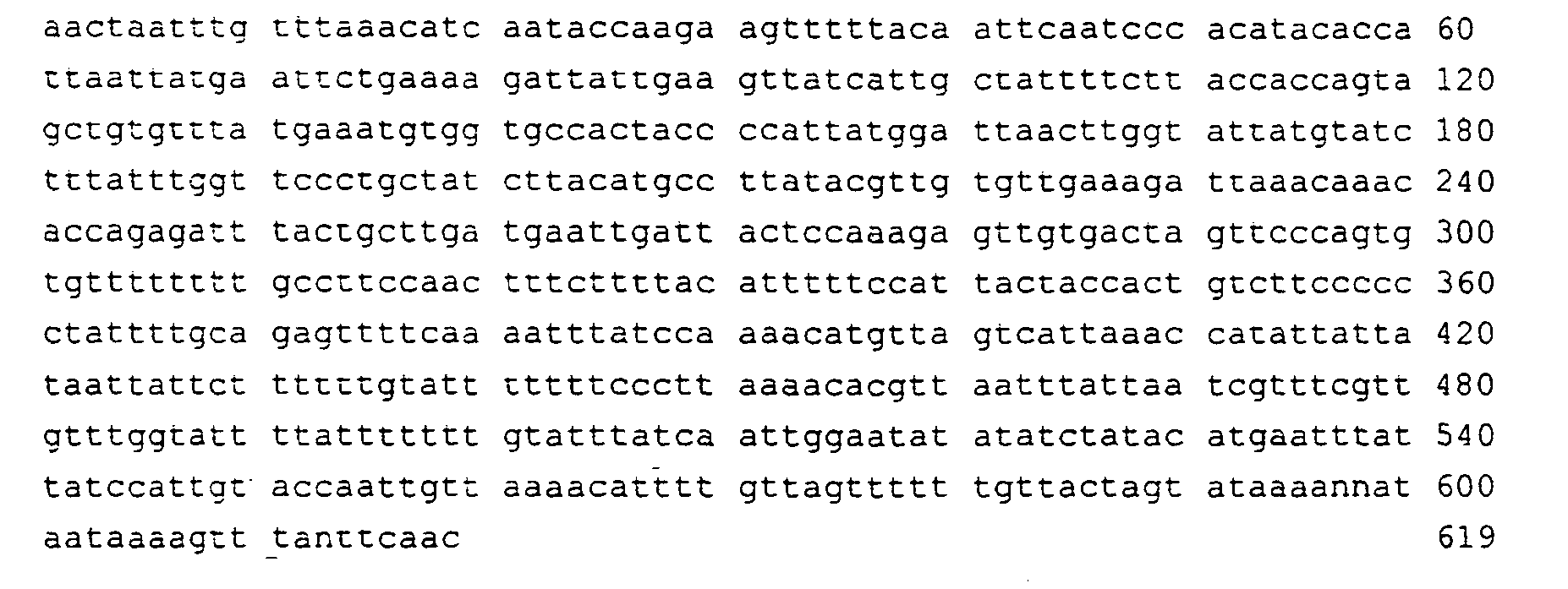
- <210> 7
<211> 2319
<212> DNA
<213> Candida albicans - <400> 7


- <210> 8
<211> 255
<212> DNA
<213> Candida albicans - <400> 8

- <210> 9
<211> 119
<212> DNA
<213> Candida albicans - <400> 9

- <210> 10
<211> 60
<212> PRT
<213> Candida albicans - <400> 10

- <210> 11
<211> 426
<212> PRT
<213> Candida albicans - <400> 11


- <210> 12
<211> 699
<212> PRT
<213> Candida albicans - <400> 12


- <210> 13
<211> 295
<212> PRT
<213> Candida albicans - <400> 13


- <210> 14
<211> 55
<212> PRT
<213> Candida albicans - <400> 14

- <210> 15
<211> 773
<212> PRT
<213> Candida albicans - <400> 15


- <210> 16
<211> 90
<212> PRT
<213> Candida albicans - <400> 16

| Seq ID No. | Figure No. |
| Function | |
| 1 | 1 | 382c_cp | - | |
| 2 | 392c_cp | TUF1 | ||
| 3 | - | |
||
| 4 | 417c_cpG2L | - | ||
| 5 | 323c_af | - | ||
| 6 | 322c_cp1 | - | ||
| 7 | 26g3 | - | ||
| 8 | 409c_cp | - | ||
| 9 | 382c_cpG1L2 | - | ||
| 10 | 6 | 382c_cp (prt) | - | |
| 11 | 392c_cp (prt) | |
||
| 12 | RAD53 | |||
| 13 . | 325c_af (prt)2 | - | ||
| 14 | 322c_cp (prt)2 | - | ||
| 15 | 26g3 (prt) | - | ||
| 16 | 417c_cp 92L (prt) | - |
Claims (16)
- A nucleic acid molecule consisting of mRNA or cDNA encoding a polypeptide which is critical for survival and growth of the yeast Candida albicans and which nucleic acid molecule is at least 70% homologous to the nucleotide sequence illustrated in SEQ ID No.1.
- A nucleic acid molecule encoding a polypeptide which is critical for survival and growth of the yeast Candida albicans and which nucleic acid molecule consists of the sequence of nucleotides illustrated in SEQ ID No.1.
- A polypeptide having at least 70% amino acid homology wich SEQ ID No.10.
- A polypeptide according to claim 3 consisting of Seq ID No.10.
- A nucleic acid molecule according to any of claims 1 to 2 or the nucleotide sequence illustrated in Seq ID No. 1 for use as a medicament.
- Use of a nucleic acid molecule according to any of claims 1 to 2 or the sequence illustrated in Seq ID No 1 in the preparation of a medicament for treating Candida albicans associated diseases.
- A polypeptide according to claim 3 or 4 for use as a medicament.
- Use of a polypeptide according to claim 3 or 4 in the preparation of a medicament for treating Candida albicans associated infections.
- A pharmaceutical composition comprising a nucleic acid molecule according to any of claims 1 to 2 or a polypeptide according to claim 3 or 4 together with a pharmaceutically acceptable carrier diluent or excipient therefor.
- A recombinant DNA construct comprising a nucleic acid molecule according to claim 1 or 2.
- A recombinant DNA construct according to claim 10 wherein said nucleic acid molecule is inserted in the antisense orientation.
- A recombinant DNA construct according to claim 10 or 11 wherein said recombinant DNA construct is an expression vector.
- A construct according to claim 12 which comprises an inducible promoter.
- A construct according to claim 12 or 13 which comprises a sequence encoding a reporter molecule.
- Cells containing a recombinant DNA construct according to any of claims 10 to 14, wherein said cells are bacterial or eukaryotic.
- A method of identifying compounds which selectively modulate expression or functionality of polypeptides or metabolic pathways in which these polypeptides are involved and which are crucial for growth and survival of Candida albicans, which method comprises:(a) contacting a compound to be tested with one or more Candida albicans cells having a mutation in a nucleic acid molecule according to any of claims 1 to 2 which mutation results in overexpression or underexpression of said polypeptides in addition to contacting one or more wild type Candida albicans cells with said compound,(b) monitoring the growth and/or activity of said mutated cell compared to said wild type; wherein differential growth or activity of said one or more mutated Candida cells is indicative of selective action of said compound on a polypeptide or another polypeptide in the same or a parallel pathway.
Priority Applications (1)
| Application Number | Priority Date | Filing Date | Title |
|---|---|---|---|
| EP99966952A EP1135503B1 (en) | 1998-12-04 | 1999-12-06 | Drug targets in candida albicans |
Applications Claiming Priority (4)
| Application Number | Priority Date | Filing Date | Title |
|---|---|---|---|
| EP98204122 | 1998-12-04 | ||
| EP98204122 | 1998-12-04 | ||
| PCT/EP1999/009833 WO2000034481A2 (en) | 1998-12-04 | 1999-12-06 | DRUG TARGETS IN $i(CANDIDA ALBICANS) |
| EP99966952A EP1135503B1 (en) | 1998-12-04 | 1999-12-06 | Drug targets in candida albicans |
Publications (2)
| Publication Number | Publication Date |
|---|---|
| EP1135503A2 EP1135503A2 (en) | 2001-09-26 |
| EP1135503B1 true EP1135503B1 (en) | 2007-02-21 |
Family
ID=8234434
Family Applications (1)
| Application Number | Title | Priority Date | Filing Date |
|---|---|---|---|
| EP99966952A Expired - Lifetime EP1135503B1 (en) | 1998-12-04 | 1999-12-06 | Drug targets in candida albicans |
Country Status (12)
| Country | Link |
|---|---|
| US (2) | US7125970B1 (en) |
| EP (1) | EP1135503B1 (en) |
| JP (1) | JP2004500016A (en) |
| AT (1) | ATE354658T1 (en) |
| AU (1) | AU773378B2 (en) |
| CA (1) | CA2353525A1 (en) |
| DE (1) | DE69935247T2 (en) |
| DK (1) | DK1135503T3 (en) |
| ES (1) | ES2283147T3 (en) |
| IL (1) | IL143494A0 (en) |
| NZ (1) | NZ511410A (en) |
| WO (1) | WO2000034481A2 (en) |
Families Citing this family (2)
| Publication number | Priority date | Publication date | Assignee | Title |
|---|---|---|---|---|
| US6783985B1 (en) | 2000-02-18 | 2004-08-31 | Elitra Pharmaceuticals Inc. | Gene disruption methodologies for drug target discovery |
| CN104342375A (en) * | 2013-07-31 | 2015-02-11 | 中国科学院上海生命科学研究院 | Application of candida albicans SMT3 gene and candida albicans attenuated strain lack of SMT3 gene |
Family Cites Families (8)
| Publication number | Priority date | Publication date | Assignee | Title |
|---|---|---|---|---|
| IL100908A0 (en) * | 1991-02-22 | 1992-11-15 | Salk Inst Biotech Ind | Invertase genes and their use |
| IT1282287B1 (en) * | 1995-05-16 | 1998-03-16 | Ist Superiore Sanita | THE COMPLETE DNA SEQUENCE OF THE CARLUBO INSERT CODING FOR A FORDA HEAT SHCH PROTEIN (CANSP 70) OF CANDIDA ALBICANS ATCC STRAIN |
| CA2250129A1 (en) * | 1996-04-01 | 1997-10-09 | Scriptgen Pharmaceuticals, Inc. | Candida albicans tata-binding protein, nucleic acid and assays |
| US5863762A (en) * | 1996-04-01 | 1999-01-26 | Scriptgen Pharm Inc | Nucleic acids encoding TFIIB transcription factor from candida albicans |
| US5827692A (en) * | 1997-04-24 | 1998-10-27 | Heska Corporation | Dirofilaria and Brugia ankyrin proteins, nucleic acid molecules, and uses thereof |
| US6747137B1 (en) * | 1998-02-13 | 2004-06-08 | Genome Therapeutics Corporation | Nucleic acid sequences relating to Candida albicans for diagnostics and therapeutics |
| CA2490541A1 (en) * | 2002-05-24 | 2003-12-04 | The Regents Of The University Of Michigan | Copper lowering treatment of inflammatory and fibrotic diseases |
| US20050042646A1 (en) * | 2002-08-05 | 2005-02-24 | Davidson Beverly L. | RNA interference suppresion of neurodegenerative diseases and methods of use thereof |
-
1999
- 1999-12-06 JP JP2000586914A patent/JP2004500016A/en not_active Withdrawn
- 1999-12-06 IL IL14349499A patent/IL143494A0/en unknown
- 1999-12-06 AT AT99966952T patent/ATE354658T1/en not_active IP Right Cessation
- 1999-12-06 DE DE69935247T patent/DE69935247T2/en not_active Expired - Fee Related
- 1999-12-06 EP EP99966952A patent/EP1135503B1/en not_active Expired - Lifetime
- 1999-12-06 CA CA002353525A patent/CA2353525A1/en not_active Abandoned
- 1999-12-06 US US09/857,372 patent/US7125970B1/en not_active Expired - Fee Related
- 1999-12-06 WO PCT/EP1999/009833 patent/WO2000034481A2/en not_active Ceased
- 1999-12-06 DK DK99966952T patent/DK1135503T3/en active
- 1999-12-06 NZ NZ511410A patent/NZ511410A/en unknown
- 1999-12-06 ES ES99966952T patent/ES2283147T3/en not_active Expired - Lifetime
- 1999-12-06 AU AU22827/00A patent/AU773378B2/en not_active Ceased
-
2006
- 2006-09-12 US US11/519,693 patent/US20070010448A1/en not_active Abandoned
Also Published As
| Publication number | Publication date |
|---|---|
| WO2000034481A3 (en) | 2000-11-30 |
| ATE354658T1 (en) | 2007-03-15 |
| IL143494A0 (en) | 2002-04-21 |
| CA2353525A1 (en) | 2000-06-15 |
| US7125970B1 (en) | 2006-10-24 |
| DE69935247D1 (en) | 2007-04-05 |
| ES2283147T3 (en) | 2007-10-16 |
| WO2000034481A2 (en) | 2000-06-15 |
| US20070010448A1 (en) | 2007-01-11 |
| DE69935247T2 (en) | 2007-10-31 |
| AU773378B2 (en) | 2004-05-20 |
| DK1135503T3 (en) | 2007-06-18 |
| EP1135503A2 (en) | 2001-09-26 |
| JP2004500016A (en) | 2004-01-08 |
| AU2282700A (en) | 2000-06-26 |
| NZ511410A (en) | 2004-06-25 |
Similar Documents
| Publication | Publication Date | Title |
|---|---|---|
| Sherwood et al. | Characterization of HIR1 and HIR2, two genes required for regulation of histone gene transcription in Saccharomyces cerevisiae | |
| Clark et al. | ACT3: a putative centractin homologue in S. cerevisiae is required for proper orientation of the mitotic spindle. | |
| US5916752A (en) | Telomerase screening methods | |
| US6071700A (en) | Heterologous polypeptide production in the absence of nonsense-mediated MRNA decay functions | |
| JPH07502164A (en) | human cyclin E | |
| US6200803B1 (en) | Essential genes of yeast as targets for antifungal agents, herbicides, insecticides and anti-proliferative drugs | |
| CA2195531A1 (en) | Materials and methods relating to the diagnosis and prophylactic and therapeutic treatment of synovial sarcoma | |
| US7125970B1 (en) | Drug targets in Candida albicans | |
| Aso et al. | Molecular Cloning of DNAs Encoding the Regulatory Subunits of Elongin fromSaccharomyces cerevisiaeandDrosophila melanogaster | |
| EP0982401A2 (en) | Drug targets in Candida albicans | |
| AU782214B2 (en) | Cell death related drug targets in yeast and fungi | |
| Na et al. | The Kluyveromyces gene encoding the general transcription factor IIB: structural analysis and expression in Saccharomyces cerevisiae | |
| EP0894269A1 (en) | Tfiib transcription factor from candida albicans | |
| WO2001038550A2 (en) | Methods for altering the expression of hyphal-specific genes | |
| US6197517B1 (en) | Essential genes of yeast as targets for antifungal agents, herbicides, insecticides and anti-proliferative drugs | |
| JP4842440B2 (en) | Identification of Candida albicans essential fungus-specific genes and their use in the discovery of antifungal agents | |
| EP1117681B1 (en) | Rho-cocotoxin peptides having selective alpha-1 adrenoceptor activity | |
| US5770717A (en) | Nucleic acid encoding a stress-responsive subunit of human RNA polymerase II | |
| WO1999020797A1 (en) | HETEROLOGOUS POLYPEPTIDE PRODUCTION IN THE ABSENCE OF NONSENSE-MEDIATED mRNA DECAY FUNCTION | |
| JP3014295B2 (en) | CNK1 gene | |
| US20020103154A1 (en) | Essential genes of yeast as targets for antifungal agents, herbicides, insecticides and anti-proliferation drugs | |
| JP2002531068A (en) | Candida albicans tfIIIA gene (CatIIIA) and encoded CATFIIIA protein | |
| Nash | Analysis of Cell Size Control in the Teast Saccharomyces Cerevisie: Isolation and Characterization of WHI3, A Dose-Dependant Inhibitor of Start | |
| MXPA01002544A (en) | Essential genes from c. albicans and a method for screening antimycotic substances using said genes | |
| MXPA98008006A (en) | Novedoso transcription factor, tfiib, of candida albicans, sequence of nucleic acids that codify thereof, and methods of selective classification of growth inhibitors of candida albic |
Legal Events
| Date | Code | Title | Description |
|---|---|---|---|
| PUAI | Public reference made under article 153(3) epc to a published international application that has entered the european phase |
Free format text: ORIGINAL CODE: 0009012 |
|
| 17P | Request for examination filed |
Effective date: 20010704 |
|
| AK | Designated contracting states |
Kind code of ref document: A2 Designated state(s): AT BE CH CY DE DK ES FI FR GB GR IE IT LI LU MC NL PT SE |
|
| AX | Request for extension of the european patent |
Free format text: AL PAYMENT 20010704;LT PAYMENT 20010704;LV PAYMENT 20010704;MK PAYMENT 20010704;RO PAYMENT 20010704;SI PAYMENT 20010704 |
|
| 17Q | First examination report despatched |
Effective date: 20030630 |
|
| RTI1 | Title (correction) |
Free format text: DRUG TARGETS IN CANDIDA ALBICANS |
|
| GRAP | Despatch of communication of intention to grant a patent |
Free format text: ORIGINAL CODE: EPIDOSNIGR1 |
|
| RIN1 | Information on inventor provided before grant (corrected) |
Inventor name: VIALARD, JORGE, EDUARDS Inventor name: LOGGHE, MARC, GEORGEUNIVERSITY OF GENT Inventor name: VIAENE, JASMINE, ELZAUNIVERSITY OF GENT Inventor name: LUYTEN, WALTER, HERMAN, MARIA, LOUIS Inventor name: DE BACKER, MARIANNE, DENISE Inventor name: NELISSEN, BART Inventor name: CONTRERAS, ROLAND H.,UNIVERSITY OF GENT |
|
| GRAS | Grant fee paid |
Free format text: ORIGINAL CODE: EPIDOSNIGR3 |
|
| GRAA | (expected) grant |
Free format text: ORIGINAL CODE: 0009210 |
|
| AK | Designated contracting states |
Kind code of ref document: B1 Designated state(s): AT BE CH CY DE DK ES FI FR GB GR IE IT LI LU MC NL PT SE |
|
| AX | Request for extension of the european patent |
Extension state: AL LT LV MK RO SI |
|
| PG25 | Lapsed in a contracting state [announced via postgrant information from national office to epo] |
Ref country code: LI Free format text: LAPSE BECAUSE OF FAILURE TO SUBMIT A TRANSLATION OF THE DESCRIPTION OR TO PAY THE FEE WITHIN THE PRESCRIBED TIME-LIMIT Effective date: 20070221 Ref country code: FI Free format text: LAPSE BECAUSE OF FAILURE TO SUBMIT A TRANSLATION OF THE DESCRIPTION OR TO PAY THE FEE WITHIN THE PRESCRIBED TIME-LIMIT Effective date: 20070221 Ref country code: CH Free format text: LAPSE BECAUSE OF FAILURE TO SUBMIT A TRANSLATION OF THE DESCRIPTION OR TO PAY THE FEE WITHIN THE PRESCRIBED TIME-LIMIT Effective date: 20070221 Ref country code: AT Free format text: LAPSE BECAUSE OF FAILURE TO SUBMIT A TRANSLATION OF THE DESCRIPTION OR TO PAY THE FEE WITHIN THE PRESCRIBED TIME-LIMIT Effective date: 20070221 |
|
| REG | Reference to a national code |
Ref country code: GB Ref legal event code: FG4D |
|
| REG | Reference to a national code |
Ref country code: CH Ref legal event code: EP |
|
| REF | Corresponds to: |
Ref document number: 69935247 Country of ref document: DE Date of ref document: 20070405 Kind code of ref document: P |
|
| REG | Reference to a national code |
Ref country code: IE Ref legal event code: FG4D |
|
| PG25 | Lapsed in a contracting state [announced via postgrant information from national office to epo] |
Ref country code: SE Free format text: LAPSE BECAUSE OF FAILURE TO SUBMIT A TRANSLATION OF THE DESCRIPTION OR TO PAY THE FEE WITHIN THE PRESCRIBED TIME-LIMIT Effective date: 20070521 |
|
| REG | Reference to a national code |
Ref country code: DK Ref legal event code: T3 |
|
| PG25 | Lapsed in a contracting state [announced via postgrant information from national office to epo] |
Ref country code: PT Free format text: LAPSE BECAUSE OF FAILURE TO SUBMIT A TRANSLATION OF THE DESCRIPTION OR TO PAY THE FEE WITHIN THE PRESCRIBED TIME-LIMIT Effective date: 20070723 |
|
| LTIE | Lt: invalidation of european patent or patent extension |
Effective date: 20070221 |
|
| REG | Reference to a national code |
Ref country code: CH Ref legal event code: PL |
|
| REG | Reference to a national code |
Ref country code: ES Ref legal event code: FG2A Ref document number: 2283147 Country of ref document: ES Kind code of ref document: T3 |
|
| PLBE | No opposition filed within time limit |
Free format text: ORIGINAL CODE: 0009261 |
|
| STAA | Information on the status of an ep patent application or granted ep patent |
Free format text: STATUS: NO OPPOSITION FILED WITHIN TIME LIMIT |
|
| 26N | No opposition filed |
Effective date: 20071122 |
|
| PG25 | Lapsed in a contracting state [announced via postgrant information from national office to epo] |
Ref country code: IT Free format text: LAPSE BECAUSE OF NON-PAYMENT OF DUE FEES Effective date: 20071206 Ref country code: GR Free format text: LAPSE BECAUSE OF FAILURE TO SUBMIT A TRANSLATION OF THE DESCRIPTION OR TO PAY THE FEE WITHIN THE PRESCRIBED TIME-LIMIT Effective date: 20070522 |
|
| BERE | Be: lapsed |
Owner name: *JANSSEN PHARMACEUTICA N.V. Effective date: 20071231 |
|
| PG25 | Lapsed in a contracting state [announced via postgrant information from national office to epo] |
Ref country code: MC Free format text: LAPSE BECAUSE OF NON-PAYMENT OF DUE FEES Effective date: 20071231 |
|
| REG | Reference to a national code |
Ref country code: DK Ref legal event code: EBP |
|
| GBPC | Gb: european patent ceased through non-payment of renewal fee |
Effective date: 20071206 |
|
| NLV4 | Nl: lapsed or anulled due to non-payment of the annual fee |
Effective date: 20080701 |
|
| PG25 | Lapsed in a contracting state [announced via postgrant information from national office to epo] |
Ref country code: BE Free format text: LAPSE BECAUSE OF NON-PAYMENT OF DUE FEES Effective date: 20071231 |
|
| PG25 | Lapsed in a contracting state [announced via postgrant information from national office to epo] |
Ref country code: IE Free format text: LAPSE BECAUSE OF NON-PAYMENT OF DUE FEES Effective date: 20071206 Ref country code: DE Free format text: LAPSE BECAUSE OF NON-PAYMENT OF DUE FEES Effective date: 20080701 |
|
| REG | Reference to a national code |
Ref country code: FR Ref legal event code: ST Effective date: 20081020 |
|
| PG25 | Lapsed in a contracting state [announced via postgrant information from national office to epo] |
Ref country code: NL Free format text: LAPSE BECAUSE OF NON-PAYMENT OF DUE FEES Effective date: 20080701 |
|
| PG25 | Lapsed in a contracting state [announced via postgrant information from national office to epo] |
Ref country code: GB Free format text: LAPSE BECAUSE OF NON-PAYMENT OF DUE FEES Effective date: 20071206 |
|
| PG25 | Lapsed in a contracting state [announced via postgrant information from national office to epo] |
Ref country code: DK Free format text: LAPSE BECAUSE OF NON-PAYMENT OF DUE FEES Effective date: 20080102 |
|
| REG | Reference to a national code |
Ref country code: ES Ref legal event code: FD2A Effective date: 20071207 |
|
| PG25 | Lapsed in a contracting state [announced via postgrant information from national office to epo] |
Ref country code: FR Free format text: LAPSE BECAUSE OF NON-PAYMENT OF DUE FEES Effective date: 20071231 Ref country code: ES Free format text: LAPSE BECAUSE OF NON-PAYMENT OF DUE FEES Effective date: 20071207 |
|
| PG25 | Lapsed in a contracting state [announced via postgrant information from national office to epo] |
Ref country code: CY Free format text: LAPSE BECAUSE OF FAILURE TO SUBMIT A TRANSLATION OF THE DESCRIPTION OR TO PAY THE FEE WITHIN THE PRESCRIBED TIME-LIMIT Effective date: 20070221 |
|
| PG25 | Lapsed in a contracting state [announced via postgrant information from national office to epo] |
Ref country code: LU Free format text: LAPSE BECAUSE OF NON-PAYMENT OF DUE FEES Effective date: 20071206 |