EP1134953A2 - Control system for network servers - Google Patents
Control system for network servers Download PDFInfo
- Publication number
- EP1134953A2 EP1134953A2 EP01302403A EP01302403A EP1134953A2 EP 1134953 A2 EP1134953 A2 EP 1134953A2 EP 01302403 A EP01302403 A EP 01302403A EP 01302403 A EP01302403 A EP 01302403A EP 1134953 A2 EP1134953 A2 EP 1134953A2
- Authority
- EP
- European Patent Office
- Prior art keywords
- data
- server
- receiver
- network
- servers
- Prior art date
- Legal status (The legal status is an assumption and is not a legal conclusion. Google has not performed a legal analysis and makes no representation as to the accuracy of the status listed.)
- Withdrawn
Links
- 230000005540 biological transmission Effects 0.000 claims abstract description 7
- 238000004891 communication Methods 0.000 description 4
- 238000010586 diagram Methods 0.000 description 2
- 238000000034 method Methods 0.000 description 2
- 230000004044 response Effects 0.000 description 2
Images
Classifications
-
- H—ELECTRICITY
- H04—ELECTRIC COMMUNICATION TECHNIQUE
- H04L—TRANSMISSION OF DIGITAL INFORMATION, e.g. TELEGRAPHIC COMMUNICATION
- H04L41/00—Arrangements for maintenance, administration or management of data switching networks, e.g. of packet switching networks
- H04L41/08—Configuration management of networks or network elements
- H04L41/0803—Configuration setting
- H04L41/0813—Configuration setting characterised by the conditions triggering a change of settings
- H04L41/082—Configuration setting characterised by the conditions triggering a change of settings the condition being updates or upgrades of network functionality
-
- H—ELECTRICITY
- H04—ELECTRIC COMMUNICATION TECHNIQUE
- H04L—TRANSMISSION OF DIGITAL INFORMATION, e.g. TELEGRAPHIC COMMUNICATION
- H04L69/00—Network arrangements, protocols or services independent of the application payload and not provided for in the other groups of this subclass
- H04L69/40—Network arrangements, protocols or services independent of the application payload and not provided for in the other groups of this subclass for recovering from a failure of a protocol instance or entity, e.g. service redundancy protocols, protocol state redundancy or protocol service redirection
-
- H—ELECTRICITY
- H04—ELECTRIC COMMUNICATION TECHNIQUE
- H04N—PICTORIAL COMMUNICATION, e.g. TELEVISION
- H04N21/00—Selective content distribution, e.g. interactive television or video on demand [VOD]
- H04N21/60—Network structure or processes for video distribution between server and client or between remote clients; Control signalling between clients, server and network components; Transmission of management data between server and client, e.g. sending from server to client commands for recording incoming content stream; Communication details between server and client
- H04N21/61—Network physical structure; Signal processing
- H04N21/6106—Network physical structure; Signal processing specially adapted to the downstream path of the transmission network
- H04N21/6125—Network physical structure; Signal processing specially adapted to the downstream path of the transmission network involving transmission via Internet
-
- H—ELECTRICITY
- H04—ELECTRIC COMMUNICATION TECHNIQUE
- H04N—PICTORIAL COMMUNICATION, e.g. TELEVISION
- H04N21/00—Selective content distribution, e.g. interactive television or video on demand [VOD]
- H04N21/60—Network structure or processes for video distribution between server and client or between remote clients; Control signalling between clients, server and network components; Transmission of management data between server and client, e.g. sending from server to client commands for recording incoming content stream; Communication details between server and client
- H04N21/63—Control signaling related to video distribution between client, server and network components; Network processes for video distribution between server and clients or between remote clients, e.g. transmitting basic layer and enhancement layers over different transmission paths, setting up a peer-to-peer communication via Internet between remote STB's; Communication protocols; Addressing
- H04N21/64—Addressing
- H04N21/6402—Address allocation for clients
-
- H—ELECTRICITY
- H04—ELECTRIC COMMUNICATION TECHNIQUE
- H04N—PICTORIAL COMMUNICATION, e.g. TELEVISION
- H04N21/00—Selective content distribution, e.g. interactive television or video on demand [VOD]
- H04N21/60—Network structure or processes for video distribution between server and client or between remote clients; Control signalling between clients, server and network components; Transmission of management data between server and client, e.g. sending from server to client commands for recording incoming content stream; Communication details between server and client
- H04N21/63—Control signaling related to video distribution between client, server and network components; Network processes for video distribution between server and clients or between remote clients, e.g. transmitting basic layer and enhancement layers over different transmission paths, setting up a peer-to-peer communication via Internet between remote STB's; Communication protocols; Addressing
- H04N21/643—Communication protocols
-
- H—ELECTRICITY
- H04—ELECTRIC COMMUNICATION TECHNIQUE
- H04N—PICTORIAL COMMUNICATION, e.g. TELEVISION
- H04N21/00—Selective content distribution, e.g. interactive television or video on demand [VOD]
- H04N21/60—Network structure or processes for video distribution between server and client or between remote clients; Control signalling between clients, server and network components; Transmission of management data between server and client, e.g. sending from server to client commands for recording incoming content stream; Communication details between server and client
- H04N21/63—Control signaling related to video distribution between client, server and network components; Network processes for video distribution between server and clients or between remote clients, e.g. transmitting basic layer and enhancement layers over different transmission paths, setting up a peer-to-peer communication via Internet between remote STB's; Communication protocols; Addressing
- H04N21/647—Control signaling between network components and server or clients; Network processes for video distribution between server and clients, e.g. controlling the quality of the video stream, by dropping packets, protecting content from unauthorised alteration within the network, monitoring of network load, bridging between two different networks, e.g. between IP and wireless
- H04N21/64746—Control signals issued by the network directed to the server or the client
- H04N21/64761—Control signals issued by the network directed to the server or the client directed to the server
-
- H—ELECTRICITY
- H04—ELECTRIC COMMUNICATION TECHNIQUE
- H04N—PICTORIAL COMMUNICATION, e.g. TELEVISION
- H04N21/00—Selective content distribution, e.g. interactive television or video on demand [VOD]
- H04N21/60—Network structure or processes for video distribution between server and client or between remote clients; Control signalling between clients, server and network components; Transmission of management data between server and client, e.g. sending from server to client commands for recording incoming content stream; Communication details between server and client
- H04N21/65—Transmission of management data between client and server
- H04N21/654—Transmission by server directed to the client
- H04N21/6547—Transmission by server directed to the client comprising parameters, e.g. for client setup
-
- H—ELECTRICITY
- H04—ELECTRIC COMMUNICATION TECHNIQUE
- H04N—PICTORIAL COMMUNICATION, e.g. TELEVISION
- H04N7/00—Television systems
- H04N7/16—Analogue secrecy systems; Analogue subscription systems
- H04N7/173—Analogue secrecy systems; Analogue subscription systems with two-way working, e.g. subscriber sending a programme selection signal
-
- H—ELECTRICITY
- H04—ELECTRIC COMMUNICATION TECHNIQUE
- H04L—TRANSMISSION OF DIGITAL INFORMATION, e.g. TELEGRAPHIC COMMUNICATION
- H04L41/00—Arrangements for maintenance, administration or management of data switching networks, e.g. of packet switching networks
- H04L41/06—Management of faults, events, alarms or notifications
- H04L41/0654—Management of faults, events, alarms or notifications using network fault recovery
- H04L41/0659—Management of faults, events, alarms or notifications using network fault recovery by isolating or reconfiguring faulty entities
- H04L41/0661—Management of faults, events, alarms or notifications using network fault recovery by isolating or reconfiguring faulty entities by reconfiguring faulty entities
Definitions
- the invention to which this application relates is to improvements in a control system for a series of servers which are provided as part of a server network provided particularly, but not necessarily exclusively, to supply information to electrical apparatus which is required by said apparatus to receive same.
- an electronic information supply network which provides information and data to a plurality of electrical apparatus such as a series of broadcast data receivers.
- broadcast data receivers are provided to allow data which is broadcast from a remote location to be decoded and processed into video, audio and/or text which is displayed on a display screen, such as that of a television set, to a user of the apparatus in a premises.
- the receivers are required to be configured in a particular manner in order to allow the same to operate in a uniform manner and to be able to process the data which is received from the remote locations .There is also a need for the receiver configuration to be updated from time to time.
- DHCP Dynamic Host Configuration Protocol
- the network typically includes a plurality of servers which supply the configuration information to the receivers via the network. In practice, if there are a number of servers in the network issuing the configuration information and one, or more, of the servers is issuing information which is incorrect, one of the other servers can indicate to the receiver that the data received from a specified server is invalid and should be discarded.
- the receiver deletes the configuration which has been set up on the basis of the information received and reattempts to obtain the configuration information from the network, but it is likely that the same server which is emitting the incorrect information is accessed and so the system goes into a loop condition in which the receiver continues to obtain incorrect information, deletes the same and then starts again.
- the aim of the present invention is to provide a network system whereby if a server introducing information onto the network is found to be introducing incorrect information the same is disregarded.
- a system for the generation and transmitting of data to a number of items of electrical apparatus comprising a network to which a number of servers are connected, said servers controlled to issue data for distribution through the network to the number of items of electrical apparatus and, on the basis of the data, said electrical items adopt an operating configuration and characterised in that said system further includes memory means which is adapted to identify when incorrect data is issued by a server or servers and identify the server(s) from which the said data issued.
- each of the items of electrical apparatus is a broadcast data receiver which is provided for the reception of data which is broadcast from a remote location, and for the processing of said data to generate audio video and/or text.
- each of the receivers is provided with a memory means in accordance with the invention.
- a signal is sent to the receiver to indicate that the data received is incorrect the data is deleted and the configuration of the receiver changed back to the configuration prior to receipt of the incorrect data.
- an additional step is undertaken inasmuch that the details of the server which issued the incorrect data to the network and hence receiver is stored in that receiver memory means.
- the receiver again searches for the required data from the network, if it is offered data from a server which is identified in the memory means the receiver declines to accept the data and searches for the data from another of the servers. This therefore ensures that the receiver obtains data from the network which is correct and as a result the configuration of the receiver is correct.
- a signal is transmitted from the server or a separate control, around the network such that memory means in each of the receivers receives data which identifies the malfunctioning server and so subsequently each of the receivers refuses to accept the data from the identified server or servers.
- a server which issues incorrect data will in due course be corrected and when this occurs a "clear" signal can be generated to the receivers to clear the server details from the memory means so that the receivers will once more accept data from the server.
- the memory means will act as a historical record of the server or servers from which data should not be accepted.
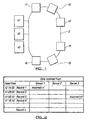
- the network 2 as shown in Figure 1 and herein described has particular uses with respect to a network comprising a number of servers S1, S2, S3 and each of the servers can be controlled to issue what should be the same data into the network.
- the network also includes a number of broadcast data receivers r1, r2, r3, r4, r5, r6, rn. to which the data from the servers is intended to be transferred.
- the transmission of the data can be for updating, changing or otherwise amending the operation of a series of clients in the form of the broadcast data receivers connected to the network and hence in turn to the servers.
- each broadcast data receiver is located in a different premises of a subscriber to a television system and the servers are controlled and operated by the service provider and the data is transferred via a communications link to which each of the broadcast data receivers is connected.
- each of the servers can be providing data to one of the receivers and those receivers which require the data electronically search the network for a free and available server.
- the data which is received can be used to configure and/or alter the configuration of the receiver apparatus.
- Each of the Broadcast data receivers uses the conventional DHCP protocol (RFC2131 and RFC2132) to establish its Internet Protocol (IP) address and other network configuration information. To do this the receiver broadcasts what are known as DHCPDISCOVER messages.
- the DHCP client software which runs on the receiver collects the DHCPOFFER messages which are in turn issued by available servers on the network at that time.
- the DHCP software control on the receiver selects one of the available servers. The selection can be on the basis of a number of criteria which can be predetermined in accordance with particular system requirements and sends to the selected receiver a DHCPREQUEST message to the selected server. The chosen server then responds with a DHCPACK(knowledge) signal and the communication between the server and receiver is completed.
- the other servers in the network can be used to monitor all the transmissions from the other servers on the network. If one of the servers determines, perhaps due to a comparison between the data it is transmitting at that time with the data transmitted by the chosen server, that the chosen server has issued data which is incorrect then it sends to the receiver to which the data has been sent, what is referred to as a DHCPNAK signal to indicate that the receiver should disregard the data received from the chosen server and return to broadcasting the DHCPDISCOVER message to identify another alternative server.
- a DHCPNAK signal to indicate that the receiver should disregard the data received from the chosen server and return to broadcasting the DHCPDISCOVER message to identify another alternative server.
- a new criteria is introduced which is the analysis of whether the DHCPOFFER message which is issued to the receiver, is issued by a server which has already been chosen by the receiver on a previous attempt. These details are held in memory means typically included in each of the receivers and which include an indication as to whether on the previous attempt a DHCPNAK signal was received by the receiver from another server.
- Figure 2 illustrates a segment of a memory means data transfer record in which it is indicated that record 1, the record of the most recent transmission of data, led to an incorrect message being transmitted between server s1 and receiver r1. This means that receiver r1 would then not accept a data offer from server s1 next time.
- the record also shows that the data transfers of records 2 and 4 were performed correctly while record 3 indicates that the server s3 had an incorrect data transmission on record 3 which would indicate to the receivers not to accept a data offer from servers s1 or s3 until a clear signal is generated to indicate that one or both servers have been fixed.
- the receiver will no longer accept the DHCPOFFER message from that server. If there is no indication then the receiver will accept the DHCPOFFER message.
- This analysis prevents the receiver from accepting the new DHCPOFFER signal from a server which has already emitted incorrect data and leads to the receiver accepting the data from another server which has issued the DHCPOFFER signal.
- next accepted server may also provide incorrect data and if this is the case the newly selected server will be added to the memory means and the process of seeking and selecting a server is repeated with, on this occasion, two of the servers being declined.
- the receiver will require, at worst "f+1" attempts to identify and receive data issued by an acceptable server whereas in the conventional system, the number of attempts was unbounded as the receiver could continue to use the same server and receive incorrect data each time.
- a DHCP receiver r1 requires configuration data from the network and upon issuing the DHCPDISCOVER message receives two responses, from server s1 and server s2 with DHCPOFFER messages.
- the receiver chooses the offer from s1 and is issued an IP address by s1 and receives data.
- s2 monitors the data in the form of the IP address an, upon comparison with the correct data, identifies that the IP address data which s1 has offered lies within the range of addresses which is administered exclusively by s2.
- s2 then issues a DHCPNAK message which tells the receiver to ignore the information from s1.
- a record is entered into memory means so that the receiver remembers or can identify from the memory means that the information data from s1 was bad.
- the receiver then restarts the operation of seeking a server.
- the receiver receives offers from both s1 and s2 again but on this occasion selects the offer from s2 because it remembers that s1 issued faulty information the previous time.
- the receiver will clear the whole memory means of faulty servers or clear selected servers as appropriate.
Landscapes
- Engineering & Computer Science (AREA)
- Signal Processing (AREA)
- Multimedia (AREA)
- Computer Networks & Wireless Communication (AREA)
- Computer Security & Cryptography (AREA)
- Small-Scale Networks (AREA)
- Computer And Data Communications (AREA)
Abstract
Description
Claims (9)
- A system for the generation and transmission of data to a number of items of electrical apparatus, said system comprising a network (2) to which a number of servers are connected, said servers controlled to issue data for distribution through the network to the number of items of electrical apparatus and, on the basis of the data, said electrical items adopt an operating configuration characterised in that said system further includes memory means which is adapted to identify when incorrect data is issued by a server or servers and identify the server(s) from which the data is issued.
- A system according to claim 1 characterised in that each of the items of electrical apparatus is a broadcast data receiver.
- A system according to claim 2 characterised in that each broadcast data receiver in the system is provided with memory means.
- A system according to claim 3 characterised in that when incorrect data is issued by a server a signal is generated by the system identifying the server issuing the incorrect data and sent to the broadcast data receivers for storage in said memory means.
- A system according to claim 4 characterised in that if a receiver is sent data from a server which is identified in said memory means, the receiver declines to accept said data.
- A system according to claim 5 characterised in that if a receiver declines to accept data from a particular server in the network (2), the receiver searches for data from another server in the network.
- A system according to claim 4 characterised in that when the receiver identifies data from a particular server as being incorrect, a signal is generated by the system and transmitted around the network such that the memory means in each of the receivers has data which identifies the particular server.
- A system according to claim 4 characterised in that the signal informing the broadcast data receiver of incorrect data being sent from a server is issued from a further server of the system.
- A system according to claim 5 characterised in that when the server issuing incorrect data is corrected to issue correct data, a signal is generated by the system for receipt by the receivers to clear the server details from the memory means.
Applications Claiming Priority (2)
| Application Number | Priority Date | Filing Date | Title |
|---|---|---|---|
| GB0006097 | 2000-03-15 | ||
| GBGB0006097.0A GB0006097D0 (en) | 2000-03-15 | 2000-03-15 | Control system for network servers |
Publications (2)
| Publication Number | Publication Date |
|---|---|
| EP1134953A2 true EP1134953A2 (en) | 2001-09-19 |
| EP1134953A3 EP1134953A3 (en) | 2003-12-10 |
Family
ID=9887577
Family Applications (1)
| Application Number | Title | Priority Date | Filing Date |
|---|---|---|---|
| EP01302403A Withdrawn EP1134953A3 (en) | 2000-03-15 | 2001-03-15 | Control system for network servers |
Country Status (3)
| Country | Link |
|---|---|
| US (1) | US20010032261A1 (en) |
| EP (1) | EP1134953A3 (en) |
| GB (1) | GB0006097D0 (en) |
Family Cites Families (5)
| Publication number | Priority date | Publication date | Assignee | Title |
|---|---|---|---|---|
| JP3332443B2 (en) * | 1993-01-18 | 2002-10-07 | キヤノン株式会社 | Information processing apparatus and information processing method |
| JP4137264B2 (en) * | 1999-01-05 | 2008-08-20 | 株式会社日立製作所 | Database load balancing method and apparatus for implementing the same |
| US6748416B2 (en) * | 1999-01-20 | 2004-06-08 | International Business Machines Corporation | Client-side method and apparatus for improving the availability and performance of network mediated services |
| US6493871B1 (en) * | 1999-09-16 | 2002-12-10 | Microsoft Corporation | Method and system for downloading updates for software installation |
| US6581110B1 (en) * | 1999-12-07 | 2003-06-17 | International Business Machines Corporation | Method and system for reading and propagating authenticated time throughout a worldwide enterprise system |
-
2000
- 2000-03-15 GB GBGB0006097.0A patent/GB0006097D0/en not_active Ceased
-
2001
- 2001-03-15 US US09/808,821 patent/US20010032261A1/en not_active Abandoned
- 2001-03-15 EP EP01302403A patent/EP1134953A3/en not_active Withdrawn
Also Published As
| Publication number | Publication date |
|---|---|
| EP1134953A3 (en) | 2003-12-10 |
| GB0006097D0 (en) | 2000-05-03 |
| US20010032261A1 (en) | 2001-10-18 |
Similar Documents
| Publication | Publication Date | Title |
|---|---|---|
| EP0594353B1 (en) | Method of initializing terminals in a signal distribution system | |
| US9602342B2 (en) | Method of provisioning network elements | |
| KR100702827B1 (en) | System and method for providing continuity of broadcasts between clients | |
| US7228349B2 (en) | System and method for interacting with users over a communications network | |
| US7725594B2 (en) | Assigning priority to network traffic at customer premises | |
| US10412433B2 (en) | Device provisioning | |
| KR100700514B1 (en) | System and method for data retrieval | |
| US20030065716A1 (en) | Service providing system and method therefor | |
| KR20010105387A (en) | A system and method for providing internet broadcasting data based on hierarchical structure | |
| JP2007501557A (en) | Media content sharing experience | |
| EP1662710A2 (en) | Device and method for distributing broadcast services on a local network | |
| KR20020074180A (en) | Method for downloading data preceded by information signals | |
| US20050097610A1 (en) | Distribution of preferences, provisioning and entitlements in clustered, distributed entertainment networks | |
| CA2607635A1 (en) | Communication system | |
| US7203954B1 (en) | IP address discovery for cable modem in set-top box | |
| US7698304B2 (en) | Caching data in a distributed system | |
| EP1134953A2 (en) | Control system for network servers | |
| KR20000021853A (en) | Session and resource operator in video on demand and operating method thereof | |
| US20010052020A1 (en) | Control system for network servers | |
| JP2002300482A (en) | Digital television broadcasting receiver | |
| JP2025127974A (en) | Information processing device and program for information processing device | |
| KR100746954B1 (en) | KOPT / TF server and data transmission method of the server | |
| JP2004005125A (en) | Information processing system, terminal device, and server device | |
| WO2004052011A1 (en) | System and method for broadcasting a video program | |
| KR20060098807A (en) | How to download the program for upgrade |
Legal Events
| Date | Code | Title | Description |
|---|---|---|---|
| PUAI | Public reference made under article 153(3) epc to a published international application that has entered the european phase |
Free format text: ORIGINAL CODE: 0009012 |
|
| AK | Designated contracting states |
Kind code of ref document: A2 Designated state(s): AT BE CH CY DE DK ES FI FR GB GR IE IT LI LU MC NL PT SE TR |
|
| AX | Request for extension of the european patent |
Free format text: AL;LT;LV;MK;RO;SI |
|
| PUAL | Search report despatched |
Free format text: ORIGINAL CODE: 0009013 |
|
| AK | Designated contracting states |
Kind code of ref document: A3 Designated state(s): AT BE CH CY DE DK ES FI FR GB GR IE IT LI LU MC NL PT SE TR |
|
| AX | Request for extension of the european patent |
Extension state: AL LT LV MK RO SI |
|
| AKX | Designation fees paid |
Designated state(s): AT BE CH CY DE DK ES FI FR GB GR IE IT LI LU MC NL PT SE TR |
|
| STAA | Information on the status of an ep patent application or granted ep patent |
Free format text: STATUS: THE APPLICATION IS DEEMED TO BE WITHDRAWN |
|
| 18D | Application deemed to be withdrawn |
Effective date: 20040612 |