EP1134913A2 - Mobile station, base station and mobile communication system with transmission power control - Google Patents
Mobile station, base station and mobile communication system with transmission power control Download PDFInfo
- Publication number
- EP1134913A2 EP1134913A2 EP01105420A EP01105420A EP1134913A2 EP 1134913 A2 EP1134913 A2 EP 1134913A2 EP 01105420 A EP01105420 A EP 01105420A EP 01105420 A EP01105420 A EP 01105420A EP 1134913 A2 EP1134913 A2 EP 1134913A2
- Authority
- EP
- European Patent Office
- Prior art keywords
- transmission power
- power control
- reception quality
- control command
- reception
- Prior art date
- Legal status (The legal status is an assumption and is not a legal conclusion. Google has not performed a legal analysis and makes no representation as to the accuracy of the status listed.)
- Withdrawn
Links
Images


Classifications
-
- H—ELECTRICITY
- H04—ELECTRIC COMMUNICATION TECHNIQUE
- H04W—WIRELESS COMMUNICATION NETWORKS
- H04W52/00—Power management, e.g. Transmission Power Control [TPC] or power classes
- H04W52/04—Transmission power control [TPC]
- H04W52/30—Transmission power control [TPC] using constraints in the total amount of available transmission power
- H04W52/36—Transmission power control [TPC] using constraints in the total amount of available transmission power with a discrete range or set of values, e.g. step size, ramping or offsets
- H04W52/362—Aspects of the step size
-
- H—ELECTRICITY
- H04—ELECTRIC COMMUNICATION TECHNIQUE
- H04W—WIRELESS COMMUNICATION NETWORKS
- H04W52/00—Power management, e.g. Transmission Power Control [TPC] or power classes
- H04W52/04—Transmission power control [TPC]
- H04W52/30—Transmission power control [TPC] using constraints in the total amount of available transmission power
- H04W52/36—Transmission power control [TPC] using constraints in the total amount of available transmission power with a discrete range or set of values, e.g. step size, ramping or offsets
- H04W52/367—Power values between minimum and maximum limits, e.g. dynamic range
-
- H—ELECTRICITY
- H04—ELECTRIC COMMUNICATION TECHNIQUE
- H04W—WIRELESS COMMUNICATION NETWORKS
- H04W52/00—Power management, e.g. Transmission Power Control [TPC] or power classes
- H04W52/04—Transmission power control [TPC]
- H04W52/18—TPC being performed according to specific parameters
- H04W52/24—TPC being performed according to specific parameters using SIR [Signal to Interference Ratio] or other wireless path parameters
-
- H—ELECTRICITY
- H04—ELECTRIC COMMUNICATION TECHNIQUE
- H04W—WIRELESS COMMUNICATION NETWORKS
- H04W52/00—Power management, e.g. Transmission Power Control [TPC] or power classes
- H04W52/04—Transmission power control [TPC]
- H04W52/54—Signalisation aspects of the TPC commands, e.g. frame structure
- H04W52/56—Detection of errors of TPC bits
-
- H—ELECTRICITY
- H04—ELECTRIC COMMUNICATION TECHNIQUE
- H04W—WIRELESS COMMUNICATION NETWORKS
- H04W52/00—Power management, e.g. Transmission Power Control [TPC] or power classes
- H04W52/04—Transmission power control [TPC]
- H04W52/54—Signalisation aspects of the TPC commands, e.g. frame structure
- H04W52/60—Signalisation aspects of the TPC commands, e.g. frame structure using different transmission rates for TPC commands
Definitions
- the present invention relates to a mobile station and a base station as well as a mobile communication system which uses them, and more particularly to a transmission power control system for controlling the transmission power of a mobile communication system such as a car phone or a portable telephone system.
- a plurality of mobile stations use radio waves of the same frequency at the same time to communicate with one or more base stations.
- DS-CDMA direct spread code division multiple access
- a mobile communication system of the DS-CDMA system it is essentially required to control the transmission level of each mobile station at a high speed and with a high degree of accuracy over a wide dynamic range in response to a variation of the distance from the mobile station to the base station or to an instantaneous variation by shadowing of the mobile station by a building or a like structure or by multi-paths of the mobile station.
- the base station measures the reception level in a unit of a time slot of 0.625 ms (milliseconds), and compares the reception level with a reference value to discriminate whether or not the reception level is equal to or higher than the reference level. Then, when the base station discriminates that the reception level is equal to or higher than the reference value, it issues an instruction over the forward-link to vary the transmission level of the mobile station by -1 dB (decibel) . On the contrary, when the base station discriminates that the reception level is lower than the reference value, it issues an instruction over the forward-link to vary the transmission level of the mobile station by +1 dB. The mobile station thus varies the transmission level in accordance with the instruction for the transmission reveal variation received from the base station beginning with a next slot after the reception of the instruction.
- Such a mobile communication system of the closed loop power control system is disclosed, for example, in Japanese Patent Laid-Open No. 79701/1998, Japanese Patent Laid-Open No. 177488/1999 or Japanese Patent No. 2,974,274.
- the mobile communication system of the closed loop power control system described above is disadvantageous in that, when the communication quality by the forward-link is poor, the mobile station is likely to misinterpret the instruction for the transmission level variation received from the base station.
- the base station issues an instruction (for example, of a transmission series of "00") to vary the transmission level of the mobile station by -1 dB (decibel)
- the mobile station may recognize that it receives an instruction (for example, a reception series of "11") to vary the transmission level of the mobile station by +1 dB (decibel) and thus vary the transmission level of the mobile station by +1 dB.
- interference in the reverse-link with some mobile stations at the base station may increase and disturb the communication of the base stations with the other mobile station.
- the base station issues an instruction (for example, of a transmission series of "11") to vary the transmission level of the mobile station by +1 dB (decibel)
- the mobile station may recognize that it receives an instruction (for example, a reception series of "00") to vary the transmission level of the mobile station by -1 dB (decibel) and thus vary the transmission level of the mobile station by -1 dB.
- the communication quality in the reverse-link to the base station may be further deteriorated and possibly cause interruption of the communication.
- a mobile station comprising means for receiving a transmission power control command transmitted over a forward-link from a base station for making a reception condition of a reverse-link at the base station substantially fixed, a reception quality estimation section for estimating the reception quality of the transmission power control command, and a transmission power control section for controlling the transmission power with a control width varied in response to the reception quality estimated by the reception quality estimation section.
- a base station comprising means for receiving a transmission power control command transmitted over a reverse-link from a mobile station for making a reception condition of a forward-link at the mobile station substantially fixed, a reception quality estimation section for estimating the reception quality of the transmission power control command, and a transmission power control section for controlling the transmission power with a control width varied in response to the reception quality estimated by the reception quality estimation section.
- the transmission level thereof can be controlled so that the reception condition through the forward-link by a mobile station may be fixed.
- the reception quality estimation section may estimate the reception quality of the transmission power control command from a reception level of the transmission power control command. This allows the reception quality of the transmission power control command to be estimated and allows the control width of the transmission power to be determined.
- the reception quality estimation section may estimate the reception quality of the transmission power control command from a signal interference rate of the transmission power control command. Also this allows the reception quality of the transmission power control command to be estimated and allows the control width of the transmission power to be determined.
- the reception quality estimation section may estimate the reception quality of the transmission power control command from a bit error rate of a slot which includes the transmission power control command. Also this allows the reception quality of the transmission power control command to be estimated and allows the control width of the transmission power to be determined.
- the reception quality estimation section may estimate the reception quality of the transmission power control command from a level of a channel estimation value which is used for demodulation of the transmission power control command. Also this allows the reception quality of the transmission power control command to be estimated and allows the control width of the transmission power to be determined.
- a mobile communication system comprising a mobile station, and a base station including a transmission power control command production section for transmitting a transmission power control command for the mobile station in response to the reception quality of a reception signal received over a reverse-link from the mobile station, the mobile station including a reception quality estimation section for estimating the reception quality of the transmission power control command from the base station and a transmission power control section for controlling the transmission power with a control width varied in response to the quality estimated by the reception quality estimation section.
- a mobile communication system comprising a base station, and a mobile station including a transmission power control command production section for transmitting a transmission power control command for the base station in response to the reception quality of a reception signal received over a forward-link from the base station, the base station including a reception quality estimation section for estimating the reception quality of the transmission power control command from the mobile station and a transmission power control section for controlling the transmission power with a control width varied in response to the quality estimated by the reception quality estimation section.
- the transmission power of the mobile station or the base station is prevented from being displaced by a great amount in a direction different from the instruction from the base station or the mobile station, and the reception condition from the reverse-link or the forward-link at the base station or the mobile station can be fixed.
- the reception quality estimation section may estimate the reception quality of the transmission power control command from a reception level of the transmission power control command. This allows the reception quality of the transmission power control command to be estimated and allows the control width of the transmission power to be determined.
- the reception quality estimation section may estimate the reception quality of the transmission power control command from a signal interference rate of the transmission power control command. Also this allows the reception quality of the transmission power control command to be estimated and allows the control width of the transmission power to be determined.
- the reception quality estimation section may estimate the reception quality of the transmission power control command from a bit error rate of a slot which includes the transmission power control command. Also this allows the reception quality of the transmission power control command to be estimated and allows the control width of the transmission power to be determined.
- the reception quality estimation section may estimate the reception quality of the transmission power control command from a level of a channel estimation value which is used for demodulation of the transmission power control command. Also this allows the reception quality of the transmission power control command to be estimated and allows the control width of the transmission power to be determined.
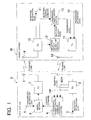
- the mobile communication system includes a base station S and a mobile station M.
- the base station S includes an antenna 1 for receiving a signal of the reverse-link transmitted from the mobile station M, and a reception section (Rx) 2 for despreading and demodulating the signal received by the antenna 1 to produce reception information data.
- the reception information data is outputted from a terminal 3.
- the reception section 2 detects the reception signal intensity (RSSI) as a reception level and estimates an instantaneous signal interference rate (SIR) and a bit error rate (BER) .
- the reception section 2 supplies the detected RSSI and the estimated instantaneous SIR and BER, which are information representative of the reception quality, to a transmission power control command production section 4.
- the transmission power control command production section 4 produces a control command for increasing or decreasing the transmission power of the mobile station in response to the RSSI, instantaneous SIR or BER supplied thereto.
- a threshold value a control command for increasing the transmission power is produced, but when the SIR exceeds the threshold value, another control command for decreasing the transmission power is produced.
- the control command thus produced is supplied to a transmission section (Tx) 7 through a mixing section 6 together with information data supplied from a terminal 5.
- the transmission section 7 performs modulation based on the information data and the control command and further performs spreading to produce a signal for the forward-link.
- the signal for the forward-link is transmitted from an antenna 8. It is to be noted that the control command is composed of 1 bit and indicates increase with the value 1 but indicates decrease with the value 0, and the transmission rate is, for example, 1,600 bps fixed.
- the signal of the forward-link is received by an antenna 9 and despread and demodulated by a reception section 10.
- the reception information data obtained at the reception section 10 is outputted from a terminal 11, and the reception control command obtained similarly is supplied from the reception section 10 to a transmission power control section 13. Further, the RSSI of the reception control command is detected by the reception section 10 and supplied to a reception quality estimation section 12.
- the reception quality estimation section 12 estimates or measures the reception quality of the control command from the value of the RSSI and supplies the estimated reception quality to the transmission power control section 13.
- the transmission power control section 13 instructs a transmission section 15 of an adjustment direction, that is, an increasing or decreasing direction of the transmission power in accordance with the reception control command supplied periodically thereto from the reception section 10 and instructs the transmission section 15 of an adjustment width (step amount) based on the reception quality supplied thereto from the reception quality estimation section 12.
- the transmission power control section 13 instructs the transmission section 15 of increase of the transmission power, but when the reception control command has the value 0, the transmission power control section 13 instructs the transmission section 15 of decrease of the transmission power.
- the transmission power control section 13 when the reception quality is equal to or lower than a certain level, that is, a threshold value set therefor, the transmission power control section 13 instructs the transmission section 15 of an adjustment width of 0.5 dB, but when the reception quality exceeds the level, the transmission power control section 13 instructs the transmission section 15 of another adjustment width of 1.0 dB.
- the transmission section 15 performs modulation based on the transmission information data supplied thereto from a terminal 14 and further performs spreading to obtain a signal for the reverse-link.
- the signal for the reverse-link is transmitted from an antenna 16.
- the transmission power at this time is varied stepwise in accordance with the instruction from the transmission power control section 13. Since the mobile station M estimates the reception quality from the RSSI and varies the adjustment width for the transmission power in response to the reception quality in this manner, even if the reception quality of the mobile station M decreases, the transmission power of the mobile station M is varied with an adjustment width to compensate for the decrease of the reception quality.
- the SIR of the reception control command may be used in place of the RSSI of the reception control command. Further, the reception quality may otherwise be determined based on the RSSI or the SIR of the channel estimation value or the RSSI, SIR or BER of the data part other than the reception control command.
- the adjustment width is limited to two different values, it may have more than two values using a plurality of threshold values.
- the adjustment width may be set to the value 0 so that the transmission power may not vary at all.
- the mobile communication system shown in FIG. 1 may be modified such that each of the base station S and the mobile station M has the construction of the other party described above.
- the modified mobile communication system is shown in FIG. 3.
- the mobile station M includes an antenna 31 for receiving a signal of the forward-link transmitted from the base station S, and a reception section (Rx) 32 for despreading and demodulating the signal received by the antenna 31 to produce reception information data.
- the reception information data is outputted from a terminal 33.
- the reception section 32 detects the reception signal intensity (RSSI) as a reception level and estimates an instantaneous signal interference rate (SIR) and a bit error rate (BER) .
- the detected RSSI and the estimated instantaneous SIR and BER which are information representative of the reception quality, are supplied to a transmission power control command production section 34.
- the transmission power control command production section 34 produces a control command for increasing or decreasing the transmission power of the mobile station M in response to the RSSI, instantaneous SIR and BER supplied thereto.
- the control command is supplied to a transmission section (Tx) 37 through a mixing section 36 together with information data supplied thereto from a terminal 35.
- the transmission section 37 performs modulation based on the information data and the control command and further performs spreading to obtain a signal for the reverse-link.
- the signal for the reverse-link is transmitted from an antenna 38.
- the signal of the reverse-link is received by an antenna 39 and despread and demodulated by a reception section 40.
- the information data obtained at the reception section 40 is outputted from a terminal 41 while the reception control command obtained similarly is supplied to a transmission power control section 43. Further, the RSSI of the reception control command is detected by the reception section 40 and supplied to a reception quality estimation section 42.
- the reception quality estimation section 42 estimates the reception quality of the control command from the value of the RSSI and supplies the estimated reception quality to the transmission power control section 43.
- the transmission power control section 43 instructs a transmission section 45 of an adjustment direction of the transmission power based on the reception control command supplied periodically thereto from the reception section 40 and instructs the transmission section 45 of an adjustment width (step amount) based on the reception quality supplied thereto from the reception quality estimation section 42.
- the transmission section 45 performs modulation based on the transmission information data supplied thereto from a terminal 44 and further performs spreading to obtain a signal for the forward-link.
- the signal for the forward-link is transmitted from an antenna 46.
- the transmission power at this time is varied stepwise in accordance with the instruction from the transmission power control section 43. Since the base station S estimates the reception quality from the RSSI and varies the adjustment width of the transmission power in response to the reception quality in this manner, even if the reception quality at the base station S decreases, the transmission power of the base station is varied with an adjustment width to compensate for the decrease of the reception quality.
- the present invention can be applied also to communication simultaneously with two ore more base stations. Further, the present invention can be applied similarly also to a case wherein the transmission power ratio when a base station transmits signals simultaneously from two or more antennae thereof is determined with a control command from a mobile station by varying the ratio of the transmission power in response to the reception quality.
Landscapes
- Engineering & Computer Science (AREA)
- Computer Networks & Wireless Communication (AREA)
- Signal Processing (AREA)
- Mobile Radio Communication Systems (AREA)
Abstract
Description
Claims (17)
- A mobile station which receives a transmission power control command transmitted over a forward-link from a base station (S) for making a reception condition of a reverse-link at said base station (S) substantially fixed and controls the transmission power thereof, characterized in that it comprises:a reception quality estimation section (12) for estimating the reception quality of the transmission power control command; anda transmission power control section (13) for controlling the transmission power with a control width varied in response to the reception quality estimated by said reception quality estimation section (12).
- A mobile station as set forth in claim 1, wherein said reception quality estimation section (12) estimates the reception quality of the transmission power control command from a reception level of the transmission power control command.
- A mobile station as set forth in claim 1, wherein said reception quality estimation section (12) estimates the reception quality of the transmission power control command from a signal interference rate of the transmission power control command.
- A mobile station as set forth in claim 1, wherein said reception quality estimation section (12) estimates the reception quality of the transmission power control command from a bit error rate of a slot which includes the transmission power control command.
- A mobile station as set forth in claim 1, wherein said reception quality estimation section (12) estimates the reception quality of the transmission power control command from a level of a channel estimation value which is used for demodulation of the transmission power control command.
- A base station which receives a transmission power control command transmitted over a reverse-link from a mobile station (M) for making a reception condition of a forward-link at said mobile station (M) substantially fixed and controls the transmission power thereof, characterized in that it comprises:a reception quality estimation section (42) for estimating the reception quality of the transmission power control command; anda transmission power control section (43) for controlling the transmission power with a control width varied in response to the reception quality estimated by said reception quality estimation section (42).
- A base station as set forth in claim 6, wherein said reception quality estimation section (42) estimates the reception quality of the transmission power control command from a reception level of the transmission power control command.
- A base station as set forth in claim 6, wherein said reception quality estimation section (42) estimates the reception quality of the transmission power control command from a signal interference rate of the transmission power control command.
- A base station as set forth in claim 6, wherein said reception quality estimation section (42) estimates the reception quality of the transmission power control command from a bit error rate of a slot which includes the transmission power control command.
- A base station as set forth in claim 6, wherein said reception quality estimation section (42) estimates the reception quality of the transmission power control command from a level of a channel estimation value which is used for demodulation of the transmission power control command.
- A mobile communication system, comprising:a mobile station (M); anda base station (S) including a transmission power control command production section for transmitting a transmission power control command for said mobile station (M) in response to the reception quality of a reception signal received over a reverse-link from said mobile station (M) ;said mobile station (M) including a reception quality estimation section (12) for estimating the reception quality of the transmission power control command from said base station (S) and a transmission power control section (13) for controlling the transmission power with a control width varied in response to the quality estimated by said reception quality estimation section (12).
- A mobile communication system, comprising:a base station (S); anda mobile station (M) including a transmission power control command production section for transmitting a transmission power control command for said base station (S) in response to the reception quality of a reception signal received over a forward-link from said base station (S);said base station (S) including a reception quality estimation section (42) for estimating the reception quality of the transmission power control command from said mobile station (M) and a transmission power control section (43) for controlling the transmission power with a control width varied in response to the quality estimated by said reception quality estimation section (42).
- A mobile communication system as set forth in claim 11 or 12, wherein said reception quality estimation section (12; 42) estimates the reception quality of the transmission power control command from a reception level of the transmission power control command.
- A mobile communication system as set forth in claim 11 or 12, wherein said reception quality estimation section (12; 42) estimates the reception quality of the transmission power control command from a signal interference rate of the transmission power control command.
- A mobile communication system as set forth in claim 11 or 12, wherein said reception quality estimation section (12; 42) estimates the reception quality of the transmission power control command from a bit error rate of a slot which includes the transmission power control command.
- A mobile communication system as set forth in claim 11 or 12, wherein said reception quality estimation section (12; 42) estimates the reception quality of the transmission power control command from a level of a channel estimation value which is used for demodulation of the transmission power control command.
- A method comprising at least one step corresponding to any feature of at least one of claims 1 to 16.
Applications Claiming Priority (2)
| Application Number | Priority Date | Filing Date | Title |
|---|---|---|---|
| JP2000072049A JP2001268637A (en) | 2000-03-15 | 2000-03-15 | Mobile machine and base station, and mobile communication system using the same |
| JP2000072049 | 2000-03-15 |
Publications (2)
| Publication Number | Publication Date |
|---|---|
| EP1134913A2 true EP1134913A2 (en) | 2001-09-19 |
| EP1134913A3 EP1134913A3 (en) | 2003-03-19 |
Family
ID=18590522
Family Applications (1)
| Application Number | Title | Priority Date | Filing Date |
|---|---|---|---|
| EP20010105420 Withdrawn EP1134913A3 (en) | 2000-03-15 | 2001-03-12 | Mobile station, base station and mobile communication system with transmission power control |
Country Status (3)
| Country | Link |
|---|---|
| US (1) | US6804531B2 (en) |
| EP (1) | EP1134913A3 (en) |
| JP (1) | JP2001268637A (en) |
Cited By (4)
| Publication number | Priority date | Publication date | Assignee | Title |
|---|---|---|---|---|
| WO2002065663A3 (en) * | 2001-02-12 | 2003-02-20 | Qualcomm Inc | Method and apparatus for power control in a wireless communication system |
| EP1500201A4 (en) * | 2002-05-01 | 2006-11-08 | Nokia Corp | Method, device and system for power control step size selection based on received signal quality |
| US7738895B2 (en) | 2002-08-01 | 2010-06-15 | Interdigital Technology Corporation | Power control of point to multipoint physical channels |
| EP2241020A4 (en) * | 2008-01-10 | 2014-06-11 | Ericsson Telefon Ab L M | Method and arrangement for saving radio resources by determining power offset values in the user equipment |
Families Citing this family (19)
| Publication number | Priority date | Publication date | Assignee | Title |
|---|---|---|---|---|
| KR100339034B1 (en) * | 1998-08-25 | 2002-10-11 | 삼성전자 주식회사 | Reverse-loop closed-loop power control device and method in control-split state of code division multiple access communication system |
| AU4779699A (en) * | 1999-06-29 | 2001-01-22 | Nokia Corporation | Power control method and device |
| KR100434042B1 (en) * | 2001-05-19 | 2004-06-04 | 엘지전자 주식회사 | Closed loop power control method for code division multiple access |
| US7266103B2 (en) * | 2001-10-25 | 2007-09-04 | Qualcomm Incorporated | Controlling forward link traffic channel power |
| KR100474287B1 (en) * | 2002-05-30 | 2005-03-10 | 엘지전자 주식회사 | Resource optimum method and apparatus for hand-held terminal |
| JP2004064142A (en) * | 2002-07-24 | 2004-02-26 | Ntt Docomo Inc | Transmission power control method, radio communication system suitable for use in the method, radio base station and mobile station |
| AU2003259409A1 (en) * | 2002-08-30 | 2004-03-19 | Koninklijke Philips Electronics N.V. | Method for transmission power control of a multicast signal |
| US8116253B2 (en) * | 2002-10-08 | 2012-02-14 | Qualcomm Incorporated | Controlling forward and reverse link traffic channel power |
| US6980824B2 (en) * | 2003-04-17 | 2005-12-27 | International Business Machines Corporation | Method and system for optimizing transmission and reception power levels in a communication system |
| US7372901B2 (en) * | 2003-04-30 | 2008-05-13 | Harris Corporation | Method and apparatus for modem rate adaptation |
| GB0326365D0 (en) * | 2003-11-12 | 2003-12-17 | Koninkl Philips Electronics Nv | A radio communication system,a method of operating a communication system,and a mobile station |
| US7620004B2 (en) * | 2004-04-30 | 2009-11-17 | Alcatel-Lucent Usa Inc. | Methods of power overload control in communication systems |
| CA2619445A1 (en) * | 2005-08-29 | 2007-03-08 | Kissei Pharmaceutical Co., Ltd. | Preventive or therapeutic agent for disease caused by decrease in lacrimal fluid |
| JP4805016B2 (en) * | 2006-05-19 | 2011-11-02 | 京セラ株式会社 | COMMUNICATION SYSTEM, COMMUNICATION DEVICE, AND COMMUNICATION RATE CHANGE METHOD |
| JP4189410B2 (en) * | 2006-06-12 | 2008-12-03 | 株式会社東芝 | Wireless communication apparatus and transmission control method |
| TWI449387B (en) * | 2008-08-29 | 2014-08-11 | Realtek Semiconductor Corp | Method and device for adjusting communicating power |
| US9788282B2 (en) * | 2015-11-30 | 2017-10-10 | Veniam, Inc. | Systems and methods for improving fixed access point coverage in a network of moving things |
| US9948512B2 (en) | 2016-01-14 | 2018-04-17 | Veniam, Inc. | Systems and methods for remote configuration update and distribution in a network of moving things |
| US11844030B2 (en) * | 2020-04-02 | 2023-12-12 | Parallel Wireless, Inc. | Uplink link adaptation in 5G base stations |
Family Cites Families (13)
| Publication number | Priority date | Publication date | Assignee | Title |
|---|---|---|---|---|
| US5383219A (en) | 1993-11-22 | 1995-01-17 | Qualcomm Incorporated | Fast forward link power control in a code division multiple access system |
| JPH07283783A (en) | 1994-04-12 | 1995-10-27 | Matsushita Electric Ind Co Ltd | Wireless communication system |
| JP2974274B2 (en) | 1994-05-12 | 1999-11-10 | エヌ・ティ・ティ移動通信網株式会社 | Transmission power control method and transmission power control device |
| JP2803626B2 (en) | 1996-04-05 | 1998-09-24 | 日本電気株式会社 | Transmission power control method for mobile radio terminals |
| JPH1079701A (en) | 1996-09-03 | 1998-03-24 | Fujitsu Ltd | Mobile communication terminal and transmission power control method thereof |
| US6396867B1 (en) | 1997-04-25 | 2002-05-28 | Qualcomm Incorporated | Method and apparatus for forward link power control |
| JPH11177488A (en) | 1997-12-08 | 1999-07-02 | Nec Corp | Transmission power control method in base station of mobile communication system, and the base station and mobile equipment in the mobile communication system |
| CN1296675A (en) | 1998-04-09 | 2001-05-23 | 艾利森电话股份有限公司 | Method for protecting power control commands used for uplink power control |
| JP3471662B2 (en) * | 1998-08-28 | 2003-12-02 | 松下電器産業株式会社 | Transmission / reception apparatus and transmission power control method thereof |
| KR100651457B1 (en) * | 1999-02-13 | 2006-11-28 | 삼성전자주식회사 | Apparatus and Method for Continuous External Circulation Power Control in Discontinuous Transmission Mode of Code Division Multiple Access Mobile Communication System |
| JP2000307512A (en) | 1999-04-19 | 2000-11-02 | Toshiba Corp | Closed loop transmission power control device for mobile radio communication system |
| JP2000349704A (en) | 1999-06-03 | 2000-12-15 | Matsushita Electric Ind Co Ltd | Wireless communication device, transmission power control method in wireless communication device, and recording medium |
| EP1578028B1 (en) * | 1999-07-13 | 2009-03-25 | Alcatel Lucent | A method for improving performances of a mobile radiocommunication system using a power control algorithm |
-
2000
- 2000-03-15 JP JP2000072049A patent/JP2001268637A/en active Pending
-
2001
- 2001-03-07 US US09/799,788 patent/US6804531B2/en not_active Expired - Fee Related
- 2001-03-12 EP EP20010105420 patent/EP1134913A3/en not_active Withdrawn
Cited By (10)
| Publication number | Priority date | Publication date | Assignee | Title |
|---|---|---|---|---|
| WO2002065663A3 (en) * | 2001-02-12 | 2003-02-20 | Qualcomm Inc | Method and apparatus for power control in a wireless communication system |
| EP1971040A1 (en) * | 2001-02-12 | 2008-09-17 | Qualcomm Incorporated | Method and apparatus for power control in a wireless communication system |
| KR100921891B1 (en) * | 2001-02-12 | 2009-10-13 | 콸콤 인코포레이티드 | Method and apparatus for power control in wireless communication system |
| US8605686B2 (en) | 2001-02-12 | 2013-12-10 | Qualcomm Incorporated | Method and apparatus for power control in a wireless communication system |
| US9883460B2 (en) | 2001-02-12 | 2018-01-30 | Qualcomm Incorporated | Method and apparatus for power control in a wireless communication system |
| EP1500201A4 (en) * | 2002-05-01 | 2006-11-08 | Nokia Corp | Method, device and system for power control step size selection based on received signal quality |
| US7738895B2 (en) | 2002-08-01 | 2010-06-15 | Interdigital Technology Corporation | Power control of point to multipoint physical channels |
| US8606282B2 (en) | 2002-08-01 | 2013-12-10 | Signal Trust For Wireless Innovation | Power control of point to multipoint physical channels |
| US9144027B2 (en) | 2002-08-01 | 2015-09-22 | Signal Trust For Wireless Innovation | Power control of point to multipoint physical channels |
| EP2241020A4 (en) * | 2008-01-10 | 2014-06-11 | Ericsson Telefon Ab L M | Method and arrangement for saving radio resources by determining power offset values in the user equipment |
Also Published As
| Publication number | Publication date |
|---|---|
| US6804531B2 (en) | 2004-10-12 |
| JP2001268637A (en) | 2001-09-28 |
| EP1134913A3 (en) | 2003-03-19 |
| US20010023188A1 (en) | 2001-09-20 |
Similar Documents
| Publication | Publication Date | Title |
|---|---|---|
| US6804531B2 (en) | Closed loop power control with adjustable width based on channel quality | |
| US6728292B2 (en) | Combined closed loop/open loop power control in a time division duplex communication system | |
| EP1163737B1 (en) | Combined closed loop/open loop power control in a time division duplex communication system | |
| EP1906547B1 (en) | A radio communication system, a base station apparatus, a mobile station apparatus and transmission power control methods | |
| KR0143836B1 (en) | Transmission Power Control Method of Spread Spectrum Communication System and Spread Spectrum Communication System Applying the Control Method | |
| AU726338B2 (en) | Method for load control, and radio system | |
| US6038220A (en) | Method and apparatus of forward traffic channel power control for CDMA wireless local loop system | |
| EP1128577A1 (en) | Radio communication device and radio communication method | |
| US20010019962A1 (en) | Communication apparatus and transmit power control method | |
| JP3013822B2 (en) | Spread spectrum communication system | |
| US20040214593A1 (en) | Power control during a transmission pause | |
| JP2002246982A (en) | Method for controlling transmitting power, base station, moving unit and mobile communication station | |
| EP1139685B1 (en) | Wireless communication device and transmission power control method | |
| US7058028B1 (en) | Method for controlling the transmission power | |
| US6907259B1 (en) | Radio transceiver | |
| US9008596B2 (en) | Method for regulating the transmission power of a transmitting station, and transmitting station | |
| KR20010062006A (en) | Cdma transmission power control in variable control cycle | |
| US6539234B1 (en) | Radio communication terminal and transmission power control method | |
| JP3478250B2 (en) | Transmission power control method and transmission power control method | |
| WO2004112283A1 (en) | Transmit power control outer loop for improving speech recognition rate management in mobile communications systems | |
| HK1059344B (en) | Combined closed loop/open loop power control in a time division duplex communication system |
Legal Events
| Date | Code | Title | Description |
|---|---|---|---|
| PUAI | Public reference made under article 153(3) epc to a published international application that has entered the european phase |
Free format text: ORIGINAL CODE: 0009012 |
|
| AK | Designated contracting states |
Kind code of ref document: A2 Designated state(s): AT BE CH CY DE DK ES FI FR GB GR IE IT LI LU MC NL PT SE TR |
|
| AX | Request for extension of the european patent |
Free format text: AL;LT;LV;MK;RO;SI |
|
| PUAL | Search report despatched |
Free format text: ORIGINAL CODE: 0009013 |
|
| AK | Designated contracting states |
Kind code of ref document: A3 Designated state(s): AT BE CH CY DE DK ES FI FR GB GR IE IT LI LU MC NL PT SE TR Designated state(s): AT BE CH CY DE DK ES FI FR GB GR IE IT LI LU MC NL PT SE TR |
|
| AX | Request for extension of the european patent |
Extension state: AL LT LV MK RO SI |
|
| 17P | Request for examination filed |
Effective date: 20030210 |
|
| AKX | Designation fees paid |
Designated state(s): DE FR GB IT |
|
| STAA | Information on the status of an ep patent application or granted ep patent |
Free format text: STATUS: THE APPLICATION IS DEEMED TO BE WITHDRAWN |
|
| 18D | Application deemed to be withdrawn |
Effective date: 20090730 |