EP1132098A1 - Gene therapy for cerebrovascular disorders - Google Patents
Gene therapy for cerebrovascular disorders Download PDFInfo
- Publication number
- EP1132098A1 EP1132098A1 EP00961050A EP00961050A EP1132098A1 EP 1132098 A1 EP1132098 A1 EP 1132098A1 EP 00961050 A EP00961050 A EP 00961050A EP 00961050 A EP00961050 A EP 00961050A EP 1132098 A1 EP1132098 A1 EP 1132098A1
- Authority
- EP
- European Patent Office
- Prior art keywords
- gene
- hgf
- vegf
- brain
- hgf gene
- Prior art date
- Legal status (The legal status is an assumption and is not a legal conclusion. Google has not performed a legal analysis and makes no representation as to the accuracy of the status listed.)
- Granted
Links
Images





Classifications
-
- A—HUMAN NECESSITIES
- A61—MEDICAL OR VETERINARY SCIENCE; HYGIENE
- A61K—PREPARATIONS FOR MEDICAL, DENTAL OR TOILETRY PURPOSES
- A61K38/00—Medicinal preparations containing peptides
- A61K38/16—Peptides having more than 20 amino acids; Gastrins; Somatostatins; Melanotropins; Derivatives thereof
- A61K38/17—Peptides having more than 20 amino acids; Gastrins; Somatostatins; Melanotropins; Derivatives thereof from animals; from humans
- A61K38/18—Growth factors; Growth regulators
- A61K38/1833—Hepatocyte growth factor; Scatter factor; Tumor cytotoxic factor II
-
- A—HUMAN NECESSITIES
- A61—MEDICAL OR VETERINARY SCIENCE; HYGIENE
- A61K—PREPARATIONS FOR MEDICAL, DENTAL OR TOILETRY PURPOSES
- A61K38/00—Medicinal preparations containing peptides
- A61K38/16—Peptides having more than 20 amino acids; Gastrins; Somatostatins; Melanotropins; Derivatives thereof
- A61K38/17—Peptides having more than 20 amino acids; Gastrins; Somatostatins; Melanotropins; Derivatives thereof from animals; from humans
- A61K38/18—Growth factors; Growth regulators
- A61K38/1858—Platelet-derived growth factor [PDGF]
- A61K38/1866—Vascular endothelial growth factor [VEGF]
-
- A—HUMAN NECESSITIES
- A61—MEDICAL OR VETERINARY SCIENCE; HYGIENE
- A61P—SPECIFIC THERAPEUTIC ACTIVITY OF CHEMICAL COMPOUNDS OR MEDICINAL PREPARATIONS
- A61P25/00—Drugs for disorders of the nervous system
-
- A—HUMAN NECESSITIES
- A61—MEDICAL OR VETERINARY SCIENCE; HYGIENE
- A61P—SPECIFIC THERAPEUTIC ACTIVITY OF CHEMICAL COMPOUNDS OR MEDICINAL PREPARATIONS
- A61P25/00—Drugs for disorders of the nervous system
- A61P25/28—Drugs for disorders of the nervous system for treating neurodegenerative disorders of the central nervous system, e.g. nootropic agents, cognition enhancers, drugs for treating Alzheimer's disease or other forms of dementia
-
- A—HUMAN NECESSITIES
- A61—MEDICAL OR VETERINARY SCIENCE; HYGIENE
- A61P—SPECIFIC THERAPEUTIC ACTIVITY OF CHEMICAL COMPOUNDS OR MEDICINAL PREPARATIONS
- A61P43/00—Drugs for specific purposes, not provided for in groups A61P1/00-A61P41/00
-
- A—HUMAN NECESSITIES
- A61—MEDICAL OR VETERINARY SCIENCE; HYGIENE
- A61P—SPECIFIC THERAPEUTIC ACTIVITY OF CHEMICAL COMPOUNDS OR MEDICINAL PREPARATIONS
- A61P9/00—Drugs for disorders of the cardiovascular system
-
- A—HUMAN NECESSITIES
- A61—MEDICAL OR VETERINARY SCIENCE; HYGIENE
- A61P—SPECIFIC THERAPEUTIC ACTIVITY OF CHEMICAL COMPOUNDS OR MEDICINAL PREPARATIONS
- A61P9/00—Drugs for disorders of the cardiovascular system
- A61P9/10—Drugs for disorders of the cardiovascular system for treating ischaemic or atherosclerotic diseases, e.g. antianginal drugs, coronary vasodilators, drugs for myocardial infarction, retinopathy, cerebrovascula insufficiency, renal arteriosclerosis
-
- A—HUMAN NECESSITIES
- A61—MEDICAL OR VETERINARY SCIENCE; HYGIENE
- A61K—PREPARATIONS FOR MEDICAL, DENTAL OR TOILETRY PURPOSES
- A61K48/00—Medicinal preparations containing genetic material which is inserted into cells of the living body to treat genetic diseases; Gene therapy
Definitions
- the present invention relates to novel gene therapy agents for treating or preventing cerebrovascular disorders, and novel methods for administration of said gene therapy agents. More preferably, the present-invention relates to therapeutic or preventive agents for cerebrovascular disorders comprising hepatocyte growth factor (HGF) gene and/or vascular endothelial growth factor (VEGF) gene as an active ingredient, or novel administration methods comprising administering said therapeutic or preventive agents to the subarachnoid space.
- HGF hepatocyte growth factor
- VEGF vascular endothelial growth factor
- Cerebral obstructive diseases, moyamoya disease and the like caused by atherosclerosis in the cerebral artery often result in chronic reduction in cerebral blood flow. This state may lead not only to the subsequent cerebral ischemic events but also to neuropathological changes including dementia (Stroke 25:1022-1027, Stroke 29:1058-1062 (1998)); Stroke 24:259-264 (1993); Ann. N. Y. Acad. Sci. 695:190-193 (1993)). However, no effective methods for improving the reduced blood flow in these cerebrovascular disorders have been established yet.
- angiogenesis has been considered to play an important role in recovery from cerebral ischemia and prevention of future attacks.
- angiogenic growth factor A growth factor that has been shown not only to stimulate angiogenesis in vivo, but also to be mitogenic in vitro to the endothelial cell is called "angiogenic growth factor.”
- angiogenic growth factor The therapeutic involvement of angiogenic growth factor was first described in literature by Folkman et al. (N. Eng. J. Med. 285:1182-1186 (1971)). Subsequent research confirmed that recombinant angiogenic factor such as fibroblast growth factor (FGF) family (Science 257:1401-1403 (1992); Nature 362:844-846 (1993)), endothelial growth factor (J. Surg. Res. 54:575-583 (1993)), and vascular endothelial growth factor (VEGF) may be used to promote and/or enhance the development of collateral circulation shunt in animal models of myocardial and hindlimb ischemia (Circulation 90:11-228-11-234 (1994)). Furthermore, the present inventors have found that HGF acts as a endothelium-specific growth factor as does VEGF (J. Hypertens. 14:1067-1072 (1996)).
- FGF fibroblast growth factor
- VEGF vascular endot
- a strategy as described above that employs angiogenic growth factor to treat vascular disorders is called "therapeutic angiogenesis.” More recently, the strategy has been applied to ischemic diseases in humans. However, the effectiveness of the strategy in cerebral ischemia has not been known so far.
- Hepatocyte growth factor is a pleiotropic cytokine that exhibits mitogenic, motility promoting, and morphogenic activity on a variety of cells (Nature 342:440-443 (1989)).
- HGF HGF in combination with c-Met/HGF receptor of a transmembrane tyrosine kinase is expressed at various regions in the brain, and the operative linkage of HGF and c-Met enhances the survival of neurons in the primary culture of hippocampus, and induces neutrite elongation in the development in vitro of neurons (J. Cell. Biol. 126:485-494 (1994); Japanese Unexamined Patent Publication (Kokai) No. 7-89869). Recently, it has been reported that HGF is induced in neurons in ischemia (Brain Res.
- vascular endothelial growth factor is a dimeric glycoprotein mitogenic to the endothelial cell and has an ability of enhancing vascular permeability.
- VEGF has a direct and specific mitogenic effect on the endothelial cell (Biochem. Biophys. Res. Commun. 161:851-858 (1989)).
- the binding sites of VEGF including tyrosine kinase receptor Flt, Flk-1, and KDR occur on the endothelial cell but not on other cell types, thereby limiting the effect of VEGF to the endothelial cell.
- HGF and VEGF are potent angiogenic growth factors as mentioned above (J. Cell. Biol. 119:629-641 (1992)); Biochem. Biophys. Res. Commun. 161:851-858 (1989)).
- Ischemic attacks are known to give rise to active angiogenesis in the periphery of ischemia, which is related to prolonged survival of humans (Stroke 25:1794-1798 (1994)).
- angiogenesis is thought to play an important role in recovery from cerebral ischemia and in prevention of future attacks.
- therapeutic angiogenesis using recombinant HGF or VEGF is actually feasible for cerebral ischemia etc.
- the present invention relates to novel gene therapy agents for treating or preventing cerebrovascular disorders, and novel methods for administration of said gene therapy agents. More preferably, the present invention relates to novel agents for treating and preventing cerebrovascular disorders comprising hepatocyte growth factor (HGF) gene and/or vascular endothelial growth factor (VEGF) gene as an active ingredient, or novel administration methods comprising administering said therapeutic or preventive agents to the subarachnoid space.
- HGF hepatocyte growth factor
- VEGF vascular endothelial growth factor
- the present inventors investigated in vivo whether the introduction of HGF gene and VEGF gene can induce angiogenesis on the surface of an ischemic brain.
- HGF gene and VEGF gene can induce angiogenesis on the surface of an ischemic brain.
- therapy with HGF gene or VEGF gene transfection can induce angiogenesis on the surface of an ischemic brain
- the transfection of HGF gene or VEGF gene is effective in treating reduced blood flow in the brain caused by vascular obstruction
- the therapy is also useful when performed before obstruction.
- the introduction of these genes can be more effectively attained by a novel method of administration i.e., introduction into subarachnoid space.
- the present inventors have found that delayed neuronal death due to ischemia in the hippocampus CA-1 region can be suppressed by the introduction of HGF gene.
- the present invention provides the inventions described in the following (1) to (23).
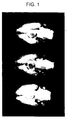
- Fig. 1 is a photograph of morphology of an organism exhibiting the expression of ⁇ -gal ( ⁇ -galactosidase) on the brain surface.
- Bottom the injection of HVJ-liposome (1 ml) into the internal carotid artery; middle, the injection of HVJ-liposome (100 ⁇ l) into the cisterna (subarachnoid space); upper, the injection of HVJ-liposome (20 ⁇ l) into the lateral ventricle.
- n 4 for each group.
- Fig. 2 is a photograph of morphology of an organism exhibiting the expression of ⁇ -gal ( ⁇ -galactosidase) in the brain. Left, the injection into the internal carotid artery; middle, the injection into the lateral ventricle; right, injection into the cisterna (subarachnoid space).
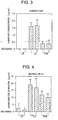
- Fig. 3 is a graph showing the in vivo expression of human HGF protein in the rat cerebrospinal fluid by an ELISA method.
- UT represents the rats treated with an expression vector containing no HGF gene
- 7d represents the rats on day 7 after the introduction of HGF gene
- 14d represents the rats on day 14 after the introduction of HGF gene.
- ⁇ represents the absence of obstruction
- + represents the presence of obstruction in the carotid artery.
- Fig. 4 is a graph showing the in vivo expression of human VEGF protein in the rat cerebrospinal fluid by an ELISA method.
- UT represents the rats treated with an expression vector containing no VEGF gene
- 7d represents the rats on day 7 after the introduction of VEGF gene
- 14d represents the rats on day 14 after the introduction of VEGF gene.
- - represents absence of obstruction in the carotid artery
- + represents the presence of obstruction.
- Fig. 5 is a microphotograph showing the result of cytohistochemical staining of the endothelial cell in the brain and in its periphery before and 7 days after the transfection of HGF gene.
- A (upper left), a brain transfected with a vector (expression vector containing no HGF gene) without obstructing the carotid artery;
- B (upper right), a brain transfected with HGF gene without obstructing the carotid artery;
- C bottom left), a brain transfected with a vector on day 7 after the obstruction of the carotid artery;
- D bottom right
- n 4 for each group.
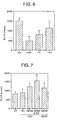
- Fig. 6 is a graph showing changes in cerebral blood flow with time measured by a laser Doppler imager (LDI).
- pre represents before obstruction
- post represents after the obstruction of the carotid artery
- 7d represents 7 days after obstruction
- 14d represents 14 days after obstruction.
- Fig. 7 is a graph showing CBF measured by LDI on day 7 after the obstruction of the carotid artery.
- UP represents the rats treated with an expression vector
- RC represents the rats treated with recombinant HGF (200 ⁇ g)
- GENE represents the rats treated with HGF gene (10 ⁇ g)
- GENE&RC represents the rats treated with recombinant HGF (200 ⁇ g) and HGF gene (10 ⁇ g)
- GENE in VEGF represents the result of the rats treated with VEGF gene (20 ⁇ g/ml).
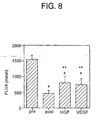
- Fig. 8 is a graph showing CBF measured by LDI before and immediately after the obstruction of the carotid artery.
- pre represents before the obstruction of the carotid artery of the control rats
- post represents immediately after the obstruction of the carotid artery
- HGF represents the result of the rats immediately after carotid artery obstruction that were subjected to HGF transfection 7 days before arterial obstruction
- VEGF represents the result of the rats immediately after carotid artery obstruction that were subjected to VEGF transfection 7 days before arterial obstruction.
- Relative to post **P ⁇ 0.01.
- n 5 for each group.
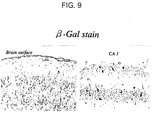
- Fig. 9 is a microphotograph showing the expression of ⁇ -gal ( ⁇ -galactosidase) on the brain surface (brain surface in the figure) and in the hippocampus CA-1 region (CA1 in the figure).
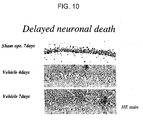
- Fig. 10 is a microphotograph showing the result in which delayed neuronal death was observed in the hippocampus CA-1 region by ischemic stimulation of the bilateral carotid arteries.
- Sham ope. 7 days represents the result on day 7 of the control (surgically treatment only without ischemic stimulation), and Vehicle (4 days, 7 days) represents the result on day 4 and 7 after ischemia of the bilateral carotid arteries, respectively.
- Fig. 11 is a microphotograph showing the result in which delayed neuronal death in the hippocampus CA-1 region was suppressed by the introduction Of HGF gene or recombinant HGF protein before and after ischemic stimulation of the bilateral carotid arteries.
- Post HGF gene (4 days, 7 days) represents the result on day 4 and day 7 in which HGF gene was introduced immediately after ischemia of the bilateral carotid arteries
- Pre HGF gene 7 days represents the result on day 7 in which HGF gene was introduced immediately before ischemia of the bilateral carotid arteries
- r-HGF 7 days represents the result on day 7 in which recombinant HGF protein was introduced immediately after ischemia of the bilateral carotid arteries.
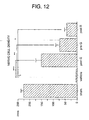
- Fig. 12 is a graph showing the result in which the density of nerve cells in the hippocampus CA-1 region was measured by staining the live nerve cells.
- the ordinate represents the cell density (live nerve cell count/mm).
- Sham in the abscissa represents the result of the control (no ischemic stimulation)
- vehicle represents the result of ischemia of the bilateral carotid arteries
- PostG represents the result in which HGF gene was introduced immediately after ischemia of the bilateral carotid arteries
- PreG represents the result in which HGF gene was introduced before ischemia of the bilateral carotid arteries
- PostR represents the result in which recombinant HGF protein was introduced after ischemia of the bilateral carotid arteries.
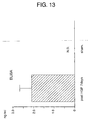
- Fig. 13 is a graph showing the result in which HGF gene was introduced after ischemia of the bilateral carotid arteries and then the protein concentration of HGF in the cerebrospinal fluid 7 days later was measured by an ELISA method.
- the ordinate represents the protein concentration (ng/ml) of HGF
- post HGF on the abscissa represents the result of introduction of HGF gene
- sham represents the result of the control (no ischemic stimulation).
- N.D. represents the result not detected.
- Fig. 14 is a microphotograph showing the result in which the expression of C-Met in the hippocampus CA-1 region was analyzed by an immunostaining method.
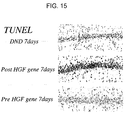
- Fig. 15 is a microphotograph showing the result in which the nerve cells that had apoptosis in the hippocampus CA-1 region were stained by the TUNEL method.
- DND 7 days represents the nerve cells that had delayed neuronal death on day 7 after ischemia of the bilateral carotid arteries
- Post HGF gene 7 days represents the result on day 7 after HGF gene was introduced immediately after ischemia of the bilateral carotid arteries
- Pre HGF gene 7 days represents the result on day 7 after HGF gene was introduced immediately before ischemia of the bilateral carotid arteries.
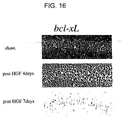
- Fig. 16 is a microphotograph showing the result in which the expression of Bcl-xL in the hippocampus CA-1 region was analyzed by an immunostaining method.
- sham. represents the result of the control (no ischemic stimulation)
- post HGF (4 days, 7 days) represents the result on day 4 and day 7 after HGF gene was introduced immediately after ischemia of the bilateral carotid arteries.
- Fig. 17 is a microphotograph showing the result in which HSP70 expression in the hippocampus CA-1 region on day 7 after the introduction of HGF gene immediately after ischemia of the bilateral carotid arteries was analyzed by an immunostaining method.
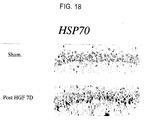
- Fig. 18 is a microphotograph showing the result in which HSP70 expression in the hippocampus CA-1 region was analyzed by an immunostaining method.
- Sham. represents the result of the control (no ischemic stimulation)
- Post HGF 7D represents the result on day 7 after the introduction of HGF gene immediately after ischemia of the bilateral carotid arteries.
- HGF gene means a gene that can express HGF (HGF protein). Specifically, there can be mentioned one in which cDNA of HGF as described in Nature 342:440 (1989); Patent Publication No., 2777678; Biochem. Biophys. Res. Commun. 163:967 (1989); and Biochem. Biophys. Res. Commun. 172:321 (1990) was integrated into a suitable expression vector (nonviral vector, viral vector) as described below.
- a suitable expression vector nonviral vector, viral vector
- a suitable DNA portion is used as a PCR primer; for example, by performing a RT-PCR reaction on mRNA derived from the liver or leukocytes, cDNA of HGF can be cloned.
- a RT-PCR reaction on mRNA derived from the liver or leukocytes, cDNA of HGF can be cloned.
- Such cloning can easily be performed by a person skilled in the art according to a basic textbook such as Molecular Cloning 2nd Ed., Cold Spring Harbor Laboratory Press (1989).
- the HGF gene of the present invention is not limited to those described above, but any gene may be used as the HGF gene of the present invention as long as the protein expressed by said gene can act in virtually the same manner as HGF.
- any gene may be used as the HGF gene of the present invention as long as the protein expressed by said gene can act in virtually the same manner as HGF.
- DNA that hybridizes to said cDNA under a stringent condition and 2) DNA encoding a protein comprising an amino acid sequence in which one or a plurality of (preferably several) amino acids have been substituted in, deleted from, and/or added to the amino acid sequence of the protein encoded by said cDNA and the like, those that encode a protein having an action as HGF are encompassed in the category of HGF gene of the present invention.
- DNA in the above 1) and 2) may be easily obtained by site-directed mutagenesis, a PCR method, or a standard hybridization method and the like, and specifically they may be performed with reference to a basic textbook such as the above Molecular Clo
- VEGF gene means a gene that can express VEGF (VEGF protein).
- VEGF protein VEGF protein
- suitable expression vector nonviral vector, viral vector
- VEGF121, VEGF165, VEGF189, VEGF206 4 subtypes
- any of these VEGF genes can be used, but from the viewpoint of being biologically most potent, VEGF165 gene is most preferred.
- modified versions of these VEGF genes are encompassed in the category of the VEGF gene of the present invention as long as they encode a protein having an activity as VEGF.
- Said VEGF gene as in the case of HGF gene, may be easily cloned by a person skilled in the art based on sequences as previously described (for example, Science 246:1306 (1989)) and sequence information registered in databases, and their modification-can also be easily performed.
- the present invention revealed, for the first time, that (a) after the transfection of HGF gene or VEGF gene, these proteins are detected in the brain over a prolonged period of time, (b) by treatment using HGF gene or VEGF gene transfection, angiogenesis can be induced on the surface of an ischemic brain, (c) the transfection of HGF gene or VEGF gene is effective in treating reduced blood flow in the brain caused by obstruction in the blood vessels, and (d) this treatment method is also effective when performed before obstruction.
- HGF gene and VEGF gene may be effectively used as a therapeutic or preventive agent for various cerebrovascular disorders such as disorders resulting from cerebral ischemia, disorders associated with reduced blood flow in the brain, disorders for which improvement is expected by promoting angiogenesis in the brain, and the like.
- the therapeutic or preventive agents of the present invention are simply designated as gene therapy agents) for cerebrovascular obstruction, cerebral infarction, cerebral thrombosis, cerebral embolism, stroke (including subarachnoid bleeding, transient cerebral ischemia, cerebral atheroscrelosis), cerebral bleeding, moyamoya disease, cerebrovascular dementia, Alzheimer's dementia, sequelae of cerebral bleeding or cerebral infarction, and the like.
- HGF gene has an effect of suppressing neuronal death in the brain.
- this effect is based on the c-Met-mediated apoptosis-suppressing effect of nerve cells.
- the hippocampus CA-1 region as used herein is a region that is densely populated with nerves and a region that is susceptible to neuronal death by cerebral ischemia.
- Such HGF gene has been found to be able to treat and prevent cerebrovascular disorders based on the both of the angiogenic effect (suppression of reduced blood flow) and the nerve cell protective effect.
- HGF gene Since HGF gene has c-Met-mediated nerve cell protecting effect as described above, it can be effectively used as a therapeutic or preventive agent for neurodegenerative diseases such as Alzheimer's disease, Alzheimer's senile dementia, amyotrophic lateral sclerosis, or Parkinson's disease.
- HGF gene and VEGF gene may be used alone or in combination with each other. They can also be used in combination with the gene of other vascular endothelial growth factors. Furthermore, HGF gene and/or VEGF gene may be used in combination with HGF protein and/or VEGF protein. Preferred are a combination of HGF gene and HGF protein or of VEGF gene and VEGF protein, more preferably of HGF gene and HGF protein. See Example 4 below for details.
- HGF protein as used herein may be obtained by any method as long as it has been purified to the extent it may be usable as a pharmaceutical drug.
- Commercially available products for example Toyoboseki k.k., Code No. HGF-101, etc.
- cDNA of HGF obtained by cloning mentioned above is inserted into any suitable expression vector, which is introduced into a host cell to obtain a transformant, from the culture supernatant of which transformant may be obtained recombinant HGF protein of interest (see, for example, Nature 342:440 (1989); Patent Publication No. 2777678).
- VEGF protein can also be obtained in a similar manner.
- the dosage regimens are roughly divided into two: a case in which a nonviral vector is used, and a case in which a viral vector is used.
- the methods of preparation and administration thereof are explained in detail in experimental manuals (Separate volume of Experimental Medicine, Basic Technology in gene therapy, Yodosha (1996); Separate volume of Experimental Medicine, Experimental Methods in Gene Introduction and Expression Analysis, Yodosha (1997); Handbook for Development and Research of Gene Therapy, edited by Japan Society of Gene Therapy, NTS (1999)). This will be explained in specific terms below.
- a recombinant expression vector in which a gene of interest has been integrated into a commonly used gene expression vector may be used to introduce the gene of interest into cells or tissue by the following method etc.
- the lipofection method As a method of gene introduction into cells, there can be mentioned the lipofection method, the calcium phosphate co-precipitation method, the DEAE-dextran method, direct DNA introduction methods using micro glass tubes, and the like.
- a recombinant expression vector may be incorporated into the cell by subjecting any of a method of gene introduction with internal type liposome, a method of gene introduction with electrostatic type liposome, the HVJ-liposome method, the improved HVJ-liposome method (HVJ-AVE liposome method), the receptor-mediated gene introduction method, a method of introducing DNA molecules together with carriers (metal particles) by a particle gun, a method of directly introducing naked-DNA, a method of introduction with positively-charged polymers and the like.
- HVJ-liposome is a fusion product prepared by enclosing DNA into liposome made of lipid bilayer, which was fused to inactivated Sendai virus (Hemagglutinating virus of Japan: HVJ).
- the HVJ-liposome method is characterized by a very high fusing activity with the cell membrane compared to the conventional liposome method, and is a preferred mode of introduction.
- the literature Separate volume of Experimental Medicine, Basic Technology in gene therapy, Yodosha (1996); Experimental Methods in Gene Introduction and Expression Analysis, Yodosha (1997); J. Clin. Invest. 93:1458-1464 (1994); Am. J.
- HVJ the Z strain (available from ATCC) is preferred, but other HVJ strains (for example, ATCC VR-907 and ATCC VR-105) may also be used.
- the method of directly introducing naked-DNA is the most simple method among the methods described above, and in this regard a preferred method of introduction.
- Expression vectors as used herein may be any expression vectors as long as they permit the expression in vivo of the gene of interest, and include, for example, expression vectors such as pCAGGS (Gene 108:193-200 (1991)), pBK-CMV, pcDNA3.1, pZeoSV (Invitrogen, Stratagene) and the like.
- Representative methods use, as viral vectors such as recombinant adenovirus, retrovirus and the like. More specifically, the gene of interest can be introduced into DNA virus or RNA virus such as detoxified retrovirus, adenovirus, adeno-associated virus, herpesvirus, vaccinia virus, poxvirus, poliovirus, Sindbis virus, Sendai virus, SV40, human immunodeficiency virus (HIV) and the like, which is then infected to the cell to introduce the gene into the cell.
- DNA virus or RNA virus such as detoxified retrovirus, adenovirus, adeno-associated virus, herpesvirus, vaccinia virus, poxvirus, poliovirus, Sindbis virus, Sendai virus, SV40, human immunodeficiency virus (HIV) and the like, which is then infected to the cell to introduce the gene into the cell.
- the efficiency of infection is known to be the highest with adenovirus than with other viral vectors.
- Sites for administration to patients are selected depending on the disease, disease state and the like to be treated. For example, in addition to making a hole directly into the cranium and introducing the gene therethrough, there is administration to the lateral ventricle or administration to the subarachnoid space. Among them, administration to the subarachnoid space is a novel and efficient method of administration that was disclosed in the present invention. The administration to the subarachnoid space is desired when it is intended to treat the disease based on the original purpose, i.e. when reduced blood flow in the brain is treated by angiogenesis and/or by suppressing neuronal death in the brain.
- Dosage forms may take various forms according to various administration regimens described above (for example, liquids).
- an injection containing the gene as an active ingredient When, for example, an injection containing the gene as an active ingredient is to be used, said injection may be prepared according to a standard method. For example, after dissolving in a suitable solvent (a buffer such as PBS, physiological saline, sterile water, etc.), it is filter-sterilized with filter as needed, and then filled into sterilized containers. Commonly used carriers etc. may be added to the injection.
- a suitable solvent a buffer such as PBS, physiological saline, sterile water, etc.
- Commonly used carriers etc. may be added to the injection.
- liposomes such as HVJ-liposome, they may take the form of suspensions, frozen formulations, centrifugation-concentrated frozen formulations and the like.
- a sustained release preparation (minipellet formulation, etc.) may be prepared and implanted near the affected region, or it can be administered to the affected area continuously and gradually using an osmotic pump etc.
- the content of DNA in the formulation may be controlled as appropriate depending on the disease to be treated, age and weight of the patient, etc., and usually it is in the range of 0.0001-100 mg, preferably 0.001-10 mg, as the DNA of the present invention, which is preferably given every few days to every few months.
- mice Male Sprague Dawley rats (350-400 g; Charles River Japan, Atsugi city, Japan) were anesthetized with pentobarbital sodium (50 mg/kg, intraperitoneal), and were allowed to breathe spontaneously during surgery. By midline neck incision, the bilateral carotid arteries were exposed, and were tightly ligated by 2-0 silk.
- HVJ-liposome The method used to prepare HVJ-liposome is as previously described (J. Clin. Invest. 93:1458-1464 (1994); Am. J. Physiol. 271:R1212-1220 (1996)). Briefly, phosphatidyl serine, phosphatidyl choline, and cholesterol were mixed at a weight ratio of 1:4.8:2. Tetrahydrofuran was removed by rotary evaporator to allow the lipid mixture (10 mg) to deposit on the side wall of the flask.
- the dried lipid was hydrated in 200 ⁇ l of a balanced salt solution (BSS: 137 ⁇ M NaCl, 5.4 ⁇ M KC1, 10 ⁇ M Tris-HCl, pH 7.6) having an expression vector in which the gene of interest had been inserted.
- BSS balanced salt solution
- Liposomes in the control group contain an expression vector having no gene of interest (BSS 200 ⁇ l). Liposomes were prepared by shaking and ultrasonication.
- HVJ Purified HVJ (Z strain) was inactivated by UV irradiation (110 erg/mm 2 per second) for 3 minutes immediately prior to use.
- a liposome mixture (0.5 ml containing 10 mg of lipid) was mixed with HVJ (10,000 hemagglutination units in a total volume of 4 ml). The mixture was incubated at 4°C for 5 minutes, and then at 37°C for 30 minutes while shaking gently. Free HVJ was removed from the HVJ-liposome by sucrose density gradient centrifugation. The uppermost layer of the sucrose gradient was collected and used.
- the final concentration of plasmid DNA was equal to 20 ⁇ g/ml when calculated as previously reported (J. Clin. Invest. 93:1458-1464 (1994); Am. J. Physiol. 271:R1212-1220 (1996)).
- the method of preparation has been optimized so as to attain the maximum transfection efficiency.
- the anesthetized rats were placed in a stereotaxic apparatus (Narishige Scientific Instrument Laboratory, Tokyo, Japan) to expose the cranium.
- a stainless steel canula (30 gauge; Becton Dickinson, Franklin Lakes, NJ) with a specifically designed Teflon connector (FEP tube, Bioanalytical Systems, West Lafayette, IN) was introduced into the left lateral ventricle ad previously described (Am. J. Physiol. 271:R1212-1220 (1996)).
- the stereotaxic coordinate was as follows: behind the bregma, 1.3 mm; side of the midline, 2.1 mm; and under the cranial surface, 3.6 mm.
- the HVJ-liposome complex was injected to the lateral ventricle (20 ⁇ l). After the injection of the HVJ-liposome complex, the injection canula was removed. No behavioral changes such as spasm in the extremities and abnormal movement were observed in any animal that received injection.
- the head of each animal was fixed at a horizontal position, and the atlantoccipital membrane was exposed by the midline incision of the occipital bone.
- a stainless steel canula (27 gauge; Becton Dickinson, Franklin Lakes, NJ) was introduced into the subarachnoid space. The position of the canula was confirmed, and in order to avoid increases in intracranial pressure, 100 ⁇ l of cerebrospinal fluid was removed. Then the HVJ-liposome solution (100 ⁇ l: 100 ⁇ g/ml) was carefully injected into the cisterna (subarachnoid space) over more than one minute. Then the animal was placed with the head down for 30 minutes. A preventive dosage of antibiotics (30,000 U penicillin) was administered to complete the sterile procedure.
- the LDI system (Moore Instruments Ltd., Devon, UK) has a 2 W built-in helium-neon laser in order to generate a beam that continuously scans to a depth of 600 ⁇ m of the tissue surface of 12 ⁇ 12 cm.
- a photodiode collects the scattered light in the opposite direction, and thereby variation in the original light strength are converted into voltage variation in the range of 0-10 V.
- a perfusion output value at 0 V was graduated at 0% perfusion, and 10 V was graduated at 100% perfusion.
- perfusion at the brain surface was recorded before, immediately after, 7 and 14 days after obstruction.
- a bone window of 12 ⁇ 12 cm was made using an electric drill. On this bone window, continuous measurement values were obtained. Color-coded images were recorded, and analysis was performed by calculating mean perfusion values for each rat. In order to consider variables containing ambient light and temperature, calculated values of perfusion were expressed as ratios of the brain after (ischemia) to before (nontreatment).
- biotin-tagged secondary antibody compatible with the species and then avidin-biotin peroxidase complex (Vectastain ABC kit, PK6100, Vector laboratories, Burlingame, CA) were incubated. Antibody binding was visualized using diaminobenzidine. Primary antibody was omitted and stained with unrelated immunoglobulin compatible with the type and class in order to use as a negative control for each antibody.
- CSF 100 ⁇ l obtained from rats before, 7 and 14 days after the obstruction of the bilateral carotid arteries was used in the experiments.
- Rat and human HGFs were determined by an ELISA kit (Institute of Immunology, Tokyo), and human VEGF was also determined by an ELISA kit (R&D systems, Minneapolis, MN).
- cDNA of human HGF (Patent No. 2777678) was cloned by a standard method, which was inserted into an expression vector pcDNA (manufactured by Invitrogen) and used as human HGF gene.
- cDNA of human VEGF165 (Science 246:1306 (1989)) was cloned by a standard method, which was inserted into an expression vector pUC-CAGGS and used as human VEGF gene.
- a recombinant expression vector in which cDNA of human HGF (Patent No. 2777678) was inserted into an expression vector pcDNA (manufactured by Invitrogen), Chinese hamster ovary cells (ATCC) or C-127 cells (ATCC) were transfected, and from the culture medium thereof human recombinant HGF was purified by a standard method and used.
- ⁇ -galactosidase gene manufactured by Invitrogen, concentration in HVJ-liposome: 20 ⁇ g/ml was used to prepare HVJ-liposome as described in the above materials and experimental method.
- HVJ-liposome complex was injected directly into the internal carotid artery and was allowed to reach the brain.
- the intraarterial injection in the above carotid artery little expression in the brain or microvascular endothelial cells was generated on day 3 and 7 after the injection (data not shown). Therefore, HVJ-liposome was injected into the lateral ventricle and the subarachnoid space.
- the injection of ⁇ -galactosidase gene by the HVJ-liposome method gave rise to marked expression of ⁇ -gal on day 3 and 7 after the injection (Fig. 1 and Fig. 2).
- human HGF and VEGF were determined in the CSF of the control rats (treated with an expression vector in which no HGF gene or VEGF gene were introduced) before, 7 and 14 days after the obstruction of the bilateral carotid arteries, and no concentration of these proteins was detected (Fig. 3 and Fig. 4).
- the concentration of human HGF protein was determined in the CSF of the rats in which HGF gene (concentration in HVJ-liposome: 20 ⁇ g/ml) was introduced into the subarachnoid space immediately after the carotid artery obstruction.
- human HGF was detected but not rat HGF (Fig. 3).
- rats (1.63 ⁇ 0.16 ng/ml) in which the carotid artery was obstructed and the rats (1.67 ⁇ 0.29 ng/ml) in which the carotid artery was not obstructed.
- human HGF was detected (0.40 ⁇ 0.04 ng/ml) (Fig. 3).
- VEGF gene concentration in HVJ-liposome: 20 ⁇ g/ml
- concentration in human VEGF in the CSF was much lower than HGF
- CBF in the rat was measured before and after the obstruction of the bilateral carotid arteries.
- changes in CBF of the rats in which gene was not introduced were analyzed before, immediately after, 7 and 14 days after obstruction.
- CBF decreased immediately after obstruction of the bilateral carotid arteries, and gradually increased with time (Fig. 6).
- CBF was markedly lower on day 7 and 14 after obstruction compared to the non-treated rats (Fig. 6).
- the rats treated with recombinant HGF 200 ⁇ g
- HGF gene concentration in HVJ-liposome: 20 ⁇ g/ml
- HGF gene concentration in HVJ-liposome: 20 ⁇ g/ml
- HGF gene concentration in HVJ-liposome: 20 ⁇ g/ml
- HGF gene concentration in HVJ-liposome: 20 ⁇ g/ml
- HGF gene concentration in HVJ-liposome: 20 ⁇ g/ml
- HGF gene and HGF gene were injected to the subarachnoid space in a manner similar to that in Examples 2 and 3.
- Each treatment was performed 10 minutes after carotid artery obstruction.
- no marked increases in CBF were observed compared to the control rats (control: 886.1 ⁇ 99.6, recombinant HGF: 985.5 ⁇ 142.4) (Fig. 7).
- VEGF gene also enhanced CBF (1122.8 ⁇ 265.3) (Fig. 7), VEGF gene was also shown to be effective in improving reduced blood flow in the brain.
- HVJ-liposome complex containing human HGF gene and human recombinant HGF used in the experiment were prepared in the same manner as in the above Experiment I.
- mice Male Mongolian gerbils (weight: 50-70 g) were used. The animals were bred in a room of which temperature was maintained at 24°C and water and the feed were given ad libitum. The Mongolian gerbils were divided into five groups.
- “sham” the control group (group with no ischemic stimulation)
- “vehicle” the group with 5-min ischemia of the bilateral carotid arteries
- post G the group with HGF gene introduction after 5-min ischemia of the bilateral carotid arteries
- pre G the group with HGF gene introduction before 5-min ischemia of the bilateral carotid arteries
- post R the group with one-time administration of recombinant HGF gene after 5-min ischemia of the bilateral carotid arteries.
- Body temperature (the temperature of the rectum) was always monitored to maintain at around 37°C using a heat pad. After the bilateral carotid arteries were exposed, blood flow was completely blocked using a blood vessel clip for 5 minutes. Thereafter, the clip was released to restore blood flow.
- human HGF gene (20 ⁇ g) was introduced from the subarachnoid space to the cerebrospinal cavity using the HVJ-liposome method. Recombinant HGF (30 ⁇ g) was given from the subarachnoid space to cerebrospinal cavity immediately after the surgical treatment. After the surgery also, the cage was maintained at 37°C to wait for recovery to occur. The control group was treated in the same manner as in the other groups except blood flow blocking.
- the brain was extracted and the sections were HE stained, TUNEL stained, and immunostained before performing histopathological analysis.
- the concentration of HGF in the cerebrospinal fluid was measured using a human HGF ELISA analysis.
- novel therapeutic or preventive agents for cerebrovascular disorders comprising HGF gene and/or VEGF gene as an active ingredient, and novel administration methods comprising administering said therapeutic or preventive agents to the subarachnoid space.
Landscapes
- Health & Medical Sciences (AREA)
- Life Sciences & Earth Sciences (AREA)
- Engineering & Computer Science (AREA)
- Bioinformatics & Cheminformatics (AREA)
- Pharmacology & Pharmacy (AREA)
- Veterinary Medicine (AREA)
- Public Health (AREA)
- General Health & Medical Sciences (AREA)
- Chemical & Material Sciences (AREA)
- Animal Behavior & Ethology (AREA)
- Medicinal Chemistry (AREA)
- Gastroenterology & Hepatology (AREA)
- Organic Chemistry (AREA)
- Nuclear Medicine, Radiotherapy & Molecular Imaging (AREA)
- General Chemical & Material Sciences (AREA)
- Chemical Kinetics & Catalysis (AREA)
- Epidemiology (AREA)
- Proteomics, Peptides & Aminoacids (AREA)
- Immunology (AREA)
- Zoology (AREA)
- Neurosurgery (AREA)
- Vascular Medicine (AREA)
- Neurology (AREA)
- Biomedical Technology (AREA)
- Heart & Thoracic Surgery (AREA)
- Cardiology (AREA)
- Urology & Nephrology (AREA)
- Psychiatry (AREA)
- Hospice & Palliative Care (AREA)
- Biotechnology (AREA)
- Genetics & Genomics (AREA)
- Molecular Biology (AREA)
- Medicines That Contain Protein Lipid Enzymes And Other Medicines (AREA)
- Medicines Containing Material From Animals Or Micro-Organisms (AREA)
- Medicinal Preparation (AREA)
Abstract
Description
Claims (25)
- A therapeutic or preventive agent for cerebrovascular disorders, said agent comprising HGF gene and/or VEGF gene as an active ingredient.
- A therapeutic or preventive agent according to claim 1 wherein cerebrovascular disorders are cerebrovascular obstruction, cerebral infarction, cerebral thrombosis, cerebral embolism, stroke, cerebral bleeding, moyamoya disease, cerebrovascular dementia, Alzheimer's dementia, and sequelae of cerebral bleeding or cerebral infarction.
- A therapeutic or preventive agent for reduced blood flow in the brain comprising HGF gene and/or VEGF gene as an active ingredient.
- A promoting agent for angiogenesis in the brain comprising HGF gene and/or VEGF gene as an active ingredient.
- A suppressing agent for neuronal death in the brain comprising HGF gene as an active ingredient.
- The suppressing agent according to claim 5 wherein neuronal death in the brain is delayed neuronal death caused by cerebral ischemia.
- A suppressing agent for apoptosis of nerve cells in the brain comprising HGF gene as an active ingredient.
- The agent according to any one of claims 1-7 which comprises HGF gene and/or VEGF gene as an active ingredient and which is to be used in combination with HGF protein and/or VEGF protein.
- The agent according to claim 8 which comprises HGF gene as an active ingredient and which is to be used in combination with HGF protein.
- The agent according to any one of claims 1-9 wherein HGF gene and/or VEGF gene are in the form of HVJ-liposome.
- The agent according to any one of claims 1-10 to be administered into the subarachnoid space.
- The method of producing the agent according to any one of claims 1-11 comprising blending HGF gene and/or VEGF gene with a pharmaceutically acceptable solvent.
- A therapeutic or preventive method for cerebrovascular disorders comprising introducing HGF gene and/or VEGF gene into humans.
- A therapeutic or preventive method for reduced blood flow comprising introducing HGF gene and/or VEGF gene into humans.
- A method of promoting cerebral angiogenesis comprising introducing HGF gene and/or VEGF gene into humans.
- A method of suppressing neuronal death in the brain comprising introducing HGF gene into humans.
- A method of suppressing apoptosis of nerve cells in the brain comprising introducing HGF gene into humans.
- The method according to any one of claims 13-17 comprising administering HGF gene and/or VEGF gene into the subarachnoid space in humans.
- The method according to any one of claims 13-18 comprising administering HGF protein and/or VEGF protein together with the introduction of HGF gene and/or VEGF gene.
- The method according to claim 19 comprising administering HGF protein together with the introduction of HGF gene.
- Use of HGF gene and/or VEGF gene in the manufacture of a therapeutic or preventive agent for cerebrovascular disorders.
- Use of HGF gene and/or VEGF gene in the manufacture of a therapeutic or preventive agent for reduced blood flow in the brain.
- Use of HGF gene and/or VEGF gene in the manufacture of a promoting agent for angiogenesis in the brain.
- Use of HGF gene in the manufacture of a suppressing agent for neuronal death in the brain.
- Use of HGF gene in the manufacture of a suppressing agent for apoptosis of nerve cells in the brain.
Applications Claiming Priority (5)
| Application Number | Priority Date | Filing Date | Title |
|---|---|---|---|
| JP26702499 | 1999-09-21 | ||
| JP26702499 | 1999-09-21 | ||
| JP2000241205 | 2000-08-09 | ||
| JP2000241205 | 2000-08-09 | ||
| PCT/JP2000/006347 WO2001021214A1 (en) | 1999-09-21 | 2000-09-18 | Gene therapy for cerebrovascular disorders |
Publications (3)
| Publication Number | Publication Date |
|---|---|
| EP1132098A1 true EP1132098A1 (en) | 2001-09-12 |
| EP1132098A4 EP1132098A4 (en) | 2002-07-31 |
| EP1132098B1 EP1132098B1 (en) | 2010-05-26 |
Family
ID=26547690
Family Applications (1)
| Application Number | Title | Priority Date | Filing Date |
|---|---|---|---|
| EP00961050A Expired - Lifetime EP1132098B1 (en) | 1999-09-21 | 2000-09-18 | Gene therapy for cerebrovascular disorders |
Country Status (12)
| Country | Link |
|---|---|
| US (1) | US6936594B1 (en) |
| EP (1) | EP1132098B1 (en) |
| JP (1) | JP4642303B2 (en) |
| KR (1) | KR100768023B1 (en) |
| CN (1) | CN1194762C (en) |
| AT (1) | ATE468863T1 (en) |
| AU (1) | AU774990B2 (en) |
| CA (1) | CA2348906A1 (en) |
| DE (1) | DE60044453D1 (en) |
| HK (1) | HK1042645A1 (en) |
| TW (1) | TWI250875B (en) |
| WO (1) | WO2001021214A1 (en) |
Cited By (9)
| Publication number | Priority date | Publication date | Assignee | Title |
|---|---|---|---|---|
| WO2003024478A1 (en) | 2001-09-19 | 2003-03-27 | Neuronova Ab | Treatment of central nervous system disorders by use of pdgf or vegf |
| WO2003045439A1 (en) * | 2001-11-28 | 2003-06-05 | Anges Mg, Inc. | Genetic remedies for neurodegenerative diseases |
| WO2003103721A1 (en) * | 2002-06-06 | 2003-12-18 | アンジェス エムジー株式会社 | Gene therapeutic for cerebrovascular disorders |
| EP1370299A4 (en) * | 2001-03-02 | 2004-07-28 | Mgvs Ltd | Nucleic acid constructs, cells transformed therewith and methods utilizing same for inducing liver regeneration and alleviation of portal hypertension |
| EP1681063A4 (en) * | 2003-10-14 | 2009-08-05 | Satoshi Takeo | AGENT FOR ATTENUATING MENTAL DISORDERS |
| EP1837034A4 (en) * | 2004-11-30 | 2009-08-05 | Anges Mg Inc | Remedy for alzheimer´s disease |
| EP1782821A4 (en) * | 2004-07-29 | 2009-11-11 | Anges Mg Inc | Drug and method for improving brain function |
| WO2016069760A1 (en) * | 2014-10-31 | 2016-05-06 | Steven Yu | Method of treating dementia by intranasal administration of vegf gene therapy |
| EP3463575A4 (en) * | 2016-06-01 | 2020-01-29 | The University of Virginia Patent Foundation | Methods and compositions for modulating lymphatic vessels in the central nervous system |
Families Citing this family (7)
| Publication number | Priority date | Publication date | Assignee | Title |
|---|---|---|---|---|
| ES2240999T3 (en) * | 1995-08-29 | 2005-10-16 | Anges Mg, Inc. | MEDICINAL CONTAINING A GENE OF HGF. |
| EP1136083B1 (en) | 1999-10-08 | 2008-05-14 | AnGes MG, Inc. | Hgf for gene therapy of cardiomyopathy |
| JP2003238439A (en) * | 2002-02-13 | 2003-08-27 | Yasuhiko Tabata | Ischemic treatment |
| US20080213348A1 (en) * | 2002-06-06 | 2008-09-04 | Anges Mg, Inc. | Agents for gene therapy of cerebrovascular disorders |
| JP4775940B2 (en) * | 2004-06-29 | 2011-09-21 | アンジェスMg株式会社 | Allodynia treatment, improvement, prevention agent |
| CN101189023B (en) * | 2005-03-31 | 2013-01-30 | 通用医疗公司 | Monitoring and modulation of HGF/HGFR activity |
| EP2514824A3 (en) | 2006-03-03 | 2013-01-23 | Amorfix Life Sciences Ltd. | Methods and compositions to treat and detect misfolded-SOD1 mediated diseases |
Family Cites Families (14)
| Publication number | Priority date | Publication date | Assignee | Title |
|---|---|---|---|---|
| US4686085A (en) | 1980-04-14 | 1987-08-11 | Thomas Jefferson University | Stroke treatment utilizing extravascular circulation of oxygenated synthetic nutrients to treat tissue hypoxic and ischemic disorders |
| JPH0741429A (en) * | 1993-07-30 | 1995-02-10 | Mitsubishi Chem Corp | Neuropathic medicine |
| JP3680114B2 (en) * | 1993-09-17 | 2005-08-10 | 敏一 中村 | Cranial nerve disorder treatment |
| US5652225A (en) * | 1994-10-04 | 1997-07-29 | St. Elizabeth's Medical Center Of Boston, Inc. | Methods and products for nucleic acid delivery |
| JPH08231416A (en) * | 1995-02-24 | 1996-09-10 | Mitsubishi Chem Corp | Thrombosis remedy |
| US6100242A (en) * | 1995-02-28 | 2000-08-08 | The Regents Of The University Of California | Gene therapies for enhancing cardiac function |
| ES2240999T3 (en) | 1995-08-29 | 2005-10-16 | Anges Mg, Inc. | MEDICINAL CONTAINING A GENE OF HGF. |
| US6121246A (en) * | 1995-10-20 | 2000-09-19 | St. Elizabeth's Medical Center Of Boston, Inc. | Method for treating ischemic tissue |
| US5732654A (en) * | 1995-10-20 | 1998-03-31 | The First Republic Corporation Of America | Open air mariculture system and method of culturing marine animals |
| EP0880587A1 (en) * | 1996-02-15 | 1998-12-02 | Chiron Corporation | Gene therapy method using fgf-5 |
| WO1999021590A1 (en) | 1997-10-27 | 1999-05-06 | Merck & Co., Inc. | Gene therapy for stimulation of angiogenesis |
| WO1999036103A1 (en) | 1998-01-16 | 1999-07-22 | Mcgill University | Prevention and treatment of neuropathy by hepatocyte growth factor |
| JPH11246434A (en) * | 1998-02-25 | 1999-09-14 | Sumitomo Pharmaceut Co Ltd | Inducers for reducing bax and / or increasing bcl-2 |
| US6199554B1 (en) * | 1998-03-27 | 2001-03-13 | The Brigham And Women's Hospital, Inc. | Method and apparatus for combining injury-mediated therapy and drug delivery |
-
2000
- 2000-09-18 JP JP2001524637A patent/JP4642303B2/en not_active Expired - Lifetime
- 2000-09-18 KR KR1020017006211A patent/KR100768023B1/en not_active Expired - Fee Related
- 2000-09-18 AT AT00961050T patent/ATE468863T1/en not_active IP Right Cessation
- 2000-09-18 US US09/856,374 patent/US6936594B1/en not_active Expired - Lifetime
- 2000-09-18 CN CNB008020043A patent/CN1194762C/en not_active Expired - Lifetime
- 2000-09-18 HK HK02101912.1A patent/HK1042645A1/en unknown
- 2000-09-18 AU AU73148/00A patent/AU774990B2/en not_active Ceased
- 2000-09-18 CA CA002348906A patent/CA2348906A1/en not_active Abandoned
- 2000-09-18 EP EP00961050A patent/EP1132098B1/en not_active Expired - Lifetime
- 2000-09-18 DE DE60044453T patent/DE60044453D1/en not_active Expired - Lifetime
- 2000-09-18 WO PCT/JP2000/006347 patent/WO2001021214A1/en not_active Ceased
- 2000-09-19 TW TW089119259A patent/TWI250875B/en not_active IP Right Cessation
Cited By (15)
| Publication number | Priority date | Publication date | Assignee | Title |
|---|---|---|---|---|
| US7524493B2 (en) | 2001-03-02 | 2009-04-28 | M.G.V.S. Ltd. | Nucleic acid constructs cells transformed therewith and methods utilizing same for inducing liver regeneration and alleviation of portal hypertension |
| EP1370299A4 (en) * | 2001-03-02 | 2004-07-28 | Mgvs Ltd | Nucleic acid constructs, cells transformed therewith and methods utilizing same for inducing liver regeneration and alleviation of portal hypertension |
| US7981863B2 (en) | 2001-09-19 | 2011-07-19 | Neuronova Ab | Treatment of Parkinson's disease with PDGF |
| WO2003024478A1 (en) | 2001-09-19 | 2003-03-27 | Neuronova Ab | Treatment of central nervous system disorders by use of pdgf or vegf |
| US7763591B2 (en) | 2001-11-28 | 2010-07-27 | Anges Mg, Inc. | Hepatocyte growth factor gene therapy for parkinson's disease |
| AU2002349583B2 (en) * | 2001-11-28 | 2007-11-22 | Anges Mg, Inc. | Genetic remedies for neurodegenerative diseases |
| WO2003045439A1 (en) * | 2001-11-28 | 2003-06-05 | Anges Mg, Inc. | Genetic remedies for neurodegenerative diseases |
| WO2003103721A1 (en) * | 2002-06-06 | 2003-12-18 | アンジェス エムジー株式会社 | Gene therapeutic for cerebrovascular disorders |
| EP1681063A4 (en) * | 2003-10-14 | 2009-08-05 | Satoshi Takeo | AGENT FOR ATTENUATING MENTAL DISORDERS |
| EP1782821A4 (en) * | 2004-07-29 | 2009-11-11 | Anges Mg Inc | Drug and method for improving brain function |
| EP1837034A4 (en) * | 2004-11-30 | 2009-08-05 | Anges Mg Inc | Remedy for alzheimer´s disease |
| WO2016069760A1 (en) * | 2014-10-31 | 2016-05-06 | Steven Yu | Method of treating dementia by intranasal administration of vegf gene therapy |
| EP3463575A4 (en) * | 2016-06-01 | 2020-01-29 | The University of Virginia Patent Foundation | Methods and compositions for modulating lymphatic vessels in the central nervous system |
| AU2017273629B2 (en) * | 2016-06-01 | 2023-06-08 | The University Of Virginia Patent Foundation | Methods and compositions for modulating lymphatic vessels in the central nervous system |
| US11944665B2 (en) | 2016-06-01 | 2024-04-02 | University Of Virginia Patent Foundation | Methods and compositions for modulating lymphatic vessels in the central nervous system |
Also Published As
| Publication number | Publication date |
|---|---|
| HK1042645A1 (en) | 2002-08-23 |
| AU7314800A (en) | 2001-04-24 |
| DE60044453D1 (en) | 2010-07-08 |
| ATE468863T1 (en) | 2010-06-15 |
| AU774990B2 (en) | 2004-07-15 |
| EP1132098A4 (en) | 2002-07-31 |
| TWI250875B (en) | 2006-03-11 |
| EP1132098B1 (en) | 2010-05-26 |
| US6936594B1 (en) | 2005-08-30 |
| CN1322143A (en) | 2001-11-14 |
| JP4642303B2 (en) | 2011-03-02 |
| CA2348906A1 (en) | 2001-03-29 |
| KR100768023B1 (en) | 2007-10-17 |
| WO2001021214A1 (en) | 2001-03-29 |
| KR20010089469A (en) | 2001-10-06 |
| CN1194762C (en) | 2005-03-30 |
Similar Documents
| Publication | Publication Date | Title |
|---|---|---|
| US6936594B1 (en) | Gene therapy for cerebrovascular disorders | |
| Gravel et al. | Adenoviral gene transfer of ciliary neurotrophic factor and brain-derived neurotrophic factor leads to long-term survival of axotomized motor neurons | |
| US20020172663A1 (en) | Localized myocardial injection method for treating ischemic myocardium | |
| JP4441263B2 (en) | Gene therapy for neurodegenerative diseases | |
| EP1300158B9 (en) | Pharmaceutical compositions for angiogenic therapy | |
| US20160250290A1 (en) | Gene therapy for diabetic ischemic disease | |
| JP3865632B2 (en) | Cardiomyopathy gene therapy | |
| JPWO2001021214A1 (en) | Gene therapy for cerebrovascular disease | |
| Shimamura et al. | HVJ-envelope vector for gene transfer into central nervous system | |
| JP2002515065A (en) | Techniques and compositions for treating heart failure and ventricular reconstitution by in vivo delivery of an angiogenic transgene | |
| CA2389954A1 (en) | Method of inducing angiogenesis | |
| US20090082263A1 (en) | Drug and method for improving brain function | |
| CN1320929C (en) | Agents for gene therapeutic for cerebrovascular disorders | |
| Vasquez et al. | Adenovirus-mediated gene delivery to cells of the magnocellular hypothalamo-neurohypophyseal system |
Legal Events
| Date | Code | Title | Description |
|---|---|---|---|
| PUAI | Public reference made under article 153(3) epc to a published international application that has entered the european phase |
Free format text: ORIGINAL CODE: 0009012 |
|
| 17P | Request for examination filed |
Effective date: 20010511 |
|
| AK | Designated contracting states |
Kind code of ref document: A1 Designated state(s): AT BE CH CY DE DK ES FI FR GB GR IE IT LI LU MC NL PT |
|
| AX | Request for extension of the european patent |
Free format text: AL;LT;LV;MK;RO;SI |
|
| A4 | Supplementary search report drawn up and despatched |
Effective date: 20020617 |
|
| AK | Designated contracting states |
Kind code of ref document: A4 Designated state(s): AT BE CH CY DE DK ES FI FR GB GR IE IT LI LU MC NL PT |
|
| RAP1 | Party data changed (applicant data changed or rights of an application transferred) |
Owner name: ANGES MG, INC. |
|
| 17Q | First examination report despatched |
Effective date: 20050117 |
|
| REG | Reference to a national code |
Ref country code: HK Ref legal event code: WD Ref document number: 1042645 Country of ref document: HK |
|
| GRAP | Despatch of communication of intention to grant a patent |
Free format text: ORIGINAL CODE: EPIDOSNIGR1 |
|
| RIC1 | Information provided on ipc code assigned before grant |
Ipc: A61K 48/00 20060101AFI20091201BHEP Ipc: A61P 25/00 20060101ALI20091201BHEP Ipc: A61P 43/00 20060101ALI20091201BHEP Ipc: A61P 25/28 20060101ALI20091201BHEP Ipc: A61K 38/18 20060101ALI20091201BHEP Ipc: A61P 9/00 20060101ALI20091201BHEP Ipc: A61P 9/10 20060101ALI20091201BHEP |
|
| RBV | Designated contracting states (corrected) |
Designated state(s): AT BE CH CY DE DK ES FI FR GB GR IE IT LI LU MC NL PT SE |
|
| GRAS | Grant fee paid |
Free format text: ORIGINAL CODE: EPIDOSNIGR3 |
|
| GRAA | (expected) grant |
Free format text: ORIGINAL CODE: 0009210 |
|
| AK | Designated contracting states |
Kind code of ref document: B1 Designated state(s): AT BE CH CY DE DK ES FI FR GB GR IE IT LI LU MC NL PT SE |
|
| REG | Reference to a national code |
Ref country code: GB Ref legal event code: FG4D |
|
| REG | Reference to a national code |
Ref country code: CH Ref legal event code: NV Representative=s name: BRAUNPAT BRAUN EDER AG Ref country code: CH Ref legal event code: EP |
|
| REG | Reference to a national code |
Ref country code: IE Ref legal event code: FG4D |
|
| REF | Corresponds to: |
Ref document number: 60044453 Country of ref document: DE Date of ref document: 20100708 Kind code of ref document: P |
|
| REG | Reference to a national code |
Ref country code: NL Ref legal event code: VDEP Effective date: 20100526 |
|
| PG25 | Lapsed in a contracting state [announced via postgrant information from national office to epo] |
Ref country code: SE Free format text: LAPSE BECAUSE OF FAILURE TO SUBMIT A TRANSLATION OF THE DESCRIPTION OR TO PAY THE FEE WITHIN THE PRESCRIBED TIME-LIMIT Effective date: 20100526 |
|
| PG25 | Lapsed in a contracting state [announced via postgrant information from national office to epo] |
Ref country code: AT Free format text: LAPSE BECAUSE OF FAILURE TO SUBMIT A TRANSLATION OF THE DESCRIPTION OR TO PAY THE FEE WITHIN THE PRESCRIBED TIME-LIMIT Effective date: 20100526 Ref country code: FI Free format text: LAPSE BECAUSE OF FAILURE TO SUBMIT A TRANSLATION OF THE DESCRIPTION OR TO PAY THE FEE WITHIN THE PRESCRIBED TIME-LIMIT Effective date: 20100526 |
|
| PG25 | Lapsed in a contracting state [announced via postgrant information from national office to epo] |
Ref country code: CY Free format text: LAPSE BECAUSE OF NON-PAYMENT OF DUE FEES Effective date: 20100526 Ref country code: GR Free format text: LAPSE BECAUSE OF FAILURE TO SUBMIT A TRANSLATION OF THE DESCRIPTION OR TO PAY THE FEE WITHIN THE PRESCRIBED TIME-LIMIT Effective date: 20100827 |
|
| PG25 | Lapsed in a contracting state [announced via postgrant information from national office to epo] |
Ref country code: DK Free format text: LAPSE BECAUSE OF FAILURE TO SUBMIT A TRANSLATION OF THE DESCRIPTION OR TO PAY THE FEE WITHIN THE PRESCRIBED TIME-LIMIT Effective date: 20100526 Ref country code: NL Free format text: LAPSE BECAUSE OF FAILURE TO SUBMIT A TRANSLATION OF THE DESCRIPTION OR TO PAY THE FEE WITHIN THE PRESCRIBED TIME-LIMIT Effective date: 20100526 Ref country code: PT Free format text: LAPSE BECAUSE OF FAILURE TO SUBMIT A TRANSLATION OF THE DESCRIPTION OR TO PAY THE FEE WITHIN THE PRESCRIBED TIME-LIMIT Effective date: 20100927 |
|
| PG25 | Lapsed in a contracting state [announced via postgrant information from national office to epo] |
Ref country code: BE Free format text: LAPSE BECAUSE OF FAILURE TO SUBMIT A TRANSLATION OF THE DESCRIPTION OR TO PAY THE FEE WITHIN THE PRESCRIBED TIME-LIMIT Effective date: 20100526 |
|
| PLBE | No opposition filed within time limit |
Free format text: ORIGINAL CODE: 0009261 |
|
| STAA | Information on the status of an ep patent application or granted ep patent |
Free format text: STATUS: NO OPPOSITION FILED WITHIN TIME LIMIT |
|
| PG25 | Lapsed in a contracting state [announced via postgrant information from national office to epo] |
Ref country code: MC Free format text: LAPSE BECAUSE OF NON-PAYMENT OF DUE FEES Effective date: 20100930 |
|
| 26N | No opposition filed |
Effective date: 20110301 |
|
| REG | Reference to a national code |
Ref country code: DE Ref legal event code: R097 Ref document number: 60044453 Country of ref document: DE Effective date: 20110228 |
|
| PG25 | Lapsed in a contracting state [announced via postgrant information from national office to epo] |
Ref country code: IE Free format text: LAPSE BECAUSE OF NON-PAYMENT OF DUE FEES Effective date: 20100918 |
|
| PG25 | Lapsed in a contracting state [announced via postgrant information from national office to epo] |
Ref country code: LU Free format text: LAPSE BECAUSE OF NON-PAYMENT OF DUE FEES Effective date: 20100918 |
|
| PG25 | Lapsed in a contracting state [announced via postgrant information from national office to epo] |
Ref country code: ES Free format text: LAPSE BECAUSE OF FAILURE TO SUBMIT A TRANSLATION OF THE DESCRIPTION OR TO PAY THE FEE WITHIN THE PRESCRIBED TIME-LIMIT Effective date: 20100906 |
|
| REG | Reference to a national code |
Ref country code: FR Ref legal event code: PLFP Year of fee payment: 16 |
|
| REG | Reference to a national code |
Ref country code: FR Ref legal event code: PLFP Year of fee payment: 17 |
|
| REG | Reference to a national code |
Ref country code: FR Ref legal event code: PLFP Year of fee payment: 18 |
|
| REG | Reference to a national code |
Ref country code: CH Ref legal event code: PCAR Free format text: NEW ADDRESS: HOLEESTRASSE 87, 4054 BASEL (CH) |
|
| REG | Reference to a national code |
Ref country code: FR Ref legal event code: PLFP Year of fee payment: 19 |
|
| PGFP | Annual fee paid to national office [announced via postgrant information from national office to epo] |
Ref country code: DE Payment date: 20190903 Year of fee payment: 20 Ref country code: IT Payment date: 20190917 Year of fee payment: 20 Ref country code: FR Payment date: 20190815 Year of fee payment: 20 |
|
| PGFP | Annual fee paid to national office [announced via postgrant information from national office to epo] |
Ref country code: GB Payment date: 20190920 Year of fee payment: 20 |
|
| PGFP | Annual fee paid to national office [announced via postgrant information from national office to epo] |
Ref country code: CH Payment date: 20190913 Year of fee payment: 20 |
|
| REG | Reference to a national code |
Ref country code: DE Ref legal event code: R071 Ref document number: 60044453 Country of ref document: DE |
|
| REG | Reference to a national code |
Ref country code: CH Ref legal event code: PL |
|
| REG | Reference to a national code |
Ref country code: GB Ref legal event code: PE20 Expiry date: 20200917 |
|
| PG25 | Lapsed in a contracting state [announced via postgrant information from national office to epo] |
Ref country code: GB Free format text: LAPSE BECAUSE OF EXPIRATION OF PROTECTION Effective date: 20200917 |