EP1130491A2 - Digital certificate including authorization data - Google Patents
Digital certificate including authorization data Download PDFInfo
- Publication number
- EP1130491A2 EP1130491A2 EP00310771A EP00310771A EP1130491A2 EP 1130491 A2 EP1130491 A2 EP 1130491A2 EP 00310771 A EP00310771 A EP 00310771A EP 00310771 A EP00310771 A EP 00310771A EP 1130491 A2 EP1130491 A2 EP 1130491A2
- Authority
- EP
- European Patent Office
- Prior art keywords
- digital certificate
- cryptographic
- certificate
- recipient
- folders
- Prior art date
- Legal status (The legal status is an assumption and is not a legal conclusion. Google has not performed a legal analysis and makes no representation as to the accuracy of the status listed.)
- Granted
Links
Images


Classifications
-
- G—PHYSICS
- G06—COMPUTING OR CALCULATING; COUNTING
- G06F—ELECTRIC DIGITAL DATA PROCESSING
- G06F21/00—Security arrangements for protecting computers, components thereof, programs or data against unauthorised activity
- G06F21/30—Authentication, i.e. establishing the identity or authorisation of security principals
- G06F21/31—User authentication
- G06F21/33—User authentication using certificates
-
- H—ELECTRICITY
- H04—ELECTRIC COMMUNICATION TECHNIQUE
- H04L—TRANSMISSION OF DIGITAL INFORMATION, e.g. TELEGRAPHIC COMMUNICATION
- H04L9/00—Cryptographic mechanisms or cryptographic arrangements for secret or secure communications; Network security protocols
- H04L9/32—Cryptographic mechanisms or cryptographic arrangements for secret or secure communications; Network security protocols including means for verifying the identity or authority of a user of the system or for message authentication, e.g. authorization, entity authentication, data integrity or data verification, non-repudiation, key authentication or verification of credentials
- H04L9/3263—Cryptographic mechanisms or cryptographic arrangements for secret or secure communications; Network security protocols including means for verifying the identity or authority of a user of the system or for message authentication, e.g. authorization, entity authentication, data integrity or data verification, non-repudiation, key authentication or verification of credentials involving certificates, e.g. public key certificate [PKC] or attribute certificate [AC]; Public key infrastructure [PKI] arrangements
-
- H—ELECTRICITY
- H04—ELECTRIC COMMUNICATION TECHNIQUE
- H04L—TRANSMISSION OF DIGITAL INFORMATION, e.g. TELEGRAPHIC COMMUNICATION
- H04L2209/00—Additional information or applications relating to cryptographic mechanisms or cryptographic arrangements for secret or secure communication H04L9/00
- H04L2209/56—Financial cryptography, e.g. electronic payment or e-cash
-
- H—ELECTRICITY
- H04—ELECTRIC COMMUNICATION TECHNIQUE
- H04L—TRANSMISSION OF DIGITAL INFORMATION, e.g. TELEGRAPHIC COMMUNICATION
- H04L2209/00—Additional information or applications relating to cryptographic mechanisms or cryptographic arrangements for secret or secure communication H04L9/00
- H04L2209/60—Digital content management, e.g. content distribution
Definitions
- the present invention relates to verifying an entity's identity and/or capabilities on a data network, and more particularly, to an apparatus and method for using hierarchically structured digital certificates containing authorization information to verify the identity and/or capabilities of an entity on a data network.
- a digital certificate is typically used to verify the identity and/or capabilities of a subject or sender of the digital certificate presented to a recipient or relying party of the digital certificate.
- a third party referred to as a certificate authority or issuer of the digital certificate, researches the subject/sender desiring certification, and issues a digital certificate to the subject/sender to vouch that the subject/sender of the message is actually who they say they are.
- the certificate authority digitally signs the digital certificate.
- the subject of the digital certificate presents the signed digital certificate to the relying party who trusts the certificate authority.
- the relying party computes a cryptographic hash of contents of the digital certificate and uses the cryptographic hash together with a certificate authority's public key, which is readily available, to verify the digital signature.
- the verification of the digital signature verifies that the digital certificate was issued by the certificate authority.
- Basic public key digital certificates contain a public key and a name associated with the sender.
- Extended public key certificates typically contain additional fields of authorization information not found in the basic public key certificates.
- Authorization certificates omit the name, and bind the public key directly to authorization information.
- Attribute certificates omit the public key, and bind the name to authorization information.
- the leading digital certificate standard is X.509 version 3 (X.509v3).
- the X.509v3 standard is an extended public key certificate standard, which can contain additional fields of authorization information not found in the basic public key certificates.
- the X.509v3 standard supports Secure Sockets Layer 3.0 encryption along with other encryption schemes. Both Netscape Communicator 4.0 and Microsoft's Internet Explorer 4.0 support X509v3 certificates.
- each extension field has a criticality flag.
- the criticality flag is employed in situations where the recipient of a digital certificate is presented with one or more extension fields within the digital certificate that the recipient does not understand, perhaps because the extension field is newer than the computer program used by the recipient. If the criticality flag is not set, the recipient can ignore the unknown extension field. If the criticality flag is set, the relying party must reject the digital certificate.
- a single digital certificate may grant access to a Unix platform and also grant permission to sign purchase orders.
- the digital certificate has first type fields that specify a user ID and group ID for the Unix platform, as well as second type fields that specify a limit on the value of purchase orders that the recipient of the digital certificate is authorized to sign.
- the second type fields i.e., the purchase order limit
- the second type fields are unrelated to the recipient's requirements and may become visible to the Unix administrator, such as by being recorded on the system log.
- the Unix administrator has no need to know the limit on the value of purchase orders, and it would be best if this purchase order information were not disclosed unnecessarily.
- the sender uses separate digital certificates instead of placing information in multiple, unrelated fields within a single digital certificate.
- the second alternative approach uses four separate digital certificates.
- the four separate digital certificates include a first basic public key certificate binding the public key to the sender name, and three attribute certificates. Each attribute certificate binds the sender name to the corresponding authorization information contained in the field type of the given attribute certificate.
- This second alternative approach has an advantage in that the four digital certificates can be signed by four independent certificate authorities.
- the second alternative approach has the disadvantage in that it requires four digital signatures instead of one, and four transactions over a network instead of one when the certificate authority issues the digital certificate to the subject.
- the second approach is more computationally expensive and results in more network traffic than the certificate authority issuing a single digital certificate to the subject.
- the present invention seeks to provide an improved digital certificate.
- the preferred embodiments can provide an improved type of digital certificate and corresponding improved methods of employing the digital certificate so that when the sender of a digital certificate presents the digital certificate to the recipient of the digital certificate for a given purpose, only those fields of the digital certificate that have to be inspected by the recipient are revealed to the recipient.
- the preferred desired digital certificate provides this recipient confidentiality protection without the added computational and network traffic overhead resulting from issuing digital certificates.
- a structured digital certificate for enabling a first recipient of the structured digital certificate to authorize a sender of the structured digital certificate.
- the structured digital certificate includes a first type field of authorization information relevant to the first recipient and readable by the first recipient.
- the structured digital certificate includes a first cryptographic folder containing a second type field of authorization information relevant to a second recipient. The second type field of authorization information is not readable by the first recipient.
- the structured digital certificate includes a second cryptographic folder containing the first type field.
- the first type field is not contained in a folder.
- the structured digital certificate includes a sender name and a public key associated with the sender.
- the cryptographic folders of authorization information are structured fields, containing a plurality of nested fields. Each of the plurality of nested fields can be a folder itself.
- the digital certificate is an X.509v3 digital certificate.
- the X.509v3 digital certificate may include extension fields that describe how the certification can be used.
- the extension fields include one or more criticality flags.
- the unrelated cryptographic folders contain an encrypted hash value.
- the preferred embodiment also provides a method of providing confidentiality of authorization information in a digital certificate shared by multiple recipients.
- the method provides cryptographic folders in the digital certificate. At least one first type cryptographic folder contains at least one first type field of authorization information relevant to a first recipient. At least one second type cryptographic folder contains at least one second type field of authorization information relevant to a second recipient.
- the certificate authority issues the digital certificate by signing the digital certificate and sending the signed digital certificate to the subject. The subject then delivers the signed digital certificate to the first recipient.
- the at least one first type field of authorization information is readable by the first recipient.
- the at least one second type field of authorization information is not readable by the first recipient.
- the first recipient verifies the authenticity of the signed digital certificate.
- a method of signing a digital certificate at a certificate authority provides cryptographic folders in the digital certificate having authorization information.
- the certificate authority closes all of the cryptographic folders in the digital certificate.
- a cryptographic hash of the digital certificate is computed with all folders closed.
- Digital certificate signature is computed with the computed cryptographic hash of the digital certificate and a private key of the certificate authority.
- a given cryptographic folder X is closed according to the present invention in the following manner. All of the nested folders in folder X are recursively closed. A cryptographic hash is computed of the contents of folder X including all recursively closed nested folders in folder X. The contents of folder X are replaced with the computed cryptographic hash of the contents of folder X. A flag is set in the header of folder X to indicate that folder X is closed.
- a method of delivering a digital certificate from a subject of the digital certificate to a recipient of the digital certificate provides cryptographic folders in the digital certificate having authorization information.
- a digital certificate signature is transmitted from a certificate authority to the subject of the certificate.
- An unsigned copy of the digital certificate is transmitted from the certificate authority to the subject of the certificate. Any folders in the unsigned copy of the digital certificate that do not have authorization information relevant to the recipient are closed.
- the unsigned copy of the digital certificate and the digital certificate signature are transmitted from the subject of the digital certificate to the recipient.
- the step of transmitting a copy of the unsigned digital certificate from the certificate authority to the subject of the certificate is performed over a secure delivery channel.
- the secure delivery channel is protected via Internet Protocol Security (IPSEC).
- IPSEC Internet Protocol Security
- the secure delivery channel is protected by Secure Sockets Layer (SSL).
- a method of verifying a signature for a digital certificate sent by a subject of the digital certificate to a recipient of the digital certificate provides cryptographic folders in the digital certificate having authorization information.
- the recipient obtains a public key of the certificate authority corresponding to a private key used by the certificate authority to sign the digital certificate.
- the recipient closes any of the cryptographic folders left open in the digital certificate by the subject of the digital certificate.
- the recipient computes a cryptographic hash of the digital certificate.
- the recipient authenticates the signature for the digital certificate.
- the structured digital certificate and corresponding methods of employing the structural digital certificate according to the described embodiments offer several advantages over conventional digital certificates.
- a single structured digital certificate according to the present invention can be utilized for multiple, unrelated purposes and still provide recipient confidentiality protection without the added computational and network traffic overhead resulting from sending multiple digital certificates.
- the hierarchical structure of cryptographic folders utilized within the present invention makes it possible to disclose only those fields of the structured digital certificate that have to be inspected by the recipient for a given specific purpose. Since all but one folder of a structured digital certificate will typically be closed (i.e., contents of the folder replaced with a cryptographic hash), when the digital certificate is transmitted from the sender to the recipient over a network, the time taken to transmit the digital certificate over the network is reduced.
- FIG. 1 is a block diagram of an embodiment of structured digital certificate 30.
- Structured digital certificate 30 is a data structure, digitally signed by an issuer (i.e., a certificate authority), that includes authorization information about another entity, referred to as a subject (i.e., a sender).
- the subject of structured digital certificate 30 presents the structured digital certificate to third parties who trust the issuer of structured digital certificate 30.
- the third parties are referred to as relying parties (i.e., recipients).
- the relying party computes a cryptographic hash of the structured digital certificate 30 and uses this hash, together with the public key of the issuer, which is readily available, to verify the digital signature of structured digital certificate 30.
- structured digital certificate 30 is a basic public key certificate and includes a public key 32 and a sender name 34 associated with the subject of structured digital certificate 30.
- structured digital certificate 30 is an extended public key certificate and includes, in addition to public key 32 and sender name 34, additional fields 36, 37 and/or cryptographic folders 38, 40, 42 and 44 which contain authorization information.
- An extended public key certificate is a X.509v3 certificate, previously described in the Background of the Invention section of the present specification.
- structured digital certificate 30 includes authorization fields 36 and 37 containing authorization information used for multiple, unrelated purposes. When structured digital certificate 30 is used for one specific purpose, it is desirable to hide the information contained in unrelated fields.
- One example structured digital certificate 30 can be used to grant access to a UNIX platform and to also grant permission to sign purchase orders. As a result, example structured digital certificate 30 has a first type authorization field 37 that specifies a user ID and a group ID for the UNIX platform, as well as a second type authorization field 36 that specifies a limit on the value of the purchase orders that the subject is authorized to sign.
- example structured digital certificate 30 When example structured digital certificate 30 is used to access the UNIX platform, all authorization fields 36 and 37 of structured digital certificate 30 may become visible to the UNIX administrator, such as by being recorded on the system log. However, the UNIX administrator has no need to know the limit on the value of purchase orders as contained in second type authentication field 36. Thus, it is desirable to hide the information contained in second type authentication field 36 when the UNIX administrator examines structured digital certificate 30.
- an authorization field is kept confidential by placing the authorization field in one of the cryptographic folders 38, 40, 42, and 44 and replacing the authorization information of the cryptographic folder with a cryptographic hash of the authorization information. This is accomplished without impairing the ability of the recipient of structured digital certificate 30 to verify the digital signature.
- Cryptographic folders 38, 40, 42 and 44 are each a structured field, containing any number of nested fields. The nested fields can themselves be cryptographic folders.
- structured digital certificate 30 contains four cryptographic folders 38, 40, 42, and 44.
- Cryptographic folder 42 contains two additional cryptographic folders 46 and 48 along with authorization field 50.
- Cryptographic folder 48 contains one additional cryptographic folder 52 along with authorization field 54.
- cryptographic folders 38, 40, 42, 44, 46, 48, and 52 can be in one of two states, open or closed.
- the current state is indicated by a flag in the header of the cryptographic folder.
- each extension (i.e., authorization) field has a criticality flag.
- the criticality flag is employed in situations where a recipient (i.e., relying party) is presented with one or more extension fields that it does not understand, perhaps because the extension is newer than the computer program used by the relying party. If the criticality flag is not set, the relying party can ignore the unknown extension. If the criticality flag is set, the relying party rejects structured digital certificate 30.
- Cryptographic folders provide for increased flexibility in the use of criticality flags, but the interaction of cryptographic folders and criticality flags must be handled cautiously.
- An authorization field is defined recursively as being visible if it is not inside a cryptographic folder or if it is inside an open cryptographic folder which is itself visible.
- An application must reject a digital certificate if it contains a visible field where the criticality flag is set.
- the issuer of the structure digital certificate 30 must ensure that a critical field is not placed inside an irrelevant cryptographic folder. Thus, if a critical field is relevant to a relying party, then, in the folder hierarchy, every cryptographic folder containing the authorization field must also be relevant to that relying party. These cryptographic folders must be open when the structured digital certificate 30 is presented to the relying party, and the critical authentication field must be visible.
- FIG. 2 is a flowchart of a method illustrated generally at 100 for providing field confidentiality in structured digital certificates, such as the structured digital certificate 30 illustrated in FIG. 1.
- method 100 begins by signing structured digital certificate 30 at a certificate authority.
- the certificate authority i.e., issuer
- the certificate authority i.e., issuer
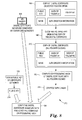
- the method step indicated at block 102 for signing the structured digital certificate 30 is described in greater detail in reference to FIG. 3A.
- the digital certificate signature and a copy of the digital certificate with at least one cryptographic open folder is delivered to the recipient via the subject of the digital certificate, as indicated at block 104. Only authorization information relevant to the recipient is visible to the recipient within the signed digital certificate (i.e., via open folders).
- the method step indicated at block 104 for delivering the structured digital certificate 30 to the recipient is described in greater detail in reference to FIG. 5.
- the recipient Upon receipt of the signed structured digital certificate 30, the recipient verifies the authenticity of the signed digital certificate, as indicated at block 106. Before verifying the signed digital certificate, the recipient closes any cryptographic folders that are left open by the subject of the digital certificate. Thus, the relying party is able to perform the signature verification independently of the state of the cryptographic folders in the copy of the structured digital certificate presented by the subject.
- the method step indicated at block 106 for verifying the authenticity of the structured digital certificate 30 is described in greater detail in reference to FIG. 7.
- FIG. 3A is a flowchart illustrating one embodiment of a method 102 for signing structured digital certificates 30 at a certificate authority.
- Method 102 begins by closing all of the cryptographic folders in structured digital certificate 30, as indicated at block 110.
- a cryptographic hash of the structured digital certificate 30 is computed, as indicated at block 112.
- the cryptographic hash can be computed by a variety of methods. In one embodiment, the cryptographic hash is computed by SHA-1.
- the digital certificate signature is computed with the computed cryptographic hash of the digital certificate and a private key of the certificate authority.
- Fig. 3B is a flow chart illustrating one embodiment of a method 115 for closing a cryptographic folder X.
- all of the nested folders in folder X are recursively closed.
- a cryptographic hash is computed of the contents of folder X including all recursively closed nested folders in folder X.
- the contents of folder X are replaced with the computed cryptographic hash of the contents of folder X.
- a flag is set in the header of folder X to indicate that folder X is closed.
- FIG. 4 is a block and data flow diagram illustrating an operation 118, where a signature is generated for structured digital certificate 30 at the certificate authority.
- all cryptographic folders within structured digital certificate 30 must be closed before a signature can be generated.
- the authorization information contents of open cryptographic folder 52 i.e., the lowest level cryptographic folder within the hierarchy of cryptographic folders
- cryptographic folder 52 is closed, as indicated at 120 in FIG. 4.
- the authorization information contents of open cryptographic folders 46 and 48 are replaced with corresponding cryptographic hash values, and cryptographic folders 46 and 48 are closed, as indicated at 122.
- Subject 154 of the digital certificate forwards the digital certificate signature 126 to recipient 156. Before submitting the copy of the structured digital certificate 158 to recipient 156, subject 154 of the digital certificate closes any cryptographic folders that recipient 156 does not need to see, as indicated at 160.
- FIG. 7 is a flowchart illustrating one embodiment of a method 106 for verifying the authenticity of a signature of a structured digital certificate 30.
- recipient 156 obtains a public key of the certificate authority 152 corresponding to a private key used by the certificate authority to sign the digital certificate, which is made readily available by certificate authority 152, as indicated at block 178.
- Method 106 closes any cryptographic folders left open in the copy of the structured digital certificate by subject 154 of the digital certificate, as indicated at block 180.
- recipient 156 computes a cryptographic hash of the structured digital certificate 158 with all folders closed.
- recipient 156 verifies the signature for the digital certificate with the public key and the computed cryptographic hash of the digital certificate.
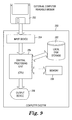
- FIG. 9 illustrates one embodiment of a computer system 250 and an external computer readable medium 252 which can be employed to provide field confidentiality in digital certificates at a certificate authority to incorporate a method of signing a digital certificate; at a subject of the digital certificate to incorporate a method of delivering the digital certificate from the subject to a recipient of the digital certificate; or at the recipient of the digital certificate to incorporate a method of verifying a signature for the digital certificate.
- Embodiments of external computer readable medium 252 include, but are not limited to: a CD-ROM, a floppy disk, and a disk cartridge. Any one of the above methods for providing field confidentiality in digital certificates can be implemented in a variety of compiled and interpreted computer languages.
- External computer readable medium 252 stores source code, object code, executable code, shell scripts and/or dynamic link libraries for any one of the above methods for providing field confidentiality in digital certificates.
- An input device 254 reads external computer readable medium 252 and provides this data to computer system 250.
- Embodiments of input device 254 include but are not limited to: a CD-ROM reader, a floppy disk drive, and a data cartridge reader.
- Computer system 250 includes a central processing unit 256 for executing any one of the above methods for providing field confidentiality in digital certificates.
- Computer system 250 also includes local disk storage 262 for locally storing any one of the above methods for providing field confidentiality in digital certificates before, during and after execution. Any one of the above methods for providing field confidentiality in digital certificates also utilizes memory 260 within the computer system during execution.
- output data is produced and directed to an output device 258.
- output device 258 include, but are not limited to: a computer display device, a printer, and/or a disk storage device.
Landscapes
- Engineering & Computer Science (AREA)
- Computer Security & Cryptography (AREA)
- Theoretical Computer Science (AREA)
- General Physics & Mathematics (AREA)
- Physics & Mathematics (AREA)
- General Engineering & Computer Science (AREA)
- Software Systems (AREA)
- Computer Hardware Design (AREA)
- Computer Networks & Wireless Communication (AREA)
- Signal Processing (AREA)
- Storage Device Security (AREA)
- Two-Way Televisions, Distribution Of Moving Picture Or The Like (AREA)
- Management, Administration, Business Operations System, And Electronic Commerce (AREA)
Abstract
Description
Claims (9)
- A structured digital certificate (30) for enabling a first recipient of the structured digital certificate to authorize a sender of the structured digital certificate, the structured digital certificate comprising:a first type of authorization (87) relevant to the first recipient and readable by the first recipient; anda first cryptographic folder (38-44) containing a second type field of authorization information (36) relevant to a second recipient and readable by the second recipient, wherein the second type field of authorization information is not readable by the first recipient.
- A digital certificate as in claim 1, comprising one or more of:a second cryptographic folder (38-44) containing the first type field;multiple type fields (37);a sender name; and/ora public key associated with the sender.
- A digital certificate as in claim 1 or 2, wherein the first type field (37) is not contained in a cryptographic folder (38-44).
- A method of providing confidentiality of authorization information in a digital certificate shared by multiple recipients, the method comprising the steps of:providing cryptographic folders (38-44) in the digital certificate, wherein at least one first type cryptographic folder contains at least one second type cryptographic folder (36) contains at least one second type field of authorization information relevant to a second recipient;issuing and the digital certificate (30) at a certificate authority by signing the digital certificate and sending the signed digital certificate to a subject;delivering the signed digital certificate from the subject to the first recipient, wherein the at least one first type field of authorization information (37) is readable by the first recipient, and the at least one second type field of authorization information (36) is not readable by the first recipient; andverifying the authenticity of the signed digital certificate (30) by the first recipient.
- A method as in claim 4, comprising one or more of the following:(a) the step of signing the digital certificate at a certificate authority comprises the steps of closing all of the cryptographic folders in the digital certificate computing a cryptographic hash of the digital certificate and computing a digital certificate signature with computed cryptographic hash of the digital certificate and a private key of the certificate authority;(b) the step of delivering the signed digital certificate to the first recipient includes the steps of closing any cryptographic folders in the copy of the unsigned digital certificate that do not have at least one first type field of authorization information and transmitting the copy of the unsigned digital certificate and the digital certificate signature from the subject of the digital certificate to the first recipient; and(c) the step of verifying the authenticity of the digital certificate by the first recipient includes obtaining a public key from the certificate authority, closing any cryptographic folders left open in the unsigned digital certificate, computing a cryptographic hash of the unsigned digital certificate with all folders closed and verifying the signature of the digital certificate with the public key and the computed cryptographic hash of the unsigned digital certificate.
- A method of signing a digital certificate at a certificate authority, the method comprising the steps of:providing cryptographic folders (38-44) in the digital certificate (30) having authorization information;closing all of the cryptographic folders in the digital certificate;computing a cryptographic hash of the digital certificate (30); andcomputing a digital certificate signature with the computed cryptographic hash of the digital certificate and a private key of the certificate authority.
- A method as in claim 6, wherein the step of closing all of the cryptographic folders (38-44) in the digital certificate (30) includes closing a cryptographic folder X according to the following steps:recursively closing all nested folders in folder X;computing the cryptographic hash of the contents of folder X;replacing the contents of folder X with the computed cryptographic hash of the contents of folder X; andsetting a flag in a header of folder X to indicate that folder X is closed.
- A method of delivering a digital certificate from a subject of the digital certificate to a recipient of the digital certificate, the method comprising the steps of:providing cryptographic folders (38-44) in the digital certificate (30) having authorization information;transmitting a digital certificate signature from a certificate authority to the subject of the certificate;transmitting an unsigned copy of the digital certificate (30) from the certificate authority to the subject of the certificate;closing any folders (38-44) in the unsigned copy of the digital certificate that do not have authorization information relevant to the recipient; andtransmitting the unsigned copy of the digital certificate and the digital certificate signature from the subject of the digital certificate to the recipient.
- A method of verifying a signature for a digital certificate (30) sent by a subject of the digital certificate to a recipient of the digital certificate, the method comprising the steps of:providing cryptographic folders (38-44) in the digital certificate (30) having authorization information;obtaining a public key of the certificate authority corresponding to a private key used by the certificate authority to sign the digital certificate (30);closing any of the cryptographic folders (38-44) left open in the digital certificate (30) by the subject of the digital certificate;computing a cryptographic hash of the digital certificate (30) with all cryptographic folders closed; andverifying the signature for the digital certificate with the public key and the computed cryptographic hash of the digital certificate.
Applications Claiming Priority (2)
| Application Number | Priority Date | Filing Date | Title |
|---|---|---|---|
| US483189 | 2000-01-14 | ||
| US09/483,189 US6802002B1 (en) | 2000-01-14 | 2000-01-14 | Method and apparatus for providing field confidentiality in digital certificates |
Publications (3)
| Publication Number | Publication Date |
|---|---|
| EP1130491A2 true EP1130491A2 (en) | 2001-09-05 |
| EP1130491A3 EP1130491A3 (en) | 2002-08-28 |
| EP1130491B1 EP1130491B1 (en) | 2006-03-08 |
Family
ID=23919035
Family Applications (1)
| Application Number | Title | Priority Date | Filing Date |
|---|---|---|---|
| EP00310771A Expired - Lifetime EP1130491B1 (en) | 2000-01-14 | 2000-12-04 | Digital certificate including authorization data |
Country Status (4)
| Country | Link |
|---|---|
| US (1) | US6802002B1 (en) |
| EP (1) | EP1130491B1 (en) |
| JP (1) | JP2001237827A (en) |
| DE (1) | DE60026468T2 (en) |
Cited By (8)
| Publication number | Priority date | Publication date | Assignee | Title |
|---|---|---|---|---|
| WO2003030109A3 (en) * | 2001-10-03 | 2003-11-27 | Gemplus Card Int | System and method for creating a secure network using identity credentials of batches of devices |
| WO2004023709A1 (en) * | 2002-09-04 | 2004-03-18 | Medialingua Group | Method of digital certificate (dc) composition, issuance and management providing multitier dc distribution model and multiple accounts access based on the use of dc and public key infrastructure (pki) |
| GB2401445A (en) * | 2003-05-08 | 2004-11-10 | Simon Freeman | Web site security model |
| EP1994712A1 (en) * | 2006-03-10 | 2008-11-26 | ABB Research Ltd | Access control protocol for embedded devices |
| US8868467B2 (en) | 2002-10-23 | 2014-10-21 | Oleg Serebrennikov | Method for performing transactional communication using a universal transaction account identifier assigned to a customer |
| US10528704B2 (en) | 2002-12-30 | 2020-01-07 | Koninklijke Philips N.V. | Divided rights in authorized domain |
| US10756906B2 (en) | 2013-10-01 | 2020-08-25 | Kalman Csaba Toth | Architecture and methods for self-sovereign digital identity |
| US11341497B2 (en) | 2001-10-24 | 2022-05-24 | Oleg Serebrennikov | Method for performing transactional communication using a universal transaction account identifier assigned to a customer |
Families Citing this family (35)
| Publication number | Priority date | Publication date | Assignee | Title |
|---|---|---|---|---|
| US6950933B1 (en) * | 2000-05-19 | 2005-09-27 | Networks Associates Technology, Inc. | Method and system for management and notification of electronic certificate changes |
| US20040073617A1 (en) | 2000-06-19 | 2004-04-15 | Milliken Walter Clark | Hash-based systems and methods for detecting and preventing transmission of unwanted e-mail |
| US20030233542A1 (en) * | 2002-06-18 | 2003-12-18 | Benaloh Josh D. | Selectively disclosable digital certificates |
| US7188109B1 (en) * | 2002-07-30 | 2007-03-06 | Unisys Corporation | Cool ICE utilization of digital certificates |
| ATE366010T1 (en) * | 2002-09-17 | 2007-07-15 | Errikos Pitsos | METHOD AND DEVICE FOR PROVIDING A LIST OF PUBLIC KEYS IN A PUBLIC KEY SYSTEM |
| US7461260B2 (en) * | 2002-12-31 | 2008-12-02 | Intel Corporation | Methods and apparatus for finding a shared secret without compromising non-shared secrets |
| JP2011142678A (en) * | 2003-07-15 | 2011-07-21 | Hitachi Ltd | Electronic data authenticity assurance method and electronic data disclosure method |
| JP2008054355A (en) * | 2003-07-15 | 2008-03-06 | Hitachi Ltd | Electronic data authenticity guarantee method, electronic data disclosure method, and electronic data disclosure system |
| DE10336805A1 (en) * | 2003-08-11 | 2005-06-23 | Siemens Ag | Method for transmitting protected information to multiple recipients |
| US7860243B2 (en) | 2003-12-22 | 2010-12-28 | Wells Fargo Bank, N.A. | Public key encryption for groups |
| US8139770B2 (en) * | 2003-12-23 | 2012-03-20 | Wells Fargo Bank, N.A. | Cryptographic key backup and escrow system |
| JP4728104B2 (en) * | 2004-11-29 | 2011-07-20 | 株式会社日立製作所 | Electronic image authenticity guarantee method and electronic data disclosure system |
| JP4690779B2 (en) * | 2005-06-03 | 2011-06-01 | 株式会社日立製作所 | Attribute certificate verification method and apparatus |
| US8295492B2 (en) * | 2005-06-27 | 2012-10-23 | Wells Fargo Bank, N.A. | Automated key management system |
| US8117459B2 (en) * | 2006-02-24 | 2012-02-14 | Microsoft Corporation | Personal identification information schemas |
| US8104074B2 (en) | 2006-02-24 | 2012-01-24 | Microsoft Corporation | Identity providers in digital identity system |
| US20080016357A1 (en) * | 2006-07-14 | 2008-01-17 | Wachovia Corporation | Method of securing a digital signature |
| US8078880B2 (en) * | 2006-07-28 | 2011-12-13 | Microsoft Corporation | Portable personal identity information |
| US8407767B2 (en) | 2007-01-18 | 2013-03-26 | Microsoft Corporation | Provisioning of digital identity representations |
| US8087072B2 (en) | 2007-01-18 | 2011-12-27 | Microsoft Corporation | Provisioning of digital identity representations |
| US8689296B2 (en) | 2007-01-26 | 2014-04-01 | Microsoft Corporation | Remote access of digital identities |
| US9553726B2 (en) * | 2008-04-14 | 2017-01-24 | Koninklijke Philips N.V. | Method for distributed identification of a station in a network |
| JP4834742B2 (en) * | 2009-01-21 | 2011-12-14 | 株式会社エヌ・ティ・ティ・データ | Signature data generation device and verification device |
| CA2772136C (en) * | 2009-09-09 | 2018-06-05 | Research In Motion Limited | System and method for providing credentials |
| JP5069759B2 (en) * | 2010-01-08 | 2012-11-07 | 株式会社エヌ・ティ・ティ・ドコモ | Structured document adaptation device |
| US8959595B2 (en) | 2013-03-15 | 2015-02-17 | Bullaproof, Inc. | Methods and systems for providing secure transactions |
| US9914306B2 (en) | 2013-07-31 | 2018-03-13 | Hewlett-Packard Development Company, L.P. | Communicating a classification of a consumable product |
| US9646150B2 (en) | 2013-10-01 | 2017-05-09 | Kalman Csaba Toth | Electronic identity and credentialing system |
| KR101673310B1 (en) * | 2015-08-24 | 2016-11-07 | 현대자동차주식회사 | Method For Controlling Vehicle Security Access Based On Certificate |
| US10567377B2 (en) | 2016-05-23 | 2020-02-18 | Pemian & Corella, LLC | Multifactor privacy-enhanced remote identification using a rich credential |
| US10375057B2 (en) * | 2017-01-27 | 2019-08-06 | Visa International Service Association | Systems and methods for certificate chain validation of secure elements |
| US11902454B2 (en) | 2018-09-05 | 2024-02-13 | Connectfree Corporation | Information processing method, information processing program, information processing apparatus, and information processing system |
| US10944578B2 (en) * | 2019-07-24 | 2021-03-09 | Advanced New Technologies Co., Ltd. | Identity verification |
| JP7162634B2 (en) * | 2019-12-12 | 2022-10-28 | 株式会社bitFlyer Blockchain | Apparatus, method and program for making certificate data digitally available |
| US12231584B1 (en) * | 2022-11-23 | 2025-02-18 | Wells Fargo Bank, N.A. | Relying party object identifiers schema (RPOIDS) |
Family Cites Families (23)
| Publication number | Priority date | Publication date | Assignee | Title |
|---|---|---|---|---|
| US4881264A (en) | 1987-07-30 | 1989-11-14 | Merkle Ralph C | Digital signature system and method based on a conventional encryption function |
| JPH0196835A (en) | 1987-10-07 | 1989-04-14 | Csk Corp | Tracking device for optical memory card |
| US5224163A (en) | 1990-09-28 | 1993-06-29 | Digital Equipment Corporation | Method for delegating authorization from one entity to another through the use of session encryption keys |
| US5276901A (en) | 1991-12-16 | 1994-01-04 | International Business Machines Corporation | System for controlling group access to objects using group access control folder and group identification as individual user |
| US5210795A (en) | 1992-01-10 | 1993-05-11 | Digital Equipment Corporation | Secure user authentication from personal computer |
| US5796841A (en) * | 1995-08-21 | 1998-08-18 | Pitney Bowes Inc. | Secure user certification for electronic commerce employing value metering system |
| US5793868A (en) | 1996-08-29 | 1998-08-11 | Micali; Silvio | Certificate revocation system |
| US6023506A (en) * | 1995-10-26 | 2000-02-08 | Hitachi, Ltd. | Data encryption control apparatus and method |
| US5996076A (en) | 1997-02-19 | 1999-11-30 | Verifone, Inc. | System, method and article of manufacture for secure digital certification of electronic commerce |
| US6044462A (en) * | 1997-04-02 | 2000-03-28 | Arcanvs | Method and apparatus for managing key revocation |
| US6212636B1 (en) | 1997-05-01 | 2001-04-03 | Itt Manufacturing Enterprises | Method for establishing trust in a computer network via association |
| US6202151B1 (en) * | 1997-05-09 | 2001-03-13 | Gte Service Corporation | System and method for authenticating electronic transactions using biometric certificates |
| JPH10327147A (en) * | 1997-05-21 | 1998-12-08 | Hitachi Ltd | Electronic authentication notary method and system |
| US6058484A (en) | 1997-10-09 | 2000-05-02 | International Business Machines Corporation | Systems, methods and computer program products for selection of date limited information |
| US6092201A (en) * | 1997-10-24 | 2000-07-18 | Entrust Technologies | Method and apparatus for extending secure communication operations via a shared list |
| JP3905961B2 (en) | 1997-11-11 | 2007-04-18 | インターナショナル・ビジネス・マシーンズ・コーポレーション | Temporary signature authentication method and system |
| US6263446B1 (en) | 1997-12-23 | 2001-07-17 | Arcot Systems, Inc. | Method and apparatus for secure distribution of authentication credentials to roaming users |
| WO1999035783A1 (en) | 1998-01-09 | 1999-07-15 | Cybersafe Corporation | Client side public key authentication method and apparatus with short-lived certificates |
| US6324645B1 (en) | 1998-08-11 | 2001-11-27 | Verisign, Inc. | Risk management for public key management infrastructure using digital certificates |
| US6327578B1 (en) * | 1998-12-29 | 2001-12-04 | International Business Machines Corporation | Four-party credit/debit payment protocol |
| US6484259B1 (en) * | 1999-07-23 | 2002-11-19 | Microsoft Corporation | Methods and arrangements for mapping widely disparate portable tokens to a static machine concentric cryptographic environment |
| AU2087901A (en) | 1999-12-13 | 2001-06-18 | Rsa Security Inc. | System and method for generating and managing attribute certificates |
| US7353204B2 (en) * | 2001-04-03 | 2008-04-01 | Zix Corporation | Certified transmission system |
-
2000
- 2000-01-14 US US09/483,189 patent/US6802002B1/en not_active Expired - Lifetime
- 2000-12-04 DE DE60026468T patent/DE60026468T2/en not_active Expired - Fee Related
- 2000-12-04 EP EP00310771A patent/EP1130491B1/en not_active Expired - Lifetime
- 2000-12-18 JP JP2000383141A patent/JP2001237827A/en not_active Withdrawn
Cited By (10)
| Publication number | Priority date | Publication date | Assignee | Title |
|---|---|---|---|---|
| WO2003030109A3 (en) * | 2001-10-03 | 2003-11-27 | Gemplus Card Int | System and method for creating a secure network using identity credentials of batches of devices |
| CN100469000C (en) * | 2001-10-03 | 2009-03-11 | 格姆普拉斯公司 | System and method for creating a secure network utilizing identity credentials of bulk devices |
| US9043246B2 (en) | 2001-10-24 | 2015-05-26 | Oleg Serebrennikov | Method for performing transactional communication using a universal transaction account identifier assigned to a customer |
| US11341497B2 (en) | 2001-10-24 | 2022-05-24 | Oleg Serebrennikov | Method for performing transactional communication using a universal transaction account identifier assigned to a customer |
| WO2004023709A1 (en) * | 2002-09-04 | 2004-03-18 | Medialingua Group | Method of digital certificate (dc) composition, issuance and management providing multitier dc distribution model and multiple accounts access based on the use of dc and public key infrastructure (pki) |
| US8868467B2 (en) | 2002-10-23 | 2014-10-21 | Oleg Serebrennikov | Method for performing transactional communication using a universal transaction account identifier assigned to a customer |
| US10528704B2 (en) | 2002-12-30 | 2020-01-07 | Koninklijke Philips N.V. | Divided rights in authorized domain |
| GB2401445A (en) * | 2003-05-08 | 2004-11-10 | Simon Freeman | Web site security model |
| EP1994712A1 (en) * | 2006-03-10 | 2008-11-26 | ABB Research Ltd | Access control protocol for embedded devices |
| US10756906B2 (en) | 2013-10-01 | 2020-08-25 | Kalman Csaba Toth | Architecture and methods for self-sovereign digital identity |
Also Published As
| Publication number | Publication date |
|---|---|
| US6802002B1 (en) | 2004-10-05 |
| EP1130491B1 (en) | 2006-03-08 |
| DE60026468T2 (en) | 2006-08-31 |
| JP2001237827A (en) | 2001-08-31 |
| DE60026468D1 (en) | 2006-05-04 |
| EP1130491A3 (en) | 2002-08-28 |
Similar Documents
| Publication | Publication Date | Title |
|---|---|---|
| US6802002B1 (en) | Method and apparatus for providing field confidentiality in digital certificates | |
| EP0386867B1 (en) | Improved public key/signature cryptosystem with enhanced digital signature certification | |
| US6430688B1 (en) | Architecture for web-based on-line-off-line digital certificate authority | |
| US5958051A (en) | Implementing digital signatures for data streams and data archives | |
| US5214702A (en) | Public key/signature cryptosystem with enhanced digital signature certification | |
| JP3928589B2 (en) | Communication system and method | |
| US6671804B1 (en) | Method and apparatus for supporting authorities in a public key infrastructure | |
| US5872848A (en) | Method and apparatus for witnessed authentication of electronic documents | |
| US6421779B1 (en) | Electronic data storage apparatus, system and method | |
| EP1374473B1 (en) | Method and apparatus for secure cryptographic key generation, certification and use | |
| KR100868121B1 (en) | Method for using trusted, hardware-based identity credentials in runtime package signature to secure mobile communications and high-value transaction execution | |
| EP1573958B1 (en) | Methods, apparatus and computer programs for generating and/or using conditional electronic signatures for reporting status changes | |
| US7657531B2 (en) | Systems and methods for state-less authentication | |
| EP1453241B1 (en) | Revocation of a certificate in a digital rights management system based on a revocation list from a delegated revocation authority | |
| GB2347057A (en) | Extension of X.509 certificates to simultaneously support multiple cryptographic algorithms | |
| US20070055882A1 (en) | Document management system with public key infrastructure | |
| WO2003079165A2 (en) | Ensuring policy enforcement before allowing usage of private key | |
| Roth et al. | Encrypting Java Archives and its application to mobile agent security | |
| Persiano et al. | A secure and private system for subscription-based remote services | |
| JP3791169B2 (en) | Authentication apparatus and method | |
| EP1026854A2 (en) | Method and system for analyzing the content of encrypted electronic data | |
| Galvin et al. | Security Aspects of a UNIX PEM Implementation. | |
| Patriciu et al. | Deploying a certification authority for networks security | |
| Federal | FEDERAL PUBLIC KEY INFRASTRUCTURE (PKI) TECHNICAL SPECIFICATION: PART D-INTEROPERABILITY PROFILES | |
| Klobučar et al. | An infrastructure for support of digital signatures |
Legal Events
| Date | Code | Title | Description |
|---|---|---|---|
| PUAI | Public reference made under article 153(3) epc to a published international application that has entered the european phase |
Free format text: ORIGINAL CODE: 0009012 |
|
| AK | Designated contracting states |
Kind code of ref document: A2 Designated state(s): AT BE CH CY DE DK ES FI FR GB GR IE IT LI LU MC NL PT SE TR |
|
| AX | Request for extension of the european patent |
Free format text: AL;LT;LV;MK;RO;SI |
|
| PUAL | Search report despatched |
Free format text: ORIGINAL CODE: 0009013 |
|
| RIC1 | Information provided on ipc code assigned before grant |
Free format text: 7G 06F 1/00 A, 7H 04L 9/32 B |
|
| AK | Designated contracting states |
Kind code of ref document: A3 Designated state(s): AT BE CH CY DE DK ES FI FR GB GR IE IT LI LU MC NL PT SE TR |
|
| AX | Request for extension of the european patent |
Free format text: AL;LT;LV;MK;RO;SI |
|
| 17P | Request for examination filed |
Effective date: 20021021 |
|
| 17Q | First examination report despatched |
Effective date: 20030124 |
|
| AKX | Designation fees paid |
Designated state(s): DE FR GB |
|
| GRAP | Despatch of communication of intention to grant a patent |
Free format text: ORIGINAL CODE: EPIDOSNIGR1 |
|
| GRAS | Grant fee paid |
Free format text: ORIGINAL CODE: EPIDOSNIGR3 |
|
| GRAA | (expected) grant |
Free format text: ORIGINAL CODE: 0009210 |
|
| AK | Designated contracting states |
Kind code of ref document: B1 Designated state(s): DE FR GB |
|
| REG | Reference to a national code |
Ref country code: GB Ref legal event code: FG4D |
|
| REF | Corresponds to: |
Ref document number: 60026468 Country of ref document: DE Date of ref document: 20060504 Kind code of ref document: P |
|
| ET | Fr: translation filed | ||
| PLBE | No opposition filed within time limit |
Free format text: ORIGINAL CODE: 0009261 |
|
| STAA | Information on the status of an ep patent application or granted ep patent |
Free format text: STATUS: NO OPPOSITION FILED WITHIN TIME LIMIT |
|
| 26N | No opposition filed |
Effective date: 20061211 |
|
| PGFP | Annual fee paid to national office [announced via postgrant information from national office to epo] |
Ref country code: DE Payment date: 20080131 Year of fee payment: 8 |
|
| PG25 | Lapsed in a contracting state [announced via postgrant information from national office to epo] |
Ref country code: DE Free format text: LAPSE BECAUSE OF NON-PAYMENT OF DUE FEES Effective date: 20090701 |
|
| REG | Reference to a national code |
Ref country code: GB Ref legal event code: 732E Free format text: REGISTERED BETWEEN 20120329 AND 20120404 |
|
| REG | Reference to a national code |
Ref country code: FR Ref legal event code: PLFP Year of fee payment: 16 |
|
| PGFP | Annual fee paid to national office [announced via postgrant information from national office to epo] |
Ref country code: GB Payment date: 20151125 Year of fee payment: 16 |
|
| PGFP | Annual fee paid to national office [announced via postgrant information from national office to epo] |
Ref country code: FR Payment date: 20151123 Year of fee payment: 16 |
|
| REG | Reference to a national code |
Ref country code: GB Ref legal event code: 732E Free format text: REGISTERED BETWEEN 20160616 AND 20160622 |
|
| REG | Reference to a national code |
Ref country code: FR Ref legal event code: TP Owner name: HEWLETT PACKARD ENTREPRISE DEVELOPMENT LP, US Effective date: 20160819 |
|
| GBPC | Gb: european patent ceased through non-payment of renewal fee |
Effective date: 20161204 |
|
| REG | Reference to a national code |
Ref country code: FR Ref legal event code: ST Effective date: 20170831 |
|
| PG25 | Lapsed in a contracting state [announced via postgrant information from national office to epo] |
Ref country code: FR Free format text: LAPSE BECAUSE OF NON-PAYMENT OF DUE FEES Effective date: 20170102 |
|
| PG25 | Lapsed in a contracting state [announced via postgrant information from national office to epo] |
Ref country code: GB Free format text: LAPSE BECAUSE OF NON-PAYMENT OF DUE FEES Effective date: 20161204 |