EP1128305A2 - A client-centric internet shopping system, method and program - Google Patents
A client-centric internet shopping system, method and program Download PDFInfo
- Publication number
- EP1128305A2 EP1128305A2 EP01301265A EP01301265A EP1128305A2 EP 1128305 A2 EP1128305 A2 EP 1128305A2 EP 01301265 A EP01301265 A EP 01301265A EP 01301265 A EP01301265 A EP 01301265A EP 1128305 A2 EP1128305 A2 EP 1128305A2
- Authority
- EP
- European Patent Office
- Prior art keywords
- merchant
- item
- client
- buyer
- state
- Prior art date
- Legal status (The legal status is an assumption and is not a legal conclusion. Google has not performed a legal analysis and makes no representation as to the accuracy of the status listed.)
- Withdrawn
Links
Images



Classifications
-
- G—PHYSICS
- G06—COMPUTING OR CALCULATING; COUNTING
- G06Q—INFORMATION AND COMMUNICATION TECHNOLOGY [ICT] SPECIALLY ADAPTED FOR ADMINISTRATIVE, COMMERCIAL, FINANCIAL, MANAGERIAL OR SUPERVISORY PURPOSES; SYSTEMS OR METHODS SPECIALLY ADAPTED FOR ADMINISTRATIVE, COMMERCIAL, FINANCIAL, MANAGERIAL OR SUPERVISORY PURPOSES, NOT OTHERWISE PROVIDED FOR
- G06Q30/00—Commerce
- G06Q30/06—Buying, selling or leasing transactions
-
- G—PHYSICS
- G06—COMPUTING OR CALCULATING; COUNTING
- G06Q—INFORMATION AND COMMUNICATION TECHNOLOGY [ICT] SPECIALLY ADAPTED FOR ADMINISTRATIVE, COMMERCIAL, FINANCIAL, MANAGERIAL OR SUPERVISORY PURPOSES; SYSTEMS OR METHODS SPECIALLY ADAPTED FOR ADMINISTRATIVE, COMMERCIAL, FINANCIAL, MANAGERIAL OR SUPERVISORY PURPOSES, NOT OTHERWISE PROVIDED FOR
- G06Q30/00—Commerce
- G06Q30/06—Buying, selling or leasing transactions
- G06Q30/0601—Electronic shopping [e-shopping]
- G06Q30/0641—Electronic shopping [e-shopping] utilising user interfaces specially adapted for shopping
Definitions
- This invention relates to electronic commerce, and more specifically to a system, method, and program for enabling a client to carry out a transaction with one merchant's Web server depending upon a result of a transaction with another merchant's Web server; thereby allowing an on-line shopper to cancel a purchase if a better bargain is found with another merchant, or to go forward with a purchase if a previous purchase transaction with another merchant can be cancelled.
- computational devices include large mainframe computers, workstations, personal computers, laptops and other portable devices including wireless telephones, personal digital assistants, automobile-based computers, etc. Such portable computational devices are also referred to as “pervasive” devices.
- the term "computer” or “computational device”, as used herein, may refer to any of such device which contains a processor and some type of memory.
- the networks connecting computational devices may be "wired" networks, formed using lines such as copper wire or fiber optic cable, wireless networks employing earth and/or satellite-based wireless transmission links, or combinations of wired and wireless network portions.
- Many such networks may be organized using a client/server architecture, in which "server” computational devices manage resources, such as files, peripheral devices, or processing power, which may be requested by “client” computational devices.
- server computational devices manage resources, such as files, peripheral devices, or processing power, which may be requested by “client” computational devices.
- “Proxy servers” can act on behalf of other machines, such as either clients or servers.
- a widely used network is the Internet.
- the Internet initially referred to as a collection of "interconnected networks", is a set of computer networks, possibly dissimilar, joined together by means of gateways that handle data transfer and the conversion of messages from the sending network to the protocols used by the receiving network.
- gateways that handle data transfer and the conversion of messages from the sending network to the protocols used by the receiving network.
- Internet refers to the collection of networks and gateways that use the TCP/IP suite or protocols.
- the Web World Wide Web environment
- Other Internet resources exist for transferring information, such as File Transfer Protocol (FTP) and Gopher, but have not achieved the popularity of the Web.
- FTP File Transfer Protocol
- servers and clients effect data transfer using the Hypertext Transfer Protocol (HTTP), a known protocol for handling the transfer of various data files (e.g., text, still graphic images, audio, motion video, etc.).
- HTTP Hypertext Transfer Protocol
- e-commerce is used herein to refer to any commercial activity using computers interconnected by a communication network, e.g., the Internet. Because of the unique characteristics of the Internet, carrying out commercial transactions over the Internet presents new issues and new opportunities.
- the shopping experience for many people includes negotiations over price; comparisons of price between various merchants; the ability to hold an item at one store for a period of time while other stores are visited to compare the prices and quality of similar products; the ability to return products when dissatisfied for any reason; and the presence of refund policies and procedures.
- Cancelling committed transactions (e.g. a purchase) is often a necessity in real life scenarios.
- many merchants allow for order cancellation if a product has not been shipped. However, this typically involves calling the merchant.
- some e-commerce merchants allow for electronic cancellation if a product has not been shipped.
- a buyer cancels a transaction and then goes to buy from another merchant the buyer may find that by the time the transaction is cancelled the merchandise is not available from the other merchant.
- the client receives and displays notification at time t8.
- the problem with the above scheme is that the server sends information at time t3 but receives the cancellation request at time t6. Hence, the server must lock the associated data and any processing on it such that the information does not change between time t3 and t6. It should be noted that this is a common problem that is often encountered by database systems. If the locking is not done, the Web client may attempt to cancel transactions based on incorrect information. This would generate negative opinion and lack of trust in the e-commerce system from clients. In addition, time dependent transactions are important in some degree in many if not all areas of commerce, and are even more critical in other areas of commerce, e.g. for arbitrage based trading.
- e-commerce In the real physical world, the shopper is at the center of the shopping experience; either making the decisions or deciding not to shop if the retailer's requirements or policies are anything less than favorable to the shopper.
- prior art e-commerce systems are "merchant-centric". The merchant-centric nature of e-commerce is made evident by the fact that many of the e-commerce solutions that are being provided today are for e-commerce servers, i.e., the merchant's servers, and not for the buyer's client.
- a method for carrying out, over a communication network of interconnecting computers, electronic transactions between a plurality of merchants using at least one server computer and at least one buyer using a client computer comprising: displaying, at the client computer, a separate representation for each item selected by the buyer from at least two different merchants; and associating one of a plurality of selectable states with each separate representation wherein a certain one of the plurality of selectable states indicates that the buyer desires to purchase a desired item from a first merchant if a previous transaction which bought another item from a second merchant can be cancelled.
- a client computer system enabled to communicate over a network with at least one server computer system for carrying out electronic transactions for a buyer using the client computer system for the purchase of items from a plurality of merchants using the at least one server computer system
- the client computer system comprising: means for displaying a separate representation for each item selected by the buyer from at least two different merchants wherein each representation has one of a plurality of associated states at a given instance in time; and means for selecting, by the buyer, a desired item from a certain merchant with a selected associated state indicating that the buyer desires to purchase the desired item if a previous transaction which bought another item from another merchant can be cancelled.
- a preferred embodiment of the invention enables a client to perform reliable dependent transactions across Web servers.
- Facilities are provided to a Web client to perform appropriate locking and unlocking of records in Web Servers. This enables a Web client to carry out a transaction with one Web Server depending on the result of a transaction with another Web Server. Such a situation might arise when a Web client wants to cancel a purchase because a better bargain with some other merchant has been found.
- a client system used by a customer (otherwise referred to herein as a buyer or consumer), is enabled to communicate over a network with one or more servers used by merchants to carry out transactions between the customer and the merchants.
- Each item within the inventory of a merchant is represented by an object or other representation.
- the client system displays a copy of an instance of the object or other representation for each item selected by the customer from any of the merchants. Items can be collected at the client from multiple merchants across multiple servers.
- the customer also selects a state of the object representing the item. If an item is available from a merchant, the state of the object at the merchant reflects this availability.
- the selectable states include states that indicate that the customer desires to carry out a purchase transaction for the item, e.g., "buy” state; or that the customer wants to put the item on hold while the customer considers a purchase decision, e.g., "hold” state; or that indicate that the customer wants to purchase or hold the item only if a previous transaction with the same or different merchant can be cancelled, e.g., "conditional" state.
- the state of the instance of the object of the item at the server is changed from the "available" state to the selected state. This locks the item and associated data from being made available to other customers and client systems.
- the state referred to above as the "conditional" state indicates to the merchant owning the subject item that the customer desires to purchase the subject item if a previous transaction is able to be cancelled.
- the customer sends to the owning merchant an identification of the previous merchant and an identification of the item purchased in the previous transaction.
- the owning merchant contacts the previous merchant to cancel the identified transaction.
- the owning merchant may even offer an incentive to the previous merchant to entice the previous merchant to cancel the previous transaction.
- the incentive may cover the transaction costs, and perhaps more, that the previous owner incurred.
- the owning merchant provides the incentive to gain the sale and the customer's business.
- the object of the previous item may even be automatically deleted from the client's collection of items upon receipt of a notification of the cancellation.
- the e-commerce system, method, and program of this invention has "client-centric” features that enable the shopping experience to include a) competitive shopping across merchants by providing methods for "order cancellation", and by providing methods for "dependent transactions” in which a transaction with one merchant depends upon transactions made earlier with a different merchant; b) product transfers between sellers whereby merchants can contact each other to provide “incentives” for order cancellation; and c) a "client-centric” shopping cart, kept at the client, that has items from many merchants.
- the client-centric e-commerce embodiments of the invention enhance the psychological aspects of shopping for the shopper by making the shopper feel in control of the shopping experience, and by enabling the shopper to shop from many merchants rather than having discrete transactions with each separate merchant.
- One embodiment utilizes a shopping cart which spans different merchants on different Web servers which allows the client to perform price and product comparisons easily and automatically.
- the "order cancellation” and “dependent transaction” methods readily enable the Internet shopper to shop for bargains across different merchants.
- Fig. 1 shows a block diagram of a "client-centric" e-commerce infrastructure embodying the invention.
- e-commerce servers 110, 120 with which a single buyer Web client 101 can interact.
- Each e-commerce Web server is typically connected to a database 111, 121 and several "intranet” or “Internet” based "order execution station” web clients 112, 122, 132.
- An order execution station enables real time updates to a transaction or to a portion of a transaction.
- the United Parcel Service may have a central e-commerce server such as 120. Its employees would update the status of a delivery by entering data into the "order execution station" web clients 122, 132 as various phases of the delivery are completed.
- a nationwide retail chain may have order execution stations connected to their central Web server via the Internet.
- an order cancellation includes techniques for resolving dependent transactions.
- Fig. 2 illustrates a transaction flow, including order cancellations, between a buyer and multiple merchants.
- a buyer holds an item "A1" with merchant #1 and continues shopping, 201. If the buyer finds a better bargain for a similar item "A2" with merchant #2, the buyer holds item “A2" with merchant #2, 202. The buyer cancels item “A1” with merchant #1 and continues shopping, 203. If the buyer finds a better bargain for a similar item "A3" with merchant #3, the buyer holds item “A3” with merchant #3, 204. The buyer cancels item “A2" with merchant #2, 205; and buys item "A3" from merchant #3, 206.
- Fig. 3 illustrates another transaction flow embodiment.
- a buyer orders an item "C1”, e.g., a chair, for $50 from seller 1, 301.
- the buyer does not request a hold, but instead "buys” item "C1".
- State 1 is "bought”.
- the buyer orders a similar item "C2", e.g., a different chair, from seller 2 for $45 and requests a hold, 302.
- State 2 is "hold”.
- the buyer requests a cancellation of item "C1” from seller 1, 303.
- the cancellation is granted.
- State 1 becomes “canceled”.
- the buyer can explicitly buy item “C2” in which case State 2 changes from “hold” to "bought", 304. If there is no explicit action from the buyer after a predetermined amount of time "T”, e.g., 5 hours, the "hold” state associated with item “C2" automatically changes to either “bought” or “cancelled” depending upon the specific implementation.
- T e.g.
- a preferred embodiment of the invention enables the transaction flow as described with reference to Fig. 4.
- a buyer places an order with merchant 2 conditional on the fact that the electronic transaction made earlier with merchant 1 is cancelled by merchant 2, step 401.
- Merchant 2's Web server contacts Merchant 1's Web server and offers an "incentive" of a given amount to cancel the earlier transaction of the buyer, step 402. If Merchant 1's Web server accepts the offer, step 403, then Merchant 2 fulfills the order of the buyer, step 404.
- This product transfer transaction flow between merchants is beneficial to each party involved.
- the buyer gets the desired product from a selected merchant offering the best conditions, e.g., price and/or availability and/or warranty, etc.
- Merchant 1 gains some money to possibly cover its transaction costs.
- Merchant 1 also establishes good customer relations by allowing automatic order cancellation with minimal effort on the buyer's part.
- Merchant 2 obviously benefits through an additional sale.
- a preferred embodiment of the invention utilizes the transaction flows described above including order cancellation using dependent transactions, and product transfer incentives, along with a client-centric shopping cart.
- the client-centric shopping cart is implemented through software at the client.
- the shopping cart keeps equivalent or similar items from different merchants grouped together, so that the client can easily perform competitive shopping.
- clicking on a particular item in the "client-centric" shopping cart the client is taken to the Web server page from which the item was extracted.
- a preferred embodiment which utilizes distributed objects to carry out the above transaction flows.
- the Web servers and Web clients are endowed with the appropriate functionality to carry out these transaction flows. Variations to the preferred embodiment could be made without departing from the spirit and scope of the invention.
- other implementations and embodiments could also be used.
- relational and hierarchical databases could also be used to store, manipulate, access and lock inventory items and the associated data from merchants as records within the databases.
- Fig. 5 shows multiple merchants, merchant A, merchant B, merchant C on separate Web servers, 501, 502, 503. It should be noted that the merchants do not necessarily have to be on separate Web servers. More than one merchant can be on the same Web server. Each merchant has a separate and distinct URL regardless of whether or not it shares a Web server with another merchant.
- item # 1A1, 511 indicates that this is a first item, such as a chair, from merchant A, and it is the first chair item within the merchant's inventory of "n" chairs.
- a third chair item within the inventory may be designated as “item 1A3".
- a desk from merchant A is shown herein as item “2An” 513 where "n" indicates which specific desk within the inventory of desks it is.
- each unique item from a merchant is represented as a unique object.
- each object has some, if not all, of the following attributes or states: available, hold, buy, canceled, and conditional. If an item is indicated to be "available”, an instance of the object can be copied to, i.e., sent to, the client and placed in the client's shopping cart. Once an instance of the object is sent to the client, the state of the object changes to either "hold” or "buy” or “conditional”. When the state changes, the particular object is no longer available and cannot be sent to another client. When the client or another merchant sends a message to a Web server to cancel a transaction, the instance of the object at the client is deleted, and the state of the instance of the object at the Web server changes to "cancelled". After the Web server processes the cancellation, the Web server will change the state of its object from cancelled to "available", thereby making that object available to another client.
- the state of an object can change to "conditional" pursuant to the following scenario.
- the client can send a message to a merchant, e.g., merchant A, indicating that the client desires to buy item 1A1,, 511, from that merchant if merchant B will cancel item 1B1, 521, with merchant B.
- the state of item 1A1 at merchant A changes from "available" to "conditional” as a copy of the object 2511 with the conditional state is send to the client 550.
- the client has included the necessary information identifying the merchant, the item from the merchant, and the buyer.
- Merchant A sends a message to the identified merchant, e.g., merchant B, identifying the item and the buyer and requesting a cancellation of that transaction.
- Merchant B changes the state of the object at merchant B from bought to cancelled and sends a message to the buyer that deletes the copy of the object from the buyer's shopping cart.
- merchant B will change the state of its object 521 for that item from cancelled to available.
- Merchant B will then sent a message to merchant A indicating that the transaction has been cancelled.
- Merchant A changes the state of the object of its item 511 from conditional to either bought or hold, depending upon the desires of the buyer as indicated in the first message between the buyer and merchant A.
- a client is enabled to select and collect objects with specified states representing the items from various merchants across one or more Web servers. As each item (i.e., object) is collected, it is displayed, along with any other collected items, at the client along with an indication of the specified states of each item.
- the client is also enabled to change the state of any of the objects of the items displayed. Upon a change of state, the client will automatically send an indication to the applicable merchant that the state is changed. This can be done through a URA link associated with each selectable state on each object. Other means can also be used such as by the sending of messages.
- the Web server of the corresponding merchant will perform any necessary locking of objects or associated data and/or will perform any necessary processing.
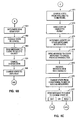
- Figs. 6A-6C illustrate the process steps, system means, and program function at a Web server for managing the states of the objects for various transactions in response to selections made by a client.
- the Web server waits for a request from a client for a specific item. If there is a request for an item, the Web server determines if there is an object available for the item 602. If not, the request is denied and a request_denied message is sent back to the client, 603. Then, the Web server continues to wait for a next request 601. If an item is available, the Web server determines the request type as being either hold, buy, cancel, or conditional 604.
- a hold request For a hold request, the following events occur. If an object is available, the state is changed to hold, 613; and a copy of the object is sent to the client, 614. A timer is started, 615, to determine if a buy or cancel request, 616, is received for the object within a predetermined time period 617. If the time period expires, the hold state is changed to the cancel state, 618, and a message is sent to the client to delete the object, 619. The Web server then cancels the transaction, 620. When the Web server completes the cancellation process, the state of the object is changed from cancel to available, 621. If there is a request to buy or cancel, 616, then the Web server determines the type of the request 623. If a cancel request was received, the process continues with steps 618 - 621, as described above. If a buy request is received, the state of the object is changed to buy 624, and the server carries out the buying transaction 625.
- step 604 if instead of a hold request, the request was initially a buy request, the state of the object at the server is changed to buy 624.
- the Web server completes the buying transaction with the client 625.
- Fig. 6A if the request was a cancel request, the Web server continues processing as shown in Fig. 6B.
- the Web server determines the item, 651, and changes the state to cancel, 652.
- the Web server sends a message to the client to delete the object, 653, and cancels the transaction 654.
- the Web server then changes the state of the object to available, 655.
- Fig. 6A if the request was a conditional request, the Web server continues processing as shown in Fig. 6C.
- the Web server changes the state of the object from available to conditional 671, and sends a copy of the object to the client 672.
- the Web server determines the identity of the other merchant, buyer, and item from the request, 673.
- the Web server sends a message to the other merchant to cancel the item with the buyer, 674.
- the Web server receives confirmation that the other merchant has cancelled the previous transaction with the buyer, 675, then the state is changed from conditional to buy or hold as requested, 676 at both the server and the client 677. Processing continues at either steps 678 or 674 as shown in Fig. 6A.
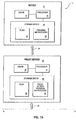
- Fig. 7 illustrates an embodiment of a system 10 for transferring information within a client/server network.
- System 10 includes computational devices used as a network server, a proxy and a client.
- a computational device may be, but is not limited to, a personal computer, laptop, workstation, mainframe or hand held computer including palmtops, personal digital assistants, smart phones, and/or cellular phones.
- server 12 includes cache 14, processor 16 and storage device 18.
- Cache 14 is a collection of storage locations which are rapidly accessible by processor 16.
- cache 14 may be a portion of the processor's system memory allocated for temporary storage.
- Storage device, or storage medium, 18 may take many forms, such as volatile and/or nonvolatile memory or any combination thereof.
- Volatile memory may be any suitable volatile memory device, e.g., RAM, DRAM, SRAM.
- Nonvolatile memory may include storage space, e.g., via the use of hard disk drives or tapes.
- Some example storage mediums include a magnetic disk, a hard drive or floppy drive, an optical disk, and/or magnetic tape.
- Such a storage device is sometimes referred to as a "direct access storage device" (DASD).
- DASD direct access storage device
- storage device 18 has a larger storage capacity than cache 14, but takes longer for processor 16 to access.
- storage device 18 includes files 20 and program instructions 22, also referred to as program executables.
- the program instructions are typically stored as "executable files" in a storage device and loaded into memory during execution.
- Files 20 may include documents such as Web pages suitable for viewing by a user of the network, and may contain text, graphics, video and/or audio information. Such document files may be in the HTML language, or in other suitable languages such as Extensible Markup Language (XML) or Wireless Markup Language (WML).
- Files 20 may further include data files suitable for use by computational devices in communicating across the network. "Files” as used herein may refer to any collection of data suitable for storing on a computational device or transferring within a network.
- Program instructions 22 may include various program instructions used to implement functions of network server 12, such as program instruction used to implement the methods described herein.
- Transmission medium 24 may be used to connect network server 12 to other computational devices, such as proxy server 26 and/or client 28.
- Transmission medium 24 may include, for example, a wire, cable, wireless transmission path, or a combination of these.
- Protocols used for transmission medium 24 may include TCP/IP, HTTP, and/or other suitable protocols such as Wireless Applications Protocol (WAP).
- WAP Wireless Applications Protocol
- System 10 may include client 28, linked to server 12 using transmission medium 24.
- client 28 includes cache 14, processor 16, and storage device 35.
- Storage device 35 is similar to storage device 18 described above, and may include files 39, a browser program 37 and program instructions 36.
- Program instructions can include operating system program instructions and application program instructions.
- a browser program such as browser 37 is implemented using program instructions (or executables) such as instructions 36, browser 37 is shown separately in Fig. 7 to emphasize this feature of the client.
- Browser program 37 may be, for example, a web browser which allows a user to retrieve and view files on the World Wide Web (WWW), or a program which performs a similar function on some other network.
- WWW World Wide Web
- client functions involved in implementation of the methods described herein are included in browser 37.
- Files 39 may include various files stored on the client computational device, including files downloaded from a network server such as server 12.
- Client 28 is typically associated with an output device 38 and input device 40, particularly in embodiments for which the client computational device is operated by a user of the system 10.
- Output device 38 may include, for example, a display screen and/or a printer.
- Input device 40 may include, for example, a keyboard, voice input system, touch sensitive device, and/or a pointing device such as a mouse, track ball, light pen, pen-stylus, and/or any other input means.
- system 10 may also include a proxy server 26.
- a proxy server as used herein refers to a computational device which acts as an intermediary between a client and a "real" server. The proxy server may appear as a server to the client, and as a client to the real server. Requests from the client may be responded to by the proxy server, or passed on to the real server. Files or other communications from the real server may be passed on to the client by the proxy server.
- a proxy server may be employed in system 10 for various reasons. For example, proxy servers may be used to provide specialized content and/or improved performance to a selected group of client computers. An example of this may be the use of caching by proxy servers to increase the speed of providing some files to subscribers to a particular Internet Service Provider (ISP).
- ISP Internet Service Provider
- proxy server 26 includes cache 14, processor 16, and storage device 30.
- Storage device 30 may include files 32 and proxy server program instructions 34.
- Files 32 may include any files stored on the proxy server, such as files being transmitted between a server and a client.
- Program instructions 34 may include various program instructions used to implement functions of proxy server 26, such as interacting with client computers.
- Fig. 7 the blocks are intended to represent functionality rather than specific structure. Implementation of the represented system using circuitry and/or software could involve a combination of multiple blocks into a single circuit or device, or a combination of multiple circuits and/or devices to realize the function of a block.
- cache 14 may be included on a semiconductor chip embodying processor 16.
- a system such as system 10 may include other elements not explicitly shown. For example, multiple servers, proxy servers, and/or clients not shown in Fig. 7 may be included in a system used for implementing the methods and functions described herein. Further, the server, proxy server, and/or client computational devices may themselves include additional elements not shown.
- Fig. 7 The exemplary embodiment shown in Fig. 7 is provided solely for the purposes of explaining the preferred embodiments of the invention; and those skilled in the art will recognize that numerous variations are possible, both in form and function. For instance, any one or more of the following - the processor and/or memory and/or the input/output devices - could be resident on separate systems such as in a network environment.
- the preferred embodiments may be implemented as a method, system, or article of manufacture using standard programming and/or engineering techniques to produce software, firmware, hardware, or any combination thereof.
- article of manufacture (or alternatively, “computer program product”) as used herein is intended to encompass data, instructions, program code, and/or one or more computer programs, and/or data files accessible from one or more computer usable devices, carriers, or media.
- Examples of computer usable mediums include, but are not limited to: nonvolatile, hard-coded type mediums such as CD-ROMs, DVDs, read only memories (ROMs) or erasable, electrically programmable read only memories (EEPROMs), recordable type mediums such as floppy disks, hard disk drives and CD-RW and DVD-RW disks, and transmission type mediums such as digital and analog communication links, or any signal bearing media.
- nonvolatile, hard-coded type mediums such as CD-ROMs, DVDs, read only memories (ROMs) or erasable, electrically programmable read only memories (EEPROMs)
- recordable type mediums such as floppy disks, hard disk drives and CD-RW and DVD-RW disks
- transmission type mediums such as digital and analog communication links, or any signal bearing media.
Landscapes
- Business, Economics & Management (AREA)
- Accounting & Taxation (AREA)
- Finance (AREA)
- Development Economics (AREA)
- Economics (AREA)
- Marketing (AREA)
- Strategic Management (AREA)
- Physics & Mathematics (AREA)
- General Business, Economics & Management (AREA)
- General Physics & Mathematics (AREA)
- Engineering & Computer Science (AREA)
- Theoretical Computer Science (AREA)
- Management, Administration, Business Operations System, And Electronic Commerce (AREA)
Abstract
Description
- This invention relates to electronic commerce, and more specifically to a system, method, and program for enabling a client to carry out a transaction with one merchant's Web server depending upon a result of a transaction with another merchant's Web server; thereby allowing an on-line shopper to cancel a purchase if a better bargain is found with another merchant, or to go forward with a purchase if a previous purchase transaction with another merchant can be cancelled.
- As computational devices continue to proliferate throughout the world, there also continues to be an increase in the use of networks connecting these devices. Computational devices include large mainframe computers, workstations, personal computers, laptops and other portable devices including wireless telephones, personal digital assistants, automobile-based computers, etc. Such portable computational devices are also referred to as "pervasive" devices. The term "computer" or "computational device", as used herein, may refer to any of such device which contains a processor and some type of memory. The networks connecting computational devices may be "wired" networks, formed using lines such as copper wire or fiber optic cable, wireless networks employing earth and/or satellite-based wireless transmission links, or combinations of wired and wireless network portions. Many such networks may be organized using a client/server architecture, in which "server" computational devices manage resources, such as files, peripheral devices, or processing power, which may be requested by "client" computational devices. "Proxy servers" can act on behalf of other machines, such as either clients or servers.
- A widely used network is the Internet. The Internet, initially referred to as a collection of "interconnected networks", is a set of computer networks, possibly dissimilar, joined together by means of gateways that handle data transfer and the conversion of messages from the sending network to the protocols used by the receiving network. When capitalized, the term "Internet" refers to the collection of networks and gateways that use the TCP/IP suite or protocols.
- Currently, the most commonly employed method of transferring data over the Internet is to employ the World Wide Web environment, referred to herein as "the Web". Other Internet resources exist for transferring information, such as File Transfer Protocol (FTP) and Gopher, but have not achieved the popularity of the Web. In the Web environment, servers and clients effect data transfer using the Hypertext Transfer Protocol (HTTP), a known protocol for handling the transfer of various data files (e.g., text, still graphic images, audio, motion video, etc.).
- The term e-commerce is used herein to refer to any commercial activity using computers interconnected by a communication network, e.g., the Internet. Because of the unique characteristics of the Internet, carrying out commercial transactions over the Internet presents new issues and new opportunities.
- Shopping in the real physical world has traditionally involved many factors. Typically, the shopping experience for many people includes negotiations over price; comparisons of price between various merchants; the ability to hold an item at one store for a period of time while other stores are visited to compare the prices and quality of similar products; the ability to return products when dissatisfied for any reason; and the presence of refund policies and procedures.
- Cancelling committed transactions (e.g. a purchase) is often a necessity in real life scenarios. Currently, many merchants allow for order cancellation if a product has not been shipped. However, this typically involves calling the merchant. Likewise some e-commerce merchants allow for electronic cancellation if a product has not been shipped. Furthermore, if a buyer cancels a transaction and then goes to buy from another merchant, the buyer may find that by the time the transaction is cancelled the merchandise is not available from the other merchant.
- Current e-commerce systems having a single Web server involved in the transaction are enabled to cancel a transaction as follows. First, the client clicks on the hyper link to show the client's order status from an e-commerce server at time t1. Then, the e-commerce server receives the HTTP request at time t2. The e-commerce server processes the information, and starts sending the page at time t3. The client receives the page and displays it at time t4. The client clicks on some element (e.g. a button) to cancel a transaction at time t5. The e-commerce server receives the HTTP request to cancel the transaction at time t6. The e-commerce server cancels the transaction, and sends notification to the client at time t7. The client receives and displays notification at time t8.
The problem with the above scheme is that the server sends information at time t3 but receives the cancellation request at time t6. Hence, the server must lock the associated data and any processing on it such that the information does not change between time t3 and t6. It should be noted that this is a common problem that is often encountered by database systems. If the locking is not done, the Web client may attempt to cancel transactions based on incorrect information. This would generate negative opinion and lack of trust in the e-commerce system from clients. In addition, time dependent transactions are important in some degree in many if not all areas of commerce, and are even more critical in other areas of commerce, e.g. for arbitrage based trading. - In the real physical world, the shopper is at the center of the shopping experience; either making the decisions or deciding not to shop if the retailer's requirements or policies are anything less than favorable to the shopper. To the contrary, prior art e-commerce systems are "merchant-centric". The merchant-centric nature of e-commerce is made evident by the fact that many of the e-commerce solutions that are being provided today are for e-commerce servers, i.e., the merchant's servers, and not for the buyer's client.
- It is an object of the present invention to provide a technique which alleviates the above drawbacks.
- According to the present invention we provide a method for carrying out, over a communication network of interconnecting computers, electronic transactions between a plurality of merchants using at least one server computer and at least one buyer using a client computer, comprising: displaying, at the client computer, a separate representation for each item selected by the buyer from at least two different merchants; and associating one of a plurality of selectable states with each separate representation wherein a certain one of the plurality of selectable states indicates that the buyer desires to purchase a desired item from a first merchant if a previous transaction which bought another item from a second merchant can be cancelled.
- Also according to the present invention we provide a A client computer system enabled to communicate over a network with at least one server computer system for carrying out electronic transactions for a buyer using the client computer system for the purchase of items from a plurality of merchants using the at least one server computer system, the client computer system comprising: means for displaying a separate representation for each item selected by the buyer from at least two different merchants wherein each representation has one of a plurality of associated states at a given instance in time; and means for selecting, by the buyer, a desired item from a certain merchant with a selected associated state indicating that the buyer desires to purchase the desired item if a previous transaction which bought another item from another merchant can be cancelled.
- Furthermore according to the present invention we provide a program comprising program code means adapted to perform the steps of the method above when the program is run on a computer.
- A preferred embodiment of the invention enables a client to perform reliable dependent transactions across Web servers. Facilities are provided to a Web client to perform appropriate locking and unlocking of records in Web Servers. This enables a Web client to carry out a transaction with one Web Server depending on the result of a transaction with another Web Server. Such a situation might arise when a Web client wants to cancel a purchase because a better bargain with some other merchant has been found.
- More specifically, a client system, used by a customer (otherwise referred to herein as a buyer or consumer), is enabled to communicate over a network with one or more servers used by merchants to carry out transactions between the customer and the merchants. Each item within the inventory of a merchant is represented by an object or other representation. The client system displays a copy of an instance of the object or other representation for each item selected by the customer from any of the merchants. Items can be collected at the client from multiple merchants across multiple servers. When an item is selected from a merchant, the customer also selects a state of the object representing the item. If an item is available from a merchant, the state of the object at the merchant reflects this availability. When the customer selects an available item, the customer can select a state that will change the available state to a new state. The selectable states include states that indicate that the customer desires to carry out a purchase transaction for the item, e.g., "buy" state; or that the customer wants to put the item on hold while the customer considers a purchase decision, e.g., "hold" state; or that indicate that the customer wants to purchase or hold the item only if a previous transaction with the same or different merchant can be cancelled, e.g., "conditional" state.
- As the item and state are selected by the customer at the client system, the state of the instance of the object of the item at the server is changed from the "available" state to the selected state. This locks the item and associated data from being made available to other customers and client systems.
- The state referred to above as the "conditional" state indicates to the merchant owning the subject item that the customer desires to purchase the subject item if a previous transaction is able to be cancelled. The customer sends to the owning merchant an identification of the previous merchant and an identification of the item purchased in the previous transaction. The owning merchant contacts the previous merchant to cancel the identified transaction. The owning merchant may even offer an incentive to the previous merchant to entice the previous merchant to cancel the previous transaction. The incentive may cover the transaction costs, and perhaps more, that the previous owner incurred. The owning merchant provides the incentive to gain the sale and the customer's business. If the previous transaction is cancelled, a notice is sent to the client which changes the state of the objects to indicate that the previous transaction was cancelled and that the condition on the other item has been met such that the item may now reflect a "hold" or "buy" state. In some embodiments, the object of the previous item may even be automatically deleted from the client's collection of items upon receipt of a notification of the cancellation. The e-commerce system, method, and program of this invention has "client-centric" features that enable the shopping experience to include a) competitive shopping across merchants by providing methods for "order cancellation", and by providing methods for "dependent transactions" in which a transaction with one merchant depends upon transactions made earlier with a different merchant; b) product transfers between sellers whereby merchants can contact each other to provide "incentives" for order cancellation; and c) a "client-centric" shopping cart, kept at the client, that has items from many merchants.
- The client-centric e-commerce embodiments of the invention enhance the psychological aspects of shopping for the shopper by making the shopper feel in control of the shopping experience, and by enabling the shopper to shop from many merchants rather than having discrete transactions with each separate merchant. One embodiment utilizes a shopping cart which spans different merchants on different Web servers which allows the client to perform price and product comparisons easily and automatically. The "order cancellation" and "dependent transaction" methods readily enable the Internet shopper to shop for bargains across different merchants.
- For a more complete understanding of the present invention and the advantages thereof, reference should be made to the following Detailed Description taken in connection with the accompanying drawings in which:
- Fig. 1 illustrates an e-commerce infrastructure utilizing the features of the invention;
- Fig. 2 is a flow chart for carrying out a buyer's desire to cancel a transaction on hold with a first Web server to enable the buyer to complete a transaction with a second Web server;
- Fig. 3 is flow chart for carrying out a buyer's desire to cancel a completed transaction with a first Web server to enable the buyer to complete a transaction with a second Web server;
- Fig. 4 illustrates a transaction flow wherein a first merchant, pursuant to a request by the buyer, provides incentive to a second merchant to cancel a previous transaction with the buyer;
- Fig. 5 illustrates inventory items represented as objects in a network of e-commerce merchants and clients;
- Figs. 6A-6C illustrate the process flow at a merchant's Web server for changing the state of an object depending upon the client's request; and
- Fig. 7 is a block diagram of computational devices in a client/server network such as the Internet.
-
- In the following description, reference is made to the accompanying drawings which form a part hereof, and which illustrate several embodiments of the present invention. It is understood that other embodiments may be utilized and structural and operational changes may be made without departing from the scope of the present invention.
- Fig. 1 shows a block diagram of a "client-centric" e-commerce infrastructure embodying the invention. There is a multiplicity of
e-commerce servers buyer Web client 101 can interact. Each e-commerce Web server is typically connected to adatabase web clients web clients - The method, means and program function of the preferred embodiments for carrying out a buyer's desire to cancel a committed transaction, e.g., a purchase, is described below with reference to Fig. 1 and Fig. 2. For example, the
buyer Web client 101 may wish to cancel a transaction with oneWeb Server 110, but may wish to do it only if the buyer can complete a transaction with theother Web Server 120. In the preferred embodiments of the invention, an order cancellation includes techniques for resolving dependent transactions. - One implementation approach is through the use of distributed objects. Based on the efforts presently going on today, distributed objects is likely to be the core feature of the next generation of the HTTP protocol. Resolving dependent transactions can also be implemented by traditional database locking and unlocking mechanisms. However, these are typically under the control of, and carried out by, the database server and not the client.
- Fig. 2 illustrates a transaction flow, including order cancellations, between a buyer and multiple merchants. First, a buyer holds an item "A1" with
merchant # 1 and continues shopping, 201. If the buyer finds a better bargain for a similar item "A2" withmerchant # 2, the buyer holds item "A2" withmerchant # merchant # 1 and continues shopping, 203. If the buyer finds a better bargain for a similar item "A3" withmerchant # 3, the buyer holds item "A3" withmerchant # merchant # merchant # - Fig. 3 illustrates another transaction flow embodiment. A buyer orders an item "C1", e.g., a chair, for $50 from
seller State 1 is "bought". The buyer then orders a similar item "C2", e.g., a different chair, fromseller 2 for $45 and requests a hold, 302.State 2 is "hold". Now, the buyer requests a cancellation of item "C1" fromseller State 1 becomes "canceled". The buyer can explicitly buy item "C2" in whichcase State 2 changes from "hold" to "bought", 304. If there is no explicit action from the buyer after a predetermined amount of time "T", e.g., 5 hours, the "hold" state associated with item "C2" automatically changes to either "bought" or "cancelled" depending upon the specific implementation. - Instead of a buyer cancelling the order with
merchant 1 and then contactingmerchant 2 to place an order, a preferred embodiment of the invention enables the transaction flow as described with reference to Fig. 4. First, a buyer places an order withmerchant 2 conditional on the fact that the electronic transaction made earlier withmerchant 1 is cancelled bymerchant 2,step 401.Merchant 2's Webserver contacts Merchant 1's Web server and offers an "incentive" of a given amount to cancel the earlier transaction of the buyer,step 402. IfMerchant 1's Web server accepts the offer,step 403, thenMerchant 2 fulfills the order of the buyer,step 404. - This product transfer transaction flow between merchants is beneficial to each party involved. The buyer gets the desired product from a selected merchant offering the best conditions, e.g., price and/or availability and/or warranty, etc.
Merchant 1 gains some money to possibly cover its transaction costs.Merchant 1 also establishes good customer relations by allowing automatic order cancellation with minimal effort on the buyer's part.Merchant 2 obviously benefits through an additional sale. - A preferred embodiment of the invention utilizes the transaction flows described above including order cancellation using dependent transactions, and product transfer incentives, along with a client-centric shopping cart. The client-centric shopping cart is implemented through software at the client. The shopping cart keeps equivalent or similar items from different merchants grouped together, so that the client can easily perform competitive shopping. By clicking on a particular item in the "client-centric" shopping cart, the client is taken to the Web server page from which the item was extracted.
- An example of client-centric shopping cart is given below:
Seller: Amazon.com Shopping cart at seller: Item ID 3487 "Gone With the Wind" $11.50 Item ID 3434 "C++ Programming" $10.00 Seller: Bookseller.com Shopping cart at seller: Item ID AAAB "Gone With the Wind" $13.00 Item ID AA45 "Java programming" $30.00 Client-centric shopping cart "Gone With the Wind" Amazon.com Item ID 3487 $11.50 "Gone With the Wind" Bookseller.com Item ID AAAB 13.00 "C++ Programming" Amazon.com Item ID 3434 10.00 "Java programming" Bookseller.com Item ID AA45 30.00 - A preferred embodiment is described which utilizes distributed objects to carry out the above transaction flows. The Web servers and Web clients are endowed with the appropriate functionality to carry out these transaction flows. Variations to the preferred embodiment could be made without departing from the spirit and scope of the invention. Likewise, other implementations and embodiments could also be used. For example, relational and hierarchical databases could also be used to store, manipulate, access and lock inventory items and the associated data from merchants as records within the databases.
- Fig. 5 shows multiple merchants, merchant A, merchant B, merchant C on separate Web servers, 501, 502, 503. It should be noted that the merchants do not necessarily have to be on separate Web servers. More than one merchant can be on the same Web server. Each merchant has a separate and distinct URL regardless of whether or not it shares a Web server with another merchant.
- There is a separate object for each item belonging to a merchant. For example item # 1A1, 511, indicates that this is a first item, such as a chair, from merchant A, and it is the first chair item within the merchant's inventory of "n" chairs. A third chair item within the inventory may be designated as "item 1A3". Likewise, a desk from merchant A is shown herein as item "2An" 513 where "n" indicates which specific desk within the inventory of desks it is. In essence, each unique item from a merchant is represented as a unique object.
- Depending upon the specific implementation, each object has some, if not all, of the following attributes or states: available, hold, buy, canceled, and conditional. If an item is indicated to be "available", an instance of the object can be copied to, i.e., sent to, the client and placed in the client's shopping cart. Once an instance of the object is sent to the client, the state of the object changes to either "hold" or "buy" or "conditional". When the state changes, the particular object is no longer available and cannot be sent to another client. When the client or another merchant sends a message to a Web server to cancel a transaction, the instance of the object at the client is deleted, and the state of the instance of the object at the Web server changes to "cancelled". After the Web server processes the cancellation, the Web server will change the state of its object from cancelled to "available", thereby making that object available to another client.
- The state of an object can change to "conditional" pursuant to the following scenario. The client can send a message to a merchant, e.g., merchant A, indicating that the client desires to buy item 1A1,, 511, from that merchant if merchant B will cancel item 1B1, 521, with merchant B. The state of item 1A1 at merchant A changes from "available" to "conditional" as a copy of the
object 2511 with the conditional state is send to theclient 550. In the message from the client to merchant A, the client has included the necessary information identifying the merchant, the item from the merchant, and the buyer. Merchant A sends a message to the identified merchant, e.g., merchant B, identifying the item and the buyer and requesting a cancellation of that transaction. Merchant B changes the state of the object at merchant B from bought to cancelled and sends a message to the buyer that deletes the copy of the object from the buyer's shopping cart. When merchant B completes the processing of the cancellation, merchant B will change the state of itsobject 521 for that item from cancelled to available. Merchant B will then sent a message to merchant A indicating that the transaction has been cancelled. Merchant A changes the state of the object of itsitem 511 from conditional to either bought or hold, depending upon the desires of the buyer as indicated in the first message between the buyer and merchant A. - A client is enabled to select and collect objects with specified states representing the items from various merchants across one or more Web servers. As each item (i.e., object) is collected, it is displayed, along with any other collected items, at the client along with an indication of the specified states of each item. The client is also enabled to change the state of any of the objects of the items displayed. Upon a change of state, the client will automatically send an indication to the applicable merchant that the state is changed. This can be done through a URA link associated with each selectable state on each object. Other means can also be used such as by the sending of messages. Depending upon the initial state of the object selected, and any changed states thereafter, the Web server of the corresponding merchant will perform any necessary locking of objects or associated data and/or will perform any necessary processing.
- Figs. 6A-6C illustrate the process steps, system means, and program function at a Web server for managing the states of the objects for various transactions in response to selections made by a client. At 601, Fig. 6A, the Web server waits for a request from a client for a specific item. If there is a request for an item, the Web server determines if there is an object available for the
item 602. If not, the request is denied and a request_denied message is sent back to the client, 603. Then, the Web server continues to wait for anext request 601. If an item is available, the Web server determines the request type as being either hold, buy, cancel, or conditional 604. - For a hold request, the following events occur. If an object is available, the state is changed to hold, 613; and a copy of the object is sent to the client, 614. A timer is started, 615, to determine if a buy or cancel request, 616, is received for the object within a
predetermined time period 617. If the time period expires, the hold state is changed to the cancel state, 618, and a message is sent to the client to delete the object, 619. The Web server then cancels the transaction, 620. When the Web server completes the cancellation process, the state of the object is changed from cancel to available, 621. If there is a request to buy or cancel, 616, then the Web server determines the type of therequest 623. If a cancel request was received, the process continues with steps 618 - 621, as described above. If a buy request is received, the state of the object is changed to buy 624, and the server carries out thebuying transaction 625. - Returning to step 604, if instead of a hold request, the request was initially a buy request, the state of the object at the server is changed to buy 624. The Web server completes the buying transaction with the
client 625. - At
step 604, Fig. 6A, if the request was a cancel request, the Web server continues processing as shown in Fig. 6B. The Web server determines the item, 651, and changes the state to cancel, 652. The Web server sends a message to the client to delete the object, 653, and cancels thetransaction 654. The Web server then changes the state of the object to available, 655. - At
step 604, Fig. 6A, if the request was a conditional request, the Web server continues processing as shown in Fig. 6C. The Web server changes the state of the object from available to conditional 671, and sends a copy of the object to theclient 672. The Web server determines the identity of the other merchant, buyer, and item from the request, 673. The Web server sends a message to the other merchant to cancel the item with the buyer, 674. When the Web server receives confirmation that the other merchant has cancelled the previous transaction with the buyer, 675, then the state is changed from conditional to buy or hold as requested, 676 at both the server and theclient 677. Processing continues at eithersteps - Fig. 7 illustrates an embodiment of a
system 10 for transferring information within a client/server network.System 10 includes computational devices used as a network server, a proxy and a client. A computational device may be, but is not limited to, a personal computer, laptop, workstation, mainframe or hand held computer including palmtops, personal digital assistants, smart phones, and/or cellular phones. In the embodiment of Fig. 7,server 12 includescache 14,processor 16 andstorage device 18.Cache 14 is a collection of storage locations which are rapidly accessible byprocessor 16. In an embodiment,cache 14 may be a portion of the processor's system memory allocated for temporary storage. Storage device, or storage medium, 18 may take many forms, such as volatile and/or nonvolatile memory or any combination thereof. Volatile memory may be any suitable volatile memory device, e.g., RAM, DRAM, SRAM. Nonvolatile memory may include storage space, e.g., via the use of hard disk drives or tapes. Some example storage mediums include a magnetic disk, a hard drive or floppy drive, an optical disk, and/or magnetic tape. Such a storage device is sometimes referred to as a "direct access storage device" (DASD). Typically,storage device 18 has a larger storage capacity thancache 14, but takes longer forprocessor 16 to access. - In the embodiment of Fig. 7,
storage device 18 includesfiles 20 and program instructions 22, also referred to as program executables. The program instructions are typically stored as "executable files" in a storage device and loaded into memory during execution.Files 20 may include documents such as Web pages suitable for viewing by a user of the network, and may contain text, graphics, video and/or audio information. Such document files may be in the HTML language, or in other suitable languages such as Extensible Markup Language (XML) or Wireless Markup Language (WML).Files 20 may further include data files suitable for use by computational devices in communicating across the network. "Files" as used herein may refer to any collection of data suitable for storing on a computational device or transferring within a network. Program instructions 22 may include various program instructions used to implement functions ofnetwork server 12, such as program instruction used to implement the methods described herein. -
Transmission medium 24 may be used to connectnetwork server 12 to other computational devices, such asproxy server 26 and/orclient 28.Transmission medium 24 may include, for example, a wire, cable, wireless transmission path, or a combination of these. Protocols used fortransmission medium 24 may include TCP/IP, HTTP, and/or other suitable protocols such as Wireless Applications Protocol (WAP). -
System 10 may includeclient 28, linked toserver 12 usingtransmission medium 24. In the embodiment of Fig. 7,client 28 includescache 14,processor 16, andstorage device 35.Storage device 35 is similar tostorage device 18 described above, and may includefiles 39, abrowser program 37 andprogram instructions 36. Program instructions can include operating system program instructions and application program instructions. Although a browser program such asbrowser 37 is implemented using program instructions (or executables) such asinstructions 36,browser 37 is shown separately in Fig. 7 to emphasize this feature of the client.Browser program 37 may be, for example, a web browser which allows a user to retrieve and view files on the World Wide Web (WWW), or a program which performs a similar function on some other network. In some embodiments, client functions involved in implementation of the methods described herein are included inbrowser 37. Such functions, and/or other functions of the client computing device, may also be implemented in separate program instructions such asprogram instructions 36.Files 39 may include various files stored on the client computational device, including files downloaded from a network server such asserver 12.Client 28 is typically associated with anoutput device 38 andinput device 40, particularly in embodiments for which the client computational device is operated by a user of thesystem 10.Output device 38 may include, for example, a display screen and/or a printer.Input device 40 may include, for example, a keyboard, voice input system, touch sensitive device, and/or a pointing device such as a mouse, track ball, light pen, pen-stylus, and/or any other input means. - In some embodiments,
system 10 may also include aproxy server 26. A proxy server as used herein refers to a computational device which acts as an intermediary between a client and a "real" server. The proxy server may appear as a server to the client, and as a client to the real server. Requests from the client may be responded to by the proxy server, or passed on to the real server. Files or other communications from the real server may be passed on to the client by the proxy server. A proxy server may be employed insystem 10 for various reasons. For example, proxy servers may be used to provide specialized content and/or improved performance to a selected group of client computers. An example of this may be the use of caching by proxy servers to increase the speed of providing some files to subscribers to a particular Internet Service Provider (ISP). Another use of a proxy server may be to filter the information being sent from the client to a real server, and/or from the real server to the client. In the embodiment of Fig. 7,proxy server 26 includescache 14,processor 16, andstorage device 30.Storage device 30 may includefiles 32 and proxyserver program instructions 34.Files 32 may include any files stored on the proxy server, such as files being transmitted between a server and a client.Program instructions 34 may include various program instructions used to implement functions ofproxy server 26, such as interacting with client computers. - In Fig. 7 and in any other block diagrams appearing herein, the blocks are intended to represent functionality rather than specific structure. Implementation of the represented system using circuitry and/or software could involve a combination of multiple blocks into a single circuit or device, or a combination of multiple circuits and/or devices to realize the function of a block. For example,
cache 14 may be included on a semiconductorchip embodying processor 16. Furthermore, a system such assystem 10 may include other elements not explicitly shown. For example, multiple servers, proxy servers, and/or clients not shown in Fig. 7 may be included in a system used for implementing the methods and functions described herein. Further, the server, proxy server, and/or client computational devices may themselves include additional elements not shown. - The exemplary embodiment shown in Fig. 7 is provided solely for the purposes of explaining the preferred embodiments of the invention; and those skilled in the art will recognize that numerous variations are possible, both in form and function. For instance, any one or more of the following - the processor and/or memory and/or the input/output devices - could be resident on separate systems such as in a network environment.
- The preferred embodiments may be implemented as a method, system, or article of manufacture using standard programming and/or engineering techniques to produce software, firmware, hardware, or any combination thereof. The term "article of manufacture" (or alternatively, "computer program product") as used herein is intended to encompass data, instructions, program code, and/or one or more computer programs, and/or data files accessible from one or more computer usable devices, carriers, or media. Examples of computer usable mediums include, but are not limited to: nonvolatile, hard-coded type mediums such as CD-ROMs, DVDs, read only memories (ROMs) or erasable, electrically programmable read only memories (EEPROMs), recordable type mediums such as floppy disks, hard disk drives and CD-RW and DVD-RW disks, and transmission type mediums such as digital and analog communication links, or any signal bearing media.
- The foregoing description of the preferred embodiments of the invention has been presented for the purposes of illustration and description. It is not intended to be exhaustive or to limit the invention to the precise form disclosed. Many modification and variations are possible in light of the above teaching. For example, although preferred embodiments of the invention have been described in terms of the Internet, other network environments including but not limited to wide area networks, intranets, and dial up connectivity systems using any network protocol that provides basic data transfer mechanisms may be used.
- It is intended that the scope of the invention be limited not by this detailed description, but rather by the claims appended hereto. The above specification, examples and data provide a complete description of the manufacture and use of the system, method, and article of manufacture, i.e., computer program product, of the invention. Since many embodiments of the invention can be made without departing from the spirit and scope of the invention, the invention resides in the claims hereinafter appended.
- Having thus described the invention, what we claim as new and desire to secure by Letters Patent is set forth in the following claims.
Claims (12)
- A method for carrying out, over a communication network of interconnecting computers, electronic transactions between a plurality of merchants using at least one server computer and at least one buyer using a client computer, comprising:displaying, at the client computer, a separate representation for each item selected by the buyer from at least two different merchants; andassociating one of a plurality of selectable states with each separate representation wherein a certain one of the plurality of selectable states indicates that the buyer desires to purchase a desired item from a first merchant if a previous transaction which bought another item from a second merchant can be cancelled.
- A method for carrying out, over a communication network of interconnecting computers, electronic transactions between a plurality of merchants using at least one server computer and at least one buyer using a client computer, comprising:enabling the client computer to display a separate representation for each item selected by the buyer from at least two different merchants wherein each representation has one of a plurality of associated states at a given instance in time; andselecting, by the buyer, a desired item from a certain merchant with a selected associated state indicating that the buyer desires to purchase the desired item if a previous transaction which bought another item from another merchant can be cancelled.
- The method of claim 2 further comprising:sending, from the client, to the certain merchant an identification of the other merchant and the other item; andreceiving a notification that the previous transaction is cancelled.
- The method of claim 2 wherein the selected associated state causes an indication to be sent from the client to the certain merchant to lock specific data associated with the desired item from being accessible by a different client during a period that the representation for the desired item has the selected associated state.
- The method of claim 3 further comprising changing the selected state to a different state, upon notification of the cancellation, wherein the different state provides an indication of one of the following: a) the buyer desires to put the desired item on hold for a time to consider buying the desired item, and b) the buyer has bought the desired item.
- The method of claim 3 wherein the other item has a displayed other representation on the client computer wherein the associated state is changed, upon receipt of the notification, to indicate that the previous transaction is cancelled.
- The method of claim 3 wherein the other item has a displayed other representation on the client computer which becomes automatically deleted, upon receipt of the notification indicating that the previous transaction is cancelled.
- A client computer system enabled to communicate over a network with at least one server computer system for carrying out electronic transactions for a buyer using the client computer system for the purchase of items from a plurality of merchants using the at least one server computer system, the client computer system comprising:means for displaying a separate representation for each item selected by the buyer from at least two different merchants wherein each representation has one of a plurality of associated states at a given instance in time; andmeans for selecting, by the buyer, a desired item from a certain merchant with a selected associated state indicating that the buyer desires to purchase the desired item if a previous transaction which bought another item from another merchant can be cancelled.
- The system of claim 8 further comprising:means for sending, from the client, to the certain merchant an identification of the other merchant and the other item; andmeans for receiving a notification that the previous transaction is cancelled.
- The system of claim 8 or 9 wherein the selected associated state causes an indication to be sent from the client to the certain merchant to lock specific data associated with the desired item from being accessible by a different client during a period that the representation for the desired item has the selected associated state.
- The system of claim 9 further comprising means for changing the selected state to a different state, upon notification of the cancellation, wherein the different state provides an indication of one of the following: a) the buyer desires to put the desired item on hold for a time to consider buying the desired item, and b) the buyer has bought the desired item.
- A computer program comprising program code means adapted to performthe steps of claim 1-7 when the program is run on a computer.
Applications Claiming Priority (2)
| Application Number | Priority Date | Filing Date | Title |
|---|---|---|---|
| US09/513,818 US6868393B1 (en) | 2000-02-24 | 2000-02-24 | Client-centric internet shopping system, method and program |
| US513818 | 2000-02-24 |
Publications (2)
| Publication Number | Publication Date |
|---|---|
| EP1128305A2 true EP1128305A2 (en) | 2001-08-29 |
| EP1128305A3 EP1128305A3 (en) | 2002-03-20 |
Family
ID=24044780
Family Applications (1)
| Application Number | Title | Priority Date | Filing Date |
|---|---|---|---|
| EP01301265A Withdrawn EP1128305A3 (en) | 2000-02-24 | 2001-02-14 | A client-centric internet shopping system, method and program |
Country Status (6)
| Country | Link |
|---|---|
| US (1) | US6868393B1 (en) |
| EP (1) | EP1128305A3 (en) |
| JP (1) | JP4222737B2 (en) |
| CN (1) | CN1310425A (en) |
| AU (1) | AU782331B2 (en) |
| CA (1) | CA2337783A1 (en) |
Cited By (1)
| Publication number | Priority date | Publication date | Assignee | Title |
|---|---|---|---|---|
| AU782331B2 (en) * | 2000-02-24 | 2005-07-21 | International Business Machines Corporation | A client-centric internet shopping system, method and program |
Families Citing this family (35)
| Publication number | Priority date | Publication date | Assignee | Title |
|---|---|---|---|---|
| JP3906010B2 (en) * | 2000-05-26 | 2007-04-18 | 株式会社東芝 | Transaction management apparatus, transaction management method, and recording medium |
| US7188081B1 (en) * | 2000-10-30 | 2007-03-06 | Microsoft Corporation | Electronic shopping basket |
| US20020138644A1 (en) * | 2001-03-23 | 2002-09-26 | Howard Kaplan | Internet-based transaction management system |
| US20030036938A1 (en) * | 2001-08-16 | 2003-02-20 | International Business Machines Corporation | Method and system for delivery of products within a predetermined time period |
| US20060036483A1 (en) * | 2004-08-11 | 2006-02-16 | Suk-Won Jang | System for managing advertisement in shopping mall web site, and method of the same |
| US20060167811A1 (en) * | 2005-01-24 | 2006-07-27 | Microsoft Corporation | Product locker for multi-merchant purchasing environment for downloadable products |
| US7729998B2 (en) * | 2005-03-10 | 2010-06-01 | Dickman Craig S | Method for shippers to manage fuel costs |
| US8190533B2 (en) * | 2005-03-10 | 2012-05-29 | Dickman Craig S | Method for shippers to manage fuel cost |
| US7890379B2 (en) * | 2005-12-16 | 2011-02-15 | At&T Intellectual Property I, L.P. | Methods, systems, and products for facilitating electronic purchases |
| US20070192438A1 (en) * | 2006-02-10 | 2007-08-16 | Esmond Goei | System and method for on-demand delivery of media products |
| US8190493B2 (en) * | 2006-03-31 | 2012-05-29 | Digital River, Inc. | Shopping cart service system and method |
| US8060437B2 (en) * | 2006-10-31 | 2011-11-15 | International Funding Partners Llc | Automatic termination of electronic transactions |
| US20080262960A1 (en) * | 2007-04-18 | 2008-10-23 | Wade Malone | Automated Electronic Commerce Data Extracting and Analyzing System |
| US20090018934A1 (en) * | 2007-05-15 | 2009-01-15 | Chaorong Peng | System and Method for defense ID theft attack security service system in marketing environment |
| US20080300973A1 (en) * | 2007-05-30 | 2008-12-04 | Dewitt Jay Allen | Supply of requested offer based on offeree transaction history |
| US20080319843A1 (en) * | 2007-06-22 | 2008-12-25 | Dennis Norman Moser | Supply of requested offer based on point-of-service to offeree distance |
| US20090030743A1 (en) * | 2007-07-24 | 2009-01-29 | Las Vegas Central Reservation Corp. | Intelligent Hotel Reservation System and Method |
| US20090076896A1 (en) * | 2007-09-13 | 2009-03-19 | Dewitt Jay Allen | Merchant supplied offer to a consumer within a predetermined distance |
| US20090076925A1 (en) * | 2007-09-13 | 2009-03-19 | Dewitt Jay Allen | Offeree requested offer based on point-of-service to offeree distance |
| US8145569B2 (en) * | 2007-12-13 | 2012-03-27 | Google Inc. | Multiple party on-line transactions |
| US7788141B1 (en) * | 2008-05-30 | 2010-08-31 | Intuit Inc. | Method and system for tracking purchases |
| US10169308B1 (en) | 2010-03-19 | 2019-01-01 | Google Llc | Method and system for creating an online store |
| US20110264555A1 (en) * | 2010-04-27 | 2011-10-27 | Rielle Life Llc | Method and system for providing feature to temporarily hold one-of-a-kind merchandise in an online shopping cart |
| US8595059B1 (en) | 2011-10-12 | 2013-11-26 | Google Inc. | Forwarding offers for payment by others |
| CN102646252A (en) * | 2012-03-19 | 2012-08-22 | 重庆先迈通信技术有限公司 | Business server system and business processing method of negotiated price transaction business |
| US10026119B2 (en) | 2012-09-10 | 2018-07-17 | Google Llc | Efficient transfer of funds between accounts |
| US20140081678A1 (en) * | 2012-09-14 | 2014-03-20 | Stephen Donald Reynolds | Rate Oscillation Monitoring Hotel Reservation System |
| US9921072B2 (en) | 2012-11-09 | 2018-03-20 | Visa International Service Association | Systems and methods for route prediction |
| US9439036B2 (en) | 2013-01-25 | 2016-09-06 | Visa International Service Association | Systems and methods to select locations of interest based on distance from route points or route paths |
| US10055751B2 (en) | 2013-04-05 | 2018-08-21 | Visa International Service Association | Systems and methods to enhance search results using transaction data of merchants |
| US10304122B2 (en) * | 2013-05-30 | 2019-05-28 | Ebay Inc. | Time- and geolocation-limited marketplace |
| US9332396B2 (en) | 2014-03-17 | 2016-05-03 | Visa International Service Association | Systems and methods to provide location-dependent information during an optimal time period |
| CN108846734A (en) * | 2018-09-03 | 2018-11-20 | 林国军 | Internet electronic business business model |
| CN109345345A (en) * | 2018-09-20 | 2019-02-15 | 范俊彤 | A kind of two-way trade method and system of e-commerce |
| CN120711078B (en) * | 2025-05-07 | 2026-07-17 | 福建福诺移动通信技术有限公司 | Optimization method and system for second killing activity |
Family Cites Families (14)
| Publication number | Priority date | Publication date | Assignee | Title |
|---|---|---|---|---|
| US5794207A (en) * | 1996-09-04 | 1998-08-11 | Walker Asset Management Limited Partnership | Method and apparatus for a cryptographically assisted commercial network system designed to facilitate buyer-driven conditional purchase offers |
| JP3133243B2 (en) | 1995-12-15 | 2001-02-05 | 株式会社エヌケーインベストメント | Online shopping system |
| US5615269A (en) * | 1996-02-22 | 1997-03-25 | Micali; Silvio | Ideal electronic negotiations |
| US5937391A (en) | 1996-07-11 | 1999-08-10 | Fujitsu Limited | Point-service system in online shopping mall |
| US6249772B1 (en) * | 1997-07-08 | 2001-06-19 | Walker Digital, Llc | Systems and methods wherein a buyer purchases a product at a first price and acquires the product from a merchant that offers the product for sale at a second price |
| US6356878B1 (en) * | 1996-09-04 | 2002-03-12 | Priceline.Com Incorporated | Conditional purchase offer buyer agency system |
| JP3413076B2 (en) | 1997-03-18 | 2003-06-03 | 株式会社東芝 | Central market system and electronic market system |
| US5966697A (en) * | 1997-10-30 | 1999-10-12 | Clearcommerce Corporation | System and method for secure transaction order management processing |
| JPH11154176A (en) | 1997-11-19 | 1999-06-08 | Oki Electric Ind Co Ltd | Electronic basket system |
| US6115690A (en) | 1997-12-22 | 2000-09-05 | Wong; Charles | Integrated business-to-business Web commerce and business automation system |
| US6317722B1 (en) * | 1998-09-18 | 2001-11-13 | Amazon.Com, Inc. | Use of electronic shopping carts to generate personal recommendations |
| WO2000043852A2 (en) * | 1999-01-26 | 2000-07-27 | Icanbuy.Com | Methods and apparatus for facilitating electronic commerce |
| US6304850B1 (en) * | 1999-03-17 | 2001-10-16 | Netmarket Group, Inc. | Computer-implemented system and method for booking airline travel itineraries |
| US6868393B1 (en) * | 2000-02-24 | 2005-03-15 | International Business Machines Corporation | Client-centric internet shopping system, method and program |
-
2000
- 2000-02-24 US US09/513,818 patent/US6868393B1/en not_active Expired - Lifetime
- 2000-12-14 AU AU72279/00A patent/AU782331B2/en not_active Ceased
-
2001
- 2001-02-14 EP EP01301265A patent/EP1128305A3/en not_active Withdrawn
- 2001-02-15 CA CA002337783A patent/CA2337783A1/en not_active Abandoned
- 2001-02-20 JP JP2001043413A patent/JP4222737B2/en not_active Expired - Fee Related
- 2001-02-22 CN CN01102893A patent/CN1310425A/en active Pending
Non-Patent Citations (1)
| Title |
|---|
| No Search * |
Cited By (1)
| Publication number | Priority date | Publication date | Assignee | Title |
|---|---|---|---|---|
| AU782331B2 (en) * | 2000-02-24 | 2005-07-21 | International Business Machines Corporation | A client-centric internet shopping system, method and program |
Also Published As
| Publication number | Publication date |
|---|---|
| CA2337783A1 (en) | 2001-08-24 |
| EP1128305A3 (en) | 2002-03-20 |
| JP2001243374A (en) | 2001-09-07 |
| AU7227900A (en) | 2001-08-30 |
| US6868393B1 (en) | 2005-03-15 |
| AU782331B2 (en) | 2005-07-21 |
| JP4222737B2 (en) | 2009-02-12 |
| CN1310425A (en) | 2001-08-29 |
Similar Documents
| Publication | Publication Date | Title |
|---|---|---|
| US6868393B1 (en) | Client-centric internet shopping system, method and program | |
| JP4422902B2 (en) | Method and system for electronic commerce using multiple roles | |
| US6609106B1 (en) | System and method for providing electronic multi-merchant gift registry services over a distributed network | |
| JP5226916B2 (en) | Processing of electronic value preservation securities | |
| US8346626B2 (en) | System and method for providing electronic multi-merchant gift registry services over a distributed network | |
| US9996865B2 (en) | System and method for transaction automation | |
| US20020072980A1 (en) | System, method, and program for managing electronic shopping carts | |
| US20020156685A1 (en) | System and method for automating electronic commerce transactions using a virtual shopping cart | |
| US20050197927A1 (en) | Wish list | |
| US20020062245A1 (en) | System and method for generating real-time promotions on an electronic commerce world wide website to increase the likelihood of purchase | |
| US20130103541A1 (en) | Rule-based transferable shopping basket for online purchases | |
| US20070118434A1 (en) | System and method for transaction automation | |
| US20090327166A1 (en) | Method And Apparatus For Efficient Delta Pricing | |
| US20170068985A1 (en) | Clickstream analysis methods and systems related to improvements in online stores and media content | |
| US20020174236A1 (en) | Methods and apparatus for processing data in a content network | |
| US20070299732A1 (en) | Electronic commerce system utilizing custom merchant calculations | |
| JP2004534984A (en) | System and method for displaying and selling goods and services in a retail environment utilizing electronic shopper assistance | |
| KR20020007163A (en) | System and method for generating virtual wish lists for assisting shopping over computer networks | |
| JPWO2003038700A1 (en) | How to notify product information | |
| US20030130898A1 (en) | System to facilitate electronic shopping | |
| WO2000046686A1 (en) | E-commerce notification | |
| JP2004220550A (en) | Operating activity support system and information processor | |
| Kuramitsu et al. | Openbasket: a pick-and-droppable shopping agent placing orders to multiple electronic storefronts | |
| Li et al. | Advanced Web Session Provider for Suspensible E-services | |
| CA2350119A1 (en) | System for automatically matching buyers and sellers via network and the method of the same |
Legal Events
| Date | Code | Title | Description |
|---|---|---|---|
| PUAI | Public reference made under article 153(3) epc to a published international application that has entered the european phase |
Free format text: ORIGINAL CODE: 0009012 |
|
| AK | Designated contracting states |
Kind code of ref document: A2 Designated state(s): AT BE CH CY DE DK ES FI FR GB GR IE IT LI LU MC NL PT SE TR |
|
| AX | Request for extension of the european patent |
Free format text: AL;LT;LV;MK;RO;SI |
|
| PUAL | Search report despatched |
Free format text: ORIGINAL CODE: 0009013 |
|
| AK | Designated contracting states |
Kind code of ref document: A3 Designated state(s): AT BE CH CY DE DK ES FI FR GB GR IE IT LI LU MC NL PT SE TR |
|
| AX | Request for extension of the european patent |
Free format text: AL;LT;LV;MK;RO;SI |
|
| AKX | Designation fees paid | ||
| REG | Reference to a national code |
Ref country code: DE Ref legal event code: 8566 |
|
| STAA | Information on the status of an ep patent application or granted ep patent |
Free format text: STATUS: THE APPLICATION IS DEEMED TO BE WITHDRAWN |
|
| 18D | Application deemed to be withdrawn |
Effective date: 20020921 |