BACKGROUND OF THE INVENTION
Field of the Invention.
This invention generally relates to separation columns, particularly
capillaries useful in capillary zone electrophoresis, including capillary
electrochromatography, and more particularly to separation columns that includes
a photopolymer component. This photopolymer component may be in the form of
a frit.
Description of Related Art.
Over the past decade, capillary zone electrophoresis (CZE), with its
high peak capacity (i.e., the number ofpeaks separated per unit time), has developed
into a powerful and widely used technique for separating ionic species by their
electrophoretic mobilities. The lack of selectivity for uncharged analytes in CZE,
however, has remained more problematic. Several methods have been developed,
such as micellar electrokinetic chromatography (MEKC), to help overcome this
problem by providing a pseudostationary phase in which uncharged compounds can
be separated. The application of methods such as MEKC is limited because of the
restricted number of pseudostationary phases that can be employed in this technique.
With the advent of capillary electrochromatography (CEC), where
both chromatographic and electrophoretic transport mechanisms are combined,
separation and analysis of mixtures of uncharged analytes can be achieved using low
sample volumes with high resolution and efficiency. The increased interest in CEC
for analytical applications arises from the large plate numbers and relatively high
separation speeds achieved and the wide range of stationary phases (those commonly
used in high-performance liquid chromatography) that can be used.
Many groups have reported on the use of slurry or electrokinetic
packing methods for the fabrication of electrochromatography capillary columns
with typical inner diameters of 75 µm. Reversed-phase capillary columns have been
prepared, typically with octadecyl silica (ODS) whose particle diameters are on the
order of 1.5 to 5 µm. In both packing techniques, the use of retaining frits at both
the inlet and the outlet of the capillary has been required to prevent the
chromatographic packing material from exiting the capillary. Although systematic
studies regarding the effects of the frits on the performance of such capillaries have
not been reported, it is thought that these frits may degrade the efficiencies of these
capillary columns.
Alternative approaches have been reported for the preparation of
capillary columns that avoid the technical problems of frit fabrication and column
preparation associated with slurry and electrokinetic packing. One approach uses
bonded stationary phases. Capillary columns prepared in this manner, however,
suffer from low retention and low sample capacities as well as long preparation
times. An alternative method for the preparation of open tubular capillary columns
uses monolithic packing technology. For example, Dulay et al. have described the
preparation and characterization of monolithic porous capillary columns loaded with
chromatographic particles based on sol-gel chemistry (Dulay et al., Anal. Chem., 70,
pp. 5103-5107, 1998).
Nevertheless, where separation columns are desired with packing
material requiring frits, it would be desirable to have simple and reproducible
procedures for fabricating frits.
The conventional method of frit fabrication for a particle-packed
column involves thermal sintering of a section of the packing material, such as ODS
(octadecyl silica particles). This approach has several disadvantages, including (1)
difficulty in generating the frit reliably and reproducibly, (2) alteration of the
characteristics of the stationary phase within the frit itself, (3) difficulty in controlling
the porosity of the frit, (4) weakness of the capillary at the location of the frit, (5)
band broadening caused by the frit, (6) bubble formation and adsorption of polar
analytes on the frit. These problems can directly affect the column performance and
column-to-column reproducibility.
BRIEF SUMMARY OF THE INVENTION
In one aspect of the present invention, a separation column is
provided that comprises a separation channel having a channel wall and a separation
medium in the channel, and wherein the separation column includes a photopolymer
component. In one embodiment, the photopolymer component is a frit adapted to
retain the separation medium. The frit has a controlled porosity and is preferably
derived either from a methacrylate monomer that is polymerized via photoinitiation
or from a methacrylate-substituted silicate that is photocurable. Because
polymerization is initiated or cured by means of radiation, the position of the
polymeric component can be localized and the porosity reproducibly controlled.
Further, polymerization can be accomplished without removing the typical protective
polyimide coating.
Another aspect of the invention is a method of fabricating frits in
fused-silica capillaries, and more particularly in fabricating controlled porosity frits.
Advantages of the invention include (i) easy and rapid preparation, (ii) short reaction
times, (iii) UV transparency ofthe photopolymer, and (iv) fine control of pore sizes.
This results in a short total frit preparation time, and avoids the use of elevated
temperatures.
BRIEF DESCRIPTION OF THE SEVERAL VIEWS OF THE DRAWINGS
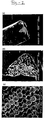
Figure 1, panels (A), (B), and (C) are SEM micrographs where panel
(A) is an oblique view of a photopolymer outlet frit in a capillary (with no particles
present), panel (B) is a 5x magnified view of (A), and panel (C) is a cross-section of
a photopolymer inlet frit with embedded chromatographic particles;
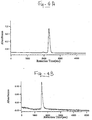
Figure 2 is a graphical representation showing in panel (A) a plot of
absorbance versus retention time for one column and panel (B) for another column
where the two analytes were thiourea and 2-methyl-naphthalene (in order of elution);
Figure 3 are three representative electrochromatograms using an
embodiment of the invention (column 2 of Fig. 2, panel (B)), where the analytes
were thiourea, benzyl alcohol, benzaldehyde, and 2-methyl-naphthalene (in the order
of elution); and
Figure 4 (panels A and B) are two representative electrochromatograms
where in panel A Taxol (a promising anti-cancer drug) was run,
whereas panel B was a Taxol analog (Baccatin III), both in relatively large-bore
capillaries having frits of the present invention.
DETAILED DESCRIPTION OF THE INVENTION
Capillary zone electrophoresis (CZE) has long been proven to be an
attractive analytical technique for separating ionic species by their electrophoretic
mobilities. The limitation of CZE, however, has been its ineffectiveness in separating
neutral compounds. To this end, capillary electrochromatography (CEC), which
combines both CZE and chromatography, has been developed to improve the
separation of neutral species. A combination of mechanisms based partitioning and
electrophoretic mobility can be used to describe the separation that occurs in CEC.
An existing technique for the preparation of retaining frits in packed
capillary columns involves the sintering of silica beads within the columns. This
sintering method is the common technique presently employed for the preparation
of capillary column frits. Disadvantages of the sintered silica frits include the
irreproducibility of the frit porosity and length and the need for very high
temperatures.
We have used polymer photochemistry to prepare photopolymer frits
in capillary columns. The photopolymer method has several advantages over the
existing sintered silica methods, including (i) easy and rapid preparation, (ii) short
reaction times at room temperature, (iii) UV transparency of the photopolymer, (iv)
fine control of pore sizes, and (v) control of frit lengths and frit position.
In one embodiment of the present invention, photopolymer frits are
prepared from a mixture of methacrylate monomers, porogenic solvents, and a photo
initiator. Methacrylate monomers are known for use in the preparation of
chromatographic separation media (Viklund et al., Chemistry of Materials, 9, pp.
463-471, 1997). Viklund et al. studied a variety of polymers prepared by
photopolymerization and found them suitable as sorbants in analytical chemistry, and
Viklund et al. is incorporated herein by reference in its entirety.
One aspect of our research concentrated on the preparation of the
suitable frits and their effects on CEC separations. We chose a mixture of isooctane
and toluene as a particularly preferred porogenic solvent for the preparation of
porous polymers based on methacrylate. The pore sizes in the polymer mixture may
be controlled through the use of porogenic solvents and by variations in the molar
ratios of the monomers and the porogens. For example, by varying the proportions
of these solvents, frit pore sizes of between about 1.0 and 5.0 microns, more
preferably 2.5 and 4.0 µm, have been used in our experiments. The relationship of
the component ratios and pore sizes has been discussed, for example, by Viklund et
al., p. 464. Photopolymerization can be achieved even in silica capillaries without
removal of the polyimide coating. This procedure is particularly advantageous for
the preparation of inlet frits. It was found that, by the hydrolysis of glycidyl
methacrylate, the hydropholicity of the frit could be increased. This minimized the
retaining effect of frits on the columns with reversed-phase chromatographic
materials.
In another embodiment of the present invention, photopolymer frits
are prepared from photocuring a methacrylate-substituted silicate, via a sol-gel
reaction. Suitable photocured sol-gels are known and useful for practicing this
aspect of the invention, such as described by Etienne et al., J. Sol-Gel Sci. & Tech.,
13, pp. 523-527 (1998), which is incorporated in its entirety by reference. Briefly,
a monomer such as 3 -(trimethoxysilyl) propyl methacrylate (MAPTMS) is irradiated
to form a sol-gel matrix. Such a reagent is similar to the methacrylate-based reagent
already described in the first embodiment of the present invention, and is
photocurable. Broadly, the metal alkoxide sol-gel process is described by Brinker
et al., Sol-Gel Science, Academic Press, Inc., New York (1990). When the gel is
cured, a hard porous glass is obtained.
It is a common practice to remove the polyimide coating by chemical
or thermal means in the detection area of the capillary because the polyimide allows
for only a small transmittance of UV light into the capillary. In the preparation of
frits in packed capillary columns used in CEC, the high heat required to center silica
beads in the capillary columns leads to the removal of the polyimide coating, which
imposes the fragile fused-silica at the portion of the capillary that contains the silica
frit. However, in practicing the invention through use of photopolymers as
components (such as for an inlet and outlet frit or as the supporting matrix itself),
there is no need to remove the polyimide coating since the photochemical used to
prepare the polymers can be conducted at relatively low levels of UV light. Thus,
the capillary outer surface coatings remain intact and the mechanical strength of the
column is maintained.
Images of a photopolymer frit embodiment based on the
polymerization of methacrylate monomers with and without ODS particles are
illustrated by the electron micrographs shown in Fig. 1, panels (A)-(C). Fig. 1, panel
(A) shows the photopolymer in a 75 µm i.d. capillary, and Fig. 1, panel (B) provides
a magnified view of the polymer. Fig. 1, panel (C) shows the polymer structure in
the presence of 1.5 µm ODS particles. This micrograph also demonstrates that the
photopolymer loses its spherical shape in the presence of the ODS particles and the
pores entrap the silica beads and hold them within their domains.
After the polymerization had been completed, buffer solution was
flushed (using a hand-held manual syringe pump) through a capillary column with
one frit and no ODS particles present. There was almost no increase in the backpressure
observed as compared with the empty capillary without a photopolymer frit.
This observation indicates that the frit does not significantly increase the flow
resistance of the system. Although no specific functionalization ofthe inner capillary
surface preceding the polymerization was carried out, the outlet frit easily withstands
a short exposure of a high pressure (>6000psi) used during the column packing.
This behavior demonstrates that the monolithic porous polymer frit is strongly bound
to the inner surface of the bare capillary wall. No particles of the packing were
found to pass through the frit pores during either the packing procedure or the CEC
applications, despite their size, which is smaller than that of the mean pore size. This
results from the cooperative action of several effects such as the tortuous paths of
the pores and the presence of bottleneck-shaped pores within the monolithic
structure. Five columns were prepared with this packing procedure and, in all cases,
the photopolymer frits exhibited similar mechanical stabilities under our experimental
conditions.
In contrast to some other procedures, the UV photoinitiated
polymerization does not require elevated temperature for the reaction to be
completed. Therefore, the mobile phase used for packing remains in both the inlet
frit and the packing during polymerization. Consequently, the conditioning time for
the column prior to its use is shortened significantly.
No bubble formation occurred during all the separation runs using
1.5 µm ODS packed capillary columns with photopolymer frits based on
methacrylate polymerization. The suppression of bubble formation might be due to
both the addition of SDS in the running buffer and the replacement of sintered-silica
frits with photopolymer frits.
The efficiency,
N, the plate height,
H, and the reduced plate height,
h, of a packed column (column 2) embodiment with photopolymer frits based on the
polymerization of methacrylate monomers are listed in Table 1.
| Column Efficiency, Plate Height, and Reduced Plate Height of Column 2 |
| Analyte | N/m | H(µm) | h(dimensionless) |
| thiourea | 220 000 | 4.5 | 3.0 |
| 2-methylnaphthalene | 205 000 | 4.9 | 3.3 |
Fig. 2 compares the separation of two neutral compounds, thiourea
and 2-methylnaphthalene, achieved in columns furnished with porous polymer frits
characterized by mean pore diameters of 2.5 (Fig. 2, panel (A)) and 4.0 µm (Fig. 2,
panel (B)), respectively. The column with 4-µm frits exhibits shorter retention times
and a better column efficiency compared with those of the other column.
A systematic study of the run-to-run reproducibility for the analysis
of a mixture of neutral molecules consisting of thiourea, benzyl alcohol,
benzaldehyde, and 2-methylnapththalene was carried out over a period of 3 days.
Fig. 3 shows electrochromatograms of runs 10, 30, and 50 of the Table 1
embodiment. There is almost no variation in retention times of all test compounds.
Table 2 shows the relative standard deviations of the capacity factor,
k 1, the
efficiency,
N, and the resolution,
R, for each compound. These RSDs for all three
monitored variables, averaged over 60 runs, were 3.5%, 3.3%, and 5.5%,
respectively.
| Relative Standard Deviation of Capacity Factor (k1), Column Efficiency (N), and Resolution (R 1) over 80 Separations for Column 2 |
| Relative Standard Deviation (%) Analyte | k 1 | N | R5 |
| thiourea | | 2.0 | 3.0 |
| benzyl alcohol | 3.2 | 5.5 | 3.2 |
| benzaldehyde | 2.1 | 5.3 | 2.7 |
| 2-methylnaphthalene | 2.6 | 3.6 | 2.8 |
The integrity of the packed column remained unchanged, and the
column is believed to be useful for a much longer period of time. In Fig. 3, the
efficiencies of thiourea, benzyl alcohol, benzaldehyde, and 2-methylnaphthalene are
200 000 plates/m, 160 000 plates/m, 60 000 plates/m, and 20 000 plates/m,
respectively. The unretained compound, thiourea, gave the highest efficiency. The
efficiencies dropped for the compounds that were more retained than thiourea. The
significant efficiencies drop of the last two peaks compared with those of Figure 2
are mainly due to the use of a lower percentage (50%) of acetonitrile in the running
buffer. Furthermore, the peak for 2-methylnaphthalene shows tailing that is mainly
due to its adsorption to the surface of the ODS particles.
EXPERIMENTAL
Materials. The monomers trimethylolpropane trimethacrylate
(TRIM) and 2,3-epoxypropyl methacrylate (glycidyl methacrylate, GMA) were of
the highest purity available from Aldrich (Milwaukee, WI). Toluene and 2,2,4-trimethylpentane
(isooctane) from Sigma (St. Louis, MO) were used as porogenic
solvents. The fused capillaries used in this study were purchased from Polymicro
Technologies (Phoenix, AZ). The 1.5 µm spherical ODS particles were provided
by Micra Scientific, Inc. (Lafayette, IN), α-Methoxy-α-phenylactophenone (benzoin
methyl ether, 99%), thiourea, benzaldehyde, benzyl alcohol, 2-methylnaphthalene,
sodium phosphate, and acetonitrile (HPLC grade) were purchased from Aldrich
(Milwaukee, WI). Water was purified with an Ultrapure water system from
millipore (Milford, MA).
Polymerization Procedure. The photopolymerization procedure was
carried out as previously described (Viklund et al., Chem. Mater., 9, pp. 463-471,
1997). In situ free-radical polymerization was initiated by irradiating the monomer
solution in 4 mm i.d. quartz tubes and 75 µm i.d. capillaries for 60 minutes at room
temperature in a Spectrolinker XL 1500A (Spectronics Corp., Westbury, NY) with
six 15 W fluorescent blacklight tubes, producing UV light of predominantly 365
µm(?) wavelength. After one hour, the porogen, unreacted monomers, and other
soluble compounds were removed from the pores by washing with ethanol using an
HPLC pump.
Pore-Size Measurement. The pore-size distribution of the porous
polymer was determined for the samples prepared in the 4 mm tubes from the same
polymerization mixtures as the capillaries, by mercury intrusion porosimetry using
an automated custom-made combined BET sorptometer-porosimeter (Porous
Materials, Inc., Ithaca, NY).
Frit Fabrication and Column Packing. An outlet frit was prepared by
introducing the monomer mixture into the capillary. The two ends of the capillary
were sealed with Parafilm. The capillary was then covered by aluminum foil, leaving
1 mm of the outlet section without polyimide coating exposed to the UV light. The
rest of the outlet section that was masked during photopolymerization because the
detection window for CE experiments. After an hour of polymerization at room
temperature, the unreacted monomer solution was flushed from the column by a
syringe pump. After slurry packing the column, 1.5 µm ODS particles were filled
up to the inlet end of the capillary. The same procedure to create the outlet frit was
employed to form the inlet frit. The resulting columns were preconditioned with the
mobile phase by pressurizing the column inlet to approximately 500 psi with a
manual syringe pump (Unimicro Technologies, Inc., Pleasanton, CA) for a few hours
prior to their use. It was noticed that the polymerization also took place without
removing the polyimide coating, but the process took about four to six hours.
Capillary Electrochromatography. The CEC experiments were
performed with a Beckman model 2000 P/ACE capillary electrophoresis system
(Beckman Coulter, Fullerton, CA) equipped with an UV absorbance detector. The
75 µm i.d. packed capillary column was installed in the cartridge holder that was
then inserted into the instrument. There is no pressure applied to the packed column
in this system. Once the packed column was installed, it was further conditioned by
driving the mobile phase through the capillary at an applied voltage of 5 kV for 1
hour prior to use. Samples were introduced electrokinetically at the anodic end of
the capillary column. The mobile phase employed in these separations was a 5 mM
phosphate and 2 mM SDS buffer (pH 7.0) containing 80% (v/v) acetonitrile.
Separations were performed at an applied voltage of 10 kV and at a temperature of
20°C. The analytes were detected by monitoring their absorbance at 254 nm.
A mixture of neutral compounds was separated on two columns, 1
and 2. Column 1 was a 75 µm i.d. x 27 cm (20-cm packed with 1.5 µm ODS
particles fused-silica capillary. The frit pore size of this column was 2.5 µm.
Column 2 was the same as column 1, except the frit pore size was 4.0 µm.
Semi-preparative CEC work was carried out using home-made CE
instrument. The capillary column (550 µm i.d. and 650 µm o.d.) was packed with
1.5 µm diameter ODS particles using slurry packing method. The frits of these
large-bore capillary columns were prepared from a mixture of methacrylate
monomers, porogenic solvents, and a photo initiator (Viklund et al.) in the same
manner as already described. The running buffer was a mixture of 20% 5 mM
phosphate and 80% acetonitrile. The total length of the capillary was 34 cm. The
applied voltage across the CEC column was 2 kV. The sample injection volume was
150 nl. Electrochromatograms of Taxol and Baccatin III analysis, respectively, are
shown by panels A and B of Figure 4.
It is to be understood that while the invention has been described
. above in conjunction with preferred specific embodiments, the description and
examples are intended to illustrate and not limit the scope ofthe invention, which is
defined by the scope of the appended claims.