EP1125766A1 - Tire with tread of defined elastomer composition - Google Patents
Tire with tread of defined elastomer composition Download PDFInfo
- Publication number
- EP1125766A1 EP1125766A1 EP01102377A EP01102377A EP1125766A1 EP 1125766 A1 EP1125766 A1 EP 1125766A1 EP 01102377 A EP01102377 A EP 01102377A EP 01102377 A EP01102377 A EP 01102377A EP 1125766 A1 EP1125766 A1 EP 1125766A1
- Authority
- EP
- European Patent Office
- Prior art keywords
- rubber
- range
- styrene
- tire
- cis
- Prior art date
- Legal status (The legal status is an assumption and is not a legal conclusion. Google has not performed a legal analysis and makes no representation as to the accuracy of the status listed.)
- Withdrawn
Links
- 229920001971 elastomer Polymers 0.000 title claims abstract description 146
- 239000000203 mixture Substances 0.000 title claims abstract description 62
- 239000000806 elastomer Substances 0.000 title claims abstract description 47
- VYPSYNLAJGMNEJ-UHFFFAOYSA-N Silicium dioxide Chemical compound O=[Si]=O VYPSYNLAJGMNEJ-UHFFFAOYSA-N 0.000 claims abstract description 99
- 239000005060 rubber Substances 0.000 claims abstract description 99
- 239000000377 silicon dioxide Substances 0.000 claims abstract description 47
- 229920003193 cis-1,4-polybutadiene polymer Polymers 0.000 claims abstract description 30
- 239000006229 carbon black Substances 0.000 claims abstract description 18
- 229920003048 styrene butadiene rubber Polymers 0.000 claims description 28
- PPBRXRYQALVLMV-UHFFFAOYSA-N Styrene Chemical compound C=CC1=CC=CC=C1 PPBRXRYQALVLMV-UHFFFAOYSA-N 0.000 claims description 26
- 239000007822 coupling agent Substances 0.000 claims description 24
- ATJFFYVFTNAWJD-UHFFFAOYSA-N Tin Chemical compound [Sn] ATJFFYVFTNAWJD-UHFFFAOYSA-N 0.000 claims description 17
- 229920002857 polybutadiene Polymers 0.000 claims description 16
- MTAZNLWOLGHBHU-UHFFFAOYSA-N butadiene-styrene rubber Chemical compound C=CC=C.C=CC1=CC=CC=C1 MTAZNLWOLGHBHU-UHFFFAOYSA-N 0.000 claims description 15
- 239000005062 Polybutadiene Substances 0.000 claims description 9
- 239000005077 polysulfide Substances 0.000 claims description 9
- 229920001021 polysulfide Polymers 0.000 claims description 9
- 150000008117 polysulfides Polymers 0.000 claims description 9
- 239000012763 reinforcing filler Substances 0.000 claims description 9
- 125000000391 vinyl group Chemical group [H]C([*])=C([H])[H] 0.000 claims description 8
- 229920002554 vinyl polymer Polymers 0.000 claims description 8
- 238000007720 emulsion polymerization reaction Methods 0.000 claims description 7
- 229920003211 cis-1,4-polyisoprene Polymers 0.000 claims description 6
- ZCYVEMRRCGMTRW-UHFFFAOYSA-N 7553-56-2 Chemical compound [I] ZCYVEMRRCGMTRW-UHFFFAOYSA-N 0.000 claims description 5
- 238000010528 free radical solution polymerization reaction Methods 0.000 claims description 5
- 229910052740 iodine Inorganic materials 0.000 claims description 5
- 239000011630 iodine Substances 0.000 claims description 5
- 125000004434 sulfur atom Chemical group 0.000 claims description 5
- 150000001993 dienes Chemical class 0.000 claims description 4
- 238000001179 sorption measurement Methods 0.000 claims description 4
- 239000000945 filler Substances 0.000 claims description 3
- 125000002887 hydroxy group Chemical group [H]O* 0.000 claims description 2
- 230000002452 interceptive effect Effects 0.000 claims description 2
- 230000009477 glass transition Effects 0.000 abstract description 7
- 230000002787 reinforcement Effects 0.000 abstract description 7
- 239000000523 sample Substances 0.000 description 29
- 239000013068 control sample Substances 0.000 description 24
- 238000005299 abrasion Methods 0.000 description 18
- DOIRQSBPFJWKBE-UHFFFAOYSA-N dibutyl phthalate Chemical compound CCCCOC(=O)C1=CC=CC=C1C(=O)OCCCC DOIRQSBPFJWKBE-UHFFFAOYSA-N 0.000 description 14
- NINIDFKCEFEMDL-UHFFFAOYSA-N Sulfur Chemical compound [S] NINIDFKCEFEMDL-UHFFFAOYSA-N 0.000 description 13
- 235000019241 carbon black Nutrition 0.000 description 13
- 229910052717 sulfur Inorganic materials 0.000 description 13
- 239000011593 sulfur Substances 0.000 description 13
- 238000012360 testing method Methods 0.000 description 12
- 239000000463 material Substances 0.000 description 9
- 150000001875 compounds Chemical class 0.000 description 8
- 239000004615 ingredient Substances 0.000 description 8
- 235000021355 Stearic acid Nutrition 0.000 description 7
- 229960002380 dibutyl phthalate Drugs 0.000 description 7
- QIQXTHQIDYTFRH-UHFFFAOYSA-N octadecanoic acid Chemical compound CCCCCCCCCCCCCCCCCC(O)=O QIQXTHQIDYTFRH-UHFFFAOYSA-N 0.000 description 7
- OQCDKBAXFALNLD-UHFFFAOYSA-N octadecanoic acid Natural products CCCCCCCC(C)CCCCCCCCC(O)=O OQCDKBAXFALNLD-UHFFFAOYSA-N 0.000 description 7
- 239000008117 stearic acid Substances 0.000 description 7
- XLOMVQKBTHCTTD-UHFFFAOYSA-N Zinc monoxide Chemical compound [Zn]=O XLOMVQKBTHCTTD-UHFFFAOYSA-N 0.000 description 6
- 238000010058 rubber compounding Methods 0.000 description 6
- KAKZBPTYRLMSJV-UHFFFAOYSA-N butadiene group Chemical group C=CC=C KAKZBPTYRLMSJV-UHFFFAOYSA-N 0.000 description 5
- -1 organo tin compounds Chemical class 0.000 description 5
- BLRPTPMANUNPDV-UHFFFAOYSA-N Silane Chemical group [SiH4] BLRPTPMANUNPDV-UHFFFAOYSA-N 0.000 description 4
- 238000007334 copolymerization reaction Methods 0.000 description 4
- 230000009977 dual effect Effects 0.000 description 4
- 238000000034 method Methods 0.000 description 4
- 229910000077 silane Inorganic materials 0.000 description 4
- 239000001993 wax Substances 0.000 description 4
- 229920001577 copolymer Polymers 0.000 description 3
- 239000003960 organic solvent Substances 0.000 description 3
- 239000006235 reinforcing carbon black Substances 0.000 description 3
- 239000011787 zinc oxide Substances 0.000 description 3
- 244000043261 Hevea brasiliensis Species 0.000 description 2
- 239000006057 Non-nutritive feed additive Substances 0.000 description 2
- BPQQTUXANYXVAA-UHFFFAOYSA-N Orthosilicate Chemical compound [O-][Si]([O-])([O-])[O-] BPQQTUXANYXVAA-UHFFFAOYSA-N 0.000 description 2
- 238000010521 absorption reaction Methods 0.000 description 2
- 239000000654 additive Substances 0.000 description 2
- YZXBAPSDXZZRGB-DOFZRALJSA-N arachidonic acid Chemical compound CCCCC\C=C/C\C=C/C\C=C/C\C=C/CCCC(O)=O YZXBAPSDXZZRGB-DOFZRALJSA-N 0.000 description 2
- 239000010692 aromatic oil Substances 0.000 description 2
- 238000013329 compounding Methods 0.000 description 2
- 239000000470 constituent Substances 0.000 description 2
- 230000008878 coupling Effects 0.000 description 2
- 238000010168 coupling process Methods 0.000 description 2
- 238000005859 coupling reaction Methods 0.000 description 2
- 229920003244 diene elastomer Polymers 0.000 description 2
- 230000001747 exhibiting effect Effects 0.000 description 2
- IPCSVZSSVZVIGE-UHFFFAOYSA-N hexadecanoic acid Chemical compound CCCCCCCCCCCCCCCC(O)=O IPCSVZSSVZVIGE-UHFFFAOYSA-N 0.000 description 2
- VKOBVWXKNCXXDE-UHFFFAOYSA-N icosanoic acid Chemical compound CCCCCCCCCCCCCCCCCCCC(O)=O VKOBVWXKNCXXDE-UHFFFAOYSA-N 0.000 description 2
- 229920003052 natural elastomer Polymers 0.000 description 2
- 229920001194 natural rubber Polymers 0.000 description 2
- 239000003921 oil Substances 0.000 description 2
- 150000001282 organosilanes Chemical class 0.000 description 2
- 230000000704 physical effect Effects 0.000 description 2
- 239000000049 pigment Substances 0.000 description 2
- 238000006116 polymerization reaction Methods 0.000 description 2
- 238000005096 rolling process Methods 0.000 description 2
- WRIDQFICGBMAFQ-UHFFFAOYSA-N (E)-8-Octadecenoic acid Natural products CCCCCCCCCC=CCCCCCCC(O)=O WRIDQFICGBMAFQ-UHFFFAOYSA-N 0.000 description 1
- LQJBNNIYVWPHFW-UHFFFAOYSA-N 20:1omega9c fatty acid Natural products CCCCCCCCCCC=CCCCCCCCC(O)=O LQJBNNIYVWPHFW-UHFFFAOYSA-N 0.000 description 1
- QSBYPNXLFMSGKH-UHFFFAOYSA-N 9-Heptadecensaeure Natural products CCCCCCCC=CCCCCCCCC(O)=O QSBYPNXLFMSGKH-UHFFFAOYSA-N 0.000 description 1
- IJGRMHOSHXDMSA-UHFFFAOYSA-N Atomic nitrogen Chemical compound N#N IJGRMHOSHXDMSA-UHFFFAOYSA-N 0.000 description 1
- 238000004438 BET method Methods 0.000 description 1
- OKTJSMMVPCPJKN-UHFFFAOYSA-N Carbon Chemical compound [C] OKTJSMMVPCPJKN-UHFFFAOYSA-N 0.000 description 1
- 239000013032 Hydrocarbon resin Substances 0.000 description 1
- VQTUBCCKSQIDNK-UHFFFAOYSA-N Isobutene Chemical group CC(C)=C VQTUBCCKSQIDNK-UHFFFAOYSA-N 0.000 description 1
- ZQPPMHVWECSIRJ-UHFFFAOYSA-N Oleic acid Natural products CCCCCCCCC=CCCCCCCCC(O)=O ZQPPMHVWECSIRJ-UHFFFAOYSA-N 0.000 description 1
- 239000005642 Oleic acid Substances 0.000 description 1
- 235000021314 Palmitic acid Nutrition 0.000 description 1
- 239000006087 Silane Coupling Agent Substances 0.000 description 1
- 239000004115 Sodium Silicate Substances 0.000 description 1
- 229910021626 Tin(II) chloride Inorganic materials 0.000 description 1
- 230000002411 adverse Effects 0.000 description 1
- DTOSIQBPPRVQHS-PDBXOOCHSA-N alpha-linolenic acid Chemical compound CC\C=C/C\C=C/C\C=C/CCCCCCCC(O)=O DTOSIQBPPRVQHS-PDBXOOCHSA-N 0.000 description 1
- 235000020661 alpha-linolenic acid Nutrition 0.000 description 1
- 150000004645 aluminates Chemical class 0.000 description 1
- 150000001412 amines Chemical class 0.000 description 1
- 229940114079 arachidonic acid Drugs 0.000 description 1
- 235000021342 arachidonic acid Nutrition 0.000 description 1
- 229910052799 carbon Inorganic materials 0.000 description 1
- 239000003795 chemical substances by application Substances 0.000 description 1
- WCTXJBYIXVVFCF-UHFFFAOYSA-M chlorotin Chemical compound [Sn]Cl WCTXJBYIXVVFCF-UHFFFAOYSA-M 0.000 description 1
- 238000000975 co-precipitation Methods 0.000 description 1
- 229910001873 dinitrogen Inorganic materials 0.000 description 1
- IJBNCYPFAQOTQZ-UHFFFAOYSA-N ethoxy-[3-(3-ethoxysilylpropyldisulfanyl)propyl]silane Chemical group CCO[SiH2]CCCSSCCC[SiH2]OCC IJBNCYPFAQOTQZ-UHFFFAOYSA-N 0.000 description 1
- 238000001125 extrusion Methods 0.000 description 1
- 229910021485 fumed silica Inorganic materials 0.000 description 1
- 229910052736 halogen Inorganic materials 0.000 description 1
- 150000002367 halogens Chemical class 0.000 description 1
- 229930195733 hydrocarbon Natural products 0.000 description 1
- 150000002430 hydrocarbons Chemical class 0.000 description 1
- 230000007062 hydrolysis Effects 0.000 description 1
- 238000006460 hydrolysis reaction Methods 0.000 description 1
- 238000011065 in-situ storage Methods 0.000 description 1
- QXJSBBXBKPUZAA-UHFFFAOYSA-N isooleic acid Natural products CCCCCCCC=CCCCCCCCCC(O)=O QXJSBBXBKPUZAA-UHFFFAOYSA-N 0.000 description 1
- 229960004488 linolenic acid Drugs 0.000 description 1
- KQQKGWQCNNTQJW-UHFFFAOYSA-N linolenic acid Natural products CC=CCCC=CCC=CCCCCCCCC(O)=O KQQKGWQCNNTQJW-UHFFFAOYSA-N 0.000 description 1
- 238000012986 modification Methods 0.000 description 1
- 230000004048 modification Effects 0.000 description 1
- 239000003607 modifier Substances 0.000 description 1
- WQEPLUUGTLDZJY-UHFFFAOYSA-N n-Pentadecanoic acid Natural products CCCCCCCCCCCCCCC(O)=O WQEPLUUGTLDZJY-UHFFFAOYSA-N 0.000 description 1
- 239000000025 natural resin Substances 0.000 description 1
- ZQPPMHVWECSIRJ-KTKRTIGZSA-N oleic acid Chemical compound CCCCCCCC\C=C/CCCCCCCC(O)=O ZQPPMHVWECSIRJ-KTKRTIGZSA-N 0.000 description 1
- 150000007524 organic acids Chemical class 0.000 description 1
- 235000005985 organic acids Nutrition 0.000 description 1
- 230000020477 pH reduction Effects 0.000 description 1
- ISWSIDIOOBJBQZ-UHFFFAOYSA-N phenol group Chemical group C1(=CC=CC=C1)O ISWSIDIOOBJBQZ-UHFFFAOYSA-N 0.000 description 1
- 229920000642 polymer Polymers 0.000 description 1
- 230000009257 reactivity Effects 0.000 description 1
- 239000012744 reinforcing agent Substances 0.000 description 1
- 230000003014 reinforcing effect Effects 0.000 description 1
- 239000011347 resin Substances 0.000 description 1
- 229920005989 resin Polymers 0.000 description 1
- 125000005372 silanol group Chemical group 0.000 description 1
- NTHWMYGWWRZVTN-UHFFFAOYSA-N sodium silicate Chemical compound [Na+].[Na+].[O-][Si]([O-])=O NTHWMYGWWRZVTN-UHFFFAOYSA-N 0.000 description 1
- 229910052911 sodium silicate Inorganic materials 0.000 description 1
- 235000011150 stannous chloride Nutrition 0.000 description 1
- 239000000126 substance Substances 0.000 description 1
- QAZLUNIWYYOJPC-UHFFFAOYSA-M sulfenamide Chemical compound [Cl-].COC1=C(C)C=[N+]2C3=NC4=CC=C(OC)C=C4N3SCC2=C1C QAZLUNIWYYOJPC-UHFFFAOYSA-M 0.000 description 1
- TUNFSRHWOTWDNC-HKGQFRNVSA-N tetradecanoic acid Chemical compound CCCCCCCCCCCCC[14C](O)=O TUNFSRHWOTWDNC-HKGQFRNVSA-N 0.000 description 1
- 150000003606 tin compounds Chemical class 0.000 description 1
- AXZWODMDQAVCJE-UHFFFAOYSA-L tin(II) chloride (anhydrous) Chemical compound [Cl-].[Cl-].[Sn+2] AXZWODMDQAVCJE-UHFFFAOYSA-L 0.000 description 1
- 238000004073 vulcanization Methods 0.000 description 1
- XOOUIPVCVHRTMJ-UHFFFAOYSA-L zinc stearate Chemical compound [Zn+2].CCCCCCCCCCCCCCCCCC([O-])=O.CCCCCCCCCCCCCCCCCC([O-])=O XOOUIPVCVHRTMJ-UHFFFAOYSA-L 0.000 description 1
Images

Classifications
-
- C—CHEMISTRY; METALLURGY
- C08—ORGANIC MACROMOLECULAR COMPOUNDS; THEIR PREPARATION OR CHEMICAL WORKING-UP; COMPOSITIONS BASED THEREON
- C08L—COMPOSITIONS OF MACROMOLECULAR COMPOUNDS
- C08L9/00—Compositions of homopolymers or copolymers of conjugated diene hydrocarbons
-
- B—PERFORMING OPERATIONS; TRANSPORTING
- B60—VEHICLES IN GENERAL
- B60C—VEHICLE TYRES; TYRE INFLATION; TYRE CHANGING; CONNECTING VALVES TO INFLATABLE ELASTIC BODIES IN GENERAL; DEVICES OR ARRANGEMENTS RELATED TO TYRES
- B60C1/00—Tyres characterised by the chemical composition or the physical arrangement or mixture of the composition
- B60C1/0016—Compositions of the tread
-
- C—CHEMISTRY; METALLURGY
- C08—ORGANIC MACROMOLECULAR COMPOUNDS; THEIR PREPARATION OR CHEMICAL WORKING-UP; COMPOSITIONS BASED THEREON
- C08L—COMPOSITIONS OF MACROMOLECULAR COMPOUNDS
- C08L15/00—Compositions of rubber derivatives
-
- C—CHEMISTRY; METALLURGY
- C08—ORGANIC MACROMOLECULAR COMPOUNDS; THEIR PREPARATION OR CHEMICAL WORKING-UP; COMPOSITIONS BASED THEREON
- C08L—COMPOSITIONS OF MACROMOLECULAR COMPOUNDS
- C08L9/00—Compositions of homopolymers or copolymers of conjugated diene hydrocarbons
- C08L9/06—Copolymers with styrene
Definitions
- Pneumatic rubber tire with an outer, circumferential tread comprised of a cis 1,4-polybutadiene-rich and silica-rich rubber composition which contains specified elastomers with spatially defined glass transition temperatures, in conjunction with silica and specified carbon black reinforcement.
- Pneumatic rubber tires particularly high performance tires, are desired to have treads of a rubber composition which will provide good traction on the road.
- Rubber compositions designed to specifically emphasize very good traction for a tire tread often have relatively low abrasion resistance and associated relatively poor treadwear and typically exhibit a relatively high, single, glass transition temperature (Tg) of above -50°C and usually within a range of zero to -50°C.
- Tg glass transition temperature
- rubber compositions designed to specifically emphasize very good resistance to abrasion for a tire tread often have relatively poor traction and also typically exhibit a single low Tg below -50°C.
- a tire is provided with a tread which is composed of four elastomers, of which two of the elastomers are spatially defined, namely,
- a reference to glass transition temperature, or Tg, of an elastomer or elastomer composition represents the glass transition temperature(s) of the respective elastomer or elastomer composition in its uncured state or possibly a cured state in a case of an elastomer composition.
- a Tg can be suitably determined by a differential scanning calorimeter (DSC) at a temperature rate of increase of 10°C per minute.
- the existence of more than one glass transition temperature of a cured rubber composition can be determined by dynamic mechanical testing and demonstrated, for example, as a graphical representation, or plot, of tangent delta, or of loss modulus (i.e. E") as a function of temperature.
- the existence of more than one glass transition temperature for the rubber composition is evident when at least two humps, or peaks, are present in the plot between the temperatures of -90°C and 10°C.
- a pneumatic rubber tire having a circumferential rubber tread where said tread is a rubber composition comprised of, based on 100 parts by weight of the tread rubber,
- the tread rubber composition is both cis 1,4-polybutadiene rubber-rich and, also silica-rich, together with an organosilane polysulfide coupling agent.
- Another important aspect of the invention is a requirement that at least two elastomer phases are present in the tread rubber composition as being generated by a requirement that the combination of cis 1,4-polybutadiene and styrene/butadiene elastomers are in the clear majority insofar as elastomers in the tread rubber are concerned and, moreover, that the Tg of the cis 1,4-polybutadiene rubber is at least 50°C lower than the Tg of the styrene/butadiene copolymer rubber.
- At least 45, preferably at least 50, and even up to a threshold of at least 55, weight percent of the elastomers have a Tg lower than -95°C, namely the cis 1,4-polybutadiene, and at least 15 weight percent of the elastomers have a Tg of higher than -55°C, namely the styrene/butadiene copolymer.
- the relatively low Tg cis 1,4-polybutadiene elastomer is relatively incompatible with the high Tg styrene/butadiene copolymer elastomer as evidenced by their individual Tan. delta peaks on a graphical presentation, or plot, of Tan. delta versus temperature cured of the rubber composition within a temperature range of -90°0C to 10°C.
- the elastomers of said tread rubber are present in at least two phases, comprised of a cis 1,4 polybutadiene phase and an additional phase comprised of said styrene/butadiene and/or tin coupled styrene/butadiene phase.
- a graphical plot of Tan. delta versus temperature curve within a broad range of -100°C to 10°C for the rubber composition of this invention yields two peaks in the curve with one peak having its apex within a relatively low temperature range of -100°C to -50°C and a second peak with its apex within a higher temperature range of -30°C to +10°C.
- the cured compounded rubber composition exhibit at least two Tan. delta peaks within the aforesaid temperature range. This is considered significant because, for the cured compounded rubber, it is considered herein that a combination of the Tan. delta peak, at the lower temperature (e.g. -100°C to -50°C) for the low Tg elastomer (e.g. cis 1,4-polybutadiene), would suggest a promotion of improved resistance to abrasion property (i.e. improved treadwear for a tire) together with the second Tan. delta peak, at the higher temperature (e.g. -30°C to 10°C) represented by the high Tg elastomer (e.g.
- the relatively high styrene-containing, emulsion polymerization prepared, styrene/butadiene copolymer elastomer and tin coupled organic solvent solution polymerization prepared styrene/butadiene copolymer elastomer are considered herein to be important to enhance tire tread traction, hysteresis, or coefficient of friction, for the rubber composition. It is desired herein that their bound styrene content be at least 30 percent, based upon the SBR, for the tire tread traction enhancement.
- Use of the organic solvent polymerization prepared tin coupled styrene/butadiene copolymer is considered herein to be important in order to enhance processability of the rubber composition and to promote better resistance to abrasion of the rubber composition. Also, use of tin coupled SBR promotes lower hysteresis of the rubber composition at very high tire tread operating temperatures (e.g. 50°C to 100°C) which is indicative of low tire rolling resistance.
- Tin coupled copolymer may be prepared, for example, by introducing a tin coupling agent during the styrene-1,3-butadiene copolymerization reaction in an organic solvent solution, usually at or near the end of the polymerization reaction.
- a tin coupling agent during the styrene-1,3-butadiene copolymerization reaction in an organic solvent solution, usually at or near the end of the polymerization reaction.
- At least 50 percent and more generally in a range of 60 to 85 percent of the Sn (tin) bonds in the tin coupled elastomered are bonded to butadiene units of the styrene/butadiene copolymer to create Sn-dienyl bonds such as butadienyl bonds.
- tin-dienyl bonds can be accomplished in a number of ways such as, for example, sequential addition of butadiene to the copolymerization system or use of modifiers to alter the styrene and/or butadiene reactivity ratios for the copolymerization. It is believed that such techniques, whether used with a batch or a continuous copolymerization system, is well know to those having skill in such art.
- tin compounds particularly organo tin compounds
- organo tin compounds may be used for the coupling of the elastomer.
- Representative of such compounds are, for example, alkyl tin trichloride, dialkyl tin dichloride, yielding variants of a tin coupled styrene/butadiene copolymer elastomer, although a trialkyl tin monochloride might be used which would yield simply a tin-terminated copolymer.
- cis 1,4-polyisoprene preferably natural rubber
- cis 1,4-polyisoprene natural rubber is also considered herein to be important to contribute to tear resistance property for the tread rubber composition.
- Rubber reinforcing carbon black(s) for this invention with the characterized Iodine adsorption value range and DBP number range, is considered herein to be important in order to provide good abrasion resistance, or coefficient of friction, and higher stiffness for the tire cornering and handling, and also enhanced, or relatively high hysteresis for relatively good traction for a tire tread.
- Such rubber reinforcing carbon blacks are, for example, N121 and N205. All of such representative carbon blacks have an Iodine adsorption number within a range of 110 to 145 g/kg and a DBP number in a range of 110 to 140 cm 3 /g. Examples of reinforcing carbon blacks for elastomers, generally, together with their Iodine number values and DBP (dibutyl phthalate) absorption values, may be found in The Vanderbilt Rubber Handbook, (1990), 13th edition, pages 416-419.
- the elastomers utilized in the tread composition are exclusive of polymers and copolymers of isobutylene, including halogen modifications thereof.
- the invention is based upon use of elastomers, silica and coupling agent, all of which are usually known, in what is considered herein as a novel combination as to (i) selection of specific individual materials, and (ii) combining the selected specific materials in novel combinations in terms of individual amounts in a manner not believed to be specifically heretofore used for a tire tread.
- This aspect of the invention is considered particularly important for creating a tire tread rubber composition with good abrasion properties coupled, also, with good traction, or coefficient of friction, or hysteresis, properties.
- This aspect of the invention is especially directed to its more narrowly defined aspects which is restated, in its narrower form as follows:
- the tread rubber composition is required to be both cis-polybutadiene-rich and silica-rich, together with a coupling agent.
- the filler reinforcement for the rubber composition be primarily, and for some circumstances entirely, amorphous, silica, particularly precipitated silica.
- silica amorphous siliceous pigments
- silica preferably a precipitated silica
- the silica may be a pyrogenic silica
- the precipitated silicas such as, for example, those obtained by the acidification of a soluble silicate, e.g., sodium silicate or a co-precipitation of a silicate and an aluminate.
- the BET surface area of the silica may, for example, be in a range of 50 to 300, alternatively 120 to 200, square meters per gram.
- a BET method of measuring surface area is described in the Journal of the American Chemical Society, Volume 60, Page 304 (1930).
- the silica may also have a dibutylphthalate (DBP) absorption value in a range of 100 to 400, and usually 150 to 300 cm 3 /100g.
- DBP dibutylphthalate
- silicas may be considered for use in this invention such as, for example, only and without limitation, silicas commercially available from PPG Industries under the Hi-Sil trademark with designations 210, 243, etc; silicas available from Rhobia, with designations of Zeosil 1165MP and Zeosil 165GR and silicas available from Degussa AG with designations VN2 and VN3, 3770GR, and from Huber as Zeopol 8745.
- silica reinforcement When silica reinforcement is used for a rubber tire tread, the silica is conventionally used with a coupling agent, or what is sometimes referred to as a reinforcing agent
- Couplers Compounds capable of reacting with both the silica surface and the rubber elastomer molecule in a manner to cause the silica to have a reinforcing effect on the rubber, many of which are generally known to those skilled in such art as coupling agents, or couplers, are often used.
- Such coupling agents may be premixed, or pre-reacted, with the silica particles or added to the rubber mix during the rubber/silica processing, or mixing, stage. If the coupling agent and silica are added separately to the rubber mix during the rubber/silica mixing, or processing stage, it is considered that the coupling agent then combines in situ with the silica.
- such coupling agents may, for example, be composed of a silane which has a constituent component, or moiety, (the silane portion) capable of reacting with the silica surface and, also, a constituent component, or moiety, capable of reacting with the rubber, particularly a sulfur vulcanizable rubber which contains carbon-to-carbon double bonds, or unsaturation.
- the coupler acts as a connecting bridge between the silica and the rubber and thereby enhances the rubber reinforcement aspect of the silica.
- the silane of the coupling agent apparently forms a bond to the silica surface, possibly through hydrolysis, and the rubber reactive component of the coupling agent combines with the rubber itself.
- coupling agents are taught for use in combining silica and rubber such as, for example, silane coupling agents containing a polysulfide component, or structure, such as bis-(3-alkoxysilylalky) polysulfide which contains from 2 to 6 sulfur atoms in its polysulfidic bridge with an average of from 2 to 2.6 or from 3.5 to 4, preferably an average of from 2 to 2.6, connecting sulfur atoms in its polysulfidic bridge such as, for example, a bis-(3-triethoxysilylpropyl) polysulfide.
- silane coupling agents containing a polysulfide component, or structure, such as bis-(3-alkoxysilylalky) polysulfide which contains from 2 to 6 sulfur atoms in its polysulfidic bridge with an average of from 2 to 2.6 or from 3.5 to 4, preferably an average of from 2 to 2.6, connecting sulfur atoms in its polysulfidic bridge such as,
- a preferred coupling agent is a bis-(3-ethoxysilylpropyl) disulfide material having from 2 to 4, with an average of from 2 to 2.4, connecting sulfur atoms in the polysulfide bridge.
- Such disulfide-type coupling agent is particularly preferred in order to provide enhanced ease of processing, particularly mixing, the unvulcanized rubber composition.
- the rubber compositions of the tread would be compounded with conventional compounding ingredients including the aforesaid reinforcing fillers such as carbon black and precipitated silica, as hereinbefore defined, in combination with a silica coupling agent, as well as antidegradant(s), processing oil as hereinbefore defined, stearic acid or a zinc stearate, zinc oxide, sulfur-contributing material(s) and vulcanization accelerator(s) as hereinbefore defined.
- aforesaid reinforcing fillers such as carbon black and precipitated silica, as hereinbefore defined
- a silica coupling agent as well as antidegradant(s), processing oil as hereinbefore defined, stearic acid or a zinc stearate, zinc oxide, sulfur-contributing material(s) and vulcanization accelerator(s) as hereinbefore defined.
- Antidegradants are typically of the amine or phenolic type. While stearic acid is typically referred to as a rubber compounding ingredient, it may be pointed out that the ingredient itself is usually obtained and used as a mixture of organic acids primarily composed of stearic acid with at least one of oleic acid, linolenic acid and/or palmitic acid normally contained in the stearic acid as typically used. The mixture may contain minor amounts (less than about six weight percent) of myristic acid, arachidic acid and/or arachidonic acid. Such material or mixture is conventionally referred to in the rubber compounding art as stearic acid.
- processing aids may be, for example, waxes such as microcrystalline and paraffinic waxes typically used in a range of 1 to 5 phr and often in a range of 1 to 3 phr; and resins, usually as tackifiers, such as, for example, synthetic hydrocarbon and natural resins typically used in a range of 1 to 5 phr and often in a range of 1 to 3 phr.
- a curative might be classified as a combination of sulfur and sulfur cure accelerator(s) for the rubber compound (usually simply referred to as accelerator) or a sulfur donor/accelerator.
- accelerator sulfur and accelerator(s) curative
- the amount of sulfur used is in a range of 0.5 to 5 phr and usually in a range of 0.5 to 3 phr; and the accelerator(s), often of the sulfenamide type, is (are) used in a range of 0.5 to 5 phr and often in a range of 1 to 2 phr.
- the ingredients including the elastomers but exclusive of sulfur and accelerator curatives, are normally first mixed together in a series of at least two sequential mixing stages, although sometimes one mixing stage might be used, to a temperature in a range of 145°C to 185°C, and such mixing stages are typically referred to as non-productive mixing stages. Thereafter, the sulfur and accelerators, and possibly one or more retarders and one or more antidegradants, are mixed therewith to a temperature of 90°C to 120°C and is typically referred as a productive mix stage. Such mixing procedure is well known to those having skill in such art.
- the compounded rubber can be fabricated such as, for example, by extrusion through a suitable die to form a tire tread.
- the tire tread is then typically built onto a sulfur curable tire carcass and the assembly thereof cured in a suitable mold under conditions of elevated temperature and pressure by methods well-known to those having skill in such art.
- the tire tread might first be precured and then applied to the already cured tire carcass with a curable gum strip between the tread and carcass and the assembly then submitted to curing conditions to cure the aforesaid gum strip.
- Rubber compositions comprised of cis 1,4-polybutadiene rubber and SBR(s), including a coupling agent, were prepared.
- mixtures of diene rubber compositions were prepared comprised of recipes shown in Table 1 as Samples A through F, with Samples A, B and C being in a nature of Controls and the remaining Samples D through F representing various aspects of the invention and illustrated in the following Table 1.
- compositions were prepared with compounds of equal styrene content.
- Control Samples A, B and C utilized a blend of compatible elastomers consisting of high cis 1,4-polybutadiene rubber and emulsion polymerization prepared styrene/butadiene elastomer which contained 23.5 percent bound styrene.
- Samples D, E and F are test rubber compositions representative of the invention and contain incompatible elastomers consisting of high cis 1,4-polybutadiene rubber and emulsion polymerization prepared styrene/butadiene elastomer which contained 40 percent bound styrene.
- Control Sample A used a specified silica and Control Samples B and C used a combination of carbon black and silica.
- invention Sample D used the specified silica
- invention Samples E and F used a combination of carbon black and silica as used in the Control Samples.
- Material Sample A Control Sample B Control Sample C Control Sample D
- Sample E Sample F Non-productive mixing Cis 1,4-polybutadiene Elastomer 30 30 30 59 59 59 E-SBR (23.5% BS) 70 70 70 0 0 0 E-SBR (40% BS) 0 0 0 41 41 Carbon Black, N205 0 10 20 0 10 20
- the prepared rubber compositions were cured at a temperature of 160°C for 14 minutes and the resulting cured rubber samples evaluated for their physical properties (rounded numbers are reported herein) as shown in the following Table 2.
- the rubber composition Samples A through F correspond to the Samples A through F of Table 1.
- Material Sample A Control Sample B
- Control Sample C Contro l Sample D
- Sample E Sample F Rebound (%) at 23°C (Zwick) 43.7 38.1 34 39 35.1 31.7 Ult.
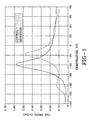
- Fig. 1 is a graph representing a plot of Tan Delta values versus Temperature for the representative Control Sample A and representative Sample D of the invention.
- the curve for Control Sample A displays a single tan delta peak in the bridge region from -100°C to 10°C while the curve for the invention Sample displays dual tan delta peaks which are spatially spaced apart by at least 50°C, with the first peak being representative of the high cis 1, 4-polybutadiene in the lower range of -90°C to -70°C and the second peak being representative of the emulsion polymerization SBR with 40 percent bound styrene in the higher range of -35°C to 0°C.
- Rubber compositions of cis 1,4 polybutadiene and SBR, particularly tin coupled SBR were prepared with silica reinforcement, together with a coupling agent.
- compositions were prepared with compounds of equal styrene content.
- Control Samples G, H and I utilized a blend of compatible elastomers consisting of high cis 1,4-polybutadiene rubber and emulsion polymerization prepared styrene/butadiene elastomer which contained 23.5 percent bound styrene.
- Samples J, K and L are test rubber compositions representative of the invention and contain incompatible elastomers consisting of high cis 1,4-polybutadiene rubber and tin coupled solution polymerization prepared styrene/butadiene elastomer which contained 35 percent bound styrene.
- Control Sample G used a specified silica
- Control Samples H and I used a combination of carbon black and silica.
- invention Sample J used the specified silica
- invention Samples K and L used a combination of carbon black and silica as used in the corresponding Control Samples.
- Material Sample G Control Sample H Control Sample I Control Sample J Sample K Sample L Non-productive mixing Cis 1,4-polybutadiene Elastomer 30 30 30 53 53 53 E-SBR (23.5% BS) 70 70 70 0 0 0 Tin coupled SBR (35% BS) 0 0 0 47 47 47 Carbon Black, N205 0 10 20 0 10 20 Silica 70 70 70 70 70 70 70 70 70 70 70 70 70 70 70 Silica coupler 11.2 11.2 11.2 11.2 11.2 11.2 11.2 Aromatic oil 43.8 43.8 43.8 43.8 43.8 43.8 43.8 43.8 43.8 43.8 43.8 43.8 43.8 43.8 Wax 3.5 3.5 3.5 3.5 3.5 3.5 3.5 3.5 3.5 3.5 3.5 3.5 3.5 3.5 3.5 3.5 3.5 3.5 3.5 3.5 3.5 3.5 3.5 3.5 3.5 3.5 Stea
- the prepared rubber compositions were cured at a temperature of 160°C for 14 minutes and the resulting cured rubber samples evaluated for their physical properties (rounded numbers are reported herein) as shown in the following Table 4.
- the rubber Samples G through L correspond to the Samples G through L of Table 3.
- Material Sample G Control Sample H Control Sample I Control Sample J Sample K Sample L Rebound (%) at 23°C (Zwick) 42.8 38.4 34 42 36.7 33.3 Ult.
- Fig. 2 is a graph representing a plot of Tan Delta values versus Temperature for the representative Control Sample G and representative Sample J of the invention.
- the curve for Control Sample G displays a single tan delta peak in the broad region from -100°C to 10°C while the curve for the invention Sample displays dual tan delta peaks which are spatially spaced apart by at least 50°C, the first peak being representative of the high cis 1,4-polybutadiene in the lower range of -100°C to -70°C and the second peak being representative of the tin coupled solution polymerization SBR with 35 percent bound styrene in the higher range of -40°C to -10°C.
- Sample J of the invention exhibits a low Tan Delta at 60°C which is indicative of improved tire rolling resistance.
Landscapes
- Chemical & Material Sciences (AREA)
- Health & Medical Sciences (AREA)
- Chemical Kinetics & Catalysis (AREA)
- Medicinal Chemistry (AREA)
- Polymers & Plastics (AREA)
- Organic Chemistry (AREA)
- Engineering & Computer Science (AREA)
- Mechanical Engineering (AREA)
- Compositions Of Macromolecular Compounds (AREA)
Abstract
Pneumatic rubber tire with an outer, circumferential
tread comprised of a cis 1,4-polybutadiene-rich and silicarich
rubber composition which contains specified elastomers
with spatially defined glass transition temperatures, in
conjunction with silica and specified carbon black
reinforcement.
Description
- Pneumatic rubber tire with an outer, circumferential tread comprised of a cis 1,4-polybutadiene-rich and silica-rich rubber composition which contains specified elastomers with spatially defined glass transition temperatures, in conjunction with silica and specified carbon black reinforcement.
- Pneumatic rubber tires, particularly high performance tires, are desired to have treads of a rubber composition which will provide good traction on the road.
- Resistance to treadwear of such tires is often sacrificed in order to achieve such good traction.
- Indeed rubber compositions designed to specifically emphasize very good traction for a tire tread often have relatively low abrasion resistance and associated relatively poor treadwear and typically exhibit a relatively high, single, glass transition temperature (Tg) of above -50°C and usually within a range of zero to -50°C.
- Conversely, rubber compositions designed to specifically emphasize very good resistance to abrasion for a tire tread often have relatively poor traction and also typically exhibit a single low Tg below -50°C.
- Therefore, a tread rubber composition exhibiting a balance between traction and treadwear is difficult to achieve where the rubber composition exhibits only a single Tg.
- In US-A- 5,723,530, a tire is presented with a tread where good traction is desired yet still having an acceptable treadwear.
- In US-A- 5,723,530, a tire is provided with a tread which is composed of four elastomers, of which two of the elastomers are spatially defined, namely,
- (1) 25 to 60 phr of styrene/butadiene rubber with Tg in a range of -15°C to -45°C;
- (2) 5 to 40 phr of medium vinyl polybutadiene rubber with vinyl content of 40 to 65 and a Tg in a range of -45°C to -65°C;
- (3) 20 to 40 phr of cis 1,4-polybutadiene rubber with a Tg in a range of -95°C to -105°C; and (4) 5 to 30 phr of cis 1,4-polyisoprene rubber having a Tg in a range of -65°C to -70°C; wherein the Tg of the cis 1,4-polybutadiene rubber is at least 50°C lower than the Tg of the styrene/ butadiene rubber. A carbon black is also specified. It is readily seen in this patent disclosure that a tire tread rubber composition is provided which exhibits dual Tgs but is comprised of carbon black as reinforcement and less than 45 phr of cis 1,4-polybutadiene.
-
- In the description of this invention, terms such as "compounded rubber", "rubber compound" and "compound", if used herein, refer to rubber compositions composed of one or more elastomers blended with various ingredients, including curatives such as sulfur and cure accelerators. The terms "elastomer" and "rubber" might be used herein interchangeably. It is believed that all of such terms are well known to those having skill in such art.
- A reference to glass transition temperature, or Tg, of an elastomer or elastomer composition, where referred to herein, represents the glass transition temperature(s) of the respective elastomer or elastomer composition in its uncured state or possibly a cured state in a case of an elastomer composition. A Tg can be suitably determined by a differential scanning calorimeter (DSC) at a temperature rate of increase of 10°C per minute.
- The existence of more than one glass transition temperature of a cured rubber composition can be determined by dynamic mechanical testing and demonstrated, for example, as a graphical representation, or plot, of tangent delta, or of loss modulus (i.e. E") as a function of temperature. The existence of more than one glass transition temperature for the rubber composition is evident when at least two humps, or peaks, are present in the plot between the temperatures of -90°C and 10°C.
- In accordance with this invention, a pneumatic rubber tire is provided having a circumferential rubber tread where said tread is a rubber composition comprised of, based on 100 parts by weight of the tread rubber,
- (A) conjugated diene-based elastomers comprised of
- (1) at least 45 to 85, alternatively at least 50 to 85, or even from a threshold of at least 55 to 85, phr of cis 1,4-polybutadiene rubber having a Tg within a range of -95°C to -105°C;
- (2) 15 to 55, alternatively 15 to 50, phr of at least
one elastomeric styrene/butadiene copolymer rubber having a
bound styrene content in a range of 30 to 55 percent
selected from one of
- (i) emulsion polymerization prepared styrene/butadiene copolymer having a Tg within a range of -15°C to -45°C; or
- (ii) organic solution polymerization prepared tin coupled styrene/butadiene copolymer having a Tg within a range of -55°C to -25°C;
- (3) 0 to 15, alternatively 5 to 15 phr of a medium vinyl polybutadiene having a vinyl content in a range of 45 to 70 and a Tg in a range of -55°C to -35°C; wherein the Tg of the cis 1,4-polybutadiene Tg elastomer is at least 50°C lower than the Tg of the styrene/butadiene elastomer; and
- (4) zero to 15, alternatively 5 to 15, phr of cis 1,4-polyisoprene having a Tg in a range of -65°C to -70°C.
- (B) 60 to 110, alternatively 60 to 90, phr of reinforcing filler comprised of amorphous silica which alternately includes a high structure carbon black reinforcing filler characterized by having an Iodine adsorption value in a range of 116 to 135, g/kg together with a DBP number in a range of 125 to 140, cm3/100g; wherein the weight ratio of said silica to said carbon black is at least 1/1, alternatively at least 5/1 and alternatively in a range of 1/1 to 20/1 whereas in one aspect, such filler is composed entirely of silica; and
- (C) a coupling agent having a moiety (e.g.: a silane moiety) reactive with hydroxyl groups (e.g.: silanol groups) contained on the surface of said silica and another moiety interactive with at least one of said diene-based elastomers; wherein said coupling agent is preferably an organosilane polysulfide and more preferably a bis (trialkoxysilylalkyl) polysulfide.
-
- It is an important aspect of this invention that the tread rubber composition is both cis 1,4-polybutadiene rubber-rich and, also silica-rich, together with an organosilane polysulfide coupling agent.
- Another important aspect of the invention is a requirement that at least two elastomer phases are present in the tread rubber composition as being generated by a requirement that the combination of cis 1,4-polybutadiene and styrene/butadiene elastomers are in the clear majority insofar as elastomers in the tread rubber are concerned and, moreover, that the Tg of the cis 1,4-polybutadiene rubber is at least 50°C lower than the Tg of the styrene/butadiene copolymer rubber.
- More specifically, it is required that at least 45, preferably at least 50, and even up to a threshold of at least 55, weight percent of the elastomers have a Tg lower than -95°C, namely the cis 1,4-polybutadiene, and at least 15 weight percent of the elastomers have a Tg of higher than -55°C, namely the styrene/butadiene copolymer.
- In this manner, it is considered herein that the relatively low Tg cis 1,4-polybutadiene elastomer is relatively incompatible with the high Tg styrene/butadiene copolymer elastomer as evidenced by their individual Tan. delta peaks on a graphical presentation, or plot, of Tan. delta versus temperature cured of the rubber composition within a temperature range of -90°0C to 10°C.
- Accordingly, the elastomers of said tread rubber are present in at least two phases, comprised of a cis 1,4 polybutadiene phase and an additional phase comprised of said styrene/butadiene and/or tin coupled styrene/butadiene phase.
- In particular, and as one aspect of this invention, a graphical plot of Tan. delta versus temperature curve within a broad range of -100°C to 10°C for the rubber composition of this invention yields two peaks in the curve with one peak having its apex within a relatively low temperature range of -100°C to -50°C and a second peak with its apex within a higher temperature range of -30°C to +10°C.
- Thus, evidence of the elastomer incompatibilities is the presence of the dual Tan. delta peaks for the sulfur cured elastomer composition. The Tan. delta values, with the included peaks in their curves, can be determined by dynamic mechanical testing of the cured compound by procedures well known to those skilled in such art.
- Thus, it is required that the cured compounded rubber composition exhibit at least two Tan. delta peaks within the aforesaid temperature range. This is considered significant because, for the cured compounded rubber, it is considered herein that a combination of the Tan. delta peak, at the lower temperature (e.g. -100°C to -50°C) for the low Tg elastomer (e.g. cis 1,4-polybutadiene), would suggest a promotion of improved resistance to abrasion property (i.e. improved treadwear for a tire) together with the second Tan. delta peak, at the higher temperature (e.g. -30°C to 10°C) represented by the high Tg elastomer (e.g. the SBR), would suggest a promotion of higher hysteresis at temperatures within a range of -30 to 0°C (i.e. higher tire tread traction), all of which is predictive of a better balance of such abrasion resistance and traction properties, particularly for a tire tread, than a cured rubber composition exhibiting only a single Tan. delta peak within the aforesaid temperature range of -90°C to 10°C.
- In practice, the relatively high styrene-containing, emulsion polymerization prepared, styrene/butadiene copolymer elastomer and tin coupled organic solvent solution polymerization prepared styrene/butadiene copolymer elastomer are considered herein to be important to enhance tire tread traction, hysteresis, or coefficient of friction, for the rubber composition. It is desired herein that their bound styrene content be at least 30 percent, based upon the SBR, for the tire tread traction enhancement.
- Use of the organic solvent polymerization prepared tin coupled styrene/butadiene copolymer is considered herein to be important in order to enhance processability of the rubber composition and to promote better resistance to abrasion of the rubber composition. Also, use of tin coupled SBR promotes lower hysteresis of the rubber composition at very high tire tread operating temperatures (e.g. 50°C to 100°C) which is indicative of low tire rolling resistance.
- Tin coupled copolymer may be prepared, for example, by introducing a tin coupling agent during the styrene-1,3-butadiene copolymerization reaction in an organic solvent solution, usually at or near the end of the polymerization reaction. Such coupling of styrene/butadiene copolymers is well known to those having skill in such art.
- In practice, it is usually preferred that at least 50 percent and more generally in a range of 60 to 85 percent of the Sn (tin) bonds in the tin coupled elastomered are bonded to butadiene units of the styrene/butadiene copolymer to create Sn-dienyl bonds such as butadienyl bonds.
- Creation of tin-dienyl bonds can be accomplished in a number of ways such as, for example, sequential addition of butadiene to the copolymerization system or use of modifiers to alter the styrene and/or butadiene reactivity ratios for the copolymerization. It is believed that such techniques, whether used with a batch or a continuous copolymerization system, is well know to those having skill in such art.
- Various tin compounds, particularly organo tin compounds, may be used for the coupling of the elastomer. Representative of such compounds are, for example, alkyl tin trichloride, dialkyl tin dichloride, yielding variants of a tin coupled styrene/butadiene copolymer elastomer, although a trialkyl tin monochloride might be used which would yield simply a tin-terminated copolymer.
- Examples of tin-modified, or coupled, styrene/ butadiene copolymer elastomers might be found, for example, in US-A- 5,064,901.
- In the practice of this invention, use of a quantitative amount of at least 45, and preferably at least 55, phr of the high cis 1,4-polybutadiene elastomer in the rubber composition of this invention is considered herein to be important in order to enhance resistance to abrasion for the tire tread.
- Use of the cis 1,4-polyisoprene, preferably natural rubber, is considered herein to be important in order to enhance processability of the tire tread rubber composition with a relatively minimum amount of processing oil and processing additives which are considered herein to normally adversely offset abrasion resistance.
- The addition of the cis 1,4-polyisoprene natural rubber is also considered herein to be important to contribute to tear resistance property for the tread rubber composition.
- Use of rubber reinforcing carbon black(s) for this invention, with the characterized Iodine adsorption value range and DBP number range, is considered herein to be important in order to provide good abrasion resistance, or coefficient of friction, and higher stiffness for the tire cornering and handling, and also enhanced, or relatively high hysteresis for relatively good traction for a tire tread.
- Representative of such rubber reinforcing carbon blacks are, for example, N121 and N205. All of such representative carbon blacks have an Iodine adsorption number within a range of 110 to 145 g/kg and a DBP number in a range of 110 to 140 cm3/g. Examples of reinforcing carbon blacks for elastomers, generally, together with their Iodine number values and DBP (dibutyl phthalate) absorption values, may be found in The Vanderbilt Rubber Handbook, (1990), 13th edition, pages 416-419.
- In the practice of this invention, use of the specific combinations of the aforesaid silica-rich, multiphase elastomer blend and coupling agent are considered herein to be important in order to optimize resistance to abrasion (treadwear) and to provide a suitable hysteresis (i.e. traction).
- In practice, it is preferred that the elastomers utilized in the tread composition are exclusive of polymers and copolymers of isobutylene, including halogen modifications thereof.
- As hereinbefore pointed out, the invention is based upon use of elastomers, silica and coupling agent, all of which are usually known, in what is considered herein as a novel combination as to (i) selection of specific individual materials, and (ii) combining the selected specific materials in novel combinations in terms of individual amounts in a manner not believed to be specifically heretofore used for a tire tread. This aspect of the invention is considered particularly important for creating a tire tread rubber composition with good abrasion properties coupled, also, with good traction, or coefficient of friction, or hysteresis, properties. This aspect of the invention is especially directed to its more narrowly defined aspects which is restated, in its narrower form as follows:
- The tread rubber composition is required to be both cis-polybutadiene-rich and silica-rich, together with a coupling agent. In particular, it is desires that the filler reinforcement for the rubber composition be primarily, and for some circumstances entirely, amorphous, silica, particularly precipitated silica.
- The commonly employed siliceous pigments used in rubber compounding applications are usually amorphous siliceous pigments (referred to herein as silica), preferably a precipitated silica, although the silica may be a pyrogenic silica.
- The precipitated silicas such as, for example, those obtained by the acidification of a soluble silicate, e.g., sodium silicate or a co-precipitation of a silicate and an aluminate.
- The BET surface area of the silica, as measured using nitrogen gas, may, for example, be in a range of 50 to 300, alternatively 120 to 200, square meters per gram. A BET method of measuring surface area is described in the Journal of the American Chemical Society,
Volume 60, Page 304 (1930). - The silica may also have a dibutylphthalate (DBP) absorption value in a range of 100 to 400, and usually 150 to 300 cm3/100g.
- Various commercially available silicas may be considered for use in this invention such as, for example, only and without limitation, silicas commercially available from PPG Industries under the Hi-Sil trademark with designations 210, 243, etc; silicas available from Rhobia, with designations of Zeosil 1165MP and Zeosil 165GR and silicas available from Degussa AG with designations VN2 and VN3, 3770GR, and from Huber as Zeopol 8745.
- When silica reinforcement is used for a rubber tire tread, the silica is conventionally used with a coupling agent, or what is sometimes referred to as a reinforcing agent
- Compounds capable of reacting with both the silica surface and the rubber elastomer molecule in a manner to cause the silica to have a reinforcing effect on the rubber, many of which are generally known to those skilled in such art as coupling agents, or couplers, are often used. Such coupling agents, for example, may be premixed, or pre-reacted, with the silica particles or added to the rubber mix during the rubber/silica processing, or mixing, stage. If the coupling agent and silica are added separately to the rubber mix during the rubber/silica mixing, or processing stage, it is considered that the coupling agent then combines in situ with the silica.
- In particular, such coupling agents may, for example, be composed of a silane which has a constituent component, or moiety, (the silane portion) capable of reacting with the silica surface and, also, a constituent component, or moiety, capable of reacting with the rubber, particularly a sulfur vulcanizable rubber which contains carbon-to-carbon double bonds, or unsaturation. In this manner, then the coupler acts as a connecting bridge between the silica and the rubber and thereby enhances the rubber reinforcement aspect of the silica.
- In one aspect, the silane of the coupling agent apparently forms a bond to the silica surface, possibly through hydrolysis, and the rubber reactive component of the coupling agent combines with the rubber itself.
- Numerous coupling agents are taught for use in combining silica and rubber such as, for example, silane coupling agents containing a polysulfide component, or structure, such as bis-(3-alkoxysilylalky) polysulfide which contains from 2 to 6 sulfur atoms in its polysulfidic bridge with an average of from 2 to 2.6 or from 3.5 to 4, preferably an average of from 2 to 2.6, connecting sulfur atoms in its polysulfidic bridge such as, for example, a bis-(3-triethoxysilylpropyl) polysulfide.
- A preferred coupling agent is a bis-(3-ethoxysilylpropyl) disulfide material having from 2 to 4, with an average of from 2 to 2.4, connecting sulfur atoms in the polysulfide bridge. Such disulfide-type coupling agent is particularly preferred in order to provide enhanced ease of processing, particularly mixing, the unvulcanized rubber composition.
- It is readily understood by those having skill in the art that the rubber compositions of the tread would be compounded with conventional compounding ingredients including the aforesaid reinforcing fillers such as carbon black and precipitated silica, as hereinbefore defined, in combination with a silica coupling agent, as well as antidegradant(s), processing oil as hereinbefore defined, stearic acid or a zinc stearate, zinc oxide, sulfur-contributing material(s) and vulcanization accelerator(s) as hereinbefore defined.
- Such compounding of rubber is well known to those having skill in such art. Antidegradants are typically of the amine or phenolic type. While stearic acid is typically referred to as a rubber compounding ingredient, it may be pointed out that the ingredient itself is usually obtained and used as a mixture of organic acids primarily composed of stearic acid with at least one of oleic acid, linolenic acid and/or palmitic acid normally contained in the stearic acid as typically used. The mixture may contain minor amounts (less than about six weight percent) of myristic acid, arachidic acid and/or arachidonic acid. Such material or mixture is conventionally referred to in the rubber compounding art as stearic acid.
- Where normal or typical rubber compounding amounts or ranges of amounts of such additives are used, they are not otherwise considered as a part of the invention. For example, some of the ingredients might be classified, in one aspect, as processing aids. Such processing aids may be, for example, waxes such as microcrystalline and paraffinic waxes typically used in a range of 1 to 5 phr and often in a range of 1 to 3 phr; and resins, usually as tackifiers, such as, for example, synthetic hydrocarbon and natural resins typically used in a range of 1 to 5 phr and often in a range of 1 to 3 phr. A curative might be classified as a combination of sulfur and sulfur cure accelerator(s) for the rubber compound (usually simply referred to as accelerator) or a sulfur donor/accelerator. In a sulfur and accelerator(s) curative, the amount of sulfur used is in a range of 0.5 to 5 phr and usually in a range of 0.5 to 3 phr; and the accelerator(s), often of the sulfenamide type, is (are) used in a range of 0.5 to 5 phr and often in a range of 1 to 2 phr.
- The ingredients, including the elastomers but exclusive of sulfur and accelerator curatives, are normally first mixed together in a series of at least two sequential mixing stages, although sometimes one mixing stage might be used, to a temperature in a range of 145°C to 185°C, and such mixing stages are typically referred to as non-productive mixing stages. Thereafter, the sulfur and accelerators, and possibly one or more retarders and one or more antidegradants, are mixed therewith to a temperature of 90°C to 120°C and is typically referred as a productive mix stage. Such mixing procedure is well known to those having skill in such art.
- After mixing, the compounded rubber can be fabricated such as, for example, by extrusion through a suitable die to form a tire tread. The tire tread is then typically built onto a sulfur curable tire carcass and the assembly thereof cured in a suitable mold under conditions of elevated temperature and pressure by methods well-known to those having skill in such art. In such case of retreading of a tire, the tire tread might first be precured and then applied to the already cured tire carcass with a curable gum strip between the tread and carcass and the assembly then submitted to curing conditions to cure the aforesaid gum strip.
- The invention may be better understood by reference to the following example in which the parts and percentages are by weight unless otherwise indicated.
- Rubber compositions comprised of cis 1,4-polybutadiene rubber and SBR(s), including a coupling agent, were prepared.
- In particular, mixtures of diene rubber compositions were prepared comprised of recipes shown in Table 1 as Samples A through F, with Samples A, B and C being in a nature of Controls and the remaining Samples D through F representing various aspects of the invention and illustrated in the following Table 1.
- All of the Samples utilize cis 1,4-polybutadiene rubber together with various typical rubber compounding ingredients.
- For comparison purposes, all of the compositions were prepared with compounds of equal styrene content.
- Control Samples A, B and C utilized a blend of compatible elastomers consisting of high cis 1,4-polybutadiene rubber and emulsion polymerization prepared styrene/butadiene elastomer which contained 23.5 percent bound styrene.
- Samples D, E and F are test rubber compositions representative of the invention and contain incompatible elastomers consisting of high cis 1,4-polybutadiene rubber and emulsion polymerization prepared styrene/butadiene elastomer which contained 40 percent bound styrene.
- For reinforcing fillers, Control Sample A used a specified silica and Control Samples B and C used a combination of carbon black and silica.
- For reinforcing fillers, invention Sample D used the specified silica, invention Samples E and F used a combination of carbon black and silica as used in the Control Samples.
Material Sample A Control Sample B Control Sample C Control Sample D Sample E Sample F Non-productive mixing Cis 1,4-polybutadiene Elastomer 30 30 30 59 59 59 E-SBR (23.5% BS) 70 70 70 0 0 0 E-SBR (40% BS) 0 0 0 41 41 41 Carbon Black, N205 0 10 20 0 10 20 Silica 70 70 70 70 70 70 Silica coupler 11.2 11.2 11.2 11.2 11.2 11.2 Aromatic oil 43.8 43.8 43.8 43.8 43.8 43.8 Wax 3.5 3.5 3.5 3.5 3.5 3.5 Stearic acid 2 2 2 2 2 2 Zinc oxide 5 5 5 5 5 5 Productive mixing Sulfur 1.5 1.5 1.5 1.5 1.5 1.5 Accelerator 3.5 3.5 3.5 3.5 3.5 3.5 - The prepared rubber compositions were cured at a temperature of 160°C for 14 minutes and the resulting cured rubber samples evaluated for their physical properties (rounded numbers are reported herein) as shown in the following Table 2. The rubber composition Samples A through F correspond to the Samples A through F of Table 1.
Material Sample A Control Sample B Control Sample C Control Sample D Sample E Sample F Rebound (%) at 23°C (Zwick) 43.7 38.1 34 39 35.1 31.7 Ult. Elongation (%) 699 660 608 678 621 593 300% Modulus, MPa 4.8 5.7 6.9 5.2 6.5 7.4 Tensile Strength MPa 19.0 19.2 18.8 17.6 17.7 18.0 Shore A hardness (23°C) 56.5 61.5 65.5 57.6 61.6 66.5 DIN abrasion 91.3 100 93.5 70.7 75.0 88.0 - DIN abrasion data (DIN No. 53516 at 2.5 Newtons) for the Samples A through F is reported in the above Table 2 as relative volume loss relative to Sample B as being a value of 100.
- It can readily be seen from Table 2 that both lower rebound value and DIN abrasion volume loss is evidenced which is predictive of better traction and better resistance to abrasion for a tire tread of such rubber composition for the following test samples as compared to their comparable Control Samples:
- (1) Test Sample D compared to Control Sample A.
- (2) Test Sample E compared to Control Sample B.
- (3) Test Sample F compared to Control Sample C.
-
- Samples A through F were tested using a Rheometrics Sample Analyzer (II) (RSA II). The Samples were tested using a temperature sweep at 11 Hertz (Hz). The results in terms of Tan Delta versus Temperature at 11 Hz, are demonstrated in the accompanying Fig. 1.
- In particular, Fig. 1 is a graph representing a plot of Tan Delta values versus Temperature for the representative Control Sample A and representative Sample D of the invention.
- In Fig. 1, it can readily be seen that the curve for Control Sample A displays a single tan delta peak in the bridge region from -100°C to 10°C while the curve for the invention Sample displays dual tan delta peaks which are spatially spaced apart by at least 50°C, with the first peak being representative of the high cis 1, 4-polybutadiene in the lower range of -90°C to -70°C and the second peak being representative of the emulsion polymerization SBR with 40 percent bound styrene in the higher range of -35°C to 0°C.
- Rubber compositions of cis 1,4 polybutadiene and SBR, particularly tin coupled SBR were prepared with silica reinforcement, together with a coupling agent.
- In particular, mixtures of diene rubber compositions were prepared as Samples G through L, with Samples G, H and I being in a nature of Controls and the remaining Samples J through L representing various aspects of the invention and illustrated in the following Table 3.
- All of the Samples utilized cis 1,4-polybutadiene rubber together with various typical rubber compounding ingredients.
- For comparison purposes, all of the compositions were prepared with compounds of equal styrene content.
- Control Samples G, H and I utilized a blend of compatible elastomers consisting of high cis 1,4-polybutadiene rubber and emulsion polymerization prepared styrene/butadiene elastomer which contained 23.5 percent bound styrene.
- Samples J, K and L are test rubber compositions representative of the invention and contain incompatible elastomers consisting of high cis 1,4-polybutadiene rubber and tin coupled solution polymerization prepared styrene/butadiene elastomer which contained 35 percent bound styrene.
- For reinforcing fillers, Control Sample G used a specified silica, and Control Samples H and I used a combination of carbon black and silica.
- For reinforcing fillers, invention Sample J used the specified silica, and invention Samples K and L used a combination of carbon black and silica as used in the corresponding Control Samples.
Material Sample G Control Sample H Control Sample I Control Sample J Sample K Sample L Non-productive mixing Cis 1,4-polybutadiene Elastomer 30 30 30 53 53 53 E-SBR (23.5% BS) 70 70 70 0 0 0 Tin coupled SBR (35% BS) 0 0 0 47 47 47 Carbon Black, N205 0 10 20 0 10 20 Silica 70 70 70 70 70 70 Silica coupler 11.2 11.2 11.2 11.2 11.2 11.2 Aromatic oil 43.8 43.8 43.8 43.8 43.8 43.8 Wax 3.5 3.5 3.5 3.5 3.5 3.5 Stearic acid 2 2 2 2 2 2 Zinc oxide 5 5 5 5 5 5 Productive mixing Sulfur 1.5 1.5 1.5 1.5 1.5 1.5 Accelerator 3.5 3.5 3.5 3.5 3.5 3.5 - The prepared rubber compositions were cured at a temperature of 160°C for 14 minutes and the resulting cured rubber samples evaluated for their physical properties (rounded numbers are reported herein) as shown in the following Table 4. The rubber Samples G through L correspond to the Samples G through L of Table 3.
Material Sample G Control Sample H Control Sample I Control Sample J Sample K Sample L Rebound (%) at 23°C (Zwick) 42.8 38.4 34 42 36.7 33.3 Ult. Elongation (%) 686 633 558 661 633 579 300% Modulus, MPa 5.3 6.5 7.3 5.9 6.7 8.1 Tensile Strength, MPa 19.3 19.2 17.2 18.0 18.3 18.3 Shore A hardness (23°C) 46.9 49.1 52.5 50.7 53.7 56.7 DIN abrasion 97.9 87.2 100 66.0 74.5 81.9 - DIN abrasion data (DIN No. 53516 at 2.5 Newtons) for the Samples G through L is reported herein in the above Table 4 as relative volume loss relative to Sample I as being a value of 100. A lower value is better which means less rubber loss.
- It can readily be seen from Table 4 that both lower rebound value and lower DIN abrasion loss is evidenced which is predictive of better traction and better resistance to abrasion for a tire tread of such rubber composition for the following test samples as compared to their comparable Control Samples:
- (1) Test Sample J compared to Control Sample G.
- (2) Test Sample K compared to Control Sample H.
- (3) Test Sample L compared to Control Sample I.
-
- Samples G through L were also tested using a Rheometrics Sample Analyzer (II) (RSA II). The Samples were tested using a temperature sweep at 11 Hertz (Hz). The results in terms of Tan Delta versus Temperature at 11 Hz, are demonstrated in the accompanying Fig. 2.
- In particular, Fig. 2 is a graph representing a plot of Tan Delta values versus Temperature for the representative Control Sample G and representative Sample J of the invention.
- In Fig. 2, it can readily been seen that the curve for Control Sample G displays a single tan delta peak in the broad region from -100°C to 10°C while the curve for the invention Sample displays dual tan delta peaks which are spatially spaced apart by at least 50°C, the first peak being representative of the high cis 1,4-polybutadiene in the lower range of -100°C to -70°C and the second peak being representative of the tin coupled solution polymerization SBR with 35 percent bound styrene in the higher range of -40°C to -10°C.
- It can also be seen in Fig. 2 that Sample J of the invention exhibits a low Tan Delta at 60°C which is indicative of improved tire rolling resistance.
Claims (6)
- A pneumatic rubber tire having a circumferential rubber tread where said tread is a rubber composition comprised of, based on 100 parts by weight of the tread rubber,(A) conjugated diene-based elastomers comprised of(1) a range of 45 to 85 phr of cis 1,4-polybutadiene rubber having a Tg within a range of -95°C to -105°C;(2) a range of 15 to 55 phr of at least one elastomeric styrene/butadiene copolymer rubber having a bound styrene content in a range of 30 to 55 percent selected from one of(i) emulsion polymerization prepared styrene/ butadiene copolymer having a Tg within a range of -15°C to -45°C; or(ii) organic solution polymerization prepared tin coupled styrene/butadiene copolymer having a Tg within a range of -55°C to -25°C;(3) a range of from 0 to 15 phr of a medium vinyl polybutadiene having a vinyl content in a range of 45 to 70 and a Tg in a range of -55°C to -35°C; wherein the Tg of the cis 1,4-polybutadiene elastomer is at least 50°C lower than the Tg of the said styrene/butadiene rubber and tin coupled styrene/butadiene rubber; and(4) a range of from zero to 15 phr of cis 1,4-polyisoprene having a Tg in a range of -65°C to -70°C.(B) 60 to 110 phr of reinforcing filler comprised of amorphous silica; and(C) a coupling agent having a moiety reactive with hydroxyl groups contained on the surface of said silica and another moiety interactive with at least one of said diene-based elastomers.
- The tire of claim 1 wherein the rubbers are present in at least two phases, comprised of a cis 1,4-polybutadiene phase and an additional phase comprised of said styrene/butadiene and/or tin coupled styrene/butadiene rubber phase.
- The tire of any of claims 1 or 2 wherein said filler is comprised of amorphous silica and carbon black and wherein said carbon black is a high structure carbon black reinforcing filler having an Iodine adsorption value in a range of 116 to 135 g/kg together with a DBP number in a range of 125 to 140 cm3/100g; wherein the weight ratio of said silica to said carbon black is at least 1/1.
- The tire of any of the preceding claims wherein said rubber composition also contains from 5 to 15 phr of a medium vinyl polybutadiene having a vinyl content in a range of 45 to 70 percent and cis 1,4-polyisoprene rubber.
- The tire of any of the preceding claims wherein said coupling agent is a bis 3-(trialkoxysilylalkyl) polysulfide having from 2 to 6, with an average of from 2 to 2.6 or from 3.5 to 4 connecting sulfur atoms in its polysulfidic bridge.
- The tire of any of the preceding claims wherein said coupling agent is a bis 3-(triethoxysilylpropyl) polysulfide having from 2 to 6, with an average of from 2 to 2.6 connecting sulfur atoms in its polysulfidic bridge.
Applications Claiming Priority (2)
| Application Number | Priority Date | Filing Date | Title |
|---|---|---|---|
| US09/503,371 US6465560B1 (en) | 2000-02-14 | 2000-02-14 | Tire with tread of spatially defined elastomer composition |
| US503371 | 2000-02-14 |
Publications (1)
| Publication Number | Publication Date |
|---|---|
| EP1125766A1 true EP1125766A1 (en) | 2001-08-22 |
Family
ID=24001804
Family Applications (1)
| Application Number | Title | Priority Date | Filing Date |
|---|---|---|---|
| EP01102377A Withdrawn EP1125766A1 (en) | 2000-02-14 | 2001-02-02 | Tire with tread of defined elastomer composition |
Country Status (3)
| Country | Link |
|---|---|
| US (1) | US6465560B1 (en) |
| EP (1) | EP1125766A1 (en) |
| BR (1) | BR0100311A (en) |
Cited By (8)
| Publication number | Priority date | Publication date | Assignee | Title |
|---|---|---|---|---|
| EP1518895A1 (en) * | 2003-09-18 | 2005-03-30 | The Goodyear Tire & Rubber Company | Tire with component comprised of a blend of polybutadiene rubber and composite of styrene/butadiene elastomer which contains exfoliated clay platelets |
| KR100706125B1 (en) | 2005-07-05 | 2007-04-12 | 금호타이어 주식회사 | Tire tread rubber composition with excellent wet grip |
| WO2009117348A1 (en) * | 2008-03-17 | 2009-09-24 | Battelle Memorial Institute | Rebound control material |
| US8215864B2 (en) | 2004-11-17 | 2012-07-10 | Battelle Memorial Institute | Impact attenuator system |
| FR2980206A1 (en) * | 2011-09-19 | 2013-03-22 | Michelin Soc Tech | PNEUMATIC TIRE TREAD OFF THE ROAD |
| EP3812174A4 (en) * | 2019-03-01 | 2021-09-22 | Sumitomo Rubber Industries, Ltd. | RUBBER COMPOSITION FOR TIRES AND TIRES |
| EP4043234A4 (en) * | 2019-10-15 | 2023-11-22 | Sumitomo Rubber Industries, Ltd. | PNEUMATIC |
| US20250230302A1 (en) * | 2023-08-15 | 2025-07-17 | Bridgestone Corporation | Tire Tread Rubber Composition And Related Methods |
Families Citing this family (18)
| Publication number | Priority date | Publication date | Assignee | Title |
|---|---|---|---|---|
| US20050137316A1 (en) * | 2003-12-19 | 2005-06-23 | Zanzing David J. | Tire with component comprised of an immiscible blend of polybutadiene rubber and brominated copolymer of isobutylene and para methylstyrene |
| US7441572B2 (en) * | 2004-09-17 | 2008-10-28 | The Goodyear Tire & Rubber Company | Pneumatic tire having a tread containing immiscible rubber blend and silica |
| US20080027162A1 (en) * | 2006-07-25 | 2008-01-31 | Kuo-Chih Hua | Silica reinforced rubber composition and use in tires |
| KR100777492B1 (en) | 2006-10-10 | 2007-11-29 | 금호타이어 주식회사 | Styrenic cement composition |
| US20100186859A1 (en) * | 2009-01-29 | 2010-07-29 | Junling Zhao | Tire with tread of spatially defined elastomer composition |
| US8459319B2 (en) | 2009-08-31 | 2013-06-11 | The Goodyear Tire & Rubber Company | Tire with rubber tread containing combination of resin blend and functionalized elastomer |
| DE102015207931A1 (en) * | 2015-04-29 | 2016-11-03 | Continental Reifen Deutschland Gmbh | Pneumatic vehicle tire with a tread |
| US10479881B2 (en) | 2015-06-11 | 2019-11-19 | Bridgestone Americas Tire Operations, Llc | Rubber compositions containing viscosity modifier and related methods |
| US10301459B2 (en) | 2016-07-19 | 2019-05-28 | The Goodyear Tire & Rubber Company | Tire with rubber tread containing a combination of styrene/butadiene elastomers and traction resins and pre-hydrophobated precipitated silica reinforcement |
| WO2019213226A1 (en) | 2018-05-04 | 2019-11-07 | Bridgestone Americas Tire Operations, Llc | Tire tread rubber composition |
| US12103334B2 (en) | 2018-05-04 | 2024-10-01 | Bridgestone Americas Tire Operations, Llc | Tire tread rubber composition |
| JP2021523260A (en) | 2018-05-04 | 2021-09-02 | ブリヂストン アメリカズ タイヤ オペレーションズ、 エルエルシー | Tire tread rubber composition |
| WO2019213233A1 (en) | 2018-05-04 | 2019-11-07 | Bridgestone Americas Tire Operations, Llc | Tire tread rubber composition |
| WO2020243308A1 (en) | 2019-05-29 | 2020-12-03 | Bridgestone Americas Tire Operations, Llc | Tire tread rubber composition and related methods |
| WO2020243304A1 (en) | 2019-05-29 | 2020-12-03 | Bridgestone Americas Tire Operations, Llc | Tire tread rubber composition and related methods |
| WO2020243311A1 (en) | 2019-05-29 | 2020-12-03 | Bridgestone Americas Tire Operations, Llc | Tire tread rubber composition and related methods |
| US11441018B2 (en) | 2019-09-12 | 2022-09-13 | The Goodyear Tire & Rubber Company | Pneumatic tire having tread with three elastomers |
| US12209183B2 (en) | 2021-03-16 | 2025-01-28 | The Goodyear Rubber & Tire Company | Pneumatic tire having tread with three elastomers |
Citations (4)
| Publication number | Priority date | Publication date | Assignee | Title |
|---|---|---|---|---|
| JPH07292162A (en) * | 1994-04-22 | 1995-11-07 | Asahi Chem Ind Co Ltd | Rubber composition for tires |
| EP0831122A1 (en) * | 1996-09-23 | 1998-03-25 | The Goodyear Tire & Rubber Company | Tyre with tread of elastomer composition |
| EP0905185A1 (en) * | 1997-09-16 | 1999-03-31 | The Goodyear Tire & Rubber Company | Tire tread with elastomers of spatially defined TG's |
| EP0934973A1 (en) * | 1998-02-06 | 1999-08-11 | PIRELLI PNEUMATICI S.p.A. | Vulcanizable rubber composition, in particular for low rolling resistance treads of vehicle tires |
Family Cites Families (2)
| Publication number | Priority date | Publication date | Assignee | Title |
|---|---|---|---|---|
| US5504140A (en) | 1994-09-30 | 1996-04-02 | The Goodyear Tire & Rubber Company | Tire with tread of elastomer composition |
| US5616639A (en) | 1995-05-24 | 1997-04-01 | The Goodyear Tire & Rubber Company | Tire with silica reinforced tread |
-
2000
- 2000-02-14 US US09/503,371 patent/US6465560B1/en not_active Expired - Lifetime
-
2001
- 2001-02-02 EP EP01102377A patent/EP1125766A1/en not_active Withdrawn
- 2001-02-02 BR BR0100311-9A patent/BR0100311A/en not_active Application Discontinuation
Patent Citations (4)
| Publication number | Priority date | Publication date | Assignee | Title |
|---|---|---|---|---|
| JPH07292162A (en) * | 1994-04-22 | 1995-11-07 | Asahi Chem Ind Co Ltd | Rubber composition for tires |
| EP0831122A1 (en) * | 1996-09-23 | 1998-03-25 | The Goodyear Tire & Rubber Company | Tyre with tread of elastomer composition |
| EP0905185A1 (en) * | 1997-09-16 | 1999-03-31 | The Goodyear Tire & Rubber Company | Tire tread with elastomers of spatially defined TG's |
| EP0934973A1 (en) * | 1998-02-06 | 1999-08-11 | PIRELLI PNEUMATICI S.p.A. | Vulcanizable rubber composition, in particular for low rolling resistance treads of vehicle tires |
Non-Patent Citations (1)
| Title |
|---|
| DATABASE WPI Section Ch Week 199602, Derwent World Patents Index; Class A12, AN 1996-017343, XP002070580 * |
Cited By (12)
| Publication number | Priority date | Publication date | Assignee | Title |
|---|---|---|---|---|
| EP1518895A1 (en) * | 2003-09-18 | 2005-03-30 | The Goodyear Tire & Rubber Company | Tire with component comprised of a blend of polybutadiene rubber and composite of styrene/butadiene elastomer which contains exfoliated clay platelets |
| US7714055B2 (en) | 2003-09-18 | 2010-05-11 | The Goodyear Tire & Rubber Company | Tire with component comprised of a blend of polybutadiene rubber and composite of styrene/butadiene elastomer which contains exfoliated clay platelets |
| US8215864B2 (en) | 2004-11-17 | 2012-07-10 | Battelle Memorial Institute | Impact attenuator system |
| KR100706125B1 (en) | 2005-07-05 | 2007-04-12 | 금호타이어 주식회사 | Tire tread rubber composition with excellent wet grip |
| WO2009117348A1 (en) * | 2008-03-17 | 2009-09-24 | Battelle Memorial Institute | Rebound control material |
| AU2009225760B2 (en) * | 2008-03-17 | 2014-09-04 | Battelle Memorial Institute | Rebound control material |
| US8894318B2 (en) | 2008-03-17 | 2014-11-25 | Battelle Memorial Institute | Rebound control material |
| FR2980206A1 (en) * | 2011-09-19 | 2013-03-22 | Michelin Soc Tech | PNEUMATIC TIRE TREAD OFF THE ROAD |
| WO2013041401A1 (en) * | 2011-09-19 | 2013-03-28 | Compagnie Generale Des Etablissements Michelin | Off-road tyre tread |
| EP3812174A4 (en) * | 2019-03-01 | 2021-09-22 | Sumitomo Rubber Industries, Ltd. | RUBBER COMPOSITION FOR TIRES AND TIRES |
| EP4043234A4 (en) * | 2019-10-15 | 2023-11-22 | Sumitomo Rubber Industries, Ltd. | PNEUMATIC |
| US20250230302A1 (en) * | 2023-08-15 | 2025-07-17 | Bridgestone Corporation | Tire Tread Rubber Composition And Related Methods |
Also Published As
| Publication number | Publication date |
|---|---|
| US6465560B1 (en) | 2002-10-15 |
| BR0100311A (en) | 2001-10-09 |
Similar Documents
| Publication | Publication Date | Title |
|---|---|---|
| US6465560B1 (en) | Tire with tread of spatially defined elastomer composition | |
| EP0831122B1 (en) | Tyre with tread of elastomer composition | |
| EP3109065B1 (en) | Tire with tread for low temperature performance and wet traction | |
| EP3450206B1 (en) | Rubber composition and pneumatic tire having tread with hydroxy-terminated polybutadiene | |
| US6761198B2 (en) | Pneumatic tire having lug and groove configuration extending from tread over at least 30% of sidewall | |
| EP0791622B1 (en) | Silica reinforced rubber composition and tire with tread thereof | |
| US5605951A (en) | Silica reinforced rubber compostition and tire with tread thereof | |
| EP0641823B1 (en) | Tire with silica reinforced tread | |
| US5877249A (en) | Tire with tread having silica reinforcement field | |
| EP1398347B1 (en) | Tire with tread of cis 1,4-polybutadiene-rich rubber composition which contains a functional styrene/butadiene elastomer, silica and coupling agent | |
| EP1308317B1 (en) | Tire with component comprised of a blend of polybutadiene-rich rubber composition which contains a minor portion of styrene-rich styrene/isoprene elastomer | |
| EP2213688B1 (en) | Tire with a tread of a spatially defined elastomer composition | |
| KR100429350B1 (en) | Tires with tread reinforced with silica | |
| EP0705879A1 (en) | Tire with tread of elastomer composition | |
| US7714055B2 (en) | Tire with component comprised of a blend of polybutadiene rubber and composite of styrene/butadiene elastomer which contains exfoliated clay platelets | |
| US7285584B2 (en) | Tire with component comprised of rubber composition containing hydrophobated, pre-silanized silica | |
| US5756589A (en) | Silica reinforced rubber composition and use in tires | |
| EP1514900A1 (en) | Farm tire with tread of rubber composition containing starch/plasticizer composite | |
| KR20110056237A (en) | Pneumatic tire | |
| EP2322573B1 (en) | Preparation of a silica containing rubber composition, resulting rubber composition and tire having a component thereof | |
| US20020143084A1 (en) | Halogenated isobutylene copolymer elastomer which contains silica reinforcement and an organo phosphite and article of manufacture, including a tire, having at least one component comprised of such rubber composition | |
| US6894122B2 (en) | Tire with component of rubber composition comprised of a combination of functionalized emulsion SBR and coupled solution SBR | |
| US20200181310A1 (en) | Functionalized polymer, rubber composition and pneumatic tire | |
| US20050137316A1 (en) | Tire with component comprised of an immiscible blend of polybutadiene rubber and brominated copolymer of isobutylene and para methylstyrene | |
| EP4122981A2 (en) | Functionalized elastomer blend for tire tread and tire |
Legal Events
| Date | Code | Title | Description |
|---|---|---|---|
| PUAI | Public reference made under article 153(3) epc to a published international application that has entered the european phase |
Free format text: ORIGINAL CODE: 0009012 |
|
| AK | Designated contracting states |
Kind code of ref document: A1 Designated state(s): AT BE CH CY DE DK ES FI FR GB GR IE IT LI LU MC NL PT SE TR |
|
| AX | Request for extension of the european patent |
Free format text: AL;LT;LV;MK;RO;SI |
|
| 17P | Request for examination filed |
Effective date: 20020222 |
|
| AKX | Designation fees paid |
Free format text: DE FR GB |
|
| 17Q | First examination report despatched |
Effective date: 20060323 |
|
| STAA | Information on the status of an ep patent application or granted ep patent |
Free format text: STATUS: THE APPLICATION IS DEEMED TO BE WITHDRAWN |
|
| 18D | Application deemed to be withdrawn |
Effective date: 20071113 |