EP1122670A2 - Method and system for notifying a consumer that the photofinishing order is ready and for controlling inventory of photofinishing orders in a business - Google Patents
Method and system for notifying a consumer that the photofinishing order is ready and for controlling inventory of photofinishing orders in a business Download PDFInfo
- Publication number
- EP1122670A2 EP1122670A2 EP20010200221 EP01200221A EP1122670A2 EP 1122670 A2 EP1122670 A2 EP 1122670A2 EP 20010200221 EP20010200221 EP 20010200221 EP 01200221 A EP01200221 A EP 01200221A EP 1122670 A2 EP1122670 A2 EP 1122670A2
- Authority
- EP
- European Patent Office
- Prior art keywords
- customer
- order
- photofinishing
- image
- retailer
- Prior art date
- Legal status (The legal status is an assumption and is not a legal conclusion. Google has not performed a legal analysis and makes no representation as to the accuracy of the status listed.)
- Ceased
Links
Images





Classifications
-
- G—PHYSICS
- G06—COMPUTING OR CALCULATING; COUNTING
- G06Q—INFORMATION AND COMMUNICATION TECHNOLOGY [ICT] SPECIALLY ADAPTED FOR ADMINISTRATIVE, COMMERCIAL, FINANCIAL, MANAGERIAL OR SUPERVISORY PURPOSES; SYSTEMS OR METHODS SPECIALLY ADAPTED FOR ADMINISTRATIVE, COMMERCIAL, FINANCIAL, MANAGERIAL OR SUPERVISORY PURPOSES, NOT OTHERWISE PROVIDED FOR
- G06Q10/00—Administration; Management
- G06Q10/08—Logistics, e.g. warehousing, loading or distribution; Inventory or stock management
- G06Q10/087—Inventory or stock management, e.g. order filling, procurement or balancing against orders
-
- G—PHYSICS
- G06—COMPUTING OR CALCULATING; COUNTING
- G06Q—INFORMATION AND COMMUNICATION TECHNOLOGY [ICT] SPECIALLY ADAPTED FOR ADMINISTRATIVE, COMMERCIAL, FINANCIAL, MANAGERIAL OR SUPERVISORY PURPOSES; SYSTEMS OR METHODS SPECIALLY ADAPTED FOR ADMINISTRATIVE, COMMERCIAL, FINANCIAL, MANAGERIAL OR SUPERVISORY PURPOSES, NOT OTHERWISE PROVIDED FOR
- G06Q30/00—Commerce
- G06Q30/06—Buying, selling or leasing transactions
-
- G—PHYSICS
- G06—COMPUTING OR CALCULATING; COUNTING
- G06Q—INFORMATION AND COMMUNICATION TECHNOLOGY [ICT] SPECIALLY ADAPTED FOR ADMINISTRATIVE, COMMERCIAL, FINANCIAL, MANAGERIAL OR SUPERVISORY PURPOSES; SYSTEMS OR METHODS SPECIALLY ADAPTED FOR ADMINISTRATIVE, COMMERCIAL, FINANCIAL, MANAGERIAL OR SUPERVISORY PURPOSES, NOT OTHERWISE PROVIDED FOR
- G06Q30/00—Commerce
- G06Q30/06—Buying, selling or leasing transactions
- G06Q30/0601—Electronic shopping [e-shopping]
- G06Q30/0633—Managing shopping lists, e.g. compiling or processing purchase lists
Definitions
- the present invention relates to a method and system for informing a customer that an order is ready. More particularly, it relates to a method and system for informing a customer that their photofinishing order is ready and providing additional information as to what is contained in the order.
- a customer drops off his/her film to be processed and printed at a site usually located in a photo specialty store or other retail location.
- the customer In a traditional photofinishing operation, the customer must return at a later time to pick up the finished photographic prints.
- on-line photofinishing services have emerged where a customer's film images, once processed, are electronically scanned and the resulting digital images stored. The customer may access these images remotely, for example from a home computer or kiosk, electronically mail the images to others, or order hard copy prints or other photographic goods or services all remotely.
- a consumer with a digital camera can upload pictures to a web site where they are printed and returned via a typical delivery service. This can cause a problem where weather in combination with roadside mailboxes leaves a delivered print order at risk. Additionally, the consumer must bear the cost of shipping the prints, which can be substantial, as photographic grade paper is much heavier per square inch than standard letter grade paper. To eliminate the concerns of security, weather, and shipping costs, a consumer may elect to pick up the prints at a convenient retailer thus raising the need for notification again. With regard to the retailer, customers who upload directly to an online photofinisher don't visit the retail store. Providing the customers with an option to pick up at the retailer of their choice offers value to the customer and provides the retailer with a customer they wouldn't normally attract for this transaction.
- a method of informing a customer that their photofinishing order is ready to be picked up, the photofinishing order comprising at least one image comprising the steps of:
- a method of informing a customer that their photofinishing order is ready to be picked up, the photofinishing order comprising at least one image comprising the steps of:
- a method of informing a customer that their photofinishing order is ready to be picked up, the photofinishing order comprising a plurality of images comprising the steps of:
- a method for controlling inventory of a photofinishing service provider that fulfills a plurality of customer image orders comprising the steps of:
- a method for controlling inventory of a photofinishing service provider that fulfills a plurality of customer image orders comprising the steps of:
- the system 10 includes a personal computer 12 having a display device 14 and a keyboard 16 for entering data into computer 12.
- the display device 14 may be of any particular type. In the particular embodiment illustrated the display device is a CRT.
- Personal computer 12 is provided with appropriate communication hardware and software so as to enable the personal computer 12 to be connected to an internet service provider (ISP) 18.
- ISP 18 is linked to the Internet 20.
- the system 10 may also include a kiosk or other retail computer 22 located a retailer 23.
- the kiosk 22 will include a display device 24 and data entry means 26.
- data entry means 26 is a keyboard. It is, of course, understood that the data entry means may be of any appropriate type device, for example, but not by limitation may be a touch display screen or a mouse for controlling a selection icon on the display device 24 or a magnetic card reader or bar-code reader.
- the system 10 further includes a photofinishing lab 30 (photofinishing provider) which provides various photofinishing goods and services.
- the photofinishing lab 30 typically will receive exposed unprocessed photographic film for processing and printing of photographic prints.
- the photofinishing lab 30 may also receive orders from an electronic camera 106 for the producing of prints or the producing of various other image storage products such as Picture CD and Picture Disk, which are computer storage memory devices having a plurality of customer images.
- the photofinishing lab 30 may also produce a variety of other image related products such as photo albums, t-shirts and mugs having personalized images thereon. There is virtually no limit as to the number and different type of image goods or services that may be provided by the photofinishing lab 30.
- a typical photofinishing lab 30 will include various different sections.
- the photofinishing lab 30 includes a film processing section 32 wherein exposed undeveloped film is processed.
- a film scanning section 34 is provided for scanning the processed film so as to obtain a digital record of the images thereon.
- the scanning section 34 includes a CCD or other scanning device for electronically capturing the images on the film.
- the images obtained from the film are forwarded to a computer server 36 or memory storage device 38.
- a computer 40 is also provided at the photofinishing lab 30 for controlling and monitoring of the photofinishing processes being conducted.
- the digitally captured images may be also sent on to a printer and processing section 42 where the images may be digitally or optically printed and developed.
- the completed order is then packaged at an order packaging station 44 and returned to the retailer 23 that forwarded the order.
- the exposed photographic film is provided to photofinishing lab 30 in a cassette 35 which is placed into an order envelope 37 typically provided at a retailer 23.
- the order envelope 37 is appropriately filled out by the customer, submitted by the retailer 23, and forwarded by the retailer 23 to the photofinishing lab 30 for obtaining the appropriate service.
- a tear off strip 39 is taken off the order envelope 37 by the customer as a receipt for the order.
- the strip 39 includes a copy of the envelope ID provided on the envelope that is forwarded to the photofinishing lab 30
- the system 10 further includes a network photo service provider 54 wherein digital images obtained from the scanner section 34 at a photofinishing lab 30 may be stored.
- the network photoservice provider 54 receives digital images obtained from an electronic camera 106 via personal computer 12 connected to ISP 18 and the Internet 20. It will be understood that an electronic camera can be a digital still camera or a digital video camera from which a single still image may be derived.
- the completed order is returned directly to the customer who additionally must bear the cost of shipping the order.
- the customer provides a valid credit card number for the transaction to which the total order cost is charged.
- the customer may choose to have the completed order shipped to a retailer 23 in exchange for not paying a shipping fee.
- the selection of a convenient participating retailer is commonly found on web sites who additionally have retail locations or partners and the software engaged is commonly referred to as a "locator".
- the typical implementation of "locator" software involves the use of a customer's zip code as an index into a database of participating retailers 23.
- the selection of the most convenient retailer 23 is communicated and stored in the memory 38 of the photofinishing lab 30 and utilized by the order packaging section 44 to route the order.
- the photofinishing lab 30 charges an optional fee to the retailer 23 which may or may not equate to the shipping fee.
- other forms of compensation or value may be exchanged. For example, but not limited to, an agreement that the retailer would use the photofinisher for its photofinishing needs.
- Billing the retailer 23 is done by computer 46 as a function of the number of customers who choose the retail delivery option in a given month and the contractually agreed upon fee.
- the resultant bill may be sent by conventional mail delivery or electronically through server 36 and the Internet 20 to the retailer 23.
- the network photo service provider 54 includes a server 56 which is used to communicate with the Internet 20.
- the network photo service provider 54 is in electronic communication with the photofinishing lab 30.
- the network photo service provider 54 is in communication with photofinishing lab 30 through Internet 20. This also allows communication between a customer at home with the retailer 23, photofinishing lab 30, and network photo service provider 54.
- a computer 58 is also provided at the network photo service provider 54.
- Computer 58 is in communication with server 56 and includes an image database 60 which stores digital images and a customer database 61 for identifying the digital images stored in the image database 60.
- the network photo service provider 54 is shown separate from the photofinishing lab 30. However, the network photo service provider 54 and photofinishing lab 30 may be at a single operation at the same location. In such case, server 56 may be in direct communication with server 36 or may even be the same server.
- the first step 62 occurs when a customer fills out an order envelope 37 for ordering a photofinishing service.
- the customer provides the appropriate information, for example, name, address and e-mail address.
- the customer would place the item to be processed within the order envelope 37.
- this is a roll of photographic film contained in a film cartridge 35.
- the present invention is not so limited.
- the customer may be ordering or placing within the order envelope 37 other items that can be used for obtaining a variety of goods or services.
- An optional step 64 is provided where the retailer may enter appropriate information at retail computer 22 with respect to the order dropped off by the customer and send this information to the network photo service provider 54 via the internet 20. This retailer may request that the retailer also receive notification when the order is completed.
- the order envelope 37 is forwarded on to the photofinishing lab 30 at step 66 wherein the order is processed.
- the photofinishing lab 30 enters the appropriate information regarding the order received into computer 40, for example, name, address, e-mail address, etc. Appropriate information is then sent from the photofinishing lab 30 to the network photo service provider 54 such as the customer identification data.
- the network photo service provider 54 takes the information received from the photofinishing lab 30 and stores the digital images in the image database 60 and customer information in the customer database 61.
- the network photo service provider 54 at step 68 determines if there is an existing e-mail address on file for that particular customer. If the answer is no, a test e-mail at step 70 is sent to the customer by using the e-mail address that was provided on the order envelope 37 and entered into the computers 46 and 58. At step 72, the e-mail address is verified. The photofinishing process continues and is independent of what the network photo service provider 54 does. If the e-mail address for the customer is not verified, special attention may be needed obtain and/or verify an e-mail address for that customer. If no e-mail address is or can be obtained the process proceeds as discussed in Fig. 5. As illustrated by step 74, the customer order is processed.
- an e-mail notification is generated, as discussed later herein, in preparation for forwarding to the customer.
- the e-mail notification will include at least one of the images that have been processed in the order.
- the e-mail notification at step 78 is forwarded to the customer via ISP 18 and Internet 20 from the network photo service provider 54, and the customer receives the notification.
- the notification may also indicate a message that the order has been sent to the retailer 23 that the customer had dropped off the film with.
- a notification may also be sent to the retailer 23 to which the order was delivered.
- the customer may use the retail computer 22 at the retailer 23 for submitting information and for receiving notification.
- the retailer 23 may also send an e-mail notice to the customer stating that the order has been received and is ready to be picked up.
- the retailer 23 may also send an e-mail confirmation notice to the network photo service provider 54 that the order has been received.
- the customer receives the e-mail.
- the e-mail includes a visual display or an attachment which includes a visual display illustrating at least one of the images in the completed order.
- the notification may include other information that may have been provided by the customer or that may have been provided by the retailer, photofinishing lab 30 or network photo service provider 54.
- the customer picks up the order at the retailer 23 where the order was originally dropped off.
- FIGs. 2a-2d there is illustrated one manner in which the visual display may be presented.
- Figs 2a- 2d show an animated visual presentation that may be provided.
- Figs 2a - 2d illustrate a series of successive visual screen displays for display device 24 that are repeatedly displayed as a part of the notification.
- An animated GIF file is an example of a file format that can be attached to an e-mail notice and contain a sequence of visual screen displays that repeat at a programmed rate.
- the visual display is designed to assist the consumer to identify the particular order that has been completed. For example as illustrated in Fig. 2a, there could be shown an initial view of a film cartridge with a portion of the film being visually displayed.
- Fig. 1 there could be shown an initial view of a film cartridge with a portion of the film being visually displayed.
- FIG. 2b there is illustrated a first image which has been processed that was contained on the roll of film contained within the film cartridge 35 in the photofinishing order.
- Fig. 2c illustrates a second image that would be displayed after Fig 2b.
- Fig. 2d there is illustrated the addition of an advertisement for the photofinishing lab 30, retailer 23 or network photo service provider 54.
- the advertisement can be directed at any product or service which may or may not relate to the images. While in the particular embodiment described, only two images are shown in Fig. 2b, any number of images could be displayed to help the customer identify the order that has been completed.
- the notification for the orders may be shown as a single e-mail message or as separate e-mail messages. If more than one order is displayed in a single notification, an equal number of cartridges may be illustrated each illustrating at least one image from that order. After Fig. 2d is illustrated the sequence of Figs. 2a -2d is repeated at a predetermined selected rate. Depending upon the rate at which the screens are changed, an animated/motion display will be provided. It is of course understood that various other visual screens may be illustrated for showing the images that have been processed.
- a modified photofinishing system 80 made according to the present invention.
- the system 80 of Fig. 5 is similar to system 10 of Fig. 4 like numerals indicating like steps and operations.
- no e-mail address is available for the customer.
- the photofinishing lab 30 or network photo service provider 54 determines if there is an existing mailing address, if yes, a postcard can be sent via the address on the order envelope 37 welcoming the customer to their product identification system.
- the order is completed.
- a postcard 87 using the address obtained from the order envelope 37 is generated and forwarded to the customer.
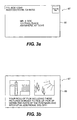
- the post card 87 is illustrated by Fig. 3a and 3b.
- the address of the customer is provided on the front side 90 of postcard 87 along with the return address of the photofinishing lab 30 in the event the postcard 87 is undeliverable. This provides information that the address is incorrect.
- Fig. 3b illustrates the backside 89 of postcard 87 of Fig. 3a.
- the backside 89 is provided with at least one image of the order that has been completed by the photofinishing lab 30. In the particular embodiment illustrated, two images are provided.
- the postcard 87 would include a notice that the order has been completed and is ready to be picked up within two days of the postmark or other time frame.
- the notification may also include an incentive to encourage the customer to pick up the order as soon possible.
- a discount may be provided. For example, a 20% discount may be offered if the order is picked up within a particular time period. This is very beneficial to the retailer 23 in that this minimizes the chance that the customers may leave the order at the retailer 23 for an extended period of time or even forget that the order has been returned. It is, of course, understood that any appropriate incentive may be provided as desired.
- a coupon with an expiration date may be provided directly on the postcard 87.
- Figs. 7a - 7d a series of illustrations of successive visual notification screen displays for display device 24 are shown which are repeatedly displayed as a part of the notification in a manner consistent to Figs. 2a-2d.
- the photofinishing order is comprised of images uploaded from an electronic camera 106 using the computer 12 of Fig. 1.
- electronic camera 106 uploads digital images that have been captured.
- the computer 12 would used to forward the images electronically, for example, over the Internet 20, to the photofinishing lab 30 and for placement of a photofinishing order.
- Appropriate order placement screens would be displayed to the customer for selection of the desired goods and/or services.
- the selected retailer 23 will get a customer into his establishment that would not have visited the establishment.
- the photofinishing lab 30 charges a fee to the receiving retailer 23, or receive some other type of compensation. The compensation may be based on the number of such orders that are sent to the retailer 23 based on the customer selection or based on maintaining the retailer 23 on the approved list of retailers 23 shown to the customer.
- the visual displays contain an order identification code 108 to assist the customer in retrieving their order at the retailer 23.
- the visual displays also contain a retailer branding area 110 available for the retailer 23 to insert a mark, logo, or advertisement.
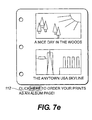
- a retail clerk With remote ordering, the opportunity for a retail clerk to create awareness or even up sell a customer to a new product is not available. It is therefore desirable to visually display a customer's photos within a new product offering such as the album page shown in Fig. 7e.
- the visual display of Fig. 7e may be the last successive visual notification screen display element of the succession of the visual notification displays of Figs. 7a-7d or it may be provided as a separate visual notification screen display.
- the customer may not have been aware of that particular product and the visual display also includes an active button 112 which causes computer 12 to display an album page order fulfillment page (not shown) for the purposes of immediately ordering an album page of the images within the photofinishing order. Similar up sells may be advertised on the postcard 87. For example, a notice that albuming of the images of the order can be obtained and if ordered within a week of receiving the images, a 30% discount will be provided to the customer. It is, of course, understood that various other promotions may be provided to the customer. It may be desirable to provide promotional material related to the goods or services being provided. For example if a customer requests an enlargement, an ad for custom framing may be provided in the notification.
- hard copy photographic prints are returned to the customer.
- the present invention is not so limited.
- a service fee (charge) could be associated with the downloading of the images directly to the customer.
- the images that are to be in displayed in the notification to the customer are of an appropriate quality.
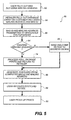
- Fig. 6 there is illustrated a decision process used in deciding which images are to be submitted to the customer for use in identifying the customer's order.
- the steps are performed by software in a computer program.
- the images that have scanned are reviewed as to which is the first printable frame. For example, but not by way of limitation, images are analyzed to determined if sufficient light is present in the image. It is to be understood the images can analyzed for any desired criteria. Then the next "n" incremental frame is reviewed to see if that image is printable at step 94.
- step 96 the image is marked. If it is not, at step 98, the next incremental "n" image is reviewed to determine if that image is printable. This process is continued until the next printable image is found and that image is marked at step 100.
- step 102 the selection process is stopped upon reaching a predetermined number of marked frames for display. In the particular embodiment illustrated in Fig 6., three frames are marked. Therefore, when three identifiable printable images are determined the animation e-mail and/or postcard 87 is produced at step 104.
- the image to be displayed may be selected by dividing the order into segments.
- the order may be divided into two or more segments, preferably at least three segments. If the image order is divided into three segments, they would be identified as the first third, the middle third, and the last third. One image from each segment would be selected.
- APS film which includes a magnetic layer upon which the camera may record information such as the date, place, event, etc. Such information relating to the picture is commonly referred to as metadata.
- One form of segmenting the order can be based on grouping pictures by proximate dates retrieved from the APS filmstrip. Segments can be determined when picture groups are separated by a day or several days.
- Additional information that has been obtained from the customer order may also be displayed with the notification. If metadata was read from the APS film, this could be displayed. This metadata could be displayed in the notification to assist the user in identifying the images in the order.
- the metadata may also obtained in another manner, for example, but not by way of limitation, the information may have been provided in the original order, such as writing on the order envelope.
Landscapes
- Business, Economics & Management (AREA)
- Accounting & Taxation (AREA)
- Finance (AREA)
- Engineering & Computer Science (AREA)
- Economics (AREA)
- Marketing (AREA)
- Physics & Mathematics (AREA)
- Theoretical Computer Science (AREA)
- Development Economics (AREA)
- General Physics & Mathematics (AREA)
- General Business, Economics & Management (AREA)
- Strategic Management (AREA)
- Operations Research (AREA)
- Tourism & Hospitality (AREA)
- Quality & Reliability (AREA)
- Entrepreneurship & Innovation (AREA)
- Human Resources & Organizations (AREA)
- Management, Administration, Business Operations System, And Electronic Commerce (AREA)
- Projection-Type Copiers In General (AREA)
Abstract
Description
- The present invention relates to a method and system for informing a customer that an order is ready. More particularly, it relates to a method and system for informing a customer that their photofinishing order is ready and providing additional information as to what is contained in the order.
- In a typical photofinishing operation, a customer drops off his/her film to be processed and printed at a site usually located in a photo specialty store or other retail location. In a traditional photofinishing operation, the customer must return at a later time to pick up the finished photographic prints. In recent years, on-line photofinishing services have emerged where a customer's film images, once processed, are electronically scanned and the resulting digital images stored. The customer may access these images remotely, for example from a home computer or kiosk, electronically mail the images to others, or order hard copy prints or other photographic goods or services all remotely.
- In order to retrieve his/her pictures from a traditional photofinishing service, the customer must know when the order is complete and has been delivered to the retail location where the order was placed. Traditional photofinishing services often provide a promised delivery date, but sometimes this date is not met, resulting in an annoying unnecessary first trip and a second trip for pickup. Other than placing a phone call to check on the order, there is no solution to avoid this potential problem. In the hurly-burly of life today, a customer may even forget that a photofinishing order was placed.
- In a more recent scenario, a consumer with a digital camera can upload pictures to a web site where they are printed and returned via a typical delivery service. This can cause a problem where weather in combination with roadside mailboxes leaves a delivered print order at risk. Additionally, the consumer must bear the cost of shipping the prints, which can be substantial, as photographic grade paper is much heavier per square inch than standard letter grade paper. To eliminate the concerns of security, weather, and shipping costs, a consumer may elect to pick up the prints at a convenient retailer thus raising the need for notification again. With regard to the retailer, customers who upload directly to an online photofinisher don't visit the retail store. Providing the customers with an option to pick up at the retailer of their choice offers value to the customer and provides the retailer with a customer they wouldn't normally attract for this transaction.
- Several solutions to the problem of notification of a completed order have been provided recently for the case of on-line photofinishing services. For example, US 5,799,219 by Moghadam, et. al, assigned to the Eastman Kodak Company, discloses a method of recording a customer's electronic address directly on a roll of film via a magnetic recording layer present on the film, for example such as that found in the Advanced Photographic System. Once the film has been processed and scanned, notification that the order is ready to be viewed can be automatically sent to the customer's electronic address. More recently, users of the internet service provider, "America On Line" ™ (AOL) may simply check the appropriate box when submitting film for photofinishing and later receive the notification "You've Got Pictures" when they log in to their AOL account. However, neither of these solutions provide any information about the content of the particular order which has been completed, only that an order is available for viewing. If multiple rolls had been submitted, a customer might wish to know which roll had which content without having to open up each order.
- In the co-pending, commonly-assigned US patent application Serial No. 09/213,517, entitled SYSTEM AND METHOD FOR COMMUNICATION OF DIGITAL IMAGES GENERATED FROM PHOTOGRAPHIC FILM, filed December 17, 1998, by Joseph A. Manico, C. S. Willand, Madhav Mehra, and H. E. Bussey, there is disclosed a method where a roll of film or a single use camera is provided to the customer with a unique Universal Resource Locator (URL) code associated with it. This code can be used by the customer at a later time to access pictures electronically on a computer via the internet or from a public kiosk. This solution does not address the problem of notification of the customer when the order is ready to be accessed. At present the customer can only re-try the address at a later time until the order is received.
- The foregoing and other objects, features and advantages of the invention will be apparent from the following more particular description of the preferred embodiment of the invention illustrated in the accompanying drawings.
- In accordance with one aspect of the present invention there is provided a method of informing a customer that their photofinishing order is ready to be picked up, the photofinishing order comprising at least one image, comprising the steps of:
- a. forwarding a notice to the customer having at least one image of the photofinishing order for viewing; and
- b. advising the customer that the photofinishing order is ready to be picked up.
-
- In accordance with another aspect of the present invention there is provided a method of informing a customer that their photofinishing order is ready to be picked up, the photofinishing order comprising at least one image, comprising the steps of:
- a. forwarding electronically to the customer at least one digital image of the at least one image to the customer; and
- b. displaying the at least one digital image on a display device and advising the customer that the photofinishing order is ready to be picked up.
-
- In accordance with yet another aspect of the present invention there is provided a method of informing a customer that their photofinishing order is ready to be picked up, the photofinishing order comprising a plurality of images, comprising the steps of:
- a. forwarding electronically to the customer at least two digital images of the plurality of images to the customer; and
- b. displaying the at least two digital images on a display device and advising the customer that the order is ready to be picked up.
-
- In accordance with still another aspect of the present invention there is provided a method for controlling inventory of a photofinishing service provider that fulfills a plurality of customer image orders, comprising the steps of:
- forwarding an e-mail notice by the photofinishing service provider to a customer advising the customer's image order is complete and has been forwarded to a retailer for pickup; and
- forwarding notice to the retailer that a notice has been sent to the customer and that the order has been forwarded to them for pick-up.
-
- In accordance with another aspect of the present invention there is provided a method for controlling inventory of a photofinishing service provider that fulfills a plurality of customer image orders, comprising the steps of:
- forwarding a notice by the photofinishing service provider to a customer advising the customer's image order is complete and has been forwarded to a retailer for pickup; and
- forwarding notice to the retailer that a notice has been sent to the customer and that the order has been forwarded to them for pick-up.
-
- In accordance with still yet another aspect of the present invention there is provided a method for permitting a customer to pick up at a retailer a remotely placed photofinishing order, comprising the steps of:
- a. a customer electronically placing a photofinishing order having at least one digital image to a remote photofinishing lab;
- b. the customer selecting a retailer to which the completed photofinishing order is to sent;
- c. the photofinishing lab forwarding the completed photofinishing order to the selected retailer; and
- e. forwarding a notification to the customer that the photofinishing order was shipped to the retailer.
-
- In the detailed description of the preferred embodiments of the invention presented below, reference is made to the accompanying drawings in which:
- Fig. 1 is a schematic diagram of a system used in the practice of the present invention;
- Figs. 2a-2d illustrate a sequence of images displayed on a personal computer display device of Fig. 1 in accordance with the present invention;
- Fig. 3a is a front elevational view of the front side of a post card made in accordance with the present invention;
- Fig. 3b is an elevational view of the back side of the post card of Fig. 3a;
- Fig. 4 is a flow chart of one form of the present invention;
- Fig. 5 is a flow chart of another form of the present invention;
- Fig. 6 is a flow chart of the decision process used in selecting of appropriate images to be forwarded to the customer; and
- Figs. 7a-7e illustrate a sequence of images displayed on the personal computer display device of Fig. 1 in accordance with an alternative embodiment of the present invention.
-
- Referring to Fig. 1, there is illustrated a schematic diagram of a
system 10 made in accordance with the present invention. Thesystem 10 includes apersonal computer 12 having adisplay device 14 and a keyboard 16 for entering data intocomputer 12. Thedisplay device 14 may be of any particular type. In the particular embodiment illustrated the display device is a CRT.Personal computer 12 is provided with appropriate communication hardware and software so as to enable thepersonal computer 12 to be connected to an internet service provider (ISP) 18. TheISP 18 is linked to theInternet 20. - The
system 10 may also include a kiosk or other retail computer 22 located aretailer 23. The kiosk 22 will include adisplay device 24 and data entry means 26. In the particular embodiment illustrated, data entry means 26 is a keyboard. It is, of course, understood that the data entry means may be of any appropriate type device, for example, but not by limitation may be a touch display screen or a mouse for controlling a selection icon on thedisplay device 24 or a magnetic card reader or bar-code reader. - The
system 10 further includes a photofinishing lab 30 (photofinishing provider) which provides various photofinishing goods and services. For example, thephotofinishing lab 30 typically will receive exposed unprocessed photographic film for processing and printing of photographic prints. Thephotofinishing lab 30 may also receive orders from anelectronic camera 106 for the producing of prints or the producing of various other image storage products such as Picture CD and Picture Disk, which are computer storage memory devices having a plurality of customer images. Thephotofinishing lab 30 may also produce a variety of other image related products such as photo albums, t-shirts and mugs having personalized images thereon. There is virtually no limit as to the number and different type of image goods or services that may be provided by thephotofinishing lab 30. Atypical photofinishing lab 30 will include various different sections. In the particular embodiment illustrated thephotofinishing lab 30 includes afilm processing section 32 wherein exposed undeveloped film is processed. Afilm scanning section 34 is provided for scanning the processed film so as to obtain a digital record of the images thereon. Thescanning section 34 includes a CCD or other scanning device for electronically capturing the images on the film. The images obtained from the film are forwarded to acomputer server 36 ormemory storage device 38. A computer 40 is also provided at thephotofinishing lab 30 for controlling and monitoring of the photofinishing processes being conducted. The digitally captured images may be also sent on to a printer andprocessing section 42 where the images may be digitally or optically printed and developed. The completed order is then packaged at anorder packaging station 44 and returned to theretailer 23 that forwarded the order. - In the particular embodiment illustrated, the exposed photographic film is provided to
photofinishing lab 30 in acassette 35 which is placed into anorder envelope 37 typically provided at aretailer 23. Theorder envelope 37 is appropriately filled out by the customer, submitted by theretailer 23, and forwarded by theretailer 23 to thephotofinishing lab 30 for obtaining the appropriate service. A tear offstrip 39 is taken off theorder envelope 37 by the customer as a receipt for the order. Thestrip 39 includes a copy of the envelope ID provided on the envelope that is forwarded to thephotofinishing lab 30 - The
system 10 further includes a networkphoto service provider 54 wherein digital images obtained from thescanner section 34 at aphotofinishing lab 30 may be stored. In a similar fashion, thenetwork photoservice provider 54 receives digital images obtained from anelectronic camera 106 viapersonal computer 12 connected toISP 18 and theInternet 20. It will be understood that an electronic camera can be a digital still camera or a digital video camera from which a single still image may be derived. - In the event that the order was created by a customer from the
electronic camera 106, the completed order is returned directly to the customer who additionally must bear the cost of shipping the order. Typically, the customer provides a valid credit card number for the transaction to which the total order cost is charged. During the ordering process, the customer may choose to have the completed order shipped to aretailer 23 in exchange for not paying a shipping fee. The selection of a convenient participating retailer is commonly found on web sites who additionally have retail locations or partners and the software engaged is commonly referred to as a "locator". The typical implementation of "locator" software involves the use of a customer's zip code as an index into a database of participatingretailers 23. The selection of the mostconvenient retailer 23 is communicated and stored in thememory 38 of thephotofinishing lab 30 and utilized by theorder packaging section 44 to route the order. In exchange for providing a customer to theretailer 23, thephotofinishing lab 30 charges an optional fee to theretailer 23 which may or may not equate to the shipping fee. In lieu of a fee, other forms of compensation or value may be exchanged. For example, but not limited to, an agreement that the retailer would use the photofinisher for its photofinishing needs. Billing theretailer 23 is done bycomputer 46 as a function of the number of customers who choose the retail delivery option in a given month and the contractually agreed upon fee. The resultant bill may be sent by conventional mail delivery or electronically throughserver 36 and theInternet 20 to theretailer 23. - Continuing with the description of Fig. 1, the network
photo service provider 54 includes aserver 56 which is used to communicate with theInternet 20. The networkphoto service provider 54 is in electronic communication with thephotofinishing lab 30. In the embodiment illustrated, the networkphoto service provider 54 is in communication withphotofinishing lab 30 throughInternet 20. This also allows communication between a customer at home with theretailer 23,photofinishing lab 30, and networkphoto service provider 54. Acomputer 58 is also provided at the networkphoto service provider 54.Computer 58 is in communication withserver 56 and includes animage database 60 which stores digital images and a customer database 61 for identifying the digital images stored in theimage database 60. In thesystem 10 illustrated, the networkphoto service provider 54 is shown separate from thephotofinishing lab 30. However, the networkphoto service provider 54 andphotofinishing lab 30 may be at a single operation at the same location. In such case,server 56 may be in direct communication withserver 36 or may even be the same server. - Referring to Fig. 4, there is illustrated a process flow diagram for the
system 10 of the present invention. Thefirst step 62 occurs when a customer fills out anorder envelope 37 for ordering a photofinishing service. The customer provides the appropriate information, for example, name, address and e-mail address. In a typical order, the customer would place the item to be processed within theorder envelope 37. In the embodiment illustrated this is a roll of photographic film contained in afilm cartridge 35. However, the present invention is not so limited. As previously discussed the customer may be ordering or placing within theorder envelope 37 other items that can be used for obtaining a variety of goods or services. Anoptional step 64 is provided where the retailer may enter appropriate information at retail computer 22 with respect to the order dropped off by the customer and send this information to the networkphoto service provider 54 via theinternet 20. This retailer may request that the retailer also receive notification when the order is completed. Theorder envelope 37 is forwarded on to thephotofinishing lab 30 atstep 66 wherein the order is processed. Thephotofinishing lab 30 enters the appropriate information regarding the order received into computer 40, for example, name, address, e-mail address, etc. Appropriate information is then sent from thephotofinishing lab 30 to the networkphoto service provider 54 such as the customer identification data. The networkphoto service provider 54 takes the information received from thephotofinishing lab 30 and stores the digital images in theimage database 60 and customer information in the customer database 61. The networkphoto service provider 54 atstep 68 determines if there is an existing e-mail address on file for that particular customer. If the answer is no, a test e-mail atstep 70 is sent to the customer by using the e-mail address that was provided on theorder envelope 37 and entered into thecomputers step 72, the e-mail address is verified. The photofinishing process continues and is independent of what the networkphoto service provider 54 does. If the e-mail address for the customer is not verified, special attention may be needed obtain and/or verify an e-mail address for that customer. If no e-mail address is or can be obtained the process proceeds as discussed in Fig. 5. As illustrated bystep 74, the customer order is processed. In the embodiment illustrated this would result in the film being processed byfilm processing section 32 and scanned at scanningsection 34 so as to obtain a digital record of the images. Atstep 76, an e-mail notification is generated, as discussed later herein, in preparation for forwarding to the customer. The e-mail notification will include at least one of the images that have been processed in the order. The e-mail notification atstep 78 is forwarded to the customer viaISP 18 andInternet 20 from the networkphoto service provider 54, and the customer receives the notification. The notification may also indicate a message that the order has been sent to theretailer 23 that the customer had dropped off the film with. A notification may also be sent to theretailer 23 to which the order was delivered. Alternatively, if the customer does not have a computer, the customer may use the retail computer 22 at theretailer 23 for submitting information and for receiving notification. Theretailer 23 may also send an e-mail notice to the customer stating that the order has been received and is ready to be picked up. Theretailer 23 may also send an e-mail confirmation notice to the networkphoto service provider 54 that the order has been received. - At
step 78, the customer receives the e-mail. The e-mail includes a visual display or an attachment which includes a visual display illustrating at least one of the images in the completed order. The notification may include other information that may have been provided by the customer or that may have been provided by the retailer,photofinishing lab 30 or networkphoto service provider 54. At step 81, the customer picks up the order at theretailer 23 where the order was originally dropped off. - Referring to Figs. 2a-2d there is illustrated one manner in which the visual display may be presented. In particular, Figs 2a- 2d show an animated visual presentation that may be provided. Figs 2a - 2d illustrate a series of successive visual screen displays for
display device 24 that are repeatedly displayed as a part of the notification. An animated GIF file is an example of a file format that can be attached to an e-mail notice and contain a sequence of visual screen displays that repeat at a programmed rate. The visual display is designed to assist the consumer to identify the particular order that has been completed. For example as illustrated in Fig. 2a, there could be shown an initial view of a film cartridge with a portion of the film being visually displayed. In Fig. 2b, there is illustrated a first image which has been processed that was contained on the roll of film contained within thefilm cartridge 35 in the photofinishing order. Fig. 2c illustrates a second image that would be displayed after Fig 2b. In addition as shown in Fig. 2d, there is illustrated the addition of an advertisement for thephotofinishing lab 30,retailer 23 or networkphoto service provider 54. Alternatively, the advertisement can be directed at any product or service which may or may not relate to the images. While in the particular embodiment described, only two images are shown in Fig. 2b, any number of images could be displayed to help the customer identify the order that has been completed. Additionally, if more than one order has been completed for the customer, the notification for the orders may be shown as a single e-mail message or as separate e-mail messages. If more than one order is displayed in a single notification, an equal number of cartridges may be illustrated each illustrating at least one image from that order. After Fig. 2d is illustrated the sequence of Figs. 2a -2d is repeated at a predetermined selected rate. Depending upon the rate at which the screens are changed, an animated/motion display will be provided. It is of course understood that various other visual screens may be illustrated for showing the images that have been processed. - Referring to Fig. 5 there is illustrated a modified
photofinishing system 80 made according to the present invention. Thesystem 80 of Fig. 5 is similar tosystem 10 of Fig. 4 like numerals indicating like steps and operations. Insystem 80 no e-mail address is available for the customer. There is only a mailing address associated with the customer. Thus, atstep 84 after thebag 37 is forwarded to thephotofinishing lab 30. Thephotofinishing lab 30 or networkphoto service provider 54 determines if there is an existing mailing address, if yes, a postcard can be sent via the address on theorder envelope 37 welcoming the customer to their product identification system. At thenext step 74, the order is completed. Once the order is completed, atstep 86, apostcard 87 using the address obtained from theorder envelope 37 is generated and forwarded to the customer. Thepost card 87 is illustrated by Fig. 3a and 3b. As illustrated by Fig 3a, the address of the customer is provided on thefront side 90 ofpostcard 87 along with the return address of thephotofinishing lab 30 in the event thepostcard 87 is undeliverable. This provides information that the address is incorrect. Fig. 3b illustrates thebackside 89 ofpostcard 87 of Fig. 3a. Thebackside 89 is provided with at least one image of the order that has been completed by thephotofinishing lab 30. In the particular embodiment illustrated, two images are provided. Thepostcard 87 would include a notice that the order has been completed and is ready to be picked up within two days of the postmark or other time frame. - In either of the
systems retailer 23 in that this minimizes the chance that the customers may leave the order at theretailer 23 for an extended period of time or even forget that the order has been returned. It is, of course, understood that any appropriate incentive may be provided as desired. In using thepostcard 87, a coupon with an expiration date may be provided directly on thepostcard 87. - Various modifications may be made in accordance with the present invention. Referring to Figs. 7a - 7d, a series of illustrations of successive visual notification screen displays for
display device 24 are shown which are repeatedly displayed as a part of the notification in a manner consistent to Figs. 2a-2d. In this particular embodiment, the photofinishing order is comprised of images uploaded from anelectronic camera 106 using thecomputer 12 of Fig. 1. In particular,electronic camera 106 uploads digital images that have been captured. Thecomputer 12 would used to forward the images electronically, for example, over theInternet 20, to thephotofinishing lab 30 and for placement of a photofinishing order. Appropriate order placement screens (not shown) would be displayed to the customer for selection of the desired goods and/or services. This would also include the ability for the customer to select from a list provided aretailer 23 to which the completed photofinishing order is to be sent for pickup. This could result in a saving to the customer by avoiding the cost of shipping the order directly to the customer by mail or other conveyance. This cost saving may be passed on the customer. The selectedretailer 23 will get a customer into his establishment that would not have visited the establishment. Thus, it would be appropriate that thephotofinishing lab 30 charges a fee to the receivingretailer 23, or receive some other type of compensation. The compensation may be based on the number of such orders that are sent to theretailer 23 based on the customer selection or based on maintaining theretailer 23 on the approved list ofretailers 23 shown to the customer. - Given that the photofinishing order is placed remotely, the visual displays contain an
order identification code 108 to assist the customer in retrieving their order at theretailer 23. The visual displays also contain aretailer branding area 110 available for theretailer 23 to insert a mark, logo, or advertisement. With remote ordering, the opportunity for a retail clerk to create awareness or even up sell a customer to a new product is not available. It is therefore desirable to visually display a customer's photos within a new product offering such as the album page shown in Fig. 7e. It will be understood that the visual display of Fig. 7e may be the last successive visual notification screen display element of the succession of the visual notification displays of Figs. 7a-7d or it may be provided as a separate visual notification screen display. The customer may not have been aware of that particular product and the visual display also includes anactive button 112 which causescomputer 12 to display an album page order fulfillment page (not shown) for the purposes of immediately ordering an album page of the images within the photofinishing order. Similar up sells may be advertised on thepostcard 87. For example, a notice that albuming of the images of the order can be obtained and if ordered within a week of receiving the images, a 30% discount will be provided to the customer. It is, of course, understood that various other promotions may be provided to the customer. It may be desirable to provide promotional material related to the goods or services being provided. For example if a customer requests an enlargement, an ad for custom framing may be provided in the notification. - In the embodiments discussed above hard copy photographic prints are returned to the customer. The present invention is not so limited. In a modified form, there may an option for the consumer in the notification to receive a download of high resolution images to the customer's
computer 12 so that the customer may print images at his or her home. A service fee (charge) could be associated with the downloading of the images directly to the customer. - An important part of the present invention is that the images that are to be in displayed in the notification to the customer are of an appropriate quality. Referring to Fig. 6, there is illustrated a decision process used in deciding which images are to be submitted to the customer for use in identifying the customer's order. In the preferred embodiment, the steps are performed by software in a computer program. Beginning at
step 92, the images that have scanned are reviewed as to which is the first printable frame. For example, but not by way of limitation, images are analyzed to determined if sufficient light is present in the image. It is to be understood the images can analyzed for any desired criteria. Then the next "n" incremental frame is reviewed to see if that image is printable atstep 94. By incrementing by "n" frames, for example five or six, is quite likely that selected images may be of a different individual, event, location, etc. If the next incremental image is printable, atstep 96, the image is marked. If it is not, atstep 98, the next incremental "n" image is reviewed to determine if that image is printable. This process is continued until the next printable image is found and that image is marked atstep 100. Atstep 102, the selection process is stopped upon reaching a predetermined number of marked frames for display. In the particular embodiment illustrated in Fig 6., three frames are marked. Therefore, when three identifiable printable images are determined the animation e-mail and/orpostcard 87 is produced atstep 104. - Alternatively, the image to be displayed may be selected by dividing the order into segments. For example, the order may be divided into two or more segments, preferably at least three segments. If the image order is divided into three segments, they would be identified as the first third, the middle third, and the last third. One image from each segment would be selected. Currently there is available in the marketplace APS film which includes a magnetic layer upon which the camera may record information such as the date, place, event, etc. Such information relating to the picture is commonly referred to as metadata. One form of segmenting the order can be based on grouping pictures by proximate dates retrieved from the APS filmstrip. Segments can be determined when picture groups are separated by a day or several days.
- Additional information that has been obtained from the customer order may also be displayed with the notification. If metadata was read from the APS film, this could be displayed. This metadata could be displayed in the notification to assist the user in identifying the images in the order. The metadata may also obtained in another manner, for example, but not by way of limitation, the information may have been provided in the original order, such as writing on the order envelope.
- In determining that an image is suitable for printing or display, various appropriate algorithms may be used. For example, US patent 4,239,384 by H. Treiber, published 12/16,1980 and herein incorporated by reference, discloses a method useful in a scanning printer to automatically detect and reject from printing frames unprintable by virtue of under- or over-exposure. Also, commonly assigned US patent 4,651,199 by J. Alkofer discloses a method to detect and reject from printing blank frames, either of the "no exposure" or "maximum exposure" type. Both of these patents are hereby incorporated by reference. Additionally, appropriate algorithms may be provided for adjusting the image so that the images forwarded to the customer are illustrated in their best possible form.
Claims (10)
- A method of informing a customer that their photofinishing order is ready to be picked up, said photofinishing order comprising at least one image, comprising the steps of:forwarding a notice to said customer having at least one image of said photofinishing order for viewing; andadvising said customer that said photofinishing order is ready to be picked up.
- A method of informing a customer that their photofinishing order is ready to be picked up, said photofinishing order comprising at least one image, comprising the steps of:forwarding electronically to said customer at least one digital image of said at least one image to said customer; anddisplaying said at least one digital image on a display device and advising said customer that said photofinishing order is ready to be picked up.
- A method of informing a customer that their photofinishing order is ready to be picked up, said photofinishing order comprising a plurality of images, comprising the steps of:forwarding electronically to said customer at least two digital images of said plurality of images to said customer; anddisplaying said at least two digital images on a display device and advising said customer that the order is ready to be picked up.
- A method of according to claim 3 wherein said at least two digital images are sequentially displayed to create a visual display of motion.
- A method according to claims 1 or 3 wherein said at least one digital image is selected from said plurality of images in accordance with a predetermined criteria.
- A method according to claim 5 wherein said predetermined criteria comprises reviewing said plurality of images and dividing them into segments and selecting at least one image from at least two different segments.
- A method according to claim 5 wherein said predetermined criteria comprises selecting at least two digital images from at least two different sections of said photofinishing order.
- A method for controlling inventory of a photofinishing service provider that fulfills a plurality of customer image orders, comprising the steps of:forwarding an e-mail notice by said photofinishing service provider to a customer advising said customer's image order is complete and has been forwarded to a retailer for pickup; andforwarding notice to said retailer that a notice has been sent to the customer and that the order has been forwarded to them for pick-up.
- A method for controlling inventory of a photofinishing service provider that fulfills a plurality of customer image orders, comprising the steps of:forwarding a notice by said photofinishing service provider to a customer advising said customer's image order is complete and has been forwarded to a retailer for pickup; andforwarding notice to said retailer that a notice has been sent to the customer and that the order has been forwarded to them for pick-up.
- A method for permitting a customer to pick up at a retailer a remotely placed photofinishing order, comprising the steps of:a customer electronically placing a photofinishing order having at least one digital image to a remote photofinishing lab;said customer selecting a retailer to which the completed photofinishing order is to sent;said photofinishing lab forwarding said completed photofinishing order to said selected retailer; andforwarding a notification to said customer that said photofinishing order was shipped to said retailer.
Applications Claiming Priority (2)
| Application Number | Priority Date | Filing Date | Title |
|---|---|---|---|
| US498535 | 1990-03-26 | ||
| US09/498,535 US6587839B1 (en) | 2000-02-04 | 2000-02-04 | Method and system for notifying a consumer that the photofinishing order is ready and for controlling inventory of photofinishing orders in a business |
Publications (2)
| Publication Number | Publication Date |
|---|---|
| EP1122670A2 true EP1122670A2 (en) | 2001-08-08 |
| EP1122670A3 EP1122670A3 (en) | 2001-08-22 |
Family
ID=23981470
Family Applications (1)
| Application Number | Title | Priority Date | Filing Date |
|---|---|---|---|
| EP20010200221 Ceased EP1122670A3 (en) | 2000-02-04 | 2001-01-22 | Method and system for notifying a consumer that the photofinishing order is ready and for controlling inventory of photofinishing orders in a business |
Country Status (2)
| Country | Link |
|---|---|
| US (1) | US6587839B1 (en) |
| EP (1) | EP1122670A3 (en) |
Families Citing this family (29)
| Publication number | Priority date | Publication date | Assignee | Title |
|---|---|---|---|---|
| EP1150229B1 (en) * | 2000-03-21 | 2006-03-01 | Brother Kogyo Kabushiki Kaisha | System and method for providing output |
| US20020015179A1 (en) * | 2000-03-31 | 2002-02-07 | Konica Corporation | Network print service system |
| JP2002118814A (en) * | 2000-06-28 | 2002-04-19 | Fuji Photo Film Co Ltd | Delivery medium creating device, program, image pickup device and delivery medium creating method |
| US6701351B1 (en) * | 2000-07-27 | 2004-03-02 | Hewlett-Packard Development Company, L.P. | Method and system for remotely uploading digital memory |
| EP1182503A1 (en) * | 2000-08-17 | 2002-02-27 | Eastman Kodak Company | A kit for use in organizing images |
| JP2002123743A (en) * | 2000-10-13 | 2002-04-26 | Canon Inc | Information processing system, information processing apparatus, information processing method, and recording medium |
| US6760128B2 (en) * | 2000-12-06 | 2004-07-06 | Eastman Kodak Company | Providing a payment schedule for utilizing stored images using a designated date |
| US7155070B2 (en) * | 2001-03-29 | 2006-12-26 | Fotomedia Technologies, Llc | Visual cell phone notification of processed film images |
| US20030171996A1 (en) * | 2002-03-07 | 2003-09-11 | Andy Chen | Method for delivery of products purchased online |
| US7263562B2 (en) * | 2002-03-21 | 2007-08-28 | Microsoft Corporation | Method and system for describing uploaded files statement regarding federally-sponsored research or development |
| EP1359517A1 (en) * | 2002-04-30 | 2003-11-05 | Agfa-Gevaert AG | System and Method for providing image information over a network |
| US20030225817A1 (en) * | 2002-06-04 | 2003-12-04 | Prashanth Ishwar | Concurrent execution of kernel work and non-kernel work in operating systems with single-threaded kernel |
| US7177484B2 (en) * | 2003-02-26 | 2007-02-13 | Eastman Kodak Company | Method for using customer images in a promotional product |
| US20050197959A1 (en) * | 2004-03-05 | 2005-09-08 | Sanchez Cayetano Iii | A method for validating and ordering services and products online |
| US8121338B2 (en) * | 2004-07-07 | 2012-02-21 | Directsmile Gmbh | Process for generating images with realistic text insertion |
| KR100601696B1 (en) * | 2004-07-27 | 2006-07-14 | 삼성전자주식회사 | Direct image processing method and apparatus |
| US7392366B2 (en) * | 2004-09-17 | 2008-06-24 | International Business Machines Corp. | Adaptive fetch gating in multithreaded processors, fetch control and method of controlling fetches |
| US8842197B2 (en) | 2005-11-30 | 2014-09-23 | Scenera Mobile Technologies, Llc | Automatic generation of metadata for a digital image based on ambient conditions |
| US7714908B2 (en) * | 2006-05-26 | 2010-05-11 | Lifetouch Inc. | Identifying and tracking digital images with customized metadata |
| US8934717B2 (en) * | 2007-06-05 | 2015-01-13 | Intellectual Ventures Fund 83 Llc | Automatic story creation using semantic classifiers for digital assets and associated metadata |
| US20090006170A1 (en) * | 2007-06-26 | 2009-01-01 | Wachovia Corporation | Production center system |
| US20090144104A1 (en) * | 2007-11-30 | 2009-06-04 | Scott Kevin Johnson | System and Method of Selectively Notifying Consumers of Product Recalls |
| JP2010224444A (en) * | 2009-03-25 | 2010-10-07 | Noritsu Koki Co Ltd | Image print order receiving system and image print order receiving method |
| US9143744B2 (en) * | 2012-05-04 | 2015-09-22 | Colorvision International, Inc. | Park guest-activated image capture system for theme parks and associated methods |
| US9403394B2 (en) | 2013-07-25 | 2016-08-02 | The Hillman Group, Inc. | Modular sublimation transfer printing apparatus |
| US9731534B2 (en) | 2013-07-25 | 2017-08-15 | The Hillman Group, Inc. | Automated simultaneous multiple article sublimation printing process and apparatus |
| US9984525B2 (en) | 2014-04-24 | 2018-05-29 | The Hillman Group, Inc. | Automated vending inventory management apparatuses and method |
| US9962979B2 (en) | 2015-08-05 | 2018-05-08 | The Hillman Group, Inc. | Semi-automated sublimation printing apparatus |
| US20250007964A1 (en) * | 2023-06-30 | 2025-01-02 | Ncr Voyix Corporation | Method for controlling a remote service |
Citations (2)
| Publication number | Priority date | Publication date | Assignee | Title |
|---|---|---|---|---|
| EP0856972A2 (en) * | 1996-11-18 | 1998-08-05 | Fuji Photo Film Co., Ltd. | Network photograph service system |
| US5799219A (en) * | 1996-02-20 | 1998-08-25 | Eastman Kodak Company | System and method for remote image communication and processing using data recorded on photographic film |
Family Cites Families (8)
| Publication number | Priority date | Publication date | Assignee | Title |
|---|---|---|---|---|
| DE2753632C2 (en) | 1977-12-01 | 1985-08-29 | Agfa-Gevaert Ag, 5090 Leverkusen | Method and device for the selection of photographic originals which are not worth copying |
| US4651199A (en) | 1985-05-06 | 1987-03-17 | Eastman Kodak Company | Method for detecting blank frames in a photographic color printer |
| JPH1039392A (en) * | 1996-07-25 | 1998-02-13 | Nikon Corp | camera |
| US5760917A (en) * | 1996-09-16 | 1998-06-02 | Eastman Kodak Company | Image distribution method and system |
| US6017157A (en) * | 1996-12-24 | 2000-01-25 | Picturevision, Inc. | Method of processing digital images and distributing visual prints produced from the digital images |
| JPH10214284A (en) * | 1997-01-30 | 1998-08-11 | Victor Co Of Japan Ltd | On-line shopping system and server for the same |
| US6069712A (en) * | 1997-01-31 | 2000-05-30 | Eastman Kodak Company | Image handling method and system incorporating coded instructions |
| US6203217B1 (en) * | 2000-06-27 | 2001-03-20 | Ncr Corporation | System and method for notifying itinerants of film development |
-
2000
- 2000-02-04 US US09/498,535 patent/US6587839B1/en not_active Expired - Lifetime
-
2001
- 2001-01-22 EP EP20010200221 patent/EP1122670A3/en not_active Ceased
Patent Citations (2)
| Publication number | Priority date | Publication date | Assignee | Title |
|---|---|---|---|---|
| US5799219A (en) * | 1996-02-20 | 1998-08-25 | Eastman Kodak Company | System and method for remote image communication and processing using data recorded on photographic film |
| EP0856972A2 (en) * | 1996-11-18 | 1998-08-05 | Fuji Photo Film Co., Ltd. | Network photograph service system |
Also Published As
| Publication number | Publication date |
|---|---|
| EP1122670A3 (en) | 2001-08-22 |
| US6587839B1 (en) | 2003-07-01 |
Similar Documents
| Publication | Publication Date | Title |
|---|---|---|
| US6587839B1 (en) | Method and system for notifying a consumer that the photofinishing order is ready and for controlling inventory of photofinishing orders in a business | |
| US6992787B2 (en) | Method of purchasing image bearing products | |
| US9497333B2 (en) | System and method for providing customized product configuration and service plan options for a camera device | |
| US8219410B2 (en) | Method of permitting group access to electronically stored images and transaction card used in the method | |
| US7111317B1 (en) | Method for providing image goods and/or services to a customer | |
| US7158945B1 (en) | System and method for providing image products and/or services | |
| US8321795B2 (en) | Method of offering a promotional product | |
| US20070145734A1 (en) | Manufacturing system and process for personalized greeting cards | |
| EP1217823A2 (en) | Method for image retrieval | |
| US7895086B2 (en) | Method system and software for ordering goods and/or services over a communication network | |
| US20080117459A1 (en) | Method, system, and recording medium for ordering prints | |
| US7016868B1 (en) | Method and system for organizing images | |
| US6367991B1 (en) | Processing of developing film and sending reprints | |
| US20020015179A1 (en) | Network print service system | |
| US7019862B1 (en) | Kit for organizing a plurality of images | |
| US20020176107A1 (en) | Method of dispensing image bearing products | |
| US20050216283A1 (en) | Method for automatically associating an image with related content on an image product | |
| EP1324270A2 (en) | Image processing |
Legal Events
| Date | Code | Title | Description |
|---|---|---|---|
| PUAI | Public reference made under article 153(3) epc to a published international application that has entered the european phase |
Free format text: ORIGINAL CODE: 0009012 |
|
| PUAL | Search report despatched |
Free format text: ORIGINAL CODE: 0009013 |
|
| AK | Designated contracting states |
Kind code of ref document: A2 Designated state(s): AT BE CH CY DE DK ES FI FR GB GR IE IT LI LU MC NL PT SE TR |
|
| AX | Request for extension of the european patent |
Free format text: AL;LT;LV;MK;RO;SI |
|
| AK | Designated contracting states |
Kind code of ref document: A3 Designated state(s): AT BE CH CY DE DK ES FI FR GB GR IE IT LI LU MC NL PT SE TR |
|
| AX | Request for extension of the european patent |
Free format text: AL;LT;LV;MK;RO;SI |
|
| 17P | Request for examination filed |
Effective date: 20020204 |
|
| AKX | Designation fees paid |
Free format text: CH DE FR GB LI |
|
| 17Q | First examination report despatched |
Effective date: 20090225 |
|
| RAP1 | Party data changed (applicant data changed or rights of an application transferred) |
Owner name: INTELLECTUAL VENTURES FUND 83 LLC |
|
| STAA | Information on the status of an ep patent application or granted ep patent |
Free format text: STATUS: THE APPLICATION HAS BEEN REFUSED |
|
| 18R | Application refused |
Effective date: 20160101 |