EP1122635A2 - Printing apparatus - Google Patents
Printing apparatus Download PDFInfo
- Publication number
- EP1122635A2 EP1122635A2 EP01102339A EP01102339A EP1122635A2 EP 1122635 A2 EP1122635 A2 EP 1122635A2 EP 01102339 A EP01102339 A EP 01102339A EP 01102339 A EP01102339 A EP 01102339A EP 1122635 A2 EP1122635 A2 EP 1122635A2
- Authority
- EP
- European Patent Office
- Prior art keywords
- confidential
- print jobs
- print job
- confidential print
- Prior art date
- Legal status (The legal status is an assumption and is not a legal conclusion. Google has not performed a legal analysis and makes no representation as to the accuracy of the status listed.)
- Withdrawn
Links
Images


Classifications
-
- G—PHYSICS
- G06—COMPUTING OR CALCULATING; COUNTING
- G06F—ELECTRIC DIGITAL DATA PROCESSING
- G06F3/00—Input arrangements for transferring data to be processed into a form capable of being handled by the computer; Output arrangements for transferring data from processing unit to output unit, e.g. interface arrangements
- G06F3/12—Digital output to print unit, e.g. line printer, chain printer
- G06F3/1201—Dedicated interfaces to print systems
- G06F3/1202—Dedicated interfaces to print systems specifically adapted to achieve a particular effect
- G06F3/1222—Increasing security of the print job
-
- G—PHYSICS
- G06—COMPUTING OR CALCULATING; COUNTING
- G06F—ELECTRIC DIGITAL DATA PROCESSING
- G06F3/00—Input arrangements for transferring data to be processed into a form capable of being handled by the computer; Output arrangements for transferring data from processing unit to output unit, e.g. interface arrangements
- G06F3/12—Digital output to print unit, e.g. line printer, chain printer
- G06F3/1201—Dedicated interfaces to print systems
- G06F3/1223—Dedicated interfaces to print systems specifically adapted to use a particular technique
- G06F3/1237—Print job management
- G06F3/1238—Secure printing, e.g. user identification, user rights for device usage, unallowed content, blanking portions or fields of a page, releasing held jobs
-
- G—PHYSICS
- G06—COMPUTING OR CALCULATING; COUNTING
- G06F—ELECTRIC DIGITAL DATA PROCESSING
- G06F3/00—Input arrangements for transferring data to be processed into a form capable of being handled by the computer; Output arrangements for transferring data from processing unit to output unit, e.g. interface arrangements
- G06F3/12—Digital output to print unit, e.g. line printer, chain printer
- G06F3/1201—Dedicated interfaces to print systems
- G06F3/1223—Dedicated interfaces to print systems specifically adapted to use a particular technique
- G06F3/1237—Print job management
- G06F3/126—Job scheduling, e.g. queuing, determine appropriate device
- G06F3/1263—Job scheduling, e.g. queuing, determine appropriate device based on job priority, e.g. re-arranging the order of jobs, e.g. the printing sequence
-
- G—PHYSICS
- G06—COMPUTING OR CALCULATING; COUNTING
- G06F—ELECTRIC DIGITAL DATA PROCESSING
- G06F3/00—Input arrangements for transferring data to be processed into a form capable of being handled by the computer; Output arrangements for transferring data from processing unit to output unit, e.g. interface arrangements
- G06F3/12—Digital output to print unit, e.g. line printer, chain printer
- G06F3/1201—Dedicated interfaces to print systems
- G06F3/1278—Dedicated interfaces to print systems specifically adapted to adopt a particular infrastructure
- G06F3/1285—Remote printer device, e.g. being remote from client or server
-
- G—PHYSICS
- G06—COMPUTING OR CALCULATING; COUNTING
- G06F—ELECTRIC DIGITAL DATA PROCESSING
- G06F3/00—Input arrangements for transferring data to be processed into a form capable of being handled by the computer; Output arrangements for transferring data from processing unit to output unit, e.g. interface arrangements
- G06F3/12—Digital output to print unit, e.g. line printer, chain printer
- G06F3/1201—Dedicated interfaces to print systems
- G06F3/1223—Dedicated interfaces to print systems specifically adapted to use a particular technique
- G06F3/1237—Print job management
- G06F3/126—Job scheduling, e.g. queuing, determine appropriate device
Definitions
- the present invention relates to a printing apparatus to be shared between a plurality of users, and more particularly to a printing apparatus having a confidential print function of holding print jobs designated in advance until password entry.
- Printing apparatuses shared between a plurality of users produce printed outputs as required. This involves a problem that printed matters to be kept secret can possibly be exposed to other users.
- Japanese Patent Laid-Open Publication No.Hei 8-244315 discloses a technology as to an image forming apparatus and method that comprise a print function in which a user sends password-protected print data to the printing apparatus in advance, and the printing apparatus holds the print data so that the printing is not started until the user who has requested the printing actually operates the printing apparatus to enter the password.
- this function will be referred to as confidential print function, since the printed output cannot be obtained unless the user by himself/herself enters the password.
- Japanese Patent Laid-Open Publication No.Hei 11-91210 discloses, against the above-mentioned problem, a technology as to a printer system which suspends normal printing so as to print secret data preferentially.
- Japanese Patent Laid-Open Publication No.Hei 5-189174 discloses a technology as to a method of controlling a plurality of print queues in which a plurality of print queues allocated to individual print modes produce printed outputs in accordance with the priority attributes and the order of input.
- the printer system disclosed in Japanese Patent Laid-Open Publication No.Hei 11-91210 described above gives higher priority to the secret data print, thereby reducing the users' waiting time in printing secret data. Nevertheless, if a plurality of users successively instruct secret data print from their PCs, a plurality of pieces of secret data are output in succession. This requires the prevention of a mix-up between the printed outputs. Moreover, the plurality of users come to the printer location to fetch their printed outputs, increasing the possibility of exposure of the printed outputs to other users.
- the method of controlling a plurality of print queues disclosed in Japanese Patent Laid-Open Publication No.Hei 5-189174 is to execute print jobs in order of acceptance of the print requests. Therefore, entering a plurality of pieces of privilege attribute data can possibly preclude outputs in the user-expected order.
- the present invention has been achieved in view of the foregoing problems. It is thus an object of the present invention to provide a printing apparatus in which even if passwords for a plurality of confidential prints are entered successively, the confidential prints can be executed in order of password entry and at appropriate intervals so that the confidential prints, whether congested or not, can be kept secret from each other.
- the present invention provides the following configurations.
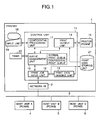
- Fig. 1 is a block diagram showing the configuration of a printing apparatus 1 according to the embodiment of the present invention.
- a printer 1, or the printing apparatus comprises a control unit 11 for controlling the respective components of the apparatus, a display 18, an input unit 19, a timer 20, a network interface (I/F) 2, a print data storing unit 21, and a printer engine 15.
- a control unit 11 for controlling the respective components of the apparatus, a display 18, an input unit 19, a timer 20, a network interface (I/F) 2, a print data storing unit 21, and a printer engine 15.
- the control unit 11 consists of a print job input unit 12, a print data dividing unit 13, a queue management unit 16, a print output unit 14, and a confidential processing unit 17.
- the display 18 is display means for displaying the print data stored in the print data storing unit 21. This display 18 is connected to the confidential processing unit 17.
- the input unit 19 is input means for inputting passwords and the like to execute confidential print jobs.
- the input unit 19 is connected to the confidential processing unit 17.
- the timer 20 is time keeping means which is connected to the queue management unit 16 and keeps time so that a plurality of confidential prints are executed at intervals greater than or equal to a predetermined amount of time.
- the network interface 2 connects the printer 1 to a network 3.
- the printer 1 is connected through the network 3 to computers, or a plurality of host units 4, 5, 6, and so on.
- the network interface 2 receives print jobs transmitted from the output devices of the host units 4-6 and the like, and outputs the same to the print job input unit 12.
- print data and print requests are input to transmit the print jobs from the output devices.
- the print data storing unit 21 stores print data that is sent from the print job input unit 12 and the print data dividing unit 13. The print data stored is output to the print output unit 14.
- the printer engine 15 prints the print data output from the print output unit 14 onto recording media such as sheets of paper.
- the print job input unit 12 in the control unit 11 outputs the print jobs received through the network interface 2 to the print data storing unit 21. Besides, the print job input unit 12 outputs the print requests for the print jobs to the queue management unit 16.
- mass print data is output from the print job input unit 12 to the print data dividing unit 13 so that the print data is divided by the print data dividing unit 13 before output to the print data storing unit 21.
- the queue management unit 16 stores the print requests, which are input along with the print data, into its queues in order of acceptance. Note that the queues consist of a confidential print queue and a normal print queue.
- the print output unit 14 reads print data from the print data storing unit 21 in accordance with instructions from the queue management unit 16, apply decompression, correction, and other processing to the data, and outputs the resultant to the printer engine 15.
- the confidential processing unit 17 outputs, to the queue management unit 16, the information on passwords entered from the input unit 19. In addition, upon password entry for a confidential print job, the confidential processing unit 17 displays on the display 18 a list of print requests for confidential print jobs. Moreover, the confidential processing unit 17 checks the password entered from the input unit 19 against the password that is attached to the print data.
- print data for print jobs received by the network interface 2 is stored into the print data storing unit 21 through the print job input unit 12 and the print data dividing unit 13 in the control unit 11.
- print data read out from the print data storing unit 21 is subjected to data decompression, correction, and other processing in the print output unit 14 before printed by the printer engine 15.
- the print requests for the print jobs, input from the network interface 2 along with the print data, are input to the queue management unit 16 through the print job input unit 12. Then, normal print job requests and confidential print job requests are managed within the respective queues in order of receipt.
- the confidential processing unit 17 displays a list of confidential print jobs onto the display 18.
- the confidential processing unit 17 also checks the password entered by the user from the input unit 19, which comprises a keyboard and the like, against the password that is attached to the print data.
- the queue management unit 16 stores, at the point of receipt, the print requests for the confidential prints with a print hold status. Valid password entries by users release the hold status so that printing is performed as detailed below.
- Fig. 2 is a diagram explaining the operation of the queue management unit 16.
- the queue management unit 16 has two queues, i.e., a queue for confidential print jobs and a queue for normal print jobs. Pointers are provided both at the end of the confidential print jobs and at the end of the normal print jobs. Then, newborn print jobs are stored into the ends of the corresponding queues.
- the letter "H" on a confidential print job indicates a hold status. The printing priority is given in order of release of the hold status through valid password entry.
- Fig. 2(1) shows a case where a normal print job a is in process, and split normal print jobs b1, b2 and a normal print c are awaiting with priority in this order.
- all confidential print jobs A, B, and C are in a hold status, the print jobs being queued in this order.
- control unit 11 When a user enters a valid password for the confidential print job A from the input unit 19 of the printer 1, the control unit 11, as shown in Fig. 2(2), releases the hold status of the confidential print job A.
- the control unit 11 also refers to the end pointer on the confidential print jobs and moves the confidential print job A to the end of the confidential print jobs.
- the normal print job a is still in process.
- the control unit 11 As shown in Fig. 2(3), refers to the end pointer on the confidential print jobs and stores the confidential print job D into behind the end of the confidential print jobs, or the confidential print job A.
- the normal print job a is still in process.
- control unit 11 When a user enters a valid password for the confidential print job C from the input unit 19, the control unit 11, as shown in Fig. 2(4), releases the hold status of the confidential print job C.
- the control unit 11 also refers to the end pointer on the confidential print jobs and moves the confidential print job C to the end of the confidential print jobs.
- the control unit 11 skips the held confidential print jobs B and D to process the confidential print job A which is the first released of the hold status among the unheld confidential print jobs.
- the control unit 11 exercises such processing that no confidential print job follows immediately, though the job of next priority is the confidential print job C. More specifically, the control unit 11, as shown in Fig. 2(6), processes the normal print job b1 which is the first received among the awaiting normal print jobs b1, b2, and c. The reason for this is to provide an interval between confidential prints so that the confidential prints are kept secret from each other even in the cases of congestion.
- print jobs with mass print data are divided by the print data dividing unit 13 so that the span of time between confidential print jobs may not be long.
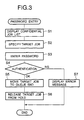
- Fig. 3 is a flowchart showing a password entry process.
- Fig. 4 is a flowchart showing a job selecting process.
- the control unit 11 of the printer 1 displays a list of confidential print jobs on the display 18 (s1).
- a user specifies a confidential print job to enter a password for (s2).
- the user enters the password for the confidential print job specified (s3).
- the control unit 11 checks the password attached to the print data of the target job against the password entered (s4). If the entered password is invalid, the control unit 11 displays an error message such as "Invalid Password" on the display 18 (s7), and terminates the processing.
- control unit 11 moves the target job to the end of the confidential print jobs (s5). Then, the control unit 11 releases the hold status of that confidential print job (s6), and terminates the processing.
- the control unit 11 waits until a print job in process is completed (s11). After the completion of the print job, the control unit 11 determines whether the print job having been processed is a confidential print job (s12). If the print job having been processed is a confidential print job, the control unit 11 resets the timer 20 so that the timer 20 restarts keeping time (s13).
- step s14 the execution of the step s14 follows.
- the control unit 11 searches for a confidential print job processable (s14). Then, whether there is any confidential print job processable is determined (s15). If there is a confidential print job processable, the control unit 11 confirms whether a predetermined time has elapsed since the processing of the previous confidential print job (s16). If the predetermined time has elapsed, the control unit 11 selects the confidential print job in the queue top (s17), start printing (s18), and terminates the job selecting process.
- a normal print job printable is searched for (s24). Then, a determination is made as to whether there is any normal print job processable (s25).
- control unit 11 selects the normal print job in the queue top (s23), start printing (s18), and terminates the job selecting process.
- a normal print job printable is searched for (s21). Then, a determination is made as to whether there is any normal print job processable (s22).
- control unit 11 selects the normal print job in the queue top (s23), start printing (s18), and terminates the job selecting process.
- control unit 11 returns to the step s16 to repeat the loop consisting of the steps s16, s21, and s22 until the predetermined time has elapsed.
- Such execution of confidential print jobs in order of password entry as described above can prevent users from getting the printed outputs mixed up. It can also eliminate such a troublesome procedure for preventing a printed outputs mix-up that a user withholds password entry until the previous user having entered a password first takes his/her printout away.
- the confidential print jobs are not output in succession, but a following confidential print job is executed at least after the elapse of the predetermined time. This makes it possible to prevent confidential printed outputs from accidental exposure to other users.
- confidential print jobs are processed in preference to normal print jobs. This allows a reduction in the waiting time of the users who come to the printer location to fetch the printed outputs.
- the queue management unit 16 sets a pointer at the position of the last confidential print job in its queue. Therefore, in this simple configuration, password-entered confidential print jobs can be moved to behind the last confidential print job without searching the queue contents upon each queue rearrangement.
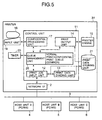
- Fig. 5 is a block diagram showing the configuration of a printing apparatus according to the another embodiment of the present invention.
- the printer 31 shown in Fig. 5 is provided with a queue management unit 26 instead of the queue management unit 16 in the control unit 11 of the printer 1 shown in Fig. 1.
- This queue management unit 26 stores confidential print jobs and normal print jobs into a single queue, with the confidential print jobs at the queue top side and the normal print jobs behind the same.
- Pointers are provided both at the end of confidential print jobs and at the end of normal print jobs.
- the pointer at the end of confidential print jobs indicates the border between the confidential print jobs and the normal print jobs.
- the components other than the queue management unit 26 have the same configurations as those of the printer 1 shown in Fig. 1. Therefore, description will be omitted of the individual components of the printer 31.
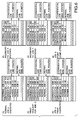
- Fig. 6 is a diagram explaining the operation of the queue management unit 26.
- the queue management unit 26 has pointers set at the ends of the confidential print jobs and the normal print jobs. Newborn print jobs are added into the ends of the corresponding queues. Then, confidential and normal print jobs released of the hold status through valid password entry become printable in order of arrangement.
- Fig. 6(1) shows a case where a normal print job a is being printed, and confidential print jobs A, B, and C awaiting are in a hold status. Besides, split normal print jobs b1, b2 and a normal print job c have priority in this order.
- control unit 11 When a user enters a valid password for the confidential print job A from the input unit 19, the control unit 11, as shown in Fig. 6(2), releases the hold status of the confidential print job A.
- the control unit 11 also refers to the end pointer on the confidential print jobs and moves the confidential print job A to the end of the confidential print jobs.
- control unit 11 On receiving a new confidential print job D, the control unit 11, as shown in Fig. 6(3), refers to the end pointer on the confidential print jobs and stores the confidential print job D into behind the end of the confidential print jobs.
- the control unit 11 When a user enters a valid password for the confidential print job C from the input unit 19, the control unit 11, as shown in Fig. 6(4), releases the hold status of the confidential print job C and moves the job to the end of the confidential print jobs.
- the control unit 11 processes the confidential print job A which is the first released of the hold status among the unheld confidential print jobs.
- control unit 11 exercises such processing that no confidential print job follows immediately, though the job of next priority is the confidential print job C. More specifically, the control unit 11, as shown in Fig. 6(6), processes the normal print job b1 which is the first accepted among the normal print jobs b1, b2, and c.
- FIGs. 1 and 5 have shown the embodiments where the printing apparatus is directly connected to a network
- the present invention is not limited thereto.
- serial- and parallel-interface connections to a server that is connected to the network are also available as long as a plurality of users share the printing apparatus.
- the present invention offers the following effects.
Landscapes
- Engineering & Computer Science (AREA)
- Theoretical Computer Science (AREA)
- Human Computer Interaction (AREA)
- Physics & Mathematics (AREA)
- General Engineering & Computer Science (AREA)
- General Physics & Mathematics (AREA)
- Computer Security & Cryptography (AREA)
- Accessory Devices And Overall Control Thereof (AREA)
- Record Information Processing For Printing (AREA)
Abstract
Description
- The present invention relates to a printing apparatus to be shared between a plurality of users, and more particularly to a printing apparatus having a confidential print function of holding print jobs designated in advance until password entry.
- Printing apparatuses shared between a plurality of users produce printed outputs as required. This involves a problem that printed matters to be kept secret can possibly be exposed to other users.
- To overcome this problem, Japanese Patent Laid-Open Publication No.Hei 8-244315 discloses a technology as to an image forming apparatus and method that comprise a print function in which a user sends password-protected print data to the printing apparatus in advance, and the printing apparatus holds the print data so that the printing is not started until the user who has requested the printing actually operates the printing apparatus to enter the password. Hereinafter, this function will be referred to as confidential print function, since the printed output cannot be obtained unless the user by himself/herself enters the password.
- In the above-described image forming apparatus, however, if normal printing is performed when the user comes to the printer location to enter a command for starting the confidential print (secret print) into the image forming apparatus, there arises a waiting time.
- Accordingly, Japanese Patent Laid-Open Publication No.Hei 11-91210 discloses, against the above-mentioned problem, a technology as to a printer system which suspends normal printing so as to print secret data preferentially.
- For another method of outputting printer-input data in sequence yet outputting data of urgent necessity in preference to the other data, Japanese Patent Laid-Open Publication No.Hei 5-189174 discloses a technology as to a method of controlling a plurality of print queues in which a plurality of print queues allocated to individual print modes produce printed outputs in accordance with the priority attributes and the order of input.
- The printer system disclosed in Japanese Patent Laid-Open Publication No.Hei 11-91210 described above gives higher priority to the secret data print, thereby reducing the users' waiting time in printing secret data. Nevertheless, if a plurality of users successively instruct secret data print from their PCs, a plurality of pieces of secret data are output in succession. This requires the prevention of a mix-up between the printed outputs. Moreover, the plurality of users come to the printer location to fetch their printed outputs, increasing the possibility of exposure of the printed outputs to other users.
- On the other hand, the method of controlling a plurality of print queues disclosed in Japanese Patent Laid-Open Publication No.Hei 5-189174 is to execute print jobs in order of acceptance of the print requests. Therefore, entering a plurality of pieces of privilege attribute data can possibly preclude outputs in the user-expected order.
- For example, if privilege attribute data is entered during the execution of a print job, this print job is completed before a print job corresponding to the privilege attribute data is executed. Then, print jobs for normal data follow in order of acceptance of their print requests. Accordingly, the print jobs previously input as normal data, though their earlier outputs are desired, sometimes output after the print job for privilege attribute data does.
- The present invention has been achieved in view of the foregoing problems. It is thus an object of the present invention to provide a printing apparatus in which even if passwords for a plurality of confidential prints are entered successively, the confidential prints can be executed in order of password entry and at appropriate intervals so that the confidential prints, whether congested or not, can be kept secret from each other.
- To achieve the foregoing object, the present invention provides the following configurations.
- (1) A printing apparatus having a confidential print function of executing print jobs transmitted from data output devices in order of receipt and holding print jobs designated in advance until password entry, the printing apparatus comprising a queue management unit for executing, when passwords for held confidential print jobs are entered, the confidential print jobs in order of password entry, in preference to awaiting normal print jobs which require no password entry. According to this configuration, the queue management unit in the printing apparatus having the confidential print function of executing print jobs transmitted from data output devices in order of receipt and holding print jobs designated in advance until password entry executes, when passwords for predesignated, held confidential print jobs are entered, the confidential print jobs in order of password entry in preference to awaiting normal print jobs which require no password entry. In conventional confidential printing, when for example a plurality of users entered passwords in succession during the execution of a print job, the print job was completed before those print jobs were executed in order of acceptance of the print requests. In contrast, print jobs here can be executed in order of password entry to the printer, whereby the users are prevented from getting the printed outputs mixed up. Besides, this mix-up prevention no longer requires such a troublesome procedure that a user withholds password entry until the previous user having entered a password first takes his/her printout away.
- (2) The queue management unit is characterized in that it stores received confidential print jobs into a queue with a print hold status, moves a password-entered confidential print job to the end of print jobs stored in the queue, and executes confidential print jobs in order of release of the print hold status through password entry. According to this configuration, the queue management unit in the printing apparatus stores received confidential print jobs into its queue with a print hold status. When passwords are entered, the queue management unit moves the corresponding confidential print jobs to the end of print jobs stored in the queue and then executes the confidential print jobs in order of release of the print hold status through the password entry. Accordingly, in an apparatus capable of inputting passwords for confidential print jobs during other confidential printing, the print jobs are moved to the queue end so that even if passwords for a plurality of confidential print jobs are entered, the jobs become printable in order of acceptance of the entries. Therefore, print outputs can be obtained in the user-entered order.
- (3) There is provided time keeping means which keeps a predetermined time from the execution of a confidential print job to the execution of the next confidential print job. The queue management unit is characterized in that it executes, having completed a confidential print job, the next confidential print job at least after a lapse of the predetermined time kept by the time keeping means. According to this configuration, the queue management unit, having completed a confidential print job, executes the next confidential print job at least after a lapse of the predetermined time kept by the time keeping means. Therefore, even if a plurality of users enter passwords in succession, the confidential print jobs are executed at no less than the predetermined time intervals. Accordingly, the users are prevented from an accidental view of confidential printouts of others. Besides, even though the confidential print jobs are executed in preference to normal print jobs irrespective of the order of job acceptance, a predetermined time interval is provided between any confidential print jobs overlapping each other. This can avoid overuse of confidential prints, such as unnecessary executions for the sake of print priority.
- (4) The queue management unit is characterized by the provision of a pointer for indicating the end of confidential print jobs stored in the queue. According to this configuration, the queue management unit has a pointer that indicates the end of the confidential print jobs stored in the queue. Therefore, in this simple configuration, password-entered confidential print jobs can be easily moved to behind the last confidential print job without searching the queue contents upon each queue rearrangement.
- (5) The queue management unit is characterized by the provision of a pointer for indicating the end of normal print jobs stored in the queue. According to this configuration, the queue management unit has a pointer that indicates the end of the confidential print jobs stored in the queue. Therefore, in this simple configuration, normal print jobs can be easily moved to behind the last normal print job without searching the queue contents upon each queue rearrangement. This ensures printing to be executed in order of acceptance of normal print jobs.
- (6) The queue management unit is characterized in that it stores confidential print jobs into the top side of a single queue, stores normal print jobs into behind the confidential print jobs, and has pointers both at the end of the confidential print jobs and at the end of the normal print jobs. According to this configuration, the queue management unit stores confidential print jobs into the top side of a single queue and sets a pointer at that end, as well as stores normal print jobs into behind the confidential print jobs and sets another pointer at that end. This makes it possible to share a memory between confidential print jobs and normal print jobs without such a control as dynamic memory allocation. The confidential print jobs can be processed in preference to the normal print jobs, with a reduction in the waiting time of the users who come to the printer location.
-
- The nature, principle, and utility of the invention will become more apparent from the following detailed description when read in conjunction with the accompanying drawings in which like parts are designated by like reference numerals or characters.
- In the accompanying drawings:
- Fig. 1 is a block diagram showing the configuration of a printing apparatus according to an embodiment of the present invention;
- Fig. 2 is a diagram explaining the operation of a
queue management unit 16; - Fig. 3 is a flowchart showing a password entry process;
- Fig. 4 is a flowchart showing a job selecting process;
- Fig. 5 is a block diagram showing the configuration of a printing apparatus according to another embodiment of the present invention; and
- Fig. 6 is a diagram explaining the operation of a
queue management unit 26. -
- Now, description will be given of a printing apparatus according to an embodiment of the present invention with reference to Figs. 1 through 4. Fig. 1 is a block diagram showing the configuration of a
printing apparatus 1 according to the embodiment of the present invention. - A
printer 1, or the printing apparatus, comprises acontrol unit 11 for controlling the respective components of the apparatus, adisplay 18, aninput unit 19, atimer 20, a network interface (I/F) 2, a printdata storing unit 21, and aprinter engine 15. - The
control unit 11 consists of a printjob input unit 12, a printdata dividing unit 13, aqueue management unit 16, aprint output unit 14, and aconfidential processing unit 17. - The
display 18 is display means for displaying the print data stored in the printdata storing unit 21. Thisdisplay 18 is connected to theconfidential processing unit 17. - The
input unit 19 is input means for inputting passwords and the like to execute confidential print jobs. Theinput unit 19 is connected to theconfidential processing unit 17. - The
timer 20 is time keeping means which is connected to thequeue management unit 16 and keeps time so that a plurality of confidential prints are executed at intervals greater than or equal to a predetermined amount of time. - The
network interface 2 connects theprinter 1 to anetwork 3. Theprinter 1 is connected through thenetwork 3 to computers, or a plurality ofhost units network 3, thenetwork interface 2 receives print jobs transmitted from the output devices of the host units 4-6 and the like, and outputs the same to the printjob input unit 12. Here, print data and print requests are input to transmit the print jobs from the output devices. - The print
data storing unit 21 stores print data that is sent from the printjob input unit 12 and the printdata dividing unit 13. The print data stored is output to theprint output unit 14. - The
printer engine 15 prints the print data output from theprint output unit 14 onto recording media such as sheets of paper. - The print
job input unit 12 in thecontrol unit 11 outputs the print jobs received through thenetwork interface 2 to the printdata storing unit 21. Besides, the printjob input unit 12 outputs the print requests for the print jobs to thequeue management unit 16. - Here, mass print data is output from the print
job input unit 12 to the printdata dividing unit 13 so that the print data is divided by the printdata dividing unit 13 before output to the printdata storing unit 21. - The
queue management unit 16 stores the print requests, which are input along with the print data, into its queues in order of acceptance. Note that the queues consist of a confidential print queue and a normal print queue. - The
print output unit 14 reads print data from the printdata storing unit 21 in accordance with instructions from thequeue management unit 16, apply decompression, correction, and other processing to the data, and outputs the resultant to theprinter engine 15. - The
confidential processing unit 17 outputs, to thequeue management unit 16, the information on passwords entered from theinput unit 19. In addition, upon password entry for a confidential print job, theconfidential processing unit 17 displays on the display 18 a list of print requests for confidential print jobs. Moreover, theconfidential processing unit 17 checks the password entered from theinput unit 19 against the password that is attached to the print data. - The individual components of the
printer 1 are tied in operation as described below. That is, print data for print jobs received by thenetwork interface 2 is stored into the printdata storing unit 21 through the printjob input unit 12 and the printdata dividing unit 13 in thecontrol unit 11. - On print output, print data read out from the print
data storing unit 21 is subjected to data decompression, correction, and other processing in theprint output unit 14 before printed by theprinter engine 15. - The print requests for the print jobs, input from the
network interface 2 along with the print data, are input to thequeue management unit 16 through the printjob input unit 12. Then, normal print job requests and confidential print job requests are managed within the respective queues in order of receipt. - At the occasions when a user enter the password for a confidential print job, the
confidential processing unit 17 displays a list of confidential print jobs onto thedisplay 18. Theconfidential processing unit 17 also checks the password entered by the user from theinput unit 19, which comprises a keyboard and the like, against the password that is attached to the print data. Thequeue management unit 16 stores, at the point of receipt, the print requests for the confidential prints with a print hold status. Valid password entries by users release the hold status so that printing is performed as detailed below. - Fig. 2 is a diagram explaining the operation of the
queue management unit 16. As mentioned above, thequeue management unit 16 has two queues, i.e., a queue for confidential print jobs and a queue for normal print jobs. Pointers are provided both at the end of the confidential print jobs and at the end of the normal print jobs. Then, newborn print jobs are stored into the ends of the corresponding queues. Here, the letter "H" on a confidential print job indicates a hold status. The printing priority is given in order of release of the hold status through valid password entry. - Fig. 2(1) shows a case where a normal print job a is in process, and split normal print jobs b1, b2 and a normal print c are awaiting with priority in this order. In addition, all confidential print jobs A, B, and C are in a hold status, the print jobs being queued in this order.
- When a user enters a valid password for the confidential print job A from the
input unit 19 of theprinter 1, thecontrol unit 11, as shown in Fig. 2(2), releases the hold status of the confidential print job A. Thecontrol unit 11 also refers to the end pointer on the confidential print jobs and moves the confidential print job A to the end of the confidential print jobs. Here, the normal print job a is still in process. - Next, on receiving a new confidential print job D, the
control unit 11, as shown in Fig. 2(3), refers to the end pointer on the confidential print jobs and stores the confidential print job D into behind the end of the confidential print jobs, or the confidential print job A. Here, the normal print job a is still in process. - When a user enters a valid password for the confidential print job C from the
input unit 19, thecontrol unit 11, as shown in Fig. 2(4), releases the hold status of the confidential print job C. Thecontrol unit 11 also refers to the end pointer on the confidential print jobs and moves the confidential print job C to the end of the confidential print jobs. - In this state, the normal print job a is completed. Then, as shown in Fig. 2(5), the
control unit 11 skips the held confidential print jobs B and D to process the confidential print job A which is the first released of the hold status among the unheld confidential print jobs. - When the confidential print job A is completed, the
control unit 11 exercises such processing that no confidential print job follows immediately, though the job of next priority is the confidential print job C. More specifically, thecontrol unit 11, as shown in Fig. 2(6), processes the normal print job b1 which is the first received among the awaiting normal print jobs b1, b2, and c. The reason for this is to provide an interval between confidential prints so that the confidential prints are kept secret from each other even in the cases of congestion. - By the way, if the normal print job to be executed between the confidential print jobs involved a large amount of print data, the user waiting for the completion of the latter confidential print job would be kept awaiting beside the
printer 1 for a long time. In view of this, print jobs with mass print data are divided by the printdata dividing unit 13 so that the span of time between confidential print jobs may not be long. - Next, with reference to Figs. 3 and 4, description will be given of the operation of the
printer 1. Fig. 3 is a flowchart showing a password entry process. Fig. 4 is a flowchart showing a job selecting process. - To start the password entry process, the
control unit 11 of theprinter 1 displays a list of confidential print jobs on the display 18 (s1). A user specifies a confidential print job to enter a password for (s2). Then, the user enters the password for the confidential print job specified (s3). Thecontrol unit 11 checks the password attached to the print data of the target job against the password entered (s4). If the entered password is invalid, thecontrol unit 11 displays an error message such as "Invalid Password" on the display 18 (s7), and terminates the processing. - If the entered password is authenticated as valid, the
control unit 11 moves the target job to the end of the confidential print jobs (s5). Then, thecontrol unit 11 releases the hold status of that confidential print job (s6), and terminates the processing. - Next, with reference to Fig. 4, description will be given of the print job selecting operation by the
printer 1. Thecontrol unit 11 waits until a print job in process is completed (s11). After the completion of the print job, thecontrol unit 11 determines whether the print job having been processed is a confidential print job (s12). If the print job having been processed is a confidential print job, thecontrol unit 11 resets thetimer 20 so that thetimer 20 restarts keeping time (s13). - On the other hand, if not a confidential print job at the step s12, the execution of the step s14 follows.
- The
control unit 11 searches for a confidential print job processable (s14). Then, whether there is any confidential print job processable is determined (s15). If there is a confidential print job processable, thecontrol unit 11 confirms whether a predetermined time has elapsed since the processing of the previous confidential print job (s16). If the predetermined time has elapsed, thecontrol unit 11 selects the confidential print job in the queue top (s17), start printing (s18), and terminates the job selecting process. - On the other hand, if there is no processable confidential print job at the step s15, a normal print job printable is searched for (s24). Then, a determination is made as to whether there is any normal print job processable (s25).
- If any normal print job processable exists, the
control unit 11 selects the normal print job in the queue top (s23), start printing (s18), and terminates the job selecting process. - Meanwhile, if there is no processable normal print job at the step s25, the job selecting process is terminated.
- Now, if the predetermined time has not elapsed at the step s16, a normal print job printable is searched for (s21). Then, a determination is made as to whether there is any normal print job processable (s22).
- If any normal print job processable exists, the
control unit 11 selects the normal print job in the queue top (s23), start printing (s18), and terminates the job selecting process. - On the other hand, if there is no processable normal print job at the step s22, the
control unit 11 returns to the step s16 to repeat the loop consisting of the steps s16, s21, and s22 until the predetermined time has elapsed. - Such execution of confidential print jobs in order of password entry as described above can prevent users from getting the printed outputs mixed up. It can also eliminate such a troublesome procedure for preventing a printed outputs mix-up that a user withholds password entry until the previous user having entered a password first takes his/her printout away.
- Moreover, when a plurality of users enter passwords successively, the confidential print jobs are not output in succession, but a following confidential print job is executed at least after the elapse of the predetermined time. This makes it possible to prevent confidential printed outputs from accidental exposure to other users.
- Furthermore, confidential print jobs are processed in preference to normal print jobs. This allows a reduction in the waiting time of the users who come to the printer location to fetch the printed outputs.
- In addition, while confidential print jobs are executed in preference to normal print jobs irrespective of the order of job acceptance, a predetermined time interval is provided between any confidential print jobs overlapping each other. This can avoid overuse of confidential prints, such as unnecessary executions for the sake of print priority.
- The
queue management unit 16 sets a pointer at the position of the last confidential print job in its queue. Therefore, in this simple configuration, password-entered confidential print jobs can be moved to behind the last confidential print job without searching the queue contents upon each queue rearrangement. - Now, another embodiment of the present invention will be described with reference to Figs. 5 and 6. Fig. 5 is a block diagram showing the configuration of a printing apparatus according to the another embodiment of the present invention. The
printer 31 shown in Fig. 5 is provided with aqueue management unit 26 instead of thequeue management unit 16 in thecontrol unit 11 of theprinter 1 shown in Fig. 1. Thisqueue management unit 26 stores confidential print jobs and normal print jobs into a single queue, with the confidential print jobs at the queue top side and the normal print jobs behind the same. - Pointers are provided both at the end of confidential print jobs and at the end of normal print jobs. The pointer at the end of confidential print jobs indicates the border between the confidential print jobs and the normal print jobs. Incidentally, the components other than the
queue management unit 26 have the same configurations as those of theprinter 1 shown in Fig. 1. Therefore, description will be omitted of the individual components of theprinter 31. - Fig. 6 is a diagram explaining the operation of the
queue management unit 26. As mentioned above, thequeue management unit 26 has pointers set at the ends of the confidential print jobs and the normal print jobs. Newborn print jobs are added into the ends of the corresponding queues. Then, confidential and normal print jobs released of the hold status through valid password entry become printable in order of arrangement. - Fig. 6(1) shows a case where a normal print job a is being printed, and confidential print jobs A, B, and C awaiting are in a hold status. Besides, split normal print jobs b1, b2 and a normal print job c have priority in this order.
- When a user enters a valid password for the confidential print job A from the
input unit 19, thecontrol unit 11, as shown in Fig. 6(2), releases the hold status of the confidential print job A. Thecontrol unit 11 also refers to the end pointer on the confidential print jobs and moves the confidential print job A to the end of the confidential print jobs. - Next, on receiving a new confidential print job D, the
control unit 11, as shown in Fig. 6(3), refers to the end pointer on the confidential print jobs and stores the confidential print job D into behind the end of the confidential print jobs. - When a user enters a valid password for the confidential print job C from the
input unit 19, thecontrol unit 11, as shown in Fig. 6(4), releases the hold status of the confidential print job C and moves the job to the end of the confidential print jobs. - In this state, the normal print job a is completed. Then, as shown in Fig. 6(5), the
control unit 11 processes the confidential print job A which is the first released of the hold status among the unheld confidential print jobs. - When the confidential print job A is completed, the
control unit 11 exercises such processing that no confidential print job follows immediately, though the job of next priority is the confidential print job C. More specifically, thecontrol unit 11, as shown in Fig. 6(6), processes the normal print job b1 which is the first accepted among the normal print jobs b1, b2, and c. - The use of the pointers like this makes it possible to share a memory between confidential print jobs and normal print jobs without such a control as dynamic memory allocation.
- In the foregoing embodiments, when a password is entered to release the hold status of a confidential print job during the processing of a previous print job, this previous print job is completed before the confidential print job is processed. Alternatively, an interruption may be made so that a normal print job is suspended to execute a confidential print job if a predetermined time has elapsed since the completion of the previous confidential print job.
- Moreover, while Figs. 1 and 5 have shown the embodiments where the printing apparatus is directly connected to a network, the present invention is not limited thereto. For example, serial- and parallel-interface connections to a server that is connected to the network are also available as long as a plurality of users share the printing apparatus.
- The present invention offers the following effects.
- (1) The queue management unit in the printing apparatus having the confidential print function of executing print jobs transmitted from data output devices in order of receipt and holding print jobs designated in advance until password entry executes, when passwords for predesignated, held confidential print jobs are entered, the confidential print jobs in order of password entry in preference to awaiting normal print jobs which require no password entry. Therefore, the print jobs can be executed in order of password entry to the printer, thereby preventing the users from getting the printed outputs mixed up. Moreover, printed outputs can be obtained without such a troublesome procedure for preventing a printed outputs mix-up that a user withholds password entry until the previous user having entered a password first takes his/her printout away.
- (2) The queue management unit in the printing apparatus stores received confidential print jobs into its queue with a print hold status. When passwords are entered, the queue management unit moves the corresponding confidential print jobs to the end of print jobs stored in the queue and then executes the confidential print jobs in order of release of the print hold status through the password entry. Accordingly, in the apparatus capable of accepting passwords for confidential print jobs during other confidential printing, the print jobs are moved to the queue end so that even if passwords for a plurality of confidential print jobs are entered, the jobs can be printed in order of acceptance of the entries. Therefore, print outputs can be obtained in the user-entered order.
- (3) The queue management unit, having completed a confidential print job, executes the next confidential print job at least after a lapse of the predetermined time kept by the time keeping means. Therefore, even if a plurality of users enter passwords in succession, the confidential print jobs are executed at least with the predetermined time intervals. This can prevent confidential printouts from an accidental view by other users. Besides, even though the confidential print jobs are executed in preference to normal print jobs irrespective of the order of job acceptance, a predetermined time interval is provided between any confidential print jobs overlapping each other. This can avoid overuse of confidential prints, such as unnecessary executions for the sake of print priority.
- (4) The queue management unit has a pointer that indicates the end of the confidential print jobs stored in the queue. Thus, in this simple configuration, password-entered confidential print jobs can be easily moved to behind the last confidential print job without searching the queue contents upon each queue rearrangement.
- (5) The queue management unit has a pointer that indicates the end of the normal print jobs stored in the queue. Therefore, in this simple configuration, normal print jobs can be easily moved to behind the last normal print job without searching the queue contents upon each queue rearrangement. This ensures printing to be executed in order of acceptance of normal print jobs.
- (6) The queue management unit stores confidential print jobs into the top side of a single queue and sets a pointer at that end, as well as stores normal print jobs into behind the confidential print jobs and sets another pointer at that end. This makes it possible to share a memory between confidential print jobs and normal print jobs without such a control as dynamic memory allocation. The confidential print jobs can be processed in preference to the normal print jobs, with a reduction in the waiting time of the users who come to the printer location to fetch the printed outputs.
-
- While there has been described what are at present considered to be preferred embodiments of the invention, it will be understood that various modifications may be made thereto, and it is intended that the appended claims cover all such modifications as fall within the true spirit and scope of the invention.
Claims (6)
- A printing apparatus having a confidential print function of executing print jobs transmitted from a data output device in order of receipt and holding print jobs designated in advance until password entry, the printing apparatus comprising
a queue management unit for executing, when passwords for held confidential print jobs are entered, said confidential print jobs in order of password entry, in preference to awaiting normal print jobs which require no password entry. - The printing apparatus according to claim 1, wherein said queue management unit stores received confidential print jobs into a queue with a print hold status, moves a password-entered confidential print job to the end of print jobs stored in said queue, and executes confidential print jobs in order of release of said print hold status through password entry.
- The printing apparatus according to claim 1 or 2, comprising time keeping means for keeping a predetermined time from the execution of a confidential print job to the execution of the next confidential print job, wherein
said queue management unit, having completed a confidential print job, executes the next confidential print job at least after a lapse of said predetermined time kept by said time keeping means. - The printing apparatus according to any one of claims 1-3, wherein said queue management unit has a pointer for indicating the end of confidential print jobs stored in said queue.
- The printing apparatus according to any one of claims 1-4, wherein said queue management unit has a pointer for indicating the end of normal print jobs stored in said queue.
- The printing apparatus according to any one of claims 1-3, wherein said queue management unit stores confidential print jobs into the top side of a single queue, stores normal print jobs into behind said confidential print jobs, and has pointers both at the end of said confidential print jobs and at the end of said normal print jobs.
Applications Claiming Priority (2)
| Application Number | Priority Date | Filing Date | Title |
|---|---|---|---|
| JP2000028425 | 2000-02-04 | ||
| JP2000028425A JP3618619B2 (en) | 2000-02-04 | 2000-02-04 | Printing device |
Publications (2)
| Publication Number | Publication Date |
|---|---|
| EP1122635A2 true EP1122635A2 (en) | 2001-08-08 |
| EP1122635A3 EP1122635A3 (en) | 2005-04-27 |
Family
ID=18553827
Family Applications (1)
| Application Number | Title | Priority Date | Filing Date |
|---|---|---|---|
| EP01102339A Withdrawn EP1122635A3 (en) | 2000-02-04 | 2001-02-01 | Printing apparatus |
Country Status (3)
| Country | Link |
|---|---|
| US (1) | US7298505B2 (en) |
| EP (1) | EP1122635A3 (en) |
| JP (1) | JP3618619B2 (en) |
Cited By (4)
| Publication number | Priority date | Publication date | Assignee | Title |
|---|---|---|---|---|
| EP1315076A3 (en) * | 2001-11-16 | 2005-06-29 | Ricoh Company, Ltd. | Image formation apparatus and method |
| CN101330557B (en) * | 2007-06-21 | 2012-06-20 | 京瓷美达株式会社 | Image forming apparatus |
| US8248629B2 (en) | 2007-06-21 | 2012-08-21 | Kyocera Mita Corporation | Image forming apparatus with a power mode control section for allocating a printout for a reserved low-key print setting job |
| WO2016099545A1 (en) * | 2014-12-19 | 2016-06-23 | Hewlett-Packard Development Company, L. P. | Resource provisioning |
Families Citing this family (38)
| Publication number | Priority date | Publication date | Assignee | Title |
|---|---|---|---|---|
| JPH11134295A (en) * | 1997-10-28 | 1999-05-21 | Canon Inc | Information processing apparatus and method, and storage medium storing program |
| US20020171864A1 (en) * | 2001-05-16 | 2002-11-21 | Robert Sesek | Methods and apparatus for printing around a job in a printer queue |
| NL1018634C2 (en) * | 2001-07-25 | 2003-01-28 | Oce Tech Bv | Method for producing documents, printing device adapted to perform this method and a computer program element comprising a program code for performing the method. |
| US7349972B2 (en) * | 2002-02-01 | 2008-03-25 | Hewlett-Packard Development Company, L.P. | Secure initialization of communication with a network resource |
| JP2004223989A (en) * | 2003-01-27 | 2004-08-12 | Ricoh Co Ltd | Image forming system |
| JP4558340B2 (en) * | 2003-02-20 | 2010-10-06 | オセ−テクノロジーズ・ベー・ヴエー | Print job processing system in a network |
| JP2005064958A (en) * | 2003-08-15 | 2005-03-10 | Fuji Photo Film Co Ltd | Printer and print system |
| JP4378158B2 (en) * | 2003-11-19 | 2009-12-02 | キヤノン株式会社 | Image processing method, image processing apparatus, and program |
| JP4387964B2 (en) * | 2004-04-28 | 2009-12-24 | キヤノン株式会社 | Printing system, print job management method, program, and storage medium |
| US7663773B2 (en) | 2004-05-21 | 2010-02-16 | Ricoh Company, Ltd. | Information processing apparatus, information processing method, information processing program and computer readable recording medium |
| US7463374B2 (en) * | 2004-05-26 | 2008-12-09 | Electronics For Imaging, Inc. | Methods and apparatus for secure printing |
| US8368910B2 (en) * | 2004-07-23 | 2013-02-05 | Canon Kabushiki Kaisha | Printing apparatus and method |
| JP3901184B2 (en) * | 2004-08-05 | 2007-04-04 | コニカミノルタビジネステクノロジーズ株式会社 | Apparatus, method and program for image formation, and image processing system |
| JP4999300B2 (en) * | 2004-10-22 | 2012-08-15 | 株式会社リコー | Scan device, scan service using device, authentication service providing device, scan service program, scan service using program, authentication service program, recording medium, scan method, scan service using method, and authentication service providing method |
| KR100675379B1 (en) * | 2005-01-25 | 2007-01-29 | 삼성전자주식회사 | Printing system and printing method |
| JP4442487B2 (en) * | 2005-03-29 | 2010-03-31 | セイコーエプソン株式会社 | Confidential printing control apparatus and confidential printing control method |
| US20060233580A1 (en) * | 2005-04-15 | 2006-10-19 | Sharp Kabushiki Kaisha | Image output apparatus and printer driver |
| JP4754254B2 (en) * | 2005-04-15 | 2011-08-24 | シャープ株式会社 | Image output device |
| JP2006334803A (en) * | 2005-05-31 | 2006-12-14 | Konica Minolta Business Technologies Inc | Image processor, and its control method |
| JP4297092B2 (en) | 2005-07-12 | 2009-07-15 | コニカミノルタビジネステクノロジーズ株式会社 | Printing apparatus, printing method, and computer program |
| US7929164B2 (en) * | 2005-09-20 | 2011-04-19 | Kabushiki Kaisha Toshiba | Image forming apparatus accepting a print job and computer transmitting a print job |
| US20070081184A1 (en) * | 2005-10-12 | 2007-04-12 | Daos Brenda F | System and method for releasing multiple document processing operations |
| US7864354B2 (en) * | 2006-06-09 | 2011-01-04 | Kabushiki Kaisha Toshiba | System and method for controlled monitoring of pending document processing operations |
| JP4921151B2 (en) * | 2006-12-21 | 2012-04-25 | キヤノン株式会社 | Data processing apparatus, printing apparatus, printing processing method, storage medium, program |
| JP4645652B2 (en) * | 2008-01-08 | 2011-03-09 | コニカミノルタビジネステクノロジーズ株式会社 | Image forming apparatus, image forming method, and image forming program |
| JP2009160846A (en) * | 2008-01-08 | 2009-07-23 | Konica Minolta Business Technologies Inc | Image forming apparatus, image forming method and image forming program |
| JP2009160848A (en) * | 2008-01-08 | 2009-07-23 | Konica Minolta Business Technologies Inc | Image forming apparatus, image forming method and image forming program |
| JP4917561B2 (en) * | 2008-03-18 | 2012-04-18 | 株式会社リコー | Image processing device |
| CN102047258A (en) * | 2008-05-30 | 2011-05-04 | 惠普开发有限公司 | Secured document transmission |
| JP4695202B2 (en) * | 2009-02-24 | 2011-06-08 | シャープ株式会社 | Control device, image output device, control method for image output device, program, and recording medium |
| JP2011073394A (en) * | 2009-10-01 | 2011-04-14 | Canon Inc | Information processing device, control method for the same, and computer program |
| JP4900495B2 (en) * | 2010-03-15 | 2012-03-21 | コニカミノルタビジネステクノロジーズ株式会社 | Image forming apparatus, print job management method, and computer program |
| CN102455880A (en) * | 2010-11-02 | 2012-05-16 | 鸿富锦精密工业(深圳)有限公司 | Printer task management system and method |
| JP2014137700A (en) * | 2013-01-16 | 2014-07-28 | Toshiba Tec Corp | Information processing device and program |
| JP5623617B1 (en) * | 2013-11-19 | 2014-11-12 | パナソニック株式会社 | Image forming apparatus, image forming system, and image forming method |
| JP6486303B2 (en) * | 2016-09-21 | 2019-03-20 | キヤノン株式会社 | Image processing apparatus, control method, and program |
| US11843752B2 (en) * | 2021-03-10 | 2023-12-12 | Canon Kabushiki Kaisha | Information processing apparatus, control method, and storage medium |
| JP7616958B2 (en) * | 2021-06-25 | 2025-01-17 | シャープ株式会社 | Image processing device and method for controlling the image processing device |
Citations (1)
| Publication number | Priority date | Publication date | Assignee | Title |
|---|---|---|---|---|
| EP0657845A2 (en) | 1993-12-01 | 1995-06-14 | Canon Kabushiki Kaisha | Apparatus and method for printing confidential data |
Family Cites Families (16)
| Publication number | Priority date | Publication date | Assignee | Title |
|---|---|---|---|---|
| US4829468A (en) * | 1987-09-18 | 1989-05-09 | Hitachi, Ltd. | Print control system |
| US5557515A (en) * | 1989-08-11 | 1996-09-17 | Hartford Fire Insurance Company, Inc. | Computerized system and method for work management |
| JPH04227537A (en) * | 1990-10-10 | 1992-08-17 | Fuji Xerox Co Ltd | Print job controller |
| JPH05189174A (en) | 1992-01-13 | 1993-07-30 | Fuji Xerox Co Ltd | System for controlling plural print queues |
| JPH06103008A (en) | 1992-08-03 | 1994-04-15 | Ricoh Co Ltd | Network printing device |
| JP3223704B2 (en) | 1994-06-02 | 2001-10-29 | 富士ゼロックス株式会社 | Print system and document processing device |
| JP3242801B2 (en) * | 1994-11-28 | 2001-12-25 | 株式会社日立製作所 | Printing system |
| JPH08244315A (en) | 1995-03-10 | 1996-09-24 | Canon Inc | Image forming apparatus and image forming method |
| US6213652B1 (en) * | 1995-04-18 | 2001-04-10 | Fuji Xerox Co., Ltd. | Job scheduling system for print processing |
| JPH09263023A (en) | 1996-03-29 | 1997-10-07 | Nec Eng Ltd | Classified document priority output printer |
| JP3665691B2 (en) * | 1996-11-29 | 2005-06-29 | 株式会社東芝 | Image forming apparatus |
| JP3603244B2 (en) | 1997-09-18 | 2004-12-22 | 株式会社リコー | Printer system and recording medium recording its control program |
| JP3997504B2 (en) * | 1998-05-29 | 2007-10-24 | リコープリンティングシステムズ株式会社 | Document printing method, document processing method, and printer |
| JP2001113780A (en) | 1999-10-20 | 2001-04-24 | Matsushita Electric Ind Co Ltd | Image forming device |
| KR20050040948A (en) * | 2003-10-27 | 2005-05-04 | 삼성전자주식회사 | Network image forming device and method for security printing thereof |
| JP2005238734A (en) * | 2004-02-27 | 2005-09-08 | Oki Data Corp | Printing apparatus and printing processing method |
-
2000
- 2000-02-04 JP JP2000028425A patent/JP3618619B2/en not_active Expired - Fee Related
-
2001
- 2001-02-01 EP EP01102339A patent/EP1122635A3/en not_active Withdrawn
- 2001-02-02 US US09/776,311 patent/US7298505B2/en not_active Expired - Lifetime
Patent Citations (1)
| Publication number | Priority date | Publication date | Assignee | Title |
|---|---|---|---|---|
| EP0657845A2 (en) | 1993-12-01 | 1995-06-14 | Canon Kabushiki Kaisha | Apparatus and method for printing confidential data |
Cited By (6)
| Publication number | Priority date | Publication date | Assignee | Title |
|---|---|---|---|---|
| EP1315076A3 (en) * | 2001-11-16 | 2005-06-29 | Ricoh Company, Ltd. | Image formation apparatus and method |
| US7230731B2 (en) | 2001-11-16 | 2007-06-12 | Ricoh Company, Ltd. | Image formation apparatus and method with password acquisition |
| CN101330557B (en) * | 2007-06-21 | 2012-06-20 | 京瓷美达株式会社 | Image forming apparatus |
| US8248629B2 (en) | 2007-06-21 | 2012-08-21 | Kyocera Mita Corporation | Image forming apparatus with a power mode control section for allocating a printout for a reserved low-key print setting job |
| WO2016099545A1 (en) * | 2014-12-19 | 2016-06-23 | Hewlett-Packard Development Company, L. P. | Resource provisioning |
| US10521172B2 (en) | 2014-12-19 | 2019-12-31 | Hewlett-Packard Development Company, L.P. | Resource provisioning |
Also Published As
| Publication number | Publication date |
|---|---|
| EP1122635A3 (en) | 2005-04-27 |
| US20010012122A1 (en) | 2001-08-09 |
| JP3618619B2 (en) | 2005-02-09 |
| JP2001216123A (en) | 2001-08-10 |
| US7298505B2 (en) | 2007-11-20 |
Similar Documents
| Publication | Publication Date | Title |
|---|---|---|
| US7298505B2 (en) | Printing apparatus, printing method, and printing system for printing password-protected and normal print jobs | |
| JP2001216123A5 (en) | ||
| US7190477B2 (en) | System and method for managing and processing a print job using print job tickets | |
| US6332170B1 (en) | Printing apparatus with job interrupt capabilities and control method thereof | |
| US20090290190A1 (en) | Priority Order Determination Method and Priority Order Determination Program for Print Job, and Printing System | |
| JPH11170627A (en) | Printing system and job management method therefor | |
| JP2000198249A (en) | Printer, image printing system to which the printer is applied, and method for printing secret document | |
| JP2000132347A (en) | Printing method, printer for executing the printing method, and storage medium | |
| JP4021868B2 (en) | Printing apparatus, printing method, and printing system | |
| JP2001184180A (en) | Pull print printer | |
| JPH10333844A (en) | Printing control system in network, and machine readable recording medium for recording printing control program | |
| JP2014041393A (en) | Print server | |
| JPH11168590A (en) | Digital copying machine | |
| JP3204034B2 (en) | Job processing system and printer output method | |
| JP2005190017A (en) | PRINT CONTROL DEVICE, PRINT CONTROL METHOD, AND RECORDING MEDIUM CONTAINING PRINT CONTROL PROGRAM | |
| JP3087462B2 (en) | Print control device | |
| JP4058982B2 (en) | Printer | |
| JP3178323B2 (en) | Printer control device | |
| JPH11143652A (en) | Network system | |
| JPH11216915A (en) | Printer device | |
| JPH0863311A (en) | Printer control device | |
| JP2000267825A (en) | Printer controller | |
| JPH10232748A (en) | Printing system | |
| JPH08305517A (en) | Printer control system | |
| JP2000322212A (en) | Print control device |
Legal Events
| Date | Code | Title | Description |
|---|---|---|---|
| PUAI | Public reference made under article 153(3) epc to a published international application that has entered the european phase |
Free format text: ORIGINAL CODE: 0009012 |
|
| AK | Designated contracting states |
Kind code of ref document: A2 Designated state(s): AT BE CH CY DE DK ES FI FR GB GR IE IT LI LU MC NL PT SE TR |
|
| AX | Request for extension of the european patent |
Free format text: AL;LT;LV;MK;RO;SI |
|
| PUAL | Search report despatched |
Free format text: ORIGINAL CODE: 0009013 |
|
| AK | Designated contracting states |
Kind code of ref document: A3 Designated state(s): AT BE CH CY DE DK ES FI FR GB GR IE IT LI LU MC NL PT SE TR |
|
| AX | Request for extension of the european patent |
Extension state: AL LT LV MK RO SI |
|
| 17P | Request for examination filed |
Effective date: 20050905 |
|
| AKX | Designation fees paid |
Designated state(s): DE FR GB |
|
| 17Q | First examination report despatched |
Effective date: 20080529 |
|
| GRAP | Despatch of communication of intention to grant a patent |
Free format text: ORIGINAL CODE: EPIDOSNIGR1 |
|
| STAA | Information on the status of an ep patent application or granted ep patent |
Free format text: STATUS: THE APPLICATION IS DEEMED TO BE WITHDRAWN |
|
| 18D | Application deemed to be withdrawn |
Effective date: 20120207 |