EP1122279A2 - Nonionic oligomeric surfactants and their use as dispersants and stabilisers - Google Patents

Nonionic oligomeric surfactants and their use as dispersants and stabilisers Download PDF

Info

Publication number
EP1122279A2
EP1122279A2 EP01200337A EP01200337A EP1122279A2 EP 1122279 A2 EP1122279 A2 EP 1122279A2 EP 01200337 A EP01200337 A EP 01200337A EP 01200337 A EP01200337 A EP 01200337A EP 1122279 A2 EP1122279 A2 EP 1122279A2
Authority
EP
European Patent Office
Prior art keywords
dispersant
composition according
dispersants
dye
coupler
Prior art date
Legal status (The legal status is an assumption and is not a legal conclusion. Google has not performed a legal analysis and makes no representation as to the accuracy of the status listed.)
Withdrawn
Application number
EP01200337A
Other languages
German (de)
French (fr)
Other versions
EP1122279A3 (en
Inventor
Alan Robert Pitt
Trevor John Wear
Danuta Gibson
Ian Martin Newington
Mary Christine Brick
John William Boettcher
Gary Norman Barber
Current Assignee (The listed assignees may be inaccurate. Google has not performed a legal analysis and makes no representation or warranty as to the accuracy of the list.)
Eastman Kodak Co
Original Assignee
Eastman Kodak Co
Priority date (The priority date is an assumption and is not a legal conclusion. Google has not performed a legal analysis and makes no representation as to the accuracy of the date listed.)
Filing date
Publication date
Application filed by Eastman Kodak Co filed Critical Eastman Kodak Co
Publication of EP1122279A2 publication Critical patent/EP1122279A2/en
Publication of EP1122279A3 publication Critical patent/EP1122279A3/en
Withdrawn legal-status Critical Current

Links

Images

Classifications

    • CCHEMISTRY; METALLURGY
    • C09DYES; PAINTS; POLISHES; NATURAL RESINS; ADHESIVES; COMPOSITIONS NOT OTHERWISE PROVIDED FOR; APPLICATIONS OF MATERIALS NOT OTHERWISE PROVIDED FOR
    • C09KMATERIALS FOR MISCELLANEOUS APPLICATIONS, NOT PROVIDED FOR ELSEWHERE
    • C09K23/00Use of substances as emulsifying, wetting, dispersing, or foam-producing agents
    • C09K23/22Amides or hydrazides
    • GPHYSICS
    • G03PHOTOGRAPHY; CINEMATOGRAPHY; ANALOGOUS TECHNIQUES USING WAVES OTHER THAN OPTICAL WAVES; ELECTROGRAPHY; HOLOGRAPHY
    • G03CPHOTOSENSITIVE MATERIALS FOR PHOTOGRAPHIC PURPOSES; PHOTOGRAPHIC PROCESSES, e.g. CINE, X-RAY, COLOUR, STEREO-PHOTOGRAPHIC PROCESSES; AUXILIARY PROCESSES IN PHOTOGRAPHY
    • G03C1/00Photosensitive materials
    • G03C1/005Silver halide emulsions; Preparation thereof; Physical treatment thereof; Incorporation of additives therein
    • CCHEMISTRY; METALLURGY
    • C09DYES; PAINTS; POLISHES; NATURAL RESINS; ADHESIVES; COMPOSITIONS NOT OTHERWISE PROVIDED FOR; APPLICATIONS OF MATERIALS NOT OTHERWISE PROVIDED FOR
    • C09KMATERIALS FOR MISCELLANEOUS APPLICATIONS, NOT PROVIDED FOR ELSEWHERE
    • C09K23/00Use of substances as emulsifying, wetting, dispersing, or foam-producing agents
    • GPHYSICS
    • G03PHOTOGRAPHY; CINEMATOGRAPHY; ANALOGOUS TECHNIQUES USING WAVES OTHER THAN OPTICAL WAVES; ELECTROGRAPHY; HOLOGRAPHY
    • G03CPHOTOSENSITIVE MATERIALS FOR PHOTOGRAPHIC PURPOSES; PHOTOGRAPHIC PROCESSES, e.g. CINE, X-RAY, COLOUR, STEREO-PHOTOGRAPHIC PROCESSES; AUXILIARY PROCESSES IN PHOTOGRAPHY
    • G03C7/00Multicolour photographic processes or agents therefor; Regeneration of such processing agents; Photosensitive materials for multicolour processes
    • G03C7/30Colour processes using colour-coupling substances; Materials therefor; Preparing or processing such materials
    • G03C7/388Processes for the incorporation in the emulsion of substances liberating photographically active agents or colour-coupling substances; Solvents therefor
    • G03C7/3882Processes for the incorporation in the emulsion of substances liberating photographically active agents or colour-coupling substances; Solvents therefor characterised by the use of a specific polymer or latex
    • GPHYSICS
    • G03PHOTOGRAPHY; CINEMATOGRAPHY; ANALOGOUS TECHNIQUES USING WAVES OTHER THAN OPTICAL WAVES; ELECTROGRAPHY; HOLOGRAPHY
    • G03CPHOTOSENSITIVE MATERIALS FOR PHOTOGRAPHIC PURPOSES; PHOTOGRAPHIC PROCESSES, e.g. CINE, X-RAY, COLOUR, STEREO-PHOTOGRAPHIC PROCESSES; AUXILIARY PROCESSES IN PHOTOGRAPHY
    • G03C7/00Multicolour photographic processes or agents therefor; Regeneration of such processing agents; Photosensitive materials for multicolour processes
    • G03C7/30Colour processes using colour-coupling substances; Materials therefor; Preparing or processing such materials
    • G03C7/388Processes for the incorporation in the emulsion of substances liberating photographically active agents or colour-coupling substances; Solvents therefor
    • G03C7/3885Processes for the incorporation in the emulsion of substances liberating photographically active agents or colour-coupling substances; Solvents therefor characterised by the use of a specific solvent
    • GPHYSICS
    • G03PHOTOGRAPHY; CINEMATOGRAPHY; ANALOGOUS TECHNIQUES USING WAVES OTHER THAN OPTICAL WAVES; ELECTROGRAPHY; HOLOGRAPHY
    • G03CPHOTOSENSITIVE MATERIALS FOR PHOTOGRAPHIC PURPOSES; PHOTOGRAPHIC PROCESSES, e.g. CINE, X-RAY, COLOUR, STEREO-PHOTOGRAPHIC PROCESSES; AUXILIARY PROCESSES IN PHOTOGRAPHY
    • G03C1/00Photosensitive materials
    • G03C1/005Silver halide emulsions; Preparation thereof; Physical treatment thereof; Incorporation of additives therein
    • G03C1/06Silver halide emulsions; Preparation thereof; Physical treatment thereof; Incorporation of additives therein with non-macromolecular additives
    • G03C1/08Sensitivity-increasing substances
    • G03C2001/0854Indium

Definitions

  • the present invention relates to certain nonionic oligomeric surfactants, in particular such surfactants based on vinyl systems having an amido function, especially acrylamide, methacrylamide or a derivative thereof, and to the use thereof as dispersants and/or stabilisers for hydrophobic materials, especially hydrophobic addenda that are utilised in the manufacture of photographic products.
  • Micro-precipitated dispersions of photographic couplers, prepared by solvent and/or pH shift techniques are becoming more widely used (see references: UK Pat. No.1,193,349 by J. A. Townsley & R. Trunley; Research Disclosure 16468, Dec 1977, pp 75-80 by W. J. Priest; U.S. Pat No.4,957,857 by K. Chari; U.S. Pat. Nes. 4,970,139 and 5,089,380 by P. Bagchi; U.S. Pat No. 5,008,179 by K. Chari, W.A. Bowman and B. Thomas; US. Pat No. 5,104,776 by P. Bagchi and S. J.
  • Dispersions of solid particle dyes are typically obtained by milling the powdered dye in a ball mill with a dispersant and stabiliser for periods of days. During this time the dyes characteristically mill down to a mean particle size of 50 to 200 nm.
  • the stability of dispersions is habitually tested by subjecting the systems to an accelerated keeping test. This is commonly engineered by holding the systems at an elevated temperature for long periods of time and monitoring processes such as particle growth or flocculation.
  • solid particle dyes require both a dispersant and stabiliser to form a stable dispersion.
  • a dispersant could be used that also acted as a stabiliser.
  • Solid particle cationic sensitising dye dispersions are typically obtained by milling the powdered dye in a ball mill with a dispersant and stabiliser for long periods in a similar manner to the filter dyes.
  • the dyes do not mill well with anionic dispersants or nonionic/ anionic copolymer dispersants, the systems tending to thicken or set up.
  • they do not mill very well with nonionic oligomeric or polymeric dispersants either, the systems still tending to exhibit high viscosity or setting up.
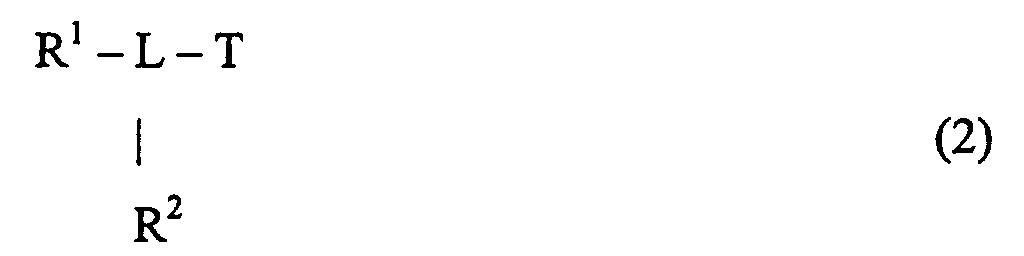
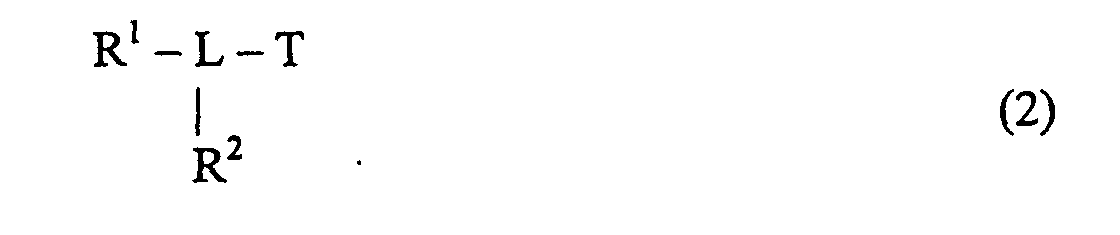
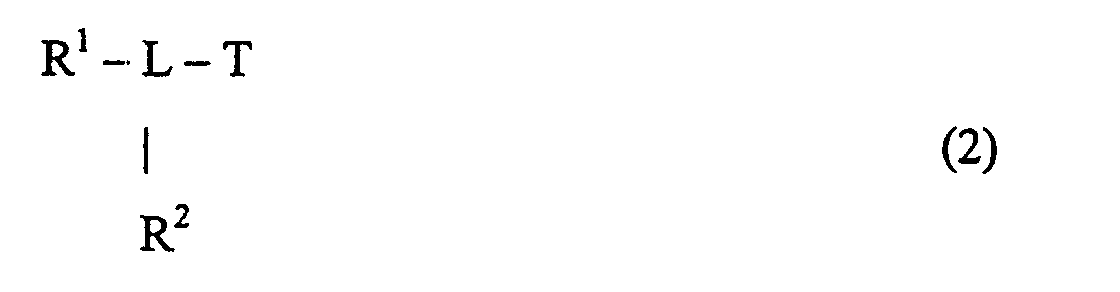
  • the invention in one aspect, provides hydrophobically capped oligomeric acrylamides and pyrrolidones, in particular the compounds of the general formula R-L-T or in which
  • the present invention also provides, in another aspect thereof, a composition that comprises an aqueous medium containing a hydrophilic colloid, a hydrophobic material dispersed in the medium and a dispersant, wherein the said dispersant is a compound of the present invention as defined above.
  • the present invention in yet another aspect, provides a method for making a composition according to this invention, which method comprises dispersing a hydrophobic material in an aqueous medium that is liquid and that contains a hydrophilic colloid, wherein the dispersing is carried out in the presence of a compound of the present invention as defined above.
  • the present invention further provides a process for producing a photographic material, which process comprises applying to a support a plurality of aqueous layers each of which contains a hydrophilic colloid, wherein at least one such layer comprises a composition of the present invention. Also provided are photographic materials obtainable by this process.
  • the present invention in yet a further aspect thereof, provides the use of a compound of the present invention, as defined above, as a dispersant for a hydrophobic material in an aqueous medium that contains a hydrophilic colloid.
  • the Figure is a schematic diagram of the milling region of a micro media mill.
  • the number of hydrophobic groups, R or (R 1 + R 2 ), depends on the linking group L.
  • the hydrophobic group or groups each comprise an aliphatic hydrocarbyl, aryl(aliphatic hydrocarbyl) or (aliphatic hydrocarbyl)-aryl group, wherein, in each case, the aliphatic hydrocarbyl group may be saturated or unsaturated and may be straight or branched.
  • Preferred aliphatic hydrocarbyl groups are alkyl and alkenyl groups and preferred aryl moieties are phenyl and naphthyl groups.
  • each of the groups R, R 1 and R 2 contains from 8 to 21 carbon atoms.
  • R 1 and R 2 may be the same or different.
  • the linking entity L is either a sulphur atom (-S-) or a linking group that contains a sulphur atom through which it is attached to T, in other words a linking group that is linked to the or each hydrophobic group by a simple chemical bond and to the oligomeric moiety T by a thio-link (-S-).
  • the oligomeric group T is preferably based on the oligomerisation of vinyl monomers with an amido function, the vinyl part providing a route to oligomerisation and the amido part providing a nonionic polar group to constitute the hydrophilic functional group (after oligomerisation).
  • the oligomeric group T can be constituted from a single monomer source or a mixture of two or more monomers, provided that the resultant oligomeric chain is sufficiently hydrophilic to render the resulting surface-active material soluble or dispersible in water or other medium.
  • a mixture of monomers may give rise to a group T that is a random co-oligomer.
  • Preferred monomers used to make the oligomeric chain T are acrylamide, derivatives of acrylamide, methacrylamide and derivatives methacrylamide.
  • the monomer 2-vinylpyrrolidone may also be used, although it is less favoured owing to the possibility of adverse photographic effects sometimes found with polyvinyl pyrrolidone (PVP) materials.
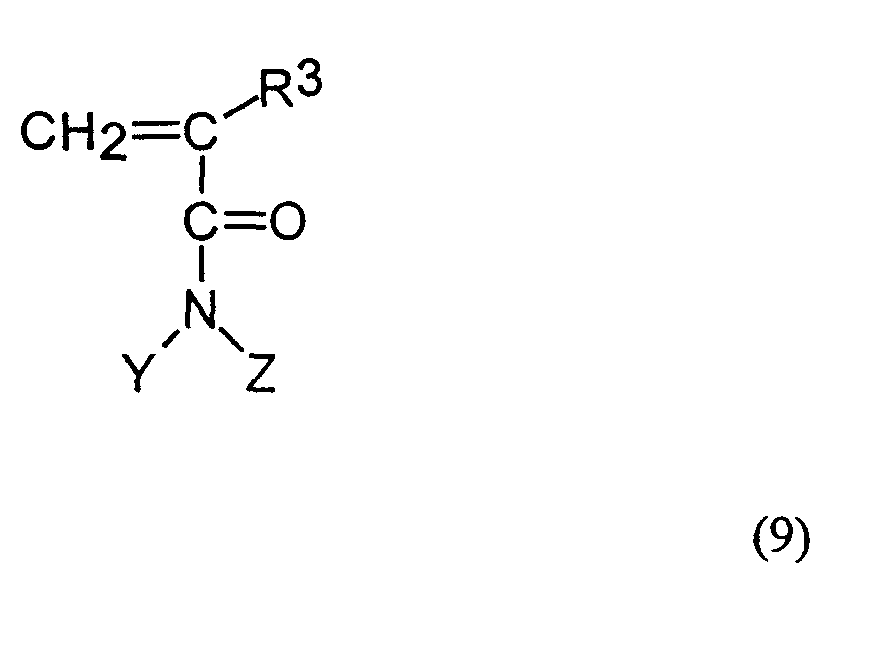
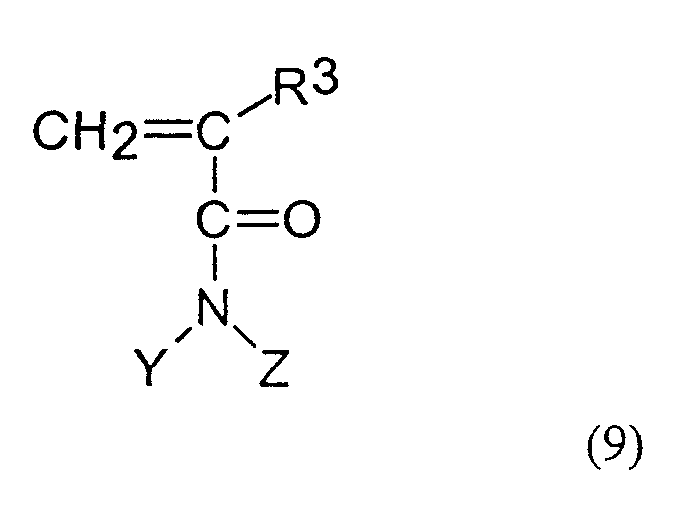
  • R 3 is H or a C 1 , C 2 or C 3 alkyl group, preferably H or CH 3 (which leads to an acrylamide or methacrylamide-based monomer, respectively) and Y and Z, which may be the same or different, are each H, C 1 -C 3 alkyl or C 1 -C 4 alkyl substituted with one or more hydroxyl groups, preferably H, CH 3 , C 2 H 5 or C(CH 2 OH) 3 .
  • Y and Z together with the N atom to which they are shown attached, may form a heterocyclic ring, in particular a 5- or 6- membered ring, e.g. a pyrrolidinyl or piperidinyl ring.
  • the compounds of the formulae (1) and (2) have an oligomeric group (T) that contains from 2 to 100, more preferably from 3 to 50, and typically from 5 to 40, monomeric units.
  • the degree of oligomerisation is generally selected so as to provide sufficient hydrophilicity to render the resulting compound soluble or self-dispersible in the aqueous medium.
  • hydrophobically capped oligomeric acrylamide or pyrrolidone dispersants useful in the present invention may be prepared by processes similar to those described in the preparative Examples hereinafter and in Pavia et al, Makromol. Chem. (1992), 193(9), 2505-2517.
  • the compounds of the present invention may be used as dispersants, and may be used, for example, as dispersants for hydrophobic addenda that are utilised in the manufacture of photographic products.
  • Such addenda include, for instance, colour couplers, together with their associated solvents (if any), or solid particle dyes.
  • the solid particle dyes have various uses, but typical applications are as filter dyes for anti-halation layers and as sensitising dyes for silver halide photographic emulsions.
  • Such hydrophobic addenda and suitable solvents are described in Research Disclosure, December 1989, Item 308119, published by Kenneth Mason Publications, Ltd., United Kingdom, in United States Patent No. 5,484,695 (Pitt et al ) and in the patent literature cited in that US Patent, the disclosure in all of which publications is incorporated herein by reference.
  • compositions comprising a hydrophilic colloid having hydrophobic particles dispersed therein may be formed by a process comprising dispersing a hydrophobic material into an aqueous solution of a hydrophilic colloid in the presence of a dispersant according to the present invention.
  • hydrophobic material constituting the dispersed or discontinuous phase need not necessarily be solid, but could in certain cases be semi-solid, semi-liquid or liquid, it should be understood that the expression “hydrophobic particles” includes not only solid particles but also, for example, droplets or globules. It may be mentioned here that the expression "hydrophobic material” is not limited herein to hydrophobic photographic addenda but includes, for example, other materials that do not dissolve or self-disperse in water.
  • hydrophilic colloid is gelatin.
  • other hydrophilic colloids come into consideration, for example proteins such as gelatin derivatives, graft polymers of gelatin and other polymers, albumin or casein; saccharides such as cellulose derivatives, for example hydroxyethyl cellulose or cellulose sulphate, sodium alginate and starch derivatives; and various synthetic hydrophilic high-molecular weight substances, including homopolymers or copolymers, for example polyvinyl alcohol, polyvinyl alcohol semiacetal, poly-N-vinylpyrrolidone, polyacrylic acid, polymethacrylic acid, polyacrylamide, polyvinyl imidazole and polyvinyl pyrazole.
  • a multilayer photographic material comprises a support bearing a plurality of hydrophilic colloid layers including at least one light-sensitive silver halide emulsion layer wherein at least one of the layers of the photographic material contains a hydrophobic material dispersed therein with the aid of a dispersant according to the present invention.
  • a photographic material may be produced in a manner analogous to that described in the above-mentioned US Patent No. 5,484,695. It is generally preferred to coat the aqueous hydrophilic colloid layers onto the support simultaneously. After coating, the colloid layers are generally dried; normally the drying is preceded by the chill setting of the coated layers. Procedures for the coating and drying of hydrophilic colloid layers are described in Research Disclosure, Item 17643, December 1978, the teaching in which is incorporated herein by reference.
  • dispersants according to the present invention is not restricted to underlying layers. Inclusion of such a dispersant in the topmost or outermost layer may also be appropriate, for example if that layer contains a dispersed lubricant or a dispersed UV-protection agent.
  • the concentration of the dispersant may vary according to the system with which it is used. With micro-precipitated dispersions the concentration of the dispersant is usually 0.1X to 8X, preferably 0.25X to 2X and more preferably 0.5X to 1X, with respect to the coupler on a molar basis. With evaporated dispersions, the concentration of dispersant is usually 0.02X to 2X, preferably 0.03X to 0.5X and more preferably 0.05X to 0.2X with respect to the coupler on a molar basis.
  • solid particle filter dyes or solid particle sensitising dyes such dyes are typically used in the milling operation at a concentration of about 10% by weight in an aqueous slurry, the concentration of the dispersant being usually 2% to 20%, preferably 4% to 15% and more preferably 5% to 10%, by weight of the total slurry.
  • the compounds of the present invention offer several advantages over the dispersants used in current practice.
  • the advantages arise from the effect of the dispersants on the physical properties of the dispersion, and certain advantages may be somewhat system specific.
  • the compounds of this invention have been found to give the dispersed system a higher coupler reactivity and a lower low-shear viscosity.
  • the higher reactivity makes the colour couplers more efficient and hence less coupler may be needed.
  • the lower low-shear viscosity permits the colour couplers to be used at higher concentrations. Coating at higher concentrations means coating with less water, which leads to savings in energy and the potential for increasing coating speeds where systems are dryer-limited (i.e. wherein the coating speed is limited by the drying capacity).
  • the lower the low-shear viscosity of a colour coupler dispersion system the less likely is it that it will exhibit severe shear-thinning behaviour.
  • the low-viscosity feature is due to the absence of strong ionic interactions between gelatin, which is commonly utilised in photographic coating media, and the compounds of the invention; however, there is sufficient interaction between the two, such that the associated disperse systems do not flocculate when added to an aqueous gelatin solution.
  • This enables the non-ionic dispersants of the present invention to be used as the sole dispersant in an aqueous gelatin system.
  • non-ionic dispersants which are based on poly(ethylene oxide) or sugar hydrophilic groups, typically cannot be used as the sole dispersant in photographic systems owing to the proneness of the corresponding dispersion to flocculate in the presence of gelatin in solution.
  • a significant advantage of the compounds of the present invention resides in the ability to use one material in place of two.
  • the current practice is to add both a dispersant and a stabiliser to the system being dispersed, the former facilitating the dispersion of the system and the latter stabilising the dispersed system against flocculation and particle ripening.
  • the materials of this invention can fulfil both the role of dispersant and the role of stabiliser.
  • One of the common stabilisers in current use polyvinyl pyrrolidone (PVP), is often associated with adverse photographic effects, in particular losses of photographic speed, contrast and maximum density.
  • PVP polyvinyl pyrrolidone
  • the compounds of the present invention based on acrylamide or the like offer the advantage that they do not exhibit these adverse photographic effects.
  • 1-Dodecanol (130.5 g, 0.651 mol) and mercaptoacetic acid (60.00g, 0.651 mol) were refluxed for 2 hours under an argon atmosphere in toluene (400ml) in the presence of p-toluene-sulphonic acid hydrate (1.00g) in a flask equipped with a Dean & Stark trap. During this time approximately 7.5 ml of water collected in the side arm of the trap. Toluene was removed under reduced pressure and the crude product re-dissolved in ethyl acetate (900 ml).
  • Oleylamine (technical grade 80%, 99.10g, 0.37 mol) and methyl thioglycolate (39.33g, 0.37 mol) were heated together at 155°C under an argon atmosphere in a flask equipped with a Dean & Stark trap and a condenser for 17 hours. During this time methanol collected in the trap (about 15 ml, about 11.9g, 0.37 mol). The resulting yellow liquid solidified on cooling to give a pale yellow solid (123.4g, 97%). Analysis was consistent with N-oleyl-2-mercaptoacetamide.
  • N-oleyl-2-mercaptoacetamide 34.16g, 0.10 mol
  • acrylamide 71.10g, 1.00 mol
  • AIBN (0.37g)
  • methanol 500 ml
  • Argon gas was bubbled through the solution for 20 minutes to degas the solvent.
  • the mixture was then refluxed for 5 hours under an argon atmosphere. As reflux was achieved the solids dissolved. After approximately 20 minutes an off-white solid began to form. On cooling, the resulting solid was filtered under suction and dried in vacuo to give a white solid (85.2g, 78%).
  • reaction mixture was concentrated by evaporation under reduced pressure then redissolved in ethyl acetate (500 ml) and washed sequentially with saturated aqueous sodium hydrogen carbonate (300 ml) and water (300 ml). The organic layer was separated, dried over anhydrous magnesium sulphate, filtered and evaporated to give a pale yellow oil (31.1 g, 83%). Analysis was consistent with di-(2-ethyl-1-hexyl)mercaptosuccinate.
  • Exemplary compounds of the present invention are disclosed in the following Table A.
  • the compounds are allocated respective compound numbers, which numbers are used to identify the compounds in the Tables relating to the Test Examples hereinafter.
  • Dispersants used for comparison purposes are recorded in Table B below. In this table, the dispersants are each allocated a reference letter or code which is used to identify the dispersant in the tables of results pertaining to the Test Examples.
  • Conventional Dispersants Reference letter(s) Dispersant SDS Sodium dodecyl sulphate SDS-A Sodium dodecyl sulphate (Eastman) PVP Polyvinyl pyrrolidone PVP-A Luviskol K30 (PVP) A Texofor T170 (C 13 H 27 (EO) 17 wherein EO ethylene oxide) B Synfac 8216 C Dapral GE-202 (Polymeric dispersant containing polyethyleneoxide, alkyl and COOH groups) D Tetronix 908 (BASF:polypropyleneoxide-polyethyleneoxide nonionic block copolymer) E Pluronic L44 (BASF: polypropyleneoxide-polyethyleneoxide nonionic block copolymer) F Monawet
  • microprecipitated dispersions are prepared using the compounds of this invention, the benefits obtainable with conventional micro-precipitated dispersions are increased and additional benefits are found.
  • the additional benefits depend on the type of dispersant the compounds of the invention are being compared with. Relative to systems produced using anionic dispersants, the systems produced using the compounds of the invention show much reduced viscosity. Relative to systems produced using typical nonionic dispersants, the compounds of the present invention lead to increased compatibility with gelatin and the avoidance of flocculation problems usually encountered in aqueous gelatin solution.
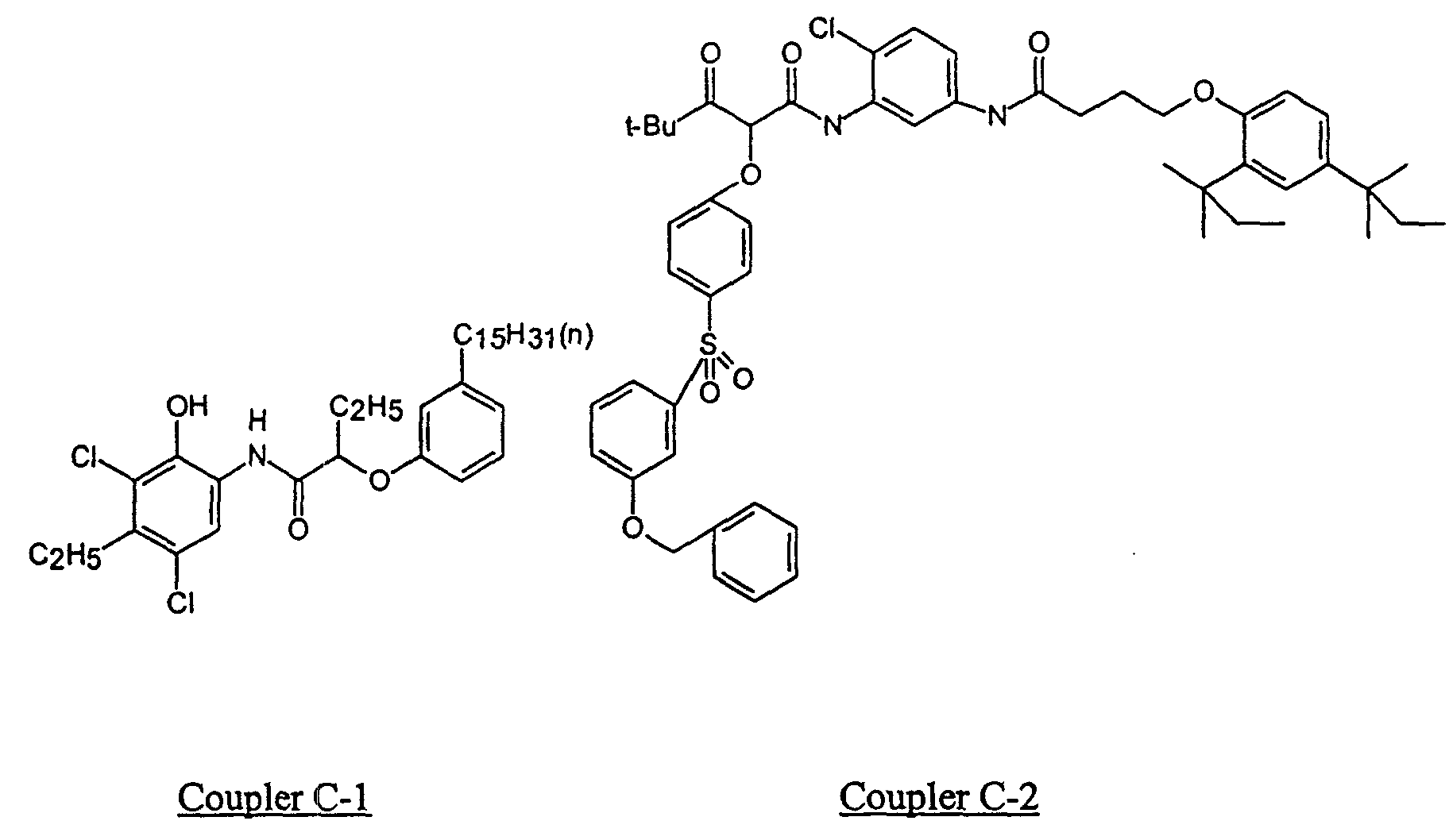
  • Micro-precipitated dispersions were made with cyan coupler C-1 and yellow coupler C-2 (structures shown below) and various dispersing aids according to the methods following this section. Coupler reactivity was measured by a "liquid dispersion reactivity" method described by Bagchi in US Pat Nos: 4,970,139; 5,089,380 and 5,104,776. Particle size was measured by photon correlation spectroscopy. The viscosities of the resultant dispersions were measured by controlled stress rheometers (dispersions of Coupler C-1 with a Bohlin CS50 rheometer and dispersions of Coupler C-2 with a Carrimed rheometer). The objective of the study was to compare the performance of some of the materials of this invention as a dispersing aid against other surfactants.
  • Coupler C- 1(20 g) was dissolved in a mixture of propan- 1-ol (40 g) and 20% sodium hydroxide solution (5 g) at 60°C and poured into a solution of surfactant (weight equimolar with coupler) and polyvinylpyrrolidone (10g) in water (600 g).
  • the resulting micellar solution was reduced to pH 6.0 by the dropwise addition of 15% propanoic acid to form the crude microprecipitated dispersion which was then dialysed through Amicon hollow fibre ultrafiltration cartridges and concentrated to a fifth of its volume.
  • micellar solution was diluted to a coupler concentration of 7.0% and added to a stirred gelatin (regular Type IV bone gelatin) solution (10%) maintained at 40°C, so that a final melt concentration of 3.5% coupler, 5% gelatin was achieved.
  • a stirred gelatin regular Type IV bone gelatin
  • Coupler C-2 (16.5mmoles) was added to a mixture of n-propanol (42g) and 20% aqueous sodium hydroxide (17mmoles) and stirred at 60°C until dissolved. This was stirred into a solution of surfactant (8.25mmoles) in demineralized water (450g) at 20°C and neutralised to pH6 using 15% propionic acid. The resulting translucent micellar solution was washed through an ultrafiltration cartridge (manufactured by Amicon) and then concentrated to 150ml.
  • micellar solution was diluted to a coupler concentration of 7.5% and added to a stirred gelatin (Eastman type TCGIII) solution (10%) maintained at 40°C, so that a final melt concentration of 3.75% coupler, 5% gelatin was achieved.
  • Eastman type TCGIII stirred gelatin
  • the method used is the same as that described by Bagchi in US Pat Nos: 4,970,139; 5,089,380 and 5,104,776, which is similar to that described in EP-A-0,674,221 (Kodak Ltd.).
  • the method used here gives smaller differences and smaller comparative ratios in reactivity than those obtained in EP-A-0,674,221.
  • Table 1 compares the physical data of the micro-precipitated dispersions made with these different dispersants using Coupler C- 1.
  • Table 2 compares the physical data of the micro-precipitated dispersions made with these different dispersants using Coupler C-2.
  • Tables 1 and 2 record the liquid dispersion reactivity of the coupler, the particle size and the viscosity of the dispersion after addition to the aqueous gelatin solution (as described above).
  • Microprecipitated dispersions of Coupler C-1 Physical data Dispersant(s) used Liquid dispersion reactivity Particle size /nm Viscosity /mPa.s SDS + PVP (comparison: anionic dispersant) 2500 22 110 A + PVP (comparison: nonionic dispersant) 0 Flocculated on addition of the aqueous gelatin Flocculated on addition of the aqueous gelatin Compound 2 (invention) 5920 97 5 Compound 1 (invention) 6100 41 3 Compound 1 + PVP (comparison: addition of PVP to invention) 2200 55 6
  • Table 1 shows several advantages afforded by the nonionic dispersants of this invention:
  • Coupler C-2 Although Table 2 relates to a different coupler, Coupler C-2, it demonstrates the same trends as those discovered with Coupler C-1 and hence reinforces the advantages found in general with the compounds of this invention. These are:
  • the dispersants of this invention lead to greatly increased coupler reactivity together with much lower dispersion viscosity; these lead correspondingly to greater efficiency of coupler usage and greater potential for concentration of the dispersion which can lead to better coating uniformity and less dryer load.
  • a solution of 24.0 g of coupler C-3 (whose structure is shown below), 24.0. g of diundecyl phthalate and 72.1 g of ethyl acetate was prepared and heated to 60° C. This solution was added to a 60° C solution of 2.0 g of compound No.2 as surfactant (structure - C 12 H 25 -S[CH 2 CHCO.NH 2 ] 10 -H) and 278.0 g of distilled water with mixing provided by a Silverson rotor-stator device operating at 5000 rpm. After mixing for 2 minutes, the mixture was passed through a Microfluidizer homogenizer three times at 3000 psi (20.68 MPa).
  • Brij 35 is a typical alkyl polyethyleneoxide nonionic surfactant; its nominal average structure being C 12 H 25 -O[CH 2 CH 2 O) 23 -H. Light microscopic examination of this dispersion shows a highly flocculated dispersion with a lattice work of flocculated droplets.
  • the objective of this example is to compare the performance of dispersants from this invention with those in use in current practice.
  • the procedure used to mill the materials of this invention is described in the following section together with details of the test that was used to measure the stability of the dispersion.
  • the stability test involved holding the dispersions at 45°C for 24 hours.
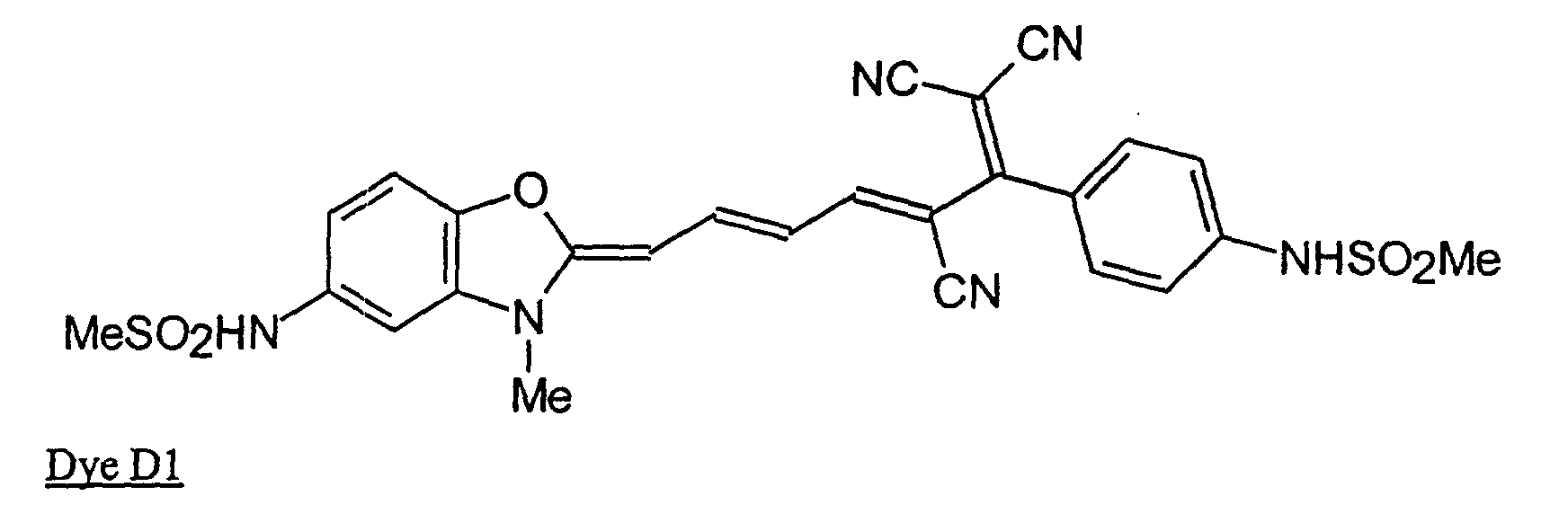
  • the dye structure Dl was selected for this test. A small but distinct photographic advantage was also seen; this is discussed in the section following the milling results.
  • the control dispersion was prepared by combining 10g of Dye D1, 23.0 g of a 10% aqueous solution of dispersant Synfac 8216 (Milliken Chemical) (comparison dispersant B), 6.0 g of a 10% solution of Luviskol K-30 poly(vinylpyrrolidone) (BASF) (comparison dispersant PVP-A), 11.0 g of high-purity water and 125 ml of 1.8 mm zirconium oxide beads in an 8 oz. (227 cm 3 ) glass jar. The jar was placed on a SWECO vibratory mill for a period of time of 4-6 days. The test dispersions were prepared in the same manner except that they contained 1.5 g test dispersant and 38.5 g of high purity water in place of the Synfac 8216, Luviskol K30 and high purity water in the control dispersion.
  • Table 3 shows the results obtained with these wide ranging structures and compares them with a pair of materials used together in current practice (Synfac 8216 and Luviskol K30) together with the performance of the individual constituents of the pair. Particle size, particle stability and dispersion quality for ball milled dye, D1 Dispersant Compound No.
  • Particle Size Data (nm) ⁇ Dispersion Initial Particle Size Particle size 24hr 45°C % growth 24hr 45°C 18 0.1552 0.1603 3.3 4 0.1541 0.1596 3.6 13 0.1958 0.2028 3.6 5 0.1538 0.1595 3.7 19 0.1553 0.1611 3.7 7 0.1680 0.1743 3.8 10 0.1513 0.1570 3.8 11 0.1477 0.1533 3.8 9 0.1469 0.1527 3.9 2 0.1558 0.1620 4.0 14 0.1601 0.1668 4.2 20 0.1519 0.1587 4.5 12 0.1637 0.1719 5.0 21 0.1668 0.1752 5.0 22 0.1286 0.1354 5.3 23 0.1539 0.1625 5.6 15 0.1568 0.1682 7.3 24 0.1521 0.1633 7.4 1 0.1622 0.1756 8.3 17 0.1703 0.1851 8.7 16 0.1550 0.1783 15.0 Comparative data B + PVP-A 0.1564 0.1607 2.8 B as sole dispersant 0.1347 0.1406
  • Table 3 demonstrates that the materials of this invention fulfil both the role of dispersant and stabiliser insofar as they produce fine, well-dispersed dye dispersions that do not grow by more than 15% in 24 hours at 45°C when used as described above.
  • this dye system usually requires the use of a combination of materials (Synfac 8216 + Luviskol K30) to effect a stable dispersion. Use of either of these materials alone produces unacceptable dye slurries, i.e. either dye flakes in the slurry or large particles with a low density absorbance spectrum.
  • a cyan monochrome format which utilizes the solid particle filter dye Dl as an antihalation layer between the photographic support and the cyan imaging layer.
  • Three assemblages were compared: one in which the control dispersants Synfac 8216 and Luviskol K30 were used to disperse the Dl filter dye; one in which a representative compound of the invention, namely compound No. 2 (C 12 H 25 -S-[A] 10 H where A is acrylamide) was used to disperse the Dl filter dye; and one in which no filter dye was incorporated at all. The latter acts as a basic control.
  • the details of the photographic elements used in the comparison are as follows:
  • Rem Jet is a black-pigmented, non-gelatin layer on the back of the film base which provides anti-halation and antistatic properties.
  • the elements were exposed for 1/500 second by means of a 3000°K Tungsten light source through a 0-3 neutral density step tablet, a heat-absorbing filter, and a filter designed to represent a motion picture colour negative film. After exposure, the elements were processed through Process ECP-2B with the exception that those steps specific to sound track development were omitted.
  • the process consisted of a pre-bath (10"), water rinse (20"), colour developer (3'), stop bath (40"), first wash (40"), first fix (40"), second wash (40"), bleach (1'), third wash (40"), second fix (40"), fourth wash (1'), final rinse (10"), and then drying with hot air
  • the ECP-2B Pre-bath consists of
  • the ECP-2B Color Developer consists of Water 800 ml Kodak Anti-Calcium, No.4 (40% solution of a pentasodium salt of nitrilo-tri(methylene phosphonic acid) 1.00 ml Sodium sulfite (anhydrous) 4.35 g Sodium bromide (anhydrous) 1.72 g Sodium carbonate (anhydrous) 17.1 g Kodak Colour Developing Agent, CD-2 2.95 g Sulfuric acid (7.0 N) 0.62 ml Water to make 1 liter pH @ 26.7°C is 10.53+/-0.05
  • the ECP-2B Stop Bath consists of Water 900 ml Sulfuric acid (7.0 N) 50 ml Water to make 1 liter pH @ 26.7°C is 0.90
  • the ECP-2B Fixer consists of Water 800 ml Ammonium thiosulfate (58.0% solution) 100.0 ml Sodium bisulfite (anhydrous) 13.0 g Water to make 1 liter pH @ 26.7°C is 5.00+/-0.15
  • the ECP-2B Ferricyanide Bleach consists of Water 900 ml Potassium ferricyanide 30.0 g Sodium bromide (anhydrous) 17.0 g Water to make 1 liter pH @ 26.7°C is 6.50+/-0.05
  • the Final Rinse solution consists of Water 900 ml Kodak Photo-Flo 200TM Solution 3.0 ml Water to make 1 liter
  • Processing of the exposed elements is done with the colour developing solution adjusted to 36.7°C.
  • the stopping, fixing, bleaching, washing, and final rinsing solution temperatures are adjusted to 26.7°C.
  • the optical density due to dye formation was then measured on a densitometer using filters in a densitometer appropriate to the intended use of the photographic element.
  • Dye Density was then graphed vs. log(exposure) to form the Red, Green, and Blue D-LogE characteristic curves of the photographic elements.
  • the D-max (maximum density), fixed upper scale contrast (FUSC), and relative speed at a density of 1.0 (SPD1.0) values are listed in Table 4.
  • FUSC is defined as the slope of a line drawn between a point at a density of 1.0 and a point at 0.5 logE higher exposure.
  • the relative speeds at a density of 1.0 were determined by interpolation over a 300 unit range corresponding to the exposure range generated by exposure through the 0-3 neutral density step tablet, where the relative speed at the end of the log(exposure) scale representing greatest exposure is assigned a value of 0 and the relative speed at the opposite end of the log(exposure) scale representing least exposure is assigned a value of 300.
  • Dye D-1 Dispersants on Photographic Properties Element
  • Dye Dispersant D-max FUSC SPD1.0 A D-1 B, PVP-A (control dispersants, comparison) 3.56 3.70 109.6 B
  • D-1 Compound 2 (invention) 3.60 3.87 113.5 C (basic control) No dye No dispersant 3.59 3.77 110.8
  • the objective of this Example section is to compare the performance of dispersants from this invention with a range of those in use in current practice.
  • the dispersants were assessed by two routes: first, by using a screening method which consisted of sonifying a flocculated slurry of a dye in the presence of rather high levels of the dispersant under test and appraising the response; secondly, by direct milling of the dye and dispersant using a micro media mill and appraising the quality of the resulting dispersion. These techniques are described in further detail below.
  • the cationic dye D2 was selected for these tests.
  • cationic sensitising dyes such as D2 have proved difficult to mill satisfactorily with a wide range of dispersants, the resulting slurries either showing unacceptable thickening or simply setting up.
  • One of the better dispersants has proved to be the polymeric stabiliser Dapral GE202 (comprison dispersant C). With this dispersant, milling can be completed with only moderate thickening and the milling media can be removed by dilution of the slurry. However, flocculation is still evident in the resulting slurry (with microscopy). Although somewhat unsatisfactory in itself, this system was used to screen a wide range of dispersants by assessing their ability to re-disperse the flocculated particles. The initial flocculated slurry used in this test is termed the "benchmark slurry".
  • test process was performed by adding high levels of the test dispersant to samples of the benchmark slurry and examining the quality of the resulting dispersion by microscopy and spectroscopy.
  • FIG. 1 A schematic diagram of the milling region is given in Figure 1.
  • a bed of media contained in a 50 ml plastics centrifuge tube 1 is agitated with a stainless steel shaft 2 with horizontal projections 3.
  • the approximate level of slurry plus beads under static conditions is indicated by the dotted line 4.
  • the jacketed vessel (not shown) holding the tube is capable of being temperature regulated, but experiments were confined to ambient temperature by slowly flowing chill water through this jacket
  • the media used for the milling operation was 500 ⁇ m polystyrene media (purified and sieved).
  • Dispersant Slurry Behaviour WD well dispersed Dispersion Spectra ⁇ max Absorbance ( ⁇ max ) 1 0.5000 WD/low viscosity - - 1 1.0000 WD/low viscosity - - 2 0.5000 WD/low viscosity - - 2 1.0000 WD/low viscosity 730 1.4 3 1.0000 WD/low viscosity - - 4 1.0000 WD/low viscosity 732 1.4 5 1.0000 WD/low viscosity 730 1.4 9 1.0000 WD/low viscosity 728 1.3 10 1.0000 WD/low viscosity 728 1.3 11 1.0000 WD/low viscosity
  • nonionic dispersants of the invention are the only ones that produce well-dispersed, low viscosity systems. This is evidenced by the high absorbance values at ⁇ max in the spectrometer. All the other dispersants, whether nonionic (polypropylene oxide/polyethylene oxide block copolymers, Triton X-165, sugar-based Glucopon 225CS and Glucoside APG 325) or anionic (sulphosuccinate diesters, sodium docecyl sulphate, Dapral GE-202), produced systems that either are too viscous or set up; furthermore, they give inferior absorbance at ⁇ max.

Landscapes

  • Chemical & Material Sciences (AREA)
  • Engineering & Computer Science (AREA)
  • Materials Engineering (AREA)
  • Physics & Mathematics (AREA)
  • General Physics & Mathematics (AREA)
  • Organic Chemistry (AREA)
  • Chemical Kinetics & Catalysis (AREA)
  • Emulsifying, Dispersing, Foam-Producing Or Wetting Agents (AREA)

Abstract

A hydrophobically capped oligomeric acrylamide or pyrrolidone is employed as a dispersant for hydrophobic materials in an aqueous medium containing a hydrophilic colloid, e.g. gelatin. The hydrophobic materials include photographic addenda such as colour couplers or solid particle dyes. Preferred dispersants have the general formula R-L-T or
Figure 80000001
   in which
  • R, R1 and R2 are each independently selected from aliphatic hydrocarbyl, aryl(aliphatic hydrocarbyl) and (aliphatic hydrocarbyl)-aryl groups,
  • L is a sulphur atom or a linking group that contains a sulphur atom attached to the T group, and
  • T is a hydrophilic oligomeric group obtained by the oligomerisation of one or more vinyl monomers having an amido function.
  • Description

    Field of the Invention
    The present invention relates to certain nonionic oligomeric surfactants, in particular such surfactants based on vinyl systems having an amido function, especially acrylamide, methacrylamide or a derivative thereof, and to the use thereof as dispersants and/or stabilisers for hydrophobic materials, especially hydrophobic addenda that are utilised in the manufacture of photographic products.
    Background to the Invention
    Micro-precipitated dispersions of photographic couplers, prepared by solvent and/or pH shift techniques are becoming more widely used (see references: UK Pat. No.1,193,349 by J. A. Townsley & R. Trunley; Research Disclosure 16468, Dec 1977, pp 75-80 by W. J. Priest; U.S. Pat No.4,957,857 by K. Chari; U.S. Pat. Nes. 4,970,139 and 5,089,380 by P. Bagchi; U.S. Pat No. 5,008,179 by K. Chari, W.A. Bowman and B. Thomas; US. Pat No. 5,104,776 by P. Bagchi and S. J. Sargeant) and offer benefits in decreased droplet size and often increased reactivity relative to conventional oil-in-water homogenised dispersions. European Patent Publication 0,674,221A (Application No. 95200377.0) (Kodak Ltd.) teaches that increased coupler reactivity leads to higher maximum densities (Dmax) with these dispersions. However, it would be desirable to lower the viscosity of such dispersions, relative to the viscosity obtained with conventional anionic dispersants, and to avoid the problem of flocculation that is usually encountered in gelatin solutions when using typical nonionic dispersants.
    Dispersions of solid particle dyes are typically obtained by milling the powdered dye in a ball mill with a dispersant and stabiliser for periods of days. During this time the dyes characteristically mill down to a mean particle size of 50 to 200 nm. The stability of dispersions is habitually tested by subjecting the systems to an accelerated keeping test. This is commonly engineered by holding the systems at an elevated temperature for long periods of time and monitoring processes such as particle growth or flocculation. Typically, solid particle dyes require both a dispersant and stabiliser to form a stable dispersion. Clearly, it would be an advantage if a dispersant could be used that also acted as a stabiliser.
    Solid particle cationic sensitising dye dispersions are typically obtained by milling the powdered dye in a ball mill with a dispersant and stabiliser for long periods in a similar manner to the filter dyes. Perhaps owing to their cationic nature, the dyes do not mill well with anionic dispersants or nonionic/ anionic copolymer dispersants, the systems tending to thicken or set up. However, and perhaps more surprising, they do not mill very well with nonionic oligomeric or polymeric dispersants either, the systems still tending to exhibit high viscosity or setting up. Plainly, it would be advantageous to use a dispersant that permitted milling with less thickening or setting up.
    Summary of the Invention
    The invention, in one aspect, provides hydrophobically capped oligomeric acrylamides and pyrrolidones, in particular the compounds of the general formula R-L-T or
    Figure 00020001
       in which
  • R, R1 and R2 are each independently selected from aliphatic hydrocarbyl, aryl(aliphatic hydrocarbyl) and (aliphatic hydrocarbyl)-aryl groups,
  • L is a sulphur atom or a linking group that contains a sulphur atom that is attached to the T group, and
  • T is a hydrophilic oligomeric group obtained by the oligomerisation of one or more vinyl monomers having an amido function.
  • The present invention also provides, in another aspect thereof, a composition that comprises an aqueous medium containing a hydrophilic colloid, a hydrophobic material dispersed in the medium and a dispersant, wherein the said dispersant is a compound of the present invention as defined above.
    The present invention, in yet another aspect, provides a method for making a composition according to this invention, which method comprises dispersing a hydrophobic material in an aqueous medium that is liquid and that contains a hydrophilic colloid, wherein the dispersing is carried out in the presence of a compound of the present invention as defined above.
    The present invention further provides a process for producing a photographic material, which process comprises applying to a support a plurality of aqueous layers each of which contains a hydrophilic colloid, wherein at least one such layer comprises a composition of the present invention. Also provided are photographic materials obtainable by this process.
    The present invention, in yet a further aspect thereof, provides the use of a compound of the present invention, as defined above, as a dispersant for a hydrophobic material in an aqueous medium that contains a hydrophilic colloid.
    Brief Description of the Drawings
    The Figure is a schematic diagram of the milling region of a micro media mill.
    Description of Exemplary Embodiments
    The preferred compounds of the present invention are defined by either of the following formulae: R―L―T or
    Figure 00040001
    The number of hydrophobic groups, R or (R1 + R2), depends on the linking group L. The hydrophobic group or groups each comprise an aliphatic hydrocarbyl, aryl(aliphatic hydrocarbyl) or (aliphatic hydrocarbyl)-aryl group, wherein, in each case, the aliphatic hydrocarbyl group may be saturated or unsaturated and may be straight or branched. Preferred aliphatic hydrocarbyl groups are alkyl and alkenyl groups and preferred aryl moieties are phenyl and naphthyl groups. Typically, each of the groups R, R1 and R2 contains from 8 to 21 carbon atoms. R1 and R2 may be the same or different.
    The linking entity L is either a sulphur atom (-S-) or a linking group that contains a sulphur atom through which it is attached to T, in other words a linking group that is linked to the or each hydrophobic group by a simple chemical bond and to the oligomeric moiety T by a thio-link (-S-).
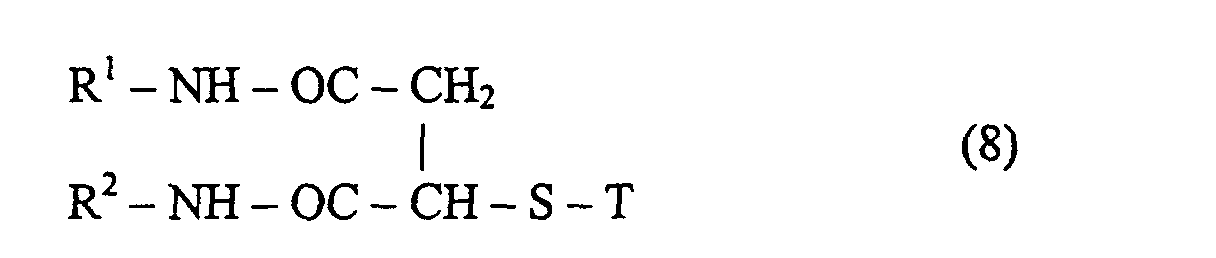
    Certain preferred sub-groups of the present compounds are represented by the following general formulae, in which formulae (3), (4) and (5) contain typical linking groups for compounds with one hydrophobic group and formulae (6), (7) and (8) contain typical linking groups for compounds with two hydrophobic groups: R―S―T R―O―OC―CH2―S―T R―NH―OC―CH2―S―T
    Figure 00040002
    Figure 00050001
    Figure 00050002
    In the above formulae (4), (5), (7) and (8), other simple chemical groups, in place of the ester or amide link, may also come into consideration.
    The oligomeric group T is preferably based on the oligomerisation of vinyl monomers with an amido function, the vinyl part providing a route to oligomerisation and the amido part providing a nonionic polar group to constitute the hydrophilic functional group (after oligomerisation). The oligomeric group T can be constituted from a single monomer source or a mixture of two or more monomers, provided that the resultant oligomeric chain is sufficiently hydrophilic to render the resulting surface-active material soluble or dispersible in water or other medium. A mixture of monomers may give rise to a group T that is a random co-oligomer. Preferred monomers used to make the oligomeric chain T are acrylamide, derivatives of acrylamide, methacrylamide and derivatives methacrylamide. The monomer 2-vinylpyrrolidone may also be used, although it is less favoured owing to the possibility of adverse photographic effects sometimes found with polyvinyl pyrrolidone (PVP) materials.
    Certain suitable monomers can be represented by the two general formulae
    Figure 00050003
    Figure 00060001
    wherein formula (9) represents acrylamide, methacrylamide or a derivative of either of these, and formula (10) represents 2-vinylpyrrolidone. In formula (9), R3 is H or a C1, C2 or C3 alkyl group, preferably H or CH3 (which leads to an acrylamide or methacrylamide-based monomer, respectively) and Y and Z, which may be the same or different, are each H, C1-C3 alkyl or C1-C4 alkyl substituted with one or more hydroxyl groups, preferably H, CH3, C2H5 or C(CH2OH)3. Alternatively, Y and Z, together with the N atom to which they are shown attached, may form a heterocyclic ring, in particular a 5- or 6- membered ring, e.g. a pyrrolidinyl or piperidinyl ring.
    In certain preferred embodiments, the compounds of the formulae (1) and (2) have an oligomeric group (T) that contains from 2 to 100, more preferably from 3 to 50, and typically from 5 to 40, monomeric units. The degree of oligomerisation is generally selected so as to provide sufficient hydrophilicity to render the resulting compound soluble or self-dispersible in the aqueous medium.
    The hydrophobically capped oligomeric acrylamide or pyrrolidone dispersants useful in the present invention may be prepared by processes similar to those described in the preparative Examples hereinafter and in Pavia et al, Makromol. Chem. (1992), 193(9), 2505-2517.
    As stated above, the compounds of the present invention may be used as dispersants, and may be used, for example, as dispersants for hydrophobic addenda that are utilised in the manufacture of photographic products. Such addenda include, for instance, colour couplers, together with their associated solvents (if any), or solid particle dyes. The solid particle dyes have various uses, but typical applications are as filter dyes for anti-halation layers and as sensitising dyes for silver halide photographic emulsions. Such hydrophobic addenda and suitable solvents (where applicable) are described in Research Disclosure, December 1989, Item 308119, published by Kenneth Mason Publications, Ltd., United Kingdom, in United States Patent No. 5,484,695 (Pitt et al) and in the patent literature cited in that US Patent, the disclosure in all of which publications is incorporated herein by reference.
    Compositions comprising a hydrophilic colloid having hydrophobic particles dispersed therein may be formed by a process comprising dispersing a hydrophobic material into an aqueous solution of a hydrophilic colloid in the presence of a dispersant according to the present invention. Since the hydrophobic material constituting the dispersed or discontinuous phase need not necessarily be solid, but could in certain cases be semi-solid, semi-liquid or liquid, it should be understood that the expression "hydrophobic particles" includes not only solid particles but also, for example, droplets or globules. It may be mentioned here that the expression "hydrophobic material" is not limited herein to hydrophobic photographic addenda but includes, for example, other materials that do not dissolve or self-disperse in water.
    The preferred hydrophilic colloid is gelatin. However, other hydrophilic colloids come into consideration, for example proteins such as gelatin derivatives, graft polymers of gelatin and other polymers, albumin or casein; saccharides such as cellulose derivatives, for example hydroxyethyl cellulose or cellulose sulphate, sodium alginate and starch derivatives; and various synthetic hydrophilic high-molecular weight substances, including homopolymers or copolymers, for example polyvinyl alcohol, polyvinyl alcohol semiacetal, poly-N-vinylpyrrolidone, polyacrylic acid, polymethacrylic acid, polyacrylamide, polyvinyl imidazole and polyvinyl pyrazole.
    According; to certain preferred embodiments, a multilayer photographic material comprises a support bearing a plurality of hydrophilic colloid layers including at least one light-sensitive silver halide emulsion layer wherein at least one of the layers of the photographic material contains a hydrophobic material dispersed therein with the aid of a dispersant according to the present invention. Such a photographic material may be produced in a manner analogous to that described in the above-mentioned US Patent No. 5,484,695. It is generally preferred to coat the aqueous hydrophilic colloid layers onto the support simultaneously. After coating, the colloid layers are generally dried; normally the drying is preceded by the chill setting of the coated layers. Procedures for the coating and drying of hydrophilic colloid layers are described in Research Disclosure, Item 17643, December 1978, the teaching in which is incorporated herein by reference.
    It may also be mentioned that the use of the dispersants according to the present invention is not restricted to underlying layers. Inclusion of such a dispersant in the topmost or outermost layer may also be appropriate, for example if that layer contains a dispersed lubricant or a dispersed UV-protection agent.
    The concentration of the dispersant may vary according to the system with which it is used. With micro-precipitated dispersions the concentration of the dispersant is usually 0.1X to 8X, preferably 0.25X to 2X and more preferably 0.5X to 1X, with respect to the coupler on a molar basis. With evaporated dispersions, the concentration of dispersant is usually 0.02X to 2X, preferably 0.03X to 0.5X and more preferably 0.05X to 0.2X with respect to the coupler on a molar basis. With solid particle filter dyes or solid particle sensitising dyes, such dyes are typically used in the milling operation at a concentration of about 10% by weight in an aqueous slurry, the concentration of the dispersant being usually 2% to 20%, preferably 4% to 15% and more preferably 5% to 10%, by weight of the total slurry.
    The compounds of the present invention offer several advantages over the dispersants used in current practice. The advantages arise from the effect of the dispersants on the physical properties of the dispersion, and certain advantages may be somewhat system specific.
    In the case of colour couplers, the compounds of this invention have been found to give the dispersed system a higher coupler reactivity and a lower low-shear viscosity. The higher reactivity makes the colour couplers more efficient and hence less coupler may be needed. The lower low-shear viscosity permits the colour couplers to be used at higher concentrations. Coating at higher concentrations means coating with less water, which leads to savings in energy and the potential for increasing coating speeds where systems are dryer-limited (i.e. wherein the coating speed is limited by the drying capacity). Furthermore, the lower the low-shear viscosity of a colour coupler dispersion system, the less likely is it that it will exhibit severe shear-thinning behaviour. Severe shear-thinning behaviour can be detrimental to coating uniformity owing to the resulting non-uniform flow of coating melts through the geometry of the equipment used for solution delivery. Hence, benefits in coating uniformity are attainable. High low-shear viscosity also makes the solution management of the dispersed systems very difficult under low-shear conditions, which may be met during pouring, mixing and pumping. Accordingly, the low-viscosity feature provided by the compounds of this invention facilitate solution management of the dispersions with which they are associated. Although the applicant does not wish to be bound by theory, it is understood that the low-viscosity feature is due to the absence of strong ionic interactions between gelatin, which is commonly utilised in photographic coating media, and the compounds of the invention; however, there is sufficient interaction between the two, such that the associated disperse systems do not flocculate when added to an aqueous gelatin solution. This enables the non-ionic dispersants of the present invention to be used as the sole dispersant in an aqueous gelatin system. In contrast, conventional non-ionic dispersants, which are based on poly(ethylene oxide) or sugar hydrophilic groups, typically cannot be used as the sole dispersant in photographic systems owing to the proneness of the corresponding dispersion to flocculate in the presence of gelatin in solution.
    In the case of solid particle dyes, a significant advantage of the compounds of the present invention resides in the ability to use one material in place of two. The current practice is to add both a dispersant and a stabiliser to the system being dispersed, the former facilitating the dispersion of the system and the latter stabilising the dispersed system against flocculation and particle ripening. The materials of this invention can fulfil both the role of dispersant and the role of stabiliser. One of the common stabilisers in current use, polyvinyl pyrrolidone (PVP), is often associated with adverse photographic effects, in particular losses of photographic speed, contrast and maximum density. The compounds of the present invention based on acrylamide or the like offer the advantage that they do not exhibit these adverse photographic effects.
    The use of the present compounds are dispersants and stabilisers is further described hereinafter, with reference to illustrative examples thereof.
    The present invention is illustrated in and by the following Examples.
    Preparative Examples
    Examples of the synthesis of the oligomeric surfactants of the invention are described below. The method for oligomerisation was adapted from the preparation described by Pavia et al in Makromoleculare Chemie, (1992) 193(9), 2505-17.
    Example 1. Synthesis of Dodecylthiopolyacrylamide (Formula (3), R = n-C12H25, X = Y = Z = H. average 10 monomer units)
    Acrylamide (35.50g, 0.50 moles) and 1-dodecanethiol (10.10 g, 0.050 moles) were suspended in ethanol (250ml) under a nitrogen atmosphere in a 1L three-necked round-bottomed flask equipped with a reflux condenser. The solution was stirred and degassed with nitrogen for 20 minutes. Stirring was continued and the temperature raised to 70°C over a period of 20 minutes during which time the reagents dissolved. 2,2'-Azo-bis(2-methylpropionitrile)[AIBN] (1.00 g, 6.10 mmoles) was added to the stirred solution at 70°C and heating continued for 4 hours under the control of an automated reactor system. During this time a white suspension formed. After cooling, the resulting white precipitate was filtered under suction and dried in vacuo to give a white powder (39.6 g, 87%). Analysis of this product was consistent with the desired oligomeric acrylamide.
    Example 2. Synthesis of Oligomer (Formula (4), R = n-C12H25, X = Y = Z = H, average 10 monomer units)
    1-Dodecanol (130.5 g, 0.651 mol) and mercaptoacetic acid (60.00g, 0.651 mol) were refluxed for 2 hours under an argon atmosphere in toluene (400ml) in the presence of p-toluene-sulphonic acid hydrate (1.00g) in a flask equipped with a Dean & Stark trap. During this time approximately 7.5 ml of water collected in the side arm of the trap. Toluene was removed under reduced pressure and the crude product re-dissolved in ethyl acetate (900 ml). The solution was washed with saturated aqueous sodium hydrogen carbonate (2 x 600 ml) and the organic layer dried over anhydrous magnesium sulphate, filtered and evaporated under reduced pressure to give a clear oil (170.6g, 100%). Analysis was consistent with the desired dodecylmercaptoacetate.
    Dodecylmercaptoacetate (52.10g, 0.20 mol), acrylamide (142.20g, 2.00 mol) and AIBN (0.52g) were stirred together in a 2L three-necked flask equipped with a reflux condenser. Argon was bubbled through the mixture for 20 minutes to degas the solvent and the mixture refluxed under an argon atmosphere for 17 hours. The acrylamide dissolved as the temperature reached reflux temperature and after approximately 30 minutes a white solid product began to appear. The mixture was cooled then filtered under suction and dried to give a white solid (118.5g, 61%). Analysis was consistent with the desired oligomeric acrylamide.
    Example 3. Synthesis of Oligomer (Formula (5), R = (Z)-9-Octadecenyl, X = Y = Z = H, average 10 monomer units)
    Oleylamine (technical grade 80%, 99.10g, 0.37 mol) and methyl thioglycolate (39.33g, 0.37 mol) were heated together at 155°C under an argon atmosphere in a flask equipped with a Dean & Stark trap and a condenser for 17 hours. During this time methanol collected in the trap (about 15 ml, about 11.9g, 0.37 mol). The resulting yellow liquid solidified on cooling to give a pale yellow solid (123.4g, 97%). Analysis was consistent with N-oleyl-2-mercaptoacetamide.
    N-oleyl-2-mercaptoacetamide (34.16g, 0.10 mol), acrylamide (71.10g, 1.00 mol) and AIBN (0.37g) were stirred together in methanol (500 ml) in a 1L three-necked round-bottomed flask equipped with a reflux condenser. Argon gas was bubbled through the solution for 20 minutes to degas the solvent. The mixture was then refluxed for 5 hours under an argon atmosphere. As reflux was achieved the solids dissolved. After approximately 20 minutes an off-white solid began to form. On cooling, the resulting solid was filtered under suction and dried in vacuo to give a white solid (85.2g, 78%).
    Example 4. Synthesis of Oligomer (Formula (7), R1 = R2 = 2-ethylhexyl, X=H, Y=Z=CH3 average 15 monomer units)
    Mercaptosuccinic acid (15.10 g, 0.10 moles) and 2-ethyl-1-hexanol (26.30 g, 0.20 moles) were suspended in toluene (200 ml) in a 500 ml round-bottomed flask. Toluene sulphonic acid hydrate (0.10g) was added as catalyst and the flask set up for reflux with a Dean & Stark trap. The components went into solution as the mixture was warmed and the whole was refluxed under an argon atmosphere for 18 hours. The reaction mixture was concentrated by evaporation under reduced pressure then redissolved in ethyl acetate (500 ml) and washed sequentially with saturated aqueous sodium hydrogen carbonate (300 ml) and water (300 ml). The organic layer was separated, dried over anhydrous magnesium sulphate, filtered and evaporated to give a pale yellow oil (31.1 g, 83%). Analysis was consistent with di-(2-ethyl-1-hexyl)mercaptosuccinate.
    Di-(2-ethyl-1-hexyl)mercaptosuccinate (24.60g, 0.066 moles) and N,N-dimethylacrylamide (97.65 g, 0.985 moles) were dissolved in methanol (260 ml) in a three necked 500 ml flask. The solution was stirred and degassed by bubbling argon through the solution for 20 minutes. AIBN (0.70 g) was added and the solution heated to reflux for 17 hours under argon atmosphere. The methanolic solution was diluted with methanol and then washed with heptane. The methanol layer was re-evaporated to give a deep yellow/brown viscous oil which solidified on cooling (123.0 g, 100%). The desired product confirmed by MS (mass spectrometry).
    Example 5
    The preparation of other oligomeric species of the present invention was performed using procedures similar to those described above. If no precipitate formed the alcoholic solution was washed with heptane to remove excessively hydrophobic by-products, as described in Example 4.
    Exemplary compounds of the present invention are disclosed in the following Table A. In that Table, the compounds are allocated respective compound numbers, which numbers are used to identify the compounds in the Tables relating to the Test Examples hereinafter.
    Figure 00140001
    Figure 00150001
    Test Examples
    The advantages of the present compounds as dispersants and stabilisers are illustrated in the Test Examples that follow.
    There are some common advantages between different disperse systems made using the dispersants of this invention, such as the ability to prepare low viscosity dispersions, and the ability to use one nonionic as the sole dispersant with the avoidance of flocculation and particle growth, particularly in the presence of aqueous gelatin. However, different additional advantages are found in the different systems owing to the different function of each system. For this reason, each type of disperse system is considered separately. For colour coupler systems, two types are examined as examples; these are micro-precipitated dispersions and evaporated dispersions. For the solid particle dye systems, two types are examined as examples; these are filter dyes for anti-halation layers and sensitising dyes for silver halide photographic emulsions. Conventional dispersants used for comparison purposes are recorded in Table B below. In this table, the dispersants are each allocated a reference letter or code which is used to identify the dispersant in the tables of results pertaining to the Test Examples.
    Conventional Dispersants
    Reference letter(s) Dispersant
    SDS Sodium dodecyl sulphate
    SDS-A Sodium dodecyl sulphate (Eastman)
    PVP Polyvinyl pyrrolidone
    PVP-A Luviskol K30 (PVP)
    A Texofor T170 (C13H27(EO)17 wherein EO = ethylene oxide)
    B Synfac 8216
    C Dapral GE-202 (Polymeric dispersant containing polyethyleneoxide, alkyl and COOH groups)
    D Tetronix 908 (BASF:polypropyleneoxide-polyethyleneoxide nonionic block copolymer)
    E Pluronic L44 (BASF: polypropyleneoxide-polyethyleneoxide nonionic block copolymer)
    F Monawet MO-70E (Mona Industries: di-2-ethylhexyl sulphosuccinate, sodium salt)
    G Di-3-phenyl-2,2-dimethylpropyl sulphosuccinate, sodium salt (US-A-5,763,150)
    H Dowfax 2A1 (Dow Chemical Co.:dodecylated oxydibenzene disulphonate)
    I Stephan Polystep A15 (Stephan: sodium dodecyl benzene sulphonate)
    J Alkanol XC (Dupont: isopropylated naphthalene sulphonate, sodium salt)
    K Triton X-200 (Union Carbide: octylphenyl ether sulphonate, sodium salt - nonionic/anionic)
    L T-DET n-30 (Harcros: nonylphenyl ethoxylate-30 moles)
    M Glucopon 225CS (Henkel: octyl/decyl polyglucoside; 1-4 glucoside units)
    N Glucoside APG 225 (Henkel: octyl/decyl polyglucoside; 1-4 glucoside units)
    O Glucoside APG 325 (Henkel: octyl/decyl/undecyl polyglucoside; 1-4 glucoside units)
    P Triton X-165 (Union Carbide: octyl phenol ethoxylate, HLB 15.8)
    Q Triton X-405 (Union Carbide: octyl phenol ethoxylate, HLB 17.9)
    R Triton 770 (Union Carbide: alkylaryl ether sulphate)
    S Brij 58 (ICI: cetyl ethoxylate, HLB 15.7)
    T Trycol LAL-23 (Henkel: dodecyl ethoxylate-23 moles)
    U Polyvinylpyrrolidone (Aldrich: Mol.Wt = 10K)
    V Polyvinylpyrrolidone (Eastman: Mol.Wt. = 40K)
    W Polyvinylalcohol (Eastman #2606: Mol.Wt. = 93K)
    X Cyanomer N-100L (American Cyanamide: polyacrylamide Mol.Wt. = 1.5K)
    Y Cyanomer N-10 (American Cyanamide: polyacrylamide Mol. Wt. = 10K)
    Z Cyanomer P-21 (American Cyanamide: polyacrylamide/polyacrylic acid copolymer MW. 200K)
    Example 6 Micro-precipitated Dispersions
    When microprecipitated dispersions are prepared using the compounds of this invention, the benefits obtainable with conventional micro-precipitated dispersions are increased and additional benefits are found. The additional benefits depend on the type of dispersant the compounds of the invention are being compared with. Relative to systems produced using anionic dispersants, the systems produced using the compounds of the invention show much reduced viscosity. Relative to systems produced using typical nonionic dispersants, the compounds of the present invention lead to increased compatibility with gelatin and the avoidance of flocculation problems usually encountered in aqueous gelatin solution.
    Comparison of Dispersants:
    Micro-precipitated dispersions were made with cyan coupler C-1 and yellow coupler C-2 (structures shown below) and various dispersing aids according to the methods following this section. Coupler reactivity was measured by a "liquid dispersion reactivity" method described by Bagchi in US Pat Nos: 4,970,139; 5,089,380 and 5,104,776. Particle size was measured by photon correlation spectroscopy. The viscosities of the resultant dispersions were measured by controlled stress rheometers (dispersions of Coupler C-1 with a Bohlin CS50 rheometer and dispersions of Coupler C-2 with a Carrimed rheometer). The objective of the study was to compare the performance of some of the materials of this invention as a dispersing aid against other surfactants.
    Figure 00190001
    Preparation of micro-precipitated dispersions:
    The Coupler C- 1(20 g) was dissolved in a mixture of propan- 1-ol (40 g) and 20% sodium hydroxide solution (5 g) at 60°C and poured into a solution of surfactant (weight equimolar with coupler) and polyvinylpyrrolidone (10g) in water (600 g). The resulting micellar solution was reduced to pH 6.0 by the dropwise addition of 15% propanoic acid to form the crude microprecipitated dispersion which was then dialysed through Amicon hollow fibre ultrafiltration cartridges and concentrated to a fifth of its volume.
    A portion of the micellar solution was diluted to a coupler concentration of 7.0% and added to a stirred gelatin (regular Type IV bone gelatin) solution (10%) maintained at 40°C, so that a final melt concentration of 3.5% coupler, 5% gelatin was achieved.
    The Coupler C-2 (16.5mmoles) was added to a mixture of n-propanol (42g) and 20% aqueous sodium hydroxide (17mmoles) and stirred at 60°C until dissolved. This was stirred into a solution of surfactant (8.25mmoles) in demineralized water (450g) at 20°C and neutralised to pH6 using 15% propionic acid. The resulting translucent micellar solution was washed through an ultrafiltration cartridge (manufactured by Amicon) and then concentrated to 150ml. A portion of the micellar solution was diluted to a coupler concentration of 7.5% and added to a stirred gelatin (Eastman type TCGIII) solution (10%) maintained at 40°C, so that a final melt concentration of 3.75% coupler, 5% gelatin was achieved.
    Measurement of Liquid Dispersion Reactivity:
    The method used is the same as that described by Bagchi in US Pat Nos: 4,970,139; 5,089,380 and 5,104,776, which is similar to that described in EP-A-0,674,221 (Kodak Ltd.). The method used here gives smaller differences and smaller comparative ratios in reactivity than those obtained in EP-A-0,674,221.
    Results of Comparisons of Dispersants:
    Table 1 compares the physical data of the micro-precipitated dispersions made with these different dispersants using Coupler C- 1. Table 2 compares the physical data of the micro-precipitated dispersions made with these different dispersants using Coupler C-2.
    Tables 1 and 2 record the liquid dispersion reactivity of the coupler, the particle size and the viscosity of the dispersion after addition to the aqueous gelatin solution (as described above).
    Microprecipitated dispersions of Coupler C-1: Physical data
    Dispersant(s) used Liquid dispersion reactivity Particle size /nm Viscosity /mPa.s
    SDS + PVP (comparison: anionic dispersant) 2500 22 110
    A + PVP (comparison: nonionic dispersant) 0 Flocculated on addition of the aqueous gelatin Flocculated on addition of the aqueous gelatin
    Compound 2 (invention) 5920 97 5
    Compound 1 (invention) 6100 41 3
    Compound 1 + PVP (comparison: addition of PVP to invention) 2200 55 6
    Table 1 shows several advantages afforded by the nonionic dispersants of this invention:
  • 1. Coupler reactivity is greatly enhanced by the dispersants of the invention, i.e. coupler reactivity is more than double that obtained with the anionic SDS system.
  • 2. The reactivity advantages achieved with the two C12 acrylamides of this invention are substantially the same despite the difference in particle size, suggesting that the high coupler reactivity may not be dependent on particle size over the range 40-100 nm.
  • 3. The nonionic dispersants of the invention afford a stable dispersion whereas a typical nonionic dispersant based on polyethyleneoxide such as Texofor T170 (comparison dispersant A) leads to flocculation of the dispersion on addition of aqueous gelatin.
  • 4. The viscosity of the dispersions made with the nonionic dispersants of the present invention are less than 1/20 of that produced by the dispersion made with the anionic surfactant SDS. Hence if the dispersants of the invention are used, there is much greater scope for concentration of the dispersion.
  • 5. The combination of the PVP stabiliser with a dispersant of the invention actually produces adverse effects on the resulting dispersion: PVP lowers coupler reactivity by more than ½ and increases particle size and viscosity.
  • Microprecipitated dispersions of Coupler C-2: Physical data
    Dispersant(s) used Liquid dispersion reactivity Particle size /nm Viscosity /mPa.s
    SDS + PVP (comparison: anionic dispersant) 3683 299 86
    A + PVP (comparison: nonionic dispersant) 0 Flocculated on addition of the aqueous gelatin Flocculated on addition of the aqueous gelatin
    Compound 2 (invention) 11199 70 29
    Compound 1 (invention) 8987 86 24
    Although Table 2 relates to a different coupler, Coupler C-2, it demonstrates the same trends as those discovered with Coupler C-1 and hence reinforces the advantages found in general with the compounds of this invention. These are:
  • 1. Coupler reactivity is greatly enhanced by the dispersants of the invention. In the above examples, their associated coupler reactivity is more than twice that obtained with the system using the anionic SDS as dispersant.
  • 2. The nonionic dispersants of the invention afford a stable dispersion of Coupler C-2 whereas a typical nonionic dispersant based on polyethyleneoxide such as Texofor T170 (comparison dispersant A) leads to flocculation of the dispersion on addition of aqueous gelatin.
  • 3. The viscosity of the dispersions made with the nonionic dispersants of this invention are substantially lower than that produced by the dispersion made with the anionic dispersant, SDS. Hence if the dispersants of the invention are used, there is much greater scope for concentration of the dispersion.
  • Hence in summary of Tables 1 and 2, the dispersants of this invention lead to greatly increased coupler reactivity together with much lower dispersion viscosity; these lead correspondingly to greater efficiency of coupler usage and greater potential for concentration of the dispersion which can lead to better coating uniformity and less dryer load.
    Example 7 Evaporated Dispersions Preparation of Coupler Dispersions with Nonionic Surfactants Invention example (coupler dispersion made using a dispersant according to the present invention):
    A solution of 24.0 g of coupler C-3 (whose structure is shown below), 24.0. g of diundecyl phthalate and 72.1 g of ethyl acetate was prepared and heated to 60° C. This solution was added to a 60° C solution of 2.0 g of compound No.2 as surfactant (structure - C12H25-S[CH2CHCO.NH2]10-H) and 278.0 g of distilled water with mixing provided by a Silverson rotor-stator device operating at 5000 rpm. After mixing for 2 minutes, the mixture was passed through a Microfluidizer homogenizer three times at 3000 psi (20.68 MPa). To this mixture was added a 60° C solution of 40.4g of gelatin dissolved in 360.1 g of distilled water. The ethyl acetate in the dispersion was removed using a rotary evaporator and an equal weight of distilled water added to the dispersion. This dispersion was examined by light microscopy and found to consist of a wide distribution of 1-3 micron (µm) droplets with most of the material in droplets less than 1 micron. No evidence of flocculation was noted.
    Comparison example (coupler dispersion made using a typical nonionic surfactant based on polyethyleneoxide):
    The same procedure was followed as used for the invention example above with the exception that 2.0 g of BRIJ 35 (Aldrich) was substituted for Compound No.2 as surfactant. Brij 35 is a typical alkyl polyethyleneoxide nonionic surfactant; its nominal average structure being C12H25-O[CH2CH2O)23-H. Light microscopic examination of this dispersion shows a highly flocculated dispersion with a lattice work of flocculated droplets.
    Figure 00240001
    Results of Comparisons of Dispersants
    The above results from microscopy show that the nonionic dispersants of this invention enable evaporated coupler dispersions to be produced with a nonionic dispersant as the sole dispersing aid whereas typical nonionic surfactants result in flocculation. As shown with the microprecipitated dispersions, coupler dispersions made with nonionic dispersants as the sole dispersing aid exhibit much lower dispersion viscosity which leads to greater efficiency of coupler usage and greater potential for concentration of the dispersion, which in turn can lead to better coating uniformity and less dryer load.
    Example 8 Solid Particle Filter Dyes:
    The objective of this example is to compare the performance of dispersants from this invention with those in use in current practice. The procedure used to mill the materials of this invention is described in the following section together with details of the test that was used to measure the stability of the dispersion. The stability test involved holding the dispersions at 45°C for 24 hours. The dye structure Dl (see below) was selected for this test. A small but distinct photographic advantage was also seen; this is discussed in the section following the milling results.
    Figure 00250001
    Ball Mill Test Procedure for Solid Particle Dye with Dispersants including Stability Test:
    The control dispersion was prepared by combining 10g of Dye D1, 23.0 g of a 10% aqueous solution of dispersant Synfac 8216 (Milliken Chemical) (comparison dispersant B), 6.0 g of a 10% solution of Luviskol K-30 poly(vinylpyrrolidone) (BASF) (comparison dispersant PVP-A), 11.0 g of high-purity water and 125 ml of 1.8 mm zirconium oxide beads in an 8 oz. (227 cm3) glass jar. The jar was placed on a SWECO vibratory mill for a period of time of 4-6 days. The test dispersions were prepared in the same manner except that they contained 1.5 g test dispersant and 38.5 g of high purity water in place of the Synfac 8216, Luviskol K30 and high purity water in the control dispersion.
    After milling, all dye slurries were diluted to a concentration of 15% (w/w) with high purity water, and separated from the beads. Slurries were then kept at 45°C for 24 hours. The mean particle size of both the incubated and non-incubated slurries was measured by turbidimetric light scattering, and the % change in particle size after incubation was recorded.
    Comparison of Dispersants (Dye system D1):
    A wide range of dispersants were tested to explore the scope of the invention using the Dye Dl as test bed. Included in the scope were materials with:
  • 1. Single and two hydrophobic tails.
  • 2. Tails with aryl groups, particularly aryl terminal groups.
  • 3. Different linking groups.
  • 4. Different monomers.
  • 5. Different numbers of monomeric units comprising the oligomeric unit.
  • Table 3 shows the results obtained with these wide ranging structures and compares them with a pair of materials used together in current practice (Synfac 8216 and Luviskol K30) together with the performance of the individual constituents of the pair.
    Particle size, particle stability and dispersion quality for ball milled dye, D1
    Dispersant Compound No. Particle Size Data (nm) ― Dispersion
    Initial Particle Size Particle size 24hr 45°C % growth 24hr 45°C
    18 0.1552 0.1603 3.3
    4 0.1541 0.1596 3.6
    13 0.1958 0.2028 3.6
    5 0.1538 0.1595 3.7
    19 0.1553 0.1611 3.7
    7 0.1680 0.1743 3.8
    10 0.1513 0.1570 3.8
    11 0.1477 0.1533 3.8
    9 0.1469 0.1527 3.9
    2 0.1558 0.1620 4.0
    14 0.1601 0.1668 4.2
    20 0.1519 0.1587 4.5
    12 0.1637 0.1719 5.0
    21 0.1668 0.1752 5.0
    22 0.1286 0.1354 5.3
    23 0.1539 0.1625 5.6
    15 0.1568 0.1682 7.3
    24 0.1521 0.1633 7.4
    1 0.1622 0.1756 8.3
    17 0.1703 0.1851 8.7
    16 0.1550 0.1783 15.0
    Comparative data
    B + PVP-A 0.1564 0.1607 2.8
    B as sole dispersant 0.1347 0.1406 4.4
    PVP-A as sole dispersant 0.2391
    Table 3 demonstrates that the materials of this invention fulfil both the role of dispersant and stabiliser insofar as they produce fine, well-dispersed dye dispersions that do not grow by more than 15% in 24 hours at 45°C when used as described above. However, in normal practice, this dye system usually requires the use of a combination of materials (Synfac 8216 + Luviskol K30) to effect a stable dispersion. Use of either of these materials alone produces unacceptable dye slurries, i.e. either dye flakes in the slurry or large particles with a low density absorbance spectrum.
    Example 9 Photographic advantages:
    To assess the photographic impact of the dispersants of this invention, they need to be coated and processed in a photographic element. For this purpose, a cyan monochrome format was selected which utilizes the solid particle filter dye Dl as an antihalation layer between the photographic support and the cyan imaging layer. Three assemblages were compared: one in which the control dispersants Synfac 8216 and Luviskol K30 were used to disperse the Dl filter dye; one in which a representative compound of the invention, namely compound No. 2 (C12H25-S-[A]10H where A is acrylamide) was used to disperse the Dl filter dye; and one in which no filter dye was incorporated at all. The latter acts as a basic control. The details of the photographic elements used in the comparison are as follows:
    The control dispersion of Dye D-1 utilizing the control dispersants, Synfac 8216 (comparison dispersant B) and Luviskol K30 (comparison dispersant PVP-A), was mixed with deionised gelatin, water, and spreading aids, and then coated on a gelatin subbed polyethylene terephthalate support with Rem Jet backing in a cyan monochrome format with the following structure (element A):
    Element A Protective Overcoat Layer:
  • Poly(dimethyl siloxane) 200-CS, 65.9 mg/m2.
  • Poly(methyl methacrylate) beads, 5.0 mg/m2.
  • Soluble red filter dye 1, 110.9 mg/m2.
  • Soluble green filter dye 2, 32.3 mg/m2.
  • Soluble green filter dye 3, 32.3 mg/m2.
  • Soluble blue filter dye 4, 16.2 mg/m2.
  • Gelatin, 977.4 mg/m2.
  • Spreading aids.
  • Gelatin hardener.
  • Red Sensitized Layer:
  • AgClBr cubic grain emulsion, 25% Br, 0.15 micron, sensitized with red dye cpd 5, 0.1808 mmole/Ag mole, supersensitizer cpd 6, 0.6327 mmole/Ag mole, 397.2 mg/m2.
  • AgClBr cubic grain emulsion, 25% Br, 0.24 micron, sensitized with red dye cpd 5, 0.1356 mmole/Ag mole, supersensitizer cpd 6,0.7444 mmole/Ag mole, 44.1 mg/m2.
  • Cyan dye forming coupler (C-1), 968.8 mg/m2.
  • Oxidized developer scavenger, cpd 7, 12.9 mg/m2.
  • Palladium antifoggant cpd 8, 8.1 mg/m2.
  • Gelatin, 3412 mg/m2.
  • Spreading aids.
  • Anti-halation Layer:
  • Filter dye Dl from control dispersion, 107.6 mg/m2.
  • Deionised gelatin, 1076 mg/m2.
  • Spreading aids.
  • Support:
    Transparent polyethylene terephthalate support with Rem Jet Backing. Rem Jet is a black-pigmented, non-gelatin layer on the back of the film base which provides anti-halation and antistatic properties.
    In a corresponding manner, the test dispersion of Dye D-1, utilising the dispersant C12H25-S-[A]10-H, wherein A = acrylamide (Compound No. 2), of the invention, was coated in an identical monochrome format (element B). Finally, the basic control monochrome system was prepared with no filter dye dispersion present in the anti-halation layer (element C).
    The elements were exposed for 1/500 second by means of a 3000°K Tungsten light source through a 0-3 neutral density step tablet, a heat-absorbing filter, and a filter designed to represent a motion picture colour negative film. After exposure, the elements were processed through Process ECP-2B with the exception that those steps specific to sound track development were omitted. The process consisted of a pre-bath (10"), water rinse (20"), colour developer (3'), stop bath (40"), first wash (40"), first fix (40"), second wash (40"), bleach (1'), third wash (40"), second fix (40"), fourth wash (1'), final rinse (10"), and then drying with hot air
    The ECP-2B Pre-bath consists of
    Water 800 ml
    Borax (decahydrate) 20.0 g
    Sodium sulfate (anhydrous) 100.0 g
    Sodium hydroxide 1.0 g
    Water to make 1 liter
    pH @ 26.7°C is 9.25 + /-0.10
    The ECP-2B Color Developer consists of
    Water 800 ml
    Kodak Anti-Calcium, No.4 (40%
    solution of a pentasodium salt of
    nitrilo-tri(methylene phosphonic acid) 1.00 ml
    Sodium sulfite (anhydrous) 4.35 g
    Sodium bromide (anhydrous) 1.72 g
    Sodium carbonate (anhydrous) 17.1 g
    Kodak Colour Developing Agent, CD-2 2.95 g
    Sulfuric acid (7.0 N) 0.62 ml
    Water to make 1 liter
    pH @ 26.7°C is 10.53+/-0.05
    The ECP-2B Stop Bath consists of
    Water 900 ml
    Sulfuric acid (7.0 N) 50 ml
    Water to make 1 liter
    pH @ 26.7°C is 0.90
    The ECP-2B Fixer consists of
    Water 800 ml
    Ammonium thiosulfate (58.0% solution) 100.0 ml
    Sodium bisulfite (anhydrous) 13.0 g
    Water to make 1 liter
    pH @ 26.7°C is 5.00+/-0.15
    The ECP-2B Ferricyanide Bleach consists of
    Water 900 ml
    Potassium ferricyanide 30.0 g
    Sodium bromide (anhydrous) 17.0 g
    Water to make 1 liter
    pH @ 26.7°C is 6.50+/-0.05
    The Final Rinse solution consists of
    Water 900 ml
    Kodak Photo-Flo 200™ Solution 3.0 ml
    Water to make 1 liter
    Processing of the exposed elements is done with the colour developing solution adjusted to 36.7°C. The stopping, fixing, bleaching, washing, and final rinsing solution temperatures are adjusted to 26.7°C.
    The optical density due to dye formation was then measured on a densitometer using filters in a densitometer appropriate to the intended use of the photographic element. Dye Density was then graphed vs. log(exposure) to form the Red, Green, and Blue D-LogE characteristic curves of the photographic elements. The D-max (maximum density), fixed upper scale contrast (FUSC), and relative speed at a density of 1.0 (SPD1.0) values are listed in Table 4. FUSC is defined as the slope of a line drawn between a point at a density of 1.0 and a point at 0.5 logE higher exposure. The relative speeds at a density of 1.0 were determined by interpolation over a 300 unit range corresponding to the exposure range generated by exposure through the 0-3 neutral density step tablet, where the relative speed at the end of the log(exposure) scale representing greatest exposure is assigned a value of 0 and the relative speed at the opposite end of the log(exposure) scale representing least exposure is assigned a value of 300.
    Effect of Dye D-1 Dispersants on Photographic Properties
    Element Dye Dispersant D-max FUSC SPD1.0
    A D-1 B, PVP-A (control dispersants, comparison) 3.56 3.70 109.6
    B D-1 Compound 2 (invention) 3.60 3.87 113.5
    C (basic control) No dye No dispersant 3.59 3.77 110.8
    The results from Table 4 show that the system containing the dispersion of Dye D1 made with a representative dispersant from the invention (element B) has an advantage over that containing the dispersion of Dye D-1 made with the control dispersants (element A) in that a higher D-max, FUSC, and SPD1.0 is obtained with the test dispersant (invention) than with the control dispersants. It is also clear that the control dispersants cause small losses in D-max, FUSC, and relative speed at a density of 1.0, relative to the base system containing no dye and no dispersants, whereas the test dispersant (invention) is associated with gains in FUSC and SPD1.0 and is able to match D-max.
    Structures
    Figure 00330001
    Figure 00330002
    Figure 00340001
    Figure 00340002
    Figure 00350001
    Figure 00350002
    Figure 00360001
    Figure 00360002
    Example 10 Solid Particle Cationic Sensitising Dyes:
    The objective of this Example section is to compare the performance of dispersants from this invention with a range of those in use in current practice. The dispersants were assessed by two routes: first, by using a screening method which consisted of sonifying a flocculated slurry of a dye in the presence of rather high levels of the dispersant under test and appraising the response; secondly, by direct milling of the dye and dispersant using a micro media mill and appraising the quality of the resulting dispersion. These techniques are described in further detail below. The cationic dye D2 (see below) was selected for these tests.
    Figure 00370001
    Screening test: Sonification of Flocculated Slurry:
    As alluded to above, cationic sensitising dyes such as D2 have proved difficult to mill satisfactorily with a wide range of dispersants, the resulting slurries either showing unacceptable thickening or simply setting up. One of the better dispersants has proved to be the polymeric stabiliser Dapral GE202 (comprison dispersant C). With this dispersant, milling can be completed with only moderate thickening and the milling media can be removed by dilution of the slurry. However, flocculation is still evident in the resulting slurry (with microscopy). Although somewhat unsatisfactory in itself, this system was used to screen a wide range of dispersants by assessing their ability to re-disperse the flocculated particles. The initial flocculated slurry used in this test is termed the "benchmark slurry".
    The test process was performed by adding high levels of the test dispersant to samples of the benchmark slurry and examining the quality of the resulting dispersion by microscopy and spectroscopy. The final composition of samples in this test was 0.82% w/w Dye D2 and 4.2% w/w dispersant under test (% dispersant/% dye =5).
    Milling Tests with Micro Media Mill:
    The milling tests utilised a micro media milling device described in U.S. Pat No.5,593,097. A schematic diagram of the milling region is given in Figure 1. A bed of media contained in a 50 ml plastics centrifuge tube 1 is agitated with a stainless steel shaft 2 with horizontal projections 3. The approximate level of slurry plus beads under static conditions is indicated by the dotted line 4. The jacketed vessel (not shown) holding the tube is capable of being temperature regulated, but experiments were confined to ambient temperature by slowly flowing chill water through this jacket The media used for the milling operation was 500 µm polystyrene media (purified and sieved). The stainless steel shaft is rotated by Servodyne mixer controller, Model 50000-30, supplied by Cole Parmer Instrument Co. Typical conditions were: temperature = 22°C; rotational speed = 1700 rpm; and milling time 60 minutes.
    Results of Screening test: Sonification of Flocculated Slurry:
    The ability of various dispersants to re-suspend the benchmark slurry of Dye D2, made using the dispersant Dapral GE202 (comparison dispersant C), is summarised below in Table 5. The degree of re-dispersion was assessed by microscopy and spectroscopy. The properties desired are: fine particle size, no flocculation, no settling on ageing, and a high absorbance at the λ max.
    This screening experiment showed that many dispersants produced dispersions which were unacceptable due to one or more of the following reasons: coarse particles, flocculation, gelling or settling on ageing. These tests showed that the dispersants of the invention produced fine low viscosity re-suspended systems with no flocculation, gelling or settling. Other promising systems based on this test were the sugar-based surfactants Glucopon 225C5, Glucoside APG 225 and Glucoside APG 325 (comparison dispersants M, N and O), sodium sulphosuccinate diesters (comparison dispersants F and G), and the octylphenyl ethoxylate, Triton X-165, with the shorter ethoxylate (comparison dispersant P). Other comparison anionic and nonionic surfactants/dispersants in Table 5 showed one or more of the above problems.
    In particular, it was notable that none of the comparison nonionic polymeric dispersants (polypropylene oxide/polyethylene oxide block co-polymers, polyvinyl pyrrolidones, and polyvinyl alcohol) produced an acceptable result, which is in marked contrast to the nonionic oligomeric dispersants of the present invention. Even more notable was the result that polyacrylamide homo-polymers per se do not make adequate dispersants, unlike the polyacrylamide surfactants of this invention.
    Ability of dispersants to resuspend the flocculated "benchmark" slurry made using Dapral GE 202
    Dispersion Microscopy Dispersion Spectra
    Compound Nos size Flocculation ? aging λmax Absorbance λmax)
    1 Fine No ok 660 0.49
    2 Fine No ok 660 0.53
    3 fine No ok 660 0.48
    4 fine No ok 660 0.46
    5 fine No ok 660 0.43
    6 fine No ok 660 0.51
    7 fine No ok 660 0.48
    8 fine No ok 660 0.49
    None coarse Yes settles - -
    D fine No settles - -
    E coarse Yes settles - -
    SDS-A very fine No gels - -
    F fine No ok 590 0.71
    G fine No ok 664 0.93
    H coarse No ok 656 0.85
    I fine Yes gels - -
    J coarse No settles - -
    K coarse No settles - -
    L fine No settles - -
    M fine No ok 746 0.37
    N fine No ok 756 0.33
    O fine No ok 752 0.33
    P fine No ok 756 0.45
    Q coarse Yes settles - -
    R coarse No gelled - -
    S coarse Yes settles - -
    T fine No settles - -
    U coarse No settles - -
    V coarse Yes settles - -
    W coarse Yes settles - -
    X coarse No settles - -
    Y coarse Yes settles - -
    Z coarse Yes settles - -
    Results of Milling Tests with Micro Media Mill:
    The most promising materials from the screening investigation were tested as dispersants for dye D2 in a micro media mill (as described previously); the results are summarised below in Table 6.
    Ability of dispersants to disperse and stabilise cationic sensitising dye D2 in a micro media mill
    Compound No % Concentration of Dispersant Slurry Behaviour WD = well dispersed Dispersion Spectra
    λmax Absorbance (λmax)
    1 0.5000 WD/low viscosity - -
    1 1.0000 WD/low viscosity - -
    2 0.5000 WD/low viscosity - -
    2 1.0000 WD/low viscosity 730 1.4
    3 1.0000 WD/low viscosity - -
    4 1.0000 WD/low viscosity 732 1.4
    5 1.0000 WD/low viscosity 730 1.4
    9 1.0000 WD/low viscosity 728 1.3
    10 1.0000 WD/low viscosity 728 1.3
    11 1.0000 WD/low viscosity 726 1.2
    7 1.0000 WD/low viscosity 730 1.2
    D 0.5000 viscous - -
    D 1.0000 sets up - -
    SDS 1.0000 sets up - -
    F 1.0000 sets up - -
    G 1.0000 sets up - -
    C 1.0000 viscous - -
    P 1.0000 viscous 728 1.0
    M 1.0000 sets up 738 0.9
    O 1.0000 sets up 724 0.9
    On testing the selected materials, in the Micro Media Mill, it is clear that the nonionic dispersants of the invention are the only ones that produce well-dispersed, low viscosity systems. This is evidenced by the high absorbance values at λ max in the spectrometer. All the other dispersants, whether nonionic (polypropylene oxide/polyethylene oxide block copolymers, Triton X-165, sugar-based Glucopon 225CS and Glucoside APG 325) or anionic (sulphosuccinate diesters, sodium docecyl sulphate, Dapral GE-202), produced systems that either are too viscous or set up; furthermore, they give inferior absorbance at λmax. One particularly important result from the screening test is that polyacrylamide materials per se (the Cyanomers) do not make good dispersants so the hydrophobic element present in this invention appears to be an essential feature. Therefore, within the range of materials selected, the dispersants of this invention are unique in their performance in these dispersant applications.
    It will, of course, be understood that the present invention has been described above purely by way of example and that modifications of detail can be made within the scope of the invention.

    Claims (21)

    1. A composition that comprises an aqueous medium containing a hydrophilic colloid, a hydrophobic material dispersed in the said medium and a dispersant, characterised in that the dispersant is a hydrophobically capped oligomeric acrylamide or pyrrolidone.
    2. A composition according to claim 1, in which the dispersant is a compound of the general formula R―L―T or
      Figure 00430001
         in which
      R, R1 and R2 are each independently selected from aliphatic hydrocarbyl, aryl(aliphatic hydrocarbyl) and (aliphatic hydrocarbyl)-aryl groups,
      L is a sulphur atom or a linking group that contains a sulphur atom attached to the T group, and
      T is a hydrophilic oligomeric group obtained by the oligomerisation of one or more vinyl monomers having an amido function.
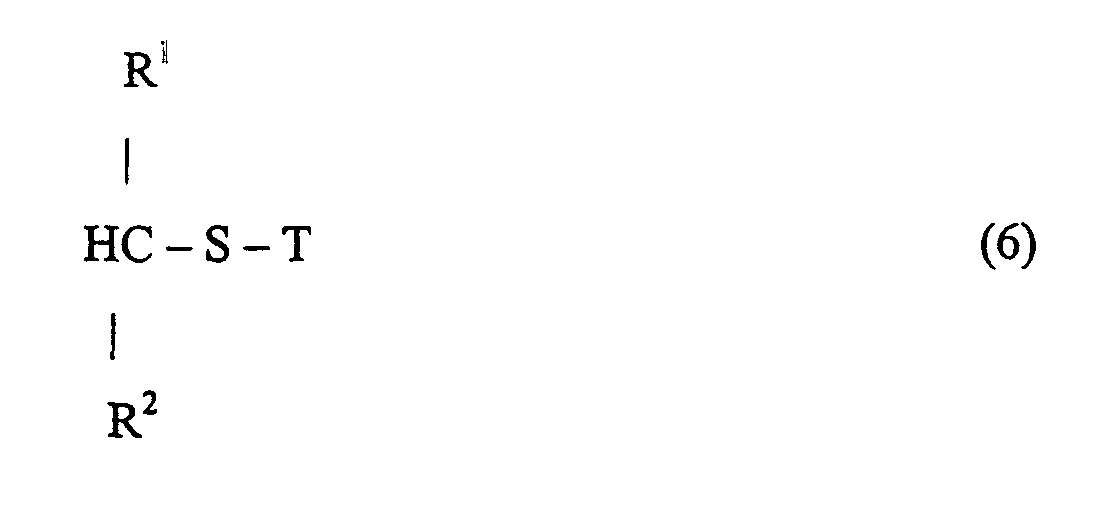
    3. A composition according to claim 2 in which the dispersant is a compound of the general formula R―S―T R―O―OC―CH2―S―T R―NH―OC―CH2―S―T
      Figure 00440001
      Figure 00440002
      Figure 00440003
    4. A composition according to claim 2 or 3 in which R, R1 and R2 are each independently selected from alkyl, alkenyl, phenyl-alkyl, phenyl-alkenyl, naphthylalkyl, naphthylalkenyl, alkylphenyl, alkenylphenyl, alkylnaphthyl and alkenylnaphthyl groups.
    5. A composition according to claim 2, 3 or 4 in which each of R, R1 and R2 contains from 8 to 21 carbon atoms.
    6. A composition according to any of claims 2 to 5, in which T is obtainable by the oligomerisation of a monomer of the general formula
      Figure 00440004
      in which
      R3 is H or C1-C3 alkyl
      Y is H, C1-C3 alkyl or C1-C4 alkyl substituted with one or more hydroxyl groups, and
      Z, which may be the same as or different from Y, is H, C1-C3 alkyl or C1-4 alkyl substituted with one or more hydroxyl groups, or
      Y and Z, together with the adjacent N atom, form a heterocyclic ring,
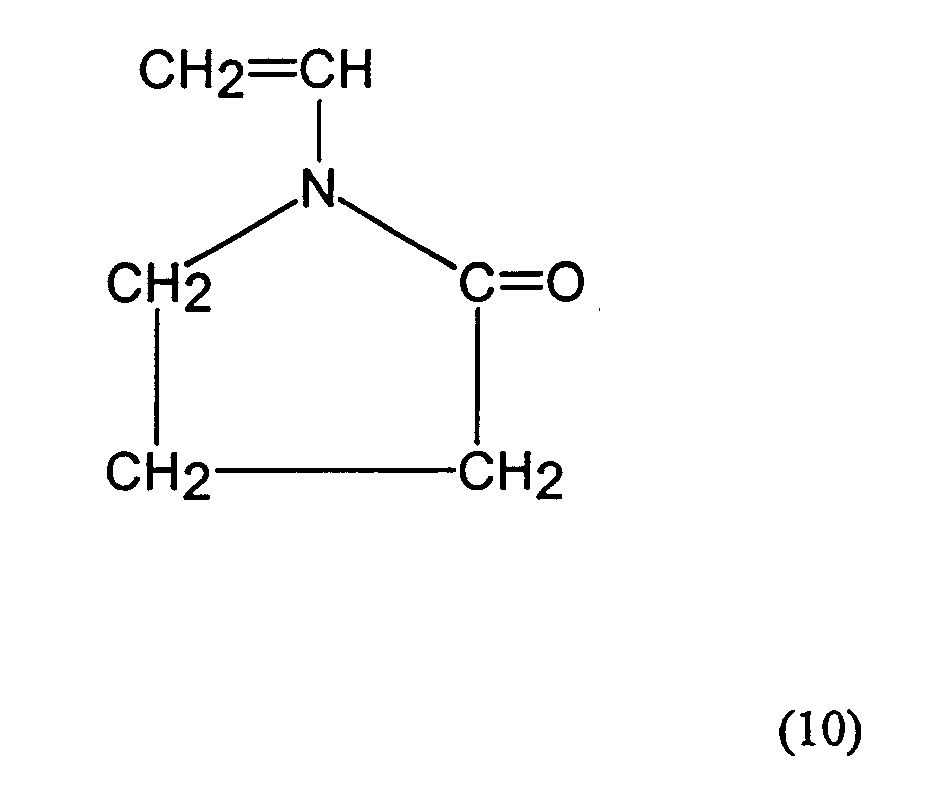
      or of the formula
      Figure 00450001
    7. A composition according to claim 6
      in which
      X is H or CH3
      Y is H, CH3, C2H5 or C(CH2OH)3, and
      Z, which may be the same as or different from Y, is H, CH3, C2H5 or C(CH2OH)3.
    8. A composition according to any of claims 1 to 7, in which the oligomeric group contains from 2 to 100 monomeric units.
    9. A composition according to claim 8, in which the oligomeric group contains from 3 to 50 monomeric units.
    10. A composition according to claim 1, in which the dispersant is any of the compounds hereinbefore described in any of the Examples 1-4 or in Table A.
    11. A composition according to any of claims 1 to 10 in which the hydrophilic material is a component of a photographic product.
    12. A composition according to claim 11, in which the hydrophobic material is a colour coupler, a colour coupler with associated solvent, or a solid particle dye.
    13. A composition according to claim 12, in which the hydrophobic material is a micro-precipitated photographic coupler, a colour coupler in the form of an evaporated dispersion, a filter dye or a sensitising dye.
    14. A composition according to any of claims 1 to 13, in which the hydrophilic colloid is gelatin.
    15. A method of producing a composition according to any of claims 1 to 14, which comprises dispersing a hydrophobic material in an aqueous medium in the presence of a dispersant as defined in any of claims 1 to 14.
    16. A photographic material which comprises a support bearing a plurality of layers each of which contains a hydrophilic colloid, wherein at least one such layer comprises a composition according to any of claims 1 to 14 or a composition that results from the drying of a composition according to any of claims 1 to 14.
    17. A photographic material according to claim 16 which comprises at least one light-sensitive silver halide emulsion layer.
    18. A process for producing a photographic material according to claim 16 or 17, which process comprises applying to a support a plurality of aqueous layers each of which contains a hydrophilic colloid, wherein at least one such layer comprises a composition according to any one of claims 1 to 14.
    19. A process according to claim 17, in which the said aqueous layers are coated onto the support simultaneously.
    20. A process according to claim 18 or 19 in which the coated layers are dried.
    21. The use of a dispersant compound as defined in any of claims 1 to 14 as a dispersant for a hydrophobic material in an aqueous medium that contains a hydrophilic colloid.
    EP01200337A 2000-02-05 2001-01-30 Nonionic oligomeric surfactants and their use as dispersants and stabilisers Withdrawn EP1122279A3 (en)

    Applications Claiming Priority (2)

    Application Number Priority Date Filing Date Title
    GBGB0002626.0A GB0002626D0 (en) 2000-02-05 2000-02-05 Nonionic oligomeric surfactants and their use as dispersants and stabilisers
    GB0002626 2000-02-05

    Publications (2)

    Publication Number Publication Date
    EP1122279A2 true EP1122279A2 (en) 2001-08-08
    EP1122279A3 EP1122279A3 (en) 2002-10-02

    Family

    ID=9884998

    Family Applications (1)

    Application Number Title Priority Date Filing Date
    EP01200337A Withdrawn EP1122279A3 (en) 2000-02-05 2001-01-30 Nonionic oligomeric surfactants and their use as dispersants and stabilisers

    Country Status (4)

    Country Link
    US (1) US6468727B2 (en)
    EP (1) EP1122279A3 (en)
    JP (1) JP2001290235A (en)
    GB (1) GB0002626D0 (en)

    Cited By (2)

    * Cited by examiner, † Cited by third party
    Publication number Priority date Publication date Assignee Title
    WO2005111718A1 (en) * 2004-05-03 2005-11-24 Eastman Kodak Company Method for reducing sensitizing dye stain
    EP1352755A3 (en) * 2002-04-09 2006-03-15 Eastman Kodak Company Ink printing method utilizing stabilized polymeric particles

    Families Citing this family (5)

    * Cited by examiner, † Cited by third party
    Publication number Priority date Publication date Assignee Title
    DE10034893A1 (en) * 2000-07-18 2002-01-31 Basf Ag Arrays of n aqueous polymer dispersions and m formulations of aqueous polymer dispersions
    US6906157B2 (en) * 2002-04-09 2005-06-14 Eastman Kodak Company Polymer particle stabilized by dispersant and method of preparation
    US6866902B2 (en) 2002-04-09 2005-03-15 Eastman Kodak Company Ink recording element containing stabilized polymeric particles
    US20050137282A1 (en) * 2003-12-19 2005-06-23 Cagle Phillip C. Liquid vehicle systems for improving latex ink-jet ink frequency response
    GB0526231D0 (en) * 2005-12-22 2006-02-01 Eastman Kodak Co Dispersant for reducing viscosity of solids

    Family Cites Families (38)

    * Cited by examiner, † Cited by third party
    Publication number Priority date Publication date Assignee Title
    BE597819A (en) * 1959-12-11
    GB1297947A (en) * 1969-03-20 1972-11-29
    US4022622A (en) * 1972-11-22 1977-05-10 Agfa-Gevaert N.V. Dispersing polymeric particles in aqueous medium for coating silver halide emulsion layers
    US4277581A (en) 1973-11-30 1981-07-07 L'oreal Polyamino-polyamide crosslinked with crosslinking agent
    DE2558591A1 (en) * 1975-12-24 1977-07-07 Henkel & Cie Gmbh Alkali metal soaps for use in hard water - contg. telomers derived from mercaptans and (meth)acrylamide
    DE2730645A1 (en) * 1977-07-07 1979-01-25 Henkel Kgaa USE OF TELOMERISATS MADE OF MERCAPTANES WITH ACRYLIC COMPOUNDS AS STONE PROTECTION AND / OR CORROSION PROTECTION AGENTS
    JPS54138059A (en) 1978-04-19 1979-10-26 Nitto Electric Ind Co Ltd One-pack type elastic sealant
    US4282343A (en) 1980-02-07 1981-08-04 Chevron Research Company Poly-(alpha-alkoxy)acrylamide and poly-(alpha-alkoxy)acrylamide complexes
    US4328141A (en) 1981-04-02 1982-05-04 American Cyanamid Company Stabilization of rosin dispersions with low molecular weight non-ionic polymers
    US4996243A (en) 1981-10-29 1991-02-26 Minnesota Mining And Manufacturing Company Curable acrylamido oligomer compositions with initiator, and cured products
    US4914223A (en) 1981-10-29 1990-04-03 Minnesota Mining And Manufacturing Company Acrylamidoacylated oligomers
    US4837290A (en) 1981-10-29 1989-06-06 Minnesota Mining And Manufacturing Company Acrylamidoacylated oligomers
    US4777276A (en) 1981-10-29 1988-10-11 Minnesota Mining And Manufacturing Company Acrylamidoacylated oligomers
    US4447493A (en) 1982-07-26 1984-05-08 Minnesota Mining And Manufacturing Company Vibration-damping constrained-layer constructions
    US4587313A (en) 1984-11-20 1986-05-06 Hitachi Chemical Company, Ltd. Radiation curable pressure-sensitive adhesive composition
    FR2575486B1 (en) * 1985-01-02 1988-08-19 Ouled Diaf Khemici NEW PROCESS FOR OBTAINING ANTI-FOG EFFECT ON WINDOWS
    US4677157A (en) 1985-06-03 1987-06-30 Richard Jacobs Preparing urethane polymer mixing isocyanate and premix of hydroxylated tertiary amine providing a crystalline polymer phase and polyol providing an amorphous polymer phase interdispersed with crystalline phase
    LU86873A1 (en) * 1987-05-08 1989-01-19 Oreal FOAMING COSMETIC COMPOSITIONS
    US4914165A (en) 1988-02-03 1990-04-03 Minnesota Mining And Manufacturing Company Radiation crosslinkable compositions
    US5219705A (en) 1988-07-04 1993-06-15 Fuji Photo Film Co., Ltd. Lithographic printing plate precursor of direct image type
    US5237016A (en) 1989-01-05 1993-08-17 Siska Diagnostics, Inc. End-attachment of oligonucleotides to polyacrylamide solid supports for capture and detection of nucleic acids
    US5536529A (en) 1989-05-11 1996-07-16 Borden, Inc. Ultraviolet radiation-curable coatings for optical fibers and optical fibers coated therewith
    US5352712A (en) 1989-05-11 1994-10-04 Borden, Inc. Ultraviolet radiation-curable coatings for optical fibers
    US5252697A (en) 1989-08-28 1993-10-12 Richard Jacobs Tooth restoration composition, structures and methods
    US5082914A (en) 1989-12-15 1992-01-21 Eastman Kodak Company Grafted cellulose esters containing a silicon moiety
    US5457195A (en) 1989-12-21 1995-10-10 Board Of Regents, The University Of Texas System Sapphyrin derivatives and conjugates
    US5232813A (en) 1990-01-31 1993-08-03 Fuji Photo Film Co., Ltd. Ps plate for use in making lithographic printing plate requiring no dampening water utilizing irradiation cured primer layer containing polyurethane resin and diazonium salt polycondensate photopolymerizable light-sensitive layer and silicone rubber layer
    JPH04216886A (en) 1990-12-17 1992-08-06 Lintec Corp Self-adhesive sheet resistant to blistering
    US5292796A (en) 1991-04-02 1994-03-08 Minnesota Mining And Manufacturing Company Urea-aldehyde condensates and melamine derivatives comprising fluorochemical oligomers
    DE4143390A1 (en) 1991-04-26 1993-04-01 Fluorine contg. (co)polymers, useful for water- and oil repellent treatment of substrates
    US5368931A (en) 1991-07-10 1994-11-29 Fuji Photo Film Co., Ltd. Lithographic printing plate precursor of direct image type
    US5292514A (en) 1992-06-24 1994-03-08 Minnesota Mining And Manufacturing Company Azlactone-functional substrates, corneal prostheses, and manufacture and use thereof
    JPH06228393A (en) 1993-02-02 1994-08-16 Nippon Zeon Co Ltd Crosslinkable plastisol
    US5585035A (en) 1993-08-06 1996-12-17 Minnesota Mining And Manufacturing Company Light modulating device having a silicon-containing matrix
    FR2727424B1 (en) 1994-11-30 1996-12-20 Atochem Elf Sa PHOTORETICULABLE COMPOSITIONS BASED ON TRIFLUOROETHYL METHACRYLATE AND PROCESSES FOR THEIR PREPARATION
    US5736624A (en) 1994-12-02 1998-04-07 Abbott Laboratories Phosphatase activated crosslinking, conjugating and reducing agents; methods of using such agents; and reagents comprising phosphatase activated crosslinking and conjugating agents
    US5561025A (en) 1995-07-03 1996-10-01 Xerox Corporation Toner aggregation processes
    US6127453A (en) * 1998-12-21 2000-10-03 Eastman Kodak Company Ink jet ink

    Cited By (2)

    * Cited by examiner, † Cited by third party
    Publication number Priority date Publication date Assignee Title
    EP1352755A3 (en) * 2002-04-09 2006-03-15 Eastman Kodak Company Ink printing method utilizing stabilized polymeric particles
    WO2005111718A1 (en) * 2004-05-03 2005-11-24 Eastman Kodak Company Method for reducing sensitizing dye stain

    Also Published As

    Publication number Publication date
    US6468727B2 (en) 2002-10-22
    JP2001290235A (en) 2001-10-19
    GB0002626D0 (en) 2000-03-29
    US20010034385A1 (en) 2001-10-25
    EP1122279A3 (en) 2002-10-02

    Similar Documents

    Publication Publication Date Title
    US4368258A (en) Process for preparing impregnated polymer latex compositions
    US4524131A (en) Photographic silver halide recording material with graft copolymer particles in outer layer
    US4603102A (en) Photographic silver halide recording material with cellulose dicarboxylic acid semiester particles in outer layer
    US4340664A (en) Copolymer latex and photographic silver halide materials containing such latex
    DE69121965T2 (en) High contrast photographic element including an arylsulphonamidophenylhydrazide containing an alkylpyridinium group
    US6468727B2 (en) Nonionic oligomeric surfactants and their use as dispersants and stabilizers
    US5008179A (en) Increased activity precipitated photographic materials
    DE2505016A1 (en) ANTI-VEIL DISPERSION
    DE2820092C2 (en)
    JPS60140344A (en) Method for dispersing hydrophobic photographic additive, and silver halide photosensitive material
    EP0399729A2 (en) Preparation of polymer dispersions and photographic elements containing polymer particles
    EP0146337B1 (en) Elements having hydrophilic layers containing hydrophobes in polymer particles and a method of making same
    EP0183480A2 (en) Dispersions of water-insoluble photographic addenda
    EP0555458B1 (en) Oxygen barrier coated photographic coupler dispersion particles for enhanced dye-stability
    EP0729061B1 (en) Emulsification and dispersion method of hydrophobic, photographically useful compound
    JP2821808B2 (en) Silver halide photographic material with excellent silver image tone
    US4584255A (en) Photographic color elements having hydrophilic layers containing hydrophobes in polymer particles
    EP1140347B1 (en) Hydrophilic colloid composition
    JPS5937489B2 (en) Dispersion method of photographic additives
    JPH08292509A (en) Method for emulsifying and dispersing hydrophobic photographic useful compound
    JP2004240445A (en) Method for emulsifying and dispersing hydrophobic photographically useful compound
    JPH08286313A (en) Silver halide photosensitive material
    JPS6160099B2 (en)
    GB2140572A (en) Photographic dispersions
    JPS63254444A (en) Method for applying coating solution containing photographic additive

    Legal Events

    Date Code Title Description
    PUAI Public reference made under article 153(3) epc to a published international application that has entered the european phase

    Free format text: ORIGINAL CODE: 0009012

    AK Designated contracting states

    Kind code of ref document: A2

    Designated state(s): AT BE CH CY DE DK ES FI FR GB GR IE IT LI LU MC NL PT SE TR

    AX Request for extension of the european patent

    Free format text: AL;LT;LV;MK;RO;SI

    PUAL Search report despatched

    Free format text: ORIGINAL CODE: 0009013

    AK Designated contracting states

    Kind code of ref document: A3

    Designated state(s): AT BE CH CY DE DK ES FI FR GB GR IE IT LI LU MC NL PT SE TR

    AX Request for extension of the european patent

    Free format text: AL;LT;LV;MK;RO;SI

    17P Request for examination filed

    Effective date: 20030311

    AKX Designation fees paid

    Designated state(s): DE FR GB

    17Q First examination report despatched

    Effective date: 20030520

    STAA Information on the status of an ep patent application or granted ep patent

    Free format text: STATUS: THE APPLICATION IS DEEMED TO BE WITHDRAWN

    18D Application deemed to be withdrawn

    Effective date: 20060801