EP1119635B1 - Non-homogeneous systems for the resolution of enantiomeric mixtures - Google Patents
Non-homogeneous systems for the resolution of enantiomeric mixtures Download PDFInfo
- Publication number
- EP1119635B1 EP1119635B1 EP99954779A EP99954779A EP1119635B1 EP 1119635 B1 EP1119635 B1 EP 1119635B1 EP 99954779 A EP99954779 A EP 99954779A EP 99954779 A EP99954779 A EP 99954779A EP 1119635 B1 EP1119635 B1 EP 1119635B1
- Authority
- EP
- European Patent Office
- Prior art keywords
- homogeneous system
- organic component
- enzyme
- process according
- surfactant
- Prior art date
- Legal status (The legal status is an assumption and is not a legal conclusion. Google has not performed a legal analysis and makes no representation as to the accuracy of the status listed.)
- Expired - Lifetime
Links
- 239000000203 mixture Substances 0.000 title claims abstract description 84
- 238000000034 method Methods 0.000 claims abstract description 112
- 102000004190 Enzymes Human genes 0.000 claims abstract description 106
- 108090000790 Enzymes Proteins 0.000 claims abstract description 106
- 230000008569 process Effects 0.000 claims abstract description 91
- 150000002148 esters Chemical class 0.000 claims abstract description 35
- 239000002904 solvent Substances 0.000 claims abstract description 35
- 150000001875 compounds Chemical class 0.000 claims abstract description 18
- 230000002051 biphasic effect Effects 0.000 claims abstract description 12
- 229940088598 enzyme Drugs 0.000 claims description 96
- 239000004094 surface-active agent Substances 0.000 claims description 80
- AMQJEAYHLZJPGS-UHFFFAOYSA-N N-Pentanol Chemical compound CCCCCO AMQJEAYHLZJPGS-UHFFFAOYSA-N 0.000 claims description 62
- 239000003960 organic solvent Substances 0.000 claims description 61
- XLYOFNOQVPJJNP-UHFFFAOYSA-N water Substances O XLYOFNOQVPJJNP-UHFFFAOYSA-N 0.000 claims description 56
- 102000004157 Hydrolases Human genes 0.000 claims description 34
- 108090000604 Hydrolases Proteins 0.000 claims description 34
- YMWUJEATGCHHMB-UHFFFAOYSA-N Dichloromethane Chemical compound ClCCl YMWUJEATGCHHMB-UHFFFAOYSA-N 0.000 claims description 27
- 239000003125 aqueous solvent Substances 0.000 claims description 23
- MSXVEPNJUHWQHW-UHFFFAOYSA-N 2-methylbutan-2-ol Chemical compound CCC(C)(C)O MSXVEPNJUHWQHW-UHFFFAOYSA-N 0.000 claims description 21
- LRHPLDYGYMQRHN-UHFFFAOYSA-N N-Butanol Chemical compound CCCCO LRHPLDYGYMQRHN-UHFFFAOYSA-N 0.000 claims description 21
- BTANRVKWQNVYAZ-UHFFFAOYSA-N butan-2-ol Chemical compound CCC(C)O BTANRVKWQNVYAZ-UHFFFAOYSA-N 0.000 claims description 21
- -1 1-heptanot Chemical compound 0.000 claims description 19
- 239000008363 phosphate buffer Substances 0.000 claims description 17
- FRDAATYAJDYRNW-UHFFFAOYSA-N 3-methyl-3-pentanol Chemical compound CCC(C)(O)CC FRDAATYAJDYRNW-UHFFFAOYSA-N 0.000 claims description 16
- LFQSCWFLJHTTHZ-UHFFFAOYSA-N Ethanol Chemical compound CCO LFQSCWFLJHTTHZ-UHFFFAOYSA-N 0.000 claims description 16
- QMMFVYPAHWMCMS-UHFFFAOYSA-N Dimethyl sulfide Chemical compound CSC QMMFVYPAHWMCMS-UHFFFAOYSA-N 0.000 claims description 15
- RTZKZFJDLAIYFH-UHFFFAOYSA-N Diethyl ether Chemical compound CCOCC RTZKZFJDLAIYFH-UHFFFAOYSA-N 0.000 claims description 14
- RZKSECIXORKHQS-UHFFFAOYSA-N Heptan-3-ol Chemical compound CCCCC(O)CC RZKSECIXORKHQS-UHFFFAOYSA-N 0.000 claims description 14
- PHTQWCKDNZKARW-UHFFFAOYSA-N isoamylol Chemical compound CC(C)CCO PHTQWCKDNZKARW-UHFFFAOYSA-N 0.000 claims description 14
- AQIXEPGDORPWBJ-UHFFFAOYSA-N pentan-3-ol Chemical compound CCC(O)CC AQIXEPGDORPWBJ-UHFFFAOYSA-N 0.000 claims description 14
- 108090000371 Esterases Proteins 0.000 claims description 13
- 108090001060 Lipase Proteins 0.000 claims description 13
- 239000004367 Lipase Substances 0.000 claims description 13
- 102000004882 Lipase Human genes 0.000 claims description 13
- 235000019421 lipase Nutrition 0.000 claims description 13
- APSBXTVYXVQYAB-UHFFFAOYSA-M sodium docusate Chemical compound [Na+].CCCCC(CC)COC(=O)CC(S([O-])(=O)=O)C(=O)OCC(CC)CCCC APSBXTVYXVQYAB-UHFFFAOYSA-M 0.000 claims description 13
- YXFVVABEGXRONW-UHFFFAOYSA-N Toluene Chemical compound CC1=CC=CC=C1 YXFVVABEGXRONW-UHFFFAOYSA-N 0.000 claims description 12
- 210000004185 liver Anatomy 0.000 claims description 11
- BBMCTIGTTCKYKF-UHFFFAOYSA-N 1-heptanol Chemical compound CCCCCCCO BBMCTIGTTCKYKF-UHFFFAOYSA-N 0.000 claims description 10
- 150000001335 aliphatic alkanes Chemical class 0.000 claims description 9
- 239000013078 crystal Substances 0.000 claims description 9
- 229960000878 docusate sodium Drugs 0.000 claims description 9
- 229940040461 lipase Drugs 0.000 claims description 9
- LYGJENNIWJXYER-UHFFFAOYSA-N nitromethane Chemical compound C[N+]([O-])=O LYGJENNIWJXYER-UHFFFAOYSA-N 0.000 claims description 9
- NTIZESTWPVYFNL-UHFFFAOYSA-N Methyl isobutyl ketone Chemical compound CC(C)CC(C)=O NTIZESTWPVYFNL-UHFFFAOYSA-N 0.000 claims description 8
- UIHCLUNTQKBZGK-UHFFFAOYSA-N Methyl isobutyl ketone Natural products CCC(C)C(C)=O UIHCLUNTQKBZGK-UHFFFAOYSA-N 0.000 claims description 8
- 229910052739 hydrogen Inorganic materials 0.000 claims description 8
- 239000000546 pharmaceutical excipient Substances 0.000 claims description 8
- 229910052717 sulfur Inorganic materials 0.000 claims description 8
- 150000001298 alcohols Chemical class 0.000 claims description 7
- 229910052731 fluorine Inorganic materials 0.000 claims description 7
- 229910052711 selenium Inorganic materials 0.000 claims description 7
- DQXKOXQEQONOBG-UHFFFAOYSA-N [5-(4-amino-5-fluoro-2-oxopyrimidin-1-yl)-1,3-oxathiolan-2-yl]methyl butanoate Chemical group C1SC(COC(=O)CCC)OC1N1C(=O)N=C(N)C(F)=C1 DQXKOXQEQONOBG-UHFFFAOYSA-N 0.000 claims description 6
- 239000003945 anionic surfactant Substances 0.000 claims description 6
- 229910052760 oxygen Inorganic materials 0.000 claims description 6
- LENZDBCJOHFCAS-UHFFFAOYSA-N tris Chemical compound OCC(N)(CO)CO LENZDBCJOHFCAS-UHFFFAOYSA-N 0.000 claims description 6
- XKIRHOWVQWCYBT-UHFFFAOYSA-N 3-ethylpentan-3-ol Chemical compound CCC(O)(CC)CC XKIRHOWVQWCYBT-UHFFFAOYSA-N 0.000 claims description 5
- WVYWICLMDOOCFB-UHFFFAOYSA-N 4-methyl-2-pentanol Chemical compound CC(C)CC(C)O WVYWICLMDOOCFB-UHFFFAOYSA-N 0.000 claims description 5
- 241000228245 Aspergillus niger Species 0.000 claims description 5
- 108010093096 Immobilized Enzymes Proteins 0.000 claims description 5
- 229920001213 Polysorbate 20 Polymers 0.000 claims description 5
- 241000589516 Pseudomonas Species 0.000 claims description 5
- 150000001350 alkyl halides Chemical class 0.000 claims description 5
- 239000002635 aromatic organic solvent Substances 0.000 claims description 5
- 125000000449 nitro group Chemical group [O-][N+](*)=O 0.000 claims description 5
- 239000000256 polyoxyethylene sorbitan monolaurate Substances 0.000 claims description 5
- 235000010486 polyoxyethylene sorbitan monolaurate Nutrition 0.000 claims description 5
- HXJUTPCZVOIRIF-UHFFFAOYSA-N sulfolane Chemical compound O=S1(=O)CCCC1 HXJUTPCZVOIRIF-UHFFFAOYSA-N 0.000 claims description 5
- 125000004209 (C1-C8) alkyl group Chemical group 0.000 claims description 4
- 102000019280 Pancreatic lipases Human genes 0.000 claims description 4
- 108050006759 Pancreatic lipases Proteins 0.000 claims description 4
- 108090000787 Subtilisin Proteins 0.000 claims description 4
- 230000001476 alcoholic effect Effects 0.000 claims description 4
- 230000003113 alkalizing effect Effects 0.000 claims description 4
- 235000019846 buffering salt Nutrition 0.000 claims description 4
- 239000003093 cationic surfactant Substances 0.000 claims description 4
- 239000003795 chemical substances by application Substances 0.000 claims description 4
- 229960003964 deoxycholic acid Drugs 0.000 claims description 4
- KXGVEGMKQFWNSR-UHFFFAOYSA-N deoxycholic acid Natural products C1CC2CC(O)CCC2(C)C2C1C1CCC(C(CCC(O)=O)C)C1(C)C(O)C2 KXGVEGMKQFWNSR-UHFFFAOYSA-N 0.000 claims description 4
- 239000006185 dispersion Substances 0.000 claims description 4
- 150000002576 ketones Chemical class 0.000 claims description 4
- 239000002736 nonionic surfactant Substances 0.000 claims description 4
- HEGSGKPQLMEBJL-RKQHYHRCSA-N octyl beta-D-glucopyranoside Chemical compound CCCCCCCCO[C@@H]1O[C@H](CO)[C@@H](O)[C@H](O)[C@H]1O HEGSGKPQLMEBJL-RKQHYHRCSA-N 0.000 claims description 4
- 229940116369 pancreatic lipase Drugs 0.000 claims description 4
- 125000000217 alkyl group Chemical group 0.000 claims description 3
- 230000000845 anti-microbial effect Effects 0.000 claims description 3
- 125000003118 aryl group Chemical group 0.000 claims description 3
- KXGVEGMKQFWNSR-LLQZFEROSA-N deoxycholic acid Chemical compound C([C@H]1CC2)[C@H](O)CC[C@]1(C)[C@@H]1[C@@H]2[C@@H]2CC[C@H]([C@@H](CCC(O)=O)C)[C@@]2(C)[C@@H](O)C1 KXGVEGMKQFWNSR-LLQZFEROSA-N 0.000 claims description 3
- 238000001914 filtration Methods 0.000 claims description 3
- 239000003755 preservative agent Substances 0.000 claims description 3
- 239000003381 stabilizer Substances 0.000 claims description 3
- WMOVHXAZOJBABW-UHFFFAOYSA-N tert-butyl acetate Chemical compound CC(=O)OC(C)(C)C WMOVHXAZOJBABW-UHFFFAOYSA-N 0.000 claims description 3
- IWTBVKIGCDZRPL-UHFFFAOYSA-N 3-methylpentanol Chemical compound CCC(C)CCO IWTBVKIGCDZRPL-UHFFFAOYSA-N 0.000 claims 2
- SXRSQZLOMIGNAQ-UHFFFAOYSA-N Glutaraldehyde Chemical compound O=CCCCC=O SXRSQZLOMIGNAQ-UHFFFAOYSA-N 0.000 claims 2
- DGAQECJNVWCQMB-PUAWFVPOSA-M Ilexoside XXIX Chemical compound C[C@@H]1CC[C@@]2(CC[C@@]3(C(=CC[C@H]4[C@]3(CC[C@@H]5[C@@]4(CC[C@@H](C5(C)C)OS(=O)(=O)[O-])C)C)[C@@H]2[C@]1(C)O)C)C(=O)O[C@H]6[C@@H]([C@H]([C@@H]([C@H](O6)CO)O)O)O.[Na+] DGAQECJNVWCQMB-PUAWFVPOSA-M 0.000 claims 2
- 239000004599 antimicrobial Substances 0.000 claims 2
- 229910052708 sodium Inorganic materials 0.000 claims 2
- 239000011734 sodium Substances 0.000 claims 2
- KHAMWMTZQMIZNI-UHFFFAOYSA-N [2-[(5-fluoro-2-oxo-1h-pyrimidin-6-yl)amino]-1,3-oxathiolan-2-yl]methyl butanoate Chemical compound N1C(=O)N=CC(F)=C1NC1(COC(=O)CCC)OCCS1 KHAMWMTZQMIZNI-UHFFFAOYSA-N 0.000 claims 1
- 238000006243 chemical reaction Methods 0.000 abstract description 83
- 230000002209 hydrophobic effect Effects 0.000 abstract description 18
- 239000011942 biocatalyst Substances 0.000 abstract description 12
- XQSPYNMVSIKCOC-UHFFFAOYSA-N 4-amino-5-fluoro-1-[2-(hydroxymethyl)-1,3-oxathiolan-5-yl]pyrimidin-2-one Chemical compound C1=C(F)C(N)=NC(=O)N1C1OC(CO)SC1 XQSPYNMVSIKCOC-UHFFFAOYSA-N 0.000 abstract description 5
- 230000000840 anti-viral effect Effects 0.000 abstract description 5
- 230000001404 mediated effect Effects 0.000 abstract description 5
- 238000003786 synthesis reaction Methods 0.000 abstract description 3
- 230000015572 biosynthetic process Effects 0.000 abstract description 2
- 239000000758 substrate Substances 0.000 description 34
- 239000000243 solution Substances 0.000 description 29
- LLYJISDUHFXOHK-GOCONZMPSA-N ferroptocide Chemical compound C[C@@H]1CC[C@@]23C[C@@H](C(=O)[C@]2([C@@]1([C@@H](C[C@H]([C@@H]3C)C4=CCN5C(=O)N(C(=O)N5C4)C6=CC=CC=C6)OC(=O)CCl)C)O)O LLYJISDUHFXOHK-GOCONZMPSA-N 0.000 description 26
- FERIUCNNQQJTOY-UHFFFAOYSA-N Butyric acid Natural products CCCC(O)=O FERIUCNNQQJTOY-UHFFFAOYSA-N 0.000 description 23
- FERIUCNNQQJTOY-UHFFFAOYSA-M Butyrate Chemical compound CCCC([O-])=O FERIUCNNQQJTOY-UHFFFAOYSA-M 0.000 description 21
- KFZMGEQAYNKOFK-UHFFFAOYSA-N Isopropanol Chemical compound CC(C)O KFZMGEQAYNKOFK-UHFFFAOYSA-N 0.000 description 20
- 238000011068 loading method Methods 0.000 description 17
- HBAQYPYDRFILMT-UHFFFAOYSA-N 8-[3-(1-cyclopropylpyrazol-4-yl)-1H-pyrazolo[4,3-d]pyrimidin-5-yl]-3-methyl-3,8-diazabicyclo[3.2.1]octan-2-one Chemical class C1(CC1)N1N=CC(=C1)C1=NNC2=C1N=C(N=C2)N1C2C(N(CC1CC2)C)=O HBAQYPYDRFILMT-UHFFFAOYSA-N 0.000 description 16
- 230000003287 optical effect Effects 0.000 description 14
- WEVYAHXRMPXWCK-UHFFFAOYSA-N Acetonitrile Chemical compound CC#N WEVYAHXRMPXWCK-UHFFFAOYSA-N 0.000 description 12
- 230000000694 effects Effects 0.000 description 11
- 239000003054 catalyst Substances 0.000 description 10
- 235000010482 polyoxyethylene sorbitan monooleate Nutrition 0.000 description 10
- 229920000053 polysorbate 80 Polymers 0.000 description 10
- ZMXDDKWLCZADIW-UHFFFAOYSA-N N,N-Dimethylformamide Chemical compound CN(C)C=O ZMXDDKWLCZADIW-UHFFFAOYSA-N 0.000 description 9
- 238000004128 high performance liquid chromatography Methods 0.000 description 8
- XQSPYNMVSIKCOC-NTSWFWBYSA-N Emtricitabine Chemical compound C1=C(F)C(N)=NC(=O)N1[C@H]1O[C@@H](CO)SC1 XQSPYNMVSIKCOC-NTSWFWBYSA-N 0.000 description 7
- 238000000605 extraction Methods 0.000 description 7
- 230000002829 reductive effect Effects 0.000 description 7
- XQSPYNMVSIKCOC-RITPCOANSA-N 4-amino-5-fluoro-1-[(2s,5r)-2-(hydroxymethyl)-1,3-oxathiolan-5-yl]pyrimidin-2-one Chemical compound C1=C(F)C(N)=NC(=O)N1[C@@H]1O[C@H](CO)SC1 XQSPYNMVSIKCOC-RITPCOANSA-N 0.000 description 6
- IAZDPXIOMUYVGZ-UHFFFAOYSA-N Dimethylsulphoxide Chemical compound CS(C)=O IAZDPXIOMUYVGZ-UHFFFAOYSA-N 0.000 description 6
- OKKJLVBELUTLKV-UHFFFAOYSA-N Methanol Chemical compound OC OKKJLVBELUTLKV-UHFFFAOYSA-N 0.000 description 6
- HEMHJVSKTPXQMS-UHFFFAOYSA-M Sodium hydroxide Chemical compound [OH-].[Na+] HEMHJVSKTPXQMS-UHFFFAOYSA-M 0.000 description 6
- 238000004587 chromatography analysis Methods 0.000 description 6
- 230000002255 enzymatic effect Effects 0.000 description 6
- 229960000074 biopharmaceutical Drugs 0.000 description 5
- 238000006555 catalytic reaction Methods 0.000 description 5
- 239000000126 substance Substances 0.000 description 5
- DKGAVHZHDRPRBM-UHFFFAOYSA-N Tert-Butanol Chemical compound CC(C)(C)O DKGAVHZHDRPRBM-UHFFFAOYSA-N 0.000 description 4
- 239000003443 antiviral agent Substances 0.000 description 4
- 239000006184 cosolvent Substances 0.000 description 4
- 238000004090 dissolution Methods 0.000 description 4
- 230000006872 improvement Effects 0.000 description 4
- 238000004519 manufacturing process Methods 0.000 description 4
- 230000035484 reaction time Effects 0.000 description 4
- 0 *C(C(N)=N1)=CN(C2OC(CO)*C2)C1=O Chemical compound *C(C(N)=N1)=CN(C2OC(CO)*C2)C1=O 0.000 description 3
- HNAGHMKIPMKKBB-UHFFFAOYSA-N 1-benzylpyrrolidine-3-carboxamide Chemical compound C1C(C(=O)N)CCN1CC1=CC=CC=C1 HNAGHMKIPMKKBB-UHFFFAOYSA-N 0.000 description 3
- LYCAIKOWRPUZTN-UHFFFAOYSA-N Ethylene glycol Chemical compound OCCO LYCAIKOWRPUZTN-UHFFFAOYSA-N 0.000 description 3
- 108091005804 Peptidases Proteins 0.000 description 3
- 102000035195 Peptidases Human genes 0.000 description 3
- 229920003171 Poly (ethylene oxide) Polymers 0.000 description 3
- 239000004365 Protease Substances 0.000 description 3
- 239000005456 alcohol based solvent Substances 0.000 description 3
- OBNCKNCVKJNDBV-UHFFFAOYSA-N butanoic acid ethyl ester Natural products CCCC(=O)OCC OBNCKNCVKJNDBV-UHFFFAOYSA-N 0.000 description 3
- 229940079593 drug Drugs 0.000 description 3
- 239000003814 drug Substances 0.000 description 3
- 239000012528 membrane Substances 0.000 description 3
- 239000012071 phase Substances 0.000 description 3
- 229920000136 polysorbate Polymers 0.000 description 3
- BDERNNFJNOPAEC-UHFFFAOYSA-N propan-1-ol Chemical compound CCCO BDERNNFJNOPAEC-UHFFFAOYSA-N 0.000 description 3
- 238000012216 screening Methods 0.000 description 3
- 239000007787 solid Substances 0.000 description 3
- 230000007928 solubilization Effects 0.000 description 3
- 238000005063 solubilization Methods 0.000 description 3
- 230000000707 stereoselective effect Effects 0.000 description 3
- CMCBDXRRFKYBDG-UHFFFAOYSA-N 1-dodecoxydodecane Chemical compound CCCCCCCCCCCCOCCCCCCCCCCCC CMCBDXRRFKYBDG-UHFFFAOYSA-N 0.000 description 2
- PLFJWWUZKJKIPZ-UHFFFAOYSA-N 2-[2-[2-(2,6,8-trimethylnonan-4-yloxy)ethoxy]ethoxy]ethanol Chemical compound CC(C)CC(C)CC(CC(C)C)OCCOCCOCCO PLFJWWUZKJKIPZ-UHFFFAOYSA-N 0.000 description 2
- UTXPMECBRCEYCI-UHFFFAOYSA-N 2-[2-[2-[2-(4-nonylphenoxy)ethoxy]ethoxy]ethoxy]ethanol Chemical compound CCCCCCCCCC1=CC=C(OCCOCCOCCOCCO)C=C1 UTXPMECBRCEYCI-UHFFFAOYSA-N 0.000 description 2
- JYVLIDXNZAXMDK-UHFFFAOYSA-N 2-pentanol Substances CCCC(C)O JYVLIDXNZAXMDK-UHFFFAOYSA-N 0.000 description 2
- JTEGQNOMFQHVDC-RQJHMYQMSA-N 4-amino-1-[(2s,5r)-2-(hydroxymethyl)-1,3-oxathiolan-5-yl]pyrimidin-2-one Chemical compound O=C1N=C(N)C=CN1[C@@H]1O[C@H](CO)SC1 JTEGQNOMFQHVDC-RQJHMYQMSA-N 0.000 description 2
- 208000031886 HIV Infections Diseases 0.000 description 2
- 208000037357 HIV infectious disease Diseases 0.000 description 2
- SECXISVLQFMRJM-UHFFFAOYSA-N N-Methylpyrrolidone Chemical compound CN1CCCC1=O SECXISVLQFMRJM-UHFFFAOYSA-N 0.000 description 2
- JUJWROOIHBZHMG-UHFFFAOYSA-N Pyridine Chemical compound C1=CC=NC=C1 JUJWROOIHBZHMG-UHFFFAOYSA-N 0.000 description 2
- PRXRUNOAOLTIEF-ADSICKODSA-N Sorbitan trioleate Chemical compound CCCCCCCC\C=C/CCCCCCCC(=O)OC[C@@H](OC(=O)CCCCCCC\C=C/CCCCCCCC)[C@H]1OC[C@H](O)[C@H]1OC(=O)CCCCCCC\C=C/CCCCCCCC PRXRUNOAOLTIEF-ADSICKODSA-N 0.000 description 2
- 239000002253 acid Substances 0.000 description 2
- 238000013019 agitation Methods 0.000 description 2
- 125000000129 anionic group Chemical group 0.000 description 2
- 239000008346 aqueous phase Substances 0.000 description 2
- 239000007864 aqueous solution Substances 0.000 description 2
- 125000004429 atom Chemical group 0.000 description 2
- 229910052799 carbon Inorganic materials 0.000 description 2
- 238000006911 enzymatic reaction Methods 0.000 description 2
- 208000033519 human immunodeficiency virus infectious disease Diseases 0.000 description 2
- 239000010410 layer Substances 0.000 description 2
- 239000007788 liquid Substances 0.000 description 2
- XKBGEWXEAPTVCK-UHFFFAOYSA-M methyltrioctylammonium chloride Chemical compound [Cl-].CCCCCCCC[N+](C)(CCCCCCCC)CCCCCCCC XKBGEWXEAPTVCK-UHFFFAOYSA-M 0.000 description 2
- 239000012074 organic phase Substances 0.000 description 2
- 125000001436 propyl group Chemical group [H]C([*])([H])C([H])([H])C([H])([H])[H] 0.000 description 2
- 102000004169 proteins and genes Human genes 0.000 description 2
- 108090000623 proteins and genes Proteins 0.000 description 2
- 230000009467 reduction Effects 0.000 description 2
- 229910052938 sodium sulfate Inorganic materials 0.000 description 2
- 235000011152 sodium sulphate Nutrition 0.000 description 2
- 230000006641 stabilisation Effects 0.000 description 2
- 238000011105 stabilization Methods 0.000 description 2
- 239000000725 suspension Substances 0.000 description 2
- XZPMQCKVOWVETG-UHFFFAOYSA-J tetrasodium;2-[(3-carboxylato-3-sulfonatopropanoyl)-octadecylamino]butanedioate Chemical compound [Na+].[Na+].[Na+].[Na+].CCCCCCCCCCCCCCCCCCN(C(CC([O-])=O)C([O-])=O)C(=O)CC(C([O-])=O)S([O-])(=O)=O XZPMQCKVOWVETG-UHFFFAOYSA-J 0.000 description 2
- MDYZKJNTKZIUSK-UHFFFAOYSA-N tyloxapol Chemical compound O=C.C1CO1.CC(C)(C)CC(C)(C)C1=CC=C(O)C=C1 MDYZKJNTKZIUSK-UHFFFAOYSA-N 0.000 description 2
- 229920001664 tyloxapol Polymers 0.000 description 2
- 229960004224 tyloxapol Drugs 0.000 description 2
- HBOMLICNUCNMMY-XLPZGREQSA-N zidovudine Chemical compound O=C1NC(=O)C(C)=CN1[C@@H]1O[C@H](CO)[C@@H](N=[N+]=[N-])C1 HBOMLICNUCNMMY-XLPZGREQSA-N 0.000 description 2
- CUNWUEBNSZSNRX-RKGWDQTMSA-N (2r,3r,4r,5s)-hexane-1,2,3,4,5,6-hexol;(z)-octadec-9-enoic acid Chemical compound OC[C@H](O)[C@@H](O)[C@H](O)[C@H](O)CO.OC[C@H](O)[C@@H](O)[C@H](O)[C@H](O)CO.CCCCCCCC\C=C/CCCCCCCC(O)=O.CCCCCCCC\C=C/CCCCCCCC(O)=O.CCCCCCCC\C=C/CCCCCCCC(O)=O CUNWUEBNSZSNRX-RKGWDQTMSA-N 0.000 description 1
- JNYAEWCLZODPBN-JGWLITMVSA-N (2r,3r,4s)-2-[(1r)-1,2-dihydroxyethyl]oxolane-3,4-diol Chemical compound OC[C@@H](O)[C@H]1OC[C@H](O)[C@H]1O JNYAEWCLZODPBN-JGWLITMVSA-N 0.000 description 1
- ONBWNNUYXGJKKD-UHFFFAOYSA-N 1,4-bis(2-ethylhexoxy)-1,4-dioxobutane-2-sulfonic acid;sodium Chemical compound [Na].CCCCC(CC)COC(=O)CC(S(O)(=O)=O)C(=O)OCC(CC)CCCC ONBWNNUYXGJKKD-UHFFFAOYSA-N 0.000 description 1
- IEORSVTYLWZQJQ-UHFFFAOYSA-N 2-(2-nonylphenoxy)ethanol Chemical compound CCCCCCCCCC1=CC=CC=C1OCCO IEORSVTYLWZQJQ-UHFFFAOYSA-N 0.000 description 1
- IEQAICDLOKRSRL-UHFFFAOYSA-N 2-[2-[2-[2-[2-[2-[2-[2-[2-[2-[2-[2-[2-[2-[2-[2-[2-[2-[2-[2-[2-[2-(2-dodecoxyethoxy)ethoxy]ethoxy]ethoxy]ethoxy]ethoxy]ethoxy]ethoxy]ethoxy]ethoxy]ethoxy]ethoxy]ethoxy]ethoxy]ethoxy]ethoxy]ethoxy]ethoxy]ethoxy]ethoxy]ethoxy]ethoxy]ethanol Chemical compound CCCCCCCCCCCCOCCOCCOCCOCCOCCOCCOCCOCCOCCOCCOCCOCCOCCOCCOCCOCCOCCOCCOCCOCCOCCOCCOCCO IEQAICDLOKRSRL-UHFFFAOYSA-N 0.000 description 1
- UMCMPZBLKLEWAF-BCTGSCMUSA-N 3-[(3-cholamidopropyl)dimethylammonio]propane-1-sulfonate Chemical compound C([C@H]1C[C@H]2O)[C@H](O)CC[C@]1(C)[C@@H]1[C@@H]2[C@@H]2CC[C@H]([C@@H](CCC(=O)NCCC[N+](C)(C)CCCS([O-])(=O)=O)C)[C@@]2(C)[C@@H](O)C1 UMCMPZBLKLEWAF-BCTGSCMUSA-N 0.000 description 1
- JYCQQPHGFMYQCF-UHFFFAOYSA-N 4-tert-Octylphenol monoethoxylate Chemical compound CC(C)(C)CC(C)(C)C1=CC=C(OCCO)C=C1 JYCQQPHGFMYQCF-UHFFFAOYSA-N 0.000 description 1
- QTBSBXVTEAMEQO-UHFFFAOYSA-M Acetate Chemical compound CC([O-])=O QTBSBXVTEAMEQO-UHFFFAOYSA-M 0.000 description 1
- DKPFZGUDAPQIHT-UHFFFAOYSA-N Butyl acetate Natural products CCCCOC(C)=O DKPFZGUDAPQIHT-UHFFFAOYSA-N 0.000 description 1
- OKTJSMMVPCPJKN-UHFFFAOYSA-N Carbon Chemical compound [C] OKTJSMMVPCPJKN-UHFFFAOYSA-N 0.000 description 1
- 229940126062 Compound A Drugs 0.000 description 1
- LCGLNKUTAGEVQW-UHFFFAOYSA-N Dimethyl ether Chemical compound COC LCGLNKUTAGEVQW-UHFFFAOYSA-N 0.000 description 1
- BDAGIHXWWSANSR-UHFFFAOYSA-M Formate Chemical compound [O-]C=O BDAGIHXWWSANSR-UHFFFAOYSA-M 0.000 description 1
- 230000005526 G1 to G0 transition Effects 0.000 description 1
- NLDMNSXOCDLTTB-UHFFFAOYSA-N Heterophylliin A Natural products O1C2COC(=O)C3=CC(O)=C(O)C(O)=C3C3=C(O)C(O)=C(O)C=C3C(=O)OC2C(OC(=O)C=2C=C(O)C(O)=C(O)C=2)C(O)C1OC(=O)C1=CC(O)=C(O)C(O)=C1 NLDMNSXOCDLTTB-UHFFFAOYSA-N 0.000 description 1
- 241000244489 Navia Species 0.000 description 1
- 229920000604 Polyethylene Glycol 200 Polymers 0.000 description 1
- 229920002582 Polyethylene Glycol 600 Polymers 0.000 description 1
- 229920001214 Polysorbate 60 Polymers 0.000 description 1
- XBDQKXXYIPTUBI-UHFFFAOYSA-M Propionate Chemical compound CCC([O-])=O XBDQKXXYIPTUBI-UHFFFAOYSA-M 0.000 description 1
- PMZURENOXWZQFD-UHFFFAOYSA-L Sodium Sulfate Chemical class [Na+].[Na+].[O-]S([O-])(=O)=O PMZURENOXWZQFD-UHFFFAOYSA-L 0.000 description 1
- 239000004147 Sorbitan trioleate Substances 0.000 description 1
- NINIDFKCEFEMDL-UHFFFAOYSA-N Sulfur Chemical group [S] NINIDFKCEFEMDL-UHFFFAOYSA-N 0.000 description 1
- WPMWEFXCIYCJSA-UHFFFAOYSA-N Tetraethylene glycol monododecyl ether Chemical compound CCCCCCCCCCCCOCCOCCOCCOCCO WPMWEFXCIYCJSA-UHFFFAOYSA-N 0.000 description 1
- 230000003213 activating effect Effects 0.000 description 1
- 125000003342 alkenyl group Chemical group 0.000 description 1
- 125000000304 alkynyl group Chemical group 0.000 description 1
- 108010027597 alpha-chymotrypsin Proteins 0.000 description 1
- 150000001412 amines Chemical class 0.000 description 1
- 150000003868 ammonium compounds Chemical class 0.000 description 1
- 238000004458 analytical method Methods 0.000 description 1
- 230000036436 anti-hiv Effects 0.000 description 1
- 239000012062 aqueous buffer Substances 0.000 description 1
- 239000012736 aqueous medium Substances 0.000 description 1
- 150000007860 aryl ester derivatives Chemical class 0.000 description 1
- 238000003556 assay Methods 0.000 description 1
- JXLHNMVSKXFWAO-UHFFFAOYSA-N azane;7-fluoro-2,1,3-benzoxadiazole-4-sulfonic acid Chemical compound N.OS(=O)(=O)C1=CC=C(F)C2=NON=C12 JXLHNMVSKXFWAO-UHFFFAOYSA-N 0.000 description 1
- 230000008901 benefit Effects 0.000 description 1
- 229920001400 block copolymer Polymers 0.000 description 1
- KGBXLFKZBHKPEV-UHFFFAOYSA-N boric acid Chemical compound OB(O)O KGBXLFKZBHKPEV-UHFFFAOYSA-N 0.000 description 1
- 239000004327 boric acid Substances 0.000 description 1
- 239000000872 buffer Substances 0.000 description 1
- 229940043232 butyl acetate Drugs 0.000 description 1
- 150000001721 carbon Chemical group 0.000 description 1
- 150000001735 carboxylic acids Chemical class 0.000 description 1
- 230000003197 catalytic effect Effects 0.000 description 1
- 125000002091 cationic group Chemical group 0.000 description 1
- 150000005829 chemical entities Chemical class 0.000 description 1
- 238000001311 chemical methods and process Methods 0.000 description 1
- 238000004296 chiral HPLC Methods 0.000 description 1
- 229940125782 compound 2 Drugs 0.000 description 1
- 239000000470 constituent Substances 0.000 description 1
- 238000010276 construction Methods 0.000 description 1
- 239000002178 crystalline material Substances 0.000 description 1
- 229940104302 cytosine Drugs 0.000 description 1
- DTPCFIHYWYONMD-UHFFFAOYSA-N decaethylene glycol Chemical compound OCCOCCOCCOCCOCCOCCOCCOCCOCCOCCO DTPCFIHYWYONMD-UHFFFAOYSA-N 0.000 description 1
- 230000003247 decreasing effect Effects 0.000 description 1
- 230000001066 destructive effect Effects 0.000 description 1
- 238000001514 detection method Methods 0.000 description 1
- 239000003599 detergent Substances 0.000 description 1
- 235000014113 dietary fatty acids Nutrition 0.000 description 1
- GSPKZYJPUDYKPI-UHFFFAOYSA-N diethoxy sulfate Chemical compound CCOOS(=O)(=O)OOCC GSPKZYJPUDYKPI-UHFFFAOYSA-N 0.000 description 1
- 235000019329 dioctyl sodium sulphosuccinate Nutrition 0.000 description 1
- 201000010099 disease Diseases 0.000 description 1
- 208000037265 diseases, disorders, signs and symptoms Diseases 0.000 description 1
- 239000003995 emulsifying agent Substances 0.000 description 1
- 238000010799 enzyme reaction rate Methods 0.000 description 1
- 238000011156 evaluation Methods 0.000 description 1
- 238000001704 evaporation Methods 0.000 description 1
- 230000008020 evaporation Effects 0.000 description 1
- 229930195729 fatty acid Natural products 0.000 description 1
- 239000000194 fatty acid Substances 0.000 description 1
- 150000004665 fatty acids Chemical class 0.000 description 1
- 239000011737 fluorine Substances 0.000 description 1
- 125000001153 fluoro group Chemical group F* 0.000 description 1
- 238000010438 heat treatment Methods 0.000 description 1
- FUZZWVXGSFPDMH-UHFFFAOYSA-N hexanoic acid Chemical compound CCCCCC(O)=O FUZZWVXGSFPDMH-UHFFFAOYSA-N 0.000 description 1
- 239000012510 hollow fiber Substances 0.000 description 1
- 239000012585 homogenous medium Substances 0.000 description 1
- 230000003301 hydrolyzing effect Effects 0.000 description 1
- 230000002779 inactivation Effects 0.000 description 1
- 208000015181 infectious disease Diseases 0.000 description 1
- 230000002401 inhibitory effect Effects 0.000 description 1
- 238000002955 isolation Methods 0.000 description 1
- 230000000670 limiting effect Effects 0.000 description 1
- 239000007791 liquid phase Substances 0.000 description 1
- 230000014759 maintenance of location Effects 0.000 description 1
- 239000000463 material Substances 0.000 description 1
- 239000011159 matrix material Substances 0.000 description 1
- 238000005259 measurement Methods 0.000 description 1
- 230000007246 mechanism Effects 0.000 description 1
- 239000002609 medium Substances 0.000 description 1
- 238000002156 mixing Methods 0.000 description 1
- 230000004048 modification Effects 0.000 description 1
- 238000012986 modification Methods 0.000 description 1
- MCSAJNNLRCFZED-UHFFFAOYSA-N nitroethane Chemical compound CC[N+]([O-])=O MCSAJNNLRCFZED-UHFFFAOYSA-N 0.000 description 1
- 229910052757 nitrogen Inorganic materials 0.000 description 1
- 229920000847 nonoxynol Polymers 0.000 description 1
- 229940127073 nucleoside analogue Drugs 0.000 description 1
- UYDLBVPAAFVANX-UHFFFAOYSA-N octylphenoxy polyethoxyethanol Chemical compound CC(C)(C)CC(C)(C)C1=CC=C(OCCOCCOCCOCCO)C=C1 UYDLBVPAAFVANX-UHFFFAOYSA-N 0.000 description 1
- 239000012044 organic layer Substances 0.000 description 1
- 239000011236 particulate material Substances 0.000 description 1
- XYFCBTPGUUZFHI-UHFFFAOYSA-O phosphonium Chemical compound [PH4+] XYFCBTPGUUZFHI-UHFFFAOYSA-O 0.000 description 1
- 229920000151 polyglycol Polymers 0.000 description 1
- 239000010695 polyglycol Substances 0.000 description 1
- 229920000056 polyoxyethylene ether Polymers 0.000 description 1
- 230000003389 potentiating effect Effects 0.000 description 1
- 238000001556 precipitation Methods 0.000 description 1
- 238000002360 preparation method Methods 0.000 description 1
- 238000003825 pressing Methods 0.000 description 1
- 230000002265 prevention Effects 0.000 description 1
- UMJSCPRVCHMLSP-UHFFFAOYSA-N pyridine Natural products COC1=CC=CN=C1 UMJSCPRVCHMLSP-UHFFFAOYSA-N 0.000 description 1
- 239000011541 reaction mixture Substances 0.000 description 1
- 238000000926 separation method Methods 0.000 description 1
- 238000007614 solvation Methods 0.000 description 1
- 235000019337 sorbitan trioleate Nutrition 0.000 description 1
- 229960000391 sorbitan trioleate Drugs 0.000 description 1
- RWSOTUBLDIXVET-UHFFFAOYSA-O sulfonium Chemical compound [SH3+] RWSOTUBLDIXVET-UHFFFAOYSA-O 0.000 description 1
- 239000011593 sulfur Substances 0.000 description 1
- 229910021653 sulphate ion Inorganic materials 0.000 description 1
- 239000003760 tallow Substances 0.000 description 1
- 238000002560 therapeutic procedure Methods 0.000 description 1
- 230000001988 toxicity Effects 0.000 description 1
- 231100000419 toxicity Toxicity 0.000 description 1
- GPRLSGONYQIRFK-MNYXATJNSA-N triton Chemical compound [3H+] GPRLSGONYQIRFK-MNYXATJNSA-N 0.000 description 1
- NQPDZGIKBAWPEJ-UHFFFAOYSA-N valeric acid Chemical compound CCCCC(O)=O NQPDZGIKBAWPEJ-UHFFFAOYSA-N 0.000 description 1
- 230000003612 virological effect Effects 0.000 description 1
- 239000000080 wetting agent Substances 0.000 description 1
- 239000004711 α-olefin Substances 0.000 description 1
Classifications
-
- C—CHEMISTRY; METALLURGY
- C12—BIOCHEMISTRY; BEER; SPIRITS; WINE; VINEGAR; MICROBIOLOGY; ENZYMOLOGY; MUTATION OR GENETIC ENGINEERING
- C12P—FERMENTATION OR ENZYME-USING PROCESSES TO SYNTHESISE A DESIRED CHEMICAL COMPOUND OR COMPOSITION OR TO SEPARATE OPTICAL ISOMERS FROM A RACEMIC MIXTURE
- C12P41/00—Processes using enzymes or microorganisms to separate optical isomers from a racemic mixture
-
- C—CHEMISTRY; METALLURGY
- C07—ORGANIC CHEMISTRY
- C07H—SUGARS; DERIVATIVES THEREOF; NUCLEOSIDES; NUCLEOTIDES; NUCLEIC ACIDS
- C07H19/00—Compounds containing a hetero ring sharing one ring hetero atom with a saccharide radical; Nucleosides; Mononucleotides; Anhydro-derivatives thereof
- C07H19/02—Compounds containing a hetero ring sharing one ring hetero atom with a saccharide radical; Nucleosides; Mononucleotides; Anhydro-derivatives thereof sharing nitrogen
- C07H19/04—Heterocyclic radicals containing only nitrogen atoms as ring hetero atom
- C07H19/06—Pyrimidine radicals
-
- C—CHEMISTRY; METALLURGY
- C12—BIOCHEMISTRY; BEER; SPIRITS; WINE; VINEGAR; MICROBIOLOGY; ENZYMOLOGY; MUTATION OR GENETIC ENGINEERING
- C12P—FERMENTATION OR ENZYME-USING PROCESSES TO SYNTHESISE A DESIRED CHEMICAL COMPOUND OR COMPOSITION OR TO SEPARATE OPTICAL ISOMERS FROM A RACEMIC MIXTURE
- C12P17/00—Preparation of heterocyclic carbon compounds with only O, N, S, Se or Te as ring hetero atoms
- C12P17/16—Preparation of heterocyclic carbon compounds with only O, N, S, Se or Te as ring hetero atoms containing two or more hetero rings
- C12P17/167—Heterorings having sulfur atoms as ring heteroatoms, e.g. vitamin B1, thiamine nucleus and open chain analogs
-
- C—CHEMISTRY; METALLURGY
- C12—BIOCHEMISTRY; BEER; SPIRITS; WINE; VINEGAR; MICROBIOLOGY; ENZYMOLOGY; MUTATION OR GENETIC ENGINEERING
- C12P—FERMENTATION OR ENZYME-USING PROCESSES TO SYNTHESISE A DESIRED CHEMICAL COMPOUND OR COMPOSITION OR TO SEPARATE OPTICAL ISOMERS FROM A RACEMIC MIXTURE
- C12P41/00—Processes using enzymes or microorganisms to separate optical isomers from a racemic mixture
- C12P41/003—Processes using enzymes or microorganisms to separate optical isomers from a racemic mixture by ester formation, lactone formation or the inverse reactions
- C12P41/004—Processes using enzymes or microorganisms to separate optical isomers from a racemic mixture by ester formation, lactone formation or the inverse reactions by esterification of alcohol- or thiol groups in the enantiomers or the inverse reaction
-
- C—CHEMISTRY; METALLURGY
- C07—ORGANIC CHEMISTRY
- C07B—GENERAL METHODS OF ORGANIC CHEMISTRY; APPARATUS THEREFOR
- C07B2200/00—Indexing scheme relating to specific properties of organic compounds
- C07B2200/07—Optical isomers
Definitions
- a first improved process according to this invention provides for dispersing an enantiomeric mixture of an ester in an organic solvent system to produce an organic component at a high substrate loading.
- An aqueous component is provided and preferentially contains a dispersed hydrolase enzyme.
- the hydrolase enzyme can be added to the entire non-homogenous system or less preferentially to the organic component.
- the process further requires contacting the organic component and the aqueous component to form a non-homogenous system, under conditions which permit the resolution of the mixture to produce a chiral non-racemic ester and a non-racemic alcohol.
- the combination of the organic component and aqueous component form a non-homogenous system. By using a non-homogenous system, much higher substrate concentrations are possible.
- the enzyme is selected from the group consisting of esterases, lipases and proteases.
- the present invention is particularly directed to enzyme reactions wherein the substrate comprises a hydrophobic ester.
- the present invention is additionally directed to enzyme reactions wherein the substrate is relatively insoluble in aqueous solutions.
- the use of a non-homogeneous system having incompletely water miscible organic co-solvents provides improved solvation for hydrophobic esters and other hydrophobic and insoluble compounds as compared to systems using water miscible organic solvents.
Landscapes
- Chemical & Material Sciences (AREA)
- Organic Chemistry (AREA)
- Life Sciences & Earth Sciences (AREA)
- Engineering & Computer Science (AREA)
- Zoology (AREA)
- Wood Science & Technology (AREA)
- Biotechnology (AREA)
- Health & Medical Sciences (AREA)
- Genetics & Genomics (AREA)
- General Health & Medical Sciences (AREA)
- Biochemistry (AREA)
- Bioinformatics & Cheminformatics (AREA)
- General Chemical & Material Sciences (AREA)
- Microbiology (AREA)
- Chemical Kinetics & Catalysis (AREA)
- General Engineering & Computer Science (AREA)
- Analytical Chemistry (AREA)
- Molecular Biology (AREA)
- Preparation Of Compounds By Using Micro-Organisms (AREA)
- Micro-Organisms Or Cultivation Processes Thereof (AREA)
- Organic Low-Molecular-Weight Compounds And Preparation Thereof (AREA)
Abstract
Description
- The present invention relates to a process for the biocatalyst-mediated enantioselective conversion of enantiomeric mixtures of hydrophobic esters using a biphasic solvent system. More particularly, the present invention relates to the enzyme-mediated enantioselective synthesis of anti-viral compounds, such as 2-hydroxymethyl-5-(5-fluorocytosin-1-yl)-1,3-oxathiolane (FTC) and its analogues, in a non-homogenous reaction system.
- Serious obstacles to commercially viable processes for the enzymatic resolution of enantiomeric mixtures of hydrophobic esters exist. For example, when using an enzymatic conversion process in the presence of an organic solvent, the rate of enzyme inactivation is very high relative to the same process performed in an aqueous solvent. A confounding problem is that solvents which are less destructive to the catalyst are often less able to solubilize the more hydrophobic substrates. Ideally, many processes would be more efficient if they were performed in more hydrophobic solvents, such as non-miscible organic solvents. One goal of the present invention is to provide a non-homogenous system, which allows higher concentrations of hydrophobic substrates to be converted to product, while simultaneously consuming less catalyst.
- The above-cited obstacles must be overcome in order to reduce the cost of producing enantiomeric drugs anti-viral drugs. Such drugs are vital towards winning the struggle to conquering emerging viral diseases. For example, even today, the rate of HIV infection continues at a staggering pace, with 16,000 new infections per day worldwide [Balter, M. Science 280, 1863-1864 (1998)]. There are areas of sub-Saharan Africa where at least 25% of the population are infected, for example in Botswana and Zimbabwe. The cost of anti-viral drugs, however, is currently far beyond the reach of most such victims of HIV infection.
- Nucleoside analogues, such as 3'-thiaribofuranonsyl-βL-cytosine ("3-TC"), 3'-azido-3'-deoxythymidine (AZT) [Blair E., Darby, G., Gough, E., Littler, D., Rowlands, D., Tisdale, M. Antiviral Therapy, BIOS Scientific Publishers Limited, 1998], (-)-2',3'-dideoxy-5-fluoro-3'-thiacytidine ("FTC") and 2',3'-dideoxy-3'-thiacytidine are important antiviral agents [Liotta, D.C. 216th ACS National Meeting, Medicinal Chemistry Abstract, Boston, MA, August 2327, 1998; Hoong, L.K., Strange, L.E., Liotta, D.C., Koszalka, G.W., Burns, C.L., and Schinazi, R. F., J. Org. Chem. 1992, 57, 5563-5565]. 3-TC has been marketed as both an anti-HIV and an anti-HBV drug and FTC is under clinical trial for evaluation as an anti-viral drug [Liotta, D.C., Schinazl, R.F., and Choi, W.-B., United States patents
5,210,085 ,5,700,937 and5,814,639 ]. Since art is the (-) enantiomer of both (-)-FTC and (-)-2',3'-dideoxy-3'-thiacytidine, which exhibits the most potent anti-viral activity and the least toxicity, as compared to the corresponding (+)-isomers, there is a pressing need for efficient cost-effective methods of preparation of both the (-)-FTC and (-)-21,3-dideoxy-3'-thiacytidine isomers to expand treatment options of patents throughout the world [Liotta, D.C. 216th ACS National Meeting, Medicinal Chemistry Abstract, Boston, MA, August 23-27, 1998; Hoong, L.K., Strange, L.E., Liotta, D.C., Kaszalka, G.W., Burns, C.L., and Schinazi, R.F., J. Org. Chem. 1992, 57, 5563-5565]. - Many hydrolase enzymes have been used for the resolution of FTC esters [Hoong, L.K., Strange, L.E., Liotta, D.C., Koszalka, G.W., Burns, C.L., and Schinazi, R. F., J. Org. Chem. 1992, 57, 5563-5565]. Impediments remain, however, to developing practical enzyme mediated chemical processes for the production of FTC and similar compounds. First, hydrolase enzymes, with the exception of the lipases, have been thought vulnerable to the biphasic environment (
WO 97/44445 5,827,727 ]. Although the use of a water miscible organic solvent and water solution increases the concentration of substrate in solution, it has the unfortunate effect of drastically lowering the enzyme catalyzed conversion and enzyme stability. This problem is especially pronounced, where the substrate is not completely dissolved, but is also present as an undissolved solid suspension (high concentration of substrate loading). Similar results were obtained in our laboratory. When water miscible organic solvents, such as isopropanol, dimethylformamide (DMF), 1-mezhyl-2-pyrrolidinone, dimethylsulfoxide (DMSO), methanol, acetonitrile, ethanol, 1-propanol were used as co-solvent for the resolution, the maximal substrate concentration loading was 3%. The presence of undissolved substrate decreased the enantioselectivity when the substrate concentration was beyond 3%. Furthermore, use of a water miscibles organic solvent and water solution, at concentrations of water miscible organic co-solvents of greater than 20%, had a pronounced negative impact on enzyme activity, especially for porcine liver esterase (PLE). - The present invention specifically addresses several obstacles in the art that had the effect of making enzymatic resolution of enantiomeric mixtures uneconomical. First, it was thought that enzymatic conversion should be performed under homogenous conditions, because biphasic systems result in poor reproducibility [See Liotta et al., United States patents
5, 827, 727 ,5, 892, 025 ,5, 914, 331 ; or Matson, United States Patent4, 800162 wherein an activated membrane is proposed to separate aqueous and organic components]. One potential advantage for the use of non-homogenous systems would be in enhanced solubilization of the substrate. Presumably, in a non-homogenous system, a higher concentration of many hydrophobic substrates could be accommodated. Prior to the present invention, it was believed that alcohol solvents should be avoided, because these solvents denature enzymes [Liotta et al., United States patents5,827,727 ,5,892,025 ,5,914,331 ]. The present invention is an advance over the art because it specifically provides for the use of alcohol solvents which form non-homogenous systems with water. In addition, the use of non-homogenous solvent systems provides increased solubilization of more hydrophobic substrates than could be accomodated previously in the art. This is in contrast to other methods wherein the substrate itself is made more water soluble, and is then dispersed into the aqueous component (Wald et al., United States Patent5,057,427 ). Furthermore, the present invention discloses a process which requires less enzyme per unit of product. - Additional improvements achieved via the present invention permit the use of several alcohol solvents in an enzymatic process. In addition, the present invention provides an alternative process mode, wherein enzyme and organic solvent requirements are further reduced by the addition of surfactants. Finally, the present invention is directed to providing a more efficient enzymatic process which maintains the enantioselectivity at a high level.
- Scheme 1 (page 23) depicts the enantioselective conversion of one enantiomeric form of an enantiomeric mixture of FTC butyrate to the corresponding non-racemic alcohol and the desired non-racemic ester.
- The present invention is directed to several improvements in processes for producing a chiral, non-racemic ester. More specifically, the present invention is directed to providing an improved process that uses a biphasic non-homogenous system employing biocatalysts to resolve enantiomeric mixtures of FTC esters and analogues of FTC esters. The invention is further directed to improvements which allow high substrate loading and consume reduced amounts of enzyme.
- A first improved process according to this invention provides for dispersing an enantiomeric mixture of an ester in an organic solvent system to produce an organic component at a high substrate loading. An aqueous component is provided and preferentially contains a dispersed hydrolase enzyme. Alternatively, the hydrolase enzyme can be added to the entire non-homogenous system or less preferentially to the organic component. The process further requires contacting the organic component and the aqueous component to form a non-homogenous system, under conditions which permit the resolution of the mixture to produce a chiral non-racemic ester and a non-racemic alcohol. The combination of the organic component and aqueous component form a non-homogenous system. By using a non-homogenous system, much higher substrate concentrations are possible. In one embodiment, after the reaction is carried out, the chiral non-racemic ester compound may be isolated from the organic component and the chiral non-racemic alcohol compound may be isolated from the aqueous component. The isolation steps may vary, depending on the particular compound and conditions.
- This invention also provides an alternative process that produces improved results by drastically reducing the amount of enzyme required for producing a given product. Such improvement is achieved by the addition of surfactant to said non-homogenous system, to produce an improved non-homogenous system that requires less organic solvent to solubilize the substrate.
- In another embodiment, the invention provides a process using a lowered organic/water phase ratio, which results in a further reduction in the required hydrolase enzyme.
- In another embodiment of this invention, addition of surfactant to the system permits enhancement of enzyme reaction rates and better solubilization of substrate. Higher rates of reaction result in a lower overall enzyme costs for operating the process.
- In the following description, terms are defined as follows:
- Biocatalyst -- a protein molecule, such as a hydrolase enzyme. Examples include esterases, proteases and lipases.
- Chiral compound -- a compound that is not superposable on its mirror image, and usually contains an asymmetric carbon atom, where four different groups are attached to the same carbon.
- Co-solvent -- an organic solvent.
- Conversion -- the process of treating an enantiomeric mixture of compounds with a catalyst which transforms a single enantiomer into a different chemical entity.
- Diastereomers -- stereoisomers that are not related as mirror reflections of one another.
- Dispersing -- distributing the enzyme or enantiomeric mixture material in the solvent. The enzyme may be in the form of a crosslinked enzyme crystal, immobilized enzyme, or soluble enzyme, and the enantiomeric mixture may be soluble or contain residual particulates. The disperse system may contain up to three phases with solid crystalline and/or particulate materials and two different liquid phases.
- Enantiomers -- pairs of stereoisomers that are mirror reflections of each other. An enantiomer is non-superposable on its mirror image. Enantiomers are chiral stereoisomers that differ only in how they react with other chiral molecules and in their behavior toward plane polarized light. Separate enantiomers rotate the plane of polarized light in equal but opposite directions. Different enantiomers are distinguished by the R and S designations and whether the plane of polarized light is rotated to the right (dextrorotary (+)) or to the left (levorotatory (-)).
- Enantiomeric excess -- in a mixture (solution) of two enantiomers where one enantiomer is present to a greater extent, the solution will display optical rotation (+ or - rotation) corresponding to the enantiomer which is present in excess. Enantiomeric excess is the percentage of the enantiomer-found in excess over that of the racemic mixture and is calculated as follows:

- Enantiomeric mixture -- a mixture of two enantiomers.
- Enantioselectivity -- a preference for converting one enantiomer from an enantiomeric mixture.
- FTC butyrate -- refers to an enantiomeric mixture of the compound 2',3'-dideoxy-5'-butyrate-5-fluoro-3'-thiacytidine or, using alternative nomenclature, the compound is 2-butyryloxymethyl-5-(5-fluarocytosin-1-yl)-1,3-oxathiolane or, less formally the 5' butyrate ester of 2-hydroxymethyl-5-(5-fluorocytosin-1-yl)-1,3-oxathiolane.
- Incompletely water-miscible organic solvent -- an organic solvent which is not fully soluble in water at 25°C and forms non-homogenous solutions with water. not completely
- Non-homogenous system - - a biphasic medium comprising a biocatalyst, organic component, aqueous component and a substrate. A non-homogenous system may also be referred to as a non-homogenous medium or a non-homogenous condition or a non-homogenous composition.
- Organic solvent system -- a solution comprising one or more of the following solvents: C1-C8 unsubstituted alkanes, alcohols, aromatics, ketone ethers, nitro, halo-alkane or -aromatic organic solvent, such as tert-amyl alcohol, iso-amyl alcohol, 1-pentanol, 3-pentanol, 1-butanol, 2-butanol, tert-butanol, 3-methyl-3-pentanol, 4-methyl-2-pentanol, 3-ethyl-3-pentanol, 3-heptanol, toluene, butylacetate, nitroethane, nitromethane, dichloromethane, methyl isobutyl ketone, dimethyl sulfide, sulfolane or any other not more than about 50% water miscible organic solvent which facilitates the dissolution of an enantiomeric mixture without destroying the enzyme's ability to function.
- Racemic mixture -- an equimolar mixture of two enantiomers, also known as a racemic modification, usually produced as a result of a chemical reaction at a chiral center where neither enantiomeric product is preferred.
- Resoling enantiomers or resolution -- the process of separating pairs of enantiomers from an enantiomeric mixture.
- Resolution of a racemic mixture -- the separation of a racemic mixture of enantiomers.
- Stereochemistry of FTC and FTC ButyrateThe stereochemistry of the FTC compounds referred to throughout this application are shown below:


- Stereoisomer -- a compound whose constituent atoms are arranged in the same order as that of another compound, but differ only in the arrangement of their atoms in space. Examples of stereoisomers are enantiomers and diastereomers.
- Substrate loading -- the concentration of an enantiomeric mixture. For the examples shown below, substrate loading is expressed as % (weight/volume of the non-homogenous system), i.e., based on total solvent volume. To reiterate, percentage (%) (weight/volume) substrate loading is based on the volume of the entire non-homogenous system, which includes both the aqueous and organic components.
- Surfactant -- surface active agents that reduce the surface tension of solutions when dissolved in said solutions. Surfactants also reduce the interfacial tension between two liquids, or between a liquid and a solid. Surfactants belong to three categories which function through a similar mechanism. Those categories include detergents, emulsifiers and wetting agents depending on the nature of the surfaces involved. The surfactant concentration is expressed as percentage (%) (weight/volume) and is based on the volume of the entire non-homogenous system, which includes both the aqueous and organic components.
- Water-immiscible organic solvent -- an organic solvent which has a maximum solubility in water of 10% at 25°C and forms non-homogenous solutions with water. The organic solvent concentration is expressed as percentage (%) (volume/volume) and is based on the volume of the entire non-homogenous system, which includes both the aqueous and organic components.
- Not more than about 50% water-miscible organic solvent -- an organic solvent which is not more than about 50% soluble in water at 25°C and forms a non-homogenous solution with water.
- Water-miscible organic co-solvent -- an organic solvent which is fully miscible in water at 25°C.
- The present invention provides a process and a system as set out in the appended claims. The process produces a chiral, non-racemic ester of Formula I using a hydrolase enzyme:

- R is C1-C8 alkyl;
- X = H, or F;
- Y = CH2, O, S, Se, or NH;
- said process comprising the steps of:
- (a) dispersing an enantiomeric mixture of an ester of Formula I at a concentration of between 5 and 45% (weight/volume of the non-homogenous system), in an organic solvent system to produce an organic component;
- (b) providing an aqueous solvent system to produce an aqueous component; and
- (c) contacting said organic component and said aqueous component to form a non-homogenous system at a temperature of between 5°C and 45°C, resolving the mixture to produce a chiral non-racemic ester of Formula I and a non-racemic alcohol of Formula II;
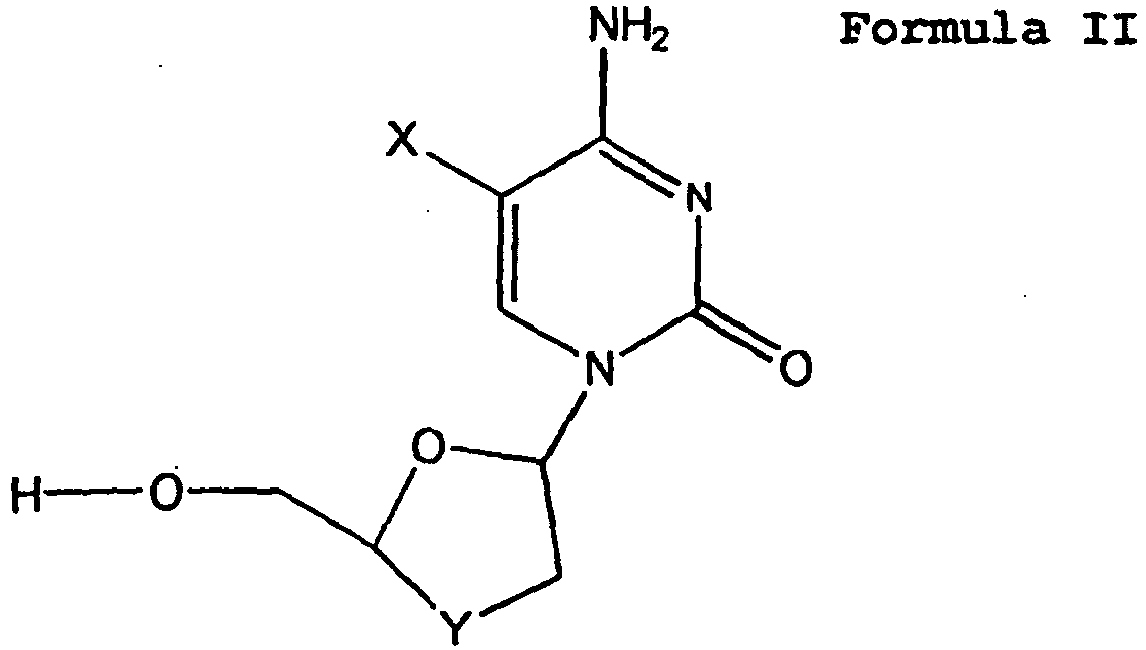
- wherein:
- X = H, or F;
- Y = CH2, O, S, Se, or NH, and
- There is also herein disclosed a process for producing a chiral, non-racemic hydrophobic ester using a hydrolase enzyme, said process comprising the steps of:
- (a) dispersing an enantiomeric mixture of said hydrophobic ester at a concentration of between about 1 and about 25% (weight/volume of the non-homogenous system), in an organic solvent system to produce an organic component;
- (b) providing an aqueous solvent system to produce an aqueous component; and
- (c) contacting said organic component and said aqueous component to form a non-homogenous system, under conditions which permit the enantioselective conversion of one enantiomeric form of said enantiomeric mixture to the corresponding alcohol; and
- Alternatively, the present invention provides processes for producing a chiral, non-racemic ester of Formula I from an enantiomeric mixture of formula I or from an enantiomeric mixture of a hydrophobic ester, wherein said process further comprises a surfactant.
- In addition, the present invention provides a process for producing a chiral, non-racemic ester of 2-butyryloxymethyl-5-(5-fluorocytosin-1-yl)-1,3-oxathiolane using a hydrolase enzyme, said process comprising the steps of:
- (a) dispersing an enantiomeric mixture of said 2-butyryloxymethyl-5-(5-fluorocytosin-1-yl)-1,3-oxathiolane at a concentration of between about 1 and about 25% (weight/volume of the non-homogenous system), in an organic solvent system to produce an organic component;
- (b) providing an aqueous solvent system to produce an aqueous component; and
- (c) contacting said organic component and said aqueous component to form a non-homogenous system, under conditions which permit the enantioselective conversion of one enantiomeric form of said enantiomeric mixture to the corresponding alcohol;
- One embodiment of this invention provides a process for producing a chiral, non-racemic ester of 2-butyryloxymethyl-5-(5-fluorocytosin-1-yl)-1,3-oxathiolane using a hydrolase enzyme, said process comprising the steps of:
- (a) dispersing an enantiomeric mixture of said 2-butyryloxymethyl-5-(5-fluorocytosin-1-yl)-1,3-oxathiolane at a concentration of between about 1 and about 25% (weight/volume of the non-homogenous system), in an organic solvent system to produce an organic component;
- (b) providing an aqueous solvent system to produce an aqueous component; and
- (c) contacting said organic component and said aqueous component to form a non-homogenous system, under conditions which permit the enantioselective conversion of one enantiomeric form of said enantiomeric mixture to the corresponding alcohol;
- Another object of the present invention is to provide a non-homogenous system for producing a chiral, non-racemic hydrophobic ester using a hydrolase enzyme, comprising:
- (a) a hydrolase enzyme;
- (b) a hydrophobic ester substrate;
- (c) an organic component; and
- (d) an aqueous component.
- It is an object of this invention to provide a process for resolving a desired enantiomer from an enantiomeric mixture.
- It is also an object of this invention to provide a process for resolving a desired enantiomer from an enantiomeric mixture of hydrophobic esters.
- It is a further object of this invention to provide a process for resolving enantiomers of anti-viral compounds having Formula I above.
- The most preferred embodiment of this invention provides a process for resolving enantiomeric FTC butyrate (or where R is propyl, X = F and Y = S of compound Formula I above).
- Substrate loading entails dispersing an enantiomeric mixture of a hydrophobic ester in an organic solvent system to produce an organic component. The concentration range expressed in units of % (weight/volume of the non-homgenous system) is selected from the group consisting of ranges between about 0.5% and about 45%; between about 1.0% and about 45%; between about 5.0% and about 45%; between about 10% and about 40%; between about 10% and about 30%; between about 5 and about 20%; between about 1% and about 5%; and between about 10% and about 20%.
- In a preferred embodiment, the organic solvent systems of this invention, comprise one or more, not more than about 50% water miscible organic solvents, that facilitate dissolution of the enantiomeric mixture.
- In the next preferred embodiment, the organic solvent systems of this invention, comprise one or more C4-C8 alcohols.
- In the most preferred embodiment, the organic solvent systems of this invention, comprise one or both of n-amyl alcohol or 3-methyl-3-pentanol.
- In a preferred embodiment, the aqueous solvent systems of this invention comprise water, one or more buffering salts, alkalizing agents, antimicrobial preservatives, stabilizers, filtering aids, co-enzymes, or other excipients that facilitate dispersion and function of the enzyme.
- In the next preferred embodiment, the aqueous solvent systems of this invention comprise water, one or more buffering salts, alkalizing agents, or other excipients that facilitate dispersion and function of the enzyme.
- In a next preferred embodiment, the aqueous solvent systems of this invention comprise water, and between about 0.01 and about 0.5 molar phosphate buffer at a pH of between about 7.0 and about 8.0.
- In the most preferred embodiment, the aqueous solvent systems of this invention comprise water, between about 0.2 and about 0.4 molar phosphate buffer at a pH of between about 7.2 and about 7.8.
- In another embodiment of this invention, the hydrolase enzyme is capable of resolving a pair of enantiomers.
- In another embodiment of this invention, the hydrolase enzyme is capable of resolving a pair of enantiomers by an enzyme catalyzed stereoselective reaction with one enantiomer.
- In a preferred embodiment of this invention, the hydrolase enzyme is capable of resolving a pair of enantiomers by an enzyme catalyzed stereoselective conversion of one enantiomer.
- In the most preferred embodiment of this invention, the hydrolase enzyme is capable of resolving a pair of enantiomers by the enzyme catalyzed stereoselective conversion of the (+) enantiomer of 2-butyryloxymethyl-5-(5-fluorocytosin-1-yl)-1,3-oxathiolane (or where R is propyl, X = F and Y = S of Formula I above or FTC butyrate).
- In one embodiment of this invention, the biocatalyst is an enzyme.
- In another preferred embodiment of this invention, the enzyme is a hydrolase.
- In a preferred embodiment of this invention, the enzyme is selected from the group consisting of esterases, lipases and proteases.
- In the most preferred embodiment of this invention, the enzyme is selected from the group consisting of porcine pancreatic lipase ("PL"), Pseudomonas species lipase, Aspergillus niger lipase, subtilisin, or porcine liver esterase ("PLE").
- In one embodiment of this invention, the biocatalyst is added to the non-homogenous system after the aqueous component is contacted with the organic component to make a non-homogenous system.
- In another embodiment of this invention, a biocatalyst is added to the organic phase as part of the organic component before the aqueous component is contacted with the organic component to make a non-homogenous system.
- In a preferred embodiment of this invention, a biocatalyst is added to the aqueous phase to create an aqueous component after the aqueous component is contacted with the organic component but before agitation and mixing to make a non-homogenous system.
- In the most preferred embodiment of this invention, a biocatalyst is added to the aqueous phase to create an aqueous component before the aqueous component is contacted with the organic component to make a non-homogenous system.
- In one embodiment of this invention, the non-homogenous system used in the process to resolve enantiomeric mixtures contains surfactant. The concentration range of surfactant in % (weight/volume of the non-homogenous system) is selected from the group consisting of between about 1 and about 30% of surfactant; between about 1% and about 20% of surfactant; between about 1% and about 10% of surfactant; between about 1% and about 5% of surfactant; between about 5% and about 30% of surfactant; between about 10% and about 25% of surfactant; between about 15% and about 25% of surfactant; between about 20% and about 30% of surfactant; and between about 5% and about 15% of surfactant.
- In one embodiment of this invention, the enzyme is immobilized on a matrix.
- In a preferred embodiment of this invention, the enzyme form is that of a crosslinked enzyme crystal, such as, for example, those described in
PCT patent application WO 92/02617 (Navia et al - In the next preferred embodiment of this invention, the enzyme form is that of a controlled dissolution crosslinked protein crystal, such as, for example, those described in
PCT patent application WO 98/46732 (Margolin et al - In the most preferred embodiment of this invention, the enzyme is in a soluble form.
- In one embodiment of this invention, said non-homogenous systems comprise between about 10% and 99% organic component. In another embodiment of this invention, said non-homogenous systems comprise between about 10% and about 90% organic component. More preferably non-homogenous systems comprise between about 20% and about 80% organic component. Even more preferably, said non-homogenous systems comprise between about 30% and about 70% organic component. In an even more preferred embodiment, said non-homogenous systems comprise between about 10% and about 50% organic component. In another preferred embodiment, said non-homogenous systems comprise between about 10% and about 60% organic component. In a further preferred embodiment, said non-homogenous systems comprise between about 20% and about 70% organic component. In still another preferred embodiment, said non-homogenous systems comprise between about 50% and about 20% organic component.
- In one embodiment of this disclosure, said processes for resolving a desired enantiomer are carried out at a temperature or temperatures selected from the group consisting of between about 0°C and about 45°C; between about 10°C and about 45°C; between about 20°C and about 45°C; between about 30°C and about 45°C; between about 10°C and about 40°C; between about 10°C and about 30°C; between about 10°C and about 25°C; between about 15°C and about 40°C; between about 15°C and about 35°C; between about 15°C and about 30°C; between about 15°C and about 25°C; and between about 20°C and about 35°C
- In a preferred embodiment, said aqueous component used in the processes of this invention comprises at least 10% (volume/volume) of said non-homogenous system.
- In the next preferred embodiment, said aqueous component used in the processes of this invention comprises at least 50% (volume/volume) of said non-homogenous system.
- In the most preferred embodiment, said aqueous component used in the processes of this invention comprises at least 90% (volume/volume) of said non-homogenous system.
homogeneous - In one embodiment of this invention, said process for resolving a desired enantiomer is carried out in a non-homogeneous system comprising a surfactant. When a surfactant is part of said non-homogeneous system, the concentration range of the organic component in % (volume/volume) is selected from the group consisting of between about 5% and about 90% of said non-homogeneous system; between about 5% and about 80% of said non-homogeneous system; between about 5% and about 70% of said non-homogeneous system; between about 5% and about 60% of said non-homogeneous system; between about 5% and about 50% of said non-homogeneous system; between about 5% and about 30% of said non-homogeneous system; between about 5% and about 20% of said non-homogeneous system; between about 5% and about 10% of said non-homogeneous system; between about 10% and about 30% of said non-homogeneous system; between about 10% and about 20% of said non-homogeneous system; between about 20% and about 70% of said non-homogeneous system; or between about 25% and about 50% of said non-homogeneous system; and between about 30% and about 60% of said non-homogeneous system.
- The reaction scheme for resolution of an enantiomeric mixture is illustrated in the reaction shown in Scheme 1 (infra, page 23), where the substrates were either, acetate, formate, propionate, butyrate, pentanoate or other n-alkyl and branched chain or aryl esters of FTC, or derivatives of such esters of FTC and the organic co-solvents were any that werenot more than about 50% water miscible alcoholic, alkane, aromatic, ketone ether, nitro, halo-alkane or aromatic organic solvents, such as n-amyl alcohol, iso-amyl alcohol, tert-amyl alcohol, 3-pentanol, 1- or 3-heptanol, 3-methyl-3-pentanol, 4-methyl-2-pentanol, 3-ethyl-3-pentanol, 1- or 2-butanol, nitromethane, dichloromethane, methyl isobutyl ketone, dimethyl sulfide, sulfolane, and others.
- In Scheme 1, shown below, the products of the reaction were a non-racemic ester and a non-racemic alcohol (Scheme 1). In one example, when X is Fluorine, R is C3H, and Y is Sulfur, then compound A represents an enantiomeric mixture of FTC butyrate. Various hydrolytic enzymes such as, porcine liver esterase (PLE), lipase from Pseudomonas species (PSL) and lipase from Aspergillus niger (ANL) have been used as catalyst [For PLE catalyzed reactions in mixed organic solvents: See Ariente-Fliche, C., Braun, J., and Le Goffic, F., Synth. Commun. 22, 1149-1153 (1992) ; Basavaiah, D., and Krishna, P.R., Pure & Applied Chem., 64, 1067-1072 (1992); Basavaiah, D., Pandiaraju, S., and Muthukumaran, K., Tetrahedron: Asymmetry, 7, 13-16, (1996); Mahmoudian, M., Baines, B.S., Dawson, M.J., and Lawrence, G.C., Enzyme Microb. Technol., 14, 911-916, (1992); Izumi, T. and Kasahara, A., Japanese patent
JP08092269A (1996 
- The biocatalysts may be either soluble enzyme, immobilized enzyme or crosslinked crystal (CLEC™) form of the enzyme (Altus Biologics, Inc., Cambridge, Massachusetts). The reaction can be performed in a batch reactor, a column, a hollow-fiber membrane [Enzyme Catalysis in Organic Synthesis, pp. 138-150, edited by Drauz, K. and Waldmann, H., VCH Verlagsgesellschaft GmbH, Weinheim, 1995] or membrane reactor [
Dodds, D.R., Lopez., J.L., Zepp, C.M., and Rossi, R.F. PCT Patent Application No. WO 90/04643. May, 1990 - The choice of which particular enzyme is best for a given substrate pair is determined by treating samples of the enantiomeric pairs with various enzymes such as porcine liver esterase, porcine pancreatic lipase, lipases from Pseudomonas species (PSL) and lipase from Aspergillus niger (ANL), and proteases such as subtilisin or α-chymotrypsin. After treatment of the enantiomeric mixture with the resolving enzyme, the products are isolated using standard extraction or chromatography procedures. The enzyme producing the greatest enantiomeric excess of the desired product should be the best candidate for use in the process.
- The process can be further improved by choosing a given enantiomeric mixture and resolving enzyme combination and determining the ideal solvent conditions for the reaction. In a biphasic system, the choice of organic solvent must be determined. The optimum organic solvent can be determined by treating samples of the enantiomeric mixture with the selected enzyme in the presence of the same amount of an array of not more than about 50% water miscible organic solvents. Particular solvents include any not more than about 50% water miscible (solubility less than 50% in water at room temperature) alcoholic, alkane, aromatic, ketone ether, nitro, halo-alkane or aromatic organic solvents, such as n-amyl alcohol, iso-amyl alcohol, tert-amyl alcohol, 3-pentanol, 1- or 3-heptanol, 3-methyl-3-pentanol, 4-methyl-2-pentanol, 3-ethyl-3-pentanol, 1- or 2-butanol, nitromethane, dichloromethane, methyl isobutyl ketone, dimethyl sulfide, sulfolane, etc. Following treatment of an enantiomeric mixture with the resolving enzyme in the presence of equal amounts of various solvents, the products are isolated using standard extraction or chromatography procedures. The solvent/enzyme pair producing the greatest enantiomeric excess of the desired product should be the best candidate for use in the process.
- The relative quantity of the selected organic solvent should also be evaluated in order to achieve the best results. To do this, a similar procedure as described above is followed. Using a particular enzyme/racemic mixture, the ratio of the selected organic solvent/aqueous solvent is varied in a manner such as the following: 95:5, 90:10, 80:20, 70:30, 60:40, 50:50, 40:60, 30:70, 20:80, 10:90 and 5:95, ([organic solvent]: [aqueous solvent]). Identical samples of an enantiomeric mixture are treated with a standard amount of a particular enzyme in the presence of varying ratios of organic solvent to aqueous solvent for a set time. The total volume is kept constant. Following treatment of an enantiomeric mixture with the resolving enzyme in the presence of equal amounts of various solvents, the products are isolated using standard extraction or chromatography procedures. The solvent system/enzyme pair producing the greatest enantiomeric excess of the desired product should be the best candidate for use in the process.
- Alternatively, for some racemic mixture:enzyme: organic solvent combinations, enzyme activity may be enhanced and organic solvent levels reduced by adding surfactants to the reaction. In order to evaluate whether a surfactant should be added to a particular process. Some variation of the following process may be pursued. First, a surfactant is selected by treating samples of an enantiomeric mixture with the selected enzyme and an array of surfactants in the presence of a non-homogeneous system composed of a not more than about 50% water miscible organic solvent and an aqueous solvent. The system should be one which is compatible with carrying out the reaction in the absence of a surfactant. Examples of surfactants include the Tweens, such as Tween 20™, Tween 80™, Prionex™, Teepol HB7™, Tergitol TMN-6™, Tergitol TMN-10™, Tergitol NP-4™, Tergitol 15-S-3™, Igepal CA-630™, Tyloxapol™, Glucode-oxycholic acid, octyl β-gluco-pyranoside, CHAPS™, dioctyl sulfosuccinate, or deoxycholic acid. Following treatment of an enantiomeric mixture with the resolving enzyme in the presence of a biphasic solvent system and a constant amount of various surfactants, the products are isolated using standard extraction or chromatography procedures. The solvent/enzyme/surfactant combination producing the greatest enantiomeric excess of the desired product in a set time should be the best candidate for use in the process.
- The surfactant may be added at a concentration or range of concentrations depending on how many samples can be processed at one time. For a given solvent/enzyme/ surfactant combination, the optimal surfactant concentration should be determined. One of skill in the art will appreciate that an array of independent reactions should be set up, differing only by the concentration of surfactant. For example, the reaction may be carried out using PLE in 20% pentanol and 80% Tris(hydroxymethyl)aminomethane or [2-amino-2-(hydroxymethyl)-1,3-propanediol buffer at pH 7.4. Ten identical reactions may be set up, having the following surfactant concentrations: 1%, 3%, 5%, 7.5% 10%, 12.5%, 15%, 20%, 25% and 30%. Following treatment of an enantiomeric mixture with the resolving enzyme in the presence of a biphasic solvent system and increasing surfactant concentration for a set time, the products are isolated using standard extraction or chromatography procedures. The solvent/enzyme/surfactant combination producing the greatest enantiomeric excess of the desired product in a set time should be the best candidate for use in the process.
- Surfactants useful for carrying out this invention include cationic, anionic, non-ionic or amphoteric, or mixtures thereof. The preferred surfactant will depend upon the particular enzyme and/or substrate components. Such screening procedures are well known to those of skill in the art. Illustrative screening processes are set forth in Examples 14-30.
- Examples of useful cationic surfactants include amines, amine salts, sulfonium, phosphonium and quarternary ammonium compounds. Specific examples of such cationic surfactants include:
- Methyl trioctylammonium chloride
- (Aliquat 336)
- N,N',N'-polyoxyethylene(10)-N-tallow-1,3-diaminopropane
- (EDT-20,' PEG-10 tallow).
- Useful anionic surfactants include, for example, linear alkylbenzene sulphonate, alpha-olefin sulphonate, alkyl sulphate, alcohol ethoxy sulfate, carboxylic acids, sulfuric esters and alkane sulfonic acids. Examples of anionic surfactants include:
- Triton QS-30 (Anionic)
- Aerosol 22
- dioctyl sulfosuccinate (AOT)
- Alkyl Sodium Sulfate (Niaproof):
- Type-4
- Type-8
- Alkyl (C9-C13) Sodium Sulfates (TEEPOL HB7).
- Non-ionic surfactants useful for stabilization include nonyl phenol ethoxylate, alcohol ethoxylate, sorbitan trioleate, non-ionic block copolymer surfactants, polyethylene oxide or polyethylene oxide derivatives of phenol alcohols or fatty acids. Examples of non-ionic surfactants include:
- Polyoxyethylene Ethers:
- 4 lauryl Ether (Brij 30)
- 23 lauryl Ether (Brij 35)
- Octyl Phenoxy polyethoxyethanol (Tritons):
- Tx-15
- Tx-100
- Tx-114
- Tx-405
- DF-16
- N-57
- DF-12
- CF-10
- CF-54
- Polyoxyethylenesorbitan:
- Monolaurate (Tween 20)
- Sorbitan:
- Sesquioleate (Arlacel 83)
- Trioleate (Span 85)
- Polyglycol Ether (Tergitol):
- Type NP-4
- Type NP-9
- Type NP-35
- Type TMN-10
- Type 15-S-3
- Type TMN-6(2, 6, 8, Trimethyl-4-nonyloxypolyethylenoxyethanol Type 15-S-40.
- After selecting a suitable surfactant, the ratio of organic solvent may sometimes be reduced significantly without losing product yield or enantioslectivity. One of skill in the art will appreciate that one such procedure for determining how much to lower the organic solvent is as follows: Using a particular enzyme/racemic mixture/surfactant combination the ratio of the selected organic solvent to aqueous solvent is varied as follows: [% organic solvent: % aqueous solvent], 95:5, 90:10, 80:20, 70:30, 60:40, 50:50, 40:60, 30:70, 20:80, 10:90 and 5:95, and other ratios as required. Samples of an enantiomeric mixture are treated with a standard amount of a particular enzyme in the presence of varying ratios of organic solvent to aqueous solvent and surfactant for a set time. Following treatment of an enantiomeric mixture with the resolving enzyme in the presence of equal amounts of various solvents, the products are isolated using standard extraction or chromatography procedures. The solvent/enzyme pair producing the greatest enantiomeric excess of the desired product should be the best candidate for use in the process.
- An additional consideration for carrying out the process of the present invention is the cost of the enzyme per unit of product produced. The present invention is directed to reducing the enzyme requirements of the process on a per unit of product basis. In one embodiment, the amount of organic component is reduced in the non-homogeneous system. In another embodiment, a surfactant is added to the non-homogeneous system to further reduce the amount of enzyme required and further reduce the cost of operating the process.
- The present invention is particularly directed to enzyme reactions wherein the substrate comprises a hydrophobic ester. The present invention is additionally directed to enzyme reactions wherein the substrate is relatively insoluble in aqueous solutions. The use of a non-homogeneous system having incompletely water miscible organic co-solvents provides improved solvation for hydrophobic esters and other hydrophobic and insoluble compounds as compared to systems using water miscible organic solvents.
- In order that this invention may be better understood, the following examples are set forth. These examples are for the purpose of illustration only and are not to be construed as limiting the scope of the invention in any matter.
- Racemic FTC-butyrate (1.0 g) was dissolved in 5.0 ml of n-amyl alcohol by heating to 75 °C for 30 minutes to make an organic component. The organic component was then mixed with an aqueous component comprising 3.8 ml of 0.3 M pH 7.5 phosphate buffer and the non-homogeneous system was allowed to cool to 35 °C. Porcine liver esterase solution, 1.2 ml of 650 U/ml Altus PLE solution (Altus Biologics, Cambridge, MA) was then added to the aqueous layer and the resulting suspension was stirred with gentle agitation. The temperature was maintained at 32 °C by an external water-bath. The pH was maintained at 7.5 by the addition of 50% aqueous sodium hydroxide as necessary. The optical purity of the unreacted (-)-butyrate ester and the (+)-FTC alcohol product were monitored by HPLC analysis using a chiral stationary phase column. After 24 hours, the (+)-enantiomer of the FTC ester was completely converted based on HPLC analysis as described below. Extraction of the unreacted ester from the organic phase and evaporation of the organic solvent gave the desired (-)-FTC ester. The recovered yield was 89.4 % based on the single (-) enantiomer and the optical purity was greater than 99 %.
- Chiral HPLC conditions : CHIRAPAK® AS; 0.46 cm x 25 cm HPLC column (Daicel Chemical Inc.), mobile phase = 100 % acetonitrile, flow rate = 1 ml/min., uv detection at 260 nm. Retention times: (-)-FTC butyrate, 6.2 min.; (-)-FTC, 7.4 min.; (+)-FTC butyrate, 8.8 min.; and (+)-FTC, 11.4 min.
- Enzyme activity was determined by the conversion of ethyl butyrate using a Radiometer pH-stat apparatus to follow the production of acid. Ethyl butyrate (40 ml) was added to 20 ml of 5 mM boric acid (pH 8) and stirred at 25°C until dissolution was complete (10 minutes). PLE was added and the pH was maintained at 8.0 by the addition of 0.01 N NaOH. The rate of acid production was determined from the rate of base addition over a period of 5 minutes.
- Enzyme stability was measured while the reaction was in progress. Measurements were performed by periodically removing aliquots of the enzyme solution and determining the activity using the ethyl butyrate assay.
- The reaction conditions and procedures were the same as in Example 1, except the volume of phosphate buffer was 1 ml and the volume of the organic component was 8.3 ml. The conversion was 38% for n-amyl alcohol and 25% for 3-methyl-3-pentanol after 36 h (see Table 1, Reactions 12 and 13).
- The reaction conditions and procedures were the same as in Example 1, except that 100 mg of soluble PSL-30 (PSL-30 is PS30 from Amano) was used. The conversion was 56% after 24 h and the (-)-enantiomer was preferentially hydrolyzed. The optical purity of the remaining ester was 92% at 56% conversion (see Table 1, Reaction 21).
- The reaction conditions and procedures were the same as in Example 1, except that 200 mg of soluble ANL was used. The conversion was 45% after 36 h. The optical purity of the remaining ester was 63% at 45% conversion (see Table 1, Reaction 22).
- The following example illustrates the state of the art using high amounts of enzyme catalysts in a homogeneous system. To a solution of 1 ml of Altus PLE solution 650 units/ml from Altus Biologics, Inc. in 39 ml of 0.3 M phosphate buffer (pH 7.5) was added 10 ml of 10% FTC butyrate in isopropanol. The resulting mixture was stirred at 24~26°C and the reaction progress was monitored by HPLC. The conversion reached 51% and the optical purity of the remaining chiral non-racemic ester compound was greater than 99% (48% chemical yield) after a 22 h reaction. These results are based on HPLC analysis of the remaining chiral non-racemic ester compound. The aqueous layer included hydrolyzed products (+)-FTC and (-)-FTC. The ratio of (+)-FTC and (-)-FTC was 96.6 to 3.4. The organic layer was evaporated to give 0.457 g of (-)-FTC butyrate.
- A similar reaction was performed by using other water miscible organic co-solvents, including acetonitrile, DMF, 1-methyl-2-pyrrolidinone, methanol, ethanol, tert-butanol, DMSO, pyridine, di(ethylene glycol)methyl ether, PEG 200, and PEG 600 etc. Acetonitrile gave the same high enantioselectivity as isopropanol and required similarly large amounts of enzyme. All other solvents gave lower enantioselectivity than isopropanol.
- To a solution of 2.5 ml of Altus PLE solution 650 units/ml from Altus Biologics, Inc. in 37.5 ml of 0.3 M phosphate buffer (pH 7.5) was added 10.0 ml of 25% FTC butyrate in isopropanol. Under these conditions, the substrate was incompletely dissolved. The resulting mixture was stirred at 24∼26°C and the reaction was monitored by HPLC. The conversion reached 60% and the optical purity of the remaining ester was 74% (38% chemical yield) after 96 h reaction time. The enantioselectivity was much lower than the reaction with a 2% substrate concentration.
- To a solution of 1.5 ml of Altus PLE solution 650 units/ml from Altus Biologics, Inc. in 33.5 ml of 0.3 M phosphate buffer (pH 7.5) was added 15 ml of 10% FTC butyrate in isopropanol. The resulting mixture was stirred at 24∼26°C and the reaction was monitored by HPLC. The conversion was 8% after 2 h and did not increase after that. The enzyme rapidly lost all activity in the 30% isopropanol.
- Table 1 summarizes the results of resolution reactions of FTC-butyrate with various enzymes in biphasic non-homogeneous systems comprising various not more than about 50% water miscible organic solvents and aqueous buffer solutions.
Table 1: Resolution of an enantiomeric mixture of FTC-butyrate with various enzymes in various biphasic systemsa Rxn enzyme co-organic solvent time (h) conversion(%) ee(%)b ester stereochem preference 1 PLE-Cc n-amyl alcohol 24 52 >98 (+) 2 PLE-Ic n-amyl alcohol 36 53 >98 (+) 3 PLE-Sc n-amyl alcohol 24 52 >98 (+) 4 PLE-C iso-amyl alcohol 36 52 >98 (+) 5 PLE-C tert-amyl alcohol 36 37 59 (+) 6 PLE-C 1-butanol 24 12 10 (+) 7 PLE-C 2-butanol 24 7 7.5 (+) 8 PLE-C 3-pentanol 36 40 67 (+) 9 PLE-C 1-heptanol 36 39 64 (+) 10 PLE-C 3-heptanol 36 39 52 (+) 11 PLE-C 3-Me-3-pentanol 36 53 >98 (+) 12 PLE-C 3-Me-3-pentanold 36 25 33 (+) 13 PLE-C n-amyl alcohold 36 38 61 (+) 14 PLE-C 4-Me-2-pentanol 36 45 82 (+) 15 PLE-C 3-Et-3-pentanol 36 48 92 (+) 16 PLE-C nitromethane 36 24 32 (+) 17 PLE-C dichloromethane 36 20 25 (+) 18 PLE-C toluene 36 18 16 (+) 19 PLE-C methyl isobutyl ketone 36 20 33 (+) 20 PLE-C tert-butyl acetate 36 23 29 (+) 21 PSL n-amyl alcohol 24 56 92 (-) 22 ANL n-amyl alcohol 36 45 63 (+) a. Reaction conditions: 1g of (±)FTC-butyrate in 10 ml of 50% organic/aqueous mixture was hydrolyzed with PLE, PSL or ANL at room temperature. b. The optical purity was based on HPLC analysis. c. PLE-C = CLEC™-PLE, PLE-I = immobilized PLE, PLE-S = Altus PLE solution 650 units/ml. d. in 6 ml or 83% organic/aqueous mixture. - Examples 5-7 illustrate some of the problems with using water miscible alcohols in homogeneous systems for the process of the present invention. Such systems produce product with reduced optical purity, prolong reaction times, and deactivate the enzyme.
- The reaction conditions and procedures were the same as in Example 1. The non-homogeneous system comprises 1 ml of Altus PLE solution (650 U/ml) as catalyst and the volumes of amyl alcohol and phosphate buffer used are indicated in Table 2 below. Note that in each case, the selectivity of conversion of the (+)-isomer was almost absolute, so that the desired conversion of slightly greater than 50% results in enantiomeric purities of the unreacted (-) ester of nearly 100% (See Table 2).
Table 2, Examples 8 through 13 Example 8 9 10 11 12 13 Amyl Alcohol 2 ml 3 ml 4 ml 5 ml 6 ml 7 ml Phosphate buffer 7 ml 6 ml 5 ml 4 ml 3 ml 2 ml Reaction time (h) % Conversion 0 0 0 0 0 0 0 1 28 26 24 21 20 19 3 43.2 42 39 34 33 33 8 49 49 48 45 41 41 24 49.8 49.8 49.2 47.5 46.7 47.3 - Examples 14 through 30 are shown in Table 3. The reaction conditions and procedures were the same as in Example 1. The non-homogeneous system comprises 1 ml of Altus PLE solution (650 U/ml) as catalyst and 1 ml (Examples 14-21, 23, 24, and 30) or 0.1 g of surfactant (Examples 25-29) were added as surfactant to the reaction mixtures. The organic component comprised n-amyl alcohol and the aqueous component comprised 0.3 M phosphate buffer in a 50:50 ratio.
Table 3, Examples 14 through 30 % Conversion at time (t) Example Surfactant (t) Hours 0 1 3 7 24 14 Tween 20 0 18 34 45 50 15 Prionex 0 17 30 42 49 16 Teepol HB7 0 9 15 21 26 17 Tergitol TMN-6 0 14 32 44 48 18 Tergitol 15-S-3 0 17 29 40 47 19 Igepal CA-630 0 19 35 45 49 20 Tyloxapol 0 18 35 46 50 21 Tergitol TMN-10 0 17 30 42 48 Table 3 continued % Conversion at time (t) Example Surfactant (t) Hours 0 1 3 20 22 No Surfactant 0 21 34 47.5 23 Aerosol 22 0 7 7 8 24 Tergitol NP-4 0 18 34 49.5 25 Glucode-oxycholic acid 0 14 25 44 26 Octyl β-gluco-pyranoside 0 15 30 47 27 CHAPS 0 14 21 39 28 Dioctyl Sulfo-succinate Na+ salt 0 17 32 49.5 29 Deoxy-cholic acid Na+ salt 0 13 23 43.4 30 Tween 80 0 18 33 50 - The broad screening of surfactants, as shown in Table 3, reveals that some are activating (see Examples 14, 15, 19, 20, 24, 28, and 30) and some are inhibitory (see 16, 23, 27 and 29). Fifteen surfactants were chosen for further analysis. The surfactants Tergitol NP-4, Tween 80, Tyloxapol and dioctyl sulfosuccinate sodium all enhanced the PLE activity to roughly the same extent. The enhancement in rate is most apparent at the end of the reaction and may be due to stabilization of the enzyme and prevention of precipitation as well as an effect on catalytic efficiency.
- Examples 31 through 34 are shown in Table 4. The reaction conditions and procedures were the same as in Example 1. The non-homogeneous system comprises Tween 80 as surfactant, 0.6 ml Altus PLE solution (650 U/ml) as the catalyst and the volume of amyl alcohol and 0.3 M phosphate buffer used are indicated in the table below.
Table 4, Examples 31 through 34 Example 31 32 33 34 Amyl Alcohol 4 ml 4.5 ml 4.75 ml 4.9 ml Tween-80 1 ml 0.5 ml 0.25 ml 0.1 ml Phosphate buffer 0.3M 5 ml 5 ml 5 ml 5 ml Reaction time(h) 1 1 1 1 % Conversion 10 8 6 5 - The reaction conditions and procedures were the same as in Example 1. The non-homogeneous system comprised 0.5 ml of Tween 80 as surfactant, 0.3 ml of Altus PLE solution (650 U/ml) as catalyst, and 2.0 ml of amyl alcohol and 7.5 ml of 0.3 M phosphate buffer were the solvents. The non-homogeneous system comprised 25% organic component and 75% aqueous component. After 48 hours, the extent of conversion was 50% and the optical purity of the remaining ester was 99.3%.
- In this example, the amount of both enzyme and organic solvent were reduced by approximately half from the level used in Examples 31-34, with no loss of product yield. Furthermore, the enzyme requirement was only 25% of that required in Example 1.
- Examples 36 through 39 are shown in Table 5. The reaction conditions and procedures were the same as in Example 1. The non-homogeneous system comprised dioctyl sulfosuccinate (Dioctyl SS) as surfactant and 0.4 ml of Altus PLE enzyme solution (650 U/ml) in 8 ml of 0.3 M phosphate buffer and 2 ml of amyl alcohol.
Table 5, Examples 36 through 39 Example 36 37 38 39 Dioctyl SS 10 mg 25 mg 100 mg 200 mg Time (h) Conversion 0 0 0 0 0 1 5 5.5 9 9 3 20 22 25 23 5.5 27 32 34 30 21 40 47 48 45 - The reaction conditions and procedures were the same as in Example 1. The catalyst comprised 714 total units of porcine liver esterase (Sigma, st. Louis, MO). The non-homogeneous system comprised 50% n-amyl alcohol as organic component and 50% 0.3 M phosphate buffer at pH 7.4 as aqueous component. After 24 hours, the extent of conversion was 50% and the optical purity of the remaining ester was 97.5%.
- In addition to the use of Tween-80, the anionic surfactant dioctyl sulfosuccinate sodium salt, was chosen to achieve rate enhancement. As shown in Table 6, a 1% loading of this surfactant in the non-homogeneous system was sufficient for significant rate enhancement.
- Reaction conditions included: 1 g FTC butyrate, 0.4% PLE loading, organic solvent 1-pentanol, 2:8 solvent ratio, reaction carried out at 30 °C (Table 6).
Table 6, Example 41 % Conversion with (x mg) Surfactant Time (h) mg surfactant 10 mg 25 mg 100 mg 200 mg 0 0 0 0 0 1 5 5.5 9 9 3 20 22 25 23 5.5 27 32 34 30 21 40 47 48 45 - A preferred embodiment of this invention includes an enzyme loading of 0.3 to 0.4 % relative to FTC butyrate with a 10% substrate loading. A number of reactions were performed on slightly larger scale to more accurately determine the run to run variation and the effect of conversion on optical purity. The results are shown in Table 7 below.
Table 7, 5 g Scale Reactions at Low Enzyme Loadings (28 °C, 45% 1-pentanol, 5% Tween-80, 50% aqueous) PLE (%) Tween-80 (%) Time (h) Optical Purity (% e.e.) 0.6 2.5 26 95.32 0.6 5 24 98.34 0.4 5 24 96.20 0.4 5 42 >99.0 - As shown in Table 8, reactions performed at a lower organic/aqueous ratio and with a 0.3% enzyme loading gave high optical purity in less than 48 hours.
Table 8. 1 g Scale Reaction at Low Enzyme Loadings, (28 °C in 20% 1-pentanol/5% Tween-80, 75% aqueous) PLE (%) Time (h) e.e. (%) 0.4 % 25 99.20 0.3 % 25 95.88 0.3 % 31 97.68 0.3 % 48 99.32 - While we have hereinbefore described a number of embodiments of this invention, it is apparent that our basic constructions can be altered to provide other embodiments which utilize the processes and compositions of this invention. Therefore, it will be appreciated that the scope of this invention is to be defined by the claims appended hereto rather than by the specific embodiments which have been presented hereinbefore by way of example.
wherein the concentration of said enantiomeric mixture is calculated based on the volume of said non-homogenous system.
wherein said organic component comprises between about 5 and-about 90% of said non-homogenous system;
wherein said non-homogenous system also comprises between about 1 and about 20% of surfactant; and
wherein said surfactant concentration is calculated based on the volume of said non-homogenous system.
Claims (69)
- A process for the resolution of a compound of Formula A:
 X=H or F;Y = CH2, O, S, Se or NH;wherein the process comprises the steps of:(a) dispersing an enantiomeric mixture of a compound of Formula B
 R is C1-C8 alkyl;X = H or F;Y = CH2, O, S, Se or NH;at a concentration of between 5% and 45% (weight/volume of the non-homogeneous system), in an organic solvent system to produce an organic component;(b) providing an aqueous solvent system to produce an aqueous component; and(c) contacting the organic component and the aqueous component to form a non-homogeneous system at a temperature of between 5°C and 45°C; andwherein a hydrolase enzyme is dispersed in either the organic component, the aqueous component or the non-homogeneous system.
 - The process of claim 1, wherein the compound of Formula B is 2-butyryloxymethyl-5-(5-fluorocytosin-1-yl)-1,3-oxathiolane.
- The process of claim 2, wherein:a) said organic component comprises between 5 and 90% of the non-homogeneous system; andb) said non-homogeneous system also comprises between 1 and 20% of surfactant; andc) said surfactant concentration is calculated based on the volume of said non-homogeneous system.
- The process according to any one of claims. 1, 2, or 3, wherein the hydrolase enzyme is selected from the group consisting of porcine liver esterase, porcine pancreatic lipase, Pseudomonas species lipase, Aspergillus niger lipase and subtilisin.
- The process according to claim 4, wherein the hydrolase enzyme is a crosslinked enzyme crystal.
- The process according to claim 5, wherein the crosslinked enzyme crystal is crosslinked with glutaraldehyde.
- The process according to claim 4, wherein the hydrolase enzyme is an immobilized enzyme.
- The process according to claim 4, wherein the hydrolase enzyme is a soluble enzyme.
- The process according to claim 4, wherein the hydrolase enzyme is porcine liver esterase.
- The process according to any one of claims 1, 2, or 3, wherein the chiral non-racemic ester is isolated from said organic component.
- The process according to any one of claims 1, 2, or 3, wherein said chiral non-racemic alcohol is isolated from said aqueous component.
- The process according to any one of claims 1, 2, or 3, wherein the enantiomeric mixture is dispersed in the organic component to a concentration of between 5% to 15%.
- The process according to any one of claims 1, 2, or 3, wherein the enantiomeric mixture is dispersed in the organic component to a concentration of between 5% to 20%.
- The process according to any one of claims 1 or 2, wherein said enantiomeric mixture is dispersed in said organic component to a concentration of between 10% to 20%.
- The process according to any one of claims 1, 2, or 3, wherein said organic component comprises not more than 50% water miscible organic solvent.
- The process according to claim 15, wherein said organic component comprises one or more solvents selected from the group consisting of C4-C8 alcohols, nitromethane, dichloromethane, toluene, methyl isobutyl ketone, tert-butyl acetate and alkanes.
- The process according to claim 16, wherein said organic component comprises one or both of n-amyl alcohol and 3-methyl-3-pentanol.
- The process according to claim 3, wherein said surfactant is selected from the group consisting of cationic surfactants, anionic surfactants and non-ionic surfactants.
- The process according to claim 18, wherein said surfactant is selected from the group consisting of polyoxyethylenesorbitan monolaurate, alkyl (C9-C13) sodium sulfatepolyglycol ether, 2,6,8-trimethyl-4-nonyloxypolyethyleneoxyethanol, glucode-oxycholic acid, octyl β-gluco-pyranoside, dioctyl sulfosuccinate, and deoxycholic acid.
- The process according to claim 19, wherein said surfactant is a polyoxyethylenesvrbitan monolaurate.
- The process according to claim 19, wherein said surfactant is dioctyl sulfosuccinate.
- The process according to claim 3, wherein said surfactant is added to the organic component.
- The process according to claim 3, wherein said surfactant is added to the aqueous component.
- The process according to claim 3, wherein said surfactant is formulated with said hydrolase enzyme.
- The process according to any one of claims 1, 2, or 3, wherein said aqueous solvent system comprises water and excipients selected from the group consisting of buffering salts, alkalizing agents, anti-microbial preservatives, stabilizers, filtering aids, co-enzymes, excipients that facilitate dispersion and excipients that facilitate function of the enzyme.
- The process according to claim 25, wherein said aqueous solvent system comprises water buffered with phosphate buffer at a pH of greater than 7.
- The process according to claim 25, wherein said aqueous solvent system comprises water buffered with 2-amino-2-(hydroxymethyl)-1,3-propanediol or Tris (hydroxymethyl)aminomethane.
- A biphasic, non-homogeneous system for resolving a compound of Formula A:
 X = H or F;Y = CH2, O. S, Se or NH;comprising:wherein the enantiomeric mixture is dispersed at a concentration of between 5% and 45% (weight/volume of the non-homogeneous system), in an organic solvent system to produce the organic component.a) a hydrolase enzyme;b) an enantiomeric mixture of a compound of Formula B
 R is C1-C8 alkyl;X = H or F;Y = CH2, O, S, Se or NH;c) an organic component;d) an aqueous component in contact with the organic component;
 - The non-homogeneous system according to claim 28, wherein the hydrolase enzyme is selected from the group consisting of porcine liver esterase, porcine pancreatic lipase, Pseudomonas species lipase, Aspergillus niger lipase and subtilisin.
- The non-homogeneous system according to claim 28, wherein the hydrolase enzyme is a crosslinked enzyme crystal.
- The non-homogeneous system according to claim 30, wherein the crosslinked enzyme crystal is crosslinked with glutaraldehyde.
- The non-homogeneous system according to claim 28, wherein the hydrolase enzyme is an immobilized enzyme.
- The non-homogeneous system according to claim 28, wherein the hydrolase enzyme is a soluble enzyme.
- The non-homogeneous system according to claim 29, wherein said hydrolase enzyme is porcine liver esterase.
- The non-homogeneous system according to claim 28, wherein said enantiomeric mixture comprises 2-butyryloxymethyl (5-fluorocytosin-yl)-1,3-oxathiolane.
- The non-homogeneous system according to claim 28, wherein the enantiomeric mixture is dispersed in the organic component to a concentration of between 5% to 15%.
- The non-homogeneous system according to claim 28, wherein the enantiomeric mixture is dispersed in the organic component to a concentration of between 10% to 20%.
- The non-homogeneous system according to claim 28, wherein the enantiomeric mixture is dispersed in the organic component to a concentration of between 5% to 20%.
- The non-homogeneous system according to claim 28, wherein said organic component comprises a not more than 50% water miscible organic solvent.
- The non-homogeneous system according to claim 39, wherein said not more than 50% water miscible organic solvent comprises one or more solvents selected from the group consisting of C4-C8 alcohols, nitromethane, dichloromethane, toluene, methyl isobutyl ketone, tert-butyl acetate and alkanes.
- The non-homogeneous system according to claim 40, wherein said organic component comprises one or both of n-amyl alcohol and 3-methyl pentanol.
- The non-homogeneous system according to claim 28, further comprising a surfactant.
- The non-homogeneous system according to claim 42, wherein said surfactant is selected from the group consisting of cationic surfactants, anionic surfactants and non-ionic surfactants.
- The non-homogeneous system according to claim 42, wherein said surfactant is selected from the group consisting of polyoxyethylenesorbitan monolaurate, alkyl (C9-C13) sodium sulfatepolyglycol ether, 2,6,8-trimethyl-4-nonyloxypoiyethyleneoxyethanol, glucode-oxycholic acid, octyl β-gluco-pyranoside, dioctyl sulfosuccinate, and deoxycholic acid.
- The non-homogeneous system according to claim 42, wherein the surfactant is a polyoxyethylenesorbitan monolaurate.
- The non-homogeneous system according to claim 42, wherein said surfactant is dioctyl sulfosuccinate.
- The non-homogeneous system according to claim 42, wherein the organic component comprises the surfactant.
- The non-homogeneous system according to claim 42, wherein the aqueous component comprises the surfactant.
- The non-homogeneous system according to claim 42, wherein the surfactant is formulated with the hydrolase enzyme.
- The non-homogeneous system according to claim 28, wherein said aqueous solvent system comprises water and excipients selected from the group consisting of buffering salts, alkalizing agents, anti-microbial preservatives, stabilizers, filtering aids, co-enzymes, excipients that facilitate dispersion and excipients that facilitate function of the enzyme.
- The non-homogeneous system according to claim 28, wherein said aqueous solvent system comprises water buffered with phosphate buffer at a pH of greater than 7.
- The non-homogeneous system according to claim 28, wherein said wherein said aqueous solvent system comprises water buffered with 2-amino-2-(hydroxymethyl)-1,3-propanediol or Tris (hydroxymethyl)aminomethane at a pH of greater than 7.
- The non-homogeneous system according to claim 28, wherein the organic component and the aqueous component are in contact at a temperature of between 5°C and 45°C.
- The process according to any one of claims 1, 2, or 3, wherein the organic component comprises an alcoholic, alkane, ketone, ether, nitro, halo-alkane or aromatic organic solvent, wherein said organic solvent is not more than 50% water miscible.
- The process according to any one of claims 1, 2, or 3, wherein the organic component comprises one or more C4-C8 alcohols that is not more than 50% water miscible.
- The process according to any one of claims 1, 2, or 3, wherein the organic component comprises C1-C8 unsubstituted alkanes, which are not more than 50% water miscible.
- The process according to any one of claims 1, 2, or 3, wherein the organic component comprises a not more than 50% water miscible solvent selected from the group consisting of n-amyl-aicohol, iso-amyl alcohol, tert-amyl alcohol.
- The process according to any one of claims 1, 2, or 3, wherein the organic component comprises a not more than 50% water miscible solvent selected from the group consisting of 3-pentanol, 1-heptanot, 3-heptanol, 3-methyl-3-pentanol, 4-methyl-2-pentanol, 3-ethyl-3-pentanol, 1-butanol, 2-butanol.
- The process according to any one of claims 1, 2, or 3, wherein the organic component comprises nitromethane or dichloromethane.
- The process according to any one of claims 1, 2, or 3, wherein the organic component comprises methyl isobutyl ketone.
- The process according to any one of claims 1, 2, or 3, wherein the organic component comprises dimethyl sulfide or sulfolane.
- The non-homogeneous system according to claim 28, wherein the organic component comprises an alcoholic, alkane, aromatic, ketone, ether, nitro, halo-alkane or aromatic organic solvent that is not more than 50% water miscible.
- The non-homogeneous system according to claim 28, wherein the organic component comprises one or more C4-C8 alcohols that is not more than 50% water miscible.
- The non-homogeneous system according to claim 28, wherein the organic component comprises C1-C8 unsubstituted alkanes, which are not more than 50% water miscible.
- The non-homogeneous system according to claim 28, wherein the organic component comprises a not more than 50% water miscible organic solvent selected from the group consisting of n-amyl-alcohol, iso-amyl alcohol, tert-amyl alcohol.
- The non-homogeneous system according to claim 28, wherein the organic component comprises a not more than 50% water miscible solvent selected from the group consisting of 3-pentanol, 1-heptanol, 3-heptanol, 3-methyl-3-pentanol, 4-methyl-2-pentanol, 3-ethyl-3-pentanol, 1-butanol and 2-butanol.
- The non-homogeneous system according to claim 28, wherein the organic component comprises nitromethane or dichloromethane.
- The non-homogeneous system according to claim 28, wherein the organic component comprises methyl isobutyl ketone.
- The non-homogeneous system according to claim 28, wherein the organic component comprises dimethyl sulfide or sulfolane.
Priority Applications (1)
| Application Number | Priority Date | Filing Date | Title |
|---|---|---|---|
| CY20121100725T CY1113592T1 (en) | 1998-10-09 | 2012-08-13 | NON-homogeneous systems for the separation of enantiomeric mixtures |
Applications Claiming Priority (3)
| Application Number | Priority Date | Filing Date | Title |
|---|---|---|---|
| US10380498P | 1998-10-09 | 1998-10-09 | |
| PCT/US1999/023405 WO2000022157A1 (en) | 1998-10-09 | 1999-10-08 | Non-homogeneous systems for the resolution of enantiomeric mixtures |
| US103804P | 2008-10-08 |
Publications (2)
| Publication Number | Publication Date |
|---|---|
| EP1119635A1 EP1119635A1 (en) | 2001-08-01 |
| EP1119635B1 true EP1119635B1 (en) | 2012-05-23 |
Family
ID=22297117
Family Applications (1)
| Application Number | Title | Priority Date | Filing Date |
|---|---|---|---|
| EP99954779A Expired - Lifetime EP1119635B1 (en) | 1998-10-09 | 1999-10-08 | Non-homogeneous systems for the resolution of enantiomeric mixtures |
Country Status (16)
| Country | Link |
|---|---|
| EP (1) | EP1119635B1 (en) |
| JP (1) | JP4532740B2 (en) |
| KR (3) | KR20060094539A (en) |
| CN (2) | CN101186937A (en) |
| AU (1) | AU773127B2 (en) |
| BR (2) | BRPI9914375B1 (en) |
| CA (1) | CA2346702C (en) |
| CY (1) | CY1113592T1 (en) |
| DK (1) | DK1119635T3 (en) |
| ES (1) | ES2386535T3 (en) |
| IL (2) | IL142393A0 (en) |
| MX (1) | MXPA01003619A (en) |
| PT (1) | PT1119635E (en) |
| RU (1) | RU2247779C2 (en) |
| SG (1) | SG141217A1 (en) |
| WO (1) | WO2000022157A1 (en) |
Families Citing this family (12)
| Publication number | Priority date | Publication date | Assignee | Title |
|---|---|---|---|---|
| US6069252A (en) | 1990-02-01 | 2000-05-30 | Emory University | Method of resolution and antiviral activity of 1,3-oxathiolane nucleoside enantiomers |
| US6979561B1 (en) | 1998-10-09 | 2005-12-27 | Gilead Sciences, Inc. | Non-homogeneous systems for the resolution of enantiomeric mixtures |
| CA2308559C (en) | 2000-05-16 | 2005-07-26 | Brantford Chemicals Inc. | 1,3-oxathiolan-5-ones useful in the production of antiviral nucleoside analogues |
| WO2002057411A2 (en) * | 2000-12-01 | 2002-07-25 | Diversa Corporation | Hydrolase enzymes and their use in kinetic resolution |
| DE10104231A1 (en) * | 2001-01-31 | 2002-08-08 | Consortium Elektrochem Ind | Process for the enzymatic production of enantiomerically pure 1,3-dioxolan-4-one derivatives |
| ATE383355T1 (en) | 2001-03-01 | 2008-01-15 | Abbott Lab | POLYMORPHOUS AND OTHER CRYSTALLINE FORMS OF TOGETHER-FTC |
| KR100433633B1 (en) * | 2002-04-18 | 2004-05-31 | 학교법인 포항공과대학교 | Method of optical resolution by enzyme using solvent-free two-phase system |
| EP2588597A4 (en) | 2010-06-30 | 2013-12-25 | Codexis Inc | Chemically modified carbonic anhydrases useful in carbon capture systems |
| CN109355328A (en) * | 2018-12-07 | 2019-02-19 | 武汉工程大学 | The enzyme-catalyzed preparation method of lamivudine |
| CN109439707A (en) * | 2018-12-07 | 2019-03-08 | 武汉工程大学 | The enzymatic preparation method of emtricitabine |
| CN109628508B (en) * | 2018-12-10 | 2021-08-10 | 华南理工大学 | Method for splitting chiral substance by enzyme method |
| CN117567460A (en) * | 2022-08-08 | 2024-02-20 | 明慧医药(杭州)有限公司 | A kind of prodrug compound and preparation method and use thereof |
Family Cites Families (6)
| Publication number | Priority date | Publication date | Assignee | Title |
|---|---|---|---|---|
| US4800162A (en) * | 1987-04-01 | 1989-01-24 | Sepracor, Inc. | Method for resolution of steroisomers in multiphase and extractive membrane reactors |
| US5057427A (en) * | 1988-04-07 | 1991-10-15 | Sepracor, Inc. | Method for resolution of stereoisomers |
| IL89848A (en) * | 1988-04-07 | 1997-08-14 | Sepracor | Chiral ester derivatives |
| US6069252A (en) * | 1990-02-01 | 2000-05-30 | Emory University | Method of resolution and antiviral activity of 1,3-oxathiolane nucleoside enantiomers |
| GB9307924D0 (en) * | 1993-04-16 | 1993-06-02 | Zeneca Ltd | Chrial synthesis |
| US5932212A (en) * | 1996-05-24 | 1999-08-03 | Altus Biologics, Inc. | Crosslinked protein crystal formulations and their use as catalysts in organic solvents |
-
1999
- 1999-10-08 IL IL14239399A patent/IL142393A0/en not_active IP Right Cessation
- 1999-10-08 BR BRPI9914375-5A patent/BRPI9914375B1/en unknown
- 1999-10-08 CA CA2346702A patent/CA2346702C/en not_active Expired - Lifetime
- 1999-10-08 SG SG200305844-3A patent/SG141217A1/en unknown
- 1999-10-08 MX MXPA01003619A patent/MXPA01003619A/en active IP Right Grant
- 1999-10-08 EP EP99954779A patent/EP1119635B1/en not_active Expired - Lifetime
- 1999-10-08 KR KR1020067015237A patent/KR20060094539A/en not_active Ceased
- 1999-10-08 RU RU2001112412/13A patent/RU2247779C2/en not_active IP Right Cessation
- 1999-10-08 BR BR9914375-5A patent/BR9914375A/en not_active IP Right Cessation
- 1999-10-08 KR KR1020017004430A patent/KR100686552B1/en not_active Expired - Fee Related
- 1999-10-08 DK DK99954779.7T patent/DK1119635T3/en active
- 1999-10-08 PT PT99954779T patent/PT1119635E/en unknown
- 1999-10-08 CN CNA2007101622651A patent/CN101186937A/en active Pending
- 1999-10-08 ES ES99954779T patent/ES2386535T3/en not_active Expired - Lifetime
- 1999-10-08 AU AU11044/00A patent/AU773127B2/en not_active Ceased
- 1999-10-08 WO PCT/US1999/023405 patent/WO2000022157A1/en not_active Ceased
- 1999-10-08 JP JP2000576047A patent/JP4532740B2/en not_active Expired - Fee Related
- 1999-10-08 KR KR1020097024382A patent/KR101072439B1/en not_active Expired - Fee Related
- 1999-10-08 CN CNB998118931A patent/CN100351389C/en not_active Expired - Lifetime
-
2011
- 2011-03-21 IL IL211829A patent/IL211829A/en not_active IP Right Cessation
-
2012
- 2012-08-13 CY CY20121100725T patent/CY1113592T1/en unknown
Also Published As
| Publication number | Publication date |
|---|---|
| IL142393A0 (en) | 2002-03-10 |
| RU2247779C2 (en) | 2005-03-10 |
| DK1119635T3 (en) | 2012-08-20 |
| BRPI9914375B1 (en) | 2018-03-13 |
| AU773127B2 (en) | 2004-05-20 |
| KR20090127196A (en) | 2009-12-09 |
| WO2000022157A1 (en) | 2000-04-20 |
| ES2386535T3 (en) | 2012-08-22 |
| EP1119635A1 (en) | 2001-08-01 |
| KR20060094539A (en) | 2006-08-29 |
| CY1113592T1 (en) | 2016-06-22 |
| SG141217A1 (en) | 2008-04-28 |
| MXPA01003619A (en) | 2002-09-18 |
| CN101186937A (en) | 2008-05-28 |
| KR100686552B1 (en) | 2007-02-27 |
| AU1104400A (en) | 2000-05-01 |
| PT1119635E (en) | 2012-07-24 |
| KR101072439B1 (en) | 2011-10-11 |
| JP4532740B2 (en) | 2010-08-25 |
| KR20010099679A (en) | 2001-11-09 |
| CN1329671A (en) | 2002-01-02 |
| CA2346702A1 (en) | 2000-04-20 |
| JP2002527073A (en) | 2002-08-27 |
| CN100351389C (en) | 2007-11-28 |
| BR9914375A (en) | 2001-11-20 |
| IL211829A0 (en) | 2011-05-31 |
| CA2346702C (en) | 2012-05-29 |
| IL211829A (en) | 2013-08-29 |
Similar Documents
| Publication | Publication Date | Title |
|---|---|---|
| IL211829A (en) | Processes and non-homogeneous systems for the resolution of enantiomeric mixtures of nucleoside compounds | |
| DE69738648T2 (en) | FORMULATIONS OF NETWORKED PROTEIN CRYSTALS AND THEIR USE AS CATALYSTS IN ORGANIC SOLVENTS | |
| EP0407033A2 (en) | Lipase and isozymes, notably of Candida rugosa, and their use | |
| KR100737193B1 (en) | Method for preparing a pharmaceutically acceptable (S-RS) -S-adenosyl-L-methionine salt | |
| US6979561B1 (en) | Non-homogeneous systems for the resolution of enantiomeric mixtures | |
| JPH11196890A (en) | Production of optically active 3-quinuclidinol | |
| JP2693248B2 (en) | Process for producing optically active glycidic acid ester | |
| WO2004003001A1 (en) | Process for the enzymatic resolution of 1,3-dioxolane-4-carboxylates | |
| EP1313860B1 (en) | Butinol i esterase | |
| US10689675B2 (en) | Enzymatic processes for the preparation of (±)-2-(difluoromethyl)-1-(alkoxycarbonyl)-cyclopropanecarboxylic acid and (±)-2-(vinyl)-1-(alkoxycarbonyl)-cyclopropanecarboxylic acid | |
| JP4042454B2 (en) | Process for producing optically active 3-methylglutaric acid monoester | |
| JPS5894389A (en) | Biochemical preparation of (s)-(-)-alpha-cyano-3-phenoxybenzyl alcohol | |
| KR100688770B1 (en) | Method for preparing optically active (R) -2-amino-1-butanol by enzymatic method | |
| KR20030012964A (en) | Methods for Preparing Optically Active α-Substituted Heterocycliccarboxylic Acid Ester | |
| JP3010382B2 (en) | Method for producing (R) -2-propoxybenzene derivative | |
| JP3545442B2 (en) | Method for producing optically active 4- (2-halo-1-hydroxyethyl) -2-trifluoromethylthiazole | |
| JPH04341195A (en) | Production of optically active mandelic acid | |
| JPH047677B2 (en) | ||
| EP1705252A1 (en) | Method for producing optically active N-protected-propargylglycine | |
| JP2002281997A (en) | Method for enzymatically producing enantiomerically pure 1,3-dioxolan-4-one derivative or 1,3-oxathiolan-5-one derivative | |
| Gudiño et al. | Phospholipases applied to the enzymatic modification of nucleosides | |
| De La Mata | Purification and on-column refolding of His-tagged PhaZ depolymerase from Pseudomonas putida KT2442 on Ni2+-NTA agarose gel: preparation of a novel immobilized biocatalyst | |
| JPH0675510B2 (en) | Method for producing moranolin derivative | |
| JP2008271827A (en) | METHOD FOR PRODUCING OPTICALLY ACTIVE N-ARYL-beta-AMINO ACID COMPOUND |
Legal Events
| Date | Code | Title | Description |
|---|---|---|---|
| PUAI | Public reference made under article 153(3) epc to a published international application that has entered the european phase |
Free format text: ORIGINAL CODE: 0009012 |
|
| 17P | Request for examination filed |
Effective date: 20010509 |
|
| AK | Designated contracting states |
Kind code of ref document: A1 Designated state(s): AT BE CH CY DE DK ES FI FR GB GR IE IT LI LU MC NL PT SE |
|
| AX | Request for extension of the european patent |
Free format text: AL;LT;LV;MK;RO PAYMENT 20010509;SI |
|
| 17Q | First examination report despatched |
Effective date: 20031127 |
|
| RAP1 | Party data changed (applicant data changed or rights of an application transferred) |
Owner name: ALTUS PHARMACEUTICALS INC. |
|
| GRAP | Despatch of communication of intention to grant a patent |
Free format text: ORIGINAL CODE: EPIDOSNIGR1 |
|
| GRAS | Grant fee paid |
Free format text: ORIGINAL CODE: EPIDOSNIGR3 |
|
| RIN1 | Information on inventor provided before grant (corrected) |
Inventor name: ALMOND, MERRICK R. Inventor name: WANG, YI, FONG Inventor name: YAO, YIMING |
|
| 19U | Interruption of proceedings before grant |
Effective date: 20091111 |
|
| 19W | Proceedings resumed before grant after interruption of proceedings |
Effective date: 20120301 |
|
| RAP1 | Party data changed (applicant data changed or rights of an application transferred) |
Owner name: TRIANGLE PHARMACEUTICALS, INC. Owner name: ALTUS PHARMACEUTICALS INC. |
|
| GRAA | (expected) grant |
Free format text: ORIGINAL CODE: 0009210 |
|
| RAP1 | Party data changed (applicant data changed or rights of an application transferred) |
Owner name: GILEAD SCIENCES, INC. Owner name: ALTHEA TECHNOLOGIES, INC. |
|
| AK | Designated contracting states |
Kind code of ref document: B1 Designated state(s): AT BE CH CY DE DK ES FI FR GB GR IE IT LI LU MC NL PT SE |
|
| AX | Request for extension of the european patent |
Extension state: RO |
|
| REG | Reference to a national code |
Ref country code: GB Ref legal event code: FG4D |
|
| REG | Reference to a national code |
Ref country code: CH Ref legal event code: EP |
|
| REG | Reference to a national code |
Ref country code: AT Ref legal event code: REF Ref document number: 559121 Country of ref document: AT Kind code of ref document: T Effective date: 20120615 |
|
| REG | Reference to a national code |
Ref country code: IE Ref legal event code: FG4D |
|
| REG | Reference to a national code |
Ref country code: NL Ref legal event code: T3 |
|
| REG | Reference to a national code |
Ref country code: PT Ref legal event code: SC4A Free format text: AVAILABILITY OF NATIONAL TRANSLATION Effective date: 20120718 |
|
| REG | Reference to a national code |
Ref country code: DE Ref legal event code: R096 Ref document number: 69944221 Country of ref document: DE Effective date: 20120726 |
|
| REG | Reference to a national code |
Ref country code: DK Ref legal event code: T3 |
|
| REG | Reference to a national code |
Ref country code: ES Ref legal event code: FG2A Ref document number: 2386535 Country of ref document: ES Kind code of ref document: T3 Effective date: 20120822 |
|
| REG | Reference to a national code |
Ref country code: SE Ref legal event code: TRGR |
|
| REG | Reference to a national code |
Ref country code: CH Ref legal event code: NV Representative=s name: PATENTANWAELTE SCHAAD, BALASS, MENZL & PARTNER AG |
|
| REG | Reference to a national code |
Ref country code: GR Ref legal event code: EP Ref document number: 20120401864 Country of ref document: GR Effective date: 20120920 |
|
| PLBE | No opposition filed within time limit |
Free format text: ORIGINAL CODE: 0009261 |
|
| STAA | Information on the status of an ep patent application or granted ep patent |
Free format text: STATUS: NO OPPOSITION FILED WITHIN TIME LIMIT |
|
| 26N | No opposition filed |
Effective date: 20130226 |
|
| REG | Reference to a national code |
Ref country code: DE Ref legal event code: R097 Ref document number: 69944221 Country of ref document: DE Effective date: 20130226 |
|
| REG | Reference to a national code |
Ref country code: FR Ref legal event code: PLFP Year of fee payment: 18 |
|
| REG | Reference to a national code |
Ref country code: FR Ref legal event code: PLFP Year of fee payment: 19 |
|
| PGFP | Annual fee paid to national office [announced via postgrant information from national office to epo] |
Ref country code: GR Payment date: 20170929 Year of fee payment: 19 Ref country code: FR Payment date: 20170929 Year of fee payment: 19 Ref country code: MC Payment date: 20170921 Year of fee payment: 19 Ref country code: LU Payment date: 20170925 Year of fee payment: 19 |
|
| PGFP | Annual fee paid to national office [announced via postgrant information from national office to epo] |
Ref country code: PT Payment date: 20170922 Year of fee payment: 19 |
|
| PGFP | Annual fee paid to national office [announced via postgrant information from national office to epo] |
Ref country code: FI Payment date: 20171011 Year of fee payment: 19 Ref country code: DE Payment date: 20171004 Year of fee payment: 19 Ref country code: DK Payment date: 20171011 Year of fee payment: 19 |
|
| PGFP | Annual fee paid to national office [announced via postgrant information from national office to epo] |
Ref country code: IE Payment date: 20171010 Year of fee payment: 19 Ref country code: NL Payment date: 20171016 Year of fee payment: 19 Ref country code: SE Payment date: 20171011 Year of fee payment: 19 Ref country code: GB Payment date: 20171004 Year of fee payment: 19 Ref country code: CH Payment date: 20171013 Year of fee payment: 19 Ref country code: ES Payment date: 20171102 Year of fee payment: 19 Ref country code: IT Payment date: 20171024 Year of fee payment: 19 Ref country code: AT Payment date: 20170920 Year of fee payment: 19 Ref country code: BE Payment date: 20170925 Year of fee payment: 19 |
|
| PGFP | Annual fee paid to national office [announced via postgrant information from national office to epo] |
Ref country code: CY Payment date: 20170926 Year of fee payment: 19 |
|
| REG | Reference to a national code |
Ref country code: DE Ref legal event code: R119 Ref document number: 69944221 Country of ref document: DE |
|
| REG | Reference to a national code |
Ref country code: DK Ref legal event code: EBP Effective date: 20181031 |
|
| REG | Reference to a national code |
Ref country code: SE Ref legal event code: EUG |
|
| REG | Reference to a national code |
Ref country code: CH Ref legal event code: PL |
|
| REG | Reference to a national code |
Ref country code: NL Ref legal event code: MM Effective date: 20181101 |
|
| REG | Reference to a national code |
Ref country code: AT Ref legal event code: MM01 Ref document number: 559121 Country of ref document: AT Kind code of ref document: T Effective date: 20181008 |
|
| GBPC | Gb: european patent ceased through non-payment of renewal fee |
Effective date: 20181008 |
|
| REG | Reference to a national code |
Ref country code: BE Ref legal event code: MM Effective date: 20181031 |
|
| PG25 | Lapsed in a contracting state [announced via postgrant information from national office to epo] |
Ref country code: MC Free format text: LAPSE BECAUSE OF NON-PAYMENT OF DUE FEES Effective date: 20181031 Ref country code: LU Free format text: LAPSE BECAUSE OF NON-PAYMENT OF DUE FEES Effective date: 20181008 |
|
| REG | Reference to a national code |
Ref country code: IE Ref legal event code: MM4A |
|
| PG25 | Lapsed in a contracting state [announced via postgrant information from national office to epo] |
Ref country code: DE Free format text: LAPSE BECAUSE OF NON-PAYMENT OF DUE FEES Effective date: 20190501 Ref country code: SE Free format text: LAPSE BECAUSE OF NON-PAYMENT OF DUE FEES Effective date: 20181009 Ref country code: NL Free format text: LAPSE BECAUSE OF NON-PAYMENT OF DUE FEES Effective date: 20181101 Ref country code: FI Free format text: LAPSE BECAUSE OF NON-PAYMENT OF DUE FEES Effective date: 20181008 Ref country code: CY Free format text: LAPSE BECAUSE OF NON-PAYMENT OF DUE FEES Effective date: 20181008 Ref country code: PT Free format text: LAPSE BECAUSE OF NON-PAYMENT OF DUE FEES Effective date: 20190408 |
|
| PG25 | Lapsed in a contracting state [announced via postgrant information from national office to epo] |
Ref country code: LI Free format text: LAPSE BECAUSE OF NON-PAYMENT OF DUE FEES Effective date: 20181031 Ref country code: GR Free format text: LAPSE BECAUSE OF NON-PAYMENT OF DUE FEES Effective date: 20190506 Ref country code: FR Free format text: LAPSE BECAUSE OF NON-PAYMENT OF DUE FEES Effective date: 20181031 Ref country code: CH Free format text: LAPSE BECAUSE OF NON-PAYMENT OF DUE FEES Effective date: 20181031 Ref country code: BE Free format text: LAPSE BECAUSE OF NON-PAYMENT OF DUE FEES Effective date: 20181031 |
|
| PG25 | Lapsed in a contracting state [announced via postgrant information from national office to epo] |
Ref country code: GB Free format text: LAPSE BECAUSE OF NON-PAYMENT OF DUE FEES Effective date: 20181008 Ref country code: IE Free format text: LAPSE BECAUSE OF NON-PAYMENT OF DUE FEES Effective date: 20181008 Ref country code: DK Free format text: LAPSE BECAUSE OF NON-PAYMENT OF DUE FEES Effective date: 20181031 Ref country code: AT Free format text: LAPSE BECAUSE OF NON-PAYMENT OF DUE FEES Effective date: 20181008 Ref country code: IT Free format text: LAPSE BECAUSE OF NON-PAYMENT OF DUE FEES Effective date: 20181008 |
|
| REG | Reference to a national code |
Ref country code: ES Ref legal event code: FD2A Effective date: 20191202 |
|
| PG25 | Lapsed in a contracting state [announced via postgrant information from national office to epo] |
Ref country code: PT Free format text: LAPSE BECAUSE OF EXPIRATION OF PROTECTION Effective date: 20191017 |
|
| PG25 | Lapsed in a contracting state [announced via postgrant information from national office to epo] |
Ref country code: ES Free format text: LAPSE BECAUSE OF NON-PAYMENT OF DUE FEES Effective date: 20181009 |