EP1118858A2 - Assay method - Google Patents
Assay method Download PDFInfo
- Publication number
- EP1118858A2 EP1118858A2 EP01300020A EP01300020A EP1118858A2 EP 1118858 A2 EP1118858 A2 EP 1118858A2 EP 01300020 A EP01300020 A EP 01300020A EP 01300020 A EP01300020 A EP 01300020A EP 1118858 A2 EP1118858 A2 EP 1118858A2
- Authority
- EP
- European Patent Office
- Prior art keywords
- agent
- ccr5
- group
- phenylpropyl
- interaction
- Prior art date
- Legal status (The legal status is an assumption and is not a legal conclusion. Google has not performed a legal analysis and makes no representation as to the accuracy of the status listed.)
- Withdrawn
Links
- 0 C[n]1nc(*)c(*)c1N Chemical compound C[n]1nc(*)c(*)c1N 0.000 description 9
- MYAPLMBYEFKSNS-UHFFFAOYSA-N CC(NC(CCN(C(CC1)C2)C1CC2[n]1c2ccccc2nc1C(F)(F)F)c1ccccc1)=O Chemical compound CC(NC(CCN(C(CC1)C2)C1CC2[n]1c2ccccc2nc1C(F)(F)F)c1ccccc1)=O MYAPLMBYEFKSNS-UHFFFAOYSA-N 0.000 description 1
- LFNRXFDWADXIIN-UHFFFAOYSA-N CC1(CCN(CCC(c2ccccc2)NC(C2CCC2)=O)CC1)NC(Cc(cc1)ccc1OC)=O Chemical compound CC1(CCN(CCC(c2ccccc2)NC(C2CCC2)=O)CC1)NC(Cc(cc1)ccc1OC)=O LFNRXFDWADXIIN-UHFFFAOYSA-N 0.000 description 1
- CLZRKOJNILJNJA-UHFFFAOYSA-N CC1=Nc2ccccc2CC1C1CC(CC2)N(CCC(c3ccccc3)NC(C3COCC3)=O)C2C1 Chemical compound CC1=Nc2ccccc2CC1C1CC(CC2)N(CCC(c3ccccc3)NC(C3COCC3)=O)C2C1 CLZRKOJNILJNJA-UHFFFAOYSA-N 0.000 description 1
- LSPHCVIOJZFUDE-PXXAUXGSSA-N CCCC(CCO)C(N[C@@H](CCN(CC1)CCC1(/C=N/C)c1nc(Cc(cc2)ccc2F)n[o]1)c1ccccc1)=O Chemical compound CCCC(CCO)C(N[C@@H](CCN(CC1)CCC1(/C=N/C)c1nc(Cc(cc2)ccc2F)n[o]1)c1ccccc1)=O LSPHCVIOJZFUDE-PXXAUXGSSA-N 0.000 description 1
- YWAJPCZTCXAOFF-DEOSSOPVSA-N COCC(N[C@@H](CCN(CC1)CCC1[n]1nc(Cc(cc2)ccc2P)nc1)c1ccccc1)=O Chemical compound COCC(N[C@@H](CCN(CC1)CCC1[n]1nc(Cc(cc2)ccc2P)nc1)c1ccccc1)=O YWAJPCZTCXAOFF-DEOSSOPVSA-N 0.000 description 1
- OVEVAOSTKJJXDM-UHFFFAOYSA-N COc1ccc(CC(NC2CCN(CCC(c(cc3Cl)ccc3Cl)NC(C3CCC3)=O)CC2)=O)cc1 Chemical compound COc1ccc(CC(NC2CCN(CCC(c(cc3Cl)ccc3Cl)NC(C3CCC3)=O)CC2)=O)cc1 OVEVAOSTKJJXDM-UHFFFAOYSA-N 0.000 description 1
- ASIKSLWAHFCDDC-UHFFFAOYSA-N COc1ccc(CC(NC2CCN(CCC(c3ccccc3)NC(C3CCC3)=O)CC2)=O)cc1 Chemical compound COc1ccc(CC(NC2CCN(CCC(c3ccccc3)NC(C3CCC3)=O)CC2)=O)cc1 ASIKSLWAHFCDDC-UHFFFAOYSA-N 0.000 description 1
- OMYVPMMZVZEEEB-GVNKFJBHSA-N C[C@H](C(NC1CCN(CCC(c2ccccc2)NC(C2CCC2)=O)CC1)=O)c1ccccc1 Chemical compound C[C@H](C(NC1CCN(CCC(c2ccccc2)NC(C2CCC2)=O)CC1)=O)c1ccccc1 OMYVPMMZVZEEEB-GVNKFJBHSA-N 0.000 description 1
- MCPKJMYYJCPYAW-GVWQBGCGSA-N Cc1nc(cccc2)c2[n]1C1CC(CC2)N(CC[C@@H](c3ccccc3)NC(COC)=O)C2C1 Chemical compound Cc1nc(cccc2)c2[n]1C1CC(CC2)N(CC[C@@H](c3ccccc3)NC(COC)=O)C2C1 MCPKJMYYJCPYAW-GVWQBGCGSA-N 0.000 description 1
- NLIUYDARAPVIAI-VWLOTQADSA-N N#CC1(CCN(CC[C@@H](c2ccccc2)NC(C2CCC2)=O)CC1)c1nc(Cc2ccccc2)n[o]1 Chemical compound N#CC1(CCN(CC[C@@H](c2ccccc2)NC(C2CCC2)=O)CC1)c1nc(Cc2ccccc2)n[o]1 NLIUYDARAPVIAI-VWLOTQADSA-N 0.000 description 1
- CLVAUIYTKVKCHE-BTMGADRYSA-N O=C(C1COCC1)N[C@@H](CCN(CC1)CCC1N1N=C(Cc2ccccc2)CC=C1)c1ccccc1 Chemical compound O=C(C1COCC1)N[C@@H](CCN(CC1)CCC1N1N=C(Cc2ccccc2)CC=C1)c1ccccc1 CLVAUIYTKVKCHE-BTMGADRYSA-N 0.000 description 1
- PSUUUNHRPMQAJC-DEOSSOPVSA-N O=C(Cc1ccccn1)NC1CCN(CC[C@@H](c2ccccc2)NC(C2CCC2)=O)CC1 Chemical compound O=C(Cc1ccccn1)NC1CCN(CC[C@@H](c2ccccc2)NC(C2CCC2)=O)CC1 PSUUUNHRPMQAJC-DEOSSOPVSA-N 0.000 description 1
Classifications
-
- G—PHYSICS
- G01—MEASURING; TESTING
- G01N—INVESTIGATING OR ANALYSING MATERIALS BY DETERMINING THEIR CHEMICAL OR PHYSICAL PROPERTIES
- G01N33/00—Investigating or analysing materials by specific methods not covered by groups G01N1/00 - G01N31/00
- G01N33/48—Biological material, e.g. blood, urine; Haemocytometers
- G01N33/50—Chemical analysis of biological material, e.g. blood, urine; Testing involving biospecific ligand binding methods; Immunological testing
- G01N33/53—Immunoassay; Biospecific binding assay; Materials therefor
- G01N33/569—Immunoassay; Biospecific binding assay; Materials therefor for microorganisms, e.g. protozoa, bacteria, viruses
- G01N33/56983—Viruses
- G01N33/56988—HIV or HTLV
-
- A—HUMAN NECESSITIES
- A61—MEDICAL OR VETERINARY SCIENCE; HYGIENE
- A61P—SPECIFIC THERAPEUTIC ACTIVITY OF CHEMICAL COMPOUNDS OR MEDICINAL PREPARATIONS
- A61P29/00—Non-central analgesic, antipyretic or antiinflammatory agents, e.g. antirheumatic agents; Non-steroidal antiinflammatory drugs [NSAID]
-
- A—HUMAN NECESSITIES
- A61—MEDICAL OR VETERINARY SCIENCE; HYGIENE
- A61P—SPECIFIC THERAPEUTIC ACTIVITY OF CHEMICAL COMPOUNDS OR MEDICINAL PREPARATIONS
- A61P31/00—Antiinfectives, i.e. antibiotics, antiseptics, chemotherapeutics
- A61P31/12—Antivirals
- A61P31/14—Antivirals for RNA viruses
- A61P31/18—Antivirals for RNA viruses for HIV
-
- G—PHYSICS
- G01—MEASURING; TESTING
- G01N—INVESTIGATING OR ANALYSING MATERIALS BY DETERMINING THEIR CHEMICAL OR PHYSICAL PROPERTIES
- G01N33/00—Investigating or analysing materials by specific methods not covered by groups G01N1/00 - G01N31/00
- G01N33/48—Biological material, e.g. blood, urine; Haemocytometers
- G01N33/50—Chemical analysis of biological material, e.g. blood, urine; Testing involving biospecific ligand binding methods; Immunological testing
- G01N33/53—Immunoassay; Biospecific binding assay; Materials therefor
- G01N33/566—Immunoassay; Biospecific binding assay; Materials therefor using specific carrier or receptor proteins as ligand binding reagents where possible specific carrier or receptor proteins are classified with their target compounds
-
- G—PHYSICS
- G01—MEASURING; TESTING
- G01N—INVESTIGATING OR ANALYSING MATERIALS BY DETERMINING THEIR CHEMICAL OR PHYSICAL PROPERTIES
- G01N2333/00—Assays involving biological materials from specific organisms or of a specific nature
- G01N2333/005—Assays involving biological materials from specific organisms or of a specific nature from viruses
- G01N2333/08—RNA viruses
- G01N2333/15—Retroviridae, e.g. bovine leukaemia virus, feline leukaemia virus, feline leukaemia virus, human T-cell leukaemia-lymphoma virus
- G01N2333/155—Lentiviridae, e.g. visna-maedi virus, equine infectious virus, FIV, SIV
- G01N2333/16—HIV-1, HIV-2
- G01N2333/162—HIV-1, HIV-2 env, e.g. gp160, gp110/120, gp41, V3, peptid T, DC4-Binding site
-
- G—PHYSICS
- G01—MEASURING; TESTING
- G01N—INVESTIGATING OR ANALYSING MATERIALS BY DETERMINING THEIR CHEMICAL OR PHYSICAL PROPERTIES
- G01N2333/00—Assays involving biological materials from specific organisms or of a specific nature
- G01N2333/435—Assays involving biological materials from specific organisms or of a specific nature from animals; from humans
- G01N2333/705—Assays involving receptors, cell surface antigens or cell surface determinants
Definitions
- adverse modulation include the separation of, the prevention of the binding of, the cleavage of any one or more of, gp120 and CD4 - and/or changing their folding configuration so that one or more of gp120 and CD4 is inoperative.
- the nucleotide sequence is prepared by use of recombinant DNA techniques (e.g. recombinant DNA).
- the nucleotide sequence may be the same as the naturally occurring form for this aspect.
- CCR5 is a chemokine receptor that typically is present on the surfaces of certain cells within the human body.
- gp120 An essential component of the assay is gp120. Information on gp120 has been presented above. Further teachings on gp120 may be found in the art, such as in some of the patent applications cited above.
- nucleotide sequence encoding gp120 and the amino acid sequence for same are presented in the attached sequence listings.
- the ligand comprises the first antibody and the second antibody.
- the first antibody and the second antibody may be added sequentially, simultaneously or together.
- Antibodies may also be produced by inducing in vivo production in the lymphocyte population or by screening recombinant immunoglobulin libraries or panels of highly specific binding reagents as disclosed in Orlandi et al (1989, Proc Natl Acad Sci 86: 3833-3837), and Winter G and Milstein C (1991; Nature 349:293-299).
- the assay of the present invention may be a screen, whereby a number of agents are tested.
- the assay method of the present invention is a high through put screen.
- the assay of the present invention utilises cells that display CCR5 on their surface. These cells may be isolated from a subject possessing such cells. However, preferably, the cells are prepared by transfecting cells so that upon transfect those cells display on their surface CCR5. Teachings for preparing such transfected cells may be found in US-A-5939320.
- reporter molecules include but are not limited to (galactosidase, invertase, green fluorescent protein, luciferase, chloramphenicol, acetyltransferase, (glucuronidase, exo-glucanase and glucoamylase.
- reporter molecules include but are not limited to (galactosidase, invertase, green fluorescent protein, luciferase, chloramphenicol, acetyltransferase, (glucuronidase, exo-glucanase and glucoamylase.
- radiolabelled or fluorescent tag-labelled nucleotides can be incorporated into nascent transcripts which are then identified when bound to oligonucleotide probes.
- suitable expression hosts within the scope of the present invention are fungi such as Aspergillus species (such as those described in EP-A-0184438 and EP-A-0284603) and Trichoderma species; bacteria such as Bacillus species (such as those described in EP-A-0134048 and EP-A-0253455), Streptomyces species and Pseudomonas species; and yeasts such as Kluyveromyces species (such as those described in EP-A-0096430 and EP-A-0301670) and Saccharomyces species.
- typical expression hosts may be selected from Aspergillus niger, Aspergillus niger var. tubigenis, Aspergillus niger var.
- the group of Formula (5.1.0) may be selected from the group consisting of: carbamates, ureas and amides.
- EP-A-1013276 may be selected from the group consisting of:
- agent of the present invention will be prepared by chemical synthesis techniques.
- Separation of diastereomers may be achieved by conventional techniques, e.g. by fractional crystallisation, chromatography or H.P.L.C. of a stereoisomeric mixture of a compound of formula (I) or a suitable salt or derivative thereof.
- An individual enantiomer of a compound of formula (I) may also be prepared from a corresponding optically pure intermediate or by resolution, such as by H.P.L.C. of the corresponding racemate using a suitable chiral support or by fractional crystallisation of the diastereomeric salts formed by reaction of the corresponding racemate with a suitably optically active acid or base.
- Syntesis of peptide agents can be performed using various solid-phase techniques (Roberge JY et al (1995) Science 269: 202-204) and automated synthesis may be achieved, for example, using the ABI 43 1 A Peptide Synthesizer (Perkin Elmer) in accordance with the instructions provided by the manufacturer. Additionally, the amino acid sequences comprising the agent or any part thereof, may be altered during direct synthesis and/or combined using chemical methods with a sequence from other subunits, or any part thereof, to produce a variant agent.
- the chemical modification of an agent of the present invention may either enhance or reduce hydrogen bonding interaction, charge interaction, hydrophobic interaction, Van Der Waals interaction or dipole interaction between the agent and the target.
- the therapy may be on humans or animals.
- RANTES, MIP-1 ⁇ , SDF-1 have been shown to suppress replication of primary HIV isolates.
- a derivative of RANTES, (AOP)-RANTES is a sub-nanomolar antagonist of CCR5 function in monocytes.
- Monoclonal antibodies to CCR5 have been reported to block infection of cells by HIV in vitro.
- a small molecule antagonist of CXCR4, identified as AMD3100 has been reported to inhibit infection of susceptible cultures by CXCR4 dependent primary and lab-adapted HIV viruses while another small molecule called TAK 779 blocks entry of CCR5-tropic strains (Baba, et al.
- agents useful in the above-described preferred embodiment combinations of the present invention include current and to-be-discovered investigational drugs from any of the above classes of inhibitors, including but not limited to FTC, PMPA, fozivudine tidoxil, talviraline, S-1153, MKC-442, MSC-204, MSH-372, DMP450, PNU-140690, ABT-378, and KNI-764.
- the agent can be administered (e.g. orally or topically) in the form of tablets, capsules, ovules, elixirs, solutions or suspensions, which may contain flavouring or colouring agents, for immediate-, delayed-, modified-, sustained-, pulsed- or controlled-release applications.
- the agent of the present invention can be administered intranasally or by inhalation and is conveniently delivered in the form of a dry powder inhaler or an aerosol spray presentation from a pressurised container, pump, spray or nebuliser with the use of a suitable propellant, e.g. dichlorodifluoromethane, trichlorofluoromethane, dichlorotetrafluoroethane, a hydrofluoroalkane such as 1,1,1,2-tetrafluoroethane (HFA 134ATM) or 1,1,1,2,3,3,3-heptafluoropropane (HFA 227EATM), carbon dioxide or other suitable gas.
- a suitable propellant e.g. dichlorodifluoromethane, trichlorofluoromethane, dichlorotetrafluoroethane, a hydrofluoroalkane such as 1,1,1,2-tetrafluoroethane (HFA 134ATM) or 1,1,
- the agent may be administered at a dose of from 0.01 to 30 mg/kg body weight, such as from 0.1 to 10 mg/kg, more preferably from 0.1 to 1 mg/kg body weight.
- In vivo models may be used to investigate and/or design therapies or therapeutic agents to treat HIV.
- the models could be used to investigate the effect of various tools/lead compounds on a variety of paramaters which are implicated in the development of ro treatment of HIV.
- These animal test models can be used in conjunction with the assay of the present invention.
- the animal test model will be a non-human animal test model.
- the present invention provides an assay method for determining whether an agent is capable of modulating the interaction of CCR5 with gp120.
- the assay method comprises incubating the agent with CCR5 and gp120 to form a first reaction mixture; and determining whether said agent modulates the interaction of CCR5 with gp120.
- gp120 is associated with CD4.
- the interaction of CCR5 with gp120 is a low affinity binding.
- the principle of this assay is based on competitive inhibition of gp120 binding to the receptor CCR-5 on transformed HEK-293 MIP34.10 cells. Varying concentrations of compounds and chemokines are incubated with a constant amount of the gp120, prior to addition of an anti-gp120 antibody and a secondary Eu 3+ labelled anti-lgG. The displacement of the gp120/CD4 /antibody/antibody complex is measured by time resolved fluorescence (TRF) in a DELFIA Counter and % inhibitions are calculated using XL software.
- TRF time resolved fluorescence
- TR-FIA time resolved fluorescence immunoassay
Landscapes
- Health & Medical Sciences (AREA)
- Life Sciences & Earth Sciences (AREA)
- Engineering & Computer Science (AREA)
- Immunology (AREA)
- Chemical & Material Sciences (AREA)
- Molecular Biology (AREA)
- Biomedical Technology (AREA)
- Hematology (AREA)
- Urology & Nephrology (AREA)
- Virology (AREA)
- General Health & Medical Sciences (AREA)
- Medicinal Chemistry (AREA)
- Physics & Mathematics (AREA)
- Biochemistry (AREA)
- Food Science & Technology (AREA)
- General Physics & Mathematics (AREA)
- Analytical Chemistry (AREA)
- Microbiology (AREA)
- Pathology (AREA)
- Cell Biology (AREA)
- Biotechnology (AREA)
- Tropical Medicine & Parasitology (AREA)
- AIDS & HIV (AREA)
- Chemical Kinetics & Catalysis (AREA)
- General Chemical & Material Sciences (AREA)
- Public Health (AREA)
- Animal Behavior & Ethology (AREA)
- Pharmacology & Pharmacy (AREA)
- Organic Chemistry (AREA)
- Nuclear Medicine, Radiotherapy & Molecular Imaging (AREA)
- Veterinary Medicine (AREA)
- Oncology (AREA)
- Communicable Diseases (AREA)
- Pain & Pain Management (AREA)
- Rheumatology (AREA)
- Medicines That Contain Protein Lipid Enzymes And Other Medicines (AREA)
- Investigating Or Analysing Biological Materials (AREA)
- Measuring Or Testing Involving Enzymes Or Micro-Organisms (AREA)
Abstract
Description
| ALIPHATIC | Non-polar | G A P |
| I L V | ||
| Polar - uncharged | C S T M | |
| N Q | ||
| Polar - charged | D E | |
| K R | ||
| AROMATIC | H F W Y |
"Samson et al. (1996) cloned a human C-C chemokine receptor gene from a human genomic DNA library based on its similarity to a murine C-C chemokine receptor clone (MOP020). The human gene, which they designated ChemR13, encodes a 352-amino acid protein (designated CCCKR5 by them) with a calculated molecular mass of 40,600 Da and a potential N-linked glycosylation site. With a set of overlapping lambda clones, they showed that the gene is 17.5 kb from the CMKBR2 gene. The 2 coding regions share 75% DNA and amino acid sequence identity.
Samson et al. (1996) functionally expressed the gene in a stably transfected CHO-K1 cell line. In transfected cells, macrophage inflammatory protein (MIP)-1-α appeared to be the most potent agonist for CCCKR5, with MIP-1-β and RANTES also active at physiologic concentrations. Samson et al. (1996) detected transcript from the gene in a promyeloblastic cell line, which suggested a potential role for the chemokine receptor in granulocyte lineage proliferation and differentiation.
By radiation hybrid mapping, Liu et al. (1996) localized the CCR5 gene (designated CKR5 by them) to chromosome 3p21.
The C-C chemokine receptor CMKBR5 was identified as a coreceptor for the human immunodeficiency virus-1 (HIV-1) by Deng et al. (1996) and Dragic et al. (1996). CMKBR5 and fusin (162643) facilitate the fusion of HIV-1 with the plasma membrane of CD4(+) cells (CD4; 186940). Deng et al. (1996) found that CMKBR5, and not fusin, promotes entry of the macrophage-tropic viruses believed to be the key pathogenic strains in vivo. Dragic et al. (1996) showed that MIP-1-α, MIP-1-β, and RANTES each inhibit infection of CD4(+) cells by primary, nonsyncytium-inducing (NSI) HIV-1 strains at the virus entry stage and also block env-mediated cell-cell fusion. Both groups showed that expression of the CCCKR5 protein renders nonpermissive CD4(+) cells susceptible to infection by HIV-1 strains. Alkhatib et al. (1996) reported similar observations and detected mRNA for the receptor only in cell types susceptible to macrophage-tropic isolates of HIV-1. See also Choe et al. (1996), who implicated both CCR5 and CCR3 in the ability of HIV-1 to infect cells expressing those receptors.
Some individuals remain uninfected by HIV-1 despite repeated exposure to the virus. Both Liu et al. (1996) and Samson et al. (1996) identified a molecular basis for such HIV-1 resistance. Samson et al. (1996) postulated that variants of the CMKBR5 gene may be responsible for relative or absolute resistance to HIV-1 infection. In an HIV-1-infected patient with slow disease progression, Samson et al. (1996) identified a heterozygous 32-bp deletion in the CMKBR5 gene that results in a frameshift and premature termination of translation of the transcript. Liu et al. (1996) identified the same homozygous 32-bp deletion with CMKBR5 in 2 individuals who, though multiply exposed to HIV-1 infection, remained uninfected. Liu et al. (1996) found that the deletion comprises nucleotides 794 to 825 of the cDNA sequence and results in a reading frameshift after amino acid 174, inclusion of 7 novel amino acids, and truncation at codon 182. They showed that the severely truncated protein could not be detected at the surface of cells that normally express the protein. Samson et al. (1996) stated that the mutant protein lacks the last 3 of 7 putative transmembrane regions of the receptor as well as regions involved in G protein coupling and signal transduction. Through in vitro fusion assays, both Liu et al. (1996) and Samson et al. (1996) determined that the truncated receptor did not allow fusion of CD4(+) cells with cells expressing env protein from either macrophage-tropic or dual-tropic viruses. Samson et al. (1996) found that coexpression of the deletion mutant with wildtype CCR5 reduced the fusion efficiency of 2 different viral envelope proteins in 3 independent experiments.
Dean et al. (1996) reported results of their CKR5 studies in 1,955 individuals included in 6 well-characterized AIDS cohort studies. They identified 17 individuals who were homozygous for the CKR5 32-bp deletion allele (601373.0001). Deletion homozygotes occurred exclusively among the 612 members of the HIV-1-exposed, antibody-negative group and not at all in 1,343 HIV-1 infected individuals. The frequency of the CKR5 deletion heterozygotes was significantly elevated in groups of individuals who had survived HIV-1 infection for more than 10 years. In some risk groups the frequency of CKR5 deletion heterozygotes was twice as frequent as in groups with rapid progressors to AIDS. Survival analysis clearly showed that the disease progression was slower in CKR5 deletion heterozygotes than in individuals homozygous for the normal CKR5 allele. Dean et al. (1996) postulated that the CKR5 32-bp deletion may act as 'a recessive restriction gene against HIV-1 infection' and may exert a dominant phenotype of delayed progression to AIDS among infected individuals. Dean et al. (1996) reported that in addition to the CKR5 32-bp deletion allele, they found unique single-strand conformation polymorphisms (SSCPs) in other patients, some of whom were long-term nonprogressors. They speculated that at least some of these alleles disrupt CKR5 function and inhibit the spread of HIV-1 or the progression to AIDS. Dean et al. (1996) recommended that the entire coding region of CKR5 be screened in nonprogressors and in rapid progressors to identify other CKR5 variants.
To determine the role of the 32-bp deletion in CKR5 in HIV-1 transmission and disease progression, Huang et al. (1996) analyzed the CKR5 genotype of 1,252 homosexual men enrolled in the Chicago component of the Multicenter AIDS Cohort Study. No infected participant was found to be homozygous for the 32-bp deletion allele, whereas 3.6% of at-risk but uninfected Caucasian participants were homozygous, showing the highly protective role of this genotype against sexual acquisition of HIV-1. No evidence was found that suggested heterozygotes were protected against HIV-1 infection, but a limited protective role against disease progression was noted.
Zimmerman et al. (1997) reported results of a large study that analyzed the frequency of the 32-bp deletion allele of CMKBR5 in populations from North America, Asia, and Africa. Ansari-Lari et al. (1997) also published data on the population frequencies of various mutations in CCR5. The study indicated that the mutations are relatively specific to different ethnicities; apart from the 32-bp deletion allele in the American Caucasian population, and 2 alleles in Chinese and Japanese populations, the CCR5 locus did not show a high degree of genetic variation. The authors stated that, while additional population screening at this locus might identify other sequence variants, their frequencies are likely to be less than 0.01. The frequency of the 32-bp deletion allele in American Caucasians was approximately 0.16, a value somewhat higher than that previously reported for this group.
Smith et al. (1997) analyzed 2-locus genotypes and found that the 32-bp deletion at the CCR5 locus and the 64I allele at the CCR2 locus are in strong, perhaps complete, linkage disequilibrium with each other. This means that CCR5-del32 invariably occurs on a chromosome with allele CCR2-64V, whereas CCR2-64I occurs on a chromosome that has the wildtype (undeleted) allele at the CCR5 locus. Thus, they could estimate the independent effects of the CCR2 and CCR5 polymorphisms. An estimated 38 to 45% of AIDS patients who had rapid progression of less than 3 years from HIV-1 exposure to onset of AIDS symptoms could be attributed to their wildtype status at one or the other of these loci, whereas the survival of 28 to 29% of long-term survivors, who avoided AIDS for 16 years or more, could be explained by a mutant genotype for CCR2 or CCR5.
Biti et al. (1997) reported an HIV-infected, asymptomatic individual of European descent who was found to be homozygous for the 32-bp deletion. The presence of homozygosity was supported by genotyping his sole surviving parent (a heterozygote) and his sibs (a CCR5-del32 homozygous brother, a heterozygous brother, and a CCR5 wildtype homozygous sister). The patient presented in 1992 with a seroconversion-like illness of 1-month duration, at which time he was diagnosed HIV-1 seropositive by Western blot. At the time of their report, his CD4+ T-cell count was 460, and a plasma RNA viral load test showed 19,000 copies per milliliter. Biti et al. (1997) noted that the tropism of the infecting HIV-1 strain was still under investigation.
Using a panel of monoclonal antibodies specific for human CCR5, Rottman et al. (1997) showed by immunohistochemistry and flow cytometry that CCR5 is expressed by bone marrow-derived cells known to be targets for HIV-1 infection, including a subpopulation of lymphocytes and monocytes/macrophages in blood, primary and secondary lymphoid organs, and noninflamed tissues. In the central nervous system, CCR5 was expressed on neurons, astrocytes, and microglia. In other tissues, CCR5 was expressed on epithelium, endothelium, vascular smooth muscle, and fibroblasts. Chronically inflamed tissues contained an increased number of CCR5-positive mononuclear cells, and the number of immunoreactive cells was directly associated with a histopathologic correlate of inflammatory severity. The results suggested that CCR5-positive cells are recruited to inflammatory sites and, as such, may facilitate transmission of macrophagetropic strains of HIV-1.
Cohen et al. (1997) studied a cohort of 33 HIV-1 nonprogressors and compared 21 patients who were homozygous wildtype at the CCR5 locus with 12 who were heterozygous for the 32-bp deletion mutation in CCR5. There were no differences in CD4+ or CD8+ T-cell counts, or in plasma or lymph node viral loads. The authors concluded that CCR5 is not the sole determinant of long-term nonprogression in some HIV-1 infected individuals. Although no differences were detected at an average of 11 years postinfection, the authors suggest that CCR5 may still play a role in nonprogression by limiting viral replication during acute infection.
Although CD4 was identified initially as the cellular receptor for HIV, several lines of evidence indicated that expression of CD4 alone was insufficient to confer susceptibility to infection by the virus. Specifically, HIV did not infect mouse cells transfected with a human CD4 expression vector or mice transgenic for the expression of human CD4. Furthermore, although HIV binding and internalization can be mediated by CD4 acting together with one of several members of the chemokine receptor superfamily, CCR5 appears to be the critical coreceptor used by HIV in the initial stages of infection. However, because mouse CCR5 differs significantly from human CCR5, it cannot function as a coreceptor for HIV, and thus, expression of human CD4 alone is insufficient to permit entry of HIV into mouse cells. Browning et al. (1997) found that mice transgenic for both CD4 and CCR5 are susceptible to HIV infection.
Zagury et al. (1998) found that there were factors other than the CCR5 polymorphism accounting for the fact that exposure to HIV-1 does not usually lead to infection. Although this fact could be because of insufficient virus titer, there is abundant evidence that some individuals resist infection even when directly exposed to a high titer of HIV. This protection is related to homozygous mutations in CCR5, the receptor for the β-chemokines, and earlier studies had shown that the same chemokines markedly suppressed the nonsyncytial inducing variants of HIV-1, the chief virus type transmitted from person to person. However, CCR5 mutations are not likely to be the unique mechanism of protection because HIV-1 variants can use other chemokine receptors as their coreceptor and, indeed, infection has been demonstrated within the presence of such mutations. Zagury et al. (1998) found transient natural resistance over time of most of 128 hemophiliacs who were inoculated repeatedly with HIV-1-contaminated factor VIII concentrate from plasma during 1980 to 1985, before the development of the HIV blood test. Furthermore, and remarkably, 14 subjects remained unaffected to the time of the report, and in these subjects homozygous CCR5 mutations were found in none, but in most of them there was overproduction of β-chemokines. In vitro experiments confirmed the potent anti-HIV suppressive effect of these chemokines. The chemokines studied were generically referred to as MMR, an abbreviation for MIP-1-α, MIP-1-β, and RANTES.
Martin et al. (1998) showed by genetic association analysis of 5 cohorts of people with AIDS that infected individuals homozygous for a multisite haplotype of the CCR5 regulatory region containing the promoter allele, CCR5P1, progress to AIDS more rapidly than those with other CCR5 promoter genotypes, particularly in the early years after infection. Composite genetic epidemiologic analyses of the genotypes bearing CCR5P1, CCR5-delta-32, CCR2-64I (see 601267), and SDF1-3-prime A (see 600835) affirmed distinct regulatory influences for each gene on AIDS progression. An estimated 10 to 17% of patients who developed AIDS within 3.5 years of HIV-1 infection did so because they were homozygous for CCR5P1/P1, and 7 to 13% of all people carry this susceptible genotype. The cumulative and interactive influence of these AIDS restriction genes illustrates the multigenic nature of host factors limiting AIDS disease progression. CCR5 and CCR2 are tightly linked on 3p22-p21, separated by 20 kb. Common allelic variants in both genes are associated with slower progression to AIDS after infection. The protective influences of CCR5-delta-32 and CCR2-64I are independent in AIDS cohorts, and the 2 mutations have never been found on the same chromosome haplotype. The physical proximity of CCR2 and CCR5, the equivalent functional efficiency of alternative CCR2 allelic products as chemokine or HIV-1 coreceptors, and the rarity of HIV-1 strains that use the CCR2 receptor led to the speculation that CCR2-64I may be hitchhiking (or tracking by linkage disequilibrium) with an undiscovered CCR5 variant, perhaps in the cis-regulatory region, that is directly responsible for the CCR2-64I protective effect. Martin et al. (1998) found that among 2,603 individuals enrolled in 5 AIDS cohorts, CCR2-64I was always found on a CCR5P1-bearing haplotype and that CCR5-delta-32 was consistently found on a CCR5P1 haplotype as well. All CCR2-64I/64I homozygotes were always CCR5P1/P1 homozygotes (N = 43). Similarly, all CCR5-delta-32/delta-32 homozygotes were CCR5P1/P1 homozygotes (N = 18). Finally, none of 657 individuals who lacked the CCR5P1 allele had either the CCR5-delta-32 or the CCR2-64I allele. Thus the entire CCR2-CCR5 complex can be considered as a 6-allele genotype system, based on the composite CCR2 and CCR5 haplotype.
In a denaturing high-pressure liquid chromatography (DHPLC) screen of AIDS patients, Martin et al. (1998) detected 4 common allelic variants (CCR5P1-P4); 6 rare alleles (CCR5P5-P10) were discovered as heterozygotes upon subsequent single-strand conformation polymorphism (SSCP) screening of 5 AIDS cohorts. Sequence analysis of the CCR5 promoter region of individuals homozygous for the CCR5P1-P4 variants and heterozygotes of the 6 rare variants revealed 10 polymorphic nucleotide positions that described 10 CCR5 promoter haplotype alleles, referred to as promoter alleles. McDermott et al. (1998) reported a G/T variant, corresponding to position 303 of the promoter region, that showed an epidemiologic association with rapid progression to AIDS.
Farzan et al. (1999) showed that the chemokine receptor CCR5, a principal HIV-1 coreceptor, is posttranslationally modified by O-linked glycosylation and by sulfation of its N-terminal tyrosines. Sulfated tyrosines contributed to the binding of CCR5 to MIP-1-α, MIP-1-β, and HIV-1 gp120/CD4 complexes, and to the ability of HIV-1 to enter cells expressing CCR5 and CD4. Farzan et al. (1999) concluded that tyrosine sulfation may contribute to the natural function of many 7-transmembrane-segment receptors and may be a modification common to primate immunodeficiency virus coreceptors.
Carrington et al. (1999) reviewed the growing number of genetic variants within the coding and 5-prime regulatory region of CCR5 that had been identified, several of which have functional consequences for HIV-1 pathogenesis. The findings provided logic for the development of therapeutic strategies that target the interaction of HIV-1 envelope and CCR5 in HIV-1 associated disease."
"Circulating mature T lymphocytes constitute a heterogeneous cell population with 2 major phenotypes, one expressing the CD4 marker on its surface (generally associated with helper/inducer function), and the other expressing the CD8 antigen (usually associated with cytotoxic/suppressor activity). Amadori et al. (1995) noted that evaluation of the CD4/CD8 ratio is routine in AIDS patients for the assessment of immune function and added that not only HIV infection but also other acute viral diseases, such as infections by cytomegalovirus, Epstein-Barr virus, and influenza virus, are usually associated with an inversion of the CD4/CD8 ratio. A low ratio is also a hallmark of intense, chronic immune responses, such as allograft rejection and graft-versus-host disease. CD4/CD8 ratios of 1.5 to 2.5 are usually considered normal. The occasional finding of a CD4/DC8 ratio less than 1 in otherwise normal, healthy individuals is usually disregarded.
Because of a personal interest on the part of one member of the group (A.A.) who had shown an invariable ratio less than 1 over many years, and because the ratio in mice was shown by Kraal et al. (1983) to be under genetic control, Amadori et al. (1995) studied the genetic pattern of inheritance of the ratio in a population of 468 healthy blood donors. Distribution of the ratio in males and females was significantly different and was significantly affected by age. In 46 randomly selected families, the parental CD4/CD8 ratios significantly influenced the ratio in offspring. Complex segregation analysis of the data rejected the non-genetic hypothesis; among the genetic models tested, a major recessive gene with a polygenic component and random environmental effects was the most parsimonious model. Overall, Amadori et al. (1995) found that 57% of the variation in the CD4/CD8 ratio could be attributed to genetic factors, as opposed to noninherited (stochastic or environmental) factors. In mice, the CD4/CD8 ratio appears to be under the genetic control of a single dominant gene (Kraal et al., 1983). Chakravarti (1995) pointed to several important implications of the simple observation in this study. First, norms for the ratio must be defined separately for different ages, genders, and perhaps even populations. The possibility of a major gene determining the ratio implies that family history of low ratios may need to be considered for accurate prognosis of HIV or other infection. The identification of genes underlying this phenotype will lead to a better understanding of the mechanisms that commit immature thymocytes to the helper or cytotoxic lineages, and the site in the developmental chain in which they function.
Lastly, identification of the genes will also help answer questions regarding genetic factors that control infection and immunity.
To define the mode of inheritance of the CD4/CD8 ratio, Clementi et al. (1999) examined the absolute number of CD4 and CD8 cells in a large unselected control population and in members of 70 nuclear families. Pedigrees of nuclear families were analyzed by complex segregation analysis. Data were adjusted before this analysis to remove the effects of relevant covariates. The nongenetic transmission and the multifactorial model could be easily rejected for both CD4 and CD8 cells. The best fitting models were a major autosomal recessive gene with a residual multifactorial effect controlling the high number of CD4 and a major autosomal recessive gene with a residual multifactorial effect controlling the high number of CD8 cells. The authors pointed out that the knowledge of the CD4+ cell number and the proportion between CD4+ and CD8+ T cells could be a useful parameter in predicting human immunodeficiency virus infection outcome."
- A. Aryl heterocyclyl substituent components comprising:
- 1. hetero-phenylmethylene moieties of partial Formula (1.0.0):

- wherein: the symbol "*" indicates the point of attachment of the moiety of partial Formula (1.0.0) to Region β, as hereinafter defined;
- R5 is a member selected from the group consisting of a direct bond; -O-; -C(=O)-; -NR4-;
and -S(=O)p-; where:
- R4 is hydrogen or (C1-C2)alkyl;
- R6 is a member selected from the group consisting of hydrogen; (C1-C2)alkyl; (C1-C2)alkoxy; -CN; -OH; and -C(=O)NH2;
- j is an integer selected from 0, 1, and 2;
- m is an integer selected from 0, 1, and 2;
- R7 and R8 are each a member selected from the group consisting of -F; -Cl; -CO2R4;
-OH; -CN; -CONR4 aR4 b; -NR4 aR4 b-; -NR4 aC(=O)R4 b; -NR4 aC(=O)OR4 b; -NR4 aS(=O)pR4 b;
-S(=O)pNR4 aR4 b; (C1-C4)alkyl, and (C1-C4)alkoxy wherein said alkyl and alkoxy are each
substituted with 0 to 3 substituents independently selected from F and Cl;
(C1-C2)alkoxycarbonyl; (C1-C2)alkylcarbonyl; and (C1-C2)alkylcarbonyloxy; where:- p is an integer selected from 0, 1, and 2;
- R4 a and R4 b are each independently selected from hydrogen and (C1 -C2)alkyl;
- the moiety represented by partial Formula (1.0.1):
in partial Formula (1.0.0) represents a monocyclic heterocyclic group, or a bicyclic benzo-fused ring system containing said heterocyclic group wherein said heterocyclic group contains a total of 5- or 6- members of which one or two of said members is nitrogen, the presence of the optional second nitrogen atom being represented by: "[N]"; wherein said heterocyclic group or ring system are selected from the group consisting of pyrrolyl; pyrazolyl; imidazolyl; pyridinyl; pyrazinyl; pyrimidinyl; pyridazinyl; piperazinyl; indolyl; indazolinyl; benzimidazolyl; quinolinyl; iso-quinolinyl; and quinazolinyl; wherein:

- R12 a is a member selected from the group consisting of hydrogen; F; Cl; -CO2R4; oxo;
-OH; CN; NH2; NH(C1-C2)alkyl; N(C1-C2)2dialkyl; -CF3; (C1-C4)alkyl; (C2-C4)alkenyl;
(C1-C4)alkoxy; (C3-C7)cycloalkyl; and phenyl; wherein said alkyl, alkenyl, alkoxy,
cycloalkyl and phenyl are substituted with 0 to 2 substituents R9 where:
- R9 is a member independently selected from the group consisting of F; Cl; -CO2R4; -OH; cyano; -CONR4 aR4 b; -NR4 aR4 b-; -NR4 aC(=O)R4 b; -NR4 aC(=O)OR4 b; -NR4 aS(=O)pR4 b; -S(=O)pNR4 aR4 b; (C1-C4)alkyl including dimethyl, and (C1-C4)alkoxy wherein said alkyl and alkoxy are each independently substituted with 0 to 3 substituents independently selected from F and Cl; (C1-C2)alkoxycarbonyl; (C1-C2)alkylcarbonyl; and (C1-C2)alkylcarbonyloxy; and
- R12 b is absent or is a member selected from the group consisting of hydrogen; (C1-C4)alkyl;(C2-C4)alkenyl; (C1-C2)alkoxy; (C3-C7)cycloalkyl; and phenyl; wherein said alkyl, alkenyl, alkoxy, cycloalkyl and phenyl are substituted with 0 to 2 substituents R9 wherein R9 has the same meaning as above, except that it is selected independently selected therefrom; and
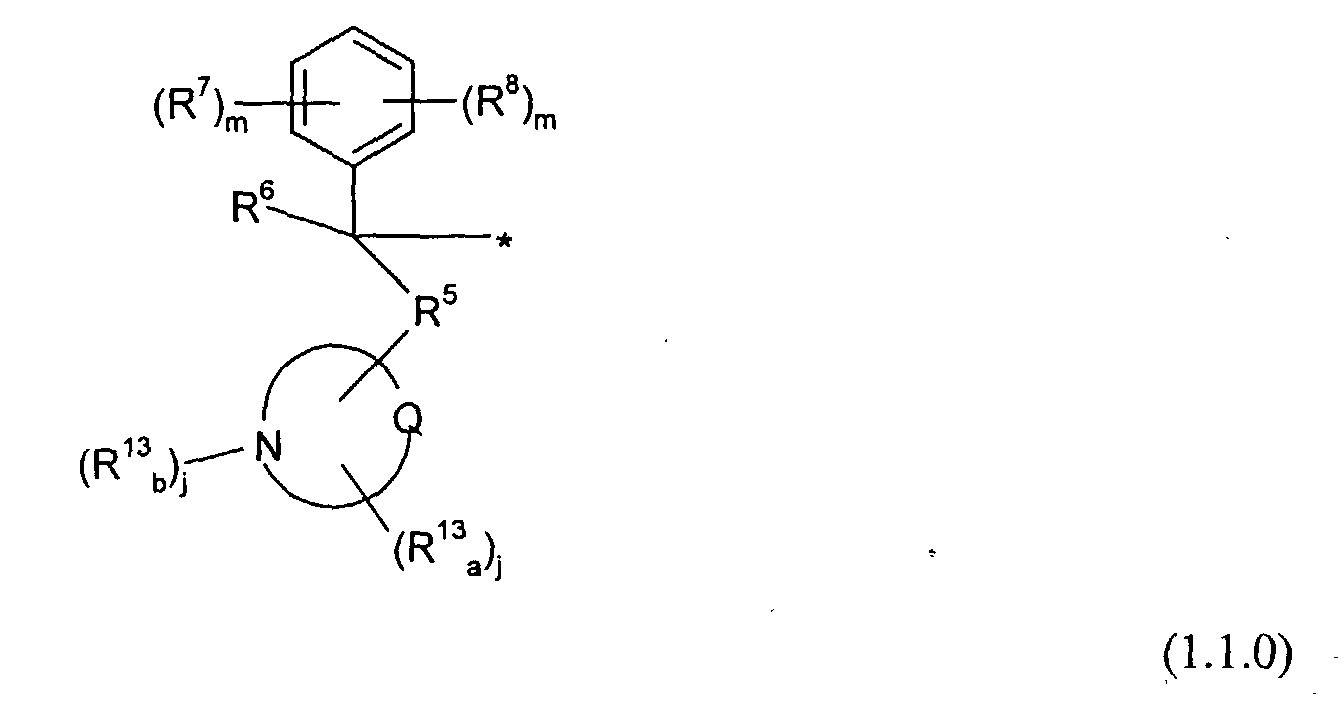
- R12 a is a member selected from the group consisting of hydrogen; F; Cl; -CO2R4; oxo;
-OH; CN; NH2; NH(C1-C2)alkyl; N(C1-C2)2dialkyl; -CF3; (C1-C4)alkyl; (C2-C4)alkenyl;
(C1-C4)alkoxy; (C3-C7)cycloalkyl; and phenyl; wherein said alkyl, alkenyl, alkoxy,
cycloalkyl and phenyl are substituted with 0 to 2 substituents R9 where:
- wherein: the symbol " * "; R5; R6; R7; R8; j and m are as defined further above, except that all of the above-recited substituents are selected independently of their selection above;
- the moiety represented by partial Formula (1.1.1):
in partial Formula (1.1.0) represents:
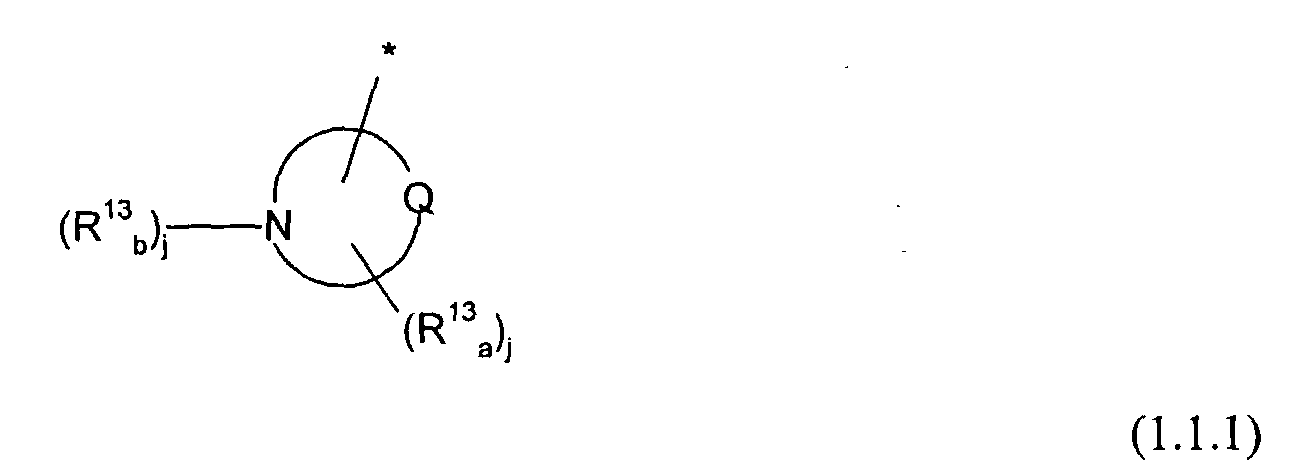
- a. a monocyclic heterocyclic group containing a total of 5 or 6 members of which one said member is nitrogen and Q is selected from O and S where said S may optionally be in the sulfonate form, -S(=O)2; wherein said heterocyclic group is selected from the group consisting of oxazolyl; oxazolidinyl; isoxazolyl; thiazolyl; thiazolidinyl; iso-thiazolyl; morpholinyl; and thiomorpholinyl; or
- b. a monocyclic heterocyclic group containing a total of 5- or 6- member s of which two said members are nitrogen and a third or fourth said member is independently selected from N, O, and S where said S may optionally be in the sulfonate form, -S(=O)2; wherein said heterocyclic group is selected from the group consisting of triazolyl; triazinyl; tetrazolyl; oxadiazolyl; thiadiazolyl; and
- R13 a is selected from the group consisting of hydrogen; F; Cl; -CO2R4; oxo; -OH; CN;
NH2; NH(C1-C2)alkyl; N(C1-C2)2dialkyl; -CF3; (C1-C4)alkyl; (C2-C4)alkenyl;
(C1-C2)alkoxy; (C3-C7)cycloalkyl; and phenyl; wherein said alkyl, alkenyl, alkoxy,
cycloalkyl and phenyl are substituted with 0 to 2 substituents R11 where:
- R11 is a member selected from the group consisting of F; Cl; -CO2R4; -OH; -CN; -CONR4 aR4 b; -NR4 aR4 b; -NR4 aC(=O)R4 b; -NR4 aC(=O)OR4 b; -NR4 aS(=O)pR4 b; -S(=O)pNR4 aR4 b; (C1-C4)alkyl including dimethyl, and (C1-C4)alkoxy wherein said alkyl and alkoxy are each independently substituted with 0 to 3 substituents independently selected from F and Cl; (C1-C2)alkoxycarbonyl; (C1-C2)alkylcarbonyl; and (C1-C2)alkylcarbonyloxy; and
- R13 b is a member selected from the group consisting of hydrogen; (C1-C4)alkyl; (C2-C4)alkenyl; (C1-C2)alkoxy; (C3-C7)cycloalkyl; C(=O)(C1-C4)alkyl; S(=O)2(C1-C4)alkyl; and phenyl; wherein said alkyl, alkenyl, alkoxy, cycloalkyl and phenyl are substituted with 0 to 2 substituents R11 wherein R11 has the same meaning as in above, except that it is selected independently;
- 1. hetero-phenylmethylene moieties of partial Formula (1.0.0):
- B. a (substituted)-amido-aryl or -heterocyclyl moiety selected from the group consisting of
- 1. alkyl-, alkenyl-, and alkynyl-substituted-amido-aryl moieties of partial Formula (2.0.0):
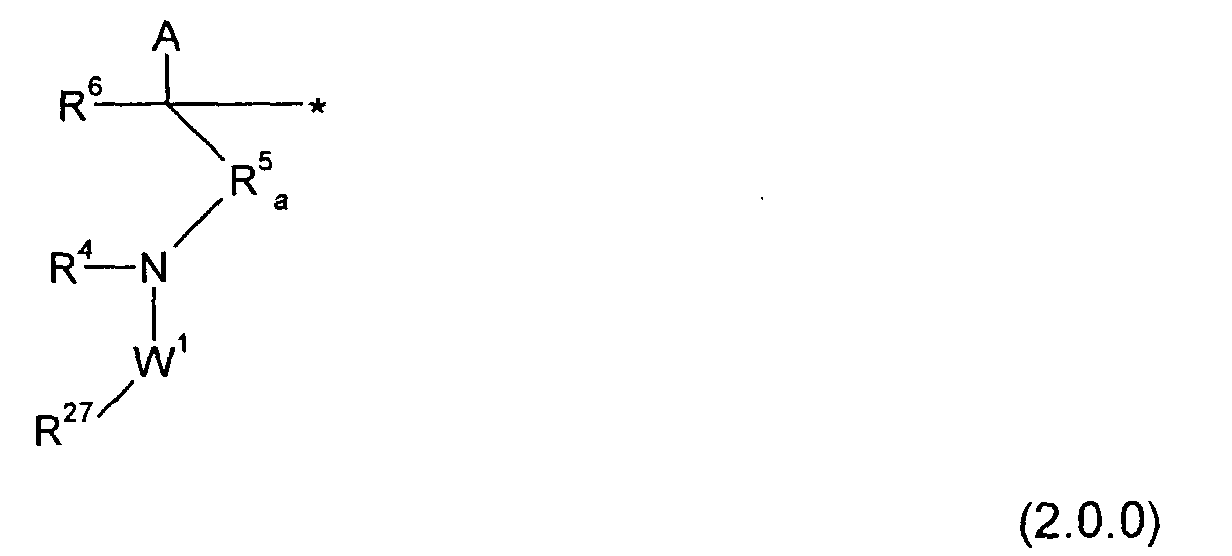
- wherein: the symbol "*"; R4 and R6; are as defined above, except that all of the above-recited substituents are selected independently of their selection above;
- A is a member selected from the group consisting of:
- 1. the moiety of partial Formula (2.0.3)

- wherein: the symbol R7; R8 and m are as defined above, except that all of the above-recited substituents are selected independently of their selection above; and the symbol: "*" indicates the point of attachment of the moiety A to the, remaining portions of partial Formula (2.0.0);
- 2. the moiety of partial Formula (2.0.4)
which represents a monocyclic heterocyclic group, selected from the group consisting of pyrrolyl; pyrazolyl; imidazolyl; pyridinyl; pyrazinyl; pyrimidinyl; wherein: the symbol R12 a and R12 b are as defined above, except that all of the above-recited substituents are selected independently of their selection above; and the symbol: "*" indicates the point of attachment of the moiety A to the other, remaining portions of partial Formula (2.0.0);
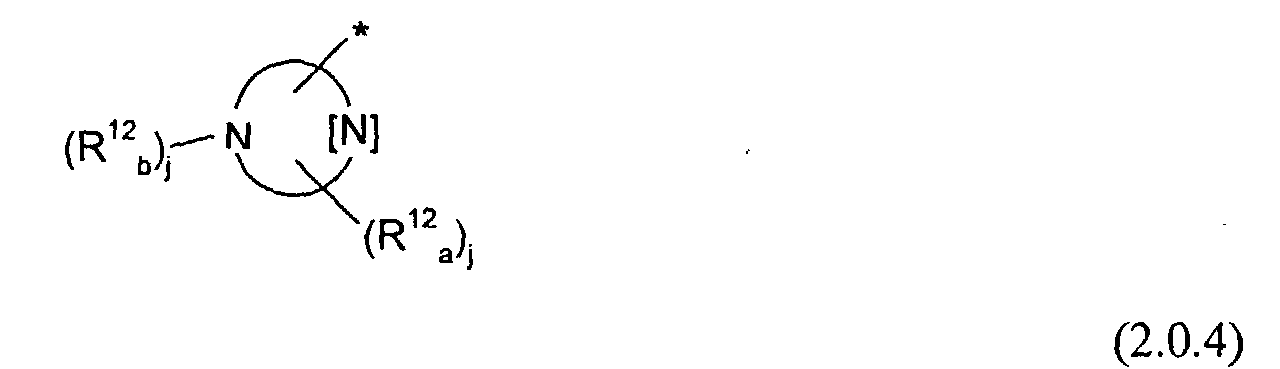
- 3. the moiety of partial Formula (2.0.5)
which represents
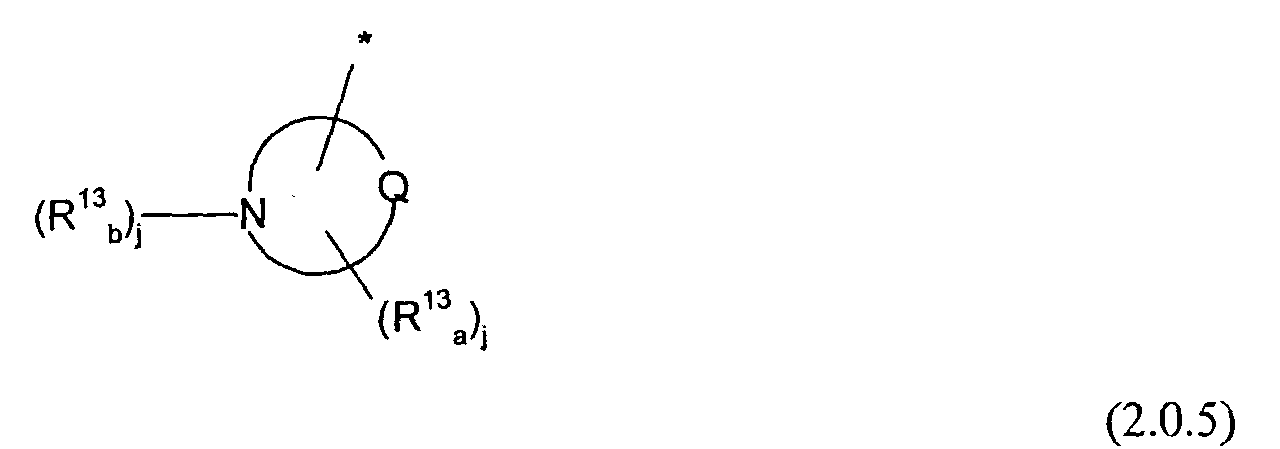
- a. a monocyclic heteroaromatic group containing a total of 5- members of which one said member is nitrogen and Q is selected from O and S where said S may optionally be in the sulfonate form, -S(=O)2; selected from the group consisting of oxazolyl; isoxazolyl; thiazolyl; and iso-thiazolyl; or
- b. a monocyclic heterocyclic group containing a total of 5- or 6- members of which two
said members are nitrogen and a third or fourth said member is independently selected from
N, O, and S where said S may optionally be in the sulfonate form, -S(=O)2; selected from
the group consisting of triazolyl; triazinyl; tetrazolyl; oxadiazolyl; and thiadiazolyl; and
- wherein: the R13 a, R13 b and j are as defined above, except that all of the above-recited substituents are selected independently of their selection above; and the symbol: "*" indicates the point of attachment of the moiety A to the other, remaining portions of partial Formula (2.0.2);
- 1. the moiety of partial Formula (2.0.3)
- R5 a is a member selected from the group consisting of a direct bond; -C(=O)-; and -S(=O)2-;
- W1 is (1.) a direct bond; (2.) in the case where R5 a is -C(=O)- or -S(=O)2, W1 is a direct bond
or -(C1-C3)alkylene- wherein any single carbon atom thereof is substituted by 0 to 2
substituents R23 where R23 is a member selected from the group consisting of-F; -Cl; -CO2R4;
-OH; -CN; (C1-C4)alkoxy; (C3-C7)cycloalkyl; and phenyl; wherein said alkoxy, cycloalkyl,
and phenyl are substituted with 0 to 2 substituents R11, wherein said R11 is as defined above,
except that all of the above-recited substituents are selected independently of their selection
above; or (3.) is a member independently selected from the group consisting of the moieties
of partial Formulas (2.0.6) through (2.0.16), inclusive:



- wherein: the symbol: "→" indicates the point of attachment of the moiety W1 to the
nitrogen atom in partial Formula (2.0.0), and the symbol: "*" indicates the point of
attachment of the moiety W1 to the other, remaining portions of partial Formula (2.0.0); and
R4 is as defined further above, but selected on an independent basis;
- R24 is selected from the group consisting of hydrogen and (C1-C4)alkyl; and
- R25 and R26are each selected from the group consisting of -OH; (C1-C2)alkyl substituted by 0 to 3 substituents selected from F; and OH; and (C1-C2)alkoxy; and
- wherein: the symbol: "→" indicates the point of attachment of the moiety W1 to the
nitrogen atom in partial Formula (2.0.0), and the symbol: "*" indicates the point of
attachment of the moiety W1 to the other, remaining portions of partial Formula (2.0.0); and
R4 is as defined further above, but selected on an independent basis;
- R27 is selected from the group consisting of (C1-C6)alkyl; (C2-C6)alkenyl; and
(C2-C6)alkynyl; wherein said alkyl, alkenyl, and alkynyl groups comprising R27 are
substituted with 0 to 3 substituents R28 where:
- R28 is selected from the group consisting of phenyl; F or Cl; oxo; hydroxy; (C1-C2)alkyl;
(C1-C3)alkoxy; -C(=O)OR29; -C(=O)(C1-C4)alkyl; -S(=O)2(C1-C4)alkyl; -C(=O)NR29R30;
-NR29R30; -NR29C(=O)R30; -NR29C(=O)OR30; -NR29S(=O)pR30; and -S(=O)2NR29R30, where:
- R29 and R30 are each a member independently selected from the group consisting of hydrogen and (C1-C4)alkyl substituted by 0 to 3 substituents selected from the group consisting of F and Cl;
- R28 is selected from the group consisting of phenyl; F or Cl; oxo; hydroxy; (C1-C2)alkyl;
(C1-C3)alkoxy; -C(=O)OR29; -C(=O)(C1-C4)alkyl; -S(=O)2(C1-C4)alkyl; -C(=O)NR29R30;
-NR29R30; -NR29C(=O)R30; -NR29C(=O)OR30; -NR29S(=O)pR30; and -S(=O)2NR29R30, where:
- 2. cycloalkyl-substituted-amido-aryl moieties of partial Formula (2.1.0):

- wherein: A; W1; the symbol "*"; R4; R5 a; and R6 have the same meaning as set out above, except that all of the above-recited substituents are selected independently of their selection above; and
- R32 is a member selected from the group consisting of -(CH2)n-(C3-C7)cycloalkyl, where n is an integer selected from 0, 1, and 2; in the event n is 0, then the α-carbon atom of said (C3-C7)cycloalkyl is substituted by 0 or 1 (C1-C4)alkyl or phenyl, where said alkyl or phenyl are substituted by 0, 1, or 2 of CH3, OCH3, OH or NH2; and in the event that n is 1 or 2, the resulting methylene or ethylene is substituted by 0 or 1 of F; NH2; N(CH3)2; OH; OCH3; (C1-C4)alkyl; or phenyl; where said alkyl and phenyl are substituted by 0, 1, or 2 of CH3, OCH3, OH, and NH2; and further wherein said (C3-C7)cycloalkyl is substituted by 0 to 3 substituents R28 where R28 is as defined further above, but selected independently
- 3. aryl and heterocyclic-substituted-amido-aryl moieties of partial Formula (2.2.0):

- wherein: A; W1; the symbol: "*"; R4; R5 a; and R6 have the same meaning as set out above, except that all of the above-recited substituents are selected independently of their selection above; and
- R35 is selected from the group consisting of phenyl; furyl; tetrahydrofuranyl; tetrahydropyranyl; oxetanyl; thienyl; pyrrolyl; pyrrolidinyl; oxazolyl; isoxazolyl; thiazolyl; isothiazolyl; imidazolyl; pyrazolyl; oxadiazolyl; thiadiazolyl; triazolyl; pyridyl; pyrazinyl; pyridazinyl; piperazinyl; pyrimidinyl; pyranyl; azetidinyl; morpholinyl; parathiazinyl; indolyl; indolinyl; benzo[b]furanyl; 2;3-dihydrobenzofuranyl; benzothienyl; 1H-indazolyl; benzimidazolyl; benzoxazolyl; benzisoxazolyl; benzthiazolyl; quinolinyl; isoquinolinyl; phthalazinyl; quinazolinyl; and quinoxalinyl; wherein (1.) said group R35 may be substituted upon any one or more carbon atoms thereof by 0 to 3 substituents R28 where R28 is as defined above, except that it is selected independently; (2.) said group R35 is substituted with respect to any one or more nitrogen atoms thereof that is not a point of attachment of said aryl or heterocyclic moiety, by 0 to 3 substituents R13 b where R13 b is as defined above, except that it is selected independently; and (3.) said group R35 with respect to any sulfur atom thereof that is not a point of attachment of said heterocyclic moiety, is substituted by 0 or 2 oxygen atoms;
wherein:
- "*" is a symbol which represents the point of attachment of the moiety of partial Formula (3.0.0) to Region α;
- "→ " is a symbol which represents the point of attachment of the moiety of partial Formula (3.0.0) to Region γ;
- R40 and R41 are independently selected from the group consisting of hydrogen; (C1-C2) alkyl including dimethyl; hydroxy; and (C1-C3) alkoxy;
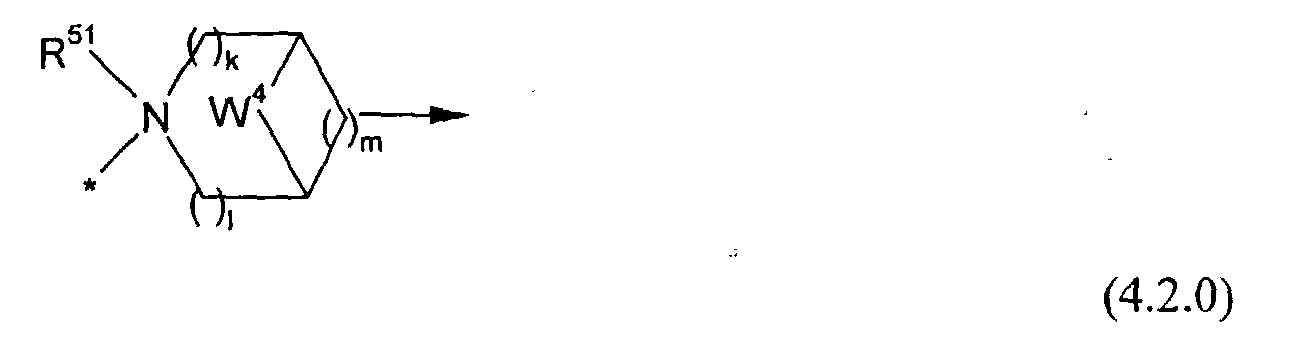
- wherein
- "*" is a symbol which represents the point of attachment of the moiety of partial Formula (4.2.0) to Region β;
- "→" is a symbol representing a covalent bond from any of the carbon atoms of the moiety of partial Formula (4.2.0) to Region δ;
- W4 is a direct bond; or is a member independently selected from the group consisting of
partial Formulas (4.2.1) through (4.2.6 ):


- where:
- R52 is a member selected from the group consisting of hydrogen; phenyl; (C1-C4)alkyl substituted by 0 or 1 substituent independently selected from (C1-C2)alkoxy and -CO2R4; (C3-C6)cycloalkyl; -CO2R4; →O; C(=O)(C1-C3)alkyl; -C(=O)NR4 aR4 b; -S(=O)(C1-C4)alkyl; and (C1-C2)alkylcarbonyl; where R4, R4 a, and R4 b; are as defined above, but selected on an independent basis;
- R51 is absent or is a member selected from the group consisting of (C1-C4)alkyl substituted by 0 or 1 substituent independently selected from (C1-C2)alkoxy and -CO2R4 where R4 is as defined above; and →O; it being understood that in the case where substituent R51 is present, the nitrogen atom is in quaternary form; and
- k, l and m are each an integer selected from 0, 1, 2, and 3;
- 1. alkyl-, alkenyl-, and alkynyl-substituted-amido-aryl moieties of partial Formula (2.0.0):
- A. a two-nitrogen-atom-containing five-membered heterocyclic moiety of partial
Formulas (5.0.0) through (5.0.10):

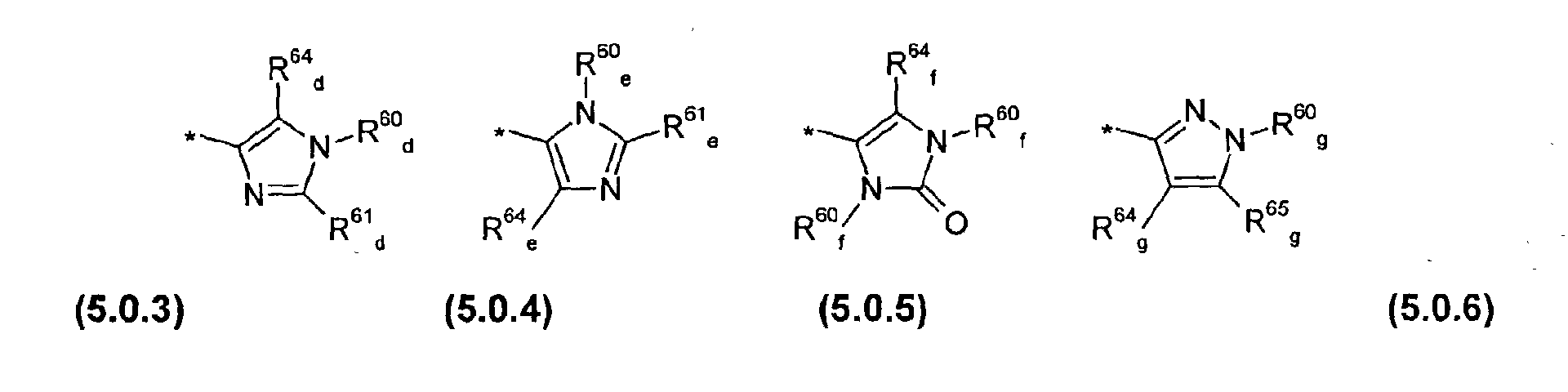
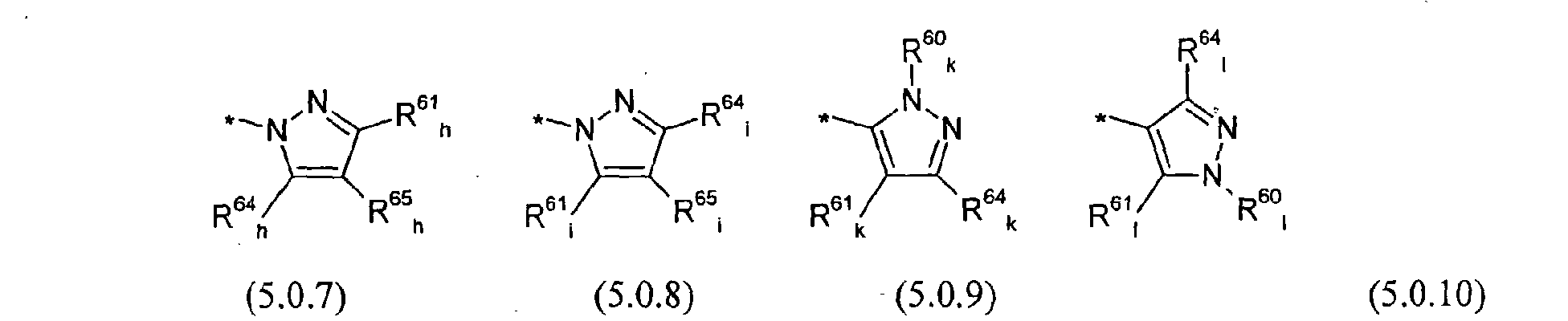
- wherein: the symbol: "*" indicates the point of attachment of each of the moieties of partial Formulas (5.0.0) through (5.0.10), inclusive, to Region γ;
- R60 b through R60 g, inclusive, R60 k, and R60 l are each a member selected from the group
consisting of hydrogen; -CO2R4; -C(=O)NR4 aR4 b; -S(=O)pNR4 aR4 b; where: R4; R4 a; and R4 b are
as defined above but selected on an independent basis; →O; (C1-C2)alkylcarbonyl;
-(C1-C4)alkyl; -(CH2)n-(C3-C7)cycloalkyl; -(C2-C3)alkenyl; -(CH2)n-(phenyl); and
-(CH2)n-(HET1), where n is an integer independently selected from 0, 1, and 2; wherein said
(C1-C4)alkyl, alkenyl, cycloalkyl, phenyl, and heterocyclyl groups are independently substituted
with 0 to 3 substituents R66, where:
- HET1 is a heterocyclyl group selected from the group consisting of thienyl; oxazolyl; isoxazolyl; thiazolyl; isothiazolyl; pyrazolyl; oxadiazolyl; thiadiazolyl; triazolyl; pyridyl; pyrazinyl; pyridazinyl; pyrimidinyl; parathiazinyl; and morpholinyl; where:
- R66 is a member selected from the group consisting of -F; -Cl; -OH; cyano; -C(=O)OR68;
-C(=O)NR68R69; -NR68R69; -NR68C(=O)R69; -NR68C(=O)OR69; -NR68S(=O)2R69;
-S(=O)2NR68R69; (C1-C4)alkyl including dimethyl, and (C1-C4)alkoxy wherein said alkyl and
alkoxy are each independently substituted with 0 to 3 substituents independently selected from F
and Cl; (C1-C2)alkoxycarbonyl; (C1-C2)alkylcarbonyl; and (C1-C2)alkylcarbonyloxy, where:
- R68 and R69 are each a member selected from the group consisting of hydrogen; and (C1-C2)alkyl; and where said:
- R61 a; R61 d; R61 e; and R61 h through R61 l inclusive; R64 a through R64 l inclusive; R65 a through R65 c
inclusive; and R65 g through R65 i inclusive are each a member selected from the group
consisting of hydrogen; -OH; -CF3; cyano; -(C1-C3)alkoxy; -C(=O)OR4; -C(=O)NR4 aR4 b;
-NR4 aR4 b; -NR4 aC(=O)R4 b;-NR4 aC(=O)OR4 b; -NR4 aS(=O)pR4 b; -S(=O)pNR4 aR4 b; where: R4; R4 a;
and R4 b are as defined further above but selected on an independent basis; -(C1-C4)alkyl;
-(CH2)n-(C3-C7)cycloalkyl; -(C2-C3)alkenyl; -(CH2)n-(phenyl); and -(CH2)n-(HET1), where n is
an integer selected from 0, 1, and 2; wherein said (C1-C4)alkyl, alkenyl, cycloalkyl, phenyl, and
heterocyclyl groups where heterocyclyl groups is as defined above, are independently
substituted with 0 to 3 substituents R66 where:
- R66 is as defined above, or:
- R64 a through R64 c inclusive; R64 g through R64 i inclusive; R65 a through R65 c inclusive; and R65 g through R65 I inclusive may be taken together in their same subscript denominated pairs along with the remaining portions of the moieties of partial Formulas (5.0.0) through (5.0.2), and (5.0.6) through (5.0.8), to form a fused bicyclic ring system comprising a member independently selected from the group consisting of benzimidazolyl; purinyl, i.e., imidazopyrimidinyl; and imidazopyridinyl; wherein said fused bicyclic ring system is independently substituted with 0 to 3 substituents R66, where R66 has the same meaning as set out further above, except that it is independently selected therefrom;
- B. a (substituted)-amide, carbamate, or urea moiety selected from the group
consisting of:
- 1. alkyl-, cycloalkyl-, and alkenyl-(substituted)-amide, carbamate, or urea moieties of
partial Formula (5.1.0):
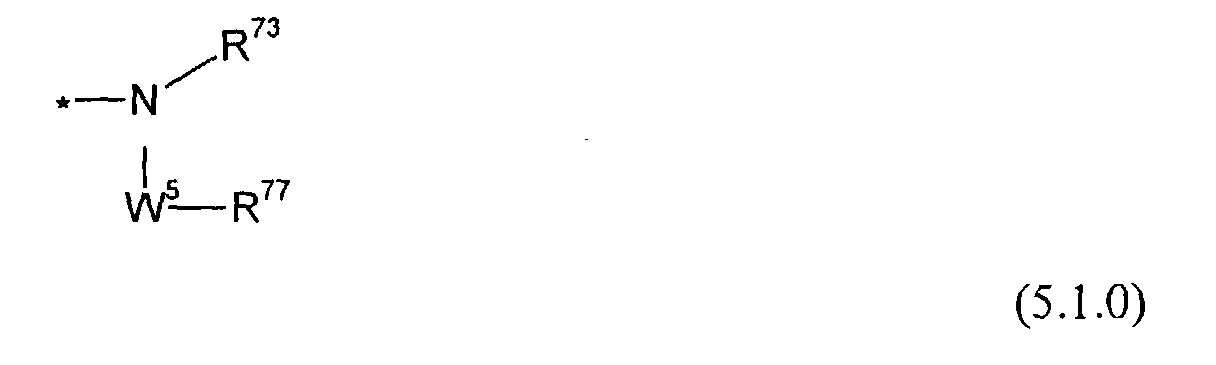
- wherein: the symbol "*" is as defined above;
- R73 is a member selected from the group consisting of hydrogen and (C1-C2)alkyl;
- W5 is selected from the group consisting the moieties of partial Formulas (5.1.1)
through (5.1.12):



- wherein: the symbol: "→" indicates the point of attachment of the moiety W5 represented by partial Formulas (5.1.1) through (5.1.12), inclusive, to the nitrogen atom in partial Formula (5.1.0), and the symbol: "*" indicates the point of attachment of the moiety W5 to R77 as defined further below;
- R74 and R75 are each selected from the group consisting of hydrogen; (C1-C2)alkyl substituted by 0 or 1 substituent independently selected from OH; and (C1-C2)alkoxy; and
- R77 is a member selected from the group consisting of (C1-C6)alkyl; (C2-C6)alkenyl;
and -(CH2)n-(C3-C7)cycloalkyl, where n is an integer selected from 0, 1, and 2; and wherein
said alkyl, alkenyl, and cycloalkyl groups comprising R77 are substituted with 0 to 3
substituents R78, where:
- R78 is a member selected from the group consisting of oxo; -OH; -(C1-C2)alkyl;
-(C1-C3)alkoxy; -CF3; -C(=O)OR79; -C(=O)NR79R80; -NR79R80; -NR79C(=O)R80;
-NR79C(=O)OR80; -NR79S(=O)2R80; and -S(=O)2NR79R80, where:
- R79 and R80 are each a member independently selected from the group consisting of hydrogen; and (C1-C4)alkyl; and
- R78 is a member selected from the group consisting of oxo; -OH; -(C1-C2)alkyl;
-(C1-C3)alkoxy; -CF3; -C(=O)OR79; -C(=O)NR79R80; -NR79R80; -NR79C(=O)R80;
-NR79C(=O)OR80; -NR79S(=O)2R80; and -S(=O)2NR79R80, where:
- 2. aryl and heterocyclyl-(substituted)-amide, carbamate, or urea moieties of partial Formula
(5.2.0):
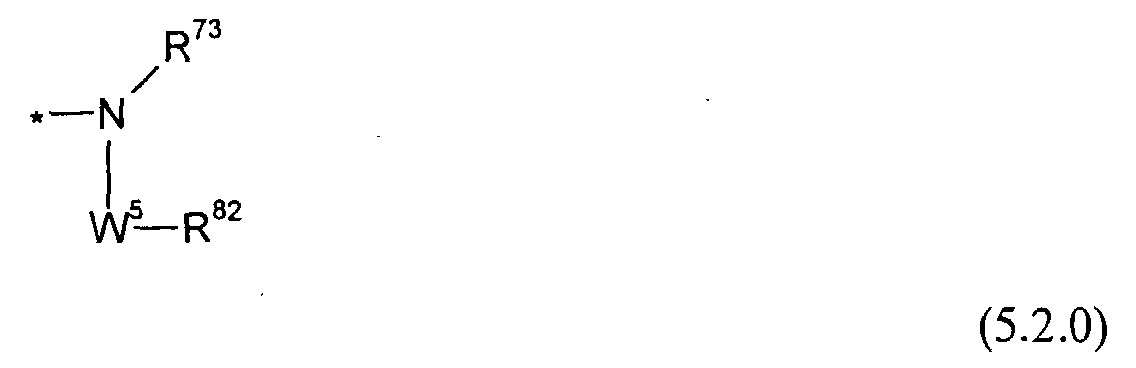
- wherein: the symbol: "*"; R73; and W5 have the same meanings as under the definitions of partial Formula (5.1.0) above, except that they are independently selected therefrom; and under W5 the symbols: "→" and " *" are as defined under partial Formula (5.1.0); and
- R82 is a member selected from the group consisting of phenyl; cinnolinyl; furyl; thienyl;
pyrrolyl; oxazolyl; isoxazolyl; thiazolyl; isothiazolyl; imidazolyl; imidazolinyl; pyrazolyl;
pyrazolinyl; oxadiazolyl; thiadiazolyl; triazolyl; pyridyl; pyrazinyl; pyridazinyl; pyrimidinyl;
parathiazinyl; indolyl; isoindolyl; indolinyl; benzo[b]furanyl; 2;3-dihydrobenzofuranyl;
benzo[b]thiophenyl; 1H-indazolyl; benzimidazolyl; benzthiazolyl; quinolinyl; isoquinolinyl;
phthalazinyl; quinazolinyl; quinoxalinyl; wherein:
- the aryl or heterocyclyl moiety is substituted by 0 to 3 substituents R78 where R78 is as defined above, but selected on an independent basis; or
- 1. alkyl-, cycloalkyl-, and alkenyl-(substituted)-amide, carbamate, or urea moieties of
partial Formula (5.1.0):
- C. a (substituted)-heterocyclyl moiety independently selected from the group
consisting of:
- 1. a heterocyclyl moiety of partial Formula (5.3.0):

- wherein: the symbol: " * " indicates the point of attachment of partial Formula (5.3.0) to Region γ; Q is N, O or S and
- partial Formula (5.3.0) represents:
- a. a monocyclic heterocyclic group containing a total of 5- members of which one said
member is nitrogen and a second said member is selected from O and S where said S may
optionally be in the sulfonate form, wherein said heterocyclic group is selected from the group
consisting of oxazolyl; isoxazolyl; thiazolyl; and iso-thiazolyl; or
- b. a monocyclic heterocyclic group containing a total of 5- members of which two said members are nitrogen and a third or fourth said member is independently selected from N, O, and S where said S may optionally be in the sulfonate form, -S(=O)2; wherein said heterocyclic group is independently selected from the group consisting of triazolyl; tetrazolyl; oxadiazolyl; and thiadiazolyl; and
- a. a monocyclic heterocyclic group containing a total of 5- members of which one said
member is nitrogen and a second said member is selected from O and S where said S may
optionally be in the sulfonate form, wherein said heterocyclic group is selected from the group
consisting of oxazolyl; isoxazolyl; thiazolyl; and iso-thiazolyl; or
- R90 a and R90 b are each a member independently selected from the group consisting of
hydrogen, -(C1-C2)alkylcarbonyl; -(C1-C4)alkyl; -(CH2)n-(C3-C7)cycloalkyl; -(C2-C3)alkenyl;
-(CH2)n-(phenyl); and -(CH2)n-(HET2), where n is an integer independently selected from 0, 1,
and 2; wherein said (C1-C4)alkyl, alkenyl, cycloalkyl, phenyl, and HET2 groups are
independently substituted with 0 to 3 substituents R91, where:
- j has the same meaning as set forth above, but is selected on an independent basis therefrom;
- HET2 is a heterocyclyl group selected from the group consisting of thienyl;
oxazolyl; isoxazolyl; thiazolyl; isothiazolyl; pyrazolyl; oxadiazolyl; thiadiazolyl; triazolyl;
pyridyl; pyrazinyl; pyridazinyl; pyrimidinyl; parathiazinyl; and morpholinyl; where:
- R91 is selected from the group consisting of -F; -Cl; -CO2R4; -OH; -CN; -CONR93R94;
-NR93R94; C(=O)(C1-C4)alkyl; -NR93C(=O)R94; -NR93C(=O)OR94; -NR93S(=O)R94;
-S(=O)NR93R94; (C1-C4)alkyl including dimethyl, and (C1-C4)alkoxy wherein said alkyl and
alkoxy are each independently substituted with 0 to 3 substituents independently selected from F
and Cl; (C1-C2)alkoxycarbonyl; (C1-C2)alkylcarbonyl; and (C1-C2)alkylcarbonyloxy; wherein:
- R93and R94 are each a member independently selected from the group consisting of hydrogen; and (C1-C2)alkyl; and
- R91 is selected from the group consisting of -F; -Cl; -CO2R4; -OH; -CN; -CONR93R94;
-NR93R94; C(=O)(C1-C4)alkyl; -NR93C(=O)R94; -NR93C(=O)OR94; -NR93S(=O)R94;
-S(=O)NR93R94; (C1-C4)alkyl including dimethyl, and (C1-C4)alkoxy wherein said alkyl and
alkoxy are each independently substituted with 0 to 3 substituents independently selected from F
and Cl; (C1-C2)alkoxycarbonyl; (C1-C2)alkylcarbonyl; and (C1-C2)alkylcarbonyloxy; wherein:

- wherein: R90a; R90b; and j have the same meanings as set out above, but are selected independently.
- 1. a heterocyclyl moiety of partial Formula (5.3.0):
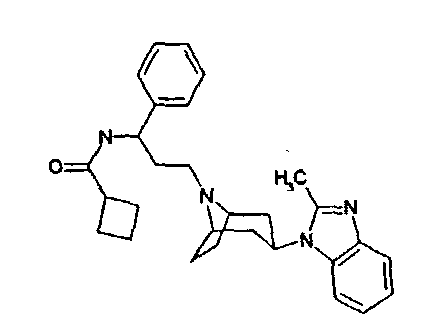

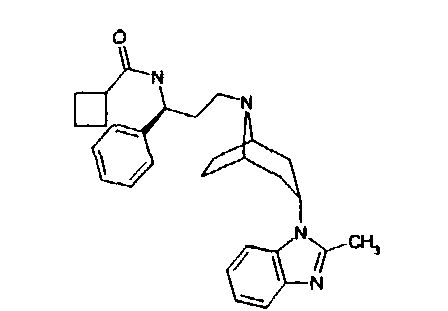


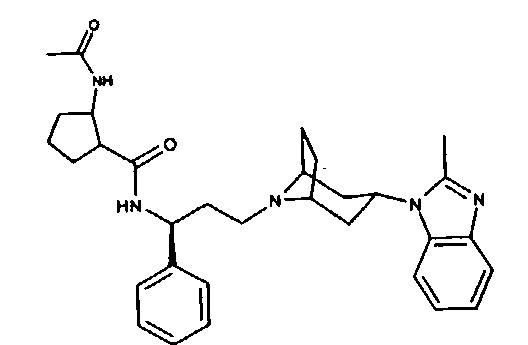


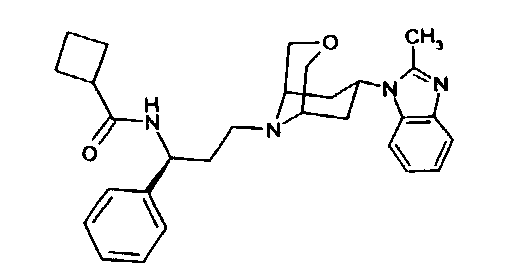

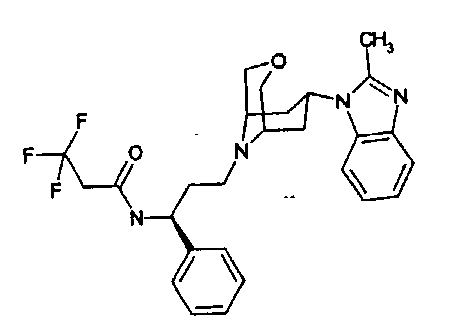
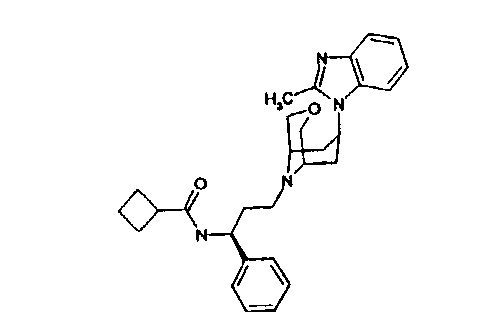


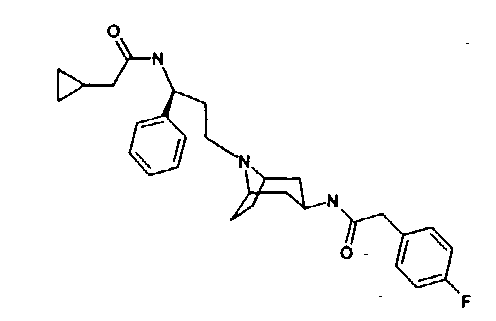
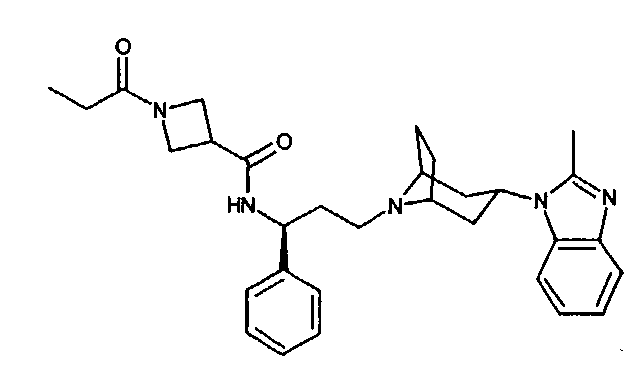
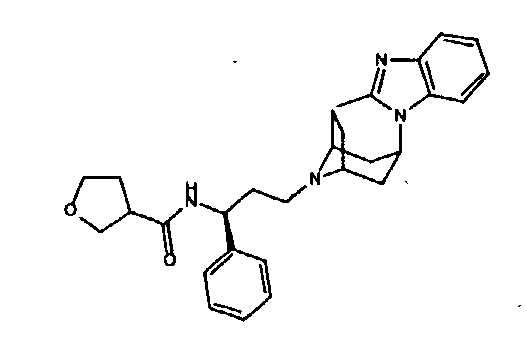

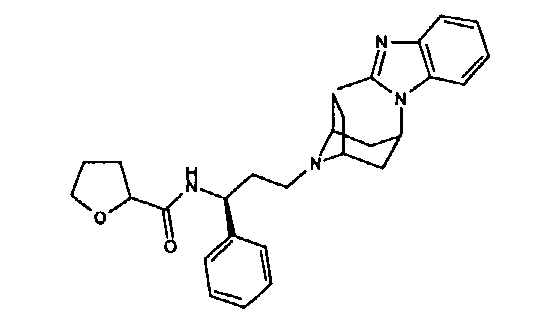
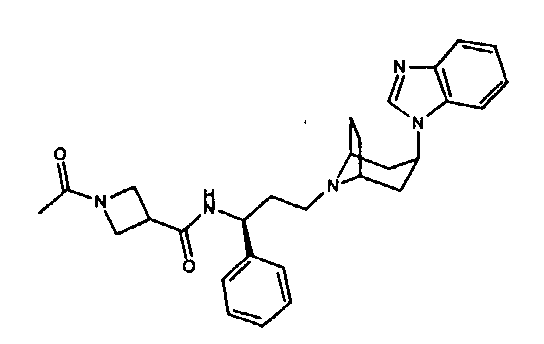

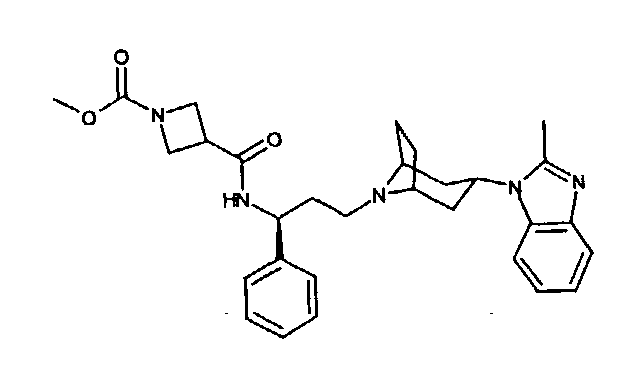


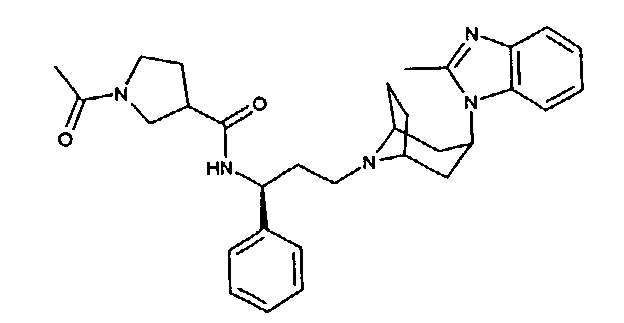
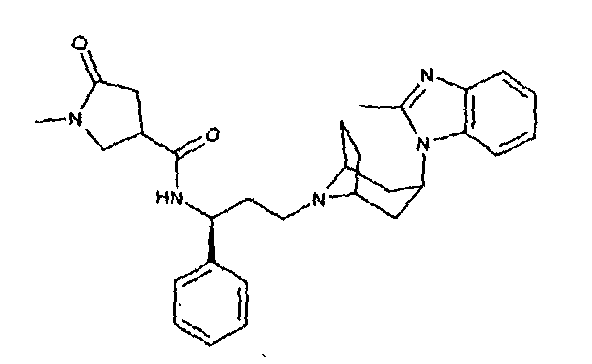

















- N-{(1S)-3-[3-endo-(2-Methyl-1H-benzimidazol-1-yl)-8-azabicyclo[3.2.1]oct-8-yl]-1-phenylpropyl}-1-propionyl-3-azetidinecarboxamide
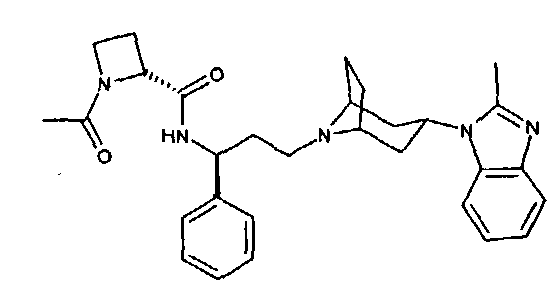
- 1-Acetyl-N-{(1S)-3-[3-endo-(2-methyl-1H-benzimidazol-1-yl)-8-azabicyclo[3.2.1]oct-8-yl]-1-phenylpropyl}-2-azetidinecarboxamide
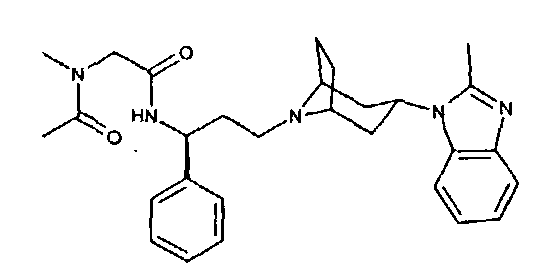
- 2-[Acetyl(methyl)amino]-N-{(1S)-3-[3-endo-(2-methyl-1H-benzimidazol-1-yl)-8-azabicyclo[3.2.1]oct-8-yl]-1-phenylpropyl}acetamide
- 3-[Acetyl(methyl)amino]-N-{(1S)-3-[3-endo-(2-methyl-1H-benzimidazol-1-yl)-8-azabicyclo[3.2.1]oct-8-yl]-1-phenylpropyl}propanamide
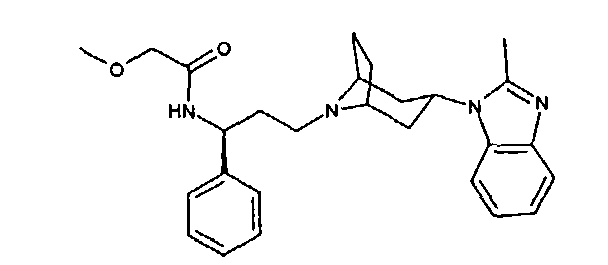
- 2-Methoxy-N-{(1S)-3-[3-endo-(2-methyl-1H-benzimidazol-1-yl)-8-azabicyclo[3.2.1]oct-8-yl]-1-phenylpropyl}acetamide
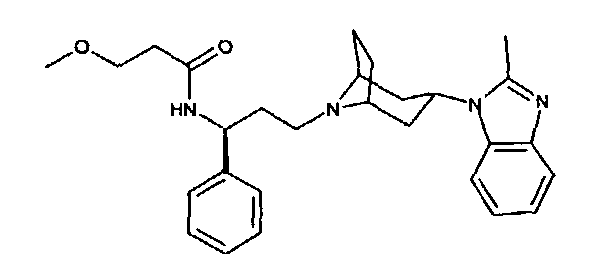
- 3-Methoxy-N-{(1S)-3-[3-endo-(2-methyl-1H-benzimidazol-1-yl)-8-azabicyclo[3.2.1]oct-8-yl]-1-phenylpropyl}propanamide
- 1-Acetyl-N-{(1S)-3-[3-endo-(2-methyl-1H-benzimidazol-1-yl)-8-azabicyclo[3.2.1]oct-8-yl]-1-phenylpropyl}-3-pyrrolidinecarboxamide
- 1-Methyl-N-{(1S)-3-[3-endo-(2-methyl-1H-benzimidazol-1-yl)-8-azabicyclo[3.2.1]oct-8-yl]-1-phenylpropyl}-2-oxo-4-pyrrolidinecarboxamide
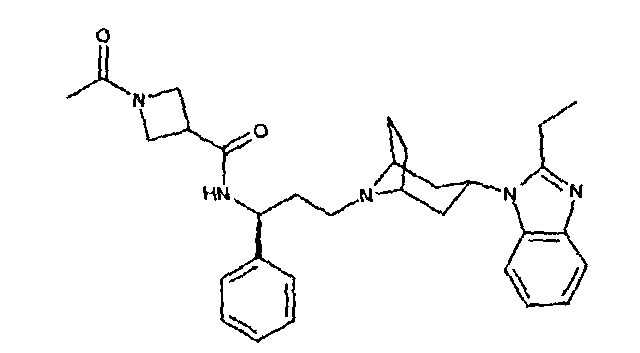
- 1-Acetyl-N-{(1S)-3-[3-exo-(2-ethyl-1H-benzimidazol-1-yl)-8-azabicyclo[3.2.1]oct-8-yl]-1-phenylpropyl}-3-azetidinecarboxamide
- N-{(1S)-3-[3-exo-(2-Ethyl-1H-benzimidazol-1-yl)-8-azabicyclo[3.2.1]oct-8-yl]-1-phenylpropyl}-1-propionyl-3-azetidinecarboxamide
- 1-Acetyl-N-((1S)-1-phenyl-3-{3-exo-[2-(trifluoromethyl)-1H-benzimidazol-1-yl]-8-azabicyclo[3.2.1]oct-8-yl}propyl)-3-azetidinecarboxamide
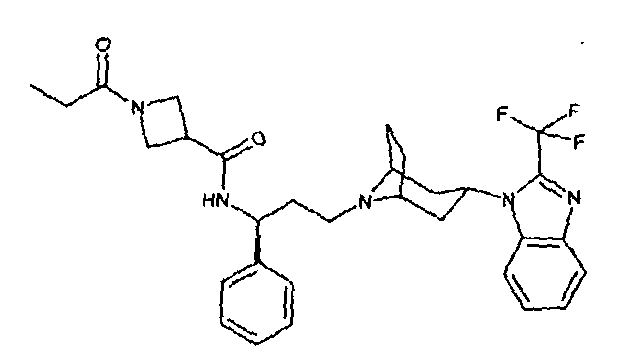
- N-((1S)-1-Phenyl-3-{3-exo-[2-(trifluoromethyl)-1H-benzimidazol-1-yl]-8-azabicyclo[3.2.1]oct-8-yl}propyl)-1-propionyl-3-azetidinecarboxamide
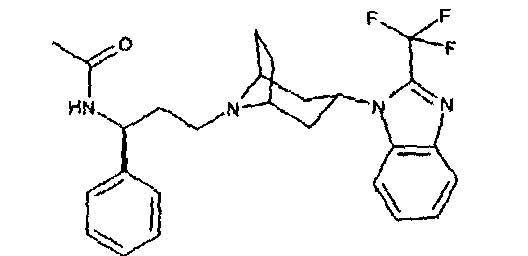
- N-((1S)-1-Phenyl-3-{3-exo-[2-(trifluoromethyl)-1H-benzimidazol-1-yl]-8-azabicyclo[3.2.1]oct-8-yl}propyl)acetamide
- 2-[Acetyl(methyl)amino]-N-((1S)-1-phenyl-3-{3-exo-[2-(trifluoromethyl)-1H-benzimidazol-1-yl]-8-azabicyclo[3.2.1]oct-8-yl}propyl)acetamide
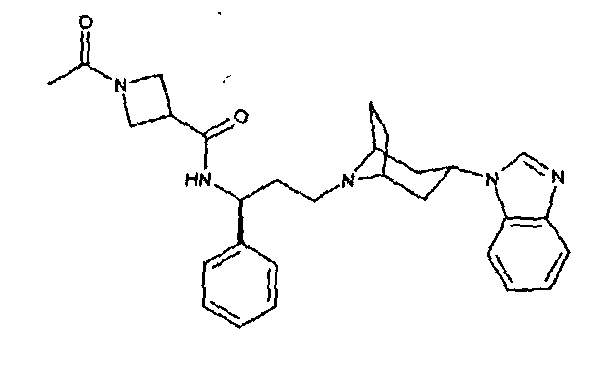
- 1-Acetyl-N-{(1S)-3-[3-exo-(1H-benzimidazol-1-yl)-8-azabicyclo[3.2.1]oct-8-yl]-1-phenylpropyl}-3-azetidinecarboxamide
- N-{(1S)-3-[3-exo-(1H-Benzimidazol-1-yl)-8-azabicyclo[3.2.1]oct-8-yl]-1-phenylpropyl}-1-propionyl-3-azetidinecarboxamide
- 1-acetyl-N-{(1S)-3-[3-exo-(5-fluoro-1H-benzimidazol-1-yl)-8-azabicyclo[3.2.1]oct-8-yl]-1-phenylpropyl}-3-azetidinecarboxamide
- N-{(1S)-3-[3-exo-(5-Fluoro-1H-benzimidazol-1-yl)-8-azabicyclo[3.2.1]oct-8-yl]-1-phenylpropyl}-1-propionyl-3-azetidinecarboxamide
- 1-Acetyl-N-{(1S)-3-[3-exo-(5-fluoro-2-methyl-1H-benzimidazol-1-yl)-8-azabicyclo[3.2.1]oct-8-yl]-1-phenylpropyl}-3-azetidinecarboxamide
- N-{(1S)-3-[3-exo-(5-Fluoro-2-methyl-1H-benzimidazol-1-yl)-8-azabicyclo[3.2.1]oct-8-yl]-1-phenylpropyl}-1-propionyl-3-azetidinecarboxamide
- N-{(1S)-3-[3-exo-(2-methyl-1H-benzimidazol-1-yl)-8-azabicyclo[3.2.1]oct-8-yl]-1-phenylpropyl}-3-azetidinecarboxamide
- 1-methyl-N-{(1S)-3-[3-exo-(2-methyl-1H-benzimidazol-1-yl)-8-azabicyclo[3.2.1]oct-8-yl]-1-phenylpropyl}-3-azetidinecarboxamide
- (2S)-1-acetyl-N-{(1S)-3-[3-exo-(2-methyl-1H-benzimidazol-1-yl)-8-azabicyclo[3.2.1]oct-8-yl]-1-phenylpropyl}-2-azetidinecarboxamide (2R)-1-acetyl-N-{(1S)-3-[3-exo-(2-methyl-1H-benzimidazol-1-yl)-8-azabicyclo[3.2.1]oct-8-yl]-1-phenylpropyl}-2-azetidinecarboxamide
- 2-[acetyl(methyl)amino]-N-{(1S)-3-[3-exo-(2-methyl-1H-benzimidazol-1-yl)-8-azabicyclo[3.2.1]oct-8-yl]-1-phenylpropyl}acetamide
- 3-[acetyl(methyl)amino]-N-{(1S)-3-[3-exo-(2-methyl-1H-benzimidazol-1-yl)-8-azabicyclo[3.2.1]oct-8-yl]-1-phenylpropyl}propanamide
- 1-acetyl-N-{(1S)-3-[3-exo-(2-methyl-1H-benzimidazol-1-yl)-8-azabicyclo[3.2.1]oct-8-yl]-1-phenylpropyl}-3-pyrrolidinecarboxamide
- N-{(1S)-3-[3-exo-(2-methyl-1H-benzimidazol-1-yl)-8-azabicyclo[3.2.1]oct-8-yl]-1-phenylpropyl}-1-(trifluoromethyl)cyclopropanecarboxamide
- 2-methoxy-N-{(1S)-3-[3-exo-(2-methyl-1H-benzimidazol-1-yl)-8-azabicyclo[3.2.1]oct-8-yl]-1-phenylpropyl}acetamide
- 3-methoxy-N-{(1S)-3-[3-exo-(2-methyl-1H-benzimidazol-1-yl)-8-azabicyclo[3.2.1]oct-8-yl]-1-phenylpropyl}propanamide
- 1-Acetyl-N-{(1S)-3-[3-exo-(4-fluoro-2-methyl-1H-benzimidazol-1-yl)-8-azabicyclo[3.2.1]oct-8-yl]-1-phenylpropyl}-3-azetidinecarboxamide
- N-{(1S)-3-[3-exo-(4-Fluoro-2-methyl-1H-benzimidazol-1-yl)-8-azabicyclo [3.2.1]oct-8-yl]-1-phenylpropyl}-3-azetidinecarboxamide
- 1-Methyl-N-{(1S)-3-[3-exo-(4-fluoro-2-methyl-1H-benzimidazol-1-yl)-8-azabicyclo[3.2.1]oct-8-yl)-1-phenylpropyl}-3-azetidinecarboxamide
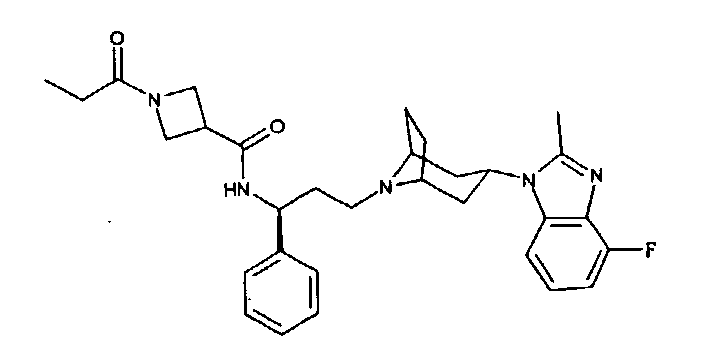
- N-{(1S)-3-[3-exo-(4-Fluoro-2-methyl-1H-benzimidazol-1-yl)-8-azabicyclo[3.2.1]oct-8-yl]-1-phenylpropyl}-1-propionyl-3-azetidinecarboxamide
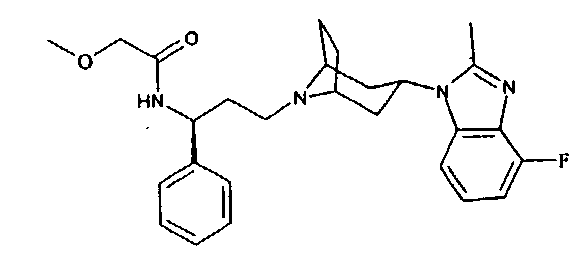
- 2-Methoxy-N-{(1S)-3-[3-exo-(4-Fluoro-2-methyl-1H-benzimidazol-1-yl)-8-azabicyclo[3.2.1]oct-8-yl]-1-phenylpropyl} acetamide
- N-{(1S)-3-[3-exo-(4-Fluoro-2-Methyl-1H-benzimidazol-1-yl)-8-azabicyclo[3.2.1)oct-8-yl]-1-phenylpropyl} acetamide
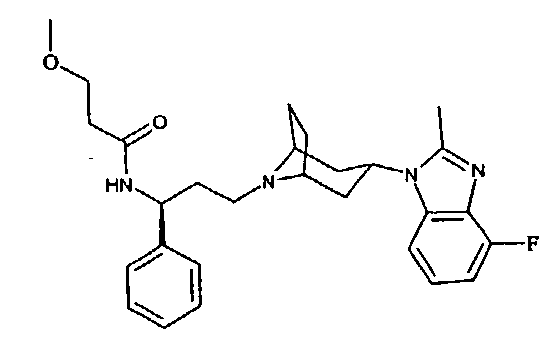
- 3-Methoxy-N-{(1S)-3-[3-exo-(4-fluoro-2-methyl-1H-benzimidazol-1-yl)-8-azabicyclo[3.2.1]oct-8-yl]-1-phenylpropyl}propanamide
- 2-[Acetyl(methyl)amino]-N-{(1S)-3-[3-exo-(4-fluoro-2-methyl-1H-benzimidazol-1-yl)-8-azabicyclo[3.2.1]oct-8-yl]-1-phenylpropyl}acetamide
- 3-[Acetyl(methyl)amino]-N-{(1S)-3-[3-exo-(4-fluoro-2-methyl-1H-benzimidazol-1-yl)-8-azabicyclo[3.2.1]oct-8-yl]-1-phenylpropyl}propanamide
- N-{(1S)-3-[3-exo-(4-fluoro-2-methyl-1H-benzimidazol-1-yl)-8-azabicyclo[3.2.1]oct-8-yl]-1-phenylpropyl}-3-methyl-3-oxetanecarboxamide
- 3-Ethyl-N-{(1S)-3-[3-exo-(4-fluoro-2-methyl-1H-benzimidazol-1-yl)-8-azabicyclo[3.2.1]oct-8-yl]-1-phenylpropyl}-3-oxetanecarboxamide
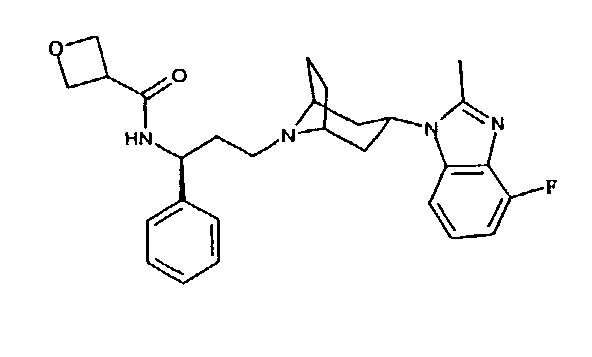
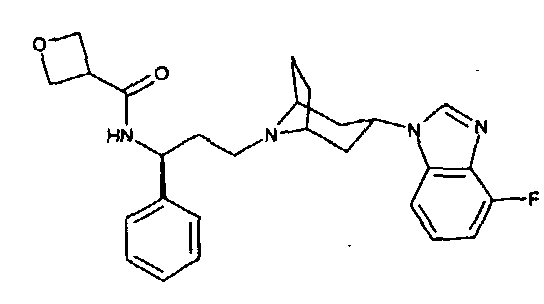
- N-{(1S)-3-[3-exo-(4-Fluoro-2-methyl-1H-benzimidazol-1-yl)-8-azabicyclo[3.2.1]oct-8-yl]-1-phenylpropyl}-3-oxetanecarboxamide
- 3-Ethyl-N-{(1S)-3-[3-exo-(4-fluoro-1H-benzimidazol-1-yl)-8-azabicyclo[3.2.1]oct-8-yl]-1-phenylpropyl}-3-oxetanecarboxamide
- N-{(1S)-3-[3-exo-(4-Fluoro-1H-benzimidazol-1-yl)-8-azabicyclo[3.2.1]oct-8-yl]-1-phenylpropyl}-3-methyl-3-oxetanecarboxamide
- N-{(1S)-3-[3-exo-(4-Fluoro-1H-benzimidazol-1-yl)-8-azabicyclo[3.2.1]oct-8-yl]-1-phenylpropyl}-3-oxetanecarboxamide
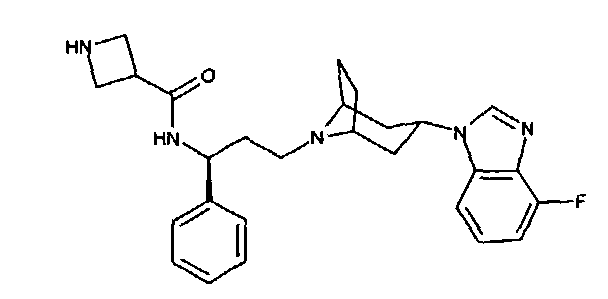
- N-{(1S)-3-[3-exo-(4-Fluoro-1H-benzimidazol-1-yl)-8-azabicyclo[3.2.1]oct-8-yl]-1-phenylpropyl}-3-azetidinecarboxamide
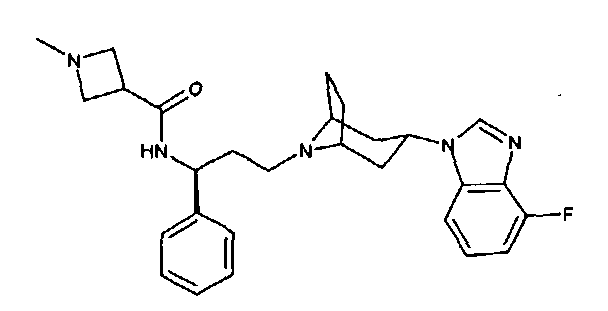
- N-{(1S)-3-[3-exo-(4-Fluoro-1H-benzimidazol-1-yl)-8-azabicyclo[3.2.1]oct-8-yl]-1-phenylpropyl}-1-methyl-3-azetidinecarboxamide
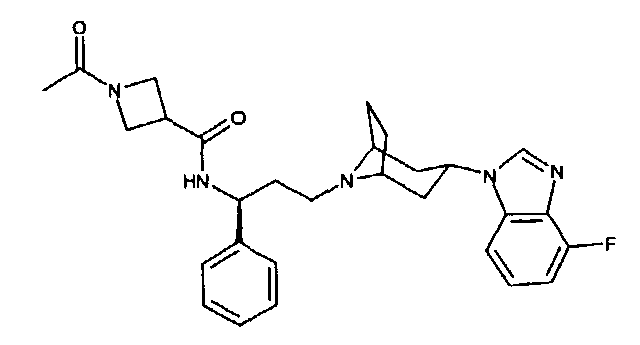
- 1-Acetyl-N-{(1S)-3-[3-exo-(4-fluoro-1H-benzimidazol-1-yl)-8-azabicyclo[3.2.1]oct-8-yl]-1-phenylpropyl}-3-azetidinecarboxamide
- N-{(1S)-3-[3-exo-(4-Fluoro-1H-benzimidazol-1-yl)-8-azabicyclo[3.2.1]oct-8-yl]-1-phenylpropyl}-1-propionyl-3-azetidinecarboxamide
- N-{(1S)-3-[3-exo-(4-Fluoro-1H-benzimidazol-1-yl)-8-azabicyclo[3.2.1]oct-8-yl]-1-phenylpropyl}-2-methoxyacetamide
- N-{(1S)-3-[3-exo-(4-Fluoro-1H-benzimidazol-1-yl)-8-azabicyclo[3.2.1]oct-8-yl]-1-phenylpropyl}acetamide
- N-{(1S)-3-[3-exo-(4-fluoro-1H-benzimidazol-1-yl)-8-azabicyclo[3.2.1]oct-8-yl]-1-phenylpropyl}-3-methoxypropanamide
- 2-[Acetyl(methyl)amino]-N-{(1S)-3-[3-exo-(4-fluoro-1H-benzimidazol-1-yl)-8-azabicyclo[3.2.1]oct-8-yl]-1-phenylpropyl}acetamide
- 3-[Acetyl(methyl)amino]-N-{(1S)-3-[3-exo-(4-fluoro-1H-benzimidazol-1-yl)-8-azabicyclo[3.2.1]oct-8-yl]-1-phenylpropyl}propanamide
[Region α] is selected from the group consisting of:
- A. Aryl heterocyclyl substituent components comprising:
- 1. hetero-phenylmethylene moieties of partial Formula (1.0.0):
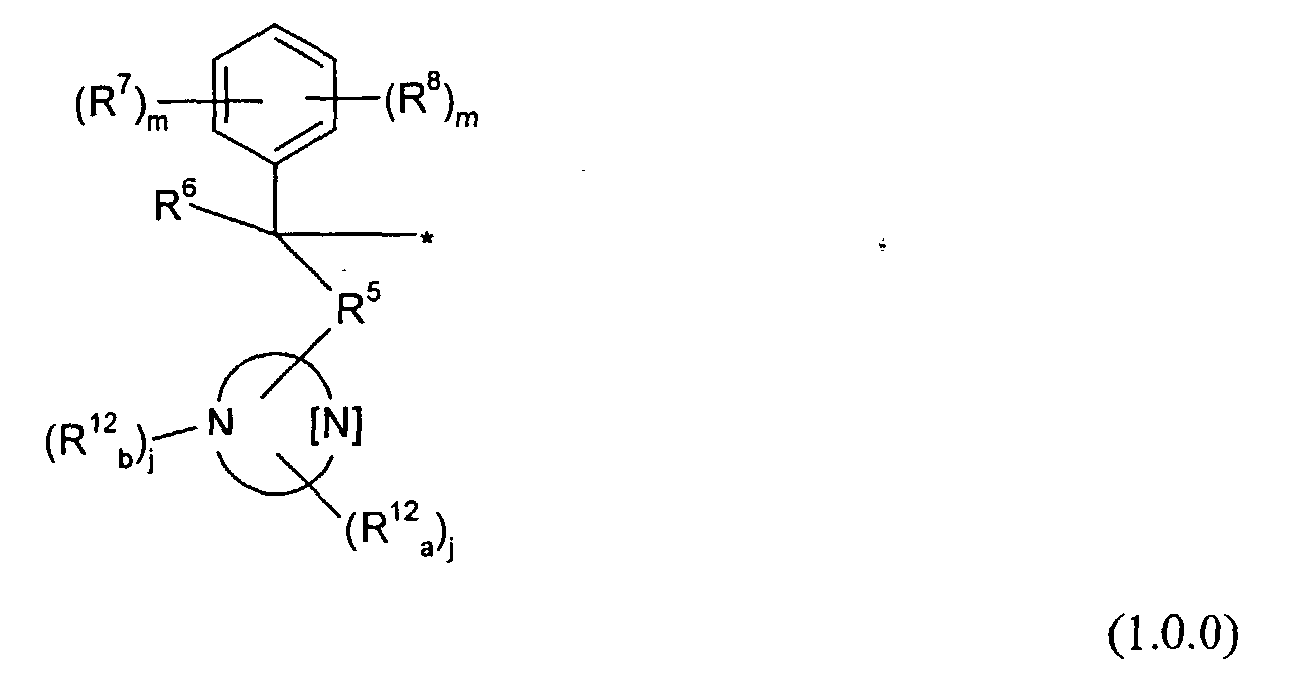
- wherein: the symbol "*" indicates the point of attachment of the moiety of partial Formula (1.0.0) to Region β, as hereinafter defined;
- R5 is a member selected from the group consisting of a direct bond; -O-; -C(=O)-; -NR4-;
and -S(=O)p-; where:
- R4 is hydrogen or (C1-C2)alkyl;
- R6 is a member selected from the group consisting of hydrogen; (C1-C2)alkyl; (C1-C2)alkoxy; -CN; -OH; and -C(=O)NH2;
- j is an integer selected from 0, 1, and 2;
- m is an integer selected from 0, 1, and 2;
- R7 and R8 are each a member selected from the group consisting of -F; -Cl; -CO2R4;
-OH; -CN; -CONR4 aR4 b; -NR4 aR4 b-; -NR4 aC(=O)R4 b; -NR4 aC(=O)OR4 b; -NR4 aS(=O)pR4 b;
-S(=O)pNR4 aR4 b; (C1-C4)alkyl, and (C1-C4)alkoxy wherein said alkyl and alkoxy are each
substituted with 0 to 3 substituents independently selected from F and Cl;
(C1-C2)alkoxycarbonyl; (C1-C2)alkylcarbonyl; and (C1-C2)alkylcarbonyloxy; where:
- p is an integer selected from 0, 1, and 2;
- R4 a and R4 bare each independently selected from hydrogen and (C1-C2)alkyl;
- the moiety represented by partial Formula (1.0.1):
in partial Formula (1.0.0) represents a monocyclic heterocyclic group, or a bicyclic benzo-fused ring system containing said heterocyclic group wherein said heterocyclic group contains a total of 5- or 6- members of which one or two of said members is nitrogen, the presence of the optional second nitrogen atom being represented by: "[N]"; wherein said heterocyclic group or ring system are selected from the group consisting of pyrrolyl; pyrazolyl; imidazolyl; pyridinyl; pyrazinyl; pyrimidinyl; pyridazinyl; piperazinyl; indolyl; indazolinyl; benzimidazolyl; quinolinyl; iso-quinolinyl; and quinazolinyl; wherein:
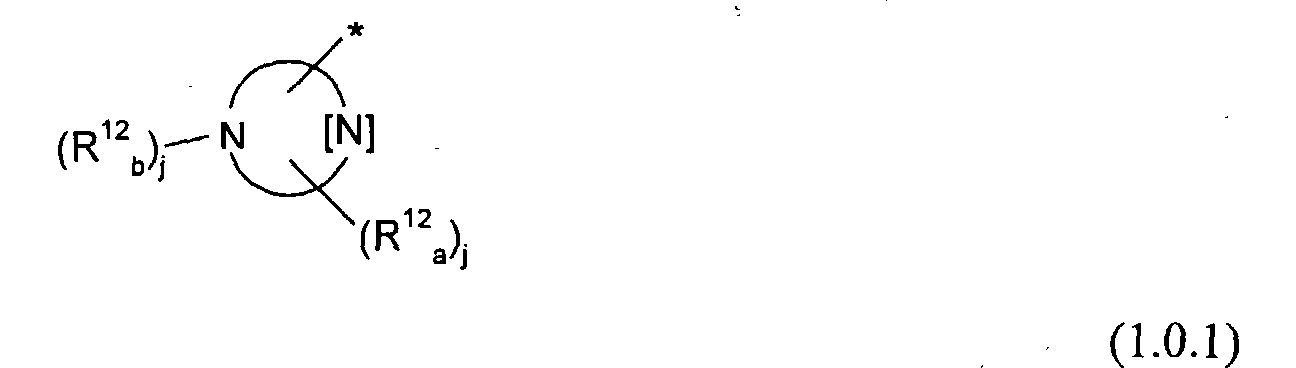
- R12 a is a member selected from the group consisting of hydrogen; F; Cl; -CO2R4; oxo;
-OH; CN; NH2; NH(C1-C2)alkyl; N(C1-C2)2dialkyl; -CF3; (C1-C4)alkyl; (C2-C4)alkenyl;
(C1-C4)alkoxy; (C3-C7)cycloalkyl; and phenyl; wherein said alkyl, alkenyl, alkoxy,
cycloalkyl and phenyl are substituted with 0 to 2 substituents R9 where:
- R9 is a member independently selected from the group consisting of F; Cl; -CO2R4; -OH; cyano; -CONR4 aR4 b; -NR4 aR4 b-; -NR4 aC(=O)R4 b; -NR4 aC(=O)OR4 b; -NR4 aS(=O)pR4 b; -S(=O)pNR4 aR4 b; (C1-C4)alkyl including dimethyl, and (C1-C4)alkoxy wherein said alkyl and alkoxy are each independently substituted with 0 to 3 substituents independently selected from F and Cl; (C1-C2)alkoxycarbonyl; (C1-C2)alkylcarbonyl; and (C1-C2)alkylcarbonyloxy; and
- R12 b is absent or is a member selected from the group consisting of hydrogen; (C1-C4)alkyl; (C2-C4)alkenyl; (C1-C2)alkoxy; (C3-C7)cycloalkyl; and phenyl; wherein said alkyl, alkenyl, alkoxy, cycloalkyl and phenyl are substituted with 0 to 2 substituents R9 wherein R9 has the same meaning as above, except that it is selected independently selected therefrom; and
- R12 a is a member selected from the group consisting of hydrogen; F; Cl; -CO2R4; oxo;
-OH; CN; NH2; NH(C1-C2)alkyl; N(C1-C2)2dialkyl; -CF3; (C1-C4)alkyl; (C2-C4)alkenyl;
(C1-C4)alkoxy; (C3-C7)cycloalkyl; and phenyl; wherein said alkyl, alkenyl, alkoxy,
cycloalkyl and phenyl are substituted with 0 to 2 substituents R9 where:

- wherein: the symbol "*"; R5; R6; R7; R8; j and m are as defined further above, except that all of the above-recited substituents are selected independently of their selection above;
- the moiety represented by partial Formula (1.1.1):
in partial Formula (1.1.0) represents:

- a. a monocyclic heterocyclic group containing a total of 5 or 6 members of which one said member is nitrogen and Q is selected from O and S where said S may optionally be in the sulfonate form, -S(=O)2; wherein said heterocyclic group is selected from the group consisting of oxazolyl; oxazolidinyl; isoxazolyl; thiazolyl; thiazolidinyl; iso-thiazolyl; morpholinyl; and thiomorpholinyl; or
- b. a monocyclic heterocyclic group containing a total of 5- or 6- member s of which two said members are nitrogen and a third or fourth said member is independently selected from N, O, and S where said S may optionally be in the sulfonate form, -S(=O)2; wherein said heterocyclic group is selected from the group consisting of triazolyl; triazinyl; tetrazolyl; oxadiazolyl; thiadiazolyl; and
- R13 a is selected from the group consisting of hydrogen; F; Cl; -CO2R4; oxo; -OH; CN;
NH2; NH(C1-C2)alkyl; N(C1-C2)2dialkyl; -CF3; (C1-C4)alkyl; (C2-C4)alkenyl;
(C1-C2)alkoxy; (C3-C7)cycloalkyl; and phenyl; wherein said alkyl, alkenyl, alkoxy,
cycloalkyl and phenyl are substituted with 0 to 2 substituents R11 where:
- R11 is a member selected from the group consisting of F; Cl; -CO2R4; -OH; -CN; -CONR4 aR4 b; -NR4 aR4 b; -NR4 aC(=O)R4 b; -NR4 aC(=O)OR4 b; -NR4 aS(=O)pR4 b; -S(=O)pNR4 aR4 b; (C1-C4)alkyl including dimethyl, and (C1-C4)alkoxy wherein said alkyl and alkoxy are each independently substituted with 0 to 3 substituents independently selected from F and Cl; (C1-C2)alkoxycarbonyl; (C1-C2)alkylcarbonyl; and (C1-C2)alkylcarbonyloxy; and
- R13 b is a member selected from the group consisting of hydrogen; (C1-C4)alkyl; (C2-C4)alkenyl; (C1-C2)alkoxy; (C3-C7)cycloalkyl; C(=O)(C1-C4)alkyl; S(=O)2(C1-C4)alkyl; and phenyl; wherein said alkyl, alkenyl, alkoxy, cycloalkyl and phenyl are substituted with 0 to 2 substituents R11 wherein R11 has the same meaning as in above, except that it is selected independently;
- 1. hetero-phenylmethylene moieties of partial Formula (1.0.0):
- B. a (substituted)-amido-aryl or -heterocyclyl moiety selected from the group consisting of
- 1. alkyl-, alkenyl-, and alkynyl-substituted-amido-aryl moieties of partial Formula (2.0.0):

- wherein: the symbol "*"; R4 and R6; are as defined above, except that all of the above-recited substituents are selected independently of their selection above;
- A is a member selected from the group consisting of:
- 1. the moiety of partial Formula (2.0.3)

- wherein: the symbol R7; R8 and m are as defined above, except that all of the above-recited substituents are selected independently of their selection above; and the symbol: "*" indicates the point of attachment of the moiety A to the, remaining portions of partial Formula (2.0.0);
- 2. the moiety of partial Formula (2.0.4)
which represents a monocyclic heterocyclic group, selected from the group consisting of pyrrolyl; pyrazolyl; imidazolyl; pyridinyl; pyrazinyl; pyrimidinyl; wherein: the symbol R12 a and R12 b are as defined above, except that all of the above-recited substituents are selected independently of their selection above; and the symbol: "*" indicates the point of attachment of the moiety A to the other, remaining portions of partial Formula (2.0.0);

- 3. the moiety of partial Formula (2.0.5)
which represents

- a. a monocyclic heteroaromatic group containing a total of 5- members of which one said member is nitrogen and Q is selected from O and S where said S may optionally be in the sulfonate form, -S(=O)2; selected from the group consisting of oxazolyl; isoxazolyl; thiazolyl; and iso-thiazolyl; or
- b. a monocyclic heterocyclic group containing a total of 5- or 6- members of which two
said members are nitrogen and a third or fourth said member is independently selected from
N, O, and S where said S may optionally be in the sulfonate form, -S(=O)2; selected from
the group consisting of triazolyl; triazinyl; tetrazolyl; oxadiazolyl; and thiadiazolyl; and
- wherein: the R13 a, R13 b and j are as defined above, except that all of the above-recited substituents are selected independently of their selection above; and the symbol: "*" indicates the point of attachment of the moiety A to the other, remaining portions of partial Formula (2.0.2);
- 1. the moiety of partial Formula (2.0.3)
- R5 a is a member selected from the group consisting of a direct bond; -C(=O)-; and -S(=O)2-;
- W1 is (1.) a direct bond; (2.) in the case where R5 a is -C(=O)- or -S(=O)2, W1 is a direct bond
or -(C1-C3)alkylene- wherein any single carbon atom thereof is substituted by 0 to 2
substituents R23 where R23 is a member selected from the group consisting of -F; -Cl; -CO2R4;
-OH; -CN; (C1-C4)alkoxy; (C3-C7)cycloalkyl; and phenyl; wherein said alkoxy, cycloalkyl,
and phenyl are substituted with 0 to 2 substituents R11, wherein said R11 is as defined above,
except that all of the above-recited substituents are selected independently of their selection
above; or (3.) is a member independently selected from the group consisting of the moieties
of partial Formulas (2.0.6) through (2.0.16), inclusive:


- wherein: the symbol: "→" indicates the point of attachment of the moiety W1 to the
nitrogen atom in partial Formula (2.0.0), and the symbol: "*" indicates the point of
attachment of the moiety W1 to the other, remaining portions of partial Formula (2.0.0); and
R4 is as defined further above, but selected on an independent basis;
- R24 is selected from the group consisting of hydrogen and (C1-C4)alkyl; and
- R25 and R26are each selected from the group consisting of -OH; (C1-C2)alkyl substituted by 0 to 3 substituents selected from F; and OH; and (C1-C2)alkoxy; and
- wherein: the symbol: "→" indicates the point of attachment of the moiety W1 to the
nitrogen atom in partial Formula (2.0.0), and the symbol: "*" indicates the point of
attachment of the moiety W1 to the other, remaining portions of partial Formula (2.0.0); and
R4 is as defined further above, but selected on an independent basis;
- R27 is selected from the group consisting of(C1-C6)alkyl; (C2-C6)alkenyl; and
(C2-C6)alkynyl; wherein said alkyl, alkenyl, and alkynyl groups comprising R27 are
substituted with 0 to 3 substituents R28 where:
- R28 is selected from the group consisting of phenyl; F or Cl; oxo; hydroxy; (C1-C2)alkyl;
(C1-C3)alkoxy; -C(=O)OR29; -C(=O)(C1-C4)alkyl; -S(=O)2(C1-C4)alkyl; -C(=O)NR29R30;
-NR29R30; -NR29C(=O)R30; -NR29C(=O)OR30; -NR29S(=O)pR30; and -S(=O)2NR29R30, where:
- R29 and R30 are each a member independently selected from the group consisting of hydrogen and (C1-C4)alkyl substituted by 0 to 3 substituents selected from the group consisting of F and Cl;
- R28 is selected from the group consisting of phenyl; F or Cl; oxo; hydroxy; (C1-C2)alkyl;
(C1-C3)alkoxy; -C(=O)OR29; -C(=O)(C1-C4)alkyl; -S(=O)2(C1-C4)alkyl; -C(=O)NR29R30;
-NR29R30; -NR29C(=O)R30; -NR29C(=O)OR30; -NR29S(=O)pR30; and -S(=O)2NR29R30, where:
- 2. cycloalkyl-substituted-amido-aryl moieties of partial Formula (2.1.0):

- wherein: A; W1; the symbol "*"; R4; R5 a; and R6 have the same meaning as set out above, except that all of the above-recited substituents are selected independently of their selection above; and
- R32 is a member selected from the group consisting of -(CH2)n-(C3-C7)cycloalkyl, where n is an integer selected from 0, 1, and 2; in the event n is 0, then the α-carbon atom of said (C3-C7)cycloalkyl is substituted by 0 or 1 (C1-C4)alkyl or phenyl, where said alkyl or phenyl are substituted by 0, 1, or 2 of CH3, OCH3, OH or NH2; and in the event that n is 1 or 2, the resulting methylene or ethylene is substituted by 0 or 1 of F; NH2; N(CH3)2; OH; OCH3; (C1-C4)alkyl; or phenyl; where said alkyl and phenyl are substituted by 0, 1, or 2 of CH3, OCH3, OH, and NH2; and further wherein said (C3-C7)cycloalkyl is substituted by 0 to 3 substituents R28 where R28 is as defined further above, but selected independently
- 3. aryl and heterocyclic-substituted-amido-aryl moieties of partial Formula (2.2.0):

- wherein: A; W1; the symbol: "*"; R4; R5 a; and R6 have the same meaning as set out above, except that all of the above-recited substituents are selected independently of their selection above; and
- R35 is selected from the group consisting of phenyl; furyl; tetrahydrofuranyl; tetrahydropyranyl; oxetanyl; thienyl; pyrrolyl; pyrrolidinyl; oxazolyl; isoxazolyl; thiazolyl; isothiazolyl; imidazolyl; pyrazolyl; oxadiazolyl; thiadiazolyl; triazolyl; pyridyl; pyrazinyl; pyridazinyl; piperazinyl; pyrimidinyl; pyranyl; azetidinyl; morpholinyl; parathiazinyl; indolyl; indolinyl; benzo[b]furanyl; 2;3-dihydrobenzofuranyl; benzothienyl; 1H-indazolyl; benzimidazolyl; benzoxazolyl; benzisoxazolyl; benzthiazolyl; quinolinyl; isoquinolinyl; phthalazinyl; quinazolinyl; and quinoxalinyl; wherein (1.) said group R35 may be substituted upon any one or more carbon atoms thereof by 0 to 3 substituents R28 where R28 is as defined above, except that it is selected independently; (2.) said group R35 is substituted with respect to any one or more nitrogen atoms thereof that is not a point of attachment of said aryl or heterocyclic moiety, by 0 to 3 substituents R13 b where R13 b is as defined above, except that it is selected independently; and (3.) said group R35 with respect to any sulfur atom thereof that is not a point of attachment of said heterocyclic moiety, is substituted by 0 or 2 oxygen atoms;
wherein:
- "*" is a symbol which represents the point of attachment of the moiety of partial Formula (3.0.0) to Region α;
- "→" is a symbol which represents the point of attachment of the moiety of partial Formula (3.0.0) to Region γ;
- R40 and R41 are both selected from the group consisting of hydrogen; (C1-C2) alkyl including dimethyl; hydroxy; and (C1-C3) alkoxy;
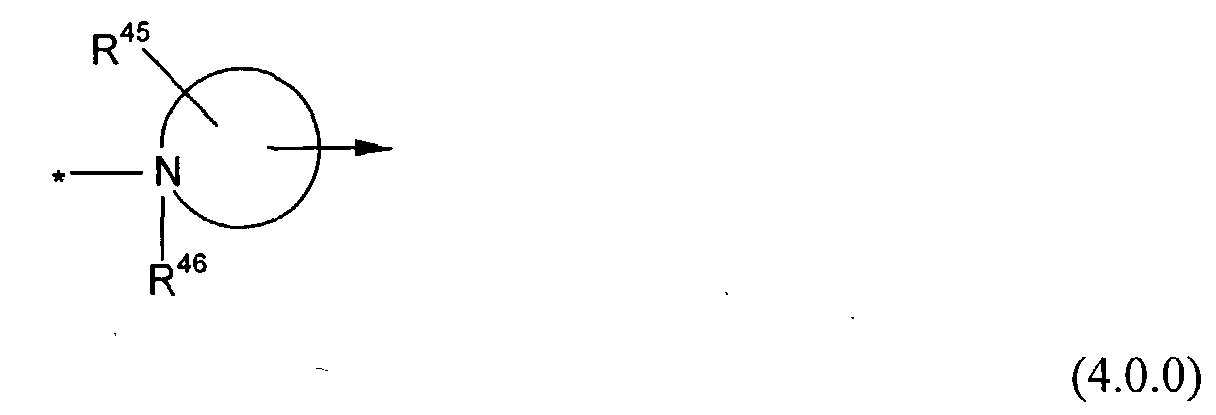
- wherein:
- "*" is a symbol which represents the point of attachment of the moiety of partial Formula (4.0.0) to Region β of the compound of Formula (I);
- "*→*" is a symbol representing a covalent bond attaching any carbon atom of said aza-monocyclic moiety of partial Formula (4.0.0) to Region δ;
- the moiety of partial Formula (4.0.1):
in partial Formula (4.0.0) represents a monocyclic heterocyclic group containing a total of from 4- to 7-members of which one said member is nitrogen, wherein said heterocyclic group is a member independently selected from the group consisting essentially of azetidinyl; pyrrolidinyl; piperidinyl; and azepinyl;
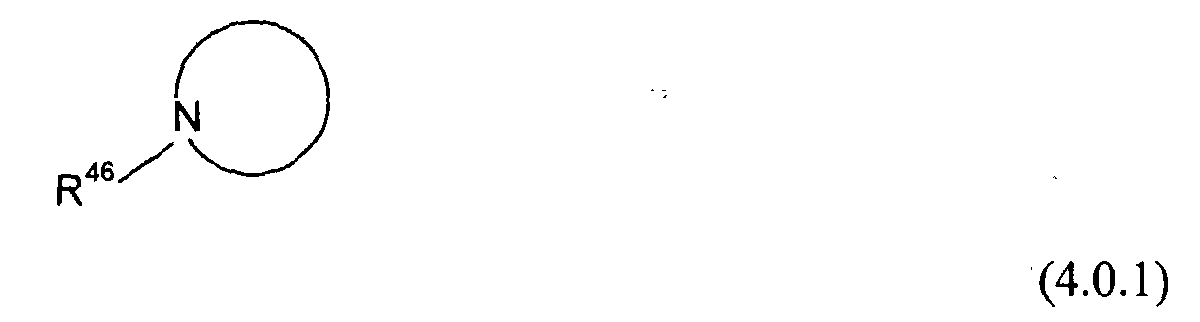
- R45 is absent or is a member independently selected from the group consisting essentially of
(C1-C4)alkyl including dimethyl; (C3-C6)cycloalkyl; (C1-C4)alkoxy; (C1-C2)alkoxy(C1-C2)alkyl;
CF3; -CO2R4 where R4 is as defined further above; oxo; -OH; cyano;
-C(=O)NR4 aR4 b; -NR4 aR4 b; -NR4 aC(=O)R4 b; -NR4 aC(=O)OR4 b; -NR4 aS(=O)pR4 b;
-S(=O)pNR4 aR4 b; (C1-C2)alkoxycarbonyl; (C1-C2)alkylcarbonyl; (C1-C2)alkylcarbonyloxy;
and (C1-C2)alkoxy(C1-C2)alkyl; it being understood that in the moiety of partial Formula
(4.0.0) R45 is a substituent attached to a single carbon atom thereof; where:
- R4 a and R4 b are each independently selected from hydrogen and (C1-C2)alkyl;
- R46 is absent or is a member independently selected from the group consisting essentially of hydrogen; and (C1-C4)alkyl substituted by 0 or 1 substituent independently selected from (C1-C2)alkoxy and -CO2R4 where R4 is as defined further above; and tO; it being understood that in the case where substituent R46 is chosen to be other than absent, that it results in said nitrogen atom and said moiety of partial Formula (4.0.0) being in quaternary form;
- 1. a heterocyclyl moiety of partial Formula (5.3.0):
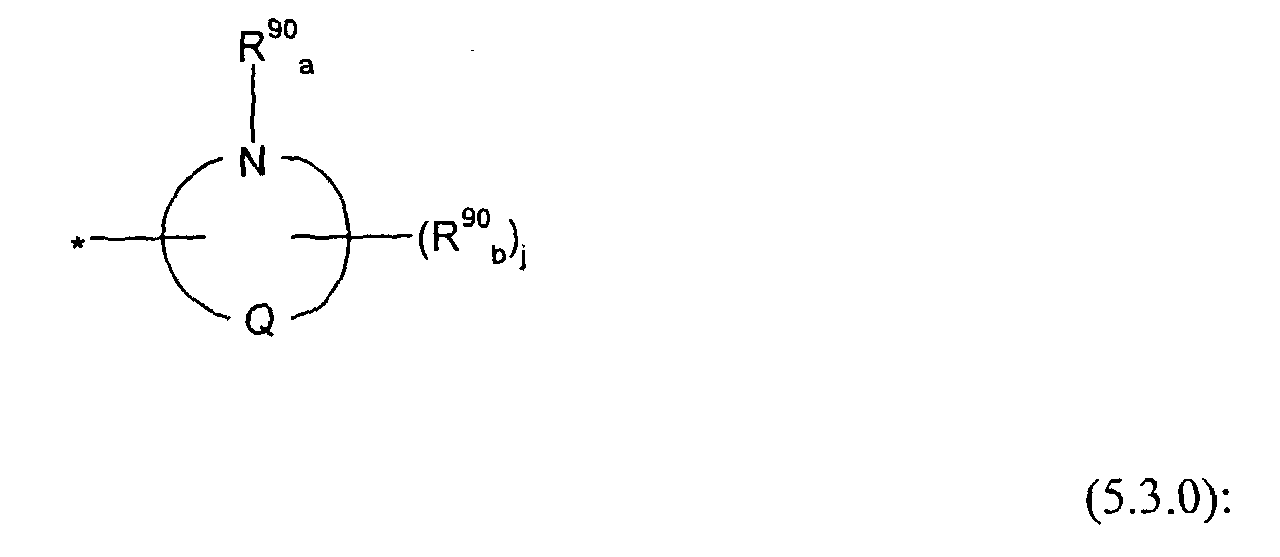
- wherein: the symbol: " * " indicates the point of attachment of partial Formula (5.3.0) to Region γ; Q is N, O or S and
- partial Formula (5.3.0) represents:
- a. a monocyclic heterocyclic group containing a total of 5- members of which one said
member is nitrogen and a second said member is selected from O and S where said S may
optionally be in the sulfonate form, wherein said heterocyclic group is selected from the group
consisting of oxazolyl; isoxazolyl; thiazolyl; and iso-thiazolyl; or
- b. a monocyclic heterocyclic group containing a total of 5- members of which two said members are nitrogen and a third or fourth said member is independently selected from N, O, and S where said S may optionally be in the sulfonate form, -S(=O)2; wherein said heterocyclic group is independently selected from the group consisting of triazolyl; triazinyl; tetrazolyl; oxadiazolyl; and thiadiazolyl; and
- a. a monocyclic heterocyclic group containing a total of 5- members of which one said
member is nitrogen and a second said member is selected from O and S where said S may
optionally be in the sulfonate form, wherein said heterocyclic group is selected from the group
consisting of oxazolyl; isoxazolyl; thiazolyl; and iso-thiazolyl; or
- R90 a and R90 b are each a member independently selected from the group consisting of
hydrogen, -(C1-C2)alkylcarbonyl; -(C1-C4)alkyl; -(CH2)n-(C3-C7)cycloalkyl; -(C2-C3)alkenyl;
-(CH2)n-(phenyl); and -(CH2)n-(HET1), where n is an integer independently selected from 0, 1,
and 2; wherein said (C1-C4)alkyl, alkenyl, cycloalkyl, phenyl, and HET1 groups are
independently substituted with 0 to 3 substituents R91, where:
- j has the same meaning as set forth above, but is selected on an independent basis therefrom;
- HET1 is a heterocyclyl group selected from the group consisting of thienyl;
oxazolyl; isoxazolyl; thiazolyl; isothiazolyl; pyrazolyl; oxadiazolyl; thiadiazolyl; triazolyl;
pyridyl; pyrazinyl; pyridazinyl; pyrimidinyl; parathiazinyl; and morpholinyl; where:
- R91 is selected from the group consisting of -F; -Cl; -CO2R4; -oxo; -OH; -CN;
-CONR93R94; -NR93R94; C(=O)(C1-C4)alkyl; -NR93C(=O)R94; -NR93C(=O)OR94;
-NR93S(=O)R94; -S(=O)NR93R94; (C1-C4)alkyl, and (C1-C4)alkoxy wherein said alkyl and
alkoxy are each independently substituted with 0 to 3 substituents independently selected from F
and Cl; (C1-C2)alkoxycarbonyl; (C1-C2)alkylcarbonyl; and (C1-C2)alkylcarbonyloxy; wherein:
- R93and R94 are each a member independently selected from the group consisting of hydrogen; and (C1-C2)alkyl; and
- R91 is selected from the group consisting of -F; -Cl; -CO2R4; -oxo; -OH; -CN;
-CONR93R94; -NR93R94; C(=O)(C1-C4)alkyl; -NR93C(=O)R94; -NR93C(=O)OR94;
-NR93S(=O)R94; -S(=O)NR93R94; (C1-C4)alkyl, and (C1-C4)alkoxy wherein said alkyl and
alkoxy are each independently substituted with 0 to 3 substituents independently selected from F
and Cl; (C1-C2)alkoxycarbonyl; (C1-C2)alkylcarbonyl; and (C1-C2)alkylcarbonyloxy; wherein:
- 2. a heterocyclyl moiety of partial Formula (5.4.0):

- wherein: R90 a; R90 b; and j have the same meanings as set out above, but are selected independently.
- 1. alkyl-, alkenyl-, and alkynyl-substituted-amido-aryl moieties of partial Formula (2.0.0):


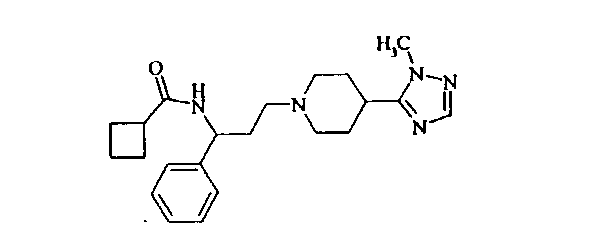
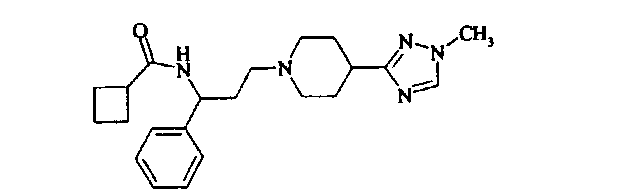


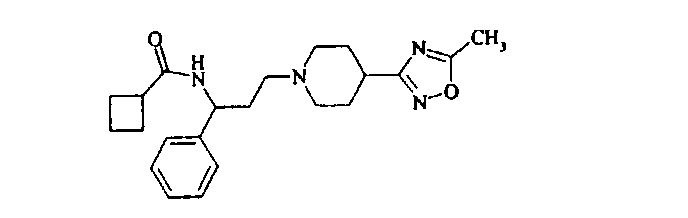

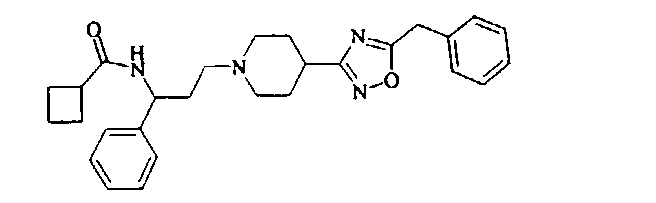


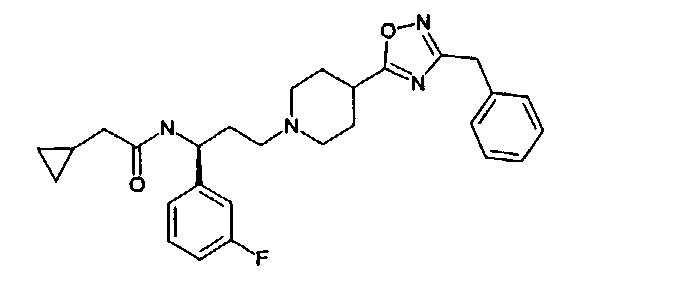
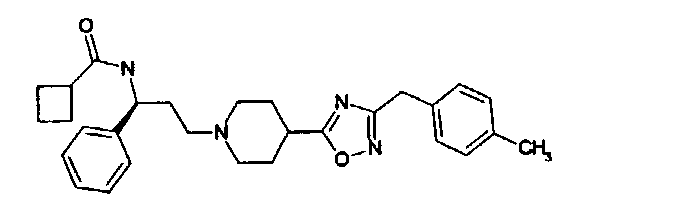
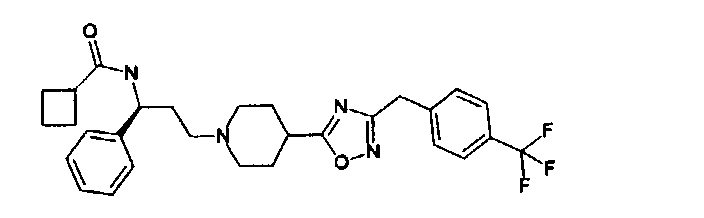

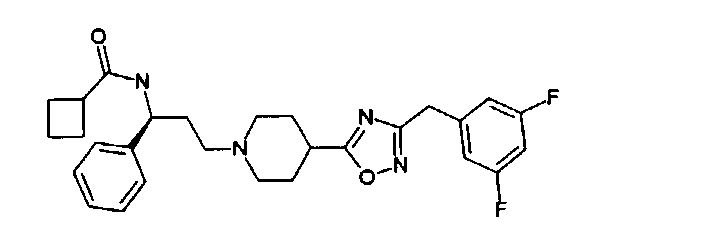
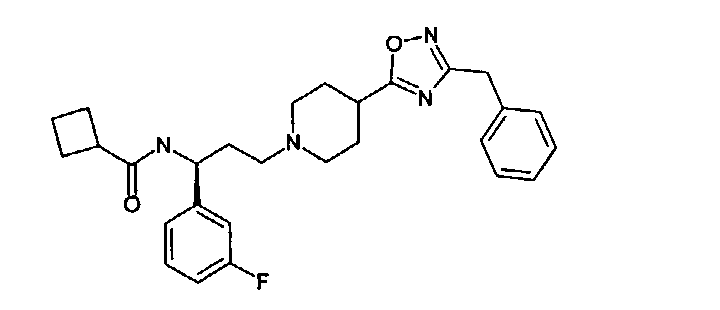


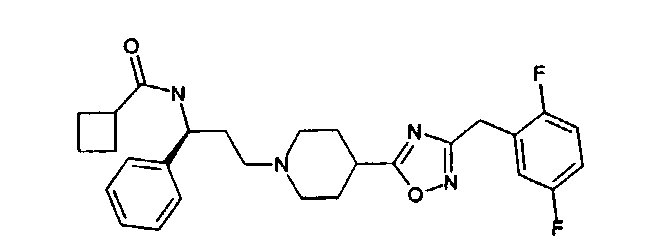
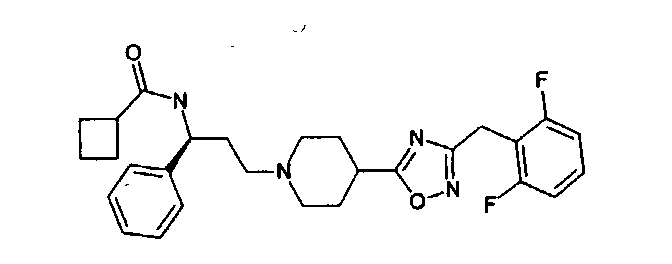

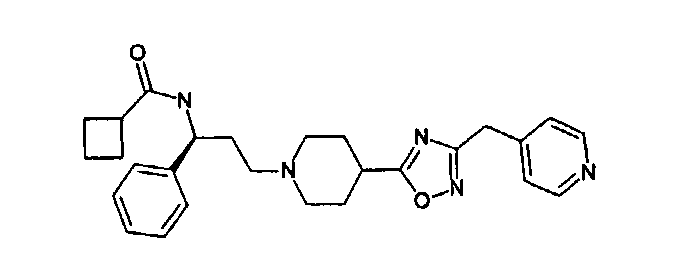
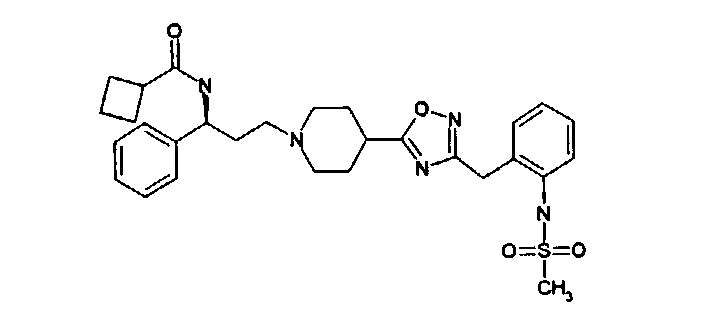


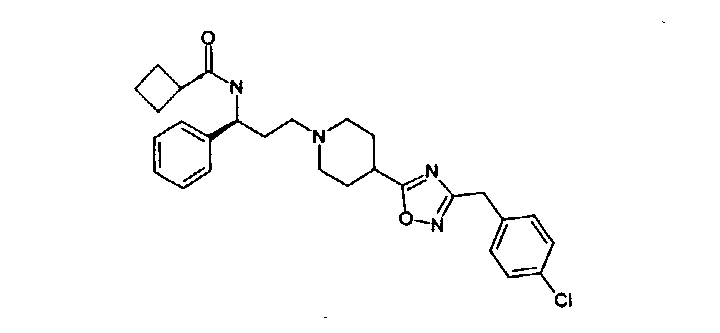

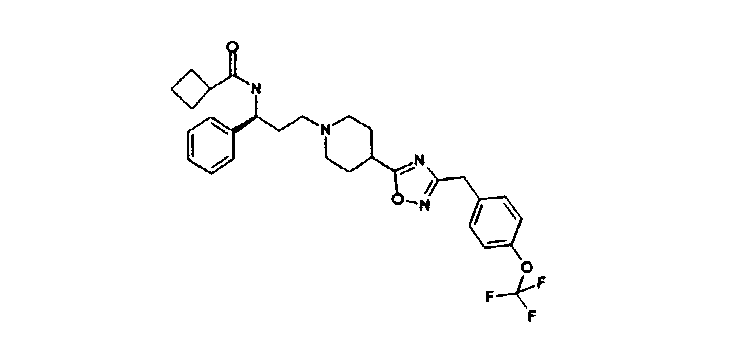


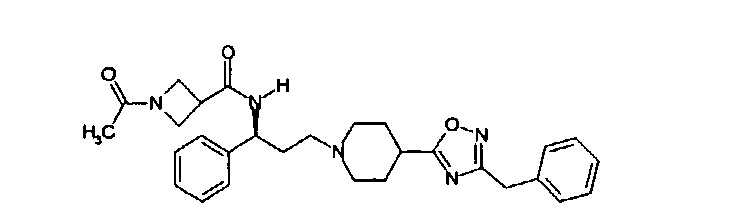
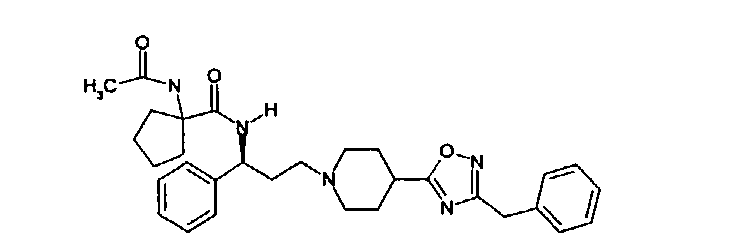
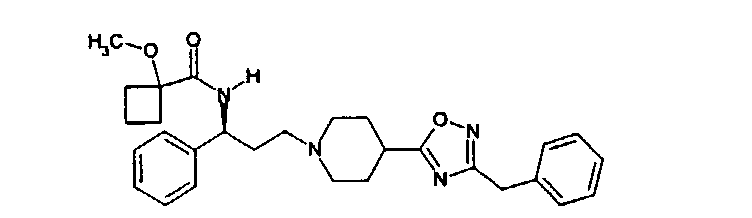
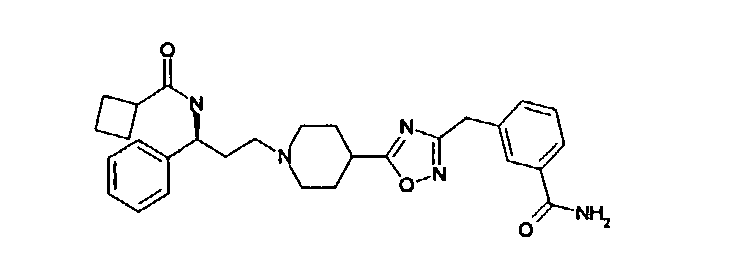
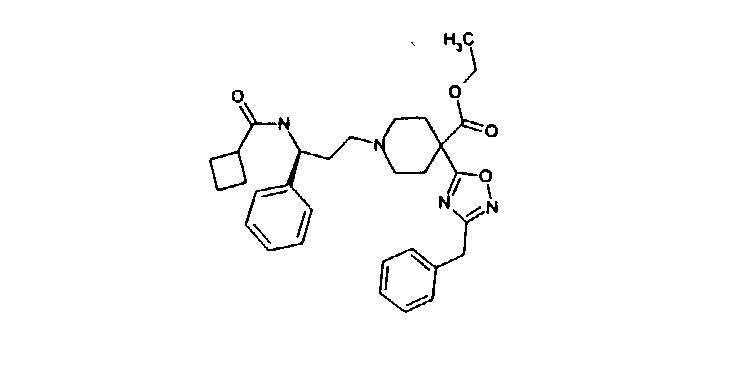
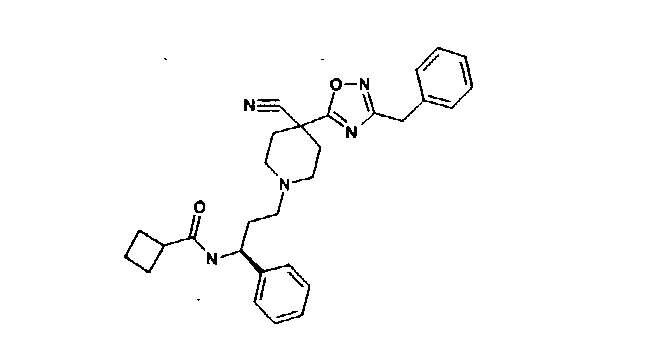

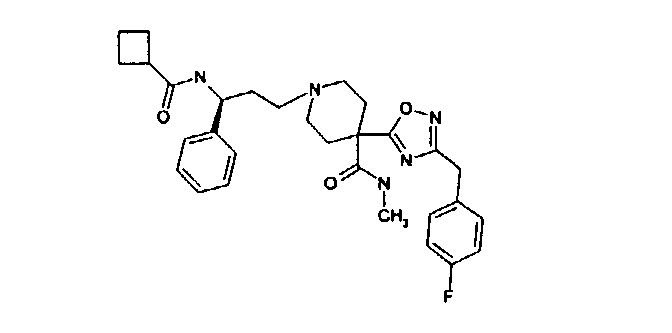


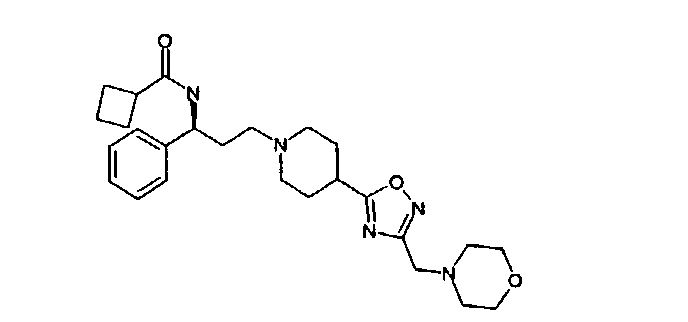

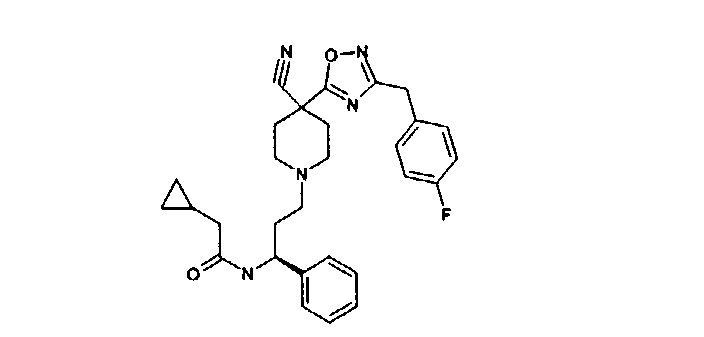
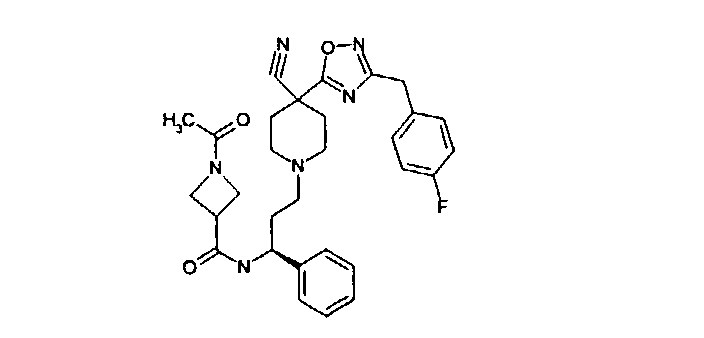

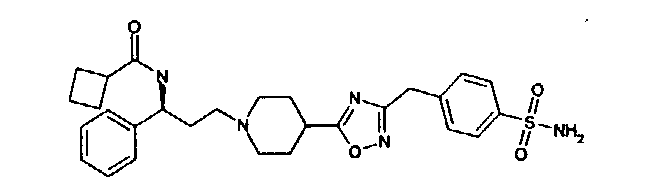

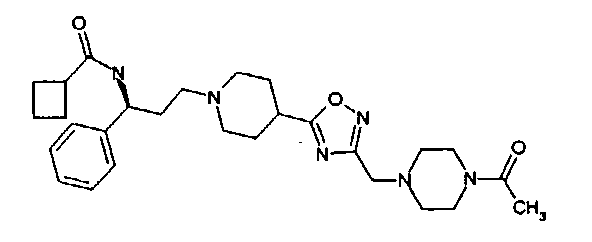


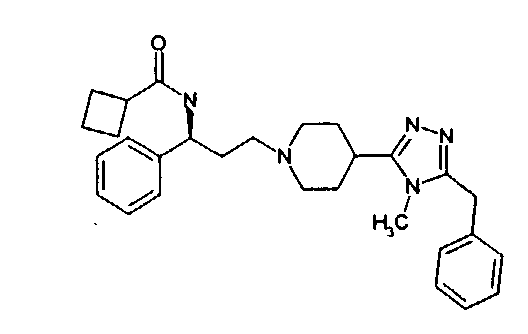
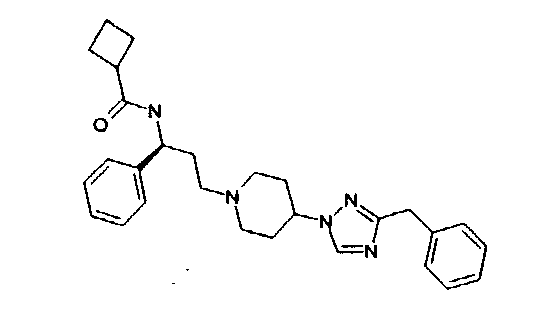


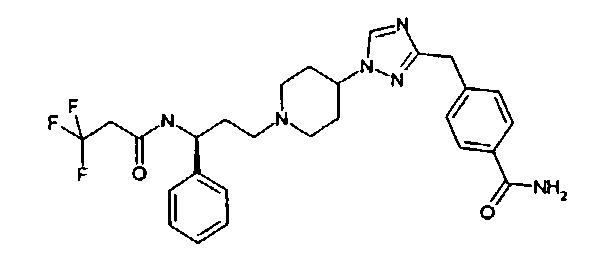
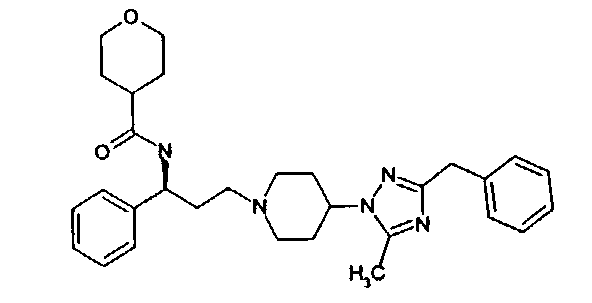
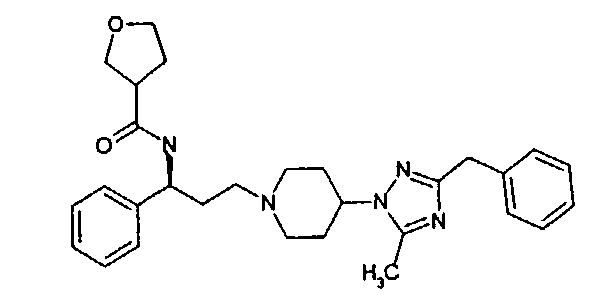

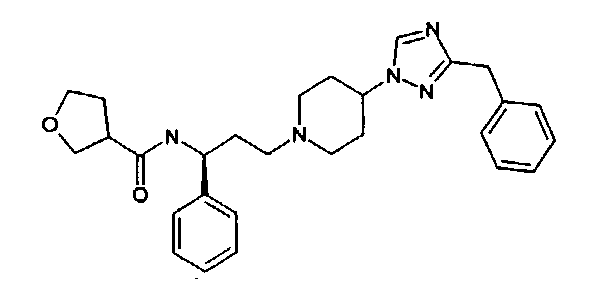


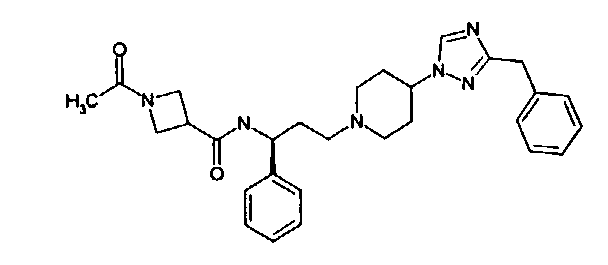
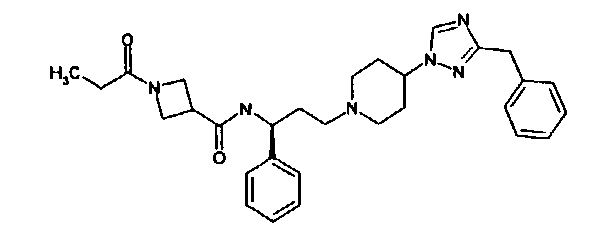
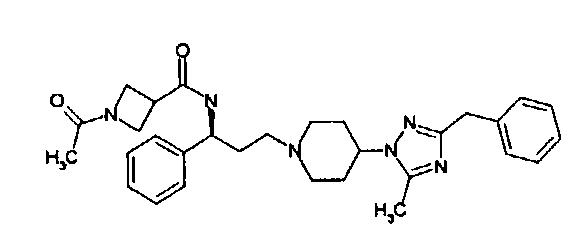
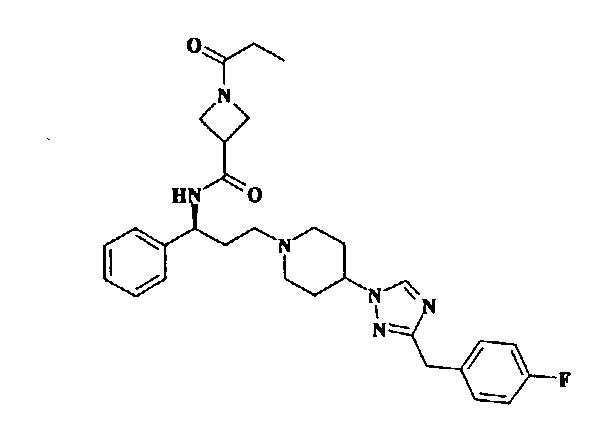
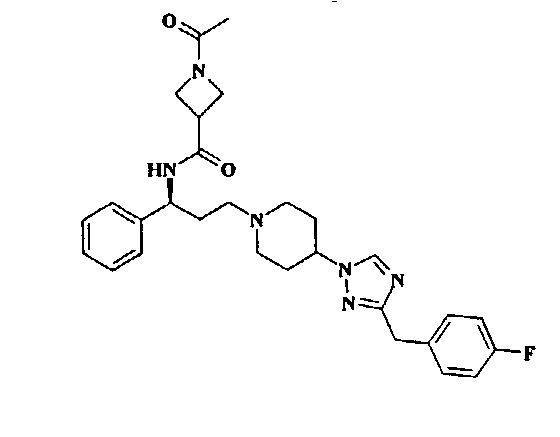

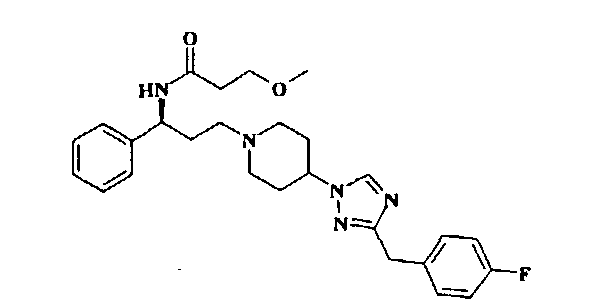
- A. Aryl heterocyclyl substituent components comprising:
- 1. hetero-phenylmethylene moieties of partial Formula (1.0.0):

- wherein: the symbol "*" indicates the point of attachment of the moiety of partial Formula (1.0.0) to Region β, as hereinafter defined;
- R5 is a member selected from the group consisting of a direct bond; -O-; -C(=O)-; -NR4-;
and -S(=O)p-; where:
- R4 is hydrogen or (C1-C2)alkyl;
- R6 is a member selected from the group consisting of hydrogen; (C1-C2)alkyl; (C1-C2)alkoxy; -CN; -OH; and -C(=O)NH2;
- j is an integer selected from 0, 1, and 2;
- m is an integer selected from 0, 1, and 2;
- R7 and R8 are each a member selected from the group consisting of -F; -Cl; -CO2R4;
-OH; -CN; -CONR4 aR4 b; -NR4 aR4 b-; -NR4 aC(=O)R4 b; -NR4 aC(=O)OR4 b; -NR4 aS(=O)pR4 b;
-S(=O)pNR4 aR4 b; (C1-C4)alkyl, and (C1-C4)alkoxy wherein said alkyl and alkoxy are each
substituted with 0 to 3 substituents independently selected from F and Cl;
(C1-C2)alkoxycarbonyl; (C1-C2)alkylcarbonyl; and (C1-C2)alkylcarbonyloxy; where:
- p is an integer selected from 0, 1, and 2;
- R4 a and R4 bare each independently selected from hydrogen and (C1-C2)alkyl;
- the moiety represented by partial Formula (1.0.1):
in partial Formula (1.0.0) represents a monocyclic heterocyclic group, or a bicyclic benzofused ring system containing said heterocyclic group wherein said heterocyclic group contains a total of 5- or 6- members of which one or two of said members is nitrogen, the presence of the optional second nitrogen atom being represented by: "[N]"; wherein said heterocyclic group or ring system are selected from the group consisting of pyrrolyl; pyrazolyl; imidazolyl; pyridinyl; pyrazinyl; pyrimidinyl; pyridazinyl; piperazinyl; indolyl; indazolinyl; benzimidazolyl; quinolinyl; iso-quinolinyl; and quinazolinyl; wherein:

- R12 a is a member selected from the group consisting of hydrogen; F; Cl; -CO2R4; oxo;
-OH; CN; NH2; NH(C1-C2)alkyl; N(C1-C2)2dialkyl; -CF3; (C1-C4)alkyl; (C2-C4)alkenyl;
(C1-C4)alkoxy; (C3-C7)cycloalkyl; and phenyl; wherein said alkyl, alkenyl, alkoxy,
cycloalkyl and phenyl are substituted with 0 to 2 substituents R9 where:
- R9 is a member independently selected from the group consisting of F; Cl; -CO2R4; -OH; cyano; -CONR4 aR4 b; -NR4 aR4 b-; -NR4 aC(=O)R4 b; -NR4 aC(=O)OR4 b; -NR4 aS(=O)pR4 b; -S(=O)pNR4 aR4 b; (C1-C4)alkyl including dimethyl, and (C1-C4)alkoxy wherein said alkyl and alkoxy are each independently substituted with 0 to 3 substituents independently selected from F and Cl; (C1-C2)alkoxycarbonyl; (C1-C2)alkylcarbonyl; and (C1-C2)alkylcarbonyloxy; and
- R12 b is absent or is a member selected from the group consisting of hydrogen; (C1-C4)alkyl; (C2-C4)alkenyl; (C1-C2)alkoxy; (C3-C7)cycloalkyl; and phenyl; wherein said alkyl, alkenyl, alkoxy, cycloalkyl and phenyl are substituted with 0 to 2 substituents R9 wherein R9 has the same meaning as above, except that it is selected independently selected therefrom; and
- R12 a is a member selected from the group consisting of hydrogen; F; Cl; -CO2R4; oxo;
-OH; CN; NH2; NH(C1-C2)alkyl; N(C1-C2)2dialkyl; -CF3; (C1-C4)alkyl; (C2-C4)alkenyl;
(C1-C4)alkoxy; (C3-C7)cycloalkyl; and phenyl; wherein said alkyl, alkenyl, alkoxy,
cycloalkyl and phenyl are substituted with 0 to 2 substituents R9 where:

- wherein: the symbol "*"; R5; R6; R7; R8; j and m are as defined further above, except that all of the above-recited substituents are selected independently of their selection above;
- the moiety represented by partial Formula (1.1.1):
in partial Formula (1.1.0) represents:

- a. a monocyclic heterocyclic group containing a total of 5 or 6 members of which one said member is nitrogen and Q is selected from O and S where said S may optionally be in the sulfonate form, -S(=O)2; wherein said heterocyclic group is selected from the group consisting of oxazolyl; oxazolidinyl; isoxazolyl; thiazolyl; thiazolidinyl; iso-thiazolyl; morpholinyl; and thiomorpholinyl; or
- b. a monocyclic heterocyclic group containing a total of 5- or 6- member s of which two said members are nitrogen and a third or fourth said member is independently selected from N, O, and S where said S may optionally be in the sulfonate form, -S(=O)2; wherein said heterocyclic group is selected from the group consisting of triazolyl; triazinyl; tetrazolyl; oxadiazolyl; thiadiazolyl; and
- R13 a is selected from the group consisting of hydrogen; F; Cl; -CO2R4; oxo; -OH; CN;
NH2; NH(C1-C2)alkyl; N(C1-C2)2dialkyl; -CF3; (C1-C4)alkyl; (C2-C4)alkenyl;
(C1-C2)alkoxy; (C3-C7)cycloalkyl; and phenyl; wherein said alkyl, alkenyl, alkoxy,
cycloalkyl and phenyl are substituted with 0 to 2 substituents R11 where:
- R11 is a member selected from the group consisting of F; Cl; -CO2R4; -OH; -CN; -CONR4 aR4 b; -NR4 aR4 b; -NR4 aC(=O)R4 b; -NR4 aC(=O)OR4 b; -NR4 aS(=O)pR4 b; -S(=O)pNR4 aR4 b; (C1-C4)alkyl including dimethyl, and (C1-C4)alkoxy wherein said alkyl and alkoxy are each independently substituted with 0 to 3 substituents independently selected from F and Cl; (C1-C2)alkoxycarbonyl; (C1-C2)alkylcarbonyl; and (C1-C2)alkylcarbonyloxy; and
- R13 b is a member selected from the group consisting of hydrogen; (C1-C4)alkyl; (C2-C4)alkenyl; (C1-C2)alkoxy; (C3-C7)cycloalkyl; C(=O)(C1-C4)alkyl; S(=O)2(C1-C4)alkyl; and phenyl; wherein said alkyl, alkenyl, alkoxy, cycloalkyl and phenyl are substituted with 0 to 2 substituents R11 wherein R11 has the same meaning as in above, except that it is selected independently;
- 1. hetero-phenylmethylene moieties of partial Formula (1.0.0):
- B. a (substituted)-amido-aryl or -heterocyclyl moiety selected from the group consisting of
- 1. alkyl-, alkenyl-, and alkynyl-substituted-amido-aryl moieties of partial Formula (2.0.0):

- wherein: the symbol "*"; R4 and R6; are as defined above, except that all of the above-recited substituents are selected independently of their selection above;
- A is a member selected from the group consisting of:
- 1. the moiety of partial Formula (2.0.3)
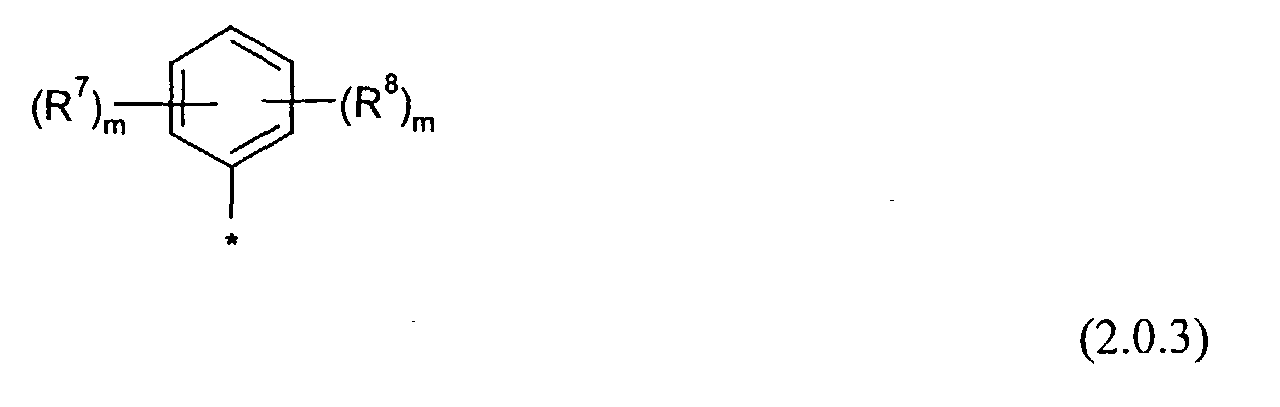
- wherein: the symbol R7; R8 and m are as defined above, except that all of the above-recited substituents are selected independently of their selection above; and the symbol: "*" indicates the point of attachment of the moiety A to the, remaining portions of partial Formula (2.0.0);
- 2. the moiety of partial Formula (2.0.4)
which represents a monocyclic heterocyclic group, selected from the group consisting of pyrrolyl; pyrazolyl; imidazolyl; pyridinyl; pyrazinyl; pyrimidinyl; wherein: the symbol R12 a and R12 b are as defined above, except that all of the above-recited substituents are selected independently of their selection above; and the symbol: " * " indicates the point of attachment of the moiety A to the other, remaining portions of partial Formula (2.0.0);
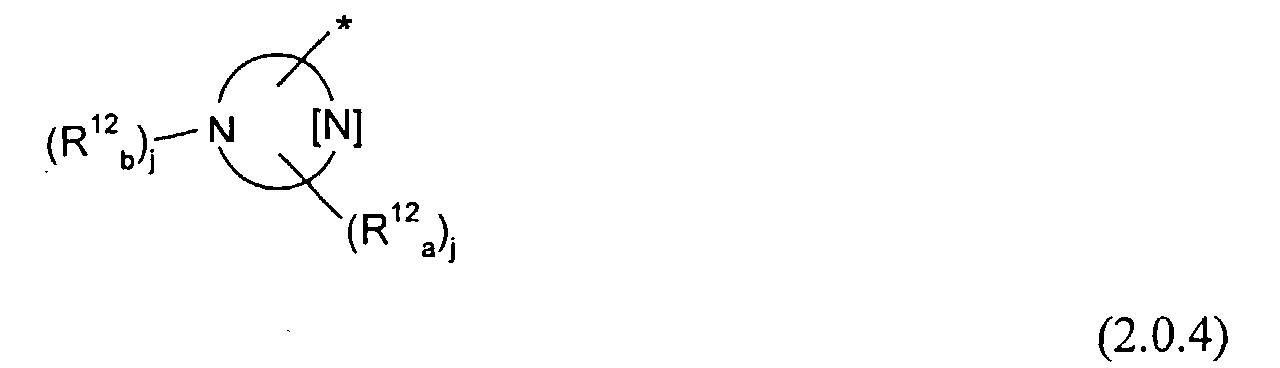
- 3. the moiety of partial Formula (2.0.5)
which represents

- a. a monocyclic heteroaromatic group containing a total of 5- members of which one said member is nitrogen and Q is selected from O and S where said S may optionally be in the sulfonate form, -S(=O)2; selected from the group consisting of oxazolyl; isoxazolyl; thiazolyl; and iso-thiazolyl; or
- b. a monocyclic heterocyclic group containing a total of 5- or 6- members of which two
said members are nitrogen and a third or fourth said member is independently selected from
N, O, and S where said S may optionally be in the sulfonate form, -S(=O)2; selected from
the group consisting of triazolyl; triazinyl; tetrazolyl; oxadiazolyl; and thiadiazolyl; and
- wherein: the R13 a, R13 b and j are as defined above, except that all of the above-recited substituents are selected independently of their selection above; and the symbol: "*" indicates the point of attachment of the moiety A to the other, remaining portions of partial Formula (2.0.2);
- 1. the moiety of partial Formula (2.0.3)
- R5 a is a member selected from the group consisting of a direct bond; -C(=O)-; and -S(=O)2-;
- W1 is (1.) a direct bond; (2.) in the case where R5 a is -C(=O)- or -S(=O)2, W1 is a direct bond
or -(C1-C3)alkylene- wherein any single carbon atom thereof is substituted by 0 to 2
substituents R23 where R23 is a member selected from the group consisting of -F; -Cl; -CO2R4;
-OH; -CN; (C1-C4)alkoxy; (C3-C7)cycloalkyl; and phenyl; wherein said alkoxy, cycloalkyl,
and phenyl are substituted with 0 to 2 substituents R11, wherein said R11 is as defined above,
except that all of the above-recited substituents are selected independently of their selection
above; or (3.) is a member independently selected from the group consisting of the moieties
of partial Formulas (2.0.6) through (2.0.16), inclusive:



- wherein: the symbol: "→" indicates the point of attachment of the moiety W1 to the
nitrogen atom in partial Formula (2.0.0), and the symbol: " * " indicates the point of
attachment of the moiety W1 to the other, remaining portions of partial Formula (2.0.0); and
R4 is as defined further above, but selected on an independent basis;
- R24 is selected from the group consisting of hydrogen and (C1-C4)alkyl; and
- R25 and R26are each selected from the group consisting of-OH; (C1-C2)alkyl substituted by 0 to 3 substituents selected from F; and OH; and (C1-C2)alkoxy; and
- wherein: the symbol: "→" indicates the point of attachment of the moiety W1 to the
nitrogen atom in partial Formula (2.0.0), and the symbol: " * " indicates the point of
attachment of the moiety W1 to the other, remaining portions of partial Formula (2.0.0); and
R4 is as defined further above, but selected on an independent basis;
- R27 is selected from the group consisting of (C1-C6)alkyl; (C2-C6)alkenyl; and
(C2-C6)alkynyl; wherein said alkyl, alkenyl, and alkynyl groups comprising R27 are
substituted with 0 to 3 substituents R28 where:
- R28 is selected from the group consisting of phenyl; F or Cl; oxo; hydroxy; (C1-C2)alkyl;
(C1-C3)alkoxy; -C(=O)OR29; -C(=O)(C1-C4)alkyl; -S(=O)2(C1-C4)alkyl; -C(=O)NR29R30;
-NR29R30; -NR29C(=O)R30; -NR29C(=O)OR30; -NR29S(=O)pR30; and -S(=O)2NR29R30, where:
- R29 and R30 are each a member independently selected from the group consisting of hydrogen and (C1-C4)alkyl substituted by 0 to 3 substituents selected from the group consisting of F and Cl;
- R28 is selected from the group consisting of phenyl; F or Cl; oxo; hydroxy; (C1-C2)alkyl;
(C1-C3)alkoxy; -C(=O)OR29; -C(=O)(C1-C4)alkyl; -S(=O)2(C1-C4)alkyl; -C(=O)NR29R30;
-NR29R30; -NR29C(=O)R30; -NR29C(=O)OR30; -NR29S(=O)pR30; and -S(=O)2NR29R30, where:
- 2. cycloalkyl-substituted-amido-aryl moieties of partial Formula (2.1.0):
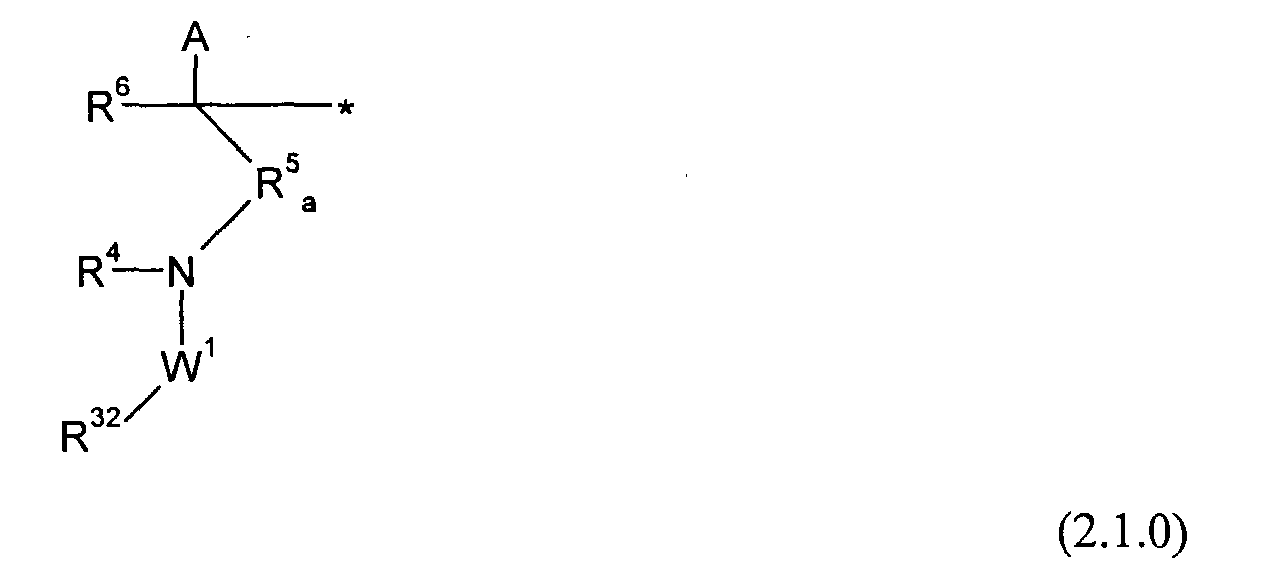
- wherein: A; W1; the symbol "*"; R4; R5 a; and R6 have the same meaning as set out above, except that all of the above-recited substituents are selected independently of their selection above; and
- R32 is a member selected from the group consisting of-(CH2)n-(C3-C7)cycloalkyl, where n is an integer selected from 0, 1, and 2; in the event n is 0, then the α-carbon atom of said (C3-C7)cycloalkyl is substituted by 0 or 1 (C1-C4)alkyl or phenyl, where said alkyl or phenyl are substituted by 0, 1, or 2 of CH3, OCH3, OH or NH2; and in the event that n is 1 or 2, the resulting methylene or ethylene is substituted by 0 or 1 of F; NH2; N(CH3)2; OH; OCH3; (C1-C4)alkyl; or phenyl; where said alkyl and phenyl are substituted by 0, 1, or 2 of CH3, OCH3, OH, and NH2; and further wherein said (C3-C7)cycloalkyl is substituted by 0 to 3 substituents R28 where R28 is as defined further above, but selected independently
- 3. aryl and heterocyclic-substituted-amido-aryl moieties of partial Formula (2.2.0):
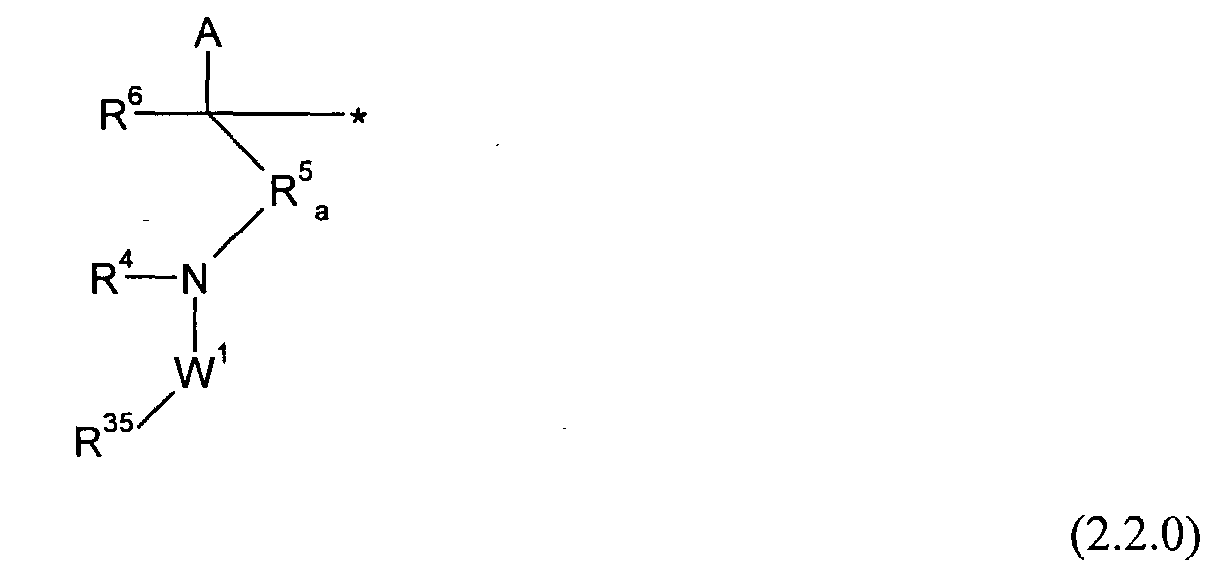
- wherein: A; W1; the symbol: "*"; R4; R5 a; and R6 have the same meaning as set out above, except that all of the above-recited substituents are selected independently of their selection above; and
- R35 is selected from the group consisting of phenyl; furyl; tetrahydrofuranyl; tetrahydropyranyl; oxetanyl; thienyl; pyrrolyl; pyrrolidinyl; oxazolyl; isoxazolyl; thiazolyl; isothiazolyl; imidazolyl; pyrazolyl; oxadiazolyl; thiadiazolyl; triazolyl; pyridyl; pyrazinyl; pyridazinyl; piperazinyl; pyrimidinyl; pyranyl; azetidinyl; morpholinyl; parathiazinyl; indolyl; indolinyl; benzo[b]furanyl; 2;3-dihydrobenzofuranyl; benzothienyl; 1H-indazolyl; benzimidazolyl; benzoxazolyl; benzisoxazolyl; benzthiazolyl; quinolinyl; isoquinolinyl; phthalazinyl; quinazolinyl; and quinoxalinyl; wherein (1.) said group R35 may be substituted upon any one or more carbon atoms thereof by 0 to 3 substituents R28 where R28 is as defined above, except that it is selected independently; (2.) said group R35 is substituted with respect to any one or more nitrogen atoms thereof that is not a point of attachment of said aryl or heterocyclic moiety, by 0 to 3 substituents R13 b where R13 b is as defined above, except that it is selected independently; and (3.) said group R35 with respect to any sulfur atom thereof that is not a point of attachment of said heterocyclic moiety, is substituted by 0 or 2 oxygen atoms;
wherein:
- "*" is a symbol which represents the point of attachment of the moiety of partial Formula (3.0.0) to Region α;
- "→" is a symbol which represents the point of attachment of the moiety of partial Formula (3.0.0) to Region γ;
- R40 and R41 are both selected from the group consisting of hydrogen; (C1-C2) alkyl including dimethyl; hydroxy; and (C1-C3) alkoxy;

- wherein:
- "*" is a symbol which represents the point of attachment of the moiety of partial Formula (4.0.0) to Region β of the compound of Formula (I);
- "*→*" is a symbol representing a covalent bond attaching any carbon atom of said aza-monocyclic moiety of partial Formula (4.0.0) to Region δ;
- the moiety of partial Formula (4.0.1):
in partial Formula (4.0.0) represents a monocyclic heterocyclic group containing a total of from 4- to 7-members of which one said member is nitrogen, wherein said heterocyclic group is a member independently selected from the group consisting essentially of azetidinyl; pyrrolidinyl; piperidinyl; and azepinyl;

- R45 is absent or is a member independently selected from the group consisting essentially of
(C1-C4)alkyl including dimethyl; (C3-C6)cycloalkyl; (C1-C4)alkoxy; CF3; -CO2R4 where R4 is
as defined further above; oxo; -OH; cyano; -C(=O)NR4 aR4 b; -NR4 aR4 b; -NR4 aC(=O)R4 b;
-NR4 aC(=O)OR4 b; -NR4 aS(=O)pR4 b; -S(=O)pNR4 aR4 b; (C1-C2)alkoxycarbonyl;
(C1-C2)alkylcarbonyl; (C1-C2)alkylcarbonyloxy and (C1-C2)alkoxy(C1-C2)alkyl; it being
understood that in the moiety of partial Formula (4.0.0) R45 is a substituent attached to a single
carbon atom thereof; where:
- R4 a and R4 b are each independently selected from hydrogen and (C1-C2)alkyl;
- R46 is absent or is a member independently selected from the group consisting essentially of hydrogen; and (C1-C4)alkyl substituted by 0 or 1 substituent independently selected from (C1-C2)alkoxy and -CO2R4 where R4 is as defined further above; and →O; it being understood that in the case where substituent R46 is present, that it results in said nitrogen atom and said moiety of partial Formula (4.0.0) is in quaternary form;
- 1. alkyl-, alkenyl-, and alkynyl-substituted-amido-aryl moieties of partial Formula (2.0.0):
- an aryl and heterocyclyl-(substituted) amide, carbamate; or urea moiety of partial Formula
(5.1.0):
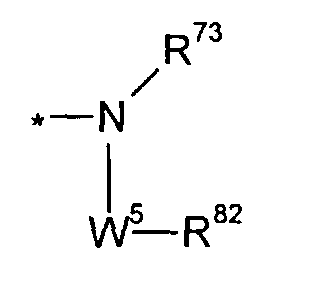
- wherein: the symbol " * " is as defined above;
- R73 is a member selected from the group consisting of hydrogen and (C1-C2)alkyl;
- W5 is selected from the group consisting the moieties of partial Formulas (5.1.1)
through (5.1.12):

- wherein: the symbol: "→" indicates the point of attachment of the moiety W5 represented by partial Formulas (5.1.1) through (5.1.12), inclusive, to the nitrogen atom in partial Formula (5.1.0), and the symbol: " * " indicates the point of attachment of the moiety W5 to R82 as defined further below;
- R74 and R75 are each selected from the group consisting of hydrogen; (C1-C2)alkyl substituted by 0 or 1 substituent independently selected from OH; and (C1-C2)alkoxy; and
- R82 is a member selected from the group consisting of phenyl; cinnolinyl; furyl; thienyl;
pyrrolyl; oxazolyl; isoxazolyl; thiazolyl; isothiazolyl; imidazolyl; imidazolinyl; pyrazolyl;
pyrazolinyl; oxadiazolyl; thiadiazolyl; triazolyl; pyridyl; pyrazinyl; pyridazinyl; pyrimidinyl;
parathiazinyl; indolyl; isoindolyl; indolinyl; benzo[b]furanyl; 2;3-dihydrobenzofuranyl;
benzo[b]thiophenyl; 1H-indazolyl; benzimidazolyl; benzthiazolyl; quinolinyl; isoquinolinyl;
phthalazinyl; quinazolinyl; quinoxalinyl; wherein:
- the aryl or heterocyclyl moiety is substituted by 0 to 3 substituents R78, where:
- R78 is a member selected from the group consisting of oxo; -Cl; -F; -OH;
-(C1-C2)alkyl; -(C1-C3)alkoxy; -CF3; -CN; -C(=O)OR79; -C(=O)NR79K80; -NR79R80;
-NR79C(=O)R80; -NK79C(=O)OR80; -NR79S(=O)2R80; and -S(=O)2NR79R80, where:
- R79 and R80 are each a member independently selected from the group consisting of hydrogen; and (C1-C4)alkyl.



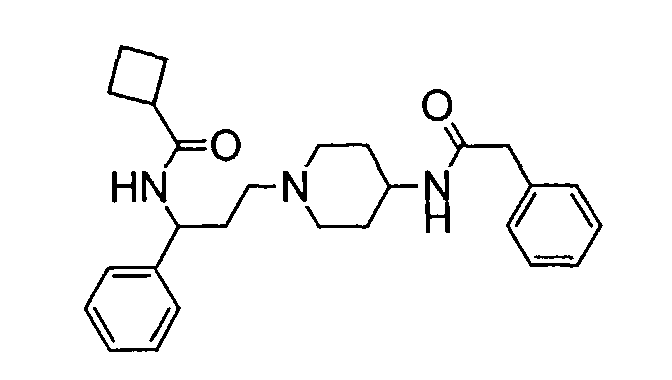
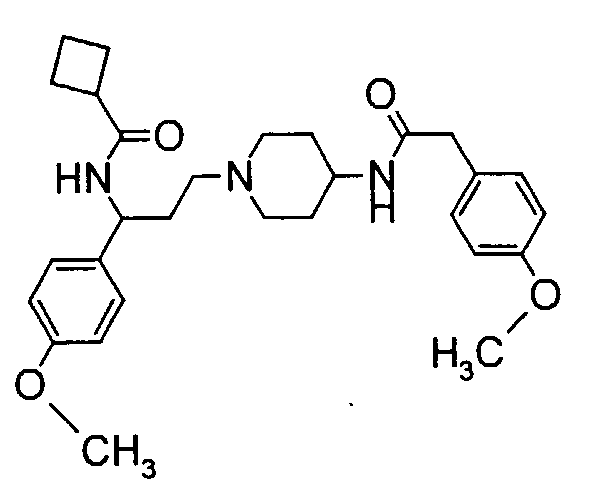
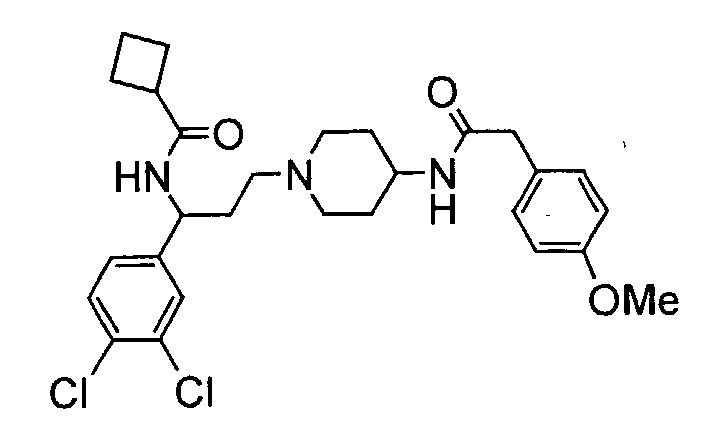
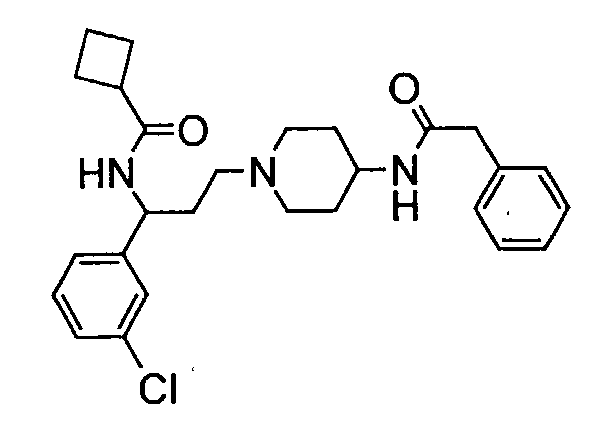
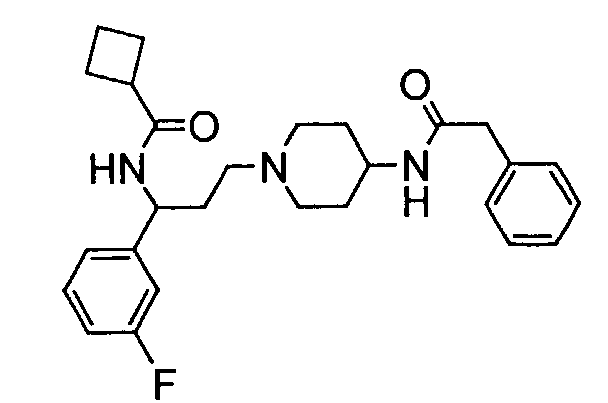

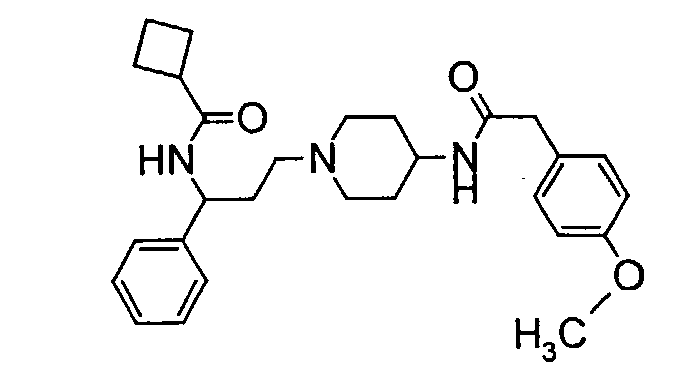


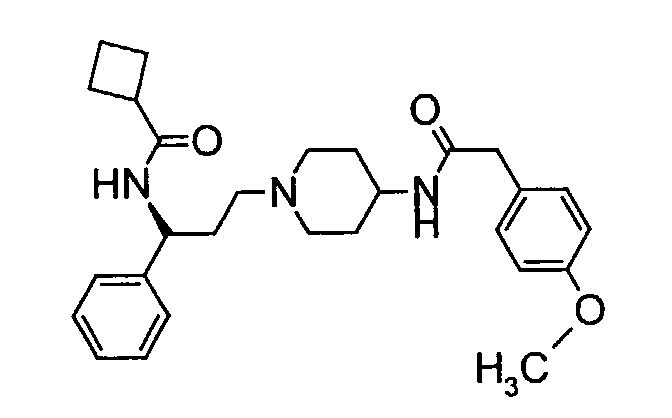
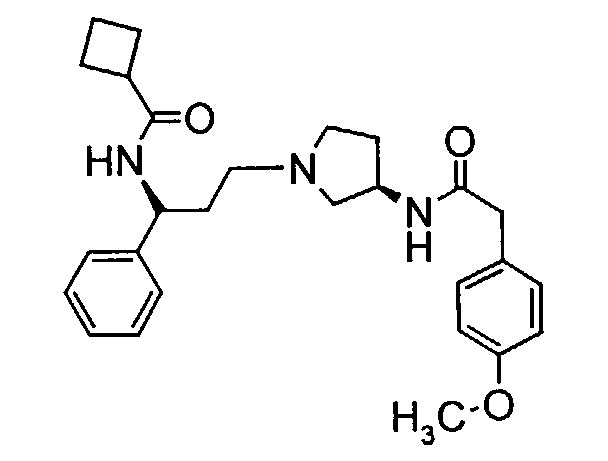

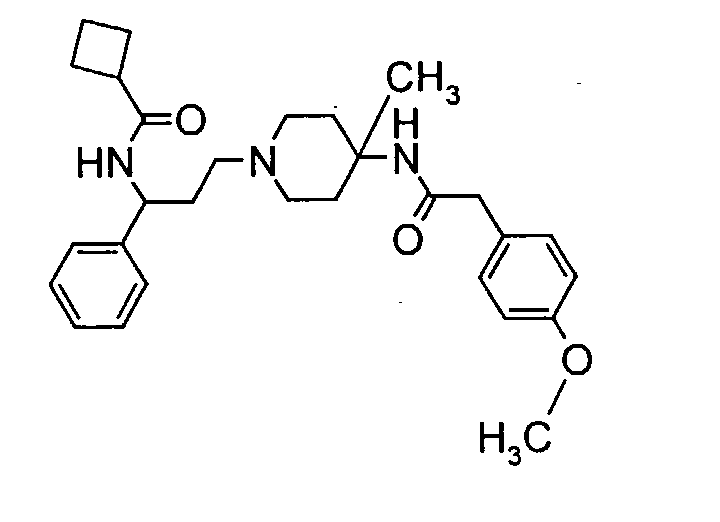

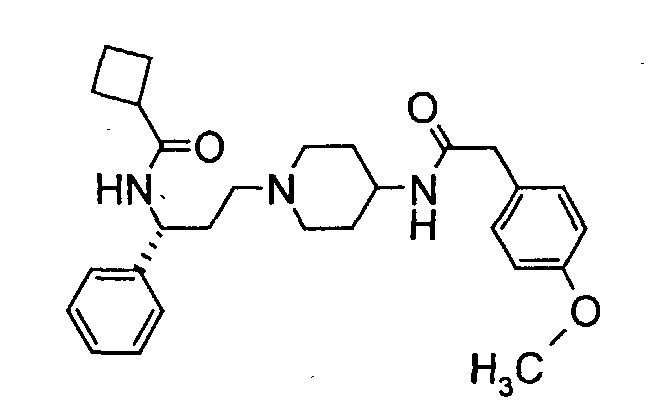


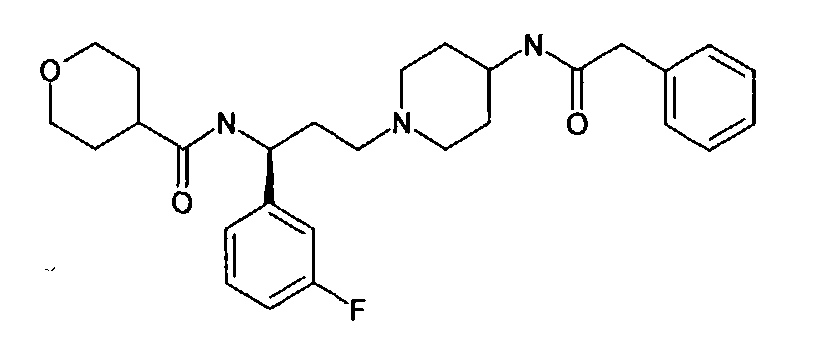
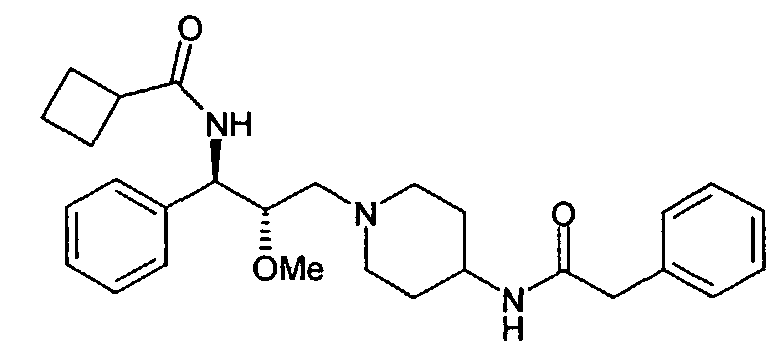
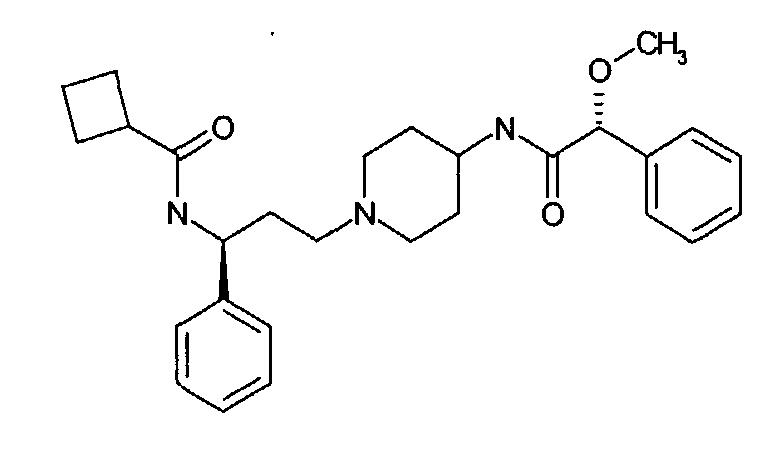

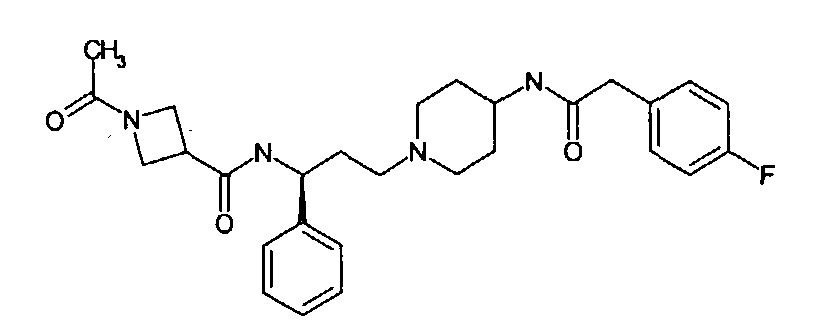
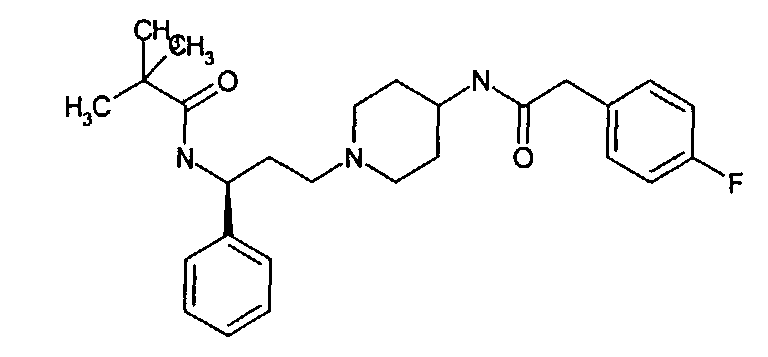

Delfia Eu-labelling kit - EG&G Wallac (cat no : 1244-302)
PD-10 Sephadex G-25 pre-packed columns - Amersham Pharmacia (cat no : 17-0851-01)
UV detector and tubing
Collection tubes
Spectrophotometer
500ml 1x Dulbecco's Modified Eagle's Medium (DMEM) with 3.7g/l sodium bicarbonate without L-glutamine - HyQ Reagents, HyClone (cat no : B-7501-L)
50ml foetal calf serum (FCS) - PAA Laboratories, Austria (cat no : A15-041)
Dulbecco's PBS - Gibco BRL (cat no : 14190-094)
Enhancement
Enhancement solution - EG&G Wallac (cat no : 1244-104)
sCD4 (human recombinant T-cell) - ImmunoDiagnostics Inc (cat no : 7001)
M-Tropic BaL sgp120
Sheep anti-HIV-1 gp120 antibody (anti C terminal) - Aalto Bio Reagents Ltd, Ireland
(cat no : D7324)
Eu3+ labelled donkey anti-sheep IgG
MIP-1 a, b or RANTES - R & D Systems (cat no : 270-LD-010, 271-BM-010 and 278-RN-010)
DMSO tissue culture grade - Sigma (cat no : D-2650)
Biocoat Cell Environments Poly-D-Lysine 96-well black/clear plates - Becton Dickinson
(cat no : 6640)
Haemocytometer Counting Chamber
Multichannel Pipettes - Labsystems Finnpipette (cat no : 4510-000/020/030/040/050) Pipette Tips - Radleys ABT Aerosol Barrier Tips (cat no : ABT-20/100/2000/1000) Reagent Reservoirs for multichannel pipettes - Costar (cat no : 4870)
DELFIA Fluorometer (cat no : 1234-001)
Calculations
| Reaction control | 20(l assay buffer |
| 40(l gp120/sCD4 complex | |
| Compound reaction | 20(l compound dilution |
| 40(l gp120/sCD4 complex | |
| Standard reaction | 20(l MIP-1 α, MIP-1 β or RANTES dilution |
| 40(l gp120/sCD4 complex | |
| Background control | 40(l binding buffer |
| 20(l gp120 |
PBS (Dulbecco's) without Ca2+ and Mg2+ - HyQ Reagents, HyClone (cat no : B-4004-L)
1x Cell Dissociation Solution non-enzymatic - Sigma (cat no : C-5914)
Incubator set @ 37°C, 5% CO2 humidified
- 50mM Tris-HCl pH 7.8 - Sigma (cat no : T2913)
- 0.9% NaCl - Sigma (cat no : S5150)
- 0.05% NaN3- Sigma (cat no : S8032)
PD-10 Sephadex G-25 pre-packed columns - Amersham Pharmacia (cat no : 17-0851-01) UV detector and tubing
Collection tubes
Spectrophotometer
Time Resolved Fluorescence reader (DELFIA 1234 or Victor - EG&G Wallac)
Dulbecco's PBS - Gibco BRL (cat no : 14190-094)
Enhancement :
- Enhancement solution - EG&G Wallac (cat no : 1244-104)
- sCD4 (human recombinant T-cell) - ImmunoDiagnostics Inc (cat no : 7001)
- M-Tropic BaL sgp120
- Eu3+ labelled Affinity purified Sheep anti-HIV-1 gp120 antibody (anti C terminal) - Aalto Bio Reagents Ltd, Ireland (cat no : D7324)
- MIP-1 α, β or RANTES - R & D Systems (cat no : 270-LD-010, 271-BM-010 and 278-RN-010)
- DMSO tissue culture grade - Sigma (cat no : D-2650)
- Biocoat Cell Environments Poly-D-Lysine 96-well black/clear plates - Becton Dickinson
- (cat no : 6640)
- Haemocytometer Counting Chamber
- Multichannel Pipettes - Labsystems Finnpipette (cat no : 4510-000/020/030/040/050)
- Pipette Tips - Radleys ABT Aerosol Barrier Tips (cat no : ABT-20/100/2000/1000)
- Reagent Reservoirs for multichannel pipettes - Costar (cat no : 4870)
- DELFIA Fluorometer (cat no : 1234-001)
| Each mixture contains : | |
| Reaction control | 20µl assay buffer |
| 40µl sCD4/gp120 complex | |
| Compound reaction | 20µl compound dilution |
| 40µl sCD4/gp120 complex | |
| Background control | 20µl gp120 |
| 40µl assay buffer |
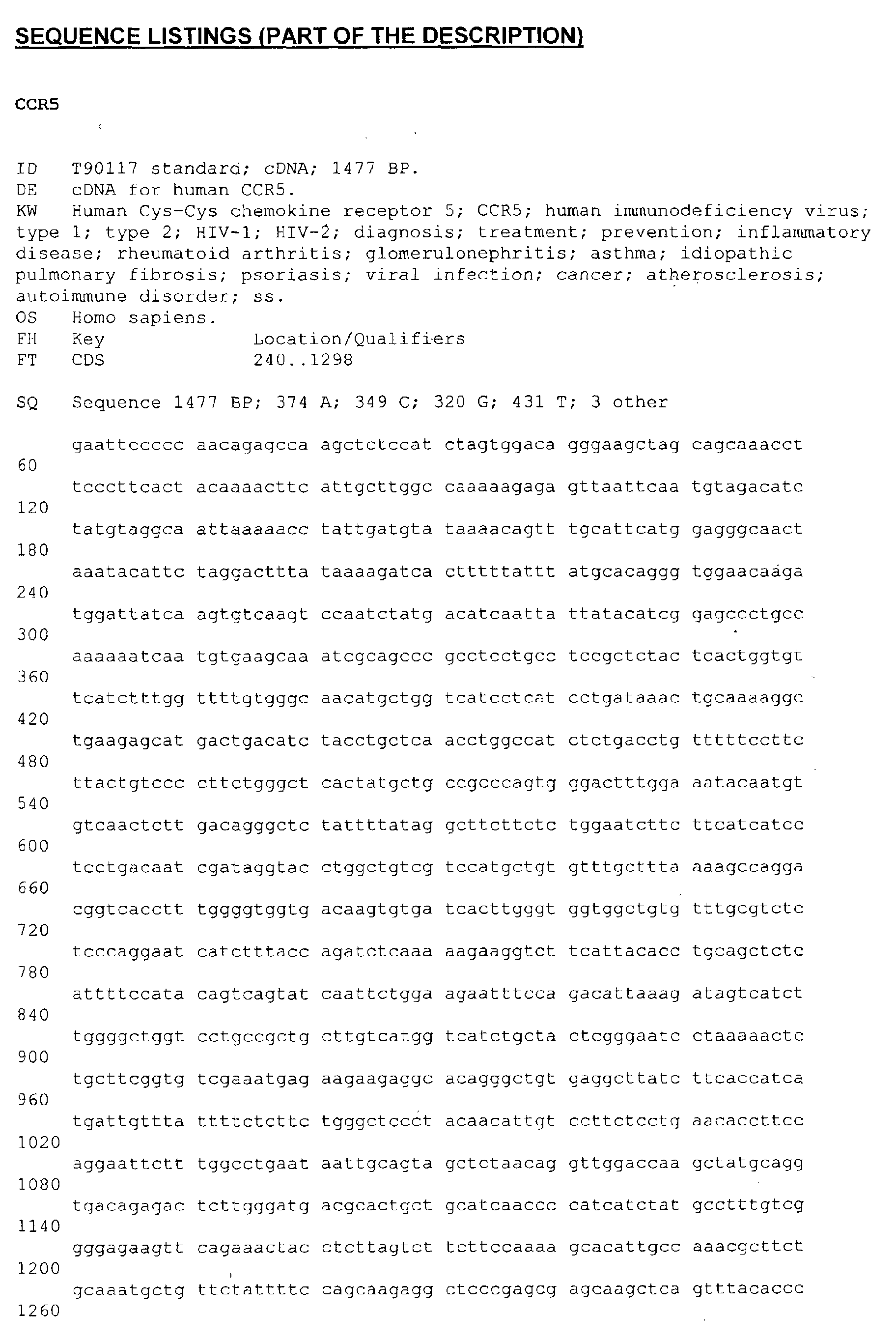
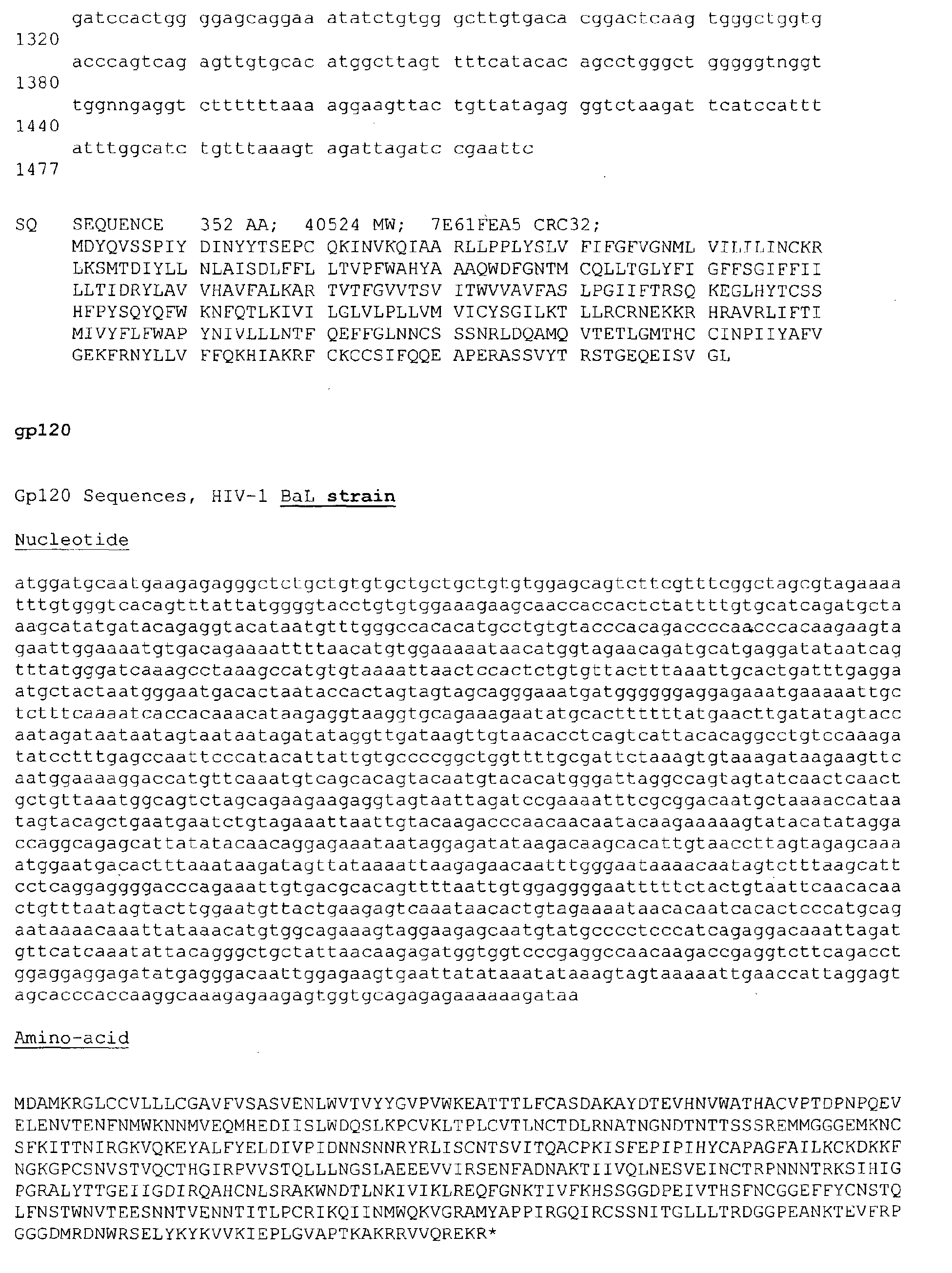
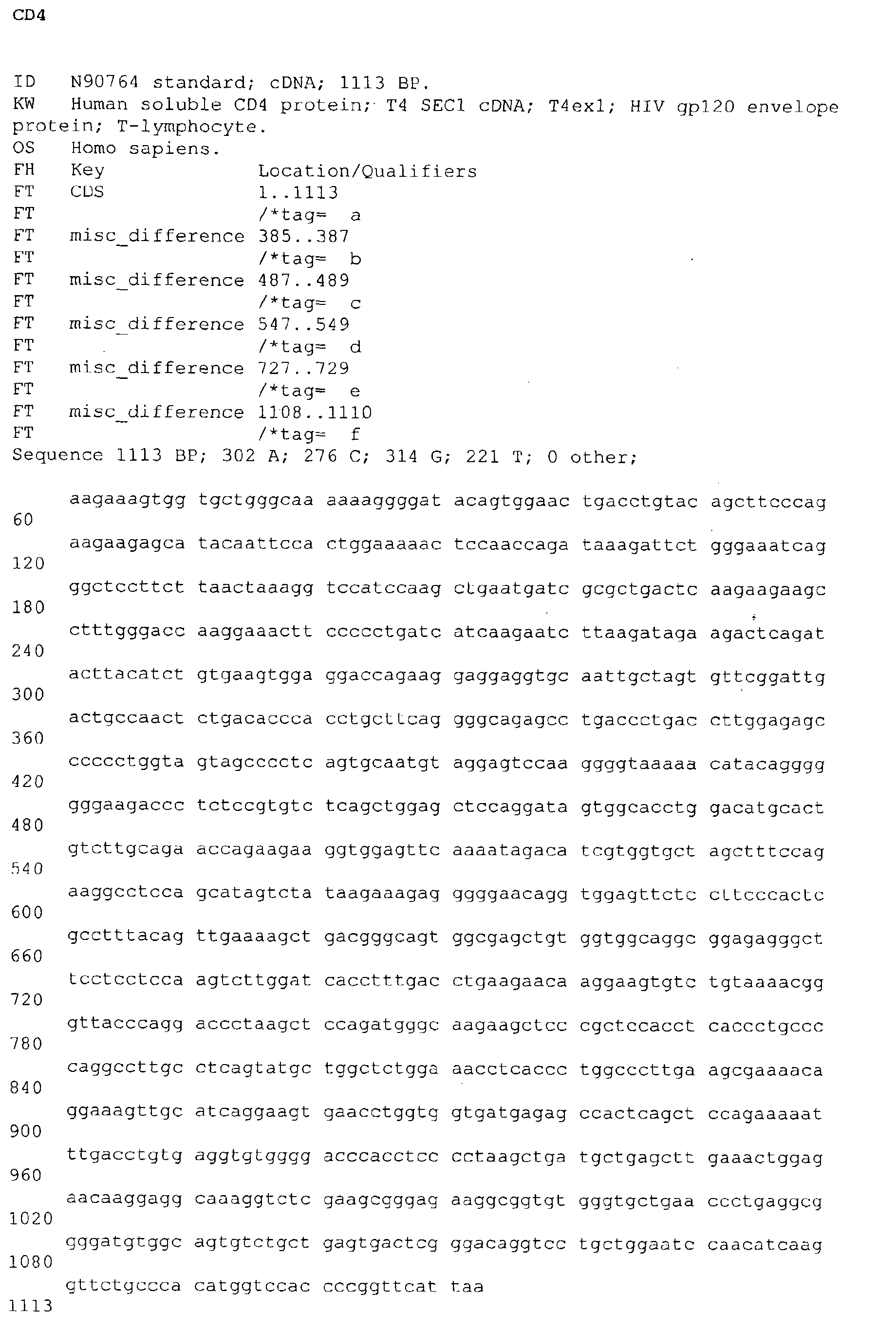


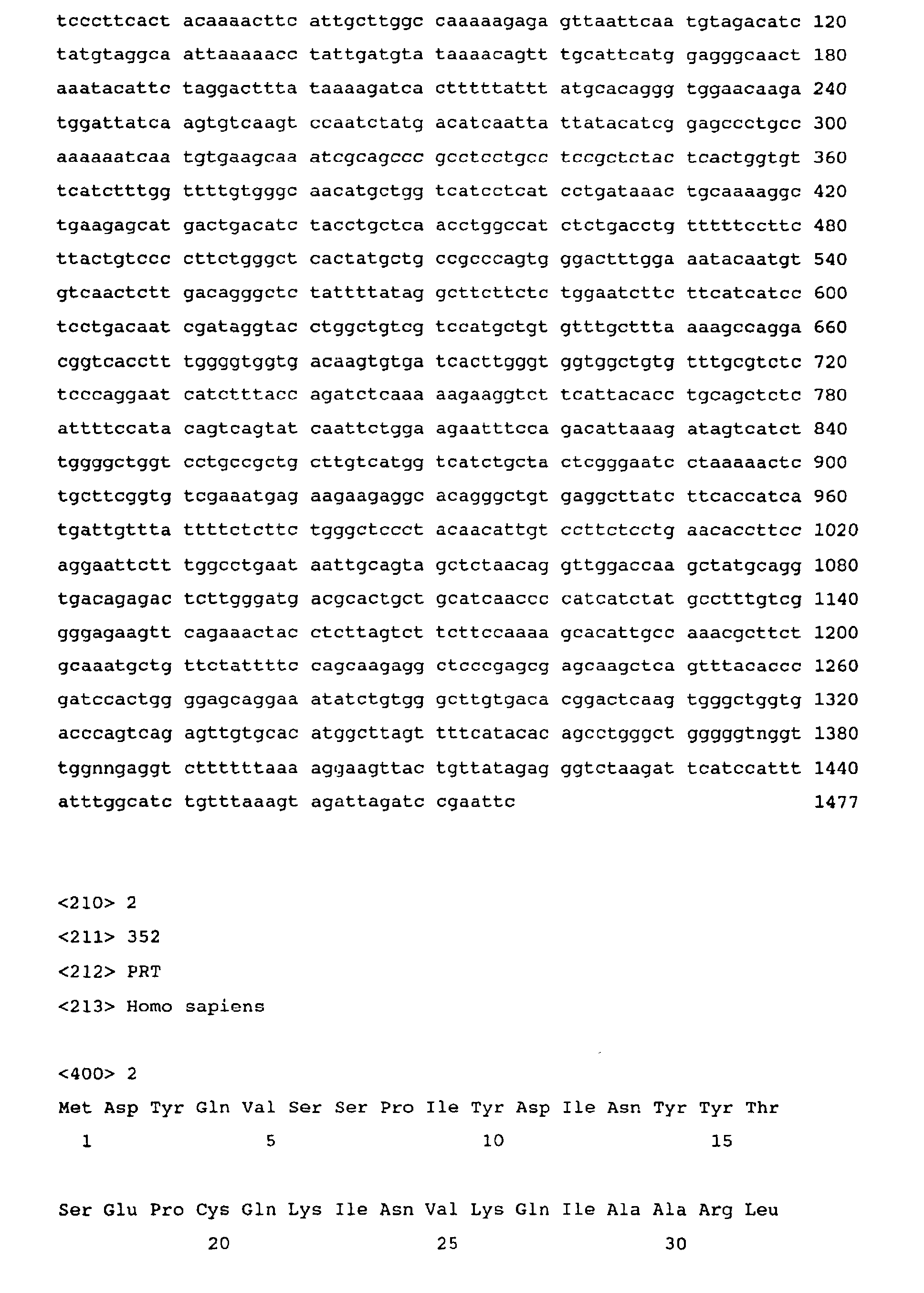
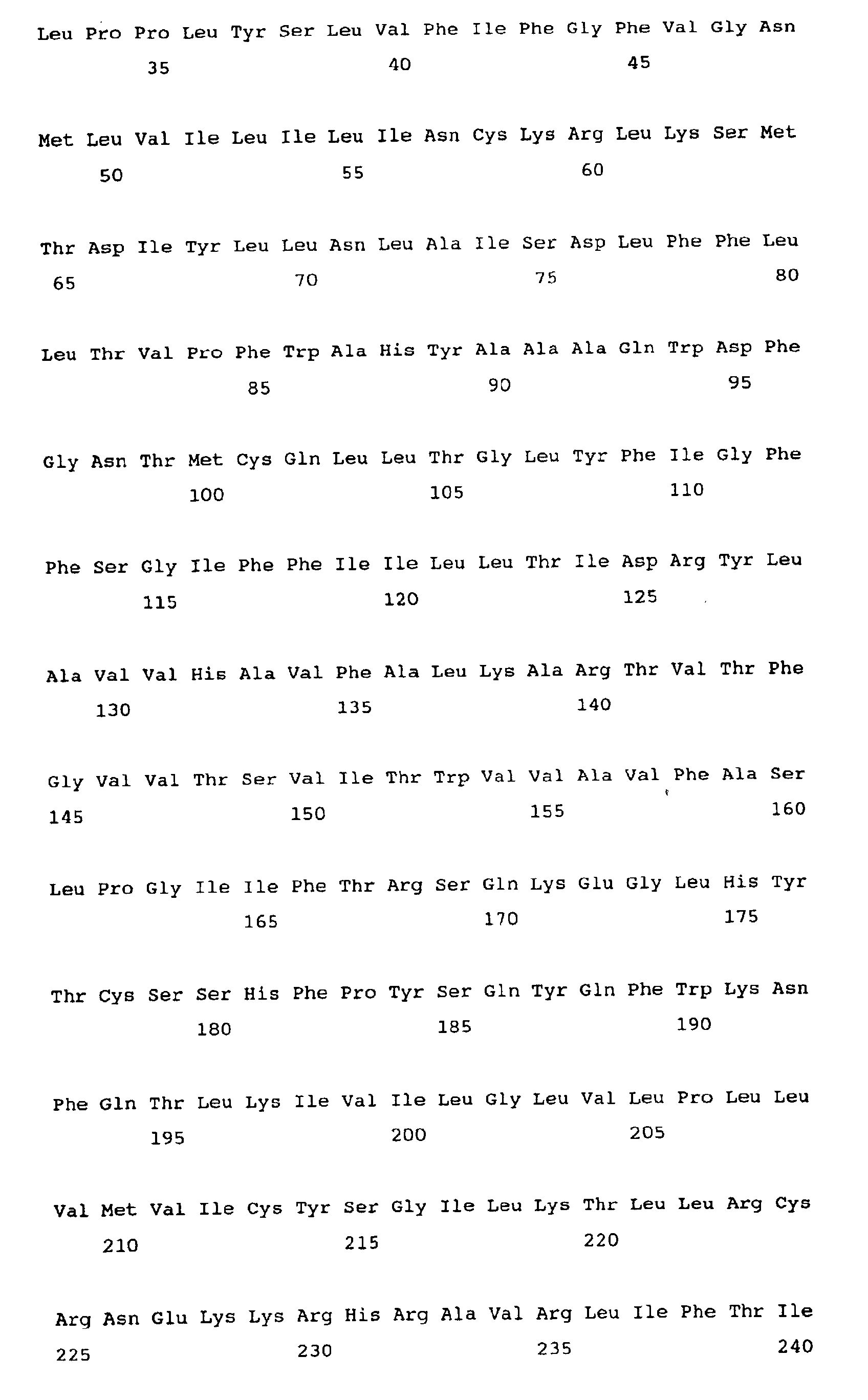

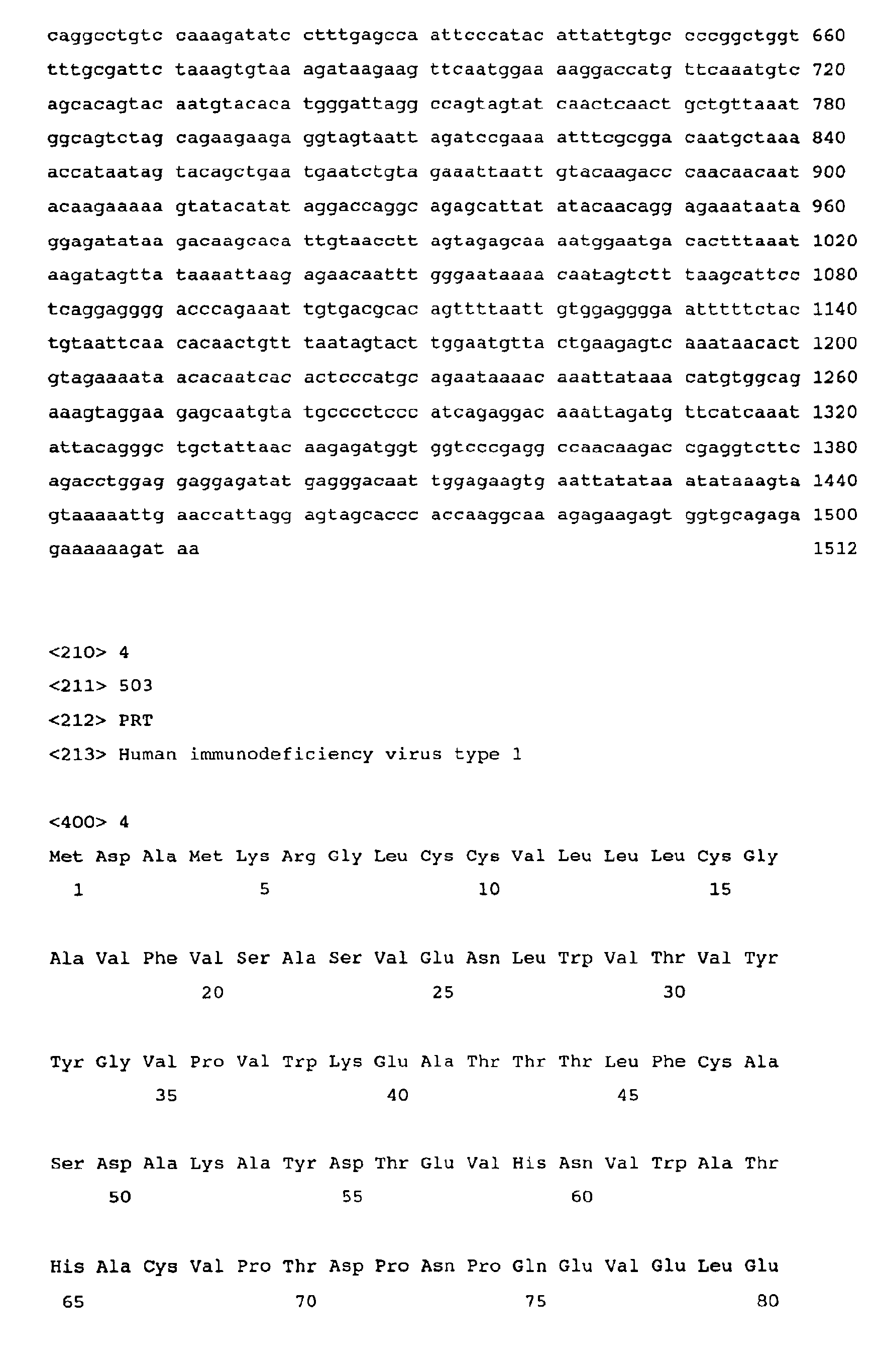
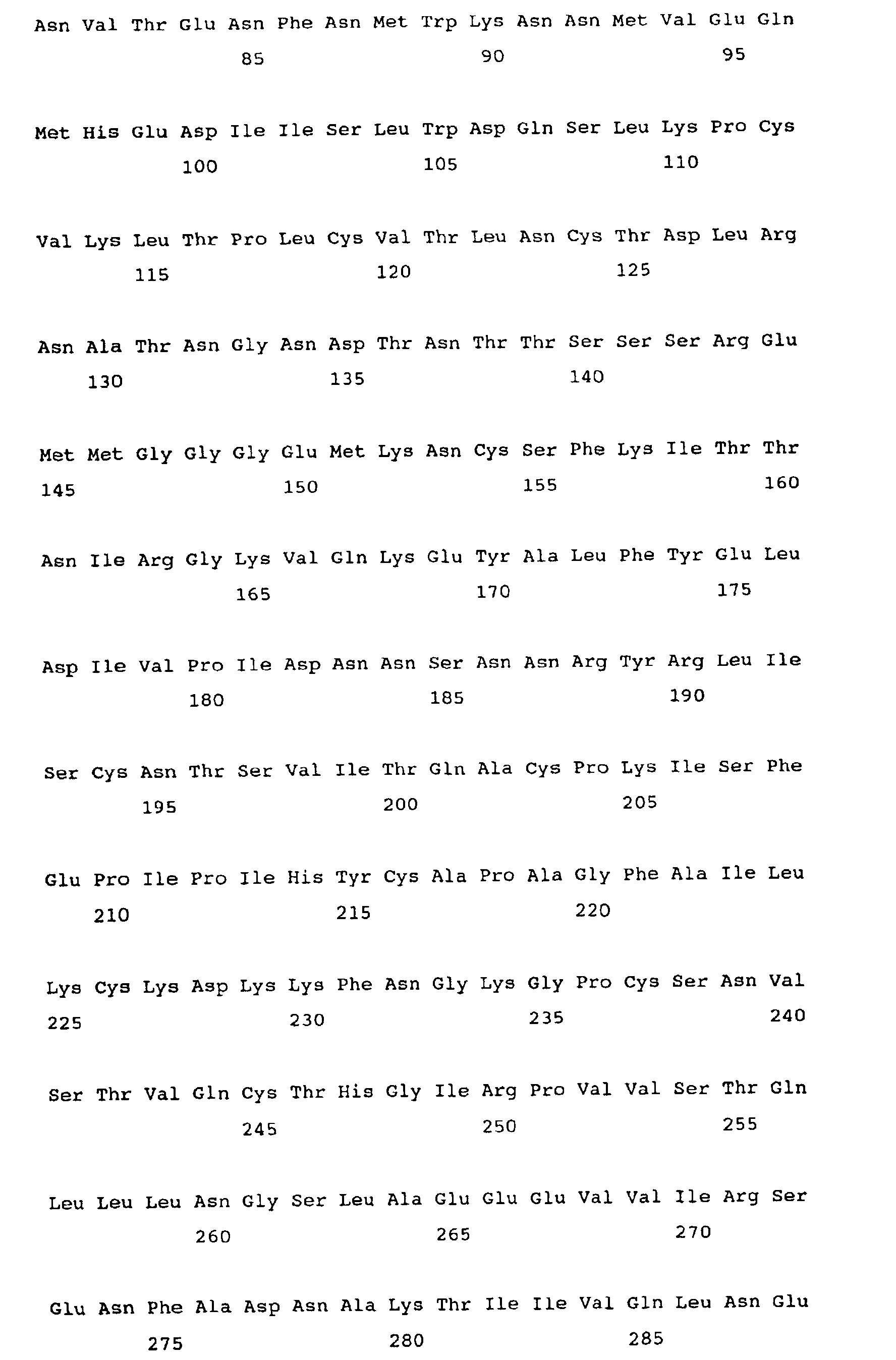
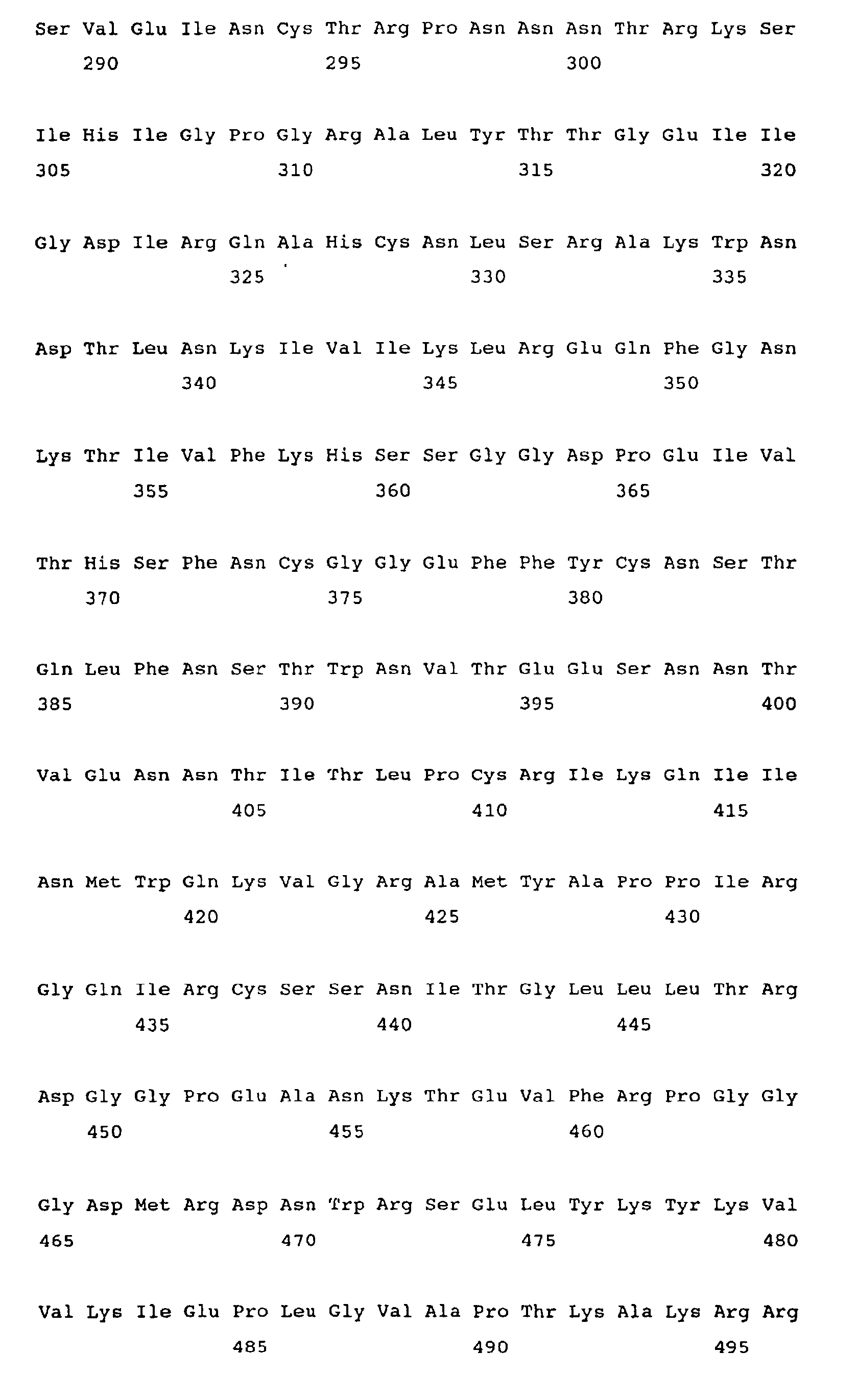
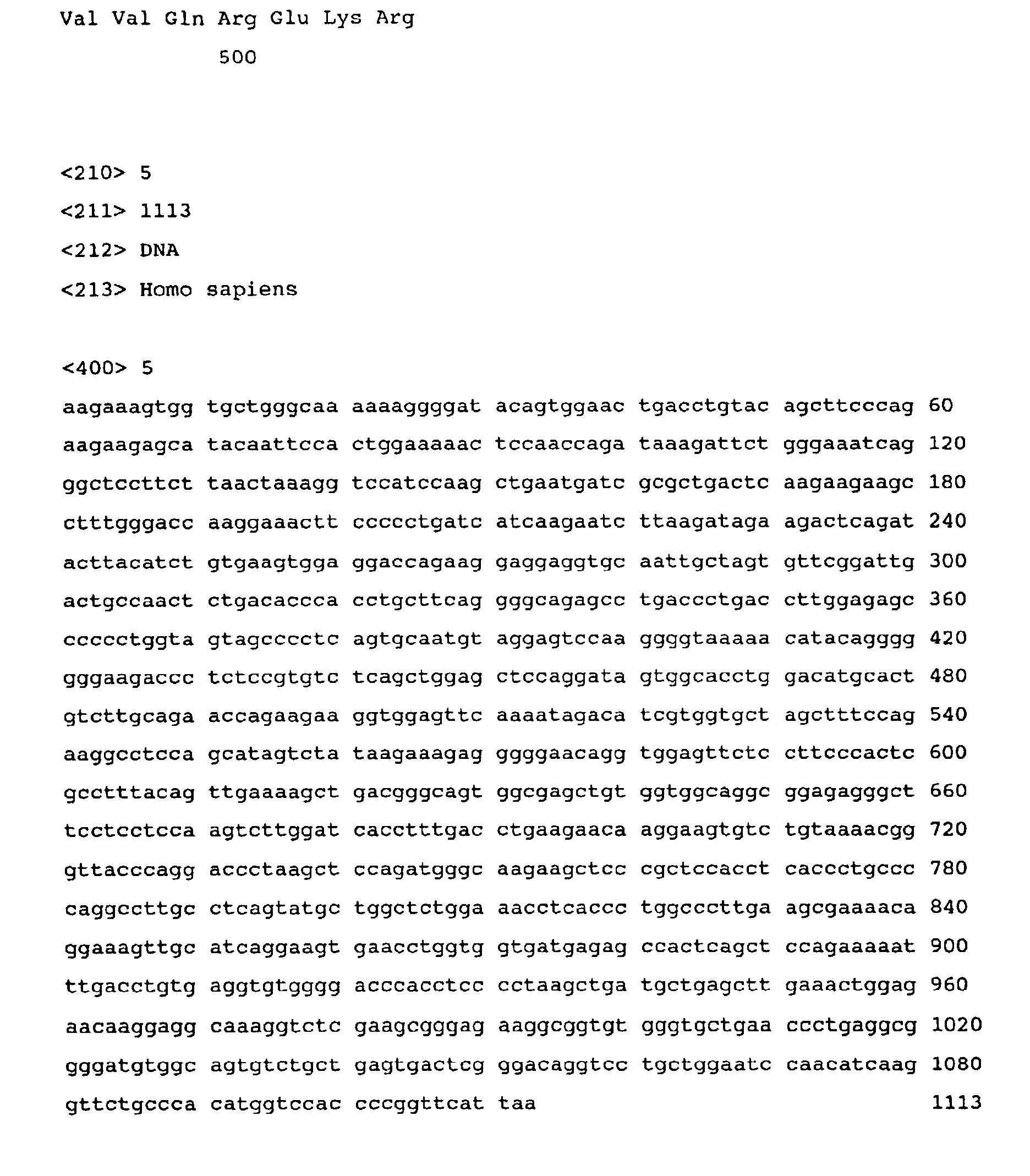
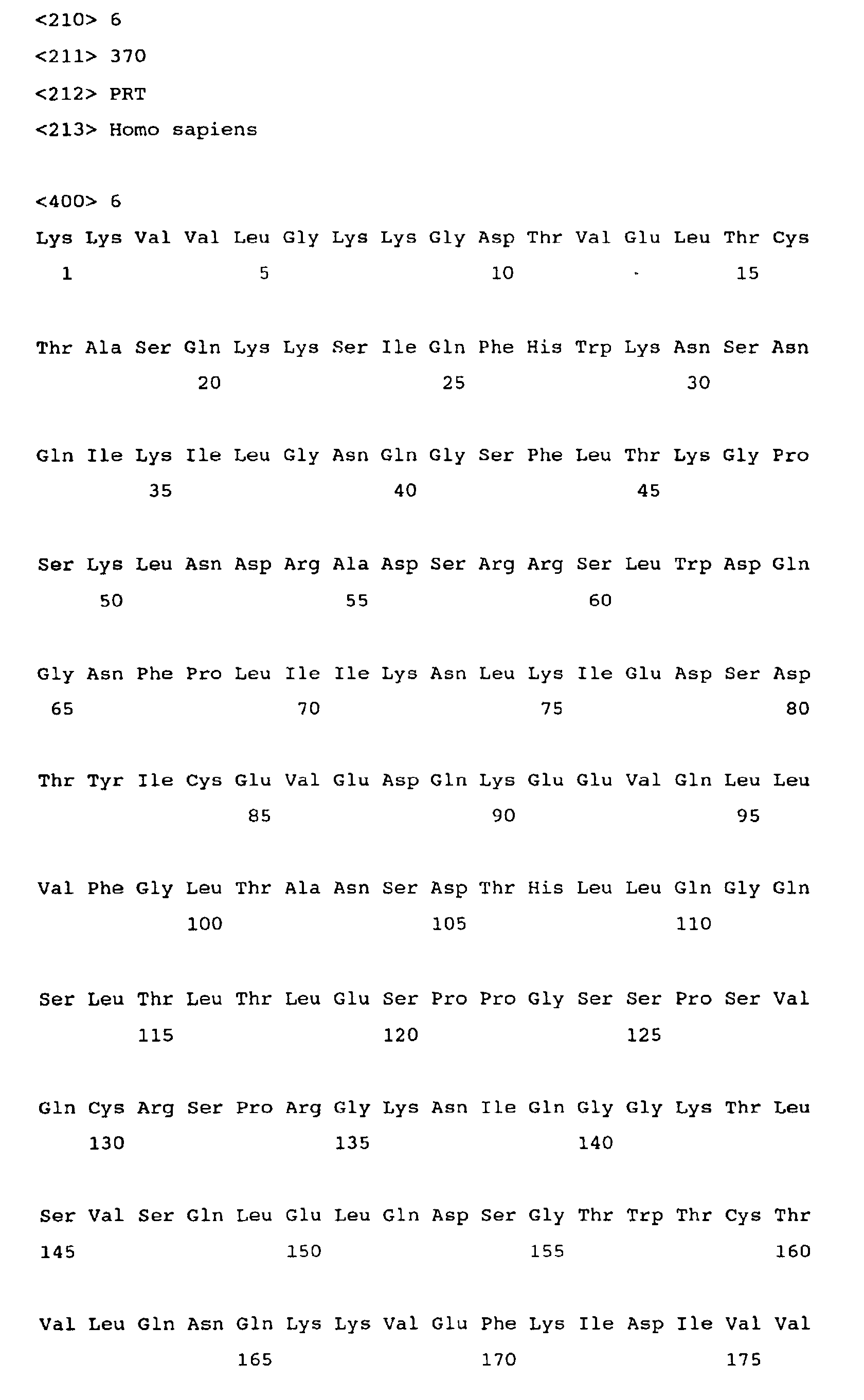

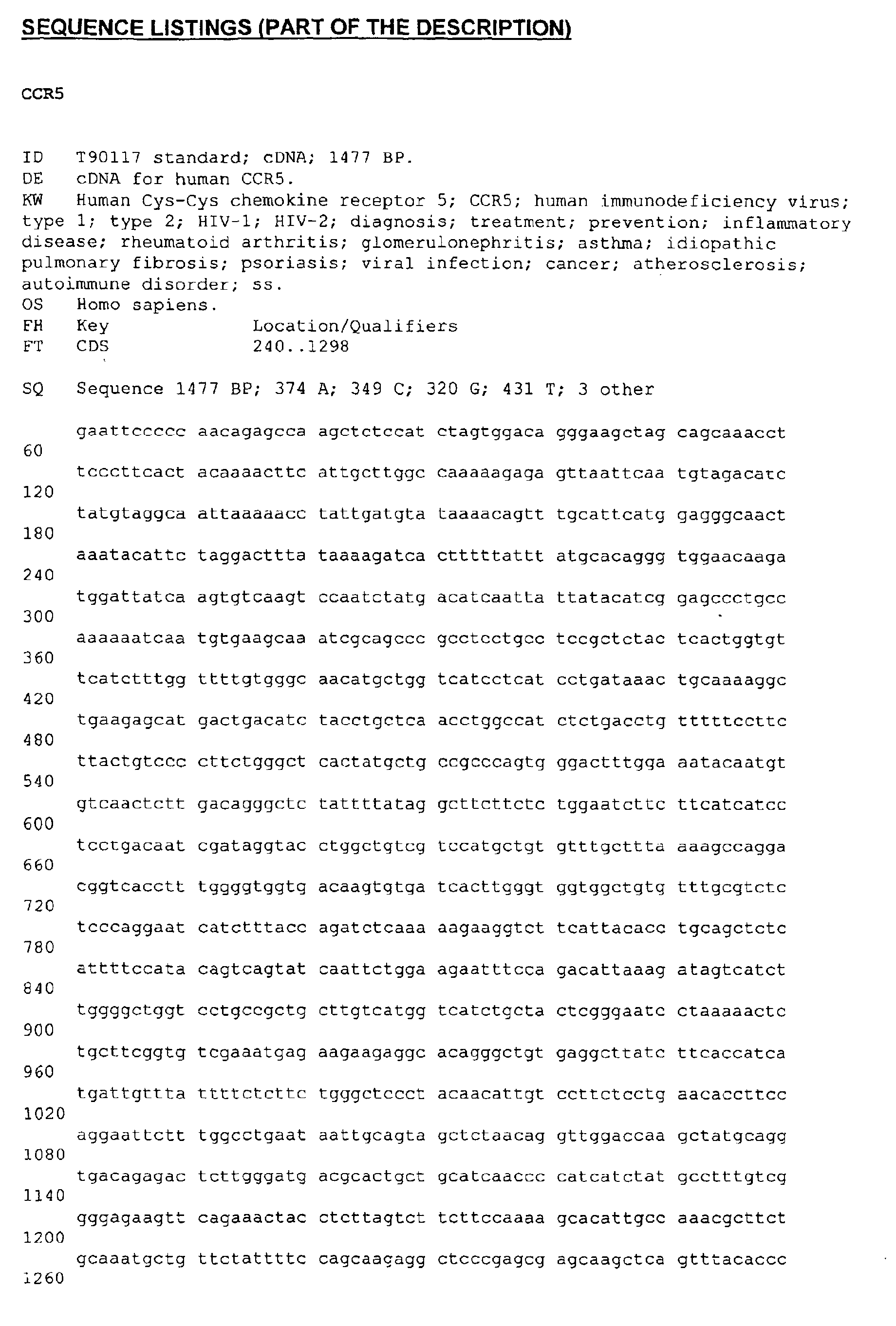

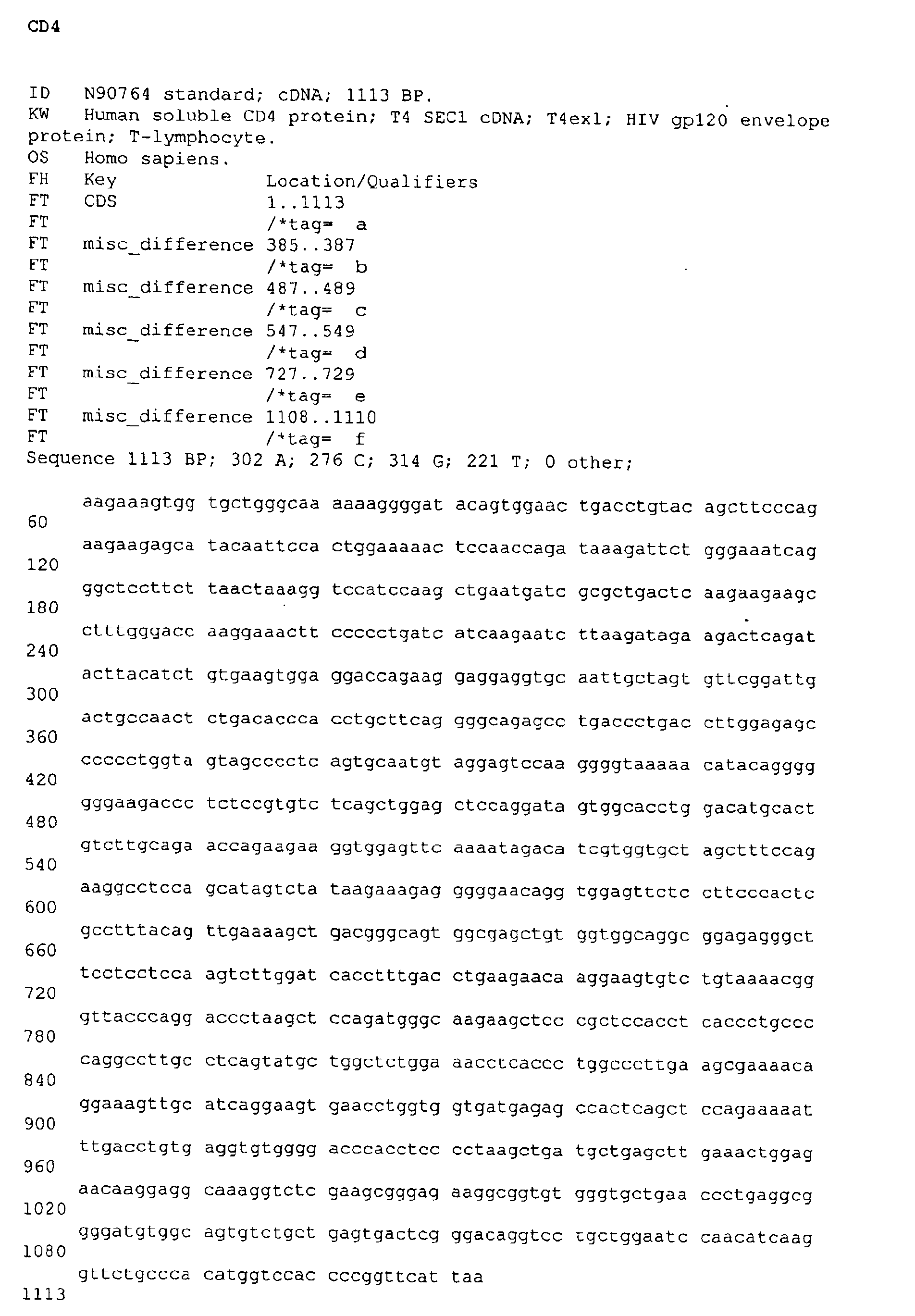
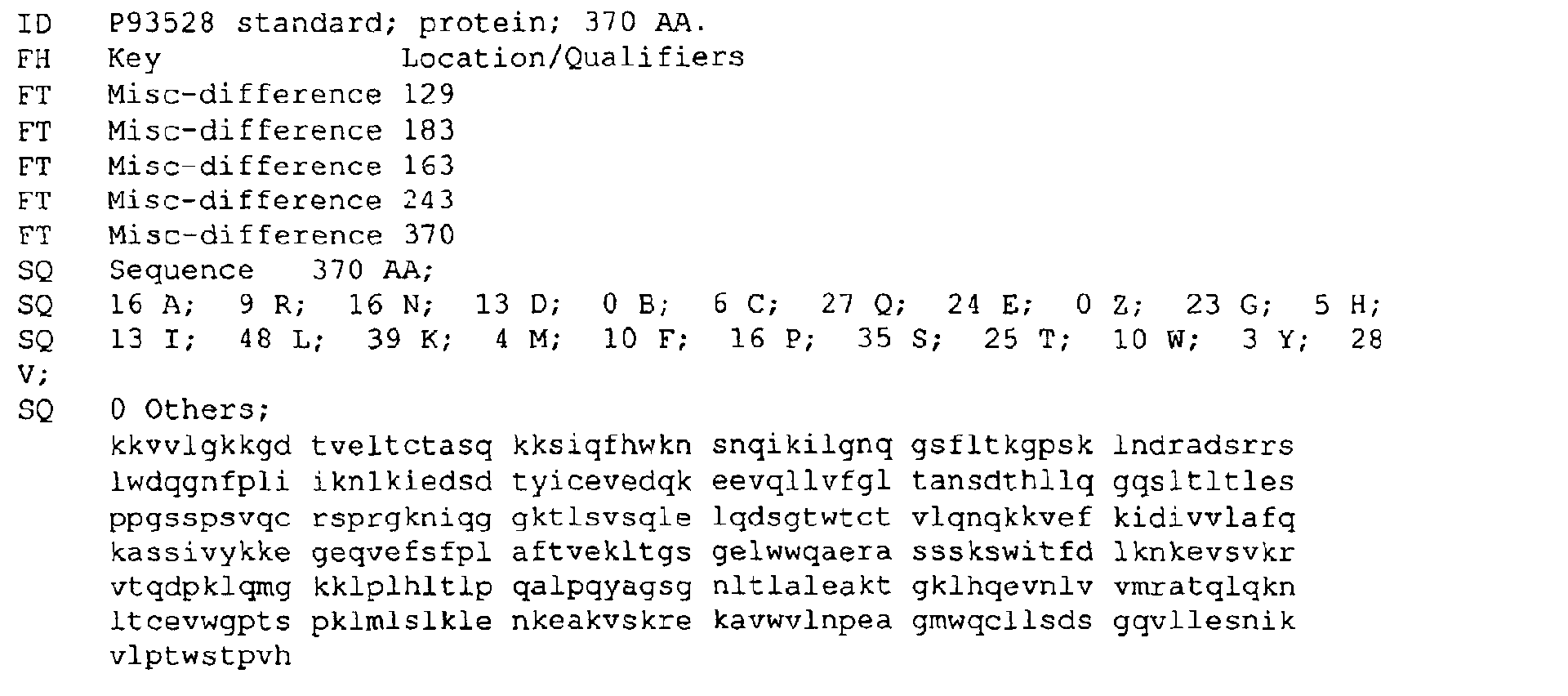
Claims (20)
- An assay method for determining whether an agent is capable of modulating the interaction of CCR5 with gp120;
the method comprising:incubating the agent with CCR5 and gp120 to form a first reaction mixture; anddetermining whether said agent modulates the interaction of CCR5 with gp120;wherein said gp120 is associated with CD4; andwherein said interaction is a low affinity binding. - A method according to claim 1 wherein said method includes the step of adding a ligand to said first reaction mixture to form a second reaction mixture; wherein said ligand is capable of indicating whether said agent has modulated said interaction.
- A method according to claim 2 wherein said ligand has a detectable label.
- A method according to claim 3 wherein said detectable label is a fluorescent atom or a fluorescent group.
- A method according to claim 5 wherein said radioactive atom is Eu3+.
- A method according to any one of claims 2 to 5 wherein said ligand comprises at least a first antibody.
- A method according to claim 6 wherein said first antibody is capable of binding to gp120; and wherein said binding is high affinity binding, preferably wherein said first antibody is associated with a detectable label.
- A method according to claim 6 or claim 7 wherein said ligand comprises at least a second antibody.
- A method according to claim 7 wherein said second antibody is capable of binding to said first antibody.
- A method according to claim 9 wherein said second antibody is an anti-IgG antibody.
- A method according to any one of claims 8 to 10 when dependent on claim 3 wherein said detectable label is associated with said second antibody.
- An agent identified by the method according to any one of claims 1 to 11, wherein said agent is capable of modulating the interaction of CCR5 with gp120.
- A process comprising the steps of:(a) performing the assay according to any one of claims 1 to 11;(b) identifying one or more agents that are capable of modulating the interaction of CCR5 with gp120; and(c) preparing a quantity of those one or more identified agents.
- A process comprising the steps of:(a) performing the assay according to any one of claims 1 to 11;(b) identifying one or more agents that are capable of modulating the interaction of CCR5 with gp120; and(c) admixing one or more of said agent(s) with a pharmaceutically acceptable carrier, diluent or excipient to form a pharmaceutical composition.
- A process according to claim 14 wherein said process also includes the subsequent step of:
(d) administering said composition to a subject in need of same. - A method of affecting the in vivo interaction of CCR5 with gp120 with an agent;wherein the agent is capable of modulating the interaction of CCR5 with gp120 in an in vitro assay method;wherein the in vitro assay method is the assay method defined in any one of claims 1 to 11.
- Use of an agent in the preparation of a pharmaceutical composition for the treatment of a disease or condition associated with the interaction of CCR5 with gp120, wherein the agent is the agent of claim 12 and/or wherein the agent is capable of modulating the interaction of CCR5 with gp120 when assayed in vitro by the assay method according to any one of claims 1 to 11.
- A method of treating a subject with an agent, wherein the agent is the agent of claim 12 and/or wherein the agent is capable of modulating the interaction of CCR5 with gp120 when assayed in vitro by the assay method according to any one of claims 1 to 11.
- A process for preparing a pharmaceutical for use in treating HIV; the process comprising forming a composition by admixing (a) the agent of claim 12 and/or an agent that is capable of modulating the interaction of CCR5 with gp120 when assayed in vitro by the assay method according to any one of claims 1 to 11 with (b) a pharmaceutically acceptable carrier, diluent or excipient.
- A pack comprising at least two compartments; wherein first of said compartments houses the agent of claim 12 and/or an agent that is capable of modulating the interaction of CCR5 with gp120 when assayed in vitro by the assay method according to any one of claims 1 to 11; and wherein second of said compartments houses an additional pharmaceutically useful moiety.
Applications Claiming Priority (6)
| Application Number | Priority Date | Filing Date | Title |
|---|---|---|---|
| GB0000663A GB0000663D0 (en) | 2000-01-12 | 2000-01-12 | Method |
| GB0000661A GB0000661D0 (en) | 2000-01-12 | 2000-01-12 | Method |
| GB0000659 | 2000-01-12 | ||
| GB0000659A GB0000659D0 (en) | 2000-01-12 | 2000-01-12 | Method |
| GB0000663 | 2000-01-12 | ||
| GB0000661 | 2000-01-12 |
Publications (2)
| Publication Number | Publication Date |
|---|---|
| EP1118858A2 true EP1118858A2 (en) | 2001-07-25 |
| EP1118858A3 EP1118858A3 (en) | 2003-07-09 |
Family
ID=27255463
Family Applications (1)
| Application Number | Title | Priority Date | Filing Date |
|---|---|---|---|
| EP01300020A Withdrawn EP1118858A3 (en) | 2000-01-12 | 2001-01-03 | Assay method |
Country Status (4)
| Country | Link |
|---|---|
| US (1) | US20010039026A1 (en) |
| EP (1) | EP1118858A3 (en) |
| JP (1) | JP3602799B2 (en) |
| CA (1) | CA2328634A1 (en) |
Cited By (4)
| Publication number | Priority date | Publication date | Assignee | Title |
|---|---|---|---|---|
| US6555581B1 (en) | 2001-02-15 | 2003-04-29 | Jones Pharma, Inc. | Levothyroxine compositions and methods |
| WO2003050499A3 (en) * | 2001-12-11 | 2003-12-04 | Biotectid Gmbh | Use of a labeled ligand having human cd4 specificity |
| US6855724B2 (en) | 2002-04-08 | 2005-02-15 | Agouron Pharmaceuticals, Inc. | Tropane derivatives useful in therapy |
| US7516845B2 (en) | 2004-03-31 | 2009-04-14 | Inverness Medical Limited | Medical device package with deformable projections |
Families Citing this family (3)
| Publication number | Priority date | Publication date | Assignee | Title |
|---|---|---|---|---|
| JP2004525109A (en) | 2001-02-15 | 2004-08-19 | キング・ファーマシューティカルズ・インコーポレイティッド | Stabilized thyroid hormone pharmaceutical composition and method for producing the same |
| US7101569B2 (en) | 2001-08-14 | 2006-09-05 | Franz G Andrew | Methods of administering levothyroxine pharmaceutical compositions |
| US7488481B2 (en) * | 2003-02-10 | 2009-02-10 | The Brigham And Women's Hospital, Inc. | Polypeptides derived from anti-HIV-1 gp120 antibodies that abrogate gp120 binding to CCR5 |
Family Cites Families (9)
| Publication number | Priority date | Publication date | Assignee | Title |
|---|---|---|---|---|
| US5695927A (en) * | 1988-03-31 | 1997-12-09 | The University Of Arizona, Department Of Internal Medicine, Section Of Hematology And Oncology | Monoclonal antibodies specific for HIV and the hybridomas for production thereof |
| US6107019A (en) * | 1996-06-14 | 2000-08-22 | Progenics Pharmaceuticals, Inc. | Method for preventing HIV-1 infection of CD4+ cells |
| WO1998000535A2 (en) * | 1996-06-28 | 1998-01-08 | Dana-Farber Cancer Institute | Method for inhibiting hiv-1 infection, drug screens, and methods of diagnosis and prognosis of susceptibility to hiv infection |
| US5928881A (en) * | 1996-07-11 | 1999-07-27 | Smithkline Beecham Corporation | Method of identifying agonists and antagonist for CC-CKR5 receptor |
| US6528625B1 (en) * | 1996-10-28 | 2003-03-04 | Millennium Pharmaceuticals, Inc. | Anti-CCR5 antibodies and kits comprising same |
| US6312689B1 (en) * | 1998-07-23 | 2001-11-06 | Millennium Pharmaceuticals, Inc. | Anti-CCR2 antibodies and methods of use therefor |
| PE20001420A1 (en) * | 1998-12-23 | 2000-12-18 | Pfizer | CCR5 MODULATORS |
| EP1013276A1 (en) * | 1998-12-23 | 2000-06-28 | Pfizer Inc. | Aminoazacycloalkanes as CCR5 modulators |
| US7217714B1 (en) * | 1998-12-23 | 2007-05-15 | Agouron Pharmaceuticals, Inc. | CCR5 modulators |
-
2001
- 2001-01-03 EP EP01300020A patent/EP1118858A3/en not_active Withdrawn
- 2001-01-10 CA CA002328634A patent/CA2328634A1/en not_active Abandoned
- 2001-01-11 JP JP2001003426A patent/JP3602799B2/en not_active Expired - Fee Related
- 2001-01-12 US US09/759,841 patent/US20010039026A1/en not_active Abandoned
Cited By (6)
| Publication number | Priority date | Publication date | Assignee | Title |
|---|---|---|---|---|
| US6555581B1 (en) | 2001-02-15 | 2003-04-29 | Jones Pharma, Inc. | Levothyroxine compositions and methods |
| WO2003050499A3 (en) * | 2001-12-11 | 2003-12-04 | Biotectid Gmbh | Use of a labeled ligand having human cd4 specificity |
| US6855724B2 (en) | 2002-04-08 | 2005-02-15 | Agouron Pharmaceuticals, Inc. | Tropane derivatives useful in therapy |
| US7217721B2 (en) | 2002-04-08 | 2007-05-15 | Pfizer, Inc. | Tropane derivatives useful in therapy |
| US7579471B2 (en) | 2002-04-08 | 2009-08-25 | Pfizer, Inc. | Tropane derivatives useful in therapy |
| US7516845B2 (en) | 2004-03-31 | 2009-04-14 | Inverness Medical Limited | Medical device package with deformable projections |
Also Published As
| Publication number | Publication date |
|---|---|
| CA2328634A1 (en) | 2001-07-12 |
| JP3602799B2 (en) | 2004-12-15 |
| EP1118858A3 (en) | 2003-07-09 |
| JP2001255329A (en) | 2001-09-21 |
| US20010039026A1 (en) | 2001-11-08 |
Similar Documents
| Publication | Publication Date | Title |
|---|---|---|
| Farzan et al. | HIV-1 entry and macrophage inflammatory protein-1β-mediated signaling are independent functions of the chemokine receptor CCR5 | |
| Schramm et al. | Viral entry through CXCR4 is a pathogenic factor and therapeutic target in human immunodeficiency virus type 1 disease | |
| Doranz et al. | Safe use of the CXCR4 inhibitor ALX40-4C in humans | |
| Schuitemaker et al. | Clinical significance of HIV-1 coreceptor usage | |
| Paxton et al. | Reduced HIV-1 infectability of CD4+ lymphocytes from exposed-uninfected individuals: association with low expression of CCR5 and high production of β-chemokines | |
| Blanpain et al. | Extracellular cysteines of CCR5 are required for chemokine binding, but dispensable for HIV-1 coreceptor activity | |
| US6344545B1 (en) | Method for preventing HIV-1 infection of CD4+ cells | |
| Suresh et al. | Chemokines and chemokine receptors in HIV infection: role in pathogenesis and therapeutics | |
| Navenot et al. | Molecular anatomy of CCR5 engagement by physiologic and viral chemokines and HIV-1 envelope glycoproteins: differences in primary structural requirements for RANTES, MIP-1α, and vMIP-II binding | |
| WO1997047318A1 (en) | Uses of a chemokine receptor for inhibiting hiv-1 infection | |
| Kazmierski et al. | Peptide, peptidomimetic and small‐molecule drug discovery targeting HIV‐1 host‐cell attachment and entry through gp120, gp41, CCR5 and CXCR4 | |
| Zhou et al. | Binding of ALX40-4C to APJ, a CNS-based receptor, inhibits its utilization as a co-receptor by HIV-1 | |
| Aiamkitsumrit et al. | Bioinformatic analysis of HIV-1 entry and pathogenesis | |
| Weber et al. | HIV type 1 tropism and inhibitors of viral entry: clinical implications | |
| US20010039026A1 (en) | Assay method | |
| US20040086528A1 (en) | Uses of a chemokine receptor for inhibiting HIV-1 infection | |
| Mueller et al. | Diverse signalling by different chemokines through the chemokine receptor CCR5 | |
| Vasilescu et al. | A haplotype of the human CXCR1 gene protective against rapid disease progression in HIV-1+ patients | |
| Bosse et al. | Development of nonseparation binding and functional assays for G protein-coupled receptors for high throughput screening: Pharmacological characterization of the immobilized CCR5 receptor on FlashPlate (R) | |
| Dong et al. | Variants of CCR5, which are permissive for HIV-1 infection, show distinct functional responses to CCL3, CCL4 and CCL5 | |
| Mansfield et al. | CCR5 pharmacology methodologies and associated applications | |
| US7935797B2 (en) | CCR5 chemokine receptor-specific monoclonal antibodies capable of inhibiting HIV-1 cell fusion | |
| US6696244B2 (en) | G-coupled receptors associated with retroviral entry into cells, and therapeutic uses thereof | |
| KR100462431B1 (en) | Novel mouse cxc chemokine receptor | |
| US20050065064A1 (en) | Identification of allosteric peptide agonists of CXCR4 |
Legal Events
| Date | Code | Title | Description |
|---|---|---|---|
| PUAI | Public reference made under article 153(3) epc to a published international application that has entered the european phase |
Free format text: ORIGINAL CODE: 0009012 |
|
| 17P | Request for examination filed |
Effective date: 20010115 |
|
| AK | Designated contracting states |
Kind code of ref document: A2 Designated state(s): AT BE CH CY DE DK ES FI FR GB GR IE IT LI LU MC NL PT SE TR |
|
| AX | Request for extension of the european patent |
Free format text: AL;LT;LV;MK;RO;SI |
|
| PUAL | Search report despatched |
Free format text: ORIGINAL CODE: 0009013 |
|
| AK | Designated contracting states |
Designated state(s): AT BE CH CY DE DK ES FI FR GB GR IE IT LI LU MC NL PT SE TR |
|
| AX | Request for extension of the european patent |
Extension state: AL LT LV MK RO SI |
|
| RAP1 | Party data changed (applicant data changed or rights of an application transferred) |
Owner name: PFIZER INC. Owner name: PFIZER LIMITED |
|
| AKX | Designation fees paid |
Designated state(s): AT BE CH CY DE DK ES FI FR GB GR IE IT LI LU MC NL PT SE TR |
|
| 17Q | First examination report despatched |
Effective date: 20050620 |
|
| GRAP | Despatch of communication of intention to grant a patent |
Free format text: ORIGINAL CODE: EPIDOSNIGR1 |
|
| GRAS | Grant fee paid |
Free format text: ORIGINAL CODE: EPIDOSNIGR3 |
|
| STAA | Information on the status of an ep patent application or granted ep patent |
Free format text: STATUS: THE APPLICATION IS DEEMED TO BE WITHDRAWN |
|
| 18D | Application deemed to be withdrawn |
Effective date: 20060329 |