EP1118587B1 - Method and apparatus for disinfecting drainage - Google Patents
Method and apparatus for disinfecting drainage Download PDFInfo
- Publication number
- EP1118587B1 EP1118587B1 EP19990944822 EP99944822A EP1118587B1 EP 1118587 B1 EP1118587 B1 EP 1118587B1 EP 19990944822 EP19990944822 EP 19990944822 EP 99944822 A EP99944822 A EP 99944822A EP 1118587 B1 EP1118587 B1 EP 1118587B1
- Authority
- EP
- European Patent Office
- Prior art keywords
- disinfectant
- water
- combined sewer
- sewer overflow
- disinfecting
- Prior art date
- Legal status (The legal status is an assumption and is not a legal conclusion. Google has not performed a legal analysis and makes no representation as to the accuracy of the status listed.)
- Expired - Lifetime
Links
- 230000000249 desinfective effect Effects 0.000 title claims abstract description 66
- 238000000034 method Methods 0.000 title claims abstract description 30
- XLYOFNOQVPJJNP-UHFFFAOYSA-N water Substances O XLYOFNOQVPJJNP-UHFFFAOYSA-N 0.000 claims abstract description 108
- 239000000645 desinfectant Substances 0.000 claims abstract description 96
- 239000004576 sand Substances 0.000 claims abstract description 50
- WKBOTKDWSSQWDR-UHFFFAOYSA-N Bromine atom Chemical compound [Br] WKBOTKDWSSQWDR-UHFFFAOYSA-N 0.000 claims abstract description 48
- ZCYVEMRRCGMTRW-UHFFFAOYSA-N 7553-56-2 Chemical compound [I] ZCYVEMRRCGMTRW-UHFFFAOYSA-N 0.000 claims abstract description 43
- 229910052740 iodine Inorganic materials 0.000 claims abstract description 43
- 239000010865 sewage Substances 0.000 claims description 65
- 239000000460 chlorine Substances 0.000 claims description 37
- 229910052801 chlorine Inorganic materials 0.000 claims description 36
- ZAMOUSCENKQFHK-UHFFFAOYSA-N Chlorine atom Chemical compound [Cl] ZAMOUSCENKQFHK-UHFFFAOYSA-N 0.000 claims description 25
- QGZKDVFQNNGYKY-UHFFFAOYSA-N Ammonia Chemical compound N QGZKDVFQNNGYKY-UHFFFAOYSA-N 0.000 claims description 22
- 229910052736 halogen Inorganic materials 0.000 claims description 19
- 150000002367 halogens Chemical class 0.000 claims description 19
- -1 ammonium ions Chemical class 0.000 claims description 18
- 239000007787 solid Substances 0.000 claims description 16
- 239000003643 water by type Substances 0.000 claims description 13
- 230000003247 decreasing effect Effects 0.000 claims description 12
- 229910021529 ammonia Inorganic materials 0.000 claims description 10
- 125000000623 heterocyclic group Chemical group 0.000 claims description 8
- 238000009826 distribution Methods 0.000 claims description 7
- 238000002156 mixing Methods 0.000 claims description 7
- 238000012360 testing method Methods 0.000 claims description 7
- 239000005416 organic matter Substances 0.000 claims description 5
- 238000003860 storage Methods 0.000 claims description 5
- 125000005842 heteroatom Chemical group 0.000 claims description 4
- 125000004433 nitrogen atom Chemical group N* 0.000 claims description 4
- 125000004434 sulfur atom Chemical group 0.000 claims description 3
- GDTBXPJZTBHREO-UHFFFAOYSA-N bromine Substances BrBr GDTBXPJZTBHREO-UHFFFAOYSA-N 0.000 abstract description 8
- 229910052794 bromium Inorganic materials 0.000 abstract description 7
- 239000011630 iodine Substances 0.000 abstract description 3
- 125000004432 carbon atom Chemical group C* 0.000 description 28
- PQRDTUFVDILINV-UHFFFAOYSA-N bcdmh Chemical compound CC1(C)N(Cl)C(=O)N(Br)C1=O PQRDTUFVDILINV-UHFFFAOYSA-N 0.000 description 25
- 238000004659 sterilization and disinfection Methods 0.000 description 25
- 125000000217 alkyl group Chemical group 0.000 description 22
- 125000004435 hydrogen atom Chemical group [H]* 0.000 description 18
- 125000001309 chloro group Chemical group Cl* 0.000 description 11
- 238000011282 treatment Methods 0.000 description 9
- 239000005708 Sodium hypochlorite Substances 0.000 description 8
- SUKJFIGYRHOWBL-UHFFFAOYSA-N sodium hypochlorite Chemical compound [Na+].Cl[O-] SUKJFIGYRHOWBL-UHFFFAOYSA-N 0.000 description 8
- 239000000203 mixture Substances 0.000 description 7
- 238000013019 agitation Methods 0.000 description 6
- 230000002070 germicidal effect Effects 0.000 description 6
- 230000001954 sterilising effect Effects 0.000 description 6
- 239000007788 liquid Substances 0.000 description 5
- 125000001477 organic nitrogen group Chemical group 0.000 description 5
- QGZKDVFQNNGYKY-UHFFFAOYSA-O Ammonium Chemical compound [NH4+] QGZKDVFQNNGYKY-UHFFFAOYSA-O 0.000 description 4
- QDHHCQZDFGDHMP-UHFFFAOYSA-N Chloramine Chemical compound ClN QDHHCQZDFGDHMP-UHFFFAOYSA-N 0.000 description 4
- KZBUYRJDOAKODT-UHFFFAOYSA-N Chlorine Chemical compound ClCl KZBUYRJDOAKODT-UHFFFAOYSA-N 0.000 description 4
- 241000588724 Escherichia coli Species 0.000 description 4
- 239000002253 acid Substances 0.000 description 4
- CUILPNURFADTPE-UHFFFAOYSA-N hypobromous acid Chemical compound BrO CUILPNURFADTPE-UHFFFAOYSA-N 0.000 description 4
- 102000004169 proteins and genes Human genes 0.000 description 4
- 108090000623 proteins and genes Proteins 0.000 description 4
- 239000010802 sludge Substances 0.000 description 4
- JLHMJWHSBYZWJJ-UHFFFAOYSA-N 1,2-thiazole 1-oxide Chemical class O=S1C=CC=N1 JLHMJWHSBYZWJJ-UHFFFAOYSA-N 0.000 description 3
- 241000894006 Bacteria Species 0.000 description 3
- OKTJSMMVPCPJKN-UHFFFAOYSA-N Carbon Chemical compound [C] OKTJSMMVPCPJKN-UHFFFAOYSA-N 0.000 description 3
- 150000001412 amines Chemical class 0.000 description 3
- 229910052799 carbon Inorganic materials 0.000 description 3
- 239000003795 chemical substances by application Substances 0.000 description 3
- 239000000498 cooling water Substances 0.000 description 3
- 238000007599 discharging Methods 0.000 description 3
- 239000010791 domestic waste Substances 0.000 description 3
- 230000000694 effects Effects 0.000 description 3
- 239000000463 material Substances 0.000 description 3
- 239000002245 particle Substances 0.000 description 3
- 230000035484 reaction time Effects 0.000 description 3
- 239000000126 substance Substances 0.000 description 3
- 238000011144 upstream manufacturing Methods 0.000 description 3
- YTMCUIACOKRXQA-UHFFFAOYSA-N (2-aminoacetyl) 2-aminoacetate Chemical class NCC(=O)OC(=O)CN YTMCUIACOKRXQA-UHFFFAOYSA-N 0.000 description 2
- FOWAVPREFGTTQS-UPHRSURJSA-N (z)-4-hydrazinyl-4-oxobut-2-enoic acid Chemical class NNC(=O)\C=C/C(O)=O FOWAVPREFGTTQS-UPHRSURJSA-N 0.000 description 2
- PIEXCQIOSMOEOU-UHFFFAOYSA-N 1-bromo-3-chloro-5,5-dimethylimidazolidine-2,4-dione Chemical compound CC1(C)N(Br)C(=O)N(Cl)C1=O PIEXCQIOSMOEOU-UHFFFAOYSA-N 0.000 description 2
- 150000003923 2,5-pyrrolediones Chemical class 0.000 description 2
- IJGRMHOSHXDMSA-UHFFFAOYSA-N Atomic nitrogen Chemical compound N#N IJGRMHOSHXDMSA-UHFFFAOYSA-N 0.000 description 2
- 241000304886 Bacilli Species 0.000 description 2
- 0 CC(C)(*(C=C)C(N1C)=O)C1=O Chemical compound CC(C)(*(C=C)C(N1C)=O)C1=O 0.000 description 2
- CBENFWSGALASAD-UHFFFAOYSA-N Ozone Chemical compound [O-][O+]=O CBENFWSGALASAD-UHFFFAOYSA-N 0.000 description 2
- FZEYVTFCMJSGMP-UHFFFAOYSA-N acridone Chemical class C1=CC=C2C(=O)C3=CC=CC=C3NC2=C1 FZEYVTFCMJSGMP-UHFFFAOYSA-N 0.000 description 2
- 230000002411 adverse Effects 0.000 description 2
- QVGXLLKOCUKJST-UHFFFAOYSA-N atomic oxygen Chemical compound [O] QVGXLLKOCUKJST-UHFFFAOYSA-N 0.000 description 2
- 150000007656 barbituric acids Chemical class 0.000 description 2
- 239000003139 biocide Substances 0.000 description 2
- 239000003653 coastal water Substances 0.000 description 2
- 230000001332 colony forming effect Effects 0.000 description 2
- 230000000052 comparative effect Effects 0.000 description 2
- 150000007973 cyanuric acids Chemical class 0.000 description 2
- 239000003344 environmental pollutant Substances 0.000 description 2
- 229940091173 hydantoin Drugs 0.000 description 2
- 150000001469 hydantoins Chemical class 0.000 description 2
- JGJLWPGRMCADHB-UHFFFAOYSA-N hypobromite Inorganic materials Br[O-] JGJLWPGRMCADHB-UHFFFAOYSA-N 0.000 description 2
- 230000001590 oxidative effect Effects 0.000 description 2
- 125000004095 oxindolyl group Chemical class N1(C(CC2=CC=CC=C12)=O)* 0.000 description 2
- 229910052760 oxygen Inorganic materials 0.000 description 2
- 239000001301 oxygen Substances 0.000 description 2
- 244000052769 pathogen Species 0.000 description 2
- 125000005543 phthalimide group Chemical class 0.000 description 2
- JTHRRMFZHSDGNJ-UHFFFAOYSA-N piperazine-2,3-dione Chemical class O=C1NCCNC1=O JTHRRMFZHSDGNJ-UHFFFAOYSA-N 0.000 description 2
- 231100000719 pollutant Toxicity 0.000 description 2
- 238000012545 processing Methods 0.000 description 2
- 150000004040 pyrrolidinones Chemical class 0.000 description 2
- 238000000926 separation method Methods 0.000 description 2
- 239000002689 soil Substances 0.000 description 2
- 239000008247 solid mixture Substances 0.000 description 2
- 238000003756 stirring Methods 0.000 description 2
- KZNICNPSHKQLFF-UHFFFAOYSA-N succinimide Chemical class O=C1CCC(=O)N1 KZNICNPSHKQLFF-UHFFFAOYSA-N 0.000 description 2
- 238000004065 wastewater treatment Methods 0.000 description 2
- 229940100484 5-chloro-2-methyl-4-isothiazolin-3-one Drugs 0.000 description 1
- ZKQDCIXGCQPQNV-UHFFFAOYSA-N Calcium hypochlorite Chemical compound [Ca+2].Cl[O-].Cl[O-] ZKQDCIXGCQPQNV-UHFFFAOYSA-N 0.000 description 1
- 208000035473 Communicable disease Diseases 0.000 description 1
- 241000194032 Enterococcus faecalis Species 0.000 description 1
- 241000589516 Pseudomonas Species 0.000 description 1
- 241000700605 Viruses Species 0.000 description 1
- 150000007513 acids Chemical class 0.000 description 1
- 239000004480 active ingredient Substances 0.000 description 1
- 229910052783 alkali metal Inorganic materials 0.000 description 1
- 150000001340 alkali metals Chemical class 0.000 description 1
- 229910052784 alkaline earth metal Inorganic materials 0.000 description 1
- 125000003277 amino group Chemical group 0.000 description 1
- 239000012736 aqueous medium Substances 0.000 description 1
- 125000003118 aryl group Chemical group 0.000 description 1
- 230000015572 biosynthetic process Effects 0.000 description 1
- FNXLCIKXHOPCKH-UHFFFAOYSA-N bromamine Chemical compound BrN FNXLCIKXHOPCKH-UHFFFAOYSA-N 0.000 description 1
- CODNYICXDISAEA-UHFFFAOYSA-N bromine monochloride Chemical compound BrCl CODNYICXDISAEA-UHFFFAOYSA-N 0.000 description 1
- 239000010782 bulky waste Substances 0.000 description 1
- 238000006243 chemical reaction Methods 0.000 description 1
- DHNRXBZYEKSXIM-UHFFFAOYSA-N chloromethylisothiazolinone Chemical group CN1SC(Cl)=CC1=O DHNRXBZYEKSXIM-UHFFFAOYSA-N 0.000 description 1
- 238000005345 coagulation Methods 0.000 description 1
- 230000015271 coagulation Effects 0.000 description 1
- 150000001875 compounds Chemical class 0.000 description 1
- 238000001816 cooling Methods 0.000 description 1
- 230000007423 decrease Effects 0.000 description 1
- 230000001419 dependent effect Effects 0.000 description 1
- 238000013461 design Methods 0.000 description 1
- 238000001514 detection method Methods 0.000 description 1
- 230000006866 deterioration Effects 0.000 description 1
- 230000001747 exhibiting effect Effects 0.000 description 1
- 238000002474 experimental method Methods 0.000 description 1
- 239000012530 fluid Substances 0.000 description 1
- WJRBRSLFGCUECM-UHFFFAOYSA-N hydantoin Chemical compound O=C1CNC(=O)N1 WJRBRSLFGCUECM-UHFFFAOYSA-N 0.000 description 1
- 125000002887 hydroxy group Chemical group [H]O* 0.000 description 1
- WQYVRQLZKVEZGA-UHFFFAOYSA-N hypochlorite Inorganic materials Cl[O-] WQYVRQLZKVEZGA-UHFFFAOYSA-N 0.000 description 1
- QWPPOHNGKGFGJK-UHFFFAOYSA-N hypochlorous acid Chemical compound ClO QWPPOHNGKGFGJK-UHFFFAOYSA-N 0.000 description 1
- 229910001026 inconel Inorganic materials 0.000 description 1
- 238000010348 incorporation Methods 0.000 description 1
- 238000003973 irrigation Methods 0.000 description 1
- 230000002262 irrigation Effects 0.000 description 1
- 239000003621 irrigation water Substances 0.000 description 1
- 239000007791 liquid phase Substances 0.000 description 1
- 239000002609 medium Substances 0.000 description 1
- 239000007769 metal material Substances 0.000 description 1
- 230000003641 microbiacidal effect Effects 0.000 description 1
- 239000003595 mist Substances 0.000 description 1
- 239000010841 municipal wastewater Substances 0.000 description 1
- 125000000449 nitro group Chemical group [O-][N+](*)=O 0.000 description 1
- 229910052757 nitrogen Inorganic materials 0.000 description 1
- 238000006385 ozonation reaction Methods 0.000 description 1
- 230000001717 pathogenic effect Effects 0.000 description 1
- 125000001997 phenyl group Chemical group [H]C1=C([H])C([H])=C(*)C([H])=C1[H] 0.000 description 1
- 239000004033 plastic Substances 0.000 description 1
- 229920003023 plastic Polymers 0.000 description 1
- 229920001343 polytetrafluoroethylene Polymers 0.000 description 1
- 239000004810 polytetrafluoroethylene Substances 0.000 description 1
- 229920000915 polyvinyl chloride Polymers 0.000 description 1
- 239000004800 polyvinyl chloride Substances 0.000 description 1
- 238000002360 preparation method Methods 0.000 description 1
- 238000000746 purification Methods 0.000 description 1
- 238000011084 recovery Methods 0.000 description 1
- 238000006479 redox reaction Methods 0.000 description 1
- 238000011012 sanitization Methods 0.000 description 1
- 229920006395 saturated elastomer Polymers 0.000 description 1
- 230000009182 swimming Effects 0.000 description 1
Images

Classifications
-
- C—CHEMISTRY; METALLURGY
- C02—TREATMENT OF WATER, WASTE WATER, SEWAGE, OR SLUDGE
- C02F—TREATMENT OF WATER, WASTE WATER, SEWAGE, OR SLUDGE
- C02F1/00—Treatment of water, waste water, or sewage
- C02F1/72—Treatment of water, waste water, or sewage by oxidation
- C02F1/76—Treatment of water, waste water, or sewage by oxidation with halogens or compounds of halogens
- C02F1/766—Treatment of water, waste water, or sewage by oxidation with halogens or compounds of halogens by means of halogens other than chlorine or of halogenated compounds containing halogen other than chlorine
-
- A—HUMAN NECESSITIES
- A01—AGRICULTURE; FORESTRY; ANIMAL HUSBANDRY; HUNTING; TRAPPING; FISHING
- A01N—PRESERVATION OF BODIES OF HUMANS OR ANIMALS OR PLANTS OR PARTS THEREOF; BIOCIDES, e.g. AS DISINFECTANTS, AS PESTICIDES OR AS HERBICIDES; PEST REPELLANTS OR ATTRACTANTS; PLANT GROWTH REGULATORS
- A01N43/00—Biocides, pest repellants or attractants, or plant growth regulators containing heterocyclic compounds
- A01N43/48—Biocides, pest repellants or attractants, or plant growth regulators containing heterocyclic compounds having rings with two nitrogen atoms as the only ring hetero atoms
- A01N43/50—1,3-Diazoles; Hydrogenated 1,3-diazoles
-
- A—HUMAN NECESSITIES
- A01—AGRICULTURE; FORESTRY; ANIMAL HUSBANDRY; HUNTING; TRAPPING; FISHING
- A01N—PRESERVATION OF BODIES OF HUMANS OR ANIMALS OR PLANTS OR PARTS THEREOF; BIOCIDES, e.g. AS DISINFECTANTS, AS PESTICIDES OR AS HERBICIDES; PEST REPELLANTS OR ATTRACTANTS; PLANT GROWTH REGULATORS
- A01N59/00—Biocides, pest repellants or attractants, or plant growth regulators containing elements or inorganic compounds
-
- A—HUMAN NECESSITIES
- A01—AGRICULTURE; FORESTRY; ANIMAL HUSBANDRY; HUNTING; TRAPPING; FISHING
- A01N—PRESERVATION OF BODIES OF HUMANS OR ANIMALS OR PLANTS OR PARTS THEREOF; BIOCIDES, e.g. AS DISINFECTANTS, AS PESTICIDES OR AS HERBICIDES; PEST REPELLANTS OR ATTRACTANTS; PLANT GROWTH REGULATORS
- A01N59/00—Biocides, pest repellants or attractants, or plant growth regulators containing elements or inorganic compounds
- A01N59/12—Iodine, e.g. iodophors; Compounds thereof
-
- C—CHEMISTRY; METALLURGY
- C02—TREATMENT OF WATER, WASTE WATER, SEWAGE, OR SLUDGE
- C02F—TREATMENT OF WATER, WASTE WATER, SEWAGE, OR SLUDGE
- C02F1/00—Treatment of water, waste water, or sewage
- C02F1/50—Treatment of water, waste water, or sewage by addition or application of a germicide or by oligodynamic treatment
-
- C—CHEMISTRY; METALLURGY
- C02—TREATMENT OF WATER, WASTE WATER, SEWAGE, OR SLUDGE
- C02F—TREATMENT OF WATER, WASTE WATER, SEWAGE, OR SLUDGE
- C02F2101/00—Nature of the contaminant
- C02F2101/10—Inorganic compounds
- C02F2101/16—Nitrogen compounds, e.g. ammonia
-
- C—CHEMISTRY; METALLURGY
- C02—TREATMENT OF WATER, WASTE WATER, SEWAGE, OR SLUDGE
- C02F—TREATMENT OF WATER, WASTE WATER, SEWAGE, OR SLUDGE
- C02F2103/00—Nature of the water, waste water, sewage or sludge to be treated
- C02F2103/001—Runoff or storm water
-
- Y—GENERAL TAGGING OF NEW TECHNOLOGICAL DEVELOPMENTS; GENERAL TAGGING OF CROSS-SECTIONAL TECHNOLOGIES SPANNING OVER SEVERAL SECTIONS OF THE IPC; TECHNICAL SUBJECTS COVERED BY FORMER USPC CROSS-REFERENCE ART COLLECTIONS [XRACs] AND DIGESTS
- Y02—TECHNOLOGIES OR APPLICATIONS FOR MITIGATION OR ADAPTATION AGAINST CLIMATE CHANGE
- Y02W—CLIMATE CHANGE MITIGATION TECHNOLOGIES RELATED TO WASTEWATER TREATMENT OR WASTE MANAGEMENT
- Y02W10/00—Technologies for wastewater treatment
- Y02W10/30—Wastewater or sewage treatment systems using renewable energies
- Y02W10/33—Wastewater or sewage treatment systems using renewable energies using wind energy
-
- Y—GENERAL TAGGING OF NEW TECHNOLOGICAL DEVELOPMENTS; GENERAL TAGGING OF CROSS-SECTIONAL TECHNOLOGIES SPANNING OVER SEVERAL SECTIONS OF THE IPC; TECHNICAL SUBJECTS COVERED BY FORMER USPC CROSS-REFERENCE ART COLLECTIONS [XRACs] AND DIGESTS
- Y02—TECHNOLOGIES OR APPLICATIONS FOR MITIGATION OR ADAPTATION AGAINST CLIMATE CHANGE
- Y02W—CLIMATE CHANGE MITIGATION TECHNOLOGIES RELATED TO WASTEWATER TREATMENT OR WASTE MANAGEMENT
- Y02W10/00—Technologies for wastewater treatment
- Y02W10/30—Wastewater or sewage treatment systems using renewable energies
- Y02W10/37—Wastewater or sewage treatment systems using renewable energies using solar energy
Definitions
- the present invention relates to a method and an apparatus for disinfecting sewage diluted with rainwater, i.e. combined sewer overflow (CSO).
- CSO combined sewer overflow
- sewage In sewage works, sewage is subjected to treatment in a sand basin for removing sand, etc., solid-liquid separation for removing suspended solids (SS), activated sludge treatment, and disinfection in this order, and then discharged to public waters such as rivers, lakes, ports, and coastal waters.
- SS suspended solids
- Disinfection generally involves the use of a chlorine gas or a chlorine-based disinfectant, because sewage, night soil, industrial drainage, etc. may contain pathogens which cause infectious diseases.
- the chlorine-based disinfectant is added to such drainage to be treated, thereby decreasing the number of coliform organisms (coliform organism count) to 3,000 CFU (colony forming unit)/ml or less.
- CFU colony forming unit
- ultraviolet irradiation or ozonization may be performed without the addition of the chlorine-based disinfectant. Since such a technique requires vast equipment, however, its applications are limited.
- a combined sewer is a system for collecting household waste water, industrial drainage, and rainwater into the same pipe, and sending the combined water to sewage works, where the aforementioned treatments are carried out.
- rainwater-incorporating sewage in excess of the amount that can be treated at sewage works is likely to flow into the sewage works.
- discharge takes place from (wet-weather) sewage removal facilities, such as a storm outflow and pump station, to public waters.
- sewage removal facilities such as a storm outflow and pump station
- a separated sewer is a system for collecting both of household waste water and industrial drainage, and rainwater into different pipes, and sending the household waste water and industrial drainage to sewage works, while discharging the rainwater as an overflow.
- the separated sewer overflow should essentially comprise only rainwater. Actually, however, when much rain falls, a large amount of rainwater flows in the sewer. On this occasion, pollutants present on ground surfaces, such as roads, and sludge deposited in the sewer are flowed together. Thus, the separated sewer overflow also contains Escherichia coli ascribed to the pollutants existent on ground surfaces and the sludge. In each case, the coliform organism count in the overflow may exceed the discharge control value (3,000 CFU/ml or less). In this case, disinfection is desired.
- Chlorine-based disinfectants have many advantages, such that the equipment used is simple, and their applicability to any state of dirt is high, compared with ultraviolet irradiation and ozone sterilization.
- the disinfection time for the use of the chlorine-based disinfectant is required to be 15 minutes or more (see “Sewer Facilities - Plan & Design Guidelines and Description").
- a mixing tank in which sewage in rainy weather and the chlorine-based disinfectant are mixed and caused to dwell for 15 minutes or more.
- the (wet-weather) sewage removal facilities have no ample space where such a mixing tank can be installed.
- a disinfectant taking a short disinfection time and a method for mixing it are required of disinfection of combined sewer overflow.
- Japanese Unexamined Patent Publication No. 4-156994 describes a method of pouring a germicide into cooling water.
- the germicide the formation of hypobromite ions by a redox reaction between ozone and bromine ions is described.
- the cooling water contains no ammonia.
- Japanese Unexamined Patent Publication No. 11-47755 describes a slime control agent containing a hydantoin compound as an active ingredient, and a slime control method using such an agent.
- the slime control agent is used in storage water for use at a pulp plant or a paper making factory.
- US-A-5 422 126 relates to halogen compositions for water treatment and method of preparation thereof.
- DASH halogenated 5,5-dialylhydantoins
- BCDMH bromochlorodimethylhydantoin
- Hypohalous acids e.g. HOCI, HOBr
- the methods and compositions are advantageously employed for the treatment of various aqueous systems, including cooling water, recreational water, municipal wastewater, pulp and paper whitewater, process waters and irrigation water.
- US-A-3 413 021 is directed to water-treating method and agglomerates of N-halogenated organic compounds for use therein.
- Sewage effluent is mentioned as a material for treatment and it is further noted that N-halogenated organic compounds in solid agglomerate form have a wide application in a variety of water purification needs, with particular application in the disinfection of swimming pool water and sewage effluent, which exhibit notoriously variable halogen demand,
- CA-A 20 42 430 provides a method of treating an aqueous medium to provide available chlorine thereto.
- This method comprises treating the medium with a solid composition of blended particles of one or more alkali metal or alkaline earth metal hypochlorite with one or more N-halogenated dialkylhydantoin. Further, a solid composition in the form of particles blended together of calcium hypochlorite and 1-bromo-3-chloro-5,5-dimethylhydantion is provided. This composition can be used for a variety of fluid media.
- water treatment it may be used generally to provide available chlorine to media containing biologically active components such as bacteria and viruses, e.g., it may be utilized for treating aqueous sewage media, plant effluent, cooling towers, lagoons and secondary water recovery.
- biologically active components such as bacteria and viruses
- CSO combined sewer overflow
- the total organic carbon in the drainage is preferably 5 mg/liter or more.
- the ammonium ion concentration in the drainage is preferably 1 mg/liter or more.
- the step of adding the disinfecting water preferably includes the step of introducing the disinfecting water below the water surface of the drainage. It is also preferred that the step of discharging the disinfected drainage to public waters be further included.
- the device for producing disinfecting water preferably has a disinfectant storing device, a device for adding the disinfectant to the drainage, and a device for mixing the disinfectant and the drainage.
- the sand basin has two or more sand settling portions, and a first channel has a distribution tank for introducing the disinfecting water to each of the sand settling portions.
- the first channel is preferably connected to an adding device for introducing the disinfecting water below the water surface of the drainage.
- a reservoir for storage, or a discharge waterway is further included so that the disinfected drainage can be discharged to public waters.
- the reservoir or the discharge waterway is preferably provided with a measuring instrument for inspecting the water quality of the disinfected drainage.
- a second channel for introducing part of the drainage (CSO) in the sand basin into the device for producing disinfecting water is further included.
- drainage containing organic matter and ammonia or ammonium ions i.e combined sewer overflow is disinfected.
- the separated sewer is a system in which a sewer for raw sewage and a sewer for rainwater are separated. According to this system, wet-weather sewage flowing in the rainwater sewer is disinfected by the method of the invention.
- the total organic carbon in the drainage may be 5 mg/liter or more, 10 mg/liter or more, 30 mg/liter or more, or 50 mg/liter or more.
- the total organic carbon is generally 5 mg/liter or more.
- the ammonium ion concentration of the drainage may be 1 mg/liter or more, or 10 mg/liter or more,
- active bromine or active iodine changes into NH 2 X or NHX 2 where X denotes a bromine atom or an iodine atom.
- Bromoamine (NH 2 Br) retains an disinfecting effect comparable to that of hypobromous acid, and is capable of effective disinfection.
- the ammonia ion concentration is generally 1 mg/liter or more.
- an overflow immediately after rainfall, called first flush often has an ammonia ion concentration of 1 mg/liter or more.
- the drainage mainly targeted is sewage diluted with rainwater
- the water to be treated contains E. coli, because disinfection is highly necessary for such water.
- the combined sewage generally contains E. coli, and the separated sewage often contains E. coll.
- a disinfectant which can form HOX where X is a bromine atom or an iodine atom, and which contains a bromine atom or an iodine atom, is used.
- a disinfectant which can form hypobromous acid (HOBr) and which contains a bromine atom, is used.
- HOBr hypobromous acid
- the above bromine-based disinfectant or iodine-based disinfectant is characterized by a short disinfection time.
- the bromine-based disinfectant for example, is capable of disinfection in several tens of seconds to several minutes.
- hypohalogenous acid (HOX where X is a bromine atom or an iodine atom) easily decomposes in nature, and there is no need to provide a device for breaking down a hypohalogenous acid remaining in drainage.
- chlorine-based disinfectant on the other hand, active chlorine reacts with ammonia in sewage to form chloramine, decreasing germicidal activity. This makes it difficult to complete disinfection within a dwelling time in the (wet-weather) sewage removal facilities. Since chloramine is highly residual, moreover, a device for decomposing it needs to be provided.
- Examples of the disinfectant preferably used in the invention are hydantoins, cyanuric acids, isothiazolones, ⁇ -caprolactams, phthalimides, pyrrolidones, acridones, uracils, succinimides, barbituric acids, creatinines, dioxopiperazines, urazoles, glycine anhydrides, ⁇ -heptalactams, maleic acid hydrazides, maleimides, octalactams, and oxindoles.
- hydantoins are expressed, for example, by the formula (II):
- X 1 and X 2 are the same or different, and are each independently a chlorine atom, a bromine atom, or an iodine atom, provided that one of X 1 and X 2 is a bromine atom or an iodine atom; and R 1 and R 2 are the same or different, and are each independently a hydrogen atom, or a lower alkyl group having 10 or less carbon atoms, preferably, a hydrogen atom, or a lower alkyl group having 6 or less carbon atoms, more preferably, a hydrogen atom, or a lower alkyl group having 3 or less carbon atoms.
- hydantoin 1-bromo-3-chloro-5,5-dimethylhydantoin (a compound of the formula (I)), for example, is named.
- Bromochlorodimethylhydantoin (BCDMH) is highly stable, and can maintain activity for several years if shielded from direct sunlight. BCDMH is a solid, and when dissociated, forms hypobromite ions, exhibiting a high disinfecting effect .
- the cyanuric acids are shown, for example, by the formula (III) where R 1 , R 2 , and R 3 are the same or different, and are each independently a chlorine atom, a bromine atom, an iodine atom, a hydroxyl group, a hydrogen atom, or a lower alkyl group having 10 or less carbon atoms, provided that at least one of R 1 , R 2 , and R 3 is a bromine atom or an iodine atom; the lower alkyl group being preferably one having 6 or less carbon atoms, and more preferably one having 3 or less carbon atoms.
- the isothiazolones are shown, for example, by the formula (IV) where X is a bromine atom or an iodine atom; R 1 and R 2 are the same or different, and are each independently a chlorine atom, a bromine atom, an iodine atom, a hydrogen atom, or a lower alkyl group having 10 or less carbon atoms, the lower alkyl group preferably having 6 or less carbon atoms, and more preferably having 3 or less carbon atoms.
- isothiazolone is 5-chloro-2-methyl-4-isothiazolin-3-one.
- the ⁇ -caprolactams are expressed, for example, by the formula (V) where X is a bromine atom or an iodine atom.
- the phthalimides are expressed, for example, by the formula (VI) where X is a bromine atom or an iodine atom.
- the pyrrolidones are expressed, for example, by the formula (VII) where X is a bromine atom or an iodine atom.
- the acridones are expressed, for example, by the formula (VIII) where X is a bromine atom or an iodine atom.
- the uracils are expressed, for example, by the formula (IX) where X 1 and X 2 are the same or different, and are each independently a chlorine atom, a bromine atom, or an iodine atom, provided that one of X 1 and X 2 is a bromine atom or an iodine atom; R 1 is a hydrogen atom, a lower alkyl group having 10 or less carbon atoms, an amino group, or a nitro group, the lower alkyl group preferably having 6 or less carbon atoms, and more preferably having 3 or less carbon atoms; R 2 and R 3 are the same or different, and are each independently a hydrogen atom, or a lower alkyl group having 10 or less carbon atoms, preferably, a hydrogen atom, or a lower alkyl group having 6 or less carbon atoms, and more preferably a hydrogen atom, or a lower alkyl group having 3 or less carbon atoms.
- the succinimides are expressed, for example, by the formula (X) where X is a bromine atom or an iodine atom.
- the barbituric acids are expressed, for example, by the formula (XI) where X 1 and X 2 are the same or different, and are each independently a chlorine atom, a bromine atom, or an iodine atom, provided that one of X 1 and X 2 is a bromine atom or an iodine atom; and R 1 and R 2 are the same or different, and are each independently a hydrogen atom, or a lower alkyl group having 10 or less carbon atoms, preferably, a hydrogen atom, or a lower alkyl group having 6 or less carbon atoms, and more preferably a hydrogen atom, or a lower alkyl group having 3 or less carbon atoms.
- the creatinines are expressed, for example, by the formula (XII) where X is a bromine atom or an iodine atom; and R is a hydrogen atom, or a lower alkyl group having 10 or less carbon atoms, preferably, a hydrogen atom, or a lower alkyl group having 6 or less carbon atoms, and more preferably a hydrogen atom, or a lower alkyl group having 3 or less carbon atoms.
- the dioxopiperazines are expressed, for example, by the formula (XIII) where X 1 and X 2 are the same or different, and are each independently a chlorine atom, a bromine atom, or an iodine atom, provided that one of X 1 and X 2 is a bromine atom or an iodine atom.
- the urazoles are expressed, for example, by the formula (XIV) where X 1 and X 2 are the same or different, and are each independently a chlorine atom, a bromine atom, or an iodine atom, provided that one of X 1 and X 2 is a bromine atom or an iodine atom; and R 1 , R 2 , and R 3 are the same or different, and are each independently a chlorine atom, a bromine atom, an iodine atom, a hydrogen atom, or a lower alkyl group having 10 or less carbon atoms, one of R 1 , R 2 , and R 3 being a bromine atom or an iodine atom, and the lower alkyl group preferably having 6 or less carbon atoms, and more preferably having 3 or less carbon atoms.
- the glycine anhydrides are expressed, for example, by the formula (XV) where X 1 and X 2 are the same or different, and are each independently a chlorine atom, a bromine atom, an iodine atom, a hydrogen atom, or a lower alkyl group having 10 or less carbon atoms, one of X 1 and X 2 being a bromine atom or an iodine atom, and the lower alkyl group preferably having 6 or less carbon atoms, and more preferably having 3 or less carbon atoms.
- XV X 1 and X 2 are the same or different, and are each independently a chlorine atom, a bromine atom, an iodine atom, a hydrogen atom, or a lower alkyl group having 10 or less carbon atoms, one of X 1 and X 2 being a bromine atom or an iodine atom, and the lower alkyl group preferably having 6 or less carbon atoms, and more
- ⁇ -heptalactams are expressed, for example, by the formula (XVI) where X is a bromine atom or an iodine atom.
- the maleic acid hydrazides are expressed, for example, by the formula (XVII) where X 1 and X 2 are the same or different, and are each independently a chlorine atom, a bromine atom, or an iodine atom, provided that one of X 1 and X 2 is a bromine atom or an iodine atom.
- the maleimides are expressed, for example, by the formula (XVIII) where X is a bromine atom or an iodine atom.
- octalactams are expressed, for example, by the formula (XIX) where X is a bromine atom or an iodine atom.
- the oxindoles are expressed, for example, by the formula (XX) where X is a bromine atom or an iodine atom.
- the disinfectant usable in the invention preferably contains a 4- to 10-membered heterocyclic ring, more preferably a 5- to 9-membered heterocyclic ring, containing nitrogen atoms or sulfur atoms, as shown by the formulas (I) to (XX).
- the heterocyclic ring preferably contains 1 to 4 hetero-atoms, more preferably 1 to 3 hetero-atoms.
- the hetero-atoms are nitrogen atoms or sulfur atoms.
- the ring skeleton of the heterocyclic ring preferably includes a group of the formula -N(X)- where X is a chlorine atom, a bromine atom, or an iodine atom, preferably a bromine atom or an iodine atom, and more preferably a bromine atom.
- the heterocyclic ring may be condensed with other ring, for example, an aromatic ring such as a benzene ring, as shown by the formulas (VI), (VIII) and (XX).
- the step of mixing a predetermined disinfectant with water is included.
- the disinfectant may be added to drainage at the (wet-weather) sewage removal facilities.
- the disinfectant may be added in the sewer pipe entering the (wet-weather) sewage removal facilities, or may be added in the sand basin, especially, the inflow portion of the sand basin.
- the disinfectant may be added in the rainwater removal pump well, or in the rainwater removal pump inflow pipe. That is, the disinfectant may be added in any of these places, and may be added at one site or at several sites.
- the (wet-weather) sewage removal facilities may be provided with a main channel for flow of drainage, and a bypass channel branched from the main channel.
- a disinfection tank may be installed in this bypass channel.
- the disinfectant may be added to drainage, and dissolved therein.
- the place of addition of the disinfectant is preferably on the entry side of the rainwater removal pump, because an agitating force in the pump mixes the disinfectant and the wet-weather sewage thoroughly-
- the addition of the disinfectant at the Inflow portion of the sand basin is also preferred, because the dwell time in the sand basin can be utilized for the reaction time.
- the disinfectant used in the invention is often a solid at room temperature.
- a solid disinfectant When a solid disinfectant is directly added to drainage, undissolved solids may be discharged along with the drainage, adversely affecting aquatic organisms in public waters. Therefore, the disinfectant is dissolved in water to form disinfecting water, and add it to drainage.
- the method of dissolving is not restricted, and may be water jet agitation by an ejector, channel agitation, or a dissolving tank equipped with a mixer.
- disinfecting water having the disinfectant dissolved in an amount of 1% by weight or more, preferably 10% by weight or more, more preferably 20% by weight or more, based on the saturated solubility of the disinfectant.
- the disinfectant when the disinfectant is solid, not all of the disinfectant added needs to be dissolved in water, and instead, the solid-form disinfectant may remain in the disinfecting water.
- the addition of a small amount of the liquid to a large amount of drainage takes some time until the liquid disinfectant and the drainage mix. In this case, they do not necessarily mix uniformly.
- the disinfectant is added to water, and then add the resulting mixture to drainage.
- the concentration of the disinfecting water is preferably 100 mg/liter as C1 to 10 g/liter as C1, more preferably 200 mg/liter as C1 to 2 g/liter as Cl, calculated as the active chlorine concentration. If the concentration of the disinfecting water is lower than 100 mg/liter as Cl, the amount of the disinfecting water added may become large, and the disinfectant may be consumed due to solution, causing the risk of insufficient sterilization. If the concentration of the disinfecting water is higher than 10 g/liter as Cl, mixing of the disinfectant and the drainage will be insufficient, decreasing the disinfecting effect.
- the amount of the disinfecting water added depends on the concentration of the disinfectant in the disinfecting water, the amount of rainfall, the water quality of drainage, etc. Generally, the amount of the disinfecting water added increases with the increase in the amount of rainfall, i.e., the amount of drainage, and the deterioration in the water quality. According to one embodiment of the invention, however, as rainwater increases, the turbidity, COD and NH 4 of incoming water decreases. Thus, even if rainwater increases and the amount of incoming water triples, there is no need to make the amount of addition of the disinfecting water or the disinfectant three-fold. Therefore, it would be rational to find the optimum amount of addition for the quality of incoming water by a beaker test or the like, and multiply this value by the amount of incoming water to determine the amount of the disinfecting water or the disinfectant added.
- the aforementioned disinfecting water is added to predetermined drainage to disinfect it.
- the disinfecting water in a disinfecting water tank is introduced into the main channel via the bypass channel.
- the concentration of the disinfectant added in the drainage is preferably 0.5 to 25 mg/liter as C1, more preferably, 1 to 15 mg/liter as C1, calculated as the active chlorine concentration.
- the concentration of the disinfectant added can be calculated from the concentration and amount of the disinfectant in the disinfecting water, as well as from the amount of the drainage.
- the concentration of the disinfectant added is the value present before the disinfectant is consumed in the drainage.
- the combined sewer overflow (CSO) to be treated generally, contains coliform bacilli in a range of 10 4 to 10 7 CFU/mL.
- the above amount of the disinfectant added can result in the sterilization of the water, which is to be treated, reliably and rapidly in a time of about 1 minute.
- FIG. 1 is an explanatory view of an embodiment of a method according to the present invention.
- the sand basin 10 includes an inflow portion 12, and sand settling portions 14a, 14b, 14c arranged parallel to each other.
- the wet-weather sewage can flow from the inflow portion 12 into the sand settling portions 14a, 14b, 14c.
- removal pumps 16 are arranged.
- the removal pumps 16 move the disinfected wet-weather sewage to a discharge waterway 17.
- the wet-weather sewage in the discharge waterway 17 is measured by a measuring instrument 18 such as a residual halogen detector, a turbidimeter, or an electrical conductivity meter.
- the residual halogen detector measures the residual concentration of an active halogen such as hypobromous acid.
- the residual halogen detector be disposed behind the exit of the sand basin and forward of a discharge port.
- the active halogen concentration detected by the residual halogen detector is not less than LC 50 (in the case of BCDMH, for example, 0.4 mg/liter calculated as active chlorine (Cl 2 ))
- the amount of the disinfectant or the disinfecting water supplied is decreased, or the supply of the disinfectant or the disinfecting water is temporarily cut off, so that the active halogen concentration will be lower than LC 50 .
- the active halogen concentration is not less than a half of LC 50 (in the case of BCDMH, for example, 0.2 mg/liter calculated as active chlorine (Cl 2 ))
- the same measure as above is taken, so that the active halogen concentration will be lower than a half of LC 50 .
- the disinfected wet-weather sewage is discharged to public waters such as rivers.
- the public waters include rivers, lakes, ports, coastal waters, public drains, irrigation waterways, and waters or waterways for public use.
- the public waters do not include sewers, especially, sewers having wastewater treatment plants downstream.
- a bypass channel 20 is connected to the inflow portion 12 of the sand basin 10.
- Part of the wet-weather sewage that has flowed into the inflow portion 12 of the sand basin 10 is introduced into the bypass channel 20.
- the disinfectant is added to convert it to disinfecting water, which is returned to the sand basin 10.
- a bucket pump 13 is disposed in the inflow portion 12 of the sand basin 10. Part of the wet-weather sewage in the inflow portion 12 is lifted to the bypass channel 20 by the bucket pump 13. The other portion of the wet-weather sewage in the inflow portion 12 flows into the sand setting portions 14a, 14b, 14c.
- a pair of automatic screens 22a, 22b, a flow meter 23, a disinfectant adding device 30, a dissolving device 40, pumps 46, and a distribution tank 48 are disposed in this order.
- the automatic screens 22a and 22b are arranged parallel to each other.
- the disinfectant adding device 30 has a hopper 32 for storing a disinfectant 39, a feeder 34 for feeding the disinfectant 39, and an ejector 36 for discharging the disinfectant to the channel.
- the wet-weather sewage having the disinfectant added thereto is guided to the device 40.
- the device 40 dissolves the disinfectant in the wet-weather sewage, when the disinfectant is a solid.
- the device 40 mixes the disinfectant with the wet-weather sewage, when the disinfectant is a liquid.
- the device 40 has a tank 41, which, according to the embodiment of FIG. 1, is divided into an agitation tank 41a and a storage tank 41b, although the tank 41 need not be divided into two tanks.
- the agitation tank 41a has a water level gauge 42, and a stirrer 44 for stirring drainage.
- the stirrer 44 has, for example, a motor 44a, a shaft 44b connected to the motor 44a, and a stirring tool 44c fixed to the shaft, such as a vane or an impeller.
- the drainage in the agitation tank 41a is stirred with the stirrer 44, so that the solid disinfectant in the drainage can be dissolved.
- the drainage that has overflowed from the agitation tank 41a is moved into the storage tank 41b.
- the dissolving device 40 When the solubility of the solid disinfectant is low, it is preferred to provide the dissolving device 40. When the solubility of the solid disinfectant is high, the dissolving device 40 is not absolutely necessary, because the disinfectant dissolves rapidly in the channel.
- Disinfecting water obtained in the device 40 is guided to the sand basin 10 via a channel 47 preferably by means of the pumps 46.
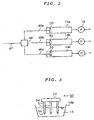
- the disinfecting water may be guided directly to the sand basin 10 as shown in FIG. 1, or may be guided to the sand basin 10 via the distribution tank 48 as shown in FIG. 2.
- the distribution tank 48 is provided in the channel 47.
- the sand settling portions 14a, 14b, 14c of the sand basin 10 are illustrated, and the inflow portion 12 is omitted, for convenience of explanation.
- the disinfecting water may be guided to the inflow portion 12 of the sand basin 10 as shown in FIG. 1, or may be introduced upstream of each of the sand settling portions 14a, 14b, 14c of the sand basin 10.
- the disinfecting water to be guided to each of the sand settling portions 14a, 14b, 14c is preferably distributed at the distribution tank 48 beforehand.
- sand included in the wet-weather sewage is sedimented and removed. Simultaneously, the wet-weather sewage and the disinfecting water mix to disinfect the wet-weather sewage.
- the wet-weather sewage and the disinfecting water dwell preferably for 1 second to 30 minutes, more preferably for 1 second to 15 minutes, and most preferably for 1 second to 10 minutes.
- FIG. 3 shows an embodiment of an adding device for adding the disinfecting water to the sand settling portion.
- An adding device 50 has a pipe 52 extending in a horizontal direction, and an introducing portion communicating with this pipe 52 for introducing the disinfecting water into drainage.
- the pipe 52 is connected to a channel 49a, and supported by a support member (not shown).
- An embodiment of the introducing portion is, for example, a plurality of hoses 54 suspending from the pipe 52.
- An open end 56 of the hose is preferably located at an upstream position of the sand settling portion 14a, and located below the water surface.
- the disinfecting water distributed from the distribution tank 48 flows in the channel 49a, the pipe 52, and the hose 54 in this order, and added to drainage 15 in the sand settling portion 14a.
- the open end 56 of the hose 54 is located above the water surface of the drainage 15 in the sand settling portion 14a, splashes of the disinfecting water from the open end 56 of the hose may form a mist with the wind or the like, corroding instruments around the sand basin 10, especially, electrical instruments.
- the open end 56 of the hose is preferably located below the water surface of the drainage 15 in the sand settling portions 14a, 14b, 14c.
- the pipe 52 is preferably made of a material which is not corroded with the disinfecting water. Its examples are metallic materials such as inconel, and plastic materials such as polytetrafluoroethylene, and polyvinyl chloride.
- the pipe 52 preferably has sufficient mechanical strength to support the hoses. Preferably, it is rigid, but may be flexible.
- hoses preferably 2 to 10 hoses, more preferably 2 to 6 hoses, may be suspended.
- the distance between the two adjacent hoses is preferably constant, because the disinfecting water can be mixed with the drainage efficiently. However, the distance between the two adjacent hoses may be different.
- the hose 54 is preferably flexible, but may be rigid.
- a disinfectant each of 1-bromo-3-chloro-5,5-dimethylhydantoin (hereinafter referred to as BCDMH) (Example 1) and sodium hypochlorite (Comparative Example 1) was used.
- BCDMH 1-bromo-3-chloro-5,5-dimethylhydantoin
- Comparative Example 1 sodium hypochlorite
- Table 1 Item analyzed Measured value Turbidity 14 mg/L SS 9 mg/L COD 17 mg/L Chromaticity 22 mg/L NH 4 -N 22 mg/L Coliform organism count 12600 CFU/mL TOC 9 mg/L Table 2 Disinfectant used Concentration of disinfectant added (mg/L as Cl) Coliform organism count (CFU/mL) None 0 12600 BCDMH 0.5 10800 1.0 2300 1.5 70 2.0 Not detected Sodium hypochlorite 2.0 11800 2.5 2800 3.0 300 3.5 Not detected
- BCDMH exhibited a germicidal effect at a concentration of a half or less of the concentration of sodium hypochlorite, and decreased the coliform organism count to less than 3,000 CFU/mL when added in a concentration of 1 mg/L as Cl.
- the proportion of the disinfectant added is expressed as active chlorine for each of the bromine-based disinfectant and the chlorine-based disinfectant, and is expressed as "mg/L as Cl" calculated as the active chlorine concentration.
- mg/L as Cl calculated as the active chlorine concentration.
- BCDMH showed a sufficient effect in 1 minute, while sodium hypochlorite required a reaction time of more than 5 minutes to show its effect.
- the organic nitrogen refers to the value of the total organic nitrogen, including amines and protein.
- the organic nitrogen refers to the amount of the nitrogen atoms in the protein, and does not include the amounts of the carbon atoms or hydrogen atoms in the protein.
- the organic nitrogen does not include inorganic nitrogen, such as that in ammonia or ammonium ions.
- Table 4 Germicidal effect Disinfectant Disinfectant Concentration of disinfectant added (mg/L as Cl) Coliform organism count (CFU/mL) 0 320000 BCDMH 2.0 52000 2.5 2800 3.0 1200 3.5 Not detected Sodium hypochlorite 6 135000 8 1900 10 900 12 Not detected
- BCDMH exhibited a germicidal effect at a concentration of 1/3 or less of the concentration of sodium hypochlorite, and decreased the coliform organism count to less than 3,000 CFU/mL when added in a concentration of 2.5 mg/L as Cl.
- RUN 1 amount of sewage: 120 m 3 /hour
- the coliform organism count could be decreased to less than 3,000 CFU/ml when the amount of BCDMH added was 12 mg/l.
- RUN 3 (amount of sewage: 530 m 3 /hour) corresponds to a large rainfall.
- appropriate disinfection was possible when the amount of BCDMH added was 3 to 4.5 mg/l.
- the duration of contact of BCDMH with combined sewer overflow was found to be about 50 seconds, meaning successful disintegration in a very short time.
- RUN 4 (amount of sewage: 250 m 3 /hour) is a comparative example in which sodium hypochlorite was used as the chlorine-based disinfectant.
- RUN 4 even when the amount of sodium hypochlorite added was 60 mg/l, the coliform organism count could not be decreased to 3,000 CFU/ml or less, and the residual halogen concentration was 1.53 mg/l, a higher value than LC 50 (concretely, 0.4 mg/l calculated as chlorine (Cl 2 )). This is inappropriate.
- the amount of the disinfectant being 0 corresponds to the incoming water quality of wet-weather sewage which has flowed into rainwater removal facilities.
- drainage including sewage diluted with rain water can be disinfected efficiently. Furthermore, disinfection is possible, even when the residual halogen concentration is less than 0.4 mg/l, the LC 50 value.
- the amount of the disinfectant or disinfecting water supplied can be decreased, or the supply of the disinfectant or disinfecting water can be cut off, if the detected value exceeds the control value of the residual halogen concentration. Thus, consideration for the environment can be taken.
Landscapes
- Life Sciences & Earth Sciences (AREA)
- Engineering & Computer Science (AREA)
- Chemical & Material Sciences (AREA)
- Wood Science & Technology (AREA)
- Environmental Sciences (AREA)
- Plant Pathology (AREA)
- Health & Medical Sciences (AREA)
- Pest Control & Pesticides (AREA)
- Dentistry (AREA)
- General Health & Medical Sciences (AREA)
- Agronomy & Crop Science (AREA)
- Zoology (AREA)
- Hydrology & Water Resources (AREA)
- Environmental & Geological Engineering (AREA)
- Water Supply & Treatment (AREA)
- Organic Chemistry (AREA)
- Inorganic Chemistry (AREA)
- Treatment Of Water By Oxidation Or Reduction (AREA)
- Agricultural Chemicals And Associated Chemicals (AREA)
- Apparatus For Disinfection Or Sterilisation (AREA)
Abstract
Description
- The present invention relates to a method and an apparatus for disinfecting sewage diluted with rainwater, i.e. combined sewer overflow (CSO).
- In sewage works, sewage is subjected to treatment in a sand basin for removing sand, etc., solid-liquid separation for removing suspended solids (SS), activated sludge treatment, and disinfection in this order, and then discharged to public waters such as rivers, lakes, ports, and coastal waters.
- Disinfection generally involves the use of a chlorine gas or a chlorine-based disinfectant, because sewage, night soil, industrial drainage, etc. may contain pathogens which cause infectious diseases. Generally, the chlorine-based disinfectant is added to such drainage to be treated, thereby decreasing the number of coliform organisms (coliform organism count) to 3,000 CFU (colony forming unit)/ml or less. CFU refers to a colony forming unit. Alternatively, ultraviolet irradiation or ozonization may be performed without the addition of the chlorine-based disinfectant. Since such a technique requires vast equipment, however, its applications are limited.
- A combined sewer is a system for collecting household waste water, industrial drainage, and rainwater into the same pipe, and sending the combined water to sewage works, where the aforementioned treatments are carried out. When there is much rainfall, rainwater-incorporating sewage in excess of the amount that can be treated at sewage works is likely to flow into the sewage works. Thus, discharge takes place from (wet-weather) sewage removal facilities, such as a storm outflow and pump station, to public waters. Recently, techniques for preventing overflow of bulky waste, floating matter, etc. by providing sewage removal facilities with screens have begun to be studied to protect the scenery of public waters such as rivers. However, no studies have been performed on techniques for disinfecting coliform organisms included at a count of several tens of thousands to several hundreds of thousands in water discharged from sewage removal facilities.
- A separated sewer is a system for collecting both of household waste water and industrial drainage, and rainwater into different pipes, and sending the household waste water and industrial drainage to sewage works, while discharging the rainwater as an overflow. The separated sewer overflow should essentially comprise only rainwater. Actually, however, when much rain falls, a large amount of rainwater flows in the sewer. On this occasion, pollutants present on ground surfaces, such as roads, and sludge deposited in the sewer are flowed together. Thus, the separated sewer overflow also contains Escherichia coli ascribed to the pollutants existent on ground surfaces and the sludge. In each case, the coliform organism count in the overflow may exceed the discharge control value (3,000 CFU/ml or less). In this case, disinfection is desired.
- Chlorine-based disinfectants have many advantages, such that the equipment used is simple, and their applicability to any state of dirt is high, compared with ultraviolet irradiation and ozone sterilization.
- However, when the techniques applied to ordinary sewage treatment are diverted to disinfection of combined sewer overflow, the following problems arise: In sewage in rainy weather, ammonia or amine is coexistent. Thus, a chemical reaction typified by the chemical equation (1) indicated below takes place. As a result, active chlorine is converted to chloramine, decreasing a microbicidal effect to one-tenth or lower. Hence, in the presence of ammonia or amine, the amount of the chlorine-based disinfectant added needs to be increased, even if the pathogen count is unchanged.
NH4 + + HClO → NH2Cl + H2O + H+ (1)
- The disinfection time for the use of the chlorine-based disinfectant is required to be 15 minutes or more (see "Sewer Facilities - Plan & Design Guidelines and Description"). Thus, there is need for a mixing tank in which sewage in rainy weather and the chlorine-based disinfectant are mixed and caused to dwell for 15 minutes or more. However, the (wet-weather) sewage removal facilities have no ample space where such a mixing tank can be installed.
- Thus, a disinfectant taking a short disinfection time, and a method for mixing it are required of disinfection of combined sewer overflow.
- J.E. Alleman, J.E. Etzel, D.E. Gendron, J.C. Conley, W.F. McCoy, and A.J. Hein, Bromine-Based Disinfection Performance, a paper by researchers of Purdue University and Great Lakes Chemical Company, reports on laboratory-scale experiments in which bromine chloride (BrCl), bromine (Br2), and bromochlorodimethylhydantoin (BCDMH) were each added to dummy drainage containing bacteria such as coliform bacilli. As the dummy drainage, water at pH 7.2 containing a low concentration of ammonia (2 mg/L), or water at pH 8.2 containing a high concentration of ammonia (20 mg/L) was used. As the bacteria, Escherichia coli, Pseudomonas, and Streptococcus faecalis were used. However, the paper does not describe the dummy drainage as containing organic matter.
- Japanese Unexamined Patent Publication No. 4-156994 describes a method of pouring a germicide into cooling water. As regards the germicide, the formation of hypobromite ions by a redox reaction between ozone and bromine ions is described. However, the cooling water contains no ammonia.
- Japanese Unexamined Patent Publication No. 11-47755 describes a slime control agent containing a hydantoin compound as an active ingredient, and a slime control method using such an agent. The slime control agent is used in storage water for use at a pulp plant or a paper making factory.
- US-A-5 422 126 relates to halogen compositions for water treatment and method of preparation thereof. In the BACKGROUND OF THE INVENTION of said patent it is mentioned that halogenated 5,5-dialylhydantoins (DAH) are common oxidizing biocides used for water sanitization. As an example bromochlorodimethylhydantoin (BCDMH) is mentioned. Hypohalous acids (e.g. HOCI, HOBr) are further mentioned as well known to be oxidizing biocides for water treatment and generally are generated in the liquid phase. At the end of the specification of said US patent it is further noted that the methods and compositions are advantageously employed for the treatment of various aqueous systems, including cooling water, recreational water, municipal wastewater, pulp and paper whitewater, process waters and irrigation water.
- US-A-3 413 021 is directed to water-treating method and agglomerates of N-halogenated organic compounds for use therein. Sewage effluent is mentioned as a material for treatment and it is further noted that N-halogenated organic compounds in solid agglomerate form have a wide application in a variety of water purification needs, with particular application in the disinfection of swimming pool water and sewage effluent, which exhibit notoriously variable halogen demand,
- CA-A 20 42 430 provides a method of treating an aqueous medium to provide available chlorine thereto. This method comprises treating the medium with a solid composition of blended particles of one or more alkali metal or alkaline earth metal hypochlorite with one or more N-halogenated dialkylhydantoin. Further, a solid composition in the form of particles blended together of calcium hypochlorite and 1-bromo-3-chloro-5,5-dimethylhydantion is provided. This composition can be used for a variety of fluid media. For example in water treatment, it may be used generally to provide available chlorine to media containing biologically active components such as bacteria and viruses, e.g., it may be utilized for treating aqueous sewage media, plant effluent, cooling towers, lagoons and secondary water recovery.
- According to an aspect of the present invention, there is provided a method for disinfecting combined sewer overflow (CSO) as set forth in
claim 1. Preferred embodiments of the method are disclosed in the dependent claims 2-7. - In the invention, the total organic carbon in the drainage is preferably 5 mg/liter or more. The ammonium ion concentration in the drainage is preferably 1 mg/liter or more.
- The step of adding the disinfecting water preferably includes the step of introducing the disinfecting water below the water surface of the drainage. It is also preferred that the step of discharging the disinfected drainage to public waters be further included.
- According to another aspect of the invention, there is provided an apparatus as set forth in claim 8. Preferred embodiments of the apparatus are disclosed in claims 9-11.
- In the invention, the device for producing disinfecting water preferably has a disinfectant storing device, a device for adding the disinfectant to the drainage, and a device for mixing the disinfectant and the drainage. Preferably, the sand basin has two or more sand settling portions, and a first channel has a distribution tank for introducing the disinfecting water to each of the sand settling portions.
- The first channel is preferably connected to an adding device for introducing the disinfecting water below the water surface of the drainage.
- A reservoir for storage, or a discharge waterway is further included so that the disinfected drainage can be discharged to public waters.
- The reservoir or the discharge waterway is preferably provided with a measuring instrument for inspecting the water quality of the disinfected drainage.
- A second channel for introducing part of the drainage (CSO) in the sand basin into the device for producing disinfecting water is further included.
-
- FIG. 1 is an explanatory view of an embodiment of an apparatus according to the present invention;
- FIG. 2 is an explanatory view of a portion of another embodiment of the apparatus according to the invention: and
- FIG. 3 is a sectional view of an embodiment of a device which can be used in the invention.
- According to the invention, drainage containing organic matter and ammonia or ammonium ions i.e combined sewer overflow is disinfected.
- In the combined sewer, for example, raw sewage and rainwater are mixed and flow. Such combined sewer overflow (CSO) especially, which has not been treated at sewage works is disinfected by the method of the invention.
- The separated sewer is a system in which a sewer for raw sewage and a sewer for rainwater are separated. According to this system, wet-weather sewage flowing in the rainwater sewer is disinfected by the method of the invention.
- As the content of organic matter in drainage, for example, the total organic carbon in the drainage may be 5 mg/liter or more, 10 mg/liter or more, 30 mg/liter or more, or 50 mg/liter or more. In each of the combined type sewage and the separated type sewage, the total organic carbon is generally 5 mg/liter or more.
- The ammonium ion concentration of the drainage may be 1 mg/liter or more, or 10 mg/liter or more, When ammonium ions are contained in the drainage, active bromine or active iodine changes into NH2X or NHX2 where X denotes a bromine atom or an iodine atom. Bromoamine (NH2Br), however, retains an disinfecting effect comparable to that of hypobromous acid, and is capable of effective disinfection. In the combined sewage, the ammonia ion concentration is generally 1 mg/liter or more. In the separated sewage, an overflow immediately after rainfall, called first flush, often has an ammonia ion concentration of 1 mg/liter or more.
- According to the invention, the drainage mainly targeted is sewage diluted with rainwater,
- According to the invention, the water to be treated contains E. coli, because disinfection is highly necessary for such water. The combined sewage generally contains E. coli, and the separated sewage often contains E. coll.
- According to the invention, a disinfectant, which can form HOX where X is a bromine atom or an iodine atom, and which contains a bromine atom or an iodine atom, is used. Preferably, a disinfectant, which can form hypobromous acid (HOBr) and which contains a bromine atom, is used. Compared with a chlorine-based disinfectant, the above bromine-based disinfectant or iodine-based disinfectant is characterized by a short disinfection time. The bromine-based disinfectant, for example, is capable of disinfection in several tens of seconds to several minutes. A hypohalogenous acid (HOX where X is a bromine atom or an iodine atom) easily decomposes in nature, and there is no need to provide a device for breaking down a hypohalogenous acid remaining in drainage. With the chlorine-based disinfectant, on the other hand, active chlorine reacts with ammonia in sewage to form chloramine, decreasing germicidal activity. This makes it difficult to complete disinfection within a dwelling time in the (wet-weather) sewage removal facilities. Since chloramine is highly residual, moreover, a device for decomposing it needs to be provided.
- Examples of the disinfectant preferably used in the invention are hydantoins, cyanuric acids, isothiazolones, ε-caprolactams, phthalimides, pyrrolidones, acridones, uracils, succinimides, barbituric acids, creatinines, dioxopiperazines, urazoles, glycine anhydrides, ω-heptalactams, maleic acid hydrazides, maleimides, octalactams, and oxindoles.
- The hydantoins are expressed, for example, by the formula (II):


- In the formula (II), X1 and X2 are the same or different, and are each independently a chlorine atom, a bromine atom, or an iodine atom, provided that one of X1 and X2 is a bromine atom or an iodine atom; and
R1 and R2 are the same or different, and are each independently a hydrogen atom, or a lower alkyl group having 10 or less carbon atoms, preferably, a hydrogen atom, or a lower alkyl group having 6 or less carbon atoms, more preferably, a hydrogen atom, or a lower alkyl group having 3 or less carbon atoms. - As the hydantoin, 1-bromo-3-chloro-5,5-dimethylhydantoin (a compound of the formula (I)), for example, is named. Bromochlorodimethylhydantoin (BCDMH) is highly stable, and can maintain activity for several years if shielded from direct sunlight. BCDMH is a solid, and when dissociated, forms hypobromite ions, exhibiting a high disinfecting effect .
- The cyanuric acids are shown, for example, by the formula (III) where R1, R2, and R3 are the same or different, and are each independently a chlorine atom, a bromine atom, an iodine atom, a hydroxyl group, a hydrogen atom, or a lower alkyl group having 10 or less carbon atoms, provided that at least one of R1, R2, and R3 is a bromine atom or an iodine atom; the lower alkyl group being preferably one having 6 or less carbon atoms, and more preferably one having 3 or less carbon atoms.
- The isothiazolones are shown, for example, by the formula (IV) where
X is a bromine atom or an iodine atom;
R1 and R2 are the same or different, and are each independently a chlorine atom, a bromine atom, an iodine atom, a hydrogen atom, or a lower alkyl group having 10 or less carbon atoms, the lower alkyl group preferably having 6 or less carbon atoms, and more preferably having 3 or less carbon atoms. - A preferred example of the isothiazolone is 5-chloro-2-methyl-4-isothiazolin-3-one.
- The ε-caprolactams are expressed, for example, by the formula (V) where X is a bromine atom or an iodine atom.
- The phthalimides are expressed, for example, by the formula (VI) where X is a bromine atom or an iodine atom.
- The pyrrolidones are expressed, for example, by the formula (VII) where X is a bromine atom or an iodine atom.
- The acridones are expressed, for example, by the formula (VIII) where X is a bromine atom or an iodine atom.
- The uracils are expressed, for example, by the formula (IX) where
X1 and X2 are the same or different, and are each independently a chlorine atom, a bromine atom, or an iodine atom, provided that one of X1 and X2 is a bromine atom or an iodine atom;
R1 is a hydrogen atom, a lower alkyl group having 10 or less carbon atoms, an amino group, or a nitro group, the lower alkyl group preferably having 6 or less carbon atoms, and more preferably having 3 or less carbon atoms;
R2 and R3 are the same or different, and are each independently a hydrogen atom, or a lower alkyl group having 10 or less carbon atoms, preferably, a hydrogen atom, or a lower alkyl group having 6 or less carbon atoms, and more preferably a hydrogen atom, or a lower alkyl group having 3 or less carbon atoms. - The succinimides are expressed, for example, by the formula (X) where X is a bromine atom or an iodine atom.


- The barbituric acids are expressed, for example, by the formula (XI) where
X1 and X2 are the same or different, and are each independently a chlorine atom, a bromine atom, or an iodine atom, provided that one of X1 and X2 is a bromine atom or an iodine atom; and
R1 and R2 are the same or different, and are each independently a hydrogen atom, or a lower alkyl group having 10 or less carbon atoms, preferably, a hydrogen atom, or a lower alkyl group having 6 or less carbon atoms, and more preferably a hydrogen atom, or a lower alkyl group having 3 or less carbon atoms. - The creatinines are expressed, for example, by the formula (XII) where
X is a bromine atom or an iodine atom; and
R is a hydrogen atom, or a lower alkyl group having 10 or less carbon atoms, preferably, a hydrogen atom, or a lower alkyl group having 6 or less carbon atoms, and more preferably a hydrogen atom, or a lower alkyl group having 3 or less carbon atoms. - The dioxopiperazines are expressed, for example, by the formula (XIII) where
X1 and X2 are the same or different, and are each independently a chlorine atom, a bromine atom, or an iodine atom, provided that one of X1 and X2 is a bromine atom or an iodine atom. - The urazoles are expressed, for example, by the formula (XIV) where
X1 and X2 are the same or different, and are each independently a chlorine atom, a bromine atom, or an iodine atom, provided that one of X1 and X2 is a bromine atom or an iodine atom; and
R1, R2, and R3 are the same or different, and are each independently a chlorine atom, a bromine atom, an iodine atom, a hydrogen atom, or a lower alkyl group having 10 or less carbon atoms, one of R1, R2, and R3 being a bromine atom or an iodine atom, and the lower alkyl group preferably having 6 or less carbon atoms, and more preferably having 3 or less carbon atoms. - The glycine anhydrides are expressed, for example, by the formula (XV) where
X1 and X2 are the same or different, and are each independently a chlorine atom, a bromine atom, an iodine atom, a hydrogen atom, or a lower alkyl group having 10 or less carbon atoms, one of X1 and X2 being a bromine atom or an iodine atom, and the lower alkyl group preferably having 6 or less carbon atoms, and more preferably having 3 or less carbon atoms. - The ω-heptalactams are expressed, for example, by the formula (XVI) where X is a bromine atom or an iodine atom.
- The maleic acid hydrazides are expressed, for example, by the formula (XVII) where
X1 and X2 are the same or different, and are each independently a chlorine atom, a bromine atom, or an iodine atom, provided that one of X1 and X2 is a bromine atom or an iodine atom. - The maleimides are expressed, for example, by the formula (XVIII) where X is a bromine atom or an iodine atom.
- The octalactams are expressed, for example, by the formula (XIX) where X is a bromine atom or an iodine atom.
- The oxindoles are expressed, for example, by the formula (XX) where X is a bromine atom or an iodine atom.
- The disinfectant usable in the invention preferably contains a 4- to 10-membered heterocyclic ring, more preferably a 5- to 9-membered heterocyclic ring, containing nitrogen atoms or sulfur atoms, as shown by the formulas (I) to (XX). The heterocyclic ring preferably contains 1 to 4 hetero-atoms, more preferably 1 to 3 hetero-atoms. The hetero-atoms are nitrogen atoms or sulfur atoms.
- The ring skeleton of the heterocyclic ring preferably includes a group of the formula -N(X)- where X is a chlorine atom, a bromine atom, or an iodine atom, preferably a bromine atom or an iodine atom, and more preferably a bromine atom.
- As shown by the formula (XXI), the ring skeleton of the heterocyclic ring A, more preferably, includes a group of the formula -N(X)-C(=O)- where X is a bromine atom or an iodine atom. With this structure, a hypohalogenous acid is easily formed.

- The heterocyclic ring may be condensed with other ring, for example, an aromatic ring such as a benzene ring, as shown by the formulas (VI), (VIII) and (XX).
- Accordingly, the step of mixing a predetermined disinfectant with water is included. In the invention, the disinfectant may be added to drainage at the (wet-weather) sewage removal facilities. For example, the disinfectant may be added in the sewer pipe entering the (wet-weather) sewage removal facilities, or may be added in the sand basin, especially, the inflow portion of the sand basin. Alternatively, the disinfectant may be added in the rainwater removal pump well, or in the rainwater removal pump inflow pipe. That is, the disinfectant may be added in any of these places, and may be added at one site or at several sites.
- Alternatively, the (wet-weather) sewage removal facilities may be provided with a main channel for flow of drainage, and a bypass channel branched from the main channel. In this bypass channel, a disinfection tank may be installed. In this disinfection tank, the disinfectant may be added to drainage, and dissolved therein.
- The place of addition of the disinfectant is preferably on the entry side of the rainwater removal pump, because an agitating force in the pump mixes the disinfectant and the wet-weather sewage thoroughly- The addition of the disinfectant at the Inflow portion of the sand basin is also preferred, because the dwell time in the sand basin can be utilized for the reaction time.
- The disinfectant used in the invention is often a solid at room temperature. When a solid disinfectant is directly added to drainage, undissolved solids may be discharged along with the drainage, adversely affecting aquatic organisms in public waters. Therefore, the disinfectant is dissolved in water to form disinfecting water, and add it to drainage. The method of dissolving is not restricted, and may be water jet agitation by an ejector, channel agitation, or a dissolving tank equipped with a mixer.
- For example, there may be used disinfecting water having the disinfectant dissolved in an amount of 1% by weight or more, preferably 10% by weight or more, more preferably 20% by weight or more, based on the saturated solubility of the disinfectant. Needless to say, when the disinfectant is solid, not all of the disinfectant added needs to be dissolved in water, and instead, the solid-form disinfectant may remain in the disinfecting water.
- Even when the disinfectant is a liquid at room temperature, on the other hand, the addition of a small amount of the liquid to a large amount of drainage takes some time until the liquid disinfectant and the drainage mix. In this case, they do not necessarily mix uniformly. Thus, the disinfectant is added to water, and then add the resulting mixture to drainage.
- The concentration of the disinfecting water is preferably 100 mg/liter as C1 to 10 g/liter as C1, more preferably 200 mg/liter as C1 to 2 g/liter as Cl, calculated as the active chlorine concentration. If the concentration of the disinfecting water is lower than 100 mg/liter as Cl, the amount of the disinfecting water added may become large, and the disinfectant may be consumed due to solution, causing the risk of insufficient sterilization. If the concentration of the disinfecting water is higher than 10 g/liter as Cl, mixing of the disinfectant and the drainage will be insufficient, decreasing the disinfecting effect.
- The amount of the disinfecting water added depends on the concentration of the disinfectant in the disinfecting water, the amount of rainfall, the water quality of drainage, etc. Generally, the amount of the disinfecting water added increases with the increase in the amount of rainfall, i.e., the amount of drainage, and the deterioration in the water quality. According to one embodiment of the invention, however, as rainwater increases, the turbidity, COD and NH4 of incoming water decreases. Thus, even if rainwater increases and the amount of incoming water triples, there is no need to make the amount of addition of the disinfecting water or the disinfectant three-fold. Therefore, it would be rational to find the optimum amount of addition for the quality of incoming water by a beaker test or the like, and multiply this value by the amount of incoming water to determine the amount of the disinfecting water or the disinfectant added.
- To know the quality of incoming water, it is advisable to measure its turbidity or electrical conductivity. By so doing, the state of incorporation of rainwater can be grasped. This indicator makes on-time detection possible. Other indicators usable are a rainfall pattern, properties of particles in wet-weather sewage, SS content, chemical oxygen demand (COD), and biological oxygen demand (BOD). These indicators may be combined arbitrarily. For the amount of incoming water, various flow meters may be utilized, but this amount may be determined by the number of the rainwater removal pumps in operation and the status of load on these pumps.
- Then, the aforementioned disinfecting water is added to predetermined drainage to disinfect it. For example, the disinfecting water in a disinfecting water tank is introduced into the main channel via the bypass channel.
- When the drainage is sewage, night soil, or industrial drainage, the concentration of the disinfectant added in the drainage is preferably 0.5 to 25 mg/liter as C1, more preferably, 1 to 15 mg/liter as C1, calculated as the active chlorine concentration. The concentration of the disinfectant added can be calculated from the concentration and amount of the disinfectant in the disinfecting water, as well as from the amount of the drainage. The concentration of the disinfectant added is the value present before the disinfectant is consumed in the drainage.
- The combined sewer overflow (CSO) to be treated, generally, contains coliform bacilli in a range of 104 to 107 CFU/mL. However, the above amount of the disinfectant added can result in the sterilization of the water, which is to be treated, reliably and rapidly in a time of about 1 minute.
- FIG. 1 is an explanatory view of an embodiment of a method according to the present invention.
- Wet-weather sewage flows from the main channel into a sand basin 10. The sand basin 10 includes an
inflow portion 12, andsand settling portions inflow portion 12 into thesand settling portions - At an exit of the sand basin 10, removal pumps 16 are arranged. The removal pumps 16 move the disinfected wet-weather sewage to a
discharge waterway 17. Then, the wet-weather sewage in thedischarge waterway 17 is measured by a measuringinstrument 18 such as a residual halogen detector, a turbidimeter, or an electrical conductivity meter. The residual halogen detector measures the residual concentration of an active halogen such as hypobromous acid. Thus, it is usually preferred that the residual halogen detector be disposed behind the exit of the sand basin and forward of a discharge port. - If the active halogen concentration detected by the residual halogen detector is not less than LC50 (in the case of BCDMH, for example, 0.4 mg/liter calculated as active chlorine (Cl2)), the amount of the disinfectant or the disinfecting water supplied is decreased, or the supply of the disinfectant or the disinfecting water is temporarily cut off, so that the active halogen concentration will be lower than LC50. Desirably, if the active halogen concentration is not less than a half of LC50 (in the case of BCDMH, for example, 0.2 mg/liter calculated as active chlorine (Cl2)), the same measure as above is taken, so that the active halogen concentration will be lower than a half of LC50. By this measure, adverse influence on aquatic organisms in public waters can be reduced.
- After the measured values and the coliform organism count of the disinfected wet-weather sewage have been confirmed to fulfill the predetermined discharge standards, the disinfected wet-weather sewage is discharged to public waters such as rivers.
- The public waters include rivers, lakes, ports, coastal waters, public drains, irrigation waterways, and waters or waterways for public use. However, the public waters do not include sewers, especially, sewers having wastewater treatment plants downstream.
- According to the embodiment of FIG. 1, a bypass channel 20 is connected to the
inflow portion 12 of the sand basin 10. Part of the wet-weather sewage that has flowed into theinflow portion 12 of the sand basin 10 is introduced into the bypass channel 20. To this partial wet-weather sewage, the disinfectant is added to convert it to disinfecting water, which is returned to the sand basin 10. - In the
inflow portion 12 of the sand basin 10, abucket pump 13 is disposed. Part of the wet-weather sewage in theinflow portion 12 is lifted to the bypass channel 20 by thebucket pump 13. The other portion of the wet-weather sewage in theinflow portion 12 flows into thesand setting portions - In the bypass channel 20, a pair of
automatic screens flow meter 23, adisinfectant adding device 30, a dissolvingdevice 40, pumps 46, and adistribution tank 48 are disposed in this order. Theautomatic screens - The
disinfectant adding device 30 has ahopper 32 for storing adisinfectant 39, afeeder 34 for feeding thedisinfectant 39, and anejector 36 for discharging the disinfectant to the channel. - The wet-weather sewage having the disinfectant added thereto is guided to the
device 40. Thedevice 40 dissolves the disinfectant in the wet-weather sewage, when the disinfectant is a solid. Thedevice 40 mixes the disinfectant with the wet-weather sewage, when the disinfectant is a liquid. Thedevice 40 has atank 41, which, according to the embodiment of FIG. 1, is divided into anagitation tank 41a and astorage tank 41b, although thetank 41 need not be divided into two tanks. - The
agitation tank 41a has awater level gauge 42, and astirrer 44 for stirring drainage. Thestirrer 44 has, for example, amotor 44a, ashaft 44b connected to themotor 44a, and astirring tool 44c fixed to the shaft, such as a vane or an impeller. The drainage in theagitation tank 41a is stirred with thestirrer 44, so that the solid disinfectant in the drainage can be dissolved. The drainage that has overflowed from theagitation tank 41a is moved into thestorage tank 41b. - When the solubility of the solid disinfectant is low, it is preferred to provide the
dissolving device 40. When the solubility of the solid disinfectant is high, the dissolvingdevice 40 is not absolutely necessary, because the disinfectant dissolves rapidly in the channel. - Disinfecting water obtained in the
device 40 is guided to the sand basin 10 via achannel 47 preferably by means of thepumps 46. The disinfecting water may be guided directly to the sand basin 10 as shown in FIG. 1, or may be guided to the sand basin 10 via thedistribution tank 48 as shown in FIG. 2. - In FIG. 2, the
distribution tank 48 is provided in thechannel 47. In FIG. 2, thesand settling portions inflow portion 12 is omitted, for convenience of explanation. - The disinfecting water may be guided to the
inflow portion 12 of the sand basin 10 as shown in FIG. 1, or may be introduced upstream of each of thesand settling portions - As shown in FIG. 2, when the disinfecting water is introduced upstream of each of the
sand settling portions sand settling portions distribution tank 48 beforehand. - In the
sand settling portions sand settling portions 14a. 14b, 14c, the wet-weather sewage and the disinfecting water dwell preferably for 1 second to 30 minutes, more preferably for 1 second to 15 minutes, and most preferably for 1 second to 10 minutes. - FIG. 3 shows an embodiment of an adding device for adding the disinfecting water to the sand settling portion. An adding
device 50 has apipe 52 extending in a horizontal direction, and an introducing portion communicating with thispipe 52 for introducing the disinfecting water into drainage. Thepipe 52 is connected to achannel 49a, and supported by a support member (not shown). An embodiment of the introducing portion is, for example, a plurality ofhoses 54 suspending from thepipe 52. Anopen end 56 of the hose is preferably located at an upstream position of thesand settling portion 14a, and located below the water surface. The disinfecting water distributed from thedistribution tank 48 flows in thechannel 49a, thepipe 52, and thehose 54 in this order, and added todrainage 15 in thesand settling portion 14a. - If the
open end 56 of thehose 54 is located above the water surface of thedrainage 15 in thesand settling portion 14a, splashes of the disinfecting water from theopen end 56 of the hose may form a mist with the wind or the like, corroding instruments around the sand basin 10, especially, electrical instruments. Theopen end 56 of the hose is preferably located below the water surface of thedrainage 15 in thesand settling portions - The
pipe 52 is preferably made of a material which is not corroded with the disinfecting water. Its examples are metallic materials such as inconel, and plastic materials such as polytetrafluoroethylene, and polyvinyl chloride. Thepipe 52 preferably has sufficient mechanical strength to support the hoses. Preferably, it is rigid, but may be flexible. - From each
pipe 52, 2 to 20 hoses, preferably 2 to 10 hoses, more preferably 2 to 6 hoses, may be suspended. The distance between the two adjacent hoses is preferably constant, because the disinfecting water can be mixed with the drainage efficiently. However, the distance between the two adjacent hoses may be different. Thehose 54 is preferably flexible, but may be rigid. - Examples of the present invention will now be described, but the invention is not restricted thereby. In the following Examples, drainage was treated by the system shown in FIGS. 1 to 3.
- Treated sewage containing coliform organisms, as water to be treated, was subjected to a sterilization test. As a disinfectant, each of 1-bromo-3-chloro-5,5-dimethylhydantoin (hereinafter referred to as BCDMH) (Example 1) and sodium hypochlorite (Comparative Example 1) was used. The sterilization test of coliform organisms was conducted, with the concentration of the disinfectant being varied. The water quality of the water to be treated is shown in Table 1. The test results are shown in Table 2.
Table 1 Item analyzed Measured value Turbidity 14 mg/L SS 9 mg/ L COD 17 mg/L Chromaticity 22 mg/L NH4-N 22 mg/L Coliform organism count 12600 CFU/mL TOC 9 mg/L Table 2 Disinfectant used Concentration of disinfectant added (mg/L as Cl) Coliform organism count (CFU/mL) None 0 12600 BCDMH 0.5 10800 1.0 2300 1.5 70 2.0 Not detected Sodium hypochlorite 2.0 11800 2.5 2800 3.0 300 3.5 Not detected - BCDMH exhibited a germicidal effect at a concentration of a half or less of the concentration of sodium hypochlorite, and decreased the coliform organism count to less than 3,000 CFU/mL when added in a concentration of 1 mg/L as Cl.
- When BCDMH was added in an amount of 1 mg/L as Cl, trihalomethane remained in an amount of 0.1 mg/L or less.
- In the present specification, the proportion of the disinfectant added is expressed as active chlorine for each of the bromine-based disinfectant and the chlorine-based disinfectant, and is expressed as "mg/L as Cl" calculated as the active chlorine concentration. For example, when 1 g of BCDMH is added to 1 liter of drainage, its concentration is 540 mg/L as Cl.
- As for the reaction time, BCDMH showed a sufficient effect in 1 minute, while sodium hypochlorite required a reaction time of more than 5 minutes to show its effect.
- Drainage from the marine product processing industry was subjected to coagulation, pressurization, floating, and separation. Then, the drainage was further treated by an activated sludge process. The resulting drainage was used as water to be treated. A sterilization test of this water to be treated was conducted, with the concentration of a disinfectant being varied. The water quality of the water to be treated is shown in Table 3, and the test results are shown in Table 4.
Table 3 Water quality of drainage from marine product processing after waste water treatment Item analyzed Measured value SS 42 mg/L COD 230 mg/L NH4-N 143 mg/L Organic nitrogen 104 mg/L Coliform organism count 320000 CFU/mL TOC 78 mg/L - The organic nitrogen refers to the value of the total organic nitrogen, including amines and protein. In the case of protein, for example, the organic nitrogen refers to the amount of the nitrogen atoms in the protein, and does not include the amounts of the carbon atoms or hydrogen atoms in the protein. The organic nitrogen does not include inorganic nitrogen, such as that in ammonia or ammonium ions.
Table 4 Germicidal effect Disinfectant Disinfectant Concentration of disinfectant added (mg/L as Cl) Coliform organism count (CFU/mL) 0 320000 BCDMH 2.0 52000 2.5 2800 3.0 1200 3.5 Not detected Sodium hypochlorite 6 135000 8 1900 10 900 12 Not detected - BCDMH exhibited a germicidal effect at a concentration of 1/3 or less of the concentration of sodium hypochlorite, and decreased the coliform organism count to less than 3,000 CFU/mL when added in a concentration of 2.5 mg/L as Cl.
- Drainage was treated by the system shown in FIGS. 1 to 3. The results are shown in Table 5.

- In RUN 1 (amount of sewage: 120 m3/hour), the coliform organism count could be decreased to less than 3,000 CFU/ml when the amount of BCDMH added was 12 mg/l.
- In RUN 2 (amount of sewage: 250 m3/hour), when the amount of BCDMH added was 10 mg/l, disinfection was sufficient, but the residual halogen concentration was 0.72 mg/l, which was not appropriate. When the amount of BCDMH added was 5 mg/l, the coliform organism count could be decreased to less than 3.000 CFU/ml, and the residual halogen concentration was 0.03 mg/l. This was appropriate.
- RUN 3 (amount of sewage: 530 m3/hour) corresponds to a large rainfall. In this case, appropriate disinfection was possible when the amount of BCDMH added was 3 to 4.5 mg/l. On this occasion, the duration of contact of BCDMH with combined sewer overflow was found to be about 50 seconds, meaning successful disintegration in a very short time.
- RUN 4 (amount of sewage: 250 m3/hour) is a comparative example in which sodium hypochlorite was used as the chlorine-based disinfectant. In RUN 4, even when the amount of sodium hypochlorite added was 60 mg/l, the coliform organism count could not be decreased to 3,000 CFU/ml or less, and the residual halogen concentration was 1.53 mg/l, a higher value than LC50 (concretely, 0.4 mg/l calculated as chlorine (Cl2)). This is inappropriate.
- In all of
RUN 1 to RUN 4, the amount of the disinfectant being 0 (zero) corresponds to the incoming water quality of wet-weather sewage which has flowed into rainwater removal facilities. - According to the present invention, drainage including sewage diluted with rain water can be disinfected efficiently. Furthermore, disinfection is possible, even when the residual halogen concentration is less than 0.4 mg/l, the LC50 value. By detecting the residual halogen concentration, moreover, the amount of the disinfectant or disinfecting water supplied can be decreased, or the supply of the disinfectant or disinfecting water can be cut off, if the detected value exceeds the control value of the residual halogen concentration. Thus, consideration for the environment can be taken.
Claims (11)
- A method for disinfecting combined sewer overflow (CSO), i.e. drainage including sewage diluted with rainwater, comprising the steps of:adding by means of a disinfectant feeding device (30) a solid disinfectant, which can form HOX where X is a bromine atom or an iodine atom, andwhich contains a 4- to 10-membered heterocyclic ring which may be condensed with other ring and which contains 1 to 4 hetero-atoms comprising nitrogen atoms or sulfur atoms, a bromine atom or an iodine atom and which comprises a heterocyclic ring including a group of the formula -N(X)-C(O)-, where X includes a bromine atom or an iodine atom, in a ring skeleton,to water,thereby obtaining disinfecting water; andadding the disinfecting water to the combined sewer overflow (CSO) containing organic matter and ammonia or ammonium ions to disinfect the combined sewer overflow;
- The method of claim 1, wherein the concentration of the disinfectant in the disinfecting water is 100 mg/liter to 10 g/liter as Cl calculated as an active chlorine concentration.
- The method of claim 1 or 2 wherein the water is part of the combined sewer overflow (CSO).
- The method of claim 1, wherein the contact time ranges from 50 seconds to 221 seconds.
- The method of claim 1, wherein the concentration of the disinfectant added in the combined sewer overflow (wet-weather sewage) is of from 0.5 mg/liter to 25 mg/liter as Cl calculated as an active chlorine concentration.
- The method of claim 1 comprising the step of:measuring turbidity or electrical conductivity of the combined sewer overflow (wet-weather sewage) to be treated to know the quality of thecombined sewer overflow;determining the amount of disinfecting water to be added by multiplying the optimum amount of addition for the quality of the combined sewer overflow to be treated which has been previously found by a test by the amount of incoming water, andadding the disinfecting water in the determined amount to the combined sewer overflow (containing organic matter and ammonia or ammonium ions) to disinfect the combined sewer overflow.
- The method of claim 1 comprising:measuring residual concentration of an active halogen in the thus disinfected combined sewer overflow; anddecreasing the amount of the disinfectant or the disinfecting water to be supplied or temporarily cutting off the supply of the disinfectant or the disinfecting water when the measured residual concentration of an active halogen is not less than LC50 as calculated in terms of active chlorine concentration.
- An apparatus for disinfecting combined sewer overflow (CSO), comprising:a device for producing disinfecting water from a disinfectant (39) and the combined sewer overflow; anda first channel (47) for introducing the disinfecting water into a sand basin (10), wherein the combined sewer overflow is disinfected while the combined sewer overflow is dwelling in the sand basin (10); and wherein the first channel (47) is connected to an adding device (50) for introducing the disinfecting water below a water surface of the combined sewer overflow;a reservoir for storage, or a discharge waterway, so that the disinfected combined sewer overflow can be discharged to public waters, anda second channel (20) for introducing a part of the combined sewer overflow in the sand basin (10) into the device for producing disinfecting water.
- The apparatus of claim 8 wherein the device for producing disinfecting water has a disinfectant storing device, a device for adding the disinfectant to the combined sewer overflow, and a device for mixing the disinfectant and the combined sewer overflow.
- The apparatus of claim 9, wherein the sand basin has two or more sand settling portions, and the first channel has a distribution tank for introducing the disinfecting water to each of the sand settling portions.
- The apparatus of claim 8, wherein the reservoir or the discharge waterway is provided with a measuring instrument for inspecting water quality of the disinfected combined sewer overflow.
Applications Claiming Priority (3)
| Application Number | Priority Date | Filing Date | Title |
|---|---|---|---|
| JP27374698 | 1998-09-28 | ||
| JP27374698 | 1998-09-28 | ||
| PCT/JP1999/005233 WO2000018689A1 (en) | 1998-09-28 | 1999-09-27 | Method and apparatus for disinfecting drainage |
Publications (3)
| Publication Number | Publication Date |
|---|---|
| EP1118587A1 EP1118587A1 (en) | 2001-07-25 |
| EP1118587A4 EP1118587A4 (en) | 2002-01-02 |
| EP1118587B1 true EP1118587B1 (en) | 2006-02-08 |
Family
ID=17532004
Family Applications (1)
| Application Number | Title | Priority Date | Filing Date |
|---|---|---|---|
| EP19990944822 Expired - Lifetime EP1118587B1 (en) | 1998-09-28 | 1999-09-27 | Method and apparatus for disinfecting drainage |
Country Status (7)
| Country | Link |
|---|---|
| US (1) | US6562244B1 (en) |
| EP (1) | EP1118587B1 (en) |
| KR (1) | KR100659252B1 (en) |
| CN (1) | CN1277757C (en) |
| CA (1) | CA2345333C (en) |
| DE (1) | DE69929804T2 (en) |
| WO (1) | WO2000018689A1 (en) |
Families Citing this family (4)
| Publication number | Priority date | Publication date | Assignee | Title |
|---|---|---|---|---|
| EP1393628A4 (en) | 2001-06-08 | 2007-11-14 | Ki Chemical Industry Co Ltd | Liquid deodorant killing microorganism and method of microorganism-killing deodorization |
| US20060108270A1 (en) * | 2004-11-19 | 2006-05-25 | Ebara Corporation | Sewage treatment apparatus and method thereof |
| CN108751597B (en) * | 2018-06-22 | 2021-10-22 | 江苏宜裕环保科技有限公司 | Method for treating pyraclostrobin pesticide wastewater by using efficient biological strains |
| US20250361162A1 (en) * | 2024-05-21 | 2025-11-27 | Chemtreat, Inc. | Reduction in trihalomethane formation using stabilized halogen biocides |
Family Cites Families (14)
| Publication number | Priority date | Publication date | Assignee | Title |
|---|---|---|---|---|
| US3412021A (en) * | 1964-09-15 | 1968-11-19 | Laurene O. Paterson | Water-treating method and agglomerates of n-halogenated organic compounds for use therein |
| SU263487A1 (en) * | 1968-09-06 | 1977-04-05 | Академия Коммунального Хозяйства Им. К.Д.Памфилова | Method of sewage disinfection at mechanical cleaning stations |
| JPS5524514A (en) * | 1978-08-10 | 1980-02-21 | Asahi Glass Co Ltd | Treating method for ammoniac nitrogen-containing waste water |
| CA2042430A1 (en) * | 1990-05-29 | 1991-11-30 | Charles G. Parsons | Water treatment blend in solid form |
| US5037541A (en) * | 1990-05-30 | 1991-08-06 | Ruey Jang Shiau | Sanitary device for sewerage channel |
| US5759415A (en) * | 1991-10-02 | 1998-06-02 | Vortechnics, Inc. | Method and apparatus for separating floating and non-floating particulate from rainwater drainage |
| JPH0818017B2 (en) | 1991-12-10 | 1996-02-28 | 株式会社荏原製作所 | Method and device for adding chemicals |
| JPH05309207A (en) * | 1992-05-12 | 1993-11-22 | Shimizu Corp | Clarifying system for water in pond |
| US5294337A (en) * | 1993-03-04 | 1994-03-15 | Johnson Scott E | Water filtration system |
| US5422126A (en) | 1993-03-24 | 1995-06-06 | Great Lakes Chemical Corporation | Halogen compositions for water treatment and method of preparation thereof |
| JP2920455B2 (en) * | 1993-06-21 | 1999-07-19 | 水道機工株式会社 | Rainwater treatment system |
| JP2657940B2 (en) | 1993-06-22 | 1997-09-30 | 株式会社渡辺コンサルタンツ | Wastewater treatment equipment and centralized management of multiple wastewater treatment equipment |
| JP3877788B2 (en) * | 1994-12-26 | 2007-02-07 | 伯東株式会社 | Prevention of slime damage in pulp and paper mills |
| JPH09122656A (en) | 1995-11-08 | 1997-05-13 | Mitsubishi Electric Corp | Underwater monitoring device |
-
1999
- 1999-09-27 US US09/787,896 patent/US6562244B1/en not_active Expired - Lifetime
- 1999-09-27 WO PCT/JP1999/005233 patent/WO2000018689A1/en not_active Ceased
- 1999-09-27 DE DE1999629804 patent/DE69929804T2/en not_active Expired - Lifetime
- 1999-09-27 KR KR1020017003843A patent/KR100659252B1/en not_active Expired - Fee Related
- 1999-09-27 CN CNB998123609A patent/CN1277757C/en not_active Expired - Lifetime
- 1999-09-27 EP EP19990944822 patent/EP1118587B1/en not_active Expired - Lifetime
- 1999-09-27 CA CA 2345333 patent/CA2345333C/en not_active Expired - Fee Related
Also Published As
| Publication number | Publication date |
|---|---|
| CA2345333A1 (en) | 2000-04-06 |
| EP1118587A4 (en) | 2002-01-02 |
| DE69929804T2 (en) | 2006-10-19 |
| KR100659252B1 (en) | 2006-12-18 |
| KR20010079926A (en) | 2001-08-22 |
| CN1277757C (en) | 2006-10-04 |
| CN1324331A (en) | 2001-11-28 |
| DE69929804D1 (en) | 2006-04-20 |
| CA2345333C (en) | 2008-01-15 |
| EP1118587A1 (en) | 2001-07-25 |
| WO2000018689A1 (en) | 2000-04-06 |
| US6562244B1 (en) | 2003-05-13 |
Similar Documents
| Publication | Publication Date | Title |
|---|---|---|
| US6447722B1 (en) | Solid water treatment composition and methods of preparation and use | |
| Ternes | The occurrence of micopollutants in the aquatic environment: a new challenge for water management | |
| US7452511B2 (en) | Reactor for production of chlorine dioxide, methods of production of same, and related systems and methods of using the reactor | |
| Dell'Erba et al. | Disinfecting behaviour of peracetic acid for municipal wastewater reuse | |
| US4959157A (en) | Wastewater disinfection with a combination of biocides | |
| US6562244B1 (en) | Method and apparatus for disinfecting drainage | |
| JP3668071B2 (en) | Method and apparatus for disinfecting waste water | |
| JP4628132B2 (en) | Method and apparatus for disinfecting waste water | |
| MXPA05012626A (en) | Reactor and method of chlorine dioxide production. | |
| Elsmore | Development of bromine chemistry in controlling microbial growth in water systems | |
| JP6513151B2 (en) | Method and disinfectant for disinfecting ammonia nitrogen containing wastewater | |
| JP2005138109A (en) | Method and apparatus for disinfecting waste water | |
| JP2003128506A (en) | Disinfectant and method and apparatus for disinfecting wastewater using the same | |
| JP4029719B2 (en) | Waste water disinfection method and apparatus | |
| JP3908918B2 (en) | Wastewater disinfection method and apparatus | |
| Dernat et al. | Theoretical and practical approach to the disinfection of municipal waste water using chlorine dioxide | |
| Ragazzo et al. | The Use of Hyproform Disinfection system in wastewater treatment: batch and full scale trials | |
| JP6949922B2 (en) | Disinfection equipment and disinfection methods to reduce E. coli or coliforms from ammonia nitrogen-containing wastewater | |
| JP2019072718A (en) | Disinfection method of ammoniacal nitrogen-containing discharge water | |
| JP3857071B2 (en) | Wastewater disinfection method | |
| Moffa et al. | Alternative disinfection technology demonstrates advantages for wet weather applications–a pilot study of powdered bromine technology | |
| JP2020131049A (en) | Disinfection apparatus and disinfection method of waste water containing ammonia nitrogen | |
| JP4011305B2 (en) | Wastewater disinfection method and apparatus | |
| JP2003121431A (en) | Method and apparatus for disinfecting sewage in rainy weather in combined sewers | |
| JP2003053346A (en) | Method and device for disinfecting sewage |
Legal Events
| Date | Code | Title | Description |
|---|---|---|---|
| PUAI | Public reference made under article 153(3) epc to a published international application that has entered the european phase |
Free format text: ORIGINAL CODE: 0009012 |
|
| 17P | Request for examination filed |
Effective date: 20010327 |
|
| AK | Designated contracting states |
Kind code of ref document: A1 Designated state(s): DE FR GB |
|
| RIN1 | Information on inventor provided before grant (corrected) |
Inventor name: TORIUMI, HIROSHI, TOKYO METROPOLITAN GOVERNMENT Inventor name: KAIHATSU, HIROMASA, EBARA CORPORATION Inventor name: YOSHIDA, HIDEYUKI, EBARA CORPORATION Inventor name: NIIDA, YUTAKA, EBARA CORPORATION Inventor name: FUCHU, YUICHI, EBARA CORPORATION Inventor name: TANAKA, KAZUNARI, EBARA CORPORATION Inventor name: HASEGAWA, KAZUHIRO, EBARA CORPORATION Inventor name: YASUHARA, YOSHIHARU, EBARA CORPORATION |
|
| A4 | Supplementary search report drawn up and despatched |
Effective date: 20011120 |
|
| AK | Designated contracting states |
Kind code of ref document: A4 Designated state(s): DE FR GB |
|
| RIC1 | Information provided on ipc code assigned before grant |
Free format text: 7C 02F 1/50 A, 7A 01N 43/00 B, 7A 01N 59/00 B, 7C 02F 1/76 B |
|
| 17Q | First examination report despatched |
Effective date: 20021206 |
|
| GRAP | Despatch of communication of intention to grant a patent |
Free format text: ORIGINAL CODE: EPIDOSNIGR1 |
|
| GRAS | Grant fee paid |
Free format text: ORIGINAL CODE: EPIDOSNIGR3 |
|
| GRAA | (expected) grant |
Free format text: ORIGINAL CODE: 0009210 |
|
| AK | Designated contracting states |
Kind code of ref document: B1 Designated state(s): DE FR GB |
|
| REG | Reference to a national code |
Ref country code: GB Ref legal event code: FG4D |
|
| REF | Corresponds to: |
Ref document number: 69929804 Country of ref document: DE Date of ref document: 20060420 Kind code of ref document: P |
|
| ET | Fr: translation filed | ||
| PLBE | No opposition filed within time limit |
Free format text: ORIGINAL CODE: 0009261 |
|
| STAA | Information on the status of an ep patent application or granted ep patent |
Free format text: STATUS: NO OPPOSITION FILED WITHIN TIME LIMIT |
|
| 26N | No opposition filed |
Effective date: 20061109 |
|
| REG | Reference to a national code |
Ref country code: GB Ref legal event code: 732E Free format text: REGISTERED BETWEEN 20100617 AND 20100623 |
|
| REG | Reference to a national code |
Ref country code: FR Ref legal event code: TP |
|
| REG | Reference to a national code |
Ref country code: FR Ref legal event code: PLFP Year of fee payment: 17 |
|
| PGFP | Annual fee paid to national office [announced via postgrant information from national office to epo] |
Ref country code: GB Payment date: 20150923 Year of fee payment: 17 Ref country code: DE Payment date: 20150922 Year of fee payment: 17 |
|
| PGFP | Annual fee paid to national office [announced via postgrant information from national office to epo] |
Ref country code: FR Payment date: 20150811 Year of fee payment: 17 |
|
| REG | Reference to a national code |
Ref country code: DE Ref legal event code: R119 Ref document number: 69929804 Country of ref document: DE |
|
| GBPC | Gb: european patent ceased through non-payment of renewal fee |
Effective date: 20160927 |
|
| REG | Reference to a national code |
Ref country code: FR Ref legal event code: ST Effective date: 20170531 |
|
| PG25 | Lapsed in a contracting state [announced via postgrant information from national office to epo] |
Ref country code: FR Free format text: LAPSE BECAUSE OF NON-PAYMENT OF DUE FEES Effective date: 20160930 Ref country code: GB Free format text: LAPSE BECAUSE OF NON-PAYMENT OF DUE FEES Effective date: 20160927 Ref country code: DE Free format text: LAPSE BECAUSE OF NON-PAYMENT OF DUE FEES Effective date: 20170401 |