EP1110962A1 - Process for preparing 1,4-dihydropyridine compounds - Google Patents
Process for preparing 1,4-dihydropyridine compounds Download PDFInfo
- Publication number
- EP1110962A1 EP1110962A1 EP00310648A EP00310648A EP1110962A1 EP 1110962 A1 EP1110962 A1 EP 1110962A1 EP 00310648 A EP00310648 A EP 00310648A EP 00310648 A EP00310648 A EP 00310648A EP 1110962 A1 EP1110962 A1 EP 1110962A1
- Authority
- EP
- European Patent Office
- Prior art keywords
- alkyl
- acid
- reaction
- halo
- optionally substituted
- Prior art date
- Legal status (The legal status is an assumption and is not a legal conclusion. Google has not performed a legal analysis and makes no representation as to the accuracy of the status listed.)
- Withdrawn
Links
Classifications
-
- C—CHEMISTRY; METALLURGY
- C07—ORGANIC CHEMISTRY
- C07D—HETEROCYCLIC COMPOUNDS
- C07D211/00—Heterocyclic compounds containing hydrogenated pyridine rings, not condensed with other rings
- C07D211/02—Preparation by ring-closure or hydrogenation
-
- C—CHEMISTRY; METALLURGY
- C07—ORGANIC CHEMISTRY
- C07D—HETEROCYCLIC COMPOUNDS
- C07D417/00—Heterocyclic compounds containing two or more hetero rings, at least one ring having nitrogen and sulfur atoms as the only ring hetero atoms, not provided for by group C07D415/00
- C07D417/02—Heterocyclic compounds containing two or more hetero rings, at least one ring having nitrogen and sulfur atoms as the only ring hetero atoms, not provided for by group C07D415/00 containing two hetero rings
- C07D417/06—Heterocyclic compounds containing two or more hetero rings, at least one ring having nitrogen and sulfur atoms as the only ring hetero atoms, not provided for by group C07D415/00 containing two hetero rings linked by a carbon chain containing only aliphatic carbon atoms
Definitions
- This invention relates to a process for preparing 1,4-dihydropyridine compounds.
- Compounds having 1,4-dihydropyridine structure are widely used in pharmaceutical industry.
- the compounds have been used, for example, in treating or preventing diseases such as cardiovascular disease and inflammation diseases.
- Nifedipine and amlodipine are well-known 1,4-dihydropyridine compounds as calcium channel blockers.
- bradykinin antagonistic activity there been discovered that certain 1,4-dihydropyridine compounds possess bradykinin antagonistic activity.
- PCT international patent publications WO 96/06082 and WO97/30048, and United States Patent 5,861,402 disclose 1,4-dihydropyridine compounds possessing bradykinin antagonistic activity which are thus useful in the treatment of diseases or symptoms including an inflammation disease, a cardiovascular disease, and a pain producing trauma.
- These bradykinin-antagonist compounds are characterized by having, at its 2-position with a substituent comprising such as carbonyl, ester, amide or imide moiety.
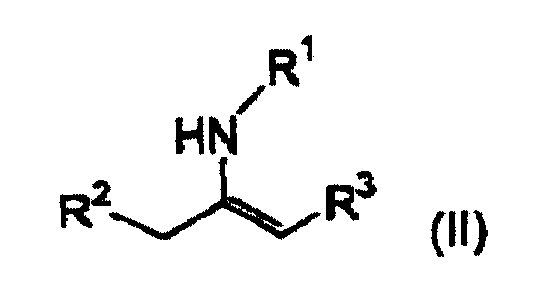
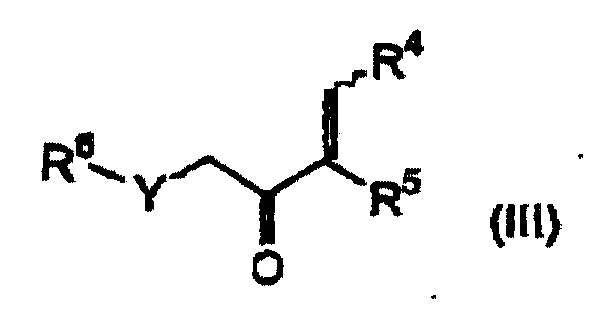
- the present invention provides a process for preparing 1,4-dihydropyridine compounds which comprises the steps of (a) contacting an enamine compound having structure of and a compound having a structure of in the presence of a base; and (b) treating the reaction mixture thus obtained in the presence of an acid or a combination of acids.
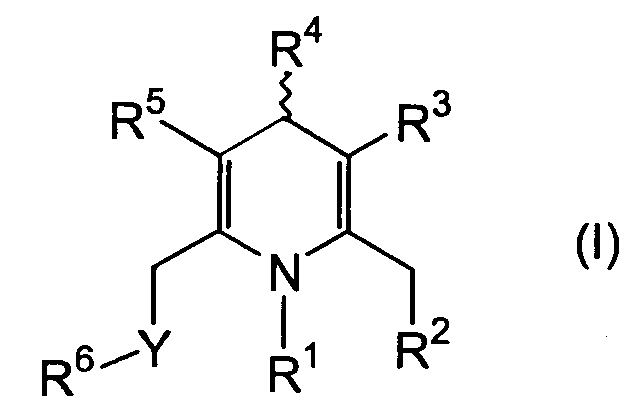
- the present invention also provides a process for preparing a compound of formula (I): wherein
- compounds of formula (I) or (II) wherein R 2 is a salt of carboxyl group are inorganic or organic salts of the carboxylic acid.
- Those salts are formed with a cation such as alkali or akaline earth metal (e.g., sodium, potassium, calcium, and magnesium), hydroxide or alkoxide in water or an appropriate organic solvent such as ethanol, isopropyl alcohol or mixture thereof.
- desired 1,4-dihydropyridine compounds can be prepared under mild conditions, in a one-pot synthesis and high-yield.
- preferred substrates of formula (II) and resulting compounds of formula (I) are those compounds of each formula wherein R' is hydrogen.
- (C 1 -C 4 )alkyl as used herein, unless otherwise indicated, means a straight or branched saturated monovalent hydrocarbon radical selected from methyl, ethyl, propyl, isopropyl, n-butyl, sec-butyl and tert-butyl.
- (C 1 -C 4 )alkoxy means a straight or branched (C 1 -C 4 )alkyl-O radical selected from methoxy, ethoxy, propoxy, isopropoxy, n-butoxy, sec -butoxy and tert -butoxy.
- heterocyclic ring means a monocyclic or bicyclic hydrocarbon group which has one or more hetero atoms in the ring, preferably has 6 to 9 carbon atoms and 1 to 4 hetero atoms or independently selected from -O-, -S-, -NH-, -N[(C 1 -C 4 )alkyl]-, wherein said heterocyclic is saturated, partially-saturated or aromatic.
- Examples of those groups include, but not limited to piperidino, morpholino, thiamorphorino, pyrrolidino, pyrazolino, pyrazolidino, pyrazoryl, piperazinyl, furyl, thienyl, oxazolyl, tetrazolyl, thiazolyl, imidazolyl, pyrazolyl, pyridyl, pyrimidinyl, pyrrolyl, pyrrolidinyl, quinolyl and quinuclidinyl.
- halo refers to F, Cl, Br or I, preferably F or Cl.
- Preferred bases used in reaction step (a) of this invention include bases capable of promoting a Michael-type reaction.
- base in step (a) and “acid catalyst in step (b)” may be "a magnesium (II) base in step (a)” and " a protonic acid in step (b)".
- an amount of the base is equal or more than 1 equivalent.
- base in step (a) and “acid catalyst in step (b)” may be “bases other than magnesium (II) bases (e.g., alkyl-magnesium-halides, halo-magnesium-alkoxides and magnesium-dialkoxides) which are capable of promoting a Michael-type reaction in step (a)” and "a combination of a protonic acid and a non-protonic Lewis acid”.
- bases other than magnesium (II) bases e.g., alkyl-magnesium-halides, halo-magnesium-alkoxides and magnesium-dialkoxides
- Any non-protonic Lewis acids known to those skilled in the art such as metal halides, metal triflates (i.e., metal trifluoromethanesulfonate) or the like may be used in step (b).
- Lewis acid examples include magnesium bromide, magnesium chloride, zinc bromide, zinc chloride, zinc iodide, tin(IV) chloride, titanium(IV) chloride, aluminium trichloride, ethylaluminum dichloride, diethylaluminum chloride, boron trifluoride, copper(II) triflate, scandium(III) triflate, lanthanum triflate, ytterbium triflate, lanthanum chloride, cerium(III) chloride and iron(III) chloride.
- Preferred individual Lewis acids include magnesium bromide and its ether complex such as magnesium bromide diethyl etherate, magnesium chloride and its ether complex such as magnesium chloride diethyl etharate, zinc chloride, zinc bromide and scandium(III) triflate.
- preferred ones include magnesium (II) salts such as magnesium halides, magnesium bromides and their ether complexes such as magnesium bromide diethyl etherate.
- Another preferred ones include magnesium (II) salts such as a magnesium sulfate, magnesium acetate, halomagnesiumacetate and halomagnesium sulfate.
- Non-protonic Lewis acid such as MgCl 2 can be added in the step (a) in advance.
- step (b) When the starting compounds contain Lewis basic atom(s) such as N and O, an amount of the Lewis acid added may be increased for the success of step (b).
- Lewis basic atom(s) such as N and O
- a process of this invention may be carried out under reaction conditions wherein reaction step (a) is carried out in a reaction inert solvent at a temperature in the range from -150°C to the reflux temperature of the reaction mixture for 3 minutes to 2 days; and reaction step (b) is carried out in a reaction inert solvent at a temperature in the range from -150°C to the reflux temperature of the reaction mixture for 1 second to 5 days.
- a process of this invention may be carried out under reaction conditions wherein the reaction step (a) is carried out in a reaction inert solvent at a temperature in the range from -40° to 80°C for 1 minute to 40 hours; and the reaction step (b) is carried out in a reaction inert solvent at a temperature in the range from -40° to 80°C for 1 minute to 5 days.
- Preferred bases used in reaction step (a) of this invention include (C 1 -C 4 )alkyllithiums, halomagnesium(C 1 -C 4 )alkoxide, (C 1 -C 6 )alkylmagnesiumhalides, metalhydrides, metal(C 1 -C 3 )alkoxides, metal-n-butoxide, metal-sec-butoxide, metal-tert-butoxide, metalcarbonate and metalfluoride.
- Preferred acids used in reaction step (b) of this invention include hydrochloric acid, toluene( p -, m - or o -toluene) sulfonic acid, phosphoric acid, sulfuric acid, nitric acid and (C 1 -C 6 )alkanoic acid.
- Preferred process of this invention include a compound of formula (I): wherein
- Preferred process of this invention include a compound of formula (I): wherein
- reaction pressure is not critical. Generally, the reactions will be conducted at a pressure of about one to about three atmospheres, preferably at ambient pressure (about one atmosphere). Also, unless otherwise indicated, the reactions run at about room temperature (i.e., from about 20° to 25°C).
- Scheme 1 exemplifies a process of this invention for preparing a compound of formula (I) comprising step (a): addition of an enamine compound of formula (II) to an alkylene compound of formula (III) followed by step (b) acid catalyzed cyclization reaction of the resulting compound in step (a).
- the former addition step (a) may be carried out under conditions applied to nucleophilic addition reactions using a suitable base in a reaction inert solvent. More preferably, the reaction may be carried out under conditions commonly used in Michael-type addition.
- Preferred bases for this reaction are those used in Michael-type reactions. Examples of the preferred bases include alkylmagnesium halides known as Grignard reagents and halomagnesium alkoxides. More preferred bases include (C 1 -C 6 )alkylmagnesium bromide and tert -butoxy-magnesium bromide.
- Preferred solvents used in this reaction include (C 1 -C 4 )alkanol, tetrahydrofuran (THF), diethyl ether, dioxane, hexane, toluene, 1,2-dimethoxy ethane (DME) and the like.
- This reaction may be carried out at a temperature from about -150°C to reflux, preferably from about -100° to 100°C.
- this reaction may be carried out at about room temperature using, for example, halomagnesium(C 1 -C 4 )alkoxides, (C 1 -C 6 )alkylmagnesiumhalides, metalhydrides, metal(C 1 -C 3 )alkoxides, magnesium-di[(C 1 -C 3 )alkoxides], metal-n-butoxide, metal- sec -butoxide, metal- tert -butoxide, a metalcarbonate such as K 2 CO 3 , or metalamide such as R 2 N-M wherein R is C 1-4 alkyl or -Si(C 1-3 alkyl) 3 ; and M is Li, Na, Mg or K (Preferably, halomagnesium(C 1 -C 4 )alkoxides or (C 1 -C 6 )alkylmagnesiumhalides).
- metalhydrides metal(C 1 -C 3 )alkoxides, magnesium-di[(C
- the reaction is effectively run in THF.
- the base is CsF or KF
- the reaction is effectively run in THF or methanol (MeOH) at an elevated temperature such as at about 60°C.
- the reaction is effectively run in THF at from about -78°C to about -30°C.
- a preferred solvent is THF. Suitable reaction time ranges from about 3 minutes to about 2 days, preferably from about 30 minutes to about 40 hours.
- the subsequent cyclization process step (b) may be carried out in the presence of a protonic acid.
- Suitable protonic acids include (C 1 -C 6 )alkanoic acid such as acetic acid, hydrochloric acid (HCl) and sulfonic acids such as p -toluenesulfonic acid.
- This reaction may be carried out at a temperature from about -150°C to reflux, preferably from about -100° to 100°C.
- the reaction time ranges from about 1 second to 5 days, preferably 5 minutes to 20 houres.
- those reactions illustrated in Scheme 1 may be carried out at about -78°C using dry-ice/acetone or dry-ice/methanol, about 0°C using an ice-bath, room temperature or 100°C, preferably at about 0°C or about room temperature.
- reaction steps (a) and (b) are performed in the same reaction vessel under mild conditions with high-yield.
- An enamine compound of formula (II) may be prepared according to procedures known to those skilled in the art, such as those illustrated in Scheme 2.
- a beta-keto ester compound of formula (IV) may be transformed to a compound of formula (II) wherein R 2 and R 3 are defined as above.
- This reduction may be carried out in a reaction inert solvent resolving ammonia gas at a temperature in the range of from about 0° to 60°C.
- Suitable reaction inert solvents include lower alkanols such as methanol and ethanol.
- an ammonia gas containing solution given above may be added to a solution containing a beta-keto ester (IV). The mixture is reacted at a temperature in the range of from about 0° to 60°C to yield the enamine compound (II).
- An alkylene compound of formula (III) may be prepared according to procedures known to those skilled in the art.
- Scheme 3 illustrates one embodiment of the preparation process.
- a carbonyl compound of formula (V) may be subjected to a coupling reaction with an aldehyde compound of formula (VI) to give the alkylene compound of formula (III) according to a known procedure.
- a compound of formula (V) wherein R 6 -Y- is an optionally substituted heterocyclic-(CH 2 ) 2 - may be reacted with a compound of formula (VI) according to a procedure reported by L. Tietze et al. Liebigs Ann. Chem., pp. 321-329, 1988.
- This reaction may be carried out in a suitable reaction inert-solvent for example an aromatic hydrocarbon such as benzene, toluene and xylene, an alcohol such as methanol, ethanol, propanol and butanol, an ether such as diethyl ether, dioxane and tetrahydrofuran (THF), a halogenated hydrocarbon such as methylene dichloride, chloroform and dichloroethane, an amide such as N,N -dimethylformamide, and a nitrile such as acetonitrile.
- a suitable reaction inert-solvent for example an aromatic hydrocarbon such as benzene, toluene and xylene, an alcohol such as methanol, ethanol, propanol and butanol, an ether such as diethyl ether, dioxane and tetrahydrofuran (THF), a halogenated hydrocarbon such as methylene dichlor
- This reaction may be carried out at a temperature in the range of from about 0°C to the reflux temperature of the reaction mixture, preferably from about 80° to the 120°C for from about 30 minutes to 24 hours, preferably from 30 minutes to 6 hours.
- This reaction may conveniently be carried in the presence of a base or acid catalyst.
- Suitable base catalysts are such as piperidine, pyridine and alkoxide
- suitable acid catalysts are such as acetic acid, TiCl 4 and p -toluenesulfonic acid.
- An intermediate compound of formula (V) may be prepared starting from a known compound according to a procedure known to those skilled in the art.
- An aldehyde compound (VII), wherein R 6 is defined as above, is reacted with malonic acid under a basic condition.
- this reaction may be carried out in the presence of a weak base such as piperidine in a reaction inert solvent such as pyridine to give a carboxylic acid compound of formula (VIII).
- the compound (VIII) thus obtained may be subjected to an aliphatic nucleophilic substitution reaction in the presence of a coupling agent to give a pentenoate compound of formula (IX).
- This reaction may conveniently be carried out first by treating the compound of formula (VII) with a coupling agent such as N,N'-carbonyldiimidazole in a reaction inert solvent such as dimethylformamide, then reacting with a neucleophilic reagent such as CH 3 O 2 CCH 2 K in the presence of a Lewis acid such as magnesium chloride.
- the former treatment may be carried out at a temperature in the range of from about 0° to 60°C, preferably at about room temperature for from about 1 minutes to 12 hours.
- the latter reaction may be carried out at the temperature in the range of from about 0° to 100°C, preferably from about room temperature to 60°C for from about 1 minutes to 12hours.
- the compound of formula (IX) may be reduced over a metal catalyst under hydrogen atmosphere to give the compound of formula (V) according to a known procedure.
- Suitable catalysts are such as Raney nickel catalyst and a noble metal catalysts including palladium on carbon and palladium hydroxide. This reaction may be carried out in a reaction inert solvent such as methanol, at about room temperature under hydrogen at an appropriate pressure for example using a balloon, for about 1 minutes to 12 hours.
- a ketone compound of formula (V) and a substituted benzaldehyde compound of formula (VI) may also be prepared according to known procedures (e.g., (1) D. Scherling, J. Labelled Compds. Radiopharm., Vol. 27, pp. 599-, 1989, (2) C. R. Holmquist et al., J. Org. Chem., Vol. 54, pp. 3528- , 1989, (3) S. N. Huckin et al., J. Am. Chem. Soc., Vol. 96, pp. 1082-, 1974, (4) J. C. S. Perkin I, pp. 529-, 1979, (5) Synthesis pp. 37, 1986, and (6) J. C. S. Chem.Commun., pp. 932-, 1977).
- known procedures e.g., (1) D. Scherling, J. Labelled Compds. Radiopharm., Vol. 27, pp. 599-, 1989, (2) C.
- Compounds of formula (I) have a chiral center, and, if required, an enantiomeric mixture of the compounds may be separated by procedures known to those skilled in the art (e.g., using H.P.L.C. or fractional crystallization). Also, an enantiomeric mixture of compounds of formula (III) may be optically separated by the similar methods prior to being subjected to the preparation processes of this invention.
- Compounds of formula (I) thus obtained may further be subjected to desired reactions.
- the compounds wherein R 2 is -COOH may be subjected to coupling reactions with a desired amine or imine compounds to give such compounds as disclosed in WO 96/06082, WO 97/30048, United States Patent 5,861,402 or the like.
- 1,4-dihydropyridine compounds can be effectively prepared under mild conditions.
- 1,4-dihydropyridine compunds which are difficult to be synthesized by Hantzsch method (not under mild conditions), can be synthesized because of the mild conditions in the present invention.
- IR spectra were measured by a Shimazu infrared spectrometer (IR-470).
- Optical rotations were measured using a JASCO DIP-370 Digital Polarimeter (Japan Spectroscopic CO, Ltd.).
- Step D in the above working example the coupling in the presence of the magnesium base and the subsequent cyclization in the presence of acidic acid occurred as a one-pot synthesis.
Landscapes
- Chemical & Material Sciences (AREA)
- Organic Chemistry (AREA)
- Plural Heterocyclic Compounds (AREA)
- Pharmaceuticals Containing Other Organic And Inorganic Compounds (AREA)
- Pyridine Compounds (AREA)
- Hydrogenated Pyridines (AREA)
- Low-Molecular Organic Synthesis Reactions Using Catalysts (AREA)
- Catalysts (AREA)
Abstract
in the presence of a base; and treating the reaction mixture thus obtained in the presence of an acid or a combination of acids under mild reaction conditions. A resulting 1,4-dihydropyridine compound is useful as an anti-inflammatory agent or the like.
Description
- This invention relates to a process for preparing 1,4-dihydropyridine compounds. Compounds having 1,4-dihydropyridine structure are widely used in pharmaceutical industry. The compounds have been used, for example, in treating or preventing diseases such as cardiovascular disease and inflammation diseases.
- Nifedipine and amlodipine are well-known 1,4-dihydropyridine compounds as calcium channel blockers.
- Recently, it has been discovered that certain 1,4-dihydropyridine compounds possess bradykinin antagonistic activity. For example, PCT international patent publications WO 96/06082 and WO97/30048, and United States Patent 5,861,402 disclose 1,4-dihydropyridine compounds possessing bradykinin antagonistic activity which are thus useful in the treatment of diseases or symptoms including an inflammation disease, a cardiovascular disease, and a pain producing trauma. These bradykinin-antagonist compounds are characterized by having, at its 2-position with a substituent comprising such as carbonyl, ester, amide or imide moiety.
- Various 1,4-dihydropyridine preparation processes have been disclosed. For example, Hantzsch synthesis has been widely used as a 1,4-dihydro-2,6-dimethyl-pyridine preparation process. The process can be carried out by condensation of two moles of a β-dicarbonate with one mole of an aldehyde in the presence of ammonia. J. B. Sainani reported synthesis of a 1,4-dihydro-2,6-dimethyl-pyridine compound which has asymmetrical substituents at its 3- and 5-positions (Org. Chem. Incl. Med. Chem. (1994), 33b (6),573-575).
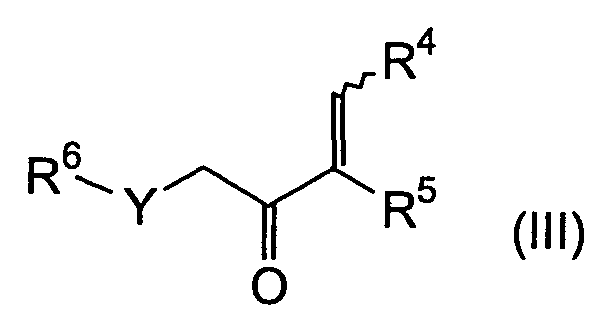
- The present invention provides a process for preparing 1,4-dihydropyridine compounds which comprises the steps of (a) contacting an enamine compound having structure ofand a compound having a structure of
 in the presence of a base; and (b) treating the reaction mixture thus obtained in the presence of an acid or a combination of acids.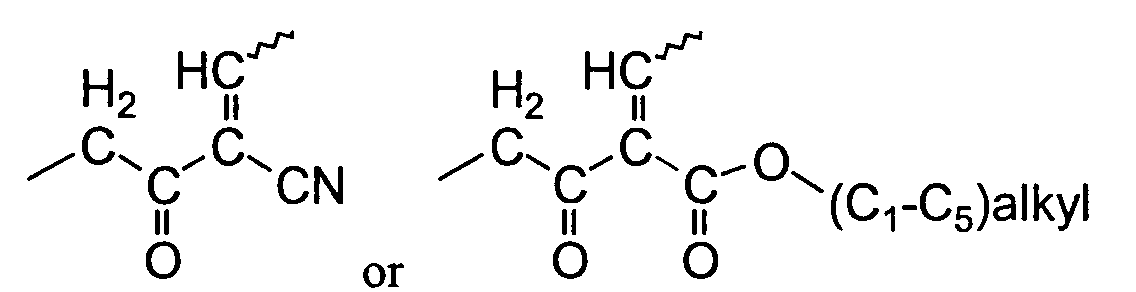
- The present invention also provides a process for preparing a compound of formula (I):wherein
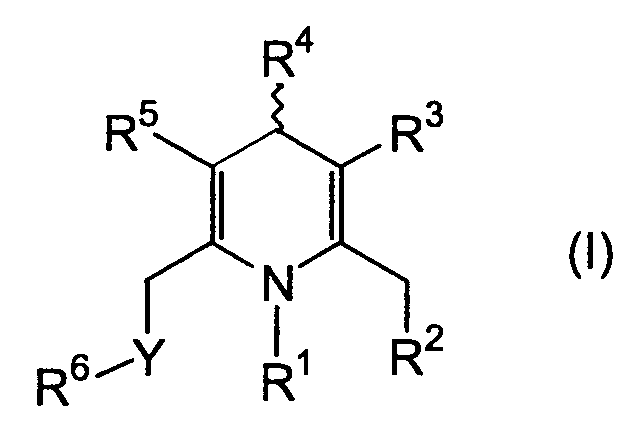
- R1 is
- selected from hydrogen and (C1-C4)alkyl;
- R2 is
- selected from nitrile; -SO3H; -SO2-(C1-C6)alkyl; -SO-(C1-C6)alkyl; -PO[O(C1-C4)alkyl]2; -C(=O)-R7, wherein R7 is selected from hydroxy or its salt, (C1-C6)alkyl-O-, amino, (C1-C6)alkyl-NH- and di[(C1-C6)alkyl]-N-;
- R3 and R5 are
- independently selected from nitrile and (C1-C5)alkoxy-C(=O)-;
- R4 is
- an unsubstituted or a mono-, di-, tri-, tetra- or penta-substituted phenyl wherein the substituents are independently selected from halo; (C1-C4)alkyl optionally substituted with one to three halo; (C1-C4)alkoxy optionally substituted with one to three halo; nitro; amino; mono(C1-C4)alkylamino and di[(C1-C4)alkyl]amino;
- R6 is
- selected from hydrogen; (C1-C10)alkyl; phenyl optionally substituted with one to two substituents independently selected from halo, (C1-C4)alkyl, tri-halo(C1-C4)alkyl and (C1-C4)alkoxy; and a 4- to 10-membered heterocyclic ring containing 1 to 4 heteroatoms or heteroatom containing moieties independently selected from -O-, -S-, -NH- and -N[(C1-C4)alkyl]-, wherein said heterocyclic ring is saturated, partially-saturated or aromatic, and said heterocyclic ring is optionally substituted with one halo or (C1-C4)alkyl; and
- Y is
- selected from a covalent bond, methylene, oxygen and sulfur;
- (a) addition reaction of an enamine compound of formula
to a compound of formula
 wherein R1, R2, R3, R4, R5, R6 and Y are as defined above in the presence of a base under reaction conditions sufficient for coupling the compounds; and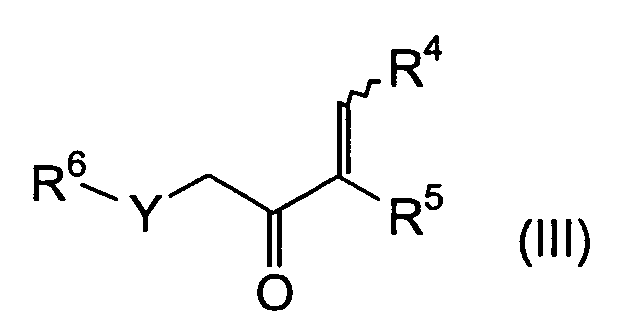
- (b) cyclization of the resulting compound in step (a) in the presence of an acid catalyst selected from a protonic acid, and a combination of a protonic acid and a non-protonic Lewis acid.
- In the above described processes, compounds of formula (I) or (II) wherein R2 is a salt of carboxyl group (i.e., R2 is -C(=O)-R7 wherein R7 is a salt of hydroxy) are inorganic or organic salts of the carboxylic acid. Those salts are formed with a cation such as alkali or akaline earth metal (e.g., sodium, potassium, calcium, and magnesium), hydroxide or alkoxide in water or an appropriate organic solvent such as ethanol, isopropyl alcohol or mixture thereof.
- According to the present invention, in general, desired 1,4-dihydropyridine compounds can be prepared under mild conditions, in a one-pot synthesis and high-yield.
- In the above process, preferred substrates of formula (II) and resulting compounds of formula (I) are those compounds of each formula wherein R' is hydrogen.
- The term "(C1-C4)alkyl", as used herein, unless otherwise indicated, means a straight or branched saturated monovalent hydrocarbon radical selected from methyl, ethyl, propyl, isopropyl, n-butyl, sec-butyl and tert-butyl.
- The term "(C1-C4)alkoxy", as used herein, unless otherwise indicated, means a straight or branched (C1-C4)alkyl-O radical selected from methoxy, ethoxy, propoxy, isopropoxy, n-butoxy, sec-butoxy and tert-butoxy.
- The term "heterocyclic ring", as used herein, unless other wise indicated, means a monocyclic or bicyclic hydrocarbon group which has one or more hetero atoms in the ring, preferably has 6 to 9 carbon atoms and 1 to 4 hetero atoms or independently selected from -O-, -S-, -NH-, -N[(C1-C4)alkyl]-, wherein said heterocyclic is saturated, partially-saturated or aromatic. Examples of those groups include, but not limited to piperidino, morpholino, thiamorphorino, pyrrolidino, pyrazolino, pyrazolidino, pyrazoryl, piperazinyl, furyl, thienyl, oxazolyl, tetrazolyl, thiazolyl, imidazolyl, pyrazolyl, pyridyl, pyrimidinyl, pyrrolyl, pyrrolidinyl, quinolyl and quinuclidinyl.
- The term "halo", as used herein, refers to F, Cl, Br or I, preferably F or Cl.
- Preferred bases used in reaction step (a) of this invention include bases capable of promoting a Michael-type reaction.
- Preferred combination of "base in step (a)" and "acid catalyst in step (b)" may be "a magnesium (II) base in step (a)" and " a protonic acid in step (b)".
- Preferably, an amount of the base is equal or more than 1 equivalent.
- Other preferred combination of "base in step (a)" and "acid catalyst in step (b)" may be "bases other than magnesium (II) bases (e.g., alkyl-magnesium-halides, halo-magnesium-alkoxides and magnesium-dialkoxides) which are capable of promoting a Michael-type reaction in step (a)" and "a combination of a protonic acid and a non-protonic Lewis acid". Any non-protonic Lewis acids known to those skilled in the art such as metal halides, metal triflates (i.e., metal trifluoromethanesulfonate) or the like may be used in step (b). Examples of the Lewis acid include magnesium bromide, magnesium chloride, zinc bromide, zinc chloride, zinc iodide, tin(IV) chloride, titanium(IV) chloride, aluminium trichloride, ethylaluminum dichloride, diethylaluminum chloride, boron trifluoride, copper(II) triflate, scandium(III) triflate, lanthanum triflate, ytterbium triflate, lanthanum chloride, cerium(III) chloride and iron(III) chloride. Preferred individual Lewis acids include magnesium bromide and its ether complex such as magnesium bromide diethyl etherate, magnesium chloride and its ether complex such as magnesium chloride diethyl etharate, zinc chloride, zinc bromide and scandium(III) triflate. Among the Lewis acids, preferred ones include magnesium (II) salts such as magnesium halides, magnesium bromides and their ether complexes such as magnesium bromide diethyl etherate. Another preferred ones include magnesium (II) salts such as a magnesium sulfate, magnesium acetate, halomagnesiumacetate and halomagnesium sulfate.
- Non-protonic Lewis acid such as MgCl2 can be added in the step (a) in advance.
- When the starting compounds contain Lewis basic atom(s) such as N and O, an amount of the Lewis acid added may be increased for the success of step (b).
- Preferably, a process of this invention may be carried out under reaction conditions wherein reaction step (a) is carried out in a reaction inert solvent at a temperature in the range from -150°C to the reflux temperature of the reaction mixture for 3 minutes to 2 days; and reaction step (b) is carried out in a reaction inert solvent at a temperature in the range from -150°C to the reflux temperature of the reaction mixture for 1 second to 5 days.
- More preferably, a process of this invention may be carried out under reaction conditions wherein the reaction step (a) is carried out in a reaction inert solvent at a temperature in the range from -40° to 80°C for 1 minute to 40 hours; and the reaction step (b) is carried out in a reaction inert solvent at a temperature in the range from -40° to 80°C for 1 minute to 5 days.
- Preferred bases used in reaction step (a) of this invention include (C1-C4)alkyllithiums, halomagnesium(C1-C4)alkoxide, (C1-C6)alkylmagnesiumhalides, metalhydrides, metal(C1-C3)alkoxides, metal-n-butoxide, metal-sec-butoxide, metal-tert-butoxide, metalcarbonate and metalfluoride.
- Preferred acids used in reaction step (b) of this invention include hydrochloric acid, toluene(p-, m- or o-toluene) sulfonic acid, phosphoric acid, sulfuric acid, nitric acid and (C1-C6)alkanoic acid.
- Preferred process of this invention include a compound of formula (I):
wherein - R1 is
- selected from hydrogen, methyl and ethyl;
- R2 is
- selected from -C(=O)-R7, wherein R7 is selected from hydroxy or its salt, (C1-C6)alkyl-O-, amino, (C1-C6)alkyl-NH- and di[(C1-C6)alkyl]-N-;
- R3 and R5 are
- independently (C1-C3)alkoxy-C(=O)-;
- R4 is
- di-substituted phenyl wherein the substituents are independently selected from halo, (C1-C4)alkyl optionally substituted with one to two halo, and nitro;
- R6 is
- selected from hydrogen; (C1-C5)alkyl; phenyl optionally substituted with one to two substituents independently selected from halo, (C1-C4)alkyl, CF3 and (C1-C4)alkoxy; and a 4- to 10-membered heterocyclic ring selected from piperidino, morpholino, thiamorphorino, pyrrolidino, pyrazolino, pyrazolidino, pyrazoryl, piperazinyl, furyl, thienyl, oxazolyl, tetrazolyl, thiazolyl, imidazolyl, pyrazolyl, pyridyl, pyrimidinyl, pyrrolyl, pyrrolidinyl, quinolyl and quinuclidinyl, and said heterocyclic ring being optionally substituted with one halo or (C1-C4)alkyl; and
- Y is
- selected from a covalent bond, methylene, oxygen and sulfur.
- Preferred process of this invention include a compound of formula (I):
wherein - R1 is
- hydrogen; R2 is COOH, COOCH3 or COOC2H5;
- R3 and R5 are
- independently COOH, COOCH3 or COOC2H5;
- R4 is
- a mono- or di-substituted phenyl wherein substituents are independently selected from fluoro, chloro and nitro;
- R6 is
- selected from hydrogen; (C1-C3)alkyl; phenyl optionally substituted with one to two substituents independently selected from halo, (C1-C3)alkyl, CF3 and (C1-C3)alkoxy; and a 4- to 10-membered heterocyclic ring selected from piperidino, morpholino, thiamorphorino, pyrrolidino, pyrazolino, pyrazolidino, pyrazoryl, piperazinyl, furyl, thienyl, oxazolyl, tetrazolyl, thiazolyl, imidazolyl, pyrazolyl, pyridyl, pyrimidinyl, pyrrolyl, pyrrolidinyl, quinolyl and quinuclidinyl, and said heterocyclic ring being optionally substituted with one halo or (C1-C3)alkyl; and
- Y is
- a covalent bond or methylene.
- The following reaction schemes and discussion illustrate the preparation process of the present invention for preparing a compound of formula (I). Unless otherwise indicated, R1 through R8, Y, and p, q and r in the reaction schemes and discussion that follow are defined above. In the each reaction described below, unless otherwise indicated, the reaction pressure is not critical. Generally, the reactions will be conducted at a pressure of about one to about three atmospheres, preferably at ambient pressure (about one atmosphere). Also, unless otherwise indicated, the reactions run at about room temperature (i.e., from about 20° to 25°C).
- Compounds of formula (I) may be prepared by a process of this invention according to Scheme 1.

- Scheme 1 exemplifies a process of this invention for preparing a compound of formula (I) comprising step (a): addition of an enamine compound of formula (II) to an alkylene compound of formula (III) followed by step (b) acid catalyzed cyclization reaction of the resulting compound in step (a).
- The former addition step (a) may be carried out under conditions applied to nucleophilic addition reactions using a suitable base in a reaction inert solvent. More preferably, the reaction may be carried out under conditions commonly used in Michael-type addition. Preferred bases for this reaction are those used in Michael-type reactions. Examples of the preferred bases include alkylmagnesium halides known as Grignard reagents and halomagnesium alkoxides. More preferred bases include (C1-C6)alkylmagnesium bromide and tert-butoxy-magnesium bromide. Preferred solvents used in this reaction include (C1-C4)alkanol, tetrahydrofuran (THF), diethyl ether, dioxane, hexane, toluene, 1,2-dimethoxy ethane (DME) and the like. This reaction may be carried out at a temperature from about -150°C to reflux, preferably from about -100° to 100°C. In view of convenience, this reaction may be carried out at about room temperature using, for example, halomagnesium(C1-C4)alkoxides, (C1-C6)alkylmagnesiumhalides, metalhydrides, metal(C1-C3)alkoxides, magnesium-di[(C1-C3)alkoxides], metal-n-butoxide, metal-sec-butoxide, metal-tert-butoxide, a metalcarbonate such as K2CO3, or metalamide such as R2N-M wherein R is C1-4 alkyl or -Si(C1-3 alkyl)3; and M is Li, Na, Mg or K (Preferably, halomagnesium(C1-C4)alkoxides or (C1-C6)alkylmagnesiumhalides). In case of the base is K2CO3, the reaction is effectively run in THF. In case of the base is CsF or KF, the reaction is effectively run in THF or methanol (MeOH) at an elevated temperature such as at about 60°C. In case of using butyllithium (BuLi), the reaction is effectively run in THF at from about -78°C to about -30°C. In case of using halomagnesium(C1-C4)alkoxides or (C1-C6)alkylmagnesiumhalides, a preferred solvent is THF. Suitable reaction time ranges from about 3 minutes to about 2 days, preferably from about 30 minutes to about 40 hours.
- The subsequent cyclization process step (b) may be carried out in the presence of a protonic acid. Suitable protonic acids include (C1-C6)alkanoic acid such as acetic acid, hydrochloric acid (HCl) and sulfonic acids such as p-toluenesulfonic acid. It is preferred to add a non-protonic Lewis acid to the reaction mixture in combination with the protonic acid, when the base used in Step (a) is other than magnesium (II) bases. This reaction may be carried out at a temperature from about -150°C to reflux, preferably from about -100° to 100°C. The reaction time ranges from about 1 second to 5 days, preferably 5 minutes to 20 houres.
- Generally, those reactions illustrated in Scheme 1 may be carried out at about -78°C using dry-ice/acetone or dry-ice/methanol, about 0°C using an ice-bath, room temperature or 100°C, preferably at about 0°C or about room temperature.
- The reaction steps (a) and (b) are performed in the same reaction vessel under mild conditions with high-yield.
- An enamine compound of formula (II) may be prepared according to procedures known to those skilled in the art, such as those illustrated in Scheme 2.
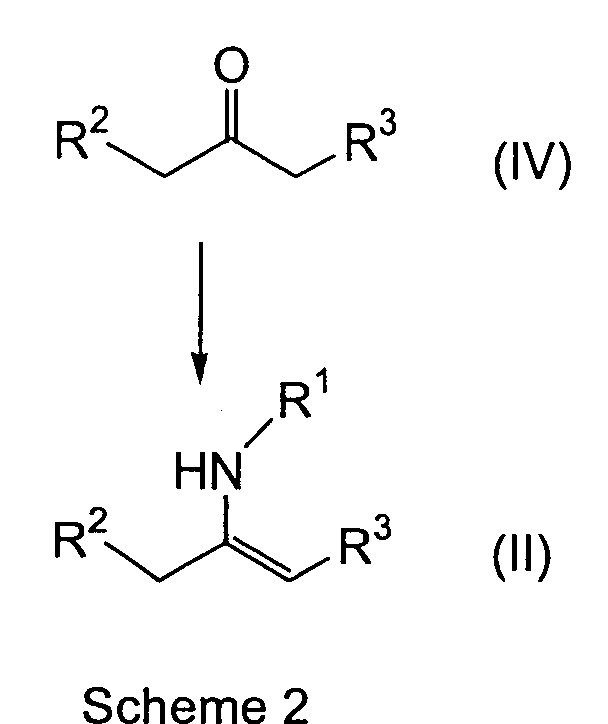
- Typically, a beta-keto ester compound of formula (IV) may be transformed to a compound of formula (II) wherein R2 and R3 are defined as above. This reduction may be carried out in a reaction inert solvent resolving ammonia gas at a temperature in the range of from about 0° to 60°C. Suitable reaction inert solvents include lower alkanols such as methanol and ethanol. Alternatively, an ammonia gas containing solution given above may be added to a solution containing a beta-keto ester (IV). The mixture is reacted at a temperature in the range of from about 0° to 60°C to yield the enamine compound (II).
- An alkylene compound of formula (III) may be prepared according to procedures known to those skilled in the art. Scheme 3 illustrates one embodiment of the preparation process.

- A carbonyl compound of formula (V) may be subjected to a coupling reaction with an aldehyde compound of formula (VI) to give the alkylene compound of formula (III) according to a known procedure. For example, a compound of formula (V) wherein R6-Y- is an optionally substituted heterocyclic-(CH2)2- may be reacted with a compound of formula (VI) according to a procedure reported by L. Tietze et al. Liebigs Ann. Chem., pp. 321-329, 1988. This reaction may be carried out in a suitable reaction inert-solvent for example an aromatic hydrocarbon such as benzene, toluene and xylene, an alcohol such as methanol, ethanol, propanol and butanol, an ether such as diethyl ether, dioxane and tetrahydrofuran (THF), a halogenated hydrocarbon such as methylene dichloride, chloroform and dichloroethane, an amide such as N,N-dimethylformamide, and a nitrile such as acetonitrile. This reaction may be carried out at a temperature in the range of from about 0°C to the reflux temperature of the reaction mixture, preferably from about 80° to the 120°C for from about 30 minutes to 24 hours, preferably from 30 minutes to 6 hours. This reaction may conveniently be carried in the presence of a base or acid catalyst. Suitable base catalysts are such as piperidine, pyridine and alkoxide, and suitable acid catalysts are such as acetic acid, TiCl4 and p-toluenesulfonic acid.
- An intermediate compound of formula (V) may be prepared starting from a known compound according to a procedure known to those skilled in the art. For example, a compound of formula (V) wherein R6 is an optionally substituted heterocyclic (including heteroaryl) defined as above, and R3 is (C1-C5)alkoxy-C(=O)- may be prepared according to the procedure described in Scheme 4.

- An aldehyde compound (VII), wherein R6 is defined as above, is reacted with malonic acid under a basic condition. For example, this reaction may be carried out in the presence of a weak base such as piperidine in a reaction inert solvent such as pyridine to give a carboxylic acid compound of formula (VIII). The compound (VIII) thus obtained may be subjected to an aliphatic nucleophilic substitution reaction in the presence of a coupling agent to give a pentenoate compound of formula (IX). This reaction may conveniently be carried out first by treating the compound of formula (VII) with a coupling agent such as N,N'-carbonyldiimidazole in a reaction inert solvent such as dimethylformamide, then reacting with a neucleophilic reagent such as CH3O2CCH2K in the presence of a Lewis acid such as magnesium chloride. The former treatment may be carried out at a temperature in the range of from about 0° to 60°C, preferably at about room temperature for from about 1 minutes to 12 hours. The latter reaction may be carried out at the temperature in the range of from about 0° to 100°C, preferably from about room temperature to 60°C for from about 1 minutes to 12hours. The compound of formula (IX) may be reduced over a metal catalyst under hydrogen atmosphere to give the compound of formula (V) according to a known procedure. Suitable catalysts are such as Raney nickel catalyst and a noble metal catalysts including palladium on carbon and palladium hydroxide. This reaction may be carried out in a reaction inert solvent such as methanol, at about room temperature under hydrogen at an appropriate pressure for example using a balloon, for about 1 minutes to 12 hours.
- A ketone compound of formula (V) and a substituted benzaldehyde compound of formula (VI) may also be prepared according to known procedures (e.g., (1) D. Scherling, J. Labelled Compds. Radiopharm., Vol. 27, pp. 599-, 1989, (2) C. R. Holmquist et al., J. Org. Chem., Vol. 54, pp. 3528- , 1989, (3) S. N. Huckin et al., J. Am. Chem. Soc., Vol. 96, pp. 1082-, 1974, (4) J. C. S. Perkin I, pp. 529-, 1979, (5) Synthesis pp. 37, 1986, and (6) J. C. S. Chem.Commun., pp. 932-, 1977).
- Compounds of formula (I) have a chiral center, and, if required, an enantiomeric mixture of the compounds may be separated by procedures known to those skilled in the art (e.g., using H.P.L.C. or fractional crystallization). Also, an enantiomeric mixture of compounds of formula (III) may be optically separated by the similar methods prior to being subjected to the preparation processes of this invention.
- Compounds of formula (I) prepared according to the procedures described as above may be isolated and purified by conventional procedures such as recrystallization or chlomatographic purification.
- Compounds of formula (I) thus obtained may further be subjected to desired reactions. For example, the compounds wherein R2 is -COOH, may be subjected to coupling reactions with a desired amine or imine compounds to give such compounds as disclosed in WO 96/06082, WO 97/30048, United States Patent 5,861,402 or the like.
- With the processes of the present invention, 1,4-dihydropyridine compounds can be effectively prepared under mild conditions. Especially, 1,4-dihydropyridine compunds which are difficult to be synthesized by Hantzsch method (not under mild conditions), can be synthesized because of the mild conditions in the present invention.
- The invention is illustrated in the following non-limiting example in which, unless stated otherwise: all operations were carried out at room or ambient temperature, that is, in the range of 18-25°C; evaporation of solvent was carried out using a rotary evaporator under reduced pressure with a bath temperature of up to 60°C; reactions were monitored by thin layer chromatography (tlc) and reaction times are given for illustration only; melting points (m.p.) given were uncorrected (polymorphism may result in different melting points); the structure and purity of all isolated compounds were assured by at least one of the following techniques: tlc (Merck silica gel 60 F254 precoated TLC plates or Merck NH2 F254s precoated HPTLC plates), mass spectrometry, nuclear magnetic resonance (NMR), infrared red absorption spectra (IR) or microanalysis. Yields were given for illustrative purposes only. Flash column chromatography was carried out using Merck silica gel 60 (230-400 mesh ASTM) or Fuji Silysia Chromatorex® DU3050 (Amino Type, 30∼50µm). Low-resolution mass spectral data (EI) were obtained on an Automass 120 (JEOL) mass spectrometer. Low-resolution mass spectral data (ESI) were obtained on a Quattro II (Micromass) mass spectrometer. NMR data was determined at 270 MHz (JEOL JNM-LA 270 spectrometer) using deuterated chloroform (99.8% D) or dimethylsulfoxide (99.9% D) as solvent unless indicated otherwise, relative to tetramethylsilane (TMS) as internal standard in parts per million (ppm); conventional abbreviations used are: s = singlet, d = doublet, t = triplet, q = quartet, m = multiplet, br. = broad, etc. IR spectra were measured by a Shimazu infrared spectrometer (IR-470). Optical rotations were measured using a JASCO DIP-370 Digital Polarimeter (Japan Spectroscopic CO, Ltd.). Chemical symbols have their usual meanings; b.p. (boiling point), m.p. (melting point), 1 (liter(s)), ml (milliliter(s)), g (gram(s)), mg(milligram(s)), mol (moles), mmol (millimoles), eq. (equivalent(s)).
- A. Methyl 3-oxo-5-(1,3-thiazole-2-yl)-4-pentenoate:
Methyl 3-oxo-5-(1,3-thiazole-2-yl)-4-pentenoate was prepared from 3-(1,3-thazol-2-yl)-2-propenoic acid (Bull. Chem. Soc. Jap. 1974, 47, 151.) according to the literature procedure (Heterocycles 1994, 38, 751.). To a stirred solution of 3-(1,3-thiazol-2-yl)-2-propenoic acid (100.0 g, 644.4 mmol) in DMF (1000 ml) was added 1,1'-carbonyldiimidazole (115.0 g, 708.9 mmol) in small portions. After stirring at room temperature for 5 h, to the reaction mixture were added anhydrous magnesium chloride (73.6 g, 773.0 mmol) and monomethyl malonate potassium salt (120.8 g, 773.0 mmol). The resulting suspension was heated at 55 °C with stirring for 14 h. After cooling to room temperature, the reaction mixture was poured into 1500 ml of 2 N HCl, and extracted with a mixture of EtOAc (1500 ml) and toluene (500 ml). The organic phase was separated and the aqueous phase was extracted with a 3 : 1 mixture of EtOAc and toluene (2000 ml). The combined organic phase was washed with H2O (1000 ml) and brine (1000 ml), dried (Na2SO4) and evaporated to afford 132.0 g of methyl 3-oxo-5-(1,3-thiazole-2-yl)-4-pentenoate (1/2 of keto/enol form)
1H NMR (CDCl3) δ: 11.77 (s, 2/3 H), 7.97 (d, J= 3.1 Hz, 1/3 H), 7.90 (d, J= 3.1 Hz, 2/3 H), 7.72 (d, J= 16.0 Hz, 1/3 H), 7.55 (d, J= 15.6 Hz, 2/3 H), 7.51 (d, J= 3.1 Hz, 1/3 H), 7.39 (d, J = 3.1 Hz, 2/3 H), 7.06 (d, J = 16.0 Hz, 1/3 H), 6.80 (d, J = 15.6 Hz, 2/3 H), 5.28 (s, 2/3 H), 3.79 (s, 3 x 2/3 H), 3.77 (s, 3 x 1/3 H), 3.45 (s, 2 x 1/3 H). - B. Methyl 3-oxo-5-(1,3-thiazole-2-yl)pentanoate:
A mixture of methyl 3-oxo-5-(1,3-thiazole-2-yl)-4-pentenoate (132.0 g) and palladium hydroxide, 20 wt% on carbon (13 g) in MeOH (2600 ml) was stirred under hydrogen atmosphere by balloon at room temperature for 4 h. Catalyst was removed by filtration and the filtrate evaporated to give 130.0 g of methyl 3-oxo-5-(1,3-thiazole-2-yl)pentanoate as a brown liquid.
1H NMR (CDCl3) δ: 7.65 (d, J = 3.3 Hz, 1 H), 7.20 (d, J = 3.3 Hz, 1 H), 3.73 (s, 3 H), 3.53 (s, 2 H), 3.33 (t, J = 6.9 Hz, 2 H), 3.13 (t, J = 6.9 Hz, 2 H). - C. Methyl 3-(2,6-dichlorophenyl)-2-[(1,3-thiazol-2-yl)propanoyl]-2-propenoate:
To a solution of methyl 3-oxo-5-(1,3-thiazole-2-yl)pentanoate (130 g) in toluene (600 ml) were added 2,6-dichlorobenzaldehyde (113.0 g, 644 mmol), acetic acid (5 ml) and piperidine (5 ml). This mixture was distilled for removal of the initial distillate (about 100 ml) then replaced the distillation apparatus to Dean-Stark trap and heated under reflux temperature with azeotropic removal of H20 for 4 h. The mixture was washed with H20 (200 ml) and brine (200 ml), dried (Na2SO4) and evaporated to give a crude mixture. This was purified by column chromatography on silica gel (1800 g, hexane/EtOAc = 3/1 as eluent) to afford 165.3 g (69%, 3 steps) of methyl 3-(2,6-dichlorophenyl)-2-[1,3-thiazol-2yl)propanoyl]-2-propenoate as a brown oil. This is a 1 : 1 mixture of the double bond isomers.
1H NMR (CDCl3) δ: 7.70-7.15 (m, 6 H), 3.91 and 3.66 (apparently two synglets, 3 H), 3.44 and 3.28 (apparently two synglets, 4 H). - D. Dimethyl 4-(2,6-dichlorophenyl)-2-(2-methoxy-2-oxoethyl)-6-[2-(1,3-thiazol-2-yl)ethyl]-1,4-dihydropyridine-3,5-dicarboxylate:
To a stirred solution of 2-methyl-2-propanol (92.8g, 1252 mmol; 2.1 eq.) in anhydrous THF (1100 ml) was added a 1.0 M solution of EtMgBr in THF (1192 ml, 1192 mmol; 2.0 eq.) dropwise slowly at 0°C under nitrogen atmosphere for 2 h period. The resulting solution was stirred at room temperature for 1 h. Then to the mixture was added a solution of dimethyl 3-amino-2-pentenedioate (113.5 g, 655 mmol; 1.1 eq.) in anhydrous THF (550 ml) dropwise slowly at 0°C for 20 min. The resulting pale yellow solution was stirred at the same temperature for 1 h, then a solution of methyl 3-(2,6-dichlorophenyl)-2-[(1,3-thiazol-2-yl)propanoyl]-2-propenoate (219.9 g, 594 mmol; 1.0 eq.) in anhydrous THF (550 ml) was added at 0°C for 30 min. The reaction mixture was stirred at room temperature for 16 h under nitrogen atmosphere, then acetic acid (170 ml; 5.0 eq.) was added at 0°C. The resulting mixture was stirred at room temperature for 6 h. The mixture was poured into 2 N NaOHaq. (1000 ml), the organic phase was separated and the aqueous phase was extracted with EtOAc (2000 ml). The combined organic phase was washed with H2O (1000 ml) and brine (1000 ml), dried (Na2SO4) and concentrated to give a crude mixture. Purification on silica gel column chromatography (3 times 1700 g) eluted with hexane/EtOAc (2/1 to 1/2) to afford 246.0 g (85%) of dimethyl 4-(2,6-dichlorophenyl)-2-(2-methoxy-2-oxoethyl)-6-[2-(1,3-thiazol-2-yl)ethyl]-1,4-dihydropyridine-3,5-dicarboxylate as a brown oil
1H NMR (CDCl3) δ: 8.33 (s, 1 H), 7.67 (d, J = 3.3 Hz, 1 H), 7.24 (t, J = 8.0 Hz, 2 H), 7.24 (d, J = 3.3 Hz, 1 H), 6.98 (dd, J = 8.0, 8.0 Hz, 1 H), 5.99 (s, 1 H), 3.86-3.65 (m, 5 H), 3.51 (s, 3 H), 3.54 (s, 3 H), 3.45-3.25 (m, 3 H), 3.14-2.96 (m, 1 H). -
- In Step D in the above working example, the coupling in the presence of the magnesium base and the subsequent cyclization in the presence of acidic acid occurred as a one-pot synthesis.
Claims (13)
- A process for preparing 1,4-dihydropyridine compounds which comprises the steps of (a) contacting an enamine compound having structure ofand a compound having a structure of
 in the presence of a base; and (b) treating the reaction mixture thus obtained in the presence of an acid or a combination of acids.
- A process according to Claim 1 for preparing a compound of Formula (I):wherein
- R1 is
- selected from hydrogen and (C1-C4)alkyl;
- R2 is
- selected from nitrile; -SO3H; -SO2-(C1-C6)alkyl; -SO-(C1-C6)alkyl; -PO[O(C1-C4)alkyl]2; -C(=O)-R7, wherein R7 is selected from hydroxy or its salt, (C1-C6)alkyl-O-, amino, (C1-C6)alkyl-NH- and di[(C1-C6)alkyl]-N-;
- R3 and R5 are
- independently selected from nitrile and (C1-C5)alkoxy-C(=O)-;
- R4 is
- an unsubstituted or a mono-, di-, tri-, tetra- or penta-substituted phenyl wherein the substituents are independently selected from halo; (C1-C4)alkyl optionally substituted with one to three halo; (C1-C4)alkoxy optionally substituted with one to three halo; nitro; amino; mono(C1-C4)alkylamino and di[(C1-C4)alkyl]amino;
- R6 is
- selected from hydrogen; (C1-C10)alkyl; phenyl optionally substituted with one to two substituents independently selected from halo, (C1-C4)alkyl, tri-halo(C1-C4)alkyl and (C1-C4)alkoxy; and a 4- to 10-membered heterocyclic ring containing 1 to 4 heteroatoms or heteroatom containing moieties independently selected from -O-, -S-, -NH- and -N[(C1-C4)alkyl]-, wherein said heterocyclic ring is saturated, partially-saturated or aromatic, and said heterocyclic ring is optionally substituted with one halo or (C1-C4)alkyl; and
- Y is
- selected from a covalent bond, methylene, oxygen and sulfur;
(a) addition reaction of an enamine compound of formulato a compound of formula wherein R1, R2, R3, R4, R5, R6 and Y are as defined above in the presence of a base under reaction conditions sufficient for the addition reaction of the compounds; and
 (b) cyclization of the resulting compound of step (a) in the presence of an acid catalyst selected from a protonic acid, and a combination of a protonic acid and a non-protonic Lewis acid.
 - A process of Claim 1 wherein the base in reaction step (a) is a base capable of promoting a Michael-type reaction.
- A process of Claim 1 wherein the base in reaction step (a) is a magnesium (II) base and the acid catalyst in reaction step (b) is a protonic acid.
- A process of Claim 1 wherein the base in process (a) is other than magnesium (II) bases and the acid catalyst in step (b) is a combination of a protonic acid and a non-protonic Lewis acid.
- A process of Claim 1 wherein the reaction step (a) is carried out in a reaction inert solvent at a temperature in the range from -150°C to the reflux temperature of the reaction mixture for 3 minutes to 2 days, and the reaction step (b) is carried out in a reaction inert solvent at a temperature in the range from -150°C to the reflux temperature of the reaction mixture for 1 second to 5 days.
- A process of Claim 6 wherein the reaction step (a) is carried out in a reaction inert solvent at a temperature in the range from -40° to 80°C for 1 minute to 40 hours, and the reaction step (b) is carried out in a reaction inert solvent at a temperature in the range from -40° to 80°C for 1 minute to 5 days.
- A process of Claim 1 wherein the base in reaction step (a) is selected from (C1-C4)alkyllithiums, halomagnesium(C1-C4)alkoxide, (C1-C6)alkylmagnesiumhalides, metalhydrides, metal(C1-C3)alkoxides, magnesium-di[(C1-C3)alkoxides], metal-n-butoxide, metal-sec-butoxide, metal-tert-butoxide, metalcarbonate and metalfluoride.
- A process of Claim 1 wherein the acid catalyst in reaction step (b) is selected from hydrochloric acid, p-toluene sulfonic acid, phosphoric acid, sulfuric acid, nitric acid and (C1-C6)alkanoic acid.
- A process according to Claim 2 wherein
- R1 is
- selected from hydrogen, methyl and ethyl;
- R2 is
- selected from -C(=O)-R7, wherein R7 is selected from hydroxy or its salt, (C1-C6)alkyl-O-, amino, (C1-C6)alkyl-NH- and di[(C1-C6)alkyl]-N-;
- R3 and R5 are
- independently (C1-C3)alkoxy-C(=O)-;
- R4 is
- di-substituted phenyl wherein the substituents are independently selected from halo, (C1-C4)alkyl optionally substituted with one to two halo, and nitro;
- R6 is
- selected from hydrogen; (C1-C5)alkyl; phenyl optionally substituted with one to two substituents independently selected from halo, (C1-C4)alkyl, CF3 and (C1-C4)alkoxy; and a 4- to 10-membered heterocyclic ring selected from piperidino, morpholino, thiamorphorino, pyrrolidino, pyrazolino, pyrazolidino, pyrazoryl, piperazinyl, furyl, thienyl, oxazolyl, tetrazolyl, thiazolyl, imidazolyl, pyrazolyl, pyridyl, pyrimidinyl, pyrrolyl, pyrrolidinyl, quinolyl and quinuclidinyl, and said heterocyclic ring being optionally substituted with one halo or (C1-C4)alkyl; and
- Y is
- selected from a covalent bond, methylene, oxygen and sulfur.
- A process according to Claim 11 wherein
- R1 is
- hydrogen; R2 is COOH, COOCH3 or COOC2H5;
- R3 and R5 are
- independently COOH, COOCH3 or COOC2H5;
- R4 is
- a mono- or di-substituted phenyl wherein substituents are independently selected from fluoro, chloro and nitro;
- R6 is
- selected from hydrogen; (C1-C3)alkyl; phenyl optionally substituted with one to two substituents independently selected from halo, (C1-C3)alkyl, CF3 and (C1-C3)alkoxy; and a 4- to 10-membered heterocyclic ring selected from piperidino, morpholino, thiamorphorino, pyrrolidino, pyrazolino, pyrazolidino, pyrazoryl, piperazinyl, furyl, thienyl, oxazolyl, tetrazolyl, thiazolyl, imidazolyl, pyrazolyl, pyridyl, pyrimidinyl, pyrrolyl, pyrrolidinyl, quinolyl and quinuclidinyl, and said heterocyclic ring being optionally substituted with one halo or (C1-C3)alkyl; and
- Y is
- a covalent bond or methylene.
- A process according to Claim 5 wherein the non-protonic Lewis acid is metal halides or metal triflates.
- A process according to Claim 5 wherein the non-protonic Lewis acid is magnesium (II) salts.
Applications Claiming Priority (2)
| Application Number | Priority Date | Filing Date | Title |
|---|---|---|---|
| US17021799P | 1999-12-10 | 1999-12-10 | |
| US170217P | 1999-12-10 |
Publications (1)
| Publication Number | Publication Date |
|---|---|
| EP1110962A1 true EP1110962A1 (en) | 2001-06-27 |
Family
ID=22619029
Family Applications (1)
| Application Number | Title | Priority Date | Filing Date |
|---|---|---|---|
| EP00310648A Withdrawn EP1110962A1 (en) | 1999-12-10 | 2000-11-30 | Process for preparing 1,4-dihydropyridine compounds |
Country Status (16)
| Country | Link |
|---|---|
| US (1) | US6649767B2 (en) |
| EP (1) | EP1110962A1 (en) |
| JP (1) | JP2001163884A (en) |
| KR (1) | KR100423188B1 (en) |
| CN (1) | CN1305995A (en) |
| AU (1) | AU7212700A (en) |
| BR (1) | BR0005842A (en) |
| CA (1) | CA2327944A1 (en) |
| CZ (1) | CZ20004595A3 (en) |
| HU (1) | HUP0004884A3 (en) |
| ID (1) | ID28601A (en) |
| IL (1) | IL140074A0 (en) |
| PL (1) | PL344390A1 (en) |
| RU (1) | RU2223267C2 (en) |
| YU (1) | YU77400A (en) |
| ZA (1) | ZA200007253B (en) |
Families Citing this family (14)
| Publication number | Priority date | Publication date | Assignee | Title |
|---|---|---|---|---|
| CN101648906B (en) * | 2004-04-08 | 2012-07-11 | 美国陶氏益农公司 | N-substituted sulfenimides for insecticide |
| TW201309635A (en) | 2006-02-10 | 2013-03-01 | Dow Agrosciences Llc | Insecticidal N-substituted (6-haloalkylpyridin-3-yl)alkyl sulfoximines |
| TWI381811B (en) * | 2006-06-23 | 2013-01-11 | Dow Agrosciences Llc | A method to control insects resistant to common insecticides |
| US7863303B2 (en) * | 2006-09-01 | 2011-01-04 | Dow Agrosciences Llc | Insecticidal N-substituted (2-substituted-1,3-thiazol)alkyl sulfoximines |
| TWI387585B (en) * | 2006-09-01 | 2013-03-01 | Dow Agrosciences Llc | Insecticidal n-substituted (heteroaryl)alkyl sulfilimines |
| TWI395736B (en) * | 2006-11-08 | 2013-05-11 | Dow Agrosciences Llc | Heteroaryl (substituted) alkyl n-substituted sulfoximines as insecticides |
| US7709648B2 (en) * | 2007-02-09 | 2010-05-04 | Dow Agrosciences Llc | Process for the preparation of 2-substituted-5-(1-alkylthio)alkylpyridines |
| AR066366A1 (en) * | 2007-05-01 | 2009-08-12 | Dow Agrosciences Llc | PESTICIDED SYNERGIC BLENDS |
| US20090023782A1 (en) * | 2007-07-20 | 2009-01-22 | Dow Agrosciences Llc | Increasing plant vigor |
| KR20100127255A (en) * | 2008-03-03 | 2010-12-03 | 다우 아그로사이언시즈 엘엘씨 | Pesticide |
| JP5747740B2 (en) * | 2011-08-30 | 2015-07-15 | 国立大学法人北海道大学 | Method for producing α-hydroxy acid salt |
| CN105669532B (en) * | 2014-12-03 | 2018-11-02 | 广州市恒诺康医药科技有限公司 | Nimodipine soluble derivative and its preparation method and application |
| CN111728948A (en) * | 2020-08-19 | 2020-10-02 | 湖北潜龙药业有限公司 | Preparation process of amlodipine besylate tablets |
| CN114989072B (en) * | 2022-05-27 | 2023-07-21 | 四川大学 | A method of asymmetric catalytic synthesis of chiral 1,4-dihydropyridine compounds and its application |
Citations (1)
| Publication number | Priority date | Publication date | Assignee | Title |
|---|---|---|---|---|
| US5859011A (en) * | 1994-08-24 | 1999-01-12 | Pfizer Inc. | Dihydropyridine derivatives as bradykinin antagonist |
Family Cites Families (5)
| Publication number | Priority date | Publication date | Assignee | Title |
|---|---|---|---|---|
| RU2057122C1 (en) * | 1992-11-10 | 1996-03-27 | Научно-производственное объединение "Кристалл" | Process for preparing 2,6-dimethyl-3,5-di(carbomethoxy)- 4-(2-nitrophenyl)-1,4-dehydropyridine (niphedipine) |
| DE4443168A1 (en) * | 1994-12-05 | 1996-06-13 | Bayer Ag | New highly selective process for the production of enantiomerically pure phenyl-substituted 1,4-dihydropyridine-3,5-dicarboxylic acid derivatives |
| EP0727691A1 (en) * | 1995-02-14 | 1996-08-21 | Sagem S.A. | Active matrix liquid crystal display device having homogeneously aligned non-twisted liquid crystal configuration and retardation compensation |
| MX9701245A (en) * | 1996-02-19 | 1998-04-30 | Pfizer | 1,4-dihydropyridine compounds. |
| TNSN97037A1 (en) * | 1996-02-19 | 2005-03-15 | Pfizer | 1,4-DIHYDROPYRIDINE DERIVATIVES, PROCESS FOR THEIR PREPARATION AND PHARMACEUTICAL COMPOSITIONS CONTAINING THEM. |
-
2000
- 2000-11-30 EP EP00310648A patent/EP1110962A1/en not_active Withdrawn
- 2000-12-04 IL IL14007400A patent/IL140074A0/en unknown
- 2000-12-07 JP JP2000373448A patent/JP2001163884A/en not_active Withdrawn
- 2000-12-07 ZA ZA200007253A patent/ZA200007253B/en unknown
- 2000-12-08 CZ CZ20004595A patent/CZ20004595A3/en unknown
- 2000-12-08 YU YU77400A patent/YU77400A/en unknown
- 2000-12-08 ID IDP20001062D patent/ID28601A/en unknown
- 2000-12-08 HU HU0004884A patent/HUP0004884A3/en unknown
- 2000-12-08 RU RU2000130339/04A patent/RU2223267C2/en not_active IP Right Cessation
- 2000-12-08 AU AU72127/00A patent/AU7212700A/en not_active Abandoned
- 2000-12-08 CA CA002327944A patent/CA2327944A1/en not_active Abandoned
- 2000-12-08 CN CN00135278A patent/CN1305995A/en active Pending
- 2000-12-08 PL PL00344390A patent/PL344390A1/en not_active Application Discontinuation
- 2000-12-09 KR KR10-2000-0074865A patent/KR100423188B1/en not_active Expired - Fee Related
- 2000-12-11 BR BR0005842-4A patent/BR0005842A/en not_active IP Right Cessation
-
2002
- 2002-08-20 US US10/224,928 patent/US6649767B2/en not_active Expired - Fee Related
Patent Citations (1)
| Publication number | Priority date | Publication date | Assignee | Title |
|---|---|---|---|---|
| US5859011A (en) * | 1994-08-24 | 1999-01-12 | Pfizer Inc. | Dihydropyridine derivatives as bradykinin antagonist |
Non-Patent Citations (3)
| Title |
|---|
| LAMM, B., SIMONSSON, R.: "Synthesis of the Enantiomers of Felodipine and Determination of their Absolute Configuration.", TETRAHEDRON LETTERS, vol. 30, no. 46, 1989, pages 6423 - 6426, XP000983431 * |
| OHSUMI, K., OHISHI, K., MORINAGA, Y., NAKAGAWA, R., SUGA, Y., SEKIYAMA, T., AKIYAMA, Y., TSUJI, T., TSURUO, T.: "N-Alkylated 1,4-Dihydropyridines: New Agents to Overcome Multidrug Resistance.", CHEM. PHARM. BULL., vol. 43, no. 5, 1995, pages 818 - 828, XP002160388 * |
| TAYLOR, M.D., BADGER, E.W., STEFFEN, R.P., HALEEN, S.J., PUGSLEY, T.A., SHIH, Y.H., WEISHAAR, R.E.: "2-(2-aryl-2-oxoethylidene)-1,2,3,4-tetrahydropyridines. Novel Isomers of 1,4-Dihydropyridine Calcium Channel Blockers.", J. MED. CHEM., vol. 31, no. 8, 1988, pages 1659 - 1664, XP000942035 * |
Also Published As
| Publication number | Publication date |
|---|---|
| US6649767B2 (en) | 2003-11-18 |
| KR20010062286A (en) | 2001-07-07 |
| CN1305995A (en) | 2001-08-01 |
| ID28601A (en) | 2001-06-14 |
| JP2001163884A (en) | 2001-06-19 |
| IL140074A0 (en) | 2002-02-10 |
| HU0004884D0 (en) | 2001-02-28 |
| CA2327944A1 (en) | 2001-06-10 |
| US20030078430A1 (en) | 2003-04-24 |
| AU7212700A (en) | 2001-06-14 |
| HUP0004884A2 (en) | 2001-10-28 |
| RU2223267C2 (en) | 2004-02-10 |
| CZ20004595A3 (en) | 2002-06-12 |
| HUP0004884A3 (en) | 2003-03-28 |
| BR0005842A (en) | 2001-07-24 |
| YU77400A (en) | 2003-04-30 |
| KR100423188B1 (en) | 2004-03-18 |
| PL344390A1 (en) | 2001-06-18 |
| ZA200007253B (en) | 2002-06-07 |
Similar Documents
| Publication | Publication Date | Title |
|---|---|---|
| US6649767B2 (en) | Process for preparing 1,4-dihydropyridine compounds | |
| KR100208867B1 (en) | Diastereomer salt of optically active quinolinemevalonic acid | |
| JP3202607B2 (en) | Method for producing 2- (4-alkoxy-3-cyanophenyl) thiazole derivative | |
| JPH02258766A (en) | Substituted 2-pyridone and pyrido-2-thione, preparation thereof, and use thereof in drug | |
| JPH04230381A (en) | Substituted pyrrolo-pyridine | |
| JPH06234741A (en) | Substituted 4-phenylpyridone and 4-phenyl-2-alkoxypyridine | |
| WO2005028410A1 (en) | Method for producing nitrile compound, carboxylic acid compound or carboxylate compound | |
| JP2712107B2 (en) | Disubstituted pyridines | |
| JPH01165554A (en) | substituted hydroxylamine | |
| KR930005059B1 (en) | Method for preparing beta-ketoesters useful for the preparation of quinolone antibiotics | |
| JPH02290876A (en) | Substituted 1,8-naphthyridine | |
| JPH04305581A (en) | Substituted pyridooxazine | |
| US7365215B2 (en) | Process for preparing 4-aminotetrahydropyran compound and an acid salt thereof, synthetic intermediate thereof and process for preparing the same | |
| KR102748251B1 (en) | Intermediates and methods for the preparation of linagliptin and its salts | |
| US6987199B2 (en) | Process for preparing beta-ketoester compound | |
| MXPA00012173A (en) | Process for preparing 1,4-dihydropyridine compounds | |
| JP2965189B2 (en) | Method for producing 5-hydroxy-3-ketoester derivative | |
| JPH0393773A (en) | Substituted aminopyridines | |
| US4707473A (en) | 4-monosubstituted and 4,6-disubstituted phenoxazines | |
| HK1039323A (en) | Process for preparaing 1,4-dihydropyridine compounds | |
| JPH07103098B2 (en) | Efficient Stereoconservative Synthesis of 1-Substituted (S)-and (R) -2-Aminomethylpyrrolidines and Intermediates Thereof | |
| JP3843400B2 (en) | Process for producing alkyl monosubstituted hydroquinones | |
| JP4333156B2 (en) | Process for producing 2-substituted-tetrahydropyran-4-ol, its intermediate and process for its production | |
| KR930006078B1 (en) | Intermediates of Beta-Ketoesters | |
| JP3233806B2 (en) | Method for producing sulfenylacetic acid derivative |
Legal Events
| Date | Code | Title | Description |
|---|---|---|---|
| PUAI | Public reference made under article 153(3) epc to a published international application that has entered the european phase |
Free format text: ORIGINAL CODE: 0009012 |
|
| 17P | Request for examination filed |
Effective date: 20001211 |
|
| AK | Designated contracting states |
Kind code of ref document: A1 Designated state(s): AT BE CH CY DE DK ES FI FR GB GR IE IT LI LU MC NL PT SE TR |
|
| AX | Request for extension of the european patent |
Free format text: AL;LT;LV;MK;RO;SI |
|
| AKX | Designation fees paid |
Free format text: AT BE CH CY DE DK ES FI FR GB GR IE IT LI LU MC NL PT SE TR |
|
| 17Q | First examination report despatched |
Effective date: 20030826 |
|
| STAA | Information on the status of an ep patent application or granted ep patent |
Free format text: STATUS: THE APPLICATION IS DEEMED TO BE WITHDRAWN |
|
| 18D | Application deemed to be withdrawn |
Effective date: 20050906 |