EP1109369A2 - Digital content downloading system using networks - Google Patents
Digital content downloading system using networks Download PDFInfo
- Publication number
- EP1109369A2 EP1109369A2 EP00122876A EP00122876A EP1109369A2 EP 1109369 A2 EP1109369 A2 EP 1109369A2 EP 00122876 A EP00122876 A EP 00122876A EP 00122876 A EP00122876 A EP 00122876A EP 1109369 A2 EP1109369 A2 EP 1109369A2
- Authority
- EP
- European Patent Office
- Prior art keywords
- digital content
- consumer
- network
- retailer
- making
- Prior art date
- Legal status (The legal status is an assumption and is not a legal conclusion. Google has not performed a legal analysis and makes no representation as to the accuracy of the status listed.)
- Granted
Links
Images











Classifications
-
- G—PHYSICS
- G06—COMPUTING OR CALCULATING; COUNTING
- G06Q—INFORMATION AND COMMUNICATION TECHNOLOGY [ICT] SPECIALLY ADAPTED FOR ADMINISTRATIVE, COMMERCIAL, FINANCIAL, MANAGERIAL OR SUPERVISORY PURPOSES; SYSTEMS OR METHODS SPECIALLY ADAPTED FOR ADMINISTRATIVE, COMMERCIAL, FINANCIAL, MANAGERIAL OR SUPERVISORY PURPOSES, NOT OTHERWISE PROVIDED FOR
- G06Q30/00—Commerce
- G06Q30/02—Marketing; Price estimation or determination; Fundraising
-
- G—PHYSICS
- G06—COMPUTING OR CALCULATING; COUNTING
- G06Q—INFORMATION AND COMMUNICATION TECHNOLOGY [ICT] SPECIALLY ADAPTED FOR ADMINISTRATIVE, COMMERCIAL, FINANCIAL, MANAGERIAL OR SUPERVISORY PURPOSES; SYSTEMS OR METHODS SPECIALLY ADAPTED FOR ADMINISTRATIVE, COMMERCIAL, FINANCIAL, MANAGERIAL OR SUPERVISORY PURPOSES, NOT OTHERWISE PROVIDED FOR
- G06Q20/00—Payment architectures, schemes or protocols
- G06Q20/04—Payment circuits
-
- G—PHYSICS
- G06—COMPUTING OR CALCULATING; COUNTING
- G06Q—INFORMATION AND COMMUNICATION TECHNOLOGY [ICT] SPECIALLY ADAPTED FOR ADMINISTRATIVE, COMMERCIAL, FINANCIAL, MANAGERIAL OR SUPERVISORY PURPOSES; SYSTEMS OR METHODS SPECIALLY ADAPTED FOR ADMINISTRATIVE, COMMERCIAL, FINANCIAL, MANAGERIAL OR SUPERVISORY PURPOSES, NOT OTHERWISE PROVIDED FOR
- G06Q20/00—Payment architectures, schemes or protocols
- G06Q20/08—Payment architectures
- G06Q20/12—Payment architectures specially adapted for electronic shopping systems
-
- G—PHYSICS
- G06—COMPUTING OR CALCULATING; COUNTING
- G06Q—INFORMATION AND COMMUNICATION TECHNOLOGY [ICT] SPECIALLY ADAPTED FOR ADMINISTRATIVE, COMMERCIAL, FINANCIAL, MANAGERIAL OR SUPERVISORY PURPOSES; SYSTEMS OR METHODS SPECIALLY ADAPTED FOR ADMINISTRATIVE, COMMERCIAL, FINANCIAL, MANAGERIAL OR SUPERVISORY PURPOSES, NOT OTHERWISE PROVIDED FOR
- G06Q20/00—Payment architectures, schemes or protocols
- G06Q20/08—Payment architectures
- G06Q20/12—Payment architectures specially adapted for electronic shopping systems
- G06Q20/123—Shopping for digital content
- G06Q20/1235—Shopping for digital content with control of digital rights management [DRM]
-
- G—PHYSICS
- G06—COMPUTING OR CALCULATING; COUNTING
- G06Q—INFORMATION AND COMMUNICATION TECHNOLOGY [ICT] SPECIALLY ADAPTED FOR ADMINISTRATIVE, COMMERCIAL, FINANCIAL, MANAGERIAL OR SUPERVISORY PURPOSES; SYSTEMS OR METHODS SPECIALLY ADAPTED FOR ADMINISTRATIVE, COMMERCIAL, FINANCIAL, MANAGERIAL OR SUPERVISORY PURPOSES, NOT OTHERWISE PROVIDED FOR
- G06Q20/00—Payment architectures, schemes or protocols
- G06Q20/08—Payment architectures
- G06Q20/20—Point-of-sale [POS] network systems
- G06Q20/204—Point-of-sale [POS] network systems comprising interface for record bearing medium or carrier for electronic funds transfer or payment credit
-
- G—PHYSICS
- G06—COMPUTING OR CALCULATING; COUNTING
- G06Q—INFORMATION AND COMMUNICATION TECHNOLOGY [ICT] SPECIALLY ADAPTED FOR ADMINISTRATIVE, COMMERCIAL, FINANCIAL, MANAGERIAL OR SUPERVISORY PURPOSES; SYSTEMS OR METHODS SPECIALLY ADAPTED FOR ADMINISTRATIVE, COMMERCIAL, FINANCIAL, MANAGERIAL OR SUPERVISORY PURPOSES, NOT OTHERWISE PROVIDED FOR
- G06Q30/00—Commerce
- G06Q30/06—Buying, selling or leasing transactions
-
- G—PHYSICS
- G06—COMPUTING OR CALCULATING; COUNTING
- G06Q—INFORMATION AND COMMUNICATION TECHNOLOGY [ICT] SPECIALLY ADAPTED FOR ADMINISTRATIVE, COMMERCIAL, FINANCIAL, MANAGERIAL OR SUPERVISORY PURPOSES; SYSTEMS OR METHODS SPECIALLY ADAPTED FOR ADMINISTRATIVE, COMMERCIAL, FINANCIAL, MANAGERIAL OR SUPERVISORY PURPOSES, NOT OTHERWISE PROVIDED FOR
- G06Q30/00—Commerce
- G06Q30/06—Buying, selling or leasing transactions
- G06Q30/0601—Electronic shopping [e-shopping]
- G06Q30/0633—Managing shopping lists, e.g. compiling or processing purchase lists
-
- H—ELECTRICITY
- H04—ELECTRIC COMMUNICATION TECHNIQUE
- H04L—TRANSMISSION OF DIGITAL INFORMATION, e.g. TELEGRAPHIC COMMUNICATION
- H04L12/00—Data switching networks
- H04L12/02—Details
- H04L12/14—Charging, metering or billing arrangements specially adapted for data communications, e.g. authentication, authorisation and accounting [AAA] framework
-
- H—ELECTRICITY
- H04—ELECTRIC COMMUNICATION TECHNIQUE
- H04L—TRANSMISSION OF DIGITAL INFORMATION, e.g. TELEGRAPHIC COMMUNICATION
- H04L12/00—Data switching networks
- H04L12/02—Details
- H04L12/14—Charging, metering or billing arrangements specially adapted for data communications, e.g. authentication, authorisation and accounting [AAA] framework
- H04L12/1403—Architecture for metering, charging or billing
-
- H—ELECTRICITY
- H04—ELECTRIC COMMUNICATION TECHNIQUE
- H04L—TRANSMISSION OF DIGITAL INFORMATION, e.g. TELEGRAPHIC COMMUNICATION
- H04L12/00—Data switching networks
- H04L12/02—Details
- H04L12/14—Charging, metering or billing arrangements specially adapted for data communications, e.g. authentication, authorisation and accounting [AAA] framework
- H04L12/141—Indication of costs
- H04L12/1414—Indication of costs in real-time
-
- H—ELECTRICITY
- H04—ELECTRIC COMMUNICATION TECHNIQUE
- H04L—TRANSMISSION OF DIGITAL INFORMATION, e.g. TELEGRAPHIC COMMUNICATION
- H04L12/00—Data switching networks
- H04L12/02—Details
- H04L12/14—Charging, metering or billing arrangements specially adapted for data communications, e.g. authentication, authorisation and accounting [AAA] framework
- H04L12/141—Indication of costs
- H04L12/1421—Indication of expected costs
-
- H—ELECTRICITY
- H04—ELECTRIC COMMUNICATION TECHNIQUE
- H04L—TRANSMISSION OF DIGITAL INFORMATION, e.g. TELEGRAPHIC COMMUNICATION
- H04L12/00—Data switching networks
- H04L12/02—Details
- H04L12/14—Charging, metering or billing arrangements specially adapted for data communications, e.g. authentication, authorisation and accounting [AAA] framework
- H04L12/1432—Metric aspects
- H04L12/1439—Metric aspects time-based
-
- H—ELECTRICITY
- H04—ELECTRIC COMMUNICATION TECHNIQUE
- H04L—TRANSMISSION OF DIGITAL INFORMATION, e.g. TELEGRAPHIC COMMUNICATION
- H04L12/00—Data switching networks
- H04L12/02—Details
- H04L12/14—Charging, metering or billing arrangements specially adapted for data communications, e.g. authentication, authorisation and accounting [AAA] framework
- H04L12/1442—Charging, metering or billing arrangements specially adapted for data communications, e.g. authentication, authorisation and accounting [AAA] framework at network operator level
- H04L12/1446—Charging, metering or billing arrangements specially adapted for data communications, e.g. authentication, authorisation and accounting [AAA] framework at network operator level inter-operator billing
-
- H—ELECTRICITY
- H04—ELECTRIC COMMUNICATION TECHNIQUE
- H04L—TRANSMISSION OF DIGITAL INFORMATION, e.g. TELEGRAPHIC COMMUNICATION
- H04L12/00—Data switching networks
- H04L12/02—Details
- H04L12/14—Charging, metering or billing arrangements specially adapted for data communications, e.g. authentication, authorisation and accounting [AAA] framework
- H04L12/1453—Methods or systems for payment or settlement of the charges for data transmission involving significant interaction with the data transmission network
-
- H—ELECTRICITY
- H04—ELECTRIC COMMUNICATION TECHNIQUE
- H04L—TRANSMISSION OF DIGITAL INFORMATION, e.g. TELEGRAPHIC COMMUNICATION
- H04L12/00—Data switching networks
- H04L12/02—Details
- H04L12/14—Charging, metering or billing arrangements specially adapted for data communications, e.g. authentication, authorisation and accounting [AAA] framework
- H04L12/1485—Tariff-related aspects
-
- H—ELECTRICITY
- H04—ELECTRIC COMMUNICATION TECHNIQUE
- H04L—TRANSMISSION OF DIGITAL INFORMATION, e.g. TELEGRAPHIC COMMUNICATION
- H04L67/00—Network arrangements or protocols for supporting network services or applications
- H04L67/01—Protocols
- H04L67/06—Protocols specially adapted for file transfer, e.g. file transfer protocol [FTP]
-
- H—ELECTRICITY
- H04—ELECTRIC COMMUNICATION TECHNIQUE
- H04L—TRANSMISSION OF DIGITAL INFORMATION, e.g. TELEGRAPHIC COMMUNICATION
- H04L67/00—Network arrangements or protocols for supporting network services or applications
- H04L67/50—Network services
- H04L67/60—Scheduling or organising the servicing of application requests, e.g. requests for application data transmissions using the analysis and optimisation of the required network resources
- H04L67/62—Establishing a time schedule for servicing the requests
-
- H—ELECTRICITY
- H04—ELECTRIC COMMUNICATION TECHNIQUE
- H04L—TRANSMISSION OF DIGITAL INFORMATION, e.g. TELEGRAPHIC COMMUNICATION
- H04L67/00—Network arrangements or protocols for supporting network services or applications
- H04L67/50—Network services
- H04L67/60—Scheduling or organising the servicing of application requests, e.g. requests for application data transmissions using the analysis and optimisation of the required network resources
- H04L67/63—Routing a service request depending on the request content or context
-
- H—ELECTRICITY
- H04—ELECTRIC COMMUNICATION TECHNIQUE
- H04L—TRANSMISSION OF DIGITAL INFORMATION, e.g. TELEGRAPHIC COMMUNICATION
- H04L9/00—Cryptographic mechanisms or cryptographic arrangements for secret or secure communications; Network security protocols
- H04L9/40—Network security protocols
-
- H—ELECTRICITY
- H04—ELECTRIC COMMUNICATION TECHNIQUE
- H04L—TRANSMISSION OF DIGITAL INFORMATION, e.g. TELEGRAPHIC COMMUNICATION
- H04L69/00—Network arrangements, protocols or services independent of the application payload and not provided for in the other groups of this subclass
- H04L69/30—Definitions, standards or architectural aspects of layered protocol stacks
- H04L69/32—Architecture of open systems interconnection [OSI] 7-layer type protocol stacks, e.g. the interfaces between the data link level and the physical level
- H04L69/322—Intralayer communication protocols among peer entities or protocol data unit [PDU] definitions
- H04L69/329—Intralayer communication protocols among peer entities or protocol data unit [PDU] definitions in the application layer [OSI layer 7]
Definitions
- the present invention relates to a digital content downloading system in which digital content such as music files, video files, game software titles and so on are downloaded to a plurality of consumers through networks.
- ATM Asynchronous Transfer Mode
- QOS Quality of Service
- VBR variable Bit Rate
- CBR Constant Bit Rate
- This strict service management is feasible because the ATM network has a high-performance QOS managing capability.
- parameters such as a transfer bit rate (which is also called “bandwidth" in this technical field), a delay time, a delay variation, a burst size, a cell interval and a cell discard rate, thus the virtual circuit (VC) can be precisely established with QOS guarantee.
- the four service classes are provisioned in ATM networks, even though congestion occurs in one of the four service classes, the influence of the congestion to the other classes can be prevented. For example, even though the congestion of data traffic occurs in an ATM switch, voice or video traffic belonging to the CBR class can be stably transmitted.
- the consumer can specify digital content itself, the consumer cannot specify a quality in the transmission of the digital content transmitting through a subscriber line, but the digital content retailer can specify the transmission quality of the digital content.
- the consumer accesses to a digital content retailer possessing the digital content to obtain a data volume of the digital content from the digital content retailer, the consumer reports the data volume of the digital content to a network operator to secure a channel of a subscriber line, the consumer again accesses to the digital content retailer to inform the digital content retailer of the channel of the subscriber line, and the digital content retailer downloads the digital content to the consumer through the channel of the subscriber line. Therefore, there is a problem that the procedure for purchasing the digital content is complicated and troublesome.
- An object of the present invention is to provide, with due consideration to the drawbacks of the conventional digital content downloading system using a network, a digital content downloading system using a network in which a consumer desiring the downloading of digital content through a network easily receives the digital content at a desired transmission condition of the digital content.
- the object of the present invention is achieved by the provision of a digital content downloading system using a network in which digital content is downloaded, comprising the steps of:
- the desired digital content specified by the consumer is downloaded to the consumer through the reserved network at the desired digital content transmission condition specified by the consumer.
- the digital content retailer collects the charge for the desired digital content itself and the transmission charge corresponding to the desired digital content transmission condition from the consumer, and the digital content retailer pay the transmission charge to the network operator.
- the downloading of the desired digital content is reliably performed at the desired digital content transmission condition specified by the consumer, a downloading service corresponding to any digital content transmission condition can be performed.
- the consumer directly pays no charge to the network operator but pays the charge for the desired digital content itself and the charge for the transmission of the desired digital content to the digital content retailer, the payment of the consumer can be efficiently performed.
- the desired digital content transmission condition selected by the consumer is a transmission time condition such as an urgent transmission condition, a date and time specifying transmission condition or a date specifying transmission condition.
- the consumer can select one of the transmission time conditions according to the necessity for the desired digital content. Therefore, a distinction between services in the transmission of the digital content can be made in this system, and the downloading of the desired digital content through the network without considering any time condition can be avoided when the network has been already burdened with the transmission of high volume data.
- the network is composed of a plurality of networks managed by a plurality of network operators, and the desired digital content transmission condition selected by the consumer corresponds to a communication quality of each of the networks.
- the transmission charge can be set according to a service corresponding to the communication quality of each network, so that a charge service corresponding to the communication quality can be performed.
- the communication quality of each network is determined by one of a data transfer rate, a delay time, a delay variation, a burst size, a cell interval and a cell discard rate.
- the transmission charge can be set according to a service corresponding to a data transfer rate, a delay time, a delay variation, a burst size, a cell interval and/or a cell discard rate, so that a charge service corresponding to the communication quality can be performed.
- a bandwidth of the network is reserved with a time condition in the network reservation performed according to the desired digital content transmission condition.
- the consumer can receive a service satisfying a communication quality required by the consumer.
- the desired digital content transmission condition selected by the consumer is a bandwidth guarantee type transmission condition, in which a transmission time period is guaranteed, or a bandwidth no-guarantee type transmission conditions, in which a transmission time period is not guaranteed, and the transmission charge is heightened as the transmission time period is shortened.
- the transmission charge can be set according to a service corresponding to the guarantee on the bandwidth and the transmission time period, so that a charge service corresponding to the communication quality can be performed.
- the step of making the digital content retailer download the desired digital content includes: making the digital content retailer check through the network whether or not the consumer has a capability such as a memory capacity for receiving the desired digital content, before the desired digital content is downloaded to the consumer at the desired digital content transmission condition.
- the bandwidth of the network can be effectively used.
- the step of making the digital content retailer download the desired digital content includes: connecting the consumer to the network through a subscriber line which is composed of a telephone line, an optical fiber cable, a coaxial cable or a radio transmission line.
- the desired digital content is transmitted through the subscriber line, so that a charge service can be performed at a high quality.
- step of making the digital content retailer download the desired digital content includes:
- step of making the digital content retailer download the desired digital content includes:
- step of making the consumer send both the information and the desired digital content transmission condition includes:
- the downloading of the desired digital content is performed. Therefore, the charge for the desired digital content can be reliably collected from the consumer.
- step of making the digital content retailer collect a charge for the desired digital content includes:
- step of making the digital content retailer download the desired digital content includes:
- the digital content retailer can confirm that the consumer fails in receiving the desired digital content, so that it is not required that the consumer proves the failure of the reception of the desired digital content.
- the desired digital content is a music file, a video file or a game software title.
- the object of the present invention is also achieved by the provision of a digital content downloading system using a network in which digital content is downloaded, comprising the steps of:
- a downloading service corresponding to any digital content transmission condition can be performed. Also, because it is not required that the consumer directly pays a charge to the network operator, the payment of the consumer can be efficiently performed.
- the information designating the desired digital content and the desired digital content transmission condition are sent from the consumer to the digital content retailer through the network or a telephone line.
- the object of the present invention is also achieved by the provision of a digital content downloading system using a network in which digital content is downloaded, comprising the steps of:
- the transmission charge is a charge corresponding to a communication quality of a downloading service of the particular digital content, and the consumer directly pays a network access charge different from the transmission charge to the network operator.
- step of making the network operator download the particular digital content includes:
- the object of the present invention is also achieved by the provision of a digital content downloading system using a network in which digital content is downloaded, comprising the steps of:
- the bank pays the charge for the desired digital content itself and the transmission charge corresponding to the desired digital content transmission condition to the digital content retailer in one lump, and the digital content retailer pays the transmission charge to the network operator. Therefore, it is not required that the consumer directly pays the transmission charge to the network operator, so that the payment of the consumer can be efficiently performed.
- the information designating the desired digital content, the desired digital content transmission condition and the personal information and the payment information of the consumer are sent from the consumer to the digital content retailer through the network or a telephone line.
- the information other than the digital content can be transmitted through the telephone line.
- the digital content downloading system using a network further comprises the step of:
- the payment of the consumer can be omitted when the desired digital content is downloaded.
- step of making the digital content retailer collect a charge is performed before the step of making the digital content retailer download the desired digital content designated by the information to the consumer.
- the digital content retailer collects the charge for the desired digital content including the transmission charge before the downloading of the desired digital content, the digital content retailer can reliably collect the charge.
- step of making the digital content retailer download the desired digital content includes:
- step of making the digital content retailer download the desired digital content includes:
- Figure 1 is a diagram showing the configuration of a digital content downloading system using a network according to a first embodiment of the present invention.
- each of reference numerals 1a, 1b and 1c indicates a consumer who purchases digital content
- reference numerals 11a, 11b and 11c indicate a plurality of terminals respectively possessed by one of the consumers 1a, 1b and 1c.
- Each terminal denotes a personal computer with a normal internet function or the like.
- Reference numerals 3a and 3b indicate a plurality of digital content retailers for providing digital content such as music files, video files, game software titles and so on for the consumers 1a, 1b and 1c
- reference numerals 31a and 31b indicate a plurality of servers possessed by the digital content retailers 3a and 3b.
- Reference numerals 21a, 21b and 21c indicate a plurality of backbone networks arranged in series between the group of consumer 1a, 1b and 1c and the group of digital content retailers 3a and 3b
- reference numerals 2a, 2b and 2c indicate a plurality of network operators respectively managing one of the backbone networks 21a, 21b and 21c
- a reference numeral 4 indicates a credit company for performing the authentication of the consumers 1a, 1b and 1c and performing the accounting relating to the provision of the digital content downloaded to each consumer.
- Figure 2 is a diagram showing the configuration of the backbone networks 21a, 21b and 21c, access networks connecting the consumers to the backbone networks and access networks connecting the digital content retailers to the backbone networks according to the first embodiment of the present invention.
- the reference numerals 1a and 1b indicate the consumers who purchase digital content
- the reference numerals 11a and 11b indicate the terminals respectively possessed by one of the consumers 1a and 1b
- the reference numerals 3a and 3b indicate the digital content retailers who supply the digital content to the consumers 1a and 1b
- a reference numeral 211 indicates an internet protocol (IP) network using an internet protocol (IP)
- a reference numeral 212 indicates an asynchronous transfer mode (ATM) network using an asynchronous transfer mode (ATM).
- the backbone networks 21a, 21b and 21c have the IP network 211 and the ATM network 212.
- reference numerals 12a, 12b, 12c and 12d indicate a plurality of digital service units (DSU) denoting terminators of subscriber lines
- reference numerals 24a, 24b, 24c and 24d indicate a plurality of optical line terminators (OLT), which are arranged in offices of the network operators 2a and 2c and are connected to the IP network 211 and the ATM network 212 of the backbone networks 21a, 21b and 21c (or the IP network 211 and the ATM network 212), for terminating optical subscriber lines
- a reference numeral 22 indicates a resource reservation server, arranged in each of the backbone networks 21a, 21b and 21c, for managing bandwidths (or transfer rates) of pieces of data transmitting through the subscriber lines and the backbone networks 21a, 21b and 21c
- reference numerals 25a, 25b, 25c and 25d indicate a plurality of edge nodes through which information transmitted from access networks is sent to the IP network 211 and the ATM network 212 of the backbone networks 21a, 21
- the access networks connecting the optical network units (ONU) of the consumers 1a and 1b to the optical line terminators (OLT) 24c and 24d are formed of optical access networks of the PON systems in which the asynchronous transfer mode (ATM) is used. That is, a plurality of consumers are connected to one optical line terminator (OLT) in each optical access network of the PON system. Also, digital content retailers 3a and 3b are connected to optical line terminators (OLT) through the access networks in one-to-one correspondence.
- ATM asynchronous transfer mode
- the access networks of the consumers 1a and 1b are formed of the passive optical network (PON) system
- the access networks function as high speed optical networks made at a low cost.
- a broadcast type information is transmitted from the optical line terminators (OLT) 24c and 24d of the backbone network side to the consumers 1a and 1b through the optical fiber lines as a downward transmission.
- pieces of information indicating requests of the consumers 1a and 1b are transmitted from the consumers 1a and 1b to the optical line terminators (OLT) 24c and 24d through the optical fiber lines as an up-directional transmission while a time slot is allocated to each of the pieces of information to prevent the collision of the pieces of information with each other.
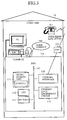
- Figure 3 is a block diagram of the terminal 11a possessed by the consumer 1a.
- the terminal 11a represents the terminals 11a, 11b and 11c possessed by the consumers 1a, 1b and 1c.
- the reference numeral 12c indicates the digital service unit (DSU) connecting the subscriber line to the terminal 11a.
- a reference numeral 111 indicates a media storing unit, having a large data capacity, for storing digital content such as music files, video files, game software titles and so on so as to be optically or magnetically writable and readable.
- a reference numeral 112 indicates a central processing unit (CPU) for controlling the operation of the terminal 11a
- a reference numeral 113 indicates a memory for storing data required to operate the CPU 112
- a reference numeral 115 indicates a ciphered data deciphering circuit for deciphering ciphered digital content
- a reference numeral 116 indicates a network interface through which information received in the digital service unit (DSU) 12c is received in the terminal 11a and information of the terminal 11a is transmitted to the digital service unit (DSU) 12c
- a reference numeral 117 indicates a bus of the terminal 11a.
- the terminal lla with a game control function of a game console Gac is connected to a keyboard K/B, a mouse Mo and a home television TV functioning as a display to display the digital content.
- the digital service unit (DSU) 12c is connected to a fiber-to-the-home (FTTH) type two-way subscriber line which is formed of an optical fiber.
- the two-way subscriber line FTTH is only arranged to connect the digital service unit (DSU) 12c to the backbone networks 21a, 21b and 21c.
- the subscriber line be formed of a coaxial cable.
- a telephone line normally used be additionally arranged to make the consumer la communicate with the network operators 2a, 2b and 2c of the backbone networks 21a, 21b and 21c or the digital content retailers 3a and 3b.
- FIG 4 is a block diagram of the server 31a possessed by the digital content retailer 3a.
- the server 31a represents the servers 31a and 31b possessed by the digital content retailers 3a and 3b.
- a reference numeral 311 indicates a media storing unit, having a large data capacity, for storing digital content as services
- a reference numeral 312 indicates a central processing unit (CPU) for controlling the server 31a
- a reference numeral 313 indicates a memory for storing data to be used for the operation of the CPU 312
- a reference numeral 314 indicates a registered member data base for storing member's numbers to be used to recognize the registered members
- a reference numeral 315 indicates a ciphering circuit for ciphering digital content to be downloaded to registered members
- a reference numeral 316 indicates a network interface
- a reference numeral 317 indicates a bus of the server 31a
- the reference numeral 12a indicates the digital service unit (DSU) for connecting the network interface 316 to a subscriber line OPFC of the optical fiber.
- DSU digital service unit
- the server 31a is connected to a plurality of peripheral apparatuses such as a keyboard K/B, a mouse Mo, a display CRT and a plurality of home televisions TV for monitoring the digital content to be downloaded.
- a telephone TEL is arranged to receive a request by one registered member (or one consumer) or to communicate with the network operators 2a, 2b and 2c of the backbone networks 21a, 21b and 21c and the consumers la, 1b and 1c.
- Figure 5 is a flow chart showing a procedure performed in the digital content downloading system using the network according to the first embodiment.
- Figure 6 is a diagram showing data transmission and reception performed successfully among the credit company 4, the server 31a of the digital content retailer 3a, the group of backbone networks 21a, 21b and 21c and the terminal 11a of the consumer la according to the procedure shown in Fig. 5.
- the procedure performed until the consumer 1a desiring the downloading of digital content receives the digital content is described with reference to Fig. 5 to Fig. 13.
- a genre menu of digital content is sent from the server 31a of the digital content retailer 3a to the terminal 11a of the consumer 1a to display the genre menu on the television TV.
- Figure 7 is a diagram showing an example of an image of the genre menu displayed on the television TV.
- a desired genre for example "science fiction”
- the desired genre is sent to the server 31a of the digital content retailer 3a. Therefore, a content menu of the desired genre "science fiction" specified by the consumer 1a is sent from the server 31a of the digital content retailer 3a to the terminal 11a of the consumer la.
- Figure 8 is a diagram showing an example of an image of the content menu of the "science fiction" displayed on the television TV.
- a step ST13 digital content of the content menu of the desired genre "science fiction” shown in Fig. 8 are displayed on the television TV, the consumer la specifies a desired digital content, for example "counterattack of cosmic monster", from the digital content listed in the content menu of the "science fiction”, and the consumer 1a sends information designating the desired digital content "counterattack of cosmic monster” to the digital content retailer 3a. Therefore, a transmission condition menu of the desired digital content "counterattack of cosmic monster” is sent from the server 31a of the digital content retailer 3a to the terminal 11a of the consumer 1a.
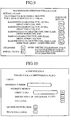
- Figure 9 is a diagram showing an example of an image of a transmission condition menu used to specify a transmission condition for the digital content "counterattack of cosmic monster".
- a bandwidth guarantee type transmission condition in which a short transmission time period is guaranteed
- a bandwidth no-guarantee type transmission condition in which a transmission time period is not guaranteed
- the CBR class denotes a bandwidth allocation method in which a prescribed bandwidth (or a transfer rate) is allocated with a time condition (or a date condition) to each virtual circuit (VC).
- the ABR class denotes a bandwidth allocation method in which the transmission bandwidth allocated to each virtual circuit (VC) is dynamically adjusted according to a bandwidth remaining in the subscriber lines of the backbone networks 21a, 21b and 21c or a buffer.
- the UBR class denotes a bandwidth allocation method in which the bandwidth (or the transfer rate) allocated to each virtual circuit (VC) cannot be specified, so that a burst transmission using a bandwidth remaining in the subscriber lines of the backbone networks 21a, 21b and 21c or a buffer is performed in the UBR class.
- each transmission condition of the transmission condition menu corresponds to a communication quality of each digital content transmitting through the backbone networks 21a, 21b and 21c, and the communication quality is determined according to transmission conditions (for example, a data transfer rate (or a bandwidth), a delay time, a delay variation, a burst size, a cell interval, a cell discard rate and so on) of the digital content transmitting through the backbone networks 21a, 21b and 21c.
- the charge for the downloading of one digital content becomes higher as the communication quality of the digital content becomes high.
- charges for the data transmission at the bandwidth guarantee type transmission conditions are higher than charges for the data transmission at the bandwidth no-guarantee type transmission conditions, and a charge for the data transmission at the bandwidth guarantee type transmission conditions and the bandwidth no-guarantee type transmission conditions becomes higher as a data transmission time period is shortened.
- one of time conditions such as an urgent transmission condition, a date and time specified transmission condition, a date specified transmission condition and so on can be specified as the transmission condition.
- a step ST14 the consumer la specifies a desired transmission condition selected from transmission conditions of the transmission condition menu shown in Fig. 9, and the consumer la sends the desired transmission condition to the digital content retailer 3a. Therefore, an authentication request is sent from the server 31a of the digital content retailer 3a to the terminal 11a of the consumer 1a.
- Figure 10 is a diagram showing an example of an authentication image sent as an authentication request to the terminal 11a of the consumer la.
- the consumer la specifies personal information such as a member's number and payment information such as a payment method, while using the authentication image of Fig. 10 sent as the authentication request, to log-in to the server 31a of the digital content retailer 3a, the personal information and the payment information specified by the consumer la are sent to the server 31a of the digital content retailer 3a, and an authentication request for the personal information and the payment information is sent from the server 31a of the digital content retailer 3a to the credit company 4 to inquire of the credit company 4 whether or not the personal information and the payment information specified by the consumer la are correct.
- personal information such as a member's number
- payment information such as a payment method
- a step ST16 it is judged in the credit company 4 whether or not the personal information and the payment information specified by the consumer 1a are correct. In cases where the personal information and the payment information of the consumer la are correct, an authentication completion notice is sent from the credit company 4 to the digital content retailer 3a.
- a step ST17 in cases where the authentication completion notice sent from the credit company 4 is received in the server 31a of the digital content retailer 3a, the server 31a of the digital content retailer 3a sends a request of a bandwidth reservation of the subscriber lines of the backbone networks 21a, 21b and 21c to the network operators 2a, 2b and 2c to transmit the desired digital content at the desired transmission condition specified by the consumer la to the consumer 1a.
- Figure 11 is a diagram showing a procedure for the bandwidth reservation.
- reference numerals 22a, 22b and 22c indicate a plurality of resource reservation servers of the backbone networks 21a, 21b and 21c arranged in series. As shown in Fig.
- a notice that the bandwidth reservation is impossible is sent from the server 31a of the digital content retailer 3a to the terminal 11a of the consumer 1a, and the digital content retailer 3a inquires of the consumer 1a whether or not the consumer 1a changes the desired digital content to another one.
- the consumer 1a specifies another desired transmission condition in the step ST14, the authentication of the consumer 1a is confirmed in the steps ST15 and ST16. Thereafter, in the step S17, as shown in Fig. 11, the server 31a of the digital content retailer 3a again inquires of the resource reservation servers 22a, 22b and 22c whether or not the bandwidth reservation of the subscriber lines of the backbone networks 21a, 21b and 21c is possible at a data transfer rate of 50 Mb/s for 20 minutes from 10:00 pm on April 6, 2000.
- a bandwidth reservation completion notice is sent from the resource reservation servers 22a, 22b and 22c to the server 31a of the digital content retailer 3a.
- a step ST19 the server 31a of the digital content retailer 3a sends a transmission start notice to the terminal 11a of the consumer 1a, the desired digital content is ciphered in the ciphering circuit 315 of the server 31a shown in Fig. 4, and ciphered data of the desired digital content is downloaded to the terminal 11a of the consumer 1a through the network interface 316, the digital service units (DSU) 12a and the backbone networks 21c, 21b and 21a.
- DSU digital service units
- a re-transmission request is sent from the terminal 11a to the server 31a, so that pieces of ciphered data of the desired digital content not yet downloaded are sent from the server 31a to the terminal 11a of the consumer 1a.
- the digital content retailer 3a sends a request to the consumer 1a through the networks 21c, 21b and 21a prior to the transmission of the desired digital content to make the consumer 1a check whether or not a capacity of the media storing unit 111 of the consumer 1a is sufficient to store the desired digital content.
- the digital content retailer 3a confirms that the consumer 1a has a capability for receiving the desired digital content, the downloading of the desired digital content to the consumer 1a is started.
- the server 31a of the digital content retailer 3a checks other capabilities of the terminal 11a to judge whether or not the terminal 11a can receive the desired digital content.
- the ciphered data of the desired digital content is deciphered in the ciphered data deciphering circuit 115 of the terminal 11a, and the desired digital content deciphered is stored in the media storing unit 111. Thereafter, it is checked in the CPU 112 whether or not the desired digital content is correctly downloaded to the terminal 11a. In cases where the desired digital content is not correctly downloaded, the consumer la judges in the step ST23 whether or not the desired digital content is changed to another one. In cases where the consumer 1a desires to change the desired digital content to another one, the steps ST12 to ST20 are repeated. In contrast, in cases where the consumer 1a desires not to change the desired digital content, the steps ST14 to ST20 are repeated.
- a reception completion notice is sent from the terminal 11a to the server 31a of the digital content retailer 3a, and a transmission completion notice is sent from the server 31a of the digital content retailer 3a to the resource reservation servers 22a, 22b and 22c of the backbone networks 21c, 21b and 21a.
- an accounting request based on the transmission of the desired digital content to the consumer 1a is sent from the server 31a of the digital content retailer 3a to the credit company 4, an accounting of the transmission of the desired digital content is performed in the credit company 4, an accounting completion notice is sent from the credit company 4 to the server 31a of the digital content retailer 3a, and the accounting completion notice is sent from the server 31a of the digital content retailer 3a to the terminal 11a of the consumer 1a.
- a digital content bill in which a charge for the desired digital content itself and a high quality transmission charge corresponding to the desired digital content transmission condition are written, is sent from the credit company 4 to the terminal 11a of the consumer 1a, the consumer la pays the charge for the desired digital content itself and the high quality transmission charge to the credit company 4 by using the terminal 11a to settle an account with the digital content retailer 3a, and the credit company 4 sends the payment of the consumer la corresponding to the charge for the desired digital content itself and the high quality transmission charge to the server 31a of the digital content retailer 3a.
- the digital content retailer 3a pays the high quality transmission charge to the network operators 2a, 2b and 2c.
- This high quality transmission charge differs from a line access charge for the use of the subscriber lines of the backbone networks 21a, 21b and 21c, and the line access charge for the use of the subscriber lines is paid to the network operators 2a, 2b and 2c by the consumer 1a.
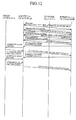
- Figure 12 is a diagram showing a procedure performed in cases where the credit company 4 fails in the authentication of the consumer la in the step ST16.
- an authentication failure notice is sent from the credit company 4 to the server 31a of the digital content retailer 3a, and the authentication failure and a request by the authentication are sent from the server 31a of the digital content retailer 3a to the terminal 11a of the consumer 1a.
- the consumers la again sends personal information and payment information to the server 31a of the digital content retailer 3a, and the server 31a of the digital content retailer 3a again inquires of the credit company 4 whether or not the personal information and the payment information again sent from the consumer la are correct.
- the authentication completion notice is sent from the credit company 4 to the digital content retailer 3a, and the step ST 17 is performed.
- the authentication failure notice is again sent from the credit company 4 to the server 31a of the digital content retailer 3a, and the authentication failure notice is sent from the server 31a of the digital content retailer 3a to the terminal 11a of the consumer la.
- Figure 13 is a diagram showing a procedure performed in cases where the failure of the downloading of the desired digital content occurs.
- the terminal 11a of the consumer 1a fails in receiving the ciphered data of the desired digital content.
- a reception impossible notice is sent from the terminal 11a of the consumer 1a to the server 31a of the digital content retailer 3a
- a transmission termination notice is sent from the server 31a to the networks 21c, 21b and 21a
- a reception no-completion notice is sent from the server 31a to the terminal 11a. Therefore, the digital content retailer 3a can confirm that the consumer la fails in receiving the desired digital content.
- the consumer 1a can select any of the time conditions composed of the urgent transmission condition, the date and time specified transmission condition, the date specified transmission condition and so on as a part of a digital content transmission condition, digital content desired to be urgently transmitted can be downloaded to the terminal 11a of the consumer 1a at the urgent transmission condition, digital content desired to be transmitted at a specified date and time can be downloaded to the terminal 11a of the consumer 1a at the date and time specified transmission condition, or digital content desired to be transmitted at a specified date can be downloaded to the terminal 11a of the consumer 1a at the date specified transmission condition.
- the backbone networks 21a, 21b and 21c are reserved by the digital content retailer 3a in advance at the digital content transmission condition including the time condition specified by the consumer 1a, the desired digital content can be reliably downloaded to the consumer 1a at the time condition. Accordingly, the downloading of the desired digital content through the backbone networks 21a, 21b and 21c without considering any time condition can be avoided even though one of the backbone networks 21a, 21b and 21c is burdened with the transmission of high volume data.
- the transmission charge corresponding to the digital content transmission condition can be set according to the communication quality depending on the digital content transmission condition (for example, a data transfer rate (or a bandwidth), a delay time, a delay variation, a burst size, a cell interval, a cell discard rate and so on) in the backbone networks 21a, 21b and 21c.
- the digital content transmission condition for example, a data transfer rate (or a bandwidth), a delay time, a delay variation, a burst size, a cell interval, a cell discard rate and so on
- the consumer la in cases where the consumer la purchases the desired digital content from the digital content retailer 3a through the backbone networks 21a, 21b and 21c, the consumer la can specify the downloading of the desired digital content at a high quality transmission condition.
- the credit company 4 collects in one lump the payment of the consumer la corresponding to the charge for the desired digital content itself and the high quality transmission charge, the credit company 4 pays the charges to the digital content retailer 3a, and the digital content retailer 3a pays the high quality transmission charge to the network operators 2a, 2b and 2c. Therefore, it is not required that the consumer la directly pays the high quality transmission charge to the network operators 2a, 2b and 2c, so that the payment of the consumer la can be efficiently performed.
- the digital content retailer 3a transmits the desired digital content to the consumer la after the credit company 4 successfully authenticates the consumer la, the digital content retailer 3a can reliably collect the charge for the desired digital content itself from the consumer 1a.
- the digital content retailer 3a can confirm the failure of the transmission of the desired digital content, it is not required that the consumer la proves the failure of the transmission of the desired digital content.
- the data of the digital content is ciphered in the server 31a of the digital content retailer 3a and is downloaded through the backbone networks 21a, 21b and 21c, a probability that a user differing from the consumer la unjustly and illegally obtain the digital content can be reduced.
- information designating the digital content desired by the consumer la is sent through the subscriber lines FTTH.
- the above pieces of information be sent through operators of the telephones TEL shown in Fig. 3 and Fig. 4 and a telephone line.
- the digital content be downloaded to the consumer la according to a reservation accepted in the network operators.
- the terminals 11a, 11b and 11c of the consumers la, 1b and 1c are connected to the backbone network 21a through the subscriber lines FTTH.
- coaxial cables or radio-subscriber lines having the same or more superior performance as/to that of the coaxial cables be used in place of the subscriber lines FTTH.
- Figure 14 is a diagram showing the configuration of a digital content downloading system using a network according to a second embodiment of the present invention.
- reference numerals 23a, 23b and 23c indicate a plurality of timers, arranged in the backbone networks 21a, 21b and 21c in one-to-one correspondence, for measuring a transmission time period from the sending of a transmission start notice to the sending of a transmission completion notice.
- the other configuration in Fig. 14 is the same as that shown in Fig. 1 of the first embodiment.
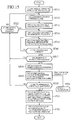
- Figure 15 is a flow chart showing a procedure performed in the digital content downloading system using the network according to the second embodiment.
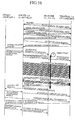
- Figure 16 is a diagram showing data transmission and reception performed successfully among the credit company 4, the server 31a of the digital content retailer 3a, the group of backbone networks 21a, 21b and 21c and the terminal 11a of the consumer 1a according to the procedure shown in Fig. 15.
- a transmission start notice is sent from the server 31a of the digital content retailer 3a to the terminal 11a of the consumer 1a
- a time measuring operation of the timers 23c, 23b and 23a arranged in the backbone networks 21c, 21b and 21a is started. Therefore, the timers 23c, 23b and 23a indicate a transmission time period of digital content downloaded from the digital content retailer 3a to the consumer 1a.
- step ST20 the operation in the step ST20 of Fig. 5 is performed according to the first embodiment. Also, when a transmission completion notice is sent from the server 31a of the digital content retailer 3a to the backbone networks 21c, 21b and 21a, the timers 23c, 23b and 23a are reset. Thereafter, the steps ST21 and ST22 of Fig. 15 are performed in the same manner as those shown in Fig. 5 of the first embodiment.
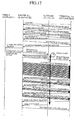
- Figure 17 is a diagram showing a procedure performed in cases where the transmission time period of the digital content exceeds an allowable data transmission time period.
- the transmission start notice is sent from the server 31a of the digital content retailer 3a to the terminal lla of the consumer la in the step ST19 of Fig. 15, the time measuring operation of the timers 23c, 23b and 23a arranged in the backbone networks 21c, 21b and 21a is started. Thereafter, the data of the desired digital content is transmitted to the consumer 1a in the step ST19, and the data of the desired digital content not yet received is transmitted to the consumer 1a in response to a re-transmission request by the consumer 1a.
- the transmission time period indicated by the timers 23c, 23b and 23a exceeds an allowable data transmission time period set in the timers 23c, 23b and 23a in advance, so that a time-out of the transmission of the desired digital content is judged in the backbone networks 21c, 21b and 21a.
- a time-out notice is sent from the backbone networks 21c, 21b and 21a to the server 31a of the digital content retailer 3a, and the transmission of the desired digital content is forcedly terminated by the server 31a of the digital content retailer 3a, and a transmission failure notice is sent from the server 31a of the digital content retailer 3a to the terminal 11a of the consumer 1a.
- the transmission time period of the desired digital content to be downloaded from the server 31a of the digital content retailer 3a to the terminal lla of the consumer la exceeds the allowable data transmission time period set in the timers 23c, 23b and 23a in advance, the transmission of the desired digital content is forcedly terminated by the server 31a of the digital content retailer 3a. Therefore, the bandwidth of the backbone networks 21c, 21b and 21a can be efficiently used.
- the consumer la in cases where the consumer la purchases the desired digital content through the backbone networks 21c, 21b and 21a, the consumer la can specify the downloading of the desired digital content at a high quality transmission condition.
- the credit company 4 collects in one lump the payment of the consumer la corresponding to the charge for the desired digital content itself and the high quality transmission charge, the credit company 4 pays the charges to the digital content retailer 3a, and the digital content retailer 3a pays the high quality transmission charge to the network operators 2a, 2b and 2c. Therefore, it is not required that the consumer 1a directly pays the high quality transmission charge to the network operators 2a, 2b and 2c, so that the payment of the consumer 1a can be efficiently performed in the same manner as in the first embodiment.
- the digital content retailer 3a transmits the desired digital content to the consumer 1a after the authentication of the consumer 1a is completed, the digital content retailer 3a can reliably collect the charge for the desired digital content itself from the consumer 1a in the same manner as in the first embodiment.
- the digital content retailer 3a can confirm the failure of the transmission of the desired digital content, it is not required that the consumer 1a proves the failure of the transmission of the desired digital content in the same manner as in the first embodiment.
- the data of the digital content is ciphered in the server 31a of the digital content retailer 3a and is downloaded through the backbone networks 21a, 21b and 21c, a probability that a user differing from the consumer la unjustly and illegally obtain the digital content can be reduced in the same manner as in the first embodiment.
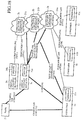
- Figure 18 is a diagram showing the configuration of a digital content downloading system using a network according to a third embodiment of the present invention.
- a reference numeral 5 indicates a bank for performing the authentication of the consumers 1a, 1b and 1c and performing the accounting relating to the provision of digital content downloaded to each consumer.
- the consumers 1a, 1b and 1c respectively have an account in the bank 5.
- the other configuration in Fig. 18 is the same as that shown in Fig. 1 of the first embodiment.
- Figure 19 is a flow chart showing a procedure performed in the digital content downloading system using the network according to the third embodiment.
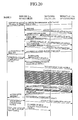
- Figure 20 is a diagram showing data transmission and reception performed successfully among the bank 5, the server 31a of the digital content retailer 3a, the group of backbone networks 21a, 21b and 21c and the terminal lla of the consumer la according to the procedure shown in Fig. 19.
- a step ST40 of Fig. 19 the consumer 1a deposits money in his or her account of the bank 5.
- steps ST41 to ST44 of Fig. 19 are performed in the same manner as the steps ST11 to ST14 shown in Fig. 5 of the first embodiment.
- the consumer 1a specifies personal information such as a member's number and payment information such as a payment method, while using the authentication imaqe of Fig. 10 sent as the authentication request, to log-in to the server 31a of the digital content retailer 3a, the personal information and the payment information specified by the consumer 1a are sent to the server 31a of the digital content retailer 3a, and an authentication request for the personal information and the payment information is sent from the server 31a of the digital content retailer 3a to the bank 5 to inquire of the bank 5 whether or not the personal information and the payment information specified by the consumer la are correct.
- personal information such as a member's number
- payment information such as a payment method
- a step ST46 it is judged in the bank 5 whether or not the personal information and the payment information specified by the consumer la are correct. In cases where the personal information and the payment information of the consumer 1a are correct, an authentication completion notice is sent from the bank 5 to the digital content retailer 3a.
- steps ST47 to ST50 of Fig. 19 are performed in the same manner as the steps ST17 to ST20 shown in Fig. 5 of the first embodiment.
- a reception completion notice is sent from the terminal lla of the consumer 1a to the server 31a of the digital content retailer 3a, and a transmission completion notice is sent from the server 31a of the digital content retailer 3a to the resource reservation servers 22a, 22b and 22c of the backbone networks 21a, 21b and 21c.
- a step ST51 an accounting request for the transmission of the desired digital content to the consumer la is transmitted from the server 31a of the digital content retailer 3a to the bank 5, an accounting for the transmission of the desired digital content is performed in the bank 5, an accounting completion notice is sent from the bank 5 to the server 31a of the digital content retailer 3a, and the accounting completion notice is sent from the server 31a of the digital content retailer 3a to the terminal 11a of the consumer 1a.
- the bank 5 collects a charge for the desired digital content itself and a high quality transmission charge corresponding to the desired digital content transmission condition from the account of the consumer la, and the bank 5 sends the charges collected from the account of the consumer la to the server 31a of the digital content retailer 3a.
- the digital content retailer 3a pays the high quality transmission charge to the network operators 2a, 2b and 2c.
- This high quality transmission charge differs from a line access charge for the use of the subscriber lines of the backbone networks 21a, 21b and 21c, and the line access charge for the use of the subscriber lines is paid to the network operators 2a, 2b and 2c by the consumer 1a.
- Figure 21 is a diagram showing a procedure performed in cases where the failure of the downloading of the desired digital content occurs.
- the terminal 11a of the consumer la fails in receiving the ciphered data of the desired digital content.
- a reception impossible notice is sent from the terminal 11a of the consumer 1a to the server 31a of the digital content retailer 3a
- a transmission termination notice is sent from the server 31a of the digital content retailer 3a to the networks 21c, 21b and 21a
- a reception no-completion notice is sent from the server 31a of the digital content retailer 3a to the terminal 11a. Therefore, the digital content retailer 3a can confirm that the consumer la fails in receiving the desired digital content.
- the consumer 1a in cases where the consumer la purchases the desired digital content from the digital content retailer 3a through the backbone networks 21a, 21b and 21c, the consumer 1a can specify the downloading of the desired digital content at a high quality transmission condition.
- the bank 5 collects in one lump the charge for the desired digital content itself and the high quality transmission charge, the bank 5 pays the charges to the digital content retailer 3a, and the digital content retailer 3a pays the high quality transmission charge to the network operators 2a, 2b and 2c of the backbone networks 21a, 21b and 21c. Therefore, it is not required that the consumer la directly pays the high quality transmission charge to the network operators 2a, 2b and 2c, so that the payment of the consumer la can be efficiently performed.
- the digital content retailer 3a can reliably collect the charge for the desired digital content itself from the consumer 1a.
- the digital content retailer 3a can confirm the failure of the transmission of the desired digital content, it is not required that the consumer 1a proves the failure of the transmission of the desired digital content in the same manner as in the first embodiment.
- the data of the digital content is ciphered in the server 31a of the digital content retailer 3a and is downloaded through the backbone networks 21a, 21b and 21c, a probability that a user differing from the consumer 1a unjustly and illegally obtain the digital content can be reduced in the same manner as in the first embodiment.
- the timers 23a, 23b and 23c are arranged in the backbone networks 21a, 21b and 21c, when the transmission time period of the desired digital content to be downloaded from the server 31a of the digital content retailer 3a to the terminal 11a of the consumer la exceeds the allowable data transmission time period set in the timers 23c, 23b and 23a, the transmission of the desired digital content is forcedly terminated by the server 31a of the digital content retailer 3a. Therefore, the bandwidth of the backbone networks 21c, 21b and 21a can be efficiently used in the same manner as in the second embodiment.
- the configuration of a digital content downloading system using a network according to a fourth embodiment is the same as that shown in Fig. 18 of the third embodiment.
- Figure 22 is a flow chart showing a procedure performed in the digital content downloading system using the network according to a fourth embodiment of the present invention.
- Fig. 23 is a diagram showing data transmission and reception performed successfully among the bank 5, the server 31a of the digital content retailer 3a, the group of backbone networks 21a, 21b and 21c and the terminal 11a of the consumer la according to the procedure shown in Fig. 22.
- Steps ST40 to ST48 of Fig. 22 are performed in the same manner as the steps ST40 to ST48 shown in Fig. 19 of the third embodiment.
- a payment request is sent from the server 31a of the digital content retailer 3a to the bank 5, and the bank 5 collects the charge for the desired digital content itself and the high quality transmission charge from the account of the consumer la and pays the charge for the desired digital content itself and the high quality transmission charge to the digital content retailer 3a.
- the bank 5 sends a remittance completion notice to the digital content retailer 3a, and the digital content retailer 3a sends a payment completion notice to the terminal 11a of the consumer 1a in response to the remittance completion notice.
- a step ST49 the server 31a of the digital content retailer 3a sends a transmission start notice, to which a transmission number is attached, to the terminal 11a of the consumer 1a, data of the desired digital content is ciphered in the ciphering circuit 315 of the server 31a shown in Fig. 4, and ciphered data of the desired digital content is downloaded to the terminal 11a of the consumer 1a through the backbone networks 21c, 21b and 21a.
- the transmission number attached to the transmission start notice is used to manage the data transmission of the desired digital content in cases where the data transmission of the desired digital content is unsuccessfully terminated.
- a step ST50 the ciphered data of the desired digital content is deciphered in the ciphered data deciphering circuit 115 of the terminal 11a, and the desired digital content deciphered is stored in the media storing unit 111. Thereafter, it is checked in the CPU 112 whether or not the desired digital content is correctly downloaded to the terminal 11a. In cases where the desired digital content is not correctly downloaded, the procedure returns to the step ST42, and the steps ST42 to ST50 are again performed.
- a reception completed notice is sent from the terminal 11a of the consumer 1a to the server 31a of the digital content retailer 3a, and a transmission completion notice is sent from the server 31a of the digital content retailer 3a to the resource reservation servers 22a, 22b and 22c of the backbone networks 21a, 21b and 21c.
- the digital content retailer 3a pays the high quality transmission charge to the network operators 2a, 2b and 2c.
- Figure 24 is a diagram showing a procedure performed in cases where the failure of the data transmission of the desired digital content occurs.
- a reception impossible notice is sent from the terminal 11a of the consumer 1a to the server 31a of the digital content retailer 3a
- a transmission termination notice is sent from the server 31a of the digital content retailer 3a to the resource reservation servers 22a, 22b and 22c of the networks 21a, 21b and 21c
- the digital content retailer 3a repays the charge for the desired digital content itself and the high quality transmission charge to the bank 5.
- a repayment completion notice is sent from the bank 5 to the server 31a of the digital content retailer 3a, and information of the transmission no-completion and a repayment notice are sent from the server 31a of the digital content retailer 3a to the terminal 11a of the consumer 1a.
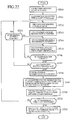
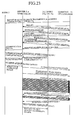
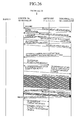
- a set of Fig. 25 and Fig. 26 is a diagram showing another procedure performed in cases where the failure of the data transmission of the desired digital content occurs.
- the consumer 1a receives a second desired content at another transmission condition specified by the consumer 1a while covering a charge for the second desired content itself and a high quality transmission charge with the charges for the desired digital content already paid by the bank 5.
- a transmission termination notice is sent from the server 31a of the digital content retailer 3a to the resource reservation servers 22a, 22b and 22c of the networks 21a, 21b and 21c, and a transmission no-completion notice and a message urging the consumer la to send a re-transmission request of another digital content to the digital content retailer 3a at the same transmission number are sent from the server 31a of the digital content retailer 3a to the terminal 11a of the consumer 1a.
- a second genre different from that of the desired digital content relating to the transmission failure is specified by the consumer la and is sent to the digital content retailer 3a in the step ST42
- a second desired content of the second genre is specified by the consumer 1a and is sent to the digital content retailer 3a in the step ST43
- a second transmission condition for the second desired content is specified by the consumer 1a and is sent to the digital content retailer 3a in the step ST44.
- the personal information such as a member's name
- the payment information such as a payment method and the transmission number previously used in the data transmission of the desired digital content are sent from the terminal 11a of the consumer 1a to the server 31a of the digital content retailer 3a in the step ST45.
- the digital content retailer 3a can know that the consumer 1a desires to receive the second desired content at the second transmission condition in place of the receiving of the desired digital content while covering a charge for the second desired content itself and a high quality transmission charge corresponding to the second desired transmission condition with the charges for the desired digital content already paid by the bank 5.
- a bandwidth reservation request is sent from the server 31a of the digital content retailer 3a to the resource reservation servers 22c, 22b and 22a of the backbone networks 21c, 21b and 21a in the step ST47.
- the second desired content differing from the desired digital content is downloaded from the content transmission number supplier 3a to the consumer 1a in response to the request by the consumer 1a.
- the transmission number corresponding to the desired digital content and the new transmission number corresponding to the second desired content are sent from the server 31a of the digital content retailer 3a to the terminal 11a of the consumer 1a, the consumer 1a can confirms that the charges for the second desired content indicated by the new transmission number is covered with the charges for the desired digital content indicated by the transmission number.
- the bank 5 settles an account of the difference with the digital content retailer 3a.
- the digital content retailer 3a can more reliably collect the charge for the desired digital content itself from the consumer la.
- the consumer la fails in receiving the desired digital content from the digital content retailer 3a, because the consumer la can receive the second desired digital content from the digital content retailer 3a while covering a charge for the second desired content itself and a high quality transmission charge for the second desired content with the charges for the desired digital content already paid to the digital content retailer 3a by the bank 5, the payment of the charges for the second desired digital content received in the consumer la can be simplified.
- the consumer la in cases where the consumer la purchases the desired digital content from the digital content retailer 3a through the backbone networks 21a, 21b and 21c, the consumer la can specify the downloading of the desired digital content at a high quality transmission condition.
- the bank 5 collects in one lump the payment of the consumer 1a corresponding to the charge for the desired digital content itself and the high quality transmission charge, the bank 5 pays the charges to the digital content retailer 3a, and the digital content retailer 3a pays the high quality transmission charge to the network operators 2a, 2b and 2c. Therefore, it is not required that the consumer 1a directly pays the high quality transmission charge to the network operators 2a, 2b and 2c, so that the payment of the consumer la can be efficiently performed in the same manner as in the third embodiment.
- the digital content retailer 3a can confirm the failure of the transmission of the desired digital content, it is not required that the consumer la proves the failure of the transmission of the desired digital content in the same manner as in the first embodiment.
- the data of the digital content is ciphered in the server 31a of the digital content retailer 3a and is downloaded through the backbone networks 21a, 21b and 21c, a probability that a user differing from the consumer la unjustly and illegally obtain the digital content can be reduced in the same manner as in the first embodiment.
- the timers 23a, 23b and 23c are arranged in the backbone networks 21a, 21b and 21c, when the transmission time period of the desired digital content to be downloaded from the server 31a of the digital content retailer 3a to the terminal lla of the consumer la exceeds the allowable data transmission time period set in the timers 23c, 23b and 23a, the transmission of the desired digital content is forcedly terminated by the server 31a of the digital content retailer 3a. Therefore, the bandwidth of the backbone networks 21c, 21b and 21a can be efficiently used in the same manner as in the second embodiment.
Landscapes
- Business, Economics & Management (AREA)
- Engineering & Computer Science (AREA)
- Accounting & Taxation (AREA)
- Computer Networks & Wireless Communication (AREA)
- Signal Processing (AREA)
- Finance (AREA)
- Strategic Management (AREA)
- General Business, Economics & Management (AREA)
- Theoretical Computer Science (AREA)
- General Physics & Mathematics (AREA)
- Physics & Mathematics (AREA)
- Development Economics (AREA)
- Economics (AREA)
- Marketing (AREA)
- Computer Security & Cryptography (AREA)
- Entrepreneurship & Innovation (AREA)
- Game Theory and Decision Science (AREA)
- Management, Administration, Business Operations System, And Electronic Commerce (AREA)
- Information Transfer Between Computers (AREA)
- Information Retrieval, Db Structures And Fs Structures Therefor (AREA)
- Reverberation, Karaoke And Other Acoustics (AREA)
- Data Exchanges In Wide-Area Networks (AREA)
- Computer And Data Communications (AREA)
- Financial Or Insurance-Related Operations Such As Payment And Settlement (AREA)
Abstract
Description
making the digital content retailer check through the network whether or not the consumer has a capability such as a memory capacity for receiving the desired digital content, before the desired digital content is downloaded to the consumer at the desired digital content transmission condition.
connecting the consumer to the network through a subscriber line which is composed of a telephone line, an optical fiber cable, a coaxial cable or a radio transmission line.
- making the consumer pay the charge for the desired digital content to the credit company in response to the bill: and
- making the credit company pay the charge paid by the consumer to the digital content retailer.
wherein the step of making the digital content retailer collect a charge includes:
Claims (28)
- A digital content downloading system using a network in which digital content is downloaded, comprising the steps of:making a consumer (1a, 1b, 1c) send both information designating a desired digital content selected by the consumer (1a, 1b, 1c) and a desired digital content transmission condition selected by the consumer (1a, 1b, 1c) to a digital content retailer (3a, 3b) possessing the desired digital content through a network (21a, 21b, 21c); making the digital content retailer (3a, 3b) reserve the network (21a, 21b, 21c) managed by a network operator (2a, 2b, 2c) according to the desired digital content transmission condition sent from the consumer (1a, 1b, 1c) ; making the digital content retailer (3a, 3b) download the desired digital content designated by the information to the consumer (1a, 1b, 1c) through the network (21a, 21b, 21c) reserved by the digital content retailer (3a, 3b) at the desired digital content transmission condition sent from the consumer (1a, 1b, 1c);making the digital content retailer (3a, 3b) collect a charge for the desired digital content, in which a transmission charge corresponding to the desired digital content transmission condition is included, from the consumer (1a, 1b, 1c); and making the digital content retailer (3a, 3b) pay the transmission charge to the network operator (2a, 2b, 2c).
- A digital content downloading system using a network, according to claim 1, wherein the desired digital content transmission condition selected by the consumer (1a, 1b, 1c) is a transmission time condition such as an urgent transmission condition, a date and time specifying transmission condition or a date specifying transmission condition.
- A digital content downloading system using a network, according to claim 1 or 2, in particular to claim 1, wherein the network (21a, 21b, 21c) is composed of a plurality of networks managed by a plurality of network operators (2a, 2b, 2c), and the desired digital content transmission condition selected by the consumer (1a, 1b, 1c) corresponds to a communication quality of each of the networks (21a, 21b, 21c).
- A digital content downloading system using a network, according to any of the preceding claims, in particular to claim 3, wherein the communication quality of each network (21a, 21b, 21c) is determined by one of a data transfer rate, a delay time, a delay variation, a burst size, a cell interval and a cell discard rate.
- A digital content downloading system using a network, according to any of the preceding claims, in particular to claim 3, wherein a bandwidth of the network (21a, 21b, 21c) is reserved with a time condition in the network reservation according to the desired digital content transmission condition.
- A digital content downloading system using a network, according to any of the preceding claims, in particular to claim 1, wherein the desired digital content transmission condition selected by the consumer (1a, 1b, 30 1c) is a bandwidth guarantee type transmission condition,
in which a transmission time period is guaranteed, or a bandwidth no-guarantee type transmission conditions, in which a transmission time period is not guaranteed, and the transmission charge is heightened as the transmission 5 time period is shortened. - A digital content downloading system using a network, according to any of the preceding claims, in particular to claim 1, wherein the step of making the digital content retailer (3a, 3b) download the desired digital content includes:
making the digital content retailer (3a, 3b) check through the network (21a, 21b, 21c) whether or not the consumer (1a, 1b, 1c) has a capability such as a memory capacity for receiving the desired digital content, before the desired digital content is downloaded to the consumer (1a, 1b, 1c) at the desired digital content transmission condition. - A digital content downloading system using a network, according to any of the preceding claims, in particular to claim 1, wherein the step of making the digitalcontent retailer (3a, 3b) download the desired digital content includes:connecting the consumer (1a, 1b, 1c) to the network (21a, 21b, 21c) through a subscriber line which is composed of a telephone line, an optical fiber cable, a coaxial cable or a radio transmission line.
- A digital content downloading system using a network, according to any of the preceding claims, in particular to claim 1, wherein the step of making the digital
content retailer (3a, 3b) download the desired digital content includes: making the digital content retailer (3a, 3b) send a transmission start notice to the consumer (1a, 1b, 1c) before the downloading of the desired digital content; making the network operator (2a, 2b, 2c) manage a transmission time period in the transmission of the desired digital content until the digital content retailer (3a, 3b) sends a transmission completion notice to the network operator (2a, 2b, 2c);making the network operator (2a, 2b, 2c) send a time-out notice to the digital content retailer (3a, 3b) in cases where the transmission time period exceeds a prescribed value; andmaking the digital content retailer (3a, 3b) forcedly terminate the downloading of the desired digital content in cases where the digital content retailer (3a, 3b) receives the time-out notice from the network operator (2a, 2b, 2c). - A digital content downloading system using a network, according, to any of the preceding claims, in particular to claim 1, wherein the step of making the digital
content retailer (3a, 3b) download the desired digital content includes:
making the digital content retailer (3a, 3b) cipher the desired digital content; making the digital content retailer (3a, 3b) download ciphered data of the desired digital content; and making the consumer (1a, 1b, 1c) decipher the ciphered data of the desired digital content to obtain the desired digital content. - A digital content downloading system using a network, according to any of the preceding claims, in particular to claim 1, wherein the step of making the
consumer (1a, 1b, 1c) send both the information and the desired digital content transmission condition includes:making the consumer (1a, 1b, 1c) send personal information and payment information of the consumer (1a, 1b, 1c) to the digital content retailer (3a, 3b); making the digital content retailer (3a, 3b) inquire of a credit company (4) whether or not the personal information and the payment information sent from the consumer (1a, 1b, 1c) is correct;making the credit company (4) perform the authentication of the consumer (1a, 1b, 1c) according to the personal information and the payment information; andmaking the credit company (4) send an authentication notice to the digital content retailer (3a, 3b) in cases where the personal information and the payment information is correct. - A digital content downloading system using a network, according to any of the preceding claims, in particular to claim 1, wherein the step of making the digital content retailer (3a, 3b) collect a charge for the desired digital content includes:making the digital content retailer (3a, 3b) send an accounting notice corresponding to the charge for the desired digital content to a credit company (4);making the credit company (4) send a bill, which corresponds to the charge for the desired digital content, to the consumer (1a, 1b, 1c) in response to the accounting notice:making the consumer (1a, 1b, 1c) pay the charge for the desired digital content to the credit company (4) in response to the bill: and making the credit company (4) pay the charge paid by the consumer (1a, 1b, 1c) to the digital content retailer (3a, 3b).
- A digital content downloading system using a network, according to any of the preceding claims, in particular claim 1, wherein the step of making the digital
content retailer (3a, 3b) download the desired digital content includes:making the consumer (1a, 1b, 1c) send a reception impossible notice to the digital content retailer (3a, 3b) in cases where the consumer ( 1a, 1b, 1c) fails in receiving the desired digital content;making the digital content retailer (3a, 3b) send a transmission termination notice to the network operator (2a, 2b, 2c); andmaking the digital content retailer (3a, 3b) send a transmission no-completion notice to the consumer ( 1a, 1b, 1c) - A digital content downloading system using a network, according to any of the preceding claims, in particular to claim 1, wherein 1rhe'desired digital content is a music file, a video file or a game software title.
- A digital content downloading system using a network in which digital content is downloaded, comprising the steps of:making a digital content retailer (3a, 3b) receive both information designating a desired digital content and a desired digital content transmission condition from a consumer (1a, 1b, 1c);making the digital content retailer (3a, 3b) reserve a network (21a, 21b, 21c) managed by a network operator (2a, 2b, 2c) according to the desired digital content transmission condition sent from the consumer (1a, 1b, 1c) ; making the digital content retailer (3a, 3b) download the desired digital content designated by the information to the consumer (1a, 1b, 1c) through the network (21a, 21b, 21c) according to the network reservation informed by the network operator (2a, 2b, 2c);making the digital content retailer (3a, 3b) collect a charge for the desired digital content, in which a transmission charge corresponding to the desired digital content transmission condition is included, from the consumer ( 1a, 1b, 1c) after the downloading of the desired digital content to the consumer (1a, 1b, 1c) is completed;and making the digital content retailer (3a, 3b) pay the transmission charge to the network operator (2a, 2b, 2c) .
- A digital content downloading system using a network, according to claim 15, wherein the information designating the desired digital content and the desired digital content transmission condition are sent from the consumer (1a, 1b, 1c) to the digital content retailer (3a, 3b) through the network (21a, 21b, 21c) or a telephone line.
- A digital content downloading system using a network, according to any of the preceding claims, in particular to claim 15, wherein the desired digital content is a music file, a video file or a game software title.
- A digital content downloading system using a network in which digital content is downloaded, comprising the steps of:making a network operator (2a, 2b, 2c) managing a network (21a, 21b, 21c) accept a reservation of the network (21a, 21b, 21c) according to a digital content transmission condition sent from a digital c ontent retailer (3a, 3b); making the network operator (2a, 2b, 2c) inform the digital content retailer (3a, 3b) of the network reservation;making the network operator (2a, 2b, 2c) download a particular digital content transmitted from the digital content retailer (3a, 3b) to a consumer (1a, 1b, 1c) through the reserved network (21a, 21b, 21c) according to the network reservation; andmaking the network operator (2a, 2b, 2c) receive a transmission charge corresponding to the digital content transmission condition from the digital content retailer (3a, 3b).
- A digital content downloading system using a network, according to claim 18, wherein the transmission charge is a charge corresponding to a communication quality of a downloading service of the particular digital content, and the consumer (1a, 1b, 1c) directly pays a network access charge different from the transmission charge to the network operator (2a, 2b, 2c).
- A digital content downloading system using a network, t according to any of claims 18 or 19, in particular to claim 18, wher network operator (2a, 2b, 2c) download the particular digital content includes:making the network operator (2a, 2b, 2c) manage a digital content transmission time period from a transmission start notice sent from the digital content retailer (3a, 3b) to a transmission completion notice sent from the digital content retailer (3a, 3b); andmaking the network operator (2a, 2b, 2c) send a time-out notice to the digital content retailer (3a, 3b) , in cases where the digital content transmission time period exceeds a prescribed value, to make the digital content retailer (3a, 3b) forcedly terminate the downloading of the particular digital content.
- A digital content downloading system using a network, according to any of claims 18 to 20, in particular to claim 18, wherein the particular digital content is a music file, a video file or a game software title.
- A digital content downloading system using a network in which digital content is downloaded, comprising the steps of:making a digital content retailer (3a, 3b) receive information designating a desired digital content, a desired digital content transmission condition and personal information and payment information of a consumer (1a, 1b, 1c) from the consumer (1a, 1b, 1c); making the digital content retailer (3a, 3b) reserve a network (21a, 21b, 21c) managed by a network operator (2a, 2b, 2c) according to the desired digital content transmission condition sent from the consumer (1a, 1b, 1c); making the digital content retailer (3a, 3b) download the desired digital content designated by the information to the consumer ( 1a, 1b, 1c) through the network (21a, 21b, 21c) according to the network reservation informed by the network operator (2a, 2b, 2c);making the digital content retailer (3a, 3b) collect a charge for the desired digital content, in which a transmission charge corresponding to the desired digital content transmission condition is included, from a bank (5) according to an authentication of the consumer (1a, 1b, 1c).which is performed by the bank (5) according to the personal information and the payment information of the consumer (1a, 1b, 1c); andmaking the digital content retailer (3a, 3b) pay the transmission charge to the network operator (2a, 2b, 2c) .
- A digital content downloading system using a network, according to claim 22, wherein the information designating the desired digital content, the desired digital content transmission condition and the personal information and the payment information of the consumer (1a, 1b, 1c) are sent from the consumer (1a, 1b, 1c) to the digital content retailer (3a, 3b) through the network (21a, 21b, 21c) or a telephone line.
- A digital content downloading system using a network, according to any of claims 22 or 23, in particular to claim 22, further comprising the step of: making the consumer (1a, 1b, 1c) deposit money in his or her account of the bank (5) before the information designating the desired digital content, the desired digital content transmission condition and the personal information and the payment information of the consumer (1a, 1b, 1c) are sent from the consumer (1a, 1b, 1c) to the digital content retailer (3a, 3b), wherein the step of making the digital content retailer (3a, 3b) collect a charge includes:
making the bank (5) pay out the charge for the desired digital content including the transmission charge corresponding to the desired digital content transmission condition from the account of the consumer (1a, 1b, 1c). - A digital content downloading system using a network, according to any of claims 22 to 24, in particular to claim 22, wherein the step of making the digital content retailer (3a, 3b) collect a charge is performed before the step of making the
- A digital content downloading system using a network, according to any of claims 22 to 25, in particular to claim 25, wherein the step of making the digital content retailer (3a, 3b) digital content includes:
making the digital content retailer (3a, 3b) receive a reception impossible notice sent from the consumer (1a, 1b, 1c) in cases where the consumer (1a, 1b, 1c) fails in receiving the desired digital content; making the digital content retailer (3a, 3b) send a transmission termination notice to the network operator (2a, 2b, 2c) in response to the reception impossible notice to make the network operator (2a, 2b, 2c) terminate the transmission of the desired digital content; and making the digital content retailer (3a, 3b) repay the charge for the desired digital content including the transmission charge corresponding to the desired digital content transmission condition to the bank (5) in response to the reception impossible notice. - A digital content downloading system using a network, according to any of claims 22 to 26, in particular claim 25, wherein the step of making the digital content retailer (3a, 3b) download the desired digital content includes:making the digital content retailer (3a, 3b) receive a reception impossible notice sent from the consumer (1a, 1b, 1c) in cases where the consumer (1a, 1b, 1c) fails in receiving the desired digital content;making the digital content retailer (3a, 3b) send a transmission termination notice to the network operator (2a, 2b, 2c) in response to the reception impossible notice to make the network operator (2a, 2b, 2c) terminate the transmission of the desired digital content;making the digital content retailer (3a, 3b) receive second information designating a second desired digital content and a second desired digital content transmission condition from the consumer (1a, 1b, 1c);making the digital content retailer (3a, 3b) reserve the network (21a, 21b, 21c) managed by the network operator (2a, 2b, 2c) according to the second desired digital content transmission condition sent from the consumer (1a, 1b, 1c); and making the digital content retailer (3a, 3b) download the second desired digital content designated by the second information to the consumer (1a, 1b, 1c) through the network (21a, 21b, 21c) according to the network reservation informed by the network operator (2a, 2b, 2c).
- A digital content downloading s stem using a network, according to any of claims 22 to 27, in particular to claim 22, wherein the desired digital content is a music file, a video file or a game software title.
Applications Claiming Priority (2)
| Application Number | Priority Date | Filing Date | Title |
|---|---|---|---|
| JP35533099 | 1999-12-15 | ||
| JP35533099A JP2001175757A (en) | 1999-12-15 | 1999-12-15 | Digital content distribution system by network |
Publications (3)
| Publication Number | Publication Date |
|---|---|
| EP1109369A2 true EP1109369A2 (en) | 2001-06-20 |
| EP1109369A3 EP1109369A3 (en) | 2004-07-28 |
| EP1109369B1 EP1109369B1 (en) | 2007-07-18 |
Family
ID=18443313
Family Applications (1)
| Application Number | Title | Priority Date | Filing Date |
|---|---|---|---|
| EP00122876A Expired - Lifetime EP1109369B1 (en) | 1999-12-15 | 2000-10-20 | Digital content downloading system using networks |
Country Status (5)
| Country | Link |
|---|---|
| US (1) | US7072861B1 (en) |
| EP (1) | EP1109369B1 (en) |
| JP (1) | JP2001175757A (en) |
| CA (1) | CA2323370A1 (en) |
| DE (1) | DE60035570T2 (en) |
Cited By (9)
| Publication number | Priority date | Publication date | Assignee | Title |
|---|---|---|---|---|
| WO2003032599A3 (en) * | 2001-10-04 | 2003-06-05 | Koninkl Philips Electronics Nv | Digital content catering system |
| EP1367845A1 (en) * | 2002-05-31 | 2003-12-03 | France Telecom Sa | Method of data transmission between a server and a mobile terminal, at an advantageous time |
| DE10244463A1 (en) * | 2002-09-24 | 2004-04-01 | Siemens Ag | Method for billing a fee-based use of services offered by a service provider |
| EP1515512A3 (en) * | 2003-09-11 | 2006-04-12 | Nec Corporation | Location based information delivery |
| WO2006063868A1 (en) * | 2004-12-14 | 2006-06-22 | Alcatel Lucent | Scheduoled downloading of data from a network |
| EP1843569A1 (en) * | 2006-04-07 | 2007-10-10 | Vodafone Holding GmbH | Mobile radio apparatus and method for transmitting digital images |
| CN100438401C (en) * | 2002-12-05 | 2008-11-26 | 巴比禄股份有限公司 | Web-contents receiving system and apparatus for providing an access point |
| US7987238B2 (en) * | 2007-03-30 | 2011-07-26 | Microsoft Corporation | Managing content remotely on a device |
| EP2408142A1 (en) * | 2010-07-14 | 2012-01-18 | Brother Kogyo Kabushiki Kaisha | Communication device |
Families Citing this family (14)
| Publication number | Priority date | Publication date | Assignee | Title |
|---|---|---|---|---|
| JP2003022405A (en) * | 2001-07-10 | 2003-01-24 | Hitachi Electronics Service Co Ltd | Information distribution and equipment rental system |
| JP2003050936A (en) * | 2001-08-08 | 2003-02-21 | Sony Corp | how to access |
| DE10148540A1 (en) * | 2001-10-01 | 2003-04-24 | Siemens Ag | Procedure for operating a charging system and charging system |
| JP4037132B2 (en) * | 2002-03-04 | 2008-01-23 | ニフティ株式会社 | Personal settlement support method |
| JP2003256736A (en) * | 2002-03-04 | 2003-09-12 | Nifty Corp | Method for supporting settlement between individual persons |
| GB2387064B (en) * | 2002-03-26 | 2004-06-16 | Motorola Inc | Method and system for construction and communication of data on network access and service transactions in a telecommunication network |
| JP2004030374A (en) | 2002-06-27 | 2004-01-29 | Fujitsu Ltd | Information processing apparatus, program, and method for transmitting content by security method according to license policy |
| US7225329B2 (en) * | 2003-03-19 | 2007-05-29 | Sbc Properties, L.P. | Enhanced CSU/DSU (channel service unit/data service unit) |
| KR101001048B1 (en) | 2003-04-25 | 2010-12-14 | 애플 인크. | Method and system for distributing content through secure network |
| US20050086102A1 (en) * | 2003-10-15 | 2005-04-21 | International Business Machines Corporation | Method and system for validation of service consumers |
| US7664099B1 (en) | 2004-12-30 | 2010-02-16 | At&T Corp. | Method and apparatus for providing shared services |
| US8352323B2 (en) * | 2007-11-30 | 2013-01-08 | Blaze Mobile, Inc. | Conducting an online payment transaction using an NFC enabled mobile communication device |
| EP2622872B1 (en) * | 2010-09-28 | 2014-10-08 | British Telecommunications Public Limited Company | Communications network |
| KR102182750B1 (en) * | 2019-09-16 | 2020-11-25 | 주식회사 마크애니 | System and method for distributing data using block chain |
Family Cites Families (32)
| Publication number | Priority date | Publication date | Assignee | Title |
|---|---|---|---|---|
| JPH0722996A (en) | 1993-07-05 | 1995-01-24 | Sharp Corp | Mobile object identification device |
| US5694546A (en) * | 1994-05-31 | 1997-12-02 | Reisman; Richard R. | System for automatic unattended electronic information transport between a server and a client by a vendor provided transport software with a manifest list |
| JP2776301B2 (en) * | 1994-08-30 | 1998-07-16 | 日本電気株式会社 | Line reservation apparatus and method, line reservation receiving apparatus and method |
| JP3630722B2 (en) | 1994-09-02 | 2005-03-23 | 株式会社東芝 | Communication control device and communication control method |
| JP3578504B2 (en) | 1995-01-10 | 2004-10-20 | 三菱電機株式会社 | Communication path selection method |
| JP3946275B2 (en) | 1995-01-10 | 2007-07-18 | 富士通株式会社 | Remote installation system and method |
| JPH08204779A (en) | 1995-01-25 | 1996-08-09 | Omron Corp | Communication device and communication method |
| GB9508283D0 (en) * | 1995-02-07 | 1995-06-14 | British Telecomm | Information services provision and management |
| US5710887A (en) * | 1995-08-29 | 1998-01-20 | Broadvision | Computer system and method for electronic commerce |
| JPH0984087A (en) | 1995-09-14 | 1997-03-28 | Casio Comput Co Ltd | Two-way wireless communication system |
| US5918213A (en) * | 1995-12-22 | 1999-06-29 | Mci Communications Corporation | System and method for automated remote previewing and purchasing of music, video, software, and other multimedia products |
| US5905736A (en) * | 1996-04-22 | 1999-05-18 | At&T Corp | Method for the billing of transactions over the internet |
| JPH1051445A (en) | 1996-08-05 | 1998-02-20 | Canon Inc | Billing system and method |
| US5999526A (en) | 1996-11-26 | 1999-12-07 | Lucent Technologies Inc. | Method and apparatus for delivering data from an information provider using the public switched network |
| US5898668A (en) * | 1996-12-13 | 1999-04-27 | Siemens Information And Communication Networks, Inc. | Method and system for increasing quality of service at or below a threshold cost |
| JP3466039B2 (en) | 1997-02-26 | 2003-11-10 | 株式会社東芝 | Communication device and communication method |
| JPH10269291A (en) | 1997-03-26 | 1998-10-09 | Sony Corp | Digital content distribution management system |
| JPH10308776A (en) | 1997-05-08 | 1998-11-17 | Hitachi Ltd | Network resource reservation method |
| US6134589A (en) | 1997-06-16 | 2000-10-17 | Telefonaktiebolaget Lm Ericsson | Dynamic quality control network routing |
| JPH1117775A (en) | 1997-06-20 | 1999-01-22 | Sony Corp | Serial interface circuit |
| JPH1132020A (en) | 1997-07-08 | 1999-02-02 | Matsushita Electric Ind Co Ltd | Data transmission system and data broadcasting system |
| JP3326369B2 (en) * | 1997-09-12 | 2002-09-24 | 株式会社東芝 | Communication device |
| US6157924A (en) * | 1997-11-07 | 2000-12-05 | Bell & Howell Mail Processing Systems Company | Systems, methods, and computer program products for delivering information in a preferred medium |
| JPH11155030A (en) | 1997-11-21 | 1999-06-08 | Sharp Corp | Optimal connection control method for public telephone line and recording medium storing the control program |
| EP0921487A3 (en) * | 1997-12-08 | 2000-07-26 | Nippon Telegraph and Telephone Corporation | Method and system for billing on the internet |
| JPH11272711A (en) | 1998-03-24 | 1999-10-08 | Ntt Data Corp | Information provision method |
| US6317438B1 (en) * | 1998-04-14 | 2001-11-13 | Harold Herman Trebes, Jr. | System and method for providing peer-oriented control of telecommunications services |
| JPH11328050A (en) | 1998-05-14 | 1999-11-30 | Nec Commun Syst Ltd | Network relay storage facility that allows data transfer reservation by unspecified users |
| US6226618B1 (en) * | 1998-08-13 | 2001-05-01 | International Business Machines Corporation | Electronic content delivery system |
| JP2000332750A (en) | 1999-05-24 | 2000-11-30 | Fujitsu Ltd | Centralized billing and settlement system using network access agents |
| US6636505B1 (en) * | 1999-05-28 | 2003-10-21 | 3Com Corporation | Method for service provisioning a broadband modem |
| US6529950B1 (en) * | 1999-06-17 | 2003-03-04 | International Business Machines Corporation | Policy-based multivariate application-level QoS negotiation for multimedia services |
-
1999
- 1999-12-15 JP JP35533099A patent/JP2001175757A/en active Pending
-
2000
- 2000-10-16 CA CA002323370A patent/CA2323370A1/en not_active Abandoned
- 2000-10-20 EP EP00122876A patent/EP1109369B1/en not_active Expired - Lifetime
- 2000-10-20 US US09/692,197 patent/US7072861B1/en not_active Expired - Fee Related
- 2000-10-20 DE DE60035570T patent/DE60035570T2/en not_active Expired - Lifetime
Cited By (12)
| Publication number | Priority date | Publication date | Assignee | Title |
|---|---|---|---|---|
| WO2003032599A3 (en) * | 2001-10-04 | 2003-06-05 | Koninkl Philips Electronics Nv | Digital content catering system |
| EP1367845A1 (en) * | 2002-05-31 | 2003-12-03 | France Telecom Sa | Method of data transmission between a server and a mobile terminal, at an advantageous time |
| FR2840473A1 (en) * | 2002-05-31 | 2003-12-05 | France Telecom | METHOD FOR TRANSMITTING DATA BETWEEN A SERVER AND A MOBILE TERMINAL, AT A PRIVILEGED MOMENT |
| DE10244463A1 (en) * | 2002-09-24 | 2004-04-01 | Siemens Ag | Method for billing a fee-based use of services offered by a service provider |
| DE10244463B4 (en) * | 2002-09-24 | 2004-11-18 | Siemens Ag | Method for billing a fee-based use of services offered by a service provider |
| CN100438401C (en) * | 2002-12-05 | 2008-11-26 | 巴比禄股份有限公司 | Web-contents receiving system and apparatus for providing an access point |
| EP1515512A3 (en) * | 2003-09-11 | 2006-04-12 | Nec Corporation | Location based information delivery |
| WO2006063868A1 (en) * | 2004-12-14 | 2006-06-22 | Alcatel Lucent | Scheduoled downloading of data from a network |
| EP1843569A1 (en) * | 2006-04-07 | 2007-10-10 | Vodafone Holding GmbH | Mobile radio apparatus and method for transmitting digital images |
| US7987238B2 (en) * | 2007-03-30 | 2011-07-26 | Microsoft Corporation | Managing content remotely on a device |
| EP2408142A1 (en) * | 2010-07-14 | 2012-01-18 | Brother Kogyo Kabushiki Kaisha | Communication device |
| US9065659B2 (en) | 2010-07-14 | 2015-06-23 | Brother Kogyo Kabushiki Kaisha | Communication device |
Also Published As
| Publication number | Publication date |
|---|---|
| JP2001175757A (en) | 2001-06-29 |
| EP1109369A3 (en) | 2004-07-28 |
| US7072861B1 (en) | 2006-07-04 |
| DE60035570T2 (en) | 2008-04-17 |
| DE60035570D1 (en) | 2007-08-30 |
| EP1109369B1 (en) | 2007-07-18 |
| CA2323370A1 (en) | 2001-06-15 |
Similar Documents
| Publication | Publication Date | Title |
|---|---|---|
| EP1109369B1 (en) | Digital content downloading system using networks | |
| AU741703B2 (en) | Implementation of access service | |
| FI104667B (en) | Implementation of access service | |
| CA2323123C (en) | Digital content downloading system using networks | |
| US6975594B1 (en) | System and method for providing controlled broadband access bandwidth | |
| US6047051A (en) | Implementation of charging in a telecommunications system | |
| US7406707B2 (en) | Methods and systems for accessing networks methods and systems for accessing the internet | |
| US7085924B2 (en) | Authentication methods and systems for accessing networks, authentication methods and systems for accessing the internet | |
| US6134589A (en) | Dynamic quality control network routing | |
| CA2294722C (en) | Procedure for setting up a secure service connection in a telecommunication system | |
| US20010013020A1 (en) | Service providing system and method used therefor | |
| JP2005102260A (en) | Communication device | |
| US20010018711A1 (en) | Data communication | |
| CN100568901C (en) | Method and device for credit management of an access telecommunications network | |
| US7376224B2 (en) | Pay-per-use communication node capabilities | |
| KR100873200B1 (en) | Method and system for providing detachable call voucher service in mobile communication network | |
| AU759926B2 (en) | Implementation of charging in a telecommunications system |
Legal Events
| Date | Code | Title | Description |
|---|---|---|---|
| PUAI | Public reference made under article 153(3) epc to a published international application that has entered the european phase |
Free format text: ORIGINAL CODE: 0009012 |
|
| AK | Designated contracting states |
Kind code of ref document: A2 Designated state(s): AT BE CH CY DE DK ES FI FR GB GR IE IT LI LU MC NL PT SE |
|
| AX | Request for extension of the european patent |
Free format text: AL;LT;LV;MK;RO;SI |
|
| PUAL | Search report despatched |
Free format text: ORIGINAL CODE: 0009013 |
|
| AK | Designated contracting states |
Kind code of ref document: A3 Designated state(s): AT BE CH CY DE DK ES FI FR GB GR IE IT LI LU MC NL PT SE |
|
| AX | Request for extension of the european patent |
Extension state: AL LT LV MK RO SI |
|
| RIC1 | Information provided on ipc code assigned before grant |
Ipc: 7H 04L 12/14 B Ipc: 7H 04L 29/06 A Ipc: 7G 06F 17/60 B Ipc: 7G 07F 19/00 B |
|
| 17P | Request for examination filed |
Effective date: 20040806 |
|
| 17Q | First examination report despatched |
Effective date: 20040910 |
|
| AKX | Designation fees paid |
Designated state(s): DE FR GB |
|
| RAP1 | Party data changed (applicant data changed or rights of an application transferred) |
Owner name: MITSUBISHI DENKI KABUSHIKI KAISHA |
|
| RIC1 | Information provided on ipc code assigned before grant |
Ipc: H04L 29/06 20060101AFI20061012BHEP Ipc: H04L 12/14 20060101ALI20061012BHEP Ipc: G07F 19/00 20060101ALI20061012BHEP Ipc: G06Q 20/00 20060101ALI20061012BHEP |
|
| GRAP | Despatch of communication of intention to grant a patent |
Free format text: ORIGINAL CODE: EPIDOSNIGR1 |
|
| GRAS | Grant fee paid |
Free format text: ORIGINAL CODE: EPIDOSNIGR3 |
|
| GRAA | (expected) grant |
Free format text: ORIGINAL CODE: 0009210 |
|
| AK | Designated contracting states |
Kind code of ref document: B1 Designated state(s): DE FR GB |
|
| REG | Reference to a national code |
Ref country code: GB Ref legal event code: FG4D |
|
| REF | Corresponds to: |
Ref document number: 60035570 Country of ref document: DE Date of ref document: 20070830 Kind code of ref document: P |
|
| ET | Fr: translation filed | ||
| PLBE | No opposition filed within time limit |
Free format text: ORIGINAL CODE: 0009261 |
|
| STAA | Information on the status of an ep patent application or granted ep patent |
Free format text: STATUS: NO OPPOSITION FILED WITHIN TIME LIMIT |
|
| 26N | No opposition filed |
Effective date: 20080421 |
|
| REG | Reference to a national code |
Ref country code: GB Ref legal event code: 746 Effective date: 20090305 |
|
| PGFP | Annual fee paid to national office [announced via postgrant information from national office to epo] |
Ref country code: FR Payment date: 20121018 Year of fee payment: 13 Ref country code: DE Payment date: 20121017 Year of fee payment: 13 |
|
| PGFP | Annual fee paid to national office [announced via postgrant information from national office to epo] |
Ref country code: GB Payment date: 20121017 Year of fee payment: 13 |
|
| GBPC | Gb: european patent ceased through non-payment of renewal fee |
Effective date: 20131020 |
|
| PG25 | Lapsed in a contracting state [announced via postgrant information from national office to epo] |
Ref country code: GB Free format text: LAPSE BECAUSE OF NON-PAYMENT OF DUE FEES Effective date: 20131020 |
|
| REG | Reference to a national code |
Ref country code: FR Ref legal event code: ST Effective date: 20140630 |
|
| REG | Reference to a national code |
Ref country code: DE Ref legal event code: R119 Ref document number: 60035570 Country of ref document: DE Effective date: 20140501 |
|
| PG25 | Lapsed in a contracting state [announced via postgrant information from national office to epo] |
Ref country code: FR Free format text: LAPSE BECAUSE OF NON-PAYMENT OF DUE FEES Effective date: 20131031 Ref country code: DE Free format text: LAPSE BECAUSE OF NON-PAYMENT OF DUE FEES Effective date: 20140501 |