EP1107499A1 - Data transmission method, data transmission system, sending device and receiving device - Google Patents
Data transmission method, data transmission system, sending device and receiving device Download PDFInfo
- Publication number
- EP1107499A1 EP1107499A1 EP00935548A EP00935548A EP1107499A1 EP 1107499 A1 EP1107499 A1 EP 1107499A1 EP 00935548 A EP00935548 A EP 00935548A EP 00935548 A EP00935548 A EP 00935548A EP 1107499 A1 EP1107499 A1 EP 1107499A1
- Authority
- EP
- European Patent Office
- Prior art keywords
- error
- data
- frame
- detecting code
- frame data
- Prior art date
- Legal status (The legal status is an assumption and is not a legal conclusion. Google has not performed a legal analysis and makes no representation as to the accuracy of the status listed.)
- Granted
Links
Images







Classifications
-
- H—ELECTRICITY
- H04—ELECTRIC COMMUNICATION TECHNIQUE
- H04L—TRANSMISSION OF DIGITAL INFORMATION, e.g. TELEGRAPHIC COMMUNICATION
- H04L1/00—Arrangements for detecting or preventing errors in the information received
-
- H—ELECTRICITY
- H04—ELECTRIC COMMUNICATION TECHNIQUE
- H04L—TRANSMISSION OF DIGITAL INFORMATION, e.g. TELEGRAPHIC COMMUNICATION
- H04L1/00—Arrangements for detecting or preventing errors in the information received
- H04L1/0001—Systems modifying transmission characteristics according to link quality, e.g. power backoff
- H04L1/0023—Systems modifying transmission characteristics according to link quality, e.g. power backoff characterised by the signalling
- H04L1/0032—Without explicit signalling
-
- H—ELECTRICITY
- H04—ELECTRIC COMMUNICATION TECHNIQUE
- H04L—TRANSMISSION OF DIGITAL INFORMATION, e.g. TELEGRAPHIC COMMUNICATION
- H04L1/00—Arrangements for detecting or preventing errors in the information received
- H04L1/0001—Systems modifying transmission characteristics according to link quality, e.g. power backoff
- H04L1/0002—Systems modifying transmission characteristics according to link quality, e.g. power backoff by adapting the transmission rate
-
- H—ELECTRICITY
- H04—ELECTRIC COMMUNICATION TECHNIQUE
- H04L—TRANSMISSION OF DIGITAL INFORMATION, e.g. TELEGRAPHIC COMMUNICATION
- H04L1/00—Arrangements for detecting or preventing errors in the information received
- H04L1/0001—Systems modifying transmission characteristics according to link quality, e.g. power backoff
- H04L1/0023—Systems modifying transmission characteristics according to link quality, e.g. power backoff characterised by the signalling
- H04L1/0025—Transmission of mode-switching indication
-
- H—ELECTRICITY
- H04—ELECTRIC COMMUNICATION TECHNIQUE
- H04L—TRANSMISSION OF DIGITAL INFORMATION, e.g. TELEGRAPHIC COMMUNICATION
- H04L1/00—Arrangements for detecting or preventing errors in the information received
- H04L1/0001—Systems modifying transmission characteristics according to link quality, e.g. power backoff
- H04L1/0036—Systems modifying transmission characteristics according to link quality, e.g. power backoff arrangements specific to the receiver
- H04L1/0038—Blind format detection
-
- H—ELECTRICITY
- H04—ELECTRIC COMMUNICATION TECHNIQUE
- H04L—TRANSMISSION OF DIGITAL INFORMATION, e.g. TELEGRAPHIC COMMUNICATION
- H04L1/00—Arrangements for detecting or preventing errors in the information received
- H04L1/004—Arrangements for detecting or preventing errors in the information received by using forward error control
- H04L1/0041—Arrangements at the transmitter end
-
- H—ELECTRICITY
- H04—ELECTRIC COMMUNICATION TECHNIQUE
- H04L—TRANSMISSION OF DIGITAL INFORMATION, e.g. TELEGRAPHIC COMMUNICATION
- H04L1/00—Arrangements for detecting or preventing errors in the information received
- H04L1/004—Arrangements for detecting or preventing errors in the information received by using forward error control
- H04L1/0045—Arrangements at the receiver end
- H04L1/0046—Code rate detection or code type detection
-
- H—ELECTRICITY
- H04—ELECTRIC COMMUNICATION TECHNIQUE
- H04L—TRANSMISSION OF DIGITAL INFORMATION, e.g. TELEGRAPHIC COMMUNICATION
- H04L1/00—Arrangements for detecting or preventing errors in the information received
- H04L1/004—Arrangements for detecting or preventing errors in the information received by using forward error control
- H04L1/0045—Arrangements at the receiver end
- H04L1/0054—Maximum-likelihood or sequential decoding, e.g. Viterbi, Fano, ZJ algorithms
-
- H—ELECTRICITY
- H04—ELECTRIC COMMUNICATION TECHNIQUE
- H04L—TRANSMISSION OF DIGITAL INFORMATION, e.g. TELEGRAPHIC COMMUNICATION
- H04L1/00—Arrangements for detecting or preventing errors in the information received
- H04L1/004—Arrangements for detecting or preventing errors in the information received by using forward error control
- H04L1/0056—Systems characterized by the type of code used
- H04L1/0061—Error detection codes
-
- H—ELECTRICITY
- H04—ELECTRIC COMMUNICATION TECHNIQUE
- H04L—TRANSMISSION OF DIGITAL INFORMATION, e.g. TELEGRAPHIC COMMUNICATION
- H04L1/00—Arrangements for detecting or preventing errors in the information received
- H04L1/004—Arrangements for detecting or preventing errors in the information received by using forward error control
- H04L1/0056—Systems characterized by the type of code used
- H04L1/0071—Use of interleaving
-
- H—ELECTRICITY
- H04—ELECTRIC COMMUNICATION TECHNIQUE
- H04L—TRANSMISSION OF DIGITAL INFORMATION, e.g. TELEGRAPHIC COMMUNICATION
- H04L1/00—Arrangements for detecting or preventing errors in the information received
- H04L1/0078—Avoidance of errors by organising the transmitted data in a format specifically designed to deal with errors, e.g. location
- H04L1/0079—Formats for control data
-
- H—ELECTRICITY
- H04—ELECTRIC COMMUNICATION TECHNIQUE
- H04L—TRANSMISSION OF DIGITAL INFORMATION, e.g. TELEGRAPHIC COMMUNICATION
- H04L25/00—Baseband systems
- H04L25/02—Details ; arrangements for supplying electrical power along data transmission lines
- H04L25/0262—Arrangements for detecting the data rate of an incoming signal
-
- H—ELECTRICITY
- H04—ELECTRIC COMMUNICATION TECHNIQUE
- H04L—TRANSMISSION OF DIGITAL INFORMATION, e.g. TELEGRAPHIC COMMUNICATION
- H04L9/00—Cryptographic mechanisms or cryptographic arrangements for secret or secure communications; Network security protocols
- H04L9/40—Network security protocols
-
- H—ELECTRICITY
- H04—ELECTRIC COMMUNICATION TECHNIQUE
- H04L—TRANSMISSION OF DIGITAL INFORMATION, e.g. TELEGRAPHIC COMMUNICATION
- H04L69/00—Network arrangements, protocols or services independent of the application payload and not provided for in the other groups of this subclass
- H04L69/30—Definitions, standards or architectural aspects of layered protocol stacks
- H04L69/32—Architecture of open systems interconnection [OSI] 7-layer type protocol stacks, e.g. the interfaces between the data link level and the physical level
- H04L69/322—Intralayer communication protocols among peer entities or protocol data unit [PDU] definitions
- H04L69/324—Intralayer communication protocols among peer entities or protocol data unit [PDU] definitions in the data link layer [OSI layer 2], e.g. HDLC
Definitions
- an amount of information to be transmitted is not always constant in terms of time, but generally may change from time to time.
- a decision error rate in determining the rate depends on a word length of the error-detecting code and doesn't decrease below a certain rate-decision error rate (namely, a probability of determining that no transmission error exists for an erroneous rate) even if the transmission error goes down.
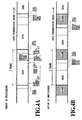
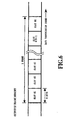
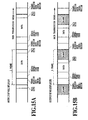
- FIGS. 1A and 1B are diagrams showing an example of transmission bit arrangement of the conventional scheme.
- the transmitting side arranges the CRC bits always at the first position of the frame, that is, ahead of the transmitted data and transmits, it is essential to store temporarily the whole bits of the transmitted data in memory until calculation of the error-detecting code for the transmitted data is completed.
- Such buffer memory becomes large in size in proportion to the number of the transmitted data bits of one frame, and when a huge amount of the transmitted data is sent, hardware scale of the memory presents a problem.
- variable rate data transmission that is assumed in WO96/26582 and WO97/50219
- the number of the transmitted data bits in the frame is always a finite value and the case where the number of bits is zero was not described.
- the number of the transmitted data bits to be sent becomes zero, for example, as a silent interval in the case of transmission of voice information (namely, an interval when a sender does not talk).
- a parity bit or parity bits of the conventional error-detecting code is the one that is calculated for a transmitted data sequence of a finite size and transmitted together with the data, and in such cases as mentioned above where the number of the transmitted data bits becomes zero, commonly the error-detecting code is not added. This means that the rate detection method on the basis of the error-detecting code as described in WO96/26582 and WO97/50219 cannot be applied as it is.
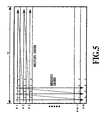
- ⁇ for obtaining desired detection performance may differ for each final bit position (i.e. different number of the transmitted data bits in the frame) depending on a distribution tendency of bit transmission errors in the transmission path.
- the rate detection performance varies according to the final bit position; therefore there arises a problem in that average quality of the variable rate data transmission including the rate detection performance changes when a distribution of occurrence probability for transmission rates (final bit positions) varies.
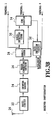
- an object of the present invention is, in the variable rate data transmission, to decrease the probability of detecting the rate mistakenly at the receiving side and to eliminate the need for providing buffer for temporarily storing the transmitted data at the transmitting side.
- Another object of the present invention is, in a broad area of communication environments and variable rate conditions, to make it possible to implement a high-efficiency and high-quality variable rate data transmission.
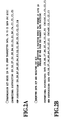
- FIGS. 2A and 2B are diagrams showing examples of the transmission bit arrangements of the conventional scheme and of the scheme according to the present invention.
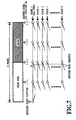
- new postposition since the codeword arrangement at the receiving side is discontinuous as D1, D0, C0, there does not occur a problem in that the probability of detecting the rate mistakenly increases as the detection position approaches the correct rate position and a low probability of detecting the rate mistakenly that is determined by the word length of the CRC code can be obtained constantly, from a detection position adjacent to the correct position to a detection position remote therefrom.
- bit arrangement according to the present invention is such that CRC is arranged after the transmitted data, it is not necessary to provide the buffer for temporarily storing the transmitted data while maintaining the rate detection performance high as mentioned above and hardware can be implemented with a small circuit scale.
- the receiving side conducts the rate detection including the final bit position when the number of data bits is zero -- regarding the error detection of this case, the calculation of the error-detecting code (re-coding) for the received data is unnecessary and all that is needed is only to compare the received parity-bit equivalent bits with the previously-specified bit pattern.
- the length of the above-mentioned bit pattern may be the same as that of the parity bits of the error-detecting code (or CRC) that is given when the number of other data bits is not zero to use the circuit in common. However, these lengths may be different according to need.
- CRC error-detecting code
- the present invention makes it possible to conduct the decision-making by setting different values of a set threshold ⁇ used for threshold decision ( ⁇ 1, ⁇ 2,... , ⁇ L,..., ⁇ N) which are corresponding to respective final bit positions (respective transmission rate), other than a single set threshold.
- a value of each ⁇ L may be altered so as to be always an optimal value in accordance with the change of the communication environment.
- the same value may be used for a part repeatedly if necessary.
- the invention as claimed in claim 1 is a data transmission method that puts variable length transmitted data into frames of a fixed time length and transmits these frames, comprising the steps of:
- the invention as claimed in claim 2 is the data transmission method as claimed in claim 1, wherein
- the invention as claimed in claim 4 is a data transmission method that puts variable length transmitted data into frames of a fixed time length and transmits these frames, comprising the steps of:
- the invention as claimed in claim 5 is the data transmission method as claimed in any one of claims 1-4, further comprising the steps of:
- the invention as claimed in claim 7 is the data transmission method as claimed in claim 6, wherein at the receiving side, the predetermined range regarding the likelihood difference at the step of deciding depends on the assumed final bit position of the frame data.
- the invention as claimed in claim 10 is the data transmission method as claimed in any one of claims 6-9, further comprising the step of:
- the invention as claimed in claim 11 is the data transmission method as claimed in claim 10, wherein at the transmitting side, the step of conducting the error-correcting coding conducts, for the transmission rate information, independent error-correcting coding that is separate from the error-correcting coding for the transmitted data, the error-detecting code, and the tail bit.
- the invention as claimed in claim 12 is the data transmission method as claimed in claim 11, wherein at the transmitting side, the step of conducting the error-correcting coding conducts the error-correcting coding of the transmission rate information by using a block code.
- the invention as claimed in claim 15 is the data transmission method as claimed in any one of claims 6-14, wherein at the receiving side, if among the assumed final bit positions of the frame data exist a plurality of positions where the obtained likelihood difference is within the predetermined range and the assumed error-detecting code agrees with the error-detecting code calculated on the basis of the assumed transmitted data, the step of deciding decides that a position where the obtained likelihood difference becomes the minimum is the final bit position of the frame data.
- the invention as claimed in claim 16 is the data transmission method as claimed in claim 5, further comprising the step of:
- the invention as claimed in claim 17 is the data transmission method as claimed in claim 16, wherein
- the invention as claimed in claim 18 is the data transmission method as claimed in claim 17, wherein at the receiving side, the predetermined range regarding the likelihood difference at the step of determining depends on the assumed final bit position of the frame data.
- the invention as claimed in claim 19 is a data transmission method that puts variable length transmitted data into frames of a fixed time length and transmits these frames, comprising the steps of:
- the invention as claimed in claim 20 is a data transmission method that puts variable length transmitted data into frames of a fixed time length and transmits these frames, comprising the steps of:
- the invention as claimed in claim 21 is the data transmission method as claimed in any one of claims 17-20, wherein at the receiving side, if among the assumed final bit positions of the frame data exist a plurality of positions where the obtained likelihood difference is within the predetermined range and at the same time the assumed error-detecting code agrees with the error-detecting code calculated on the basis of the assumed transmitted data, the step of deciding decides that a position where the obtained likelihood difference becomes the minimum is the final bit position of the frame data.
- the invention as claimed in claim 22 is the data transmission method as claimed in any one of claims 16-21, wherein at the transmitting side, the step of conducting the error-correcting coding conducts, for the transmission rate information, independent error-correcting coding that is separate from the error-correcting coding for the transmitted data, the error-detecting code, and the tail bit.
- the invention as claimed in claim 23 is the data transmission method as claimed in claim 22, wherein at the transmitting side, the step of conducting the error-correcting coding conducts the error-correcting coding of the transmission rate information by using a block code.
- the invention as claimed in claim 24 is the data transmission method as claimed in any one of claims 16-21, wherein at the transmitting side, the step of conducting the error-correcting coding conducts the error-correcting coding of all of the transmission rate information, the transmitted data, the error-detecting code, and the tail bit collectively with a convolutional code.
- the invention as claimed in claim 25 is the data transmission method as claimed in any one of claims 1-24, wherein the error-detecting code is a CRC code.
- the invention as claimed in claim 26 is a data transmission system that puts variable length transmitted data into frames of a fixed time length and transmits these frames, comprising:
- the invention as claimed in claim 29 is a data transmission system that puts variable length transmitted data into frames of a fixed time length and transmits these frames, comprising:
- the invention as claimed in claim 30 is the data transmission system as claimed in any one of claims 26-29, further comprising:
- the invention as claimed in claim 31 is the data transmission system as claimed in claim 30, wherein
- the invention as claimed in claim 32 is the data transmission system as claimed in claim 31, wherein in the receiver, the predetermined range regarding the likelihood difference at the means for deciding depends on the assumed final bit position of the frame data.
- the invention as claimed in claim 33 is a data transmission system that puts variable length transmitted data into frames of a fixed time length and transmits these frames, comprising:
- the invention as claimed in claim 34 is a data transmission system that puts variable length transmitted data into frames of a fixed time length and transmits these frames, comprising:
- the invention as claimed in claim 35 is the data transmission system as claimed in any one of claims 31-34, further comprising:
- the invention as claimed in claim 36 is the data transmission system as claimed in claim 35, wherein in the transmitter, the means for conducting the error-correcting coding conducts, for the transmission rate information, independent error-correcting coding that is separate from the error-correcting coding for the transmitted data, the error-detecting code, and the tail bit.
- the invention as claimed in claim 37 is the data transmission system as claimed in claim 36, wherein in the transmitter, the means for conducting the error-correcting coding conducts the error-correcting coding of the transmission rate information by using a block code.
- the invention as claimed in claim 38 is the data transmission system as claimed in claim 35, wherein in the transmitter, the means for conducting the error-correcting coding conducts the error-correcting coding of all of the transmission rate information, the transmitted data, the error-detecting code, and the tail bit collectively with a convolutional code.
- the invention as claimed in claim 39 is the data transmission system as claimed in any one of claims 35-38, wherein in the receiver, if the means for deciding does not decide that the final bit position of the frame data assumed on the basis of the transmission rate information in the received frame data is the final bit position of the frame data, both the means for conducting the error-correcting decoding and the means for calculating the error-detecting code assume a position other than the final bit position of the frame data assumed on the basis of the transmission rate information in the received frame data as the final bit position of the frame data.
- the invention as claimed in claim 40 is the data transmission system as claimed in any one of claims 31-39, wherein in the receiver, if among the assumed final bit positions of the frame data exist a plurality of positions where the obtained likelihood difference is within the predetermined range and the assumed error-detecting code agrees with the error-detecting code calculated on the basis of the assumed transmitted data, the means for deciding decides that a position where the obtained likelihood difference becomes the minimum is the final bit position of the frame data.
- the invention as claimed in claim 41 is the data transmission system as claimed in claim 30, further comprising:
- the invention as claimed in claim 42 is the data transmission system as claimed in claim 41, wherein:
- the invention as claimed in claim 43 is the data transmission system as claimed in claim 42, wherein in the receiver, the predetermined range regarding the likelihood difference at the means for determining depends on the assumed final bit position of the frame data.
- the invention as claimed in claim 44 is a data transmission system that puts variable length transmitted data into frames of a fixed time length and transmits these frames, comprising:
- the invention as claimed in claim 45 is a data transmission system that puts variable length transmitted data into frames of a fixed time length and transmits these frames, comprising:
- the invention as claimed in claim 46 is the data transmission system as claimed in any one of claims 42-45, wherein in the receiver, if among the assumed final bit positions of the frame data exist a plurality of positions where the obtained likelihood difference is within the predetermined range and the assumed error-detecting code agrees with the error-detecting code calculated on the basis of the assumed transmitted data, the means for deciding decides that a position where the obtained likelihood difference becomes the minimum is the final bit position of the frame data.
- the invention as claimed in claim 47 is the data transmission system as claimed in any one of claims 41-46, wherein in the transmitter, the means for conducting the error-correcting coding conducts, for the transmission rate information, independent error-correcting coding that is separate from the error-correcting coding for the transmitted data, the error-detecting code, and the tail bit.
- the invention as claimed in claim 48 is the data transmission system as claimed in claim 47, wherein in the transmitter, the means for conducting the error-correcting coding conducts the error-correcting coding of the transmission rate information by using a block code.
- the invention as claimed in claim 49 is the data transmission system as claimed in any one of claims 41-46, wherein in the transmitter, the means for conducting the error-correcting coding conducts the error-correcting coding of all of the transmission rate information, the transmitted data, the error-detecting code, and the tail bit collectively with a convolutional code.
- the invention as claimed in claim 50 is the data transmission system as claimed in any one of claims 26-49, wherein the error-detecting code is a CRC code.
- the invention as claimed in claim 51 is a transmitter that puts variable length transmitted data into frames of a fixed time length and transmits these frames, comprising:
- the invention as claimed in claim 52 is a transmitter that puts variable length transmitted data into frames of a fixed time length and transmits these frames, comprising:
- the invention as claimed in claim 53 is a transmitter that puts variable length transmitted data into frames of a fixed time length and transmits these frames, comprising:
Landscapes
- Engineering & Computer Science (AREA)
- Computer Networks & Wireless Communication (AREA)
- Signal Processing (AREA)
- Quality & Reliability (AREA)
- Computer Security & Cryptography (AREA)
- Power Engineering (AREA)
- Artificial Intelligence (AREA)
- Detection And Prevention Of Errors In Transmission (AREA)
- Error Detection And Correction (AREA)
- Data Exchanges In Wide-Area Networks (AREA)
- Communication Control (AREA)
Abstract
Description
if the number of bits of the transmitted data is zero, the step of calculating the error-detecting code considers a previously-specified bit pattern to be the error-detecting code, and
wherein both the step of conducting the error-correcting decoding and the step of calculating the error-detecting code assume the final bit position of the frame data on the basis of the transmission rate information in the received frame data.
if the number of bits of the transmitted data is zero, the means for calculating the error-detecting code considers a previously-specified bit pattern to be the error-detecting code, and
wherein both the means for conducting the error-correcting decoding and the means for calculating the error-detecting code assume the final bit position of the frame data on the basis of the transmission rate information in the received frame data.
Claims (60)
- A data transmission method that puts variable length transmitted data into frames of a fixed time length and transmits these frames, characterized by comprising the steps of:at a transmitting side,calculating an error-detecting code of the transmitted data, frame by frame;generating frame data containing the transmitted data and the calculated error-detecting code such that the error-detecting code is arranged after the transmitted data and bit arrangements of the transmitted data and of the error-detecting code are set in a reverse order to each other; andtransmitting the generated frame data, andat a receiving side,receiving the frame data;assuming the transmitted data and the error-detecting code by assuming a final bit position of the frame data, frame by frame, for the received frame data and calculating the error-detecting code of the assumed transmitted data;deciding that among the assumed final bit positions of the frame data, a position where the assumed error-detecting code agrees with the error-detecting code calculated on the basis of the assumed transmitted data is the final bit position of the frame data; andacquiring the transmitted data on the basis of said decision result.
- The data transmission method as claimed in claim 1, characterized in thatat the transmitting side,
if the number of bits of the transmitted data is zero, said step of calculating the error-detecting code considers a previously-specified bit pattern to be the error-detecting code, andat the receiving side,said step of calculating the error-detecting code also assumes a position where the number of bits of the transmitted data becomes zero as the final bit position of the frame data, andif the error-detecting code when the position where the number of bits of the transmitted data becomes zero is assumed as the final bit position of the frame data agrees with said previously-specified bit pattern, said step of deciding decides that the position where the number of bits of the transmitted data becomes zero is the final bit position of the frame data. - A data transmission method that puts variable length transmitted data into frames of a fixed time length and transmits these frames, characterized by comprising the steps of:at a transmitting side,calculating an error-detecting code of the transmitted data, frame by frame;generating frame data containing the transmitted data and the calculated error-detecting code such that the error-detecting code is arranged after the corresponding transmitted data, and bit arrangements of the transmitted data and of the error-detecting code are set in the same order; andtransmitting the generated frame data,wherein if the number of bits of the transmitted data is zero, said step of calculating the error-detecting code considers a previously-specified bit pattern to be the error-detecting code, andat the receiving side,receiving the frame data;assuming the transmitted data and the error-detecting code by assuming a final bit position of the frame data, frame by frame, for the received frame data and calculating the error-detecting code of the assumed transmitted data;deciding that among the assumed final bit positions of the frame data, a position where the assumed error-detecting code agrees with the error-detecting code calculated on the basis of the assumed transmitted data is the final bit position of the frame data; andacquiring the transmitted data on the basis of said decision result,wherein said step of calculating the error-detecting code also assumes a position where the number of bits of the transmitted data becomes zero is also assumed as the final bit position of the frame data, andif the error-detecting code when the position where the number of bits of the transmitted data becomes zero is assumed as the final bit position of the frame data agrees with said previously-specified bit pattern said step of deciding decides that the position where the number of bits of the transmitted data becomes zero is the final bit position of the frame data.
- A data transmission method that puts variable length transmitted data into frames of a fixed time length and transmits these frames, characterized by comprising the steps of:at a transmitting side,calculating an error-detecting code of the transmitted data, frame by frame;generating frame data containing the transmitted data and the calculated error-detecting code such that the error-detecting code is arranged ahead of the corresponding transmitted data; andtransmitting the generated frame data,wherein if the number of bits of the transmitted data is zero, said step of calculating the error-detecting code considers a previously-specified bit pattern to be the error-detecting code, andat a receiving side,receiving the frame data;assuming the transmitted data and the error-detecting code by assuming a final bit position of the frame data, frame by frame, for the received frame data and calculating the error-detecting code of the assumed transmitted data;deciding that among the assumed final bit positions of the frame data, a position where the assumed error-detecting code agrees with the error-detecting code calculated on the basis of the assumed transmitted data is the final bit position of the frame data; andacquiring the transmitted data on the basis of said decision result,wherein said step of calculating the error-detecting code also assumes a position where the number of bits of the transmitted data becomes zero as the final bit position of the frame data, andif the error-detecting code when the position where the number of bits of the transmitted data becomes zero is assumed as the final bit position of the frame data agrees with said previously-specified bit pattern, said step of deciding decides that the position where the number of bits of the transmitted data becomes zero is the final bit position of the frame data.
- The data transmission method as claimed in any one of claims 1-4, further characterized by comprising the steps of:at the transmitting side,conducting error-correcting coding of the generated frame data; andconducting interleaving of the frame data that has undergone the error-correcting coding, andat the receiving side,conducting deinterleaving of the received frame data; andconducting error-correcting decoding of the frame data that has undergone the deinterleaving.
- The data transmission method as claimed in claim 5, characterized in thatat the transmitting side,said step of generating the frame data generates the frame data containing a tail bit; andsaid step of conducting the error-correcting coding conducts the error-correcting coding with a convolutional code, andat the receiving side,said step of conducting the error-correcting decoding assumes the final bit position of the frame data, frame by frame, for the frame data that has undergone the deinterleaving, conducts the error-correcting decoding thereof by the maximum likelihood decoding method up to said assumed final bit position, and at said assumed final bit position, calculates a likelihood difference between the maximum of likelihoods of a plurality of decoded data sequences that are candidates with respect to the transmitted data sequence and a likelihood of the decoded data sequence obtained by terminating the decoding with respect to the transmitted data sequence, andsaid step of deciding decides that among the assumed final bit positions of the frame data, a position where the obtained likelihood difference is within a predetermined range and the assumed error-detecting code agrees with the error-detecting code calculated on the basis of the assumed transmitted data is the final bit position of the frame data.
- The data transmission method as claimed in claim 6, characterized in that at the receiving side, the predetermined range regarding the likelihood difference at said step of deciding depends on the assumed final bit position of the frame data.
- A data transmission method that puts variable length transmitted data into frames of a fixed time length and transmits these frames, characterized by comprising the steps of:at a transmitting side,calculating an error-detecting code of the transmitted data, frame by frame;generating frame data containing the transmitted data, the calculated error-detecting code, and a tail bit such that the error-detecting code is arranged after the corresponding transmitted data, and at the same time bit arrangements of the transmitted data and of the error-detecting code are set in the same order;conducting error-correcting coding of the generated frame data with a convolutional code;conducting interleaving of the frame data that has undergone the error-correcting coding; andtransmitting the frame data that has undergone the interleaving, andat a receiving side,receiving the frame data;conducting deinterleaving of the received frame data;assuming a final bit position of the frame data, frame by frame, for the frame data that has undergone the deinterleaving, conducting error-correcting decoding thereof by the maximum likelihood decoding method up to said assumed final bit position, and at the assumed final bit position, calculating a likelihood difference between the maximum of likelihoods of a plurality of decoded data sequences that are candidates with respect to the transmitted data sequence and a likelihood of the decoded data sequence obtained by terminating the decoding with respect to the transmitted data sequence;assuming the transmitted data and the error-detecting code by assuming the final bit position of the frame data, frame by frame, for the frame data that has undergone the error-correcting decoding, and calculating the error-detecting code of the assumed transmitted data;deciding that among the assumed final bit positions of the frame data, a position where the obtained likelihood difference is within a predetermined range and the assumed error-detecting code agrees with the error-detecting code calculated on the basis of the assumed transmitted data is the final bit position of the frame data; andacquiring the transmitted data on the basis of said decision result,wherein the predetermined range regarding the likelihood difference at said step of deciding depends on the assumed final bit position of the frame data.
- A data transmission method that puts variable length transmitted data into frames of a fixed time length and transmits these frames, characterized by comprising the steps of:at a transmitting side,calculating an error-detecting code of the transmitted data, frame by frame;generating frame data containing the transmitted data, the calculated error-detecting code, and a tail bit such that the error-detecting code is arranged ahead of the corresponding transmitted data;conducting error-correcting coding of the generated frame data with a convolutional code;conducting interleaving of the frame data that has undergone the error-correcting coding; andtransmitting the frame data that has undergone the interleaving, andat a receiving side,receiving the frame data;conducting deinterleaving of the received frame data;assuming a final bit position of the frame data, frame by frame, for the frame data that has undergone the deinterleaving, conducting error-correcting decoding thereof by the maximum likelihood decoding method up to said assumed final bit position, and at said assumed final bit position, calculating a likelihood difference between the maximum of likelihoods of a plurality of decoded data sequences that are candidates with respect to the transmitted data sequence and a likelihood of the decoded data sequence obtained by terminating the decoding with respect to the transmitted data sequence;assuming the transmitted data and the error-detecting code by assuming the final bit position of the frame data, frame by frame, for the frame data that has undergone the error-correcting decoding, and calculating the error-detecting code of the assumed transmitted data;deciding that among the assumed final bit positions of the frame data, a position where the obtained likelihood difference is within a predetermined range and the assumed error-detecting code agrees with the error-detecting code calculated on the basis of the assumed transmitted data is the final bit position of the frame data; andacquiring the transmitted data on the basis of said decision result,wherein the predetermined range regarding the likelihood difference at said step of deciding depends on the assumed final bit position of the frame data.
- The data transmission method as claimed in any one of claims 6-9, further characterized by comprising the step of:at the transmitting side,calculating transmission rate information indicating the number of bits of the transmitted data, frame by frame,wherein said step of generating the frame data generates the frame data containing the calculated transmission rate information, andat the receiving side,
wherein both said step of conducting the error-correcting decoding and said step of calculating the error-detecting code assume the final bit position of the frame data on the basis of the transmission rate information in the received frame data. - The data transmission method as claimed in claim 10, characterized in that at the transmitting side, said step of conducting the error-correcting coding conducts, for the transmission rate information, independent error-correcting coding that is separate from the error-correcting coding for the transmitted data, the error-detecting code, and the tail bit.
- The data transmission method as claimed in claim 11, characterized in that at the transmitting side, said step of conducting the error-correcting coding conducts the error-correcting coding of the transmission rate information by using a block code.
- The data transmission method as claimed in claim 10, characterized in that at the transmitting side, said step of conducting the error-correcting coding conducts the error-correcting coding of all of the transmission rate information, the transmitted data, the error-detecting code, and the tail bit collectively with a convolutional code.
- The data transmission method as claimed in any one of claims 10-13, characterized in that at the receiving side, if said step of deciding does not decide that the final bit position of the frame data assumed on the basis of the transmission rate information in the received frame data is the final bit position of the frame data, both said step of conducting the error-correcting decoding and said step of calculating the error-detecting code assume a position other than the final bit position of the frame data assumed on the basis of the transmission rate information in the received frame data as the final bit position of the frame data.
- The data transmission method as claimed in any one of claims 6-14, characterized in that at the receiving side, if among the assumed final bit positions of the frame data exist a plurality of positions where the obtained likelihood difference is within the predetermined range and the assumed error-detecting code agrees with the error-detecting code calculated on the basis of the assumed transmitted data, said step of deciding decides that a position where the obtained likelihood difference becomes the minimum is the final bit position of the frame data.
- The data transmission method as claimed in claim 5, further characterized by comprising the step of:at the transmitting side,calculating transmission rate information indicating the number of bits of the transmitted data, frame by frame,wherein said step of generating the frame data generates the frame data containing the calculated transmission rate information and a tail bit, andsaid step of conducting the error-correcting coding conducts the error-correcting coding with a convolutional code, andat the receiving side,wherein said step of conducting the error-correcting decoding assumes the final bit position of the frame data on the basis of the transmission rate information in the received frame data, frame by frame, for the received frame data, and conducts the error-correcting decoding thereof by the maximum likelihood decoding method up to said assumed final bit position, andsaid step of calculating the error-detecting code assumes the final bit position of the frame data on the basis of the transmission rate information in the received frame data.
- The data transmission method as claimed in claim 16, characterized in thatat the receiving side, if said step of deciding does not decide that the final bit position of the frame data assumed on the basis of the transmission rate information in the received frame data is the final bit position of the frame data,said step of conducting the error-correcting decoding assumes the final bit position of the frame data, frame by frame, for the received frame data, conducts the error-correcting decoding thereof by the maximum likelihood decoding method up to said assumed final bit position, and at said assumed final bit position, calculates a likelihood difference between the maximum of likelihoods of a plurality of decoded data sequences that are candidates with respect to the transmitted data sequence and a likelihood of the decoded data sequence obtained by terminating the decoding with respect to the transmitted data sequence,both said step of conducting the error-correcting decoding and said step of calculating the error-detecting code assume a position other than the final bit position of the frame data assumed on the basis of the transmission rate information in the received frame data as the final bit position of the frame data, andsaid step of deciding decides that among the assumed final bit positions of the frame data, a position where the obtained likelihood difference is within a predetermined range and the assumed error-detecting code agrees with the error-detecting code calculated on the basis of the assumed transmitted data is the final bit position of the frame data.
- The data transmission method as claimed in claim 17, characterized in that at the receiving side, the predetermined range regarding the likelihood difference at said step of determining depends on the assumed final bit position of the frame data.
- A data transmission method that puts variable length transmitted data into frames of a fixed time length and transmits these frames, characterized by comprising the steps of:at a transmitting side,calculating an error-detecting code of the transmitted data, frame by frame;calculating transmission rate information indicating the number of bits of the transmitted data, frame by frame;generating frame data containing the calculated transmission rate information, the transmitted data, the calculated error-detecting code, and a tail bit such that the error-detecting code is arranged after the corresponding transmitted data and bit arrangements of the transmitted data and of the error-detecting code are set in the same order;conducting error-correcting coding of the generated frame data with a convolutional code;conducting interleaving of the frame data that has undergone the error-correcting coding; andtransmitting the frame data that has undergone the interleaving, andat a receiving side,receiving the frame data;conducting deinterleaving of the received frame data;assuming a final bit position of the frame data, frame by frame, for the frame data that has undergone the deinterleaving, and conducting error-correcting decoding thereof by the maximum likelihood decoding method up to said assumed final bit position;assuming the transmitted data and the error-detecting code by assuming the final bit position of the frame data, frame by frame, for the frame data that has undergone the error-correcting decoding, and calculating the error-detecting code of the assumed transmitted data;deciding that among the assumed final bit positions of the frame data, a position where an obtained likelihood difference is within a predetermined range and the assumed error-detecting code agrees with the error-detecting code calculated on the basis of the assumed transmitted data is the final bit position of the frame data; andacquiring the transmitted data on the basis of said decision result,wherein both said step of conducting the error-correcting decoding and said step of calculating the error-detecting code, first, assume the final bit position of the frame data on the basis of the transmission rate information in the received frame data, and if said step of deciding does not decide that the assumed position is the final bit position of the frame data,said step of conducting the error-correcting decoding assumes the final bit position of the frame data, frame by frame, for the received frame data, conducts the error-correcting decoding thereof by the maximum likelihood decoding method up to said assumed final bit position, and at said assumed final bit position, calculates the likelihood difference between the maximum of likelihoods of a plurality of decoded data sequences that are candidates with respect to the transmitted data sequence and the likelihood of the decoded data sequence obtained by terminating the decoding with respect to the transmitted data sequence,both said step of conducting the error-correcting decoding and said step of calculating the error-detecting code assume a position other than the final bit position of the frame data assumed on the basis of the transmission rate information in the received frame data as the final bit position of the frame data, andsaid step of deciding decides that among the assumed final bit positions of the frame data, a position where the obtained likelihood difference is within the predetermined range and the assumed error-detecting code agrees with the error-detecting code calculated on the basis of the assumed transmitted data is the final bit position of the frame data, andthe predetermined range regarding the likelihood difference at said step of deciding depends on the assumed final bit position of the frame data.
- A data transmission method that puts variable length transmitted data into frames of a fixed time length and transmits these frames, characterized by comprising the steps of:at a transmitting side,calculating an error-detecting code of the transmitted data, frame by frame;calculating transmission rate information indicating the number of bits of the transmitted data, frame by frame;generating frame data containing the calculated transmission rate information, the transmitted data, the calculated error-detecting code, and a tail bit such that the error-detecting code is arranged ahead of the corresponding transmitted data;conducting error-correcting coding of the generated frame data with a convolutional code;conducting interleaving of the frame data that has undergone the error-correcting coding; andtransmitting the frame data that has undergone the interleaving, andat a receiving side,receiving the frame data;conducting deinterleaving of the received frame data;assuming a final bit position of the frame data, frame by frame, for the frame data that has undergone the deinterleaving, and conducting error-correcting decoding thereof by the maximum likelihood decoding method up to said assumed final bit position;assuming the transmitted data and the error-detecting code by assuming the final bit position of the frame data, frame by frame, for the frame data that has undergone the error-correcting decoding, and calculating the error-detecting code of the assumed transmitted data;deciding that among the assumed final bit positions of the frame data, a position where an obtained likelihood difference is within a predetermined range and the assumed error-detecting code agrees with the error-detecting code calculated on the basis of the assumed transmitted data is the final bit position of the frame data; andacquiring the transmitted data on the basis of said decision result,wherein both said step of conducting the error-correcting decoding and said step of calculating the error-detecting code, first, assume the final bit position of the frame data on the basis of the transmission rate information in the received frame data, and if said step of deciding does not decide that the assumed position is the final bit position of the frame data,said step of conducting the error-correcting decoding assumes the final bit position of the frame data, frame by frame, for the received frame data, conducts the error-correcting decoding thereof by the maximum likelihood decoding method up to said assumed final bit position, and at said assumed final bit position, calculates the likelihood difference between the maximum of likelihoods of a plurality of decoded data sequences that are candidates with respect to the transmitted data sequence and the likelihood of the decoded data sequence obtained by terminating the decoding with respect to the transmitted data sequence,both said step of conducting the error-correcting decoding and said step of calculating the error-detecting code assume a position other than the final bit position of the frame data assumed on the basis of the transmission rate information in the received frame data as the final bit position of the frame data, andsaid step of deciding decides that among the assumed final bit positions of the frame data, a position where the obtained likelihood difference is within the predetermined range and the assumed error-detecting code agrees with the error-detecting code calculated on the basis of the assumed transmitted data is the final bit position of the frame data, andthe predetermined range regarding the likelihood difference at said step of deciding depends on the assumed final bit position of the frame data.
- The data transmission method as claimed in any one of claims 17-20, characterized in that at the receiving side, if among the assumed final bit positions of the frame data exist a plurality of positions where the obtained likelihood difference is within the predetermined range and at the same time the assumed error-detecting code agrees with the error-detecting code calculated on the basis of the assumed transmitted data, said step of deciding decides that a position where the obtained likelihood difference becomes the minimum is the final bit position of the frame data.
- The data transmission method as claimed in any one of claims 16-21, characterized in that at the transmitting side, said step of conducting the error-correcting coding conducts, for the transmission rate information, independent error-correcting coding that is separate from the error-correcting coding for the transmitted data, the error-detecting code, and the tail bit.
- The data transmission method as claimed in claim 22, characterized in that at the transmitting side, said step of conducting the error-correcting coding conducts the error-correcting coding of the transmission rate information by using a block code.
- The data transmission method as claimed in any one of claims 16-21, characterized in that at the transmitting side, said step of conducting the error-correcting coding conducts the error-correcting coding of all of the transmission rate information, the transmitted data, the error-detecting code, and the tail bit collectively with a convolutional code.
- The data transmission method as claimed in any one of claims 1-24, characterized in that said error-detecting code is a CRC code.
- A data transmission system that puts variable length transmitted data into frames of a fixed time length and transmits these frames, characterized by comprising:in a transmitter,means for calculating an error-detecting code of the transmitted data, frame by frame;means for generating frame data containing the transmitted data and the calculated error-detecting code such that the error-detecting code is arranged after the corresponding transmitted data and bit arrangements of the transmitted data and of the error-detecting code are set in a reverse order to each other; andmeans for transmitting the generated frame data, andin a receiver,means for receiving the frame data;means for assuming the transmitted data and the error-detecting code by assuming a final bit position of the frame data, frame by frame, for the received frame data, and calculating the error-detecting code of the assumed transmitted data;means for deciding that among the assumed final bit positions of the frame data, a position where the assumed error-detecting code agrees with the error-detecting code calculated on the basis of the assumed transmitted data is the final bit position of the frame data; andmeans for acquiring the transmitted data on the basis of said decision result.
- The data transmission system as claimed in claim 26, characterized in thatin the transmitter,
if the number of bits of the transmitted data is zero, said means for calculating the error-detecting code considers a previously-specified bit pattern to be the error-detecting code, andin the receiver,said means for calculating the error-detecting code also assumes a position where the number of bits of the transmitted data becomes zero as the final bit position of the frame data, andif the error-detecting code when the position where the number of bits of the transmitted data becomes zero is assumed as the final bit position of the frame data agrees with said previously-specified bit pattern, said means for deciding decides that the position where the number of bits of the transmitted data becomes zero is the final bit position of the frame data. - A data transmission system that puts variable length transmitted data into frames of a fixed time length and transmits these frames, characterized by comprising:in a transmitter,means for calculating an error-detecting code of the transmitted data, frame by frame;means for generating frame data containing the transmitted data and the calculated error-detecting code such that the error-detecting code is arranged after the corresponding transmitted data and bit arrangements of the transmitted data and of the error-detecting code are set in the same order; andmeans for transmitting the generated frame data,wherein, if the number of bits of the transmitted data is zero, said means for calculating the error-detecting code considers a previously-specified bit pattern to be the error-detecting code, andin a receiver,means for receiving the frame data;means for assuming the transmitted data and the error-detecting code by assuming a final bit position of the frame data, frame by frame, for the received frame data, and calculating the error-detecting code of the assumed transmitted data;means for deciding that among the assumed final bit positions of the frame data, a position where the assumed error-detecting code agrees with the error-detecting code calculated on the basis of the assumed transmitted data is the final bit position of the frame data; andmeans for acquiring the transmitted data on the basis of said decision result,wherein said means for calculating the error-detecting code also assumes a position where the number of bits of the transmitted data becomes zero as the final bit position of the frame data, andif the error-detecting code when the position where the number of bits of the transmitted data becomes zero is assumed as the final bit position of the frame data agrees with said previously-specified bit pattern, said means for deciding decides that the position where the number of bits of the transmitted data becomes zero is the final bit position of the frame data.
- A data transmission system that puts variable length transmitted data into frames of a fixed time length and transmits these frames, characterized by comprising:in a transmitter,means for calculating an error-detecting code of the transmitted data, frame by frame;means for generating frame data containing the transmitted data and the calculated error-detecting code such that the error-detecting code is arranged ahead of the corresponding transmitted data; andmeans for transmitting the generated frame data,wherein if the number of bits of the transmitted data is zero, said means for calculating the error-detecting code considers a previously-specified bit pattern to be the error-detecting code, andin a receiver,means for receiving the frame data;means for assuming the transmitted data and the error-detecting code by assuming a final bit position of the frame data, frame by frame, for the received frame data, and calculating the error-detecting code of the assumed transmitted data;means for deciding that among the assumed final bit positions of the frame data, a position where the assumed error-detecting code agrees with the error-detecting code calculated on the basis of the assumed transmitted data is the final bit position of the frame data; andmeans for acquiring the transmitted data on the basis of said decision result,wherein said means for calculating the error-detecting code also assumes a position where the number of bits of the transmitted data becomes zero as the final bit position of the frame data, andif the error-detecting code when the position where the number of bits of the transmitted data becomes zero is assumed as the final bit position of the frame data agrees with said previously-specified bit pattern, said means for deciding decides that the position where the number of bits of the transmitted data becomes zero is the final bit position of the frame data.
- The data transmission system as claimed in any one of claims 26-29, further characterized by comprising:in the transmitter,means for conducting error-correcting coding of the generated frame data; andmeans for conducting interleaving of the frame data that has undergone the error-correcting coding, andin the receiver,means for conducting deinterleaving of the received frame data; andmeans for conducting error-correcting decoding of the frame data that has undergone the deinterleaving.
- The data transmission system as claimed in claim 30, characterized in thatin the transmitter,said means for generating the frame data generates the frame data containing a tail bit, andsaid means for conducting the error-correcting coding conducts the error-correcting coding with a convolutional code, andin the receiver,said means for conducting the error-correcting decoding assumes the final bit position of the frame data, frame by frame, for the frame data that has undergone the deinterleaving, conducts the error-correcting decoding thereof by the maximum likelihood decoding method up to said assumed final bit position, and at said assumed final bit position, calculates a likelihood difference between the maximum of likelihoods of a plurality of decoded data sequences that are candidates with respect to the transmitted data sequence and a likelihood of the decoded data sequence obtained by terminating the decoding with respect to the transmitted data sequence; andsaid means for deciding decides that among the assumed final bit positions of the frame data, a position where the obtained likelihood difference is within a predetermined range and the assumed error-detecting code agrees with the error-detecting code calculated on the basis of the assumed transmitted data is the final bit position of the frame data.
- The data transmission system as claimed in claim 31, characterized in that in the receiver, the predetermined range regarding the likelihood difference at said means for deciding depends on the assumed final bit position of the frame data.
- A data transmission system that puts variable length transmitted data into frames of a fixed time length and transmits these frames, characterized by comprising:in a transmitter,means for calculating an error-detecting code of the transmitted data, frame by frame;means for generating frame data containing the transmitted data, the calculated error-detecting code, and a tail bit such that the error-detecting code is arranged after the corresponding transmitted data and bit arrangements of the transmitted data and of the error-detecting code are set in the same order;means for conducting error-correcting coding of the generated frame data with a convolutional code;means for conducting interleaving of the frame data that has undergone the error-correcting coding; andmeans for transmitting the frame data that has undergone the interleaving, andin a receiver,means for receiving the frame data;means for conducting deinterleaving of the received frame data;means for assuming a final bit position of the frame data, frame by frame, for the frame data that has undergone the deinterleaving, conducting error-correcting decoding thereof by the maximum likelihood decoding method up to the assumed final bit position, and at said assumed final bit position, calculating a likelihood difference between the maximum of likelihoods of a plurality of decoded data sequences that are candidates with respect to the transmitted data sequence and a likelihood of the decoded data sequence obtained by terminating the decoding with respect to the transmitted data sequence;means for assuming the transmitted data and the error-detecting code by assuming the final bit position of the frame data, frame by frame, for the frame data that has undergone the error-correcting decoding, and calculating the error-detecting code of the assumed transmitted data;means for deciding that among the assumed final bit positions of the frame data, a position where the obtained likelihood difference is within a predetermined range and the assumed error-detecting code agrees with the error-detecting code calculated on the basis of the assumed transmitted data is the final bit position of the frame data; andmeans for acquiring the transmitted data on the basis of said decision result,wherein the predetermined range regarding the likelihood difference in said means for deciding depends on the assumed final bit position of the frame data.
- A data transmission system that puts variable length transmitted data into frames of a fixed time length and transmits these frames, characterized by comprising:in a transmitter,means for calculating an error-detecting code of the transmitted data, frame by frame;means for generating frame data containing the transmitted data, the calculated error-detecting code, and a tail bit such that the error-detecting code is arranged ahead of the corresponding transmitted data;means for conducting error-correcting coding of the generated frame data with a convolutional code;means for conducting interleaving of the frame data that has undergone the error-correcting coding; andmeans for transmitting the frame data that has undergone the interleaving, andin a receiver,means for receiving the frame data;means for conducting deinterleaving of the received frame data;means for assuming a final bit position of the frame data, frame by frame, for the frame data that has undergone the deinterleaving, conducting error-correcting decoding thereof by the maximum likelihood decoding method up to said assumed final bit position, and at said assumed final bit position, calculating a likelihood difference between the maximum of likelihoods of a plurality of decoded data sequences that are candidates with respect to the transmitted data sequence and a likelihood of the decoded data sequence obtained by terminating the decoding with respect to the transmitted data sequence;means for assuming the transmitted data and the error-detecting code by assuming the final bit position of the frame data, frame by frame, for the frame data that has undergone the error-correcting decoding, and calculating the error-detecting code of the assumed transmitted data;means for deciding that among the assumed final bit positions of the frame data, a position where the obtained likelihood difference is within a predetermined range and the assumed error-detecting code agrees with the error-detecting code calculated on the basis of the assumed transmitted data is the final bit position of the frame data; andmeans for acquiring the transmitted data on the basis of said decision result,wherein the predetermined range regarding the likelihood difference at said means for deciding depends on the assumed final bit position of the frame data.
- The data transmission system as claimed in any one of claims 31-34, further characterized by comprising:in the transmitter,means for calculating transmission rate information indicating the number of bits of the transmitted data, frame by frame,wherein said means for generating the frame data generates the frame data containing the calculated transmission rate information, andin the receiver,
wherein both said means for conducting the error-correcting decoding and said means for calculating the error-detecting code assume the final bit position of the frame data on the basis of the transmission rate information in the received frame data. - The data transmission system as claimed in claim 35, characterized in that in the transmitter, said means for conducting the error-correcting coding conducts, for the transmission rate information, independent error-correcting coding that is separate from the error-correcting coding for the transmitted data, the error-detecting code, and the tail bit.
- The data transmission system as claimed in claim 36, characterized in that in the transmitter, said means for conducting the error-correcting coding conducts the error-correcting coding of the transmission rate information by using a block code.
- The data transmission system as claimed in claim 35, characterized in that in the transmitter, said means for conducting the error-correcting coding conducts the error-correcting coding of all of the transmission rate information, the transmitted data, the error-detecting code, and the tail bit collectively with a convolutional code.
- The data transmission system as claimed in any one of claims 35-38, characterized in that in the receiver, if said means for deciding does not decide that the final bit position of the frame data assumed on the basis of the transmission rate information in the received frame data is the final bit position of the frame data, both said means for conducting the error-correcting decoding and said means for calculating the error-detecting code assume a position other than the final bit position of the frame data assumed on the basis of the transmission rate information in the received frame data as the final bit position of the frame data.
- The data transmission system as claimed in any one of claims 31-39, characterized in that in the receiver, if among the assumed final bit positions of the frame data exist a plurality of positions where the obtained likelihood difference is within the predetermined range and the assumed error-detecting code agrees with the error-detecting code calculated on the basis of the assumed transmitted data, said means for deciding decides that a position where the obtained likelihood difference becomes the minimum is the final bit position of the frame data.
- The data transmission system as claimed in claim 30, further characterized by comprising:in the transmitter,means for calculating transmission rate information indicating the number of bits of the transmitted data, frame by frame,wherein said means for generating the frame data generates the frame data containing the calculated transmission rate information and a tail bit, andsaid means for conducting the error-correcting coding conducts the error-correcting coding with a convolutional code, andin the receiver,wherein said means for conducting the error-correcting decoding assumes the final bit position of the frame data on the basis of the transmission rate information in the received frame data, frame by frame, for the received frame data, and conducts the error-correcting decoding thereof by the maximum likelihood decoding method up to said assumed final bit position, andsaid means for calculating the error-detecting code assumes the final bit position of the frame data on the basis of the transmission rate information in the received frame data.
- The data transmission system as claimed in claim 41, characterized in that:in the receiver, if said means for deciding does not decide that the final bit position of the frame data assumed on the basis of the transmission rate information in the received frame data is the final bit position of the frame data,said means for conducting the error-correcting decoding assumes the final bit position of the frame data, frame by frame, for the received frame data, conducts the error-correcting decoding thereof by the maximum likelihood decoding method up to said assumed final bit position, and at said assumed final bit position, calculates a likelihood difference between the maximum of likelihoods of a plurality of decoded data sequences that are candidates with respect to the transmitted data sequence and a likelihood of the decoded data sequence obtained by terminating the decoding with respect to the transmitted data sequence,both said means for conducting the error-correcting decoding and said means for calculating the error-detecting code assume a position other than the final bit position of the frame data assumed on the basis of the transmission rate information in the received frame data as the final bit position of the frame data, andsaid means for deciding decides that among the assumed final bit positions of the frame data, a position where the obtained likelihood difference is within a predetermined range and the assumed error-detecting code agrees with the error-detecting code calculated on the basis of the assumed transmitted data is the final bit position of the frame data.
- The data transmission system as claimed in claim 42, characterized in that in the receiver, the predetermined range regarding the likelihood difference at said means for determining depends on the assumed final bit position of the frame data.
- A data transmission system that puts variable length transmitted data into frames of a fixed time length and transmits these frames, characterized by comprising:in a transmitter,means for calculating an error-detecting code of the transmitted data, frame by frame;means for calculating transmission rate information indicating the number of bits of the transmitted data, frame by frame;means for generating frame data containing the calculated transmission rate information, the transmitted data, the calculated error-detecting code, and a tail bit such that the error-detecting code is arranged after the corresponding transmitted data and bit arrangements of the transmitted data and of the error-detecting code are set in the same order;means for conducting error-correcting coding of the generated frame data with a convolutional code;means for conducting interleaving of the frame data that has undergone the error-correcting coding; andmeans for transmitting the frame data that has undergone the interleaving, andin a receiver,means for receiving the frame data;means for conducting deinterleaving of the received frame data;means for assuming a final bit position of the frame data, frame by frame, for the frame data that has undergone the deinterleaving, and conducting error-correcting decoding thereof by the maximum likelihood decoding method up to said assumed final bit position;means for assuming the transmitted data and the error-detecting code by assuming the final bit position of the frame data, frame by frame, for the frame data that has undergone the error-correcting decoding, and calculating the error-detecting code of the assumed transmitted data;means for deciding that among the assumed final bit positions of the frame data, a position where an obtained likelihood difference is within a predetermined range and the assumed error-detecting code agrees with the error-detecting code calculated on the basis of the assumed transmitted data is the final bit position of the frame data; andmeans for acquiring the transmitted data on the basis of said decision result,wherein said means for conducting the error-correcting decoding and said means for calculating the error-detecting code first assume the final bit position of the frame data on the basis of the transmission rate information in the received frame data, and if said means for deciding does not decide that the assumed position is the final bit position of the frame data,said means for conducting the error-correcting decoding assumes the final bit position of the frame data, frame by frame, for the received frame data, conducts the error-correcting decoding thereof by the maximum likelihood decoding method up to said assumed final bit position, and at said assumed final bit position, calculates the likelihood difference between the maximum of likelihoods of a plurality of decoded data sequences that are candidates with respect to the transmitted data sequence and a likelihood of the decoded data sequence obtained by terminating the decoding with respect to the transmitted data sequences,both said means for conducting the error-correcting decoding and said means for calculating the error-detecting code assume a position other than the final bit position of the frame data assumed on the basis of the transmission rate information in the received frame data as the final bit position of the frame data, andsaid means for deciding decides that among the assumed final bit positions of the frame data, a position where the obtained likelihood difference is within the predetermined range and the assumed error-detecting code agrees with the error-detecting code calculated on the basis of the assumed transmitted data is the final bit position of the frame data, andthe predetermined range regarding the likelihood difference at said means for deciding depends on the assumed final bit position of the frame data.
- A data transmission system that puts variable length transmitted data into frames of a fixed time length and transmits these frames, characterized by comprising:in a transmitter,means for calculating an error-detecting code of the transmitted data, frame by frame;means for calculating transmission rate information indicating the number of bits of the transmitted data, frame by frame;means for generating frame data containing the calculated transmission rate information, the transmitted data, the calculated error-detecting code, and a tail bit such that the error-detecting code is arranged ahead of the corresponding transmitted data;means for conducting error-correcting coding of the generated frame data with a convolutional code;means for conducting interleaving of the frame data that has undergone the error-correcting coding; andmeans for transmitting the frame data that has undergone the interleaving, andin a transmitter,means for receiving the frame data;means for conducting deinterleaving of the received frame data;means for assuming a final bit position of the frame data, frame by frame, for the frame data that has undergone the deinterleaving, and conducting error-correcting decoding thereof by the maximum likelihood decoding method up to said assumed final bit position;means for assuming the transmitted data and the error-detecting code by assuming the final bit position of the frame data, frame by frame, for the frame data that has undergone the error-correcting decoding, and calculating the error-detecting code of the assumed transmitted data;means for deciding that among the assumed final bit positions of the frame data, a position where an obtained likelihood difference is within a predetermined range and the assumed error-detecting code agrees with an error-detecting code calculated on the basis of the assumed transmitted data is the final bit position of the frame data; andmeans for acquiring the transmitted data on the basis of said decision result,wherein both said means for conducting the error-correcting decoding and said means for calculating the error-detecting code first assume the final bit position of the frame data on the basis of the transmission rate information in the received frame data, and if said means for deciding does not decide that the assumed position is the final bit position of the frame data,said means for conducting error-correcting decoding assumes the final bit position of the frame data, frame by frame, for the received frame data, conducts the error-correcting decoding thereof by the maximum likelihood decoding method up to said assumed final bit position, and at said assumed final bit position, calculates the likelihood difference between the maximum of likelihoods of a plurality of decoded data sequences that are candidates with respect to the transmitted data sequence and a likelihood of the decoded data sequence obtained by terminating the decoding with respect to the transmitted data sequence;both said means for conducting the error-correcting decoding and said means for calculating the error-detecting code assume a position other than the assumed final bit position of the frame data assumed on the basis of the transmission rate information in the received frame data as the final bit position of the frame data; andsaid means for determining determines that among the assumed final bit positions of the frame data, a position where the obtained likelihood difference is within the predetermined range and the assumed error-detecting code agrees with an error-detecting code calculated on the basis of the assumed transmitted data is the final bit position of the frame data, andthe predetermined range regarding the likelihood difference at said means for deciding depends on the assumed final bit position of the frame data.
- The data transmission system as claimed in any one of claims 42-45, characterized in that in the receiver, if among the assumed final bit positions of the frame data exist a plurality of positions where the obtained likelihood difference is within the predetermined range and the assumed error-detecting code agrees with the error-detecting code calculated on the basis of the assumed transmitted data, said means for deciding decides that a position where the obtained likelihood difference becomes the minimum is the final bit position of the frame data.
- The data transmission system as claimed in any one of claims 41-46, characterized in that in the transmitter, said means for conducting the error-correcting coding conducts, for the transmission rate information, independent error-correcting coding that is separate from the error-correcting coding for the transmitted data, the error-detecting code, and the tail bit.
- The data transmission system as claimed in claim 47, characterized in that in the transmitter, said means for conducting the error-correcting coding conducts the error-correcting coding of the transmission rate information by using a block code.
- The data transmission system as claimed in any one of claims 41-46, characterized in that in the transmitter, said means for conducting the error-correcting coding conducts the error-correcting coding of all of the transmission rate information, the transmitted data, the error-detecting code, and the tail bit collectively with a convolutional code.
- The data transmission system as claimed in any one of claims 26-49, characterized in that said error-detecting code is a CRC code.
- A transmitter that puts variable length transmitted data into frames of a fixed time length and transmits these frames, characterized by comprising:means for calculating an error-detecting code of the transmitted data, frame by frame;means for generating frame data containing the transmitted data and the calculated error-detecting code such that the error-detecting code is arranged after the corresponding transmitted data and bit arrangements of the transmitted data and of the error-detecting code are set in a reverse order to each other; andmeans for transmitting the generated frame data.
- A transmitter that puts variable length transmitted data into frames of a fixed time length and transmits these frames, characterized by comprising:means for calculating an error-detecting code of the transmitted data, frame by frame;means for generating frame data containing the transmitted data and the calculated error-detecting code such that the error-detecting code is arranged after the corresponding transmitted data and bit arrangements of the transmitted data and of the error-detecting code are set in the same order; andmeans for transmitting the generated frame data,wherein if the number of bits of the transmitted data is zero, said means for calculating the error-detecting code considers a previously-specified bit pattern to be the error-detecting code.
- A transmitter that puts variable length transmitted data into frames of a fixed time length and transmits these frames, characterized by comprising:means for calculating an error-detecting code of the transmitted data, frame by frame;means for generating frame data containing the transmitted data and the calculated error-detecting code such that the error-detecting code is arranged ahead of the corresponding transmitted data; andmeans for transmitting the generated frame data,wherein if the number of bits of the transmitted data is zero, said means for calculating the error-detecting code considers a previously-specified bit pattern to be the error-detecting code.
- A receiver for receiving frame data containing variable length transmitted data, and an error-detecting code calculated, frame by frame, for said transmitted data in each frame of a fixed time length such that the error-detecting code is arranged after the corresponding transmitted data, and bit arrangements of the transmitted data and of the error-detecting code are set in a reverse order to each other, characterized by comprising:means for receiving the frame data;means for assuming the transmitted data and the error-detecting code by assuming a final bit position of the frame data, frame by frame, for the received frame data, and calculating the error-detecting code of the assumed transmitted data;means for deciding that among the assumed final bit positions of the frame data, a position where the assumed error-detecting code agrees with the error-detecting code calculated on the basis of the assumed transmitted data is the final bit position of the frame data; andmeans for acquiring the transmitted data on the basis of said decision result.
- A receiver for receiving frame data containing variable length transmitted data and an error-detecting code calculated, frame by frame, for said transmitted data in each frame of a fixed time length such that the error-detecting code is arranged after the corresponding transmitted data, bit arrangements of the transmitted data and of the error-detecting code are set in the same order, and if the number of bits of the transmitted data is zero, a previously-specified bit pattern is considered to be the error-detecting code, characterized by comprising:means for receiving the frame data;means for assuming the transmitted data and the error-detecting code by assuming a final bit position of the frame data, frame by frame, for the received frame data, and calculating the error-detecting code of the assumed transmitted data;means for deciding that among the assumed final bit positions of the frame data, a position where the assumed error-detecting code agrees with the error-detecting code calculated on the basis of the assumed transmitted data is the final bit position of the frame data; andmeans for acquiring the transmitted data on the basis of said decision result,wherein said means for calculating the error-detecting code also assumes a position where the number of bits of the transmitted data becomes zero as the final bit position of the frame data, andif the error-detecting code when the position where the number of bits of the transmitted data becomes zero is assumed as the final bit position of the frame data agrees with said previously-specified bit pattern, said means for determining determines that the position where the number of bits of the transmitted data becomes zero is the final bit position of the frame data.
- A receiver for receiving frame data containing variable length transmitted data and an error-detecting code calculated, frame by frame, for said transmit data in each frame of a fixed time length such that the error-detecting code is arranged ahead of the corresponding transmitted data, and if the number of bits of the transmitted data is zero, a previously-specified bit pattern is considered to be the error-detecting code, characterized by comprising:means for receiving the frame data;means for assuming the transmitted data and the error-detecting code by assuming a final bit position of the frame data, frame by frame, for the received frame data, and calculating the error-detecting code of the assumed transmitted data;means for deciding that among the assumed final bit positions of the frame data, a position where the assumed error-detecting code agrees with the error-detecting code calculated on the basis of the assumed transmitted data is the final bit position of the frame data; andmeans for acquiring the transmitted data on the basis of said decision result,wherein said means for calculating the error-detecting code also assumes a position where the number of bits of the transmitted data becomes zero as the final bit position of the frame data, andif the error-detecting code when the position where the number of bits of the transmitted data becomes zero is assumed as the final bit position of the frame data agrees with said previously-specified bit pattern, said means for deciding decides that the position where the number of bits of the transmitted data becomes zero is the final bit position of the frame data.
- A receiver for receiving frame data containing variable length transmitted data, an error-detecting code calculated, frame by frame, for said transmitted data, and a tail bit in each frame of a fixed time length such that the error-detecting code is arranged after the corresponding transmitted data, bit arrangements of the transmitted data and of the error-detecting code are set in the same order, if the number of bits of the transmitted data is zero, the previously-specified bit pattern is considered to be the error-detecting code, and the frame data has undergone error-correcting coding with a convolutional code and interleaving, characterized by comprising:means for receiving the frame data;means for conducting deinterleaving of the received frame data;means for assuming a final bit position of the frame data, frame by frame, for the frame data that has undergone the deinterleaving, conducting error-correcting decoding thereof by the maximum likelihood decoding method up to said assumed final bit position, and at the assumed final bit position, calculating a likelihood difference between the maximum of likelihoods of a plurality of decoded data sequences that are candidates with respect to the transmitted data sequence and a likelihood of the decoded data sequence obtained by terminating the decoding with respect to the transmitted data sequence;means for assuming the transmitted data and the error-detecting code by assuming the final bit position of the frame data, frame by frame, for the frame data that has undergone the error-correcting decoding, and calculating the error-detecting code of the assumed transmitted data;means for deciding that among the assumed final bit positions of the frame data, a position where the obtained likelihood difference is within a predetermined range and the assumed error-detecting code agrees with the error-detecting code calculated on the basis of the assumed transmitted data is the final bit position of the frame data; andmeans for acquiring the transmitted data on the basis of said decision result,wherein the predetermined range regarding the likelihood difference at said means for deciding depends on the assumed final bit position of the frame data.
- A receiver for receiving frame data containing variable length transmitted data, an error-detecting code calculated, frame by frame, for said transmitted data, and a tail bit in each frame of a fixed time length such that the error-detecting code is arranged ahead of the corresponding transmitted data, if the number of bits of the transmitted data is zero, a previously-specified bit pattern is considered to be the error-detecting code, and the frame data has undergone error-correcting coding with a convolutional code and interleaving, characterized by comprising:means for receiving the frame data;means for conducting deinterleaving of the received frame data;means for assuming a final bit position of the frame data, frame by frame, for the frame data that has undergone the deinterleaving, conducting error-correcting decoding thereof by the maximum likelihood decoding method up to said assumed final bit position, and at said assumed final bit position, calculating a likelihood difference between the maximum of likelihoods of a plurality of decoded data sequences that are candidates with respect to the transmitted data sequence and a likelihood of the decoded data sequence obtained by terminating the decoding with respect to the transmitted data sequence;means for assuming the transmitted data and the error-detecting code by assuming the final bit position of the frame data, frame by frame, for the frame data that has undergone the error-correcting decoding, and calculating the error-detecting code of the assumed transmitted data;means for deciding that among the assumed final bit positions of the frame data, a position where the obtained likelihood difference is within a predetermined range and the assumed error-detecting code agrees with the error-detecting code calculated on the basis of the assumed transmitted data is the final bit position of the frame data; andmeans for acquiring the transmitted data on the basis of said decision result,wherein the predetermined range regarding the likelihood difference at said means for deciding depends on the assumed final bit position of the frame data.
- A receiver for receiving frame data containing variable length transmitted data, transmission rate information indicating the number of bits of the transmitted data calculated, frame by frame, for said transmitted data, an error-detecting code calculated, frame by frame, for said transmitted data, and a tail bit in each frame of a fixed time length such that the error-detecting code is arranged after the corresponding transmitted data, bit arrangements of the transmitted data and of the error-detecting code are set in the same order, if the number of bits of the transmitted data is zero, a previously-specified bit pattern is considered to be the error-detecting code, and the frame data has undergone error-correcting coding with a convolutional code and interleaving, characterized by comprising:means for receiving the frame data;means for conducting deinterleaving of the received frame data;means for assuming a final bit position of the frame data, frame by frame, for the frame data that has undergone the deinterleaving, and conducting error-correcting decoding thereof by the maximum likelihood decoding method up to said assumed final bit position;means for assuming the transmitted data and the error-detecting code by assuming the final bit position of the frame data, frame by frame, for the frame data that has undergone the error-correcting decoding, and calculating the error-detecting code of the assumed transmitted data;means for deciding that among the assumed final bit positions of the frame data, a position where an obtained likelihood difference is within a predetermined range and at the same time the assumed error-detecting code agrees with an error-detecting code calculated on the basis of the assumed transmitted data is the final bit position of the frame data; andmeans for acquiring the transmitted data on the basis of said decision result,wherein both said means for conducting the error-correcting decoding and said means for calculating the error-detecting code first assume the final bit position of the frame data on the basis of the transmission rate information in the received frame data, and if said means for deciding does not decide that the assumed position is the final bit position of the frame data,said means for conducting the error-correcting decoding assumes the final bit position of the frame data, frame by frame, for the received frame data, conducts the error-correcting decoding thereof by the maximum likelihood decoding method up to said assumed final bit position, and at said assumed final bit position, calculates the likelihood difference between the maximum of likelihoods of a plurality of decoded data sequences that are candidates with respect to the transmitted data sequence and a likelihood of the decoded data sequence obtained by terminating the decoding with respect to the transmitted data sequence,both said means for conducting the error-correcting decoding and said means for calculating the error-detecting code assume a position other than the final bit position of the frame data assumed on the basis of the transmission rate information in the received frame data as the final bit position of the frame data, andsaid means for deciding decides that among the assumed final bit positions of the frame data, a position where the obtained likelihood difference is within the predetermined range and the assumed error-detecting code agrees with an error-detecting code calculated on the basis of the assumed transmitted data is the final bit position of the frame data, andthe predetermined range regarding the likelihood difference at said means for determining depends on the assumed final bit position of the frame data.
- A receiver for receiving frame data containing variable length transmitted data, transmission rate information indicating the number of bits of the transmitted data calculated, frame by frame, for said transmitted data, an error-detecting code calculated, frame by frame, for said transmitted data, and a tail bit in each frame of a fixed time length such that the error-detecting code is arranged ahead of the corresponding transmitted data, if the number of bits of the transmitted data is zero, a previously-specified bit pattern is considered to be the error-detecting code, and the frame data has undergone error-correcting coding with a convolutional code and interleaving, characterized by comprising:means for receiving the frame data;means for conducting deinterleaving of the received frame data;means for assuming a final bit position of the frame data, frame by frame, for the frame data that has undergone the deinterleaving, and conducting error-correcting decoding thereof by the maximum likelihood decoding method up to said assumed final bit position;means for assuming the transmitted data and the error-detecting code by assuming the final bit position of the frame data, frame by frame, for the frame data that has undergone the error-correcting decoding, and calculating the error-detecting code of the assumed transmitted data;means for deciding that among the assumed final bit positions of the frame data, a position where an obtained likelihood difference is within a predetermined range and at the same time the assumed error-detecting code agrees with an error-detecting code calculated on the basis of the assumed transmitted data is the final bit position of the frame data; andmeans for acquiring the transmitted data on the basis of said decision result,wherein both said means for conducting the error-correcting decoding and said means for calculating the error-detecting code first assume the final bit position of the frame data on the basis of the transmission rate information in the received frame data, and if said means for deciding does not decide that the assumed position is the final bit position of the frame data,said means for conducting the error-correcting decoding assumes the final bit position of the frame data, frame by frame, for the received frame data, conducts the error-correcting decoding thereof by the maximum likelihood decoding method up to said assumed final bit position, and at said assumed final bit position, calculates the likelihood difference between the maximum of likelihoods of a plurality of decoded data sequences that are candidates with respect to the transmitted data sequence and a likelihood of the decoded data sequence obtained by terminating the decoding with respect to the transmitted data sequence,both said means for conducting the error-correcting decoding and said means for calculating the error-detecting code assume a position other than the final bit position of the frame data assumed on the basis of the transmission rate information in the received frame data as the final bit position of the frame data, andsaid means for deciding decides that among the assumed final bit positions of the frame data, a position where the obtained likelihood difference is within the predetermined range and the assumed error-detecting code agrees with the error-detecting code calculated on the basis of the assumed transmitted data is the final bit position of the frame data, andthe predetermined range regarding the likelihood difference at said means for determining depends on the assumed final bit position of the frame data.
Applications Claiming Priority (3)
| Application Number | Priority Date | Filing Date | Title |
|---|---|---|---|
| JP17476099A JP3613448B2 (en) | 1999-06-21 | 1999-06-21 | Data transmission method, data transmission system, transmission device, and reception device |
| JP17476099 | 1999-06-21 | ||
| PCT/JP2000/003650 WO2000079720A1 (en) | 1999-06-21 | 2000-06-05 | Data transmission method, data transmission system, sending device and receiving device |
Publications (3)
| Publication Number | Publication Date |
|---|---|
| EP1107499A1 true EP1107499A1 (en) | 2001-06-13 |
| EP1107499A4 EP1107499A4 (en) | 2003-06-18 |
| EP1107499B1 EP1107499B1 (en) | 2006-09-06 |
Family
ID=15984204
Family Applications (1)
| Application Number | Title | Priority Date | Filing Date |
|---|---|---|---|
| EP00935548A Expired - Lifetime EP1107499B1 (en) | 1999-06-21 | 2000-06-05 | Data transmission method, data transmission system, sending device and receiving device |
Country Status (9)
| Country | Link |
|---|---|
| US (1) | US7020209B1 (en) |
| EP (1) | EP1107499B1 (en) |
| JP (1) | JP3613448B2 (en) |
| KR (1) | KR100413097B1 (en) |
| CN (1) | CN1208920C (en) |
| AU (1) | AU755043B2 (en) |
| CA (1) | CA2341420C (en) |
| DE (1) | DE60030531T2 (en) |
| WO (1) | WO2000079720A1 (en) |
Cited By (5)
| Publication number | Priority date | Publication date | Assignee | Title |
|---|---|---|---|---|
| EP1187342A3 (en) * | 2000-08-30 | 2004-02-04 | Sony Corporation | Signal processing apparatus and method, and recording medium |
| WO2004028064A3 (en) * | 2002-09-21 | 2004-07-22 | Autonomous Well Company Ltd | Electric submersible oil well pump communications |
| US7139243B2 (en) | 2000-11-17 | 2006-11-21 | Ntt Docomo, Inc. | Data transmission method, data transmission system, transmitter and receiver |
| WO2014152583A3 (en) * | 2013-03-14 | 2014-12-04 | Harris Corporation | Hf communication system with decoding operations and related methods |
| US10171210B2 (en) | 2012-01-19 | 2019-01-01 | Xi'an Zhongxing New Software Co., Ltd. | Method and device for spectrum comb signaling notification and for sounding reference signal transmission |
Families Citing this family (17)
| Publication number | Priority date | Publication date | Assignee | Title |
|---|---|---|---|---|
| US7590164B2 (en) * | 2001-01-19 | 2009-09-15 | Qualcomm Incorporated | Method and apparatus for efficient use of communication resources in a communication system |
| US6839007B2 (en) * | 2001-11-01 | 2005-01-04 | Qualcomm Incorporated | Inner coding of higher priority data within a digital message |
| EP1499024B1 (en) | 2002-04-22 | 2010-06-30 | Fujitsu Limited | Error-detection encoder and decoder |
| US7191384B2 (en) * | 2002-10-17 | 2007-03-13 | Qualcomm Incorporated | Method and apparatus for transmitting and receiving a block of data in a communication system |
| JP3979266B2 (en) * | 2002-10-29 | 2007-09-19 | 三菱電機株式会社 | Blind rate detection device, decoding device, communication device, blind rate detection method and decoding method |
| JP2004215021A (en) * | 2003-01-06 | 2004-07-29 | Ricoh Co Ltd | Image processing apparatus, image processing method, program, and recording medium |
| EP1603265A3 (en) * | 2004-06-02 | 2008-06-25 | Samsung Electronics Co., Ltd. | Apparatus and method for detecting a time division multiplexing frame in a mobile communication system |
| CN100413240C (en) * | 2004-06-18 | 2008-08-20 | 财团法人工业技术研究院 | Improved cyclic redundancy check method for information length detection and error detection |
| US8010878B2 (en) | 2005-03-30 | 2011-08-30 | Ntt Docomo, Inc. | Data transmission method, data transmission system, transmitting method, receiving method, transmitting apparatus and receiving apparatus |
| CN1909413B (en) * | 2005-08-02 | 2011-04-06 | 上海原动力通信科技有限公司 | Method for transmitting variable-speed data in time slot CDMA cellular system |
| JP4758765B2 (en) * | 2006-01-05 | 2011-08-31 | ルネサスエレクトロニクス株式会社 | Transport format detection apparatus and transport format detection method |
| JP4229948B2 (en) * | 2006-01-17 | 2009-02-25 | Necエレクトロニクス株式会社 | Decoding device, decoding method, and receiving device |
| KR100981498B1 (en) * | 2006-01-18 | 2010-09-10 | 삼성전자주식회사 | Burst Processing System and Method in Wireless Communication System |
| US7730367B2 (en) * | 2007-10-25 | 2010-06-01 | Broadcom Corporation | Method and system for testing devices using loop-back pseudo random data |
| JP5240210B2 (en) * | 2010-01-27 | 2013-07-17 | 富士通株式会社 | Receiving device and program executed by the receiving device |
| FR3016099B1 (en) * | 2013-12-26 | 2017-05-05 | Grdf | RECEPTION METHOD USING INTEGRITY CONTROL CODING |
| US10116430B1 (en) * | 2016-09-01 | 2018-10-30 | Xilinx, Inc. | Alignment marker independent data alignment for a receiver |
Family Cites Families (13)
| Publication number | Priority date | Publication date | Assignee | Title |
|---|---|---|---|---|
| US4903301A (en) * | 1987-02-27 | 1990-02-20 | Hitachi, Ltd. | Method and system for transmitting variable rate speech signal |
| JPH02211722A (en) * | 1989-02-10 | 1990-08-23 | Nec Eng Ltd | Error control system |
| TW224191B (en) * | 1992-01-28 | 1994-05-21 | Qualcomm Inc | |
| JP2503359B2 (en) | 1993-04-05 | 1996-06-05 | 株式会社東芝 | Charged particle beam drawing device |
| JP2965056B2 (en) * | 1993-05-27 | 1999-10-18 | ソニー株式会社 | Decryption device |
| EP0705512B1 (en) | 1993-06-18 | 1997-10-01 | Qualcomm Incorporated | Method and apparatus for determining the data rate of a received signal |
| JP2501548B2 (en) | 1993-07-13 | 1996-05-29 | 株式会社フジクラ | Heat pipe cooled underground transformer and its installation method |
| ZA947317B (en) * | 1993-09-24 | 1995-05-10 | Qualcomm Inc | Multirate serial viterbi decoder for code division multiple access system applications |
| KR100220344B1 (en) | 1995-02-23 | 1999-09-15 | 다치카와 게이지 | Variable speed transmission method and transmitter and receiver using the method |
| KR100292309B1 (en) * | 1996-06-24 | 2001-06-01 | 다치카와 게이지 | Data transmitting method, data transmitting system transmiter, and receiver |
| US5978414A (en) * | 1996-07-03 | 1999-11-02 | Matsushita Electric Industrial Co., Ltd. | Transmission rate judging unit |
| JPH11163962A (en) * | 1997-11-25 | 1999-06-18 | Toshiba Corp | Variable rate communication system, transmitting apparatus and receiving apparatus |
| US6272187B1 (en) * | 1998-03-27 | 2001-08-07 | Lsi Logic Corporation | Device and method for efficient decoding with time reversed data |
-
1999
- 1999-06-21 JP JP17476099A patent/JP3613448B2/en not_active Expired - Lifetime
-
2000
- 2000-06-05 KR KR10-2001-7002198A patent/KR100413097B1/en not_active Expired - Lifetime
- 2000-06-05 EP EP00935548A patent/EP1107499B1/en not_active Expired - Lifetime
- 2000-06-05 DE DE2000630531 patent/DE60030531T2/en not_active Expired - Lifetime
- 2000-06-05 AU AU51053/00A patent/AU755043B2/en not_active Expired
- 2000-06-05 CN CNB008015074A patent/CN1208920C/en not_active Expired - Lifetime
- 2000-06-05 CA CA 2341420 patent/CA2341420C/en not_active Expired - Lifetime
- 2000-06-05 US US09/763,375 patent/US7020209B1/en not_active Expired - Lifetime
- 2000-06-05 WO PCT/JP2000/003650 patent/WO2000079720A1/en not_active Ceased
Cited By (8)
| Publication number | Priority date | Publication date | Assignee | Title |
|---|---|---|---|---|
| EP1187342A3 (en) * | 2000-08-30 | 2004-02-04 | Sony Corporation | Signal processing apparatus and method, and recording medium |
| US7139243B2 (en) | 2000-11-17 | 2006-11-21 | Ntt Docomo, Inc. | Data transmission method, data transmission system, transmitter and receiver |
| US7680057B2 (en) | 2000-11-17 | 2010-03-16 | Ntt Docomo, Inc. | Data transmission method, data transmission system, transmitter and receiver |
| WO2004028064A3 (en) * | 2002-09-21 | 2004-07-22 | Autonomous Well Company Ltd | Electric submersible oil well pump communications |
| GB2409137A (en) * | 2002-09-21 | 2005-06-15 | Autonomous Well Company Ltd Th | Electric submersible oil well pump communications |
| GB2409137B (en) * | 2002-09-21 | 2007-03-14 | Autonomous Well Company Ltd | Electric submersible oil well pump communications |
| US10171210B2 (en) | 2012-01-19 | 2019-01-01 | Xi'an Zhongxing New Software Co., Ltd. | Method and device for spectrum comb signaling notification and for sounding reference signal transmission |
| WO2014152583A3 (en) * | 2013-03-14 | 2014-12-04 | Harris Corporation | Hf communication system with decoding operations and related methods |
Also Published As
| Publication number | Publication date |
|---|---|
| WO2000079720A1 (en) | 2000-12-28 |
| JP2001007784A (en) | 2001-01-12 |
| AU755043B2 (en) | 2002-11-28 |
| DE60030531D1 (en) | 2006-10-19 |
| CN1208920C (en) | 2005-06-29 |
| EP1107499A4 (en) | 2003-06-18 |
| AU5105300A (en) | 2001-01-09 |
| CA2341420C (en) | 2007-08-14 |
| DE60030531T2 (en) | 2007-08-30 |
| KR100413097B1 (en) | 2003-12-31 |
| US7020209B1 (en) | 2006-03-28 |
| KR20010085425A (en) | 2001-09-07 |
| EP1107499B1 (en) | 2006-09-06 |
| CA2341420A1 (en) | 2000-12-28 |
| CN1319291A (en) | 2001-10-24 |
| JP3613448B2 (en) | 2005-01-26 |
Similar Documents
| Publication | Publication Date | Title |
|---|---|---|
| US7680057B2 (en) | Data transmission method, data transmission system, transmitter and receiver | |
| US7020209B1 (en) | Data transmission method, data transmission system, transmitter and receiver | |
| EP0866589B2 (en) | Data transmitting method, data transmitting system and receiver | |
| JP5150739B2 (en) | Transmission system with adaptive channel encoder and decoder | |
| US7924950B2 (en) | Method and apparatus of decoding encoded data frame having dummy bit sequences included therein | |
| US6985726B2 (en) | Method of blind transport format detection | |
| AU2001294308B2 (en) | Apparatus and method for detecting transmitting rate of turbo decoder | |
| EP0947069A1 (en) | Receiver decoder circuitry, and associated method, for decoding a channel encoded signal | |
| JP4447036B2 (en) | Data transmission method, data transmission system, transmission method, reception method, transmission device, and reception device | |
| EP1387516A1 (en) | Blind transport format detection in spread spectrum receivers | |
| JP4183471B2 (en) | Receiver for receiving transmission information with padding added | |
| JP3471779B2 (en) | Data transmission method, data transmission system, transmitting device and receiving device | |
| JP3445279B6 (en) | Data transmission method, data transmission system, transmitter, receiver | |
| JPWO2000079720A1 (en) | Data transmission method, data transmission system, transmitting device and receiving device |
Legal Events
| Date | Code | Title | Description |
|---|---|---|---|
| PUAI | Public reference made under article 153(3) epc to a published international application that has entered the european phase |
Free format text: ORIGINAL CODE: 0009012 |
|
| 17P | Request for examination filed |
Effective date: 20010315 |
|
| AK | Designated contracting states |
Kind code of ref document: A1 Designated state(s): AT BE CH CY DE DK ES FI FR GB GR IE IT LI LU MC NL PT SE |
|
| A4 | Supplementary search report drawn up and despatched |
Effective date: 20030506 |
|
| RIC1 | Information provided on ipc code assigned before grant |
Ipc: 7H 03M 13/09 B Ipc: 7H 04L 1/00 A |
|
| 17Q | First examination report despatched |
Effective date: 20031007 |
|
| GRAP | Despatch of communication of intention to grant a patent |
Free format text: ORIGINAL CODE: EPIDOSNIGR1 |
|
| RBV | Designated contracting states (corrected) |
Designated state(s): DE FR GB IT |
|
| RIN1 | Information on inventor provided before grant (corrected) |
Inventor name: OKUMURA, YUKIHIKO |
|
| GRAS | Grant fee paid |
Free format text: ORIGINAL CODE: EPIDOSNIGR3 |
|
| GRAA | (expected) grant |
Free format text: ORIGINAL CODE: 0009210 |
|
| AK | Designated contracting states |
Kind code of ref document: B1 Designated state(s): DE FR GB IT |
|
| PG25 | Lapsed in a contracting state [announced via postgrant information from national office to epo] |
Ref country code: IT Free format text: LAPSE BECAUSE OF FAILURE TO SUBMIT A TRANSLATION OF THE DESCRIPTION OR TO PAY THE FEE WITHIN THE PRESCRIBED TIME-LIMIT;WARNING: LAPSES OF ITALIAN PATENTS WITH EFFECTIVE DATE BEFORE 2007 MAY HAVE OCCURRED AT ANY TIME BEFORE 2007. THE CORRECT EFFECTIVE DATE MAY BE DIFFERENT FROM THE ONE RECORDED. Effective date: 20060906 |
|
| REG | Reference to a national code |
Ref country code: GB Ref legal event code: FG4D |
|
| REF | Corresponds to: |
Ref document number: 60030531 Country of ref document: DE Date of ref document: 20061019 Kind code of ref document: P |
|
| ET | Fr: translation filed | ||
| PLBE | No opposition filed within time limit |
Free format text: ORIGINAL CODE: 0009261 |
|
| STAA | Information on the status of an ep patent application or granted ep patent |
Free format text: STATUS: NO OPPOSITION FILED WITHIN TIME LIMIT |
|
| 26N | No opposition filed |
Effective date: 20070607 |
|
| REG | Reference to a national code |
Ref country code: FR Ref legal event code: PLFP Year of fee payment: 17 |
|
| REG | Reference to a national code |
Ref country code: FR Ref legal event code: PLFP Year of fee payment: 18 |
|
| REG | Reference to a national code |
Ref country code: FR Ref legal event code: PLFP Year of fee payment: 19 |
|
| PGFP | Annual fee paid to national office [announced via postgrant information from national office to epo] |
Ref country code: DE Payment date: 20190521 Year of fee payment: 20 Ref country code: IT Payment date: 20190620 Year of fee payment: 20 |
|
| PGFP | Annual fee paid to national office [announced via postgrant information from national office to epo] |
Ref country code: FR Payment date: 20190510 Year of fee payment: 20 |
|
| PGFP | Annual fee paid to national office [announced via postgrant information from national office to epo] |
Ref country code: GB Payment date: 20190605 Year of fee payment: 20 |
|
| REG | Reference to a national code |
Ref country code: DE Ref legal event code: R071 Ref document number: 60030531 Country of ref document: DE |
|
| REG | Reference to a national code |
Ref country code: GB Ref legal event code: PE20 Expiry date: 20200604 |
|
| PG25 | Lapsed in a contracting state [announced via postgrant information from national office to epo] |
Ref country code: GB Free format text: LAPSE BECAUSE OF EXPIRATION OF PROTECTION Effective date: 20200604 |