EP1107097A1 - Method for displaying multimedia information processing method, processing device, and processing system - Google Patents
Method for displaying multimedia information processing method, processing device, and processing system Download PDFInfo
- Publication number
- EP1107097A1 EP1107097A1 EP99935093A EP99935093A EP1107097A1 EP 1107097 A1 EP1107097 A1 EP 1107097A1 EP 99935093 A EP99935093 A EP 99935093A EP 99935093 A EP99935093 A EP 99935093A EP 1107097 A1 EP1107097 A1 EP 1107097A1
- Authority
- EP
- European Patent Office
- Prior art keywords
- contents
- information
- screen
- user
- display
- Prior art date
- Legal status (The legal status is an assumption and is not a legal conclusion. Google has not performed a legal analysis and makes no representation as to the accuracy of the status listed.)
- Withdrawn
Links
Images








Classifications
-
- H—ELECTRICITY
- H04—ELECTRIC COMMUNICATION TECHNIQUE
- H04N—PICTORIAL COMMUNICATION, e.g. TELEVISION
- H04N5/00—Details of television systems
- H04N5/44—Receiver circuitry for the reception of television signals according to analogue transmission standards
- H04N5/445—Receiver circuitry for the reception of television signals according to analogue transmission standards for displaying additional information
-
- G—PHYSICS
- G06—COMPUTING OR CALCULATING; COUNTING
- G06F—ELECTRIC DIGITAL DATA PROCESSING
- G06F3/00—Input arrangements for transferring data to be processed into a form capable of being handled by the computer; Output arrangements for transferring data from processing unit to output unit, e.g. interface arrangements
- G06F3/01—Input arrangements or combined input and output arrangements for interaction between user and computer
- G06F3/048—Interaction techniques based on graphical user interfaces [GUI]
- G06F3/0481—Interaction techniques based on graphical user interfaces [GUI] based on specific properties of the displayed interaction object or a metaphor-based environment, e.g. interaction with desktop elements like windows or icons, or assisted by a cursor's changing behaviour or appearance
- G06F3/04815—Interaction with a metaphor-based environment or interaction object displayed as three-dimensional [3D], e.g. changing the user viewpoint with respect to the environment or object
-
- H—ELECTRICITY
- H04—ELECTRIC COMMUNICATION TECHNIQUE
- H04N—PICTORIAL COMMUNICATION, e.g. TELEVISION
- H04N21/00—Selective content distribution, e.g. interactive television or video on demand [VOD]
- H04N21/20—Servers specifically adapted for the distribution of content, e.g. VOD servers; Operations thereof
- H04N21/25—Management operations performed by the server for facilitating the content distribution or administrating data related to end-users or client devices, e.g. end-user or client device authentication, learning user preferences for recommending movies
- H04N21/258—Client or end-user data management, e.g. managing client capabilities, user preferences or demographics, processing of multiple end-users preferences to derive collaborative data
- H04N21/25866—Management of end-user data
- H04N21/25891—Management of end-user data being end-user preferences
-
- H—ELECTRICITY
- H04—ELECTRIC COMMUNICATION TECHNIQUE
- H04N—PICTORIAL COMMUNICATION, e.g. TELEVISION
- H04N21/00—Selective content distribution, e.g. interactive television or video on demand [VOD]
- H04N21/40—Client devices specifically adapted for the reception of or interaction with content, e.g. set-top-box [STB]; Operations thereof
- H04N21/41—Structure of client; Structure of client peripherals
- H04N21/414—Specialised client platforms, e.g. receiver in car or embedded in a mobile appliance
- H04N21/41422—Specialised client platforms, e.g. receiver in car or embedded in a mobile appliance located in transportation means, e.g. personal vehicle
-
- H—ELECTRICITY
- H04—ELECTRIC COMMUNICATION TECHNIQUE
- H04N—PICTORIAL COMMUNICATION, e.g. TELEVISION
- H04N21/00—Selective content distribution, e.g. interactive television or video on demand [VOD]
- H04N21/40—Client devices specifically adapted for the reception of or interaction with content, e.g. set-top-box [STB]; Operations thereof
- H04N21/41—Structure of client; Structure of client peripherals
- H04N21/422—Input-only peripherals, i.e. input devices connected to specially adapted client devices, e.g. global positioning system [GPS]
- H04N21/42204—User interfaces specially adapted for controlling a client device through a remote control device; Remote control devices therefor
-
- H—ELECTRICITY
- H04—ELECTRIC COMMUNICATION TECHNIQUE
- H04N—PICTORIAL COMMUNICATION, e.g. TELEVISION
- H04N21/00—Selective content distribution, e.g. interactive television or video on demand [VOD]
- H04N21/40—Client devices specifically adapted for the reception of or interaction with content, e.g. set-top-box [STB]; Operations thereof
- H04N21/43—Processing of content or additional data, e.g. demultiplexing additional data from a digital video stream; Elementary client operations, e.g. monitoring of home network or synchronising decoder's clock; Client middleware
- H04N21/431—Generation of visual interfaces for content selection or interaction; Content or additional data rendering
- H04N21/4312—Generation of visual interfaces for content selection or interaction; Content or additional data rendering involving specific graphical features, e.g. screen layout, special fonts or colors, blinking icons, highlights or animations
-
- H—ELECTRICITY
- H04—ELECTRIC COMMUNICATION TECHNIQUE
- H04N—PICTORIAL COMMUNICATION, e.g. TELEVISION
- H04N21/00—Selective content distribution, e.g. interactive television or video on demand [VOD]
- H04N21/40—Client devices specifically adapted for the reception of or interaction with content, e.g. set-top-box [STB]; Operations thereof
- H04N21/43—Processing of content or additional data, e.g. demultiplexing additional data from a digital video stream; Elementary client operations, e.g. monitoring of home network or synchronising decoder's clock; Client middleware
- H04N21/431—Generation of visual interfaces for content selection or interaction; Content or additional data rendering
- H04N21/4312—Generation of visual interfaces for content selection or interaction; Content or additional data rendering involving specific graphical features, e.g. screen layout, special fonts or colors, blinking icons, highlights or animations
- H04N21/4316—Generation of visual interfaces for content selection or interaction; Content or additional data rendering involving specific graphical features, e.g. screen layout, special fonts or colors, blinking icons, highlights or animations for displaying supplemental content in a region of the screen, e.g. an advertisement in a separate window
-
- H—ELECTRICITY
- H04—ELECTRIC COMMUNICATION TECHNIQUE
- H04N—PICTORIAL COMMUNICATION, e.g. TELEVISION
- H04N21/00—Selective content distribution, e.g. interactive television or video on demand [VOD]
- H04N21/40—Client devices specifically adapted for the reception of or interaction with content, e.g. set-top-box [STB]; Operations thereof
- H04N21/43—Processing of content or additional data, e.g. demultiplexing additional data from a digital video stream; Elementary client operations, e.g. monitoring of home network or synchronising decoder's clock; Client middleware
- H04N21/442—Monitoring of processes or resources, e.g. detecting the failure of a recording device, monitoring the downstream bandwidth, the number of times a movie has been viewed, the storage space available from the internal hard disk
- H04N21/44213—Monitoring of end-user related data
- H04N21/44222—Analytics of user selections, e.g. selection of programmes or purchase activity
- H04N21/44224—Monitoring of user activity on external systems, e.g. Internet browsing
-
- H—ELECTRICITY
- H04—ELECTRIC COMMUNICATION TECHNIQUE
- H04N—PICTORIAL COMMUNICATION, e.g. TELEVISION
- H04N21/00—Selective content distribution, e.g. interactive television or video on demand [VOD]
- H04N21/40—Client devices specifically adapted for the reception of or interaction with content, e.g. set-top-box [STB]; Operations thereof
- H04N21/45—Management operations performed by the client for facilitating the reception of or the interaction with the content or administrating data related to the end-user or to the client device itself, e.g. learning user preferences for recommending movies, resolving scheduling conflicts
- H04N21/4508—Management of client data or end-user data
- H04N21/4524—Management of client data or end-user data involving the geographical location of the client
-
- H—ELECTRICITY
- H04—ELECTRIC COMMUNICATION TECHNIQUE
- H04N—PICTORIAL COMMUNICATION, e.g. TELEVISION
- H04N21/00—Selective content distribution, e.g. interactive television or video on demand [VOD]
- H04N21/40—Client devices specifically adapted for the reception of or interaction with content, e.g. set-top-box [STB]; Operations thereof
- H04N21/45—Management operations performed by the client for facilitating the reception of or the interaction with the content or administrating data related to the end-user or to the client device itself, e.g. learning user preferences for recommending movies, resolving scheduling conflicts
- H04N21/4508—Management of client data or end-user data
- H04N21/4532—Management of client data or end-user data involving end-user characteristics, e.g. viewer profile, preferences
-
- H—ELECTRICITY
- H04—ELECTRIC COMMUNICATION TECHNIQUE
- H04N—PICTORIAL COMMUNICATION, e.g. TELEVISION
- H04N21/00—Selective content distribution, e.g. interactive television or video on demand [VOD]
- H04N21/40—Client devices specifically adapted for the reception of or interaction with content, e.g. set-top-box [STB]; Operations thereof
- H04N21/45—Management operations performed by the client for facilitating the reception of or the interaction with the content or administrating data related to the end-user or to the client device itself, e.g. learning user preferences for recommending movies, resolving scheduling conflicts
- H04N21/462—Content or additional data management e.g. creating a master electronic programme guide from data received from the Internet and a Head-end or controlling the complexity of a video stream by scaling the resolution or bit-rate based on the client capabilities
- H04N21/4622—Retrieving content or additional data from different sources, e.g. from a broadcast channel and the Internet
-
- H—ELECTRICITY
- H04—ELECTRIC COMMUNICATION TECHNIQUE
- H04N—PICTORIAL COMMUNICATION, e.g. TELEVISION
- H04N21/00—Selective content distribution, e.g. interactive television or video on demand [VOD]
- H04N21/40—Client devices specifically adapted for the reception of or interaction with content, e.g. set-top-box [STB]; Operations thereof
- H04N21/47—End-user applications
-
- H—ELECTRICITY
- H04—ELECTRIC COMMUNICATION TECHNIQUE
- H04N—PICTORIAL COMMUNICATION, e.g. TELEVISION
- H04N21/00—Selective content distribution, e.g. interactive television or video on demand [VOD]
- H04N21/40—Client devices specifically adapted for the reception of or interaction with content, e.g. set-top-box [STB]; Operations thereof
- H04N21/47—End-user applications
- H04N21/478—Supplemental services, e.g. displaying phone caller identification, shopping application
-
- H—ELECTRICITY
- H04—ELECTRIC COMMUNICATION TECHNIQUE
- H04N—PICTORIAL COMMUNICATION, e.g. TELEVISION
- H04N21/00—Selective content distribution, e.g. interactive television or video on demand [VOD]
- H04N21/40—Client devices specifically adapted for the reception of or interaction with content, e.g. set-top-box [STB]; Operations thereof
- H04N21/47—End-user applications
- H04N21/482—End-user interface for programme selection
-
- H—ELECTRICITY
- H04—ELECTRIC COMMUNICATION TECHNIQUE
- H04N—PICTORIAL COMMUNICATION, e.g. TELEVISION
- H04N21/00—Selective content distribution, e.g. interactive television or video on demand [VOD]
- H04N21/60—Network structure or processes for video distribution between server and client or between remote clients; Control signalling between clients, server and network components; Transmission of management data between server and client, e.g. sending from server to client commands for recording incoming content stream; Communication details between server and client
- H04N21/65—Transmission of management data between client and server
- H04N21/654—Transmission by server directed to the client
- H04N21/6547—Transmission by server directed to the client comprising parameters, e.g. for client setup
-
- H—ELECTRICITY
- H04—ELECTRIC COMMUNICATION TECHNIQUE
- H04N—PICTORIAL COMMUNICATION, e.g. TELEVISION
- H04N21/00—Selective content distribution, e.g. interactive television or video on demand [VOD]
- H04N21/60—Network structure or processes for video distribution between server and client or between remote clients; Control signalling between clients, server and network components; Transmission of management data between server and client, e.g. sending from server to client commands for recording incoming content stream; Communication details between server and client
- H04N21/65—Transmission of management data between client and server
- H04N21/658—Transmission by the client directed to the server
- H04N21/6582—Data stored in the client, e.g. viewing habits, hardware capabilities, credit card number
-
- H—ELECTRICITY
- H04—ELECTRIC COMMUNICATION TECHNIQUE
- H04N—PICTORIAL COMMUNICATION, e.g. TELEVISION
- H04N21/00—Selective content distribution, e.g. interactive television or video on demand [VOD]
- H04N21/80—Generation or processing of content or additional data by content creator independently of the distribution process; Content per se
- H04N21/83—Generation or processing of protective or descriptive data associated with content; Content structuring
- H04N21/84—Generation or processing of descriptive data, e.g. content descriptors
-
- H—ELECTRICITY
- H04—ELECTRIC COMMUNICATION TECHNIQUE
- H04N—PICTORIAL COMMUNICATION, e.g. TELEVISION
- H04N21/00—Selective content distribution, e.g. interactive television or video on demand [VOD]
- H04N21/20—Servers specifically adapted for the distribution of content, e.g. VOD servers; Operations thereof
- H04N21/25—Management operations performed by the server for facilitating the content distribution or administrating data related to end-users or client devices, e.g. end-user or client device authentication, learning user preferences for recommending movies
- H04N21/258—Client or end-user data management, e.g. managing client capabilities, user preferences or demographics, processing of multiple end-users preferences to derive collaborative data
- H04N21/25866—Management of end-user data
- H04N21/25875—Management of end-user data involving end-user authentication
-
- H—ELECTRICITY
- H04—ELECTRIC COMMUNICATION TECHNIQUE
- H04N—PICTORIAL COMMUNICATION, e.g. TELEVISION
- H04N21/00—Selective content distribution, e.g. interactive television or video on demand [VOD]
- H04N21/40—Client devices specifically adapted for the reception of or interaction with content, e.g. set-top-box [STB]; Operations thereof
- H04N21/41—Structure of client; Structure of client peripherals
- H04N21/426—Internal components of the client ; Characteristics thereof
-
- H—ELECTRICITY
- H04—ELECTRIC COMMUNICATION TECHNIQUE
- H04N—PICTORIAL COMMUNICATION, e.g. TELEVISION
- H04N21/00—Selective content distribution, e.g. interactive television or video on demand [VOD]
- H04N21/40—Client devices specifically adapted for the reception of or interaction with content, e.g. set-top-box [STB]; Operations thereof
- H04N21/45—Management operations performed by the client for facilitating the reception of or the interaction with the content or administrating data related to the end-user or to the client device itself, e.g. learning user preferences for recommending movies, resolving scheduling conflicts
- H04N21/466—Learning process for intelligent management, e.g. learning user preferences for recommending movies
- H04N21/4667—Processing of monitored end-user data, e.g. trend analysis based on the log file of viewer selections
-
- H—ELECTRICITY
- H04—ELECTRIC COMMUNICATION TECHNIQUE
- H04N—PICTORIAL COMMUNICATION, e.g. TELEVISION
- H04N5/00—Details of television systems
- H04N5/44—Receiver circuitry for the reception of television signals according to analogue transmission standards
- H04N5/50—Tuning indicators; Automatic tuning control
Definitions
- the present invention relates to a method of displaying, a method of processing, an apparatus for processing, and a system for processing multimedia information with high usability in which a user can easily search a large amount of various multimedia information for desired information to select the information.
- the communication satellite broadcast has been developed, and it is about to start the digitization of the broadcasting satellite broadcast and the ground wave broadcast.
- TV televisions
- personal computers have been used by different users for different purposes, it is expected that the televisions or personal computers function as windows of information in the future. In this situation, the televisions and personal computers are assumed to come together into a combined form.
- interfaces to select a large volume of various contents there has been proposed, for example, a technology using characters called icons as contents information which is used to display a program list, to display a menu as a table of contents, and to display details of contents to present contents stored.
- the televisions are combined with the personal computers as described above and hence a large amount of various contents are transmitted to the user.
- the technology of the prior art regarding the interfaces above provides the display of a program list, a menu as a list of contents, and contents by contents information (icons).
- contents information icons
- the menu or the like is required to be hierarchically configured to display all contents information. This leads to a problem that it is quite difficult for the user to select desired information from the contents information.
- a car information system such as a car navigation system or an intelligent transport system is being installed for cars, and various information such as road guide information, traffic information, and information of amusement facilities is introduced to the car information systems.
- various information such as road guide information, traffic information, and information of amusement facilities is introduced to the car information systems.
- a multimedia information display method of displaying information of a plurality of multimedia including the steps of displaying a screen in which a plurality of contents information represented by icons are arranged in a three-dimensional fashion and displaying details of contents selected from the screen by the user.
- the method includes the steps of displaying contents information of different kinds of contents in a horizontal direction and displaying the contents information by sequentially minimizing sizes thereof in a depth direction in consideration of, for example, a variable of the number of uses of contents or a variable of use frequency representing a degree of recommendation of contents.
- the method includes the step of displaying contents information with different contours corresponding to respective media types.
- a multimedia information display method of displaying information of a plurality of multimedia including the steps of assigning, in accordance with a record of uses in the past of information of the plural media by the user, use record information such as the number of uses of the information to the information and displaying information of the plural media according to the use record information.
- the method includes the steps of generating a plurality of kinds of profiles according to a use record in the past of the user for information of the plural media and displaying information according to at least one of the generated profiles, thereby achieving the object.
- the method includes the step of generating the profile by adding information associated with use time to information used by the user or generating the profile in association with a genre or a keyword of the information, thereby achieving the object.
- a multimedia information processing apparatus for processing information of a plurality of multimedia including means for receiving information of a plurality of media, means for generating a profile according to use history of a user, means for displaying the information according to the contents of the profile, and means for recording the information if necessary.
- the apparatus further includes means for communicating information with a network.
- a multimedia information processing system for processing information of a plurality of multimedia including means for receiving information of a plurality of media, a first information processing apparatus including means for displaying the information and means for recording the information if necessary, and a second information processing apparatus for communicating information via a network.
- a profile is generated according to audiovisual use history of the user in the first and second information processing apparatuses, and information is displayed in the first or second information processing apparatus according to the contents of the profile.
- the object can be achieved as follows. Contents information corresponding to a plurality of contents is arranged in a virtual three-dimensional space on a screen and sizes of the contents information are sequentially minimized in a direction of the depth of the screen.
- the object can be achieved as follows. Contents information items corresponding to a plurality of contents are arranged in a virtual three-dimensional space on a screen, sizes of the contents information are sequentially minimized in a direction of the depth of the screen, and contents information items more frequently used by the user are displayed on the front side near the user.
- the object can be achieved as follows.
- a plurality of contents display zones extending in a direction of depth are arranged in a virtual three-dimensional space on a screen, contents information is arranged in the plural contents display zones in association with a plurality of contents selected, and the content information is displayed by sequentially minimizing sizes thereof in a direction of the depth of the screen of each contents display zone.
- the object can be achieved as follows.
- a plurality of contents display zones extending in a direction of depth are arranged in a virtual three-dimensional space on a screen, contents information is respectively arranged in the plural contents display zones in association with a plurality of contents selected, the content information is displayed by sequentially minimizing sizes thereof in a direction of the depth of the screen of each contents display zone, and a contents display zone associated with the contents information selected is displayed at approximately a center of the screen in a longitudinal direction thereof.
- a virtual three-dimensional space is set on a screen by arranging a direction of depth in which an upper side of the screen seems to be far away from the user, and the content information corresponding to a plurality of contents is displayed by sequentially minimizing sizes thereof as a position thereof becomes higher in the screen.
- a virtual three-dimensional space is formed on a screen of a display installed in a car, contents information corresponding to a plurality of contents transmitted in one-way communication is arranged therein, and the contents information is displayed by minimizing sizes thereof in a direction of the depth of the screen.
- a virtual three-dimensional space is formed on a screen of a display installed in a car, contents information corresponding to a plurality of contents transmitted in one-way communication is arranged therein, the contents information is displayed by minimizing sizes thereof in a direction of the depth of the screen, and contents information more frequently used by the user is displayed on the front side near the user.
- a virtual three-dimensional space is formed on a screen of a display installed in a car, at least two contents display zones extending in a direction of depth are arranged in the three-dimensional space, contents information corresponding to a plurality of contents transmitted in one-way communication is arranged in one of the contents display zones, contents information corresponding to a plurality of contents transmitted in two-way communication is arranged in another one of the contents display zones, the contents information is displayed by minimizing sizes thereof in a direction of the depth of each of the contents display zones.
- a virtual three-dimensional space is formed on a screen of a display installed in a car, a plurality of contents display zones extending in a direction of depth are arranged in the three-dimensional space, contents information is respectively arranged in the plural contents display zones in association with a plurality of contents selected, the content information is displayed by sequentially minimizing sizes thereof in a direction of the depth of the screen of each contents display zone, and a contents display zone associated with the contents information selected is displayed at approximately a center of the screen in a longitudinal direction thereof.
- Fig. 1 shows an embodiment of a multimedia information processing apparatus 100 in accordance with the present invention in which media as information includes only media of a one-way communication such as a TV broadcast.
- Apparatus 100 receives a broadcast signal from an antenna 200 and displays, on a display, video and audio information selected by a user using a remote controller under control of the user.
- Processing apparatus 100 includes a signal separator 101, an information decoder 102, an information buffer 103, a comparing section 104, a user profile 105, an A/V decoder 106, a video recorder 107, a display video changing section 108, a guide screen generator 109, a filing apparatus 110, a clock calendar 111, a display data selector 112, and a command receiver 113.
- signal separator 101 has a function to demodulate a broadcast signal received, namely, separates information including video and audio transmitted from relational information associated with the video and audio information and transmits these information items to A/V decoder 106 and information decoder 102, respectively.
- Relational information supplied to decode 102 includes, for example, program information for a TV broadcast, i.e., text data of a title, time (start time to end time), a genre and a sub-genre, performers, players, director, etc., an introductory statement, and a media and a station name.
- Program information for a TV broadcast i.e., text data of a title, time (start time to end time), a genre and a sub-genre, performers, players, director, etc., an introductory statement, and a media and a station name.
- Data resultantly decoded is stored in information buffer 103.
- signal separator 101 and information decoder 102 can separate and decode relational information of all programs, namely, information thereof is stored in information buffer 103.
- apparatus 100 When apparatus 100 is used in a family, there may be disposed a plurality of user profiles 105 according to constitution of the family or according to respective purposes of an individual person.
- User profiles 105 include history of use of broadcast media used by each person in the past, i.e., history of audiovisual use in this situation.
- the history includes points of a genre and sub-genres, points of each keyword (a title, performers, an introductory statement, etc.), and points of each time zone of the point data.
- the points above are calculated according to an audience or viewing frequency, an audience time, etc. of each genre or the like when broadcast media is audiovisually received and represent a degree of utilization for each genre.
- the points are not limited to those above and may be any variables which represent a degree of utilization.
- Comparator 104 compares data stored in information buffer 103 with data stored in user profile 105 to detect a degree of matching. Specifically, comparator 104 searches program information of programs currently being broadcast to detect program information having a high point in the data of user profile 105 and transfers the data to filing apparatus 110.
- Filing apparatus 110 records therein data for each person and controls video recorder 107 according to the data.
- A/V decoder 106 having received information of video and audio from signal separator 101 decodes information of video and audio of a program being broadcast and transfers the information to video recorder 107 and display video changing section 108.
- Video recorder 107 records therein information of video and audio of a program specified by filing apparatus 110 according to data from apparatus 110.
- remote controller 400 When it is desired to audiovisually receive a TV program or information recorded on video recorder 107 by operating apparatus 100, the user operates remote controller 400 to sequentially send operation commands to apparatus 100.
- Command receiver 113 of apparatus 100 receives a command from remote controller 400 and passes the command to display data selector 112.
- Selector 112 transfers the command to guide screen generator 109 according to the command received.
- selector 112 selects filing apparatus 1110 corresponding to the data and then transfers the data and the command to guide screen generator 109.
- Generator 109 creates a guide screen according to the command received, data in the filing apparatus, and information of video and the like stored in video recorded 107.
- Display video changing section 108 selects video from A/V decoder 106, video recorder 107, and guide screen 109 to display video selected on display 300.
- A/V decoder 106 selects video from A/V decoder 106, video recorder 107, and guide screen 109 to display video selected on display 300.
- Fig. 2 shows a multimedia information processing apparatus 100 for one-way communication media of a TV broadcast and two-way communication media obtained via the Internet through a communication line such as a CATV line or a telephone line (including a communication apparatus including a portable telephone function).
- a communication line such as a CATV line or a telephone line (including a communication apparatus including a portable telephone function).
- Apparatus 100 shown in Fig. 2 includes a WWW browser 114 to receive information from communication line 500, a signal separator 101' to separate video information and audio signals, and a latest information buffer 115 in addition to processor 100 shown in Fig. 1.
- data regarding information from browser 114 includes a title, a genre and sub-genres in a directory, an introductory statement, a keyword, etc.
- latest information buffer 115 keeps therein about two last months of home pages accessed by the user in the past. The data is used in almost the same manner as for the data stored in information buffer 103 described in conjunction with Fig. 1.
- video information and the like in the information from browser 114 is separated by signal separator 101' to be fed to A/V decoder 106.
- a signal from separator 101' is used in almost the same way as the signal from separator 101 described using Fig. 1.
- Fig. 3 shows a multimedia information processing system in which user files are generated and saved by a service provider and information obtained via a communication line is processed by a portable terminal, a personal computer, or the like.
- the system of Fig. 3 includes a processing apparatus 100, a service provider 600, and a processing apparatus 700 such as a portable terminal or a personal computer.
- Apparatus 100 is configured by removing user profiles 105 from apparatus 100 described in conjunction with Fig. 1 and is connected via a communication line to service provider 600.
- Provider 600 generates and keeps therein user profiles 601 for respective persons of the user according to command information from apparatus 100 and data in filing apparatus 100.
- provider 600 transmits data to comparator 103 of apparatus 100.
- Service provider 600 generates a famous person profile 602 and provider recommendation information 603 and provides as reference for the user to view and/or to listen video information and the like using processing apparatus 100.
- Processing apparatus 700 includes a comparing section 701, a latest information buffer 702, a WWW browser 704 connected to portable telephones or the like, a filing apparatus 704, and an operating section 705.
- Apparatus 700 executes processing for media information via communication lines as described by referring to Fig. 2.
- the user can audiovisually utilize or view information via the Internet or the like using a display 800 connected to apparatus 700.
- Apparatus 700 connects thereto a portable telephone 900 to obtain information via the Internet or the like and communicates data with service provider 600 to thereby generate user profile 601 in provider 600.
- processing apparatus includes a personal computer or the like
- a telephone line may be connected thereto in place of the portable telephone 900.
- apparatus 100 there may be naturally disposed an operating mechanism capable of achieving operation equivalent to the operation which can be conducted by remote controller 400.
- Remote controller 400 includes a main section 401, a power source switch 402, a menu switch 403, a zoom-in/zoom-out switch 404, a rotary dial 405, a cursor switch 406, and a detail switch 407 which are arranged on an upper surface of section 401 as shown in a top view of Fig. 4(a); a line substrate 411 internally disposed as shown in a cross-sectional view of Fig. 4(b); a connection IC 414, and infrared ray emitter 410 which are disposed on substrate 411; a rotary sensor 413 for rotary dial 405, and contact switch 412 configuring switches.
- processing apparatus 100 shown in Figs. 1 to 3 can be conducted by a remote controller constructed as shown in Fig. 4(a) and Fig. 4(2).
- a group of switches 409 may be arranged in remote controller 400 to directly control video recorder as shown in Fig. 4(c).
- Fig. 5 is a diagram to explain a guide (interface) screen example to select information in accordance with the present invention
- Fig. 6 is a diagram to explain a basic idea thereof.
- interfaces are evaluated according to recognizability (visibility and understandability) and operability (usability) thereof.
- the present invention sets "recognition model" to improve recognizability of an interface screen, the recognition model being created by using as a model a virtual three-dimensional space which is similar to a field of the daily life.
- the model even when the user looks at the interface screen associated with the recognition model of the present invention, the user can conduct operations naturally according to intuition matching with the daily behavior pattern. Even when the user first operates the interface screen, the screen is quite easy to use and its operation is easy to learn.
- the basic idea of the present invention is that contents information for which contents such as icons are defined is arranged to surround a user herself or himself standing on a plane as shown in Fig. 6. To watch the contents information in detail, the user turns her or his eyes upon a notebook at hand to check entries on the notebook.
- the user looks at a menu plate placed at an upper position in front of the user.
- the user can operate the screen in a manner similar to his or her daily behavior pattern.
- Various contents information items are selected according to genres and categories to be arranged in a horizontal direction, namely, around the position where the user stands.
- items which have a higher degree of use namely, a higher degree of recommendation, a higher degree of interest of the user, or a higher frequency of use are arranged in a front side.
- the degree of use becomes smaller, the associated items are arranged in a direction of depth in a sequence in which sizes thereof are sequentially minimized.
- a higher degree of recommendation, a higher degree of interest of the user, and a higher frequency of use are collectively expressed as "utilization degree" in the following description. This also applies to the claims.
- the user can view the contents information surrounding the user by changing his or her field of vision and can view an overall image of contents information recommended.
- the contents information conspicuously existing near the user is that having a high utilization degree such as contents information most recommended, contents information which is interesting to the user, or contents information having a high frequency of use, the user selects any contents information which catches her or his attention to thereby easily use or view the information.
- Fig. 5 shows a concrete example of an interface screen produced according to the idea above. Although contents information is seen only in a front side of a center of the place where the user stands in this example, the contents information is also disposed in a rear side thereof.
- the example shown in Fig. 5 includes a plurality of contents display zones established for a contents genre regarding fashion (FA), a contents genre for travel (TR), a contents genre for movie (MO), and a contents genre for recommendation distributed in the morning and in the evening as time for usual activities (TI).
- Contents information items are arranged in the contents display zones respectively associated therewith.
- zones extend in a direction of depth and are disposed such that the user receives an impression that an item at an deeper position is more apart from the user.
- the contents information items displayed in this situation are FA1, TR1 to TR3, MO1 to MO5, and TI1 to TI4, which correspond to items ordinarily called icons.
- the items are arranged in the respective contents information display zones in which the items having a higher utilization degree such as contents information items highly recommended, contents information items which are more interesting to the user, or contents information items having a higher frequency of use are arranged in the direction of depth beginning at the front side in a sequence in which sizes thereof become smaller as the depth thereof increases.
- the zone in the depth direction extends to an upper side of the screen.
- the screen is accordingly established such that the contents information items become smaller in size as the positions thereof become higher in the screen.
- the contents display zones allocated in the peripheral of the central point where the user stands can be arbitrarily classified.
- a set of recommendation contents according to genres used in various information magazines a set of recommendation contents according to each style according to life styles, and a set of recommendation contents regarding keywords (e.g., a talent name, a program name, etc.) which will be interesting to users as a category.
- keywords e.g., a talent name, a program name, etc.
- the present invention is not restricted by this example.
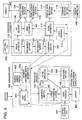
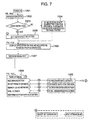
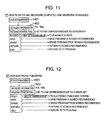
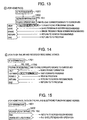
- Figs. 7 to 15 are flowcharts for explaining operation of the embodiment of a processing apparatus of the present invention and Figs. 16 to 19 are diagrams showing screen examples sequentially displayed according to the operation.
- control returns to the recommendation screen.
- the user can conduct operation dedicated to the browser only by achieving operation according to another indication for operation in the panel (steps 1810 and 1802).
- Fig. 20 is a diagram for explaining a method of setting taste of the user to a profile data in an initial state
- Fig. 21 is a diagram for explaining a concrete example of a profile data created through the flow shown in Fig. 10
- Fig. 22 is a diagram for explaining contents guide data. Description will now be given of profile data.
- a left end and a right end are defined as "to view (100 points)" and “not to view (0 point)", respectively.
- the user who desires to conduct the initialization selects one genre by the cursor, moves the cursor on the line to a position indicating a degree to desire the viewing, and depresses the determination key.
- the user conducts the operation for all genres and finally depresses again the determination key.
- the profile created for each user as above is updated when the user views contents such as a TV program or the like using the processing apparatus.
- the profile data for each user includes, as shown in Fig. 21, a user genre profile table in which genres are arranged in the descending point order for each genre and for each time zone, a user keyword profile table in which the points for keywords are arranged in the descending point order for each genre, and the like.
- Contents guide data shown in Fig. 22 is generated for a plurality of contents respectively belonging to "video program data broadcast", "home page”, and “electronic publishing” as shown in Figs. 22(a) to 22(c).
- the contents of the data may be same as those displayed when the detail switch is depressed in the flow described above.
- the data is also referred to when the points of respective contents are changed in the profile.
- contents guide data of the contents is referred to such that if the profile data of the user includes the same genre description and the same keyword as those of the contents, points are added to those of the genre and the keyword of the profile data according to the viewing time.
- the profile data generated as above is referred to, in a screen example to select contents in the operation flow described above, to display the screen.
- Contents information having a highest value of points is arranged and displayed at the nearest side at the point of time in the display.
- Fig. 23 is a flowchart to explain processing to access a profile when processing apparatus 700 of Fig. 3 is a personal computer installed in an office or the like. Description will be next given of the flowchart.
- apparatus 700 of Fig. 3 is a personal computer installed in an office or the like
- the personal computer can also be used by other persons in general. Therefore, it is necessary that a profile which belongs to a particular person is prevented from being accessed by other persons.
- Fig. 23 The flow of Fig. 23 is prepared for such a situation so that a profile can be accessed after authentication of a person is processed.
- a plurality of contents information items are arranged in a three-dimensional fashion and contents information of different kinds are horizontally displayed such that items having a higher utilization degree of the user are displayed at a nearer side in a direction of depth. Consequently, the user can easily select information in a feeling as if the user is on a plane and selects items surrounding the user.
- Fig. 24 shows in a configuration diagram a car information system in which a car can acquire various information.
- the various information includes information regarding a car position from a global positioning system (GPS) satellite, information regarding reservation and issuing of reservation tickets of air lines and railways, information regarding congestion and traffic restrictions from a road traffic center, information regarding transactions with banks, information regarding guide and reservation of hotels and restaurants or leisure from a tourist guidance and reservation center, and information regarding calls and processing of jobs of office computers and personal computers.
- GPS global positioning system
- the information above is acquired via an antenna, a portable telephone, or a portable terminal having a function of a telephone which are mounted on the car.
- information of one-way communication such as information regarding a car position from a GPS satellite or information regarding congestion and traffic restrictions from a road traffic center is received via an antenna.
- information of two-way communication such as information regarding reservation and issuing of reservation tickets of air lines and railways, information regarding transactions with banks, information regarding guide and reservation of hotels and restaurants or leisure from a tourist guidance and reservation center, or information regarding calls and processing of jobs of office computers and personal computers is received and transmitted via a portable telephone or a portable terminal having a telephone function.
- Such a car information system employs a processing apparatus similar to that shown in Fig. 2 to process information.
- information of one-way communication such as information regarding a car position from a GPS satellite or information regarding congestion and traffic restrictions from a road traffic center is received via antenna 200.
- an electronic commerce system 80 using an integrated circuit (IC) card 90 is installed in processing apparatus 100.
- System 80 receives information from command receiver 113 and user profile 105.
- system 80 displays detailed information on display 300 and carries out commercial transactions according to commands from command receiver 113.
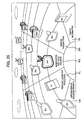
- Fig. 25 shows a concrete example of an interface screen of such a car information system. Although there can be seen only contents information on the front side of the center where the user stands in this example, contents information is also arranged on the rear side thereof.
- a plurality of contents display zones are established such as a contents genre regarding leisure (VA), a contents genre regarding information processing such as retrieval and editing of documents, drawings, etc. by a personal computer or the like (FL), a contents genre regarding the reservation and issuance of reservation tickets (RV), and a contents genre regarding banking transactions (BA) which are associated with two-way communication and a contents genre regarding traffic information which is associated with one-way communication.
- Contents information items are arranged in the contents display zones respectively associated therewith.
- the contents display zones are classified according to respective genres as shown in Fig. 5.
- the zones of Fig. 25 include at least two genres, i.e., contents associated with one-way communication and contents associated with two-way communication. Furthermore, the contents associated with two-way communication are classified into four genres.
- the contents information items in this situation are represented as VFA1, FL1 to FL3, RV1 to RV6, BA1 to BA3, and TRA.
- items having a higher utilization degree namely, a higher degree of recommendation, a higher degree of interest of the user, or a higher frequency of use are arranged in an order in which sizes thereof are sequentially minimized toward a deeper place in a direction of depth.
- a plurality of contents information items are arranged in a three-dimensional fashion and contents information of different kinds are horizontally displayed such that items having a higher utilization degree of the user are displayed at a nearer side in a direction of depth. Consequently, the user can easily select information in a feeling as if the user is on a plane and selects items surrounding the user.
- a method of displaying, a method of processing, an apparatus for processing, and a system for processing multimedia information with high usability in which the user can easily select information desired by the user from a large amount of various contents, information is selected in place of the user according to taste of the user and is recorded and is saved, and/or the selectively recorded and saved contents can be optimally displayed for the user.
Landscapes
- Engineering & Computer Science (AREA)
- Signal Processing (AREA)
- Multimedia (AREA)
- Databases & Information Systems (AREA)
- Human Computer Interaction (AREA)
- General Engineering & Computer Science (AREA)
- Social Psychology (AREA)
- General Health & Medical Sciences (AREA)
- Health & Medical Sciences (AREA)
- Theoretical Computer Science (AREA)
- Computer Networks & Wireless Communication (AREA)
- Business, Economics & Management (AREA)
- Marketing (AREA)
- Computer Graphics (AREA)
- Physics & Mathematics (AREA)
- General Physics & Mathematics (AREA)
- User Interface Of Digital Computer (AREA)
- Digital Computer Display Output (AREA)
Abstract
A screen in which icons of a plurality of
information items are arranged is displayed as a
information selecting screen to display information
selected from the screen by the user.
In the operation, icons of information items of
different kinds are horizontally displayed, and a degree
of details of the information is changed in the vertical
direction and a degree of recommendation of the
information to the user is changed in a direction of
depth.
The user can easily select desired information
from a large amount of various contents supplied and the
information can be optimally displayed for the user.
Description
The present invention relates to a method of
displaying, a method of processing, an apparatus for
processing, and a system for processing multimedia
information with high usability in which a user can
easily search a large amount of various multimedia
information for desired information to select the
information.
Recently, in the field of television broadcast
technology, the communication satellite broadcast has
been developed, and it is about to start the digitization
of the broadcasting satellite broadcast and the ground
wave broadcast.
Namely, a large volume of various contents and
various information items are going to be transmitted via
broadcast media or through communications to families.
In the following description, contents and
various information are collectively referred to as
contents, which also applies to the claim.
Additionally, in the field of technology of
personal computers (to be referred to as PC herebelow),
the network configuration has been developed, and it is
possible to retrieve information of the world via, for
example, world wide web (WWW) using the Internet.
Although the televisions (TV) and the personal
computers have been used by different users for different
purposes, it is expected that the televisions or personal
computers function as windows of information in the
future. In this situation, the televisions and personal
computers are assumed to come together into a combined
form.
There has been proposed a technology of the
prior art to handle a large amount of various contents,
namely, a service of television broadcasting in which
there is disposed a storage for several hours of video.
Information changed at a broadcast of the news, weather
forecast, or the like is automatically updated to the
latest information so that the user can view the
information at any time.
Additionally, as interfaces to select a large
volume of various contents, there has been proposed, for
example, a technology using characters called icons as
contents information which is used to display a program
list, to display a menu as a table of contents, and to
display details of contents to present contents stored.
Characters such as icons are referred to as
contents information herebelow, which also applies to the
claim.
The televisions are combined with the personal
computers as described above and hence a large amount of
various contents are transmitted to the user. However,
it is expectedly quite difficult for the user to select
desired information from such a large volume of various
contents.
The technology of the prior art regarding the
interfaces above provides the display of a program list,
a menu as a list of contents, and contents by contents
information (icons). When the amount of contents
increases, the menu or the like is required to be
hierarchically configured to display all contents
information. This leads to a problem that it is quite
difficult for the user to select desired information from
the contents information.
Furthermore, a car information system such as a
car navigation system or an intelligent transport system
is being installed for cars, and various information such
as road guide information, traffic information, and
information of amusement facilities is introduced to the
car information systems. These system is also attended
with a problem similar to the problem above.
It is therefore an object of the present
invention to provide a method of displaying, a method of
processing, an apparatus for processing, and a system for
processing multimedia information with high usability in
which a user can easily select desired information from a
large amount of various contents or which selects,
records, and stores, in place of the user, information
associated with taste of the user or which displays
selectively recorded and stored contents in an optimal
fashion for the user.
To achieve the object in accordance with the
present invention, there is provided a multimedia
information display method of displaying information of a
plurality of multimedia including the steps of displaying
a screen in which a plurality of contents information
represented by icons are arranged in a three-dimensional
fashion and displaying details of contents selected from
the screen by the user.
Moreover, the method includes the steps of
displaying contents information of different kinds of
contents in a horizontal direction and displaying the
contents information by sequentially minimizing sizes
thereof in a depth direction in consideration of, for
example, a variable of the number of uses of contents or
a variable of use frequency representing a degree of
recommendation of contents.
In addition, the method includes the step of
displaying contents information with different contours
corresponding to respective media types.
Furthermore, there is provided a multimedia
information display method of displaying information of a
plurality of multimedia including the steps of assigning,
in accordance with a record of uses in the past of
information of the plural media by the user, use record
information such as the number of uses of the information
to the information and displaying information of the
plural media according to the use record information.
Alternatively, the method includes the steps of
generating a plurality of kinds of profiles according to
a use record in the past of the user for information of
the plural media and displaying information according to
at least one of the generated profiles, thereby achieving
the object.
Additionally, the method includes the step of
generating the profile by adding information associated
with use time to information used by the user or
generating the profile in association with a genre or a
keyword of the information, thereby achieving the object.
Furthermore, to achieve the object, there is
provided a multimedia information processing apparatus
for processing information of a plurality of multimedia
including means for receiving information of a plurality
of media, means for generating a profile according to use
history of a user, means for displaying the information
according to the contents of the profile, and means for
recording the information if necessary. Alternatively,
the apparatus further includes means for communicating
information with a network.
In addition, to achieve the object, there is
provided a multimedia information processing system for
processing information of a plurality of multimedia
including means for receiving information of a plurality
of media, a first information processing apparatus
including means for displaying the information and means
for recording the information if necessary, and a second
information processing apparatus for communicating
information via a network. A profile is generated
according to audiovisual use history of the user in the
first and second information processing apparatuses, and
information is displayed in the first or second
information processing apparatus according to the
contents of the profile.
Furthermore, the object can be achieved as
follows. Contents information corresponding to a
plurality of contents is arranged in a virtual three-dimensional
space on a screen and sizes of the contents
information are sequentially minimized in a direction of
the depth of the screen.
Additionally, the object can be achieved as
follows. Contents information items corresponding to a
plurality of contents are arranged in a virtual three-dimensional
space on a screen, sizes of the contents
information are sequentially minimized in a direction of
the depth of the screen, and contents information items
more frequently used by the user are displayed on the
front side near the user.
Moreover, the object can be achieved as follows.
A plurality of contents display zones extending in a
direction of depth are arranged in a virtual three-dimensional
space on a screen, contents information is
arranged in the plural contents display zones in
association with a plurality of contents selected, and
the content information is displayed by sequentially
minimizing sizes thereof in a direction of the depth of
the screen of each contents display zone.
In addition, the object can be achieved as
follows. A plurality of contents display zones extending
in a direction of depth are arranged in a virtual three-dimensional
space on a screen, contents information is
respectively arranged in the plural contents display
zones in association with a plurality of contents
selected, the content information is displayed by
sequentially minimizing sizes thereof in a direction of
the depth of the screen of each contents display zone,
and a contents display zone associated with the contents
information selected is displayed at approximately a
center of the screen in a longitudinal direction thereof.
Furthermore, the object can be achieved as
follows. A virtual three-dimensional space is set on a
screen by arranging a direction of depth in which an
upper side of the screen seems to be far away from the
user, and the content information corresponding to a
plurality of contents is displayed by sequentially
minimizing sizes thereof as a position thereof becomes
higher in the screen.
Moreover, the object can be achieved as follows.
A virtual three-dimensional space is formed on a screen
of a display installed in a car, contents information
corresponding to a plurality of contents transmitted in
one-way communication is arranged therein, and the
contents information is displayed by minimizing sizes
thereof in a direction of the depth of the screen.
Additionally, the object can be achieved as
follows. A virtual three-dimensional space is formed on
a screen of a display installed in a car, contents
information corresponding to a plurality of contents
transmitted in one-way communication is arranged therein,
the contents information is displayed by minimizing sizes
thereof in a direction of the depth of the screen, and
contents information more frequently used by the user is
displayed on the front side near the user.
Moreover, the object can be achieved as follows.
A virtual three-dimensional space is formed on a screen
of a display installed in a car, at least two contents
display zones extending in a direction of depth are
arranged in the three-dimensional space, contents
information corresponding to a plurality of contents
transmitted in one-way communication is arranged in one
of the contents display zones, contents information
corresponding to a plurality of contents transmitted in
two-way communication is arranged in another one of the
contents display zones, the contents information is
displayed by minimizing sizes thereof in a direction of
the depth of each of the contents display zones.
In addition, the object can be achieved as
follows. A virtual three-dimensional space is formed on
a screen of a display installed in a car, a plurality of
contents display zones extending in a direction of depth
are arranged in the three-dimensional space, contents
information is respectively arranged in the plural
contents display zones in association with a plurality of
contents selected, the content information is displayed
by sequentially minimizing sizes thereof in a direction
of the depth of the screen of each contents display zone,
and a contents display zone associated with the contents
information selected is displayed at approximately a
center of the screen in a longitudinal direction thereof.
The objects and features of the present
invention will become more apparent from the
consideration of the following detailed description taken
in conjunction with the accompanying drawings in which:
Referring now to the drawings, description will
be given in detail of embodiments of a method of
displaying, a method of processing, an apparatus for
processing, and a system for processing multimedia
information in accordance with the present invention.
Fig. 1 shows an embodiment of a multimedia
information processing apparatus 100 in accordance with
the present invention in which media as information
includes only media of a one-way communication such as a
TV broadcast. Apparatus 100 receives a broadcast signal
from an antenna 200 and displays, on a display, video and
audio information selected by a user using a remote
controller under control of the user.
Processing apparatus 100 includes a signal
separator 101, an information decoder 102, an information
buffer 103, a comparing section 104, a user profile 105,
an A/V decoder 106, a video recorder 107, a display video
changing section 108, a guide screen generator 109, a
filing apparatus 110, a clock calendar 111, a display
data selector 112, and a command receiver 113.
In the configuration above, signal separator
101 has a function to demodulate a broadcast signal
received, namely, separates information including video
and audio transmitted from relational information
associated with the video and audio information and
transmits these information items to A/V decoder 106 and
information decoder 102, respectively.
Relational information supplied to decode 102
includes, for example, program information for a TV
broadcast, i.e., text data of a title, time (start time
to end time), a genre and a sub-genre, performers,
players, director, etc., an introductory statement, and a
media and a station name. Data resultantly decoded is
stored in information buffer 103.
In this connection, although a large number of
programs are concurrently broadcast in TV broadcasts,
signal separator 101 and information decoder 102 can
separate and decode relational information of all
programs, namely, information thereof is stored in
information buffer 103.
When apparatus 100 is used in a family, there
may be disposed a plurality of user profiles 105
according to constitution of the family or according to
respective purposes of an individual person.
User profiles 105 include history of use of
broadcast media used by each person in the past, i.e.,
history of audiovisual use in this situation.
The history includes points of a genre and sub-genres,
points of each keyword (a title, performers, an
introductory statement, etc.), and points of each time
zone of the point data.
Incidentally, the points above are calculated
according to an audience or viewing frequency, an
audience time, etc. of each genre or the like when
broadcast media is audiovisually received and represent a
degree of utilization for each genre. The points are not
limited to those above and may be any variables which
represent a degree of utilization.
On the other hand, A/V decoder 106 having
received information of video and audio from signal
separator 101 decodes information of video and audio of a
program being broadcast and transfers the information to
video recorder 107 and display video changing section 108.
When it is desired to audiovisually receive a
TV program or information recorded on video recorder 107
by operating apparatus 100, the user operates remote
controller 400 to sequentially send operation commands to
apparatus 100.
Display video changing section 108 selects
video from A/V decoder 106, video recorder 107, and guide
screen 109 to display video selected on display 300. In
this connection, operation of the user, the guide screen,
and video selection will be described in detailed later.
Fig. 2 shows a multimedia information
processing apparatus 100 for one-way communication media
of a TV broadcast and two-way communication media
obtained via the Internet through a communication line
such as a CATV line or a telephone line (including a
communication apparatus including a portable telephone
function).
Apparatus 100 shown in Fig. 2 includes a WWW
browser 114 to receive information from communication
line 500, a signal separator 101' to separate video
information and audio signals, and a latest information
buffer 115 in addition to processor 100 shown in Fig. 1.
In the configuration above, data regarding
information from browser 114 includes a title, a genre
and sub-genres in a directory, an introductory statement,
a keyword, etc. For example, latest information buffer
115 keeps therein about two last months of home pages
accessed by the user in the past. The data is used in
almost the same manner as for the data stored in
information buffer 103 described in conjunction with Fig.
1.
Additionally, video information and the like in
the information from browser 114 is separated by signal
separator 101' to be fed to A/V decoder 106.
A signal from separator 101' is used in almost
the same way as the signal from separator 101 described
using Fig. 1.
Fig. 3 shows a multimedia information
processing system in which user files are generated and
saved by a service provider and information obtained via
a communication line is processed by a portable terminal,
a personal computer, or the like.
The system of Fig. 3 includes a processing
apparatus 100, a service provider 600, and a processing
apparatus 700 such as a portable terminal or a personal
computer.
Apparatus 100 is configured by removing user
profiles 105 from apparatus 100 described in conjunction
with Fig. 1 and is connected via a communication line to
service provider 600.
Information in profiles 601 is used in almost
the same fashion as the contents of profiles 105
described in conjunction with Fig. 1.
The user can audiovisually utilize or view
information via the Internet or the like using a display
800 connected to apparatus 700.
In this situation, the user acquires desired
information by operating WWW browser 703 from operating
section 705. In this operation, data in buffer 702
storing information in the past and data in profile 601
of provider 600 are referred to by comparator 701.
Additionally, when processing apparatus
includes a personal computer or the like, a telephone
line may be connected thereto in place of the portable
telephone 900.
Referring next to Fig. 4, description will be
given of a configuration of remote controller to operate
the embodiment of processing apparatus 100 of the present
invention described above.
In apparatus 100, there may be naturally
disposed an operating mechanism capable of achieving
operation equivalent to the operation which can be
conducted by remote controller 400.
In this connection, functions, using methods,
and the like of the respective switches and rotary dial
405 of remote controller 400 above will be described
later.
Operation of processing apparatus 100 shown in
Figs. 1 to 3 can be conducted by a remote controller
constructed as shown in Fig. 4(a) and Fig. 4(2). However,
when there exists a request to directly reproduce video
from video recorder 107, a group of switches 409 may be
arranged in remote controller 400 to directly control
video recorder as shown in Fig. 4(c).
Next, description will be given of an example
and a basic concept of a guide screen for the user to
select desired contents from a large amount of various
contents.
Fig. 5 is a diagram to explain a guide
(interface) screen example to select information in
accordance with the present invention and Fig. 6 is a
diagram to explain a basic idea thereof.
In general, interfaces are evaluated according
to recognizability (visibility and understandability) and
operability (usability) thereof.
The present invention sets "recognition model"
to improve recognizability of an interface screen, the
recognition model being created by using as a model a
virtual three-dimensional space which is similar to a
field of the daily life.
Thanks to the model, even when the user looks
at the interface screen associated with the recognition
model of the present invention, the user can conduct
operations naturally according to intuition matching with
the daily behavior pattern. Even when the user first
operates the interface screen, the screen is quite easy
to use and its operation is easy to learn.
That is, the basic idea of the present
invention is that contents information for which contents
such as icons are defined is arranged to surround a user
herself or himself standing on a plane as shown in Fig. 6.
To watch the contents information in detail, the user
turns her or his eyes upon a notebook at hand to check
entries on the notebook.
Moreover, to change control to another
selection method (for example, a keyword retrieval), the
user looks at a menu plate placed at an upper position in
front of the user.
Using the display above, the user can operate
the screen in a manner similar to his or her daily
behavior pattern.
Various contents information items are selected
according to genres and categories to be arranged in a
horizontal direction, namely, around the position where
the user stands.
In this regard, items which have a higher
degree of use, namely, a higher degree of recommendation,
a higher degree of interest of the user, or a higher
frequency of use are arranged in a front side. When the
degree of use becomes smaller, the associated items are
arranged in a direction of depth in a sequence in which
sizes thereof are sequentially minimized. Incidentally,
a higher degree of recommendation, a higher degree of
interest of the user, and a higher frequency of use are
collectively expressed as "utilization degree" in the
following description. This also applies to the claims.
Thanks to the display above, the user can view
the contents information surrounding the user by changing
his or her field of vision and can view an overall image
of contents information recommended.
Then, since the contents information
conspicuously existing near the user is that having a
high utilization degree such as contents information most
recommended, contents information which is interesting to
the user, or contents information having a high frequency
of use, the user selects any contents information which
catches her or his attention to thereby easily use or
view the information.
Fig. 5 shows a concrete example of an interface
screen produced according to the idea above. Although
contents information is seen only in a front side of a
center of the place where the user stands in this example,
the contents information is also disposed in a rear side
thereof.
Moreover, the example shown in Fig. 5 includes
a plurality of contents display zones established for a
contents genre regarding fashion (FA), a contents genre
for travel (TR), a contents genre for movie (MO), and a
contents genre for recommendation distributed in the
morning and in the evening as time for usual activities
(TI). Contents information items are arranged in the
contents display zones respectively associated therewith.
These zones extend in a direction of depth and
are disposed such that the user receives an impression
that an item at an deeper position is more apart from the
user.
The contents information items displayed in
this situation are FA1, TR1 to TR3, MO1 to MO5, and TI1
to TI4, which correspond to items ordinarily called icons.
Incidentally, in a rear side not shown in Fig.
5, there are arranged other contents information items.
The user can call such items such that the items are seen
in the screen by horizontally changing the field of
vision with the help of rotary dial 405 of remote
controller 400.
As described above, the items are arranged in
the respective contents information display zones in
which the items having a higher utilization degree such
as contents information items highly recommended,
contents information items which are more interesting to
the user, or contents information items having a higher
frequency of use are arranged in the direction of depth
beginning at the front side in a sequence in which sizes
thereof become smaller as the depth thereof increases.
Additionally, the zone in the depth direction
extends to an upper side of the screen. The screen is
accordingly established such that the contents
information items become smaller in size as the positions
thereof become higher in the screen.
Incidentally, the contents display zones
allocated in the peripheral of the central point where
the user stands can be arbitrarily classified.
It can be considered, for example, a set of
recommendation contents according to genres used in
various information magazines, a set of recommendation
contents according to each style according to life styles,
and a set of recommendation contents regarding keywords
(e.g., a talent name, a program name, etc.) which will be
interesting to users as a category. However, the present
invention is not restricted by this example.
To achieve a more real representation in
accordance with the interface screen associated with the
recognition model of the present invention, there may be
used, in addition to the representation in which contents
information at a farther position is displayed with a
reduced size, a representation using a perspective
representation in which lightness, chroma saturation, and
hue of contents information are changed and/or contents
information can be obscured.
Figs. 7 to 15 are flowcharts for explaining
operation of the embodiment of a processing apparatus of
the present invention and Figs. 16 to 19 are diagrams
showing screen examples sequentially displayed according
to the operation.
Referring next to the screen examples shown in
Figs. 16 to 19, description will be given of flows shown
in Figs. 7 to 15. However, the flows in the following
description relate to the processing apparatus shown in
Fig. 2. In this regard, the processing of Fig. 1 and Fig.
3 is also similar to that above and hence will not be
described.
(Step 1005)
(
(Step 1107)
When the user indicates "end" in the operation
panel, control returns to the recommendation screen. The
user can conduct operation dedicated to the browser only
by achieving operation according to another indication
for operation in the panel (steps 1810 and 1802).
Fig. 20 is a diagram for explaining a method of
setting taste of the user to a profile data in an initial
state, Fig. 21 is a diagram for explaining a concrete
example of a profile data created through the flow shown
in Fig. 10, and Fig. 22 is a diagram for explaining
contents guide data. Description will now be given of
profile data.
As can be seen from Fig. 20, when the user
instructs an initial registration of profile data through
a device, not shown, many genre names and numeric lines
to assign points thereto are displayed on the screen.
For each numeric line, a left end and a right
end are defined as "to view (100 points)" and "not to
view (0 point)", respectively. The user who desires to
conduct the initialization selects one genre by the
cursor, moves the cursor on the line to a position
indicating a degree to desire the viewing, and depresses
the determination key. The user conducts the operation
for all genres and finally depresses again the
determination key. As a result, there is produced a
profile to which the initial data of the user is set.
The profile created for each user as above is
updated when the user views contents such as a TV program
or the like using the processing apparatus.
The profile data for each user includes, as
shown in Fig. 21, a user genre profile table in which
genres are arranged in the descending point order for
each genre and for each time zone, a user keyword profile
table in which the points for keywords are arranged in
the descending point order for each genre, and the like.
Contents guide data shown in Fig. 22 is
generated for a plurality of contents respectively
belonging to "video program data broadcast", "home page",
and "electronic publishing" as shown in Figs. 22(a) to
22(c). The contents of the data may be same as those
displayed when the detail switch is depressed in the flow
described above.
The data is also referred to when the points of
respective contents are changed in the profile.
In other words, when the user views or saves
contents, contents guide data of the contents is referred
to such that if the profile data of the user includes the
same genre description and the same keyword as those of
the contents, points are added to those of the genre and
the keyword of the profile data according to the viewing
time.
The profile data generated as above is referred
to, in a screen example to select contents in the
operation flow described above, to display the screen.
Contents information having a highest value of points is
arranged and displayed at the nearest side at the point
of time in the display.
Moreover, to generate the recommendation screen
in the description of the flow above, it is possible to
collect, for example, six highest values of points for
"genre", "keyword", and "time zone" of the profile data
of each user described above.
Fig. 23 is a flowchart to explain processing to
access a profile when processing apparatus 700 of Fig. 3
is a personal computer installed in an office or the like.
Description will be next given of the flowchart.
When apparatus 700 of Fig. 3 is a personal
computer installed in an office or the like, the personal
computer can also be used by other persons in general.
Therefore, it is necessary that a profile which belongs
to a particular person is prevented from being accessed
by other persons.
The flow of Fig. 23 is prepared for such a
situation so that a profile can be accessed after
authentication of a person is processed.
In accordance with the embodiment of the
present invention described above, a plurality of
contents information items are arranged in a three-dimensional
fashion and contents information of different
kinds are horizontally displayed such that items having a
higher utilization degree of the user are displayed at a
nearer side in a direction of depth. Consequently, the
user can easily select information in a feeling as if the
user is on a plane and selects items surrounding the user.
Furthermore, in accordance with the embodiment
of the present invention described above, there are
created, according to utilization history of the user for
information of a plurality of media in the past, a
plurality of kinds of profiles assigned with variables
indicating utilization degrees of the information, and
contents information is displayed according to at least
one of the profiles generated. Therefore, it is possible
for the user to immediately select her or his favorite
contents information.
Subsequently, description will be given of an
embodiment in which the basic concept of the present
invention shown in Figs. 5 and 6 is applied to a car
information system called a car navigation system or an
intelligent transport system.
Fig. 24 shows in a configuration diagram a car
information system in which a car can acquire various
information.
It can be considered that the various
information includes information regarding a car position
from a global positioning system (GPS) satellite,
information regarding reservation and issuing of
reservation tickets of air lines and railways,
information regarding congestion and traffic restrictions
from a road traffic center, information regarding
transactions with banks, information regarding guide and
reservation of hotels and restaurants or leisure from a
tourist guidance and reservation center, and information
regarding calls and processing of jobs of office
computers and personal computers.
In this situation, the information above is
acquired via an antenna, a portable telephone, or a
portable terminal having a function of a telephone which
are mounted on the car.
Moreover, information of one-way communication
such as information regarding a car position from a GPS
satellite or information regarding congestion and traffic
restrictions from a road traffic center is received via
an antenna.
On the other hand, information of two-way
communication such as information regarding reservation
and issuing of reservation tickets of air lines and
railways, information regarding transactions with banks,
information regarding guide and reservation of hotels and
restaurants or leisure from a tourist guidance and
reservation center, or information regarding calls and
processing of jobs of office computers and personal
computers is received and transmitted via a portable
telephone or a portable terminal having a telephone
function.
Such a car information system employs a
processing apparatus similar to that shown in Fig. 2 to
process information.
That is, information of one-way communication
such as information regarding a car position from a GPS
satellite or information regarding congestion and traffic
restrictions from a road traffic center is received via
antenna 200.
Moreover, by replacing telephone line with a
portable telephone or a portable terminal having a
telephone function, information of two-way communication
such as information regarding reservation and issuing of
reservation tickets of air lines and railways,
information regarding transactions with banks,
information regarding guide and reservation of hotels and
restaurants or leisure from a tourist guidance and
reservation center, or information regarding calls and
processing of jobs of office computers and personal
computers is received and transmitted.
When the reservation and issuance of
reservation tickets are achieved and/or transfer of money
takes place for banking transactions or the like, an
electronic commerce system 80 using an integrated circuit
(IC) card 90 is installed in processing apparatus 100.
System 80 receives information from command receiver 113
and user profile 105.
Therefore, when electronic commerce system 80
is initiated, system 80 displays detailed information on
display 300 and carries out commercial transactions
according to commands from command receiver 113.
Fig. 25 shows a concrete example of an
interface screen of such a car information system.
Although there can be seen only contents information on
the front side of the center where the user stands in
this example, contents information is also arranged on
the rear side thereof.
In the example of Fig. 25, a plurality of
contents display zones are established such as a contents
genre regarding leisure (VA), a contents genre regarding
information processing such as retrieval and editing of
documents, drawings, etc. by a personal computer or the
like (FL), a contents genre regarding the reservation and
issuance of reservation tickets (RV), and a contents
genre regarding banking transactions (BA) which are
associated with two-way communication and a contents
genre regarding traffic information which is associated
with one-way communication. Contents information items
are arranged in the contents display zones respectively
associated therewith.
The contents display zones are classified
according to respective genres as shown in Fig. 5. The
zones of Fig. 25 include at least two genres, i.e.,
contents associated with one-way communication and
contents associated with two-way communication.
Furthermore, the contents associated with two-way
communication are classified into four genres.
The contents information items in this
situation are represented as VFA1, FL1 to FL3, RV1 to RV6,
BA1 to BA3, and TRA.
Incidentally, on the rear side not visible in
this diagram, other contents information items are
arranged in the similar manner as for Fig. 5. By
operating rotary dial 405 of remote controller 400, the
field of vision can be horizontally changed to call such
items to be displayed in the screen.
As already described, in each contents display
zone, items having a higher utilization degree, namely, a
higher degree of recommendation, a higher degree of
interest of the user, or a higher frequency of use are
arranged in an order in which sizes thereof are
sequentially minimized toward a deeper place in a
direction of depth.
In accordance with the car information system
above, a plurality of contents information items are
arranged in a three-dimensional fashion and contents
information of different kinds are horizontally displayed
such that items having a higher utilization degree of the
user are displayed at a nearer side in a direction of
depth. Consequently, the user can easily select
information in a feeling as if the user is on a plane and
selects items surrounding the user.
As described above, in accordance with the
present invention, there can be provided a method of
displaying, a method of processing, an apparatus for
processing, and a system for processing multimedia
information with high usability in which the user can
easily select information desired by the user from a
large amount of various contents, information is selected
in place of the user according to taste of the user and
is recorded and is saved, and/or the selectively recorded
and saved contents can be optimally displayed for the
user.
Claims (20)
- A multimedia information display method of displaying contents of a plurality of multimedia, comprising the steps of:displaying a screen in which contents information items of a plurality of contents are arranged in a three-dimensional manner; anddisplaying in the screen detailed items of contents regarding a contents information item selected from the screen by a user.
- A multimedia information display method in accordance with Claim 1, wherein the contents information items have sizes determined according to a utilization degree of user.
- A multimedia information display method in accordance with Claim 1, wherein the contents information items are displayed with sizes thereof sequentially minimized toward a deeper place in a direction of depth.
- A multimedia information display method in accordance with Claim 1, wherein the contents information items have different contours respectively corresponding to kinds of media.
- A multimedia information processing method for processing information of a plurality of media, comprising the steps of:assigning a variable representing a utilization degree to each of the information items according to history of use of the information items of a plurality of media by the user in the past; andchanging an information display method according to the variable.
- A multimedia information processing method for processing information of a plurality of media, comprising the steps of:generating a plurality of kinds of profiles according to history of use of the information items of a plurality of media by the user in the past; anddisplaying information items according to at least one of the profiles generated.
- A multimedia information processing method in accordance with Claim 6, wherein the profiles are generated by assigning a variable in consideration of a utilization period of time to an information item used by the user.
- A multimedia information processing method in accordance with Claim 6, wherein the profiles are generated for a genre or a keyword of the information item.
- A multimedia information processing apparatus for processing information of a plurality of multimedia, comprising:a receiving section for receiving information of a plurality of multimedia;a profile generating section for generating profiles according to a utilization history of the user;a display section for displaying the information according to the contents of the profiles; anda storage for storing therein the information if necessary.
- A multimedia information processing apparatus in accordance with Claim 8, further including means for communicating information via a network.
- A multimedia information processing system for processing information of a plurality of multimedia, comprising:a receiving section for receiving information of a plurality of multimedia;a first information processing apparatus including a display section for displaying the information and a recording section for recording the information if necessary;a second information processing apparatus for communicating information via a network, whereina profile is generated according to a utilization history of the user in the first and second information processing apparatuses and information is displayed in the first or second information processing apparatus according to the contents of the profile.
- A multimedia information display method, comprising the steps of:arranging contents information items corresponding to a plurality of contents in a virtual three-dimensional space on a screen; andminimizing sizes of the contents information items as positions thereof become deeper in a direction of depth of the screen.
- A multimedia information display method, comprising the steps of:arranging contents information items corresponding to a plurality of contents in a virtual three-dimensional space on a screen;sequentially minimizing sizes of the contents information items as positions thereof become deeper in a direction of depth of the screen; anddisplaying contents items having a higher utilization degree of the user on a nearer side of the user.
- A multimedia information display method, comprising the steps of:setting a plurality of contents display zones extending in a direction of depth in a virtual three-dimensional space on a screen;arranging contents information items corresponding to a plurality of contents selected for each of the contents display zones; andsequentially minimizing sizes of the contents information items as positions thereof become deeper in a direction of depth of the screen for each of the contents display zones.
- A multimedia information display method, comprising the steps of:setting a plurality of contents display zones extending in a direction of depth in a virtual three-dimensional space on a screen;arranging contents information items corresponding to a plurality of contents selected for each of the contents display zones;sequentially minimizing sizes of the contents information items as positions thereof become deeper in a direction of depth of the screen for each of the contents display zones; anddisplaying a contents display zone to which contents information selected belongs at a position near a center of the screen in a longitudinal direction thereof.
- A multimedia information display method, comprising the steps of:setting a virtual three-dimensional space in a screen, the space having a direction of depth in which a farther position is placed an upper position in the screen; andminimizing sizes of contents information items corresponding to a plurality of contents as positions thereof become higher in the screen.
- A multimedia information display method for use with a display employed in a car, comprising the steps of:generating a virtual three-dimensional space in a screen of a display mounted on a car;arranging contents information items corresponding to a plurality of contents received in one-way communication; andminimizing sizes of the contents information items as positions thereof become deeper in a direction of depth of the screen.
- A multimedia information display method for use with a display employed in a car, comprising the steps of:generating a virtual three-dimensional space in a screen of a display mounted on a car;arranging contents information items corresponding to a plurality of contents received in one-way communication;minimizing sizes of the contents information items as positions thereof become deeper in a direction of depth of the screen; anddisplaying contents items having a higher utilization degree of the user on a nearer side of the user.
- A multimedia information display method for use with a display employed in a car, comprising the steps of:generating a virtual three-dimensional space in a screen of a display mounted on a car;setting at least two contents display zones extending in a direction of depth in the three-dimensional space;arranging contents information items corresponding to a plurality of contents received in one-way communication in one of the zonesarranging contents information items corresponding to a plurality of contents received in two-way communication in other one thereof; andminimizing sizes of the contents information items in each of the zones as positions thereof become deeper in a direction of depth of the screen.
- A multimedia information display method for use with a display employed in a car, comprising the steps of:generating a virtual three-dimensional space in a screen of a display mounted on a car;setting a plurality of contents display zones extending in a direction of depth in the three-dimensional space;arranging contents information items corresponding to a plurality of contents selected for each of the contents display zones;sequentially minimizing sizes of the contents information items as positions thereof become deeper in a direction of depth of the screen for each of the contents display zones; anddisplaying a contents display zone to which contents information selected belongs at a position near a center of the screen in a longitudinal direction thereof.
Applications Claiming Priority (3)
| Application Number | Priority Date | Filing Date | Title |
|---|---|---|---|
| JP23763698 | 1998-08-24 | ||
| JP23763698 | 1998-08-24 | ||
| PCT/JP1999/004266 WO2000011540A1 (en) | 1998-08-24 | 1999-08-06 | Method for displaying multimedia information processing method, processing device, and processing system |
Publications (2)
| Publication Number | Publication Date |
|---|---|
| EP1107097A1 true EP1107097A1 (en) | 2001-06-13 |
| EP1107097A4 EP1107097A4 (en) | 2007-10-17 |
Family
ID=17018272
Family Applications (1)
| Application Number | Title | Priority Date | Filing Date |
|---|---|---|---|
| EP99935093A Withdrawn EP1107097A4 (en) | 1998-08-24 | 1999-08-06 | SYSTEM, DEVICE AND METHOD FOR DISPLAYING MULTIMEDIA INFORMATION PROCESS |
Country Status (5)
| Country | Link |
|---|---|
| US (1) | US7137075B2 (en) |
| EP (1) | EP1107097A4 (en) |
| JP (1) | JP4032649B2 (en) |
| AU (1) | AU5066399A (en) |
| WO (1) | WO2000011540A1 (en) |
Cited By (5)
| Publication number | Priority date | Publication date | Assignee | Title |
|---|---|---|---|---|
| FR2890516A1 (en) * | 2005-09-08 | 2007-03-09 | Thomson Licensing Sas | METHOD FOR SELECTING A BUTTON IN A GRAPHIC BAR, AND RECEIVER IMPLEMENTING THE METHOD |
| WO2007083227A3 (en) * | 2006-01-23 | 2007-10-18 | Nokia Corp | Improved mobile communication terminal and method therefore |
| EP1944968A3 (en) * | 2007-01-12 | 2011-02-23 | Fujitsu Limited | Display device, display program storage medium and display method |
| EP2177979A3 (en) * | 2008-10-14 | 2012-08-29 | Samsung Electronics Co., Ltd. | Display apparatus and user interface display method thereof |
| EP2203895A4 (en) * | 2007-09-26 | 2016-03-16 | Aq Media Inc | DYNAMIC MEMORY ARCHITECTURES OF AUDIOVISUAL NAVIGATION AND COMMUNICATION |
Families Citing this family (137)
| Publication number | Priority date | Publication date | Assignee | Title |
|---|---|---|---|---|
| WO2001069367A2 (en) * | 2000-03-17 | 2001-09-20 | Vizible.Com Inc. | A three dimensional spatial user interface |
| JP4587416B2 (en) * | 2000-04-25 | 2010-11-24 | 富士通株式会社 | Digital video content browsing apparatus and method |
| FI20001429A7 (en) * | 2000-06-15 | 2001-12-16 | Nokia Corp | Selecting an option |
| JP4174319B2 (en) * | 2000-07-27 | 2008-10-29 | 株式会社インフォシティ | Information access apparatus and method, and information providing apparatus and method |
| JP4174175B2 (en) * | 2000-10-05 | 2008-10-29 | 株式会社インフォシティ | Information providing apparatus and method |
| US6851090B1 (en) * | 2000-10-30 | 2005-02-01 | Koninklijke Philips Electronics N.V. | Method and apparatus for displaying program recommendations with indication of strength of contribution of significant attributes |
| JP4077321B2 (en) * | 2001-02-23 | 2008-04-16 | 富士通株式会社 | Display control device |
| US6778995B1 (en) | 2001-08-31 | 2004-08-17 | Attenex Corporation | System and method for efficiently generating cluster groupings in a multi-dimensional concept space |
| US6978274B1 (en) | 2001-08-31 | 2005-12-20 | Attenex Corporation | System and method for dynamically evaluating latent concepts in unstructured documents |
| US6888548B1 (en) | 2001-08-31 | 2005-05-03 | Attenex Corporation | System and method for generating a visualized data representation preserving independent variable geometric relationships |
| US7271804B2 (en) | 2002-02-25 | 2007-09-18 | Attenex Corporation | System and method for arranging concept clusters in thematic relationships in a two-dimensional visual display area |
| US7363591B2 (en) * | 2003-01-21 | 2008-04-22 | Microsoft Corporation | Electronic programming guide system and method |
| US7581182B1 (en) * | 2003-07-18 | 2009-08-25 | Nvidia Corporation | Apparatus, method, and 3D graphical user interface for media centers |
| US7610313B2 (en) | 2003-07-25 | 2009-10-27 | Attenex Corporation | System and method for performing efficient document scoring and clustering |
| US7191175B2 (en) | 2004-02-13 | 2007-03-13 | Attenex Corporation | System and method for arranging concept clusters in thematic neighborhood relationships in a two-dimensional visual display space |
| US20060121939A1 (en) * | 2004-12-03 | 2006-06-08 | Picsel Research Limited | Data processing devices and systems with enhanced user interfaces |
| US20060123360A1 (en) * | 2004-12-03 | 2006-06-08 | Picsel Research Limited | User interfaces for data processing devices and systems |
| US7404151B2 (en) | 2005-01-26 | 2008-07-22 | Attenex Corporation | System and method for providing a dynamic user interface for a dense three-dimensional scene |
| US7356777B2 (en) | 2005-01-26 | 2008-04-08 | Attenex Corporation | System and method for providing a dynamic user interface for a dense three-dimensional scene |
| JP4690739B2 (en) * | 2005-02-21 | 2011-06-01 | 株式会社東芝 | Information processing apparatus and program |
| EP1710673A3 (en) * | 2005-03-17 | 2011-12-14 | CLARION Co., Ltd. | Method, program and device for displaying menu |
| USD549713S1 (en) | 2005-04-26 | 2007-08-28 | Turner Broadcasting Systems, Inc. | User interface for a display screen |
| US8527510B2 (en) | 2005-05-23 | 2013-09-03 | Monster Worldwide, Inc. | Intelligent job matching system and method |
| AU2005203074A1 (en) * | 2005-07-14 | 2007-02-01 | Canon Information Systems Research Australia Pty Ltd | Image browser |
| KR100814395B1 (en) * | 2005-08-30 | 2008-03-18 | 삼성전자주식회사 | User Interface Control Device and Method Using Jog Key and Four Direction Key |
| US7966577B2 (en) * | 2005-10-11 | 2011-06-21 | Apple Inc. | Multimedia control center |
| US7721208B2 (en) | 2005-10-07 | 2010-05-18 | Apple Inc. | Multi-media center for computing systems |
| US8037421B2 (en) | 2005-10-11 | 2011-10-11 | Research In Motion Limited | System and method for organizing application indicators on an electronic device |
| JP4846334B2 (en) * | 2005-10-17 | 2011-12-28 | 三菱電機株式会社 | Music player |
| US8195657B1 (en) | 2006-01-09 | 2012-06-05 | Monster Worldwide, Inc. | Apparatuses, systems and methods for data entry correlation |
| JP4684147B2 (en) | 2006-03-28 | 2011-05-18 | 任天堂株式会社 | Inclination calculation device, inclination calculation program, game device, and game program |
| US8285595B2 (en) * | 2006-03-29 | 2012-10-09 | Napo Enterprises, Llc | System and method for refining media recommendations |
| JP2007272468A (en) * | 2006-03-30 | 2007-10-18 | Sony Corp | Information processing apparatus and method, and program |
| US12314907B2 (en) | 2006-03-31 | 2025-05-27 | Monster Worldwide, Inc. | Apparatuses, methods and systems for automated online data submission |
| US8600931B1 (en) | 2006-03-31 | 2013-12-03 | Monster Worldwide, Inc. | Apparatuses, methods and systems for automated online data submission |
| JP4819560B2 (en) * | 2006-04-20 | 2011-11-24 | 株式会社東芝 | Display control apparatus, image processing apparatus, interface screen, display control method |
| JP2007304667A (en) * | 2006-05-08 | 2007-11-22 | Sony Computer Entertainment Inc | User interface device, user interface method and program |
| USD561193S1 (en) | 2006-05-26 | 2008-02-05 | Google Inc. | Display device showing user interface |
| US8903843B2 (en) | 2006-06-21 | 2014-12-02 | Napo Enterprises, Llc | Historical media recommendation service |
| US7970922B2 (en) * | 2006-07-11 | 2011-06-28 | Napo Enterprises, Llc | P2P real time media recommendations |
| US9003056B2 (en) | 2006-07-11 | 2015-04-07 | Napo Enterprises, Llc | Maintaining a minimum level of real time media recommendations in the absence of online friends |
| US7680959B2 (en) * | 2006-07-11 | 2010-03-16 | Napo Enterprises, Llc | P2P network for providing real time media recommendations |
| US8327266B2 (en) | 2006-07-11 | 2012-12-04 | Napo Enterprises, Llc | Graphical user interface system for allowing management of a media item playlist based on a preference scoring system |
| US8805831B2 (en) * | 2006-07-11 | 2014-08-12 | Napo Enterprises, Llc | Scoring and replaying media items |
| US8059646B2 (en) | 2006-07-11 | 2011-11-15 | Napo Enterprises, Llc | System and method for identifying music content in a P2P real time recommendation network |
| US8620699B2 (en) * | 2006-08-08 | 2013-12-31 | Napo Enterprises, Llc | Heavy influencer media recommendations |
| US8090606B2 (en) | 2006-08-08 | 2012-01-03 | Napo Enterprises, Llc | Embedded media recommendations |
| KR101257849B1 (en) * | 2006-09-29 | 2013-04-30 | 삼성전자주식회사 | Method and Apparatus for rendering 3D graphic objects, and Method and Apparatus to minimize rendering objects for the same |
| WO2008041313A1 (en) * | 2006-10-02 | 2008-04-10 | Pioneer Corporation | Image display device |
| US8874655B2 (en) * | 2006-12-13 | 2014-10-28 | Napo Enterprises, Llc | Matching participants in a P2P recommendation network loosely coupled to a subscription service |
| JP4296521B2 (en) * | 2007-02-13 | 2009-07-15 | ソニー株式会社 | Display control apparatus, display control method, and program |
| JP5010957B2 (en) * | 2007-03-30 | 2012-08-29 | 株式会社日立製作所 | Content information display device |
| US9224427B2 (en) | 2007-04-02 | 2015-12-29 | Napo Enterprises LLC | Rating media item recommendations using recommendation paths and/or media item usage |
| KR101358767B1 (en) * | 2007-04-02 | 2014-02-07 | 삼성전자주식회사 | Method for executing user command according to spatial movement of user input device and video apparatus thereof |
| US8112720B2 (en) * | 2007-04-05 | 2012-02-07 | Napo Enterprises, Llc | System and method for automatically and graphically associating programmatically-generated media item recommendations related to a user's socially recommended media items |
| US20080256454A1 (en) * | 2007-04-13 | 2008-10-16 | Sap Ag | Selection of list item using invariant focus location |
| US9037632B2 (en) | 2007-06-01 | 2015-05-19 | Napo Enterprises, Llc | System and method of generating a media item recommendation message with recommender presence information |
| US20090049045A1 (en) | 2007-06-01 | 2009-02-19 | Concert Technology Corporation | Method and system for sorting media items in a playlist on a media device |
| US8285776B2 (en) | 2007-06-01 | 2012-10-09 | Napo Enterprises, Llc | System and method for processing a received media item recommendation message comprising recommender presence information |
| US8839141B2 (en) | 2007-06-01 | 2014-09-16 | Napo Enterprises, Llc | Method and system for visually indicating a replay status of media items on a media device |
| US9164993B2 (en) | 2007-06-01 | 2015-10-20 | Napo Enterprises, Llc | System and method for propagating a media item recommendation message comprising recommender presence information |
| US8549436B1 (en) | 2007-06-04 | 2013-10-01 | RedZ, Inc. | Visual web search interface |
| US9086785B2 (en) | 2007-06-08 | 2015-07-21 | Apple Inc. | Visualization object receptacle |
| US8381122B2 (en) * | 2007-06-08 | 2013-02-19 | Apple Inc. | Multi-dimensional application environment |
| US8473859B2 (en) | 2007-06-08 | 2013-06-25 | Apple Inc. | Visualization and interaction models |
| US8892997B2 (en) | 2007-06-08 | 2014-11-18 | Apple Inc. | Overflow stack user interface |
| US8667418B2 (en) | 2007-06-08 | 2014-03-04 | Apple Inc. | Object stack |
| US8745535B2 (en) | 2007-06-08 | 2014-06-03 | Apple Inc. | Multi-dimensional desktop |
| US8201096B2 (en) * | 2007-06-09 | 2012-06-12 | Apple Inc. | Browsing or searching user interfaces and other aspects |
| US8185839B2 (en) * | 2007-06-09 | 2012-05-22 | Apple Inc. | Browsing or searching user interfaces and other aspects |
| USD566589S1 (en) | 2007-07-06 | 2008-04-15 | Jose Gonzalez | GMS/GPS-based commercial transportation information system device |
| JP4257549B2 (en) * | 2007-07-17 | 2009-04-22 | トヨタ自動車株式会社 | Operating device |
| US20090049030A1 (en) * | 2007-08-13 | 2009-02-19 | Concert Technology Corporation | System and method for reducing the multiple listing of a media item in a playlist |
| US7865522B2 (en) * | 2007-11-07 | 2011-01-04 | Napo Enterprises, Llc | System and method for hyping media recommendations in a media recommendation system |
| US9060034B2 (en) | 2007-11-09 | 2015-06-16 | Napo Enterprises, Llc | System and method of filtering recommenders in a media item recommendation system |
| US20090150807A1 (en) * | 2007-12-06 | 2009-06-11 | International Business Machines Corporation | Method and apparatus for an in-context auto-arrangable user interface |
| USD591762S1 (en) * | 2007-12-07 | 2009-05-05 | Location Based Technologies, Inc. | User interface for display information associated with a location tracking system on a computer display screen |
| US9224150B2 (en) | 2007-12-18 | 2015-12-29 | Napo Enterprises, Llc | Identifying highly valued recommendations of users in a media recommendation network |
| US8396951B2 (en) | 2007-12-20 | 2013-03-12 | Napo Enterprises, Llc | Method and system for populating a content repository for an internet radio service based on a recommendation network |
| US9734507B2 (en) | 2007-12-20 | 2017-08-15 | Napo Enterprise, Llc | Method and system for simulating recommendations in a social network for an offline user |
| US8060525B2 (en) * | 2007-12-21 | 2011-11-15 | Napo Enterprises, Llc | Method and system for generating media recommendations in a distributed environment based on tagging play history information with location information |
| US8117193B2 (en) | 2007-12-21 | 2012-02-14 | Lemi Technology, Llc | Tunersphere |
| US8316015B2 (en) | 2007-12-21 | 2012-11-20 | Lemi Technology, Llc | Tunersphere |
| US8725740B2 (en) * | 2008-03-24 | 2014-05-13 | Napo Enterprises, Llc | Active playlist having dynamic media item groups |
| US8484311B2 (en) | 2008-04-17 | 2013-07-09 | Eloy Technology, Llc | Pruning an aggregate media collection |
| US9779390B1 (en) | 2008-04-21 | 2017-10-03 | Monster Worldwide, Inc. | Apparatuses, methods and systems for advancement path benchmarking |
| US8291331B2 (en) * | 2008-06-27 | 2012-10-16 | Microsoft Corporation | Partial updating of diagram display |
| US20090327969A1 (en) * | 2008-06-27 | 2009-12-31 | Microsoft Corporation | Semantic zoom in a virtual three-dimensional graphical user interface |
| US20100070537A1 (en) * | 2008-09-17 | 2010-03-18 | Eloy Technology, Llc | System and method for managing a personalized universal catalog of media items |
| CA128767S (en) | 2008-09-17 | 2009-09-09 | Toshiba Also Trading As Toshiba Corp Kk | Display screen |
| CA128768S (en) | 2008-09-17 | 2009-09-09 | Toshiba Also Trading As Toshiba Corp Kk | Display screen |
| US8880599B2 (en) * | 2008-10-15 | 2014-11-04 | Eloy Technology, Llc | Collection digest for a media sharing system |
| US8484227B2 (en) | 2008-10-15 | 2013-07-09 | Eloy Technology, Llc | Caching and synching process for a media sharing system |
| US20100115471A1 (en) * | 2008-11-04 | 2010-05-06 | Apple Inc. | Multidimensional widgets |
| TWI378381B (en) * | 2008-11-07 | 2012-12-01 | Htc Corp | Method and apparatus for displaying icon of multimedia file, recording medium thereof, and computer program product using the method |
| US8200602B2 (en) | 2009-02-02 | 2012-06-12 | Napo Enterprises, Llc | System and method for creating thematic listening experiences in a networked peer media recommendation environment |
| US9830719B2 (en) | 2009-02-26 | 2017-11-28 | International Business Machines Corporation | Rendering a three-dimensional time helix in a virtual universe |
| USD686637S1 (en) * | 2009-03-11 | 2013-07-23 | Apple Inc. | Display screen or portion thereof with icon |
| US20100287505A1 (en) * | 2009-05-05 | 2010-11-11 | Sony Ericsson Mobile Communications Ab | User Input for Hand-Held Device |
| USD630226S1 (en) * | 2009-06-09 | 2011-01-04 | Samsung Electronics Co., Ltd. | Graphical user interface for monitor |
| US8515957B2 (en) | 2009-07-28 | 2013-08-20 | Fti Consulting, Inc. | System and method for displaying relationships between electronically stored information to provide classification suggestions via injection |
| WO2011028553A1 (en) | 2009-08-24 | 2011-03-10 | Fti Technology Llc | Generating a reference set for use during document review |
| US9307224B2 (en) * | 2009-11-23 | 2016-04-05 | Samsung Electronics Co., Ltd. | GUI providing method, and display apparatus and 3D image providing system using the same |
| US8448092B2 (en) * | 2009-11-25 | 2013-05-21 | International Business Machines Corporation | Positional effects in a three-dimensional desktop environment |
| US20110131531A1 (en) * | 2009-12-02 | 2011-06-02 | Deborah Russell | Touch Friendly Applications in an Information Handling System Environment |
| US8782562B2 (en) * | 2009-12-02 | 2014-07-15 | Dell Products L.P. | Identifying content via items of a navigation system |
| US20110138340A1 (en) * | 2009-12-09 | 2011-06-09 | Microsoft Corporation | Rotating Hierarchy Cone User Interface |
| JP5628424B2 (en) * | 2010-07-12 | 2014-11-19 | トムソン ライセンシングThomson Licensing | System, method, and user interface for content search |
| JP2012128662A (en) * | 2010-12-15 | 2012-07-05 | Samsung Electronics Co Ltd | Display control device, program and display control method |
| US9442630B2 (en) * | 2010-12-30 | 2016-09-13 | Telecom Italia S.P.A. | 3D interactive menu |
| JP5977922B2 (en) * | 2011-02-24 | 2016-08-24 | セイコーエプソン株式会社 | Information processing apparatus, information processing apparatus control method, and transmissive head-mounted display apparatus |
| AU2011202182B1 (en) * | 2011-05-11 | 2011-10-13 | Frequency Ip Holdings, Llc | Creation and presentation of selective digital content feeds |
| JP5389876B2 (en) * | 2011-09-09 | 2014-01-15 | 株式会社ソニー・コンピュータエンタテインメント | Voice control device, voice control method, and voice control program |
| US20130080968A1 (en) * | 2011-09-27 | 2013-03-28 | Amazon Technologies Inc. | User interface with media content prediction |
| WO2013077983A1 (en) | 2011-11-01 | 2013-05-30 | Lemi Technology, Llc | Adaptive media recommendation systems, methods, and computer readable media |
| USD678318S1 (en) * | 2011-12-20 | 2013-03-19 | Kt Corporation | Display screen with graphical user interface |
| USD681672S1 (en) * | 2012-01-06 | 2013-05-07 | Microsoft Corporation | Display screen with icon |
| USD705804S1 (en) * | 2012-06-20 | 2014-05-27 | Microsoft Corporation | Display screen with animated graphical user interface |
| US9098516B2 (en) * | 2012-07-18 | 2015-08-04 | DS Zodiac, Inc. | Multi-dimensional file system |
| CN103019519B (en) * | 2012-12-17 | 2016-01-13 | 天津三星通信技术研究有限公司 | A kind of display control method of touch control terminal application icon and touch control terminal thereof |
| JP2016539433A (en) * | 2013-09-18 | 2016-12-15 | コーニンクレッカ フィリップス エヌ ヴェKoninklijke Philips N.V. | Recommendation engine interface and method |
| US20150113482A1 (en) | 2013-10-22 | 2015-04-23 | David Michael Breger | System for generating icons with blurred background and method therefor |
| USD750104S1 (en) * | 2014-01-30 | 2016-02-23 | Pepsico, Inc. | Display screen or portion thereof with graphical user interface |
| KR102327779B1 (en) * | 2014-02-21 | 2021-11-18 | 삼성전자주식회사 | Method for processing image data and apparatus for the same |
| JPWO2015136584A1 (en) * | 2014-03-11 | 2017-04-06 | パナソニックIpマネジメント株式会社 | RECOMMENDED IMAGE DISPLAY SYSTEM, RECOMMENDED IMAGE OUTPUT DEVICE, AND RECOMMENDED IMAGE OUTPUT METHOD |
| US20150277678A1 (en) * | 2014-03-26 | 2015-10-01 | Kobo Incorporated | Information presentation techniques for digital content |
| US20170330153A1 (en) | 2014-05-13 | 2017-11-16 | Monster Worldwide, Inc. | Search Extraction Matching, Draw Attention-Fit Modality, Application Morphing, and Informed Apply Apparatuses, Methods and Systems |
| US10712897B2 (en) * | 2014-12-12 | 2020-07-14 | Samsung Electronics Co., Ltd. | Device and method for arranging contents displayed on screen |
| JP6566809B2 (en) * | 2015-09-18 | 2019-08-28 | ヤフー株式会社 | Display device, display method, and display program |
| JP6560974B2 (en) | 2015-12-17 | 2019-08-14 | 株式会社ソニー・インタラクティブエンタテインメント | Information processing apparatus and operation reception method |
| JP6518582B2 (en) * | 2015-12-21 | 2019-05-22 | 株式会社ソニー・インタラクティブエンタテインメント | Information processing apparatus and operation reception method |
| US11068546B2 (en) | 2016-06-02 | 2021-07-20 | Nuix North America Inc. | Computer-implemented system and method for analyzing clusters of coded documents |
| RU2638725C1 (en) * | 2016-08-15 | 2017-12-15 | Общество с ограниченной ответственностью "ПИРФ" (ООО "ПИРФ") | Method and system of device management with radial graphical user interface |
| USD856371S1 (en) * | 2017-10-23 | 2019-08-13 | Samsung Electronics Co., Ltd. | Display screen or portion thereof with graphical user interface |
| AU201812808S (en) * | 2017-11-24 | 2018-06-14 | Dyson Technology Ltd | Display screen with graphical user interface |
| US11853533B1 (en) * | 2019-01-31 | 2023-12-26 | Splunk Inc. | Data visualization workspace in an extended reality environment |
| US11644940B1 (en) | 2019-01-31 | 2023-05-09 | Splunk Inc. | Data visualization in an extended reality environment |
Family Cites Families (30)
| Publication number | Priority date | Publication date | Assignee | Title |
|---|---|---|---|---|
| JP2790837B2 (en) * | 1989-03-09 | 1998-08-27 | 株式会社日立メディコ | Icon display method |
| US5381158A (en) * | 1991-07-12 | 1995-01-10 | Kabushiki Kaisha Toshiba | Information retrieval apparatus |
| US5675746A (en) * | 1992-09-30 | 1997-10-07 | Marshall; Paul S. | Virtual reality generator for use with financial information |
| JPH07110754A (en) * | 1993-10-13 | 1995-04-25 | Olympus Optical Co Ltd | Icon display device |
| US5396264A (en) * | 1994-01-03 | 1995-03-07 | Motorola, Inc. | Automatic menu item sequencing method |
| US5564004A (en) * | 1994-04-13 | 1996-10-08 | International Business Machines Corporation | Method and system for facilitating the selection of icons |
| US5552806A (en) * | 1994-04-29 | 1996-09-03 | Motorola, Inc. | Method and apparatus for positioning selectable function icons on a display |
| US5758257A (en) * | 1994-11-29 | 1998-05-26 | Herz; Frederick | System and method for scheduling broadcast of and access to video programs and other data using customer profiles |
| US5798760A (en) * | 1995-06-07 | 1998-08-25 | Vayda; Mark | Radial graphical menuing system with concentric region menuing |
| JP4420474B2 (en) * | 1996-02-14 | 2010-02-24 | ソニー株式会社 | Electronic program guide display control apparatus and method |
| US5880733A (en) * | 1996-04-30 | 1999-03-09 | Microsoft Corporation | Display system and method for displaying windows of an operating system to provide a three-dimensional workspace for a computer system |
| JPH1091388A (en) * | 1996-09-17 | 1998-04-10 | Canon Inc | Information processing apparatus and method |
| US5838326A (en) * | 1996-09-26 | 1998-11-17 | Xerox Corporation | System for moving document objects in a 3-D workspace |
| US6088032A (en) * | 1996-10-04 | 2000-07-11 | Xerox Corporation | Computer controlled display system for displaying a three-dimensional document workspace having a means for prefetching linked documents |
| JPH10187743A (en) * | 1996-12-26 | 1998-07-21 | Sharp Corp | Data display method |
| US6253218B1 (en) * | 1996-12-26 | 2001-06-26 | Atsushi Aoki | Three dimensional data display method utilizing view point tracing and reduced document images |
| US5835094A (en) * | 1996-12-31 | 1998-11-10 | Compaq Computer Corporation | Three-dimensional computer environment |
| JPH10214171A (en) * | 1997-01-29 | 1998-08-11 | Mitsubishi Electric Corp | Information processing device |
| JPH10232757A (en) * | 1997-02-19 | 1998-09-02 | Sharp Corp | Media selection device |
| US6005578A (en) * | 1997-09-25 | 1999-12-21 | Mindsphere, Inc. | Method and apparatus for visual navigation of information objects |
| JP3356667B2 (en) * | 1997-11-14 | 2002-12-16 | 松下電器産業株式会社 | Icon display device |
| US6243091B1 (en) * | 1997-11-21 | 2001-06-05 | International Business Machines Corporation | Global history view |
| US6201540B1 (en) * | 1998-01-07 | 2001-03-13 | Microsoft Corporation | Graphical interface components for in-dash automotive accessories |
| US6492997B1 (en) * | 1998-02-04 | 2002-12-10 | Corporate Media Partners | Method and system for providing selectable programming in a multi-screen mode |
| JP2000105772A (en) * | 1998-07-28 | 2000-04-11 | Sharp Corp | Information management device |
| US6898762B2 (en) * | 1998-08-21 | 2005-05-24 | United Video Properties, Inc. | Client-server electronic program guide |
| US6414677B1 (en) * | 1998-09-14 | 2002-07-02 | Microsoft Corporation | Methods, apparatus and data structures for providing a user interface, which exploits spatial memory in three-dimensions, to objects and which visually groups proximally located objects |
| US6621509B1 (en) * | 1999-01-08 | 2003-09-16 | Ati International Srl | Method and apparatus for providing a three dimensional graphical user interface |
| US6426761B1 (en) * | 1999-04-23 | 2002-07-30 | Internation Business Machines Corporation | Information presentation system for a graphical user interface |
| US6480210B1 (en) * | 1999-06-30 | 2002-11-12 | Koninklijke Philips Electronics N.V. | Video browsing space |
-
1999
- 1999-08-06 AU AU50663/99A patent/AU5066399A/en not_active Abandoned
- 1999-08-06 WO PCT/JP1999/004266 patent/WO2000011540A1/en not_active Ceased
- 1999-08-06 EP EP99935093A patent/EP1107097A4/en not_active Withdrawn
- 1999-08-06 JP JP2000566738A patent/JP4032649B2/en not_active Expired - Fee Related
-
2004
- 2004-09-27 US US10/949,364 patent/US7137075B2/en not_active Expired - Fee Related
Cited By (22)
| Publication number | Priority date | Publication date | Assignee | Title |
|---|---|---|---|---|
| US9274680B2 (en) | 2005-09-08 | 2016-03-01 | Thomson Licensing | Method of selection of a button in a graphical bar, and receiver implementing the method |
| EP1770490A1 (en) | 2005-09-08 | 2007-04-04 | Thomson Licensing S.A. | Method of selection of a button in a graphical bar, and receiver implementing the method |
| CN1928802B (en) * | 2005-09-08 | 2011-12-28 | 汤姆森许可贸易公司 | Method of selection of a button in a graphical bar, and receiver implementing the method |
| FR2890516A1 (en) * | 2005-09-08 | 2007-03-09 | Thomson Licensing Sas | METHOD FOR SELECTING A BUTTON IN A GRAPHIC BAR, AND RECEIVER IMPLEMENTING THE METHOD |
| WO2007083227A3 (en) * | 2006-01-23 | 2007-10-18 | Nokia Corp | Improved mobile communication terminal and method therefore |
| US8514244B2 (en) | 2006-01-23 | 2013-08-20 | Nokia Corporation | Mobile communication terminal and method therefore |
| CN101371559B (en) * | 2006-01-23 | 2014-05-21 | 诺基亚公司 | Improved mobile communication terminal and method thereof |
| CN104052869A (en) * | 2006-01-23 | 2014-09-17 | 诺基亚公司 | Improved mobile communication terminal and method therefore |
| CN104052869B (en) * | 2006-01-23 | 2017-06-06 | 诺基亚技术有限公司 | Improved mobile communication terminal and its method |
| EP1944968A3 (en) * | 2007-01-12 | 2011-02-23 | Fujitsu Limited | Display device, display program storage medium and display method |
| US7986324B2 (en) | 2007-01-12 | 2011-07-26 | Fujitsu Limited | Display device, display program storage medium and display method |
| US9766774B2 (en) | 2007-09-26 | 2017-09-19 | Aq Media, Inc. | Audio-visual navigation and communication |
| EP2203895A4 (en) * | 2007-09-26 | 2016-03-16 | Aq Media Inc | DYNAMIC MEMORY ARCHITECTURES OF AUDIOVISUAL NAVIGATION AND COMMUNICATION |
| US9405503B2 (en) | 2007-09-26 | 2016-08-02 | Aq Media, Inc. | Audio-visual navigation and communication dynamic memory architectures |
| US9823809B2 (en) | 2007-09-26 | 2017-11-21 | Aq Media, Inc. | Audio-visual navigation and communication |
| US10146399B2 (en) | 2007-09-26 | 2018-12-04 | Aq Media, Inc. | Audio-visual navigation and communication dynamic memory architectures |
| US10664125B2 (en) | 2007-09-26 | 2020-05-26 | Aq Media, Inc. | Audio-visual navigation and communication |
| US10664126B2 (en) | 2007-09-26 | 2020-05-26 | Aq Media, Inc. | Audio-visual navigation and communication |
| US11409404B2 (en) | 2007-09-26 | 2022-08-09 | Aq Media, Inc. | Audio-visual navigation and communication |
| US12547292B2 (en) | 2007-09-26 | 2026-02-10 | Aq Media, Inc. | Audio-visual navigation and communication |
| US9032330B2 (en) | 2008-10-14 | 2015-05-12 | Samsung Electronics Co., Ltd. | Display apparatus and user interface display method thereof |
| EP2177979A3 (en) * | 2008-10-14 | 2012-08-29 | Samsung Electronics Co., Ltd. | Display apparatus and user interface display method thereof |
Also Published As
| Publication number | Publication date |
|---|---|
| AU5066399A (en) | 2000-03-14 |
| WO2000011540A1 (en) | 2000-03-02 |
| US7137075B2 (en) | 2006-11-14 |
| US20050060666A1 (en) | 2005-03-17 |
| JP4032649B2 (en) | 2008-01-16 |
| EP1107097A4 (en) | 2007-10-17 |
Similar Documents
| Publication | Publication Date | Title |
|---|---|---|
| US7137075B2 (en) | Method of displaying, a method of processing, an apparatus for processing, and a system for processing multimedia information | |
| JPWO2000011540A1 (en) | Multimedia information display method, processing method, processing device and processing system | |
| JP3518450B2 (en) | Broadcast receiver | |
| EP0838945B1 (en) | Video user's environment | |
| US8893178B2 (en) | Electronic television program guide schedule system and method | |
| US7096486B1 (en) | TV program selection support system | |
| JP5046471B2 (en) | Information processing apparatus, information processing method, and computer program | |
| US20010024565A1 (en) | Television receiver | |
| US20020059602A1 (en) | System and method for miniguide implementation | |
| JP2000112977A (en) | Information display method, information processing method, and information processing apparatus for multimedia information equipment | |
| US20090199098A1 (en) | Apparatus and method for serving multimedia contents, and system for providing multimedia content service using the same | |
| JP2003110960A (en) | Program information search method and program information search device | |
| JP2000501579A (en) | Improved electronic television program scheduling guide system and method with pop-up hints | |
| WO2005039168A2 (en) | Ineractive program guides and program banners providing program segment information | |
| JP2000112976A (en) | Information display method, information processing method, and information processing apparatus for multimedia information equipment | |
| JPH11252477A (en) | Receiving machine | |
| US6748424B1 (en) | Information providing system | |
| JP4446967B2 (en) | How to display multimedia information | |
| KR20060047895A (en) | An information processing apparatus, an information processing method, a computer program, and a recording medium | |
| JPH1175127A (en) | TV broadcast channel generation method, generation device and storage medium storing generation program, and selection method, selection device and storage medium storing selection program | |
| JPH11110394A (en) | Information management apparatus, information management method, and recording medium recording information management program | |
| US20050141870A1 (en) | Apparatus for receiving broadcast signals and method of receiving broadcast signals | |
| JPH08191483A (en) | A portable terminal having a remote control function for electronic devices | |
| JP2007293919A (en) | Data management method and system, and apparatus used therefor | |
| GB2363275A (en) | Addition of detailed reference data to TV or radio broadcast programmes |
Legal Events
| Date | Code | Title | Description |
|---|---|---|---|
| PUAI | Public reference made under article 153(3) epc to a published international application that has entered the european phase |
Free format text: ORIGINAL CODE: 0009012 |
|
| 17P | Request for examination filed |
Effective date: 20010323 |
|
| AK | Designated contracting states |
Kind code of ref document: A1 Designated state(s): AT BE CH CY DE DK ES FI FR GB GR IE IT LI LU MC NL PT SE |
|
| RBV | Designated contracting states (corrected) |
Designated state(s): DE FR GB |
|
| A4 | Supplementary search report drawn up and despatched |
Effective date: 20070919 |
|
| 17Q | First examination report despatched |
Effective date: 20071126 |
|
| STAA | Information on the status of an ep patent application or granted ep patent |
Free format text: STATUS: THE APPLICATION IS DEEMED TO BE WITHDRAWN |
|
| 18D | Application deemed to be withdrawn |
Effective date: 20111122 |