EP1105508B1 - Method for purifying biomolecule or protein complexes - Google Patents
Method for purifying biomolecule or protein complexes Download PDFInfo
- Publication number
- EP1105508B1 EP1105508B1 EP99944420A EP99944420A EP1105508B1 EP 1105508 B1 EP1105508 B1 EP 1105508B1 EP 99944420 A EP99944420 A EP 99944420A EP 99944420 A EP99944420 A EP 99944420A EP 1105508 B1 EP1105508 B1 EP 1105508B1
- Authority
- EP
- European Patent Office
- Prior art keywords
- subunits
- support material
- binding
- affinity
- protein
- Prior art date
- Legal status (The legal status is an assumption and is not a legal conclusion. Google has not performed a legal analysis and makes no representation as to the accuracy of the status listed.)
- Expired - Lifetime
Links
- 238000000034 method Methods 0.000 title claims abstract description 36
- 102000007474 Multiprotein Complexes Human genes 0.000 title claims abstract description 9
- 108010085220 Multiprotein Complexes Proteins 0.000 title claims abstract description 9
- 108090000623 proteins and genes Proteins 0.000 claims abstract description 88
- 102000004169 proteins and genes Human genes 0.000 claims abstract description 85
- 102000037865 fusion proteins Human genes 0.000 claims abstract description 36
- 108020001507 fusion proteins Proteins 0.000 claims abstract description 36
- 150000007523 nucleic acids Chemical class 0.000 claims abstract description 14
- 108020004707 nucleic acids Proteins 0.000 claims abstract description 13
- 102000039446 nucleic acids Human genes 0.000 claims abstract description 13
- 230000027455 binding Effects 0.000 claims description 51
- 239000000463 material Substances 0.000 claims description 42
- 230000014509 gene expression Effects 0.000 claims description 26
- 238000000746 purification Methods 0.000 claims description 23
- 239000000126 substance Substances 0.000 claims description 19
- 108010041952 Calmodulin Proteins 0.000 claims description 13
- 102000000584 Calmodulin Human genes 0.000 claims description 13
- 238000003776 cleavage reaction Methods 0.000 claims description 12
- 230000007017 scission Effects 0.000 claims description 12
- 108090000765 processed proteins & peptides Proteins 0.000 claims description 11
- 230000006337 proteolytic cleavage Effects 0.000 claims description 11
- 108010076818 TEV protease Proteins 0.000 claims description 9
- 241000191940 Staphylococcus Species 0.000 claims description 7
- 238000001261 affinity purification Methods 0.000 claims description 7
- 230000015572 biosynthetic process Effects 0.000 claims description 6
- 230000000536 complexating effect Effects 0.000 claims description 6
- 239000013043 chemical agent Substances 0.000 claims description 3
- 238000001514 detection method Methods 0.000 claims description 2
- 230000002255 enzymatic effect Effects 0.000 claims description 2
- 239000013598 vector Substances 0.000 abstract description 3
- 210000004027 cell Anatomy 0.000 description 17
- 241000723792 Tobacco etch virus Species 0.000 description 8
- 108091005804 Peptidases Proteins 0.000 description 7
- 239000004365 Protease Substances 0.000 description 7
- 240000004808 Saccharomyces cerevisiae Species 0.000 description 7
- 102000018165 U1 Small Nuclear Ribonucleoprotein Human genes 0.000 description 7
- 108010091281 U1 Small Nuclear Ribonucleoprotein Proteins 0.000 description 7
- 239000011324 bead Substances 0.000 description 7
- 239000000872 buffer Substances 0.000 description 7
- 238000010828 elution Methods 0.000 description 7
- 239000000499 gel Substances 0.000 description 7
- JREYOWJEWZVAOR-UHFFFAOYSA-N triazanium;[3-methylbut-3-enoxy(oxido)phosphoryl] phosphate Chemical compound [NH4+].[NH4+].[NH4+].CC(=C)CCOP([O-])(=O)OP([O-])([O-])=O JREYOWJEWZVAOR-UHFFFAOYSA-N 0.000 description 7
- 102000002067 Protein Subunits Human genes 0.000 description 6
- 108010001267 Protein Subunits Proteins 0.000 description 6
- 102100037486 Reverse transcriptase/ribonuclease H Human genes 0.000 description 6
- 239000000356 contaminant Substances 0.000 description 6
- RAXXELZNTBOGNW-UHFFFAOYSA-N imidazole Natural products C1=CNC=N1 RAXXELZNTBOGNW-UHFFFAOYSA-N 0.000 description 6
- 239000011159 matrix material Substances 0.000 description 6
- DEFVIWRASFVYLL-UHFFFAOYSA-N ethylene glycol bis(2-aminoethyl)tetraacetic acid Chemical compound OC(=O)CN(CC(O)=O)CCOCCOCCN(CC(O)=O)CC(O)=O DEFVIWRASFVYLL-UHFFFAOYSA-N 0.000 description 5
- 241000894006 Bacteria Species 0.000 description 4
- 238000004458 analytical method Methods 0.000 description 4
- 229920001184 polypeptide Polymers 0.000 description 4
- 102000004196 processed proteins & peptides Human genes 0.000 description 4
- 229920002684 Sepharose Polymers 0.000 description 3
- 238000001042 affinity chromatography Methods 0.000 description 3
- 239000012148 binding buffer Substances 0.000 description 3
- 230000000694 effects Effects 0.000 description 3
- 238000000338 in vitro Methods 0.000 description 3
- 239000012528 membrane Substances 0.000 description 3
- 239000000203 mixture Substances 0.000 description 3
- 210000003463 organelle Anatomy 0.000 description 3
- 238000002360 preparation method Methods 0.000 description 3
- 238000013519 translation Methods 0.000 description 3
- UXVMQQNJUSDDNG-UHFFFAOYSA-L Calcium chloride Chemical compound [Cl-].[Cl-].[Ca+2] UXVMQQNJUSDDNG-UHFFFAOYSA-L 0.000 description 2
- KCXVZYZYPLLWCC-UHFFFAOYSA-N EDTA Chemical compound OC(=O)CN(CC(O)=O)CCN(CC(O)=O)CC(O)=O KCXVZYZYPLLWCC-UHFFFAOYSA-N 0.000 description 2
- 102000004190 Enzymes Human genes 0.000 description 2
- 108090000790 Enzymes Proteins 0.000 description 2
- 102000005720 Glutathione transferase Human genes 0.000 description 2
- 108010070675 Glutathione transferase Proteins 0.000 description 2
- 108010000605 Ribosomal Proteins Proteins 0.000 description 2
- 102000002278 Ribosomal Proteins Human genes 0.000 description 2
- FAPWRFPIFSIZLT-UHFFFAOYSA-M Sodium chloride Chemical compound [Na+].[Cl-] FAPWRFPIFSIZLT-UHFFFAOYSA-M 0.000 description 2
- 241000191967 Staphylococcus aureus Species 0.000 description 2
- 230000001594 aberrant effect Effects 0.000 description 2
- 238000003556 assay Methods 0.000 description 2
- 239000001110 calcium chloride Substances 0.000 description 2
- 229910001628 calcium chloride Inorganic materials 0.000 description 2
- 210000004671 cell-free system Anatomy 0.000 description 2
- 230000004927 fusion Effects 0.000 description 2
- 210000003000 inclusion body Anatomy 0.000 description 2
- 230000003993 interaction Effects 0.000 description 2
- UEGPKNKPLBYCNK-UHFFFAOYSA-L magnesium acetate Chemical compound [Mg+2].CC([O-])=O.CC([O-])=O UEGPKNKPLBYCNK-UHFFFAOYSA-L 0.000 description 2
- 238000004949 mass spectrometry Methods 0.000 description 2
- 230000004481 post-translational protein modification Effects 0.000 description 2
- 230000001124 posttranscriptional effect Effects 0.000 description 2
- 230000002797 proteolythic effect Effects 0.000 description 2
- 230000009870 specific binding Effects 0.000 description 2
- 238000005406 washing Methods 0.000 description 2
- DGVVWUTYPXICAM-UHFFFAOYSA-N β‐Mercaptoethanol Chemical compound OCCS DGVVWUTYPXICAM-UHFFFAOYSA-N 0.000 description 2
- QFVHZQCOUORWEI-UHFFFAOYSA-N 4-[(4-anilino-5-sulfonaphthalen-1-yl)diazenyl]-5-hydroxynaphthalene-2,7-disulfonic acid Chemical compound C=12C(O)=CC(S(O)(=O)=O)=CC2=CC(S(O)(=O)=O)=CC=1N=NC(C1=CC=CC(=C11)S(O)(=O)=O)=CC=C1NC1=CC=CC=C1 QFVHZQCOUORWEI-UHFFFAOYSA-N 0.000 description 1
- 208000002109 Argyria Diseases 0.000 description 1
- 102000036371 CBC complex Human genes 0.000 description 1
- 108091007050 CBC complex Proteins 0.000 description 1
- OYPRJOBELJOOCE-UHFFFAOYSA-N Calcium Chemical compound [Ca] OYPRJOBELJOOCE-UHFFFAOYSA-N 0.000 description 1
- CURLTUGMZLYLDI-UHFFFAOYSA-N Carbon dioxide Chemical compound O=C=O CURLTUGMZLYLDI-UHFFFAOYSA-N 0.000 description 1
- 108020004414 DNA Proteins 0.000 description 1
- 102000052510 DNA-Binding Proteins Human genes 0.000 description 1
- 108700020911 DNA-Binding Proteins Proteins 0.000 description 1
- 241000588724 Escherichia coli Species 0.000 description 1
- 241000192125 Firmicutes Species 0.000 description 1
- 108010058643 Fungal Proteins Proteins 0.000 description 1
- 241000233866 Fungi Species 0.000 description 1
- 101710175625 Maltose/maltodextrin-binding periplasmic protein Proteins 0.000 description 1
- 108010052285 Membrane Proteins Proteins 0.000 description 1
- 102000008300 Mutant Proteins Human genes 0.000 description 1
- 108010021466 Mutant Proteins Proteins 0.000 description 1
- 108091028043 Nucleic acid sequence Proteins 0.000 description 1
- 241000283973 Oryctolagus cuniculus Species 0.000 description 1
- 102000035195 Peptidases Human genes 0.000 description 1
- 102000004245 Proteasome Endopeptidase Complex Human genes 0.000 description 1
- 108090000708 Proteasome Endopeptidase Complex Proteins 0.000 description 1
- 102000028391 RNA cap binding Human genes 0.000 description 1
- 108091000106 RNA cap binding Proteins 0.000 description 1
- BQCADISMDOOEFD-UHFFFAOYSA-N Silver Chemical compound [Ag] BQCADISMDOOEFD-UHFFFAOYSA-N 0.000 description 1
- 102000004598 Small Nuclear Ribonucleoproteins Human genes 0.000 description 1
- 108010003165 Small Nuclear Ribonucleoproteins Proteins 0.000 description 1
- 102000040945 Transcription factor Human genes 0.000 description 1
- 108091023040 Transcription factor Proteins 0.000 description 1
- 230000009471 action Effects 0.000 description 1
- 238000007792 addition Methods 0.000 description 1
- 238000003450 affinity purification method Methods 0.000 description 1
- 125000003275 alpha amino acid group Chemical group 0.000 description 1
- 230000008901 benefit Effects 0.000 description 1
- 229910052791 calcium Inorganic materials 0.000 description 1
- 239000011575 calcium Substances 0.000 description 1
- 235000011148 calcium chloride Nutrition 0.000 description 1
- 235000011089 carbon dioxide Nutrition 0.000 description 1
- 210000000170 cell membrane Anatomy 0.000 description 1
- 230000001413 cellular effect Effects 0.000 description 1
- 239000001913 cellulose Substances 0.000 description 1
- 229920002678 cellulose Polymers 0.000 description 1
- 239000002738 chelating agent Substances 0.000 description 1
- 238000006243 chemical reaction Methods 0.000 description 1
- 229940052810 complex b Drugs 0.000 description 1
- 238000007796 conventional method Methods 0.000 description 1
- 210000004748 cultured cell Anatomy 0.000 description 1
- 239000007857 degradation product Substances 0.000 description 1
- 229940079593 drug Drugs 0.000 description 1
- 239000003814 drug Substances 0.000 description 1
- 230000009977 dual effect Effects 0.000 description 1
- 239000012149 elution buffer Substances 0.000 description 1
- 239000003623 enhancer Substances 0.000 description 1
- 210000003527 eukaryotic cell Anatomy 0.000 description 1
- 239000013604 expression vector Substances 0.000 description 1
- 230000013595 glycosylation Effects 0.000 description 1
- 238000006206 glycosylation reaction Methods 0.000 description 1
- 230000005484 gravity Effects 0.000 description 1
- 239000001963 growth medium Substances 0.000 description 1
- 239000006166 lysate Substances 0.000 description 1
- 210000004962 mammalian cell Anatomy 0.000 description 1
- 238000004519 manufacturing process Methods 0.000 description 1
- 239000003550 marker Substances 0.000 description 1
- 239000002609 medium Substances 0.000 description 1
- 230000002018 overexpression Effects 0.000 description 1
- 230000000704 physical effect Effects 0.000 description 1
- 239000013612 plasmid Substances 0.000 description 1
- 239000013600 plasmid vector Substances 0.000 description 1
- 229920000724 poly(L-arginine) polymer Polymers 0.000 description 1
- 229920002401 polyacrylamide Polymers 0.000 description 1
- 238000002264 polyacrylamide gel electrophoresis Methods 0.000 description 1
- 108010011110 polyarginine Proteins 0.000 description 1
- 108010077051 polycysteine Proteins 0.000 description 1
- 229920002704 polyhistidine Polymers 0.000 description 1
- 108010039177 polyphenylalanine Proteins 0.000 description 1
- 238000001556 precipitation Methods 0.000 description 1
- 230000008569 process Effects 0.000 description 1
- 238000012545 processing Methods 0.000 description 1
- 239000000047 product Substances 0.000 description 1
- 210000001236 prokaryotic cell Anatomy 0.000 description 1
- 238000002331 protein detection Methods 0.000 description 1
- 238000001742 protein purification Methods 0.000 description 1
- 230000022532 regulation of transcription, DNA-dependent Effects 0.000 description 1
- 239000011347 resin Substances 0.000 description 1
- 229920005989 resin Polymers 0.000 description 1
- 210000001995 reticulocyte Anatomy 0.000 description 1
- 210000003705 ribosome Anatomy 0.000 description 1
- 150000003839 salts Chemical class 0.000 description 1
- 238000000926 separation method Methods 0.000 description 1
- 229910052709 silver Inorganic materials 0.000 description 1
- 239000004332 silver Substances 0.000 description 1
- 239000002002 slurry Substances 0.000 description 1
- 239000011780 sodium chloride Substances 0.000 description 1
- 238000010186 staining Methods 0.000 description 1
- 238000010561 standard procedure Methods 0.000 description 1
- 239000000758 substrate Substances 0.000 description 1
- 239000000725 suspension Substances 0.000 description 1
- 238000012360 testing method Methods 0.000 description 1
- 231100000331 toxic Toxicity 0.000 description 1
- 230000002588 toxic effect Effects 0.000 description 1
- 238000013518 transcription Methods 0.000 description 1
- 230000035897 transcription Effects 0.000 description 1
- 238000001262 western blot Methods 0.000 description 1
- 210000005253 yeast cell Anatomy 0.000 description 1
Images

Classifications
-
- C—CHEMISTRY; METALLURGY
- C12—BIOCHEMISTRY; BEER; SPIRITS; WINE; VINEGAR; MICROBIOLOGY; ENZYMOLOGY; MUTATION OR GENETIC ENGINEERING
- C12N—MICROORGANISMS OR ENZYMES; COMPOSITIONS THEREOF; PROPAGATING, PRESERVING, OR MAINTAINING MICROORGANISMS; MUTATION OR GENETIC ENGINEERING; CULTURE MEDIA
- C12N15/00—Mutation or genetic engineering; DNA or RNA concerning genetic engineering, vectors, e.g. plasmids, or their isolation, preparation or purification; Use of hosts therefor
- C12N15/09—Recombinant DNA-technology
- C12N15/63—Introduction of foreign genetic material using vectors; Vectors; Use of hosts therefor; Regulation of expression
- C12N15/74—Vectors or expression systems specially adapted for prokaryotic hosts other than E. coli, e.g. Lactobacillus, Micromonospora
-
- C—CHEMISTRY; METALLURGY
- C12—BIOCHEMISTRY; BEER; SPIRITS; WINE; VINEGAR; MICROBIOLOGY; ENZYMOLOGY; MUTATION OR GENETIC ENGINEERING
- C12N—MICROORGANISMS OR ENZYMES; COMPOSITIONS THEREOF; PROPAGATING, PRESERVING, OR MAINTAINING MICROORGANISMS; MUTATION OR GENETIC ENGINEERING; CULTURE MEDIA
- C12N15/00—Mutation or genetic engineering; DNA or RNA concerning genetic engineering, vectors, e.g. plasmids, or their isolation, preparation or purification; Use of hosts therefor
- C12N15/09—Recombinant DNA-technology
- C12N15/11—DNA or RNA fragments; Modified forms thereof; Non-coding nucleic acids having a biological activity
- C12N15/62—DNA sequences coding for fusion proteins
-
- C—CHEMISTRY; METALLURGY
- C07—ORGANIC CHEMISTRY
- C07K—PEPTIDES
- C07K2319/00—Fusion polypeptide
-
- C—CHEMISTRY; METALLURGY
- C07—ORGANIC CHEMISTRY
- C07K—PEPTIDES
- C07K2319/00—Fusion polypeptide
- C07K2319/40—Fusion polypeptide containing a tag for immunodetection, or an epitope for immunisation
-
- C—CHEMISTRY; METALLURGY
- C07—ORGANIC CHEMISTRY
- C07K—PEPTIDES
- C07K2319/00—Fusion polypeptide
- C07K2319/50—Fusion polypeptide containing protease site
-
- C—CHEMISTRY; METALLURGY
- C07—ORGANIC CHEMISTRY
- C07K—PEPTIDES
- C07K2319/00—Fusion polypeptide
- C07K2319/70—Fusion polypeptide containing domain for protein-protein interaction
- C07K2319/705—Fusion polypeptide containing domain for protein-protein interaction containing a protein-A fusion
Definitions
- the present invention relates to a method for purifying protein and/or biomolecule complexes.
- Protein expression and purification methods are essential for studying the structure, activities, interactions with other proteins, nucleic acids etc. of proteins of interest. Methods that are currently available use systems such as bacteria or cells transfected with expression vectors or infected with bacculovirus.
- Panagiotidis and Silverstein describe the purification of over-expressed proteins via fusion to a dual tag in E.coli, resulting in insoluble proteins, which then have to be renaturized again.
- proteins expressed in this manner often show a lack of proper post-transcriptional or post-translational modification, such as correct processing or glycosylation.
- Another disadvantage is that the expression of one subunit of a complex, even in a homologous system, might not lead to increased production of all the complex components and in some extreme cases can even result in mistargeting of that protein of interest to an aberrant complex (e.g. the proteasome, Swafield et al., 1996, Nature 379, 658).
- an aberrant complex e.g. the proteasome, Swafield et al., 1996, Nature 379, 658.
- Kits and apparatuses for affinity chromatography are commercially available.
- a fusion protein of a polypeptide of interest plus an affinity tag is expressed in a system such as one of the above-mentioned expression systems, the fusion protein is extracted and applied to support material such as a resin matrix packed in an affinity column which is coated with a material that specifically binds the affinity tag.
- support material such as a resin matrix packed in an affinity column which is coated with a material that specifically binds the affinity tag.
- unbound substances can be removed simply by washing the matrix.
- the fusion protein can then be eluted off the matrix using chemical agents or specific temperature or pH conditions. Since the affinity tags usually bind with high affinity strong conditions are needed for the subsequent elution wich can often destroy, damage or denature the protein of interest.
- Affinity tags possess groups or moieties which are capable of binding to a specific binding partner with high affinity.
- Various affinity tags are known in the art and have been widely used for the purification of proteins. Examples are the IgG binding domains of protein A of Staphylococcus aureus, glutathione-S-transferase (GST), maltose binding protein, cellulose binding domain, polyarginine, polycysteine, polyhistidine, polyphenylalanine, calmodulin or calmodulin binding domains. These bind with high affinity to an appropriate matrix which is covered with the specific binding partner.
- IgG-coated sepharose has been used for affinity chromatography of fusion proteins possessing a protein A domain (Senger et al., 1998, EMBO J., Vol.17, 2196-2207). Other examples are discussed in Sassenfeld, TIBTECH, 1990, p.88.
- a plasmid vector containing a cassette encoding a calmodulin binding peptide is available from Stratagene.
- fusion proteins are tagged with only one affinity tag and are purified in a single purification step. This often leads to problems due to remaining contaminants.
- Another limitation of most of the conventional methods is that they are adapted for expression of the proteins in bacteria only.
- W096/40943 discloses a method of expressing fusion proteins in gram-positive bacteria either anchored to the membrane or in secreted form. The anchored proteins are cleaved off using TEV protease and subsequently affinity purified via an affinity tag.
- the affinity tag is removed from the fusion protein after the affinity purification step by the action of a specific protease such as the TEV protease. This means however, that the purified fractions contain substantial amounts of this protease (Senger et al. 1998) which severely limits the applications of such protein preparations.
- One method according to the invention for purifying biomolecule and/or protein complexes comprises the following steps:
- An alternative method of the invention which is particularly suitable for detecting and/or purifying protein or biomolecule complexes is a method comprising the steps:
- a biomolecule can be a protein, peptide or a nucleic acid or other biomolecule.
- a biomolecule complex denotes a complex of at least two biomolecules, preferably at least one protein associated either with other proteins which are then called subunits or with other substances which can for example be nucleic acids.
- the biomolecule complexes can be natural ones such as nuclear snRNPs or antigen-antibody complexes, or they can be artificial ones such as mutant DNA binding proteins associated with mutant target DNAs.
- Any complex molecule comprising as one or more subunits a polypeptide or subunit expressed according to the invention and/or further comprising other components which associate in a manner stable enough not to be dissociated by the affinity steps is a biomolecule complex that can be detected and/or purified by the method of the invention.
- a protein complex generally devotes a complex between protein subunits.
- nucleic acid sequence of at least one of the subunits of the protein complex to be purified must be known or at least available so that it can be cloned into a nucleic acid which is suitable to drive expression in the appropriate host cells or cell-free expression systems.
- the heterologous nucleic acid driving the expression of the one or more subunits of the protein complex to be purified according to the invention thus contains appropriate sequences that allow it to be maintained in the chosen host cell or cell-free system, such as a promoter and, if necessary, other control sequences such as enhancers and poly A sites.
- any host cell that is compatible with the heterologous nucleic acid from which the one or more subunits are to be expressed is suitable as an expression environment.
- These cells can be prokaryotic cells such as bacteria etc. or eukaryotic cells such as yeast, fungi or mammalian cells.
- the subunits or protein complex to be purified is expressed in its natural host. Since this method is very efficient, the protein subunits are preferably expressed at their basal levels. This has the advantage of avoiding the formation of inclusion bodies and also reduces the risk of toxic effects on the cell that large amounts of certain proteins may have. Furthermore, this avoids purifying excess protein subunits that are not assembled into a complex or that are assembled into aberrant complexes (see above).
- the cell After the heterologous nucleic acid encoding the fusion protein has been introduced into a chosen host cell the cell is cultured under conditions which allow the expression of the fusion protein(s).
- the transcriptional control sequences are preferably selected so that the fusion protein is not over-expressed but is expressed at basal levels in the cell. This serves to ensure that the protein is expressed in a native form.
- Native form means in this context that a correct or relatively close to natural three-dimensional structure of the protein is achieved, i.e. the protein is folded correctly. More preferably, the protein will also be processed correctly and show normal post-transcriptional and post-translational modification. The correct folding is of great importance especially when the expressed polypeptide is a subunit of a protein complex because it will bind to the other subunits of the complex only when it is present in its native form.
- mutant proteins can also have a native conformation. Such mutant subunits can, for example, be used to purify mutant complexes, i.e. complexes that contain some other mutated subunits.
- the fusion protein is expressed intracellularly or secreted into the culture medium. Alternatively, it might be targeted to other cell compartments such as the membrane. Depending on the protein an appropriate method is used to extract the fusion protein from the cells and/or medium.
- a fusion protein which is targetted to a certain subcellular location, e.g. the membrane of cell organelles or the cell membrane, these organelles or the cells themselves can be purified via the binding of these membrane proteins. It is also possible to purify cells or cell organelles via proteins naturally expressed on their surface which bind to the fusion protein of the invention.
- linker mediators in this context may be anything which is capable of binding two or more biomolecules so that these biomolecules are then part of a complex although they may not be directly associated with each other.
- cell-free systems for the expression of the subunits. These must provide all the components necessary to effect expression of proteins from the nucleic acid such as transcription factors, enzymes, ribosomes etc.
- In vitro transcription and translation systems are commercially available as kits so that it is not necessary to describe these systems in detail (e.g. rabbit reticulocyte lysate systems for translation).
- a cell-free or in vitro system should also allow the formation of complexes.
- affinity chromatography on affinity columns which contain a matrix coated with the appropriate binding partner for the affinity tag used in that particular purification step.
- each affinity step consists of a binding step in which the previously extracted one or more subunits are bound via one of their affinity tags to a support material which is covered with the appropriate binding partner for that affinity tag. Then unbound substances are removed and finally the subunit to be purified is recovered from the support material.
- This can be done in two ways. The first possibility is to simply use conventional elution techniques such as varying the pH or the salt or buffer concentrations and the like depending on the tag used. The second possibility is to release the subunit to be purified from the support material by proteolytically cleaving off the affinity tag bound to the support. This way, the subunit can be recovered in the form of a truncated fusion protein or, if all affinity tags have been cleaved off, as the target subunit itself.
- fusion protein of a single subunit plus two different affinity tags is expressed, wherein one of the tags comprises one or more IgG binding domains of protein A of Staphylococcus aureus.
- a specific proteolytic cleavage site is present in the fusion protein between the one or more subunits and the one or more affinity tags so that proteolytic cleavage allows the removal of at least one of the affinity tags, especially the IgG binding domains of protein A.
- Proteolytic cleavage can be carried out by chemical means or enzymatically.
- the proteoloytic cleavage site that is used to cleave off one of the affinity tags is preferably an enzymatic cleavage site.
- proteases which are highly specific for short amino acid sequences which they will cleave.
- One of these is a specific cleavage site of Tobacco Etch Virus (TEV), which is cleaved by the TEV protease NIA.
- TEV protease Recombinant TEV protease is available from Gibco BRL.
- the TEV cleavage site is preferably used as the cleavage site to remove the protein A domains from the fusion protein.
- the affinity step using protein A binding to IgG is carried out first by binding the one or more subunits via the one or more IgG binding domains of Staphylococcus to a support material capable of specifically binding the latter, removing substances not bound to the support material and separating the one or more subunits from the support material by cleaving off the IgG binding domains via the specific proteolytic cleavage site, and then another affinity tag is used to purify the protein further via a conventional elution step comprising binding the one or more subunits via another affinity tag to a second support material capable of specifically binding the latter, removing substances not bound to the support material and separating the one or more subunits from the support material.
- the proteins When the proteins are present at low concentrations in the expression environment and on the support material, a large amount of protease is required to release the bound material from the support material. In other words, when the substrate concentration is low a high level of enzyme is required to drive an efficient proteolytic reaction.
- the second purification step is then important to remove remaining contaminants and the protease. Removal of the protease is preferable in order to eliminate any negative influences of the proteolytic activity on the preparation.
- the method according to the invention not only facilitates efficient purification of proteins of interest but also allows fishing for and detecting components present in complexes with which the polypeptides or subunits are associated or complexed either directly or indirectly, e.g. molecules such as linker mediators. This would allow selective fishing for certain substances which may be potential drugs even from complex mixtures.
- a second embodiment of the invention it is possible not only to detect or purify the subunit containing fusion proteins expressed but also other substances that are capable of associating with the proteins expressed in a direct way, i.e. by directly binding to the fusion protein, or indirectly via other molecules to form biomolecule complexes. If a fusion protein of a subunit of a biomolecule or protein complex is purified according to the invention the affinity steps are chosen so that other complex components which have bound to the fusion protein are still associated with the subunit after the purification steps so that they can be detected/purified as well.
- biomolecule complexes can be formed in the expression environment such as cellular complexes.
- other complex components may be added to the subunits already expressed to form complexes in vitro or may even be added when the subunit containing fusion protein is already bound to a support material in an affinity step.
- two (or more) subunits of the same complex each as a fusion protein with a different affinity tag.
- the subunits associate they can be detected/purified possibly together with other complex components by a series of affinity steps in which each time the complex is bound via a differently tagged subunit.
- the two or more affinity tags can be fused with a single subunit of a complex or with two or more subunits which bind to each other or are simply present in the same complex.
- the purification steps can be carried out as described above.
- Some subunits are present in more than one complex so that the components of all complexes can be purified.
- affinity tags in addition to the IgG binding domains can be any conventional affinity tag.
- the second affinity tag consists of at least one calmodulin binding peptide (CBP).
- CBP calmodulin binding peptide
- Calmodulin binding peptide as an affinity tag has been described and is commercially available (Stratagene).
- a calmodulin binding peptide is used the corresponding purification step is carried out using a support material that is coated with calmodulin.
- the calmodulin binding peptide tag binds to calmodulin in the presence of low concentrations of calcium. It can subsequently be eluted using a chemical agent such as a chelating agent like EGTA.
- a chemical agent such as a chelating agent like EGTA.
- around 2 mM EGTA is added for the elution step.
- a vector encoding a fusion of a yeast protein to the CBP-TEV-Protein A double tag was constructed using standard methods.
- the fusion protein is one subunit of a protein complex of yeast containing 24 subunits in total.
- the plasmid was transformed into yeast cells and a 2 L culture of cells expressing the protein was prepared. Proteins were extracted from the cultured cells using a French press.
- the complex was purified by binding to IgG-linked beads, eluting by TEV protease cleavage, binding of the eluted material on calmodulin containing beads followed by elution with EGTA. All steps were carried out at 0-4°C, excepted for TEV cleavage.
- the first affinity step (IgG step) was performed as follows:
- the target protein was cleaved and released from the beads as follows.
- the washed Econocolumn was filled with 1 ml TEV cleavage buffer and 30 ⁇ l TEV protease and rotated in a 16°C incubator for 2 hours.
- the eluate was recovered by gravity flow.
- the second affinity step (Calmodulin affinity step) was performed as follows:
- IPP 150-Calmodulin binding buffer After washing with 30 ml of IPP 150-Calmodulin binding buffer, protein complexes were eluted with 5 successive additions of 200 ⁇ l of IPP 150-Calmodulin elution buffer (10 mM ⁇ -mercaptoethanol, 10 mM Tris-CI pH 8.0, 150 mM NaCI, 1 mM Mg-acetate, 1 mM imidazole, 2 mM EGTA, 0.1 % NP40).
Landscapes
- Health & Medical Sciences (AREA)
- Genetics & Genomics (AREA)
- Life Sciences & Earth Sciences (AREA)
- Engineering & Computer Science (AREA)
- Biomedical Technology (AREA)
- Wood Science & Technology (AREA)
- Organic Chemistry (AREA)
- Biotechnology (AREA)
- General Engineering & Computer Science (AREA)
- Chemical & Material Sciences (AREA)
- Bioinformatics & Cheminformatics (AREA)
- Zoology (AREA)
- Molecular Biology (AREA)
- Biophysics (AREA)
- Microbiology (AREA)
- Plant Pathology (AREA)
- Biochemistry (AREA)
- General Health & Medical Sciences (AREA)
- Physics & Mathematics (AREA)
- Peptides Or Proteins (AREA)
- Preparation Of Compounds By Using Micro-Organisms (AREA)
- Measuring Or Testing Involving Enzymes Or Micro-Organisms (AREA)
- Micro-Organisms Or Cultivation Processes Thereof (AREA)
- Investigating Or Analysing Biological Materials (AREA)
Abstract
Description
- The present invention relates to a method for purifying protein and/or biomolecule complexes.
- Protein expression and purification methods are essential for studying the structure, activities, interactions with other proteins, nucleic acids etc. of proteins of interest. Methods that are currently available use systems such as bacteria or cells transfected with expression vectors or infected with bacculovirus.
- In order to study individual proteins a first requirement is to obtain sufficient amounts of that particular protein to be able to carry out biological and biochemical analyses such as activity tests, interaction assays, structure determination and the like. For this purpose the genes coding for the proteins of interest are cloned into vectors that allow the expression of those proteins in suitable host cells. Usually the proteins are expressed at high levels. This over-expression leads to the generation of large amounts of protein but often has the disadvantage of yielding insoluble protein which is present in so-called inclusion bodies in the cells. The over-expressed protein then has to be resolubilized before analysis. Panagiotidis and Silverstein (Gene, 164 (1995), 45-47) describe the purification of over-expressed proteins via fusion to a dual tag in E.coli, resulting in insoluble proteins, which then have to be renaturized again.
- Although such methods work well for conventional protein detection methods based on weight analysis (polyacrylamide gels, Western blots, etc.) of the expressed protein, they are not suitable for other studies and for assays on protein complexes.
- Currently used protocols for over-expressing proteins are normally carried out in host cells in which the protein of interest is not normally expressed, for example, when eukaryotic proteins are expressed in bacteria. Apart from the insolubility, proteins expressed in this manner often show a lack of proper post-transcriptional or post-translational modification, such as correct processing or glycosylation.
- Another disadvantage is that the expression of one subunit of a complex, even in a homologous system, might not lead to increased production of all the complex components and in some extreme cases can even result in mistargeting of that protein of interest to an aberrant complex (e.g. the proteasome, Swafield et al., 1996, Nature 379, 658).
- Purification of proteins expressed at their basal level is therefore indispensable in many cases but appropriate purification protocols are not easily available because of the huge biochemical knowledge required to establish a suitable protocol. Developing a purification scheme requires assessing the chemical and physical properties of the target protein by a trial and error process, making it tedious and time-consuming because such analyses have to be repeated for each protein.
- Affinity purification methods for the purification of proteins are known. Kits and apparatuses for affinity chromatography are commercially available. Usually, a fusion protein of a polypeptide of interest plus an affinity tag is expressed in a system such as one of the above-mentioned expression systems, the fusion protein is extracted and applied to support material such as a resin matrix packed in an affinity column which is coated with a material that specifically binds the affinity tag. After binding of the target protein to the matrix via the affinity tag unbound substances can be removed simply by washing the matrix. The fusion protein can then be eluted off the matrix using chemical agents or specific temperature or pH conditions. Since the affinity tags usually bind with high affinity strong conditions are needed for the subsequent elution wich can often destroy, damage or denature the protein of interest.
- Affinity tags possess groups or moieties which are capable of binding to a specific binding partner with high affinity. Various affinity tags are known in the art and have been widely used for the purification of proteins. Examples are the IgG binding domains of protein A of Staphylococcus aureus, glutathione-S-transferase (GST), maltose binding protein, cellulose binding domain, polyarginine, polycysteine, polyhistidine, polyphenylalanine, calmodulin or calmodulin binding domains. These bind with high affinity to an appropriate matrix which is covered with the specific binding partner. In the case of protein A, IgG-coated sepharose has been used for affinity chromatography of fusion proteins possessing a protein A domain (Senger et al., 1998, EMBO J., Vol.17, 2196-2207). Other examples are discussed in Sassenfeld, TIBTECH, 1990, p.88. A plasmid vector containing a cassette encoding a calmodulin binding peptide is available from Stratagene.
- Normally, fusion proteins are tagged with only one affinity tag and are purified in a single purification step. This often leads to problems due to remaining contaminants. Another limitation of most of the conventional methods is that they are adapted for expression of the proteins in bacteria only. W096/40943 discloses a method of expressing fusion proteins in gram-positive bacteria either anchored to the membrane or in secreted form. The anchored proteins are cleaved off using TEV protease and subsequently affinity purified via an affinity tag.
- Often the affinity tag is removed from the fusion protein after the affinity purification step by the action of a specific protease such as the TEV protease. This means however, that the purified fractions contain substantial amounts of this protease (Senger et al. 1998) which severely limits the applications of such protein preparations.
- It is therefore an object of the present invention to provide a purification/detection method for proteins and/or biomolecule complexes which eliminates the disadvantages of the currently known methods and allows efficient purification not only of affinity tagged target proteins as fusion proteins but also of other substances that are capable of associating with these proteins.
- One method according to the invention for purifying biomolecule and/or protein complexes comprises the following steps:
- (a) providing an expression environment containing one or more heterologous nucleic acids encoding one or more subunits of a biomolecule complex, the subunits being fused to at least two different affinity tags, one of which consists of one or more IgG binding domains of Staphylococcus protein A,
- (b) maintaining the expression environment under conditions that facilitate expression of the one or more subunits in a native form as fusion proteins with the affinity tags, and under conditions that allow the formation of a complex between the one or more subunits and possibly other components capable of complexing with the one or more subunits,
- (c) detecting and/or purifying the one or more subunits by a combination of at least two different affinity purification steps each comprising binding the one or more subunits via one affinity tag to a support material capable of selectively binding one of the affinity tags and separating the one or more subunits from the support material after substances not bound to the support material have been removed.
-
- An alternative method of the invention which is particularly suitable for detecting and/or purifying protein or biomolecule complexes is a method comprising the steps:
- (a) providing an expression environment containing one or more heterologous nucleic acids encoding at least two subunits of a biomolecule complex, each being fused to at least one of different affinity tags, one of which consists of one or more IgG binding domains of Staphylococcus protein A,
- (b) maintaining the expression environment under conditions that facilitate expression of the two or more subunits in a native form as fusion proteins with the affinity tags, and under conditions that allow the formation of a complex between the two or more subunits and possibly other components capable of complexing with the two or more subunits,
- (c) detecting and/or purifying the complex by a combination of at least two different affinity purification steps each comprising binding the two or more subunits via one affinity tag to a support material capable of selectively binding one of the affinity tags and separating the complex from the support material after substances not bound to the support material have been removed.
-
- For the purpose of this invention, a biomolecule can be a protein, peptide or a nucleic acid or other biomolecule. A biomolecule complex denotes a complex of at least two biomolecules, preferably at least one protein associated either with other proteins which are then called subunits or with other substances which can for example be nucleic acids. The biomolecule complexes can be natural ones such as nuclear snRNPs or antigen-antibody complexes, or they can be artificial ones such as mutant DNA binding proteins associated with mutant target DNAs. Any complex molecule comprising as one or more subunits a polypeptide or subunit expressed according to the invention and/or further comprising other components which associate in a manner stable enough not to be dissociated by the affinity steps is a biomolecule complex that can be detected and/or purified by the method of the invention. A protein complex generally devotes a complex between protein subunits.
- The nucleic acid sequence of at least one of the subunits of the protein complex to be purified must be known or at least available so that it can be cloned into a nucleic acid which is suitable to drive expression in the appropriate host cells or cell-free expression systems.
- The heterologous nucleic acid driving the expression of the one or more subunits of the protein complex to be purified according to the invention thus contains appropriate sequences that allow it to be maintained in the chosen host cell or cell-free system, such as a promoter and, if necessary, other control sequences such as enhancers and poly A sites.
- In principle any host cell that is compatible with the heterologous nucleic acid from which the one or more subunits are to be expressed is suitable as an expression environment. These cells can be prokaryotic cells such as bacteria etc. or eukaryotic cells such as yeast, fungi or mammalian cells. Preferably, the subunits or protein complex to be purified is expressed in its natural host. Since this method is very efficient, the protein subunits are preferably expressed at their basal levels. This has the advantage of avoiding the formation of inclusion bodies and also reduces the risk of toxic effects on the cell that large amounts of certain proteins may have. Furthermore, this avoids purifying excess protein subunits that are not assembled into a complex or that are assembled into aberrant complexes (see above).
- After the heterologous nucleic acid encoding the fusion protein has been introduced into a chosen host cell the cell is cultured under conditions which allow the expression of the fusion protein(s).
- As already mentioned, the transcriptional control sequences are preferably selected so that the fusion protein is not over-expressed but is expressed at basal levels in the cell. This serves to ensure that the protein is expressed in a native form. Native form means in this context that a correct or relatively close to natural three-dimensional structure of the protein is achieved, i.e. the protein is folded correctly. More preferably, the protein will also be processed correctly and show normal post-transcriptional and post-translational modification. The correct folding is of great importance especially when the expressed polypeptide is a subunit of a protein complex because it will bind to the other subunits of the complex only when it is present in its native form. However, it is also possible to express mutant proteins. These can also have a native conformation. Such mutant subunits can, for example, be used to purify mutant complexes, i.e. complexes that contain some other mutated subunits.
- Depending on the subunit to be purified, the fusion protein is expressed intracellularly or secreted into the culture medium. Alternatively, it might be targeted to other cell compartments such as the membrane. Depending on the protein an appropriate method is used to extract the fusion protein from the cells and/or medium. When a fusion protein is expressed which is targetted to a certain subcellular location, e.g. the membrane of cell organelles or the cell membrane, these organelles or the cells themselves can be purified via the binding of these membrane proteins. It is also possible to purify cells or cell organelles via proteins naturally expressed on their surface which bind to the fusion protein of the invention.
- Further, it is possible to purify biomolecule or protein complexes/subunits or other substances that are capable of binding to or complexing with the fusion protein generated according to the invention. These substances can bind to fusion protein either directly or via linker mediators. Linker mediators in this context may be anything which is capable of binding two or more biomolecules so that these biomolecules are then part of a complex although they may not be directly associated with each other.
- According to the invention it is also possible to use cell-free systems for the expression of the subunits. These must provide all the components necessary to effect expression of proteins from the nucleic acid such as transcription factors, enzymes, ribosomes etc. In vitro transcription and translation systems are commercially available as kits so that it is not necessary to describe these systems in detail (e.g. rabbit reticulocyte lysate systems for translation). A cell-free or in vitro system should also allow the formation of complexes.
- For the purification according to the invention it is preferable to employ affinity chromatography on affinity columns which contain a matrix coated with the appropriate binding partner for the affinity tag used in that particular purification step.
- In accordance with the method of this invention two affinity steps are carried out. Basically each affinity step consists of a binding step in which the previously extracted one or more subunits are bound via one of their affinity tags to a support material which is covered with the appropriate binding partner for that affinity tag. Then unbound substances are removed and finally the subunit to be purified is recovered from the support material. This can be done in two ways. The first possibility is to simply use conventional elution techniques such as varying the pH or the salt or buffer concentrations and the like depending on the tag used. The second possibility is to release the subunit to be purified from the support material by proteolytically cleaving off the affinity tag bound to the support. This way, the subunit can be recovered in the form of a truncated fusion protein or, if all affinity tags have been cleaved off, as the target subunit itself.
- According to one embodiment of the present invention a fusion protein of a single subunit plus two different affinity tags is expressed, wherein one of the tags comprises one or more IgG binding domains of protein A of Staphylococcus aureus.
- More preferably, a specific proteolytic cleavage site is present in the fusion protein between the one or more subunits and the one or more affinity tags so that proteolytic cleavage allows the removal of at least one of the affinity tags, especially the IgG binding domains of protein A.
- Proteolytic cleavage can be carried out by chemical means or enzymatically.
- The proteoloytic cleavage site that is used to cleave off one of the affinity tags is preferably an enzymatic cleavage site. There are several proteases which are highly specific for short amino acid sequences which they will cleave. One of these is a specific cleavage site of Tobacco Etch Virus (TEV), which is cleaved by the TEV protease NIA. Recombinant TEV protease is available from Gibco BRL. The TEV cleavage site is preferably used as the cleavage site to remove the protein A domains from the fusion protein.
- Even more preferably, the affinity step using protein A binding to IgG is carried out first by binding the one or more subunits via the one or more IgG binding domains of Staphylococcus to a support material capable of specifically binding the latter, removing substances not bound to the support material and separating the one or more subunits from the support material by cleaving off the IgG binding domains via the specific proteolytic cleavage site, and then another affinity tag is used to purify the protein further via a conventional elution step comprising binding the one or more subunits via another affinity tag to a second support material capable of specifically binding the latter, removing substances not bound to the support material and separating the one or more subunits from the support material.
- When the proteins are present at low concentrations in the expression environment and on the support material, a large amount of protease is required to release the bound material from the support material. In other words, when the substrate concentration is low a high level of enzyme is required to drive an efficient proteolytic reaction. The second purification step is then important to remove remaining contaminants and the protease. Removal of the protease is preferable in order to eliminate any negative influences of the proteolytic activity on the preparation.
- However, in some cases it may be desirable to remove all the affinity tags in which case it is also possible to utilise two or more different proteolytic cleavage sites for the separation of the one or more subunits of interest from the support material.
- The method according to the invention not only facilitates efficient purification of proteins of interest but also allows fishing for and detecting components present in complexes with which the polypeptides or subunits are associated or complexed either directly or indirectly, e.g. molecules such as linker mediators. This would allow selective fishing for certain substances which may be potential drugs even from complex mixtures.
- According to a second embodiment of the invention it is possible not only to detect or purify the subunit containing fusion proteins expressed but also other substances that are capable of associating with the proteins expressed in a direct way, i.e. by directly binding to the fusion protein, or indirectly via other molecules to form biomolecule complexes. If a fusion protein of a subunit of a biomolecule or protein complex is purified according to the invention the affinity steps are chosen so that other complex components which have bound to the fusion protein are still associated with the subunit after the purification steps so that they can be detected/purified as well.
- The biomolecule complexes can be formed in the expression environment such as cellular complexes. Alternatively, other complex components may be added to the subunits already expressed to form complexes in vitro or may even be added when the subunit containing fusion protein is already bound to a support material in an affinity step.
- It is also possible to express two (or more) subunits of the same complex each as a fusion protein with a different affinity tag. When the subunits associate they can be detected/purified possibly together with other complex components by a series of affinity steps in which each time the complex is bound via a differently tagged subunit. The two or more affinity tags can be fused with a single subunit of a complex or with two or more subunits which bind to each other or are simply present in the same complex.
- The purification steps can be carried out as described above.
- Some subunits are present in more than one complex so that the components of all complexes can be purified.
- If one is interested in a single complex A one can also subtract other complexes B that also contain one of the subunits of A by fusing that subunit of A to one tag and fusing a subunit unique to B with a different tag. The tagged subunit of B will bind to a specific support material. If the fraction not bound to that support material is used in the second affinity purification step, complex B will no longer be present because it was removed (subtracted) in the first affinity step. Many similar scenarios can be envisaged and designed by a person skilled in the art.
- Further affinity tags in addition to the IgG binding domains that can be used in accordance with the present invention can be any conventional affinity tag. Preferably, the second affinity tag consists of at least one calmodulin binding peptide (CBP). Calmodulin binding peptide as an affinity tag has been described and is commercially available (Stratagene). When a calmodulin binding peptide is used the corresponding purification step is carried out using a support material that is coated with calmodulin. The calmodulin binding peptide tag binds to calmodulin in the presence of low concentrations of calcium. It can subsequently be eluted using a chemical agent such as a chelating agent like EGTA. Preferably, around 2 mM EGTA is added for the elution step.
- The following Examples and Figures serve to illustrate the invention and its practical application.
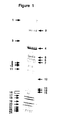
- Fig.1
- shows a Coomassie stained gel depicting the fractionated
proteins of a yeast RNA-protein complex. Proteins identified
by mass spectrometry are labeled 1-24.
Bands Bands 2, 4-7 represent proteins that are likely candidates for true complex component given their sequence. Bands 12-14 represent potential contaminants (ribosomal proteins).Band 15 is a trace amount of TEV protease that remained in this particular preparation. This is not generally the case (see Fig.2 for example). Bands 4-6 originate from the same gene and might represent alternative translation products or degradation products.Band 16 is a mixture and contains, in addition to a bona fide complex protein, a contaminating ribosomal protein. - Fig.2
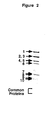
- shows a Coomassie stained gel depicting the fractionated proteins moiety of the yeast U1 snRNP. The 10 specific proteins were identified by mass spectrometry. Compare with the silver stained gel obtained following a purification using a cap affinity step and a Ni-NTA column reported by Neubauer et al., (Proc.Natl.Acad.Sci USA 1997, 94, 385-390). Note in particular the low level of contaminants in this purification.
- Fig.3
- shows a Coomassie stained gel in which purified U1 snRNP
has been analysed using either the CBP binding/EGTA elution
alone (lane 1), the Protein A binding/TEV elution alone (lane 3)
or both steps (lane 7). Arrows on the right point to the U1
snRNP specific proteins.
Lanes Lane 6 is a molecular weight marker.Lane 7 is the TEV protease that can also be seen as an abundant contaminant (even though only the required amount of protease was used) inlanes - A vector encoding a fusion of a yeast protein to the CBP-TEV-Protein A double tag was constructed using standard methods. The fusion protein is one subunit of a protein complex of yeast containing 24 subunits in total. The plasmid was transformed into yeast cells and a 2 L culture of cells expressing the protein was prepared. Proteins were extracted from the cultured cells using a French press. The complex was purified by binding to IgG-linked beads, eluting by TEV protease cleavage, binding of the eluted material on calmodulin containing beads followed by elution with EGTA. All steps were carried out at 0-4°C, excepted for TEV cleavage.
- The first affinity step (IgG step) was performed as follows:
- 200 µl of IgG-Sepharose bead suspension (Pharmacia 17-0969-01) were washed in an Econocolumn with 5 ml of IPP 150-IgG buffer (10 mM Tris-CI pH 8.0, 150 mM NaCI, 0.1% NP40). 10 ml extract, corresponding approximately to 2 L of yeast culture, were adjusted to IPP 150-IgG buffer concentrations in Tris-CI pH 8.0, NaCI and NP40. This extract solution was mixed with the 200 µl of IgG-Sepharose beads and rotated in the Econocolumn for 2 hours. The unbound fraction was discarded and beads with bound material were washed first with 30 ml IPP 150-IgG buffer followed by 10 ml TEV cleavage buffer (10 mM Tris-CI pH 8.0, 150 mM NaCI, 0.1% NP40, 0.5 mM EDTA, 1 mM DTT).
-
- The target protein was cleaved and released from the beads as follows. The washed Econocolumn was filled with 1 ml TEV cleavage buffer and 30 µl TEV protease and rotated in a 16°C incubator for 2 hours. The eluate was recovered by gravity flow.
- The second affinity step (Calmodulin affinity step) was performed as follows:
- The previous eluate was mixed with 3 ml of IPP 150-Calmodulin binding buffer (10 mM β-mercaptoethanol, 10 mM Tris-CI pH 8.0, 150 mM NaCl, 1 mM Mg-acetate, 1 mM imidazole, 2 mM CaCl2, 0.1% NP40). The appropriate amount of CaCl2 was further added to block the EDTA coming from the TEV cleavage buffer. This mix was rotated for 1 hour in an Econocolumn containing 200 pi of Calmodulin beads slurry (Stratagene 214303) previously washed with 5 ml IPP 150-Calmodulin binding buffer.
-
- After washing with 30 ml of IPP 150-Calmodulin binding buffer, protein complexes were eluted with 5 successive additions of 200 µl of IPP 150-Calmodulin elution buffer (10 mM β-mercaptoethanol, 10 mM Tris-CI pH 8.0, 150 mM NaCI, 1 mM Mg-acetate, 1 mM imidazole, 2 mM EGTA, 0.1 % NP40).
- Samples were frozen in dry ice and stored at -80°C. Proteins were concentrated by TCA precipitation (A. Bensadoun and D. Weinstein (1976), Anal. Biochem. 70, 241). The proteins were detected by polyacrylamide gel electrophoresis with subsequent staining of the gel with Coomassie blue. The result of the protein purification, a gel of which is depicted in Fig.1 demonstrates that the strategy employed is highly efficient. All the expected protein subunits which number 24 in this case can be detected.
- The same procedure was used for two other protein or protein-RNA complexes from yeast where all expected protein subunits were detected using the method of the invention. Those are the CBC (Cap Binding Complex) and the U1 snRNP. The purified U1 snRNP is depicted in Figures 2 and 3. The CBC complex has been shown to be still active and the purity was good in all cases. This method is relatively cheap and not very time-consuming, since it can be done in one day. Concerning the U1 snRNP, it is noteworthy that Neubauer et al. (Proc. Natl. Acad. Sci. USA 1997, 94, 385-390) carried out a purification of the same complex (U1 snRNP) extracted from 16 L of culture. The proteins of the complex of interest were then only visible by silver staining and several contaminants were still observed.
Claims (12)
- Method for detecting and/or purifying biomolecule and/or protein complexes comprising the steps:(a) providing an expression environment containing one or more heterologous nucleic acids encoding one or more subunits of a biomolecule complex, the subunits being fused to at least two different affinity tags, one of which consists of one or more IgG binding domains of Staphylococcus protein A,(b) maintaining the expression environment under conditions that facilitate expression of the one or more subunits in a native form as fusion proteins with the affinity tags, and under conditions that allow the formation of a complex between the one or more subunits and possibly other components capable of complexing with the one or more subunits,(c) detecting and/or purifying the one or more subunits by a combination of at least two different affinity purification steps each comprising binding the one or more subunits via one affinity tag to a support material capable of selectively binding one of the affinity tags and separating the one or more subunits from the support material after substances not bound to the support material have been removed.
- Method for detecting and/or purifying biomolecule and/or protein complexes, comprising the steps:(a) providing an expression environment containing one or more heterologous nucleic acids encoding at least two subunits of a biomolecule complex, each being fused to at least one of different affinity tags, one of which consists of one or more IgG binding domains of Staphylococcus protein A,(b) maintaining the expression environment under conditions that facilitate expression of the two or more subunits in a native form as fusion proteins with the affinity tags, and under conditions that allow the formation of a complex between the two or more subunits and possibly other components capable of complexing with the two or more subunits,(c) detecting and/or purifying the complex by a combination of at least two different affinity purification steps each comprising binding the two or more subunits via one affinity tag to a support material capable of selectively binding one of the affinity tags and separating the complex from the support material after substances not bound to the support material have been removed.
- Method according to claim 1 or 2, wherein between the one or more subunits and one or more of the affinity tags a specific proteolytic cleavage site is present in one or more of the fusion proteins which facilitates the removal of one or more of the affinity tags.
- Method according to claim 3, wherein the specific proteolytic cleavage site is an enzymatic cleavage site.
- Method according to claim 4, wherein the specific proteolytic cleavage site is the cleavage site for TEV protease NIA.
- Method according to claim 3, 4 or 5, wherein the proteolytic cleavage site is used to cleave the one or more of the subunits in step (c) from the IgG binding domain of Staphylococcus protein A bound to the support material.
- Method according to claim 6, wherein the affinity purification of step (c) comprises:(i) binding the one or more subunits via the one or more IgG binding domains of Staphylococcus to a support material capable of specifically binding the latter, removing substances not bound to the support material and separating the one or more subunits from the support material by cleaving off the IgG binding domains via the specific proteolytic cleavage site, and(ii) binding the subunit via another affinity tag to a second support material capable of specifically binding the latter, removing substances not bound to the support material and separating the subunit from the support material.
- Method according to claim 7, wherein step (ii) is carried out before step (i).
- Method according to one of the previous claims, wherein one or more of the fusion proteins contain a second specific proteolytic cleavage site for the removal of one or more of the other affinity tags.
- Method according to one of the previous claims, wherein one of the affinity tags consists of at least one calmodulin binding peptide.
- Method according to claim 10, wherein a chemical agent is used to separate the one or more subunits from the support material.
- Use of the method according to one of claims 1 to 11 for the detection and/or purification of substances capable of complexing with one or more of the fusion proteins.
Priority Applications (2)
| Application Number | Priority Date | Filing Date | Title |
|---|---|---|---|
| EP02004765A EP1231276A1 (en) | 1998-08-17 | 1999-08-17 | Method for purifying proteins and/or biomolecule of protein complexes |
| EP99944420A EP1105508B1 (en) | 1998-08-17 | 1999-08-17 | Method for purifying biomolecule or protein complexes |
Applications Claiming Priority (4)
| Application Number | Priority Date | Filing Date | Title |
|---|---|---|---|
| EP98115448 | 1998-08-17 | ||
| EP98115448 | 1998-08-17 | ||
| PCT/EP1999/006022 WO2000009716A1 (en) | 1998-08-17 | 1999-08-17 | Method for purifying proteins and/or biomolecule or protein complexes |
| EP99944420A EP1105508B1 (en) | 1998-08-17 | 1999-08-17 | Method for purifying biomolecule or protein complexes |
Related Child Applications (1)
| Application Number | Title | Priority Date | Filing Date |
|---|---|---|---|
| EP02004765A Division EP1231276A1 (en) | 1998-08-17 | 1999-08-17 | Method for purifying proteins and/or biomolecule of protein complexes |
Publications (2)
| Publication Number | Publication Date |
|---|---|
| EP1105508A1 EP1105508A1 (en) | 2001-06-13 |
| EP1105508B1 true EP1105508B1 (en) | 2002-09-04 |
Family
ID=8232468
Family Applications (2)
| Application Number | Title | Priority Date | Filing Date |
|---|---|---|---|
| EP02004765A Withdrawn EP1231276A1 (en) | 1998-08-17 | 1999-08-17 | Method for purifying proteins and/or biomolecule of protein complexes |
| EP99944420A Expired - Lifetime EP1105508B1 (en) | 1998-08-17 | 1999-08-17 | Method for purifying biomolecule or protein complexes |
Family Applications Before (1)
| Application Number | Title | Priority Date | Filing Date |
|---|---|---|---|
| EP02004765A Withdrawn EP1231276A1 (en) | 1998-08-17 | 1999-08-17 | Method for purifying proteins and/or biomolecule of protein complexes |
Country Status (11)
| Country | Link |
|---|---|
| US (2) | US20020061513A1 (en) |
| EP (2) | EP1231276A1 (en) |
| JP (1) | JP3676978B2 (en) |
| AT (1) | ATE223491T1 (en) |
| AU (1) | AU762961B2 (en) |
| CA (1) | CA2340974C (en) |
| DE (2) | DE69902796T2 (en) |
| DK (1) | DK1105508T3 (en) |
| ES (1) | ES2183601T3 (en) |
| PT (1) | PT1105508E (en) |
| WO (1) | WO2000009716A1 (en) |
Families Citing this family (14)
| Publication number | Priority date | Publication date | Assignee | Title |
|---|---|---|---|---|
| US7192596B2 (en) | 1996-08-23 | 2007-03-20 | The Health Protection Agency Ipsen Limited | Recombinant toxin fragments |
| ES2183601T3 (en) * | 1998-08-17 | 2003-03-16 | Europ Lab Molekularbiolog | METHOD FOR PURIFYING COMPLEXES OF BIOMOLECULES OR PROTEINS. |
| FR2830020B1 (en) * | 2001-09-25 | 2003-12-19 | Univ Victor Segalen Bordeaux 2 | NUCLEIC ACID FOR OBTAINING A POLYNUCLEOTIDE ENCODING A DETECTION AND ISOLATION PROTEIN OF A "PREY" LIGAND AND APPLICATIONS OF THIS NUCLEIC ACID |
| US7825227B2 (en) * | 2002-05-09 | 2010-11-02 | Prolexys Pharmaceuticals, Inc. | Method for purification of a protein complex and identification of its components |
| CA2463301A1 (en) * | 2004-04-22 | 2005-10-22 | Atanas Iliev Lalev | Method for detecting protein interactions - affinity purification with switching the ligand |
| WO2005023858A1 (en) * | 2003-09-05 | 2005-03-17 | Cellzome Ag | Protein complexes associated with app-processing |
| US7238478B2 (en) | 2003-11-13 | 2007-07-03 | Stratagene California | Compositions and methods for protein isolation |
| WO2006070416A1 (en) * | 2004-12-30 | 2006-07-06 | Fondazione Santa Lucia I.R.C.C.S. | An immunoprecipitation-based method to purify and characterise biological macromolecular complexes |
| EP1841874B1 (en) * | 2005-01-27 | 2010-01-06 | Five Prime Therapeutics, Inc. | Leader sequences for directing secretion of polypeptides and methods for production thereof |
| CN102414218A (en) | 2009-04-22 | 2012-04-11 | 国立大学法人大阪大学 | Tag peptide with protease recognition sequence and its application |
| FR2944799B1 (en) * | 2009-04-28 | 2011-05-13 | Ecole De Biolog Ind Ebi | PROCESS FOR PRODUCING A PROTEIN OF INTEREST USING A NOVEL FUSION PROTEIN |
| WO2016145416A2 (en) * | 2015-03-11 | 2016-09-15 | The Broad Institute, Inc. | Proteomic analysis with nucleic acid identifiers |
| WO2019183334A1 (en) | 2018-03-21 | 2019-09-26 | Waters Technologies Corporation | Non-antibody high-affinity-based sample preparation, sorbents, devices and methods |
| CN119978097A (en) * | 2025-01-13 | 2025-05-13 | 武汉爱博泰克生物科技有限公司 | Preparation method of mouse interleukin 23 heterodimer |
Family Cites Families (2)
| Publication number | Priority date | Publication date | Assignee | Title |
|---|---|---|---|---|
| US5821088A (en) * | 1990-05-11 | 1998-10-13 | Siga Pharmaceuticals, Inc. | Use of gram-positive bacteria to express recombinant proteins |
| ES2183601T3 (en) * | 1998-08-17 | 2003-03-16 | Europ Lab Molekularbiolog | METHOD FOR PURIFYING COMPLEXES OF BIOMOLECULES OR PROTEINS. |
-
1999
- 1999-08-17 ES ES99944420T patent/ES2183601T3/en not_active Expired - Lifetime
- 1999-08-17 AU AU57362/99A patent/AU762961B2/en not_active Ceased
- 1999-08-17 DE DE69902796T patent/DE69902796T2/en not_active Expired - Lifetime
- 1999-08-17 EP EP02004765A patent/EP1231276A1/en not_active Withdrawn
- 1999-08-17 EP EP99944420A patent/EP1105508B1/en not_active Expired - Lifetime
- 1999-08-17 CA CA002340974A patent/CA2340974C/en not_active Expired - Fee Related
- 1999-08-17 JP JP2000565150A patent/JP3676978B2/en not_active Expired - Fee Related
- 1999-08-17 AT AT99944420T patent/ATE223491T1/en active
- 1999-08-17 PT PT99944420T patent/PT1105508E/en unknown
- 1999-08-17 DK DK99944420T patent/DK1105508T3/en active
- 1999-08-17 WO PCT/EP1999/006022 patent/WO2000009716A1/en not_active Ceased
- 1999-08-17 DE DE1105508T patent/DE1105508T1/en active Pending
-
2001
- 2001-02-16 US US09/785,793 patent/US20020061513A1/en not_active Abandoned
-
2008
- 2008-06-03 US US12/156,626 patent/US20090042216A1/en not_active Abandoned
Also Published As
| Publication number | Publication date |
|---|---|
| AU762961B2 (en) | 2003-07-10 |
| CA2340974A1 (en) | 2000-02-24 |
| JP3676978B2 (en) | 2005-07-27 |
| DE69902796T2 (en) | 2003-08-07 |
| US20020061513A1 (en) | 2002-05-23 |
| US20090042216A1 (en) | 2009-02-12 |
| JP2002522085A (en) | 2002-07-23 |
| EP1105508A1 (en) | 2001-06-13 |
| CA2340974C (en) | 2010-01-12 |
| DE1105508T1 (en) | 2002-02-21 |
| ATE223491T1 (en) | 2002-09-15 |
| DE69902796D1 (en) | 2002-10-10 |
| WO2000009716A1 (en) | 2000-02-24 |
| PT1105508E (en) | 2003-01-31 |
| EP1231276A1 (en) | 2002-08-14 |
| DK1105508T3 (en) | 2003-01-06 |
| ES2183601T3 (en) | 2003-03-16 |
| AU5736299A (en) | 2000-03-06 |
Similar Documents
| Publication | Publication Date | Title |
|---|---|---|
| US20090042216A1 (en) | Method for purifying proteins and/or biomolecule or protein complexes | |
| EP1370574B1 (en) | Sequentially arranged streptavidin-binding modules as affinity tags | |
| Chong et al. | Single-column purification of free recombinant proteins using a self-cleavable affinity tag derived from a protein splicing element | |
| Raines et al. | [23] The S· tag fusion system for protein purification | |
| US7960312B2 (en) | Method and agent for immobilizing protein via protein bound to silicon oxide-containing substance | |
| Roggenkamp et al. | Precursor of beta-lactamase is enzymatically inactive. Accumulation of the preprotein in Saccharomyces cerevisiae. | |
| US20070275416A1 (en) | Affinity marker for purification of proteins | |
| Dutta et al. | Protein purification by affinity chromatography | |
| AU2003252910B2 (en) | Method for purifying proteins and/or biomolecule or protein complexes | |
| WO2011072479A1 (en) | Fusion protein containing a single-stranded dna binding protein and methods for expression and purification of the same | |
| Schafer et al. | A highly specific system for efficient enzymatic removal of tags from recombinant proteins | |
| Wu et al. | Design, production, and characterization of an engineered biotin ligase (BirA) and its application for affinity purification of staphylokinase produced from Bacillus subtilis via secretion | |
| Lakshmi et al. | Identification of the putative mannose 6-phosphate receptor protein (MPR 300) in the invertebrate unio | |
| US9139619B2 (en) | Fusion protein containing a single-stranded DNA binding protein and methods for expression and purification of the same | |
| EP3592763B1 (en) | Compositions, methods, and systems for affinity-based protein identification and purification | |
| US20110263047A1 (en) | Peptide tag and uses thereof | |
| CA2346220A1 (en) | Engineered bira for in vitro biotinylation | |
| US20050085624A1 (en) | Method and device | |
| Peerce | A 40-kDa polypeptide from papain digestion of the rabbit intestinal Na+/phosphate cotransporter retains Na+ and phosphate cotransport | |
| JP2008271909A (en) | Protein production method |
Legal Events
| Date | Code | Title | Description |
|---|---|---|---|
| PUAI | Public reference made under article 153(3) epc to a published international application that has entered the european phase |
Free format text: ORIGINAL CODE: 0009012 |
|
| 17P | Request for examination filed |
Effective date: 20010209 |
|
| AK | Designated contracting states |
Kind code of ref document: A1 Designated state(s): AT BE CH CY DE DK ES FI FR GB GR IE IT LI LU MC NL PT SE |
|
| AX | Request for extension of the european patent |
Free format text: AL;LT;LV;MK;RO;SI |
|
| 17Q | First examination report despatched |
Effective date: 20011015 |
|
| DET | De: translation of patent claims | ||
| GRAG | Despatch of communication of intention to grant |
Free format text: ORIGINAL CODE: EPIDOS AGRA |
|
| RTI1 | Title (correction) |
Free format text: METHOD FOR PURIFYING BIOMOLECULE OR PROTEIN COMPLEXES |
|
| RTI1 | Title (correction) |
Free format text: METHOD FOR PURIFYING BIOMOLECULE OR PROTEIN COMPLEXES |
|
| GRAG | Despatch of communication of intention to grant |
Free format text: ORIGINAL CODE: EPIDOS AGRA |
|
| GRAH | Despatch of communication of intention to grant a patent |
Free format text: ORIGINAL CODE: EPIDOS IGRA |
|
| GRAH | Despatch of communication of intention to grant a patent |
Free format text: ORIGINAL CODE: EPIDOS IGRA |
|
| GRAA | (expected) grant |
Free format text: ORIGINAL CODE: 0009210 |
|
| AK | Designated contracting states |
Kind code of ref document: B1 Designated state(s): AT BE CH CY DE DK ES FI FR GB GR IE IT LI LU MC NL PT SE |
|
| REF | Corresponds to: |
Ref document number: 223491 Country of ref document: AT Date of ref document: 20020915 Kind code of ref document: T |
|
| REG | Reference to a national code |
Ref country code: GB Ref legal event code: FG4D |
|
| REG | Reference to a national code |
Ref country code: CH Ref legal event code: EP |
|
| REG | Reference to a national code |
Ref country code: CH Ref legal event code: NV Representative=s name: A. BRAUN, BRAUN, HERITIER, ESCHMANN AG PATENTANWAE |
|
| REG | Reference to a national code |
Ref country code: IE Ref legal event code: FG4D |
|
| REF | Corresponds to: |
Ref document number: 69902796 Country of ref document: DE Date of ref document: 20021010 |
|
| REG | Reference to a national code |
Ref country code: GR Ref legal event code: EP Ref document number: 20020403604 Country of ref document: GR |
|
| REG | Reference to a national code |
Ref country code: DK Ref legal event code: T3 |
|
| REG | Reference to a national code |
Ref country code: PT Ref legal event code: SC4A Free format text: AVAILABILITY OF NATIONAL TRANSLATION Effective date: 20021125 |
|
| ET | Fr: translation filed | ||
| REG | Reference to a national code |
Ref country code: ES Ref legal event code: FG2A Ref document number: 2183601 Country of ref document: ES Kind code of ref document: T3 |
|
| PLBE | No opposition filed within time limit |
Free format text: ORIGINAL CODE: 0009261 |
|
| STAA | Information on the status of an ep patent application or granted ep patent |
Free format text: STATUS: NO OPPOSITION FILED WITHIN TIME LIMIT |
|
| 26N | No opposition filed |
Effective date: 20030605 |
|
| REG | Reference to a national code |
Ref country code: CH Ref legal event code: PFA Owner name: EUROPAEISCHES LABORATORIUM FUER MOLEKULARBIOLOGIE Free format text: EUROPAEISCHES LABORATORIUM FUER MOLEKULARBIOLOGIE (EMBL)#MEYERHOFSTRASSE 1#D-69117 HEIDELBERG (DE) -TRANSFER TO- EUROPAEISCHES LABORATORIUM FUER MOLEKULARBIOLOGIE (EMBL)#MEYERHOFSTRASSE 1#D-69117 HEIDELBERG (DE) |
|
| PGFP | Annual fee paid to national office [announced via postgrant information from national office to epo] |
Ref country code: MC Payment date: 20090813 Year of fee payment: 11 |
|
| PGFP | Annual fee paid to national office [announced via postgrant information from national office to epo] |
Ref country code: PT Payment date: 20090807 Year of fee payment: 11 |
|
| PGFP | Annual fee paid to national office [announced via postgrant information from national office to epo] |
Ref country code: CY Payment date: 20090812 Year of fee payment: 11 |
|
| PGFP | Annual fee paid to national office [announced via postgrant information from national office to epo] |
Ref country code: GR Payment date: 20090825 Year of fee payment: 11 |
|
| PGFP | Annual fee paid to national office [announced via postgrant information from national office to epo] |
Ref country code: IE Payment date: 20100820 Year of fee payment: 12 |
|
| PGFP | Annual fee paid to national office [announced via postgrant information from national office to epo] |
Ref country code: LU Payment date: 20100812 Year of fee payment: 12 Ref country code: AT Payment date: 20100812 Year of fee payment: 12 |
|
| REG | Reference to a national code |
Ref country code: PT Ref legal event code: MM4A Free format text: LAPSE DUE TO NON-PAYMENT OF FEES Effective date: 20110217 |
|
| PG25 | Lapsed in a contracting state [announced via postgrant information from national office to epo] |
Ref country code: MC Free format text: LAPSE BECAUSE OF NON-PAYMENT OF DUE FEES Effective date: 20100831 |
|
| PG25 | Lapsed in a contracting state [announced via postgrant information from national office to epo] |
Ref country code: CY Free format text: LAPSE BECAUSE OF NON-PAYMENT OF DUE FEES Effective date: 20100817 Ref country code: PT Free format text: LAPSE BECAUSE OF NON-PAYMENT OF DUE FEES Effective date: 20110217 |
|
| PG25 | Lapsed in a contracting state [announced via postgrant information from national office to epo] |
Ref country code: GR Free format text: LAPSE BECAUSE OF NON-PAYMENT OF DUE FEES Effective date: 20110302 |
|
| PGFP | Annual fee paid to national office [announced via postgrant information from national office to epo] |
Ref country code: CH Payment date: 20110824 Year of fee payment: 13 Ref country code: DK Payment date: 20110830 Year of fee payment: 13 |
|
| REG | Reference to a national code |
Ref country code: IE Ref legal event code: MM4A |
|
| PG25 | Lapsed in a contracting state [announced via postgrant information from national office to epo] |
Ref country code: IE Free format text: LAPSE BECAUSE OF NON-PAYMENT OF DUE FEES Effective date: 20110817 |
|
| PGFP | Annual fee paid to national office [announced via postgrant information from national office to epo] |
Ref country code: SE Payment date: 20120821 Year of fee payment: 14 Ref country code: GB Payment date: 20120821 Year of fee payment: 14 Ref country code: FI Payment date: 20120813 Year of fee payment: 14 |
|
| REG | Reference to a national code |
Ref country code: AT Ref legal event code: MM01 Ref document number: 223491 Country of ref document: AT Kind code of ref document: T Effective date: 20110817 |
|
| PGFP | Annual fee paid to national office [announced via postgrant information from national office to epo] |
Ref country code: DE Payment date: 20120731 Year of fee payment: 14 Ref country code: ES Payment date: 20120828 Year of fee payment: 14 Ref country code: BE Payment date: 20120824 Year of fee payment: 14 Ref country code: FR Payment date: 20120906 Year of fee payment: 14 Ref country code: IT Payment date: 20120821 Year of fee payment: 14 |
|
| PG25 | Lapsed in a contracting state [announced via postgrant information from national office to epo] |
Ref country code: AT Free format text: LAPSE BECAUSE OF NON-PAYMENT OF DUE FEES Effective date: 20110817 |
|
| PGFP | Annual fee paid to national office [announced via postgrant information from national office to epo] |
Ref country code: NL Payment date: 20120821 Year of fee payment: 14 |
|
| PG25 | Lapsed in a contracting state [announced via postgrant information from national office to epo] |
Ref country code: LU Free format text: LAPSE BECAUSE OF NON-PAYMENT OF DUE FEES Effective date: 20110817 |
|
| BERE | Be: lapsed |
Owner name: EUROPAISCHES LABORATORIUM FUR MOLEKULARBIOLOGIE *E Effective date: 20130831 |
|
| REG | Reference to a national code |
Ref country code: NL Ref legal event code: V1 Effective date: 20140301 |
|
| REG | Reference to a national code |
Ref country code: CH Ref legal event code: PL Ref country code: DK Ref legal event code: EBP Effective date: 20130831 |
|
| REG | Reference to a national code |
Ref country code: SE Ref legal event code: EUG |
|
| GBPC | Gb: european patent ceased through non-payment of renewal fee |
Effective date: 20130817 |
|
| PG25 | Lapsed in a contracting state [announced via postgrant information from national office to epo] |
Ref country code: NL Free format text: LAPSE BECAUSE OF NON-PAYMENT OF DUE FEES Effective date: 20140301 Ref country code: DE Free format text: LAPSE BECAUSE OF NON-PAYMENT OF DUE FEES Effective date: 20140301 Ref country code: SE Free format text: LAPSE BECAUSE OF NON-PAYMENT OF DUE FEES Effective date: 20130818 Ref country code: CH Free format text: LAPSE BECAUSE OF NON-PAYMENT OF DUE FEES Effective date: 20130831 Ref country code: LI Free format text: LAPSE BECAUSE OF NON-PAYMENT OF DUE FEES Effective date: 20130831 Ref country code: FI Free format text: LAPSE BECAUSE OF NON-PAYMENT OF DUE FEES Effective date: 20130817 |
|
| REG | Reference to a national code |
Ref country code: DE Ref legal event code: R119 Ref document number: 69902796 Country of ref document: DE Effective date: 20140301 |
|
| REG | Reference to a national code |
Ref country code: FR Ref legal event code: ST Effective date: 20140430 |
|
| PG25 | Lapsed in a contracting state [announced via postgrant information from national office to epo] |
Ref country code: BE Free format text: LAPSE BECAUSE OF NON-PAYMENT OF DUE FEES Effective date: 20130831 Ref country code: IT Free format text: LAPSE BECAUSE OF NON-PAYMENT OF DUE FEES Effective date: 20130817 |
|
| PG25 | Lapsed in a contracting state [announced via postgrant information from national office to epo] |
Ref country code: GB Free format text: LAPSE BECAUSE OF NON-PAYMENT OF DUE FEES Effective date: 20130817 |
|
| PG25 | Lapsed in a contracting state [announced via postgrant information from national office to epo] |
Ref country code: FR Free format text: LAPSE BECAUSE OF NON-PAYMENT OF DUE FEES Effective date: 20130902 |
|
| PG25 | Lapsed in a contracting state [announced via postgrant information from national office to epo] |
Ref country code: DK Free format text: LAPSE BECAUSE OF NON-PAYMENT OF DUE FEES Effective date: 20130831 |
|
| REG | Reference to a national code |
Ref country code: ES Ref legal event code: FD2A Effective date: 20150504 |
|
| PG25 | Lapsed in a contracting state [announced via postgrant information from national office to epo] |
Ref country code: ES Free format text: LAPSE BECAUSE OF NON-PAYMENT OF DUE FEES Effective date: 20130818 |