EP1104777B1 - Use of pepsin-treated gelatin as a stabiliser for injectable trace protein substances - Google Patents
Use of pepsin-treated gelatin as a stabiliser for injectable trace protein substances Download PDFInfo
- Publication number
- EP1104777B1 EP1104777B1 EP99309645A EP99309645A EP1104777B1 EP 1104777 B1 EP1104777 B1 EP 1104777B1 EP 99309645 A EP99309645 A EP 99309645A EP 99309645 A EP99309645 A EP 99309645A EP 1104777 B1 EP1104777 B1 EP 1104777B1
- Authority
- EP
- European Patent Office
- Prior art keywords
- gelatin
- pepsin
- molecular weight
- chain
- trace protein
- Prior art date
- Legal status (The legal status is an assumption and is not a legal conclusion. Google has not performed a legal analysis and makes no representation as to the accuracy of the status listed.)
- Expired - Lifetime
Links
- 229920000159 gelatin Polymers 0.000 title claims abstract description 109
- 108010010803 Gelatin Proteins 0.000 title claims abstract description 108
- 235000019322 gelatine Nutrition 0.000 title claims abstract description 108
- 235000011852 gelatine desserts Nutrition 0.000 title claims abstract description 108
- 239000008273 gelatin Substances 0.000 title claims abstract description 107
- 102000004169 proteins and genes Human genes 0.000 title claims abstract description 27
- 108090000623 proteins and genes Proteins 0.000 title claims abstract description 27
- 239000000126 substance Substances 0.000 title claims abstract description 17
- 239000003381 stabilizer Substances 0.000 title claims abstract description 15
- 102000057297 Pepsin A Human genes 0.000 title claims description 33
- 108090000284 Pepsin A Proteins 0.000 title claims description 33
- 229940111202 pepsin Drugs 0.000 title claims description 32
- 229960005486 vaccine Drugs 0.000 claims abstract description 13
- 238000000926 separation method Methods 0.000 claims abstract description 11
- 239000000499 gel Substances 0.000 claims abstract description 10
- 238000004128 high performance liquid chromatography Methods 0.000 claims abstract description 10
- 230000002009 allergenic effect Effects 0.000 claims description 12
- 238000002415 sodium dodecyl sulfate polyacrylamide gel electrophoresis Methods 0.000 claims description 7
- 238000002347 injection Methods 0.000 claims description 4
- 239000007924 injection Substances 0.000 claims description 4
- XLYOFNOQVPJJNP-UHFFFAOYSA-N water Substances O XLYOFNOQVPJJNP-UHFFFAOYSA-N 0.000 claims description 3
- 238000001962 electrophoresis Methods 0.000 abstract description 6
- 229920002401 polyacrylamide Polymers 0.000 abstract description 6
- 235000013305 food Nutrition 0.000 abstract description 3
- 239000002537 cosmetic Substances 0.000 abstract description 2
- 229940079593 drug Drugs 0.000 abstract description 2
- 239000003814 drug Substances 0.000 abstract description 2
- 239000004365 Protease Substances 0.000 description 25
- 108010035532 Collagen Proteins 0.000 description 24
- 102000008186 Collagen Human genes 0.000 description 24
- 229920001436 collagen Polymers 0.000 description 24
- 229940088598 enzyme Drugs 0.000 description 18
- 102000004190 Enzymes Human genes 0.000 description 17
- 108090000790 Enzymes Proteins 0.000 description 17
- 230000009257 reactivity Effects 0.000 description 15
- 108090000765 processed proteins & peptides Proteins 0.000 description 14
- 102000029816 Collagenase Human genes 0.000 description 13
- 108060005980 Collagenase Proteins 0.000 description 13
- 229960002424 collagenase Drugs 0.000 description 13
- QTBSBXVTEAMEQO-UHFFFAOYSA-N Acetic acid Chemical compound CC(O)=O QTBSBXVTEAMEQO-UHFFFAOYSA-N 0.000 description 12
- 102000004196 processed proteins & peptides Human genes 0.000 description 11
- 102000035195 Peptidases Human genes 0.000 description 10
- 108091005804 Peptidases Proteins 0.000 description 10
- 235000019419 proteases Nutrition 0.000 description 10
- 241000283690 Bos taurus Species 0.000 description 9
- 206010020751 Hypersensitivity Diseases 0.000 description 8
- 150000001413 amino acids Chemical group 0.000 description 8
- 239000003513 alkali Substances 0.000 description 7
- 108010004032 Bromelains Proteins 0.000 description 6
- 108090000270 Ficain Proteins 0.000 description 6
- 108010067372 Pancreatic elastase Proteins 0.000 description 6
- 102000016387 Pancreatic elastase Human genes 0.000 description 6
- 235000019835 bromelain Nutrition 0.000 description 6
- 235000019836 ficin Nutrition 0.000 description 6
- 210000000496 pancreas Anatomy 0.000 description 6
- 108090000317 Chymotrypsin Proteins 0.000 description 5
- 230000000172 allergic effect Effects 0.000 description 5
- 208000030961 allergic reaction Diseases 0.000 description 5
- 208000010668 atopic eczema Diseases 0.000 description 5
- 230000001580 bacterial effect Effects 0.000 description 5
- 229960002376 chymotrypsin Drugs 0.000 description 5
- POTUGHMKJGOKRI-UHFFFAOYSA-N ficin Chemical compound FI=CI=N POTUGHMKJGOKRI-UHFFFAOYSA-N 0.000 description 5
- 230000002209 hydrophobic effect Effects 0.000 description 5
- 238000000034 method Methods 0.000 description 5
- 210000002966 serum Anatomy 0.000 description 5
- 241000282898 Sus scrofa Species 0.000 description 4
- 229940024606 amino acid Drugs 0.000 description 4
- 230000000890 antigenic effect Effects 0.000 description 4
- 238000000354 decomposition reaction Methods 0.000 description 4
- 230000000087 stabilizing effect Effects 0.000 description 4
- 238000002965 ELISA Methods 0.000 description 3
- 108010051815 Glutamyl endopeptidase Proteins 0.000 description 3
- 241001465754 Metazoa Species 0.000 description 3
- 108090000526 Papain Proteins 0.000 description 3
- 108090000631 Trypsin Proteins 0.000 description 3
- 102000004142 Trypsin Human genes 0.000 description 3
- 241000607284 Vibrio sp. Species 0.000 description 3
- 208000026935 allergic disease Diseases 0.000 description 3
- 230000007815 allergy Effects 0.000 description 3
- 235000019834 papain Nutrition 0.000 description 3
- 229940055729 papain Drugs 0.000 description 3
- 229920001184 polypeptide Polymers 0.000 description 3
- 238000002360 preparation method Methods 0.000 description 3
- 239000012588 trypsin Substances 0.000 description 3
- 229920002134 Carboxymethyl cellulose Polymers 0.000 description 2
- VEXZGXHMUGYJMC-UHFFFAOYSA-N Hydrochloric acid Chemical compound Cl VEXZGXHMUGYJMC-UHFFFAOYSA-N 0.000 description 2
- VJHCJDRQFCCTHL-UHFFFAOYSA-N acetic acid 2,3,4,5,6-pentahydroxyhexanal Chemical compound CC(O)=O.OCC(O)C(O)C(O)C(O)C=O VJHCJDRQFCCTHL-UHFFFAOYSA-N 0.000 description 2
- 239000013566 allergen Substances 0.000 description 2
- 239000000427 antigen Substances 0.000 description 2
- 102000036639 antigens Human genes 0.000 description 2
- 108091007433 antigens Proteins 0.000 description 2
- 210000004899 c-terminal region Anatomy 0.000 description 2
- 239000002299 complementary DNA Substances 0.000 description 2
- 238000011109 contamination Methods 0.000 description 2
- 238000005227 gel permeation chromatography Methods 0.000 description 2
- 239000003550 marker Substances 0.000 description 2
- 239000011159 matrix material Substances 0.000 description 2
- 239000000203 mixture Substances 0.000 description 2
- 210000004400 mucous membrane Anatomy 0.000 description 2
- 239000011347 resin Substances 0.000 description 2
- 229920005989 resin Polymers 0.000 description 2
- 239000000243 solution Substances 0.000 description 2
- 239000002904 solvent Substances 0.000 description 2
- 239000007858 starting material Substances 0.000 description 2
- 210000002784 stomach Anatomy 0.000 description 2
- NWUYHJFMYQTDRP-UHFFFAOYSA-N 1,2-bis(ethenyl)benzene;1-ethenyl-2-ethylbenzene;styrene Chemical compound C=CC1=CC=CC=C1.CCC1=CC=CC=C1C=C.C=CC1=CC=CC=C1C=C NWUYHJFMYQTDRP-UHFFFAOYSA-N 0.000 description 1
- 208000030507 AIDS Diseases 0.000 description 1
- 241000228212 Aspergillus Species 0.000 description 1
- 125000001433 C-terminal amino-acid group Chemical group 0.000 description 1
- 108091026890 Coding region Proteins 0.000 description 1
- 102100036213 Collagen alpha-2(I) chain Human genes 0.000 description 1
- 108020004414 DNA Proteins 0.000 description 1
- 102000003951 Erythropoietin Human genes 0.000 description 1
- 108090000394 Erythropoietin Proteins 0.000 description 1
- 241000282412 Homo Species 0.000 description 1
- 101000875067 Homo sapiens Collagen alpha-2(I) chain Proteins 0.000 description 1
- 102000008100 Human Serum Albumin Human genes 0.000 description 1
- 108091006905 Human Serum Albumin Proteins 0.000 description 1
- 108060003951 Immunoglobulin Proteins 0.000 description 1
- AGPKZVBTJJNPAG-WHFBIAKZSA-N L-isoleucine Chemical compound CC[C@H](C)[C@H](N)C(O)=O AGPKZVBTJJNPAG-WHFBIAKZSA-N 0.000 description 1
- ROHFNLRQFUQHCH-YFKPBYRVSA-N L-leucine Chemical compound CC(C)C[C@H](N)C(O)=O ROHFNLRQFUQHCH-YFKPBYRVSA-N 0.000 description 1
- FFEARJCKVFRZRR-BYPYZUCNSA-N L-methionine Chemical compound CSCC[C@H](N)C(O)=O FFEARJCKVFRZRR-BYPYZUCNSA-N 0.000 description 1
- COLNVLDHVKWLRT-QMMMGPOBSA-N L-phenylalanine Chemical compound OC(=O)[C@@H](N)CC1=CC=CC=C1 COLNVLDHVKWLRT-QMMMGPOBSA-N 0.000 description 1
- QIVBCDIJIAJPQS-VIFPVBQESA-N L-tryptophane Chemical compound C1=CC=C2C(C[C@H](N)C(O)=O)=CNC2=C1 QIVBCDIJIAJPQS-VIFPVBQESA-N 0.000 description 1
- KZSNJWFQEVHDMF-BYPYZUCNSA-N L-valine Chemical compound CC(C)[C@H](N)C(O)=O KZSNJWFQEVHDMF-BYPYZUCNSA-N 0.000 description 1
- ROHFNLRQFUQHCH-UHFFFAOYSA-N Leucine Natural products CC(C)CC(N)C(O)=O ROHFNLRQFUQHCH-UHFFFAOYSA-N 0.000 description 1
- 102000005741 Metalloproteases Human genes 0.000 description 1
- 108010006035 Metalloproteases Proteins 0.000 description 1
- 102000007079 Peptide Fragments Human genes 0.000 description 1
- 108010033276 Peptide Fragments Proteins 0.000 description 1
- 229920003171 Poly (ethylene oxide) Polymers 0.000 description 1
- QIVBCDIJIAJPQS-UHFFFAOYSA-N Tryptophan Natural products C1=CC=C2C(CC(N)C(O)=O)=CNC2=C1 QIVBCDIJIAJPQS-UHFFFAOYSA-N 0.000 description 1
- KZSNJWFQEVHDMF-UHFFFAOYSA-N Valine Natural products CC(C)C(N)C(O)=O KZSNJWFQEVHDMF-UHFFFAOYSA-N 0.000 description 1
- 241000700605 Viruses Species 0.000 description 1
- 239000002253 acid Substances 0.000 description 1
- 125000000539 amino acid group Chemical group 0.000 description 1
- 230000002467 anti-pepsin effect Effects 0.000 description 1
- 238000003556 assay Methods 0.000 description 1
- 239000007853 buffer solution Substances 0.000 description 1
- 239000001506 calcium phosphate Substances 0.000 description 1
- 229910000389 calcium phosphate Inorganic materials 0.000 description 1
- 235000011010 calcium phosphates Nutrition 0.000 description 1
- 238000005345 coagulation Methods 0.000 description 1
- 230000015271 coagulation Effects 0.000 description 1
- 210000002808 connective tissue Anatomy 0.000 description 1
- NKLPQNGYXWVELD-UHFFFAOYSA-M coomassie brilliant blue Chemical compound [Na+].C1=CC(OCC)=CC=C1NC1=CC=C(C(=C2C=CC(C=C2)=[N+](CC)CC=2C=C(C=CC=2)S([O-])(=O)=O)C=2C=CC(=CC=2)N(CC)CC=2C=C(C=CC=2)S([O-])(=O)=O)C=C1 NKLPQNGYXWVELD-UHFFFAOYSA-M 0.000 description 1
- 238000004925 denaturation Methods 0.000 description 1
- 230000036425 denaturation Effects 0.000 description 1
- 230000001419 dependent effect Effects 0.000 description 1
- 230000000694 effects Effects 0.000 description 1
- 229940105423 erythropoietin Drugs 0.000 description 1
- 238000005194 fractionation Methods 0.000 description 1
- 239000011521 glass Substances 0.000 description 1
- 208000006454 hepatitis Diseases 0.000 description 1
- 231100000283 hepatitis Toxicity 0.000 description 1
- -1 i.e. Proteins 0.000 description 1
- 102000018358 immunoglobulin Human genes 0.000 description 1
- 238000011081 inoculation Methods 0.000 description 1
- 239000003456 ion exchange resin Substances 0.000 description 1
- 229920003303 ion-exchange polymer Polymers 0.000 description 1
- 229960000310 isoleucine Drugs 0.000 description 1
- AGPKZVBTJJNPAG-UHFFFAOYSA-N isoleucine Natural products CCC(C)C(N)C(O)=O AGPKZVBTJJNPAG-UHFFFAOYSA-N 0.000 description 1
- 230000014759 maintenance of location Effects 0.000 description 1
- 238000005259 measurement Methods 0.000 description 1
- 229930182817 methionine Natural products 0.000 description 1
- 238000001471 micro-filtration Methods 0.000 description 1
- COLNVLDHVKWLRT-UHFFFAOYSA-N phenylalanine Natural products OC(=O)C(N)CC1=CC=CC=C1 COLNVLDHVKWLRT-UHFFFAOYSA-N 0.000 description 1
- OXCMYAYHXIHQOA-UHFFFAOYSA-N potassium;[2-butyl-5-chloro-3-[[4-[2-(1,2,4-triaza-3-azanidacyclopenta-1,4-dien-5-yl)phenyl]phenyl]methyl]imidazol-4-yl]methanol Chemical compound [K+].CCCCC1=NC(Cl)=C(CO)N1CC1=CC=C(C=2C(=CC=CC=2)C2=N[N-]N=N2)C=C1 OXCMYAYHXIHQOA-UHFFFAOYSA-N 0.000 description 1
- 230000035945 sensitivity Effects 0.000 description 1
- 238000001179 sorption measurement Methods 0.000 description 1
- 239000000758 substrate Substances 0.000 description 1
- 210000001519 tissue Anatomy 0.000 description 1
- QORWJWZARLRLPR-UHFFFAOYSA-H tricalcium bis(phosphate) Chemical compound [Ca+2].[Ca+2].[Ca+2].[O-]P([O-])([O-])=O.[O-]P([O-])([O-])=O QORWJWZARLRLPR-UHFFFAOYSA-H 0.000 description 1
- 238000000108 ultra-filtration Methods 0.000 description 1
- 229940124974 vaccine stabilizer Drugs 0.000 description 1
- 239000004474 valine Substances 0.000 description 1
Images



Classifications
-
- A—HUMAN NECESSITIES
- A61—MEDICAL OR VETERINARY SCIENCE; HYGIENE
- A61K—PREPARATIONS FOR MEDICAL, DENTAL OR TOILETRY PURPOSES
- A61K9/00—Medicinal preparations characterised by special physical form
- A61K9/0012—Galenical forms characterised by the site of application
- A61K9/0019—Injectable compositions; Intramuscular, intravenous, arterial, subcutaneous administration; Compositions to be administered through the skin in an invasive manner
-
- A—HUMAN NECESSITIES
- A61—MEDICAL OR VETERINARY SCIENCE; HYGIENE
- A61K—PREPARATIONS FOR MEDICAL, DENTAL OR TOILETRY PURPOSES
- A61K47/00—Medicinal preparations characterised by the non-active ingredients used, e.g. carriers or inert additives; Targeting or modifying agents chemically bound to the active ingredient
- A61K47/30—Macromolecular organic or inorganic compounds, e.g. inorganic polyphosphates
- A61K47/42—Proteins; Polypeptides; Degradation products thereof; Derivatives thereof, e.g. albumin, gelatin or zein
-
- C—CHEMISTRY; METALLURGY
- C08—ORGANIC MACROMOLECULAR COMPOUNDS; THEIR PREPARATION OR CHEMICAL WORKING-UP; COMPOSITIONS BASED THEREON
- C08H—DERIVATIVES OF NATURAL MACROMOLECULAR COMPOUNDS
- C08H1/00—Macromolecular products derived from proteins
- C08H1/06—Macromolecular products derived from proteins derived from horn, hoofs, hair, skin or leather
Definitions
- This invention relates to hydrolyzed gelatin, more particularly to pepsin-decomposed gelatin that is useful as a stabilizer for injectable trace protein substances such as vaccines.
- Effective trace protein substances such as injectable vaccine preparations and erythropoietin contain gelatin as a stabilizer in the form of an extract from bovine or swine tissues.
- Gelatin is effective not only as a stabilizer of effective trace protein substances but also for preventing the coagulation of proteins in the preparations and the adsorption of the effective trace protein substances on glass surfaces and other wall surfaces of containers.
- Gelatin is the extract with hot water of collagen which is abundant in connective tissues in the living body and it generally has a smaller molecular weight than collagen.
- Collagen generally has a high degree of homology in amino acid sequence among animal species, at least 90% in bovine, swine and humans.
- gelatin derived from collagen has only small allergenic action and has long been used as a stabilizer of injections.
- the present invention has been accomplished under these circumstances and has the object of providing a less allergenic hydrolyzed gelatin that is useful as a stabilizer for injectable trace protein substances such as vaccines.
- the present inventors made intensive studies and found that a gelatin hydrolyzate, or gelatin decomposed with pepsin, had a smaller degree of allergenicity.
- the present invention has been accomplished on the basis of this finding.
- the present invention relates to the use of a pepsin-treated low allergenic gelatin as a stabilizer for injectable trace protein substances wherein said gelatin has a weight average molecular weight of 3,500 - 20,000 as measured by gel permeation high-performance liquid chromatography and has a separation pattern having characteristic bands at 15 kd, 17 kd, 36 kd, and 60 kd in SDS-polyacrylamide gel electrophoresis.
- the present invention also provides an injection comprising an injectable trace protein substance, a stabilizer comprising a pepsin-treated low allergenic gelatin having a weight average molecular weight of 3,500-20,000 as measured by gel permeation high-performance liquid chromatography and having a separation pattern having characteristic bands at 15 kd, 17 kd, 36 kd, and 60 kd in SDS-polyacrylamide gel electrophoresis, and a pharmaceutically acceptable vehicle.
- said injectable trace protein substance comprises a vaccine and said vehicle comprises water.
- the present inventors collected the sera of patients showing an allergic reaction to gelatin and employed a fluorescent ELISA method to evaluate the sensitivity of IgE to gelatin and its hydrolyzate that were prepared by various known methods.
- the allergenicity of gelatin can be evaluated by knowing how the serum IgE of the patients would react to gelatin.
- Collagen is inherently composed of two different polypeptides, ⁇ 1 and ⁇ 2 chains, having a molecular weight of 100,000; hence, gelatin is a mixture of these two collagen-derived polypeptides.
- the ⁇ 2 chain has antigenicity and its complete amino acid sequence was recently identified by the present inventors on the basis of its cDNA sequence (see T. Sirai et al., "The complete cDNA coding sequence for the bovine pro ⁇ 2(I) chain of type I Procollagen", Matrix Biol. 1998; DNA database EMBL/Gen-Bank AB008683).
- Gelatin is a protein with very small contents of hydrophobic amino acids.
- a comparison between the recently identified amino acid sequence of the ⁇ 2 chain and the already known sequence of the ⁇ 1 chain showed that the former contained about twice as many hydrophobic amino acid residues (62 out of the 1014 residues were occupied by the ⁇ 1 chain and 104 by the ⁇ 2 chain).
- the ⁇ 2 chain had a characteristic cluster of hydrophobic amino acids near the N and C terminals (see Fig. 1).
- a peptide fragment of the ⁇ 2 chain was separated, purified and tested for reactivity with the IgE of patients; antigenicity was found in the peptides near site No. 750 in the C terminal amino acid sequence of the ⁇ 2 chain, obviously in agreement with the position of the cluster of hydrophobic amino acids near the C terminal.
- the gelatin that can be used as a starting material for preparing the gelatin hydrolyzate of the invention is not limited in any way and either the acid process gelatin or the alkali process gelatin will do. Also usable is gelatin resulting from thermal denaturation of solubilized collagen.
- the solubilized collagen may be the solubilized collagen with acetic acid (S.C.A) known in the art or collagen solubilized with an organism-produced protease ("PROCTASE” sold by Meiji Seika Kaisha, Ltd.) or an animal-derived protease such as pepsin.
- pepsin Any commercially available pepsin may be used to decompose gelatin and an example is one derived from the mucous membrane of swine stomach that is commercially available from Sigma.
- the concentration of pepsin relative to gelatin is not critical and the skilled artisan can easily choose a suitable value from common the range of protease concentrations that are sufficient to decompose proteins.
- the weight ratio of substrate to enzyme ranges from 10,000 : 1 to 10 : 1, preferably from 200 : 1 to 50 : 1, more preferably 100 : 1.
- Gelatin is preferably dissolved in 5 - 500 mmol of acetic acid or hydrochloric acid. with the gelatin concentration preferably ranging from 0.01 to several tens of percent.
- the decomposition temperature ranges preferably from 37°C to 60°C and the decomposition time ranges preferably from several hours to several days until the ⁇ chain with a molecular weight of 100,000 is no longer detected on electrophoresis. Any fraction of the ⁇ chain with a molecular weight of 100,000 that remains undecomposed can be rejected by gel permeation chromatography and ultrafiltration.
- the pepsin used to decompose gelatin can be removed by treatment with an ion-exchange resin or a resin having an anti-pepsin antibody immobilized. If desired, resin immobilized pepsin may be used to decompose gelatin so as to avoid pepsin contamination.
- the thus obtained gelatin hydrolyzate has a weight average molecular weight of 3,500 - 20,000, preferably 4,000 - 10,000, more preferably about 7,600, as measured by gel permeation high-performance liquid chromatography. It also exhibits a separation pattern having characteristic bands at 15 kd, 17 kd, 36 kd and 60 kd in SDS-polyacrylamide electrophoresis and no component is detected that derives from the collagen ⁇ 2 chain.
- gelatin hydrolyzate should be used as stabilizer of injectable trace protein substances.
- Type I bovine collagen (trade name: SCE) solubilized by treatment with Aspergillus produced protease (available from Meiji Seika Kaisha, Ltd. under the trade name "PROCTASE”) was thermally denatured by treatment at 100°C for 2 minutes to produce gelatin, which was decomposed with various enzymes, i.e., pepsin, bacterial collagenase ( C. histricum ), collagenase (from the crab pancreas), chymotrypsin, elastase, bromelain, ficin, alkali protease, actinase. V8 protease, bacterial collagenase ( Vibrio sp. ), trypsin and papain.
- the pepsin was purchased from Sigma as a product derived from the mucous membrane of swine stomach and the other enzymes were purchased from either Sigma or Wako Pure Chemical Industries, Ltd.
- the decomposition conditions were as follows; by preliminary treatment at 100°C for 2 minutes, SCE was thermally denatured to give gelatin; to 0.1% of the gelatin, (in 0.5 M acetic acid solution), pepsin was added to give a final concentration of 0.001%; the solution was then left to stand at 37°C for 24 hours.
- solvents known to be optimal in the art were used; the other decomposition conditions were the same as set for above.
- the average molecular weights of the enzyme-treated gelatin samples were measured by high-performance liquid chromatography.
- the separating column consisted of Shodex OHpak SB803 connected in series to Shodex OHpack SB802.5 (both being produced by Showa Denko K.K.).
- the solvent was a buffer solution of calcium phosphate (pH 6.9); the flow rate was 1 mL/min; the column temperature was 40°C.
- the molecular weight marker for polyethylene oxide was used as the standard.
- the molecular weight of the untreated gelatin was also measured.
- Table 2 shows the reactivities of the enzyme-treated gelatin samples with the IgE in the sera of patients who were allergic to gelatin. Table 2. Reactivity of Enzyme-Decomposed Gelatin with IgE in the Sera of Patients Having Allergy to Gelatin Enzyme Average molecular weight Reactivity with IgE Patient 1 Patient 2 Patient 3 Patient 4 Gelatin (not treated with enzyme) 165,617 Da ++++ ++++ ++++++++++++
- the gelatin samples treated with pepsin, collagenase ( C. histricum and one derived from the crab pancreas), chymotrypsin, elastase, bromelain, ficin and alkali protease had lower reactivity with the IgE in the allergic patients.
- these gelatin samples were not suitable for use in stabilizing trace proteins since their molecular weights were lower than the required value 3,500.
- the pepsin-treated gelatin had a weight average molecular weight of 7,600 well in excess of 3,500.
- the other enzymes tested were incapable of adequately reducing the reactivity of gelatin with IgE irrespective of whether the decomposed gelatin molecular weight was higher than 3,500 or not.
- the untreated gelatin i.e., thermally denatured SCE
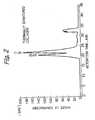
- the samples of pepsin-decomposed gelatin were subjected to high-performance liquid chromatography and the separation patterns obtained are shown in Figs. 2 and 3.
- the band peak that occurred in the untreated gelatin at a retention time (RT) of 20.63 minutes was assigned to the gelatin chains having a molecular weight in excess of 200,000 and the peak for RT of 21.95 minutes was assigned to the gelatin chain that had a molecular weight of 100,000 (Fig. 2).
- the pepsin treated gelatin had peaks spread over a broad range of molecular weight for less than several tens of thousand. A maximum peak occurred at RT of 28.6 minutes and the calculated weight average molecular weight was 7,600 (Fig. 3).
- SDS-polyacrylamide gel electrophoresis SDS-polyacrylamide gel electrophoresis:
- the enzyme-treated gelatin samples were electrophoresed in a 10% polyacrylamide gel and the resulting protein bands were rendered visible with Coomassie Brilliant Blue (see Fig. 4), in which the reactivity with IgE is indicated qualitatively under each band).
- the gelatin samples treated with collagenase C. histricum and one derived from the crab pancreas
- bromelain ficin
- alkali protease and other enzymes (except pepsin) that were lowered in reactivity with IgE had such small molecular weights that they slipped out the polyacrylamide gel and bands could scarcely be detected in electrophoresis.
- the gelatin samples treated with trypsin and papain were broken to such an extent that no bands could be detected and yet they maintained the reactivity with IgE.
- the gelatin samples decomposed with V8 protease and collagenase had high enough molecular weights to produce clearly visible bands in electrophoresis but their reactivity with IgE did not fall.
- the pepsin-treated gelatin showed a separation pattern comprising principal bands at 15 kd, 17 kd, 36 kd and 60 kd plus minor proportions of peptide bands with molecular weights in excess of 10,000.
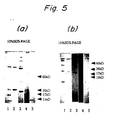
- lane 1 is a molecular weight marker showing, from top to bottom, bands for 103 kD, 77 kD, 48 kD, 34 kD, 28 kD and 20 kD
- lane 2 is a fraction of collagen's ⁇ 1 chain that was separated into 75 kD and 25 kD
- lane 3 is a fraction of collagen's ⁇ 2 chain that was separated into 75 kD and 25 kD
- lane 4 is the pepsin-treated ⁇ 1 chain of collagen
- lane 5 is the pepsin-treated ⁇ 2 chain of collagen.
- Fig. 5 clearly shows that the separation pattern for the pepsin-treated gelatin having principal bands at 15 kd, 17 kd, 36 kd and 60 kd and a minor proportions of peptide bands with molecular weights in excess of 10,000 (see Fig. 4) are all derived from the ⁇ 1 chain (lane 4 in Fig. 5).
- the antigenic ⁇ 2 chain was completely decomposed with pepsin and no visible lanes were detected. (lane 5 in Fig. 5).
- the pepsin-decomposed gelatin of the invention has a sufficient molecular weight to stabilize trace protein substances and yet it is a weak allergen. Therefore, it is useful as a stabilizer for medicines, food, cosmetics, notably for injectable trace protein substances such as vaccines.
Landscapes
- Health & Medical Sciences (AREA)
- Chemical & Material Sciences (AREA)
- Life Sciences & Earth Sciences (AREA)
- Medicinal Chemistry (AREA)
- Public Health (AREA)
- Veterinary Medicine (AREA)
- Pharmacology & Pharmacy (AREA)
- Epidemiology (AREA)
- Animal Behavior & Ethology (AREA)
- General Health & Medical Sciences (AREA)
- Biochemistry (AREA)
- Proteomics, Peptides & Aminoacids (AREA)
- Engineering & Computer Science (AREA)
- Inorganic Chemistry (AREA)
- Materials Engineering (AREA)
- Chemical Kinetics & Catalysis (AREA)
- Polymers & Plastics (AREA)
- Organic Chemistry (AREA)
- Dermatology (AREA)
- Peptides Or Proteins (AREA)
- Medicinal Preparation (AREA)
Abstract
Description
- This invention relates to hydrolyzed gelatin, more particularly to pepsin-decomposed gelatin that is useful as a stabilizer for injectable trace protein substances such as vaccines.
- Effective trace protein substances such as injectable vaccine preparations and erythropoietin contain gelatin as a stabilizer in the form of an extract from bovine or swine tissues. Gelatin is effective not only as a stabilizer of effective trace protein substances but also for preventing the coagulation of proteins in the preparations and the adsorption of the effective trace protein substances on glass surfaces and other wall surfaces of containers.
- Gelatin is the extract with hot water of collagen which is abundant in connective tissues in the living body and it generally has a smaller molecular weight than collagen. Collagen generally has a high degree of homology in amino acid sequence among animal species, at least 90% in bovine, swine and humans. Thus, gelatin derived from collagen has only small allergenic action and has long been used as a stabilizer of injections.
- Cases, though very few, have recently been reported of the occurrence of allergic reaction in infants after inoculation of vaccines and it has been shown that the allergen is the gelatin incorporated in vaccine preparations. Since an anti-gelatin immunoglobulin E antibody (IgE) was detected in the sera of allergic patients, it has been shown that the allergy to gelatin is of a type I allergic reaction. Human serum albumin is known as a protein having the same effect as gelatin but considering the potential risk of contamination by AIDS and hepatitis viruses, the established practice of using gelatin is believed to be on the safer side. Gelatin is also preferred from an economic viewpoint since it is available at a fairly low cost.
- A report has been made in Unexamined Published Japanese Patent Application (kokai) No. 82299/1995 about less allergenic gelatin. That is, when a starting material containing a collagen component or a gelatin component which is a modified product thereof was specifically decomposed with a bacterial collagenase, there was obtained a peptide composition with a molecular weight of no more than 1,000 that had no antigenicity and which contained at least 70% of peptides having the amino acid sequence (Gly-X-Y)n (n = 1 - 3). The gelatin thus prepared by the collagenase-dependent method may be effective in food but having a molecular weight of no more than 1,000, it certainly is not suitable as a vaccine stabilizer.
- It is reported in Unexamined Published Japanese Patent Application (kokai) No. 229932/1997 that a human who was allergic to gelatin was sensitive to the α2 chain in bovine-derived gelatin and that gelatins derived from other animals could be used with vaccines. However, the patent teaches nothing about preparing less allergenic gelatin from bovine-derived gelatins in general.
- At a general conference held by the Japanese Society for Immunology, the present inventors read a detailed paper to show that patients manifesting an allergic reaction to gelatin were sensitive to the α2 chain in collagen or gelatin (the 27th Annual Meeting of the Japanese Society for Immunology, October 29 - 31, 1997).
- Therefore, a strong need still exists for a gelatin that is useful as a stabilizer of vaccines that can safely be administered to patients who manifest an allergic reaction to gelatin.
- The present invention has been accomplished under these circumstances and has the object of providing a less allergenic hydrolyzed gelatin that is useful as a stabilizer for injectable trace protein substances such as vaccines.
- In order to attain the stated object, the present inventors made intensive studies and found that a gelatin hydrolyzate, or gelatin decomposed with pepsin, had a smaller degree of allergenicity. The present invention has been accomplished on the basis of this finding.
- Thus, the present invention relates to the use of a pepsin-treated low allergenic gelatin as a stabilizer for injectable trace protein substances wherein said gelatin has a weight average molecular weight of 3,500 - 20,000 as measured by gel permeation high-performance liquid chromatography and has a separation pattern having characteristic bands at 15 kd, 17 kd, 36 kd, and 60 kd in SDS-polyacrylamide gel electrophoresis.
- The present invention also provides an injection comprising an injectable trace protein substance, a stabilizer comprising a pepsin-treated low allergenic gelatin having a weight average molecular weight of 3,500-20,000 as measured by gel permeation high-performance liquid chromatography and having a separation pattern having characteristic bands at 15 kd, 17 kd, 36 kd, and 60 kd in SDS-polyacrylamide gel electrophoresis, and a pharmaceutically acceptable vehicle. Typically, said injectable trace protein substance comprises a vaccine and said vehicle comprises water.
- Fig. 1 shows by bands the positions of hydrophobic amino acids (e.g. valine, leucine, isoleucine, methionine, phenylalanine and tryptophan) in the sequences of the α1 and α2 chains in bovine collagen;
- Fig. 2 shows the separation pattern of undecomposed gelatin (thermally denatured SCE) on high-performance liquid chromatography;
- Fig. 3 shows the separation pattern of pepsin-decomposed gelatin on high-performance liquid chromatography;
- Fig. 4 is a photograph showing the result of SDS-polyacrylamide electrophoresis performed on gelatin after it was decomposed with various enzymes, with its reactivity with IgE being indicated qualitatively under respective bands; and
- Figs. 5a and 5b are photographs showing the results of 10% SDS-polyacrylamide gel electrophoresis and 15% SDS-polyacrylamide gel electrophoresis that were respectively performed on non-antigenic collagen α1 chain and antigenic collagen α2 chain which had been separated by a CM-cellulose column and later decomposed with pepsin.
- The invention is described below in greater detail.
- For sensible development of less allergenic gelatin that finds a wide range of applications, it would be necessary to use the sera of as many patients as possible who are allergenic to gelatin and identify the epitope in the gelatin for serum IgE. The present inventors therefore attempted to identify the epitope for IgE in patients having an allergy to gelatin and disrupt the IgE reactive site in gelatin with a specific enzyme, thereby providing a gelatin hydrolyzate that had low allergenicity and which was highly capable of stabilizing injectable trace proteins such as vaccines.
- To begin with, the present inventors collected the sera of patients showing an allergic reaction to gelatin and employed a fluorescent ELISA method to evaluate the sensitivity of IgE to gelatin and its hydrolyzate that were prepared by various known methods. The allergenicity of gelatin can be evaluated by knowing how the serum IgE of the patients would react to gelatin. Collagen is inherently composed of two different polypeptides, α1 and α2 chains, having a molecular weight of 100,000; hence, gelatin is a mixture of these two collagen-derived polypeptides. As is shown in Table 1 below, the sera of three patients reacted to the α2 chain purified from collagen but not to the purified α1 chain (details of this different behavior were reported in the Abstracts of the papers read at the 27th Annual Meeting of the Japanese Society for Immunology, supra).
Table 1 (Numerals indicate the intensity of fluorescence) Antigen Serum case 1 Serum case 2Serum case 3Bovine gelatin 2200 1430 4380 Alpha 1 chain144 307 137 Alpha 2 chain2500 1500 4250 No antigen 20 22 20 - Of the two polypeptides in bovine collagen used as a source of gelatin, the α2 chain has antigenicity and its complete amino acid sequence was recently identified by the present inventors on the basis of its cDNA sequence (see T. Sirai et al., "The complete cDNA coding sequence for the bovine proα2(I) chain of type I Procollagen", Matrix Biol. 1998; DNA database EMBL/Gen-Bank AB008683).
- Gelatin is a protein with very small contents of hydrophobic amino acids. However, a comparison between the recently identified amino acid sequence of the α2 chain and the already known sequence of the α1 chain showed that the former contained about twice as many hydrophobic amino acid residues (62 out of the 1014 residues were occupied by the α1 chain and 104 by the α2 chain). It was also revealed that the α2 chain had a characteristic cluster of hydrophobic amino acids near the N and C terminals (see Fig. 1). A peptide fragment of the α2 chain was separated, purified and tested for reactivity with the IgE of patients; antigenicity was found in the peptides near site No. 750 in the C terminal amino acid sequence of the α2 chain, obviously in agreement with the position of the cluster of hydrophobic amino acids near the C terminal.
- These findings led the present inventors to conclude that a less allergenic gelatin hydrolyzate would be obtained by disrupting the antigenic site on the α2 chain; the inventors therefore tested a variety of gelatin decomposing enzymes.
- Surprisingly enough, only the gelatin that was decomposed with pepsin among various decomposing enzymes was found to be optimal for use as a stabilizer of injectable trace proteins such as vaccines. The present invention has been accomplished on the basis of this finding. Stated specifically those gelatin samples which were treated with pepsin, collagenase (both C. histricum and one derived from the crab pancreas), chymotrypsin, elastase, bromelain, ficin and alkali protease were reduced in reactivity with the IgE of allergic patients. However, the gelatin samples treated with non-pepsin enzymes, namely, collagenase (both C. histricum and one derived from the crab pancreas), chymotrypsin, elastase, bromelain, ficin and alkali protease, had lower molecular weights than 3,500 which was necessary to stabilize trace proteins and, hence, were unsuitable for the purpose of stabilizing trace proteins. In contrast, the gelatin samples that were treated with pepsin had an average molecular weight of 7,600 well in excess of 3,500 which was the required value for stabilizing trace proteins. Other enzymes could not achieve satisfactory lowering of the reactivity with IgE regardless of the molecular weight of the treated gelatin. If low-molecular weight peptides are removed by fractionation by gel permeation chromatography or microfiltration, one can obtain less allergenic peptides of higher weight average molecular weights, say 20,000, according to the invention.
- The gelatin that can be used as a starting material for preparing the gelatin hydrolyzate of the invention is not limited in any way and either the acid process gelatin or the alkali process gelatin will do. Also usable is gelatin resulting from thermal denaturation of solubilized collagen. The solubilized collagen may be the solubilized collagen with acetic acid (S.C.A) known in the art or collagen solubilized with an organism-produced protease ("PROCTASE" sold by Meiji Seika Kaisha, Ltd.) or an animal-derived protease such as pepsin.
- Any commercially available pepsin may be used to decompose gelatin and an example is one derived from the mucous membrane of swine stomach that is commercially available from Sigma.
- For decomposing gelatin with pepsin, the following conditions are preferred. The concentration of pepsin relative to gelatin is not critical and the skilled artisan can easily choose a suitable value from common the range of protease concentrations that are sufficient to decompose proteins. For example, the weight ratio of substrate to enzyme ranges from 10,000 : 1 to 10 : 1, preferably from 200 : 1 to 50 : 1, more preferably 100 : 1.
- Gelatin is preferably dissolved in 5 - 500 mmol of acetic acid or hydrochloric acid. with the gelatin concentration preferably ranging from 0.01 to several tens of percent. The decomposition temperature ranges preferably from 37°C to 60°C and the decomposition time ranges preferably from several hours to several days until the α chain with a molecular weight of 100,000 is no longer detected on electrophoresis. Any fraction of the α chain with a molecular weight of 100,000 that remains undecomposed can be rejected by gel permeation chromatography and ultrafiltration.
- The pepsin used to decompose gelatin can be removed by treatment with an ion-exchange resin or a resin having an anti-pepsin antibody immobilized. If desired, resin immobilized pepsin may be used to decompose gelatin so as to avoid pepsin contamination.
- The thus obtained gelatin hydrolyzate has a weight average molecular weight of 3,500 - 20,000, preferably 4,000 - 10,000, more preferably about 7,600, as measured by gel permeation high-performance liquid chromatography. It also exhibits a separation pattern having characteristic bands at 15 kd, 17 kd, 36 kd and 60 kd in SDS-polyacrylamide electrophoresis and no component is detected that derives from the collagen α2 chain.
- The skilled artisan can easily determine how much of the gelatin hydrolyzate should be used as stabilizer of injectable trace protein substances.
- The following examples are provided for the purpose of further illustrating the present invention but are in no way to be taken as limiting.
- Type I bovine collagen (trade name: SCE) solubilized by treatment with Aspergillus produced protease (available from Meiji Seika Kaisha, Ltd. under the trade name "PROCTASE") was thermally denatured by treatment at 100°C for 2 minutes to produce gelatin, which was decomposed with various enzymes, i.e., pepsin, bacterial collagenase (C. histricum), collagenase (from the crab pancreas), chymotrypsin, elastase, bromelain, ficin, alkali protease, actinase. V8 protease, bacterial collagenase (Vibrio sp.), trypsin and papain. The pepsin was purchased from Sigma as a product derived from the mucous membrane of swine stomach and the other enzymes were purchased from either Sigma or Wako Pure Chemical Industries, Ltd. The decomposition conditions were as follows; by preliminary treatment at 100°C for 2 minutes, SCE was thermally denatured to give gelatin; to 0.1% of the gelatin, (in 0.5 M acetic acid solution), pepsin was added to give a final concentration of 0.001%; the solution was then left to stand at 37°C for 24 hours. For the other enzymes, solvents known to be optimal in the art were used; the other decomposition conditions were the same as set for above.
- Assay of IgE antibody against gelatin: Enzyme-treated gelatin samples were adsorbed on an ELISA plate and the titre of IgE antibody in the sera of patients that reacted with each gelatin sample was measured. As a control, the IgE antibody against the untreated gelatin was assayed.
- Measurement of average molecular weight: The average molecular weights of the enzyme-treated gelatin samples were measured by high-performance liquid chromatography. The separating column consisted of Shodex OHpak SB803 connected in series to Shodex OHpack SB802.5 (both being produced by Showa Denko K.K.). The solvent was a buffer solution of calcium phosphate (pH 6.9); the flow rate was 1 mL/min; the column temperature was 40°C. The molecular weight marker for polyethylene oxide was used as the standard. As in the case of assaying the IgE antibody against gelatin, the molecular weight of the untreated gelatin was also measured.
- Table 2 shows the reactivities of the enzyme-treated gelatin samples with the IgE in the sera of patients who were allergic to gelatin.
Table 2. Reactivity of Enzyme-Decomposed Gelatin with IgE in the Sera of Patients Having Allergy to Gelatin Enzyme Average molecular weight Reactivity with IgE Patient 1 Patient 2 Patient 3 Patient 4 Gelatin (not treated with enzyme) 165,617 Da ++++ ++++ ++++ ++++ Pepsin 7,666 Da - + - + Bacterial collagenase (C. histricum) 1,635 Da - - - - Collagenase (crab pancreas) 2,773 Da - - - - Chymotrypsin 3,071 Da - - - - Elastase 3,794 Da - - - - Bromelain 2,422 Da - - - - Ficin 2,055 Da - - - - Alkali protease 2,971 Da - - - - Actinase 4,113 Da ++++ ++++ ++ ++++ V8 protease 10,203 Da +++ ++++ +++ +++ Bacterial collagenase (Vibrio sp.) 6,571 Da ++++ ++++ ++++ ++++ Trypsin 2.551 Da - - +++ - Papain 4,068 Da ++ +++ - - ++++ Reactivity with IgE is expressed as the percentage of the reactivity of gelatin (untreated) with the sera of patients as measured by ELISA and the rating is as follows: ++++, 75 - 100%; +++, 50 - 75%; ++, 25 - 50%; +, 10 - 25%; -, less than 10%. - As is clear from Table 2, the gelatin samples treated with pepsin, collagenase (C. histricum and one derived from the crab pancreas), chymotrypsin, elastase, bromelain, ficin and alkali protease had lower reactivity with the IgE in the allergic patients. However, excepting the sample treated with pepsin and elastase, these gelatin samples were not suitable for use in stabilizing trace proteins since their molecular weights were lower than the required value 3,500. The pepsin-treated gelatin had a weight average molecular weight of 7,600 well in excess of 3,500. The other enzymes tested were incapable of adequately reducing the reactivity of gelatin with IgE irrespective of whether the decomposed gelatin molecular weight was higher than 3,500 or not.
- The untreated gelatin (i.e., thermally denatured SCE) and the samples of pepsin-decomposed gelatin were subjected to high-performance liquid chromatography and the separation patterns obtained are shown in Figs. 2 and 3. The band peak that occurred in the untreated gelatin at a retention time (RT) of 20.63 minutes was assigned to the gelatin chains having a molecular weight in excess of 200,000 and the peak for RT of 21.95 minutes was assigned to the gelatin chain that had a molecular weight of 100,000 (Fig. 2). The pepsin treated gelatin had peaks spread over a broad range of molecular weight for less than several tens of thousand. A maximum peak occurred at RT of 28.6 minutes and the calculated weight average molecular weight was 7,600 (Fig. 3). SDS-polyacrylamide gel electrophoresis:
- The enzyme-treated gelatin samples were electrophoresed in a 10% polyacrylamide gel and the resulting protein bands were rendered visible with Coomassie Brilliant Blue (see Fig. 4), in which the reactivity with IgE is indicated qualitatively under each band). As is clear from Fig. 4, the gelatin samples treated with collagenase (C. histricum and one derived from the crab pancreas), bromelain, ficin, alkali protease and other enzymes (except pepsin) that were lowered in reactivity with IgE had such small molecular weights that they slipped out the polyacrylamide gel and bands could scarcely be detected in electrophoresis. The gelatin samples treated with trypsin and papain were broken to such an extent that no bands could be detected and yet they maintained the reactivity with IgE. The gelatin samples decomposed with V8 protease and collagenase (Vibrio sp.) had high enough molecular weights to produce clearly visible bands in electrophoresis but their reactivity with IgE did not fall. The pepsin-treated gelatin showed a separation pattern comprising principal bands at 15 kd, 17 kd, 36 kd and 60 kd plus minor proportions of peptide bands with molecular weights in excess of 10,000.
- Other gelatin samples were treated with a tadpole-derived matrix metalloprotease which could sever collagen at only one site without causing loss of antigenicity and were later separated into two groups of peptides in a CM-cellulose column (Pharmacia); the first group consisted of the peptides derived from the α1 chain (α1TCa and α1TCb) and the second group consisted of the peptides derived from the α2 chain (α2TCa and α2TCb). These peptides were treated with pepsin (Sigma) at a substrate-to-enzyme weight ratio of 10 : 1 in 0.1M acetic acid at 37°C for 24 hours. Thereafter, the respective samples were analyzed by SDS-polyacrylamide gel eletrophoresis, with the gel concentration being varied at 10% and 15% (see Fig. 5). The results are shown in Table 5;
lane 1 is a molecular weight marker showing, from top to bottom, bands for 103 kD, 77 kD, 48 kD, 34 kD, 28 kD and 20 kD;lane 2 is a fraction of collagen's α1 chain that was separated into 75 kD and 25 kD;lane 3 is a fraction of collagen's α2 chain that was separated into 75 kD and 25 kD;lane 4 is the pepsin-treated α1 chain of collagen; andlane 5 is the pepsin-treated α2 chain of collagen. Fig. 5 clearly shows that the separation pattern for the pepsin-treated gelatin having principal bands at 15 kd, 17 kd, 36 kd and 60 kd and a minor proportions of peptide bands with molecular weights in excess of 10,000 (see Fig. 4) are all derived from the α1 chain (lane 4 in Fig. 5). On the other hand, the antigenic α2 chain was completely decomposed with pepsin and no visible lanes were detected. (lane 5 in Fig. 5). - The pepsin-decomposed gelatin of the invention has a sufficient molecular weight to stabilize trace protein substances and yet it is a weak allergen. Therefore, it is useful as a stabilizer for medicines, food, cosmetics, notably for injectable trace protein substances such as vaccines.
Claims (3)
- Use of a pepsin-treated low allergenic gelatin as a stabilizer for injectable trace protein substances wherein said gelatin has a weight average molecular weight of 3,500-20,000 as measured by gel permeation high-performance liquid chromatography and has a separation pattern having characteristic bands at 15 kd, 17 kd, 36 kd, and 60 kd in SDS-polyacrylamide gel electrophoresis.
- An injection comprising an injectable trace protein substance, a stabilizer comprising a pepsin-treated low allergenic gelatin having a weight average molecular weight of 3,500-20,000 as measured by gel permeation high-performance liquid chromatography and having a separation pattern having characteristic bands at 15 kd, 17 kd, 36 kd, and 60 kd in SDS-polyacrylamide gel electrophoresis, and a pharmaceutically acceptable vehicle.
- An injection according to claim 2, wherein said injectable trace protein substance comprises a vaccine and said vehicle comprises water.
Priority Applications (4)
| Application Number | Priority Date | Filing Date | Title |
|---|---|---|---|
| JP17390198A JP3502544B2 (en) | 1998-06-05 | 1998-06-05 | New gelatin and its manufacturing method |
| DE69935338T DE69935338T2 (en) | 1999-12-01 | 1999-12-01 | Use of pepsin-treated gelatin as a stabilizer for injectables containing protein traces |
| AT99309645T ATE355320T1 (en) | 1998-06-05 | 1999-12-01 | USE OF GELATIN TREATED WITH PEPSIN AS A STABILIZER FOR INJECTABLE SUBSTANCES CONTAINING TRACES OF PROTEIN |
| EP99309645A EP1104777B1 (en) | 1998-06-05 | 1999-12-01 | Use of pepsin-treated gelatin as a stabiliser for injectable trace protein substances |
Applications Claiming Priority (2)
| Application Number | Priority Date | Filing Date | Title |
|---|---|---|---|
| JP17390198A JP3502544B2 (en) | 1998-06-05 | 1998-06-05 | New gelatin and its manufacturing method |
| EP99309645A EP1104777B1 (en) | 1998-06-05 | 1999-12-01 | Use of pepsin-treated gelatin as a stabiliser for injectable trace protein substances |
Publications (2)
| Publication Number | Publication Date |
|---|---|
| EP1104777A1 EP1104777A1 (en) | 2001-06-06 |
| EP1104777B1 true EP1104777B1 (en) | 2007-02-28 |
Family
ID=26153612
Family Applications (1)
| Application Number | Title | Priority Date | Filing Date |
|---|---|---|---|
| EP99309645A Expired - Lifetime EP1104777B1 (en) | 1998-06-05 | 1999-12-01 | Use of pepsin-treated gelatin as a stabiliser for injectable trace protein substances |
Country Status (3)
| Country | Link |
|---|---|
| EP (1) | EP1104777B1 (en) |
| JP (1) | JP3502544B2 (en) |
| AT (1) | ATE355320T1 (en) |
Families Citing this family (8)
| Publication number | Priority date | Publication date | Assignee | Title |
|---|---|---|---|---|
| US5478608A (en) * | 1994-11-14 | 1995-12-26 | Gorokhovsky; Vladimir I. | Arc assisted CVD coating method and apparatus |
| JP3502544B2 (en) * | 1998-06-05 | 2004-03-02 | 株式会社ニッピ | New gelatin and its manufacturing method |
| JP5165823B2 (en) * | 2001-09-20 | 2013-03-21 | 株式会社ニッピ | Method for forming gelatin hydrolyzate |
| JP2010143860A (en) * | 2008-12-19 | 2010-07-01 | Chisso Corp | Protein stabilizer |
| JP2014088409A (en) * | 2013-12-20 | 2014-05-15 | Jnc Corp | Protein stabilizer |
| CN104535637B (en) * | 2014-12-11 | 2017-05-10 | 淮海工学院 | Method for verifying macromolecular collagen or gelatin via pepsase enzymolysis |
| JP2016011310A (en) * | 2015-10-14 | 2016-01-21 | Jnc株式会社 | Protein stabilizer |
| CN115368454B (en) * | 2022-09-30 | 2023-05-12 | 斐缦(长春)医药生物科技有限责任公司 | Gelatin and preparation method thereof |
Family Cites Families (1)
| Publication number | Priority date | Publication date | Assignee | Title |
|---|---|---|---|---|
| JP3502544B2 (en) * | 1998-06-05 | 2004-03-02 | 株式会社ニッピ | New gelatin and its manufacturing method |
-
1998
- 1998-06-05 JP JP17390198A patent/JP3502544B2/en not_active Expired - Fee Related
-
1999
- 1999-12-01 EP EP99309645A patent/EP1104777B1/en not_active Expired - Lifetime
- 1999-12-01 AT AT99309645T patent/ATE355320T1/en not_active IP Right Cessation
Also Published As
| Publication number | Publication date |
|---|---|
| EP1104777A1 (en) | 2001-06-06 |
| JP3502544B2 (en) | 2004-03-02 |
| ATE355320T1 (en) | 2006-03-15 |
| JPH11349599A (en) | 1999-12-21 |
Similar Documents
| Publication | Publication Date | Title |
|---|---|---|
| US4483807A (en) | Process for producing a slow release composite | |
| Glanville et al. | Isolation and Characterization of a Native Placental Basement‐Membrane Collagen and Its Component α Chains | |
| Williams | A comparison of glycopeptides from the ovotransferrin and serum transferrin of the hen | |
| Hudson et al. | Studies on the native and reduced alkylated renal glomerular basement membrane: Solubility, subunit size, and reaction with cyanogen bromide | |
| Geisler et al. | Purification of smooth‐muscle desmin and a protein‐chemical comparison of desmins from chicken gizzard and hog stomach | |
| Kato et al. | 3-Deoxyglucosone crosslinks proteins under physiological conditions | |
| DE69934967D1 (en) | METHOD FOR REDUCING IMMUNOGENICITY OF PROTEINS | |
| Robey et al. | Type IV collagen contains two distinct chains in separate molecules | |
| Horst et al. | The active components of crotoxin | |
| EP1104777A1 (en) | Gelatin and a process for producing the same | |
| Jimenez et al. | Identification of two new collagen α-chains in extracts of lathyritic chick embryo tendons | |
| US4534906A (en) | Removal of impurities from human leukocyte interferon preparations | |
| Iuchi et al. | Major glycoproteins solubilized from the teleostean egg membrane by the action of the hatching enzyme | |
| Georges et al. | Chemical modification of charged amino acid moieties alters the electrophoretic mobilities of neurofilament subunits on SDS/polyacrylamide gels | |
| DE69233245D1 (en) | Process for the preparation of peptides | |
| Kozlov et al. | Comparative chemical studies of the polyhedral proteins of the nuclear polyhedrosis viruses of Bombyx mori and Galleria mellonella | |
| Timpl et al. | Characterization of conformation independent antigenic determinants in the triple-helical part of calf and rat collagen | |
| Guy et al. | The Structure of the Bovine Pancreatic Secretory Trypsin Inhibitor—Kazal's Inhibitor: III. DETERMINATION OF THE DISULFIDE BONDS AND PROTEOLYSIS BY THERMOLYSIN | |
| DE60028248D1 (en) | METHOD OF REDUCING THE IMMUNOGENICITY OF STAPHYLOKINASE BY REMOVING T-CELL EPITOPES | |
| Matsudomi et al. | Polymerization of deamidated peptide fragments obtained with the mild acid hydrolysis of ovalbumin | |
| MXPA02000190A (en) | Preparation of a therapeutic composition. | |
| JP2008137968A (en) | Epitope of royal jelly allergen protein, kit for detecting the same, royal jelly free from the allergen and method for producing the same | |
| IL96839A (en) | Method for preparing a dried composition of insulin-like growth factor I | |
| Sakurai et al. | Tryptophan content of Clostridium perfringens epsilon toxin | |
| Heaphy et al. | The preparation and partial characterization of N-terminal and C-terminal iron-binding fragments from rabbit serum transferrin |
Legal Events
| Date | Code | Title | Description |
|---|---|---|---|
| PUAI | Public reference made under article 153(3) epc to a published international application that has entered the european phase |
Free format text: ORIGINAL CODE: 0009012 |
|
| AK | Designated contracting states |
Kind code of ref document: A1 Designated state(s): AT BE CH CY DE DK ES FI FR GB GR IE IT LI LU MC NL PT SE |
|
| AX | Request for extension of the european patent |
Free format text: AL;LT;LV;MK;RO;SI |
|
| 17P | Request for examination filed |
Effective date: 20010926 |
|
| AKX | Designation fees paid |
Free format text: AT BE CH CY DE DK ES FI FR GB GR IE IT LI LU MC NL PT SE |
|
| 17Q | First examination report despatched |
Effective date: 20040915 |
|
| RTI1 | Title (correction) |
Free format text: USE OF PEPSIN-TREATED GELATIN AS A STABILISER |
|
| 17Q | First examination report despatched |
Effective date: 20040915 |
|
| GRAP | Despatch of communication of intention to grant a patent |
Free format text: ORIGINAL CODE: EPIDOSNIGR1 |
|
| RTI1 | Title (correction) |
Free format text: USE OF PEPSIN-TREATED GELATIN AS A STABILISER FOR INJECTABLE TRACE PROTEIN SUBSTANCES |
|
| GRAS | Grant fee paid |
Free format text: ORIGINAL CODE: EPIDOSNIGR3 |
|
| GRAA | (expected) grant |
Free format text: ORIGINAL CODE: 0009210 |
|
| AK | Designated contracting states |
Kind code of ref document: B1 Designated state(s): AT BE CH CY DE DK ES FI FR GB GR IE IT LI LU MC NL PT SE |
|
| PG25 | Lapsed in a contracting state [announced via postgrant information from national office to epo] |
Ref country code: NL Free format text: LAPSE BECAUSE OF FAILURE TO SUBMIT A TRANSLATION OF THE DESCRIPTION OR TO PAY THE FEE WITHIN THE PRESCRIBED TIME-LIMIT Effective date: 20070228 Ref country code: LI Free format text: LAPSE BECAUSE OF FAILURE TO SUBMIT A TRANSLATION OF THE DESCRIPTION OR TO PAY THE FEE WITHIN THE PRESCRIBED TIME-LIMIT Effective date: 20070228 Ref country code: FI Free format text: LAPSE BECAUSE OF FAILURE TO SUBMIT A TRANSLATION OF THE DESCRIPTION OR TO PAY THE FEE WITHIN THE PRESCRIBED TIME-LIMIT Effective date: 20070228 Ref country code: DK Free format text: LAPSE BECAUSE OF FAILURE TO SUBMIT A TRANSLATION OF THE DESCRIPTION OR TO PAY THE FEE WITHIN THE PRESCRIBED TIME-LIMIT Effective date: 20070228 Ref country code: CH Free format text: LAPSE BECAUSE OF FAILURE TO SUBMIT A TRANSLATION OF THE DESCRIPTION OR TO PAY THE FEE WITHIN THE PRESCRIBED TIME-LIMIT Effective date: 20070228 Ref country code: BE Free format text: LAPSE BECAUSE OF FAILURE TO SUBMIT A TRANSLATION OF THE DESCRIPTION OR TO PAY THE FEE WITHIN THE PRESCRIBED TIME-LIMIT Effective date: 20070228 Ref country code: AT Free format text: LAPSE BECAUSE OF FAILURE TO SUBMIT A TRANSLATION OF THE DESCRIPTION OR TO PAY THE FEE WITHIN THE PRESCRIBED TIME-LIMIT Effective date: 20070228 |
|
| REG | Reference to a national code |
Ref country code: GB Ref legal event code: FG4D |
|
| REG | Reference to a national code |
Ref country code: CH Ref legal event code: EP |
|
| REF | Corresponds to: |
Ref document number: 69935338 Country of ref document: DE Date of ref document: 20070412 Kind code of ref document: P |
|
| REG | Reference to a national code |
Ref country code: IE Ref legal event code: FG4D |
|
| PG25 | Lapsed in a contracting state [announced via postgrant information from national office to epo] |
Ref country code: SE Free format text: LAPSE BECAUSE OF FAILURE TO SUBMIT A TRANSLATION OF THE DESCRIPTION OR TO PAY THE FEE WITHIN THE PRESCRIBED TIME-LIMIT Effective date: 20070531 |
|
| PG25 | Lapsed in a contracting state [announced via postgrant information from national office to epo] |
Ref country code: ES Free format text: LAPSE BECAUSE OF FAILURE TO SUBMIT A TRANSLATION OF THE DESCRIPTION OR TO PAY THE FEE WITHIN THE PRESCRIBED TIME-LIMIT Effective date: 20070608 |
|
| ET | Fr: translation filed | ||
| PG25 | Lapsed in a contracting state [announced via postgrant information from national office to epo] |
Ref country code: PT Free format text: LAPSE BECAUSE OF FAILURE TO SUBMIT A TRANSLATION OF THE DESCRIPTION OR TO PAY THE FEE WITHIN THE PRESCRIBED TIME-LIMIT Effective date: 20070730 |
|
| NLV1 | Nl: lapsed or annulled due to failure to fulfill the requirements of art. 29p and 29m of the patents act | ||
| REG | Reference to a national code |
Ref country code: CH Ref legal event code: PL |
|
| PLBE | No opposition filed within time limit |
Free format text: ORIGINAL CODE: 0009261 |
|
| STAA | Information on the status of an ep patent application or granted ep patent |
Free format text: STATUS: NO OPPOSITION FILED WITHIN TIME LIMIT |
|
| 26N | No opposition filed |
Effective date: 20071129 |
|
| PG25 | Lapsed in a contracting state [announced via postgrant information from national office to epo] |
Ref country code: IT Free format text: LAPSE BECAUSE OF FAILURE TO SUBMIT A TRANSLATION OF THE DESCRIPTION OR TO PAY THE FEE WITHIN THE PRESCRIBED TIME-LIMIT Effective date: 20070228 Ref country code: GR Free format text: LAPSE BECAUSE OF FAILURE TO SUBMIT A TRANSLATION OF THE DESCRIPTION OR TO PAY THE FEE WITHIN THE PRESCRIBED TIME-LIMIT Effective date: 20070529 |
|
| PG25 | Lapsed in a contracting state [announced via postgrant information from national office to epo] |
Ref country code: MC Free format text: LAPSE BECAUSE OF NON-PAYMENT OF DUE FEES Effective date: 20071231 |
|
| PG25 | Lapsed in a contracting state [announced via postgrant information from national office to epo] |
Ref country code: IE Free format text: LAPSE BECAUSE OF NON-PAYMENT OF DUE FEES Effective date: 20071203 |
|
| PGFP | Annual fee paid to national office [announced via postgrant information from national office to epo] |
Ref country code: FR Payment date: 20081029 Year of fee payment: 10 |
|
| PG25 | Lapsed in a contracting state [announced via postgrant information from national office to epo] |
Ref country code: CY Free format text: LAPSE BECAUSE OF FAILURE TO SUBMIT A TRANSLATION OF THE DESCRIPTION OR TO PAY THE FEE WITHIN THE PRESCRIBED TIME-LIMIT Effective date: 20070228 |
|
| PG25 | Lapsed in a contracting state [announced via postgrant information from national office to epo] |
Ref country code: LU Free format text: LAPSE BECAUSE OF NON-PAYMENT OF DUE FEES Effective date: 20071201 |
|
| REG | Reference to a national code |
Ref country code: FR Ref legal event code: ST Effective date: 20100831 |
|
| PG25 | Lapsed in a contracting state [announced via postgrant information from national office to epo] |
Ref country code: FR Free format text: LAPSE BECAUSE OF NON-PAYMENT OF DUE FEES Effective date: 20091231 |
|
| PGFP | Annual fee paid to national office [announced via postgrant information from national office to epo] |
Ref country code: GB Payment date: 20101115 Year of fee payment: 12 |
|
| PGFP | Annual fee paid to national office [announced via postgrant information from national office to epo] |
Ref country code: DE Payment date: 20120130 Year of fee payment: 13 |
|
| GBPC | Gb: european patent ceased through non-payment of renewal fee |
Effective date: 20121201 |
|
| REG | Reference to a national code |
Ref country code: DE Ref legal event code: R119 Ref document number: 69935338 Country of ref document: DE Effective date: 20130702 |
|
| PG25 | Lapsed in a contracting state [announced via postgrant information from national office to epo] |
Ref country code: DE Free format text: LAPSE BECAUSE OF NON-PAYMENT OF DUE FEES Effective date: 20130702 |
|
| PG25 | Lapsed in a contracting state [announced via postgrant information from national office to epo] |
Ref country code: GB Free format text: LAPSE BECAUSE OF NON-PAYMENT OF DUE FEES Effective date: 20121201 |