EP1103624A1 - Potentiated nucleic acid amplification method - Google Patents
Potentiated nucleic acid amplification method Download PDFInfo
- Publication number
- EP1103624A1 EP1103624A1 EP00931703A EP00931703A EP1103624A1 EP 1103624 A1 EP1103624 A1 EP 1103624A1 EP 00931703 A EP00931703 A EP 00931703A EP 00931703 A EP00931703 A EP 00931703A EP 1103624 A1 EP1103624 A1 EP 1103624A1
- Authority
- EP
- European Patent Office
- Prior art keywords
- rna
- triphosphate
- final concentration
- sequence
- base sequence
- Prior art date
- Legal status (The legal status is an assumption and is not a legal conclusion. Google has not performed a legal analysis and makes no representation as to the accuracy of the status listed.)
- Withdrawn
Links
Images


Classifications
-
- C—CHEMISTRY; METALLURGY
- C12—BIOCHEMISTRY; BEER; SPIRITS; WINE; VINEGAR; MICROBIOLOGY; ENZYMOLOGY; MUTATION OR GENETIC ENGINEERING
- C12Q—MEASURING OR TESTING PROCESSES INVOLVING ENZYMES, NUCLEIC ACIDS OR MICROORGANISMS; COMPOSITIONS OR TEST PAPERS THEREFOR; PROCESSES OF PREPARING SUCH COMPOSITIONS; CONDITION-RESPONSIVE CONTROL IN MICROBIOLOGICAL OR ENZYMOLOGICAL PROCESSES
- C12Q1/00—Measuring or testing processes involving enzymes, nucleic acids or microorganisms; Compositions therefor; Processes of preparing such compositions
- C12Q1/68—Measuring or testing processes involving enzymes, nucleic acids or microorganisms; Compositions therefor; Processes of preparing such compositions involving nucleic acids
- C12Q1/6813—Hybridisation assays
- C12Q1/6816—Hybridisation assays characterised by the detection means
-
- C—CHEMISTRY; METALLURGY
- C12—BIOCHEMISTRY; BEER; SPIRITS; WINE; VINEGAR; MICROBIOLOGY; ENZYMOLOGY; MUTATION OR GENETIC ENGINEERING
- C12Q—MEASURING OR TESTING PROCESSES INVOLVING ENZYMES, NUCLEIC ACIDS OR MICROORGANISMS; COMPOSITIONS OR TEST PAPERS THEREFOR; PROCESSES OF PREPARING SUCH COMPOSITIONS; CONDITION-RESPONSIVE CONTROL IN MICROBIOLOGICAL OR ENZYMOLOGICAL PROCESSES
- C12Q1/00—Measuring or testing processes involving enzymes, nucleic acids or microorganisms; Compositions therefor; Processes of preparing such compositions
- C12Q1/68—Measuring or testing processes involving enzymes, nucleic acids or microorganisms; Compositions therefor; Processes of preparing such compositions involving nucleic acids
- C12Q1/6844—Nucleic acid amplification reactions
- C12Q1/6865—Promoter-based amplification, e.g. nucleic acid sequence amplification [NASBA], self-sustained sequence replication [3SR] or transcription-based amplification system [TAS]
Definitions
- the present invention relates to a method of amplifying a target RNA containing a specific base sequence anticipated in a gene mixture such as DNA and RNA.
- a method of qualitative or quantitative assay of a target RNA which comprises amplification of the target RNA.
- the present invention is useful in gene diagnosis and other areas of clinical diagnostics and in identification or quantification of microorganisms in food, rooms, soil, rivers and sea.
- amplification of the target nucleic acid mostly present in trace amounts in clinical samples is generally carried out to increase signal intensity for higher sensitivity as an approach to sensitive and reproducible assay.
- a typical technique known for amplification of a specific DNA sequence in nucleic acid is PCR (polymerase chain reaction), which repeats thermal denaturation, primer-annealing and elongation reaction in cycles by using a couple of primers, one of which is complementary to either end of the specific sequence and the other is homologous to the other end of the specific sequence, in combination with a thermostable DNA polymerase to amplify the specific DNA sequence.
- NASBA or 3SR is known as a technique for amplifying an RNA containing a specific nucleic acid (a target nucleic acid) by activating the chain reaction comprising synthesis of a double-stranded DNA having a promoter sequence from the target RNA by using a primer having a promoter sequence, reverse transcriptase and ribonuclease H, and formation by an RNA polymerase of an RNA having the specific base sequence, which is then used as the template for synthesis of the above-mentioned double-stranded DNA having the promoter sequence.
- PCR-based RNA amplification requires a technique so-called RT-PCR, which essentially comprises two steps, preliminary reverse transcription of the template RNA into a cDNA and subsequent PCR.
- RT-PCR essentially comprises two steps, preliminary reverse transcription of the template RNA into a cDNA and subsequent PCR.
- PCR is difficult to automate for a large throughput because of the need for rapid heating and cooling by a special incubator.
- the present invention provide a method of amplifying a target RNA in samples with higher efficiency.
- the present invention also provides a method of assay of a target nucleic acid in samples based on the efficient amplification of the target RNA.
- ITP inosine triphosphate
- ribonucleoside triphosphates adenosine triphosphate, uridine triphosphate, cytidine triphosphate and guanosine triphosphate
- the invention defined in Claim 1 of the present application provides a method of amplifying a target RNA containing a specific base sequence in a sample by an RNA amplification procedure which comprises a step of forming a double-stranded DNA which has a promoter sequence and is capable of being transcribed into an RNA consisting of the specific base sequence or a sequence complementary to the specific base sequence by using the target RNA as the template, a step of forming an RNA transcript consisting of the specific base sequence or a sequence complementary to the specific base sequence by using an RNA polymerase and a step of forming the double-stranded DNA by using the RNA transcript as the template, in the presence of adenosine triphosphate, uridine triphosphate, cytidine triphosphate, guanosine triphosphate and ITP as the substrates of the RNA polymerase.
- the invention defined in Claim 2 of the present application provides the amplification method according to Claim 1, wherein RNA polymerase from phage SP6 is used as the RNA polymerase, and inosine triphosphate is added to a final concentration of from 0.5 mM to 2 mM in the amplification procedure.
- the invention defined in Claim 3 of the present application provides the amplification method according to Claim 2, wherein the ratio of the final concentration of inosine triphosphate to the final concentration of the other ribonucleoside triphosphates (adenosine triphosphate, uridine triphosphate, cytidine triphosphate and guanosine triphosphate) is from 0.5:1.0 to 1.5:1.0.
- the invention defined in Claim 4 of the present application provides the amplification method according to Claim 1, wherein in the amplification procedure, tris-HCl buffer (pH 8.5-8.9) is present at a final concentration of from 20 mM to 50 mM, magnesium chloride is present at a final concentration of from 12 mM to 20 mM, ribonucleoside triphosphates (adenosine triphosphate, uridine triphosphate, cytidine triphosphate and guanosine triphosphate) are present at a final concentration of 3.5 mM to 5.0 mM, RNA polymerase from phase T7 is present as the RNA polymerase, and inosine triphosphate is present at a final concentration of from 1.0 mM to 2.7 mM.
- tris-HCl buffer pH 8.5-8.9
- magnesium chloride is present at a final concentration of from 12 mM to 20 mM
- ribonucleoside triphosphates adenosine
- the invention defined in Claim 5 of the present application provides the amplification method according to Claim 4, wherein the ratio of the final concentration of inosine triphosphate to the final concentration of the other ribonucleoside triphosphates (adenosine triphosphate, uridine triphosphate, cytidine triphosphate and guanosine triphosphate) is from 0.3:1.0 to 0.7:1.0.
- the invention defined in Claim 6 of the present application provides the amplification method according to Claim 1, wherein in the amplification procedure, tris-HCl buffer (pH 8.5-8.9) is present at a final concentration of from 50 mM to 80 mM, magnesium chloride is present at a final concentration of from 12 mM to 20 mM, ribonucleoside triphosphates (adenosine triphosphate, uridine triphosphate, cytidine triphosphate and guanosine triphosphate) are present at a final concentration of 2.0 mM to 3.5 mM, RNA polymerase from phage T7 is present as the RNA polymerase, and inosine triphosphate is present at a final concentration of from 3.2 mM to 4.4 mM.
- tris-HCl buffer pH 8.5-8.9
- magnesium chloride is present at a final concentration of from 12 mM to 20 mM
- ribonucleoside triphosphates adenos
- the invention defined in Claim 7 of the present application provides the amplification method according to Claim 6, wherein the ratio of the final concentration of inosine triphosphate to the final concentration of the other ribonucleoside triphosphates (adenosine triphosphate, uridine triphosphate, cytidine triphosphate and guanosine triphosphate) is from 1.0:1.0 to 1.0:1.5.
- the invention defined in Claim 8 of the present application provides the amplification method according to Claim 1, wherein the RNA amplification procedure uses a primer complementary to the specific base sequence and a primer homologous to the specific base sequence (either of which is a promoter primer having a promoter sequence for the RNA polymerase at the 5' end) and is characterized in that the target RNA is used as the template to form a single-stranded DNA by the action of an RNA-dependent DNA polymerase, the single-stranded DNA is used as the template for formation of a double-stranded DNA which has a promoter sequence and is capable of being transcribed into an RNA having the specific base sequence or a sequence complementary to the specific base sequence by the action of a DNA-dependent DNA polymerase, the double-stranded DNA is transcribed into an RNA transcript in the presence of the RNA polymerase, and the RNA transcript is used as the template for the subsequent formation of a single-stranded DNA by the RNA-dependent DNA polymerase.
- the invention defined in Claim 9 of the present application provides a method of assay of a target nucleic acid which comprises carrying out the amplification procedure as defined in Claim 1 in the presence of a probe labeled with a fluorescent intercalative dye, and monitoring the fluorescence intensity of the reaction solution.
- the invention defined in Claim 10 of the present application provides the method according to Claim 9, wherein the probe labeled with a fluorescent intercalative dye alters its fluorescence upon hybridization with the RNA transcript.
- the present invention is based on the discovery that ITP improves the efficiency of RNA synthesis by an RNA polymerase along a template DNA.
- the present invention can be carried out, for example, by adding the following reagents (A) to (I) on hand one by one, in combinations of at least two or all at once (in any order):
- the combination of the first and second single-stranded oligonucleotides defined above as the reagents (A) and (E) may be used:
- the fluorescence measurement is carried out over about 4 hours, preferably 1 hour until the fluorescence intensity from a sample containing a certain amount of the target RNA nearly levels off so as to cover the stage which marks a significant difference in fluorescence intensity enhancement between a sample containing a certain amount of the target RNA and a sample free of the target RNA.
- ITP final concentration 0.1 mM to 2.0 mM
- Example 2 The reaction conditions in Example 2 were further optimized (at final ITP concentrations between 2.8 mM-4.4 mM) to find the optimum concentration of ITP for amplification of the target nucleic acid.
- Fig. 7 and Fig. 8 indicate that the optimum final ITP concentration for the shortest rising time is between 3.2 mM and 4.4 mM.
- a high-efficiency amplification system in the presence of ITP which enables detection of 10 5 copies/test of RNA in 17 minutes was established.
- the detection of the RNA having the specific base sequence proved successful because no increase in the fluorescence intensity was observed with negative samples (Nega).
- addition of ITP dramatically improves the amplification efficiency of almost isothermal and speedy amplification of a specific RNA sequence originally contained in a sample which requires only one step manual operation on a single-stranded RNA containing the specific base sequence in the sample to start the reaction without repetitious rapid heating or cooling of the reaction solution.
- the target RNA in a sample acts as the starter in synthesis the above-mentioned double-stranded DNA having a promoter region for a DNA-dependent RNA polymerase, which in turn, acts as the starter in synthesis of a large amount of a single-stranded RNA
- the yield of the single-stranded RNA increases dramatically
- analysis of the time course of the measured fluorescence intensity increase resulting from the hybridization between a fluorescent intercalative dye and the single-stranded RNA provides a way to simple and rapid determination of the initial amount of the RNA.
Landscapes
- Chemical & Material Sciences (AREA)
- Life Sciences & Earth Sciences (AREA)
- Organic Chemistry (AREA)
- Engineering & Computer Science (AREA)
- Zoology (AREA)
- Wood Science & Technology (AREA)
- Proteomics, Peptides & Aminoacids (AREA)
- Health & Medical Sciences (AREA)
- Biophysics (AREA)
- General Engineering & Computer Science (AREA)
- Immunology (AREA)
- Microbiology (AREA)
- Molecular Biology (AREA)
- Analytical Chemistry (AREA)
- Physics & Mathematics (AREA)
- Genetics & Genomics (AREA)
- Biochemistry (AREA)
- Bioinformatics & Cheminformatics (AREA)
- Biotechnology (AREA)
- General Health & Medical Sciences (AREA)
- Chemical Kinetics & Catalysis (AREA)
- Measuring Or Testing Involving Enzymes Or Micro-Organisms (AREA)
Abstract
A method of amplifying a specific nucleic acid for
assay of the specific nucleic acid anticipated in a
sample by an RNA amplification procedure which comprises
forming a double-stranded DNA which contains sequences
complementary and homologous to the specific RNA sequence
and has a promoter sequence enabling transcription of the
sequence by using the target RNA as the template and
forming by using an RNA polymerase an RNA transcript
which acts as the template for formation of a new single-stranded
DNA, wherein in the RNA amplification procedure,
inosine triphosphate is added in addition to adenosine
triphosphate, uridine triphosphate, cytidine triphosphate
and guanosine triphosphate to improve the efficiency of
the amplification reaction.
Description
The present invention relates to a method of
amplifying a target RNA containing a specific base
sequence anticipated in a gene mixture such as DNA and
RNA. In particular, it relates to a method of
qualitative or quantitative assay of a target RNA which
comprises amplification of the target RNA. The present
invention is useful in gene diagnosis and other areas of
clinical diagnostics and in identification or
quantification of microorganisms in food, rooms, soil,
rivers and sea.
In diagnosis of virus infections, amplification of
the target nucleic acid (viral nucleic acid) mostly
present in trace amounts in clinical samples is generally
carried out to increase signal intensity for higher
sensitivity as an approach to sensitive and reproducible
assay. A typical technique known for amplification of a
specific DNA sequence in nucleic acid is PCR (polymerase
chain reaction), which repeats thermal denaturation,
primer-annealing and elongation reaction in cycles by
using a couple of primers, one of which is complementary
to either end of the specific sequence and the other is
homologous to the other end of the specific sequence, in
combination with a thermostable DNA polymerase to amplify
the specific DNA sequence.
NASBA or 3SR is known as a technique for amplifying
an RNA containing a specific nucleic acid (a target
nucleic acid) by activating the chain reaction comprising
synthesis of a double-stranded DNA having a promoter
sequence from the target RNA by using a primer having a
promoter sequence, reverse transcriptase and ribonuclease
H, and formation by an RNA polymerase of an RNA having
the specific base sequence, which is then used as the
template for synthesis of the above-mentioned double-stranded
DNA having the promoter sequence.
In general, PCR-based RNA amplification requires a
technique so-called RT-PCR, which essentially comprises
two steps, preliminary reverse transcription of the
template RNA into a cDNA and subsequent PCR. In addition,
there is a problem that PCR is difficult to automate for
a large throughput because of the need for rapid heating
and cooling by a special incubator.
On the other hand, the relatively isothermal
reactions involved in the above-mentioned RNA
amplification technique are easy to automate. However,
further improvement in the amplification efficiency is
needed for sensitive and reproducible detection of a very
sparse the target RNA in samples.
The present invention provide a method of amplifying
a target RNA in samples with higher efficiency. The
present invention also provides a method of assay of a
target nucleic acid in samples based on the efficient
amplification of the target RNA.
The present inventors have discovered that in the RNA
amplification procedure using an RNA polymerase, the
presence of a specific amount of inosine triphosphate
(hereinafter referred to as "ITP") in addition to the
ribonucleoside triphosphates (adenosine triphosphate,
uridine triphosphate, cytidine triphosphate and guanosine
triphosphate) as the substrates of the RNA polymerase
increases the amplification efficiency and accomplished
the present invention based on this discovery.
The invention defined in Claim 1 of the present
application provides a method of amplifying a target RNA
containing a specific base sequence in a sample by an RNA
amplification procedure which comprises a step of forming
a double-stranded DNA which has a promoter sequence and
is capable of being transcribed into an RNA consisting of
the specific base sequence or a sequence complementary to
the specific base sequence by using the target RNA as the
template, a step of forming an RNA transcript consisting
of the specific base sequence or a sequence complementary
to the specific base sequence by using an RNA polymerase
and a step of forming the double-stranded DNA by using
the RNA transcript as the template, in the presence of
adenosine triphosphate, uridine triphosphate, cytidine
triphosphate, guanosine triphosphate and ITP as the
substrates of the RNA polymerase.
The invention defined in Claim 2 of the present
application provides the amplification method according
to Claim 1, wherein RNA polymerase from phage SP6 is used
as the RNA polymerase, and inosine triphosphate is added
to a final concentration of from 0.5 mM to 2 mM in the
amplification procedure. The invention defined in Claim
3 of the present application provides the amplification
method according to Claim 2, wherein the ratio of the
final concentration of inosine triphosphate to the final
concentration of the other ribonucleoside triphosphates
(adenosine triphosphate, uridine triphosphate, cytidine
triphosphate and guanosine triphosphate) is from 0.5:1.0
to 1.5:1.0.
The invention defined in Claim 4 of the present
application provides the amplification method according
to Claim 1, wherein in the amplification procedure, tris-HCl
buffer (pH 8.5-8.9) is present at a final
concentration of from 20 mM to 50 mM, magnesium chloride
is present at a final concentration of from 12 mM to 20
mM, ribonucleoside triphosphates (adenosine triphosphate,
uridine triphosphate, cytidine triphosphate and guanosine
triphosphate) are present at a final concentration of 3.5
mM to 5.0 mM, RNA polymerase from phase T7 is present as
the RNA polymerase, and inosine triphosphate is present
at a final concentration of from 1.0 mM to 2.7 mM. The
invention defined in Claim 5 of the present application
provides the amplification method according to Claim 4,
wherein the ratio of the final concentration of inosine
triphosphate to the final concentration of the other
ribonucleoside triphosphates (adenosine triphosphate,
uridine triphosphate, cytidine triphosphate and guanosine
triphosphate) is from 0.3:1.0 to 0.7:1.0.
The invention defined in Claim 6 of the present
application provides the amplification method according
to Claim 1, wherein in the amplification procedure, tris-HCl
buffer (pH 8.5-8.9) is present at a final
concentration of from 50 mM to 80 mM, magnesium chloride
is present at a final concentration of from 12 mM to 20
mM, ribonucleoside triphosphates (adenosine triphosphate,
uridine triphosphate, cytidine triphosphate and guanosine
triphosphate) are present at a final concentration of 2.0
mM to 3.5 mM, RNA polymerase from phage T7 is present as
the RNA polymerase, and inosine triphosphate is present
at a final concentration of from 3.2 mM to 4.4 mM. The
invention defined in Claim 7 of the present application
provides the amplification method according to Claim 6,
wherein the ratio of the final concentration of inosine
triphosphate to the final concentration of the other
ribonucleoside triphosphates (adenosine triphosphate,
uridine triphosphate, cytidine triphosphate and guanosine
triphosphate) is from 1.0:1.0 to 1.0:1.5.
The invention defined in Claim 8 of the present
application provides the amplification method according
to Claim 1, wherein the RNA amplification procedure uses
a primer complementary to the specific base sequence and
a primer homologous to the specific base sequence (either
of which is a promoter primer having a promoter sequence
for the RNA polymerase at the 5' end) and is
characterized in that the target RNA is used as the
template to form a single-stranded DNA by the action of
an RNA-dependent DNA polymerase, the single-stranded DNA
is used as the template for formation of a double-stranded
DNA which has a promoter sequence and is capable
of being transcribed into an RNA having the specific base
sequence or a sequence complementary to the specific base
sequence by the action of a DNA-dependent DNA polymerase,
the double-stranded DNA is transcribed into an RNA
transcript in the presence of the RNA polymerase, and the
RNA transcript is used as the template for the subsequent
formation of a single-stranded DNA by the RNA-dependent
DNA polymerase.
The invention defined in Claim 9 of the present
application provides a method of assay of a target
nucleic acid which comprises carrying out the
amplification procedure as defined in Claim 1 in the
presence of a probe labeled with a fluorescent
intercalative dye, and monitoring the fluorescence
intensity of the reaction solution. The invention
defined in Claim 10 of the present application provides
the method according to Claim 9, wherein the probe
labeled with a fluorescent intercalative dye alters its
fluorescence upon hybridization with the RNA transcript.
The present invention is based on the discovery that
ITP improves the efficiency of RNA synthesis by an RNA
polymerase along a template DNA.
The present invention can be carried out, for example,
by adding the following reagents (A) to (I) on hand one
by one, in combinations of at least two or all at once
(in any order):
Instead of the combination of the first and second
single-stranded oligonucleotides defined above as the
reagents (A) and (E), the combination of the first and
second single-stranded oligonucleotides defined below as
the reagents (J) and (K) may be used:
The fluorescence measurement is carried out over
about 4 hours, preferably 1 hour until the fluorescence
intensity from a sample containing a certain amount of
the target RNA nearly levels off so as to cover the stage
which marks a significant difference in fluorescence
intensity enhancement between a sample containing a
certain amount of the target RNA and a sample free of the
target RNA.
Now, the present invention will be described in
further details by referring to Examples. However, the
present invention should be by no means is restricted to
these specific Examples.
The effect of ITP (final concentration 0.1 mM to 2.0
mM) on amplification of a target nucleic acid was
investigated.
| 59.2 mM | Tris-acetate buffer (pH 8.1) |
| 13.2 mM | Magnesium acetate |
| 123.7 mM | Potassium acetate |
| 15.8% | Sorbitol |
| 19.7 mM | DTT |
| 1.0 mM | each of dATP, dCTP, dGTP and dTTP |
| 2.0 mM | each of ATP, CTP, GTP and UTP |
| Various concentrations (0.2 mM, 1.0 mM, 2.0 mM, 3.0 mM and 4.0 mM) | ITP |
| 0.4 µM | First oligonucleotide (SEQ ID NO:1) |
| 0.4 µM | Second oligonucleotide having SP6 promoter sequence (SEQ ID NO:2; comprising SP6 promoter sequence from "A" at |
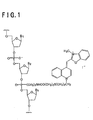
| 0.049 µM | Third oligonucleotide labeled with a fluorescent intercalative dye (Fig. 1) (SEQ ID NO:3; having the fluorescent intercalative dye between "C" at |
| 60 units | Ribonuclease inhibitor (Takara Shuzo Co., Ltd.) |
| 3.9% | DMSO |
| Distilled water for volume adjustment |
| 83.3 mM | Tris-acetate buffer (pH 8.1) |
| 18.5 mM | Magnesium acetate |
| 174.1 mM | Potassium acetate |
| 22.2% | Sorbitol |
| 42 units | AMV reverse transcriptase (Takara Shuzo Co., Ltd.) |
| 171 units | SP6 RNA polymerase (Takara Shuzo Co., Ltd.) |
| 3 µg | Bovine serum albumin |
| Distilled water for volume adjustment |
The effect of addition of ITP (final concentration
0.5 mM to 3.0 mM) on amplification of a target nucleic
acid was investigated.
| 47.6 mM | Tris-HCl buffer (pH 8.5) |
| 17.1 mM | Magnesium chloride |
| 185.7 mM | Potassium chloride |
| 1.4 mM | DTT |
| 0.7 mM | each of dATP, dCTP, dGTP and dTTP |
| 5.4 mM | each of ATP, CTP, GTP and UTP |
| 0.7, 1.4, 2.1, 2.9, 3.6, 3.9 or 4.3 mM | ITP |
| 1.1 µM | First oligonucleotide (SEQ ID NO:4) |
| 1.1 µM | Second oligonucleotide having T7 promoter sequence (SEQ ID NO:5; comprising T7 promoter sequence from "A" at |
| 0.049 µM | Third oligonucleotide labeled with a fluorescent intercalative dye (Fig. 1) (SEQ ID NO:6; having the fluorescent intercalative dye between "A" at position 14 from the 5' end and "C" at |
| 40 units | Ribonuclease inhibitor (Takara Shuzo Co., Ltd.) |
| 21.4% | DMSO |
| Distilled water for volume adjustment |
| 30.8 mM | Tris-HCl buffer (pH 8.5) |
| 7.8% | Sorbitol |
| 29 units | AMV reverse transcriptase (Takara Shuzo Co., Ltd.) |
| 142 units | T7 RNA polymerase (Toyobo Co., Ltd) |
| 3 µg | Bovine serum albumin |
| Distilled water for volume adjustment |
The time courses of the ratio of fluorescence
intensities of the samples (fluorescence intensity at a
certain time/background fluorescence intensity) from
addition of the enzyme solution at 0 minute were shown in
Fig. 4 (RNA sample concentration 106 copies/test, ITP
final concentration 0.5 mM-3.0 mM).
The results indicate that with T7 RNA polymerase as
the RNA polymerase, ITP improved the efficiency of
amplification of the specific nucleic acid more
dramatically at final concentrations of 1.0 mM-2.7 mM
than at a final concentration of 0.5 mM. The detection
of the RNA having the specific base sequence proved
successful because no increase in the fluorescence
intensity was observed with negative samples (Nega).
The detection of specific products with a third
oligonucleotide and a fourth oligonucleotide labeled with
a fluorescent intercalative dye (Fig.1) was investigated.
| 1 ○ HCV RNA | Third oligonucleotide(YO-271) |
| 2 ○ WQ-RNA | Third oligonucleotide(YO-271) |
| 3 ○ Nega | Third oligonucleotide(YO-271) |
| 4 ○ WQ-RNA | Fourth oligonucleotide(YO-WT) |
| 5 ○ HCV RNA | Fourth oligonucleotide(YO-WT) |
| 6 ○ Nega | Fourth oligonucleotide(YO-WT) |
| 59.2 mM | Tris-acetate buffer (pH 8.1) |
| 13.2 mM | Magnesium acetate |
| 123.7 mM | Potassium acetate |
| 15.8% | Sorbitol |
| 19.7 mM | DTT |
| 1.0 mM | each of dATP, dCTP, dGTP and dTTP |
| 2.0 mM | each of ATP, CTP, GTP and UTP |
| 2.5 mM | ITP |
| 0.4 µM | First oligonucleotide (SEQ ID NO:1) |
| 0.4 µM | Second oligonucleotide having SP6 promoter sequence (SEQ ID NO:2) |
| 0.049 µM | Third oligonucleotide labeled with a fluorescent intercalative dye (Fig. 1) (YO-271) or a fourth oligonucleotide labeled with a fluorescent intercalative dye (Fig. 1) (SEQ ID NO:8; having the fluorescent intercalative dye between "A" at |
| 60 units | Ribonuclease inhibitor |
| 3.9% | DMSO |
| Distilled water for volume adjustment |
| 83.3 mM | Tris-acetate buffer (pH 8.1) |
| 18.5 mM | Magnesium acetate |
| 174.1 mM | Potassium acetate |
| 22.2% | Sorbitol |
| 42 units | AMV reverse transcriptase (Takara Shuzo Co., Ltd.) |
| 171 units | SP6 RNA polymerase (Takara Shuzo Co., Ltd.) |
| 3 µg | Bovine serum albumin |
| Distilled water for volume adjustment |
The time courses of the ratio of fluorescence
intensities of the samples (fluorescence intensity at a
certain time/background fluorescence intensity) from
addition of the enzyme solution at 0 minute were shown in
Fig. 5, and the results of electrophoresis of the samples
after the amplification are shown in Fig. 6. As shown in
Fig. 5, only the combinations of target nucleic acids and
fluorescent dye-labeled oligonucleotides complementary to
them (HCV and YO-271, and WQ and YO-WT) gave fluorescence
increase. As shown in Fig. 6, distinctive bands were
detected with samples containing RNA samples ( lanes 1, 2,
4 and 5). These results indicate that even in the
presence of ITP, the fluorescence intensities measured
only reflected amplification of the specific products.
The reaction conditions in Example 2 were further
optimized (at final ITP concentrations between 2.8 mM-4.4
mM) to find the optimum concentration of ITP for
amplification of the target nucleic acid.
| 60.0 mM | Tris-HCl buffer (pH 8.6) |
| 13.0 mM | Magnesium chloride |
| 90.0 mM | Potassium chloride |
| 1.0 mM | DTT |
| 0.25 mM | each of dATP, dCTP, dGTP and dTTP |
| 3.0 mM | each of ATP, CTP, UTP and GTP |
| 2.8, 3.2, 3.6, 4.0 or 4.4 mM | ITP |
| 1.0 µM | First oligonucleotide (SEQ ID NO:1) |
| 1.0 µM | Second oligonucleotide (SEQ ID NO:9; comprising T7 promoter sequence from "A" at position 1 from the 5' end to "A" at position 28) |
| 0.16 µM | Scissor oligonucleotide (SEQ ID NO:10; oligonucleotide for cleaving the target RNA at the 5' end of the specific sequence which is complementary to a redundant segment neighboring the 5' end of the specific sequence, forms an RNA-DNA double strand with the target RNA to direct a reverse transcriptase to degrade the RNA in the RNA-DNA double strand by exerting its RNase H activity and has an aminated 3' end not to function as an oligonucleotide primer) |
| 25.0 nM | Oligonucleotide labeled with a fluorescent intercalative dye (Fig. 1) (YO-271) (SEQ ID NO:3; having a 3'-end modification with glycolic acid) |
| 39 units | Ribonuclease inhibitor (Takara Shuzo Co., Ltd.) |
| 15.0% | DMSO |
| Distilled water for volume adjustment |
| 1.7% | Sorbitol |
| 8 units | AMV reverse transcriptase (Takara Shuzo Co., Ltd.) |
| 142 units | T7 RNA polymerase (GIBCO) |
| 3 µg | Bovine serum albumin |
| Distilled water for volume adjustment |
The time courses of the ratio of fluorescence
intensities of the samples (fluorescence intensity at a
certain time/background fluorescence intensity) from
addition of the enzyme solution at 0 minute were shown in
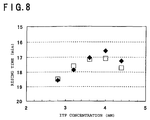
Fig. 7. The relation between the rising time when the
relative fluorescence intensity surpassed 1.2 and the ITP
concentration is shown in Fig. 8.
Fig. 7 and Fig. 8 indicate that the optimum final ITP
concentration for the shortest rising time is between 3.2
mM and 4.4 mM. Thus, a high-efficiency amplification
system in the presence of ITP which enables detection of
105 copies/test of RNA in 17 minutes was established.
The detection of the RNA having the specific base
sequence proved successful because no increase in the
fluorescence intensity was observed with negative samples
(Nega).
As described above, according to the present
invention, addition of ITP dramatically improves the
amplification efficiency of almost isothermal and speedy
amplification of a specific RNA sequence originally
contained in a sample which requires only one step manual
operation on a single-stranded RNA containing the
specific base sequence in the sample to start the
reaction without repetitious rapid heating or cooling of
the reaction solution.
Further, according to the present invention, the
target RNA in a sample acts as the starter in synthesis
the above-mentioned double-stranded DNA having a promoter
region for a DNA-dependent RNA polymerase, which in turn,
acts as the starter in synthesis of a large amount of a
single-stranded RNA, the yield of the single-stranded RNA
increases dramatically, and analysis of the time course
of the measured fluorescence intensity increase resulting
from the hybridization between a fluorescent
intercalative dye and the single-stranded RNA provides a
way to simple and rapid determination of the initial
amount of the RNA.
Claims (10)
- A method of amplifying a target RNA containing a specific base sequence in a sample by an RNA amplification procedure which comprises a step of forming a double-stranded DNA which has a promoter sequence and is capable of being transcribed into an RNA consisting of the specific base sequence or a sequence complementary to the specific base sequence by using the target RNA as the template, a step of forming an RNA transcript consisting of the specific base sequence or a sequence complementary to the specific base sequence by using an RNA polymerase and a step of forming the double-stranded DNA by using the RNA transcript as the template, in the presence of adenosine triphosphate, uridine triphosphate, cytidine triphosphate, guanosine triphosphate and inosine triphosphate as the substrates of the RNA polymerase.
- The amplification method according to Claim 1, wherein RNA polymerase from phage SP6 is used as the RNA polymerase, and inosine triphosphate is added to a final concentration of from 0.5 mM to 2 mM in the amplification procedure.
- The amplification method according to Claim 2, wherein the ratio of the final concentration of inosine triphosphate to the final concentration of the other ribonucleoside triphosphates (adenosine triphosphate, uridine triphosphate, cytidine triphosphate and guanosine triphosphate) is from 0.5:1.0 to 1.5:1.0.
- The amplification method according to Claim 1, wherein in the amplification procedure, tris-HCl buffer (pH 8.5-8.9) is present at a final concentration of from 20 mM to 50 mM, magnesium chloride is present at a final concentration of from 12 mM to 20 mM, ribonucleoside triphosphates (adenosine triphosphate, uridine triphosphate, cytidine triphosphate and guanosine triphosphate) are present at a final concentration of 3.5 mM to 5.0 mM, RNA polymerase from phase T7 is present as the RNA polymerase, and inosine triphosphate is present at a final concentration of from 1.0 mM to 2.7 mM.
- The amplification method according to Claim 4, wherein the ratio of the final concentration of inosine triphosphate to the final concentration of the other ribonucleoside triphosphates (adenosine triphosphate, uridine triphosphate, cytidine triphosphate and guanosine triphosphate) is from 0.3:1.0 to 0.7:1.0.
- The amplification method according to Claim 1, wherein in the amplification procedure, tris-HCl buffer (pH 8.5-8.9) is present at a final concentration of from 50 mM to 80 mM, magnesium chloride is present at a final concentration of from 12 mM to 20 mM, ribonucleoside triphosphates (adenosine triphosphate, uridine triphosphate, cytidine triphosphate and guanosine triphosphate) are present at a final concentration of 2 mM to 3.5 mM, RNA polymerase from phage T7 is present as the RNA polymerase, and inosine triphosphate is present at a final concentration of from 3.2 mM to 4.4 mM.
- The amplification method according to Claim 6, wherein the ratio of the final concentration of inosine triphosphate to the final concentration of the other ribonucleoside triphosphates (adenosine triphosphate, üridine triphosphate, cytidine triphosphate and guanosine triphosphate) is from 1.0:1.0 to 1.0:1.5.
- The amplification method according to Claim 1, wherein the RNA amplification procedure uses a primer complementary to the specific base sequence and a primer homologous to the specific base sequence (either of which is a promoter primer having a promoter sequence for the RNA polymerase at the 5' end) and is characterized in that the target RNA is used as the template to form a single-stranded DNA by the action of an RNA-dependent DNA polymerase, the single-stranded DNA is used as the template for formation of a double-stranded DNA which has a promoter sequence and is capable of being transcribed into an RNA having the specific base sequence or a sequence complementary to the specific base sequence by the action of a DNA-dependent DNA polymerase, the double-stranded DNA is transcribed into an RNA transcript in the presence of the RNA polymerase, and the RNA transcript is used as the template for the subsequent formation of a single-stranded DNA by the RNA-dependent DNA polymerase.
- A method of assay of a target nucleic acid which comprises carrying out the amplification procedure as defined in Claim 1 in the presence of a probe labeled with a fluorescent intercalative dye, and monitoring the fluorescence intensity of the reaction solution.
- The method according to Claim 9, wherein the probe labeled with a fluorescent intercalative dye alters its fluorescence upon hybridization with the RNA transcript.
Applications Claiming Priority (3)
| Application Number | Priority Date | Filing Date | Title |
|---|---|---|---|
| JP15765399 | 1999-06-04 | ||
| JP15765399 | 1999-06-04 | ||
| PCT/JP2000/003647 WO2000075371A1 (en) | 1999-06-04 | 2000-06-05 | Potentiated nucleic acid amplification method |
Publications (2)
| Publication Number | Publication Date |
|---|---|
| EP1103624A1 true EP1103624A1 (en) | 2001-05-30 |
| EP1103624A4 EP1103624A4 (en) | 2004-12-22 |
Family
ID=15654440
Family Applications (1)
| Application Number | Title | Priority Date | Filing Date |
|---|---|---|---|
| EP00931703A Withdrawn EP1103624A4 (en) | 1999-06-04 | 2000-06-05 | METHOD FOR AMPLIFYING POTENTIALIZED NUCLEIC ACID |
Country Status (2)
| Country | Link |
|---|---|
| EP (1) | EP1103624A4 (en) |
| WO (1) | WO2000075371A1 (en) |
Cited By (6)
| Publication number | Priority date | Publication date | Assignee | Title |
|---|---|---|---|---|
| EP1485501A4 (en) * | 2002-02-22 | 2005-12-28 | Ortho Mcneil Pharm Inc | Method for generating amplified rna |
| EP1513958A4 (en) * | 2002-06-14 | 2006-05-17 | Gen Probe Inc | COMPOSITIONS AND METHODS FOR DETECTING HEPATITIS B VIRUS |
| EP1727914A1 (en) * | 2004-03-25 | 2006-12-06 | Bioneer Corporation | Detection method of dna amplification using probe labeled with intercalating dye |
| EP2021488A4 (en) * | 2006-04-28 | 2010-04-07 | Igor Kutyavin | USE OF MODIFIED DEOXYNUCLEOSIDE TRIPHOSPHATES FOR THE DETECTION OF NUCLEIC ACIDS |
| WO2013096802A1 (en) * | 2011-12-22 | 2013-06-27 | Ibis Biosciences, Inc. | Amplification primers and methods |
| US8785126B2 (en) | 2001-05-07 | 2014-07-22 | Applied Biosystems, Llc | Methods for the reduction of stutter in microsatellite amplification |
Families Citing this family (3)
| Publication number | Priority date | Publication date | Assignee | Title |
|---|---|---|---|---|
| US7105319B2 (en) * | 2001-07-25 | 2006-09-12 | Tosoh Corporation | Oligonucleotides for detecting tubercle bacillus and method therefor |
| JP2003033182A (en) * | 2001-07-25 | 2003-02-04 | Tosoh Corp | Oligonucleotides for Mycobacterium tuberculosis detection |
| JP2003047478A (en) * | 2001-08-08 | 2003-02-18 | Tosoh Corp | Method for detecting the pab gene of Mycobacterium tuberculosis |
Family Cites Families (4)
| Publication number | Priority date | Publication date | Assignee | Title |
|---|---|---|---|---|
| DE69128520T2 (en) * | 1990-10-31 | 1998-07-09 | Tosoh Corp | Method for the detection or quantification of target nucleic acids |
| JPH05276946A (en) * | 1991-10-14 | 1993-10-26 | Fujita Gakuen | Creation of dna |
| ZA936016B (en) * | 1992-08-24 | 1994-03-10 | Akzo Nv | Method for nucleic acid amplification |
| DE60014762T2 (en) * | 1999-05-24 | 2005-10-13 | Tosoh Corp., Shinnanyo | Method for the detection of ribonucleic acids |
-
2000
- 2000-06-05 WO PCT/JP2000/003647 patent/WO2000075371A1/en not_active Ceased
- 2000-06-05 EP EP00931703A patent/EP1103624A4/en not_active Withdrawn
Cited By (12)
| Publication number | Priority date | Publication date | Assignee | Title |
|---|---|---|---|---|
| US8785126B2 (en) | 2001-05-07 | 2014-07-22 | Applied Biosystems, Llc | Methods for the reduction of stutter in microsatellite amplification |
| EP1485501A4 (en) * | 2002-02-22 | 2005-12-28 | Ortho Mcneil Pharm Inc | Method for generating amplified rna |
| US7354742B2 (en) | 2002-02-22 | 2008-04-08 | Ortho-Mcneil Pharmaceutical, Inc. | Method for generating amplified RNA |
| EP1513958A4 (en) * | 2002-06-14 | 2006-05-17 | Gen Probe Inc | COMPOSITIONS AND METHODS FOR DETECTING HEPATITIS B VIRUS |
| US7785844B2 (en) | 2002-06-14 | 2010-08-31 | Gen-Probe Incorporated | Compositions and methods for detecting hepatitis B virus |
| US9109264B2 (en) | 2002-06-14 | 2015-08-18 | Gen-Probe Incorporated | Compositions and methods for detecting hepatitis B virus |
| US9914982B2 (en) | 2002-06-14 | 2018-03-13 | Gen-Probe Incorporated | Compositions and methods for detecting hepatitis B virus |
| US10745767B2 (en) | 2002-06-14 | 2020-08-18 | Gen-Probe Incorporated | Compositions and methods for detecting hepatitis B virus |
| EP1727914A1 (en) * | 2004-03-25 | 2006-12-06 | Bioneer Corporation | Detection method of dna amplification using probe labeled with intercalating dye |
| EP2021488A4 (en) * | 2006-04-28 | 2010-04-07 | Igor Kutyavin | USE OF MODIFIED DEOXYNUCLEOSIDE TRIPHOSPHATES FOR THE DETECTION OF NUCLEIC ACIDS |
| AU2007244658B2 (en) * | 2006-04-28 | 2014-02-13 | Igor Kutyavin | Use of base-modified deoxynucleoside triphosphates |
| WO2013096802A1 (en) * | 2011-12-22 | 2013-06-27 | Ibis Biosciences, Inc. | Amplification primers and methods |
Also Published As
| Publication number | Publication date |
|---|---|
| EP1103624A4 (en) | 2004-12-22 |
| WO2000075371A1 (en) | 2000-12-14 |
Similar Documents
| Publication | Publication Date | Title |
|---|---|---|
| US7112407B2 (en) | Method of assay of target nucleic acid | |
| EP1055734B1 (en) | Method for assaying ribonucleic acid | |
| US6030115A (en) | Method of measuring melting temperature of nucleic acid | |
| AU5981799A (en) | Detection of nucleic acid amplified products | |
| JP2003210199A (en) | Quantitative multiplex pcr with high dynamic range | |
| US20100304377A1 (en) | Method of detecting norovirus rna | |
| EP1103624A1 (en) | Potentiated nucleic acid amplification method | |
| US20040014119A1 (en) | Method of detecting nucleic acids | |
| EP1134292B1 (en) | Oligonucleotides for detection of 'Vibrio parahaemolyticus' and detection method for 'Vibrio parahaemolyticus' using the same oligonucleotides | |
| JP4406968B2 (en) | Simple and enhanced nucleic acid amplification method | |
| US7049067B2 (en) | Oligonucleotide for detection of HIV-1 and detection method | |
| EP1233073A2 (en) | Oligonucleotide for detecting salmonella and method of detecting salmonella | |
| JP2012135234A (en) | Oligonucleotide probe for detecting bacillus tuberculosis, and detective method using the same | |
| KR20040017796A (en) | Oligonucleotides for detecting tubercle bacillus and method therefor | |
| US20060014141A1 (en) | Method of detecting and quantifying cytomegalovirus | |
| EP1170383A2 (en) | Oligonucleotides and method for detection of small round structured virus (SRSV) RNA | |
| JP2001046099A (en) | Enhanced nucleic acid amplification method | |
| EP1209242A2 (en) | Oligonucleotides and method for characterizing and detecting genogroup II type small round structured virus (SRSV) | |
| US6756198B2 (en) | Oligonucleotide for highly sensitive detection of hepatitis C virus and method for detection thereof | |
| EP1253206A2 (en) | Method of amplifying or detecting hiv-1 rna | |
| EP1352974A1 (en) | Oligonucleotide for detection of atypical mycobacteria mycobacterium avium and detection method | |
| US20060234258A1 (en) | Stanniocalcin (STC1) mRNA assay method | |
| JP2006075046A (en) | Improved nucleic acid amplification method | |
| CN101001950A (en) | Method of assaying alpha 1, 4-n-acetylglucosamine transferase (alpha 4gnt) mrna | |
| JP2002281972A (en) | Oligonucleotides and detection methods for Salmonella detection |
Legal Events
| Date | Code | Title | Description |
|---|---|---|---|
| PUAI | Public reference made under article 153(3) epc to a published international application that has entered the european phase |
Free format text: ORIGINAL CODE: 0009012 |
|
| 17P | Request for examination filed |
Effective date: 20010205 |
|
| AK | Designated contracting states |
Kind code of ref document: A1 Designated state(s): AT BE CH CY DE DK ES FI FR GB GR IE IT LI LU MC NL PT SE |
|
| AX | Request for extension of the european patent |
Free format text: AL;LT;LV;MK;RO;SI |
|
| RBV | Designated contracting states (corrected) |
Designated state(s): DE FR GB IT NL |
|
| A4 | Supplementary search report drawn up and despatched |
Effective date: 20041105 |
|
| STAA | Information on the status of an ep patent application or granted ep patent |
Free format text: STATUS: THE APPLICATION IS DEEMED TO BE WITHDRAWN |
|
| 18D | Application deemed to be withdrawn |
Effective date: 20090703 |