EP1102465A2 - Charging for telecommunications services - Google Patents
Charging for telecommunications services Download PDFInfo
- Publication number
- EP1102465A2 EP1102465A2 EP00121574A EP00121574A EP1102465A2 EP 1102465 A2 EP1102465 A2 EP 1102465A2 EP 00121574 A EP00121574 A EP 00121574A EP 00121574 A EP00121574 A EP 00121574A EP 1102465 A2 EP1102465 A2 EP 1102465A2
- Authority
- EP
- European Patent Office
- Prior art keywords
- user
- service
- authentication key
- authentication
- requested
- Prior art date
- Legal status (The legal status is an assumption and is not a legal conclusion. Google has not performed a legal analysis and makes no representation as to the accuracy of the status listed.)
- Granted
Links
- 238000000034 method Methods 0.000 claims abstract description 50
- 238000004891 communication Methods 0.000 claims abstract description 22
- 238000012360 testing method Methods 0.000 claims description 14
- 238000004590 computer program Methods 0.000 claims description 5
- 238000007639 printing Methods 0.000 claims description 4
- 238000012795 verification Methods 0.000 claims description 2
- 230000004044 response Effects 0.000 description 7
- 238000012545 processing Methods 0.000 description 4
- 238000010586 diagram Methods 0.000 description 2
- 230000000694 effects Effects 0.000 description 2
- 239000000463 material Substances 0.000 description 2
- 238000010295 mobile communication Methods 0.000 description 2
- 230000008569 process Effects 0.000 description 2
- RYMZZMVNJRMUDD-HGQWONQESA-N simvastatin Chemical compound C([C@H]1[C@@H](C)C=CC2=C[C@H](C)C[C@@H]([C@H]12)OC(=O)C(C)(C)CC)C[C@@H]1C[C@@H](O)CC(=O)O1 RYMZZMVNJRMUDD-HGQWONQESA-N 0.000 description 2
- 238000012546 transfer Methods 0.000 description 2
- 238000013459 approach Methods 0.000 description 1
- 230000008901 benefit Effects 0.000 description 1
- 238000005516 engineering process Methods 0.000 description 1
- 230000002708 enhancing effect Effects 0.000 description 1
- 230000006870 function Effects 0.000 description 1
- 239000004922 lacquer Substances 0.000 description 1
- 238000006748 scratching Methods 0.000 description 1
- 230000002393 scratching effect Effects 0.000 description 1
- 238000007789 sealing Methods 0.000 description 1
- 238000010200 validation analysis Methods 0.000 description 1
Images



Classifications
-
- H—ELECTRICITY
- H04—ELECTRIC COMMUNICATION TECHNIQUE
- H04M—TELEPHONIC COMMUNICATION
- H04M15/00—Arrangements for metering, time-control or time indication ; Metering, charging or billing arrangements for voice wireline or wireless communications, e.g. VoIP
- H04M15/48—Secure or trusted billing, e.g. trusted elements or encryption
-
- H—ELECTRICITY
- H04—ELECTRIC COMMUNICATION TECHNIQUE
- H04M—TELEPHONIC COMMUNICATION
- H04M17/00—Prepayment of wireline communication systems, wireless communication systems or telephone systems
-
- H—ELECTRICITY
- H04—ELECTRIC COMMUNICATION TECHNIQUE
- H04M—TELEPHONIC COMMUNICATION
- H04M17/00—Prepayment of wireline communication systems, wireless communication systems or telephone systems
- H04M17/10—Account details or usage
- H04M17/103—Account details or usage using SIMs (USIMs) or calling cards
-
- H—ELECTRICITY
- H04—ELECTRIC COMMUNICATION TECHNIQUE
- H04M—TELEPHONIC COMMUNICATION
- H04M17/00—Prepayment of wireline communication systems, wireless communication systems or telephone systems
- H04M2017/12—Prepayment of wireline communication systems, wireless communication systems or telephone systems using calling, telephone credit/debit cards
-
- H—ELECTRICITY
- H04—ELECTRIC COMMUNICATION TECHNIQUE
- H04M—TELEPHONIC COMMUNICATION
- H04M2215/00—Metering arrangements; Time controlling arrangements; Time indicating arrangements
- H04M2215/01—Details of billing arrangements
- H04M2215/0156—Secure and trusted billing, e.g. trusted elements, encryption, digital signature, codes or double check mechanisms to secure billing calculation and information
-
- H—ELECTRICITY
- H04—ELECTRIC COMMUNICATION TECHNIQUE
- H04M—TELEPHONIC COMMUNICATION
- H04M2215/00—Metering arrangements; Time controlling arrangements; Time indicating arrangements
- H04M2215/01—Details of billing arrangements
- H04M2215/0168—On line or real-time flexible customization or negotiation according to wishes of subscriber
Definitions
- This invention relates to charging for telecommunication services.
- a method for prepayment of a service comprising the steps of:
- a method according to the invention allows a service provider to make a plurality of different services available to users against prepayment.
- the user can freely select among the services offered.
- the prepayment allows any service provider to provide the services to users who are subscribers of a telecommunications network independently of any contracts made between the service provider and the telecommunications operator.
- the authentication key may be required each time a service is provided or alternatively it may be required at a first time and then used to authenticate a certain number of subsequent services. In the former case no user identification is necessary and services can be provided without any user identification procedure.
- the first and second communications links can be different or the second communications link can be part of or a continuation of the first communications link.
- the first communications link is based on at least one of the following: a Low Power Radio Frequency (LPRF) link, an infra red link, a data network, a telephone network, a mobile communications network, a local area network and a wide area network.
- LPRF Low Power Radio Frequency
- the modifying can be performed regardless whether the providing of service has been completed or not. Then it does not matter if the modifying precedes the actual providing of service.
- the authentication key may be provided in the form of a printed code on a card.
- This card may readily be sold to the user. This provides a ready method of selling the authentication key to the user, for example in a shop.
- the service provider only needs to have a service providing server connected to a public telephone network to allow users to access the server for retrieval of services and does not require any revenue collecting functionality associated with the server.
- the service provider may automatically receive revenue from sale of cards rather than having to collect it by some other means.
- the service provider may receive income based upon a share of the sales price of the cards.
- the service provider can use the prepayments to pay for the telecommunications fees which will be incurred by the delivery of the services. Therefore, instead of lending money to users the service provider can receive money from the user before providing the service. Therefore, the service provider will not have to bear a credit risk.
- Providing a test version is preferably made in a way that prevents the user from fully utilising the object of the service.
- the provision of a testing may involve making a telephone call to the user and playing the ringing tone to the user.
- the user can listen to the ringing tone and determine whether it meets the expectations of the user.
- the user may first provide an authentication key.
- the intended testing use may be determined by entering an authentication key worth less than what is required for the actual service.
- the authentication key used for testing may have a value just enough to cover the costs of making this call.
- at least some of the services relate to content providing.
- the computer program product may convert a server connected to a telecommunications network such as Internet into a prepayment service capable of handling the actions relating to the prepayment of a service or to a plurality of services.
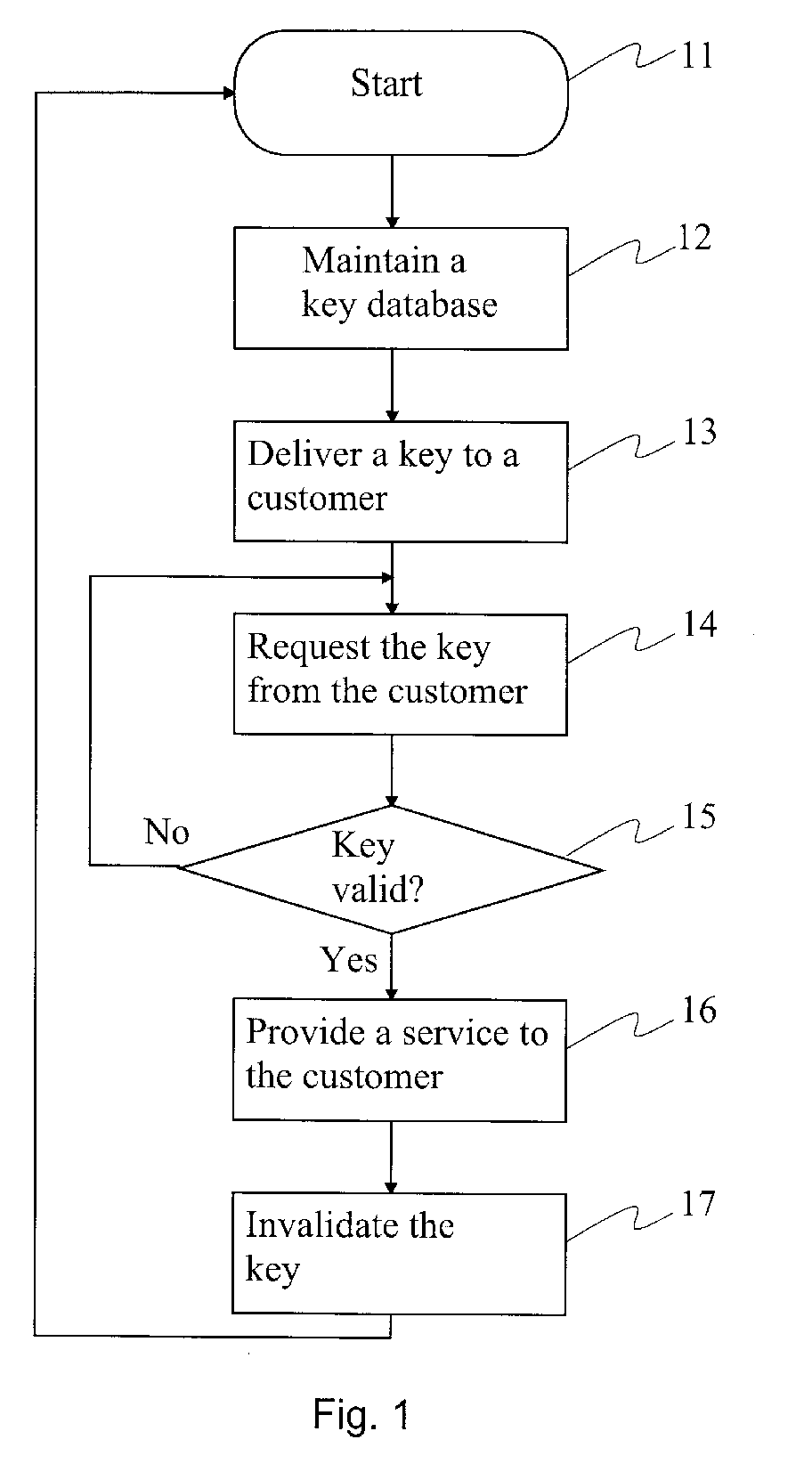
- FIG. 1 shows a flow chart of a method for prepayment of a telecommunications service.
- the method shown in Figure 1 starts from step 11, which can be a normal or idle state of a system in which the system is performing processes. These processes may be unrelated to the operation of the invention.
- step 11 is a normal or idle state of a system in which the system is performing processes. These processes may be unrelated to the operation of the invention.
- step 12 in which an authentication key validity database is maintained comprising authentication keys and their respective values.
- the authentication keys are certificates that prove prepayment of a service as will be explained further in more detail.
- a computer connected to the authentication key validity database generates the authentication keys. Maintaining the authentication key validity database involves receiving and/or generating of new authentication keys and recording them so that they correspond to their respective monetary values. It further involves invalidating authentication keys when they are used so that each particular authentication key may only be used once. This invalidation can be arranged to take place either after or before a service is provided to the user.
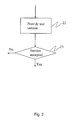
- Figure 2 shows an addition to the method shown in Figure 1.
- the addition comprises two steps, step 22 and step 23.
- step 22 if the authentication key is verified as valid, the method proceeds to step 22 after step 15.
- step 22 a test version of a service is provided to the user and in step 23 a check is carried out to see whether the user does indeed request the service. If the user orders the service, the method proceeds to step 16. If the user does not order the service, the method proceeds to step 17 or 11, depending on embodiment. If no payment is required for the test, then the step 11 will be next, otherwise in the step 17 an authentication key used for having the test version is invalidated.
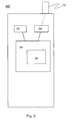
- FIG 3 shows a mobile telephone MS suitable for use with the methods of Figure 1, or Figures 1 and 2.
- the mobile telephone MS comprises an aerial 32, a radio block 34, a user interface 35, a processing means 36 and a program 38.
- the aerial is connected to the radio block, which is in turn connected to the processing means.
- the processing means comprises a microprocessor for executing instructions and a memory for maintaining the instructions.
- the processing means further comprises the program 38 that is used for controlling the mobile telephone MS.
- the user interface 35 comprises input and output means, having one or more authentication keys, a display, a speaker, and a microphone.
- the mobile telephone MS is arranged so as to receive a ringing tone from a radio broadcast and to use that ringing tone to alert its user to an incoming telephone call.
- the telephone also allows the user to send the request for a ringing tone by using its user interface and radio block 34.
- FIG. 4 shows a prepaid authentication key card 40 for payment of telecommunications services.
- the authentication key card 40 comprises five authentication keys 42, 44, 44, 46 and 48. Next to each authentication key there is printed a corresponding value.
- the authentication keys (44, 46, and 48) are initially covered with an opaque layer of a material easy to remove, for example wax or soft lacquer. Thus the authentication keys are not readable until the user uncovers them, for example by scratching the opaque layer. Thus, when buying the card the user can easily verify that the card is unused and all the authentication keys are valid. When the layer of material is removed, the authentication key underneath it becomes visible to the user. Hence the covering of an authentication key proves continuing validity of the authentication key.
- FIG. 5 shows a block diagram of a prepayment system according to an embodiment of the invention.
- the system comprises a prepayment server 50, a service control block 52, an authentication key validity database 53 and an authentication key generation block 54 at the server.
- the prepayment server 50 is an ordinary server computer attached to the Internet and comprising software causing it to implement the prepayment method as described before.
- the system comprises further a card printer 56, a telecommunications network 58, and a plurality of user devices MS.
- the prepayment server generates the authentication keys, controls the printout of the authentication keys and controls the payment of the services.
- the network relays the data traffic between the server and the user devices MS.
- the generation block produces the authentication keys and sends them both to the printer for printing and to the service control block 52.
- the printer prints sets of authentication keys on cards (as shown in Fig. 4).
- the service control block maintains the database 53 of authentication keys and stores the authentication keys and their respective values in the database 53.
- the service provider checks the prepayment of service with the service control block 52 of the prepayment server.
- the user sends the authentication key over the network to the prepayment server's service control block, which verifies the validity of the authentication key and whether the value associated to the authentication key is sufficient to the price of the requested service.
- a prepayment authentication key and the mobile telephone number of the user are requested and the authentication key is verified, and if accepted, the specific ringing tone is sent to the mobile telephone as a message (for example a short message).
- the sending of the ringing tone over the mobile telecommunications network involves use of services of a telecommunications network, but at least many GSM telephone operators provide forwarding of abroad originated short messages to mobile telephones residing in their networks.
- the ringing tones and other such supplementary services that provide electrical content to a mobile telephone can thus be send practically from all over the world.
- Another examples of electrical content providing available in mobile telecommunications include pictures to be used in picture messaging, caller group images and operator logos. It is also possible to provide music songs or video clips.
- the forthcoming third generation mobile stations are expected to have multimedia functionality allowing use of this kind of information.
- a service means any service that can be provided via a communications channel, for example, delivery of a ringing tone or an electrical greeting card, a musical or video recording from a record company, a donation to charity, payment of car parking fee or a public transportation fee, for which information is simply sent to a server, and nothing is necessarily received.
- the service can be a transfer of information in either direction, such as to a user, from a user, or in both directions.
- Concealing of the authentication key may be arranged by printing the key on a paper, folding it and sealing closed so that the code is not visible until the ticket is opened.
- a printed authentication key may be a sequence of any characters. There may be only one single authentication key on one card.
- the authentication key may be printed on the card as a bar code, or the authentication key may be attached as some other machine-readable code.
- the machine-readable code may be a special shape of a card or a magnetic strip.
- the machine-readable code may be read by a machine such as a reader of a computer or telephone terminal equipped with such a reader.
- the sending of the request may be sending of the authentication key to a World Wide Web -page on the server or sending of an e-mail or short message, or a datagram of any other form. Both the request and the service may be sent in short messages. In this way, a short message centre of a mobile telecommunications network may buffer the messages if the receiving party can not temporarily receive short messages.
- the authentication key may be sent directly to the user over a communications link, if the user pays directly to the service provider.
- Steps 16 and 17 may be in any order, although it is convenient to check, for example automatically, whether the service can indeed be provided to the user if the service is provided prior to invalidating the authentication key or changing the corresponding value thereof. This can be applied in a situation in which the user's device is to receive a ringing tone but does not completely receive it for example if the mobile terminal runs out of power.
- Step 22 may comprise sending the test version of the service over the Internet or making a telephone call to the user and audibly playing the ringing tone to the user so that the user can listen to the tone and decide if it is a ringing tone the user would like to have. If it is, the user can pay for the complete service, for example by giving another authentication key corresponding to the price of the service.
- the testing may have a lower price that may just cover the costs of providing the user with the test version. Alternatively, the testing may be free of charge.
- a set of distributed printers at delivery points may be provided to enhance the logistics of the cards comprising the authentication keys.
- the telecommunications operator delivers the authentication keys in response to use of a premium telecommunications service (premium telephone call or short message).
- the user pays for a service by using the premium service causing income to the telecommunications operator.
- the telecommunications operator shares the income with the service provider.
- the user is provided with one or more authentication keys.
- the authentication key(s) may be transmitted electrically to the user.
Landscapes
- Engineering & Computer Science (AREA)
- Computer Networks & Wireless Communication (AREA)
- Signal Processing (AREA)
- Computer Security & Cryptography (AREA)
- Telephonic Communication Services (AREA)
- Mobile Radio Communication Systems (AREA)
- Meter Arrangements (AREA)
- Financial Or Insurance-Related Operations Such As Payment And Settlement (AREA)
Abstract
Description
- This invention relates to charging for telecommunication services.
- The most recently developed mobile telephones have a number of different functions that can be updated by information downloaded from a telecommunications network operator. They are downloaded from the network or provided by an operator or some other service provider. For example, ringing tones can be downloaded to a mobile phone from the mobile network. For example, Finnish telecommunications operator Sonera has a service in which a request for a new ringing tone is sent from a mobile phone by a Short Message (SM) supported by the Short Message Service (SMS). SMS is known from the Global System for Mobile communications (GSM) system. In response to a short message received from a user, the requested ringing tone is provided to the mobile phone by a SM. A charge is made for this service in a subsequent invoice for use of the mobile phone.
- Whilst a telecommunications network provides a convenient way for a service provider to provide a service to a user and charge the user for the service, a problem arises when the service provider is not the telecommunications network operator itself. In that case the service provider must have a debiting agreement with the telecommunications network operator for the charge to be included in a telephone invoice of the user. Therefore the service provider needs to have a contract with each telecommunications network operator which relays any of its services. For a service provider providing services globally the present number of telecommunications network operators is far too large for this to be reasonable. Clearly, since there is a time period between provision of the service and payment to the service provider, in effect the service provider is giving a short-term loan to the user of the service. This involves a credit risk. It would be convenient if the payment could be received before the service is provided so that the service provider receives payment beforehand.
- As an example of prepaying for a service, Sonera has a prepaid subscription arrangement called "Easy" for establishing and maintaining a mobile telephone subscription with prepaying of phone calls and sending of short messages. Using the service allows ordinary mobile telephone operations such as making mobile telephone calls and sending and receiving short messages. In this arrangement, a user initially buys a Subscriber Identification Module (SIM) card with a predetermined monetary value that can be used for making telephone calls and for sending SMs. The initial price of the SIM card is about 65 USD. Next, the user needs to call to an automatic answering device of Sonera and to provide a serial number to establish an account for the SIM-card. The account will be immediately credited with a sum of 52 USD. The account will be debited when telephone calls are made and short messages are sent. Furthermore, when the remaining value on the account approaches zero, the user can credit the account by buying a ticket carrying a serial code from a shop, calling to a dedicated telephone number, and entering the serial code. Each ticket is worth 17 USD. When the serial code is verified and accepted value related to the ticket, that is 17 USD, is credited to the user's account. In effect, the subscription arrangement is an extension to a mobile operator's own invoicing system. Instead of maintaining an ordinary user account to be debited afterwards, an account is established beforehand and then debited on use. Debiting the account requires reliable identification of the user so that no one else can access the user's account. This happens automatically in GSM phone calls and sending of short messages with the subscriber identification procedure using the SIM-card. However, reliable user identification is a prerequisite for this subscription arrangement.
- An alternative way to pay for telecommunications services provided by a service provider would be for payment to be made by credit card. In this case the credit risk would then lie with the credit card provider. However, this arrangement is limited to users who have an approved type of a credit card. Furthermore, credit cards are not a convenient way to deal with small payments, such as five US dollars or less. Additionally, some people do not want to provide their credit card information over a telecommunications network for security reasons.
- Another payment method is to use so-called electronic money or e-money in form of data loaded onto a smart card. If a telephone terminal has a smart card reader and an application for sending e-money from the smart card to a service provider over a telecommunication link, then it is possible to pay for telecommunications services with a smart card. However, such an arrangement requires that smart cards and smart card readers be provided.
- It is an object of the present invention to avoid or at least mitigate the problems described above.
- According to a first aspect of the invention there is provided a method for prepayment of a service, comprising the steps of:
- informing the user of the availability of a plurality of different services;
- receiving from the user over a first communications link an indication of a desired service and a request for the desired service; and
- providing the requested service to the user over a second communications link; characterised by said method further comprising the following steps:
- receiving from the user an authentication key to indicate prepayment for the requested service;
- verifying whether the authentication key is valid, and
- providing the requested service if the authentication key is valid.
-
- A method according to the invention allows a service provider to make a plurality of different services available to users against prepayment. The user can freely select among the services offered. The prepayment allows any service provider to provide the services to users who are subscribers of a telecommunications network independently of any contracts made between the service provider and the telecommunications operator.
- Advantageously, prepayment allows customers not having a credit card to access the services of the service provider. Even rather cheap services can be made available. Thus, it becomes economically reasonable for a service provider to sell services costing a relatively small monetary value.
- The authentication key may be required each time a service is provided or alternatively it may be required at a first time and then used to authenticate a certain number of subsequent services. In the former case no user identification is necessary and services can be provided without any user identification procedure.
- The first and second communications links can be different or the second communications link can be part of or a continuation of the first communications link. Preferably, the first communications link is based on at least one of the following: a Low Power Radio Frequency (LPRF) link, an infra red link, a data network, a telephone network, a mobile communications network, a local area network and a wide area network.
- In an alternative embodiment, an attempt of reusing the same authentication key is detected by using a database. The database may be a database comprising either unused authentication keys or used authentication keys. In this way, it is easy to verify if the authentication key is valid and the requested service should be provided. In this embodiment, the method comprises the following steps before receiving the request from the user:
- generating the authentication key;
- maintaining an authentication key validity database for verifying the validity of any of the generated authentication keys; and
- delivering the authentication key to a user.
-
- Preferably, the generating of the authentication keys conforms to certain algorithm(s), so that the validity of the authentication key can be determined in itself. The algorithm(s) used is/are preferably such that it is hard or impossible to determine which authentication keys are valid. In this way, there is no need to maintain a database of unused authentication keys, because the validity of an authentication key can be determined by applying the algorithm(s) to verify the authentication key submitted by the user. In this case, a database of all the used authentication keys is maintained.
- Preferably, the method comprises the step of arranging each of the authentication keys to indicate a time period during which it is valid; and the step of verifying of validity of the authentication key comprises the step of comparing the present date with the a time period during which the authentication key is valid and the step of rejecting of the authentication key if its time period of validity has expired. Preferably, the method further comprises the step of scanning the database of used authentication keys for detecting lapsed authentication keys for removing them from the database of used authentication keys. In this way, the database of used authentication keys does not grow infinitely and the database is easier to maintain.
- Preferably, the method comprises the step of modifying the validity database on providing the requested service so that the monetary value corresponding to the authentication key indicating the payment is reduced according to a price of the service requested by the user. By modifying the validity database on providing the requested service the service can be charged only when it is successfully provided to the user.
- Alternatively, the modifying can be performed regardless whether the providing of service has been completed or not. Then it does not matter if the modifying precedes the actual providing of service.
- The authentication key may be provided in the form of a printed code on a card. This card may readily be sold to the user. This provides a ready method of selling the authentication key to the user, for example in a shop. In this way, the service provider only needs to have a service providing server connected to a public telephone network to allow users to access the server for retrieval of services and does not require any revenue collecting functionality associated with the server. In this way, the service provider may automatically receive revenue from sale of cards rather than having to collect it by some other means. Typically, the service provider may receive income based upon a share of the sales price of the cards. Thus the service provider can use the prepayments to pay for the telecommunications fees which will be incurred by the delivery of the services. Therefore, instead of lending money to users the service provider can receive money from the user before providing the service. Therefore, the service provider will not have to bear a credit risk.
- Preferably the method comprises the step of concealing the authentication key with a non-reversibly removable concealing means. This allows the user to detect easily whether an authentication key has already been disclosed for use and is thus become valueless, and also makes it possible for the user to transfer the card onward to another user, perhaps for further payment. Of course any "new" purchaser of the service can also verify that the authentication key has not been disclosed for use. Once the authentication key is disclosed, the user can supply it to the service provider.
- Preferably the method comprises the step of providing the card with more than one authentication key so that the nominal value can be set to a convenient sum such as a single currency unit, for example, a dollar. However, at least some of the authentication keys may have an arbitrary value, for example 0,19 USD.
- The step of the providing the service may comprise the further steps of:
- allowing the user to test a service requested; and
- receiving a final verification from the user to ensure that the service corresponds to the needs of the user. These steps may occur before the user is provided with the service and before the authentication key validity database is modified.
-
- Providing a test version is preferably made in a way that prevents the user from fully utilising the object of the service. If the service is delivery of ringing tones, the provision of a testing may involve making a telephone call to the user and playing the ringing tone to the user. The user can listen to the ringing tone and determine whether it meets the expectations of the user. Preferably, in order to request the test version, the user may first provide an authentication key. The intended testing use may be determined by entering an authentication key worth less than what is required for the actual service. The authentication key used for testing may have a value just enough to cover the costs of making this call.
Preferably, at least some of the services relate to content providing. In this case, the step of informing the user of the availability of a plurality of different services informs the user of the availability of a plurality of different contents, and correspondingly, the step of providing the requested service provides the requested content. Content is information that is made available so that the user may get it and use it for some purpose, such as enhancing the operation of a mobile terminal or providing entertainment or news. - According to a second aspect of the invention there is provided a system for prepayment of a service, comprising:
- means for informing the user of the availability of a plurality of different services;
- means for receiving from the user over a first communications link an indication of a desired service and a request for the desired service; and
- means for providing the requested service to the user over a second communications link; characterised by said system further comprising:
- means for receiving from the user an authentication key to indicate prepayment for the requested service;
- means for verifying whether the authentication key is valid, and
- means for providing the requested service if the authentication key is valid.
-
- According to a third aspect of the invention there is provided a computer program product for prepayment of a service, comprising:
- computer readable program means for causing a computer to inform the user of the availability of a plurality of different services;
- computer readable program means for causing a computer to receive over a first communications link an indication of a desired service and a request for the desired service; and
- computer readable program means for causing a computer to provide the requested service to the user over a second communications link; characterised by said computer program product further comprising:
- computer readable program means for causing a computer to receive an authentication key to indicate prepayment for the requested service;
- computer readable program means for causing a computer to verify whether the authentication key is valid, and
- computer readable program means for causing a computer to provide the requested service if the authentication key is valid.
-
- Advantageously, the computer program product may convert a server connected to a telecommunications network such as Internet into a prepayment service capable of handling the actions relating to the prepayment of a service or to a plurality of services.
- The present invention can be used in a mobile telephone or data terminal as well as in a wired telephone or data terminal, generally a device that can be connected to a communications network to use a telecommunications service.
- The invention will now be described, by way of example only, with reference to the accompanying drawings, in which:
- Figure 1
- shows a flow chart of a method for prepayment of a telecommunications service;
- Figure 2
- shows additional steps for the method in Figure 1;
- Figure 3
- shows a mobile telephone using the method of Figure 1 or the method of Figures 1 and 2;
- Figure 4
- shows a prepaid authentication key card for payment of telecommunications services; and
- Figure 5
- shows a block diagram of a prepayment system.
- Figure 1 shows a flow chart of a method for prepayment of a telecommunications service. The method shown in Figure 1 starts from
step 11, which can be a normal or idle state of a system in which the system is performing processes. These processes may be unrelated to the operation of the invention. Followingstep 11 isstep 12, in which an authentication key validity database is maintained comprising authentication keys and their respective values. The authentication keys are certificates that prove prepayment of a service as will be explained further in more detail. A computer connected to the authentication key validity database generates the authentication keys. Maintaining the authentication key validity database involves receiving and/or generating of new authentication keys and recording them so that they correspond to their respective monetary values. It further involves invalidating authentication keys when they are used so that each particular authentication key may only be used once. This invalidation can be arranged to take place either after or before a service is provided to the user. - Once a suitable authentication key validity database has been configured, an authentication key is delivered to a service user. This is shown in
step 13. The authentication keys are printed on cards shown in Figure 4. The authentication keys are sequences of numbers so that they are easy to type. - Once the user has an authentication key, the authentication key can be used to obtain a service that costs a financial amount at most equal to the value of the authentication key. Suppose the user wants to request a new ringing tone to his or her mobile telephone from a service provider. A list of services may be presented on a WWW-page (World Wide Web) of a server of the service provider. A user may access the server with a personal computer that can be connected to the Internet. Each item of the list (for example each name of ringing tone) may be associated with a hyperlink so that by selecting the name of the ringing tone the user can request the ringing tone from the server. A request message is then sent to the server in a service request message that also comprises an identifier of the ringing tone. In response to such a service request message, a server requests for an authentication key from the user, as shown in
step 14. The user reads the authentication key and enters it to the server to pay for the service. The validity of the authentication key is verified instep 15. In response to a successful entry of a valid authentication key, the telephone number of the user is prompted from the user. The requested service is then provided to the user instep 16 by sending the requested ringing tone as a short message to the user's mobile telephone number. If the authentication key is invalid, the authentication key is requested again instep 14. When the requested service, a ringing tone in this case, is provided to the user, the authentication key given by the user is invalidated instep 17 so that it cannot be used again. - The invalidation involves changing the authentication key validation database so that it shows that the authentication key already has been used when it is received from the user. The unused authentication keys are held in a database so that the presence of an authentication key in the database proves that the authentication key is unused and valid. In another embodiment, the used authentication keys are kept in the authentication key validity database so that the presence of the authentication key in the database shows that the authentication key is used and invalid. A further check may be performed for checking if an authentication key has lapsed from being valid as being too old, for example more than 12 months old.
- In an alternative embodiment, a mobile telephone is used to obtain a list of services the service provider offers. In this case, the user sends a short message to the server and receives a response short message conveying a list of the services. The list may then be shown to a user on a display of the mobile telephone. The user may request the ringing tone from the service provider for example by sending a request message using the Short Message Service known from GSM. Of course, other request methods can be used, such as sending a facsimile or an e-mail message. In these cases, it is advantageous to include the authentication key in the message so that the authentication key is not requested from the user. In this case, the user should include his or her mobile telephone number in the message so that the server would know where to send the ringing tone, if the authentication key is valid. If the message is a short message, then the telephone number may be automatically included as an identifier of the sender of the short message.
- In the most simple and straightforward case each authentication key grants the user to have one service provided once. In an alternative embodiment, the same authentication key may be used to pay more than one transaction. In this case, the value associated with the authentication key in the database is reduced by a fee of the service. An account is then given to the user and the remaining value of the authentication key is maintained on the account so that the user can check the remaining value by identifying himself. This identification can be automated using the cookie-technology known from the current WWW-browsers in case of WWW-based requesting or using short message sender identifier in case of mobile telephone originated requesting. With such automation the user can simply contact the service provider again and use the services with the remaining value without having to enter any identification codes.
- Figure 2 shows an addition to the method shown in Figure 1. The addition comprises two steps,
step 22 andstep 23. In this embodiment, if the authentication key is verified as valid, the method proceeds to step 22 afterstep 15. In step 22 a test version of a service is provided to the user and in step 23 a check is carried out to see whether the user does indeed request the service. If the user orders the service, the method proceeds to step 16. If the user does not order the service, the method proceeds to step 17 or 11, depending on embodiment. If no payment is required for the test, then thestep 11 will be next, otherwise in thestep 17 an authentication key used for having the test version is invalidated. - Figure 3 shows a mobile telephone MS suitable for use with the methods of Figure 1, or Figures 1 and 2. The mobile telephone MS comprises an aerial 32, a
radio block 34, auser interface 35, a processing means 36 and aprogram 38. The aerial is connected to the radio block, which is in turn connected to the processing means. The processing means comprises a microprocessor for executing instructions and a memory for maintaining the instructions. The processing means further comprises theprogram 38 that is used for controlling the mobile telephone MS. Theuser interface 35 comprises input and output means, having one or more authentication keys, a display, a speaker, and a microphone. The mobile telephone MS is arranged so as to receive a ringing tone from a radio broadcast and to use that ringing tone to alert its user to an incoming telephone call. The telephone also allows the user to send the request for a ringing tone by using its user interface andradio block 34. - Figure 4 shows a prepaid authentication
key card 40 for payment of telecommunications services. The authenticationkey card 40 comprises fiveauthentication keys example authentication keys 42 to 44 correspond to a value of 20 cents, whereasauthentication keys - Figure 5 shows a block diagram of a prepayment system according to an embodiment of the invention. The system comprises a
prepayment server 50, aservice control block 52, an authenticationkey validity database 53 and an authenticationkey generation block 54 at the server. Theprepayment server 50 is an ordinary server computer attached to the Internet and comprising software causing it to implement the prepayment method as described before. The system comprises further a card printer 56, atelecommunications network 58, and a plurality of user devices MS. The prepayment server generates the authentication keys, controls the printout of the authentication keys and controls the payment of the services. The network relays the data traffic between the server and the user devices MS. The generation block produces the authentication keys and sends them both to the printer for printing and to theservice control block 52. The printer prints sets of authentication keys on cards (as shown in Fig. 4). The service control block maintains thedatabase 53 of authentication keys and stores the authentication keys and their respective values in thedatabase 53. When the card is delivered to a user, he or she may contact the service provider and request a service. In response for this request, the service provider checks the prepayment of service with theservice control block 52 of the prepayment server. The user sends the authentication key over the network to the prepayment server's service control block, which verifies the validity of the authentication key and whether the value associated to the authentication key is sufficient to the price of the requested service. It the authentication key is valid and corresponds to a monetary value at least equal to the price, then the server permits the delivery of the service requested and reduces the monetary value corresponding to the authentication key that was used. The prepayment server may additionally provide the service requested. In this case theserver 50 delivers the service over thenetwork 58 to the user device MS of the user. - In a preferred embodiment, there is additionally provided a second server to provide a list of services to the user and to receive user input such as the selection of service and the authentication key. In this case, the second server may reside anywhere, provided that information can be exchanged between the second server and the prepayment server. Both servers are connected to the Internet so that no mobile telephone operator networks would be involved in cases other than providing a service over a mobile telecommunications network. Using the ringing tone example, the second server residing in the Internet may receive a request for a specific ringing tone from a user having an access to the internet and having a mobile telephone that can receive a ringing tone from a mobile telecommunications network. In response to the request, a prepayment authentication key and the mobile telephone number of the user are requested and the authentication key is verified, and if accepted, the specific ringing tone is sent to the mobile telephone as a message (for example a short message). The sending of the ringing tone over the mobile telecommunications network involves use of services of a telecommunications network, but at least many GSM telephone operators provide forwarding of abroad originated short messages to mobile telephones residing in their networks. The ringing tones and other such supplementary services that provide electrical content to a mobile telephone can thus be send practically from all over the world. Another examples of electrical content providing available in mobile telecommunications include pictures to be used in picture messaging, caller group images and operator logos. It is also possible to provide music songs or video clips. The forthcoming third generation mobile stations are expected to have multimedia functionality allowing use of this kind of information.
- In the foregoing, a service means any service that can be provided via a communications channel, for example, delivery of a ringing tone or an electrical greeting card, a musical or video recording from a record company, a donation to charity, payment of car parking fee or a public transportation fee, for which information is simply sent to a server, and nothing is necessarily received. Thus the service can be a transfer of information in either direction, such as to a user, from a user, or in both directions.
- Cheap authentication key cards can be bought with small money. Thus the service is easy to afford, which is likely to promote selling new ringing tones, images and other commercial services like these.
- This paper presents the implementation and embodiments of the invention with the help of examples. It is obvious to a person skilled in the art that the invention is not restricted to details of the embodiments presented above, and that the invention can be implemented in another embodiment without deviating from the characteristics of the invention. Thus, the presented embodiments should be considered illustrative, but not restricting. There are numerous ways to vary within the scope of the invention as illustrated below.
- Concealing of the authentication key may be arranged by printing the key on a paper, folding it and sealing closed so that the code is not visible until the ticket is opened.
- A printed authentication key may be a sequence of any characters. There may be only one single authentication key on one card.
- The authentication key may be printed on the card as a bar code, or the authentication key may be attached as some other machine-readable code. The machine-readable code may be a special shape of a card or a magnetic strip. The machine-readable code may be read by a machine such as a reader of a computer or telephone terminal equipped with such a reader.
- The sending of the request may be sending of the authentication key to a World Wide Web -page on the server or sending of an e-mail or short message, or a datagram of any other form. Both the request and the service may be sent in short messages. In this way, a short message centre of a mobile telecommunications network may buffer the messages if the receiving party can not temporarily receive short messages.
- The authentication key may be sent directly to the user over a communications link, if the user pays directly to the service provider.
-
Steps -
Step 22 may comprise sending the test version of the service over the Internet or making a telephone call to the user and audibly playing the ringing tone to the user so that the user can listen to the tone and decide if it is a ringing tone the user would like to have. If it is, the user can pay for the complete service, for example by giving another authentication key corresponding to the price of the service. The testing may have a lower price that may just cover the costs of providing the user with the test version. Alternatively, the testing may be free of charge. - Instead of printing the cards near the server, a set of distributed printers at delivery points (e.g. shops) may be provided to enhance the logistics of the cards comprising the authentication keys.
- In yet another alternative embodiment, the telecommunications operator delivers the authentication keys in response to use of a premium telecommunications service (premium telephone call or short message). The user pays for a service by using the premium service causing income to the telecommunications operator. The telecommunications operator shares the income with the service provider. In return for the payment, the user is provided with one or more authentication keys. In this case, the authentication key(s) may be transmitted electrically to the user. The advantage of the embodiment is that no physically existing card need to be sent to the user.
- Hence, the possibilities of implementing and using the invention are only restricted by the enclosed patent claims. Consequently, the various options of implementing the invention as determined by the claims, including the equivalent implementations, also belong to the scope of the present invention.
Claims (15)
- A method for prepayment of a service, comprising the steps of:characterised by said method additionally comprising the following steps:informing the user of the availability of a plurality of different services;receiving from the user over a first communications link an indication of a desired service and a request for the desired service; andproviding the requested service to the user over a second communications link;receiving from the user an authentication key to indicate prepayment for the requested service;verifying whether the authentication key is valid, andproviding the requested service if the authentication key is valid.
- A method according to claim 1, characterised in that the step of informing the user of the availability of a plurality of different services informs the user of the availability of a plurality of different contents, and correspondingly, the step of providing the requested service provides the requested content.
- A method according to claim 1 or 2, characterised in that an authentication key is required each time a service is provided.
- A method according to any of claims 1 to 3, characterised in that the method further comprises:the step of arranging each of the authentication keys to indicate a time period during which they are valid;the step of verifying of validity of the authentication key comprises the step of comparing of the present date with time period during which the authentication key is valid; andthe step of rejecting expired authentication keys.
- A method according to any of claims 1 to 4, characterised in that the method further comprises the following steps before receiving the request from the user:generating the authentication key;maintaining an authentication key validity database for verifying the validity of any of the generated authentication keys; anddelivering the authentication key to a user.
- A method according to claim 5, characterised in that the generating of the authentication keys conforms to certain algorithm(s) so that the validity of the authentication key can be determined in itself.
- A method according to claim 4 and claim 5 or 6, characterised in that the method further comprises:
the step of scanning the database of used authentication keys for detecting lapsed authentication keys for removing them from the database of used authentication keys. - A method according to any of claims 5 to 7, characterised in that the method further comprises the step of modifying the validity database on providing the requested service so that the monetary value corresponding to the authentication key indicating the payment is reduced according to a price of the service requested by the user.
- A method according to any of preceding claims, characterised in that the the authentication key is a printed user readable code.
- A method according any of preceding claims, characterised in that the method further comprises the step of concealing the authentication key with a non-reversibly removable concealing means.
- A method according to claims 9 and 10, characterised in that the method further comprises printing a group of authentication keys on a card.
- A method according to any of preceding claims, characterised in that the first communications link is based on at least one of the following: a data network, a telephone network, a mobile telecommunications network, a local area network and a wide area network.
- A method according to any of preceding claims, characterised in that the method further comprises the steps of:allowing the user to test a service requested; andreceiving a final verification from the user before the user is provided with the service.
- A system for prepayment of a service, comprising:characterised by said system further comprising:means for informing the user of the availability of a plurality of different services;means for receiving from the user over a first communications link an indication of a desired service and a request for the desired service; andmeans for providing the requested service to the user over a second communications link;means for receiving from the user an authentication key to indicate prepayment for the requested service;means for verifying whether the authentication key is valid, andmeans for providing the requested service if the authentication key is valid.
- A computer program product for prepayment of a service, comprising:characterised by said computer program product further comprising:computer readable program means for causing a computer to inform the user of the availability of a plurality of different services;computer readable program means for causing a computer to receive from the user over a first communications link an indication of a desired service and a request for the desired service; andcomputer readable program means for causing a computer to provide the requested service to the user over a second communications link;computer readable program means for causing a computer to receive from the user an authentication key to indicate prepayment for the requested service;computer readable program means for causing a computer to verify whether the authentication key is valid, andcomputer readable program means for causing a computer to provide the requested service if the authentication key is valid.
Applications Claiming Priority (2)
| Application Number | Priority Date | Filing Date | Title |
|---|---|---|---|
| FI992485 | 1999-11-22 | ||
| FI992485A FI108977B (en) | 1999-11-22 | 1999-11-22 | Billing for telecommunications services |
Publications (3)
| Publication Number | Publication Date |
|---|---|
| EP1102465A2 true EP1102465A2 (en) | 2001-05-23 |
| EP1102465A3 EP1102465A3 (en) | 2005-01-05 |
| EP1102465B1 EP1102465B1 (en) | 2015-12-30 |
Family
ID=8555622
Family Applications (1)
| Application Number | Title | Priority Date | Filing Date |
|---|---|---|---|
| EP00121574.8A Expired - Lifetime EP1102465B1 (en) | 1999-11-22 | 2000-10-02 | Charging for telecommunications services |
Country Status (4)
| Country | Link |
|---|---|
| US (1) | US6907239B1 (en) |
| EP (1) | EP1102465B1 (en) |
| ES (1) | ES2560312T3 (en) |
| FI (1) | FI108977B (en) |
Cited By (2)
| Publication number | Priority date | Publication date | Assignee | Title |
|---|---|---|---|---|
| US7583801B2 (en) * | 2003-11-05 | 2009-09-01 | Nokia Corporation | Apparatus, system, method and computer program product for distributing service information and digital rights for broadcast data |
| CN102571369A (en) * | 2010-12-24 | 2012-07-11 | 普天信息技术研究院有限公司 | Method and system for realizing automatic message reconciliation with function of fault-tolerance protection |
Families Citing this family (25)
| Publication number | Priority date | Publication date | Assignee | Title |
|---|---|---|---|---|
| EP1379983A2 (en) * | 2001-02-23 | 2004-01-14 | Mobilitec, Inc. | System and method for charging for directed provisioning of user applications on limited-resource devices |
| US7330717B2 (en) * | 2001-02-23 | 2008-02-12 | Lucent Technologies Inc. | Rule-based system and method for managing the provisioning of user applications on limited-resource and/or wireless devices |
| JP2002318968A (en) * | 2001-04-19 | 2002-10-31 | Fujitsu Ltd | Service providing support method, service ordering method, service providing support device, and terminal device |
| JP2003058453A (en) * | 2001-08-10 | 2003-02-28 | Yamaha Corp | Network service system, content providing service device, and relay service device |
| ATE475244T1 (en) * | 2002-04-02 | 2010-08-15 | Verizon Business Global Llc | COMMUNICATIONS GATEWAY WITH MESSAGE COMMUNICATION INTERFACE |
| US7917581B2 (en) * | 2002-04-02 | 2011-03-29 | Verizon Business Global Llc | Call completion via instant communications client |
| US8856236B2 (en) * | 2002-04-02 | 2014-10-07 | Verizon Patent And Licensing Inc. | Messaging response system |
| DE10225457A1 (en) * | 2002-06-05 | 2004-01-08 | Siemens Ag | Use of a subscriber identity module by several mobile communication devices |
| DE10244611A1 (en) * | 2002-09-25 | 2004-04-15 | Siemens Ag | Method for providing chargeable services and user identification device and device for providing the services |
| ES2309399T3 (en) * | 2002-12-17 | 2008-12-16 | Koninklijke Philips Electronics N.V. | MOBILE DEVICE USING EXTRAIBLE MEDIA FOR THE REPRODUCTION OF CONTENT. |
| US7548754B2 (en) * | 2003-04-11 | 2009-06-16 | Hewlett-Packard Development Company, L.P. | Authentication and non-interfering SMS-messaging in GSM telephone communication |
| EP1618453B1 (en) * | 2003-04-25 | 2009-10-07 | Apple, Inc. | Methods and system for secure network-based distribution of content |
| US20050027608A1 (en) * | 2003-07-29 | 2005-02-03 | Andreas Wiesmuller | System and method for providing commercial services over a wireless communication network |
| US7295833B2 (en) | 2004-04-09 | 2007-11-13 | At&T Mobility Ii Llc | Spam control for sharing content on mobile devices |
| US7849135B2 (en) * | 2004-04-09 | 2010-12-07 | At&T Mobility Ii Llc | Sharing content on mobile devices |
| JP3971424B2 (en) * | 2005-01-05 | 2007-09-05 | 株式会社エクシング | Data distribution system |
| US20070224984A1 (en) | 2005-03-08 | 2007-09-27 | Muir Brockett Iii | Communication Link Termination Indication Signal and Secondary Signal Method and Apparatus |
| US8087068B1 (en) | 2005-03-08 | 2011-12-27 | Google Inc. | Verifying access to a network account over multiple user communication portals based on security criteria |
| US7684830B2 (en) * | 2005-03-08 | 2010-03-23 | Endtone, Llc | Communication link termination indication signal method and apparatus |
| CN100346668C (en) * | 2005-09-02 | 2007-10-31 | 华为技术有限公司 | Updating protocal method of secret keys |
| US20070071853A1 (en) * | 2005-09-28 | 2007-03-29 | Trautman Mary M | Methods and devices for preserving effervescence |
| US20070291787A1 (en) * | 2006-06-15 | 2007-12-20 | Mounire El Houmaidi | Methods, devices, and computer program products for ordering communication services |
| US8023927B1 (en) * | 2006-06-29 | 2011-09-20 | Google Inc. | Abuse-resistant method of registering user accounts with an online service |
| JP4539750B2 (en) * | 2008-04-08 | 2010-09-08 | ソニー株式会社 | recoding media |
| US8700072B2 (en) | 2008-12-23 | 2014-04-15 | At&T Mobility Ii Llc | Scalable message fidelity |
Citations (2)
| Publication number | Priority date | Publication date | Assignee | Title |
|---|---|---|---|---|
| FR2747962A1 (en) | 1995-12-19 | 1997-10-31 | Ittah Aaron | Method of sending payment over computer networks particularly the internet |
| EP0921487A2 (en) | 1997-12-08 | 1999-06-09 | Nippon Telegraph and Telephone Corporation | Method and system for billing on the internet |
Family Cites Families (23)
| Publication number | Priority date | Publication date | Assignee | Title |
|---|---|---|---|---|
| US4706275A (en) | 1985-11-13 | 1987-11-10 | Aerotel Ltd. | Telephone system |
| FR2668002B1 (en) * | 1990-10-10 | 1994-05-06 | Gerald Mazziotto | RADIOTELEPHONE INSTALLATION WITH SECURE PREPAYMENT SERVICE. |
| US5610973A (en) * | 1991-01-28 | 1997-03-11 | Bellsouth Corporation | Interactive roamer contact system for cellular mobile radiotelephone network |
| FR2696067B1 (en) | 1992-09-21 | 1994-11-25 | France Telecom | Telecommunication installation with secure download of prepayment means and corresponding download method. |
| SE502424C2 (en) * | 1994-02-17 | 1995-10-16 | Telia Ab | Method and device for certificate management systems |
| JPH07231367A (en) * | 1994-02-17 | 1995-08-29 | Fujitsu Ltd | Credit card charging service device for personal communication |
| US5577109A (en) * | 1994-06-06 | 1996-11-19 | Call Processing, Inc. | Pre-paid card system and method |
| US7156300B1 (en) * | 1995-06-07 | 2007-01-02 | Electronic Data Systems Corporation | System and method for dispensing of a receipt reflecting prepaid phone services |
| US5671279A (en) * | 1995-11-13 | 1997-09-23 | Netscape Communications Corporation | Electronic commerce using a secure courier system |
| US5778313A (en) * | 1995-12-08 | 1998-07-07 | Cellexis International, Inc. | Pre-paid cellular telephone system |
| FR2745970B1 (en) | 1996-03-07 | 1998-08-07 | France Telecom | PREPAYMENT METHOD FOR CONSUMPTION OF TELEPHONE COMMUNICATIONS |
| US6188752B1 (en) * | 1996-11-12 | 2001-02-13 | Telefonaktiebolaget Lm Ericsson (Publ) | Method and apparatus for providing prepaid telecommunications services |
| AU7061098A (en) | 1997-04-15 | 1998-11-11 | Non Can Jam Trading (Pty) Limited | Method for electronically vending, distributing, and recharging of pre-p aid value, a vending machine and an electronic system for use therein |
| NL1007848C1 (en) * | 1997-12-19 | 1999-06-22 | Johan Peter Eilander | Purchase voucher with invisible transaction code system |
| US6035025A (en) * | 1998-01-07 | 2000-03-07 | National Telemanagement Corporation | System and method for a prepaid bundled telecommunications account |
| DE19812897C2 (en) * | 1998-03-18 | 2000-08-31 | Deutsche Telekom Ag | Process for providing telecommunications-based services |
| FR2780679B1 (en) * | 1998-07-03 | 2000-08-11 | Jean Felix Ongouya | "UNIVERSAL CURRENCY" HOLDER: MULTI-CURRENCY CREDIT CARD WITHOUT BORDERS AND ITS FIDUCIARY, SCRIPTURAL AND ELECTRONIC APPLICATIONS |
| US6226618B1 (en) * | 1998-08-13 | 2001-05-01 | International Business Machines Corporation | Electronic content delivery system |
| US6393269B1 (en) * | 1998-10-14 | 2002-05-21 | Openwave Systems Inc. | Signaling system and method for network-based pre-paid wireless telephone service |
| US6270406B1 (en) * | 1999-05-26 | 2001-08-07 | Hashem Sultan | Type of instant scratch-off lottery games |
| US6377810B1 (en) * | 1999-06-11 | 2002-04-23 | Motorola, Inc. | Method of operation of mobile wireless communication system with location information |
| DE10023251A1 (en) * | 2000-05-12 | 2001-12-20 | Logo Hardware & Internet Servi | Payment card and method of payment using a payment card |
| EP1168263A1 (en) * | 2000-06-26 | 2002-01-02 | Marco Sormani | Method and system for making payments over the internet |
-
1999
- 1999-11-22 FI FI992485A patent/FI108977B/en not_active IP Right Cessation
-
2000
- 2000-10-02 ES ES00121574.8T patent/ES2560312T3/en not_active Expired - Lifetime
- 2000-10-02 EP EP00121574.8A patent/EP1102465B1/en not_active Expired - Lifetime
- 2000-11-20 US US09/716,680 patent/US6907239B1/en not_active Expired - Lifetime
Patent Citations (2)
| Publication number | Priority date | Publication date | Assignee | Title |
|---|---|---|---|---|
| FR2747962A1 (en) | 1995-12-19 | 1997-10-31 | Ittah Aaron | Method of sending payment over computer networks particularly the internet |
| EP0921487A2 (en) | 1997-12-08 | 1999-06-09 | Nippon Telegraph and Telephone Corporation | Method and system for billing on the internet |
Cited By (4)
| Publication number | Priority date | Publication date | Assignee | Title |
|---|---|---|---|---|
| US7583801B2 (en) * | 2003-11-05 | 2009-09-01 | Nokia Corporation | Apparatus, system, method and computer program product for distributing service information and digital rights for broadcast data |
| US8121291B2 (en) | 2003-11-05 | 2012-02-21 | Nokia Corporation | Apparatus, system, method and computer program product for distributing service information and digital rights for broadcast data |
| CN102571369A (en) * | 2010-12-24 | 2012-07-11 | 普天信息技术研究院有限公司 | Method and system for realizing automatic message reconciliation with function of fault-tolerance protection |
| CN102571369B (en) * | 2010-12-24 | 2014-08-13 | 普天信息技术研究院有限公司 | Method and system for realizing automatic message reconciliation with function of fault-tolerance protection |
Also Published As
| Publication number | Publication date |
|---|---|
| EP1102465B1 (en) | 2015-12-30 |
| FI108977B (en) | 2002-04-30 |
| US6907239B1 (en) | 2005-06-14 |
| ES2560312T3 (en) | 2016-02-18 |
| FI19992485L (en) | 2001-05-23 |
| EP1102465A3 (en) | 2005-01-05 |
Similar Documents
| Publication | Publication Date | Title |
|---|---|---|
| US6907239B1 (en) | Charging for telecommunications download services | |
| US10834268B2 (en) | Inserting value into customer account at point of sale using a customer account identifier | |
| EP1136961B1 (en) | System and process for remote payments and transactions in real time by mobile telephone | |
| US6934529B2 (en) | Replenishment of pre-paid wireless telephone accounts using short message service (SMS) | |
| US7433685B2 (en) | Order method | |
| US7328190B2 (en) | System and method for adding value to a stored-value account | |
| US20030050837A1 (en) | Method and system providing advertisement using tone of ringing sounds of mobile phone and commerical transaction service in association with the same | |
| KR20070057668A (en) | Method and system for depositing a customer account from POS using customer account identifier | |
| EP1956542A2 (en) | Value insertion using bill pay card preassociated with biller | |
| NZ332372A (en) | Prepayment for wireless telephone services by means of smart cards | |
| KR20000037471A (en) | bill-payment service method, and system for the same | |
| US20070094129A1 (en) | System and method for adding value to a stored-value account using provider specific pin | |
| KR101068022B1 (en) | Authentication processing system for mobile payments and how to process mobile payments | |
| WO2001043048A1 (en) | Method, system, terminal and business model for providing electronic services | |
| EP1242983B1 (en) | A system for recharging a prepaid value in respect of a telephone connection | |
| WO2001006752A1 (en) | Method for user authentication and billing in an information network service | |
| WO2001098956A1 (en) | Method for charging for internet content or services subject to a charge | |
| WO2003024061A2 (en) | A method and system of crediting a pre-paid amount | |
| KR20030083942A (en) | System and Method for Providing a Call Service Ticket in Mobile Communication Network | |
| KR200230750Y1 (en) | Apparatus for trading prepaid telephone cards | |
| AU706532C (en) | Prepayment for wireless telephone services by means of smart cards | |
| FI107362B (en) | Procedure and system for verifying a transaction | |
| RU2367106C2 (en) | System, meant for using mobile telephone network within preset relations between network operator and subscriber | |
| EP1920397A2 (en) | Sender identification system and method | |
| KR20060023408A (en) | How to use card point using mobile terminal |
Legal Events
| Date | Code | Title | Description |
|---|---|---|---|
| PUAI | Public reference made under article 153(3) epc to a published international application that has entered the european phase |
Free format text: ORIGINAL CODE: 0009012 |
|
| AK | Designated contracting states |
Kind code of ref document: A2 Designated state(s): AT BE CH CY DE DK ES FI FR GB GR IE IT LI LU MC NL PT SE |
|
| AX | Request for extension of the european patent |
Free format text: AL;LT;LV;MK;RO;SI |
|
| RAP1 | Party data changed (applicant data changed or rights of an application transferred) |
Owner name: NOKIA CORPORATION |
|
| PUAL | Search report despatched |
Free format text: ORIGINAL CODE: 0009013 |
|
| AK | Designated contracting states |
Kind code of ref document: A3 Designated state(s): AT BE CH CY DE DK ES FI FR GB GR IE IT LI LU MC NL PT SE |
|
| AX | Request for extension of the european patent |
Extension state: AL LT LV MK RO SI |
|
| RIC1 | Information provided on ipc code assigned before grant |
Ipc: 7H 04M 17/00 A Ipc: 7G 06F 17/60 B |
|
| 17P | Request for examination filed |
Effective date: 20050126 |
|
| AKX | Designation fees paid |
Designated state(s): AT BE CH CY DE DK ES FI FR GB GR IE IT LI LU MC NL PT SE |
|
| 17Q | First examination report despatched |
Effective date: 20080306 |
|
| RIC1 | Information provided on ipc code assigned before grant |
Ipc: H04M 17/00 20060101AFI20140203BHEP |
|
| RAP1 | Party data changed (applicant data changed or rights of an application transferred) |
Owner name: NOKIA CORPORATION |
|
| GRAP | Despatch of communication of intention to grant a patent |
Free format text: ORIGINAL CODE: EPIDOSNIGR1 |
|
| INTG | Intention to grant announced |
Effective date: 20150708 |
|
| RAP1 | Party data changed (applicant data changed or rights of an application transferred) |
Owner name: NOKIA TECHNOLOGIES OY |
|
| GRAS | Grant fee paid |
Free format text: ORIGINAL CODE: EPIDOSNIGR3 |
|
| GRAA | (expected) grant |
Free format text: ORIGINAL CODE: 0009210 |
|
| AK | Designated contracting states |
Kind code of ref document: B1 Designated state(s): AT BE CH CY DE DK ES FI FR GB GR IE IT LI LU MC NL PT SE |
|
| REG | Reference to a national code |
Ref country code: GB Ref legal event code: FG4D |
|
| REG | Reference to a national code |
Ref country code: CH Ref legal event code: EP |
|
| REG | Reference to a national code |
Ref country code: AT Ref legal event code: REF Ref document number: 767931 Country of ref document: AT Kind code of ref document: T Effective date: 20160115 |
|
| REG | Reference to a national code |
Ref country code: IE Ref legal event code: FG4D |
|
| REG | Reference to a national code |
Ref country code: DE Ref legal event code: R096 Ref document number: 60049153 Country of ref document: DE |
|
| REG | Reference to a national code |
Ref country code: ES Ref legal event code: FG2A Ref document number: 2560312 Country of ref document: ES Kind code of ref document: T3 Effective date: 20160218 |
|
| REG | Reference to a national code |
Ref country code: NL Ref legal event code: FP |
|
| REG | Reference to a national code |
Ref country code: AT Ref legal event code: MK05 Ref document number: 767931 Country of ref document: AT Kind code of ref document: T Effective date: 20151230 |
|
| PG25 | Lapsed in a contracting state [announced via postgrant information from national office to epo] |
Ref country code: FI Free format text: LAPSE BECAUSE OF FAILURE TO SUBMIT A TRANSLATION OF THE DESCRIPTION OR TO PAY THE FEE WITHIN THE PRESCRIBED TIME-LIMIT Effective date: 20151230 Ref country code: SE Free format text: LAPSE BECAUSE OF FAILURE TO SUBMIT A TRANSLATION OF THE DESCRIPTION OR TO PAY THE FEE WITHIN THE PRESCRIBED TIME-LIMIT Effective date: 20151230 Ref country code: GR Free format text: LAPSE BECAUSE OF FAILURE TO SUBMIT A TRANSLATION OF THE DESCRIPTION OR TO PAY THE FEE WITHIN THE PRESCRIBED TIME-LIMIT Effective date: 20160331 |
|
| PG25 | Lapsed in a contracting state [announced via postgrant information from national office to epo] |
Ref country code: IT Free format text: LAPSE BECAUSE OF FAILURE TO SUBMIT A TRANSLATION OF THE DESCRIPTION OR TO PAY THE FEE WITHIN THE PRESCRIBED TIME-LIMIT Effective date: 20151230 |
|
| PG25 | Lapsed in a contracting state [announced via postgrant information from national office to epo] |
Ref country code: AT Free format text: LAPSE BECAUSE OF FAILURE TO SUBMIT A TRANSLATION OF THE DESCRIPTION OR TO PAY THE FEE WITHIN THE PRESCRIBED TIME-LIMIT Effective date: 20151230 Ref country code: PT Free format text: LAPSE BECAUSE OF FAILURE TO SUBMIT A TRANSLATION OF THE DESCRIPTION OR TO PAY THE FEE WITHIN THE PRESCRIBED TIME-LIMIT Effective date: 20160502 |
|
| REG | Reference to a national code |
Ref country code: DE Ref legal event code: R097 Ref document number: 60049153 Country of ref document: DE |
|
| PG25 | Lapsed in a contracting state [announced via postgrant information from national office to epo] |
Ref country code: DK Free format text: LAPSE BECAUSE OF FAILURE TO SUBMIT A TRANSLATION OF THE DESCRIPTION OR TO PAY THE FEE WITHIN THE PRESCRIBED TIME-LIMIT Effective date: 20151230 |
|
| PLBE | No opposition filed within time limit |
Free format text: ORIGINAL CODE: 0009261 |
|
| STAA | Information on the status of an ep patent application or granted ep patent |
Free format text: STATUS: NO OPPOSITION FILED WITHIN TIME LIMIT |
|
| 26N | No opposition filed |
Effective date: 20161003 |
|
| PG25 | Lapsed in a contracting state [announced via postgrant information from national office to epo] |
Ref country code: BE Free format text: LAPSE BECAUSE OF FAILURE TO SUBMIT A TRANSLATION OF THE DESCRIPTION OR TO PAY THE FEE WITHIN THE PRESCRIBED TIME-LIMIT Effective date: 20151230 |
|
| REG | Reference to a national code |
Ref country code: CH Ref legal event code: PL |
|
| REG | Reference to a national code |
Ref country code: IE Ref legal event code: MM4A |
|
| REG | Reference to a national code |
Ref country code: FR Ref legal event code: ST Effective date: 20170630 |
|
| PG25 | Lapsed in a contracting state [announced via postgrant information from national office to epo] |
Ref country code: CH Free format text: LAPSE BECAUSE OF NON-PAYMENT OF DUE FEES Effective date: 20161031 Ref country code: FR Free format text: LAPSE BECAUSE OF NON-PAYMENT OF DUE FEES Effective date: 20161102 Ref country code: LI Free format text: LAPSE BECAUSE OF NON-PAYMENT OF DUE FEES Effective date: 20161031 |
|
| PG25 | Lapsed in a contracting state [announced via postgrant information from national office to epo] |
Ref country code: LU Free format text: LAPSE BECAUSE OF NON-PAYMENT OF DUE FEES Effective date: 20161002 |
|
| PG25 | Lapsed in a contracting state [announced via postgrant information from national office to epo] |
Ref country code: IE Free format text: LAPSE BECAUSE OF NON-PAYMENT OF DUE FEES Effective date: 20161002 |
|
| PG25 | Lapsed in a contracting state [announced via postgrant information from national office to epo] |
Ref country code: CY Free format text: LAPSE BECAUSE OF FAILURE TO SUBMIT A TRANSLATION OF THE DESCRIPTION OR TO PAY THE FEE WITHIN THE PRESCRIBED TIME-LIMIT Effective date: 20151230 |
|
| PG25 | Lapsed in a contracting state [announced via postgrant information from national office to epo] |
Ref country code: MC Free format text: LAPSE BECAUSE OF FAILURE TO SUBMIT A TRANSLATION OF THE DESCRIPTION OR TO PAY THE FEE WITHIN THE PRESCRIBED TIME-LIMIT Effective date: 20151230 |
|
| PGFP | Annual fee paid to national office [announced via postgrant information from national office to epo] |
Ref country code: GB Payment date: 20180926 Year of fee payment: 19 Ref country code: NL Payment date: 20180912 Year of fee payment: 19 |
|
| PGFP | Annual fee paid to national office [announced via postgrant information from national office to epo] |
Ref country code: DE Payment date: 20180918 Year of fee payment: 19 |
|
| PGFP | Annual fee paid to national office [announced via postgrant information from national office to epo] |
Ref country code: ES Payment date: 20181102 Year of fee payment: 19 |
|
| REG | Reference to a national code |
Ref country code: DE Ref legal event code: R119 Ref document number: 60049153 Country of ref document: DE |
|
| REG | Reference to a national code |
Ref country code: NL Ref legal event code: MM Effective date: 20191101 |
|
| PG25 | Lapsed in a contracting state [announced via postgrant information from national office to epo] |
Ref country code: DE Free format text: LAPSE BECAUSE OF NON-PAYMENT OF DUE FEES Effective date: 20200501 |
|
| PG25 | Lapsed in a contracting state [announced via postgrant information from national office to epo] |
Ref country code: NL Free format text: LAPSE BECAUSE OF NON-PAYMENT OF DUE FEES Effective date: 20191101 |
|
| GBPC | Gb: european patent ceased through non-payment of renewal fee |
Effective date: 20191002 |
|
| PG25 | Lapsed in a contracting state [announced via postgrant information from national office to epo] |
Ref country code: GB Free format text: LAPSE BECAUSE OF NON-PAYMENT OF DUE FEES Effective date: 20191002 |
|
| REG | Reference to a national code |
Ref country code: ES Ref legal event code: FD2A Effective date: 20210301 |
|
| PG25 | Lapsed in a contracting state [announced via postgrant information from national office to epo] |
Ref country code: ES Free format text: LAPSE BECAUSE OF NON-PAYMENT OF DUE FEES Effective date: 20191003 |