EP1100012A2 - A method and kit for assessing and improving internationalization readiness of a software product - Google Patents
A method and kit for assessing and improving internationalization readiness of a software product Download PDFInfo
- Publication number
- EP1100012A2 EP1100012A2 EP00309639A EP00309639A EP1100012A2 EP 1100012 A2 EP1100012 A2 EP 1100012A2 EP 00309639 A EP00309639 A EP 00309639A EP 00309639 A EP00309639 A EP 00309639A EP 1100012 A2 EP1100012 A2 EP 1100012A2
- Authority
- EP
- European Patent Office
- Prior art keywords
- scorecard
- internationalization
- topics
- software product
- subordinate
- Prior art date
- Legal status (The legal status is an assumption and is not a legal conclusion. Google has not performed a legal analysis and makes no representation as to the accuracy of the status listed.)
- Withdrawn
Links
Images










Classifications
-
- G—PHYSICS
- G06—COMPUTING OR CALCULATING; COUNTING
- G06F—ELECTRIC DIGITAL DATA PROCESSING
- G06F9/00—Arrangements for program control, e.g. control units
- G06F9/06—Arrangements for program control, e.g. control units using stored programs, i.e. using an internal store of processing equipment to receive or retain programs
- G06F9/44—Arrangements for executing specific programs
- G06F9/451—Execution arrangements for user interfaces
- G06F9/454—Multi-language systems; Localisation; Internationalisation
Definitions
- This invention generally relates to software products, and more specifically to a method and kit for assessing and improving internationalization and/or localization readiness of software being newly developed for deployment in many geopolitical regions or countries of the world as well as software that may have been originally designed to be used primarily in one country but is subsequently deployable in many countries.
- internationalization and/or localization of software products may generally include some or all of the following topics: translating software messages, menus, documentation and packaging; changing the time, date, decimal and currency formats; changing comparison and sorting routines; changing character sets, input methods and keyboard layouts; changing displayable and printable fonts, and printing devices; modifying input and output software routines to display, enter and print diverse single and multi-byte character sets; accommodating local laws and customs; translation of the software documentation into the new language; translation of the textual messages embedded in the software into the new language; incorporation of additional software facilities to make input and output of the new language and perhaps new characters possible; adapting the software to accommodate the customs and conventions of the new locale; and testing and assurance that the modified product works as intended.
- the present invention fulfills the foregoing needs by providing a method for assessing and improving internationalization readiness of a predetermined software product selected for evaluation by a user.
- the method allows for generating an electronic master scorecard listing data indicative of respective main categories of internationalization topics to be considered by the user.
- the master scorecard includes a first data field configured for listing respective counts indicative of each opportunity that a defect may occur in the software product relative to each respective one of the listed main categories of internationalization topics.
- the master scorecard also includes a second data field configured for listing respective counts indicative of actual defects relative to each respective one of the listed main categories of internationalization topics.
- a computing step allows for computing, based on the respective counts listed on the first and second data fields of the master scorecard for each main category of internationalization topics, a predetermined statistical measurement indicative of the internationalization readiness of the software product relative to the main categories of internationalization topics listed in the master scorecard.
- the present invention further fulfills the foregoing needs by providing a computerized kit for assessing and improving internationalization readiness of a predetermined software product selected for evaluation by a user.
- the kit is made up of a scorecard module for generating an electronic master scorecard listing data indicative of respective main categories of internationalization topics to be considered by the user.
- the master scorecard includes a first data field configured for listing respective counts indicative of each opportunity that a defect may occur in the software product relative to each respective one of the listed main categories of internationalization topics.
- the master scorecard includes a second data field configured for listing respective counts indicative of actual defects relative to each respective one of the listed main categories of internationalization topics.
- a computing module is coupled to the scorecard module for computing, based on the respective counts listed on the first and second datafields of the master scorecard for each main category of internationalization topics, a predetermined statistical measurement indicative of the internationalization readiness of the software product relative to the main categories of internationalization topics listed in the master scorecard.
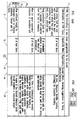
- Fig. 1 illustrates a compilation of exemplary display screens that may be conveniently displayed in a suitable display unit.
- the screen displays include a master or a top level scorecard 10 and a plurality of subordinate scorecards (12, 14 . . . 24 and 26) used for implementing the method of the present invention, that is, a method for assessing and improving internationalization (I18N) readiness of a predetermined software product selected for evaluation by a user.
- master scorecard 10 summarizes data indicative of respective main categories of I18N topics to be considered by the user.
- the main categories of I18N topics to be considered by the user include text formatting, local conventions, number formatting, measurements, times and dates, non-text items, and text input including bi-directional text input.
- Master scorecard 10 further includes a first data field 28 configured for totaling respective counts indicative of each opportunity that a defect may occur in the software product relative to each respective one of the listed main categories of I18N topics.
- Master scorecard 10 further includes a second data field 30 configured for summarizing respective counts indicative of actual defects relative to each of the listed main categories of I18N topics.
- the respective count values displayed in the master scorecard and the statistical measurement displayed therein is the combination of the individual counts for each of the individual subordinate scorecards and the combination of the respective statistical measurements for each individual scorecard.
- master scorecard 10 is automatically completed as the subordinate scorecards are completed and master scorecard 10 effectively summarizes the respective data details individually collected at each of the subordinate scorecards 12, 14 . . . 24 and 26.
- a commercially available programmable processing tool such as a Microsoft Excel spreadsheet and the like, may allow for computing, based on the respective counts summarized on the first and second data fields of the master scorecard for each main category of I18N topics, a predetermined statistical measurement Z st indicative of the I18N readiness of the software product relative to the main categories of I18N topics listed in the master scorecard.
- the statistical measurement may be a standard deviation, mean, or other suitable statistical measurement based on the counts listed on the first and second data fields of the master scorecard.
- the statistical measurements could conveniently indicate how many standard deviations a given count is from its mean as may be readily determined by techniques well understood in the art.
- the results listed on the master scorecard may conveniently summarize or combine the respective statistical measurements obtained for each subordinate scorecard.
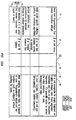
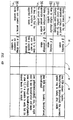
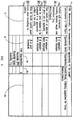
- Figs. 2A and 2B jointly illustrate subordinate scorecard 12 for allowing the user to systematically check for I18N compliance in the software product relative to text formatting.
- subordinate scorecard 12 lists in a data column 31 data indicative of respective subcategories of I18N topics to be considered or checked by the user while conducting the evaluation or assessment of the software product.
- subcategories of I18N topics listed in subordinate card 12 include the following:
- data column 32 lists, where appropriate, data indicative of suggested metrics for counting respective defect opportunities that may occur relative to each respective subcategory of topics.
- a suggested metric is counting the number of text items in the code of the software product or displayed by the software product.
- subordinate scorecard 12 includes a first data field 34 configured for listing respective counts indicative of each opportunity that a defect may occur in the software product relative to the respective subcategories of I18N topics.
- Subordinate scorecard 12 also has a second data field 36 configured for listing respective counts indicative of actual defects relative to each respective subcategory topic. For example, if, out of the 100 text strings locations, there are two locations that actually contain an I18N defect, then the count in data field 36 corresponding to the text formatting category would be two. It will be appreciated that while in the subordinate scorecard, these opportunity and defect fields are filled in by the user, on the master scorecard, the similar fields axe automatically compiled from the subordinate scorecards.
- Subordinate scorecard 12 further includes a column of data 38 that lists respective suggestions for avoiding and/or removing defects relative to each respective subcategory topic.
- the suggestions may be specific to a respective computer language used to develop a given software product, and does allow the user for conveniently avoiding and/or removing defects relative to each respective subcategory topic.
- the specific suggestions listed in column 38 presume that the programming language used by the designer is the Java computer language; however, it should be appreciated that the specific suggestions could be adapted to any other computer language used by the designer for a given software product.
- the programmable processing tool such as a Microsoft Excel spreadsheet and the like, may allow for computing, based on the respective counts listed on the first and second data fields of the subordinate scorecard for each main category of I18N topics, the predetermined statistical measurement indicative of the I18N readiness of the software product relative to the subcategories of I18N topics listed in the subordinate scorecard.
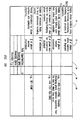
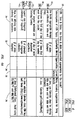
- Fig. 3 illustrates subordinate scorecard 14 which is used for checking I18N compliance related to local conventions.
- the list of subcategories of I18N topics listed in subordinate scorecard 14 include the following:
- subordinate scorecard 14 Similar to the subordinate scorecard discussed in the context of Fig. 2, subordinate scorecard 14 also has a column of data 32 for listing suggested metrics for counting respective defect opportunities that may occur relative to each respective subcategory of topics listed in subordinate scorecard 14. Also subordinate scorecard 14 has a first data field 34 configured for listing respective counts indicative of each opportunity that a defect may occur in the software product relative to the respective subcategories of I18N topics listed in subordinate scorecard 14. In addition, subordinate scorecard 14 has a second data field 36 configured for listing respective counts indicative of actual defects for the respective subcategories of the topics listed in subordinate scorecard 14. Also a column of data 38 allows for listing suggestions for fixing the defects relative to each respective subcategory topic.
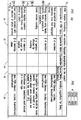
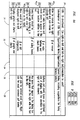
- Fig. 4 illustrates a subordinate scorecard 16 for checking I18N compliance of the software product related to number formatting.
- the subcategories of I18N topics to be checked by the user include the following:
- Subordinate scorecard 16 also has first and second data fields for inserting counts as described in the context of Figs. 2 and 3.
- Subordinate scorecard 16 has a data column for listing suggestions to the designer for fixing defects as described in connection with the scorecards discussed in the context of Figs. 2 and 3.
- Fig. 5 illustrates subordinate scorecard 18 for checking compliance related to display of measurements.
- the list of subcategories of I18N topics include the following:
- Fig. 6 illustrates a subordinate scorecard 20 for checking compliance related to display of times and dates.
- the listed subcategories of I18N topics to be checked by the user include the following:
- Fig. 7 illustrates subordinate scorecard 22 for checking compliance related to non-textual items, such as graphics or icons.
- the list of subcategories of I18N topics to be checked by the user include the following:
- Fig. 8 illustrates a subordinate scorecard 24 for checking compliance related to entry of text into the software product.
- the list of subcategories of I18N topics to be checked by the user include the following:
- Fig. 9 illustrates a subordinate scorecard for checking compliance related to bi-directional display orientation in the software product.
- the list of I18N topics to be checked by the user include the following:
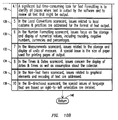
- Fig. 10 shows an exemplary screen display of a guidance module 100 that contains help data for assisting or helping the user regarding the methodology of the present invention.
- Guidance module 100 is further configured so that each user can make substantially efficient use of the scorecard kit of the present invention without undergoing costly and time consuming training.
- guidance module 100 conveniently provides a flow chart or series of steps that allows the user to smoothly navigate through the I18N implementation when making use of the method and kit of the present invention.
- steps 102 through 108 suggest to the user to have a thorough understanding of the functionality of the software application being evaluated.
- Step 106 suggests that the user should collect or gather the source code and all the screen displays of the software application being evaluated including representative data files and user interface windows.
- Step 108 suggests that if the application is relatively large in size, then the application should be divided into smaller sections or modules. Thus, instead of applying the teachings of the present invention to a single enormous application, the task may be more manageable to the user by applying the techniques of the present invention to such smaller section or modules.
- Steps 110 through 118 allow the user to validate the scorecard for a given software application.
- Step 112 allows for determining the respective locales reasonably expected to be supported by the software application.
- Step 114 suggests that the user has the flexibility to bypass I18N segments or categories that are not relevant to a given application. Further details in connection with a series of queries that may aid the user to bypass such segments or categories are discussed below in the context of Fig. 11.
- Step 116 suggests that the user has the flexibility to adapt the specific metrics used in a given application and need not be restricted to the default metrics listed in the scorecard.
- Step 118 suggests that if any specific I18N issue is not pertinent in a given application, then the user should set both the number of opportunities for a defect and the number of defects equal to zero.
- step 120 reminds the user that the master or top level scorecard is completed based on the respective results obtained in each of the subordinate scorecards.
- Step 122 reminds the user that when counting opportunities and/or defects the user should consider the source code, screen displays and data files. It will be appreciated that commercially available text editors suitable to the specific application may be used to aid the user to search and locate the precise location of any identified defects. Steps 124 and 126 identify that the text formatting scorecard may generally require thorough identification of the various locations or places where text is outputted by the software application as well as review of the outputted text itself. Step 128 suggests to the user to focus on issues related to local customs and practices for the format of text output by way of the local convention scorecard.
- Step 130 suggests to the user to focus on issues related to the storage and display of numerical values, including rounding, negative numbers, currencies and percentages. Step 130 is conveniently accomplished by way of the local conventions scorecard.
- Step 132 suggests to the user to focus on issues related to the storage and display of units of measurement. Another issue to be addressed is the size of paper used for printing pages of output. Step 132 is accomplished by way of the measurements scorecard.
- Step 134 suggests to the user to focus on issues related to the display of dates and times as well as assumptions about the calendar. Step 134 is accomplished by way of the times and dates scorecard.
- Step 136 suggests to the user to focus on issues related to graphical elements and encoding of text and is executed by way of the non-text items scorecard.
- the text input scorecard addresses I18N issues pertaining to how text input from the user is handled.
- step 138 suggests to the user to focus on the special issues related to languages that are based on right-to-left orientation and this step is executed with the bi-directional scorecard.
- the assessment is complete and the respective counts for the overall defect opportunities and actual defects are each automatically compiled and summarized in the master scorecard.
- the respective statistical measurements that, for example, may indicate how many standard deviations a given count is from its mean may be readily determined as may be the locations of the I18N defects to be eliminated.
- the respective statistical measurements may be automatically compiled and summarized for display in the master scorecard.
- Fig. 11 shows a display screen that displays a plurality of prompts or queries 40 having a respective data field 41 1 -41 9 for selecting or deselecting by the user one or more characteristics of the software product identified to the user in each respective one of the prompts. For example, if data field 41 1 is electronically selected or checked by clicking a suitable input device, then the software product or application is designated by the user to be localized to countries outside the US and Canada. Conversely, if data field 41 1 is not checked then the application will not be localized to countries outside the US and Canada.
- each prompt may be assigned a respective key, such as keys 42 1 -42 9 , that may allow the user to bypass one or more of the subcategories of I18N topics based on the particular characteristics of the specific software product being evaluated and its targeted language and country. For example, as shown in Fig. 5, if key 42 8 , that is, the ME key that designates whether a product displays measurements or not, is activated by the user by clicking data field 41 8 (Fig. 11), then each subcategory dealing with I18N measurements will be conveniently bypassed, thus saving valuable time to the user while assessing the software product.
- keys 42 1 -42 9 may allow the user to bypass one or more of the subcategories of I18N topics based on the particular characteristics of the specific software product being evaluated and its targeted language and country. For example, as shown in Fig. 5, if key 42 8 , that is, the ME key that designates whether a product displays measurements or not, is activated by the user by clicking data field 41 8 (Fig. 11), then each subcategory
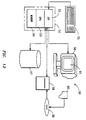
- Fig. 12 shows an exemplary computer system 50 that can be conveniently used for executing the method of the present invention and/or for generating the kit of the present invention.
- a processor 51 has an input-output (I/O) unit 52, a central processing unit (CPU) 53 and a memory section 54.
- the I/O unit may be electrically coupled to a keyboard 55 or a computer mouse, not shown, that allows for the user inputting the respective data field selections described above in the context of Fig. 10.
- the I/O unit 52 may be further connected to a display unit 56, a disk storage unit 57 and a CD-ROM drive unit 58.
- the CD-ROM unit can read a suitable CD-ROM medium 59 that may contain a suitable software application 60, such as a Microsoft Excel spreadsheet, that as suggested above can be readily programmed to generate the master scorecard and the plurality of subordinate scorecards together with a computing module for computing the statistical parameters used for quantifying the I18N readiness of the software product being evaluated.
- a suitable software application 60 such as a Microsoft Excel spreadsheet
- the computation of the statistical parameter is implemented through use of techniques well-understood in the art of statistics.
- An exemplary screen display 61 of the scorecard, better seen in Figs. 1-11, is shown on display unit 56.
Landscapes
- Engineering & Computer Science (AREA)
- Software Systems (AREA)
- Theoretical Computer Science (AREA)
- Human Computer Interaction (AREA)
- Physics & Mathematics (AREA)
- General Engineering & Computer Science (AREA)
- General Physics & Mathematics (AREA)
- Stored Programmes (AREA)
- Management, Administration, Business Operations System, And Electronic Commerce (AREA)
- Debugging And Monitoring (AREA)
- Storage Device Security (AREA)
Abstract
Description
Claims (10)
- A method for assessing and improving internationalization readiness of a predetermined software product selected for evaluation by a user, the method comprising:generating an electronic master scorecard listing data indicative of respective main categories of internationalization topics to be considered by the user, the master scorecard including a first datafield configured for listing respective counts indicative of each opportunity that a defect may occur in the software product relative to each respective one of the listed main categories of internationalization topics, the aster scorecard including a second datafield configured for listing respective counts indicative of actual defects relative to each respective one of the listed main categories of internationalization topics; andcomputing, based on the respective counts listed on the first and second datafields of the master scorecard for each main category of internationalization topics, a predetermined statistical measurement indicative of the internationalization readiness of the software product relative to the main categories of internationalization topics listed in the master scorecard.
- The method of claim 1 wherein the generating step comprises generating a plurality of subordinate scorecards each being respectively associated with a respective one of the main categories of internationalization topics listed in the master scorecard.
- The method of claim 2 wherein each respective subordinate scorecard lists data indicative of respective subcategories of internationalization topics to be considered by the user.
- The method of claim 3 wherein each respective subordinate scorecard further lists data indicative of suggested metrics for counting respective defect opportunities that may occur relative to each respective subcategory of topics.
- The method of claim 4 wherein each respective subordinate scorecard has a first datafield configured for listing respective counts indicative of each opportunity that a defect may occur in the software product relative to the respective subcategories of internationalization topics.
- A computerized kit for assessing and improving internationalization readiness of a predetermined software product selected for evaluation by a user, the kit comprising:a processor module for generating an electronic master scorecard listing data indicative of respective main categories of internationalization topics to be considered by the user, the master scorecard including a first datafield configured for listing respective counts indicative of each opportunity that a defect may occur in the software product relative to each respective one of the listed main categories of internationalization topics, the master scorecard including a second datafield configured for listing respective counts indicative of actual defects relative to each respective one of the listed main categories of internationalization topics; anda computing module coupled to the processor module for computing, based on the respective counts listed on the first and second datafields of the master scorecard for each main category of internationalization topics, a predetermined statistical measurement indicative of the internationalization readiness of the software product relative to the main categories of internationalization topics listed in the master scorecard.
- The kit of claim 6 wherein the processor module includes means for generating a plurality of subordinate scorecards each being respectively associated with a respective one of the main categories of internationalization topics listed in the master scorecard.
- The kit of claim 7 wherein each respective subordinate scorecard lists data indicative of respective subcategories of internationalization topics to be considered by the user.
- The kit of claim 8 wherein each respective subordinate scorecard further lists data indicative of suggested metrics for counting respective defect opportunities that may occur relative, to each respective subcategory of topics.
- The kit of claim 9 wherein each respective subordinate scorecard has a first datafield configured for listing respective counts indicative of each opportunity that a defect may occur in the software product relative to the respective subcategories of internationalization topics.
Applications Claiming Priority (2)
| Application Number | Priority Date | Filing Date | Title |
|---|---|---|---|
| US43272799A | 1999-11-02 | 1999-11-02 | |
| US432727 | 1999-11-02 |
Publications (2)
| Publication Number | Publication Date |
|---|---|
| EP1100012A2 true EP1100012A2 (en) | 2001-05-16 |
| EP1100012A3 EP1100012A3 (en) | 2004-01-21 |
Family
ID=23717362
Family Applications (1)
| Application Number | Title | Priority Date | Filing Date |
|---|---|---|---|
| EP00309639A Withdrawn EP1100012A3 (en) | 1999-11-02 | 2000-11-01 | A method and kit for assessing and improving internationalization readiness of a software product |
Country Status (2)
| Country | Link |
|---|---|
| EP (1) | EP1100012A3 (en) |
| JP (1) | JP2001188693A (en) |
Families Citing this family (1)
| Publication number | Priority date | Publication date | Assignee | Title |
|---|---|---|---|---|
| JP4993319B2 (en) | 2009-02-13 | 2012-08-08 | インターナショナル・ビジネス・マシーンズ・コーポレーション | Apparatus and method for supporting verification of software internationalization |
Family Cites Families (2)
| Publication number | Priority date | Publication date | Assignee | Title |
|---|---|---|---|---|
| EP0668558B1 (en) * | 1994-01-14 | 2002-04-17 | Sun Microsystems, Inc. | Method and apparatus for automating the localization of a computer program |
| US5737609A (en) * | 1994-10-18 | 1998-04-07 | Marcam Corporation | Method and apparatus for testing object-oriented programming constructs |
-
2000
- 2000-11-01 EP EP00309639A patent/EP1100012A3/en not_active Withdrawn
- 2000-11-01 JP JP2000334046A patent/JP2001188693A/en not_active Withdrawn
Also Published As
| Publication number | Publication date |
|---|---|
| JP2001188693A (en) | 2001-07-10 |
| EP1100012A3 (en) | 2004-01-21 |
Similar Documents
| Publication | Publication Date | Title |
|---|---|---|
| US20200342553A1 (en) | Systems and methods for analyzing documents | |
| US6580440B1 (en) | System and method for automatically creating and updating a graphical user interface | |
| US5450545A (en) | Generation of rules-based computer programs using data entry screens | |
| US5159552A (en) | Method for checking the correct and consistent use of units or chemical formulae in a text processing system | |
| EP0668558B1 (en) | Method and apparatus for automating the localization of a computer program | |
| US8387024B2 (en) | Multilingual software testing tool | |
| WO2009156438A1 (en) | Method and system for entering an expression | |
| US20160267613A1 (en) | System and methods for analyzing documents | |
| Thomson | EndNote® | |
| US20140189642A1 (en) | Native Language IDE Code Assistance | |
| US6671871B2 (en) | Technical information management system | |
| US20060265646A1 (en) | System, method, and computer program product for detection of potentially-problematic terminology in documents | |
| Scaffidi et al. | Intelligently creating and recommending reusable reformatting rules | |
| EP1100012A2 (en) | A method and kit for assessing and improving internationalization readiness of a software product | |
| Gross | Internationalization and localization of software | |
| Gull et al. | Usability evaluation of e-government websites in saudi arabia by cognitive walkthrough | |
| JP2795930B2 (en) | Document creation support device | |
| RU2379748C2 (en) | Method of managing data in document created by computer and machine-readable medium on which program is recorded | |
| JP2762934B2 (en) | Test item design support system | |
| JPH08263509A (en) | Software utilization device | |
| BIN | AUTOMATED EXPLORATION DATA ANALYSIS TOOL | |
| JP2001357342A (en) | Information processing method and apparatus | |
| Hutty et al. | Mastering COBOL programming | |
| EP1407351A2 (en) | Control display unit page builder software tool | |
| JP2000163271A (en) | Method and apparatus for information processing |
Legal Events
| Date | Code | Title | Description |
|---|---|---|---|
| PUAI | Public reference made under article 153(3) epc to a published international application that has entered the european phase |
Free format text: ORIGINAL CODE: 0009012 |
|
| AK | Designated contracting states |
Kind code of ref document: A2 Designated state(s): AT BE CH CY DE DK ES FI FR GB GR IE IT LI LU MC NL PT SE TR |
|
| AX | Request for extension of the european patent |
Free format text: AL;LT;LV;MK;RO;SI |
|
| PUAL | Search report despatched |
Free format text: ORIGINAL CODE: 0009013 |
|
| AK | Designated contracting states |
Kind code of ref document: A3 Designated state(s): AT BE CH CY DE DK ES FI FR GB GR IE IT LI LU MC NL PT SE TR |
|
| AX | Request for extension of the european patent |
Extension state: AL LT LV MK RO SI |
|
| 17P | Request for examination filed |
Effective date: 20040721 |
|
| AKX | Designation fees paid |
Designated state(s): DE GB |
|
| 17Q | First examination report despatched |
Effective date: 20050211 |
|
| STAA | Information on the status of an ep patent application or granted ep patent |
Free format text: STATUS: THE APPLICATION IS DEEMED TO BE WITHDRAWN |
|
| 18D | Application deemed to be withdrawn |
Effective date: 20050823 |