EP1098647B1 - Compounds and compositions for treating tissue ischemia - Google Patents
Compounds and compositions for treating tissue ischemia Download PDFInfo
- Publication number
- EP1098647B1 EP1098647B1 EP99934082A EP99934082A EP1098647B1 EP 1098647 B1 EP1098647 B1 EP 1098647B1 EP 99934082 A EP99934082 A EP 99934082A EP 99934082 A EP99934082 A EP 99934082A EP 1098647 B1 EP1098647 B1 EP 1098647B1
- Authority
- EP
- European Patent Office
- Prior art keywords
- aminopropanal
- straight
- ischemia
- bromide
- branched
- Prior art date
- Legal status (The legal status is an assumption and is not a legal conclusion. Google has not performed a legal analysis and makes no representation as to the accuracy of the status listed.)
- Expired - Lifetime
Links
Images



Classifications
-
- G—PHYSICS
- G01—MEASURING; TESTING
- G01N—INVESTIGATING OR ANALYSING MATERIALS BY DETERMINING THEIR CHEMICAL OR PHYSICAL PROPERTIES
- G01N33/00—Investigating or analysing materials by specific methods not covered by groups G01N1/00 - G01N31/00
- G01N33/48—Biological material, e.g. blood, urine; Haemocytometers
- G01N33/50—Chemical analysis of biological material, e.g. blood, urine; Testing involving biospecific ligand binding methods; Immunological testing
- G01N33/5005—Chemical analysis of biological material, e.g. blood, urine; Testing involving biospecific ligand binding methods; Immunological testing involving human or animal cells
- G01N33/5008—Chemical analysis of biological material, e.g. blood, urine; Testing involving biospecific ligand binding methods; Immunological testing involving human or animal cells for testing or evaluating the effect of chemical or biological compounds, e.g. drugs, cosmetics
- G01N33/5044—Chemical analysis of biological material, e.g. blood, urine; Testing involving biospecific ligand binding methods; Immunological testing involving human or animal cells for testing or evaluating the effect of chemical or biological compounds, e.g. drugs, cosmetics involving specific cell types
-
- A—HUMAN NECESSITIES
- A61—MEDICAL OR VETERINARY SCIENCE; HYGIENE
- A61K—PREPARATIONS FOR MEDICAL, DENTAL OR TOILETRY PURPOSES
- A61K31/00—Medicinal preparations containing organic active ingredients
- A61K31/185—Acids; Anhydrides, halides or salts thereof, e.g. sulfur acids, imidic, hydrazonic or hydroximic acids
- A61K31/19—Carboxylic acids, e.g. valproic acid
- A61K31/195—Carboxylic acids, e.g. valproic acid having an amino group
- A61K31/197—Carboxylic acids, e.g. valproic acid having an amino group the amino and the carboxyl groups being attached to the same acyclic carbon chain, e.g. gamma-aminobutyric acid [GABA], beta-alanine, epsilon-aminocaproic acid or pantothenic acid
-
- A—HUMAN NECESSITIES
- A61—MEDICAL OR VETERINARY SCIENCE; HYGIENE
- A61K—PREPARATIONS FOR MEDICAL, DENTAL OR TOILETRY PURPOSES
- A61K31/00—Medicinal preparations containing organic active ingredients
- A61K31/33—Heterocyclic compounds
- A61K31/395—Heterocyclic compounds having nitrogen as a ring hetero atom, e.g. guanethidine or rifamycins
- A61K31/41—Heterocyclic compounds having nitrogen as a ring hetero atom, e.g. guanethidine or rifamycins having five-membered rings with two or more ring hetero atoms, at least one of which being nitrogen, e.g. tetrazole
- A61K31/425—Thiazoles
- A61K31/426—1,3-Thiazoles
-
- A—HUMAN NECESSITIES
- A61—MEDICAL OR VETERINARY SCIENCE; HYGIENE
- A61K—PREPARATIONS FOR MEDICAL, DENTAL OR TOILETRY PURPOSES
- A61K31/00—Medicinal preparations containing organic active ingredients
- A61K31/33—Heterocyclic compounds
- A61K31/395—Heterocyclic compounds having nitrogen as a ring hetero atom, e.g. guanethidine or rifamycins
- A61K31/435—Heterocyclic compounds having nitrogen as a ring hetero atom, e.g. guanethidine or rifamycins having six-membered rings with one nitrogen as the only ring hetero atom
- A61K31/44—Non condensed pyridines; Hydrogenated derivatives thereof
- A61K31/4425—Pyridinium derivatives, e.g. pralidoxime, pyridostigmine
-
- A—HUMAN NECESSITIES
- A61—MEDICAL OR VETERINARY SCIENCE; HYGIENE
- A61P—SPECIFIC THERAPEUTIC ACTIVITY OF CHEMICAL COMPOUNDS OR MEDICINAL PREPARATIONS
- A61P39/00—General protective or antinoxious agents
-
- A—HUMAN NECESSITIES
- A61—MEDICAL OR VETERINARY SCIENCE; HYGIENE
- A61P—SPECIFIC THERAPEUTIC ACTIVITY OF CHEMICAL COMPOUNDS OR MEDICINAL PREPARATIONS
- A61P43/00—Drugs for specific purposes, not provided for in groups A61P1/00-A61P41/00
-
- A—HUMAN NECESSITIES
- A61—MEDICAL OR VETERINARY SCIENCE; HYGIENE
- A61P—SPECIFIC THERAPEUTIC ACTIVITY OF CHEMICAL COMPOUNDS OR MEDICINAL PREPARATIONS
- A61P9/00—Drugs for disorders of the cardiovascular system
- A61P9/10—Drugs for disorders of the cardiovascular system for treating ischaemic or atherosclerotic diseases, e.g. antianginal drugs, coronary vasodilators, drugs for myocardial infarction, retinopathy, cerebrovascula insufficiency, renal arteriosclerosis
-
- G—PHYSICS
- G01—MEASURING; TESTING
- G01N—INVESTIGATING OR ANALYSING MATERIALS BY DETERMINING THEIR CHEMICAL OR PHYSICAL PROPERTIES
- G01N33/00—Investigating or analysing materials by specific methods not covered by groups G01N1/00 - G01N31/00
- G01N33/48—Biological material, e.g. blood, urine; Haemocytometers
- G01N33/50—Chemical analysis of biological material, e.g. blood, urine; Testing involving biospecific ligand binding methods; Immunological testing
- G01N33/5005—Chemical analysis of biological material, e.g. blood, urine; Testing involving biospecific ligand binding methods; Immunological testing involving human or animal cells
- G01N33/5008—Chemical analysis of biological material, e.g. blood, urine; Testing involving biospecific ligand binding methods; Immunological testing involving human or animal cells for testing or evaluating the effect of chemical or biological compounds, e.g. drugs, cosmetics
-
- G—PHYSICS
- G01—MEASURING; TESTING
- G01N—INVESTIGATING OR ANALYSING MATERIALS BY DETERMINING THEIR CHEMICAL OR PHYSICAL PROPERTIES
- G01N33/00—Investigating or analysing materials by specific methods not covered by groups G01N1/00 - G01N31/00
- G01N33/48—Biological material, e.g. blood, urine; Haemocytometers
- G01N33/50—Chemical analysis of biological material, e.g. blood, urine; Testing involving biospecific ligand binding methods; Immunological testing
- G01N33/5005—Chemical analysis of biological material, e.g. blood, urine; Testing involving biospecific ligand binding methods; Immunological testing involving human or animal cells
- G01N33/5008—Chemical analysis of biological material, e.g. blood, urine; Testing involving biospecific ligand binding methods; Immunological testing involving human or animal cells for testing or evaluating the effect of chemical or biological compounds, e.g. drugs, cosmetics
- G01N33/5014—Chemical analysis of biological material, e.g. blood, urine; Testing involving biospecific ligand binding methods; Immunological testing involving human or animal cells for testing or evaluating the effect of chemical or biological compounds, e.g. drugs, cosmetics for testing toxicity
-
- G—PHYSICS
- G01—MEASURING; TESTING
- G01N—INVESTIGATING OR ANALYSING MATERIALS BY DETERMINING THEIR CHEMICAL OR PHYSICAL PROPERTIES
- G01N33/00—Investigating or analysing materials by specific methods not covered by groups G01N1/00 - G01N31/00
- G01N33/48—Biological material, e.g. blood, urine; Haemocytometers
- G01N33/50—Chemical analysis of biological material, e.g. blood, urine; Testing involving biospecific ligand binding methods; Immunological testing
- G01N33/5005—Chemical analysis of biological material, e.g. blood, urine; Testing involving biospecific ligand binding methods; Immunological testing involving human or animal cells
- G01N33/5008—Chemical analysis of biological material, e.g. blood, urine; Testing involving biospecific ligand binding methods; Immunological testing involving human or animal cells for testing or evaluating the effect of chemical or biological compounds, e.g. drugs, cosmetics
- G01N33/502—Chemical analysis of biological material, e.g. blood, urine; Testing involving biospecific ligand binding methods; Immunological testing involving human or animal cells for testing or evaluating the effect of chemical or biological compounds, e.g. drugs, cosmetics for testing non-proliferative effects
-
- G—PHYSICS
- G01—MEASURING; TESTING
- G01N—INVESTIGATING OR ANALYSING MATERIALS BY DETERMINING THEIR CHEMICAL OR PHYSICAL PROPERTIES
- G01N33/00—Investigating or analysing materials by specific methods not covered by groups G01N1/00 - G01N31/00
- G01N33/48—Biological material, e.g. blood, urine; Haemocytometers
- G01N33/50—Chemical analysis of biological material, e.g. blood, urine; Testing involving biospecific ligand binding methods; Immunological testing
- G01N33/5005—Chemical analysis of biological material, e.g. blood, urine; Testing involving biospecific ligand binding methods; Immunological testing involving human or animal cells
- G01N33/5008—Chemical analysis of biological material, e.g. blood, urine; Testing involving biospecific ligand binding methods; Immunological testing involving human or animal cells for testing or evaluating the effect of chemical or biological compounds, e.g. drugs, cosmetics
- G01N33/5044—Chemical analysis of biological material, e.g. blood, urine; Testing involving biospecific ligand binding methods; Immunological testing involving human or animal cells for testing or evaluating the effect of chemical or biological compounds, e.g. drugs, cosmetics involving specific cell types
- G01N33/5058—Neurological cells
-
- G—PHYSICS
- G01—MEASURING; TESTING
- G01N—INVESTIGATING OR ANALYSING MATERIALS BY DETERMINING THEIR CHEMICAL OR PHYSICAL PROPERTIES
- G01N33/00—Investigating or analysing materials by specific methods not covered by groups G01N1/00 - G01N31/00
- G01N33/48—Biological material, e.g. blood, urine; Haemocytometers
- G01N33/50—Chemical analysis of biological material, e.g. blood, urine; Testing involving biospecific ligand binding methods; Immunological testing
- G01N33/5005—Chemical analysis of biological material, e.g. blood, urine; Testing involving biospecific ligand binding methods; Immunological testing involving human or animal cells
- G01N33/5008—Chemical analysis of biological material, e.g. blood, urine; Testing involving biospecific ligand binding methods; Immunological testing involving human or animal cells for testing or evaluating the effect of chemical or biological compounds, e.g. drugs, cosmetics
- G01N33/5082—Supracellular entities, e.g. tissue, organisms
- G01N33/5088—Supracellular entities, e.g. tissue, organisms of vertebrates
Definitions
- the present invention provides a genus of compounds and pharmaceutical compositions that are protective for mitigating damage associated with tissue ischemia, particularly stroke (CNS ischemia), and ischemia of the myocardium.
- the present invention further provides a method for treating or preventing tissue damage precipitated by injury, disease or insult, particularly the tissue damage caused by ischemia.
- the present invention provides a method for treating or preventing tissue damage by providing compounds that and compositions that inhibit or neutralize the cytotoxic activity of 3-aminopropanal.
- Cerebral ischemia a leading cause of disability and mortality world-wide, is mediated by a cascade of molecular cytotoxins that kill potentially viable cells in the brain.
- the polyamines, spermine, spermidine, and putrescine which are among the most abundant molecules in mammalian brain, have been implicated in the pathogenesis of ischemic brain damage (Zhang et al., Proc. Natl. Acad. Sci. USA 91:10883-10887, 1994; Harman and Shaw, Br. J. Pharmac. 73:165-174, 1981; Bergeron et al., J. Med. Chem . 39:5257-5266, 1996; Glantz et al., J . Basic. Clin.
- Polyamine biosynthesis is increased following the onset of cerebral ischemia, due to an ischemia-mediated induction of ornithine decarboxylase, a key synthetic enzyme in the polyamine biosynthetic pathway.
- Brain spermine and spermidine levels are actually decreased by cerebral ischemia (Paschen, J. Neurochem. 49:35-37, 1987; and Paschen, Cerebrovasc. Brain Metab. Rev. 4:59-88, 1992). This observed decline of tissue spermine and spermidine levels is accompanied by an increase in brain levels of putrescine (Paschen, Mol. Chem. Neuropathol. 16:241-271, 1992; Paschen, Cerebrovasc. Brain Metab. Rev. 4:59-88, 1992; Morgan, Bachrach and Heimer, eds. CRC Publications, 203-229, 1989; and Paschen et al., Acta Neuropathol. 76:388-394, 1988).
- 3-Aminopropanal is known for its cytotoxicity to primary endothelial cells, fibroblasts, and a variety of transformed mammalian cell lines (Bouzyk and Rosiek, Cancer Lett. 39:93-99, 1988; Brunton et al., Toxic. in Vitro 8:337-341, 1994; Gaugas and Dewey, Br. J. Cancer 39:548-557, 1978; Morgan et al., J. Biochem. 236:97-101, 1986; and Ferrante et al., J. Immunol . 133:2157-2162, 1984).
- 3-Aminopropanal has also been implicated as a mediator of programmed cell death in murine embryonic limb buds, and may contribute to the development of necrosis in some tumors (Parchment and Pierce, Cancer Res 49:6680-6686, 1989; and Kurihara et al., Neurosurg. 32:372-375, 1993).
- Inhibition of polyamine oxidase with aminoguanidine blocked generation of 3-aminopropanal in cell cultures following the addition of spermine, and prevented subsequent cytotoxicity (Ferrante et al., J. Immunol. 133:2157-2162, 1984; Morgan, Essays in Biochemistry 23:82-115, 1987; and Parchment and Pierce, Cancer Res. 49:6680-6686, 1989).
- the LD 50 concentration of 3-aminopropanal to cells is similar to the cytotoxicity of glutamate.
- putrescine is not cytotoxic to cells, even in the millimolar range, but its rate of production through polyamine oxidation correlates directly with the formation of a directly cytotoxic aldehyde, 3-aminopropanal.
- 3-aminopropanal mediates apoptosis by activation of an interleukin-1beta converting enzyme (ICE)-dependent signaling pathway, whereas in neurons it causes necrotic cell death.
- ICE interleukin-1beta converting enzyme
- Cerebral ischemia is a debilitating condition resulting from a sudden cessation of blood flow to an area of the brain, resulting in a loss of brain tissue.
- Stroke is a major public health problem in the United States wherein about 550,000 strokes occur each year. Cerebral ischemia afflicts individuals of all age groups, but the incidence doubles with each decade over 45 and reaches 1-2% per year in the population of individuals over 75 years of age. If a patient survives, major disability can result with loss of ability to communicate, ambulate, see, coordinate and/or reason.
- Standard therapy is often ineffective at preventing brain infarction and is meant to support cardiovascular and respiratory function, control intracranial pressure, and prevent recurrent stroke.
- protease enzymes that are designed to dissolve blood clots, only for those strokes caused by blood clots potentially useful in brain ischemia but (as opposed to bleeding) and these agents only function to restore some blood flow in limited situations.
- ischemic penumbra a core of densely ischemic tissue becomes rapidly and irreversibly damaged.
- Cellular damage in the surrounding area termed the “ischemic penumbra,” progresses more slowly.
- the target for therapeutic neuroprotection is the ischemic penumbra, a volume of brain tissue around the ischaemic core, which receives reduced blood flow and contains compromised, but potentially viable tissue.
- ischemic penumbra a volume of brain tissue around the ischaemic core, which receives reduced blood flow and contains compromised, but potentially viable tissue.
- aminoguanidine a small molecule inhibitor of AGE cross-linking reactions, effectively abrogated the cerebrotoxicity of AGEs during focal cerebral ischemia (Zimmerman et al., Proc. Natl. Acad. Sci. USA 92:3744-3748, 1995). Aminoguanidine was also found to be cerebroprotective during focal ischemia in normal, non-diabetic animals, independent of exogenous AGEs (Zimmerman et al., Surg. Forum. 45:600-603, 1994).
- Aminoguanidine further provided cerebroprotection in a model of focal stroke when administered within 2 hours after the onset of focal cerebral ischemia (Cockroft et al., Stroke 27:1393-1398, 1996). It was considered that the mechanism of action was inhibition of polyamine oxidase (PAO), an enzyme that produces toxic, reactive aldehyde metabolites by oxidation of biogenic amines.
- PAO polyamine oxidase
- Elevated glutamate leads to excessive Ca 2+ influx, primarily by excitatory amino acid receptor channel activation, as well as swelling and osmotic lysis as a result of depolorization mediated influx of Na + , Cl - and water (Faroquil and Horrocks, Brain Res. 16:171-191, 1991).
- This elevation of intracellular Ca 2+ activates phospholipases, lipases, proteases and protein kinases, leading to eventual breakdown of phospholipid membranes, cytoskeletal alterations, arachidonic acid release, and potentiation of the free radical cascade (Manfred et al., Biochem. Pharm. 50:1-16, 1995).
- NMDA receptors modulators of NMDA receptors include Zn 2+ , histamine, certain neuroactive steroids, arachidonic acid, polyamines and protons or pH (Collinridge and Lester, Pharmacol. Rev. 74:143-210, 1989; and McBain and Mayer, Physiol. Rev. 74:723-760, 1994).
- an NMDA receptor antagonist, MK-801 can exert a neuroprotective effect in animal models of cerebral ischemia (Olney et al., J. Neurosci. 9:1701-1704, 1989).
- Ischemia also leads to formation of reactive oxygen species (ROS), activation of lipid peroxidation, and a reduction in the endogenous antioxidants ascorbate, glutathione, ubiquinone and ⁇ -tocopherol in brain tissue.
- ROS reactive oxygen species
- the mitochondrial respiratory chain and reaction sequences catalyzed by cyclooxygenase and lipoxygenase are important production sites for superoxide anion (O 2 - ), hydrogen peroxide (H 2 O 2 ) and hydroxy radical (OH - ).
- Activated oxygen species are also formed during autooxidation of catecholamines and in the xanthine reaction.
- Nitric oxide is another mediator of tissue injury in cerebral ischemia. NO concentrations increase acutely in the brain after middle cerebral artery (MCA) occlusion, from approximately 10 nM to 2.2 ⁇ M by a porphyrinic microsensor assay (Beckman et al., Proc. Natl . Acad . Sci. USA 87:1620, 1990).
- 3-aminopropanol is an enzymatic by-product of the oxidative cleavage of the polyamines spermine and spermidine by PAO in mammalian cells (Holtta, Biochemistry 16:91-100, 1997).
- the cytotoxicity resulting from co-incubation of PAO activity with spermine and spermidine has been abolished by aminoguanidine (Gahl et al., Chemicobiological Interactins 22:91-98, 1978; and Henle et al., Cancer Res. 46:175-182, 1986).
- 3-Aminopropanal has also been implicated in causing programmed cell death in murine embryonic limits buds (Parchment et al., Cancer Res. Arch. 49:6680-6686, 1989) and in necrosis of solid tumors.
- the international patent application WO 97/46539 discloses a series of substituted quinoxaline 2,3-diones useful as neuroprotective agents. Intermediates, processes of preparation, and pharmaceutical compositions containing the compounds are also disclosed.
- the compounds are glutamate receptor antagonists and are useful in the treatment of stroke, cerebral ischemia, or cerebral infarction resulting from thromboembolic or hemorrhagic stroke, cerebral vasospasms, hypoglycemia, cardiac arrest, status epilepticus, perinatal asphyxia, anoxia seizure disorders, pain, Alzheimer's, Parkinson's, and Huntington's Diseases.
- the US patent US 5,688,789 discloses 5-(iminomethano)-10,11-dihydro-5H-dibenzo[a,d]cycloheptene and derivatives thereof, and the use of such compounds for the treatment or prevention of neuronal loss in ischemia, hypoxia, brain or spinal chord trauma, as well as for the treatment of Alzheimer's disease, amyotrophic lateral sclerosis, Huntington's disease and Down's syndrome.
- benzoylguanidines of a certain formula are described, which are suitable as antiarrhythmic pharmaceuticals with a cardioprotective component for the prophylaxis and treatment of infarctions and for the treatment of angine pectoris, and also preventively inhibit, or greatly reduce, the pathophysiological processes in the formation of ischemia-induced damage, in particular in the triggering of ischemia-induced cardiac arrhythmias.
- the US patent 5,648,351 relates to the use of macrolide compounds of a certain formula for preventing or treating cerebral ischemic disease, such as brain damage caused by ischemia, such as cerebral infarction.
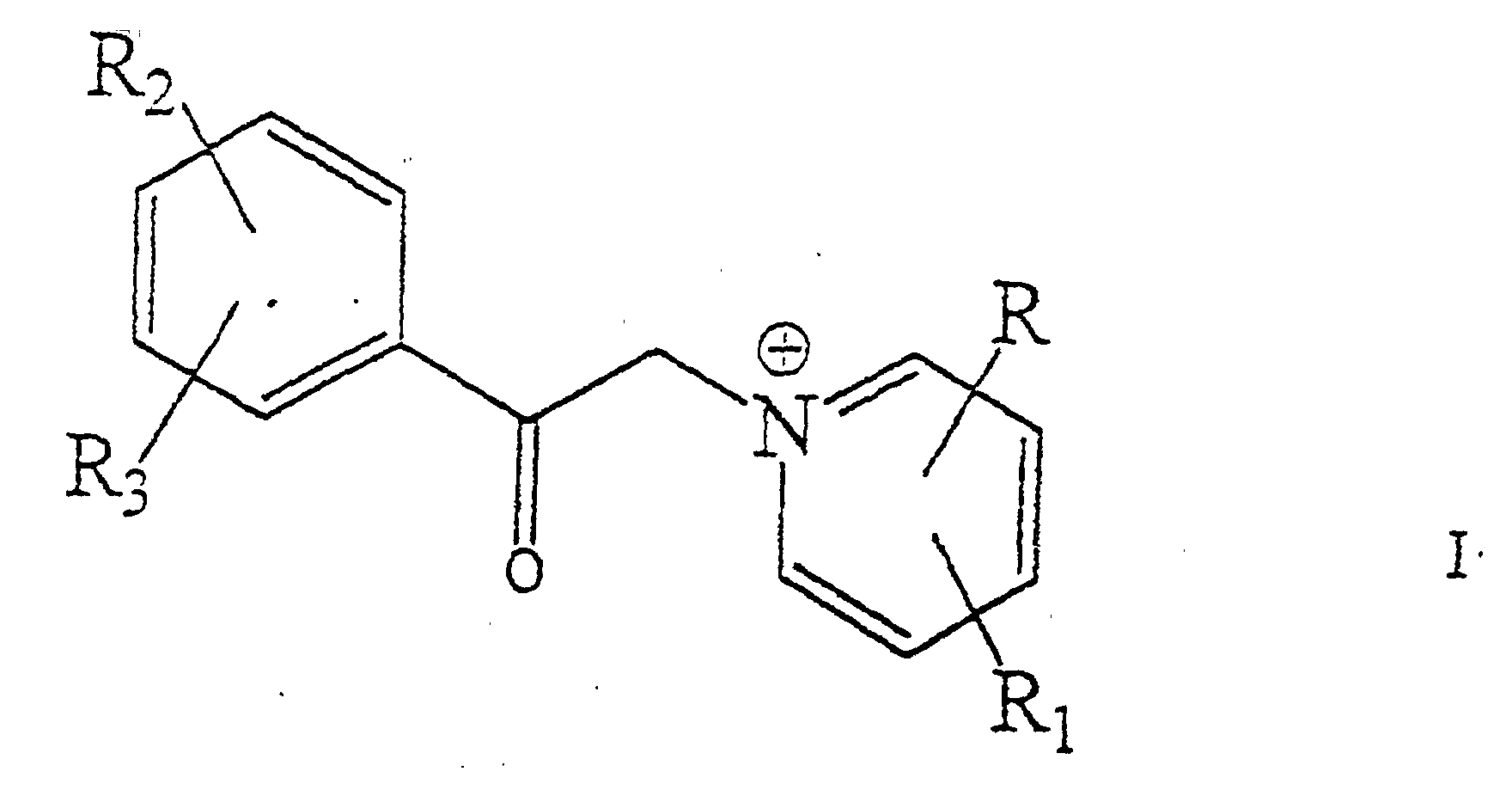
- the present inveption provides a stroke-damage mitigating compound having a formula I: wherein R and R 1 are independently hydrogen, sulfamide, carboxyamide, cyano, straight or branched C 1-6 alkyl, straight or branched C 2-6 alkenyl, straight or branched C 1-6 alkoxy, a straight chain C 1-6 alkyl or a straight chain C 2-6 alkenyl having an ether link or an ester link, toluenyl, COOH, nitrate, or halide (Br, Cl, I, F), wherein both R and R 1 cannot be hydrogen, wherein R 2 and R 3 are independently hydrogen, hydroxy, sulfamide, carboxyamide, cyano, straight or branched C 1-6 alkyl, straight or branched C 2-6 alkenyl, straight or branched C 1-6 alkoxy, a straight or branched chain C 1-6 alkyl or a straight or branched chain C 2-6 alkenyl having an
- R and R 1 are meta to each other and to the heteroatom.
- R is COOH.
- R 1 is COOH.
- R 2 and R 3 are both hydrogen.
- R and R 1 are each COOH, and R 2 and R 3 are both hydrogen.
- Preferred compounds of formula 1 include, for example, 1-phenacyl-2,3-dicarboxypyridinium bromide; 1-phenacyl-2,4-dicarboxypyridinium bromide; 1-phenacyl-3,5 dicarboxypyridinium bromide (AP5); 1-phenacyl-2,6-dicarboxypyridinium bromide; 1-phenacyl-2,3-dicarboxyimidepyridinium bromide; 1-phenacyl-2,4-dicarboxyimidepyridinium bromide; 1-phenacyl-3,5-dicarboxyimidepyridinium bromide; and 1-phenacryl-2,6-dicarboxyimidepyridinium bromide.
- the present invention provides a pharmaceutical composition
- a pharmaceutical composition comprising a compound from formula I in a pharmaceutically acceptable carrier, wherein formula I comprises: wherein R and R 1 are independently hydrogen, sulfamide, carboxyamide, cyano, straight or branched C 1-6 alkyl, straight or branched C 2-6 alkenyl, straight or branched C 1-6 alkoxy, a straight chain C 1-6 alkyl or a straight chain C 2-6 alkenyl having an ether link or an ester link, toluenyl, COOH, nitrate, or halide (Br, Cl, I, F), wherein both R and R 1 cannot be hydrogen, wherein R 2 and R 3 are independently hydrogen, hydroxyl, sulfamide, carboxyamide, cyano, straight or branched C 1-6 alkyl, straight or branched C 2-6 alkenyl, straight or branched C 1-6 alkoxy, a straight or branched chain C 1-6 alkyl or a straight
- R and R 1 are meta to each other and to the heteroatom.
- R is COOH.
- R 1 is COOH.
- R 2 and R 3 are both hydrogen.
- R and R 1 are each COOH, and R 2 and R 3 are both hydrogen.
- the present invention further provides a method for treating tissue ischemia to mitigate ischemic damage, comprising administering an effective amount of a compound of formula I, wherein formula I comprises: wherein R and R 1 are independently hydrogen, sulfamide, carboxyamide, cyano, straight or branched C 1-6 alkyl, straight or branched C 2-6 alkenyl, straight or branched C 1-6 alkoxy, a straight chain C 1-6 alkyl or a straight chain C 2-6 alkenyl having an ether link or an ester link, toluenyl, COOH, nitrate, or halide (Br, Cl, I, F), wherein both R and R 1 cannot be hydrogen, wherein R 2 and R 3 are independently hydrogen, hydroxyl, sulfamide, carboxyamide, cyano, straight or branched C 1-6 alkyl, straight or branched C 2-6 alkenyl, straight or branched C 1-6 alkoxy, a straight or branched chain C 1-6 al
- R and R 1 are meta to each other and to the heteroatom.
- R is COOH.
- R 1 is COOH.
- R 2 and R 3 are both hydrogen.
- R and R 1 are each COOH, and R 2 and R 3 are both hydrogen.
- the present invention further provides a method for inhibiting tissue damage, comprising administering an effective amount of a compound that inhibits or neutralizes the cytotoxic activity of 3-aminopropanal.
- the diseases resulting from tissue ischemia are myocardial infarction or stroke.
- the present invention arose out of a series of experiments wherein cerebral damage subsequent to induced focal ischemia was found to be mediated by the induction of brain polyamine oxidase activity. Moreover, the cytotoxic end product 3-aminopropanal accumulated in the ischemic brain at levels that are lethal to neurons and glial cells. These data further demonstrated that inhibition of polyamine oxidase activity with structurally distinct pharmaceutical compounds prevented the formation of 3-aminopropanal, and provided significant protection against the development of cerebral damage following permanent cerebral artery occlusion in rats. Finally, data is presented that certain compounds with the potential to react with 3-aminopropanal are efficacious in limiting the extent of tissue damage following ischemia
- 3-aminopropanal as a cytotoxic mediator of cellular and tissue damage in cerebral ischemia.
- cerebral ischemia mediates an early induction of polyamine oxidase activity.
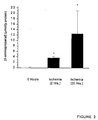
- the cytotoxic enzyme product 3-aminopropanal accumulates during the early response to cerebral ischemia ( Figure 2), but is not produced in normally perfused controls.
- 3-aminopropanal production in the ischemic brain increases prior to the onset of significant cellular degeneration, with tissue 3-aminopropanal levels rising further during the period of progressive cell death.
- 3-aminopropanal is a potent cytotoxin that activates apoptosis via an ICE-dependent mechanism in glial cells, and necrosis in neurons.
- these data offer an explanation for the correlation between brain levels of putrescine, a stable end product of terminal polyamine oxidation, and infarct volume (Dempsey et al., Neurosurg. 17:635-640, 1985; Traynelis et al., J. Physiol. (London) 433:727-763, 1991; Gilad et al., Mol. Chem. Neuropathol.
- TNF synthesis is upregulated during the first 12 hours of brain ischemia, which cytokine participates in the subsequent development of brain damage (Meistrell III et al., SHOCK 8:341-348, 1997).
- Spermine is a direct inhibitor of TNF synthesis in human peripheral blood mononuclear cells (Zhang et al., J. Exp. Med. 185:1-10, 1997).
- the role of decreasing spermine levels during cerebral ischemia is unexplained and not reported.
- Table 1 provides a time course study of cell viability after exposure to 3-aminopropanal.
- Glial or neuronal cells were exposed to an LD 100 concentration of 3-aminopropanal (750 ⁇ M) for the times indicated, followed by replacing the media with fresh OPTI-MEM (medium) for a total incubation time of 20 hr.
- Cell viability was determined by MTT assay (data shown are mean ⁇ s.e).
- 3-aminopropanal is a potent cytotoxin, essential information was previously lacking on whether 3-aminopropanal is produced during cerebral ischemia. 3-aminopropanal accumulated in the ischemic brain within 2 hours after permanent forebrain ischemia in rats, but not in normally perfused brain.
- the tetrapeptide ICE inhibitor (Ac-YVAD-CMK) prevented 3-aminopropanal-mediated apoptosis in glial cells.
- the compounds of Formula I may have an asymmetric carbon atom that may occur in the R, R 1 and R 3 side-chains; optical isomers may likewise occur in the R, R 1 and R 3 side-chains of the compounds of Formula II.
- the isomers of a racemic mixture of any of these compounds can be separated by methods known to those skilled in the art and the isomeric preparations thus purified and isolated can be tested, by methods known to those skilled in the art or taught herein, to determine if such an isomeric preparation (as opposed to the corresponding racemic mixture) is more desirable, e.g., has less toxicity or greater potency, for use in the methods of this invention.
- the compounds, compositions and treatment methods of this invention can be used to prevent or inhibit tissue necrosis and cell death in a variety of settings, particularly as the circumstances may be understood to involve the evolution of 3-aminopropanal and its role as a cytotoxin that propagates cellular damage. Such additional indications have in common the need to inhibit "innocent bystander" cell death.
- the compounds, compositions and methods of this invention find particular utility in preventing the spread of cell death outward from a fatally damaged, non-viable core into a potentially viable surrounding or penumbral zone.
- the initiating damage at the core may be due to any of a variety of causes (e.g., ischemia, embolism, thrombosis, hypoperfusion, injury, trauma, disease, heat, cold, chemical exposure, surgery, exposure to endogenous, environmental or therapeutic cytotoxins, radiation, necrosis, apoptosis, etc.); the compounds, compositions and methods of this invention will then find utility in preventing or limiting cellular damage and cell death in tissue adjacent to the non-viable core.
- causes e.g., ischemia, embolism, thrombosis, hypoperfusion, injury, trauma, disease, heat, cold, chemical exposure, surgery, exposure to endogenous, environmental or therapeutic cytotoxins, radiation, necrosis, apoptosis, etc.
- the compounds, compositions and methods of this invention are thought to operate in such diverse settings by molecular interference with and neutralization of the cytotoxic activity of 3-aminopropanal, which cytotoxin arises naturally from metabolism of polyamines released in the core and in the penumbra as cellular damage propagates outward from the initiating site.
- the compounds, compositions and methods of this invention may be usefully employed to limit tissue damage ancillary or adjacent to the site of initiating damage.
- the present invention provides novel compounds, pharmaceutical formulations and methods of treatment to mitigate ischemic damage.
- Effective doses of the therapy may be formulated in suitable pharmacological carriers and may be administered by any appropriate means, including injection (intravenous, intraperitoneal, intramuscular, intracranial, intramyocardial, subcutaneous), by absorption through epithelial or mucocutaneous linings (oral mucosa, rectal and vaginal epithelial linings, nasopharyngeal mucosa, intestinal mucosa); orally, transdermally or any other means available within the pharmaceutical arts.
- a compound can be administered to a human patient by itself or in pharmaceutical compositions where it is mixed with suitable carriers or excipients at doses to treat or mitigate tissue ischemia or to mitigate ischemic damage.
- the organ sites of treatment are the CNS and the myocardium.
- a therapeutically effective dose further refers to that amount of the compound sufficient to treat or mitigate tissue ischemia or to mitigate ischemic damage.
- Therapeutically effective doses may be administered alone or as adjunctive therapy in combination with other treatments for tissue ischemia or to mitigate tissue ischemic damage. Techniques for the formulation and administration of the compounds of the instant application may be found in "Remington's Pharmaceutical Sciences” Mack Publishing Co., Easton, PA, latest addition.
- Suitable routes of administration may, for example, include oral, rectal, transmucosal, or intestinal administration; parenteral delivery, including intramuscular, subcutaneous, intracranial, intrascerebroventricular, intramedullary injections, as well as intrathecal, direct intraventricular, intravenous, intraperitoneal, intranasal, or intraocular injections, and optionally in a depot or sustained release formulation.
- parenteral delivery including intramuscular, subcutaneous, intracranial, intrascerebroventricular, intramedullary injections, as well as intrathecal, direct intraventricular, intravenous, intraperitoneal, intranasal, or intraocular injections, and optionally in a depot or sustained release formulation.
- a targeted drug delivery system for example in a liposome coated with a tissue-targeting antibody.
- the liposomes will be targeted to and taken up selectively by target tissue cells.
- compositions may be manufactured by means of conventional mixing, dissolving, dragee-making, levitating, emulsifying, encapsulating, entrapping, or lyophilizing processes.
- Pharmaceutical compositions for use in accordance with the invention may be formulated in conventional manner using one or more physiologically acceptable carriers comprising excipients and auxiliaries that facilitate processing of the active compounds into preparations that can be used pharmaceutically. Proper formulation is dependent upon the route of administration chosen.
- the agents of the invention may be formulated in aqueous solutions, preferably in physiologically compatible buffers, such as Hank's solution, Ringer's solution, or physiological saline buffer.
- physiologically compatible buffers such as Hank's solution, Ringer's solution, or physiological saline buffer.
- penetrants appropriate to the barrier to be permeated are used in the formulation. Such penetrants are usually known in the art.
- the compounds can be formulated by combining the active compounds with pharmaceutically acceptable carriers.
- Such carriers enable the compounds to be formulated as tablets, pills, dragees, capsules, liquids, gels, syrups, slurries, suspensions and the like, for oral ingestion by a patient to be treated.
- Pharmaceutical preparations for oral use can be obtained solid excipient, optionally grinding a resulting mixture, and processing the mixture of granules, after adding suitable auxiliaries, if desired, to obtain tablets or dragee cores.
- Suitable excipients are, in particular, fillers such as sugars, including lactose, sucrose, mannitol, or sorbitol; cellulose preparations such as, for example, maize starch, wheat starch, rice starch, potato starch, gelatin, gum tragacanth, methyl cellulose, hydroxypropylmethylcellulose, sodium carboxymethylcellulose, and/or polyvinylpyrrolidone (PVP).
- PVP polyvinylpyrrolidone
- disintegrating agents may be added, such as the cross-linked polyvinyl pyrrolidone, agar, or alginic acid or a salt thereof such as sodium alginate.
- Dragee cores are provided with suitable coatings.
- suitable coatings For this purpose, concentrated sugar solutions may be used, which may optionally contain gum arabic, talc, polyvinyl pyrrolidone, carbopol gel, polyethylene glycol, and/or titanium dioxide, lacquer solutions, and suitable organic solvents or solvent mixtures.
- Dyestuffs or pigments may be added to the tablets or dragee coatings for identification or to characterize different combinations of active compound doses.
- compositions that can be used orally include push-fit capsules made of gelatin, as well as soft, sealed capsules made of gelatin and a plasticizer, such as glycerol or sorbitol.
- the push-fit capsules can contain the active ingredients in admixture with filler such as lactose, binders such as starches, and/or lubricants such as talc or magnesium stearate and, optionally, stabilizers.
- the active compounds may be dissolved or suspended in suitable liquids, such as fatty oils, liquid paraffin, or liquid polyethylene glycols.
- stabilizers may be added. All formulations for oral administration should be in dosages suitable for such administration.
- the compositions may take the form of tablets or lozenges formulated in conventional manner.
- the compounds for use according to the invention are delivered in the form of an aerosol spray presentation from pressurized packs or a nebulizer, with the use of a suitable propellant, such as, dichlorodifluoromethane, trichlorofluoromethane, dichlorotetrafluoroethane, carbon dioxide or other suitable gas.
- a suitable propellant such as, dichlorodifluoromethane, trichlorofluoromethane, dichlorotetrafluoroethane, carbon dioxide or other suitable gas.
- a suitable propellant such as, dichlorodifluoromethane, trichlorofluoromethane, dichlorotetrafluoroethane, carbon dioxide or other suitable gas.
- a suitable propellant such as, dichlorodifluoromethane, trichlorofluoromethane, dichlorotetrafluoro
- the compounds may be formulated for parenteral administration by injection, such as, by bolus injection or continuous infusion.
- Formulations for injection may be presented in unit dosage form, e . g ., in ampoules or in multi-dose containers, with an added preservative.
- the compositions may take such forms as suspensions, solutions or emulsions in oily or aqueous vehicles, and may contain formulary agents such as suspending, stabilizing and/or dispersing agents.
- compositions for parenteral administration include, for instance, aqueous solutions of the active compounds in water-soluble form.
- suspensions of the active compounds may be prepared as appropriate oily injection suspensions.
- Suitable lipophilic solvents or vehicles include fatty oils such as sesame oil, or synthetic fatty acid esters, such as ethyl oleate or triglycerides, or liposomes.
- Aqueous injection suspensions may contain substances that increase the viscosity of the suspension, such as sodium carboxymethyl cellulose, sorbitol, or dextran.
- the suspension may also contain suitable stabilizers or agents that increase the solubility of the compounds to allow for the preparation of highly concentrated solutions.
- the active ingredient may be in powder form for constitution with a suitable vehicle before injection, such as, sterile pyrogen-free water.
- Liposomes and emulsions are known examples of delivery vehicles or carriers for hydrophobic drugs. Certain organic solvents such as dimethylsulfoxide also may be employed, although usually at the cost of greater toxicity. Additionally, the compounds may be delivered using a sustained-release system, such as semipermeable matrices of solid hydrophobic polymers containing the therapeutic agent. Various sustained-release materials have been established and are well known by those skilled in the art. Sustained-release capsules may, depending on their chemical nature, release the compounds for a few weeks up to over 100 days. Depending on the chemical nature and the biological stability of the therapeutic reagent, additional strategies for stabilization may be employed.
- compositions also may comprise suitable solid or gel phase carriers or excipients.
- suitable solid or gel phase carriers or excipients include calcium carbonate, calcium phosphate, various sugars, starches, cellulose derivatives, gelatin, and polymers such as polyethylene glycols.
- salts may be provided as salts with pharmaceutically compatible counterions.
- Pharmaceutically compatible salts may be formed with many acids, including hydrochloric, sulfuric, acetic, lactic, tartaric, malic, succinic, etc.; or bases. Salts tend to be more soluble in aqueous or other protonic solvents that are the corresponding free base forms.
- Examples of pharmaceutically acceptable salts, carriers or excipients are well known to those skilled in the art and can be found, for example, in Remington's Pharmaceutical Sciences, 18th Edition, A.R. Gennaro, Ed., Mack Publishing Co., Easton, PA, 1990.
- Such salts include sodium, potassium, lithium, calcium, magnesium, iron, zinc, hydrochloride, hydrobromide, hydroiodide, acetate, citrate, tartrate, malate salts,
- compositions suitable for use in the present invention include compositions wherein the active ingredients are contained in an effective amount to achieve their intended purpose. More specifically, a therapeutically effective amount means an amount effective to prevent development of or to alleviate the existing symptoms of the subject being treated. Determination of the effective amounts is well within the capability of those skilled in the art, especially in light of the detailed disclosure provided herein.
- the therapeutically effective dose can be estimated initially from cell culture assays.
- therapeutically useful doses from in vivo experiments are provided with the in vivo data of preferred embodiments illustrated herein. Such information can be used to more accurately determine useful doses in humans.
- a therapeutically effective dose refers to that amount of the compound that results in a reduction in the otherwise expected severity of stroke of damage in a prolongation of survival in a patient.
- Toxicity and therapeutic efficacy of such compounds can be determined by standard pharmaceutical, pharmacological, and toxicological procedures in cell cultures or experimental animals for determining the LD 50 (the dose lethal to 50% of the population) and the ED 50 (the dose therapeutically effective in 50% of the population).
- the dose ratio between toxic and therapeutic effects is the therapeutic index and it can be expressed as the ratio between LD 50 and ED 50 .
- Compounds that exhibit high therapeutic indices are preferred.
- the data obtained from cell culture assays or animal studies can be used in formulating a range of dosage for use in humans.
- the dosage of such compounds lies preferably within a range of circulating concentrations that include the ED 50 with little or no toxicity.
- the dosage may vary within this range depending upon the dosage form employed and the route of administration utilized.
- Dosage amount and interval may be adjusted individually to provide plasma levels of the active moiety which are sufficient to maintain the desired modulating effects, or minimal effective concentration (MEC).
- MEC minimal effective concentration
- the MEC will vary for each compound but can be estimated from in vitro data; such as, the concentration necessary to achieve a 50-90% inhibition of polyamine-derived or 3-aminopropanal-mediated cellular damage (in vitro ) or achieve a reduction in the otherwise expected severity of stroke or ischemic damage in vivo using the assays described herein. Dosages necessary to achieve the MEC will depend on individual characteristics and route of administration. However, HPLC assays, bioassays or immunoassays can be used to determine plasma concentrations.
- composition administered will be dependent on the subject being treated, on the subject's weight, the severity of the affliction, the manner of administration and the judgment of the prescribing physician.
- An in vivo screening assay comprising administering a polyamine compound or 3-aminopropanal into the brain parenchyma of a test animal by microinjection, administering a test compound or control agent locally or systemicly, and measuring cortical cytotoxicity in stained brain sections from the test animals generated by the location of microinjection.
- the polyamine compound is spermine or spermidine or metabolites thereof.
- the test animal is a rat.
- cytotoxicity of stained brain sections is measured by planimetric analysis.
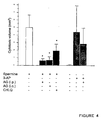
- Example 2 below provides an experiment using this in vivo assay procedure and demonstrates cytotoxic activity of 3-aminopropanal, spermine and spermidine but not putrescine. The model was verified by systemic administration of polyamine oxidase inhibitors chloroquine and aminoguanidine.
- an in vitro screening assay comprising exposing cultured glial cells or neuronal cells related cell lines to 3-aminopropanal at a concentration of from about 50 to about 1000 ⁇ M, adding various concentrations of test compound or control media to the cell cultures, incubated under cell culture conditions for a period of from about 5 minutes to about 20 hours, and determining the percentage of cell viability.
- concentration of 3-aminopropanal in the cell culture medium is approximately 80 ⁇ M.
- the method for determining cell viability is by measuring metabolically-dependent reduction of 3-(4,5-dimethylthiazol-2-yl)-2,5-diphenyltetrazolium (MTT).
- TUNEL terminal doxynucleotidyl transferase mediated dUTP nick end labeling
- Example 1 3-Aminopropanal mediates tissue damage resulting from ischemia. Polyamine oxidase activity is increased following ischemia.
- the ipsilateral common carotid artery was ligated and divided, the middle cerebral artery coagulated and divided distal to the lenticulostriate branch, and the contralateral common carotid temporarily occluded for 1 hr.
- the onset of ischemia in these experiments was defined as the time the middle cerebral artery was cut.
- the animals were euthanized at the time indicated and fresh brain sections prepared (1 mm), immersed in 2,3,5-triphenyltetrazolium chloride (TTC) in 154 mM NaCl for 30 min at 37 °C, and total cerebral infarct volume measured by computerized quantitative planimetry as described elsewhere (Zimmerman et al., Proc.
- tissue polyamine oxidase activity was measured using a method described previously (Seiler and Bolkenius, Neurochem. Res. 10:529-544, 1985; Seiler et al., Med. Biol. 59:334-346, 1981; and Milani et al., J. Neurosci. Res. 28:434-441, 1991), relying on the metabolic conversion of added spermine.
- a 4 mm thick coronal section of the ipsilateral hemisphere encompassing the zone of ischemia was manually homogenized on ice in 1.5 ml of Hanks media containing 1 mM phenylmethylsulfonyl fluoride (PMSF) and centrifuged at 43,000 X g for 30 min.
- PMSF phenylmethylsulfonyl fluoride
- Brain polyamine oxidase activity in the resultant homogenate supernatant was determined by addition of spermine at time zero (50 ⁇ l of a 1 mM stock solution added per 1 ml of homogenate supernatant).
- aminoguanidine or chloroquine in the pharmacological concentration range 50 ⁇ M - 5 mM was added 5 minutes prior to spermine.
- the spermine-containing supernatants were maintained at 37°C, and at time points up to 60 min after the addition of spermine, duplicate 200 ⁇ l samples were removed and enzyme activity was stopped by addition of 10 ⁇ l of 60% perchloric acid (PCA).
- PCA 60% perchloric acid
- 3-Aminopropanal levels are increased following ischemia.
- 3-aminopropanal was prepared by hydrolysis of the diethyl acetal and then derivatized using 2,4-dinitrophenylhydrazine. Specifically, 3-aminopropanal was prepared by hydrolysis of 145 mM 3-aminopropanal diethyl acetal (TCI America) in 1.5 M HCl for 5 hours at room temperature.
- reaction mixture was applied to a column (3 cm X 6 cm) ofDowex-50 (H+-form) ion exchange resin and eluted with a step gradient of 0-3 M HCl (160 ml; flow rate 0.7 ml/min).
- aldehyde i.e., 3-aminopropanal
- concentration of aldehyde was determined spectrophotometrically at 531 nm, based on a reaction of aldehydes with 4-amino-3-hydrazino-5-mercapto-1,2,4-triazole ('Purpald'; Aldrich) (Dickinson and Jacobsen, Chemical Communications 1719-720, 1970) with reference to a standard curve using propionaldehyde (Sigma).
- Acidic solutions of the aldehyde were neutralized with NaOH to physiological pH immediately before use. Vehicle control solutions were prepared, consisting of the same stoichiometric amounts of HCl and NaOH.
- An additional standard curve was constructed to quantify recovery of derivatized 3-aminopropanal from tissue homogenates. Briefly, a 4 mm thick brain slice obtained from the region perfused by the middle cerebral artery was homogenized manually, followed by addition of 3-aminopropanal (at 100, 150, 200, 300, 1000 nmol/ml) and 1.5 ml of 2,4-DNPH reagent. The samples were refluxed in the presence of the 2,4-DNPH reagent for 10 seconds, then 20 ⁇ l of 60% perchloric acid (PCA) was added to stop the reaction, followed by 200 ⁇ l of water.
- PCA 60% perchloric acid
- An HPLC detection system was used for detection of the derivatization products of 3-aminopropanal and 2,4-dinitrophenylhydrazine as follows.
- a Hewlett-Packard Model 1090 liquid chromatograph (Wilmington, DE, USA) equipped with an autosampler, photo diode-array and fluorescence detectors, and Chemstation operating software was used for all analyses. Detection by fluorescence was used, based on the reaction of 5-dimethylaminonapthalene sulfonyl-chloride (Dansyl chloride; Molecular Probes; relative fluorescence at 340 nm with excitation at 430 nm) with primary and secondary amines.
- Dansyl chloride 5-dimethylaminonapthalene sulfonyl-chloride
- Molecular Probes relative fluorescence at 340 nm with excitation at 430 nm
- Dansylation was performed by reacting 50 ⁇ l of the sample with 200 ⁇ l of 10 mg/ml dansyl chloride solution in acetone, 200 ⁇ l of saturated Na 2 CO 3 solution, 3 ⁇ l 60% PCA and 3 ⁇ l 1 mM 1,7-diaminoheptane (Sigma), followed by incubation at 65°C for 10 min. 20 ⁇ l of the resulting derivatized sample was injected onto a Vydac C-4 250 x 4.6 mm column with 5 mm particle size. Using a flow rate of 1.0 ml/min, runs were initiated at 100% A (dH 2 O) and a linear gradient to 100% B (methanol) was performed over 45 min., followed by 5 min. of 100% B and a return to 100% A over 5 min.
- Brain homogenates were prepared as above after 2 hours or 25 hours of ischemia from rats subjected to permanent focal cerebral ischemia, and the homogenates were derivatized with 2,4-dinitrophenylhydrazine as above.
- HPLC analysis of the dansylated derivatized homogenates revealed the appearance of two peaks, and EIMS confirmed their identities as the isomeric 3-aminopropanal-2,4-dinitrophenylhydrazine reaction products.
- the 3-aminopropanal derivatization products were not detected by this HPLC-based assay in brain homogenates prepared from sham-operated, normally perfused control animals, indicating that ischemia mediated the appearance of 3-aminopropanal.
- the HPLC assay employed may well have underestimated the amount of 3-aminopropanal produced in the ischemic brain, because 3-aminopropanal is a reactive molecule which can bind to the amino and sulfhydryl groups of proteins (Brunton et al., Toxic. In Vitro 8:337-341, 1994; and Seiler, Digestion 46:319-330, 1990), thereby decreasing its availability for derivatization and detection. Nonetheless, after correcting the measured levels for total brain protein (213 g/kg), brain 3-aminopropanal concentrations after ischemia reached a highly cytotoxic range (0.75 to 2.0 mM).
- Example 2 In vivo screening assay for agents that inhibit 3-aminopropanal-mediated tissue damage.
- Polyamines or 3-aminopropanal were administered into rat brain cortex in vivo by stereotactically-guided microinjection into a location selected to correspond to the stereotactic/anatomic co-ordinates perfused by the middle cerebral artery.
- male Lewis rats 270-300 g
- the incisor bar was adjusted until the plane defined by the lambda and bregma was parallel to the base plate.
- a microsurgical craniotomy was performed 1.7 mm anterior to bregma, and 5 mm right of the midline, and the tip of a 29-gauge needle advanced 2 mm deep to the dural opening.
- Polyamine-containing solution 25 ⁇ g/2 ⁇ l
- sterile saline NaCl, 154 mM
- aminoguanidine failed to significantly attenuate the direct cytotoxicity of intracortical 3-aminopropanal (see Figure 4), suggesting that the protective mechanism of aminoguanidine against spermine cytotoxicity is through inhibition of polyamine oxidase, and not by directly inhibiting the cytotoxicity of 3-aminopropanal.
- test compounds or compositions may be administered in any of a variety of dosage formats (e.g., intravenous, intraperitoneal, oral, intramuscular, intracranial), either before or at various time periods after experimental introduction of 3-aminopropanal into tissue, such as brain.
- dosage formats e.g., intravenous, intraperitoneal, oral, intramuscular, intracranial
- the activity of test compounds and compositions to antagonize the in vivo cytotoxic effects of the administered 3-aminopropanal may then be conveniently evaluated, for instance by vital staining to estimate the extent of induced cell death or tissue infarction.
- 3-Aminopropanal mediates both cellular necrosis and apoptosis in vivo.
- TdT Deoxynucleotidyltransferase
- TUNEL dUTP-biotin nick end-labeling
- Example 3 In vitro screening assays for agents to prevent or minimize tissue damage and cell death following ischemia.
- 3-aminopropanal induces apoptosis in glial cells, but cellular necrosis in neuronal cells.
- HTB14 cultured human glial
- HTB11 neuronal cell lines
- the glial cell line (HTB14) Panten and Macintyre, Acta Pathol. Microbiol. Scand . 74:465-486, 1968
- neuronal cell line (HTB11) Bluetooth, Proc. Natl. Acad . Sci.
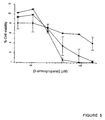
- the cytotoxic LD 50 for 3-aminopropanal was estimated as 275 ⁇ 10 ⁇ M for the glial cell line, HTB-14, and 90 ⁇ 20 ⁇ M for the neuronal cell line, HTB 11.
- Gial or neruonal cell line cultures were exposed to an LD 100 concentration of 3-aminopropanal (750 or 350 ⁇ M, respectively) for the indicated time, then medium was replaced with serum-free (no 3-AP) for a total incubation time of 20 hrs. Cell viability was then determined by MTT assay (data shown are mean ⁇ s.e.). Cell viability was 100 ⁇ 4 % for all times in vehicle-treated controls.
- TUNEL terminal deoxynucleotidyl transferase mediated dUTP nick end labeling
- HTB11 neuronal cell cultures
- DNA samples from HTB11 or HTB 14 cells (20-30x10 6 cells) were assayed for strand breakage by resuspending harvested cells (treated with 3-AP or control) in a reaction buffer containing proteinase K, and incubating overnight at 55°C.
- RNase was added to a final concentration of 50 mg/ml and the samples were incubated at 37°C for one hour.
- DNA was extracted three times with phenol/chloroform and twice with chloroform and precipitated in two volumes of chilled 100% ethanol and 0.3M sodium acetate (pH 5.2). The DNA was resuspended in 50 ⁇ l of dH 2 O, fractionated by 1.5% agarose gel electrophoresis, and stained with SYBR Green I nucleic acid stain (Molecular Probes).
- Electrophoresis of DNA prepared from 3-aminopropanal-treated neurons revealed no evidence of chromosomal DNA degradation.
- no increase in TUNEL-positivity under these conditions was observed, although a forward scatter/side scatter analysis revealed significant cell death after 3-aminopropanal treatment (55.7%), but not in vehicle-treated controls (9.1%).
- Annexin V a method used to detect loss of cell membrane phospholipid asymmetry that has be associated with apoptosis.
- Annexin V/propidium iodide (PI) staining was performed using a kit in accordance to the manufacturer's instructions (The Apoptosis Detection Kit, R&D Systems, Minneapolis). Cells were analyzed by flow cytometry within one hour of completion of staining. The AnnexinV-FITC and PI signals were quantitated independently according to a two-color flow cytometric procedure.
- Apoptosis was induced in neuronal cells by exposure to camptothecin (Furuya et al., Anticancer Res 17:2089-2093, 1997) (15 ⁇ g/ml for 20 hr) as assessed by TUNEL and Annexin V methods, indicating that the absence of apoptosis after 3-aminopropanal exposure was not due to some unanticipated generalized cellular defect in these neuron-like cells.
- camptothecin Fluorya et al., Anticancer Res 17:2089-2093, 1997) (15 ⁇ g/ml for 20 hr
- TUNEL and Annexin V methods indicating that the absence of apoptosis after 3-aminopropanal exposure was not due to some unanticipated generalized cellular defect in these neuron-like cells.
- exposure of neuronal cells to 3-aminopropanal causes primarily necrotic cell death.
- test compounds or compositions may be introduced simultaneously with, before or at various time periods after experimental introduction of 3-aminopropanal into the cell cultures, which may be glia-like (e . g ., HTB-14), neuron-like ( e . g ., HTB-11) or typical of other cells or tissues subject to ischemic damage in vivo.
- 3-aminopropanal may be glia-like (e . g ., HTB-14), neuron-like ( e . g ., HTB-11) or typical of other cells or tissues subject to ischemic damage in vivo.
- test compounds and compositions to antagonize the in vitro cytotoxic effects of the administered 3-aminopropanal may then be conveniently evaluated, for instance by staining to estimate the extent of induced cell death and further to characterize said cytotoxicity as cellular necrosis vs. apoptosis.
- Caspase-1 plays a role in the 3-aminopropanal-induced apoptosis of glial cell cultures.
- the cysteine proteases ICE (Interleukin-1 beta Converting Enzyme; caspase-1) and cysteine protease P-32 (CPP-32; caspase-3) have been implicated in the cellular signaling pathways mediating apoptosis during cerebral ischemia (Bhat et al., J. Neurosci. 16:4146-4154, 1996; Loddick et al., Neuroreport. 7:1465-1468, 1996; Hara et al., Proc. Natl. Acad. Sci.
- HTB 14 cells were treated for three hours with a tetrapeptide ICE inhibitor (Ac-YVAD-CMK), or with a CPP-32 inhibitor (Ac-DEVD-CHO), followed by a five hour treatment with 3-aminopropanal.
- a tetrapeptide ICE inhibitor Ac-YVAD-CMK
- a CPP-32 inhibitor Ac-DEVD-CHO
- Example 4 In vivo screening assay for compounds and compositions with activity in mitigating tissue damage following ischemia.
- Aminoguanidine administered by this established treatment protocol efficaciously prevented the increase of brain 3-aminopropanal levels (see Table II).
- Treated animals received either aminoguanidine (AG; 320 mg/kg i.p. 15 minutes post-ischemia, followed by 100 mg/kg i.p. every 8 hr), chloroquine (CQ; 25 mg/kg i.p. 15 minutes post-ischemia), or vehicle (saline, i.p.) given 15 minutes post-ischemia.
- Table II shows that two structurally distinct inhibitors of polyamine oxidase (AG and CQ) attenuate cerebral infarction and that AG can prevent the ischemia-associated local increase in 3-aminopropanal.
- Infarct Volume (mm 3 ) Brain 3-aminopropanal level ( ⁇ mol/g protein) Vehicle 71 ⁇ 24 13 ⁇ 8 Aminoguanidine 12 ⁇ 2 not detectable Chloroquine 27 ⁇ 8 not tested
- chloroquine a known inhibitor of polyamine oxidase
- ischemia-induced tissue damage even when such administration was delayed 15 minutes after occlusion of the middle cerebral artery (Table II).
- the protective effects of aminoguanidine were not attributable to altering peripheral cardiovascular parameters that influence the volume of brain damage (Cockroft et al., Stroke 27:1393-1398, 1996).
- chloroquine did not significantly alter systemic homeostatic responses to cerebral ischemia; physiological parameters measured before and during ischemia (blood pressure, heart rate, body temperature, arterial blood gases) did not differ between groups of subjects treated with vehicle or chloroquine.
- physiological parameters measured before and during ischemia blood pressure, heart rate, body temperature, arterial blood gases
- the cerebroprotective effects of chloroquine cannot be attributed to alterations in the peripheral cardiovascular response to cerebral ischemia, and seem instead to relate to the activity of chloroquine to inhibit PAO activity.
- Neuronal survival was assessed microscopically, by counting a sample of cell somas for uptake vs. exclusion of trypan blue.
- Aminoguanidine or the non-competitive excitatory amino acid receptor antagonist, MK-801, was added just prior to NMDA and in the final rinse at the concentrations shown. Data are mean ⁇ s.e. of nine wells from three replicate experiments. Table III shows that aminoguanidine was not protective against NMDA neurotoxicity.
- Example 5 In vivo and in vitro screening assay results: Active compounds.
- Example 3 Use of the in vitro screening assays described in Example 3 enables the identification of compounds with predicted clinical utility in ameliorating the extent of tissue damage following ischemia, particularly as therapeutic agents against the brain damage associated with stroke.
- Replicate glial cell cultures (HTB14) or neuronal cell cultures (HTB11) are cultured under conditions well-known in the art, and exposed to a concentration series of 3-aminopropanal (e.g. , a 2X dilution series from 3200 ⁇ M to 25 ⁇ M).
- Test compounds are added simultaneously with, or at various times before or after addition of 3-aminopropanal, according to the detailed procedures of Example 3, allowing the test compounds to be evaluated for beneficial, protective effects (or for toxic effects to be noted) in an in vitro assay that is predictive of like ameliorative effects on the tissue damage attendant to focal ischemia in vivo.
- Use of glia-like and neuron-like cells in this in vitro assay is particularly adapted to modeling the cytotoxicity and tissue damage of cerebral ischemia or stroke.
- test compounds were evaluated by these methods at a concentration of 1.0 mM, with results summarized in Table IV below: Effect of test compounds on 3-AP cytotoxicity No effect or weakly protective Toxic Protective Glial cell assay (HTB14) putrescine aminoguanidine penicillamine 2,3-diamino-thiazolium O-mesitylenesulfonate 3-(2-amino-2-oxoethyl)-4-methyl-thiazolium bromide thiamine HCl 2-mercaptopyridine 6-mercaptopurine riboside p213b 3-(2-amino-2-oxoethyl)-4-methyl-5-(hydroxyethyl)-thiazolium bromide 2-mercaptoimidazole p117a p213a p25 p27b 3-(2-methoxy-2-oxoethyl)-benzothiazolium bromide 2-mercapto-1-methylimidazole cysteine N-ace
- test compound e . g ., 10-1000 ⁇ M
- 3-AP e . g . 200 ⁇ M
- the toxicity of the test compounds may be evaluated in parallel cultures incubated without 3-AP; generally, the desired test compound will show cellular toxicity at much higher doses than those that confer protection against 3-AP ( e . g ., 10-10,000-fold).
- AP2 is N-(2-phenyl-2-oxoethyl)-quinolinium bromide.
- AP7 is N-(2-phenyl-2-oxoethyl)-pyrazinium bromide.
- YA1 is 2-phenyl-2-oxoethyl-dimethylphosphonate.
- YA2 is N-(2-phenyl-2-oxoethyl)-triethylammonium bromide.
- AP18 is N-(2-phenyl-2-oxoethyl)-4-tert.-butylpyridinium bromide.
- AP24 is N-(2-phenyl-2-oxoethyl)-3-n-butylpyridinium bromide.
- 34P is pyridine-3,5-dicarboxylic acid.
- AP9 is N-(2-phenyl-2-oxoethyl)-4-N,N-dimethylamino-pyridinium bromide.
- AP12 is N-(2-phenyl-2-oxoethyl)-pyrazinium bromide.
- AP19 is N-(2-phenyl-2-oxoethyl)-3-fluoropyridinium bromide.
- AP20 is N-(2-phenyl-2-oxoethyl)-4-ethylpyridinium bromide.
- AP23 is N-(2-phenyl-2-oxoethyl)-2,6-dihydroxymethylpyridinium bromide
- AP28 is N-(2-phenyl-2-oxoethyl)-3,5-diiodo-4-pyridinone.
- AP5 is N-(2-phenyl-2-oxoethyl)-3,5-dicarboxypyridinium bromide; and this compound has also been coded PICVA-13.
- AP21 is N-(2-phenyl-2-oxoethyl)-3,4-dicarboxyamide-pyridinium bromide.
- AP22 is N-(2-phenyl-2-oxoethyl)-3-bromo-5-carboxypyridinium bromide.
- TH is tiopronin (THIOLA®) chemically N-(2-mercaptopropionyl) glycine.
- in vivo screening assays described in Examples 2 and 4 enables the identification of compounds with predicted clinical utility in ameliorating the extent of tissue damage following ischemia, particularly as therapeutic agents against the brain damage associated with stroke.
- Use of these in vivo screening assays is particularly valuable to further validate the potential beneficial effects of compounds and compositions identified as pharmacologic inhibitors of 3-AP toxicity in the companion in vitro assays of Example 3.
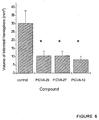
- Three phenylacyl pyridinium derivatives identified in in vitro as inhibitors of 3-AP cytotoxicity were evaluated by the in vivo assay methods described above.
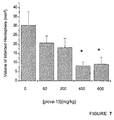
- This dose-dependent protection by PICVA-13 treatment was independent of systemic parameters known to influence the extent of brain damage in stroke (e . g ., blood pressure, heart rate, temperature, serum glucose, and arterial pH, PO 2 and PCO 2 ; which parameters sampled at 60 and 120 minutes after onset of ischemia did not differ significantly from baseline). Also, an index of brain edema did not differ between PICVA-13-treated and control treated subjects.
- TH was administered ip at 15 min after the onset of ischemia (100 mg/kg) and 3 hours after the onset of ischemia (50 mg/kg).
- Nine animals per group were tested, including a group of vehicle-treated controls.
- the resulting infarct size was 9.07 ⁇ 1.01% hemispheric volume and in the TH treatment group, infarct size was 4.11 ⁇ 0.84% hemispheric volume; a greater than 50% reduction in infarct size, P ⁇ 0.001.
Landscapes
- Health & Medical Sciences (AREA)
- Life Sciences & Earth Sciences (AREA)
- Engineering & Computer Science (AREA)
- Biomedical Technology (AREA)
- Immunology (AREA)
- Chemical & Material Sciences (AREA)
- Urology & Nephrology (AREA)
- Molecular Biology (AREA)
- Hematology (AREA)
- General Health & Medical Sciences (AREA)
- Medicinal Chemistry (AREA)
- Cell Biology (AREA)
- Toxicology (AREA)
- Bioinformatics & Cheminformatics (AREA)
- Biotechnology (AREA)
- Physics & Mathematics (AREA)
- Food Science & Technology (AREA)
- Pathology (AREA)
- General Physics & Mathematics (AREA)
- Microbiology (AREA)
- Analytical Chemistry (AREA)
- Biochemistry (AREA)
- Tropical Medicine & Parasitology (AREA)
- Animal Behavior & Ethology (AREA)
- Public Health (AREA)
- Pharmacology & Pharmacy (AREA)
- Veterinary Medicine (AREA)
- Epidemiology (AREA)
- Organic Chemistry (AREA)
- Chemical Kinetics & Catalysis (AREA)
- General Chemical & Material Sciences (AREA)
- Nuclear Medicine, Radiotherapy & Molecular Imaging (AREA)
- Neurosurgery (AREA)
- Neurology (AREA)
- Cardiology (AREA)
- Vascular Medicine (AREA)
- Heart & Thoracic Surgery (AREA)
- Acyclic And Carbocyclic Compounds In Medicinal Compositions (AREA)
- Pharmaceuticals Containing Other Organic And Inorganic Compounds (AREA)
- Medicines That Contain Protein Lipid Enzymes And Other Medicines (AREA)
Description


| Cell Viability (% alive) | ||
| Time (min) | Glial cells (HTB14) | Neurons (HTB11) |
| 5 | 96±3 | 29±6 |
| 60 | 92±1 | 13±4 |
| 120 | 78±7 | 6±2 |
| 1200 | 5±5 | 3±1 |

| Time course study of cell viability after exposure to 3-aminopropanal. | ||
| Gial or neruonal cell line cultures were exposed to an LD100 concentration of 3-aminopropanal (750 or 350 µM, respectively) for the indicated time, then medium was replaced with serum-free (no 3-AP) for a total incubation time of 20 hrs. Cell viability was then determined by MTT assay (data shown are mean ± s.e.). Cell viability was 100 ± 4 % for all times in vehicle-treated controls. | ||
| Cell Viability (% alive) | ||
| Time (min) | Glial Cells (HTB14) | Neuronal Cells (HTB11) |
| 5 | 96±3 | 29±6 |
| 60 | 92 ± 1 | 13 ± 4 |
| 120 | 78 ± 7 | 6 ± 2 |
| 1200 | 5 ± 5 | 3 ± 1 |
| Infarct Volume (mm3) | Brain 3-aminopropanal level (µmol/g protein) | |
| Vehicle | 71 ± 24 | 13 ± 8 |
| | 12 ± 2 | not |
| Chloroquine | ||
| 27 ± 8 | not tested |
| Cell viability (% dead) | |||
| [Aminoguanidine] (µM) | NMDA (500 µM) | MK-801 (20 µM) | Neurotoxicity (% dead) |
| 0 | - | - | 3 ± 1 |
| 0 | + | - | 88 ± 4 |
| 0 | + | + | 8 ± 3 |
| 1000 | + | - | 79 ± 4 |
| 1000 | - | - | 7 ± 2 |
| Effect of test compounds on 3-AP cytotoxicity | ||
| No effect or weakly protective | Toxic | Protective |
| Glial cell assay (HTB14) | ||
| putrescine aminoguanidine penicillamine 2,3-diamino-thiazolium O-mesitylenesulfonate 3-(2-amino-2-oxoethyl)-4-methyl-thiazolium bromide thiamine HCl 2-mercaptopyridine 6-mercaptopurine riboside p213b | 3-(2-amino-2-oxoethyl)-4-methyl-5-(hydroxyethyl)-thiazolium bromide 2-mercaptoimidazole p117a p213a | p25 p27b 3-(2-methoxy-2-oxoethyl)-benzothiazolium bromide 2-mercapto-1-methylimidazole cysteine N-acetylcysteine 2-mercaptoethylamine glutathione 1-(carboxymethyl)pyridin ium chloride hydrazide p27a |
| Neuronal cell assay (HTB11) | ||
| N-acetylcysteine glutathione | p25 p27a p27b cysteine | |
| wherein: p25 is 3-(2-phenyl-2-oxoethyl)-thiazolium bromide, and this compound also has been coded as PICVA-25; p27b is 3-(2-phenyl-2-oxoethyl)-4-methyl-5-(hydroxyethyl)-thiazolium bromide p27a is N-(2-phenyl-2-oxoethyl)-pyridinium bromide, and this compound has also been coded as AP1 and as PICVA-27; p213a is 2-(2-phenyl-2-oxoethyl)-2-mercaptoimidazole ether p213b is N,N'-bis-(2-phenyl-2-oxoethyl)-imidazolium bromide p117a is N-(2-phenyl-2-oxoethyl)-2-mercaptopyridinium bromide. |
| Effect of test compounds on 3-AP cytotoxicity | ||
| No effect or weakly protective | Toxic or no effect | Protective (50% Effective dose; 50% Toxic dose) |
| Glial cell assay (HTB14) | ||
| AP6 AP2 AP7 YA1 YA2 AP18 AP24 ascorbic acid 34P | AP9 AP12 AP19 AP20 AP23 AP28 3,5-di-tert.-butyl-4-hydroxytoluene | AP5 (150 µM; 7 mM) p27a (425 µM; 5 mM) AP21 (100 µM; not tested) AP22 (100 µM; 1 mM) TH (175 µM; 20 mM) |
| wherein: AP6 is N-(2-phenyl-2-oxoethyl)-2-(2'-pyridine)-pyridinium bromide. AP2 is N-(2-phenyl-2-oxoethyl)-quinolinium bromide. AP7 is N-(2-phenyl-2-oxoethyl)-pyrazinium bromide. YA1 is 2-phenyl-2-oxoethyl-dimethylphosphonate. YA2 is N-(2-phenyl-2-oxoethyl)-triethylammonium bromide. AP18 is N-(2-phenyl-2-oxoethyl)-4-tert.-butylpyridinium bromide. AP24 is N-(2-phenyl-2-oxoethyl)-3-n-butylpyridinium bromide. 34P is pyridine-3,5-dicarboxylic acid. AP9 is N-(2-phenyl-2-oxoethyl)-4-N,N-dimethylamino-pyridinium bromide. AP12 is N-(2-phenyl-2-oxoethyl)-pyrazinium bromide. AP19 is N-(2-phenyl-2-oxoethyl)-3-fluoropyridinium bromide. AP20 is N-(2-phenyl-2-oxoethyl)-4-ethylpyridinium bromide. AP23 is N-(2-phenyl-2-oxoethyl)-2,6-dihydroxymethylpyridinium bromide AP28 is N-(2-phenyl-2-oxoethyl)-3,5-diiodo-4-pyridinone. AP5 is N-(2-phenyl-2-oxoethyl)-3,5-dicarboxypyridinium bromide; and this compound has also been coded PICVA-13. AP21 is N-(2-phenyl-2-oxoethyl)-3,4-dicarboxyamide-pyridinium bromide. AP22 is N-(2-phenyl-2-oxoethyl)-3-bromo-5-carboxypyridinium bromide. TH is tiopronin (THIOLA®) chemically N-(2-mercaptopropionyl) glycine. |
Claims (24)
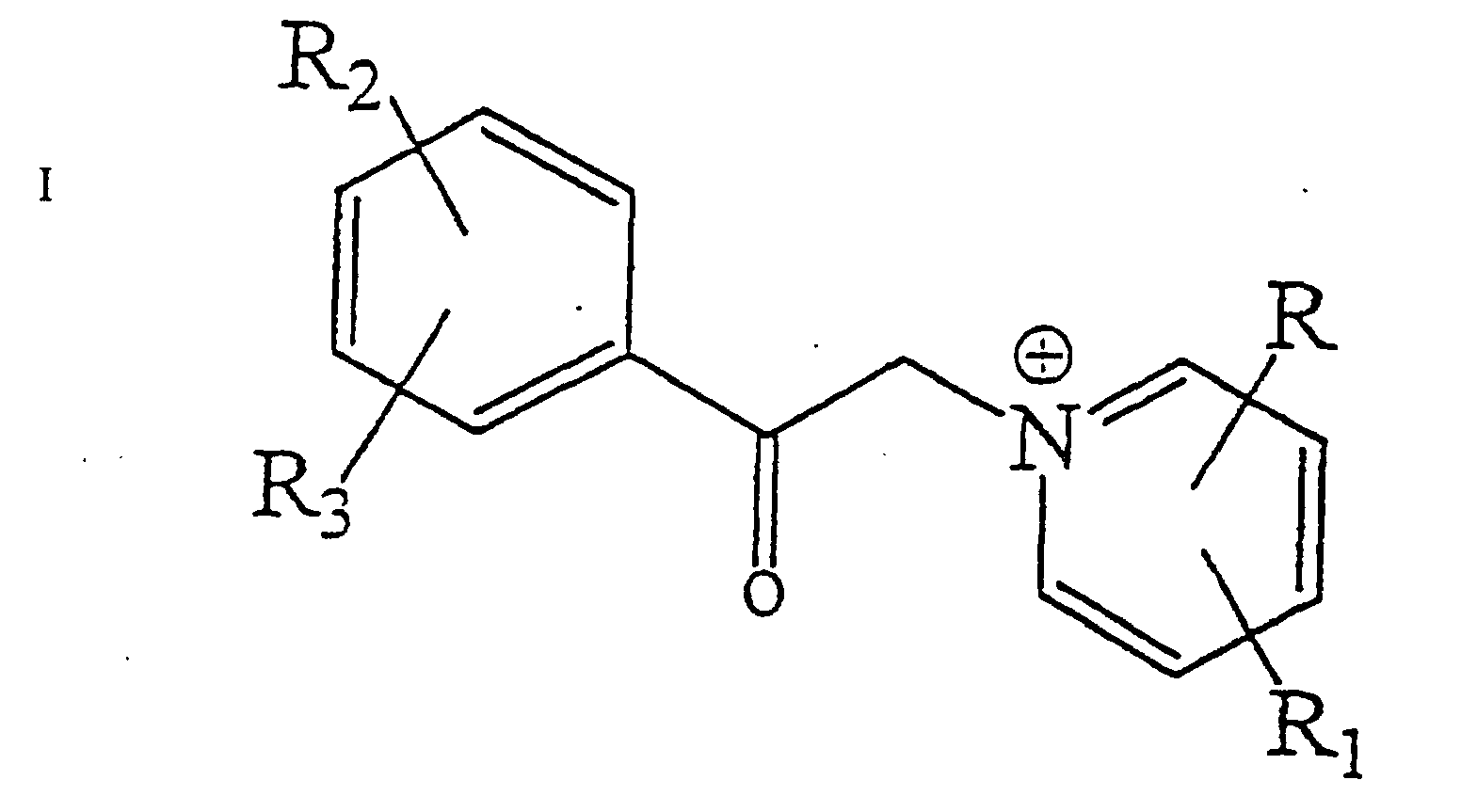
- An ischemia-damage mitigating compound having a formula I:wherein R and R1 are independently hydrogen, sulfamide, carboxyamide, cyano, straight or branched C1-6 alkyl, straight or branched C2-6 alkenyl, straight or branched C1-6 alkoxy, a straight chain C1-6 alkyl or a straight chain C2-6 alkenyl having an ether link or an ester link, toluenyl, COOH, nitrate, or halide (Br, Cl, I, F), wherein both R and R1 cannot be hydrogen, wherein R2 and R3 are independently hydrogen, hydroxyl, sulfamide, carboxyamide, cyano, straight or branched C1-6 alkyl, straight or branched C2-6 alkenyl, straight or branched C1-6 alkoxy, a straight or branched chain C1-6 alkyl or a straight or branched chain C2-6 alkenyl having an ether link or an ester link, toluenyl, COOH, nitrate, or halide (Br, Cl, I, F).
- The ischemia-damage mitigating compound of claim 1 wherein R and R1 are meta to each other and to the heteroatom.
- The ischemia-damage mitigating compound of claim 1 wherein R is COOH.
- The ischemia-damage mitigating compound of claim 1 wherein R1 is COOH.
- The ischemia-damage mitigating compound of claim 1 wherein R2 and R3 are both hydrogen.
- The ischemia-damage mitigating compound of claim 1 wherein R and R1 are each COOH, and R2 and R3 are both hydrogen.
- The ischemia-damage mitigating compound of claim 2, wherein R and R1 are each COOH, and R2 and R3 are both hydrogen.
- The ischemia-damage mitigating compound of claim 1 wherein the compound is selected from the group consisting of 1-phenacyl-2,3-dicarboxypyridinium bromide; 1-phenacyl-2,4-dicarboxypyridinium bromide; 1-phenacyl-3,5-dicarboxypyridinium bromide; 1-phenacyl-2,6-dicarboxypyridinium bromide; 1-phenacyl-2,3-dicarboxyimidepyridinium bromide; 1-phenacyl-2,4-dicarboxyimidepyridinium bromide; I-phenacyl-3,5-dicarboxyimidepyridinium bromide; and 1-phenacyl-2,6-dicarboxyimidepyridinium bromide.
- A pharmaceutical composition comprising a compound from formula I in a pharmaceutically acceptable carrier, wherein formula I comprises:wherein R and R1 are independently hydrogen, sulfamide, carboxyamide, cyano, straight or branched C1-6 alkyl, straight or branched C2-6 alkenyl, straight or branched C1-6 alkoxy, a straight chain C1-6 alkyl or a straight chain C2-6 alkenyl having an ether link or an ester link, toluenyl, COOH, nitrate, or halide (Br, Cl, I, F), wherein both R and R1 cannot be hydrogen, wherein R2 and R3 are independently hydrogen, hydroxyl, sulfamide, carboxyamide, cyano, straight or branched C1-6 alkyl, straight or branched C2-6 alkenyl, straight or branched C1-6 alkoxy, a straight or branched chain C1-6 alkyl or a straight or branched chain C2-6 alkenyl having an ether link or an ester link, toluenyl, COOH, nitrate, or halide (Br, Cl, I, F).

- The pharmaceutical composition of claim 9 wherein R and R1 are meta to each other and to the heteroatom.
- The pharmaceutical composition of claim 9 wherein R is COOH.
- The pharmaceutical composition of claim 9 wherein R1 is COOH.
- The pharmaceutical composition of claim 9 wherein R2 and R3 are both hydrogen.
- The pharmaceutical composition of claim 9 wherein R and R1 are each COOH, and R2 and R3 are both hydrogen.
- The pharmaceutical composition of claim 10 wherein R and R1 are each COOH, and R2 and R3 are both hydrogen.
- The pharmaceutical composition of claim 9 wherein the compound is selected from the group consisting of 1-phenacyl-2,3-dicarboxypyridinium bromide; 1-phenacyl-2,4-dicarboxypyridinium bromide; 1-phenacyl-3,5-dicarboxypyridinium bromide; 1-phenacyl-2,6-dicarboxypyridinium bromide; 1-phenacyl-2,3-dicarboxyimidepyridinium bromide; 1-phenacyl-2,4-dicarboxyimidepyridinium bromide; 1-phenacyl-3,5-dicarboxyimidepyridinium bromide; and 1-phenacyl-2,6-dicarboxyimidepyridinium bromide.
- Use of a compound of formula I for the manufacture of a medicament for inhibiting tissue damage caused by ischemia, wherein formula I comprises:wherein R and R1 are independently hydrogen, sulfamide, carboxyamide, cyano, straight or branched C1-6 alkyl, straight or branched C2-6 alkenyl, straight or branched C1-6 alkoxy, a straight chain C1-6 alkyl or a straight chain C2-6 alkenyl having an ether link or an ester link, toluenyl, COOH, nitrate, or halide (Br, Cl, I, F), wherein both R and R1 cannot be hydrogen, wherein R2 and R3 are independently hydrogen, hydroxyl, sulfamide, carboxyamide, cyano, straight or branched C1-6 alkyl, straight or branched C2-6 alkenyl, straight or branched C1-6 alkoxy, a straight or branched chain C1-6 alkyl or a straight or branched chain C2-6 alkenyl having an ether link or an ester link, toluenyl, COOH, nitrate, or halide (Br, Cl, I, F).

- The use of claim 17 wherein R and R1 are meta to each other and to the heteroatom.
- The use of claim 17 wherein R is COOH.
- The use of claim 17 wherein R1 is COOH.
- The use of claim 17 wherein R2 and R3 are both hydrogen.
- The use of claim 17 wherein R and R1 are each COOH, and R2 and R3 are both hydrogen.
- The use of claim 18 wherein R and R1 are each COOH, and R2 and R3 are both hydrogen.
- The use of claim 17 wherein the compound is selected from the group consisting of 1-phenacyl-2,3-dicarboxypyridinium bromide; 1-phenacyl-2,4-dicarboxypyridinium bromide; 1-phenacyl-3,5-dicarboxypyridinium bromide; 1-phenacyl-2,6-dicarboxypyridinium bromide; 1-phenacyl-2,3-dicarboxyimidepyridinium bromide; 1-phenacyl-3,5-dicarboxyimidepyridinium bromide; 1-phenacyl-2,5-dicarboxyimidepyridinium bromide; and 1-phenacyl-2,6-dicarboxyimidepyridinium bromide.
Applications Claiming Priority (3)
| Application Number | Priority Date | Filing Date | Title |
|---|---|---|---|
| US118388 | 1993-09-03 | ||
| US09/118,388 US6391899B1 (en) | 1998-07-17 | 1998-07-17 | Compounds and compositions for treating tissue ischemia |
| PCT/US1999/016066 WO2000003711A1 (en) | 1998-07-17 | 1999-07-16 | Compounds and compositions for treating tissue ischemia |
Publications (3)
| Publication Number | Publication Date |
|---|---|
| EP1098647A1 EP1098647A1 (en) | 2001-05-16 |
| EP1098647A4 EP1098647A4 (en) | 2003-06-18 |
| EP1098647B1 true EP1098647B1 (en) | 2005-03-23 |
Family
ID=22378271
Family Applications (1)
| Application Number | Title | Priority Date | Filing Date |
|---|---|---|---|
| EP99934082A Expired - Lifetime EP1098647B1 (en) | 1998-07-17 | 1999-07-16 | Compounds and compositions for treating tissue ischemia |
Country Status (8)
| Country | Link |
|---|---|
| US (2) | US6391899B1 (en) |
| EP (1) | EP1098647B1 (en) |
| JP (1) | JP2002520360A (en) |
| AT (1) | ATE291426T1 (en) |
| AU (1) | AU766167B2 (en) |
| CA (1) | CA2337997A1 (en) |
| DE (1) | DE69924379D1 (en) |
| WO (1) | WO2000003711A1 (en) |
Families Citing this family (9)
| Publication number | Priority date | Publication date | Assignee | Title |
|---|---|---|---|---|
| FI119756B (en) * | 1995-01-18 | 2009-03-13 | Alteon Inc | Use of Thiazolium Compounds to Prevent and Reverse Formation of Long-End Glycosylation |
| JP2004504389A (en) * | 2000-07-13 | 2004-02-12 | アルテオン インコーポレーテッド | Cyanomethyl-substituted thiazolium and imidazolium, and treatment of diseases associated with protein aging |
| US6777557B2 (en) * | 2001-02-07 | 2004-08-17 | Peter C Ulrich | Method and composition for rejuvenating cells, tissues organs, hair and nails |
| JP4426929B2 (en) | 2004-03-25 | 2010-03-03 | 株式会社アミンファーマ研究所 | Screening method for stroke and asymptomatic cerebral infarction |
| US20060199864A1 (en) * | 2004-08-23 | 2006-09-07 | Traynelis Stephen F | Selection of pH-dependent compounds for in vivo therapy |
| WO2010087874A1 (en) * | 2009-01-28 | 2010-08-05 | Anazyme, Llc | Compositions and methods for diagnosis of shock |
| US8338127B2 (en) * | 2008-01-31 | 2012-12-25 | Anazyme | Testing a mammal for presence, progression or stage of a shock condition |
| DE102013110608A1 (en) * | 2013-09-26 | 2015-03-26 | Florian Lang | Substance for inhibiting tissue calcification, tissue fibrosis and age-associated diseases |
| CN114644626A (en) * | 2020-12-18 | 2022-06-21 | 南京施江医药科技有限公司 | Benzene ring compound and application thereof |
Citations (5)
| Publication number | Priority date | Publication date | Assignee | Title |
|---|---|---|---|---|
| US5648351A (en) * | 1992-12-29 | 1997-07-15 | Fujisawa Pharmaceutical Co., Ltd. | Use of macrolides for the treatment of cerebral ischemia |
| US5665739A (en) * | 1992-12-15 | 1997-09-09 | Hoechst Aktiengesellschaft | Substituted benzoylguanidines, process and their preparation, their use as pharmaceutical or diagnostic, and pharmaceutical containing them |
| US5670545A (en) * | 1996-02-09 | 1997-09-23 | Board Of Regents Of The University Of Colorado | Method for the treatment of ischemic disease and reperfusion injury and the prevention of the adverse effects of reactive oxygen species |
| US5688789A (en) * | 1989-04-14 | 1997-11-18 | State Of Oregon, Acting By And Through The Oregon State Board Of Higher Education, Acting For And On Behalf Of The Oregon Health Sciences University And The University Of Oregon | PCP receptor ligands and the use thereof |
| WO1997046539A1 (en) * | 1996-06-05 | 1997-12-11 | Warner-Lambert Company | Amide derivatives of substituted quinoxaline 2,3-diones as glutamate receptor antagonists |
Family Cites Families (5)
| Publication number | Priority date | Publication date | Assignee | Title |
|---|---|---|---|---|
| JPS55138742A (en) * | 1979-04-17 | 1980-10-29 | Fuji Photo Film Co Ltd | Silver halide emulsion developing method |
| EP0057797B1 (en) * | 1981-02-03 | 1986-06-25 | Imperial Chemical Industries Plc | Process for the extraction of metal values and novel metal extractants |
| US5801200A (en) * | 1984-03-19 | 1998-09-01 | The Picower Institute For Medical Research | Methods and materials for the diagnosis and treatment of conditions such as stroke |
| US5192772A (en) * | 1987-12-09 | 1993-03-09 | Nippon Shinyaku Co. Ltd. | Therapeutic agents |
| FR2665444B1 (en) * | 1990-08-06 | 1992-11-27 | Sanofi Sa | AMINO-BENZOFURAN, BENZOTHIOPHENE OR INDOLE DERIVATIVES, THEIR PREPARATION PROCESS AND THE COMPOSITIONS CONTAINING THEM. |
-
1998
- 1998-07-17 US US09/118,388 patent/US6391899B1/en not_active Expired - Fee Related
-
1999
- 1999-07-16 JP JP2000559846A patent/JP2002520360A/en active Pending
- 1999-07-16 WO PCT/US1999/016066 patent/WO2000003711A1/en not_active Ceased
- 1999-07-16 CA CA002337997A patent/CA2337997A1/en not_active Abandoned
- 1999-07-16 EP EP99934082A patent/EP1098647B1/en not_active Expired - Lifetime
- 1999-07-16 DE DE69924379T patent/DE69924379D1/en not_active Expired - Lifetime
- 1999-07-16 AT AT99934082T patent/ATE291426T1/en not_active IP Right Cessation
- 1999-07-16 AU AU49995/99A patent/AU766167B2/en not_active Ceased
-
2002
- 2002-05-07 US US10/140,856 patent/US20020193412A1/en not_active Abandoned
Patent Citations (5)
| Publication number | Priority date | Publication date | Assignee | Title |
|---|---|---|---|---|
| US5688789A (en) * | 1989-04-14 | 1997-11-18 | State Of Oregon, Acting By And Through The Oregon State Board Of Higher Education, Acting For And On Behalf Of The Oregon Health Sciences University And The University Of Oregon | PCP receptor ligands and the use thereof |
| US5665739A (en) * | 1992-12-15 | 1997-09-09 | Hoechst Aktiengesellschaft | Substituted benzoylguanidines, process and their preparation, their use as pharmaceutical or diagnostic, and pharmaceutical containing them |
| US5648351A (en) * | 1992-12-29 | 1997-07-15 | Fujisawa Pharmaceutical Co., Ltd. | Use of macrolides for the treatment of cerebral ischemia |
| US5670545A (en) * | 1996-02-09 | 1997-09-23 | Board Of Regents Of The University Of Colorado | Method for the treatment of ischemic disease and reperfusion injury and the prevention of the adverse effects of reactive oxygen species |
| WO1997046539A1 (en) * | 1996-06-05 | 1997-12-11 | Warner-Lambert Company | Amide derivatives of substituted quinoxaline 2,3-diones as glutamate receptor antagonists |
Also Published As
| Publication number | Publication date |
|---|---|
| ATE291426T1 (en) | 2005-04-15 |
| AU4999599A (en) | 2000-02-07 |
| EP1098647A1 (en) | 2001-05-16 |
| WO2000003711A1 (en) | 2000-01-27 |
| JP2002520360A (en) | 2002-07-09 |
| AU766167B2 (en) | 2003-10-09 |
| CA2337997A1 (en) | 2000-01-27 |
| EP1098647A4 (en) | 2003-06-18 |
| US20020193412A1 (en) | 2002-12-19 |
| DE69924379D1 (en) | 2005-04-28 |
| US6391899B1 (en) | 2002-05-21 |
Similar Documents
| Publication | Publication Date | Title |
|---|---|---|
| US7211602B2 (en) | Treatment of neurodegenerative disorders through the modulation of the polyamine pathway | |
| Zhang et al. | Neuroprotective effect of dextromethorphan in the MPTP Parkinson's disease model: role of NADPH oxidase | |
| US11660278B2 (en) | Use of N-acetylcysteine to treat central nervous system disorders | |
| Yamada et al. | Brain dysfunction associated with an induction of nitric oxide synthase following an intracerebral injection of lipopolysaccharide in rats | |
| EP1021175B1 (en) | Compounds and methods for therapeutic intervention in preventing diabetic complications | |
| JP4965764B2 (en) | Treatment of hyperproliferative disorders | |
| US6391899B1 (en) | Compounds and compositions for treating tissue ischemia | |
| JP2003513920A (en) | Treatment of cancer by increasing intracellular malonyl CoA levels | |
| US20120157501A1 (en) | Isoketal scavengers and mitigation of disorders involving oxidative injury | |
| Mackenzie et al. | Nitric oxide synthase inhibition and MPTP‐induced toxicity in the common marmoset | |
| US7071298B2 (en) | Compounds and methods for treating glycogen storage disease and other pathological conditions resulting from formation of age-proteins | |
| US8883847B2 (en) | Compositions and methods of treatment using modulators of motoneuron diseases | |
| Dastan et al. | Agmatine as retinal protection from ischemia-reperfusion injury in guinea pigs | |
| AU743112B2 (en) | Method for assessing a diabetic's risk of experiencing a diabetes-associated pathologic condition | |
| WO1999043345A1 (en) | Amino acid degrading enzymes modulate cell death | |
| WO2000024405A9 (en) | Compounds and their therapeutic use with diabetic complications | |
| Ivanova | Identification of 3-aminopropanal as a cytotoxic mediator of cerebral ischemia | |
| EP1448183A2 (en) | Treatment of neurodegenerative disorders through the modulation of the polyamine pathway | |
| Schipper et al. | Polyamine metabolism and apoptosis in prostatic carcinoma cells |
Legal Events
| Date | Code | Title | Description |
|---|---|---|---|
| PUAI | Public reference made under article 153(3) epc to a published international application that has entered the european phase |
Free format text: ORIGINAL CODE: 0009012 |
|
| 17P | Request for examination filed |
Effective date: 20010219 |
|
| AK | Designated contracting states |
Kind code of ref document: A1 Designated state(s): AT BE CH CY DE DK ES FI FR GB GR IE IT LI LU MC NL PT SE |
|
| RAP1 | Party data changed (applicant data changed or rights of an application transferred) |
Owner name: NORTH SHORE - LONG ISLAND JEWISH RESEARCH INSTITUT |
|
| A4 | Supplementary search report drawn up and despatched |
Effective date: 20030429 |
|
| 17Q | First examination report despatched |
Effective date: 20031105 |
|
| GRAP | Despatch of communication of intention to grant a patent |
Free format text: ORIGINAL CODE: EPIDOSNIGR1 |
|
| RIC1 | Information provided on ipc code assigned before grant |
Ipc: 7A 61P 9/10 B Ipc: 7C 07D 213/20 B Ipc: 7A 61K 31/4425 A |
|
| GRAS | Grant fee paid |
Free format text: ORIGINAL CODE: EPIDOSNIGR3 |
|
| GRAA | (expected) grant |
Free format text: ORIGINAL CODE: 0009210 |
|
| AK | Designated contracting states |
Kind code of ref document: B1 Designated state(s): AT BE CH CY DE DK ES FI FR GB GR IE IT LI LU MC NL PT SE |
|
| PG25 | Lapsed in a contracting state [announced via postgrant information from national office to epo] |
Ref country code: NL Free format text: LAPSE BECAUSE OF FAILURE TO SUBMIT A TRANSLATION OF THE DESCRIPTION OR TO PAY THE FEE WITHIN THE PRESCRIBED TIME-LIMIT Effective date: 20050323 Ref country code: LI Free format text: LAPSE BECAUSE OF FAILURE TO SUBMIT A TRANSLATION OF THE DESCRIPTION OR TO PAY THE FEE WITHIN THE PRESCRIBED TIME-LIMIT Effective date: 20050323 Ref country code: IT Free format text: LAPSE BECAUSE OF FAILURE TO SUBMIT A TRANSLATION OF THE DESCRIPTION OR TO PAY THE FEE WITHIN THE PRESCRIBED TIME-LIMIT;WARNING: LAPSES OF ITALIAN PATENTS WITH EFFECTIVE DATE BEFORE 2007 MAY HAVE OCCURRED AT ANY TIME BEFORE 2007. THE CORRECT EFFECTIVE DATE MAY BE DIFFERENT FROM THE ONE RECORDED. Effective date: 20050323 Ref country code: FI Free format text: LAPSE BECAUSE OF FAILURE TO SUBMIT A TRANSLATION OF THE DESCRIPTION OR TO PAY THE FEE WITHIN THE PRESCRIBED TIME-LIMIT Effective date: 20050323 Ref country code: CH Free format text: LAPSE BECAUSE OF FAILURE TO SUBMIT A TRANSLATION OF THE DESCRIPTION OR TO PAY THE FEE WITHIN THE PRESCRIBED TIME-LIMIT Effective date: 20050323 Ref country code: BE Free format text: LAPSE BECAUSE OF FAILURE TO SUBMIT A TRANSLATION OF THE DESCRIPTION OR TO PAY THE FEE WITHIN THE PRESCRIBED TIME-LIMIT Effective date: 20050323 Ref country code: AT Free format text: LAPSE BECAUSE OF FAILURE TO SUBMIT A TRANSLATION OF THE DESCRIPTION OR TO PAY THE FEE WITHIN THE PRESCRIBED TIME-LIMIT Effective date: 20050323 |
|
| REG | Reference to a national code |
Ref country code: GB Ref legal event code: FG4D |
|
| REG | Reference to a national code |
Ref country code: CH Ref legal event code: EP |
|
| REG | Reference to a national code |
Ref country code: IE Ref legal event code: FG4D |
|
| REF | Corresponds to: |
Ref document number: 69924379 Country of ref document: DE Date of ref document: 20050428 Kind code of ref document: P |
|
| PG25 | Lapsed in a contracting state [announced via postgrant information from national office to epo] |
Ref country code: GR Free format text: LAPSE BECAUSE OF FAILURE TO SUBMIT A TRANSLATION OF THE DESCRIPTION OR TO PAY THE FEE WITHIN THE PRESCRIBED TIME-LIMIT Effective date: 20050623 Ref country code: DK Free format text: LAPSE BECAUSE OF FAILURE TO SUBMIT A TRANSLATION OF THE DESCRIPTION OR TO PAY THE FEE WITHIN THE PRESCRIBED TIME-LIMIT Effective date: 20050623 |
|
| PG25 | Lapsed in a contracting state [announced via postgrant information from national office to epo] |
Ref country code: DE Free format text: LAPSE BECAUSE OF FAILURE TO SUBMIT A TRANSLATION OF THE DESCRIPTION OR TO PAY THE FEE WITHIN THE PRESCRIBED TIME-LIMIT Effective date: 20050624 |
|
| PG25 | Lapsed in a contracting state [announced via postgrant information from national office to epo] |
Ref country code: ES Free format text: LAPSE BECAUSE OF FAILURE TO SUBMIT A TRANSLATION OF THE DESCRIPTION OR TO PAY THE FEE WITHIN THE PRESCRIBED TIME-LIMIT Effective date: 20050704 |
|
| PG25 | Lapsed in a contracting state [announced via postgrant information from national office to epo] |
Ref country code: LU Free format text: LAPSE BECAUSE OF NON-PAYMENT OF DUE FEES Effective date: 20050716 Ref country code: GB Free format text: LAPSE BECAUSE OF NON-PAYMENT OF DUE FEES Effective date: 20050716 Ref country code: CY Free format text: LAPSE BECAUSE OF FAILURE TO SUBMIT A TRANSLATION OF THE DESCRIPTION OR TO PAY THE FEE WITHIN THE PRESCRIBED TIME-LIMIT Effective date: 20050716 |
|
| PG25 | Lapsed in a contracting state [announced via postgrant information from national office to epo] |
Ref country code: IE Free format text: LAPSE BECAUSE OF NON-PAYMENT OF DUE FEES Effective date: 20050718 |
|
| PG25 | Lapsed in a contracting state [announced via postgrant information from national office to epo] |
Ref country code: MC Free format text: LAPSE BECAUSE OF NON-PAYMENT OF DUE FEES Effective date: 20050731 |
|
| NLV1 | Nl: lapsed or annulled due to failure to fulfill the requirements of art. 29p and 29m of the patents act | ||
| PG25 | Lapsed in a contracting state [announced via postgrant information from national office to epo] |
Ref country code: PT Free format text: LAPSE BECAUSE OF FAILURE TO SUBMIT A TRANSLATION OF THE DESCRIPTION OR TO PAY THE FEE WITHIN THE PRESCRIBED TIME-LIMIT Effective date: 20050907 |
|
| REG | Reference to a national code |
Ref country code: CH Ref legal event code: PL |
|
| PLBE | No opposition filed within time limit |
Free format text: ORIGINAL CODE: 0009261 |
|
| 26N | No opposition filed |
Effective date: 20051227 |
|
| GBPC | Gb: european patent ceased through non-payment of renewal fee |
Effective date: 20050716 |
|
| REG | Reference to a national code |
Ref country code: IE Ref legal event code: MM4A |
|
| EN | Fr: translation not filed | ||
| PG25 | Lapsed in a contracting state [announced via postgrant information from national office to epo] |
Ref country code: SE Free format text: LAPSE BECAUSE OF FAILURE TO SUBMIT A TRANSLATION OF THE DESCRIPTION OR TO PAY THE FEE WITHIN THE PRESCRIBED TIME-LIMIT Effective date: 20050623 |
|
| PG25 | Lapsed in a contracting state [announced via postgrant information from national office to epo] |
Ref country code: FR Free format text: LAPSE BECAUSE OF NON-PAYMENT OF DUE FEES Effective date: 20050731 |
|
| PG25 | Lapsed in a contracting state [announced via postgrant information from national office to epo] |
Ref country code: FR Free format text: LAPSE BECAUSE OF NON-PAYMENT OF DUE FEES Effective date: 20050323 |