EP1096751A2 - Method and apparatus for reaching agreement between nodes in a distributed system - Google Patents
Method and apparatus for reaching agreement between nodes in a distributed system Download PDFInfo
- Publication number
- EP1096751A2 EP1096751A2 EP00203642A EP00203642A EP1096751A2 EP 1096751 A2 EP1096751 A2 EP 1096751A2 EP 00203642 A EP00203642 A EP 00203642A EP 00203642 A EP00203642 A EP 00203642A EP 1096751 A2 EP1096751 A2 EP 1096751A2
- Authority
- EP
- European Patent Office
- Prior art keywords
- node
- primary server
- nodes
- host
- distributed computing
- Prior art date
- Legal status (The legal status is an assumption and is not a legal conclusion. Google has not performed a legal analysis and makes no representation as to the accuracy of the status listed.)
- Granted
Links
Images



Classifications
-
- G—PHYSICS
- G06—COMPUTING OR CALCULATING; COUNTING
- G06F—ELECTRIC DIGITAL DATA PROCESSING
- G06F9/00—Arrangements for program control, e.g. control units
- G06F9/06—Arrangements for program control, e.g. control units using stored programs, i.e. using an internal store of processing equipment to receive or retain programs
- G06F9/46—Multiprogramming arrangements
- G06F9/50—Allocation of resources, e.g. of the central processing unit [CPU]
- G06F9/5061—Partitioning or combining of resources
-
- H—ELECTRICITY
- H04—ELECTRIC COMMUNICATION TECHNIQUE
- H04L—TRANSMISSION OF DIGITAL INFORMATION, e.g. TELEGRAPHIC COMMUNICATION
- H04L41/00—Arrangements for maintenance, administration or management of data switching networks, e.g. of packet switching networks
- H04L41/08—Configuration management of networks or network elements
- H04L41/085—Retrieval of network configuration; Tracking network configuration history
- H04L41/0853—Retrieval of network configuration; Tracking network configuration history by actively collecting configuration information or by backing up configuration information
- H04L41/0856—Retrieval of network configuration; Tracking network configuration history by actively collecting configuration information or by backing up configuration information by backing up or archiving configuration information
-
- H—ELECTRICITY
- H04—ELECTRIC COMMUNICATION TECHNIQUE
- H04L—TRANSMISSION OF DIGITAL INFORMATION, e.g. TELEGRAPHIC COMMUNICATION
- H04L41/00—Arrangements for maintenance, administration or management of data switching networks, e.g. of packet switching networks
- H04L41/50—Network service management, e.g. ensuring proper service fulfilment according to agreements
- H04L41/5041—Network service management, e.g. ensuring proper service fulfilment according to agreements characterised by the time relationship between creation and deployment of a service
- H04L41/5054—Automatic deployment of services triggered by the service manager, e.g. service implementation by automatic configuration of network components
-
- H—ELECTRICITY
- H04—ELECTRIC COMMUNICATION TECHNIQUE
- H04L—TRANSMISSION OF DIGITAL INFORMATION, e.g. TELEGRAPHIC COMMUNICATION
- H04L67/00—Network arrangements or protocols for supporting network services or applications
- H04L67/01—Protocols
- H04L67/10—Protocols in which an application is distributed across nodes in the network
- H04L67/1001—Protocols in which an application is distributed across nodes in the network for accessing one among a plurality of replicated servers
-
- H—ELECTRICITY
- H04—ELECTRIC COMMUNICATION TECHNIQUE
- H04L—TRANSMISSION OF DIGITAL INFORMATION, e.g. TELEGRAPHIC COMMUNICATION
- H04L67/00—Network arrangements or protocols for supporting network services or applications
- H04L67/01—Protocols
- H04L67/10—Protocols in which an application is distributed across nodes in the network
- H04L67/1001—Protocols in which an application is distributed across nodes in the network for accessing one among a plurality of replicated servers
- H04L67/1034—Reaction to server failures by a load balancer
-
- H—ELECTRICITY
- H04—ELECTRIC COMMUNICATION TECHNIQUE
- H04L—TRANSMISSION OF DIGITAL INFORMATION, e.g. TELEGRAPHIC COMMUNICATION
- H04L69/00—Network arrangements, protocols or services independent of the application payload and not provided for in the other groups of this subclass
- H04L69/40—Network arrangements, protocols or services independent of the application payload and not provided for in the other groups of this subclass for recovering from a failure of a protocol instance or entity, e.g. service redundancy protocols, protocol state redundancy or protocol service redirection
Definitions
- the present invention relates to coordinating activities between nodes in a distributed computing system. More specifically, the present invention relates to a method and an apparatus for reaching agreement between nodes in the distributed computing system regarding a node to function as a primary provider for a service.
- ⁇ As computer networks are increasingly used to link computer systems together, distributed computing systems have been developed to control interactions between computer systems. Some distributed computing systems allow client computer systems to access resources on server computer systems. For example, a client computer system may be able to access information contained in a database on a server computer system.
- the highly available system For a highly available system to function properly, the highly available system must be able to detect a server failure and reconfigure itself so that accesses to a failed server are redirected to a backup secondary server.
- this selection mechanism must operate in a distributed fashion because, for the reasons stated above, no centralized mechanism is certain to continue functioning. Furthermore, it is necessary for the node selection process to operate so that the nodes that remain functioning in the distributed computing system agree on the same node to host the centralized arbiter. For efficiency reasons, it is also desirable for the node selection mechanism not to move the centralized arbiter unless it is necessary to do so.
- One embodiment of the present invention provides a system for selecting a node to host a primary server for a service from a plurality of nodes in a distributed computing system.
- the system operates by receiving an indication that a state of the distributed computing system has changed. In response to this indication, the system determines if there is already a node hosting the primary server for the service. If not, the system selects a node to host the primary server using the assumption that a given node from the plurality of nodes in the distributed computing system hosts the primary server.
- the system then communicates rank information between the given node and other nodes in the distributed computing system, wherein each node in the distributed computing system has a unique rank with respect to the other nodes in the distributed computing system.
- the system next compares the rank of the given node with the rank of the other nodes in the distributed computing system. If one of the other nodes has a higher rank than the given node, the system disqualifies the given node from hosting the primary server.
- the system allows the node that hosts the primary server to communicate with other nodes in the distributed computing system in order to disqualify the other nodes from hosting the primary server.
- the system maintains a candidate variable in the given node identifying a candidate node to host the primary server. In a variation on this embodiment, the system initially sets the candidate variable to identify the given node.
- the system maps connections for the service to the new node. In a variation on this embodiment, the system also configures the new node to host the primary server for the service.
- the system restarts the service if the service was interrupted as a result of the change in state of the distributed computing system.
- the given node in the distributed computing system can act as one of: a host for the primary server for the service; a host for a secondary server for the service, wherein the secondary server periodically receives checkpointing information from the primary server; or a spare for the primary server, wherein the spare does not receive checkpointing information from the primary server.
- the system upon initial startup of the service, selects a highest ranking spare to host the primary server for the service.
- the system allows the primary server to configure spares in the distributed computing system to host secondary servers for the service.
- comparing the rank of the given node with the rank of the other nodes in the distributed computing system involves considering a host for a secondary server to have a higher rank than a spare.
- the system after disqualifying the given node from hosting the primary server, the system ceases to communicate rank information between the given node and the other nodes in the distributed computing system.
- a computer readable storage medium which may be any device or medium that can store code and/or data for use by a computer system.
- the transmission medium may include a communications network, such as the Internet.
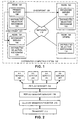
- FIG. 1 illustrates a distributed computing system 100 in accordance with an embodiment of the present invention.
- Distributed computing system 100 includes a number of computing nodes 102-105, which are coupled together through a network 110.
- Network 110 can include any type of wire or wireless communication channel capable of coupling together computing nodes. This includes, but is not limited to, a local area network, a wide area network, or a combination of networks. In one embodiment of the present invention, network 110 includes the Internet. In another embodiment of the present invention, network 110 is a local high speed network that enables distributed computing system 100 to function as a clustered computing system (hereinafter referred to as a "cluster").
- cluster clustered computing system
- Nodes 102-105 can generally include any type of computer system, including, but not limited to, a computer system based on a microprocessor, a mainframe computer, a digital signal processor, a personal organizer, a device controller, and a computational engine within an appliance.
- Nodes 102-105 also host servers, which include a mechanism for servicing requests from a client for computational and/or data storage resources. More specifically, node 102 hosts primary server 106, which services requests from clients (not shown) for a service involving computational and/or data storage resources.
- Nodes 103-104 host secondary servers 107-108, respectively, for the same service. These secondary servers act as backup servers for primary server 106. To this end, secondary servers 107-108 receive periodic checkpoints 120-121 from primary server 106. These periodic checkpoints enable secondary servers 107-108 to maintain consistent state with primary server 106. This makes it possible for one of secondary servers 107-108 to take over for primary server 106 if primary server 106 fails.
- Node 105 can serve as a spare node to host the service provided by primary server 106.
- node 105 can be configured to host a secondary server with respect to a service provided by primary server 106.
- node 105 can be configured to host a new primary server for the service.
- nodes 102-105 contain distributed selection mechanisms 132-135, respectively.
- Distributed selection mechanisms 132-135 communicate with each other to select a new node to host primary server 106 when node 102 fails or otherwise becomes unavailable. This process is described in more detail below with reference to FIGs. 2-6.
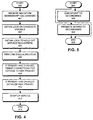
- FIG. 2 illustrates how highly available services 202-205 are controlled within distributed computing system 100 in accordance with an embodiment of the present invention. Note that highly available services 202-205 continue to operate even if individual nodes of distributed computing system 100 fail.
- replica manager 206 For each service, replica manager 206 keeps a record of which nodes in distributed computing system 100 function as primary servers, and which nodes function as secondary servers. For example, in FIG. 3 replica manager 206 keeps track of highly available services 202-205.
- the primary server for service 202 is node 103, and the secondary servers are nodes 104 and 105.
- the primary server for service 203 is node 104, and the secondary servers are nodes 103 and 105.
- the primary server for service 204 is node 102, and the secondary servers are nodes 104-105.
- the primary server for service 205 is node 103, and the secondary servers are nodes 102, 104 and 105.
- Replica manager 206 additionally performs a number of related functions, such as configuring a node to host a primary (which may involve demoting a current host for the primary to host a secondary). Replica manager 206 may additionally perform other functions, such as: adding a service; removing providers for a service; registering providers for a service; removing a service; handling provider failures; bringing up new providers for a service; and handling dependencies between services (which may involve ensuring that primaries for dependent services are co-located on the same node).
- replica manager 206 is itself a highly available service that operates under control of replica manager manager (RMM) 208. Note that RMM 208 is not managed by a higher level service.
- RMM 208 communicates with cluster membership monitor (CMM) 210.
- CMM 210 monitors cluster membership and alerts RMM 208 if any changes in the cluster membership occur.
- CMM 210 uses transport layer 212 to exchange messages between nodes 102-105.
- FIG. 4 is a flow chart illustrating the process of selecting and configuring a primary server in accordance with an embodiment of the present invention. Note that this process is run concurrently by each active node in distributed computing system 100. The system begins by receiving an indication from CMM 210 that the membership in the cluster has changed (step 401).
- the system obtains a lock on a local candidate variable which contains an identifier for a candidate node to host primary server 106 (step 402).
- the system also obtains an additional lock to hold off requesters for the service (step 404).
- the system executes a disqaulification process by communicating with other nodes in distributed computing system 100 in order to disqualify the other nodes from acting as the primary server 106 (step 406). This process is described in more detail with reference to FIG. 6 below.
- the remaining node which is not disqualified, becomes the primary node. If the node hosting primary server 106 has changed, this may involve re-mapping connections for the service to point to the new node (step 408). It may also involve initializing the new node to act as the host for the primary (step 410).
- the service is started (step 412). This may involve unfreezing the service if it was previously frozen, as well as releasing the previously obtained lock that holds off requesters for the service.
- FIG. 5 is a flow chart illustrating some of the operations performed by a primary server 106 in accordance with an embodiment of the present invention.
- primary server 106 performs periodic checkpointing operations 120-121 with secondary servers 107-108, respectively (step 502). These checkpointing operations allow secondary servers 107-108 to take over from primary server 106 if primary server 106 fails.
- Primary server 106 also periodically attempts to promote spare nodes (such as node 105 in FIG. 1) to host secondaries (step 504). This promotion process involves transferring state information to a spare node in order to bring the spare node up to date with respect to the existing secondaries.
- FIG. 6 illustrates how a node is selected to host primary server 106 through a disqualification process in accordance with an embodiment of the present invention. Note that FIG. 6 describes in more detail the process described above with reference to step 406 in FIG. 4.
- the system starts by determining if a node that was previously hosting primary server 106 continues to exist (step 602).
- the system retrieves the state of a local provider for the service (step 604).
- the system sets the candidate variable to identify the local provider (step 606), and subsequently unlocks the candidate lock that was set previously in step 402 of FIG. 4 (step 608).
- the system ends the process (step 610).
- the system attempts to disqualify node I by writing a new identifier into the candidate variable for node I if the rank of node I is less than the rank of the present node (step 612). This process is described in more detail with reference to FIG. 7 below. Finally, if node I's local provider has a higher rank than the present node, the process terminates because the present node is disqualified (step 614).
- a rank of a node can be obtained by comparing a unique identifier for the node with unique identifiers for other nodes. Also note that the rank of a primary server is greater than the rank of a secondary server, and that the rank of a secondary server is greater than the rank of a spare. The above-listed restrictions on rank ensure that an existing primary that has not failed continues to function as the primary, and that an existing secondary will be chosen ahead of a spare. Of course, when the system is initialized, no primaries or secondaries exist, so a spare is selected to be the primary.
- the system sets the candidate to be this node (step 616), and unlocks the candidate node (step 618).
- the process is finished. Otherwise, if the present node is hosting primary server 106, the system considers each other node I in the cluster. If the present node has already communicated with I, the system skips node I (step 622). Otherwise, the system communicates with node I in order to disqualify node I from acting as the host for primary server 106 (step 624). This may involve causing an identifier for the present node to be written into the candidate variable for node I.
- FIG. 7 illustrates how nodes are disqualified in accordance with an embodiment of the present invention. Note that FIG. 7 describes in more detail the process described above with reference to step 612 in FIG. 6.
- the caller first locks the candidate variable for node I (step 702). If the caller determines that the caller's provider has a higher rank than is specified in the candidate variable for I, the caller overwrites the candidate variable for I with the caller's provider (step 704). Next, the caller unlocks the candidate variable for I (step 706).
Landscapes
- Engineering & Computer Science (AREA)
- Computer Networks & Wireless Communication (AREA)
- Signal Processing (AREA)
- Software Systems (AREA)
- Theoretical Computer Science (AREA)
- Physics & Mathematics (AREA)
- General Engineering & Computer Science (AREA)
- General Physics & Mathematics (AREA)
- Computer Security & Cryptography (AREA)
- Hardware Redundancy (AREA)
- Computer And Data Communications (AREA)
- Radio Relay Systems (AREA)
Abstract
Description
Claims (33)
- A method for selecting a node 102,103,104,105 to host a primary server 106 for a service from a plurality of nodes in a distributed computing system 100, the method comprising:a) receiving 401 an indication that a state of the distributed computing system has changed;b) in response to the indication, determining 602 if there is already a node hosting the primary server for the service; andc) if there is not already a node hosting the primary server, selecting 604 a node to host the primary server based upon rank information for the nodes.
- The method of claim 1, wherein selecting the node to host the primary server involves:a) assuming that a given node from the plurality of nodes in the distributed computing system hosts the primary server,b) communicating 612 rank information between the given node and other nodes in the distributed computing system, wherein each node in the distributed computing system has a unique rank with respect to the other nodes in the distributed computing system,c) comparing a rank of the given node with a rank of the other nodes in the distributed computing system, andd) if one of the other nodes in the distributed computing system has a higher rank than the given node, disqualifying 614 the given node from hosting the primary server.
- The method of claim 2, further comprising, if there exists a node that is configured to host the primary server, allowing 622 the node that is configured to host the primary server to communicate with other nodes in the distributed computing system in order to disqualify 624 the other nodes from hosting the primary server.
- The method of claim 2, wherein assuming that the given node hosts the primary server involves:a) maintaining a candidate variable in the given node identifying a candidate node to host the primary server; andb) initially setting the candidate variable to identify the given node.
- The method of claim 1, further comprising, after a new node has been selected to host the primary server, if the new node is different from a previous node that hosted the primary server, establishing 408 connections for the service to the new node.
- The method of claim 1, further comprising, after a new node has been selected to host the primary server, if the new node is different from a previous node that hosted the primary server, configuring the new node to host the primary server for the service.
- The method of claim 1, further comprising restarting the service if the service was interrupted as a result of the change in state of the distributed computing system.
- The method of claim 2, wherein the given node in the distributed computing system acts a one of:a) a host for the primary server 106 for the service;b) a host for a secondary server 107, 108 for the service, wherein the secondary server periodically receives checkpointing information from the primary server; andc) a spare for the primary server, wherein the spare does not receive checkpointing information from the primary server.
- The method of claim 8, further comprising, upon initial startup of the service, selecting a highest ranking spare to host the primary server for the service.
- The method of claim 8, further comprising allowing the primary server to configure 504 spares in the distributed computing system to host secondary servers for the service.
- The method of claim 8, wherein comparing the rank of the given node with the rank of the other nodes in the distributed computing system involves considering a host for the primary server to have a higher rank than a host for a space, and considering a host for a secondary server to have a higher rank than a spare.
- The method of claim 2, wherein disqualifying the given node from hosting the primary server involves ceasing to communicate rank information between the given node and the other nodes in the distributed computing system.
- A computer-readable storage medium storing instructions that when executed by a computer cause the computer to perform the method steps of any one of claims 1 to 12.
- A computer program, which when run on a computer, is adapted to perform the method steps of any one of claims 1 to 12.
- An apparatus that selects a node to host a primary server for a service from a plurality of nodes in a distributed computing system, the apparatus comprising:a) a receiving mechanism 401 that is configured to receive an indication that a state of the distributed computing system has changed;b) a determination mechanism 602 that is configured to determine if there is already a node hosting the primary server for the service in response to the indication;c) a selecting mechanism 604, wherein if there is not already a node hosting the primary server, the selecting mechanism is configured to select a node to host the primary server based upon rank information for the nodes.
- The apparatus of claim 15, wherein, in selecting a node to host the primary server based upon rank information, the selecting mechanism is configured to:a) communicate rank information between the given node and other nodes in the distributed computing system, wherein each node in the distributed computing system has a unique rank with respect to the other nodes in the distributed computing system, and tob) compare a rank of the given node with a rank of the other nodes in the distributed computing system.
- The apparatus of claim 16, further comprising a disqualification mechanism that is configured to disqualify the given node from hosting the primary server if one of the other nodes in the distributed computing system has a higher rank than the given node.
- The apparatus of claim 16, further comprising a mechanism on the primary server that is configured to communicate with other nodes in the distributed computing system in order to disqualify the other nodes from hosting the primary server.
- The apparatus of claim 16, wherein the selecting mechanism is configured to:a) maintain a candidate variable in the given node identifying a candidate node to host the primary server; and tob) initially set the candidate variable to identify the given node.
- The apparatus of claim 15, further comprising a connection mechanism that is configured to establish connections for the service to a new node after the new node has been selected to host the primary server, and if the new node is different from a previous node that hosted the primary server.
- The apparatus of claim 15, further comprising a mechanism that configures a new node to host the primary server for the service, after the new node has been selected to host the primary server, and if the new node is different from a previous node that hosted the primary server.
- The apparatus of claim 15, further comprising a restarting mechanism that is configured to restart the service if the service was interrupted as a result of the change in state of the distributed computing system.
- The apparatus of claim 16, wherein the given node in the distributed computing system acts a one of:a) a host for the primary server for the service;b) a host for a secondary server for the service, wherein the secondary server periodically receives checkpointing information from the primary server; andc) a spare for the primary server, wherein the spare does not receive checkpointing information from the primary server.
- The apparatus of claim 23, further comprising an initialization mechanism wherein during initialization of the service, the initialization mechanism is configured to select a highest ranking spare to host the primary server for the service.
- The apparatus of claim 23, further comprising a promotion mechanism on the primary server that that is configured to promote spares in the distributed computing system to host secondary servers for the service.
- The apparatus of claim 23, wherein while comparing the rank of the given node with the rank of the other nodes in the distributed computing system, the selecting mechanism is configured to consider a host for the primary server to have a higher rank than a host for a secondary server, and to consider a host for a secondary server to have a higher rank than a spare.
- The apparatus of claim 16, wherein the selecting mechanism is configured to cease to communicate rank information between the given node and the other nodes in the distributed computing system after the given node is disqualified by the disqualification mechanism.
- A method for selecting a node to host a primary server for a service from a plurality of nodes in a distributed computer system, comprising:a) communicating disqualification information between the node and remaining nodes in the plurality of nodes;b) disqualifying the node from hosting the primary server based upon the disqualification information received from the remaining nodes.
- The method of claim 28, wherein the disqualification information comprises a node rank information.
- The method of claim 29, wherein the node rank for a given node is calculated using an assumption that the given node hosts the primary server.
- The method of claim 30, wherein the calculated node rank is unique with respect to the ranks of other nodes in the distributed computer system.
- The method of claim 29, wherein the disqualifying of the node comprises:a) comparing a rank of the node to a set of ranks of the remaining nodes in the distributed computer system; andb) disqualifying the node from hosting the primary server if one of the set of ranks of the remaining nodes is higher than the rank of the node.
- The method of claim 28, further comprising repeating the acts of communicating disqualification information and disqualifying the node for at least one more node in the plurality of nodes.
Applications Claiming Priority (4)
| Application Number | Priority Date | Filing Date | Title |
|---|---|---|---|
| US16099299P | 1999-10-21 | 1999-10-21 | |
| US160992P | 1999-10-21 | ||
| US09/662,553 US6957254B1 (en) | 1999-10-21 | 2000-09-15 | Method and apparatus for reaching agreement between nodes in a distributed system |
| US662553 | 2000-09-15 |
Publications (3)
| Publication Number | Publication Date |
|---|---|
| EP1096751A2 true EP1096751A2 (en) | 2001-05-02 |
| EP1096751A3 EP1096751A3 (en) | 2001-08-22 |
| EP1096751B1 EP1096751B1 (en) | 2006-11-29 |
Family
ID=26857416
Family Applications (1)
| Application Number | Title | Priority Date | Filing Date |
|---|---|---|---|
| EP00203642A Expired - Lifetime EP1096751B1 (en) | 1999-10-21 | 2000-10-18 | Method and apparatus for reaching agreement between nodes in a distributed system |
Country Status (4)
| Country | Link |
|---|---|
| US (1) | US6957254B1 (en) |
| EP (1) | EP1096751B1 (en) |
| AT (1) | ATE347224T1 (en) |
| DE (1) | DE60032099D1 (en) |
Cited By (4)
| Publication number | Priority date | Publication date | Assignee | Title |
|---|---|---|---|---|
| GB2381410A (en) * | 2001-09-27 | 2003-04-30 | Samsung Electronics Co Ltd | Soft switch using distributed firewalls for load sharing voice-over-ip traffic in an ip network |
| FR2843210A1 (en) * | 2002-08-02 | 2004-02-06 | Meiosys | METHOD FOR MIGRATION OF CONNECTIONS IN A MULTI-COMPUTER ARCHITECTURE, METHOD FOR PERFORMING A CONTINUITY OF OPERATION IMPLEMENTING THIS MIGRATION METHOD, AND MULTI-COMPUTER SYSTEM THUS EQUIPPED. |
| WO2006030339A3 (en) * | 2004-09-13 | 2006-08-17 | Koninkl Philips Electronics Nv | Method of managing a distributed storage system |
| WO2014089966A1 (en) * | 2012-12-10 | 2014-06-19 | 华为技术有限公司 | Method for determining node state, and node |
Families Citing this family (10)
| Publication number | Priority date | Publication date | Assignee | Title |
|---|---|---|---|---|
| US7640582B2 (en) | 2003-04-16 | 2009-12-29 | Silicon Graphics International | Clustered filesystem for mix of trusted and untrusted nodes |
| US20040139125A1 (en) | 2001-06-05 | 2004-07-15 | Roger Strassburg | Snapshot copy of data volume during data access |
| US7702791B2 (en) * | 2001-07-16 | 2010-04-20 | Bea Systems, Inc. | Hardware load-balancing apparatus for session replication |
| US7409420B2 (en) | 2001-07-16 | 2008-08-05 | Bea Systems, Inc. | Method and apparatus for session replication and failover |
| US7403996B2 (en) * | 2002-02-21 | 2008-07-22 | Bea Systems, Inc. | Systems and methods for migratable services |
| US8209405B1 (en) * | 2006-06-12 | 2012-06-26 | Juniper Networks, Inc. | Failover scheme with service-based segregation |
| US8725874B2 (en) * | 2007-09-27 | 2014-05-13 | International Business Machines Corporation | Dynamic determination of an ideal client-server for a collaborative application network |
| CA2734835C (en) * | 2008-08-27 | 2018-01-09 | Cardinalcommerce Corporation | Intelligent server routing |
| US8752042B2 (en) | 2008-08-27 | 2014-06-10 | Cardinalcommerce Corporation | Intelligent server routing |
| US8972578B2 (en) * | 2011-12-16 | 2015-03-03 | Microsoft Corporation | Master data management system for monitoring cloud computing |
Family Cites Families (14)
| Publication number | Priority date | Publication date | Assignee | Title |
|---|---|---|---|---|
| JPH04271454A (en) | 1991-02-27 | 1992-09-28 | Toshiba Corp | Loosely-coupled computer system |
| US6185619B1 (en) * | 1996-12-09 | 2001-02-06 | Genuity Inc. | Method and apparatus for balancing the process load on network servers according to network and serve based policies |
| US5526358A (en) | 1994-08-19 | 1996-06-11 | Peerlogic, Inc. | Node management in scalable distributed computing enviroment |
| US5666486A (en) | 1995-06-23 | 1997-09-09 | Data General Corporation | Multiprocessor cluster membership manager framework |
| US5862348A (en) * | 1996-02-09 | 1999-01-19 | Citrix Systems, Inc. | Method and apparatus for connecting a client node to a server node based on load levels |
| WO1997049039A1 (en) | 1996-06-21 | 1997-12-24 | Bell Communications Research, Inc. | Apparatus and methods for highly available directory services in the distributed computing environment |
| US6240454B1 (en) * | 1996-09-09 | 2001-05-29 | Avaya Technology Corp. | Dynamic reconfiguration of network servers |
| US6014700A (en) * | 1997-05-08 | 2000-01-11 | International Business Machines Corporation | Workload management in a client-server network with distributed objects |
| US6292905B1 (en) * | 1997-05-13 | 2001-09-18 | Micron Technology, Inc. | Method for providing a fault tolerant network using distributed server processes to remap clustered network resources to other servers during server failure |
| US6363416B1 (en) * | 1998-08-28 | 2002-03-26 | 3Com Corporation | System and method for automatic election of a representative node within a communications network with built-in redundancy |
| US6381627B1 (en) * | 1998-09-21 | 2002-04-30 | Microsoft Corporation | Method and computer readable medium for discovering master DNS server computers for a given domain name in multiple master and multiple namespace configurations |
| US6119162A (en) * | 1998-09-25 | 2000-09-12 | Actiontec Electronics, Inc. | Methods and apparatus for dynamic internet server selection |
| FI107421B (en) * | 1999-06-28 | 2001-07-31 | Stonesoft Oy | Connection selection method |
| US6609213B1 (en) * | 2000-08-10 | 2003-08-19 | Dell Products, L.P. | Cluster-based system and method of recovery from server failures |
-
2000
- 2000-09-15 US US09/662,553 patent/US6957254B1/en not_active Expired - Lifetime
- 2000-10-18 EP EP00203642A patent/EP1096751B1/en not_active Expired - Lifetime
- 2000-10-18 AT AT00203642T patent/ATE347224T1/en not_active IP Right Cessation
- 2000-10-18 DE DE60032099T patent/DE60032099D1/en not_active Expired - Lifetime
Cited By (10)
| Publication number | Priority date | Publication date | Assignee | Title |
|---|---|---|---|---|
| GB2381410A (en) * | 2001-09-27 | 2003-04-30 | Samsung Electronics Co Ltd | Soft switch using distributed firewalls for load sharing voice-over-ip traffic in an ip network |
| GB2381410B (en) * | 2001-09-27 | 2004-02-04 | Samsung Electronics Co Ltd | Soft switch using distributed firewalls for load sharing voice-over-ip traffic in an ip network |
| AU2002300602B2 (en) * | 2001-09-27 | 2004-02-19 | Samsung Electronics Co., Ltd. | Soft switch using distributed firewalls for load sharing voice-over-IP traffic in an IP network |
| FR2843210A1 (en) * | 2002-08-02 | 2004-02-06 | Meiosys | METHOD FOR MIGRATION OF CONNECTIONS IN A MULTI-COMPUTER ARCHITECTURE, METHOD FOR PERFORMING A CONTINUITY OF OPERATION IMPLEMENTING THIS MIGRATION METHOD, AND MULTI-COMPUTER SYSTEM THUS EQUIPPED. |
| WO2004015513A3 (en) * | 2002-08-02 | 2004-05-21 | Meiosys | Migration method for software application in a multi-computing architecture, multi-computing method and system for carrying out functional continuity implementing said migration method |
| US7577720B2 (en) | 2002-08-02 | 2009-08-18 | International Business Machines Corporation | Migration method for software application in a multi-computing architecture, method for carrying out functional continuity implementing said migration method and multi-computing system provided therewith |
| WO2006030339A3 (en) * | 2004-09-13 | 2006-08-17 | Koninkl Philips Electronics Nv | Method of managing a distributed storage system |
| JP2008512759A (en) * | 2004-09-13 | 2008-04-24 | コーニンクレッカ フィリップス エレクトロニクス エヌ ヴィ | How to manage a distributed storage system |
| WO2014089966A1 (en) * | 2012-12-10 | 2014-06-19 | 华为技术有限公司 | Method for determining node state, and node |
| CN103873429B (en) * | 2012-12-10 | 2017-03-15 | 华为技术有限公司 | Determine method and the node of node state |
Also Published As
| Publication number | Publication date |
|---|---|
| US6957254B1 (en) | 2005-10-18 |
| EP1096751B1 (en) | 2006-11-29 |
| DE60032099D1 (en) | 2007-01-11 |
| ATE347224T1 (en) | 2006-12-15 |
| EP1096751A3 (en) | 2001-08-22 |
Similar Documents
| Publication | Publication Date | Title |
|---|---|---|
| US7016946B2 (en) | Method and system for establishing a quorum for a geographically distributed cluster of computers | |
| US6134673A (en) | Method for clustering software applications | |
| US7260818B1 (en) | System and method for managing software version upgrades in a networked computer system | |
| US6957254B1 (en) | Method and apparatus for reaching agreement between nodes in a distributed system | |
| US6243825B1 (en) | Method and system for transparently failing over a computer name in a server cluster | |
| US7548973B2 (en) | Managing a high availability framework by enabling and disabling individual nodes | |
| US6839752B1 (en) | Group data sharing during membership change in clustered computer system | |
| US7225356B2 (en) | System for managing operational failure occurrences in processing devices | |
| US7194652B2 (en) | High availability synchronization architecture | |
| EP1171817B1 (en) | Data distribution in a server cluster | |
| US7831734B2 (en) | Method and system for remote configuration of network devices | |
| CN111897550B (en) | Mirror image preloading method, device and storage medium | |
| US7188237B2 (en) | Reboot manager usable to change firmware in a high availability single processor system | |
| US20010056554A1 (en) | System for clustering software applications | |
| US12229025B2 (en) | Data storage method and device | |
| US6950820B2 (en) | Maintaining consistency of a global resource in a distributed peer process environment | |
| US20080244552A1 (en) | Upgrading services associated with high availability systems | |
| JP2005196763A (en) | Simplified paxos | |
| US6226694B1 (en) | Achieving consistency and synchronization among multiple data stores that cooperate within a single system in the absence of transaction monitoring | |
| CN106657167B (en) | Management server, server cluster, and management method | |
| US20040083404A1 (en) | Staged startup after failover or reboot | |
| US7975038B2 (en) | Application management program, application management method, and application management apparatus | |
| US20090217081A1 (en) | System for providing an alternative communication path in a SAS cluster | |
| EP1107119A2 (en) | Extending cluster membership and quorum determinations to intelligent storage systems | |
| US6675259B2 (en) | Method and apparatus for validating and ranking disk units for switching |
Legal Events
| Date | Code | Title | Description |
|---|---|---|---|
| PUAI | Public reference made under article 153(3) epc to a published international application that has entered the european phase |
Free format text: ORIGINAL CODE: 0009012 |
|
| AK | Designated contracting states |
Kind code of ref document: A2 Designated state(s): AT BE CH CY DE DK ES FI FR GB GR IE IT LI LU MC NL PT SE |
|
| AX | Request for extension of the european patent |
Free format text: AL;LT;LV;MK;RO;SI |
|
| PUAL | Search report despatched |
Free format text: ORIGINAL CODE: 0009013 |
|
| AK | Designated contracting states |
Kind code of ref document: A3 Designated state(s): AT BE CH CY DE DK ES FI FR GB GR IE IT LI LU MC NL PT SE |
|
| AX | Request for extension of the european patent |
Free format text: AL;LT;LV;MK;RO;SI |
|
| RIC1 | Information provided on ipc code assigned before grant |
Free format text: 7H 04L 29/06 A, 7G 06F 9/50 B, 7G 06F 11/20 B |
|
| 17P | Request for examination filed |
Effective date: 20011015 |
|
| AKX | Designation fees paid |
Free format text: AT BE CH CY DE DK ES FI FR GB GR IE IT LI LU MC NL PT SE |
|
| 17Q | First examination report despatched |
Effective date: 20050126 |
|
| RAP1 | Party data changed (applicant data changed or rights of an application transferred) |
Owner name: SUN MICROSYSTEMS, INC. |
|
| GRAP | Despatch of communication of intention to grant a patent |
Free format text: ORIGINAL CODE: EPIDOSNIGR1 |
|
| GRAS | Grant fee paid |
Free format text: ORIGINAL CODE: EPIDOSNIGR3 |
|
| GRAA | (expected) grant |
Free format text: ORIGINAL CODE: 0009210 |
|
| AK | Designated contracting states |
Kind code of ref document: B1 Designated state(s): AT BE CH CY DE DK ES FI FR GB GR IE IT LI LU MC NL PT SE |
|
| PG25 | Lapsed in a contracting state [announced via postgrant information from national office to epo] |
Ref country code: IT Free format text: LAPSE BECAUSE OF FAILURE TO SUBMIT A TRANSLATION OF THE DESCRIPTION OR TO PAY THE FEE WITHIN THE PRESCRIBED TIME-LIMIT;WARNING: LAPSES OF ITALIAN PATENTS WITH EFFECTIVE DATE BEFORE 2007 MAY HAVE OCCURRED AT ANY TIME BEFORE 2007. THE CORRECT EFFECTIVE DATE MAY BE DIFFERENT FROM THE ONE RECORDED. Effective date: 20061129 Ref country code: NL Free format text: LAPSE BECAUSE OF FAILURE TO SUBMIT A TRANSLATION OF THE DESCRIPTION OR TO PAY THE FEE WITHIN THE PRESCRIBED TIME-LIMIT Effective date: 20061129 Ref country code: LI Free format text: LAPSE BECAUSE OF FAILURE TO SUBMIT A TRANSLATION OF THE DESCRIPTION OR TO PAY THE FEE WITHIN THE PRESCRIBED TIME-LIMIT Effective date: 20061129 Ref country code: AT Free format text: LAPSE BECAUSE OF FAILURE TO SUBMIT A TRANSLATION OF THE DESCRIPTION OR TO PAY THE FEE WITHIN THE PRESCRIBED TIME-LIMIT Effective date: 20061129 Ref country code: FI Free format text: LAPSE BECAUSE OF FAILURE TO SUBMIT A TRANSLATION OF THE DESCRIPTION OR TO PAY THE FEE WITHIN THE PRESCRIBED TIME-LIMIT Effective date: 20061129 Ref country code: CH Free format text: LAPSE BECAUSE OF FAILURE TO SUBMIT A TRANSLATION OF THE DESCRIPTION OR TO PAY THE FEE WITHIN THE PRESCRIBED TIME-LIMIT Effective date: 20061129 Ref country code: BE Free format text: LAPSE BECAUSE OF FAILURE TO SUBMIT A TRANSLATION OF THE DESCRIPTION OR TO PAY THE FEE WITHIN THE PRESCRIBED TIME-LIMIT Effective date: 20061129 |
|
| REG | Reference to a national code |
Ref country code: GB Ref legal event code: FG4D |
|
| REG | Reference to a national code |
Ref country code: CH Ref legal event code: EP Ref country code: IE Ref legal event code: FG4D |
|
| REG | Reference to a national code |
Ref country code: IE Ref legal event code: FG4D |
|
| REF | Corresponds to: |
Ref document number: 60032099 Country of ref document: DE Date of ref document: 20070111 Kind code of ref document: P |
|
| PG25 | Lapsed in a contracting state [announced via postgrant information from national office to epo] |
Ref country code: SE Free format text: LAPSE BECAUSE OF FAILURE TO SUBMIT A TRANSLATION OF THE DESCRIPTION OR TO PAY THE FEE WITHIN THE PRESCRIBED TIME-LIMIT Effective date: 20070228 Ref country code: DK Free format text: LAPSE BECAUSE OF FAILURE TO SUBMIT A TRANSLATION OF THE DESCRIPTION OR TO PAY THE FEE WITHIN THE PRESCRIBED TIME-LIMIT Effective date: 20070228 |
|
| PG25 | Lapsed in a contracting state [announced via postgrant information from national office to epo] |
Ref country code: DE Free format text: LAPSE BECAUSE OF FAILURE TO SUBMIT A TRANSLATION OF THE DESCRIPTION OR TO PAY THE FEE WITHIN THE PRESCRIBED TIME-LIMIT Effective date: 20070301 |
|
| PG25 | Lapsed in a contracting state [announced via postgrant information from national office to epo] |
Ref country code: ES Free format text: LAPSE BECAUSE OF FAILURE TO SUBMIT A TRANSLATION OF THE DESCRIPTION OR TO PAY THE FEE WITHIN THE PRESCRIBED TIME-LIMIT Effective date: 20070312 |
|
| PG25 | Lapsed in a contracting state [announced via postgrant information from national office to epo] |
Ref country code: PT Free format text: LAPSE BECAUSE OF FAILURE TO SUBMIT A TRANSLATION OF THE DESCRIPTION OR TO PAY THE FEE WITHIN THE PRESCRIBED TIME-LIMIT Effective date: 20070430 |
|
| NLV1 | Nl: lapsed or annulled due to failure to fulfill the requirements of art. 29p and 29m of the patents act | ||
| REG | Reference to a national code |
Ref country code: CH Ref legal event code: PL |
|
| EN | Fr: translation not filed | ||
| PLBE | No opposition filed within time limit |
Free format text: ORIGINAL CODE: 0009261 |
|
| STAA | Information on the status of an ep patent application or granted ep patent |
Free format text: STATUS: NO OPPOSITION FILED WITHIN TIME LIMIT |
|
| 26N | No opposition filed |
Effective date: 20070830 |
|
| PG25 | Lapsed in a contracting state [announced via postgrant information from national office to epo] |
Ref country code: FR Free format text: LAPSE BECAUSE OF FAILURE TO SUBMIT A TRANSLATION OF THE DESCRIPTION OR TO PAY THE FEE WITHIN THE PRESCRIBED TIME-LIMIT Effective date: 20070720 Ref country code: GR Free format text: LAPSE BECAUSE OF FAILURE TO SUBMIT A TRANSLATION OF THE DESCRIPTION OR TO PAY THE FEE WITHIN THE PRESCRIBED TIME-LIMIT Effective date: 20070301 |
|
| PG25 | Lapsed in a contracting state [announced via postgrant information from national office to epo] |
Ref country code: MC Free format text: LAPSE BECAUSE OF NON-PAYMENT OF DUE FEES Effective date: 20071031 |
|
| PG25 | Lapsed in a contracting state [announced via postgrant information from national office to epo] |
Ref country code: IE Free format text: LAPSE BECAUSE OF NON-PAYMENT OF DUE FEES Effective date: 20071018 |
|
| PG25 | Lapsed in a contracting state [announced via postgrant information from national office to epo] |
Ref country code: FR Free format text: LAPSE BECAUSE OF FAILURE TO SUBMIT A TRANSLATION OF THE DESCRIPTION OR TO PAY THE FEE WITHIN THE PRESCRIBED TIME-LIMIT Effective date: 20061129 |
|
| PG25 | Lapsed in a contracting state [announced via postgrant information from national office to epo] |
Ref country code: CY Free format text: LAPSE BECAUSE OF FAILURE TO SUBMIT A TRANSLATION OF THE DESCRIPTION OR TO PAY THE FEE WITHIN THE PRESCRIBED TIME-LIMIT Effective date: 20061129 Ref country code: LU Free format text: LAPSE BECAUSE OF NON-PAYMENT OF DUE FEES Effective date: 20071018 |
|
| PGFP | Annual fee paid to national office [announced via postgrant information from national office to epo] |
Ref country code: GB Payment date: 20191018 Year of fee payment: 20 |
|
| REG | Reference to a national code |
Ref country code: GB Ref legal event code: PE20 Expiry date: 20201017 |
|
| PG25 | Lapsed in a contracting state [announced via postgrant information from national office to epo] |
Ref country code: GB Free format text: LAPSE BECAUSE OF EXPIRATION OF PROTECTION Effective date: 20201017 |