EP1094107A2 - Fermentative production of L-lysine - Google Patents

Fermentative production of L-lysine Download PDF

Info

Publication number
EP1094107A2
EP1094107A2 EP00122021A EP00122021A EP1094107A2 EP 1094107 A2 EP1094107 A2 EP 1094107A2 EP 00122021 A EP00122021 A EP 00122021A EP 00122021 A EP00122021 A EP 00122021A EP 1094107 A2 EP1094107 A2 EP 1094107A2
Authority
EP
European Patent Office
Prior art keywords
lysine
microorganism
methylobacillus
medium
dna
Prior art date
Legal status (The legal status is an assumption and is not a legal conclusion. Google has not performed a legal analysis and makes no representation as to the accuracy of the status listed.)
Withdrawn
Application number
EP00122021A
Other languages
German (de)
French (fr)
Other versions
EP1094107A3 (en
Inventor
Kazuo Fermentation & Biotechnology Labs. Nagase
Hisashi Fermentation & Biotechnology Yasueda
Shinichi Fermentation & Biotechnology Sugimoto
Current Assignee (The listed assignees may be inaccurate. Google has not performed a legal analysis and makes no representation or warranty as to the accuracy of the list.)
Ajinomoto Co Inc
Original Assignee
Ajinomoto Co Inc
Priority date (The priority date is an assumption and is not a legal conclusion. Google has not performed a legal analysis and makes no representation as to the accuracy of the date listed.)
Filing date
Publication date
Application filed by Ajinomoto Co Inc filed Critical Ajinomoto Co Inc
Publication of EP1094107A2 publication Critical patent/EP1094107A2/en
Publication of EP1094107A3 publication Critical patent/EP1094107A3/en
Withdrawn legal-status Critical Current

Links

Images

Classifications

    • CCHEMISTRY; METALLURGY
    • C12BIOCHEMISTRY; BEER; SPIRITS; WINE; VINEGAR; MICROBIOLOGY; ENZYMOLOGY; MUTATION OR GENETIC ENGINEERING
    • C12NMICROORGANISMS OR ENZYMES; COMPOSITIONS THEREOF; PROPAGATING, PRESERVING, OR MAINTAINING MICROORGANISMS; MUTATION OR GENETIC ENGINEERING; CULTURE MEDIA
    • C12N1/00Microorganisms; Compositions thereof; Processes of propagating, maintaining or preserving microorganisms or compositions thereof; Processes of preparing or isolating a composition containing a microorganism; Culture media therefor
    • C12N1/20Bacteria; Culture media therefor
    • C12N1/205Bacterial isolates
    • CCHEMISTRY; METALLURGY
    • C12BIOCHEMISTRY; BEER; SPIRITS; WINE; VINEGAR; MICROBIOLOGY; ENZYMOLOGY; MUTATION OR GENETIC ENGINEERING
    • C12PFERMENTATION OR ENZYME-USING PROCESSES TO SYNTHESISE A DESIRED CHEMICAL COMPOUND OR COMPOSITION OR TO SEPARATE OPTICAL ISOMERS FROM A RACEMIC MIXTURE
    • C12P13/00Preparation of nitrogen-containing organic compounds
    • C12P13/04Alpha- or beta- amino acids
    • C12P13/08Lysine; Diaminopimelic acid; Threonine; Valine
    • CCHEMISTRY; METALLURGY
    • C12BIOCHEMISTRY; BEER; SPIRITS; WINE; VINEGAR; MICROBIOLOGY; ENZYMOLOGY; MUTATION OR GENETIC ENGINEERING
    • C12RINDEXING SCHEME ASSOCIATED WITH SUBCLASSES C12C - C12Q, RELATING TO MICROORGANISMS
    • C12R2001/00Microorganisms ; Processes using microorganisms
    • C12R2001/01Bacteria or Actinomycetales ; using bacteria or Actinomycetales
    • C12R2001/26Methylomonas

Definitions

  • This invention relates to the microbial industry, especially to a method for the production of L-lysine by fermentation and a microorganism for the production.
  • L-Lysine In the production of L-Lysine by fermentation, strains isolated from nature or artificial mutants thereof have been used in order to improve the productivity. Many artificial mutants that produce L-lysine are known, and many of them are aminoethylcysteine (AEC) resistant strains and belong to the genus Brevibacterium, Corynebacterium, Bacillus, or Escherichia. Further, various techniques have been disclosed for increasing the amino acid production, for example, use of a transformant obtained by using recombinant DNA (U.S. Patent No. 4,278,765).
  • AEC aminoethylcysteine
  • DDPS wild type dihydrodipicolinate synthase
  • Escherichia a method of fermentative production of L-lysine by enhanced expression of wild type dihydrodipicolinate synthase (abbreviated as "DDPS" hereinafter) in Escherichia
  • DDPS wild type dihydrodipicolinate synthase
  • the amplified DDPS is a wild type one and subject to feedback inhibition by L-lysine, thus satisfactory productivity of L-lysine has not been obtained.
  • the productivity has been improved drastically by amplifying DDPS and aspartokinase (abbreviated as "AK” hereinafter) insensitive to the feedback inhibition by L-lysine (WO95/16042).
  • Dihydrodipicolinate synthase is an enzyme that synthesizes dihydrodipicolinate through dehydration condensation of aspartate-beta-semialdehyde and pyruvic acid, and this reaction serves as an entrance into the L-lysine biosynthesis branch in the whole biosynthesis pathway of amino acids derived from aspartic acid.
  • DDPS as well as AK is known as an important rate-limiting enzyme. It is known that DDPS is encoded on the dapA gene in Escherichia coil. The dapA gene has already been cloned and its nucleotide sequence has been determined (Richaud F. et al. J. Bacteriol. 166(1), 297 (1986)).
  • AK is an enzyme that catalyzes reaction that produces aspartate-beta-semialdehyde from aspartic acid and is an important enzyme that is sensitive to feedback inhibition.
  • E.coli has three isozymes of AK (AKI, AKII and AKIII). Two of them are complex enzymes that also have homoserine dehydrogenase activity (abbreviated as "HD” hereinafter).
  • HD homoserine dehydrogenase activity
  • Only AKIII is an enzyme having a single enzyme activity and is encoded on the lysC gene and also is known to be sensitive to feedback inhibition and repression by L-lysine.
  • screening methods for microorganisms belonging to the genus Methylobacillus screening as a mutant resistant to a specific amino acid or metabolic inhibitor of an amino acid (Japanese Patent Application laid-open 91793/1992) and screening as a mutant resistant to halogenated pyruvic acid (Japanese Patent Application laid-open 133788/1994) are known.
  • the method using feedback insensitive DDPS or AK might be effective in the case of the genus Methylobacillus.
  • nothing is known with respect to a method using recombinant DNA technique and introducing lysine biosynthesis genes into Methylobacillus.
  • the present invention has been accomplished in view of the aforementioned technical problems, and its object is to provide improved method to produce L-lysine by fermentation using methanol as a major carbon source.
  • the inventors of present invention assiduously studied in order to achieve the forementioned object. As a result, they successfully constructed a Methylobacillus strain producing AK and DDPS that are free from feedback inhibition by L-lysine and have found that the cultivation the constructed strain in a suitable medium results in the accumulation of considerable amounts of L-lysine in the medium. Thus, they accomplished the present invention.
  • any microorganism that provides DNA that can express AK and/or DDPS activity in Methylobacillus being insensitive to feedback inhibition by L-lysine can be used. It does not matter whether the bacterium is a wild type strain or a mutant strain derived from wild type strain. Preferably, mutants derived from Escherichia coli K-12, mutants derived from Methylobacillus glycogenes NCIMB11375, and mutants derived from Corynebacterium glutamicum, such as Corynebacterium glutamicum ATCC13869, should be used. More preferably, one can obtain feedback-insensitive AK and DDPS gene from Escherichia coli by the method disclosed in WO95/16042. In the case of Corynebacterium glutamicum, it is known that DDPS is not sensitive to feedback inhibition even in the wild type strain (Japanese Patent Application laid-open 62866/1994). It is also suitable as a source of DNA.
  • plasmid vector that contains feedback-insensitive AK and DDPS genes can be used as far as it can be used to transform Methylobacillus strains and can express its character.
  • plasmid pMF42 gene, 44, 53 (1990)
  • pRP301 pRP301
  • pTB70 pTB70
  • Any method of transformation can be used to introduce the plasmid vector into Methylobacillus, as far as it accomplishes good transformation efficiency.
  • a method disclosed in Methods in Enzymology, 118, 640(1986) i.e. the introduction of plasmid DNA into Methylobacillus from E.coli S17-1 strain by conjugation culturing the two strains on the same agar media plate.
  • Direct introduction of plasmid by electroporation can be used (Canadian Journal of Microbiology, 43, 197 (1997)).
  • Methylobacillus strain As the recipient strain, any Methylobacillus strain can be used.
  • Methylobacillus glycogenes NCIMB11375 or Methylobacillus flagelatum ATCC51484 can be used.
  • Methylobacillus strains that has a plasmid comprising AK and DDPS genes By culturing the Methylobacillus strains that has a plasmid comprising AK and DDPS genes in a medium that contains methanol as a major carbon source, considerable amounts of L-lysine can be accumulated in the culture broth.
  • the microorganism used in the present invention can be cultivated by conventional methods for methanol utilizing bacteria.
  • Either nutrient or synthetic medium can be used as far as it contains a carbon source, nitrogen source, inorganic ions and other desired trace organic compounds.
  • Methanol can be used as a major carbon source, and its content in the medium is from 0.01 to 30% w/v.
  • nitrogen source ammonium sulfate and others can be used in the medium.
  • potassium phosphate, sodium phosphate, manganese sulfate and ferrous sulfate are normally added to the medium.
  • Cultivation is performed under aerobic condition by shaking or aeration plus agitation, at a pH from 6 to 8, at a temperature from 25 centigrade to 37 centigrade. Cultivation continues from 24 to 120 hours. After the cultivation, the isolation from the broth can be performed by ion-exchange, column chromatography, precipitation or combination of them.
  • compositions of the media used in each example are shown below.
  • ⁇ L medium Bacto trypton(Difco) 1% Yeast Extract(Difco) 0.5% NaCl 0.5%
  • ⁇ L agar medium ⁇ L medium
  • Bacto agar (Difco) 1.5% ⁇ PY medium ⁇ Nutrient Broth (Difco) 1.0%
  • Yeast extract (Difco) 0.25% Methanol 10.0ml/l(pH7.0)
  • ⁇ M1 medium (NH4)2SO4 0.2% K2HPO4 0.7% KH2PO4 0.1% MgSO4 0.05% NaCl 0.01% FeSO4 10.0mg/l MnSO4 ⁇ 5H2O 8.0mg/l Vitamin B1 1.0mg/l Biotin 10.0ug/l Methanol 5.0ml/l(pH7.0) ⁇ M1 agar medium ⁇ M1 medium Bacto agar(Difco) 1.5%
  • the media were steam-sterilized at 120 centigrade for 15min.
  • the media except methanol were steam-sterilized and methanol was added afterwards after filtration by Membrane filter 0.45 ⁇ m (Millipore).
  • plasmid RSFD80 that is disclosed in WO95/16042 was constructed.
  • the plasmid contains feedback-insensitive DDPS gene, feedback-insensitive AK gene and a replication origin derived from broad host range plasmid.
  • E.coli JM109 which harbors RSFD80 was named AJ12396 and deposited at National Institute of Bioscience and Human-Technology, Agency of Industrial Science and Technology, Ministry of International Trade and Industry (postal code 305-8566, 1-3 Higashi 1-chome, Tsukuba-shi, Ibaraki-ken, Japan) under the accession number FERM BP-4859.
  • AJ12396 was cultured overnight in 50ml of L medium containing 20mg/l of streptomycin at 37 centigrade and plasmid RSFD80 was purified by Wizard Plus Midipreps DNA Purification System (Promega).
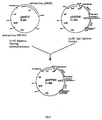
  • pRSFTC was constructed from pVIC40 and pBR322 according to the method disclosed in WO95/16042 (fig.1). JM109 was transformed by pRSFTC and the resultant transformant was cultured overnight in 50ml of L medium containing 10mg/l of tetracyclin at 37 centigrade and pRSFTC was purified by Wizard Plus Midipreps DNA Purification System.
  • RSFD80 was digested by restriction enzyme EcoRI plus SapI. The end was blunted by T4 DNA polymerase. Afterwards, DNA fragments containing AK and DDPS gene were extracted from the agarose gel after electrophoresis using CONCERT Rapid Gel Extraction System (GIBCO BRL).
  • plasmid RSFTC was digested by restriction enzyme EcoRI and blunted by T4 DNA polymerase and dephoshorylated by alkaline phosphatase from E.coli. The dephosphorylated vector was ligated with a DNA fragment that contains AK and DDPS gene and transformed to JM109 (fig.2). Transformants were selected on an agar plate containing 10mg/l of tetracycline.
  • the obtained plasmid was named as pRSFT806.
  • JM109 that contains pRSFT806 and JM109 that contains pRSFTC were used as donor respectively.
  • a tri-parental conjugal plasmid transfer was performed using JM109 that contains PK2013 as a mobilizer and M.glycogenes ATCC29475 was used as an acceptor.
  • the plasmid pRSFT806 and pRSFTC were transferred into M.glycogenes respectively and thus M.glycogenes/pRSFTC and M.glycogenes/pRSF806 were obtained selecting on the M1 agar medium containing 10mg/ml tetracycline.
  • M.glycogenes/pRSFTC and M.glycogenes/pRSFT806 were inoculated on M1 medium containing 3% of calcium carbonate and cultivated by shaking at 30 centigrade for 36 hours. After cultivation, the cell bodies were removed by centrifugation and the L-lysine concentration in the supernatant was measured by biotech analyzer AS-210 (Sakura Seiki Co., Ltd.). The results were shown in Table 1. STRAIN L-LYSINE ACCUMULATION(G/L) M.glycogones/pRSFTC not detected M.glycogenes/pRSFT806 0.1g/l

Landscapes

  • Chemical & Material Sciences (AREA)
  • Organic Chemistry (AREA)
  • Engineering & Computer Science (AREA)
  • Life Sciences & Earth Sciences (AREA)
  • Health & Medical Sciences (AREA)
  • Zoology (AREA)
  • Wood Science & Technology (AREA)
  • Genetics & Genomics (AREA)
  • Bioinformatics & Cheminformatics (AREA)
  • Biotechnology (AREA)
  • General Health & Medical Sciences (AREA)
  • Biochemistry (AREA)
  • General Engineering & Computer Science (AREA)
  • Microbiology (AREA)
  • Chemical Kinetics & Catalysis (AREA)
  • General Chemical & Material Sciences (AREA)
  • Medicinal Chemistry (AREA)
  • Tropical Medicine & Parasitology (AREA)
  • Virology (AREA)
  • Biomedical Technology (AREA)
  • Preparation Of Compounds By Using Micro-Organisms (AREA)
  • Micro-Organisms Or Cultivation Processes Thereof (AREA)
  • Enzymes And Modification Thereof (AREA)

Abstract

A microorganism belonging to the genus Methylobacillus having aspartokinase activity and/or dihydrodipicolinate synthase activity wherein the aspatokinase and the dihydrodipicolinate syntase activity are substantially insensitive to feedback inhibition by L-lysine.

Description

FIELD OF THE INVENTION
This invention relates to the microbial industry, especially to a method for the production of L-lysine by fermentation and a microorganism for the production.
BACKGROUND OF THE ART
In the production of L-Lysine by fermentation, strains isolated from nature or artificial mutants thereof have been used in order to improve the productivity. Many artificial mutants that produce L-lysine are known, and many of them are aminoethylcysteine (AEC) resistant strains and belong to the genus Brevibacterium, Corynebacterium, Bacillus, or Escherichia. Further, various techniques have been disclosed for increasing the amino acid production, for example, use of a transformant obtained by using recombinant DNA (U.S. Patent No. 4,278,765). For example, a method of fermentative production of L-lysine by enhanced expression of wild type dihydrodipicolinate synthase (abbreviated as "DDPS" hereinafter) in Escherichia has been disclosed (U.S. Patent No. 4,346, 170 and Applied Microbiology and Biotechnology, 15, p227-231(1982)). In this case, however, the amplified DDPS is a wild type one and subject to feedback inhibition by L-lysine, thus satisfactory productivity of L-lysine has not been obtained. However, the productivity has been improved drastically by amplifying DDPS and aspartokinase (abbreviated as "AK" hereinafter) insensitive to the feedback inhibition by L-lysine (WO95/16042).
Dihydrodipicolinate synthase is an enzyme that synthesizes dihydrodipicolinate through dehydration condensation of aspartate-beta-semialdehyde and pyruvic acid, and this reaction serves as an entrance into the L-lysine biosynthesis branch in the whole biosynthesis pathway of amino acids derived from aspartic acid. As for microorganism belonging to genus Escherichia, DDPS as well as AK is known as an important rate-limiting enzyme. It is known that DDPS is encoded on the dapA gene in Escherichia coil. The dapA gene has already been cloned and its nucleotide sequence has been determined (Richaud F. et al. J. Bacteriol. 166(1), 297 (1986)).
On the other hand, AK is an enzyme that catalyzes reaction that produces aspartate-beta-semialdehyde from aspartic acid and is an important enzyme that is sensitive to feedback inhibition. E.coli has three isozymes of AK (AKI, AKII and AKIII). Two of them are complex enzymes that also have homoserine dehydrogenase activity (abbreviated as "HD" hereinafter). Only AKIII is an enzyme having a single enzyme activity and is encoded on the lysC gene and also is known to be sensitive to feedback inhibition and repression by L-lysine.
Methods of the fermentative production of an amino acid using methanol, a carbon source that is cheap and easy to obtain in huge amounts, by using several microorganisms, have been known. For example, methods using microorganism belonging to the genus Achromobacter or Pseudomonas (Japanese Patent Publication No. 25273/1970), Protaminobacter (Japanese Patent Application laid-open No. 125590/1974) Protaminobacter or Methanomonas (Japanese Patent Application laid-open No.25790/1975), Micocyclus (Japanese Patent Application laid-open 18886/1977), Methylobacillus (Japanese Patent Application laid-open 91793/1992) and Bacillus (Japanese Patent Application laid-open 505284/1991 , European Patent Application No. 90906690.4) are known.
Especially, as screening methods for microorganisms belonging to the genus Methylobacillus, screening as a mutant resistant to a specific amino acid or metabolic inhibitor of an amino acid (Japanese Patent Application laid-open 91793/1992) and screening as a mutant resistant to halogenated pyruvic acid (Japanese Patent Application laid-open 133788/1994) are known. However, nothing is known whether the method using feedback insensitive DDPS or AK might be effective in the case of the genus Methylobacillus. Especially, nothing is known with respect to a method using recombinant DNA technique and introducing lysine biosynthesis genes into Methylobacillus.
SUMMARY OF THE INVENTION
The present invention has been accomplished in view of the aforementioned technical problems, and its object is to provide improved method to produce L-lysine by fermentation using methanol as a major carbon source.
The inventors of present invention assiduously studied in order to achieve the forementioned object. As a result, they successfully constructed a Methylobacillus strain producing AK and DDPS that are free from feedback inhibition by L-lysine and have found that the cultivation the constructed strain in a suitable medium results in the accumulation of considerable amounts of L-lysine in the medium. Thus, they accomplished the present invention.
PREFERRERD EMBODIMENTS OF THE INVENTION
Hereafter, the present invention will be explained in detail.
As the DNA donor, any microorganism that provides DNA that can express AK and/or DDPS activity in Methylobacillus being insensitive to feedback inhibition by L-lysine can be used. It does not matter whether the bacterium is a wild type strain or a mutant strain derived from wild type strain. Preferably, mutants derived from Escherichia coli K-12, mutants derived from Methylobacillus glycogenes NCIMB11375, and mutants derived from Corynebacterium glutamicum, such as Corynebacterium glutamicum ATCC13869, should be used. More preferably, one can obtain feedback-insensitive AK and DDPS gene from Escherichia coli by the method disclosed in WO95/16042. In the case of Corynebacterium glutamicum, it is known that DDPS is not sensitive to feedback inhibition even in the wild type strain (Japanese Patent Application laid-open 62866/1994). It is also suitable as a source of DNA.
Any plasmid vector that contains feedback-insensitive AK and DDPS genes can be used as far as it can be used to transform Methylobacillus strains and can express its character. For example, plasmid pMF42 (gene, 44, 53 (1990)), pRP301, pTB70 (Nature, 287, 396, (1980)) can be used.
Any method of transformation can be used to introduce the plasmid vector into Methylobacillus, as far as it accomplishes good transformation efficiency. For example, a method disclosed in Methods in Enzymology, 118, 640(1986) i.e. the introduction of plasmid DNA into Methylobacillus from E.coli S17-1 strain by conjugation culturing the two strains on the same agar media plate. Direct introduction of plasmid by electroporation can be used (Canadian Journal of Microbiology, 43, 197 (1997)).
As the recipient strain, any Methylobacillus strain can be used. For example, Methylobacillus glycogenes NCIMB11375 or Methylobacillus flagelatum ATCC51484 can be used. By culturing the Methylobacillus strains that has a plasmid comprising AK and DDPS genes in a medium that contains methanol as a major carbon source, considerable amounts of L-lysine can be accumulated in the culture broth.
For introducing the genes encoding feedback-insensitive AK and DDPS, other methods than the above mentioned method using a plasmid can be used, e.g. the introduction of the DNA into the chromosome. Alternatively, a method of modifying feedback-sensitive AK and/or DDPS genes authentically present on the chromosome into feedback-insensitive ones is also effective.
The microorganism used in the present invention can be cultivated by conventional methods for methanol utilizing bacteria. Either nutrient or synthetic medium can be used as far as it contains a carbon source, nitrogen source, inorganic ions and other desired trace organic compounds.
Methanol can be used as a major carbon source, and its content in the medium is from 0.01 to 30% w/v. As the nitrogen source, ammonium sulfate and others can be used in the medium. Furthermore, potassium phosphate, sodium phosphate, manganese sulfate and ferrous sulfate are normally added to the medium.
Cultivation is performed under aerobic condition by shaking or aeration plus agitation, at a pH from 6 to 8, at a temperature from 25 centigrade to 37 centigrade. Cultivation continues from 24 to 120 hours. After the cultivation, the isolation from the broth can be performed by ion-exchange, column chromatography, precipitation or combination of them.
EXAMPLE
Hereafter, the present invention will be further specifically explained with reference to the following examples.
The compositions of the media used in each example are shown below.
〈L medium〉
Bacto trypton(Difco) 1%
Yeast Extract(Difco) 0.5%
NaCl 0.5%
〈L agar medium〉
L medium
Bacto agar (Difco) 1.5%
〈PY medium〉
Nutrient Broth (Difco) 1.0%
Yeast extract (Difco) 0.25%
Methanol 10.0ml/l(pH7.0)
〈PY agar medium〉
PY medium
Bato agar (Difco) 1.5%
〈M1 medium〉
(NH4)2SO4 0.2%
K2HPO4 0.7%
KH2PO4 0.1%
MgSO4 0.05%
NaCl 0.01%
FeSO4 10.0mg/l
MnSO4·5H2O 8.0mg/l
Vitamin B1 1.0mg/l
Biotin 10.0ug/l
Methanol 5.0ml/l(pH7.0)
〈M1 agar medium〉
M1 medium
Bacto agar(Difco) 1.5%
The pH was adjusted by NaOH or HCl in all cases. The media were steam-sterilized at 120 centigrade for 15min. In the case of media containing methanol, the media except methanol were steam-sterilized and methanol was added afterwards after filtration by Membrane filter 0.45µm (Millipore).
At first, plasmid RSFD80 that is disclosed in WO95/16042 was constructed. The plasmid contains feedback-insensitive DDPS gene, feedback-insensitive AK gene and a replication origin derived from broad host range plasmid. E.coli JM109 which harbors RSFD80 was named AJ12396 and deposited at National Institute of Bioscience and Human-Technology, Agency of Industrial Science and Technology, Ministry of International Trade and Industry (postal code 305-8566, 1-3 Higashi 1-chome, Tsukuba-shi, Ibaraki-ken, Japan) under the accession number FERM BP-4859.
AJ12396 was cultured overnight in 50ml of L medium containing 20mg/l of streptomycin at 37 centigrade and plasmid RSFD80 was purified by Wizard Plus Midipreps DNA Purification System (Promega). In the same manner, pRSFTC was constructed from pVIC40 and pBR322 according to the method disclosed in WO95/16042 (fig.1). JM109 was transformed by pRSFTC and the resultant transformant was cultured overnight in 50ml of L medium containing 10mg/l of tetracyclin at 37 centigrade and pRSFTC was purified by Wizard Plus Midipreps DNA Purification System.
Secondly, RSFD80 was digested by restriction enzyme EcoRI plus SapI. The end was blunted by T4 DNA polymerase. Afterwards, DNA fragments containing AK and DDPS gene were extracted from the agarose gel after electrophoresis using CONCERT Rapid Gel Extraction System (GIBCO BRL). On the other hand, plasmid RSFTC was digested by restriction enzyme EcoRI and blunted by T4 DNA polymerase and dephoshorylated by alkaline phosphatase from E.coli. The dephosphorylated vector was ligated with a DNA fragment that contains AK and DDPS gene and transformed to JM109 (fig.2). Transformants were selected on an agar plate containing 10mg/l of tetracycline. The obtained plasmid was named as pRSFT806. JM109 that contains pRSFT806 and JM109 that contains pRSFTC were used as donor respectively. A tri-parental conjugal plasmid transfer was performed using JM109 that contains PK2013 as a mobilizer and M.glycogenes ATCC29475 was used as an acceptor. The plasmid pRSFT806 and pRSFTC were transferred into M.glycogenes respectively and thus M.glycogenes/pRSFTC and M.glycogenes/pRSF806 were obtained selecting on the M1 agar medium containing 10mg/ml tetracycline.
The obtained M.glycogenes/pRSFTC and M.glycogenes/pRSFT806 were inoculated on M1 medium containing 3% of calcium carbonate and cultivated by shaking at 30 centigrade for 36 hours. After cultivation, the cell bodies were removed by centrifugation and the L-lysine concentration in the supernatant was measured by biotech analyzer AS-210 (Sakura Seiki Co., Ltd.). The results were shown in Table 1.
STRAIN L-LYSINE ACCUMULATION(G/L)
M.glycogones/pRSFTC not detected
M.glycogenes/pRSFT806 0.1g/l

Claims (5)

  1. A microorganism belonging to the genus Methylobacillus having aspartokinase activity and/or dihydrodipicolinate synthase activity wherein the aspatokinase and the dihydrodipicolinate syntase activity are substantially insensitive to feedback inhibition by L-lysine.
  2. The microorganism according to claim 1, wherein said microorganism is transformed by DNA that encodes aspartokinase and dihydrodipicolinase synthase activity.
  3. The microorganism according to claim 2 wherein the DNA is derived from Escherichia coli.
  4. The microorganism according to any one of claims 1 to 3, wherein the microorganism is Methylobacillus glycogenes.
  5. A method for the production of L-lysine comprising culturing the microorganism according to any one of claims 1 to 4 in the medium that contains methanol as major carbon source and collecting L-lysine accumulated in the culture.
EP00122021A 1999-10-22 2000-10-10 Fermentative production of L-lysine Withdrawn EP1094107A3 (en)

Applications Claiming Priority (2)

Application Number Priority Date Filing Date Title
JP30050099A JP2001120269A (en) 1999-10-22 1999-10-22 Method for producing l-lysine by method for fermentation
JP30050099 1999-10-22

Publications (2)

Publication Number Publication Date
EP1094107A2 true EP1094107A2 (en) 2001-04-25
EP1094107A3 EP1094107A3 (en) 2002-01-02

Family

ID=17885572

Family Applications (1)

Application Number Title Priority Date Filing Date
EP00122021A Withdrawn EP1094107A3 (en) 1999-10-22 2000-10-10 Fermentative production of L-lysine

Country Status (3)

Country Link
US (1) US20030049805A1 (en)
EP (1) EP1094107A3 (en)
JP (1) JP2001120269A (en)

Cited By (1)

* Cited by examiner, † Cited by third party
Publication number Priority date Publication date Assignee Title
WO2005073390A3 (en) * 2004-01-30 2008-04-24 Ajinomoto Kk L-amino acid-producing microorganism and method for producing l-amino acid

Families Citing this family (14)

* Cited by examiner, † Cited by third party
Publication number Priority date Publication date Assignee Title
JP2001046067A (en) * 1999-08-04 2001-02-20 Ajinomoto Co Inc L-Lysine biosynthesis gene derived from thermophilic Bacillus bacteria
PL341895A1 (en) * 1999-08-12 2001-02-26 Ajinomoto Kk Plasmide autonomously replicable in corynebacter bacteria
US20050176121A1 (en) * 2001-09-06 2005-08-11 Ryo Takeshita Method for producing alcohol by using microorganism
JP2004166592A (en) * 2002-11-20 2004-06-17 Ajinomoto Co Inc Method for producing l-amino acid using methylotroph
JP4120364B2 (en) 2002-11-20 2008-07-16 味の素株式会社 Method for producing L-lysine or L-arginine using methanol-assimilating bacteria
JP2004166595A (en) * 2002-11-20 2004-06-17 Ajinomoto Co Inc Method for producing l-amino acid by using methylotroph
US20040171134A1 (en) * 2003-01-08 2004-09-02 Takayuki Asahara Method for producing recombinant of methanol-assimilating bacterium
DE102004001674B4 (en) * 2003-01-29 2019-01-24 Ajinomoto Co., Inc. Process for the preparation of L-lysine using methanol-utilizing bacteria
JP2004254544A (en) * 2003-02-25 2004-09-16 Ajinomoto Co Inc New lysine decaroboxylase gene and method for producing l-lysine
JP2004261150A (en) * 2003-03-04 2004-09-24 Ajinomoto Co Inc Method for producing objective material
JP2009089603A (en) * 2006-02-02 2009-04-30 Ajinomoto Co Inc Method for producing l-lysine using methanol-assimilating bacterium
JP2009153382A (en) * 2006-03-30 2009-07-16 Ajinomoto Co Inc Method for producing carboxylic acid using methanol-assimilating bacterium
EP2262894B1 (en) 2008-03-03 2014-07-09 Global Bio-Chem Technology Group Company Limited Recombinant microorganism and method for producing l-lysine
EP4215601A1 (en) * 2022-01-21 2023-07-26 Acies Bio d.o.o. Genetically modified bacteria resistant to mass cell lysis

Family Cites Families (5)

* Cited by examiner, † Cited by third party
Publication number Priority date Publication date Assignee Title
JP3046332B2 (en) * 1990-08-02 2000-05-29 協和醗酵工業株式会社 Production of amino acids by fermentation
JP3473042B2 (en) * 1992-04-28 2003-12-02 味の素株式会社 Mutant aspartokinase gene
JPH07155184A (en) * 1993-12-08 1995-06-20 Ajinomoto Co Inc Fermentation method for producing L-lysine
CN1117860C (en) * 1995-06-13 2003-08-13 味之素株式会社 Method for producing L-lysine by fermentation
RU2368659C2 (en) * 1999-04-09 2009-09-27 Адзиномото Ко., Инк. Bacterium producing l-amino acid, and method for production of l-amino acid

Cited By (3)

* Cited by examiner, † Cited by third party
Publication number Priority date Publication date Assignee Title
WO2005073390A3 (en) * 2004-01-30 2008-04-24 Ajinomoto Kk L-amino acid-producing microorganism and method for producing l-amino acid
US7629142B2 (en) 2004-01-30 2009-12-08 Ajinomoto Co., Inc. L-amino acid-producing microorganism and method for producing L-amino acid
US8383363B1 (en) 2004-01-30 2013-02-26 Ajinomoto Co., Inc. L-amino acid-producing microorganism and method for producing L-amino acid

Also Published As

Publication number Publication date
JP2001120269A (en) 2001-05-08
US20030049805A1 (en) 2003-03-13
EP1094107A3 (en) 2002-01-02

Similar Documents

Publication Publication Date Title
US7723081B1 (en) Bacteria containing aspartate-semialdehyde dehydrogenase, phosphoenolpyruvate carboxylase, and transhydrogenase to produce L-lysine in escherichia, and methods of using same
US5661012A (en) Method for the production of L-threonine by fermentation, using mutated DNA encoding aspartokinase III
KR100838038B1 (en) L-lysine production method using microorganisms of Corynebacterium with improved L-lysine production capacity
RU2333247C2 (en) L-amino acid producing coryneformous bacterium and method for obtaining l-amino acid
US7223572B1 (en) Methylophilus methylotrophus having enhanced dihydrodipicolinate synthase and/or aspartokinase activity for L-amino acid production
CA2214498C (en) Process for producing l-amino acid through fermentation
EP0841395B1 (en) Method of producing l-lysine
EP0811682B1 (en) Method of producing L-lysine
EP0143195B1 (en) Recombinant dna having a phosphoenol pyruvate carboxylase gene inserted therein, bacteria carrying said recombinant dna and a process for producing amino acids using said bacteria
KR101182033B1 (en) The Method of L-lysine production in corynebacteirum sp. by amplifying glyceraldehyde-3-phophate dehydrogenase gene derived from other
EP1092776A1 (en) Method for producing L-amino acid by fermentation
CN102027119A (en) Vector for transformation using transposons, microorganisms transformed by the vector, and method for producing L-lysine using the same
JPWO2001053459A1 (en) Method for producing L-lysine
US20030049805A1 (en) Fermentative production of L-lysine
KR100838035B1 (en) L-lysine production method using microorganisms of Corynebacterium with improved L-lysine production capacity
KR100576342B1 (en) L-Threonine-producing microorganisms in which the gαR gene is inactivated, a method for preparing the same, and a method for producing L-Threonine using the microorganisms
KR100837844B1 (en) Microorganisms of the genus Corynebacterium with improved L-glutamic acid production capacity and L-glutamic acid production method using the same
KR20020003519A (en) Bacterium producing L-glutamic acid and method for producing L-glutamic acid
CA1306963C (en) Process for producing l-threonine and l-isoleucine
US5624828A (en) Process for producing L-tryptophan in serine auxotrophic microorganisms belonging to the genus corynebacterium or brevabacterium
US5017481A (en) Coryneform bacteria carrying recombinant DNA and process for producing an aromatic amino acid by using the same
EP1063288A2 (en) Method for producing L-lysine
CN101824392B (en) Method for producing L-lysine
KR100645769B1 (en) Method for producing L-lysine using Corynebacterium in which ASP gene is destroyed
EP1020526B1 (en) Process for producing L-Threonine by fermentation

Legal Events

Date Code Title Description
PUAI Public reference made under article 153(3) epc to a published international application that has entered the european phase

Free format text: ORIGINAL CODE: 0009012

AK Designated contracting states

Kind code of ref document: A2

Designated state(s): DE FR GB IT

Kind code of ref document: A2

Designated state(s): AT BE CH CY DE DK ES FI FR GB GR IE IT LI LU MC NL PT SE

AX Request for extension of the european patent

Free format text: AL;LT;LV;MK;RO;SI

PUAL Search report despatched

Free format text: ORIGINAL CODE: 0009013

RIC1 Information provided on ipc code assigned before grant

Free format text: 7C 12N 1/20 A, 7C 12P 13/08 B, 7C 12R 1/07 B, 7C 12N 1/20 J, 7C 12R 1:26 J

AK Designated contracting states

Kind code of ref document: A3

Designated state(s): AT BE CH CY DE DK ES FI FR GB GR IE IT LI LU MC NL PT SE

AX Request for extension of the european patent

Free format text: AL;LT;LV;MK;RO;SI

17P Request for examination filed

Effective date: 20020702

AKX Designation fees paid

Free format text: DE FR GB IT

17Q First examination report despatched

Effective date: 20051111

STAA Information on the status of an ep patent application or granted ep patent

Free format text: STATUS: THE APPLICATION IS DEEMED TO BE WITHDRAWN

18D Application deemed to be withdrawn

Effective date: 20080924