EP1093312A2 - Correlation of signalling messages - Google Patents
Correlation of signalling messages Download PDFInfo
- Publication number
- EP1093312A2 EP1093312A2 EP00308330A EP00308330A EP1093312A2 EP 1093312 A2 EP1093312 A2 EP 1093312A2 EP 00308330 A EP00308330 A EP 00308330A EP 00308330 A EP00308330 A EP 00308330A EP 1093312 A2 EP1093312 A2 EP 1093312A2
- Authority
- EP
- European Patent Office
- Prior art keywords
- messages
- data item
- bearer
- identification
- signalling
- Prior art date
- Legal status (The legal status is an assumption and is not a legal conclusion. Google has not performed a legal analysis and makes no representation as to the accuracy of the status listed.)
- Granted
Links
- 230000011664 signaling Effects 0.000 title claims abstract description 56
- 238000012544 monitoring process Methods 0.000 claims description 23
- 238000000034 method Methods 0.000 claims description 20
- 230000000977 initiatory effect Effects 0.000 claims description 9
- 230000001419 dependent effect Effects 0.000 claims 1
- 230000002596 correlated effect Effects 0.000 abstract description 5
- 230000006978 adaptation Effects 0.000 description 3
- 230000005540 biological transmission Effects 0.000 description 3
- 238000005516 engineering process Methods 0.000 description 3
- 238000012806 monitoring device Methods 0.000 description 2
- 238000012546 transfer Methods 0.000 description 2
- 238000004458 analytical method Methods 0.000 description 1
- 238000013459 approach Methods 0.000 description 1
- 230000003139 buffering effect Effects 0.000 description 1
- 238000006243 chemical reaction Methods 0.000 description 1
- 230000000875 corresponding effect Effects 0.000 description 1
- 238000013500 data storage Methods 0.000 description 1
- 238000007726 management method Methods 0.000 description 1
- 238000012545 processing Methods 0.000 description 1
- 238000000926 separation method Methods 0.000 description 1
Images

Classifications
-
- H—ELECTRICITY
- H04—ELECTRIC COMMUNICATION TECHNIQUE
- H04M—TELEPHONIC COMMUNICATION
- H04M15/00—Arrangements for metering, time-control or time indication ; Metering, charging or billing arrangements for voice wireline or wireless communications, e.g. VoIP
- H04M15/41—Billing record details, i.e. parameters, identifiers, structure of call data record [CDR]
-
- H—ELECTRICITY
- H04—ELECTRIC COMMUNICATION TECHNIQUE
- H04M—TELEPHONIC COMMUNICATION
- H04M15/00—Arrangements for metering, time-control or time indication ; Metering, charging or billing arrangements for voice wireline or wireless communications, e.g. VoIP
- H04M15/49—Connection to several service providers
-
- H—ELECTRICITY
- H04—ELECTRIC COMMUNICATION TECHNIQUE
- H04Q—SELECTING
- H04Q3/00—Selecting arrangements
- H04Q3/0016—Arrangements providing connection between exchanges
- H04Q3/0025—Provisions for signalling
-
- H—ELECTRICITY
- H04—ELECTRIC COMMUNICATION TECHNIQUE
- H04M—TELEPHONIC COMMUNICATION
- H04M2215/00—Metering arrangements; Time controlling arrangements; Time indicating arrangements
- H04M2215/01—Details of billing arrangements
- H04M2215/0164—Billing record, e.g. Call Data Record [CDR], Toll Ticket[TT], Automatic Message Accounting [AMA], Call Line Identifier [CLI], details, i.e. parameters, identifiers, structure
-
- H—ELECTRICITY
- H04—ELECTRIC COMMUNICATION TECHNIQUE
- H04M—TELEPHONIC COMMUNICATION
- H04M2215/00—Metering arrangements; Time controlling arrangements; Time indicating arrangements
- H04M2215/46—Connection to several service providers
Definitions
- This invention relates to correlation of signalling messages conforming to different protocols, for example for bearer identifier discovery in a distributed switch environment.
- PSTN public switched telephone network
- equipment such as switches
- bearer network which carries user traffic (voice and data signals)
- equipment such as signalling points
- Dissimilar telecommunications networks are typically interconnected via a "gateway" which provides the necessary conversions or adaptations between the bearer traffic and signalling protocol in each of the networks.
- control devices such as Media Gateway Controllers can be physically remote from the adaptation devices, such as Media Gateways.
- Media Gateway Controllers can communicate with the Media Gateways they control using protocols such as Simple Gateway Control Protocol (SGCP), Media Gateway Control Protocol (MGCP), and the Megacop/H.248 protocol currently being defined.
- Media Gateway Controllers communicate with each other using extensions of current Call Control protocols such as Signalling System No.7 ISDN User Part (SS7 ISUP), Session Initiation Protocol (SIP - IETF RFC 2543), or ITU Recommendation H.323. New protocols may be defined for this interface in the future.
- SS7 ISUP Signalling System No.7 ISDN User Part
- SIP - IETF RFC 2543 Session Initiation Protocol
- ITU Recommendation H.323. New protocols may be defined for this
- Protocol monitoring applications such as tracing across a signalling network the protocol messages associated with a call, or building Call Data Records (CDRs) to summarise the key parameters relating to a call, require the ability to correlate across different protocols, which may refer to a single entity in multiple different, inconsistent ways. It is an object of this invention to facilitate such correlation.
- CDRs Call Data Records
- a method of establishing a correlation between the contents of signalling messages conforming to different protocols but relating to a common bearer data item comprising the steps of:
- a method of establishing a correlation between the contents of signalling messages conforming to different protocols but relating to a common bearer data item comprising the steps of:
- apparatus for establishing a correlation between the contents of signalling messages conforming to different protocols but relating to a common bearer data item comprising:
- apparatus for establishing a correlation between the contents of signalling messages conforming to different protocols but relating to a common bearer data item comprising:
- apparatus for establishing a correlation between the contents of signalling messages conforming to different protocols but relating to a common bearer data item comprising:
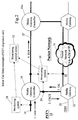
- a Media Gateway Controller (MGC) 10 and an associated Media Gateway (MG) 12 link the public switched telephone network (PSTN) 14 to a packet network 16, which in this example is shown as using Asynchronous Transfer Mode (ATM) technology.
- the PSTN 14 uses SS7 ISUP over its signalling links 18 to the MGC, and time division multiplexing (TDM) for transmission of user traffic (for example voice calls and other bearer data items) over its transmission or bearer channels 20 to the MG 12.
- the MGC 10 exchanges signalling messages with other MGCs, such as an MGC 10 a , over a signalling link 22 using SS7 ISUP with extensions which have been previously defined for this purpose.
- the MG 12 transfers the voice calls, in the form of Voice over ATM messages, to and from the ATM network 16 over ATM channels 24 which also carry ATM signalling messages in conventional manner.
- the MGC 10 controls the MG 12 via a link 26 carrying MGCP messages.
- Figure 2 shows part of one possible sequence of messages used to set up a call across such a network, as follows:
- the different messages on their respective links all relate to the same overall call or transaction, the different ways in which their respective protocols identify the call (e.g. by reference to the subscriber, or to the equipment used to carry the call, or to an arbitrary reference number) prevent a simple association of these messages to derive a complete description of the call. Such descriptions are desirable, for example, to build Call Detail Records for billing and other management functions, or in order to trace progress of the call through the system during fault finding.
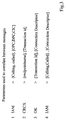
- Figure 3 highlights fields in (by way of example) the SS7 and MGCP protocols which may be used to correlate messages belonging to a single call traversing the network shown in Figure 2.
- the PSTN trunk associated with a call is identified in the SS7 ISUP (or Telephone User Part ⁇ TUP) signalling by the combination of Destination Point Code (DPC), Originating Point Code (OPC) and Circuit Identification Code (CIC) fields, as defined in the ITU's Recommendation Q.767.
- DPC Destination Point Code
- OPC Originating Point Code
- CIC Circuit Identification Code
- the same trunk is identified by an endpointname of the form localEndpointname@Domainname, where localEndpointname is a character string, and Domainname is a Domain name as defined by the Internet Engineering Task Force's document RFC 821.
- endpointname of the form localEndpointname@Domainname
- Domainname is a Domain name as defined by the Internet Engineering Task Force's document RFC 821.
- the invention enables the association between the SS7 OPC-DPC-CIC trunk identification and the endpointname used by the MGCP (or any similar protocol) to be discovered and stored for subsequent use by any appropriate application program, such as for billing.
- the various signalling links and channels in the network surrounding the MGC 10 are provided with passive monitoring devices 28 and 30 as shown in Figure 2.
- passive monitoring devices 28 and 30 For monitoring SS7 links Hewlett-Packard acceSS7 monitoring equipment may be used; for other channels (e.g. ATM or IP) equipment of similar functionality with interfaces adapted to match those technologies would be used.
- the monitoring devices 28 and 30 detect and generate copies of all signalling messages traversing the links and channels around the MGC 10. These copies are then transferred, for example via a local area network, to a monitoring control centre 32, which typically comprises data storage equipment and associated data processing equipment operating under the control of appropriate software program instructions to perform the required analyses of the data collected.
- Another way of making an association is to correlate the OPC-DPC-CIC identification from the SS7 IAM with the endpointname in an MGCP CRCX message which occurs within a predetermined short time interval after the IAM arrives (and provided no other such IAM messages occur between the times the chosen IAM and the CRCX are monitored, and also provided no subsequent CRCX messages are monitored during a suitably long time period thereafter). Associations detected in this manner should be marked as 'suspected' rather than 'known' in the table, until they can be confirmed by the first technique described above. This approach may speed up the discovery process in cases where a high proportion of calls are controlled by a single MGC.
- This alternative method can be refined by eliminating from consideration any messages containing OPC-DPC-CIC identifications or endpointnames already present (as 'known') in the association table. This increases the probability that the messages under consideration will reduce to a single IAM and CRCX pair. As the table of discovered associations becomes more nearly complete, this method becomes more successful.
- the association table can be accessed in use by protocol monitoring applications which need to establish linkages between messages relating to a particular call. Depending on the particular type of application, 'suspected' associations could be either ignored or used, with an appropriate warning to the application user.
Landscapes
- Engineering & Computer Science (AREA)
- Computer Networks & Wireless Communication (AREA)
- Signal Processing (AREA)
- Telephonic Communication Services (AREA)
- Data Exchanges In Wide-Area Networks (AREA)
Abstract
Description
- Figure 1
- shows the topology of an exemplary network incorporating multiple telecommunications media and distributed switches;
- Figure 2
- shows a possible sequence of signalling messages used to set up a call across a network such as that of Figure 1; and
- Figure 3
- lists protocol fields which may be used to correlate messages relating to a single call traversing multiple telecommunications media.
- where an IAM between MGC's (inter-MGC IAM) is generated following the arrival of an SS7 IAM (or vice versa), these two messages can be correlated by the combination of Calling & Called address parameters;
- the SDP connection description parameter included in inter-MGC IAMs and MGCP OK messages can be used to correlate these messages;
- the MGCP OK message can be correlated with the MGCP CRCX message using the transaction ID included in both of them.
Claims (14)
- A method of establishing a correlation between the contents of signalling messages conforming to different protocols but relating to a common bearer data item, comprising the steps of:monitoring messages traversing at least first and second signalling channels which conform to respective first and second signalling protocols;selecting first messages containing an identification related to an end user of said bearer data item and a first identification of a bearer channel carrying said bearer data item;selecting second messages containing a second identification of a bearer channel carrying said bearer data item and a call identifier with system-wide significance;selecting third messages containing an identification related to an end user of said data item and a call identifier with system-wide significance; andusing said selected third messages to establish a correlation between the first and second bearer channel identifications.
- A method of establishing a correlation between the contents of signalling messages conforming to different protocols but relating to a common bearer data item, comprising the steps of:monitoring messages traversing at least first and second signalling channels which conform to respective first and second signalling protocols;selecting first messages containing an identification related to an end user of said bearer data item and a first identification of a bearer channel carrying said bearer data item;selecting second messages containing a second identification of a bearer channel carrying said bearer data item and a transaction identifier;selecting third messages containing an identification related to an end user of said data item and packet network address information;selecting fourth messages containing packet network address information and a transaction identifier; andusing said selected third and fourth messages to establish a correlation between the first and second bearer channel identifications.
- The method of claim 2, wherein the fourth messages comprise responses to said second messages.
- The method of any one of the preceding claims, wherein the first messages are SS7 ISUP Initial Address Messages, the end user identification comprises calling and called party addresses, and the first bearer channel identification comprises an OPC-DPC-CIC combination.
- The method of any one of the preceding claims, wherein the second messages are MGCP Create Connection messages and the second bearer channel identification comprises endpoint identifier parameters.
- The method of any one of the preceding claims, wherein the third messages are ISUP Initial Address Messages and the end user identification comprises calling and called party addresses.
- The method of claim 2, wherein the fourth messages are MGCP Response messages, the packet network address information comprises an SDP connection descriptor parameter, and the transaction identifiers comprise transaction ID parameters.
- A method of establishing a correlation between the contents of signalling messages conforming to different protocols but relating to a common bearer data item, comprising the steps of:monitoring messages traversing at least first and second signalling channels which conform to respective first and second signalling protocols;selecting first call initiation messages containing a first identification of a bearer channel carrying said bearer data item;selecting second call initiation messages containing a second identification of a bearer channel carrying said bearer data item;determining elapsed time between occurrence of said first and second messages; andestablishing a correlation between first and second messages for which the elapsed time is below a predetermined threshold, and thus between the first and second bearer channel identifications.
- The method of claim 8, wherein establishment of a correlation between first and second messages is also dependent upon absence of any similar messages within a predetermined time interval.
- The method of claim 8, wherein the first messages are SS7 ISUP Initial Address Messages, the end user identification comprises calling and called party addresses, and the first bearer channel identification comprises an OPC-DPC-CIC combination.
- The method of claim 8, wherein the second messages are MGCP Create Connection messages and the second bearer channel identification comprises endpoint identifier parameters.
- Apparatus for establishing a correlation between the contents of signalling messages conforming to different protocols but relating to a common bearer data item, comprising:monitoring equipment for monitoring messages traversing at least first and second signalling channels which conform to respective first and second signalling protocols;a first selector for selecting first messages containing an identification related to an end user of said bearer data item and a first identification of a bearer channel carrying said bearer data item;a second selector for selecting second messages containing a second identification of a bearer channel carrying said bearer data item and a call identifier with system-wide significance;a third selector for selecting third messages containing an identification related to an end user of said data item and a call identifier with system-wide significance; anda correlator for establishing a correlation between the first and second bearer channel identifications in accordance with said selected third messages.
- Apparatus for establishing a correlation between the contents of signalling messages conforming to different protocols but relating to a common bearer data item, comprising:monitoring equipment for monitoring messages traversing at least first and second signalling channels which conform to respective first and second signalling protocols;a first selector for selecting first messages containing an identification related to an end user of said bearer data item and a first identification of a bearer channel carrying said bearer data item;a second selector for selecting second messages containing a second identification of a bearer channel carrying said bearer data item and a transaction identifier;a third selector for selecting third messages containing an identification related to an end user of said data item and packet network address information;a fourth selector for selecting fourth messages containing packet network address information and a transaction identifier; anda correlator for establishing a correlation between the first and second bearer channel identifications in accordance with said selected third and fourth messages.
- Apparatus for establishing a correlation between the contents of signalling messages conforming to different protocols but relating to a common bearer data item, comprising:a monitor for monitoring messages traversing at least first and second signalling channels which conform to respective first and second signalling protocols;a first selector for selecting first call initiation messages containing a first identification of a bearer channel carrying said bearer data item;a second selector for selecting second call initiation messages containing a second identification of a bearer channel carrying said bearer data item;a monitor for determining elapsed time between occurrence of said first and second messages; anda correlator for establishing a correlation between first and second messages for which the elapsed time is below a predetermined threshold, and thus between the first and second bearer channel identifications.
Applications Claiming Priority (2)
| Application Number | Priority Date | Filing Date | Title |
|---|---|---|---|
| GB9923866 | 1999-10-08 | ||
| GBGB9923866.9A GB9923866D0 (en) | 1999-10-08 | 1999-10-08 | Correlation of signalling messages |
Publications (4)
| Publication Number | Publication Date |
|---|---|
| EP1093312A2 true EP1093312A2 (en) | 2001-04-18 |
| EP1093312A4 EP1093312A4 (en) | 2001-11-22 |
| EP1093312A3 EP1093312A3 (en) | 2002-01-09 |
| EP1093312B1 EP1093312B1 (en) | 2004-06-30 |
Family
ID=10862397
Family Applications (1)
| Application Number | Title | Priority Date | Filing Date |
|---|---|---|---|
| EP00308330A Expired - Lifetime EP1093312B1 (en) | 1999-10-08 | 2000-09-22 | Correlation of signalling messages |
Country Status (4)
| Country | Link |
|---|---|
| US (1) | US7054325B1 (en) |
| EP (1) | EP1093312B1 (en) |
| DE (1) | DE60011860T2 (en) |
| GB (1) | GB9923866D0 (en) |
Cited By (6)
| Publication number | Priority date | Publication date | Assignee | Title |
|---|---|---|---|---|
| WO2003032604A1 (en) * | 2001-10-05 | 2003-04-17 | Nokia Corporation | Address transition and message correlation between network nodes |
| US6782264B2 (en) | 1999-01-08 | 2004-08-24 | Trueposition, Inc. | Monitoring of call information in a wireless location system |
| EP1746769A1 (en) * | 2005-07-20 | 2007-01-24 | Agilent Technologies, Inc. | Measurement system and method of measuring a transit metric |
| EP1832099A4 (en) * | 2004-12-30 | 2009-04-15 | Grape Technology Group Inc | UNIVERSAL CALL IDENTIFIER ON CROSS PLATFORM |
| US7783299B2 (en) | 1999-01-08 | 2010-08-24 | Trueposition, Inc. | Advanced triggers for location-based service applications in a wireless location system |
| US8213957B2 (en) | 2009-04-22 | 2012-07-03 | Trueposition, Inc. | Network autonomous wireless location system |
Families Citing this family (12)
| Publication number | Priority date | Publication date | Assignee | Title |
|---|---|---|---|---|
| GB9930614D0 (en) * | 1999-12-24 | 2000-02-16 | Ericsson Telefon Ab L M | Signalling in a telecommunications network |
| AUPR754001A0 (en) * | 2001-09-06 | 2001-09-27 | Telefonaktiebolaget Lm Ericsson (Publ) | Method and system of enabling a generic telecommunications service in gateway control protocols |
| EP1303118A1 (en) * | 2001-10-12 | 2003-04-16 | Siemens Aktiengesellschaft | Method to establish a communication link between subscriber stations of a switching system comprising two communication networks |
| US7277421B1 (en) * | 2002-01-16 | 2007-10-02 | Verizon Services Corp. | Telephone call processing using SIP and/or ENUM |
| US7324502B2 (en) * | 2002-05-20 | 2008-01-29 | Agilent Technologies, Inc. | System and method for mapping a PSTN trunk to a packet network endpoint |
| US7333500B2 (en) * | 2002-09-24 | 2008-02-19 | Nortel Networks Limited | Methods for discovering network address and port translators |
| US20050105559A1 (en) * | 2003-11-14 | 2005-05-19 | Santera Systems, Inc. | Methods and systems for providing transport of media gateway control commands using high-level datalink control (HDLC) protocol |
| US7609706B2 (en) * | 2004-03-03 | 2009-10-27 | Agilent Technologies, Inc. | System and method for correlation of dissimilar telecommunication signaling protocols |
| US8254939B2 (en) * | 2007-03-30 | 2012-08-28 | Tektronix, Inc. | System and method for mid-call merging of multi-protocol call messages on the Iub and Iur interfaces in UTRAN |
| US8365190B2 (en) * | 2008-06-16 | 2013-01-29 | International Business Machines Corporation | Correlated message identifiers for events |
| US8595158B2 (en) * | 2010-06-11 | 2013-11-26 | TriaSys Technologies Corporation | System and method for mapping SS7 bearer channels |
| US9306832B2 (en) | 2012-02-27 | 2016-04-05 | Ravello Systems Ltd. | Virtualized network for virtualized guests as an independent overlay over a physical network |
Family Cites Families (14)
| Publication number | Priority date | Publication date | Assignee | Title |
|---|---|---|---|---|
| US5377186A (en) * | 1993-07-21 | 1994-12-27 | Telefonaktiebolaget L M Ericsson | System for providing enhanced subscriber services using ISUP call-setup protocol |
| US6324179B1 (en) * | 1994-12-21 | 2001-11-27 | Lucent Technologies Inc. | ATM network arranged to interface with STM in-band signaling |
| EP0742662B1 (en) | 1995-05-08 | 2002-09-18 | Koninklijke KPN N.V. | Protocol conversion arrangement and method |
| JP3763907B2 (en) * | 1995-12-12 | 2006-04-05 | エイ・ティ・アンド・ティ・コーポレーション | Method for monitoring signaling messages in a communication network |
| US5712908A (en) * | 1995-12-22 | 1998-01-27 | Unisys Corporation | Apparatus and method for generating call duration billing records utilizing ISUP messages in the CCS/SS7 telecommunications network |
| EP0805609B1 (en) * | 1996-05-03 | 2004-03-17 | Agilent Technologies, Inc. (a Delaware corporation) | Method and apparatus for tracking identity-code changes in a mobile communications system |
| CA2216620C (en) * | 1997-09-24 | 2002-06-25 | Bell Canada | Method and apparatus for dynamically routing calls in an intelligent network |
| EP0948163A1 (en) * | 1998-04-01 | 1999-10-06 | Hewlett-Packard Company | Generating telephony service detail records |
| US6169735B1 (en) * | 1998-04-30 | 2001-01-02 | Sbc Technology Resources, Inc. | ATM-based distributed virtual tandem switching system |
| US6731627B1 (en) * | 1998-11-17 | 2004-05-04 | Cisco Technology, Inc. | Virtual loop carrier system |
| US6434140B1 (en) * | 1998-12-04 | 2002-08-13 | Nortel Networks Limited | System and method for implementing XoIP over ANSI-136-A circuit/switched/packet-switched mobile communications networks |
| US6493444B2 (en) * | 1999-03-16 | 2002-12-10 | Bell Canada | Enhanced application telephone network |
| US6456845B1 (en) * | 1999-12-15 | 2002-09-24 | Tekelec | Methods and systems for observing, analyzing and correlating multi-protocol signaling message traffic in a mobile telecommunications network |
| US6389130B1 (en) * | 2000-03-30 | 2002-05-14 | Oresis Communications | Public switched telephone network call routing using dyamic asynchronous mode transfer bearer voice trunking |
-
1999
- 1999-10-08 GB GBGB9923866.9A patent/GB9923866D0/en not_active Ceased
-
2000
- 2000-09-22 DE DE60011860T patent/DE60011860T2/en not_active Expired - Fee Related
- 2000-09-22 EP EP00308330A patent/EP1093312B1/en not_active Expired - Lifetime
- 2000-10-05 US US09/679,078 patent/US7054325B1/en not_active Expired - Lifetime
Cited By (16)
| Publication number | Priority date | Publication date | Assignee | Title |
|---|---|---|---|---|
| US8320931B2 (en) | 1999-01-08 | 2012-11-27 | Trueposition, Inc. | Geo-fencing in a wireless location system |
| US6782264B2 (en) | 1999-01-08 | 2004-08-24 | Trueposition, Inc. | Monitoring of call information in a wireless location system |
| US7167713B2 (en) | 1999-01-08 | 2007-01-23 | Trueposition, Inc. | Monitoring of call information in a wireless location system |
| US9288628B2 (en) | 1999-01-08 | 2016-03-15 | Trueposition, Inc. | Advanced triggers for location-based service applications in a wireless location system |
| US8838139B2 (en) | 1999-01-08 | 2014-09-16 | Trueposition, Inc. | Advanced triggers for location-based service applications in a wireless location system |
| US7783299B2 (en) | 1999-01-08 | 2010-08-24 | Trueposition, Inc. | Advanced triggers for location-based service applications in a wireless location system |
| US8509805B2 (en) | 1999-01-08 | 2013-08-13 | Trueposition, Inc. | Advanced triggers for location-based service applications in a wireless location system |
| WO2003032604A1 (en) * | 2001-10-05 | 2003-04-17 | Nokia Corporation | Address transition and message correlation between network nodes |
| CN100542165C (en) * | 2001-10-05 | 2009-09-16 | 诺基亚公司 | Method and system for providing address translation and message correlation |
| US7818453B2 (en) | 2001-10-05 | 2010-10-19 | Nokia Corporation | Address transition and message correlation between networks nodes |
| EP1832099A4 (en) * | 2004-12-30 | 2009-04-15 | Grape Technology Group Inc | UNIVERSAL CALL IDENTIFIER ON CROSS PLATFORM |
| US8331246B2 (en) | 2005-07-20 | 2012-12-11 | Jds Uniphase Corporation | Measurement system and method of measuring a transit metric |
| CN1901484B (en) * | 2005-07-20 | 2010-12-15 | 安捷伦科技有限公司 | Measuring Measured Measurement Systems and Methods |
| GB2428534B (en) * | 2005-07-20 | 2010-06-02 | Agilent Technologies Inc | Measurement system and method of measuring a transit metric |
| EP1746769A1 (en) * | 2005-07-20 | 2007-01-24 | Agilent Technologies, Inc. | Measurement system and method of measuring a transit metric |
| US8213957B2 (en) | 2009-04-22 | 2012-07-03 | Trueposition, Inc. | Network autonomous wireless location system |
Also Published As
| Publication number | Publication date |
|---|---|
| US7054325B1 (en) | 2006-05-30 |
| EP1093312B1 (en) | 2004-06-30 |
| EP1093312A3 (en) | 2002-01-09 |
| EP1093312A4 (en) | 2001-11-22 |
| DE60011860D1 (en) | 2004-08-05 |
| DE60011860T2 (en) | 2005-07-14 |
| GB9923866D0 (en) | 1999-12-08 |
Similar Documents
| Publication | Publication Date | Title |
|---|---|---|
| US7054325B1 (en) | Correlation of signalling messages | |
| EP1249986B1 (en) | Generating call detail records | |
| US7313129B1 (en) | Arrangement for sharing a single signaling point code between multiple hosts in an IP-based network | |
| US6754180B1 (en) | System, method, and computer program product for support of bearer path services in a distributed control network | |
| KR100453350B1 (en) | Routing Device and Method of Using BICC in the Next Generation Open Network | |
| EP1676431B1 (en) | Methods and systems for providing lawful intercept of a media stream in a media gateway | |
| EP1277355B1 (en) | Methods and systems for providing dynamic routing key registration | |
| EP1672836A1 (en) | Generating service detail records with quality of service data | |
| EP1273131B1 (en) | Signalling in a telecommunications network | |
| US20070121908A1 (en) | Methods, systems, and computer program products for providing address translation using subsequent address information | |
| EP1436963B1 (en) | Method, apparatus and computer program for selecting a media gateway control function based on the monitoring of resources of media gateway functions | |
| US7477646B1 (en) | Arrangement for controlling congestion for multiple host groups sharing a single signaling point code in an IP-based network using respective group congestion levels | |
| US20030214971A1 (en) | System and method for mapping a PSTN trunk to a packet network endpoint | |
| US20030214963A1 (en) | System and method for correlation and real-time display of mapped PSTN trunk identifiers and gateway control protocol endpoints | |
| EP1222825B1 (en) | Media gateway control | |
| WO2001097481A1 (en) | System and method for controlling a media gateway | |
| US7599352B2 (en) | Method for providing PSTN/ISDN services in next generation networks | |
| US8102989B1 (en) | Apparatus and method for switching from overlap signaling to en bloc signaling in a data network | |
| KR100440584B1 (en) | A management method of sctp multi-association | |
| US20100220718A1 (en) | Method for detecting calls and corresponding units | |
| GB2369000A (en) | Signalling gateway redundancy | |
| KR100485213B1 (en) | Signaling gateway transport and sharing method traffic of application server therein | |
| WO2006081952A1 (en) | Method and system to provide redundancy for calls | |
| KR20060029979A (en) | Load balancing and routing device and method using media gateway control protocol |
Legal Events
| Date | Code | Title | Description |
|---|---|---|---|
| PUAI | Public reference made under article 153(3) epc to a published international application that has entered the european phase |
Free format text: ORIGINAL CODE: 0009012 |
|
| AK | Designated contracting states |
Kind code of ref document: A2 Designated state(s): DE FI FR GB SE Kind code of ref document: A2 Designated state(s): AT BE CH CY DE DK ES FI FR GB GR IE IT LI LU MC NL PT SE |
|
| AX | Request for extension of the european patent |
Free format text: AL;LT;LV;MK;RO;SI |
|
| RAP1 | Party data changed (applicant data changed or rights of an application transferred) |
Owner name: AGILENT TECHNOLOGIES INC. |
|
| RAP1 | Party data changed (applicant data changed or rights of an application transferred) |
Owner name: AGILENT TECHNOLOGIES INC. A DELAWARE CORPORATION |
|
| RAP1 | Party data changed (applicant data changed or rights of an application transferred) |
Owner name: AGILENT TECHNOLOGIES, INC. (A DELAWARE CORPORATION |
|
| PUAL | Search report despatched |
Free format text: ORIGINAL CODE: 0009013 |
|
| AK | Designated contracting states |
Kind code of ref document: A3 Designated state(s): AT BE CH CY DE DK ES FI FR GB GR IE IT LI LU MC NL PT SE |
|
| AX | Request for extension of the european patent |
Free format text: AL;LT;LV;MK;RO;SI |
|
| 17P | Request for examination filed |
Effective date: 20020709 |
|
| AKX | Designation fees paid |
Free format text: DE FI FR GB SE |
|
| 17Q | First examination report despatched |
Effective date: 20020906 |
|
| GRAP | Despatch of communication of intention to grant a patent |
Free format text: ORIGINAL CODE: EPIDOSNIGR1 |
|
| GRAS | Grant fee paid |
Free format text: ORIGINAL CODE: EPIDOSNIGR3 |
|
| GRAA | (expected) grant |
Free format text: ORIGINAL CODE: 0009210 |
|
| AK | Designated contracting states |
Kind code of ref document: B1 Designated state(s): DE FI FR GB SE |
|
| PG25 | Lapsed in a contracting state [announced via postgrant information from national office to epo] |
Ref country code: FI Free format text: LAPSE BECAUSE OF FAILURE TO SUBMIT A TRANSLATION OF THE DESCRIPTION OR TO PAY THE FEE WITHIN THE PRESCRIBED TIME-LIMIT Effective date: 20040630 |
|
| REG | Reference to a national code |
Ref country code: GB Ref legal event code: FG4D |
|
| REG | Reference to a national code |
Ref country code: IE Ref legal event code: FG4D |
|
| REF | Corresponds to: |
Ref document number: 60011860 Country of ref document: DE Date of ref document: 20040805 Kind code of ref document: P |
|
| PG25 | Lapsed in a contracting state [announced via postgrant information from national office to epo] |
Ref country code: SE Free format text: LAPSE BECAUSE OF FAILURE TO SUBMIT A TRANSLATION OF THE DESCRIPTION OR TO PAY THE FEE WITHIN THE PRESCRIBED TIME-LIMIT Effective date: 20040930 |
|
| ET | Fr: translation filed | ||
| PLBE | No opposition filed within time limit |
Free format text: ORIGINAL CODE: 0009261 |
|
| STAA | Information on the status of an ep patent application or granted ep patent |
Free format text: STATUS: NO OPPOSITION FILED WITHIN TIME LIMIT |
|
| 26N | No opposition filed |
Effective date: 20050331 |
|
| REG | Reference to a national code |
Ref country code: IE Ref legal event code: MM4A |
|
| PGFP | Annual fee paid to national office [announced via postgrant information from national office to epo] |
Ref country code: FR Payment date: 20060918 Year of fee payment: 7 |
|
| PGFP | Annual fee paid to national office [announced via postgrant information from national office to epo] |
Ref country code: GB Payment date: 20070926 Year of fee payment: 8 |
|
| PGFP | Annual fee paid to national office [announced via postgrant information from national office to epo] |
Ref country code: DE Payment date: 20071031 Year of fee payment: 8 |
|
| REG | Reference to a national code |
Ref country code: FR Ref legal event code: ST Effective date: 20080531 |
|
| PG25 | Lapsed in a contracting state [announced via postgrant information from national office to epo] |
Ref country code: FR Free format text: LAPSE BECAUSE OF NON-PAYMENT OF DUE FEES Effective date: 20071001 |
|
| GBPC | Gb: european patent ceased through non-payment of renewal fee |
Effective date: 20080922 |
|
| PG25 | Lapsed in a contracting state [announced via postgrant information from national office to epo] |
Ref country code: DE Free format text: LAPSE BECAUSE OF NON-PAYMENT OF DUE FEES Effective date: 20090401 |
|
| PG25 | Lapsed in a contracting state [announced via postgrant information from national office to epo] |
Ref country code: GB Free format text: LAPSE BECAUSE OF NON-PAYMENT OF DUE FEES Effective date: 20080922 |