EP1091587A2 - User preference information structure having multiple hierarchical structure and method for providing multimedia information - Google Patents
User preference information structure having multiple hierarchical structure and method for providing multimedia information Download PDFInfo
- Publication number
- EP1091587A2 EP1091587A2 EP00402640A EP00402640A EP1091587A2 EP 1091587 A2 EP1091587 A2 EP 1091587A2 EP 00402640 A EP00402640 A EP 00402640A EP 00402640 A EP00402640 A EP 00402640A EP 1091587 A2 EP1091587 A2 EP 1091587A2
- Authority
- EP
- European Patent Office
- Prior art keywords
- information
- user
- user preference
- preference
- item
- Prior art date
- Legal status (The legal status is an assumption and is not a legal conclusion. Google has not performed a legal analysis and makes no representation as to the accuracy of the status listed.)
- Ceased
Links
Images



Classifications
-
- H—ELECTRICITY
- H04—ELECTRIC COMMUNICATION TECHNIQUE
- H04N—PICTORIAL COMMUNICATION, e.g. TELEVISION
- H04N21/00—Selective content distribution, e.g. interactive television or video on demand [VOD]
- H04N21/40—Client devices specifically adapted for the reception of or interaction with content, e.g. set-top-box [STB]; Operations thereof
- H04N21/45—Management operations performed by the client for facilitating the reception of or the interaction with the content or administrating data related to the end-user or to the client device itself, e.g. learning user preferences for recommending movies, resolving scheduling conflicts
- H04N21/466—Learning process for intelligent management, e.g. learning user preferences for recommending movies
- H04N21/4667—Processing of monitored end-user data, e.g. trend analysis based on the log file of viewer selections
-
- H—ELECTRICITY
- H04—ELECTRIC COMMUNICATION TECHNIQUE
- H04N—PICTORIAL COMMUNICATION, e.g. TELEVISION
- H04N21/00—Selective content distribution, e.g. interactive television or video on demand [VOD]
- H04N21/20—Servers specifically adapted for the distribution of content, e.g. VOD servers; Operations thereof
- H04N21/25—Management operations performed by the server for facilitating the content distribution or administrating data related to end-users or client devices, e.g. end-user or client device authentication, learning user preferences for recommending movies
- H04N21/258—Client or end-user data management, e.g. managing client capabilities, user preferences or demographics, processing of multiple end-users preferences to derive collaborative data
-
- G—PHYSICS
- G06—COMPUTING OR CALCULATING; COUNTING
- G06F—ELECTRIC DIGITAL DATA PROCESSING
- G06F16/00—Information retrieval; Database structures therefor; File system structures therefor
- G06F16/40—Information retrieval; Database structures therefor; File system structures therefor of multimedia data, e.g. slideshows comprising image and additional audio data
- G06F16/43—Querying
- G06F16/435—Filtering based on additional data, e.g. user or group profiles
-
- H—ELECTRICITY
- H04—ELECTRIC COMMUNICATION TECHNIQUE
- H04H—BROADCAST COMMUNICATION
- H04H60/00—Arrangements for broadcast applications with a direct linking to broadcast information or broadcast space-time; Broadcast-related systems
- H04H60/35—Arrangements for identifying or recognising characteristics with a direct linkage to broadcast information or to broadcast space-time, e.g. for identifying broadcast stations or for identifying users
- H04H60/46—Arrangements for identifying or recognising characteristics with a direct linkage to broadcast information or to broadcast space-time, e.g. for identifying broadcast stations or for identifying users for recognising users' preferences
-
- H—ELECTRICITY
- H04—ELECTRIC COMMUNICATION TECHNIQUE
- H04N—PICTORIAL COMMUNICATION, e.g. TELEVISION
- H04N21/00—Selective content distribution, e.g. interactive television or video on demand [VOD]
- H04N21/20—Servers specifically adapted for the distribution of content, e.g. VOD servers; Operations thereof
- H04N21/23—Processing of content or additional data; Elementary server operations; Server middleware
- H04N21/235—Processing of additional data, e.g. scrambling of additional data or processing content descriptors
-
- H—ELECTRICITY
- H04—ELECTRIC COMMUNICATION TECHNIQUE
- H04N—PICTORIAL COMMUNICATION, e.g. TELEVISION
- H04N21/00—Selective content distribution, e.g. interactive television or video on demand [VOD]
- H04N21/20—Servers specifically adapted for the distribution of content, e.g. VOD servers; Operations thereof
- H04N21/25—Management operations performed by the server for facilitating the content distribution or administrating data related to end-users or client devices, e.g. end-user or client device authentication, learning user preferences for recommending movies
- H04N21/258—Client or end-user data management, e.g. managing client capabilities, user preferences or demographics, processing of multiple end-users preferences to derive collaborative data
- H04N21/25866—Management of end-user data
- H04N21/25883—Management of end-user data being end-user demographical data, e.g. age, family status or address
-
- H—ELECTRICITY
- H04—ELECTRIC COMMUNICATION TECHNIQUE
- H04N—PICTORIAL COMMUNICATION, e.g. TELEVISION
- H04N21/00—Selective content distribution, e.g. interactive television or video on demand [VOD]
- H04N21/20—Servers specifically adapted for the distribution of content, e.g. VOD servers; Operations thereof
- H04N21/25—Management operations performed by the server for facilitating the content distribution or administrating data related to end-users or client devices, e.g. end-user or client device authentication, learning user preferences for recommending movies
- H04N21/258—Client or end-user data management, e.g. managing client capabilities, user preferences or demographics, processing of multiple end-users preferences to derive collaborative data
- H04N21/25866—Management of end-user data
- H04N21/25891—Management of end-user data being end-user preferences
-
- H—ELECTRICITY
- H04—ELECTRIC COMMUNICATION TECHNIQUE
- H04N—PICTORIAL COMMUNICATION, e.g. TELEVISION
- H04N21/00—Selective content distribution, e.g. interactive television or video on demand [VOD]
- H04N21/40—Client devices specifically adapted for the reception of or interaction with content, e.g. set-top-box [STB]; Operations thereof
- H04N21/43—Processing of content or additional data, e.g. demultiplexing additional data from a digital video stream; Elementary client operations, e.g. monitoring of home network or synchronising decoder's clock; Client middleware
- H04N21/435—Processing of additional data, e.g. decrypting of additional data, reconstructing software from modules extracted from the transport stream
-
- H—ELECTRICITY
- H04—ELECTRIC COMMUNICATION TECHNIQUE
- H04N—PICTORIAL COMMUNICATION, e.g. TELEVISION
- H04N21/00—Selective content distribution, e.g. interactive television or video on demand [VOD]
- H04N21/40—Client devices specifically adapted for the reception of or interaction with content, e.g. set-top-box [STB]; Operations thereof
- H04N21/45—Management operations performed by the client for facilitating the reception of or the interaction with the content or administrating data related to the end-user or to the client device itself, e.g. learning user preferences for recommending movies, resolving scheduling conflicts
- H04N21/4508—Management of client data or end-user data
- H04N21/4532—Management of client data or end-user data involving end-user characteristics, e.g. viewer profile, preferences
-
- H—ELECTRICITY
- H04—ELECTRIC COMMUNICATION TECHNIQUE
- H04N—PICTORIAL COMMUNICATION, e.g. TELEVISION
- H04N21/00—Selective content distribution, e.g. interactive television or video on demand [VOD]
- H04N21/40—Client devices specifically adapted for the reception of or interaction with content, e.g. set-top-box [STB]; Operations thereof
- H04N21/45—Management operations performed by the client for facilitating the reception of or the interaction with the content or administrating data related to the end-user or to the client device itself, e.g. learning user preferences for recommending movies, resolving scheduling conflicts
- H04N21/454—Content or additional data filtering, e.g. blocking advertisements
-
- H—ELECTRICITY
- H04—ELECTRIC COMMUNICATION TECHNIQUE
- H04N—PICTORIAL COMMUNICATION, e.g. TELEVISION
- H04N21/00—Selective content distribution, e.g. interactive television or video on demand [VOD]
- H04N21/40—Client devices specifically adapted for the reception of or interaction with content, e.g. set-top-box [STB]; Operations thereof
- H04N21/47—End-user applications
- H04N21/475—End-user interface for inputting end-user data, e.g. personal identification number [PIN], preference data
- H04N21/4755—End-user interface for inputting end-user data, e.g. personal identification number [PIN], preference data for defining user preferences, e.g. favourite actors or genre
-
- H—ELECTRICITY
- H04—ELECTRIC COMMUNICATION TECHNIQUE
- H04N—PICTORIAL COMMUNICATION, e.g. TELEVISION
- H04N7/00—Television systems
- H04N7/16—Analogue secrecy systems; Analogue subscription systems
- H04N7/162—Authorising the user terminal, e.g. by paying; Registering the use of a subscription channel, e.g. billing
- H04N7/163—Authorising the user terminal, e.g. by paying; Registering the use of a subscription channel, e.g. billing by receiver means only
-
- Y—GENERAL TAGGING OF NEW TECHNOLOGICAL DEVELOPMENTS; GENERAL TAGGING OF CROSS-SECTIONAL TECHNOLOGIES SPANNING OVER SEVERAL SECTIONS OF THE IPC; TECHNICAL SUBJECTS COVERED BY FORMER USPC CROSS-REFERENCE ART COLLECTIONS [XRACs] AND DIGESTS
- Y10—TECHNICAL SUBJECTS COVERED BY FORMER USPC
- Y10S—TECHNICAL SUBJECTS COVERED BY FORMER USPC CROSS-REFERENCE ART COLLECTIONS [XRACs] AND DIGESTS
- Y10S707/00—Data processing: database and file management or data structures
- Y10S707/99931—Database or file accessing
- Y10S707/99933—Query processing, i.e. searching
- Y10S707/99936—Pattern matching access
-
- Y—GENERAL TAGGING OF NEW TECHNOLOGICAL DEVELOPMENTS; GENERAL TAGGING OF CROSS-SECTIONAL TECHNOLOGIES SPANNING OVER SEVERAL SECTIONS OF THE IPC; TECHNICAL SUBJECTS COVERED BY FORMER USPC CROSS-REFERENCE ART COLLECTIONS [XRACs] AND DIGESTS
- Y10—TECHNICAL SUBJECTS COVERED BY FORMER USPC
- Y10S—TECHNICAL SUBJECTS COVERED BY FORMER USPC CROSS-REFERENCE ART COLLECTIONS [XRACs] AND DIGESTS
- Y10S707/00—Data processing: database and file management or data structures
- Y10S707/99941—Database schema or data structure
- Y10S707/99943—Generating database or data structure, e.g. via user interface
-
- Y—GENERAL TAGGING OF NEW TECHNOLOGICAL DEVELOPMENTS; GENERAL TAGGING OF CROSS-SECTIONAL TECHNOLOGIES SPANNING OVER SEVERAL SECTIONS OF THE IPC; TECHNICAL SUBJECTS COVERED BY FORMER USPC CROSS-REFERENCE ART COLLECTIONS [XRACs] AND DIGESTS
- Y10—TECHNICAL SUBJECTS COVERED BY FORMER USPC
- Y10S—TECHNICAL SUBJECTS COVERED BY FORMER USPC CROSS-REFERENCE ART COLLECTIONS [XRACs] AND DIGESTS
- Y10S707/00—Data processing: database and file management or data structures
- Y10S707/99941—Database schema or data structure
- Y10S707/99944—Object-oriented database structure
- Y10S707/99945—Object-oriented database structure processing
Definitions
- the present invention relates to a user preference information structure having a multiple hierarchical structure and a method for providing multimedia information using the same which are capable of quickly and easily recommending and providing information desired by information user in a multimedia service system environment consisting of an information provider and an information user.
- the information user can hardly absorb explosively increasing amount of information.
- the same phenomenon also occurs in the Internet environment that offers huge amount of information as well as in a television broadcast environment that offers entertainment and life information.
- user preference information by items of information desired by users is constructed on the basis of a use record (that is, a user profile) that has been used by a user by direct selection, so as to be provided to users.
- a use record that is, a user profile
- the information providing methods of the conventional arts are not able to adequately cope with situations that user preference values are differently set for the same information according to user's wish and that relationships between items of information are complicate and a user preference value for a single item has a different meaning according to an environment and a relationship with a different item or may be changed to a different user preference value.
- a user 'A' who likes a movie in which an actor'B' played a role (a person>an actor>'B'), may dislike a movie directed by the actor 'B' (a person>a director>'B').
- a user preference value of an upper item is low, a user preference value of a lower item is high, or otherwise, a user preference value of the upper item may be high while a user preference value of the lower item is low.
- the information providing methods of the conventional arts fail to provide proper information adaptively.
- the user'A' may want a movie with lots of violence scenes as he or she prefers a movie of violence, but, he may not want violence scenes with a news program or educational information that he or she watches on TV with children, sitting in front of a television set.
- the information providing methods of the conventional arts fails to provide proper information according to situations in which in case that an upper item is set as a movie for a violence scene, its user preference value becomes high, while in case that an upper item is set as a news program or an educational stuff, the user preference value becomes low.
- a user preference value on information can be different depending on situations that the user is put, with which the information providing methods of the conventional arts can hardly cope.
- the user may prefer a melodrama or a family movie in a rainy day, or he or she may prefer an action movie in a sunny day. That is, for the same movie item, user preference is different according to situations in which the user is put.
- the information providing methods of the conventional arts do not properly cope with it.
- the user preference may be different depending on a receiving device used by the user, with which the information providing methods of the conventional arts can hardly cope.
- the user may prefer a family-rated movie, while in case that the user watches a movie on a TV in his or her own room, he or she may prefer a movie that is not allowed for minors.
- the information providing methods of the conventional arts do not properly cope with it.
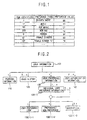
- Figure 1 illustrates user preference values of each item of information in accordance with a conventional art, in which user preference items (i.e., entertainment, music and pop music, etc) are allocated with specific item identifiers (1, 17, 181,...) and correspondingly independent user preference values (86, 43, 27,).
- user preference items i.e., entertainment, music and pop music, etc
- specific item identifiers (1, 17, 181,...)
- correspondingly independent user preference values 86, 43, 27,
- each corresponding item should be included in the use information. That is, in case that classified information only includes a name of a singer 'C' and a genre of a 'new age', not including 'entertainment' or 'music', only the 'C' item' and the 'new age' item are updated, while the user preference value for the relevant upper item such as 'entertainment, 'music', 'pop music', 'person' and ' woman singer' is not updated.
- an object of the present invention is to provide a data structure having a multiple hierarchical structure and an information providing method fitting a user preference by using the data structure, to provide information desired by an information user.
- Another object of the present invention is to provide a method for editing a data structure having a multiple hierarchical structure, to provide information desired by an information user.
- Still another object of the present invention is to provide a method for providing information by users and by preferences, in which various independent individual user preference information structures are defined and each user preference item and user preference/non-preference included in the individual user preference information structure defines a relationship in a hierarchical structure, whereby user preference/non-preference are defined from specific items to general items, and an adoption condition of each individual user preference information structure is defined, so that detailed information can be recommended, provided or limited according to a user preference that may be different depending on situations and information fitting situations can be recommended, provided or limited.
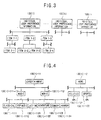
- Figure 2 is a schematic view showing a multiple hierarchical data structure in accordance with the present invention.
- user information 100 for a single user or single group of users contains personal information 110, a plurality (0, 1, ..., n) of usage history 120, user preference information 130 and a plurality of user authorization information 140.
- the user preference information 130 contains a plurality (1, 2, ..., n) of individual user preference information 130(1) and the individual user preference information 130(1) contains a user preference item 130(1)-1 and user preference/non-preference 130(1)-2 and a description 130(1)-3.
- the personal information 110 may includes a name, a sex, an age and date and year of birth of a user in addition to a user ID.
- the usage history 120 includes information on when (year, month, data, time), where (a client system ID, or location), how (information as to when an action such as play, review, pause, fast forward or stop happens) and what information (an information ID) has been used.
- usage history can be classified by history collection condition such as when the history is collected, the plurality of the usage history is allowed.
- the user authorization information 140 indicates information which is allowed to access for the user. For example, it includes information on channels that are requested and not requested to view a TV broadcasting or information on a basic channel and a charged channel.
- the user preference information 130 may include a plurality of individual user preference information 130(1), 130(2), ..., 130(n).
- Each individual user preference information 130(1) may include a single user preference item 130(1)-1, a user preference/non-preference 130(1)-2, and a single description 130(1)-3, if any.
- the description 130(1)-3 describes application conditions of each user preference information 130 contained in the user preference information 130.
- the user selects desired individual user preference information to use, or the desired individual user preference information can be selected automatically, based on the description.
- each individual user preference information may include a plurality of individual user preference information
- a hierarchical tree structure is formed between the user preference items and each user preference item has a user preference/non-preference value.
- the user preferencelnon-preference value may be expressed by values representing steps between 1 (the maximum non-preference) and 10 (the maximum user preference) or may be expressed by a binary value.
- the user preference/non-preference value may be expressed by a value that accumulates the number of use of information corresponding to each item.
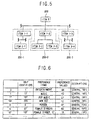
- Figure 3 shows a multiple structure of user preference items of individual user preference information structure of Figure 2 in accordance with the present invention, in which the user preference items are arranged by multi-stage relying on an environment or a condition of a system used by a user.
- a user preference of information in use at home that is, an individual user preference information 130(m)
- a user preference in use at a work place that is, an individual user preference information 130(k)
- a user preference value of information in use at a different condition may be differently set.
- user preference items (1-1, 1-2, 1-3,...) may be arranged, and under the user preference items (1-1, 1-2, 1-3,...), another user preference items (2-1, 2-2, 2-3, ...) may be arranged.
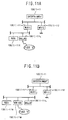
- Figure 4 is a detailed view showing a hierarchical structure of user preference items of Figure 2 in accordance with the present invention.
- An entertainment item 130(1)-11 is classified into items of music 130(1)-111, movie 130(1)-112, drama, a game show, a talk show, sports, a variety show and a concert.
- the music item 130(1)-111 is classified into items of classic 130(1)-1111 and pop music 130(1)-1112.
- the movie item 130(10-112 can be classified into items of an action 130(1)-1121, an adventure 130(1)-1122, a comedy 130(1)-1123, a horror 130(1)-1124, a documentary, a drama, a scientific fiction, children.
- the pop music 130(1)-1112 can be classified into items of rock music, ballad heavy metal, dance music, new age, rhythm & blues, jazz, trot, country western.
- a news item 130(1)-12 can be classified into items of politics 130(1)-121 and sports 130(1)-122, etc.
- Figure 5 illustrates a hierarchical structure of a user preference according to an instrument used by a user in accordance with the present invention.
- an overall structure 200 can be divided into sub-structures (200-1, 200-2 and 200-3), based on which each individual user preference information (item 1-1, item 1-2, item 1-3) are set and managed.
- the individual user preference information (item 1-1, item 1-2, item 1-3) can be classified and managed by using a description.
- Figures 6 through 10 illustrate tables showing individual user preference information of Figure 2.
- the hierarchical structure of Figure 2 can be expressed in several ways.
- Figure 6 is a table showing the hierarchical structure of Figure 2 by using a self-identifier of a user preference item and an upper item identifier of an upper user preference item in accordance with the present invention
- the method as shown in Figure 6 has an advantage that a hierarchical structure can be expressed in a predetermined format regardless of its stages.
- Figure 7 is a table showing the hierarchical structure of Figure 2 by using a coding scheme of the item identifier of Figure 6 in accordance with the present invention.
- the method as shown in Figure 7 is effective when the highest stage number is predetermined in a multi-stage hierarchical structure Especially, in this method, time to access the upper items and the lower items is taken short and a relatively less storing space is required.
- the item identifier can be divided into fields as many as the number of stages (i.e., 4 stages) having a certain bit and/or byte (i.e., 2 byte), and each field can be expressed as item identifiers (1 st 2bytes, 2 nd bytes, 3 rd bytes, 4 th bytes) of each stage.
- the first field has the uppermost item identifier and the next field has an item identifier of the next stage.
- the last-staged item has an item identifier of which none of 4 fields are '0'.
- the item identifier of the 'new age' is 1-17-181-205, and the 'new age' item signifies that it belongs to the 'pop music' item having 1-17-181-0 as an item identifier.
- the 'pop music' having the item identifier of 1-17-181-0
- the 'music' having the item identifier of 1-17-0-0
- the 'entertainment' having the identifier of 1-0-0-0 includes items of every item identifier having the form of 1-*-*-*. Especially, the 'entertainment' includes every item having a form of 1-*-0-0 as items at the very lower stage.
- the identifier of each item is dependent on the identifier of the upper item, and items are differentiated by changing an identifier belonging to a field.
- each field may start from '0' and a single field can be expressed by 2 bytes, so that a single item can include 65,535 lower items.
- Figure 8 is a table showing the hierarchical structure of Figure 2 by using a lowermost user preference in accordance with the present invention.
- the method as shown in the drawing is advantageous in that since upper items and relevant user preference values can be all extracted by using only the related information of the lowermost item in the hierarchical structure, the user preference value of the upper items can be calculated on a real time basis, and even if the user preference values of the upper items are not stored, there is no information loss. That is, this method does not require much memory.
- the individual user preference information structure can be also expressed by using the coding scheme with the same effect.
- Figure 9 is a table showing a hierarchical structure of Figure 1 by using an item dictionary in accordance with the present invention.
- items are defined by item identifiers to thereby generate an item dictionary, and a structural relationship between the upper items and the lower items is searched by using the item identifiers defined in the item dictionary.
- the method in which the hierarchical structure is expressed by using the item dictionary has a shortcomings that the item dictionary is to be always referred to confirm that the hierarchical structural relationship between the user preference items are defined in the item dictionary, the method is advantageous in an aspect that it needs the smallest storing space and an item is easily added or deleted.
- the method for editing the user preference information after inputting information includes a user inputting type, an automatically updating type and a mixed type.
- the user inputting type is a method that as the user uses certain information, a user preference/non-preference for the information used by the user is received through a dialog box, thereby updating a user preference.
- the automatically updating type is a method that as the user uses certain information, a user preference is automatically updated in consideration of user preference items corresponding to the information used by the user in a predetermined standard.
- the mixed type refers to a method mixing the user inputting type and the automatically updating type in which the information inputted by the user has a certain weight value, based on which a user preference is updated.
- the user preference related to the upper items such as 'entertainment', 'music', 'pop music', 'person', ' woman singer' to which the items such as a woman singer 'C' and 'new age' belong, can be also updated together by using only the user preference item information of the woman singer 'C' and 'new age'.
- Figure 10 is a table showing dictionary items for the user preference items in accordance with the present invention.
- each user preference information is expressed by a set of individual user preference information having user preference/non-preference value by items and expressed by a description indicating an adaptive condition of each individual user preference information, for the whole or partial item dictionary.
- the hierarchical structure of the plurality of user preference items is constructed, edited and managed.
- the record of the item dictionary includes a user preference item identifier, a user preference item, a level and an upper item identifier.
- the user preference item identifier identifies each user preference item, and the user preference item indicates a content of the information to be provided to the user.
- the level indicates the position of each user preference item leveled down from the upper position in the hierarchical structure.
- the uppermost level is '0'.
- the upper item identifier indicates which one of an upper user preference item each user preference item belongs to. In a tree structure, the upper item identifier has an upper user preference item to which itself belongs.
- the item dictionary is produced and managed by an information provider, and may exist in a storing unit of the user.
- the item dictionary existing in the storing unit of the user must have the same content as that of the information provider. If the content of the item dictionary of the information provider is changed, the item dictionary of the user should be changed accordingly.
- the user 'A' preference information related to the woman singer 'S' can be constructed as shown in Figures 6 through 9.
- Figures 11A and 11B illustrate a construction in case that information of the hierarchical data structure is edited, of which Figure 11A illustrates a construction before information having the hierarchical data structure is edited in accordance with the present invention and Figure 11B illustrates a construction after information having the hierarchical data structure is edited in accordance with the present invention.
- the piece 'S' was registered in the user preference information, since there was no music genre of 'new age' (that is, an item), the piece 'S' was classified by 'music>pop music>balade 130(1)-111M'.
- the user when the piece 'S' is first classified, the user reduces the user preference value for the piece 'S' in proportion to the number of use in the item of 'music>pop music>ballad' and increases the user preference value as much in the item of 'music>pop music>new age' as newly classified.
- the information use record should include the number of use of the information or information making it possible to compute the number of use.
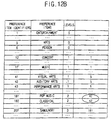
- Figures 12A and 12B show a case where the classification for the items registered in the item dictionary is changed, of which Figure 12A is a table showing an item dictionary before it is changed in accordance with the present invention; and Figure 12B is a table showing an item dictionary before it is changed in accordance with the present invention.
- the lower items belonging to the items of pop music and classic music are automatically changed from the lower items of 'entertainment>music>pop music> and 'entertainment>music>classic' to the lower items of 'art>auditory art>pop music' and 'art>auditory art>classic'.
- the item dictionary changing method may need additional arithmetic operation. For example, in case that each item includes all of the item identifiers of the upper stage, the item identifiers can be changed.
- the user preference corresponding to the entertainment item and the music item that is, the upper items of the pop music item and the classic item in the preference information by users is reduced in proportion to the user preference generated due to the pop music item and the classic item while the user preference of the newly classified items of the art and the auditory art is proportionally increased.
- the information provider can recommend information that can be highly preferred by the user.
- the user preference/non-preference by items is changed by using the user interface.
- the hierarchical data structure that is able to provide the user preference for providing information desired by the user is provided depending on the environment, based on which various information can be provided.
- the hierarchical data structure constructing the user preference makes it possible for the user to receive information fitting the situation in which he or she is put by using a proper individual user preference information, automatically or according to user's selection.
- the user preference items have the hierarchical structure, various level of user preference items can be defined. And, in case that the upper user preference items rather than the lowermost user preference item are selected, a detailed information can be provided to users by using their lower level of user preference for the information belonging to the selected item classification. Also, the user preference of the upper level of user preference items can be constructed by using the user preference of the low level of user preference items.
Landscapes
- Engineering & Computer Science (AREA)
- Databases & Information Systems (AREA)
- Multimedia (AREA)
- Signal Processing (AREA)
- Computer Graphics (AREA)
- Theoretical Computer Science (AREA)
- General Engineering & Computer Science (AREA)
- General Physics & Mathematics (AREA)
- Physics & Mathematics (AREA)
- Human Computer Interaction (AREA)
- Computer Security & Cryptography (AREA)
- Data Mining & Analysis (AREA)
- Information Retrieval, Db Structures And Fs Structures Therefor (AREA)
- Two-Way Televisions, Distribution Of Moving Picture Or The Like (AREA)
- Information Transfer Between Computers (AREA)
- Storage Device Security (AREA)
Abstract
user use information by using information desired by the user; user preference information of information desired by the user; and individual user preference information that is differently set depending on situations in which the user is put and positioned in a sub-tree of the user preference information. The hierarchical data structure is able to provide the user preference for providing information desired by the user is provided depending on the environment, based on which various information can be provided. The hierarchical data structure constructing the user preference makes it possible for the user to receive information fitting the situation in which he or she is put by using a proper individual user preference information, automatically or according to user's selection.
Description
Claims (25)
- A user information structure having a multiple multi-level hierarchical structure to be used in providing information to a user according to the personal preference of the information in a multi-media environment consisting of an information providers and an information users, comprising:personal information to identify each user;user preference information of the identified user; andone or more individual user preference information, each of which can be set differently depending on the user's situations such as different location, and which is located as a sub-tree of the user preference information.
- The user information structure according to claim 1, wherein the personal information includes a unique identifier which can be used to identify said user.
- The user information structure according to claim 1, further includes one or more history record of information usage by said user.
- The user information structure according to claim 3, wherein the history record includes a list of information or information identifier with when and how the information is used.
- The user information structure according to claim 4, wherein the history record includes a condition of history collection for each history record.
- The user information structure according to claim 5, wherein the condition of history collection includes location of the history collection.
- The user information structure according to claim 5, wherein the condition of history collection includes time of the history collection.
- The user information structure according to claim 1, further includes authorization information to identify the information which said user can access.
- The user information structure according to claim 1, wherein said each individual user preference information includes a user preference item and a value representing preference/non-preference information.
- The user information structure according to claim 9, wherein said each individual user preference information further includes a description information on the said user preference item.
- The user information structure according to claim 10, wherein said each user preference item includes description on the item that can be used as a condition of using the individual user preference information for searching or filtering a multi-media information.
- The user information structure according to claim 10 or 11, wherein said each individual user preference information has a hierarchical relationship.
- The user information structure according to claim 11, wherein said each user preference item has a hierarchical relationship.
- The user information structure according to claim 12 or 13, wherein said hierarchical relationships are hierarchical tree structures.
- The user information structure according to claim 1, wherein said each individual user preference information can be differently set depending on said user's selection or said user's terminal device.
- The user information structure according to claim 15, wherein said each individual user preference information has a hierarchical structure which is represented by the identifier of the user preference item located in the higher nodes of the tree structure.
- The user information structure according to claim 1, wherein said each individual user preference information has a hierarchical structure which is represented by the identifier of the user preference item coded by special coding scheme to represent a tree structure.
- The user information structure according to claim 1, wherein said each individual user preference information has a hierarchical structure which is represented by an external item dictionary.
- The user information structure according to claim 18, wherein the hierarchical structure is represented by a coding scheme, only the individual user preference information located as the leaf nodes of the hierarchical tree structure are stored, and the individual user preference information located at non-leaf nodes of the hierarchical tree structure are extracted based on the relationship among the leaf nodes and upper nodes items.
- A method for providing multi-media information to the information consumer using the user information with multiple hierarchical structure in the multimedia information environment where information providers provide desired information of information consumers, comprising the steps of:establishing multiple multi-level hierarchical structure of individual user preference information distinguished by each user and each search item;searching desired information based on the preference item with preference/non-preference information by each user and each search item; andproviding retrieved information according to the user preference information.
- The method according to claim 20, wherein, in the step of said providing the retrieved information, retrieval of new information is notified to the user, or information expected to be preferred by the user is recommended to the user, or information expected not to be preferred by the user is limited to access, according to the individual user preference information.
- A method of providing desired multimedia information to a information user, comprising the steps of:establishing a multiple hierarchical structure having individual user preference information for each user or each group of users; andchanging the hierarchical structure of the individual user preference information.
- The method according to claim 22, wherein changing the hierarchical structure of said individual user preference information includes registration of new user preference item, deletion of an existing user preference item, or changing the parent node of a sub-tree of individual user preference information.
- The method according to claim 23, wherein the step of changing the hierarchical structure includes a step of changing the preference/non-preference value of a user preference item and changing the preference/non-preference value of a user preference items located in the ancestor nodes of the changed preference item, based on the usage history .
- The method according to claim 23, wherein in the step of changing the hierarchical structure of the individual user preference information, the preference/non-preference value is changed using a user interface.
Priority Applications (1)
| Application Number | Priority Date | Filing Date | Title |
|---|---|---|---|
| EP04030886A EP1528810A3 (en) | 1999-09-22 | 2000-09-22 | Method for describing a user's preferences pertaining to use of multimedia information |
Applications Claiming Priority (2)
| Application Number | Priority Date | Filing Date | Title |
|---|---|---|---|
| KR1019990041190A KR100304482B1 (en) | 1999-09-22 | 1999-09-22 | Method and apparatus for user adaptive information presentation using multiple hierarchical preference information structure and the data structure of multiple hierarchical preference information |
| KR4119099 | 1999-09-22 |
Related Child Applications (1)
| Application Number | Title | Priority Date | Filing Date |
|---|---|---|---|
| EP04030886A Division EP1528810A3 (en) | 1999-09-22 | 2000-09-22 | Method for describing a user's preferences pertaining to use of multimedia information |
Publications (2)
| Publication Number | Publication Date |
|---|---|
| EP1091587A2 true EP1091587A2 (en) | 2001-04-11 |
| EP1091587A3 EP1091587A3 (en) | 2003-10-29 |
Family
ID=19612817
Family Applications (2)
| Application Number | Title | Priority Date | Filing Date |
|---|---|---|---|
| EP04030886A Withdrawn EP1528810A3 (en) | 1999-09-22 | 2000-09-22 | Method for describing a user's preferences pertaining to use of multimedia information |
| EP00402640A Ceased EP1091587A3 (en) | 1999-09-22 | 2000-09-22 | User preference information structure having multiple hierarchical structure and method for providing multimedia information |
Family Applications Before (1)
| Application Number | Title | Priority Date | Filing Date |
|---|---|---|---|
| EP04030886A Withdrawn EP1528810A3 (en) | 1999-09-22 | 2000-09-22 | Method for describing a user's preferences pertaining to use of multimedia information |
Country Status (6)
| Country | Link |
|---|---|
| US (4) | US7383314B1 (en) |
| EP (2) | EP1528810A3 (en) |
| JP (1) | JP2001155038A (en) |
| KR (1) | KR100304482B1 (en) |
| CN (2) | CN1244063C (en) |
| CA (1) | CA2320506C (en) |
Cited By (7)
| Publication number | Priority date | Publication date | Assignee | Title |
|---|---|---|---|---|
| WO2003056824A1 (en) * | 2001-12-27 | 2003-07-10 | Koninklijke Philips Electronics N.V. | Hierarchical decision fusion of recommender scores |
| EP1298542A3 (en) * | 2001-09-26 | 2004-10-27 | Lg Electronics Inc. | Multimedia searching and browsing system based on user profile |
| WO2005119463A3 (en) * | 2004-06-03 | 2006-05-11 | Koninkl Philips Electronics Nv | Transfer of content between storage devices |
| CN100413333C (en) * | 2005-07-14 | 2008-08-20 | 乐金电子(南京)等离子有限公司 | Menu environment control system of image display device and its method |
| EP2202657A1 (en) * | 2008-12-23 | 2010-06-30 | Axel Springer Digital TV Guide GmbH | Adaptive implicit learning for recommender systems |
| US20120095864A1 (en) * | 2008-03-31 | 2012-04-19 | Ebay Inc. | Method and system for mobile publication |
| US9600497B2 (en) | 2009-03-17 | 2017-03-21 | Paypal, Inc. | Image-based indexing in a network-based marketplace |
Families Citing this family (86)
| Publication number | Priority date | Publication date | Assignee | Title |
|---|---|---|---|---|
| US7509580B2 (en) | 1999-09-16 | 2009-03-24 | Sharp Laboratories Of America, Inc. | Audiovisual information management system with preferences descriptions |
| KR100304482B1 (en) * | 1999-09-22 | 2001-11-02 | 구자홍 | Method and apparatus for user adaptive information presentation using multiple hierarchical preference information structure and the data structure of multiple hierarchical preference information |
| FR2809268A1 (en) * | 2000-05-19 | 2001-11-23 | Thomson Multimedia Sa | METHOD FOR DYNAMIC NAVIGATION AMONG MULTIMEDIA DOCUMENTS |
| US8028314B1 (en) | 2000-05-26 | 2011-09-27 | Sharp Laboratories Of America, Inc. | Audiovisual information management system |
| CA2410869A1 (en) * | 2000-06-01 | 2001-12-06 | Iselect Pty Ltd. | Customer decision support at point-of-sale |
| US8020183B2 (en) | 2000-09-14 | 2011-09-13 | Sharp Laboratories Of America, Inc. | Audiovisual management system |
| US20030038796A1 (en) * | 2001-02-15 | 2003-02-27 | Van Beek Petrus J.L. | Segmentation metadata for audio-visual content |
| US7904814B2 (en) | 2001-04-19 | 2011-03-08 | Sharp Laboratories Of America, Inc. | System for presenting audio-video content |
| US7474698B2 (en) | 2001-10-19 | 2009-01-06 | Sharp Laboratories Of America, Inc. | Identification of replay segments |
| US7739601B1 (en) | 2002-01-23 | 2010-06-15 | Microsoft Corporation | Media authoring and presentation |
| US8214741B2 (en) | 2002-03-19 | 2012-07-03 | Sharp Laboratories Of America, Inc. | Synchronization of video and data |
| JP2003330969A (en) | 2002-05-16 | 2003-11-21 | Sony Corp | Information management system, information processing device, information processing method, information processing program, and storage medium |
| US20050021470A1 (en) * | 2002-06-25 | 2005-01-27 | Bose Corporation | Intelligent music track selection |
| US20040225519A1 (en) * | 2002-06-25 | 2004-11-11 | Martin Keith D. | Intelligent music track selection |
| US20030236582A1 (en) * | 2002-06-25 | 2003-12-25 | Lee Zamir | Selection of items based on user reactions |
| KR100497428B1 (en) * | 2002-09-24 | 2005-07-01 | 전자부품연구원 | Recommending service method of intellectual program using meta data |
| US7657907B2 (en) * | 2002-09-30 | 2010-02-02 | Sharp Laboratories Of America, Inc. | Automatic user profiling |
| AU2003272021A1 (en) * | 2002-11-15 | 2004-06-15 | Koninklijke Philips Electronics N.V. | Introducing new content items in a community-based recommendation system |
| JP4217957B2 (en) | 2003-05-14 | 2009-02-04 | ソニー株式会社 | Information processing apparatus and method, program, and recording medium |
| US7464331B2 (en) * | 2003-08-18 | 2008-12-09 | Microsoft Corporation | System and method for validating hierarchically-organized messages |
| WO2005027512A1 (en) * | 2003-09-11 | 2005-03-24 | Matsushita Electric Industrial Co., Ltd. | Content selection method and content selection device |
| US8356317B2 (en) * | 2004-03-04 | 2013-01-15 | Sharp Laboratories Of America, Inc. | Presence based technology |
| US8949899B2 (en) | 2005-03-04 | 2015-02-03 | Sharp Laboratories Of America, Inc. | Collaborative recommendation system |
| US7904488B2 (en) | 2004-07-21 | 2011-03-08 | Rockwell Automation Technologies, Inc. | Time stamp methods for unified plant model |
| US7543068B2 (en) * | 2004-08-26 | 2009-06-02 | At&T Intellectual Property I, Lp | Filtering information at a data network based on filter rules associated with consumer processing devices |
| US8756521B1 (en) | 2004-09-30 | 2014-06-17 | Rockwell Automation Technologies, Inc. | Systems and methods for automatic visualization configuration |
| JP4306629B2 (en) * | 2005-03-16 | 2009-08-05 | ソニー株式会社 | Data processing method, electronic device, program, and recording medium |
| CN100390794C (en) * | 2005-04-27 | 2008-05-28 | 华为技术有限公司 | A method for organizing communication equipment command sets in the form of navigation tree |
| US8799800B2 (en) | 2005-05-13 | 2014-08-05 | Rockwell Automation Technologies, Inc. | Automatic user interface generation |
| US7672737B2 (en) | 2005-05-13 | 2010-03-02 | Rockwell Automation Technologies, Inc. | Hierarchically structured data model for utilization in industrial automation environments |
| US7676281B2 (en) | 2005-05-13 | 2010-03-09 | Rockwell Automation Technologies, Inc. | Distributed database in an industrial automation environment |
| US7650405B2 (en) | 2005-05-13 | 2010-01-19 | Rockwell Automation Technologies, Inc. | Tracking and tracing across process boundaries in an industrial automation environment |
| US7809683B2 (en) | 2005-05-13 | 2010-10-05 | Rockwell Automation Technologies, Inc. | Library that includes modifiable industrial automation objects |
| US7881812B2 (en) | 2005-09-29 | 2011-02-01 | Rockwell Automation Technologies, Inc. | Editing and configuring device |
| US7548789B2 (en) | 2005-09-29 | 2009-06-16 | Rockwell Automation Technologies, Inc. | Editing lifecycle and deployment of objects in an industrial automation environment |
| US7801628B2 (en) | 2005-09-30 | 2010-09-21 | Rockwell Automation Technologies, Inc. | Industrial operator interfaces interacting with higher-level business workflow |
| US7660638B2 (en) | 2005-09-30 | 2010-02-09 | Rockwell Automation Technologies, Inc. | Business process execution engine |
| US7526794B2 (en) | 2005-09-30 | 2009-04-28 | Rockwell Automation Technologies, Inc. | Data perspectives in controller system and production management systems |
| US7734590B2 (en) | 2005-09-30 | 2010-06-08 | Rockwell Automation Technologies, Inc. | Incremental association of metadata to production data |
| US8484250B2 (en) | 2005-09-30 | 2013-07-09 | Rockwell Automation Technologies, Inc. | Data federation with industrial control systems |
| US8275680B2 (en) | 2005-09-30 | 2012-09-25 | Rockwell Automation Technologies, Inc. | Enabling transactional mechanisms in an automated controller system |
| US8689253B2 (en) | 2006-03-03 | 2014-04-01 | Sharp Laboratories Of America, Inc. | Method and system for configuring media-playing sets |
| US7836032B2 (en) * | 2006-03-28 | 2010-11-16 | International Business Machines Corporation | Remapping child references when parent reference updates are processed |
| US8285595B2 (en) | 2006-03-29 | 2012-10-09 | Napo Enterprises, Llc | System and method for refining media recommendations |
| US20090327193A1 (en) * | 2008-06-27 | 2009-12-31 | Nokia Corporation | Apparatus, method and computer program product for filtering media files |
| US8326890B2 (en) * | 2006-04-28 | 2012-12-04 | Choicebot, Inc. | System and method for assisting computer users to search for and evaluate products and services, typically in a database |
| US9003056B2 (en) | 2006-07-11 | 2015-04-07 | Napo Enterprises, Llc | Maintaining a minimum level of real time media recommendations in the absence of online friends |
| US8327266B2 (en) | 2006-07-11 | 2012-12-04 | Napo Enterprises, Llc | Graphical user interface system for allowing management of a media item playlist based on a preference scoring system |
| US20080132187A1 (en) * | 2006-12-04 | 2008-06-05 | Hanebeck Hanns-Christian Leemo | Personal multi-media playing device |
| US7710894B2 (en) * | 2006-12-21 | 2010-05-04 | International Business Machines Corporation | Method, computer program product, and apparatus for automatically adapting hardware and software preferences based on a network connection |
| US20080195661A1 (en) * | 2007-02-08 | 2008-08-14 | Kaleidescape, Inc. | Digital media recognition using metadata |
| US7941764B2 (en) * | 2007-04-04 | 2011-05-10 | Abo Enterprises, Llc | System and method for assigning user preference settings for a category, and in particular a media category |
| US20080250067A1 (en) * | 2007-04-06 | 2008-10-09 | Concert Technology Corporation | System and method for selectively identifying media items for play based on a recommender playlist |
| US8839141B2 (en) | 2007-06-01 | 2014-09-16 | Napo Enterprises, Llc | Method and system for visually indicating a replay status of media items on a media device |
| US20090013260A1 (en) * | 2007-07-06 | 2009-01-08 | Martin Keith D | Intelligent music track selection in a networked environment |
| US8601381B2 (en) * | 2007-10-29 | 2013-12-03 | Microsoft Corporation | Rich customizable user online environment |
| US10013536B2 (en) * | 2007-11-06 | 2018-07-03 | The Mathworks, Inc. | License activation and management |
| US8224856B2 (en) | 2007-11-26 | 2012-07-17 | Abo Enterprises, Llc | Intelligent default weighting process for criteria utilized to score media content items |
| US20090158146A1 (en) * | 2007-12-13 | 2009-06-18 | Concert Technology Corporation | Resizing tag representations or tag group representations to control relative importance |
| US9117219B2 (en) * | 2007-12-31 | 2015-08-25 | Peer 39 Inc. | Method and a system for selecting advertising spots |
| US9111302B2 (en) * | 2008-01-31 | 2015-08-18 | Phm Associates Limited | Communication method, apparatus and system for a retail organization |
| KR101474735B1 (en) * | 2008-06-30 | 2014-12-30 | 삼성전자주식회사 | Broadcasting receiving apparatus and operating method thereof |
| US10346879B2 (en) * | 2008-11-18 | 2019-07-09 | Sizmek Technologies, Inc. | Method and system for identifying web documents for advertisements |
| US8527884B2 (en) * | 2008-12-19 | 2013-09-03 | At&T Intellectual Property I, L.P. | System and method for browsing based on user recognition |
| US9330123B2 (en) * | 2009-12-20 | 2016-05-03 | Sap Se | Method and system for improving information system performance based on usage patterns |
| US8244766B2 (en) * | 2010-04-13 | 2012-08-14 | Microsoft Corporation | Applying a model of a persona to search results |
| US8484401B2 (en) | 2010-04-15 | 2013-07-09 | Rockwell Automation Technologies, Inc. | Systems and methods for conducting communications among components of multidomain industrial automation system |
| US9392072B2 (en) | 2010-04-15 | 2016-07-12 | Rockwell Automation Technologies, Inc. | Systems and methods for conducting communications among components of multidomain industrial automation system |
| US8984533B2 (en) | 2010-04-15 | 2015-03-17 | Rockwell Automation Technologies, Inc. | Systems and methods for conducting communications among components of multidomain industrial automation system |
| US20110314028A1 (en) * | 2010-06-18 | 2011-12-22 | Microsoft Corporation | Presenting display characteristics of hierarchical data structures |
| JP2012137991A (en) * | 2010-12-27 | 2012-07-19 | Jvc Kenwood Corp | Operation control device, operation control program, and operation control method |
| CN102567425B (en) * | 2010-12-29 | 2014-11-05 | 中国移动通信集团公司 | Method and device for processing data |
| US20130080907A1 (en) * | 2011-09-23 | 2013-03-28 | Richard Skelton | Method and system for a personalized content play list |
| US8943015B2 (en) | 2011-12-22 | 2015-01-27 | Google Technology Holdings LLC | Hierarchical behavioral profile |
| US9110998B2 (en) | 2011-12-22 | 2015-08-18 | Google Technology Holdings LLC | Hierarchical behavioral profile |
| WO2013138969A1 (en) * | 2012-03-17 | 2013-09-26 | Beijing Haipu Wangju Technology Limited | Method and system for recommending content to a user |
| US10212986B2 (en) | 2012-12-09 | 2019-02-26 | Arris Enterprises Llc | System, apparel, and method for identifying performance of workout routines |
| US9278255B2 (en) | 2012-12-09 | 2016-03-08 | Arris Enterprises, Inc. | System and method for activity recognition |
| US10545938B2 (en) * | 2013-09-30 | 2020-01-28 | Spigit, Inc. | Scoring members of a set dependent on eliciting preference data amongst subsets selected according to a height-balanced tree |
| CN104954818B (en) * | 2014-03-27 | 2019-03-15 | 中国电信股份有限公司 | Adjust the method and apparatus of media item sequence in playlist |
| CN104036002A (en) * | 2014-06-16 | 2014-09-10 | 深圳市英威诺科技有限公司 | Technical method for intelligently recommending data |
| CN106817384A (en) * | 2015-11-27 | 2017-06-09 | 亿阳信通股份有限公司 | A kind of analysis method and system that behavior is accessed based on user's telecommunications |
| CN108427723B (en) * | 2018-02-09 | 2021-08-06 | 哈尔滨工业大学深圳研究生院 | A method and system for author recommendation based on clustering algorithm and locality-aware reconstruction model |
| KR102084411B1 (en) * | 2018-08-08 | 2020-04-23 | 김남심 | System for network marketing using block-chain and method thereof |
| KR102271918B1 (en) * | 2019-08-19 | 2021-06-30 | 광운대학교 산학협력단 | Advertising System and Method to Provide Multi-User Personalized Services |
| JP6925564B1 (en) * | 2020-03-18 | 2021-08-25 | 三菱電機株式会社 | Comfort analysis device, command device for environmental control, and comfort analysis method |
Family Cites Families (85)
| Publication number | Priority date | Publication date | Assignee | Title |
|---|---|---|---|---|
| US5063522A (en) | 1988-03-15 | 1991-11-05 | Intellisystems, Inc. | Multi-user, artificial intelligent expert system |
| US5167011A (en) | 1989-02-15 | 1992-11-24 | W. H. Morris | Method for coodinating information storage and retrieval |
| US5239617A (en) | 1990-01-05 | 1993-08-24 | International Business Machines Corporation | Method and apparatus providing an intelligent help explanation paradigm paralleling computer user activity |
| US5448727A (en) | 1991-04-30 | 1995-09-05 | Hewlett-Packard Company | Domain based partitioning and reclustering of relations in object-oriented relational database management systems |
| US6850252B1 (en) * | 1999-10-05 | 2005-02-01 | Steven M. Hoffberg | Intelligent electronic appliance system and method |
| US5446891A (en) | 1992-02-26 | 1995-08-29 | International Business Machines Corporation | System for adjusting hypertext links with weighed user goals and activities |
| US5506984A (en) | 1993-06-30 | 1996-04-09 | Digital Equipment Corporation | Method and system for data retrieval in a distributed system using linked location references on a plurality of nodes |
| US5712960A (en) | 1993-07-02 | 1998-01-27 | Cv Soft, S.R.L. | System and methods for intelligent database management using abductive reasoning |
| WO1995008886A1 (en) | 1993-09-20 | 1995-03-30 | Cabletron Systems, Inc. | Communications network management system and method, using fuzzy logic |
| US5410344A (en) | 1993-09-22 | 1995-04-25 | Arrowsmith Technologies, Inc. | Apparatus and method of selecting video programs based on viewers' preferences |
| US5513126A (en) | 1993-10-04 | 1996-04-30 | Xerox Corporation | Network having selectively accessible recipient prioritized communication channel profiles |
| US5483637A (en) | 1994-06-27 | 1996-01-09 | International Business Machines Corporation | Expert based system and method for managing error events in a local area network |
| US5758257A (en) * | 1994-11-29 | 1998-05-26 | Herz; Frederick | System and method for scheduling broadcast of and access to video programs and other data using customer profiles |
| US6460036B1 (en) * | 1994-11-29 | 2002-10-01 | Pinpoint Incorporated | System and method for providing customized electronic newspapers and target advertisements |
| US5617565A (en) * | 1994-11-29 | 1997-04-01 | Hitachi America, Ltd. | Broadcast interactive multimedia system |
| US6571279B1 (en) * | 1997-12-05 | 2003-05-27 | Pinpoint Incorporated | Location enhanced information delivery system |
| US5892900A (en) * | 1996-08-30 | 1999-04-06 | Intertrust Technologies Corp. | Systems and methods for secure transaction management and electronic rights protection |
| US5724508A (en) | 1995-03-09 | 1998-03-03 | Insoft, Inc. | Apparatus for collaborative computing |
| US5740549A (en) * | 1995-06-12 | 1998-04-14 | Pointcast, Inc. | Information and advertising distribution system and method |
| US5758259A (en) | 1995-08-31 | 1998-05-26 | Microsoft Corporation | Automated selective programming guide |
| US5848396A (en) * | 1996-04-26 | 1998-12-08 | Freedom Of Information, Inc. | Method and apparatus for determining behavioral profile of a computer user |
| US5945988A (en) * | 1996-06-06 | 1999-08-31 | Intel Corporation | Method and apparatus for automatically determining and dynamically updating user preferences in an entertainment system |
| US6601103B1 (en) * | 1996-08-22 | 2003-07-29 | Intel Corporation | Method and apparatus for providing personalized supplemental programming |
| JPH1074206A (en) * | 1996-08-30 | 1998-03-17 | Matsushita Electric Ind Co Ltd | Information provision system |
| US5926624A (en) * | 1996-09-12 | 1999-07-20 | Audible, Inc. | Digital information library and delivery system with logic for generating files targeted to the playback device |
| US6151568A (en) * | 1996-09-13 | 2000-11-21 | Sente, Inc. | Power estimation software system |
| US5732216A (en) | 1996-10-02 | 1998-03-24 | Internet Angles, Inc. | Audio message exchange system |
| US5721827A (en) | 1996-10-02 | 1998-02-24 | James Logan | System for electrically distributing personalized information |
| JP3655714B2 (en) * | 1996-11-15 | 2005-06-02 | 株式会社ニューズウオッチ | Information filtering apparatus and recording medium |
| JP4223578B2 (en) * | 1996-11-29 | 2009-02-12 | ソニー株式会社 | Keyword generation method and apparatus |
| US5953506A (en) | 1996-12-17 | 1999-09-14 | Adaptive Media Technologies | Method and apparatus that provides a scalable media delivery system |
| JP4044965B2 (en) | 1996-12-20 | 2008-02-06 | プリンストン ビデオ イメージ,インコーポレイティド | Set-top device and method for inserting selected video into video broadcast |
| US6178443B1 (en) * | 1996-12-20 | 2001-01-23 | Intel Corporation | Method and apparatus for propagating user preferences across multiple computer environments |
| US6526575B1 (en) * | 1997-01-07 | 2003-02-25 | United Video Properties, Inc. | System and method for distributing and broadcasting multimedia |
| US6012051A (en) | 1997-02-06 | 2000-01-04 | America Online, Inc. | Consumer profiling system with analytic decision processor |
| US5875327A (en) | 1997-02-18 | 1999-02-23 | International Business Machines Corporation | Hierarchy of preferences and preference groups |
| US6421733B1 (en) * | 1997-03-25 | 2002-07-16 | Intel Corporation | System for dynamically transcoding data transmitted between computers |
| US5801698A (en) * | 1997-05-19 | 1998-09-01 | International Business Machines Corporation | Dynamic information display during busy cycle of a processing system |
| US20030040962A1 (en) * | 1997-06-12 | 2003-02-27 | Lewis William H. | System and data management and on-demand rental and purchase of digital data products |
| AU7959098A (en) | 1997-06-13 | 1998-12-30 | Daniel S. Kwoh | Multiple magazine presentation and subscription system and methods |
| US6094855A (en) | 1998-06-18 | 2000-08-01 | Stump; Gregory J. | Artificial fishing lure with longitudinal rows of resiliently flexible rib-like projections |
| US20060026048A1 (en) * | 1997-08-08 | 2006-02-02 | Kolawa Adam K | Method and apparatus for automated selection, organization, and recommendation of items based on user preference topography |
| US6119123A (en) * | 1997-12-02 | 2000-09-12 | U.S. Philips Corporation | Apparatus and method for optimizing keyframe and blob retrieval and storage |
| JPH11212996A (en) * | 1998-01-28 | 1999-08-06 | Ntt Data Corp | Information providing apparatus, information providing method, and recording medium |
| IL125432A (en) | 1998-01-30 | 2010-11-30 | Easynet Access Inc | Personalized internet interaction |
| EP1052580A4 (en) * | 1998-02-05 | 2005-11-02 | Fujitsu Ltd | ACTIONS PROPOSED DEVICE |
| US6421675B1 (en) * | 1998-03-16 | 2002-07-16 | S. L. I. Systems, Inc. | Search engine |
| JP2000013708A (en) | 1998-06-26 | 2000-01-14 | Hitachi Ltd | Program selection support device |
| US6334127B1 (en) | 1998-07-17 | 2001-12-25 | Net Perceptions, Inc. | System, method and article of manufacture for making serendipity-weighted recommendations to a user |
| US6321221B1 (en) * | 1998-07-17 | 2001-11-20 | Net Perceptions, Inc. | System, method and article of manufacture for increasing the user value of recommendations |
| US6366915B1 (en) * | 1998-11-04 | 2002-04-02 | Micron Technology, Inc. | Method and system for efficiently retrieving information from multiple databases |
| US8121891B2 (en) * | 1998-11-12 | 2012-02-21 | Accenture Global Services Gmbh | Personalized product report |
| US6845370B2 (en) * | 1998-11-12 | 2005-01-18 | Accenture Llp | Advanced information gathering for targeted activities |
| US6134548A (en) * | 1998-11-19 | 2000-10-17 | Ac Properties B.V. | System, method and article of manufacture for advanced mobile bargain shopping |
| US6195651B1 (en) * | 1998-11-19 | 2001-02-27 | Andersen Consulting Properties Bv | System, method and article of manufacture for a tuned user application experience |
| US6279007B1 (en) * | 1998-11-30 | 2001-08-21 | Microsoft Corporation | Architecture for managing query friendly hierarchical values |
| US6412012B1 (en) * | 1998-12-23 | 2002-06-25 | Net Perceptions, Inc. | System, method, and article of manufacture for making a compatibility-aware recommendations to a user |
| US6635089B1 (en) * | 1999-01-13 | 2003-10-21 | International Business Machines Corporation | Method for producing composite XML document object model trees using dynamic data retrievals |
| US6236395B1 (en) * | 1999-02-01 | 2001-05-22 | Sharp Laboratories Of America, Inc. | Audiovisual information management system |
| US6317718B1 (en) * | 1999-02-26 | 2001-11-13 | Accenture Properties (2) B.V. | System, method and article of manufacture for location-based filtering for shopping agent in the physical world |
| US6847969B1 (en) * | 1999-05-03 | 2005-01-25 | Streetspace, Inc. | Method and system for providing personalized online services and advertisements in public spaces |
| US6493702B1 (en) * | 1999-05-05 | 2002-12-10 | Xerox Corporation | System and method for searching and recommending documents in a collection using share bookmarks |
| US6470344B1 (en) * | 1999-05-29 | 2002-10-22 | Oracle Corporation | Buffering a hierarchical index of multi-dimensional data |
| US6546390B1 (en) * | 1999-06-11 | 2003-04-08 | Abuzz Technologies, Inc. | Method and apparatus for evaluating relevancy of messages to users |
| US6366906B1 (en) * | 1999-07-15 | 2002-04-02 | International Business Machines Corporation | Method and apparatus for implementing a search selection tool on a browser |
| US6460025B1 (en) * | 1999-07-27 | 2002-10-01 | International Business Machines Corporation | Intelligent exploration through multiple hierarchies using entity relevance |
| US6513036B2 (en) * | 1999-08-13 | 2003-01-28 | Mindpass A/S | Method and apparatus for searching and presenting search result from one or more information sources based on context representations selected from the group of other users |
| KR100304482B1 (en) * | 1999-09-22 | 2001-11-02 | 구자홍 | Method and apparatus for user adaptive information presentation using multiple hierarchical preference information structure and the data structure of multiple hierarchical preference information |
| KR100350792B1 (en) * | 1999-09-22 | 2002-09-09 | 엘지전자 주식회사 | Multimedia data browsing system based on user profile |
| US6795205B1 (en) * | 2000-03-15 | 2004-09-21 | Canon Kabushiki Kaisha | Third-party authorization for home-based printing |
| US8020183B2 (en) * | 2000-09-14 | 2011-09-13 | Sharp Laboratories Of America, Inc. | Audiovisual management system |
| JP3838014B2 (en) * | 2000-09-27 | 2006-10-25 | 日本電気株式会社 | Preference learning device, preference learning system, preference learning method, and recording medium |
| US6635809B1 (en) | 2000-10-26 | 2003-10-21 | The J C Robinson Seed Co. | Inbred corn line NR401 |
| US7035871B2 (en) | 2000-12-19 | 2006-04-25 | Intel Corporation | Method and apparatus for intelligent and automatic preference detection of media content |
| US6947935B1 (en) | 2001-04-04 | 2005-09-20 | Microsoft Corporation | Training, inference and user interface for guiding the caching of media content on local stores |
| US6973621B2 (en) | 2001-04-27 | 2005-12-06 | Starz Entertainment Group Llc | Customization in a content distribution system |
| US20030004934A1 (en) * | 2001-06-29 | 2003-01-02 | Richard Qian | Creating and managing portable user preferences for personalizion of media consumption from device to device |
| EP1301039B1 (en) | 2001-09-07 | 2006-12-13 | Matsushita Electric Industrial Co., Ltd. | A video distribution device and a video receiving device |
| US7302465B2 (en) | 2001-10-22 | 2007-11-27 | Comverse, Inc. | Distributed multimedia transfer |
| US20030225777A1 (en) * | 2002-05-31 | 2003-12-04 | Marsh David J. | Scoring and recommending media content based on user preferences |
| US20040177370A1 (en) | 2002-12-10 | 2004-09-09 | Mydtv, Inc. | Storage and use of viewer preference data in a device remote from a set-top box |
| US7243105B2 (en) * | 2002-12-31 | 2007-07-10 | British Telecommunications Public Limited Company | Method and apparatus for automatic updating of user profiles |
| JP2005136824A (en) | 2003-10-31 | 2005-05-26 | Toshiba Corp | Digital video distribution system and video distribution method |
| US20060015580A1 (en) | 2004-07-01 | 2006-01-19 | Home Box Office, A Delaware Corporation | Multimedia content distribution |
| US9926692B2 (en) | 2007-09-25 | 2018-03-27 | Mcalpine & Co. Ltd. | Urinal apparatus |
-
1999
- 1999-09-22 KR KR1019990041190A patent/KR100304482B1/en not_active Expired - Fee Related
-
2000
- 2000-09-21 US US09/666,280 patent/US7383314B1/en not_active Expired - Lifetime
- 2000-09-22 JP JP2000289160A patent/JP2001155038A/en active Pending
- 2000-09-22 CA CA2320506A patent/CA2320506C/en not_active Expired - Lifetime
- 2000-09-22 EP EP04030886A patent/EP1528810A3/en not_active Withdrawn
- 2000-09-22 EP EP00402640A patent/EP1091587A3/en not_active Ceased
- 2000-09-22 CN CNB001347152A patent/CN1244063C/en not_active Expired - Fee Related
- 2000-09-22 CN CNB200410094658XA patent/CN100559868C/en not_active Expired - Lifetime
-
2005
- 2005-05-26 US US11/137,455 patent/US7296064B2/en not_active Expired - Fee Related
-
2006
- 2006-02-14 US US11/354,322 patent/US7599955B2/en not_active Expired - Fee Related
-
2009
- 2009-09-11 US US12/558,378 patent/US8250098B2/en not_active Expired - Fee Related
Cited By (9)
| Publication number | Priority date | Publication date | Assignee | Title |
|---|---|---|---|---|
| EP1298542A3 (en) * | 2001-09-26 | 2004-10-27 | Lg Electronics Inc. | Multimedia searching and browsing system based on user profile |
| WO2003056824A1 (en) * | 2001-12-27 | 2003-07-10 | Koninklijke Philips Electronics N.V. | Hierarchical decision fusion of recommender scores |
| WO2005119463A3 (en) * | 2004-06-03 | 2006-05-11 | Koninkl Philips Electronics Nv | Transfer of content between storage devices |
| CN100413333C (en) * | 2005-07-14 | 2008-08-20 | 乐金电子(南京)等离子有限公司 | Menu environment control system of image display device and its method |
| US20120095864A1 (en) * | 2008-03-31 | 2012-04-19 | Ebay Inc. | Method and system for mobile publication |
| US10037385B2 (en) * | 2008-03-31 | 2018-07-31 | Ebay Inc. | Method and system for mobile publication |
| EP2202657A1 (en) * | 2008-12-23 | 2010-06-30 | Axel Springer Digital TV Guide GmbH | Adaptive implicit learning for recommender systems |
| WO2010072617A1 (en) * | 2008-12-23 | 2010-07-01 | Axel Springer Digital Tv Guide Gmbh | Adaptive implicit learning for recommender systems |
| US9600497B2 (en) | 2009-03-17 | 2017-03-21 | Paypal, Inc. | Image-based indexing in a network-based marketplace |
Also Published As
| Publication number | Publication date |
|---|---|
| CA2320506C (en) | 2010-12-07 |
| KR20010028773A (en) | 2001-04-06 |
| US7383314B1 (en) | 2008-06-03 |
| CN1244063C (en) | 2006-03-01 |
| US8250098B2 (en) | 2012-08-21 |
| CN100559868C (en) | 2009-11-11 |
| US7296064B2 (en) | 2007-11-13 |
| US20050216460A1 (en) | 2005-09-29 |
| EP1091587A3 (en) | 2003-10-29 |
| CN1612612A (en) | 2005-05-04 |
| US20100005116A1 (en) | 2010-01-07 |
| CA2320506A1 (en) | 2001-03-22 |
| KR100304482B1 (en) | 2001-11-02 |
| EP1528810A3 (en) | 2006-10-18 |
| US20060129544A1 (en) | 2006-06-15 |
| US7599955B2 (en) | 2009-10-06 |
| JP2001155038A (en) | 2001-06-08 |
| EP1528810A2 (en) | 2005-05-04 |
| CN1295294A (en) | 2001-05-16 |
Similar Documents
| Publication | Publication Date | Title |
|---|---|---|
| US7383314B1 (en) | User preference information structure having multiple hierarchical structure and method for providing multimedia information using the same | |
| US7296285B1 (en) | Multiple item user preference information data structure and method for providing multi-media information | |
| US7921113B2 (en) | Dictionary creation device and dictionary creation method | |
| KR100419766B1 (en) | Index structure of metadata , method for providing indices of metadata, and metadata searching method and apparatus using the indices of metadata | |
| CN1647073B (en) | Information search system, information processing device and method, and information search device and method | |
| US20030061610A1 (en) | Audiovisual management system | |
| US20040255321A1 (en) | Content blocking | |
| US20040168121A1 (en) | System and method for providing substitute content in place of blocked content | |
| US20040139091A1 (en) | Index structure of metadata, method for providing indices of metadata, and metadata searching method and apparatus using the indices of metadata | |
| KR20010107394A (en) | User adaptive multimedia system | |
| JP2008199406A (en) | RECOMMENDED PROGRAM INFORMATION PROVIDING DEVICE, RECOMMENDED PROGRAM INFORMATION PROVIDING METHOD, AND PROGRAM | |
| JP4932447B2 (en) | User terminal, control program therefor, content guidance system and control method | |
| US20070022440A1 (en) | Program recommendation via dynamic category creation | |
| JP2003323458A (en) | INFORMATION SEARCHING METHOD AND DEVICE, EXECUTION PROGRAM OF THE METHOD, AND RECORDING MEDIUM CONTAINING EXECUTION PROGRAM OF THE METHOD | |
| KR20040041127A (en) | An intelligent agent system for providing viewer-customized video skims in digital TV broadcasting | |
| JP2004318614A (en) | Program scenario distribution apparatus and system, program scenario distribution method and program | |
| KR20060038299A (en) | Multimedia search device using set-top box and method | |
| JP3923506B2 (en) | Information search device and information search support device | |
| JP2005056359A (en) | Information processing apparatus and method, program, and recording medium | |
| Sezan | MPEG-7 Standard and Its Role in Creating New Information Appliances | |
| Wittig | Program Descriptors and User Profiles | |
| JPWO1999059290A1 (en) | Content provision system |
Legal Events
| Date | Code | Title | Description |
|---|---|---|---|
| PUAI | Public reference made under article 153(3) epc to a published international application that has entered the european phase |
Free format text: ORIGINAL CODE: 0009012 |
|
| AK | Designated contracting states |
Kind code of ref document: A2 Designated state(s): AT BE CH CY DE DK ES FI FR GB GR IE IT LI LU MC NL PT SE |
|
| AX | Request for extension of the european patent |
Free format text: AL;LT;LV;MK;RO;SI |
|
| PUAL | Search report despatched |
Free format text: ORIGINAL CODE: 0009013 |
|
| AK | Designated contracting states |
Kind code of ref document: A3 Designated state(s): AT BE CH CY DE DK ES FI FR GB GR IE IT LI LU MC NL PT SE |
|
| AX | Request for extension of the european patent |
Extension state: AL LT LV MK RO SI |
|
| RIC1 | Information provided on ipc code assigned before grant |
Ipc: 7H 04N 5/00 B Ipc: 7H 04N 7/24 A |
|
| 17P | Request for examination filed |
Effective date: 20040311 |
|
| AKX | Designation fees paid |
Designated state(s): DE FR GB IT NL |
|
| 17Q | First examination report despatched |
Effective date: 20090319 |
|
| APBK | Appeal reference recorded |
Free format text: ORIGINAL CODE: EPIDOSNREFNE |
|
| APBN | Date of receipt of notice of appeal recorded |
Free format text: ORIGINAL CODE: EPIDOSNNOA2E |
|
| APBR | Date of receipt of statement of grounds of appeal recorded |
Free format text: ORIGINAL CODE: EPIDOSNNOA3E |
|
| APAF | Appeal reference modified |
Free format text: ORIGINAL CODE: EPIDOSCREFNE |
|
| APBX | Invitation to file observations in appeal sent |
Free format text: ORIGINAL CODE: EPIDOSNOBA2E |
|
| APBZ | Receipt of observations in appeal recorded |
Free format text: ORIGINAL CODE: EPIDOSNOBA4E |
|
| APBT | Appeal procedure closed |
Free format text: ORIGINAL CODE: EPIDOSNNOA9E |
|
| STAA | Information on the status of an ep patent application or granted ep patent |
Free format text: STATUS: THE APPLICATION HAS BEEN REFUSED |
|
| 18R | Application refused |
Effective date: 20180509 |
|
| RIC1 | Information provided on ipc code assigned before grant |
Ipc: H04N 5/00 20110101ALI20030906BHEP Ipc: H04N 7/24 20110101AFI20010215BHEP |