EP1091284A2 - Processing device and method - Google Patents
Processing device and method Download PDFInfo
- Publication number
- EP1091284A2 EP1091284A2 EP00308429A EP00308429A EP1091284A2 EP 1091284 A2 EP1091284 A2 EP 1091284A2 EP 00308429 A EP00308429 A EP 00308429A EP 00308429 A EP00308429 A EP 00308429A EP 1091284 A2 EP1091284 A2 EP 1091284A2
- Authority
- EP
- European Patent Office
- Prior art keywords
- page
- color
- black
- white
- separations
- Prior art date
- Legal status (The legal status is an assumption and is not a legal conclusion. Google has not performed a legal analysis and makes no representation as to the accuracy of the status listed.)
- Granted
Links
Images


Classifications
-
- G—PHYSICS
- G06—COMPUTING OR CALCULATING; COUNTING
- G06F—ELECTRIC DIGITAL DATA PROCESSING
- G06F3/00—Input arrangements for transferring data to be processed into a form capable of being handled by the computer; Output arrangements for transferring data from processing unit to output unit, e.g. interface arrangements
- G06F3/12—Digital output to print unit, e.g. line printer, chain printer
- G06F3/1201—Dedicated interfaces to print systems
- G06F3/1202—Dedicated interfaces to print systems specifically adapted to achieve a particular effect
- G06F3/1218—Reducing or saving of used resources, e.g. avoiding waste of consumables or improving usage of hardware resources
- G06F3/1219—Reducing or saving of used resources, e.g. avoiding waste of consumables or improving usage of hardware resources with regard to consumables, e.g. ink, toner, paper
-
- G—PHYSICS
- G06—COMPUTING OR CALCULATING; COUNTING
- G06F—ELECTRIC DIGITAL DATA PROCESSING
- G06F3/00—Input arrangements for transferring data to be processed into a form capable of being handled by the computer; Output arrangements for transferring data from processing unit to output unit, e.g. interface arrangements
- G06F3/12—Digital output to print unit, e.g. line printer, chain printer
- G06F3/1201—Dedicated interfaces to print systems
- G06F3/1223—Dedicated interfaces to print systems specifically adapted to use a particular technique
- G06F3/1237—Print job management
- G06F3/1241—Dividing a job according to job requirements, e.g. black/white and colour pages, covers and body of books, tabs
-
- G—PHYSICS
- G06—COMPUTING OR CALCULATING; COUNTING
- G06F—ELECTRIC DIGITAL DATA PROCESSING
- G06F3/00—Input arrangements for transferring data to be processed into a form capable of being handled by the computer; Output arrangements for transferring data from processing unit to output unit, e.g. interface arrangements
- G06F3/12—Digital output to print unit, e.g. line printer, chain printer
- G06F3/1201—Dedicated interfaces to print systems
- G06F3/1278—Dedicated interfaces to print systems specifically adapted to adopt a particular infrastructure
- G06F3/1285—Remote printer device, e.g. being remote from client or server
-
- G—PHYSICS
- G06—COMPUTING OR CALCULATING; COUNTING
- G06K—GRAPHICAL DATA READING; PRESENTATION OF DATA; RECORD CARRIERS; HANDLING RECORD CARRIERS
- G06K15/00—Arrangements for producing a permanent visual presentation of the output data, e.g. computer output printers
-
- G—PHYSICS
- G06—COMPUTING OR CALCULATING; COUNTING
- G06K—GRAPHICAL DATA READING; PRESENTATION OF DATA; RECORD CARRIERS; HANDLING RECORD CARRIERS
- G06K15/00—Arrangements for producing a permanent visual presentation of the output data, e.g. computer output printers
- G06K15/02—Arrangements for producing a permanent visual presentation of the output data, e.g. computer output printers using printers
- G06K15/18—Conditioning data for presenting it to the physical printing elements
- G06K15/1801—Input data handling means
- G06K15/1822—Analysing the received data before processing
- G06K15/1823—Analysing the received data before processing for evaluating the resources needed, e.g. rasterizing time, ink, paper stock
-
- G—PHYSICS
- G06—COMPUTING OR CALCULATING; COUNTING
- G06F—ELECTRIC DIGITAL DATA PROCESSING
- G06F3/00—Input arrangements for transferring data to be processed into a form capable of being handled by the computer; Output arrangements for transferring data from processing unit to output unit, e.g. interface arrangements
- G06F3/12—Digital output to print unit, e.g. line printer, chain printer
- G06F3/1201—Dedicated interfaces to print systems
- G06F3/1278—Dedicated interfaces to print systems specifically adapted to adopt a particular infrastructure
- G06F3/1285—Remote printer device, e.g. being remote from client or server
- G06F3/1286—Remote printer device, e.g. being remote from client or server via local network
-
- G—PHYSICS
- G06—COMPUTING OR CALCULATING; COUNTING
- G06K—GRAPHICAL DATA READING; PRESENTATION OF DATA; RECORD CARRIERS; HANDLING RECORD CARRIERS
- G06K2215/00—Arrangements for producing a permanent visual presentation of the output data
- G06K2215/0002—Handling the output data
- G06K2215/0005—Accepting output data; Preparing data for the controlling system
Definitions
- the present invention relates to a processing device and method in printing technology.
- DFE digital front end
- printer server is a computer system that performs some processing on print jobs and distributes the processed print jobs to one or more printers for printing.
- a print job contains a document that is encoded in a page description language, such as PCL or Postscript.
- the DFE or print server has an interpreter for interpreting page description language commands contained in the document to produce color data for the pixels representing the image of each page. This color data may be passed to a printer to produce a printed version of the page. If the document is a color document, the interpreter produces four color separations for each page: a cyan color separation, a magenta color separation, a yellow color separation and a black color separation.
- Each color separation is matched with an ink color and contains color data for each pixel specifying how much of the color associated with the color separation is to be used for coloring the pixel.
- the ink colors may be combined to produce a roughly infinite variety of colors.
- the ink colors have a subtractive effect relative to each other, where each layer of ink removes a color from light reflected by the printing substrate. For example, yellow removes the blue light components reflected from a white paper substrate.
- Each color separation holds color data for each pixel on the page. The data may identify what amount of the color associated with the color separation is to be combined with the other colors associated with the color separations to produce a desired color.
- the interpreter does not report when a black and white page (i.e. a monochromatic page) is found within a color document.
- a black and white page i.e. a monochromatic page
- all of the pages are treated as color pages during printing.
- Color pages typically require four printing passes, where each printing pass is associated with a specified color (e.g., cyan, magenta, yellow or black).
- a black and white page requires only a single printing pass.
- the black and white page is printing with four printing passes rather than one printing pass. This conventional approach is both time consuming and wasteful of storage space.
- the present invention addresses the above-described limitation of conventional printing systems by providing a device, such as a DFE or a print server, that is able to recognize black and white pages in a color document.
- the device designates the black and white pages in a color document so that the designated pages may be printed in a black and white mode rather than in a color mode.
- the color pages are still printed in a color mode.
- the document is printed more efficiently without wasting printing resources.
- the present invention identifies whether a page is a black and white page by examining data within the color separations for the page.
- predetermined bytes within one of the cyan, magenta or yellow separations may be examined to determine if the bytes have zero values, indicating that there are no cyan, magenta or yellow components for the specified pixels.
- a black and white document has no color components other than a black color component.
- This embodiment also examines the respective sizes of the cyan, magenta and yellow color separations after linear compression to ensure that all of these compressed color separations are the same size. It would be expected, given a linear and lossless compression method, that a black and white document would produce compressed color separations of the same size, except for the black color separation.
- this embodiment compares the size of the black color separation to the size of one of the other color separations. If the black color separation is larger and the other tests have been met, the page is determined to be a black and white page.
- a device for processing a document having multiple pages with at least one black and white page and at least one full color page.
- the device includes an interface with at least one image output terminal to which the document may be sent to output the document.
- the device also includes an analyzer for analyzing each page of the document to determine whether the page is to be output in a black and white mode that is used for outputting monochromatic pages, or in a full color mode that is used for outputting full color pages.
- the device may be, for example, a digital front end or a print server.
- a method is practiced in an apparatus for processing documents prior to passing the documents to at least one image output terminal (IOT).
- the method processes a selected page of a mixed document that has at least one full color page and at least one black and white page.
- the color data in at least one of the color separations for the selected page is analyzed and a determination is made whether the selected page is a black and white page. Where the selected page is determined to be a black and white page, the selected page is designated for printing in a black and white mode. Where the selected page is determined not to be a black and white page, the selected page is designated to be printed in the full color mode.
- the method may include the step of decomposing the selected page into color separations.
- the method may include the step of examining a selected portion of the color data in one of the separations to determine whether all the color data in the selected portion has the same value.
- the color separations may be compressed, and the sizes of the compressed color separations may be used to determine whether the selected page is a black and white page or a full color page.
- the illustrative embodiment of the present invention allows a digital front end (DFE) to identify black and white pages in a mixed document that contains both color pages and black and white pages.
- DFE digital front end
- the identified black and white pages may be printed using a more efficient black and white process while the color pages are still printed using a color printing process.
- the illustrative embodiment determines whether a page in a document is a black and white page by examining color data contained within the color separations for the page.
- the illustrative embodiment examines only a small portion of the color data to provide a fast and effective approach to identifying whether the page is a black and white page.
- the illustrative embodiment examines color data in a non-black color separation (i.e. cyan, magenta or yellow) of the page to determine whether all of the color data has a value of zero (indicating that there are no color components other than black). If this test is satisfied, the illustrative embodiment examines the compressed color separations to determine whether all of the non-black color separations are the same size.
- one of the non-black compressed color separations (e.g., cyan) is compared to the black compressed color separation to determine whether the black compressed color separation is larger. If the black color separation is larger, it is concluded that the page is a black and white page. Otherwise, it is concluded that the page is a full color page.
- a "black and white page” is a page that contains only black and white color components.
- a "color page” or a “full color page” is a page that contains color components other than black and white components.
- a color page may be encoded in accordance with a CMYK color model or another color printing model.
- a "document” is a logical collection of pages.
- a “mixed document” is a document that contains at least one color page and at least one black and white page.
- a "color separation” is a logical grouping of data regarding the coloring of pixels for a given color plane.
- a given color may be decomposed into single color layers (e.g., cyan, magenta, yellow and black) where each color layer is printed separately to produce a given color.
- a "print job” is a logical grouping of information to be printed as a unit (e.g., a single document).
- Linear compression is a method of compression which produces a repeatable and predictable output for similar and identical input.
- FIG. 1 depicts a printing system 10 that is suitable for practicing the illustrative embodiment of the present invention.
- a document or other print job originates from a print job source 12.
- the print job source 12 may be a computer system, a storage device or other document source, such as a scanner.
- the print job source 12 provides a document that is forwarded to a digital front end (DFE) 14.
- DFE digital front end
- the DFE 14 may be, instead, a print server.
- the DFE may be substituted with a device that processes a document prior to the document being distributed for printing.
- the DFE 14 is a computer system having one or more processors for executing computer instructions.
- the computer instructions may be stored within storage along with data and other information.
- the DFE 14 is interfaced with one or more image output terminals (IOTs) 16.
- the IOTs 16 may be printers or other output devices that are capable of producing an output version of the image data that is passed from the DFE 14.
- the print job source 12, the DFE 14 and IOT 16 may be part of a common network, such as a local area network (LAN). Alternatively, these components may be part of different respective networks.
- the print job source 12 may originate from a remote location and be passed to the DFE 14 that is part of a network with the IOT 16.
- the configuration of the printing system 10 shown in Figure 1 is intended to be merely illustrative and not limiting of the present invention.
- the present invention may be practiced with other printing system configurations. More generally, the present invention may be practiced in an environment where it is necessary to automatically detect a black and white page in a color document stream.
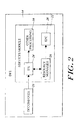
- the DFE 14 can include a decomposer 20 that decomposes incoming pages of a document into four color separations.
- the decomposer 20 may be, for example, a Postscript interpreter or a PCL interpreter. Nevertheless, those skilled in the art will appreciate that other varieties of decomposers may be used as the decomposer 20 in the DFE 14.
- the DFE 14 also includes a service module 22.
- the service module 22 performs various services on behalf of the DFE 14.
- the service module 22 includes an internal frame store (IFS) 24 that is responsible for buffering the color separations that are provided from the decomposer 20 while processing occurs within the service module 22.
- IFS internal frame store
- the service module 22 includes a resource manager 26 that manages storage and access to the electronic precollation (EPC) subsystem 28 provided within the service module 22.
- the EPC subsystem 28 is responsible for storing documents in electronic form and precollating the pages of the document and color separations in a sequence so that the pages are ready to be output by the IOT 16.
- the EPC subsystem 28 may include both primary storage (such as RAM) and secondary storage (such as magnetic disk storage).
- the EPC subsystem 28 facilitates a "scan once, print many" mode of operation in which a document is scanned a single time and then printed multiple times by multiple IOTs.
- the service module 22 also includes other processing capabilities 30.
- the depiction of the DFE 14 shown in Figure 2 is intended to be merely illustrative and not limiting of the present invention. There is no need for the DFE 14 to be limited to the components depicted therein. Moreover, the service module 22 need not include an EPC subsystem 38. Furthermore, the components contained within the DFE 14 may be integrated into singular components or broken down into multiple sub-components.
- FIG. 3 is a flow chart depicting steps that are performed by the illustrative embodiment of the present invention to determine whether a page in a document is a black and white page or a full color page.
- the illustrative embodiment maintains a boolean black_only_flag variable that identifies whether the page is to be treated as a black and white page or a full color page.
- a value of "TRUE" for the black_only_flag variable indicates the page is to be printed as a black and white page.
- the black_only_flag variable is set as "TRUE" (step 40 in Figure 3). As will be explained in more detail below, this value will be changed to "FALSE" if there is evidence that the page is not a black and white page.
- the decomposer 20 within the DFE 14 receives the page and decomposes the page into four color separations: a cyan color separation, a magenta color separation, a yellow color separation and a black color separation.
- the decomposer 20 sends these separations to the IFS 24 within the service module 22 (step 42 in Figure 3).
- the IFS 24 buffers the color separation data while the color separation data for the page is processed.
- a representative area e.g., the first two long words or the eight bytes
- a representative area e.g., the first two long words or the eight bytes
- the first eight bytes of the uncompressed cyan color separation may be examined.
- a check is made whether all of the uncompressed examined bytes have a value of zero (step 48 in Figure 3). A zero value for each of these bytes indicates that there is no cyan for any of the pixels associated with these bytes. In other words, there is no cyan color component in the page.
- the black_only_flag variable is set to have a "FALSE" value (step 50 in Figure 3). In contrast, if all of the examined bytes are zero, there is the possibility that the page is a black and white page. Thus, the analysis of the page continues. In either case, the separation data is sent to the resource manager 26 from the IFS 24 (step 52 in Figure 3).
- the resource manager 26 compresses the separation data using a linear compression algorithm, such as a Lempel-Ziv compression algorithm (e.g., LZ77, LZ78 or LZW), which compresses the color data in the color separations in a lossless fashion.
- a linear compression algorithm such as a Lempel-Ziv compression algorithm (e.g., LZ77, LZ78 or LZW)
- LZ77, LZ78 or LZW LZ77, LZ78 or LZW
- the compressed color separations are then forwarded to the EPC subsystem 28 to be stored on disk or on another type of storage medium (see step 54 in Figure 3).
- the resource manager 26 reports the sizes of the compressed separations to the IFS 24, where the sizes are stored.
- the sizes of the compressed separations are used in the continued analysis of the selected page if the black_only_flag variable has a value of "TRUE” (see step 58 in Figure 3). If the black_only_flag variable has a value of "FALSE", the page is designated and printed as a color page (step 68 in Figure 3).
- the analysis continues by comparing the sizes of the compressed separations (step 60 in Figure 3). Specifically, the compressed sizes of the cyan color separation, magenta color separation and yellow color separation are compared (step 62 of Figure 3). If the page is a black and white page, each of the compressed sizes should be the same, since these color separations should be all zeros prior to compression and compressed into like values of the same size. Thus, a comparison is made whether all of the compressions are the same size. If all of the compressed color separations are not the same size, the page is designated for printing as a color page (step 68 in Figure 3). There may be instances where the compressed color separations are all the same size, but the page is not a black and white page.
- one of the non-black color separations is compared with the black color separation to determine their relative sizes.
- the black color separations should be larger than the non-black color separation. If the compressed black color separation is larger than the non-black compressed color separation (see step 66 in Figure 3), the page is designated and printed as a black and white page (step 70 in Figure 3). If the compressed black color separation is not larger than the non-black color separation, the page is designated and printed as a color page (step 68 in Figure 3).
- the image data may be encoded using a color model other than the CMYK color model.
- the data that is examined may be located anywhere in the color separation rather than solely at the beginning of the cyan color separation.
Landscapes
- Engineering & Computer Science (AREA)
- Theoretical Computer Science (AREA)
- Physics & Mathematics (AREA)
- General Engineering & Computer Science (AREA)
- General Physics & Mathematics (AREA)
- Human Computer Interaction (AREA)
- Color Image Communication Systems (AREA)
- Record Information Processing For Printing (AREA)
- Accessory Devices And Overall Control Thereof (AREA)
- Facsimile Image Signal Circuits (AREA)
- Color, Gradation (AREA)
Abstract
Description
- The present invention relates to a processing device and method in printing technology.
- Conventional printing systems often include a digital front end (DFE) or a printer server. The DFE or print server is a computer system that performs some processing on print jobs and distributes the processed print jobs to one or more printers for printing. Often times, a print job contains a document that is encoded in a page description language, such as PCL or Postscript. The DFE or print server has an interpreter for interpreting page description language commands contained in the document to produce color data for the pixels representing the image of each page. This color data may be passed to a printer to produce a printed version of the page. If the document is a color document, the interpreter produces four color separations for each page: a cyan color separation, a magenta color separation, a yellow color separation and a black color separation. Each color separation is matched with an ink color and contains color data for each pixel specifying how much of the color associated with the color separation is to be used for coloring the pixel. The ink colors may be combined to produce a roughly infinite variety of colors. The ink colors have a subtractive effect relative to each other, where each layer of ink removes a color from light reflected by the printing substrate. For example, yellow removes the blue light components reflected from a white paper substrate. Each color separation holds color data for each pixel on the page. The data may identify what amount of the color associated with the color separation is to be combined with the other colors associated with the color separations to produce a desired color.
- With conventional printing systems, the interpreter does not report when a black and white page (i.e. a monochromatic page) is found within a color document. As a result, all of the pages are treated as color pages during printing. Color pages typically require four printing passes, where each printing pass is associated with a specified color (e.g., cyan, magenta, yellow or black). In contrast, a black and white page requires only a single printing pass. Hence, where a black and white page appears in a color document, the black and white page is printing with four printing passes rather than one printing pass. This conventional approach is both time consuming and wasteful of storage space.
- The present invention addresses the above-described limitation of conventional printing systems by providing a device, such as a DFE or a print server, that is able to recognize black and white pages in a color document. The device designates the black and white pages in a color document so that the designated pages may be printed in a black and white mode rather than in a color mode. The color pages are still printed in a color mode. Thus, the document is printed more efficiently without wasting printing resources.
- In one embodiment, the present invention identifies whether a page is a black and white page by examining data within the color separations for the page. In particular, predetermined bytes within one of the cyan, magenta or yellow separations may be examined to determine if the bytes have zero values, indicating that there are no cyan, magenta or yellow components for the specified pixels. A black and white document has no color components other than a black color component. This embodiment also examines the respective sizes of the cyan, magenta and yellow color separations after linear compression to ensure that all of these compressed color separations are the same size. It would be expected, given a linear and lossless compression method, that a black and white document would produce compressed color separations of the same size, except for the black color separation. Lastly, this embodiment compares the size of the black color separation to the size of one of the other color separations. If the black color separation is larger and the other tests have been met, the page is determined to be a black and white page.
- In accordance with one aspect of the present invention, a device is provided for processing a document having multiple pages with at least one black and white page and at least one full color page. The device includes an interface with at least one image output terminal to which the document may be sent to output the document. The device also includes an analyzer for analyzing each page of the document to determine whether the page is to be output in a black and white mode that is used for outputting monochromatic pages, or in a full color mode that is used for outputting full color pages. The device may be, for example, a digital front end or a print server.
- In accordance with another aspect of the present invention, a method is practiced in an apparatus for processing documents prior to passing the documents to at least one image output terminal (IOT). The method processes a selected page of a mixed document that has at least one full color page and at least one black and white page. In accordance with this method, the color data in at least one of the color separations for the selected page is analyzed and a determination is made whether the selected page is a black and white page. Where the selected page is determined to be a black and white page, the selected page is designated for printing in a black and white mode. Where the selected page is determined not to be a black and white page, the selected page is designated to be printed in the full color mode. The method may include the step of decomposing the selected page into color separations. Moreover, the method may include the step of examining a selected portion of the color data in one of the separations to determine whether all the color data in the selected portion has the same value. The color separations may be compressed, and the sizes of the compressed color separations may be used to determine whether the selected page is a black and white page or a full color page.
- An illustrative embodiment of the present invention will be described below relative to the following drawings.
- Figure 1 is a block diagram illustrating components that are employed in the illustrative embodiment of the present invention;
- Figure 2 is a block diagram illustrating major
functional components of the
DFE 14 of Figure 1; and, - Figure 3 is a flow chart illustrating the steps that are performed in the illustrative embodiment of the present invention to determine whether a page is to be printed as a color page or as a black and white page.
-
- The illustrative embodiment of the present invention allows a digital front end (DFE) to identify black and white pages in a mixed document that contains both color pages and black and white pages. The identified black and white pages may be printed using a more efficient black and white process while the color pages are still printed using a color printing process.
- The illustrative embodiment determines whether a page in a document is a black and white page by examining color data contained within the color separations for the page. The illustrative embodiment examines only a small portion of the color data to provide a fast and effective approach to identifying whether the page is a black and white page. The illustrative embodiment examines color data in a non-black color separation (i.e. cyan, magenta or yellow) of the page to determine whether all of the color data has a value of zero (indicating that there are no color components other than black). If this test is satisfied, the illustrative embodiment examines the compressed color separations to determine whether all of the non-black color separations are the same size. If all of the compressed non-black color separations are the same size, one of the non-black compressed color separations (e.g., cyan) is compared to the black compressed color separation to determine whether the black compressed color separation is larger. If the black color separation is larger, it is concluded that the page is a black and white page. Otherwise, it is concluded that the page is a full color page.
- For purposes of the discussion below, it is helpful to define a few terms.
- A "black and white page" is a page that contains only black and white color components.
- A "color page" or a "full color page" is a page that contains color components other than black and white components. A color page may be encoded in accordance with a CMYK color model or another color printing model.
- A "document" is a logical collection of pages.
- A "mixed document" is a document that contains at least one color page and at least one black and white page.
- A "color separation" is a logical grouping of data regarding the coloring of pixels for a given color plane. A given color may be decomposed into single color layers (e.g., cyan, magenta, yellow and black) where each color layer is printed separately to produce a given color.
- A "print job" is a logical grouping of information to be printed as a unit (e.g., a single document).
- "Linear compression" is a method of compression which produces a repeatable and predictable output for similar and identical input.
- Figure 1 depicts a
printing system 10 that is suitable for practicing the illustrative embodiment of the present invention. A document or other print job originates from aprint job source 12. Theprint job source 12 may be a computer system, a storage device or other document source, such as a scanner. Theprint job source 12 provides a document that is forwarded to a digital front end (DFE) 14. Those skilled in the art will appreciate that theDFE 14 may be, instead, a print server. In general, the DFE may be substituted with a device that processes a document prior to the document being distributed for printing. TheDFE 14 is a computer system having one or more processors for executing computer instructions. The computer instructions may be stored within storage along with data and other information. TheDFE 14 is interfaced with one or more image output terminals (IOTs) 16. TheIOTs 16 may be printers or other output devices that are capable of producing an output version of the image data that is passed from theDFE 14. Theprint job source 12, theDFE 14 andIOT 16 may be part of a common network, such as a local area network (LAN). Alternatively, these components may be part of different respective networks. For example, theprint job source 12 may originate from a remote location and be passed to theDFE 14 that is part of a network with theIOT 16. - Those skilled in the art will appreciate that the configuration of the
printing system 10 show in Figure 1 is intended to be merely illustrative and not limiting of the present invention. The present invention may be practiced with other printing system configurations. More generally, the present invention may be practiced in an environment where it is necessary to automatically detect a black and white page in a color document stream. - Figure 2 depicts a number of the logical components of the
DFE 14 in the illustrative embodiment of the present invention. TheDFE 14 can include adecomposer 20 that decomposes incoming pages of a document into four color separations. Thedecomposer 20 may be, for example, a Postscript interpreter or a PCL interpreter. Nevertheless, those skilled in the art will appreciate that other varieties of decomposers may be used as thedecomposer 20 in theDFE 14. TheDFE 14 also includes aservice module 22. Theservice module 22 performs various services on behalf of theDFE 14. Theservice module 22 includes an internal frame store (IFS) 24 that is responsible for buffering the color separations that are provided from thedecomposer 20 while processing occurs within theservice module 22. Theservice module 22 includes aresource manager 26 that manages storage and access to the electronic precollation (EPC)subsystem 28 provided within theservice module 22. TheEPC subsystem 28 is responsible for storing documents in electronic form and precollating the pages of the document and color separations in a sequence so that the pages are ready to be output by theIOT 16. TheEPC subsystem 28 may include both primary storage (such as RAM) and secondary storage (such as magnetic disk storage). TheEPC subsystem 28 facilitates a "scan once, print many" mode of operation in which a document is scanned a single time and then printed multiple times by multiple IOTs. Theservice module 22 also includesother processing capabilities 30. - Those skilled in the art will appreciate that the depiction of the
DFE 14 shown in Figure 2 is intended to be merely illustrative and not limiting of the present invention. There is no need for theDFE 14 to be limited to the components depicted therein. Moreover, theservice module 22 need not include an EPC subsystem 38. Furthermore, the components contained within theDFE 14 may be integrated into singular components or broken down into multiple sub-components. - Figure 3 is a flow chart depicting steps that are performed by the illustrative embodiment of the present invention to determine whether a page in a document is a black and white page or a full color page. The illustrative embodiment maintains a boolean black_only_flag variable that identifies whether the page is to be treated as a black and white page or a full color page. A value of "TRUE" for the black_only_flag variable indicates the page is to be printed as a black and white page. Initially, the black_only_flag variable is set as "TRUE" (
step 40 in Figure 3). As will be explained in more detail below, this value will be changed to "FALSE" if there is evidence that the page is not a black and white page. Thedecomposer 20 within theDFE 14 receives the page and decomposes the page into four color separations: a cyan color separation, a magenta color separation, a yellow color separation and a black color separation. Thedecomposer 20 sends these separations to theIFS 24 within the service module 22 (step 42 in Figure 3). TheIFS 24 buffers the color separation data while the color separation data for the page is processed. - A check is then made whether the black_only_flag variable has a "TRUE" value or a "FALSE" value (
step 44 in Figure 3). There may be instances where theDFE 14 is operating in a mode where it is presumed all of the pages are color pages. In such an instance, the black_only_flag variable has a value of "FALSE". The "FALSE" value indicates that theDFE 14 does not need to search for black and white pages in the document stream. - If the black_only_flag variable has a "TRUE" value (see
step 44 in Figure 3), a representative area (e.g., the first two long words or the eight bytes) of a designated one of the uncompressed color separations is examined (step 46 in Figure 3). For instance, the first eight bytes of the uncompressed cyan color separation may be examined. A check is made whether all of the uncompressed examined bytes have a value of zero (step 48 in Figure 3). A zero value for each of these bytes indicates that there is no cyan for any of the pixels associated with these bytes. In other words, there is no cyan color component in the page. For a color page, it is likely that one of these bytes will be non-zero; however, for a black and white page, these bytes should be all zero. If the bytes are not all zero, the black_only_flag variable is set to have a "FALSE" value (step 50 in Figure 3). In contrast, if all of the examined bytes are zero, there is the possibility that the page is a black and white page. Thus, the analysis of the page continues. In either case, the separation data is sent to theresource manager 26 from the IFS 24 (step 52 in Figure 3). Theresource manager 26 compresses the separation data using a linear compression algorithm, such as a Lempel-Ziv compression algorithm (e.g., LZ77, LZ78 or LZW), which compresses the color data in the color separations in a lossless fashion. Those skilled in the art will appreciate that a number of other types of linear compression may be utilized. For example run length encoding may be used and various video compression techniques may be used. The compressed color separations are then forwarded to theEPC subsystem 28 to be stored on disk or on another type of storage medium (seestep 54 in Figure 3). Theresource manager 26 reports the sizes of the compressed separations to theIFS 24, where the sizes are stored. The sizes of the compressed separations are used in the continued analysis of the selected page if the black_only_flag variable has a value of "TRUE" (seestep 58 in Figure 3). If the black_only_flag variable has a value of "FALSE", the page is designated and printed as a color page (step 68 in Figure 3). - The analysis continues by comparing the sizes of the compressed separations (
step 60 in Figure 3). Specifically, the compressed sizes of the cyan color separation, magenta color separation and yellow color separation are compared (step 62 of Figure 3). If the page is a black and white page, each of the compressed sizes should be the same, since these color separations should be all zeros prior to compression and compressed into like values of the same size. Thus, a comparison is made whether all of the compressions are the same size. If all of the compressed color separations are not the same size, the page is designated for printing as a color page (step 68 in Figure 3). There may be instances where the compressed color separations are all the same size, but the page is not a black and white page. Thus, instep 64 of Figure 3, one of the non-black color separations is compared with the black color separation to determine their relative sizes. With a black and white page, the black color separations should be larger than the non-black color separation. If the compressed black color separation is larger than the non-black compressed color separation (seestep 66 in Figure 3), the page is designated and printed as a black and white page (step 70 in Figure 3). If the compressed black color separation is not larger than the non-black color separation, the page is designated and printed as a color page (step 68 in Figure 3). - While the present invention has been described with reference to an illustrative embodiment thereof, those skilled in the art will appreciate that various changes in form and detail may be made without departing from the intended scope of the present invention as defined in the appended claims. For example, the image data may be encoded using a color model other than the CMYK color model. Further, the data that is examined may be located anywhere in the color separation rather than solely at the beginning of the cyan color separation.
Claims (11)
- A device for processing a document having multiple pages with at least one black and white page and at least one full color page, comprising:an interface with at least one image output terminal (IOT) to which the document may be sent to output the document; andan analyzer for analyzing each page of the document to determine whether the page is to be output in a black and white mode that is used for outputting monochromatic pages or in a full color mode that is used for outputting full color pages.
- The device of claim 1, wherein the device is one of a digital front end and a print server.
- The device of claim 1 or claim 2, further comprising a decomposer for decomposing the pages of the document into color separations.
- The device of any of claims 1 to 3, wherein the analyzer further comprises means for examining data in color separations of a page to determine whether the page is to be output in a black and white mode.
- A method for processing a selected page of a mixed document having at least one full color page and at least one black and white page, said selected page containing color separations holding color data, comprising the steps of:analyzing the color data in at least one of the color separations to determine whether the selected page is a black and white page;where the selected page is determined to be a black and white page, designating the selected page to be printed in a black and white mode; andwhere the selected page is determined not to be a black and white page, designating the selected page to be printed in a full color mode.
- The method of claim 5, wherein the step of analyzing the color data comprises the step of examining a selected portion of the color data in a given one of the color separations to determine whether all of the color data for the selected portion has a same value.
- The method of claim 6, wherein the given color separation is a color separation other than a black color separation.
- The method of claim 7, further comprising the step of compressing the color separations to compressed sizes using a linear and lossless compression technique, wherein the selected page includes a cyan color separation, a magenta color separation, a yellow color separation and a black color separation, and wherein the method further comprises the step of comparing the compressed sizes of the cyan color separation, the magenta color separation and the yellow color separation to determine if the compressed sizes are equal.
- The method of claim 8, further comprising the step of determining that the selected page is not a black and white page when the compressed sizes are not equal.
- The method of claim 8, further comprising the step of determining that the selected page is a black and white page when a compressed size of the black color separation exceeds the compressed size of another of the color separations.
- A medium holding instructions for a method for processing a selected page of a mixed document having at least one full color page and at least one black and white page, said selected page containing color separations holding color data, comprising the steps of:analyzing the color data in at least one of the color separations to determine whether the selected page is a black and white page;where the selected page is determined to be a black and white page, designating the selected page to be printed in a black and white mode; andwhere the selected page is determined to not be a black and white page, designating the selected page to be printed in a full color mode.
Applications Claiming Priority (2)
| Application Number | Priority Date | Filing Date | Title |
|---|---|---|---|
| US408233 | 1982-08-16 | ||
| US09/408,233 US6718878B2 (en) | 1999-09-29 | 1999-09-29 | Automatic detection of black and white pages in a color document stream |
Publications (3)
| Publication Number | Publication Date |
|---|---|
| EP1091284A2 true EP1091284A2 (en) | 2001-04-11 |
| EP1091284A3 EP1091284A3 (en) | 2002-05-08 |
| EP1091284B1 EP1091284B1 (en) | 2012-12-12 |
Family
ID=23615415
Family Applications (1)
| Application Number | Title | Priority Date | Filing Date |
|---|---|---|---|
| EP00308429A Expired - Lifetime EP1091284B1 (en) | 1999-09-29 | 2000-09-26 | Processing device and method |
Country Status (3)
| Country | Link |
|---|---|
| US (1) | US6718878B2 (en) |
| EP (1) | EP1091284B1 (en) |
| JP (1) | JP4463958B2 (en) |
Cited By (1)
| Publication number | Priority date | Publication date | Assignee | Title |
|---|---|---|---|---|
| AU2007201473B1 (en) * | 2007-04-03 | 2008-03-06 | Epip Pty Ltd | Mixed colour remote printing of recipient documents |
Families Citing this family (18)
| Publication number | Priority date | Publication date | Assignee | Title |
|---|---|---|---|---|
| JP3809373B2 (en) * | 2001-12-26 | 2006-08-16 | キヤノン株式会社 | Printing processing method and apparatus |
| US20030202199A1 (en) * | 2002-04-25 | 2003-10-30 | Carter Barbara Burklin | Black-and-white lock mode for printer |
| JP2004040776A (en) | 2002-05-27 | 2004-02-05 | Oce Technologies Bv | Processing of digital mixed color document |
| JP4485293B2 (en) * | 2003-09-08 | 2010-06-16 | 株式会社リコー | Information processing apparatus, client terminal, image forming apparatus, data processing method, and program for causing computer to execute the method |
| US7742185B2 (en) | 2004-08-23 | 2010-06-22 | Xerox Corporation | Print sequence scheduling for reliability |
| US7791751B2 (en) * | 2004-11-30 | 2010-09-07 | Palo Alto Research Corporation | Printing systems |
| US7529007B2 (en) * | 2005-06-10 | 2009-05-05 | Lexmark International, Inc. | Methods of identifying the type of a document to be scanned |
| US7880925B2 (en) * | 2005-08-02 | 2011-02-01 | Kabushiki Kaisha Toshiba | Apparatus and method for generating an image file with a color layer and a monochrome layer |
| US8643892B2 (en) * | 2005-08-29 | 2014-02-04 | Xerox Corporation | User configured page chromaticity determination and splitting method |
| US7667860B2 (en) * | 2006-01-19 | 2010-02-23 | Xerox Corporation | Control arrangement for a printing system |
| JP4787039B2 (en) * | 2006-03-17 | 2011-10-05 | シャープ株式会社 | Image discrimination device and image processing device |
| US7835031B2 (en) * | 2007-03-23 | 2010-11-16 | Xerox Corporation | Output pure color tints or black for full-color input |
| US8693012B2 (en) | 2008-09-04 | 2014-04-08 | Xerox Corporation | Run cost optimization for multi-engine printing system |
| US8279487B2 (en) * | 2009-06-24 | 2012-10-02 | Konica Minolta Laboratory U.S.A., Inc. | Color detection during document analysis prior to printing |
| US20100328703A1 (en) * | 2009-06-29 | 2010-12-30 | Konica Minolta Systems Laboratory, Inc. | User-controlled color detection and optimization during document analysis prior to printing |
| US9544470B2 (en) | 2010-05-21 | 2017-01-10 | Ricoh Company, Ltd. | Ink management and monitoring mechanism |
| EP2576809A4 (en) * | 2010-06-07 | 2014-06-18 | Nexcelom Bioscience Llc | Yeast concentration and viability measurement |
| JP6127965B2 (en) * | 2013-12-26 | 2017-05-17 | ブラザー工業株式会社 | Image output apparatus and program |
Citations (2)
| Publication number | Priority date | Publication date | Assignee | Title |
|---|---|---|---|---|
| US5604598A (en) | 1993-06-22 | 1997-02-18 | Canon Kabushiki Kaisha | Image processing apparatus |
| JPH1195521A (en) | 1997-09-24 | 1999-04-09 | Oki Data Corp | Color-image printer |
Family Cites Families (17)
| Publication number | Priority date | Publication date | Assignee | Title |
|---|---|---|---|---|
| JP2887158B2 (en) * | 1989-06-14 | 1999-04-26 | 富士ゼロックス株式会社 | Image processing device |
| EP0411918B1 (en) | 1989-08-02 | 1994-10-05 | Canon Kabushiki Kaisha | Color image processing apparatus |
| DE69121439T2 (en) | 1990-03-19 | 1997-01-09 | Canon Kk | Image processing method and apparatus |
| DE4012608A1 (en) * | 1990-04-20 | 1991-10-24 | Roland Man Druckmasch | METHOD AND DEVICE FOR DETERMINING PASSAGE DIFFERENCES AT PRINT IMAGE SITES OF A MULTICOLOR OFFSET PRINT |
| US5113356A (en) | 1990-12-24 | 1992-05-12 | Xerox Corporation | Colorizing black and white documents |
| JP3003261B2 (en) * | 1991-05-14 | 2000-01-24 | 富士ゼロックス株式会社 | Color image recognition device |
| US6327043B1 (en) * | 1994-05-18 | 2001-12-04 | Xerox Corporation | Object optimized printing system and method |
| US5649024A (en) | 1994-11-17 | 1997-07-15 | Xerox Corporation | Method for color highlighting of black and white fonts |
| US5537190A (en) * | 1994-12-12 | 1996-07-16 | Xerox Corporation | Method and apparatus to improve registration in a black first printing machine |
| US6118895A (en) * | 1995-03-07 | 2000-09-12 | Minolta Co., Ltd. | Image forming apparatus for distinguishing between types of color and monochromatic documents |
| JP3436828B2 (en) | 1995-05-08 | 2003-08-18 | 株式会社リコー | Image processing device |
| US5678133A (en) * | 1996-07-01 | 1997-10-14 | Xerox Corporation | Auto-gloss selection feature for color image output terminals (IOTs) |
| JP3715719B2 (en) * | 1996-07-22 | 2005-11-16 | キヤノン株式会社 | Image processing apparatus and method, and computer-readable memory |
| US6148102A (en) * | 1997-05-29 | 2000-11-14 | Adobe Systems Incorporated | Recognizing text in a multicolor image |
| JP4077919B2 (en) * | 1998-01-30 | 2008-04-23 | キヤノン株式会社 | Image processing method and apparatus and storage medium therefor |
| US6064492A (en) * | 1998-05-29 | 2000-05-16 | Xerox Corporation | Image data interface between digital front end and printer |
| US6377703B1 (en) | 1998-11-10 | 2002-04-23 | Seiko Epson Corporation | Apparatus and method for determining an area encompassing an image for scanning the image |
-
1999
- 1999-09-29 US US09/408,233 patent/US6718878B2/en not_active Expired - Fee Related
-
2000
- 2000-09-22 JP JP2000288976A patent/JP4463958B2/en not_active Expired - Fee Related
- 2000-09-26 EP EP00308429A patent/EP1091284B1/en not_active Expired - Lifetime
Patent Citations (3)
| Publication number | Priority date | Publication date | Assignee | Title |
|---|---|---|---|---|
| US5604598A (en) | 1993-06-22 | 1997-02-18 | Canon Kabushiki Kaisha | Image processing apparatus |
| JPH1195521A (en) | 1997-09-24 | 1999-04-09 | Oki Data Corp | Color-image printer |
| US6580523B1 (en) | 1997-09-24 | 2003-06-17 | Oki Data Corporation | Color image printer |
Cited By (1)
| Publication number | Priority date | Publication date | Assignee | Title |
|---|---|---|---|---|
| AU2007201473B1 (en) * | 2007-04-03 | 2008-03-06 | Epip Pty Ltd | Mixed colour remote printing of recipient documents |
Also Published As
| Publication number | Publication date |
|---|---|
| US6718878B2 (en) | 2004-04-13 |
| JP2001148791A (en) | 2001-05-29 |
| EP1091284A3 (en) | 2002-05-08 |
| EP1091284B1 (en) | 2012-12-12 |
| US20020005134A1 (en) | 2002-01-17 |
| JP4463958B2 (en) | 2010-05-19 |
Similar Documents
| Publication | Publication Date | Title |
|---|---|---|
| EP1091284B1 (en) | Processing device and method | |
| EP1152595B1 (en) | A method for compressing digital documents with control of image quality and compression rate | |
| US6429948B1 (en) | Object optimized printing system and method | |
| US6583887B1 (en) | Method and apparatus for data compression | |
| US6256104B1 (en) | Object optimized printing system and method | |
| EP0950980A2 (en) | Configuring a data processing pipeline | |
| US6778291B1 (en) | Fast page analyzer for proper selection of compression engine for rendered data | |
| JPH1051632A (en) | Method and apparatus for improving the quality of a combined mode document | |
| US5805781A (en) | Printer method and apparatus for combining sub-images to eliminate image artifacts | |
| JP2000138835A (en) | Compression system for digital image | |
| US7075681B1 (en) | System and method for reducing the data volume of images | |
| US20120114230A1 (en) | Image processing apparatus, image processing method, and storage medium | |
| JP2009207145A (en) | System and method for isolating near achromatic pixels of digital image | |
| EP1670257B1 (en) | Compressing a mutlivalue image with control of memory space requirement | |
| US5784062A (en) | Image output device and processing method converting an image formation command into raster format | |
| EP2670126A1 (en) | Method for processing rasterized image data | |
| EP0962854A2 (en) | Job selection for use in a prepress printing environment | |
| US5966504A (en) | Apparatus and method for printing | |
| US8743424B2 (en) | Pre-print enhancement of a raster image | |
| US7345782B2 (en) | Efficient implementation of raster operations flow | |
| JP2005063445A (en) | Raster image processing | |
| CA2383476A1 (en) | System and method for producing halftoned color separations for an output imaging device | |
| JP2001094806A (en) | Image processor | |
| Fan et al. | Segmentation for mixed raster contents with multiple extracted constant color areas | |
| JPH07231391A (en) | Picture processor |
Legal Events
| Date | Code | Title | Description |
|---|---|---|---|
| PUAI | Public reference made under article 153(3) epc to a published international application that has entered the european phase |
Free format text: ORIGINAL CODE: 0009012 |
|
| AK | Designated contracting states |
Kind code of ref document: A2 Designated state(s): AT BE CH CY DE DK ES FI FR GB GR IE IT LI LU MC NL PT SE |
|
| AX | Request for extension of the european patent |
Free format text: AL;LT;LV;MK;RO;SI |
|
| RIN1 | Information on inventor provided before grant (corrected) |
Inventor name: WOODWARD, CRAIG D. Inventor name: GROSSO, MARC RAYMOND |
|
| PUAL | Search report despatched |
Free format text: ORIGINAL CODE: 0009013 |
|
| AK | Designated contracting states |
Kind code of ref document: A3 Designated state(s): AT BE CH CY DE DK ES FI FR GB GR IE IT LI LU MC NL PT SE |
|
| AX | Request for extension of the european patent |
Free format text: AL;LT;LV;MK;RO;SI |
|
| RIC1 | Information provided on ipc code assigned before grant |
Free format text: 7G 06F 3/12 A, 7G 06K 15/02 B |
|
| 17P | Request for examination filed |
Effective date: 20021108 |
|
| AKX | Designation fees paid |
Designated state(s): DE FR GB |
|
| 17Q | First examination report despatched |
Effective date: 20080731 |
|
| RIC1 | Information provided on ipc code assigned before grant |
Ipc: G06F 3/12 20060101AFI20120320BHEP |
|
| GRAP | Despatch of communication of intention to grant a patent |
Free format text: ORIGINAL CODE: EPIDOSNIGR1 |
|
| GRAS | Grant fee paid |
Free format text: ORIGINAL CODE: EPIDOSNIGR3 |
|
| GRAA | (expected) grant |
Free format text: ORIGINAL CODE: 0009210 |
|
| AK | Designated contracting states |
Kind code of ref document: B1 Designated state(s): DE FR GB |
|
| REG | Reference to a national code |
Ref country code: GB Ref legal event code: FG4D |
|
| REG | Reference to a national code |
Ref country code: DE Ref legal event code: R096 Ref document number: 60047689 Country of ref document: DE Effective date: 20130207 |
|
| PLBE | No opposition filed within time limit |
Free format text: ORIGINAL CODE: 0009261 |
|
| STAA | Information on the status of an ep patent application or granted ep patent |
Free format text: STATUS: NO OPPOSITION FILED WITHIN TIME LIMIT |
|
| 26N | No opposition filed |
Effective date: 20130913 |
|
| REG | Reference to a national code |
Ref country code: DE Ref legal event code: R097 Ref document number: 60047689 Country of ref document: DE Effective date: 20130913 |
|
| PGFP | Annual fee paid to national office [announced via postgrant information from national office to epo] |
Ref country code: DE Payment date: 20140822 Year of fee payment: 15 |
|
| PGFP | Annual fee paid to national office [announced via postgrant information from national office to epo] |
Ref country code: GB Payment date: 20140822 Year of fee payment: 15 |
|
| PGFP | Annual fee paid to national office [announced via postgrant information from national office to epo] |
Ref country code: FR Payment date: 20140922 Year of fee payment: 15 |
|
| REG | Reference to a national code |
Ref country code: DE Ref legal event code: R119 Ref document number: 60047689 Country of ref document: DE |
|
| GBPC | Gb: european patent ceased through non-payment of renewal fee |
Effective date: 20150926 |
|
| REG | Reference to a national code |
Ref country code: FR Ref legal event code: ST Effective date: 20160531 |
|
| PG25 | Lapsed in a contracting state [announced via postgrant information from national office to epo] |
Ref country code: GB Free format text: LAPSE BECAUSE OF NON-PAYMENT OF DUE FEES Effective date: 20150926 Ref country code: DE Free format text: LAPSE BECAUSE OF NON-PAYMENT OF DUE FEES Effective date: 20160401 |
|
| PG25 | Lapsed in a contracting state [announced via postgrant information from national office to epo] |
Ref country code: FR Free format text: LAPSE BECAUSE OF NON-PAYMENT OF DUE FEES Effective date: 20150930 |