EP1089273A2 - Information recording medium for recording a scrambled part of content information, and method and apparatus for reproducing information recorded therein - Google Patents
Information recording medium for recording a scrambled part of content information, and method and apparatus for reproducing information recorded therein Download PDFInfo
- Publication number
- EP1089273A2 EP1089273A2 EP00119866A EP00119866A EP1089273A2 EP 1089273 A2 EP1089273 A2 EP 1089273A2 EP 00119866 A EP00119866 A EP 00119866A EP 00119866 A EP00119866 A EP 00119866A EP 1089273 A2 EP1089273 A2 EP 1089273A2
- Authority
- EP
- European Patent Office
- Prior art keywords
- information
- key information
- recorded
- scrambled
- data
- Prior art date
- Legal status (The legal status is an assumption and is not a legal conclusion. Google has not performed a legal analysis and makes no representation as to the accuracy of the status listed.)
- Withdrawn
Links
Images


Classifications
-
- G—PHYSICS
- G11—INFORMATION STORAGE
- G11B—INFORMATION STORAGE BASED ON RELATIVE MOVEMENT BETWEEN RECORD CARRIER AND TRANSDUCER
- G11B20/00—Signal processing not specific to the method of recording or reproducing; Circuits therefor
- G11B20/10—Digital recording or reproducing
-
- G—PHYSICS
- G11—INFORMATION STORAGE
- G11B—INFORMATION STORAGE BASED ON RELATIVE MOVEMENT BETWEEN RECORD CARRIER AND TRANSDUCER
- G11B20/00—Signal processing not specific to the method of recording or reproducing; Circuits therefor
- G11B20/10—Digital recording or reproducing
- G11B20/12—Formatting, e.g. arrangement of data block or words on the record carriers
-
- G—PHYSICS
- G11—INFORMATION STORAGE
- G11B—INFORMATION STORAGE BASED ON RELATIVE MOVEMENT BETWEEN RECORD CARRIER AND TRANSDUCER
- G11B20/00—Signal processing not specific to the method of recording or reproducing; Circuits therefor
- G11B20/00086—Circuits for prevention of unauthorised reproduction or copying, e.g. piracy
-
- G—PHYSICS
- G11—INFORMATION STORAGE
- G11B—INFORMATION STORAGE BASED ON RELATIVE MOVEMENT BETWEEN RECORD CARRIER AND TRANSDUCER
- G11B20/00—Signal processing not specific to the method of recording or reproducing; Circuits therefor
- G11B20/00086—Circuits for prevention of unauthorised reproduction or copying, e.g. piracy
- G11B20/0021—Circuits for prevention of unauthorised reproduction or copying, e.g. piracy involving encryption or decryption of contents recorded on or reproduced from a record carrier
-
- G—PHYSICS
- G11—INFORMATION STORAGE
- G11B—INFORMATION STORAGE BASED ON RELATIVE MOVEMENT BETWEEN RECORD CARRIER AND TRANSDUCER
- G11B20/00—Signal processing not specific to the method of recording or reproducing; Circuits therefor
- G11B20/00086—Circuits for prevention of unauthorised reproduction or copying, e.g. piracy
- G11B20/00731—Circuits for prevention of unauthorised reproduction or copying, e.g. piracy involving a digital rights management system for enforcing a usage restriction
- G11B20/00746—Circuits for prevention of unauthorised reproduction or copying, e.g. piracy involving a digital rights management system for enforcing a usage restriction wherein the usage restriction can be expressed as a specific number
- G11B20/00753—Circuits for prevention of unauthorised reproduction or copying, e.g. piracy involving a digital rights management system for enforcing a usage restriction wherein the usage restriction can be expressed as a specific number wherein the usage restriction limits the number of copies that can be made, e.g. CGMS, SCMS, or CCI flags
- G11B20/00768—Circuits for prevention of unauthorised reproduction or copying, e.g. piracy involving a digital rights management system for enforcing a usage restriction wherein the usage restriction can be expressed as a specific number wherein the usage restriction limits the number of copies that can be made, e.g. CGMS, SCMS, or CCI flags wherein copy control information is used, e.g. for indicating whether a content may be copied freely, no more, once, or never, by setting CGMS, SCMS, or CCI flags
-
- G—PHYSICS
- G11—INFORMATION STORAGE
- G11B—INFORMATION STORAGE BASED ON RELATIVE MOVEMENT BETWEEN RECORD CARRIER AND TRANSDUCER
- G11B20/00—Signal processing not specific to the method of recording or reproducing; Circuits therefor
- G11B20/10—Digital recording or reproducing
- G11B2020/1087—Digital recording or reproducing wherein a selection is made among at least two alternative ways of processing
- G11B2020/10888—Digital recording or reproducing wherein a selection is made among at least two alternative ways of processing the kind of data being the selection criterion
Definitions
- the present invention relates to an information recording medium for recording video information, audio information or the like, a method for reproducing information recorded in the information recording medium, and an apparatus for reproducing information recorded in the information recording medium.
- the present invention relates to an information recording medium in which copyrighted content information is recorded, a method for reproducing copyrighted content information recorded in the information recording medium, and an apparatus for reproducing copyrighted content information recorded in the information recording medium.
- recording mediums each for recording an analog signal such as a compact cassette tape, an analog record and the like
- a recording medium for recording a digital signal such as a CD (Compact Disc), an MD (Mini Disc) and the like.
- the digital recording mediums such as a video CD for recording a video signal compressed by a compression method called MPEG1 on a CD, and a DVD (Digital Video Disc) for recording a video signal compressed by a high-quality compression method called MPEG2 on an optical disk having a large capacity of 4.7 GB, have been developed as recording mediums for recording a video signal.
- These digital recording mediums have been commercialized as recording mediums for recording video information and audio information.
- Fig. 7 is a block diagram showing an internal configuration of an optical disk reproducing apparatus 400 of a first prior art.
- the optical disk reproducing apparatus 400 executes error correction and expansion processes on information data read out from an optical disk 201, thereby decoding and outputting desired video and audio signals.
- the optical disk reproducing apparatus 400 is equipped with the optical disk 201.
- the optical disk reproducing apparatus 400 is constituted by comprising a spindle motor 202, an optical head 203, a head amplifier 204, an analog processor 205, an optical disk controller 206, an error correction memory 207, an audio and video decoder 209 (hereinafter referred to as an AV decoder), an audio and video signal processing memory 210 (hereinafter referred to as an AV signal processing memory), a servo controller 211, a CPU 212, and a CPU bus 213.
- the spindle motor 202 rotates the optical disk 201 in accordance with a control signal from the servo controller 211.
- the optical head 203 comprises an optical pickup.
- the optical head 203 irradiates the optical disk 201 with laser light generated by driving a laser diode.
- the optical head 203 detects the reflected light from the optical disk 201, and then, executes photoelectric conversion on the reflected light. Then, the optical head 203 outputs a reproduced signal subjected to photoelectric conversion to the analog processor 205 through the head amplifier 204.
- the analog processor 205 has facilities for AGC, equalizing, data slice, and PLL.
- the analog processor 205 applies predetermined analog signal processing to the input reproduced signal, and then outputs the processed reproduced signal to the optical disk controller 206.
- the optical disk controller 206 converts the input reproduced signal into reproduced digital data through A/D conversion, and then demodulates the reproduced data.
- the optical disk controller 206 applies error correction and the like to the demodulated reproduced data by using the error correction memory 207 as a buffer memory.
- the optical disk controller 206 outputs the processed reproduced data to the AV decoder 209.
- the AV decoder 209 applies decoding including expansion to video data and audio data, which are compressed into the above-mentioned input reproduced data, by using the AV signal processing memory 210 that is an expansion buffer memory for use in expansion of video data and audio data, in accordance with the input reproduced data.
- the AV decoder 209 outputs the processed video and audio signals.
- the servo controller 211 controls the spindle motor 202, the optical head 203, the optical disk controller 206 and so on in accordance with the signals from the analog processor 205, the optical disk controller 206 and the CPU 212, to perform servo control of focusing, tracking or the like of the optical head 203 for readout of data from the optical disk 201, or the like.
- the servo controller 211, the analog processor 205, the optical disk controller 206 and the AV decoder 209 are connected to the CPU 212 through the CPU bus 213.
- the CPU 212 controls the analog processor 205, the optical disk controller 206, the AV decoder 209 and the servo controller 211 through the CPU bus 213, to control operation of the overall optical disk reproducing apparatus 400.
- the CPU 212 controls the optical head 203 in accordance with a predetermined sequence so as to read out data from the optical disk 201 by using the optical head 203, then output the reproduced data to the optical disk controller 206 through the head amplifier 204 and the analog processor 205, and then store the reproduced data subjected to error correction in the error correction memory 207.
- the CPU 212 reads out control information and data identification information in the reproduced data stored in the error correction memory 207, and thus controls the servo controller 211 and the AV decoder 209, thereby reproducing video data and audio data.
- the capacity of an application program for a personal computer is also increased in accordance with an improvement in performance of the personal computer and an increase in the capacity of a hard disk.
- a DVD is used, by making use of its feature of a large capacity, not only as a recording medium for recording video data and audio data but also as a medium for distributing application software for the personal computer, or the like.
- a DVD drive unit is rapidly spreading as a peripheral unit of the personal computer.
- an AV decoder card having an MPEG expansion facility for the personal computer, a program for executing the MPEG expansion facility through software processing by a main processor of the personal computer and the like are commercialized.
- the DVD drive unit and the AV decoder card are connected through a communication line of a general computer bus in a system in which the personal computer reproduces video data and audio data from the DVD by using the DVD drive unit and the AV decoder card.
- acts such as piracy of data transmitted through the communication line and distribution of tampered data, take place. Consequently, there is such a problem that it is very difficult to protect the copyright thereof.
- a personal computer issues a command to read a cipher key to a reproducing apparatus, then encrypted data is read out, and the encrypted data is decrypted by using the cipher key previously read out, and this leads to that the data is reproduced.
- the cipher key is recorded in the main data area of the sector from which the cipher key can be read out by a general read command.
- the cipher key can be easily read out by a general personal computer. Therefore, a user can read out the cipher key and encrypted data.
- the second prior art has a problem that it involves a high risk of decryption.
- the second prior art has another problem that a pirated copy can be made by copying the cipher key and the encrypted data in a hard disk memory, for example.
- all the main data areas of the sector are encrypted and recorded.
- a CPU of, for example, a DVD player attempts to read out content control information, which is included in main data of the sector and includes content identification information, content copy control information and so on, from an optical disk in order to control the DVD player, the CPU can obtain correct information only after decrypting data once encrypted.
- the above-mentioned problem causes the following problem.
- the area containing the content control information is recorded in a form of plain text, unauthorized reproducing takes place in the case where the copy control information is tampered with.
- an object of the present invention to provide an information recording medium having a data structure for preventing easy readout of key information for use in descrambling.
- an information recording medium for recording at least copyrighted content information and cipher key information
- the non-scrambled part of the content information for generating the scramble key information preferably includes at least copy control information.
- the information recording medium preferably comprises a recording area divided into a plurality of sectors
- a method for reproducing information recorded in an information recording medium for recording at least cipher key information and content information, a part of the content information being scrambled and recorded in the information recording medium including the steps of:
- an apparatus for reproducing information recorded in an information recording medium for recording at least cipher key information and content information, a part of the content information being scrambled and recorded comprising:
- an information recording medium having at least a data recording area for recording copyrighted content information
- an information recording medium having at least a data recording area and a lead-in area, copyrighted content information being recorded in the information recording medium,
- the non-scrambled part of the content information for generating the scramble key information preferably includes at least copy control information.
- the information recording medium preferably has a recording area divided into a plurality of sectors
- a method for reproducing information recorded in an information recording medium having at least a data recording area and a lead-in area, at least first cipher key information and content information being recorded in the data recording area, second cipher key information being recorded in the lead-in area, and a part of the content information recorded in the data recording area being scrambled and recorded, the method including the steps of:
- the non-scrambled content information for converting the second key information into the converted second key information preferably includes at least copy control information.
- an information recording medium having at least a lead-in area and a data recording area, copyrighted content information being recorded in the information recording medium,
- the data recording area is preferably divided into a plurality of sectors, each of which is composed of a sector header area for recording information for identifying the sector, and a main data area for recording the content information,
- the non-scrambled part of the content information for generating the scramble key information preferably includes at least copy control information.
- the non-scrambled part of the content information for generating the scramble key information preferably includes at least the copy control information, and a part of the content information that changes sector by sector.
- the second cipher key information recorded in the sector header area is preferably information which is obtained by encrypting predetermined second key information by the use of the first cipher key information recorded in the lead-in area.
- a non-scrambled part of the content information preferably includes at least copy control information.
- optical disks include an optical disk and a magneto-optical disk such as a CD, a video CD, a CD-ROM, a CD-R, a CD-RW, an MD, a DVD, a DVD-ROM, a DVD-RAM, a DVD-RW or the like.
- Fig. 1 is a hierarchy diagram showing a data structure of an optical disk 201 according to a first preferred embodiment of the present invention
- Fig. 2 is a plan view of recording areas of the optical disk 201 shown in Fig. 1.
- reference numeral 100A denotes a data structure of an information recording area of the whole optical disk 201, and the data structure 100A comprises a lead-in area 100 for recording control information, a data recording area 101 for recording content information 138 composed of content control information 134 and content data 135, and a lead-out area 102.
- the optical disk 201 has a rotation driving hole 201h in the center thereof, and the lead-in area 100, the data recording area 101 and the lead-out area 102 are located in the order from the inside of the optical disk 201 toward the outside thereof.
- the lead-in area 100 contains a control data area 110 for recording information required for an optical disk reproducing apparatus 200 shown in Fig. 3 to reproduce information from the optical disk 201.
- the control data area 110 comprises a physical information sector 111, a sector 150 for storing second cipher key information, and so on, as indicated by reference numeral 100B.
- Physical information about the optical disk 201 such as a disk diameter, a disk structure, a recording density and the like, is recorded in the physical information sector 111.
- Second cipher key information which is obtained by encrypting predetermined second key information, is recorded in the sector 150 for storing second cipher key information.
- a scramble information sector 151 for recording first cipher key information and the content information 138 such as a compressed movie, music or the like are scrambled, and then recorded as a scrambled file 130 in the data recording area 101.
- the first cipher key information is recorded as a scramble information file 120 in the data recording area 101.
- Copyrighted content information 138 is scrambled and recorded as the scrambled file 130 in the data recording area 101.
- Copyright-free content information 138 is not scrambled and is recorded as a non-scrambled file 140 in the data recording area 101.
- the data recording area 101 is partitioned into a plurality of units called sectors. That is, the data recording area 101 is divided into a plurality of sectors.
- the files 120, 130 and 140 recorded in the data recording area 101 comprise a plurality of scramble information sectors 151, a plurality of scrambled sectors 152 and a plurality of non-scrambled sectors 153, respectively.
- Each of the scrambled sectors 152 is composed of a sector header area 131 of 12 bytes for recording address information 161 and the like for identifying the sector, and a main data area 132 of 2048 bytes for recording the content information 138, as indicated by reference numeral 100F.
- Each of the non-scrambled sectors 153 is composed of a sector header area 141 of 12 bytes for recording the address information 161 and the like for identifying the sector, and a main data area 142 of 2048 bytes for recording the content information 138, as indicated by reference numeral 100G.
- Each scramble information sector 151 having a data structure indicated by reference numeral 100C has a sector header area and a main data area, in a manner similar to that of each scrambled sector 152 and each non-scrambled sector 153.
- a scramble flag 162 in addition to the above-mentioned address information 161, is recorded in each of the respective sector header areas 131 and 141 of the sectors 152 and 153.
- the scramble flags 162 recorded in the sector header areas 131 and 141 are flags for indicating whether or not predetermined areas of the respective main data areas 132 and 142 of the sectors 152 and 153 are scrambled.
- the scramble flag 162 of "1" is recorded in the scrambled sector having scrambled information, whereas the scramble flag 162 of "0" is recorded in the non-scrambled sector having non-scrambled information.
- the second cipher key information stored in the sector 150 for storing second cipher key information, which is recorded in the lead-in area 100 is decoded into second key information by using first key information, which is obtained by decoding the first cipher key information contained in the scramble information file 120 of the data recording area 101 by the use of predetermined fixed key information.
- the second key information obtained through decoding is converted into descramble key information for use in descrambling of main data, by using copy control information 136 and reference data 137 stored in the content information 138.
- the descramble key information is identical with scramble key information for use in encryption by a scrambling circuit corresponding to a descrambling circuit 208.
- the reference data 137 is a part of the content data 135.
- the copy control information 136 contains information such as the limit of the number of copies of the content information 138 or the like, and downsampling control to be performed at the time of reproducing information stored in the optical disk.
- the scrambled content data is obtained by scrambling and recording a part of the content information 138 stored in a predetermined area by the use of scramble key information, which is the converted second key information, into which the second key information obtained through decoding is converted by using the copy control information 136 contained in the content control information 134 and a part of the compressed content data 135 (e.g., the reference data 137 in the data structure indicated by reference numeral 100H of Fig. 1).
- Fig. 3 is a block diagram showing an internal configuration of the optical disk reproducing apparatus 200 for reproducing information recorded in the optical disk 201 shown in Figs. 1 and 2.
- the optical disk reproducing apparatus 200 will be described below with reference to Fig. 3.
- the optical disk reproducing apparatus 200 of the present preferred embodiment descrambles and expands reproduced data read out from the optical disk 201, thereby decoding and outputting desired video and audio signals.
- Fig. 3 the components having the same configurations as those shown in Fig. 7 are indicated by the same reference numerals, and the detailed description thereof is omitted.
- the optical disk reproducing apparatus 200 is equipped with the optical disk 201.
- the optical disk reproducing apparatus 200 comprises a spindle motor 202, an optical head 203, a head amplifier 204, an analog processor 205, an optical disk controller 206, an error correction memory 207, the descrambling circuit 208, an AV decoder 209, an AV signal processing memory 210, a servo controller 211, a CPU 212, and a CPU bus 213. That is, the optical disk reproducing apparatus 200 shown in Fig. 3 is characterized by that the descrambling circuit 208 for descrambling scrambled and recorded information is interposed between the optical disk controller 206 and the AV decoder 209, as compared with an optical disk reproducing apparatus 400 shown in Fig. 7.
- the optical disk controller 206 outputs processed reproduced data to the descrambling circuit 208.
- the descrambling circuit 208 descrambles the input processed reproduced data, and then outputs the descrambled reproduced data to the AV decoder 209.
- the servo controller 211, the analog processor 205, the optical disk controller 206, the descrambling circuit 208 and the AV decoder 209 are connected to the CPU 212 through the CPU bus 213.
- the CPU 212 controls the analog processor 205, the optical disk controller 206, the descrambling circuit 208, the AV decoder 209 and the servo controller 211 through the CPU bus 213, thereby controlling operation of the overall optical disk reproducing apparatus 200.
- the first cipher key information stored in the scramble information file 120 recorded in the data recording area 101, the second cipher key information contained in the sector 150 for storing second cipher key information stored in the lead-in area 100, and the copy control information and the reference data 137 that are a part of the content information 138 are inputted to the descrambling circuit 208.
- the descrambling circuit 208 decodes the input first cipher key information into the first key information by using predetermined fixed key information. Then, the descrambling circuit 208 decodes the input second cipher key information into the second key information by using the above-mentioned first key information.
- the descrambling circuit 208 converts the above-mentioned second key information into the converted second key information, i.e., the descramble key information by utilizing a predetermined transform equation such as a higher-order equation having, for example, two variables by the use of the input part of the content information 138. Furthermore, the descrambling circuit 208 descrambles main data in a plurality of scrambled sectors 152 having a data structure indicated by reference numeral 100D in Fig. 1 by using the above-mentioned descramble key information.
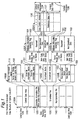
- Fig. 4 is a block diagram showing an internal configuration of the descrambling circuit 208 shown in Fig. 3. The configuration and operation of the descrambling circuit 208 will be described below with reference to Fig. 4.
- the descrambling circuit 208 comprises a first signal selector 301, a fixed key information memory 302, a second signal selector 303, a first key information decoder 304, a second key information decoder 305, a data descrambler 306, a third signal selector 307, and a key converter unit 310 including a first key information converter 311 and a second key information converter 312.
- Each of the first, second and third signal selectors 301, 303 and 307 comprises a multiplexer or a switch circuit, for example.
- the first signal selector 301 selects an internal circuit to which data inputted from the optical disk controller 206 to the descrambling circuit 208 is to be outputted, in accordance with the setting information of the decoding mode inputted from the CPU 212 through the CPU bus 213. Specifically, when the input data is the second cipher key information recorded in the lead-in area 100, the first signal selector 301 outputs the input second cipher key information to the second key information decoder 305. On the other hand, when the input data is sector data recorded in the data recording area 101, the first signal selector 301 outputs the input sector data to the second signal selector 303.
- the fixed key information memory 302 stores a predetermined fixed key for use in decoding of the first cipher key information.
- the sector data outputted from the first signal selector 301 is inputted to the second signal selector 303.
- the second signal selector 303 selects a circuit to which the sector data is to be outputted, in accordance with the location of the sector data in the sector, i.e., the count of the number of sector data.
- the type of the sector data recorded in the data recording area 101 is determined in accordance with the location of the sector data in the sector.
- the second signal selector 303 performs the following operation of:
- the first key information decoder 304 decodes the first cipher key information contained in the scramble information file 120 of the data recording area 101 outputted from the second signal selector 303, by a decoding method using a cryptosystem which has been already known to those skilled in the art, such as the DES cryptosystem, the RSA cryptosystem or the like, by the use of the fixed key information read out from the fixed key information memory 302.
- the first key information decoder 304 decodes the first cipher key information into the first key information, and then, outputs the decoded first key information to the second key information decoder 305.
- the second key information decoder 305 decodes the second cipher key information stored in the sector 150 for storing second cipher key information stored in the lead-in area 100 inputted from the first signal selector 301, by a decoding method using a cryptosystem which has been already known to those skilled in the art, such as the DES cryptosystem, the RSA cryptosystem or the like, in a manner similar to that of the first key information decoder 304 by the use of the first key information which is obtained through decoding and outputted from the first key information decoder 304.
- the second key information decoder 305 decodes the second cipher key information into the second key information, and outputs the second key information to the first key information converter 311 of the key converter unit 310.
- the key converter unit 310 comprises the first and second key information converters 311 and 312.
- the key converter unit 310 converts the second key information outputted from the second key information decoder 305 into the converted second key information, i.e., the descramble key information by using the copy control information and the reference data outputted from the second signal selector 303. Then, the key converter unit 310 outputs the descramble key information to the data descrambler 306.
- the first key information converter 311 converts the second key information outputted from the second key information decoder 305 into the second key information subjected to first key information conversion, by utilizing a predetermined first transform equation such as a predetermined higher-order equation, e.g., a method in which two input data are substituted into a higher-order equation having two variables so as to calculate a value of the higher-order equation, by the use of the copy control information outputted from the second signal selector 303. Then, the first key information converter 311 outputs the converted second key information to the second key information converter 312.
- a predetermined first transform equation such as a predetermined higher-order equation, e.g., a method in which two input data are substituted into a higher-order equation having two variables so as to calculate a value of the higher-order equation
- the second key information converter 312 converts the second key information, which is subjected to first key information conversion and outputted from the first key information converter 311, into the second key information subjected to second key information conversion, i.e., the converted second key information, by utilizing a predetermined second transform equation such as a predetermined higher-order equation, e.g., a method in which two input data are substituted into a higher-order equation having two variables so as to calculate a value of the higher-order equation in a manner similar to that of the first key information converter 311, by the use of the reference data outputted from the second signal selector 303. Then, the second key information converter 312 outputs the converted second key information to the data descrambler 306.
- a predetermined second transform equation such as a predetermined higher-order equation
- the data descrambler 306 descrambles the main data outputted from the second signal selector 303 by using the descramble key information outputted from the second key information converter 312 of the key converter unit 310. Thus, the data descrambler 306 generates the descrambled main data, and outputs the descrambled main data to the third signal selector 307.
- Data descrambling is executed in the following manner: a pseudo random pattern signal having a predetermined length, such as an M-series signal or the like, is generated by using a shift register having a finite length and an adder in a manner similar to that of a transmitter side, and then the exclusive OR of the generated pseudo random pattern signal and the input data is calculated.
- the third signal selector 307 selects either non-descrambled main data outputted from the second signal selector 303 or descrambled main data outputted from the data descrambler 306 in accordance with the scramble flag outputted from the second signal selector 303 and the count of the number of sector data counted in the third signal selector 307. Then, the third signal selector 307 outputs the selected main data to the AV decoder 209.
- the third signal selector 307 selects the descrambled main data outputted from the data descrambler 306, and outputs the descrambled main data to the AV decoder 209.
- the third signal selector 307 selects the non-descrambled main data outputted from the second signal selector 303, and outputs the non-descrambled main data to the AV decoder 209.
- the CPU 212 controls the servo controller 211 so that the optical head 203 may read out from the optical disk 201 information data stored in the sector 150 for storing second cipher key information stored in the control data area 110 in the lead-in area 100 of Fig. 1.
- An electric signal of the readout information data is amplified, demodulated and subjected to error correction by the head amplifier 204, the analog processor 205 and the optical disk controller 206, respectively.
- the CPU 212 controls the error correction memory 207 to store data on the processed second cipher key information therein.
- the CPU 212 controls the servo controller 211 so as to read out the sector storing the scramble information file (first cipher key information) 120 of Fig. 1 from the optical disk 201.
- An electric signal of readout information data is amplified, demodulated and subjected to error correction by the head amplifier 204, the analog processor 205 and the optical disk controller 206, respectively.
- a mode of decoding the first cipher key information is set in accordance with the decoding mode setting information from the CPU 212.
- the first cipher key information inputted from the optical disk controller 206 is transferred to the first key information decoder 304 by the first signal selector 301 and the second signal selector 303.
- the transferred first cipher key information is decoded by the first key information decoder 304 using the fixed key information read out from the fixed key information memory 302. Then, the first key information obtained through decoding is outputted to the second key information decoder 305. In the mode of decoding the first cipher key information into the first key information, no data is outputted from the descrambling circuit 208.
- the second cipher key information already stored in the error correction memory 207 is read out and outputted to the second key information decoder 305 through the first signal selector 301 of the descrambling circuit 208.
- the first key information already obtained through decoding by the first key information decoder 304 is inputted to the second key information decoder 305.
- the second key information decoder 305 decodes the input second cipher key information by using the first key information obtained through decoding.
- the second key information decoder 305 decodes the second cipher key information into the second key information, and outputs the second key information to the first key information converter 311 of the key converter unit 310.
- the CPU 212 controls the servo controller 211, the optical head 203, the analog processor 205 and the optical disk controller 206, thereby reading out desired information data from the optical disk 201 and causing the error correction memory 207 to store the information data subjected to error correction. Moreover, the CPU 212 sets a mode of descrambling data for the descrambling circuit 208. The CPU 212 sets the information required for the AV decoder 209, and then controls the error correction memory 207 to transfer the information data subjected to error correction to the descrambling circuit 208.
- the mode of descrambling data is set as the decoding mode setting information.
- the input sector data is transferred to the second signal selector 303 by the first signal selector 301.
- the second signal selector 303 counts the number of input sector data, and outputs the input sector data in accordance with the count in the following manner.
- the second key information which is obtained through decoding and outputted from the second key information decoder 305, is converted into the second key information subjected to first key information conversion by the first key information converter 311 by the use of the copy control information contained in the main data. Then, the converted second key information is outputted to the second key information converter 312. Subsequently, the second key information, which is subjected to first key information conversion and outputted from the first key information converter 311, is converted into the converted second key information, i.e., the descramble key information by the second key information converter 312 by the use of the reference data contained in the main data. Then, the descramble key information is outputted to the data descrambler 306.
- the main data inputted to the data descrambler 306 is descrambled by using the descramble key information outputted from the key converter unit 310. Then, the descrambled main data is outputted to the third signal selector 307.
- the third signal selector 307 receives the scramble flag selected by the second signal selector 303, counts the number of sector data therein, generates a select signal in accordance with the scramble flag and the count, and selectively outputs either the main data from the data descrambler 306 or the main data from the second signal selector 303 in accordance with the generated select signal.
- the scramble flag is equal to "1" and the count of the number of sector data indicates the recording area for recording the non-scrambled data 163, the non-descrambled main data outputted from the second signal selector 303 is outputted from the third signal selector 307.
- the scramble flag is equal to "1" and the count of the number of sector data indicates a storage area for scrambled data 164
- the main data outputted from the data descrambler 306 is outputted from the third signal selector 307.
- the scramble flag is equal to "0"
- the non-descrambled main data outputted from the second signal selector 303 is outputted from the third signal selector 307 regardless of the count of the number of sector data.
- the main data descrambled in accordance with the scramble flag and the count of the number of sector data is outputted from the descrambling circuit 208 to the AV decoder 209.
- the AV decoder 209 demultiplexes multiplexed compressed audio and video data, expands the audio and video data, and then outputs the expanded video and audio signals.
- the preferred embodiment has the following particular advantageous effects.
- the CPU 212 of Fig. 3 which is system control means of the optical disk reproducing apparatus 200 such as a DVD player or the like, reads in the content control information 134 such as information on the limit of the number of copies and information on downsampling control to be performed at the time of reproducing.
- the content control information can be easily referred to because the non-scrambled content control information is recorded.
- the content control information 134 which is not scrambled from the above-mentioned viewpoint, is recorded.
- correct descramble key information cannot be generated because of the provision of the key converter unit 310. Therefore, unauthorized reproducing can be prevented.
- the content data which is easy to change in a unit of sector, is used for obtaining the scramble key information from the second cipher key information by the use of the content control information 134.
- the content control information 134 is recorded in a unit of the above-mentioned file as shown in Fig. 1 and the second cipher key information is recorded in a unit of disk, the intensity of the protection of contents by scrambling can be improved because the scramble key information changes sector by sector.
- Fig. 5 is a hierarchy diagram showing a data structure of the optical disk 201 according to a second preferred embodiment of the present invention
- Fig. 6 is block diagram showing an internal configuration of a descrambling circuit 208a for use in the second preferred embodiment.
- the same components as those shown in Figs. 1 and 4 are indicated by the same reference numerals.
- the data structure of the optical disk 201 according to the second preferred embodiment and the configuration and operation of the descrambling circuit 208a, more particularly, a difference between the first and second preferred embodiments will be described in detail below.
- the first cipher key information is stored as the scramble information file 120 in the data recording area 101, as shown in Fig. 1.
- the first cipher key information is stored in a scramble information sector 112 in the control data area 110 in the lead-in area 100, as shown in Fig. 5.
- the second cipher key information is stored in the sector 150 for storing second cipher key information stored in the control data area 110 of the lead-in area 100, as shown in Fig. 1.
- the second cipher key information is stored together with the address information and the scramble flag in the sector header area 131 of the scrambled sector 152 of the scrambled file 130 in the data recording area 101, as shown in Fig. 5.
- the optical disk reproducing apparatus 200 for reproducing information recorded in the optical disk 201 configured as described above will be described with reference to Fig. 6.
- the second preferred embodiment is characterized by that the descrambling circuit 208 shown in Fig. 4 is replaced with the descrambling circuit 208a shown in Fig. 6.
- the descrambling circuit 208a shown in Fig. 6 differs from the descrambling circuit 208 shown in Fig. 4 in the following respects.
- the descrambling circuit 208a shown in Fig. 6 decodes the first cipher key information which is recorded in the scramble information sector 112 of the lead-in area 100 and inputted from the optical disk controller 206. Moreover, the descrambling circuit 208a decodes the second cipher key information and descrambles the main data in order to process the sector data having the data structure indicated by reference numeral 110C in Fig. 5.
- the first signal selector 301a When input data is the first cipher key information recorded in the scramble information sector 112 in the control data area 110 in the lead-in area 100, the first signal selector 301a outputs the input first cipher key information to the first key information decoder 304. On the other hand, when input data is the sector data recorded in the data recording area 101, the first signal selector 301a outputs the input sector data to the second signal selector 303a. Subsequently, the sector data outputted from the first signal selector 301a is inputted to the second signal selector 303a.
- the second signal selector 303a selects a circuit to which the sector data is to be outputted, in accordance with the location of the sector data in the sector, i.e., the count of the number of sector data. As shown in Fig. 1, the type of the sector data recorded in the data recording area 101 is determined in accordance with the location of the sector data in the sector. Thus, in accordance with the count of the number of sector data, as shown in Fig. 6, the second signal selector 303a performs the operation of:
- the optical disk reproducing apparatus 200 executes decoding of the first cipher key information recorded in the scramble information sector 112 in the control data area 110 in the lead-in area 100.
- the CPU 212 controls the servo controller 211 so that information data in the scramble information sector 112 in the control data area 110 in the lead-in area 100 may be read out from the optical disk 201 by using the optical head 203.
- An electric signal of the readout information data is amplified, demodulated and subjected to error correction by the head amplifier 204, the analog processor 205 and the optical disk controller 206, respectively.
- the information data subjected to error correction is stored in the error correction memory 207.
- the CPU 212 sets the mode of decoding the first cipher key information as the decoding mode setting information for the descrambling circuit 208a.
- the CPU 212 controls the optical disk controller 206 and the descrambling circuit 208a so that the data on the first cipher key information subjected to error correction in the scramble information sector 112 may be transferred from the optical disk controller 206 to the descrambling circuit 208a.
- the mode of decoding the first cipher key information is set in the descrambling circuit 208a.
- the input data on the first cipher key information stored in the scramble information sector 112 is transferred to the first key information decoder 304 by the first signal selector 301a.
- the transferred first cipher key information is decoded into the first key information by the first key information decoder 304 using the fixed key information read out from the fixed key information memory 302.
- the first key information is outputted to the second key information decoder 305.
- no data is outputted from the descrambling circuit 208a.
- the CPU 212 controls the servo controller 211, the optical head 203, the analog processor 205 and the optical disk controller 206, thereby reading out desired information data from the optical disk 201, and then causing the error correction memory 207 to store the information data subjected to error correction. Moreover, the CPU 212 sets the mode of descrambling data for the descrambling circuit 208a. The CPU 212 sets information data required for the AV decoder 209, and then controls the error correction memory 207 to transfer the information data subjected to error correction to the descrambling circuit 208a.
- the mode of descrambling data is set as the decoding mode setting information.
- the input sector data is transferred to the second signal selector 303a by the first signal selector 301a.
- the second signal selector 303a counts the number of input sector data and selectively outputs the input sector data in accordance with the count in the following manner.
- the second cipher key information inputted to the second key information decoder 305 is decoded into the second key information by using as a key the first key information outputted from the first key information decoder 304.
- the second key information obtained through decoding is outputted to the first key information converter 311 of the key converter unit 310.
- the second key information obtained through decoding is converted into the second key information subjected to first key information conversion by the first key information converter 311 by the use of the copy control information 136 contained in the main data. Then, the converted second key information is outputted to the second key information converter 312.
- the second key information subjected to first key information conversion is converted into the converted second key information by the second key information converter 312 by the use of the reference data contained in the main data.
- the converted second key information is outputted as the descramble key information to the data descrambler 306.
- the main data inputted to the data descrambler 306 is descrambled by using the descramble key information outputted from the second key information converter 312 of the key converter unit 310. Then, the descrambled main data is outputted to the third signal selector 307.
- the third signal selector 307 selects either the non-descrambled main data outputted from the second signal selector 303a or the descrambled main data outputted from the data descrambler 306 in accordance with the scramble flag outputted from the second signal selector 303a and the count of the number of sector data counted in the third signal selector 307. Then, the third signal selector 307 outputs the selected main data to the AV decoder 209.
- the third signal selector 307 selects the descrambled main data outputted from the data descrambler 306, and outputs the descrambled main data to the AV decoder 209.
- the third signal selector 307 selects the non-descrambled main data outputted from the second signal selector 303a, and outputs the non-descrambled main data to the AV decoder 209.
- the second cipher key information may be stored in one scrambled sector 152, or a plurality of data into which the second cipher key information is divided may be stored in the scrambled files 130 of a plurality of scrambled sectors 152.
- the second cipher key information can be recorded in a unit of sector or file.
- the second cipher key information can be changed in a unit of sector or file. Therefore, the intensity of copyright protection by scrambling can be further improved.
- the description is given with regard to the optical disk, the method of reproducing information recorded in the optical disk and the apparatus for reproducing information recorded in the optical disk.
- the present invention is not limited to this.
- the present invention can be applied to an information recording medium including a magnetic recording medium such as a floppy disk and a memory such as a flash memory, an EPROM or an EEPROM, a method of reproducing information recorded in the information recording medium and an apparatus for reproducing information recorded in the information recording medium.
- a scrambled and recorded part of the content information 138 is obtained through scrambling using the scramble key information, which is obtained by converting the first and second cipher key information by the use of a non-scrambled part of the content information 138.
- the present invention is not limited to this.
- a scrambled and recorded part of the content information 138 may be obtained through scrambling using the scramble key information, which is obtained by converting at least one of the first and second cipher key information by the use of a non-scrambled part of the content information 138.
- the apparatus comprises the first and second key information decoders 304 and 305.
- the apparatus may comprise at least one of the first and second key information decoders 304 and 305.
- the apparatus comprises only the first key information decoder 304
- the first key information obtained through decoding by the first key information decoder 304 is outputted to the key converter unit 310.
- the second key information decoder 305 decodes the second cipher key information into the second key information by using the fixed key information read out from the fixed key information memory 302, and then outputs the second key information to the key converter unit 310.
- the key converter unit 310 comprises the first and second key information converters 311 and 312.
- the key converter unit 310 may comprise at least one of the first and second key information converters 311 and 312. That is, the second key information, which is obtained through decoding by the second key information decoder 305 and outputted from the second key information decoder 305, is converted by using a part of the content information 138, e.g., at least one of the copy control information 136 and the reference data 137, and the converted second key information may be used as the descramble key information.
- each of the key information decoders 304 and 305 decodes predetermined cipher key information into key information obtained through decoding, by using predetermined key information.
- the present invention is not limited to this.
- Each of the key information decoders 304 and 305 may convert predetermined cipher key information into converted cipher key information by utilizing a predetermined transform equation by the use of predetermined key information.
- each of the key information converters 311 and 312 converts predetermined cipher key information into converted cipher key information by utilizing a predetermined transform equation by the use of predetermined information.
- the present invention is not limited to this.
- Each of the key information converters 311 and 312 may decode predetermined cipher key information into key information obtained through decoding, by using predetermined key information.
- an information recording medium for recording at least copyrighted content information and cipher key information, and in the above-mentioned information recording medium, a part of the content information is scrambled and recorded, and the scrambled and recorded part of the content information is obtained through scrambling using scramble key information which is obtained by converting the cipher key information by the use of a non-scrambled part of the content information. Therefore, the present invention has the following particular advantageous effects.
- System control means of an information reproducing apparatus such as a DVD player or the like reads in a part of the content information, which is the content control information such as information on the limit of the number of copies and information on downsampling control to be performed at the time of reproducing.
- the content control information can be easily referred to because the non-scrambled content control information is recorded.
- a part of the content information such as the content control information is not scrambled and is recorded.
- correct descramble key information cannot be generated. Therefore, unauthorized reproducing can be prevented.
- the content data which is easy to change in a unit of sector, is used for obtaining the scramble key information from the cipher key information by the use of a part of the content information such as the content control information or the like.
- the intensity of protection of contents by scrambling can be improved because the scramble key information changes sector by sector.
- non-scrambled data is used as the reference data to generate the scramble key information.
- the scramble key information changes in a unit of sector. Therefore, an effect of being resistant to piracy is achieved.
- the cipher key information when the cipher key information is recorded in a unit of sector or file, the cipher key information can be changed in a unit of sector or file. Therefore, the intensity of copyright protection by scrambling can be further improved.
Landscapes
- Engineering & Computer Science (AREA)
- Signal Processing (AREA)
- Computer Security & Cryptography (AREA)
- Signal Processing For Digital Recording And Reproducing (AREA)
- Storage Device Security (AREA)
Abstract
Description
- The present invention relates to an information recording medium for recording video information, audio information or the like, a method for reproducing information recorded in the information recording medium, and an apparatus for reproducing information recorded in the information recording medium. In particularly, the present invention relates to an information recording medium in which copyrighted content information is recorded, a method for reproducing copyrighted content information recorded in the information recording medium, and an apparatus for reproducing copyrighted content information recorded in the information recording medium.
- Recently, recording mediums each for recording an analog signal, such as a compact cassette tape, an analog record and the like, have been replaced as the mainstream of recording mediums for audio information by a recording medium for recording a digital signal, such as a CD (Compact Disc), an MD (Mini Disc) and the like. Moreover, the digital recording mediums, such as a video CD for recording a video signal compressed by a compression method called MPEG1 on a CD, and a DVD (Digital Video Disc) for recording a video signal compressed by a high-quality compression method called MPEG2 on an optical disk having a large capacity of 4.7 GB, have been developed as recording mediums for recording a video signal. These digital recording mediums have been commercialized as recording mediums for recording video information and audio information.
- Fig. 7 is a block diagram showing an internal configuration of an optical disk reproducing apparatus 400 of a first prior art. The optical disk reproducing apparatus 400 executes error correction and expansion processes on information data read out from an
optical disk 201, thereby decoding and outputting desired video and audio signals. - Referring to Fig. 7, the optical disk reproducing apparatus 400 is equipped with the
optical disk 201. The optical disk reproducing apparatus 400 is constituted by comprising aspindle motor 202, anoptical head 203, ahead amplifier 204, ananalog processor 205, anoptical disk controller 206, anerror correction memory 207, an audio and video decoder 209 (hereinafter referred to as an AV decoder), an audio and video signal processing memory 210 (hereinafter referred to as an AV signal processing memory), aservo controller 211, aCPU 212, and a CPU bus 213. - The
spindle motor 202 rotates theoptical disk 201 in accordance with a control signal from theservo controller 211. Theoptical head 203 comprises an optical pickup. Theoptical head 203 irradiates theoptical disk 201 with laser light generated by driving a laser diode. Theoptical head 203 detects the reflected light from theoptical disk 201, and then, executes photoelectric conversion on the reflected light. Then, theoptical head 203 outputs a reproduced signal subjected to photoelectric conversion to theanalog processor 205 through thehead amplifier 204. Theanalog processor 205 has facilities for AGC, equalizing, data slice, and PLL. Theanalog processor 205 applies predetermined analog signal processing to the input reproduced signal, and then outputs the processed reproduced signal to theoptical disk controller 206. Subsequently, theoptical disk controller 206 converts the input reproduced signal into reproduced digital data through A/D conversion, and then demodulates the reproduced data. Theoptical disk controller 206 applies error correction and the like to the demodulated reproduced data by using theerror correction memory 207 as a buffer memory. Then, theoptical disk controller 206 outputs the processed reproduced data to theAV decoder 209. Furthermore, theAV decoder 209 applies decoding including expansion to video data and audio data, which are compressed into the above-mentioned input reproduced data, by using the AVsignal processing memory 210 that is an expansion buffer memory for use in expansion of video data and audio data, in accordance with the input reproduced data. Then, theAV decoder 209 outputs the processed video and audio signals. - The
servo controller 211 controls thespindle motor 202, theoptical head 203, theoptical disk controller 206 and so on in accordance with the signals from theanalog processor 205, theoptical disk controller 206 and theCPU 212, to perform servo control of focusing, tracking or the like of theoptical head 203 for readout of data from theoptical disk 201, or the like. Theservo controller 211, theanalog processor 205, theoptical disk controller 206 and theAV decoder 209 are connected to theCPU 212 through the CPU bus 213. TheCPU 212 controls theanalog processor 205, theoptical disk controller 206, theAV decoder 209 and theservo controller 211 through the CPU bus 213, to control operation of the overall optical disk reproducing apparatus 400. - An operation of the optical disk reproducing apparatus of the first prior art will be briefly described with reference to Fig. 7. The
CPU 212 controls theoptical head 203 in accordance with a predetermined sequence so as to read out data from theoptical disk 201 by using theoptical head 203, then output the reproduced data to theoptical disk controller 206 through thehead amplifier 204 and theanalog processor 205, and then store the reproduced data subjected to error correction in theerror correction memory 207. At that time, theCPU 212 reads out control information and data identification information in the reproduced data stored in theerror correction memory 207, and thus controls theservo controller 211 and theAV decoder 209, thereby reproducing video data and audio data. - On the other hand, the capacity of an application program for a personal computer is also increased in accordance with an improvement in performance of the personal computer and an increase in the capacity of a hard disk. A DVD is used, by making use of its feature of a large capacity, not only as a recording medium for recording video data and audio data but also as a medium for distributing application software for the personal computer, or the like. Thus, a DVD drive unit is rapidly spreading as a peripheral unit of the personal computer. Furthermore, an AV decoder card having an MPEG expansion facility for the personal computer, a program for executing the MPEG expansion facility through software processing by a main processor of the personal computer and the like are commercialized.
- However, the DVD drive unit and the AV decoder card are connected through a communication line of a general computer bus in a system in which the personal computer reproduces video data and audio data from the DVD by using the DVD drive unit and the AV decoder card. Thus, acts, such as piracy of data transmitted through the communication line and distribution of tampered data, take place. Consequently, there is such a problem that it is very difficult to protect the copyright thereof.
- In order to solve the above-mentioned problems, encryption and recording of copyrighted data have been proposed in Japanese patent laid-open publication No. 7-249264 (hereinafter referred to as a second prior art), for example. Proposed is a method in which a cipher key is recorded in a main data area of a different sector from an encrypted data sector in a CD-ROM shown in Fig. 3 of the second prior art. In the second prior art, data encrypted at the time of recording and a cipher key of the data are recorded in the CD-ROM. At the time of reproducing, a personal computer issues a command to read a cipher key to a reproducing apparatus, then encrypted data is read out, and the encrypted data is decrypted by using the cipher key previously read out, and this leads to that the data is reproduced.
- However, in the second prior art, the cipher key is recorded in the main data area of the sector from which the cipher key can be read out by a general read command. Thus, the cipher key can be easily read out by a general personal computer. Therefore, a user can read out the cipher key and encrypted data. Thus, the second prior art has a problem that it involves a high risk of decryption. The second prior art has another problem that a pirated copy can be made by copying the cipher key and the encrypted data in a hard disk memory, for example.
- Moreover, all the main data areas of the sector are encrypted and recorded. Thus, when a CPU of, for example, a DVD player attempts to read out content control information, which is included in main data of the sector and includes content identification information, content copy control information and so on, from an optical disk in order to control the DVD player, the CPU can obtain correct information only after decrypting data once encrypted.
- The above-mentioned problem causes the following problem. When the area containing the content control information is recorded in a form of plain text, unauthorized reproducing takes place in the case where the copy control information is tampered with.
- In order to solve the foregoing problems, it is an object of the present invention to provide an information recording medium having a data structure for preventing easy readout of key information for use in descrambling.
- In order to solve the foregoing problems, it is another object of the present invention to provide an information recording medium in which a CPU for controlling an information reproducing apparatus such as a DVD player can easily read out copy control information or the like from the information recording medium and thus easily control the information reproducing apparatus, and reproducing of data can be prevented when the copy control information or the like recorded in the information recording medium is tampered with.
- In order to solve the foregoing problems, it is a further object of the present invention to provide a method and an apparatus for reproducing information stored in an information recording medium, in which a CPU for controlling an information reproducing apparatus such as a DVD player can easily read out copy control information or the like from an information recording medium and thus easily control the information reproducing apparatus, and reproducing of data can be prevented when the copy control information or the like recorded in the information recording medium is tampered with.
- In order to achieve the aforementioned objective, according to one aspect of the present invention, there is provided an information recording medium for recording at least copyrighted content information and cipher key information,
- wherein a part of the content information is scrambled and recorded in the information recording medium, and
- wherein the scrambled and recorded part of the content information is obtained through scrambling using scramble key information, which is obtained by converting the cipher key information by the use of a non-scrambled part of the content information.
-
- In the above-mentioned information recording medium, the non-scrambled part of the content information for generating the scramble key information preferably includes at least copy control information.
- In the above-mentioned information recording medium, the information recording medium preferably comprises a recording area divided into a plurality of sectors,
- wherein a plurality of data which the content information is divided into are recorded in the sectors, respectively, and
- wherein the non-scrambled part of the content information for generating the scramble key information includes the copy control information, and a part of the content information that changes sector by sector.
-
- According to another aspect of the present invention, there is provided a method for reproducing information recorded in an information recording medium for recording at least cipher key information and content information, a part of the content information being scrambled and recorded in the information recording medium, the method including the steps of:
- decoding the cipher key information recorded in the information recording medium into decoded key information by using predetermined key information;
- converting the decoded key information into converted decoded key information by using non-scrambled content information of the content information; and
- descrambling the scrambled and recorded content information by using the converted decoded key information.
-
- According to a further aspect of the present invention, there is provided an apparatus for reproducing information recorded in an information recording medium for recording at least cipher key information and content information, a part of the content information being scrambled and recorded, the apparatus comprising:
- cipher key information decoding means for decoding the cipher key information recorded in the information recording medium into decoded key information by using predetermined key information;
- key information converting means for converting the decoded key information outputted from the cipher key information decoding means, into converted decoded key information by using non-scrambled content information of the content information; and
- descrambling means for descrambling the scrambled and recorded content information by using the converted key information outputted from the key information converting means.
-
- According to a still further aspect of the present invention, there is provided an information recording medium having at least a data recording area for recording copyrighted content information,
- wherein at least cipher key information and the content information are recorded in the data recording area,
- wherein a part of the content information recorded in the data recording area is scrambled and recorded, and
- wherein the scrambled and recorded part of the content information is obtained through scrambling using scramble key information, which is obtained by converting the cipher key information by the use of a non-scrambled part of the content information.
-
- According to a still more further aspect of the present invention, there is provided an information recording medium having at least a data recording area and a lead-in area, copyrighted content information being recorded in the information recording medium,
- wherein at least first cipher key information and the content information are recorded in the data recording area,
- wherein second cipher key information is recorded in the lead-in area,
- wherein a part of the content information recorded in the data recording area is scrambled and recorded, and
- wherein the scrambled and recorded content information is obtained through scrambling using scramble key information, which is obtained by converting the second cipher key information by the use of a non-scrambled part of the content information.
-
- In the above-mentioned information recording medium, the non-scrambled part of the content information for generating the scramble key information preferably includes at least copy control information.
- In the above-mentioned information recording medium, the information recording medium preferably has a recording area divided into a plurality of sectors,
- wherein a plurality of data which the content information is divided into are recorded in the sectors, respectively, and
- wherein the non-scrambled part of the content information for generating the scramble key information includes the copy control information, and a part of the content information that changes sector by sector.
-
- According to a more still further aspect of the present invention, there is provided a method for reproducing information recorded in an information recording medium having at least a data recording area and a lead-in area, at least first cipher key information and content information being recorded in the data recording area, second cipher key information being recorded in the lead-in area, and a part of the content information recorded in the data recording area being scrambled and recorded, the method including the steps of:
- decoding the first cipher key information stored in the data recording area into first key information by using predetermined key information;
- decoding the second cipher key information stored in the lead-in area into second key information by using the first key information;
- converting the second key information into converted second key information by using non-scrambled content information stored in the data recording area; and
- descrambling the scrambled and recorded content information by using the converted second key information.
-
- According to a still furthermore aspect of the present invention, there is provided an apparatus for reproducing information recorded in an information recording medium having at least a data recording area and a lead-in area, at least first cipher key information and content information being recorded in the data recording area, second cipher key information being recorded in the lead-in area, and a part of the content information recorded in the data recording area being scrambled and recorded, the apparatus comprising:
- first key information decoding means for decoding the first cipher key information stored in the data recording area into first key information by using predetermined key information;
- second key information decoding means for decoding the second cipher key information stored in the lead-in area into second key information by using the first key information outputted from the first key information decoding means;
- key converting means for converting the second key information outputted from the second key information decoding means into converted second key information by using non-scrambled content information of the content information; and
- descrambling means for descrambling the scrambled and recorded content information by using the converted second key information outputted from the key converting means.
-
- In the above-mentioned apparatus, the non-scrambled content information for converting the second key information into the converted second key information preferably includes at least copy control information.
- According to a further aspect of the present invention, there is provided an information recording medium having at least a lead-in area and a data recording area, copyrighted content information being recorded in the information recording medium,
- wherein first cipher key information is recorded in the lead-in area,
- wherein at least second cipher key information and the content information are recorded in the data recording area,
- wherein a part of the content information recorded in the data recording area is scrambled and recorded, and
- wherein the scrambled and recorded content information is obtained through scrambling using scramble key information, which is obtained by converting the second cipher key information by the use of a non-scrambled part of the content information.
-
- In the above-mentioned information recording medium, the data recording area is preferably divided into a plurality of sectors, each of which is composed of a sector header area for recording information for identifying the sector, and a main data area for recording the content information,
- wherein the second cipher key information is recorded in the sector header area,
- wherein a part of the content information is scrambled and recorded in the main data area, and
- wherein the scrambled and recorded part of the content information is obtained through scrambling using scramble key information, which is obtained by converting the second cipher key information by the use of a non-scrambled part of the content information for each sector.
-
- In the above-mentioned information recording medium, the non-scrambled part of the content information for generating the scramble key information preferably includes at least copy control information.
- In the above-mentioned information recording medium, the non-scrambled part of the content information for generating the scramble key information preferably includes at least the copy control information, and a part of the content information that changes sector by sector.
- In the above-mentioned information recording medium, the second cipher key information recorded in the sector header area is preferably information which is obtained by encrypting predetermined second key information by the use of the first cipher key information recorded in the lead-in area.
- According to a still further aspect of the present invention, there is provided a method for reproducing information recorded in an information recording medium having at least a lead-in area and a data recording area, first cipher key information being recorded in the lead-in area, at least second cipher key information and content information being recorded in the data recording area, and a part of the content information recorded in the data recording area being scrambled and recorded in the information recording medium, the method including the steps of:
- decoding the first cipher key information stored in the lead-in area into first key information by using predetermined key information;
- decoding the second cipher key information stored in the data recording area into second key information by using the first key information;
- converting the second key information into converted second key information by using non-scrambled content information stored in the data recording area; and
- descrambling the scrambled and recorded content information by using the converted second key information.
-
- According to a still more further aspect of the present invention, there is provided an apparatus for reproducing information recorded in an information recording medium having at least a lead-in area and a data recording area, first cipher key information being recorded in the lead-in area, at least second cipher key information and content information being recorded in the data recording area, and a part of the content information recorded in the data recording area being scrambled and recorded in the information recording medium, the apparatus comprising:
- first key information decoding means for decoding the first cipher key information stored in the lead-in area into first key information by using predetermined key information;
- second key information decoding means for decoding the second cipher key information stored in the data recording area into second key information by using the first key information outputted from the first key information decoding means;
- key information converting means for converting the second key information outputted from the second key information decoding means into converted second key information by using non-scrambled content information stored in the data recording area; and
- descrambling means for descrambling the scrambled and recorded content information by using the converted second key information outputted from the key information converting means.
-
- In the above-mentioned apparatus, a non-scrambled part of the content information preferably includes at least copy control information.
- These and other objects and features of the present invention will become clear from the following description taken in conjunction with the preferred embodiments thereof with reference to the accompanying drawings throughout which like parts are designated by like reference numerals, and in which:
- Fig. 1 is a hierarchy diagram showing a data structure of an
optical disk 201 according to a first preferred embodiment of the present invention; - Fig. 2 is a plan view of recording areas of the
optical disk 201 shown in Fig. 1; - Fig. 3 is a block diagram showing an internal configuration of an
optical disk reproducing apparatus 200 for reproducing information recorded
in the
optical disk 201 shown in Figs. 1 and 2; - Fig. 4 is a block diagram showing an internal configuration of a
descrambling circuit 208 shown in Fig. 3; - Fig. 5 is a hierarchy diagram showing a data structure of the
optical disk 201 according to a second preferred embodiment of the present invention; - Fig. 6 is block diagram showing an internal configuration of a
descrambling circuit 208a for use in the second preferred embodiment; and - Fig. 7 is a block diagram showing an internal configuration of an optical disk reproducing apparatus 400 of the first prior art.
-
- An optical disk, a method of reproducing information recorded in the optical disk and an apparatus for reproducing information recorded in the optical disk according to preferred embodiments of the present invention will be described below with reference to the accompanying drawings. Herein, optical disks include an optical disk and a magneto-optical disk such as a CD, a video CD, a CD-ROM, a CD-R, a CD-RW, an MD, a DVD, a DVD-ROM, a DVD-RAM, a DVD-RW or the like.
- Fig. 1 is a hierarchy diagram showing a data structure of an
optical disk 201 according to a first preferred embodiment of the present invention, and Fig. 2 is a plan view of recording areas of theoptical disk 201 shown in Fig. 1. - In Fig. 1,
reference numeral 100A denotes a data structure of an information recording area of the wholeoptical disk 201, and thedata structure 100A comprises a lead-inarea 100 for recording control information, adata recording area 101 for recordingcontent information 138 composed ofcontent control information 134 andcontent data 135, and a lead-outarea 102. As shown in Fig. 2, theoptical disk 201 has arotation driving hole 201h in the center thereof, and the lead-inarea 100, thedata recording area 101 and the lead-outarea 102 are located in the order from the inside of theoptical disk 201 toward the outside thereof. - Referring to Fig. 1, the lead-in
area 100 contains acontrol data area 110 for recording information required for an optical disk reproducing apparatus 200 shown in Fig. 3 to reproduce information from theoptical disk 201. Thecontrol data area 110 comprises aphysical information sector 111, asector 150 for storing second cipher key information, and so on, as indicated byreference numeral 100B. Physical information about theoptical disk 201, such as a disk diameter, a disk structure, a recording density and the like, is recorded in thephysical information sector 111. Second cipher key information, which is obtained by encrypting predetermined second key information, is recorded in thesector 150 for storing second cipher key information. - A
scramble information sector 151 for recording first cipher key information and thecontent information 138 such as a compressed movie, music or the like are scrambled, and then recorded as a scrambledfile 130 in thedata recording area 101. As indicated byreference numeral 100A of Fig. 1, the first cipher key information is recorded as a scramble information file 120 in thedata recording area 101. Copyrightedcontent information 138 is scrambled and recorded as the scrambledfile 130 in thedata recording area 101. Copyright-free content information 138 is not scrambled and is recorded as anon-scrambled file 140 in thedata recording area 101. - The
data recording area 101 is partitioned into a plurality of units called sectors. That is, thedata recording area 101 is divided into a plurality of sectors. As indicated byreference numerals files data recording area 101 comprise a plurality ofscramble information sectors 151, a plurality of scrambledsectors 152 and a plurality ofnon-scrambled sectors 153, respectively. Each of the scrambledsectors 152 is composed of asector header area 131 of 12 bytes for recordingaddress information 161 and the like for identifying the sector, and amain data area 132 of 2048 bytes for recording thecontent information 138, as indicated byreference numeral 100F. Each of thenon-scrambled sectors 153 is composed of asector header area 141 of 12 bytes for recording theaddress information 161 and the like for identifying the sector, and amain data area 142 of 2048 bytes for recording thecontent information 138, as indicated byreference numeral 100G. Eachscramble information sector 151 having a data structure indicated byreference numeral 100C has a sector header area and a main data area, in a manner similar to that of each scrambledsector 152 and eachnon-scrambled sector 153. - Furthermore, a
scramble flag 162, in addition to the above-mentionedaddress information 161, is recorded in each of the respectivesector header areas sectors sector header areas main data areas sectors scramble flag 162 of "1" is recorded in the scrambled sector having scrambled information, whereas thescramble flag 162 of "0" is recorded in the non-scrambled sector having non-scrambled information. - Furthermore, the second cipher key information stored in the
sector 150 for storing second cipher key information, which is recorded in the lead-inarea 100, is decoded into second key information by using first key information, which is obtained by decoding the first cipher key information contained in the scramble information file 120 of thedata recording area 101 by the use of predetermined fixed key information. The second key information obtained through decoding is converted into descramble key information for use in descrambling of main data, by usingcopy control information 136 andreference data 137 stored in thecontent information 138. In the preferred embodiment, the descramble key information is identical with scramble key information for use in encryption by a scrambling circuit corresponding to adescrambling circuit 208. Thereference data 137 is a part of thecontent data 135. - As indicated by
reference numeral 100H of Fig. 1, not all themain data area 132 of the scrambledsector 152 is scrambled. Themain data area 132, except for the area containing thecontent control information 134 and a part of the content data, is scrambled. Thecopy control information 136 contains information such as the limit of the number of copies of thecontent information 138 or the like, and downsampling control to be performed at the time of reproducing information stored in the optical disk. The scrambled content data is obtained by scrambling and recording a part of thecontent information 138 stored in a predetermined area by the use of scramble key information, which is the converted second key information, into which the second key information obtained through decoding is converted by using thecopy control information 136 contained in thecontent control information 134 and a part of the compressed content data 135 (e.g., thereference data 137 in the data structure indicated byreference numeral 100H of Fig. 1). - Fig. 3 is a block diagram showing an internal configuration of the optical disk reproducing apparatus 200 for reproducing information recorded in the
optical disk 201 shown in Figs. 1 and 2. The optical disk reproducing apparatus 200 will be described below with reference to Fig. 3. - The optical disk reproducing apparatus 200 of the present preferred embodiment descrambles and expands reproduced data read out from the
optical disk 201, thereby decoding and outputting desired video and audio signals. In Fig. 3, the components having the same configurations as those shown in Fig. 7 are indicated by the same reference numerals, and the detailed description thereof is omitted. - Referring to Fig. 3, the optical disk reproducing apparatus 200 is equipped with the
optical disk 201. The optical disk reproducing apparatus 200 comprises aspindle motor 202, anoptical head 203, ahead amplifier 204, ananalog processor 205, anoptical disk controller 206, anerror correction memory 207, thedescrambling circuit 208, anAV decoder 209, an AVsignal processing memory 210, aservo controller 211, aCPU 212, and a CPU bus 213. That is, the optical disk reproducing apparatus 200 shown in Fig. 3 is characterized by that thedescrambling circuit 208 for descrambling scrambled and recorded information is interposed between theoptical disk controller 206 and theAV decoder 209, as compared with an optical disk reproducing apparatus 400 shown in Fig. 7. - Referring again to Fig. 3, the
optical disk controller 206 outputs processed reproduced data to thedescrambling circuit 208. Thedescrambling circuit 208 descrambles the input processed reproduced data, and then outputs the descrambled reproduced data to theAV decoder 209. Theservo controller 211, theanalog processor 205, theoptical disk controller 206, thedescrambling circuit 208 and theAV decoder 209 are connected to theCPU 212 through the CPU bus 213. TheCPU 212 controls theanalog processor 205, theoptical disk controller 206, thedescrambling circuit 208, theAV decoder 209 and theservo controller 211 through the CPU bus 213, thereby controlling operation of the overall optical disk reproducing apparatus 200. - The first cipher key information stored in the scramble information file 120 recorded in the
data recording area 101, the second cipher key information contained in thesector 150 for storing second cipher key information stored in the lead-inarea 100, and the copy control information and thereference data 137 that are a part of thecontent information 138 are inputted to thedescrambling circuit 208. Thedescrambling circuit 208 decodes the input first cipher key information into the first key information by using predetermined fixed key information. Then, thedescrambling circuit 208 decodes the input second cipher key information into the second key information by using the above-mentioned first key information. Subsequently, thedescrambling circuit 208 converts the above-mentioned second key information into the converted second key information, i.e., the descramble key information by utilizing a predetermined transform equation such as a higher-order equation having, for example, two variables by the use of the input part of thecontent information 138. Furthermore, thedescrambling circuit 208 descrambles main data in a plurality of scrambledsectors 152 having a data structure indicated byreference numeral 100D in Fig. 1 by using the above-mentioned descramble key information. - Fig. 4 is a block diagram showing an internal configuration of the
descrambling circuit 208 shown in Fig. 3. The configuration and operation of thedescrambling circuit 208 will be described below with reference to Fig. 4. - Referring to Fig. 4, the
descrambling circuit 208 comprises afirst signal selector 301, a fixedkey information memory 302, asecond signal selector 303, a firstkey information decoder 304, a secondkey information decoder 305, adata descrambler 306, athird signal selector 307, and akey converter unit 310 including a firstkey information converter 311 and a secondkey information converter 312. Each of the first, second andthird signal selectors - Referring again to Fig. 4, the
first signal selector 301 selects an internal circuit to which data inputted from theoptical disk controller 206 to thedescrambling circuit 208 is to be outputted, in accordance with the setting information of the decoding mode inputted from theCPU 212 through the CPU bus 213. Specifically, when the input data is the second cipher key information recorded in the lead-inarea 100, thefirst signal selector 301 outputs the input second cipher key information to the secondkey information decoder 305. On the other hand, when the input data is sector data recorded in thedata recording area 101, thefirst signal selector 301 outputs the input sector data to thesecond signal selector 303. The fixedkey information memory 302 stores a predetermined fixed key for use in decoding of the first cipher key information. The sector data outputted from thefirst signal selector 301 is inputted to thesecond signal selector 303. Thesecond signal selector 303 selects a circuit to which the sector data is to be outputted, in accordance with the location of the sector data in the sector, i.e., the count of the number of sector data. As shown in Fig. 1, the type of the sector data recorded in thedata recording area 101 is determined in accordance with the location of the sector data in the sector. Thus, in accordance with the count of the number of sector data, as shown in Fig. 4, thesecond signal selector 303 performs the following operation of: - (a) outputting the input first cipher key information to the first
key information decoder 304 when the input sector data is the first cipher key information; - (b) outputting input copy control data to the first
key information converter 311 of thekey converter unit 310 when the input sector data is the copy control data; - (c) outputting the input reference data to the second
key information converter 312 of thekey converter unit 310 when the input sector data is the reference data; - (d) outputting the input scramble flag to the
third signal selector 307 when the input sector data is the scramble flag; or - (e) outputting the input main data to the
data descrambler 306 and thethird signal selector 307 when the input sector data is the main data. -
- The first
key information decoder 304 decodes the first cipher key information contained in the scramble information file 120 of thedata recording area 101 outputted from thesecond signal selector 303, by a decoding method using a cryptosystem which has been already known to those skilled in the art, such as the DES cryptosystem, the RSA cryptosystem or the like, by the use of the fixed key information read out from the fixedkey information memory 302. Thus, the firstkey information decoder 304 decodes the first cipher key information into the first key information, and then, outputs the decoded first key information to the secondkey information decoder 305. Subsequently, the secondkey information decoder 305 decodes the second cipher key information stored in thesector 150 for storing second cipher key information stored in the lead-inarea 100 inputted from thefirst signal selector 301, by a decoding method using a cryptosystem which has been already known to those skilled in the art, such as the DES cryptosystem, the RSA cryptosystem or the like, in a manner similar to that of the firstkey information decoder 304 by the use of the first key information which is obtained through decoding and outputted from the firstkey information decoder 304. Thus, the secondkey information decoder 305 decodes the second cipher key information into the second key information, and outputs the second key information to the firstkey information converter 311 of thekey converter unit 310. - The
key converter unit 310 comprises the first and secondkey information converters key converter unit 310 converts the second key information outputted from the secondkey information decoder 305 into the converted second key information, i.e., the descramble key information by using the copy control information and the reference data outputted from thesecond signal selector 303. Then, thekey converter unit 310 outputs the descramble key information to thedata descrambler 306. The firstkey information converter 311 converts the second key information outputted from the secondkey information decoder 305 into the second key information subjected to first key information conversion, by utilizing a predetermined first transform equation such as a predetermined higher-order equation, e.g., a method in which two input data are substituted into a higher-order equation having two variables so as to calculate a value of the higher-order equation, by the use of the copy control information outputted from thesecond signal selector 303. Then, the firstkey information converter 311 outputs the converted second key information to the secondkey information converter 312. Subsequently, the secondkey information converter 312 converts the second key information, which is subjected to first key information conversion and outputted from the firstkey information converter 311, into the second key information subjected to second key information conversion, i.e., the converted second key information, by utilizing a predetermined second transform equation such as a predetermined higher-order equation, e.g., a method in which two input data are substituted into a higher-order equation having two variables so as to calculate a value of the higher-order equation in a manner similar to that of the firstkey information converter 311, by the use of the reference data outputted from thesecond signal selector 303. Then, the secondkey information converter 312 outputs the converted second key information to thedata descrambler 306. - The data descrambler 306 descrambles the main data outputted from the
second signal selector 303 by using the descramble key information outputted from the secondkey information converter 312 of thekey converter unit 310. Thus, thedata descrambler 306 generates the descrambled main data, and outputs the descrambled main data to thethird signal selector 307. Data descrambling is executed in the following manner: a pseudo random pattern signal having a predetermined length, such as an M-series signal or the like, is generated by using a shift register having a finite length and an adder in a manner similar to that of a transmitter side, and then the exclusive OR of the generated pseudo random pattern signal and the input data is calculated. - Subsequently, the
third signal selector 307 selects either non-descrambled main data outputted from thesecond signal selector 303 or descrambled main data outputted from the data descrambler 306 in accordance with the scramble flag outputted from thesecond signal selector 303 and the count of the number of sector data counted in thethird signal selector 307. Then, thethird signal selector 307 outputs the selected main data to theAV decoder 209. When the scramble flag is equal to "1" and the count does not indicate a storage area fornon-scrambled data 163, i.e., when the main data is scrambled, thethird signal selector 307 selects the descrambled main data outputted from thedata descrambler 306, and outputs the descrambled main data to theAV decoder 209. On the other hand, when the scramble flag is equal to "1" and the count indicates the storage area for thenon-scrambled data 163, or when the scramble flag is equal to "0", i.e., when the main data is not scrambled, thethird signal selector 307 selects the non-descrambled main data outputted from thesecond signal selector 303, and outputs the non-descrambled main data to theAV decoder 209. - An operation of the optical disk reproducing apparatus 200 according to the preferred embodiment configured as described above will be described with reference to Figs. 3 and 4.
- When the
optical disk 201 is inserted into the optical disk reproducing apparatus 200 upon power-on, or when theoptical disk 201 is newly inserted into the optical disk reproducing apparatus 200, theCPU 212 controls theservo controller 211 so that theoptical head 203 may read out from theoptical disk 201 information data stored in thesector 150 for storing second cipher key information stored in thecontrol data area 110 in the lead-inarea 100 of Fig. 1. An electric signal of the readout information data is amplified, demodulated and subjected to error correction by thehead amplifier 204, theanalog processor 205 and theoptical disk controller 206, respectively. Then, theCPU 212 controls theerror correction memory 207 to store data on the processed second cipher key information therein. - Subsequently, the
CPU 212 controls theservo controller 211 so as to read out the sector storing the scramble information file (first cipher key information) 120 of Fig. 1 from theoptical disk 201. An electric signal of readout information data is amplified, demodulated and subjected to error correction by thehead amplifier 204, theanalog processor 205 and theoptical disk controller 206, respectively. At that time, in thedescrambling circuit 208, a mode of decoding the first cipher key information is set in accordance with the decoding mode setting information from theCPU 212. The first cipher key information inputted from theoptical disk controller 206 is transferred to the firstkey information decoder 304 by thefirst signal selector 301 and thesecond signal selector 303. Then, the transferred first cipher key information is decoded by the firstkey information decoder 304 using the fixed key information read out from the fixedkey information memory 302. Then, the first key information obtained through decoding is outputted to the secondkey information decoder 305. In the mode of decoding the first cipher key information into the first key information, no data is outputted from thedescrambling circuit 208. - Subsequently, the second cipher key information already stored in the
error correction memory 207 is read out and outputted to the secondkey information decoder 305 through thefirst signal selector 301 of thedescrambling circuit 208. As described above, the first key information already obtained through decoding by the firstkey information decoder 304 is inputted to the secondkey information decoder 305. The secondkey information decoder 305 decodes the input second cipher key information by using the first key information obtained through decoding. Thus, the secondkey information decoder 305 decodes the second cipher key information into the second key information, and outputs the second key information to the firstkey information converter 311 of thekey converter unit 310. - Next, an operation of selecting a file in accordance with operation by an apparatus user or the like, and then reproducing a video signal and an audio signal will be described.
- The
CPU 212 controls theservo controller 211, theoptical head 203, theanalog processor 205 and theoptical disk controller 206, thereby reading out desired information data from theoptical disk 201 and causing theerror correction memory 207 to store the information data subjected to error correction. Moreover, theCPU 212 sets a mode of descrambling data for thedescrambling circuit 208. TheCPU 212 sets the information required for theAV decoder 209, and then controls theerror correction memory 207 to transfer the information data subjected to error correction to thedescrambling circuit 208. - In the
descrambling circuit 208, the mode of descrambling data is set as the decoding mode setting information. Thus, the input sector data is transferred to thesecond signal selector 303 by thefirst signal selector 301. Thesecond signal selector 303 counts the number of input sector data, and outputs the input sector data in accordance with the count in the following manner. - (a) When the above-mentioned count indicates the data
location containing the copy control information, the input sector data is
outputted to the first
key information converter 311. - (b) When the above-mentioned count indicates the data
location containing the reference data, the input sector data is outputted to
the second
key information converter 312. - (c) When the above-mentioned count indicates the data
location containing the main data, the input sector data is outputted to the
data descrambler 306 and thethird signal selector 307. -
- The second key information, which is obtained through decoding and outputted from the second
key information decoder 305, is converted into the second key information subjected to first key information conversion by the firstkey information converter 311 by the use of the copy control information contained in the main data. Then, the converted second key information is outputted to the secondkey information converter 312. Subsequently, the second key information, which is subjected to first key information conversion and outputted from the firstkey information converter 311, is converted into the converted second key information, i.e., the descramble key information by the secondkey information converter 312 by the use of the reference data contained in the main data. Then, the descramble key information is outputted to thedata descrambler 306. Furthermore, the main data inputted to thedata descrambler 306 is descrambled by using the descramble key information outputted from thekey converter unit 310. Then, the descrambled main data is outputted to thethird signal selector 307. - The
third signal selector 307 receives the scramble flag selected by thesecond signal selector 303, counts the number of sector data therein, generates a select signal in accordance with the scramble flag and the count, and selectively outputs either the main data from the data descrambler 306 or the main data from thesecond signal selector 303 in accordance with the generated select signal. In accordance with the generated select signal, when the scramble flag is equal to "1" and the count of the number of sector data indicates the recording area for recording thenon-scrambled data 163, the non-descrambled main data outputted from thesecond signal selector 303 is outputted from thethird signal selector 307. On the other hand, when the scramble flag is equal to "1" and the count of the number of sector data indicates a storage area for scrambleddata 164, the main data outputted from thedata descrambler 306 is outputted from thethird signal selector 307. In accordance with the generated select signal, when the scramble flag is equal to "0", the non-descrambled main data outputted from thesecond signal selector 303 is outputted from thethird signal selector 307 regardless of the count of the number of sector data. - As mentioned above, the main data descrambled in accordance with the scramble flag and the count of the number of sector data is outputted from the
descrambling circuit 208 to theAV decoder 209. TheAV decoder 209 demultiplexes multiplexed compressed audio and video data, expands the audio and video data, and then outputs the expanded video and audio signals. - As described above, the preferred embodiment has the following particular advantageous effects.
- First of all, the
CPU 212 of Fig. 3, which is system control means of the optical disk reproducing apparatus 200 such as a DVD player or the like, reads in thecontent control information 134 such as information on the limit of the number of copies and information on downsampling control to be performed at the time of reproducing. Upon controlling the optical disk reproducing apparatus 200, the content control information can be easily referred to because the non-scrambled content control information is recorded. - The
content control information 134, which is not scrambled from the above-mentioned viewpoint, is recorded. When thecontent control information 134 is tampered with, correct descramble key information cannot be generated because of the provision of thekey converter unit 310. Therefore, unauthorized reproducing can be prevented. - The content data, which is easy to change in a unit of sector, is used for obtaining the scramble key information from the second cipher key information by the use of the
content control information 134. Thus, even if thecontent control information 134 is recorded in a unit of the above-mentioned file as shown in Fig. 1 and the second cipher key information is recorded in a unit of disk, the intensity of the protection of contents by scrambling can be improved because the scramble key information changes sector by sector. - Fig. 5 is a hierarchy diagram showing a data structure of the
optical disk 201 according to a second preferred embodiment of the present invention, and Fig. 6 is block diagram showing an internal configuration of adescrambling circuit 208a for use in the second preferred embodiment. In Figs. 5 and 6, the same components as those shown in Figs. 1 and 4 are indicated by the same reference numerals. The data structure of theoptical disk 201 according to the second preferred embodiment and the configuration and operation of thedescrambling circuit 208a, more particularly, a difference between the first and second preferred embodiments will be described in detail below. - In the first preferred embodiment, the first cipher key information is stored as the scramble information file 120 in the
data recording area 101, as shown in Fig. 1. In the second preferred embodiment, the first cipher key information is stored in ascramble information sector 112 in thecontrol data area 110 in the lead-inarea 100, as shown in Fig. 5. In the first preferred embodiment, the second cipher key information is stored in thesector 150 for storing second cipher key information stored in thecontrol data area 110 of the lead-inarea 100, as shown in Fig. 1. In the second preferred embodiment, the second cipher key information is stored together with the address information and the scramble flag in thesector header area 131 of the scrambledsector 152 of the scrambledfile 130 in thedata recording area 101, as shown in Fig. 5. - The optical disk reproducing apparatus 200 for reproducing information recorded in the
optical disk 201 configured as described above will be described with reference to Fig. 6. The second preferred embodiment is characterized by that thedescrambling circuit 208 shown in Fig. 4 is replaced with thedescrambling circuit 208a shown in Fig. 6. Specifically, thedescrambling circuit 208a shown in Fig. 6 differs from thedescrambling circuit 208 shown in Fig. 4 in the following respects. - (a) The
first signal selector 301 is replaced with afirst signal selector 301a. Thesecond signal selector 303 is replaced with asecond signal selector 303a. - (b) In the
descrambling circuit 208 shown in Fig. 4, the first cipher key information is selected by the first andsecond signal selectors key information decoder 304. However, in thedescrambling circuit 208a shown in Fig. 6, the first cipher key information is selected by thefirst signal selector 301a, and then is outputted to the firstkey information decoder 304. - (c) In the
descrambling circuit 208 shown in Fig. 4, the second cipher key information is selected by thefirst signal selector 301, and then is outputted to the secondkey information decoder 305. However, in thedescrambling circuit 208a shown in Fig. 6, the second cipher key information is selected by the first andsecond signal selectors key information decoder 305. -
- In other words, the
descrambling circuit 208a shown in Fig. 6 decodes the first cipher key information which is recorded in thescramble information sector 112 of the lead-inarea 100 and inputted from theoptical disk controller 206. Moreover, thedescrambling circuit 208a decodes the second cipher key information and descrambles the main data in order to process the sector data having the data structure indicated byreference numeral 110C in Fig. 5. - Next, an operation of the
descrambling circuit 208a, more particularly, a difference between thedescrambling circuit 208a and thedescrambling circuit 208 according to the first preferred embodiment shown in Fig. 4 will be described in detail with reference to Fig. 6. - When input data is the first cipher key information recorded in the
scramble information sector 112 in thecontrol data area 110 in the lead-inarea 100, thefirst signal selector 301a outputs the input first cipher key information to the firstkey information decoder 304. On the other hand, when input data is the sector data recorded in thedata recording area 101, thefirst signal selector 301a outputs the input sector data to thesecond signal selector 303a. Subsequently, the sector data outputted from thefirst signal selector 301a is inputted to thesecond signal selector 303a. Thesecond signal selector 303a selects a circuit to which the sector data is to be outputted, in accordance with the location of the sector data in the sector, i.e., the count of the number of sector data. As shown in Fig. 1, the type of the sector data recorded in thedata recording area 101 is determined in accordance with the location of the sector data in the sector. Thus, in accordance with the count of the number of sector data, as shown in Fig. 6, thesecond signal selector 303a performs the operation of: - (a) outputting the input second cipher key information to the
second
key information decoder 305 when the input sector data is the second cipher key information; - (b) outputting the input copy control data to the first
key information converter 311 of thekey converter unit 310 when the input sector data is the copy control data; - (c) outputting the input reference data to the second
key information converter 312 of thekey converter unit 310 when the input sector data is the reference data; - (d) outputting the input scramble flag to the
third signal selector 307 when the input sector data is the scramble flag; or - (e) outputting the input main data to the
data descrambler 306 and thethird signal selector 307 when the input sector data is the main data. -
- An operation of the optical disk reproducing apparatus 200 according to the preferred embodiment configured as described above will be described with reference to Figs. 3 and 6. In Fig. 3, the
descrambling circuit 208 is replaced by thedescrambling circuit 208a. - When the
optical disk 201 is inserted into the optical disk reproducing apparatus 200 at power-on, or when theoptical disk 201 is newly inserted into the optical disk reproducing apparatus 200, the optical disk reproducing apparatus 200 executes decoding of the first cipher key information recorded in thescramble information sector 112 in thecontrol data area 110 in the lead-inarea 100. TheCPU 212 controls theservo controller 211 so that information data in thescramble information sector 112 in thecontrol data area 110 in the lead-inarea 100 may be read out from theoptical disk 201 by using theoptical head 203. An electric signal of the readout information data is amplified, demodulated and subjected to error correction by thehead amplifier 204, theanalog processor 205 and theoptical disk controller 206, respectively. Then, the information data subjected to error correction is stored in theerror correction memory 207. Moreover, theCPU 212 sets the mode of decoding the first cipher key information as the decoding mode setting information for thedescrambling circuit 208a. TheCPU 212 controls theoptical disk controller 206 and thedescrambling circuit 208a so that the data on the first cipher key information subjected to error correction in thescramble information sector 112 may be transferred from theoptical disk controller 206 to thedescrambling circuit 208a. - The mode of decoding the first cipher key information is set in the
descrambling circuit 208a. Thus, the input data on the first cipher key information stored in thescramble information sector 112 is transferred to the firstkey information decoder 304 by thefirst signal selector 301a. The transferred first cipher key information is decoded into the first key information by the firstkey information decoder 304 using the fixed key information read out from the fixedkey information memory 302. Then, the first key information is outputted to the secondkey information decoder 305. In the mode of decoding the first cipher key information, no data is outputted from thedescrambling circuit 208a. - Next, an operation of selecting a file in accordance with operation by an apparatus user or the like, and then reproducing a video signal and an audio signal will be described.
- The
CPU 212 controls theservo controller 211, theoptical head 203, theanalog processor 205 and theoptical disk controller 206, thereby reading out desired information data from theoptical disk 201, and then causing theerror correction memory 207 to store the information data subjected to error correction. Moreover, theCPU 212 sets the mode of descrambling data for thedescrambling circuit 208a. TheCPU 212 sets information data required for theAV decoder 209, and then controls theerror correction memory 207 to transfer the information data subjected to error correction to thedescrambling circuit 208a. - In the
descrambling circuit 208a, the mode of descrambling data is set as the decoding mode setting information. Thus, the input sector data is transferred to thesecond signal selector 303a by thefirst signal selector 301a. Thesecond signal selector 303a counts the number of input sector data and selectively outputs the input sector data in accordance with the count in the following manner. - (a) When the above-mentioned count indicates second cipher key
information 133 in the
sector header area 131, the second cipher key information 133 in the sector data is outputted to the secondkey information decoder 305. - (b) When the above-mentioned count indicates the data location
containing the
copy control information 136, thecopy control information 136 in the sector data is outputted to the firstkey information converter 311. - (c) When the above-mentioned count indicates the data location
containing the
reference data 137, thereference data 137 in the sector data is outputted to the secondkey information converter 312. - (d) When the above-mentioned count indicates the data location
containing the main data, the main data is outputted to the
data descrambler 306 and thethird signal selector 307. -
- The second cipher key information inputted to the second
key information decoder 305 is decoded into the second key information by using as a key the first key information outputted from the firstkey information decoder 304. The second key information obtained through decoding is outputted to the firstkey information converter 311 of thekey converter unit 310. - Subsequently, the second key information obtained through decoding is converted into the second key information subjected to first key information conversion by the first
key information converter 311 by the use of thecopy control information 136 contained in the main data. Then, the converted second key information is outputted to the secondkey information converter 312. The second key information subjected to first key information conversion is converted into the converted second key information by the secondkey information converter 312 by the use of the reference data contained in the main data. The converted second key information is outputted as the descramble key information to thedata descrambler 306. Then, the main data inputted to thedata descrambler 306 is descrambled by using the descramble key information outputted from the secondkey information converter 312 of thekey converter unit 310. Then, the descrambled main data is outputted to thethird signal selector 307. - Subsequently, the
third signal selector 307 selects either the non-descrambled main data outputted from thesecond signal selector 303a or the descrambled main data outputted from the data descrambler 306 in accordance with the scramble flag outputted from thesecond signal selector 303a and the count of the number of sector data counted in thethird signal selector 307. Then, thethird signal selector 307 outputs the selected main data to theAV decoder 209. When the scramble flag is equal to "1" and the count does not indicate the storage area for thenon-scrambled data 163, i.e., when the main data is scrambled, thethird signal selector 307 selects the descrambled main data outputted from thedata descrambler 306, and outputs the descrambled main data to theAV decoder 209. On the other hand, when the scramble flag is equal to "1" and the count indicates the storage area for thenon-scrambled data 163, or when the scramble flag is equal to "0", i.e., when the main data is not scrambled, thethird signal selector 307 selects the non-descrambled main data outputted from thesecond signal selector 303a, and outputs the non-descrambled main data to theAV decoder 209. - In the preferred embodiment, the second cipher key information may be stored in one scrambled
sector 152, or a plurality of data into which the second cipher key information is divided may be stored in the scrambledfiles 130 of a plurality of scrambledsectors 152. - As described above, according to the second preferred embodiment, in addition to the advantageous effects of the first preferred embodiment, the second cipher key information can be recorded in a unit of sector or file. Thus, the second cipher key information can be changed in a unit of sector or file. Therefore, the intensity of copyright protection by scrambling can be further improved.
- In the above-mentioned preferred embodiments, the description is given with regard to the optical disk, the method of reproducing information recorded in the optical disk and the apparatus for reproducing information recorded in the optical disk. However, the present invention is not limited to this. The present invention can be applied to an information recording medium including a magnetic recording medium such as a floppy disk and a memory such as a flash memory, an EPROM or an EEPROM, a method of reproducing information recorded in the information recording medium and an apparatus for reproducing information recorded in the information recording medium.
- In the above-described preferred embodiments, a scrambled and recorded part of the
content information 138 is obtained through scrambling using the scramble key information, which is obtained by converting the first and second cipher key information by the use of a non-scrambled part of thecontent information 138. However, the present invention is not limited to this. A scrambled and recorded part of thecontent information 138 may be obtained through scrambling using the scramble key information, which is obtained by converting at least one of the first and second cipher key information by the use of a non-scrambled part of thecontent information 138. - In the above-described preferred embodiments, the apparatus comprises the first and second
key information decoders key information decoders key information decoder 304, the first key information obtained through decoding by the firstkey information decoder 304 is outputted to thekey converter unit 310. When the apparatus comprises only the secondkey information decoder 305, the secondkey information decoder 305 decodes the second cipher key information into the second key information by using the fixed key information read out from the fixedkey information memory 302, and then outputs the second key information to thekey converter unit 310. - In the above-described preferred embodiments, the
key converter unit 310 comprises the first and secondkey information converters key converter unit 310 may comprise at least one of the first and secondkey information converters key information decoder 305 and outputted from the secondkey information decoder 305, is converted by using a part of thecontent information 138, e.g., at least one of thecopy control information 136 and thereference data 137, and the converted second key information may be used as the descramble key information. - In the above-described preferred embodiments, each of the
key information decoders key information decoders - In the above-described preferred embodiments, each of the
key information converters key information converters - As described in detail above, according to the present invention, there is provided an information recording medium for recording at least copyrighted content information and cipher key information, and in the above-mentioned information recording medium, a part of the content information is scrambled and recorded, and the scrambled and recorded part of the content information is obtained through scrambling using scramble key information which is obtained by converting the cipher key information by the use of a non-scrambled part of the content information. Therefore, the present invention has the following particular advantageous effects.
- System control means of an information reproducing apparatus such as a DVD player or the like reads in a part of the content information, which is the content control information such as information on the limit of the number of copies and information on downsampling control to be performed at the time of reproducing. Upon controlling the information reproducing apparatus, the content control information can be easily referred to because the non-scrambled content control information is recorded.
- Moreover, a part of the content information such as the content control information is not scrambled and is recorded. When a part of the content information such as the content control information is tampered with, correct descramble key information cannot be generated. Therefore, unauthorized reproducing can be prevented.
- Furthermore, the content data, which is easy to change in a unit of sector, is used for obtaining the scramble key information from the cipher key information by the use of a part of the content information such as the content control information or the like. Thus, even if a part of the content information such as the content control information or the like is recorded in a unit of file and the cipher key information is recorded in a unit of disk, the intensity of protection of contents by scrambling can be improved because the scramble key information changes sector by sector.
- Furthermore, non-scrambled data is used as the reference data to generate the scramble key information. Thus, for example, even if the cipher key information or the copy control information is set in a unit of file, the scramble key information changes in a unit of sector. Therefore, an effect of being resistant to piracy is achieved.
- Furthermore, when the cipher key information is recorded in a unit of sector or file, the cipher key information can be changed in a unit of sector or file. Therefore, the intensity of copyright protection by scrambling can be further improved.
- Although the present invention has been fully described in connection with the preferred embodiments thereof with reference to the accompanying drawings, it is to be noted that various changes and modifications are apparent to those skilled in the art. Such changes and modifications are to be understood as included within the scope of the present invention as defined by the appended claims unless they depart therefrom.
Claims (20)
- An information recording medium for recording at least copyrighted content information and cipher key information,
wherein a part of said content information is scrambled and recorded in said information recording medium, and
wherein the scrambled and recorded part of the content information is obtained through scrambling using scramble key information, which is obtained by converting said cipher key information by the use of a non-scrambled part of said content information. - The information recording medium as claimed in claim 1,
wherein the non-scrambled part of said content information for generating said scramble key information includes at least copy control information. - The information recording medium as claimed in claim 1,
wherein said information recording medium comprises a recording area divided into a plurality of sectors,
wherein a plurality of data which said content information is divided into are recorded in said sectors, respectively, and
wherein the non-scrambled part of said content information for generating said scramble key information includes said copy control information, and a part of said content information that changes sector by sector. - A method for reproducing information recorded in an information recording medium for recording at least cipher key information and content information, a part of said content information being scrambled and recorded in said information recording medium, said method including the steps of:decoding said cipher key information recorded in said information recording medium into decoded key information by using predetermined key information;converting said decoded key information into converted decoded key information by using non-scrambled content information of said content information; anddescrambling said scrambled and recorded content information by using said converted decoded key information.
- An apparatus for reproducing information recorded in an information recording medium for recording at least cipher key information and content information, a part of said content information being scrambled and recorded, said apparatus comprising:cipher key information decoding means for decoding said cipher key information recorded in said information recording medium into decoded key information by using predetermined key information;key information converting means for converting said decoded key information outputted from said cipher key information decoding means, into converted decoded key information by using non-scrambled content information of said content information; anddescrambling means for descrambling said scrambled and recorded content information by using said converted key information outputted from said key information converting means.
- An information recording medium having at least a data recording area for recording copyrighted content information,
wherein at least cipher key information and said content information are recorded in said data recording area,
wherein a part of said content information recorded in said data recording area is scrambled and recorded, and
wherein the scrambled and recorded part of said content information is obtained through scrambling using scramble key information, which is obtained by converting said cipher key information by the use of a non-scrambled part of said content information. - An information recording medium having at least a data recording area and a lead-in area, copyrighted content information being recorded in said information recording medium,
wherein at least first cipher key information and said content information are recorded in said data recording area,
wherein second cipher key information is recorded in said lead-in area,
wherein a part of said content information recorded in said data recording area is scrambled and recorded, and
wherein said scrambled and recorded content information is obtained through scrambling using scramble key information, which is obtained by converting said second cipher key information by the use of a non-scrambled part of said content information. - The information recording medium as claimed in claim 6 or 7,
wherein the non-scrambled part of said content information for generating said scramble key information includes at least copy control information. - The information recording medium as claimed in claim 6 or 7,
wherein said information recording medium has a recording area divided into a plurality of sectors,
wherein a plurality of data which said content information is divided into are recorded in said sectors, respectively, and
wherein the non-scrambled part of said content information for generating said scramble key information includes said copy control information, and a part of said content information that changes sector by sector. - A method for reproducing information recorded in an information recording medium having at least a data recording area and a lead-in area, at least first cipher key information and content information being recorded in said data recording area, second cipher key information being recorded in said lead-in area, and a part of said content information recorded in said data recording area being scrambled and recorded, said method including the steps of:decoding said first cipher key information stored in said data recording area into first key information by using predetermined key information;decoding said second cipher key information stored in said lead-in area into second key information by using said first key information;converting said second key information into converted second key information by using non-scrambled content information stored in said data recording area; anddescrambling said scrambled and recorded content information by using said converted second key information.
- An apparatus for reproducing information recorded in an information recording medium having at least a data recording area and a lead-in area, at least first cipher key information and content information being recorded in said data recording area, second cipher key information being recorded in said lead-in area, and a part of said content information recorded in said data recording area being scrambled and recorded, said apparatus comprising:first key information decoding means for decoding said first cipher key information stored in said data recording area into first key information by using predetermined key information;second key information decoding means for decoding said second cipher key information stored in said lead-in area into second key information by using said first key information outputted from said first key information decoding means;key converting means for converting said second key information outputted from said second key information decoding means into converted second key information by using non-scrambled content information of said content information; anddescrambling means for descrambling said scrambled and recorded content information by using said converted second key information outputted from said key converting means.
- The apparatus as claimed in claim 11,
wherein said non-scrambled content information for converting said second key information into said converted second key information includes at least copy control information. - An information recording medium having at least a lead-in area and a data recording area, copyrighted content information being recorded in said information recording medium,
wherein first cipher key information is recorded in said lead-in area,
wherein at least second cipher key information and said content information are recorded in said data recording area,
wherein a part of said content information recorded in said data recording area is scrambled and recorded, and
wherein said scrambled and recorded content information is obtained through scrambling using scramble key information, which is obtained by converting said second cipher key information by the use of a non-scrambled part of said content information. - The information recording medium as claimed in claim 13,
wherein said data recording area is divided into a plurality of sectors, each of which is composed of a sector header area for recording information for identifying the sector, and a main data area for recording said content information,
wherein said second cipher key information is recorded in said sector header area,
wherein a part of said content information is scrambled and recorded in said main data area, and
wherein the scrambled and recorded part of said content information is obtained through scrambling using scramble key information, which is obtained by converting said second cipher key information by the use of a non-scrambled part of said content information for each sector. - The information recording medium as claimed in claim 13 or 14,
wherein the non-scrambled part of said content information for generating said scramble key information includes at least copy control information. - The information recording medium as claimed in claim 14,
wherein the non-scrambled part of said content information for generating said scramble key information includes at least said copy control information, and a part of said content information that changes sector by sector. - The information recording medium as claimed in claim 13 or 14,
wherein said second cipher key information recorded in said sector header area is information which is obtained by encrypting predetermined second key information by the use of said first cipher key information recorded in said lead-in area. - A method for reproducing information recorded in an information recording medium having at least a lead-in area and a data recording area, first cipher key information being recorded in said lead-in area, at least second cipher key information and content information being recorded in said data recording area, and a part of said content information recorded in said data recording area being scrambled and recorded in said information recording medium, said method including the steps of:decoding said first cipher key information stored in said lead-in area into first key information by using predetermined key information;decoding said second cipher key information stored in said data recording area into second key information by using said first key information;converting said second key information into converted second key information by using non-scrambled content information stored in said data recording area; anddescrambling said scrambled and recorded content information by using said converted second key information.
- An apparatus for reproducing information recorded in an information recording medium having at least a lead-in area and a data recording area, first cipher key information being recorded in said lead-in area, at least second cipher key information and content information being recorded in said data recording area, and a part of said content information recorded in said data recording area being scrambled and recorded in said information recording medium, said apparatus comprising:first key information decoding means for decoding said first cipher key information stored in said lead-in area into first key information by using predetermined key information;second key information decoding means for decoding said second cipher key information stored in said data recording area into second key information by using said first key information outputted from said first key information decoding means;key information converting means for converting said second key information outputted from said second key information decoding means into converted second key information by using non-scrambled content information stored in said data recording area; anddescrambling means for descrambling said scrambled and recorded content information by using said converted second key information outputted from said key information converting means.
- The apparatus as claimed in claim 19,
wherein a non-scrambled part of said content information includes at least copy control information.
Priority Applications (1)
| Application Number | Priority Date | Filing Date | Title |
|---|---|---|---|
| EP09164909A EP2104100A3 (en) | 1999-09-30 | 2000-09-13 | Information recording medium for recording a scrambled part of content information, and method and apparatus for reproducing information recorded therein |
Applications Claiming Priority (2)
| Application Number | Priority Date | Filing Date | Title |
|---|---|---|---|
| JP28007599 | 1999-09-30 | ||
| JP28007599 | 1999-09-30 |
Related Child Applications (1)
| Application Number | Title | Priority Date | Filing Date |
|---|---|---|---|
| EP09164909A Division EP2104100A3 (en) | 1999-09-30 | 2000-09-13 | Information recording medium for recording a scrambled part of content information, and method and apparatus for reproducing information recorded therein |
Publications (2)
| Publication Number | Publication Date |
|---|---|
| EP1089273A2 true EP1089273A2 (en) | 2001-04-04 |
| EP1089273A3 EP1089273A3 (en) | 2002-08-28 |
Family
ID=17619966
Family Applications (2)
| Application Number | Title | Priority Date | Filing Date |
|---|---|---|---|
| EP09164909A Withdrawn EP2104100A3 (en) | 1999-09-30 | 2000-09-13 | Information recording medium for recording a scrambled part of content information, and method and apparatus for reproducing information recorded therein |
| EP00119866A Withdrawn EP1089273A3 (en) | 1999-09-30 | 2000-09-13 | Information recording medium for recording a scrambled part of content information, and method and apparatus for reproducing information recorded therein |
Family Applications Before (1)
| Application Number | Title | Priority Date | Filing Date |
|---|---|---|---|
| EP09164909A Withdrawn EP2104100A3 (en) | 1999-09-30 | 2000-09-13 | Information recording medium for recording a scrambled part of content information, and method and apparatus for reproducing information recorded therein |
Country Status (5)
| Country | Link |
|---|---|
| US (1) | US7400725B1 (en) |
| EP (2) | EP2104100A3 (en) |
| KR (1) | KR100387300B1 (en) |
| CN (1) | CN1130716C (en) |
| TW (1) | TW530297B (en) |
Cited By (10)
| Publication number | Priority date | Publication date | Assignee | Title |
|---|---|---|---|---|
| RU2190884C1 (en) * | 2001-11-16 | 2002-10-10 | Закрытое акционерное общество "Аргус Просистем" | Method for data recording into data medium incorporating identification provision |
| RU2190883C1 (en) * | 2001-06-20 | 2002-10-10 | Закрытое акционерное общество "Аргус Просистем" | Method for protecting cd rom recorded data from copying on other data medium (versions) |
| WO2003015093A1 (en) * | 2001-08-09 | 2003-02-20 | Soo Geun You | Method of storing data of an optical recording medium onto another storage device |
| RU2229173C2 (en) * | 1998-10-05 | 2004-05-20 | Конинклейке Филипс Электроникс Н.В. | System for copyprotection of recorded information |
| WO2008029590A1 (en) * | 2006-09-05 | 2008-03-13 | Ricoh Company, Ltd. | Optical recording medium, optical recorder, optical recording system, determination method, and recording method |
| EP1631958A4 (en) * | 2003-06-10 | 2008-08-13 | Samsung Electronics Co Ltd | SYSTEM AND METHOD FOR PROTECTION AGAINST COPYING AUDIO / VIDEO DATA |
| CN100442377C (en) * | 2002-01-28 | 2008-12-10 | 索尼公司 | Information recording/reproducing device and method |
| EP1441342A4 (en) * | 2001-10-31 | 2009-09-09 | Sony Corp | RECORDING MEDIUM, RECORDING MEDIUM RECORDING METHOD AND APPARATUS, AND RECORDING MEDIUM RECORDING METHOD AND APPARATUS |
| EP1457983A4 (en) * | 2001-12-21 | 2009-09-16 | Sony Corp | MEDIUM, METHOD AND RECORDING DEVICE, AND REPRODUCTION METHOD |
| US7721343B2 (en) | 2004-11-22 | 2010-05-18 | Kabushiki Kaish Toshiba | Copyright management method, information recording/reproducing method and device, and information recording medium and method of manufacturing the medium |
Families Citing this family (17)
| Publication number | Priority date | Publication date | Assignee | Title |
|---|---|---|---|---|
| JP2002132585A (en) * | 2000-10-20 | 2002-05-10 | Sony Corp | Information recording apparatus, information reproducing apparatus, information recording medium, information recording method, information reproducing method, and program providing medium |
| KR100442603B1 (en) * | 2001-03-20 | 2004-08-02 | 삼성전자주식회사 | Apparatus and method for scrambling of packet data channel and packet data control channel in mobile communication system |
| JP3584913B2 (en) * | 2001-09-21 | 2004-11-04 | ソニー株式会社 | Data output method, recording method and apparatus, reproduction method and apparatus, data transmission method and reception method |
| KR100820971B1 (en) * | 2001-10-11 | 2008-04-10 | 엘지전자 주식회사 | Method of recording and playing decryption key in compressed audio file |
| CN1698102A (en) * | 2003-01-23 | 2005-11-16 | Lg电子株式会社 | Recording medium with optional information and apparatus and method for formation, recording, reproduction and reproduction control of the same |
| TWI366190B (en) | 2003-01-23 | 2012-06-11 | Lg Electronics Inc | Recording medium with an intermittent or alternate wobbled pits and apparatus and methods for forming, recording, and reproducing the recording medium |
| KR100952949B1 (en) * | 2003-01-24 | 2010-04-15 | 엘지전자 주식회사 | Copy protection information management method for high density optical disc |
| EP1702266B1 (en) * | 2004-01-08 | 2007-08-01 | Matsushita Electric Industries Co., Ltd. | Content management apparatus |
| JP4936652B2 (en) * | 2004-08-26 | 2012-05-23 | ソニー株式会社 | Information processing apparatus, information recording medium, information processing method, and computer program |
| JP4742604B2 (en) * | 2005-02-10 | 2011-08-10 | ソニー株式会社 | Information processing apparatus, content management system, information recording medium, information processing method, and computer program |
| CN101868975B (en) | 2007-11-30 | 2014-05-28 | 三星电子株式会社 | Method and apparatus for searching for iptv service relay devices and method and apparatus for interacting with devices |
| WO2009120030A2 (en) | 2008-03-28 | 2009-10-01 | 삼성전자 주식회사 | Data receiving method and device for applications providing an iptv communications service |
| US8666079B2 (en) * | 2008-05-29 | 2014-03-04 | Broadcom Corporation | Decoding and encoding data |
| EP2320417A4 (en) * | 2008-07-23 | 2011-12-28 | Fujitsu Ltd | RECORDING CONTROL DEVICE, RECORDING CONTROL METHOD, AND RECORDING CONTROL PROGRAM |
| KR101661210B1 (en) | 2008-07-24 | 2016-09-29 | 삼성전자주식회사 | Method and apparatus for performing IPTV communication service |
| JP5571998B2 (en) * | 2010-04-02 | 2014-08-13 | 日立コンシューマエレクトロニクス株式会社 | Content transmission method, content transmission device, and content reception device |
| JP5884412B2 (en) * | 2011-11-04 | 2016-03-15 | 富士通株式会社 | CONVERSION PROGRAM, CONVERSION DEVICE, CONVERSION METHOD, AND CONVERSION SYSTEM |
Citations (1)
| Publication number | Priority date | Publication date | Assignee | Title |
|---|---|---|---|---|
| EP0802535A1 (en) | 1995-10-09 | 1997-10-22 | Matsushita Electric Industrial Co., Ltd. | Information recording medium, information reproduction apparatus and information reproduction method |
Family Cites Families (17)
| Publication number | Priority date | Publication date | Assignee | Title |
|---|---|---|---|---|
| JPH048290A (en) | 1990-04-25 | 1992-01-13 | Japan Vilene Co Ltd | Microorganism adsorbent |
| JP3325111B2 (en) | 1994-03-10 | 2002-09-17 | 株式会社インテック | CD-ROM recording method, recording / reproducing method and CD-ROM disk |
| KR0136458B1 (en) * | 1994-12-08 | 1998-05-15 | 구자홍 | Copy protection apparatus of digital magnetic recording and reproducing system |
| JP3252706B2 (en) * | 1995-07-21 | 2002-02-04 | ソニー株式会社 | Video signal reproduction method and apparatus, and signal transmission method and apparatus |
| US5917910A (en) * | 1995-10-16 | 1999-06-29 | Sony Corporation | Encrypting method and apparatus, recording method, decrypting method and apparatus, and recording medium |
| JP3176030B2 (en) * | 1996-01-08 | 2001-06-11 | 株式会社東芝 | Copy control method and copy control device |
| US5862299A (en) * | 1996-06-19 | 1999-01-19 | Sony Corporation | Conditional access system for local storage device |
| JP3093678B2 (en) * | 1996-06-28 | 2000-10-03 | 株式会社東芝 | Encryption method, decryption method, recording / reproducing device, decryption device, decryption unit device and recording medium manufacturing method |
| JPH10145773A (en) * | 1996-11-14 | 1998-05-29 | Toshiba Corp | Moving image data encryption method, computer system to which the method is applied, and moving image data encoding / decoding device |
| JP3746146B2 (en) * | 1997-02-07 | 2006-02-15 | 株式会社東芝 | Encryption information generation and decryption method and transmission and reception apparatus |
| US6144743A (en) * | 1997-02-07 | 2000-11-07 | Kabushiki Kaisha Toshiba | Information recording medium, recording apparatus, information transmission system, and decryption apparatus |
| JP3588536B2 (en) * | 1997-07-11 | 2004-11-10 | 株式会社東芝 | Unauthorized data copy prevention apparatus and method |
| ES2155230T3 (en) * | 1997-08-28 | 2001-05-01 | Sony Dadc Austria Ag | SYSTEM FOR MANAGING COPYING OF AN OPTICAL DISK. |
| KR100403270B1 (en) * | 1997-12-29 | 2004-03-20 | 삼성전자주식회사 | A method and apparatus for protecting the copyright of a digital recording medium, and the digital recording medium. |
| IL123028A (en) * | 1998-01-22 | 2007-09-20 | Nds Ltd | Protection of data on media recording disks |
| JP2000004256A (en) * | 1998-04-17 | 2000-01-07 | Toshiba Corp | Stream data processing system and method for restricting stream data |
| US6118873A (en) * | 1998-04-24 | 2000-09-12 | International Business Machines Corporation | System for encrypting broadcast programs in the presence of compromised receiver devices |
-
2000
- 2000-09-13 EP EP09164909A patent/EP2104100A3/en not_active Withdrawn
- 2000-09-13 EP EP00119866A patent/EP1089273A3/en not_active Withdrawn
- 2000-09-20 CN CN00124873A patent/CN1130716C/en not_active Expired - Lifetime
- 2000-09-26 US US09/670,119 patent/US7400725B1/en not_active Expired - Fee Related
- 2000-09-28 TW TW089120112A patent/TW530297B/en not_active IP Right Cessation
- 2000-09-30 KR KR10-2000-0057691A patent/KR100387300B1/en not_active Expired - Fee Related
Patent Citations (1)
| Publication number | Priority date | Publication date | Assignee | Title |
|---|---|---|---|---|
| EP0802535A1 (en) | 1995-10-09 | 1997-10-22 | Matsushita Electric Industrial Co., Ltd. | Information recording medium, information reproduction apparatus and information reproduction method |
Cited By (10)
| Publication number | Priority date | Publication date | Assignee | Title |
|---|---|---|---|---|
| RU2229173C2 (en) * | 1998-10-05 | 2004-05-20 | Конинклейке Филипс Электроникс Н.В. | System for copyprotection of recorded information |
| RU2190883C1 (en) * | 2001-06-20 | 2002-10-10 | Закрытое акционерное общество "Аргус Просистем" | Method for protecting cd rom recorded data from copying on other data medium (versions) |
| WO2003015093A1 (en) * | 2001-08-09 | 2003-02-20 | Soo Geun You | Method of storing data of an optical recording medium onto another storage device |
| EP1441342A4 (en) * | 2001-10-31 | 2009-09-09 | Sony Corp | RECORDING MEDIUM, RECORDING MEDIUM RECORDING METHOD AND APPARATUS, AND RECORDING MEDIUM RECORDING METHOD AND APPARATUS |
| RU2190884C1 (en) * | 2001-11-16 | 2002-10-10 | Закрытое акционерное общество "Аргус Просистем" | Method for data recording into data medium incorporating identification provision |
| EP1457983A4 (en) * | 2001-12-21 | 2009-09-16 | Sony Corp | MEDIUM, METHOD AND RECORDING DEVICE, AND REPRODUCTION METHOD |
| CN100442377C (en) * | 2002-01-28 | 2008-12-10 | 索尼公司 | Information recording/reproducing device and method |
| EP1631958A4 (en) * | 2003-06-10 | 2008-08-13 | Samsung Electronics Co Ltd | SYSTEM AND METHOD FOR PROTECTION AGAINST COPYING AUDIO / VIDEO DATA |
| US7721343B2 (en) | 2004-11-22 | 2010-05-18 | Kabushiki Kaish Toshiba | Copyright management method, information recording/reproducing method and device, and information recording medium and method of manufacturing the medium |
| WO2008029590A1 (en) * | 2006-09-05 | 2008-03-13 | Ricoh Company, Ltd. | Optical recording medium, optical recorder, optical recording system, determination method, and recording method |
Also Published As
| Publication number | Publication date |
|---|---|
| EP2104100A3 (en) | 2012-02-22 |
| KR20010050795A (en) | 2001-06-25 |
| EP2104100A2 (en) | 2009-09-23 |
| CN1290936A (en) | 2001-04-11 |
| TW530297B (en) | 2003-05-01 |
| EP1089273A3 (en) | 2002-08-28 |
| US7400725B1 (en) | 2008-07-15 |
| CN1130716C (en) | 2003-12-10 |
| KR100387300B1 (en) | 2003-06-12 |
Similar Documents
| Publication | Publication Date | Title |
|---|---|---|
| US7400725B1 (en) | Information recording medium for recording a scrambled part of content information, and method and apparatus for reproducing information recorded therein | |
| JP4645748B2 (en) | Authentication method, reproduction method, and data processing apparatus | |
| JP4734906B2 (en) | Information processing apparatus, information recording medium, information processing method, and computer program | |
| US7194192B2 (en) | Recording medium for storing encrypted audio data, apparatus for and method of recording the same, and apparatus for and method of reproducing the same | |
| JP4957936B2 (en) | Content signal reproducing apparatus and content signal reproducing method | |
| JP4114605B2 (en) | Information processing apparatus, information recording medium, information processing method, and computer program | |
| TWI223245B (en) | Data reproduction apparatus, data recording apparatus, circuit element, data reproduction method and data recording method | |
| JP3516142B2 (en) | Recording medium recording apparatus and recording method, recording medium reproduction apparatus and reproduction method, data output method and data decoding method, | |
| JP4936652B2 (en) | Information processing apparatus, information recording medium, information processing method, and computer program | |
| KR20010093609A (en) | Recording medium for storing encrypted audio data, apparatus and method of recording the same and appraratus and method of reproducing the same | |
| JP3689624B2 (en) | Information recording medium, information recording method, and information reproducing method | |
| JP3984749B2 (en) | Authentication method, data processing device | |
| JP4228863B2 (en) | Recording apparatus, signal processing system, recording method program, and recording medium storing program | |
| JP2000293945A (en) | Information recording medium, information reproducing apparatus and descrambling circuit | |
| US20070110227A1 (en) | Method and apparatus for reproducing contents data | |
| JP3608712B2 (en) | Playback device and encryption / decryption method | |
| JP4774734B2 (en) | Information processing apparatus, information recording medium, information processing method, and computer program | |
| JP3984792B2 (en) | Data processing method and data processing apparatus | |
| JP2004127486A (en) | Information generating device and method, information reproducing device and method, recording medium, information generating program and information reproducing program and information recording medium | |
| JP3695446B2 (en) | Disc-shaped recording medium, signal recording method and apparatus | |
| JP2005044425A (en) | Digital multi-purpose disk increased in degree of difficulty for editing pirated copy, and reproducing device therefor | |
| JP2006190455A (en) | Data reproducing apparatus and data reproducing method |
Legal Events
| Date | Code | Title | Description |
|---|---|---|---|
| PUAI | Public reference made under article 153(3) epc to a published international application that has entered the european phase |
Free format text: ORIGINAL CODE: 0009012 |
|
| AK | Designated contracting states |
Kind code of ref document: A2 Designated state(s): AT BE CH CY DE DK ES FI FR GB GR IE IT LI LU MC NL PT SE |
|
| AX | Request for extension of the european patent |
Free format text: AL;LT;LV;MK;RO;SI |
|
| PUAL | Search report despatched |
Free format text: ORIGINAL CODE: 0009013 |
|
| AK | Designated contracting states |
Kind code of ref document: A3 Designated state(s): AT BE CH CY DE DK ES FI FR GB GR IE IT LI LU MC NL PT SE |
|
| AX | Request for extension of the european patent |
Free format text: AL;LT;LV;MK;RO;SI |
|
| RIC1 | Information provided on ipc code assigned before grant |
Free format text: 7G 11B 20/00 A, 7G 11B 20/12 B, 7G 06F 1/00 B |
|
| 17P | Request for examination filed |
Effective date: 20020801 |
|
| 17Q | First examination report despatched |
Effective date: 20030210 |
|
| AKX | Designation fees paid |
Designated state(s): DE FR GB |
|
| RAP1 | Party data changed (applicant data changed or rights of an application transferred) |
Owner name: PANASONIC CORPORATION |
|
| GRAP | Despatch of communication of intention to grant a patent |
Free format text: ORIGINAL CODE: EPIDOSNIGR1 |
|
| INTG | Intention to grant announced |
Effective date: 20130328 |
|
| STAA | Information on the status of an ep patent application or granted ep patent |
Free format text: STATUS: THE APPLICATION IS DEEMED TO BE WITHDRAWN |
|
| 18D | Application deemed to be withdrawn |
Effective date: 20130808 |