EP1089189A2 - Method of communication between a peripheral device and a client in a computer network - Google Patents
Method of communication between a peripheral device and a client in a computer network Download PDFInfo
- Publication number
- EP1089189A2 EP1089189A2 EP00308581A EP00308581A EP1089189A2 EP 1089189 A2 EP1089189 A2 EP 1089189A2 EP 00308581 A EP00308581 A EP 00308581A EP 00308581 A EP00308581 A EP 00308581A EP 1089189 A2 EP1089189 A2 EP 1089189A2
- Authority
- EP
- European Patent Office
- Prior art keywords
- message
- server
- event
- peripheral device
- event message
- Prior art date
- Legal status (The legal status is an assumption and is not a legal conclusion. Google has not performed a legal analysis and makes no representation as to the accuracy of the status listed.)
- Granted
Links
Images



Classifications
-
- H—ELECTRICITY
- H04—ELECTRIC COMMUNICATION TECHNIQUE
- H04L—TRANSMISSION OF DIGITAL INFORMATION, e.g. TELEGRAPHIC COMMUNICATION
- H04L47/00—Traffic control in data switching networks
- H04L47/10—Flow control; Congestion control
Definitions
- the present invention generally relates to a server and a method for communicating an event message from the server connected to at least one peripheral device and at least one client via a network, and more particularly to a method for the server to respond to events from the peripheral device or the client computer.
- Networks commonly contain peripheral devices, such as a printer and/or a scanner connected to the network. This arrangement allows a number of client computers attached to the network to share the services of the network printer and/or the scanner.
- a multifunction peripheral may combine the functions of these peripherals into a single peripheral. These MFPs may also be connected to a network peripheral server. Because the MFP does not know about the network since that information is localized to the server, the server must relay the messages sent by the MFP to the correct network host in an efficient, timely and reliable manner. Typical events might include a user initiating a scan by the peripheral or delivering a received fax. It is important for the server to be able to relay the message to the correct host.
- One problem the server faces is that event messages must be relayed only to the intended host(s) and no others. After receiving an event message, the server needs a way to identify the intended host(s) and be able to send that particular event message to that host(s).
- Another problem is that since network communications are inherently unreliable, the messages are not always received. The messages can get lost and not recovered.
- SNMP Simple Network Management Protocol
- Still another method involved the server broadcasting events to all the hosts connected to the network.
- the method was inefficient since it required some of the hosts to receive events that did not apply to them. Furthermore, it was insecure and unreliable because network communications are inherently unreliable.
- Another object of the present invention is to provide an improved method for a server to achieving more efficient communications of event messages when servicing more than one peripheral device.
- the present invention provides a server and a method for communicating an event message from the server connected to at least one peripheral device and at least one client via a network, and more particularly to a method for the server to respond to events from the peripheral device or the client computer.
- the server is entirely event driven.
- the server can send a message to any available peripheral, respond to an event message from a peripheral, respond to an acknowledgment message from a client and respond to an expired timeout.
- the present invention is directed to a server and a method and system for communicating an event message from the server connected to at least one peripheral device and at least one client via a network.
- the server is adapted to send a message to the peripheral once it becomes available.
- the server is adapted to respond to an event message from a peripheral and an acknowledgment message from a client.
- the server is adapted to respond to an expired timeout.
- FIG. 1 a schematic diagram of an exemplary network system is shown, and illustrating one way that the network system may be connected for the implementation of the present invention.
- a plurality of peripheral devices such as multifunction peripherals (MFPs) 12 may be connected to a peripheral network server (MFP SERVER) 10 having ports 14.
- MFP SERVER 10 may be further connected to a plurality of client computers (clients) 16, two of which are shown.
- the client computers can be personal computers (PCs) or other types of computers.
- FIG. 2 shows the steps involved in which the MFP SERVER 10 sends a message to an available MFP 12.
- a MFP 12 becomes available when a communication link is established between the MFP SERVER 10 and the MFP 12. Generally, this happens shortly after both devices are powered up. However, communications can also be reestablished if the communication link is a cable that is disconnected and reconnected. In this case, the MFP SERVER 10 sends the MFP 12 a message again once the cable is reconnected, and the communication is reestablished. Once a MFP 12 becomes available (block 18), the MFP SERVER 10 sends an event notification support message to the available MFP 12 (block 20).
- the purpose of the event notification support message is to test whether the MFP 12 supports the event notification method. This is necessary because some peripherals do not support the event notification method or the request to enable event notification. In fact, a request to enable event notification can cause the peripheral's embedded software (a.k.a. firmware) to fail. To avoid such failure, the MFP SERVER 10 must first determine if the MFP 12 supports the request to enable event notification since it must operate with all these peripherals. For example, when an event notification is done using the Peripheral Management Language (PML) trap protocol, the MFP SERVER 10 would first send a PML GET request for an event notification PML object.
- PML Peripheral Management Language
- the MFP SERVER 10 When the MFP SERVER 10 receives a reply from the MFP 12 to the event notification support message, the MFP SERVER 10 checks the reply to see if a request to enable the event method would be successful (block 22). If so, the MFP SERVER 10 then sends a request to enable the event notification method (block 24), and the subroutine is completed (block 26). In the above example using the a PML trap protocol, if the reply from the MFP 12 indicates that the object exists, the MFP SERVER 10 then sends a PML TRAP-ENABLE request for that object. However, if the reply indicates that the MFP 12 does not support such a method, the MFP SERVER 10 ignores the available MFP 12 (block 28). The subroutine is then completed, and no further actions are taken by the MFP SERVER 10 (block 30).
- the MFP SERVER 10 must first enable the client 16 to send an add-event message to the MFP 12 across the network. Using the PML trap protocol to send PML messages over a network, the preferred approach is for the client 16 to translate the PML messages into SNMP messages and send them back to the MFP SERVER 10 using the SNMP protocol. The MFP SERVER 10 translates these SNMP messages back to PML and sends them to the MFP 12.
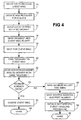
- FIG. 4 describes the method for the client process steps of the present invention. Continuing with the prior steps, each client 16 next has to register itself to receive event messages (block 70). Each client 16 creates a network event message receiver or "socket" for events (block 72). The socket defines the network address.
- UDP User Datagram Protocol
- IPX Internetwork Packet Exchange
- UDP and IPX are the most common, but other network transports can also be supported by the present invention. Datagram oriented transports are preferred because they use minimal system resources and keep each message separate from others.
- FIG. 3 shows the method for responding to an event message from at least one peripheral device step of the present invention.
- the MFP SERVER 10 receives an event message from at least one peripheral device (block 32).
- the MFP SERVER 10 checks to see if the pending acknowledgment queue is full (block 34). If the queue is full, the MFP SERVER 10 sends an error message to the MFP 12 (block 36), and finishes the subroutine (block 38). The MFP 12 should again send this same event message to the MFP SERVER 10 after waiting for a brief period (half a second to one second). On the other hand, if the queue is not full, the MFP SERVER 10 locates the port number indicated by port 14 which connects the MFP 12 to the MFP SERVER 10 (block 40).
- the client 16 needs to know which of those MFPs 12 originated the event.
- the MFP SERVER 10 receives an event string from a MFP 12
- the client 16 can use this information for whatever actions it takes as a result of the event, such as initiating a scan or a fax upload.
- IPX message would be sent if an IPX protocol is used as a transport (block 66) which ends the subroutine (block 68).
- IPX protocol used as a transport
- block 66 the UDP and IPX network transports were used as an example because they are most commonly used. However, it should be understood that other network transports may be used and are within the scope of the present invention.
- the method for the client process steps of the present invention is shown in FIG. 4.
- the client 16 waits for the event message from the MFP SERVER 10 (block 78).
- the client 16 sends an acknowledgment message with a string containing the same sequence number back to the MFP SERVER 10 (block 82).
- the client 16 determines if this sequence number has already been received by checking if the sequence number is greater than the last sequence number received (block 84).
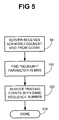
- the method for responding to an acknowledgment message from at least one client step of the present invention is shown in FIG. 5.
- the method for responding to an expired timeout is described in connection with FIG. 6. It is generally known that networks and datagram transports are often unreliable. If either the event message or the acknowledgment message is lost in transmission, the timeout would eventually expire. When this happens, the MFP SERVER 10 receives an expired timeout (block 106). The MFP SERVER 10 then resends each event in the pending-acknowledgment queue (block 108). Next, the server decrements the resend count of each event in the queue (block 110). Finally, the server removes all events in the queue whose resend count has reached zero (block 112) and the subroutine is concluded (block 114).
Landscapes
- Engineering & Computer Science (AREA)
- Computer Networks & Wireless Communication (AREA)
- Signal Processing (AREA)
- Computer And Data Communications (AREA)
- Accessory Devices And Overall Control Thereof (AREA)
- Small-Scale Networks (AREA)
Abstract
Description
Claims (10)
- A method for communicating an event message from a server (10) operably connected to at least one peripheral device (12) and to at least one client (16) via a network, the method comprising the steps of:the server sending a message to any available peripheral device (18, 20, 22, 24, 26, 28, 30);the server responding to an event message from at least one peripheral device (32, 34, 36, 38, 40, 42, 44, 46, 48, 50, 52, 54, 56, 58, 60, 62, 64, 66, 68);the server responding to an acknowledgment message from at least one client (98, 100, 102, 104); and,the server responding to an expired timeout (106, 108, 110, 112, 114).
- The method according to claim 1, wherein prior to said step of the server responding to an event message from the at least one peripheral device, further comprising the steps of:the server enabling the client to send an add-event message to the peripheral devices via the network;the client registering to receive event messages (70);the client creating a network event message receiver (72);the client adding the network address where event messages should be sent in the "NETADDR=addr" parameter contained within a request add event message (74); and,the client sending the request add event message to at least one peripheral device (76).
- The method according to claim 1 wherein said step of the server sending a message to any available at least one peripheral device further comprising the steps of:the server sending an event notification support message for verification of at least one peripheral device supporting the event notification message (20);the server sending a request to enable event notification messages if the peripheral device accepts the event notification support message (22, 24); andthe server ignoring the available peripheral device if the peripheral device does not accept the event notification support message (22, 28).
- The method according to claim 1, wherein said step of the server responding to an event message further comprises the steps of:receiving an event message from at least one peripheral device (32);sending an error message to at least one peripheral device if the pending-acknowledgment queue is full (34, 36); and,locating a port number and a network address in the "NETADDR=addr" parameter contained within the event message string if the pending-acknowledgment queue is not full (34, 40).
- The method according to claim 4, wherein said step of locating the port number and network address in the "NETADDR=addr" parameter contained within the event message string further comprises the steps of:adding the port number for the specified at least one peripheral device in the "JDEXPORT=num" parameter contained within the event message string for uniquely identifying each peripheral if the network address is valid (42, 48); and,sending an error message to at least one peripheral device if the network address is invalid (42, 44).
- The method according to claim 5, wherein said step of adding the port number further comprises the steps of:adding a sequence number that is incremented for each event message in the "SEQNUM=num" parameter contained within the event message string for uniquely identifying each event message (50);incrementing the sequence number variable for the next event message (52);setting a retransmission count for the event message (54);adding the event message to the pending-acknowledgment queue (56);starting a timeout (58);identifying the type of network address in the "NETADDR=addr" parameter contained within the event message string if the server supports multiple transport protocols (60);sending the event message with the augmented string to the designated at least one client according to the network address in the "NETADDR=addr" parameter contained within the event message string using the transport protocols identified (62, 66); and,the client responding to an event message from the server (78, 80, 82, 84, 86, 90, 92, 94).
- The method according to claim 6, wherein said step of the client responding to an event message from server further comprises the steps of:locating the sequence number in the "SEQNUM=num" parameter contained within the event message string (80);sending an acknowledgment message with the located sequence number back to the server (82);updating the last sequence number when the sequence number in the "SEQNUM=num" parameter contained within the event message string is greater than the last sequence number received (84, 90); and,ignoring the event message when the sequence number in the "SEQNUM=num" parameter contained within the event message string is not greater than the last sequence number received (84, 86).
- The method according to claim 1, wherein said step of the server responding to an acknowledgment message further comprises the steps of:locating the sequence number in the "SEQNUM=num" parameter contained within the acknowledgment message string (100); and,removing all events in the pending-acknowledgment queue with the located sequence number (102).
- The method according to claim 1, wherein said step of the server responding to an expired timeout further comprises the steps of:resending all event messages in the pending-acknowledgment queue (108);decrementing the resend count for all event messages in the pending-acknowledgment queue (110); and,removing all event messages with the resend count equal zero from the pending acknowledgment queue (112).
- A server for communicating event messages to at least one peripheral device and to at least one client via a network, said server comprising:means for sending a message to any available peripheral device (18, 20, 22, 24, 26, 28, 30);means for responding to an event message from at least one peripheral device (32, 34, 36, 38, 40, 42, 44, 46, 48, 50, 52, 54, 56, 58, 60, 62, 64, 66, 68);means for responding to an acknowledgment message from at least one client (98, 100, 102, 104); and,means for responding to an expired timeout (106, 108, 110, 112, 114).
Applications Claiming Priority (2)
| Application Number | Priority Date | Filing Date | Title |
|---|---|---|---|
| US411699 | 1999-10-01 | ||
| US09/411,699 US6502128B1 (en) | 1999-10-01 | 1999-10-01 | Server and a method for communicating event messages from the server connected to a peripheral device and a client computer |
Publications (3)
| Publication Number | Publication Date |
|---|---|
| EP1089189A2 true EP1089189A2 (en) | 2001-04-04 |
| EP1089189A3 EP1089189A3 (en) | 2003-06-25 |
| EP1089189B1 EP1089189B1 (en) | 2005-06-01 |
Family
ID=23629948
Family Applications (1)
| Application Number | Title | Priority Date | Filing Date |
|---|---|---|---|
| EP00308581A Expired - Lifetime EP1089189B1 (en) | 1999-10-01 | 2000-09-29 | Method of communication between a peripheral device and a client in a computer network |
Country Status (4)
| Country | Link |
|---|---|
| US (1) | US6502128B1 (en) |
| EP (1) | EP1089189B1 (en) |
| JP (1) | JP2001142829A (en) |
| DE (1) | DE60020475T2 (en) |
Cited By (2)
| Publication number | Priority date | Publication date | Assignee | Title |
|---|---|---|---|---|
| EP1976258A1 (en) | 2007-03-30 | 2008-10-01 | Brother Kogyo Kabushiki Kaisha | Information processing apparatus and computer usable medium therefor |
| US8418065B2 (en) | 2001-07-16 | 2013-04-09 | Nuance Communications, Inc. | Method of and system for dynamically controlling during run time a multifunction peripheral (MFP) touch panel user interface (UI) from an external remote network-connected computer |
Families Citing this family (15)
| Publication number | Priority date | Publication date | Assignee | Title |
|---|---|---|---|---|
| JP3502048B2 (en) * | 2001-02-02 | 2004-03-02 | パナソニック コミュニケーションズ株式会社 | Image information transmission system, scanner device, user terminal device, and image information transmission method |
| JP3450830B2 (en) * | 2001-02-02 | 2003-09-29 | パナソニック コミュニケーションズ株式会社 | Image information transmission system, scanner device, user terminal device, and method of registering user terminal information in scanner device |
| US7698367B2 (en) * | 2003-03-06 | 2010-04-13 | Siemens Communications, Inc. | System and method for presence enabled e-mail delivery |
| US7761516B2 (en) * | 2003-03-06 | 2010-07-20 | Siemens Enterprise Communications, Inc. | System and method for e-mail presence confirmation |
| US6980102B2 (en) * | 2003-06-04 | 2005-12-27 | Hewlett-Packard Development Company, L.P. | Alert processing |
| US8281030B2 (en) * | 2004-04-07 | 2012-10-02 | Hand Held Products, Inc. | HTTP enabled computer peripheral |
| US7568015B2 (en) * | 2004-04-07 | 2009-07-28 | Hand Held Products, Inc. | Routing device and method for use with a HTTP enabled computer peripheral |
| US20070180143A1 (en) * | 2006-01-30 | 2007-08-02 | Microsoft Corporation | Translation Web Services For Localizing Resources |
| US8127306B2 (en) * | 2006-12-18 | 2012-02-28 | Ricoh Company, Ltd. | Integrating eventing in a web service application of a multi-functional peripheral |
| US8321546B2 (en) * | 2007-01-10 | 2012-11-27 | Ricoh Company, Ltd. | Integrating discovery functionality within a device and facility manager |
| EP2102749A2 (en) * | 2006-12-22 | 2009-09-23 | Autiq As | Agent management system |
| US8239876B2 (en) * | 2007-06-12 | 2012-08-07 | Ricoh Company, Ltd. | Efficient web services application status self-control system on image-forming device |
| US8453164B2 (en) * | 2007-09-27 | 2013-05-28 | Ricoh Company, Ltd. | Method and apparatus for reduction of event notification within a web service application of a multi-functional peripheral |
| US20090204702A1 (en) * | 2008-02-08 | 2009-08-13 | Autiq As | System and method for network management using self-discovering thin agents |
| US20240421941A1 (en) * | 2023-06-15 | 2024-12-19 | Chicago Mercantile Exchange Inc. | Resilient transaction processing pipeline across multiple data centers |
Family Cites Families (11)
| Publication number | Priority date | Publication date | Assignee | Title |
|---|---|---|---|---|
| US3633178A (en) * | 1969-10-03 | 1972-01-04 | Gen Instrument Corp | Test message generator for use with communication and computer printing and punching equipment |
| US5220674A (en) * | 1987-07-17 | 1993-06-15 | Digital Equipment Corporation | Local area print server for requesting and storing required resource data and forwarding printer status message to selected destination |
| US5625757A (en) * | 1993-12-24 | 1997-04-29 | Hitachi, Ltd. | Printing system |
| US5687320A (en) * | 1995-04-27 | 1997-11-11 | Hewlett-Packard Company | Indirect method for network peripheral automated detection |
| US5867636A (en) * | 1995-06-06 | 1999-02-02 | Apple Computer, Inc. | Client server symmetric presentation-layer connection protocol for network printing systems |
| US5887146A (en) * | 1995-08-14 | 1999-03-23 | Data General Corporation | Symmetric multiprocessing computer with non-uniform memory access architecture |
| US5822534A (en) * | 1996-06-04 | 1998-10-13 | Sun Microsystems, Inc. | Method and apparatus for selectively unmanaging elements on a network |
| US6038309A (en) * | 1996-06-13 | 2000-03-14 | Northern Telecom Limited | Apparatus and method for externally controlling processing of a service call |
| US6212590B1 (en) * | 1997-12-22 | 2001-04-03 | Compaq Computer Corporation | Computer system having integrated bus bridge design with delayed transaction arbitration mechanism employed within laptop computer docked to expansion base |
| US6237032B1 (en) * | 1998-09-30 | 2001-05-22 | Hewlett-Packard Company | Network scan server ready state recovery method |
| US6581098B1 (en) * | 1999-09-27 | 2003-06-17 | Hewlett-Packard Development Company, L.P. | Server providing access to a plurality of functions of a multifunction peripheral in a network |
-
1999
- 1999-10-01 US US09/411,699 patent/US6502128B1/en not_active Expired - Fee Related
-
2000
- 2000-09-28 JP JP2000296385A patent/JP2001142829A/en active Pending
- 2000-09-29 EP EP00308581A patent/EP1089189B1/en not_active Expired - Lifetime
- 2000-09-29 DE DE60020475T patent/DE60020475T2/en not_active Expired - Fee Related
Cited By (5)
| Publication number | Priority date | Publication date | Assignee | Title |
|---|---|---|---|---|
| US8418065B2 (en) | 2001-07-16 | 2013-04-09 | Nuance Communications, Inc. | Method of and system for dynamically controlling during run time a multifunction peripheral (MFP) touch panel user interface (UI) from an external remote network-connected computer |
| US8751937B2 (en) | 2001-07-16 | 2014-06-10 | Nuance Communications, Inc. | Method of and system for dynamically controlling during run time a multifunction peripheral (MFP) touch panel user interface (UI) from an external remote network-connected computer |
| US8751938B2 (en) | 2001-07-16 | 2014-06-10 | Nuance Communications, Inc. | Method of and system for dynamically controlling during run time a multifunction peripheral (MFP) touch panel user interface (UI) from an external remote network-connected computer |
| US9519421B2 (en) | 2001-07-16 | 2016-12-13 | Nuance Communications, Inc. | Method of and system for dynamically controlling during run time a multifunction peripheral (MFP) touch panel user interface (UI) from an external remote network-connected computer |
| EP1976258A1 (en) | 2007-03-30 | 2008-10-01 | Brother Kogyo Kabushiki Kaisha | Information processing apparatus and computer usable medium therefor |
Also Published As
| Publication number | Publication date |
|---|---|
| DE60020475D1 (en) | 2005-07-07 |
| DE60020475T2 (en) | 2006-05-11 |
| EP1089189B1 (en) | 2005-06-01 |
| US6502128B1 (en) | 2002-12-31 |
| EP1089189A3 (en) | 2003-06-25 |
| JP2001142829A (en) | 2001-05-25 |
Similar Documents
| Publication | Publication Date | Title |
|---|---|---|
| US6502128B1 (en) | Server and a method for communicating event messages from the server connected to a peripheral device and a client computer | |
| US6161123A (en) | Providing reliable communication over an unreliable transport layer in a hand-held device using a persistent session | |
| US7054902B2 (en) | Multicast delivery systems and methods | |
| US7293107B1 (en) | Method and apparatus for providing mobile and other intermittent connectivity in a computing environment | |
| US8060656B2 (en) | Method and apparatus for providing mobile and other intermittent connectivity in a computing environment | |
| US9083622B2 (en) | Method and apparatus for providing mobile and other intermittent connectivity in a computing environment | |
| US7929422B2 (en) | Method of moving a transport connection among network hosts | |
| US6546425B1 (en) | Method and apparatus for providing mobile and other intermittent connectivity in a computing environment | |
| CA2205068C (en) | Multi-processor environments | |
| US7088698B1 (en) | Method to sustain TCP connection | |
| US9049070B2 (en) | Dynamic client/server session recovery in a heterogenous computer network | |
| US8583831B2 (en) | Thin client discovery | |
| US7031263B1 (en) | Method and apparatus for network management system | |
| US20050180419A1 (en) | Managing transmission control protocol (TCP) connections | |
| JP5185955B2 (en) | Method for improving TCP data transmission process when physical transmission medium is interrupted | |
| US7085808B2 (en) | Method for distinguishing clients in a communication system, a communication system; and a communication device | |
| CN113765976A (en) | Communication method and system | |
| EP1564959A1 (en) | System and method for trivial file transfer protocol including broadcasting function | |
| US8009694B2 (en) | Wireless services provider network system and method | |
| US7000024B1 (en) | Systems and methods for providing transmission control protocol communications | |
| WO1998051052A1 (en) | Reliable communication over an unreliable transport layer in a handheld device using user-configurable timers | |
| KR20040104775A (en) | Apparatus and Method for efficient re-transmission of packets between different networks | |
| JP2005027254A (en) | Communication terminal, server terminal, and bidirectional communication system | |
| KR100794415B1 (en) | System and method for terminating TC connection to reduce resource waste on wireless network | |
| JP2002290442A (en) | Communication device, program, information storage medium, and communication control method |
Legal Events
| Date | Code | Title | Description |
|---|---|---|---|
| PUAI | Public reference made under article 153(3) epc to a published international application that has entered the european phase |
Free format text: ORIGINAL CODE: 0009012 |
|
| AK | Designated contracting states |
Kind code of ref document: A2 Designated state(s): AT BE CH CY DE DK ES FI FR GB GR IE IT LI LU MC NL PT SE |
|
| AX | Request for extension of the european patent |
Free format text: AL;LT;LV;MK;RO;SI |
|
| RAP1 | Party data changed (applicant data changed or rights of an application transferred) |
Owner name: HEWLETT-PACKARD COMPANY, A DELAWARE CORPORATION |
|
| PUAL | Search report despatched |
Free format text: ORIGINAL CODE: 0009013 |
|
| AK | Designated contracting states |
Designated state(s): AT BE CH CY DE DK ES FI FR GB GR IE IT LI LU MC NL PT SE |
|
| AX | Request for extension of the european patent |
Extension state: AL LT LV MK RO SI |
|
| RIC1 | Information provided on ipc code assigned before grant |
Ipc: 7G 06F 13/38 A Ipc: 7G 06F 3/12 B |
|
| 17P | Request for examination filed |
Effective date: 20030922 |
|
| 17Q | First examination report despatched |
Effective date: 20031202 |
|
| AKX | Designation fees paid |
Designated state(s): DE FR GB |
|
| GRAP | Despatch of communication of intention to grant a patent |
Free format text: ORIGINAL CODE: EPIDOSNIGR1 |
|
| GRAS | Grant fee paid |
Free format text: ORIGINAL CODE: EPIDOSNIGR3 |
|
| GRAA | (expected) grant |
Free format text: ORIGINAL CODE: 0009210 |
|
| AK | Designated contracting states |
Kind code of ref document: B1 Designated state(s): DE FR GB |
|
| REG | Reference to a national code |
Ref country code: GB Ref legal event code: FG4D |
|
| REG | Reference to a national code |
Ref country code: IE Ref legal event code: FG4D |
|
| REF | Corresponds to: |
Ref document number: 60020475 Country of ref document: DE Date of ref document: 20050707 Kind code of ref document: P |
|
| PGFP | Annual fee paid to national office [announced via postgrant information from national office to epo] |
Ref country code: FR Payment date: 20050919 Year of fee payment: 6 |
|
| PGFP | Annual fee paid to national office [announced via postgrant information from national office to epo] |
Ref country code: GB Payment date: 20050921 Year of fee payment: 6 |
|
| PGFP | Annual fee paid to national office [announced via postgrant information from national office to epo] |
Ref country code: DE Payment date: 20051031 Year of fee payment: 6 |
|
| ET | Fr: translation filed | ||
| PLBE | No opposition filed within time limit |
Free format text: ORIGINAL CODE: 0009261 |
|
| STAA | Information on the status of an ep patent application or granted ep patent |
Free format text: STATUS: NO OPPOSITION FILED WITHIN TIME LIMIT |
|
| 26N | No opposition filed |
Effective date: 20060302 |
|
| PG25 | Lapsed in a contracting state [announced via postgrant information from national office to epo] |
Ref country code: DE Free format text: LAPSE BECAUSE OF NON-PAYMENT OF DUE FEES Effective date: 20070403 |
|
| GBPC | Gb: european patent ceased through non-payment of renewal fee |
Effective date: 20060929 |
|
| REG | Reference to a national code |
Ref country code: FR Ref legal event code: ST Effective date: 20070531 |
|
| PG25 | Lapsed in a contracting state [announced via postgrant information from national office to epo] |
Ref country code: GB Free format text: LAPSE BECAUSE OF NON-PAYMENT OF DUE FEES Effective date: 20060929 |
|
| PG25 | Lapsed in a contracting state [announced via postgrant information from national office to epo] |
Ref country code: FR Free format text: LAPSE BECAUSE OF NON-PAYMENT OF DUE FEES Effective date: 20061002 |