EP1086944A2 - Amino acid derivative composition and process for producing an amino acid derivative - Google Patents
Amino acid derivative composition and process for producing an amino acid derivative Download PDFInfo
- Publication number
- EP1086944A2 EP1086944A2 EP00118241A EP00118241A EP1086944A2 EP 1086944 A2 EP1086944 A2 EP 1086944A2 EP 00118241 A EP00118241 A EP 00118241A EP 00118241 A EP00118241 A EP 00118241A EP 1086944 A2 EP1086944 A2 EP 1086944A2
- Authority
- EP
- European Patent Office
- Prior art keywords
- amino acid
- aspartic acid
- acid derivative
- general formula
- atom
- Prior art date
- Legal status (The legal status is an assumption and is not a legal conclusion. Google has not performed a legal analysis and makes no representation as to the accuracy of the status listed.)
- Granted
Links
- 150000003862 amino acid derivatives Chemical class 0.000 title claims abstract description 85
- 239000000203 mixture Substances 0.000 title claims abstract description 85
- 238000000034 method Methods 0.000 title claims abstract description 61
- 125000004432 carbon atom Chemical group C* 0.000 claims abstract description 64
- 125000002947 alkylene group Chemical group 0.000 claims abstract description 51
- 239000002738 chelating agent Substances 0.000 claims abstract description 36
- 125000004435 hydrogen atom Chemical group [H]* 0.000 claims abstract description 26
- 229910052783 alkali metal Inorganic materials 0.000 claims abstract description 18
- 150000001340 alkali metals Chemical group 0.000 claims abstract description 15
- 229910052784 alkaline earth metal Inorganic materials 0.000 claims abstract description 15
- 150000001342 alkaline earth metals Chemical group 0.000 claims abstract description 14
- QGZKDVFQNNGYKY-UHFFFAOYSA-O ammonium group Chemical group [NH4+] QGZKDVFQNNGYKY-UHFFFAOYSA-O 0.000 claims abstract description 14
- 125000000217 alkyl group Chemical group 0.000 claims abstract description 12
- CKLJMWTZIZZHCS-UWTATZPHSA-N L-Aspartic acid Natural products OC(=O)[C@H](N)CC(O)=O CKLJMWTZIZZHCS-UWTATZPHSA-N 0.000 claims description 130
- 229940024606 amino acid Drugs 0.000 claims description 85
- 235000001014 amino acid Nutrition 0.000 claims description 54
- 150000001732 carboxylic acid derivatives Chemical class 0.000 claims description 50
- 229910052799 carbon Inorganic materials 0.000 claims description 38
- -1 amino acid salt Chemical class 0.000 claims description 34
- IAYPIBMASNFSPL-UHFFFAOYSA-N Ethylene oxide Chemical compound C1CO1 IAYPIBMASNFSPL-UHFFFAOYSA-N 0.000 claims description 33
- 229960005261 aspartic acid Drugs 0.000 claims description 31
- 150000001413 amino acids Chemical class 0.000 claims description 29
- VZCYOOQTPOCHFL-UHFFFAOYSA-N trans-butenedioic acid Natural products OC(=O)C=CC(O)=O VZCYOOQTPOCHFL-UHFFFAOYSA-N 0.000 claims description 26
- OFOBLEOULBTSOW-UHFFFAOYSA-N Propanedioic acid Natural products OC(=O)CC(O)=O OFOBLEOULBTSOW-UHFFFAOYSA-N 0.000 claims description 25
- VZCYOOQTPOCHFL-UPHRSURJSA-N maleic acid Chemical compound OC(=O)\C=C/C(O)=O VZCYOOQTPOCHFL-UPHRSURJSA-N 0.000 claims description 25
- 239000011976 maleic acid Substances 0.000 claims description 25
- CKLJMWTZIZZHCS-UHFFFAOYSA-N D-OH-Asp Natural products OC(=O)C(N)CC(O)=O CKLJMWTZIZZHCS-UHFFFAOYSA-N 0.000 claims description 24
- 239000007864 aqueous solution Substances 0.000 claims description 23
- YCUUZPTZCIKRNV-VKHMYHEASA-N (2s)-2-(2,2-dihydroxyethylamino)butanedioic acid Chemical class OC(O)CN[C@H](C(O)=O)CC(O)=O YCUUZPTZCIKRNV-VKHMYHEASA-N 0.000 claims description 18
- 229910052761 rare earth metal Inorganic materials 0.000 claims description 15
- 239000003054 catalyst Substances 0.000 claims description 14
- 150000002910 rare earth metals Chemical class 0.000 claims description 14
- 150000001509 aspartic acid derivatives Chemical class 0.000 claims description 12
- 125000002924 primary amino group Chemical group [H]N([H])* 0.000 claims description 8
- HBQJMZRUCGDUEO-DKWTVANSSA-N C1CO1.OC(=O)[C@@H](N)CC(O)=O Chemical compound C1CO1.OC(=O)[C@@H](N)CC(O)=O HBQJMZRUCGDUEO-DKWTVANSSA-N 0.000 claims description 5
- CKLJMWTZIZZHCS-REOHCLBHSA-N L-aspartic acid Chemical class OC(=O)[C@@H](N)CC(O)=O CKLJMWTZIZZHCS-REOHCLBHSA-N 0.000 claims 13
- 150000001875 compounds Chemical class 0.000 abstract description 50
- 230000010736 Chelating Activity Effects 0.000 abstract description 48
- 230000015572 biosynthetic process Effects 0.000 abstract description 12
- 239000006227 byproduct Substances 0.000 abstract description 11
- 238000004519 manufacturing process Methods 0.000 description 48
- 238000006243 chemical reaction Methods 0.000 description 38
- 125000003178 carboxy group Chemical group [H]OC(*)=O 0.000 description 21
- 229910001424 calcium ion Inorganic materials 0.000 description 15
- 238000012360 testing method Methods 0.000 description 15
- BHPQYMZQTOCNFJ-UHFFFAOYSA-N Calcium cation Chemical compound [Ca+2] BHPQYMZQTOCNFJ-UHFFFAOYSA-N 0.000 description 14
- 229910052757 nitrogen Inorganic materials 0.000 description 14
- 239000000126 substance Substances 0.000 description 14
- 125000004429 atom Chemical group 0.000 description 13
- 125000002887 hydroxy group Chemical group [H]O* 0.000 description 13
- VTYYLEPIZMXCLO-UHFFFAOYSA-L Calcium carbonate Chemical compound [Ca+2].[O-]C([O-])=O VTYYLEPIZMXCLO-UHFFFAOYSA-L 0.000 description 12
- HEMHJVSKTPXQMS-UHFFFAOYSA-M Sodium hydroxide Chemical compound [OH-].[Na+] HEMHJVSKTPXQMS-UHFFFAOYSA-M 0.000 description 12
- 229910021645 metal ion Inorganic materials 0.000 description 12
- 125000004433 nitrogen atom Chemical group N* 0.000 description 12
- 230000000694 effects Effects 0.000 description 11
- XLYOFNOQVPJJNP-UHFFFAOYSA-N water Substances O XLYOFNOQVPJJNP-UHFFFAOYSA-N 0.000 description 11
- MHAJPDPJQMAIIY-UHFFFAOYSA-N Hydrogen peroxide Chemical compound OO MHAJPDPJQMAIIY-UHFFFAOYSA-N 0.000 description 10
- 239000000047 product Substances 0.000 description 10
- 238000010998 test method Methods 0.000 description 10
- KCXVZYZYPLLWCC-UHFFFAOYSA-N EDTA Chemical compound OC(=O)CN(CC(O)=O)CCN(CC(O)=O)CC(O)=O KCXVZYZYPLLWCC-UHFFFAOYSA-N 0.000 description 9
- 238000006065 biodegradation reaction Methods 0.000 description 9
- 150000003512 tertiary amines Chemical group 0.000 description 9
- 239000000243 solution Substances 0.000 description 8
- 235000003704 aspartic acid Nutrition 0.000 description 7
- OQFSQFPPLPISGP-UHFFFAOYSA-N beta-carboxyaspartic acid Natural products OC(=O)C(N)C(C(O)=O)C(O)=O OQFSQFPPLPISGP-UHFFFAOYSA-N 0.000 description 7
- 230000000052 comparative effect Effects 0.000 description 7
- 238000006467 substitution reaction Methods 0.000 description 7
- BVKZGUZCCUSVTD-UHFFFAOYSA-L Carbonate Chemical compound [O-]C([O-])=O BVKZGUZCCUSVTD-UHFFFAOYSA-L 0.000 description 6
- QPCDCPDFJACHGM-UHFFFAOYSA-N N,N-bis{2-[bis(carboxymethyl)amino]ethyl}glycine Chemical compound OC(=O)CN(CC(O)=O)CCN(CC(=O)O)CCN(CC(O)=O)CC(O)=O QPCDCPDFJACHGM-UHFFFAOYSA-N 0.000 description 6
- 125000003277 amino group Chemical group 0.000 description 6
- 229910000019 calcium carbonate Inorganic materials 0.000 description 6
- 239000003599 detergent Substances 0.000 description 6
- 239000000543 intermediate Substances 0.000 description 6
- MGFYIUFZLHCRTH-UHFFFAOYSA-N nitrilotriacetic acid Chemical compound OC(=O)CN(CC(O)=O)CC(O)=O MGFYIUFZLHCRTH-UHFFFAOYSA-N 0.000 description 6
- 150000003839 salts Chemical class 0.000 description 6
- 239000007858 starting material Substances 0.000 description 6
- IJGRMHOSHXDMSA-UHFFFAOYSA-N Atomic nitrogen Chemical compound N#N IJGRMHOSHXDMSA-UHFFFAOYSA-N 0.000 description 5
- 239000002253 acid Substances 0.000 description 5
- XLYOFNOQVPJJNP-UHFFFAOYSA-M hydroxide Chemical compound [OH-] XLYOFNOQVPJJNP-UHFFFAOYSA-M 0.000 description 5
- BDAGIHXWWSANSR-UHFFFAOYSA-N methanoic acid Natural products OC=O BDAGIHXWWSANSR-UHFFFAOYSA-N 0.000 description 5
- 229960003330 pentetic acid Drugs 0.000 description 5
- RPACBEVZENYWOL-XFULWGLBSA-M sodium;(2r)-2-[6-(4-chlorophenoxy)hexyl]oxirane-2-carboxylate Chemical group [Na+].C=1C=C(Cl)C=CC=1OCCCCCC[C@]1(C(=O)[O-])CO1 RPACBEVZENYWOL-XFULWGLBSA-M 0.000 description 5
- 230000006641 stabilisation Effects 0.000 description 5
- 238000011105 stabilization Methods 0.000 description 5
- NAWXUBYGYWOOIX-SFHVURJKSA-N (2s)-2-[[4-[2-(2,4-diaminoquinazolin-6-yl)ethyl]benzoyl]amino]-4-methylidenepentanedioic acid Chemical compound C1=CC2=NC(N)=NC(N)=C2C=C1CCC1=CC=C(C(=O)N[C@@H](CC(=C)C(O)=O)C(O)=O)C=C1 NAWXUBYGYWOOIX-SFHVURJKSA-N 0.000 description 4
- 239000000654 additive Substances 0.000 description 4
- 150000001768 cations Chemical class 0.000 description 4
- 238000000354 decomposition reaction Methods 0.000 description 4
- 230000007423 decrease Effects 0.000 description 4
- 238000011156 evaluation Methods 0.000 description 4
- GPRLSGONYQIRFK-UHFFFAOYSA-N hydron Chemical compound [H+] GPRLSGONYQIRFK-UHFFFAOYSA-N 0.000 description 4
- MRELNEQAGSRDBK-UHFFFAOYSA-N lanthanum(3+);oxygen(2-) Chemical compound [O-2].[O-2].[O-2].[La+3].[La+3] MRELNEQAGSRDBK-UHFFFAOYSA-N 0.000 description 4
- FPYJFEHAWHCUMM-UHFFFAOYSA-N maleic anhydride Chemical compound O=C1OC(=O)C=C1 FPYJFEHAWHCUMM-UHFFFAOYSA-N 0.000 description 4
- 238000005259 measurement Methods 0.000 description 4
- 229910052751 metal Inorganic materials 0.000 description 4
- 239000002184 metal Substances 0.000 description 4
- 239000012429 reaction media Substances 0.000 description 4
- 230000000717 retained effect Effects 0.000 description 4
- 239000004753 textile Substances 0.000 description 4
- 0 *CC(*)N(CCO)CCO Chemical compound *CC(*)N(CCO)CCO 0.000 description 3
- OYPRJOBELJOOCE-UHFFFAOYSA-N Calcium Chemical compound [Ca] OYPRJOBELJOOCE-UHFFFAOYSA-N 0.000 description 3
- VEXZGXHMUGYJMC-UHFFFAOYSA-N Hydrochloric acid Chemical compound Cl VEXZGXHMUGYJMC-UHFFFAOYSA-N 0.000 description 3
- OKKJLVBELUTLKV-UHFFFAOYSA-N Methanol Chemical compound OC OKKJLVBELUTLKV-UHFFFAOYSA-N 0.000 description 3
- 238000007259 addition reaction Methods 0.000 description 3
- 239000011575 calcium Substances 0.000 description 3
- ZBCBWPMODOFKDW-UHFFFAOYSA-N diethanolamine Chemical class OCCNCCO ZBCBWPMODOFKDW-UHFFFAOYSA-N 0.000 description 3
- WTWYSZBMGPEZRB-ILKKLZGPSA-L disodium;(2s)-2-[bis(2-hydroxyethyl)amino]butanedioate Chemical compound [Na+].[Na+].OCCN(CCO)[C@@H](CC([O-])=O)C([O-])=O WTWYSZBMGPEZRB-ILKKLZGPSA-L 0.000 description 3
- 238000003912 environmental pollution Methods 0.000 description 3
- 125000001033 ether group Chemical group 0.000 description 3
- 239000003446 ligand Substances 0.000 description 3
- 125000004430 oxygen atom Chemical group O* 0.000 description 3
- 230000035484 reaction time Effects 0.000 description 3
- VKZRWSNIWNFCIQ-WDSKDSINSA-N (2s)-2-[2-[[(1s)-1,2-dicarboxyethyl]amino]ethylamino]butanedioic acid Chemical compound OC(=O)C[C@@H](C(O)=O)NCCN[C@H](C(O)=O)CC(O)=O VKZRWSNIWNFCIQ-WDSKDSINSA-N 0.000 description 2
- OSWFIVFLDKOXQC-UHFFFAOYSA-N 4-(3-methoxyphenyl)aniline Chemical compound COC1=CC=CC(C=2C=CC(N)=CC=2)=C1 OSWFIVFLDKOXQC-UHFFFAOYSA-N 0.000 description 2
- VZCYOOQTPOCHFL-OWOJBTEDSA-N Fumaric acid Chemical compound OC(=O)\C=C\C(O)=O VZCYOOQTPOCHFL-OWOJBTEDSA-N 0.000 description 2
- WHUUTDBJXJRKMK-UHFFFAOYSA-N Glutamic acid Natural products OC(=O)C(N)CCC(O)=O WHUUTDBJXJRKMK-UHFFFAOYSA-N 0.000 description 2
- DHMQDGOQFOQNFH-UHFFFAOYSA-N Glycine Chemical compound NCC(O)=O DHMQDGOQFOQNFH-UHFFFAOYSA-N 0.000 description 2
- DGAQECJNVWCQMB-PUAWFVPOSA-M Ilexoside XXIX Chemical compound C[C@@H]1CC[C@@]2(CC[C@@]3(C(=CC[C@H]4[C@]3(CC[C@@H]5[C@@]4(CC[C@@H](C5(C)C)OS(=O)(=O)[O-])C)C)[C@@H]2[C@]1(C)O)C)C(=O)O[C@H]6[C@@H]([C@H]([C@@H]([C@H](O6)CO)O)O)O.[Na+] DGAQECJNVWCQMB-PUAWFVPOSA-M 0.000 description 2
- WHUUTDBJXJRKMK-VKHMYHEASA-N L-glutamic acid Chemical compound OC(=O)[C@@H](N)CCC(O)=O WHUUTDBJXJRKMK-VKHMYHEASA-N 0.000 description 2
- FYYHWMGAXLPEAU-UHFFFAOYSA-N Magnesium Chemical compound [Mg] FYYHWMGAXLPEAU-UHFFFAOYSA-N 0.000 description 2
- ZLMJMSJWJFRBEC-UHFFFAOYSA-N Potassium Chemical compound [K] ZLMJMSJWJFRBEC-UHFFFAOYSA-N 0.000 description 2
- CDBYLPFSWZWCQE-UHFFFAOYSA-L Sodium Carbonate Chemical compound [Na+].[Na+].[O-]C([O-])=O CDBYLPFSWZWCQE-UHFFFAOYSA-L 0.000 description 2
- 230000000996 additive effect Effects 0.000 description 2
- 239000003957 anion exchange resin Substances 0.000 description 2
- UCMIRNVEIXFBKS-UHFFFAOYSA-N beta-alanine Chemical compound NCCC(O)=O UCMIRNVEIXFBKS-UHFFFAOYSA-N 0.000 description 2
- 229910052791 calcium Inorganic materials 0.000 description 2
- 239000003795 chemical substances by application Substances 0.000 description 2
- 150000001991 dicarboxylic acids Chemical class 0.000 description 2
- BYHXBBOSJKPUJL-BYPYZUCNSA-N dimethyl (2s)-2-aminobutanedioate Chemical compound COC(=O)C[C@H](N)C(=O)OC BYHXBBOSJKPUJL-BYPYZUCNSA-N 0.000 description 2
- 239000003480 eluent Substances 0.000 description 2
- 239000012467 final product Substances 0.000 description 2
- 235000019253 formic acid Nutrition 0.000 description 2
- 239000004220 glutamic acid Substances 0.000 description 2
- 235000013922 glutamic acid Nutrition 0.000 description 2
- 238000010438 heat treatment Methods 0.000 description 2
- 238000004128 high performance liquid chromatography Methods 0.000 description 2
- 239000001257 hydrogen Substances 0.000 description 2
- 229910052739 hydrogen Inorganic materials 0.000 description 2
- 150000002601 lanthanoid compounds Chemical class 0.000 description 2
- 229910052746 lanthanum Inorganic materials 0.000 description 2
- FZLIPJUXYLNCLC-UHFFFAOYSA-N lanthanum atom Chemical compound [La] FZLIPJUXYLNCLC-UHFFFAOYSA-N 0.000 description 2
- 229910052749 magnesium Inorganic materials 0.000 description 2
- 239000011777 magnesium Substances 0.000 description 2
- 238000000691 measurement method Methods 0.000 description 2
- 229910052700 potassium Inorganic materials 0.000 description 2
- 239000011591 potassium Substances 0.000 description 2
- 239000002244 precipitate Substances 0.000 description 2
- 238000010926 purge Methods 0.000 description 2
- 229910052708 sodium Inorganic materials 0.000 description 2
- 239000011734 sodium Substances 0.000 description 2
- 241000894007 species Species 0.000 description 2
- 238000004381 surface treatment Methods 0.000 description 2
- NWUYHJFMYQTDRP-UHFFFAOYSA-N 1,2-bis(ethenyl)benzene;1-ethenyl-2-ethylbenzene;styrene Chemical compound C=CC1=CC=CC=C1.CCC1=CC=CC=C1C=C.C=CC1=CC=CC=C1C=C NWUYHJFMYQTDRP-UHFFFAOYSA-N 0.000 description 1
- JAHNSTQSQJOJLO-UHFFFAOYSA-N 2-(3-fluorophenyl)-1h-imidazole Chemical compound FC1=CC=CC(C=2NC=CN=2)=C1 JAHNSTQSQJOJLO-UHFFFAOYSA-N 0.000 description 1
- BVKZGUZCCUSVTD-UHFFFAOYSA-M Bicarbonate Chemical compound OC([O-])=O BVKZGUZCCUSVTD-UHFFFAOYSA-M 0.000 description 1
- UXVMQQNJUSDDNG-UHFFFAOYSA-L Calcium chloride Chemical compound [Cl-].[Cl-].[Ca+2] UXVMQQNJUSDDNG-UHFFFAOYSA-L 0.000 description 1
- OKTJSMMVPCPJKN-UHFFFAOYSA-N Carbon Chemical compound [C] OKTJSMMVPCPJKN-UHFFFAOYSA-N 0.000 description 1
- 229910052684 Cerium Inorganic materials 0.000 description 1
- VEXZGXHMUGYJMC-UHFFFAOYSA-M Chloride anion Chemical compound [Cl-] VEXZGXHMUGYJMC-UHFFFAOYSA-M 0.000 description 1
- SNRUBQQJIBEYMU-UHFFFAOYSA-N Dodecane Natural products CCCCCCCCCCCC SNRUBQQJIBEYMU-UHFFFAOYSA-N 0.000 description 1
- LFQSCWFLJHTTHZ-UHFFFAOYSA-N Ethanol Chemical compound CCO LFQSCWFLJHTTHZ-UHFFFAOYSA-N 0.000 description 1
- 239000004471 Glycine Substances 0.000 description 1
- UFHFLCQGNIYNRP-UHFFFAOYSA-N Hydrogen Chemical compound [H][H] UFHFLCQGNIYNRP-UHFFFAOYSA-N 0.000 description 1
- WHXSMMKQMYFTQS-UHFFFAOYSA-N Lithium Chemical compound [Li] WHXSMMKQMYFTQS-UHFFFAOYSA-N 0.000 description 1
- JLVVSXFLKOJNIY-UHFFFAOYSA-N Magnesium ion Chemical compound [Mg+2] JLVVSXFLKOJNIY-UHFFFAOYSA-N 0.000 description 1
- CERQOIWHTDAKMF-UHFFFAOYSA-N Methacrylic acid Chemical compound CC(=C)C(O)=O CERQOIWHTDAKMF-UHFFFAOYSA-N 0.000 description 1
- 229910002651 NO3 Inorganic materials 0.000 description 1
- 229910052779 Neodymium Inorganic materials 0.000 description 1
- NHNBFGGVMKEFGY-UHFFFAOYSA-N Nitrate Chemical compound [O-][N+]([O-])=O NHNBFGGVMKEFGY-UHFFFAOYSA-N 0.000 description 1
- MUBZPKHOEPUJKR-UHFFFAOYSA-N Oxalic acid Chemical compound OC(=O)C(O)=O MUBZPKHOEPUJKR-UHFFFAOYSA-N 0.000 description 1
- 229910052777 Praseodymium Inorganic materials 0.000 description 1
- GOOHAUXETOMSMM-UHFFFAOYSA-N Propylene oxide Chemical compound CC1CO1 GOOHAUXETOMSMM-UHFFFAOYSA-N 0.000 description 1
- 108010077895 Sarcosine Proteins 0.000 description 1
- FKNQFGJONOIPTF-UHFFFAOYSA-N Sodium cation Chemical compound [Na+] FKNQFGJONOIPTF-UHFFFAOYSA-N 0.000 description 1
- QAOWNCQODCNURD-UHFFFAOYSA-L Sulfate Chemical compound [O-]S([O-])(=O)=O QAOWNCQODCNURD-UHFFFAOYSA-L 0.000 description 1
- GSEJCLTVZPLZKY-UHFFFAOYSA-N Triethanolamine Chemical compound OCCN(CCO)CCO GSEJCLTVZPLZKY-UHFFFAOYSA-N 0.000 description 1
- 239000007983 Tris buffer Substances 0.000 description 1
- 238000010306 acid treatment Methods 0.000 description 1
- 230000002378 acidificating effect Effects 0.000 description 1
- 150000007513 acids Chemical class 0.000 description 1
- 150000001341 alkaline earth metal compounds Chemical class 0.000 description 1
- 150000001412 amines Chemical class 0.000 description 1
- 238000004458 analytical method Methods 0.000 description 1
- 239000012736 aqueous medium Substances 0.000 description 1
- QVGXLLKOCUKJST-UHFFFAOYSA-N atomic oxygen Chemical compound [O] QVGXLLKOCUKJST-UHFFFAOYSA-N 0.000 description 1
- 229910052788 barium Inorganic materials 0.000 description 1
- DSAJWYNOEDNPEQ-UHFFFAOYSA-N barium atom Chemical compound [Ba] DSAJWYNOEDNPEQ-UHFFFAOYSA-N 0.000 description 1
- 229910052790 beryllium Inorganic materials 0.000 description 1
- ATBAMAFKBVZNFJ-UHFFFAOYSA-N beryllium atom Chemical compound [Be] ATBAMAFKBVZNFJ-UHFFFAOYSA-N 0.000 description 1
- 229940000635 beta-alanine Drugs 0.000 description 1
- 231100000209 biodegradability test Toxicity 0.000 description 1
- 230000033228 biological regulation Effects 0.000 description 1
- 239000007844 bleaching agent Substances 0.000 description 1
- 229910052792 caesium Inorganic materials 0.000 description 1
- TVFDJXOCXUVLDH-UHFFFAOYSA-N caesium atom Chemical compound [Cs] TVFDJXOCXUVLDH-UHFFFAOYSA-N 0.000 description 1
- 239000001110 calcium chloride Substances 0.000 description 1
- 229910001628 calcium chloride Inorganic materials 0.000 description 1
- 150000001735 carboxylic acids Chemical class 0.000 description 1
- 239000003729 cation exchange resin Substances 0.000 description 1
- ZMIGMASIKSOYAM-UHFFFAOYSA-N cerium Chemical compound [Ce][Ce][Ce][Ce][Ce][Ce][Ce][Ce][Ce][Ce][Ce][Ce][Ce][Ce][Ce][Ce][Ce][Ce][Ce][Ce][Ce][Ce][Ce][Ce][Ce][Ce][Ce][Ce][Ce][Ce][Ce][Ce][Ce][Ce][Ce][Ce][Ce][Ce] ZMIGMASIKSOYAM-UHFFFAOYSA-N 0.000 description 1
- 239000013522 chelant Substances 0.000 description 1
- HNEGQIOMVPPMNR-IHWYPQMZSA-N citraconic acid Chemical compound OC(=O)C(/C)=C\C(O)=O HNEGQIOMVPPMNR-IHWYPQMZSA-N 0.000 description 1
- 229940018557 citraconic acid Drugs 0.000 description 1
- LDHQCZJRKDOVOX-NSCUHMNNSA-N crotonic acid Chemical compound C\C=C\C(O)=O LDHQCZJRKDOVOX-NSCUHMNNSA-N 0.000 description 1
- 125000002704 decyl group Chemical group [H]C([H])([H])C([H])([H])C([H])([H])C([H])([H])C([H])([H])C([H])([H])C([H])([H])C([H])([H])C([H])([H])C([H])([H])* 0.000 description 1
- 229910001873 dinitrogen Inorganic materials 0.000 description 1
- 125000003438 dodecyl group Chemical group [H]C([H])([H])C([H])([H])C([H])([H])C([H])([H])C([H])([H])C([H])([H])C([H])([H])C([H])([H])C([H])([H])C([H])([H])C([H])([H])C([H])([H])* 0.000 description 1
- 239000010791 domestic waste Substances 0.000 description 1
- 238000005516 engineering process Methods 0.000 description 1
- 125000001495 ethyl group Chemical group [H]C([H])([H])C([H])([H])* 0.000 description 1
- 238000001914 filtration Methods 0.000 description 1
- 229910052730 francium Inorganic materials 0.000 description 1
- KLMCZVJOEAUDNE-UHFFFAOYSA-N francium atom Chemical compound [Fr] KLMCZVJOEAUDNE-UHFFFAOYSA-N 0.000 description 1
- 239000001530 fumaric acid Substances 0.000 description 1
- 239000008233 hard water Substances 0.000 description 1
- 229910001385 heavy metal Inorganic materials 0.000 description 1
- 125000003187 heptyl group Chemical group [H]C([*])([H])C([H])([H])C([H])([H])C([H])([H])C([H])([H])C([H])([H])C([H])([H])[H] 0.000 description 1
- 125000004051 hexyl group Chemical group [H]C([H])([H])C([H])([H])C([H])([H])C([H])([H])C([H])([H])C([H])([H])* 0.000 description 1
- 239000012456 homogeneous solution Substances 0.000 description 1
- 230000003301 hydrolyzing effect Effects 0.000 description 1
- 239000002440 industrial waste Substances 0.000 description 1
- 239000011261 inert gas Substances 0.000 description 1
- 238000011835 investigation Methods 0.000 description 1
- 238000002955 isolation Methods 0.000 description 1
- 229910052747 lanthanoid Inorganic materials 0.000 description 1
- 150000002602 lanthanoids Chemical class 0.000 description 1
- 229910052744 lithium Inorganic materials 0.000 description 1
- 229910001425 magnesium ion Inorganic materials 0.000 description 1
- 125000002960 margaryl group Chemical group [H]C([*])([H])C([H])([H])C([H])([H])C([H])([H])C([H])([H])C([H])([H])C([H])([H])C([H])([H])C([H])([H])C([H])([H])C([H])([H])C([H])([H])C([H])([H])C([H])([H])C([H])([H])C([H])([H])C([H])([H])[H] 0.000 description 1
- 239000000463 material Substances 0.000 description 1
- 239000002609 medium Substances 0.000 description 1
- 150000002739 metals Chemical class 0.000 description 1
- 125000002496 methyl group Chemical group [H]C([H])([H])* 0.000 description 1
- 125000001570 methylene group Chemical group [H]C([H])([*:1])[*:2] 0.000 description 1
- LVHBHZANLOWSRM-UHFFFAOYSA-N methylenebutanedioic acid Natural products OC(=O)CC(=C)C(O)=O LVHBHZANLOWSRM-UHFFFAOYSA-N 0.000 description 1
- 244000005700 microbiome Species 0.000 description 1
- 238000002156 mixing Methods 0.000 description 1
- 125000001421 myristyl group Chemical group [H]C([*])([H])C([H])([H])C([H])([H])C([H])([H])C([H])([H])C([H])([H])C([H])([H])C([H])([H])C([H])([H])C([H])([H])C([H])([H])C([H])([H])C([H])([H])C([H])([H])[H] 0.000 description 1
- 125000004108 n-butyl group Chemical group [H]C([H])([H])C([H])([H])C([H])([H])C([H])([H])* 0.000 description 1
- QEFYFXOXNSNQGX-UHFFFAOYSA-N neodymium atom Chemical compound [Nd] QEFYFXOXNSNQGX-UHFFFAOYSA-N 0.000 description 1
- 125000001400 nonyl group Chemical group [H]C([*])([H])C([H])([H])C([H])([H])C([H])([H])C([H])([H])C([H])([H])C([H])([H])C([H])([H])C([H])([H])[H] 0.000 description 1
- 125000002347 octyl group Chemical group [H]C([*])([H])C([H])([H])C([H])([H])C([H])([H])C([H])([H])C([H])([H])C([H])([H])C([H])([H])[H] 0.000 description 1
- 239000003960 organic solvent Substances 0.000 description 1
- 229910052760 oxygen Inorganic materials 0.000 description 1
- 239000001301 oxygen Substances 0.000 description 1
- 238000010979 pH adjustment Methods 0.000 description 1
- 125000000913 palmityl group Chemical group [H]C([*])([H])C([H])([H])C([H])([H])C([H])([H])C([H])([H])C([H])([H])C([H])([H])C([H])([H])C([H])([H])C([H])([H])C([H])([H])C([H])([H])C([H])([H])C([H])([H])C([H])([H])C([H])([H])[H] 0.000 description 1
- 239000000123 paper Substances 0.000 description 1
- 125000002958 pentadecyl group Chemical group [H]C([*])([H])C([H])([H])C([H])([H])C([H])([H])C([H])([H])C([H])([H])C([H])([H])C([H])([H])C([H])([H])C([H])([H])C([H])([H])C([H])([H])C([H])([H])C([H])([H])C([H])([H])[H] 0.000 description 1
- 125000001147 pentyl group Chemical group C(CCCC)* 0.000 description 1
- PUDIUYLPXJFUGB-UHFFFAOYSA-N praseodymium atom Chemical compound [Pr] PUDIUYLPXJFUGB-UHFFFAOYSA-N 0.000 description 1
- 238000001556 precipitation Methods 0.000 description 1
- 230000002035 prolonged effect Effects 0.000 description 1
- 125000001436 propyl group Chemical group [H]C([*])([H])C([H])([H])C([H])([H])[H] 0.000 description 1
- 229910052705 radium Inorganic materials 0.000 description 1
- HCWPIIXVSYCSAN-UHFFFAOYSA-N radium atom Chemical compound [Ra] HCWPIIXVSYCSAN-UHFFFAOYSA-N 0.000 description 1
- 239000002994 raw material Substances 0.000 description 1
- 239000000376 reactant Substances 0.000 description 1
- 230000009257 reactivity Effects 0.000 description 1
- 238000009877 rendering Methods 0.000 description 1
- 229910052701 rubidium Inorganic materials 0.000 description 1
- IGLNJRXAVVLDKE-UHFFFAOYSA-N rubidium atom Chemical compound [Rb] IGLNJRXAVVLDKE-UHFFFAOYSA-N 0.000 description 1
- FSYKKLYZXJSNPZ-UHFFFAOYSA-N sarcosine Chemical compound C[NH2+]CC([O-])=O FSYKKLYZXJSNPZ-UHFFFAOYSA-N 0.000 description 1
- 229910052706 scandium Inorganic materials 0.000 description 1
- SIXSYDAISGFNSX-UHFFFAOYSA-N scandium atom Chemical compound [Sc] SIXSYDAISGFNSX-UHFFFAOYSA-N 0.000 description 1
- 238000012216 screening Methods 0.000 description 1
- 238000000926 separation method Methods 0.000 description 1
- 230000021148 sequestering of metal ion Effects 0.000 description 1
- UQDJGEHQDNVPGU-UHFFFAOYSA-N serine phosphoethanolamine Chemical compound [NH3+]CCOP([O-])(=O)OCC([NH3+])C([O-])=O UQDJGEHQDNVPGU-UHFFFAOYSA-N 0.000 description 1
- 229910052709 silver Inorganic materials 0.000 description 1
- 239000004332 silver Substances 0.000 description 1
- 229910000029 sodium carbonate Inorganic materials 0.000 description 1
- 229910001415 sodium ion Inorganic materials 0.000 description 1
- 159000000000 sodium salts Chemical class 0.000 description 1
- 239000007787 solid Substances 0.000 description 1
- 125000004079 stearyl group Chemical group [H]C([*])([H])C([H])([H])C([H])([H])C([H])([H])C([H])([H])C([H])([H])C([H])([H])C([H])([H])C([H])([H])C([H])([H])C([H])([H])C([H])([H])C([H])([H])C([H])([H])C([H])([H])C([H])([H])C([H])([H])C([H])([H])[H] 0.000 description 1
- 229910052712 strontium Inorganic materials 0.000 description 1
- CIOAGBVUUVVLOB-UHFFFAOYSA-N strontium atom Chemical compound [Sr] CIOAGBVUUVVLOB-UHFFFAOYSA-N 0.000 description 1
- 125000000383 tetramethylene group Chemical group [H]C([H])([*:1])C([H])([H])C([H])([H])C([H])([H])[*:2] 0.000 description 1
- LDHQCZJRKDOVOX-UHFFFAOYSA-N trans-crotonic acid Natural products CC=CC(O)=O LDHQCZJRKDOVOX-UHFFFAOYSA-N 0.000 description 1
- 125000002889 tridecyl group Chemical group [H]C([*])([H])C([H])([H])C([H])([H])C([H])([H])C([H])([H])C([H])([H])C([H])([H])C([H])([H])C([H])([H])C([H])([H])C([H])([H])C([H])([H])C([H])([H])[H] 0.000 description 1
- 125000002948 undecyl group Chemical group [H]C([*])([H])C([H])([H])C([H])([H])C([H])([H])C([H])([H])C([H])([H])C([H])([H])C([H])([H])C([H])([H])C([H])([H])C([H])([H])[H] 0.000 description 1
- 229910052727 yttrium Inorganic materials 0.000 description 1
- VWQVUPCCIRVNHF-UHFFFAOYSA-N yttrium atom Chemical compound [Y] VWQVUPCCIRVNHF-UHFFFAOYSA-N 0.000 description 1
Images

Classifications
-
- C—CHEMISTRY; METALLURGY
- C07—ORGANIC CHEMISTRY
- C07C—ACYCLIC OR CARBOCYCLIC COMPOUNDS
- C07C229/00—Compounds containing amino and carboxyl groups bound to the same carbon skeleton
- C07C229/02—Compounds containing amino and carboxyl groups bound to the same carbon skeleton having amino and carboxyl groups bound to acyclic carbon atoms of the same carbon skeleton
- C07C229/04—Compounds containing amino and carboxyl groups bound to the same carbon skeleton having amino and carboxyl groups bound to acyclic carbon atoms of the same carbon skeleton the carbon skeleton being acyclic and saturated
- C07C229/24—Compounds containing amino and carboxyl groups bound to the same carbon skeleton having amino and carboxyl groups bound to acyclic carbon atoms of the same carbon skeleton the carbon skeleton being acyclic and saturated having more than one carboxyl group bound to the carbon skeleton, e.g. aspartic acid
Definitions
- the present invention relates to a composition or compound each having a tertiary amine structure and having chelate effects and biodegradability, to a process for producing said composition or compound, and to a chelating agent comprising said composition or compound. More particularly, the invention relates to an amino acid derivative composition and a process for producing an amino acid derivative.
- the present invention also relates to an L-aspartic acid derivative, a process for producing an L-aspartic acid derivative, an L-aspartic acid derivative composition, a process for producing an L-aspartic acid derivative composition, and a chelating agent.
- the invention further relates to a process for producing N-bishydroxyalkyl-amino acids and a process for producing N-bishydroxyethylaspartic acids.
- Chelating agents can sequester metal ions by forming 2 or more coordinate bonds and therefore are used for eliminating harmful influences exerted by the presence of metal ions in various fields, such as in the fields of detergents, textiles, paper and pulp, metal surface treatment and photography, among others, and they are now indispensable to chemical industries and daily life.
- chelating agents are used to remove metal ions, such as calcium and magnesium ions, in hard water for rendering the water usable for the intended purpose and, in the field of textiles, paper and pulp, for instance, they are used to prevent hydrogen peroxide and like bleaching agents from being decomposed in the presence of metal ions.
- metal ions such as calcium and magnesium ions
- EDTA ethylenediaminetetraacetic acid
- biodegradability means that a substance can be decomposed spontaneously by microorganisms or products thereof in nature and the decomposition products do not have harmful influences on the environment and ecosystem any longer.
- Japanese Kokai Publication Hei-08-208569 discloses the technology of using a diethanolamine derivative as a chelating agent.
- This diethanolamine derivative is produced by reacting diethanolamine with maleic acid and/or a salt thereof in the presence of an alkaline earth metal. Its carboxyl groups occurring around the nitrogen atom and the ether group-derived oxygen atom, which serve as central atoms, effectively produce its chelating activity. Furthermore, the derivative has such a high level of biodegradability that none of the conventional chelating agents can be equal to it in that respect. However, there is still room for improvement in chelating effect and biodegradability.
- Japanese Kohyo Publication Hei-10-502632 discloses a process for producing salts of [S,S]-ethylenediamine-N,N'-disuccinic acid (ss-EDDS) which comprises the step of reacting L-aspartic acid with a 1,2-dihaloethane in a basic aqueous solution in which the amount of 1,2-dihaloethane is stoichiometrically insufficient throughout the reaction period so that less than 60 mole percent of the initial charge of L-aspartic acid can react.
- the sodium salt of the above ss-EDDS is useful as a biodegradable chelating agent.
- Laid-open International Patent Specification WO 97/45396 discloses an N-bis- or N-tris[(1,2-dicarboxy-ethoxy)-ethyl]-amine derivative as a biodegradable chelating agent.
- This amine derivative can be produced by reacting di- or triethanolamine with maleic acid in the presence of an alkali metal or alkaline earth metal salt, using a lanthanide compound, a lanthanide compound mixture or an alkaline earth metal compound as a catalyst.
- such compounds have two or more asymmetric carbon atoms but their configurations have not been specified as yet. It is thus difficult to expect that they are surely biodegradable.
- Japanese Kokai Publication Hei-06-59422 discloses a treatment composition for silver halide-containing photosensitive materials which contains an N-bishydroxyethylaspartic acid salt or the like as a chelating agent. Since the N-bishydroxyethylaspartic acid salt or the like has a chelating activity, this treatment composition is suited for rapid treatment with efficient desilverization. Since said salt or the like has biodegradability, the possibility of environmental pollution by the composition is much less. Thus, N-bishydroxyethylaspartic acids are themselves useful as chelating compounds. In recent years, they have been regarded as promising also as intermediates for the production of compounds having the basic skeleton of aspartic acid within the molecule.
- a process for producing these N-bishydroxyethylaspartic acids is disclosed in Problemy Khimii Kompleksonov (1985) (in Russian), pp. 108-115.
- This process comprises the step of esterifying aspartic acid in a methanol/hydrochloric acid solution to give dimethyl aspartate, the step of causing ethylene oxide to add to dimethyl aspartate and the subsequent step of hydrolyzing the addition product with sodium hydroxide or the like.
- This process involves a number of steps, hence byproduct formation is highly possible. Further, the production cost is high and it is difficult to expect improvements in yield.
- Another object of the present invention is to provide a simplified process for producing N-bishydroxyalkyl-amino acids having chelating activity and biodegradability in improved yields while reducing the possibility of byproduct formation.
- the present invention provides an amino acid derivative composition
- the present invention also provides a process for producing the amino acid derivative represented by the above general formula (1) (wherein R represents a hydrogen atom or an alkyl group containing 1 to 18 carbon atoms; L 1 , L 2 , M 1 , M 2 , M 3 , M 4 , X, m and n are defined as above)
- the present invention further provides a chelating agent
- the invention also provides an L-aspartic acid derivative represented by the general formula (2): wherein X, m and are as defined above and * indicates that the asymmetric carbon atom carrying this symbol is in S configuration.
- the invention further provides a process for producing the above L-aspartic acid derivative
- the invention still further provides a chelating agent
- the invention also provides an L-aspartic acid derivative composition
- the present invention further provides a process for producing the above L-aspartic acid derivative composition
- the invention still further provides a chelating agent
- the invention further provides a process for producing N-bishydroxyalkyl-amino acids represented by the general formula (5): wherein R represents a hydrogen atom or an alkyl group containing 1 to 18 carbon atoms; L 1 , M 1 , M 2 and X are as defined above,
- the invention provides a process for producing N-bishydroxyethylaspartic acids represented by the general formula (6): wherein X is as defined above,
- the amino acid derivative composition according to the present invention comprises two or more amino acid derivatives represented by the above general formula (1).
- the total content of the amino acid derivatives represented by the general formula (1) is not particularly restricted so long as the effects of the invention can be produced. They are contained in the composition preferably as main components. Another or other components may or may not be additionally contained therein.
- the total content of the amino acid derivatives of general formula (1) is preferably 50 to 100% by weight, more preferably 70 to 100% by weight, still more preferably 90 to 100% by weight.
- R's are the same or different and each represents a hydrogen atom or an alkyl group containing 1 to 18 carbon atoms. When the number of carbon atoms is greater than 18, it may possibly become difficult to produce the intended amino acid derivatives and the derivatives may possibly fail to show sufficient chelating activity.
- L 1 represents -M 1 -X or -CHX-M 2 -X.
- L 2 represents -CH 2 -M 3 -X or -CHX-M 4 -X.
- M 1 , M 2 , M 3 and M 4 are the same or different and each represents a straight or branched alkylene group containing 1 to 6 carbon atoms.
- X is a carboxyl group or a substituted carboxyl group.
- M's are the same or different and each represents a hydrogen atom, an alkali metal atom, an alkaline earth metal atom or an ammonium group.
- the symbol m represents an integer of 1 or 2.
- the symbol n represents an integer of 0 or 1.
- the sum m + n is equal to 2, however. Therefore, it is one of the features of the amino acid derivatives according to the invention from the chemical structure viewpoint that two or more carboxyl or substituted carboxyl groups and the nitrogen atom and ether group-derived oxygen atom occur within one and the same molecule.
- the alkyl group represented by R is not particularly restricted but includes, among others, methyl, ethyl, propyl, n-butyl, pentyl, hexyl, heptyl, octyl, nonyl, decyl, undecyl, dodecyl, tridecyl, tetradecyl, pentadecyl, hexadecyl, heptadecyl, octadecyl, etc.
- alkyl groups containing 1 to 12 carbon atoms are preferred. More preferred are alkyl groups containing 1 to 6 carbon atoms and still more preferred are alkyl groups containing 1 to 3 carbon atoms.
- M 1 , M 2 , M 3 and M 4 are not particularly restricted, either. Preferred are, however, straight or branched alkylene groups containing 1 to 4 carbon atoms, for example methylene, ethylene, propylene and butylene.
- the alkali metal atom mentioned above is not particularly restricted but includes lithium, sodium, potassium, rubidium, cesium and francium. Among them, sodium and potassium are preferred, however, because of their ready availability and inexpensiveness.
- the above alkaline earth metal atom is not particularly restricted but includes beryllium, magnesium, calcium, strontium, barium and radium. Magnesium and calcium are preferred, however, because of their ready availability and inexpensiveness.
- the above amino acid derivatives can serve as at least tetraentate ligands to metal ions and, therefore, the amino acid derivative composition of the present invention show good chelating activity.
- the amino acid derivative composition of the invention expresses still better chelating activity since the coordination number to metal ions can be further increased.
- the chelating activity of the amino acid derivative composition of the invention can be measured by various methods. For example, it can be measured in the following manner.
- the chelating performance against Ca 2+ can be evaluated in terms of Ca 2+ trapping ability by the calcium ion-selective electrode method mentioned below.
- the chelating performance (chelating activity) can be evaluated by the above H 2 O 2 stabilization test with the heavy metal ion sequestering ability as a measure.
- the biodegradability of the amino acid derivative composition of the invention can be measured by various methods. For example, it can be measured by any of the following test methods prescribed in the OECD Guideline 301 (ready degradability):
- test method 301C Modified MITI test (I) is preferred.
- biodegradability evaluation can be made by measuring such parameters as Dt (decomposition degree), BOD (biochemical oxygen demand) and CO 2 emission generally for consecutive 28 days.
- the amino acid derivative composition according to the present invention has marked chelating activity as well as high biodegradability.
- amino acid derivatives according to the invention to have improved chelating activity, it is preferred, for instance, that they have the group: wherein X is as defined above, and it is more preferred that they have this group in large numbers within the molecule.
- the amino acid derivatives according to the invention to have an elevated level of biodegradability, it is preferred, for example, that the group represented by L 1 be -CHX-M 2 -X and the asymmetric carbon atom in this group be in S configuration.
- the above amino acid derivatives acquire an elevated level of biodegradability owing to its tertiary amine structure itself and, in addition, that since when, for example, m in general formula (1) is 1 and n is 1, they have a hydroxy group and, when the group represented by L 1 is -CHX-M 2 -X and the asymmetric carbon atom in this group is in S configuration, they have an asymmetric carbon atom in S configuration with the asymmetric carbon atom in S configuration being bonded to the nitrogen atom in their tertiary amine structure, they, which have such a hydroxy group and such an asymmetric carbon atom that are readily biodegradable, may effectively be biodegraded. It is further considered that when such hydroxyl group and asymmetric carbon atom are biodegraded, the derivatives are biodegraded in a chain reaction manner, manifesting a high level of biodegradability.
- amino acid derivatives according to the present invention which are represented by the general formula (1) are amino acid derivatives (A) resulting from addition of one molecule of an unsaturated carboxylic acid when, for example, m is 1 and n is 1 and, when m is 2 and n is 0, they are amino acid derivatives (B) resulting from addition of two molecules of an unsaturated carboxylic acid. Therefore, according to the values of m and n, the above two classes are possible as the amino acid derivatives in the amino acid derivative composition of the present invention. These two classes each further includes various subclasses of amino acid derivatives according to the species of R, L 1 , L 2 , M 1 , M 2 , M 3 , M 4 and M.
- the amino acid derivative composition of the invention comprises two or more of those amino acid derivatives.
- the amino acid derivative composition of the present invention comprises at least two of the above-mentioned amino acid derivatives and has excellent chelating activity as a result of the synergy between them and, in addition, shows high biodegradability, hence differs from said BCEEAA in composition as well as in effect or efficacy.
- the process for producing the amino acid derivative composition of the invention is not particularly restricted but the composition can be produced, for example, by a process comprising the step of causing an alkylene oxide to add to an amino acid and the step of reacting the resulting amino acid-alkylene oxide adduct with an unsaturated carboxylic acid in the presence of a rare earth-based catalyst.
- the above production process it is possible to produce one amino acid derivative represented by the general formula (1) by one operation procedure and thus produce two or more amino acid derivatives by two or more operational procedures and then produce the amino acid derivative composition according to the invention by blending the two or more amino acid derivatives. It is also possible to produce the amino acid derivative composition comprising two more amino acid derivatives of general formula (1) by one operational procedure. In the practice of the present invention, it is preferred that the above composition be produced by one procedure. Thereby the amino acid derivative composition comprising two or more amino acid derivatives represented by the general formula (1) can be produced in a simple and easy manner.
- the process for producing amino acid derivatives represented by the general formula (1) which comprises the step of causing an alkylene oxide to add to an amino acid and the step of reacting the resulting amino acid-alkylene oxide adduct with an unsaturated carboxylic acid in the presence of a rare earth-based catalyst can give the desired amino acid derivatives in high yields while simplifying the production steps and reducing the possibility of byproduct formation.
- alkylene oxide addition step the step of causing an alkylene oxide to add to an amino acid
- step of reacting the amino acid-alkylene oxide adduct with an unsaturated carboxylic acid in the presence of a rare earth-based catalyst is referred to also as “unsaturated carboxylic acid addition step”.
- R, L 1 , L 2 , M 1 , M 2 , M 3 , M 4 , X, m and n are as defined above.
- an alkylene oxide adduct (general formula (7) given above) is generally formed as a result of substitution of both the two hydrogen atoms of the amino group of the starting material amino acid by the alkylene oxide.
- the thus-formed alkylene oxide adduct of general formula (7) can be reacted with an unsaturated carboxylic acid in the manner of addition reaction to give the desired carboxylic acid adduct.
- the carboxylic acid adduct obtainable by such a reaction includes two classes, namely the carboxylic acid adduct 1 (general formula (8) given above) resulting from addition of one molecule of the unsaturated carboxylic acid, and the carboxylic acid adduct 2 (general formula (9) given above) resulting from addition of two molecules of the unsaturated carboxylic acid.
- amino acid derivative production process also constitutes an aspect of the present invention. According to the amino acid derivative production process according to the present invention, there is no possibility at all of the formation of compounds represented by the general formula (10): wherein X is as defined above.
- the amino acid derivative production process according to the present invention is quite different from the production process disclosed in Laid-open International Patent Specification WO 97/45396.
- the compounds represented by the above general formula (10) are poor in chelating activity and in biodegradability, hence are compounds entirely different from the amino acid derivatives in the amino acid derivative composition according to the present invention.
- the amino acid to be used in the above alkylene oxide addition step is not particularly restricted but includes, among others, aspartic acid, glutamic acid, glycine, methylglycine and ⁇ -alanine. These may be used singly or two or more of them may be used in combination. Among these, aspartic acid and glutamic acid are preferred since the product amino acid derivatives have high chelating activity. Aspartic acid is more preferred.
- the above amino acid may be in L form or in D form or in the form of a mixture, for example a racemic mixture. The L form is preferred, however, since it is less expensive than the racemic form or D form.
- the L form configuration is retained, namely the L-form-derived configuration is retained as it is in the product as the S configuration on the asymmetric carbon atom in the structural formula, and the resulting amino acid derivative composition becomes excellent in biodegradability.
- the L form is preferred. Therefore, in the practice of the present invention, the use of L-aspartic acid as the amino acid is most preferred.
- the above alkylene oxide is not particularly restricted but includes, among others, ethylene oxide and propylene oxide. These may be used singly or two or more of them may be used combinedly. Among them, ethylene oxide is preferred since it is superior in reactivity.
- the unsaturated carboxylic acid to be used in the above unsaturated carboxylic acid addition step includes, but is not particularly limited to, (meth)acrylic acid, maleic acid, maleic anhydride, fumaric acid, crotonic acid, itaconic acid and citraconic acid, among others. These may be used singly or two or more of them may be used combinedly.
- unsaturated carboxylic acids unsaturated dicarboxylic acids are preferred since the use thereof gives the product amino acid derivative an increased coordination number against metals.
- maleic acid, maleic anhydride and the like are preferred. For carrying out the reaction efficiently, the use of maleic anhydride as the raw material is preferred.
- the rare earth-based catalyst to be used in the above unsaturated carboxylic acid addition reaction is not particularly restricted but generally has the form of oxide, hydroxide, chloride, nitrate, sulfate, oxalate or the like.
- the rare earth element there may be mentioned lanthanoid elements such as lanthanum, cerium, praseodymium and neodymium; scandium; yttrium and so forth. Among them, lanthanum is relatively inexpensive and readily available. Lanthanum oxide is thus preferred.
- the mole ratio between the amino acid and alkylene oxide, which is to be employed in the above alkylene oxide addition step, is not particularly restricted but, for both hydrogen atoms of the amino group in the amino acid to be completely substituted by the alkylene oxide, it is preferred that the ratio (number of moles of alkylene oxide)/(number of moles of amino acid) amount to 2 to 10, more preferably 2.5 to 8, still more preferably 3 to 6.
- the hydroxide or carbonate of an alkali metal, the hydroxide or carbonate of an alkaline earth metal, an ammonium group-containing compound or the like is preferably used for substituting the carboxyl hydrogen atom or atoms of the amino acid.
- the amount of the compound to be used for substituting the carboxyl hydrogen atom or atoms of the amino acid is not particularly restricted but, for complete substitution of the carboxyl hydrogen atom or atoms of the amino acid, for instance, the above compound is used preferably in an amount not less than one equivalent per equivalent of the amino acid.
- the above compound is used preferably in an amount of 1 to 3 equivalents, more preferably 1 to 2 equivalents, per equivalent of the amino acid.
- the method of carrying out the reaction is not particularly restricted.
- the reaction system is purged with an inert gas such as nitrogen gas and the reaction is carried out using a reaction medium.
- an inert gas such as nitrogen gas
- the alkylene oxide be added (dropwise) over a prolonged period of time.
- reaction medium is not particularly restricted but is preferably an aqueous medium, for instance, more preferably water.
- the amount of the above reaction medium is not particularly restricted but, generally, the reaction is carried out preferably in such a state that the amino acid salt is dissolved in the medium to give a homogeneous solution, for example at an amino acid salt concentration of about 40% by weight.
- the period over which the above alkylene oxide is to be added (dropwise) is not particularly restricted. However, when ethylene oxide is used, for instance, a period of 0.5 to 6 hours is preferred and 1 to 5 hours is more preferred.
- reaction temperature and reaction time in the above alkylene oxide addition step are not particularly restricted.
- the reaction temperature is preferably 15 to 80°C and the reaction time after completion of the addition (dropping) of ethylene oxide is preferably 0.5 to 5 hours. More preferably, the reaction temperature is 20 to 60°C and the reaction time after completion of the addition (dropping) of ethylene oxide is 1 to 4 hours.
- the percent conversion of the amino acid in the above alkylene oxide addition step is not particularly restricted but preferably amounts to not less than 60%, for instance, more preferably not less than 80%, still more preferably not less than 90%, most preferably not less than 95%.
- the mole ratio between the unsaturated carboxylic acid and amino acid-alkylene oxide adduct is not particularly restricted but preferably the ratio (unsaturated carboxylic acid)/(amino acid-alkylene oxide adduct) amounts to 0.5 to 4, more preferably 1 to 3.
- the hydroxide or carbonate of an alkali metal, the hydroxide or carbonate of an alkaline earth metal, an ammonium group-containing compound or the like is preferably used for substitution of the carboxyl hydrogen atom or atoms of the unsaturated carboxylic acid.
- the amount of the compound to be used for substituting the carboxyl hydrogen atom or atoms of the unsaturated carboxylic acid is not restricted.
- the above compound is preferably used in an amount of not less than one equivalent per equivalent of the unsaturated carboxylic acid.
- the above compound is used preferably in an amount of 1 to 3 equivalents, more preferably 1 to 2 equivalents, per equivalent of the unsaturated carboxylic acid.
- the method of carrying out the reaction in the above unsaturated carboxylic acid addition step is not particularly restricted. Preferably, however, the reaction is carried out while adjusting the pH of the reaction system.
- the pH of the reaction system in the above unsaturated carboxylic acid addition step is not particularly restricted but is preferably not lower than 8, more preferably not lower than 9, still more preferably not lower than 9.5.
- salt exchange is effected by adding the carbonate and/or bicarbonate of the corresponding alkali metal, for instance, to thereby cause precipitation of the carbonate of the rare earth contained in the system, followed by removing the precipitate by filtration, for instance, whereby the alkali metal salt of the above carboxylic acid adduct 1 and the alkali metal salt of the above carboxylic acid adduct 2 are obtained in the form of an aqueous solution.
- composition obtained in the above unsaturated carboxylic acid addition step can further be separated into the respective components, and each amino acid derivative can be isolated.
- the carboxylic acid adduct 1 and the carboxylic acid adduct 2 can be recovered each in the acid form by carrying out a chromatographic procedure using a column packed with a basic anion exchange resin and using an aqueous solution of formic acid, for instance, as the eluent.
- the amino acid derivative composition comprising the carboxylic acid adduct 1 and the carboxylic acid adduct 2, when the occurrence ratio between the adducts 1 and 2 is within a predetermined specific range is a very useful composition since it is not necessary to isolate the respective amino acid derivatives produced by the above production process and since it may be superior in chelating activity and biodegradability to the amino acid derivatives isolated.
- the chelating activity and biodegradability of the amino acid derivative composition of the present invention can be adjusted by adjusting the occurrence ratio between the above carboxylic acid adduct 1 and carboxylic acid adduct 2. Accordingly, when the amino acid derivative composition of the present invention is to be contained in a chelating agent, the chelating activity and biodegradability thereof can be adjusted according to the field of use thereof as a chelating agent and/or the performance characteristics required.
- the occurrence ratio between the above carboxylic acid adduct 1 and carboxylic acid adduct 2 in the amino acid derivative composition of the present invention is generally 1:99 to 99:1.
- the above occurrence ratio is outside the range of 1:99 to 99:1, it becomes impossible to adjust the chelating activity and biodegradability.
- the above occurrence ratio is preferably 1:9 to 9:1.
- the above occurrence ratio is more preferably 2:8 to 8:2, still more preferably 3:7 to 7:3, most preferably 4:6 to 6:4.
- the L-aspartic acid derivative represented by the above general formula (2) also has a sufficient level of chelating capacity and has particularly excellent biodegradability. Such an L-aspartic acid derivative constitutes another aspect of the present invention.
- L-aspartic acid derivative does not mean a compound obtained by using L-aspartic acid as the starting material but only means that it is a compound having the basic skeleton of L-aspartic acid within the molecule.
- One of the characteristic features from the chemical structure viewpoint of the L-aspartic acid derivative of the present invention is that at least four carboxyl or substituted carboxyl groups, a nitrogen atom and an ether group-derived oxygen atom or atoms occur simultaneously in one and the same molecule.
- the L-aspartic acid derivative of the invention can serve as an at least hexadentate ligand against metal ions and therefore can exhibit good chelating activity.
- those in which n is 0 and m is 2 can have a still increased coordination number against metal ions and therefore can exhibit still better chelating activity.
- the compound in which n is 1, m is 1 and M is hydrogen and in which the asymmetric carbon atom carrying the symbol * has an unspecified configuration is the compound described as BCEEAA in Laid-open International Patent Specification WO 97/45395.
- BCEEAA has a total of three asymmetric carbon atoms in its molecule, the configuration of any of the three symmetric carbon atoms has not been specified, hence said BCEEAA should be construed as being a compound different from the L-aspartic acid derivative of the present invention in which the configuration for one asymmetric carbon atom has been specified.
- the BCEEAA and the L-aspartic acid derivative of the present invention should be construed as being compounds different from each other.
- the L-aspartic acid derivative of the present invention differs in the effect as a chelating agent and, in particular, in biodegradability from BCEEAA and, therefore, the present invention is distinct from the invention described in the above-cited laid-open international patent specification.
- the L-aspartic acid derivative of the present invention has excellent chelating activity as well as high biodegradability. As to why such excellent chelating activity and high biodegradability are exhibited, the same reasons as mentioned hereinabove may possibly be mentioned. Thus, it may be pointed out that the L-aspartic acid derivative of the invention has a plurality of groups having a chelating activity-enhancing effect.
- the L-aspartic acid derivative of the invention has an asymmetric carbon atom showing an S configuration and, in its tertiary amine structure, the above asymmetric carbon atom in S configuration is bonded to the nitrogen atom and, when, for example, m in general formula (2) is 2 and n is 0, the derivative has a hydroxy group and, owing to the presence of such asymmetric carbon atom and hydroxy group, which are readily undergo biodegradation, it is probably biodegraded effectively. It is also conceivable that once asymmetric carbon and hydroxy group have been biodegraded, the biodegradation can proceed in a chain reaction manner, resulting in high biodegradability.
- the L-aspartic acid derivative of the invention which is represented by the general formula (2), when m is 1 and n is 1, for instance, becomes an L-aspartic acid derivative (A) represented by the general formula (3) and, when m is 2 and n is 0, it becomes an L-aspartic acid derivative (A) represented by the general formula (4). Therefore, the L-aspartic acid derivative of the invention includes two subclasses, namely the above L-aspartic acid derivative (A) and L-aspartic acid derivative (B).
- the L-aspartic acid derivative of the invention lies in that the asymmetric carbon atom carrying the mark * in the structural formula given as general formula (2) is in S configuration. While, in the general formula (2), there are three asymmetric carbon atoms, the configuration of the other asymmetric carbon atoms than the one marked with * need not be specific. The S configuration and R configuration may occur together without any restriction with regard to the occurrence ratio therebetween. Therefore, the L-aspartic acid derivative of the present invention is a compound in which the configuration of only the one asymmetric carbon atom marked with * out of the three asymmetric carbon atoms occurring in the molecule is specified as S.
- the L-aspartic acid derivative of the invention is produced by the process for producing L-aspartic acid derivatives according to the present invention, which is mentioned later herein, the configuration of the starting material L-aspartic acid is retained, hence the L-aspartic acid-derived configuration is retained as it is as the S configuration of the asymmetric carbon atom marked with * in the structural formula given as general, formula (2).
- the chelating activity and biodegradability of the L-aspartic acid derivative of the invention can be determined by various methods of measurement.
- the measurement methods applicable to the amino acid derivative composition mentioned hereinabove can also be applied.
- the process for producing the L-aspartic acid derivative of the invention is not particularly restricted but, for example, the derivative can be produced by following the above-mentioned process for producing amino acid derivatives and using L-aspartic acid as the amino acid, ethylene oxide as the alkylene oxide and maleic acid as the unsaturated carboxylic acid, namely by a process comprising the step of causing ethylene oxide to add to an L-aspartic acid derivative and the step of reacting the L-aspartic acid derivative-ethylene oxide adduct with maleic acid in the presence of a rare earth-based catalyst.
- the step of causing ethylene oxide to add to an L-aspartic acid derivative is referred to also as “ethylene oxide addition step” and the step of reacting the L-aspartic acid derivative-ethylene oxide adduct with maleic acid in the presence of a rare earth-based catalyst is also referred to as “maleic acid addition step”.
- ethylene oxide adduct there may generally be mentioned an ethylene oxide adduct (general formula (11) given above) resulting from complete substitution of the two hydrogen atoms of the amino group in L-aspartic acid by ethylene oxide.
- the thus-formed ethylene oxide adduct represented by the general formula (11) is generally subjected to maleic acid addition reaction to give the maleic acid adduct.
- maleic acid adduct 1 there may be mentioned the maleic acid adduct 1 (general formula (12) given above) resulting from addition of one molecule of maleic acid and the maleic acid adduct 2 (general formula (13) given above) resulting from addition of two molecules of maleic acid.
- the above L-aspartic acid derivative production process also constitutes an aspect of the present invention. According to the process of the invention, there is no possibility of formation of the compound represented by the above general formula (10) at all, as mentioned hereinabove.
- the L-aspartic acid derivative production process of the present invention is suite different from the production process disclosed in Laid-open International Patent Specification WO 97/45396.
- the compound represented by the above general formula (10) is inferior in chelating activity and in biodegradability and a compound is quite different from the L-aspartic acid derivative of the present invention.
- reaction methods, inclusive of the starting material charge ratios and reaction conditions, in the above ethylene oxide addition step and maleic acid addition step are the same as those mentioned above referring to the alkylene oxide addition step and unsaturated carboxylic acid addition step.
- the composition obtained in the maleic acid addition step can be further separated into the respective components and each L-aspartic acid derivative can be isolated in the same manner as mentioned above.
- the maleic acid adduct 1 represented by the general formula (12) as produced by the above L-aspartic acid derivative production process is the same compound as the L-aspartic acid derivative (A) of general formula (3) already mentioned hereinabove, while the maleic acid adduct 2 represented by the general formula (13) is the same compound as the L-aspartic acid derivative (B) of general formula (4) already mentioned hereinabove.
- the L-aspartic acid derivative composition comprising the above L-aspartic acid derivative (A) and L-aspartic acid derivative (B) with an occurrence ratio therebetween lying in a specific range is a very useful composition since it is not necessary to isolate the respective L-aspartic acid derivatives and since the composition itself is equivalent or superior in chelating activity and biodegradability to the respective isolated L-aspartic acid derivatives.
- the above L-aspartic acid derivative composition also constitutes an aspect of the present invention.
- the chelating activity and biodegradability of the above L-aspartic acid derivative composition can be adjusted by adjusting the occurrence ration between the above L-aspartic acid derivative (A) and L-aspartic acid derivative (B). Accordingly, when the above L-aspartic acid derivative composition is to be contained in a chelating agent, the chelating activity and biodegradability thereof can be adjusted according to the field of use thereof as a chelating agent and/or the performance characteristics required thereof.
- the occurrence ratio between the L-aspartic acid derivative (A) and L-aspartic acid derivative (B) in the above L-aspartic acid derivative composition is generally 1:99 to 99:1.
- the above occurrence ratio is outside the range of 1:99 to 99:1, it becomes impossible to adjust the chelating activity and biodegradability.
- the above occurrence ratio is preferably 1:9 to 9:1.
- the above occurrence ratio is more preferably 2:8 to 8:2, still more preferably 3:7 to 7:3, most preferably 4:6 to 6:4.
- the L-aspartic acid derivative composition according to the present invention can be produced by a production process comprising the step of causing ethylene oxide to add to L-aspartic acid and the step of reacting the L-aspartic acid-ethylene oxide adduct with maleic acid in the presence of a rare earth-based catalyst.
- Such L-aspartic acid derivative production process is also an aspect of the present invention.
- the amino acid derivative composition, L-aspartic acid derivative and L-aspartic acid derivative composition each has both chelating activity and biodegradability and therefore can be used in various chelating agents.
- the chelating agent comprising the amino acid derivative composition, L-aspartic acid derivative and/or L-aspartic acid derivative composition according to the present invention constitutes a further aspect of the present invention.
- the chelating agent of the present invention may contain, in addition to the amino acid derivative composition, L-aspartic acid derivative and/or L-aspartic acid derivative composition of the present invention, another chelating agent and/or an additive or additives, etc.
- the chelating agent of the present invention can be utilized in a wide range of fields, for example in detergents, detergent compositions, auxiliaries for textile industry, auxiliaries for paper and pulp manufacture, metal surface treating agents, photographic developers and the like.
- N-bishydroxyalkyl-amino acids represented by the above general formula (5) which comprises the step of causing an alkylene oxide to add to an amino acid salt in an aqueous solution can give the desired N-bishydroxyalkyl-amino acids in high yields while simplifying the production process and reducing the possibility of byproduct formation.
- Such N-bishydroxyalkyl-amino acid production process is also an aspect of the present invention.
- alkylene oxide addition step (2) The above step of causing an alkylene oxide to add to an amino acid salt in an aqueous solution is hereinafter referred to also as “alkylene oxide addition step (2)".
- the amino acid salt mentioned above may be any amino acid salt having a chemical structure such that the hydrogen ion belonging to the carboxyl group in the amino acid has been completely substituted by a cation such as a metal ion and an ammonium ion, without any particular restriction.
- a cation such as a metal ion and an ammonium ion
- the amino acid has a plurality of carboxyl groups, for instance, it is preferred that the hydrogen ion at each of the plurality of carboxyl groups has totally been substituted by a sodium ion.
- Such amino acid salts may be used singly or two or more of them may be used combinedly.
- the amino acid salt may contain a salt species having a chemical structure such that the hydrogen ions at the plurality of carboxyl groups in the amino acid has have been only partly substituted by a cation such as a metal ion and an ammonium ion.
- the amino acid salt to be used in the practice of the present invention is not particularly restricted but includes, among others, salts of those amino acids mentioned hereinabove.
- the amino acids may be used singly or two or more of them may be used in combination.
- the use of an aspartic acid salt is preferred.
- the above amino acid salt may be optically active or inactive. Since, however, the L form is more inexpensive than the racemic form or D form, the L form is preferred. Further, since, as mentioned in detail later herein, the L form gives rise to N-bishydroxyalkyl-amino acids excellent in biodegradability, the L form is still more preferred. Therefore, in a most preferred mode of embodiment of the present invention, an L-aspartic acid salt is used.
- the process for producing N-bishydroxyalkyl-amino acids according to the invention may comprise the step of preparing the above amino acid salt.
- the step of preparing the above amino acid salt is not particularly restricted. For example, a procedure applicable in substituting the carboxyl hydrogen atom or atoms in the amino acid mentioned above can adequately be applied. In the step of preparing the above amino acid salt, it is preferred that the hydrogen ion at each carboxyl group of the amino acid be totally substituted.
- the mole ratio between the amino acid salt and alkylene oxide is not particularly restricted but, for example, the ratio (number of moles of alkylene oxide)/(number of moles of amino acid salt) is preferably selected within the range of 2.0 to 4.5, more preferably 2.5 to 4.0, so that the yield of those N-bishydroxyalkyl-amino acids in which the two hydrogens of the amino group of the amino acid salt have totally been substituted by an alkylene oxide may be increased.
- the reaction medium is not particularly restricted on the condition that it contains water.
- water and mixed media composed of water and a water-soluble organic solvent such as an alcohol may be mentioned.
- water is preferably used.
- reaction conditions, the percent conversion of the amino acid salt and other parameters in the above alkylene oxide addition step (2) may be the same, for example, as those in the alkylene oxide addition step (1) mentioned hereinabove.
- those N-bishydroxyalkyl-amino acids resulting from complete substitution of the two hydrogen atoms of the amino group in the amino acid salt by an alkylene oxide are generally formed.
- those N-bishydroxyalkyl-amino acids resulting from substitution of one hydrogen atom of the amino group in the amino acid salt by an alkylene oxide may also be formed.
- the process for producing N-bishydroxyalkyl-amino acids according to the present invention may comprise, in addition to the above steps, the step of converting the cation at the carboxyl group or groups in the N-bishydroxyalkyl-amino acid produced in the above alkylene oxide addition step to another cation or the hydrogen ion.
- the process for producing N-bishydroxyalkyl-amino acids according to the present invention comprises simplified production steps and therefor is advantageous from the production cost viewpoint. Further, the possibility of byproduct formation is low. Furthermore, since the reaction of the alkylene oxide is carried out in an aqueous solution, it is possible to submit to the reaction of an excessive number of moles of the alkylene oxide relative to the number of moles of the amino acid salt. Thus, the production steps are simplified, the possibility of byproduct formation is reduced and, as a result of synergism of these effects, the N-bishydroxyalkyl-amino acids can be produced efficiently in increased yields.
- N-bishydroxyalkyl-amino acid produced in accordance with the present invention lies in that at least one carboxyl or substituted carboxyl group and a nitrogen atom simultaneously occur in one and the same molecule and therefore the acids can become at least bidendate against metal ions. As a result, they exhibit good chelating activity.
- the above N-bishydroxyalkyl-amino acid has chelating activity and show high biodegradability. As to why such excellent chelating activity and high biodegradability can be exhibited, the same reasons as mentioned hereinabove may possibly be mentioned. Thus, it may be pointed out that the N-bishydroxyalkyl-amino acid of the present invention has a plurality of groups having a chelating activity-enhancing effect. Further, the N-bishydroxyalkyl-amino acid of the present invention has, in its tertiary amine structure, readily biodegradable hydroxy groups and therefore it is probably biodegraded effectively. It is also conceivable that once the hydroxy groups have been biodegraded, the biodegradation can proceed in a chain reaction manner, resulting in high biodegradability.
- the N-bishydroxyalkyl-amino acid of the present invention is represented, for example, by the general formula (14): wherein R, M 2 and X are as defined above and * indicates that the asymmetric carbon atom bearing this mark is in S configuration.
- the N-bishydroxyalkyl-amino acid has, in its chemical structure, an asymmetric carbon atom in S configuration and, in its tertiary amine structure, the asymmetric carbon atom in S configuration is bonded to the nitrogen atom and there are hydroxy groups and, as a result, said acid shows excellent biodegradability.
- the reasons therefor are not fully clear, it is presumable, for example, that since it has an asymmetric carbon atom in S configuration and, in its tertiary amine structure, has the asymmetric carbon atom in S configuration, which is readily biodegradable, bonded to the nitrogen atom and further has hydroxy groups, as mentioned above, it can be biodegraded effectively. It is further presumable that once such asymmetric carbon atom and hydroxy groups have been biodegraded, the biodegradation occurs in a chain reaction manner and, as a result, high biodegradability is exhibited.
- the above process for producing N-bishydroxyalkyl-amino acids is useful, for example, as a process for producing compounds having the basic skeleton of an amino acid within the molecule, for example intermediates for the production of the amino acid derivative mentioned hereinabove, or as a preceding step in the process for producing the above-mentioned amino acid derivative.
- the above process is a very useful one since the amino acid derivative composition and amino acid derivatives mentioned above can be produced by a process comprising the N-bishydroxyalkyl-amino acid derivative production process of the present invention in high yields while the production steps are simplified and the possibility of byproduct formation is reduced.
- N-bishydroxyethylaspartic acids of general formula (6) which comprises the step of causing ethylene oxide to add to an aspartic acid salt in an aqueous solution, the production steps are simplified, the possibility of byproduct formation is reduced, and N-bishydroxyethylaspartic acids can be produced in improved yields.
- Such N-bishydroxyethylaspartic acid production process is a further aspect of the present invention.
- the above step of causing ethylene oxide to add to an aspartic acid salt in an aqueous solution is not particularly restricted but may be carried out according to the above-mentioned N-bishydroxyalkyl-amino acid production process using an aspartic acid salt as the amino acid salt and ethylene oxide as the alkylene oxide.
- the aspartic acid salt may be optically active or inactive. For the reasons mentioned hereinabove, however, the L form is preferred.
- the reaction procedure can be carried out in the same manner as in the above-mentioned N-bishydroxyalkyl-amino acid production process with respect to the reactant ratio, reaction conditions, amino acid salt conversion rate, byproduct, other steps, etc.
- N-bishydroxyethylaspartic acids produced in accordance with the present invention is that two carboxyl or substituted carboxyl groups and a nitrogen atom simultaneously occur in one and the same molecule, and can become a tri- or polydentate ligand against metal ions. Accordingly, they exhibit good chelating activity.
- N-bishydroxyethylaspartic acids are produced by a process comprising the step of causing ethylene oxide to add to an aspartic acid salt, which is in L form, in an aqueous solution
- the N-bishydroxyethylaspartic acids produced in accordance with the invention are represented by the general formula (15): wherein X is as defined above and * indicates that the asymmetric carbon atom marked with this is in S configuration.
- the N-bishydroxyethylaspartic acids have, in their chemical structure, an asymmetric carbon atom in S configuration and, in their tertiary amine structure, have the asymmetric carbon atom in S configuration bonded to a nitrogen atom and have hydroxy groups, so that they show excellent biodegradability.
- the same reasons as those mentioned above in connection with the biodegradability of the N-bishydroxyalkyl-amino acid are presumable.
- the above N-bishydroxyethylaspartic acid production process is further useful as a process for producing intermediates for the production of compounds having the basic skeleton of aspartic acid within the molecule, for example the above-mentioned amino acid derivative composition, or as a step preceding to the above-mentioned amino acid derivative production process.
- N-bishydroxyalkyl-amino acids according to the present invention and the compounds produced by using the same as intermediates are useful as chelating agents.
- Chelating agents comprising any of these compounds alone or, if necessary, together with another or other compounds having chelating activity and/or an additive or additives can be utilized in a wide range of fields, such as detergents, detergent compositions, textile auxiliaries, auxiliaries in paper and pulp manufacture, agents for metal surface treatment, photographic developers and the like.
- the amino acid derivative composition of the present invention which has the constitution mentioned above, has an excellent chelating effect as well as good biodegradability and is useful as a chelating agent free of the possibility of environmental pollution
- the N-bishydroxyalkyl-amino acid production process of the invention which is constituted as mentioned above, simplifies the production steps, reduces the probability of byproduct formation and thus can give N-bishydroxyalkyl-amino acids in increased yields.
- Ethylene oxide addition step Production of disodium N,N-bishydroxyethylaspartate
- L-Aspartic acid (26.62 g, 0.2 mole) was added to 40 g of water and, after addition of 16.0 g of sodium hydroxide, water was added until a total weight of 88.56 g was obtained.
- This aqueous solution was charged in an autoclave and, after sufficient purging with nitrogen and heating to 40 °C, 35.24 g (0.8 mole) of ethylene oxide was added over 3 hours. After completion of the addition, the system was further stirred for 1 hour at 40 °C and the ethylene oxide remaining in the system was removed, whereby 107.69 g of an aqueous solution was obtained.
- This reaction solution was analyzed by high-performance liquid chromatography, and the conversion of the starting material L-aspartic acid was found to be 100% and the content of disodium N,N-bishydroxyethylaspartate to be 53.02 g.
- a 50-g portion of the reaction solution obtained in Production Example 2 was treated with DIAION PK216 (trademark; product of Mitsubishi Chemical), a strongly acidic cation exchange resin, and then subjected to a separation procedure using a column packed with DIAION PA316 (trademark; formic acid anion type; product of Mitsubishi Chemical), a strongly basic anion exchange resin, and aqueous solutions of formic acid (0 M to 2.5 M) as eluents, to give 6.86 g of the L-aspartic acid derivative (A) and 12.34 g of the L-aspartic acid derivative (B), each in the acid form.
- ss-EDDS (4Na) denotes the Na salt form of ss-EDDS.
- DTPA 5Na
- EDTA 4Na
- NTA 3Na
- each numerical value indicates the percent decomposition after 28 days based on the residual DOC.
- L-Aspartic acid (26.62 g, 0.2 mole) was added to 40 g of water and, after addition of 16.0 g of sodium hydroxide, water was added until a total weight of 88.56 g was obtained.
- This aqueous solution was charged in an autoclave and, after sufficient purging with nitrogen and heating to 40 °C, 35.24 g (0.8 mole) of ethylene oxide was added over 3 hours. After completion of the addition, the system was further stirred for 1 hour at 40 °C and the ethylene oxide remaining in the system was removed, whereby 107.69 g of an aqueous solution was obtained.
- This reaction solution was analyzed by high-performance liquid chromatography, and the conversion of the starting material L-aspartic acid was found to be 100% and the content of disodium N,N-bishydroxyethylaspartate to be 53.02 g.
Landscapes
- Chemical & Material Sciences (AREA)
- Organic Chemistry (AREA)
- Organic Low-Molecular-Weight Compounds And Preparation Thereof (AREA)
Abstract

Description


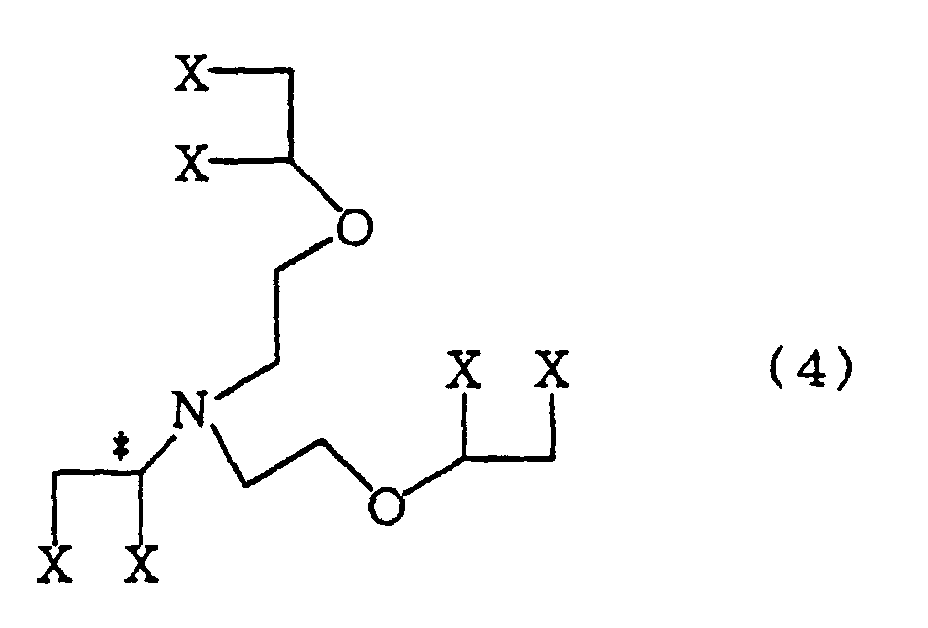
wherein, in said L-aspartic acid derivative composition, the occurrence ratio (mole ratio) between said derivative (A) and said derivative (B) is in the range of 1:99 to 99:1.


- Test method 301A:
- DOC Die-Away test
- Test method 301B:
- CO2 emission test (modified Sturm test)
- Test method 301C:
- Modified MITI test (I)
- Test method 301D:
- Closed bottle test
- Test method 301E:
- Modified OECD screening test
- Test method 301F:
- Manometric respirometry test

and it is more preferred that they have this group in large numbers within the molecule.
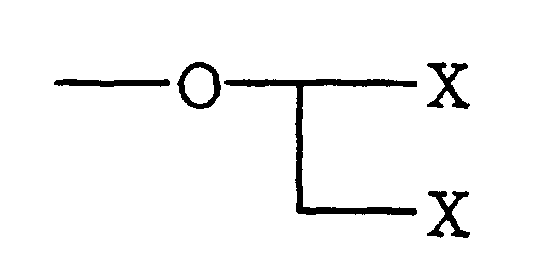
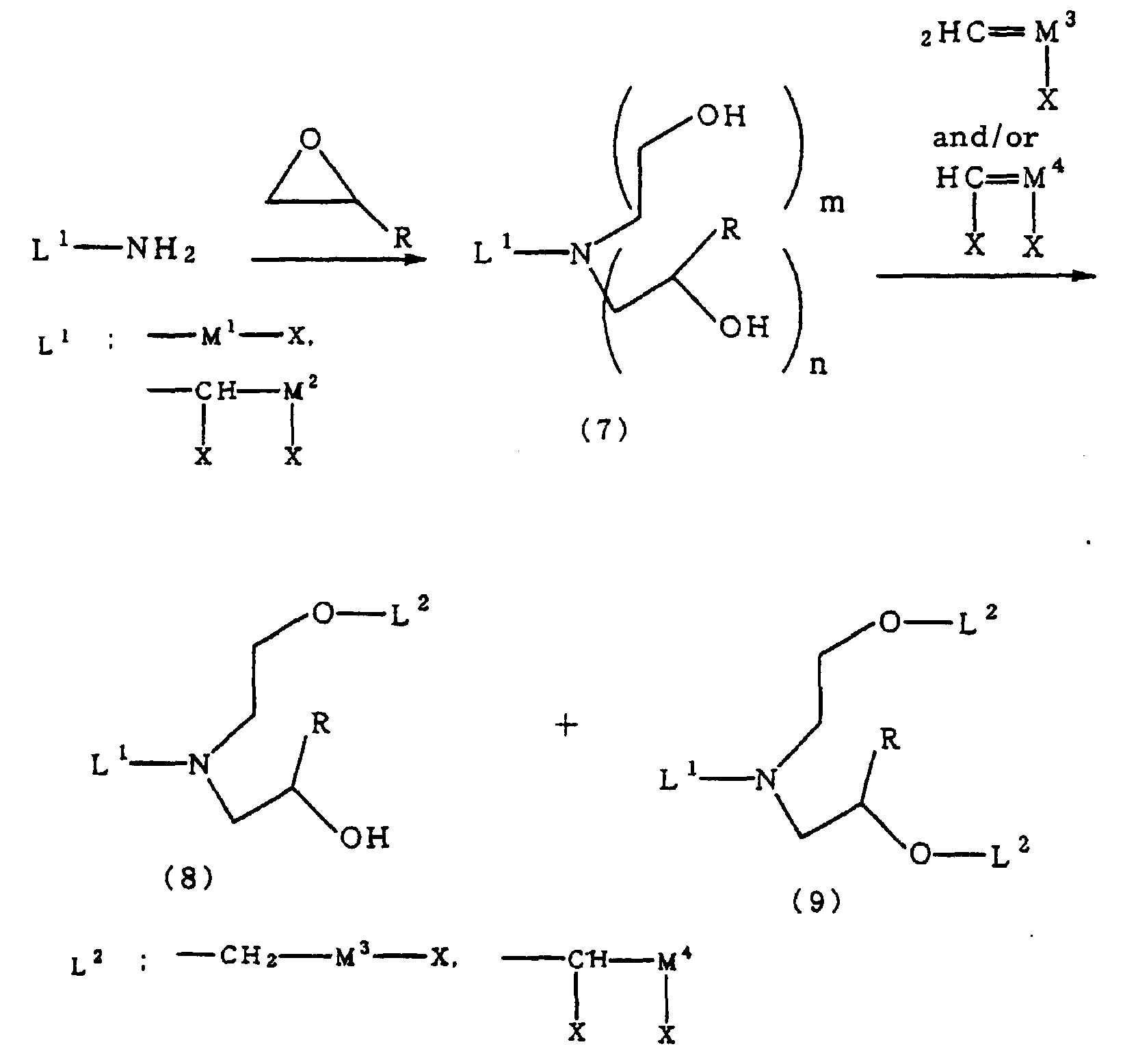


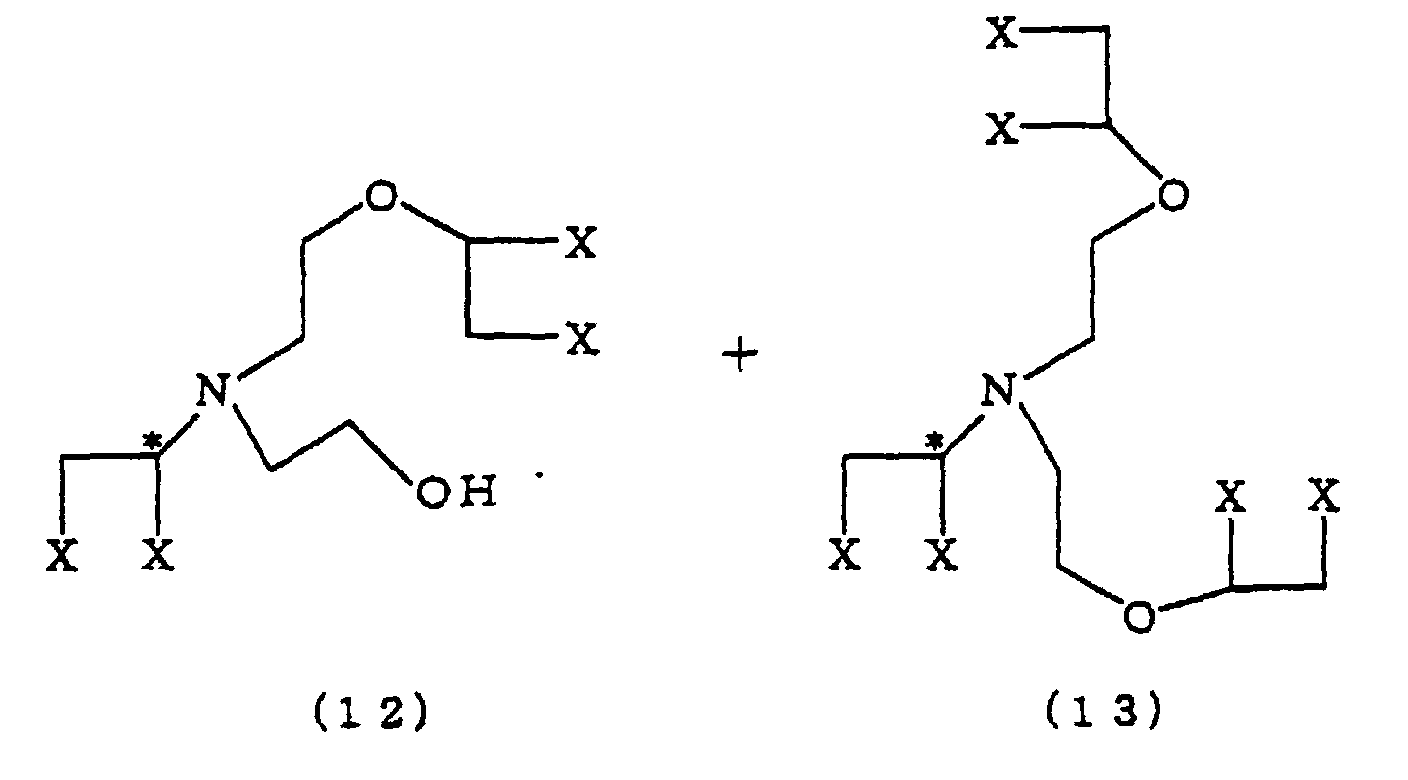

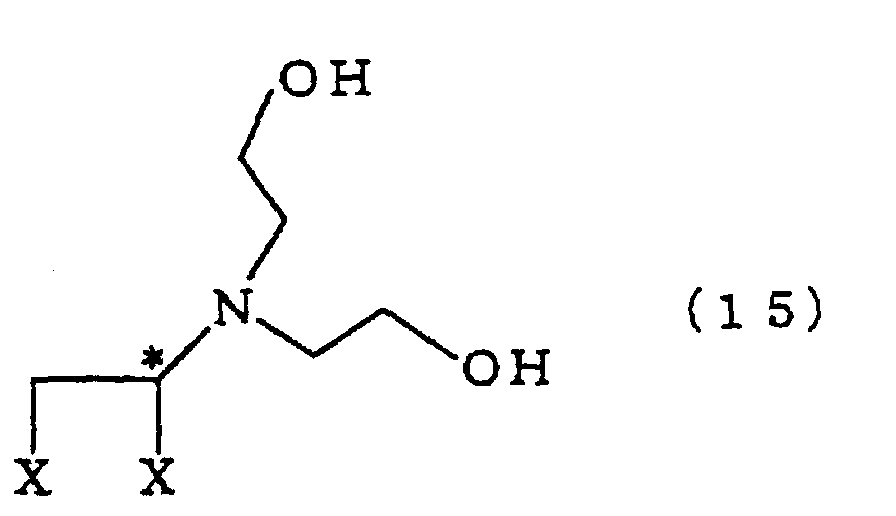
| CaCO3 trapped per g sample (Na salt) | ||
| Ex. 1 | L-Aspartic acid deriv. (A) | 200 mg CaCO3/g |
| Ex. 2 | L-Aspartic acid deriv. (B) | 280 mg CaCO3/g |
| Compar.Ex.1 | ss-EDDS (4Na) | 160 mg CaCO3/g |
| Time (min.) | Example 3 | Compar. Ex. 2 | Compar. Ex. 3 | Compar. Ex. 4 | Compar. Ex. 5 |
| L-Aspartic acid deriv. (B) | DTPA (5Na) | EDTA (4Na) | NTA (3Na) | Blank (no chelating agent) | |
| 0 | 100 | 100 | 100 | 100 | 100 |
| 30 | 85.5 | 82.1 | 80.7 | 14.4 | 0 |
| 60 | 84.6 | 80.1 | 77.1 | 7.5 | 0 |
| Percent decomposition after 28 days based on residual DOC (%) | |
| Example 4 | 35 |
| Example 5 | 10 |
Claims (11)
- An amino acid derivative compositionwhich comprises two or more kinds of amino acid derivatives represented by the general formula (1):wherein R's are the same or different and each represents a hydrogen atom or an alkyl group containing 1 to 18 carbon atoms; L1 represents -M1-X or -CHX-M2-X; L2 represents -CH2-M3-X or -CHX-M4-X; M1, M2, M3 and M4 are the same or different and each represents a straight or branched alkylene group containing 1 to 6 carbon atoms; X represents COOM; M's are the same or different and each represents a hydrogen atom, an alkali metal atom, an alkaline earth metal atom or an ammonium group; m represents an integer of 1 or 2 and n represents an integer of 0 or 1 on the condition that m + n is equal to 2.

- A process for producing an amino acid derivative represented by the general formula (1):wherein R represents a hydrogen atom or an alkyl group containing 1 to 18 carbon atoms, L1 represents -M1-X or -CHX-M2-X, L2 represents -CH2-M3-X or -CHX-M4-X, M1, M2, M3 and M4 are the same or different and each represents a straight or branched alkylene group containing 1 to 6 carbon atoms, X represents COOM, M's are the same or different and each represents a hydrogen atom, an alkali metal atom, an alkaline earth metal atom or an ammonium group, m represents an integer of 1 or 2 and n represents an integer of 0 or 1 on the condition that m + n is equal to 2,
 which comprises the steps of:causing an alkylene oxide to add to an amino acidand reacting the amino acid-alkylene oxide adduct with an unsaturated carboxylic acid in the presence of a rare earth-based catalyst.
 - A chelating agentwhich comprises the amino acid derivative composition according to Claim 1.
- An L-aspartic acid derivative represented by the general formula (2):wherein X represents COOM; M's are the same or different and each represents a hydrogen atom, an alkali metal atom, an alkaline earth metal atom or an ammonium group; m represents an integer of 1 or 2 and n represents an integer of 0 or 1 on the condition that m + n is equal to 2; and * indicates that the asymmetric carbon atom carrying this symbol is in S configuration.

- A process for producing the L-aspartic acid derivative according to Claim 4,which comprises the steps of:causing ethylene oxide to add to L-aspartic acidand reacting the L-aspartic acid-ethylene oxide adduct with maleic acid in the presence of a rare earth-based catalyst.
- A chelating agentwhich comprises the L-aspartic acid derivative according to Claim 4.
- An L-aspartic acid derivative compositionwhich comprises an L-aspartic acid derivative (A) and an L-aspartic acid derivative (B),said derivative (A) being represented by the general formula (3):wherein X represents COOM, M's are the same or different and each represents a hydrogen atom, an alkali metal atom, an alkaline earth metal atom or an ammonium group and * indicates that the asymmetric carbon atom carrying this symbol is in S configuration,
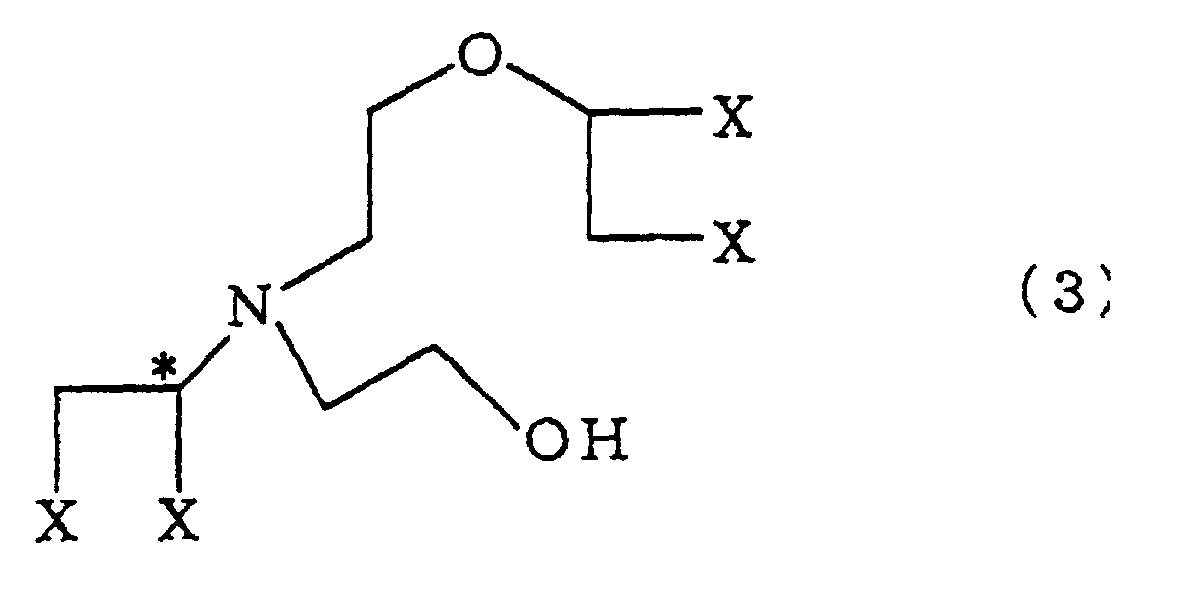 and said derivative (B) being represented by the general formula (4):wherein X represents COOM, M's are the same or different and each represents a hydrogen atom, an alkali metal atom, an alkaline earth metal atom or an ammonium group and * indicates that the asymmetric carbon atom carrying this symbol is in S configuration,
wherein, in said L-aspartic acid derivative composition, the occurrence ratio (mole ratio) between said L-aspartic acid derivative (A) and said L-aspartic acid derivative (B) is in the range of 1:99 to 99:1. - A process for producing the L-aspartic acid derivative composition according to Claim 7,which comprises the steps of:causing ethylene oxide to add to L-aspartic acidand reacting the L-aspartic acid-ethylene oxide adduct with maleic acid in the presence of a rare earth-based catalyst.
- A chelating agent which comprises the L-aspartic acid derivative composition according to Claim 7.
- A process for producing N-bishydroxyalkyl-amino acid derivatives represented by the general formula (5):wherein R represents a hydrogen atom or an alkyl group containing 1 to 18 carbon atoms, L1 represents -M1-X or -CHX-M2-X, M1 and M2 are the same or different and each represents a straight or branched alkylene group containing 1 to 6 carbon atoms, X represents COOM, M's are the same or different and each represents a hydrogen atom, an alkali metal atom, an alkaline earth metal atom or an ammonium group,
 which comprises the step of causing an alkylene oxide to add to an amino acid salt in an aqueous solution.
 - A process for producing N-bishydroxyethylaspartic acids represented by the general formula (6):wherein X represents COOM and M's are the same or different and each represents a hydrogen atom, an alkali metal atom, an alkaline earth metal atom or an ammonium group,
 which comprises the step of causing ethylene oxide to add to an aspartic acid salt in an aqueous solution.
Applications Claiming Priority (4)
| Application Number | Priority Date | Filing Date | Title |
|---|---|---|---|
| JP24988899 | 1999-09-03 | ||
| JP24988899 | 1999-09-03 | ||
| JP31223999 | 1999-11-02 | ||
| JP31223999 | 1999-11-02 |
Publications (3)
| Publication Number | Publication Date |
|---|---|
| EP1086944A2 true EP1086944A2 (en) | 2001-03-28 |
| EP1086944A3 EP1086944A3 (en) | 2001-04-11 |
| EP1086944B1 EP1086944B1 (en) | 2005-05-25 |
Family
ID=26539539
Family Applications (1)
| Application Number | Title | Priority Date | Filing Date |
|---|---|---|---|
| EP00118241A Expired - Lifetime EP1086944B1 (en) | 1999-09-03 | 2000-09-01 | Amino acid derivative composition and process for producing an amino acid derivative |
Country Status (3)
| Country | Link |
|---|---|
| US (1) | US6504054B1 (en) |
| EP (1) | EP1086944B1 (en) |
| DE (1) | DE60020318T2 (en) |
Cited By (6)
| Publication number | Priority date | Publication date | Assignee | Title |
|---|---|---|---|---|
| WO2011151517A3 (en) * | 2010-06-02 | 2012-03-22 | Kemira Oyj | Process for the preparation of a mixture of chelating agents |
| WO2012139842A1 (en) | 2011-04-12 | 2012-10-18 | Basf Se | Method for producing amino-polycarboxylates from amino acids |
| CN102933297A (en) * | 2010-06-02 | 2013-02-13 | 凯米罗总公司 | Catalyst recovery process |
| US8785685B2 (en) | 2011-04-12 | 2014-07-22 | Basf Se | Process for preparing aminopolycarboxylates proceeding from amino acids |
| WO2016072941A1 (en) * | 2014-11-05 | 2016-05-12 | Ptt Global Chemical Public Company Limited | Diethanolamine derivatives and a preparation method thereof |
| WO2026111845A1 (en) * | 2024-11-22 | 2026-05-28 | Rohm And Haas Company | Cleaning booster and laundry detergent |
Families Citing this family (2)
| Publication number | Priority date | Publication date | Assignee | Title |
|---|---|---|---|---|
| JP2003342435A (en) * | 2002-05-28 | 2003-12-03 | Three M Innovative Properties Co | Marking film |
| CN102875405B (en) * | 2012-10-24 | 2014-12-03 | 南京工业大学 | A class of polyols of basic amino acids or their esters and their preparation and application |
Family Cites Families (7)
| Publication number | Priority date | Publication date | Assignee | Title |
|---|---|---|---|---|
| JP2890278B2 (en) * | 1992-08-10 | 1999-05-10 | 富士写真フイルム株式会社 | Photographic processing composition and processing method |
| JP2819487B2 (en) * | 1992-10-05 | 1998-10-30 | 富士写真フイルム株式会社 | Photographic processing composition and processing method |
| JP3727083B2 (en) * | 1995-02-03 | 2005-12-14 | 株式会社日本触媒 | Detergent composition |
| FI112075B (en) * | 1996-05-30 | 2003-10-31 | Kemira Chemicals Oy | N-bis or N-tris [(1,2-dicarboxyl-ethoxy) -ethyl] amine derivatives, preparation and use thereof |
| FI105214B (en) * | 1997-11-13 | 2000-06-30 | Kemira Chemicals Oy | Efficient process for bleaching a chemical pulp |
| FI109218B (en) * | 1998-09-04 | 2002-06-14 | Kemira Chemicals Oy | Adhesive composition useful in neutral bonding of paper or paperboard and process for making paper or paperboard |
| DE19850359A1 (en) * | 1998-11-02 | 2000-05-04 | Bayer Ag | Process for the preparation of aspartic acid derivatives |
-
2000
- 2000-09-01 DE DE60020318T patent/DE60020318T2/en not_active Expired - Lifetime
- 2000-09-01 EP EP00118241A patent/EP1086944B1/en not_active Expired - Lifetime
- 2000-09-05 US US09/655,043 patent/US6504054B1/en not_active Expired - Fee Related
Cited By (11)
| Publication number | Priority date | Publication date | Assignee | Title |
|---|---|---|---|---|
| WO2011151517A3 (en) * | 2010-06-02 | 2012-03-22 | Kemira Oyj | Process for the preparation of a mixture of chelating agents |
| CN102933544A (en) * | 2010-06-02 | 2013-02-13 | 凯米罗总公司 | Process for the preparation of a mixture of chelating agents |
| CN102933297A (en) * | 2010-06-02 | 2013-02-13 | 凯米罗总公司 | Catalyst recovery process |
| CN102933544B (en) * | 2010-06-02 | 2014-09-17 | 凯米罗总公司 | Process for the preparation of a mixture of chelating agents |
| CN102933297B (en) * | 2010-06-02 | 2015-04-15 | 凯米罗总公司 | Catalyst recovery process |
| US9090536B2 (en) | 2010-06-02 | 2015-07-28 | Kemira Oyj | Process for the preparation of a mixture of chelating agents |
| WO2012139842A1 (en) | 2011-04-12 | 2012-10-18 | Basf Se | Method for producing amino-polycarboxylates from amino acids |
| US8785685B2 (en) | 2011-04-12 | 2014-07-22 | Basf Se | Process for preparing aminopolycarboxylates proceeding from amino acids |
| EP2697190B1 (en) | 2011-04-12 | 2015-05-13 | Basf Se | Method for producing amino-polycarboxylates from amino acids |
| WO2016072941A1 (en) * | 2014-11-05 | 2016-05-12 | Ptt Global Chemical Public Company Limited | Diethanolamine derivatives and a preparation method thereof |
| WO2026111845A1 (en) * | 2024-11-22 | 2026-05-28 | Rohm And Haas Company | Cleaning booster and laundry detergent |
Also Published As
| Publication number | Publication date |
|---|---|
| DE60020318D1 (en) | 2005-06-30 |
| US6504054B1 (en) | 2003-01-07 |
| EP1086944B1 (en) | 2005-05-25 |
| EP1086944A3 (en) | 2001-04-11 |
| DE60020318T2 (en) | 2006-05-18 |
Similar Documents
| Publication | Publication Date | Title |
|---|---|---|
| US5389594A (en) | Degradable chelants having sulfonate groups, uses and compositions thereof | |
| DE69516182T2 (en) | AMINONITRILE INTERMEDIATE PRODUCTS FOR THE PRODUCTION OF ALAMINE DIETACRIC ACID | |
| CA2063118A1 (en) | Biodegradable bleach stabilizers for detergents | |
| SA516370704B1 (en) | Mixtures of enantiomers, and process for making such mixtures | |
| US6504054B1 (en) | Amino acid derivative and producing method thereof | |
| JP2001342453A (en) | Chelating composition | |
| EP0695289B1 (en) | Hydroxamic acids and hydroxamic acid ethers and their use as complexing agents | |
| CA1313527C (en) | 2-hydroxy-3-aminopropionic-n,n-diacetic acid and derivatives thereof, preparation thereof, and detergents containing same | |
| US5447575A (en) | Degradable chelants having sulfonate groups, uses and compositions thereof | |
| EP0396999B1 (en) | 2-Methyl- and 2-hydroxymethyl-serin-N,N-diacetic acids and their derivatives | |
| CN111606818A (en) | Chelating agent, cleaning agent and preparation method of chelating agent | |
| CA2256559C (en) | N-bis- or n-tris-[(1,2-dicarboxy-ethoxy)-ethyl]-amine derivatives and preparation and use of the same | |
| US5543566A (en) | Process for preparing amino-polycarboxylic acids or salts thereof | |
| EP0694528A2 (en) | Alkylenediamine-N,N'-disuccinic acid iron (III) complex salts and process for production thereof | |
| EP0471583A1 (en) | Process for the preparation of salts of iron amino and hydroxy carboxylic acid complexes | |
| US5907055A (en) | Use of triacids based on alkoxylated tertiary amines as complexing agents | |
| US3655573A (en) | Synergistic metal sequestrant | |
| JP4632500B2 (en) | Amino acid derivative composition and method for producing amino acid derivative | |
| EP0411436A2 (en) | Use of derivatives of 2-hydroxy-3-aminopropionic acid as complexants, stabilizer for bleaching compositions and builder for washing and cleaning agents | |
| JPH05262710A (en) | Carbonyl-containing degradable chelating agent | |
| CN114989029A (en) | Chelating agent, cleaning agent and preparation method of chelating agent | |
| KR20200003189A (en) | Biodegradable diethanolamine derivative chelating agent and preparation method thereof | |
| CN120081753A (en) | A kind of synthetic method of trisodium methylglycine diacetate | |
| EP1003826A1 (en) | Solid textile detergent formulation based on glycin-n, n- diacetic acid derivatives with a highly reduced proportion of other anionic surfactants | |
| CN120652023B (en) | A method for detecting multiple chelating agents in daily chemical products. |
Legal Events
| Date | Code | Title | Description |
|---|---|---|---|
| PUAI | Public reference made under article 153(3) epc to a published international application that has entered the european phase |
Free format text: ORIGINAL CODE: 0009012 |
|
| PUAL | Search report despatched |
Free format text: ORIGINAL CODE: 0009013 |
|
| AK | Designated contracting states |
Kind code of ref document: A2 Designated state(s): BE DE FI GB SE |
|
| AX | Request for extension of the european patent |
Free format text: AL;LT;LV;MK;RO;SI |
|
| AK | Designated contracting states |
Kind code of ref document: A3 Designated state(s): AT BE CH CY DE DK ES FI FR GB GR IE IT LI LU MC NL PT SE |
|
| AX | Request for extension of the european patent |
Free format text: AL;LT;LV;MK;RO;SI |
|
| 17P | Request for examination filed |
Effective date: 20010920 |
|
| AKX | Designation fees paid |
Free format text: BE DE FI GB SE |
|
| 17Q | First examination report despatched |
Effective date: 20021202 |
|
| GRAP | Despatch of communication of intention to grant a patent |
Free format text: ORIGINAL CODE: EPIDOSNIGR1 |
|
| GRAS | Grant fee paid |
Free format text: ORIGINAL CODE: EPIDOSNIGR3 |
|
| GRAA | (expected) grant |
Free format text: ORIGINAL CODE: 0009210 |
|
| AK | Designated contracting states |
Kind code of ref document: B1 Designated state(s): BE DE FI GB SE |
|
| REG | Reference to a national code |
Ref country code: GB Ref legal event code: FG4D |
|
| REF | Corresponds to: |
Ref document number: 60020318 Country of ref document: DE Date of ref document: 20050630 Kind code of ref document: P |
|
| REG | Reference to a national code |
Ref country code: SE Ref legal event code: TRGR |
|
| PLBE | No opposition filed within time limit |
Free format text: ORIGINAL CODE: 0009261 |
|
| STAA | Information on the status of an ep patent application or granted ep patent |
Free format text: STATUS: NO OPPOSITION FILED WITHIN TIME LIMIT |
|
| 26N | No opposition filed |
Effective date: 20060228 |
|
| PGFP | Annual fee paid to national office [announced via postgrant information from national office to epo] |
Ref country code: GB Payment date: 20070829 Year of fee payment: 8 |
|
| PGFP | Annual fee paid to national office [announced via postgrant information from national office to epo] |
Ref country code: BE Payment date: 20071130 Year of fee payment: 8 |
|
| BERE | Be: lapsed |
Owner name: *NIPPON SHOKUBAI CO. LTD Effective date: 20080930 |
|
| GBPC | Gb: european patent ceased through non-payment of renewal fee |
Effective date: 20080901 |
|
| PG25 | Lapsed in a contracting state [announced via postgrant information from national office to epo] |
Ref country code: BE Free format text: LAPSE BECAUSE OF NON-PAYMENT OF DUE FEES Effective date: 20080930 |
|
| PG25 | Lapsed in a contracting state [announced via postgrant information from national office to epo] |
Ref country code: GB Free format text: LAPSE BECAUSE OF NON-PAYMENT OF DUE FEES Effective date: 20080901 |
|
| PGFP | Annual fee paid to national office [announced via postgrant information from national office to epo] |
Ref country code: SE Payment date: 20090910 Year of fee payment: 10 |
|
| PGFP | Annual fee paid to national office [announced via postgrant information from national office to epo] |
Ref country code: FI Payment date: 20100910 Year of fee payment: 11 |
|
| REG | Reference to a national code |
Ref country code: SE Ref legal event code: EUG |
|
| PG25 | Lapsed in a contracting state [announced via postgrant information from national office to epo] |
Ref country code: FI Free format text: LAPSE BECAUSE OF NON-PAYMENT OF DUE FEES Effective date: 20110901 |
|
| PG25 | Lapsed in a contracting state [announced via postgrant information from national office to epo] |
Ref country code: SE Free format text: LAPSE BECAUSE OF NON-PAYMENT OF DUE FEES Effective date: 20100902 |
|
| PGFP | Annual fee paid to national office [announced via postgrant information from national office to epo] |
Ref country code: DE Payment date: 20130829 Year of fee payment: 14 |
|
| REG | Reference to a national code |
Ref country code: DE Ref legal event code: R119 Ref document number: 60020318 Country of ref document: DE |
|
| REG | Reference to a national code |
Ref country code: DE Ref legal event code: R119 Ref document number: 60020318 Country of ref document: DE Effective date: 20150401 |
|
| PG25 | Lapsed in a contracting state [announced via postgrant information from national office to epo] |
Ref country code: DE Free format text: LAPSE BECAUSE OF NON-PAYMENT OF DUE FEES Effective date: 20150401 |