EP1085498A2 - Reference speech pattern generating method - Google Patents
Reference speech pattern generating method Download PDFInfo
- Publication number
- EP1085498A2 EP1085498A2 EP00119234A EP00119234A EP1085498A2 EP 1085498 A2 EP1085498 A2 EP 1085498A2 EP 00119234 A EP00119234 A EP 00119234A EP 00119234 A EP00119234 A EP 00119234A EP 1085498 A2 EP1085498 A2 EP 1085498A2
- Authority
- EP
- European Patent Office
- Prior art keywords
- reference pattern
- feature vectors
- time series
- small sections
- initial reference
- Prior art date
- Legal status (The legal status is an assumption and is not a legal conclusion. Google has not performed a legal analysis and makes no representation as to the accuracy of the status listed.)
- Withdrawn
Links
Images






Classifications
-
- G—PHYSICS
- G10—MUSICAL INSTRUMENTS; ACOUSTICS
- G10L—SPEECH ANALYSIS TECHNIQUES OR SPEECH SYNTHESIS; SPEECH RECOGNITION; SPEECH OR VOICE PROCESSING TECHNIQUES; SPEECH OR AUDIO CODING OR DECODING
- G10L15/00—Speech recognition
- G10L15/06—Creation of reference templates; Training of speech recognition systems, e.g. adaptation to the characteristics of the speaker's voice
- G10L15/063—Training
-
- G—PHYSICS
- G10—MUSICAL INSTRUMENTS; ACOUSTICS
- G10L—SPEECH ANALYSIS TECHNIQUES OR SPEECH SYNTHESIS; SPEECH RECOGNITION; SPEECH OR VOICE PROCESSING TECHNIQUES; SPEECH OR AUDIO CODING OR DECODING
- G10L15/00—Speech recognition
- G10L15/08—Speech classification or search
- G10L15/12—Speech classification or search using dynamic programming techniques, e.g. dynamic time warping [DTW]
-
- G—PHYSICS
- G10—MUSICAL INSTRUMENTS; ACOUSTICS
- G10L—SPEECH ANALYSIS TECHNIQUES OR SPEECH SYNTHESIS; SPEECH RECOGNITION; SPEECH OR VOICE PROCESSING TECHNIQUES; SPEECH OR AUDIO CODING OR DECODING
- G10L15/00—Speech recognition
- G10L15/06—Creation of reference templates; Training of speech recognition systems, e.g. adaptation to the characteristics of the speaker's voice
- G10L15/063—Training
- G10L2015/0631—Creating reference templates; Clustering
Definitions
- the present invention relates to a reference pattern generating apparatus and method for generating a reference pattern having high representation efficiency for use in word speech recognition, and a computer readable medium having a reference pattern generating program embodied thereon and implementing the method.
- word speech recognition employs a pattern matching method of comparing an input voice pattern with a set of reference patterns associated with words by computing pattern matching distances between the input voice pattern and the reference patterns, and furnishing a word exhibiting a minimum pattern matching distance as the recognition result.
- a word's reference pattern can be a time series of feature vectors X(1), X(2), X(3), ..., X(T) obtained from an input voice pattern of the word, where T is the length of the word (i.e. the number of frames). Since T depends on words, the size of the reference pattern depends on words. Therefore, the size of memory used for storing a set of reference patterns cannot be determined in advance, even if the number of words is predetermined.
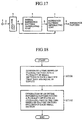
- FIG. 17 there is illustrated a block diagram showing the structure of such a prior art reference pattern generating apparatus as disclosed in Japanese Patent Application Publication (TOKKAISHO) No. 64-44997, for example.
- reference numeral 1 denotes an input terminal for receiving a voice signal 2 applied thereto
- numeral 3 denotes an analysis unit for performing an acoustic analysis on the input voice signal
- numeral 4 denotes a time series of feature vectors, which is obtained as an acoustic analysis result from the input voice signal 2 by the analysis unit 3
- numeral 5 denotes an initial reference pattern generating unit for generating an initial reference pattern 6 from the time series 4 of feature vectors
- numeral 7 denotes a reference pattern generating unit for generating a reference pattern 8 from the initial reference pattern 6.
- a voice signal generated from a person's voice is applied to the input terminal 1 to create a reference pattern.
- T is the number of frames included in the voiced region extracted from the digital voice signal, i.e. the number of feature vectors. Since it is difficult to precisely extract the voiced region from the digital voice signal, a few leading and last frames can include a pause.
- Each feature vector X(t) can be an LPC cepstrum obtained with linear prediction or LPC analysis.
- the initial reference pattern generating unit 5 receives the time series 4 of feature vectors X(1), X(2), X(3), ..., X(T) from the analysis unit 3, and then generates an initial value 6 of the reference pattern following a procedure, which will be mentioned later. Referring next to Fig. 18, there is illustrated a flow diagram showing the procedure of generating the initial reference pattern 6.
- the initial reference pattern generating unit 5, in step ST101 of Fig. 18, divides the time series 4 of feature vectors X(1), X(2), X(3), ..., X(T) into J (J>1) small sections B(1), B(2), B(3), ..., B(J) in such a manner that any two adjacent small sections do not overlap each other and they are equal in length where possible.
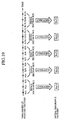
- Fig. 19 shows an example in which the number T of frames or feature vectors X(1), X(2), X(3), ..., X(T) is 15, and the number J of small sections B(1), B(2), B(3), ..., B(J) or states of the reference pattern is 5.
- the time series 4 of feature vectors X(1), X(2), X(3), ..., X(15) is divided into the plurality of small sections B(1), B(2), B(3), ..., B(J) in such a manner that they are equal in length and B(1) includes feature vectors X(1) to X(3), B(2) includes feature vectors X(4) to X(6), ..., and B(5) includes feature vectors X(13) to X(15).
- the initial value Rz(1) for the first state is produced by averaging the time series of the leading three feature vectors X(1) to X(3) included in the first small section B(1)
- the initial value Rz(2) for the second state is produced by averaging the time series of the three feature vectors X(4) to X(6) included in the second small section B(2), ...
- the initial value Rz(5) for the fifth state is produced by averaging the time series of the last three feature vectors X(13) to X(15) included in the fifth small section B(5), as shown in Fig. 19.
- the initial value Rz(j) for each small section is determined in such a manner that the sum D(j) of Euclidean distances between each state of the initial reference pattern Rz(j) and the feature vectors X(sz(j)) to X(ez(j)) included in each small section B(j), which is calculated according to the following equation (5), is minimized.
- the initial reference pattern generating unit 5 completes the process of generating the initial reference pattern 6.
- the reference pattern generating unit 7 receives the initial reference pattern 6 including the plurality of states Rz(1), Rz(2), Rz(3), ..., Rz(J) generated by the initial reference pattern generating unit 5 and the time series 4 of feature vectors X(1), X(2), X(3), ..., X(T), which are calculated from the input voice signal by the analysis unit 3.
- Fig. 20 there is illustrated a flow diagram showing the procedure of generating each state of the reference pattern R(j).
- the reference pattern generating unit 7 in step ST201 of Fig. 20, sets the value c of a learning number counter (not shown) thereof at zero.
- c in the (c) is the value of the learning number counter (not shown).
- the reference pattern generating unit 7, in step ST203, brings each state of the intermediate reference pattern R(c)(j) (j 1, 2, 3,..., J) into correspondence with part of the time series 4 of feature vectors X(1), X(2), X(3), ..., X(T).
- the correspondence process can be carried out using a Viterbi algorithm in such a manner that a pattern matching distance D described below is minimized.
- 2 G ( t , j )
- 2 +min ⁇ G ( t -1, j ), G ( t -1, j -1) ⁇ D G ( T , J ) where G(t,j) is a summed Viterbi distance, BTK(t,j) is back truck information, D is the pattern matching distance between the time series of feature vectors X(1), X(2), X(3), ..., X(T) and the plurality of states of the intermediate reference pattern R(c)(1), R(c)(2), ...
- the correspondence will be referred to as Viterbi path hereinafter.
- the reference pattern generating unit 7 then, in step ST205, increments the value c of the learning number counter (not shown) by 1, and, in step ST206, determines whether the value c reaches a predetermined threshold value CC. If the value c of the learning number counter (not shown) reaches the predetermined threshold value CC, the reference pattern generating unit 7 branches to step ST207 in which it furnishes the time sequence of states of the updated intermediate reference pattern R(c)(1), R(c)(2), R(c)(3), ..., R(c)(J) as the reference pattern and stops the reference pattern generating procedure.
- the reference pattern generating unit 7 reverts back to step ST203 in which it repeats the above-mentioned reference pattern generating procedure.
- the pattern matching distance D can converge to a local minimum value.
- the fact that the pattern matching distance D is small means that the amount of information losses due to compression is reduced and the obtained reference pattern has high representation efficiency.
- the present invention is proposed to solve the above problem. It is therefore an object of the present invention to provide a reference pattern generating apparatus and method capable of, when creating a reference pattern by repeatedly updating an intermediate value of the reference pattern, preventing the reference pattern from converging to an undesired local minimum value, thus providing high representation efficiency, and a computer readable medium having a reference pattern generating program embodied thereon and implementing the method.
- a reference pattern generating apparatus comprising: an initial reference pattern generating unit for dividing a time series of feature vectors obtained from a voice signal into a sequence of small sections in such a manner that any two adjacent small sections overlap each other, and for averaging part of the time series of feature vectors included in each of the plurality of small sections so as to generate an initial reference pattern having a plurality of states respectively associated with the plurality of small sections; and a reference pattern generating unit for bringing each of the plurality of states of the initial reference pattern into correspondence with part of the time series of feature vectors using pattern matching, and for averaging the part of the time series of feature vectors brought into correspondence with each of the plurality of states of the initial reference pattern so as to update the initial reference pattern to generate a reference pattern.
- the initial reference pattern generating unit divides the time series of feature vectors into the sequence of small sections in such a manner that the plurality of small sections are equal in length where possible , otherwise all but one end small section are equal in length.
- the initial reference pattern generating unit divides the time series of feature vectors into the sequence of small sections while making a distinction between pause portions and a voiced portion included in the voice signal in such a manner that one small section is assigned to each of the pause portions and remaining small sections are assigned to the voiced region.
- the initial reference pattern generating unit selects a predetermined number of feature vectors exhibiting a larger amount of change against an immediately preceding feature vector from the time series of feature vectors, the number of feature vectors selected being equal to a number of overlapped portions formed in the sequence of small sections, and then divides the time series of feature vectors into the sequence of small sections in such a manner that the plurality of overlapped portions include the predetermined number of feature vectors selected, respectively.
- the initial reference pattern generating unit includes a first initial value generating unit for dividing the time series of feature vectors into a sequence of small sections in such a manner that any two adjacent small sections overlap each other and the plurality of small sections are equal in length where possible, otherwise all but one end small section are equal in length, and for averaging part of the time series of feature vectors included in each of the plurality of small sections so as to generate a first initial reference pattern, a second initial value generating unit for dividing the time series of feature vectors into a sequence of small sections while making a distinction between pause portions and a voiced portion included in the voice signal in such a manner that any two adjacent small sections overlap each other, and one small section is assigned to each of the pause portions and remaining small sections are assigned to the voiced portion, and for averaging part of the time series of feature vectors included in each of the plurality of small sections so as to generate a second initial reference pattern, and a third initial value generating unit for selecting a predetermined
- the reference pattern generating unit generates three reference patterns from the first through third initial reference patterns generated by the first through third initial value generating unit
- the apparatus further comprises a reference pattern selecting unit for performing pattern matching between each of the three reference patterns generated by the first through third initial value generating unit and the time series of feature vectors and for selecting one reference pattern showing a minimum pattern matching distance from the three reference patterns.
- a reference pattern generating method of compressing a time series of feature vectors obtained from a voice signal and generating a reference pattern comprising the steps of: dividing the time series of feature vectors into a sequence of small sections in such a manner that any two adjacent small sections overlap each other; averaging part of the time series of feature vectors included in each of the plurality of small sections so as to generate an initial reference pattern having a plurality of states associated with the plurality of small sections; and generating a reference pattern by bringing each of the plurality of states of the initial reference pattern into correspondence with part of the time series of feature vectors using pattern matching, and by averaging the part of the time series of feature vectors brought into correspondence with each of the plurality of states of the initial reference pattern so as to update the initial reference pattern.
- the dividing step is the step of dividing the time series of feature vectors into the sequence of small sections in such a manner that the plurality of small sections are equal in length where possible, otherwise all but one end small section are equal in length.
- the dividing step is the step of dividing the time series of feature vectors into the sequence of small sections while making a distinction between pause portions and a voiced portion included in the voice signal in such a manner that one small section is assigned to each of the pause portions and remaining small sections are assigned to the voiced region.
- the dividing step includes the steps of selecting a predetermined number of feature vectors having a larger amount of change against an immediately preceding feature vector from the time series of feature vectors, the number of feature vectors selected being equal to a number of overlapped portions formed in the sequence of small sections, and dividing the time series of feature vectors into the sequence of small sections in such a manner that the plurality of overlapped portions include the predetermined number of feature vectors selected, respectively.
- the dividing and averaging steps include the steps of dividing the time series of feature vectors into a sequence of small sections in such a manner that any two adjacent small sections overlap each other, and the plurality of small sections are equal in length where possible, otherwise all but one end small section are equal in length, and averaging part of the time series of feature vectors included in each of the plurality of small sections so as to generate a first initial reference pattern; dividing the time series of feature vectors into a sequence of small sections while making a distinction between pause portions and a voiced portion included in the voice signal in such a manner that any two adjacent small sections overlap each other and one small section is assigned to each of the pause portions and remaining small sections are assigned to the voiced region, and averaging part of the time series of feature vectors included in each of the plurality of small sections so as to generate a second initial reference pattern; and selecting a predetermined number of feature vectors having a larger amount of change against an immediately preceding feature vector from the time series of feature
- the reference pattern generating step is the step of generating three reference patterns from the first to third initial reference patterns and the method further comprises the steps of performing pattern matching between each of the three reference patterns and the time series of feature vectors of and selecting one reference pattern showing a minimum pattern matching distance from the three reference patterns.
- a computer readable medium having a computer program embodied thereon, the computer program being executable by a machine to the perform the steps of: dividing the time series of feature vectors obtained from a voice signal into a sequence of small sections in such a manner that any two adjacent small sections overlap each other; averaging part of the time series of feature vectors included in each of the plurality of small sections so as to generate an initial reference pattern having a plurality of states associated with the plurality of small sections; and generating a reference pattern by bringing each of the plurality of states of the initial reference pattern into correspondence with part of the time series of feature vectors using pattern matching, and by averaging the part of the time series of feature vectors brought into correspondence with each of the plurality of states of the initial reference pattern so as to update the initial reference pattern.
- the dividing step is the step of dividing the time series of feature vectors into the sequence of small sections in such a manner that the plurality of small sections are equal in length where possible, otherwise all but one end small section are equal in length.
- the dividing step is the step of dividing the time series of feature vectors into the sequence of small sections while making a distinction between pause portions and a voiced portion included in the voice signal in such a manner that one small section is assigned to each of the pause portions and remaining small sections are assigned to the voiced region.
- the dividing step includes the steps of selecting a predetermined number of feature vectors having a larger amount of change against an immediately preceding feature vector from the time series of feature vectors, the number of feature vectors selected being equal to a number of overlapped portions formed in the sequence of small sections, and dividing the time series of feature vectors into the sequence of small sections in such a manner that the plurality of overlapped portions include the predetermined number of feature vectors selected, respectively.
- the dividing and averaging steps include the steps of dividing the time series of feature vectors into a sequence of small sections in such a manner that any two adjacent small sections overlap each other, and the plurality of small sections are equal in length where possible, otherwise all but one end small section are equal in length, and averaging part of the time series of feature vectors included in each of the plurality of small sections so as to generate a first initial reference pattern; dividing the time series of feature vectors into a sequence of small sections while making a distinction between pause portions and a voiced portion included in the voice signal in such a manner that any two adjacent small sections overlap each other and one small section is assigned to each of the pause portions and remaining small sections are assigned to the voiced region, and averaging part of the time series of feature vectors included in each of the plurality of small sections so as to generate a second initial reference pattern; and selecting a predetermined number of feature vectors having a larger amount of change against an immediately preceding feature vector from the time series of feature
- the reference pattern generating step is the step of generating three reference patterns from the first to third initial reference patterns and the computer program further performs the steps of performing pattern matching between each of the three reference patterns and the time series of feature vectors of and selecting one reference pattern showing a minimum pattern matching distance from the three reference patterns.
- FIG. 1 there is illustrated a block diagram showing the structure of a reference pattern generating apparatus according to a first embodiment of the present invention.
- reference numeral 1 denotes an input terminal for receiving a voice signal 2 applied thereto
- numeral 3 denotes an analysis unit for performing an acoustic analysis on the input voice signal
- numeral 4 denotes a time series of feature vectors, which is obtained as an acoustic analysis result from the input voice signal 2 by the analysis unit 3
- numeral 9 denotes an initial reference pattern generating unit for dividing the time series 4 of feature vectors into a plurality of small sections in such a manner that they are equal in length and any two adjacent small sections overlap each other, and for averaging a time series of feature vectors included in each of the plurality of small Sections to generate an initial reference pattern 10 having a plurality of states
- numeral 7 denotes a reference pattern generating unit for bringing each state of the initial reference pattern 10 into correspondence with part of the time series 4 of feature vectors output from
- a voice signal generated from a person's voice is applied to the input terminal 1 to create a reference pattern.
- T is the number of frames included in the voiced region extracted from the digital voice signal. Since it is difficult to precisely extract the voiced region from the digital voice signal, a few leading and last frames can include a pause.
- the initial reference pattern generating unit 9 receives the time series 4 of feature vectors X(1), X(2), X(3), ..., X(T), which is the acoustic analysis result obtained from the input voice signal 2, from the analysis unit 3, and then generates an initial reference pattern 10 following a procedure, which will be mentioned later.
- Fig. 2 there is illustrated a flow diagram showing the procedure of generating the initial reference pattern 10.
- start and end frames s(j) and e(j) of each small section B(j) are given by the following equations (13) to (15):
- [ ] of the equation (13) is an arithmetic operation to round off the number in the square brackets to generate an integer
- K of the equation (15) is an overlapped parameter for controlling the number of overlapped frames included in each small section B(j).
- the time series 4 of feature vectors X(1), X(2), X(3), ..., X(15) is divided to the plurality of small sections B(1), B(2), B(3), ..., B(5) any two of which overlap each other in such a manner that B(1) includes feature vectors X(1) to X(5), B(2) includes feature vectors X(4) to X(8), ..., and B(5) includes feature vectors X(13) to X(15).
- the first initial value R1(1) is produced by averaging the time series of the leading five feature vectors X(1), ..., X(5) included in the first small section B(1)
- the second initial value R1(2) is produced by averaging the time series of the five feature vectors X(4), ..., X(8) included in the second small section B(2), ...
- the fifth initial value R1(5) is produced by averaging the time series of the last three feature vectors X(13), ..., X(15) included in the fifth small section B(5), as shown in Fig. 3.
- the initial reference pattern generating unit 9 completes the process of generating the initial reference pattern 10 including the plurality of states, i.e. the plurality of initial values R1(1), R1(2), R1(3), ..., R1(J).
- the reference pattern generating unit 7 receives the initial reference pattern including the plurality of initial values R1(1), R1(2), R1(3), ..., R1(J) produced by the initial reference pattern generating unit 9 and the time series 4 of feature vectors X(1), X(2), X(3), ..., X(T) transmitted from the analysis unit 3.
- Fig. 4 there is illustrated a flow diagram of the procedure of generating the reference pattern.
- the reference pattern generating unit 7 in step ST401 of Fig. 4, sets the value c of a learning number counter (not shown) thereof at zero.
- c in the (c) is the value c of the learning number counter (not shown).
- the correspondence process can be carried out using a Viterbi algorithm in such a manner that the pattern matching distance D is minimized.
- the algorithm can be implemented by performing an initial setting according to the equations (7) and (8), and repeating an arithmetic operation using the recurrence formulas given by the equations (9) and (10), as previously explained.
- FIG. 5 there is illustrated a diagram schematically showing the process of bringing each state of the intermediate reference pattern R(c)(j) into correspondence with part of the time series 4 of feature vectors X(1), X(2), X(3), ..., X(T) obtained from the input voice signal.
- the vertical axis shows the plurality of states of the intermediate reference pattern R(c)(1), R(c)(2), R(c)(3),..., R(c)(J) and the horizontal axis shows the time series 4 of feature vectors X(1), X(2), X(3), ..., X(T) obtained from the input voice signal.
- a thick solid line of the figure is a Viterbi path.
- Fig. 5 shows an example in which the number T of frames or feature vectors is 15, and the number J of states of the reference pattern is 5.
- R(c)(1) is brought into correspondence with the leading three feature vectors X(1) to X(3), and therefore the start frame s'(1) is 1 and the end frame e'(1) is 3.
- the reference pattern generating unit 7 then, in step ST405, increments the value c of the learning number counter (not shown) by 1, and, in step ST406, determines whether the value c reaches a predetermined threshold value CC. If the value c of the learning number counter (not shown) reaches the predetermined threshold value CC, the reference pattern generating unit 7 branches to step ST407 in which it furnishes the updated intermediate reference pattern including R(c)(1), R(c)(2), R(c)(3), ..., R(c)(J) as the reference pattern and stops the reference pattern generating procedure.
- the reference pattern generating unit 7 reverts back to step ST403 in which it repeats the above-mentioned reference pattern generating procedure.
- the pattern matching distance D can converge to a local minimum value.
- the fact that the pattern matching distance D is small means that the amount of information losses due to compression is reduced and the obtained reference pattern has high representation efficiency.
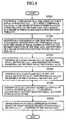
- Fig. 6 is a flow diagram showing a procedure for implementing the reference pattern generating method according to the first embodiment of the present invention.
- the analysis unit 3 When a voice signal generated from a person's voice is applied to the input terminal 1 to create a reference pattern, the analysis unit 3 starts an analyzing process of step ST701 as shown in Fig. 6.
- the analysis unit 3 analog-to-digital converts the voice signal 2 applied to the input terminal 1 and then performs an acoustic analysis on the analog-to-digital converted voice signal on a per-frame basis. Based on the frame-based acoustic analysis result, the analysis unit 3 extracts a voiced region from the digital voice signal and then calculates a time series 4 of feature vectors X(1), X(2), X(3), ..., X(T) each associated with each of a plurality of frames.
- T is the number of frames included in the voiced region extracted from the digital voice signal. Since it is difficult to precisely extract the voiced region from the voice signal, a few leading and last frames can include a pause.
- Each feature vector X(t) can be an LPC cepstrum obtained with linear prediction or LPC analysis.
- the reference pattern generating apparatus advances to a process of generating an initial reference pattern, as shown in step ST702 of Fig. 6.
- the initial reference pattern generating unit 9 receives the time series 4 of feature vectors X(1), X(2), X(3), ..., X(T), which is obtained in the acoustic analysis process, and then generates an initial reference pattern 10.
- the detailed procedure of generating the initial reference pattern is as shown in the flow diagram of Fig. 2.
- the initial reference pattern generating unit 9, in step ST301 of Fig. 2, divides the time series 4 of feature vectors X(1), X(2), X(3), ..., X(T) into J(J>1) small sections B(1), B(2), B(3), ..., B(J) in such a manner that they are equal in length where possible, otherwise all but B(J) are equal in length, and any two adjacent small sections overlap each other, by determining start and end frames s(j) and e(j) for each small section B(j) using the equations (13) to (15).
- the reference pattern generating apparatus then advances to a process of generating a reference pattern, as shown in step ST703 of Fig. 6.
- the reference pattern generating unit 7 receives the plurality of states of initial reference pattern R1(1), R1(2), R1(3), ..., R1(J) created in the initial reference pattern generating step and the time series 4 of feature vectors X(1), X(2), X(3), ..., X(T), which are calculated from the input voice signal by the analysis unit 3.
- the detailed procedure of generating the reference pattern is shown in the flow diagram of Fig. 4.
- the reference pattern generating unit 7 in step ST401 of Fig. 4, sets the value c of the learning number counter (not shown) thereof at zero.
- the Viterbi algorithm can be implemented by performing an initial setting according to the equations (7) and (8), and repeating an arithmetic operation using the recurrence formulas given by the equations (9) and (10).
- the process of bringing each state of the intermediate reference pattern R(c)(j) into correspondence with part of the time series 4 of feature vectors X(1), X(2), X(3), ..., X(T) obtained from the input voice signal is as shown in Fig. 5.
- R(c)(1) is brought into correspondence with the leading three feature vectors X(1) to X(3), and therefore the start frame s'(1) is 1 and the end frame e'(1) is 3.
- the reference pattern generating unit 7 then, in step ST405, increments the value c of the learning number counter (not shown) by 1, and, in step ST406, determines whether the value c reaches a predetermined threshold value CC. If the value c of the learning number counter (not shown) reaches the predetermined threshold value CC, the reference pattern generating unit 7 branches to step ST407 in which it furnishes the updated intermediate reference pattern including R(c)(1), R(c)(2), R(c)(3), ⁇ , R(c)(J) as the reference pattern and stops the reference pattern generating procedure. In contrast, unless the value c of the learning number counter (not shown) reaches the predetermined threshold value CC, the reference pattern generating unit 7 reverts back to step ST403 in which it repeats the above-mentioned reference pattern generating procedure.
- a computer-readable storage medium for storing a program for making it possible for computers to generate a reference pattern
- the program including the steps of performing an acoustic analysis on an input voice signal 2 and calculating a time series 4 of feature vectors X(1), X(2), X(3),..., X(T); dividing the time series 4 of feature vectors into a plurality of small sections B(1), B(2), B(3), ..., B(J) in such a manner that any two adjacent small sections overlap each other, and averaging a time series of feature vectors included in each small section B(j) to generate each initial value R1(j) (i.e.
- the reference pattern generating apparatus divides the time series 4 of feature vectors X(1), X(2), X(3), ..., X(T) calculated into a sequence of small sections B(1), B(2), ..., B(J) in such a manner that any two adjacent small sections overlap each other, and then averages part of the time series 4 of feature vectors included in each small section B(j) to generate an initial value R1(j) for each small section, by means of the reference pattern generating unit 7. Therefore, the boundaries of the sequence of small sections cannot be uniquely determined during the step of generating the initial value R1(j) for each small section.
- the time series 4 of feature vectors X(1), X(2), X(3), ..., X(T) is divided into a sequence of small sections B(1), B(2), ..., B(J) any two of which overlap each in such a manner that all of them have equal length where possible, otherwise all but the last small section B(J) have equal length. Accordingly, the process of dividing the time series of feature vectors into the plurality of small sections can be simplified.
- FIG. 7 there is illustrated a block diagram showing the structure of a reference pattern generating apparatus according to a second embodiment of the present invention.
- the same components as those of the reference pattern generating apparatus of the first embodiment are designated by the same reference numerals as shown in Fig. 1, and therefore the description of those components will be omitted hereinafter.
- Fig. 7 the same components as those of the reference pattern generating apparatus of the first embodiment are designated by the same reference numerals as shown in Fig. 1, and therefore the description of those components will be omitted hereinafter.
- reference numeral 11 denotes an initial reference pattern generating unit for dividing a time series 4 of feature vectors transmitted from an analysis unit 3 into a plurality of small sections while making a distinction between two pause ends and a voiced portion included in a voiced region extracted from an input digital voice signal in such a manner that any two adjacent small sections overlap each other and one small section is assigned to each of the two pause ends and remaining small sections are assigned to the voiced portion, and for averaging a time series of feature vectors included in each of the plurality of small sections to generate an initial value 12 of a reference pattern.
- the reference pattern generating apparatus differs from that of the first embodiment in that the initial reference pattern generating unit 11 divides the time series 4 of feature vectors transmitted from the analysis unit 3 into a plurality of small sections while making a distinction between two pause ends and a voiced portion included in a voiced region extracted from an input digital voice signal in such a manner that any two adjacent small sections overlap each other and one small section is assigned to each of the two pause ends and remaining small sections are assigned to the voiced portion.
- a voice signal generated from a person's voice is applied to an input terminal 1 to create a reference pattern.
- the analysis unit 3 analog-to-digital converts the voice signal 2 applied to the input terminal 1 and then performs an acoustic analysis on the analog-to-digital converted voice signal on a per-frame basis (each certain short time interval is called frame). Based on the acoustic analysis result, the analysis unit 3 extracts a voiced region from the digital voice signal and then calculates a time series 4 of feature vectors X(1), X(2), X(3), ..., X(T) on a per-frame basis from the voiced region.
- the analysis unit 3 also calculates a time series of powers of the voice signal within the voiced region on a per-frame basis: P(1), P(2), P(3), ..., P(T), and then furnishes the time series of powers together with the time series 4 of feature vectors X(1), X(2), X(3), ..., X(T).
- T is the number of frames included in the voiced region extracted from the digital voice signal. Since it is difficult to precisely extract the voiced region from the digital voice signal, a few leading and last frames can include a pause.
- Each feature vector X(t) can be an LPC cepstrum obtained with linear prediction or LPC analysis.
- the initial reference pattern generating unit 11 receives the time series 4 of feature vectors X(1), X(2), X(3), ..., X(T) from the analysis unit 3, and then generates an initial value of a reference pattern 12 following a procedure, which will be mentioned later.
- Fig. 8 there is illustrated a flow diagram showing the procedure of generating the initial reference pattern 12.
- Fig. 9 shows an example of the initial reference pattern generating procedure.
- the reference pattern generating unit 7 receives the initial reference pattern including the plurality of initial values Rp(1), Rp(2), Rp(3), ..., Rp(J) produced by the initial reference pattern generating unit 11 and the time series 4 of feature vectors X(1), X(2), X(3), ..., X(T), which are calculated from the input voice signal by the analysis unit 3.
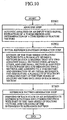
- Fig. 10 is a flow diagram showing a procedure for implementing the reference pattern generating method according to the second embodiment of the present invention.
- the analysis unit 3 When a voice signal generated from a person's voice is applied to the input terminal 1 to create a reference pattern, the analysis unit 3 starts an analyzing process of step ST801 as shown in Fig. 10.
- the analysis unit 3 analog-to-digital converts the voice signal 2 applied to the input terminal 1 and then performs an acoustic analysis on the analog-to-digital converted voice signal on a per-frame basis.
- the analysis unit 3 extracts a voiced region from the digital voice signal and then calculates a time series 4 of feature vectors X(1), X(2), X(3), ..., X(T) on a per-frame basis.
- Each feature vector X(t) can be an LPC cepstrum obtained with linear prediction or LPC analysis.
- the analysis unit 3 also calculates a time series of voice signal powers P(1), P(2), P(3), ..., P(T) on a per-frame basis and furnishes the time series of voice signal powers together with the time series 4 of feature vectors X(1), X(2), X(3), ..., X(T).
- the reference pattern generating apparatus advances to a process of generating an initial value of the reference pattern, as shown in step ST802 of Fig. 10.
- the initial reference pattern generating unit 11 receives the time series 4 of feature vectors X(1), X(2), X(3), ..., X(T), which is obtained in the acoustic analysis process, and then generates an initial value 12.
- the detailed procedure of generating the initial value 12 is as shown in the flow diagram of Fig. 8. An example of the procedure is shown in Fig. 9.
- the example of Fig. 9 shows the process of dividing the time series 4 in the case that the number T of frames or feature vectors X(1), X(2), X(3), ..., X(T) is 15, the number J of states of the reference pattern is 5, and the overlapped parameter K2 is 2.
- the reference pattern generating process of the second embodiment differs from that of the first embodiment as shown in step ST703 of Fig.
- a computer-readable storage medium for storing a program for making it possible for computers to generate a reference pattern
- the program including the steps of performing an acoustic analysis on an input voice signal 2 and calculating a time series 4 of feature vectors X(1), X(2), X(3),..., X(T) and a time series of voice signal powers P(1), P(2), P(3), ..., P(T); dividing the time series 4 of feature vectors into a plurality of small sections B(1), B(2), B(3), ..., B(J) while making a distinction between two pause ends and a voiced portion included in the voiced region extracted from the input digital voice signal in such a manner that any two adjacent small sections overlap each other and one small section is assigned to each of the two pause ends and remaining small sections are assigned to the voiced portion by using the time series of voice signal powers, and averaging a time series of feature vectors included in each small section B(j)
- each state of the reference pattern Rp(j); and bringing each state of the initial reference pattern Rp(j) ( R(c)(j)) into correspondence with part of the time series 4 of feature vectors X(1), X(2), ..., X(T) using a pattern matching method and averaging the part of the time series 4 associated with each state of the intermediate reference pattern R(c)(j) to update each state of the intermediate reference pattern R(c)(j).
- the reference pattern generating apparatus divides the time series 4 of feature vectors X(1), X(2), X(3), ..., X(T) into a sequence of small sections B(1), B(2), ..., B(J) while making a distinction between two pause ends and a voiced portion included in the voiced region extracted from the input digital voice signal in such a manner that any two adjacent small sections overlap each other and one small section is assigned to each of the two pause ends and remaining small sections are assigned to the voiced portion, by using the time series of voice signal powers, by means of the initial reference pattern generating unit 11, and then averages part of the time series 4 of feature vectors included in each small section B(j) to generate an initial value Rp(j) for each small section, by means of the initial reference pattern generating unit 11.
- the second embodiment offers an advantage of preventing the occurrence of a mixture of a voiced part and a pause part within a small section, which can make the reference pattern converge to an undesirable local minimum value.
- the second embodiment makes it possible for the reference pattern to converge to a more desirable local minimum value.
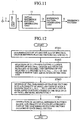
- FIG. 11 there is illustrated a block diagram showing the structure of a reference pattern generating apparatus according to a third embodiment of the present invention.
- the same components as those of the reference pattern generating apparatus of the first embodiment are designated by the same reference numerals as shown in Fig. 1, and therefore the description of those components will be omitted hereinafter.
- Fig. 11 the same components as those of the reference pattern generating apparatus of the first embodiment are designated by the same reference numerals as shown in Fig. 1, and therefore the description of those components will be omitted hereinafter.
- reference numeral 13 denotes an initial reference pattern generating unit for extracting a predetermined number of feature vectors each of which exhibits a larger change against the immediately preceding feature vector from a time series 4 of feature vectors transmitted from an analysis unit 3, and for dividing the time series 4 of feature vectors into a plurality of small sections in such a manner that any two adjacent small sections overlap each other and a plurality of overlapped portions formed in the sequence of small sections include the predetermined number of extracted feature vectors, respectively.
- the initial reference pattern generating unit 13 averages part of the time series 4 of feature vectors included in each of the plurality of small sections to generate an initial value 14 of a reference pattern.
- the reference pattern generating apparatus differs from those of the first and second embodiments in that the initial reference pattern generating unit 13 extracts a predetermined number of feature vectors each of which exhibits a larger change against the immediately preceding feature vector from the time series 4 of feature vectors transmitted from the analysis unit 3, and then divides the time series 4 of feature vectors into a plurality of small sections in such a manner that any two adjacent small sections overlap each other and a plurality of overlapped portions formed in the sequence of small sections include the predetermined number of extracted feature vectors, respectively.
- a voice signal generated from a person's voice is applied to an input terminal 1 to create a reference pattern.
- the analysis unit 3 analog-to-digital converts the voice signal 2 applied to the input terminal 1 and then performs an acoustic analysis on the analog-to-digital converted voice signal on a per-frame basis (each certain short time interval is called frame). Based on the acoustic analysis result, the analysis unit 3 extracts a voiced region from the digital voice signal and then calculates a time series 4 of feature vectors X(1), X(2), X(3), ..., X(T) on a per-frame basis from the voiced region. T is the number of frames included in the voiced region extracted from the digital voice signal. Since it is difficult to precisely extract the voiced region from the digital voice signal, a few leading and last frames can include a pause.
- Each feature vector X(t) can be an LPC cepstrum obtained with linear prediction or LPC analysis.
- the initial reference pattern generating unit 13 receives the time series 4 of feature vectors X(1), X(2), X(3), ..., X(T) from the analysis unit 3, and then generates an initial value 14 of the reference pattern following a procedure, which will be mentioned later.
- Fig. 12 there is illustrated a flow diagram showing the procedure of generating the initial reference pattern 14.
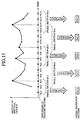
- Fig. 13 shows an example of the initial reference pattern generating procedure.
- 2 where t 2,3,..., T
- the initial reference pattern generating unit 13 advances to step ST602 in which it selects (J-1) frames showing a larger amount of spectral change dx(t) given by the equation (23) from the plurality of frames and then defines the selected (J-1) frames as F(1), F(2), ..., F(J-1) in the order in which they are running in the time axis, where J is the number of small sections into which the time series of feature vectors is to be divided, as shown in Fig. 13.
- the vertical axis shows the amount of spectral change dx(t)
- the horizontal axis shows the time series 4 of feature vectors X(1), X(2), X(3), ..., X(T).
- K3 of the equation (24) is an overlapped parameter for controlling the number of overlapped frames included in each small section B(j).
- the number T of frames or feature vectors X(1), X(2), X(3), ..., X(T) is 15
- the number J of small sections B(1), B(2), B(3), ..., B(J) or states of the reference pattern is 5
- the overlapped parameter K3 is 1.
- the reference pattern generating unit 7 receives the initial reference pattern including the plurality of states Rs(1), Rs(2), Rs(3), ..., Rs(J) from the initial reference pattern generating unit 13 and the time series 4 of feature vectors X(1), X(2), X(3), ..., X(T), which are calculated from the input voice signal by the analysis unit 3.
- Fig. 14 is a flow diagram showing a procedure for implementing the reference pattern generating method according to the third embodiment of the present invention.
- the analysis unit 3 When a voice signal generated from a person's voice is applied to the input terminal 1 to create a reference pattern, the analysis unit 3 starts an analyzing process of step ST901 as shown in Fig. 14. In the analyzing step, the analysis unit 3 analog-to-digital converts the voice signal 2 applied to the input terminal 1 and then performs an acoustic analysis on the analog-to-digital converted voice signal on a per-frame basis. Based on the frame-based acoustic analysis result, the analysis unit 3 extracts a voiced region from the digital voice signal and then calculates a time series 4 of feature vectors X(1), X(2), X(3), ..., X(T) on a per-frame basis. Since it is difficult to precisely extract the voiced region from the digital voice signal, a few leading and last frames can include a pause. Each feature vector X(t) can be an LPC cepstrum obtained with linear prediction or LPC analysis.
- the reference pattern generating apparatus advances to a process of generating an initial value of the reference pattern, as shown in step ST902 of Fig. 14.
- the initial reference pattern generating unit 13 receives the time series 4 of feature vectors X(1), X(2), X(3), ..., X(T), which is obtained in the acoustic analysis process, and then generates an initial reference pattern 14.
- the detailed procedure of generating the initial reference pattern 14 is shown in the flow diagram of Fig. 12.
- An example of the initial reference pattern generating procedure is shown in Fig. 13.
- the initial reference pattern generating unit 13 selects (J-1) frames showing a larger amount of spectral change dx(t) given by the equation (23) from the plurality of frames and then defines the selected (J-1) frames as F(1), F(2), ..., F(J-1) in the order in which they are running in the time axis, where J is the number of small sections into which the time series of feature vectors is to be divided.
- the example of Fig. 13 shows the process of dividing the time series 4 in the case that the number T of frames or feature vectors X(1), X(2), X(3), ..., X(T) is 15, the number J of states of the reference pattern is 5, and the overlapped parameter K3 is 1.
- the reference pattern generating process of the third embodiment differs from those of the first and second embodiments as shown in step ST703 of Fig. 6 and step ST803 of Fig.
- the reference pattern generating apparatus divides the time series 4 of feature vectors X(1), X(2), X(3), ..., X(T) into a sequence of small sections B(1), B(2), ..., B(J), while selecting a predetermined number of frames having a larger amount of spectral change and defining them as the boundaries of the plurality of small sections, and then averages part of the time series 4 of feature vectors included in each small section B(j) to generate an initial value Rs(j) for each small section, by means of the initial reference pattern generating unit 13.
- the third embodiment offers an advantage of decreasing a possibility that the reference pattern converge to an undesirable local minimum value because of a mixture of feature vectors having different spectra in the same small section.
- the third embodiment makes it possible for the reference pattern to converge to a more desirable local minimum value.
- FIG. 15 there is illustrated a block diagram showing the structure of a reference pattern generating apparatus according to a fourth embodiment of the present invention.
- the same components as those of the reference pattern generating apparatuses of the first through third embodiments are designated by the same reference numerals as shown in Figs. 1, 7, and 11, and therefore the description of those components will be omitted hereinafter.
- Fig. 1 the same components as those of the reference pattern generating apparatuses of the first through third embodiments are designated by the same reference numerals as shown in Figs. 1, 7, and 11, and therefore the description of those components will be omitted hereinafter.
- reference numeral 15 denotes a feature vector memory for storing a time series 4 of feature vectors which is an acoustic analysis result from an analysis unit 3 which has performed an acoustic analysis on an input voice signal 2, and a time series of voice signal powers
- numeral 16 denotes a reference pattern generating unit for generating first, second, and third reference patterns 17a, 17b, and 17c based on first, second, and third initial values 10, 12, and 14 of a reference pattern, which are generated by first, second, and third initial reference pattern generating units 9, 11, and 13, respectively
- numeral 18 denotes a reference pattern selection unit for performing a pattern matching between the first through third reference patterns 17a, 17b, and 17c generated by the reference pattern generating unit 16 and the time series 4 of feature vectors read out of the feature vector memory 15 and for selecting one reference pattern showing a minimum pattern matching distance from the three reference patterns to furnish the selected reference pattern as a final reference pattern.
- the reference pattern generating apparatus differs from those of the first through third embodiments in that it is provided with the first through third initial reference pattern generating units 9, 11, and 13 according to the first through third embodiments mentioned above, and performs a pattern matching between first through third reference patterns generated from the first through third initial reference patterns produced by those initial reference pattern generating units and the time series 4 of feature vectors and then selects one reference pattern showing a minimum pattern matching distance from the three reference patterns to furnish the selected reference pattern as a final reference pattern.
- a voice signal generated from a person's voice is applied to an input terminal 1 to create a reference pattern.
- the analysis unit 3 analog-to-digital converts the voice signal 2 applied to the input terminal 1 and then performs an acoustic analysis on the analog-to-digital converted voice signal on a per-frame basis (each certain short time interval is called frame). Based on the acoustic analysis result, the analysis unit 3 extracts a voiced region from the digital voice signal and then calculates a time series 4 of feature vectors X(1), X(2), X(3), ..., X(T) on a per-frame basis from the voiced region.
- the analysis unit 3 also calculates a time series of powers of the voice signal within the voiced region on a per-frame basis: P(1), P(2), P(3), ..., P(T), and then furnishes the time series of voice signal powers together with the time series 4 of feature vectors X(1), X(2), X(3), ..., X(T). Since it is difficult to precisely extract the voiced region from the digital voice signal, a few leading and last frames can include a pause.
- Each feature vector X(t) can be an LPC cepstrum obtained with linear prediction or LPC analysis.
- Both the time series 4 of feature vectors X(1), X(2), X(3), ..., X(T) obtained by the analysis unit 3 and the time series of voice signal powers P(1), P(2), P(3), ..., P(T) are transferred and stored into the feature vector memory 15.
- An output terminal Y of the feature vector memory 15 is then connected to an input terminal A1 of the first initial reference pattern generating unit 9, and an input terminal Z of the reference pattern generating unit 16 is connected to an output terminal A2 of the first initial reference pattern generating unit 9.
- the feature vector memory 15 then furnishes the time series 4 of feature vectors X(1), X(2), X(3), ..., X(T) to the first initial reference pattern generating unit 9.
- the first initial reference pattern generating unit 9 generates a first initial reference pattern 10 from the input information following the same procedure as previously mentioned in Embodiment 1.
- the reference pattern generating unit 16 then generates a first reference pattern 17a based on the first initial reference pattern 10 generated by the first initial reference pattern generating unit 9 following the same procedure as previously mentioned in Embodiment 1, and furnishes the first reference pattern 17a to the reference pattern selection unit 18.
- the output terminal Y of the feature vector memory 15 is connected to an input terminal B1 of the second initial reference pattern generating unit 11, and the input terminal Z of the reference pattern generating unit 16 is connected to an output terminal B2 of the second initial reference pattern generating unit 11.
- the feature vector memory 15 then furnishes both the time series 4 of feature vectors X(1), X(2), X(3), ..., X(T) and the time series of voice signal powers P(1), P(2), P(3), ..., P(T) to the second initial reference pattern generating unit 11.
- the second initial reference pattern generating unit 11 generates a second initial reference pattern 12 from the input information following the same procedure as previously mentioned in Embodiment 2.
- the reference pattern generating unit 16 then generates a second reference pattern 17b based on the second initial reference pattern 12 generated by the second initial reference pattern generating unit 11 following the same procedure as previously mentioned in Embodiment 2, and furnishes the second reference pattern 17b to the reference pattern selection unit 18.
- the output terminal Y of the feature vector memory 15 is then connected to an input terminal C1 of the third initial reference pattern generating unit 13, and the input terminal z of the reference pattern generating unit 16 is connected to an output terminal C2 of the third initial reference pattern generating unit 13.
- the feature vector memory 15 then furnishes the time series 4 of feature vectors X(1), X(2), X(3), ..., X(T) to the third initial reference pattern generating unit 13.
- the third initial reference pattern generating unit 13 generates a third initial reference pattern 14 from the input information following the same procedure as previously mentioned in Embodiment 3.
- the reference pattern generating unit 16 then generates a third reference pattern 17c based on the third initial reference pattern 14 generated by the third initial reference pattern generating unit 13 following the same procedure as previously mentioned in Embodiment 3, and furnishes the third reference pattern 17c to the reference pattern selection unit 18.
- the reference pattern selection unit 18 receives the time series 4 of feature vectors X(1), X(2), X(3), ..., X(T) from the feature vector memory 15, the first reference pattern 17a generated on the basis of the first reference pattern 10, the second reference pattern 17b generated on the basis of the second reference pattern 12, and the third reference pattern 17c generated on the basis of the third reference pattern 14. The reference pattern selection unit 18 then calculates three pattern matching distances between the first through third reference patterns 17a, 17b, and 17c and the time series 4 of feature vectors X(1), X(2), X(3), ..., X(T) using the Viterbi algorithm as explained in Embodiment 1. The reference pattern selection unit 18 selects one reference pattern exhibiting a minimum pattern matching distance from the three pattern matching distances calculated and then furnishes the selected reference pattern as a final reference pattern 19.
- Fig. 16 is a flow diagram showing a procedure for implementing the reference pattern generating method according to the fourth embodiment of the present invention.
- the analysis unit 3 When a voice signal generated from a person's voice is applied to the input terminal 1 to create a reference pattern, the analysis unit 3 starts an analyzing process of step ST1001 as shown in Fig. 16. In the analyzing step, the analysis unit 3 analog-to-digital converts the voice signal 2 applied to the input terminal 1 and then performs an acoustic analysis on the analog-to-digital converted voice signal on a per-frame basis. Based on the frame-based acoustic analysis result, the analysis unit 3 extracts a voiced region from the digital voice signal and then calculates a time series 4 of feature vectors X(1), X(2), X(3), ..., X(T) on a per-frame basis.
- the analysis unit 3 also calculates a time series of voice signal powers P(1), P(2), P(3), ..., P(T) on a per-frame basis and furnishes the time series of voice signal powers together with the time series 4 of feature vectors X(1), X(2), X(3), ..., X(T). Since it is difficult to precisely extract the voiced region from the digital voice signal, a few leading and last frames can include a pause.
- Each feature vector X(t) can be an LPC cepstrum obtained with linear prediction or LPC analysis.
- the reference pattern generating apparatus then advances to step ST1002 of Fig. 16 in which it connects the output terminal Y of the feature vector memory 15 to the input terminal A1 of the first initial reference pattern generating unit 9, and also connects the input terminal Z of the reference pattern generating unit 16 to the output terminal A2 of the first initial reference pattern generating unit 9, the feature vector memory 15 then furnishes the time series 4 of feature vectors X(1), X(2), X(3), ..., X(T) to the first initial reference pattern generating unit 9, and the first initial reference pattern generating unit 9 generates a first initial reference pattern 10 from the input information following the same procedure as previously mentioned in Embodiment 1.
- the reference pattern generating unit 16 then, in step ST1003 of Fig. 16, generates a first reference pattern 17a based on the first initial reference pattern 10 generated by the first initial reference pattern generating unit 9 following the same procedure as previously mentioned in Embodiment 1, and furnishes the first reference pattern 17a to the reference pattern selection unit 18.
- the reference pattern generating apparatus advances to step ST1004 of Fig. 16 in which it connects the output terminal Y of the feature vector memory 15 to the input terminal B1 of the second initial reference pattern generating unit 11, and also connects the input terminal Z of the reference pattern generating unit 16 to the output terminal B2 of the second initial reference pattern generating unit 11, the feature vector memory 15 then furnishes both the time series 4 of feature vectors X(1), X(2), X(3), ..., X(T) and the time series of voice signal powers P(1), P(2), P(3), ..., P(T) to the second initial reference pattern generating unit 11, and the second initial reference pattern generating unit 11 generates a second initial reference pattern 12 from the input information following the same procedure as previously mentioned in Embodiment 2.
- the reference pattern generating unit 16 then, in step ST1005 of Fig. 16, generates a second reference pattern 17b based on the second initial reference pattern 12 generated by the second initial reference pattern generating unit 11 following the same procedure as previously mentioned in Embodiment 2, and furnishes the second reference pattern 17b to the reference pattern selection unit 18.
- the reference pattern generating apparatus then advances to step ST1006 of Fig. 16 in which it connects the output terminal Y of the feature vector memory 15 to the input terminal C1 of the third initial reference pattern generating unit 13, and also connects the input terminal Z of the reference pattern generating unit 16 to the output terminal C2 of the third initial reference pattern generating unit 13, the feature vector memory 15 then furnishes the time series 4 of feature vectors X(1), X(2), X(3), ..., X(T) to the third initial reference pattern generating unit 13, and the third initial reference pattern generating unit 13 generates a third initial reference pattern 14 from the input information following the same procedure as previously mentioned in Embodiment 3.
- the reference pattern generating unit 16 then, in step ST1007 of Fig. 16, generates a third reference pattern 17c based on the third initial reference pattern 14 generated by the third initial reference pattern generating unit 13 following the same procedure as previously mentioned in Embodiment 3, and furnishes the third reference pattern 17c to the reference pattern selection unit 18.
- the reference pattern selection unit 18 receives the time series 4 of feature vectors X(1), X(2), X(3), ..., X(T) from the feature vector memory 15, the first reference pattern 17a generated on the basis of the first reference pattern 10, the second reference pattern 17b generated on the basis of the second reference pattern 12, and the third reference pattern 17c generated on the basis of the third reference pattern 14.
- the reference pattern selection unit 18 calculates three pattern matching distances between the first through third reference patterns 17a, 17b, and 17c and the time series 4 of feature vectors X(1), X(2), X(3), ..., X(T) using the Viterbi algorithm as explained in Embodiment 1.
- the reference pattern selection unit 18 selects one reference pattern exhibiting a minimum pattern matching distance from the three pattern matching distances calculated and then furnishes the selected reference pattern as a final reference pattern 19.
- a computer-readable storage medium for storing a program for making it possible for computers to generate a reference pattern
- the program including the steps of performing an acoustic analysis on an input voice signal 2 and calculating a time series 4 of feature vectors X(1), X(2), X(3),..., X(T) and a time series of voice signal powers P(1), P(2), P(3), ..., P(T); dividing the time series 4 of feature vectors into a plurality of small sections B(1), B(2), B(3), ..., B(J) in such a manner that any two adjacent small sections overlap each other, averaging a time series of feature vectors included in each small section B(j) to generate each state of a first initial reference pattern 10 for each small section, and generating a first reference pattern 17a from the first initial reference pattern 10; dividing the time series 4 of feature vectors into a plurality of small sections B(1), B(2), B(3), ...
- the reference pattern generating apparatus selects one reference pattern showing a minimum pattern matching distance from the first reference pattern 17a generated on the basis of the first reference pattern 10, the second reference pattern 17b generated on the basis of the second reference pattern 12, and the third reference pattern 17c generated on the basis of the third reference pattern 14 to furnish the selected reference pattern as a final reference pattern 19. Accordingly, the present embodiment offers an advantage of being able to provide a reference pattern having high representation efficiency
Landscapes
- Engineering & Computer Science (AREA)
- Artificial Intelligence (AREA)
- Computational Linguistics (AREA)
- Health & Medical Sciences (AREA)
- Audiology, Speech & Language Pathology (AREA)
- Human Computer Interaction (AREA)
- Physics & Mathematics (AREA)
- Acoustics & Sound (AREA)
- Multimedia (AREA)
- Image Analysis (AREA)
- Auxiliary Devices For Music (AREA)
- Measurement Of Mechanical Vibrations Or Ultrasonic Waves (AREA)
Abstract
Description





Claims (15)
- A reference pattern generating apparatus characterized in that said apparatus comprises:an initial reference pattern generating means (9, 11, or 13) for dividing a time series of feature vectors obtained from a voice signal into a sequence of small sections in such a manner that any two adjacent small sections overlap each other, and for averaging part of the time series of feature vectors included in each of the plurality of small sections so as to generate an initial reference pattern (10, 12, or 14) having a plurality of states respectively associated with the plurality of small sections; anda reference pattern generating means (7) for bringing each of the plurality of states of the initial reference pattern into correspondence with part of the time series of feature vectors using pattern matching, and for averaging the part of the time series of feature vectors brought into correspondence with each of the plurality of states of the initial reference pattern so as to update the initial reference pattern to generate a reference pattern (8).
- The reference pattern generating apparatus according to Claim 1, characterized in that said initial reference pattern generating means divides the time series of feature vectors into the sequence of small sections in such a manner that the plurality of small sections are equal in length where possible, otherwise all but one end small section are equal in length.
- The reference pattern generating apparatus according to Claim 1, characterized in that said initial reference pattern generating means divides the time series of feature vectors into the sequence of small sections while making a distinction between pause portions and a voiced portion included in the voice signal in such a manner that one small section is assigned to each of the pause portions and remaining small sections are assigned to the voiced region.
- The reference pattern generating apparatus according to Claim 1, characterized in that said initial reference pattern generating means selects a predetermined number of feature vectors exhibiting a larger amount of change against an immediately preceding feature vector from the time series of feature vectors, the number of feature vectors selected being equal to a number of overlapped portions formed in the sequence of small sections, and then divides the time series of feature vectors into the sequence of small sections in such a manner that the plurality of overlapped portions include the predetermined number of feature vectors selected, respectively.
- The reference pattern generating apparatus according to Claim 1, characterized in that said initial reference pattern generating means includes a first initial value generating means (9) for dividing the time series of feature vectors into a sequence of small sections in such a manner that any two adjacent small sections overlap each other and the plurality of small sections are equal in length where possible, otherwise all but one end small section are equal in length, and for averaging part of the time series of feature vectors included in each of the plurality of small sections so as to generate a first initial reference pattern (10), a second initial value generating means (11) for dividing the time series of feature vectors into a sequence of small sections while making a distinction between pause portions and a voiced portion included in the voice signal in such a manner that any two adjacent small sections overlap each other, and one small section is assigned to each of the pause portions and remaining small sections are assigned to the voiced portion, and for averaging part of the time series of feature vectors included in each of the plurality of small sections so as to generate a second initial reference pattern (12), and a third initial value generating means (13) for selecting a predetermined number of feature vectors having a larger amount of change against an immediately preceding feature vector from the time series of feature vectors, for dividing the time series of feature vectors into a sequence of small sections in such a manner that any two adjacent small sections overlap each other and the plurality of overlapped portions include the predetermined number of feature vectors selected, respectively, the predetermined number of feature vectors selected being equal to a number of overlapped portions formed in the sequence of small sections, and for averaging part of the time series of feature vectors included in each of the plurality of small sections so as to generate a third initial reference pattern (14), and characterized in that said reference pattern generating means (16) generates three reference patterns (17a, 17b, and 17c) from the first through third initial reference patterns generated by said first through third initial value generating means, and said apparatus further comprises a reference pattern selecting means (18) for performing pattern matching between each of the three reference patterns generated by said first through third initial value generating means and the time series of feature vectors and for selecting one reference pattern showing a minimum pattern matching distance from the three reference patterns.
- A reference pattern generating method of compressing a time series of feature vectors obtained from a voice signal and generating a reference pattern, characterized in that said method comprises the steps of:dividing the time series of feature vectors into a sequence of small sections in such a manner that any two adjacent small sections overlap each other;averaging part of the time series of feature vectors included in each of the plurality of small sections so as to generate an initial reference pattern (10, 12, or 14) having a plurality of states associated with the plurality of small sections; andgenerating a reference pattern (8) by bringing each of the plurality of states of the initial reference pattern into correspondence with part of the time series of feature vectors using pattern matching and by averaging the part of the time series of feature vectors brought into correspondence with each of the plurality of states of the initial reference pattern so as to update the initial reference pattern to.
- The reference pattern generating method according to Claim 6, characterized in that said dividing step is the step of dividing the time series of feature vectors into the sequence of small sections in such a manner that the plurality of small sections are equal in length where possible, otherwise all but one end small section are equal in length.
- The reference pattern generating method according to Claim 6, characterized in that said dividing step is the step of dividing the time series of feature vectors into the sequence of small sections while making a distinction between pause portions and a voiced portion included in the voice signal in such a manner that one small section is assigned to each of the pause portions and remaining small sections are assigned to the voiced region.
- The reference pattern generating method according to Claim 6, characterized in that said dividing step includes the steps of selecting a predetermined number of feature vectors having a larger amount of change against an immediately preceding feature vector from the time series of feature vectors, the number of feature vectors selected being equal to a number of overlapped portions formed in the sequence of small sections, and dividing the time series of feature vectors into the sequence of small sections in such a manner that the plurality of overlapped portions include the predetermined number of feature vectors selected, respectively.
- The reference pattern generating method according to Claim 6, characterized in that said dividing and averaging steps include the steps of dividing the time series of feature vectors into a sequence of small sections in such a manner that any two adjacent small sections overlap each other, and the plurality of small sections are equal in length where possible, otherwise all but one end small section are equal in length, and averaging part of the time series of feature vectors included in each of the plurality of small sections so as to generate a first initial reference pattern (10); dividing the time series of feature vectors into a sequence of small sections while making a distinction between pause portions and a voiced portion included in the voice signal in such a manner that any two adjacent small sections overlap each other and one small section is assigned to each of the pause portions and remaining small sections are assigned to the voiced region, and averaging part of the time series of feature vectors included in each of the plurality of small sections so as to generate a second initial reference pattern (12); and selecting a predetermined number of feature vectors having a larger amount of change against an immediately preceding feature vector from the time series of feature vectors, dividing the time series of feature vectors into a sequence of small sections in such a manner that any two adjacent small sections overlap each other and the plurality of overlapped portions include the predetermined number of feature vectors selected, respectively, the number of feature vectors selected being equal to a number of overlapped portions formed in the plurality of small sections, and averaging part of the time series of feature vectors included in each of the plurality of small sections so as to generate a third initial reference pattern (14), and characterized in that said reference pattern generating step is the step of generating three reference patterns (17a, 17b, and 17c) from the first to third initial reference patterns and said method further comprises the steps of performing pattern matching between each of the three reference patterns and the time series of feature vectors of and selecting one reference pattern showing a minimum pattern matching distance from the three reference patterns.
- A computer readable medium having a computer program embodied thereon, characterized in that the computer program is executable by a machine to the perform the steps of:dividing the time series of feature vectors obtained from a voice signal into a sequence of small sections in such a manner that any two adjacent small sections overlap each other;averaging part of the time series of feature vectors included in each of the plurality of small sections so as to generate an initial reference pattern (10, 12, and 14) having a plurality of states associated with the plurality of small sections; andgenerating a reference pattern (8) by bringing each of the plurality of states of the initial reference pattern into correspondence with part of the time series of feature vectors using pattern matching, and by averaging the part of the time series of feature vectors brought into correspondence with each of the plurality of states of the initial reference pattern so as to update the initial reference pattern.
- The computer readable medium according to Claim 11, characterized in that said dividing step is the step of dividing the time series of feature vectors into the sequence of small sections in such a manner that the plurality of small sections are equal in length where possible, otherwise all but one end small section are equal in length.
- The computer readable medium according to Claim 11, characterized in that said dividing step is the step of dividing the time series of feature vectors into the sequence of small sections while making a distinction between pause portions and a voiced portion included in the voice signal in such a manner that one small section is assigned to each of the pause portions and remaining small sections are assigned to the voiced region.
- The computer readable medium according to Claim 11, characterized in that said dividing step includes the steps of selecting a predetermined number of feature vectors having a larger amount of change against an immediately preceding feature vector from the time series of feature vectors, the number of feature vectors selected being equal to a number of overlapped portions formed in the sequence of small sections, and dividing the time series of feature vectors into the sequence of small sections in such a manner that the plurality of overlapped portions include the predetermined number of feature vectors selected, respectively.
- The computer readable medium according to Claim 11, characterized in that said dividing and averaging steps include the steps of dividing the time series of feature vectors into a sequence of small sections in such a manner that any two adjacent small sections overlap each other, and the plurality of small sections are equal in length where possible, otherwise all but one end small section are equal in length, and averaging part of the time series of feature vectors included in each of the plurality of small sections so as to generate a first initial reference pattern (10); dividing the time series of feature vectors into a sequence of small sections while making a distinction between pause portions and a voiced portion included in the voice signal in such a manner that any two adjacent small sections overlap each other and one small section is assigned to each of the pause portions and remaining small sections are assigned to the voiced region, and averaging part of the time series of feature vectors included in each of the plurality of small sections so as to generate a second initial reference pattern (12); and selecting a predetermined number of feature vectors having a larger amount of change against an immediately preceding feature vector from the time series of feature vectors, dividing the time series of feature vectors into a sequence of small sections in such a manner that any two adjacent small sections overlap each other and the plurality of overlapped portions include the predetermined number of feature vectors selected, respectively, the number of feature vectors selected being equal to a number of overlapped portions formed in the plurality of small sections, and averaging part of the time series of feature vectors included in each of the plurality of small sections so as to generate a third initial reference pattern (14), and characterized in that said reference pattern generating step is the step of generating three reference patterns (17a, 17b, and 17c) from the first to third initial reference patterns and said computer program further performs the steps of performing pattern matching between each of the three reference patterns and the time series of feature vectors of and selecting one reference pattern showing a minimum pattern matching distance from the three reference patterns.
Applications Claiming Priority (2)
| Application Number | Priority Date | Filing Date | Title |
|---|---|---|---|
| JP25942199 | 1999-09-13 | ||
| JP25942199A JP4067716B2 (en) | 1999-09-13 | 1999-09-13 | Standard pattern creating apparatus and method, and recording medium |
Publications (2)
| Publication Number | Publication Date |
|---|---|
| EP1085498A2 true EP1085498A2 (en) | 2001-03-21 |
| EP1085498A3 EP1085498A3 (en) | 2005-02-09 |
Family
ID=17333876
Family Applications (1)
| Application Number | Title | Priority Date | Filing Date |
|---|---|---|---|
| EP00119234A Withdrawn EP1085498A3 (en) | 1999-09-13 | 2000-09-06 | Reference speech pattern generating method |
Country Status (4)
| Country | Link |
|---|---|
| US (1) | US6708151B1 (en) |
| EP (1) | EP1085498A3 (en) |
| JP (1) | JP4067716B2 (en) |
| CN (1) | CN1165888C (en) |
Family Cites Families (8)
| Publication number | Priority date | Publication date | Assignee | Title |
|---|---|---|---|---|
| US4797929A (en) * | 1986-01-03 | 1989-01-10 | Motorola, Inc. | Word recognition in a speech recognition system using data reduced word templates |
| US4837831A (en) * | 1986-10-15 | 1989-06-06 | Dragon Systems, Inc. | Method for creating and using multiple-word sound models in speech recognition |
| JPS6444997A (en) | 1987-08-13 | 1989-02-17 | Ricoh Kk | Reference pattern registration system |
| US5202952A (en) * | 1990-06-22 | 1993-04-13 | Dragon Systems, Inc. | Large-vocabulary continuous speech prefiltering and processing system |
| US5455889A (en) * | 1993-02-08 | 1995-10-03 | International Business Machines Corporation | Labelling speech using context-dependent acoustic prototypes |
| US5822730A (en) * | 1996-08-22 | 1998-10-13 | Dragon Systems, Inc. | Lexical tree pre-filtering in speech recognition |
| US6260013B1 (en) * | 1997-03-14 | 2001-07-10 | Lernout & Hauspie Speech Products N.V. | Speech recognition system employing discriminatively trained models |
| GB9802836D0 (en) * | 1998-02-10 | 1998-04-08 | Canon Kk | Pattern matching method and apparatus |
-
1999
- 1999-09-13 JP JP25942199A patent/JP4067716B2/en not_active Expired - Fee Related
-
2000
- 2000-09-06 EP EP00119234A patent/EP1085498A3/en not_active Withdrawn
- 2000-09-12 US US09/660,478 patent/US6708151B1/en not_active Expired - Fee Related
- 2000-09-12 CN CNB001338323A patent/CN1165888C/en not_active Expired - Fee Related
Also Published As
| Publication number | Publication date |
|---|---|
| CN1165888C (en) | 2004-09-08 |
| CN1301006A (en) | 2001-06-27 |
| EP1085498A3 (en) | 2005-02-09 |
| US6708151B1 (en) | 2004-03-16 |
| JP4067716B2 (en) | 2008-03-26 |
| JP2001083980A (en) | 2001-03-30 |
Similar Documents
| Publication | Publication Date | Title |
|---|---|---|
| FI114051B (en) | Procedure for compressing dictionary data | |
| US6173261B1 (en) | Grammar fragment acquisition using syntactic and semantic clustering | |
| JP3049259B2 (en) | Voice recognition method | |
| JP2595495B2 (en) | Pattern matching device | |
| US6278972B1 (en) | System and method for segmentation and recognition of speech signals | |
| CN115269836B (en) | Intent recognition method and device | |
| JP2023539948A (en) | Long context end-to-end speech recognition system | |
| JPH07334184A (en) | Calculating device for acoustic category mean value and adapting device therefor | |
| KR20200111595A (en) | Conversation agent system and method using emotional history | |
| JP2000293191A (en) | Patent application title: Speech Recognition Apparatus, Speech Recognition Method, and Method of Creating Tree Structure Dictionary Used in the Method | |
| US6226610B1 (en) | DP Pattern matching which determines current path propagation using the amount of path overlap to the subsequent time point | |
| EP1085498A2 (en) | Reference speech pattern generating method | |
| US7010481B2 (en) | Method and apparatus for performing speech segmentation | |
| CN119693508A (en) | Speech-to-sign language animation method, device, equipment, medium and program product | |
| JP3042455B2 (en) | Continuous speech recognition method | |
| CN115810345A (en) | Intelligent speech technology recommendation method, system, equipment and storage medium | |
| JP3583299B2 (en) | Search device for continuous speech recognition and search method for continuous speech recognition | |
| KR20220059759A (en) | method and apparatus for end-to-end speech recognition | |
| JP3050180B2 (en) | Voice recognition device | |
| US5956677A (en) | Speech recognizer having a speech data memory storing speech data and a reference pattern memory storing partial symbol trains of words for recognition | |
| CN113099045B (en) | Method, device and system for optimizing line | |
| JP2995941B2 (en) | Speech recognition device for unspecified speakers | |
| EP4404187A1 (en) | Apparatus and method for streaming automatic speech recognition | |
| JPH07261786A (en) | Continuous voice recognition method and device | |
| JP3011984B2 (en) | Pattern matching method |
Legal Events
| Date | Code | Title | Description |
|---|---|---|---|
| PUAI | Public reference made under article 153(3) epc to a published international application that has entered the european phase |
Free format text: ORIGINAL CODE: 0009012 |
|
| AK | Designated contracting states |
Kind code of ref document: A2 Designated state(s): AT BE CH CY DE DK ES FI FR GB GR IE IT LI LU MC NL PT SE |
|
| AX | Request for extension of the european patent |
Free format text: AL;LT;LV;MK;RO;SI |
|
| PUAL | Search report despatched |
Free format text: ORIGINAL CODE: 0009013 |
|
| AK | Designated contracting states |
Kind code of ref document: A3 Designated state(s): AT BE CH CY DE DK ES FI FR GB GR IE IT LI LU MC NL PT SE |
|
| AX | Request for extension of the european patent |
Extension state: AL LT LV MK RO SI |
|
| 17P | Request for examination filed |
Effective date: 20050331 |
|
| GRAP | Despatch of communication of intention to grant a patent |
Free format text: ORIGINAL CODE: EPIDOSNIGR1 |
|
| AKX | Designation fees paid |
Designated state(s): DE FR GB |
|
| STAA | Information on the status of an ep patent application or granted ep patent |
Free format text: STATUS: THE APPLICATION HAS BEEN WITHDRAWN |
|
| 18W | Application withdrawn |
Effective date: 20051219 |