EP1085460A2 - Method of real-time optimization of control device equipped with fuzzy inference system - Google Patents
Method of real-time optimization of control device equipped with fuzzy inference system Download PDFInfo
- Publication number
- EP1085460A2 EP1085460A2 EP00120033A EP00120033A EP1085460A2 EP 1085460 A2 EP1085460 A2 EP 1085460A2 EP 00120033 A EP00120033 A EP 00120033A EP 00120033 A EP00120033 A EP 00120033A EP 1085460 A2 EP1085460 A2 EP 1085460A2
- Authority
- EP
- European Patent Office
- Prior art keywords
- fuzzy
- parameters
- chromosomes
- inference system
- control device
- Prior art date
- Legal status (The legal status is an assumption and is not a legal conclusion. Google has not performed a legal analysis and makes no representation as to the accuracy of the status listed.)
- Withdrawn
Links
Images






Classifications
-
- G—PHYSICS
- G06—COMPUTING OR CALCULATING; COUNTING
- G06N—COMPUTING ARRANGEMENTS BASED ON SPECIFIC COMPUTATIONAL MODELS
- G06N3/00—Computing arrangements based on biological models
- G06N3/12—Computing arrangements based on biological models using genetic models
- G06N3/126—Evolutionary algorithms, e.g. genetic algorithms or genetic programming
Definitions
- the invention relates to a method of optimizing a control device using fuzzy inference system so that a controlled system can be controlled.
- optimum values of the characteristics of a fuzzy controller that is, values of the parameters such as the number, shape, position and/or expanse of membership functions, the fuzzy rules, and the standardized coefficients for input and output values
- optimum values of the characteristics of a fuzzy controller that is, values of the parameters such as the number, shape, position and/or expanse of membership functions, the fuzzy rules, and the standardized coefficients for input and output values
- methods can be considered which, using fuzzy inference, neural networks, or heuristic rules, optimize output characteristics of a fuzzy controller that controls a controlled system in according to expected characteristics of use environment and users with a narrow range of variations which is also expected in advance. Since the methods can optimize the characteristics of the fuzzy controller in real time, the controller can handle variations of the characteristics of use environment and users.
- the methods mentioned above have a problem in that when an variation of the characteristics of use environment and users, which cannot be expected when designing the system, takes place, the characteristics of the fuzzy controller cannot be optimized.
- the problem occurs not only in fuzzy controllers but also in controllers themselves having a fuzzy inference system.
- An embodiment of the present invention resolves the problem. Even when variations of characteristics of use environment and users occur, a control device having a fuzzy inference system can be optimized in real-time while the control device controls the controlled system, or the controlled system is being operated or on-line.
- the method of real-time optimization of the control device in accordance with an embodiment of the invention (a) codes into chromosomes parameters used in a fuzzy inference system, which determines an output associated with a manipulated variable of a machine (controlled system) based on preselected input signals, and (b) optimizing in real time the output of the control device using evolutionary computation.
- Evaluation of the evolutionary computation can be made based on evaluation criteria selected beforehand, or users intention.
- the parameters may be (i) the number, shape, position and/or expanse of membership functions for the fuzzy inference system of the control device, (ii) fuzzy rules, or (iii) standardized coefficients for input and output values.
- the fuzzy rules can be compiled in the form of a fuzzy rule matrix.
- the configuration of the matrix may be defined by membership functions.
- Each section of the matrix represents a fuzzy rule which is a parameter having a value.
- the type of parameter and a value of the parameter are referred to as "a parameter".
- Coding into chromosomes can be made on all of the parameters or part thereof selected for the fuzzy controller.
- Selection of part of the parameters can be carried out stochastically or deterministically starting from a membership function or a fuzzy rule having the highest total values of fitness in a fixed interval of time, which is the most frequently used parameters, until a preselected number of parameters are selected.
- a roulette selection of five positional parameters for membership functions are made proportional to the ratio of their total values of fitness to the overall fitness, or a selection of parameters for an expanse of membership functions is made in the order of size so that a total value of fitness can occupy over 80 percent of the entirety.
- the threshold can be made higher or lower depending on the numbers selected or the time spent till a selection is made.
- a minimax center-of-gravity method an algebraic sum addition center-of-gravity method, a simplified inference method, a inference method having the degree of conviction, or a functional inference method can be employed.
- the membership function a one-dimensional membership function and/or a multi-dimensional membership function can be used.
- Figure 1 is a diagram showing an embodiment of the method of real-time optimization of a control device provided with a fuzzy inference system for controlling a machine.
- the fuzzy inference system comprises a matrix of fuzzy rules which are regulated by preselected parameters.
- the method comprises the steps of:
- the method may further comprise monitoring the fuzzy rule matrix in use while operating the machine, and evaluating the section extracted in (ii) or the membership functions to be modified in (iii).
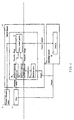
- FIG. 2 is a block diagram showing one embodiment of a control device utilizing the optimization method in accordance with the invention.
- a control device 10 includes an interactive evolutionary process unit 14, an autonomous evolutionary process unit 15, an evaluation unit 16, and a fuzzy control module 17.
- the evaluation unit 16 is connected to the autonomous evolutionary process unit 15, which, together with the interactive evolutionary process unit 14, is connected to the fuzzy control module 17.
- a controlled system 13 includes a device 18, which is connected to the fuzzy control module 17. The controlled system 13 is connected to the evaluation unit 16 and applies output to the evaluation unit 16 and a user 12.
- the fuzzy control module 17 receives information from an external information input 11, and parameter changes from the interactive evolutionary process unit 14 and the autonomous evolutionary process unit 15, and outputs to the controlled system 13 an control output as a manipulated variable, including compensated amount or compensation coefficients.
- the fuzzy control module 17 may be a so-called fuzzy controller, but is not limited to it.
- the fuzzy control module 17 can be any control module as far as the control module adopts a fuzzy inference system; for example, the fuzzy control module 17 can be a module that adopts a fuzzy intention decision system or a fuzzy neural controller.
- the interactive evolutionary process unit 14 and the autonomous evolutionary process unit 15 optimize the parameters on a fuzzy inference system in the fuzzy control module 17, while the controlled system 13 is working, that is, in real time.
- the parameters to be optimized can be any type of parameter as long as the parameters are related to a fuzzy inference system. For example, cited as such are the parameters for deciding the number, shape, position and expanse of membership functions, the fuzzy rules, and the standardized coefficients for input and output values.
- the interactive evolutionary process unit 14 receives evaluation value applied by the user 12, and the autonomous evolutionary process unit 15 accepts evaluation values from the evaluation unit 16 which is designed beforehand based on predetermined evaluation criteria
- the invention can handle users' preferences or various types of use environment, which eliminates limitations imposed on the controlled system using a fuzzy inference system.
- Figures 3-14 show an embodiment where the optimization method is applied to a outboard motor for a planing boat and a trimming apparatus.
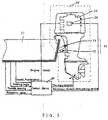
- Figures 3 is a figure illustrating a control device and a outboard motor including a trimming apparatus.
- a outboard motor 22 is mounted to a hull 21.
- the outboard motor 22 includes an engine 23 for operating the hull 21 and a trimming apparatus for controlling the cruising direction of the hull 21.
- the engine 23 has an electronic throttle valve 24 for controlling the speed thereof.
- the trimming apparatus contains a hydraulic cylinder 26 and a hydraulic pump 27.
- the outboard motor 22 is connected to an control device 20.
- the control device 20 optimizes boat operation characteristics which realize a constant speed navigation control in response to changes in the movement of the hull 21 and disturbances.
- the control device 20 also optimizes the boat operation characteristics, by responding to preferences of users-when the users are different, or when the preferences of even one and the same user vary dependent on time, for example, when his preferences vary in spring or fall.
- the "boat operation characteristics” herein mean boat speed control characteristics by the operations of the electronic throttle valve 24 and the trimming apparatus 25.
- the control device 20 inputs the engine speed, the speed, acceleration, steering angle, and throttle opening of the hull 21, and the evaluation value, and outputs an electronic throttle valve opening variation and a trim angle variation to operate the electronic throttle valve 24 and the trimming apparatus 25, respectively, which controls intake of air and posture of the hull for constant speed navigation control.
- FIG. 4 is a block diagram illustrating a boat control apparatus and an outboard motor where the boat control apparatus is a control device and the outboard motor is a controlled system.
- a boat control apparatus 30 includes an interactive evolutionary process unit 34, an autonomous evolutionary process unit 35, an evaluation unit 36, and a boat operation fuzzy control module 37.
- the evaluation unit 36 is connected to the autonomous evolutionary process unit 35, which, together with the interactive evolutionary process unit 34, is connected to the boat operation fuzzy control module 37.
- An outboard motor 33 includes an electronic throttle 38 and a trimming apparatus 39, both of which are connected to the boat operation fuzzy control module 37.
- the outboard motor 33 is connected to the evaluation unit 36 and applies boat operation performance to the evaluation unit 36 and a user 32.
- the evaluation unit 36 outputs an evaluation value to evaluate the autonomous evolutionary process unit 35.
- the autonomous evolutionary process unit 35 optimizes standardized coefficients-the coefficients that adjust the size of input and output information-for the boat operation fuzzy control module 37.
- the interactive evolutionary process unit 34 inputs evaluation value from the user 32 and optimizes fuzzy rules for the boat operation fuzzy control module 37.
- the boat operation fuzzy control module 37 outputs an electronic throttle valve opening variation and a trim angle variation in response to output from an external information input 31, change of fuzzy rules from the interactive evolutionary process unit 34, and change of standardized coefficients from the autonomous evolutionary process unit 35.
- the boat operation fuzzy control module 37 employs a simplified inference method as a fuzzy inference system, and outputs an electronic throttle valve opening variation and a trim angle variation in response to the engine speed, speed, acceleration, and steering angle.
- a fuzzy rule table can be designed based on the boat operation knowledge of the skilled. The fuzzy rule is expressed by real number values.
- Figure 5 illustrates relationship between standardized coefficients of the boat operation fuzzy control module 40 (corresponding to reference numeral 37 in Figure 4) and individuals produced by encoding them.
- the speed is applied to standard coefficient S1; the acceleration, S2: the throttle opening, S3; the steering angle, S4; the engine speed, S5.
- Each of the information is applied to the boat operation fuzzy control module 40 through its corresponding standard coefficient.
- the boat operation fuzzy control module 40 outputs the electronic throttle valve opening variation and the trim angle variation through the corresponding standard coefficient S6 and S7, respectively.
- the autonomous evolutionary process unit 35 uses a genetic algorithm, and encodes the standardized coefficients of the boat operation fuzzy control module 40 as shown in Figure 5 to produce individuals.
- the autonomous evolutionary process unit 35 optimizes the standardized coefficients by using the genetic algorithm.
- higher evaluation values are provided by the evaluation unit 36 as an error between an actual speed and a reference a user has fixed gets closer to a desired range.
- the standardized coefficients of the boat operation fuzzy control module 37 are automatically optimized towards the desired boat operating characteristics, and an optimal boat operating characteristic is obtained even when the use environment changes or the hull moves inappropriately.
- Figure 6 illustrates relationship between a fuzzy rule table of the boat operation fuzzy control module and individuals produced by encoding part of it.
- the autonomous evolutionary process unit 34 uses a genetic algorithm, by which part of the fuzzy rule table for the boat operation fuzzy control module 37 is encoded to produce the individuals, and optimizes the part of the fuzzy rule table using the genetic algorithm.
- the evaluation of each of the individuals during interactive optimum process is done based on the comfortableness of the ride the user experiences.
- the part of the fuzzy rule table is optimized based on the evaluation of the user to produce an optimal boat operating characteristic suitable for the user's evaluation.
- the method the user employs about the evaluation in evolutionary process is called interactive evaluation herein.
- the evolutionary process in the boat control apparatus 30 will be explained below.
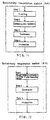
- FIG. 7 is a flowchart illustrating evolutionary process by the boat control apparatus 30 as a control device.
- the boat control apparatus 30, in doing evolutionary process performs an autonomous evaluation by the autonomous evolutionary process unit 35 and an interactive evaluation by the interactive evolutionary process unit 34.
- initial values of the standardized coefficients are determined at random within a range decided beforehand to produce first generation comprising a plurality of initial individuals (step 1-1).
- a constant speed navigation evaluation about all the individuals in the first generation is performed (step 1-2).
- the constant speed navigation evaluation is explained here.
- a plurality of individuals are operated in parallel by time division and evaluation values are compared by a total of the duration.
- Figure 8 is a graph illustrating one example of performing time division when a plurality of individuals are evaluated by time division. As shown in the figure, ten individuals are controlled every one minute, and absolute values of the difference between a reference and an actual speed are totaled every sampling time. Making this one cycle, twenty cycles are repeated to calculate a total within an evaluation period as an evaluation value. By doing so, since influence by disturbances such as atmospheric phenomena and oceanic phenomena (for example, wind, or wave) is understood as a total through the individuals, a fair evaluation of characteristics of each individual can be made.
- influence by disturbances such as atmospheric phenomena and oceanic phenomena (for example, wind, or wave) is understood as a total through the individuals, a fair evaluation of characteristics of each individual can be made.
- step 1-2 Based on the evaluation value of each individual derived by the evaluation value calculation process (step 1-2), it is evaluated whether the evaluation value is an optimal boat operation characteristic (step 1-3). As a result of the evaluation, it is decided whether an optimal boat operation characteristic is obtained (step 1-4). If the optimal boat operation characteristic is obtained, the evolutionary process is finished. If not, the process proceeds to an evolutionary calculation module to generate individuals of the next generation (step 1-5).
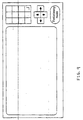
- Figure 9 illustrates one example of an interface for switching between regular control mode and evolutionary mode.
- the interactive evolutionary process unit has two modes: a regular control mode and an evolutionary mode.
- the switching (step 2-1) between the regular control mode and the evolutionary mode is made in accordance with the conditions fixed beforehand, for example, time or user's intention through an interface shown in Figure 9.
- Figure 10 illustrates one example of seeking a total of fitness of fuzzy rules.
- the regular control mode performs fuzzy control using a fuzzy rule table established at the time, and at the same time seeks a total of fitness of the fuzzy rules till evolutionary mode is switched on (step 2-2).
- calculation results of the fitness table for calculating the fitness of each fuzzy rule at a certain time are added to the total table for calculating a total of fitness till the evolutionary mode is switched on (step 2-3), which is terminated at the time the evolutionary mode is switched on.
- step 2-4 an arbitrary number of fuzzy rules are encoded into chromosomes in the order of higher total (step 2-4), which, as initials, are added to perturbation following a normal distribution to produce a first generation comprising a plurality of initial individuals (step 2-5).
- a trial ride is made using parameters for any individual in the first generation (step 2-6).
- the user inputs an evaluation value for the individual (step 2-7).
- step 2-8 Based on the evaluation value, it is decided whether a desired boat operation characteristic is obtained (step 2-8). If it is, the individual is regarded as best and the evolutionary process is terminated. If it is not, it is decided whether a trial ride and an evaluation about all the individuals in the first generation are finished (step 2-9). If the trial ride and the evaluation about all the individuals are not finished, the fuzzy rules of the fuzzy control module are changed to those of other individuals (step 2-10) and a ride is tried once again (step 2-6). If they are, it is judged whether a stipulated generation is reached (step 2-11). If it is judged so, the individual with the highest evaluation value in the generation is considered to be best and the evolutionary process is ended. If it is not judged so, the evolutionary calculation module begins (step 2-12) to produce individuals to the next generation and make a trial ride and an evaluation using the fuzzy rules for the individuals.
- Figure 11 is a flowchart illustrating an evolutionary computation module when generic algorithm is used as an evolutionary computation method.
- the module when a desired characteristic is not obtained after completion of the evaluation of all the individuals to one generation, a group of individuals to the next generation is produced.
- step 1 a linear transformation of fitness is performed so that the ratio of an average fitness to a maximum fitness in a individual group may be constant.
- a roulette selection system can be adopted that selects stochastically in proportional to user's evaluation (fitness).
- a tournament selection system can also be employed that selects one with the best evaluation in the N individuals selected at random.
- crossover there are methods such as one-point crossover, two-point crossover, and normal-distribution crossover. It happens that a selected parent for crossover is the same individual. When this situation is left as is, diversity as a individual group is lost. Therefore, if a parent selected for crossover is the same individual, crossover for the same individual should be avoided as much as possible by replacing the individual with another selected individual.
- step 4 values are changed at random with a constant probability about each locus for individuals.
- perturbation having normal distribution can be added. In the case where different individuals are selected as parents for crossover and the different individuals are genetically the same, mutation takes place with higher probability than usual for both of the parents to be crossed over.
- Figure 12 is a flowchart illustrating an evolutionary computation module when evolutionary strategy is used as an evolutionary computation method.
- the module produces an individual group for the next generation, after completing evaluation of all the individuals to one generation, when a desired characteristic is not obtained.
- step 1 two exemplary kinds of methods are explained since methods of selection are different owing to the kinds of evolutionary strategy.
- evolutionary strategy includes other methods below. When these methods are used, a selection suitable for the methods should be made.
- step 2 the normal distribution is used. Parents' values can be succeeded for each parameter, and child's values can be a middle point, interpolated point or extrapolated point.
- perturbation having the normal distribution is added to each parameter.
- the dispersion of the normal distribution may be adjusted every parameter or may have interrelationship between parameters.
- Figure 13 is a flowchart illustrating an evolutionary computation module when evolutionary programming is used as an evolutionary computation method.
- scaling step 1
- the 2 ⁇ individuals combined with the individuals before perturbation is added and the individuals after perturbation is added, are compared with the q individuals selected at random.
- the superior number is defined as fitness of the individuals.
- step 2 ⁇ individuals are selected in the order of good fitness from individual groups produced.
- the selection is deterministic, but since scaling is stochastic, the selection is substantially stochastic.
- the evolutionary programming (EP) mentioned above uses each parameter as a real number, it has the advantage that a transformation from phenotype to genotype is no longer necessary. As no crossover is used, there is no limitation in phenotype.
- the parameters of the genetic algorithm should not be in a sting as in the evolutionary strategy, and may be in a tree structure.
- the use environment of the planing boat in the embodiments can be varied remarkably owing to the change of weathers or seasons.
- the preference of users varies significantly. Therefore, it is impossible to acquire boat speed control characteristics all users can be satisfied with under every use environment, in the design stage or the setting stage before shipment.
- throttle control and trim angle control for the hull are indispensable so as to achieve optimal boat speed control, in addition to the characteristics of use environment and a user.
- a fuzzy controller is used as a control device, it is difficult to optimize the characteristics of the fuzzy controller to fit all conditions.
- the parameters for the boat operation fuzzy control module which controls an electronic throttle valve and a trim may be optimized in real time by using the evolutionary calculation, the invention has the advantage that the boat control can be achieved that suits all conditions.
- the controlled system that can be optimized by the optimization method in accordance with the invention is not limited to the outboard motor and the trimming apparatus of the planing boat shown in Figures 3-14.
- the controlled system can be any controlled system as far as it is controlled by a control device that has a fuzzy inference system, for example, the controlled system shown in Figures 14-15.
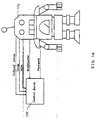
- Figure 14 shows an embodiment where the optimization method in accordance with the invention is applied to a control device that controls the movement of a robot.
- the control device 132 inputs information from an infrared sensor attached to the robot 131, an image input device such as a camera, a voice input device such as a microphone, and an accelerator sensor.
- the control device 132 includes a fuzzy control module (not shown) which outputs information on the movement for the robot 131.
- the fuzzy control module can be optimized in real time.
- the parameters to be optimized may selected arbitrarily. Evaluation for optimization is made directly by a user through an appropriate input device.
- the input device to which the user will apply evaluation can be provided separately.
- the input device may be constructed to detect the state of the user by the image input device and the voice image input device, and based on the detection results, to recognize the evaluation of the user. The construction brings about the advantage that the robot's movement can be optimized as if the robot were understanding the user's intention.
- the robot can execute optimal movements, according to a change of robot's bodies (for example, a change from a human-type robot to a dog-type robot), a change of use environments, and user's preference.
- a change of robot's bodies for example, a change from a human-type robot to a dog-type robot
- a change of use environments for example, a change from a human-type robot to a dog-type robot
- Figure 15 shows an embodiment where a head, arms, and/or legs of a robot 141 may be interchangeably mounted to a body thereof.
- the body 142 of the robot 141 contains a control device 143 that controls the movement of each part.
- the control device 143 can be optimized so that an optimal movement may be made according to a specified part mounted. Accordingly, since the limitations to the parts of the robot 141 are reduced, interchange of the parts can be easily made.
- the advantages are provided that the robot 141 itself can perform various types of jobs or entertainment movements only by interchanging the parts, which increases availability of the robot 141.
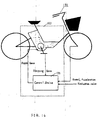
- Figure 16 shows an embodiment where the optimization method in accordance with the invention is applied to a control device 153 of a bicycle 151 with an electrically-driven auxiliary power unit 152.
- the control device 153 including a fuzzy control module, receives a stepping force for a pedal from a user, a speed, an acceleration, and an evaluation value, and outputs an assist force to the electrically-driven auxiliary power unit 152, decided by the fuzzy control module.
- the fuzzy control module is optimized in real time.
- the optimization method in accordance with the invention is applied to the control device 153 of the bicycle 151 with the electrically-driven auxiliary power unit 152, even if the bicycle 151 may be interchanged to a new bicycle to which the control device 153 is attached, the assist force can be optimized in real time for the new bicycle, which reduce the limitations to the kinds of bicycle. Even when a bicycle and an electrically-driven auxiliary power unit are manufactured independently, the electrically-driven auxiliary power unit can easily be adapted to each of the bicycles.
- the advantage is provided that in accordance with the preference to use environment, age or physique of a user, an assist force, or duration of a battery, a control device is optimized in real time so that an optimal assist force may be generated. As far as an apparatus has an electrically-driven auxiliary power unit, the same effect can be obtained from any apparatus, for example, a wheelchair.
- the optimization method in accordance with the invention is applied to the fuzzy controller which outputs the manipulated variable (the electronic throttle valve opening variation and trim angle variation) of the controlled system.
- the invention is not limited to the embodiments, and is applicable to a control device having any fuzzy inference system so long as the control device includes a fuzzy inference system that decides output concerning a manipulated variable.
- the control device for example, may be the one that contains a fuzzy inference system for deciding the coefficients of a manipulated variable or a compensated amount.
- the invention is applicable to a control device having a fuzzy intention determination system and a fuzzy neural controller.
- the optimization method in accordance with the invention encodes the parameters concerning the fuzzy inference system of the control device into chromosomes, optimizing in real time using evolutionary calculation, and optimizes the control device against unexpected parameter variations of the controlled system and disturbances. Accordingly, the advantage is provided that optimal control of a controlled system can be performed in accordance with all use environments and characteristics of a user.
- the advantage is produced that only parameters necessary for adaptation can be extracted, search spaces can be limited, and an optimization can be made at high speeds, without destroying parameters unnecessary for optimization.
Landscapes
- Engineering & Computer Science (AREA)
- Physics & Mathematics (AREA)
- Health & Medical Sciences (AREA)
- Life Sciences & Earth Sciences (AREA)
- Biophysics (AREA)
- Bioinformatics & Cheminformatics (AREA)
- Bioinformatics & Computational Biology (AREA)
- Evolutionary Biology (AREA)
- Theoretical Computer Science (AREA)
- Computational Linguistics (AREA)
- Molecular Biology (AREA)
- Biomedical Technology (AREA)
- Genetics & Genomics (AREA)
- Data Mining & Analysis (AREA)
- Evolutionary Computation (AREA)
- General Health & Medical Sciences (AREA)
- Artificial Intelligence (AREA)
- Computing Systems (AREA)
- General Engineering & Computer Science (AREA)
- General Physics & Mathematics (AREA)
- Mathematical Physics (AREA)
- Software Systems (AREA)
- Physiology (AREA)
- Feedback Control In General (AREA)
- Combined Controls Of Internal Combustion Engines (AREA)
Abstract
Description
- (1, 1) -ES: Random Walk (RW)
- (1 + 1) -ES: Hill Climbing (HC)
- (1, λ) -ES, (1 + ?)-ES: Adjacent search method
- (µ + λ) -ES: Successive generation multi-point search method
Claims (13)
- A method of real-time optimization of a control device provided with a fuzzy inference system for controlling a machine, said fuzzy inference system comprising a matrix of fuzzy rules which are regulated by preselected parameters, said method comprising the steps of:operating the machine using the fuzzy inference system of the control device;optimizing in real-time the input-output relationship of the fuzzy inference system by at least one of the following:(i) revising the fuzzy rule matrix by extracting a section from the matrix and coding elements of the section into chromosomes;(ii) modifying the configuration of the fuzzy rule matrix defined by membership functions by coding elements of the membership functions into chromosomes; or(iii) changing a level of an input of the parameters and a level of an output of the fuzzy inference system,said chromosomes being subjected to evolutionary computation, wherein at least one fitted individual is selected based on user's ultimate choice or a pre-selected target; andoperating the machine using the optimized fuzzy inference system.
- Method according to claim 1, further comprising monitoring the fuzzy rule matrix in use while operating the machine, and evaluating the section extracted in (ii) or the membership functions to be modified in (iii).
- A method of real-time optimization of a control device comprising a fuzzy inference system for controlling a machine, comprising:encoding parameters used in the fuzzy inference system into chromosomes, said fuzzy inference system determining an output associated with a manipulated variable of the machine based on preselected input signals; andoptimizing the output of the control device by subjecting the chromosomes to evolutionary computation on a real-time basis.
- Method according to at least one of the preceding claims 1 to 3, wherein the parameters encoded into chromosomes are a part of the parameters on the fuzzy inference system.
- Method according to at least one of the preceding claims 1 to 4, wherein the parameters encoded into chromosomes include at least one of number, shape, position, and expanse of membership functions.
- Method according to at least one of the preceding claims 1 to 5, wherein the parameters encoded into chromosomes include fuzzy rules.
- Method according to at least one of the preceding claims 1 to 6, wherein the parameters encoded into chromosomes include standardized coefficients for input and output values.
- Method according to at least one of the preceding claims 1 to 7, wherein the parameters to be encoded into chromosomes are deterministically or stochastically selected according to a total of fitness for membership functions within any period of time.
- Method according to at least one of the preceding claims 1 to 8, wherein the parameters to be encoded into chromosomes are deterministically or stochastically selected according to a total of fitness for fuzzy rules within any period of time.
- Method according to at least one of the preceding claims 1 to 9, wherein only parameters are selected that exceed a threshold of fitness determined according to the parameters.
- Method according to at least one of the preceding claims 1 to 10, wherein the threshold is raised or lowered according to selected number of times for corresponding parameters.
- Method according to at least one of the preceding claims 1 to 11, wherein the fuzzy module is a so-called fuzzy controller, or any module that has a fuzzy inference system, like a module with a fuzzy decision system or a fuzzy neuro-controller.
- Method according to at least one of the preceding claims 1 to 12, wherein the controlled object is an outboard engine with trimming device, a robot or a bicycle with a motor-assisted power system.
Applications Claiming Priority (2)
| Application Number | Priority Date | Filing Date | Title |
|---|---|---|---|
| JP26110999 | 1999-09-14 | ||
| JP26110999A JP2001084237A (en) | 1999-09-14 | 1999-09-14 | Real-time optimization method of controller with fuzzy inference system |
Publications (2)
| Publication Number | Publication Date |
|---|---|
| EP1085460A2 true EP1085460A2 (en) | 2001-03-21 |
| EP1085460A3 EP1085460A3 (en) | 2004-09-01 |
Family
ID=17357221
Family Applications (1)
| Application Number | Title | Priority Date | Filing Date |
|---|---|---|---|
| EP00120033A Withdrawn EP1085460A3 (en) | 1999-09-14 | 2000-09-14 | Method of real-time optimization of control device equipped with fuzzy inference system |
Country Status (3)
| Country | Link |
|---|---|
| US (1) | US6735576B1 (en) |
| EP (1) | EP1085460A3 (en) |
| JP (1) | JP2001084237A (en) |
Cited By (6)
| Publication number | Priority date | Publication date | Assignee | Title |
|---|---|---|---|---|
| US6855020B2 (en) | 2000-10-30 | 2005-02-15 | Yamaha Hatsudoki Kabushiki Kaisha | Running control device for watercraft |
| WO2005013019A3 (en) * | 2003-07-25 | 2006-01-26 | Yamaha Motor Co Ltd | Soft computing optimizer of intelligent control system structures |
| US7251638B2 (en) | 2004-03-03 | 2007-07-31 | Yamaha Hatsudoki Kabushiki Kaisha | Intelligent robust control system for motorcycle using soft computing optimizer |
| US8788446B2 (en) | 2009-08-19 | 2014-07-22 | University of Liecester | Fuzzy inference methods, and apparatuses, systems and apparatus using such inference apparatus |
| US8892496B2 (en) | 2009-08-19 | 2014-11-18 | University Of Leicester | Fuzzy inference apparatus and methods, systems and apparatuses using such inference apparatus |
| CN115828523A (en) * | 2022-11-08 | 2023-03-21 | 北京航空航天大学杭州创新研究院 | Composite supercharging matching evaluation and high-altitude performance recovery optimization method for aero-engine |
Families Citing this family (9)
| Publication number | Priority date | Publication date | Assignee | Title |
|---|---|---|---|---|
| US6950712B2 (en) * | 2002-07-30 | 2005-09-27 | Yamaha Hatsudoki Kabushiki Kaisha | System and method for nonlinear dynamic control based on soft computing with discrete constraints |
| US20080255684A1 (en) * | 2002-11-18 | 2008-10-16 | Universiti Putra Malaysia | Artificial intelligence device and corresponding methods for selecting machinability data |
| MY141127A (en) * | 2002-11-18 | 2010-03-15 | Univ Putra Malaysia | Artificial intelligence device and corresponding methods for selecting machinability data |
| US7043970B2 (en) * | 2003-11-28 | 2006-05-16 | Wagner Electronic Products, Inc. | Method for monitoring wood-drying kiln state |
| US7398257B2 (en) * | 2003-12-24 | 2008-07-08 | Yamaha Hatsudoki Kabushiki Kaisha | Multiobjective optimization apparatus, multiobjective optimization method and multiobjective optimization program |
| US10489713B1 (en) | 2015-08-26 | 2019-11-26 | Psibernetix, Inc. | Self-optimized system and method using a fuzzy genetic algorithm |
| JP7337510B2 (en) * | 2019-02-14 | 2023-09-04 | 株式会社シマノ | Output device, learning model generation method, computer program, and storage medium |
| US11580358B1 (en) | 2020-05-12 | 2023-02-14 | Thales, S.A. | Optimization with behavioral evaluation and rule base coverage |
| CN114492087B (en) * | 2022-04-02 | 2022-07-19 | 国网浙江省电力有限公司电力科学研究院 | Fault diagnosis method and device for proton exchange membrane fuel cell of hydrogen energy storage power station |
Family Cites Families (13)
| Publication number | Priority date | Publication date | Assignee | Title |
|---|---|---|---|---|
| US4785404A (en) | 1984-05-18 | 1988-11-15 | Sims Merrick L | Beating and passage time optimization computer navigation system for sailing vessels |
| JPS63301196A (en) | 1987-05-29 | 1988-12-08 | Sanshin Ind Co Ltd | Attitude control device for vessel |
| US5006992A (en) | 1987-09-30 | 1991-04-09 | Du Pont De Nemours And Company | Process control system with reconfigurable expert rules and control modules |
| US5263432A (en) | 1991-08-20 | 1993-11-23 | Davis Dale R | Automatic trim tab control for power boats |
| JPH05128085A (en) | 1991-11-08 | 1993-05-25 | Toshiba Corp | Method for learning system control |
| WO1995003572A1 (en) * | 1993-07-23 | 1995-02-02 | Apple Computer, Inc. | Method and apparatus for fuzzy logic rule execution |
| JPH08156884A (en) | 1994-12-05 | 1996-06-18 | Sanshin Ind Co Ltd | Trim angle controller of hydrotraveling ship |
| JPH08278890A (en) * | 1995-04-05 | 1996-10-22 | Sharp Corp | Evolutionary adaptive inference knowledge extraction device and point-of-sale data analysis device using the device |
| US5813390A (en) | 1995-04-11 | 1998-09-29 | Yamaha Hatsudoki Kabushiki Kaisha | Engine feedback control embodying learning |
| KR970058637A (en) * | 1996-01-19 | 1997-08-12 | 김광호 | Optimal Determination of Fuzzy Function for Electric Cooker Control |
| CN1224515A (en) | 1997-02-21 | 1999-07-28 | 贝克·休斯公司 | Adaptive object-oriented optimized software system |
| US6122555A (en) | 1997-05-05 | 2000-09-19 | Honeywell International Inc. | System and methods for globally optimizing a process facility |
| JPH11327606A (en) | 1998-05-14 | 1999-11-26 | Yamaha Motor Co Ltd | Comprehensive control method |
-
1999
- 1999-09-14 JP JP26110999A patent/JP2001084237A/en active Pending
-
2000
- 2000-09-14 EP EP00120033A patent/EP1085460A3/en not_active Withdrawn
- 2000-09-14 US US09/661,768 patent/US6735576B1/en not_active Expired - Fee Related
Cited By (7)
| Publication number | Priority date | Publication date | Assignee | Title |
|---|---|---|---|---|
| US6855020B2 (en) | 2000-10-30 | 2005-02-15 | Yamaha Hatsudoki Kabushiki Kaisha | Running control device for watercraft |
| WO2005013019A3 (en) * | 2003-07-25 | 2006-01-26 | Yamaha Motor Co Ltd | Soft computing optimizer of intelligent control system structures |
| US7219087B2 (en) | 2003-07-25 | 2007-05-15 | Yamaha Hatsudoki Kabushiki Kaisha | Soft computing optimizer of intelligent control system structures |
| US7251638B2 (en) | 2004-03-03 | 2007-07-31 | Yamaha Hatsudoki Kabushiki Kaisha | Intelligent robust control system for motorcycle using soft computing optimizer |
| US8788446B2 (en) | 2009-08-19 | 2014-07-22 | University of Liecester | Fuzzy inference methods, and apparatuses, systems and apparatus using such inference apparatus |
| US8892496B2 (en) | 2009-08-19 | 2014-11-18 | University Of Leicester | Fuzzy inference apparatus and methods, systems and apparatuses using such inference apparatus |
| CN115828523A (en) * | 2022-11-08 | 2023-03-21 | 北京航空航天大学杭州创新研究院 | Composite supercharging matching evaluation and high-altitude performance recovery optimization method for aero-engine |
Also Published As
| Publication number | Publication date |
|---|---|
| JP2001084237A (en) | 2001-03-30 |
| US6735576B1 (en) | 2004-05-11 |
| EP1085460A3 (en) | 2004-09-01 |
Similar Documents
| Publication | Publication Date | Title |
|---|---|---|
| US6895286B2 (en) | Control system of optimizing the function of machine assembly using GA-Fuzzy inference | |
| US6549830B2 (en) | Apparatus for controlling watercraft pilot control | |
| US6735576B1 (en) | Method of real-time optimization of control device equipped with fuzzy inference system | |
| US6549815B1 (en) | Method and apparatus for optimizing overall characteristics of device, using heuristic method | |
| US6529816B1 (en) | Evolutionary controlling system for motor | |
| US6324530B1 (en) | Evolutionary controlling system with behavioral simulation | |
| US6151548A (en) | Integrated controlling system | |
| Magdalena | Adapting the gain of an FLC with genetic algorithms | |
| US6314412B1 (en) | Evolutionary control of machine based on user's preference inferred from user's operation | |
| JP2000250604A (en) | Optimization coordination method in characteristic optimization method | |
| EP1168116B1 (en) | Method for controlling machine with control module optimized by evolutionary computing | |
| Salomon | Increasing adaptivity through evolution strategies | |
| JP2000020103A (en) | Genetic algorithm evaluation method | |
| Hurst et al. | A neural learning classifier system with self-adaptive constructivism for mobile robot control | |
| JPH11327606A (en) | Comprehensive control method | |
| Chen et al. | New approach to intelligent control systems with self-exploring process | |
| EP1056042A2 (en) | An online type of optimization control method and an optimization control device | |
| Hoffmann | Incremental tuning of fuzzy controllers by means of evolution strategy | |
| JP2000250603A (en) | Comprehensive characteristics optimization method | |
| JP2000250602A (en) | Comprehensive characteristic optimization device | |
| CN118848995A (en) | An event-triggered fault-tolerant control method for a robotic arm system | |
| González et al. | Rbf neural networks, multiobjective optimization and time series forecasting | |
| Gu et al. | Evolving fuzzy logic controllers for Sony legged robots | |
| JPH10154002A (en) | Comprehensive control method | |
| JP2002245434A (en) | Optimal solution search device by evolutionary method, control device of control target by evolutionary method, and optimal solution search program by evolutionary method |
Legal Events
| Date | Code | Title | Description |
|---|---|---|---|
| PUAI | Public reference made under article 153(3) epc to a published international application that has entered the european phase |
Free format text: ORIGINAL CODE: 0009012 |
|
| AK | Designated contracting states |
Kind code of ref document: A2 Designated state(s): AT BE CH CY DE DK ES FI FR GB GR IE IT LI LU MC NL PT SE |
|
| AX | Request for extension of the european patent |
Free format text: AL;LT;LV;MK;RO;SI |
|
| RAP1 | Party data changed (applicant data changed or rights of an application transferred) |
Owner name: YAMAHA MARINE KABUSHIKI KAISHA Owner name: YAMAHA HATSUDOKI KABUSHIKI KAISHA |
|
| PUAL | Search report despatched |
Free format text: ORIGINAL CODE: 0009013 |
|
| AK | Designated contracting states |
Kind code of ref document: A3 Designated state(s): AT BE CH CY DE DK ES FI FR GB GR IE IT LI LU MC NL PT SE |
|
| AX | Request for extension of the european patent |
Extension state: AL LT LV MK RO SI |
|
| 17P | Request for examination filed |
Effective date: 20041018 |
|
| 17Q | First examination report despatched |
Effective date: 20050318 |
|
| AKX | Designation fees paid |
Designated state(s): FR |
|
| REG | Reference to a national code |
Ref country code: DE Ref legal event code: 8566 |
|
| RBV | Designated contracting states (corrected) |
Designated state(s): FR |
|
| STAA | Information on the status of an ep patent application or granted ep patent |
Free format text: STATUS: THE APPLICATION IS DEEMED TO BE WITHDRAWN |
|
| 18D | Application deemed to be withdrawn |
Effective date: 20050729 |