EP1085447A1 - Procédé et dispositif de résolution de modèles et ultisation pour la détection des attaques contre les systèmes informatiques - Google Patents
Procédé et dispositif de résolution de modèles et ultisation pour la détection des attaques contre les systèmes informatiques Download PDFInfo
- Publication number
- EP1085447A1 EP1085447A1 EP00402355A EP00402355A EP1085447A1 EP 1085447 A1 EP1085447 A1 EP 1085447A1 EP 00402355 A EP00402355 A EP 00402355A EP 00402355 A EP00402355 A EP 00402355A EP 1085447 A1 EP1085447 A1 EP 1085447A1
- Authority
- EP
- European Patent Office
- Prior art keywords
- formulas
- formula
- sub
- clause
- clauses
- Prior art date
- Legal status (The legal status is an assumption and is not a legal conclusion. Google has not performed a legal analysis and makes no representation as to the accuracy of the status listed.)
- Granted
Links
Images

Classifications
-
- G—PHYSICS
- G06—COMPUTING OR CALCULATING; COUNTING
- G06F—ELECTRIC DIGITAL DATA PROCESSING
- G06F21/00—Security arrangements for protecting computers, components thereof, programs or data against unauthorised activity
- G06F21/50—Monitoring users, programs or devices to maintain the integrity of platforms, e.g. of processors, firmware or operating systems
- G06F21/55—Detecting local intrusion or implementing counter-measures
- G06F21/552—Detecting local intrusion or implementing counter-measures involving long-term monitoring or reporting
-
- Y—GENERAL TAGGING OF NEW TECHNOLOGICAL DEVELOPMENTS; GENERAL TAGGING OF CROSS-SECTIONAL TECHNOLOGIES SPANNING OVER SEVERAL SECTIONS OF THE IPC; TECHNICAL SUBJECTS COVERED BY FORMER USPC CROSS-REFERENCE ART COLLECTIONS [XRACs] AND DIGESTS
- Y10—TECHNICAL SUBJECTS COVERED BY FORMER USPC
- Y10S—TECHNICAL SUBJECTS COVERED BY FORMER USPC CROSS-REFERENCE ART COLLECTIONS [XRACs] AND DIGESTS
- Y10S707/00—Data processing: database and file management or data structures
- Y10S707/99931—Database or file accessing
-
- Y—GENERAL TAGGING OF NEW TECHNOLOGICAL DEVELOPMENTS; GENERAL TAGGING OF CROSS-SECTIONAL TECHNOLOGIES SPANNING OVER SEVERAL SECTIONS OF THE IPC; TECHNICAL SUBJECTS COVERED BY FORMER USPC CROSS-REFERENCE ART COLLECTIONS [XRACs] AND DIGESTS
- Y10—TECHNICAL SUBJECTS COVERED BY FORMER USPC
- Y10S—TECHNICAL SUBJECTS COVERED BY FORMER USPC CROSS-REFERENCE ART COLLECTIONS [XRACs] AND DIGESTS
- Y10S707/00—Data processing: database and file management or data structures
- Y10S707/99931—Database or file accessing
- Y10S707/99933—Query processing, i.e. searching
-
- Y—GENERAL TAGGING OF NEW TECHNOLOGICAL DEVELOPMENTS; GENERAL TAGGING OF CROSS-SECTIONAL TECHNOLOGIES SPANNING OVER SEVERAL SECTIONS OF THE IPC; TECHNICAL SUBJECTS COVERED BY FORMER USPC CROSS-REFERENCE ART COLLECTIONS [XRACs] AND DIGESTS
- Y10—TECHNICAL SUBJECTS COVERED BY FORMER USPC
- Y10S—TECHNICAL SUBJECTS COVERED BY FORMER USPC CROSS-REFERENCE ART COLLECTIONS [XRACs] AND DIGESTS
- Y10S707/00—Data processing: database and file management or data structures
- Y10S707/99931—Database or file accessing
- Y10S707/99933—Query processing, i.e. searching
- Y10S707/99934—Query formulation, input preparation, or translation
Definitions
- the present invention relates to a resolution method and device models and its use for detecting attacks against Informatic Systems.
- Secure IT systems may be subject to fraudulent attacks or attempted introduction.
- we try to ward off these attacks by setting up report files, for example, system log files or log files network (network log) and performing filtering on these files to detect an incident or intrusion.
- Systems that audit reporting files are usually method-based complicated which causes problems with writing and, moreover, the resulting audit is difficult to read.
- the intrusion is done in several stages successive non concomitant, the system may well not detect it.
- the writing of audit conditions is not very flexible, not very modifiable and poses modularity problems.
- An object of the invention is therefore to propose an efficient process for specification resolution.
- Another aim is to allow great flexibility.
- Another object is to propose a device allowing the implementation process work.
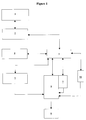
- the report file (1) is generally present on all machines and can be the network report file when the machine is connected to a network, or a report file system or any other file on which we want to check a specification.
- Through machine means a computer with means of memorization, means of reading and executing a program and interactive means with a user (for example screen, keyboard, mouse) and means of connection to the network.
- This file communicates with a adapter (2) which is software for translating information contained in the report file and expressed in language machine specific in an advanced language understandable by a interpreter (3).
- the interpreter (3) also receives from a module (4) the formula of the specification to be verified expressed in a temporal logic.
- This interpreter (3) realizes the expansion of the formula into sub-formulas and the scanning of each Ei record (Annex 2) of the report file (1) to generate, using this expansion and this sweep, a table and a resultant stack expressing Horn clauses stored in a memory (5).
- the concept of the Horn clause is well known to the skilled person. trade, and is described for example in (Goubault-Larrecq, Jean and Mackie, lan, Proof Theory and Automated Deduction, edited by Kluwer, 1996).
- This array and this stack are exploited by an algorithm (6) for processing clauses which receives a launch order from the interpreter (3) once this last filled the table (5) containing a table of counters (7), thus than a stack (18), after having browsed all the Ei records in the file.
- This algorithm will seek the resolution of the specification with respect to all records.
- the algorithm for processing clauses When detecting the full scan of the recording file (1), the algorithm for processing clauses generates, either an output file, or a system or machine action
- the phase of filling of the table (6) and of the stack (18) and the processing phase of clauses are performed concomitantly, so that the algorithm of processing of clauses can generate the output file or the action of the system or machine as soon as possible, and generally before the detection of the complete scan of the recording file (1).
- E (E1, ..., EN) as shown in Annex 2.
- Each Ei record contains a certain amount of information such as that the date, the operation concerned, the machine, a result, a subject, this list is not exhaustive.
- the interpreter (3) expands the formula for each record E1, E2, E3, as shown in Appendix 6, by generating sub-formulas for each record in order to deduce Horn clauses which account for the logical implications which exist between a formula and its sub-formulas and the possibility of satisfying atomic formulas, as represented in appendix 6.
- the formula is expanded in the sub-formula F to which the clause ( ⁇ 2 ) corresponds, in the sub-formula ⁇ H to which the clause ( ⁇ 2 ) ⁇ ( ⁇ 3 ) ⁇ ( ⁇ 1 ) corresponds, etc.
- the interpreter (3) includes an optimization procedure which makes it possible to remove redundancies and unnecessary steps from the table in annex 6 and after optimization, the interpreter will only retain the clauses generated corresponding to the table in annex 7.
- the notation ⁇ H means: "there is a line, either the current line of the record, or a subsequent line where the formula H is verified ”; to check if F ⁇ ⁇ H is true when recording E1, we number the couples (formula, recording) called configurations, in the example the couple (F ⁇ ⁇ H, E1) is numbered (1).
- the interpreter (3) expands the formula F ⁇ OH to the record E1 into the formulas F and ⁇ H.
- the couple (F, E1) is numbered ⁇ 2
- the couple ( ⁇ H, E1) is numbered ⁇ 3
- the interpreter generates the clause ( ⁇ 2 ) ⁇ ( ⁇ 3 ) ⁇ ( ⁇ 1 ), which expresses that if the configuration ⁇ 2 and the configuration ⁇ 3 are verified then the configuration ⁇ 1 is verified, that is to say that F is verified at the recording E1.
- O ( ⁇ H) means: "the following record line exists and on the next line ⁇ H is true", this corresponds to the configuration ⁇ 6 for the first record.
- HVO ( ⁇ H) means "H is true or the following record line exists and on the next line there is a line, either the current line or a subsequent line where H is true", this corresponds to the configurations ( ⁇ 4 ) for the E1 record, ( ⁇ 9 ) and ( ⁇ 14 ) for the E2 record and ( ⁇ 19 ), ( ⁇ 23 ) and ( ⁇ 28 ) for the E3 record.
- the set of Horn clauses appearing in the right part of the table in appendix 7 is stored in the table (5), in the counter (7) and in the stack (18) represented in FIG. 2 as follows.
- the columns of the table (5) are indexed by the indices ( ⁇ 2 ), ( ⁇ 3 ), ( ⁇ 4 ), ( ⁇ 5 ), ( ⁇ 6 ), ( ⁇ 8 ), ( ⁇ 11 ), ( ⁇ 12 ) formulas appearing in the negative part of the clause. Only clues implying a conclusion are kept.
- the rows of table (5) are indexed by the indices ( ⁇ 1 ), ( ⁇ 3 ), ( ⁇ 7 ) of the formulas appearing in the positive part of the clause.
- the negative part of the clause is the part located to the left of the implication arrow which will be called subsequently the implicit sub-formula (s).
- the positive part is to the right of the arrow and will be called the formula involved.
- the formulas ⁇ 2 and ⁇ 8 are in the stack (18 1 ), as shown in Figure 2, and the table of negative literals counters of the clauses of the table is made up of the information represented by the reference (7 1 ) in this figure.
- the algorithm for processing clauses (6) when launched by the interpreter after the latter has filled the tables (5, 7 and 18) after examining the lines of records of the report file, will start by examining the top of the stack (18) and extracting the information that the configuration ⁇ 8 , in this case, is satisfied. The algorithm then examines in table (5) the clauses which have this partially negative configuration, in this case the configuration ⁇ 7 , and deduces the counter which it must decrement.
- the counter (7 2 ) represents the evolution in the counter (7 1 ) of the counter which is associated with the formula represented in the positive part.
- the algorithm decrements the corresponding counter, in this case that of the configuration ⁇ 7 , and puts at the top of the stack the value "7" of the configuration which is true, as represented in the box (18 2 ) which represents the evolution of the stack (18) while the column (7 2 ) represents the evolution of the counter.
- the clause resolution algorithm will iterate by looking for clauses which have the configuration ⁇ 7 partly negative to deduce that the configuration ⁇ 3 is true and decrement the counter corresponding to this line of configurations, as shown in the column (7 3 ).
- the algorithm (6) thus continues until the stack (18) is empty or contains configurations already processed and one obtains in the stack (18 5 ) the only configuration ⁇ 1 which verifies the specification.
- the expansion algorithm avoids unnecessarily replicating identical configurations, represented by their pointer by setting up a hash table.
- the hash table data structure and the associated algorithms are well known to those skilled in the art, see by example (Knuth, Donald Erwin, The Art of Computer Programming, vol. 3, Sorting and Searching, Addison-Wesley, second edition, 1998).
- F S the specification file
- F S the specification file
- F the set of all the formulas whose syntax and semantics are defined above.
- the log file A.
- Log files are log files of everything that happens in a system (for example, a file tracing the connections and disconnections of users on machines).
- a record is a function R of finite domain and codomain from ⁇ * to ⁇ *, where all the character strings A: ⁇ * ⁇ ⁇ *.
- a log file is therefore a (finite) sequence of records R 1 , ..., R
- the current state is represented by the integer i , 1 ⁇ i ⁇
- step 5 compares the formulas in the ResForm file , which are all formulas verified to a certain state but which are sub-formulas of formulas of the specification file, and the formulas of the specification file, so that you can tell which ones are checked and in which state (s).
- H is a Horn clause having one or two representations of formulas that are partially negative:
- M is a matrix mxn, m, n ⁇ N
- m i, f the element of the i th line indexed by ⁇
- the method is characterized in that for the formulation of the specification, a temporal logic is used.
- the table is matrix and indexed in columns by the indices of the formulas appearing in the negative part Horn clauses and the lines are exactly the Horn clauses.
- the table is represented in the form of hollow matrix, the columns being represented by means of linked lists and the lines remaining implicit, is preferred
- a step of optimizing the expansion formulas is obtained by a hash table in order to ensure that the same formula is not expanded more than once each time recording.
- the report file is scanned only once from start to finish.
Landscapes
- Engineering & Computer Science (AREA)
- Computer Security & Cryptography (AREA)
- Software Systems (AREA)
- Theoretical Computer Science (AREA)
- General Physics & Mathematics (AREA)
- General Engineering & Computer Science (AREA)
- Physics & Mathematics (AREA)
- Computer Hardware Design (AREA)
- Information Retrieval, Db Structures And Fs Structures Therefor (AREA)
- Debugging And Monitoring (AREA)
- Devices For Executing Special Programs (AREA)
- Machine Translation (AREA)
- Management, Administration, Business Operations System, And Electronic Commerce (AREA)
- Spectrometry And Color Measurement (AREA)
- Stored Programmes (AREA)
Abstract
Description
- la figure 1 représente une vue schématique des éléments matériels et logiciels permettant la mise en oeuvre du procédé.
- la figure 2 représente le contenu de la table, des compteurs de formules ou sous-formules présentes dans les parties négatives des clauses, et de la pile, et leur évolution au cours de la mise en oeuvre du procédé.
- R : Σ*→ Σ*
- date→ 27 : 02 : 2000
- opération→ connection
- machine→ papillon
- resultat→ succes
- sujet→ Machin.
- la colonne "Formule" est exactement : form (ƒ), c'est-à-dire la formule représentée par ƒ ,
- la colonne "Current" (resp. "Next") désigne toutes les représentations de formules qui sont ajoutées à l'ensemble "Current" (resp. "Next"),
- la colonne "Clause" désigne les clauses qui sont stockées dans la matrice avec la procédure insérer_clause décrite plus loin,
- les représentations de formules ajoutées à l'ensemble "Current" se font à leur tour expanser récursivement,
- les formules atomiques et les formules de la forme ¬ F1 où F1 est une formule atomique, sont traitées séparément : si la formule atomique correspond à l'enregistrement courant (match |record) (la procédure « match » sera définie plus loin), alors cette formule est vérifiée à l'état i ; si la formule atomique F1 ne matche pas le record courant, alors ¬F1 est vérifiée à l'état i. Plus formellement :
- Si form(f) est une formule atomique,
- si match(f) = TRUE
- alors Stack = Empiler(Stack, f);
- Si form(f) est de la forme ¬F1, F1 formule atomique,
- soit ƒ1 = Repr(F1, i);
- si match(ƒ1) = FALSE
- alors Stack = Empiler (Stack, ƒ);
| Formule | Current | Next | Clause |
| F1 ∧ F2 | ƒ1 = Repr(F1 , i) | ƒ1 ∧ ƒ2→ ƒ | |
| ƒ2 = Repr(F2 , i) | |||
| F1 V F2 | ƒ1 = Repr(F1 , i) | ƒ1 → ƒ | |
| ƒ2 = Repr(F2 , i) | ƒ2 → ƒ | ||
| OF 1 | = Repr(F1 , i + 1) | ƒ1 → ƒ | |
| OF 1 | ƒ1 = Repr(F1 , i + 1) | ƒ1 → ƒ | |
| si i ≠ |N| () | |||
| ⋄F 1 | ƒ1 = Repr(F1 , i) | ƒ2 = Repr(⋄F1 , i + 1) | ƒ1 → ƒ |
| ƒ2 → ƒ | |||
| F1 | ƒ1 = Repr(F1 , i) | ƒ2 = Repr(⋄F1 , i + 1) | ƒ1 ∧ ƒ2 → ƒ |
| F1 U F 2 | ƒ1 = Repr(F1 ∧ O(F1 U | ƒ1 → ƒ | |
| F2 ), i) | ƒ2 → ƒ | ||
| ƒ2 = Repr(F2 , i) | |||
| F1 W F2 | ƒ1 = Repr(F1 , i) | ƒ1 → ƒ | |
| ƒ2 = Repr(F1 U F2 ,, i) | ƒ2 → ƒ | ||
| ¬(F2 ∧ F3 ) | ƒ1 = Repr(¬F2 v ¬F3 , i) | ƒ1 → ƒ | |
| ¬ (F2 VF3 ) | ƒ1 = Repr(¬F2 ∧ ¬F3 , i) | ƒ1 → ƒ | |
| ¬(¬F2 ) | ƒ1 = Repr(F2, i) | ƒ1 → ƒ | |
| ¬ (OF2 ) | ƒ1 = Repr(O(¬F2, i) | ƒ1 → ƒ | |
| ¬ (OF2 ) | ƒ1 = Repr(O(¬F2 , i) | ƒ1 → ƒ | |
| ¬ (⋄F2 ) | ƒ1 = Repr((¬F 2, i) | ƒ1 → ƒ | |
| ¬ (F2 ) | ƒ1 = Repr(⋄ (¬F2 , i) | ƒ1 → ƒ | |
| ¬(F2 U F3 ) | ƒ1 = Repr((¬F3 , i) | ƒ1 → ƒ | |
| ƒ2 = Repr(¬F3 U (¬F2 , | ƒ2 → ƒ | ||
| ∧, F3), i) | |||
| ¬(F2 W F3 ) | F1 = Repr((¬F3) U (¬F2 , | ƒ1 → ƒ | |
| ∧,¬ F3), i) |
- si c'est de la forme {id1 = t1,..., idn = tn,...}, alors :
- si ∀j, 1 ≤j ≤n, idj ε Dom (Ri), et match-term (Ri(idj), tj, ƒ)
- alors TRUE
- sinon FALSE
- si c'est de la forme {id1= t1,..., idn= tn}, alors :
- si n= |dom(Ri)| et j, 1 ≤j ≤n, idj ε Dom (Ri), et match-term (Ri(idj), ti, ƒ)
- alors TRUE
- sinon FALSE
- Procédure « match-term» (w, t, ƒ), où w, t ∈ Σ* U et ƒ est

- une représentation de formule
- cas t :
- si t est un regex :
- si Reg (w,t)
- alors TRUE.
- sinon FALSE
- si t est une variable x :

- si ρ(x) est défini
- si ρ(x) = w
- alors TRUE
- sinon FALSE
- si ρ(x) n'est pas défini, alors
- E: = E U {(x,w)} ;
- TRUE ;
- si H est de la forme ƒ1 → ƒ, alors
- s'il existe déjà une colonne de M indiquée par ƒ1
- alors, ajouter une ligne indicée par ƒ avec mƒ,ƒ1 = 1 ;
- sinon, ajouter une colonne indicée par ƒ et une ligne indicée par ƒ1 avec mƒ,ƒ1 = 1 ;
- si H est de la forme ƒ1 Λ ƒ2, alors :
- si ni ƒ1, ni ƒ2 ne sont indice d'aucune colonne de M
- alors, ajouter 2 colonnes indicées par ƒ1 et ƒ2 et une ligne indicée par ƒ avec mƒ,ƒ1= mƒ,ƒ2=2
- si seulement l'un des ƒi, i = 1,2 n'est pas indice d'une
colonne de m alors :
- ajouter une colonne indicée par ƒi et une ligne indicée par ƒ avec mƒ,ƒi = mƒ,ƒj = 2, où j ∈ {1,2}\{i}
- si ƒ1 et ƒ2 sont indices de colonnes de M, alors :
- ajouter une ligne indicée par ƒ avec mƒ,ƒ2= 2
- si ni ƒ1, ni ƒ2 ne sont indice d'aucune colonne de M
- si Stack = pile-vide, alors rien ;
- sinon soit ƒ : = depiler (Stack) ; ∀i tel que mi,ƒ est l'élément existe
faire :
- mi,ƒ = mi,ƒ - 1 ;
- ∀j tel que mi,j existe faire : mi,j := mi,j-1
- si mi,j = 0, alors ;
- soit ƒ1 l'indice de la ligne mi,f
- si ƒ1 ∉ Res-Form, alors :
- Stack : = empiler (Stack, ƒ1)
- Res-form := Res-Form U { ƒ1}
- suppr (mi,ƒ) ;
- si la ième ligne la supprimer, si la colonne indicée par ƒ
- soit ƒ1 = depiler (Stack) ;
- si ƒ1 ∈ Fs alors form (ƒ) est vérifiée à l'état etat(ƒ)
- un moyen adaptateur permettant de traduire les informations du fichier compte-rendu formulées dans le langage spécifique de la machine en un langage compréhensible d'un moyen interpréteur ;
- le moyen interpréteur recevant les informations de l'adaptateur et recevant la formulation de la spécification dans la logique temporelle en une formule de spécification pour expanser cette formule et remplir le tableau et la pile de sous-formules oeuvrées mémorisées dans une mémoire du système informatique et résultant du balayage du fichier compte-rendu du système informatique;
- un algorithme de traitement de clauses exécuté par le système informatique permettant de résoudre les clauses de Horn utilisant les informations du tableau et de la pile de sous-formules oeuvrées, cet algorithme de traitement de clauses générant un fichier de sortie ou générant une action.
et plus tard {op = << connection >>, result = << succes >>,...}
| Tables de vérité des formules atomiques | ||
| ETATS | F | H |
| E1 | 1 | 0 |
| R2 | 0 | 1 |
| R3 | 0 | 0 |
| Tables de vérité des formules non atomiques | ||
| ETATS | ⋄ H | FΛ ⋄ H |
| E1 | 1 | 1 |
| E2 | 1 | 0 |
| E3 | 0 | 0 |


Claims (7)
- Procédé performant de résolution de spécifications caractérisé en ce qu'il comporte :g) une étape de formulation des conditions d'audit que l'on veut détecter à l'aide de formules de spécification, exprimant des schémas d'attaque ou d'introduction frauduleuse, ou encore d'anomalies, ceci n'étant pas limitatif, à vérifier par l'examen des enregistrements du fichier compte-rendu du système informatique ;h) une étape d'expansion par un algorithme des formules en sous-formules;i) une étape de balayage par un interpréteur consistant à engendrer pour chaque formule expansée à chaque enregistrement des clauses de Horn à résoudre pour détecter si la formule est valide ou non à cet enregistrement, les clauses de Horn exprimant les implications résolvantes des sous-formules pour chaque enregistrement balayé, en clauses positives, c'est-à-dire ne comptant qu'un littéral positif, et en clauses non positives, c'est-à-dire comptant au moins un littéral négatif, lesquels littéraux négatifs forment la partie négative de la clause ;j) une étape de mémorisation des clauses de Horn positives dans une pile de sous-formules oeuvrées et une étape de mémorisation dans un tableau comportant une représentation de la ou des sous-formules impliquantes constituant la partie négative de la clause et du lien avec la ou les sous-formules impliquées constituant la partie positive de la clause et mémorisation dans un compteur du nombre de formules ou sous-formules présentes dans la partie négative de la clause pour chaque sous-formule impliquée ;k) une étape de résolution du tableau à partir de chaque clause positive rencontrée pour générer soit un fichier de sortie, soit une action du système informatique ;I) une étape d'itération des étapes b) à e) jusqu'au parcours complet de tous les enregistrements du fichier compte-rendu.
- Procédé selon la revendication 1, caractérisé par le fait que pour la formulation de la spécification, une logique temporelle est utilisée.
- Procédé selon la revendication 1, caractérisé en ce que le tableau est matriciel et indexé en colonnes par les indices des formules apparaissant dans la partie négative des clauses de Horn et les lignes sont exactement les clauses de Horn.
- Procédé selon la revendication 1, caractérisé en ce que le tableau est représenté sous forme de matrice creuse, les colonnes étant représentées au moyen de listes chaínées et les lignes demeurant implicites, est préférée
- Procédé selon les revendications 1 ou 2, caractérisé en ce qu'une étape d'optimisation de l'expansion des formules est obtenue par une table de hachage dans le but d'assurer qu'une même formule n'est pas expansée plus d'une fois à chaque enregistrement.
- Procédé selon la revendication 1, caractérisé en ce que le fichier compte-rendu n'est parcouru qu'une seule fois du début jusqu'à la fin.
- Système informatique comportant des moyens de mémorisation et des moyens d'exécution de programmes permettant la mise en oeuvre du procédé selon une des revendications 1 à 6, caractérisé en ce que le système comporte :un moyen adaptateur permettant de traduire les informations du fichier compte-rendu formulées dans le langage spécifique de la machine en un langage compréhensible d'un moyen interpréteur ;le moyen interpréteur recevant les informations de l'adaptateur et recevant la formulation de la spécification dans la logique temporelle en une formule de spécification pour expanser cette formule et remplir le tableau et la pile de sous-formules oeuvrées mémorisées dans une mémoire du système informatique et résultant du balayage du fichier compte-rendu du système informatique;un algorithme de traitement de clauses exécuté par le système informatique permettant de résoudre les clauses de Horn utilisant les informations du tableau et de la pile de sous-formules oeuvrées, cet algorithme de traitement de clauses générant un fichier de sortie ou générant une action.
Applications Claiming Priority (2)
| Application Number | Priority Date | Filing Date | Title |
|---|---|---|---|
| FR9911716 | 1999-09-13 | ||
| FR9911716A FR2798490B1 (fr) | 1999-09-13 | 1999-09-13 | Procede et dispositif de resolution de modeles et utilisation pour la detection des attaques contre les systemes informatiques |
Publications (2)
| Publication Number | Publication Date |
|---|---|
| EP1085447A1 true EP1085447A1 (fr) | 2001-03-21 |
| EP1085447B1 EP1085447B1 (fr) | 2006-10-18 |
Family
ID=9550028
Family Applications (1)
| Application Number | Title | Priority Date | Filing Date |
|---|---|---|---|
| EP00402355A Expired - Lifetime EP1085447B1 (fr) | 1999-09-13 | 2000-08-24 | Procédé et dispositif de résolution de modèles et ultisation pour la détection des attaques contre les systèmes informatiques |
Country Status (6)
| Country | Link |
|---|---|
| US (1) | US7043755B1 (fr) |
| EP (1) | EP1085447B1 (fr) |
| AT (1) | ATE343176T1 (fr) |
| CA (1) | CA2318613C (fr) |
| DE (1) | DE60031346T2 (fr) |
| FR (1) | FR2798490B1 (fr) |
Families Citing this family (4)
| Publication number | Priority date | Publication date | Assignee | Title |
|---|---|---|---|---|
| US9064097B2 (en) * | 2012-06-06 | 2015-06-23 | Oracle International Corporation | System and method of automatically detecting outliers in usage patterns |
| US8959365B2 (en) * | 2012-07-01 | 2015-02-17 | Speedtrack, Inc. | Methods of providing fast search, analysis, and data retrieval of encrypted data without decryption |
| FR3027129B1 (fr) | 2014-10-08 | 2016-10-21 | Renault Sa | Systeme de reseau embarque de vehicule et procede de detection d'intrusion sur le reseau embarque |
| TWI610196B (zh) * | 2016-12-05 | 2018-01-01 | 財團法人資訊工業策進會 | 網路攻擊模式之判斷裝置、判斷方法及其電腦程式產品 |
Citations (2)
| Publication number | Priority date | Publication date | Assignee | Title |
|---|---|---|---|---|
| FR2706652A1 (fr) * | 1993-06-09 | 1994-12-23 | Alsthom Cge Alcatel | Dispositif de détection d'intrusions et d'usagers suspects pour ensemble informatique et système de sécurité comportant un tel dispositif. |
| US5694590A (en) * | 1991-09-27 | 1997-12-02 | The Mitre Corporation | Apparatus and method for the detection of security violations in multilevel secure databases |
Family Cites Families (3)
| Publication number | Priority date | Publication date | Assignee | Title |
|---|---|---|---|---|
| US5355474A (en) * | 1991-09-27 | 1994-10-11 | Thuraisngham Bhavani M | System for multilevel secure database management using a knowledge base with release-based and other security constraints for query, response and update modification |
| US5481650A (en) * | 1992-06-30 | 1996-01-02 | At&T Corp. | Biased learning system |
| US5557742A (en) * | 1994-03-07 | 1996-09-17 | Haystack Labs, Inc. | Method and system for detecting intrusion into and misuse of a data processing system |
-
1999
- 1999-09-13 FR FR9911716A patent/FR2798490B1/fr not_active Expired - Fee Related
-
2000
- 2000-08-24 EP EP00402355A patent/EP1085447B1/fr not_active Expired - Lifetime
- 2000-08-24 AT AT00402355T patent/ATE343176T1/de not_active IP Right Cessation
- 2000-08-24 DE DE60031346T patent/DE60031346T2/de not_active Expired - Lifetime
- 2000-09-06 CA CA002318613A patent/CA2318613C/fr not_active Expired - Fee Related
- 2000-09-13 US US09/661,448 patent/US7043755B1/en not_active Expired - Lifetime
Patent Citations (2)
| Publication number | Priority date | Publication date | Assignee | Title |
|---|---|---|---|---|
| US5694590A (en) * | 1991-09-27 | 1997-12-02 | The Mitre Corporation | Apparatus and method for the detection of security violations in multilevel secure databases |
| FR2706652A1 (fr) * | 1993-06-09 | 1994-12-23 | Alsthom Cge Alcatel | Dispositif de détection d'intrusions et d'usagers suspects pour ensemble informatique et système de sécurité comportant un tel dispositif. |
Non-Patent Citations (3)
| Title |
|---|
| GHICA VAN EMDE BOAS-LUBSEN, PETER VAN EMDE BOAS: "Compiling Horn-clause rules in IBM's Business System 12 and early experiment in declarativeness", 1998 SILVER JUBILEE SOFSEM MEETING, Slovakia, XP002142496 * |
| R.J. HAYTON, J.M. BACON, K. MOODY: "Access control in an open distributed environment", SECURITY AND PRIVACY, 1998. PROCEEDINGS 1998 IEEE SYMPOSIUM, XP002142495 * |
| TERRAN LANE, CARLA E. BRODLEY: "Sequence matching and learning in anomaly detection for computer security", AAAI WORKSHOP: AI APPROACHES TO FRAUD DETECTION AND RISK MANAGEMENT, Purdue University, West Lafayette, XP002142494 * |
Also Published As
| Publication number | Publication date |
|---|---|
| CA2318613A1 (fr) | 2001-03-13 |
| DE60031346D1 (de) | 2006-11-30 |
| FR2798490B1 (fr) | 2001-10-26 |
| US7043755B1 (en) | 2006-05-09 |
| FR2798490A1 (fr) | 2001-03-16 |
| DE60031346T2 (de) | 2007-04-26 |
| EP1085447B1 (fr) | 2006-10-18 |
| ATE343176T1 (de) | 2006-11-15 |
| CA2318613C (fr) | 2006-06-06 |
Similar Documents
| Publication | Publication Date | Title |
|---|---|---|
| Cohen | Advanced carving techniques | |
| CN106227668A (zh) | 数据处理方法和装置 | |
| CN112231278B (zh) | 项目工程文件的分析方法、装置、设备及存储介质 | |
| US20120072988A1 (en) | Detection of global metamorphic malware variants using control and data flow analysis | |
| FR2673734A1 (fr) | Systeme de generation automatique de programme. | |
| WO2010009996A1 (fr) | Procede de compilation de programme informatique | |
| EP3671578B1 (fr) | Procédé d'analyse d'une simulation de l'exécution d'un circuit quantique | |
| FR2914081A1 (fr) | Procede de protection de documents numeriques contre des utilisations non autorisees. | |
| FR2909198A1 (fr) | Procede et disositif de filtrage d'elements d'un document structure a partir d'une expression. | |
| EP1085447B1 (fr) | Procédé et dispositif de résolution de modèles et ultisation pour la détection des attaques contre les systèmes informatiques | |
| EP1593982A1 (fr) | Contrôle de la robustesse d'une modélisation d'un système physique | |
| CN118860904B (zh) | 一种源代码静态分析方法、装置、设备以及介质 | |
| EP3195113B1 (fr) | Procédé de vérification de traçabilité de premières instructions en un langage de programmation procédurale générées à partir de secondes instructions en un langage de modélisation | |
| EP3671577B1 (fr) | Procédé d'analyse d'une simulation de l'exécution d'un circuit quantique | |
| CN119782145A (zh) | 生成测试用例的方法及装置 | |
| EP1828941A2 (fr) | Dispositif de traitement de données à définition formelle | |
| Flanagan et al. | Modular and polymorphic set-based analysis: Theory and practice | |
| BE1003613A6 (fr) | Procede pour produire et faire fonctionner des systemes de bases de donnees. | |
| WO2009095616A1 (fr) | Procede d'identification d'un document multimedia dans une base de reference, programme d'ordinateur, et dispositif d'identification correspondants | |
| WO2024209100A1 (fr) | Procédé de génération d'un code informatique résistant aux attaques par injection sql | |
| EP4394642A1 (fr) | Système informatique de validation formelle d'un système physique en ingénierie des systèmes, procédé et programme d'ordinateur correspondants | |
| Cirpons et al. | Certifying the Decidability of the Word Problem in Monoids at Large | |
| CN120929146A (zh) | 一种前端资源优化的方法、系统、装置及计算机存储介质 | |
| EP0969360A1 (fr) | Procédé d'administration d'un système de traitement de l'information | |
| WO2025125761A1 (fr) | Procédé de détection de vulnérabilités logicielles par injection de code |
Legal Events
| Date | Code | Title | Description |
|---|---|---|---|
| PUAI | Public reference made under article 153(3) epc to a published international application that has entered the european phase |
Free format text: ORIGINAL CODE: 0009012 |
|
| AK | Designated contracting states |
Kind code of ref document: A1 Designated state(s): AT BE CH CY DE DK ES FI FR GB GR IE IT LI LU MC NL PT SE |
|
| AX | Request for extension of the european patent |
Free format text: AL;LT;LV;MK;RO;SI |
|
| 17P | Request for examination filed |
Effective date: 20010607 |
|
| AKX | Designation fees paid |
Free format text: AT BE CH CY DE DK ES FI FR GB GR IE IT LI LU MC NL PT SE |
|
| GRAP | Despatch of communication of intention to grant a patent |
Free format text: ORIGINAL CODE: EPIDOSNIGR1 |
|
| RAP1 | Party data changed (applicant data changed or rights of an application transferred) |
Owner name: BULL SAS |
|
| GRAS | Grant fee paid |
Free format text: ORIGINAL CODE: EPIDOSNIGR3 |
|
| GRAA | (expected) grant |
Free format text: ORIGINAL CODE: 0009210 |
|
| AK | Designated contracting states |
Kind code of ref document: B1 Designated state(s): AT BE CH CY DE DK ES FI FR GB GR IE IT LI LU MC NL PT SE |
|
| PG25 | Lapsed in a contracting state [announced via postgrant information from national office to epo] |
Ref country code: IT Free format text: LAPSE BECAUSE OF FAILURE TO SUBMIT A TRANSLATION OF THE DESCRIPTION OR TO PAY THE FEE WITHIN THE PRESCRIBED TIME-LIMIT;WARNING: LAPSES OF ITALIAN PATENTS WITH EFFECTIVE DATE BEFORE 2007 MAY HAVE OCCURRED AT ANY TIME BEFORE 2007. THE CORRECT EFFECTIVE DATE MAY BE DIFFERENT FROM THE ONE RECORDED. Effective date: 20061018 Ref country code: NL Free format text: LAPSE BECAUSE OF FAILURE TO SUBMIT A TRANSLATION OF THE DESCRIPTION OR TO PAY THE FEE WITHIN THE PRESCRIBED TIME-LIMIT Effective date: 20061018 Ref country code: IE Free format text: LAPSE BECAUSE OF FAILURE TO SUBMIT A TRANSLATION OF THE DESCRIPTION OR TO PAY THE FEE WITHIN THE PRESCRIBED TIME-LIMIT Effective date: 20061018 Ref country code: AT Free format text: LAPSE BECAUSE OF FAILURE TO SUBMIT A TRANSLATION OF THE DESCRIPTION OR TO PAY THE FEE WITHIN THE PRESCRIBED TIME-LIMIT Effective date: 20061018 Ref country code: FI Free format text: LAPSE BECAUSE OF FAILURE TO SUBMIT A TRANSLATION OF THE DESCRIPTION OR TO PAY THE FEE WITHIN THE PRESCRIBED TIME-LIMIT Effective date: 20061018 |
|
| REG | Reference to a national code |
Ref country code: GB Ref legal event code: FG4D Free format text: NOT ENGLISH |
|
| GBT | Gb: translation of ep patent filed (gb section 77(6)(a)/1977) |
Effective date: 20061019 |
|
| REG | Reference to a national code |
Ref country code: CH Ref legal event code: EP Ref country code: IE Ref legal event code: FG4D Free format text: LANGUAGE OF EP DOCUMENT: FRENCH |
|
| REF | Corresponds to: |
Ref document number: 60031346 Country of ref document: DE Date of ref document: 20061130 Kind code of ref document: P |
|
| PG25 | Lapsed in a contracting state [announced via postgrant information from national office to epo] |
Ref country code: DK Free format text: LAPSE BECAUSE OF FAILURE TO SUBMIT A TRANSLATION OF THE DESCRIPTION OR TO PAY THE FEE WITHIN THE PRESCRIBED TIME-LIMIT Effective date: 20070118 Ref country code: SE Free format text: LAPSE BECAUSE OF FAILURE TO SUBMIT A TRANSLATION OF THE DESCRIPTION OR TO PAY THE FEE WITHIN THE PRESCRIBED TIME-LIMIT Effective date: 20070118 |
|
| PG25 | Lapsed in a contracting state [announced via postgrant information from national office to epo] |
Ref country code: ES Free format text: LAPSE BECAUSE OF FAILURE TO SUBMIT A TRANSLATION OF THE DESCRIPTION OR TO PAY THE FEE WITHIN THE PRESCRIBED TIME-LIMIT Effective date: 20070129 |
|
| PG25 | Lapsed in a contracting state [announced via postgrant information from national office to epo] |
Ref country code: PT Free format text: LAPSE BECAUSE OF FAILURE TO SUBMIT A TRANSLATION OF THE DESCRIPTION OR TO PAY THE FEE WITHIN THE PRESCRIBED TIME-LIMIT Effective date: 20070319 |
|
| NLV1 | Nl: lapsed or annulled due to failure to fulfill the requirements of art. 29p and 29m of the patents act | ||
| REG | Reference to a national code |
Ref country code: IE Ref legal event code: FD4D |
|
| PLBE | No opposition filed within time limit |
Free format text: ORIGINAL CODE: 0009261 |
|
| STAA | Information on the status of an ep patent application or granted ep patent |
Free format text: STATUS: NO OPPOSITION FILED WITHIN TIME LIMIT |
|
| 26N | No opposition filed |
Effective date: 20070719 |
|
| BERE | Be: lapsed |
Owner name: BULL SAS Effective date: 20070831 |
|
| REG | Reference to a national code |
Ref country code: CH Ref legal event code: PL |
|
| PG25 | Lapsed in a contracting state [announced via postgrant information from national office to epo] |
Ref country code: MC Free format text: LAPSE BECAUSE OF NON-PAYMENT OF DUE FEES Effective date: 20070831 Ref country code: CH Free format text: LAPSE BECAUSE OF NON-PAYMENT OF DUE FEES Effective date: 20070831 Ref country code: GR Free format text: LAPSE BECAUSE OF FAILURE TO SUBMIT A TRANSLATION OF THE DESCRIPTION OR TO PAY THE FEE WITHIN THE PRESCRIBED TIME-LIMIT Effective date: 20070119 Ref country code: LI Free format text: LAPSE BECAUSE OF NON-PAYMENT OF DUE FEES Effective date: 20070831 |
|
| PG25 | Lapsed in a contracting state [announced via postgrant information from national office to epo] |
Ref country code: BE Free format text: LAPSE BECAUSE OF NON-PAYMENT OF DUE FEES Effective date: 20070831 |
|
| PG25 | Lapsed in a contracting state [announced via postgrant information from national office to epo] |
Ref country code: LU Free format text: LAPSE BECAUSE OF NON-PAYMENT OF DUE FEES Effective date: 20070824 Ref country code: CY Free format text: LAPSE BECAUSE OF FAILURE TO SUBMIT A TRANSLATION OF THE DESCRIPTION OR TO PAY THE FEE WITHIN THE PRESCRIBED TIME-LIMIT Effective date: 20061018 |
|
| REG | Reference to a national code |
Ref country code: FR Ref legal event code: PLFP Year of fee payment: 17 |
|
| REG | Reference to a national code |
Ref country code: FR Ref legal event code: PLFP Year of fee payment: 18 |
|
| REG | Reference to a national code |
Ref country code: FR Ref legal event code: PLFP Year of fee payment: 19 |
|
| REG | Reference to a national code |
Ref country code: DE Ref legal event code: R079 Ref document number: 60031346 Country of ref document: DE Free format text: PREVIOUS MAIN CLASS: G06F0019000000 Ipc: G16Z0099000000 |
|
| PGFP | Annual fee paid to national office [announced via postgrant information from national office to epo] |
Ref country code: IT Payment date: 20190822 Year of fee payment: 20 Ref country code: FR Payment date: 20190827 Year of fee payment: 20 |
|
| PGFP | Annual fee paid to national office [announced via postgrant information from national office to epo] |
Ref country code: GB Payment date: 20190829 Year of fee payment: 20 |
|
| PGFP | Annual fee paid to national office [announced via postgrant information from national office to epo] |
Ref country code: DE Payment date: 20191031 Year of fee payment: 20 |
|
| REG | Reference to a national code |
Ref country code: DE Ref legal event code: R071 Ref document number: 60031346 Country of ref document: DE |
|
| REG | Reference to a national code |
Ref country code: GB Ref legal event code: PE20 Expiry date: 20200823 |
|
| PG25 | Lapsed in a contracting state [announced via postgrant information from national office to epo] |
Ref country code: GB Free format text: LAPSE BECAUSE OF EXPIRATION OF PROTECTION Effective date: 20200823 |