EP1084172B1 - Polyamino acid vesicles - Google Patents
Polyamino acid vesicles Download PDFInfo
- Publication number
- EP1084172B1 EP1084172B1 EP99922389A EP99922389A EP1084172B1 EP 1084172 B1 EP1084172 B1 EP 1084172B1 EP 99922389 A EP99922389 A EP 99922389A EP 99922389 A EP99922389 A EP 99922389A EP 1084172 B1 EP1084172 B1 EP 1084172B1
- Authority
- EP
- European Patent Office
- Prior art keywords
- composition
- hydrophobic
- pharmaceutical composition
- compound according
- compound
- Prior art date
- Legal status (The legal status is an assumption and is not a legal conclusion. Google has not performed a legal analysis and makes no representation as to the accuracy of the status listed.)
- Expired - Lifetime
Links
Images


Classifications
-
- C—CHEMISTRY; METALLURGY
- C08—ORGANIC MACROMOLECULAR COMPOUNDS; THEIR PREPARATION OR CHEMICAL WORKING-UP; COMPOSITIONS BASED THEREON
- C08G—MACROMOLECULAR COMPOUNDS OBTAINED OTHERWISE THAN BY REACTIONS ONLY INVOLVING UNSATURATED CARBON-TO-CARBON BONDS
- C08G69/00—Macromolecular compounds obtained by reactions forming a carboxylic amide link in the main chain of the macromolecule
- C08G69/48—Polymers modified by chemical after-treatment
-
- A—HUMAN NECESSITIES
- A61—MEDICAL OR VETERINARY SCIENCE; HYGIENE
- A61K—PREPARATIONS FOR MEDICAL, DENTAL OR TOILETRY PURPOSES
- A61K47/00—Medicinal preparations characterised by the non-active ingredients used, e.g. carriers or inert additives; Targeting or modifying agents chemically bound to the active ingredient
- A61K47/50—Medicinal preparations characterised by the non-active ingredients used, e.g. carriers or inert additives; Targeting or modifying agents chemically bound to the active ingredient the non-active ingredient being chemically bound to the active ingredient, e.g. polymer-drug conjugates
- A61K47/51—Medicinal preparations characterised by the non-active ingredients used, e.g. carriers or inert additives; Targeting or modifying agents chemically bound to the active ingredient the non-active ingredient being chemically bound to the active ingredient, e.g. polymer-drug conjugates the non-active ingredient being a modifying agent
- A61K47/56—Medicinal preparations characterised by the non-active ingredients used, e.g. carriers or inert additives; Targeting or modifying agents chemically bound to the active ingredient the non-active ingredient being chemically bound to the active ingredient, e.g. polymer-drug conjugates the non-active ingredient being a modifying agent the modifying agent being an organic macromolecular compound, e.g. an oligomeric, polymeric or dendrimeric molecule
- A61K47/59—Medicinal preparations characterised by the non-active ingredients used, e.g. carriers or inert additives; Targeting or modifying agents chemically bound to the active ingredient the non-active ingredient being chemically bound to the active ingredient, e.g. polymer-drug conjugates the non-active ingredient being a modifying agent the modifying agent being an organic macromolecular compound, e.g. an oligomeric, polymeric or dendrimeric molecule obtained otherwise than by reactions only involving carbon-to-carbon unsaturated bonds, e.g. polyureas or polyurethanes
- A61K47/60—Medicinal preparations characterised by the non-active ingredients used, e.g. carriers or inert additives; Targeting or modifying agents chemically bound to the active ingredient the non-active ingredient being chemically bound to the active ingredient, e.g. polymer-drug conjugates the non-active ingredient being a modifying agent the modifying agent being an organic macromolecular compound, e.g. an oligomeric, polymeric or dendrimeric molecule obtained otherwise than by reactions only involving carbon-to-carbon unsaturated bonds, e.g. polyureas or polyurethanes the organic macromolecular compound being a polyoxyalkylene oligomer, polymer or dendrimer, e.g. PEG, PPG, PEO or polyglycerol
-
- A—HUMAN NECESSITIES
- A61—MEDICAL OR VETERINARY SCIENCE; HYGIENE
- A61K—PREPARATIONS FOR MEDICAL, DENTAL OR TOILETRY PURPOSES
- A61K47/00—Medicinal preparations characterised by the non-active ingredients used, e.g. carriers or inert additives; Targeting or modifying agents chemically bound to the active ingredient
- A61K47/50—Medicinal preparations characterised by the non-active ingredients used, e.g. carriers or inert additives; Targeting or modifying agents chemically bound to the active ingredient the non-active ingredient being chemically bound to the active ingredient, e.g. polymer-drug conjugates
- A61K47/51—Medicinal preparations characterised by the non-active ingredients used, e.g. carriers or inert additives; Targeting or modifying agents chemically bound to the active ingredient the non-active ingredient being chemically bound to the active ingredient, e.g. polymer-drug conjugates the non-active ingredient being a modifying agent
- A61K47/62—Medicinal preparations characterised by the non-active ingredients used, e.g. carriers or inert additives; Targeting or modifying agents chemically bound to the active ingredient the non-active ingredient being chemically bound to the active ingredient, e.g. polymer-drug conjugates the non-active ingredient being a modifying agent the modifying agent being a protein, peptide or polyamino acid
- A61K47/64—Drug-peptide, drug-protein or drug-polyamino acid conjugates, i.e. the modifying agent being a peptide, protein or polyamino acid which is covalently bonded or complexed to a therapeutically active agent
- A61K47/645—Polycationic or polyanionic oligopeptides, polypeptides or polyamino acids, e.g. polylysine, polyarginine, polyglutamic acid or peptide TAT
-
- A—HUMAN NECESSITIES
- A61—MEDICAL OR VETERINARY SCIENCE; HYGIENE
- A61K—PREPARATIONS FOR MEDICAL, DENTAL OR TOILETRY PURPOSES
- A61K47/00—Medicinal preparations characterised by the non-active ingredients used, e.g. carriers or inert additives; Targeting or modifying agents chemically bound to the active ingredient
- A61K47/50—Medicinal preparations characterised by the non-active ingredients used, e.g. carriers or inert additives; Targeting or modifying agents chemically bound to the active ingredient the non-active ingredient being chemically bound to the active ingredient, e.g. polymer-drug conjugates
- A61K47/69—Medicinal preparations characterised by the non-active ingredients used, e.g. carriers or inert additives; Targeting or modifying agents chemically bound to the active ingredient the non-active ingredient being chemically bound to the active ingredient, e.g. polymer-drug conjugates the conjugate being characterised by physical or galenical forms, e.g. emulsion, particle, inclusion complex, stent or kit
- A61K47/6905—Medicinal preparations characterised by the non-active ingredients used, e.g. carriers or inert additives; Targeting or modifying agents chemically bound to the active ingredient the non-active ingredient being chemically bound to the active ingredient, e.g. polymer-drug conjugates the conjugate being characterised by physical or galenical forms, e.g. emulsion, particle, inclusion complex, stent or kit the form being a colloid or an emulsion
- A61K47/6907—Medicinal preparations characterised by the non-active ingredients used, e.g. carriers or inert additives; Targeting or modifying agents chemically bound to the active ingredient the non-active ingredient being chemically bound to the active ingredient, e.g. polymer-drug conjugates the conjugate being characterised by physical or galenical forms, e.g. emulsion, particle, inclusion complex, stent or kit the form being a colloid or an emulsion the form being a microemulsion, nanoemulsion or micelle
-
- A—HUMAN NECESSITIES
- A61—MEDICAL OR VETERINARY SCIENCE; HYGIENE
- A61K—PREPARATIONS FOR MEDICAL, DENTAL OR TOILETRY PURPOSES
- A61K9/00—Medicinal preparations characterised by special physical form
- A61K9/10—Dispersions; Emulsions
- A61K9/127—Synthetic bilayered vehicles, e.g. liposomes or liposomes with cholesterol as the only non-phosphatidyl surfactant
- A61K9/1271—Non-conventional liposomes, e.g. PEGylated liposomes or liposomes coated or grafted with polymers
- A61K9/1273—Polymersomes; Liposomes with polymerisable or polymerised bilayer-forming substances
-
- C—CHEMISTRY; METALLURGY
- C08—ORGANIC MACROMOLECULAR COMPOUNDS; THEIR PREPARATION OR CHEMICAL WORKING-UP; COMPOSITIONS BASED THEREON
- C08G—MACROMOLECULAR COMPOUNDS OBTAINED OTHERWISE THAN BY REACTIONS ONLY INVOLVING UNSATURATED CARBON-TO-CARBON BONDS
- C08G69/00—Macromolecular compounds obtained by reactions forming a carboxylic amide link in the main chain of the macromolecule
- C08G69/02—Polyamides derived from amino-carboxylic acids or from polyamines and polycarboxylic acids
- C08G69/08—Polyamides derived from amino-carboxylic acids or from polyamines and polycarboxylic acids derived from amino-carboxylic acids
- C08G69/10—Alpha-amino-carboxylic acids
-
- Y—GENERAL TAGGING OF NEW TECHNOLOGICAL DEVELOPMENTS; GENERAL TAGGING OF CROSS-SECTIONAL TECHNOLOGIES SPANNING OVER SEVERAL SECTIONS OF THE IPC; TECHNICAL SUBJECTS COVERED BY FORMER USPC CROSS-REFERENCE ART COLLECTIONS [XRACs] AND DIGESTS
- Y10—TECHNICAL SUBJECTS COVERED BY FORMER USPC
- Y10S—TECHNICAL SUBJECTS COVERED BY FORMER USPC CROSS-REFERENCE ART COLLECTIONS [XRACs] AND DIGESTS
- Y10S977/00—Nanotechnology
- Y10S977/902—Specified use of nanostructure
- Y10S977/904—Specified use of nanostructure for medical, immunological, body treatment, or diagnosis
- Y10S977/906—Drug delivery
- Y10S977/907—Liposome
Definitions
- the present invention relates to polymeric vesicles formed from polyamino acid derivatives.
- the polyamino acid is modified so as to bear at least one hydrophilic group and at least one hydrophobic group. Vesicle formation is then induced in the presence of cholesterol.
- the vesicles are suited for entrapment or conjugation of pharmaceutically active agents, in particular nucleic acids.
- Cystic fibrosis has received a great deal of attention recently as not only viral but non-viral gene delivery systems have been used experimentally against this disease in the clinic and although gene expression was detected with the use of a non-viral gene medicine, this expression was transient in nature.
- Viral gene delivery vectors have been tested and found to give stable expression in the case of adenoviruses. However, adenoviruses precipitate a severe immunological reaction that precludes administration of a repeat dose of the gene.
- Retroviruses on the other hand which hold the advantage of preferentially infecting actively dividing cells are more likely to insert DNA in the host genome with unknown consequences.
- Non viral gene delivery systems fall in to two broad classes: cationic polymeric systems, incorporating targeting ligands which form a transfection competent ionic complex with the gene of interest and self-assembled cationic amphiphiles - cationic liposomes which form a transfection competent complex between the amphiphilic components of the liposomes and the gene. These systems are found to transfect cells well in culture but in vivo gene expression is very low and of a transient nature.
- Polylysine has previously been modified by the attachment of phospholipid groups and used in DNA transfection (Zhou, XH et al (1991) Biochim. Biophys. Acta 1065: 8-14 and Zhou, Xh, Huang L (1994) Biochim. Biophys Acta 1189: 195-203).
- Polylysine has also been modified by the attachment of hydrophilic groups such as polyethylene glycol (Azinger H, et al 1981) Makromol Chemie-Rapid Commum. 2: 637-640 and Dash PR, et al (1997) J. Contr. Rel. 48: 269-276) and various sugars (Kollen WJW, et al, (1996) Human Gene Ther. 13: 1577-1586 and Erbacher P, et al (1997) Biochimica Biophysica Acta 1324 : 27-36).
- FR2574185 relates to lysine polymers intended for use as supports for the preparation of reagents for the diagnosis of haptenic allergies wherein the molecules have the same number of L-lysine radicals between 8 and 20 and have been modified so as to include alternating hydrophilic and hydrophobic substituents.
- a pharmaceutical composition comprising a compound which is a derivatised polyamino acid bearing at least one hydrophilic group and at least one hydrophobic group per molecule; a pharmaceutically active agent and a pharmacologically acceptable carrier.
- the polyamino acid is preferably a straight chain homo- or heteropolymer joined by amide linkages and may be of natural or synthetic origin. Most preferably the polyamino acid is a straight chain homopolymer. Preferred straight chain homopolymers include poly-L-lysine and poly-L-ornithine, or any other amide linked heteropolymer made from amino acids.
- the polyamino acid may have a molecular weight of about 600-1,000,000, preferably 15,000 - 30,000.
- the hydrophilic group is cationic or non-ionic.
- DNA is designed to be associated with the compound when assembled as a vesicle.
- An anionic hydrophilic group would however repel anionic DNA.
- the hydrophilic group may be selected from hydrophilic drug molecules or ligands, sugars, oligosaccharides, polyhydroxy molecules eg. sorbitol or various organic groups.
- Typical organic groups may be selected from mono- and oligo-hydroxy C 1-6 alkyl, mono- and oligo-hydroxy substituted C 2-6 acyl, C 1-2 alkoxy alkyl optionally having one or more hydroxy groups substituted on the alkoxy or alkylene groups, oligo- or poly-(oxa C 1-3 alkylene) preferably polyoxyethylene comprising up to about 120 ethylene oxide units (i.e.
- acyl includes alkenoyl and alkynoyl groups as well as alkanoyl groups.
- the hydrophobic group may be selected from hydrophobic drugs or ligands, steroid derivatives, hydrophobic macrocyclics or organic chains.
- Preferred hydrophobic organic chains include C 12-24 alkyl, alkanoyl, alkenyl, alkenoyl, alkynyl or alkynoyl straight or branched chains.
- the compound has a degree of substitution by the hydrophilic groups in the range (hydrophilic groups : amino acid monomers) of 1:40 - 1:1, preferably 1:20 - 1:2.
- the compound has a degree of substitution by the hydrophobic groups in the range (hydrophobic groups : amino acid monomers) of 1:20 - 1:1, preferably 1:10 - 1:2.
- the ratio of substituent hydrophilic : hydrophobic groups in the compounds of this invention is in the range 20:1 to 1:20, preferably 10:1 to 1:10, for example 5:1.
- a preferred range of compounds are substituted poly-L-lysines or poly-L-ornithines wherein a free amine of a lysine or ornithine monomer is substituted with mono- or oligo-hydroxy C 1-6 alkyl, mono- or oligo-hydroxy substituted C 2-6 acyl, C 1-2 alkoxy alkyl optionally having one or more hydroxy groups substituted on the alkoxy or alkylene groups, oligo- or poly-(oxa C 1-3 alkylene) such as polyoxyethylene comprising up to about 120 ethylene oxide units and C 1-4 alkyl (oligo- or poly-oxa C 1-3 alkylene) optionally hydroxy substituted such as polyglycerol ethers, for example containing up to 10 glycerol units; and a free amine of a further lysine or ornithine is substituted with C 12-24 alkyl, alkanoyl, - alkenyl, alkenoyl -al
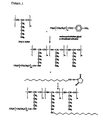
- Particularly preferred compounds are palmitoyl poly-L-lysine polyethylene glycol (PLP) (see Figure 1) or palmitoyl poly-L-ornithine polyethylene glycol (POP).
- PRP palmitoyl poly-L-lysine polyethylene glycol
- POP palmitoyl poly-L-ornithine polyethylene glycol
- the compounds may be formed by first reacting a polyamino acid with the hydrophilic group followed by reaction with the hydrophobic group.
- the compounds described herein are used in combination with cholesterol or a derivative thereof to form vesicles.
- cholesterol In the absence of cholesterol, particle formation does not occur and the material precipitates. Consequently, the presence of cholesterol is required to promote self-assembly of the polyamino acids to form vesicles.
- vesicles are made by techniques similar to those used to form liposomes and niosomes, for instance by blending the compounds in an organic solvent and then contacting the dried mixture with an aqueous solution, optionally followed by a particle size reduction step.
- vesicles may be prepared by sonicating a mixture of modified polymers and cholesterol in the presence of an aqueous solvent.
- the vesicles formed may be suspended in an aqueous vehicle or alternatively may be freeze-dried.
- the vesicles may optionally incorporate a steric stabilizer, for instance a non-ionic amphiphilic compound, preferably a poly-24-oxyethylene cholesteryl ether.
- the vesicles may be in the micron or nanometer size range, nanometer sized vesicles being formed preferably in the presence of the steric stabilizer. In this case, the steric stabilizer is incorporated into the structure of the vesicle.
- the vesicles preferably also comprise an associated pharmaceutically active ingredient.
- the active ingredient may be water soluble, in which case it will be associated with the hydrophilic regions of the particle, or water insoluble and consequently associated with the hydrophobic regions of the particle.
- Such an ingredient is preferably physically entrapped within the particle but may also be held by covalent conjugation.
- the pharmaceutically active ingredient may be a peptide or protein therapeutic compound.
- a further preferred alternative for the pharmaceutically active compound is nucleic acid (eg. DNA), preferably in the form of a gene for gene therapy or gene vaccination.
- These pharmaceutical carrying vesicles may be used for the treatment of a human or animal by therapy, in particular for oral drug delivery of peptides or proteins or as gene delivery vectors. It is envisaged that this drug delivery system will also be useful when used via the intravenous, intramuscular, intraperitonial or topical (inhalation, intranasal, application to the skin) routes.
- agents may be included in a pharmaceutical formulation comprising the vesicles of the present invention.
- Such other agents may include agents which improve the pharmacology of the vesicles such as chloroquine and primary, secondary or tertiary amines.
- the modified polymers were synthesised according to the scheme shown in Figure 1.
- the reaction mixture was stirred for 72h protected from light and subsequently dialysed against 5L of water with six changes over a 24h period.
- the dialysed material was freeze dried for three days and the freeze-dried solid dissolved in 100mL of chloroform.
- the chloroform solution was filtered and the filtrate evaporated under reduced pressure at 30-40°C until the volume had been reduced to about 5mL.
- This solution was added dropwise to 50mL of diethyl ether and the precipitate collected by filtration. To obtain a dry powder the precipitate was freeze-dried further.
- the reaction mixture was stirred for 72h protected from light and subsequently dialysed against 5L of water with six changes over a 24h period.
- the dialysed material was freeze dried for three days and the freeze-dried solid dissolved in 100mL of chloroform.
- the chloroform solution was filtered and the filtrate evaporated under reduced pressure at 30-40°C until the volume has been reduced to about 5mL.
- This solution was added dropwise to 50mL of diethyl ether and the precipitate collected by filtration. To obtain a dry powder the precipitate was freeze-dried further.
- PLP 5mg
- the mixture was sonicated for 2 X 2 min with the instrument (Soniprobe, Lucas Dawe Ultrasonics) set at 20% of its maximum output.
- the dispersion was filtered (0.45 ⁇ m) and centrifuged (150,000g X 1h, MSE 75 suppressed). The supernatant was separated from the pellet and the pelleted vesicles disrupted by 10X the volume of isopropanol.
- Table 1 shows that PLP and POP are able to encapsulate doxorubicin.
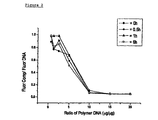
- PLP and POP vesicles were able to condense DNA and form stable complexes (see Figures 2 and 3) once the ratio of polymer to DNA exceeds 10 - 15 : 1 (gg -1 ).
- DNA polymeric vesicle complexes have been found to be stable for up to 24hrs and remain in the colloidal size range as a non-sedimenting cloudy liquid was obtained.
- PLP based vesicles could also be visualized by freeze-fracture electron microscopy after storage for 9 months at refrigeration temperature.
- the media was removed from the cells and the POP plasmid complexes added (0.1mL) followed by the addition of Optimem reduced serum media (0.1mL) - Life Sciences, UK.
- the mixture was incubated for 4h(2% CO 2 , 37°C) after which the media and POP-plasmid complexes were removed and replaced with DMEM/F10 + 10% FCS (0.2mL).
- ONPG o-nitrophenyl ⁇ -D-galactopyranoside
Landscapes
- Health & Medical Sciences (AREA)
- Chemical & Material Sciences (AREA)
- Medicinal Chemistry (AREA)
- Life Sciences & Earth Sciences (AREA)
- Engineering & Computer Science (AREA)
- Public Health (AREA)
- Bioinformatics & Cheminformatics (AREA)
- Veterinary Medicine (AREA)
- Pharmacology & Pharmacy (AREA)
- Epidemiology (AREA)
- General Health & Medical Sciences (AREA)
- Animal Behavior & Ethology (AREA)
- Chemical Kinetics & Catalysis (AREA)
- Polymers & Plastics (AREA)
- Dispersion Chemistry (AREA)
- Organic Chemistry (AREA)
- Proteomics, Peptides & Aminoacids (AREA)
- General Chemical & Material Sciences (AREA)
- Molecular Biology (AREA)
- Nanotechnology (AREA)
- Medicinal Preparation (AREA)
- Pharmaceuticals Containing Other Organic And Inorganic Compounds (AREA)
Description
| Size and encapsulation efficiency of PLP and POP particulate drug carriers. | ||
| Particulate sample | Particle size (nm) | Encapsulation efficiency Doxorubicin, POP/PLP (gg-1) |
| POP, Cholesterol + doxorubicin | 361 ± 13 | 0.014 ± 0.0042 |
| PLP, cholesterol + doxorubicin | 531 ± 56 | 0.0117 ± 0.0015 |
Claims (39)
- A pharmaceutical composition comprising a compound which is a derivatised polyamino acid bearing at least one hydrophilic group and at least one hydrophobic group per molecule; a pharmaceutically active agent and a pharmacologically acceptable carrier.
- Use of a composition comprising a compound which is a derivatised polyamino acid bearing at least one hydrophilic group and at least one hydrophobic group per molecule in the manufacture of a medicament for use in a drug delivery system.
- Use of a composition comprising a compound which is a derivatised polyamino acid bearing at least one hydrophilic group and at least one hydrophobic group per molecule in the manufacture of a medicament for use in therapy.
- A compound which is a derivatised heteropolyamino acid bearing at least one hydrophilic group and at least one hydrophobic group per molecule.
- A compound which is a derivatised polyamino acid bearing at least one hydrophilic group and at least one hydrophobic group per molecule, wherein the hydrophilic group is selected from monohydroxy C1-6 alkyl, monohydroxy substituted C2-6 acyl, C1-2 alkoxy alkyl optionally having one or more hydroxy groups substituted on the alkoxy or alkylene groups, or polyoxyethylene comprising up to 120 ethylene oxide units, and wherein the hydrophobic group is selected from hydrophobic drugs or ligands, steroid derivatives, hydrophobic macrocyclics, C12-24 alkyl, C12-24 alkanyol, C12-24 alkenoyl, C12-24 alkynyl, or C12-24 alkynoyl straight or branched chains.
- The pharmaceutical composition, composition, use of a composition or compound according to any one of claims 1 to 3 or 5 wherein the polyamino add is a straight chain homopolymer joined by amide linkages.
- The pharmaceutical composition, composition, use of a composition or compound according to claim 6 wherein the straight chain homopolymer is selected from poly-L-lysine or poly-L-ornithine.
- The pharmaceutical composition, composition, use of a composition or compound according to any one of claims 1 to 3 or 5 wherein the polyamino acid is a straight chain heteropolymer joined by amide linkages.
- The pharmaceutical composition, composition, use of a composition or compound according to any preceding claim wherein the polyamino acid has a molecular weight in the range of 600 to 1,000,000.
- The pharmaceutical composition, composition, use of a composition or compound according to claim 9 wherein the polyamino acid has a molecular weight in the range of 15,000 to 30,000.
- The pharmaceutical composition, composition, use of a composition or compound according to claims 1 to 4 wherein the hydrophilic group is cationic.
- The pharmaceutical composition, composition, use of a composition or compound according to any one of claims 1 to 4 wherein the hydrophilic group is non-ionic.
- The pharmaceutical composition, composition, use of a composition or compound according to claims 11 or 12 wherein the hydrophilic group is selected from hydrophilic drug molecules or ligands, sugars, oligosaccharides, polyhydroxy molecules or organic groups.
- The pharmaceutical composition, composition, use of a composition or compound according to claim 13 wherein the hydrophilic group is selected from mono- and oligo-hydroxy C1-6 alkyl, mono- and oligo-hydroxy substituted C2-6 acyl, C1-2 alkoxy alkyl optionally having one or more hydroxy groups substituted on the alkoxy or alkylene groups, oligo- or poly-(oxa C1-3 alkylene), or C1-4 alkyl (oligo- or poly-oxa C1-3 alkylene).
- The pharmaceutical composition, composition, use of a composition or compound according to any one of claims 1 to 4 wherein the hydrophobic group is selected from hydrophobic drugs or ligands, steroid derivatives, hydrophobic macrocyclics or organic chains.
- The pharmaceutical composition, composition, use of a composition or compound according to claim 15 wherein the hydrophobic group is selected from C12-24 alkyl, alkanyol, alkenoyl, alkynyl or alkynoyl straight or branched chains.
- The pharmaceutical composition, composition, use of a composition or compound according to any preceding claim wherein the degree of substitution by the hydrophilic groups is in the range of 1:40 to 1:1 (hydrophilic groups : amino acid monomers).
- The pharmaceutical composition, composition, use of a composition or compound according to any preceding claim wherein the degree of substitution by the hydrophobic groups is in the range of 1:20 to 1:1 (hydrophobic groups : amino acid monomers).
- The pharmaceutical composition, composition, use of a composition or compound according to any preceding claim wherein the ratio of substituted hydrophilic : hydrophobic groups is in the range of 20:1 to 1:20.
- The pharmaceutical composition, composition, use of a composition or compound according to any preceding claim wherein the derivatised poly amino acid is selected from a substituted poly-L-lysine or poly-L-ornithine wherein a free amine of a lysine or ornithine monomer is substituted with a hydrophilic group selected from a mono- or oligo-hydroxy substituted C2-6 acyl, a C1-2 alkoxyl alkyl optionally having one or more hydroxy groups substituted on the alkoxy or alkylene groups, an oligo- or poly-(oxa C1-3 alkylene); and a free amine of a further lysine or ornithine is substituted with a hydrophobic group selected from C12-24 alkanoyl, C12-24 alkenyl, C12-24 alkynyl or C12-24 alkynoyl.
- The pharmaceutical composition, composition, use of a composition or compound according to claim 20 wherein the derivatised poly amino acid is palmitoyl poly-L-lysine polyethylene glycol.
- The pharmaceutical composition, composition, use of a composition or compound according to claim 20 wherein the derivatised polyamino acid is palmitoyl poly-L-ornithine polyethylene glycol.
- A method of making a compound according to claim 4, said method comprising covalently binding to a heteropolyamino acid at least one hydrophilic group and at least one hydrophobic group per molecule.
- A method of making a compound according to claim 5, said method comprising covalently binding to a polyamino acid at least one hydrophilic group and at least one hydrophobic group per molecule, wherein the hydrophilic group is selected from monohydroxy C1-6 alkyl, monohydroxy substituted C2-6 acyl, C1-2 alkoxy alkyl optionally having one or more hydroxy groups substituted on the alkoxy or alkylene groups, or polyoxyethylene comprising up to 120 ethylene oxide units, and wherein the hydrophobic group is selected from hydrophobic drugs or ligands, steroid derivatives, hydrophobic macrocyclics, C12-24 alkyl, C12-24 alkanyol, C12-24 alkenoyl, C12-24 alkynyl, or C12-24 alkynoyl straight or branched chains.
- A vesicle comprising a compound or pharmaceutical composition according to any one of claims 1 or 4 to 22 and cholesterol, or a derivative thereof.
- A vesicle comprising a compound which is a derivatised polyamino acid bearing at least one hydrophilic group and at least one hydrophobic group per molecule
- The vesicle according to claims 25 or 26 which comprises a pharmaceutically active ingredient associated with the vesicle.
- The vesicle according to claim 27 which comprises an entrapped pharmaceutically active agent.
- The vesicle according to either of claims 27 or 28 which comprises a covalently conjugated pharmaceutically active agent.
- The vesicle according to any one of claims 27 to 29 in which the pharmaceutically active agent is a peptide or protein therapeutic compound or DNA.
- The vesicle according to claim 30 wherein the DNA is in the form of a gene for use in gene therapy or gene vaccination.
- A pharmaceutical composition comprising a vesicle according to any one of claims 25 to 31, a pharmaceutically active agent and a pharmacologically acceptable carrier.
- A vesicle according to any one of claims 25 to 31 for use in a drug delivery system.
- Use of a vesicle according to any one of claims 25 to 31 in the manufacture of a medicament for use in therapy.
- Use of a vesicle according to any one of claims 25 to 31 and a pharmaceutically active ingredient in the manufacture of a medicament for use in therapy.
- A method of making the vesicle of claims 25 to 31, said method comprising covalently binding to a polyamino acid at least one hydrophilic group and at least one hydrophobic group per molecule, and forming vesicles from the derivatised polyamino acid.
- A method according to claim 36 wherein the vesicles are formed by sonication.
- A method according to claim 36 wherein the vesicles are formed by blending the modified polyamino acids in an organic solvent and then contacting the dried mixture with an aqueous solution.
- A method according to claim 38 wherein said method is followed by a particle size reduction step.
Applications Claiming Priority (3)
| Application Number | Priority Date | Filing Date | Title |
|---|---|---|---|
| GB9811059 | 1998-05-23 | ||
| GBGB9811059.6A GB9811059D0 (en) | 1998-05-23 | 1998-05-23 | Polyamino acid vesicles |
| PCT/GB1999/001627 WO1999061512A1 (en) | 1998-05-23 | 1999-05-24 | Polyamino acid vesicles |
Publications (2)
| Publication Number | Publication Date |
|---|---|
| EP1084172A1 EP1084172A1 (en) | 2001-03-21 |
| EP1084172B1 true EP1084172B1 (en) | 2003-07-16 |
Family
ID=10832555
Family Applications (1)
| Application Number | Title | Priority Date | Filing Date |
|---|---|---|---|
| EP99922389A Expired - Lifetime EP1084172B1 (en) | 1998-05-23 | 1999-05-24 | Polyamino acid vesicles |
Country Status (5)
| Country | Link |
|---|---|
| US (1) | US6576254B1 (en) |
| EP (1) | EP1084172B1 (en) |
| DE (1) | DE69909627T2 (en) |
| GB (1) | GB9811059D0 (en) |
| WO (1) | WO1999061512A1 (en) |
Cited By (1)
| Publication number | Priority date | Publication date | Assignee | Title |
|---|---|---|---|---|
| WO2008010341A1 (en) | 2006-07-18 | 2008-01-24 | Nanocarrier Co., Ltd. | Physiologically active polypeptide, polymer micelle having protein enclosed therein, and process for production of the polymer micelle |
Families Citing this family (44)
| Publication number | Priority date | Publication date | Assignee | Title |
|---|---|---|---|---|
| US7067111B1 (en) | 1999-10-25 | 2006-06-27 | Board Of Regents, University Of Texas System | Ethylenedicysteine (EC)-drug conjugates, compositions and methods for tissue specific disease imaging |
| IL153218A0 (en) | 2000-06-02 | 2003-07-06 | Univ Texas | Ethylenedicysteine (ec) -drug conjugates |
| FR2822834B1 (en) * | 2001-04-02 | 2005-02-25 | Flamel Tech Sa | COLLOIDAL SUSPENSION OF NANOPARTICLES BASED ON AMPHIPHILIC COPOLYMERS FOR VECTORIZATION OF ACTIVE INGREDIENTS AND THEIR METHOD OF PREPARATION |
| PL369455A1 (en) * | 2001-06-01 | 2005-04-18 | Yamanouchi Europe B.V. | Lipid-polymer-conjugates |
| US7261875B2 (en) | 2001-12-21 | 2007-08-28 | Board Of Regents, The University Of Texas System | Dendritic poly (amino acid) carriers and methods of use |
| FR2840614B1 (en) | 2002-06-07 | 2004-08-27 | Flamel Tech Sa | POLYAMINOACIDS FUNCTIONALIZED BY ALPHA-TOCOPHEROL AND THEIR PARTICULARLY THERAPEUTIC APPLICATIONS |
| FR2843117B1 (en) * | 2002-07-30 | 2004-10-15 | Flamel Tech Sa | POLYAMINOACIDS FUNCTIONALIZED BY AT LEAST ONE HYDROPHOBIC GROUP AND THEIR PARTICULARLY THERAPEUTIC APPLICATIONS |
| FR2855521B1 (en) | 2003-05-28 | 2005-08-05 | Flamel Tech Sa | POLYAMINOACIDES FUNCTIONALIZED BY AT LEAST ONE YDROPHOBIC GROUP AND THEIR PARTICULARLY THERAPEUTIC APPLICATIONS. |
| FR2860516B1 (en) * | 2003-10-03 | 2006-01-13 | Flamel Tech Sa | TELECHELIC HOMOPOLYAMINOACIDES FUNCTIONALIZED BY HYDROPHOBIC GROUPS AND THEIR PARTICULARLY THERAPEUTIC APPLICATIONS |
| FR2862536B1 (en) * | 2003-11-21 | 2007-11-23 | Flamel Tech Sa | PHARMACEUTICAL FORMULATIONS FOR THE PROLONGED DELIVERY OF ACTIVE (S) PRINCIPLE (S) AND THEIR PARTICULARLY THERAPEUTIC APPLICATIONS |
| US9050378B2 (en) | 2003-12-10 | 2015-06-09 | Board Of Regents, The University Of Texas System | N2S2 chelate-targeting ligand conjugates |
| US20060134166A1 (en) * | 2004-05-25 | 2006-06-22 | Luthra Ajay K | Absorbable biocompatible materials |
| FR2873703B1 (en) | 2004-07-30 | 2006-12-08 | Flamel Technologies Sa | BRANCHED POLYAMINOACIDES FUNCTIONALIZED BY HYDROPHOBIC GROUPS AND THEIR PARTICULARLY THERAPEUTIC APPLICATIONS |
| CA2600085A1 (en) * | 2005-03-09 | 2006-09-14 | Toray Industries, Inc. | Microparticle and pharmaceutical preparation |
| US20060224095A1 (en) * | 2005-04-05 | 2006-10-05 | University Of New Hampshire | Biocompatible polymeric vesicles self assembled from triblock copolymers |
| JP4992090B2 (en) | 2005-05-02 | 2012-08-08 | 国立大学法人 東京大学 | Electrostatic coupling type polymer vesicle |
| FR2892725B1 (en) | 2005-10-31 | 2011-03-04 | Flamel Tech Sa | POLYGLUTAMIC ACIDS FUNCTIONALIZED BY DERIVATIVES OF HISTIDINE AND HYDROPHOBIC GROUPS AND THEIR PARTICULARLY THERAPEUTIC APPLICATIONS |
| KR101529318B1 (en) * | 2005-12-19 | 2015-06-16 | 파마인 코포레이션 | A hydrophobic core carrier composition for delivering a therapeutic agent, a method for preparing the same, and a method for using the composition |
| US20090074874A1 (en) | 2006-04-24 | 2009-03-19 | Yuko Amano | Process for Producing Polymer Micelles Encapsulating Low Molecular Weight Drugs |
| US10925977B2 (en) | 2006-10-05 | 2021-02-23 | Ceil>Point, LLC | Efficient synthesis of chelators for nuclear imaging and radiotherapy: compositions and applications |
| US20090263346A1 (en) * | 2006-12-05 | 2009-10-22 | David Taft | Systems and methods for delivery of drugs |
| US20090246155A1 (en) * | 2006-12-05 | 2009-10-01 | Landec Corporation | Compositions and methods for personal care |
| EP2500015A1 (en) * | 2006-12-05 | 2012-09-19 | Landec Corporation | Delivery of drugs |
| US20100004124A1 (en) * | 2006-12-05 | 2010-01-07 | David Taft | Systems and methods for delivery of materials for agriculture and aquaculture |
| US8399007B2 (en) * | 2006-12-05 | 2013-03-19 | Landec Corporation | Method for formulating a controlled-release pharmaceutical formulation |
| FR2915748B1 (en) | 2007-05-03 | 2012-10-19 | Flamel Tech Sa | POLYGLUTAMIC ACIDS FUNCTIONALIZED BY CATIONIC GROUPS AND HYDROPHOBIC GROUPS AND THEIR APPLICATIONS, IN PARTICULAR THERAPEUTIC |
| US7960336B2 (en) * | 2007-08-03 | 2011-06-14 | Pharmain Corporation | Composition for long-acting peptide analogs |
| US8563527B2 (en) * | 2007-08-20 | 2013-10-22 | Pharmain Corporation | Oligonucleotide core carrier compositions for delivery of nucleic acid-containing therapeutic agents, methods of making and using the same |
| US8114883B2 (en) * | 2007-12-04 | 2012-02-14 | Landec Corporation | Polymer formulations for delivery of bioactive materials |
| US20090176892A1 (en) * | 2008-01-09 | 2009-07-09 | Pharmain Corporation | Soluble Hydrophobic Core Carrier Compositions for Delivery of Therapeutic Agents, Methods of Making and Using the Same |
| KR101564796B1 (en) | 2008-03-10 | 2015-10-30 | 고쿠리츠다이가쿠호우진 도쿄다이가쿠 | Copolymer including uncharged hydrophilic block and cationic polyamino acid block having lateral chain to which hydrophobic radical is partially introduced, and use of copolymer |
| US20090232762A1 (en) * | 2008-03-11 | 2009-09-17 | May Pang Xiong | Compositions for delivery of therapeutic agents |
| ES2477416T3 (en) | 2009-02-13 | 2014-07-16 | The University Of Tokyo | Cationic polyamino acids and uses thereof |
| WO2010111652A2 (en) * | 2009-03-27 | 2010-09-30 | Kansas State University Research Foundation | Branched amphipathic oligo-peptides that self-assemble into vesicles |
| WO2010137167A1 (en) | 2009-05-29 | 2010-12-02 | トヨタ自動車株式会社 | Semiconductor device |
| JP4655298B1 (en) | 2010-02-23 | 2011-03-23 | ナノキャリア株式会社 | Short chain cationic polyamino acids and uses thereof |
| KR101695836B1 (en) | 2010-04-13 | 2017-01-16 | (주)아모레퍼시픽 | Polymer-liposome nanocomplex composition for transdermal delivery and preparation method of the same |
| US20120093762A1 (en) * | 2010-10-14 | 2012-04-19 | Nitto Denko Corporation | Nucleic acid delivery compounds |
| EP2666482A4 (en) | 2011-01-14 | 2015-01-07 | Univ Tokyo | PARTICLE COMPOSITION AND PHARMACEUTICAL COMPOSITION USING THE SAME |
| EP3788094A2 (en) | 2018-04-27 | 2021-03-10 | Genedit Inc. | Cationic polymer and use for biomolecule delivery |
| WO2020067142A1 (en) | 2018-09-25 | 2020-04-02 | The University Of Tokyo | Amphiphilic poly(amino acid), block copolymer using the amphiphilic poly(amino acid), and complex including the amphiphilic poly(amino acid) or the block copolymer and nucleic acid |
| US20220340712A1 (en) * | 2019-05-28 | 2022-10-27 | GenEdit, Inc. | Polymer comprising multiple functionalized sidechains for biomolecule delivery |
| WO2022102608A1 (en) * | 2020-11-11 | 2022-05-19 | 国立大学法人筑波大学 | Copolymer containing poly(ethylene glycol) and poly(l-amino acid derivative), microparticles thereof, and use therefor in pharmaceutical composition |
| FR3122573B1 (en) * | 2021-05-10 | 2024-03-29 | Hydro Fill Tech | Compositions of poly-lysine conjugates and micelles and/or poly-lysine copolymers |
Family Cites Families (10)
| Publication number | Priority date | Publication date | Assignee | Title |
|---|---|---|---|---|
| FR2574185B1 (en) | 1984-11-30 | 1987-02-13 | Weck Alain De | NOVEL SUBSTITUTED LYSINE POLYMERS FOR USE AS SUPPORTS IN THE PREPARATION OF DIAGNOSTIC PRODUCTS |
| US5364613A (en) | 1989-04-07 | 1994-11-15 | Sieving Paul F | Polychelants containing macrocyclic chelant moieties |
| US5534259A (en) * | 1993-07-08 | 1996-07-09 | Liposome Technology, Inc. | Polymer compound and coated particle composition |
| US5534241A (en) * | 1993-07-23 | 1996-07-09 | Torchilin; Vladimir P. | Amphipathic polychelating compounds and methods of use |
| DE69533987T2 (en) * | 1994-05-20 | 2006-03-16 | Hisamitsu Pharmaceutical Co., Inc., Tosu | PROTEIN OR POLYPEPTIDE, PROCESS FOR ITS PRODUCTION AND CORRESPONDING PRODUCTS |
| DE4418965A1 (en) * | 1994-05-31 | 1995-12-07 | Boehringer Ingelheim Int | Transfection of eukaryotic cells with nucleic acid |
| AU3275595A (en) * | 1994-08-05 | 1996-03-04 | Molecular/Structural Biotechnologies, Inc. | Site-specific biomolecular complexes |
| FR2727117A1 (en) * | 1994-11-18 | 1996-05-24 | Geffard Michel | USE OF POLYLYSIN CONJUGATES FOR THE PREPARATION OF MEDICAMENTS USEFUL IN THE TREATMENT OF NEURODEGENERATIVE DISEASES AND DEGENERATIVE DISORDERS OF AUTOIMMUN CHARACTER |
| JP2690276B2 (en) * | 1995-01-10 | 1997-12-10 | 科学技術振興事業団 | Electrostatically bound polymeric micelle drug carrier and its drug |
| US5877224A (en) * | 1995-07-28 | 1999-03-02 | Rutgers, The State University Of New Jersey | Polymeric drug formulations |
-
1998
- 1998-05-23 GB GBGB9811059.6A patent/GB9811059D0/en not_active Ceased
-
1999
- 1999-05-24 EP EP99922389A patent/EP1084172B1/en not_active Expired - Lifetime
- 1999-05-24 US US09/700,932 patent/US6576254B1/en not_active Expired - Fee Related
- 1999-05-24 DE DE69909627T patent/DE69909627T2/en not_active Expired - Fee Related
- 1999-05-24 WO PCT/GB1999/001627 patent/WO1999061512A1/en not_active Ceased
Cited By (2)
| Publication number | Priority date | Publication date | Assignee | Title |
|---|---|---|---|---|
| WO2008010341A1 (en) | 2006-07-18 | 2008-01-24 | Nanocarrier Co., Ltd. | Physiologically active polypeptide, polymer micelle having protein enclosed therein, and process for production of the polymer micelle |
| US8147868B2 (en) | 2006-07-18 | 2012-04-03 | Nanocarrier Co., Ltd. | Physiologically active polypeptide- or protein-encapsulating polymer micelles, and method for production of the same |
Also Published As
| Publication number | Publication date |
|---|---|
| WO1999061512A1 (en) | 1999-12-02 |
| DE69909627D1 (en) | 2003-08-21 |
| EP1084172A1 (en) | 2001-03-21 |
| US6576254B1 (en) | 2003-06-10 |
| DE69909627T2 (en) | 2004-06-09 |
| GB9811059D0 (en) | 1998-07-22 |
Similar Documents
| Publication | Publication Date | Title |
|---|---|---|
| EP1084172B1 (en) | Polyamino acid vesicles | |
| Shinn et al. | Smart pH-responsive nanomedicines for disease therapy | |
| JP3785187B2 (en) | Self-assembling polynucleotide delivery system containing dendritic polycations | |
| US5661025A (en) | Self-assembling polynucleotide delivery system comprising dendrimer polycations | |
| CN104428005B (en) | Lipid Nanoparticle Compositions for Antisense Oligonucleotide Delivery | |
| Liu et al. | Chitosan and its derivatives—a promising non-viral vector for gene transfection | |
| US7001891B1 (en) | Biodegradable polycation composition for delivery of an anionic macromolecule | |
| AU739969B2 (en) | Cationic polymer/lipid nucleic acid delivery vehicles | |
| US20040142474A1 (en) | Novel cationic lipopolymer as a biocompatible gene delivery agent | |
| US20030073619A1 (en) | Novel cationic lipopolymer as biocompatible gene delivery agent | |
| JP2005511533A (en) | Dentrimer for target delivery | |
| EP0833613A1 (en) | Delivery vehicles comprising stable lipid/nucleic acid complexes | |
| WO1997000965A2 (en) | A lipidic vector for nucleic acid delivery | |
| Kong et al. | Benzylguanidine and galactose double-conjugated chitosan nanoparticles with reduction responsiveness for targeted delivery of doxorubicin to CXCR 4 positive tumors | |
| US20240327457A1 (en) | Lipopeptides, nanoparticles and methods of use | |
| US20020022264A1 (en) | Delivery vehicles comprising stable lipid/nucleic acid complexes | |
| EP3568404A1 (en) | Star-like (guanidyl)x-oligosaccharidic compounds and conjugates or complexes thereof | |
| Remy et al. | Gene transfer with multivalent synthetic vectors | |
| KR100346577B1 (en) | Carrier specific to liver cell and the carrier-DNA conujugate | |
| Restiani | DNA Condensation Study of Fully Synthesized Lipopeptide-Based Transfection Agent for Gene Delivery Vehicle | |
| Larson | Development of anionic liposomal carriers containing listeriolysin O and red blood cell ghosts as plasmid DNA delivery platforms | |
| Linsha Mali | Polyethyleneimine based non-viral vectors for p53 Gene delivery in Cancer cells | |
| Sakthivel | Synthesis and evaluation of dendrimers as potential carrier systems | |
| AU5192000A (en) | Delivery vehicles comprising stable lipid/nucleic acid complexes |
Legal Events
| Date | Code | Title | Description |
|---|---|---|---|
| PUAI | Public reference made under article 153(3) epc to a published international application that has entered the european phase |
Free format text: ORIGINAL CODE: 0009012 |
|
| 17P | Request for examination filed |
Effective date: 20001213 |
|
| AK | Designated contracting states |
Kind code of ref document: A1 Designated state(s): CH DE FR GB LI |
|
| GRAG | Despatch of communication of intention to grant |
Free format text: ORIGINAL CODE: EPIDOS AGRA |
|
| 17Q | First examination report despatched |
Effective date: 20010725 |
|
| GRAG | Despatch of communication of intention to grant |
Free format text: ORIGINAL CODE: EPIDOS AGRA |
|
| GRAG | Despatch of communication of intention to grant |
Free format text: ORIGINAL CODE: EPIDOS AGRA |
|
| GRAH | Despatch of communication of intention to grant a patent |
Free format text: ORIGINAL CODE: EPIDOS IGRA |
|
| GRAH | Despatch of communication of intention to grant a patent |
Free format text: ORIGINAL CODE: EPIDOS IGRA |
|
| GRAA | (expected) grant |
Free format text: ORIGINAL CODE: 0009210 |
|
| AK | Designated contracting states |
Designated state(s): CH DE FR GB LI |
|
| REG | Reference to a national code |
Ref country code: GB Ref legal event code: FG4D |
|
| REG | Reference to a national code |
Ref country code: CH Ref legal event code: EP |
|
| REF | Corresponds to: |
Ref document number: 69909627 Country of ref document: DE Date of ref document: 20030821 Kind code of ref document: P |
|
| REG | Reference to a national code |
Ref country code: CH Ref legal event code: NV Representative=s name: RITSCHER & PARTNER AG PATENTANWAELTE |
|
| ET | Fr: translation filed | ||
| PLBE | No opposition filed within time limit |
Free format text: ORIGINAL CODE: 0009261 |
|
| 26N | No opposition filed |
Effective date: 20040419 |
|
| PGFP | Annual fee paid to national office [announced via postgrant information from national office to epo] |
Ref country code: FR Payment date: 20050511 Year of fee payment: 7 |
|
| PGFP | Annual fee paid to national office [announced via postgrant information from national office to epo] |
Ref country code: GB Payment date: 20060712 Year of fee payment: 8 |
|
| PGFP | Annual fee paid to national office [announced via postgrant information from national office to epo] |
Ref country code: DE Payment date: 20060713 Year of fee payment: 8 Ref country code: CH Payment date: 20060713 Year of fee payment: 8 |
|
| REG | Reference to a national code |
Ref country code: FR Ref legal event code: ST Effective date: 20070131 |
|
| REG | Reference to a national code |
Ref country code: CH Ref legal event code: PL |
|
| GBPC | Gb: european patent ceased through non-payment of renewal fee |
Effective date: 20070524 |
|
| PG25 | Lapsed in a contracting state [announced via postgrant information from national office to epo] |
Ref country code: CH Free format text: LAPSE BECAUSE OF NON-PAYMENT OF DUE FEES Effective date: 20070531 Ref country code: LI Free format text: LAPSE BECAUSE OF NON-PAYMENT OF DUE FEES Effective date: 20070531 |
|
| PG25 | Lapsed in a contracting state [announced via postgrant information from national office to epo] |
Ref country code: FR Free format text: LAPSE BECAUSE OF NON-PAYMENT OF DUE FEES Effective date: 20060531 Ref country code: DE Free format text: LAPSE BECAUSE OF NON-PAYMENT OF DUE FEES Effective date: 20071201 |
|
| PG25 | Lapsed in a contracting state [announced via postgrant information from national office to epo] |
Ref country code: GB Free format text: LAPSE BECAUSE OF NON-PAYMENT OF DUE FEES Effective date: 20070524 |