EP1082028B1 - Matthiola seed oil, mixtures containing it and use thereof - Google Patents
Matthiola seed oil, mixtures containing it and use thereof Download PDFInfo
- Publication number
- EP1082028B1 EP1082028B1 EP98923044A EP98923044A EP1082028B1 EP 1082028 B1 EP1082028 B1 EP 1082028B1 EP 98923044 A EP98923044 A EP 98923044A EP 98923044 A EP98923044 A EP 98923044A EP 1082028 B1 EP1082028 B1 EP 1082028B1
- Authority
- EP
- European Patent Office
- Prior art keywords
- oil
- seeds
- matthiola
- omega
- fatty acids
- Prior art date
- Legal status (The legal status is an assumption and is not a legal conclusion. Google has not performed a legal analysis and makes no representation as to the accuracy of the status listed.)
- Expired - Lifetime
Links
- 239000000203 mixture Substances 0.000 title claims abstract description 32
- 241000220257 Matthiola Species 0.000 title description 21
- 235000015112 vegetable and seed oil Nutrition 0.000 title description 17
- 241000196324 Embryophyta Species 0.000 claims abstract description 25
- 244000088413 Matthiola incana Species 0.000 claims abstract description 20
- 235000011378 Matthiola incana Nutrition 0.000 claims abstract description 18
- 238000000034 method Methods 0.000 claims abstract description 16
- 235000015872 dietary supplement Nutrition 0.000 claims abstract description 8
- 238000003825 pressing Methods 0.000 claims abstract description 6
- 238000002360 preparation method Methods 0.000 claims abstract description 4
- 238000002156 mixing Methods 0.000 claims abstract description 3
- 239000000654 additive Substances 0.000 claims description 3
- 238000004519 manufacturing process Methods 0.000 claims description 3
- 239000004480 active ingredient Substances 0.000 abstract description 5
- 239000002537 cosmetic Substances 0.000 abstract description 4
- 210000004204 blood vessel Anatomy 0.000 abstract description 3
- 208000027866 inflammatory disease Diseases 0.000 abstract description 3
- 238000005461 lubrication Methods 0.000 abstract description 3
- 238000010422 painting Methods 0.000 abstract description 3
- 206010003210 Arteriosclerosis Diseases 0.000 abstract description 2
- 201000004681 Psoriasis Diseases 0.000 abstract description 2
- 208000011775 arteriosclerosis disease Diseases 0.000 abstract description 2
- 208000037976 chronic inflammation Diseases 0.000 abstract description 2
- 208000037893 chronic inflammatory disorder Diseases 0.000 abstract description 2
- 208000029078 coronary artery disease Diseases 0.000 abstract description 2
- 206010012601 diabetes mellitus Diseases 0.000 abstract description 2
- 230000036074 healthy skin Effects 0.000 abstract description 2
- 230000006872 improvement Effects 0.000 abstract description 2
- 230000002265 prevention Effects 0.000 abstract description 2
- 239000000047 product Substances 0.000 abstract description 2
- 208000024891 symptom Diseases 0.000 abstract description 2
- 230000004614 tumor growth Effects 0.000 abstract description 2
- 238000007631 vascular surgery Methods 0.000 abstract description 2
- 230000037303 wrinkles Effects 0.000 abstract description 2
- 239000003921 oil Substances 0.000 description 62
- 235000019198 oils Nutrition 0.000 description 62
- DTOSIQBPPRVQHS-PDBXOOCHSA-N alpha-linolenic acid Chemical compound CC\C=C/C\C=C/C\C=C/CCCCCCCC(O)=O DTOSIQBPPRVQHS-PDBXOOCHSA-N 0.000 description 41
- HVYWMOMLDIMFJA-DPAQBDIFSA-N cholesterol Chemical compound C1C=C2C[C@@H](O)CC[C@]2(C)[C@@H]2[C@@H]1[C@@H]1CC[C@H]([C@H](C)CCCC(C)C)[C@@]1(C)CC2 HVYWMOMLDIMFJA-DPAQBDIFSA-N 0.000 description 39
- 235000005911 diet Nutrition 0.000 description 31
- 230000037213 diet Effects 0.000 description 31
- 235000014113 dietary fatty acids Nutrition 0.000 description 28
- 229930195729 fatty acid Natural products 0.000 description 28
- 239000000194 fatty acid Substances 0.000 description 28
- 150000004665 fatty acids Chemical class 0.000 description 28
- 241001465754 Metazoa Species 0.000 description 25
- 235000020661 alpha-linolenic acid Nutrition 0.000 description 24
- 229960004488 linolenic acid Drugs 0.000 description 24
- 235000020660 omega-3 fatty acid Nutrition 0.000 description 19
- MBMBGCFOFBJSGT-KUBAVDMBSA-N all-cis-docosa-4,7,10,13,16,19-hexaenoic acid Chemical group CC\C=C/C\C=C/C\C=C/C\C=C/C\C=C/C\C=C/CCC(O)=O MBMBGCFOFBJSGT-KUBAVDMBSA-N 0.000 description 14
- 210000004185 liver Anatomy 0.000 description 14
- 229940012843 omega-3 fatty acid Drugs 0.000 description 14
- KQQKGWQCNNTQJW-UHFFFAOYSA-N linolenic acid Natural products CC=CCCC=CCC=CCCCCCCCC(O)=O KQQKGWQCNNTQJW-UHFFFAOYSA-N 0.000 description 12
- 239000006014 omega-3 oil Substances 0.000 description 12
- 241000700159 Rattus Species 0.000 description 11
- JAZBEHYOTPTENJ-JLNKQSITSA-N all-cis-5,8,11,14,17-icosapentaenoic acid Chemical compound CC\C=C/C\C=C/C\C=C/C\C=C/C\C=C/CCCC(O)=O JAZBEHYOTPTENJ-JLNKQSITSA-N 0.000 description 11
- 235000020673 eicosapentaenoic acid Nutrition 0.000 description 11
- 229960005135 eicosapentaenoic acid Drugs 0.000 description 11
- JAZBEHYOTPTENJ-UHFFFAOYSA-N eicosapentaenoic acid Natural products CCC=CCC=CCC=CCC=CCC=CCCCC(O)=O JAZBEHYOTPTENJ-UHFFFAOYSA-N 0.000 description 11
- RTZKZFJDLAIYFH-UHFFFAOYSA-N Diethyl ether Chemical compound CCOCC RTZKZFJDLAIYFH-UHFFFAOYSA-N 0.000 description 10
- 235000012000 cholesterol Nutrition 0.000 description 10
- 235000013601 eggs Nutrition 0.000 description 10
- 235000019486 Sunflower oil Nutrition 0.000 description 9
- 239000003240 coconut oil Substances 0.000 description 9
- 235000019864 coconut oil Nutrition 0.000 description 9
- 239000002600 sunflower oil Substances 0.000 description 9
- 239000008158 vegetable oil Substances 0.000 description 9
- 235000020669 docosahexaenoic acid Nutrition 0.000 description 8
- 238000002474 experimental method Methods 0.000 description 8
- UFTFJSFQGQCHQW-UHFFFAOYSA-N triformin Chemical compound O=COCC(OC=O)COC=O UFTFJSFQGQCHQW-UHFFFAOYSA-N 0.000 description 8
- 229940090949 docosahexaenoic acid Drugs 0.000 description 7
- 229940013317 fish oils Drugs 0.000 description 7
- 235000020777 polyunsaturated fatty acids Nutrition 0.000 description 7
- PEDCQBHIVMGVHV-UHFFFAOYSA-N Glycerine Chemical compound OCC(O)CO PEDCQBHIVMGVHV-UHFFFAOYSA-N 0.000 description 6
- 239000002253 acid Substances 0.000 description 6
- 238000001035 drying Methods 0.000 description 6
- 235000013305 food Nutrition 0.000 description 6
- ZQPPMHVWECSIRJ-KTKRTIGZSA-N oleic acid Chemical compound CCCCCCCC\C=C/CCCCCCCC(O)=O ZQPPMHVWECSIRJ-KTKRTIGZSA-N 0.000 description 6
- 210000004369 blood Anatomy 0.000 description 5
- 239000008280 blood Substances 0.000 description 5
- 230000000694 effects Effects 0.000 description 5
- 230000003647 oxidation Effects 0.000 description 5
- 238000007254 oxidation reaction Methods 0.000 description 5
- 244000144977 poultry Species 0.000 description 5
- HEDRZPFGACZZDS-UHFFFAOYSA-N Chloroform Chemical compound ClC(Cl)Cl HEDRZPFGACZZDS-UHFFFAOYSA-N 0.000 description 4
- 206010013911 Dysgeusia Diseases 0.000 description 4
- LFQSCWFLJHTTHZ-UHFFFAOYSA-N Ethanol Chemical compound CCO LFQSCWFLJHTTHZ-UHFFFAOYSA-N 0.000 description 4
- 238000006243 chemical reaction Methods 0.000 description 4
- 238000000605 extraction Methods 0.000 description 4
- 150000002632 lipids Chemical class 0.000 description 4
- 235000019155 vitamin A Nutrition 0.000 description 4
- 239000011719 vitamin A Substances 0.000 description 4
- 235000019166 vitamin D Nutrition 0.000 description 4
- 239000011710 vitamin D Substances 0.000 description 4
- 201000004624 Dermatitis Diseases 0.000 description 3
- YMWUJEATGCHHMB-UHFFFAOYSA-N Dichloromethane Chemical compound ClCCl YMWUJEATGCHHMB-UHFFFAOYSA-N 0.000 description 3
- 241000282412 Homo Species 0.000 description 3
- OYHQOLUKZRVURQ-HZJYTTRNSA-N Linoleic acid Chemical compound CCCCC\C=C/C\C=C/CCCCCCCC(O)=O OYHQOLUKZRVURQ-HZJYTTRNSA-N 0.000 description 3
- WQDUMFSSJAZKTM-UHFFFAOYSA-N Sodium methoxide Chemical compound [Na+].[O-]C WQDUMFSSJAZKTM-UHFFFAOYSA-N 0.000 description 3
- 150000001875 compounds Chemical class 0.000 description 3
- 235000004426 flaxseed Nutrition 0.000 description 3
- 230000037406 food intake Effects 0.000 description 3
- IPCSVZSSVZVIGE-UHFFFAOYSA-N hexadecanoic acid Chemical compound CCCCCCCCCCCCCCCC(O)=O IPCSVZSSVZVIGE-UHFFFAOYSA-N 0.000 description 3
- 239000000944 linseed oil Substances 0.000 description 3
- 235000021388 linseed oil Nutrition 0.000 description 3
- 239000000843 powder Substances 0.000 description 3
- 239000000126 substance Substances 0.000 description 3
- 238000005809 transesterification reaction Methods 0.000 description 3
- 235000021122 unsaturated fatty acids Nutrition 0.000 description 3
- 150000004670 unsaturated fatty acids Chemical class 0.000 description 3
- WRIDQFICGBMAFQ-UHFFFAOYSA-N (E)-8-Octadecenoic acid Natural products CCCCCCCCCC=CCCCCCCC(O)=O WRIDQFICGBMAFQ-UHFFFAOYSA-N 0.000 description 2
- LQJBNNIYVWPHFW-UHFFFAOYSA-N 20:1omega9c fatty acid Natural products CCCCCCCCCCC=CCCCCCCCC(O)=O LQJBNNIYVWPHFW-UHFFFAOYSA-N 0.000 description 2
- QSBYPNXLFMSGKH-UHFFFAOYSA-N 9-Heptadecensaeure Natural products CCCCCCCC=CCCCCCCCC(O)=O QSBYPNXLFMSGKH-UHFFFAOYSA-N 0.000 description 2
- QTBSBXVTEAMEQO-UHFFFAOYSA-N Acetic acid Chemical compound CC(O)=O QTBSBXVTEAMEQO-UHFFFAOYSA-N 0.000 description 2
- 241000251468 Actinopterygii Species 0.000 description 2
- 235000004977 Brassica sinapistrum Nutrition 0.000 description 2
- 244000241257 Cucumis melo Species 0.000 description 2
- 235000015510 Cucumis melo subsp melo Nutrition 0.000 description 2
- 244000068988 Glycine max Species 0.000 description 2
- 235000010469 Glycine max Nutrition 0.000 description 2
- 241000208818 Helianthus Species 0.000 description 2
- 235000003222 Helianthus annuus Nutrition 0.000 description 2
- 239000005642 Oleic acid Substances 0.000 description 2
- ZQPPMHVWECSIRJ-UHFFFAOYSA-N Oleic acid Natural products CCCCCCCCC=CCCCCCCCC(O)=O ZQPPMHVWECSIRJ-UHFFFAOYSA-N 0.000 description 2
- 208000007536 Thrombosis Diseases 0.000 description 2
- FJJCIZWZNKZHII-UHFFFAOYSA-N [4,6-bis(cyanoamino)-1,3,5-triazin-2-yl]cyanamide Chemical compound N#CNC1=NC(NC#N)=NC(NC#N)=N1 FJJCIZWZNKZHII-UHFFFAOYSA-N 0.000 description 2
- 238000004458 analytical method Methods 0.000 description 2
- 210000001367 artery Anatomy 0.000 description 2
- 210000001772 blood platelet Anatomy 0.000 description 2
- 150000001720 carbohydrates Chemical class 0.000 description 2
- 235000014633 carbohydrates Nutrition 0.000 description 2
- 238000004140 cleaning Methods 0.000 description 2
- CYQFCXCEBYINGO-IAGOWNOFSA-N delta1-THC Chemical compound C1=C(C)CC[C@H]2C(C)(C)OC3=CC(CCCCC)=CC(O)=C3[C@@H]21 CYQFCXCEBYINGO-IAGOWNOFSA-N 0.000 description 2
- 239000003814 drug Substances 0.000 description 2
- 238000011156 evaluation Methods 0.000 description 2
- 230000035558 fertility Effects 0.000 description 2
- 238000009472 formulation Methods 0.000 description 2
- 235000021588 free fatty acids Nutrition 0.000 description 2
- 239000007789 gas Substances 0.000 description 2
- 239000007903 gelatin capsule Substances 0.000 description 2
- 238000003306 harvesting Methods 0.000 description 2
- 230000007407 health benefit Effects 0.000 description 2
- 230000003054 hormonal effect Effects 0.000 description 2
- 235000006486 human diet Nutrition 0.000 description 2
- QXJSBBXBKPUZAA-UHFFFAOYSA-N isooleic acid Natural products CCCCCCCC=CCCCCCCCCC(O)=O QXJSBBXBKPUZAA-UHFFFAOYSA-N 0.000 description 2
- 230000035800 maturation Effects 0.000 description 2
- 235000020665 omega-6 fatty acid Nutrition 0.000 description 2
- 229940033080 omega-6 fatty acid Drugs 0.000 description 2
- 239000003208 petroleum Substances 0.000 description 2
- 239000003755 preservative agent Substances 0.000 description 2
- 230000002335 preservative effect Effects 0.000 description 2
- 230000005562 seed maturation Effects 0.000 description 2
- 239000002904 solvent Substances 0.000 description 2
- 231100000331 toxic Toxicity 0.000 description 2
- 230000002588 toxic effect Effects 0.000 description 2
- XLYOFNOQVPJJNP-UHFFFAOYSA-N water Substances O XLYOFNOQVPJJNP-UHFFFAOYSA-N 0.000 description 2
- DVSZKTAMJJTWFG-SKCDLICFSA-N (2e,4e,6e,8e,10e,12e)-docosa-2,4,6,8,10,12-hexaenoic acid Chemical compound CCCCCCCCC\C=C\C=C\C=C\C=C\C=C\C=C\C(O)=O DVSZKTAMJJTWFG-SKCDLICFSA-N 0.000 description 1
- MJYQFWSXKFLTAY-OVEQLNGDSA-N (2r,3r)-2,3-bis[(4-hydroxy-3-methoxyphenyl)methyl]butane-1,4-diol;(2r,3r,4s,5s,6r)-6-(hydroxymethyl)oxane-2,3,4,5-tetrol Chemical compound OC[C@H]1O[C@@H](O)[C@H](O)[C@@H](O)[C@@H]1O.C1=C(O)C(OC)=CC(C[C@@H](CO)[C@H](CO)CC=2C=C(OC)C(O)=CC=2)=C1 MJYQFWSXKFLTAY-OVEQLNGDSA-N 0.000 description 1
- RNFJDJUURJAICM-UHFFFAOYSA-N 2,2,4,4,6,6-hexaphenoxy-1,3,5-triaza-2$l^{5},4$l^{5},6$l^{5}-triphosphacyclohexa-1,3,5-triene Chemical compound N=1P(OC=2C=CC=CC=2)(OC=2C=CC=CC=2)=NP(OC=2C=CC=CC=2)(OC=2C=CC=CC=2)=NP=1(OC=1C=CC=CC=1)OC1=CC=CC=C1 RNFJDJUURJAICM-UHFFFAOYSA-N 0.000 description 1
- LWKJNIMGNUTZOO-UHFFFAOYSA-M 3,5-dichloro-2-hydroxybenzenesulfonate Chemical compound OC1=C(Cl)C=C(Cl)C=C1S([O-])(=O)=O LWKJNIMGNUTZOO-UHFFFAOYSA-M 0.000 description 1
- FJKROLUGYXJWQN-UHFFFAOYSA-M 4-hydroxybenzoate Chemical compound OC1=CC=C(C([O-])=O)C=C1 FJKROLUGYXJWQN-UHFFFAOYSA-M 0.000 description 1
- GZJLLYHBALOKEX-UHFFFAOYSA-N 6-Ketone, O18-Me-Ussuriedine Natural products CC=CCC=CCC=CCC=CCC=CCC=CCCCC(O)=O GZJLLYHBALOKEX-UHFFFAOYSA-N 0.000 description 1
- 235000021411 American diet Nutrition 0.000 description 1
- 241000271566 Aves Species 0.000 description 1
- 244000178993 Brassica juncea Species 0.000 description 1
- 235000011332 Brassica juncea Nutrition 0.000 description 1
- 235000014698 Brassica juncea var multisecta Nutrition 0.000 description 1
- 240000002791 Brassica napus Species 0.000 description 1
- 235000006008 Brassica napus var napus Nutrition 0.000 description 1
- 235000006618 Brassica rapa subsp oleifera Nutrition 0.000 description 1
- 244000188595 Brassica sinapistrum Species 0.000 description 1
- 241000219193 Brassicaceae Species 0.000 description 1
- DPUOLQHDNGRHBS-UHFFFAOYSA-N Brassidinsaeure Natural products CCCCCCCCC=CCCCCCCCCCCCC(O)=O DPUOLQHDNGRHBS-UHFFFAOYSA-N 0.000 description 1
- 244000025254 Cannabis sativa Species 0.000 description 1
- 235000012766 Cannabis sativa ssp. sativa var. sativa Nutrition 0.000 description 1
- 235000012765 Cannabis sativa ssp. sativa var. spontanea Nutrition 0.000 description 1
- 244000020518 Carthamus tinctorius Species 0.000 description 1
- 235000003255 Carthamus tinctorius Nutrition 0.000 description 1
- 241000283153 Cetacea Species 0.000 description 1
- 206010053567 Coagulopathies Diseases 0.000 description 1
- 244000060011 Cocos nucifera Species 0.000 description 1
- 235000013162 Cocos nucifera Nutrition 0.000 description 1
- 108010038218 Dietary Fish Proteins Proteins 0.000 description 1
- URXZXNYJPAJJOQ-UHFFFAOYSA-N Erucic acid Natural products CCCCCCC=CCCCCCCCCCCCC(O)=O URXZXNYJPAJJOQ-UHFFFAOYSA-N 0.000 description 1
- HTTJABKRGRZYRN-UHFFFAOYSA-N Heparin Chemical compound OC1C(NC(=O)C)C(O)OC(COS(O)(=O)=O)C1OC1C(OS(O)(=O)=O)C(O)C(OC2C(C(OS(O)(=O)=O)C(OC3C(C(O)C(O)C(O3)C(O)=O)OS(O)(=O)=O)C(CO)O2)NS(O)(=O)=O)C(C(O)=O)O1 HTTJABKRGRZYRN-UHFFFAOYSA-N 0.000 description 1
- 206010020751 Hypersensitivity Diseases 0.000 description 1
- 206010020772 Hypertension Diseases 0.000 description 1
- 241000758791 Juglandaceae Species 0.000 description 1
- 240000006240 Linum usitatissimum Species 0.000 description 1
- 235000004431 Linum usitatissimum Nutrition 0.000 description 1
- 108090001060 Lipase Proteins 0.000 description 1
- 102000004882 Lipase Human genes 0.000 description 1
- 239000004367 Lipase Substances 0.000 description 1
- 229910019142 PO4 Inorganic materials 0.000 description 1
- 102000003992 Peroxidases Human genes 0.000 description 1
- 244000234609 Portulaca oleracea Species 0.000 description 1
- 235000001855 Portulaca oleracea Nutrition 0.000 description 1
- 235000009337 Spinacia oleracea Nutrition 0.000 description 1
- 244000300264 Spinacia oleracea Species 0.000 description 1
- 108010055297 Sterol Esterase Proteins 0.000 description 1
- 102000000019 Sterol Esterase Human genes 0.000 description 1
- 235000019498 Walnut oil Nutrition 0.000 description 1
- 235000021068 Western diet Nutrition 0.000 description 1
- 208000027418 Wounds and injury Diseases 0.000 description 1
- 240000008042 Zea mays Species 0.000 description 1
- 235000005824 Zea mays ssp. parviglumis Nutrition 0.000 description 1
- 235000002017 Zea mays subsp mays Nutrition 0.000 description 1
- 229960000583 acetic acid Drugs 0.000 description 1
- 125000000218 acetic acid group Chemical class C(C)(=O)* 0.000 description 1
- 150000007513 acids Chemical class 0.000 description 1
- 239000002671 adjuvant Substances 0.000 description 1
- 230000007815 allergy Effects 0.000 description 1
- 230000001407 anti-thrombic effect Effects 0.000 description 1
- 208000010668 atopic eczema Diseases 0.000 description 1
- 230000009286 beneficial effect Effects 0.000 description 1
- 238000005842 biochemical reaction Methods 0.000 description 1
- 230000017531 blood circulation Effects 0.000 description 1
- 210000004556 brain Anatomy 0.000 description 1
- 230000004641 brain development Effects 0.000 description 1
- 235000009120 camo Nutrition 0.000 description 1
- 239000000828 canola oil Substances 0.000 description 1
- 235000019519 canola oil Nutrition 0.000 description 1
- 239000012159 carrier gas Substances 0.000 description 1
- 210000004027 cell Anatomy 0.000 description 1
- 235000005607 chanvre indien Nutrition 0.000 description 1
- 150000001840 cholesterol esters Chemical class 0.000 description 1
- 230000004087 circulation Effects 0.000 description 1
- 230000035602 clotting Effects 0.000 description 1
- 238000002485 combustion reaction Methods 0.000 description 1
- 235000005822 corn Nutrition 0.000 description 1
- 230000006378 damage Effects 0.000 description 1
- 230000007812 deficiency Effects 0.000 description 1
- 238000013461 design Methods 0.000 description 1
- 238000011161 development Methods 0.000 description 1
- 230000018109 developmental process Effects 0.000 description 1
- 201000010099 disease Diseases 0.000 description 1
- 208000037265 diseases, disorders, signs and symptoms Diseases 0.000 description 1
- KAUVQQXNCKESLC-UHFFFAOYSA-N docosahexaenoic acid (DHA) Natural products COC(=O)C(C)NOCC1=CC=CC=C1 KAUVQQXNCKESLC-UHFFFAOYSA-N 0.000 description 1
- -1 e.g. Substances 0.000 description 1
- 239000008157 edible vegetable oil Substances 0.000 description 1
- 239000000839 emulsion Substances 0.000 description 1
- DPUOLQHDNGRHBS-KTKRTIGZSA-N erucic acid Chemical compound CCCCCCCC\C=C/CCCCCCCCCCCC(O)=O DPUOLQHDNGRHBS-KTKRTIGZSA-N 0.000 description 1
- 150000002148 esters Chemical class 0.000 description 1
- 239000003925 fat Substances 0.000 description 1
- 235000019197 fats Nutrition 0.000 description 1
- 230000004720 fertilization Effects 0.000 description 1
- 235000021323 fish oil Nutrition 0.000 description 1
- 239000003063 flame retardant Substances 0.000 description 1
- 235000012041 food component Nutrition 0.000 description 1
- 239000005417 food ingredient Substances 0.000 description 1
- 235000012631 food intake Nutrition 0.000 description 1
- 238000004817 gas chromatography Methods 0.000 description 1
- 239000012362 glacial acetic acid Substances 0.000 description 1
- 125000005456 glyceride group Chemical group 0.000 description 1
- 230000036541 health Effects 0.000 description 1
- 208000019622 heart disease Diseases 0.000 description 1
- 239000011487 hemp Substances 0.000 description 1
- 229960002897 heparin Drugs 0.000 description 1
- 229920000669 heparin Polymers 0.000 description 1
- 230000002363 herbicidal effect Effects 0.000 description 1
- 239000004009 herbicide Substances 0.000 description 1
- 230000007062 hydrolysis Effects 0.000 description 1
- 238000006460 hydrolysis reaction Methods 0.000 description 1
- 230000000055 hyoplipidemic effect Effects 0.000 description 1
- 230000036737 immune function Effects 0.000 description 1
- 210000000987 immune system Anatomy 0.000 description 1
- 208000014674 injury Diseases 0.000 description 1
- BAUYGSIQEAFULO-UHFFFAOYSA-L iron(2+) sulfate (anhydrous) Chemical compound [Fe+2].[O-]S([O-])(=O)=O BAUYGSIQEAFULO-UHFFFAOYSA-L 0.000 description 1
- 229910000359 iron(II) sulfate Inorganic materials 0.000 description 1
- 230000001788 irregular Effects 0.000 description 1
- 238000003973 irrigation Methods 0.000 description 1
- 230000002262 irrigation Effects 0.000 description 1
- 150000002617 leukotrienes Chemical class 0.000 description 1
- 235000020778 linoleic acid Nutrition 0.000 description 1
- OYHQOLUKZRVURQ-IXWMQOLASA-N linoleic acid Natural products CCCCC\C=C/C\C=C\CCCCCCCC(O)=O OYHQOLUKZRVURQ-IXWMQOLASA-N 0.000 description 1
- 235000019421 lipase Nutrition 0.000 description 1
- 235000020667 long-chain omega-3 fatty acid Nutrition 0.000 description 1
- 235000013372 meat Nutrition 0.000 description 1
- 230000002503 metabolic effect Effects 0.000 description 1
- 150000004702 methyl esters Chemical class 0.000 description 1
- 239000004570 mortar (masonry) Substances 0.000 description 1
- 239000005445 natural material Substances 0.000 description 1
- 235000016709 nutrition Nutrition 0.000 description 1
- 238000012261 overproduction Methods 0.000 description 1
- 229940094443 oxytocics prostaglandins Drugs 0.000 description 1
- 108040007629 peroxidase activity proteins Proteins 0.000 description 1
- 150000002978 peroxides Chemical class 0.000 description 1
- NBIIXXVUZAFLBC-UHFFFAOYSA-K phosphate Chemical compound [O-]P([O-])([O-])=O NBIIXXVUZAFLBC-UHFFFAOYSA-K 0.000 description 1
- 239000010452 phosphate Substances 0.000 description 1
- 230000007505 plaque formation Effects 0.000 description 1
- 230000008092 positive effect Effects 0.000 description 1
- 239000002243 precursor Substances 0.000 description 1
- 230000008569 process Effects 0.000 description 1
- CBOMORHDRONZRN-QLOYDKTKSA-N prostaglandin E3 Chemical compound CC\C=C/C[C@H](O)\C=C\[C@H]1[C@H](O)CC(=O)[C@@H]1C\C=C/CCCC(O)=O CBOMORHDRONZRN-QLOYDKTKSA-N 0.000 description 1
- 150000003180 prostaglandins Chemical class 0.000 description 1
- 108090000623 proteins and genes Proteins 0.000 description 1
- 102000004169 proteins and genes Human genes 0.000 description 1
- 239000002994 raw material Substances 0.000 description 1
- 238000011160 research Methods 0.000 description 1
- 210000001525 retina Anatomy 0.000 description 1
- 206010039073 rheumatoid arthritis Diseases 0.000 description 1
- 230000033764 rhythmic process Effects 0.000 description 1
- 150000003839 salts Chemical class 0.000 description 1
- 235000021003 saturated fats Nutrition 0.000 description 1
- 235000014102 seafood Nutrition 0.000 description 1
- 230000008117 seed development Effects 0.000 description 1
- 210000002966 serum Anatomy 0.000 description 1
- 208000017520 skin disease Diseases 0.000 description 1
- 239000002689 soil Substances 0.000 description 1
- 239000007787 solid Substances 0.000 description 1
- 210000000952 spleen Anatomy 0.000 description 1
- 230000002269 spontaneous effect Effects 0.000 description 1
- 239000013589 supplement Substances 0.000 description 1
- 210000001519 tissue Anatomy 0.000 description 1
- 150000003626 triacylglycerols Chemical class 0.000 description 1
- ZSDSQXJSNMTJDA-UHFFFAOYSA-N trifluralin Chemical compound CCCN(CCC)C1=C([N+]([O-])=O)C=C(C(F)(F)F)C=C1[N+]([O-])=O ZSDSQXJSNMTJDA-UHFFFAOYSA-N 0.000 description 1
- 235000020234 walnut Nutrition 0.000 description 1
- 239000008170 walnut oil Substances 0.000 description 1
Images



Classifications
-
- A—HUMAN NECESSITIES
- A61—MEDICAL OR VETERINARY SCIENCE; HYGIENE
- A61Q—SPECIFIC USE OF COSMETICS OR SIMILAR TOILETRY PREPARATIONS
- A61Q19/00—Preparations for care of the skin
- A61Q19/08—Anti-ageing preparations
-
- A—HUMAN NECESSITIES
- A23—FOODS OR FOODSTUFFS; TREATMENT THEREOF, NOT COVERED BY OTHER CLASSES
- A23K—FODDER
- A23K20/00—Accessory food factors for animal feeding-stuffs
- A23K20/10—Organic substances
- A23K20/158—Fatty acids; Fats; Products containing oils or fats
-
- A—HUMAN NECESSITIES
- A23—FOODS OR FOODSTUFFS; TREATMENT THEREOF, NOT COVERED BY OTHER CLASSES
- A23L—FOODS, FOODSTUFFS OR NON-ALCOHOLIC BEVERAGES, NOT OTHERWISE PROVIDED FOR; PREPARATION OR TREATMENT THEREOF
- A23L33/00—Modifying nutritive qualities of foods; Dietetic products; Preparation or treatment thereof
- A23L33/10—Modifying nutritive qualities of foods; Dietetic products; Preparation or treatment thereof using additives
- A23L33/105—Plant extracts, their artificial duplicates or their derivatives
- A23L33/11—Plant sterols or derivatives thereof, e.g. phytosterols
-
- A—HUMAN NECESSITIES
- A61—MEDICAL OR VETERINARY SCIENCE; HYGIENE
- A61K—PREPARATIONS FOR MEDICAL, DENTAL OR TOILETRY PURPOSES
- A61K36/00—Medicinal preparations of undetermined constitution containing material from algae, lichens, fungi or plants, or derivatives thereof, e.g. traditional herbal medicines
- A61K36/18—Magnoliophyta (angiosperms)
- A61K36/185—Magnoliopsida (dicotyledons)
- A61K36/31—Brassicaceae or Cruciferae (Mustard family), e.g. broccoli, cabbage or kohlrabi
-
- A—HUMAN NECESSITIES
- A61—MEDICAL OR VETERINARY SCIENCE; HYGIENE
- A61K—PREPARATIONS FOR MEDICAL, DENTAL OR TOILETRY PURPOSES
- A61K8/00—Cosmetics or similar toiletry preparations
- A61K8/18—Cosmetics or similar toiletry preparations characterised by the composition
- A61K8/92—Oils, fats or waxes; Derivatives thereof, e.g. hydrogenation products thereof
- A61K8/922—Oils, fats or waxes; Derivatives thereof, e.g. hydrogenation products thereof of vegetable origin
-
- A—HUMAN NECESSITIES
- A61—MEDICAL OR VETERINARY SCIENCE; HYGIENE
- A61P—SPECIFIC THERAPEUTIC ACTIVITY OF CHEMICAL COMPOUNDS OR MEDICINAL PREPARATIONS
- A61P17/00—Drugs for dermatological disorders
- A61P17/06—Antipsoriatics
-
- A—HUMAN NECESSITIES
- A61—MEDICAL OR VETERINARY SCIENCE; HYGIENE
- A61P—SPECIFIC THERAPEUTIC ACTIVITY OF CHEMICAL COMPOUNDS OR MEDICINAL PREPARATIONS
- A61P3/00—Drugs for disorders of the metabolism
- A61P3/08—Drugs for disorders of the metabolism for glucose homeostasis
- A61P3/10—Drugs for disorders of the metabolism for glucose homeostasis for hyperglycaemia, e.g. antidiabetics
-
- A—HUMAN NECESSITIES
- A61—MEDICAL OR VETERINARY SCIENCE; HYGIENE
- A61P—SPECIFIC THERAPEUTIC ACTIVITY OF CHEMICAL COMPOUNDS OR MEDICINAL PREPARATIONS
- A61P35/00—Antineoplastic agents
-
- A—HUMAN NECESSITIES
- A61—MEDICAL OR VETERINARY SCIENCE; HYGIENE
- A61P—SPECIFIC THERAPEUTIC ACTIVITY OF CHEMICAL COMPOUNDS OR MEDICINAL PREPARATIONS
- A61P9/00—Drugs for disorders of the cardiovascular system
- A61P9/10—Drugs for disorders of the cardiovascular system for treating ischaemic or atherosclerotic diseases, e.g. antianginal drugs, coronary vasodilators, drugs for myocardial infarction, retinopathy, cerebrovascula insufficiency, renal arteriosclerosis
-
- A—HUMAN NECESSITIES
- A61—MEDICAL OR VETERINARY SCIENCE; HYGIENE
- A61Q—SPECIFIC USE OF COSMETICS OR SIMILAR TOILETRY PREPARATIONS
- A61Q19/00—Preparations for care of the skin
-
- C—CHEMISTRY; METALLURGY
- C10—PETROLEUM, GAS OR COKE INDUSTRIES; TECHNICAL GASES CONTAINING CARBON MONOXIDE; FUELS; LUBRICANTS; PEAT
- C10M—LUBRICATING COMPOSITIONS; USE OF CHEMICAL SUBSTANCES EITHER ALONE OR AS LUBRICATING INGREDIENTS IN A LUBRICATING COMPOSITION
- C10M101/00—Lubricating compositions characterised by the base-material being a mineral or fatty oil
- C10M101/04—Fatty oil fractions
-
- C—CHEMISTRY; METALLURGY
- C11—ANIMAL OR VEGETABLE OILS, FATS, FATTY SUBSTANCES OR WAXES; FATTY ACIDS THEREFROM; DETERGENTS; CANDLES
- C11B—PRODUCING, e.g. BY PRESSING RAW MATERIALS OR BY EXTRACTION FROM WASTE MATERIALS, REFINING OR PRESERVING FATS, FATTY SUBSTANCES, e.g. LANOLIN, FATTY OILS OR WAXES; ESSENTIAL OILS; PERFUMES
- C11B1/00—Production of fats or fatty oils from raw materials
- C11B1/10—Production of fats or fatty oils from raw materials by extracting
-
- C—CHEMISTRY; METALLURGY
- C10—PETROLEUM, GAS OR COKE INDUSTRIES; TECHNICAL GASES CONTAINING CARBON MONOXIDE; FUELS; LUBRICANTS; PEAT
- C10M—LUBRICATING COMPOSITIONS; USE OF CHEMICAL SUBSTANCES EITHER ALONE OR AS LUBRICATING INGREDIENTS IN A LUBRICATING COMPOSITION
- C10M2207/00—Organic non-macromolecular hydrocarbon compounds containing hydrogen, carbon and oxygen as ingredients in lubricant compositions
- C10M2207/40—Fatty vegetable or animal oils
-
- C—CHEMISTRY; METALLURGY
- C10—PETROLEUM, GAS OR COKE INDUSTRIES; TECHNICAL GASES CONTAINING CARBON MONOXIDE; FUELS; LUBRICANTS; PEAT
- C10M—LUBRICATING COMPOSITIONS; USE OF CHEMICAL SUBSTANCES EITHER ALONE OR AS LUBRICATING INGREDIENTS IN A LUBRICATING COMPOSITION
- C10M2207/00—Organic non-macromolecular hydrocarbon compounds containing hydrogen, carbon and oxygen as ingredients in lubricant compositions
- C10M2207/40—Fatty vegetable or animal oils
- C10M2207/404—Fatty vegetable or animal oils obtained from genetically modified species
Definitions
- the present invention relates to Matthiola incana seed oil which is rich in omega 3 linolenic acid, useful as an active ingredient in nutritional supplements for humans and animals.
- the present invention further relates to use of this oil as a dietary supplement.
- omega - 3- fatty acids are essential components of the human diet. According to studies published in the British scientific journal Lancet, the observed low incidence of arteriosclerosis (fatty plaques development on the inner walls of the arteries which obstructs the blood flow), including coronary artery disease, and chronic inflammatory disease, and diabetes in Greenland Eskimos has been attributed to their traditional ethnic diet, consisting largely of meat from whale, seals, sea birds and fish. This food is rich in fat and protein and low in carbohydrates, but it is extremely high in omega - 3 polyunsaturated fatty acids, especially two omega - 3 fatty acids: C22:6 and C20:5.
- Omega - 3 fatty acids are eicosapentaenoic acid (EPA), docosahexaenoic acid (DHA) and ⁇ - linolenic acid.
- EPA is a direct source of an important substance called prostaglandin E3, which is directly responsible for making blood platelets (cells which form a "plug” in case of injury) less sticky, thus leading to an easier flow of blood.
- prostaglandin E3 which is directly responsible for making blood platelets (cells which form a "plug” in case of injury) less sticky, thus leading to an easier flow of blood.
- EPA is, therefore, involved in processes that inhibit blood clots, which may obstruct circulation, particularly in the small capillaries of the heart.
- DHA which comprises a significant amount of the tissues that make up our brains as well as a large part of the retina of the eye.
- omega - 3 fatty acids Some of the most dramatic effects of omega - 3 fatty acids are lowered high blood pressure, reduced serum triglyceride levels and increased clotting time, all positive steps in the prevention of heart and blood vessel diseases. These beneficial effects of omega - 3 fatty acids have been noted in both clinical trials and epidemiological studies. Omega - 3 fatty acids have also been shown to slow down or prevent cancerous tumor growth, prevent blood vessels from closing following vascular surgery, improve inflammatory diseases such as rheumatoid arthritis and relieve symptoms of psoriasis. Also, omega - 3 fatty acids are essential for proper vision and brain development in newborns. Omega - 3 fatty acids were found to be extremely useful natural substances powerful enough to normalize the high cholesterol and triglyceride levels that are so extensive in modern population.
- the average western diet is low in fresh fish and sea food containing EPA and DHA. On the other hand, it is high in refined carbohydrates and saturated fats. This kind of diet can lead to a serious deficiency in the raw materials necessary for proper platelet function in the blood stream.
- Linolenic acid is essential for ensuring healthy skin condition. Moreover, oils containing large amounts of linolenic groups (such as marine oils) were shown to be effective in preventing skin wrinkles and the ingestion of these oils markedly lowers the cholesterol content in the blood. Linolenic acid is a fatty acid found in some plants and can be converted by the body to EPA and DHA. Plant sources of linolenic acid include walnuts and walnut oil, flaxseed, rapeseed (used to make canola oil), soybeans, spinach, mustard greens and purslane.
- ⁇ - linolenic acid is produced in high quantities by several plants, mainly hemp ( up to 23% ⁇ - linolenic acid is pressed from hempseed) and flax (50%). These oils have a bad taste and are not used as edible oils due to their bad taste and smell. Conventional food oils, such as canola and soybean contain only small amounts of linolenic acid (11% and 7% respectively).
- omega -3 to omega -6 omega -6 is found primarily in vegetable oils like corn, safflower or sunflower
- omega -3s and omega -6s continually compete for control of important biochemical reactions in the body.
- omega -6 When the portion of omega -6 is higher than that of omega -3 it can lead to an overproduction of hormone - like substances called prostaglandins and leukotrienes. Large amounts of these hormone - like substances can disrupt the immune system, initiate the build - up of plaque formations on artery walls, form blood clots and triggers dangerously irregular heart rhythms.
- hormone - like substances called prostaglandins and leukotrienes.
- these hormone - like substances can disrupt the immune system, initiate the build - up of plaque formations on artery walls, form blood clots and triggers dangerously irregular heart rhythms.
- the ratio in the American diet is about 10 omega -6 to one omega -3 , a ratio, some experts say, which is a dangerous oversupply of omega -6 fatty acids.
- Omega - 3 fatty acids from vegetable oils could provide all the above health benefits without any of the disadvantages of oil from animal source. In ingestion of vegetable oil there is no uptake of cholesterol. Fish oils are a primary source of vitamins A and D.
- marine oils may supply a potentially toxic amount of vitamins A and D, by supplying a sufficient amount of EPA and DHA factors.
- vegetal omega - 3 has a good taste as opposed to bad tasting fish oils.
- Fish oils are usually contained in a natural preservative free gelatin capsule for convenience use due to their bad taste and smell.
- International application WO 88/10112 provides a method of increasing the concentration of omega-3 polyunsaturated fatty acids in poultry which comprises administering to the poultry an effective amount of preformed omega-3, polyunsaturated fatty acid or a metabolic precursor thereof.
- the invention also involves a poultry feed composition useful in effecting this result. Also disclosed is a method of increasing the concentration of omega-3, polyunsaturated fatty acids in poultry eggs which comprises administering to the poultry egg layers an effective amount of preformed omega-3, polyunsaturated fatty acids at a concentration greater than that which naturally occurs or is normally present.
- International application WO 93/06812 discloses an emulsion containing one or several polyunsaturated, long chain omega-3 and/or omega-6 fatty acids or their pharmaceutically tolerable esters or salts, as well as usual adjuvants and additives, is used to produce an intravenously administered medicament for treating skin diseases, in particular inflammatory skin diseases as well as diseases of dermatitis or eczema group.
- U.S. patent No. 5540762 discloses a method of preventing spontaneous combustion of a transparent composition containing unsaturated drying oil including a glyceride of an unsaturated acid.
- Formulations containing certain unsaturated drying oils, e.g., linseed oil are rendered flame retardant by dissolving in them certain halogenated compounds which are solids at room temperature and soluble in linseed oil or other suitable solvents which can be added to the linseed oil formulations with phosphate-containing compounds to enhance flame retardance.
- Both acids are unsaturated fatty acids and are essential in the human diet.
- Another important aspect of this vegetable oil is its quality as drying oil, for painting and lubrication, due to the high content of polyunsaturated fatty acids , namely linolenic acid.
- vegetative drying oil is obtained from crops such as flax seeds and Tong trees. These crops do not lend themselves to mechanical harvesting and cleaning.
- the present invention relates to an oil obtained from Matthiola incana seeds, having all the health benefits of fish oil but none of its drawbacks, and having the additional above mentioned benefits over other vegetable oils, such as for dietary supplements.
- the present invention relates to Matthiola incana seeds oil as an active ingredient in dietary supplements.
- the present invention further relates to a method for obtaining oil from Matthiola incana seeds comprising pressing of the plant seeds, collecting the resulting oil and purifying it and also to a method for the preparation of compositions containing Matthiola incana seeds oil comprising pressing Matthiola incana seeds, collecting the resulting oil, purifying it and mixing resulting oil with acceptable additives. Further, the present invention relates to the use of an oil, as prepared according to the above method, for the production of a dictary supplement.
- Matthiola incana has an average oil content of 20 - 24% in the seeds, with maximum levels of 68% omega - 3 - linolenic acid of the total fatty acids in the oil (Ecker, Yaniv, Zur and Shaffermann, Euphytica 59:93-93, 1992). This is the highest known content of linolenic acid in plant species. Matthiola lines were tested and evaluated as a potential new oil crop for dietary supplement for humans and animals, for use as an active ingredient in pharmaceutical and cosmetic compositions and mixtures and for industrial uses. Omega - 3 fatty acids from vegetable oils could provide all the above health and cosmetic benefits without any of the disadvantages of oil from animal source. In ingestion of vegetable oil there is no uptake of cholesterol.
- Fish oils are a primary source of vitamins A and D. Most marine oils, may supply a potentially toxic amount of vitamins A and D, by supplying a sufficient amount of EPA and DHA factors. Also, vegetal omega - 3 has a good taste and odor as opposed to bad tasting and foul smelling fish oils. Fish oils are usually contained in a natural preservative free gelatin capsule for convenience use due to their bad taste and smell. Another important aspect of this vegetable oil is its quality as drying oil, for painting and lubrication, due to the high content of polyunsaturated fatty acids , namely linolenic acid. Up to date, vegetative drying oil is obtained from crops such as flax seeds and Tong trees. These crops do not lend themselves to mechanical harvesting and cleaning.
- Table 5 shows the effect the different diets have on the cholesterol and triglyceride levels in the plasma and on the cholesterol level in the liver. From table 5 it is apparent that the cholesterol levels in the plasma of Matthiola oil fed animals was lower than that of the animals fed with coconut oil and also than those animals fed with sunflower oil. The triglyceride levels of animals fed with Matthiola oil and sunflower oil are lower than those animals fed with coconut oil. The cholesterol levels in the liver of the coconut oil fed animals was significantly lower than that in the liver of animals fed with sunflower oil. The cholesterol level in the liver of animals fed with Matthiola oil was not significantly different than the other animals.
- Table 6 shows the fatty acid content in the rat's plasma.
- the coconut oil diet raised the levels of C16:1, C16:0 and C14:0 in the plasma compared with the other two diets. There was no difference in the C18:0 and C12:0 levels between the different diets.
- the oleic acid (C18:1) was highest in the plasma of rats fed with sunflower oil, lower in the Matthiola oil fed rats and lowest in the coconut oil fed rats.
- the ⁇ - linolenic acid level was significantly higher in the plasma of rats fed with Matthiola oil (15.7%) than the other two diets (0.6% sunflower oil and 1.1% coconut oil, P ⁇ 0.01).
- the archidonic acid levels (C20:4 n-6) were highest in the sunflower oil diet (29.5%), lower in the coconut oil diet (20.4%) and lowest in the mathiola oil diet (11.3%) (P ⁇ 0.01).
- the long fatty acid levels from the group of n-3 was significantly higher in the plasma of those animals fed with Matthiola oil compared with the other two diets.
- EPA C20:5 n-3 and C22:5 n-3) appeared only in the plasma of the animals fed with Matthiola oil (4.4% and 0.7% respectively).
- DHA (C22:6 n-3) appeared in the plasma of animals fed with Matthiola and cocnut oil more than in the sunflower diet animals (12% and 2.1% compared with 0.3% P ⁇ 0.01).
- Table 6 shows that the sum of the long fatty acids (over 20 carbons) from the n-6 group is very high in the plasma of animals fed with sunflower oil (29.5%), lower in the coconut oil diet (20.4%) and very low in the Matthiola oil diet (11.3%) (P ⁇ 0.01). In contrast, the sum of the long fatty acids from the n-3 group was high in the Matthiola diet (7.0%), lower in the coconut diet (2.1%) and lowest in the sunflower oil diet (0.3%).
Landscapes
- Health & Medical Sciences (AREA)
- Life Sciences & Earth Sciences (AREA)
- Chemical & Material Sciences (AREA)
- Public Health (AREA)
- Animal Behavior & Ethology (AREA)
- General Health & Medical Sciences (AREA)
- Engineering & Computer Science (AREA)
- Veterinary Medicine (AREA)
- Chemical Kinetics & Catalysis (AREA)
- Organic Chemistry (AREA)
- General Chemical & Material Sciences (AREA)
- Pharmacology & Pharmacy (AREA)
- Medicinal Chemistry (AREA)
- Natural Medicines & Medicinal Plants (AREA)
- Bioinformatics & Cheminformatics (AREA)
- Nuclear Medicine, Radiotherapy & Molecular Imaging (AREA)
- Dermatology (AREA)
- Polymers & Plastics (AREA)
- Diabetes (AREA)
- Botany (AREA)
- Oil, Petroleum & Natural Gas (AREA)
- Epidemiology (AREA)
- Mycology (AREA)
- Food Science & Technology (AREA)
- Urology & Nephrology (AREA)
- Microbiology (AREA)
- Vascular Medicine (AREA)
- Zoology (AREA)
- Gerontology & Geriatric Medicine (AREA)
- Alternative & Traditional Medicine (AREA)
- Nutrition Science (AREA)
- Birds (AREA)
- Medical Informatics (AREA)
- Biotechnology (AREA)
- Animal Husbandry (AREA)
- Cardiology (AREA)
- Heart & Thoracic Surgery (AREA)
- Wood Science & Technology (AREA)
- Emergency Medicine (AREA)
- Endocrinology (AREA)
Abstract
Description
- The present invention relates to Matthiola incana seed oil which is rich in
omega 3 linolenic acid, useful as an active ingredient in nutritional supplements for humans and animals. The present invention further relates to use of this oil as a dietary supplement. - Current research in nutritional medicine indicates that the omega - 3- fatty acids are essential components of the human diet. According to studies published in the British scientific journal Lancet, the observed low incidence of arteriosclerosis (fatty plaques development on the inner walls of the arteries which obstructs the blood flow), including coronary artery disease, and chronic inflammatory disease, and diabetes in Greenland Eskimos has been attributed to their traditional ethnic diet, consisting largely of meat from whale, seals, sea birds and fish. This food is rich in fat and protein and low in carbohydrates, but it is extremely high in omega - 3 polyunsaturated fatty acids, especially two omega - 3 fatty acids: C22:6 and C20:5.
The most important Omega - 3 fatty acids are eicosapentaenoic acid (EPA), docosahexaenoic acid (DHA) and α - linolenic acid.
EPA is a direct source of an important substance called prostaglandin E3, which is directly responsible for making blood platelets (cells which form a "plug" in case of injury) less sticky, thus leading to an easier flow of blood. EPA is, therefore, involved in processes that inhibit blood clots, which may obstruct circulation, particularly in the small capillaries of the heart. Of almost equal importance is DHA which comprises a significant amount of the tissues that make up our brains as well as a large part of the retina of the eye.
Some of the most dramatic effects of omega - 3 fatty acids are lowered high blood pressure, reduced serum triglyceride levels and increased clotting time, all positive steps in the prevention of heart and blood vessel diseases. These beneficial effects of omega - 3 fatty acids have been noted in both clinical trials and epidemiological studies.
Omega - 3 fatty acids have also been shown to slow down or prevent cancerous tumor growth, prevent blood vessels from closing following vascular surgery, improve inflammatory diseases such as rheumatoid arthritis and relieve symptoms of psoriasis. Also, omega - 3 fatty acids are essential for proper vision and brain development in newborns.
Omega - 3 fatty acids were found to be extremely useful natural substances powerful enough to normalize the high cholesterol and triglyceride levels that are so extensive in modern population. - The average western diet is low in fresh fish and sea food containing EPA and DHA. On the other hand, it is high in refined carbohydrates and saturated fats. This kind of diet can lead to a serious deficiency in the raw materials necessary for proper platelet function in the blood stream.
- Linolenic acid is essential for ensuring healthy skin condition. Moreover, oils containing large amounts of linolenic groups (such as marine oils) were shown to be effective in preventing skin wrinkles and the ingestion of these oils markedly lowers the cholesterol content in the blood. Linolenic acid is a fatty acid found in some plants and can be converted by the body to EPA and DHA. Plant sources of linolenic acid include walnuts and walnut oil, flaxseed, rapeseed (used to make canola oil), soybeans, spinach, mustard greens and purslane.
α - linolenic acid is produced in high quantities by several plants, mainly hemp ( up to 23% α - linolenic acid is pressed from hempseed) and flax (50%). These oils have a bad taste and are not used as edible oils due to their bad taste and smell. Conventional food oils, such as canola and soybean contain only small amounts of linolenic acid (11% and 7% respectively).
Researchers believe that a 1:1 ratio of omega -3 to omega -6 (omega -6 is found primarily in vegetable oils like corn, safflower or sunflower) may be important in preventing heart disease. It seems that omega -3s and omega -6s continually compete for control of important biochemical reactions in the body. When the portion of omega -6 is higher than that of omega -3 it can lead to an overproduction of hormone - like substances called prostaglandins and leukotrienes. Large amounts of these hormone - like substances can disrupt the immune system, initiate the build - up of plaque formations on artery walls, form blood clots and triggers dangerously irregular heart rhythms.
Currently, the ratio in the American diet is about 10 omega -6 to one omega -3 , a ratio, some experts say, which is a dangerous oversupply of omega -6 fatty acids. - Dietary fish oils containing omega -3 fatty acids are increasingly recommended for their antithrombic and hypolipidemic (lowering blood lipid) effects (Phillipson, Rothrock, Connor, Harris and Illingworthm, New England J. Med. 312:1210-16, 1985). Additional benefits of these oils are improvement of immunological function and fighting allergies (Leaf and Weber, New England J. Med. 318:549 - 557, 1988).
Omega - 3 fatty acids from vegetable oils could provide all the above health benefits without any of the disadvantages of oil from animal source.
In ingestion of vegetable oil there is no uptake of cholesterol. Fish oils are a primary source of vitamins A and D. Most marine oils, may supply a potentially toxic amount of vitamins A and D, by supplying a sufficient amount of EPA and DHA factors. Also, vegetal omega - 3 has a good taste as opposed to bad tasting fish oils. Fish oils are usually contained in a natural preservative free gelatin capsule for convenience use due to their bad taste and smell. - International application WO 88/10112 provides a method of increasing the concentration of omega-3 polyunsaturated fatty acids in poultry which comprises administering to the poultry an effective amount of preformed omega-3, polyunsaturated fatty acid or a metabolic precursor thereof. The invention also involves a poultry feed composition useful in effecting this result. Also disclosed is a method of increasing the concentration of omega-3, polyunsaturated fatty acids in poultry eggs which comprises administering to the poultry egg layers an effective amount of preformed omega-3, polyunsaturated fatty acids at a concentration greater than that which naturally occurs or is normally present.
- International application WO 93/06812 discloses an emulsion containing one or several polyunsaturated, long chain omega-3 and/or omega-6 fatty acids or their pharmaceutically tolerable esters or salts, as well as usual adjuvants and additives, is used to produce an intravenously administered medicament for treating skin diseases, in particular inflammatory skin diseases as well as diseases of dermatitis or eczema group.
- U.S. patent No. 5540762 discloses a method of preventing spontaneous combustion of a transparent composition containing unsaturated drying oil including a glyceride of an unsaturated acid. Formulations containing certain unsaturated drying oils, e.g., linseed oil, are rendered flame retardant by dissolving in them certain halogenated compounds which are solids at room temperature and soluble in linseed oil or other suitable solvents which can be added to the linseed oil formulations with phosphate-containing compounds to enhance flame retardance.
- Z. Yaniv et al. (Z. Yaniv, D. Schafferman, M. Zur and I. Shamir) described a hot extraction method for extraction of Mattiola oil. Seed oil of selected lines of Matthiola incana (Cruciferae) have an average oil content of 20 - 24 % and are a rich source of omega - 3- linolenic acid (55 - 65%) (Yaniv, Shamir, Shefferman and Zur, Proc. 3rd. Nat. Sym. New Crops, Indiana USA. This is the highest known content of linolenic acid in plant species. The other components of this oil are two important fatty acids: Oleic acid (C18:1) and linoleic acid (C18:2). Both acids are unsaturated fatty acids and are essential in the human diet.
Another important aspect of this vegetable oil is its quality as drying oil, for painting and lubrication, due to the high content of polyunsaturated fatty acids , namely linolenic acid. Up to date, vegetative drying oil is obtained from crops such as flax seeds and Tong trees. These crops do not lend themselves to mechanical harvesting and cleaning. - The present invention relates to an oil obtained from Matthiola incana seeds, having all the health benefits of fish oil but none of its drawbacks, and having the additional above mentioned benefits over other vegetable oils, such as for dietary supplements.
- The present invention relates to Matthiola incana seeds oil as an active ingredient in dietary supplements.
- The present invention further relates to a method for obtaining oil from Matthiola incana seeds comprising pressing of the plant seeds, collecting the resulting oil and purifying it and also to a method for the preparation of compositions containing Matthiola incana seeds oil comprising pressing Matthiola incana seeds, collecting the resulting oil, purifying it and mixing resulting oil with acceptable additives.
Further, the present invention relates to the use of an oil, as prepared according to the above method, for the production of a dictary supplement. -
- Figure 1 describes the mean temperature (°C) measured at Bet Dagan, Jerusalem and Ramat Hagolan Experiment station, during the 1991-1992 growing season.
- Figure 2 describes the yield parameter of Matthiola icana cultivated in three locations in Israel during 1991/1992 growing season.
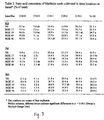
- Figure 3 describes fatty acid composition of Matthiola seeds cultivated in three locations on Israel.
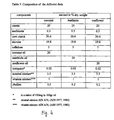
- Figure 4 describes composition of the different diets.
- Figure 5 describes the fatty acid composition of the different diets.
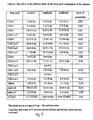
- Figure 6 describes the effect of the different diets on the cholesterol and triglyceride levels in the plasma and the level of cholesterol in the rat's liver.
- Figure 7 describes the effect of the different diets on the fatty acid composition of the plasma.
-
- Matthiola incana has an average oil content of 20 - 24% in the seeds, with maximum levels of 68% omega - 3 - linolenic acid of the total fatty acids in the oil (Ecker, Yaniv, Zur and Shaffermann, Euphytica 59:93-93, 1992). This is the highest known content of linolenic acid in plant species.
Matthiola lines were tested and evaluated as a potential new oil crop for dietary supplement for humans and animals, for use as an active ingredient in pharmaceutical and cosmetic compositions and mixtures and for industrial uses.
Omega - 3 fatty acids from vegetable oils could provide all the above health and cosmetic benefits without any of the disadvantages of oil from animal source.
In ingestion of vegetable oil there is no uptake of cholesterol. Fish oils are a primary source of vitamins A and D. Most marine oils, may supply a potentially toxic amount of vitamins A and D, by supplying a sufficient amount of EPA and DHA factors. Also, vegetal omega - 3 has a good taste and odor as opposed to bad tasting and foul smelling fish oils. Fish oils are usually contained in a natural preservative free gelatin capsule for convenience use due to their bad taste and smell.
Another important aspect of this vegetable oil is its quality as drying oil, for painting and lubrication, due to the high content of polyunsaturated fatty acids , namely linolenic acid. Up to date, vegetative drying oil is obtained from crops such as flax seeds and Tong trees. These crops do not lend themselves to mechanical harvesting and cleaning. - The present invention will be further illustrated in detail by the following experiments.
These experiments do not intend to limit the scope of the invention but to demonstrate and clarify it only. - 1) Five lines of M. incana, with a high content of omega - 3 - linolenic acid,
were tested. Plants were grown in the experimental stations at Bet Dagan, Ramat
haGolan and Jerusalem, representing three different climatic regions, during the
1991\92 growing season. Each line was replicated four times in random block design.
Seeds of each line were sown in small plots of 1.2 m2 consisting of four rows with 30
cm between rows. Basic fertilization was conducted at the time of soil preparation, at
rates of 100\100\50 N\P\K. "Trifluralin (2500 g\ha) was used as a herbicide.
Irrigation was applied until seedling establishment. data concerning mean monthly
temperatures of the growing period (Nov. 91 - June 92) taken in the three sites is
presented in figure 1.
Observations were made on plant height, percent of fertile plants and seed yield parameters such as number of pods\plant, length of pod, number of seed\pod and weight of 103 seeds. Plants were harvested at each location according to their dates of full maturity. Fully mature seeds from each line were oven - dried overnight at 50°c and analyzed for oil content and fatty acid composition.
Lipid extraction - Seeds were dried overnight at 50°c and ground into powder in a Moulinex® coffee grinder. Five grams of powder were mixed with 100 cc petroleum ether (40 - 60°c), and the lipid fraction was extracted in a Soxhlet apparatus for 16 hours at 60°c. The solvent was evaporated and the lipid fraction residues were weighed.
Direct transesterification from seeds - Seeds (200 mg) were dried overnight at 50°c and ground into powder with a mortar and pestle, after which 0.3 cm3 of dichloromethane and 2 cm3 of 0.5N sodium methoxide (MeONa) were added. The tube was shaken and heated for 30 minutes at 50°c. The reaction was stopped by adding 5 cm3 of water containing 1 cm3 glacial acetic acid. The esterified fatty acids were extracted with 2 cm3 petroleum ether ( 40- 60°c). The clear fraction was kept at -20°c until further analysis. Samples of 2 mm3 were injected into the gas - chromatograph for fatty acid analysis.
Gas chromatography of methylated fatty acids - A Megabore column (DB-23, 0.5 µm film thickness, 30m x 0.54mm, J&W Scientific) was used in a gas chromatograph equipped with a flame ionization detector (Varian, model 3700GC) and an automatic area integrator (3390A HP). The flow rate of N2 (carrier gas) was 30 cc/min and the oven temperature was 135 - 200°c, programmed at a rate of 4°c min. The following fatty acids were identified using known standards (Supelco): C16:0, palmitic; C18:0, stearic; C18:1, oleic; C18:2, linoleic C18:3, linolenic; C20:1, eicosenoic; and C22:1 erucic acid.
Table 1 summarizes the results of the evaluation experiment of five lines of M. incana cultivated in three places in Israel Bet Dagan (BD), Jersusalem (JM) and Ramat haGolan (RG) experimental stations during fall 1991 -spring 1992. Yield parameters, such as yield per plant, wt. of 103 seeds, no. of seeds\pod, pod length, plant height and no. of pods per plant were measured.
The results indicate the following: - (a) the best location was Bet Dagan. All lines tested showed higher yield potential. Yield per plant was by far the highest (3.5 g/plant as compared with 0.9 g/plant in JM 0.7 g/plant in RG). Other outstanding results are the number of pods/plants (73.3 in BD as compared with 36.7 in JM and 26.7 in RG). The number of seeds/pod, plant ht., pod length and the wt. of 103 seeds were also slightly higher in BD as compared with the other sites.
- (b) the best performing lines were
ROZ 45 andROZ 19. At BD both lines showed the highest yield potential. Under low temperature conditions in JM and RG both lines ROZ 45 in particular, maintained the highest yield, even though it was lower than in BD. It should be stressed that both lines have the highest (close to 90%) fertility rate in all sites tested.
Oil chemistry - Table 2 summarizes the results of the evaluation data concerning oil
content and fatty acid composition of seeds of Matthiola lines harvested at the three
sites. The figures represent means of four replicates. - 2) Hens were given a diet consisting of 1% Matthiola incana seed oil and the
amount of two omega - 3 fatty acids (C22:6 and C18:3) in the eggs laid by these hens
was established.
The results show that C22:6 (eicosapentaenoic acid) contents in the eggs laid by the hens with the Matthiola oil diet was 2.4% of the fatty acids of the egg, as opposed to 1.5% in eggs laid by control hens.
C18:3 contents in the hens with the Matthiola oil diet was 2.2% as opposed to 0% in the control hen's eggs.
All together, the omega - 3 fatty acid content of the treated hen's eggs were 4.9% as opposed to 1.4% in control hen's eggs. - 3) 27 male rats (of the type Sprague Dawly) were devided to three experimental
groups according to the different diet each group received. The rat's weight was in
the range of 175 - 205gr and they were kept in a controlled environment (light from 6
a.m to 6 p.m and a temperature of 22 - 24°C) for 6 weeks. The rats had free access to
food and water. Fresh food was supplied every two days. The rats were weighed once
a week and their food consumption was assested every two days.
One group received a diet containing coconut oil, the second group received a Matthiola containg diet and the third group received a sunflower oil containing diet. A mixture of all the food ingredients except the oil was prepared once a week and stored at -20°C. The oil was added to the mixtures every two days to achieve maximal freshness and to avoid oxidation.
The compositions of the different diets given in the experiment are shown in table 3 and table 4 summarizes the fatty acid composition of the oils given in the different diets.
Blood samples were taken from the rat's tails after a night's fast and the samples were left in heparin washed tubes overnight to dry. The samples were centrifuged and the plasma collected and kept at -20°C.
Animals were killed in three succesive days so that 2-4 animals of each group were killed a day. The animal's spleen and liver were removed and weighed. The liver was immediately dry freezed and kept at -70°C.
Determining the triglyceride level in the plasma - The triglyceride levels in the animal's plasma were determined enzymatically using the Raichem® kit (San Diego, California) which contains lipases that perform hydrolysis of triglycerides to glycerol and free fatty acids. The glycerol is phosphorylated and oxidized and the resulting peroxide is reacted with 4- aminoantipyrin and 3,5 - dichloro-2-hydroxybenzene sulfonate to give a red color. This color's absorbency in 520 nm is proportional to the triglyceride concentration in the sample.
Determining the cholesterol level in the plasma - Cholesterol levels in the plasma were determined enzymatically using the Raichem® kit (San Diego, California) which contains cholesterol esters that are hydrolyzed by cholesterol esterases to give cholesterol and free fatty acids. The free cholesterol is oxidized and the resulting hydroproxide, together with a peroxidase, oxidizes P- hydroxybenzoate and 4 - aminoantipyrin to give a red color. This color's absorbency at 500 nm is proportional to the cholesterol concentration in the sample.
Determining the cholesterol level in the liver - The cholesterol levels in the liver were determined using the method described in Searcy & Bergquest (Clin. Chem. Acta 5: 192 - 199, 1960) with the following differences: Hepatadecaenoic acid (C 17:0) in ethanol was added to each sample as an intrinsic standard for determining the fatty acid content of the liver.KOH 10% was added to the samples and the samples were incubated at 65°C for an hour. The samples were extracted with petrol ether.
For determining the cholesterol levels the samples were dried and saturated acetic acid in FeSO4 was added to acheive a color reaction. The results were read at 490 nm.
Determining the fatty acid composition in the liver - Methyl red was added to the fractions left after the petrol ether extraction and the mixture was titrated to give a stable pink color. The fatty acids were extracted with petrol ether and were methylated. The fatty acid composition of the resulting methyl esters was determined using the method described for direct transesterification from seed (Experiment 1).
Determining the fatty acid composition in the plasma - Hepatadecaenoic acid (C 17:0) in chloroform was added to each sample as an intrinsic standard for determining the fatty acid content of the liver. The sample was extracted with chloroform\ ethanol. The extracted fatty acids were methylated. The fatty acid composition of the resulting methylated fatty acids was determined using the method described for direct transesterification from seed (Experiment 1).
Determination of oxidation in the liver: Oxidation in the liver was determined using thiobarbitituric acid which forms a color reaction with melon aldehyd. Melon aldehyd is a compound which is the oxidation product of a system containing a large amount of unsaturated fatty acids undergoing oxidation. The method using TBA utilizes the color reaction that occurs in the presence of TBA.
The results were read at 535 nm. -
- Table 5 shows the effect the different diets have on the cholesterol and triglyceride levels in the plasma and on the cholesterol level in the liver.
From table 5 it is apparent that the cholesterol levels in the plasma of Matthiola oil fed animals was lower than that of the animals fed with coconut oil and also than those animals fed with sunflower oil.
The triglyceride levels of animals fed with Matthiola oil and sunflower oil are lower than those animals fed with coconut oil.
The cholesterol levels in the liver of the coconut oil fed animals was significantly lower than that in the liver of animals fed with sunflower oil. The cholesterol level in the liver of animals fed with Matthiola oil was not significantly different than the other animals. - Table 6 shows the fatty acid content in the rat's plasma. The coconut oil diet raised the levels of C16:1, C16:0 and C14:0 in the plasma compared with the other two diets. There was no difference in the C18:0 and C12:0 levels between the different diets.
The oleic acid (C18:1) was highest in the plasma of rats fed with sunflower oil, lower in the Matthiola oil fed rats and lowest in the coconut oil fed rats.
The α - linolenic acid level was significantly higher in the plasma of rats fed with Matthiola oil (15.7%) than the other two diets (0.6% sunflower oil and 1.1% coconut oil, P< 0.01). The archidonic acid levels (C20:4 n-6) were highest in the sunflower oil diet (29.5%), lower in the coconut oil diet (20.4%) and lowest in the mathiola oil diet (11.3%) (P<0.01).
The long fatty acid levels from the group of n-3 was significantly higher in the plasma of those animals fed with Matthiola oil compared with the other two diets. EPA (C20:5 n-3 and C22:5 n-3) appeared only in the plasma of the animals fed with Matthiola oil (4.4% and 0.7% respectively). DHA (C22:6 n-3) appeared in the plasma of animals fed with Matthiola and cocnut oil more than in the sunflower diet animals (12% and 2.1% compared with 0.3% P<0.01).
Table 6 shows that the sum of the long fatty acids (over 20 carbons) from the n-6 group is very high in the plasma of animals fed with sunflower oil (29.5%), lower in the coconut oil diet (20.4%) and very low in the Matthiola oil diet (11.3%) (P<0.01). In contrast, the sum of the long fatty acids from the n-3 group was high in the Matthiola diet (7.0%), lower in the coconut diet (2.1%) and lowest in the sunflower oil diet (0.3%). - These experiments demonstrate that the α - linolenic acid content of the oil in Matthiola incana seeds is high, the plants are easily grown and the oil is easily obtained. Moreover, when fed to animals that provide food products for human consumption, such as eggs from hen, Matthiola incana seed oil raises the
omega 3 fatty acid contents of these food products.
Animals fed with a diet enriched in Matthiola seed oil have lower cholesterol levels in their plasma and higher amounts of α - linolenic acid, EPA and DHA.
The present invention, therefore, relates to an easily obtained vegetable oil useful as an active ingredient in nutritional supplements for humans and animals, pharmaceutical and cosmetic compositions and mixtures and mixtures for industrial use.
Oil quantity - oil quantity ranged from 21% (V6) to 28- 29% (
Fatty acid composition - The main goal is obtaining a high concentration of α - linolenic acid (C18:3) in the seed oil. The obtained levels ranged from 50% to 60%, the best
It is important to note that these temperatures were never below 22°C during the maturation period (March - May). It could be that in order to induce a significant increase in the level of C18:3, maturation should take place under a much cooler temperature regime, as demonstrated in Phytotron conditions (Yaniv et al. Israel J. Bot. 41:279 - 284, 1992).
In conclusion, the biometric recordings revealed that the BD site induces the best preformance. Since oil content and α - linolenic acid contents are not much lower than at other sites, the final yield, in terms of α - linolenic acid \ plant, is significantly the highest at the site of BD.
Both
A calculated yield of 750kg seeds/ha was obtained at BD. This is based on density of 17 plants \m2. This yield, with 20 - 25% oil in the seed is equal to 150 l oil/ha. A 50% content of α - linolenic acid in the oil will yield 75 liters of pure α - linolenic acid from 1 hectar of the crop.
Claims (3)
- A method for obtaining oil from Matthiola incana seeds comprising pressing of the plant seeds, collecting the resulting oil and purifying it.
- A method for the preparation of compositions containing Matthiola incana seeds oil comprising pressing Matthiola incana seeds, collecting the resulting oil, purifying it and mixing resulting oil with acceptable additives.
- Use of an oil as prepared according to the method of claims 1 or 2 for the production of a dietary supplement.
Applications Claiming Priority (1)
| Application Number | Priority Date | Filing Date | Title |
|---|---|---|---|
| PCT/IL1998/000257 WO1999062359A1 (en) | 1998-06-03 | 1998-06-03 | Matthiola seed oil, mixtures containing it and use thereof |
Publications (2)
| Publication Number | Publication Date |
|---|---|
| EP1082028A1 EP1082028A1 (en) | 2001-03-14 |
| EP1082028B1 true EP1082028B1 (en) | 2002-05-15 |
Family
ID=11062332
Family Applications (1)
| Application Number | Title | Priority Date | Filing Date |
|---|---|---|---|
| EP98923044A Expired - Lifetime EP1082028B1 (en) | 1998-06-03 | 1998-06-03 | Matthiola seed oil, mixtures containing it and use thereof |
Country Status (7)
| Country | Link |
|---|---|
| EP (1) | EP1082028B1 (en) |
| JP (1) | JP2002516673A (en) |
| AT (1) | ATE217493T1 (en) |
| AU (1) | AU7546998A (en) |
| CA (1) | CA2333988A1 (en) |
| DE (1) | DE69805445D1 (en) |
| WO (1) | WO1999062359A1 (en) |
Families Citing this family (4)
| Publication number | Priority date | Publication date | Assignee | Title |
|---|---|---|---|---|
| US7060303B2 (en) * | 2002-12-31 | 2006-06-13 | Avon Products, Inc. | Use of purslane to treat facial wrinkles |
| US7759507B2 (en) | 2003-09-05 | 2010-07-20 | Abbott Laboratories | Lipid system and methods of use |
| IL157785A0 (en) * | 2003-09-07 | 2004-03-28 | Israel State | Compositions containing as the active ingredient clary sage seed oil or crushed clary sage seed, and use thereof |
| US11600374B2 (en) | 2020-12-29 | 2023-03-07 | Kpn Innovations, Llc. | System and method for generating a cardiovascular disease nourishment program |
Family Cites Families (3)
| Publication number | Priority date | Publication date | Assignee | Title |
|---|---|---|---|---|
| US4918104A (en) * | 1987-06-16 | 1990-04-17 | Weiss Howard S | Method and composition for increasing the concentration of omega-3 polyunsaturated fatty acids in poultry and poultry eggs and poultry and eggs resulting therefrom |
| DE4133694C2 (en) * | 1991-10-11 | 1993-10-07 | Fresenius Ag | Use of an emulsion with polyunsaturated fatty acids for i.v. administration for the treatment of skin diseases |
| US5540762A (en) * | 1995-01-13 | 1996-07-30 | Mischutin; Vladimir | Flame retardants for linseed oil formulations and applications |
-
1998
- 1998-06-03 AT AT98923044T patent/ATE217493T1/en active
- 1998-06-03 JP JP2000551631A patent/JP2002516673A/en not_active Withdrawn
- 1998-06-03 DE DE69805445T patent/DE69805445D1/en not_active Expired - Lifetime
- 1998-06-03 CA CA002333988A patent/CA2333988A1/en not_active Abandoned
- 1998-06-03 AU AU75469/98A patent/AU7546998A/en not_active Abandoned
- 1998-06-03 WO PCT/IL1998/000257 patent/WO1999062359A1/en not_active Ceased
- 1998-06-03 EP EP98923044A patent/EP1082028B1/en not_active Expired - Lifetime
Also Published As
| Publication number | Publication date |
|---|---|
| WO1999062359A1 (en) | 1999-12-09 |
| ATE217493T1 (en) | 2002-06-15 |
| CA2333988A1 (en) | 1999-12-09 |
| EP1082028A1 (en) | 2001-03-14 |
| DE69805445D1 (en) | 2002-06-20 |
| AU7546998A (en) | 1999-12-20 |
| JP2002516673A (en) | 2002-06-11 |
Similar Documents
| Publication | Publication Date | Title |
|---|---|---|
| Beare-Rogers et al. | Lexicon of lipid nutrition (IUPAC Technical Report) | |
| O'brien | Fats and oils: formulating and processing for applications | |
| Sklan | Digestion and absorption of lipids in chicks fed triglycerides or free fatty acids: synthesis of monoglycerides in the intestine | |
| Dupont et al. | Food safety and health effects of canola oil. | |
| US20100280112A1 (en) | Composition Enriched in Diglyceride with Conjugated Linoleic Acid | |
| Ergönül et al. | Cold pressed camelina (Camelina sativa L.) seed oil | |
| Medeiros et al. | Olive oil and health benefits | |
| AU3008399A (en) | Methods of using isomer enriched conjugated linoleic acid compositions | |
| JP2000309794A (en) | Fat and oil composition | |
| EP1662904B1 (en) | Compositions containing as the active ingredient componantes from salvia sclarea seed | |
| CN112772731A (en) | Functional edible oil and preparation method and application thereof | |
| Arain et al. | Physico-chemical characteristics of oil and seed residues of Bauhinia variegata and Bauhinia linnaei | |
| Phuah et al. | Vegetable oils and animal fats: sources, properties and recovery | |
| Ghazali et al. | Moringa (Moringa oleifera) seed oil: composition, nutritional aspects, and health attributes | |
| Baeza‐Jiménez et al. | Lipids in fruits and vegetables: Chemistry and biological activities | |
| JP2021528365A (en) | Polyunsaturated fatty acid composition rich in DHA | |
| Dharavath et al. | Camelina sativa (L.) Crantz A mercantile crop with speckled pharmacological activities | |
| Rocquelin et al. | The nutritive value of refined rapeseed oils: A review | |
| Eskin et al. | High-oleic canola oil | |
| Gunstone | Major sources of lipids | |
| KR100724165B1 (en) | A natural vegetable oil in which non-saponified food is concentrated as a food ingredient | |
| CA2333988A1 (en) | Matthiola seed oil, mixtures containing it and use thereof | |
| Gurr | The chemistry and biochemistry of plant fats and their nutritional importance | |
| JP2010284086A (en) | Egg, method for producing and improving the same, and laying hen feed | |
| JPH0371100B2 (en) |
Legal Events
| Date | Code | Title | Description |
|---|---|---|---|
| PUAI | Public reference made under article 153(3) epc to a published international application that has entered the european phase |
Free format text: ORIGINAL CODE: 0009012 |
|
| 17P | Request for examination filed |
Effective date: 20001207 |
|
| AK | Designated contracting states |
Kind code of ref document: A1 Designated state(s): AT BE CH CY DE DK ES FI FR GB GR IE IT LI LU MC NL PT SE |
|
| GRAG | Despatch of communication of intention to grant |
Free format text: ORIGINAL CODE: EPIDOS AGRA |
|
| 17Q | First examination report despatched |
Effective date: 20010424 |
|
| GRAG | Despatch of communication of intention to grant |
Free format text: ORIGINAL CODE: EPIDOS AGRA |
|
| GRAH | Despatch of communication of intention to grant a patent |
Free format text: ORIGINAL CODE: EPIDOS IGRA |
|
| GRAH | Despatch of communication of intention to grant a patent |
Free format text: ORIGINAL CODE: EPIDOS IGRA |
|
| GRAA | (expected) grant |
Free format text: ORIGINAL CODE: 0009210 |
|
| AK | Designated contracting states |
Kind code of ref document: B1 Designated state(s): AT BE CH CY DE DK ES FI FR GB GR IE IT LI LU MC NL PT SE |
|
| PG25 | Lapsed in a contracting state [announced via postgrant information from national office to epo] |
Ref country code: NL Free format text: LAPSE BECAUSE OF FAILURE TO SUBMIT A TRANSLATION OF THE DESCRIPTION OR TO PAY THE FEE WITHIN THE PRESCRIBED TIME-LIMIT Effective date: 20020515 Ref country code: LI Free format text: LAPSE BECAUSE OF FAILURE TO SUBMIT A TRANSLATION OF THE DESCRIPTION OR TO PAY THE FEE WITHIN THE PRESCRIBED TIME-LIMIT Effective date: 20020515 Ref country code: IT Free format text: LAPSE BECAUSE OF FAILURE TO SUBMIT A TRANSLATION OF THE DESCRIPTION OR TO PAY THE FEE WITHIN THE PRE;WARNING: LAPSES OF ITALIAN PATENTS WITH EFFECTIVE DATE BEFORE 2007 MAY HAVE OCCURRED AT ANY TIME BEFORE 2007. THE CORRECT EFFECTIVE DATE MAY BE DIFFERENT FROM THE ONE RECORDED.SCRIBED TIME-LIMIT Effective date: 20020515 Ref country code: FR Free format text: LAPSE BECAUSE OF FAILURE TO SUBMIT A TRANSLATION OF THE DESCRIPTION OR TO PAY THE FEE WITHIN THE PRESCRIBED TIME-LIMIT Effective date: 20020515 Ref country code: FI Free format text: LAPSE BECAUSE OF FAILURE TO SUBMIT A TRANSLATION OF THE DESCRIPTION OR TO PAY THE FEE WITHIN THE PRESCRIBED TIME-LIMIT Effective date: 20020515 Ref country code: CH Free format text: LAPSE BECAUSE OF FAILURE TO SUBMIT A TRANSLATION OF THE DESCRIPTION OR TO PAY THE FEE WITHIN THE PRESCRIBED TIME-LIMIT Effective date: 20020515 Ref country code: BE Free format text: LAPSE BECAUSE OF FAILURE TO SUBMIT A TRANSLATION OF THE DESCRIPTION OR TO PAY THE FEE WITHIN THE PRESCRIBED TIME-LIMIT Effective date: 20020515 Ref country code: AT Free format text: LAPSE BECAUSE OF FAILURE TO SUBMIT A TRANSLATION OF THE DESCRIPTION OR TO PAY THE FEE WITHIN THE PRESCRIBED TIME-LIMIT Effective date: 20020515 |
|
| REF | Corresponds to: |
Ref document number: 217493 Country of ref document: AT Date of ref document: 20020615 Kind code of ref document: T |
|
| REG | Reference to a national code |
Ref country code: GB Ref legal event code: FG4D Ref country code: CH Ref legal event code: EP |
|
| PG25 | Lapsed in a contracting state [announced via postgrant information from national office to epo] |
Ref country code: MC Free format text: LAPSE BECAUSE OF NON-PAYMENT OF DUE FEES Effective date: 20020603 Ref country code: LU Free format text: LAPSE BECAUSE OF NON-PAYMENT OF DUE FEES Effective date: 20020603 Ref country code: IE Free format text: LAPSE BECAUSE OF NON-PAYMENT OF DUE FEES Effective date: 20020603 |
|
| REG | Reference to a national code |
Ref country code: IE Ref legal event code: FG4D |
|
| REF | Corresponds to: |
Ref document number: 69805445 Country of ref document: DE Date of ref document: 20020620 |
|
| PG25 | Lapsed in a contracting state [announced via postgrant information from national office to epo] |
Ref country code: CY Free format text: LAPSE BECAUSE OF FAILURE TO SUBMIT A TRANSLATION OF THE DESCRIPTION OR TO PAY THE FEE WITHIN THE PRESCRIBED TIME-LIMIT Effective date: 20020630 |
|
| PG25 | Lapsed in a contracting state [announced via postgrant information from national office to epo] |
Ref country code: SE Free format text: LAPSE BECAUSE OF FAILURE TO SUBMIT A TRANSLATION OF THE DESCRIPTION OR TO PAY THE FEE WITHIN THE PRESCRIBED TIME-LIMIT Effective date: 20020815 Ref country code: GB Free format text: LAPSE BECAUSE OF NON-PAYMENT OF DUE FEES Effective date: 20020815 Ref country code: DK Free format text: LAPSE BECAUSE OF FAILURE TO SUBMIT A TRANSLATION OF THE DESCRIPTION OR TO PAY THE FEE WITHIN THE PRESCRIBED TIME-LIMIT Effective date: 20020815 |
|
| PG25 | Lapsed in a contracting state [announced via postgrant information from national office to epo] |
Ref country code: PT Free format text: LAPSE BECAUSE OF FAILURE TO SUBMIT A TRANSLATION OF THE DESCRIPTION OR TO PAY THE FEE WITHIN THE PRESCRIBED TIME-LIMIT Effective date: 20020816 Ref country code: GR Free format text: LAPSE BECAUSE OF FAILURE TO SUBMIT A TRANSLATION OF THE DESCRIPTION OR TO PAY THE FEE WITHIN THE PRESCRIBED TIME-LIMIT Effective date: 20020816 |
|
| PG25 | Lapsed in a contracting state [announced via postgrant information from national office to epo] |
Ref country code: DE Free format text: LAPSE BECAUSE OF FAILURE TO SUBMIT A TRANSLATION OF THE DESCRIPTION OR TO PAY THE FEE WITHIN THE PRESCRIBED TIME-LIMIT Effective date: 20020817 |
|
| NLV1 | Nl: lapsed or annulled due to failure to fulfill the requirements of art. 29p and 29m of the patents act | ||
| PG25 | Lapsed in a contracting state [announced via postgrant information from national office to epo] |
Ref country code: ES Free format text: LAPSE BECAUSE OF FAILURE TO SUBMIT A TRANSLATION OF THE DESCRIPTION OR TO PAY THE FEE WITHIN THE PRESCRIBED TIME-LIMIT Effective date: 20021128 |
|
| REG | Reference to a national code |
Ref country code: CH Ref legal event code: PL |
|
| EN | Fr: translation not filed | ||
| PLBE | No opposition filed within time limit |
Free format text: ORIGINAL CODE: 0009261 |
|
| STAA | Information on the status of an ep patent application or granted ep patent |
Free format text: STATUS: NO OPPOSITION FILED WITHIN TIME LIMIT |
|
| REG | Reference to a national code |
Ref country code: IE Ref legal event code: MM4A |
|
| GBPC | Gb: european patent ceased through non-payment of renewal fee |
Effective date: 20020815 |
|
| 26N | No opposition filed |
Effective date: 20030218 |