EP1080065B1 - A method of permanent fluorescent assay - Google Patents
A method of permanent fluorescent assay Download PDFInfo
- Publication number
- EP1080065B1 EP1080065B1 EP00918049A EP00918049A EP1080065B1 EP 1080065 B1 EP1080065 B1 EP 1080065B1 EP 00918049 A EP00918049 A EP 00918049A EP 00918049 A EP00918049 A EP 00918049A EP 1080065 B1 EP1080065 B1 EP 1080065B1
- Authority
- EP
- European Patent Office
- Prior art keywords
- insoluble product
- wavelength
- peroxidase
- group
- fluorescence
- Prior art date
- Legal status (The legal status is an assumption and is not a legal conclusion. Google has not performed a legal analysis and makes no representation as to the accuracy of the status listed.)
- Expired - Lifetime
Links
- 238000003556 assay Methods 0.000 title claims abstract description 20
- 238000000034 method Methods 0.000 title claims abstract description 18
- 102000003992 Peroxidases Human genes 0.000 claims abstract description 33
- 230000005284 excitation Effects 0.000 claims abstract description 30
- 238000005286 illumination Methods 0.000 claims abstract description 28
- -1 p-hydroxyphenyl Chemical group 0.000 claims abstract description 21
- 108040007629 peroxidase activity proteins Proteins 0.000 claims abstract description 21
- 125000003178 carboxy group Chemical group [H]OC(*)=O 0.000 claims abstract description 8
- 150000001875 compounds Chemical class 0.000 claims abstract description 6
- 229910052799 carbon Inorganic materials 0.000 claims abstract description 5
- 125000002496 methyl group Chemical group [H]C([H])([H])* 0.000 claims abstract description 5
- 229910052760 oxygen Inorganic materials 0.000 claims abstract description 5
- 125000004432 carbon atom Chemical group C* 0.000 claims abstract description 4
- 125000005842 heteroatom Chemical group 0.000 claims abstract description 4
- 125000001424 substituent group Chemical group 0.000 claims abstract description 4
- 229910052717 sulfur Inorganic materials 0.000 claims abstract description 4
- 229910052757 nitrogen Inorganic materials 0.000 claims abstract 2
- 239000000758 substrate Substances 0.000 claims description 36
- 108010001336 Horseradish Peroxidase Proteins 0.000 claims description 17
- 230000003213 activating effect Effects 0.000 claims description 8
- 238000006243 chemical reaction Methods 0.000 claims description 5
- 150000002894 organic compounds Chemical class 0.000 claims 2
- 239000000047 product Substances 0.000 description 29
- 102000004190 Enzymes Human genes 0.000 description 7
- 108090000790 Enzymes Proteins 0.000 description 7
- 239000007983 Tris buffer Substances 0.000 description 7
- 229940088598 enzyme Drugs 0.000 description 7
- 210000001519 tissue Anatomy 0.000 description 7
- LENZDBCJOHFCAS-UHFFFAOYSA-N tris Chemical compound OCC(N)(CO)CO LENZDBCJOHFCAS-UHFFFAOYSA-N 0.000 description 7
- PEDCQBHIVMGVHV-UHFFFAOYSA-N Glycerine Chemical compound OCC(O)CO PEDCQBHIVMGVHV-UHFFFAOYSA-N 0.000 description 6
- MHAJPDPJQMAIIY-UHFFFAOYSA-N Hydrogen peroxide Chemical compound OO MHAJPDPJQMAIIY-UHFFFAOYSA-N 0.000 description 6
- MUTGBJKUEZFXGO-UHFFFAOYSA-N hexahydrophthalic anhydride Chemical compound C1CCCC2C(=O)OC(=O)C21 MUTGBJKUEZFXGO-UHFFFAOYSA-N 0.000 description 6
- 239000000126 substance Substances 0.000 description 6
- 230000035945 sensitivity Effects 0.000 description 5
- 230000002708 enhancing effect Effects 0.000 description 4
- 239000000463 material Substances 0.000 description 4
- 239000002953 phosphate buffered saline Substances 0.000 description 4
- 239000000243 solution Substances 0.000 description 4
- OUYCCCASQSFEME-QMMMGPOBSA-N L-tyrosine Chemical compound OC(=O)[C@@H](N)CC1=CC=C(O)C=C1 OUYCCCASQSFEME-QMMMGPOBSA-N 0.000 description 3
- DZGWFCGJZKJUFP-UHFFFAOYSA-N Tyramine Natural products NCCC1=CC=C(O)C=C1 DZGWFCGJZKJUFP-UHFFFAOYSA-N 0.000 description 3
- 108010046516 Wheat Germ Agglutinins Proteins 0.000 description 3
- 239000007795 chemical reaction product Substances 0.000 description 3
- 230000000694 effects Effects 0.000 description 3
- 125000001495 ethyl group Chemical group [H]C([H])([H])C([H])([H])* 0.000 description 3
- 210000002175 goblet cell Anatomy 0.000 description 3
- 229960003732 tyramine Drugs 0.000 description 3
- DZGWFCGJZKJUFP-UHFFFAOYSA-O tyraminium Chemical compound [NH3+]CCC1=CC=C(O)C=C1 DZGWFCGJZKJUFP-UHFFFAOYSA-O 0.000 description 3
- OUYCCCASQSFEME-UHFFFAOYSA-N tyrosine Natural products OC(=O)C(N)CC1=CC=C(O)C=C1 OUYCCCASQSFEME-UHFFFAOYSA-N 0.000 description 3
- XQXPVVBIMDBYFF-UHFFFAOYSA-N 4-hydroxyphenylacetic acid Chemical compound OC(=O)CC1=CC=C(O)C=C1 XQXPVVBIMDBYFF-UHFFFAOYSA-N 0.000 description 2
- 102000009664 Microtubule-Associated Proteins Human genes 0.000 description 2
- 108010020004 Microtubule-Associated Proteins Proteins 0.000 description 2
- 230000004913 activation Effects 0.000 description 2
- 125000000217 alkyl group Chemical group 0.000 description 2
- 230000003321 amplification Effects 0.000 description 2
- 150000001720 carbohydrates Chemical class 0.000 description 2
- 235000014633 carbohydrates Nutrition 0.000 description 2
- 210000004027 cell Anatomy 0.000 description 2
- 238000001514 detection method Methods 0.000 description 2
- OQALFHMKVSJFRR-UHFFFAOYSA-N dityrosine Chemical compound OC(=O)C(N)CC1=CC=C(O)C(C=2C(=CC=C(CC(N)C(O)=O)C=2)O)=C1 OQALFHMKVSJFRR-UHFFFAOYSA-N 0.000 description 2
- 238000005516 engineering process Methods 0.000 description 2
- GNBHRKFJIUUOQI-UHFFFAOYSA-N fluorescein Chemical compound O1C(=O)C2=CC=CC=C2C21C1=CC=C(O)C=C1OC1=CC(O)=CC=C21 GNBHRKFJIUUOQI-UHFFFAOYSA-N 0.000 description 2
- 238000001917 fluorescence detection Methods 0.000 description 2
- 239000007850 fluorescent dye Substances 0.000 description 2
- 239000011521 glass Substances 0.000 description 2
- 230000001744 histochemical effect Effects 0.000 description 2
- QRMZSPFSDQBLIX-UHFFFAOYSA-N homovanillic acid Chemical compound COC1=CC(CC(O)=O)=CC=C1O QRMZSPFSDQBLIX-UHFFFAOYSA-N 0.000 description 2
- 230000009871 nonspecific binding Effects 0.000 description 2
- 238000003199 nucleic acid amplification method Methods 0.000 description 2
- 102000039446 nucleic acids Human genes 0.000 description 2
- 108020004707 nucleic acids Proteins 0.000 description 2
- 150000007523 nucleic acids Chemical class 0.000 description 2
- 230000003647 oxidation Effects 0.000 description 2
- 238000007254 oxidation reaction Methods 0.000 description 2
- ISWSIDIOOBJBQZ-UHFFFAOYSA-N phenol group Chemical class C1(=CC=CC=C1)O ISWSIDIOOBJBQZ-UHFFFAOYSA-N 0.000 description 2
- NMHMNPHRMNGLLB-UHFFFAOYSA-N phloretic acid Chemical compound OC(=O)CCC1=CC=C(O)C=C1 NMHMNPHRMNGLLB-UHFFFAOYSA-N 0.000 description 2
- 229920003023 plastic Polymers 0.000 description 2
- 239000004033 plastic Substances 0.000 description 2
- 238000002764 solid phase assay Methods 0.000 description 2
- 108091003079 Bovine Serum Albumin Proteins 0.000 description 1
- 239000004215 Carbon black (E152) Substances 0.000 description 1
- 241000196324 Embryophyta Species 0.000 description 1
- 241000283074 Equus asinus Species 0.000 description 1
- 108010015133 Galactose oxidase Proteins 0.000 description 1
- 108010015776 Glucose oxidase Proteins 0.000 description 1
- 239000004366 Glucose oxidase Substances 0.000 description 1
- 241001465754 Metazoa Species 0.000 description 1
- OVRNDRQMDRJTHS-FMDGEEDCSA-N N-acetyl-beta-D-glucosamine Chemical group CC(=O)N[C@H]1[C@H](O)O[C@H](CO)[C@@H](O)[C@@H]1O OVRNDRQMDRJTHS-FMDGEEDCSA-N 0.000 description 1
- 108700020962 Peroxidase Proteins 0.000 description 1
- 229920004890 Triton X-100 Polymers 0.000 description 1
- 239000013504 Triton X-100 Substances 0.000 description 1
- 125000001931 aliphatic group Chemical group 0.000 description 1
- 238000004458 analytical method Methods 0.000 description 1
- 239000000427 antigen Substances 0.000 description 1
- 102000036639 antigens Human genes 0.000 description 1
- 108091007433 antigens Proteins 0.000 description 1
- QVGXLLKOCUKJST-UHFFFAOYSA-N atomic oxygen Chemical compound [O] QVGXLLKOCUKJST-UHFFFAOYSA-N 0.000 description 1
- 239000011324 bead Substances 0.000 description 1
- 230000015572 biosynthetic process Effects 0.000 description 1
- 229940098773 bovine serum albumin Drugs 0.000 description 1
- 210000004556 brain Anatomy 0.000 description 1
- 239000000872 buffer Substances 0.000 description 1
- 125000000484 butyl group Chemical group [H]C([*])([H])C([H])([H])C([H])([H])C([H])([H])[H] 0.000 description 1
- 239000003153 chemical reaction reagent Substances 0.000 description 1
- 238000004163 cytometry Methods 0.000 description 1
- 230000003247 decreasing effect Effects 0.000 description 1
- 239000000412 dendrimer Substances 0.000 description 1
- 229920000736 dendritic polymer Polymers 0.000 description 1
- 230000008021 deposition Effects 0.000 description 1
- 239000003085 diluting agent Substances 0.000 description 1
- LOKCTEFSRHRXRJ-UHFFFAOYSA-I dipotassium trisodium dihydrogen phosphate hydrogen phosphate dichloride Chemical compound P(=O)(O)(O)[O-].[K+].P(=O)(O)([O-])[O-].[Na+].[Na+].[Cl-].[K+].[Cl-].[Na+] LOKCTEFSRHRXRJ-UHFFFAOYSA-I 0.000 description 1
- 230000002255 enzymatic effect Effects 0.000 description 1
- 238000001952 enzyme assay Methods 0.000 description 1
- 239000000284 extract Substances 0.000 description 1
- 235000013861 fat-free Nutrition 0.000 description 1
- 229940116332 glucose oxidase Drugs 0.000 description 1
- 235000019420 glucose oxidase Nutrition 0.000 description 1
- 125000004051 hexyl group Chemical group [H]C([H])([H])C([H])([H])C([H])([H])C([H])([H])C([H])([H])C([H])([H])* 0.000 description 1
- 229930195733 hydrocarbon Natural products 0.000 description 1
- 150000002430 hydrocarbons Chemical class 0.000 description 1
- 230000001900 immune effect Effects 0.000 description 1
- 238000003018 immunoassay Methods 0.000 description 1
- 238000011534 incubation Methods 0.000 description 1
- 230000000968 intestinal effect Effects 0.000 description 1
- 210000000936 intestine Anatomy 0.000 description 1
- 125000000959 isobutyl group Chemical group [H]C([H])([H])C([H])(C([H])([H])[H])C([H])([H])* 0.000 description 1
- 125000001449 isopropyl group Chemical group [H]C([H])([H])C([H])(*)C([H])([H])[H] 0.000 description 1
- 210000004379 membrane Anatomy 0.000 description 1
- 239000012528 membrane Substances 0.000 description 1
- 238000002493 microarray Methods 0.000 description 1
- 238000007826 nucleic acid assay Methods 0.000 description 1
- 238000007899 nucleic acid hybridization Methods 0.000 description 1
- 230000001590 oxidative effect Effects 0.000 description 1
- 239000001301 oxygen Substances 0.000 description 1
- 125000001147 pentyl group Chemical group C(CCCC)* 0.000 description 1
- 239000012071 phase Substances 0.000 description 1
- 235000008476 powdered milk Nutrition 0.000 description 1
- 239000002244 precipitate Substances 0.000 description 1
- 230000002035 prolonged effect Effects 0.000 description 1
- QLNJFJADRCOGBJ-UHFFFAOYSA-N propionamide Chemical compound CCC(N)=O QLNJFJADRCOGBJ-UHFFFAOYSA-N 0.000 description 1
- 229940080818 propionamide Drugs 0.000 description 1
- 125000001436 propyl group Chemical group [H]C([*])([H])C([H])([H])C([H])([H])[H] 0.000 description 1
- 102000004169 proteins and genes Human genes 0.000 description 1
- 108090000623 proteins and genes Proteins 0.000 description 1
- 230000008929 regeneration Effects 0.000 description 1
- 238000011069 regeneration method Methods 0.000 description 1
- 125000002914 sec-butyl group Chemical group [H]C([H])([H])C([H])([H])C([H])(*)C([H])([H])[H] 0.000 description 1
- 229910052710 silicon Inorganic materials 0.000 description 1
- 239000010703 silicon Substances 0.000 description 1
- 239000007787 solid Substances 0.000 description 1
- 239000007790 solid phase Substances 0.000 description 1
- 239000002904 solvent Substances 0.000 description 1
- 125000000999 tert-butyl group Chemical group [H]C([H])([H])C(*)(C([H])([H])[H])C([H])([H])[H] 0.000 description 1
- XLYOFNOQVPJJNP-UHFFFAOYSA-N water Substances O XLYOFNOQVPJJNP-UHFFFAOYSA-N 0.000 description 1
Images




Classifications
-
- C—CHEMISTRY; METALLURGY
- C12—BIOCHEMISTRY; BEER; SPIRITS; WINE; VINEGAR; MICROBIOLOGY; ENZYMOLOGY; MUTATION OR GENETIC ENGINEERING
- C12Q—MEASURING OR TESTING PROCESSES INVOLVING ENZYMES, NUCLEIC ACIDS OR MICROORGANISMS; COMPOSITIONS OR TEST PAPERS THEREFOR; PROCESSES OF PREPARING SUCH COMPOSITIONS; CONDITION-RESPONSIVE CONTROL IN MICROBIOLOGICAL OR ENZYMOLOGICAL PROCESSES
- C12Q1/00—Measuring or testing processes involving enzymes, nucleic acids or microorganisms; Compositions therefor; Processes of preparing such compositions
- C12Q1/26—Measuring or testing processes involving enzymes, nucleic acids or microorganisms; Compositions therefor; Processes of preparing such compositions involving oxidoreductase
- C12Q1/28—Measuring or testing processes involving enzymes, nucleic acids or microorganisms; Compositions therefor; Processes of preparing such compositions involving oxidoreductase involving peroxidase
-
- C—CHEMISTRY; METALLURGY
- C07—ORGANIC CHEMISTRY
- C07C—ACYCLIC OR CARBOCYCLIC COMPOUNDS
- C07C235/00—Carboxylic acid amides, the carbon skeleton of the acid part being further substituted by oxygen atoms
- C07C235/02—Carboxylic acid amides, the carbon skeleton of the acid part being further substituted by oxygen atoms having carbon atoms of carboxamide groups bound to acyclic carbon atoms and singly-bound oxygen atoms bound to the same carbon skeleton
- C07C235/32—Carboxylic acid amides, the carbon skeleton of the acid part being further substituted by oxygen atoms having carbon atoms of carboxamide groups bound to acyclic carbon atoms and singly-bound oxygen atoms bound to the same carbon skeleton the carbon skeleton containing six-membered aromatic rings
- C07C235/34—Carboxylic acid amides, the carbon skeleton of the acid part being further substituted by oxygen atoms having carbon atoms of carboxamide groups bound to acyclic carbon atoms and singly-bound oxygen atoms bound to the same carbon skeleton the carbon skeleton containing six-membered aromatic rings having the nitrogen atoms of the carboxamide groups bound to hydrogen atoms or to acyclic carbon atoms
-
- C—CHEMISTRY; METALLURGY
- C12—BIOCHEMISTRY; BEER; SPIRITS; WINE; VINEGAR; MICROBIOLOGY; ENZYMOLOGY; MUTATION OR GENETIC ENGINEERING
- C12Q—MEASURING OR TESTING PROCESSES INVOLVING ENZYMES, NUCLEIC ACIDS OR MICROORGANISMS; COMPOSITIONS OR TEST PAPERS THEREFOR; PROCESSES OF PREPARING SUCH COMPOSITIONS; CONDITION-RESPONSIVE CONTROL IN MICROBIOLOGICAL OR ENZYMOLOGICAL PROCESSES
- C12Q2326/00—Chromogens for determinations of oxidoreductase enzymes
- C12Q2326/50—Phenols; Naphthols; Catechols
Definitions
- This invention relates to a method for a permanent fluorescent assay, and in particular, toward a fluorescent peroxidase-based assay utilizing a soluble p-hydroxyphenyl-containing substrate which forms an insoluble product through peroxidase activity.
- HRP horseradish peroxidase
- Guilbault, et al. Analytical Chemistry, 40 (8): 1256-1263 (1980) describe new substrates for the fluorometric determination of oxidative enzymes.
- Guilbault et al. evaluated a series of phenolic peroxidase substrates in conjunction with the oxidation of the carbohydrates by either galactose oxidase or glucose oxidase.
- the phenolic substrates were chosen because they formed fluorescent solution phase products upon reaction with peroxidase and H 2 O 2 .
- the best substrates were found to be p-hydroxyphenylacetic acid, homovanillic acid, tyramine and tyrosine.
- Guilbault et al. reported an excitation range of 315-326 nm and emission range of 410-425 nm for the group.
- Non-enzymatic fluorescent detection methods have been used in assays but they often suffer from poor sensitivity, and when sensitive enough, are not stable and do not allow for the archiving of results ( Raap, et al., Human Molecular Genetics, 4 (4): 529-534 (1995) ; Speel, et al., J. Histochem. Cytochem., 45 (10): 1439-1446 (1997) ; Chao et al., Cytometry, 23: 48-53 (1996) .
- One method for enhancing sensitivity is the use of enzymatic amplification. For peroxidase based solid phase assays, this is made difficult due to the lack of soluble non-fluorescent substrates which react to form insoluble fluorescent products. Thus, there is a need for such substrates in enzymatically amplified assays since they would allow for enhanced sensitivity and for archival storage and later use of assay results.
- This invention relates to a method for a permanent, highly fluorescent peroxidase-based assay comprising reacting peroxidase with a soluble p-hydroxyphenyl-containing substrate as described herein which forms an insoluble, fluorescent product which is characterised in that when it is illuminated with an activating illumination, it is converted to a stable or metastable activated form which persists after illumination termination.
- this invention is directed to a peroxidase-based assay for detecting the presence or absence of a desired substance in a sample which may contain the desired substance, wherein the method comprises reacting a peroxidase enzyme with a soluble p-hydroxyphenyl-containing substrate as described herein that forms an insoluble, fluorescent product through peroxidase activity which is characterised in that when it is illuminated with an activating illumination, it is converted to a stable or metastable activated form which persists after illumination termination.
- peroxidase based assay means a solid phase enzyme assay in which a peroxidase enzyme, such as HRP, is used as the enzyme label converting a soluble substrate to an insoluble product.
- a peroxidase enzyme such as HRP
- insoluble product means a product which precipitates out of the assay solution to form a solid which, generally, is deposited on a surface. Typical surfaces include, but are not limited to, cells or tissues, glass, plastic and silicon. It is to be understood that an "insoluble product" in accord with this invention may be soluble in some solvents; however, the product will be insoluble in the specific assay of the present invention.
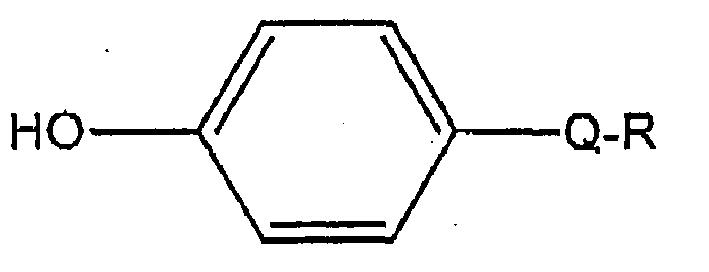
- p-hydroxyphenyl-containing means compounds containing the structure: wherein Q is a linear or branched 1-12 heteroatom alkyl wherein the heteroatoms are one or more of N, O, and S, wherein the bonds comprising the heteroatom alkyl chain are single or double, wherein any carbon atom in the heteroatom alkyl chain optionally includes a substituent which may be -OH, -COOH, -NH 2 , or -SH, and wherein R can be one or more of -OH, -COOH, -NH 2 , or -CH 3 .
- the soluble p-hydroxyphenyl-containing compound can be converted into a stable insoluble product which becomes highly fluorescent upon illumination.
- Examples of p-hydroxyphenyl-containing substrates which can be used to practice the invention include: wherein Q-R is -(CH 2 ) 2 CONH(CH 2 ) 4 CH 2 OH; -(CH 2 ) 2 CONH(CH 2 ) 5 CH 2 OH; -(CH 2 ) 2 CONH(CH 2 ) 7 COOH; -(CH 2 ) 2 COOH; -CH 2 CH 2 OH; -CH 2 CH 3 ; -(CH 2 ) 2 CH 2 OH; or -(CH 2 ) 2 CH 3 .
- Preferred p-hydroxyphenyl-containing substrates which can be used to practice the invention are:
- substituted aliphatic can include a straight or branched chain hydrocarbon such as an alkyl group.
- alkyl groups are methyl, ethyl, propyl, isopropyl, isobutyl, butyl, tert-butyl, sec-butyl, pentyl, and hexyl.
- the term "becomes highly fluorescent upon illumination” means that the insoluble product requires an initial activation by illumination at a wavelength of typically 300-400 nm which causes it to become highly fluorescent when subsequently excited. If the material is not first activated by illumination, the fluorescence, as described below, is very weak and barely visible, if at all. While not wishing to be bound by speculation, the inventors presume that activation creates a stable or metastable state in the material which enhances its fluorescence.
- the surprising and unexpected properties of the insoluble product may be due to the formation of a polymeric, crystalline, or dendrimer complex.
- the product can be formed by reaction of a suitable substrate with peroxidase, and subsequently used to label proteins, nucleic acids or other materials.
- the initial illumination wavelength is less than 400 nm and typically ranges from 340 to 380 nm.
- the illumination wavelength ranges from 350 to 370 nm.
- other illumination wavelengths can be employed depending on the specific substrate utilized. One of ordinary skill in the art would be able to determine the appropriate wavelength for a given substrate.
- the products After the initial illumination, the products exhibit surprising and unexpected fluorescence excitation and emission characteristics when subsequently illuminated.
- the unexpected characteristic is that the products exhibit fluorescence excitation/emission at multiple wavelengths.
- the products can be excited at 490 nm to produce a highly or brightly green fluorescence, viewed with an emission filter typically in the low 500 nm range.
- the products can also be excited at 550 nm to produce a highly or brightly red fluorescence, viewed with an emission filter typically in the high 570 nm range.
- the products can be excited at wavelengths both above and below these ranges with concomitant emission characteristics.
- the fluorescence can be observed utilizing a multitude of excitation sources and fluorescent filters.
- the method of the invention overcomes the above-mentioned problems of the prior art by producing sensitive, stable and archivable fluorescent products.
- the emission characteristics also overcome problems of sample auto fluorescence.
- the method of the invention can be used with most solid phase assay systems using conventional technology well known to those skilled in the art in which peroxidase is used as the enzyme label such as for microarrays, histochemical assays, nucleic acid assays and immunoassays.
- the preferred surface is the medium itself, e.g., animal or plant cells and tissue affixed to a glass or plastic slide, membrane or bead.
- the amount of substrate in the solution can vary over a considerable range depending upon the identity and concentration of the peroxidase enzyme whose activity is to be measured.
- the concentration can range from 1 X 10 -4 M to 5 X 10 -2 M.
- the substrate is present in an amount from 1 X 10 -3 M to 1 X 10 -2 M.
- substrate concentrations can be utilized depending on specific substrate and one of ordinary skill in the art could ascertain an appropriate substrate concentration.
- the insoluble product is formed or developed by incubating the substrate solution with a sample containing the enzyme. Illumination of the insoluble product followed by excitation is a prerequisite for generating the fluorescence signal.
- the instant invention includes a method for enhancing sensitivity in a peroxidase-based assay comprising reacting a peroxidase with a soluble p-hydroxyphcnyl-containing substrate of the present invention to form archivable insoluble products which becomes highly fluorescent upon subsequent excitation.
- the p-hydroxyphenyl-containing substrates form insoluble products which are not fluorescent or are weakly fluorescent, but which after illumination, and upon excitation become highly or brightly fluorescent.
- the products have a high degree of chemical stability, photostability, and fluorescence regeneration.
- This invention is applicable to a peroxidase-based assay for detecting the presene or absence of a substance in a sample suspected to contain the substance, wherein the improvement comprises reacting peroxidase with a soluble p-hydroxyphenyl-containing substrate that forms an insoluble product which becomes fluorescent after initial illumination and upon subsequent excitation.
- Such assays can be performed using conventional technology well known to those skilled in the art. Any type of antigen or nucleic acid can be detected using the present invention.
- Example 1 Fluorescence detection on a tissue section with a p-hydroxyphenyl-containing HRP substrate.
- PBS-BB PBS-blocking buffer
- HRP horseradish peroxidase conjugated wheat germ agglutinin
- Sections were then washed in PBS (three x five minutes each wash) and Tris (0.1 M Tris, pH 8.5; three x three minutes each wash). N-(5-hydroxypentyl)-3-(p-hydroxyphenyl) propionamide (HHPA), 1 mg/ml in Tris containing 0.003% H 2 O 2 , was then added to the sections at room temperature for ten minutes. Sections were then washed in Tris (three x three minutes each wash) and mounted with Tris:Glycerol (1:1) and coverslipped.
- PBS three x five minutes each wash
- Tris 0.1 M Tris, pH 8.5; three x three minutes each wash.
- HHPA N-(5-hydroxypentyl)-3-(p-hydroxyphenyl) propionamide
- Sections were viewed with a Zeiss Axioskop microscope equipped with epifluorescence and filter sets with excitation/emission characteristics of 360 nm/>400 nm (blue-white fluorescence); 490 nm/520 nm (green fluorescence); and 550 nm/570 nm (red fluorescence). Sections were photographed with a Zeiss MC100 camera system.
- Example 2 Improved fluorescent signal stability with a p-hydroxyphenyl-containing HRP substrate.
- Sections of paraffin-embedded mouse brain were deparaffinized and non-specific binding sites were blocked by treatment for thirty minutes in PBS-BB.
- Monoclonal antibody against microtubule associated protein-2 (Sigma) was diluted 1:100,000 in PBS-BB and incubated on the sections overnight at 4°C. Sections were then washed in PBS (three x five minutes each wash) and incubated at room temperature for one hour with HRP-conjugated donkey antimouse antibodies (Jackson Immunoresearch Laboratories; West Grove, PA) diluted 1:1000 in PBS-BB.
- Sections were then washed in PBS (three x five minutes each wash) and microtubule associated protein-2 immunoreactivity was localized with either a TSA Direct Fluorescein kit according to the manufacturer's directions (NEN Life Science Products, Inc.; Boston, MA) or with HHPA (1 mg/ml in TSA amplification diluent for ten minutes). Sections were then washed in Tris (three x five minutes each wash), mounted in Tris:Glycerol (1:1) and coverslipped.
- the fluorescein labeled section was viewed with a filter set having excitation/emission peaks at 490 nm/520 nm.
- the HHPA labeled section was first illuminated at 360 nm for one minute to activate the deposited reaction product and then viewed with a filter set having excitation/emission peaks at 360 nm/520 nm. Sections were viewed at time zero and after fifteen minutes of continuous excitation. Photomicrographs using standard two second exposures were taken at both time points to assess changes in fluorescence intensity over time. In addition, fluorescence intensity was semi-quantitated at both time points by recording the automatic exposure time required for photomicrographic documentation in a standard field using an ASA setting of 1600 and the MC100 camera system (Zeiss). Using this measure, short exposure times correlate with bright-fluorescence and long exposure times with dim fluorescence.
Landscapes
- Chemical & Material Sciences (AREA)
- Organic Chemistry (AREA)
- Life Sciences & Earth Sciences (AREA)
- Engineering & Computer Science (AREA)
- Zoology (AREA)
- Wood Science & Technology (AREA)
- Proteomics, Peptides & Aminoacids (AREA)
- Health & Medical Sciences (AREA)
- Molecular Biology (AREA)
- Biochemistry (AREA)
- Immunology (AREA)
- Microbiology (AREA)
- Biophysics (AREA)
- Analytical Chemistry (AREA)
- Physics & Mathematics (AREA)
- Biotechnology (AREA)
- Bioinformatics & Cheminformatics (AREA)
- General Engineering & Computer Science (AREA)
- General Health & Medical Sciences (AREA)
- Genetics & Genomics (AREA)
- Measuring Or Testing Involving Enzymes Or Micro-Organisms (AREA)
- Investigating Or Analysing Materials By The Use Of Chemical Reactions (AREA)
- Investigating Or Analysing Biological Materials (AREA)
- Investigating, Analyzing Materials By Fluorescence Or Luminescence (AREA)
Abstract
Description
- This invention relates to a method for a permanent fluorescent assay, and in particular, toward a fluorescent peroxidase-based assay utilizing a soluble p-hydroxyphenyl-containing substrate which forms an insoluble product through peroxidase activity.
- Horseradish peroxidase (HRP) (EC 1.11.1.7) is a commonly used enzyme label for immunological detection systems. HRP decomposes two molecules of hydrogen peroxide into water and oxygen. HRP initiates this reaction when it donates a pair of electrons to hydrogen peroxide. The enzyme subsequently extracts electrons (oxidizes) from a suitable donor.
- Donor substrates for HRP and other enzymes which form soluble fluorescent products have been described. Gross and Sizer, J. Biol. Chem., 234: 1611-1614 (1959) describe the mechanism of the oxidation of tyramine and tyrosine by peroxidase. They found that the reaction products of tyramine and tyrosine with peroxidase are dityramine and dityrosine, respectively. In their analysis, they demonstrated the presence of new soluble fluorescent substances.
- Guilbault, et al., Analytical Chemistry, 40 (8): 1256-1263 (1980) describe new substrates for the fluorometric determination of oxidative enzymes. In an attempt to improve the sensitivity of the colorimetric determination of carbohydrates, Guilbault et al. evaluated a series of phenolic peroxidase substrates in conjunction with the oxidation of the carbohydrates by either galactose oxidase or glucose oxidase. The phenolic substrates were chosen because they formed fluorescent solution phase products upon reaction with peroxidase and H2O2. The best substrates were found to be p-hydroxyphenylacetic acid, homovanillic acid, tyramine and tyrosine. In characterizing the oxidized fluorescent products, Guilbault et al. reported an excitation range of 315-326 nm and emission range of 410-425 nm for the group.
- Zaitsu and Ohkura, Analytical Biochemistry, 109: 109-113 (1980) reported new fluorogenic substrates for horseradish peroxidase. They evaluated twenty-five p-hydroxyphenyl or 3-methoxy-4-hydroxyphenyl compounds for their suitability as soluble fluorogenic substrates for HRP. They concluded that 3-(p-hydroxyphenyl) propionic acid was the best substrate. For the fluorescent assay employed, the range of excitation wavelengths was 312 to 320 nm and the range of emission wavelengths was 400-422 nm.
- Non-enzymatic fluorescent detection methods have been used in assays but they often suffer from poor sensitivity, and when sensitive enough, are not stable and do not allow for the archiving of results (Raap, et al., Human Molecular Genetics, 4 (4): 529-534 (1995); Speel, et al., J. Histochem. Cytochem., 45 (10): 1439-1446 (1997); Chao et al., Cytometry, 23: 48-53 (1996). One method for enhancing sensitivity is the use of enzymatic amplification. For peroxidase based solid phase assays, this is made difficult due to the lack of soluble non-fluorescent substrates which react to form insoluble fluorescent products. Thus, there is a need for such substrates in enzymatically amplified assays since they would allow for enhanced sensitivity and for archival storage and later use of assay results.
-
International patent application, published as WO 00/28077 - This invention relates to a method for a permanent, highly fluorescent peroxidase-based assay comprising reacting peroxidase with a soluble p-hydroxyphenyl-containing substrate as described herein which forms an insoluble, fluorescent product which is characterised in that when it is illuminated with an activating illumination, it is converted to a stable or metastable activated form which persists after illumination termination.
- In another embodiment, this invention is directed to a peroxidase-based assay for detecting the presence or absence of a desired substance in a sample which may contain the desired substance, wherein the method comprises reacting a peroxidase enzyme with a soluble p-hydroxyphenyl-containing substrate as described herein that forms an insoluble, fluorescent product through peroxidase activity which is characterised in that when it is illuminated with an activating illumination, it is converted to a stable or metastable activated form which persists after illumination termination.
- Other advantages of the present invention will be readily appreciated as the same becomes better understood by reference to the following detailed description when considered in connection with the accompanying drawings wherein:
- Figures 1A-F are photographs illustrating fluorescence detection on a tissue section utilizing a small p-hydroxyphenyl-containing HRP substrate wherein (A) is a photograph illustrating the fluorescent signal with 360 nm excitation using a blue-white filter set, (B) is a photograph illustrating the fluorescent signal following a one minute illumination at 360 nm using a blue-white filter set, (C) is a photograph illustrating the fluorescent signal following excitation at 490 nm using a green filter set, (D) is a photograph illustrating the same slide following a one minute illumination at 360 nm and excitation at 490 nm using a green filter set, (E) is a photograph illustrating the fluorescent signal following 550 nm excitation using a red filter set, and (F) is the same slide as shown in Figure 1E following illumination for one minute at 360 nm and excitation at 550 nm utilizing a red filter set; and
- Figures 2A-D are photographs illustrating tissue sections wherein (A) is a tissue section reacted with TSA Direct-Fluorescein after initial excitation, (B) is the same section as in Figure 2A following fifteen minutes of continuous excitation, (C) is a photograph of a tissue section reacted with HHPA after initial excitation and (D) is the same slide as in Figure 2C following fifteen minutes of continuous excitation.
- The term peroxidase based assay means a solid phase enzyme assay in which a peroxidase enzyme, such as HRP, is used as the enzyme label converting a soluble substrate to an insoluble product.
- The term insoluble product means a product which precipitates out of the assay solution to form a solid which, generally, is deposited on a surface. Typical surfaces include, but are not limited to, cells or tissues, glass, plastic and silicon. It is to be understood that an "insoluble product" in accord with this invention may be soluble in some solvents; however, the product will be insoluble in the specific assay of the present invention.
- The term p-hydroxyphenyl-containing means compounds containing the structure:

- Examples of p-hydroxyphenyl-containing substrates which can be used to practice the invention include:

- Preferred p-hydroxyphenyl-containing substrates which can be used to practice the invention are:


- As used herein, the term substituted aliphatic can include a straight or branched chain hydrocarbon such as an alkyl group. Representative examples of alkyl groups are methyl, ethyl, propyl, isopropyl, isobutyl, butyl, tert-butyl, sec-butyl, pentyl, and hexyl.
- The term "becomes highly fluorescent upon illumination" means that the insoluble product requires an initial activation by illumination at a wavelength of typically 300-400 nm which causes it to become highly fluorescent when subsequently excited. If the material is not first activated by illumination, the fluorescence, as described below, is very weak and barely visible, if at all. While not wishing to be bound by speculation, the inventors presume that activation creates a stable or metastable state in the material which enhances its fluorescence. The surprising and unexpected properties of the insoluble product may be due to the formation of a polymeric, crystalline, or dendrimer complex. The product can be formed by reaction of a suitable substrate with peroxidase, and subsequently used to label proteins, nucleic acids or other materials.
- For example, for the p-hydroxyphenyl-containing substrates of the formula:

- After the initial illumination, the products exhibit surprising and unexpected fluorescence excitation and emission characteristics when subsequently illuminated. The unexpected characteristic is that the products exhibit fluorescence excitation/emission at multiple wavelengths. For example, the products can be excited at 490 nm to produce a highly or brightly green fluorescence, viewed with an emission filter typically in the low 500 nm range. Further, the products can also be excited at 550 nm to produce a highly or brightly red fluorescence, viewed with an emission filter typically in the high 570 nm range. Additionally, the products can be excited at wavelengths both above and below these ranges with concomitant emission characteristics. Thus, the fluorescence can be observed utilizing a multitude of excitation sources and fluorescent filters. If excited (e.g., at 490 or 550 nm) to the point where fluorescence begins to fade, fluorescence is regenerated by illumination in the 360 nm range. Thus, the method of the invention overcomes the above-mentioned problems of the prior art by producing sensitive, stable and archivable fluorescent products. The emission characteristics also overcome problems of sample auto fluorescence.
- The method of the invention can be used with most solid phase assay systems using conventional technology well known to those skilled in the art in which peroxidase is used as the enzyme label such as for microarrays, histochemical assays, nucleic acid assays and immunoassays. For histochemical assays or nucleic acid hybridization methods, the preferred surface is the medium itself, e.g., animal or plant cells and tissue affixed to a glass or plastic slide, membrane or bead.
- The amount of substrate in the solution can vary over a considerable range depending upon the identity and concentration of the peroxidase enzyme whose activity is to be measured. The concentration can range from 1 X 10⁻⁴M to 5 X 10⁻²M. Preferably, the substrate is present in an amount from 1 X 10⁻³M to 1 X 10⁻²M. Clearly, other substrate concentrations can be utilized depending on specific substrate and one of ordinary skill in the art could ascertain an appropriate substrate concentration.
- The insoluble product is formed or developed by incubating the substrate solution with a sample containing the enzyme. Illumination of the insoluble product followed by excitation is a prerequisite for generating the fluorescence signal.
- The instant invention includes a method for enhancing sensitivity in a peroxidase-based assay comprising reacting a peroxidase with a soluble p-hydroxyphcnyl-containing substrate of the present invention to form archivable insoluble products which becomes highly fluorescent upon subsequent excitation.
- It has been found, surprisingly and unexpectedly that the p-hydroxyphenyl-containing substrates form insoluble products which are not fluorescent or are weakly fluorescent, but which after illumination, and upon excitation become highly or brightly fluorescent. The products have a high degree of chemical stability, photostability, and fluorescence regeneration.
- This invention is applicable to a peroxidase-based assay for detecting the presene or absence of a substance in a sample suspected to contain the substance, wherein the improvement comprises reacting peroxidase with a soluble p-hydroxyphenyl-containing substrate that forms an insoluble product which becomes fluorescent after initial illumination and upon subsequent excitation. Such assays can be performed using conventional technology well known to those skilled in the art. Any type of antigen or nucleic acid can be detected using the present invention.
- Sections of paraffin-embedded mouse intestine were deparaffinized, and non-specific binding sites were blocked by treatment for thirty minutes in PBS-blocking buffer (PBS-BB) (0.1 M phosphate buffered saline, pH 7.2; 1.0% bovine serum albumin, 0.2% non-fat powdered milk; and 0.3% Triton X-100). Horseradish peroxidase (HRP) conjugated wheat germ agglutinin (Sigma; St. Louis, MO) at a concentration of 10 µg/ml in PBS-BB was incubated on the sections for one hour at room temperature. Sections were then washed in PBS (three x five minutes each wash) and Tris (0.1 M Tris, pH 8.5; three x three minutes each wash). N-(5-hydroxypentyl)-3-(p-hydroxyphenyl) propionamide (HHPA), 1 mg/ml in Tris containing 0.003% H2O2, was then added to the sections at room temperature for ten minutes. Sections were then washed in Tris (three x three minutes each wash) and mounted with Tris:Glycerol (1:1) and coverslipped. Sections were viewed with a Zeiss Axioskop microscope equipped with epifluorescence and filter sets with excitation/emission characteristics of 360 nm/>400 nm (blue-white fluorescence); 490 nm/520 nm (green fluorescence); and 550 nm/570 nm (red fluorescence). Sections were photographed with a Zeiss MC100 camera system.
- Wheat germ agglutinin binds to N-acetylglucosamine residues present in abundance in intestinal mucin producing goblet cells. Initial microscopic examination showed only weak fluorescence signal with 360 nm excitation (Fig. 1A, blue-white filter set) and almost no signal when viewed with either standard green (Fig. 1C) or red (Fig. 1E) filter sets. The microscopic field was then illuminated for one minute at 360 nm and reexamined as described above. There was a dramatic and unexpected increase in fluorescent signal following this brief exposure to 360 nm illumination. Intense fluorescent signals localized to goblet cells were now observed with all three filter sets, blue-white (Fig. 1B), green (Fig. 1D), and red (Fig. 1F). No goblet cell specific signal was observed in the absence of HRP conjugated wheat germ agglutinin incubation (data not shown). Original magnifications 400X.
- Sections of paraffin-embedded mouse brain were deparaffinized and non-specific binding sites were blocked by treatment for thirty minutes in PBS-BB. Monoclonal antibody against microtubule associated protein-2 (Sigma) was diluted 1:100,000 in PBS-BB and incubated on the sections overnight at 4°C. Sections were then washed in PBS (three x five minutes each wash) and incubated at room temperature for one hour with HRP-conjugated donkey antimouse antibodies (Jackson Immunoresearch Laboratories; West Grove, PA) diluted 1:1000 in PBS-BB. Sections were then washed in PBS (three x five minutes each wash) and microtubule associated protein-2 immunoreactivity was localized with either a TSA Direct Fluorescein kit according to the manufacturer's directions (NEN Life Science Products, Inc.; Boston, MA) or with HHPA (1 mg/ml in TSA amplification diluent for ten minutes). Sections were then washed in Tris (three x five minutes each wash), mounted in Tris:Glycerol (1:1) and coverslipped.
- The fluorescein labeled section was viewed with a filter set having excitation/emission peaks at 490 nm/520 nm. The HHPA labeled section was first illuminated at 360 nm for one minute to activate the deposited reaction product and then viewed with a filter set having excitation/emission peaks at 360 nm/520 nm. Sections were viewed at time zero and after fifteen minutes of continuous excitation. Photomicrographs using standard two second exposures were taken at both time points to assess changes in fluorescence intensity over time. In addition, fluorescence intensity was semi-quantitated at both time points by recording the automatic exposure time required for photomicrographic documentation in a standard field using an ASA setting of 1600 and the MC100 camera system (Zeiss). Using this measure, short exposure times correlate with bright-fluorescence and long exposure times with dim fluorescence.
- The section reacted with TSA Direct-Fluorescein showed a strong initial signal (Fig. 2A) which faded dramatically over the fifteen minutes of continuous excitation (Fig. 2B). The time required for a standard ASA 1600 exposure increased over six-fold from time zero (1.8 seconds) to fifteen minutes (12.0 seconds). In contrast, fifteen minutes of continuous excitation to the HHPA reacted slide resulted in increased fluorescence intensity (Fig. 2C, time zero; Fig. 2D, following fifteen minutes of excitation). Standard exposure time was decreased from 4.1 seconds to 3.1 seconds after fifteen minutes of constant excitation. This remarkable degree of fluorescence stability with HHPA was unexpected and unlike the typical loss of signal observed when most fluorophores are exposed to prolonged excitation. Original magnifications 600X.
- The foregoing drawings, discussion and description are illustrative of the general principles of the present invention, and some specific embodiments thereof, but are not meant to be limitations upon the practice of the present invention.
Claims (10)
- A method for performing a peroxidase-based assay comprising, in order:first, reacting a peroxidase enzyme with a soluble p-hydroxyphenyl-containing substrate compound of the structure:
 wherein Q is a linear or branched 1-12 heteroatom alkyl wherein the heteroatoms are selected from the group consisting essentially of N, O, and S, wherein the bonds connecting the heteroatom alkyl chain are single or double, wherein any carbon atom in the heteroatom alkyl chain optionally includes a substituent selected from the group consisting of -OH, -COOH, -NH2, and -SH, and wherein R is selected from the group consisting of -OH, -COOH,-NH2, and -CH3, said substrate compound being further characterised in that after reaction with said peroxidase enzyme it forms an insoluble product which is characterised in that when it is illuminated with an activating illumination, it is converted to a stable or metastable activated form which activated form persists after said activating illumination is terminated;secondly, converting said insoluble product into said activated form by illuminating said insoluble product with said activating illumination;thirdly, terminating said activating illumination;fourthly, exciting said activated form of said insoluble product with light of a first wavelength so that the activated product fluoresces at a second wavelength which is longer than said first wavelength, whereby the fluorescence displayed by the previously activated insoluble product is greater than the fluorescence that would be the fluorescence displayed by the same insoluble product which has not been activated; andfifthly, detecting said second wavelength.
 - A method according to claim 1, wherein the p-hydroxyphenyl-containing substrate is selected from the group consisting of:


- A method according to either of claims 1 or 2, wherein the peroxidase enzyme is horseradish peroxidase.
- A method according to any preceding claim, wherein the concentration of the organic compound ranges from 1 x 10⁻⁴ M to 5 x 10⁻² M.
- A method according to claim 4, wherein the concentration of the organic compound ranges from 1 x 10⁻³ M to 1 x 10⁻² M.
- A method according to any preceding claim wherein the step of converting the insoluble product into an activated form comprises illuminating said insoluble product with light having a wavelength between 340 nm to 380 nm.
- A method according to any preceding claim, wherein the light used to excite said activated form of said insoluble product has a wavelength between 350 nm to 370 nm.
- A kit for performing a peroxidase-based assay, said kit comprising:a peroxidase enzyme; anda substrate comprising a p-hydroxyphenyl compound having the formula:wherein Q is a linear or branched 1-12 heteroatom alkyl wherein the heteroatoms are selected from the group consisting of N, O, and S, wherein the bonds connecting the heteroatom alkyl chain are single or double, wherein any carbon atom in the heteroatom alkyl chain optionally includes a substituent selected from the group consisting of -OH, -COOH, -NH2, and -SH, and wherein R is selected from the group consisting of -OH, -COOH, -NH2, and -CH3, said substrate being further characterized in that after reaction with said peroxidase enzyme it forms an insoluble product which is characterized in that when it is illuminated with an activating illumination, it is converted to a stable or metastable activated form, which activated form persists after said activating illumination is terminated, and wherein said activated form upon subsequent excitation with light of a first wavelength fluoresces at a second wavelength which is longer than said first wavelength, and whereby the fluorescence displayed by the previously activated insoluble product is greater than the fluorescence that would be the fluorescence displayed by the same insoluble product which had not been activated.
- A kit according to claim 9, wherein said p-hydroxyphenyl compound is selected from the group consisting of:


- A kit according to claim 8, wherein said peroxidase enzyme is horseradish peroxidase.
Applications Claiming Priority (5)
| Application Number | Priority Date | Filing Date | Title |
|---|---|---|---|
| US12482599P | 1999-03-17 | 1999-03-17 | |
| US124825P | 1999-03-17 | ||
| US09/526,414 US6518036B1 (en) | 1999-03-17 | 2000-03-16 | Method of permanent fluorescent assay |
| US526414 | 2000-03-16 | ||
| PCT/US2000/007030 WO2000055115A1 (en) | 1999-03-17 | 2000-03-17 | A method of permanent fluorescent assay |
Publications (3)
| Publication Number | Publication Date |
|---|---|
| EP1080065A1 EP1080065A1 (en) | 2001-03-07 |
| EP1080065A4 EP1080065A4 (en) | 2003-02-12 |
| EP1080065B1 true EP1080065B1 (en) | 2007-10-03 |
Family
ID=26822988
Family Applications (1)
| Application Number | Title | Priority Date | Filing Date |
|---|---|---|---|
| EP00918049A Expired - Lifetime EP1080065B1 (en) | 1999-03-17 | 2000-03-17 | A method of permanent fluorescent assay |
Country Status (9)
| Country | Link |
|---|---|
| US (1) | US6518036B1 (en) |
| EP (1) | EP1080065B1 (en) |
| JP (1) | JP4704572B2 (en) |
| AT (1) | ATE374745T1 (en) |
| AU (1) | AU773276B2 (en) |
| CA (1) | CA2332560C (en) |
| DE (1) | DE60036584T2 (en) |
| IL (1) | IL139709A0 (en) |
| WO (1) | WO2000055115A1 (en) |
Families Citing this family (1)
| Publication number | Priority date | Publication date | Assignee | Title |
|---|---|---|---|---|
| US6372937B1 (en) * | 1998-11-09 | 2002-04-16 | Mark Norman Bobrow | Enhanced catalyzed reporter deposition |
Family Cites Families (8)
| Publication number | Priority date | Publication date | Assignee | Title |
|---|---|---|---|---|
| EP0116454B1 (en) * | 1983-02-11 | 1987-04-29 | National Research Development Corporation | Enhanced luminescent or luminometric assay |
| US4950588A (en) * | 1985-07-10 | 1990-08-21 | Molecular Diagnostics, Inc. | Prolonged enhanced chemiluminescence |
| AU624935B2 (en) * | 1989-04-10 | 1992-06-25 | Nippon Kayaku Kabushiki Kaisha | Method for quantitatively measuring sugar-alcohol, column and kit therefor |
| US5306621A (en) * | 1989-10-17 | 1994-04-26 | British Technology Group Limited | Enhanced chemiluminescent assay |
| US5863748A (en) * | 1997-03-14 | 1999-01-26 | New Life Science Products, Inc. | p-Hydroxycinnamoyl-containing substrates for an analyte dependent enzyme activation system |
| JPH11318492A (en) | 1998-03-09 | 1999-11-24 | Aisin Seiki Co Ltd | Composition containing fluorogenic substrate |
| IL140930A0 (en) * | 1998-08-07 | 2002-02-10 | Emisphere Tech Inc | Compounds and compositions for delivering active agents |
| US6372937B1 (en) * | 1998-11-09 | 2002-04-16 | Mark Norman Bobrow | Enhanced catalyzed reporter deposition |
-
2000
- 2000-03-16 US US09/526,414 patent/US6518036B1/en not_active Expired - Lifetime
- 2000-03-17 CA CA2332560A patent/CA2332560C/en not_active Expired - Fee Related
- 2000-03-17 IL IL13970900A patent/IL139709A0/en unknown
- 2000-03-17 WO PCT/US2000/007030 patent/WO2000055115A1/en not_active Ceased
- 2000-03-17 DE DE60036584T patent/DE60036584T2/en not_active Expired - Fee Related
- 2000-03-17 JP JP2000605546A patent/JP4704572B2/en not_active Expired - Fee Related
- 2000-03-17 EP EP00918049A patent/EP1080065B1/en not_active Expired - Lifetime
- 2000-03-17 AT AT00918049T patent/ATE374745T1/en not_active IP Right Cessation
- 2000-03-17 AU AU38925/00A patent/AU773276B2/en not_active Ceased
Also Published As
| Publication number | Publication date |
|---|---|
| JP2002538806A (en) | 2002-11-19 |
| AU773276B2 (en) | 2004-05-20 |
| DE60036584D1 (en) | 2007-11-15 |
| DE60036584T2 (en) | 2008-06-05 |
| JP4704572B2 (en) | 2011-06-15 |
| EP1080065A4 (en) | 2003-02-12 |
| WO2000055115A1 (en) | 2000-09-21 |
| ATE374745T1 (en) | 2007-10-15 |
| EP1080065A1 (en) | 2001-03-07 |
| AU3892500A (en) | 2000-10-04 |
| IL139709A0 (en) | 2002-02-10 |
| CA2332560C (en) | 2010-11-23 |
| US6518036B1 (en) | 2003-02-11 |
| CA2332560A1 (en) | 2000-09-21 |
Similar Documents
| Publication | Publication Date | Title |
|---|---|---|
| USRE49466E1 (en) | Solution phase homogeneous assays | |
| JP3231777B2 (en) | Novel N-alkyl acridan carboxyl derivatives useful for chemiluminescence detection | |
| EP2027453B1 (en) | Nonseparation assay methods | |
| EP0544662B1 (en) | Enzyme amplified lanthanide chelate luminescence assay | |
| JP2983820B2 (en) | Compositions, test devices and methods comprising electron transfer agents | |
| WO1994010337A1 (en) | Enzyme-catalyzed chemiluminescence from hydroxyaryl cyclic diacylhydrazide compounds | |
| US6518036B1 (en) | Method of permanent fluorescent assay | |
| US6355443B1 (en) | 4-(4-hydroxystyryl) pyridine-containing substrates for an analyte dependent enzyme activation system | |
| JP3036806B2 (en) | Determination of trace components in body fluids | |
| JPH11511031A (en) | Assay for peroxidase activity | |
| EP0675968B1 (en) | Enzyme-catalyzed chemiluminescent detection of proteins and nucleic acids using hydroxyaryl cyclic diacylhydrazide compounds | |
| JPH07218508A (en) | Blocking reagent and enzyme immuno-dyeing method of peroxydase marked body | |
| JP2002538806A5 (en) | ||
| JP2000083697A (en) | Composition containing chromogenic substrate |
Legal Events
| Date | Code | Title | Description |
|---|---|---|---|
| PUAI | Public reference made under article 153(3) epc to a published international application that has entered the european phase |
Free format text: ORIGINAL CODE: 0009012 |
|
| 17P | Request for examination filed |
Effective date: 20001212 |
|
| AK | Designated contracting states |
Kind code of ref document: A1 Designated state(s): AT BE CH CY DE DK ES FI FR GB GR IE IT LI LU MC NL PT SE |
|
| A4 | Supplementary search report drawn up and despatched |
Effective date: 20030102 |
|
| 17Q | First examination report despatched |
Effective date: 20031016 |
|
| 17Q | First examination report despatched |
Effective date: 20031016 |
|
| GRAP | Despatch of communication of intention to grant a patent |
Free format text: ORIGINAL CODE: EPIDOSNIGR1 |
|
| RAP1 | Party data changed (applicant data changed or rights of an application transferred) |
Owner name: PERKINELMER LAS, INC. |
|
| GRAS | Grant fee paid |
Free format text: ORIGINAL CODE: EPIDOSNIGR3 |
|
| GRAA | (expected) grant |
Free format text: ORIGINAL CODE: 0009210 |
|
| AK | Designated contracting states |
Kind code of ref document: B1 Designated state(s): AT BE CH CY DE DK ES FI FR GB GR IE IT LI LU MC NL PT SE |
|
| REG | Reference to a national code |
Ref country code: GB Ref legal event code: FG4D |
|
| REG | Reference to a national code |
Ref country code: CH Ref legal event code: EP |
|
| REG | Reference to a national code |
Ref country code: IE Ref legal event code: FG4D |
|
| REF | Corresponds to: |
Ref document number: 60036584 Country of ref document: DE Date of ref document: 20071115 Kind code of ref document: P |
|
| NLV1 | Nl: lapsed or annulled due to failure to fulfill the requirements of art. 29p and 29m of the patents act | ||
| REG | Reference to a national code |
Ref country code: CH Ref legal event code: PL |
|
| PG25 | Lapsed in a contracting state [announced via postgrant information from national office to epo] |
Ref country code: LI Free format text: LAPSE BECAUSE OF FAILURE TO SUBMIT A TRANSLATION OF THE DESCRIPTION OR TO PAY THE FEE WITHIN THE PRESCRIBED TIME-LIMIT Effective date: 20071003 Ref country code: CH Free format text: LAPSE BECAUSE OF FAILURE TO SUBMIT A TRANSLATION OF THE DESCRIPTION OR TO PAY THE FEE WITHIN THE PRESCRIBED TIME-LIMIT Effective date: 20071003 Ref country code: ES Free format text: LAPSE BECAUSE OF FAILURE TO SUBMIT A TRANSLATION OF THE DESCRIPTION OR TO PAY THE FEE WITHIN THE PRESCRIBED TIME-LIMIT Effective date: 20080114 Ref country code: NL Free format text: LAPSE BECAUSE OF FAILURE TO SUBMIT A TRANSLATION OF THE DESCRIPTION OR TO PAY THE FEE WITHIN THE PRESCRIBED TIME-LIMIT Effective date: 20071003 Ref country code: SE Free format text: LAPSE BECAUSE OF FAILURE TO SUBMIT A TRANSLATION OF THE DESCRIPTION OR TO PAY THE FEE WITHIN THE PRESCRIBED TIME-LIMIT Effective date: 20080103 |
|
| PG25 | Lapsed in a contracting state [announced via postgrant information from national office to epo] |
Ref country code: PT Free format text: LAPSE BECAUSE OF FAILURE TO SUBMIT A TRANSLATION OF THE DESCRIPTION OR TO PAY THE FEE WITHIN THE PRESCRIBED TIME-LIMIT Effective date: 20080303 |
|
| ET | Fr: translation filed | ||
| PG25 | Lapsed in a contracting state [announced via postgrant information from national office to epo] |
Ref country code: AT Free format text: LAPSE BECAUSE OF FAILURE TO SUBMIT A TRANSLATION OF THE DESCRIPTION OR TO PAY THE FEE WITHIN THE PRESCRIBED TIME-LIMIT Effective date: 20071003 |
|
| PG25 | Lapsed in a contracting state [announced via postgrant information from national office to epo] |
Ref country code: DK Free format text: LAPSE BECAUSE OF FAILURE TO SUBMIT A TRANSLATION OF THE DESCRIPTION OR TO PAY THE FEE WITHIN THE PRESCRIBED TIME-LIMIT Effective date: 20071003 |
|
| PLBE | No opposition filed within time limit |
Free format text: ORIGINAL CODE: 0009261 |
|
| STAA | Information on the status of an ep patent application or granted ep patent |
Free format text: STATUS: NO OPPOSITION FILED WITHIN TIME LIMIT |
|
| 26N | No opposition filed |
Effective date: 20080704 |
|
| BERE | Be: lapsed |
Owner name: PERKINELMER LAS, INC. Effective date: 20080331 |
|
| PG25 | Lapsed in a contracting state [announced via postgrant information from national office to epo] |
Ref country code: MC Free format text: LAPSE BECAUSE OF NON-PAYMENT OF DUE FEES Effective date: 20080331 |
|
| GBPC | Gb: european patent ceased through non-payment of renewal fee |
Effective date: 20080317 |
|
| REG | Reference to a national code |
Ref country code: FR Ref legal event code: ST Effective date: 20081125 |
|
| PG25 | Lapsed in a contracting state [announced via postgrant information from national office to epo] |
Ref country code: GR Free format text: LAPSE BECAUSE OF FAILURE TO SUBMIT A TRANSLATION OF THE DESCRIPTION OR TO PAY THE FEE WITHIN THE PRESCRIBED TIME-LIMIT Effective date: 20080104 Ref country code: IE Free format text: LAPSE BECAUSE OF NON-PAYMENT OF DUE FEES Effective date: 20080317 Ref country code: DE Free format text: LAPSE BECAUSE OF NON-PAYMENT OF DUE FEES Effective date: 20081001 |
|
| PG25 | Lapsed in a contracting state [announced via postgrant information from national office to epo] |
Ref country code: BE Free format text: LAPSE BECAUSE OF NON-PAYMENT OF DUE FEES Effective date: 20080331 |
|
| PG25 | Lapsed in a contracting state [announced via postgrant information from national office to epo] |
Ref country code: FR Free format text: LAPSE BECAUSE OF NON-PAYMENT OF DUE FEES Effective date: 20080331 |
|
| PG25 | Lapsed in a contracting state [announced via postgrant information from national office to epo] |
Ref country code: GB Free format text: LAPSE BECAUSE OF NON-PAYMENT OF DUE FEES Effective date: 20080317 |
|
| PG25 | Lapsed in a contracting state [announced via postgrant information from national office to epo] |
Ref country code: CY Free format text: LAPSE BECAUSE OF FAILURE TO SUBMIT A TRANSLATION OF THE DESCRIPTION OR TO PAY THE FEE WITHIN THE PRESCRIBED TIME-LIMIT Effective date: 20071003 |
|
| PG25 | Lapsed in a contracting state [announced via postgrant information from national office to epo] |
Ref country code: FI Free format text: LAPSE BECAUSE OF FAILURE TO SUBMIT A TRANSLATION OF THE DESCRIPTION OR TO PAY THE FEE WITHIN THE PRESCRIBED TIME-LIMIT Effective date: 20071003 |
|
| PG25 | Lapsed in a contracting state [announced via postgrant information from national office to epo] |
Ref country code: LU Free format text: LAPSE BECAUSE OF NON-PAYMENT OF DUE FEES Effective date: 20080317 |
|
| PG25 | Lapsed in a contracting state [announced via postgrant information from national office to epo] |
Ref country code: IT Free format text: LAPSE BECAUSE OF NON-PAYMENT OF DUE FEES Effective date: 20080331 |