EP1079650A2 - Call admission control method and apparatus - Google Patents
Call admission control method and apparatus Download PDFInfo
- Publication number
- EP1079650A2 EP1079650A2 EP00305918A EP00305918A EP1079650A2 EP 1079650 A2 EP1079650 A2 EP 1079650A2 EP 00305918 A EP00305918 A EP 00305918A EP 00305918 A EP00305918 A EP 00305918A EP 1079650 A2 EP1079650 A2 EP 1079650A2
- Authority
- EP
- European Patent Office
- Prior art keywords
- fer
- session
- error rate
- frame error
- estimate
- Prior art date
- Legal status (The legal status is an assumption and is not a legal conclusion. Google has not performed a legal analysis and makes no representation as to the accuracy of the status listed.)
- Withdrawn
Links
Images


Classifications
-
- H—ELECTRICITY
- H04—ELECTRIC COMMUNICATION TECHNIQUE
- H04L—TRANSMISSION OF DIGITAL INFORMATION, e.g. TELEGRAPHIC COMMUNICATION
- H04L1/00—Arrangements for detecting or preventing errors in the information received
- H04L1/20—Arrangements for detecting or preventing errors in the information received using signal quality detector
-
- H—ELECTRICITY
- H04—ELECTRIC COMMUNICATION TECHNIQUE
- H04W—WIRELESS COMMUNICATION NETWORKS
- H04W24/00—Supervisory, monitoring or testing arrangements
-
- H—ELECTRICITY
- H04—ELECTRIC COMMUNICATION TECHNIQUE
- H04W—WIRELESS COMMUNICATION NETWORKS
- H04W48/00—Access restriction; Network selection; Access point selection
- H04W48/02—Access restriction performed under specific conditions
- H04W48/06—Access restriction performed under specific conditions based on traffic conditions
-
- H—ELECTRICITY
- H04—ELECTRIC COMMUNICATION TECHNIQUE
- H04W—WIRELESS COMMUNICATION NETWORKS
- H04W74/00—Wireless channel access
Definitions
- the invention relates to call admission control methods and apparatuses and in particular, but in no way limited to call admission control methods and apparatuses for cellular systems.
- call admission control methods In cellular systems, each time a new session attempts to access the system, a decision as to whether or not to admit the session must be made. Methods for achieving these are commonly referred to as call admission control methods. Most conventional call admission control methods make this decision based upon system resources such as frequency usage. Others employ the use of metrics such as power control, signal-to-noise ratio, and a required quality of service of multiple services for example. Generally speaking, these methods have not been designed to deal with modern cellular systems in which many multimedia subscribers compete to access the air interface with different types of services which require specific qualities of services.
- existing parameters are not all influenced by these sessions in a predictable manner. Furthermore, existing parameters are not necessarily usable in the MAC (media access control) layer, but rather might be usable at the physical layer for example.
- the invention provides new methods and apparatuses for performing call admission control.
- a method is provided for performing call admission control upon receipt of a request for a new session in which a FER (frame error rate) estimate is made of a new system FER which will result should the new session be admitted, and a decision as to whether or not to admit the new session is made on the basis of the new FER estimate.
- FER frame error rate
- the new system FER estimate is made by making an estimate of a previous system FER at the time of the request, determining an estimate of a degradation in the system FER should the new session be admitted, and combining the estimate of the degradation with the estimate of the previous system FER to obtain the estimate of the total system FER.
- Making the estimate of a previous system FER at the time of the request might consist of making an actual measurement of the system FER. Alternatively, it might consist of starting with the previous system FER equal to an initial system FER, and each time a session is admitted, adding the degradation estimated for the session to the previous system FER. Each time a session is ended, the degradation estimated for the session is subtracted from the previous system FER.
- the expected degradation in the system FER is maintained as a function of how many sessions have been admitted, and preferably also as a function of the type of the sessions which have been admitted.
- the expected degradations are preferably determined by generating test traffic with a predetermined ratio between numbers of sessions of each type and by then adding new sessions to the test traffic and making a measurement of the degradation in FER, and using these measurements as the expected degradations.
- a feedback mechanism can be used to provide more accurate and timely estimates of the expected degradations.
- an initial value for the degradation in FER for the Nth session of each type is determined, for example by using the above identified experimental technique.
- a measurement of the degradation which resulted from the Nth session is made and stored.
- the expected degradation for the Nth session is then determined to be an average of up to K stored measurements and the initial value for the Nth session if there are fewer than K stored measurements, where K is an integer greater than or equal to two.
- the decision as to whether or not to admit the new session on the basis of the new FER estimate is made by comparing the new FER estimate to a target FER, and if the new FER exceeds the target FER deciding to deny the session, while if the new FER does not exceed the target FER deciding to admit the session.
- a MAC layer implementation device operable to implement any of the above discussed methods is provided in another embodiment.
- a base station and a base station controller operable to implement any of the above discussed methods are provided.
- the MAC layer parameter used to perform call admission control has been the frame error rate.
- another MAC layer (or equivalent layer) parameter is selected which is affected by all different session types in a manner which makes it suitable for use as a basis of call admission control and is used in a similar predictive manner.
- a call admission control apparatus which has input circuitry operable to receive a request for a new session, and processing circuitry operable to make a FER estimate of a new system FER which will result should the new session be admitted and to decide whether to admit or to deny the new session on the basis of the new FER estimate.
- the FER is a parameter that is a direct indication of the cell interference, is influenced by all traffic types, takes frame re-transmission into account and is a tangible measurement which can be used in the MAC layer (or equivalent layer) for call admission control purposes.
- These traits make the FER a valuable criterion for call admission control in third generation cellular systems where many subscribers compete to access the system bandwidth with multiple applications (traffic types) which require different qualities of service.
- Another embodiment of the invention provides an article of manufacture having a computer usable medium having computer readable code means embodied therein for performing call admission control, the computer readable code means in said article of manufacture having computer readable code means for making an estimate of a new system FER which will result should a new session be admitted, computer readable code means for deciding to admit or to deny the new session on the basis of the new system FER estimate.
- the computer readable medium further comprises computer readable code means for making an estimate of a previous system FER at a time of the request, computer readable code means for determining an estimate of a degradation in the system FER should the new session be admitted; and computer readable code means for combining the estimate of the degradation to the estimate of the previous system FER to obtain said estimate of the total system FER.
- FIG. 1 shown is a block diagram of a cellular system within which the call admission control methods and apparatuses provided by embodiments of the invention may be applied.
- a base station 10 is shown connected through an air interface 12 to a number of mobile stations (MS) 14 (three shown) in the base station's cell 16 , or area of service provision. Also shown are two mobile stations 15 located within the base station's cell 16 which do not currently have a connection to the base station 10 .
- the base station 10 is also connected to a base station controller 18 which is in turn connected to a mobile switching centre 17 having a connection to a PSTN (public switched telephone network) 19 .
- PSTN public switched telephone network
- the session When the request originates at a mobile station, the session is said to be "mobile originated". In the case of an externally originated request (mobile terminated session) the mobile station is paged, and the mobile station's response to the page is treated as the request for a new session. In any case there is an identification of the type of the session. Different session types might include voice, packet-switched data, circuit-switched data, or simultaneous and in-session permutations of the above categories in different grades. The session type might identify further characteristics such as the required bandwidth, and the required quality of service for example. Access to the air interface resources is provided at the MAC layer, and thus decisions as to whether or not to admit a new session are implemented wherever the MAC layer is implemented.
- call admission control performs call admission control, and is assumed to form part of the base station controller 18 .
- the call admission control block 20 has a processor 22 and memory 24 . It is to be understood that dedicated processor and memory for call admission control need not necessarily be provided, but rather other components in the base station controller (or other MAC layer device) can be adapted to handle the required functionality, as discussed in detail below. More generally still, any processing element could be used, including suitably programmed FPGAs, ASICs, or other hardware and/or software.
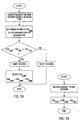
- FIG. 2A a flowchart for a method of performing call admission control according to a first embodiment of the invention is illustrated. To begin, several terms will be defined:
- a frame error occurs whenever a frame is received from a mobile station which has errors which cannot be corrected. There are well established methods of determining frame error rates, and these will not be discussed in further detail here.
- the first step is for the system to receive some sort of conventional or otherwise request for a new session from one of the mobile stations 15 (mobile originated) or a request for a session to a mobile station 15 from a source other than the particular mobile station 15 , received by the mobile switching centre 17 from the PSTN 19 for example (mobile terminated).
- a message will be received from the mobile station 15 , typically by the base station 10 serving the cell in which a mobile station 15 making the request is located.
- the base station 10 will forward the request to the appropriate MAC layer device, the base station controller 18 in this case which in turn passes the request to the call admission control block 20 . From the mobile originated request, mobile terminated request and/or the mobile station's response to a mobile terminated request it is possible to identify the requested session type.
- a sum of the expected FER degradation, FER deg , plus the previous cumulative FER, FER cum is compared to the target FER, FER trgt . If this sum is less than the target FER, then the session is admitted, and FER cum is updated by adding to it the projected FER degradation, FER deg . If the sum is greater than the target FER, then the session is rejected.
- Figure 2B is a flowchart for what occurs when a session is ended. To begin, some sort of conventional or otherwise indication that the session is to end is received. Next, the FER degradation associated with the session which is to end is subtracted from the cumulative FER, FER cum . The amount subtracted is a function of how many sessions are present when the session ends.
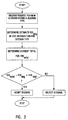
- the first step is for the system to receive some sort of request for a new session from which it is possible to identify a session type.
- the current system FER, FER total is either measured or estimated or otherwise determined.
- FER total is maintained continuously independently of the call admission control process.
- the current system FER is maintained by counting the number of frames in error during a sliding two second window.
- the FER total can be converted to a fraction by dividing the number of frames in error by the total number of frames during the period. More generally, the system FER may be calculated every n seconds where n represents a window length during which a fraction of frames are received in error. The time window should be long enough to have sufficient sample points in that instant of simulation for a meaningful FER total measure.
- a sum of the projected FER degradation, FER deg , plus the total FER, FER total is compared to the target FER, FER trgt . If this sum is less than the target FER, then the session is admitted. There is no need to update FER total , as this is done independently. If the sum is greater than the target FER, then the session is rejected. Similarly, there is no need to update FER total when a session ends as this will occur independently.
- FER deg is not set as a constant for a given type of session, but rather is maintained as a function of how many sessions of that type are currently in progress.
- FER deg can be determined experimentally by assuming a typical traffic distribution, for example 80% voice and 20% packet-switched data and generating traffic with this distribution.
- a test traffic distribution with N-1 voice sessions and the required proportional number of data sessions is generated and the FER is measured.
- the number of sessions in the test traffic is maintained in proportion to the typical traffic distribution. Then the Nth voice session is generated and the new FER is measured after it has a chance to stabilize.
- FER deg for the Nth voice session. This needs to be repeated for different values of N, and for each type of session so as to generate a table of values FER deg (type_name,N) which is the experimentally determined expected degradation due to the introduction of the Nth session of type type_name. Then, in the above call admission control methods, a count of the number of active sessions of each type is maintained, and this count is used to determine the correct value FER deg (type_name,N) to use.
- the terms FER deg (type_name,N) are calculated continuously in real time as a function of the traffic which is presently in the system by employing a feedback mechanism.
- An input to this approach is an initial value for FER deg (type_name,N) for different numbers of sessions of different types, and these initial values are preferably the previously discussed experimentally determined degradations.
- the first consecutive sessions of a particular type are admitted based on the initial values as before.
- N+1 of the particular type is admitted to the system, an actual degradation due to the Nth session is measured and stored. The degradation is determined by measuring a difference between the FER just before the Nth session was admitted and the FER around the time (for example just before or just after) of the N+1th session entry.
- the FER degradation for the Nth session entry is determined at a time arbitrarily selected to be when the N+1th session is admitted. More generally, the FER degradation could be measured anytime after the Nth session entry and before an N+1th session entry, or before an N+1th session entry could have had any non-trivial effect on the FER.
- the average of up to the previous K measured degradations (including the initial degradation if there have been fewer than K entries) is computed and used as the projected degradation in either of the call admission control processes discussed previously with reference to Figures 1 and 2. K might be chosen as five for example.
- averaging the degradations reduces the impact of anomalous values (zeros and FER "spikes” for example) while at the same time allowing the degradation associated with a particular number of sessions to change as conditions in the system change. It can be seen that not necessarily all Nth session admission will result in a degradation measurement which is included in the average.
- FIG. 4 illustrates how degradations are maintained for a particular session type.
- the horizontal axis 40 is a count of the number N of admissions of sessions of the particular type.
- the initial values are indicated as D 1 ,D 2 ,D 3 , and in general D N .
- the measured degradations for new session entries are indicated by D N,i for the ith measured degradation due to an Nth session entry, preferably taken when an N+1th session is admitted.
- D 1,1 is the measured degradation due to the first entry of a first session.
- FER deg (type_name,2) is calculated to be the average of the five measured values D 2,1 , D 2,2 , D 2,3 , D 2,4 ,and D 2,5 , as indicated by bubble 44 .
- FER deg (type_name,3) is calculated to be the average of the initial value D 3 and three measured values D 3,1 , D 3,2 , and D 3,3 , as indicated by bubble 46 . This same process is executed to compute FER deg for different types and for different values of N.
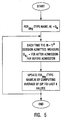
- FIG. 5 A flowchart for the maintenance of the degradation FER deg (type_name,N) values for use by the call admission control apparatus and method is shown in Figure 5.
- the FER deg (type_name,N) values are initialized by setting them all to the initial values D N .
- the next two steps are executed each time a session is admitted (more generally after a suitable time has passed).
- D N,i is measured according to FER at that time minus the FER just after admission of the Nth session.
- a rotating buffer with K spots may be provided for each value of N in which to store the measured degradations.
- the value FER deg (type_name,N) is updated by computing an average of up to the last K values.
- the above methods can be applied whenever a request for the air interface resources of a given MAC layer implementation device are requested.
- a base station or a base station controller operable to implement these methods may be provided. This request might come from a mobile station in the cell area of a base station, or might come from an external user (for example on the public switched telephone network) who wishes to communicate with a mobile station in the cell area of the base station.
- FER has been the parameter used to admit sessions
- other parameters may be used, provided they are measurable or accessible at the MAC (or equivalent layer) and are affected proportionately by all types of calls and provided they can be used predictively.
- Another embodiment of the invention provides an article of manufacture having a computer usable medium having computer readable code means embodied therein for performing call admission control, the computer readable code means in said article of manufacture having computer readable code means for making an estimate of a new system FER which will result should a new session be admitted, computer readable code means for deciding to admit or to deny the new session on the basis of the new system FER estimate.
- the computer readable medium further comprises computer readable code means for making an estimate of a previous system FER at a time of the request, computer readable code means for determining an estimate of a degradation in the system FER should the new session be admitted; and computer readable code means for combining the estimate of the degradation to the estimate of the previous system FER to obtain said estimate of the total system FER.
Landscapes
- Engineering & Computer Science (AREA)
- Quality & Reliability (AREA)
- Computer Networks & Wireless Communication (AREA)
- Signal Processing (AREA)
- Mobile Radio Communication Systems (AREA)
- Detection And Prevention Of Errors In Transmission (AREA)
Abstract
Description
Claims (20)
- A method of performing call admission control upon receipt of a request for a new session comprising:making an estimate of a new system frame error rate (FER) which will result should the new session be admitted; anddeciding to admit or to deny the new session on the basis of the new system frame error rate(FER)estimate.
- A method according to claim 1 wherein making the estimate of the new system frame error rate(FER) comprises:making an estimate of a previous system frame error rate (FER) at the time of the request;determining an estimate of a degradation in the system frame error rate(FER) should the new session be admitted; andcombining the estimate of the degradation to the estimate of the previous system frame error rate (FER) to obtain said estimate of the total system frame error rate (FER).
- A method according to claim 2 wherein making an estimate of a previous system frame error rate (FER) at the time of the request comprises measuring the system frame error rate (FER).
- A method according to claim 2 wherein making an estimate of a previous system frame error rate (FER) at the time of the request comprises:starting with the previous system frame error rate (FER) equal to an initial system frame error rate (FER);each time a session is admitted, adding the degradation estimated for the session to the previous system frame error rate (FER); andeach time a session is ended, subtracting a degradation reduction for the session from the previous system frame error rate (FER).
- A method according to claim 2 further comprising:maintaining an expected degradation in the system frame error rate (FER) as a function of how many sessions have been admitted;wherein determining an estimate of a degradation in the system frame error rate (FER) should the new session be admitted comprises:maintaining a current count of how many sessions have been admitted; andsetting the estimate of the degradation in the system frame error rate (FER) equal to the expected degradation for the current count.
- A method according to claim 2 wherein the request for a new session identifies the session as having one of at least two different types, the method further comprising:maintaining an expected degradation in the system frame error rate (FER) as a function of how many sessions of each of said different types have been admitted;wherein determining an estimate of the degradation in the system frame error rate (FER) should the new session be admitted comprises:maintaining a current count of how many sessions of each type have been admitted; andsetting the estimate of the degradation in the system frame error rate (FER) equal to the expected degradation for the session's type and the type's current count.
- A method according to claim 6 wherein maintaining an expected degradation in the system frame error rate (FER) as a function of how many sessions of each of said different types have been admitted comprises:generating test traffic with a predetermined ratio between numbers of sessions of each type; andadding new sessions to the test traffic and making a measurement of the degradation in frame error rate (FER), and using these measurements as the expected degradations.
- A method according to claim 6 further comprising:identifying an initial value for the degradation in frame error rate (FER) for the Nth session of each type;each time an N+1th session of a particular type is admitted, making a measurement of the degradation which results; anddetermining the expected degradation for the Nth session to be an average of up to K measurements for N+1th session admissions and the initial value for the Nth session if there are fewer than K measurements, where K is an integer greater than or equal to two.
- A method according to claim 8 wherein identifying an initial value comprises:generating test traffic with a predetermined ratio between numbers of sessions of each type; andadding new sessions to the test traffic and making a measurement of the degradation in frame error rate (FER), and using these measurements as the initial values.
- A method according to claim 1 wherein admitting or denying the new session on the basis of the new frame error rate (FER) estimate comprises:comparing the new frame error rate (FER) estimate to a target frame error rate (FER), and if the new frame error rate (FER) estimate exceeds the target frame error rate (FER) denying the session, and if the new frame error rate (FER) estimate does not exceed the target frame error rate (FER) admitting the session.
- A method according to claim 2 further comprising:identifying an initial value for the degradation in frame error rate (FER) for an Nth session admission;making measurements of the degradation which results due to Nth session admissions; anddetermining the expected degradation for the Nth session to be an average of up to K measurements for Nth session admissions and the initial value for the Nth session if there are fewer than K measurements, where K is an integer greater than or equal to two.
- A method according to claim 11 wherein one of said measurements of the degradation which results due to Nth session admissions is taken around the time an N+1th session admission occurs.
- A method according to claim 11 wherein one of said measurements of the degradation which results due to Nth session admissions is taken before an N+1th session admission occurs and after the Nth session has been active for long enough for a meaningful measurement to be taken.
- A MAC (media access control) layer implementation device operable to execute a method according to claim 1.
- A base station operable to execute a method according to claim 1.
- A base station controller operable to execute a method according to claim 1.
- A method of performing call admission control upon receipt of a request for a new session comprising:selecting a MAC (media access control) layer (or equivalent layer) parameter which is affected by all different session types in a manner which makes it suitable for use as a basis of call admission control;making an estimate of said MAC (media access control) layer (or equivalent layer) parameter which will result should the new session be admitted; andadmitting or denying the new session on the basis of the MAC layer (or equivalent layer) parameter.
- A call admission control apparatus comprising:an input device operable to receive a request for a new session; anda processing element operable to make a frame error rate (FER) estimate of a new system frame error rate (FER) which will result should the new session be admitted and to decide whether to admit or to deny the new session on the basis of the new frame error rate (FER) estimate.
- An article of manufacture comprising:a computer usable medium having computer readable code means embodied therein for performing call admission control, the computer readable code means in said article of manufacture comprising:computer readable code means for making an estimate of a new system frame error rate (FER) which will result should a new session be admitted; andcomputer readable code means for deciding to admit or to deny the new session on the basis of the new system frame error rate (FER) estimate.
- An article of manufacture according to claim 19 further comprising:computer readable code means for making an estimate of a previous system frame error rate (FER) at a time of the request;computer readable code means for determining an estimate of a degradation in the system frame error rate (FER) should the new session be admitted; andcomputer readable code means for combining the estimate of the degradation to the estimate of the previous system frame error rate (FER) to obtain said estimate of the total system frame error rate (FER).
Applications Claiming Priority (2)
| Application Number | Priority Date | Filing Date | Title |
|---|---|---|---|
| US09/383,629 US6944125B1 (en) | 1999-08-26 | 1999-08-26 | Call admission control method and apparatus for cellular systems |
| US383629 | 1999-08-26 |
Publications (2)
| Publication Number | Publication Date |
|---|---|
| EP1079650A2 true EP1079650A2 (en) | 2001-02-28 |
| EP1079650A3 EP1079650A3 (en) | 2002-03-20 |
Family
ID=23513995
Family Applications (1)
| Application Number | Title | Priority Date | Filing Date |
|---|---|---|---|
| EP00305918A Withdrawn EP1079650A3 (en) | 1999-08-26 | 2000-07-12 | Call admission control method and apparatus |
Country Status (3)
| Country | Link |
|---|---|
| US (1) | US6944125B1 (en) |
| EP (1) | EP1079650A3 (en) |
| CA (1) | CA2308572A1 (en) |
Cited By (8)
| Publication number | Priority date | Publication date | Assignee | Title |
|---|---|---|---|---|
| WO2002030134A3 (en) * | 2000-10-02 | 2002-06-13 | Ericsson Telefon Ab L M | A mobile communications system comprising a node b operable to control a plurality of its node b internal resources for admission control |
| WO2003077582A1 (en) * | 2002-03-11 | 2003-09-18 | Nokia Corporation | Admission control for data connections |
| WO2004039006A3 (en) * | 2002-10-25 | 2005-03-17 | Ericsson Telefon Ab L M | System and method for wireless network admission control based on quality of service |
| EP1694088A1 (en) * | 2005-02-22 | 2006-08-23 | Alcatel | A method for admission control for mobile networks, an admission controller and a communication system therewith |
| WO2007089695A3 (en) * | 2006-01-31 | 2007-09-20 | Lucent Technologies Inc | Call admission to a wireless network based on application-specific quality of service information |
| CN100384293C (en) * | 2004-08-31 | 2008-04-23 | 华为技术有限公司 | Call Admission Control Method |
| US7583970B2 (en) | 2002-05-23 | 2009-09-01 | Interdigital Technology Corporation | Signaling connection admission control in a wireless network |
| US7672308B2 (en) | 2002-03-11 | 2010-03-02 | Nokia Corporation | Admission control for data connections |
Families Citing this family (6)
| Publication number | Priority date | Publication date | Assignee | Title |
|---|---|---|---|---|
| KR100868689B1 (en) * | 2002-05-06 | 2008-11-13 | 삼성전자주식회사 | Method and apparatus for call admission control of mobile communication network |
| US7453845B2 (en) * | 2002-11-08 | 2008-11-18 | Lucent Technologies Inc. | Distributed call control |
| US7443831B2 (en) * | 2003-10-03 | 2008-10-28 | Nortel Networks Limited | Call control using a layered call model |
| US8086737B2 (en) * | 2005-12-07 | 2011-12-27 | Cisco Technology, Inc. | System to dynamically detect and correct errors in a session |
| US8144608B2 (en) * | 2007-01-22 | 2012-03-27 | Broadcom Corporation | Method and system for medium access control (MAC) rate selection |
| US7852759B2 (en) * | 2007-02-05 | 2010-12-14 | Cisco Technology, Inc. | Finite state machine of traffic stream metrics for adaptation of load-based call admission control in wireless networks |
Family Cites Families (16)
| Publication number | Priority date | Publication date | Assignee | Title |
|---|---|---|---|---|
| JPH02220531A (en) * | 1989-02-22 | 1990-09-03 | Toshiba Corp | Call connection control system and flow monitor system |
| US5408465A (en) | 1993-06-21 | 1995-04-18 | Hewlett-Packard Company | Flexible scheme for admission control of multimedia streams on integrated networks |
| US5357507A (en) * | 1993-08-24 | 1994-10-18 | Northern Telecom Limited | Fast connection admission control for ATM networks |
| GB9325746D0 (en) * | 1993-12-16 | 1994-02-16 | British Telecomm | A method of controlling a communication network |
| US5838671A (en) * | 1995-06-23 | 1998-11-17 | Ntt Mobile Communications Network Inc. | Method and apparatus for call admission control in CDMA mobile communication system |
| US5740537A (en) * | 1996-01-30 | 1998-04-14 | Telefonaktiebolaget L M Ericsson (Publ) | Method and circuitry for selectively permitting communication in a multi-user communication system |
| JP3436845B2 (en) * | 1996-06-18 | 2003-08-18 | 日本電信電話株式会社 | Multi-class ATM call admission control method and apparatus |
| JP3173565B2 (en) * | 1996-06-20 | 2001-06-04 | 日本電気株式会社 | Access control device in CDMA system |
| EP0889663B1 (en) | 1996-12-27 | 2004-10-27 | NTT DoCoMo, Inc. | Call acceptance control method for cdma mobile radio communication system and mobile station device |
| US5828672A (en) | 1997-04-30 | 1998-10-27 | Telefonaktiebolaget Lm Ericsson (Publ) | Estimation of radio channel bit error rate in a digital radio telecommunication network |
| JPH11111828A (en) | 1997-09-30 | 1999-04-23 | Shin Etsu Chem Co Ltd | Electrostatic suction device |
| US6377548B1 (en) | 1997-10-14 | 2002-04-23 | Lucent Technologies Inc. | Method for admitting new connections based on measured quantities in a multiple access system for communications networks |
| US6226277B1 (en) * | 1997-10-14 | 2001-05-01 | Lucent Technologies Inc. | Method for admitting new connections based on usage priorities in a multiple access system for communications networks |
| US6216006B1 (en) * | 1997-10-31 | 2001-04-10 | Motorola, Inc. | Method for an admission control function for a wireless data network |
| US6278701B1 (en) * | 1998-07-10 | 2001-08-21 | Verizon Laboratories Inc. | Capacity enhancement for multi-code CDMA with integrated services through quality of services and admission control |
| JP3950577B2 (en) * | 1999-04-20 | 2007-08-01 | 株式会社日立コミュニケーションテクノロジー | Call acceptance device used in CDMA system |
-
1999
- 1999-08-26 US US09/383,629 patent/US6944125B1/en not_active Expired - Lifetime
-
2000
- 2000-05-16 CA CA002308572A patent/CA2308572A1/en not_active Abandoned
- 2000-07-12 EP EP00305918A patent/EP1079650A3/en not_active Withdrawn
Cited By (13)
| Publication number | Priority date | Publication date | Assignee | Title |
|---|---|---|---|---|
| WO2002030134A3 (en) * | 2000-10-02 | 2002-06-13 | Ericsson Telefon Ab L M | A mobile communications system comprising a node b operable to control a plurality of its node b internal resources for admission control |
| US7672308B2 (en) | 2002-03-11 | 2010-03-02 | Nokia Corporation | Admission control for data connections |
| WO2003077582A1 (en) * | 2002-03-11 | 2003-09-18 | Nokia Corporation | Admission control for data connections |
| US9313780B2 (en) | 2002-05-23 | 2016-04-12 | Interdigital Technology Corporation | Signaling connection admission control in a wireless network |
| US8606285B2 (en) | 2002-05-23 | 2013-12-10 | Interdigital Technology Corporation | Signaling connection admission control in a wireless network |
| US8249610B2 (en) | 2002-05-23 | 2012-08-21 | Interdigital Technology Corporation | Signaling connection admission control in a wireless network |
| US7865190B2 (en) | 2002-05-23 | 2011-01-04 | Interdigital Technology Corporation | Signaling connection admission control in a wireless network |
| US7583970B2 (en) | 2002-05-23 | 2009-09-01 | Interdigital Technology Corporation | Signaling connection admission control in a wireless network |
| US6985439B2 (en) | 2002-10-25 | 2006-01-10 | Telefonaktiebolaget Lm Ericsson (Publ) | System and method for wireless network admission control based on quality of service |
| WO2004039006A3 (en) * | 2002-10-25 | 2005-03-17 | Ericsson Telefon Ab L M | System and method for wireless network admission control based on quality of service |
| CN100384293C (en) * | 2004-08-31 | 2008-04-23 | 华为技术有限公司 | Call Admission Control Method |
| EP1694088A1 (en) * | 2005-02-22 | 2006-08-23 | Alcatel | A method for admission control for mobile networks, an admission controller and a communication system therewith |
| WO2007089695A3 (en) * | 2006-01-31 | 2007-09-20 | Lucent Technologies Inc | Call admission to a wireless network based on application-specific quality of service information |
Also Published As
| Publication number | Publication date |
|---|---|
| EP1079650A3 (en) | 2002-03-20 |
| US6944125B1 (en) | 2005-09-13 |
| CA2308572A1 (en) | 2001-02-26 |
Similar Documents
| Publication | Publication Date | Title |
|---|---|---|
| US6944125B1 (en) | Call admission control method and apparatus for cellular systems | |
| KR100699760B1 (en) | Signaling access control method in wireless network | |
| CN1075326C (en) | Method for determining communication resource handoff | |
| US7177271B2 (en) | Method and system for managing admission to a network | |
| TW200803222A (en) | System and method for battery conservation with assistance from the network and radio resource management | |
| US7224983B2 (en) | Method and apparatus for geolocation estimates in wireless networks | |
| US11416320B2 (en) | Adaptive quota management system | |
| JP2022550406A5 (en) | ||
| KR100824739B1 (en) | Optimal Load-Based Wireless Session Context Delivery | |
| US7107061B1 (en) | Adaptive cell gapping overload control system and method for a telecommunications system | |
| CN106413015B (en) | Network access switching method and device | |
| CN114268961A (en) | Model training method, parameter adjusting method, device and equipment of shared base station | |
| CN101352059A (en) | Method for planning a cellular mobile telecommunication network | |
| WO2009073329A2 (en) | Managing service in an access network for wireless communication | |
| CN100455060C (en) | Cell downlink access method, system and network side equipment | |
| JP5134083B2 (en) | Arrangement and method for a wireless network for providing a data rate to a user in the wireless network | |
| JP4921474B2 (en) | Method and apparatus for allocating radio resources, computer program, computer-readable storage device, radio base station apparatus, and mobile communication system | |
| US7512068B1 (en) | Call admission control for a wireless network | |
| US20060239184A1 (en) | Method and apparatus for quality-of-service-based admission control | |
| CN1315125A (en) | Call admission control in wireless communication networks | |
| JP3747001B2 (en) | Packet switching network quality judgment method and apparatus using test packets | |
| WO2004059892A1 (en) | Access control method in cdma communication system | |
| KR100508152B1 (en) | Device And Method For Access Channel Load Control In EV-DO System | |
| US20080095069A1 (en) | Apparatus And Method For Determining Call Quality In A Communication System | |
| KR100223029B1 (en) | Call Control Method for Wireless Multimedia Environment in Direct Sequential Code Division Multiple Access Cellular System |
Legal Events
| Date | Code | Title | Description |
|---|---|---|---|
| PUAI | Public reference made under article 153(3) epc to a published international application that has entered the european phase |
Free format text: ORIGINAL CODE: 0009012 |
|
| AK | Designated contracting states |
Kind code of ref document: A2 Designated state(s): AT BE CH CY DE DK ES FI FR GB GR IE IT LI LU MC NL PT SE Kind code of ref document: A2 Designated state(s): DE FR GB |
|
| AX | Request for extension of the european patent |
Free format text: AL;LT;LV;MK;RO;SI |
|
| PUAL | Search report despatched |
Free format text: ORIGINAL CODE: 0009013 |
|
| AK | Designated contracting states |
Kind code of ref document: A3 Designated state(s): AT BE CH CY DE DK ES FI FR GB GR IE IT LI LU MC NL PT SE |
|
| AX | Request for extension of the european patent |
Free format text: AL;LT;LV;MK;RO;SI |
|
| 17P | Request for examination filed |
Effective date: 20020823 |
|
| AKX | Designation fees paid |
Free format text: DE FR GB |
|
| RAP1 | Party data changed (applicant data changed or rights of an application transferred) |
Owner name: NORTEL NETWORKS LIMITED |
|
| STAA | Information on the status of an ep patent application or granted ep patent |
Free format text: STATUS: THE APPLICATION IS DEEMED TO BE WITHDRAWN |
|
| 18D | Application deemed to be withdrawn |
Effective date: 20090203 |