EP1079298A2 - Digital data storage subsystem including directory for efficiently providing formatting information for stored records - Google Patents
Digital data storage subsystem including directory for efficiently providing formatting information for stored records Download PDFInfo
- Publication number
- EP1079298A2 EP1079298A2 EP00307062A EP00307062A EP1079298A2 EP 1079298 A2 EP1079298 A2 EP 1079298A2 EP 00307062 A EP00307062 A EP 00307062A EP 00307062 A EP00307062 A EP 00307062A EP 1079298 A2 EP1079298 A2 EP 1079298A2
- Authority
- EP
- European Patent Office
- Prior art keywords
- records
- format
- record
- track
- format definition
- Prior art date
- Legal status (The legal status is an assumption and is not a legal conclusion. Google has not performed a legal analysis and makes no representation as to the accuracy of the status listed.)
- Withdrawn
Links
Images

Classifications
-
- G—PHYSICS
- G06—COMPUTING OR CALCULATING; COUNTING
- G06F—ELECTRIC DIGITAL DATA PROCESSING
- G06F3/00—Input arrangements for transferring data to be processed into a form capable of being handled by the computer; Output arrangements for transferring data from processing unit to output unit, e.g. interface arrangements
- G06F3/06—Digital input from, or digital output to, record carriers, e.g. RAID, emulated record carriers or networked record carriers
- G06F3/0601—Interfaces specially adapted for storage systems
- G06F3/0602—Interfaces specially adapted for storage systems specifically adapted to achieve a particular effect
- G06F3/0604—Improving or facilitating administration, e.g. storage management
- G06F3/0607—Improving or facilitating administration, e.g. storage management by facilitating the process of upgrading existing storage systems, e.g. for improving compatibility between host and storage device
-
- G—PHYSICS
- G06—COMPUTING OR CALCULATING; COUNTING
- G06F—ELECTRIC DIGITAL DATA PROCESSING
- G06F3/00—Input arrangements for transferring data to be processed into a form capable of being handled by the computer; Output arrangements for transferring data from processing unit to output unit, e.g. interface arrangements
- G06F3/06—Digital input from, or digital output to, record carriers, e.g. RAID, emulated record carriers or networked record carriers
- G06F3/0601—Interfaces specially adapted for storage systems
- G06F3/0628—Interfaces specially adapted for storage systems making use of a particular technique
- G06F3/0638—Organizing or formatting or addressing of data
-
- G—PHYSICS
- G06—COMPUTING OR CALCULATING; COUNTING
- G06F—ELECTRIC DIGITAL DATA PROCESSING
- G06F3/00—Input arrangements for transferring data to be processed into a form capable of being handled by the computer; Output arrangements for transferring data from processing unit to output unit, e.g. interface arrangements
- G06F3/06—Digital input from, or digital output to, record carriers, e.g. RAID, emulated record carriers or networked record carriers
- G06F3/0601—Interfaces specially adapted for storage systems
- G06F3/0668—Interfaces specially adapted for storage systems adopting a particular infrastructure
- G06F3/0671—In-line storage system
- G06F3/0673—Single storage device
- G06F3/0674—Disk device
-
- G—PHYSICS
- G06—COMPUTING OR CALCULATING; COUNTING
- G06F—ELECTRIC DIGITAL DATA PROCESSING
- G06F12/00—Accessing, addressing or allocating within memory systems or architectures
- G06F12/02—Addressing or allocation; Relocation
- G06F12/08—Addressing or allocation; Relocation in hierarchically structured memory systems, e.g. virtual memory systems
- G06F12/0802—Addressing of a memory level in which the access to the desired data or data block requires associative addressing means, e.g. caches
- G06F12/0866—Addressing of a memory level in which the access to the desired data or data block requires associative addressing means, e.g. caches for peripheral storage systems, e.g. disk cache
Definitions
- the invention relates generally to the field of digital computer systems and more particularly to a digital data storage subsystem including a directory for efficiently providing formatting information for records stored by the digital data storage subsystem.
- a number of personal computers, workstations, mini-computers and mainframe computers, along with other devices such as large mass storage subsystems, network printers and interfaces to the public telephony system may be interconnected to provide an integrated environment in which information may be shared among users in the company.
- users may be performing a variety of operations, including order receipt, manufacturing, shipping, billing, inventory control, and other operations, in which sharing of data on a real-time basis may provide a significant advantage over, for example, maintaining separate records and attempting to later reconcile them.
- the users may operate on their own data, which they may maintain on the computers they are using, or alternatively they may share data through the large mass storage subsystems.
- a directory table is used to provide information concerning the data that is stored in the mass storage subsystem.
- the table includes information concerning selected characteristics of each of the CKD records stored in the mass storage subsystem, organized by device, cylinder and read/write head or track, and includes such information as record size and certain formatting characteristics.
- the amount of data that can be stored by individual storage devices is continually increasing over time, both in terms of the number of cylinders that each device can store and in the amount of data each track can store, and so the amount of information which such tables needs to store can become quite large.
- the invention provides a new and improved digital data storage subsystem including a directory for efficiently providing formatting information for records stored by the digital data storage subsystem.
- the invention provides a digital data storage system comprising a plurality of storage elements, a memory and a control device.
- the storage elements are configured to retrievably store a series of records, the records being stored in a format comprising one ofa plurality of format definition types.
- the memory stores a descriptor for describing the format of the records stored by the storage device, the descriptor including a format definition type identifier that identifies the one of the plurality of format definition types in which the records are stored, and specific format information providing further formatting information within the one of the plurality of format definition types in which the records are stored.
- the control device is configured to, in connection with retrieval of one of the records from the storage element, use the format definition type identifier and specific format information in the descriptor in connection with retrievals of ones of the records from the storage device.
- the digital data storage system is in the form of a mass storage subsystem in which information is stored on one or more disk storage units, with a storage element constituting a track on a disk storage device and each track storing a plurality of records.
- Each track in each disk storage device of the digital data storage system is associated with a descriptor.
- the control device retrieves the contents of a record, it can use the format definition type identifier of the descriptor associated with the track to determine the format definition type for the track, use the specific format information to determine the location and size of the record on the track, and retrieve the record.
- the control device can use the format definition type identifier of the descriptor associated with the track to determine the format definition type for the trap, use the specific format information to determine the location and size of the record on the track, and update the record on the track.
- format definition types are disclosed.
- computer system 10 includes a plurality of host computers 11(1) through 11(N) (generally identified by reference numeral 11(n)) and a digital data storage subsystem 12 interconnected by a common bus 13.
- host computers 11(1) through 11(N) generally identified by reference numeral 11(n)
- digital data storage subsystem 12 interconnected by a common bus 13.
- Each host computer 11(n) may comprise, for example, a personal computer, workstation, or the like which may be used by a single operator, or a multi-user computer system which may be used by a number of operators.
- Each host computer 11(n) is connected to an associated host adapter 15(n), which, in turn, is connected to bus 13.
- Each host computer 11(n) may control its associated host adapter 15(n) to perform a retrieval operation, in which the host adapter 15(n) initiates retrieval of computer programs and digital data (generally, "information") from the digital data storage subsystem 12 for use by the host computer 11(n) in its processing operations.
- the host computer 11(n) may control its associated host adapter 15(n) to perform a storage operation in which the host adapter 15(n) initiates storage of processed data in the digital data storage subsystem 12.
- access operations Generally, retrieval operations and storage operations in connection with the digital data storage subsystem 12 will collectively be referred to as "access operations.”
- the host adapter 11(n) will transfer access operation command information, together with processed data to be stored during a storage operation, over the bus 13.
- Access to the bus 13 is controlled by bus access control circuitry which, in one embodiment, is integrated in the respective host adapters 15(n).
- the bus access control circuitry arbitrates among devices connected to the bus 13 which require access to the bus 13. In controlling access to the bus 13, the bus access control circuitry may use any of a number of known bus access arbitration techniques.
- the digital data storage subsystem 12 in one embodiment is generally similar to the digital data storage subsystem described in U. S. Patent No. 5,206,939, entitled System And Method For Disk Mapping And Data Retrieval, issued April 27, 1993 to Moshe Yanai, et al (hereinafter, "the '939 patent").
- the digital data storage subsystem 12 includes a plurality of digital data stores 20(1) through 20(M) (generally identified by reference numeral 20(m)), each of which is also connected to bus 13.
- Each of the data stores 20(m) stores information, including programs and data, which may be accessed by the host computers 11(n) as well as processed data provided to the digital data storage subsystem 12 by the host computers 11(n).
- the storage devices 22 may comprise any of the conventional magnetic disk and tape storage devices, as well as optical disk storage devices and CD-ROM devices from which information may be retrieved.
- Each storage controller 21(m) connects to bus 13 and controls the storage of information which it receives thereover in the storage devices connected thereto.
- each storage controller 21(m) controls the retrieval of information from the storage devices 22 which are connected thereto for transmission over bus 13, and in one embodiment includes bus access control circuitry for controlling access to bus 13.
- the digital data storage subsystem 12 also includes a common memory subsystem 30 for caching information during an access operation and event status information providing selected status information concerning the status of the host computers 11(n) and the data stores 20(m) at certain points in their operations.
- event status information providing selected status information concerning the status of the host computers 11(n) and the data stores 20(m) at certain points in their operations.
- the caching of event status information by the common memory subsystem 30 is described in detail in U. S. Patent Appn. Ser. No. filed September 25, 1995, in the name of Eli Shagam, et al., and entitled Digital Computer System Including Common Event Log For Logging Event Information Generated By A Plurality of Devices (Atty. Docket No. 95-034) assigned to the assignee of the present invention and incorporated herein by reference.
- the information cached by the common memory subsystem 30 during an access operation includes data provided by a host computer 11(n) to be stored on a data store 20(m) during a storage operation, as well as data provided by a data store 20(m) to be retrieved by a host computer 11(n) during a retrieval operation.
- the common memory subsystem 30 effectively operates as a buffer to buffer information transferred between the host computers and the data stores 20(m) during an access operation.
- the common memory subsystem 30 includes a cache memory 31, a cache index directory 32 and a cache manager 33, which are generally described in U. S. Pat. Appn. Ser. No. 07/893,509 filed June 4, 1995, in the name of Moshe Yanai, et al., entitled “System And Method For Dynamically Controlling Cache Management,” assigned to the assignee ofthe present invention and incorporated herein by reference.
- the cache memory 31 operates as a buffer in connection with storage and retrieval operations, in particular buffering data received from the host computers 11 (n) to be transferred to the storage devices for storage, and buffering data received from the data stores 20(m) to be transferred to the host computers 11(n) for processing.
- the cache memory 31 includes a series of storage locations, which are organized in a series of cache slots 31(0) through 31(S) (generally identified by reference numeral 31(s)).
- the storage locations are, in turn, identified by a series of addresses, with the starting address of a cache slot being identified by a base address.
- the cache slots 31(s) in turn, operate as the cache memory's buffer as described above.
- the cache index directory 32 operates as an index for the cache slots 31(s) in the cache memory 31.
- the cache index directory 32 includes a plurality of cache index tables 32(0) through 32(D) (generally identified by reference numeral 32(d)), each of which is associated with one of the storage devices 22 in the storage subsystem 12.
- Each cache index table 32(d) includes a device header field 34, which provides, for example, selected identification and status information for the device 22 associated with the cache index table 32(d).
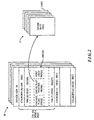
- each cache index table 32(d) includes a plurality of cylinder descriptors 35(1) through 35(C) (generally identified by reference numeral 35(c)) each of which is associated with one of the cylinders in the storage device 22 that is associated with the cache index table 32(d).
- Each cylinder descriptor 35(c) in turn, includes a cylinder header 36(c), which provides, for example, selected identification and status information for the cylinder associated with the cylinder descriptor 35(c).
- each cylinder descriptor 35(c) includes a plurality of track descriptors 35(c)(0) through 35(c)(T) (generally identified by reference numeral 35(t)), each of which is associated with one of the tracks in the cylinder 35(c).
- Each track descriptor 35(c)(t) includes information for the associated track of the storage device 22, including whether a copy of the data stored on the track is cached in the cache memory 31, and, if so, the identification of the cache slot 31(s) in which the data is cached.
- each track descriptor 35(c)(t) includes a cached flag and a cache slot pointer.
- each track descriptor 35(c)(t) includes a used flag 39(c)(t) which may be used to indicate whether the data, after being stored in the cache slot identified by the cache slot pointer, has been used by the host computer 11 (n) during a retrieval operation. This "host used" flag may be used to determine whether the cache slot may be re-used for another access operation.
- Each of the host adapters 15(n) and each of the device controllers 21(m) includes a cache manager 16(n) and 23(m), respectively, to access to the cache memory 31, cache index directory 32 and cache manager memory 33.
- the particular operations performed during an access operation will depend on a number of factors, including the access operation to be performed, whether or not the data from the particular track to be accessed is cached in the cache memory 31, and whether or not the data contained in a cache slot 31(s) has been modified or updated by a host adapter's cache manager 16(n) during a storage operation.
- the host adapters 15(n) typically perform storage and retrieval operations in connection with data in the cache memory 31, and the device controllers 21(m) perform "staging" and "de-staging” operations to transfer data in the storage devices 22 to the cache memory 31 for buffering (the staging operations) and to transfer data from the cache memory 31 to the storage devices 22 for storage (the de-staging operations).
- the device controllers 21(m) In performing the staging and de-staging operations, the device controllers 21(m) generally transfer data to and from the cache memory 31 in units of a track, that is, they will during a staging operation transfer all of the data in a track from a storage device 22 to a cache slot 31(s) in the cache memory 31, and during a de-staging operation copy all of the data in a slot in the cache memory 31 to the track of the storage device 22 from which it was originally staged.
- the cache manager memory 33 maintains a number of work lists which are used to control operations by the host adapters 15(n) and storage controllers 21(m) during an access operation.
- the cache manager memory 33 includes a cache slot replacement list, a pending write list and various lists which the host adapters 15(n) and storage controllers 21(m) use to communicate to coordinate staging operations (not shown).
- the various lists maintained by the cache manager memory 33 may comprise any of a number of convenient forms, including queues, trees, stacks or the like.
- the cache slot replacement list is used to control re-use of cache slots during staging operations in accordance with a convenient cache-slot re-use methodology.
- the storage controller's cache manager 23(m) uses the cache slot replacement list to select a cache slot 31(s) into which it will load the data retrieved from a storage device.
- the pending write list is used to identify cache slots 31(s) which contain updated data, which has not been written to a storage device.
- the storage controllers' cache managers 23(m) will use the write pending list to identify cache slots to be written to a storage device 22.
- the cache slots 31(s) which are identified in the pending write list will not also be listed in the cache slot replacement list, so that cache slots 31(s) which contain updated data will not be used until the data has not been written to a storage device through a de-staging operation.
- the staging operation coordination communication lists include a plurality of stage request lists and a plurality of stage completion lists, with one stage request list being associated with each data store 20(m) and one stage completion list being associated with each host computer 11 (n).
- the host adapters' cache managers 16(m) use the stage request lists to store stage requests to be performed by the respective data stores 20(m), and the data stores' cache managers 23(n) use the stage completion lists to store stage completion messages to indicate to the respective host adapters' cache managers 16(m) that the stage requests have been completed.
- a host adapter 15(n) attempts to retrieve the data from the cache memory 31. However, if the data is not in the cache memory 31, it will enable the device controller 21(m) which controls the storage device 22 that contains the data to be retrieved to "stage" the track which contains the data to be retrieved, that is, to transfer all of the data in the track which contains the data to be retrieved into a slot in the cache memory 31. After the data to be retrieved is in a slot in the cache memory 31, the host adapter 15(n) will retrieve the data from the slot.
- the host adapter 15(n) will determine whether the particular track into which the data is to be written is in a slot in the cache memory 31 and if so will store the data in the slot. However, if the data is not in the cache memory 31, the host adapter 15(n) will enable the cache manager 23(m) and storage controller 21(m) which controls the storage device 22 that contains the track whose data is to be updated to perform a staging operation in connection with the track, thereby to transfer the data in the track into a slot in the cache memory 31. After the data from the track has been copied into the cache memory 31, the host adapter 15(n) will update the data in the track.
- the storage controller 21(m) generally attempts to perform a staging operation in connection with an empty slot in the cache memory 31. However, if the storage controller 21(m) may find that all of the cache slots in the cache memory 31 are filled, it will in any case select one of the slots to be used with the staging operation. Before transferring the data from the track to the selected cache slot, it will determine whether the data in the slot has been updated by a storage operation, and if so copy the data to the storage device 22 in a de-staging operation, and thereafter perform a staging operation to copy the data from the storage device to the selected cache slot.
- the storage controller 21(m) need only perform a de-staging operation in connection with a cache slot if the data in the cache slot has been updated, since if the data in the cache slot not been updated before the slot is re-used (which may occur if the host adapter 15(n) has only performed retrieval operations therewith), the data in the cache slot corresponds to the data in the storage device 22.
- the cache manager 16(n) of the initiating host adapter 15(n) will initially access the cache index table 32(d) in the cache index directory 32 associated with the storage device 22 in which the data to be retrieved is stored, in particular accessing the track descriptor 36(c)(t) of the cylinder descriptor 36(c) to determine, from the condition of the cached flag, whether the data from the track is cached in a cache slot 31(s) in the cache memory.
- the cache manager 16(n) uses the cache slot pointer 38(t) to identify the particular cache slot 31(s) in which the data is cached and retrieves the required data from the cache slot 31(s).
- the cache manager 16(n) determines from the cached flag that the data from the track is not cached in a cache slot 31(s), it will generate a stage request to enable the storage controller 21(m) for the storage device 22 which maintains the data to be retrieved, load the stage request in the stage request queue for the data store 21(m) and notify the storage controller 21(m) that a stage request had been loaded in the stage request queue. At some point after receiving the notification, the storage controller 21(m) will retrieve the stage request and perform a staging operation in response thereto.
- the storage controller 21(m) will retrieve the data from the requested track, use the above-described cache slot replacement list to select a cache slot 31(s), load the data into cache slot 31(s) and update the track descriptor 36(c)(t) in the cache index table 32(d) associated with the storage device 22 to indicate that the data from the track is in the cache slot 31(s), in particular setting the cached flag and loading a pointer to the cache slot in the cache slot pointer.
- the storage controller 21(m) After the storage controller 21(m) has completed the staging operation, it will load a staging completed message in the stage completion list in the cache manager memory 33 associated with the host computer 11(n) which issued the staging request, and notify the host computer's cache manager 16(n) that a stage completed message has been loaded therein.
- the host computer's cache manager 16(n) can repeat the operations performed in connection with the retrieval request as described above, in particular accessing the cache index table 32(d) in the cache index directory 32 associated with the storage device 22 in which the data to be retrieved is stored, in particular accessing the track descriptor 36(c)(t) of the cylinder descriptor 36(c) to determine, from the condition of the cached flag, whether the data from the track is cached in a cache slot 31(s) in the cache memory and, if so, use the cache slot pointer 38(t) to identify the particular cache slot 31(s) in which the data is cached and retrieve the required data from the cache slot 31(s). Since at this point the cached flag should indicate that the data from the track is cached in a cache slot 31(s), the host adapter's cache manager 16(n) should be able to complete the retrieval operation.
- Similar operations occur during a storage operation, in which data in a particular track is updated, with the additional operation of removing the identification of the cache slot 31(s) containing data to be updated from the replacement list and loading it into the pending write list.
- the cache manager 16(n) ofthe initiating host adapter 15(n) will initially access the cache index table 32(d) in the cache index directory 32 associated with the storage device 22 in which the data to be updated is stored, in particular accessing the track descriptor 36(c)(t) of the cylinder descriptor 36(c) to determine, from the condition of the cached flag, whether the data from the track is cached in a cache slot 31(s) in the cache memory.
- the cache manager 16(n) uses the cache slot pointer 38(t) to identify the particular cache slot 31(s) in which the data is cached and loads the update data into the cache slot 31(s). In addition, the host adapter's cache manager 16(n) will remove the identification of the selected cache slot 31(s) from the replacement list to the pending write list so that the cache slot 31(s) will not be re-used until a de-staging operation has been performed in connection with the cache slot 31(s).
- the cache manager 16(n) determines from the cached flag 36(c)(t) that the data from the track is not cached in a cache slot 31(s), it will generate a stage request to enable the storage controller 21(m) for the storage device 22 which maintains the data to be retrieved, load the stage request in the stage request queue for the data store 21(m) and notify the storage controller 21(m) that a stage request had been loaded in the stage request queue. At some point after receiving the notification, the storage controller 21(m) will retrieve the stage request and perform a staging operation in response thereto.
- the storage controller 21(m) will retrieve the data from the requested track, select a cache slot 31(s), load the data into cache slot 31(s) and update the track descriptor 36(c)(t) in the cache index table 32(d) associated with the storage device 22 to indicate that the data from the track is in the cache slot 31(s), in particular setting the cached flag and loading a pointer to the cache slot in the cache slot pointer.
- the storage controller 21(m) After the storage controller 21(m) has completed the staging operation, it will load a staging completed message in the stage completion queue in the cache manager memory 33 associated with the host computer 11(n) which issued the staging request, and notify the cache manager 16(n) that a stage completed message has been loaded therein.
- the cache manager 16(n) can repeat the operations performed in connection with the retrieval request as described above, in particular accessing the cache index table 32(d) in the cache index directory 32 associated with the storage device 22 in which the data to be retrieved is stored, in particular accessing the track descriptor 36(c)(t) of the cylinder descriptor 36(c) to determine, from the condition of the cached flag, whether the data from the track is cached in a cache slot 31(s) in the cache memory and, if so, use the cache slot pointer 38(t) to identify the particular cache slot 31(s) in which the data is cached and retrieve the required data from the cache slog 31(s). Since at this point the cached flag should indicate that the data from the tack is cached in a cache slot 31(s), the cache manager 16(n) should be able to complete the storage operation as described above.
- the data stores' cache managers 23(m) also perform de-staging operations using the pending write list to identify cache slots 31(s) which contain updated data to be written back to the original storage device 22 and track whose data was cached in the respective cache slots 31(s).
- the data store's cache manager 23(m) which performs the de-staging operation will remove the cache slot's identification from the pending write list and return it to the replacement list so that the cache slot 31(s) can be removed.
- a host computer's cache manager 16(n) may perform a number of retrieval operations and/or storage operations in connection with data in the same cache slot 31(s) after the data in the track cached in the slot has been staged and before it can be de-staged, and so data in a cache slot 31(s) can be updated a number of times before it is de-staged.
- a cache slot 31(s) after a cache slot 31(s) has been de-staged, it may also be updated during a storage operation before the cache slot 31(s) is re-used during a staging operation.
- the host computer's cache manager 16(m) removes the cache slot's identification from the replacement list and placed it on the write pending list as part of the storage operation, the cache slot 31(s) will be subject to another de-staging operation before it can be re-used.
- a particular cache slot 31(s) may be subject to de-staging a number of times with data cached for the same storage device 22, cylinder and track, without being reused.
- the invention provides an arrangement for compactly providing track descriptor information in the respective track descriptors 36(c)(t) (FIG. 2), to efficiently accommodate use of storage devices 22 which can store relatively high-density data and reduce the amount of information which would otherwise need to be stored.
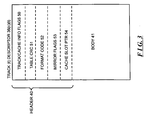
- FIG. 3 depicts the structure of a track descriptor, identified by reference numeral 36(c)(t), for use in connection with one embodiment of the invention.
- the track descriptor 36(c)(t) includes a header 40 and a body section 41.
- the header 40 includes information about the track, including such information as whether the track is cached in the cache memory 31 and, if so, a pointer to the cache slot 31(s) in which the track is cached.
- the header 40 indicates whether mirror copies exist for the track on other digital data storage systems.
- the sector CRC section 41 contains record-specific basic information for the respective records in the track.
- the records are of fixed-length, such as one or more blocks or sectors (generally referred to as "sectors"), and each track comprises a predetermined number of such sectors.
- the header 40 includes a number of flags and fields as shown in FIG. 3, including a track/cache information flags field 50, a table CRC field 51, an extended format code field 52, a mirror flags records flag 53, and a cache slot pointer field 54.
- the track/cache information flags field 50 includes several flags (not separately shown), including a track in cache flag, a prefetched track flag, a track write pending flag, and a permanently cached track flag, all of which are used in managing caching in connection with the track.
- the track in cache flag indicates that the track is currently cached in the cache memory 31; when that occurs, the cache slot pointer field 54 contains a pointer that identifies the cache slot 31(s) in which the track is cached.
- the prefetched track flag indicates that the data store's cache manager 23(m) prefetched the track and loaded it in the cache memory 31 before it was requested to do so by a host adapter's cache manager 25(n).
- a cache manager 23(m) may prefetch a particular track if a host adapter's cache manager 25(n) initiates a series of staging operations for a series of preceding tracks, which can indicate that the program being processed by the associated host computer 11(n) will likely also request that the particular track be staged.
- the permanently cached track flag of the track/cache information flags field 50 is set if the track is to be permanently cached in a cache slot 31(s) and not to be overwritten.
- a host computer's cache manager 25(n) may request that a track be permanently cached if the program being processed by the associated host computer is expected to access the records in the track frequently.
- the track write pending flag is used to indicate that the information in the track has been updated by a host computer 11(n) and needs to be de-staged by a data store 20(m). While the write pending flag is set, to indicate that a de-staging operation is to be performed, the cache slot 31(s) in which the track is cached will not be used for another track until the de-staging operation has been completed. It will be appreciated that, if the permanently cached track flag is also set, after the de-staging operation the cache slot 31(s) will not be used for another track, but instead the track will remain in the cache slot 31(s) as long as the permanently cached track flag is set.
- the table CRC field 51 of the track descriptor 36(c)(t) stores a CRC value that corresponds to the cyclical redundancy check ("CRC") value for the track descriptor 36(c)(t).
- the CRC value can be generated from the information in the other fields 50, and 52-54 and the body section 41 using any convenient CRC algorithm, and can be used to verify the information in those fields 50 and 52-54 and that section 41.
- the extended format code field 52 can be used to identify one of a plurality of extended format definitions for the records stored on the track, and the body section 41 contains further record formatting information for the records. Details of the record format definitions used for one embodiment of the invention will be described below. In one embodiment, sixteen record formats are defined, in which case the extended format code field 52 can be accommodated by four bits.
- the cache managers 23(m) can use the record format definition for the respective track as set forth in the body section 41 of the track descriptor 36(c)(t) for a track to identify the locations of particular records on the track which are to be retrieved during a staging operation the location in the particular cache slot 31(s) in the cache memory 31 in which they are to be stored.
- the cache managers 23(m) can use the record format definition for the respective track to identify the location in the cache slot of records which have been updated and are to be de-staged and the corresponding locations in the track in which they are to be stored during the de-staging operation.
- the host adapters 24(n) can use the record format definition for the respective track as set forth in the body section 41 to locate the locations of records from the track, as stored in the cache slot 31(s), which are to be retrieved during a retrieval operation, and in which data is to be stored during a write operation.
- the mirror flags field 53 contains one or more flags indicating whether the track has been mirrored on one or more other digital data storage subsystems, and, if so, whether the mirrors are up-to-date.
- the digital data storage subsystem 12 is one of four in a cluster of digital data storage subsystems which serves to provide mirrors for each other, and the flags in the mirror flags field 53 indicates both on which of the digital data storage subsystems the track is mirrored, and the update status of the track on each of those digital data storage subsystems.
- the digital data storage subsystem can use the mirror flags 53 to verify that, if a track is mirrored, all of the mirrors are maintained in an updated and synchronous condition.
- the body section 41 contains extended format definitions for records in the track.
- sixteen extended format definitions have been defined, with the particular extended format definition being used in connection with a track being identified by the extended format code field 32 of the track descriptor 36(c)(t).
- all of the extended format definitions are eight bytes in length.
- the invention provides a number of advantages.
- it provides a digital data storage subsystem in which formatting information for the various tracks can be efficiently stored, to efficiently accommodate formatting information for records stored on storage devices 22 whose tracks can each store large amounts of information in large numbers of records, without requiring correspondingly large track descriptors 36(c)(t).
- the storage subsystem 12 has been described as being connected to a plurality of host computers 11(n), it will be appreciated that the storage subsystem may be used only in connection with a single host computer 11(n).
- the storage subsystem 12 has been described as including a plurality of data stores 20(m) and a plurality of storage devices 22, it will be appreciated that the storage subsystem 12 may be provided with a single data store and a single storage device.
- a system in accordance with the invention can be constructed in whole or in part from special purpose hardware or a general purpose computer system, or any combination thereof, any portion of which may be controlled by a suitable program.
- a system in accordance with the invention can be constructed in whole or in part from special purpose hardware or a general purpose computer system, or any combination thereof, any portion of which may be controlled by a suitable program.
- Any program may in whole or in part comprise part of or be stored on the system in a conventional manner, or it may in whole or in part be provided in to the system over a network or other mechanism for transferring information in a conventional manner.
- the system may be operated and/or otherwise controlled by means of information provided by an operator using operator input elements (not shown) which may be connected directly to the system or which may transfer the information to the system over a network or other mechanism for transferring information in a conventional manner.
Landscapes
- Engineering & Computer Science (AREA)
- Theoretical Computer Science (AREA)
- Human Computer Interaction (AREA)
- Physics & Mathematics (AREA)
- General Engineering & Computer Science (AREA)
- General Physics & Mathematics (AREA)
- Information Retrieval, Db Structures And Fs Structures Therefor (AREA)
- Memory System Of A Hierarchy Structure (AREA)
- Signal Processing For Digital Recording And Reproducing (AREA)
- Indexing, Searching, Synchronizing, And The Amount Of Synchronization Travel Of Record Carriers (AREA)
- Management Or Editing Of Information On Record Carriers (AREA)
Abstract
Description
Claims (20)
- A digital data storage system comprising:A. at least one storage device for retrievably storing a series of records, the records being stored in a format comprising one of a plurality of format definition types;B. a memory for storing a descriptor for describing the format of the records stored by said storage device, the descriptor including a format definition type identifier that identifies the one of said plurality of format definition types in which said records are stored, and specific format information providing further formatting information within the one of said plurality of format definition types in which said records are stored; andC. a control device configured to use the format definition type identifier and specific format information in said descriptor in connection with retrievals of ones of said records from said storage device.
- A system as defined in claim 1 in which the storage device stores records organized in a plurality of tracks, each track comprising a series of said records, the memory storing a plurality of descriptors each associated with one of said tracks, each descriptor including ones of said record format flags associated with the ones of said records in the track associated therewith.
- A system as defined in claim 2 in which the predetermined format characteristic can differ as among said tracks.
- A system as defined in claim 2 in which the selected format attribute can differ as among said tracks.
- A system as defined in claim 4 in which said control device includes a cache for caching records retrieved from selected ones of said tracks, the descriptor associated with each track further including predetermined cache information for said track.
- A system as defined in claim 5 in which the predetermined cache information for at least one of said track descriptors includes a cached flag having a cached condition indicating that the track associated with said at least one of said track descriptors is in said cache, and another condition indicating that the track associated with said at least one of said track descriptors is not in said cache.
- A system as defined in claim 6 in which said cache includes a plurality of cache slots, the predetermined cache information for said at least one of said track descriptors further including a cache slot pointer which points to the one of said plurality of cache slots in which the track is cached if the cached flag has said cached condition.
- A system as defined in claim 1, in which one of said format definition types is an equal records format definition, in which all of the records are of the same size and format, the format descriptor containing a format definition type identifier that identifies the equal records format definition and specific format information that identifies the number of records stored in the track and the size of the records.
- A system as defined in claim 1, in which one of said format definition types is an equal records with one exception format definition type, in which all of the records but one are of the same size and format, the format descriptor containing a format definition type identifier that identifies the equal records with one exception format definition type and specific format information that identifies the number of records stored in the track, a record identifier that identifies the one of said records, the size of all of the records but one and the size of the one of said records.
- A system as defined in claim 1, in which one of said format definition types is an equal records format with two successive exceptions definition type, in which all of the records, except for one record and the next record thereafter, are of the same size and format, the format descriptor containing a format definition type identifier that identifies the equal records with two successive exceptions format definition type and specific format information that identifies the number of records stored in the track, a record identifier that identifies the first of said records, the size of all of the records but two and the size of the two of said records.
- A system as defined in claim 1, in which one of said format definition types is a two series of equal records format definition type, in which one series of the records one are of the same size and a second series of records are of the same size, and in which the sizes of in the two series may differ, the format descriptor containing a format definition type identifier that identifies the two series of equal records format definition type and specific format information that identifies the number of records stored in the track, a record identifier that identifies the record comprising the last record of the first series, and the sizes of one of said records in each of the respective first second series.
- A system as defined in claim 1 in which one of said format definition types is a two series of equal records format definition type, in which one series of the records one are of the same size and a second series of records are of the same size, and in which the sizes of in the two series may differ, the format descriptor containing a format definition type identifier that identifies the two series of equal records format definition type and specific format information identifies the number of records stored in the track, a record identifier that identifies the record comprising the first record in the second series, and the sizes of one of said records in each of the respective first second series.
- A system as defined in claim 1 in which one of said format definition types is a predetermined number of records format definition type, in which the storage device stores a predetermined number of records, the format descriptor containing a format definition type identifier that identifies the predetermined number of records format definition type and the specific format information identifies the size of each of said records.
- A system as defined in claim 1 in which one of said format definition types is an alternating record sizes format definition type, in which said storage device stores records of alternating sizes, the format descriptor containing a format definition type identifier that identifies the alternating record sizes format definition type, and the specific format information identifies the number of records stored on the track, and the two respective sizes.
- A system as defined in claim 1 in which one of said format definition types is an equal standard record sizes but one format definition type, in which the storage device stores records all but one of which is a predetermined size, the format descriptor containing a format definition type identifier that identifies the equal standard record sizes but one format definition type, and the specific format information identifies the size of the one record.
- A system as defined in claim 15 in which the one record is a predetermined one of said records in said series of records stored on said storage device.
- A system as defined in claim 1 in which one of said format definition types is a predetermined maximum number of records format definition type, in which the storage device stores a predetermined maximum number of records, the format descriptor containing a format definition type identifier that identifies the predetermined maximum number of records format definition type and the specific format information identifies the number of records and the size of each of said records.
- A system as defined in claim 1 in which one of said format definition types is a predetermined maximum number of records of two different sizes format definition type, in which the storage device stores a predetermined maximum number of records of two different record sizes, the format descriptor containing a format definition type identifier that identifies the predetermined maximum number of records of two different sizes format definition type, and the specific format information identifies the number of records, the two sizes, and a mask comprising a series of bits each associated with one of the series of records stored on the storage device, each bit having one of two conditions, each condition being associated with one ofthe sizes, with the condition ofthe respective bit identifying the associated one of the sizes for the respective record.
- A system as defined in claim 1 in which one of said format definition types is a predetermined number with varying sizes format definition type, in which the storage device stores a predetermined number of records, with each record having a record size, the format descriptor containing a format definition type identifier that identifies the predetermined number with varying sizes format definition type, and the specific format identification contains a value associated with each record that is associated with the size of each of said records.
- A system as defined in claim 1 in which one of said format definition types is a predetermined number of records of similar size format definition type, in which the storage device stores a predetermined number of records, with each record having a record size, and the record sizes being similar, the format descriptor containing a format definition type identifier that identifies the predetermined number of records of similar size format definition type, and the specific format identification contains a record size value associated with the size of one of said records, and record size delta values which, when processed with the record size value, are associated with the sizes of each of the other records.
Applications Claiming Priority (2)
| Application Number | Priority Date | Filing Date | Title |
|---|---|---|---|
| US378644 | 1999-08-20 | ||
| US09/378,644 US6330655B1 (en) | 1999-08-20 | 1999-08-20 | Digital data storage subsystem including directory for efficiently providing formatting information for stored records |
Publications (2)
| Publication Number | Publication Date |
|---|---|
| EP1079298A2 true EP1079298A2 (en) | 2001-02-28 |
| EP1079298A3 EP1079298A3 (en) | 2003-06-18 |
Family
ID=23493952
Family Applications (1)
| Application Number | Title | Priority Date | Filing Date |
|---|---|---|---|
| EP00307062A Withdrawn EP1079298A3 (en) | 1999-08-20 | 2000-08-17 | Digital data storage subsystem including directory for efficiently providing formatting information for stored records |
Country Status (3)
| Country | Link |
|---|---|
| US (1) | US6330655B1 (en) |
| EP (1) | EP1079298A3 (en) |
| JP (1) | JP2001154895A (en) |
Families Citing this family (12)
| Publication number | Priority date | Publication date | Assignee | Title |
|---|---|---|---|---|
| US6629199B1 (en) * | 1999-08-20 | 2003-09-30 | Emc Corporation | Digital data storage system including directory for efficiently providing formatting information for stored records and utilization of a check value for verifying that a record is from a particular storage location |
| US6715030B1 (en) * | 2000-06-09 | 2004-03-30 | Storage Technology Corporation | Apparatus and method for storing track layout information for performing quick write operations |
| US6487635B1 (en) | 2000-11-29 | 2002-11-26 | Emc Corporation | Management of orphan tracks |
| US7089257B2 (en) * | 2001-09-27 | 2006-08-08 | Qualcomm, Inc. | Method and system for providing a unified data exchange and storage format |
| US6782444B1 (en) * | 2001-11-15 | 2004-08-24 | Emc Corporation | Digital data storage subsystem including directory for efficiently providing formatting information for stored records |
| US8850114B2 (en) | 2010-09-07 | 2014-09-30 | Daniel L Rosenband | Storage array controller for flash-based storage devices |
| US10475030B2 (en) | 2016-02-22 | 2019-11-12 | Bank Of America Corporation | System for implementing a distributed ledger across multiple network nodes |
| US10496989B2 (en) * | 2016-02-22 | 2019-12-03 | Bank Of America Corporation | System to enable contactless access to a transaction terminal using a process data network |
| US10402796B2 (en) | 2016-08-29 | 2019-09-03 | Bank Of America Corporation | Application life-cycle transition record recreation system |
| US10691566B2 (en) * | 2017-07-27 | 2020-06-23 | International Business Machines Corporation | Using a track format code in a cache control block for a track in a cache to process read and write requests to the track in the cache |
| US12135655B2 (en) | 2017-07-27 | 2024-11-05 | International Business Machines Corporation | Saving track metadata format information for tracks demoted from cache for use when the demoted track is later staged into cache |
| US10929545B2 (en) | 2018-07-31 | 2021-02-23 | Bank Of America Corporation | System for providing access to data stored in a distributed trust computing network |
Family Cites Families (6)
| Publication number | Priority date | Publication date | Assignee | Title |
|---|---|---|---|---|
| US5421001A (en) * | 1992-05-01 | 1995-05-30 | Wang Laboratories, Inc. | Computer method and apparatus for a table driven file interface |
| US5535372A (en) * | 1994-07-06 | 1996-07-09 | International Business Machines Corporation | Method and apparatus for efficient updating of CKD data stored on fixed block architecture devices |
| US5802557A (en) * | 1996-03-18 | 1998-09-01 | Emc Corp | System and method for caching information in a digital data storage subsystem |
| US5809435A (en) * | 1996-12-23 | 1998-09-15 | Emc Corporation | Efficient index arrangement and method for identifying valid records stored on logging digital data storage subsystem |
| US6003114A (en) * | 1997-06-17 | 1999-12-14 | Emc Corporation | Caching system and method providing aggressive prefetch |
| US6101588A (en) * | 1997-09-25 | 2000-08-08 | Emc Corporation | Device level busy arrangement for mass storage subsystem including a plurality of devices |
-
1999
- 1999-08-20 US US09/378,644 patent/US6330655B1/en not_active Expired - Lifetime
-
2000
- 2000-08-17 EP EP00307062A patent/EP1079298A3/en not_active Withdrawn
- 2000-08-21 JP JP2000291218A patent/JP2001154895A/en active Pending
Also Published As
| Publication number | Publication date |
|---|---|
| JP2001154895A (en) | 2001-06-08 |
| EP1079298A3 (en) | 2003-06-18 |
| US6330655B1 (en) | 2001-12-11 |
Similar Documents
| Publication | Publication Date | Title |
|---|---|---|
| US6353878B1 (en) | Remote control of backup media in a secondary storage subsystem through access to a primary storage subsystem | |
| US6003114A (en) | Caching system and method providing aggressive prefetch | |
| US6269431B1 (en) | Virtual storage and block level direct access of secondary storage for recovery of backup data | |
| US6993629B2 (en) | Prestaging data into cache in preparation for data transfer operations | |
| US6366987B1 (en) | Computer data storage physical backup and logical restore | |
| EP0805395B1 (en) | Method for caching network and CD-ROM file accesses using a local hard disk | |
| EP0681721B1 (en) | Archiving file system for data servers in a distributed network environment | |
| US7836266B2 (en) | Managing snapshot history in a data storage system | |
| US5778394A (en) | Space reclamation system and method for use in connection with tape logging system | |
| US6202135B1 (en) | System and method for reconstructing data associated with protected storage volume stored in multiple modules of back-up mass data storage facility | |
| US7117314B2 (en) | Storage device and method for data sharing | |
| US5276840A (en) | Disk caching method for writing data from computer memory including a step of writing a plurality of physically adjacent blocks in a single I/O operation | |
| JP4249267B2 (en) | Freeing up disk space in the file system | |
| US6275897B1 (en) | Remote cache utilization for mirrored mass storage subsystem | |
| US5761501A (en) | Stacked skip list data structures | |
| WO2008118309A1 (en) | Automated information life-cycle management with thin provisioning | |
| US6101588A (en) | Device level busy arrangement for mass storage subsystem including a plurality of devices | |
| US6330655B1 (en) | Digital data storage subsystem including directory for efficiently providing formatting information for stored records | |
| US6782444B1 (en) | Digital data storage subsystem including directory for efficiently providing formatting information for stored records | |
| US6029229A (en) | Digital data storage subsystem including directory for efficiently providing formatting information for stored records | |
| US6629199B1 (en) | Digital data storage system including directory for efficiently providing formatting information for stored records and utilization of a check value for verifying that a record is from a particular storage location | |
| US6148382A (en) | Arrangement for filtering data item updates to reduce the number of updates to a data item to be stored on mass data storage facility | |
| US5900009A (en) | System and method for accessing records in a cache slot which are associated with a current owner storage element or at least one previous owner storage element | |
| EP0341230A2 (en) | Data storage hierarchy and method for managing data therein | |
| US6842843B1 (en) | Digital data storage subsystem including arrangement for increasing cache memory addressability |
Legal Events
| Date | Code | Title | Description |
|---|---|---|---|
| PUAI | Public reference made under article 153(3) epc to a published international application that has entered the european phase |
Free format text: ORIGINAL CODE: 0009012 |
|
| 17P | Request for examination filed |
Effective date: 20000901 |
|
| AK | Designated contracting states |
Kind code of ref document: A2 Designated state(s): AT BE CH CY DE DK ES FI FR GB GR IE IT LI LU MC NL PT SE |
|
| AX | Request for extension of the european patent |
Free format text: AL;LT;LV;MK;RO;SI |
|
| PUAL | Search report despatched |
Free format text: ORIGINAL CODE: 0009013 |
|
| AK | Designated contracting states |
Designated state(s): AT BE CH CY DE DK ES FI FR GB GR IE IT LI LU MC NL PT SE |
|
| AX | Request for extension of the european patent |
Extension state: AL LT LV MK RO SI |
|
| AKX | Designation fees paid |
Designated state(s): DE FR GB |
|
| 17Q | First examination report despatched |
Effective date: 20071217 |
|
| STAA | Information on the status of an ep patent application or granted ep patent |
Free format text: STATUS: THE APPLICATION IS DEEMED TO BE WITHDRAWN |
|
| 18D | Application deemed to be withdrawn |
Effective date: 20080429 |