EP1077254A2 - Multiple mesodermal lineage differentiation potentials for adipose tissue-derived stromal cells and uses thereof - Google Patents
Multiple mesodermal lineage differentiation potentials for adipose tissue-derived stromal cells and uses thereof Download PDFInfo
- Publication number
- EP1077254A2 EP1077254A2 EP00307153A EP00307153A EP1077254A2 EP 1077254 A2 EP1077254 A2 EP 1077254A2 EP 00307153 A EP00307153 A EP 00307153A EP 00307153 A EP00307153 A EP 00307153A EP 1077254 A2 EP1077254 A2 EP 1077254A2
- Authority
- EP
- European Patent Office
- Prior art keywords
- medium
- present
- cells
- amounts
- per
- Prior art date
- Legal status (The legal status is an assumption and is not a legal conclusion. Google has not performed a legal analysis and makes no representation as to the accuracy of the status listed.)
- Withdrawn
Links
Images
Classifications
-
- C—CHEMISTRY; METALLURGY
- C12—BIOCHEMISTRY; BEER; SPIRITS; WINE; VINEGAR; MICROBIOLOGY; ENZYMOLOGY; MUTATION OR GENETIC ENGINEERING
- C12N—MICROORGANISMS OR ENZYMES; COMPOSITIONS THEREOF; PROPAGATING, PRESERVING, OR MAINTAINING MICROORGANISMS; MUTATION OR GENETIC ENGINEERING; CULTURE MEDIA
- C12N5/00—Undifferentiated human, animal or plant cells, e.g. cell lines; Tissues; Cultivation or maintenance thereof; Culture media therefor
- C12N5/06—Animal cells or tissues; Human cells or tissues
- C12N5/0602—Vertebrate cells
- C12N5/0634—Cells from the blood or the immune system
- C12N5/0647—Haematopoietic stem cells; Uncommitted or multipotent progenitors
-
- C—CHEMISTRY; METALLURGY
- C12—BIOCHEMISTRY; BEER; SPIRITS; WINE; VINEGAR; MICROBIOLOGY; ENZYMOLOGY; MUTATION OR GENETIC ENGINEERING
- C12N—MICROORGANISMS OR ENZYMES; COMPOSITIONS THEREOF; PROPAGATING, PRESERVING, OR MAINTAINING MICROORGANISMS; MUTATION OR GENETIC ENGINEERING; CULTURE MEDIA
- C12N5/00—Undifferentiated human, animal or plant cells, e.g. cell lines; Tissues; Cultivation or maintenance thereof; Culture media therefor
- C12N5/06—Animal cells or tissues; Human cells or tissues
- C12N5/0602—Vertebrate cells
- C12N5/0652—Cells of skeletal and connective tissues; Mesenchyme
- C12N5/0662—Stem cells
- C12N5/0667—Adipose-derived stem cells [ADSC]; Adipose stromal stem cells
-
- A—HUMAN NECESSITIES
- A61—MEDICAL OR VETERINARY SCIENCE; HYGIENE
- A61K—PREPARATIONS FOR MEDICAL, DENTAL OR TOILETRY PURPOSES
- A61K35/00—Medicinal preparations containing materials or reaction products thereof with undetermined constitution
- A61K35/12—Materials from mammals; Compositions comprising non-specified tissues or cells; Compositions comprising non-embryonic stem cells; Genetically modified cells
Definitions
- This invention relates to methods and compositions for the differentiation of stromal cells from adipose tissue into hematopoietic supporting stromal cells and myocytes of both the skeletal and smooth muscle types.
- the neonatal period in human development is characterized by the presence of "stem” cells with the potential to develop along multiple differentiation pathways.
- the terminal differentiation of these cells is determined by cytokine and hormonal cues which co-ordinate organogenesis and tissue architecture.
- Murine embryonic stem cells have been isolated and studied extensively in vitro and in vivo. Using exogenous stimuli in vitro, investigators have induced ES cell differentiation along multiple lineage pathways. These include neuronal, B lineage lymphoid, and adipocytes (Dani et al. (1997) J. Cell Sci. 110 : 1279; Remoncourt et al. (1998) Mech. Dev. 79 :185; O'Shea KS (1999) Anat. Rec. 257 :32).
- the ES cells have been manipulated in vivo by homologous recombination techniques to generate gene specific null or "knock-out" mice (Johnson RS (1989) Science 245 :1234). Once ES cell clones lacking a specific gene are isolated, they are transplanted into a fertilized murine zygote. The progeny of this isolated ES cell can develop into any and all murine tissues in a coordinated manner.
- a stem cell must meet the following criteria: (1) ability of a clonal stem cell population to self-renew; (2) ability of a clonal stem cell population to generate a new, terminally differentiated cell type in vitro; and (3) ability of a clonal stem cell population to replace an absent terminally differentiated cell population when transplanted into an animal depleted of its own natural cells.
- Multipotential stem cells exist in tissues of the adult organism.
- the best characterized example of a "stem cell” is the hematopoietic progenitor isolated from the bone marrow and peripheral blood.
- Seminal studies by Trentin, Till and McCulloch (McCulloch et al. (1996) Proc. Can. Cancer Conf. 6 :356-366; Curry et al. (1967) J. Exp. Med. 125 :703-720) examined lethally irradiated mice. In the absence of treatment, these animals died because they failed to replenish their circulating blood cells; however, transplantation of bone marrow cells from a syngeneic donor animal would rescue the host animal. The donor cells were responsible for reconstituting all of the circulating blood cells.
- hematopoietic stem cells remain present in the normal human bone marrow throughout life; they are not limited to the neonatal period.
- the adult bone marrow microenvironment is the potential source for these hypothetical mesodermal stem cells.
- Cells isolated from adult marrow are referred to by a variety of names, including stromal cells, stromal stem cells, mesenchymal stem cells (MSCs), mesenchymal fibroblasts, reticular-endothelial cells, and Westen-Bainton cells (Gimble et al. (1996) Bone 19 :421-428).
- MSCs mesenchymal stem cells
- mesenchymal fibroblasts mesenchymal fibroblasts
- reticular-endothelial cells reticular-endothelial cells
- Westen-Bainton cells Westen-Bainton cells
- the bone marrow has been proposed as a source of stromal stem cells for the regeneration of bone, cartilage, muscle, adipose tissue, and other mesenchymal derived organs.
- the major limitations to the use of these cells are the difficulty and risk attendant upon bone marrow biopsy procedures and the accompanying loss of memory B cells and hematopoietic stem cells with present harvesting procedures.
- Adipose stromal cells provide an easily accessible and abundant source of stromal cells which can differentiate along multiple mesenchymal lineages. Methods and compositions are needed for the consistent and quantitative differentiation of adipose derived stromal cells into various cell types including for example hematopoietic stromal cells and skeletal and smooth muscle myocytes.
- compositions and methods for the differentiation of adipocytes are provided.
- the present invention provides methods and compositions for consistent and quantitative induction of stromal cells derived from subcutaneous, mammary, gonadal, or omental adipose tissues into the following fully differentiated and functional mesodermal cell lineages: hematopoietic supporting stromal cells, skeletal myocytes, and smooth muscle myocytes (myofibroblasts).
- compositions include a variety of chemical components which act as mitogens and differentiation inducing agents for the plated stromal cells and yield production of the desired cell type.
- the mitogens and inducing agents include, but are not limited to, interleukins, flt-3 ligand, stem cell factor, macrophage-colony stimulating factor, granulocyte-monocyte colony stimulating factor, erythropoietin, thrombopoietin, osteoprotegerin ligand, dexamethasone, hydrocortisone, 1,25 dihydroxy vitamin D 3 , 2-mercaptoethanol, glutamine, 5'-azacytadine, amphotericin, transforming growth factor ⁇ and fibroblast growth factor.
- the invention provides methods for determining the ability of these compositions to direct the differentiation and function of the adipose-derived stromal cells, for the transduction of viral vectors carrying regulatory genes into stromal cells, for the transfection of plasmid vectors carrying regulatory genes into stromal cells, for the tracking and detection of functional proteins encoded by these genes, and for developing biomechanical carriers for the re-introduction of these cells into living organisms.
- the invention also provides methods and compositions which have utility in drug discovery for compounds and proteins with relevance to a wide spectrum of disease states including, but not limited to, aplastic anemia, muscular dystrophy, radiation poisoning, neuropathic muscular degeneration, urogenital malformations, and gastrointestinal malformations.
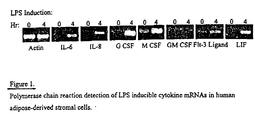
- Figure 1 Human adipose-derived stromal cells were cultured in 6 well plates until confluent and quiescent in DMEM/F 10 (1:1 vol:vol), 10% fetal bovine serum, penicillin 100 units/ml, streptomycin 100 ⁇ g/ml, and 7.5 mM HEPES pH 7.2. The cells were then incubated in DMEM/F 10 (1:1 vol:vol), 2% fetal bovine serum, penicillin 100 units/ml, streptomycin 100 ⁇ g/ml, and 7.5 mM HEPES pH 7.2 containing 100 ng/ml lipopolysaccharide (LPS).
- DMEM/F 10 (1:1 vol:vol
- 10% fetal bovine serum penicillin 100 units/ml
- streptomycin 100 ⁇ g/ml streptomycin 100 ⁇ g/ml
- 7.5 mM HEPES pH 7.2 containing 100 ng/ml lipopolysaccharide (LPS).
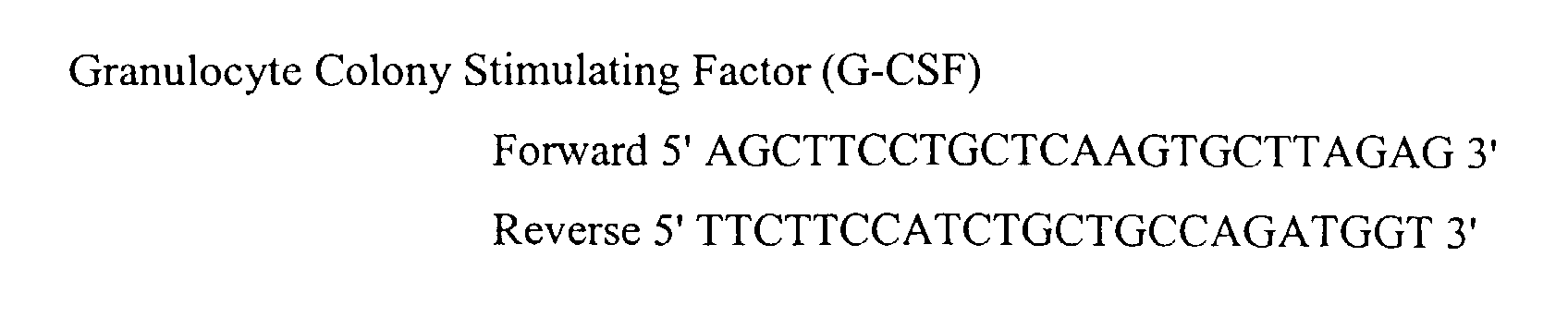
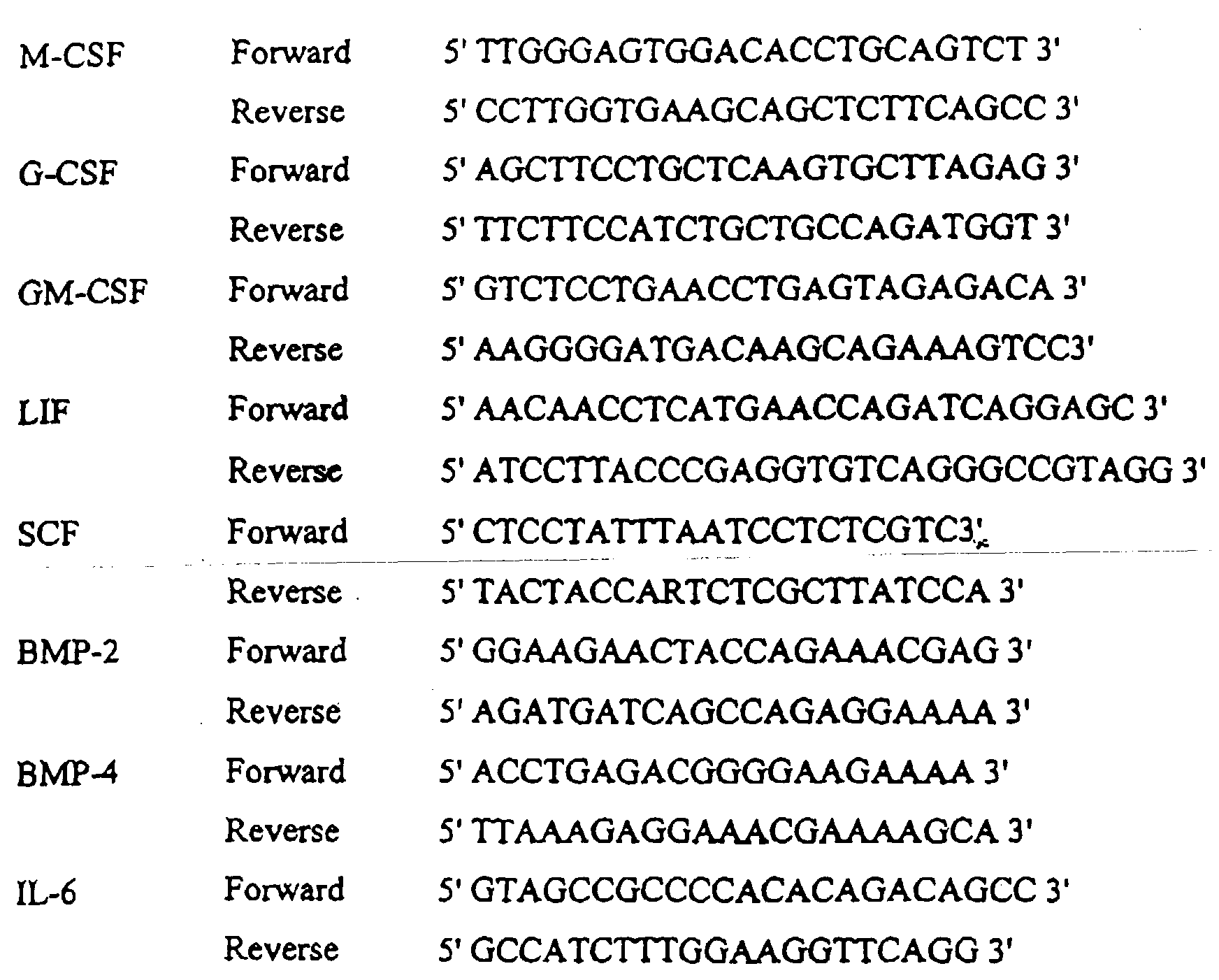
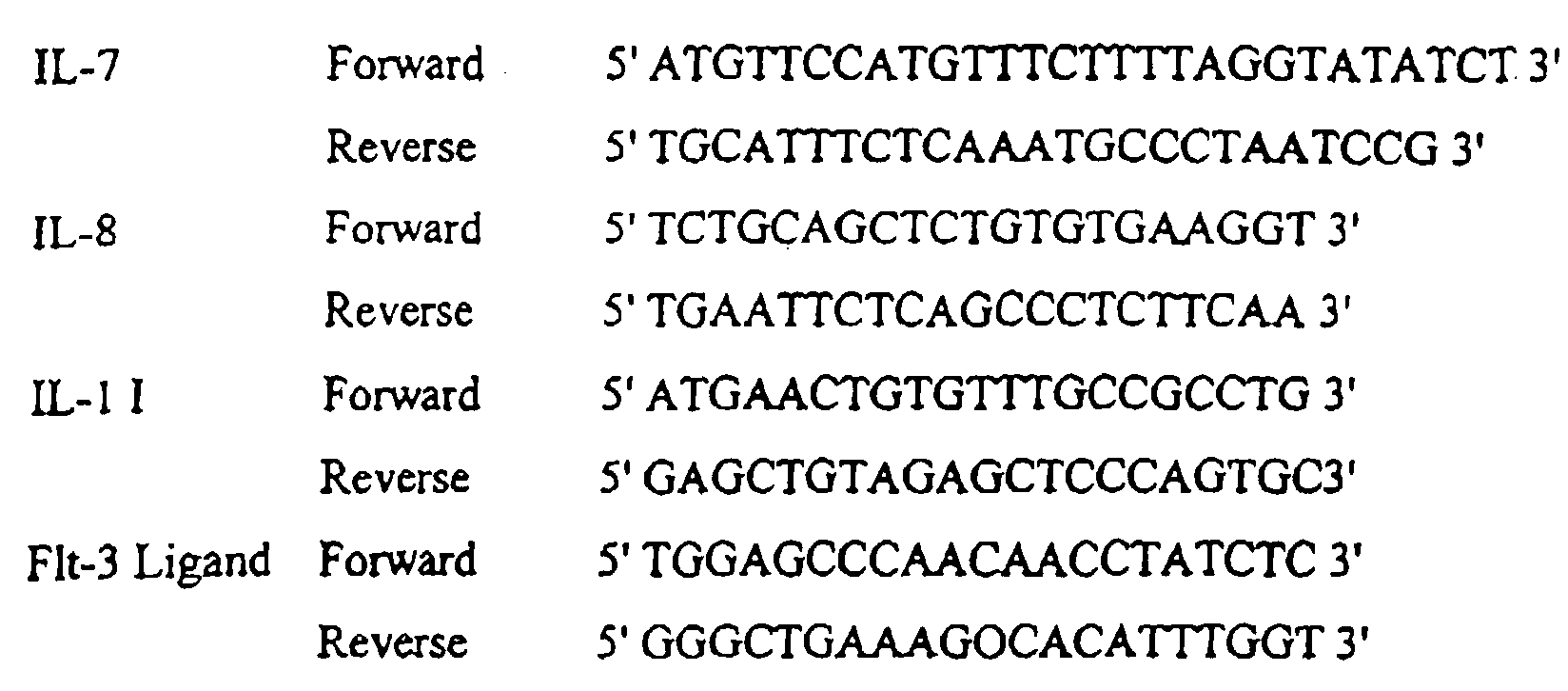
- RNA extraction and isolation were harvested immediately (time “0") or after 4 hours (time "4") for total RNA extraction and isolation using a phenol/chloroform/acid procedure (Chomczynski & Sacchi (1987) Analytical Biochem 162 :156-159). Equal aliquots of total RNA were reverse transcribed and amplified by polymerase chain reaction with the following primer sets specific for the indicated human mRNAs; the actin primers served as a positive control for equal loading between samples:
- the resulting PCR products were electrophoresed on a 2% agarose gel, stained with ethidium bromide and photographed.
- Table 1 Characterization of Adipose Derived Stromal Cell Surface Markers Based on Antibody and PCR Detection.
- the listed cell surface proteins and genes analyzed in human adipose derived stromal cells is based on immunohistochemical staining, flow cytometry, and/or by polymerase chain reaction. Markers are divided among those expressed (listed as “positive”) and not expressed (listed as “negative”).
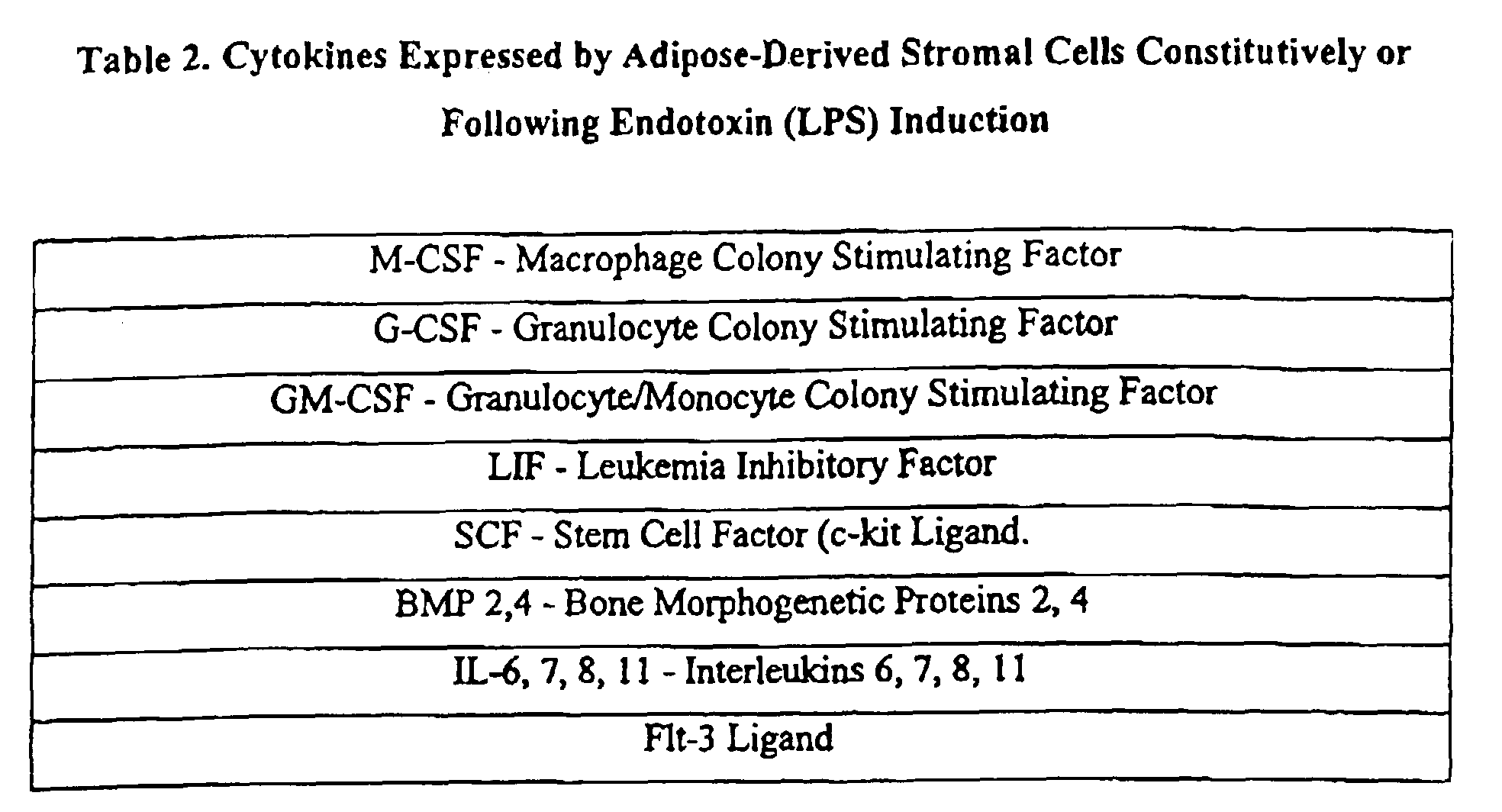
- Cytokines Expressed by Adipose-Derived Stromal Cells Constitutively or Following Endotoxin (LPS) Induction.
- the listed cytokines were analyzed in total RNA isolated from human adipose derived stromal cells following induction with 100 ng/ml of lipopolysaccharide.
- the cytokines listed in the table were detected using the oligonucleotide primers listed. All cytokines were expressed either in a constitutive or inducible manner.
- the present invention provides methods and compositions for the differentiation and culture of adipose tissue-derived stromal cells into (a) hematopoietic supporting stromal cells, (b) skeletal myocytes, and (c) smooth muscle myocytes (myofibroblasts).
- Adipose tissue offers a potential alternative to the bone marrow as a source of multipotential stromal stem cells.
- Adipose tissue is readily accessible and abundant in many individuals. Obesity is a condition of epidemic proportions in the United States, where over 50% of adults exceed the recommended BMI based on their height.
- Adipocytes can be harvested by liposuction on an outpatient basis. This is a relatively non-invasive procedure with cosmetic effects which are acceptable to the vast majority of patients. It is well documented that adipocytes are a replenishable cell population. Even after surgical removal by liposuction or other procedures, it is common to see a recurrence of adipocytes in an individual over time.
- adipose tissue contains stromal stem cells which are capable of self-renewal.
- Pathologic evidence suggests that adipose-derived stromal cells are capable of differentiation along multiple mesenchymal lineages.
- the most common soft tissue tumor, liposarcomas develop from adipocyte-like cells.
- Soft tissue tumors of mixed origin are relatively common. These may include elements of adipose tissue, muscle (smooth or skeletal), cartilage, and/or bone. Just as bone forming cells within the bone marrow can differentiate into adipocytes or fat cells, the extramedullary adipocytes are capable of forming bone.
- subcutaneous adipocytes form bone for unknown reasons (Kaplan (1996) Arch. Dermatol. 132 :815-818).
- Human extramedullary adipose tissue-derived stromal cells represent a stromal stem cell source which can be harvested routinely with minimal risk to the patient. They can be expanded ex vivo, differentiated along unique mesodermal lineage pathways, genetically engineered, and re-introduced into individuals as either an autologous or allogeneic transplantation.
- This invention presents examples of methods and composition for the isolation, characterization, and differentiation of adult human extramedullary adipose tissue stromal cells along the mesodermal lineages and outlines their use for the treatment of a number of human conditions and diseases.
- the invention provides a method for differentiating adipose tissue-derived stromal cells into one of three functionally distinct mesodermal cell lineages: hematopoietic supporting cells, myocytes (skeletal), and myocytes (smooth muscle myofibroblasts) comprising: culturing said cells in a composition which comprises a medium (a) capable of supporting the growth of stromal cells and hematopoietic cells in co-culture with factors present capable of inducing stromal expression of hematopoietic growth factors or the addition of exogenous growth factors directly; (b) capable of supporting the growth and differentiation of stromal cells into functional and proliferating skeletal myocytes; and (c) capable of supporting the growth and differentiation of stromal cells into functional and proliferating smooth muscle myocytes or
- compositions for the differentiation of adipose tissue-derived stromal cells into each of the three different mesodermal derived lineages comprise:
- the methods comprise incubation of isolated adipose tissue-derived stromal cells, plated at densities of about 1,000 to 25,000 cells/cm 2 in medium consisting of the following for each lineage:
- adipose stromal cells refers to stromal cells that originate from adipose tissue.
- adipose is meant any fat tissue.
- the adipose tissue may be brown or white adipose tissue, derived from subcutaneous, omental/visceral, mammary, gonadal, or other adipose tissue site.
- the adipose is subcutaneous white adipose tissue.
- Such cells may comprise a primary cell culture or an immortalized cell line.
- the adipose tissue may be from any organism having fat tissue.
- the adipose tissue is mammalian, most preferably the adipose tissue is human.
- a convenient source of adipose tissue is from liposuction surgery, however, the source of adipose tissue or the method of isolation of adipose tissue is not critical to the invention. If stromal cells are desired for autologous transplantation into a subject, the adipose tissue will be isolated from that subject.
- Hematopoietic supporting stromal cell refers to stromal cells that are capable of supporting the proliferation and maturation of hematopoietic progenitor, also known as hematopoietic stem cells, derived from bone marrow, spleen, peripheral blood, or umbilical blood, either CD34+ or CD34-.
- Co-cultures of hematopoietic supporting stromal cells with hematopoietic progenitors would result in the production of both adherent and non-adherent populations of hematopoietic blood cells, including but not limited to myeloid (macrophage, neutrophil, osteoclast), erythroid (red blood cells), lymphoid (B-lymphoid, T-lymphoid), and platelet (megakaryocyte), as well as eosinophils, basophils, mast cells and other circulating blood cell types.
- myeloid microphage, neutrophil, osteoclast
- erythroid red blood cells
- lymphoid B-lymphoid, T-lymphoid
- platelet megakaryocyte
- hematopoietic cells Growth and differentiation of hematopoietic cells will be determined by assays which include, but are not limited to, those that assess the surface expression of characteristic blood cell lineage specific proteins (such as CD45 for B lineage lymphocytes, T cell receptor for T lineage lymphocytes, Mac- I/LFA11 for macrophages, tartrate resistant acid phosphatase for osteoclasts).
- assays include, but are not limited to, those that assess the surface expression of characteristic blood cell lineage specific proteins (such as CD45 for B lineage lymphocytes, T cell receptor for T lineage lymphocytes, Mac- I/LFA11 for macrophages, tartrate resistant acid phosphatase for osteoclasts).
- Proliferation of hematopoietic stem cells will be assessed in vitro by evidence that co-culture derived hematopoietic cells can continue to expand to multiple blood cell lineages when plated onto a fresh hematopoietic supporting stromal cell layer and in vivo based on the ability of co-culture derived hematopoietic cells to repopulate the bone marrow and rescue a lethally irradiated animal host lacking its own blood cells.
- Myocytes refers to cells that are capable of expressing characteristic biochemical markers of skeletal muscle, including but not limited to the transcription factors myoD and myogenin, skeletal actin, myosin light chain kinase, and myosin heavy chain kinase, characteristic morphologic markers of skeletal muscle, including but not limited to multinucleated complexes and sarcomeres, and able to exhibit contractile function spontaneously or in response to exogenous factors such as acetylcholine.
- Myocytes smooth muscle, myofibroblasts
- characteristic biochemical markers of smooth muscle including but not limited to ⁇ -smooth muscle actin, fibronectin, and ⁇ -1 integrin
- characteristic morphologic markers of smooth muscle including but not limited to the formation of stress fibers in culture, and able to exhibit characteristic smooth muscle functions, including but not limited to the generation of tensile stress on collagen lattices in vitro.
- Hematopoietic growth factors refers to cytokines, hormones and other protein agents. These may be derived directly from stromal cells in the co-culture system or added to co-cultures at concentrations determined by the investigator and obtained as enriched or purified proteins developed from recombinant or natural sources.
- cytokines and hormones interleukin 7 for the growth of B lineage lymphocytes; stem cell factor for all hematopoietic lineages; M-CSF for macrophages and osteoclasts; osteoprotegerin ligand for osteoclasts; erythropoeitin for erythrocytes; thrombopoietin for platelets and megakaryocytes; interleukin 6 for platelets, megakaryocytes, and B lineage lymphocytes.
- cytokines and hormones interleukin 7 for the growth of B lineage lymphocytes; stem cell factor for all hematopoietic lineages; M-CSF for macrophages and osteoclasts; osteoprotegerin ligand for osteoclasts; erythropoeitin for erythrocytes; thrombopoietin for platelets and megakaryocytes; interleukin 6 for platelets, megakaryocytes, and B lineage lymphocytes.
- Non-peptide growth factors refers to steroids, retinoids and other chemical compounds or agents which induce the differentiation of blood cell lineages. It is generally recognized that concentrations may vary. Moroever, it is generally recognized that the compounds or agents will be added in amounts sufficient to stimulate differentiation. Generally, however, these will be used at concentrations ranging from about 1 nM to about 100 nM for 1,25 dihydroxy vitamin D3, about 1 nM to about 100 nM dexamethasone, about 1 nM to about 100 nM hydrocortisone, about 1 nM to about 100 nM retinoic acid, about 1 nM to about 100 nM 9-cis retinoic acid, or at concentrations to be determined and optimized by the practitioner.
- Amounts of 5' azacytadine and/or amphotericin sufficient to induce differentiation refers to concentrations of 5' azacytadine and amphotericin, that when supplied in a medium capable of supporting the growth of stromal cells (e.g. NIH-3T3, C3H 10T1/2, human adipose tissue-derived stromal cells and the like), will induce the differentiation of said stromal cells into skeletal muscle myoblasts and myocytes over a period of about 1 to 6 weeks.
- Typical use concentrations for 5'azacytadine range from about 1 :M to about 30 :M.
- Typical use concentrations for amphotericin range from about 10ng/ml to about 100 ng/ml.
- Optimal concentrations and length of exposure may be determined by the practitioner through the use of known assays for the differentiation of skeletal muscle myoblasts.
- assays include, but are not limited to, those that assess the morphological or biochemical characteristics associated with skeletal muscle (e.g., formation of multinucleated myotubules, expression of myosin heavy chain, expression of myoD at the protein or RNA level).
- Amounts of transforming growth factor ⁇ or other peptide growth factors sufficient to induce differentiation refers to concentrations of transforming growth factor ⁇ or other peptides, that when supplied to medium capable of supporting the growth of stromal cells (e.g. NIH-3T3, C3H 10T1/2, human adipose tissue-derived stromal cells and the like), will induce the differentiation of said stromal cells into smooth muscle myocytes or myofibroblasts over a period of 1 day to 6 weeks.
- Typical use concentrations for transforming growth factor ⁇ range from about 20 ng/ml to about 40 ng/ml.
- Typical use concentrations for fibroblast growth factor range from about 20ng/ml to about 40 ng/ml.
- Optimal concentrations and length of exposure may be determined by the practitioner through the use of known assays for the differentiation of smooth muscle myoblasts.
- assays include, but are not limited to, those that assess the morphological or biochemical characteristics associated with smooth muscle (e.g., expression of a smooth muscle actin and fibronectin, generation of contractile forces when placed in collagen lattices in the presence of thrombin or lysophosphatidic acid).
- a medium capable of supporting stromal cells in tissue culture may be used.
- Media formulations that will support the growth of fibroblasts include, but are not limited to, Dulbecco's Modified Eagle's Medium (DMEM), alpha modified Minimal Essential Medium (aMEM), and Roswell Park Memorial Institute Media 1640 (RPMI Media 1640) and the like.
- DMEM Dulbecco's Modified Eagle's Medium
- aMEM alpha modified Minimal Essential Medium
- RPMI Media 1640 Roswell Park Memorial Institute Media 1640
- FBS Fetal Bovine Serum
- a defined medium could be used if the necessary growth factors, cytokines, and hormones in FCS for stromal cell and hematopoietic cell growth are identified and provided at appropriate concentrations in the growth medium.
- Media useful in the methods of invention may contain one or more compounds of interest, including, but not limited to, antibiotics, compounds that are mitogenic for hematopoietic; stem cells, differentiation inducing for hematopoietic stem cells, and/or mitogenic or differentiative for stromal cells.
- antibiotics useful in the invention include but are not limited to penicillin and streptomycin. Penicillin is typically used at about 10 units/ml to about 200 units/ml. Streptomycin is typically used at about 10 :g/ml to 200 :g/ml.
- hematopoietic mitogenic factors include but are not limited to stem cell factor and interleukin 3; hematopoietic differentiation inducing factors include but are not limited to 1,25 dihydroxy vitamin D 3 , interleukin 7, and osteoprotegerin ligand; stromal cell mitogens include but are not limited to transforming growth factor ⁇ ; and stromal cell differentiating factors include but are not limited to dexamethasone, hydrocortisone, transforming growth factor ⁇ , and the like.
- Adipose tissue-derived stromal cells a medium capable of supporting the growth of the stromal cells, and growth factors and agents capable of inducing stromal cell expression of hematopoietic growth factors or exogenous hematopoietic growth factors or non-peptide factors themselves
- growth factors both peptide and chemical in composition, which enhance the proliferation and maturation of hematopoietic stem cells in vitro and in vivo. These include, but are not limited to, interleukin 1, interleukin 3, interleukin 6, interleukin.
- interleukin 11 macrophage colony stimulating factor (M-CSF), granulocyte-monocyte colony stimulating factor (GM-CSF), stem cell factor, flt3 ligand, thrombopoietin, erythropoietin, osteoprotegerin ligand, dexamethasone, hydrocortisone, and 1,25 dihydroxy vitamin D 3 .
- M-CSF macrophage colony stimulating factor
- GM-CSF granulocyte-monocyte colony stimulating factor
- stem cell factor flt3 ligand, thrombopoietin, erythropoietin, osteoprotegerin ligand, dexamethasone, hydrocortisone, and 1,25 dihydroxy vitamin D 3 .
- the concentrations of these factors and the length of time of exposure will be determined and optimized by the investigators.
- Interleukins, M-CSF, GM-CSF, Flt 3 ligand and stem cell factor are used at about
- Thrombopoietin is typically used at concentrations ranging from about 5 pg/ml to about 1 ng/ml. Erythropoietin is used at about 5 units/ml to about 1000 units/ml. Osteoprotegerin ligand is used at about 5 pg/ml to about 1 ng/ml. Dexamethasone, hydrocortisone, and 1,25 dihydroxy vitamin D 3 are at concentrations from about 1 nM to about 100 nM. Optimal concentrations and treatment times will be determined by monitoring the production of specific circulating blood cell lineages in the co-cultures of hematopoietic stem cells and adipose tissue-derived stromal cells.
- Such assays and indices include, but are not limited to, those that assess the morphological or biochemical characteristics of the cells, such as the expression of cell surface proteins unique to specific blood cell lineages by flow cytometry, immunohistochemistry, and/or immunofluorescent methods, expression of specific mRNAs in the cell population, or by in vivo assessment of the production of hematopoietic stern cells by the co-culture system.
- Adipose tissue-derived stromal cells a medium capable of supporting the growth of the stromal cells, and amounts of azacytadine and/or amphotericin or other agents sufficient to induce the differentiation of said stromal cells into skeletal muscle myocytes
- the medium comprises fetal bovine serum, antibiotic, L-glutamine, sodium pyruvate, 2-mercaptoethanol, and 5' azacytadine or amphotericin.
- Fetal bovine serum can be used at concentrations ranging from 0.5% to 20%.
- the antibiotic typically used, but not limited to, is penicillin or streptomycin.
- Penicillin is typically used at concentrations ranging from about 10 units/ml to about 200 units/ml. Streptomycin is typically used in concentrations ranging from about 10 :g/ml to about 200 :g/ml. L-glutamine and sodium pyruvate are typically used at 0.5 mM to about 2 mM. 2-mercaptoethanol is typically used at about 10 :M to about 100 :M. 5' azacytadine is typically used at about 1 :M to about 30 :M. Amphotericin is typically used at about 10 ng/ml to about 100 ng/ml. The concentrations of these factors and the length of time of exposure will be determined and optimized by the investigators.
- Optimal concentration and treatment times will be determined by monitoring the morphologic and biochemical markers characteristic of skeletal muscle. These include, but are not limited to, the production of multi-nucleated myotubules in culture and the expression of muscle specific genes and proteins, such as muscle transcription factors (myoD, myogenin), myosin light chain kinase, myosin heavy chain kinase, and skeletal muscle actin.
- muscle transcription factors myoD, myogenin
- myosin light chain kinase myosin heavy chain kinase
- skeletal muscle actin skeletal muscle actin
- Adipose tissue-derived stromal cells a medium capable of supporting the growth of the stromal cells, and amounts of transforming growth factor ⁇ or other peptide growth factors sufficient to induce the differentiation of said stromal cells into smooth muscle myocytes or myofibroblasts
- concentrations of factors and the length of time of exposure will be determined and optimized by the investigators. Optimal concentration and treatment times will be determined by monitoring the morphologic and biochemical markers characteristic of smooth muscle cells. These include, but are not limited to, the generation of tensile forces by the cells when placed in a collagen type I lattice and the expression of smooth muscle specific genes and proteins, such as smooth muscle actin, fibronectin, and laminin.
- the adipose tissue derived stromal cells are isolated from the adipose tissue of the subject into which the final differentiated cells are to be introduced.
- the stromal cells may also be isolated from any organism of the same or different species as the subject. Any organism with adipose tissue can be a potential candidate.
- the organism is mammalian, most preferably the organism is human.
- the adipose tissue derived stromal cells may be stably or transiently transfected or transduced with a nucleic acid of interest using a plasmid, viral or alternative vector strategy.
- Nucleic acids of interest include, but are not limited to, those encoding gene products which; (1) enhance the growth, differentiation, maturation and proliferation of hematopoietic cell lineages; examples include osteoprotegerin ligand which induces osteoclast development, interleukin 7, which induces B lineage lymphocyte development, erythropoietin, which induces erythrocyte development, and thrombopoietin, which induces platelet development; (2) enhance the differentiation of skeletal muscle; examples include myoD and myogenin, transcription factors which promote myotubule formation and expression of skeletal muscle specific genes; (3) enhance the growth, differentiation and maturation of smooth muscle cells; examples include transforming growth factor ⁇ , which induces smooth muscle proliferation and extracellular matrix production.
- the blood cells produced by in vitro co-cultures of hematopoietic stem cells and adipose tissue derived stromal cells can be introduced alone or in combination with the stromal component into subjects subject to anemia or limited blood cell production. These may include, but are not limited to, patients receiving high dose chemotherapy, patients undergoing bone marrow transplantation, patients suffering from aplastic anemia, patients suffering from sickle cell anemia, and other blood dyscrasias.
- disorders which may be treated with infusion of stem cells include, but are not limited to, diseases resulting from a failure or a dysfunction of normal blood cell production and maturation (i.e., aplastic anemia and hypoproliferative stem cell disorders); neoplastic, malignant diseases in the hematopoietic organs (e.g., leukemia and lymphomas); broad spectrum malignant solid tumors of non-hematopoietic origin; autoimmune conditions; and genetic disorders.
- Such disorders include, but are not limited to diseases resulting from a failure or dysfunction of normal blood cell production and maturation hyperproliferative stem cell disorders, including aplastic anemia, pancytopenia, agranulocytosis, thrombocytopenia, red cell aplasia, Blackfan-Diamond syndrome, due to drugs, radiation, or infection, idiopathic; hematopoietic malignancies including acute lymphoblastic (lymphocytic) leukemia, chronic lymphocytic leukemia, acute myelogenous leukemia, chronic myelogenous leukemia, acute malignant myelosclerosis, multiple myeloma, polycythemia vera, agnogenic myelometaplasia, Waldenstrom's macroglobulinemia, Hodgkin's lymphoma, non-Hodgkin's lymphoma; immunosuppression in patients with malignant, solid tumors including malignant melanoma, carcinoma of the stomach, ovarian carcinoma, breast
- the skeletal muscle cells produced by in vitro manipulation of the adipose tissue derived stromal cells can be introduced alone or in combination with a composition matrix to repair muscle defects secondary to metabolic diseases (muscular dystrophy, myositis), trauma, and disuse atrophy.
- compositions include, but are not limited to, collagen matrices, poly-lactic polymers, poly-glycolic polymers, alginate, or other solid supports.
- the smooth muscle cells produced by in vitro manipulation of the adipose tissue derived stromal cells can be introduced alone or in combination with a composition matrix to repair smooth muscle defects.
- These defects may include, but are not limited to, urinary bladder wall abnormalities due to hereditary malformations in neonates or secondary to trauma or tumor invasion in older individuals, gastrointestinal tract abnormalities due to hereditary malformations in neonates or secondary to trauma or tumor invasion in older individuals, genital tract abnormalities (vaginal) due to hereditary malformations in neonates, secondary to trauma or tumor invasion, or for tissue reconstructive surgeries in transgender operations, or for the development of functional large veins for grafting purposes.
- Composition matrices may include, but are not limited to, collagen matrices such as swine intestinal submucosa, poly-lactic polymers, poly-glycolic polymers, alginate, or other solid supports.
- Another object of the invention is to provide methods for the identification and study of compounds that enhance or inhibit the differentiation of adipose tissue derived stromal cells into either hematopoietic supporting stromal cells, skeletal muscle myocytes, or smooth muscle myocytes. Compounds which enhance differentiation.
- hematopoietic supporting stromal cell function may be of value in the treatment of blood dyscrasias characterized by decreased production of circulating blood cells and improve recovery of patients following high dose chemotherapy;
- skeletal muscle myocytes may be of value in the treatment of musculoskeletal diseases secondary to hereditary defects or trauma; or
- smooth muscle myocytes may be of value in the treatment of smooth muscle defects, including those of the urinary bladder (bladder wall) , gastrointestinal tract (colon, small intestine), and genital system (vaginal).
- compounds which inhibit differentiation of may be of value in the treatment of blood dyscrasias characterized by overproduction of circulating blood cells, such as polycythemia vera;
- skeletal muscle may be of value in the treatment of soft tissue tumors of skeletal muscle origin, such as rhabdomyosarcomas;
- smooth muscle may be of value in the treatment of soft tissue tumors of smooth muscle origin, such as leiomyosarcomas.
- Any compound may be tested for its ability to affect the differentiation of of adipose tissue derived stromal cells into either hematopoietic supporting stromal cells, skeletal muscle myocytes, or smooth muscle myocytes.
- Appropriate vehicles compatible with the compound to be tested are known to those skilled in the art and may be found in the current edition of Remington's Pharmaceutical Sciences, the contents of which are incorporated herein by reference.
- Stromal cells are isolated from human subcutaneous adipose tissue according to methods described in "Methods and Compositions for the Differentiation of Human Preadipocytes into Adipocytes" Serial Number 09/240,029, filed January 29, 1999. These cells are plated at a density of 30,000 cells per cm 2 in chamber slides, in 6 well tissue culture plates, or in T25 cm 2 flasks. Cells are maintained in culture for 8 days in DMEM/Ham's F-10 supplemented with 10% fetal bovine serum, penicillin 100 units/ml, streptomycin 100 ⁇ g/ml, and 7.5 mM HEPES pH 7.2.
- the surface proteins expressed by the stromal cells are determined by immunologic techniques based on immunohistochemistry and/or flow cytometry.
- immunohistochemical analysis chamber slides are fixed using 95% ethanol/5% glacial acetic acid and incubated with murine monoclonal antibodies detecting human cell surface proteins. After incubation with an enzyme coupled anti-mouse secondary antibody, evidence of protein expression is detected by histochemical reaction.
- flasks of cells are harvested by trypsin/EDTA digestion and incubated with a fluorescent conjugated murine monoclonal antibody detecting a specific human surface protein. Cells are examined for fluorescent intensity by flow cytometry. The results of these assays are summarized in Table 1.
- the cytokine expression profile of the adipose-derived stromal cells is determined following induction with lipopolysaccharide (LPS) or endotoxin, an inflammatory agent capable of inducing hematopoietic cytokines in bone marrow stromal cells (Gimble et al. (1989) Blood 74 :303-311). Confluent and quiescent cultures of cells are exposed to 100 ng/ml LPS for periods of 0 to 24 hours in DMEM medium supplemented with 2% fetal bovine serum, 100 ⁇ g/ml streptomycin, 100 units/ml penicillin, and 7.5 mM HEPES pH 7.2.
- LPS lipopolysaccharide
- endotoxin an inflammatory agent capable of inducing hematopoietic cytokines in bone marrow stromal cells
- the conditioned medium from each culture is harvested and stored at -80°C while the total RNA is harvested by the method of Chomczynski and Sacchi (See Anal. Biochem. (1987) 162 :156-159).
- the mRNA for the cytokines indicated in Table 2 is detected by polymerase chain reaction using the oligonucleotide primer sets listed below the table. A representative set of reactions is demonstrated in Figure 1.
- the following cytokines demonstrated significant LPS inducible expression of immunoreactive protein based on enzyme linked immunoassay: macrophage colony stimulating factor (M-CSF), granulocyte/monocyte colony stimulating factor (GM-CSF), interleukin 6, 7, and 8 (IL-6, 7, 8).
- M-CSF macrophage colony stimulating factor
- GM-CSF granulocyte/monocyte colony stimulating factor
- IL-6, 7, 8 interleukin 6, 7, and 8
- the profile of cytokines expressed by the adipose derived stromal cells is consistent that of bone marrow-derived stromal cells capable of supporting myeloid, lymphoid, and osteoclast proliferation and differentiation in vitro (Pietrangeli et al. (1988) Eur. J. Immunol. 18 :863-872; Gimble et al. (1989) Blood 74 :303-311; Gimble et al. (1992) J . Cell Biochem 50 :73-82; Kelly et al. (1998) Endocrinol. 139 :2092-2101).
- Stromal cells are isolated from human subcutaneous adipose tissue according to methods described in "Methods and Compositions for the Differentiation of Human Preadipocytes into Adipocytes" Serial Number 09/240,029, filed January 29, 1999. These cells are plated at a density of 500 to 20,000 cells per cm 2 . Stromal cells are established in the cultures for 1 to 3 days prior to the introduction of hematopoietic progenitor cells into the co-culture system. Hematopoietic progenitor cells are isolated from one of the following human tissues: bone marrow, umbilical vein/placental blood, peripheral blood, spleen. Alternatively, murine tissues are used.
- Murine bone marrow cells are harvested by flushing the marrow cavity of 6 to 10 week old mice with DMEM/ 10% FCS under sterile conditions.
- Murine spleen cells are harvested by physical passage through a fine metal screen under sterile conditions.
- One of three methods are used to deplete the mixed hematopoietic cell population of its stromal component.
- the hematopoietic stem cell population from the blood sample will be enriched by magnetic immunobead purification using anti-CD34 antigen according to established techniques.
- hematopoietic cells will be enriched by passage of the bone marrow or other blood sample over a sterile G-10 Sephadex or nylon wool column; hematopoietic progenitor cells are eluted while stromal cells are retained.
- hematopoietic cells will be enriched by flow cytometric sorting based on surface protein characteristics. The hematopoietic cells are washed once and the number of nucleated cells is counted using a hematocytometer after erythrocyte lysis with 0.3% acetic acid and trypan blue staining.
- Hematopoietic cells are introduced into the liquid co-cultures at a ratio of preferably 10 to 100 nucleated hematopoietic cells per stromal cell plated, more preferably 20 to 30 nucleated hematopoietic cells per stromal cell plated, most preferably 25 to 30 nucleated hematopoietic cells per stromal cell plated.
- Cells are cultured in a medium consisting of DMEM (high glucose), 10% fetal bovine serum supplemented with 10 to 100 nM hydrocortisone or 10% horse serum, 10 to 200 units/ml of penicillin, 10 to 200 ⁇ g of streptomycin at 33°C in 5% CO 2 .
- the number of non-adherent cells in the medium is determined by hematocytometer count and/or by flow cytometery.
- the surface antigen characteristics of the non-adherent cells are documented using routine antibody markers for the major hematopoietic cell lineages. These will include, but are not limited to, Mac-1, Thy 1, Ig Heavy chain, Ter-81 (erythroid marker).
- the number and character of the non-adherent cell population is determined over a period of up to 10 weeks.
- the cellular composition of the adherent cell layer is determined by flow cytometric or immunohistochemical methods.
- the hematopoietic studies are conducted in semi-solid cultures.
- Cells are prepared as described above, but the hematopoietic progenitor cells are plated in the additional presence of 2.1 % methylcellulose. Colony formation is assessed after a 7 to 14 day period for the presence of granulocytes, erythrocytes, macrophages, and monocytes using histologic, morphologic and immunologic criteria.
- Adipose tissue derived stromal cell/hematopoietic progenitor co-cultures established under liquid culture conditions described in Example 1 are used to assess the ability of this system to maintain the proliferation of the hematopoietic progenitor cells in vitro.
- Co-cultures are established using human adipose tissue derived stromal cells and murine hematopoietic progenitors. Cultured cells are transduced with a viral vector expressing a traceable protein marker such as green fluorescent protein or beta-galactosidase.
- co-culture cells are identified by expression of a unique antigen or genetic marker due to their origin; e.g., the expression of human proteins for the stromal cells, and the expression of a transgenic or male gender specific marker for the murine hematopoietic cells.
- Established co-cultures are harvested by limited incubation with trypsin/EDTA and infused into a lethally irradiated immunodeficient mouse. Animals will be followed over time. After 9 to 14 days, mice are sacrificed and their spleens examined for the appearance of hematopoietic cell islands or splenic colony forming units (CFU-S).
- mice will be maintained for 14 days or longer and their circulating blood cell count determined by hematologic and flow cytometric assays.
- the presence of specific markers of the stromal cells and the donor hematopoietic cells is detected with antibody reagents or specific DNA markers on fixed cells, either by flow cytometry or conventional pathologic/histologic methods.
- the ability of the co-cultured cells to establish CFU-S in the recipient and/or to maintain the proliferation and maturation of donor blood cells in the host after 14 days is evidence of the continued expansion of some hematopoietic progenitors in vitro by the adipose tissue-derived stromal cells.
- Stromal cells are isolated from human subcutaneous adipose tissue according to methods described in "Methods and Compositions for the Differentiation of Human Preadipocytes into Adipocytes" Serial Number 09/240,029, filed January 29, 1999. These cells are plated at a density of 500 to 20,000 cells per cm 2 . Stromal cells are established in the cultures for 1 to 3 days prior to the introduction of hematopoietic progenitor cells into the co-culture system. Hematopoietic progenitor cells are isolated from one of the following human tissues: bone marrow, umbilical vein/placental blood, peripheral blood, spleen. Alternatively, murine tissues are used.
- Murine bone marrow cells are harvested by flushing the marrow cavity of 6 to 10 week old mice with RPMI/10% FCS under sterile conditions.
- Murine spleen cells are harvested by physical passage through a fine metal screen under sterile conditions.
- One of three methods are used to deplete the mixed hematopoietic cell population of its stromal component, As a first alternative, the hematopoietic stem cell population from the blood sample will be enriched by magnetic immunobead purification using anti-CD34 antigen according to established techniques.
- hematopoietic cells will be enriched by passage of the bone marrow or other blood sample over a sterile G-10 Sephadex or nylon wool column; hematopoietic progenitor cells are eluted while stromal. cells are retained.
- hematopoietic cells will be enriched by flow cytometric sorting. The hematopoietic cells are washed once and the number of nucleated cells is counted using a hematocytometer after erythrocyte lysis with 0.3% acetic acid and trypan blue staining.
- Hematopoietic cells are introduced into the liquid co-cultures at a ratio of preferably 10 to 100 nucleated hematopoietic cells per stromal cell plated, more preferably 20 to 30 nucleated hematopoietic cells per stromal cell plated, most preferably 25 to 30 nucleated hematopoietic cells per stromal cell plated.
- Cells are cultured in a medium consisting of RPMI1640, prescreened 10% fetal bovine serum, 10 to 200 units/ml of penicillin, 10 to 200 ⁇ g/ml of streptomycin, 0.5 to 2 mM L-glutamine, 10 to 100 ⁇ M 2-mercaptoethanol at 37°C in 5% CO 2 .
- the number of non-adherent cells in the medium is determined by hematocytometer count and/or by flow cytometery.
- the surface antigen characteristics of the non-adherent cells are documented using routine antibody markers for the major hematopoietic cell lineages. These will include, but are not limited to, Mac-1, Thy 1, Ig Heavy chain, Ter-81 (erythroid marker).
- the number and character of the non-adherent cell population is determined over a period of up to 10 weeks.
- the cellular composition of the adherent cell layer is determined by flow cytometric or immunohistochemical methods.
- the hematopoietic studies are conducted in semi-solid cultures.
- Cells are prepared as described above but the hematopoietic progenitor cells are plated in the additional presence of 2.1% methylcellulose. Colony formation is assessed after a 7 to 14 day period for the presence of B lineage lymphoid cells as well as granulocytes, erythrocytes, macrophages, and monocytes using histologic, morphologic and immunologic criteria.
- co-cultures and/or semi-solid cultures are established as described above with the addition of interleukin 7 at concentrations to be determined by the practictioner which enhance the proliferation and maturation of B lineage lymphocytes. The techniques outlined above are used to assess the affect of this growth factor on the hematopoietic support function of the adipose tissue derived stromal cell.
- Stromal cells are isolated from human subcutaneous adipose tissue according to methods described in "Methods and Compositions for the Differentiation of Human Preadipocytes into Adipocytes" Serial Number 09/240,029, Filed January 29, 1999. These cells are plated at a density of 500 to 20,000 cells per cm 2 in 24 well plates. Cells are cultured in a medium consisting of DMEM (high glucose), prescreened 10% fetal bovine serum, 10 to 200 units/ml of penicillin, 10 to 200 ⁇ g of streptomycin, 0.5 to 2 mM L-glutamine, 0.5 to 2 mM sodium pyruvate, 10 to 100 ⁇ M 2-mercaptoethanol at 37°C in 5% CO 2 .
- DMEM high glucose
- penicillin 10 to 200 ⁇ g
- streptomycin 0.5 to 2 mM L-glutamine
- 0.5 to 2 mM sodium pyruvate 10 to 100 ⁇ M 2-mercaptoethanol at 37°C in
- the medium is supplemented with either 10 to 100 nM'1,25 dihydroxy vitamin D3 and or osteoprotegerin ligand at concentrations determined by the practitioner.
- Stromal cells are established in the cultures for 6 days prior to the introduction of hematopoietic progenitor cells into the co-culture system.
- Hematopoietic progenitor cells are isolated from one of the following human tissues: bone marrow, umbilical vein/placental blood, peripheral blood, spleen.
- murine tissues are used.
- Murine bone marrow cells are harvested by flushing the marrow cavity of 6 to 10 week old mice with DMEM (high glucose)/10% FCS under sterile conditions.
- Murine spleen cells are harvested by physical passage through a fine metal screen under sterile conditions.
- One of three methods are used to deplete the mixed hematopoietic cell population of its stromal component.
- the hematopoietic stem cell population from the blood sample will be enriched by magnetic immunobead purification using anti-CD34 antigen according to established techniques.
- hematopoietic cells will be enriched by passage of the bone marrow or other blood sample over a sterile G-10 Sephadex or nylon wool column; hematopoietic progenitor cells are eluted while stromal cells are retained.
- hematopoietic cells will be enriched by flow cytometric sorting based on surface protein characteristics. The hematopoietic cells are washed once and the number of nucleated cells is counted using a hematocytometer after erythrocyte lysis with 0.3% acetic acid and trypan blue staining.
- Hematopoietic cells are introduced into the liquid co-cultures at a ratio of preferably 10 to 100 nucleated hematopoietic cells per stromal cell plated, more preferably 20 to 30 nucleated hematopoietic cells per stromal cell plated, most preferably 25 to 30 nucleated hematopoietic cells per stromal cell plated.
- One half of the medium in the co-cultures is replaced every 3 to 4 days.
- Co-cultures are maintained in the presence of 1,25 dihydroxy vitamin D 3 or osteoprotegerin ligand continuously after the introduction of hematopoietic cells.
- co-cultures are fixed with 0.5 ml 3.7% (vol:vol) formaldehyde in phosphate buffered saline for 5 minutes, dried for 30 seconds with acetone:ethanol (50:50, vol/vol), and stained for 10 minutes with 10 mM sodium tartrate, 40 mM sodium acetate (pH 5.0), 0.1 mg/ml naphthol AS-MS phosphate (Sigma N-5000), and 0.6 mg/ml fast red violet LB salt (Sigma F-3381). Stained cultures are rinsed in distilled water and stored under 50% glycerol/PBS.
- the number of tartrate resistant acid phosphatase positive cells per well is assessed under light microscopy based on the red staining of the cytoplasm.
- TRAP+ cells are, numerically counted and those with 1-2 nuclei are distinguished from those multinucleated cells with ⁇ 3 nuclei per cell.
- This assay demonstrates the ability of adipose tissue derived stromal cells to support the differentiation and proliferation of osteoclastogenic precursors in vitro. This culture procedure is able to expand and promote differentiation of osteoclasts. This has potential application to rare clinical conditions such as osteopetrosis characterized by brittle bones where patients fail to produce native osteoclasts.
- This In vitro method offers a means to expand an individual's own osteoclast progenitors and to promote their differentiation ex vivo.
- This cell population can be re-infused into the affected individual with potential short-term or long-term benefit.
- the non-invasive nature of the methodology and the potential to rely exclusively on autologous cells indicates that this procedure could be used repetitively in the treatment of an individual patient.
- the co-culture models outlined in Examples 1-4 have the potential to be used to facilitate the recovery of bone marrow function in patients receiving high dose chemotherapy, high dose radiation treatment or any other therapeutic modality which compromises blood cell production and bone marrow function.
- an individual can donate his or her own adipose tissue and blood cells for subsequent autologous transplantation.
- the individual's own blood cells and stromal co-cultures can be established and expanded.
- the patients own blood cell/stromal cell co-culture can be re-infused into the patient according to standard transfusion methodologies. This can be done in the absence or presence of exogenous hematopoietic cytokines, either added to the co-cultures or given directly to the patient.
- This approach may accelerate the rate of blood cell production in the patient, reduce the need for cytokine therapies, and reduce the overall costs and risk of the chemotherapy or other immunocompromising procedure.
- it is possible to manipulate the stromal cells to enhance production of specific blood cell lineages.
- Stromal cells transiently expressing interleukin 7, for example, would facilitate the rapid expansion of B lineage lymphoid cells while stromal cells expressing erythropoietin would favor expansion of erythrocytes.
- the approach is designed primarily for the treatment of nosocomial induced blood cell dyscrasias.
- large scale ex vivo production of autologous stromal/hematopoietic co-cultures is of potential value for elective and non-elective surgical procedures requiring transfusion intra-operatively and post-operatively.
- the majority of patients requiring blood transfusion receive blood products donated by others. This presents risk to the recipient of transmission of unrecognized infectious disease from the donor.
- an individual can expand his/her hematopoietic cell population at a capacity which is no longer limited by the bone marrow cavity volume.
- Stromal cells are isolated from human subcutaneous adipose tissue according to methods described in "Methods and Compositions for the Differentiation of Human Preadipocytes into Adipocytes" Serial Number 09/240,029, filed January 29, 1999. These cells are plated at a density of 500 to 20,000 cells per cm 2 in 24 well plates. Cells are cultured in a medium consisting of DMEM (high glucose), prescreened 10% fetal bovine serum, 10 to 200 units/ml of penicillin, 10 to 200 ⁇ g of streptomycin, 0.5 to 2 mM L-glutamine, 0.5 to 2 mM sodium pyruvate, 10 to 100 ⁇ M 2-mercaptoethanol at 37°C in 5% CO 2 .
- DMEM high glucose
- penicillin 10 to 200 ⁇ g
- streptomycin 0.5 to 2 mM L-glutamine
- 0.5 to 2 mM sodium pyruvate 10 to 100 ⁇ M 2-mercaptoethanol at 37°C in
- Cells are exposed to 1 to 30 ⁇ M 5' azacytadine or 10 to 100 ng/ml of amphotericin for periods of 1 to 6 days to assure that cells throughout S phase are continuously exposed to these agents. Following this period, cultures are maintained in the culture medium without azacytadine or amphotericin supplements. Cultures are either continued at the established cell density or sub-cloned by limit dilution methods to select for cell clones capable of expressing characteristic markers of skeletal muscle myoblasts.
- These cells are selected based on morphologic criteria, specifically, the ability to form multinucleated myotubules in culture; biochemical criteria, specifically, the expression of myosin heavy and light chain kinase, skeletal muscle actin and myosin and the expression of myogenic transcription factors, myoD and/or myogenin.
- the cells skeletal muscle myoblasts developed in Example 6 can be used for tissue engineering purposes in the treatment of myodystrophies, muscle atrophy, and physical loss of skeletal muscle secondary to surgical procedures for the treatment of cancer or trauma,
- the ex vivo development of a proliferating population of myoblasts from adipose tissue can be used to supplement and repair skeletal muscle mass in afflicted individuals.
- Myoblasts can be cultured in biodegradable matrices composed of poly-lactic, poly-glycolic, collagen or other materials to form muscle strands. These can then be implanted to an afflicted site and tethered by suture to existing muscle, tendon or bone.
- ex vivo expanded myoblasts can be genetically engineered by viral transduction , plasmid transfection, or other means to express novel genes. These cells can be injected directly into existing muscle sites where these novel gene products will now be expressed. This approach has direct application to muscular dystrophy, where patients suffer secondary to a mutation in an important skeletal muscle gene.
- the engineered stromal cells can convert the muscle into a production site for a deficient circulating protein.
- adipose tissue derived stromal cells expressing lipoprotein lipase can be used to treat the many patients with mutations in their native lipoprotein lipase gene who are at increased risk of severe cardiovascular disease.
- Stromal cells are isolated from human subcutaneous adipose tissue according to methods described in "Methods and Compositions for the Differentiation of Human Preadipocytes into Adipocytes" Serial Number 09/240,029, filed January 29, 1999. These cells are plated at a density of 500 to 20,000 cells per cm 2 in 24 well plates. Cells are cultured in a medium consisting of DMEM (high glucose), prescreened 10% fetal bovine serum, 10 to 200 units/ml of penicillin, 10 to 200 ⁇ g of streptomycin, 0.5 to 2 mM L-glutamine, 0.5 to 2 mM sodium pyruvate, at 37°C in 5% CO 2 .
- DMEM high glucose
- penicillin 10 to 200 ⁇ g
- streptomycin 0.5 to 2 mM L-glutamine
- 0.5 to 2 mM sodium pyruvate at 37°C in 5% CO 2 .
- Cultures are supplemented with transforming growth factor ⁇ and/or fibroblast growth factor at concentrations determined by the practitioner but not to exceed 40 ng/.
- Cells are maintained in culture as a monolayer or in a 3-dimensional lattice composed of collagen type I or other biodegradable material (alginate, synthetic polymer or other).
- Cells are characterized based on morphologic, biochemical, and functional criteria for smooth muscle myoblast differentiation; these include, but are not limited to, expression of smooth muscle actin, fibronectin, laminin, and other extracellular matrix proteins, the ability to generate a tensile force as measured by a pressure transducer, and to organize along a line of force in a 3 dimensional lattice.
- the smooth muscle myoblasts described under Example 8 can be used to treat conditions where smooth muscle function is compromised. For example, over 1000 neonates each year suffer from bladder wall abnormalities. The severity of this disorder is variable but it can be devastating and requires expensive surgical procedures to accomplish an acceptable repair and an approach to normal function. In many cases, the bladder size is too small or the bladder wall is incompletely formed, necessitating the implantation of prosthetic materials as a bladder wall replacement. Methods under investigation include the use of swine intestinal submucosa as a replacement material for the bladder wall. One issue is whether or not the surgically implanted bladder wall will achieve the appropriate physical and mechanical characteristics associated with stretching and retraction. Much of this is mediated by functional smooth muscle cells.
- N.D. N.D. N.D. N.D. N.D. N.D. N.D. N.D. (Values in Table 3 are the mean ⁇ S.E.M from n 5 to 7 stromal cells donors.
- ELISAs were performed with undiluted , 1:25 or 1:125 diluted conditioned medium after the indicated exposure time to 100 ng lipopolysaccharide per ml of medium.
- the IL-7 ELISA is linear between 0.16 to 10 pg/ml Astericks indicate *p ⁇ 0.01 between 24 hour and 0 hour time points based on one-way ANOVA. Abbreviation: N.D., not detectable.)
Landscapes
- Health & Medical Sciences (AREA)
- Life Sciences & Earth Sciences (AREA)
- Engineering & Computer Science (AREA)
- Biomedical Technology (AREA)
- Zoology (AREA)
- Biotechnology (AREA)
- Organic Chemistry (AREA)
- Bioinformatics & Cheminformatics (AREA)
- Genetics & Genomics (AREA)
- Chemical & Material Sciences (AREA)
- Wood Science & Technology (AREA)
- Developmental Biology & Embryology (AREA)
- General Engineering & Computer Science (AREA)
- Microbiology (AREA)
- Biochemistry (AREA)
- General Health & Medical Sciences (AREA)
- Cell Biology (AREA)
- Hematology (AREA)
- Rheumatology (AREA)
- Immunology (AREA)
- Micro-Organisms Or Cultivation Processes Thereof (AREA)
- Medicines Containing Material From Animals Or Micro-Organisms (AREA)
- Measuring Or Testing Involving Enzymes Or Micro-Organisms (AREA)
- Pharmaceuticals Containing Other Organic And Inorganic Compounds (AREA)
- Medicines That Contain Protein Lipid Enzymes And Other Medicines (AREA)
Abstract
Description







| Characterization of Adipose Derived Stromal Cell Surface Markers Based on Antibody and PCR Detection | |
| Positive Markers | Negative Markers |
| CD9 - Tetraspan Protein | CD11a |
| CD29 - Integrin β1 | CD11b |
| CD34 | CD11c |
| CD44 - Hyaluronate Receptor | CD 14 |
| CD49 d, e - Integrins α4,5 | CD31 |
| CD54 - ICAM1 | CD45 |
| CD55 - Decay Accelerating Factor | CD50 - ICAM3 |
| CD56 - NCAM | HLA DR (Class II) |
| CD59 - Complement Inhibitor Protein | |
| CD105 - Endoglin | |
| CD106 - VCAM1 | |
| CD146 - Muc 18 | |
| CD 166 - ALCAM | |
| α Smooth Muscle Actin | |
| Collagen I | |
| Collagen III | |
| Alkaline Phosphatase | |
| HLA Class I |
| Quantitative ELISA (pg/ml LPS Induction of Adipose-Derived Stromal Cell Secreted Cytokines | ||||||
| Time LPS | 0 Hr | 1 Hr | 2 Hr | 4 Hr | 8 Hr | 24 Hr |
| GM-CSF* | 1 ± 1 | 1 ± 0 | 3 ± 1 | 7 ± 2 | 17 ± 3 | 76 ± 28 |
| M-CSF* | 4 ± 3 | 76 ± 14 | 161 ± 29 | 304 ± 62 | 512 ± 98 | 977* ± 285 |
| IL-6* | 1 ± 1 | 287 ± 73 | 674 ± 51 | 2649 ± 495 | 6083 ± 956 | 9204 ± 2676 |
| IL-7* | 0.4 ± 0.2 | 0.4 ± 0.2 | 0.3 ± 0.3 | 0.3 ± 0.3 | 0.9 ± 0.2 | 3.4* ± 0.7 |
| IL-8* | 0 ± 0 | 88 ± 42 | 225 ± 82 | 1343 ± 224 | 4924 ± 1046 | 9710* ± 2438 |
| IL-11 | 2 ± 2 | 2 ± 1 | 13 ± 6 | 14 ± 6 | 16 ± 6 | 19 ± 8 |
| IL-12 | N.D. | N.D. | N.D. | N.D. | N.D. | N.D. |
Claims (79)
- A medium for differentiating adipose tissue derived stromal cells into hematopoietic supporting stromal cells that will proliferate and differentiate along the myeloid lineage pathway or the B-lineage lymphoid pathway, said medium comprising: a chemically defined medium having or supplemented with the following components present in sufficient amounts to stimulate differentiation (i) 0% to 20% fetal bovine serum (ii) antibiotic (iii) interleukins (iv) stem cell factor (v) flt-3 ligand (vi) macrophage-colony stimulating factor (vii) granulocyte-monocyte colony stimulating factor (viii) erythropoietin (ix) thrombopoietin (x) osteoprotegerin ligand (xi) dexamethasone (xii) hydrocortisone (xiii) 1,25 dihydroxy vitamin D3 and (xiv) 2-mercaptoethanol.
- The medium of claim 1, wherein said chemically defined medium is selected from the group consisting of: DMEM, ∀MEM, and RPMI media 1640.
- The medium of claim 1, wherein said antibiotic is penicillin.
- The medium of claim 1, wherein said antibiotic is streptomycin.
- The medium of claim 3, wherein said penicillin is present in amounts from about 10 units per ml to about 200 units per ml.
- The medium of claim 4, wherein said streptomycin is present in amounts from about 10 :g per ml to about 200 :g per ml.
- The medium of claim 1, wherein said interleukins are selected from the group consisting of: interleukin-1, interleukin-3, interleukin-6, interleukin-7, interleukin-11 and interleukin-12.
- The medium of claim 7, wherein the amount of interleukins is from about 5 pg/ml to about 1 ng/ml.
- The medium of claim 1, wherein said flt-3 ligand is present at amounts from about 5 pg/ml to about 1 ng/ml.
- The medium of claim 1, wherein said stem cell factor is present at amounts from about 5 pg/ml to about 1 ng/ml.
- The medium of claim 1, wherein said granulocyte-monocyte colony stimulating factor is present at amounts from about 5 pg/ml to about 1 ng/ml.
- The medium of claim 1, wherein said macrophage-colony stimulating factor is present at amounts from about 5 pg/ml to about 1 ng/ml.
- The medium of claim 1, wherein said erythropoietin is present at amounts from about 5 units/ml to about 1000 units/ml.
- The medium of claim 1, wherein said thrombopoietin is present at amounts from about 5 pg/ml to about 1 ng/ml.
- The medium of claim 1, wherein said osteoprotegerin ligand is present from about 5 pg/ml to about 1 ng/ml.
- The medium of claim 1, wherein said dexamethasone is present from about 1 nM to about 100 nM.
- The medium of claim 1, wherein said hydrocortisone is present from about 1 nM to about 100 nM.
- The medium of claim 1, wherein said 1,25 dihydroxy vitamin D3 is present in amounts from about 1nM to about 100 nM.
- The medium of claim 1, wherein said 2-mercaptoethanol is present in amounts from about 10 uM to about 100 uM.
- The medium of claim 1, wherein said medium is incubated at a temperature of about 33° C for myeloid cells.
- The medium of claim 1, wherein said medium is incubated at a temperature of about 37° C for B-lineage lymphoid cells.
- A medium for differentiating adipose tissue derived stromal cells into skeletal muscle myocytes, said medium comprising: a chemically defined medium having or supplemented with the following components present in sufficient amounts to stimulate differentation ( i) 0.5% to 20% fetal bovine serum (ii) an antibiotic (iii) glutamine (iv) sodium pyruvate (v) 2-mercaptoethanol and (vi) 5' azacytadine or amphotericin.
- The medium of claim 22, wherein said chemically defined medium is selected from the group consisting of DMEM, VMEM, and RPMI media 1640.
- The medium of claim 22, wherein said antibiotic is penicillin.
- The medium of claim 22, wherein said antibiotic is streptomycin.
- The medium of claim 24, wherein said penicillin is present in amounts from about 10 to about 200 units per ml.
- The medium of claim 25, wherein said streptomycin is present in amounts from about 10 :g per ml to about 200 :g per ml.
- The medium of claim 22, wherein said sodium pyruvate is present from about 0.5 mM to about 2 mM.
- The medium of claim 22, wherein said 2-mercaptoethanol is present from about 10 :M to about 100:M.
- The medium of claim 22, wherein said 5' azacytadine is present in amounts sufficient to induce the differentiation of said stromal cells into skeletal muscle myocytes.
- The medium of claim 30, wherein said 5' azacytadine is present from about 1 :M to about 30 :M.
- The medium of claim 22, wherein said amphotericin is present in amounts sufficient to induce the differentiation of said stromal cells into skeletal muscle myocytes.
- The medium of claim 32, wherein said amphotericin is present from about 10 ng per ml to about 100 ng per ml.
- A medium for differentiating adipose tissue derived stromal cells into smooth muscle myoblasts, said medium comprising: a chemically defined medium having or supplemented with the following components present in amounts sufficient to stimulate differentiation (i) 0% to 10% fetal bovine serum (ii) an antibiotic (iii) glutamine (iv) sodium pyruvate (v) transforming growth factor 3 or fibroblast growth factor and (vi) a 3-dimensional matrix composed of a biodegradable material.
- The medium of claim 34, wherein said chemically defined medium is selected from the group consisting of: DMEM, VMEM, and RPMI media 1640.
- The medium of claim 34, wherein said antibiotic is penicillin.
- The medium of claim 34, wherein said antibiotic is streptomycin.
- The medium of claim 36, wherein said penicillin is present from about 10 units per ml to about 200 units per ml.
- The medium of claim 37, wherein said streptomycin is present from about 10 :g per ml to about 200:g per ml.
- The medium of claim 34, wherein said sodium pyruvate is present from about 0.5 to about 2 mM.
- The medium of claim 34, wherein said transforming growth factor 3 is present from about 20 ng per ml to about 40 ng per ml.
- The medium of claim 34, wherein said fibroblast growth factor is present in amounts from about 20 ng per ml to about 40 ng per ml.
- The medium of claim 34, wherein the biodegradable material is selected from the group comprising collagen type I, alginate, or other synthetic type polymer.
- A method for differentiating adipose tissue derived stromal cells into hematopoietic supporting stromal cells which will proliferate and differentiate along the myeloid lineage pathway or the B-lineage lymphoid pathway, comprising:a) plating said stromal cells at a density of about 30,000 cells per cm2 in chamber slides;b) maintaining cells in culture for about 8 days in a medium containing Dulbecco's Modified Eagle's Medium (DMEM) or Ham's F-10;c) supplementing said medium with:(i) 1 to 20% fetal bovine serum(ii) an antibiotic(iii) interleukins (iv) stem cell factor (v) flt-3 ligand (vi) macrophage-colony stimulating factor (vii) granulocyte-monocyte colony stimulating factor (viii) crythropoetin (ix) thrombopoietin (x) osteoprotegerin ligand (xi) dexamethasone (xii) hydrocortisone (xiii) 1,25 dihydroxy vitamin D3 and (xiiii) 2-mercaptoethanol; andd) examining the expression of cell surface proteins which are consistent with cells of the myeloid lineage or B-lymphoid lineage using a variety of techniques which include but are not limited to immunohistochemistry, flow cytometry, immunofluorescence and mRNA expression in cell populations.
- The medium of claim 44, wherein said antibiotic is penicillin.
- The medium of claim 44, wherein said antibiotic is streptomycin.
- The medium of claim 45, wherein said penicillin is present in amounts from about 10 to about 200 units per ml.
- The medium of claim 46, wherein said streptomycin is present in amounts from about 10 :g per ml to about 200 :g per ml.
- The medium of claim 44, wherein said interleukins are selected from the group consisting of: interleukin-1, interleukin-3, interleukin-6, interleukin-7, interleukin-11 and interleukin-12.
- The medium of claim 49, wherein the amount of interleukins is present in amounts from about 5 pg/ml to about 1 ng/ml.
- The medium of claim 44, wherein said flt-3 ligand is present at amounts from about 5 pg/ml to about 1 ng/ml.
- The medium of claim 44, wherein said stem cell factor is present in amounts from about 5 pg/ml to about 1 ng/ml.
- The medium of claim 44, wherein said granulocyte-monocyte colony stimulating factor is present in amounts from about 5 pg/ml to about 1 ng/ml.
- The medium of claim 44, wherein said macrophage-colony stimulating factor is present at amounts from about 5 pg/ml to about 1 ng/ml.
- The medium of claim 44, wherein said erythropoietin is present at amounts from about 5 units/ml to about 1000 units/ml.
- The medium of claim 44, wherein said thrombopoietin is present at amounts from about 5 pg/ml to about 1 ng/ml.
- The medium of claim 44, wherein said osteoprotegerin ligand is present from about 5 pg/ml to about 1 ng/ml.
- The medium of claim 44, wherein said dexamethasone is present from about 1 nM to about 100 nM.
- The medium of claim 44, wherein said hydrocortisone is present from about 1 nM to about 100 nM.
- The medium of claim 44, wherein said 1,25 dihydroxy vitamin D3 is present in amounts from about 1 to about 10 nM.
- The medium of claim 1, wherein the 2-mercaptoethanol is present from about 10:M to about 100:M.
- A method for differentiating adipose tissue derived stromal cells into skeletal muscle myocyte cells, comprising:a) plating said stromal cells at a density of about 500 to about 20,000 cells per cm2 in chamber slides;b) maintaining cells in culture for about 8 days in a medium containing Dulbecco's Modified Eagle's Medium (DMEM) or Ham's F-10;c) supplementing said medium with:(i) 1 to 10% fetal bovine serum(ii) an antibiotic(iii) glutamine (iv) sodium pyruvate (v) 2-mercaptoethanol;d) exposing cells to azacytadine or amphotericin for 1 to 6 days;e) examining said cells for biochemical phenotypes or markers characteristic of skeletal muscle myoblasts.
- The method according to claim 62, wherein said antibiotic is penicillin.
- The method according to claim 62, wherein said antibiotic is streptomycin.
- The method according to claim 63, wherein said penicillin is present from about 10 units per ml to about 200 units per ml.
- The method according to claim 64, wherein said streptomycin is present from about 10 :g per ml to about 200 :g per ml.
- The method according to claim 62, wherein said sodium pyruvate is present from about 0.5 mM to about 2 mM.
- The method according to claim 62, wherein said 2-mercaptoethanol is present from about 10 :M to about 100 :M.
- The method according to claim 62, wherein said 5' azacytadine is present from about 1:M to about 30:M.
- The method according to claim 62, wherein said amphotericin is present from about 10 ng/ml to about 100 ng/ml.
- A method for differentiating adipose tissue derived stromal cells into smooth muscle myoblast cells, comprising:a) plating said stromal cells at a density of about 500 to about 20,000 cells per cm2 in chamber slides;b) maintaining cells in a medium containing Dulbecco's Modified Eagle's Medium (DMEM) or Ham's F-10;c) supplementing said medium with:(i) 1 to 10% fetal bovine serum(ii) an antibiotic(iii) glutamine (iv) sodium pyruvate (v) transforming growth factor ∃ and/or fibroblast growth factor;d) maintaining cells as a monolayer or in a 3-dimensional lattice comprising collagen type I, or alginate or other biodegradable material; ande) characterizing cells for biochemical or functional criteria to establish smooth muscle differentiation.
- The method according to claim 71, wherein said antibiotic is penicillin.
- The method according to claim 71, wherein said antibiotic is streptomycin.
- The method according to claim 72, wherein said penicillin is present from about 10 units per ml to about 200 units per ml.
- The method according to claim 73, wherein said streptomycin is present from about 10 :g per ml to about 200 µg per ml.
- The method according to claim 71, wherein said sodium pyruvate is present from about 0.5mM to about 2 mM.
- The method according to claim 71, wherein said transforming growth factor 3 is present from about 20 ng/ml to about 40 ng/ml.
- The method according to claim 71, wherein said fibroblast growth factor is present from about 20 ng/ml to about 40 ng/ml.
- A hematopoietic cell made by the method of claim 44.
Applications Claiming Priority (2)
| Application Number | Priority Date | Filing Date | Title |
|---|---|---|---|
| US14984999P | 1999-08-19 | 1999-08-19 | |
| US149849P | 1999-08-19 |
Publications (2)
| Publication Number | Publication Date |
|---|---|
| EP1077254A2 true EP1077254A2 (en) | 2001-02-21 |
| EP1077254A3 EP1077254A3 (en) | 2002-02-06 |
Family
ID=22532054
Family Applications (1)
| Application Number | Title | Priority Date | Filing Date |
|---|---|---|---|
| EP00307153A Withdrawn EP1077254A3 (en) | 1999-08-19 | 2000-08-21 | Multiple mesodermal lineage differentiation potentials for adipose tissue-derived stromal cells and uses thereof |
Country Status (5)
| Country | Link |
|---|---|
| US (5) | US6555374B1 (en) |
| EP (1) | EP1077254A3 (en) |
| JP (1) | JP4180228B2 (en) |
| CN (1) | CN1309180A (en) |
| CA (1) | CA2316400C (en) |
Cited By (26)
| Publication number | Priority date | Publication date | Assignee | Title |
|---|---|---|---|---|
| WO2002055678A1 (en) * | 2001-01-10 | 2002-07-18 | Centre National De La Recherche Scientifique-Cnrs | Extramedullary adipose tissue cells and use thereof for regenerating hematopoietic and muscular tissues |
| WO2003008592A1 (en) * | 2001-07-19 | 2003-01-30 | Yasuhiko Tabata | Polyfunctional stem cells originating in adipose tissue |
| WO2004056397A1 (en) * | 2002-05-29 | 2004-07-08 | Demao Yang | Stimulation of hematopoiesis by ex vivo actived immune cells |
| US6905827B2 (en) | 2001-06-08 | 2005-06-14 | Expression Diagnostics, Inc. | Methods and compositions for diagnosing or monitoring auto immune and chronic inflammatory diseases |
| EP1550715A1 (en) * | 2003-12-30 | 2005-07-06 | Bionethos Holding Gmbh | Method for the regeneration of tissue |
| WO2005063965A1 (en) * | 2003-12-30 | 2005-07-14 | Bionethos Holding Gmbh | Tissue regeneration method |
| US7026121B1 (en) | 2001-06-08 | 2006-04-11 | Expression Diagnostics, Inc. | Methods and compositions for diagnosing and monitoring transplant rejection |
| EP1451300A4 (en) * | 2001-11-09 | 2007-01-10 | Artecel Sciences Inc | Methods and compositions for the use of stromal cells to support embryonic and adult stem cells |
| US7235358B2 (en) | 2001-06-08 | 2007-06-26 | Expression Diagnostics, Inc. | Methods and compositions for diagnosing and monitoring transplant rejection |
| SG134168A1 (en) * | 2000-02-26 | 2007-08-29 | Artecel Sciences Inc | Pleuripotent stem cells generated from adipose tissue-derived stromal cells and uses thereof |
| FR2901136A1 (en) * | 2006-05-18 | 2007-11-23 | Centre Nat Rech Scient | USE OF CELLS DERIVED FROM ADIPOSE TISSUE FOR THE PREPARATION OF AN ANTI-TUMOR DRUG |
| US7332158B2 (en) | 2002-05-29 | 2008-02-19 | Demao Yang | Compositions and treatments for myelosuppression by ex vivo activated immune cells |
| US7514075B2 (en) | 2001-12-07 | 2009-04-07 | Cytori Therapeutics, Inc. | Systems and methods for separating and concentrating adipose derived stem cells from tissue |
| US7585670B2 (en) | 2001-12-07 | 2009-09-08 | Cytori Therapeutics, Inc. | Automated methods for isolating and using clinically safe adipose derived regenerative cells |
| US7595043B2 (en) | 2001-12-07 | 2009-09-29 | Cytori Therapeutics, Inc. | Method for processing and using adipose-derived stem cells |
| US7645575B2 (en) | 2004-09-08 | 2010-01-12 | Xdx, Inc. | Genes useful for diagnosing and monitoring inflammation related disorders |
| US7651684B2 (en) | 2001-12-07 | 2010-01-26 | Cytori Therapeutics, Inc. | Methods of using adipose tissue-derived cells in augmenting autologous fat transfer |
| US7771716B2 (en) | 2001-12-07 | 2010-08-10 | Cytori Therapeutics, Inc. | Methods of using regenerative cells in the treatment of musculoskeletal disorders |
| US7879556B2 (en) | 2003-04-24 | 2011-02-01 | Xdx, Inc. | Methods and compositions for diagnosing and monitoring transplant rejection |
| US7993832B2 (en) | 2006-08-14 | 2011-08-09 | Xdx, Inc. | Methods and compositions for diagnosing and monitoring the status of transplant rejection and immune disorders |
| US20110318833A1 (en) * | 1999-03-10 | 2011-12-29 | Katz Adam J | Adipose-derived stem cells and laticces |
| US8105580B2 (en) | 2001-12-07 | 2012-01-31 | Cytori Therapeutics, Inc. | Methods of using adipose derived stem cells to promote wound healing |
| US8119121B2 (en) | 2001-12-07 | 2012-02-21 | Cytori Therapeutics, Inc. | Autologous adipose tissue implant with concentrated stem cells |
| US8148067B2 (en) | 2006-11-09 | 2012-04-03 | Xdx, Inc. | Methods for diagnosing and monitoring the status of systemic lupus erythematosus |
| US8404229B2 (en) | 2001-12-07 | 2013-03-26 | Cytori Therapeutics, Inc. | Methods of using adipose derived stem cells to treat acute tubular necrosis |
| US9849149B2 (en) | 2001-12-07 | 2017-12-26 | Cytori Therapeutics, Inc. | Methods of using regenerative cells in the treatment of erectile dysfunction |
Families Citing this family (97)
| Publication number | Priority date | Publication date | Assignee | Title |
|---|---|---|---|---|
| CN1166773C (en) * | 1997-12-02 | 2004-09-15 | 泽恩比奥公司 | isolated human adipose tissue-derived stromal cells |
| US20050076396A1 (en) * | 1999-03-10 | 2005-04-07 | Katz Adam J. | Adipose-derived stem cells and lattices |
| RU2306335C2 (en) * | 1999-03-10 | 2007-09-20 | Юниверсити Оф Питтсбург Оф Дзе Коммонвелт Систем Оф Хайер Эдьюкейшн | Stem cells and matrices obtained from adipose tissue |
| US20030082152A1 (en) * | 1999-03-10 | 2003-05-01 | Hedrick Marc H. | Adipose-derived stem cells and lattices |
| US20050153442A1 (en) * | 1999-03-10 | 2005-07-14 | Adam Katz | Adipose-derived stem cells and lattices |
| JP2005533480A (en) * | 2001-11-09 | 2005-11-10 | アーテセル・サイエンシズ・インコーポレーテツド | Pancreatic endocrine differentiation of adipose tissue-derived stromal cells and use thereof |
| US9597395B2 (en) | 2001-12-07 | 2017-03-21 | Cytori Therapeutics, Inc. | Methods of using adipose tissue-derived cells in the treatment of cardiovascular conditions |
| CA2475288C (en) | 2002-02-06 | 2014-09-02 | Sanbio, Inc. | Method of inducing differentiation of bone marrow stromal cells to neural cells or skeletal muscle cells by introduction of notch gene |
| AU2003220424A1 (en) * | 2002-03-19 | 2003-10-08 | Advanced Research And Technology Transfer | Adipose stromal stem cells for tissue and vascular modification |
| US8491883B2 (en) * | 2003-06-27 | 2013-07-23 | Advanced Technologies And Regenerative Medicine, Llc | Treatment of amyotrophic lateral sclerosis using umbilical derived cells |
| ES2569780T3 (en) | 2003-06-27 | 2016-05-12 | DePuy Synthes Products, Inc. | Postpartum cells derived from placental tissue and methods of preparation and use thereof |
| US8518390B2 (en) | 2003-06-27 | 2013-08-27 | Advanced Technologies And Regenerative Medicine, Llc | Treatment of stroke and other acute neural degenerative disorders via intranasal administration of umbilical cord-derived cells |
| US20100158880A1 (en) * | 2008-12-19 | 2010-06-24 | Ethicon, Incorporated | Regeneration and repair of neural tissue following injury |
| US9572840B2 (en) | 2003-06-27 | 2017-02-21 | DePuy Synthes Products, Inc. | Regeneration and repair of neural tissue using postpartum-derived cells |
| US7875272B2 (en) | 2003-06-27 | 2011-01-25 | Ethicon, Incorporated | Treatment of stroke and other acute neuraldegenerative disorders using postpartum derived cells |
| US9592258B2 (en) | 2003-06-27 | 2017-03-14 | DePuy Synthes Products, Inc. | Treatment of neurological injury by administration of human umbilical cord tissue-derived cells |
| US8790637B2 (en) | 2003-06-27 | 2014-07-29 | DePuy Synthes Products, LLC | Repair and regeneration of ocular tissue using postpartum-derived cells |
| AU2004280616A1 (en) * | 2003-10-08 | 2005-04-21 | Vet-Stem Inc. | Methods of preparing and using stem cell compositions and kits comprising the same |
| KR100835034B1 (en) | 2003-12-25 | 2008-06-03 | 도꾸리쯔교세이호징 가가꾸 기쥬쯔 신꼬 기꼬 | Induction of myocardial cell with the use of mammalian bone marrow cell or cord blood-origin cell and fat tissue |
| JPWO2005093083A1 (en) * | 2004-03-29 | 2008-02-14 | 和久 前田 | Disease prediction method and use method thereof |
| CN1993460A (en) * | 2004-07-12 | 2007-07-04 | 索林集团意大利有限公司 | Device and method for cultivating human cell |
| US20060045872A1 (en) | 2004-08-25 | 2006-03-02 | Universidad Autonoma De Madrid Ciudad Universitaria de Cantoblanco | Use of adipose tissue-derived stromal stem cells in treating fistula |
| CA2881343A1 (en) * | 2004-12-08 | 2006-06-15 | Shire Regenerative Medicine, Inc. | Methods and compositions for enhancing vascular access |
| WO2006101548A2 (en) * | 2004-12-21 | 2006-09-28 | Ethicon, Inc. | Postpartum cells derived from umbilical cord tissue, and methods of making, culturing, and using the same |
| WO2006083394A2 (en) * | 2004-12-21 | 2006-08-10 | Ethicon, Inc. | Postpartum cells derived from placental tissue, and methods of making, culturing, and using the same |
| US20060153815A1 (en) * | 2004-12-21 | 2006-07-13 | Agnieszka Seyda | Tissue engineering devices for the repair and regeneration of tissue |
| CA2589063C (en) | 2004-12-23 | 2016-08-09 | DePuy Synthes Products, Inc. | Treatment of parkinson's disease and related disorders using postpartum derived cells |
| ES2621847T3 (en) | 2004-12-23 | 2017-07-05 | DePuy Synthes Products, Inc. | Postpartum cells derived from umbilical cord tissue, and methods of making and using them |
| EP1855700B1 (en) | 2005-03-07 | 2013-10-30 | SanBio, Inc. | Use of neuronal precursor cells for treatment of central nervous system lesions |
| WO2006128029A2 (en) * | 2005-05-25 | 2006-11-30 | University Of Virginia Patent Foundation | Production of osteoclasts from adipose tissues |
| US7531355B2 (en) * | 2005-07-29 | 2009-05-12 | The Regents Of The University Of California | Methods and compositions for smooth muscle reconstruction |
| US20070027543A1 (en) * | 2005-08-01 | 2007-02-01 | Gimble Jeffrey M | Use of adipose tissue-derived stromal cells in spinal fusion |
| SG10202001007TA (en) | 2005-09-23 | 2020-03-30 | Tigenix Sau | Cell populations having immunoregulatory activity, method for isolation and uses |
| US20070212336A1 (en) * | 2005-10-31 | 2007-09-13 | Fulkerson Loren D | Methods for harvesting and storing autologous stem cells including blood derived hematopoietic stem cells and adipose derived mesenchymal stem cells |
| US20070104693A1 (en) * | 2005-11-07 | 2007-05-10 | Quijano Rodolfo C | Breast augmentation system |
| US20070104692A1 (en) * | 2005-11-07 | 2007-05-10 | Quijano Rodolfo C | Breast tissue regeneration |
| US9175261B2 (en) * | 2005-12-16 | 2015-11-03 | DePuy Synthes Products, Inc. | Human umbilical cord tissue cells for inhibiting adverse immune response in histocompatibility-mismatched transplantation |
| ES2391034T3 (en) * | 2005-12-19 | 2012-11-20 | Ethicon, Inc. | In vitro expansion of postpartum derived cells in rotary bottles |
| CN101437576A (en) * | 2005-12-28 | 2009-05-20 | 伊西康公司 | Treatment of peripheral vascular disease using postpartum-derived cells |
| US9125906B2 (en) | 2005-12-28 | 2015-09-08 | DePuy Synthes Products, Inc. | Treatment of peripheral vascular disease using umbilical cord tissue-derived cells |
| US20070207504A1 (en) * | 2006-03-06 | 2007-09-06 | The Board Of Supervisors Of Louisiana State University And Agricultural And Mechanical College | Proteomic methods for the identification of differentiated adipose cells and adipose derived adult stem cells |
| KR101490449B1 (en) | 2006-03-23 | 2015-02-05 | 플루리스템 리미티드 | Methods of cell proliferation and use of cells and controlled media produced by the cells for treatment |
| MY146352A (en) * | 2006-04-25 | 2012-08-15 | Univ Louisiana State | Adipose derived adult stem cells in hepatic regeneration |
| CA2687446A1 (en) * | 2006-05-17 | 2007-11-29 | Cognate Therapeutics, Inc. | Isolation and purification of hematopoietic stem cells from post-liposuction lipoaspirates |
| US8574567B2 (en) * | 2007-05-03 | 2013-11-05 | The Brigham And Women's Hospital, Inc. | Multipotent stem cells and uses thereof |
| EP2607477B1 (en) | 2007-05-03 | 2020-09-23 | The Brigham and Women's Hospital, Inc. | Multipotent stem cells and uses thereof |
| US8273091B2 (en) * | 2007-10-04 | 2012-09-25 | Ebi, Llc | Alignment device for locking nail |
| EP2203186B1 (en) * | 2007-10-05 | 2014-09-24 | DePuy Synthes Products, LLC | Repair and regeneration of renal tissue using human umbilical cord tissue-derived cells |
| WO2009076548A1 (en) * | 2007-12-13 | 2009-06-18 | Cytori Therapeutics, Inc. | Methods of inhibiting tumor development using adipose-derived regenerative cells |
| US8236538B2 (en) * | 2007-12-20 | 2012-08-07 | Advanced Technologies And Regenerative Medicine, Llc | Methods for sterilizing materials containing biologically active agents |
| US8877497B2 (en) * | 2008-05-22 | 2014-11-04 | Vesta Therapeutics Inc. | Method of differentiating mammalian progenitor cells into insulin producing pancreatic islet cells |
| WO2010021993A1 (en) | 2008-08-19 | 2010-02-25 | Cytori Therapeutics, Inc. | Methods of using adipose tissue-derived cells in the treatment of the lymphatic system and malignant disease |
| EP2321407A4 (en) * | 2008-09-11 | 2012-07-18 | Univ Florida | SYSTEM AND METHOD FOR THE PRODUCTION OF T-LYMPHOCYTES |
| US8446586B2 (en) * | 2008-10-15 | 2013-05-21 | Allan Yang Wu | Method and apparatus for increasing adipose vascular fraction |
| US9192695B2 (en) | 2008-11-20 | 2015-11-24 | Allosource | Allografts combined with tissue derived stem cells for bone healing |
| US10179900B2 (en) | 2008-12-19 | 2019-01-15 | DePuy Synthes Products, Inc. | Conditioned media and methods of making a conditioned media |
| US10557116B2 (en) | 2008-12-19 | 2020-02-11 | DePuy Synthes Products, Inc. | Treatment of lung and pulmonary diseases and disorders |
| WO2010071862A1 (en) * | 2008-12-19 | 2010-06-24 | Ethicon, Incorporated | Umbilical cord tissue derived cells for treating neuropathic pain and spasticity |
| US20130302283A1 (en) | 2012-05-14 | 2013-11-14 | Advanced Technologies And Regenerative Medicine, Llc | hUTC MODULATION OF PRO-INFLAMMATORY MEDIATORS OF LUNG AND PULMONARY DISEASES AND DISORDERS |
| PL2411504T3 (en) | 2009-03-26 | 2017-10-31 | Depuy Synthes Products Inc | Human umbilical cord tissue cells as therapy for alzheimer's disease |
| EP2424463B1 (en) | 2009-05-01 | 2016-12-28 | Bimini Technologies LLC | Systems, methods and compositions for optimizing tissue and cell enriched grafts |
| US20110027239A1 (en) * | 2009-07-29 | 2011-02-03 | Tissue Genesis, Inc. | Adipose-derived stromal cells (asc) as delivery tool for treatment of cancer |
| US9260697B2 (en) | 2010-07-09 | 2016-02-16 | The Gid Group, Inc. | Apparatus and methods relating to collecting and processing human biological material containing adipose |
| WO2013106655A1 (en) | 2012-01-11 | 2013-07-18 | The Gid Group, Inc. | Method for processing adipose tissue and processing apparatus |
| US9206387B2 (en) | 2010-07-09 | 2015-12-08 | The Gid Group, Inc. | Method and apparatus for processing adipose tissue |
| US9296984B2 (en) | 2010-07-09 | 2016-03-29 | The Gid Group, Inc. | Tissue processing apparatus and method for processing adipose tissue |
| US9725689B2 (en) | 2010-10-08 | 2017-08-08 | Terumo Bct, Inc. | Configurable methods and systems of growing and harvesting cells in a hollow fiber bioreactor system |
| WO2012091911A1 (en) | 2010-12-27 | 2012-07-05 | Intellicell Biosciences, Inc. | Ultrasonic cavitation derived stromal or mesenchymal vascular extracts and cells derived therefrom obtained from adipose tissue and use thereof |
| KR101903339B1 (en) | 2011-03-22 | 2018-10-01 | 플루리스템 리미티드 | Methods for treating radiation or chemical injury |
| KR101981450B1 (en) | 2011-12-23 | 2019-08-28 | 디퍼이 신테스 프로덕츠, 인코포레이티드 | Detection of human umbilical cord tissue-derived cells |
| EP3075841B1 (en) | 2012-09-06 | 2021-03-10 | GID BIO, Inc. | Tissue processing apparatus and method for processing adipose tissue |
| US9650608B2 (en) | 2013-02-22 | 2017-05-16 | Medivet America, Llc | Activating adipose-derived stem cells for transplantation |
| WO2014150784A1 (en) | 2013-03-15 | 2014-09-25 | Allosource | Cell repopulated collagen matrix for soft tissue repair and regeneration |
| US10336980B2 (en) | 2013-09-05 | 2019-07-02 | The Gid Group, Inc. | Tissue processing apparatus and method for processing adipose tissue |
| EP3068867B1 (en) | 2013-11-16 | 2018-04-18 | Terumo BCT, Inc. | Expanding cells in a bioreactor |
| US11008547B2 (en) | 2014-03-25 | 2021-05-18 | Terumo Bct, Inc. | Passive replacement of media |
| EP3198006B1 (en) | 2014-09-26 | 2021-03-24 | Terumo BCT, Inc. | Scheduled feed |
| WO2017004592A1 (en) | 2015-07-02 | 2017-01-05 | Terumo Bct, Inc. | Cell growth with mechanical stimuli |
| GB201604304D0 (en) | 2016-03-14 | 2016-04-27 | Tigenix S A U | Adipose tissue-derived stromal stem cells for use in treating refractory complex perianal fistulas in crohn's disease |
| WO2017205667A1 (en) | 2016-05-25 | 2017-11-30 | Terumo Bct, Inc. | Cell expansion |
| US11685883B2 (en) | 2016-06-07 | 2023-06-27 | Terumo Bct, Inc. | Methods and systems for coating a cell growth surface |
| US11104874B2 (en) | 2016-06-07 | 2021-08-31 | Terumo Bct, Inc. | Coating a bioreactor |
| US20180015129A1 (en) | 2016-07-05 | 2018-01-18 | Janssen Biotech, Inc. | Treatment of retinal vascular disease using progenitor cells |
| CA3035193A1 (en) | 2016-08-30 | 2018-03-08 | Lifecell Corporation | Systems and methods for medical device control |
| USD851777S1 (en) | 2017-01-30 | 2019-06-18 | Lifecell Corporation | Canister-type device for tissue processing |
| US12234441B2 (en) | 2017-03-31 | 2025-02-25 | Terumo Bct, Inc. | Cell expansion |
| JP7393945B2 (en) | 2017-03-31 | 2023-12-07 | テルモ ビーシーティー、インコーポレーテッド | cell proliferation |
| US11624046B2 (en) | 2017-03-31 | 2023-04-11 | Terumo Bct, Inc. | Cell expansion |
| EP3655518A4 (en) | 2017-07-18 | 2021-07-14 | GID Bio, Inc. | ADAPTIVE TISSUE DIGESTION SYSTEM AND TISSUE PROCESSING PROCEDURES |
| US11674131B2 (en) | 2018-12-03 | 2023-06-13 | Ross Ward | Indirect ultrasonic cavitation-derived perivascular cells and methods of use thereof |
| KR20220002315A (en) * | 2019-03-22 | 2022-01-06 | 이노바셀 아게 | Methods for obtaining induced smooth muscle cells |
| EP3778875A1 (en) * | 2019-08-14 | 2021-02-17 | MaxiVax SA | Immortalized myoblast cell lines and uses thereof |
| KR102141641B1 (en) * | 2020-01-31 | 2020-08-06 | 주식회사 래디안 | Method for differentiation of dermal papilla cells from human adipose mesenchymal stem cells |
| CN111518752B (en) * | 2020-04-07 | 2021-12-10 | 北京大学 | Application of vitamin D3 and analogues thereof in promoting differentiation of human skin fibroblasts into adipocytes |
| EP4314244B1 (en) | 2021-03-23 | 2025-07-23 | Terumo BCT, Inc. | Cell capture and expansion |
| US12152699B2 (en) | 2022-02-28 | 2024-11-26 | Terumo Bct, Inc. | Multiple-tube pinch valve assembly |
| USD1099116S1 (en) | 2022-09-01 | 2025-10-21 | Terumo Bct, Inc. | Display screen or portion thereof with a graphical user interface for displaying cell culture process steps and measurements of an associated bioreactor device |
Family Cites Families (33)
| Publication number | Priority date | Publication date | Assignee | Title |
|---|---|---|---|---|
| US4485096A (en) * | 1982-02-26 | 1984-11-27 | Massachusetts Institute Of Technology | Tissue-equivalent and method for preparation thereof |
| US4628027A (en) * | 1982-05-19 | 1986-12-09 | Molecular Engineering Associates, Ltd. | Vitro diagnostic methods using monoclonal antibodies against connective tissue proteins |
| US5863531A (en) | 1986-04-18 | 1999-01-26 | Advanced Tissue Sciences, Inc. | In vitro preparation of tubular tissue structures by stromal cell culture on a three-dimensional framework |
| US5902741A (en) | 1986-04-18 | 1999-05-11 | Advanced Tissue Sciences, Inc. | Three-dimensional cartilage cultures |
| US5266480A (en) * | 1986-04-18 | 1993-11-30 | Advanced Tissue Sciences, Inc. | Three-dimensional skin culture system |
| US5763266A (en) * | 1989-06-15 | 1998-06-09 | The Regents Of The University Of Michigan | Methods, compositions and devices for maintaining and growing human stem and/or hematopoietics cells |
| US5811094A (en) | 1990-11-16 | 1998-09-22 | Osiris Therapeutics, Inc. | Connective tissue regeneration using human mesenchymal stem cell preparations |
| US5197985A (en) * | 1990-11-16 | 1993-03-30 | Caplan Arnold I | Method for enhancing the implantation and differentiation of marrow-derived mesenchymal cells |
| US5486359A (en) | 1990-11-16 | 1996-01-23 | Osiris Therapeutics, Inc. | Human mesenchymal stem cells |
| US5139481A (en) * | 1991-08-07 | 1992-08-18 | The General Hospital Corporation | Treatment for type II diabetes |
| AU4543193A (en) | 1992-06-22 | 1994-01-24 | Henry E. Young | Scar inhibitory factor and use thereof |
| US5275826A (en) * | 1992-11-13 | 1994-01-04 | Purdue Research Foundation | Fluidized intestinal submucosa and its use as an injectable tissue graft |
| US5807999A (en) * | 1993-02-01 | 1998-09-15 | Mt. Sinai School Of Medicine Of The City University Of New York | Monoclonal antibody that distinguishes between phosphorylated and nonphosphorylated histone H1 and uses therefor |
| GB9312819D0 (en) * | 1993-06-22 | 1993-08-04 | Univ Mcgill | Acylation stimulating protein |
| US5599703A (en) * | 1993-10-28 | 1997-02-04 | The United States Of America As Represented By The Secretary Of The Navy | In vitro amplification/expansion of CD34+ stem and progenitor cells |
| DE69534468T2 (en) * | 1994-07-08 | 2006-07-13 | The Johns Hopkins University School Of Medicine | GROWTH DIFFERENTIATION FACTOR 11 |
| US6103522A (en) | 1994-07-20 | 2000-08-15 | Fred Hutchinson Cancer Research Center | Human marrow stromal cell lines which sustain hematopoiesis |
| US5736396A (en) | 1995-01-24 | 1998-04-07 | Case Western Reserve University | Lineage-directed induction of human mesenchymal stem cell differentiation |
| US7008634B2 (en) * | 1995-03-03 | 2006-03-07 | Massachusetts Institute Of Technology | Cell growth substrates with tethered cell growth effector molecules |
| US6653134B2 (en) | 1995-03-28 | 2003-11-25 | Cp Hahnemann University | Isolated stromal cells for use in the treatment of diseases of the central nervous system |
| CA2237890C (en) | 1995-11-16 | 2011-03-29 | Case Western Reserve University | In vitro chondrogenic induction of human mesenchymal stem cells |
| US6200606B1 (en) | 1996-01-16 | 2001-03-13 | Depuy Orthopaedics, Inc. | Isolation of precursor cells from hematopoietic and nonhematopoietic tissues and their use in vivo bone and cartilage regeneration |
| AU5436998A (en) | 1996-11-15 | 1998-06-03 | Osiris Therapeutics, Inc. | MSC-megakaryocyte precursor composition and method of isolating MSCs asso ciated with isolated megakaryocytes by isolating megakaryocytes |
| WO1999003980A1 (en) | 1997-07-16 | 1999-01-28 | Kirin Beer Kabushiki Kaisha | Agm-derived stroma cells |
| CN1166773C (en) * | 1997-12-02 | 2004-09-15 | 泽恩比奥公司 | isolated human adipose tissue-derived stromal cells |
| US6100047A (en) | 1999-04-07 | 2000-08-08 | Zen Bio, Inc. | Modulation of the sulfonylurea receptor and calcium in adipocytes for treatment of obesity/diabetes |
| WO1999061587A1 (en) | 1998-05-29 | 1999-12-02 | Osiris Therapeutics, Inc. | Human cd45+ and/or fibroblast + mesenchymal stem cells |
| US6030836A (en) | 1998-06-08 | 2000-02-29 | Osiris Therapeutics, Inc. | Vitro maintenance of hematopoietic stem cells |
| US6113574A (en) | 1998-07-27 | 2000-09-05 | Spinello; Ronald P. | Anesthetic injection apparatus and methods |
| US6153432A (en) | 1999-01-29 | 2000-11-28 | Zen-Bio, Inc | Methods for the differentiation of human preadipocytes into adipocytes |
| RU2306335C2 (en) | 1999-03-10 | 2007-09-20 | Юниверсити Оф Питтсбург Оф Дзе Коммонвелт Систем Оф Хайер Эдьюкейшн | Stem cells and matrices obtained from adipose tissue |
| US6316247B1 (en) | 1999-06-15 | 2001-11-13 | University Of Pittsburgh | System and method for refining liposuctioned adipose tissue |
| JP2010529859A (en) * | 2007-06-15 | 2010-09-02 | ジェンザイム、コーポレーション | Fusion protein containing two TGF-β binding domains of TGF-β type II receptor |
-
2000
- 2000-08-14 US US09/638,544 patent/US6555374B1/en not_active Expired - Lifetime
- 2000-08-18 CN CN00131695A patent/CN1309180A/en active Pending
- 2000-08-18 CA CA2316400A patent/CA2316400C/en not_active Expired - Fee Related
- 2000-08-21 EP EP00307153A patent/EP1077254A3/en not_active Withdrawn
- 2000-08-21 JP JP2000249591A patent/JP4180228B2/en not_active Expired - Fee Related
-
2002
- 2002-12-21 US US10/327,245 patent/US20030166278A1/en not_active Abandoned
-
2008
- 2008-09-12 US US12/209,813 patent/US20090162934A1/en not_active Abandoned
-
2011
- 2011-04-12 US US13/085,250 patent/US8486700B2/en not_active Expired - Fee Related
-
2013
- 2013-07-12 US US13/941,213 patent/US20130288262A1/en not_active Abandoned
Cited By (42)
| Publication number | Priority date | Publication date | Assignee | Title |
|---|---|---|---|---|
| US20110318833A1 (en) * | 1999-03-10 | 2011-12-29 | Katz Adam J | Adipose-derived stem cells and laticces |
| US20150191698A1 (en) * | 1999-03-10 | 2015-07-09 | The Regents Of The University Of California | Adipose-derived stem cells and lattices |
| US20130224858A1 (en) * | 1999-03-10 | 2013-08-29 | Adam J. Katz | Adipose-derived stem cells and lattices |
| SG134168A1 (en) * | 2000-02-26 | 2007-08-29 | Artecel Sciences Inc | Pleuripotent stem cells generated from adipose tissue-derived stromal cells and uses thereof |
| WO2002055678A1 (en) * | 2001-01-10 | 2002-07-18 | Centre National De La Recherche Scientifique-Cnrs | Extramedullary adipose tissue cells and use thereof for regenerating hematopoietic and muscular tissues |
| US8110364B2 (en) | 2001-06-08 | 2012-02-07 | Xdx, Inc. | Methods and compositions for diagnosing or monitoring autoimmune and chronic inflammatory diseases |
| US7026121B1 (en) | 2001-06-08 | 2006-04-11 | Expression Diagnostics, Inc. | Methods and compositions for diagnosing and monitoring transplant rejection |
| US7960121B2 (en) | 2001-06-08 | 2011-06-14 | Xdx, Inc. | Methods and compositions for diagnosing and monitoring transplant rejection |
| US7235358B2 (en) | 2001-06-08 | 2007-06-26 | Expression Diagnostics, Inc. | Methods and compositions for diagnosing and monitoring transplant rejection |
| US6905827B2 (en) | 2001-06-08 | 2005-06-14 | Expression Diagnostics, Inc. | Methods and compositions for diagnosing or monitoring auto immune and chronic inflammatory diseases |
| US7579148B2 (en) | 2001-06-08 | 2009-08-25 | Expression Diagnostics, Inc. | Methods and compositions for diagnosing or monitoring autoimmune and chronic inflammatory diseases |
| WO2003008592A1 (en) * | 2001-07-19 | 2003-01-30 | Yasuhiko Tabata | Polyfunctional stem cells originating in adipose tissue |
| EP1451300A4 (en) * | 2001-11-09 | 2007-01-10 | Artecel Sciences Inc | Methods and compositions for the use of stromal cells to support embryonic and adult stem cells |
| US7514075B2 (en) | 2001-12-07 | 2009-04-07 | Cytori Therapeutics, Inc. | Systems and methods for separating and concentrating adipose derived stem cells from tissue |
| US8246947B2 (en) | 2001-12-07 | 2012-08-21 | Cytori Therapeutics, Inc. | Methods of using adipose tissue-derived cells in augmenting autologous fat transfer |
| US8337834B2 (en) | 2001-12-07 | 2012-12-25 | Cytori Therapeutics, Inc. | Methods of making enhanced, autologous fat grafts |
| US8404229B2 (en) | 2001-12-07 | 2013-03-26 | Cytori Therapeutics, Inc. | Methods of using adipose derived stem cells to treat acute tubular necrosis |
| US7585670B2 (en) | 2001-12-07 | 2009-09-08 | Cytori Therapeutics, Inc. | Automated methods for isolating and using clinically safe adipose derived regenerative cells |
| US7595043B2 (en) | 2001-12-07 | 2009-09-29 | Cytori Therapeutics, Inc. | Method for processing and using adipose-derived stem cells |
| US7771716B2 (en) | 2001-12-07 | 2010-08-10 | Cytori Therapeutics, Inc. | Methods of using regenerative cells in the treatment of musculoskeletal disorders |
| US8105580B2 (en) | 2001-12-07 | 2012-01-31 | Cytori Therapeutics, Inc. | Methods of using adipose derived stem cells to promote wound healing |
| US9849149B2 (en) | 2001-12-07 | 2017-12-26 | Cytori Therapeutics, Inc. | Methods of using regenerative cells in the treatment of erectile dysfunction |
| US7651684B2 (en) | 2001-12-07 | 2010-01-26 | Cytori Therapeutics, Inc. | Methods of using adipose tissue-derived cells in augmenting autologous fat transfer |
| US8119121B2 (en) | 2001-12-07 | 2012-02-21 | Cytori Therapeutics, Inc. | Autologous adipose tissue implant with concentrated stem cells |
| US7604936B2 (en) | 2002-04-24 | 2009-10-20 | Xdx, Inc. | Methods and compositions for diagnosis and monitoring auto immune and chronic inflammatory diseases |
| US7691569B2 (en) | 2002-04-24 | 2010-04-06 | Xdx, Inc. | Methods and compositions for diagnosing and monitoring transplant rejection |
| US7758857B2 (en) | 2002-05-29 | 2010-07-20 | Demao Yang | Stimulation of hematopoiesis by ex vivo activated immune cells |
| US7332158B2 (en) | 2002-05-29 | 2008-02-19 | Demao Yang | Compositions and treatments for myelosuppression by ex vivo activated immune cells |
| US7048922B2 (en) | 2002-05-29 | 2006-05-23 | Demao Yang | Stimulation of hematopoiesis by ex vivo activated immune cells |
| WO2004056397A1 (en) * | 2002-05-29 | 2004-07-08 | Demao Yang | Stimulation of hematopoiesis by ex vivo actived immune cells |
| EP2011863A1 (en) * | 2002-05-29 | 2009-01-07 | Demao Yang | Stimulation of hematopoiesis by ex vivo activated immune cells |
| US7879556B2 (en) | 2003-04-24 | 2011-02-01 | Xdx, Inc. | Methods and compositions for diagnosing and monitoring transplant rejection |
| AU2011200538B2 (en) * | 2003-12-30 | 2012-02-23 | Augustinus Bader | Tissue regeneration method |
| EP1550715A1 (en) * | 2003-12-30 | 2005-07-06 | Bionethos Holding Gmbh | Method for the regeneration of tissue |
| WO2005063965A1 (en) * | 2003-12-30 | 2005-07-14 | Bionethos Holding Gmbh | Tissue regeneration method |
| US7910547B2 (en) | 2003-12-30 | 2011-03-22 | Augustinus Bader | Tissue regeneration method |
| AU2004309083B2 (en) * | 2003-12-30 | 2010-11-11 | Augustinus Bader | Tissue regeneration method |
| US7645575B2 (en) | 2004-09-08 | 2010-01-12 | Xdx, Inc. | Genes useful for diagnosing and monitoring inflammation related disorders |
| WO2007135284A1 (en) * | 2006-05-18 | 2007-11-29 | Centre National De La Recherche Scientifique | Use of cells derived from adipose tissue for the preparation of an anti-tumour medicament |
| FR2901136A1 (en) * | 2006-05-18 | 2007-11-23 | Centre Nat Rech Scient | USE OF CELLS DERIVED FROM ADIPOSE TISSUE FOR THE PREPARATION OF AN ANTI-TUMOR DRUG |
| US7993832B2 (en) | 2006-08-14 | 2011-08-09 | Xdx, Inc. | Methods and compositions for diagnosing and monitoring the status of transplant rejection and immune disorders |
| US8148067B2 (en) | 2006-11-09 | 2012-04-03 | Xdx, Inc. | Methods for diagnosing and monitoring the status of systemic lupus erythematosus |
Also Published As
| Publication number | Publication date |
|---|---|
| JP4180228B2 (en) | 2008-11-12 |
| US6555374B1 (en) | 2003-04-29 |
| US20030166278A1 (en) | 2003-09-04 |
| EP1077254A3 (en) | 2002-02-06 |
| US8486700B2 (en) | 2013-07-16 |
| CN1309180A (en) | 2001-08-22 |
| US20130288262A1 (en) | 2013-10-31 |
| US20110250590A1 (en) | 2011-10-13 |
| CA2316400C (en) | 2014-06-03 |
| CA2316400A1 (en) | 2001-02-19 |
| JP2001103963A (en) | 2001-04-17 |
| US20090162934A1 (en) | 2009-06-25 |
Similar Documents
| Publication | Publication Date | Title |
|---|---|---|
| US8486700B2 (en) | Multiple mesodermal lineage differentiation potentials for adipose tissue-derived stromal cells and uses thereof | |
| US7078230B2 (en) | Adipose tissue-derived stromal cell that expresses characteristics of a neuronal cell | |
| CN104204193B (en) | The cultivation of mescenchymal stem cell | |
| EP2669368B1 (en) | Isolation and purification of hematopoietic stem cells from post-liposuction lipoaspirates | |
| US9415072B2 (en) | Expansion of haemopoietic precursors | |
| JP6764912B2 (en) | Cell population with immunomodulatory activity, its preparation method and use | |
| US20040092011A1 (en) | Adipocytic differentiated adipose derived adult stem cells and uses thereof | |
| AU2001238695A1 (en) | Pleuripotent stem cells generated from adipose tissue-derived stromal cells and uses thereof | |
| JP7217921B2 (en) | Medium for maintaining and culturing hematopoietic stem cells, and culture method using the same | |
| JP6695795B2 (en) | Hematopoietic cell growth peptide and uses thereof | |
| WO2024204116A1 (en) | METHOD FOR CULTURING Ly-HSCS, Ly-HSC COMPOSITION AND METHOD FOR PRODUCING SAME, AND MEDIUM AND KIT FOR CULTURING Ly-HSCS | |
| EP1918366A1 (en) | Pleuripotent stem cells generated from adipose tissue-derived stromal cells and uses thereof | |
| HK1117193A (en) | Pleuripotent stem cells generated from adipose tissue-derived stromal cells and uses thereof |
Legal Events
| Date | Code | Title | Description |
|---|---|---|---|
| PUAI | Public reference made under article 153(3) epc to a published international application that has entered the european phase |
Free format text: ORIGINAL CODE: 0009012 |
|
| AK | Designated contracting states |
Kind code of ref document: A2 Designated state(s): AT BE CH CY DE DK ES FI FR GB GR IE IT LI LU MC NL PT SE |
|
| AX | Request for extension of the european patent |
Free format text: AL;LT;LV;MK;RO;SI |
|
| PUAL | Search report despatched |
Free format text: ORIGINAL CODE: 0009013 |
|
| AK | Designated contracting states |
Kind code of ref document: A3 Designated state(s): AT BE CH CY DE DK ES FI FR GB GR IE IT LI LU MC NL PT SE |
|
| AX | Request for extension of the european patent |
Free format text: AL;LT;LV;MK;RO;SI |
|
| 17P | Request for examination filed |
Effective date: 20020221 |
|
| AKX | Designation fees paid |
Free format text: AT BE CH CY DE DK ES FI FR GB GR IE IT LI LU MC NL PT SE |
|
| 17Q | First examination report despatched |
Effective date: 20030827 |
|
| 17Q | First examination report despatched |
Effective date: 20030827 |
|
| STAA | Information on the status of an ep patent application or granted ep patent |
Free format text: STATUS: THE APPLICATION IS DEEMED TO BE WITHDRAWN |
|
| 18D | Application deemed to be withdrawn |
Effective date: 20140301 |
|
| REG | Reference to a national code |
Ref country code: DE Ref legal event code: R079 Free format text: PREVIOUS MAIN CLASS: C12N0005060000 Ipc: C12N0005070000 |
|
| REG | Reference to a national code |
Ref country code: DE Ref legal event code: R079 Free format text: PREVIOUS MAIN CLASS: C12N0005060000 Ipc: C12N0005070000 Effective date: 20140813 |